Mr. Speaker, I thank the gentlewoman from Florida (Ms. Ros-Lehtinen), who is a great friend of mine, for yielding me this time. House Concurrent Resolution 320 expresses the sense of Congress…
Mr. Speaker, I thank the gentlewoman from Florida (Ms. Ros-Lehtinen), who is a great friend of mine, for yielding me this time.
House Concurrent Resolution 320 expresses the sense of Congress regarding the importance of motorsports in America. If we think about this, it is going to be a great 100-year centennial celebration. I also thank the gentleman from Florida (Mr. Boyd), who is my cosponsor on this resolution and also helped me to introduce this resolution to honor the 100-year anniversary, which is very important to Americans.
Mr. Speaker, 100 years ago the first sanctioned automobile race was held in Ormond Beach, Florida, on the beach, just slightly north of my district, in the district currently represented by the gentleman from Florida (Mr. Mica). We have come a long way in automobile racing and automobiles in the United States of America since then.
In 1903, automobiles were mostly for the well-off, the rich. These races were sponsored by the Ormond Hotel Association. It was a seasonal gathering place for wealthy northerns down on the beach in Florida, which is a great place to vacation no matter what decade or year or century it happens to be.
The 3-day tournament of time trials was held in March 1903 for the first time and set seven American records and two world records. The Ormond Challenge Cup, one of the first times an American speed race took place, Bullet Number 1 was owned by Alexander Winton and car Number 2 was Pirate owned by Ransom Olds of Oldsmobile fame; and they dueled each other in what is now known as drag racing. Bullet Number 1 won by two-tenths of a second.
For 8 years, Ormond Beach was the place to go, but ultimately beach racing migrated south to Daytona Beach, which is now a district shared by the gentleman from Florida (Mr. Mica) and myself. In 1936, stock car racing began on a 3.2 mile beach course. Cars ran 1.5 miles north on the beach, took a banked sand turn, and ran 1.5 miles back on a paved raceway and returned to the beach.
World War II stopped automobile racing; but at the end of World War II, a famous American racer, a hero to race fans, William ``Big Bill'' France, one of the first racers back in the 1930s, along with 18 other members, started NASCAR. NASCAR took root on the beach of Ponce Inlet, a beautiful place to visit whether a race fan or not. In 1948, NASCAR began racing there on a 2.2 mile track, one-half mile on the beach's hard-paved sands, and the other one-half mile on the paved South Atlantic Boulevard back.
Ultimately, we decided to get off the beach because there were too many fans gathering around the beach races on an annual basis in the Daytona Beach area. It was Bill France and his family that led the way. They wanted to move racing from the beach to a specially designed, challenging race course.
Starting in 1953, Mr. France started to build an inland race facility. The speedway opened in February 1959 with the first Daytona 500, a race that is famous to this very day. There were 41,000 fans that witnessed that first race, and today we still watch and enjoy that race on an annual basis. This year there are some 13 million fans who will attend NASCAR events in the United States of America.
But it is not just Daytona Beach and Ormond Beach; I am proud of my district's record in terms of establishing the first creative, exciting races for America, but the truth of the matter is now we have the Indianapolis 500. The first Indianapolis 500 was held in 1911, and the race was won with a top speed of 74.6 miles per hour. I note on a collateral basis, that is not enough to get a driver ahead of the next car on the Florida Turnpike today; but the truth is, we have come a long way.
Today's auto racing facilities have come an awful long way from the early races on the beach. Motorsports entertainment complexes nowadays accommodate tens of thousands of fans on tracks that are safer for drivers and spectators alike. Facilities like Daytona Beach International Speedway and other facilities across the country have evolved into what we would have to consider full-fledged theme parks for constant year-around entertainment for families and racing enthusiasts alike.
Mr. Speaker, I want to say that research and development of the vehicles that Americans use every day on the streets have been facilitated by the challenges that we have on NASCAR fast-track speedways around the country. What started as amusement for wealthy individuals in the Florida sunshine in the winter now provides not just entertainment for millions of Americans, but also helps us beef up our technological, our safety, and our capabilities across the board.
I think it is fitting that we recognize a sport that on a daily basis gets TV ratings the same as any of the major football or basketball sports; and if we look at attendance at the parks where these NASCAR events are run, they are three times what we will get for the Super Bowl last year, this year, and every year; and they do that in some 31 States that have these events.
Mr. Speaker, will the gentlewoman yield?
Mr. Speaker, I would tell the gentlewoman from Florida that there is a November 10 article in National Review magazine that on the front cover refers to America now as ``NASCAR Nation,'' and I include a copy of that article for the Record.
NASCAR Nation
one journalist's journey of discovery
(By John Derbyshie)
Forget about the Soccer Mom, object of obsessive interest
to political strategists in the last two presidential
elections. Two election cycles is as much concentrated
attention as a voter bloc can expect to get in these fast-
changing times. The candidates of 2004 have fixed their
sights on a new quarry: the NASCAR Dad. So, at any rate, we
are told by Democratic pollster Celinda Lake, who coined the
term. A NASCAR Dad is a rural or small-town voter, most
likely white and living in the South. Once upon a time he was
a reliable Democrat, but he has been voting steadily
Republican in recent elections for ``cultural'' reasons--
reasons having to do with guns, religion, patriotism, and
lifestyle. What, exactly, is his connection with NASCAR--the
National Association for Stock Car Auto Racing? In the hope
of finding out, I recently attended a major NASCAR event at
the Talladega track in Alabama. Before I report on what I
found, here is some background on the sport NASCAR
represents.
The term ``stock car'' refers to a street automobile from a
dealer's stock, the kind you and I drive, as opposed to the
custom-built pod-and-strut mutants you see in Formula One
racing. When ordinary citizens began to purchase automobiles
in large numbers in the 1930s and 1940s, some of them were
taken with the urge to race against other drivers on unpaved
local dirt tracks. Spectators assembled to watch. Drivers
tinkered with their engines to give them more speed. This was
happening all over the country by the late 1940s, when NASCAR
was founded, but it was happening much more in the South than
elsewhere. Wherever it happened, though, it was from the
beginning mainly a working-class interest, taken up by young
men who liked fiddling with automobiles and exhibiting
physical courage among their peers.
A notable early attempt to bring stock-car racing to wider
attention was Tom Wolfe's long article ``The Last American
Hero'' in the March 1965 issue of Esquire. Wolfe's subject
was Junior Johnson, who raced from 1953 to 1966, and was
thereafter involved in the sport as an owner until 1995. One
of stock-car racing's early superstars, Johnson had perfected
his skills by working as a driver for his father's moonshine
business in the Appalachian foothills, racing along remote
country roads by night to outwit the ``revenuers''--agents of
the federal Bureau of Alcohol, Tobacco, and Firearms. Johnson
Senior was one of the biggest operators of illegal whiskey
stills in the South.
Tom Wolfe had no difficulty getting some color out of
Junior Johnson and his neighbors in Wilkes County, N.C. While
insisting that ``very few grits, Iron Boy overalls,
clodhoppers or hats with ventilation holes up near the crown
enter into this story,'' Wolfe nonetheless managed to leave
his readers with the impression that stock-car racing was a
sport favored pretty exclusively by white Southern rustics--
the kind of people who keep coon dogs and, in common with the
late Hank Williams, believe that ``hill'' rhymes with
``real.'' Junior Johnson's own take on the episode was of
course from the other side of the cultural divide: ``That
Wolfe guy was something else. He showed up down here in
Wilkes County talkin' funny with a New York accent [Wolfe is
from Virginia], and wearin' fancy clothes.''
Officials of NASCAR nowadays wince at this Southern-rustic
image. Stock-car racing is, they insist, a sport for
everyone, an inclusive sport, a family sport. For 30 years
they have been trying to shake off those connotations of
liquor-running good ol' boys and big-haired women. They have
had some success in spreading interest around the country,
but they have not yet persuaded America's cognitive elites to
take stock-car racing seriously. This was apparent in
February 2001, when NASCAR superstar Dale Earnhardt was
killed in a crash at the Daytona 500. Earnhardt was mourned
extravagantly by millions of racing fans. Meanwhile, from
executive suites and faculty common rooms, from the wood-
paneled corridors of prestigious law firms, from the
bustling, ``diversity''-obsessed editorial offices of
broadsheet newspapers and network-TV newsrooms, rose the
plaintive cry: ``Dale who?''
Yet if you look at the numbers, this is not a minor sport.
NASCAR's Winston Cup, the biggest of the three ``major
league'' series in the stock-car-racing calendar, drew 6.7
million ticketed spectators for 36 events last year, an
average of 186,000 per event. By way of comparison, paid
attendance for the NFL in 2002 averaged 66,000 per event, for
major league base 28,000, for NBA basketball 17,000. TV
viewership for a NASCAR race runs around 15 to 20 million,
the same as for many major-league baseball playoff games.
What is that all these people are watching? What's the
appeal? There must be some deep desire in the human psyche to
watch human beings race vehicles round a circuit. Chariot
races were, after all, an obsession of both the Romans and
the Byzantines. I went to Alabama seeking enlightenment.
far from disney
Your first impression of Talladega speedway is of sheer
size. The track is an approximate oval, with grandstands at
both the long sides. Seen from one grandstand, the opposite
one seems to shimmer in the misty distance. It is in fact
only three-fifths of a mile away, but appears farther because
of the haze generated by huge quantities of traffic all
around, and by barbecue grills on the infield. Oh, the
infield--I had better explain about the Talladega infield.
The infield--212 acres at Talladega--is the interior of the
oval. You get to it by driving through one of three tunnels
under the track. Much of the infield is taken up with
maintenance areas, garages, administrative buildings, and
access roads, but the remainder--around 120 acres--is
available to fans. And here they are, the hard core of stock-
car-racing fandom. And here are their vehicles: Your second
impression of the speedways is that you have never in your
life seen so many RVs (that is, recreational vehicles,
campers) all in one place. The infield fan areas are filled
with folk who arrive typically a day or two before the big
race and just camp out there in the infield. Some of the RVs
are improvised. One popular model consists of an old school
bus painted some improbable color, with metal railings welded
around the roof so the occupants can stand up there to watch
the race.
NASCAR's attempts to Disneyfy their sport have made little
headway in the Talladega infield. The crowd is noisy and
beery. They wear denim shorts and T-shirts, baseball caps or
bandannas. I see a lot of tattoos and a lot of Confederate
flags. The track's security people inspect the interior of
each vehicle before allowing it to park, and I was told it
has been ``some years'' since there was a shooting on the
infield, but things still get rowdy, particularly the night
before a big race. (Among the track's other administrative
facilities is a small jail.) Rowdy, and raunchy too: The
Mardi Gras custom of beads for skin (you give the lady a
string of beads, she briefly exposes her chest) has come up
to Talladega, and it is common to see girls with several
strings of beads round their necks--although, as one of my
NASCAR minders noted wistfully, ``The girls you'd like to see
doing it aren't the ones doing it.''
I watched the first few minutes of the race from the
infield, near the starting line. The 43 competing vehicles
circle the track slowly, two by two, behind a pace car. Each
car's position in line has been determined by pre-race
qualifying laps. As they come to the starting line, the pace
car pulls off the track, a green flag is waved and the
drivers throttle up to full power. Everyone had told me that
this is the most thrilling moment of a race, and they did not
lie. That mighty surge of engines, the even mightier roar of
the crowd, the smell of gasoline and rubber, all combine into
an extraordinary sensory experience. What follows is
necessarily something of anticlimax, especially as it goes on
for three hours or more. The lead cars tend to form a large
``pack,'' so you get a small reprise of that starting thrill
each time the pack passes your viewing point, but after half
of an hour or so, as the faster cars lapped the slower ones.
I lost track of who was leading.
I wandered down to the pit area. Cars need to be refueled
as several points in a 500-mile race, and wheels need to be
changed. A driver loses position when he makes a pit stop, of
course, and part of the strategy of racing--there is a great
deal of strategy in this sport--is judging the best time to
make your stops. The pit work is done with terrific dispatch,
by teams who practice endlessly at shaving tenths of a
second off their turnaround time. The team I watched--it
was driver Bill Elliott's--changed four wheels and
refueled the car all in less than 15 seconds. They have a
trick of pre-fixing the lugs in place on the replacement
wheels with an elastic cement. Then, when the old wheel is
off, on goes the new one, bang!, and the power wrench
secures the lugs, DZ!-DZ!-DZ!-DZ!-DZ! ``Slicker 'n snot on
a doorknob,'' pronounced the team leader with satisfaction
as Elliott vroomed away.
Up close the cars look surprisingly small and flimsy. Their
``stock'' nature is, at this point in the evolution of the
sport, highly theoretical. Eligible models in the Winston Cup
series are the Chevy Monte Carlo, Pontiac Grand Prix, Ford
Taurus, and Dodge Intrepid, but none of the cars I saw bore
much resemblance to the street models of those marques. None
of their side bodywork panels paused to include a door, for
instance; the driver climbs in and out through his side
window (which has no glass). An owner I spoke with, who had a
Monte Carlo entered in the race, described to me in loving
detail how his mechanics hand-tool all the care parts in his
75,000-square-foot machine shop. I interrupted him to ask:
``You hand-make everything? So where, exactly, does Chevrolet
come in?'' He looked a little flustered. ``Oh, you know, they
supply some parts . . . the chassis design . . . ''
It is commonly said that car-racing fans go to the track in
the hope of seeing a grisly crash. From my own encounters
with fans on the infield and in the stands, I don't believe
this. Aside from the sensory thrills of speed and noise, and
the rude social pleasures of the infield, the main appeal of
the sport, for most fans, lies in rooting for their favorite
drivers. Each one has some points of character, personal
history, or driving style that endear him to, or repel, some
section of the fan base. A few are wildly popular with
practically everyone: Dale Earnhardt Sr. was, and his son,
Dale Jr., now is. (``On account of his daddy,'' a lady fan in
the stands said fondly when I asked why.) A few are widely
disliked. Kurt Busch, a fast-rising young star known for . .
. unorthodox driving tactics, is a villain to
traditionalists, and to the kind of Southerner who believes
in maintaining the exquisite manners of the region even when
you are trying to kill someone. When the drivers were
individually announced during the pre-race proceedings at
Talladega, his name was greeted with a great outbreak of
booing from the fans.
What then of those stereotypes the NASCAR suits so
strenuously try to distance themselves from? The Southern
bias, for example? Since Talladega, smack plumb in the heart
of the Heart of Dixie, is the only track I have ever been to,
my personal experience of the sport has not been well
balanced, and I shall dutifully report that you can attend a
stock-car race in any part of the country. There are major
tracks in California, Kansas, and New Hampshire. The
mathematician in me wants to check the numbers, though, and
the numbers suggest the following broad truth: Half of this
sport belongs to the South, while the other half is spread
out among all the rest of us.
Take the location of tracks, for example. Defining the
South to be the old Confederacy plus Kentucky, of the 21
major tracks (not counting road courses) in the U.S., 11 are
in the South. These Southern tracks have 15.4 of the
available 32 miles of roadway and 1.31 million of the total
2.46 million grandstand sets. Over a half, nearly a half, and
over a half. It is the same with the 43 drivers at Talladega:
I tallied 21 drivers from the South; the next biggest
regional group was from the Midwest, with 11 drivers.
Every one of these 43 drivers, by the way, was a white
male. None had a Hispanic surname, though Christian
Fittipaldi is from Sao Paulo, Brazil. The median age of the
drivers was over 39--older than I would have expected. Every
one older than 34 was married, with a median 3.5 children.
The Southernness, whiteness, maleness, and (though I am
going out on a limb here) heterosexuality of the sport offer
obvious openings to PC inquisitors. Last June, for example, a
board member of Jesse Jackson's Rainbow/PUSH operation told
reporters that stock-car racing is ``the last bastion of
white supremacy.'' This was a counterstrike in a campaign by
Jackson's critics to get NASCAR to stop contributing to
Rainbow/PUSH, on the grounds that the funds end up mostly in
the pockets of Jackson, his relatives, and his mistresses.
The campaign was eventually successful and NASCAR stopped
their contributions. In the conversations I had at Talladega,
fan approval was unanimous.
There was nothing racist about that approval, though. Among
the celebrities introduced onstage during the pre-game show
at Talladega were the current Miss America and football great
Reggie White, both black. They were cheered as loudly as
anyone--Reggie White especially so, for having taken a strong
anti-Jackson line in the summer's controversy. It is true
that NASCAR fans are overwhelmingly white, but they have
nothing against black people. It is only that, like much of
the rest of the country, they are sick of the racial-guilt
industry, and most particularly of Jesse Jackson and his
self-enriching shakedown schemes. And although NASCAR has cut
the tie with Jackson, it maintains a busy program of
``diversity internships'' for minority college students.
The reason for the paucity of black drivers and owners--
there are a handful--is captured by Adam Bellow in his book
In Praise of Nepotism: ``In auto racing, an equipment-
intensive sport with a high financial barrier to entry, it
pays to have family connections.'' In fact, the NASCAR
personnel database reads like the First Book of Chronicles,
with drivers begetting drivers and owners in apparently
endless succession.
The social appeal of stock-car racing is wider than it used
to be, and getting still wider, with college logos now
featuring among the ads that festoon race-car bodywork. A
sport built around such a strong network of family
connections is, however, going to grow away from its roots
only very gradually. This remains a conservative sport. That
does not mean, of course, that its fan base can be guaranteed
to vote for conservatives. The folk I mingled with at
Talladega the other day were still largely working- and
lower-middle-class. If they were to lose their jobs in a
major recession, they would not stop to ask whether the
President in charge at the time called himself a conservative
or a liberal. Likewise, while they will cheer on their
commander in chief if he pursues a determined war against our
nation's enemies, they will not long tolerate U.S. fatalities
in a drawn-out politicized conflict where vigorous action is
restrained by deference to the opinions of foreigner hecklers
or self-anointed domestic elites.
I am going to leave it to professional analysts to decide
whether NASCAR Dads will be decisive in the 2004 elections,
and just register the following impression that I brought
away from Talladega with me: Whoever comes into stock-car
racing, whether as driver, or owner, or fan, or political
pollster, or
just inquisitive outsider, will find a sport in which
physical courage is admired, family bonds are treasured, the
nation's flag is honored, and the proper point of balance
between courteous restraint and necessary aggression is
constantly debated. I greatly enjoyed my day at the races. If
NASCAR fans really do form a voting bloc, I would much rather
they were on my side than the other. I am glad to have made
the acquaintance of a thrilling, noisy, colorful, commercial,
very American sport.
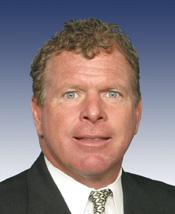 Rep. Tom Feeney (R-FL)

 +1
+1