A concurrent resolution directing the Clerk of the House of Representatives to make a technical correction in the enrollment of H.J.Res. 2.
Legislative Activity
Stay on top of the latest movement without scrolling through every action
Message on Senate action sent to the House.
February 14, 2003
View full timeline
Introduced in House
February 12, 2003
Referred to the Committee on Appropriations, and in addition to the Committee on House Administration, for a period to be subsequently determined by the Speaker, in each case for consideration of such provisions as fall within the jurisdiction of the committee concerned.
February 12, 2003
Passed/agreed to in House: Pursuant to the provisions of H. Res. 71, H. Con. Res. 35 is considered passed House.(consideration: CR H673; text as passed House: CR H673)
February 13, 2003 • 6:58 PM
Pursuant to the provisions of H. Res. 71, H. Con. Res. 35 is considered passed House. (consideration: CR H673; text as passed House: CR H673)
February 13, 2003 • 6:58 PM
Received in the Senate, considered, and agreed to without amendment by Unanimous Consent. (consideration: CR S2499)
February 13, 2003
Message on Senate action sent to the House.
February 14, 2003
Floor Debate
9 membersWhat members said about H.Con.Res. 35 on the floor
 MF
MF DH
DH ALH
ALH SHH
SHH DRO+4
DRO+4
Floor Debate
9 membersWhat members said about H.Con.Res. 35 on the floor
Mr. Speaker, I yield myself such time as I may consume. (Mr. FROST asked and was given permission to revise and extend his remarks.) Mr. Speaker, normally, when I speak on legislation, I use a…
Mr. Speaker, I yield myself such time as I may consume.
(Mr. FROST asked and was given permission to revise and extend his remarks.)
Mr. Speaker, normally, when I speak on legislation, I use a podium. This time we have a piece of legislation that is higher than my podium; so I am using the legislation. The podium is over here to the side.
Mr. Speaker, when a bill comes before the House, the normal process is for members of the committee of jurisdiction to come to the floor and explain the details of what is in their legislation. Unfortunately, that is simply not possible today.
Certainly the newspapers have reported on a few of the most egregious proposals in this conference report. For instance, Republicans inserted several sweeping anti-environmental provisions and severely shortchanged conservation resources. Democrats will try to fix these problems in the motion to recommit, which I urge Members to support. But an attack on the environment is just the tip of the iceberg with this bill, Mr. Speaker. Republican leaders did not file this conference report until six o'clock this morning, and they provided at that time only one copy for the more than 200 Democrats in the House. Even the chairman of the Committee on Appropriations, who has worked very hard under the very difficult constraints imposed upon him by his own leadership, candidly and honestly admitted this morning before the Committee on Rules that he could not answer questions about all of the contents of this bill. So if the Committee on Appropriations chairman cannot tell us what is in some of this bill, it is obvious that the public and the members of the House have no way of knowing what is in this 3,000-page legislative monstrosity.
All we really know is this: while Republicans are hurting the economy by driving America deeper in debt, they still shortchanged homeland security. The Republican failure to address homeland security right now is particularly disturbing, Mr. Speaker. As we speak, the Bush administration is urging Americans to buy duct tape and stock up on bottled water to prepare for another potential terrorist attack. They are urging the public to be on alert for suspicious activity; but while the public is on alert, the Republican Congress is asleep at the wheel. Even in this bill today, they still refuse to adequately support the firefighters and police who would actually respond to a terrorist attack.
Republicans will say that they are doing all that they can afford. That is simply ridiculous, Mr. Speaker. Republicans may not be funding homeland security needs, but they are still driving America deeper and deeper into debt by their tax cuts.
Why has Republican control of the government brought America such massive and dangerous deficits? I would submit that the dots are not too hard to connect here. Less than 2 years ago, Republicans forced through the Bush tax plan, a tax plan which gutted the budget to give tax breaks to the wealthiest. At that time Democrats and many economists and nonpartisan experts asked, Now that you have given away the store to pay for tax breaks for the few, how are you going to address national priorities like national defense and education? Unfortunately, the Republicans' response was
as reckless as it was simple. They ignored the problem. The fiscal year started October 1. That was 1, 2, 3, 4, 4\1/2\ months ago. Republican leaders simply refused to bring up difficult appropriations bills last year prior to the beginning of the fiscal year.
Let us look at the record. Five of the normal 13 appropriation bills passed the House. Two actually became law. Six other appropriation bills were reported out of the House Committee on Appropriations but were never brought to the House floor because Republican leaders did not want their Members to have to cast tough votes on painful spending cuts before the election, and of course two bills were never even reported out of the committee. The Republican leaders' timidity last fall directly contributed to the $300 billion fiscal year 2003 deficit we face today. That is why we are here today, with just 60 minutes to consider this rule and just 60 minutes to debate this massive 3,000- page conference report that the vast majority of Members have never read.
Mr. Speaker, there is no way that considering 11 of the 13 appropriation bills in 1 hour, a half hour on each side, can provide the public with an honest assessment of the budget, 4\1/2\ months later of course. Normally each appropriation bill would get at least a day of discussion and Members would have the opportunity to offer amendments. But today the vast, vast majority of Members will have no opportunity to even read the budget for this year.
Mr. Speaker, that is a definition of fiscal irresponsibility, and it is how Republicans have burdened our children with the crushing deficits we face today. Even the Bush administration is projecting deficits as far as the eye can see, over $300 billion this year, over $300 billion next year, and more than $1 trillion over the next 5 years. That is why even Alan Greenspan, the chairman of the Federal Reserve, was forced to sound the deficit alarm earlier this week. He pointed out that huge long-term deficits, the type Republicans have created in just the past 2 years, will hurt Americans by driving up interest rates and increasing families' home mortgage and credit card payments. Why is the American economy facing this harmful burden especially now when families are struggling with the weakest economy in a generation? Because the Republican House leadership refused to do its job last year. The chickens are coming home to roost today, and it is not a pretty sight.
Mr. Speaker, this omnibus appropriations bill, 4\1/2\ months late, is an admission that the Republican Congress has failed in its most fundamental responsibility, addressing national priorities from homeland security and the economy to education and health care. That is why I urge my colleagues to vote ``no'' on this rule. Let us take some time to find out what is really in this 3,000-page bill and then let us sit down and honestly address the economic and homeland security needs that it ignores.
Mr. Speaker, I reserve the balance of my time.
Mr. Speaker, I yield 2 minutes to the gentleman from Florida (Mr. Hastings), a member of the Committee on Rules.
(Mr. HASTINGS of Florida asked and was given permission to revise and extend his remarks.)
Mr. Speaker, I yield myself 2 minutes.
Mr. Speaker, the gentleman from Florida, the chairman of the Committee on Appropriations, is an honorable man. Unfortunately, he has been strangled by his own leadership. His committee did their work and reported a number of appropriation bills out of committee prior to the beginning of the fiscal year, and his leadership prohibited him from bringing those appropriation bills to the floor where we could have an open rule and could offer amendments.
Now, if the other side had really wanted us to have an open procedure, they should have permitted their own chairman to bring the bills to the floor after they had been reported out of his committee. But they prevented him from doing that. That is why we have this particular bill today in an unamendable form.
I find it difficult to understand why it makes sense to run the House in the way that their leadership, the Republican leadership, has run it. They have always said they want open procedures, but in the most important matter facing this Congress in a way, the appropriations process, they have denied this House an open procedure, denied this House the opportunity to vote. Even though their own chairman and their own committee did their work, their leadership refused to permit their chairman and their committee to bring bills to the floor where they could be amended. And now we have this, 4\1/2\ months after the beginning of the fiscal year.
Mr. Speaker, I yield 2 minutes to the gentleman from Maryland (Mr. Ruppersberger).
(Mr. RUPPERSBERGER asked and was given permission to revise and extend his remarks.)
Mr. Speaker, I yield myself such time as I may consume.
Mr. Speaker, I thought it might be interesting to the House and to people watching this proceeding to know what we are talking about, what bills we are mentioning. I said earlier that six appropriations bills were reported from the Committee on Appropriations but not brought to the floor, that the leadership on the other side refused to bring those to the floor. What were those six appropriations bills? Well, let us review that.
The agriculture appropriations bill, vitally important to the farmers of this Nation, reported out of the House Committee on Appropriations on July 11, 2002, never brought to the floor of the House; the District of Columbia appropriations bill, reported out of the Committee on Appropriations on September 26, 2002, never brought to the floor of the House; the energy and water appropriations bill, reported out of the House Committee on Appropriations September 5, 2002, never brought to this Chamber for a vote; the foreign operations appropriations bill, reported out of the House Committee on Appropriations September 19, 2002, never brought to this House for a vote; the transportation appropriations bill, vitally important to people all over this Nation, reported out of the House Committee on Appropriations October 7, never brought to the floor for a vote; and the VA-HUD, Veterans Department, reported out of the committee October 9, not brought to this House for a vote.
Now, Mr. Speaker, I would suggest this is a terrible way to run a railroad or to run a House of Representatives. Because those six bills were reported from the committee, but never brought to this Chamber, they now are contained in this pile before me.
Also in this pile before me are two other bills that were never even reported out of the Committee on Appropriations, and three other bills, of course, reported and passed the House but, of course, that never became law. So we are at this point today.
Now, we never did this when we were in the majority. We never brought an omnibus appropriations bill 4\1/2\ months after the beginning of the appropriations fiscal year and refused to bring individual appropriations bills to the floor for a vote. That was not something that was done by the Democrats when we were in the majority.
The other side does not care about the rights of the American people. Four hundred thirty-five of us were elected from districts. This a representative democracy. I represent 651,000 people, as does every other Member from the State of Texas, Republican or Democrat. The 651,000 people in my district and in the other, at that time, 29 districts, now 32 districts from the State of Texas, were denied the right to have their representative offer and consider amendments on the appropriation bills that fund this government.
Mr. Speaker, that is wrong. It should never have been done. It is the reason that we are here today, and it is one of the major reasons why we have the size deficit we do. If we had been able to offer those bills and vote on amendments, perhaps the House, in working its will, would have made some cuts, and perhaps the deficit would have been smaller. But the other side did not care.
Mr. Speaker, I yield 3 minutes to the gentleman from Washington (Mr. Dicks).
(Mr. DICKS asked and was given permission to revise and extend his remarks.)
Mr. Speaker, I yield 4 minutes to the gentleman from Wisconsin (Mr. Obey).
Mr. Speaker, my wife often watches these proceedings; and she always tells me to make it simple, make it so that a person out there in my district can understand what is going on. I will try to do that.
What we have here is a situation where 2 years ago, the Republicans ate dessert with their tax bill, with their big tax cut; but they have refused to eat their vegetables. They would not consider the appropriation bills. They would not give the people's representatives the opportunity to vote on the appropriations process. So I am glad they enjoyed their dessert. I wish they would have given us the opportunity to take part in the rest of the meal.
Mr. Speaker, I yield 4 minutes to the gentleman from Maryland (Mr. Hoyer).
Mr. Speaker, I yield myself the remaining time.
People listening to this proceeding, watching this proceeding may be kind of scratching their heads and saying, well, why are the Republicans not saying anything about this bill? Why are they just sitting over there? Could it be that they are ashamed of this process? Could it be that they have no way of defending what has happened here?
Normally, on a major piece of legislation, each side takes its 30 minutes. Apparently the Republicans simply want this to slip as quietly through as possible, knowing that this is an indefensible process and that they have done things that no one has done in the past, and I hope that even they will not do in the future.
Mr. Speaker, I urge Members to vote against the rule. I will join Members on our side who will be voting ``yes'' on final passage, because we do need to make sure the government can operate, and there are important things in this bill. It is just regrettable that the House was denied the opportunity to work its will on so many pieces of the appropriations legislation during this fiscal year.
Mr. Speaker, I yield back the balance of my time.
Mr. Speaker, by direction of the Committee on Rules, I call up House Resolution 71 and ask for its immediate consideration. Mr. Speaker, for purposes of debate only, I yield the customary 30 minutes…
Mr. Speaker, by direction of the Committee on Rules, I call up House Resolution 71 and ask for its immediate consideration.
Mr. Speaker, for purposes of debate only, I yield the customary 30 minutes to the gentleman from Texas (Mr. Frost), pending which I yield myself such time as I may consume. During consideration of this resolution, all time yielded is for the purposes of debate only.
(Mr. HASTINGS of Washington asked and was given permission to revise and extend his remarks.)
Mr. Speaker, House Resolution 71 waives all points of order against the conference report and against its consideration. The resolution also provides that the conference report shall be considered as read and provides that upon adoption of the conference report the House shall be considered to have adopted H. Con. Res. 35.
Mr. Speaker, this day has been a long time coming. The omnibus appropriations measure that we will take up in a few minutes has followed a long and torturous path to enactment. But rather than point fingers and try to assign blame for months of delay, I hope my colleagues will instead focus on moving this important legislation forward as expeditiously as possible.
In this difficult budget climate, cuts have been made in a number of popular programs. However, at the same time the Committee on Appropriations has recommended increases in quite a few other important areas. In other words, Mr. Speaker, they have prioritized the spending in these difficult times. It is simply not possible in a bill this large to list all of the major provisions, but I would like to highlight several that may be of general interest to the Members.
The bill includes an increase of $79 million for the Drug Enforcement Administration and more than $6 billion for immigration enforcement activities to strengthen our borders against terrorists and facilitate border crossings for legitimate travelers and workers. NASA funding has been increased by $513 million over last year and an additional $50 million is provided to investigate the recent Space Shuttle Columbia tragedy.
The National Science Foundation will receive $536 million over last year's level, and the largest programmatic increase in the entire budget will go to the National Institutes of Health, which will receive a $3.8 billion increase.
I am pleased to report that the Department of Energy has received increases in several important areas. This bill boosts DOE science programs by $72 million and the Department's environmental cleanup programs, including the one in the Hanford reservation in my district, will increase by $310 million above the current level. At the Interior Department I am pleased that the National Park Service budget will be increased by $78 million, much of it for badly needed maintenance of existing facilities. Funding for wildlife refuges and related programs will be increased by $53 million, and the National Forest System will receive a $31 million increase. Furthermore, I am pleased that funding for Veterans Administration medical care has been increased by $2.5 billion.
Finally, in these difficult economic times, it is important to provide for the truly needy. In that regard this bill increases homeless assistance by $102 million and provides for an increase of $348 million in the special supplemental nutrition program for Women, Infants and Children or the WIC program.
Mr. Speaker, no Member ever gets everything that they want in a massive appropriations bill, which inevitably includes certain items opposed by various Members. It is the nature of the appropriation process. And that is as true in this omnibus bill as in any other. It is not a perfect bill, as I am sure we will hear as we debate this bill, but I commend the chairman and the ranking minority member and their fellow conferees for making the best of an extraordinarily difficult situation. Accordingly, Mr. Speaker, I encourage my colleagues to support both the rule and the underlying bill.
Mr. Speaker, I reserve the balance of my time.
Mr. Speaker, I reserve the balance of my time.
Mr. Speaker, I yield myself 1 minute.
Mr. Speaker, I just remind my colleagues that conference reports are never amendable. They always come to the floor in this fashion.
But I also would like to remind my colleagues that in the time that our distinguished chairman of the Committee on Appropriations has been chairman, he has always brought and asked for open rules on the appropriation bills. So I just wanted to clarify that for my colleagues.
Mr. Speaker, I yield myself the balance of the time.
Mr. Speaker, I find that the arguments that my colleagues on the other side of the aisle were using were interesting arguments. They were based on the whole process of what we are supposed to do here in the House, or in the Congress. They, of course, only mentioned what they wanted to mention that would enhance, presumably, their position; but they forgot one very, very important part, step in this whole process, and that is the adoption of a budget which, of course, is a blueprint that all of our appropriators have to go through on all of the 13 spending bills.
Now, by law, by law, that budget has to be passed by both Houses in the spring, which meant that the budget should have been passed last spring. We did pass it in the House. The other body, with the same majority here as our minority, did not pass the budget. So we had no blueprint. And we know that we have to give and take as we go through this whole thing. So that was never mentioned whatsoever on the other side about the process. That made it very difficult; it would have made it very difficult had we passed appropriation bills over to the other body to try to reconcile when we have no blueprint as to where we are supposed to be spending.
So that was left out conveniently by my colleagues when they were talking.
So, Mr. Speaker, as I said in my opening remarks, this has been a long, difficult process. I said in my opening remarks that there are some good things in it, a lot of good things in it; and there are a lot of bad things, and we will hear about that. But in the end, we have to get on with the business of the people; we have to put '03 behind us so that we can start with '04. And I am certainly going to be one Member who is going to work as hard as I can with both sides of the aisle to make sure that we have a budget this year. I hope the other body has a budget. And I hope that we can pass the appropriation bills in a timely manner, because we do not know what is going to be ahead of us in this year with all of the challenges that face us.
Mr. Speaker, I yield back the balance of my time, and I move the previous question on the resolution.
The previous question was ordered.
Mr. Speaker, I thank the ranking Democrat for yielding me this time. I want to ask any Member in the House of Representatives to please tell me what is in that thing. I rise today in strong…
Mr. Speaker, I thank the ranking Democrat for yielding me this time.
I want to ask any Member in the House of Representatives to please tell me what is in that thing. I rise today in strong opposition to the closed rule and underlying bill. When Democrats were in the majority, I cannot tell everyone the number of times Republicans complained about closed rules. They swore that a Republican majority would mean the end of closed rules. Today's rule, like so many rules of the last 8 years, is proof that closed rules have a permanent seat in the Republican Caucus, and the Republican Committee on Rules shows this 3,000-page monstrosity as a work in progress. It evidently is. During the normal appropriations process, open rules are the custom of this body. An open rule allows all Members the opportunity to improve the legislation on the floor and ensure that the dollars spent by Congress are utilized to their fullest potential.
There is no requirement for an open rule. However, when Democrats were in the majority, the Committee on Rules always allowed for an open rule during the appropriations process as a common courtesy to all Members.
As the gentleman from Texas (Mr. Frost) said, we saw this monstrosity for the first time at 7 o'clock this morning in the Committee on Rules. However, we come down here, we cannot amend it, and we do not even know what is in it. An initial, cursory review has environmental rollbacks and inadequate agricultural disaster assistance in the conference report. I ask farmers to look at their future with reference to funding cuts.
Across-the-board cuts in domestic spending leave this country inadequately prepared to deal with the problems of unemployment, education, public housing, job training, Social Security, prescription drugs and fighting a global war on terrorism and, potentially, two and maybe three fronts in a war.
How could the majority bring a bill like this to the to the floor without some type of kickback to the wealthiest?
I thank the gentleman for yielding, and I will try to walk this monstrosity back.
Mr. Speaker, I thank the Ranking Democrat of the Committee, my good friend from Texas, Mr. Frost, for the time.
I rise today in strong opposition to the closed rule and the underlying bill.
When Democrats were in the Majority, I cannot tell you the number of times Republicans complained about closed rules. They swore that a Republican majority would mean the end of closed rules. Today's rule, like so many rules of the last eight years, is proof that the closed rule has a permanent seat in the Republican Caucus.
During the normal appropriations process, open rules are the custom of this body. An open rule allows all Members the opportunity to improve the legislation on the floor and ensure that the dollars spent by Congress are utilized to their fullest potential. There is no requirement for an open rule. However, when Democrats were in the majority, the Rules Committee always allowed for an open rule during the appropriations process as a common courtesy to all Members.
At 7:00 this morning, the Rules Committee met to pass a rule on a ten-thousand page Omnibus Appropriations Conference Report that non of us had seen. My Republican colleagues on the Committee challenged Democrats to offer a specific amendment to the Conference Report. However, how can we amend what have not seen? How can we change what we don't know?
An initial, though cursory review, has indicated that environmental rollbacks that this body approved more than a decade ago are buried in this morass available for discovery three months from now; the offsets for the inadequate agriculture disaster assistance in the conference report hold the potential to open up assistance programs for farmers to future funding cuts; and across the board cuts in domestic spending leave this country inadequately prepared to deal with the problems of unemployment, education, public housing, job training, Social Security, prescription drugs, and fighting a war on two, possibly three, fronts.
And how could the Majority bring a bill like this to the floor without some type of kickback to the wealthiest of Americans? It can't.
The report includes a $40 million down payment of a $120 million deal to acquire the oil drilling rights in three of Florida's national preserves and wildlife refuges. Yet, I can't seem to figure out if the down payment for the drilling rights is a proenvironmental gesture by the Administration or another Bush-sponsored corporate subsidy. I should also mention that the drilling rights are currently owned by the Collier Family, a family that contributed more than $100,000 to Republican reelection campaigns.
The buying of the rights is necessary, and I indeed support it. But appropriating $120 million without prior Congressional approval? Do you know what $120 million can buy us? We can spend it on job training centers, public housing, or fully funding the Help America Vote Act. I should note that election reform is grossly under-funded by more than $600,000.
The President has threatened to veto a bill that costs more than he wants to spend. However, let me share with you the lead headline from today's Congress Daily. ``As Omnibus Heads for Floors, fiscal year 2003 Supplemental Starts Up.''
Tell me, Mr. Speaker, is this omnibus report not fiscal year 2003 spending? And if Congress passes a supplemental for fiscal year 2003, will that not be 2003 spending as well? So, why not take the recess, give Members a
chance to review the report, and include the Supplemental spending priorities in the Omnibus report? Wouldn't that be a more accurate account of how much we're spending this year?
What we see in the spending cuts of the Omnibus bill is the residual effect of the Republican tax cuts and economic plan. Cut taxes to the wealthy while eliminating domestic spending on the neediest. It's the reverse Robin Hood syndrome, Mr. Speaker. Take from the poor to give to the rich.
After months of negotiations and delay, to bring the Fiscal Year 2003 appropriations process to an end without debate or opportunity to amend is a disservice to the millions of Americans who will benefit from this conference report.
I urge my colleagues to oppose the rule and the underlying bill.
Mr. Speaker, I thank the gentleman for yielding me this time. We are not here by mistake. We are not here because we could not get our work done. As a matter of fact, the month of September I think…
Mr. Speaker, I thank the gentleman for yielding me this time.
We are not here by mistake. We are not here because we could not get our work done. As a matter of fact, the month of September I think this House worked less than any September that I have been in this House in the last 21 years.
We are here because the Republicans did not want to put their bills on the floor and have their Members vote for it. I am a member of the Subcommittee on Labor, Health and Human Services and Education. We did not have 1 minute of consideration on a $130 billion-plus bill, not 1 minute of consideration in subcommittee. Not 1 minute of consideration in the full committee. Not 1 minute of debate and consideration on the floor of this House. Yet, behind me is a bill of over 3,000 pages. It was written last night. Not all of it; it is cumulative. But it was not finished until early this morning.
Mr. Speaker, we are going to have to pass a CR. Why are we going to pass a CR? Because as President Reagan also said, we needed time for OMB to read the bill. So we are going to have a CR so that the President can read this bill. But there is no time for the 435 Members of this body elected by 280 million Americans, no time for us to read this time. No time for us to digest what is in this bill. No time to have amendments on this floor so that we can strike egregious environmental provisions put in in the dark of night. No time to bring to this House the considered judgment that the Founding Fathers thought the people's House would give to legislation.
Luckily, Mr. Speaker, we are not all held to our comments that we might make. Some have made an analogy to making sausage. We defame the sausage industry in that analogy.
I want to join my colleague in saying that this is not the responsibility of the gentleman from Florida (Mr. Young). The gentleman from Washington (Mr. Dicks) said that. The gentleman from Florida (Mr. Young) is one of the fairest, most open, most democratic Chairs in this House and, indeed, under whom I have served during my tenure. It is not the responsibility of the majority party in the Committee on Appropriations. If it were their choice, they would have brought bills to the floor, bills that they felt were responsible, and we would have considered them. I will lament the fact that there are 54 Members of this House, all representing over 600,000 people, 30 million people, who have not had 1 minute to consider this legislation, because they were not here last year.
So we consider a bill. I am going to vote for this bill. I am going to vote for this bill because it has some very good things in it. As the gentleman from Wisconsin (Mr. Obey) says, some of this money comes way too late. First responders, homeland security, frontline defense, Customs agents, FBI technology and capability have all been shortchanged for the last 5 months since the beginning of this fiscal year. That is not, in my opinion, being on high alert, on red-orange or whatever color now confronts us. I am going to vote for this bill because this bill will,
in fact, fund some of the critical things that America needs. NIH research has been on hold for the last 5 months. Extramural grants have not been given. But this is the worst process I have seen an appropriation bill put to in my 22 years in this House.
Mr. Speaker, I think everybody here remembers this fellow, President Reagan. He once stood before this body. This is a picture of him doing it. He pointed to an appropriations conference report and…
Mr. Speaker, I think everybody here remembers this fellow, President Reagan. He once stood before this body. This is a picture of him doing it. He pointed to an appropriations conference report and he said this: ``This is the conference report, a 1,053-page report weighing 14 pounds.'' Then he said, ``Congress should never send me another one of these.''
Do you know how much this thing weighs today? Do you know how much this weighs? This is over 3,000 pages, and it weighs over 32 pounds. Now, President Reagan was talking about how bad it was when he had a 14-pound document. This is 2\1/2\ times as big.
And then we have another outrage. I will get into the rest of the substance later, but I want to mention one thing especially. This bill, for first responders, this bill in terms of the aid we provide to firemen and policemen across the country, is $456 million below even President Bush's request. Does this House really want to vote to cut it that low?
Now we are being told that the answer to our security problems is duct tape and plastic sheeting.
With all due respect, rather than duct tape and plastic sheeting, I think our firemen would rather have more aid so they can buy the protective equipment that they need to protect their communities. That is just one of the shortcomings of this bill.
There is another provision in this bill that gives one chicken farm operation in Georgia the opportunity to put labels on their products calling them organic, even though they are not. There is another provision in this bill which gives 10 farmers in Texas $15 million in special benefits because they cannot quite qualify for a tax provision in the Tax Code. And then we have some other lollapalooza, which I will discuss a little bit later.
Now, my colleagues cannot convince me that those provisions would have survived if this bill had gone through the normal debate that normally accompanies appropriation bills. But 90 percent of the dollars, 90 percent of the dollars that we are going to spend as a result of this package have never been debated for one moment on the floor of the House of Representatives. All of the money that is in here is the result of a back-room deal. This is what ought to happen to back-room deals: we ought to leave them on the floor and go back to the drawing board.
Show 4 more
Mr. Speaker, I thank the ranking member from Texas for yielding me time. Mr. Speaker, I rise in favor of the omnibus conference report, but I do so with serious reservations about how this conference…
Mr. Speaker, I thank the ranking member from Texas for yielding me time.
Mr. Speaker, I rise in favor of the omnibus conference report, but I do so with serious reservations about how this conference report was brought to the floor.
It is only with the knowledge that this bill will keep afloat programs important to the American family that I feel my vote today means something. But I think the American family would be outraged to know that actual debate over the funding of their government lasted just 1 hour. The American family would be outraged to learn that minority points of view concerning the health, well-being and security of this country were given just 1 hour for debate.
The process in which this conference has been brought to the floor goes against the American democratic process. The issues at stake here are too important, some life and death, not to be thoroughly debated. The fact that we did not get the chance to debate the homeland security needs of our first responders is almost unthinkable. Simply put, the issues at stake here are too important to be mired in the blatant partisanship of House rules.
Mr. Speaker, in the spirit of the American way of life, I urge the majority to give the voice of the American family a chance to be heard.
Mr. Speaker, I rise today on the rule for the omnibus appropriations bill to support the motion to recommit that will be offered by the gentleman from Wisconsin (Mr. Obey). The motion to recommit…
Mr. Speaker, I rise today on the rule for the omnibus appropriations bill to support the motion to recommit that will be offered by the gentleman from Wisconsin (Mr. Obey).
The motion to recommit would direct the conferees to strip three controversial provisions added to the Interior section of the omnibus during conference negotiations and ask that certain critical natural resource programs are increased to levels requested by the President.
The three legislative provisions include section 335, which exempts the Tongass National Forest plan from all administrative or judicial review; section 323, which significantly expands the Forest Service's stewardship contracting project to a permanent program with little agency oversight of
private-contract timber harvest; and language that removes the House provision restricting funds for activities related to oil drilling in
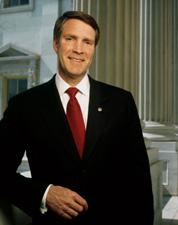
Madam President, I ask unanimous consent that the Senate proceed to the immediate consideration of H. Con. Res. 35. Madam President, I ask unanimous consent that the concurrent resolution be agreed…
Madam President, I ask unanimous consent that the Senate proceed to the immediate consideration of H. Con. Res. 35.
Madam President, I ask unanimous consent that the concurrent resolution be agreed to, the motion to reconsider be laid upon the table, and that any statements relating to this matter be printed in the Record.
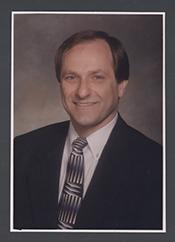
Mr. Speaker, due to an official congressional delegation trip to Afghanistan, I was unable to cast votes on rollcall Votes 29, 30, 31, and 32. Had I been present, I would have voted ``yea'' on…
Mr. Speaker, due to an official congressional delegation trip to Afghanistan, I was unable to cast votes on rollcall Votes 29, 30, 31, and 32. Had I been present, I would have voted ``yea'' on rollcall 29, ``nay'' on rollcall 30, and ``yea'' on rollcall 31, and ``nay'' on rollcall 32.
Bill Text
2 versions available
        [Congressional Bills 108th Congress]
[From the U.S. Government Publishing Office]
[H. Con. Res. 35 Received in Senate (RDS)]

1st Session
H. CON. RES. 35

_______________________________________________________________________

IN THE SENATE OF THE UNITED STATES

February 13, 2003

Received

_______________________________________________________________________

CONCURRENT RESOLUTION

Directing the Clerk of the House of Representatives to make a technical
correction in the enrollment of H.J. Res. 2.

Resolved by the House of Representatives (the Senate concurring),
That, in the enrollment of the joint resolution (H. J. Res. 2) making
further continuing appropriations for the fiscal year 2003, and for
other purposes, the Clerk

of the House of Representatives shall make the following correction:
Amend the title so as to read: ``Joint Resolution making
consolidated appropriations for the fiscal year ending September 30,
2003, and for other purposes.''.

Passed the House of Representatives February 13, 2003.

Attest:

JEFF TRANDAHL,

Clerk.

By Martha C. Morrison,

Deputy Clerk.