Direct Support Professional Recognition Resolution
 Rep. Pete Sessions (R-TX)
Legislative Activity
Stay on top of the latest movement without scrolling through every action
Received in the Senate and referred to the Committee on Health, Education, Labor, and Pensions.
November 5, 2003
View full timeline
Introduced in House
March 13, 2003
Referred to the House Committee on Education and the Workforce.
March 13, 2003
Referred to the Subcommittee on 21st Century Competitiveness.
March 31, 2003
Mr. McKeon moved to suspend the rules and agree to the resolution, as amended.
November 4, 2003 • 4:37 PM
Considered under suspension of the rules. (consideration: CR H10301-10304)
November 4, 2003 • 4:37 PM
DEBATE - The House proceeded with forty minutes of debate on H. Con. Res. 94.
November 4, 2003 • 4:37 PM
At the conclusion of debate, the Yeas and Nays were demanded and ordered. Pursuant to the provisions of clause 8, rule XX, the Chair announced that further proceedings on the motion would be postponed.
November 4, 2003 • 4:50 PM
Considered as unfinished business. (consideration: CR H10313-10314)
November 4, 2003 • 6:52 PM
Passed/agreed to in House: On motion to suspend the rules and agree to the resolution, as amended Agreed to by the Yeas and Nays: (2/3 required): 382 - 0 (Roll no. 603).(text: CR H10301)
November 4, 2003 • 7:08 PM
Motion to reconsider laid on the table Agreed to without objection.
November 4, 2003 • 7:08 PM
On motion to suspend the rules and agree to the resolution, as amended Agreed to by the Yeas and Nays: (2/3 required): 382 - 0 (Roll no. 603). (text: CR H10301)
November 4, 2003 • 7:08 PM
Received in the Senate and referred to the Committee on Health, Education, Labor, and Pensions.
November 5, 2003
Voting History
1 vote recorded • Roll call available
Floor Debate
9 membersWhat members said about H.Con.Res. 94 on the floor

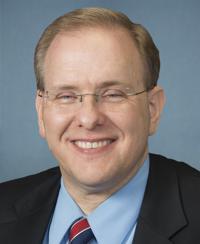
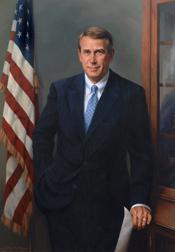
 +4
+4
Floor Debate
9 membersWhat members said about H.Con.Res. 94 on the floor
Mr. Speaker, I also would like to thank the gentleman from California, who has had personal relationships in his life where he dealt with people who might well be impacted very directly by this bill,…
Mr. Speaker, I move to suspend the rules and agree to the concurrent resolution (H. Con. Res. 94) expressing the sense of the Congress that community inclusion and enhanced lives for individuals with…
Mr. Speaker, I rise today in support of H. Con. Res. 94, which expresses the sense of the Congress that community inclusion and enhanced lives for the 8 million Americans who have mental retardation…
Mr. Speaker, over the past few decades, our Nation has made tremendous progress in improving the opportunities of individuals with disabilities I am proud to say that Congress has significantly…
Mr. Speaker, I rise in support of H. Con. Res. 94, the Direct Support Professional Recognition Resolution. I was pleased to join Representative Sessions and Representative Langevin in introducing…
Show 4 more
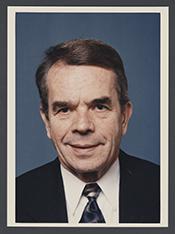
Mr. Speaker, I yield myself such time as I may consume. Mr. Speaker, I rise in support of H. Con. Res. 94. This resolution expresses our concern that there should be an adequate supply of direct care…

Mr. Speaker, I was absent from the House floor during today's rollcall votes on H. Con. Res. 176, supporting the goals and ideals of Financial Planning Week, and H. Con. Res. 94, the Direct Support…

Mr. Speaker, I was unable to be present for rollcall votes 602 and 603 on November 4, 2003. Had I been present, I would have voted in the following manner: ``Yea'' on H. Con. Res. 176--Supporting…
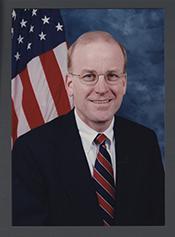
Mr. Speaker, I was absent for votes on Tuesday, November 4, 2003. Had I been present, I would have cast my votes as follows: Rollcall No. 602 (H. Con. Res. 176): ``aye.'' Rollcall No. 603 (H. Con.…
Bill Text
3 versions available
        [Congressional Bills 108th Congress]
[From the U.S. Government Publishing Office]
[H. Con. Res. 94 Referred in Senate (RFS)]

1st Session
H. CON. RES. 94

_______________________________________________________________________

IN THE SENATE OF THE UNITED STATES

November 5, 2003

Received and referred to the Committee on Health, Education, Labor, and
Pensions

_______________________________________________________________________

CONCURRENT RESOLUTION

Expressing the sense of the Congress that community inclusion and
enhanced lives for individuals with mental retardation or other
developmental disabilities is at serious risk because of the crisis in
recruiting and retaining direct support professionals, which impedes
the availability of a stable, quality direct support workforce.

Whereas there are more than 8,000,000 Americans who have mental retardation or
other developmental disabilities, including mental retardation, autism,
cerebral palsy, Down syndrome, epilepsy, and other related conditions;
Whereas individuals with mental retardation or other developmental disabilities
have substantial limitations on their functional capacities, including
limitations in two or more of the areas of self-care, receptive and
expressive language, learning, mobility, self-direction, independent
living, and economic self-sufficiency, as well as the continuous need
for individually planned and coordinated services;
Whereas for the past two decades individuals with mental retardation or other
developmental disabilities and their families have increasingly
expressed their desire to live and work in their communities, joining
the mainstream of American life;
Whereas the Supreme Court, in its Olmstead decision, affirmed the right of
individuals with mental retardation or other developmental disabilities
to receive community-based services as an alternative to institutional
care;
Whereas the demand for community supports and services is rapidly growing, as
States comply with the Olmstead decision and continue to move more
individuals from institutions into the community;
Whereas the demand will also continue to grow as family caregivers age,
individuals with mental retardation or other developmental disabilities
live longer, waiting lists grow, and services expand;
Whereas outside of families, private providers that employ direct support
professionals deliver the majority of supports and services for
individuals with mental retardation or other developmental disabilities
in the community;
Whereas direct support professionals provide a wide range of supportive services
to individuals with mental retardation or other developmental
disabilities on a day-to-day basis, including habilitation, health
needs, personal care and hygiene, employment, transportation,
recreation, and housekeeping and other home management-related supports
and services so that these individuals can live and work in their
communities;
Whereas direct support professionals generally assist individuals with mental
retardation or other developmental disabilities to lead a self-directed
family, community, and social life;
Whereas private providers and the individuals for whom they provide supports and
services are in jeopardy as a result of the growing crisis in recruiting
and retaining a direct support workforce;
Whereas providers of supports and services to individuals with mental
retardation or other developmental disabilities typically draw from a
labor market that competes with other entry-level jobs that provide less
physically and emotionally demanding work, and higher pay and other
benefits, and therefore these direct support jobs are not currently
competitive in today's labor market;
Whereas annual turnover rates of direct support workers range from 40 to 75
percent;
Whereas high rates of employee vacancies and turnover threaten the ability of
providers to achieve their core mission, which is the provision of safe
and high-quality supports to individuals with mental retardation or
other developmental disabilities;
Whereas direct support staff turnover is emotionally difficult for the
individuals being served;
Whereas many parents are becoming increasingly afraid that there will be no one
available to take care of their sons and daughters with mental
retardation or other developmental disabilities who are living in the
community; and
Whereas this workforce shortage is the most significant barrier to implementing
the Olmstead decision and undermines the expansion of community
integration as called for by President Bush's New Freedom Initiative,
placing the community support infrastructure at risk: Now, therefore, be
it
Resolved by the House of Representatives (the Senate concurring),

SECTION 1. SHORT TITLE.

This resolution may be cited as the ``Direct Support Professional
Recognition Resolution''.

SEC. 2. SENSE OF CONGRESS REGARDING SERVICES OF DIRECT SUPPORT
PROFESSIONALS TO INDIVIDUALS WITH DEVELOPMENTAL
DISABILITIES.

It is the sense of the Congress that the Federal Government and the
States should make it a priority to promote a stable, quality direct
support workforce for individuals with mental retardation or other
developmental disabilities that advances our Nation's commitment to
community integration for such individuals and to personal security for
them and their families.

Passed the House of Representatives November 4, 2003.

Attest:

JEFF TRANDAHL,

Clerk.