Southwest Regional Border Authority Act
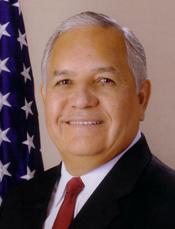 Rep. Silvestre Reyes (D-TX)
Legislative Activity
Stay on top of the latest movement without scrolling through every action
Forwarded by Subcommittee to Full Committee by Voice Vote.
June 18, 2003
View full timeline
Introduced in House
March 4, 2003
Referred to the Committee on Transportation and Infrastructure, and in addition to the Committee on Financial Services, for a period to be subsequently determined by the Speaker, in each case for consideration of such provisions as fall within the jurisdiction of the committee concerned.
March 4, 2003
Referred to the Subcommittee on Economic Development, Public Buildings and Emergency Management.
March 5, 2003
Referred to the Subcommittee on Highways, Transit and Pipelines.
March 5, 2003
Referred to the Subcommittee on Water Resources and Environment.
March 5, 2003
Referred to the Subcommittee on Domestic and International Monetary Policy, Trade, and Technology, for a period to be subsequently determined by the Chairman.
March 14, 2003
Subcommittee Consideration and Mark-up Session Held.
June 18, 2003
Forwarded by Subcommittee to Full Committee by Voice Vote.
June 18, 2003
Bill Text
Latest available legislative text
        [Congressional Bills 108th Congress]
[From the U.S. Government Publishing Office]
[H.R. 1071 Introduced in House (IH)]

108th CONGRESS
1st Session
H. R. 1071

To establish the Southwest Regional Border Authority.

_______________________________________________________________________

IN THE HOUSE OF REPRESENTATIVES

March 4, 2003

Mr. Reyes (for himself, Mr. Rodriguez, Mr. Filner, Mr. Pastor, Mr.
Grijalva, Mr. Udall of New Mexico, Mr. Ortiz, and Mr. Hinojosa)
introduced the following bill; which was referred to the Committee on
Transportation and Infrastructure, and in addition to the Committee on
Financial Services, for a period to be subsequently determined by the
Speaker, in each case for consideration of such provisions as fall
within the jurisdiction of the committee concerned

_______________________________________________________________________

A BILL

To establish the Southwest Regional Border Authority.

Be it enacted by the Senate and House of Representatives of the
United States of America in Congress assembled,

SECTION 1. SHORT TITLE; TABLE OF CONTENTS.

(a) Short Title.--This Act may be cited as the ``Southwest Regional
Border Authority Act''.
(b) Table of Contents.--The table of contents of this Act is as
follows:

Sec. 1. Short title; table of contents.
Sec. 2. Findings and purposes.
Sec. 3. Definitions.
TITLE I--SOUTHWEST REGIONAL BORDER AUTHORITY

Sec. 101. Membership and voting.
Sec. 102. Duties and powers.
Sec. 103. Authority personnel matters.
TITLE II--GRANTS AND DEVELOPMENT PLANNING

Sec. 201. Infrastructure development and improvement.
Sec. 202. Technology development.
Sec. 203. Community development and entrepreneurship.
Sec. 204. Education and workforce development.
Sec. 205. Funding.
Sec. 206. Supplements to Federal grant programs.
Sec. 207. Demonstration projects.
Sec. 208. Local development districts; certification and administrative
expenses.
Sec. 209. Distressed counties and areas and economically strong
counties.
Sec. 210. Development planning process.
TITLE III--ADMINISTRATION

Sec. 301. Program development criteria.
Sec. 302. Approval of development plans and projects.
Sec. 303. Consent of States.
Sec. 304. Records.
Sec. 305. Annual report.
Sec. 306. Authorization of appropriations.
Sec. 307. Termination of authority.

SEC. 2. FINDINGS AND PURPOSES.

(a) Findings.--Congress finds that--
(1) a rapid increase in population in the Southwest border
region is placing a significant strain on the infrastructure of
the region, including transportation, water and wastewater,
public health, and telecommunications;
(2) 20 percent of the residents of the region have incomes
below the poverty level;
(3) unemployment rates in counties in the region are up to
5 times the national unemployment rate;
(4) per capita personal income in the region is
significantly below the national average and much of the income
in the region is distributed through welfare programs,
retirement programs, and unemployment payments;
(5) a lack of adequate access to capital in the region--
(A) has created economic disparities between
communities in the region and communities outside the
region; and
(B) has made it difficult for businesses to start
up in the region;
(6) it has been difficult for displaced workers in the
region to find employment because many workers--
(A) have limited English language proficiency; and
(B) lack adequate English language and job
training;
(7) many residents of the region live in communities
referred to as ``colonias'' that lack basic necessities,
including running water, sewers, storm drainage, and
electricity;
(8) many of the problems that exist in the region could be
solved or ameliorated by technology that would contribute to
economic development in the region;
(9) while numerous Federal, State, and local programs
target financial resources to the region, those programs are
often uncoordinated, duplicative, and, in some cases,
unavailable to eligible border communities because those
communities cannot afford the required funding match;
(10) Congress has established several regional economic
development commissions, including the Appalachian Regional
Commission, the Delta Regional Authority, and the Denali
Commission, to improve the economies of those areas of the
United States that experience the greatest economic distress;
and
(11) many of the counties in the region are among the most
economically distressed in the United States and would benefit
from a regional economic development commission.
(b) Purposes.--The purposes of this Act are--
(1) to establish a regional economic development authority
for the Southwest Border region to address critical issues
relating to the economic health and well-being of the residents
of the region;
(2) to provide funding to communities in the region to
stimulate and foster infrastructure development, technology
development, community development and entrepreneurship, and
education and workforce development in the region;
(3) to increase the total amount of Federal funding
available for border economic development projects by
coordinating with and reducing duplication of other Federal,
State, and local programs; and
(4) to empower the people of the region through the use of
local development districts and State and regional development
plans that reflect State and local priorities.

SEC. 3. DEFINITIONS.

In this Act, the following definitions apply:
(1) Attainment county.--The term ``attainment county''
means an economically strong county that is not a distressed
county or a competitive county.
(2) Authority.--The term ``Authority'' means the Southwest
Regional Border Authority established by section 101(a)(1).
(3) Binational region.--The term ``binational region''
means the area in the United States and Mexico that is within
150 miles of the international border between the United States
and Mexico.
(4) Business incubator service.--The term ``business
incubator service'' means--
(A) a legal service, including aid in preparing a
corporate charter, partnership agreement, or contract;
(B) a service in support of the protection of
intellectual property through a patent, a trademark, or
any other means;
(C) a service in support of the acquisition or use
of advanced technology, including the use of Internet
services and Web-based services; and
(D) consultation on strategic planning, marketing,
or advertising.
(5) Competitive county.--The term ``competitive county''
means an economically strong county that meets at least 1, but
not all, of the criteria for a distressed county specified in
paragraph (5).
(6) Distressed county.--The term ``distressed county''
means a county in the region that--
(A)(i) has a poverty rate that is at least 150
percent of the poverty rate of the United States;
(ii) has a per capita market income that is not
more than 67 percent of the per capita market income of
the United States; and
(iii) has a 3-year unemployment rate that is at
least 150 percent of the unemployment rate of the
United States; or
(B)(i) has a poverty rate that is at least 200
percent of the poverty rate of the United States; and
(ii)(I) has a per capita market income that is not
more than 67 percent of the per capita market income of
the United States; or
(II) has a 3-year unemployment rate that is at
least 150 percent of the unemployment rate of the
United States.
(7) Economically strong county.--The term ``economically
strong county'' means a county in the region that is not a
distressed county.
(8) Federal grant program.--The term ``Federal grant
program'' means a Federal grant program to provide assistance
in--
(A) acquiring or developing land;
(B) constructing or equipping a highway, road,
bridge, or facility; or
(C) carrying out other economic development
activities.
(9) Indian tribe.--The term ``Indian tribe'' has the
meaning given the term in section 4 of the Indian Self-
Determination and Education Assistance Act (25 U.S.C. 450b).
(10) Isolated area of distress.--The term ``isolated area
of distress'' means an area located in an economically strong
county that has a high rate of poverty, unemployment, or
outmigration, as determined by the Authority.
(11) Local development district.--The term ``local
development district'' means an entity that--
(A)(i) is an economic development district that
is--
(I) in existence on the date of enactment
of this Act; and
(II) recognized by the Economic Development
Administration; and
(III) located in the region; or
(ii) if an entity described in clause (i) does not
exist--
(I) is organized and operated in a manner
that ensures broad-based community
participation and an effective opportunity for
local officials, community leaders, and the
public to contribute to the development and
implementation of programs in the region;
(II) is governed by a policy board with at
least a simple majority of members consisting
of designees or employees of a general purpose
unit of local government that have been
appointed to represent the unit of local
government or elected officials; and
(III) is certified by the Governor or
appropriate State officer as having a charter
or authority that includes the economic
development of counties, portions of counties,
or other political subdivisions within the
region; and
(B) has not, as certified by the Federal
cochairperson--
(i) inappropriately used Federal grant
funds from any Federal source; or
(ii) appointed an officer who, during the
period in which another entity inappropriately
used Federal grant funds from any Federal
source, was an officer of the other entity.
(12) Region.--The term ``region'' means--
(A) the counties of Cochise, Gila, Graham,
Greenlee, La Paz, Maricopa, Pima, Pinal, Santa Cruz,
and Yuma in the State of Arizona;
(B) the counties of Imperial, Los Angeles, Orange,
Riverside, San Bernardino, San Diego, and Ventura in
the State of California;
(C) the counties of Catron, Chaves, Dona Ana, Eddy,
Grant, Hidalgo, Lincoln, Luna, Otero, Sierra, and
Socorro in the State of New Mexico; and
(D) the counties of Atascosa, Bandera, Bee, Bexar,
Brewster, Brooks, Cameron, Coke, Concho, Crane,
Crockett, Culberson, Dimmit, Duval, Ector, Edwards, El
Paso, Frio, Gillespie, Glasscock, Hidalgo, Hudspeth,
Irion, Jeff Davis, Jim Hogg, Jim Wells, Karnes,
Kendall, Kenedy, Kerr, Kimble, Kinney, Kleberg, La
Salle, Live Oak, Loving, Mason, Maverick, McMullen,
Medina, Menard, Midland, Nueces, Pecos, Presidio,
Reagan, Real, Reeves, San Patricio, Shleicher, Sutton,
Starr, Sterling, Terrell, Tom Green, Upton, Uvalde, Val
Verde, Ward, Webb, Willacy, Wilson, Winkler, Zapata,
and Zavala in the State of Texas.
(13) Small business.--The term ``small business'' has the
meaning given the term ``small business concern'' in section
3(a) of the Small Business Act (15 U.S.C. 632(a)).

TITLE I--SOUTHWEST REGIONAL BORDER AUTHORITY

SEC. 101. MEMBERSHIP AND VOTING.

(a) Establishment.--
(1) In general.--There is established the Southwest
Regional Border Authority.
(2) Composition.--The Authority shall be composed of--
(A) a Federal member, to be appointed by the
President, by and with the advice and consent of the
Senate; and
(B) State members, who shall consist of the
Governor (or a designee of the Governor) of each State
in the region that elects to participate in the
Authority.
(3) Cochairpersons.--The Authority shall be headed by--
(A) the Federal member, who shall serve--
(i) as the Federal cochairperson; and
(ii) as a liaison between the Federal
Government and the Authority; and
(B) a State cochairperson, who shall--
(i) be a Governor of a State described in
paragraph (2)(B);
(ii) be elected by the State members for a
term of not more than 2 years; and
(iii) serve only 1 term during any 4 year
period.
(b) Alternate Members.--
(1) State alternates.--The State member of a State
described in paragraph (2)(B) may have a single alternate, who
shall be--
(A) a resident of that State; and
(B) appointed by the Governor of the State, from
among the members of the cabinet or personal staff of
the Governor.
(2) Alternate federal cochairperson.--The President shall
appoint an alternate Federal cochairperson.
(3) Quorum.--Subject to subsection (d)(4), a State
alternate member shall not be counted toward the establishment
of a quorum of the members of the Authority in any case in
which a quorum of the State members is required to be present.
(4) Delegation of power.--No power or responsibility of the
Authority specified in paragraph (2) or (3) of subsection (d),
and no voting right of any member of the Authority, shall be
delegated to any person who is not--
(A) a member of the Authority; or
(B) entitled to vote at meetings of the Authority.
(c) Meetings.--
(1) Initial meeting.--The initial meeting of the Authority
shall be conducted not later than the date that is the earlier
of--
(A) 180 days after the date of enactment of this
Act; or
(B) 60 days after the date on which the Federal
cochairperson is appointed.
(2) Other meetings.--The Authority shall hold meetings at
such times as the Authority determines, but not less often than
semiannually.
(3) Location.--Meetings of the Authority shall be
conducted, on a rotating basis, at a site in the region in each
of the States of Arizona, California, New Mexico, and Texas.
(d) Voting.--
(1) In general.--To be effective, a decision by the
Authority shall require the approval of the Federal
cochairperson and not less than 60 percent of the State members
of the Authority (not including any member representing a State
that is delinquent under section 102(d)(2)(D)).
(2) Quorum.--
(A) In general.--A majority of the State members
shall constitute a quorum.
(B) Required for policy decision.--A quorum of
State members shall be required to be present for the
Authority to make any policy decision, including--
(i) a modification or revision of a policy
decision of the Authority;
(ii) approval of a State or regional
development plan; and
(iii) any allocation of funds among the
States.
(3) Project and grant proposals.--The approval of project
and grant proposals shall be--
(A) a responsibility of the Authority; and
(B) conducted in accordance with section 302.
(4) Voting by alternate members.--An alternate member shall
vote in the case of the absence, death, disability, removal, or
resignation of the Federal or State member for which the
alternate member is an alternate.

SEC. 102. DUTIES AND POWERS.

(a) Duties.--The Authority shall--
(1) develop comprehensive and coordinated plans and
programs to establish priorities and approve grants for the
economic development of the region, giving due consideration to
other Federal, State, and local planning and development
activities in the region;
(2) conduct and sponsor investigations, research, and
studies, including an inventory and analysis of the resources
of the region, using, in part, the materials compiled by the
Interagency Task Force on the Economic Development of the
Southwest Border established by Executive Order No. 13122 (64
Fed. Reg. 29201);
(3) sponsor demonstration projects under section 207;
(4)(A) enhance the capacity of, and provide support for,
local development districts in the region; or
(B) if there is no local development district described in
clause (i) of section 3(11)(A) for a portion of the region,
foster the creation of a local development district;
(5) review and study Federal, State, and local public and
private programs and, as appropriate, recommend modifications
or additions to increase the effectiveness of the programs;
(6) formulate and recommend, as appropriate, interstate and
international compacts and other forms of interstate and
international cooperation;
(7) encourage private investment in industrial, commercial,
and recreational projects in the region;
(8) provide a forum for consideration of the problems of
the region and any proposed solutions to those problems;
(9) establish and use, as appropriate, citizens, special
advisory counsels, and public conferences; and
(10) provide a coordinating mechanism to avoid duplication
of efforts among the border programs of the Federal agencies
and the programs established under the North American Free
Trade Agreement entered into by the United States, Mexico, and
Canada on December 17, 1992.
(b) Powers.--In carrying out subsection (a), the Authority may--
(1) hold such hearings, sit and act at such times and
places, take such testimony, receive such evidence, and print
or otherwise reproduce and distribute a description of the
proceedings of, and reports on actions by, the Authority as the
Authority considers appropriate;
(2) request from any Federal, State, or local agency such
information as may be available to or procurable by the agency
that may be of use to the Authority in carrying out the duties
of the Authority;
(3) maintain an accurate and complete record of all
transactions and activities of the Authority, to be available
for audit and examination by the Comptroller General of the
United States;
(4) adopt, amend, and repeal bylaws and rules governing the
conduct of business and the performance of duties of the
Authority;
(5) request the head of any Federal agency to detail to the
Authority, for a specified period of time, such personnel as
the Authority requires to carry out duties of the Authority,
each such detail to be without loss of seniority, pay, or other
employee status;
(6) request the head of any State department or agency or
local government to detail to the Authority, for a specified
period of time, such personnel as the Authority requires to
carry out the duties of the Authority, each such detail to be
without loss of seniority, pay, or other employee status;
(7) make recommendations to the President regarding--
(A) the expenditure of funds at the Federal, State,
and local levels under this Act; and
(B) additional Federal, State, and local
legislation that may be necessary to further the
purposes of this Act;
(8) provide for coverage of Authority employees in a
suitable retirement and employee benefit system by--
(A) making arrangements or entering into contracts
with any participating State government; or
(B) otherwise providing retirement and other
employee benefit coverage;
(9) accept, use, and dispose of gifts or donations of
services or real, personal, tangible, or intangible property;
(10) enter into and perform such contracts, leases,
cooperative agreements, or other transactions as are necessary
to carry out the duties of the Authority;
(11) establish and maintain--
(A) a headquarters for the Authority, to be located
at a site that is not more than 100 kilometers from the
international border between the United States and
Mexico; and
(B) at least 1 field office in each of the States
of Arizona, California, New Mexico, and Texas, to be
located at appropriate sites in the region that are not
more than 100 kilometers  from the international border
between the United States and Mexico; and
(12) provide for an appropriate level of representation in
Washington, D.C.
(c) Federal Agency Cooperation.--A Federal agency shall--
(1) cooperate with the Authority; and
(2) provide, on request of the Federal cochairperson,
appropriate assistance in carrying out this Act, in accordance
with applicable Federal laws (including regulations).
(d) Administrative Expenses.--
(1) In general.--
(A) Administrative expenses.--Subject to paragraph
(2), administrative expenses of the Authority shall be
paid--
(i) by the Federal Government, in an amount
equal to 60 percent of the administrative
expenses; and
(ii) by the States in the region that elect
to participate in the Authority, in an amount
equal to 40 percent of the administrative
expenses.
(B) Expenses of federal chairperson.--All expenses
of the Federal cochairperson, including expenses of the
alternate and staff of the Federal cochairperson, shall
be paid by the Federal Government.
(2) State share.--
(A) In general.--Subject to subparagraph (C), the
share of administrative expenses of the Authority to be
paid by each State shall be determined by a unanimous
vote of the State members of the Authority.
(B) No federal participation.--The Federal
cochairperson shall not participate or vote in any
decision under subparagraph (A).
(C) Limitation.--A State shall not pay less than 10
nor more than 40 percent of the share of administrative
expenses of the Authority determined under paragraph
(1)(A)(ii).
(D) Delinquent states.--During any period in which
a State is more than 1 year delinquent in payment of
the State's share of administrative expenses of the
Authority under this subsection (as determined by the
Secretary)--
(i) no assistance under this Act shall be
provided to the State (including assistance to
a political subdivision or a resident of the
State) for any project not approved as of the
date of the commencement of the delinquency;
and
(ii) no member of the Authority from the
State shall participate or vote in any action
by the Authority.
(E) Effect on assistance.--A State's share of
administrative expenses of the Authority under this
subsection shall not be taken into consideration in
determining the amount of assistance provided to the
State under title II.

SEC. 103. AUTHORITY PERSONNEL MATTERS.

(a) Compensation of Members.--
(1) Federal cochairperson.--The Federal cochairperson shall
be compensated by the Federal Government at the annual rate of
basic pay prescribed for level III of the Executive Schedule in
subchapter II of chapter 53 of title 5, United States Code.
(2) Alternate federal cochairperson.--The alternate Federal
cochairperson--
(A) shall be compensated by the Federal Government
at the annual rate of basic pay prescribed for level V
of the Executive Schedule described in paragraph (1);
and
(B) when not actively serving as an alternate for
the Federal cochairperson, shall perform such functions
and duties as are delegated by the Federal
cochairperson.
(3) State members and alternates.--
(A) In general.--A State shall compensate each
member and alternate member representing the State on
the Authority at the rate established by State law.
(B) No additional compensation.--No State member or
alternate member shall receive any salary, or any
contribution to or supplementation of salary, from any
source other than the State for services provided by
the member or alternate member to the Authority.
(b) Detailed Employees.--
(1) In general.--No person detailed to serve the Authority
under section 102(b)(6) shall receive any salary, or any
contribution to or supplementation of salary, for services
provided to the Authority from--
(A) any source other than the State, local, or
intergovernmental department or agency from which the
person was detailed; or
(B) the Authority.
(2) Violation.--Any person that violates this subsection
shall be fined not more than $5,000, imprisoned not more than 1
year, or both.
(c) Additional Personnel.--
(1) Compensation.--
(A) In general.--The Authority may appoint and fix
the compensation of an executive director and such
other personnel as are necessary to enable the
Authority to carry out the duties of the Authority.
(B) Exception.--Compensation under subparagraph (A)
shall not exceed the maximum rate of basic pay
established for the Senior Executive Service under
section 5382 of title 5, United States Code, including
any applicable locality-based comparability payment
that may be authorized under section 5304(h)(2)(C) of
that title.
(2) Executive director.--The executive director shall be
responsible for--
(A) carrying out the administrative duties of the
Authority;
(B) directing the Authority staff; and
(C) carrying out such other duties as the Authority
may assign.
(3) No federal employee status.--No member, alternate,
officer, or employee of the Authority (other than the Federal
cochairperson, the alternate Federal cochairperson, staff of
the Federal cochairperson, and any Federal employee detailed to
the Authority under subsection (b)) shall be considered to be a
Federal employee for any purpose.
(d) Conflicts of Interest.--
(1) In general.--Except as provided under paragraph (2), no
State member, State alternate, officer, employee, or detailee
of the Authority shall participate personally and substantially
as a member, alternate, officer, employee, or detailee of the
Authority, through decision, approval, disapproval,
recommendation, the rendering of advice, investigation, or
otherwise, in any proceeding, application, request for a ruling
or other determination, contract, claim, controversy, or other
matter in which the member, alternate, officer, employee, or
detailee has a financial interest.
(2) Disclosure.--Paragraph (1) shall not apply if the State
member, State alternate, officer, employee, or detailee--
(A) immediately advises the Authority of the nature
and circumstances of the proceeding, application,
request for a ruling or other determination, contract,
claim, controversy, or other particular matter
presenting a potential conflict of interest;
(B) makes full disclosure of the financial
interest; and
(C) before the proceeding concerning the matter
presenting the conflict of interest, receives a written
determination by the Authority that the interest is not
so substantial as to be likely to affect the integrity
of the services that the Authority may expect from the
State member, State alternate, officer, employee, or
detailee.
(3) Violation.--Any person that violates this subsection
shall be fined not more than $10,000, imprisoned not more than
2 years, or both.
(e) Validity of Contracts, Loans, and Grants.--The Authority may
declare void any contract, loan, or grant of or by the Authority in
relation to which the Authority determines that there has been a
violation of subsection (b), subsection (d), or any of sections 202
through 209 of title 18, United States Code.
(f) Applicable Labor Standards.--
(1) In general.--All laborers and mechanics employed by
contractors or subcontractors in the construction, alteration,
or repair, including painting and decorating, of projects,
buildings, and works funded by the United States under this
Act, shall be paid wages at not less than the prevailing wages
on similar construction in the locality as determined by the
Secretary of Labor in accordance with the Act of March 3, 1931
(40 U.S.C. 276a et seq.).
(2) Authority.--With respect to the determination of wages
under paragraph (1), the Secretary of Labor shall have the
authority and functions set forth in Reorganization Plan No. 14
of 1950 (64 Stat. 1267) and section 2 of the Act of June 13,
1934 (40 U.S.C. 276c).

TITLE II--GRANTS AND DEVELOPMENT PLANNING

SEC. 201. INFRASTRUCTURE DEVELOPMENT AND IMPROVEMENT.

The Authority may approve grants to States, local governments,
Indian tribes, and public and nonprofit organizations in the region for
projects, approved in accordance with section 302, to develop and
improve the transportation, water and wastewater, public health, and
telecommunications infrastructure of the region.

SEC. 202. TECHNOLOGY DEVELOPMENT AND DEPLOYMENT.

The Authority may approve grants to small businesses, universities,
national laboratories, and nonprofit organizations in the region to
research, develop, demonstrate, and deploy technology that addresses--
(1) water quality;
(2) water quantity;
(3) pollution;
(4) transportation;
(5) energy consumption;
(6) public health;
(7) border and port security; and
(8) any other related matter that stimulates job creation
or enhances economic development in the region, as determined
by the Authority.

SEC. 203. COMMUNITY DEVELOPMENT AND ENTREPRENEURSHIP.

The Authority may approve grants to States, local governments,
Indian tribes, small businesses, and public or nonprofit entities for
projects, approved in accordance with section 302--
(1) to create dynamic local economies by--
(A) recruiting businesses to the region; and
(B) increasing and expanding international trade to
other countries;
(2) to foster entrepreneurship by--
(A) supporting the advancement of, and providing
entrepreneurial training and education for, youths,
students, and businesspersons;
(B) improving access to debt and equity capital by
facilitating the establishment of development venture
capital funds and other appropriate means;
(C) providing aid to communities in identifying,
developing, and implementing development strategies for
various sectors of the economy; and
(D)(i) developing a working network of business
incubators; and
(ii) supporting entities that provide business
incubator services; and
(3) to promote civic responsibility and leadership through
activities that include--
(A) the identification and training of emerging
leaders;
(B) the encouragement of citizen participation; and
(C) the provision of assistance for strategic
planning and organization development.

SEC. 204. EDUCATION AND WORKFORCE DEVELOPMENT.

The Authority, in coordination with State and local workforce
development boards, may approve grants to States, local governments,
Indian tribes, small businesses, and public or nonprofit entities for
projects, approved in accordance with section 302--
(1) to assist the region in obtaining the job training,
employment-related education, and business development (with an
emphasis on entrepreneurship) that are needed to build and
maintain strong local economies; and
(2) to supplement in-plant training programs offered by
State and local governments to attract new businesses to the
region.

SEC. 205. FUNDING.

(a) In General.--Funds for grants under sections 201 through 204
may be provided--
(1) entirely from appropriations to carry out this Act;
(2) in combination with funds available under another
Federal grant program or other Federal program; or
(3) in combination with funds from any other source,
including--
(A) State and local governments, nonprofit
organizations, and the private sector in the United
States;
(B) the federal and local government of, and
private sector in, Mexico; and
(C) the North American Development Bank.
(b) Priority of Funding.--
(1) In general.--Subject to paragraph (2), the Authority
shall award funding to each State in the region for activities
in accordance with an order of priority to be determined by the
State.
(2) Funding for border counties.--For each fiscal year, the
Authority shall allocate at least 60 percent of the amounts
made available under section 306 for programs and projects
designed to serve the needs of--
(A) distressed counties located along the
international border between the United States and
Mexico; and
(B) isolated areas of distress located within
counties along the international border between the
United States and Mexico.
(c) Binational Projects.--
(1) Prohibition on provision of funding to non-united
states entities.--The Authority shall not award funding to any
entity that is not incorporated in the United States.
(2) Funding of binational projects.--The Authority may
award funding to a project in which an entity that is
incorporated outside the United States participates if, for any
fiscal year, the entity matches with an equal amount, in cash
or in-kind, the assistance received under this Act for the
fiscal year.

SEC. 206. SUPPLEMENTS TO FEDERAL GRANT PROGRAMS.

(a) Finding.--Congress finds that certain States and local
communities of the region, including local development districts, may
be unable to take maximum advantage of Federal grant programs for which
the States and communities are eligible because--
(1) they lack the economic resources to provide the
required matching share; or
(2) there are insufficient funds available under the
Federal law authorizing the Federal grant program to meet
pressing needs of the region.
(b) Federal Grant Program Funding.--Notwithstanding any provision
of law limiting the Federal share, the areas eligible for assistance,
or the authorizations of appropriations, under any Federal grant
program, and in accordance with subsection (c), the Authority, with the
approval of the Federal cochairperson and with respect to a project to
be carried out in the region, may--
(1) increase the Federal share of the costs of a project
under any Federal grant program to not more than 90 percent
(except as provided in section 209(b)); and
(2) use amounts made available to carry out this Act to pay
all or a portion of the increased Federal share.
(c) Certifications.--
(1) In general.--In the case of any project for which all
or any portion of the basic Federal share of the costs of the
project is proposed to be paid under this section, no Federal
contribution shall be made until the Federal official
administering the Federal law that authorizes the Federal grant
program certifies that the project--
(A) meets (except as provided in subsection (b))
the applicable requirements of the applicable Federal
grant program; and
(B) could be approved for Federal contribution
under the Federal grant program if funds were available
under the law for the project.
(2) Certification by authority.--
(A) In general.--The certifications and
determinations required to be made by the Authority for
approval of projects under this Act in accordance with
section 302--
(i) shall be controlling; and
(ii) shall be accepted by the Federal
agencies.
(B) Acceptance by federal cochairperson.--In the
case of any project described in paragraph (1), any
finding, report, certification, or documentation
required to be submitted with respect to the project to
the head of the department, agency, or instrumentality
of the Federal Government responsible for the
administration of the Federal grant program under which
the project is carried out shall be accepted by the
Federal cochairperson.

SEC. 207. DEMONSTRATION PROJECTS.

(a) In General.--For each fiscal year, the Authority may approve
not more than 10 demonstration projects to carry out activities
described in sections 201 through  204, of which not more than 3 shall
be carried out in any 1 State.
(b) Requirements.--A demonstration project carried out under this
section shall--
(1) be carried out on a multistate or multicounty basis;
and
(2) be developed in accordance with the regional
development plan prepared under section 210(d).

SEC. 208. LOCAL DEVELOPMENT DISTRICTS; CERTIFICATION AND ADMINISTRATIVE
EXPENSES.

(a) Grants to Local Development Districts.--
(1) In general.--The Authority shall make grants to local
development districts to pay the administrative expenses of the
local development districts.
(2) Conditions for grants.--
(A) Maximum amount.--The amount of any grant
awarded under paragraph (1) shall not exceed 80 percent
of the administrative expenses of the local development
district receiving the grant.
(B) Maximum period.--No grant described in
paragraph (1) shall be awarded for a period greater
than 3 years to a State agency certified as a local
development district.
(C) Local share.--The contributions of a local
development district for administrative expenses may be
in cash or in kind, fairly evaluated, including space,
equipment, and services.
(b) Duties of Local Development Districts.--A local development
district shall--
(1) operate as a lead organization serving multicounty
areas in the region at the local level;
(2) assist the Authority in carrying out outreach
activities for local governments, community development groups,
the business community, and the public;
(3) serve as a liaison between State and local governments,
nonprofit organizations (including community-based groups and
educational institutions), the business community, and
citizens; and
(4) assist the individuals and entities described in
paragraph (3) in identifying, assessing, and facilitating
projects and programs to promote the economic development of
the region.

SEC. 209. DISTRESSED COUNTIES AND AREAS AND ECONOMICALLY STRONG
COUNTIES.

(a) Designations.--At the initial meeting of the Authority and
annually thereafter, the Authority, in accordance with such criteria as
the Authority may establish, shall designate--
(1) distressed counties;
(2) economically strong counties;
(3) attainment counties;
(4) competitive counties; and
(5) isolated areas of distress.
(b) Distressed Counties.--
(1) In general.--For each fiscal year, the Authority shall
allocate at least 50 percent of the amounts made available
under section 306 for programs and projects designed to serve
the needs of distressed counties and isolated areas of distress
in the region.
(2) Funding limitations.--The funding limitations under
section 206(b) shall not apply to a project to provide
transportation or basic public services to residents of 1 or
more distressed counties or isolated areas of distress in the
region.
(c) Economically Strong Counties.--
(1) Attainment counties.--Except as provided in paragraph
(3), the Authority shall not provide funds for a project
located in a county designated as an attainment county under
subsection (a)(3).
(2) Competitive counties.--Except as provided in paragraph
(3), the Authority shall not provide more than 30 percent of
the total cost of any project carried out in a county
designated as a competitive county under subsection (a)(2)(B).
(3) Exceptions.--
(A) In general.--The funding prohibition under
paragraph (1) and the funding limitation under
paragraph (2) shall not apply to grants to fund the
administrative expenses of local development districts
under section 208(a).
(B) Multicounty projects.--If the Authority
determines that a project could bring significant
benefits to areas of the region outside an attainment
or competitive county, the Authority may waive the
application of the funding prohibition under paragraph
(1) and the funding limitation under paragraph (2) to--
(i) a multicounty project that includes
participation by an attainment or competitive
county; or
(ii) any other type of project.
(4) Isolated areas of distress.--For a designation of an
isolated area of distress for assistance to be effective, the
designation shall be supported--
(A) by the most recent Federal data available; or
(B) if no recent Federal data are available, by the
most recent data available through the government of
the State in which the isolated area of distress is
located.

SEC. 210. DEVELOPMENT PLANNING PROCESS.

(a) State Development Plan.--In accordance with policies
established by the Authority, each State member shall submit an annual
development plan for the area of the region represented by the State
member to assist the Authority in determining funding priorities under
section 205(b).
(b) Consultation With Interested Parties.--In carrying out the
development planning process (including the selection of programs and
projects for assistance), a State shall--
(1) consult with--
(A) local development districts; and
(B) local units of government;
(2) take into consideration the goals, objectives,
priorities, and recommendations of the entities described in
paragraph (1); and
(3) solicit input on and take into consideration the
potential impact of the State development plan on the
binational region.
(c) Public Participation.--
(1) In general.--The Authority and applicable State and
local development districts shall encourage and assist, to the
maximum extent practicable, public participation in the
development, revision, and implementation of all plans and
programs under this Act.
(2) Regulations.--The Authority shall develop guidelines
for providing public participation described in paragraph (1),
including public hearings.
(d) Regional Development Plan.--The Authority shall prepare an
annual regional development plan that--
(1) is based on State development plans submitted under
subsection (a);
(2) takes into account--
(A) the input of the private sector, academia, and
nongovernmental organizations; and
(B) the potential impact of the regional
development plan on the binational region;
(3) establishes 5-year goals for the development of the
region;
(4) identifies and recommends to the States--
(A) potential multistate or multicounty projects
that further the goals for the region; and
(B) potential development projects for the
binational region; and
(5) identifies and recommends to the Authority for funding
demonstration projects under section 207.

TITLE III--ADMINISTRATION

SEC. 301. PROGRAM DEVELOPMENT CRITERIA.

(a) In General.--In considering programs and projects to be
provided assistance under this Act, and in establishing a priority
ranking of the requests for assistance provided to the Authority, the
Authority shall follow procedures that ensure, to the maximum extent
practicable, consideration of--
(1) the relationship of the project or class of projects to
overall regional development;
(2) the per capita income and poverty and unemployment
rates in an area;
(3) the financial resources available to the applicants for
assistance seeking to carry out the project, with emphasis on
ensuring that projects are adequately financed to maximize the
probability of successful economic development;
(4) the socioeconomic importance of the project or class of
projects in relation to other projects or classes of projects
that may be in competition for the same funds;
(5) the prospects that the project for which assistance is
sought will improve, on a continuing rather than a temporary
basis, the opportunities for employment, the average level of
income, or the economic development of the area to be served by
the project; and
(6) the extent to which the project design provides for
detailed outcome measurements by which grant expenditures and
the results of the expenditures may be evaluated.
(b) No Relocation Assistance.--No financial assistance authorized
by this Act shall be used to assist a person or entity in relocating
from 1 area to another, except that financial assistance may be used as
otherwise authorized by this Act to attract businesses from outside the
region to the region.
(c) Maintenance of Effort.--Funds may be provided for a program or
project in a State under this Act only if the Authority determines that
the level of Federal or State financial assistance provided under a law
other than this Act, for the same type of program or project in the
same area of the State within the region, will not be reduced as a
result of funds made available by this Act.

SEC. 302. APPROVAL OF DEVELOPMENT PLANS AND PROJECTS.

(a) In General.--A State or regional development plan or any
multistate subregional plan that is proposed for development under this
Act shall be reviewed by the Authority.
(b) Evaluation by State Member.--An application for a grant or any
other assistance for a project under this Act shall be made through and
evaluated for approval by the State member of the Authority
representing the applicant.
(c) Certification.--An application for a grant or other assistance
for a project shall be approved only on certification by the State
member that the application for the project--
(1) describes ways in which the project complies with any
applicable State development plan;
(2) meets applicable criteria under section 301;
(3) provides adequate assurance that the proposed project
will be properly administered, operated, and maintained; and
(4) otherwise meets the requirements of this Act.
(d) Votes for Decisions.--On certification by a State member of the
Authority of an application for a grant or other assistance for a
specific project under this section, an affirmative vote of the
Authority under section 101(d) shall be required for approval of the
application.

SEC. 303. CONSENT OF STATES.

Nothing in this Act requires any State to engage in or accept any
program under this Act without the consent of the State.

SEC. 304. RECORDS.

(a) Records of the Authority.--
(1) In general.--The Authority shall maintain accurate and
complete records of all transactions and activities of the
Authority.
(2) Availability.--All records of the Authority shall be
available for audit and examination by the Comptroller General
of the United States (including authorized representatives of
the Comptroller General).
(b) Records of Recipients of Federal Assistance.--
(1) In general.--A recipient of Federal funds under this
Act shall, as required by the Authority, maintain accurate and
complete records of transactions and activities financed with
Federal funds and report to the Authority on the transactions
and activities.
(2) Availability.--All records required under paragraph (1)
shall be available for audit by the Comptroller General of the
United States and the Authority (including authorized
representatives of the Comptroller General and the Authority).
(c) Annual Audit.--The Comptroller General of the United States
shall audit the activities, transactions, and records of the Authority
on an annual basis.

SEC. 305. ANNUAL REPORT.

(a) In General.--Not later than 180 days after the end of each
fiscal year, the Authority shall submit to the President and to
Congress a report describing the activities carried out under this Act.
(b) Contents.--
(1) In general.--The report shall include--
(A) an evaluation of the progress of the
Authority--
(i) in meeting the goals set forth in the
regional development plan and the State
development plans; and
(ii) in working with other Federal agencies
and the border programs administered by the
Federal agencies;
(B) examples of notable projects in each State;
(C) a description of all demonstration projects
funded under section 306(b) during the fiscal year
preceding submission of the report; and
(D) any policy recommendations approved by the
Authority.
(2) Initial report.--In addition to the contents specified
in paragraph (1), the initial report submitted under this
section shall include--
(A) a determination as to whether the creation of a
loan fund to be administered by the Authority is
necessary; and
(B) if the Authority determines that a loan fund is
necessary--
(i) a request for the authority to
establish a loan fund; and
(ii) a description of the eligibility
criteria and performance requirements for the
loans.

SEC. 306. AUTHORIZATION OF APPROPRIATIONS.

(a) In General.--There are authorized to be appropriated to the
Authority to carry out this Act, to remain available until expended--
(1) $50,000,000 for fiscal year 2004;
(2) $75,000,000 for fiscal year 2005;
(3) $90,000,000 for fiscal year 2006;
(4) $92,000,000 for fiscal year 2007; and
(5) $94,000,000 for fiscal year 2008.
(b) Demonstration Projects.--Of the funds made available under
subsection (a), $5,000,000 for each fiscal year shall be available to
the Authority to carry out section 207.

SEC. 307. TERMINATION OF AUTHORITY.

The authority provided by this Act terminates effective October 1,
2008.
<all>