Medicare Rx Drug Benefit and Discount Act of 2003
 Rep. Charles B. Rangel (D-NY)
Legislative Activity
Stay on top of the latest movement without scrolling through every action
Referred to the Subcommittee on Health.
March 24, 2003
View full timeline
Introduced in House
March 11, 2003
Referred to the Committee on Energy and Commerce, and in addition to the Committee on Ways and Means, for a period to be subsequently determined by the Speaker, in each case for consideration of such provisions as fall within the jurisdiction of the committee concerned.
March 11, 2003
Sponsor introductory remarks on measure. (CR E431-432)
March 12, 2003
Floor Debate
21 membersWhat members said about H.R. 1199 on the floor


 +16
+16
Floor Debate
21 membersWhat members said about H.R. 1199 on the floor
Mr. Speaker, it is certainly my pleasure this evening to come here to the floor of the House to address on behalf of the Congressional Black Caucus two issues that are of paramount concern. Both of…
Mr. Speaker, I yield myself the balance of my time. Mr. Speaker, when we test the arguments made on the floor of the House on a major piece of legislation such as this, it is important to test the…
Mr. Speaker, while there is little debate about the need to update and modernize the Medicare system to allow seniors to use Medicare funds for prescription drugs, there is much debate about the…
I want to thank the gentleman from Maryland for yielding. His leadership has also been noticed throughout the country. I want to personally thank him. I want to also specifically thank him for…
Mr. Speaker, I ask unanimous consent that the gentleman from Ohio (Mr. Brown) be permitted to control 15 minutes of the time allocated to me. Mr. Speaker, I yield myself 3\1/2\ minutes. (Mr. DINGELL…
Show 8 more

Mr. Speaker, I rise in opposition to the bill, H.R. 1, the Medicare Prescription Drug and Modernization Act. I fully support the effort to provide prescription drug coverage to Medicare…
Mr. Speaker, I rise today to address my concerns about H.R. 2210, the School Readiness Act. The major changes and new requirements under title II and title I will damage the integrity and efficacy of…
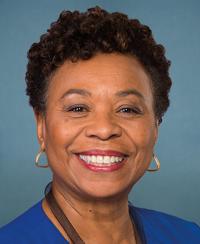
Mr. Speaker, I thank the gentleman from Maryland (Mr. Cummings), chairman of the Congressional Black Caucus, for the gentleman's leadership and for once again holding this Special Order to attempt to…
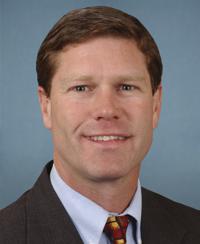
Mr. Speaker, providing affordable Medicare prescription drug coverage for our nation's seniors is one of the most pressing issues facing our country today. Even though the elderly use the most…
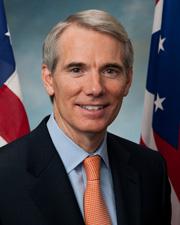
Mr. Speaker, I rise to speak in supper of provisions in H.R. 1, The Medicare Prescription Drug and Modernization Act, that are designed to address the special pharmacy needs of beneficiaries residing…

Mr. Speaker, as vice chairman of the Energy and Commerce Committee and a member of the Health Subcommittee, I have worked on Medicare prescription drug legislation for more than four years. The House…
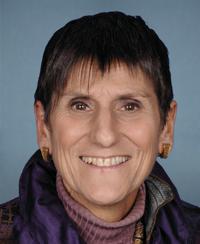
Mr. Speaker, in my 13 years in Congress, this House has sometimes risen to the occasion on matters of great national importance. My very first vote on the first Gulf War followed days of debate in…
Mr. Chairman, I offer an amendment in the nature of a substitute. Mr. Speaker, I yield 15 minutes to the gentleman from Michigan (Mr. Dingell) and ask unanimous consent that he be permitted to…
Show 11 more

Mr. Speaker, this bill will hasten the day when Medicare will go bankrupt, and it also threatens to unravel our children's future. Medicare is already on shaky financial legs, and this will add…

Mr. Speaker, I yield myself such time as I may consume. I know earlier I moved the distinguished gentleman from Louisiana, the chairman of the Committee on Energy and Commerce, to talk about his…
Mr. Speaker, pursuant to House Resolution 335, I call up the bill (H.R. 2427) to authorize the Secretary of Health and Human Services to promulgate regulations for the reimportation of prescription…
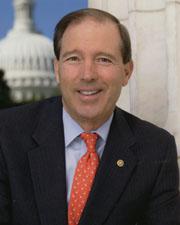
Mr. Speaker, for far too long, as I traveled around the state of New Mexico, seniors have told me their heartbreaking stories of being forced to choose between purchasing their medicine and…
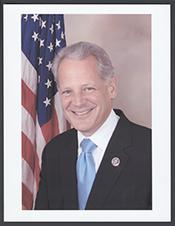
Mr. Speaker, I am proud to be a Democratic Member of this body. I have always been proud to be a Democrat. And always will be. But I came to Congress 2\1/2\ years ago with a promise to my…
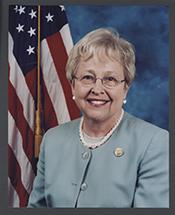
Mr. Speaker, I yield myself such time as I may consume. Mr. Speaker, let us look at the facts behind the rhetoric here. What is going to be the impact of this Democratic substitute on seniors? My…

Mr. Speaker, Medicare, the most successful social service program since Social Security, will be dramatically transformed and, in the long run, unraveled by this Republican bill we are debating…
Mr. Speaker, I yield myself 3 minutes. (Mr. DINGELL asked and was given permission to revise and extend his remarks.) My dear friends and colleagues, I lay before you the Republican plan. I ask you…
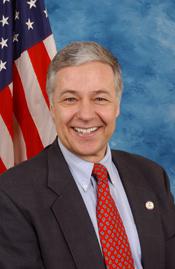
Mr. Speaker, tonight the House of Representatives considered a plan that would supposedly create a Medicare prescription drug benefit. While some touted the plan as an innovative approach, the fact…

Mr. Speaker, I rise today to express my opposition to this legislation and my support for the Blue Dog substitute, offered by Rep. Thompson, which we have not been allowed to debate on the House…
Mr. Speaker, I rise today to speak against the inadequate Medicare prescription drug bill being considered today, H.R. 2473 and in support of the Rangel/Dingell Substitute. With over 40 million…
Bill Text
Latest available legislative text
        [Congressional Bills 108th Congress]
[From the U.S. Government Publishing Office]
[H.R. 1199 Introduced in House (IH)]

108th CONGRESS
1st Session
H. R. 1199

To amend titles XVIII and XIX of the Social Security Act to provide for
a voluntary Medicare prescription medicine benefit, to provide greater
access to affordable pharmaceuticals, and for other purposes.

_______________________________________________________________________

IN THE HOUSE OF REPRESENTATIVES

March 11, 2003

Mr. Rangel (for himself, Mr. Dingell, Mr. Holden, Mr. Brown of Ohio,
Mr. Stark, Mr. Waxman, Mr. Pallone, Mr. Abercrombie, Mr. Ackerman, Mr.
Alexander, Mr. Allen, Mr. Andrews, Ms. Baldwin, Mr. Becerra, Mr. Bell,
Ms. Berkley, Mr. Berman, Mr. Berry, Mr. Bishop of New York, Mr.
Boswell, Mr. Boucher, Ms. Corrine Brown of Florida, Mrs. Capps, Mr.
Capuano, Mr. Cardin, Mr. Cardoza, Mrs. Christensen, Mr. Clay, Mr.
Conyers, Mr. Crowley, Mr. Cummings, Mr. Davis of Illinois, Mr.
Delahunt, Ms. DeLauro, Mr. Deutsch, Mr. Dicks, Mr. Doyle, Mr. Engel,
Mr. Evans, Mr. Farr, Mr. Filner, Mr. Frank of Massachusetts, Mr. Frost,
Mr. Gephardt, Mr. Gordon, Mr. Green of Texas, Mr. Grijalva, Mr.
Hastings of Florida, Mr. Hinchey, Mr. Hinojosa, Mr. Hoeffel, Mr. Hoyer,
Ms. Jackson-Lee of Texas, Mr. Jefferson, Ms. Eddie Bernice Johnson of
Texas, Mr. Kanjorski, Ms. Kaptur, Mr. Kennedy of Rhode Island, Mr.
Kildee, Ms. Kilpatrick, Mr. Kleczka, Mr. Lampson, Mr. Langevin, Mr.
Lantos, Mr. Larson of Connecticut, Ms. Lee, Mr. Levin, Mr. Lewis of
Georgia, Mrs. Lowey, Mr. Lynch, Mrs. Maloney, Mr. Markey, Mr. Matsui,
Ms. McCarthy of Missouri, Ms. McCollum, Mr. McDermott, Mr. McGovern,
Mr. McNulty, Mr. Meehan, Mr. Meek of Florida, Mr. Meeks of New York,
Ms. Millender-McDonald, Mr. George Miller of California, Mr. Mollohan,
Mr. Murtha, Mr. Nadler, Mrs. Napolitano, Mr. Neal of Massachusetts, Ms.
Norton, Mr. Oberstar, Mr. Olver, Mr. Ortiz, Mr. Owens, Ms. Pelosi, Mr.
Rahall, Mr. Reyes, Mr. Rodriguez, Mr. Ross, Ms. Roybal-Allard, Mr.
Rush, Ms. Linda T. Sanchez of California, Mr. Sanders, Mr. Sandlin, Ms.
Schakowsky, Mr. Schiff, Mr. Scott of Virginia, Mr. Serrano, Ms.
Slaughter, Ms. Solis, Mr. Strickland, Mr. Thompson of Mississippi, Mr.
Tierney, Mr. Towns, Mrs. Jones of Ohio, Mr. Udall of New Mexico, Mr.
Van Hollen, Mr. Visclosky, Ms. Watson, Mr. Weiner, Mr. Wexler, Ms.
Woolsey, and Mr. Wynn) introduced the following bill; which was
referred to the Committee on Energy and Commerce, and in addition to
the Committee on Ways and Means, for a period to be subsequently
determined by the Speaker, in each case for consideration of such
provisions as fall within the jurisdiction of the committee concerned

_______________________________________________________________________

A BILL

To amend titles XVIII and XIX of the Social Security Act to provide for
a voluntary Medicare prescription medicine benefit, to provide greater
access to affordable pharmaceuticals, and for other purposes.

Be it enacted by the Senate and House of Representatives of the
United States of America in Congress assembled,

SECTION 1. SHORT TITLE; REFERENCES IN ACT; TABLE OF CONTENTS.

(a) Short Title.--This Act may be cited as the ``Medicare Rx Drug
Benefit and Discount Act of 2003''.
(b) Amendments to Social Security Act.--Except as otherwise
specifically provided, whenever in this Act an amendment is expressed
in terms of an amendment to or repeal of a section or other provision,
the reference shall be considered to be made to that section or other
provision of the Social Security Act.
(c) Table of Contents.--The table of contents of this Act is as
follows:

TITLE I--MEDICARE PRESCRIPTION MEDICINE BENEFIT

Sec. 101. Voluntary medicare outpatient prescription medicine program.
``Part D--Voluntary Prescription Medicine Benefit for the Aged and
Disabled

``Sec. 1859. Medicare outpatient prescription medicine benefit.
``Sec. 1859A. Negotiating fair prices with pharmaceutical
manufacturers.
``Sec. 1859B. Contract authority.
``Sec. 1859C. Eligibility; voluntary enrollment; coverage.
``Sec. 1859D. Provision of, and entitlement to, benefits.
``Sec. 1859E. Administration; quality assurance.
``Sec. 1859F. Federal Medicare Prescription Medicine Trust Fund.
``Sec. 1859G. Compensation for employers covering retiree medicine
costs.
``Sec. 1859H. Medicare Prescription Medicine Advisory Committee.
Sec. 102. Provision of medicare outpatient prescription medicine
coverage under the Medicare+Choice program.
Sec. 103. Medigap revisions.
Sec. 104. Transitional assistance for low income beneficiaries.
Sec. 105. Expansion of membership and duties of Medicare Payment
Advisory Commission (MedPAC).
TITLE II--AFFORDABLE PHARMACEUTICALS

Subtitle A--Greater Access to Affordable Pharmaceuticals

Sec. 201. Accelerated generic drug competition.
Sec. 202. Patent certification.
Sec. 203. Additional uses.
Subtitle B--Notification of Agreements Affecting the Sale or Marketing
of Generic Drugs

Sec. 211. Definitions.
Sec. 212. Notification of agreements affecting the sale or marketing of
generic drugs.
Sec. 213. Filing deadlines.
Sec. 214. Enforcement.
Sec. 215. Rulemaking.
Sec. 216. Effective dates.

TITLE I--MEDICARE PRESCRIPTION MEDICINE BENEFIT

SEC. 101. VOLUNTARY MEDICARE OUTPATIENT PRESCRIPTION MEDICINE PROGRAM.

(a) In General.--Title XVIII (42 U.S.C. 1395 et seq.) is amended--
(1) by redesignating section 1859 and part D as section
1858 and part E, respectively; and
(2) by inserting after part C the following new part:

``Part D--Voluntary Prescription Medicine Benefit for the Aged and
Disabled

``medicare outpatient prescription medicine benefit

``Sec. 1859. Subject to the succeeding provisions of this part, the
voluntary prescription medicine benefit program under this part
provides the following:
``(1) Premium.--The monthly premium is $25.
``(2) Deductible.--The annual deductible is $100.
``(3) Coinsurance.--The coinsurance is 20 percent.
``(4) Out-of-pocket limit.--The annual limit on out-of-
pocket spending on covered medicines is $2,000.

``negotiating fair prices with pharmaceutical manufacturers

``Sec. 1859A. (a) Authority To Negotiate Prices With
Manufacturers.--The Secretary shall, consistent with the requirements
of this part and the goals of providing quality care and containing
costs under this part, negotiate contracts with manufacturers of
covered outpatient prescription medicines that provide for the maximum
prices that may be charged to individuals enrolled under this part by
participating pharmacies for dispensing such medicines to such
individuals.
``(b) Promotion of Breakthrough Medicines.--In conducting
negotiations with manufacturers under this part, the Secretary shall
take into account the goal of promoting the development of breakthrough
medicines (as defined in section 1859H(b)).

``contract authority

``Sec. 1859B. (a) Contract Authority.--
``(1) In general.--The Secretary is responsible for the
administration of this part and shall enter into contracts with
appropriate pharmacy contractors on a national or regional
basis to administer the benefits under this part.
``(2) Procedures.--The Secretary shall establish procedures
under which the Secretary--
``(A) accepts bids submitted by entities to serve
as pharmacy contractors under this part in a region or
on a national basis;
``(B) awards contracts to such contractors to
administer benefits under this part to eligible
beneficiaries in the region or on a national basis; and
``(C) provides for the termination (and nonrenewal)
of a contract in the case of a contractor's failure to
meet the requirements of the contract and this part.
``(3) Competitive procedures.--Competitive procedures (as
defined in section 4(5) of the Office of Federal Procurement
Policy Act (41 U.S.C. 403(5))) shall be used to enter into
contracts under this part.
``(4) Terms and conditions.--Such contracts shall have such
terms and conditions as the Secretary shall specify and shall
be for such terms (of at least 2 years, but not to exceed 5
years) as the Secretary shall specify consistent with this
part.
``(5) Use of pharmacy contractors in price negotiations.--
Such contracts shall require the contractor involved to
negotiate contracts with manufacturers that provide for maximum
prices for covered outpatient prescription medicines that are
lower than the maximum prices negotiated under section
1859A(a), if applicable. The price reductions shall be passed
on to eligible beneficiaries and the Secretary shall hold the
contractor accountable for meeting performance requirements
with respect to price reductions and limiting price increases.
``(6) Area for contracts.--
``(A) Regional basis.--
``(i) In general.--Except as provided in
clause (ii) and subject to subparagraph (B),
the contract entered into between the Secretary
and a pharmacy contractor shall require the
contractor to administer the benefits under
this part in a region determined by the
Secretary under subparagraph (B) or on a
national basis.
``(ii) Partial regional basis.--
``(I) In general.--If determined
appropriate by the Secretary, the
Secretary may permit the benefits to be
administered in a partial region
determined appropriate by the
Secretary.
``(II) Requirements.--If the
Secretary permits administration
pursuant to subclause (I), the
Secretary shall ensure that the partial
region in which administration is
effected is no smaller than a State and
is at least the size of the commercial
service area of the contractor for that
area.
``(B) Determination.--
``(i) In general.--In determining regions
for contracts under this part, the Secretary
shall--
``(I) take into account the number
of individuals enrolled under this part
in an area in order to encourage
participation by pharmacy contractors;
and
``(II) ensure that there are at
least 10 different regions in the
United States.
``(ii) No administrative or judicial
review.--The determination of administrative
areas under this paragraph shall not be subject
to administrative or judicial review.
``(7) Submission of bids.--
``(A) Submission.--
``(i) In general.--Subject to subparagraph
(B), each entity desiring to serve as a
pharmacy contractor under this part in an area
shall submit a bid with respect to such area to
the Secretary at such time, in such manner, and
accompanied by such information as the
Secretary may reasonably require.
``(ii) Bid that covers multiple areas.--The
Secretary shall permit an entity to submit a
single bid for multiple areas if the bid is
applicable to all such areas.
``(B) Required information.--The bids described in
subparagraph (A) shall include--
``(i) a proposal for the estimated prices
of covered outpatient prescription medicines
and the projected annual increases in such
prices, including the additional reduction in
price negotiated below the Secretary's maximum
price and differentials between preferred and
nonpreferred prices, if applicable;
``(ii) a statement regarding the amount
that the entity will charge the Secretary for
administering the benefits under the contract;
``(iii) a statement regarding whether the
entity will reduce the applicable coinsurance
percentage pursuant to section
1859E(a)(1)(A)(ii) and if so, the amount of
such reduction and how such reduction is tied
to the performance requirements described in
subsection (c)(4)(A)(ii);
``(iv) a detailed description of the
performance requirements for which the
administrative fee of the entity will be
subject to risk pursuant to subsection
(c)(4)(A)(ii);
``(v) a detailed description of access to
pharmacy services provided by the entity,
including information regarding whether the
pharmacy contractor will use a preferred
pharmacy network, and, if so, how the pharmacy
contractor will ensure access to pharmacies
that choose to be outside of that network, and
whether there will be increased cost-sharing for beneficiaries if they
obtain medicines at such pharmacies;
``(vi) a detailed description of the
procedures and standards the entity will use
for--
``(I) selecting preferred
prescription medicines; and
``(II) determining when and how
often the list of preferred
prescription medicines should be
modified;
``(vii) a detailed description of any
ownership or shared financial interests with
pharmaceutical manufacturers, pharmacies, and
other entities involved in the administration
or delivery of benefits under this part as
proposed in the bid;
``(viii) a detailed description of the
entity's estimated marketing and advertising
expenditures related to enrolling and retaining
eligible beneficiaries; and
``(ix) such other information that the
Secretary determines is necessary in order to
carry out this part, including information
relating to the bidding process under this
part.
The procedures under clause (vi) shall include the use
of a pharmaceutical and therapeutics committee the
members of which include practicing pharmacists.
``(8) Awarding of contracts.--
``(A) Number of contracts.--The Secretary shall,
consistent with the requirements of this part and the
goals of providing quality care and of containing costs
under this part, award in a competitive manner at least
2 contracts to administer benefits under this part in
each area specified under paragraph (6), unless only 1
pharmacy contractor submitting a bid meets the minimum
standards specified under this part and by the
Secretary.
``(B) Determination.--In determining which of the
pharmacy contractors that submitted bids that meet the
minimum standards specified under this part and by the
Secretary to award a contract, the Secretary shall
consider the comparative merits of each bid, as
determined on the basis of relevant factors, with
respect to--
``(i) how well the contractor meets such
minimum standards;
``(ii) the amount that the contractor will
charge the Secretary for administering the
benefits under the contract;
``(iii) the performance standards
established under subsection (c)(2) and
performance requirements for which the
administrative fee of the entity will be
subject to risk pursuant to subsection
(c)(4)(A)(ii);
``(iv) the proposed negotiated prices of
covered outpatient medicines and annual
increases in such prices;
``(v) factors relating to benefits, quality
and performance, beneficiary cost-sharing, and
consumer satisfaction;
``(vi) past performance and prior
experience of the contractor in administering a
prescription medicine benefit program;
``(vii) effectiveness of the contractor in
containing costs through pricing incentives and
utilization management; and
``(viii) such other factors as the
Secretary deems necessary to evaluate the
merits of each bid.
``(C) Exception to conflict of interest rules.--In
awarding contracts with pharmacy contractors under this
part, the Secretary may waive conflict of interest laws
generally applicable to Federal acquisitions (subject
to such safeguards as the Secretary may find necessary
to impose) in circumstances where the Secretary finds
that such waiver--
``(i) is not inconsistent with the--
``(I) purposes of the programs
under this part; or
``(II) best interests of
beneficiaries enrolled under this part;
and
``(ii) permits a sufficient level of
competition for such contracts, promotes
efficiency of benefits administration, or
otherwise serves the objectives of the program
under this part.
``(D) No administrative or judicial review.--The
determination of the Secretary to award or not award a
contract to a pharmacy contractor under this part shall
not be subject to administrative or judicial review.
``(9) Access to benefits in certain areas.--
``(A) Areas not covered by contracts.--The
Secretary shall develop procedures for the provision of
covered outpatient prescription medicines under this
part to each eligible beneficiary enrolled under this
part that resides in an area that is not covered by any
contract under this part.
``(B) Beneficiaries residing in different
locations.--The Secretary shall develop procedures to
ensure that each eligible beneficiary enrolled under
this part that resides in different areas in a year is
provided the benefits under this part throughout the
entire year.
``(b) Quality, Financial, and Other Standards and Programs.--In
consultation with appropriate pharmacy contractors, pharmacists, and
health care professionals with expertise in prescribing, dispensing,
and the appropriate use of prescription medicines, the Secretary shall
establish standards and programs for the administration of this part to
ensure appropriate prescribing, dispensing, and utilization of
outpatient medicines under this part, to avoid adverse medicine
reactions, and to continually reduce errors in the delivery of
medically appropriate covered benefits. The Secretary shall not award a
contract to a pharmacy contractor under this part unless the Secretary
finds that the contractor agrees to comply with such standards and
programs and other terms and conditions as the Secretary shall specify.
The standards and programs under this subsection shall be applied to
any administrative agreements described in subsection (a) the Secretary
enters into. Such standards and programs shall include the following:
``(1) Access.--
``(A) In general.--The pharmacy contractor shall
ensure that covered outpatient prescription medicines
are accessible and convenient to eligible beneficiaries
enrolled under this part for whom benefits are
administered by the pharmacy contractor, including by
offering the services 24 hours a day and 7 days a week
for emergencies.
``(B) On-line review.--The pharmacy contractor
shall provide for on-line prospective review available
24 hours a day and 7 days a week in order to evaluate
each prescription for medicine therapy problems due to
duplication, interaction, or incorrect dosage or
duration of therapy.
``(C) Guaranteed access to medicines in rural and
hard-to-serve areas.--The Secretary shall ensure that
all beneficiaries have guaranteed access to the full
range of pharmaceuticals under this part, and shall
give special attention to access, pharmacist
counseling, and delivery in rural and hard-to-serve
areas, including through the use of incentives such as
bonus payments to retail pharmacists in rural areas and
extra payments to the pharmacy contractor for the cost
of rapid delivery of pharmaceuticals and any other
actions necessary.
``(D) Preferred pharmacy networks.--
``(i) In general.--If a pharmacy contractor
uses a preferred pharmacy network to deliver
benefits under this part, such network shall
meet minimum access standards established by
the Secretary.
``(ii) Standards.--In establishing
standards under clause (i), the Secretary shall
take into account reasonable distances to
pharmacy services in both urban and rural
areas.
``(E) Adherence to negotiated prices.--The pharmacy
contractor shall have in place procedures to assure
compliance of pharmacies with the requirements of
subsection (d)(3)(C) (relating to adherence to
negotiated prices).
``(F) Continuity of care.--
``(i) In general.--The pharmacy contractor
shall ensure that, in the case of an eligible
beneficiary who loses coverage under this part
with such entity under circumstances that would
permit a special election period (as
established by the Secretary under section
1859C(b)(3)), the contractor will continue to
provide coverage under this part to such
beneficiary until the beneficiary enrolls and
receives such coverage with another pharmacy
contractor under this part or, if eligible,
with a Medicare+Choice organization.
``(ii) Limited period.--In no event shall a
pharmacy contractor be required to provide the
extended coverage required under clause (i)
beyond the date which is 30 days after the
coverage with such contractor would have
terminated but for this subparagraph.
``(2) Enrollee guidelines.--The pharmacy contractor shall,
consistent with State law, apply guidelines for counseling
enrollees regarding--
``(A) the proper use of covered outpatient
prescription medicine; and
``(B) interactions and contra-indications.
``(3) Education.--The pharmacy contractor shall apply
methods to identify and educate providers, pharmacists, and
enrollees regarding--
``(A) instances or patterns concerning the
unnecessary or inappropriate prescribing or dispensing
of covered outpatient prescription medicines;
``(B) instances or patterns of substandard care;
``(C) potential adverse reactions to covered
outpatient prescription medicines;
``(D) inappropriate use of antibiotics;
``(E) appropriate use of generic products; and
``(F) the importance of using covered outpatient
prescription medicines in accordance with the
instruction of prescribing providers.
``(4) Coordination.--The pharmacy contractor shall
coordinate with State prescription medicine programs, other
pharmacy contractors, pharmacies, and other relevant entities
as necessary to ensure appropriate coordination of benefits
with respect to enrolled individuals when such individual is
traveling outside the home service area, and under such other
circumstances as the Secretary may specify.
``(5) Cost data.--
``(A) The pharmacy contractor shall make data on
prescription medicine negotiated prices (including data
on discounts) available to the Secretary.
``(B) The Secretary shall require, either directly
or through a pharmacy contractor, that participating
pharmacists, physicians, and manufacturers--
``(i) maintain their prescription medicine
cost data (including data on discounts) in a
form and manner specified by the Secretary;
``(ii) make such prescription medicine cost
data available for review and audit by the
Secretary; and
``(iii) certify that the prescription
medicine cost data are current, accurate, and
complete, and reflect all discounts obtained by
the pharmacist or physician in the purchasing
of covered outpatient prescription medicines.
Discounts referred to in subparagraphs (A) and (B) shall
include all volume discounts, manufacturer rebates, prompt
payment discounts, free goods, in-kind services, or any other
thing of financial value provided explicitly or implicitly in
exchange for the purchase of a covered outpatient prescription
medicine.
``(6) Reporting.--The pharmacy contractor shall provide the
Secretary with periodic reports on--
``(A) the contractor's costs of administering this
part;
``(B) utilization of benefits under this part;
``(C) marketing and advertising expenditures
related to enrolling and retaining individuals under
this part; and
``(D) grievances and appeals.
``(7) Records and audits.--The pharmacy contractor shall
maintain adequate records related to the administration of
benefits under this part and afford the Secretary access to
such records for auditing purposes.
``(8) Approval of marketing material and application
forms.--The pharmacy contractor shall comply with requirements
of section 1851(h) (relating to marketing material and
application forms) with respect to this part in the same manner
as such requirements apply under part C, except that the
provisions of paragraph (4)(A) of such section shall not apply
with respect to discounts or rebates provided in accordance
with this part.
``(c) Incentives for Cost and Utilization Management and Quality
Improvement.--
``(1) In general.--The Secretary shall include in a
contract awarded under subsection (b) with a pharmacy
contractor such incentives for cost and utilization management
and quality improvement as the Secretary may deem appropriate.
The contract may provide financial or other incentives to
encourage greater savings to the program under this part.
``(2) Performance standards.--The Secretary shall provide
for performance standards (which may include monetary bonuses
if the standards are met and penalties if the standards are not
met), including standards relating to the time taken to answer
member and pharmacy inquiries (written or by telephone), the
accuracy of responses, claims processing accuracy, online
system availability, appeal procedure turnaround time, system
availability, the accuracy and timeliness of reports, and level
of beneficiary satisfaction.
``(3) Other incentives.--Such incentives under this
subsection may also include--
``(A) financial incentives under which savings
derived from the substitution of generic and other
preferred multi-source medicines in lieu of nongeneric
and nonpreferred medicines are made available to
pharmacy contractors, pharmacies, beneficiaries, and
the Federal Medicare Prescription Medicine Trust Fund;
and
``(B) any other incentive that the Secretary deems
appropriate and likely to be effective in managing
costs or utilization or improving quality that does not
reduce the access of beneficiaries to medically
necessary covered outpatient medicines.
``(4) Requirements for procedures.--
``(A) In general.--The Secretary shall establish
procedures for making payments to each pharmacy
contractor with a contract under this part for the
administration of the benefits under this part. The
procedures shall provide for the following:
``(i) Administrative payment.--Payment of
administrative fees for such administration.
``(ii) Risk requirement.--An adjustment of
a percentage (determined under subparagraph
(B)) of the administrative fee payments made to
a pharmacy contractor to ensure that the
contractor, in  administering the benefits
under this part, pursues performance requirements established by the
Secretary, including the following:
``(I) Quality service.--The
contractor provides eligible
beneficiaries for whom it administers
benefits with quality services, as
measured by such factors as sustained
pharmacy network access, timeliness and
accuracy of service delivery in claims
processing and card production,
pharmacy and member service support
access, and timely action with regard
to appeals and current beneficiary
service surveys.
``(II) Quality clinical care.--The
contractor provides such beneficiaries
with quality clinical care, as measured
by such factors as providing
notification to such beneficiaries and
to providers in order to prevent
adverse drug reactions and reduce
medication errors and specific clinical
suggestions to improve health and
patient and prescriber education as
appropriate.
``(III) Control of medicare
costs.--The contractor contains costs
under this part to the Federal Medicare
Prescription Medicine Trust Fund and
enrollees, as measured by generic
substitution rates, price discounts,
and other factors determined
appropriate by the Secretary that do
not reduce the access of beneficiaries
to medically necessary covered
outpatient prescription medicines.
``(B) Percentage of payment tied to risk.--
``(i) In general.--Subject to clause (ii),
the Secretary shall determine the percentage of
the administrative payments to a pharmacy
contractor that will be tied to the performance
requirements described in subparagraph (A)(ii).
``(ii) Limitation on risk to ensure program
stability.--In order to provide for program
stability, the Secretary may not establish a
percentage to be adjusted under this paragraph
at a level that jeopardizes the ability of a
pharmacy contractor to administer the benefits
under this part or administer such benefits in
a quality manner.
``(C) Risk adjustment of payments based on
enrollees in plan.--To the extent that a pharmacy
contractor is at risk under this paragraph, the
procedures established under this paragraph may include
a methodology for risk adjusting the payments made to
such contractor based on the differences in actuarial
risk of different enrollees being served if the
Secretary determines such adjustments to be necessary
and appropriate.
``(d) Authority Relating to Pharmacy Participation.--
``(1) In general.--Subject to the succeeding provisions of
this subsection, a pharmacy contractor may establish consistent
with this part conditions for the participation of pharmacies,
including conditions relating to quality (including reduction
of medical errors) and technology.
``(2) Agreements with pharmacies.--Each pharmacy contractor
shall enter into a participation agreement with any pharmacy
that meets the requirements of this subsection and section
1859E to furnish covered outpatient prescription medicines to
individuals enrolled under this part.
``(3) Terms of agreement.--An agreement under this
subsection shall include the following terms and conditions:
``(A) Applicable requirements.--The pharmacy shall
meet (and throughout the contract period continue to
meet) all applicable Federal requirements and State and
local licensing requirements.
``(B) Access and quality standards.--The pharmacy
shall comply with such standards as the Secretary (and
such a pharmacy contractor) shall establish concerning
the quality of, and enrolled individuals' access to,
pharmacy services under this part. Such standards shall
require the pharmacy--
``(i) not to refuse to dispense covered
outpatient prescription medicines to any
individual enrolled under this part;
``(ii) to keep patient records (including
records on expenses) for all covered outpatient
prescription medicines dispensed to such
enrolled individuals;
``(iii) to submit information (in a manner
specified by the Secretary to be necessary to
administer this part) on all purchases of such
medicines dispensed to such enrolled
individuals; and
``(iv) to comply with periodic audits to
assure compliance with the requirements of this
part and the accuracy of information submitted.
``(C) Adherence to negotiated prices.--(i) The
total charge for each medicine dispensed by the
pharmacy to an enrolled individual under this part,
without regard to whether the individual is financially
responsible for any or all of such charge, shall not
exceed the price negotiated under section 1859A(a) or,
if lower, negotiated under subsection (a)(5) (or, if
less, the retail price for the medicine involved) with
respect to such medicine plus a reasonable dispensing
fee determined contractually with the pharmacy
contractor.
``(ii) The pharmacy does not charge (or collect
from) an enrolled individual an amount that exceeds the
individual's obligation (as determined in accordance
with the provisions of this part) of the applicable
price described in clause (i).
``(D) Additional requirements.--The pharmacy shall
meet such additional contract requirements as the
applicable pharmacy contractor specifies under this
section.
``(4) Applicability of fraud and abuse provisions.--The
provisions of section 1128 through 1128C (relating to fraud and
abuse) apply to pharmacies participating in the program under
this part.

``eligibility; voluntary enrollment; coverage

``Sec. 1859C. (a) Eligibility.--Each individual who is entitled to
hospital insurance benefits under part A or is eligible to be enrolled
in the medical insurance program under part B is eligible to enroll in
accordance with this section for outpatient prescription medicine
benefits under this part.
``(b) Voluntary Enrollment.--
``(1) In general.--An individual may enroll under this part
only in such manner and form as may be prescribed by
regulations, and only during an enrollment period prescribed in
or under this subsection.
``(2) Initial enrollment period.--
``(A) Individuals currently covered.--In the case
of an individual who satisfies subsection (a) as of
November 1, 2005, the initial general enrollment period
shall begin on August 1, 2005, and shall end on March
1, 2006.
``(B) Individual covered in future.--In the case of
an individual who first satisfies subsection (a) on or
after November 1, 2005, the individual's initial
enrollment period shall begin on the first day of the
third month before the month in which such individual
first satisfies such paragraph and shall end seven
months later. The Secretary shall apply rules similar
to the rule described in the second sentence of section
1837(d).
``(3) Special enrollment periods (without premium
penalty).--
``(A) Employer coverage at time of initial general
enrollment period.--In the case of an individual who--
``(i) at the time the individual first
satisfies subsection (a) is enrolled in a group
health plan (including continuation coverage)
that provides outpatient prescription medicine
coverage by reason of the individual's (or the
individual's spouse's) current (or, in the case
of continuation coverage, former) employment
status, and
``(ii) has elected not to enroll (or to be
deemed enrolled) under this subsection during
the individual's initial enrollment period,
there shall be a special enrollment period of 6 months
beginning with the first month that includes the date
of the individual's (or individual's spouse's)
retirement from or termination of current employment
status with the employer that sponsors the plan, or, in
the case of continuation coverage, that includes the
date of termination of such coverage, or that includes
the date the plan substantially terminates outpatient
prescription medicine coverage.
``(B) Dropping of retiree prescription medicine
coverage.--In the case of an individual who--
``(i) at the time the individual first
satisfies subsection (a) is enrolled in a group
health plan that provides outpatient
prescription medicine coverage other than by
reason of the individual's (or the individual's
spouse's) current employment; and
``(ii) has elected not to enroll (or to be
deemed enrolled) under this subsection during
the individual's initial enrollment period,
there shall be a special enrollment period of 6 months
beginning with the first month that includes the date
that the plan substantially terminates outpatient
prescription medicine coverage and ending 6 months
later.
``(C) Loss of medicare+choice prescription medicine
coverage.--In the case of an individual who is enrolled
under part C in a Medicare+Choice plan that provides
prescription medicine benefits, if such enrollment is
terminated because of the termination or reduction in
service area of the plan, there shall be a special
enrollment period of 6 months beginning with the first
month that includes the date that such plan is
terminated or such reduction occurs and ending 6 months
later.
``(D) Loss of medicaid prescription medicine
coverage.--In the case of an individual who--
``(i) satisfies subsection (a);
``(ii) loses eligibility for benefits (that
include benefits for prescription medicine)
under a State plan after having been enrolled
(or determined to be eligible) for such
benefits under such plan; and
``(iii) is not otherwise enrolled under
this subsection at the time of such loss of
eligibility,
there shall be a special enrollment period specified by
the Secretary of not less than 6 months beginning with
the first month that includes the date that the
individual loses such eligibility.
``(4) Late enrollment with premium penalty.--The Secretary
shall permit an individual who satisfies subsection (a) to
enroll other than during the initial enrollment period under
paragraph (2) or a special enrollment period under paragraph
(3). But, in the case of such an enrollment, the amount of the
monthly premium of the individual is subject to an increase
under section 1859C(e)(1).
``(5) Information.--
``(A) In general.--The Secretary shall broadly
distribute information to individuals who satisfy
subsection (a) on the benefits provided under this
part. The Secretary shall periodically make available
information on the cost differentials to enrollees for
the use of generic medicines and other medicines.
``(B) Toll-free hotline.--The Secretary shall
maintain a toll-free telephone hotline (which may be a
hotline already used by the Secretary under this title)
for purposes of providing assistance to beneficiaries
in the program under this part, including responding to
questions concerning coverage, enrollment, benefits,
grievances and appeals procedures, and other aspects of
such program.
``(6) Enrollee defined.--For purposes of this part, the
term `enrollee' means an individual enrolled for benefits under
this part.
``(c) Coverage Period.--
``(1) In general.--The period during which an individual is
entitled to benefits under this part (in this subsection
referred to as the individual's `coverage period') shall begin
on such a date as the Secretary shall establish consistent with
the type of coverage rules described in subsections (a) and (e)
of section 1838, except that in no case shall a coverage period
begin before January 1, 2006. No payments may be made under
this part with respect to the expenses of an individual unless
such expenses were incurred by such individual during a period
which, with respect to the individual, is a coverage period.
``(2) Termination.--The Secretary shall provide for the
application of provisions under this subsection similar to the
provisions in section 1838(b).
``(d) Provision of Benefits to Medicare+Choice Enrollees.--In the
case of an individual who is enrolled under this part and is enrolled
in a Medicare+Choice plan under part C, the individual shall be
provided the benefits under this part through such plan and not through
payment under this part.
``(e) Late Enrollment Penalties; Payment of Premiums.--
``(1) Late enrollment penalty.--
``(A) In general.--In the case of a late enrollment
described in subsection (b)(4), subject to the
succeeding provisions of this paragraph, the Secretary
shall establish procedures for increasing the amount of
the monthly premium under this part applicable to such
enrollee by an amount that the Secretary determines is
actuarially sound for each such period.
``(B) Periods taken into account.--For purposes of
calculating any 12-month period under subparagraph (A),
there shall be taken into account months of lapsed
coverage in a manner comparable to that applicable
under the second sentence of section 1839(b).
``(C) Periods not taken into account.--
``(i) In general.--For purposes of
calculating any 12-month period under
subparagraph (A), subject to clause (ii), there
shall not be taken into account months for
which the enrollee can demonstrate that the
enrollee was covered under a group health plan
that provides coverage of the cost of
prescription medicines whose actuarial value
(as defined by the Secretary) to the enrollee
equals or exceeds the actuarial value of the
benefits provided to an individual enrolled in
the outpatient prescription medicine benefit
program under this part.
``(ii) Application.--This subparagraph
shall only apply with respect to a coverage
period the enrollment for which occurs before
the end of the 60-day period that begins on the
first day of the month which includes the date
on which the plan terminates or reduces its
service area (in a manner that results in
termination of enrollment), ceases to provide,
or reduces the value of the prescription
medicine coverage under such plan to below the
value of the coverage provided under the
program under this part.
``(2) Incorporation of premium payment and government
contributions provisions.--The provisions of sections 1840 and
1844(a)(1) shall apply to enrollees under this part in the same
manner as they apply to individuals 65 years of age or older
enrolled under part B.  For purposes of this subsection, any
reference in a section referred to in a previous subsection to the
Federal Supplementary Medical Insurance Trust Fund is deemed a
reference to the Federal Medicare Prescription Medicine Trust Fund.
``(f) Election of Pharmacy Contractor To Administer Benefits.--The
Secretary shall establish a process whereby each individual enrolled
under this part and residing in a region may elect the pharmacy
contractor that will administer the benefits under this part with
respect to the individual. Such process shall permit the individual to
make an initial election and to change such an election on at least an
annual basis and under such other circumstances as the Secretary shall
specify.

``provision of, and entitlement to, benefits

``Sec. 1859D. (a) Benefits.--Subject to the succeeding provisions
of this section, the benefits provided to an enrollee by the program
under this part shall consist of the following:
``(1) Covered outpatient prescription medicine benefits.--
Entitlement to have payment made on the individual's behalf for
covered outpatient prescription medicines.
``(2) Limitation on cost-sharing for part b outpatient
prescription medicines.--
``(A) In general.--Once an enrollee has incurred
aggregate countable cost-sharing (as defined in
subparagraph (B)) equal to the stop-loss limit
specified in subsection (c)(4) for expenses in a year,
entitlement to the elimination of cost-sharing
otherwise applicable under part B for additional
expenses incurred in the year for outpatient
prescription medicines or biologicals for which payment
is made under part B.
``(B) Countable cost-sharing defined.--For purposes
of this part, the term `countable cost-sharing' means--
``(i) out-of-pocket expenses for outpatient
prescription medicines with respect to which
benefits are payable under part B, and
``(ii) cost-sharing under subsections
(c)(3)(B) and (c)(3)(C)(i).
``(b) Covered Outpatient Prescription Medicine Defined.--
``(1) In general.--Except as provided in paragraph (2), for
purposes of this part the term `covered outpatient prescription
medicine' means any of the following products:
``(A) A medicine which may be dispensed only upon
prescription, and--
``(i) which is approved for safety and
effectiveness as a prescription medicine under
section 505 of the Federal Food, Drug, and
Cosmetic Act;
``(ii)(I) which was commercially used or
sold in the United States before the date of
enactment of the Drug Amendments of 1962 or
which is identical, similar, or related (within
the meaning of section 310.6(b)(1) of title 21
of the Code of Federal Regulations) to such a
medicine, and
(II) which has not been the subject of a
final determination by the Secretary that it is
a `new drug' (within the meaning of section
201(p) of the Federal Food, Drug, and Cosmetic
Act) or an action brought by the Secretary
under section 301, 302(a), or 304(a) of such
Act to enforce section 502(f) or 505(a) of such
Act; or
``(iii)(I) which is described in section
107(c)(3) of the Drug Amendments of 1962 and
for which the Secretary has determined there is
a compelling justification for its medical
need, or is identical, similar, or related
(within the meaning of section 310.6(b)(1) of
title 21 of the Code of Federal Regulations) to
such a medicine, and
(II) for which the Secretary has not issued
a notice of an opportunity for a hearing under
section 505(e) of the Federal Food, Drug, and
Cosmetic Act on a proposed order of the
Secretary to withdraw approval of an
application for such medicine under such
section because the Secretary has determined
that the medicine is less than effective for
all conditions of use prescribed, recommended,
or suggested in its labeling.
``(B) A biological product which--
``(i) may only be dispensed upon
prescription;
``(ii) is licensed under section 351 of the
Public Health Service Act; and
``(iii) is produced at an establishment
licensed under such section to produce such
product.
``(C) Insulin approved under appropriate Federal
law, and needles, syringes, and disposable pumps for
the administration of such insulin.
``(D) A prescribed medicine or biological product
that would meet the requirements of subparagraph (A) or
(B) but that is available over-the-counter in addition
to being available upon prescription, but only if the
particular dosage form or strength prescribed and
required for the individual is not available over-the-
counter.
``(E) Smoking cessation agents (as specified by the
Secretary).
``(2) Exclusion.--The term `covered outpatient prescription
medicine' does not include--
``(A) medicines or classes of medicines, or their
medical uses, which may be excluded from coverage or
otherwise restricted under section 1927(d)(2), other
than subparagraph (E) thereof (relating to smoking
cessation agents), as the Secretary may specify and
does not include such other medicines, classes, and
uses as the Secretary may specify consistent with the
goals of providing quality care and containing costs
under this part;
``(B) except as provided in paragraphs (1)(D) and
(1)(E), any product which may be distributed to
individuals without a prescription;
``(C) any product when furnished as part of, or as
incident to, a diagnostic service or any other item or
service for which payment may be made under this title;
or
``(D) any product that is covered under part B of
this title.
``(c) Payment of Benefits.--
``(1) Covered outpatient prescription medicines.--There
shall be paid from the Federal Medicare Prescription Medicine
Trust Fund, in the case of each enrollee who incurs expenses
for medicines with respect to which benefits are payable under
this part under subsection (a)(1), amounts equal to the sum
of--
``(A) the price for which the medicine is made
available under this part (consistent with sections
1859A and 1859B), reduced by any applicable cost-
sharing under paragraphs (2) and (3); and
``(B) a reasonable dispensing fee.
The price under subparagraph (A) shall in no case exceed the
retail price for the medicine involved.
``(2) Deductible.--The amount of payment under paragraph
(1) for expenses incurred in a year, beginning with 2006, shall
be reduced by an annual deductible equal to the amount
specified in section 1859(2) (subject to adjustment under
paragraph (8)). Only expenses for countable cost-sharing (as
defined in subsection (a)(2)(B)) shall be taken into account in
applying this paragraph.
``(3) Coinsurance.--
``(A) In general.--The amount of payment under
paragraph (1) for expenses incurred in a year shall be
further reduced (subject to the stop-loss limit under
paragraph (4)) by coinsurance as provided under this
paragraph.
``(B) Preferred medicines.--The coinsurance under
this paragraph in the case of a preferred medicine
(including a medicine treated as a preferred medicine
under paragraph (5)), is equal to 20 percent of the
price applicable under paragraph (1)(A) (or such lower
percentage as may be provided for under section
1859E(a)(1)(A)(ii)). In this part, the term `preferred
medicine' means, with respect to medicines classified
within a therapeutic class, those medicines which have
been designated as a preferred medicine by the
Secretary or the pharmacy contractor involved with
respect to that class and (in the case of a nongeneric
medicine) with respect to which a contract has been
negotiated under this part.
``(C) Nonpreferred medicines.--The coinsurance
under this paragraph in the case of a nonpreferred
medicine that is not treated as a preferred medicine
under paragraph (5) is equal to the sum of--
``(i) 20 percent of the price for lowest
price preferred medicine that is within the
same therapeutic class; and
``(ii) the amount by which--
``(I) the price at which the
nonpreferred medicine is made available
to the enrollee; exceeds
``(II) the price of such lowest
price preferred medicine.
``(4) No coinsurance once out-of-pocket expenditures equal
stop-loss limit.--Once an enrollee has incurred aggregate
countable cost-sharing under paragraph (3) (including cost-
sharing under part B attributable to outpatient prescription
drugs or biologicals) equal to the amount specified in section
1859(4) (subject to adjustment under paragraph (8)) for
expenses in a year--
``(A) there shall be no coinsurance under paragraph
(3) for additional expenses incurred in the year
involved; and
``(B) there shall be no coinsurance under part B
for additional expenses incurred in the year involved
for outpatient prescription drugs and biologicals.
``(5) Appeals rights relating to coverage of nonpreferred
medicines.--
``(A) Procedures regarding the determination of
medicines that are medically necessary.--Each pharmacy
contractor shall have in place procedures on a case-by-
case basis to treat a nonpreferred medicine as a
preferred medicine under this part if the preferred
medicine is determined to be not as effective for the
enrollee or to have significant adverse effect on the
enrollee. Such procedures shall require that such
determinations are based on professional medical
judgment, the medical condition of the enrollee, and
other medical evidence.
``(B) Procedures regarding denials of care.--Such
contractor shall have in place procedures to ensure--
``(i) a timely internal review for
resolution of denials of coverage (in whole or
in part and including those regarding the
coverage of nonpreferred medicines) in
accordance with the medical exigencies of the
case and a timely resolution of complaints, by
enrollees in the plan, or by providers,
pharmacists, and other individuals acting on
behalf of each such enrollee (with the
enrollee's consent) in accordance with
requirements (as established by the Secretary)
that are comparable to such requirements for
Medicare+Choice organizations under part C;
``(ii) that the entity complies in a timely
manner with requirements established by the
Secretary that (I) provide for an external
review by an independent entity selected by the
Secretary of denials of coverage described in
clause (i) not resolved in the favor of the
beneficiary (or other complainant) under the
process described in such clause and (II) are
comparable to the external review requirements
established for Medicare+Choice organizations
under part C; and
``(iii) that enrollees are provided with
information regarding the appeals procedures
under this part at the time of enrollment with
a pharmacy contractor under this part and upon
request thereafter.
``(6) Transfer of funds to cover costs of part b
prescription medicine catastrophic benefit.--With respect to
benefits described in subsection (a)(2), there shall be
transferred from the Federal Medicare Prescription Medicine
Trust Fund to the Federal Supplementary Medical Insurance Trust
Fund amounts equivalent to the elimination of cost-sharing
described in such subsection.
``(7) Permitting application under part b of negotiated
prices.--For purposes of making payment under part B for
medicines that would be covered outpatient prescription
medicines but for the exclusion under subparagraph (B) or (C)
of subsection (b)(2), the Secretary may elect to apply the
payment basis used for payment of covered outpatient
prescription medicines under this part instead of the payment
basis otherwise used under such part, if it results in a lower
cost to the program.
``(8) Inflation adjustment.--
``(A) In general.--With respect to expenses
incurred in a year after 2006--
``(i) the deductible under paragraph (2) is
equal to the deductible determined under such
paragraph (or this subparagraph) for the
previous year increased by the percentage
increase in per capita program expenditures (as
estimated in advance for the year involved
under subparagraph (B)); and
``(ii) the stop-loss limit under paragraph
(3) is equal to the stop-loss limit determined
under such paragraph (or this subparagraph) for
the previous year increased by such percentage
increase.
The Secretary shall adjust such percentage increase in
subsequent years to take into account misestimations
made of the per capita program expenditures under
clauses (i) and (ii) in previous years. Any increase
under this subparagraph that is not a multiple of $10
shall be rounded to the nearest multiple of $10.
``(B) Estimation of increase in per capita program
expenditures.--The Secretary shall before the beginning
of each year (beginning with 2007) estimate the
percentage increase in average per capita aggregate
expenditures from the Federal Medicare Prescription
Medicine Trust Fund for the year involved compared to
the previous year.
``(C) Reconciliation.--The Secretary shall also
compute (beginning with 2008) the actual percentage
increase in such aggregate expenditures in order to
provide for reconciliation of deductibles, stop-loss
limits, and premiums under the second sentence of
subparagraph (A) and under section 1859D(d)(2).
``(d) Amount of Premiums.--
``(1) Monthly premium rate in 2006.--The monthly premium
rate in 2006 for prescription medicine benefits under this part
is the amount specified in section 1859(1).
``(2) Inflation adjustment for subsequent years.--The
monthly premium rate for a year after 2006 for prescription
medicine benefits under this part is equal to the monthly
premium rate for the previous year under this subsection
increased by the percentage increase in per capita program
expenditures (as estimated in advance for the year involved
under subsection (c)(8)(B)). The Secretary shall adjust such
percentage in subsequent years to take into account
misestimations made of the per capita program expenditures
under the previous sentence in previous years. Any increase
under this paragraph that is not  a multiple of $1 shall be
rounded to the nearest multiple of $1.

``administration; quality assurance

``Sec. 1859E. (a) Rules Relating to Provision of Benefits.--
``(1) Provision of benefits.--
``(A) In general.--In providing benefits under this
part, the Secretary (directly or through the contracts
with pharmacy contractors) shall employ mechanisms to
provide benefits appropriately and efficiently, and
those mechanisms may include--
``(i) the use of--
``(I) price negotiations
(consistent with subsection (b));
``(II) reduced coinsurance (below
20 percent) to encourage the
utilization of appropriate preferred
medicines; and
``(III) methods to reduce
medication errors and encourage
appropriate use of medications; and
``(ii) permitting pharmacy contractors, as
approved by the Secretary, to make exceptions
to section 1859D(c)(3)(C) (relating to cost-
sharing for non-preferred medicines) to secure
best prices for enrollees so long as the
payment amount under section 1859D(c)(1) does
not equal zero.
``(B) Construction.--Nothing in this subsection
shall be construed to prevent the Secretary (directly
or through the contracts with pharmacy contractors)
from using incentives to encourage enrollees to select
generic or other cost-effective medicines, so long as--
``(i) such incentives are designed not to
result in any increase in the aggregate
expenditures under the Federal Medicare
Prescription Medicine Trust Fund; and
``(ii) a beneficiary's coinsurance shall be
no greater than 20 percent in the case of a
preferred medicine (including a nonpreferred
medicine treated as a preferred medicine under
section 1859D(c)(5)).
``(2) Construction.--Nothing in this part shall preclude
the Secretary or a pharmacy contractor from--
``(A) educating prescribing providers, pharmacists,
and enrollees about medical and cost benefits of
preferred medicines;
``(B) requesting prescribing providers to consider
a preferred medicine prior to dispensing of a
nonpreferred medicine, as long as such request does not
unduly delay the provision of the medicine;
``(C) using mechanisms to encourage enrollees under
this part to select cost-effective medicines or less
costly means of receiving or administering medicines,
including the use of therapeutic interchange programs,
disease management programs, and notification to the
beneficiary that a more affordable generic medicine
equivalent was not selected by the prescribing provider
and a statement of the lost cost savings to the
beneficiary;
``(D) using price negotiations to achieve reduced
prices on covered outpatient prescription medicines,
including new medicines, medicines for which there are
few therapeutic alternatives, and medicines of
particular clinical importance to individuals enrolled
under this part; and
``(E) utilizing information on medicine prices of
OECD countries and of other payors in the United States
in the negotiation of prices under this part.
``(b) Price Negotiations Process.--
``(1) Requirements with respect to preferred medicines.--
Negotiations of contracts with manufacturers with respect to
covered outpatient prescription medicines under this part shall
be conducted in a manner so that--
``(A) there is at least a contract for a medicine
within each therapeutic class (as defined by the
Secretary in consultation with such Medicare
Prescription Medicine Advisory Committee);
``(B) if there is more than 1 medicine available in
a therapeutic class, there are contracts for at least 2
medicines within such class unless determined
clinically inappropriate in accordance with standards
established by the Secretary; and
``(C) if there are more than 2 medicines available
in a therapeutic class, there is a contract for at
least 2 medicines within such class and a contract for
generic medicine substitute if available unless
determined clinically inappropriate in accordance with
standards established by the Secretary.
``(2) Establishment of therapeutic classes.--The Secretary,
in consultation with the Medicare Prescription Medicine
Advisory Committee (established under section 1859H), shall
establish for purposes of this part therapeutic classes and
assign to such classes covered outpatient prescription
medicines.
``(3) Disclosure concerning preferred medicines.--The
Secretary shall provide, through pharmacy contractors or
otherwise, for--
``(A) disclosure to current and prospective
enrollees and to participating providers and pharmacies
in each service area a list of the preferred medicines
and differences in applicable cost-sharing between such
medicines and nonpreferred medicines; and
``(B) advance disclosure to current enrollees and
to participating providers and pharmacies in each
service area of changes to any such list of preferred
medicines and differences in applicable cost-sharing.
``(4) No review.--The Secretary's establishment of
therapeutic classes and the assignment of medicines to such
classes and the Secretary's determination of what is a
breakthrough medicine are not subject to administrative or
judicial review.
``(c) Confidentiality.--The Secretary shall ensure that the
confidentiality of individually identifiable health information
relating to the provision of benefits under this part is protected,
consistent with the standards for the privacy of such information
promulgated by the Secretary under the Health Insurance Portability and
Accountability Act of 1996, or any subsequent comprehensive and more
protective set of confidentiality standards enacted into law or
promulgated by the Secretary. Nothing in this subsection shall be
construed as preventing the coordination of data with a State
prescription medicine program so long as such program has in place
confidentiality standards that are equal to or exceed the standards
used by the Secretary.
``(d) Fraud and Abuse Safeguards.--The Secretary, through the
Office of the Inspector General, is authorized and directed to issue
regulations establishing appropriate safeguards to prevent fraud and
abuse under this part. Such safeguards, at a minimum, should include
compliance programs, certification data, audits, and recordkeeping
practices. In developing such regulations, the Secretary shall consult
with the Attorney General and other law enforcement and regulatory
agencies.

``federal medicare prescription medicine trust fund

``Sec. 1859F. (a) Establishment.--There is hereby created on the
books of the Treasury of the United States a trust fund to be known as
the `Federal Medicare Prescription Medicine Trust Fund' (in this
section referred to as the `Trust Fund'). The Trust Fund shall consist
of such gifts and bequests as may be made as provided in section
201(i)(1), and such amounts as may be deposited in, or appropriated to,
such fund as provided in this part.
``(b) Application of SMI Trust Fund Provisions.--The provisions of
subsections (b) through (i) of section 1841 shall apply to this part
and the Trust Fund in the same manner as they apply to part B and the
Federal Supplementary Medical Insurance Trust Fund, respectively.

``compensation for employers covering retiree medicine costs

``Sec. 1859G. (a) In General.--In the case of an individual who is
eligible to be enrolled under this part and is a participant or
beneficiary under a group health plan that provides outpatient
prescription medicine coverage to retirees the actuarial value of which
is not less than the actuarial value of the coverage provided under
this part, the Secretary shall make payments to such plan subject to
the provisions of this section. Such payments shall be treated as
payments under this part for purposes of sections 1859F and
1859C(e)(2). In applying the previous sentence with respect to section
1859C(e)(2), the amount of the Government contribution referred to in
section 1844(a)(1)(A) is deemed to be equal to the aggregate amount of
the payments made under this section.
``(b) Requirements.--To receive payment under this section, a group
health plan shall comply with the following requirements:
``(1) Compliance with requirements.--The group health plan
shall comply with the requirements of this Act and other
reasonable, necessary, and related requirements that are needed
to administer this section, as determined by the Secretary.
``(2) Annual assurances and notice before termination.--The
sponsor of the plan shall--
``(A) annually attest, and provide such assurances
as the Secretary may require, that the coverage offered
under the group health plan meets the requirements of
this section and will continue to meet such
requirements for the duration of the sponsor's
participation in the program under this section; and
``(B) guarantee that it will give notice to the
Secretary and covered enrollees--
``(i) at least 120 days before terminating
its plan, and
``(ii) immediately upon determining that
the actuarial value of the prescription
medicine benefit under the plan falls below the
actuarial value required under subsection (a).
``(3) Beneficiary information.--The sponsor of the plan
shall report to the Secretary, for each calendar quarter for
which it seeks a payment under this section, the names and
social security numbers of all enrollees described in
subsection (a) covered under such plan during such quarter and
the dates (if less than the full quarter) during which each
such individual was covered.
``(4) Audits.--The sponsor or plan seeking payment under
this section shall agree to maintain, and to afford the
Secretary access to, such records as the Secretary may require
for purposes of audits and other oversight activities necessary
to ensure the adequacy of prescription medicine coverage, the
accuracy of payments made, and such other matters as may be
appropriate.
``(c) Payment.--
``(1) In general.--The sponsor of a group health plan that
meets the requirements of subsection (b) with respect to a
quarter in a calendar year shall be entitled to have payment
made on a quarterly basis of the amount specified in paragraph
(2) for each individual described in subsection (a) who during
the quarter is covered under the plan and was not enrolled in
the insurance program under this part.
``(2) Amount of payment.--
``(A) In general.--The amount of the payment for a
quarter shall approximate, for each such covered
individual, \2/3\ of the sum of the monthly Government
contribution amounts (computed under subparagraph (B))
for each of the 3 months in the quarter.
``(B) Computation of monthly government
contribution amount.--For purposes of subparagraph (A),
the monthly Government contribution amount for a month
in a year is equal to the amount by which--
``(i) \1/12\ of the average per capita
aggregate expenditures, as estimated under
section 1859D(c)(8) for the year involved;
exceeds
``(ii) the monthly premium rate under
section 1859D(d) for the month involved.

``medicare prescription medicine advisory committee

``Sec. 1859H. (a) Establishment of Committee.--There is established
a Medicare Prescription Medicine Advisory Committee (in this section
referred to as the `Committee').
``(b) Functions of Committee.--The Committee shall advise the
Secretary on policies related to--
``(1) the development of guidelines for the implementation
and administration of the outpatient prescription medicine
benefit program under this part; and
``(2) the development of--
``(A) standards required of pharmacy contractors
under section 1859D(c)(5) for determining if a medicine
is as effective for an enrollee or has a significant
adverse effect on an enrollee under this part;
``(B) standards for--
``(i) defining therapeutic classes;
``(ii) adding new therapeutic classes;
``(iii) assigning to such classes covered
outpatient prescription medicines; and
``(iv) identifying breakthrough medicines;
``(C) procedures to evaluate the bids submitted by
pharmacy contractors under this part;
``(D) procedures for negotiations, and standards
for entering into contracts, with manufacturers,
including identifying medicines or classes of medicines
where Secretarial negotiation is most likely to yield
savings under this part significantly above those that
which could be achieved by a pharmacy contractor; and
``(E) procedures to ensure that pharmacy
contractors with a contract under this part are in
compliance with the requirements under this part.
For purposes of this part, a medicine is a `breakthrough medicine' if
the Secretary, in consultation with the Committee, determines it is a
new product that will make a significant and major improvement by
reducing physical or mental illness, reducing mortality, or reducing
disability, and that no other product is available to beneficiaries
that achieves similar results for the same condition. The Committee may
consider cost-effectiveness in establishing standards for defining
therapeutic classes and assigning drugs to such classes under
subparagraph (B).
``(c) Structure and Membership of the Committee.--
``(1) Structure.--The Committee shall be composed of 19
members who shall be appointed by the Secretary.
``(2) Membership.--
``(A) In general.--The members of the Committee
shall be chosen on the basis of their integrity,
impartiality, and good judgment, and shall be
individuals who are, by reason of their education,
experience, and attainments, exceptionally qualified to
perform the duties of members of the Committee.
``(B) Specific members.--Of the members appointed
under paragraph (1)--
``(i) 5 shall be chosen to represent
practicing physicians, 2 of whom shall be
gerontologists;
``(ii) 2 shall be chosen to represent
practicing nurse practitioners;
``(iii) 4 shall be chosen to represent
practicing pharmacists;
``(iv) 1 shall be chosen to represent the
Centers for Medicare & Medicaid Services;
``(v) 4 shall be chosen to represent
actuaries, pharmacoeconomists, researchers, and
other appropriate experts;
``(vi) 1 shall be chosen to represent
emerging medicine technologies;
``(vii) 1 shall be chosen to represent the
Food and Drug Administration; and
``(viii) 1 shall be chosen to represent
individuals enrolled under this part.
``(d) Terms of Appointment.--Each member of the Committee shall
serve for a term determined appropriate by the Secretary. The terms of
service of the members initially appointed shall begin on January 1,
2005.
``(e) Chairperson.--The Secretary shall designate a member of the
Committee as Chairperson. The term as Chairperson shall be for a 1-year
period.
``(f) Committee Personnel Matters.--
``(1) Members.--
``(A) Compensation.--Each member of the Committee
who is not an officer or employee of the Federal
Government shall be compensated at a rate equal to the
daily equivalent of the annual rate of basic pay
prescribed for level IV of the Executive Schedule under
section 5315 of title 5, United States Code, for each
day (including travel time) during which such member is
engaged in the performance of the duties of the
Committee. All members of the Committee who are
officers or employees of the United States shall serve
without compensation in addition to that received for
their services as officers or employees of the United
States.
``(B) Travel expenses.--The members of the
Committee shall be allowed travel expenses, including
per diem in lieu of subsistence, at rates authorized
for employees of agencies under subchapter I of chapter
57 of title 5, United States Code, while away from
their homes or regular places of business in the
performance of services for the Committee.
``(2) Staff.--The Committee may appoint such personnel as
the Committee considers appropriate.
``(g) Operation of the Committee.--
``(1) Meetings.--The Committee shall meet at the call of
the Chairperson (after consultation with the other members of
the Committee) not less often than quarterly to consider a
specific agenda of issues, as determined by the Chairperson
after such consultation.
``(2) Quorum.--Ten members of the Committee shall
constitute a quorum for purposes of conducting business.
``(h) Federal Advisory Committee Act.--Section 14 of the Federal
Advisory Committee Act (5 U.S.C. App.) shall not apply to the
Committee.
``(i) Transfer of Personnel, Resources, and Assets.--For purposes
of carrying out its duties, the Secretary and the Committee may provide
for the transfer to the Committee of such civil service personnel in
the employ of the Department of Health and Human Services (including
the Centers for Medicare & Medicaid Services), and such resources and
assets of the Department used in carrying out this title, as the
Committee requires.
``(j) Authorization of Appropriations.--There are authorized to be
appropriated such sums as may be necessary to carry out the purposes of
this section.''.
(b) Application of General Exclusions From Coverage.--
(1) Application to part d.--Section 1862(a) (42 U.S.C.
1395y(a)) is amended in the matter preceding paragraph (1) by
striking ``part A or part B'' and inserting ``part A, B, or
D''.
(2) Prescription medicines not excluded from coverage if
appropriately prescribed.--Section 1862(a)(1) (42 U.S.C.
1395y(a)(1)) is amended--
(A) in subparagraph (H), by striking ``and'' at the
end;
(B) in subparagraph (I), by striking the semicolon
at the end and inserting ``, and''; and
(C) by adding at the end the following new
subparagraph:
``(J) in the case of prescription medicines covered
under part D, which are not prescribed in accordance
with such part;''.
(c) Conforming Amendments.--(1) Part C of title XVIII is amended--
(A) in section 1851(a)(2)(B) (42 U.S.C. 1395w-21(a)(2)(B)),
by striking ``1859(b)(3)'' and inserting ``1858(b)(3)'';
(B) in section 1851(a)(2)(C) (42 U.S.C. 1395w-21(a)(2)(C)),
by striking ``1859(b)(2)'' and inserting ``1858(b)(2)'';
(C) in section 1852(a)(1) (42 U.S.C. 1395w-22(a)(1)), by
striking ``1859(b)(3)'' and inserting ``1858(b)(3)'';
(D) in section 1852(a)(3)(B)(ii) (42 U.S.C. 1395w-
22(a)(3)(B)(ii)), by striking ``1859(b)(2)(B)'' and inserting
``1858(b)(2)(B)'';
(E) in section 1853(a)(1)(A) (42 U.S.C. 1395w-23(a)(1)(A)),
by striking ``1859(e)(4)'' and inserting ``1858(e)(4)''; and
(F) in section 1853(a)(3)(D) (42 U.S.C. 1395w-23(a)(3)(D)),
by striking ``1859(e)(4)'' and inserting ``1858(e)(4)''.
(2) Section 1171(a)(5)(D) (42 U.S.C. 1320d(a)(5)(D)) is amended by
striking ``or (C)'' and inserting ``(C), or (D)''.

SEC. 102. PROVISION OF MEDICARE OUTPATIENT PRESCRIPTION MEDICINE
COVERAGE UNDER THE MEDICARE+CHOICE PROGRAM.

(a) Requiring Availability of an Actuarially Equivalent
Prescription Medicine Benefit.--Section 1851 (42 U.S.C. 1395w-21) is
amended by adding at the end the following new subsection:
``(j) Availability of Prescription Medicine Benefits.--
``(1) In general.--Notwithstanding any other provision of
this part, each Medicare+Choice organization that makes
available a Medicare+Choice plan described in section
1851(a)(2)(A) shall make available such a plan that offers
coverage of covered outpatient prescription medicines that is
at least actuarially equivalent to the benefits provided under
part D. Information respecting such benefits shall be made
available in the same manner as information on other benefits
provided under this part is made available. Nothing in this
paragraph shall be construed as requiring the offering of such
coverage separate from coverage that includes benefits under
parts A and B.
``(2) Treatment of prescription medicine enrollees.--In the
case of a Medicare+Choice eligible individual who is enrolled
under part D, the benefits described in paragraph (1) shall be
treated in the same manner as benefits described in part B for
purposes of coverage and payment and any reference in this part
to the Federal Supplementary Medical Insurance Trust Fund shall
be deemed, with respect to such benefits, to be a reference to
the Federal Medicare Prescription Medicine Trust Fund.''.
(b) Application of Quality Standards.--Section 1852(e)(2)(A) (42
U.S.C. 1395w-22(e)(2)(A)) is amended--
(1) by striking ``and'' at the end of clause (xi);
(2) by striking the period at the end of clause (xii) and
inserting ``, and''; and
(3) by adding at the end the following new clause:
``(xiii) comply with the standards, and
apply the programs, under section 1859B(b) for
covered outpatient prescription medicines under
the plan.''.
(c) Payment Separate From Payment for Part A and B Benefits.--
Section 1853 (42 U.S.C. 1395w-23) is amended--
(1) in subsection (a)(1)(A), by striking ``and (i)'' and
inserting ``(i), and (j)''; and
(2) by adding at the end the following new subsection:
``(j) Payment for Prescription Medicine Coverage Option.--
``(1) In general.--In the case of a Medicare+Choice plan
that provides prescription medicine benefits described
in section 1851(j)(1), the amount of payment otherwise made to the
Medicare+Choice organization offering the plan shall be increased by
the amount described in paragraph (2). Such payments shall be made in
the same manner and time as the amount otherwise paid, but such amount
shall be payable from the Federal Medicare Prescription Medicine Trust
Fund.
``(2) Amount.--The amount described in this paragraph is
the monthly Government contribution amount computed under
section 1859G(c)(2)(B), but subject to adjustment under
paragraph (3). Such amount shall be uniform geographically and
shall not vary based on the Medicare+Choice payment area
involved.
``(3) Risk adjustment.--The Secretary shall establish a
methodology for the adjustment of the payment amount under this
subsection in a manner that takes into account the relative
risks for use of outpatient prescription medicines by
Medicare+Choice enrollees. Such methodology shall be designed
in a manner so that the total payments under this title
(including part D) are not changed as a result of the
application of such methodology.''.
(d) Separate Application of Adjusted Community Rate (ACR).--Section
1854 (42 U.S.C. 1395w-24) is amended by adding at the end the
following:
``(i) Application to Prescription Medicine Coverage.--The Secretary
shall apply the previous provisions of this section (including the
computation of the adjusted community rate) separately with respect to
prescription medicine benefits described in section 1851(j)(1).''.
(e) Conforming Amendments.--
(1) Section 1851 (42 U.S.C. 1395w-21) is amended--
(A) in subsection (a)(1)(A), by striking ``parts A
and B'' and inserting ``parts A, B, and D''; and
(B) in subsection (i) by inserting ``(and, if
applicable, part D)'' after ``parts A and B''.
(2) Section 1852(a)(1)(A) (42 U.S.C. 1395w-22(a)(1)(A)) is
amended by inserting ``(and under part D to individuals also
enrolled under such part)'' after ``parts A and B''.
(3) Section 1852(d)(1) (42 U.S.C. 1395w-22(d)(1)) is
amended--
(A) by striking ``and'' at the end of subparagraph
(D);
(B) by striking the period at the end of
subparagraph (E) and inserting ``; and''; and
(C) by adding at the end the following:
``(F) the plan for part D benefits guarantees
coverage of any specifically named prescription
medicine for an enrollee to the extent that it would be
required to be covered under part D.
In carrying out subparagraph (F), a Medicare+Choice
organization has the same authority to enter into contracts
with respect to coverage of preferred medicines as the
Secretary has under part D, but subject to an independent
contractor appeal or other appeal process that would be
applicable to determinations by such a pharmacy contractor
consistent with section 1859D(c)(5).''.
(f) Limitation on Cost-Sharing.--Section 1854(e) (42 U.S.C. 1395w-
24(e)) is amended by adding at the end the following new paragraph:
``(5) Limitation on cost-sharing.--In no event may a
Medicare+Choice organization include a requirement that an
enrollee pay cost-sharing in excess of the cost-sharing
otherwise permitted under part D.''.

SEC. 103. MEDIGAP REVISIONS.

(a) Required Coverage of Covered Outpatient Prescription
Medicines.--Section 1882(p)(2)(B) (42 U.S.C. 1395ss(p)(2)(B)) is
amended by inserting before ``and'' at the end the following:
``including a requirement that an appropriate number of policies
provide coverage of medicines which complements but does not duplicate
the medicine benefits that beneficiaries are otherwise eligible for
benefits under part D of this title (with the Secretary and the
National Association of Insurance Commissioners determining the
appropriate level of medicine benefits that each benefit package must
provide and ensuring that policies providing such coverage are
affordable for beneficiaries;''.
(b) Effective Date.--The amendment made by subsection (a) shall
take effect on January 1, 2006.
(c) Transition Provisions.--
(1) In general.--If the Secretary of Health and Human
Services identifies a State as requiring a change to its
statutes or regulations to conform its regulatory program to
the amendments made by this section, the State regulatory
program shall not be considered to be out of compliance with
the requirements of section 1882 of the Social Security Act due
solely to failure to make such change until the date specified
in paragraph (4).
(2) NAIC standards.--If, within 9 months after the date of
enactment of this Act, the National Association of Insurance
Commissioners (in this subsection referred to as the ``NAIC'')
modifies its NAIC Model Regulation relating to section 1882 of
the Social Security Act (referred to in such section as the
1991 NAIC Model Regulation, as subsequently modified) to
conform to the amendments made by this section, such revised
regulation incorporating the modifications shall be considered
to be the applicable NAIC model regulation (including the
revised NAIC model regulation and the 1991 NAIC Model
Regulation) for the purposes of such section.
(3) Secretary standards.--If the NAIC does not make the
modifications described in paragraph (2) within the period
specified in such paragraph, the Secretary of Health and Human
Services shall make the modifications described in such
paragraph and such revised regulation incorporating the
modifications shall be considered to be the appropriate
regulation for the purposes of such section.
(4) Date specified.--
(A) In general.--Subject to subparagraph (B), the
date specified in this paragraph for a State is the
earlier of--
(i) the date the State changes its statutes
or regulations to conform its regulatory
program to the changes made by this section; or
(ii) 1 year after the date the NAIC or the
Secretary first makes the modifications under
paragraph (2) or (3), respectively.
(B) Additional legislative action required.--In the
case of a State which the Secretary identifies as--
(i) requiring State legislation (other than
legislation appropriating funds) to conform its
regulatory program to the changes made in this
section; but
(ii) having a legislature which is not
scheduled to meet in 2004 in a legislative
session in which such legislation may be
considered;
the date specified in this paragraph is the first day
of the first calendar quarter beginning after the close
of the first legislative session of the State
legislature that begins on or after January 1, 2004.
For purposes of the previous sentence, in the case of a
State that has a 2-year legislative session, each year
of such session shall be deemed to be a separate
regular session of the State legislature.

SEC. 104. TRANSITIONAL ASSISTANCE FOR LOW INCOME BENEFICIARIES.

(a) QMB Coverage of Premiums and Cost-Sharing.--Section 1905(p)(3)
(42 U.S.C. 1396d(p)(3)) is amended--
(1) in subparagraph (A)--
(A) by striking ``and'' at the end of clause (i),
(B) by adding ``and'' at the end of clause (ii),
and
(C) by adding at the end the following new clause:
``(iii) premiums under section 1859D(d).'';
(2) in subparagraph (B), by inserting ``and section
1859D(c)(3)(B) and 1859D(c)(3)(C)(i)'' after ``1813''; and
(3) in subparagraph (C), by striking ``and section
1833(b)'' and inserting ``, section 1833(b), and section
1859D(c)(2)''.
(b) Expanded SLMB Eligibility.--Section 1902(a)(10)(E) (42 U.S.C.
1396a(a)(10)(E)) is amended--
(1) by striking ``and'' at the end of clause (iii);
(2) by adding ``and'' at the end of clause (iv); and
(3) by adding at the end the following new clause:
``(v)(I) for making medical assistance available
for medicare cost-sharing described in section
1905(p)(3)(A)(iii) and medicare cost-sharing described
in section 1905(p)(3)(B) and section 1905(p)(3)(C) but
only insofar as it relates to benefits provided under
part D of title XVIII, subject to section 1905(p)(4),
for individuals (other than qualified medicare
beneficiaries) who are enrolled under part D of title
XVIII and are described in section 1905(p)(1)(B) or
would be so described but for the fact that their
income exceeds 100 percent, but is less than 150
percent, of the official poverty line (referred to in
such section) for a family of the size involved;
``(II) subject to section 1905(p)(4), for
individuals (other than qualified medicare
beneficiaries and individuals described in subclause
(I)) who are enrolled under part D of title XVIII and
would be described in section 1905(p)(1)(B) but for the
fact that their income exceeds 150 percent, but is less
than 175 percent, of the official poverty line
(referred to in such section) for a family of the size
involved, for making medical assistance available for
medicare cost-sharing described in section
1905(p)(3)(A)(iii) and medicare cost-sharing described
in section 1905(p)(3)(B) and section 1905(p)(3)(C) but
only insofar as it relates to benefits provided under
part D of title XVIII, and the assistance for medicare
cost-sharing described in section 1905(p)(3)(A)(iii) is
reduced (on a sliding scale based on income) from 100
percent to 0 percent as the income increases from 150
percent to 175 percent of such poverty line;''.
(c) Federal Financing.--The third sentence of section 1905(b) (42
U.S.C. 1396d(b)) is amended by inserting before the period at the end
the following: ``and with respect to amounts expended that are
attributable to section 1902(a)(10)(E)(v) (other than for individuals
described in section 1905(p)(1)(B))''.
(d) Treatment of Territories.--
(1) In general.--Section 1905(p) (42 U.S.C. 1396d(p)) is
amended--
(A) by redesignating paragraphs (5) and (6) as
paragraphs (6) and (7), respectively; and
(B) by inserting after paragraph (4) the following
new paragraph:
``(5)(A) In the case of a State, other than the 50 States and the
District of Columbia--
``(i) the provisions of paragraph (3) insofar as they
relate to section 1859D and the provisions of section
1902(a)(10)(E)(v) shall not apply to residents of such State;
and
``(ii) if the State establishes a plan described in
subparagraph (B) (for providing medical assistance with respect
to the provision of prescription medicines to medicare
beneficiaries), the amount otherwise determined under section
1108(f) (as increased under section 1108(g)) for the State
shall be increased by the amount specified in subparagraph (C).
``(B) The plan described in this subparagraph is a plan that--
``(i) provides medical assistance with respect to the
provision of covered outpatient medicines (as defined in
section 1859D(b)) to low-income medicare beneficiaries; and
``(ii) assures that additional amounts received by the
State that are attributable to the operation of this paragraph
are used only for such assistance.
``(C)(i) The amount specified in this subparagraph for a State for
a year is equal to the product of--
``(I) the aggregate amount specified in clause (ii); and
``(II) the amount specified in section 1108(g)(1) for that
State, divided by the sum of the amounts specified in such
section for all such States.
``(ii) The aggregate amount specified in this clause for--
``(I) 2006, is equal to $25,000,000; or
``(II) a subsequent year, is equal to the aggregate amount
specified in this clause for the previous year increased by
annual percentage increase specified in section 1859D(c)(8)(B)
for the year involved.
``(D) The Secretary shall submit to Congress a report on the
application of this paragraph and may include in the report such
recommendations as the Secretary deems appropriate.''.
(2) Conforming amendment.--Section 1108(f) (42 U.S.C.
1308(f)) is amended by inserting ``and section
1905(p)(5)(A)(ii)'' after ``Subject to subsection (g)''.
(e) Application of Cost-Sharing.--Section 1902(n)(2) (42 U.S.C.
1396a(n)(2)) is amended by adding at the end the following: ``The
previous sentence shall not apply to medicare cost-sharing relating to
benefits under part D of title XVIII.''.
(f) Effective Date.--The amendments made by this section apply to
medical assistance for premiums and cost-sharing incurred on or after
January 1, 2006, with regard to whether regulations to implement such
amendments are promulgated by such date.

SEC. 105. EXPANSION OF MEMBERSHIP AND DUTIES OF MEDICARE PAYMENT
ADVISORY COMMISSION (MEDPAC).

(a) Expansion of Membership.--
(1) In general.--Section 1805(c) (42 U.S.C. 1395b-6(c)) is
amended--
(A) in paragraph (1), by striking ``17'' and
inserting ``19''; and
(B) in paragraph (2)(B), by inserting ``experts in
the area of pharmacology and prescription medicine
benefit programs,'' after ``other health
professionals,''.
(2) Initial terms of additional members.--
(A) In general.--For purposes of staggering the
initial terms of members of the Medicare Payment
Advisory Commission under section 1805(c)(3) of the
Social Security Act (42 U.S.C. 1395b-6(c)(3)), the
initial terms of the 2 additional members of the
Commission provided for by the amendment under
paragraph (1)(A) are as follows:
(i) One member shall be appointed for 1
year.
(ii) One member shall be appointed for 2
years.
(B) Commencement of terms.--Such terms shall begin
on January 1, 2004.
(b) Expansion of Duties.--Section 1805(b)(2) (42 U.S.C. 1395b-
6(b)(2)) is amended by adding at the end the following new
subparagraph:
``(D) Prescription medicine benefit program.--
Specifically, the Commission shall review, with respect
to the prescription medicine benefit program under part
D, the following:
``(i) The methodologies used for the
management of costs and utilization of
prescription medicines.
``(ii) The prices negotiated and paid,
including trends in such prices and applicable
discounts and comparisons with prices under
section 1859E(a)(2)(E).
``(iii) The relationship of pharmacy
acquisition costs to the prices so negotiated
and paid.
``(iv) The methodologies used to ensure
access to covered outpatient prescription
medicines and to ensure quality in the
appropriate dispensing and utilization of such
medicines.
``(v) The impact of the program on
promoting the development of breakthrough
medicines.''.

TITLE II--AFFORDABLE PHARMACEUTICALS

Subtitle A--Greater Access to Affordable Pharmaceuticals

SEC. 201. ACCELERATED GENERIC DRUG COMPETITION.

(a) In General.--Section 505(j)(5) of the Federal Food, Drug, and
Cosmetic Act (21 U.S.C. 355(j)(5)) is amended--
(1) in subparagraph (B)(iv), by striking subclause (II) and
inserting the following:
``(II) the earlier of--
``(aa) the date of a final decision of a
court in an action described in clause
(iii)(II) (from which no appeal can or has been
taken, other than a petition to the Supreme
Court for a writ of certiorari) holding the
patent that is the subject of the certification
to be invalid or not infringed; or
``(bb) the date of a settlement order or
consent decree in such an action signed by a
Federal judge that enters a final judgment and
includes a finding that the patent that is the
subject of the certification is invalid or not
infringed;'';
(2) by redesignating subparagraphs (C) and (D) as
subparagraphs (E) and (F), respectively; and
(3) by inserting before subparagraph (E) (as so
redesignated) the following subparagraph:
``(D)(i) The 180-day period described in subparagraph (B)(iv) shall
be forfeited by the previous applicant if--
``(I) the previous applicant fails to market the drug by
the later of the date 60 days after the date on which the
approval of the application for the drug is made effective
under subparagraph (B)(iii) or, if such approval has been made
effective, and if an action has been brought against the
previous applicant for infringement of a patent subject to a
certification under paragraph (2)(A)(vii)(IV), or an action has
been brought by the previous applicant for a declaratory
judgment that such a patent is invalid or not infringed, the
date 60 days after the date of a final decision in such action,
if there is no other such action pending by or against the
previous applicant; except, however, that either of such dates
may be extended due to extraordinary or unusual circumstances,
as determined by the Secretary;
``(II) the previous applicant withdraws the application;
``(III) the previous applicant amends the certification
from a certification under subclause (IV) of paragraph
(2)(A)(vii) to a certification under subclause (III) of such
paragraph, either voluntarily or as a result of a settlement or
defeat in patent litigation;
``(IV) the previous applicant fails to obtain tentative
approval of the application within 30 months after the date on
which the application is filed, unless the failure is caused
by--
``(aa) a change in the requirements for tentative
approval of the application imposed after the date on
which the application was filed; or
``(bb) other extraordinary or unusual
circumstances, as determined by the Secretary;
``(V) in a case in which, after the date on which the
previous application was submitted under this subsection, new
patent information is submitted under subsection (c)(2) for the
listed drug for a patent for which certification or a method of
use statement is required under paragraph (2)(A), the previous
applicant fails to submit no later than 60 days from the date
the applicant receives notice from the Secretary under
paragraph (7)(A)(iii) of the submission of the new patent
information either a certification described in paragraph
(2)(A)(vii)(IV) or a statement that the method of use patent
does not claim a use for which the applicant is seeking
approval under this subsection in accordance with paragraph
(2)(A)(viii); except, however, that such date may be extended
due to extraordinary or unusual circumstances, as determined by
the Secretary; or
``(VI) the previous applicant is determined by the
Secretary, after a fair and sufficient hearing and in
consultation with the Federal Trade Commission, to have engaged
in anticompetitive or collusive conduct, or any other conduct
intended to unfairly monopolize the commercial manufacturing of
the drug of the application.
``(ii) If under clause (i) the previous applicant referred to in
subparagraph (B)(iv) forfeits the 180-day period described in such
subparagraph, such period shall become available to the next applicant
submitting an application containing a certification under paragraph
(2)(A)(vii)(IV) if--
``(I) no action described in subparagraph (B)(iii)(II) was
brought against or by the previous applicant, or such an action
was brought but did not result in a final judgment that
included a finding that the patent involved is invalid; and
``(II) an action described in subparagraph (B)(iii)(II) is
brought against or by the next applicant, and such action
results in a final judgment that includes a finding that the
patent involved is invalid.
``(iii) The 180-day period described in subparagraph (B)(iv) shall
be available only to--
``(I) the previous applicant submitting an application for
a drug under this subsection containing a certification
described in paragraph (2)(A)(vii)(IV) with respect to any
patent; or
``(II) under clause (ii), the next applicant submitting an
application for a drug under this subsection containing such a
certification with respect to any patent;
even if an application has been submitted for the drug under this
subsection containing such a certification with respect to a different
patent.
``(iv) The 180-day period described in subparagraph (B)(iv) for an
application containing a certification described in paragraph
(2)(A)(vii)(IV) shall apply only if an action is brought for
infringement of a patent that is the subject of the certification or
the applicant brings an action (not later than 60 days after the date
on which the notice provided under paragraph (2)(B)(ii) was received)
against the holder of the approved application for the listed drug.''.
(b) Effective Date.--The amendment made by this section shall be
effective only with respect to an application filed under section
505(j) of the Federal Food, Drug, and Cosmetic Act (21 U.S.C. 355(j))
for a listed drug for which no certification under section
505(j)(2)(A)(vii)(IV) of that Act was made before the date of the
enactment of this Act.

SEC. 202. PATENT CERTIFICATION.

(a) Abbreviated New Drug Applications.--Section 505(j)(5) of the
Federal Food, Drug, and Cosmetic Act (21 U.S.C. 355(j)(5)) is amended--
(1) in subparagraph (B), by striking clause (iii) and
inserting the following:
``(iii)(I) If the applicant made a certification described
in paragraph (2)(A)(vii)(IV) and--
``(aa) no action is brought for infringement of a
patent that is the subject of the certification before
the expiration of the 45-day period beginning on the
date on which the notice provided under paragraph
(2)(B)(ii) was received; and
``(bb) the applicant does not bring an action for
declaratory judgment authorized in subclause (II)
before the expiration of the 60-day period beginning on
the date on which the notice provided under paragraph
(2)(B)(ii) was received;
the approval shall be made effective on the expiration of 60
days after the date on which the notice provided under
paragraph (2)(B)(ii) was received, provided none of the
conditions for denial of approval in paragraph (4) apply.
``(II) With respect to an applicant who made a
certification described in paragraph (2)(A)(vii)(IV), if an
action referred to in item (aa) of subclause (I) is brought
before the expiration of the period described in such item, or
if  the applicant brings an action for declaratory judgment of
invalidity or noninfringement of such patent (which action is hereby
authorized) before the expiration of the period described in item (bb)
of such subclause, the approval shall, provided none of the conditions
for denial of approval in paragraph (4) apply, be made effective in
accordance with the following:
``(aa) If the action is an action referred to in
subclause (I)(aa), and neither the holder of the
approved application nor the owner of the patent seek a
preliminary injunction prohibiting the applicant from
engaging in the commercial manufacture or sale (or
both) of the drug, the approval shall be made effective
on the expiration of 60 days after the date on which
the notice provided under paragraph (2)(B)(ii) was
received.
``(bb) If the action is an action referred to in
subclause (I)(aa), and such a preliminary injunction is
sought and the court denies the motion, the approval
shall be made effective on the date on which the court
denies the injunction.
``(cc) If neither item (aa) nor (bb) applies, and
the holding of the court in the decision in the action
is that the patent is invalid or was not infringed, the
approval shall be made effective on the date of the
decision of the court.
``(dd) If neither item (aa) nor (bb) applies, and
the holding of the court in the decision in the action
is that the patent was infringed, the approval shall be
made effective on such date as the court orders under
section 271(e)(4)(A) of title 35, United States
Code.''; and
(2) by inserting before subparagraph (D) (as added by
section 201(a)(3)) the following subparagraph:
``(C) With respect to a civil action described in subparagraph
(B)(iii)(II):
``(i) Each of the parties shall reasonably cooperate in
expediting the action.
``(ii) If the notice under paragraph (2)(B)(ii) contains an
address for the receipt of expedited notification of such an
action, the plaintiff shall, on the date the complaint is filed
in the court, simultaneously cause a notification of such
action to be delivered to such address by the next business
day.
``(iii) An action for a declaratory judgment authorized in
such subparagraph may not be brought by the applicant until the
expiration of 45 days after the date the notice provided under
paragraph (2)(B)(ii) was received, except that if information
on the patent involved has been published under subsection
(c)(2) for at least one year after the date on which the
application under this subsection was filed in relation to the
listed drug involved, the applicant may immediately bring such
an action for declaratory judgment.
``(iv) Any such action shall be brought in the judicial
district in which the defendant has its principal place of
business or a regular and established place of business.''.
(b) New Drug Applications.--Section 505(c)(3) of the Federal Food,
Drug, and Cosmetic Act (21 U.S.C. 355(c)(3)) is amended by striking
subparagraph (C) and inserting the following:
``(C)(i)(I) If the applicant made a certification described
in subsection (b)(2)(A)(iv) and--
``(aa) no action is brought for infringement of a
patent that is the subject of the certification before
the expiration of the 45-day period beginning on the
date on which the notice provided under subsection
(b)(3)(B) was received; and
``(bb) the applicant does not bring an action for
declaratory judgment authorized in subclause (II)
before the expiration of the 60-day period beginning on
the date on which the notice provided under subsection
(b)(3)(B) was received;
the approval shall be made effective on the expiration of 60
days after the date on which the notice provided under
subsection (b)(3)(B) was received, provided that none of the
conditions for refusal of approval in subsection (d) apply.
``(II) With respect to an applicant who made a
certification described in subsection (b)(2)(A)(iv), if an
action referred to in item (aa) of subclause (I) is brought
before the expiration of the period described in such item, or
if the applicant brings an action for declaratory judgment of
invalidity or noninfringement of such patent (which action is
hereby authorized) before the expiration of the period
described in item (bb) of such subclause, the approval shall,
provided none of the conditions for refusal of approval in
subsection (d) apply, be made effective in accordance with the
following:
``(aa) If the action is an action referred to in
subclause (I)(aa), and neither the holder of the
approved application nor the owner of the patent seek a
preliminary injunction prohibiting the applicant from
engaging in the commercial manufacture or sale (or
both) of the drug, the approval shall be made effective
on the expiration of 60 days after the date on which
the notice provided under subsection (b)(3)(B) was
received.
``(bb) If the action is an action referred to in
subclause (I)(aa), and such a preliminary injunction is
sought and the court denies the motion, the approval
shall be made effective on the date on which the court
denies the injunction.
``(cc) If neither item (aa) nor (bb) applies, and
the holding of the court in the decision in the action
is that the patent is invalid or was not infringed, the
approval shall be made effective on the date of the
decision of the court.
``(dd) If neither item (aa) nor (bb) applies, and
the holding of the court in the decision in the action
is that the patent was infringed, the approval shall be
made effective on such date as the court orders under
section 271(e)(4)(A) of title 35, United States Code.
``(ii) With respect to a civil action described in clause
(i)(II):
``(I) Each of the parties shall reasonably
cooperate in expediting the action.
``(II) If the notice under subsection (b)(3)(B)
contains an address for the receipt of expedited
notification of such an action, the plaintiff shall, on
the date the complaint is filed in the court,
simultaneously cause a notification of such action to
be delivered to such address by the next business day.
``(III) An action for a declaratory judgment
authorized in such clause may not be brought by the
applicant until the expiration of 45 days after the
date the notice provided under subsection (b)(3)(B) was
received, except that if information on the patent
involved has been published under paragraph (2) for at
least one year after the date on which the application
was filed in relation to the drug involved, the
applicant may immediately bring such an action for
declaratory judgment.
``(IV) Any such action shall be brought in the
judicial district in which the defendant has its
principal place of business or a regular and
established place of business.''.
(c) Effective Date.--The amendments made by this section shall not
apply to an application submitted under section 505(b)(1) or 505(j) of
the Federal Food, Drug, and Cosmetic Act (21 U.S.C. 355) before the
date of the enactment of this Act.

SEC. 203. ADDITIONAL USES.

Section 505(j) of the Federal Food, Drug, and Cosmetic Act (21
U.S.C. 355(j)) is amended by adding at the end the following
paragraph:''
``(10)(A) A drug for which an application has been submitted or
approved under this subsection shall not be considered ineligible for
approval under this subsection or misbranded under section 502 on the
basis that the labeling of the drug omits a use or any other aspect of
labeling when the omitted use or other aspect is protected by patent or
by exclusivity under clause (iii) or (iv) of paragraph (5)(D).
``(B) Notwithstanding clauses (iii) and (iv) of paragraph (5)(D),
the Secretary may require that the labeling of a drug approved under
this subsection that omits a use or other aspect of labeling as
described in subparagraph (A) include--
``(i) any statement that the Secretary considers necessary
for the safe use of the drug, such as appropriate
contraindications, warnings, or precautions; and
``(ii) a statement that, because of marketing exclusivity
for a manufacturer, the drug is not labeled for the use.''.

Subtitle B--Notification of Agreements Affecting the Sale or Marketing
of Generic Drugs

SEC. 211. DEFINITIONS.

In this subtitle:
(1) Agreement.--The term ``agreement'' means an agreement
under section 1 of the Sherman Act (15 U.S.C. 1) or section 5
of the Federal Trade Commission Act (15 U.S.C. 45).
(2) Antitrust laws.--The term ``antitrust laws'' has the
same meaning as in section 1 of the Clayton Act (15 U.S.C. 12),
except that such term includes section 5 of the Federal Trade
Commission Act (15 U.S.C. 45) to the extent that such section
applies to unfair methods of competition.
(3) ANDA.--The term ``ANDA'' means an Abbreviated New Drug
Application, as defined under section 505(j) of the Federal
Food, Drug and Cosmetic Act.
(4) Brand name drug company.--The term ``brand name drug
company'' means a person engaged in the manufacture or
marketing of a drug approved under section 505(b) of the
Federal Food, Drug and Cosmetic Act.
(5) Commission.--The term ``Commission'' means the Federal
Trade Commission.
(6) FDA.--The term ``FDA'' means the United States Food and
Drug Administration.
(7) Generic drug.--The term ``generic drug'' means a
product that is the subject of an ANDA.
(8) Generic drug applicant.--The term ``generic drug
applicant'' means a person who has filed or received approval
for an ANDA under section 505(j) of the Federal Food, Drug and
Cosmetic Act.
(9) Secretary.--The term ``Secretary'' means the Secretary
of Health and Human Services.

SEC. 212. NOTIFICATION OF AGREEMENTS AFFECTING THE SALE OR MARKETING OF
GENERIC DRUGS.

A brand name drug company and a generic drug applicant that enter
into an agreement regarding the sale or manufacture of a generic drug
that the Secretary has determined is the therapeutic equivalent of a
brand name drug that is manufactured or marketed by that brand name
drug company, or for which the generic drug applicant seeks such a
determination of therapeutic equivalence, and which agreement could
have the effect of limiting the research, development, manufacture,
marketing, or selling of a generic drug that has been or could be
approved for sale by the FDA pursuant to an ANDA, shall file with the
Commission and the Secretary the text of the agreement, an explanation
of the purpose and scope of the agreement, and an explanation of
whether the agreement could delay, restrain, limit, or in any way
interfere with the production, manufacture, or sale of the generic
version of the drug in question.

SEC. 213. FILING DEADLINES.

Any notice, agreement, or other material required to be filed under
section 212 shall be filed with the Commission and the Secretary not
later than 10 business days after the date the agreement is executed.

SEC. 214. ENFORCEMENT.

(a) Civil Fine.--Any person, or any officer, director, or partner
thereof, who fails to comply with any provision of this subtitle shall
be liable for a civil penalty of not more than $20,000 for each day
during which such person is in violation of this subtitle. Such penalty
may be recovered in a civil action brought by the United States, or
brought by the Commission in accordance with the procedures established
in section 16(a)(1) of the Federal Trade Commission Act (15 U.S.C.
56(a)).
(b) Compliance and Equitable Relief.--If any person, or any
officer, director, partner, agent, or employee thereof, fails to comply
with the notification requirement under section 212 of this subtitle,
the United States district court may order compliance, and may grant
such other equitable relief as the court in its discretion determines
necessary or appropriate, upon application of the Commission or the
Assistant Attorney General.

SEC. 215. RULEMAKING.

The Commission, in consultation with the Secretary, and with the
concurrence of the Assistant Attorney General and by rule in accordance
with section 553 of title 5, United States Code, consistent with the
purposes of this subtitle--
(1) may require that the notice described in section 212 of
this subtitle be in such form and contain such documentary
material and information relevant to the agreement as is
necessary and appropriate to enable the Commission and the
Assistant Attorney General to determine whether such agreement
may violate the antitrust laws;
(2) may define the terms used in this subtitle;
(3) may exempt classes of persons or agreements from the
requirements of this subtitle; and
(4) may prescribe such other rules as may be necessary and
appropriate to carry out the purposes of this subtitle.

SEC. 216. EFFECTIVE DATES.

This subtitle shall take effect 90 days after the date of enactment
of this Act.
<all>