H.R. 1534House108th Congress (2003-2005)In Committee
Child Protective Services Improvement Act
Sponsored by  Rep. Benjamin L. Cardin (D-MD)
Rep. Benjamin L. Cardin (D-MD)Introduced April 1, 2003
Legislative Activity
Stay on top of the latest movement without scrolling through every action
HouseCommittee
Latest Action
Referred to the Subcommittee on Human Resources.
April 8, 2003
View full timeline
HouseIntro Referral
Introduced in House
April 1, 2003
HouseIntro Referral
Referred to the House Committee on Ways and Means.
April 1, 2003
HouseCommittee
Referred to the Subcommittee on Human Resources.
April 8, 2003
Floor Debate
1 memberWhat members said about H.R. 1534 on the floor
Floor Debate
1 memberWhat members said about H.R. 1534 on the floor
1 Democrat
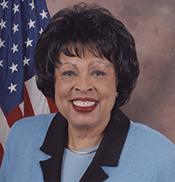
Rep. Diane E. WatsonD-CA-33 · May 21, 2004
Mr. Speaker, I rise today to speak on behalf of our Nation's foster care youth during National Foster Care month. As of January 2003, there were 33,000 children in Los Angeles County foster care,…
Bill Text
Latest available legislative text
Introduced in HouseIssued April 1, 2003
        [Congressional Bills 108th Congress]
[From the U.S. Government Publishing Office]
[H.R. 1534 Introduced in House (IH)]

108th CONGRESS
1st Session
H. R. 1534

To improve the ability of the child welfare system to prevent and
respond to child abuse and place children in safe, loving, and
permanent homes.

_______________________________________________________________________

IN THE HOUSE OF REPRESENTATIVES

April 1, 2003

Mr. Cardin (for himself, Mr. George Miller of California, Mr. Rangel,
Mr. Stark, Mr. Levin, and Mr. McDermott) introduced the following bill;
which was referred to the Committee on Ways and Means

_______________________________________________________________________

A BILL

To improve the ability of the child welfare system to prevent and
respond to child abuse and place children in safe, loving, and
permanent homes.

Be it enacted by the Senate and House of Representatives of the
United States of America in Congress assembled,

SECTION 1. SHORT TITLE.

This Act may be cited as the ``Child Protective Services
Improvement Act''.

SEC. 2. TABLE OF CONTENTS.

The table of contents of this Act is as follows:

Sec. 1. Short title.
Sec. 2. Table of contents.
TITLE I--ENSURING CHILD SAFETY BY PAYING FOR PERFORMANCE

Sec. 101. Grants and bonuses to improve State performance.
Sec. 102. Report on enhanced data on child well-being.
TITLE II--SUPPORTING QUALITY FRONT LINE WORKERS

Sec. 201. Child welfare service quality improvement grants.
Sec. 202. Increase in payment rate for States for expenditures for
short term training of staff of certain
child welfare agencies and court personnel.
TITLE III--COMBATTING THE EFFECTS OF SUBSTANCE ABUSE

Sec. 301. Child protection/alcohol and drug partnerships for children.
TITLE IV--INCREASING STATE FLEXIBILITY TO SERVE FAMILIES

Sec. 401. State option to align eligibility for foster care maintenance
payments and adoption assistance with TANF
eligibility.
Sec. 402. Kinship guardianship assistance payments for children.
Sec. 403. Modifications relating to child welfare demonstration
projects.
TITLE V--ENSURING ADEQUATE FUNDING FOR PREVENTION AND ADOPTION
ACTIVITIES

Sec. 501. Ensuring adequate funding for prevention and adoption
activities.
TITLE VI--EFFECTIVE DATE

Sec. 601. Effective date.

TITLE I--ENSURING CHILD SAFETY BY PAYING FOR PERFORMANCE

SEC. 101. GRANTS AND BONUSES TO IMPROVE STATE PERFORMANCE.

(a) In General.--Part B of title IV of the Social Security Act (42
U.S.C. 629-629i) is amended by adding at the end the following:

``Subpart 3--Improving State Performance

``SEC. 440. GRANTS AND BONUSES TO IMPROVE STATE PERFORMANCE.

``(a) Grants.--
``(1) In general.--Each State that is a qualified State
with respect to a fiscal year specified in paragraph (4) shall
be entitled to receive from the Secretary a grant for the
fiscal year in an amount equal to the amount described in
paragraph (2).
``(2) Amount of grant.--The amount of the grant payable to
a State under paragraph (1) for a fiscal year shall be the
amount that bears the same ratio to the total amount available
for grants under paragraph (1) for the fiscal year as the
number of children in the State who have not attained 18 years
of age bears to the number of children in all qualified States
for the fiscal year.
``(3) Use of grant.--
``(A) In general.--A State to which a grant is made
under paragraph (1) of this subsection shall use the
grant to carry out the corrective action plan referred
to in subsection (c)(1).
``(B) Carryover of funds.--A State to which a grant
is made under paragraph (1) for a fiscal year may
expend the grant in the fiscal year or the next fiscal
year.
``(C) No supplantation.--A State to which a grant
is made under paragraph (1) shall use the grant to
supplement and not supplant any Federal, State, or
local funds used for child welfare services or child
welfare training.
``(4) Reallotment of unexpended funds.--To the extent that
a grant made under paragraph (1) is not expended by the grantee
during the time provided by paragraph (3)(B), the grantee shall
remit the unexpended portion of the grant to the Secretary, who
shall make the amount available--
``(A) if the next fiscal year is fiscal year 2005,
for grants under paragraph (1) for fiscal year 2005; or
``(B) in any other case, for grants under
subsection (b) for the then next fiscal year.
``(5) Appropriation.--
``(A) In general.--Out of any money in the Treasury
of the United States not otherwise appropriated, there
are appropriated to carry out this subsection
$100,000,000 for each of fiscal years 2004 and 2005.
``(B) Availability.--The amounts appropriated by
subparagraph (A) shall remain available for grants
under this subsection through fiscal year 2005. Any
amount so appropriated that remains unexpended by the
Secretary at the end of fiscal year 2005 shall be
available for expenditure under subsection (b) through
fiscal year 2008.
``(b) Bonuses.--
``(1) In general.--Each State that is a qualified State
with respect to a fiscal year specified in paragraph (4) shall
be entitled to received from the Secretary a bonus for the
fiscal year in an amount equal to the amount described in
paragraph (2), if the Secretary determines that, in the
preceding fiscal year, the State made significant progress in
achieving the goals of the corrective action plan referred to
in subsection (c)(1).
``(2) Amount of grant.--The amount of the bonus payable to
a State under paragraph (1) for a fiscal year shall be the
amount that bears the same ratio to the total amount available
for grants under paragraph (1) for the fiscal year as the
number of children in the State who have not attained 18 years
of age bears to the number of such children in all qualified States to
which a bonus is so payable for the fiscal year.
``(3) Use of grant.--
``(A) In general.--A State to which a grant is made
under paragraph (1) of this subsection shall use the
grant to carry out the corrective action plan referred
to in subsection (c)(1).
``(B) Carryover of funds.--A State to which a grant
is made under paragraph (1) for a fiscal year may
expend the grant in the fiscal year or the next fiscal
year.
``(C) No supplantation.--A State to which a grant
is made under paragraph (1) shall use the grant to
supplement and not supplant any Federal, State, or
local funds used for child welfare services or child
welfare training.
``(4) Reallotment of unexpended funds.--To the extent that
a grant made under paragraph (1) is not expended by the grantee
during the time provided by paragraph (3)(B), the grantee shall
remit the unexpended portion of the grant to the Secretary, who
shall make the amount available for grants under paragraph (1)
for the then next fiscal year.
``(5) Appropriation.--
``(A) In general.--Out of any money in the Treasury
of the United States not otherwise appropriated, there
are appropriated to carry out this subsection
$100,000,000 for each of fiscal years 2006 through
2008.
``(B) Availability.--The amounts appropriated by
subparagraph (A) shall remain available for grants
under this subsection through fiscal year 2008.
``(c) Definitions.--
``(1) Qualified state.--In this section, the term
`qualified State' means, with respect to a fiscal year, a State
that--
``(A) has in effect during the fiscal year a
corrective action plan approved under section
1123A(b)(4); and
``(B) has submitted to the Secretary a document
which describes the efforts that were made by the State
to develop community involvement in establishing the
corrective action plan.
``(2) State.--The term `State' means each of the 50 States,
the District of Columbia, Puerto Rico, Guam, the United States
Virgin Islands, American Samoa, and the Northern Mariana
Islands.''.

SEC. 102. REPORT ON ENHANCED DATA ON CHILD WELL-BEING.

Not later than October 2004, the Secretary of Health and Human
Services shall provide to the Congress recommendations on improving the
quality and usefulness of data being collected through the Adoption and
Foster Care Analysis and Reporting System (in this section referred to
as ``AFCARS''). The Secretary should develop the recommendations in
consultation with State agencies which have functions related to child
welfare and with experts in fields related to child welfare. In
developing the recommendations, the Secretary shall consider modifying
AFCARS to include the collection and analysis of longitudinal data, as
well as entry and exit cohort analysis, and a measure of adoption
disruption.

TITLE II--SUPPORTING QUALITY FRONT LINE WORKERS

SEC. 201. CHILD WELFARE SERVICE QUALITY IMPROVEMENT GRANTS.

Part B of title IV of the Social Security Act (42 U.S.C. 620-629i)
is further amended by adding at the end the following:

``Subpart 4--Supporting Quality Front Line Workers

``SEC. 440A. CHILD WELFARE SERVICE QUALITY IMPROVEMENT GRANTS.

``(a) In General.--The Secretary, acting through the Administration
of Children and Families, shall make grants to States to improve the
quality of child welfare services by increasing the quality and
capacity of their child welfare workforce or by increasing the
coordination of their child welfare services.
``(b) Applications.--
``(1) Contents.--A State desiring to receive a grant under
this section shall submit to the Secretary an application that
includes the following:
``(A) Plan.--A detailed description of how the
State would use the grant, during the 5-year period
beginning with the date the grant is received, to
improve working conditions of child welfare workers in
any agency providing a service under the State plan
approved under subpart 1 or 2 of part B or part E in 1
or more ways described in paragraph (2), and an
explanation of how doing so would help the State
achieve the outcomes set forth in the Final List of
Child Welfare Outcomes and Measures (64 Fed. Reg.
45552-45554).
``(B) Baseline data on state-selected indicators.--
The information described in those subparagraphs of
paragraph (3) which describe the indicators that the
State intends to improve on using the grant, with
respect to all child welfare agencies in the State for
the fiscal year preceding the first fiscal year for
which the grant is requested.
``(C) Budget.--A budget showing how the State would
expend funds (including any grant funds provided under
this section) for child welfare services or the
improvement of the services.
``(2) Ways to improve working conditions.--The ways
described in this paragraph to improve working conditions of
child welfare workers are the following:
``(A) Increase the wages of supervisory and
nonsupervisory child welfare workers.
``(B) Increase the number of State supervisory and
nonsupervisory staff working on strengthening and
preserving families and improving child well-being,
permanency, and safety.
``(C) Reduce the turnover rate for supervisory and
nonsupervisory child welfare workers in the State, and
the number of supervisory and nonsupervisory staff
vacancies in child welfare agencies.
``(D) Improve the formal education and training of
supervisory and nonsupervisory child welfare workers.
``(E) Increase the number of supervisory and
nonsupervisory child welfare workers who have graduated
from an institution of higher education in such fields
of study as the Secretary determines are related to the
delivery of child welfare services.
``(F) Coordinate training, recruitment, and
retention strategies for child welfare workers.
``(G) Provide educational scholarships for fields
of study relevant to the purposes of parts B and E in
return for substantial service.
``(H) Implement strategies to increase the safety
of child welfare workers.
``(I) Enable the State child welfare agencies to
coordinate the provision of services with State and
local health care agencies, State and local alcohol and
drug abuse prevention and treatment agencies, State and
local mental health agencies, State and local housing
agencies, State and local agencies administering the
Temporary Assistance for Needy Families program, and
other welfare agencies to promote child safety,
permanence, and family stability.
``(J) Provide training to improve the ability of
child welfare workers to include and involve families
in planning decisions for children served by State
child welfare agencies.
``(3) Description of baseline data.--The data described in
this paragraph are the following:
``(A) The average salary of supervisory child
welfare workers, and of nonsupervisory child welfare
workers.
``(B) The average number of children or families,
per caseworker--
``(i) for caseworkers who provide services
for abused or neglected children and their
families;
``(ii) for caseworkers who provide services
to strengthen and preserve families with
children;
``(iii) for caseworkers who provide
adoption services; and
``(iv) for caseworkers who provide family
foster care services.
``(C) The total number of vacancies in supervisory
staff positions and in nonsupervisory staff positions,
and each such number expressed as a percentage of each
type of staff position.
``(D) The average rate at which supervisory child
welfare workers left employment, and at which
nonsupervisory child welfare workers left employment.
``(E) The average duration of employment of
supervisory child welfare workers and of nonsupervisory
child welfare workers.
``(F) The total number and percentage of
supervisory child welfare workers and of nonsupervisory
child welfare workers who have received a bachelor's or
more advanced degree from an institution of higher
education, in the aggregate, and broken down by field
of study.
``(G) The average number of staff for whom
supervisory child welfare workers are responsible.
``(H) The range and scope of pre-service and in-
service training opportunities, including numbers and
percentage of supervisory child welfare staff and of
nonsupervisory child welfare staff engaged in training
programs.
``(I) The number and severity of injuries and
threats to child welfare workers, and the strategies
used to address the safety of child welfare workers.
``(J) Data that indicates whether families and
children received support services (such as mental and
physical health care, food stamps, affordable housing,
and substance abuse prevention and treatment) needed to
create a stable home environment.
``(K) Such other indicators as the Secretary may by
regulation prescribe.
``(4) Amendment of applications.--A State may at any time
submit to the Secretary an amendment to the application of the
State under this subsection. On approval of such an amendment,
the application shall be considered to include the amendment.
``(c) Grants.--
``(1) In general.--On certification by the Secretary that a
State application for a grant under this section meets the
requirements of subsection (b) and that implementing the
activities described in the application would help the State
achieve some of the outcomes set forth in the Final List of
Child Welfare Outcomes and Measures (64 Fed. Reg. 45552-45554),
and on approval by the Secretary of the application, the State
shall be eligible to receive a grant under this section for
each fiscal year for which funds are available for such a
grant.
``(2) Grant amount.--The Secretary shall make a grant to
each State that is eligible to receive a grant under this
section for a fiscal year, in an amount equal to the lesser
of--
``(A) the amount finally allotted to or reserved
for the State under this subsection for the fiscal
year; or
``(B) 3 times the amount that the State has
committed to spend to carry out the activities
described in the approved application.
``(3) Reservation of funds.--
``(A) Puerto rico.--The Secretary shall reserve
1.75 percent of the funds appropriated pursuant to
subsection (j) for each fiscal year, for a grant to
Puerto Rico under this section for the fiscal year. If,
for a fiscal year, Puerto Rico does not submit to the
Secretary an application that meets the requirements of
subsection (b), the funds so reserved shall be
available for allotment under paragraph (4) of this
subsection for the succeeding fiscal year or (if the
succeeding fiscal year is fiscal year 2009) remitted to
the Treasury of the United States.
``(B) Other territories.--The Secretary shall
reserve 0.3 percent of the funds appropriated pursuant
to subsection (j) for each fiscal year, for grants
among the United States Virgin Islands, Guam, American
Samoa, and the Commonwealth of the Northern Mariana
Islands under this section in such amounts as the
Secretary deems appropriate for the fiscal year. If,
for a fiscal year, none of such territories submits to
the Secretary an application that meets the
requirements of subsection (b), the funds so reserved
shall be available for allotment under paragraph (4) of
this subsection for the succeeding fiscal year or (if
the succeeding fiscal year is fiscal year 2009)
remitted to the Treasury of the United States.
``(C) Indian tribes.--The Secretary shall reserve 2
percent of the funds appropriated pursuant to
subsection (j) for each fiscal year, for grants among
Indian tribes under this section in such amounts as the
Secretary deems appropriate for the fiscal year. If,
for a fiscal year, the Secretary does not receive from
any Indian tribe an application that meets the
requirements of subsection (b), the funds so reserved
shall be available for allotment under paragraph (4) of
this subsection for the succeeding fiscal year or (if
the succeeding fiscal year is fiscal year 2009)
remitted to the Treasury of the United States.
``(D) Technical assistance and evaluations.--The
Secretary shall reserve 0.7 percent of the funds
appropriated pursuant to subsection (j) for each fiscal
year, to pay the costs of providing technical
assistance and conducting evaluations under this
section.
``(4) Allotments.--
``(A) Initial allotment.--From the amount available
to carry out this section for a fiscal year that
remains after applying paragraph (3) for the fiscal
year (including any amount available for allotment
under this paragraph for the fiscal year after applying
paragraph (3) for the preceding fiscal year), the
Secretary shall initially allot to each State not
described in paragraph (3) for a fiscal year an amount
that bears the same ratio to the remaining amount as
the number of individuals who reside in the State and
have not attained 18 years of age bears to the total
number of such individuals in all States not described
in paragraph (3) that are eligible for a grant under
this section for such most recent fiscal year.
``(B) Final allotment.--The Secretary shall reduce
the amount initially allotted to each State with an
initial allotment under subparagraph (A) of more than
$300,000, on a pro rata basis, to the extent necessary
to ensure that the amount finally allotted to each such
State is not less than $300,000.
``(d) Use of Grant.--
``(1) In general.--A State to which a grant is made under
this section shall use the grant in accordance with the
approved application for the grant.
``(2) Availability of funds.--A State that receives funds
under this section shall remit to the Secretary any of such
funds that remain unexpended by the State at the end of the 2-
year period that begins with the date of the receipt.
``(3) No supplantation.--A State to which a grant is made
under this section shall use the grant to supplement and not
supplant any Federal, State, or local funds used for child
welfare services or child welfare training.
``(e) Monitoring.--The Secretary shall monitor the activities of
grantees under this section to ensure compliance with this section and
any State plan of the grantee under subpart 1.
``(f) Technical Assistance.--The Secretary may provide technical
assistance to any grantee to assist the grantee in improving the
quality of child welfare services, including strategies to recruit,
train, and retain high quality staff, and in complying with the
provisions of law referred to in subsection (e).
``(g) Enforcement.--
``(1) In general.--If the Secretary determines that, during
a fiscal year, a grantee under this section has not complied
with a requirement of this Act, the Secretary may--
``(A) in the case of the 1st such determination of
noncompliance, reduce by not less than 5 percent the
amount of the grant otherwise payable to the grantee
under this section for the fiscal year;
``(B) in the case of the 2nd such determination of
noncompliance, reduce by not less than 25 percent the
amount of the grant otherwise payable to the grantee
under this section for the fiscal year; and
``(C) in the case of the 3rd or any subsequent such
determination of noncompliance, withhold the payment of
a grant to the grantee under this section for any
succeeding fiscal year, notwithstanding subsection (c).
``(2) Recovery.--In the case of a determination under
paragraph (1) of grantee noncompliance, to the extent that a
penalty cannot be imposed under paragraph (1), the Secretary
shall require the grantee to remit to the Secretary the amount
of the penalty not able to be so imposed.
``(h) Evaluation.--
``(1) In general.--Not later than September 30, 2006, the
Secretary shall conduct an interim evaluation to determine
whether the grantees under this section have improved the
provision of child welfare services beyond the level reflected
in the baseline data set forth in the applications submitted by
the grantees under this section.
``(2) Final report.--Not later than September 30, 2008, the
Secretary shall submit to the Congress a written report that
contains the final evaluation of the Secretary.
``(i) Regulations.--The Secretary shall prescribe such regulations
as may be necessary to carry out this section, including regulations,
developed in consultation with the States, governing how to obtain the
baseline data described in subsection (b)(3).
``(j) Appropriation.--Out of any money in the Treasury of the
United States not otherwise appropriated, there are appropriated to the
Secretary not more than $100,000,000 for each of fiscal years 2004
through 2008 to carry out this section.
``(k) Definitions.--In this section:
``(1) Alaska native organization.--The term `Alaska Native
Organization' means any organized group of Alaska Natives
eligible to operate a Federal program under the Indian Self-
Determination Act (25 U.S.C. 450f et seq.) or the designee of
such a group.
``(2) Child welfare agency.--The term `child welfare
agency' means the State agency responsible for administering
subpart 1, and any public or private agency under contract with
the State agency to provide child welfare services.
``(3) Indian tribe.--The term `Indian tribe' means any
Indian tribe, band, Nation or other organized group or
community of Indians, including any Alaska Native Organization,
that is recognized as eligible for the special programs and
services provided by the United States to Indians because of
their status as Indians.
``(4) Institution of higher education.--The term
`institution of higher education' has the meaning given the
term in section 101 of the Higher Education Act of 1965.
``(5) State.--The term `State' means each of the 50 States,
the District of Columbia, Puerto Rico, Guam, the United States
Virgin Islands, American Samoa, and the Northern Mariana
Islands.''.

SEC. 202. INCREASE IN PAYMENT RATE FOR STATES FOR EXPENDITURES FOR
SHORT TERM TRAINING OF STAFF OF CERTAIN CHILD WELFARE
AGENCIES AND COURT PERSONNEL.

Section 474(a)(3)(B) of the Social Security Act (42 U.S.C.
674(a)(3)(B)) is amended to read as follows:
``(B) 75 percent of so much of such expenditures
(including travel and per diem expenses) as are for the
short-term training of--
``(i) current or prospective foster or
adoptive parents and the members of the staff
of State-licensed or State-approved child care
institutions providing care, or of State-
licensed or State-approved child welfare
agencies providing services, to foster and
adopted children receiving assistance under
this part,
``(ii) members of the staff of abuse and
neglect courts, agency attorneys, attorneys
representing children, parents, or guardians ad
litem, or other court-appointed special
advocates representing children in proceedings
of such courts, and
``(iii) persons employed by State, local,
or private nonprofit child-serving agencies
that are working with the State or local agency
administering the State plan under this part to
keep children safe and provide permanent
families for children,
in ways that increase the ability of such current or
prospective parents, guardians, staff members,
institutions, attorneys, advocates, and persons to
provide support and assistance to foster and adopted
children, whether incurred directly by the State or by
contract,''.

TITLE III--COMBATTING THE EFFECTS OF SUBSTANCE ABUSE

SEC. 301. CHILD PROTECTION/ALCOHOL AND DRUG PARTNERSHIPS FOR CHILDREN.

Part B of title IV of the Social Security Act (42 U.S.C. 620-629i)
is further amended by adding at the end the following:

``Subpart 5--Child Protection/Alcohol and Drug Partnerships For
Children

``SEC. 441. DEFINITIONS.

``In this subpart:
``(1) Alaska native organization.--The term `Alaska Native
Organization' means any organized group of Alaska Natives
eligible to operate a Federal program under the Indian Self-
Determination Act (25 U.S.C. 450f et seq.) or the designee of
such a group.
``(2) Administrative costs.--
``(A) In general.--The term `administrative costs'
means the costs for the general administration of
administrative activities, including contract costs and
all overhead costs.
``(B) Exclusion.--Such term does not include the
direct costs of providing services and costs related to
case management, training, technical assistance,
evaluation, establishment, and operation of information
systems, and such other similar costs that are also an
integral part of service delivery.
``(3) Eligible state.--The term `eligible State' means a
State that submits a joint application from the State agencies
that--
``(A) includes a plan that meets the requirements
of section 443; and
``(B) is approved by the Secretary for a 5-year
period after consultation with the Assistant Secretary
for the Administration for Children and Families and
the Administrator of the Substance Abuse and Mental
Health Services Administration.
``(4) Indian tribe.--The term `Indian tribe' means any
Indian tribe, band, Nation or other organized group or
community of Indians, including any Alaska Native Organization,
that is recognized as eligible for the special programs and
services provided by the United States to Indians because of
their status as Indians.
``(5) State.--
``(A) In general.--The term `State' means each of
the 50 States, the District of Columbia, and the
territories described in subparagraph (B).
``(B) Territories.--
``(i) In general.--The territories
described in this subparagraph are Puerto Rico,
Guam, the United States Virgin Islands,
American Samoa, and the Northern Mariana
Islands.
``(ii) Authority to modify requirements.--
The Secretary may modify the requirements of
this subpart with respect to a territory
described in clause (i) to the extent necessary
to allow the territory to conduct activities
through funds provided under a grant made under
this subpart.
``(6) State agencies.--The term `State agencies' means the
State child welfare agency and the unit of State government
responsible for the administration of the substance abuse
prevention and treatment block grant provided under subpart II
of part B of title XIX of the Public Health Service Act (42
U.S.C. 300x-21 et seq.).
``(7) Tribal organization.--The term `tribal organization'
means the recognized governing body of an Indian tribe.

``SEC. 442. GRANTS TO PROMOTE CHILD PROTECTION/ALCOHOL AND DRUG
PARTNERSHIPS FOR CHILDREN.

``(a) Authority To Award Grants.--The Secretary shall award grants
to eligible States and directly to Indian tribes in accordance with the
requirements of this subpart for the purpose of promoting joint
activities among Federal, State, and local public child welfare and
alcohol and drug abuse prevention and treatment agencies (and among
child welfare and alcohol and drug abuse prevention and treatment
agencies that are providing services to children in Indian tribes) that
focus on families with alcohol or drug abuse problems who come to the
attention of the child welfare system and are designed to--
``(1) increase the capacity of both the child welfare
system and the alcohol and drug abuse prevention and treatment
system to address comprehensively and in a timely manner the
needs of such families to improve child safety, family
stability, and permanence; and
``(2) promote recovery from alcohol and drug abuse
problems.
``(b) Notification.--Not later than 60 days after the date a joint
application is submitted by the State agencies or an application is
submitted by an Indian tribe, the Secretary shall notify a State or
Indian tribe that the application has been approved or disapproved.

``SEC. 443. PLAN REQUIREMENTS.

``(a) Contents.--Subject to subsection (c), the plan shall contain
the following:
``(1) A detailed description of how the State agencies will
work jointly to implement a range of activities to meet the
alcohol and drug abuse prevention and treatment needs of
families who come to the attention of the child welfare system
and to promote child safety, permanence, and family stability.
``(2) An assurance that the heads of the State agencies
shall jointly administer the grant program funded under this
subpart and a description of how they will do so.
``(3) A description of the nature and extent of the problem
of alcohol and drug abuse among families who come to the
attention of the child welfare system in the State, and of any
plans being implemented to further identify and assess the
extent of the problem.
``(4) A description of any joint activities already being
undertaken by the State agencies in the State on behalf of
families with alcohol and drug abuse problems who come to the
attention of the child welfare system (including any existing
data on the impact of such joint activities) such as activities
relating to--
``(A) the appropriate screening and assessment of
cases;
``(B) consultation on cases involving alcohol and
drug abuse;
``(C) arrangements for addressing confidentiality
and sharing of information;
``(D) cross training of staff;
``(E) co-location of services;
``(F) support for comprehensive treatment programs
for parents and their children; and
``(G) establishing priority of child welfare
families for assessment or treatment.
``(5)(A) A description of the joint activities to be funded
in whole or in part with the funds provided under the grant,
including the sequencing of the activities proposed to be
conducted under the 5-year funding cycle and the goals to be
achieved during such funding cycle. The activities and goals
shall be designed to improve the capacity of the State agencies
to work jointly to improve child safety, family stability, and
permanence for children whose families come to the attention of
the child welfare system and to promote their parents' recovery
from alcohol and drug abuse.
``(B) The description shall include a statement as to why
the State agencies chose the specified activities and goals.
``(6) A description as to whether and how the joint
activities described in paragraph (5), and other related
activities funded with Federal funds, will address some or all
of the following practices and procedures:
``(A) Practices and procedures designed to
appropriately--
``(i) identify alcohol and drug treatment
needs;
``(ii) assess such needs;
``(iii) assess risks to the safety of a
child and the need for permanency with respect
to the placement of a child;
``(iv) enroll families in appropriate
services and treatment in their communities;
and
``(v) regularly assess the progress of
families receiving such treatment.
``(B) Practices and procedures designed to provide
comprehensive and timely individualized alcohol and
drug abuse prevention and treatment services for
families who come to the attention of the child welfare
system that include a range of options that are
available, accessible, and appropriate, and that may
include the following components:
``(i) Preventive and early intervention
services for children of parents with alcohol
and drug abuse problems that integrate alcohol
and drug abuse prevention services with mental
health and domestic violence services, and that
recognize the mental, emotional, and
developmental problems the children may
experience.
``(ii) Prevention and early intervention
services for parents at risk for alcohol and
drug abuse problems.
``(iii) Comprehensive home-based,
outpatient, and residential treatment options.
``(iv) After-care support (both formal and
informal) for families in recovery that
promotes child safety and family stability.
``(v) Services and supports that focus on
parents, parents with their children, parents'
children, other family members, and parent-
child interaction.
``(C) Elimination of existing barriers to treatment
and to child safety and permanence, such as
difficulties in sharing information among agencies and
differences between the values and treatment protocols
of the different agencies.
``(D) Effective engagement and retention
strategies.
``(E) Pre-service and in-service joint training of
management and staff of child welfare and alcohol and
drug abuse prevention and treatment agencies, and,
where appropriate, judges and other court staff, to--
``(i) increase such individuals' awareness
and understanding of alcohol and drug abuse and
related child abuse and neglect;
``(ii) more accurately identify and screen
alcohol and drug abuse and child abuse in
families;
``(iii) improve assessment skills of both
child abuse and alcohol and drug abuse staff,
including skills to assess risk to children's
safety;
``(iv) increase staff knowledge of the
services and resources that are available in
such individuals' communities and appropriate
for such families; and
``(v) increase awareness of the importance
of permanence for children and the timelines
for decision making regarding permanence in the
child welfare system.
``(7) A description of the jurisdictions in the State
(including whether such jurisdictions are urban, suburban, or
rural) where the joint activities will be provided, and the
plans for expanding such activities to other parts of the State
during the 5-year funding cycle.
``(8) A description of the methods to be used in measuring
progress toward the goals identified under paragraph (5),
including how the State agencies will jointly measure their
performance in accordance with section 446, and how remaining
barriers to meeting the needs of families with alcohol or drug
abuse problems who come to the attention of the child welfare
system will be assessed.
``(9) An assurance of the coordination, to the extent
feasible and appropriate, of the activities funded under a
grant made under this subpart with the services or benefits
provided under other Federal or federally assisted programs
that serve families with alcohol and drug abuse problems who
come to the attention of the child welfare system, including
health, mental health, domestic violence, housing, and
employment programs, the temporary assistance to needy families
program funded under part A of this title, other child welfare
and alcohol and drug abuse prevention and treatment programs,
and the courts.
``(10) An assurance that not more than 10 percent of
expenditures under the plan for any fiscal year shall be for
administrative costs.
``(11) An assurance that alcohol and drug treatment
services provided at least in part with funds provided under a
grant made under this subpart shall be licensed, certified, or
otherwise approved by the appropriate State alcohol and drug
abuse agencies, or in the case of an Indian tribe, by a State
alcohol and drug abuse agency, the Indian Health Service, or
other designated licensing agency.
``(12) An assurance that Federal funds provided to the
State under a grant made under this subpart will not be used to
supplant Federal or non-Federal funds for services and
activities provided as of the date of the submission of the
plan that assist families with alcohol and drug abuse problems
who come to the attention of the child welfare system.
``(13) A description of the input that was obtained in the
development of the plan, from caseworkers, community advocates,
judges, and other agencies that serve families who come to the
attention of the child welfare system.
``(b) Amendments.--
``(1) In general.--An eligible State or Indian tribe may
amend, in whole or in part, its plan at any time through
transmittal of a plan amendment.
``(2) 60-day approval deadline.--A plan amendment is
considered approved unless the Secretary notifies an eligible
State or Indian tribe in writing, within 60 days after receipt
of the amendment, that the amendment is disapproved (and the
reasons for disapproval) or that specified additional
information is needed.
``(c) Requirements for Applications by Indian Tribes.--
``(1) In general.--In order to be eligible for a grant made
under this subpart, an Indian tribe shall--
``(A) submit a plan to the Secretary that
describes--
``(i) the activities the tribe will
undertake with both child welfare and alcohol
and drug agencies that serve the tribe's
children to address the needs of families who
come to the attention of the child welfare
agencies and have alcohol and drug problems;
and
``(ii) whether and how such activities
address any of the practice and policy areas in
subsection (a)(6); and
``(B) subject to paragraph (2) of this subsection,
meet the other requirements of subsection (a) unless,
with respect to a specific requirement of subsection
(a), the Secretary determines that it would be
inappropriate to apply the requirement to an Indian
tribe, taking into account the resources, needs, and
other circumstances of the Indian tribe.
``(2) Administrative costs; use of federal funds.--
Paragraphs (10) and (12) of subsection (a) shall not apply to a
plan submitted by an Indian tribe. The indirect cost rate
agreement in effect for an Indian tribe shall apply with
respect to administrative costs under the tribe's plan.
``(3) Authority for intertribal consortium.--The
participating Indian tribes of an intertribal consortium may
develop and submit a single plan that meets the applicable
requirements of subsection (a) (as so determined by the
Secretary) and paragraph (1) of this subsection.

``SEC. 444. APPROPRIATION; RESERVATION OF FUNDS.

``(a) Appropriation.--For the purpose of providing allotments to
eligible States and Indian tribes under this subpart and research and
training under subsection (b)(3), there is appropriated out of any
money in the Treasury not otherwise appropriated--
``(1) for fiscal year 2004, $100,000,000;
``(2) for fiscal year 2005, $100,000,000;
``(3) for fiscal year 2006, $150,000,000;
``(4) for fiscal year 2007, $200,000,000; and
``(5) for fiscal year 2008, $200,000,000.
``(b) Reservation of Funds.--With respect to a fiscal year:
``(1) Territories.--The Secretary shall reserve 2 percent
of the amount appropriated under subsection (a) for such fiscal
year for payments to Puerto Rico, Guam, the United States
Virgin Islands, American Samoa, and the Northern Mariana
Islands.
``(2) Indian tribes.--The Secretary shall reserve 2 percent
of the amount appropriated under subsection (a) for such fiscal
year for direct payments to Indian tribes and Indian tribal
organizations for activities intended to increase the capacity
of the Indian tribes and tribal organizations to expand
treatment, services, and training to assist families with
alcohol and drug abuse problems who come to the attention of
the child welfare agencies.
``(3) Research and training.--The Secretary shall reserve 1
percent of the amount appropriated under subsection (a) for
such fiscal year for practice-based research on the
effectiveness of various approaches for the screening,
assessment, engagement, treatment, retention, and monitoring of
families with alcohol and drug abuse problems who come to the
attention of the child welfare system.

``SEC. 445. PAYMENTS TO ELIGIBLE STATES AND INDIAN TRIBES.

``(a) Amount of Grant.--
``(1) Eligible states other than territories.--
``(A) In general.--From the amount appropriated
under section 444(a) for a fiscal year, after the
reservation of funds required under section 444(b) for
the fiscal year and subject to subparagraphs (B) and
(C) of this paragraph, the Secretary shall pay to each
eligible State (after the Secretary has determined that
the State has satisfied the matching requirement under
subsection (b) of this section) an amount that bears
the same ratio to the amount so appropriated for the
fiscal year as the number of children who have not
attained 18 years of age that reside in the eligible
State bears to the total number of children who have
not attained 18 years of age who reside in all eligible
States for the fiscal year.
``(B) Minimum allotment.--In no case shall the
amount of a payment to an eligible State for a fiscal
year be less than an amount equal to 0.5 percent of the
amount appropriated under section 444(a) for the fiscal
year, after the reservation of funds required under
section 444(b).
``(C) Pro rata reductions.--The Secretary shall
make pro rata reductions in the amounts of the
allotments determined under subparagraph (A) for a
fiscal year to the extent necessary to comply with
subparagraph (B).
``(2) Territories.--From the amounts reserved under section
444(b)(1) for a fiscal year, the Secretary shall pay to each
territory described in section 441(5)(B) with an approved plan
that meets the requirements of section 443 (after the Secretary
has determined that the territory has satisfied the matching
requirement under subsection (b) of this section) an amount
that bears the same ratio to such amount for such fiscal year as the
number of children under the age of 18 that reside in the territory
bears to the total number of children under the age of 18 who reside in
all such territories for such fiscal year.
``(3) Indian tribes or tribal organizations.--From the
amount reserved under section 444(b)(2) for a fiscal year, the
Secretary shall pay to each Indian tribe with an approved plan
that meets the requirements of section 443(c) (after the
Secretary has determined that the Indian tribe has satisfied
the matching requirement under subsection (b) of this section)
an amount that bears the same ratio to such reserved amount for
such fiscal year as the number of children who have not
attained 18 years of age in the Indian tribe bears to the total
number of such children in all Indian tribes with plans so
approved for such fiscal year, as determined by the Secretary
on the basis of the most current and reliable information
available to the Secretary. For purposes of making the
allocations required under the preceding sentence, an Indian
tribe may submit data and other information that the tribe has
on the number of Indian children who have not attained 18 years
of age for consideration by the Secretary.
``(b) Matching Requirement.--
``(1) In general.--In order to receive a grant under this
subpart for a fiscal year, an eligible State or Indian tribe
shall provide through non-Federal contributions the applicable
percentage determined under paragraph (2) for such fiscal year
of the costs of conducting activities funded in whole or in
part with funds provided under the grant. Such contributions
shall be paid jointly by the State agencies, in the case of an
eligible State, or by an Indian tribe.
``(2) Applicable percentage.--For purposes of paragraph
(1), the applicable percentage for an eligible State or Indian
tribe for a fiscal year is--
``(A) 15 percent, in the case of fiscal years 2004
and 2005;
``(B) 20 percent, in the case of fiscal years 2006
and 2007; and
``(C) 25 percent, in the case of fiscal year 2008.
``(3) Source of match.--The non-Federal contributions
required of an eligible State under this subsection may be in
cash or in kind, fairly evaluated, including plant, equipment,
or services. The contributions may be made directly or through
donations from public or private entities. Amounts provided by
the Federal Government, or services assisted or subsidized to
any significant extent by the Federal Government may not be
included in determining whether an eligible State has provided
the applicable percentage of such contributions for a fiscal
year.
``(c) Use of Funds.--Funds provided under a grant made under this
subpart may only be used to carry out activities specified in the plan,
as approved by the Secretary.
``(d) Deadline for Request for Payment.--An eligible State or
Indian tribe shall apply to be paid funds under a grant made under this
subpart not later than the beginning of the fourth quarter of a fiscal
year or such funds shall be reallotted under subsection (f).
``(e) Carryover of Funds.--Funds paid to an eligible State or
Indian tribe under a grant made under this subpart for a fiscal year
may be expended in that fiscal year or the succeeding fiscal year.
``(f) Reallotment of Funds.--
``(1) Eligible states.--In the case of an eligible State
that does not apply for funds allotted to the eligible State
under a grant made under this subpart for a fiscal year within
the time provided under subsection (d), or that does not expend
such funds during the time provided under subsection (e), the
funds which the eligible State would have been entitled to for
such fiscal year shall be reallotted to 1 or more other
eligible States on the basis of each such State's relative need
for additional payments, as determined by the Secretary, after
consultation with the Assistant Secretary for the
Administration for Children and Families and the Administrator
of the Substance Abuse and Mental Health Services
Administration.
``(2) Indian tribes.--In the case of an Indian tribe that
does not expend funds allotted to the tribe during the time
provided under subsection (e), the funds to which the Indian
tribe would have been entitled to for such fiscal year shall be
reallotted to the remaining Indian tribes that are implementing
approved plans in amounts that are proportional to the
percentage of Indian children in each such tribe who have not
attained 18 years of age.

``SEC. 446. PERFORMANCE ACCOUNTABILITY; REPORTS AND EVALUATIONS.

``(a) Performance Measurement.--The Secretary, in consultation with
the Assistant Secretary for the Administration for Children and
Families, the Administrator of the Substance Abuse and Mental Health
Services Administration, Chief Executive Officers of a State or
Territory, State legislators, State and local public officials
responsible for administering child welfare and alcohol and drug abuse
prevention and treatment programs, court staff, consumers of the
services, and advocates for children and parents who come to the
attention of the child welfare system, shall, within 12 months after
the date of the enactment of this subpart, establish indicators that
will be used to assess periodically the performance of eligible States
and Indian tribes in using grant funds provided under this subpart to
promote child safety, permanence, and well-being and recovery in
families who come to the attention of the child welfare system.
``(b) Secretarial Reports and Evaluations.--
``(1) Annual reports.--On the basis of reports submitted
under subsection (a), the Secretary, in consultation with the
Assistant Secretary for the Administration for Children and
Families and the Administrator of the Substance Abuse and
Mental Health Services Administration, shall report annually,
beginning on October 1, 2005, to the Committee on Ways and
Means of the House of Representatives and the Committee on
Finance of the Senate on the joint activities conducted with
funds provided under grants made under this subpart, the indicators
that have been established, and the progress that has been made in
addressing the needs of families with alcohol and drug abuse problems
who come to the attention of the child welfare system and in achieving
the goals of child safety, permanence, and family stability.
``(2) Evaluations.--Not later than 6 months after the end
of each 5-year funding cycle under this subpart, the Secretary
shall submit a report to the committees described in paragraph
(1) of this subsection that summarizes the results of the
evaluations conducted by eligible States and Indian tribes
under subsection (a)(5)(B), as reported by such States and
Indian tribes in accordance with subparagraphs (C) and (D) of
subsection (a)(5). The Secretary shall include in the report
required under this paragraph recommendations for further
legislative or administrative actions that are designed to
assist children and families with alcohol and drug abuse
problems who come to the attention of the child welfare
system.''.

TITLE IV--INCREASING STATE FLEXIBILITY TO SERVE FAMILIES

SEC. 401. STATE OPTION TO ALIGN ELIGIBILITY FOR FOSTER CARE MAINTENANCE
PAYMENTS AND ADOPTION ASSISTANCE WITH TANF ELIGIBILITY.

(a) Foster Care Maintenance Payments.--Section 472 of the Social
Security Act (42 U.S.C. 672) is amended--
(1) in subsection (a)(4)(A), by inserting ``, or at State
option, assistance under the State program funded under part A
(as in effect on December 31, 2002),'' after ``1996)''; and
(2) by adding at the end the following:
``(i) A child shall be treated as meeting the requirement of
section 472(a)(4)(A) only if the child meets the income and resource
standards and methodologies for determining eligibility for cash
assistance in effect under the relevant State plan or program referred
to in such section or, at State option, the standards and methodologies
in effect as of the date of determining the eligibility.''.
(b) Adoption Assistance.--Section 473 of such Act (42 U.S.C. 673)
is amended--
(1) in subsection (a)(2)(B)(i), by inserting ``, or at
State option, assistance under the State program funded under
part A (as in effect on December 31, 2002),'' after ``1996)'';
and
(2) by adding at the end the following:
``(7) A child shall be treated as meeting the requirement of
section 473(a)(2)(B)(i) only if the child meets the income and resource
standards and methodologies for determining eligibility for cash
assistance in effect under the relevant State plan or program referred
to in such section or, at State option, the standards and methodologies
in effect as of the date of determining the eligibility.''.
(c) Effective Date; Applicability.--The amendments made by this
section shall take effect on the date of the enactment of this Act, and
shall apply to applications for benefits under State plans approved
under part E of title IV of the Social Security Act that are submitted
on or after such date.

SEC. 402. KINSHIP GUARDIANSHIP ASSISTANCE PAYMENTS FOR CHILDREN.

(a) In General.--Part E of title IV of the Social Security Act (42
U.S.C. 670-679b) is amended by inserting after section 472 the
following:

``SEC. 472A. KINSHIP GUARDIANSHIP ASSISTANCE PAYMENTS FOR CHILDREN.

``(a) In General.--Each State with a plan approved under this part
may, at State option, enter into kinship guardianship assistance
agreements to provide kinship guardianship assistance payments on
behalf of children to grandparents and other relatives who have assumed
legal guardianship (as defined in section 475(7)) of the children for
whom they have cared as foster parents and for whom they have committed
to care for on a permanent basis.
``(b) Kinship Guardianship Assistance Agreement.--
``(1) In general.--In order to receive payments under
sectino 474(a)(5), a State shall--
``(A) negotiate and enter into a written, binding
kinship guardianship assistance agreement with the
prospective relative guardian of a child who meets the
requirements of this subsection; and
``(B) provide the prospective relative guardian
with a copy of the agreement.
``(2) Minimum requirements.--The agreement shall specify,
at a minimum--
``(A) the amount of, and manner in which, each
kinship guardianship assistance payment will be
provided under the agreement;
``(B) the additional services and assistance that
the child and relative guardian will be eligible for
under the agreement;
``(C) the procedure by which the relative guardian
may apply for additional services as needed, provided
the agency and relative guardian agree on the
additional services as specified in the case plan; and
``(D) subject to paragraph (4), that the State will
pay the total cost of nonrecurring expenses associated
with obtaining legal guardianship of the child.
``(3) Interstate application.--The agreement shall
provide--
``(A) that the agreement shall remain in effect
without regard to the State residency of the kinship
guardian; and
``(B) for the protection of the interests of the
child in any case where the kinship guardian and the
child move to another State while the agreement is in
effect.
``(4) No effect on federal reimbursement.--Nothing in
paragraph (2)(D) shall be construed as affecting the ability of
the State to obtain reimbursement from the Federal Government
for costs described in that paragraph.
``(c) Kinship Guardianship Assistance Payment.--
``(1) In general.--The kinship guardianship assistance
payment shall be based on consideration of the needs of the
relative guardian and of the child and shall be at least equal
to the amount of the foster care maintenance payment for which
the child would have been eligible if the child had remained in
foster care. The payment may be readjusted periodically based
on relevant changes in such needs.
``(2) Limitation.--
``(A) In general.--Except as provided in
subparagraph (B), no kinship guardianship assistance
payment may be made to a relative guardian for any
child who has attained 18 years of age.
``(B) Exceptions.--A kinship guardianship
assistance payment may be made to a relative guardian
with respect to a child who--
``(i) is a full-time student in a secondary
school or in the equivalent level of a
vocational or technical training program and
has not attained 19 years of age; or
``(ii) with respect to a child who the
State determines has a mental or physical
disability that warrants the continuation of
assistance until the child attains 21 years of
age.
``(d) Child's Eligibility for a Kinship Guardianship Assistance
Payment.--
``(1) In general.--A child is eligible for a kinship
guardianship assistance payment under this section if the State
agency determines the following:
``(A) The child has been--
``(i) removed from his or her home pursuant
to a voluntary placement agreement or as a
result of a judicial determination to the
effect that continuation in the home would be
contrary to the welfare of the child;
``(ii) under the care of the State agency
for the 12-month period ending on the date of
the agency determination; and
``(iii) eligible for foster care
maintenance payments under section 472.
``(B) Being returned home or adopted are not
appropriate permanency options for the child.
``(C) The child demonstrates a strong attachment to
the prospective relative guardian and the relative
guardian has a strong commitment to caring permanently
for the child.
``(D) With respect to a child who has attained 14
years of age, the child has been consulted regarding
the kinship guardianship arrangement.
``(2) Treatment of siblings.--With respect to a child
described in paragraph (1) whose sibling or siblings are not so
described--
``(A) the child and any sibling of the child may be
placed in the same kinship guardianship arrangement if
the State agency and the relative agree on the
appropriateness of the arrangement for the siblings;
and
``(B) kinship guardianship assistance payments may
be paid for the child and each sibling so placed.''.
(b) Conforming Amendments.--
(1) State plan requirement.--Section 471(a)(20) of such Act
(42 U.S.C. 671(a)(20)) is amended by striking ``before the
foster or adoptive parent may be finally approved for placement
of a child on whose behalf foster care maintenance payments or
adoption assistance payments'' and inserting ``or relative
guardian before the foster or adoptive parent or relative
guardian may be finally approved for placement of a child on
whose behalf foster care maintenance payments, adoption
assistance payments, or kinship guardianship assistance
payments''.
(2) Payments to states.--Section 474(a) of such Act (42
U.S.C. 674(a)) is amended--
(1) by striking the period at the end and inserting ``;
plus''; and
(2) by adding at the end the following:
``(5) an amount equal to the Federal medical assistance
percentage (as defined in section 1905(b) of the total amount
expended during such quarter as kinship guardianship assistance
payments under section 472A pursuant to kinship guardianship
assistance agreements.''.
(3) Definitions.--Section 475(1) of such Act (42 U.S.C.
675(1)) is amended by adding at the end the following:
``(F) In the case of a child with respect to whom
the permanency plan is placement with a relative and
receipt of kinship guardianship assistance payments
under section 472A, a description of--
``(i) the steps that the agency has taken
to determine that it is not appropriate for the
child to be returned home or adopted;
``(ii) the reasons why a permanent
placement with a fit and willing relative
through a kinship guardianship assistance
arrangement is in the child's best interests;
``(iii) the ways in which the child meets
the eligibility requirements for a kinship
guardianship assistance payment;
``(iv) the efforts the agency has made to
discuss adoption by the child's relative foster
parent as a more permanent alternative to legal
guardianship and, in the case of a relative
foster parent who has chosen not to pursue
adoption, documentation of the reasons
therefor; and
``(v) the efforts made by the State agency
to secure the consent of the child's parent or
parents to the kinship guardianship assistance
arrangement, or the reasons why the efforts
were not made.''.

SEC. 403. MODIFICATIONS RELATING TO CHILD WELFARE DEMONSTRATION
PROJECTS.

(a) Consideration of Demonstration Projects Promoting Child
Protection Arrangements.--Section 1130(a)(3) of the Social Security Act
(42 U.S.C. 1320a-9(a)(3)) is amended by adding at the end the
following:
``(D) If an appropriate application therefor is
submitted, the Secretary shall consider authorizing a
demonstration project which is designed to promote
community partnerships for protecting children,
including collaborative arrangements between child
welfare agencies and other public agencies or private
organizations which address child abuse, mental health,
early and periodic screening, diagnostic, and treatment
services, domestic violence, housing, education, or
early childhood activities.''.
(b) Extension of Authority To Approve Demonstration Projects.--
Section 1130(a)(2) of such Act (42 U.S.C. 1320a-9(a)(2)) is amended by
striking ``2002'' and inserting ``2008''.
(c) Elimination of Limitation on Number of Waivers.--Section
1130(a)(2) of such Act (42 U.S.C. 1320a-9(a)(2)) is amended by striking
``not more than 10''.
(d) Elimination of Limitation on Number of States That May Be
Granted Waivers To Conduct Demonstration Projects on Same Topic.--
Section 1130 of such Act (42 U.S.C. 1320a-9) is amended by adding at
the end the following:
``(h) No Limit on Number of States That May Be Granted Waivers To
Conduct Same or Similar Demonstration Projects.--The Secretary shall
not refuse to grant a waiver to a State under this section on the
grounds that a purpose of the waiver or of the demonstration project
for which the waiver is necessary would be the same as or similar to a
purpose of another waiver or project that is or may be conducted under
this section.''.
(e) Elimination of Limitation on Number of Waivers That May Be
Granted to a Single State for Demonstration Projects.--Section 1130 of
such Act (42 U.S.C. 1320a-9) is further amended by adding at the end
the following:
``(i) No Limit on Number of Waivers Granted to, or Demonstration
Projects That May Be Conducted by, a Single State.--The Secretary shall
not impose any limit on the number of waivers that may be granted to a
State, or the number of demonstration projects that a State may be
authorized to conduct, under this section.''.
(f) Streamlined Process for Consideration of Amendments to and
Extensions of Demonstration Projects Requiring Waivers.--Section 1130
of such Act (42 U.S.C. 1320a-9) is further amended by adding at the end
the following:
``(j) Streamlined Process for Consideration of Amendments and
Extensions.--The Secretary shall develop a streamlined process for
consideration of amendments and extensions proposed by States to
demonstration projects conducted under this section.''.
(g) Availability of Reports.--Section 1130 of such Act (42 U.S.C.
1320a-9) is further amended by adding at the end the following:
``(k) Availability of Reports.--The Secretary shall make available
to any State or other interested party any report provided to the
Secretary under subsection (f)(2), and any evaluation or report made by
the Secretary with respect to a demonstration project conducted under
this section, with a focus on information that may promote best
practices and program improvements.''.
(h) Technical Correction.--Section 1130(b)(1) of such Act (42
U.S.C. 1320a-9(b)(1)) is amended by striking ``422(b)(9)'' and
inserting ``422(b)(10)''.

TITLE V--ENSURING ADEQUATE FUNDING FOR PREVENTION AND ADOPTION
ACTIVITIES

SEC. 501. ENSURING ADEQUATE FUNDING FOR PREVENTION AND ADOPTION
ACTIVITIES.

(a) In General.--Subpart 2 of part B of title IV of the Social
Security Act (42 U.S.C. 629-629i) is amended by striking sections 436
and 437 and inserting the following:

``SEC. 436. APPROPRIATION; RESERVATION OF CERTAIN AMOUNTS.

``(a) Appropriation.--Out of any money in the Treasury of the
United States not otherwise appropriated, there are appropriated to
carry out this subpart $505,000,000 for each of fiscal years 2004
through 2008.
``(b) Reservation of Certain Amounts.--From the amount specified in
subsection (a) for any fiscal year, the Secretary shall reserve amounts
as follows:
``(1) Evaluation, research, training, and technical
assistance.--The Secretary shall reserve $12,600,000 for
expenditure by the Secretary--
``(A) for research, training, and technical
assistance costs related to the program under this
subpart; and
``(B) for evaluation of State programs based on the
plans approved under section 432 and funded under this
subpart, and any other Federal, State, or local
program, regardless of whether federally assisted, that
is designed to achieve the same purposes as the State
programs.
``(2) State court improvements.--The Secretary shall
reserve $16,600,000 for grants under section 437.
``(3) Indian tribes.--The Secretary shall reserve 2 percent
for allotment to Indian tribes in accordance with section
433(a).''.
(b) Conforming Amendments.--Such subpart is amended by
redesignating sections 438 and 439 as sections 437 and 438,
respectively.

TITLE VI--EFFECTIVE DATE

SEC. 601. EFFECTIVE DATE.

Except as provided in section 401(c), this Act shall take effect on
October 1, 2003.
<all>