Veterans' Compensation Cost-of-Living Adjustment Act of 2003

Legislative Activity
Stay on top of the latest movement without scrolling through every action
Became Public Law No: 108-147.
December 3, 2003
View full timeline
Introduced in House
April 9, 2003
Referred to the House Committee on Veterans' Affairs.
April 9, 2003
Sponsor introductory remarks on measure. (CR E723)
April 10, 2003
Referred to the Subcommittee on Benefits.
April 24, 2003
Subcommittee Consideration and Mark-up Session Held.
May 7, 2003
Forwarded by Subcommittee to Full Committee by Unanimous Consent.
May 7, 2003
Committee Consideration and Mark-up Session Held.
May 15, 2003
Reported by the Committee on Veterans' Affairs. H. Rept. 108-108.
May 19, 2003
Placed on the Union Calendar, Calendar No. 55.
May 19, 2003
Mr. Boozman moved to suspend the rules and pass the bill.
May 20, 2003 • 11:08 AM
Considered under suspension of the rules. (consideration: CR H4273-4275)
May 20, 2003 • 11:09 AM
DEBATE - The House proceeded with forty minutes of debate on H.R. 1683.
May 20, 2003 • 11:09 AM
At the conclusion of debate, the Yeas and Nays were demanded and ordered. Pursuant to the provisions of clause 8, rule XX, the Chair announced that further proceedings on the motion would be postponed.
May 20, 2003 • 11:16 AM
Considered as unfinished business. (consideration: CR H4556-4557)
May 22, 2003 • 1:27 PM
Passed/agreed to in House: On motion to suspend the rules and pass the bill Agreed to by the Yeas and Nays: (2/3 required): 426 - 0 (Roll no. 209).(text: CR 5/20/2003 H4273-4274)
May 22, 2003 • 1:34 PM
On motion to suspend the rules and pass the bill Agreed to by the Yeas and Nays: (2/3 required): 426 - 0 (Roll no. 209). (text: CR 5/20/2003 H4273-4274)
May 22, 2003 • 1:34 PM
Motion to reconsider laid on the table Agreed to without objection.
May 22, 2003 • 1:34 PM
Received in the Senate and Read twice and referred to the Committee on Veterans' Affairs.
May 22, 2003
Senate Committee on Veterans' Affairs discharged by Unanimous Consent.(consideration: CR S15481)
November 21, 2003
Senate Committee on Veterans' Affairs discharged by Unanimous Consent. (consideration: CR S15481)
November 21, 2003
Passed Senate without amendment by Unanimous Consent.
November 21, 2003
Message on Senate action sent to the House.
November 25, 2003
Presented to President.
November 26, 2003
Signed by President.
December 3, 2003
Became Public Law No: 108-147.
December 3, 2003
Voting History
1 vote recorded • Roll call available
Floor Debate
24 membersWhat members said about H.R. 1683 on the floor
 TD
 MF
 DH
 IS
 SWM+19
Floor Debate
24 membersWhat members said about H.R. 1683 on the floor
Mr. Speaker, I appreciate the gentlewoman yielding me this time. First of all, civil servants have had a large role in shaping this. There have been nine pilot programs the Department of Defense has…
Mr. Speaker, I appreciate the gentlewoman yielding me this time.
First of all, civil servants have had a large role in shaping this. There have been nine pilot programs the Department of Defense has piloted through the years, and in all of those cases, civil servants have, in many cases contrary to the labor bosses, opted for the new system as opposed to the old system with which they are currently operating.
The problem with the current system today is that we are contracting out where we ought to be able to use Federal employees because we do not have the flexibility in terms of deployment. So we are using uniformed officers behind desks to get jobs done, Federal contractors to get jobs done, what Federal workers are, in many cases, more capable of doing, and that is wrong.
I yield to the gentleman from California.
Mr. Speaker, reclaiming my time, I thank the gentleman, but let me just say it is 320,000 uniform personnel doing jobs that civil servants are certainly capable of doing. These are 320,000 we had to call up from the Reserves to do work, potentially, that could have gone and stayed with their families and everything else because of these arcane rules.
In addition to this, Under Secretary Wolfowitz testified under oath that this would increase the number of Federal civil servants. So this idea that it is going to lead to more contracting out is not only bunk, it is disingenuous, it is wrong, and I think it takes civil servants in the wrong direction.
Let me correct a couple of other things that have been said in the debate. We had a Member yesterday say that the right to receive veterans preference is gone, the right to discrimination protection, gone. Veterans preference, located in chapters 33 and 35 of title V, those are nonwaivable under this legislation. Discrimination protection is located in 2302(b)(2) of title V
and explicitly referred to in this legislation. Overtime pay in chapter 55 of title V, also nonwaivable.
In fact, for middle-level managers, what we have done is corrected some inequities in overtime pay. Currently, GS-12s, 13s, and 14s receive less working overtime than they receive in ordinary pay, and we have corrected that in this. This is a benefit to managers. We have raised the level that SES'rs and managers can get in bonus over what the current level is. So we have raised the levels of what Federal employees can earn.
As far as collective bargaining, NSPS states that we must ensure that employees may organize, bargain collectively, and participate through labor organizations of their own choosing. As for the right to an attorney, which was alleged to have been taken away, we do not mention it, but neither does the underlying legislation, and we have established an independent review panel to consider employee grievances.
We have worked hard on this legislation. We held a couple of hearings in the Committee on Government Reform on this, but, most importantly, this is designed from nine pilot programs where the Federal employees themselves have spoken to this and have voted strongly to opt for the new systems versus the existing system. It does not pay for performance; it pays on a seniority basis.
This will allow us to expedite hiring. It will allow us to do the kinds of things that we have already given other Federal agencies. This is not new ground. There are numerous Federal agencies currently, in sections 71, 73, and 75, that we have waived or altered, and we do this here. In fact, there is less flexibility here than Congress recently gave to the Department of Homeland Security.
Mr. Speaker, I might add, my colleagues who are arguing against this opposed those provisions in the Department of Homeland Security bill. We had an ensuing election on this issue. The voters spoke, and I think we have visited this issue once. There are fewer flexibilities here than we have in that as well.
I want to say a couple of other things. The Committee on Armed Services also had a day-long hearing and a 2-day markup of the DOD authorization bill. Dozens of the amendments offered there were also offered in our committee, and the votes were party line on these issues. They want to bring these same issues to the floor. I am not happy with every part of this rule. I had several amendments, particularly on the procurement side, that were part of the Committee on Government Reform's markup that were not included in the DOD bill that I could not get offered here. I understand the disappointment of those Members who are not able to have those heard at this point.
But 40,000 employees with over 20 years of experience want a new system, and defense of the current system not only leads to more outsourcing, it does not lead to the kind of performance-based pay and the salary levels that many of our best Federal employees are deserving of.
I worked in the private sector for a number of years. I worked for a company where our best asset was not our computers or our building; it was our people. They walked out the door every night; and we prayed to get them back because replacing them was costly, it created more inefficiencies, and it made us less competitive.
Those factors in the private sector ought to be extended to the public sector because our employees are our best asset, too. But I think we need to treat them well, I think we need to give them appropriate safeguards, which this legislation does. The unknown and the concerns by some on the other side are that all of this is not written by Congress. But we have put appropriate safeguards in this legislation. This will be part of a later debate, but I certainly support the rule.
I yield to the gentleman from Maryland.
As I stated earlier, we debated these thoroughly in both committees. I cannot speak to every amendment that is being offered on the floor of the House. I understand the gentleman's concern. I know we will get debate on the motion to recommit, and we are debating it now. But I was also disappointed in not being able to offer some amendments. In addressing that issue, I think that is probably above my pay grade.
Although we were privileged to have the gentleman testify before us.
I appreciate the gentleman's comments, and we did take some of his suggestions in the markup. The gentleman's testimony was not for naught.
Mr. Speaker, reclaiming my time, I include for the Record an editorial from the Honorable Donald H. Rumsfeld, printed in today's Washington Post.
Defense for the 21st Century
(By Donald H. Rumsfeld)
Rep. Ike Skelton (D-Mo.) laid out a number of objections on
this page yesterday to the president's proposed Defense
Transformation Act for the 21st Century. I respect Mr.
Skelton's long service, but I disagree with many of his
stated objections. Here is why.
Skelton argues that this legislation is the most sweeping
overhaul of the Defense Department since the 1986 Goldwater-
Nichols Act. He may be right--but that is precisely the
point. We are at this moment fighting the first wars of the
21st century with a department that has management and
personnel systems developed decades ago, at the height of the
Cold War.
The threats we face today are notably different from that
era. We learned on Sept. 11, 2001, that our nation is
vulnerable to enemies who hide in the caves and shadows and
strike in unexpected ways. That is why we must transform our
armed forces. Our forces need to be flexible, light and
agile, so they can respond quickly and deal with surprise.
The same is true of the men and women who support them in the
Department of Defense. They also need flexibility, so that
they can move money, shift people, design and deploy new
weapons more rapidly and respond to the continuing changes in
our security environment.
Today we do not have that kind of agility. In an age--the
information age--when terrorists move information at the
speed of an e-mail, money at the speed of a wire transfer and
people at the speed of a commercial jetliner, the Defense
Department is still bogged down in the bureaucratic processes
of the industrial age.
Consider: we have more than 300,000 uniformed personnel
doing jobs that should be done by civilians. That means that
nearly three times the number of troops that were on the
ground in Iraq during Operation Iraqi Freedom are doing
nonmilitary jobs that should be done by civilian personnel.
Why is that? It's because when managers in the department
want to get a job done, they go to the military. They know
they can manage military people, put them in a job, give them
guidance, transfer them from one task to another and change
the way they do things. They can't do that with the civil
service, because it is managed outside the Defense Department
by others, with a system of rules and requirements fashioned
for a different era.
The defense authorization bill has grown from only one page
in 1962 to a whopping 534 pages in 2001. The department is
required to prepare and submit some 26,000 pages of
justification, and more than 800 required reports to
Congress each year--many of marginal value, most probably
not read. Since 1975, the time it takes to produce a new
weapons system has doubled, even as new technologies are
arriving in years and months, not decades.
We are working to fix problems that we have the freedom to
fix. We have reduced management and headquarters staffs by 11
percent, streamlined the acquisition process by eliminating
hundreds of pages of unnecessary rules and red tape, and
begun implementing a new business management structure. But
we also need legislative relief. That is why we are asking
for:
Measures for transforming our system of personnel
management, so that we can gain more flexibility and agility
in the way we manage the more than 700,000 civilians in the
department. And let me be clear: The provisions we have
proposed explicitly bar nepotism.
Expanded authority for competitive outsourcing so that we
can get military personnel out of nonmilitary tasks and back
into the field.
Measures to protect our military training ranges so that
our men and women in uniform will be able to train as they
fight, while honoring our steadfast commitment to protecting
the environment.
It is true, as Rep. Skelton notes, that the Goldwater-
Nichols Act took four years for Congress to pass. But we do
not have four years to wait before we transform--the new
threats are here now. If anything, our experience in the
global war on terror has made the case for transformation
even more urgent. Because our enemies are watching us--
studying how we were successfully attacked, how we are
responding and how we might be vulnerable again. In distant
caves and bunkers, they are busy developing new ways to harm
our people--methods of attack that could kill not 3,000
people, but 30,000 or 300,000--or more. And they are not
struggling with bureaucratic red tape fashioned in the last
century as they do so.
The fact is that the transformation of our military
capabilities depends on the transformation of the way the
Defense Department operates. This does not mean an end to
congressional oversight. What it means is that we need to
work together to ensure the department has the flexibility to
keep up with the new threats emerging as this century
unfolds.
Mr. Speaker, I yield myself such time as I may consume. (Mr. FROST asked and was given permission to revise and extend his remarks.) Mr. Speaker, for all of my 25 years in Congress I have worked for…
Mr. Speaker, I yield myself such time as I may consume.
(Mr. FROST asked and was given permission to revise and extend his remarks.)
Mr. Speaker, for all of my 25 years in Congress I have worked for a strong national defense. Like so many pro-defense Democrats, I have bent over backwards to put politics aside and work together to support America's men and women in uniform. That cooperative approach is fundamental to our efforts to keep partisan politics from polluting the Armed Forces.
So, repeatedly on the House floor and in the Committee on Rules, I have urged the Republican leadership to stop their assault on the bipartisan cooperation that has defined our approach to defense policy for so long. In response, the chairman of the Committee on Rules kept holding out hope that maybe, just maybe, in this second rule for the defense authorization bill the committee would allow a full and bipartisan consideration of serious defense issues.
Last night, very late, the Committee on Rules reported out the second rule. Guess what? It does even more violence to the tradition of bipartisanship than the first rule did. For the second day in a row, the Republican leadership has prevented the House from considering serious and substantive issues in the defense authorization bill. For the second day in a row, they cast aside bipartisanship to protect the partisan and right-wing ideology that has been attached to this defense authorization bill. This is a shameful way to run this institution, an institution that is supposed to allow the voices of all Americans to be heard.
For instance, Republican leaders used this rule to again defend their assault on America's environmental protections. The ranking members of the Committee on Resources and the Committee on Energy and Commerce, the gentleman from West Virginia (Mr. Rahall) and the gentleman from Michigan (Mr. Dingell), offered their reasonable substitute to Republicans on environmental language. Republican leaders refused to allow the House to vote on this substitute.
To prevent terrorists from getting nuclear, biological, and chemical weapons, the gentleman from South Carolina (Mr. Spratt), the second ranking Democrat on the Committee on Armed Services and an acknowledged expert on defense issues, once again tried to strengthen America's cooperative threat reduction program, but the Republican leadership once again refused to allow his amendment, in spite of the fact that it simply does what President Bush has asked for.
To protect the American taxpayers, the gentleman from California (Mr. Waxman) tried to require that contracts over $1 million be awarded only in open bidding process, but Republican leaders decided to make it easier for big companies, for example, Halliburton, Brown and Root, Bechtel, to get private deals, so they rejected the amendment of the gentleman from California (Mr. Waxman).
The gentleman from Mississippi (Mr. Taylor), a staunch defense hawk from Mississippi, had a substantive amendment relating to the next round of base closures. But instead of allowing him and the House the vote they deserve, Republican leaders simply shut out his amendment.
Similarly, Committee on Rules Republicans blocked three important amendments that I offered to address defense issues that I have pursued for some time: helping immigrant soldiers earn U.S. citizenship, providing tuition refunds to Reservists called to active duty, and tax fairness for civilian defense employees serving in combat zones.
Finally, Mr. Speaker, Republican leaders are using this rule to rig the game in favor of their attack on worker rights at the Pentagon. Now, these are the same Pentagon employees who showed such bravery and sacrifice on September 11. So the gentleman from Tennessee (Mr. Cooper), the gentleman from Illinois (Mr. Davis), and the gentleman from Maryland (Mr. Van Hollen) proposed an employees' bill of rights. It is a common-sense approach to protecting those public servants who work to protect us. It has the support of America's firefighters. But Republican leaders refused to allow the House to vote to protect Pentagon employees.
All in all, Mr. Speaker, this rule makes a mockery of the bipartisan cooperation that has been the keystone to our approach to defense policy, so I urge my colleagues to oppose the previous question.
If we defeat the previous question, I will amend the rule to allow the House to consider the Pentagon employee bill of rights. If the previous question passes, I urge a no vote on this rule. This is the only way to restore some semblance of bipartisanship to this process and to safeguard America's national defense policy from the partisanship and right wing ideology that are tainting this bill.
Mr. Speaker, I reserve the balance of my time.
Mr. Speaker, I yield myself such time as I may consume.
My friend from California, the chairman, I am afraid has somewhat of a selective memory. I have handled the defense authorization rules on this floor for 25 years; and when we were in the majority, we always made in order the main issues of contention under the defense bill. Sometimes they were amendments that I personally opposed and that other prodefense Members on the Democratic side opposed, but we made them in order so that the House could express its will on the main issues raised in the Defense Authorization Bill.
This happened on numerous occasions. Sometimes those amendments came from people to my left in the Democratic Party who perhaps wanted to eliminate certain weapons systems. Sometimes those amendments came from conservative Republicans who did not like things that were in the bill. The main issues, not peripheral issues, and we appreciate the fact that some issues were made in order, some amendments were made in order that individual Members felt strongly about; but when we were in the majority, when there were significant issues that had support from a large number of Members either on our side or on the Republican side, we made those amendments in order and let the House express its will.
There were numerous instances when I personally voted against amendments that were included in the rule that we made in order and that other prodefense Democrats opposed, but we thought that the House should have the opportunity to express its will.
I yield to the gentleman from California.
Reclaiming my time, I would point out to the gentleman that when we were in the majority we did not try and dictate what amendments the minority will offer. We did not say, we will give you a Democratic amendment on that subject but the Republicans cannot offer the amendment they want. That is exactly what they have done in the reverse here. They said, we will give you a Republican amendment on this subject, but we will not let the Democrats offer the amendments they want. Of course, Democrats would offer a different amendment on a particular issue than Republicans would. Republicans would offer an amendment which was, of course, much more friendly to the basic provisions in the bill.
Mr. Speaker, I yield 3 minutes to the gentleman from South Carolina (Mr. Spratt).
(Mr. SPRATT asked and was given permission to revise and extend his remarks.)
Mr. Speaker, I yield 2 minutes to the gentleman from Maryland (Mr. Van Hollen).
Mr. Speaker, I yield 2 minutes to the gentleman from Missouri (Mr. Skelton).
Mr. Speaker, I yield 3 minutes to the gentleman from Michigan (Mr. Dingell).
(Mr. DINGELL asked and was given permission to revise and extend his remarks.)
Mr. Speaker, I yield 2 minutes to the gentleman from Tennessee (Mr. Cooper).
Mr. Speaker, I yield 1\1/2\ minutes to the gentleman from Maryland (Mr. Wynn).
Mr. Speaker, I yield 1\1/2\ minutes to the gentlewoman from California (Mrs. Davis).
Mr. Speaker, I yield 1 minute to the gentleman from Oregon (Mr. Blumenauer).
Mr. Speaker, I yield 1 minute to the gentleman from Texas (Mr. Reyes).
Mr. Speaker, I yield such time as he may consume to the gentleman from Missouri (Mr. Skelton).
(Mr. SKELTON asked and was given permission to revise and extend his remarks.)
Mr. Speaker, I yield 1 minute to the gentleman from California (Mr. George Miller).
(Mr. GEORGE MILLER of California asked and was given permission to revise and extend his remarks.)
Mr. Speaker, I yield 2 minutes to the gentleman from Mississippi (Mr. Taylor).
Mr. Speaker, I yield myself the balance of my time.
Mr. Speaker, I urge Members to vote ``no'' on the previous question.
If the previous question is defeated, I will offer an amendment to the rule that will make in order the Cooper/Davis/Van Hollen Civil Service Bill of Rights amendment. Last night, the Republican majority refused to allow the House to consider this amendment. The Republican leadership had decided what kind of Democratic amendment would be acceptable to be included in the rule and since no Democrat was willing to toe the Republican Party line, Democrats have been shut out once again on a straight party line vote.
The bill we are considering today makes enormous and far-reaching changes in the personnel laws affecting civilian defense employees. Furthermore, it does so with virtually no input or oversight from Congress. It leaves this massive overhaul in the hands of the Secretary of Defense.
The Cooper/Davis/Van Hollen amendment would spell out an employee bill of rights to ensure that these valuable employees do not lose their basic employee rights. Yet under this unfair rule it will not be allowed to come to the floor for a vote.
Mr. Speaker, it is hard for me to believe that just a few weeks after the war in Iraq, after all of us heaped deserving praise on all employees of the Defense Department, both military and civilian, that we would pull the rug out from underneath these patriotic, hard-working Americans.
Let me make it very clear. A ``no'' vote will not stop the House from taking up the Department of Defense authorization. However, a ``yes'' vote amounts to slamming the door in the face of the military's civilian employees.
As you cast your vote, think about these people and whether you will turn your back on them or whether you will do the right thing and vote to allow this amendment.
Mr. Speaker, I ask unanimous consent to insert the text of the amendment and extraneous materials immediately prior to the vote on the previous question.
Mr. Speaker, I object to the vote on the ground that a quorum is not present and make the point of order that a quorum is not present.
Mr. Speaker, will the gentleman yield? Mr. Speaker, I thank the gentleman for yielding. I agree with the gentleman. I think that this bill is going to provide for more jobs for civil service…
Mr. Speaker, will the gentleman yield?
Mr. Speaker, I thank the gentleman for yielding.
I agree with the gentleman. I think that this bill is going to provide for more jobs for civil service employees because it is easier when we have a job to do under this massive bureaucracy we have now and the SECDEF says, I need that job done, can we have a civil servant do it? And the answer is, we can in 6 months. So the Secretary then does one of two things: He says, okay, let us get a contractor to do it, if we cannot get one of our own guys to do it the other alternative is let us get a sergeant to do it. The sergeant salutes and says, yes, sir, and he goes and gets the information he needs to do the job and he does it.
So the idea that we are going to be contracting the civil service force as a result of this is absolutely not accurate. In my opinion, we are going to have more people. Secretary Rumsfeld said there are, right now, under his estimate, some 300,000 uniformed people, people in the military, doing jobs that civil service folks could do if we could get the bureaucracy out of the way.
Mr. Speaker, let me just say that the distinguished whip on the other side has made a point that more time should be given to this issue.
We are doing a $400 billion bill; and arguably the decisions on hundreds of weapons system that we are approving, both whether we are talking about the high-tech stuff or the low-tech stuff that we are bolstering in this bill, those decisions could have life and death impact, and yet we moved this bill through.
I want to assure the gentleman that we gave more time to this issue. We did a 10-hour hearing on this issue, largely at the insistence of the distinguished ranking member, the gentleman from Missouri (Mr. Skelton), but we did a 10-hour hearing. That is more time than we gave any single weapons system in the entire DOD bill. So the argument can be made that we should have 10 times as many hearings as we have, and the gentleman knows that in this House and on this floor we have a myriad of responsibilities. We spent more time on this than any single weapons system in the entire DOD bill, and we had a 25-hour markup. I would say a very substantial portion of that markup, without limitation to debate, was afforded all of the Members.
Lastly, the chairman of the Committee on Government Reform makes a good point. I listened to the concerns. I listened early on to the gentleman from South Carolina (Mr. Spratt) and the gentleman from Oklahoma (Mr. Cole) and the gentlewoman from California (Mrs. Davis). We sat down and put together this independent appeals board that is going to be afforded anyone and everyone. So we spent a lot of time on this. This was not hastily thrown together.
Lastly, the gentleman from Tennessee (Mr. Cooper) made a good point. He said we are putting a major entrustment to the Secretary of Defense to build a new system, and we all agree in many ways it is broken. I am looking at this union dispute over whether they should have cancelled the annual picnic, and it ended up costing $750,000 of taxpayer money to decide whether or not you should cancel the picnic. There are changes that need to be made.
Lots of good people involved themselves on this and worked on this; and
this is an excellent, excellent product. I want to thank everybody who had suggestions because a number of the concerns from Democrats and Republicans were addressed. We are entrusting the Secretary of Defense, who with his team took 300,000 American lives into a very dangerous military theater, and answered to us and did a good job with that entrustment. He deserves some degree of respect, and he has merited the empowerment to move forward and build a new system under our guidance.
We are going to be reviewing everything he has done in a few months. We can change things that he does that we do not like; but certainly giving him an opportunity to revamp his shop to make it better, not just for DOD and the taxpayers but also for the folks that live and work in this system, the Federal employees.
Mr. Speaker, I think we did a good job of working this. We can always spend more time, and I would say to the gentleman from Maryland (Mr. Hoyer) that could be said about every single weapons system that comes up here.
I thank the gentlewoman for yielding me this time.
Mr. Speaker, the gentleman is aware of the map that I put up of Camp Pendleton that showed the overlays on the various environmental restrictions. I have gone through that a number of times. It has got the areas for the gnatcatcher, it has got the estuarine sanctuary, it has got the closeout for the beach. The gentleman is aware that there is about 17 miles of beach there where the Marines practice their amphibious landings. Is it the gentleman's claim that that beach is now open for use for the United States Marines?
I yield to the gentleman from Oregon.
Let me ask the gentleman further, because we are going to have this thing sorted out before this bill is over. Is it the gentleman's contention that the Marine Corps' position is they understand that they can use that beach and they simply have not used it, that that beach is available for amphibious landings?
Did the gentleman ask the Marines? That is my question, I guess.
Let me just tell the gentleman that if you have these agreements that they put in place, those agreements are made by several parties: one, Fish and Wildlife; one, State resources, in California that is Fish and Game; and, lastly, the Service. Since we want to make sure we are all on the same playing field here before this debate is over, I would ask the gentleman, we have got a couple of hours here, to check with the U.S. Marine Corps. I will be happy to be with him when we check on it and we can come to the floor and give together an opinion on how much land is ruled off-limits.
My information from the Marine Corps is that they cannot use that beach. That is not the small part of the beach that is up in the north that they use for the nuclear power plant. Nobody has claimed you want to make amphibious landings at a nuclear power plant.
I would ask the gentleman, since he did not have a direct communication with the Marine Corps, if he could get that, and I will work with him, and we will try to come in with the same sheet of music.
Let me just finish by saying that my information from DOD as of last week is that, currently, of that 17 miles, only roughly one- fifth of a mile, that is roughly one one-hundred-and-fiftieth or one one-hundredth of this shoreline where the Marines practice their amphibious landings is available for use. So we have got totally disparate views. The gentleman says the beach is open. The Marines tell me that the beach is closed. We will be happy to work with him and get a communication from the Marine Corps.
Mr. Speaker, I rise in opposition to this rule. When I testified before the Committee on Rules, Mr. Speaker, I specifically asked that committee for several major amendments, Democratic amendments,…
Mr. Speaker, I rise in opposition to this rule.
When I testified before the Committee on Rules, Mr. Speaker, I specifically asked that committee for several major amendments, Democratic amendments, and that they be made in order. The first was the Cooper amendment dealing with civil service changes, which would establish a bill of rights for civilian workers within that department. The second, the Spratt amendment, on cooperative threat reduction, which, by the way, Mr. Speaker, the President of the United States requested. The third, the Taylor amendment on base closure. We should have a full and fair debate on that. And the Dingell-Rahall amendment on the environment. The dean of the House, the gentleman from Michigan (Mr. Dingell), was not given that amendment. As a matter of fact, none of those four amendments were made in order. That is, Mr. Speaker, simply wrong.
Regardless of how Members might feel on the substance of amendments, it is wrong that a major substantive policy amendment is kept from debate. That should not happen. It should be allowed. It should be debated fully on this floor. This is a deliberative body, and many have said the most deliberative body in the whole world. Yet, Mr. Speaker, we cannot debate key issues that come before us. This is not a full debate. It deserves that. We in this institution do not deserve this disservice, and I cannot agree, sadly, with this rule.
Mr. Speaker, I include for the Record my op-ed article entitled ``Overhaul Without Oversight'' from the Washington Post dated May 21.
[From the Washington Post, May 21, 2003]
Overhaul Without Oversight
(By Ike Skelton)
I believe history will show that the swiftness of America's
military victory in Iraq was due in large part to the in-
depth training of our officers in strategy and plans and to
the military's application of that training in the
operational plans developed in the months before the war.
Many people, including the Secretary of Defense, had detailed
lists of what could go wrong. We avoided those outcomes,
partly thanks to luck but mostly because of deliberate
military planning that sought out and compensated for
potential risks and unintended consequences.
Last month, as Congress was departing for a two-week
recess, the Defense Department submitted a 200-page draft
``transformation'' bill that requests extensive new
authorities. It is not an understatement to say that this
bill, taken as a whole, is the most sweeping defense reform
legislation proposed since the Goldwater-Nichols Act of 1986,
which changed both the structure and the policies governing
our military. The only thing that is obvious and consistent
throughout the 50 provisions included in this bill is the
aggregation of power sought for the Department of Defense,
removing the legal restrictions and congressional oversight
that should safeguard against any abuses, however
unintentional. This approach is a rush to judgment that will
affect vast numbers of people and, in many cases, will
enshrine bad policy in law.
Major reassignments of constitutional authority such as
this demand the same sort of thoughtful foresight as a war
plan. In fact, the Goldwater-Nichols legislation took
Congress four years to pass. The armed services committees of
both houses of Congress held dozens of hearings and spent
months drafting a comprehensive and bipartisan bill. We did
this because the scope of the legislation was broad, the
potentially unforeseen implications were numerous and the
impact on the lives of all those who serve this nation was
enormous.
The House of Representatives is to consider and vote on a
defense authorization bill today that has much to commend it.
It will authorize $400 billion to ensure that our forces
remain the best trained and best equipped in the world. But
it will also include large pieces of the transformation
package--even though the committee has held fewer than five
hearings, and most of those with less than a week's notice.
Without the time to investigate and ask the tough questions,
we do not know what the implications of these changes are.
And so we, unlike Gen. Tommy Franks in Iraq, cannot build a
plan to avoid the worst outcomes.
The proposed legislation makes sweeping changes to both
military and civilian personnel systems. On the civilian
side, the Defense Department wants unfettered freedom to hire
and fire its nearly 700,000 employees. Congress had a long,
contentious debate over similar personnel proposals when
creating the Department of Homeland Security. That
legislation is barely being implemented now, and there has
been no opportunity to evaluate its results. The Defense
Department wants changes that are even more dramatic,
including, just as one example, the repeal of laws preventing
nepotism. What justification based on our national security
or sound management principles can justify that? What message
does this send to the hundreds of thousands who have
dedicated their careers to the service of this nation? And
why do such changes need to be rushed through now, when a
successful military campaign has shown that the existing
system works?
The department also is requesting extensive exemptions from
a host of environmental laws that have helped safeguard the
long-term health of our communities and of the global
environment. As a solidly pro-military member of Congress, I
believe the readiness and exceptional training of our troops
are of paramount importance and should be taken into account
in our environmental laws. But the Defense Department has not
yet made use of the legal remedies that already exist to
accommodate military readiness. Operations in Iraq showed the
exquisite capability of the U.S. military trained under the
current system. Changing the law at this point has not been
shown to be needed for military readiness, but it will
certainly undermine the legal structure that ensures the
nation's environmental health.
The Constitution establishes Congress as a counterweight to
executive authority for good reasons--to guard against the
excessive aggregation of any administration's power and to
ask critical questions that allow better policy and better
law to be made. When we in Congress are doing our jobs well,
we ask what every American should want to know: Why is this
necessary and what are the downsides of taking this action?
Without the ability to question and consider fully the
implications of what we do, we abandon the planning needed to
protect our nation's security and to protect those who serve
their nation. We would not accept that of the officers
planning a military campaign. We should not accept it from
our political leaders either.
Mr. Speaker, by direction of the Committee on Rules, I call up House Resolution 247 and ask for its immediate consideration. Mr. Speaker, for purposes of debate only, I yield the customary 30 minutes…
Mr. Speaker, by direction of the Committee on Rules, I call up House Resolution 247 and ask for its immediate consideration.
Mr. Speaker, for purposes of debate only, I yield the customary 30 minutes to the gentleman from Texas, Mr. Frost, pending which I yield myself such time as I may consume. During consideration of this resolution, all time yielded is for purposes of debate only.
Yesterday, the Committee on Rules met and granted a structured rule for H.R. 1588, the National Defense Authorization Act for Fiscal Year 2004. This rule provides for further consideration of the bill and makes in order only those amendments printed in the Committee on Rules report accompanying the resolution and amendments en bloc described in section 2 of the resolution.
The amendments printed in the report shall be considered only in the order printed in the report, except as specified in section 3 of the resolution, may be offered only by a Member designated in the report, shall be considered as read, and shall not be subject to a demand for division of the question in the House or in the Committee of the Whole.
Each amendment shall be debatable for 10 minutes, unless otherwise specified in the report, equally divided and controlled by the proponent and an opponent and shall not be subject to amendment, except that the chairman and ranking minority member of the Committee on Armed Services may each offer one pro forma amendment for the purpose of further debate on any pending amendment.
Finally, the rule provides one motion to recommit with or without instructions.
This is a fair rule. It is a traditional, structured rule for defense authorization, and it provides for debate on 30 additional amendments that deal with pertinent issues, including personnel issues, maritime security, quality-of-life issues for our servicemen and women, and a number of noncontroversial concerns.
The most controversial of these measures is certain to be the modernization of the personnel system. Modernizing the management system is imperative to national security and the retention and recruitment of civilian personnel.
The Committee on Armed Services believes that the important lessons learned from various demonstration projects within DOD should be applied across the Department. These projects have shown to improve the expeditious hiring of qualified personnel, have been valuable in providing flexible personnel compensation and assignment systems, and have improved organizational efficiency. These demonstration projects have also been highly successful in attracting and maintaining high- quality work forces.
The reforms included in this legislation would be similar to the flexibility provided to the Department of Homeland Security.
Finally, I believe that the Secretary of Defense should have more flexible management authority.
H.R. 1588 is more than just a signal to our soldiers, sailors, airmen, and Marines that this Nation recognizes their sacrifices. It is the means by which we meet our commitment to providing them a decent quality of life by providing an across-the-board 4.1 percent pay increase for military personnel, so as to sustain the commitment and professionalism of America's all-voluntary
Armed Forces and the families that support them.
While our men and women in uniform have swiftly dispatched our enemies abroad, they face increasingly complex personal and professional challenges at home. We must do more to take care of those who are putting their lives on the line to defend our freedom, and for the families that support them.
Currently, the Survivor Benefit Program for the survivor of an injured or ill service member who lives long enough to be disability retired is better than the benefit for the survivor of a service member who dies instantaneously. I am deeply concerned about this inequity and am pleased that this legislation recommends that the Secretary of Defense review SPB procedures and propose legislation to ensure equitable treatment for the survivors of all members of our military, regardless of their circumstances.
With Memorial Day on Monday, it is only fitting to remember those who gave the ultimate sacrifice in the defense of our country. Let us take this opportunity to reaffirm our commitment to those who are currently defending our homeland and abroad by passing this rule and the underlying legislation.
Mr. Speaker, I reserve the balance of my time.
Mr. Speaker, I yield such time as he may consume to the gentleman from California (Mr. Dreier), the distinguished chairman of the Committee on Rules.
(Mr. DREIER asked and was given permission to revise and extend his remarks.)
Mr. Speaker, I yield such time as he may consume to the gentleman from Georgia (Mr. Linder), another member of the Committee on Rules.
Mr. Speaker, I continue to reserve the balance of my time.
Mr. Speaker, I yield such time as he may consume to the gentleman from Virginia (Mr. Tom Davis).
Mr. Speaker, I yield myself such time as I may consume.
Mr. Speaker, I would just like to make the comment that we do have a committee system in this House because not everybody can be on every committee. They make recommendations to the full House, and usually we value their opinions and accept their recommendations. That is part of what is going on today.
Mr. Speaker, I reserve the balance of my time.
Mr. Speaker, I yield such time as he may consume to the gentleman from California (Mr. Hunter).
Mr. Speaker, the gentleman's time has been expired for about 2 minutes.
The gentleman's time has expired, and he should be removed from the floor.
Nobody is begging anybody. Use your time.
Mr. Speaker, regular order.
Regular order.
Mr. Speaker, did the gentleman from Texas (Mr. Frost) yield back his time?
Mr. Speaker, I yield back the balance of my time, and I move the previous question on the resolution.
Show 8 more

Mr. Speaker, I rise in strong support of this rule. It follows the procedure which, as I said here yesterday, has been addressed year after year. We are coming forward with a second rule which has a…
Mr. Speaker, I rise in strong support of this rule. It follows the procedure which, as I said here yesterday, has been addressed year after year.
We are coming forward with a second rule which has a wide range of amendments. Contrary to what my friend from Dallas just said, this is a very bipartisan bill. And I will make a prediction, Mr. Speaker. At the end of the day we will have strong bipartisan support, Democrats and Republicans, voting for the Defense Authorization Bill.
Now, as we proceed with this process that has just been described as, frankly, less than bipartisan, the rule that we are addressing here happens to include amendments from my fellow Californian (Mr. Lantos), the ranking minority member of the Committee on International Relations; my friend, the gentlewoman from Texas (Ms. Jackson-Lee), has an amendment in order; my Committee on Rules colleague, the gentleman from Florida (Mr. Hastings), has an amendment that is made in order. There is a bipartisan amendment that my colleague, the gentlewoman from California (Ms. Woolsey), is working with some Republican colleagues on.
We have amendments made in order by the gentleman from Massachusetts (Mr. Tierney), the gentleman from New York (Mr. Nadler). The gentlewoman from Ohio (Ms. Kaptur) has two amendments that are made in order. My colleague, the gentleman from California (Mr. Farr), came to me and asked that we make in order an amendment that dealt with an important issue to him. We made that in order.
Those are all Democrats I have talked about, Mr. Speaker. So I think it is clear that we have, in fact, proceeded in a bipartisan way to try to allow some concerns that have come forward by our Democratic colleagues to be addressed.
Now, I do know that these two hot buttons of civilian personnel and environmental questions are still out there. Now, I happen to believe that while we did consider this process, as we considered the option of other amendments, we did come to the conclusion that, in fact, the Hefley language that was included in the Hunter amendment was the appropriate way to deal with this issue.
Yesterday, a number of us had a chance to meet with our colleague, with our former colleague, now Secretary of Defense Donald Rumsfeld, and talked about the environmental consequence and what impact this will have on our young men and women in uniform. And I know that the chairman of the Committee on Armed Services, the gentleman from California (Mr. Hunter), has talked about that and we heard some horror stories of what compliance has in fact done. But this measure does not, in fact, eliminate the compliance with important legislation like the Endangered Species Act and the Mammal Protection Act.
Now, I know on the civilian personnel question we also have this issue that has come to the forefront. Now, I went through this explanation and I know that my very good friend, the gentleman from Missouri (Mr. Skelton), has come forward and we have now had, and I will acknowledge a change in positions, but initially a request was made of me that we consider making in order an amendment that would strike out the civilian personnel provisions. Why? Because they have made it very clear that they do not like those provisions.
Well, what has happened, Mr. Speaker, is there has been a change that has taken place since that time. I recognize we could, in fact, deal with that change; but we chose to approach the minority leadership and indicate that we would be willing as was first asked of me to make in order an amendment that would allow for the striking of the civilian personnel provisions; and they decided that they did not want to have that considered. And so now they are complaining that we have not made another amendment in order. And, yes, it is true, we had nearly 100 amendments submitted to us. We did not make an additional amendment in order on that issue. But we still, Mr. Speaker, are proceeding in a bipartisan way making numerous amendments. In fact, 11 amendments that Democrats have submitted are made in order.
I will be offering an amendment in a bipartisan way with my colleague, the gentlewoman from Northern California (Ms. Lofgren), to deal with the very important computer security issue which I hope we will have bipartisan support on.
So I do want to say, contrary to what we will be hearing, the spirit of this rule has been pursued in a bipartisan way as has been the legislation. I urge support of the previous question. I urge support of the rule, and I urge my colleagues to come together and provide strong support for the critically important defense of our Nation.
Mr. Speaker, will the gentleman yield?
Mr. Speaker, I thank my friend for yielding. I would simply respond by saying, first, I do appreciate the fact that when Democrats were in the majority, they did allow for consideration of a wide range of Members. I would argue that we made every attempt to deal with both the civilian personnel issue as well as the environmental issue; and we tried to do so in a bipartisan way, as I outlined, by approaching the minority leadership saying the request that was first made of me, that we allow for a striking provision to be made in order. We said we were willing to do that.
On the issue of the environment, the Hefley language, which I know was worked on in a bipartisan way, is in fact included in the Hunter measure. I would argue that we tried our doggonedest to do just what was said.
Mr. Speaker, I thank my friend for yielding.

Mr. Speaker, today we continue the Defense Authorization bill debate. This bill authorizes a total of $400.5 billion in FY 2004 for defense activities important for our nation's security, however,…
Mr. Speaker, today we continue the Defense Authorization bill debate.
This bill authorizes a total of $400.5 billion in FY 2004 for defense activities important for our nation's security, however, there are troubling provisions in this bill relating to civil services law, contracting, environmental exemptions and nuclear weapons policy that should not have been included in H.R. 1588.
I'm particularly concerned about the civil service provisions that undermine collective bargaining and safeguards against employee harassment. H.R. 1588 will deny basic worker protections to one third of all Federal Employees. This bill places the Secretary of Defense in the position of being the ultimate decision maker in labor disputes giving him blanket authority to create a completely new civilian employee system. Many of the changes included in this bill will open the way for abuses that the Pendleton Act of 1893 was enacted to eliminate. We may need to modernize, however, we also need to preserve the principles of a Civil Service that has served our nation well for more than 100 years.
I am disappointed that an amendment I offered in the Rules Committee was not made in order. It was a simple amendment that would have ensured that Chief Acquisition Officers are career professionals and not political appointees. I would like to put letters of support from several good government/civil servant groups, including the Federal Managers Association, AFGE, the Senior Executives Association, NTEU, AFSCME and others, into the Record.
As AFSCME noted in a letter of support, ``H.R. 1588 entrusts the contracting process to political appointees who stay an average of only 18 months and will turn federal contracts into political currency.'' This wrongheaded provision is a recipe for cronyism and political favoritism!
I am also greatly disappointed that my pro-competition in procurement amendment, offered with Mr. Turner of Texas, was not made in order. The Maloney-Turner amendment to the Defense Authorization Act would have reapplied certain common-sense, good government procurement rules to the Other Transactions Authority section (Section 1451) of H.R. 1588.
This amendment tried to close a large procurement loophole that is both unnecessary and fraught with potential for abuse.
For some interested in closed-door deals and invitation-only bids, it may be more advantageous to use OT authority rather than a procurement contract, however, it may not be more advantageous for taxpayers.
We are reversing important, settled public policy with this bill. Vote ``no'' on the rule.
Federal Managers Association,
Alexandria, VA, May 19, 2003.
Hon. Carolyn Maloney,
House of Representatives, Rayburn House Office Building,
Washington, DC.
Dear Congresswoman Maloney: On behalf of the 200,000
executives, managers, and supervisors in the Federal
government whose interests are represented by the Federal
Managers Association (FMA), I am writing to express our
strong support of your amendment to H.R. 1588, the fiscal
2004 National Defense Authorization Act, requiring that the
Federal Chief Acquisition Officer (CAO) position be filled by
a career civil servant.
Currently, Section 1421 of H.R. 1588 stipulates that newly
appointed CAO's are to be non-career employees, or political
appointees. We at FMA believe that Federal agencies and
taxpayers would benefit more from the institutional
knowledge, expertise, and experience that a career civil
servant would bring to this position.
Today, the average tenure of a political appointee is
eighteen months, which will result in a revolving door of
CAO's in and out of agencies. This situation will only serve
to further complicate the structure of the Federal
acquisition workforce, while compromising the effectiveness
of this critical position due to a lack of stability. Over
time, we have already seen detrimental effects on Federal
agencies as a result of short-term appointees in leadership
positions.
Moreover, Federal acquisition policy is built upon the goal
of providing American taxpayers with high-quality products
and services through the most efficient use of their tax
dollars. In order to achieve this goal, the CAO must be
removed from any and all political pressures.
Finally, we at FMA are supportive of the National
Commission on the Public Service's (a.k.a., the Volcker
Commission named for its chairman, Paul A. Volcker) recent
recommendation that, ``Congress and the President should work
together to significantly reduce the number of executive
branch political positions.'' The requirement that the newly-
created CAO positions be filled by non-career employees would
only continue the dangerous trend of increasing the number of
political appointments--a step at odds with the Commission's
recommendation, which has been supported by many Members of
Congress.
Sec. 1421 of H.R. 1588 would best serve the American public
if amended, as you have recommended, to require that the CAO
be a career civil servant.
Thank you for your leadership on this important issue. We
look forward to working with you to ensure passage of this
amendment. Please do not hesitate to contact us if we can be
of further assistance to you on this matter.
With kindest regards, I am
Sincerely yours,
Michael B. Styles,
National President.
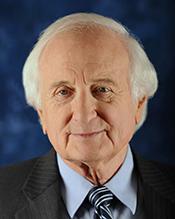
Mr. Speaker, I strongly oppose this unfair rule. I do so because it denies Members the opportunity to offer amendments to critical provisions in the Defense Authorization bill. National defense…
Mr. Speaker, I strongly oppose this unfair rule. I do so because it denies Members the opportunity to offer amendments to critical provisions in the Defense Authorization bill.
National defense should be a subject that brings the Congress and the nation together, and not an occasion to create division. Especially given the clear and present danger of further terrorist attacks against the United States, it is imperative that we remain united as we confront these threats.
I support most of the provisions in this bill. It is unfortunate that the Majority chose to insert a number of highly controversial provisions into the Defense Authorization. In particular, I oppose the provisions of the bill that seek to upend longstanding civil service protections for more than 700,000 civilian workers who are instrumental to supporting our men and women in uniform. Without a competent civilian workforce at the Defense Department to back up our troops, it would be difficult, if not impossible, for our armed forces to prevail on the battlefield.
We are legislating in the dark here. Over the past century, we have established protections to prevent the civil service form becoming a political patronage system. Before we throw these protections in the garbage can, we'd better know what we're doing. the Bush Administration delivered its 205-page legislative proposal to restructure the Pentagon's civilian and military personnel system on April 10, just days before the House adjourned for a two-week recess. These sweeping proposed changes are not well understood and they have the potential for long-term negative consequences.
I want to read an excerpt from a General Accounting Office testimony on these proposed changes to the Pentagon's civilian personnel system. The GAO cautions that ``moving too quickly or prematurely [to a new personnel system] at DOD or elsewhere, can significantly raise the risk of doing it wrong. This could also serve to severely set back the legitimate need to move to a more performance- and results-based system for the federal government as a whole. Thus, while it is imperative that we take steps to better link employee pay and other personnel decisions to performance across the federal government, how it is done, when it is done, and the basis on which it is done, can make all the difference in whether or not we are successful.'' GAO goes on to say that ``based on GAO's past work, most existing federal performance appraisal systems, including a vast majority of DOD's systems, are not currently designed to support a meaningful performance-based pay system.''
The civil service rules have generally served our country well. Can we improve the Defense Department's civilian personnel rules? Sure. Is this the way to do it? Absolutely not. Such sweeping changes--changes affecting more than 700,000 Defense Department workers--deserve more thoughtful consideration by this Congress. If these changes are approved, we will find ourselves in the unique position of having one set of personnel rules for civilian defense employees, another set of personnel rules for employees at the Department of Homeland Security, and a third set of rules for every other federal worker.
It's bad enough that the Republican Majority insisted on including these controversial civil service changes in this bill. What's worse is that the Majority will not even allow us to debate them or offer amendments. The House should be permitted to debate the Employee Bill of Rights amendment proposed by Representatives Cooper, Davis and Van Hollen. This amendment would protect the right to receive a veterans preference and the right to be free from discrimination based on political opinion or party affiliation. It would ensure that Department of Defense employees have the same collective bargaining rights and due process rights that other federal employees enjoy. These rights are fundamental. they should not be waived or curtailed at the whim of the Defense Secretary, and this House should not be stampeded into providing him the authority to do so.
I urge my colleagues to join me in opposing the rule so we can have a fair debate and a vote on the Employee Bill of Rights amendment.
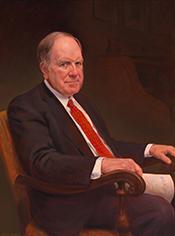
Mr. Speaker, during the floor debate yesterday, the Committee on Rules chairman, the gentleman from California (Mr. Dreier), addressed our complaints by saying, what are you arguing about? We have…
Mr. Speaker, during the floor debate yesterday, the Committee on Rules chairman, the gentleman from California (Mr. Dreier), addressed our complaints by saying, what are you arguing about? We have another rule coming up. Your complaints are premature. As if to suggest we would have another day.
Well, that day has come. Rule number two has arrived; and just to show you how much bipartisanship there is, my amendment which deals with an important project, cooperative threat reduction, destroying weapons of mass destruction in Russia, the former Soviet Union, the Dingell-Rahall amendment which would correct outrageous grants of authority over environmental laws granted to the Department of Defense under this bill, the Cooper-Davis-Van Hollen amendment which goes to the most radical revision of the civil service in the last hundred years with respect to the Department of Defense, all of those substantive amendments are not made in order.
So what we will have here is a sterile, almost pro forma, debate because what is left in contention, really challengeable, is not what is really at fault in this bill at all. We cannot have that debate. We see that substantive alternatives which we are offering, not controversial, not partisan gotcha bills, substantive alternatives simply cannot be brought up here.
What the Republican majority is doing is using procedural devices which they control with a thin majority to deny us fair consideration on substantive issues of the utmost gravity. They may not agree with it, but they cannot dispute the fact that all of these are grave and significant issues.
Let me tell you what my amendment would have done. My amendment would simply have taken this bill and removed from it all kinds of encumbrances, fences, conditions that the President did not seek, request, and does not want with respect to a program called Cooperative Threat Reduction, known better to some as Nunn-Lugar, and with respect in particular
to one project, Shchuch'ye, which is the largest repository of the deadliest chemical weapons that the Soviet Union ever produced. After years of negotiating, years of preparation, we are finally at the threshold of beginning a facility that will destroy those weapons.
I was there last May. I have got two posters here that show you what those facilities look like. Wooden roofs. Look at the windows over here with the makeshift bars on them. That is the kind of security they have got. And on the racks, rack after rack, sitting on dirt floors, wooden racks, what you find are little chemical warheads like that, literally thousands upon thousands of them, gathering dust like bottles of wine, barely secured, any one of which could wipe out the population of a soccer stadium, all of which could poison the entire world. Nerve gas, sarin. The deadliest stuff you could possibly imagine. Do we not want to get rid of this?
Is there any reason to wait. Can we not have at least here in the well of the House a debate on whether or not we need these conditions that the chairman of this committee have imposed? I do not think we do. All I ask is with the 21 years of experience that I have had is the opportunity to make that case in the well of the House. You have diminished the House and diminished this process by denying me that opportunity.

Well, here we are again, my dear colleagues, deja vu all over again. The Republicans told us yesterday how they were going to have a second rule. Well, the second rule is just like the first, unfair,…
Well, here we are again, my dear colleagues, deja vu all over again.
The Republicans told us yesterday how they were going to have a second rule. Well, the second rule is just like the first, unfair, stifling debate, and not allowing discussion.
We are told it is bipartisan. It reminds me of the story of a fellow who complained about the stew. He was told it is horse and rabbit stew. He said, what is the recipe? They said, oh, it is simple. Equal parts, one horse, one rabbit. He said, no wonder it tastes like hell.
The simple fact of the matter is that is what we have here. That is the Republican definition of bipartisanship.
They exclude seven significant amendments. Why? I can only assume one of several reasons: They are scared to death to debate them; they want to be unfair; they have not got the vaguest ideas of what is fairness or how a representative body should function. I suspect all of the above are there. In any event, it tends to show they either know or care less about fairness than a hawk does about a handsaw.
What have they denied us the right to do? Legislation to address environmental concerns. Legislation to address the problem of chemical and nuclear weapons. Imagine what is going to happen if the Spratt amendment does not go into place and all of a sudden terrorists show up with nuclear weapons, or they show up with weapons of chemical or biological character because they got them out of a leaky stockpile in Russia? They do away with the opportunity to offer an open bidding requirement on contracts over $1 million. That says that they probably are scared to discuss this issue. They will not discuss the question of base closings. They refuse to help immigrant soldiers to get citizenship and for us to offer an amendment to allow that.
Now there are certain things about a representative body that I have to assume my Republican friends either do not care about or they do not know about. My dear Republican colleagues serve here as the servants of the people. This is the House of Representatives, with emphasis on the word representatives. We are all supposed to represent the House. My Republican colleagues are supposed to represent in the House the people whom they serve. They are also supposed to respect all of the people who are served here and to allow wide, broad, fair, discussion of important issues.
Is there a shortage of time to debate? Absolutely not. We meet about 3 days a week. But my Republican friends do not seem to have time to discuss important questions. I can only assume it is because they do not understand our duty to the people.
My Republican colleagues are creating a precedent which is bad. First of all, we do not debate the issues that are important. Second of all, my colleagues are creating a poisonous atmosphere in this place which is going to continue and to persist for a long time. The ability of this institution to properly debate questions and to have respect for each other and for the people we serve is being demeaned by this rule. I say, shame.
Let us defeat the rule, let us defeat the previous question, let us get the House back to being what it should be, the representatives of the people.
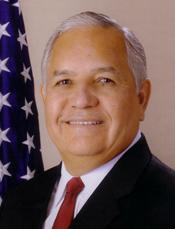
I thank the gentleman for yielding me this time. Mr. Speaker, I rise in strong opposition to this very unfair rule. The bill before us today contains provisions that would give the Department of…
I thank the gentleman for yielding me this time.
Mr. Speaker, I rise in strong opposition to this very unfair rule. The bill before us today contains provisions that would give the Department of Defense unprecedented authority to develop an entirely new civil service system for its 700,000 civilian employees with little or no congressional oversight, jeopardizing many of the employee protections and rights that Federal employees have fought so hard for over the years.
How do I know this? Because before coming to Congress I was a Federal employee, a civil service employee for 26\1/2\ years.
I know that there is a lot of frustration and a lot of misinformation that
has been put forth in this. My good friend and chairman has said they had 10 hours of testimony. But when you factor in that there are 700,000 civilian employees that are going to be affected, that is .0008 minutes for each one of those employees that has been given in terms of hearings. I think our civil servants deserve better than that, and we ought to have more hearings on this issue and not just take their civil protections away as we are with this bill.
Mr. Speaker, I rise in strong opposition to this unfair rule.
The bill before us today contains provisions that would give the Department of Defense unprecedented authority to develop an entirely new civil service system for its 700,000 civilian employees with little or no congressional oversight, jeopardizing many employee protections that Federal workers have fought so hard for over the years.
This issue has great personal significance to me, because for more than 26 years prior to becoming a Member of Congress, I myself was a civil servant, first as a Border Patrol agent and later as a Sector Chief. When I joined the Border Patrol, I was one of only two Hispanic members of my training class. I can tell you that there were some that would have preferred that we were not part of the Border Patrol, but the civil service system protected me.
As a Sector Chief, over the objections of my superiors, I implemented what turned out to be one of the most successful programs to stop illegal immigrants from entering this country. If it were not for the civil service protections, I would have been fired immediately.
We sought to offer an amendment to help ensure that DoD civilian employees would continue to enjoy the basic protections that I was afforded as a civil servant, including the right to due process and appeal in cases of alleged discrimination, collective bargaining, and veterans preferences.
Unfortunately, the Republican leadership did not see fit to make Mr. Cooper's amendment in order, so we will not have a debate on this extraordinarily important issue.
Mr. Speaker, even GAO has said, ``Congress should consider establishing additional safeguards to ensure the fair, merit-based, transparent, and accountable implementation'' of DoD's civil service system. But this rule does not allow us to do that. The patriotic employees who serve our Nation at the Department of Defense deserve better.
I urge my colleague to vote ``no'' on the previous question and ``no'' on this terrible rule.

Mr. Speaker, will the gentleman yield? Mr. Speaker, I thank the gentleman for yielding, and I understand his assertion. His assertion essentially is that these provisions that will affect our Federal…
Mr. Speaker, will the gentleman yield?
Mr. Speaker, I thank the gentleman for yielding, and I understand his assertion. His assertion essentially is that these provisions that will affect our Federal employees are positive provisions.
If that is the case, on our side we are very concerned that we are not being allowed to debate these fully. As the gentleman knows, 30 amendments are allowed with 10 minutes per amendment. The gentleman will admit, I think, that these are very substantial changes that we are making in the law; am I correct on that?
Mr. Speaker, if the gentleman will continue to yield, I tell my friend, and he and I work very closely on issues dealing with Federal employees, there is a tendency to undervalue our Federal employees, as the gentleman knows. But the concern we have is if the other side is so concerned that the propositions it puts before us are correct, then it is a shame that we do not allow this body to fully debate them. I understand there were votes in committee. However, I am not on the Committee on Government Reform.
I did appreciate the opportunity to come and testify, notwithstanding the fact that the committee did not follow my advice. My point is that the majority of Members on both sides of the aisle are not on your committee or the Committee on Armed Services, and I think it would have been appropriate for us to debate these items. If the proposals are as good as the gentleman says they are, presumably they would have been supported by the majority of this House.
Mr. Speaker, will the gentlewoman yield?
Mr. Speaker, I want to make an observation to the distinguished chairman of the Committee on Armed Services. The gentleman and I served in this body when this bill had 5 full days of debate, discussion and open amendments in which we had very extensive discussions on not only weapons systems but other proposals contained in the bill.
I am probably going to end up voting for this bill. As the gentleman knows, I have consistently supported authorization bills and appropriation bills. I believe this Nation needs a strong defense, and I respect the Secretary of Defense. But I would say to the gentleman that it would have been nice if the Secretary had respected the Members of the House on both sides of the aisle and presented this at the beginning of the year and not just a few weeks ago so we could have had more extensive discussions, as we have had on some of those weapons systems heretofore. None of them were offered just recently. They were offered early in the year or in years past; but I recognize what the gentleman said. Obviously, we do not have unlimited time for unlimited debate.
I would suggest in this instance this proposal, a very substantive one, came very late; and although the gentleman spent some time in committee on it, appropriately, and I thank the gentleman for that, it would have been nice if we would have had more extensive debate and substantive amendments on this floor.

Mr. Speaker, I rise to speak in opposition to the rule on the National Defense Authorization Act. This rule fails to make in order several important Democratic amendments, including the Rahall-…
Mr. Speaker, I rise to speak in opposition to the rule on the National Defense Authorization Act. This rule fails to make in order several important Democratic amendments, including the Rahall- Dingell amendment on the environmental provisions in the bill.
The Department of Defense claims that it needs exemptions from five of our major environmental laws--laws that protect the air, water, endangered species, whales, dolphins, and last but not least, humans. The Pentagon says these laws are interfering with military readiness. But the evidence it has presented is at best anecdotal. In a June 2002 study, the Government Accounting Office could find no evidence that environmental protection is a problem for our Armed Forces.
In light of the impressive performance of our men and women in Iraq, any assertion that our military is not ready to fight and win is patently ridiculous. These environmental laws have been in place for several decades, and our Armed Forces are the best trained in the world.
The defense bill that we are debating today rolls back protections in two key environmental laws: the Endangered Species Act and the Marine Mammal Protection Act. The DOD bill significantly reduces the Secretary of the Interior's responsibility to designate critical habitat and would greatly weaken protections for endangered species anywhere in the U.S., not just on military facilities. Without critical habitat, imperiled species will not recover. This bill would also specifically reduce protections for endangered species on military lands. For marine mammals, the bill weakens the definition of ``harassment'' for all users of the oceans and coastal waters, not just for the military. It would also give the DOD unlimited, unmonitored exemptions from marine mammal protection.
The majority has refused to allow us to vote on the Rahall-Dingell amendment to fix these provisions. Why? Because they are afraid they will lose. The American people reject the idea that the federal government should be above the law. A recent Zogby poll showed 84 percent of likely voters think the Pentagon should follow the same environmental and public health laws as everyone else. Liberals, moderates, and conservatives alike agree that all agencies of the federal government should be held accountable for their actions.
Communities across the nation are grappling with the toxic contamination of former bases that used to be exempt from environmental laws. Many of us have decommissioned military facilities in our districts. In my
home city of San Francisco, we have been pushing for years for the clean up of the Hunters Point Naval Shipyard. The military's track record on protecting the environment is dismal. We hold the Department of Defense accountable for its actions in the future.
I urge my colleagues to vote ``no'' on the previous question, so that we can make the Rahall-Dingell amendment in order, and ``no'' on the rule.
Show 11 more
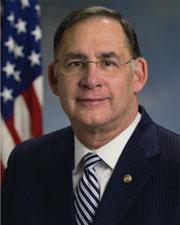
Mr. Speaker, I move to suspend the rules and pass the bill (H.R. 1683) to increase, effective as of December 1, 2003, the rates of disability compensation for veterans with service-connected…
Mr. Speaker, I move to suspend the rules and pass the bill (H.R. 1683) to increase, effective as of December 1, 2003, the rates of disability compensation for veterans with service-connected disabilities and the rates of dependency and indemnity compensation for survivors of certain service-connected disabled veterans, and for other purposes.
Mr. Speaker, I yield myself such time as I may consume.
Mr. Speaker, this is one of the most important bills the Committee on Veterans' Affairs brings to the floor each year. H.R. 1683 would provide, effective December 1, 2003, a full cost-of-living adjustment to the compensation veterans receive for their service-connected disabilities. Survivors receiving dependency and indemnity compensation, DIC, would also receive this increase.
The basic purpose of the disability compensation program is to provide a measure of relief from the impaired earning capacity of veterans disabled as a result of their military service. As of April, 2003, more than 2.4 million veterans were receiving service-connected disability compensation. These benefits are paid monthly and range from $104 for a 10 percent disability to $2,193 for a 100 percent disability.
Additional monetary benefits are available for our most severely disabled veterans as well as those with dependents. Spouses of veterans who died on active duty or as a result of a service-connected disability likewise are entitled to monetary compensation as the Nation assumes in part the legal and moral obligation of the veteran to support the spouse and children. Depending on their spouse's rank or grade in service, a spouse receives between $948 and $2,021 monthly.
Currently, there are more than 295,000 surviving spouses and more than 29,900 children receiving dependency and indemnity compensation. At the end of 2003, VA will have paid approximately $14.2 billion for the year in compensation benefits. With the cost-of-living adjustments estimated at 2 percent, that number will rise to approximately $14.6 billion for 2004, a $335 million increase.
I would like to commend the gentleman from South Carolina (Mr. Brown) and the gentleman from Maine (Mr. Michaud), the chairman and ranking member of the Subcommittee on Benefits, for considering this bill in a timely fashion, ensuring that veterans receive their COLA. As the new chairman of the subcommittee, the gentleman from South Carolina (Mr. Brown) has proven himself a leader and advocate for our Nation's veterans and their survivors. I appreciate his diligence and dedication to the committee.
Mr. Speaker, I reserve the balance of my time.
Mr. Speaker, I urge Members to support the Veterans' Compensation Cost-of-Living Adjustment Act of 2003, and I yield back the balance of my time.
Mr. Speaker, on that I demand the yeas and nays.

Mr. Speaker, I thank the gentleman for yielding me time. Mr. Speaker, I think it is outrageous that the rule proposed by the Republican leadership denies the 435 Members of this House the opportunity…
Mr. Speaker, I thank the gentleman for yielding me time.
Mr. Speaker, I think it is outrageous that the rule proposed by the Republican leadership denies the 435 Members of this House the opportunity to vote on the amendment to restore certain rights and protections for the 700,000 civil servant employees within the Department of Defense, rights and protections that are stripped away under the underlying bill. It is particularly sad to see this just after those civil servants joined together with our military in such a successful military operation in Iraq.
Yet this bill does away with so many protections. For example, it takes away the time-honored protections to ensure that civil servants will have their professional career advancement based on merit and professional conduct, rather than political litmus tests.
Do we want our contract officers, do we want our procurement officers to be looking over their shoulder to see if their decision is based on what is best for the taxpayer or best politically for someone in the Defense Department? And yet this bill eliminates those protections that have been in place since Teddy Roosevelt.
Let me just say that the amendment that was proposed, and I will read a provision of the amendment that is being denied an opportunity for us to vote on: ``An employee shall have the right to be free of favoritism or discrimination in connection with hiring, tenure, promotion or other conditions of employment due to the employee's political opinion or affiliation.'' But they do not want us to have an opportunity to vote on that provision.
The head of the nonpartisan General Accounting Office, David Walker, when he was asked about this issue, said, ``I do not believe that we have the infrastructure in place in order to effectively and fairly move to a more performance-based compensation structure at this time.'' In response to a question, he said, ``I think the agency has to demonstrate that they have these systems and controls in place before they should be given the flexibility.''
Mr. Speaker, do we want our Defense Department, the civil servants, to be run using professional judgment, which I think is in the best interest of national security, or do we want them to be driven more by political considerations? I think our national security depends on a nonpolitical, professional civil service; and it is very disappointing that the amendment was not made in order.
Mr. Speaker, I thank the gentlewoman for yielding me time. Mr. Speaker, I rise in support of H. Res. 247. The Committee on Rules has listened to hours of testimony and made in order 39 total…
Mr. Speaker, I thank the gentlewoman for yielding me time.
Mr. Speaker, I rise in support of H. Res. 247. The Committee on Rules has listened to hours of testimony and made in order 39 total amendments, nine amendments in yesterday's first rule and 30 amendments under the new rule before us today. We made in order 22 majority amendments, 14 minority amendments, and three bipartisan amendments. And while everyone will not be pleased by these decisions, it is a fair rule that will give the House the opportunity to debate a wide variety of national security issues.
Mr. Speaker, the underlying legislation, H.R. 1588, is entirely consistent with what the founders envisioned when they wrote article I, section 8 of U.S. Constitution, to ensure that Congress shall have the power to support, maintain, and provide for military to provide for the common defense.
First, this legislation provides adequate funding to help continue the U.S. military's transition to the 21st century. H.R. 1588, for example, authorizes funding for the U.S. Army to procure weapons and tracked combat vehicles for the U.S. Navy for shipbuilding and conversion and for the U.S. Air Force to procure additional aircraft, including language to maintain the important F/A-22 program.
The authorization for these programs, along with others, will help the U.S. military remain the most efficient, most lethal, and most effective fighting force on Earth. But, Mr. Speaker, we cannot possibly hope to maintain the level of excellence obtained by the U.S. military without the achievements of men and women who proudly wear the uniform.
As a former captain in the U.S. Air Force myself, I continue to draw inspiration from the resolve, patriotism, and strength of commitment exhibited by our servicemen and women. This Congress must work to reinforce that strength, and I believe H.R. 1588 works to that end.
I am pleased that the underlying legislation contains a 4.1 increase in base pay for military personnel. H.R. 1588 also recommends a reduction from 7.5 to 3.5 in the percentage of out-of-pocket expenses military personnel must contribute toward housing cost. Both of these provisions will not only help ease the burden placed on military personnel and their families, but should also help ensure that the U.S. military is able to retain these highly trained personnel.

Mr. Speaker, one of the problems with the way the Republicans have managed, orchestrated the rule is that it simply does not permit an opportunity for us to clarify even simple misunderstandings.…
Mr. Speaker, one of the problems with the way the Republicans have managed, orchestrated the rule is that it simply does not permit an opportunity for us to clarify even simple misunderstandings.
Many of my colleagues may have listened on television to the distinguished chairman of the committee put a map up here that implied that 57 percent of Camp Pendleton was off-limits to military activities. We came to the floor and pointed out that that was simply not true. It never was. Using the flexibility under existing law, 1 percent was set aside.
The real problem with Camp Pendleton is the fact that you have got an interstate freeway, you have got encroachment from sprawl, but we could not clarify it.
I have had colleagues who misunderstood what the chairman said. I am sure it was a mistake to imply that 57 percent was off-limits to military training. The gentleman from West Virginia (Mr. Rahall) and I are reduced to putting out a Dear Colleague which maybe somebody will see in the blizzard of paper. It is an embarrassment to this Chamber that we cannot have a legitimate debate and clarify things like this and not mislead the public or Members of this assembly.
Mr. Speaker, will the gentleman yield?
Yes. Absolutely. This limited area, 840 acres out of 125,000 acres, is available to amphibious landings, according to the information we have received. And it only applies out of 6 months. The real problem is you have got a freeway, you have got a nuclear power plant, you have got a State park. There never was a legal restriction ever.
I have dealt with the Department of Defense, the Fish and Wildlife Service and have gone to the court records. I do not know how it is being distorted.
I welcome the gentleman's offer to do so and to correlate that with what the Secretary of the Interior has actually ruled in this case. I welcome it.
I thank the gentleman.
Mr. Speaker, I rise in opposition to this rule and the underlying bill. My colleague from Virginia only said one thing that is correct, and that is our Federal employees are our greatest resource.…
Mr. Speaker, I rise in opposition to this rule and the underlying bill. My colleague from Virginia only said one thing that is correct, and that is our Federal employees are our greatest resource. Unfortunately, in this bill they are treated very poorly.
In this bill, the Secretary of Defense can waive collective bargaining. That was designed to allow employee input into working conditions and grievances. He talks about Federal employees, but every Federal employee organization opposes this language.
The Secretary of Defense would be allowed to exempt the Department of Defense from the Federal wage schedule that was designed to prevent discrimination and nepotism.
The Secretary of Defense is allowed to exempt the Department of Defense from due process and appeals rights, appeals to the Equal Opportunity Commission, fighting discrimination.
This bill would authorize the Secretary of Defense to bypass OPM and create an entirely new personnel system.
It authorizes the Secretary to have authority under this proposal to take action at his sole, exclusive, and unreviewable discretion.
The Secretary of Defense, in an opinion piece in The Washington Post yesterday, said our military needs more agility and flexibility because they are fighting terrorists in caves and bunkers. Then he cleverly transfers this reasoning to the civilian population. I ask Members why do clerks and secretaries and administrators need to be deprived of their appeals rights? They should have a fixed appeals system. They should have the rights that Federal employees have had over the years. He
makes the case for a flexible military, he does not make the case for depriving Federal employees of their rights, and he attempts to trade off agility for morale. I suggest we need to improve morale and protect our Federal employees.
Mr. Speaker, first, I would like to second the remarks of the dean of the House, my friend, the gentleman from Michigan (Mr. Dingell). Last night, in this great Capitol building, about 10 p.m., the…
Mr. Speaker, first, I would like to second the remarks of the dean of the House, my friend, the gentleman from Michigan (Mr. Dingell).
Last night, in this great Capitol building, about 10 p.m., the Committee on Rules was meeting. Our friends on the other side of the aisle had just come back from their lavish dinner at which the newspapers report they raised some $22 million for the Republicans. They voted on this rule, and they voted to deny this House the opportunity to work its will on $47 billion in the DOD budget.
That is a matter of some concern, because that is one of the largest items in the entire bill, and the House is unable to work its will on it due to their denial of an amendment. But more important than that, they denied over 700,000 DOD employees to have this section of the bill aired and debated. Over 700,000 families who work for our Pentagon worldwide are not able to hear their concerns aired on the floor of this House.
This is the people's House, yet over 700,000 patriotic and loyal Americans who have served this Nation well in the Iraq war, in the Afghan war, and let us remember 65 of these civilians died in the 9/11 attack on the Pentagon, but, no, this House is too busy to consider their concerns. That is not fair, that is not right, and this House should demand justice.
These are important civil servants of our Nation. They work hard every day to keep our Nation strong. Only last week our committee bothered to commend them for their skill, their hard work and dedication. But, no, their concerns are not important enough to be aired on the floor of this House.
We had one hearing in the Committee on Armed Services, we had no subcommittee markup, and now we are unable to debate the issue on the floor of this House. It is an injustice.

Mr. Speaker, I wish to thank the ranking member for yielding me this time; and I rise today in strong support of H.R. 1683, the Veterans' Compensation Cost-of-Living Adjustment Act of 2003. I would…
Mr. Speaker, I wish to thank the ranking member for yielding me this time; and I rise today in strong support of H.R. 1683, the Veterans' Compensation Cost-of-Living Adjustment Act of 2003. I would like to thank the chairman of the committee, the gentleman from New Jersey (Mr. Smith) and the ranking member, the gentleman from Illinois (Mr. Evans) for their leadership on the Committee on Veterans' Affairs.
Mr. Speaker, I fully support H.R. 1683 and am proud to be an original cosponsor of this measure. This legislation would provide important cost-of-living adjustments to the rates of disabled compensation payments for veterans with service-connected disabilities.
Mr. Speaker, this bill would also increase the rate of dependency indemnity compensation for survivors of certain service-connected disabled veterans. As in the past, the percentage would be equal to the increase for benefits provided under the Social Security Act, which is calculated based upon the change in the Consumer Price Index.
Mr. Speaker, our veterans and their survivors deserve the full and fair benefits of a grateful Nation. By providing this modest cost-of- living adjustment, we take a small step in the right direction. But we must continue to ensure that our veterans' earned benefits remain at a respectable level. Our veterans and their families deserve more, and we must continue to fight for their well-being. This bill will help many veterans and their family members to keep pace with the rising cost of living.
Mr. Speaker, I know that veterans and their survivors from my State of Maine will appreciate the efforts of our committee to bring forth this legislation. I fully support H.R. 1683 and urge my colleagues to pass this measure.
Mr. Speaker, I want to compliment the gentleman from California. I want to compliment the gentleman from California for having the guts to finally say the rules are rigged against those Members who…
Mr. Speaker, I want to compliment the gentleman from California. I want to compliment the gentleman from California for having the guts to finally say the rules are rigged against those Members who do not blindly follow the Republican leadership. Every one of us represents about 700,000 people. We do not run for office saying, some of us can speak and some of us can't. Some of us can offer amendments and some of us can't. The Committee on Rules serves to do nothing but keep Members from offering their amendments.
I have got an amendment on base closure. I think every single citizen of this body ought to be recorded as being wanting to close bases or wanting to keep bases open. I have been denied the opportunity to have that vote for 3 years running now.
I have got to ask, who wants to close bases? Do the military retirees who live next to them who want to use the hospital want to close them? No. Do the military retirees who want to use the commissaries want to close them? No. Do the communities that in many instances have paid to bring those bases there like Pascagoula, Mississippi, paid $20 million to help bring home port Pascagoula there, do they want to close them? No.
So maybe who does want to close bases? Mr. Dreier, how about your friend Katrina Leung? I think it is a fair question to ask whether or not someone who is being accused of being a Communist Chinese spy, who has contributed to your campaign, whether or not she wants to close bases.
Why can I not have a vote as a Member of this body on deciding whether or not we are going to close bases? Are we are going to listen to our Nation's military retirees? Are we going to listen to our citizens? Or are we listening to Katrina Leung?

Mr. Speaker, I rise in strong opposition to the rule. First, on the issue we have been dealing with around civil service, none of the lessons learned and the myriad projects that we are talking about…
Mr. Speaker, I rise in strong opposition to the rule. First, on the issue we have been dealing with around civil service, none of the lessons learned and the myriad projects that we are talking about would necessarily be part of the law as it is drafted in the civil service part of the provisions in this bill. So we did have that debate and some of that discussion, but in fact none of that is relevant to the bill at all.
Second, I object to the fact that the Committee on Rules deprived this body of the opportunity to have a substantive debate on the environmental provisions, a debate about the facts.
Mr. Speaker, the fact is that the Deputy Secretary of Defense, Paul Wolfowitz, wrote in a March memo, ``We have demonstrated that we are both able to comply with environmental requirements and to conduct necessary military training and testing.'' The administration's own EPA agrees, and that is the fact.
Finally, Mr. Speaker, for 3 years I have worked to close the military pay gap. This year at the Committee on Rules I offered an amendment to close that gap permanently, but that amendment was denied. My amendment is identical to language passed in the Senate. Over 4 years each of the quarter million soldiers, sailors, airmen and Marines who fought in Iraq were making a decision whether or not to stay or go in the military. Now is the time to send them and their families a message that the Members of this House care about them and the quality of their lives. Instead, we send a hastily different message with empty promises. Why is the majority silent on closing the pay gap permanently?

Mr. Speaker, we are spending $100 billion and tragically the loss of young men and women's lives in a war in Iraq that was supposed to be about getting the weapons of mass destruction out of Saddam…
Mr. Speaker, we are spending $100 billion and tragically the loss of young men and women's lives in a war in Iraq that was supposed to be about getting the weapons of mass destruction out of Saddam Hussein's hands so he could not give them to the terrorists. So far, we have not found those weapons of mass destruction.
But the gentleman from South Carolina (Mr. Spratt) pointed out to us that there are 5,000 tons of weapons of mass destruction in chemical weapons and gases and sarin chemical that we know exactly where they are. But the Republicans will not allow an amendment in order to protect Americans from the assault from these weapons when they fall into the hands of terrorists. We know exactly where 5,000 tons are. We have not found one ounce in Iraq.
There is also nuclear material in the same area of the former Soviet Union and in Central Asia and elsewhere in the world. But they will not allow us to clean it up. They will not allow us to secure it. They are compromising the security of this Nation because this is more likely to fall into the hands of terrorists than anything that Saddam Hussein had.
You have to ask yourself, what are they doing to the security of this Nation when they will not allow us to go in and to secure these weapons of mass destruction?
Ladies and gentlemen, we are on Orange Alert. We are on Orange Alert as a Nation, and as a Nation and as a Congress we will not be allowed to debate the reduction of these weapons.
. . .
I thank the Chair, and I yield back my time.

Mr. Speaker, I rise in support of H.R. 1683, the ``Veterans Compensation Cost-of-Living Adjustment Act of 2003.'' This legislation provides a financial boost to our deserving veterans. H.R. 1683…
Mr. Speaker, I rise in support of H.R. 1683, the ``Veterans Compensation Cost-of-Living Adjustment Act of 2003.''
This legislation provides a financial boost to our deserving veterans. H.R. 1683 increases the disability compensation rates for veterans who have suffered injuries as a result of their service, and also increases the rates of compensation for dependency and indemnity compensation for the survivors of certain veterans. Specifically, H.R. 1683 increases the compensation for veterans, their dependents, the clothing allowance, and dependency and indemnity for surviving spouses with minor children.
Our veterans have made immeasurable sacrifices for all Americans. H.R. 1683 ensures that veterans get the cost-of-living adjustment
they need and deserve. This legislation will increase the compensation our veterans receive to offset the additional cost associated with inflation. This adjustment in compensation is very timely considering the present sluggishness of our economy.
More than 2 million veterans receive disability compensation each month as a result of injuries suffered in the course of military service. Nearly 600,000 spouses, children, and parents of veterans will also receive additional compensation and benefits as a result of H.R. 1683.
Mr. Speaker, H.R. 1683 is a bill that helps our heroic veterans live more comfortable lives. I support H.R. 1683 and I salute our veterans.
Bill Text
6 versions available
        [Congressional Bills 108th Congress]
[From the U.S. Government Publishing Office]
[H.R. 1683 Enrolled Bill (ENR)]

H.R.1683

One Hundred Eighth Congress

of the

United States of America

AT THE FIRST SESSION

Begun and held at the City of Washington on Tuesday,
the seventh day of January, two thousand and three

An Act

To increase, effective as of December 1, 2003, the rates of disablity
compensation for veterans with service-connected disabilities and the
rates of dependency and indemnity compensation for survivors of certain
service-connected disabled veterans, and for other purposes.

Be it enacted by the Senate and House of Representatives of the
United States of America in Congress assembled,

SECTION 1. SHORT TITLE.

This Act may be cited as the ``Veterans' Compensation Cost-of-
Living Adjustment Act of 2003''.

SEC. 2. INCREASE IN RATES OF DISABILITY COMPENSATION AND DEPENDENCY AND
INDEMNITY COMPENSATION.

(a) Rate Adjustment.--The Secretary of Veterans Affairs shall,
effective on December 1, 2003, increase the dollar amounts in effect
for the payment of disability compensation and dependency and indemnity
compensation by the Secretary, as specified in subsection (b).
(b) Amounts To Be Increased.--The dollar amounts to be increased
pursuant to subsection (a) are the following:
(1) Compensation.--Each of the dollar amounts in effect under
section 1114 of title 38, United States Code.
(2) Additional compensation for dependents.--Each of the dollar
amounts in effect under section 1115(1) of such title.
(3) Clothing allowance.--The dollar amount in effect under
section 1162 of such title.
(4) New dic rates.--The dollar amounts in effect under
paragraphs (1) and (2) of section 1311(a) of such title.
(5) Old dic rates.--Each of the dollar amounts in effect under
section 1311(a)(3) of such title.
(6) Additional dic for surviving spouses with minor children.--
The dollar amount in effect under section 1311(b) of such title.
(7) Additional dic for disability.--The dollar amounts in
effect under sections 1311(c) and 1311(d) of such title.
(8) DIC for dependent children.--The dollar amounts in effect
under sections 1313(a) and 1314 of such title.
(c) Determination of Increase.--(1) The increase under subsection
(a) shall be made in the dollar amounts specified in subsection (b) as
in effect on November 30, 2003.
(2) Except as provided in paragraph (3), each such amount shall be
increased by the same percentage as the percentage by which benefit
amounts payable under title II of the Social Security Act (42 U.S.C.
401 et seq.) are increased effective December 1, 2003, as a result of a
determination under section 215(i) of such Act (42 U.S.C. 415(i)).
(3) Each dollar amount increased pursuant to paragraph (2) shall,
if not a whole dollar amount, be rounded down to the next lower whole
dollar amount.
(d) Special Rule.--The Secretary may adjust administratively,
consistent with the increases made under subsection (a), the rates of
disability compensation payable to persons within the purview of
section 10 of Public Law 85-857 (72 Stat. 1263) who are not in receipt
of compensation payable pursuant to chapter 11 of title 38, United
States Code.

SEC. 3. PUBLICATION OF ADJUSTED RATES.

At the same time as the matters specified in section 215(i)(2)(D)
of the Social Security Act (42 U.S.C. 415(i)(2)(D)) are required to be
published by reason of a determination made under section 215(i) of
such Act during fiscal year 2004, the Secretary of Veterans Affairs
shall publish in the Federal Register the amounts specified in
subsection (b) of section 2, as increased pursuant to that section.

Speaker of the House of Representatives.

Vice President of the United States and
President of the Senate.