Madam Speaker, I thank the gentlewoman for yielding. Madam Speaker, I rise tonight to talk a little bit about health care, and I want to personally first of all thank the gentlewoman from California…
Madam Speaker, I thank the gentlewoman for yielding.
Madam Speaker, I rise tonight to talk a little bit about health care, and I want to personally first of all thank the gentlewoman from California (Ms. Solis) for her leadership in the area of health.
On behalf of the Congressional Hispanic Caucus, the gentlewoman from California (Ms. Solis) is the chairwoman of the Task Force on Health. She has brought to it a great deal of energy. Now she sits on the Committee on Energy and Commerce also, so we have high expectations for the gentlewoman from California (Ms. Solis) and we want to thank her for what she has done, not only for her constituents back in California, but throughout the Nation, and her efforts in the area of health care. Under her leadership and passion the Health Care Task Force will be at the forefront of issues ranging from chronic diseases to the issues that we are here to discuss tonight, which is the uninsured.
The 2000 census revealed what many of us already knew back home, and that is that the Hispanic community has grown by leaps and bounds over the past decade. Hispanics are now the fastest growing community in the United States and make up close to 13 percent of the U.S. population. So I want to take this opportunity to say that of that part of the population, we have one of the largest numbers of uninsured.
Serving the uninsured must be a top priority for our Nation. Currently we have data to show that 33.2 percent, and it has been growing now with the individuals that have lost their jobs, of Hispanic individuals are uninsured, compared to the non-Hispanic whites who are uninsured at about 10 percent.
Let me tell you, these are people that are hard working individuals, that are out there working and making $20,000, $30,000, yet find themselves, if they are working for a small company, they are not going to have access to insurance. Unless they are working for a government, State, local or Federal, unless they are working for a major corporation, they will not have access to insurance.
So it is important for us to look at providing access to that insurance that their children and they need. While 19 percent of all Hispanics depend on Medicare and 35 percent of all Hispanic children depend on what we call the State Children's Health Insurance Program, which is CHIP, for their health care, still many of our needy families are not receiving the services that they deserve.
Despite the rhetoric of the administration, we leave millions of children
behind by President Bush calling for a $2.1 billion cut in this critical program for children, which is the only health care that a lot of these children receive. These are families that are working, trying to make ends meet. They are not poor enough to qualify for Medicaid, and they find themselves just making too much money, $20,000, $30,000, that they do not have access to health care, which is unfortunate.
It is unfortunate for too many working Americans that continue to lack this access to health insurance. Hispanics especially fall into this category. Over 33 percent of the Hispanics are uninsured, as I indicated earlier.
When it comes to health care, despite the promises, the Bush budget leaves our community behind. The Bush budget gives no money to these vital Federal health care programs for Hispanic communities. The Bush budget insufficiently funds the Community Health Centers, which have been out there making a difference, that millions of uninsured low and moderate income individuals rely on for their health care needs. The Community Health Centers have been there in responding to our communities' needs, and we need to make sure they continue to get the resources needed.
The Bush budget also cuts funding to the Office of Minority Health that focuses on health concerns which disproportionately affect minority communities.
The Bush budget also cuts into the future of Hispanic communities by eliminating funding for health career opportunities that aim to increase the number of minority health care providers.
We need to ensure linguistically and culturally appropriate health care by providing minorities an opportunity to go into the health care profession. At the present time we understand and recognize that we have a large number of individuals that could qualify and could enter the profession. A lot of times a little assistance in these programs that allow that opportunity to get into nursing, that allow them to get into some of the other health professions, as well as the medical profession, is important. So every effort needs to be made to continue.
I want to also talk a little bit about diabetes and HIV/AIDS. In diabetes among the Hispanic community, the risk for diabetes is twice that of the non-Hispanic whites. Nearly 11 percent of Hispanics have been diagnosed with diabetes as compared to 7 percent of non-Hispanics.
In the area of AIDS, funding for HIV/AIDS must also address the change in infectious rates. Hispanics have a rate of new infections four times that of non-Hispanics, despite the fact we have made some gains in the area of AIDS. Despite the fact that the number that are getting it and that are suffering serious illnesses are decreasing, the number for Hispanics is growing disproportionately.
So we ask as we look at those issues, such as diabetes that hit Hispanics disproportionately and such as AIDS that now affect those poor communities throughout this country, as well as African Americans, it is time to focus attention to the needs of these populations. I would ask the Bush administration to seriously reconsider their budget when it comes to health.
The Bush administration also has continued to deny legal permanent residents, and I will say that once again legal permanent residents' access to vital programs such as the Temporary Assistance for Needy Families, TANF, and the States' Children's Health Insurance Program, such as CHIP. These are individuals that are here legally, these are individuals that have not broken the law, yet we have denied them the right to have access.
One of the proposals that we have serious concerns with this administration on is the proposal that he has taken in hand, and that is that the Medicaid proposal has been one that addresses the needs of the most needy in this country, those that are indigent.
He has taken the Medicaid, and then he has taken the CHIP program, which is the program that addresses the children of the working families of this country, and has taken that program.
Thirdly, he has also gone after the disproportional share, the money that goes to hospitals that provide the indigent care, that provide for those in need.
So those three programs impact the most needy of this country, yet those are the three programs that this administration has chosen to bundle up into one block grant, and his proposal is to send it to the States, with the understanding that as the future goes on there is going to be a cap on it, and in those States where we have disproportional numbers, such as Texas and other States, that we will continue to have a difficulty in that area.
I want to continue to go ahead and address a couple of issues, but I wanted to take this opportunity to thank our task force chairman from the Hispanic Caucus, the gentlewoman from California (Ms. Solis), on her efforts, and I want to continue to join her here and thank her very much for what she has been doing.
First of all, I want to thank the gentlewoman for allowing us to be here tonight, and I want to thank her for her leadership in the area of health. Also, as I was looking at the data that she had before us and the research and all of the studies, one of the things that was glaring was the fact that things are not getting any better; they are getting worse. As they get worse, we come up here and we get elected to respond to the problems that we are confronted with, we get elected to hopefully come up with some solutions to those problems. But it is unfortunate that some people are up here not to solve problems, but to see how they can leverage their political power in the process of not responding to the needs of our constituency in this country.
So one of the things that is important, as the gentlewoman indicated, is, and the research shows, that of the ones that are uninsured, 87 percent, especially the Hispanics, 87 percent of them are hard-working Americans. These are people that are not out there not working and being lazy; these are people that are making $20,000, $30,000, $40,000 a year. Yet, if they work for a small company, they do not have access to insurance. Once again, unless they are working for the Federal Government or the State government or some form of government, they do not have access to insurance, or a major corporation.
And so these are hard working Americans that are trying to make ends meet. They make some money and because of that they do not qualify for the Medicaid for the indigent. And now we are trying to take away the only thing that they might qualify for, which is to ensure their children an access to health care. So in this country we would hope that as we move forward, we make every effort to make it affordable and accessible. What good is it that we have the best health care in the whole world, the best research, if it is not accessible and it is not affordable? It does not make any sense. So hopefully we will continue to work on that.
I just wanted to also add that, additionally, we have only 43 percent that have employer based coverage compared to 73 percent for Anglos, which means that most Hispanics are working for even smaller companies and so they do not have any access.
I wanted to share with the Congresswoman, I represent Starr County on the Mexican border. I have 11 counties. Starr County is a beautiful county, yet it has the distinction of being one of the poorest in the 2000 Census. It is the poorest in the entire Nation. In Starr County we have close to 40 percent of those between the ages of 19 to 64 are without health insurance, 40 percent of the population. And the lack of insurance means restricted access to preventative care which can lead to costly emergency room visits, poor quality of life and even shortened lifespan. While we have a patchwork of Federal and State types of programs, we continue to have difficulty. And I know that there is a talk about the private sector coming in. Well, I represent rural America, too. I have 11 counties. I have a lot of what we call the ``brush country'' in Texas in San Saba, in Frio, La Salle, in Atascosa, Duval, Jim Wells also, those counties out there as well as Starr and now parts of Hidalgo, those counties are rural counties, a lot of them are rural counties and the ones that are rural counties have difficulty getting the private sector to come in. So despite the fact that we have had the private sector move into Medicare, they have not had the experience.
I will share with you what happened to one of my counties that I used to represent that I do not now, in Wilson County, where the private sector was not making the profits that they wanted to see. They cannot get rid of the individuals if they are not making the profits, but what they can do is decide not to service the entire county. So they decided to get rid of most of the rural counties.
So in rural America we are having a rough time. And if you work in rural America and live in rural America, most likely you are working for a
small company. You are working for a small employer who does not have access to health insurance. That is why it is important for us to provide that alternative. That is why it is important for us to provide that access to health care that is so critical.
I wanted to also share with the gentlewoman that it is unfortunate that there are no easy answers, but the reality is that we can come up with if the will was there, we could make something happen. But it is unfortunate that we have not come to grips with it and we are not close to answering the problems. But the election is coming up in 2 years, and people have talked about meeting the prescription drugs. I saw the ads lots of time calling to thank Congressman so-and-so for their legislation that they had passed. Well, I want to ask where are they now on that piece of legislation? Nowhere.
And the same thing with the proposal on prescription drug coverage that this administration has put forward. It is embarrassing. It is a sham. The Bush administration in terms of their proposal on drug prescription, I am sick and tired of these types of responses when people are sincere. When they come to me when I go to churches they tell me, Mr. Rodriguez, I cannot afford to buy the prescription. I cannot afford it. I buy my husband's. I cannot buy mine. We go without food because we are on fixed incomes.
We have got to do something about this. Once again, it does not make any sense for us to have all the remedies in the world when our own constituency who are working hard and trying to make ends meet do not have access to this.
I wanted to take this opportunity if it is okay to talk a little bit about the Hispanic Health Improvement Act that the gentlewoman is a co- author of that piece of legislation. I would like to use a little time on that.
This week we will be introducing the Hispanic Health Improvement Act with Senator Bingaman and the gentlewoman from California (Ms. Solis) and members of the Hispanic Congressional Caucus. This will be landmark legislation and it is based on the previous Hispanic Health Act. I reintroduced it in the 106th Congress with existing legislation with Senator Bingaman, who has been a champion for us. And I want to personally thank him for his efforts in the area of health care because he has been there.
In addition, we have taken some of the Federal regulations from the Hispanic Health Leadership Summit, as the gentlewoman will recall. We convened last August. The Hispanic Caucus convened in a group and incorporated many of the suggestions of the group. And we invited two Members from each side of the Congress, both Republican and Democrat, we invited them to San Antonio to come and talk about the needs of Hispanic health. We had a good representation from both Republicans and Democrats come forward and participate in our conference. And the legislation offers a variety of different strategies for expanding health care coverage, improving access, and that is important.
If you have the decisions that respond to the problems that we are encountering but you do not provide the access, it does not do any good. And also we talk about affordability. It has got to be affordable, otherwise forget it. I do not care how good the response is. If the person does not have any money, it is not accessible. It is not affordable. They will not be able to live unless they get that accomplished.
And then we also reduced and addressed the health disparities. We know that in certain communities such as the Hispanic communities and the African-American community that we have disparities such as diabetes, AIDS and varieties of others. So while we consider each provision in our bill, we look to improve it. And I am just going to highlight just a few things from the piece of legislation.
In order to address the lack of health care coverage, the legislation provides $33 billion between fiscal year 2003 and 2010 for the expansion of the successful State Children's Health Insurance Program, SCHIP, and to cover the uninsured, low-income pregnant women and parents. So we are looking at those working parents and women that are expecting. In addition, it provides States the option to enroll legal immigrants. Once again, we are not talking about undocumented illegals. We are talking about legal residents, legal immigrants, pregnant women and children, access to both Medicare and SCHIP.
In addition, the Congressional Hispanic Caucus considers the expansion of Medicaid and CHIP eligible to be critical legislative priorities for improving health, Hispanic health. The bill also seeks to address Hispanic health disparities and requires an annual report to Congress on Federal programs or responding to improving health status of Hispanic individuals with respect to both diabetes, cancer, as the gentlewoman has mentioned, asthma, HIV infection, AIDS, substance abuse and mental health. And the legislation provides $100 million for targeted diabetes prevention as well as education, school-based programs, and screening activities in the Hispanic communities. Similarly, the bill provides for targeted funds for programs that were aimed at preventing suicide.
One of the things that we have noticed recently, and when I have first heard about the issue of suicide among young Hispanic young ladies, I was not aware of the seriousness of the situation and how bad it was, and so the issue of mental health in responding to the needs of young Latinos who are committing suicide. We really need to be conscious of that. This country has really not come forward when it comes to the mentally ill, whether Hispanic or non-Hispanic. The mentally ill really are not addressed and especially our young, the youths, when it comes to mental illness, we need to see what we can do for them much sooner for them and see how to address these needs. We are hoping to begin to address the issue of mental illness.
And I want to lastly indicate that we seek in the bill to reduce health care disparities also by addressing the lack of providers who can provide culturally competent and linguistically appropriate care. That is so important. When you look at especially therapists that provide access to psychiatrists to Hispanics who when the doctor is unable to speak the language of the client, you know that the type of care is not going to be up to where it should be. When in describing the type of medication that is needed, having an understanding of the client in terms of culture is also extremely important; and we can cite some examples later on. But the bill also provides for increased funding for HRSA, health professions and the diversity programs.
As you know, the President's budget for 2003 budget proposal eliminates virtually all funding for these types of programs. So you tell me that we are needing people in the area of health care in every forum, we need minority representation in those areas, and yet these programs that are so needed by our community are the same programs that this administration is choosing to cut.
In addition to the promoting of diversity, these programs support the training of health professionals in the fields experiencing shortages, such as pharmacy, dentistry and allied health. They promote access to health care services in the medically underserved communities.
I want to also mention that the Hispanic Caucus considers increased funding for those programs a high priority. As the Hispanic community continues to grow, the implementation of these provisions will take on even greater importance, so the consequences of inaction will be felt for many years. So we encourage both the Democrats and the Republicans and the administration to reconsider their budget when it comes to health because their budget is one that basically says we do not care. We are not here to respond to the problems that are confronted by their little proposal. The President's proposal is a sham and I know that people, even Republicans that look at it, ought to be ashamed of that and they are embarrassed because it really does not address the issues that confront our communities and address the issues of our constituency when they come and say, how can I have access to buy the prescription that I need for my husband or my wife? And the answer is that unless we come together on that and unless we address that need, the bill that is before us does not answer the problem, and the solution that is there is only a political solution that really does not address the problem that is out there.
But the constituency back home will have an opportunity because the election will be coming up in 2 years. And I am hoping that as we go forward that we will make some inroads. And we have an opportunity because I know that both Democrats and Republicans are looking to get votes from the Hispanics. Well, you have a good opportunity. You start addressing the problems that confront our community, and I think our community will be willing to respond, I think, if that is the case. But if you give us lip service such as we are getting from this administration, then the results will be that you are not going to get our support and it is not going to happen because you are not there sincerely trying to address our problems.
I know this is the gentlewoman's time. I want to thank the gentlewoman very much for taking the time to be out here tonight.
Mr. Speaker, I want to thank the gentlewoman once again and touch a little bit on a couple of things that she mentioned.
On the mentally ill, there is no doubt that is one of the areas that we have not made the inroads that we should have. In this country, in a way, we have been negligent, not being responsive to our youth when it comes to the mentally ill. We have not provided the resources that are needed. We forgot all about Columbine and how that occurred, the fact that we really need to go and see what is happening. Youngsters, a lot of them were suffering from depression. We need to make sure we pay a little more attention to what is occurring in those areas and spend some time and look at the number of suicides of young people that is occurring.
So I am hoping that we begin to address some of these issues, and I am hoping that the will will be there to make something happen.
The gentlewoman also mentioned, I know, the issue of rural America. Rural America right now, and I represent 11 counties that I indicated already that are having a rough time getting access, and one of the reasons why we decided to privatize part of Medicare is because the whole argument was to try to reduce the costs. In fact, the other side argued that Medicare is a government-run program and this and that, that they could do it better. We have tried that experiment, and as my colleague well knows, that experiment has failed. In fact, right now, if a person is under Medicare+, they are costing the Federal Government more money than a straight Medicare, despite the fact they might be paying $300 additional money.
So it is a gimmick to try to destroy the program. We know and people understood that if they provide access to our seniors, they are the ones that they are less likely to make a profit on because they are ill. The data that shows that a person on the average spends over $1,000 on prescription drug coverage when they are seniors. There is no insurance company that is going to be able to make the profits they would like to see from our most vulnerable in this country and our seniors, and we
should not be doing that. We need to see how we can make it affordable.
What angers me, and I know what angers Americans, is that that same pharmaceutical company that sells those products that contributes to the politicians up here and contributes big bucks and puts those ads to thank those Congressmen for nothing basically because they did not accomplish a darn thing except the elections were coming up, those are the same companies that choose to sell those medicines in Canada and elsewhere for half the price, for one-third of the price.
The sincereness of their efforts, it is a crime what they are committing, and it is sad that we have got to this point that those same products can be bought in Mexico and Canada for much less, and it is the same company, and it is unfortunate that the ones that are having to pay because they claim that they are doing that for research purposes, and yet who are they sticking it to? Our most vulnerable, our seniors, who buy a large percentage of the prescriptions.
So I am hoping that we can come up with a realistic plan, and the people in this country, they are not stupid. They are going to see right through the President's proposal on prescription drugs. It helps a few at the expense of everyone else, because most people, at least the constituency of the Hispanic community, the only thing they have is Social Security. They do not have any other pension, and if they do, it is a small one. They do not have additional money to dish out $300 or more for additional coverage, and even though they get additional coverage, the private sector is not interested because if they do get sick they do not make a profit.
We have all understood that, and that is why we need to come up to the plate. This is no way to treat our seniors after they have given of themselves. This is a time for us to reach out to them and provide whatever assistance that we can and to be able to make it also in a way that is accessible and affordable.
So I wanted to once again thank my colleague for what she has done, and I want to also share that in health care somehow we have not come to grips because we do have a lot of Congressmen out here that basically feel that the Federal Government should have no role in health care, and apparently they feel that way and they feel that it should be just privatized. But we understand that people get ill and cost insurance companies, and we know that the insurance companies, as soon as a person gets a serious illness, will dump them if they have the opportunity, despite the laws that we have tried to pass.
That was happening in the 1960s, when we established Medicare and Medicaid, and that is happening now, so the companies are there, and for good reason, they are there to make a profit and provide access to health care but they are there to make a profit. So a person does not have any problems while they are young and healthy, but as soon as they get ill and they need them, that is when they start having the difficulties. Anyone who has gotten ill understands that and recognizes that.
So their main priority is to be there to make a profit and secondary is everything else, and that is why the Federal Government has a role and a responsibility. The health of this country depends on the quality of life for our constituency.
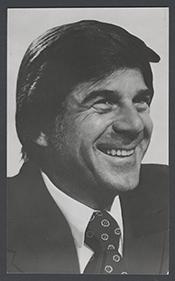 Rep. Fortney Pete Stark (D-CA)