Mr. Speaker, I rise in strong support of H.R. 2297, as amended. This bill is a compromise agreement that was carefully negotiated between the House and Senate, and contains a number of important…
Mr. Speaker, I rise in strong support of H.R. 2297, as amended. This bill is a compromise agreement that was carefully negotiated between the House and Senate, and contains a number of important measures to assist this Nation's veterans and their families. I want to take a moment to recognize and thank Chairman Chris Smith, Benefits Subcommittee Chairman Henry Brown and Benefits Ranking Democratic Member Michael Michaud for working with me to successfully craft this bipartisan, bicameral benefits package. I appreciate your leadership, professionalism and all of your hard work in guiding this legislation through the process and into law.
I also would like to thank the staff members of the House Committee on Veterans Affairs for their work in preparing this legislative package and for their work throughout the year--Patrick Ryan, Darryl Kehrer, Paige McManus, Devon Seibert and Kingston Smith of the majority staff and Jim Holley, Mary Ellen McCarthy, Geoffrey Collver and Leah Booth of my Democratic staff. Likewise, I would like to thank Chairman Arlen Specter and Ranking Member Bob Graham of the Senate Veterans Affairs Committee, as well as the Senate staff who worked diligently on this conference agreement--Mary Schoelen, Ted Pusey, Jon Towers and Chris McNamee.
Mr. Speaker, last week on November 11th we celebrated and honored the sacrifices and heroic deeds of our Nation's veterans with speeches and parades. Indeed, it is appropriate, necessary even, that we recognize and honor the many sacrifices of the brave men and women in uniform who have so gallantly served our nation. Mr. Speaker, speeches and parades are nice but they are not enough. Today, however, we match our complimentary words with actual deeds. We celebrate and honor those who have served the country and protected our freedoms by passing this legislative package, which truly honors their service and provides them and their families with important benefits that they most certainly have earned.
Mr. Speaker, I am very proud that this legislative package contains a number of measures that I introduced or of which I am an original cosponsor. Additionally, I commend all the Members of the House Veterans Affairs Committee on both sides of the aisle who have worked diligently this session to bring important measures forward. This compromise agreement contains many bills introduced by Committee members. Indeed, crafting and passing this benefits package has truly been a bipartisan effort.
I am pleased the provision to provide the Department of Veterans Affairs (VA) benefits to children with spina bifida whose veteran parent was exposed to Agent Orange in Korea is drawn from my bill H.R. 533. During a hearing the Committee received moving testimony from Michael Ruzalski, a young man severely disabled by spina bifida. Michael's father John served in the region of Korea's Demilitarized Zone (DMZ) during the time that the Department of Defense acknowledges Agent Orange was used there. Congress has authorized benefits for children of veterans affected by such exposure in Vietnam. The children of veterans who served in the Korean DMZ are no less deserving. When military service results in harm to the children of our Nation's veterans, our country should assume the responsibility to compensate them for their disabilities.
A provision to remove unnecessary and arbitrary time barriers for certain former prisoners of war to qualify for service-connection of their disabilities on a presumptive basis is drawn from H.R. 1838, which I introduced. I believe that we should consider additional presumptive conditions for former prisoners of war and will continue to support legislation to accomplish that end. Nonetheless, we need to take action now to assure those prisoners of war who were interred in Iraq for less than 30 days, as well as those from earlier conflicts, that no durational requirement will be imposed for certain psychiatric and physical disabilities which may follow a brief period of internment.
The package includes a provision to permanently authorize the VA home loan program for members of the National Guard and Reserve. It also lowers their home loan fees. This provision is drawn from H.R. 1257, which I introduced with the Ranking Member of the Subcommittee on Benefits, Mr. Michaud. Now more than ever, our Reserve and National Guard forces are an integral component of our national defense policy. Making this program permanent for members of the National Guard and Reserve is the right thing to do, it's also the right thing to do financially--as Reservists have an exemplary record of repayment on VA home loans.
I am also pleased that this package contains provisions that provide long overdue
benefits for our Gold Star Wives. Specifically, it provides that remarriage of the surviving spouse of a veteran after attaining age 57 would not result in termination of dependency and indemnity compensation (DIC), home loan, or education benefits eligibility.
This legislative package would also repeal current law restricting a surviving spouse or dependent children to receiving no more than two years of accrued benefits if the veteran dies while a claim for VA periodic monetary benefits is being processed. I have worked to end this unfair restriction for a number of years. This provision is drawn from a bill I introduced a few years ago. I am pleased to finally have succeeded in repealing this two-year cut off.
The provisions reinstating VA's vendee loan program that previously passed the House are included in H.R. 2297. I would note that the language has been changed slightly. The change is intended to assure that VA will be required to operate a vendee loan program through September 30, 2013. I believe that these changes are necessary after reviewing an opinion of the Comptroller General concerning VA's authority to terminate the program.
H.R. 2297, as amended also contains a number of important measures that aim to expand self-employment training opportunities and provide valuable career and employment counseling to servicemembers transitioning from the military to civilian life. The bill also provides a substantial increase in monthly payments under the survivors' and dependents' educational assistance program. This action is consistent with my goals to improve and restore all veterans' education benefits to the necessary levels. As we all know, we have much to do in the area of veterans' education programs to keep up with the ever-increasing costs of higher education.
Another important measure that I am pleased the negotiated bill contains is the provision to authorize certain contracting opportunities for service-disabled veteran owned and controlled small businesses. A fair opportunity is all that veterans request. This provision should lead to improved results with respect to federal contracting with disabled veterans. However, improved results will also require increased efforts by the Administration to reach out to disabled-veteran owned and controlled small businesses. Indeed, federal agencies have a 3 percent contracting goal for service-disabled veteran small businesses, and currently not one federal agency comes close to meeting this goal. Hopefully, this provision will allow all federal agencies to improve their record in this area, as well as provide more opportunities for veteran entrepreneurs and a much-needed spark to the small business sector of this economy.
I am also pleased that in this package we have included provisions to permit state cemeteries to receive VA burial plot allowances for burial of all eligible veterans, including peace time veterans; allow a remarried surviving spouse to retain eligibility for burial in a national cemetery based on a prior marriage to a deceased veteran; and make permanent the State Cemetery Grants Program. We must do all we can to provide a dignified final resting place for our veterans and be attentive and caring to the surviving family members.
Mr. Speaker, this bill also authorizes the receipt of full compensation, dependency and indemnity compensation (DIC) and burial benefits to eligible members of the New Philippine Scouts, and other individuals who served in the organized military forces of the Commonwealth of the Philippines, including organized guerilla units, if the individual to whom the benefit is payable resides in the United States and is either a citizen of the U.S. or an alien lawfully admitted for permanent residence. The bill also extends the authority of the Secretary of Veterans Affairs to maintain a regional office in Manila, Philippines, through December 31, 2009. I want to thank Representatives Bob Filner and Juanita Millender-McDonald for their tireless work on this important issue.
On another important matter contained in this legislative package, I would like to express my thanks and applaud the actions of my friend and colleague Representative Ted Strickland of Ohio. Representative Strickland, along with Senator Bill Nelson of Florida, introduced legislation to clarify the prohibition on assignment of veterans' benefits. This provision would protect veterans, their survivors' and dependents from unscrupulous business entities that attempt to prey on unsuspecting or elderly beneficiaries. Mr. Strickland's language would make clear that certain arrangements, including opening joint bank accounts that remove control and choice from the veteran over the receipt of veterans' benefits, are illegal.
I am also pleased that the bill removes a provision that the VA has indicated could limit benefits to veterans. This language was contained in section 5103 of title 38, United States Code and was intended to provide claimants with one year to submit information or evidence requested by the Secretary of Veterans Affairs. Unfortunately, the language used in that section ``no benefits may be paid'' could be interpreted to bar consideration of evidence that a claimant submitted in connection with an appeal. That language has now been removed, so that no claimant should lose benefits as a result of its application. The bill also permits the VA to decide claims in less than one year. If the claim is denied and evidence supporting the claim is submitted within the year, the Secretary is required to consider the evidence.
Mr. Speaker, H.R. 2297, as amended, contains many provisions that will make a difference in the lives of this nation's veterans and their families. It is a good bill, and I urge all Members to show their support for the men and women who have worn the uniform in defense of our country by voting to pass this legislative package.
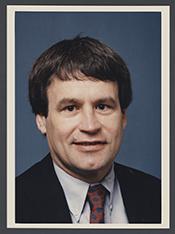 Rep. Lane Evans (D-IL)