Mr. Chairman, I rise in support of this bill, though there are provisions in it that concern me. First, I voted against the rule as it prevented the House from considering important amendments. Among…
Mr. Chairman, I rise in support of this bill, though there are provisions in it that concern me.
First, I voted against the rule as it prevented the House from considering important amendments. Among them were amendments urging U.S. leadership, by participating in negotiations on climate change, to reduce greenhouse gases and providing funding for removal of land mines and agricultural redevelopment of former mine fields.
The rule did allow the consideration of an amendment that passed by just five votes, reversing the position taken by the House International Relations Committee on funding for the United Nations Population Fund (UNFPA). I voted against that amendment, and I am discouraged by the continuing refusal of the House to consider the facts when it comes to UNFPA. Allegations against UNFPA in China have never been substantiated despite the fact the program has endured more scrutiny than any other UNFPA program. But despite the findings of the Administration's own investigation team in July 2002 that UNFPA is not engaged in any coercive activity in China, President Bush canceled the $34 million allocated for UNFPA in FY2003 and requested no money for the program in FY2004. I will continue to fight for funding for UNFPA's important mission and for the right of foreign organizations that provide information about reproductive health care to receive U.S. aid.
The House also voted on an amendment sponsored by Representatives Hostettler, Gallegly, and Tancredo. I want to clarify the reasons for my opposition to this amendment, which sets standards for consular identification cards issued by foreign governments and used in the United States. The amendment provides that if foreign governments do not abide by the strict U.S. standards, the U.S. government will refuse to issue any visas to foreign nationals from those countries.
I believe protecting our national security requires that we know who is in our country, and I agree that establishing a set of standards for consular identification cards would increase their legitimacy and decrease fraudulent use of the cards. But I did not believe that the Hostettler amendment approached the problem in the right way. Forcing foreign governments to abide by U.S. standards for consular identification cards is an unprecedented attempt to change how a country relates to its own nationals in a host country, and is likely in breach of the Foreign Missions Act and the Vienna Convention on Consular Affairs. Implementation of this amendment would also set a very dangerous precedent for our embassies abroad. In addition, I understand that the Administration will soon unveil its own proposal for standardization of these consular identification cards. So in my view, the Hostettler amendment not only had technical problems, but it was also premature.
Despite these concerns, I am a strong supporter of our foreign aid programs and our international institutions, and so I support this bill.
I am pleased that the bill authorizes assistance to the Palestinian Authority to improve the Palestinian economy and living conditions of the Palestinian people. I am pleased that the bill includes increased funding for the Migration and Refugee Assistance program. I am also pleased that the bill includes funding for UNESCO and that it permits the U.S. to pay its full assessment for U.N. peacekeeping efforts in each of the next two years.
Most importantly, I am pleased that the bill includes the Hyde-Lantos amendment authorizing the Millennium Challenge Account program and reauthorizing the Peace Corps. The Peace Corps provisions come from H.R. 250, the Peace Corps Charter for the 21th Century Act, a bill that I introduced with my colleague Representative Farr earlier this year.
We worked across party lines, with the Administration, and with returned Peace Corps volunteers to come up with this important bill.
My own background as an educator and director at Outward Bound for twenty years taught me about the importance of national and community service. But I also have strong connections to the Peace Corps--through my great state of Colorado and through my family. Colorado has one of the highest levels of recruitment of Peace Corps volunteers nationwide, and returned Peace Corps Volunteers in the 2nd Congressional District alone number over 500. Of course, the most important Peace Corps connection for me is my mother, who served as a volunteer in Nepal decades ago.
Because of these connections I have a special interest in advancing the ability of the Peace Corps to play an important role in these new times.
As Americans, we are proud of our country, our freedoms, our democracy, our diversity. We know how fortunate we are to live in the United States. And yet we were sent a clear message on September 11th that we are not necessarily viewed abroad the way we view ourselves at home. Why is this so? More importantly, how can we change this?
One way is to continue to promote world peace and friendship through the people-to-people approach of the Peace Corps. After more than forty years of existence, the Peace Corps remains one of the most admired and successful initiatives ever put in place. But it needs to be updated to reflect the realities of our 21st century world, and that's what the Farr-Udall bill will do.
The bill we're introducing today meets the Administration's challenge to double the size of the Peace Corps to 14,000 by 2007. The bill also goes beyond this to propose a new post-9-11 ``Charter'' for the Peace Corps. Other highlights:
It spells out a commitment to recruit and place Peace Corps volunteers in countries where they could help promote mutual understanding, particularly in areas with substantial Muslim populations.
It establishes training programs for Peace Corps volunteers in the areas of education, prevention, and treatment of infectious diseases, such as HIV/AIDS.
The bill creates a grant program to enable Returned Peace Corps Volunteers to use their experience and expertise to continue to carry out the goals of the Peace Corps through specific projects.
This bill will pave the way for an expanded and refocused Peace Corps that can take on the new challenges that September 11th has presented to us, a Peace Corps that can be--as Sargent Shriver stated--``a pragmatic and dramatic symbol of America's commitment to peace.'' I believe that passage of the Peace Corps Charter for the 21St Century will help us head in this direction.
Again, I thank my colleague Representative Farr for working with me so closely on this legislation. I look forward to working with our colleagues in the Senate to agree on final text and to move this bill closer to enactment.
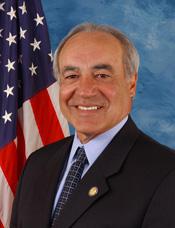 Rep. Joe Baca (D-CA)