Property Protection and Encouragement Act
Legislative Activity
Stay on top of the latest movement without scrolling through every action
Referred to the House Committee on Resources.
May 6, 2003
View full timeline
Introduced in House
May 6, 2003
Referred to the House Committee on Resources.
May 6, 2003
Floor Debate
10 membersWhat members said about H.R. 1965 on the floor
 JB
JB EBJ
EBJ WJ(
WJ( THA
THA RH+5
RH+5
Floor Debate
10 membersWhat members said about H.R. 1965 on the floor
Mr. Speaker, I yield myself such time as I may consume. First, Mr. Speaker, I want to say I have nothing but the highest personal regard for the gentlewoman from Texas who is offering this motion to…
Mr. Speaker, I yield myself such time as I may consume.
First, Mr. Speaker, I want to say I have nothing but the highest personal regard for the gentlewoman from Texas who is offering this motion to instruct conferees. She and I have served together in this body for, I think, approximately 11 years; and we have worked together on many, many issues and spent many, many moments together in very positive dialogue, and I appreciate her bringing this issue to the floor. My objection to the resolution is based on the policy, not on the person who is bringing the resolution.
I do rise in opposition, respectfully, to the Johnson motion to instruct. To put it in the simplest terms, the issue before us today is not whether any Member of this body does not want the cleanest air possible for our citizens; the issue is whether we want to apply common sense to the Clean Air Act and to codify Clinton administration policy that was explicitly designed to avoid what the EPA, under the Clinton administration back in 1994, called an odd or even absurd result that penalizes an area for pollution that is beyond their ability to control.
Let me put this in language that everybody can understand. The Clean Air Act amendments of 1990 categorized in a more definitive way ozone as a pollutant that needed to be regulated, and it set standards. It is the only pollutant in the act that has gradations of standards. For the other controlled pollutants, it is kind of an in or out, yes or no, pass or fail. But for ozone, it has different levels, from very moderate to very severe; and each of the levels has a different standard and a different timeline for compliance.
I am an author of the Clean Air Act amendments. I spoke for them on the floor. I helped to work to put the bill together in the committee. So I have some personal history in this issue.
As the Clean Air Act amendments of 1990 were being implemented, it became apparent that there were many regions of this country that were trying to comply; but because there were other areas down wind from them that had a different timetable and a different compliance criteria, it was making it difficult for some of these regions to comply in the technical sense with the act. So the Clinton administration came up with a proposal that said, we will show some flexibility. If, in fact, you have a State implementation plan that has been approved or is in the process of being approved and if, in fact, it looks like you are making a good-faith effort to come into compliance, we will give you an extension if we think it is meritorious and the reason that you need the extension is because there is another region that is not in compliance that is transporting their ozone pollution to you. That is common sense. There is nothing wrong with that.
I want to put into the Record at this point in time, Mr. Speaker, the 1994 Clinton administration policy that was contained in a memorandum signed by then-Assistant Administrator for Air and Radiation, Mary Nichols. This memorandum attempted to reconcile the conflicting provisions of the Clean Air Act and to give effect to as much of Congress' manifest intent as possible. I also want to put into the Record the 1998 Clinton administration policy on this issue that was actually published in the Federal Register.
Environmental Protection Agency
Extension of Attainment Dates for Downwind Transport Areas
Agency: Environmental Protection Agency (EPA).
Action: Proposed interpretation; request for comments.
Summary: Today's notice announces EPA's interpretation of
the Clean Air Act (Act) regarding the possibility of
extending attainment dates for ozone nonattainment areas that
have been classified as moderate or serious for the 1-hour
standard and which are downwind of areas that have interfered
with their ability to demonstrate attainment by dates
prescribed in the Act. The guidance memorandum that is being
printed in today's notice is entitled ``Extension of
Attainment Dates for Downwind Transport Areas'' and was
signed by Richard D. Wilson, Acting Assistant Administrator
for Air and Radiation, on July 16, 1998. This notice follows
up on the statement made in the guidance memorandum that EPA
would request comments on its interpretation.
A number of areas may find themselves facing the prospect
of being reclassified or ``bumped up'' to a higher
classification in spite of the fact that pollution beyond
their control contributes to the levels of ozone they
experience. The notice addresses the problem by providing an
avenue to extend the attainment dates for areas affected by
transported pollution. The EPA intends to finalize the
interpretation in this guidance only when it applies in the
appropriate context of individual rulemakings addressing
specific attainment demonstrations and requests for
attainment date extensions. If EPA approves an area's
attainment demonstration and attainment date extension
request, the area would no longer be subject to bump up for
failure to attain by its original attainment date.
Dates: The EPA is establishing an informal 30-day comment
period for today's notice, ending on [insert date 30 days
after date of publication in the Federal Register].
Addresses: Documents relevant to this action are available
for inspection at the Air and Radiation Docket and
Information Center (6101), Attention: Docket No. A-98-47, US
Environmental Protection Agency, 401 M Street, SW, Room M-
1500, Washington, DC 20460, telephone (202) 260-7548, between
8 a.m. and 4 p.m., Monday through Friday, excluding legal
holidays. A reasonable fee may be charged for copying.
Written comments should be submitted to this address.
For Further Information Contact: Denise Gerth, Air Quality
Strategies and Standards Division, Office of Air Quality
Planning and Standards, US Environmental Protection Agency,
MD-15, Research Triangle Park, NC 27711, telephone (919) 541-
5550.
Supplementary Information: On July 16, 1998, the following
guidance was issued by Richard Wilson, Acting Assistant
Administrator for Air and Radiation. It should be noted that
the July 16, 1998 memorandum reprinted in this notice refers
to EPA's proposed NOx SIP call. After the
memorandum was signed, EPA took final action on the SIP call
and promulgated a final rule. See 63 FR 57356 (October 27,
1998).
Guidance on extension of attainment dates for downwind transport areas
Preface
The purpose of this guidance is to set forth EPA's current
views on the issues discussed herein. EPA intends soon to set
out its interpretation in an advance notice of proposed
rulemaking on which the Agency will take comment.
While EPA intends to proceed under the guidance that it is
setting out today, the Agency will finalize this
interpretation only when it applies in the appropriate
context of individual rulemakings addressing specific
attainment demonstrations. At that time and in that context,
judicial review of EPA's interpretation would be available.
Introductory Summary
A number of areas in the country that have been classified
as moderate or serious nonattainment areas for the 1-hour
ozone standard are affected by pollution transported from
upwind areas. For these downwind areas, transport from upwind
areas has interfered with their ability to demonstrate
attainment by the dates prescribed in the Clean Air Act
(Act). As a result, many of these areas find themselves
facing the prospect of being reclassified, or ``bumped
up,'' to a higher nonattainment classification in spite of
the fact that pollution that is beyond their control
contributes to the levels of ozone they experience. In the
policy being issued today, EPA is addressing this problem
by planning to extend the attainment date for an area that
is affected by transport from either an upwind area with a
later attainment date or an upwind area in another State
that significantly contributes to downwind nonattainment,
as long as the downwind area has adopted all necessary
local measures, and has submitted an approvable attainment
plan to EPA which includes those local measures. (By
``affected by transport,'' EPA means an area whose air
quality is affected by transport from an upwind area to a
degree that affects the area's ability to attain.) EPA
intends to initiate rulemaking for each area seeking such
relief and contemplates providing such relief to those who
qualify. If after consideration of public comments EPA
acts to approve an area's attainment demonstration and
extend its attainment date, the area will no longer be
subject to reclassification or ``bump-up'' for failure to
attain by its otherwise applicable attainment date.
Background
The Act may be interpreted to allow a later attainment date
than generally applicable to a particular ozone nonattainment
area if transport of ozone or its precursors (nitrogen oxides
(NOX) and volatile organic compounds (VOCs))
prevents timely attainment. This principle has already been
advanced in EPA's Overwhelming Transport Policy, which
allowed a downwind area to assume the later attainment date
if it could meet certain criteria, including a demonstration
that it would have attained ``but for'' transport from an
upwind nonattainment area with a later attainment date. See
Memorandum from Mary D. Nichols, Assistant Administrator for
Air and Radiation, entitled, ``Ozone Attainment Dates for
Areas Affected by Overwhelming Transport,'' September 1,
1994. In the four years since the issuance of that
memorandum, the history of the efforts to analyze and control
ozone transport has led EPA to believe that it should expand
the policy's reach to ensure that downwind areas are not
unjustly penalized as a result of transport.
In March 1995, EPA called for a collaborative, Federal-
State process for assessing the regional ozone transport
problem and developing solutions, and the Ozone Transport
Assessment Group (OTAG) was subsequently formed. See
Memorandum from Mary D. Nichols, Assistant Administrator for
Air and Radiation, entitled ``Ozone Attainment
Demonstrations,'' March 2, 1995. The OTAG was an informal
advisory committee with representatives from EPA, thirty-
seven states in the Midwestern and eastern portions of the
country, and industry and environmental groups. OTAG's major
functions included developing computerized modeling analyses
of the impact of various control measures on air quality
levels throughout the region and making recommendations as to
the appropriate ozone control strategy. Based on OTAG's
modeling analyses, it developed recommendations concerning
control strategies. These recommendations, issued in mid-
1997, called upon EPA to calculate the specific reductions
needed from upwind areas.
In November 1997, using OTAG's technical work, EPA issued a
proposed NOX State implementation plan (SIP) call,
directing certain States to revise their SIPs in order to
satisfy section 110(a)(2)(D) by reducing emissions of
NOX to specified levels, which in turn will reduce
the amounts of ozone being transported into nonattainment
areas from upwind areas. 62 FR 60318 (November 7, 1997). In
July 1997, the EPA promulgated a revised 8-hour ozone NAAQS.
62 FR 38856 (July 18, 1997). That promulgation included
regulations providing that the 1-hour NAAQS would be phased
out, and would not longer apply to an area once EPA
determined that the area had air quality meeting the 1-hour
standard. 40 CFR section 50.9(b). Until the 1-hour standard
is revoked for a particular area, the area must continue to
implement the requirements aimed at attaining that standard.
The Current Problem
The Act called on areas classified as moderate ozone
nonattainment areas to submit SIPs that demonstrate
attainment by 1996 (unless they receive an extension), and
called on serious nonattainment areas to demonstrate
attainment by November 1999 (unless they receive an
extension). Section 181 and 182(b) and (c). For many of these
areas, EPA has preliminary determined in the proposed SIP
call that transport from upwind areas is contributing to
their nonattainment problems. Such transport also appears to
be interfering with their ability to demonstrate attainment
by the statutory attainment dates.
The graduated control scheme in sections 181 and 182 of the
Act expressed Congress's intent that areas be assigned
varying attainment dates, depending upon the severity of the
air quality problem they confront. Sections 181 and 182
provide for attainment ``as expeditiously as practicable,''
but establish later deadlines for attainment in more polluted
areas, and additional control measures that the more polluted
areas must accomplish over the longer time frame. Thus, many
of the upwind areas have later attainment dates than the
downwind areas which are affected by emissions from the
upwind States. On the other hand, section 110(a)(2)(D)(i)(I)
of the Act requires SIPs to prohibit ``consistent with the
other provisions of [title I],'' emissions which will
``contribute significantly to nonattainment in . . . any
other State.'' The EPA interprets section 110(a)(2)(A) to
incorporate the same requirement in the case of intrastate
transport. Sections 176A and 184 provide for regional ozone
transport commissions that may recommend that EPA mandate
additional regional control measures to allow
areas to reach timely attainment in accordance with section
110(a)(2)(D)(i)(I).
These provisions demonstrate Congressional intent that
upwind areas be responsible for preventing interference with
timely downwind attainment. They must be reconciled with
express Congressional intent that more polluted areas be
allotted additional time to attain. As EPA pointed out in its
overwhelming transport policy, Congress does not explicitly
address how these provisions are to be read together to
resolve the circumstances where more polluted upwind areas
interfere with timely attainment downwind, during the time
provided for those upwind areas to reduce their own
emissions.
In the 1994 overwhelming transport policy, EPA stated that
it would harmonize these provisions to avoid arguably absurd
or odd results and to give effect to as much of Congress'
manifest intent as possible. The EPA struck a balance in the
overwhelming transport policy by requiring that the upwind
and downwind areas reduce their contribution to the
nonattainment problem while avoiding penalizing the downwind
areas for failure to do the impossible.
In the 1994 policy, EPA reasoned that Congress did not
intend the section 110(a)(2)(D)(i)(I) obligation to supersede
the practicable attainment deadlines and graduated control
scheme in sections 181 and 182, especially since section
110(a)(2)(D)(i)(I) specifically applies only ``to the extent
consistent with the provisions of (title I).'' The same
rationale applies in the intrastate context under section
110(a)(2)(A).
Developments since the issuance of the overwhelming
transport policy in 1994 have prompted EPA once again to
interpret these provisions so that they can be reconciled in
light of existing circumstances. Since the issuance of that
policy, EPA and the States, through OTAG, have made
significant progress in addressing interstate transport in
the eastern United States, and have worked to analyze the
flow of transport and to allocate among the States their
respective responsibilities for control. During the period
required for this effort, which took longer than was
anticipated, the resolution of the regional transport issue
was held in abeyance. The effort to address regional
transport recently resulted in EPA's proposed NOX
SIP call, expected to be finalized in the next few months.
For areas in the OTAG region affected by transport, the
conclusion of the OTAG and SIP call processes in September
1998 will result in assignments of responsibility that will
assist in the design of SIPs and the formation and
implementation of attainment demonstrations.
Because EPA had not previously determined how much to
require upwind States in the OTAG region to reduce transport,
downwind areas were handicapped in their ability to determine
the amounts of emissions reductions needed to bring about
attainment. While operating in this environment of
uncertainty, many of these downwind areas confronted near-
term attainment dates. Moreover, as described in the
NOX SIP call proposal, the reductions from the
proposed NOX SIP call will not likely be achieved
until at least 2002, well after the attainment dates for many
of the downwind nonattainment areas that depend on those
reductions to help reach attainment.
The Solution
The EPA believes that a fair reading of the Act would allow
it to take these circumstances into account to harmonize the
attainment demonstration and attainment date requirements for
downwind areas affected by transport both with the graduated
attainment date scheme and the schedule for achieving
reductions in emissions from upwind areas. Thus, EPA will
consider extending the attainment date for an area that:
(1) has been identified as a downwind area affected by
transport from either an upwind area in the same State with a
later attainment date or an upwind area in another State that
significantly contributes to downwind nonattainment. (By
``affected by transport,'' EPA means an area whose air
quality is affected by transport from an upwind area to a
degree that affects the area's ability to attain);
(2) has submitted an approvable attainment demonstration
with any necessary, adopted local measures and with an
attainment date that shows that it will attain the 1-hour
standard no later than the date that the reductions are
expected from upwind areas under the final NOX SIP
call and/or the statutory attainment date for upwind
nonattainment areas, i.e., assuming the boundary conditions
reflecting those upwind reductions;
(3) has adopted all applicable local measures required
under the area's current classification and any additional
measures necessary to demonstrate attainment, assuming the
reductions occur as required in the upwind areas. (To meet
section 182(c)(2)(B), serious areas would only need to
achieve progress requirements until their original attainment
date of November 15, 1999);
(4) has provided that it will implement all adopted
measures as expeditiously as practicable, but no later than
the date by which the upwind reductions needed for attainment
will be achieved.
EPA contemplates that when it acts to approve such an
area's attainment demonstration, it will, as necessary,
extend that area's attainment date to a date appropriate for
that area in light of the schedule for achieving the
necessary upwind reductions. The area would no longer be
subject to reclassification or ``bump-up'' for failure to
attain by its original attainment date under section
181(b)(2).
Legal Rationale
The legal basis for EPA's interpretation of the attainment
date requirements employs and updates the rationale invoked
in the Agency's overwhelming transport policy. By filling a
gap in the statutory framework, EPA's interpretation
harmonizes the requirements of sections 181 and 182 with the
Act's requirements (sections 110(a)(2)(D)(i)(I),
110(a)(2)(A), 176A and 184) on inter-area transport. It
reconciles the principle that upwind areas are responsible
for preventing interference with downwind attainment with the
Congressional intent to provide longer attainment periods for
areas with more intractable air pollution problems. It also
takes into account the amount of time it will take to achieve
emission reductions in upwind areas under the NOX
SIP call, which EPA expects to finalize in September 1998.
The EPA's resolution respects the intent of sections 181
and 182 to provide longer attainment dates for areas burdened
with more onerous air pollution problems, while allowing
reductions from upwind areas to benefit the downwind areas.
Under EPA's interpretation, upwind areas will be required to
reduce emissions to control transport, but should not find
that the requirements imposed upon them amount to an
acceleration of the time frames Congress envisioned for
these areas in sections 181 and 182. Downwind areas will
be provided additional time to accommodate the delayed
control contributions from upwind areas, while at the same
time being held accountable for all measures required to
control local sources of pollution.
The EPA's interpretation of the Act allows it to extend
attainment dates only for those areas which are prevented
from achieving timely attainment due to a demonstrated
transport problem from upwind areas, and which submit
attainment demonstrations and adopt local measures to address
the pollution that is within local control. The EPA believes
that Congress, had it addressed this issue, would not have
intended downwind areas to be penalized by being forced to
compensate for transported pollution by adopting measures
that are more costly and onerous and/or which will become
superfluous once upwind areas reduce their contribution to
the pollution problem.
This interpretation also recognizes that downwind areas in
the OTAG region have been operating in a climate of
uncertainty as to the allocation of responsibility for
controlling transported pollution. Section 110(a)(2)(D) is
not self-executing and, until the NOX SIP call
rulemaking, downwind areas in the OTAG region could not
determine what boundary conditions they should assume in
preparing attainment demonstrations and determining the
sufficiency of local controls to bring about attainment. By
allowing these areas to assume the boundary conditions
reflecting reductions set forth in the NOX SIP
call and/or reductions from the requirements prescribed for
upwind nonattainment areas under the Act, EPA will hold
upwind areas responsible for reducing emissions of
transported pollution, and downwind areas will be obligated
to adopt and implement local controls that would bring about
attainment but for the transported pollution.
The EPA's interpretation harmonizes the disparate
provisions of the Act. It avoids accelerating the obligations
of the upwind States so that downwind States can meet earlier
attainment dates, which would subvert Congressional intent to
allow upwind areas with more severe pollution longer
attainment time frames to attain the ozone standards. In
addition, EPA's interpretation of the Act takes into account
the fact that, under the SIP call, upwind area reductions
will not be achieved until after the attainment dates for
moderate and serious ozone nonattainment areas. To refuse to
interpret the Act to accomplish this would unduly penalize
downwind areas by requiring them to compensate for the
transported pollution that will be dealt with by controls
adopted in response to the requirements of the NOX
SIP call or to achieve attainment in an upwind area. The EPA
is thus interpreting the requirements to allow the Agency to
grant an attainment date extension to areas that submit their
attainment demonstrations and all adopted measures necessary
locally to show attainment. This solution preserves the
responsibility of these downwind areas to prepare attainment
demonstrations and adopt measures, but does not penalize them
for failing to achieve timely attainment by reclassifying
them upwards, since such attainment was foreclosed by
transport beyond their control.
Under this policy, once EPA has acted to approve the
attainment demonstration and extend the area's attainment
date, the area would no longer be subject to reclassification
or ``bump-up'' for failure to attain by its original
attainment date under section 181(b)(2).
The EPA requests comment on the interpretation in the
guidance memorandum reprinted above.
Robert Perciasepe,
Assistant Administrator
for Air and Radiation.
Mr. Speaker, this policy built upon the 1994 statutory interpretation memorandum that we have just put into the Record. And it indicated that the EPA considered its bump-up policy to be a fair reading of the act.
Now, what happened after this 1994 memorandum and the 1998 Federal Register, no Member of Congress complained about that. There was no group of citizens that came to the Congress and complained about the Clinton administration proposal. But what did happen was that in 2002, the Sierra Club filed three different lawsuits in three different regions, one of them here in the D.C. Circuit, one in the 5th Circuit, and one in the 7th Circuit, and they really did not argue against the policy of flexibility. They simply said the Clean Air Act did not give the EPA that authority. It was a very technical argument. And, to their credit, the Sierra Club's argument was upheld by the courts. The courts said, ``We have read the Clean Air Act and it is ambiguous. And since it is ambiguous, we have to say no to flexibility because it does not explicitly state there can be flexibility.'' That was in 2002. Those were lawsuits filed by the Sierra Club that went to court.
So we now fast forward to 2003. The gentleman from Louisiana (Mr. Tauzin), the distinguished chairman of the full committee, and the gentleman from Michigan (Mr. Upton), a member of the Committee on Energy and Commerce, all worked with me and other members of the committee on a bipartisan basis. We passed the most comprehensive energy legislation this Congress has seen back in April, April 11, I believe, on the floor of the House.
We, at that time, had not had time to study the effect of the court ruling. We had not had time to put together a hearing on this issue. But we did in July. In July we had a hearing in my subcommittee. We had a number of witnesses testify, and, with one or two exceptions, everybody who testified said this policy of flexibility is a good idea. We should allow it.
Democrats, my good friend from Houston, the gentleman from Texas (Mr. Green), my friend from Beaumont, the gentleman from Texas (Mr. Lampson), my friend from Crockett, the gentleman from Texas (Mr. Turner), they all came and brought some of their constituents who testify or put testimony into the Record that said flexibility is good.
So as we went to conference with the other body, after consultation with the minority leadership of the Committee on Energy and Commerce, we put this in.
Mr. Speaker, I yield to the gentlewoman from Texas (Ms. Eddie Bernice Johnson).
Mr. Speaker, I thank my good friend, the gentlewoman from Texas (Ms. Eddie Bernice Johnson), and I will continue to yield to her because I think we should have a dialogue, but what I am trying to point out is this is a commonsense policy that we have put in or are attempting to put into the energy conference with the other body. Because there is a lot of support for it and it gives the flexibility, if the local region needs it. Everything in it is based on a transport issue, and if the EPA says that it will help. That is all it does.
Mr. Speaker, I will be happy to yield.
Mr. Speaker, I yield to the gentlewoman from Texas (Ms. Eddie Bernice Johnson).
Mr. Speaker, if I may reclaim my time to respond briefly. This is not about changing the goal post at all. The same standard is in effect. We are not changing the standard. We are simply saying if they are trying to comply, and one of the reasons they are not in technical compliance is because of an ozone transport issue outside of their control area, they have the flexibility to ask for an extension. And the EPA has the right to grant that extension. But if the EPA does, it cannot grant an extension that is any longer than in the noncompliant area that is causing the transport issue.
Mr. Speaker, I yield to the gentleman from Michigan (Mr. Upton).
Mr. Speaker, I will reserve the balance of my time.
Mr. Speaker, could I inquire of the time on each side right now?
Mr. Speaker, I would like to yield 2\1/2\ minutes to the gentleman from Houston, Texas, (Mr. Green), a member of the committee and the subcommittee.
Mr. Speaker, will the gentleman yield?
If we had a finalized version of the text, I would certainly share it with the gentleman. We do not yet have a finalized version. I can tell the gentleman the substance of it and would be happy to do that; but I myself do not have a hard copy of it because we have not finalized the negotiations with the other body.
Mr. Speaker, I yield myself such time as I may consume.
Mr. Speaker, I would like to try to answer my good friend's question. Before I do that, I want to put into the Record the witness list for the subcommittee hearing on July 22, 2003, that I believe the gentleman from Maine (Mr. Allen) attended, if I am not mistaken. My recollection is that he was there.
We had 10 witnesses headed by the Honorable Jeffrey Holmstead, who is the assistant administrator for the air and radiation office of the Environmental Protection Agency.
We had nine witnesses that were State and local witnesses. We had a fair panel. Of the nine State and local witnesses, my recollection is that five or six supported this proposal and that three did not. There may be one of the six that I count as a supporter that was kind of 50/ 50 on it.
What the pending proposal with the other body would do is simply and very narrowly in the States that are part of the agreement with the EPA on NOx, and there are 17 States, most of them east of the Mississippi, if those States have a State implementation plan approved or in the process of being approved and they can show that one of the reasons they may not be in compliance is because of ozone transport, they can ask for an extension. The EPA has the discretion to grant the extension; but if the EPA does grant the extension, it can only grant it forward to the compliant date where the ozone transport is originating from, if that makes sense. It is purely discretionary on asking for the extension. It is purely discretionary on granting the extension.
The extension can only be granted for ozone transport. It is an attempt to codify the Clinton administration's proposal that was put in the Federal Register in 1998.
I yield to the gentleman from Maine.
Let me call a time out if that is possible.
It does not require additional implementation control measures, but it would require that they could file an addendum to the SIP that would do that.
Reclaiming my time, Mr. Speaker, I want to comment on what might happen if a region is not granted an extension.
The courts have ruled in these court cases that if the EPA is not allowed to give some discretion in terms of meeting the timeline and if that region does not look like it is going to be in compliance, it is automatically bumped up to the next highest attainment, nonattainment category.
There are five nonattainment categories in the Clean Air Act. The least nonattainment is called marginal. Their design parameter is between 121 parts per billion for ozone and 138 parts per billion. You go to moderate which is 138 parts per billion to 160. You go to serious .160 to .180. And you go to severe which is 180 parts per billion to 190 parts per billion, and anything above that is extreme. And if you do not have the flexibility to give an extension, and if the region cannot show that it will be in compliance by that specific deadline, EPA has to bump them up in the next higher nonattainment area.
And we might ask ourselves, well, so what? So we are bumped up from serious to severe, from moderate to serious. No big deal. Well, it actually is a big deal because as we go into the more severe nonattainment criteria, the things that have to be done, there is no discretion on that. For example, if you apply for a permit to perhaps build a new factory to provide new jobs, you have to show that there is a two to one offset.
In other words, you have to shut down two tons of pollution for each new ton that the new factory would provide. You almost bring to a halt any highway funding in the area. And in the DFW area that the gentlewoman and I share representation with, those
highway funds on an annual basis or order of magnitude are around $600 million just in Dallas and Tarrant County.
Any new source that is over 25 tons per year has to get a special permit, and 25 tons per year is not a large amount of emissions. And it is possible that the Federal Government can come in and just take over the entire State implementation.
Now, there are some that may think that those are all well and good; but most of this body I would postulate would say, would it not be better to give the region some flexibility to ask for an extension and would it not be better to give the EPA the authority if they felt it was in order to give the extension. That is the question. And again, we are not changing the standards; we are not changing the 125 part per billion standard for ozone. We are not maintaining that at all. We are not changing the criteria for being classified from marginal to extreme. We are not changing that at all. We are not changing the general attainment dates that go back in the statute to 1990. We are simply saying flexibility and discretion are a good thing, not a bad thing.
Mr. Speaker, I reserve the balance of my time.
Mr. Speaker, if she is about to close, I have some more comments, and she does have the right to close. Would she allow me to speak and then she could close the debate?
Mr. Speaker, how much time do I have left?
Mr. Speaker, I yield myself such time as I may consume.
I do not want to belabor the debate. Let me just in summary, before the gentlewoman closes, point out that while the gentlewoman is from the Dallas-Fort Worth area, and I am also, this is not a local Dallas- Fort Worth issue. These court cases were brought in three different circuit courts, one of which is the District of Columbia here in Washington, D.C., the 5th circuit and the 7th circuit. So this is a national issue.
Regions that are affected immediately by these court cases do include the Beaumont-Port Arthur area, Dallas-Fort Worth area. So there are two areas in Texas but we also have St. Louis, Missouri; Atlanta, Georgia; Washington, D.C.; greater Connecticut; and Baton Rouge, Louisiana. Those are the cases that we know of, the State implementation plans that were pending that have been stayed by these are affected by these court rulings. So this is not just a Texas issue or just a Dallas-Fort Worth issue. This is a national issue.
The second thing that I would point out is that we are not affecting the standard, the national standard of 120 parts per billion, but let me say on that, when the gentlewoman from Dallas indicates that she has constituents that are affected by ozone and, as she called it, by the dirty area, so do I.
I am slightly asthmatic. My son is, I would say, moderately to severely asthmatic. I have done a lot on the floor of this body to try to help asthmatics. I am the cofounder, along with Senator Kennedy in the other body and the gentlewoman from New York (Mrs. Lowey), of Asthma Awareness Day. Back before it was politically correct to be talking about asthma, in some earlier Congresses, I was one of the handful of sponsors of the Asthma Act back in the 105th Congress. I was one of only three sponsors of H.R. 4654. In the 106th Congress, I was one of only four sponsors of H.R. 1965. I am still a leader of the Asthma Awareness Day that we have had every year in the Congress for the last 8 years I think.
So we are not trying to say it is not a problem, but there are some people in our society, when they set these standards for ozone, that we could take ozone to background levels, five parts per billion, six parts per billion like we have in Atlanta, Georgia, and there would still be some asthmatics that were negatively affected.
The other pollutants that are regulated under the Clean Air Act, in every case there was some sort of a bright line test, and again, it is not the different categories. It is yes or no. For lead, yes or no. For SO2, yes or no. For NOx, yes or no. But for ozone, it is not a yes or no, and there is wide scientific debate about where to set the standard.
Having said that, we could set the standard at a level that only the Supreme Being of the universe could meet, and we would still have some people that would be negatively affected. So when we get into the debate about parts per billion and number of days they are out of compliance, 3 days in a 3-year period is okay, but 4 days in a 3-year period is not if they exceed it by one part per billion, then I think discretion is advisable, and I think flexibility is advisable. And I think the pending House position with the other body on the energy conference report is a very defensible, not only defensible, it is a very useful provision, and I would hope, if the gentlewoman insists on a record vote, that we would vote against her motion to instruct, not because it is not well-intentioned, not because she is not well- meaning, but because it actually would, in many ways, I think, hurt the effort to clean the air because of the arbitrariness of the way the courts have ruled under the current Clean Air Act.
Mr. Speaker, I yield back the balance of my time.
Mr. Speaker, will the gentlewoman yield?
Mr. Speaker, I know she has the right to close, but she made a characterization about my district, and at the appropriate time, I would like to respond to that. I do not mean to interrupt her, but if she would yield to me some time.
Mr. Speaker, I will put into the Record data by the Texas Environmental Air Quality Commission that shows the monitoring in Ellis County has not exceeded one time the standard, not one time. Now, there are monitors in Arlington, Texas, that have, and that is also in my district, but if a reference is to Ellis County, the data shows that there have not been any exceedences. I do not know which part of my district she was referring to, but if it is Ellis County, we are okay in Ellis County. If it is part of Arlington that I represent, then we have had an exceedence.
The data is for ozone exceedences in Dallas/Fort Worth area in 2002 and 2003 (through 10/28/2003).
Measured values for Midlothian Tower C94/C158/C160 show 91 ppb on 15 May 2002, 86 ppb on 22 June 2002, 90 ppb on 23 June
2002, 85 ppb on 24 June 2002, 87 ppb on 8 July 2002, 88 ppb on 7 August 2002, 87 ppb on 8 August 2002, 99 ppb on 9 August 2002, 94 ppb on 11 September 2002, 86 ppb on 13 September 2002, 89 ppb on 28 May 2003, 86 ppb on 9 June 2003, and 89 ppb on 6 August 2003.
Mr. Speaker, on that I demand the yeas and nays.
Mr. Speaker, I offer a motion to instruct conferees. Mr. Speaker, I yield myself such time as I may consume. My motion to instruct the energy conferees is very, very simple. There is no provision in…
Mr. Speaker, I offer a motion to instruct conferees.
Mr. Speaker, I yield myself such time as I may consume.
My motion to instruct the energy conferees is very, very simple. There is no provision in the House or Senate energy bills that allow ozone nonattainment areas to extend, or ``bump up,'' deadlines to comply with the Clean Air Act.
Now, House GOP energy conferees, including my respected colleague, the gentleman from Texas (Mr. Barton), want to include a rider in the energy conference report to overturn four Federal court rulings and amend the Clean Air Act to allow polluted areas to have more time to clean up, but without having to implement air pollution controls. Every time one looks up, it is another extension. This would delay the adoption of urgently needed antipollution measures in communities throughout the country.
Industry officials, environmentalists, local elected officials, the Texas Commission on Environmental Quality, and the Environmental Protection Agency have been working hard in recent months to find a way of complying with the ozone standards in north Texas. The Barton provision destroys that process.
This special interest rider also shows reckless disregard for the health consequences that dirty air has on my constituents and others that live in smoggy cities across the country.
To further delay necessary emissions reductions in ozone nonattainment areas is unacceptable and a betrayal of the public's trust. It is unacceptable, most of all, because it is based on false information that ozone transport jeopardizes attainment for smoggy cities.
An article in my hometown newspaper, the Dallas Morning News, states today that documents and interviews from the Bush administration's EPA show little or no evidence to support claims that Houston's smog is harming the Dallas-Fort Worth attainment of clean air goals.
This is not about jobs versus clean air; this is about a small set of areas seeking to avoid their responsibility under the Clean Air Act, thereby gaining a competitive advantage over other industries in other areas that have complied. The disadvantaged area is quite likely to be in your district.
This provision is blatantly unfair to my constituents and the gentleman from Texas's (Mr. Barton) constituents who write me all the time and live down wind from the smokestacks in my colleague's district. Under this provision, dirty, unhealthy air will continue to blow downward on to my constituents, possibly until the year 2012.
I am a nurse by profession. The health effects of air pollution imperil human lives. Ozone pollution burns cell walls in the lungs and air passages, causing tissues to swell, chest pain, coughing, irritation, and congestion. Ozone pollution decreases the ability of lungs to function properly. Air pollution aggravates asthma and increases susceptibility to bacterial infection. Long-term exposure to ozone in otherwise healthy individuals could set the stage for more serious illnesses. The cost for asthma, estimated at $11 billion annually, is only part of the total cost of the health care necessitated by exposure to harmful levels of ozone.
The American Lung Association reports that exposure to high levels of ozone air pollution appears to be responsible for up to 50,000 emergency room visits and up to 15,000 hospitalizations for respiratory problems each year. I had a dear friend lose her life this year from this very ailment, a 51-year-old M.D. who had never smoked a cigarette.
In my district, the effects of air pollution are especially compelling. The American Lung Association reports that nearly a half million people in the Dallas-Fort Worth area live with diseases that are aggravated by air pollution. EPA's own consultants found that each year almost 370 residents of the Dallas-Fort Worth area died just because of pollution from the oldest and dirtiest unregulated power plants, and 10,500 asthma attacks are triggered.
To further delay compliance and cleanup will increase health care costs for my constituents at a time when the health care system is broken. Clean air is crucial to the health of north Texans and the future economic well-being of our region.
The Barton ``bump-up'' provision has no business in the energy bill.
I suggest that if my colleague from Texas (Mr. Barton) and my colleague from Louisiana (Mr. Tauzin), gentlemen I respect, wish to amend the Clean Air Act, they should do so by showing respect for our legislative process and by using a more appropriate legislative vehicle. But instead, they have language they are not even sharing with people to do it.
Enough is enough. Hard deadlines are necessary to get the job done and clean up our air. This time has been lengthened and lengthened and lengthened and, each time, what is the answer? Another lengthened time.
Our Republican colleagues cannot continue to delay and stall. We have a greater obligation to protect public health than polluters' profits and campaign contributions.
I am disappointed that many Republicans will frame this debate as a trade-off between jobs and the environment. They are dead wrong. I urge my colleagues to vote against giving a clean air holiday to a few areas with the right political connections. I ask my colleagues to put the public health ahead of polluters' profits. Please vote for the motion to instruct.
Mr. Speaker, I reserve the balance of my time.
Mr. Speaker, this really is not a partisan issue. It is a matter of clean air that people breathe. I am certain there are people on that side of the aisle that will stand with the gentlemen, who I consider both my good friends. But there will be some probably who will not because they want to breathe some clean air. That is all this is about. It has nothing to do with partisanship. It has nothing to do with the Clinton administration. They have been given time. That is all this indicates. They have already had time to clean the air.
Mr. Speaker, what I need to ask is that at what point will these polluters be responsible for cleaning up? If we stand here and change the goal post one time after another, the time never comes.
The Clinton administration, which you love to refer to on this, gave leeway, but it is time now to clean the air. People are dying from this dirty air.
Mr. Speaker, I yield 3\1/2\ minutes to the gentlewoman from California (Mrs. Capps.)
Mr. Speaker, I yield 4 minutes to the gentleman from Maine (Mr. Allen).
Mr. Speaker, I have no further requests for time, and I believe I have the right to close.
Mr. Speaker, I yield myself the balance of my time.
There are lots of areas in the country that have already implemented the controls that the gentleman from Texas (Mr. Barton) speaks about and had worse transport problems and are not seeking extensions. It is a matter of whether these companies want to do it and have the encouragement to come into compliance rather than to help to stay out of compliance.
I would also like to note that the gentleman from Michigan (Mr. Upton) was here speaking, and I do not know about his application for an extension, but all the areas in Michigan have attained the 1-hour standard. So I do not know why the EPA policy would even apply to Michigan.
The only transport occurring in my area is from the gentleman from Texas' (Mr. Barton) district to mine. It is not from Houston to Dallas, and in today's article that was well-researched in the Dallas Morning News, it states that the region missed Federal deadlines in 1996 and 1999 to clean up its air. The last missed date made the region, now classified as a serious ozone violator, eligible to move to the next worse category, as severe. That would impose the new deadline set by a Federal law for 2005 and new orders for pollution cuts.
I yield to the gentleman from Texas.
Mr. Speaker, I yield 30 seconds to the gentleman from Texas (Mr. Barton).
Mr. Speaker, I yield myself such time as I may consume.
(Ms. EDDIE BERNICE JOHNSON of Texas asked and was given permission to revise and extend her remarks, and include extraneous material.)
Wherever we are dirtying this air, it is dangerous to the lungs, and it is dangerous to the health.
According to the Environmental Protection Agency, 127 million Americans breathe air that violates Federal standards for smog and soot pollutions. EPA's own consultants found that each year almost 370 residents of the Dallas-Fort Worth area died just because of pollution from the oldest and dirtiest unregulated power plants in the country, and 10,500 asthma attacks are triggered.
During the past several years, EPA gave several metropolitan areas a free pass, extending air deadlines for dirty areas without bumping them up to the higher pollution categories that would require more protective standards. Four separate Federal appellate courts all ruled that EPA's extension policy violated the language and purpose of the Clean Air Act. Appropriately, that led the agency to abandon the policy.
With so many Americans breathing in dirty air, it should be obvious that air quality standards are already not being enforced enough. Why would we make them weaker? But rather than accepting the judgment of the EPA and the courts, the gentleman from Texas (Mr. Barton) and his allies are seeking to amend the Clean Air Act. His changes would turn the clock back, extend the air time frames once again, without raising the bar for air quality. What this means in real terms for real people is simple: Dirtier air for longer.
In their desire to pass any comprehensive energy bill, some of my colleagues may be willing to overlook the massive damage this bill would do to our existing clean air policies. Including the Barton dirty air rider, which I do not even know what it says because he will not let us see it, but it means ignoring overwhelming scientific evidence on the serious health effects of ozone pollution. It will mean that pollution in these areas will go unchecked for longer and longer in the future.
Asthma attacks, respiratory problems and pulmonary disease will go up, while the amount of time children can spend playing outside will go down. Developing lungs process 50 percent more air, pound for pound, than those of adults.
Children suffer most from the current air quality shortfalls. Letting the situation worsen for years and even decades does nothing for a child unable to go outside today.
It is true that we must secure our energy future, and this is why a comprehensive energy bill is attempting to move forward, but we must not roll back critical safeguards. We must not pass a bill with great shortfalls simply because we need to pass a bill. We must instead work toward a fair bill that protects us all and does not endanger ourselves and our children.
This is not an attack upon my colleague and nor is it Democrats versus Republicans. We see Democrats sitting over here that are for this, too. He is for dirty air, but while we agree that emissions from vehicles are significant contributors to ozone formation in north Texas, we also want to highlight the fact that the volume of the emissions coming from sources in Ellis County equals that of 2.5 million vehicles annually. These emission figures do not account for the two power plants that have sited their plants in Ellis County. Many of them have moved from Dallas County to Ellis County to avoid compliance with better emission controls because they knew they would find the gentleman from Texas (Mr. Barton) there to protect them, which is not a part of this quote, with better pollution controls nor do these emission figures account for the three permit amendments that are pending at the Texas Commission of Environmental Quality to increase emissions.
Are we going to forget about the people and the health of the people altogether and not care what happens to the people's lungs, including those of us who are here, or are we going to say to the companies, get serious, comply with the standards?
Mr. Speaker, I also have testimony from that hearing from four witnesses in July, as well as other material that I have referred to, to place in the Record at this point.
[From the Dallas Morning News, Oct. 28, 2003]
Houston Link to D-FW Smog Doubted
(By Randy Lee Loftis)
Internal reviews at the Environmental Protection Agency
found little or no evidence to support Texas' contention that
Houston's smog was harming Dallas-Fort Worth's attainment of
clean-air goals, documents and interviews show.
Nonetheless, EPA officials publicly used much different
language--asserting that Houston's smog ``jeopardized''
Dallas' attainment--and proposed giving urban North Texas two
more years to clean up its smog than federal law allowed. The
move postponed a tougher smog crackdown.
Current and former EPA officials this week defended their
decisions and said there was no attempt to alter scientific
findings to justify their January 2001 proposal to extend
North Texas' smog deadline.
``I don't recollect anybody trying to hide a shell game on
Dallas-Forth Worth,'' said Tom Diggs, the EPA's chief air
planner for Texas. He said the agency's actions were in line
with national policy.
But a scientist at a major environmental group called the
discrepancy between the EPA's internal reviews and its public
statements ``damning'' evidence of collusion to avoid
statutory deadlines, at a cost to public health.
``It is shameful that the EPA was more worried about
appearing inflexible than upholding the law,'' said Dr. Ramon
Alvarez of Environmental Defense's Texas office.
time to clean up
North Urban Texas is under pressure to resolve one of the
nation's most stubborn smog problems. Emissions from vehicles
and industries combine to create hazy skies and health risks,
especially for children, the elderly and people with lung
ailments.
The region missed federal deadlines in 1996 and 1999 to
clean up its air. The last missed date made the region, now
classified as a serious ozone violator, eligible to move to
the next-worse category, severe. That would have imposed a
new deadline, set by federal law for 2005, and new orders for
pollution cuts.
When the EPA proposed postponing the deadline to 2007, it
also put off the area's designation as severe. That decision
two years ago has surged back into the headlines in recent
days as part of a bitter fight in Congress.
The agency gave such extensions to several metropolitan
areas, in each case saying scientific evidence supported
them. Federal courts have struck down the extensions as
illegal.
An effort by U.S. Rep. Joe Barton, R-Enis, to legalize them
has helped to stall a major energy bill.
Some Senate Republican leaders and Democrats in both
chambers oppose Mr. Barton's attempt. ``We did some research
on the issue,'' Mr. Barton said Tuesday in Washington. ``We
had a hearing in the committee. And all but some of the more
radical environmentalists said we ought to give the EPA this
discretion.''
The EPA's policy on ``transport'' of smog, or ozone,
between cities was supposedly meant to keep a downwind area
from paying a price for an upwind area's pollution.
Starting with the Clinton administration, the EPA offered
to extend deadlines for any urban area that could demonstrate
that another area's smog was significantly affecting its
clean-air attainment.
Atlanta, Washington, D.C., St. Louis and Beaumont-Port
Arthur were among the takers.
So was Dallas-Fort Worth. The Texas Natural Resource
Conservation Commission, now the Texas Commission on
Environmental Quality, submitted technical findings in
September 1999 that it said showed Houston's effect on
Dallas-Fort Worth.
The EPA's Dallas office formally accepted the state's
evidence Jan. 4, 2001. The EPA cited the evidence in
proposing to postpone Dallas-Fort Worth's deadline to 2007
from 2005, the date set by law.
``We are proposing that this transported pollution affects
DFW's ability to attain by the current attainment date,'' the
EPA announced in the Federal Register.
``Thus, the DFW and HGA [Houston-Galveston] areas are
inextricably linked,'' the agency wrote. ``Without controls
in the HGA, the DFW area's ability to attain is
jeopardized.''
Environmentalists questioned that assertion at the time,
saying the EPA was using transport as an excuse to give
states more time for cleanups. The federal court rulings kept
the EPA from finalizing the North Texas extension. Future
smog plans are being negotiated.
Mr. Diggs, the EPA's chief regional planner, said Tuesday
that the state's submittal met the EPA national policy for
such claims. He acknowledged, however, that the EPA set the
scientific hurdle so low that it was easy for states to get
the deadlines extended.
``Whether [making the extensions easy] was a good decision
or not, it was out there for every state,'' he said.
``significant'' impact
Elsewhere in that Federal Register document, Mr. Diggs
noted, the EPA said Houston's impact on North Texas was small
and limited to some days, but met the agency's definition of
``significant.'' However, EPA technical reviews in 1999 had
found that Texas' scientific case was ``weak'' and that
Houston actually had ``minimal, if any'' effect on Dallas-
Fort Worth's attainment, documents and interviews show.
One former EPA staff expert who reviewed the evidence
concluded then: ``Thus, there is not much of an impact of HG
[Houston-Galveston] on the DFW [area] that would interfere
with DFW's ability to achieve attainment.''
Dick Karp said in an interview that he was given no new
information later that would change that conclusion.
too rigorous review
The problem, he said, was that supervisors told him his
review was ``more rigorous'' than the agency wanted.
``There was a lot of passing back and forth,'' Mr. Karp
said. ``I know in the beginning I was probably a bit more of
a stickler for them being able to prove it--show me that
there's a real impact from Houston.
``And I kind of got taken aside and told, `Well, that's not
exactly what this policy is about.' ''
EPA executives wanted to grant the extensions, but making
the states prove their claims would go against that goal, Mr.
Karp said.
So he was told that the burden was on the EPA to disprove
the states' claims, not on the states to prove them, he said.
``I wasn't real comfortable with that, but I don't get to
make the rules,'' said Mr. Karp, who has left the EPA.
Former EPA regional administrator Gregg Cooke, who made the
decision to delay Dallas-Fort Worth's deadline, said he was
never told that there were questions about the state's
evidence.
``The staff document that was sent to me [said that] we
think we should give the extension, ``he said. ``And I
approved that based upon whatever was given to me at the
time. . . . I thought the analysis from staff was that the
technical argument was well-taken.''
Asked whether knowing of lower-level staff concerns about
the state's case might have changed his decision, Mr. Cooke
said, ``It might have been germane.''
Mr. Cooke, who has since left the EPA, is an attorney
representing the governments of Dallas-Fort Worth-area
counties on clean-air planning.
Mr. Diggs said the EPA's final technical documents,
published along with the proposal to extend North Texas'
deadline, laid out the agency's policy requirements and
showed that Texas had met them. The documents did not claim,
he said, that Houston's smog was keeping Dallas-Fort Worth
out of clean-air attainment. That was clear in an Oct. 22,
1999, letter to Texas officials, he said.
``We would never say that Houston is the reason for Dallas-
Fort Worth's nonattainment,'' Mr. Diggs said, ``Houston
coming into attainment does not solve Dallas-Fort Worth.''
Even the Texas officials who assembled the state's evidence
knew that they couldn't prove that Houston was a big factor
for North Texas, said Brian Foster, an air planner with the
Texas Commission on Environmental Quality.
`minimal impact'
``We did show that there was a minimal impact. We admit
that it wasn't the greatest amount there was,'' Mr. Foster
said.
But the state agency, hoping that new federal and state
measures would help ease Texas smog, readily took advantage
of the delays that the transport policy offered, he said.
``We felt that we needed more time,'' Mr. Foster said. The
key to getting it was EPA's low standard for showing
``significant'' impacts. ``Once again, it goes back to the
EPA policy,'' Mr. Foster said.
Dr. Alvarez, the Environmental Defense scientist, said the
EPA oversold Houston's impact to the public to justify the
extension. Added together, he said, such seemingly small
steps backward help explain why decades of efforts have
failed to clean up North Texas' air.
``It seems like sophomoric high school decision-making,''
he said. ``Unfortunately, the stakes are much higher: It is
the asthmatic children in the metroplex that pay the price of
yet another delay in the fight for clean air.''
U.S. Senate,
Washington, DC, October 27, 2003.
Hon. Pete Domenici,
Chairman, Senate Committee on Energy and Natural Resources,
Dirksen Senate Office Building, Washington, DC.
Dear Mr. Chairman: The Clean Air Act has reduced pollution
from many different sources, but there is still much more
work to be done. Nearly 150 million Americans are living in
areas that currently do not meet the nation's air quality
standards. As you know, in the Senate, the Environment and
Public Works Committee has the responsibility for reviewing
and revising that Act in a manner that will help us achieve
the unanimous goal of improved air quality for all our
citizens.
We understand that members of the energy bill Conference
Committee from the House of Representatives have proposed an
amendment to Title I of the Clean Air Act. That amendment, to
codify a policy with respect to ozone nonattainment
designations, is not relevant to energy issues, has been
overturned by the courts, and has not been the subject of
consultation with or legislative action by the Environment
and Public Works Committee or the Senate. Therefore, we
believe it is inappropriate to include such provisions as
part of the energy bill.
The effect of the proposed amendment would be to disregard
the compelling scientific evidence on the serious health
effects of ozone pollution and delay necessary emissions
reductions. This will increase pollution in those areas and
in downwind areas, increasing asthma attacks, the number of
hospital admissions for respiratory and pulmonary problems,
and reducing the number of days that children can play
outside safely. This would be contrary to the system
established by the Clean Air Act and unsound policy.
In addition, the precedent of bypassing the Committee on
Environment and Public Works would be unfortunate. Disregard
for the views of the committee of jurisdiction would be
compounded by incorporating a new matter such as the proposed
amendment, which is not in either Houses' version of H.R. 6,
into the conference report. Inclusion of the amendment in the
conference report on H.R. 6 will delay Senate consideration
and any final action on H.R. 6.
Finally, we clearly understand that this proposal is not
emanating from the Senate conferees and urge you to oppose
it. Energy Committee majority staff has indicated publicly
that you do not think that the energy bill is the appropriate
vehicle for amending the Clean Air Act.
We hope that you will maintain that position with respect
to this proposed amendment and any such proposals outside the
scope of what has already passed the Senate when the
conferees meet again.
Sincerely,
Jim Jeffords, Jack Reed, Patrick Leahy, Barbara Boxer,
Joe Biden, Ron Wyden, Dianne Feinstein, John F. Kerry,
Hillary Rodham Clinton.
Mr. Speaker, I yield back the balance of my time.
Mr. Speaker, I ask unanimous consent that all Members may have 5 legislative days within which to revise and extend their remarks on this motion to instruct.
Mr. Speaker, would the gentleman yield? Mr. Speaker, let me make the most important point here. Environmentalists for years have argued that we ought to have environmental laws that require the…
Mr. Speaker, would the gentleman yield?
Mr. Speaker, let me make the most important point here. Environmentalists for years have argued that we ought to have environmental laws that require the polluter to pay, that the polluter ought to be responsible for cleaning up his act and that the victims ought not be responsible for the actions of polluters. That is essentially what the EPA tried to do but was not allowed to do by the court and what we are trying to let the EPA do today.
The polluter in this case is the upwind polluter, the victim is the downwind community. What the Clinton administration and Carol Browner tried to do was to create flexibility in the EPA so that the downwind community did not have to pay to clean up the pollution in the upwind community. In other words, to make sure that the upwind community cleaned up its act so that it did not dump pollution on an innocent victim community who might end up having to pay for it.
So the idea was not to diminish the cleanliness of the air, it was not to exonerate anyone from their obligations
to clean their air. It was certainly not to allow the air to stay dirty. It was all about requiring the upwind polluter to get their act together, to clean up their act, and then to be able to count that together with the work done by the downwind community to reach clean air attainment. Now, that is fair.
Now, we have criticized the Clinton administration on this side many times for its action. In this case they were right. The EPA was right. The court, unfortunately, correctly, I think, said the EPA did not have the authority to do the right thing here.
What we are trying to do in the conference is make sure EPA has the authority to do the right thing and to make sure that the polluter does pay, that the innocent community downwind does not have to sacrifice because they are being dumped on by some upwind community.
Mr. Speaker, I urge this motion be defeated.
Mr. Speaker, let me make one last point. I respect the gentlewoman from Texas (Ms. Eddie Bernice Johnson) so much. I hope she knows that. We are in a conference right now with the Senate. We are trying to fix this. This would be a terrible instruction. This would be a terrible instruction to every community in America that suffers because someone upwind of them is polluting their community. It would be a terrible instruction.
What we want to do in the conference committee with the Senate, and I hope we finish that bill soon, is bring Members back a chance to pass an energy policy that does enforce the idea that the polluter should be responsible to clean up their act first. We are going to try to bring that back to Members.
This instruction hurts us, even though it is nonbinding, and I would urge that we reject it.
Mr. Speaker, I rise in strong opposition to the Johnson motion and urge my colleagues to vote against it.
I don't think any Member would disagree that the Clean Air Act has been extremely beneficial to America's environment over the last three decades. But as with any complex regulatory statute of its kind, there are times when the letter of the law either leads to unintended consequences or can give rise to conflicting interpretations.
This is precisely the situation that confronted the Clinton administration nearly a decade ago. In 1994, under the leadership of then-Administrator Carol Browner, the Environmental Protection Agency adopted a regulatory interpretation of the Air Act that allowed for some flexibility in applying ozone nonattainment dates. EPA issued additional guidance several years later, under which, in limited circumstances, the Agency would extend dates for downwind areas that suffered from pollution transport. The EPA then applied this guidance on a discretionary basis through approval of various state implementation plans.
Unfortunately,the courts threw out EPA's interpretations of the Air Act last year. So for the EPA's common-sense, flexible approach to nonattainment is to prevail across the country, Congress must codify it as part of the Clean Air Act.
As we debate this motion tonight, it is by no means clear when we will be able to get an energy conference report to the House floor. And that's largely because conferees are continuing to negotiate a number of key provisions, including whether we should include the ``bump up'' codification.
The motion before us is non-binding, Mr. Speaker. But I would not want for the House to be even symbolically constrained in its ability to negotiate with the other body, particularly when it comes to doing something like including a common-sense Clinton-era environmental regulation.
I want to make clear to my colleagues that the Clinton-era policy on bump up does not let downwind areas off the hook. In order to qualify: (1) An area must be the victim of pollution transported from another area that significantly contributes to nonattainment in the downwind area; (2) EPA must approve a plan that complies with all requirements of the Clean Air Act that are currently applicable to the area--as well as includes any additional measures needed to reach attainment by the date for the upwind area; and (3) the extension of any date must provide for attainment of Clean Air Act standards ``as expeditiously as practicable,'' but in no case later than the time in which upwind controls are in place.
The codification measure is fair and balanced. It prevents an unjust result--that a downwind area suffering from transported pollution is penalized for pollution that it does not generate. Many areas have made progress and are close to attaining--it makes no sense at this stage to impose additional penalties that will not advance attainment. In some cases, areas risk being classified as ``severe'' nonattainment even though they violated the 1 hour standard just a few times over 3 years and would otherwise be considered to be in ``marginal'' nonattainment.
At the end of the day, the codification of the Clinton bump up policy may actually be the most pro-environment thing we can do because it provides for the best possible course to reach attainment. The sooner we have it in place--regardless of how it gets to the President's desk--the better for our constituents living in these areas.
Again, Mr. Speaker, I urge opposition to the motion.
Mr. Speaker, I thank the gentlewoman for yielding me time and for her leadership on this motion to instruct. Mr. Speaker, when it comes to air quality, Maine is America's tailpipe. We are downwind of…
Mr. Speaker, I thank the gentlewoman for yielding me time and for her leadership on this motion to instruct.
Mr. Speaker, when it comes to air quality, Maine is America's tailpipe. We are downwind of industrialized areas to our south and west. Southern Maine endures unhealthy air days during most summers.
According to the EPA's analysis, 98 percent of the emissions leading to unhealthy air days in Maine originate outside of our borders. And so as a result of our experience, I sympathize with those areas which also have pollution coming in, blowing into their areas from other parts of the country; but I do not believe this provision is the right answer.
I rise today to oppose addressing the transport problem by rewriting the Clean Air Act within the energy bill conference. The Clean Air Act should not, in my opinion, be amended in secret meetings of the energy bill conference committee. If we look back at the secret meetings of the Cheney task force, they were linked to the administration's new source review rule changes, the clearest weakening of the Clean Air Act ever approved, and we do not need to weaken the Clean Air Act and threaten the health of our people.
Portland, Maine, could not have attained healthy air by its 1996 deadline if the whole city had packed its bags and moved to Quebec. We have suffered
from such a severe transport problem, more severe in percentage terms than Dallas, Texas, that local efforts could not possibly have brought the city into attainment.
Like my colleagues who have added this provision to the energy bill, Maine's former Governor complained that the Clean Air Act was flawed back in 1996, some State policymakers even advocating changing the act to alleviate our burden. The same arguments are being made here today, but I do not buy it. No matter how many times flexibility is mentioned or the Clinton administration proposals, the real risk here is that we will weaken the Clean Air Act in a fundamental way.
The transport problem is real, but the Clean Air Act gives States the tools to go after upwind sources that risk the health of our citizens. In the mid-1990s, for example, Maine's policymakers used the Clean Air Act by filing a section 126 petition against upwind sources, and other northeastern States did the same. In short, we pushed for a more comprehensive solution to the transport problem; and as a direct result of the section 126 petitions, EPA initiated the NOX SIP Call, which when this administration finally implemented it in 2004, will help us to attain healthy air.
The Committee on Energy and Commerce can take appropriate action to address the needs of certain areas, such as Atlanta, without endangering public health. If this provision were reasonable and environmentally benign, the authors, I believe, would show us the text, mark it up in regular order, and place it on the suspension calendar.
As I say, I am from an area that suffers from transport; but I do not believe this provision, whatever its exact language, will help the people of my State. We need to stop this effort to help polluters at the expense of children with asthma and grandparents with emphysema. So I want to encourage Members to support the motion to instruct.
But I would like to yield the balance of my time to the gentleman from Texas (Mr. Barton) if he can answer a simple question.
Would the gentleman agree to provide the text of this provision? We are in an odd position here, debating a provision that has been reported, but that we do not have a text of. Would the gentleman agree to provide the provision?
I yield to the gentleman from Texas.
Mr. Speaker, I would be happy to settle for the substance.
Mr. Speaker, will the gentleman yield?
My understanding of the current law is that if extensions are granted for any purpose, there is a requirement that stiffer pollution control requirements be implemented in the area. Does the gentleman's provision do away with that requirement for stiffer pollution requirements?
I thank the gentleman.
Mr. Speaker, I rise in support of the motion to instruct offered by my colleague from Texas, Eddie Bernice Johnson. Ms. Johnson is understandably upset about the provision she is trying to remove…
Mr. Speaker, I rise in support of the motion to instruct offered by my colleague from Texas, Eddie Bernice Johnson.
Ms. Johnson is understandably upset about the provision she is trying to remove from the energy conference report. Under a shroud of secrecy, the way virtually all of the energy negotiations have happened so far, a provision was slipped in that will extend deadlines for cities to clean up their dirty air. This will have dramatic effects on the health of Ms. Johnson's constituents.
I'm not here because of any city in my district that isn't complying with clean air regulations. I'm here because New Jersey has the unfortunate distinction of being number one in worst smog pollution for 2002, according to a recent New Jersey Public Interest Research Group Report. Even by the EPA's 8-hour standard, New Jersey has the second- worst pollution in the country.
New Jersey's efforts to clean up our air are laudable. The state has implemented a large number of ozone control measures and even negotiated a deal to close two coal-fired power plants in a neighboring state. But there is simply no way that the state can adequately tackle this problem--New Jersey can't control the jet stream. Because prevailing winds carry pollution from plants in the Midwest to the East Coast, much of the smog, soot, and fine particulates that endanger the health of state residents do not come from in-state sources.
That's why the federal government needs to take an active role. This was the motivation behind the 1970 Clean Air Act and the New Source Review rules. The Clean air Act has helped the country take major steps towards making the air we breathe better for our health.
So just like Ms. Johnson, I am dismayed to see that members of the energy conference committee have slipped in this provision that will undermine the spirit and the letter of the Clean Air Act.
It seems that some of the conferees are working in concert with the Bush Administration to conduct a frontal assault on clean air protections and to let polluters get out of making necessary environmental upgrades.
Take New Source Review, for example. NSR is an important part of the Clean Air Act that requires power plants, chemical factories, and other large industrial facilities to adopt effective emission controls when expansions or upgrades lead to increased pollution. According to the EPA, this has meant keeping 300 million tons of pollution out of the atmosphere in areas that meet national air quality standards.
The Administration has proposed changes to the New Source Review program that will create gaping loopholes in clean air protections. Facilities would be allowed to increase the amount of pollution they emit if the cost of making a change is less than a certain percentage of the cost of the entire facility. Thus companies can easily make incremental changes to renovate a facility without triggering NSR. And even if the cost of the upgrade does exceed the percentage trigger, plants will still not need to implement pollution controls if the upgrade consists of replacing existing equipment with new equipment performing the same function, regardless of cost.
These are changes that have been clearly demonstrated by numerous experts--including Abt Associates, who has done research for the EPA-- that will result in more premature deaths and more cases of asthma and other respiratory illnesses.
I came to Congress five years ago to represent the people of the 12th District of New Jersey. It's pretty obvious that among the more important responsibilities I have in representing my constituents is standing up for them when someone is making them sick or killing them-- the way air pollution is now.
That is why I urge all of my colleagues to support the Johnson motion to instruct.
Show 5 more
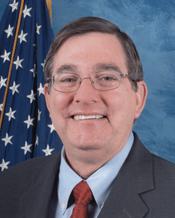
Mr. Speaker, I rise to speak against the Motion to Instruct Conferees on the H.R. 6, The Energy Policy Act. As discussed thus far, under the Clean Air Act of 1990, areas designated as ``severe''…
Mr. Speaker, I rise to speak against the Motion to Instruct Conferees on the H.R. 6, The Energy Policy Act.
As discussed thus far, under the Clean Air Act of 1990, areas designated as ``severe'' nonattainment areas, such as Houston, must meet the 1-hour standard by 2007, and Dallas, classified as ``serious'' areas was required to meet the 1-hour standard by 2005.
Wind currents can transport ozone and its chemical components over long distances, which can have an adverse affect on the air quality of areas that are downwind of more severe nonattainment areas. For example, Houston's air quality can impact Dallas's air quality.
In 1998, under the direction of President Clinton's EPA Administrator Carol Browner, the EPA promulgated transport policy rules that allowed the EPA to allow affected ``moderate'' and ``serious'' areas until 2007 to meet the 1-hour standard. This common sense rule simply allows cities to take into account the ozone that is transported from other cities.
Strict judicial interpretation of the Clean Air Act of 1990 said that the EPA did not have statutory authority to promulgate this rule. As a strict constitutionalist, I was glad to see the judicial restraint exhibited by these decisions.
However, I think it is important to note that Congress did not give the EPA this authority under the Clean Air Act of 1990 because Congress was not aware of the impact of ozone transport on air quality at that time. Since 1990, the science has improved to the point that we are aware of and better able to determine the impact of the transport of ground level ozone.
That is why there is a provision in this year's energy bill to give EPA that authority, if they so choose.
Some have claimed that this will ``roll back'' the Clean Air Act, and that is just not true. The State of Texas and other affected States and the cities of Dallas and Fort Worth are not going to stop working toward clear air. In fact, as recently as reported last Friday in the Fort Worth Star-Telegram, the North Texas Clean Air Steering Committee said that they will not slow down efforts to clean the air if Congress pushes back the deadline.
As a member of the Transportation and Infrastructure Committee, I do not support tying the issue of ozone transport to my district's transportation funding. I do not believe that taking away transportation funding from the Dallas-Fort Worth region will result in improved air quality.
In fact, I believe eroding our transportation funding would adversely affect air quality because studies have shown that automobiles operate more efficiently at around 60 miles per hour than at lower speeds such as those cars idling during bumper-to-bumper traffic in bottleneck areas, such as on Interstate 35 East in my district. A more efficient motor decreases the amount of ozone-creating pollutants that are released into the air. This is especially important to the Dallas-Fort Worth region because EPA studies have shown that our region's air quality is especially affected by mobile-source (automobile) pollution.
If my colleagues disagree with me and believe that we should decrease transportation funding in order to improve air quality, I am more than happy to accept their piece of the transportation funding pie. I know we all agree--we need to keep our cash on the dash!
Clean air is one of the most important legacies that we can leave our children. If we are going to preserve this world for future generations, we must take steps that will protect our
natural resources, but we must also not harm our economy.
If you cannot identify the source, and control the source, you cannot effectively reduce ozone. I will vote against the Motion to Instruct Conferees on H.R. 6.
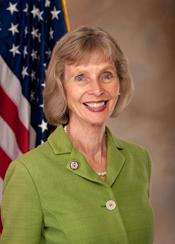
Mr. Speaker, I thank my colleague and fellow nurse for yielding and also for her motion to instruct conferees on the Energy Policy Act. Mr. Speaker, I rise in strong support of this motion. It is a…
Mr. Speaker, I thank my colleague and fellow nurse for
yielding and also for her motion to instruct conferees on the Energy Policy Act.
Mr. Speaker, I rise in strong support of this motion. It is a real shame that at the 11th hour the Republican conferees have added a new provision to this energy bill which weakens the Clean Air Act and harms public health. This new provision will allow polluted cities to avoid having to clean up their dirty air.
Right now cities can get extended deadlines to meet their requirements under the Clean Air Act, but in exchange for the time extension, within the Clean Air Act, cities with dirty air have to meet specific goals and specific timetables. This is EPA's bump-up policy that is supposed to ensure that dirty air is cleaned up. And the policy is designed to work with cities, to make sure that this can happen in a timely fashion. But under the new energy provisions being proposed, cities that have not met their clean air requirements will just be given a pass. That means that cities with dirty air will not have to institute stronger pollution controls to clean up their act for a much longer time.
People living in these cities and people living downwind will suffer longer from dirty air and its damaging health effects. We cannot afford this, not in our health care and not in our economy.
As a public health nurse, I am so concerned with this very provision and its impact on the state of our air quality. The argument is that it is hard for these polluted areas to clean up due to dirty air blown in from elsewhere. That case has been made. But in many of these areas it is been demonstrated that these areas that would be exempted, transported pollution is only a small part of the problem.
Now, what about continued local clean-up efforts which are demonstrated to be necessary? And, in addition, this new provision provides a special break for certain areas of Texas and Louisiana. That is blatantly unfair to all the cities and their businesses that have worked so hard to meet pollution control deadlines, to provide healthy air for their citizens.
This added change also harms all the areas downwind of those that get the extension as more air pollution will continue to blow downwind for so many years longer.
The truth is this last minute change was never approved by either the House or the Senate. In fact, this provision, and I was at the hearing that we held in July, but it has never been debated upon. Alternatives have never been able to be proposed in a committee setting.
This change weakens the Clean Air Act and overturns three appellate court rulings upholding current law. This is an end run around the courts which have repeatedly held that the EPA does not have the authority to extend air quality deadlines without following the Clean Air Act requirements.
Mr. Speaker, EPA reports that 133 million Americans in our country live where air is unhealthy to breathe because of ozone pollution. The provisions in this bill are denying these Americans their right to breathe clean air.
The provision in this bill is going to be denying these Americans their right to breathe clean air. The provision in the energy bill is a bad idea. The end result will be a delay in cleanup, continued unhealthy air, and more asthma attacks, respiratory illnesses and other health problems. It is going to affect health and productivity of American companies and American workers. Our children and our families have waited too long for clean air.
So I urge my colleagues to support this motion and oppose any energy bill that contains this shameful provision.
Mr. Speaker, I thank the gentleman from Texas (Mr. Barton), my colleague and the chairman of our subcommittee on the Committee on Energy and Commerce. It is with reluctance I rise in opposition to…
Mr. Speaker, I thank the gentleman from Texas (Mr. Barton), my colleague and the chairman of our subcommittee on the Committee on Energy and Commerce.
It is with reluctance I rise in opposition to the motion to instruct offered by my colleague and longtime and respected friend, the gentlewoman from Texas (Ms. Eddie Bernice Johnson). We have served together now for 30 years, and every once in a while we do find ourselves on opposite sides. Since I represent Houston, and I will deny under oath if necessary that we caused Dallas' pollution problems, but be that as it may, I understand the gentlewoman's passion to improve the air quality for her constituents. That is impressive and she is doing great work to raise the public profile of a difficult issue. But I find myself in a difficult situation myself today. A bipartisan group of my colleagues from north Texas and east Texas are blaming my area of Houston for increasing smog levels in their area.
First, let me say that the Houston area is doing everything in our power to reach compliance with the Clean Air Act. Our deadline is 2007. We have a tremendous amount of manufacturing facilities and jobs in our area. And reengineering these facilities without causing a regional recession is a challenge, but we are making progress.
The EPA has given areas with imported air emissions extra time to meet the deadlines, but the courts have ruled that they do not have that authority. A provision is in the draft conference report, which is what the gentleman from Texas (Mr. Barton) talks about that allows the EPA the authority to extend the deadline for two years with areas with imported emissions.
Now, in the Houston area we do have some problem in imported emissions from if they have fires in Mexico, we receive it. But Houston would not come under this. But if the EPA decides that Houston's air quality significantly impacts Beaumont, for example, to the east and Dallas' air quality, then maybe they should also have the same deadline in Houston in 2007 instead of 2005. That is basically all this provision in the conference committee would do. We are not reopening the Clean Air Act. It is just allowing Dallas or Beaumont to ask for that extension.
I understand there are similar situations in areas all over the country. And I also understand the concern of my colleague, the gentlewoman from Texas (Ms. Eddie Bernice Johnson), that the deadline be moved back, because often we relax if it is not pressing.
Mr. Speaker, I strongly believe Dallas and Beaumont should not use an extension as an excuse to avoid local control and delay cleaner air for their citizens. But I do believe the EPA should be able to grant them an extension and give them as much time as my own area with the Clean Air Act.
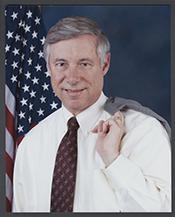
Mr. Speaker, I want to piggyback on to the comments of the gentleman from Louisiana (Mr. Tauzin). I can remember when Carol Browner, the then administrator of EPA, came and testified before the…
Mr. Speaker, I want to piggyback on to the comments of the gentleman from Louisiana (Mr. Tauzin). I can remember when Carol Browner, the then administrator of EPA, came and testified before the subcommittee. I was one that supported the Clean Air Act as well as the Clean Water Act. I can remember when we debated the Clean Air Act, the delegation at that time included important language, and I am not a lawyer but we thought it was sufficient, that gave the EPA the administrative authority when downwind communities were impacted by what came from the polluter itself.
My district, southwestern Michigan, I have air that comes from Gary, Indiana, from Chicago, Illinois, and Milwaukee, Wisconsin, across Lake Michigan. Some of my counties have reported that they could actually remove all human activity in some of my counties, and we would still not be in compliance with the new 8-hour standard because of what is coming across the lake.
When Carol Browner came and heard that at the subcommittee, she helped us with this language and the administrative relief that they put into effect for other areas around the country. What the gentleman from Texas (Mr. Barton) is doing, and the gentleman from Louisiana (Mr. Tauzin) as part of the conference, is to revert back to what the Clinton administration said then: We still want to help the polluters clean up their air, but we also recognize that the victims. For me, my area of southwest Michigan, can do absolutely nothing about it. In fact, they can have some relief if these new penalties are assessed, collecting millions of dollars which, at the end of the day, will not provide one iota of cleaner air. Because, again, we could remove everything, every road, every lawn mower, every small business, every large business, at the end of the day there is nothing we can do without some type of relief.
And that is why it is important, I think, that we defeat the motion to instruct of the gentlewoman from Texas (Ms. Eddie Bernice Johnson) because we are left with no choice. And that is why the Clinton administration agreed with us when they came and testified before our subcommittee.
Mr. Speaker, I would like to thank the gentlewoman from Texas for offering this Motion to Instruct Energy Bill Conferees. Instead of working on an Energy Bill that will work to solve our nation's…
Mr. Speaker, I would like to thank the gentlewoman from Texas for offering this Motion to Instruct Energy Bill Conferees.
Instead of working on an Energy Bill that will work to solve our nation's energy crisis, the Republicans are holding a conference without any Democrats and now they are trying to add in riders to weaken the Clean Air Act. What will they think of next?
This rider allows polluters to further delay establishing clean air controls--contributing to air pollution that bellows out of giant smokestacks and puffs out of tailpipes. This air pollution has led to a record number of people with asthma, particularly in our cities. By trying to attach this rider to the Energy Bill, the Republicans are showing once again that they do not value clean air or the health of Americans.
And the sad fact is that children are the most vulnerable to air pollution. They spend more time outdoors, they inhale more pollutant per body weight, and their bodies, lungs and immune systems are still developing. Children are particularly vulnerable to smog and soot-- continued exposure can scar and severely damage children's lungs.
Instead of weakening the Clean Air Act, the Republicans should be using this opportunity to develop and use new technologies and to cut our reliance on dirty energy fuels. Unfortunately, in the Energy Conference, the Republicans have chosen the interests of big business over the health of the American people.
Mr. Speaker, I ask my colleagues to join me in supporting this motion to instruct.
Bill Text
Latest available legislative text
        [Congressional Bills 108th Congress]
[From the U.S. Government Publishing Office]
[H.R. 1965 Introduced in House (IH)]

108th CONGRESS
1st Session
H. R. 1965

To amend the Endangered Species Act of 1973 to limit the application of
that Act with respect to actions on military land or private land and
to provide incentives for voluntary habitat maintenance, and for other
purposes.

_______________________________________________________________________

IN THE HOUSE OF REPRESENTATIVES

May 6, 2003

Mr. Gibbons introduced the following bill; which was referred to the
Committee on Resources

_______________________________________________________________________

A BILL

To amend the Endangered Species Act of 1973 to limit the application of
that Act with respect to actions on military land or private land and
to provide incentives for voluntary habitat maintenance, and for other
purposes.

Be it enacted by the Senate and House of Representatives of the
United States of America in Congress assembled,

SECTION 1. SHORT TITLE.

This Act may be cited as the ``Property Protection and
Encouragement Act''.

SEC. 2. LIMITATION ON APPLICATION OF CONSULTATION REQUIREMENTS WITH
RESPECT TO ACTION ON MILITARY LAND OR PRIVATE LAND.

Section 7(a) of the Endangered Species Act of 1973 (16 U.S.C. 1536)
is amended by adding at the end the following:
``(5) This section does not apply with respect to an agency
action that--
``(A) is authorized, funded, or carried out by the
Department of Defense and that occurs on land that is
under the administrative jurisdiction of the Department
of Defense; or
``(B) occurs on land that is privately owned.''.

SEC. 3. LIMITATION ON APPLICATION OF TAKING PROHIBITION WITH RESPECT TO
ACTION ON MILITARY LAND OR PRIVATE LAND.

Section 9(a) of the Endangered Species Act of 1973 (16 U.S.C.
1538(a)) is amended--
(1) in paragraph (1) in the matter preceding subparagraph
(A) by inserting ``paragraph (3) of this subsection or in''
after ``Except as provided in''; and
(2) by adding at the end the following:
``(3) Paragraph (1)(B) does not prohibit any act or
omission that occurs on land that is under the administrative
jurisdiction of the Department of Defense or on land that is
privately owned.''.

SEC. 4. VOLUNTARY HABITAT MAINTENANCE PROGRAM.

Notwithstanding any other provision of law, the Secretary of the
Interior shall create a voluntary program to use funds transferred
under section 2507 of the Farm Security and Rural Investment Act of
2002 (Public Law 107-171; 116 Stat. 275; 43 U.S.C. 2211 note), to make
payments to private land owners whose property right or water right has
or is a habitat for a threatened or endangered species and who
voluntarily elect to enroll into the program in order to maintain
habitat for a threatened species or endangered species. The Secretary
shall make payments under this section to be determined by the
Secretary to each private land owner whose property right or water
right has or is a habitat for a threatened or endangered species and
who has voluntarily elected to enroll into the program created by the
Secretary. The Secretary shall issue regulations implementing this
program no later than 90 days after the date of enactment of this Act.
<all>