Mr. Speaker, I yield myself such time as I may consume. (Mr. FALEOMAVAEGA asked and was given permission to revise and extend his remarks.) Mr. Speaker, I again thank my good friend the gentleman…
Mr. Speaker, I yield myself such time as I may consume.
(Mr. FALEOMAVAEGA asked and was given permission to revise and extend his remarks.)
Mr. Speaker, I again thank my good friend the gentleman from Arizona for his management and his eloquent remarks concerning his support of this legislation.
I rise today in support of this bill I introduced to protect the voting rights of active duty service members and overseas voters whose home of residence is American Samoa. This issue is not new to the people or the American Samoa legislature. The truth is this matter has been before the people and our local leaders for the past 6 years. Since 1998 I have written to our Governors, past and present. I have written and testified before our local legislature, and copies of my testimony and letters and local responses have been made part of the committee record.
Mr. Speaker, during the 107th Congress, I introduced H.R. 3576, a bill to establish primary elections which would have made sure that the American Samoa Delegate was elected by a majority of the votes cast. When introducing this bill, I pointed out that both Guam and the Virgin Islands were once bound by the 2-week Federal runoff requirement but established primary elections to resolve similar problems of sending out and receiving back absentee ballots in time for those votes to be counted. Although I suggested that American Samoa could benefit from modeling its Federal election procedures after Guam and the Virgin Islands, American Samoa chose not to support this bill and cited as its reason that primary elections were too costly.
Mr. Speaker, given the importance and urgency of this bill, I want to thank members of the House Committee on Resources, both Democrats and Republicans, who have unanimously voted in favor of this legislation. H.R. 2010 is the right thing to do. As a Vietnam veteran, I will not rest until we fully guarantee that our active duty service members have the right to vote in Federal elections in the territory. To alleviate any concerns that I will personally benefit from this legislation, I offered an amendment in the nature of a substitute for purposes of changing the effective date of this bill from January 2004 to January 2006. This amendment was unanimously supported in markup by the House Committee on Resources and, as such, any change in law will not go into effect until the 2006 election cycle.
Mr. Speaker, at this time I thank the men and women from American Samoa who are serving on active duty at a time when our Nation is at war. I wish our active duty service members the very best and I pray for their safe return as it would be true for all members of our armed services currently serving all over the world.
I also want to thank Chairman Pombo of the Committee on Resources and Ranking Member Rahall for their unwavering support of H.R. 2010 and for bringing this historic bill to the House floor for consideration and for a vote. Again, this is a bipartisan bill. I urge the Members of this body to join us in protecting the voting rights of our active duty military men and women who currently serve all over the world representing our great Nation. Again, I urge my colleagues to support this bill.
Mr. Speaker, I rise today in support of H.R. 2010, a bill I introduced to protect the voting rights of active duty service members and overseas voters whose home of residence is American Samoa.
This issue is not new to the people or the American Samoa Legislature. The truth is this matter has been before the people and our local leaders for the past 6 years. Since 1998, I have written to our Governors, past and present. I have written and testified before our local Legislature, or FONO, and copies of my testimony, my letters, and local responses have been made part of the Committee record.
I have also brought this matter to the attention of my constituents through press releases, newsletters, radio and TV programs. In 2001, I conducted a Congressional survey and 85 percent of those surveyed agreed that American Samoa's overseas voters and active duty service members should be afforded the same rights and privileges as every other American serving in the U.S. Armed Forces.
Unfortunately, American Samoa's overseas voters and military men and women have been disenfranchised from the political process and have been denied the right to vote in the federal elections held in the Territory. In part, this has been due to two complications. One, American Samoa law has required uniformed and overseas voters to register to vote in person and this has been contrary to the Uniformed and Overseas Citizens Voting Act of 1975.
While I am pleased that our Legislature is working to address the local registration process, our uniformed and overseas voters have also been denied the right to vote as a result of Public Law 95-556 passed on October 31, 1978. Federal, or PL 95-556, provides for the Territory of American Samoa to be represented by a nonvoting Delegate to the United States House of Representatives and mandates that if no candidate receives a majority of the votes cast, on the fourteenth day following such election, a runoff election shall be held between the candidates receiving the highest and second highest number of votes cast.
Like the Governor of American Samoa, the Honorable Togiola T.A. Tulafono, I believe this 1978 federal law requiring a runoff election to be held only 14 days after the general election creates, as Governor Togiola says, ``a situation where it is virtually impossible for American Samoa's Election Office to send out absentee ballots to the men and women in the military and expect to receive them back in time for those votes to be counted in a run-off election.'' Given that our mail is delayed and
our air service is limited to two flights a week, Governor Togiola and I agree that some measure should be put in place to assure that the votes of our military men and women are counted and that this injustice is corrected.
During the 107th Congress, I introduced H.R. 3576, a bill to establish primary elections and which made sure that American Samoa's Delegate was elected by a majority of the votes cast. When introducing this bill, I pointed out that both Guam and the Virgin Islands were once bound by the two week federal runoff requirement but established primary elections to resolve similar problems of sending out and receiving back absentee ballots in time for those votes to be counted. Although I suggested that American Samoa could benefit from modeling its federal election procedures after Guam and the U.S. Virgin Islands, the American Samoa Government (ASG) chose not to support this bill and cited as its reason that primary elections were too costly.
Given ASG's financial difficulties and out of respect for its concerns, I introduced H.R. 4838 which called for voting by plurality in lieu of primary elections. As I explained when introducing H.R. 4838, 49 of the 50 states use plurality voting to elect their Representatives to Congress. The countries of Tualauta and Itu'au in American Samoa also elect their representatives by plurality vote. Plurality voting minimizes costs to the local government and also provides active duty service members and other overseas voters an opportunity to participate fully in the federal election process. Despite these benefits, ASG also chose not to support this bill. This time, the former and late Governor Tauese P.F. Sunia stated that he believed ``the intent of Congress when they established majority vote was to ensure a strong mandate for American Samoa's Delegate.''
To be clear about this, I would like to provide this body with a legal history of how election law was determined for American Samoa. In 1951, President Harry S Truman issued Executive Order 10264 which transferred administrative responsibility for the islands of American Samoa from the Secretary of the Navy to the U.S. Secretary of the Interior. The Secretary of the Interior, in turn, appointed our Governors.
In 1960, the people of American Samoa adopted a Constitution. The Constitution was revised in 1966 and was approved by the Secretary of the Interior on June 2, 1967. In 1967, the Revised Constitution of American Samoa provided for an elected Legislature, or Fono, consisting of a Senate and a House of Representatives. However, it did not provide our people with the right to elect our own Governor and Lieutenant Governor and, at the time, American Samoa was the only remaining off-shore area of the United States which did not have a popularly elected Governor and Lieutenant Governor.
On June 10, 1976, Congressman Phil Burton, Chairman of the House Subcommittee on Interior and Insular Affairs, took notice of American Samoa's situation and introduced a bill to make it possible for our Governor and Lieutenant Governor to be popularly elected rather than appointed by the Secretary of the Interior. As staff counsel to the Committee on Interior and Insular Affairs, Congressman Burton instructed me to draft this legislation which the U.S. House of Representatives overwhelmingly passed by a landslide vote of 377 to 1.
Instead of sending his bill to the Senate, Congressman Burton decided to consult further with the Secretary of the Interior, Rogers C.B. Morton, about American Samoa's unique political status as an unincorporated and unorganized territory which was and is unlike the organized territories of Guam and the Virgin Islands. As a result of their consultations, the two agreed that Secretary Morton would issue a Secretarial Order (No. 3009) authorizing the American Samoa Government to pass enabling legislation to provide for an elected Governor and the Lieutenant Governor.
Secretary's Order No. 3009 amended American Samoa's Constitution to specifically provide for an elected rather than an appointed Governor and Lieutenant Governor. Secretary's Order 3009 was also in keeping with the will of the majority of voters of American Samoa who voted in favor of electing their own Governor and Lieutenant Governor in a plebiscite that was held on August 31, 1976.
Furthermore, Chairman Phil Burton introduced legislation on August 2, 1978 to provide that the Territory of American Samoa be represented by a nonvoting Delegate to the U.S. House of Representatives. I was also tasked with drafting this legislation which became Public Law 95-556 and was made effective October 31, 1978.
I can assure you that in the case of the Delegate, American Samoa's federal election laws were patterned after those of the Virgin Islands and Guam. At the time, consideration was not given to whether or not majority or plurality voting should be established for American Samoa. Congress simply enacted legislation to provide American Samoa with representation in the U.S. Congress. We could not foresee some 25 years ago that American Samoa's men and women would serve in record numbers in the U.S. Armed Forces making it nearly impossible (given American Samoa's limited air and mail service) for active duty service members to participate in runoff elections held two weeks after general elections.
Today, we are keenly aware that this requirement to hold a runoff election 14 days after the general election is wrong. To right this wrong and after further consultations with our local leaders, I introduced H.R. 2010 which includes the suggestions of Governor Togiola. In a letter dated September 11, 2003, Governor Togiola informed me that he had reviewed the copy of H.R. 2010 that I sent to him and that he was satisfied that this bill will provide an immediate solution to address the concerns we have regarding the voting rights of our men and women in the military services. In a letter dated September 15, 2003, I thanked Governor Togiola for his support.
Although we have had some differences regarding this issue, Governor Togiola and I have always agreed that our military men and women should have the right to vote especially when they contribute almost a million dollars per year in taxes to our local government. I am pleased that Governor Togiola is now happy with this bill and I again commend him for supporting its passage.
I also want to thank the President of the American Samoa Senate, the Honorable Lutu Tenari S. Fuimaono, for his support. In a letter dated October 28, 2003, President Fuimaono stated that he fully supports H.R. 2010 and that he wishes Chairman Pombo the best of luck in moving forward on the bill.
Finally, I would like to say that H.R. 2010 is an historic bill. It is a bill that immediately restores the voting rights of our overseas voters and active duty military members. It is also a bill that makes clear in no uncertain terms that the American Samoa Legislature is vested with the authority it needs to establish primary elections for the office of the Delegate, if it so chooses.
H.R. 2010 also protects American Samoa's future in the U.S. Congress. Without H.R. 2010, future Delegates could miss out on key committee assignments as a result of delayed outcomes and run-off elections. Like Governor Togiola, I do not believe American Samoa's future should be weakened or disadvantaged and this is one more reason I appreciate his support of H.R. 2010.
Given the importance and urgency of this bill, I thank the members of the House Resources Committee, both Democrats and Republicans, who have unanimously voted in favor of this bill. H.R. 2010 is the right thing to do and, as a Vietnam veteran, I will not rest until we fully guarantee that our active duty service members have the right to vote in federal elections held in American Samoa.
To alleviate any concerns that I will personally benefit from this legislation, I offered an amendment in the nature of a substitute for purposes of changing the effective date of this bill from January 2004 to January 2006. This amendment was unanimously supported at mark-up by the House Resources Committee and, as such, any change in law will not go into effect until the 2006 election cycle.
As I have repeatedly stated, H.R. 2010 in no way, affects how the American Samoa Government chooses to elect its local leaders and, having made every change requested of me by our local leaders and after years of good-faith efforts on my part, I believe the time has come to do right by our overseas voters and men and women in the military. Our sons and daughters have fought and died to preserve our freedoms and I will do everything I can to protect their right to vote.
At this time, I thank the men and women from American Samoa who are serving on active duty at a time when our Nation is at war. I wish our active duty service members the very best and I pray for their safe return.
I also thank the Honorable Richard Pombo, Chairman of the House Committee on Resources, and Ranking Member Nick Rahall, for their unwavering support of H.R. 2010 and for bringing this historic bill to the House Floor for consideration and vote. Again, Democrats and Republicans of the House Resources Committee joined together to unanimously pass H.R. 2010 and I now urge members of this body to join with us in protecting the voting rights of active duty military members and overseas voters whose home of residence is American Samoa.
Attachments
04/05/00--Faleomavaega to ASG Governor Sunia, Lieutenant
Governor, President of the Senate and Senators, Speaker of
the House and Representatives, Attorney General.
11/20/01--Faleomavaega to ASG Governor Sunia, Lieutenant
Governor, President of the Senate and Senators, Speaker of
the House and Representatives.
12/20/01--Faleomavaega to ASG Governor Sunia, Lieutenant
Governor, President of the Senate and Senators, Speaker of
the House and Representatives.
01/02/02--Governor Tauese Sunia to Faleomavaega, ASG
Lieutenant Governor, President of the Senate and Senators,
Speaker of the House and Representatives, Chief Election
Officer.
01/28/02--ASG Speaker of the House to Faleomavaega, ASG
Governor, Election Office, President of the Senate.
02/27/02--Faleomavaega to ASG Speaker of the House.
03/05/02--Faleomavaega to ASG Senate President and
Senators.
05/23/02--Faleomavaega to ASG Governor Sunia, Lieutenant
Governor, President of the Senate and Senators, Speaker of
the House and Representatives.
07/10/02--ASG President Pro Tem and Speaker of the House to
the Honorable James Hansen, Chairman of U.S. House Committee
on Resources, ASG Governor Tauese Sunia, Senators,
Representatives, Chief Election Office, the Honorable Nick
Rahall (Ranking Member of the U.S. House Committee on
Resources), Congressman Eni Faleomavaega, Members of the U.S.
House Committee on Resources.
07/11/03--Governor Tauese Sunia to Faleomavaega, Chairman
of the U.S. House Committee on Resources, ASG President of
the Senate and Senators, Speaker of the House and
Representatives, Chief Election Officer.
07/15/02--Faleomavaega to the Honorable Nick Rahall,
Ranking Member, U.S. House Committee on Resources.
07/15/02--Faleomavaega to the Honorable James Hansen,
Chairman, U.S. House Committee on Resources.
07/23/02--Faleomavaega to ASG Governor Sunia, Chairman and
Ranking Member of the U.S. House Committee on Resources,
Deputy Assistant Secretary of the U.S. Department of the
Interior, ASG Lieutenant Governor, President of the Senate
and Senators, Speaker of the House and Representatives, Chief
Election Officer.
07/23/02--Faleomavaega to the Honorable James Hansen,
Chairman, U.S. House Committee on Resources.
07/23/02--Faleomavaega to the Honorable Nick Rahall,
Ranking Member of the U.S. House Committee on Resources.
09/05/02--Faleomavaega to ASG Governor Tauese Sunia.
09/05/02--Faleomavaega to ASG President of the Senate and
Senators.
09/05/02--Faleomavaega to ASG Speaker of the House and
Representatives.
09/12/02--Faleomavaega Statement before the American Samoa
Legislature.
05/07/03--Faleomavaega to ASG Governor Togiola Tulafono,
Lieutenant Governor, President of the Senate and Senators,
Speaker of the House and Representatives.
09/05/03--Senator Te'o J. Fuavai to Faleomavaega.
09/11/03--ASG Governor Togiola Tulafono to Faleomavaega,
ASG Lieutenant Governor, President of the Senate and
Senators, Speaker of the House and Representatives.
09/15/03--Faleomavaega to ASG Governor Togiola Tulafono,
Lieutenant Governor, President of the Senate and Senators,
Speaker of the House and Representatives.
09/19/03--Senate Resolution.
10/16/03--Faleomavaega to Senator Te'o J. Fuavai.
10/27/03--President of ASG Senate, Lutu Fuiamono, to
Faleomavaega.
10/28/03--Office of the Governor to Lieutenant Governor,
Aitofele T.F. Sunia.
07/21/76--Congressional Record, Providing for an Elective
Governor and Lieutenant Governor of American Samoa.
10/03/78--Congressional Record, Providing the Territory of
American Samoa with a Nonvoting Delegate.
Mr. Speaker, I yield back the balance of my time.
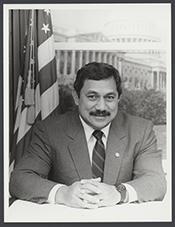 Rep. Eni F. H. Faleomavaega (D-AS)
 +2