Flood Insurance for American Homeowners Act of 2003
Legislative Activity
Stay on top of the latest movement without scrolling through every action
Referred to the Subcommittee on Housing and Community Opportunity.
February 27, 2003
View full timeline
Introduced in House
January 7, 2003
Referred to the House Committee on Financial Services.
January 7, 2003
Referred to the Subcommittee on Housing and Community Opportunity.
February 27, 2003
Floor Debate
10 membersWhat members said about H.R. 215 on the floor
 PEK
PEK MGO
MGO BF
BF EB
EB GGM+5
GGM+5
Floor Debate
10 membersWhat members said about H.R. 215 on the floor
Mr. Speaker, I rise, of course, in support of this bill today; but I want to call my colleagues' attention to the fact that this has happened a little too often in this House. We allowed unemployment…
Mr. Speaker, I rise, of course, in support of this bill today; but I want to call my colleagues' attention to the fact that this has happened a little too often in this House. We allowed unemployment compensation to lapse giving a tremendous Christmas present on December 28 to 800,000 unemployed people in this country. The House of Representatives did not think it was important enough that they could have security.
Now we have allowed this bill to lapse by failing just to schedule a bill that passed the Senate by unanimous consent. Some failure of leadership.
Last year I participated in the disaster insurance bill, and for a full year it lagged where technical defaults and failures of commercial building occurred because we had some attempt by the White House or others to attach on tort reform.
As a Member of Congress, I think our first responsibility is to our constituents. And technically, we have put people in technical default of their mortgages with our failure to act last fall.
Now, I think all of our colleagues will support this bill. They would have supported it last fall. Why did we have to have tens of thousands or hundreds of thousands of people in the United States receive letters from their insurance carriers that they were in technical default?
I yield to the gentleman from Ohio.
MR. OXLEY. Mr. Speaker, just for a clarification, the last day of the 107th Congress, the Senate passed a bill, sent it over to the House. We brought it up on unanimous consent, and it was objected to by your side. Just for the record, I wanted to point that out.
I yield to the gentleman from Massachusetts.
Mr. Speaker, reclaiming my time, all I can say is I am not aware of what objections were made; but this was perfunctory and should have been performed before we adjourned the last session of the last Congress. It is almost farcical.
Do you realize in my district alone thousands of senior citizens have received letters that they are no longer insured? They are elderly, in their seventies, their 75th, 80th year and they are completely discombobulated with the idea that this Congress would be so
callous as to not respond to their needs. Just as the 800,000 unemployed people are discombobulated today knowing that they do not know when their next unemployment check will come because we failed to extend it before we went home.
Quite frankly, I do not care whether it is a Republican problem or a Democratic problem. I do not think this is a party problem. This is a traffic cop problem for the leadership of this House, and the leadership of this House rests on the Republican control. And I am just calling your attention to it as a Member without partisan feeling.
We cannot afford to allow this to happen in the future. We passed a bill that a bank cannot issue a mortgage on any residence in the United States that is in a flood zone unless they have flood insurance. So technically we were prepared and have for the last 7 or 8 days barred and put into technical default anybody wanting to mortgage or transact residence sales in the United States for the last 7 days. This is ridiculous. This is important.
If you really analyze, we have cost insurance companies, we have cost residences and we have cost constituents across this country millions of dollars and great anxiety for nothing. And all I am urging is let us not have this happen again. This should not be a matter of politics, should not be a matter of who controls the leadership of either side, either body of this House. This is responsible legislation that should have been passed in the last Congress. We failed to.
We have the force also in this legislation for unemployment compensation. It is awfully nice for us to argue over the issues of that question for all this time; but our constituents, 800,000 of them across America, do not know whether or not they will be able to buy groceries this week. That is unacceptable in the United States. And I am only speaking for our average constituents and calling the attention of that to the Members of the House. We cannot continue to allow this to happen.
This should, and I predict will, pass unanimously. I cannot imagine any Member of the House of Representatives that is opposed to giving flood insurance to the American people. So why are we making it a ridiculous thing here 7 days late to come forth with a piece of legislation where there has been a hiatus and technical defaults all over this country, interrupting commerce, interrupting construction, interrupting all kinds of things when our economy is hurting? And we are saying we are being responsible as a body? I think not.
Mr. Speaker, I want to congratulate my chairman and my ranking member for finally putting this piece of legislation in a timely way here before the floor on this first legislative day. I think it is important. I urge all my colleagues on the Republican side and the Democratic side to support this legislation unanimously. It is something important, and it means a great deal to an awful lot of Americans to maintain their homes with some sort of security.
Mr. Speaker, I rise today in strong support of the National Flood Insurance Program Reauthorization Act that would extend for one year the four basic authorities contained in the National Flood Insurance Act
As many of my colleagues may already know, virtually all residential and commercial mortgage transactions on properties located in flood zones came to a halt on January 1, 2003.
The Senate did attempt to address this problem in the closing days of the 107th Congress. The House, however, regrettably failed to consider the Senate-approved bill before the 107th Congress adjourned.
We must now, as a result, take quick action on this legislation in the House in order to minimize disruptions to homeownership and to protect our already struggling economy.
I am pleased therefore that the leadership has scheduled this legislation for a vote early in the 108th Congress.
This lapse in coverage has already resulted in significant confusion for all parties with an interest in the National Flood Insurance Program. Moving quickly on this bill will help to abate these problems.
From my perspective, it is also of the utmost importance that this bill retroactively reauthorize the National Flood Insurance Program.
In January 1996, the Susquehanna River and its tributaries in Northeastern Pennsylvania exceeded their banks and caused considerable flooding. Mother Nature may cause similar flooding in Pennsylvania or elsewhere before we can complete our work in Washington in the coming days.
I am therefore pleased that this bill would protect homeowners in the interim by making these changes effective as of December 31, 2002.
In closing, we should protect homeowners and businesses from financial losses by not allowing the National Flood Insurance Program to lapse into an extended legal limbo.
Accordingly, Mr. Speaker, I urge my colleagues to support this legislation.
Mr. Speaker, I just want to respond to the former speaker. I hope he did not want to indicate that I am either opposed to the passage of this legislation or suggest that it will not be very successful or will not be needed. Because I certainly do not want him to leave the floor with that impression.
I just want to make sure the record is very clear. This bill did not have any major objection, to my knowledge, on the floor at all. It was held up because of other tactical reasons for other legislation passed by the Senate that did not want to be considered by the leadership of this House after the Senate passed the bill.
I think that is unacceptable as a policy in this House. I am in favor and I will ask all of my colleagues on both sides of the aisle, as you do, that we should impose this immediately in the
legislation; and if we have other things to do, let us have our committee hold hearings to find out what has to be done. But we should not penalize, jeopardize and put into such an anxiety state the American people. I just want the record to reflect that.
Mr. Speaker, I move to suspend the rules and pass the bill (H.R. 11) to extend the National Flood Insurance Program. Mr. Speaker, I yield myself such time as I may consume. Mr. Speaker, I want to…
Mr. Speaker, I move to suspend the rules and pass the bill (H.R. 11) to extend the National Flood Insurance Program.
Mr. Speaker, I yield myself such time as I may consume.
Mr. Speaker, I want to alert my colleagues that this is not the Ohio State resolution. That comes next.
General Leave
Mr. Speaker, I ask unanimous consent that all Members may have 5 legislative days within which to revise and extend their remarks on this legislation, and to insert extraneous material on the bill.
Mr. Speaker, I yield myself 5 minutes.
Mr. Speaker, today we consider a bill I have introduced to reauthorize the Federal Emergency Management Agency's National Flood Insurance Program, which expired on December 31. Joining me in cosponsoring this legislation are 31 other Members of Congress, almost equally divided between Republicans and Democrats.
The gentleman from Massachusetts (Mr. Frank) and I have been in contact with our counterparts in the Senate, who are in agreement with us on the need for immediate reauthorization of this important program. This is an important, noncontroversial, bipartisan bill that demands our attention so Americans will be protected from disaster and flood losses.
Despite last minute efforts to remedy the situation, authorization for the NFIP expired at the end of last year. The current continuing resolution, which extends fiscal year 2002 baseline funding through January 3, 2003, does not extend the NFIP authorization. Until the NFIP authority is reauthorized, FEMA cannot issue or renew flood insurance policies and cannot borrow funds to cover claims that may arise.
Realtors, homebuilders, mortgage bankers, and other real estate professionals in every one of the 20,000 communities covered by the NFIP are deeply and rightly concerned by the fact that real estate contracts cannot go to closing until this program is reauthorized. Countless small businesses, as well as current and prospective homeowners, are gravely concerned.
I have been in touch with the regulators and asked that they oversee loans during this period to make sure no profiteering takes place as a result of a 1-week lag in the program. We need to make sure that consumers are protected during this period.
By including language in this bill to make the reauthorization retroactive to January 1, 2003, we intend for there to be no gap in this authority, and for all program activity to occur in a seamless manner. Further, it is our intent that any actions taken to renew or enter into new policies would be treated as if the authority were in effect, and that the NFIP pay any claims that may have arisen during this time, or any policies renewed or made effective during this period.
Though there are some who had wanted us to pass a 5-year authorization of the NFIP, our bill opts to reauthorize the program for 1 year only. This is in deference to those Members who have sought to make changes to the flood insurance program in order to prevent costly repetitive loss claims.
With approximately $200 million being spent on an annual basis on repetitive flood loss properties, it is important that we in the Congress work with the administration to promote greater fiscal responsibility for the program. The Committee on Financial Services held a valuable hearing on this issue during the last Congress, and I expect we will revisit the subject with another hearing this year.
I want to thank our good friend, the gentleman from Massachusetts (Mr. Frank), as well as our counterparts in the other body and the FEMA staff, for their leadership on this issue. The NFIP is an important program that protects 4.4 million property owners with $623 billion in insurance coverage. It is critical that we reauthorize the program without further delay.
I urge my colleagues to support this important measure so we can get it to the President this week.
Mr. Speaker, I reserve the balance of my time.
Mr. Speaker, I am pleased to yield 1 minute to the gentleman from Nebraska (Mr. Bereuter).
Mr. Speaker, let me recognize the gentleman from Nebraska (Mr. Bereuter) and the gentleman from Oregon (Mr. Blumenauer) for their excellent work on a very important subject, and we appreciate their input.
Mr. Speaker, I yield 3 minutes to the gentlewoman from New York (Mrs. Kelly).
Mr. Speaker, will the gentleman yield?
Mr. Speaker, I yield 3 minutes to the gentleman from California (Mr. Gary G. Miller).
Mr. Speaker, I yield myself the remaining time.
In closing, let me thank my good friend from Massachusetts, the new ranking member of the Committee on Financial Services, for his cooperation in this area.
Mr. Speaker, we have no further speakers, and I yield back the balance of my time.
Mr. Speaker, I yield 2 minutes to the gentleman from New York (Mr. Israel). Mr. Speaker, I yield 4 minutes to the gentleman from Oregon (Mr. Blumenauer). Mr. Speaker, I yield such time as he may…
Mr. Speaker, I yield 2 minutes to the gentleman from New York (Mr. Israel).
Mr. Speaker, I yield 4 minutes to the gentleman from Oregon (Mr. Blumenauer).
Mr. Speaker, I yield such time as he may consume to the gentleman from Pennsylvania (Mr. Kanjorski).
(Mr. KANJORSKI asked and was given permission to revise and extend his remarks.)
Mr. Speaker, will the gentleman yield?
Mr. Speaker, I had been asked as the ranking member designate and had no objection to it. So I do not know exactly what the procedure was. We had been told there was an objection on the part of the Republican leadership. We had been willing to approve it.
When I was consulted by the Democratic leadership, I said for this extension we should go forward. So I do not know, this is a different version than I had heard. We had been informed that there was an objection on the Republican side.
Mr. Speaker, I yield 45 seconds to the gentleman from Pennsylvania (Mr. Kanjorski).
Mr. Speaker, I yield 3 minutes to the gentlewoman from California (Ms. Eshoo).
Mr. Speaker, I yield myself the remaining time. I will be brief.
I am pleased that we were able as the first legislative effort this year to have the Committee on Financial Services bring forward a bipartisan bill that is going to be accepted unanimously. There will be differences on some ideological issues, and I look forward to our being able to debate those in a civil fashion, and I think it is important to note the differences on some issues will in no way interfere with our ability to work together in a cooperative way on the great bulk of issues that are not ideological and not partisan.
So I, as my first act as the ranking minority member, am grateful to the chairman for giving us a chance to come forward this quickly in a bipartisan fashion.
I do want to note that there is one unsung hero in this act and it is an unsung hero that is actually criticized and is unusually in the position of a hero, and that is an entity called the Federal Government. It has become very popular in America today to denounce government.
The people who talk about less government generally are applauded, and we are told that we have to get the government to stop interfering with the private sector, but we are here bringing forward a bill that will be passed unanimously because there are some important issues in this society which the private sector cannot do by itself. If there was not a National Flood Insurance Program, we would have serious difficulties.
I should add that I agree with those who spoke earlier, the gentleman from Nebraska and the gentleman from Oregon, about the need for reform. That is why I was pleased that the gentleman from Ohio took the bait, and I was glad to agree with him in resisting a longer authorization. This is a 1-year authorization, precisely so that we can as a committee work on the kind of reforms that will be both environmentally and fiscally sound that this program can have.
Whether it is reformed in one way or not, it will remain an example of the government coming to the aid of the private sector in dealing with an important national need that the private sector by itself cannot deal with. It is not an entirely government enterprise either. It is an example of private/public sector cooperation, and on that grounds I am glad to have it.
I would also add just for the historical record, I have the Congressional Record from the last day. At least on the last day of the session in November, no unanimous consent request was made. So I do not see any record that anybody here objected to it, but the important issue is we are bringing forward this bill. I believe it is going to pass unanimously, and it is certainly my commitment and I know the chairman's to begin a process this year so that we can within a few months come forward with a bill that will have a longer and reformed authorization, and I will be glad to do that.
Mr. Speaker, I yield back the balance of my time.
Mr. Speaker, I thank the gentleman for yielding time to me. I appreciate the gentleman's courtesy in permitting me to speak on this bill. Mr. Speaker, I commend the Chair and ranking member for…
Mr. Speaker, I thank the gentleman for yielding time to me. I appreciate the gentleman's courtesy in permitting me to speak on this bill.
Mr. Speaker, I commend the Chair and ranking member for moving this forward expeditiously. It is important. I appreciate their commitment to look at the long term.
My colleague the gentleman from Nebraska (Mr. Bereuter) has been working on this for some time. It is a critical program for the lives and livelihood of many people around the country. It is a good example of how the Federal Government can step in and help work with local communities to lessen the impact that disasters have on people's lives and property.
However, as we look at this reauthorization we must indeed look at the big picture, because the Federal Government can do a much better job of providing the right signals and incentives for individuals, communities, and State governments to act responsibly. Unfortunately, some aspects of our disaster policy on the national level are themselves a disaster, including a dominant structural model for flood plain and flood management that has a serious number of problems.
Despite spending over $40 billion in the last 40 years on flood program management to reduce flooding, we have actually seen flood losses increase to
an average of $8 billion a year, six times what it was before the program was enacted 40 years ago. Forty percent of the payments go to 2 percent of the property.
We have a serious problem of repetitive flood loss. I have often cited an example of one home in Houston, Texas, with an assessed value of less than $115,000 that has received over at least 16 losses totaling over $806,000. It is an example of a program that needs to be corrected.
Flood losses are only going to get more expensive as global warming leads to more extreme weather events. The world's largest banks and insurers are already estimating that the cost of financial losses from events such as this summer's devastating floods in Central Europe and in India will be $150 billion over the next 10 years.
Our national flood policy often encourages development and rebuilding in places with a predictably high risk of future catastrophic loss. It also fosters an unsustainable reliance on the Federal Government. That is why the Bush administration in one of their first actions upon taking office identified flood insurance reform as one of the areas that could both help the environment and save money. It is an area of reform that was identified by the Clinton administration and James Lee Witt, a FEMA director that we all worked with.
I am pleased to join with my colleague, the gentleman from Nebraska (Mr. Bereuter), in co-sponsoring the Two Flood and You Are Out of the Taxpayer Pocket Act that would reauthorize the program until the year 2007. I will not go into the details other than to say it is the sort of heavy lifting in terms of legislation that will actually unite the administration, environmentalists, people who are fiscally conservative, people who care about being able to make sure that we do not encourage people to put themselves in harm's way.
I appreciate speaking in support of this bill today and look forward with working with people in this Chamber on important reform legislation that can be a source of pride for this Congress.
Mr. Speaker, I appreciate the gentleman's courtesy.
Mr. Speaker, I would like to commend the gentleman from Ohio (Mr. Oxley) for his leadership in bringing this before the House today. I feel like it is like election time again. It is rather…
Mr. Speaker, I would like to commend the gentleman from Ohio (Mr. Oxley) for his leadership in bringing this before the House today.
I feel like it is like election time again. It is rather interesting. Nobody is arguing reform is not necessary. Reform is necessary. But we are talking about global warming. We are talking about senior citizens. They will be losing Social Security next thing we know if this bill drags on more than 5 more minutes.
And leadership, it is amazing, I think about the bills this last year that we voted out of this House that sat on the Democratic leader's desk in the Senate that went nowhere, and yet today we blame leadership on this side of the aisle as the problem for everything that occurred in this Nation.
The fact is that 20,000 communities in this Nation are covered by the national flood hazard law. In January alone there will be 400,000 households either seeking insurance or seeking to reinsure their home based on an existing policy. And if this does not occur today, that will not happen. That is dangerous and I applaud our chairman for making sure that that is going to happen today; but to sit around and complain about all the ills of society based on what we are trying to resolve and fix today is unreasonable on this floor.
Fannie Mae and Freddie Mac represent 85 percent of the secondary mortgages that are in this Nation. Dealing with the other lenders that are out there, they are prohibited by law from making a loan or reloaning to a home if people do not have an existing insurance policy. Now, lenders are forced, if people cannot provide a policy, to put a forced policy on a home.
Now, I applaud the gentleman for his concern for seniors; but understand if we do not do this, they will pay double or triple the price for insurance than they would pay in the open market if a lender is forced to place that insurance company on a home for a person on a fixed income or anybody who has a mortgage out there.
If you do not have an existing loan today and you are trying to get one from Fannie Mae, they have given you until January 15 and they will not place loans after that, unless at that point in time they put a forced insurance loan on your house itself; and that forced policy, again, is two to three times the normal price that you would pay on the market today.
We have a problem before us. We have an issue that can be dealt with. I would encourage an ``aye'' vote in dealing with this issue that should be dealt with and should have been dealt with last year. Nobody is arguing that. I believe reform will occur this year, but for the next 12 months this has to occur to allow the open marketplace to continue as it has in the past.
Show 5 more
Mr. Speaker, I thank the gentleman from Ohio for yielding me time. Mr. Speaker, in September of 1999, most of the east coast was hit hard by Hurricane Floyd. There were 66 known deaths, 48 in North…
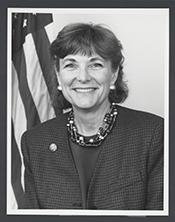
Mr. Speaker, I thank the gentleman from Ohio for yielding me time.
Mr. Speaker, in September of 1999, most of the east coast was hit hard by Hurricane Floyd. There were 66 known deaths, 48 in North Carolina, three in New Jersey, two in New York, six in Pennsylvania, four in Virginia, two in Delaware and one in Vermont. Ten States were declared Federal disaster areas as a result of Hurricane Floyd. These 10 States needed support. In the aftermath of the storm, 4,582 individuals registered for Federal assistance in my home State of New York alone.
The insurance for this kind of storm risk is priced far too high for the average homeowner. The Federal Government passed the Federal Flood Insurance Program in 1968 to provide homeowners in communities which meet certain requirements. In return for coverage, a community adopts and enforces a set of floodplain management ordinances to reduce future flood risk for new construction in floodplain areas.
This program is critical to communities across the country which are threatened by potential floods. This is not a perfect program; but it is something that we need to do, and we need to do it now. It was essential to the recovery of the community in my area of New York in 1999, and it has helped thousands of families nationwide to rebuild their lives after floods. When you see a natural disaster, the pictures of a natural disaster on television or in the papers, flooded homes, flooded schools, flooded churches, this is the money that helps those folks reclaim their communities and reclaim their washed-out lives. Many members believe that this Federal Flood Insurance Program should be reformed, and I support that. I am confident that the Committee on Financial Services will consider Federal flood insurance reform legislation in this Congress.
However, today we are not here to debate reform of the program. Today we are here to ensure that the program can continue for 1 additional year to provide retroactive coverage for those days which have already passed since the authorization expired. December 31st the flood insurance expired because of an oversight in the last continuing resolution. Without this legislation, homeowners are going to be unable to purchase homes in areas threatened by an occasional potential for flooding. This can harm people and it can harm communities and could cause further harm to the economy. So today we need to pass this legislation and I urge all of my colleagues on both sides of the aisle to join in this support of the bipartisan support of this legislation.
Mr. Speaker, I just want to applaud the chairman's Ohio State Buckeyes. Way to go, Buckeyes.

Mr. Speaker, I thank my friend and colleague the gentleman from Massachusetts (Mr. Frank) for yielding me the time, and Mr. Speaker, it is nice to see you in the Chair. I am proud to be an original…
Mr. Speaker, I thank my friend and colleague the gentleman from Massachusetts (Mr. Frank) for yielding me the time, and Mr. Speaker, it is nice to see you in the Chair.
I am proud to be an original cosponsor of this bill to reinstate the National Flood Insurance Program. It is widely known by the acronym NFIP. I am relieved that it has come to the floor because it is important that it is passed. It is important for many reasons.
Because it did expire on December 21, it would affect 400,000 American homeowners because they will be without coverage by the end of the month. So timeliness is important and it is legitimate to say that this thing could have been taken care of before we left last year. So that is why I am saying I am relieved that it is coming up today.
For those who own property in flood-prone areas, flood insurance is really essential. It is a must and the consequences of the lapse in this program are serious. New policies cannot be issued, and without coverage perspective home buyers may not be able to close on a home. Many of us have closed on a home and we know that there are many parts of that closure. This is an essential piece if someone lives in a flood zone.
Policies cannot be renewed for homeowners whose policies expired after December 31st, and they could be liable for damage, even if they paid their premiums. That is not such a great deal.
Finally, the NFIP will not be able to borrow money to cover claims. So this has to pass, and I do not think that there is anyone that is opposed to it, but we really did not have to come to this point of anxiety.
My constituents have a special association with this coverage. That is because we suffered severe flooding in 1998 in the last El Nino, and hundreds of homes were flooded, many millions of dollars in damage. We can ill afford to be without this flood insurance today.
I want to urge every single person in this House to vote for this. It should be unanimous. It should be bipartisan. The American people deserved to have this taken care of before we left, but as I said, I am relieved it is on the floor now. Let us get this thing done. Let us send it to the President to have him sign it into law. The American people deserve the backing of this kind of insurance coverage and cannot afford to be without it.
I thank the gentleman for yielding the time.
Mr. Speaker, I thank the distinguished ranking member for yielding time to me, and thank the chairman of the Committee on Financial Services for their work together in bringing this important…
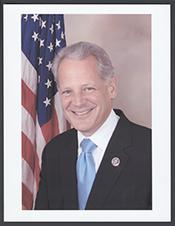
Mr. Speaker, I thank the distinguished ranking member for yielding time to me, and thank the chairman of the Committee on Financial Services for their work together in bringing this important legislation to the floor today.
Mr. Speaker, the gentleman from New York (Mr. Ackerman) and the gentlewoman from New York (Mrs. McCarthy), my Long Island colleagues, joined me in writing to the gentleman from Illinois (Speaker Hastert) and to the gentlewoman from California (Ms. Pelosi) last month asking that this bill be among the first the House considers this year. We did so because the program is absolutely vital to our region's homeowners.
Long Island, Mr. Speaker, is indeed an island. To the south we face the Atlantic Ocean and to the north the Long Island Sound. As a result, many in our communities depend upon the National Flood Insurance Program to protect and finance their homes. The program lapsed on December 31, resulting in essentially a halt to all real estate transactions on Long Island's shores until the program was reauthorized. The lapse has exposed homeowners, lenders, and the Federal Government, through the Department of Housing and Urban Development, to catastrophic and uninsured losses in the case of a major weather event.
Mr. Speaker, this is a straight reauthorization of the National Flood Insurance Program through the end of this year. It has the strong support of the Committee on Financial Services. People on Long Island and around our country need this program.
I want to thank the Speaker, the gentleman from Ohio (Chairman Oxley), and the ranking member, the gentleman from Massachusetts (Mr. Frank), for their leadership on this issue, and for bringing this bill to the floor in such a timely fashion. I look forward to the President's expeditious signature on this matter at the earliest possible moment.
Mr. Speaker, I rise in strong support of reauthorizing the FEMA Flood Insurance Program. Yesterday, I introduced a similar piece of legislation, HR 215, and I am very thankful to Chairman Oxley for…
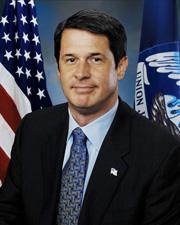
Mr. Speaker, I rise in strong support of reauthorizing the FEMA Flood Insurance Program. Yesterday, I introduced a similar piece of legislation, HR 215, and I am very thankful to Chairman Oxley for bringing this important bill to the floor so that America's homeowners can have the flood insurance many of them desperately need.
I represent a district in southeast Louisiana, a region that is very prone to flooding, perhaps one of the most flood-prone areas in our country. Nearly all of southeast Louisiana falls in flood zones. So, a lapse in this program would be devastating to commerce in Louisiana. Without the flood insurance, banks will not lend mortgage money to prospective home buyers or owners in designated flood zones. Also, any home buyer that was set to close after January 1 would suffer delays without having the required flood insurance coverage.
Living under the constant threat of a flood--much less actually experiencing one--is devastating enough mentally and physically without families having to worry about how to recover financially in the aftermath. With the passage of the important legislation, the real estate market will be able to move forward, and millions of homeowners will be assured they are covered in the event of a catastrophe. I thank the House for considering this today, and I urge a yes vote.

Mr. Speaker, I rise in strong support of the legislation. I am very pleased to say that it is a 1-year extension, only because it is important that we address the reforms that are necessary for our…
Mr. Speaker, I rise in strong support of the legislation. I am very pleased to say that it is a 1-year extension, only because it is important that we address the reforms that are necessary for our own constituents and for some of the very important matters brought to us by the managers of the National Flood Insurance Program and FEMA.
During most of my time here in Congress, I have been working on reform legislation for the flood insurance program. I would say it is overdue. With Mr. Kennedy from Massachusetts, we often tried to make some reforms. We were successful in part. In recent years, the gentleman from Oregon (Mr. Blumenauer) and I have been working on this subject. We have reintroduced legislation today.
We were happy to work with Mr. Bentsen, the former Member from Texas, and we look forward to working with all Members, such as the gentleman from Louisiana (Mr. Baker), who has played a key role and has had a great interest in this subject. This is important legislation which the chairman has identified for work this year, so I hope their input will come to us.
Mr. Speaker, again, I rise in strong support of the legislation and urge its passage.
Bill Text
Latest available legislative text
        [Congressional Bills 108th Congress]
[From the U.S. Government Publishing Office]
[H.R. 215 Introduced in House (IH)]

108th CONGRESS
1st Session
H. R. 215

To extend the national flood insurance program.

_______________________________________________________________________

IN THE HOUSE OF REPRESENTATIVES

January 7, 2003

Mr. Vitter introduced the following bill; which was referred to the
Committee on Financial Services

_______________________________________________________________________

A BILL

To extend the national flood insurance program.

Be it enacted by the Senate and House of Representatives of the
United States of America in Congress assembled,

SECTION 1. SHORT TITLE.

This Act may be cited as the ``Flood Insurance for American
Homeowners Act of 2003''.

SEC. 2. EXTENSION OF NATIONAL FLOOD INSURANCE PROGRAM.

(a) Extension.--The National Flood Insurance Act of 1968 is
amended--
(1) in section 1309(a)(2) (42 U.S.C. 4016(a)(2)), by
striking ``December 31, 2002'' and inserting ``December 31,
2004'';
(2) in section 1319 (42 U.S.C. 4026), by striking ``after''
and all that follows through the period at the end and
inserting ``after December 31, 2004.'';
(3) in section 1336(a) (42 U.S.C. 4056(a)), by striking
``ending'' and all that follows through ``in'' and inserting
``ending December 31, 2004, in''; and
(4) in section 1376(c) (42 U.S.C. 4127), by striking
``December 31, 2002'' and inserting ``December 31, 2004''.
(b) Effective Date.--The amendments made by this section shall be
considered to have taken effect on December 31, 2002.
<all>