Smithsonian Facilities Authorization Act
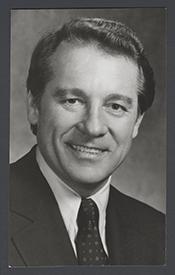 Rep. Ralph Regula (R-OH)
Legislative Activity
Stay on top of the latest movement without scrolling through every action
Became Public Law No: 108-72.
August 15, 2003
View full timeline
Introduced in House
May 21, 2003
Referred to the Committee on House Administration, and in addition to the Committee on Transportation and Infrastructure, for a period to be subsequently determined by the Speaker, in each case for consideration of such provisions as fall within the jurisdiction of the committee concerned.
May 21, 2003
Referred to the Subcommittee on Economic Development, Public Buildings and Emergency Management.
May 22, 2003
Mr. Ney moved to suspend the rules and pass the bill.
July 15, 2003 • 10:29 AM
Considered under suspension of the rules. (consideration: CR H6713-6715)
July 15, 2003 • 10:29 AM
DEBATE - The House proceeded with forty minutes of debate on H.R. 2195.
July 15, 2003 • 10:29 AM
Passed/agreed to in House: On motion to suspend the rules and pass the bill Agreed to by voice vote.(text: CR H6713)
July 15, 2003 • 10:40 AM
On motion to suspend the rules and pass the bill Agreed to by voice vote. (text: CR H6713)
July 15, 2003 • 10:40 AM
Motion to reconsider laid on the table Agreed to without objection.
July 15, 2003 • 10:40 AM
Received in the Senate, read twice.
July 16, 2003
Passed Senate without amendment by Unanimous Consent. (consideration: CR 8/1/2003 S10866-10867)
July 31, 2003
Message on Senate action sent to the House.
August 1, 2003
Presented to President.
August 7, 2003
Signed by President.
August 15, 2003
Became Public Law No: 108-72.
August 15, 2003
Floor Debate
6 membersWhat members said about H.R. 2195 on the floor
 +1
+1
Floor Debate
6 membersWhat members said about H.R. 2195 on the floor
Mr. Speaker, I move to suspend the rules and pass the bill (H.R. 2195) to provide for additional space and resources for national collections held by the Smithsonian Institution, and for other…
Mr. Speaker, I yield myself such time as I may consume. Mr. Speaker, I associate myself with the distinguished chairman from Ohio (Mr. Ney) and his remarks. I would like to commend as well the…
Mr. Speaker, I thank the gentleman for yielding me time. I am here on behalf of myself, the gentleman from Texas (Mr. Sam Johnson) and the gentleman from California (Mr. Matsui). The three of us…
Mr. Speaker, I rise in support of H.R. 2195, a bill to provide additional space and resources for the national collections held by the Smithsonian Institute. I commend the Gentleman from Ohio,…
Mr. President, I ask unanimous consent that the Senate proceed to the immediate consideration of H.R. 2195. Mr. President, I ask unanimous consent that the bill be read a third time and passed, that…
Show 2 more

Mr. President, Larry Small, Secretary of the Smithsonian, has provided a letter to the majority and minority leaders that clarifies the intentions of the Smithsonian with regard to Section 5 of
Mr. Speaker, I ask unanimous consent that all Members may have 5 legislative days within which to revise and extend their remarks and include extraneous material on the subject of H.R. 2195.
Bill Text
5 versions available
        [Congressional Bills 108th Congress]
[From the U.S. Government Publishing Office]
[H.R. 2195 Enrolled Bill (ENR)]

H.R.2195

One Hundred Eighth Congress

of the

United States of America

AT THE FIRST SESSION

Begun and held at the City of Washington on Tuesday,
the seventh day of January, two thousand and three

An Act

To provide for additional space and resources for national collections
held by the Smithsonian Institution, and for other purposes.

Be it enacted by the Senate and House of Representatives of the
United States of America in Congress assembled,

SECTION 1. SHORT TITLE.

This Act may be cited as the ``Smithsonian Facilities Authorization
Act''.

SEC. 2. ADDITIONAL SPACE AND RESOURCES FOR NATIONAL COLLECTIONS HELD BY
THE SMITHSONIAN INSTITUTION.

(a) In General.--Public Law 94-98 (20 U.S.C. 50 note; 89 Stat. 480)
is amended by adding at the end the following:

``SEC. 4. ADDITIONAL SPACE AND RESOURCES FOR NATIONAL COLLECTIONS HELD
BY THE SMITHSONIAN INSTITUTION.

``(a) In General.--The Board of Regents of the Smithsonian
Institution may plan, design, construct, and equip additional special
use storage and laboratory space at the museum support facility of the
Smithsonian Institution in Suitland, Maryland, to accommodate the care,
preservation, conservation, deposit, and study of national collections
held in trust by the Institution.
``(b) Authorization of Appropriations.--There are authorized to be
appropriated to carry out this section--
``(1) $2,000,000 for fiscal year 2003;
``(2) $10,000,000 for fiscal year 2004; and
``(3) such sums as are necessary for each of fiscal years 2005
through 2008.''.
(b) Conforming Amendment.--Section 3 of Public Law 94-98 (20 U.S.C.
50 note; 89 Stat. 480) is amended in the first sentence by striking
``the purposes of this Act.'' and inserting ``this Act (other than
section 4).''.

SEC. 3. PATENT OFFICE BUILDING IMPROVEMENTS.

(a) Authorization of Use of Funds.--
(1) In general.--The Board of Regents of the Smithsonian
Institution may plan, design, and construct improvements to the
interior and exterior of the Patent Office Building (including the
construction of a roof covering for the courtyard), using funds
available to the Institution from nonappropriated sources.
(2) Definition.--In this section, the term ``Patent Office
Building'' means the building transferred to the Smithsonian
Institution pursuant to Public Law 85-357.
(b) Design and Specifications.--The design and specifications for
any exterior alterations authorized by subsection (a) shall be--
(1) submitted by the Secretary of the Smithsonian Institution
(referred to in this section as the ``Secretary'') to the
Commission of Fine Arts for comments and recommendations; and
(2) subject to the review and approval of the National Capital
Planning Commission in accordance with section 8722 of title 40,
United States Code, and section 16 of the Act of June 20, 1938
(sec. 6-641.15, D.C. Official Code).
(c) Authority of Historic Preservation Agencies.--
(1) In general.--The Secretary shall--
(A) take into account the effect of the improvements
authorized by subsection (a) on the historic character of the
Patent Office Building; and
(B) provide the Advisory Council on Historic Preservation a
reasonable opportunity to comment with regard to such
improvements.
(2) Status of smithsonian.--In carrying out this subsection,
and in carrying out other projects in the District of Columbia
which are subject to the review and approval of the National
Capital Planning Commission in accordance with section 16 of the
Act of June 20, 1938 (sec. 6-641.15, D.C. Official Code), the
Smithsonian Institution shall be deemed to be an agency for
purposes of compliance with regulations promulgated by the Advisory
Council on Historic Preservation pursuant to section 106 of the
National Historic Preservation Act (16 U.S.C. 470f).

SEC. 4. CONTRACTING AUTHORITY OF SECRETARY.

(a) In General.--The Secretary of the Smithsonian Institution may--
(1) enter into multi-year contracts for the acquisition of
property and services under the authority of section 304B of the
Federal Property and Administrative Services Act of 1949 (41 U.S.C.
254c); and
(2) enter into contracts for the acquisition of severable
services for a period that begins in one fiscal year and ends in
the next fiscal year under the authority of section 303L of the
Federal Property and Administrative Services Act of 1949 (41 U.S.C.
253l).
(b) Effective Date.--This section shall apply to contracts entered
into on or after the date of the enactment of this Act.

SEC. 5. VOLUNTARY SEPARATION INCENTIVE PAYMENTS.

The Secretary of the Smithsonian Institution may establish a
program for making voluntary separation incentive payments for
employees of the Smithsonian Institution which is substantially similar
to the program established under subchapter II of chapter 35 of title
5, United States Code (as added by section 1313(a) of the Homeland
Security Act of 2002).

SEC. 6. SENSE OF CONGRESS REGARDING JAZZ APPRECIATION MONTH.

(a) Findings.--Congress finds the following:
(1) On December 4, 1987, Congress approved House Concurrent
Resolution 57, designating jazz as ``a rare and valuable national
American treasure''.
(2) Jazz has inspired some of the Nation's leading creative
artists and ranks as one of the greatest cultural exports of the
United States.
(3) Jazz is an original American art form which has inspired
dancers, choreographers, poets, novelists, filmmakers, classical
composers, and musicians in many other kinds of music.
(4) Jazz has become an international language that bridges
cultural differences and brings people of all races, ages, and
backgrounds together.
(5) The jazz heritage of the United States should be
appreciated as broadly as possible and should be part of the
educational curriculum for children in the United States.
(6) The Smithsonian Institution has played a vital role in the
preservation of American culture, including art and music.
(7) The Smithsonian Institution's National Museum of American
History has established April as Jazz Appreciation Month to pay
tribute to jazz as both a historic and living American art form.
(8) The Smithsonian Institution's National Museum of American
History has received great contributions toward this effort from
other governmental agencies and cultural organizations.
(b) Sense of Congress.--It is the sense of Congress that--
(1) the Smithsonian Institution's National Museum of American
History should be commended for establishing a Jazz Appreciation
Month; and
(2) musicians, schools, colleges, libraries, concert halls,
museums, radio and television stations, and other organizations
should develop programs to explore, perpetuate, and honor jazz as a
national and world treasure.

Speaker of the House of Representatives.

Vice President of the United States and
President of the Senate.