National War Permanent Tribute Historical Database Act

Legislative Activity
Stay on top of the latest movement without scrolling through every action
Received in the Senate and Read twice and referred to the Committee on Energy and Natural Resources.
May 18, 2004
View full timeline
Introduced in House
May 21, 2003
Sponsor introductory remarks on measure. (CR E1030)
May 21, 2003
Referred to the Committee on Resources, and in addition to the Committee on Veterans' Affairs, for a period to be subsequently determined by the Speaker, in each case for consideration of such provisions as fall within the jurisdiction of the committee concerned.
May 21, 2003
Referred to the Subcommittee on National Parks, Recreation and Public Lands.
June 3, 2003
Referred to the Subcommittee on Benefits.
June 19, 2003
Subcommittee Consideration and Mark-up Session Held.
April 22, 2004
Forwarded by Subcommittee to Full Committee by Unanimous Consent.
April 22, 2004
Committee Consideration and Mark-up Session Held.
May 5, 2004
Reported by the Committee on Resources. H. Rept. 108-492, Part I.
May 17, 2004
House Committee on Veterans' Affairs Granted an extension for further consideration ending not later than May 17, 2004.
May 17, 2004
Placed on the Union Calendar, Calendar No. 279.
May 17, 2004
Mr. Radanovich moved to suspend the rules and pass the bill.
May 17, 2004 • 2:14 PM
Considered under suspension of the rules. (consideration: CR H3025-3026)
May 17, 2004 • 2:14 PM
DEBATE - The House proceeded with forty minutes of debate on H.R. 2201.
May 17, 2004 • 2:14 PM
Passed/agreed to in House: On motion to suspend the rules and pass the bill Agreed to by voice vote.(text as passed House: CR H3025)
May 17, 2004 • 2:18 PM
On motion to suspend the rules and pass the bill Agreed to by voice vote. (text as passed House: CR H3025)
May 17, 2004 • 2:18 PM
Motion to reconsider laid on the table Agreed to without objection.
May 17, 2004 • 2:18 PM
Received in the Senate and Read twice and referred to the Committee on Energy and Natural Resources.
May 18, 2004
Floor Debate
24 membersWhat members said about H.R. 2201 on the floor
 GM
GM JAB
JAB DKD
DKD MNC
MNC VJE+19
Floor Debate
24 membersWhat members said about H.R. 2201 on the floor
Mr. Chairman, I yield 2\1/2\ minutes to the gentleman from Maryland (Mr. Hoyer), the distinguished minority whip. (Mr. HOYER asked and was given permission to revise and extend his remarks.) Mr.…
Mr. Chairman, I yield 2\1/2\ minutes to the gentleman from Maryland (Mr. Hoyer), the distinguished minority whip.
(Mr. HOYER asked and was given permission to revise and extend his remarks.)
Mr. Chairman, I yield 1\1/2\ minutes to
the gentleman from New York (Mr. Owens), a member of the committee.
(Mr. OWENS asked and was given permission to revise and extend his remarks.)
Mr. Chairman, I yield 1\1/2\ minutes to the gentleman from New Jersey (Mr. Payne).
Mr. Chairman, I yield 1\1/2\ minutes to the gentleman from New Jersey (Mr. Andrews).
(Mr. ANDREWS asked and was given permission to revise and extend his remarks.)
Mr. Chairman, I yield 1\1/2\ minutes to the gentleman from Texas (Mr. Hinojosa), a member of the committee.
(Mr. HINOJOSA asked and was given permission to revise and extend his remarks.)
Mr. Chairman, I yield 1 minute to the gentleman from Rhode Island (Mr. Langevin).
(Mr. LANGEVIN asked and was given permission to revise and extend his remarks.)
Mr. Chairman, I yield 1\1/2\ minutes to the gentleman from Massachusetts (Mr. Tierney).
Mr. Chairman, I yield myself 30 seconds.
Mr. Chairman, it is rather remarkable that the other side has discovered that the poorest children in the Nation do not do as well as the average children in the Nation, but what they ought to tell you is, these children do better than their peers that do not have an opportunity, and by the time they finish kindergarten, they are in the 50th percentile.
That was the job, to try to get them ready for school, and they are accelerating as they go through kindergarten; but they somehow seem astonished that they cannot compete with the average child the first year in Head Start, when they are the most impoverished children in the Nation.
Yes, we are dedicated to all of the changes in title I of this legislation. We are just not dedicated to the eradication of the Head Start program in title II.
Mr. Chairman, I yield 1\1/2\ minutes to the gentleman from Wisconsin (Mr. Kind).
Mr. Chairman, I yield 1\1/2\ minutes to the gentleman from Ohio (Mr. Kucinich).
Mr. Chairman, I yield a minute and a half to the gentleman from New Jersey (Mr. Holt), a member of the committee.
(Mr. HOLT asked and was given permission to revise and extend his remarks.)
Mr. Chairman, I yield 1\1/2\ minutes to the gentlewoman from California (Mrs. Davis), a member of the committee.
(Mrs. DAVIS of California asked and was given permission to revise and extend her remarks.)
Mr. Chairman, I yield 1\1/2\ minutes to the gentlewoman from Minnesota (Ms. McCollum).
Mr. Chairman, I yield the remaining time to the gentleman from Illinois (Mr. Davis).
(Mr. DAVIS of Illinois asked and was given permission to revise and extend his remarks.)
Mr. Chairman, I offer an amendment in the nature of a substitute.
Mr. Chairman, I yield myself 4 minutes.
Mr. Chairman, there has been a lot of discussion tonight about those who do not want to see change or are somehow suggesting that those who oppose the block grants are against change. This amendment is an amendment to strike the block grant and to retain title I of the legislation as it has been reported from committee. Many Members on this side of the aisle worked with our colleagues on the other side of the aisle in committee on title I.
We had numerous discussions, and we all believe, as I said, that there can be continuous improvement, and this is the purpose of the reauthorization of Head Start, to provide for that continuous improvement, to take the evaluations, to take the studies, to take the things that we have learned and apply them to make this an even better program for America's poorest children so that, in fact, they will have a better opportunity at achieving an education
that will allow them to fully participate in American society and the American economic system.
The fly in the ointment to that continuous improvement is the block grant, because as many times as my colleagues will say it, that the block grant requires the adherence with the quality standards and performance standards in Head Start, the very quality standards and performance standards that have made this the best program in the Nation with room for improvement, that the States need not adhere to that. There is no requirement that they do so. They can generally meet or exceed those standards.
That is the beginning of the end. That is the reason we have so carefully evaluated this program, because you are not going to find those standards in the States. They do not exist. They do not have the achievement standards that we have in this program, and they do not have the success that we have in this program.
What they really do is, they say if the States put up some additional money and the States have a pre-K program somewhere in the State, they can make application and that application is deemed to be accepted. Then the State is on its way. It can serve a different population of children. It can serve more children. It just cannot have more money. So by the end of the third year, we see that for the first time children who were otherwise eligible to be served will be cut back from this program.
They talk about how they are going to meet or exceed the commitment to comprehensive services, but when we read the legislation, we find out that that is not true. Again, they must generally meet or exceed, but in this case, they can provide the services or they can provide a referral to services.
Well, it will not take the governor long, unlike the State of Delaware, it will not take a lot of other governors long to figure out that they do not have to provide those services or all of those services or the comprehensive nature of those services, and they can then serve more children; and we start to see the dilution of the program, the dilution of the quality of the program, and that is the concern.
A great effort has been made by this Nation to maintain the integrity and the quality of the Head Start program, and that is what is threatened by the block grant. This is not a question of whether one is for improving or against improving Head Start. This is not a question of whether or not you think we can do it better or not. This is a question of setting in motion a process that, just as sure as rain, will bring about a diminution in the integrity and the high quality of this program.
This amendment provides for striking that block grant program. They can say, well, it is just a demonstration, it is just an experiment. It conceivably could be as high as 30 to 40 percent of the children in the Head Start program.
I appreciate that they say, we are going to fund the program for 5- years and they ran around and told their moderates and others, this program will be funded for 5 years; but there is a huge loophole. If that program does not comply with the State plan in any fashion, there is no guarantee of that funding taking place. What you read and what you they say turn out to be two different things.
Mr. Chairman, I reserve the balance of my time.
Mr. Chairman, I yield for the purpose of making a unanimous consent request to the gentleman from Minnesota (Mr. Oberstar).
(Mr. OBERSTAR asked and was given permission to revise and extend his remarks.)
Mr. Chairman, I yield myself 1 minute.
The gentleman from Georgia is right, we should look it up, because when it says at least as extensive, what it does is it exempts you from the regulation. So you offer health care services because health care is provided under the law. But what you are exempt from is the legislation that requires screening for all the children in 45 days.
So what happens in my district? Some 150 Head Start children are diagnosed with speech and language impairments, and with this knowledge we can immediately provide the services because those are the regulations and that is the screening that is required. But it is not required under the block grant.
My colleagues can use euphemisms, they can play with the language; but the fact of the matter is there is a huge credibility gap between what they say the bill does and what the bill does. That is what we all have to understand.
Mr. Chairman, I yield 1 minute to the gentleman from Arizona (Mr. Grijalva), a member of the committee.
Mr. Chairman, I yield 1\1/2\ minutes to the gentlewoman from Georgia (Ms. Majette).
(Ms. MAJETTE asked and was given permission to revise and extend her remarks.)
Mr. Chairman, I yield 1 minute to the gentleman from Maryland (Mr. Van Hollen), a member of the committee.
Mr. Chairman, I yield 1\1/2\ minutes to the gentleman from New York (Mr. Bishop), a member of the committee.
Mr. Chairman, I yield 1 minute to the gentlewoman from California (Ms. Loretta Sanchez).
Announcement by the Chairman pro tempore
Mr. Chairman, I yield 1 minute to the gentlewoman from California (Ms. Pelosi), the distinguished minority leader.
Mr. Chairman, I yield 1 minute to the gentleman from Texas (Mr. Green).
(Mr. GREEN of Texas asked and was given permission to revise and extend his remarks.)
Mr. Chairman, I yield 1 minute to the gentleman from Texas (Mr. Reyes), a long awaited appearance.
(Mr. REYES asked and was given permission to revise and extend his remarks.)
Mr. Chairman, I yield 1 minute to the gentleman from California (Mr. Honda).
(Mr. HONDA asked and was given permission to revise and extend his remarks.)
Mr. Chairman, I yield 1 minute to the gentlewoman from California (Ms. Waters).
Mr. Chairman, I yield 1 minute to the gentleman from Rhode Island (Mr. Kennedy).
Mr. Chairman, I yield 1 minute to the gentleman from Pennsylvania (Mr. Fattah).
Mr. Chairman, I yield 1 minute to the gentlewoman from California (Ms. Lee).
Mr. Chairman, I yield 1 minute to the gentlewoman from the Virgin Islands (Mrs. Christensen).
Announcement by the Chairman Pro Tempore
Mr. Chairman, I yield 1 minute to the gentlewoman from Texas (Ms. Jackson-Lee).
Mr. Chairman, I yield 1 minute to the gentleman from California (Mr. Baca).
(Mr. BACA asked and was given permission to revise and extend his remarks.)
Mr. Chairman, I yield 1 minute to the gentlewoman from New York (Ms. Velazquez).
(Ms. VELAZQUEZ asked and was given permission to revise and extend her remarks.)
Mr. Chairman, I yield 1 minute to the gentlewoman from Connecticut (Ms. DeLauro).
Mr. Chairman, I yield myself such time as I may consume.
Mr. Chairman, tonight we have a choice. We have a choice about whether or not we can build upon the continued and improving success of the Head Start program, and whether or not we can provide the kind of quality assurance and performance standards that this generation of children, of impoverished children, of many children who have not had opportunity up until the
day they walked through the door of a Head Start center, whether we can provide that kind of quality program and performance standards to assure that they will, in fact, have the opportunity to exercise the education that they will be given.
The gentleman from Delaware (Mr. Castle) pointed out the chart that showed these children were improving a few percentiles during their time in Head Start; then he suggested in his earlier remarks, not in these remarks but in the earlier remarks, that these children were performing so poorly that for all intents and purposes, they are done educationally. Well, that obviously does not jive with some of our colleagues who talked about their own success as Head Start students and our own experiences in our congressional districts; nor does it jive with the rest of the study which the gentleman from Delaware (Mr. Castle) cited, which is, by the end of kindergarten, these children are performing at about average.
What does that suggest to us? It suggests to the researchers that Head Start, in fact, did lay down the foundation, did lay down the basis by which these children, compared to other children in kindergarten, are able to achieve in that 1 year the average of those children. That is against all children in that kindergarten.
How does Head Start work against their peers, other poor children who do not have the opportunity? We see that these children have substantial gains, IQ gains over the children who did not get to participate in Head Start. Their reading, writing, and math skills are superior to those children who did not get to participate; a much higher level of high school graduation. They are not doomed because they are not doing as well as we would like in Head Start; they are doing better than their peers. Special education, many fewer held back in school, and fewer put into special education and, of course, a lower incidence of participation in crime.
So it is working against their peers, and it is providing them an educational opportunity against the average children.
We have already agreed, and we have said on both sides of the aisle, that there is much improvement in this legislation. But again we go back to the fundamental principle that the improvements that we make in title I, the improvements in the performance standards and in the law, are then undermined by the block grant.
It is interesting that the gentleman from Delaware, and I can understand his experience, because his State has basically adopted the Head Start performance standards for State pre-K programs, as has Ohio, the chairman; and I guess, apparently, of Oregon.
But in this block grant, the very things that strengthen and provide for the success that the gentleman from Delaware talks about are not included, because when you say it is extensive, you do not have to take the body of regulations that have provided the quality and the continuous improvement of this program over 35 years. The States do not have to take that, and that is the big difference. And that is what we see when we talk about the erosion that the block grant leads to.
We can take the block grant and we can reduce program hours. We can exclude 3-year-olds. We can increase child-teacher ratios. We can provide unproven curricula. We have spent a fortune trying to get Head Start doing something with the massive amounts of research that we have been involved in, and yet we can cast that aside and go out to some vendor who promises us something for these children. We can run half- year programs and we can serve more children by running the half-year program.
These are the core elements that have separated Head Start from so many other State-run programs where they do not have the quality and they do not get the results. That is why there is such a strong adherence by our communities to the Head Start program. That is why there is such strong adherence by the Members of Congress to the Head Start program, because we understand that they are being measured by their compliance, by their compliance to those standards.
Yes, many of them are out of compliance in one fashion or another, but we also know that many of those are just minuscule, tiny, tiny factors that they are out of compliance with. Because in that same study, again, 85 percent of them were high quality.
And then it comes to the question of the comprehensive services and the direct access, and the body that we have built up, services that are not provided in many of the State programs. That is why we ask our colleagues to accept this bill and all of the hard work that has gone into title I and to reject title II.
Finally, let me say that all of this improvement and all of these children that are supposed to be served are all essentially going to be served with less money in a few years because of the capped authorization in this legislation. For the first time, this Congress will reauthorize a bill that will not allow for the expansion over the period of that reauthorization of this program. That is the first time any Congress has done that, and that is the first time any administration, Republican or Democrat, has suggested that that is the right way to go.
We know it is not the right way to go. We are only serving 60 percent of the children, and yet we are going to knock out in the next few years some 5,000 to 10,000 of those children because the authorization does not provide sufficient funding.
Mr. Chairman, I urge the adoption of this amendment, and rejection of the block grant and the undermining of the Head Start program.
Mr. Chairman, I yield back the balance of my time.
Mr. Chairman, I demand a recorded vote.
Mr. Speaker, I demand a recorded vote.
Mr. Chairman, I yield 2 minutes to the gentleman from Pennsylvania (Mr. Murphy). Mr. Chairman, will the gentleman yield? Mr. Chairman, as we progress through the conference, I do intend to explore…
Mr. Chairman, I yield 2 minutes to the gentleman from Pennsylvania (Mr. Murphy).
Mr. Chairman, will the gentleman yield?
Mr. Chairman, as we progress through the conference, I do intend to explore this issue further. Quality research relies on valid and reliable data, and I believe that we must have quality research to drive the real improvements that are necessary in Head Start. The gentleman from Pennsylvania (Mr. Murphy) is a leader on these issues, and I appreciate his interest and his advice on this matter.
Mr. Chairman, I want to thank the gentleman for his commitment to these quality programs and look forward to continuing to work with him as we move this bill through the conference.
Mr. Chairman, I am pleased to yield 2 minutes to the gentlewoman from Colorado (Mrs. Musgrave), a member of our committee.
Mr. Chairman, I am pleased to yield 2 minutes to the gentleman from Michigan (Mr. Upton), a member of our committee and a real leader on this issue.
Mr. Chairman, I am pleased to yield 2 minutes to the gentleman from Delaware (Mr. Castle), the author of the bill and the chairman of the Subcommittee on Education Reform.
Mr. Chairman, I yield myself the balance of our time.
Mr. Chairman, if we look at the proposal that we have before us, in title I, the main part of the program, there is quite a bit of unanimity about the changes that need to be made to help improve Head Start if, in fact, we are going to improve the futures for many poor children in America. I think there is a recognition that more of an education component to Head Start is absolutely necessary.
And so if we look at title I of the bill, there is no amount of disagreement over it. The real disagreement is over title II which would set up an eight-State demonstration program, only for the States who have made big commitments to early childhood development, only States that would agree to meet or exceed Federal standards, only for States that are willing to make a big commitment and are already doing it, and they will have to add more money. And if that is not enough, we guarantee that the local grantees that are there today in those eight States will continue to receive their money for 5 years.
How anybody could ever refer to this as a block grant is beyond me.
Why are we doing this? Very simply this: Some States are making big commitments to help poor kids, and if they are able to take their pre- kindergarten programs, their early childhood development programs, their child care programs, they can work with poor children in their States and their families to create a more seamless system to help prepare children for school.
Why should we not see if it works? Why should we not take the chance to help these children? Because I do believe that some States will be better able to prepare these children to be ready for school.
Mr. Chairman, I claim the time in opposition to the amendment, and I yield myself such time as I may consume.
Mr. Chairman, I rise in strong opposition to this amendment and any attempt to deny organizations their long-standing civil rights protections. The amendment before us is a direct attack on faith-based service providers seeking to participate in the Head Start program, where they can make a valuable difference in the lives of disadvantaged children.
Make no mistake, the amendment before us would not only be stripping faith-based organizations of their rights, but worse, will eliminate an entire category of potential Head Start
service providers simply because they choose to maintain their legally protected right to make staffing decisions consistent with their organizational character and with the protections provided them under title VII of the Civil Rights Act.
This debate must be understood in real terms. Let us take the Catholic church, for example. Often these churches have strong roots in the community and a vast network of volunteers and employees who work together to make a difference for those who need a helping hand. They participate in many activities that are not about religion, but simply about making a difference in the lives of those in need. These organizations are a natural choice to participate in the Head Start program. After all, the infrastructure is in place, the members of the community already consider church a resource for social services, and workers are ready and willing to take in these needy children and give them the comprehensive support they need to get ready to enter school.
So what is the catch? Catholic churches have a tendency to hire Catholics. The Supreme Court does not see a problem with this. In fact, the Supreme Court has unanimously upheld the right of religious organizations to be religious and make staffing decisions based on that decision. There is no debate about that right. Until today, that is, when we consider this amendment that would make it illegal for these churches to continue to hire Catholics if they choose to participate in the Head Start program.
That is what we are talking about here, a double standard applying only to faith-based organizations, which tells them that they cannot serve disadvantaged children in Head Start unless they relinquish their identity, especially when it comes to hiring.
Faith-based organizations are a priceless national resource, providing help and hope to communities across America. And by their very nature, faith-based organizations often reach out to those in need when others may turn a blind eye. Improving lives is all in a day's work for faith-based organizations. That is why the President has called on Congress to level the playing field when these compassionate service providers are seeking to play a role in Federal initiatives like the Head Start program, to serve those who need our help.
Mr. Chairman, I strongly urge my colleagues to vote ``no'' and defeat this amendment. We should not ask religious groups to forfeit their religious character and identity as a condition of participating in Head Start. If we have discourage faith-based organizations from participating, we will be giving Head Start children less than we are capable of giving them. I think we must stand firm to protected the civil rights exemption for faith-based organizations so they can do their good works and community all across the Nation.
Mr. Chairman, I reserve the balance of my time.
Mr. Chairman, I yield 2 minutes to the gentlewoman from Tennessee (Mrs. Blackburn), a member of our committee.
Mr. Chairman, I yield 1 minute to the gentleman from Wisconsin (Mr. Green).
Mr. Chairman, I yield 1 minute to the gentleman from Texas (Mr. Carter), a new member of our committee.
Mr. Chairman, I yield 2 minutes to the gentleman from Indiana (Mr. Souder), a former member of our committee.
(Mr. SOUDER asked and was given permission to revise and extend his remarks.)
Mr. Chairman, I yield myself the balance of the time.
I think there are is some misunderstanding. Title VII of the Civil Rights Act says that religious organizations can discriminate in their hiring based on religion. That is what it says.
Look at Federal laws that provide grants to community-based organizations. Some of those require these organizations to give up their title VII protections, like the Head Start program we have before us. We have other programs, dozens of them, where they can maintain their title VII protections, and as I have told the Members on the other side over the last several months, as we bring these reauthorizations through our committee, like the Workforce Investment Act, like Head Start, I am going to provide some consistency.
President Clinton signed five programs into law that allowed faith- based organizations to have their title VII exemption with Federal funds, and all we want to do is to say if you take Federal funds and you provide Head Start services, you do not have to give up your title VII protections that are granted to you, plain and simple.
I urge my colleagues to defeat the gentlewoman's amendment.
Mr. Chairman, I yield 2 minutes to the gentlewoman from Colorado (Mrs. Musgrave).
Mr. Chairman, I am pleased to yield 1 minute to the gentleman from Nebraska (Mr. Osborne), a member of our committee.
Mr. Chairman, I am pleased to yield 4 minutes to the gentleman from Delaware (Mr. Castle), the author of the bill, and the chairman of the Subcommittee on Education Reform.
(Mr. CASTLE asked and was given permission to revise and extend his remarks.)
Mr. Chairman, I yield myself the balance of our time.
Mr. Chairman, I want to thank the author of this bill, the gentleman from Delaware (Mr. Castle), the subcommittee chairman, for the brilliant job that he did with the subcommittee to bring this bill together and to bring it to this point.
Also, I want to thank the gentleman from Nebraska (Mr. Osborne) for all of his efforts, and all of the members of our committee who have worked hard and come together from the right wing to the more moderate wing to help craft a bill that will help poor children get a better start in life.
I also want to thank the staff of the gentleman from Delaware (Mr. Castle), including Sara Rittling and Paul Leonard. I want to thank the committee staff: Kate Houston, Amanda Farris, Melanie Looney, Julian Baer, Parker Hamilton, Krisann Pearce, Dave Schnittger, Jo-Marie St. Martin, and Sally Lovejoy and others who were so helpful in putting this bill together.
Head Start has done a lot for a lot of children all across the country. There is not one Member in this room, not one, who does not believe that Head Start cannot be improved.
Now, the question is, how do we improve it? In title I of the bill, there is basic agreement on the changes that will bring a more academic component to Head Start.
The big issue was over title II, the eight-State pilot project. We have heard it called a block grant, we have heard it described as the dismantling of Head Start. Please. There are some States out there who are doing magnificent things, and to give them the opportunity to better coordinate Head Start with their own pre-kindergarten programs, their own early childhood development programs, their own child care programs, States can, in fact, provide a comprehensive package that we believe could be of great help to poor children and their parents in terms of helping improve this program.
And to just say ``no,'' we are not going to try it, we are never going to go there, frankly, is not fair. It is not fair to the 3- and 4-year-olds in America who need our help.
So we have in this bill this eight-state demonstration project, but only for those States who would hold themselves to high standards, only those States who will make a big commitment to early childhood development, and only States who really want to take this project on.
I believe that we have got a good bill before us. I want to ask my colleagues to reject the Miller substitute and to vote ``yes'' on final passage.
Mr. Chairman, I yield back the balance of my time.
Mr. Speaker, I rise in opposition to the motion to recommit.
Mr. Speaker, I yield 3 minutes to the gentleman from Michigan (Mr. Ehlers), the gentleman who has led our efforts with Members on both sides of the aisle to help seasonal migrant workers.
Mr. Speaker, I yield back the balance of our time.
Mr. Chairman, sometimes when we evaluate, we need to look at the depths from which one comes as opposed to only the heights to which they have not excelled. I rise in strong opposition to H.R. 2210.…
Mr. Chairman, sometimes when we evaluate, we need to look at the depths from which one comes as opposed to only the heights to which they have not excelled.
I rise in strong opposition to H.R. 2210. I am pleased that my amendments in committee to restore reference to the importance of delivering culturally appropriate services and to increase opportunities for fathers to more actively participate in Head Start were agreed to. And while I am pleased with the acceptance of these amendments and others introduced by my colleagues, I am greatly disappointed by the fact that other amendments will not be discussed here today.
Among these is my amendment to provide funding for grantees to fulfill the requirement that 50 percent of teachers have bachelor's degrees. Since my amendment was not accepted, this will continue to be an unfunded mandate like the rhetoric of Leave No Child Behind.
Education is, in fact, the great equalizer, and since its introduction in 1965, the Head Start program has helped over 21 million of America's poorest children gain the academic, social, emotional behavior, and readiness skills necessary for success. In those 38 years, we have learned much about the needs of disadvantaged children living in poverty. What we have learned is what it takes to prepare them for school. It takes dedicated, skilled, well-trained teachers. It takes parental involvement. It takes comprehensiveness. It takes health care. It takes nutrition. It does not take some kind of program that has never been tested.
Let us keep Head Start. ``If it ain't broke, don't fix it.''
Mr. Chairman, I would like to begin by commending Chairman Boehner and Ranking Member Miller from the Education and the Workforce Committee and Chairman Castle and Ranking Member Woolsey from the Subcommittee on Select Education for their work
on this bill. I rise in strong opposition to H.R. 2210. I am pleased that my amendments in committee to restore references to the importance of delivering culturally appropriate services and to increase opportunities for fathers to more actively participate in Head Start were agreed to. While I am pleased with acceptance of these amendments and others introduced by my colleagues on the Education and the Workforce Committee, I am greatly disappointed by the fact that numerous amendments designed to improve this legislation will not be discussed today. Among these is my amendment to provide funding for grantees to fulfill the requirement that 50% of teachers have Bachelor's degrees. Since my amendment was not accepted, this will continue to be an unfunded mandate, like the rhetoric of Leave No Child Behind.
Education is the great equalizer. Since its introduction 1965, the Head Start program has helped over 21 million of America's poorest children gain the academic, social, emotional, behavioral and readiness skills necessary for success in the future. In those thirty-eight years, we have learned much about the needs of disadvantaged children living in poverty and what it takes to prepare them for school. It takes skilled, well trained and dedicated teachers. It takes comprehensiveness. It takes health care, nutrition, it takes parental involvement and participation. It takes more than eloquent speeches about Leave No Child Behind experiments. The Head Start program has grown and changed through the years with the increased knowledge of how best to serve low-income children and their families. Study after study has shown that participation in the program results in decreased incidence of school failure, higher graduation rates, lower crime rates later in life, and better social and emotional relationships. In these times when politicians speak so eloquently on how no child should be left behind, why would we conduct an experiment that would restructure an already successful program and, ultimately, result in thousands of children being left behind?
Title II of this bill would do just that. It implements a pilot program for eight states to take the Head Start money appropriated to them and run the program on their own. The idea behind this experimental program is to integrate Head Start with already existing state preschool programs. However, such a move would undermine the intent of Head Start as a comprehensive, family-based program. Title II would allow states to determine their own standards, guidelines, and qualifications. These states could decide to implement Head Start as a pre-kindergarten program, cutting out nutrition, vaccinations, dental care, medical care, and other important services currently guaranteed to children in the program. With the current state budget crisis, these services will almost certainly be eliminated, leaving the low-income children served by Head Start with no way to receive these extremely important services.
The Head Start program has been in place for 38 years and has been continually improving in quality as professionals have gained knowledge on how best to serve low-income children. This knowledge and understanding has resulted in high quality standards being set. In contrast, many states do not even have preschool programs, and those that do are still in the early stages of developing them. Few state-run preschool programs have established quality standards. Nor do state-run preschool programs encourage the active participation of parents. Helping parents learn how to provide nurturing environments for their children has a positive impact for years after graduation from Head Start and is beneficial for the child in the program as well as his or her siblings. The role of parents in Head Start goes far beyond being a PTA member or a teacher's aide; parents learn that they are the most important role model for their children and must be a caring and supportive influence. The vast majority of State-run preschool programs also have little to no integration of services, which is already a major part of the Head Start program. Merging Head Start with programs that do not have quality standards, do not encourage parent participation, and do not provide such services as nutrition, health, and immunizations runs the risk of destabilizing a successful program and lowering standards and minimizing services that have been so painstakingly developed.
Mr. Chairman, Head Start could serve our children better. However, dismantling the program and leaving states to rebuild it without the insights gained over the past thirty-eight years would be a tragedy for our low-income children and their families.
Mr. Chairman, I have always stood by the saying that ``education is the great equalizer''. Yet, in this bill, we are allowing education to be easily accessible to the haves and more difficult to obtain for our Nation's have-nots. This attitude toward education is a giant step backwards to 40 years ago. Low-income children, children with disabilities and individuals who want to go to college are the ones that are being hurt substantially in this bill.
Although, the 2004 budget resolution was to provide the Department of Education with a $3 billion increase, this bill only allows for a $2.3 billion increase over Fiscal Year 2003. The Title I program is one that is hit the heaviest. Title I schools have the least experienced teachers, less competitive teacher salaries, higher teacher turnover, a less rigorous curriculum, the least amount of resources and students with greater academic deficits, which all adds up to these schools being less able to meet the No Child Left Behind Act's mandates. Instead of providing a substantial increase to offset the disadvantage these schools are already facing, this bill only provides a $666 million increase, compared to the $1 billion in the 2004 budget resolution.
On April 30, this House passed the IDEA reauthorization bill with the promise attached from the 2004 budget resolution to provide a $2.2 billion increase over the current level. Yet, this bill falls $1.2 billion short of that promise. As deficit stricken states continue to cut from their school funding, schools will have to continue to absorb the costs of providing special education for nearly 6.7 million school children as well as even cut other school programs or hope for a local referendum to pass to offset the shortfall.
A college graduate can expect to earn 80 percent more than a high school graduate, or $1 million over the course of a lifetime. This obviously allows for an individual to have a better quality of life by having a higher skilled job, better health insurance, pension and the ability to provide a better life for their children. Yet, this bill in essence abandons higher education federal student aid. All the federal student aid programs: Pell Grants, Supplemental Educational Opportunity Grants (SEOG), Federal Work Study, Perkins Loan Program, LEAP, and Graduate Education are level funded. This may not sound too bad but for example the Pell Grants maximum award was kept at $4,050 which will only cover 38 percent or less of expenses in a 4-year public college compared to 84 percent of expenses covered by Pell Grants in 1975, when the program originated. Unfortunately, the Federal Government is abandoning higher education while the states suffer record breaking deficits. These simultaneous occurrences result in cuts in grant aid to students facing rising cost in higher education. Loyola University Chicago lost $1 million in state grant aid for needy students due to Illinois $5 billion deficit. How much more will their students lose without any increases to the federal student aid programs?
Mr. Chairman, If we pass this bill, we are sending the message that we do not care enough about all of our nation's children and young people. We need to ensure that we are helping those who are in most need of help--low-income children, children with disabilities, and those who have the desire to continue their education but who just can not afford to go without assistance of state and federal aid. Our message needs to be clear. But most importantly, our message needs to be more than just words. Let's see increases in funding where they are most needed.
Mr. Chairman, I yield 3 minutes to the distinguished gentleman from Nebraska (Mr. Osborne) who not only is extremely well known for his expertise in coaching, but is one of the leading experts on…
Mr. Chairman, I yield 3 minutes to the distinguished gentleman from Nebraska (Mr. Osborne) who not only is extremely well known for his expertise in coaching, but is one of the leading experts on mentoring in this country.
Mr. Chairman, I yield 3 minutes and 15 seconds to the distinguished gentleman from Michigan (Mr. Ehlers), who probably has had more to do with increasing the emphasis on math and science education than anybody in the Congress and has indicated this is one of the most misunderstood bills he has seen in 10 years here.
Mr. Chairman, I thank the gentleman for yielding me this time.
Mr. Chairman, I just want to take on the question of how well we are doing, at least educationally, in Head Start. This is really, really important, that everybody understands it.
First of all, there are not that many studies with respect to how Head Start children are doing. There is a longitudinal study in the works right now which we should have pretty soon. This is a study, and I will show 2 charts, one from 1997 and one from 2000, which shows children in Head Start far below average. The average is 50 percent. That is the median that we are dealing with here.
This study is by the Family and Child Experiences Survey, and it shows, and you cannot see it probably, but the blue is the fall of 1997 and the purple is the spring of 1998, so after they had been through a year of this. It shows the vocabulary of the kids had gone from the 16th percentile to the 23rd. In letter recognition they actually went down from the 27th to the 25th. In early writing, 16th to 23rd, and early mathematics, 17 to 19.
Believe me, these are numbers which tell us that these kids are not going to make it in school. This is absolutely why we have to challenge Head Start. It is why we need to go to a State demonstration to make sure it is brought in with all of the other State programs which exist.
Now, the numbers really are not a lot different for the year 2000, but there they are: 16 to 23 for early letter recognition; early writing went from 16 to 19; early mathematics, 21 to 23. This means that when these children reach kindergarten, we can almost predict that they are not going to make it out of school ultimately, and that, unfortunately, Head Start has not done all for them that it could.
Head Start does a wonderful job in many ways that we have described here today in terms of helping with the well-being of our young children, but it is not doing what we need to do in education, and we need to challenge it. It is as we have seen and heard in some of the newspapers that have written about it. The Detroit News on July 9 said:
``Head Start advocates fear States will fritter away any
Federal Head Start funds shifted their way, but proposals now
in the House restrict States in how they spend earmarked
money. The pilot program would be limited to eight States,
and that would be a good test for proposed preschool reforms.
If government can devise a better Head Start program, one
which helps children more effectively, it should hurry to do
so. The program's 900,000 children, the ones who need the
help, deserve no less.''
That is absolutely correct. We need to take steps to help them academically. What we have proposed will do so. Please support this legislation.
Mr. Chairman, I rise in opposition to the amendment and claim the time in opposition.
Mr. Chairman, I yield 5 minutes to the very distinguished gentleman from Georgia (Mr. Isakson), who is the former chairman of the State Board of Education and a tremendous asset to the Committee on Education and the Workforce.
Mr. Chairman, I yield 3 minutes to the gentlewoman from Illinois (Mrs. Biggert), a strong proponent for the children of our country.
Mr. Chairman, I yield 2 minutes to the distinguished gentleman from Michigan (Mr. Ehlers), where they have the university that stole their football uniforms from the University of Delaware, I might add.
Mr. Chairman, I yield 3 minutes to the distinguished gentleman from Florida (Mr. Mica), clearly a person very concerned about Head Start.
Mr. Chairman, I yield 3 minutes to the distinguished gentleman from Michigan (Mr. Hoekstra), head of the Subcommittee on Select Education in the Committee on Education and the Workforce and a strong force on our committee.
Mr. Chairman, I yield 2 minutes to the gentleman from South Carolina (Mr. Wilson), another distinguished member of the Committee on Education and the Workforce.
Mr. Chairman, I thank the gentleman for yielding me time.
Mr. Chairman, I listened to this argument all night, and there is some great success stories in Head Start, and there are a lot of us that are very devoted to what Head Start has done. But I hark back to about 15 or 16 years ago when I was Governor of the small State of Delaware, and we started welfare reform before anybody here in Congress had talked about it. We started it by having classes, mandatory classes. You had to go to classes, or you would not get your welfare.
I went to that first class after they had been there for about 2 months. I walked in there; I remember there were 19 people there, one man and 18 women. I was stunned, because I thought they would want to run me out of the place. Instead, they thanked me for giving them an opportunity.
We have done what you had to do with welfare in Delaware, and now in the United States. We have reduced welfare by 50 percent. The time has come in the United States of America to do more with Head Start.
There are some wonderful success stories for Head Start, no question about it. But there are also in-bred problems that we need to deal with if we are going to make Head Start better, and some of those we need to talk about right now.
First of all, I do appreciate the support for title I, because we did make a lot of changes. That is everything but the State demonstration and the faith-based business.
Secondly, we have increased spending. Since 1995, we have doubled spending. But if you look at these results for just 1 year, and I showed these charts before, ironically, that was about an hour and a half ago, nobody has come forward to show me anything different, any study, any chart, any test whatsoever, to show that Head Start results are better than this.
This shows that the increases are rather marginal, in fact, in some instances no increases at all as far as Head Start is concerned, averaging in the low twenties. This means these are kids that are going to have difficulty in school. Some are going to be higher and they are going to do all right; but for the most part, they are going to have difficulty in schools because we simply have not gotten them to where they should be, which is as close to the median level, 50 percent, as we can get them. We have to raise that.
What does the State demonstration make? The State demonstration that people are so concerned about, what does it do with respect to this? Well, it fences in all of the Federal money, all of local money, it adds more local money to what we are doing here, and it makes sure that the State merges it in with all of the other programs and projects which they are trying to do to help children.
Some of the comments which I have spelled out before from people on the outside, for example, the San Diego Union said: ``The strident opposition to President Bush's modest pilot proposal to fine-tune Head Start is nothing more than partisan sniping, pure and simple. Bush is looking to close the achievement gap for poor youngsters. He would do so by merging Head Start into often overlapping State programs and opposing new academic standards on the combined program.''
That is positive. That will help educate young people.
Then the Des Moines Register said: ``The eight States selected for the 5-year pilot project just might do better. The eight-State pilot project is a chance to see what States can do on their own. Meanwhile, Head Start is working to improve early literacy and math preparation. When the 5-year experiment is over, Congress can decide whether a state-by-state or national framework better serves the interests of young children.''
That is not taking apart Head Start, that is not block-granting anything. That is affording opportunities to young people to be able to be educated.
The Council of State School Officers has come forward and has indicated that they believe in this proposal and we need to do something about it. This is a council of State school officers which has done that, people who believe in education. The Brookings Institution, certainly a middle-of-the-road operation, has come forward and said that we need to do something. It said, given the immensity of the task and the modest success achieved thus far, new ideas are worth trying.
This is a new idea. This is not dismembering anything. This is affording opportunity. This is taking eight States and saying, we are going to give you, the best States in the country, who are willing to put in extra money and who are already running programs that are going to help in early education with these young children, the opportunity to do more to lift the standards of where we are going with Head Start. Everything else will be done in Head Start.
And Lord only knows, it does some wonderful things, and we have heard that said by a lot of people here tonight. But this is unacceptable; we have to do better educationally. That is what this is all about.
Please support the underlying legislation and defeat the amendment.
Mr. Chairman, I thank the chairman for yielding me this time. It is a pleasure to rise and defend this bill. And as the chairman of the subcommittee has mentioned, I have been shocked by the…
Mr. Chairman, I thank the chairman for yielding me this time.
It is a pleasure to rise and defend this bill. And as the chairman of the subcommittee has mentioned, I have been shocked by the misunderstanding about this bill that has been propagated throughout this country. It is a good bill, and I wanted to comment about one part of it that I think has really been improved.
The migrant and seasonal children of this country are special children who need special help. They need special help because they are moved from place to place, and they have special conditions that have to be dealt with. For example, in my community they must be attended to in Head Start programs from early summer to mid-fall. That is not the standard school year.
But that is just one of many ways in which they have to be treated specially. I am very familiar with their problems because in my youth I lived in a farming community. I worked on a produce farm. I worked side by side with migrant workers, both in the fields and in the packing sheds and even in transporting produce to markets.
It is very important to provide services for migrant children. When these children are not served, parents sometimes will bring their children to the field and sometimes even have them working. This certainly exposes them to harmful conditions.
Today, migrant and seasonal Head Start serves close to 35,000 children and operates in 39 States in every region of the country. But in contrast to the normal Head Start program that serves approximately 60 percent of eligible children, migrant and seasonal Head Start serves only approximately 19 percent. That is a dramatic shortfall, and we must improve that.
I am pleased that I was able to get an amendment approved by the committee that, first of all, will allow all migrant and seasonal Head Start grantees to operate Early Head Start programs. That is not true of all Head Start programs, but it is essential because that way the youngest children of the migrant and seasonal workers can participate in Head Start programs rather than being taken to the fields.
My amendment will also require the Secretary to ensure that migrant and seasonal Head Start programs are included in the planning and coordination of the State system of training and technical assistance. In addition, part of my amendment, in combination with a change that the gentleman from Delaware (Mr. Castle) made in his substitute, specifically makes one-fourth of 1 percent of all the total authorization available for seasonal and migrant Head Start. This means that we will have an additional $17.4 million in fiscal year 2005 and $18.5 million in 2008. This also means that the funding that will be available will provide an additional 2,300 slots for children to receive services in 2005 and up to 2,500 in 2008. I expect that these provisions will allow the migrant and seasonal Head Start program to successfully take care of a substantially greater number of migrant and seasonal Head Start children.
Mr. Chairman, there is an incredible amount of misunderstanding about the bill, and apparently about football uniforms as well.
Mr. Chairman, let me clarify a few points. I find so many people misunderstand the intent dealing with faith-based organizations receiving Federal funding. This is not money that is going to religious groups to proselytize students or kids or indoctrinate them. This is money provided to organizations who, in seeking to carry out their religious faiths, are trying to help their communities by establishing institutions that serve the people of their community. Head Start is just one example of that. There are many other examples of charitable organizations, faith-based organizations, which do good for the community.
My community is almost a poster child for that. We have the second largest private mental hospital in the world in my community. It is a faith-based organization. People come from all over this country and even from some other countries to get the service there because it is so extremely good. We have the largest adoption agency in the world headquartered in my district. It started there by a faith-based organization to serve with adoptions.
These are not people who are trying to proselytize. They are people who are trying to serve and serve in the name of God. That is what we are talking about.
I heard a reference from the gentleman from Massachusetts earlier about this is awful, that we are taking unbelievers' money and giving it to faith-based institutions. I would remind the gentleman that religious people pay taxes as well, and I can guarantee you that the amount of tax money collected from believers is considerably greater than the amount of money going to faith-based institutions. That statement simply makes no sense.
We have a long history in this Nation of supporting faith-based institutions. I taught at a State university. I have taught at a private religious college. The grants I received from the Federal Government were the same at both institutions. The Federal Government treats them evenhandedly.
I believe it is very important that we continue the faith-based practice outlined in this bill.
Mr. Speaker, I thank the chairman for yielding me this time, and it is my pleasure to rise and defend this bill, and particularly the provisions in it regarding seasonal and migrant workers.
The migrant and seasonal children of this country have special needs and should get special help, and I do not disagree with the minority on that part. They need special help because they are often moved from place to place, and they have special conditions that have to be dealt with.
For example, in my community, they attend Head Start programs from early summer to mid-fall. Obviously, this is not the standard school year. But that is just one of the many ways in which they have to be treated specially. And I am personally very familiar with their problems because in my youth I lived in a small farming community in the great State of Ohio. I worked on a produce farm. I worked side by side with migrant workers, in the fields and in the packing sheds, and even in transporting produce to markets.
It is very important for us to provide the services for these children. When these children are not served properly, parents will often bring them to the fields and sometimes even have the slightly older ones working. They certainly can be exposed to harmful conditions that way. Today, migrant and seasonal Head Start serves close to 35,000 children in 39 States in every region of this country. But in contrast to the standard Head Start program, the part that serves the migrant and seasonal serves only approximately 19 percent of the eligible children. That is dramatically lower than the 60 percent of eligible children served in other areas.
Mr. Speaker, I was pleased to be able in the committee to offer an amendment that was approved by the committee that allows all migrant and seasonal Head Start grantees to operate early Head Start programs. Not every Head Start program is allowed to operate early Head Start, but this amendment allows all migrant and seasonal Head Start grantees to operate these.
Why is that important? Because frequently migrants have small children and they need the early Head Start program, or they are going to be taken to the fields. That is one great improvement.
Another is that my amendment will require the Secretary to ensure that migrant and seasonal Head Start programs are included in the planning and coordination of the State systems of training and technical assistance. In addition, part of my amendment, in combination with a change that has been made in the substitute, will provide at least 25 percent of any remaining technical assistance funds which are used in migrant and seasonal Head Start programs. And the bill specifically makes 1 percent of the technical training assistance funds available in this category. This means we will have an additional $17.4 million in fiscal year 2005 and an additional $1 million in 2008. This will provide an additional 2,300 slots for children to receive services and up to 2,500.
This is not just a magic authorization improvement. This is money that will be there. These are slots that will be there. These are children that will receive service. It is not simply increasing authorization; it is producing additional spots for the kids to go in.
We have covered a good deal of this problem in this bill through this amendment. Let us vote for this bill, let us reject the recommittal motion, and let us go on and get this bill into effect and help all the seasonal and migrant children of this Nation.
Show 8 more

Mr. Chairman, I rise in opposition to H.R. 2210, because it unjustifiably turns the Head Start program--one of the most evaluated and successful federal antipoverty programs--into an unproven…
Mr. Chairman, I rise in opposition to H.R. 2210, because it unjustifiably turns the Head Start program--one of the most evaluated and successful federal antipoverty programs--into an unproven experiment.
The very strength of the Head Start program lies in the comprehensive services it provides. Consistent with Maslow's hierarchy of needs, the program improves academic achievement only because it addresses basic health and mental health, nutritional, dental and other social needs of low-income children. These needs must be met in order to facilitate learning. H.R. 2210 discards Head Start's comprehensive approach and curtails parent involvement. It troubles me that proponents of this bill believe that we can expect children to excel academically, along with their privileged peers, when, in fact, their learning is seriously impeded by the devastating effects of poverty.
Pediatric dentists are rare in rural areas. In Blossburg, PA, the local Head Start program makes several trips each year to Scranton with children who needed so much dental work that local dentists will not treat them. Parents do not have the means to drive 180 miles to access dental treatment, so Head Start provides the transportation.
John Holdsclaw, who worked with the National Head Start Association and was a Head Start student himself, would not be the successful adult that he is now without the program. When he entered Head Start at the age of four, he was called ``Thick John,'' because he never responded when asked a question. Head Start employees found that he had an inner ear problem; had this problem not been corrected, John would have entered school unable to hear his teacher and unable to learn.
There are eleven Head Start agencies, including five tribal programs, serving families in my Congressional District. Over the past 5 years, these programs served 12,683 children ages 0-5. In my district, 50 percent of eligible children go unserved by Head Start and Early Head Start.
In recent weeks, I have received numerous expressions of support for this vital program from Early Childhood experts, Head Start teachers, and Head Start families in my district. They all state the obvious: Head Start has yielded countless success stories, and it should not be restructured in the name of ``reform.''
Recently, I heard from Susan Woidyla, a Head Start teacher who serves children in two
counties in my district. She described the success of the Early Head Start program's curriculum for prenatal woman. The program currently serves ten pregnant women, many of whom are teenagers who will be first-time mothers. Woidyla spoke about one teenage mother who is homeless and in an abusive relationship. As the only social service program in her life, Head Start is not only providing her with critical information about the brain development of her fetus and the potential effects of periodontal disease, but the program is helping this young woman find the services she needs to care for herself and her developing child.
Julia Kicker, another constituent of mine, shared her family's experience with Head Start. Although Julia and her husband knew that their first son, Jacob, was lagging behind other children in his social development, they were told differing information from local day care providers. Some day care providers insisted that he was fine; others believed he needed to be medicated; and still others suggested parenting classes for the Kickers.
Then Jacob began Head Start. The staff identified his needs, and they encouraged special education professionals to become involved with assessments and other services for Jacob, who is now enrolled in kindergarten. He has a one-on-one para-professional helper in the classroom and has been diagnosed with sensory delay and emotional behavior disorder.
Not only did the program assist Jacob, but it assisted Julia as well. It was the support that the Head Start program routinely gives parents and families that gave Julia the self-confidence to run for and be elected to the Policy Council for Head Start, the Board of Directors of the Community Action Council, and the City Council.
I will not vote for legislation that guts Head Start's comprehensive services and parental involvement and unravels a successful program that HHS itself has said is working. Instead, Head Start should be adequately funded to meet the needs of all eligible children.
I urge my colleagues to vote ``no'' on H.R. 2210.
Mr. Chairman, I rise in support of the Miller amendment and in opposition to H.R. 2110.
Mr. Chairman, I thank the gentleman for yielding. In my district, 11 Head Start agencies, five of which are tribal programs, have served 12,683 children up to 5 years of age over the past 5 years. Yet, due to inadequate funding, half of all eligible children in my district are not served by Head Start and Early Start.
Ever since people began hearing about this bill, there has been an out-pouring of support for Head Start from early childhood experts, Head Start teachers, and Head Start families throughout my district. They all say the same thing: Head Start has produced countless success stories; it should not be restructured in the name of so-called reform.
Listen to Susan Woidyla, a Head Start teacher who serves children in two counties in my district. She described the success of the Early Head Start program's curriculum for prenatal women. The program serves 10 pregnant women, many of whom are teenagers who will be first-time mothers. Woidyla wrote to me about one teenage mother who is homeless and in an abusive relationship. As the only social service program in her life, Head Start is not only providing her with critical information about the brain development of her unborn child and the potential effects of periodontal disease, but the program is also helping this young woman find the services she needs to care for herself and her developing child.
Julia Kicker, another constituent of mine, shared her family's experience with Head Start. Although Julia and her husband knew that their first son, Jacob, was lagging behind other children in his social development, they were told differing information from local day care providers. Some day care providers insisted that he was fine; others believed he needed to be medicated; and still others suggested parenting classes for the Kickers.
Then they enrolled Jacob in Head Start. The staff identified his needs, and they encouraged special education professionals to become involved with assessments and other services for Jacob, who is now enrolled in kindergarten. He has a one-on-one para-professional helper in the classroom and has been diagnosed with sensory delay and emotional behavior disorder.
Not only did the program help Jacob, it helped Julia as well. It was the support that Head Start has routinely offered parents and families that gave Julia the self-confidence to run for and be elected to the Policy Council for Head Start, the board of directors of the Community Action Council, and the City Council.
The very strength of Head Start is in its comprehensive services. Head Start improves academic achievement in very large part because, in addition to academics, it also addresses basic health, mental health, nutritional, dental, and other social needs of low-income children, which facilitate learning.
We cannot expect underprivileged children to thrive academically along with their privileged peers, when their learning is seriously undermined by the devastating effects of poverty.
I will not for legislation that guts Head Start's comprehensive services and parental involvement and unravels a successful program that HHS itself has said is working. Instead, Head Start should be adequately funded to meet the needs of all eligible children.
I urge a ``no'' vote on H.R. 2210.
Mr. Chairman, I rise today in support of Head Start, the most successful program our country has in the war against poverty. The Head Start program gives children the tools they need to break the…
Mr. Chairman, I rise today in support of Head Start, the most successful program our country has in the war against poverty. The Head Start program gives children the tools they need to break the cycle of poverty. As the philosopher, Plato, once noted, ``The direction in which education starts a man will determine this future life.''
Dr. Martin Luther King Jr., Congressman John Lewis, A. Philip Randolph, and hundreds of thousands of others marched on Washington 40 years ago to demand that the President and Congress give every man, woman, and child an equal opportunity to be the best we can be. That opportunity can only come about when every child has equal access to education.
Indeed, providing a firm foundation for the education of our children is the most important investment we as a nation can make in our future. When President Lyndon B. Johnson convinced Congress to put this program in place almost 40 years ago, we began a war on poverty that has benefited this country in countless ways.
Poverty in America weakens our greatest resource by sapping our children of their hope that they can realize their dreams. These children can, and do, realize their dreams when they take part in Head Start.
Head Start is not a simple daycare program it focuses on the whole child. These children receive balanced, nutritional meals. They also receive basic health care, including dental, medical and vision screenings and vaccinations. Head Start children not only learn their colors, they are enveloped in nurturing relationships, and by age four or five come to school ready to learn. Head Start focuses on the whole child, and Head Start works.
It's a fact that Head Start children are:
Less likely to be held back in school.
Less likely to be placed in special education classes.
More likely to succeed in school.
More likely to graduate.
More likely to be rated as behaving well in class and being better adjusted in school.
And five times less likely to end up in jail as adults.
Mr. Chairman, I'd like to bring up a sad state of affairs in America today: Right now, there are over 2 million Americans in prison.
The evidence shows that we can actually reduce incarcerations if we act early enough because children who participate in Head Start are five times less likely to end up in jail. There is no disagreement about this face: Head Start reduces the likelihood that a child will become one of those two million in jail.
Unfortunately, Head Start serves fewer than 1 million children: only helping 1 out of 5 needy children in Georgia and across the Nation. Even though the money we put into this program now will save us much more in the long run by, among other things, reducing the amounts we need to spend on prisons. Head Start is quite simply the best investment opportunity we can offer our constituents for their tax dollars. We are being penny wise and pound foolish.
Despite this huge investment opportunity, taxpayers are currently supporting twice as many prisoners as Head Start students. The administration does not have its priorities straight. Just look at the cost: We spent less than $7 billion on Head Start this year, while we spend over $74 billion a year on the prison system. It costs only $18 a day to place a child into Head Start, and over $50 a day to keep someone incarcerated in jail. This is not fuzzy math--it is crystal clear. We can save money if we realign our priorities. We must fully fund with Head Start to guarantee that we leave no child behind.
This is not just any ``program,'' it is an incredible investment in our future. Head Start takes our poorest children and cures their toothaches, fills their stomachs, and gives them eyeglasses. With that vision, children are able to see far beyond the blackboard. Full funding of Head Start would enable us to fulfill our Nation's promise to give everyone an equal opportunity in life. In short, Head Start gives children a reason to hope, and the ability to succeed.
And isn't that what our Nation is all about? The promise that everyone, regardless of their background, can pursue their own happiness and achieve their own dreams. Every day people come to America in the hope that their children will have better opportunities than they did. Head Start is a critical part of our commitment to fulfill this promise. It is our Nation's attempt to be sure that every child gets to take advantage of an education. A good education represents everyone's best hope of realizing the American dream. Head Start is our program, painstakingly designed over 35 years, to ``aid participating children in attaining their full potential.'' This bill removes this language, but this ideal is still a part of Head Start.
Do we want children who get a head start to come to school ready to learn, graduate and become productive members of our society, or do we want to watch our prison population continue to explode and scratch our heads, wondering what went so wrong?
Today we have the capability to reduce the number of Americans in prison, to reduce the burden on taxpayers and at the same time give millions more children a reason to hope. Head Start is the smartest investment we can make in our future. For just $12.5 billion over the next 5 years, we can set every child on the road with their best foot forward and show them a world of possibilities.
We are spending $1 billion a week in Iraq. Should we do less for the children of America?
If some citizens don't succeed, it may not be our fault, but if we fail to show them how to succeed in the first place, we have only ourselves to blame.
Mr. Chairman, I rise today in support of Head Start and in support of the Miller substitute.
Head Start gives children the tools that they need to break the cycle of poverty. Each child deserves an equal opportunity to be the best that he or she can be. That opportunity can only come when every child has equal access to education.
Educating our children is not only our moral obligation; it is a smart investment. Head Start focuses on the whole child. Children receive balanced nutritional meals, basic health care, dental, medical, vision screenings and vaccinations. It is a fact that Head Start children are less likely to be held back in school, more likely to graduate, and five times less likely to end up in jail as adults.
There are more than 2 million Americans in prison today, and the evidence shows that Head Start children are five times less likely to end up in jail. Head Start reduces the likelihood that children will become one of those 2 million incarcerated.
Unfortunately, Head Start serves fewer than 1 million children at this time, only helping one out of five needy children in Georgia and across this Nation. When it comes to our children, we are being penny- wise and pound-foolish. Taxpayers are supporting twice as many prisoners as Head Start students.
Just look at the costs. We spent less than $7 billion on Head Start this year while we spend more than $74 billion a year on the prison system. It costs only $18 a day to place a child in Head Start and more than $50 a day to keep someone incarcerated in jail. This is not fuzzy math; it is crystal clear.
We must make sure that each and every child has the opportunity to succeed, and Head Start is the smartest investment we can make in our future. We are spending $1 billion a week in Iraq. We should do no less for the children of America. I urge my colleagues to vote for the Miller amendment.
Mr. Chairman, change for any program can be a good thing, if it is change the right way. That is why I reluctantly rise in opposition to the Head Start bill this evening. The recommended changes are…
Mr. Chairman, change for any program can be a good thing, if it is change the right way. That is why I reluctantly rise in opposition to the Head Start bill this evening. The recommended changes are wrong for the children of the Head Start program.
The story of Head Start is that it works. It is a highly successful program. Studies have shown for every $1 we invest in children at this age in Head Start programs, we realize $4 to $7 worth of savings down the line. There is not a business person in the country that would not take that deal.
According to surveys, 96 percent of the Head Start families express a high level of satisfaction with their Head Start programs because of the quality and the accountability that exists there already. That is probably why there has been such overwhelming opposition to the radical Republican transformation of the Head Start program before us tonight.
We have heard the concerns of the block grant proposal that they are recommending without accountability or quality assurances. We have also heard the concerns that the bill would legalize religious discrimination in the Head Start program.
What we have not heard this evening is that under their bill they call for a reduction in funding for professional development programs, again affecting the quality of these programs.
What we also have not heard, perhaps a very important issue, is that they are planning on moving forward with an entirely new testing regime by this fall for these 3- and 4-year-olds, when experts in early childhood development tell us, unless we do it right, unless we have the right measurements, it could do more harm than good for these children.
That is why I got included in the legislation a National Academy of Sciences study to recommend what measurements are appropriate for children. But instead of waiting for the results of that study, they are moving forward on an untested, unscientific, new testing system this fall, which could do our children more harm.
Mr. Chairman, I urge my colleagues to oppose this legislation.
Mr. Chairman, I join educators, parents, and Head Start staff around Wisconsin as well as many of my colleagues here today in opposing drastic changes to the highly successful, early education Head Start program. Changes offered by the Bush Administration and backed by the Republican Congressional majority threaten the program, which has helped millions of high-risk children from impoverished families achieve academic success.
In the 38 years of Head Start, there has always been bipartisan consensus to continue this program that currently helps more than 13,000 children in Wisconsin and 2,000 in the 3rd Congressional district alone. As a member of the House Education and Workforce Committee, it is my believe that the majority leaders have put our 3- and 4-year-old children in the middle of a partisan tug-of-war.
Under the bill, which I voted against during the committee consideration, the burden of Head Start would be on the shoulders of cash-strapped States through a series of block grants. Under current law, the Department of Health and Human Services gives money directly to local Head Start programs. Under the proposed changes, however, block grants would be administered by new State bureaucracies, which would cost additional money and provide no guarantee the money would go towards Head Start.
Nearly every State in the nation is facing a budget deficit. We cannot take the chance that one dime of this critical funding would fail to go towards Head Start and the kids it serves.
Educators and parents are particularly upset with the changes because of the success rate of Head Start. Further, numerous studies indicate that every dollar spent on Head Start saves taxpayers $4 to $7 in the future due to savings and lower education and welfare expenses.
I offered a series of amendments to H.R. 2210 during Committee markup and again to the Rules committee last week. The first amendment would restore to current law the 2 percent set aside for training and technical assistance for improving program quality in Head Start. We know the key to quality Head Start programming is having quality teachers dealing with the students. And, yet, the base bill before us would actually go backwards. It
would decrease the training and technical assistance fund to an undetermined amount between 1 and 2 percent. That is especially disconcerting since we know that approximately 2.5 percent of Head Start funds are currently being spent on such programs.
This money is critical for quality staff. Funds are being used to supplement teacher salaries and train staff in a variety of areas. For example, this funding is used to improve staff qualifications, to implement early childhood curriculum, to assess child development, to monitor child health and safety, provide human resources training, support parenting and family services, and to better integrate the use of technology in Head Start centers in working with these kids. Now is not the time we should be going back on the maximum amount that is allowed for ongoing training and technical assistance.
Furthermore, I offered an amendment that would have halted the National Reporting System until the National Academy of Science (NAS) reports to Congress on the appropriate standards and benchmarks for school readiness and valid measures of assessment.
I am concerned with the Administration's implementation of a country- wide testing system for Head Start children despite protests by early child education experts who question the validity and reliability of the assessments developed. The National Research Council's ``Eager To Learn'' report warns, ``assessments must be used carefully and appropriately if they are to resolve and not create educational problems.'' Thus, while we support ongoing assessments of Head Start children to help ensure their school readiness, these specific assessments were developed behind closed doors and with very little input from Congress, Head Start Centers, or other experts.
Reauthorization provides Congress with an opportunity to evaluate appropriate standards and benchmarks for school readiness, as well as valid measures of assessments for Head Start students. Unfortunately, efforts to slow down and properly evaluate the National Reporting System during Committee consideration were defeated. For the sake of our children, it is important that these assessments are not rushed and are given ample review before implementation.
Therefore, Mr. Chairman, I strongly oppose H.R. 2210. I will not support any legislation that reduces the opportunities for children. All children deserve a high-quality prekindergarten program and according to numerous studies that is exactly what Head Start children currently receive.

Mr. Chairman, I rise today to voice my strong opposition to H.R. 2210, the School Readiness Act of 2003. Nationwide, Head Start programs are facing serious budget and service cutbacks in the…
Mr. Chairman, I rise today to voice my strong opposition to H.R. 2210, the School Readiness Act of 2003. Nationwide, Head Start programs are facing serious budget and service cutbacks in the comprehensive health, nutrition, social and educational services they offer. Most Head Start programs only have enough funds to operate a half-day schedule while most parents need full day care to accommodate their work schedules. Only three out of every five children eligible for services find a slot in a Head Start classroom. Only 62,000 infants and toddlers--just 3 percent of those eligible--are served in Early Head Start. Many centers will face possible closure within the next 5 years if President Bush's proposal is enacted.
Last year, federal funding for Head Start was almost cut by 10 percent. If that funding cut had been enacted, the Napa Solano Head Start Program, which serves children in some of the areas I represent, would have been forced to eliminate 100 slots for kids; would have had to close five classrooms; and would have had to fire 15 teachers. The Napa Solano Head Start program serves over a thousand infants, toddlers, and pre-school children in my district. These children come from families who live in poverty--where the parents' incomes are around $18 thousand a year for a family of four. Without Head Start, these families would have almost no options.
Incredibly, Head Start is only receiving a paltry 1.6 percent increase in funding for 2004--an amount that barely covers inflation. Head Start administrators say they will be forced to make cuts. But Mr. Chairman, the cuts are not the biggest concern. The crux of this debate is that the White House and Republicans in Congress are trying to dismantle Head Start as we know it. The Republican bill being debated today would change Head Start from a program that provides federal grants directly to local community organizations into a state- controlled program.
I've always believed that education needs to be a national obsession and a local possession, and I am very concerned that taking money away from communities to run Head Start programs tailored to their needs would devastate children in our communities. States will be forced to use money for administrative expenses instead of spending it all on early education, healthcare, and nutrition services for our children. This plan may also allow states to use Head Start dollars for non-Head Start programs because the block grant money could be funneled to other programs to reduce state budget deficits. A state only needs an existing program providing pre-kindergarten in order to qualify for funds. Unfortunately, nothing in this bill requires the state to have a good pre-K program. There are no measures dictating quality, class size, or components of curriculum. Any program would suffice. Thus, a state with an untested, unproven program that is less rigorous and comprehensive than the Head Start program would still qualify for funds.
According to the National Head Start Association, only four states have services as comprehensive as Head Start, and none have been demonstrated to be of equal or better effectiveness. And, because of conditions put on states to receive Federal funds, many simply would not qualify. The net effect of this, Mr. Chairman, is that there will be fewer dollars to administer programs at the local level and our kids will be the ones who suffer. But that's not the only problem with this bill. It essentially guts performance standards, which will ultimately lead to dismantling Head Start. Current law requires the Department of Health and Human Services to thoroughly review all Head
Start grantees every 3 years. Head Start experts supervise and conduct the reviews. Under H.R. 2210, accountability and oversight will disappear because the reviews will be contracted out and there will be no initial evaluation of the quality of their state plan before funds are released. By determining priorities and making decisions at the state level instead of at the local level, the input of community leaders and parents would be eliminated.
I do support the underlying bill's provision requiring that 50 percent of Head Start teachers nationwide have a bachelor's degree by 2008, and that by 2005, all new teachers have at least an associate's degree. This would provide our children with better trained teachers and would provide our teachers with a way to earn a higher salary. Unfortunately, this bill provides no funding for teacher education or salaries. It actually cuts the amount of funds that may be reserved for teacher training and technical assistance to less than 2 percent. Head Start teacher salaries cannot compete with the benefit packages offered by county offices of education and school districts; therefore we train teachers and then lose them to the higher paying entities after they obtain their degrees. This bill does not provide enough money for teacher training and salaries and is thus another unfunded mandate.
Head Start is not just a literacy program or just a pre-kindergarten program. It is an anti-poverty program that seeks to build strong families and strong communities. Strengthening the family is the only way we can effect long-term, positive change in a child's life.
My colleague from California, George Miller, has offered a substitute bill that will keep Head Start in place as we know it. The Miller substitute will strengthen school readiness, improve program quality, and expand access so more eligible kids are served--and provide enough funds to do so all while maintaining local control. The Democratic substitute includes assistance for children of migrant and seasonal farm workers, creates a new quality standard to develop school readiness, and focuses on pre-literacy, language and pre-math skills. While our children's performance standards in some content areas do need to be improved, dismantling the entire Head Start program, as the majority's proposal would do, is a huge leap backwards in the progress we've made for children in communities across the country.
I urge my colleagues to support the Democratic substitute and to preserve this great program.
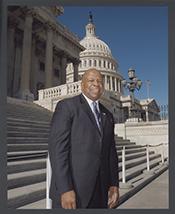
Mr. Chairman, I rise today in opposition to the School Readiness Act, H.R. 2210, and I implore my colleagues to vote against it as this bill is a blatant attempt to dismantle the Head Start program.…
Mr. Chairman, I rise today in opposition to the School Readiness Act, H.R. 2210, and I implore my colleagues to vote against it as this bill is a blatant attempt to dismantle the Head Start program.
Mr. Chairman, Head Start is a very successful Federal program run at the local level. As we are all well aware the program provides education, health care, nutrition and parent involvement programs to nearly 1 million low-income preschool children and their families. The language in the bill we are considering right now will weaken Head Start and jeopardize the comprehensive educational and social services Head Start now provides to hundreds of thousands of families.
On July 15, I released a report, prepared at my request by the House Government Reform Committee, entitled ``Proposed Overhaul of Head Start Could Affect Thousands of Children in Maryland's 7th Congressional District.'' If the administration's changes are implemented in Maryland, the report indicates that almost 3,000 children in Baltimore City, Baltimore County, and Howard County would be adversely affected in the following way:
2,742 children would not be guaranteed dental care;
2,433 families may be left out of participating in their child's education;
472 children may not receive mental health care that they currently get in Head Start;
444 children would be at risk for not getting treatment for asthma, anemia and vision problems; and
341 children could possibly lose guaranteed access to disability services.
What we may not be aware of is that by block granting, we are cutting the number of children currently served and leaving millions of eligible low-income children without the needed resources in advance is not wise. Many Head Start advocates are concerned that states that accept block grants will weaken educational standards. And let me tell you how, because I think it is a nuance that many of my compassionate conservative colleagues miss. This bill allows a demonstration project in eight states which essentially allows these States to take their Head Start monies and use them as they see fit for early childhood education programs. In a phrase blockgranting. We know block granting does not work because in tough economic times with a record $544 billion national deficit, states make tough budget choices and programs like Head Start get shortchanged. Block grants are a veiled way to kill the Head Start program as we know it. Blockgranting makes it easier to cut programs and as a result more programs begin to dwindle. Eventually, Head Start will not exist. The comprehensive nature of the program supports the notion that success inside the classroom requires that children be physically and mentally healthy, with a stable home life.
Head Start works and is highly successful. The broad nature of the program has resulted in the following accomplishments:
Head Start has proven to narrow the gap between disadvantaged children and other children in vocabulary skills, writing and social behavior;
Children who participate in Head Start programs are less likely to repeat a grade, require special education or be convicted of a crime;
The program's graduates show higher IQ gains compared to low-income children who have not attended Head Start;
And finally, children who attend Head Start are more likely to graduate from high school, and college.
But one does not have to read this report to realize the positive impact Head Start can make on a child.
Any of my colleagues who questions the positive difference that Head Start can make should listen to my constituent, Ms. Portia DeShields.
When her son Marcus was three, Ms. DeShields realized that he was struggling with a speech and language disability. Recalling how she had gained from her childhood participation in Head Start, Ms. DeShields and her husband enrolled Marcus in a Head Start program sponsored by Baltimore's Union Baptist Church.
Beginning in September of last year, a Head Start speech pathologist worked with Marcus two or three times each week. A mental health specialist helped Marcus learn how to control his anger, and ``positive parenting'' classes taught his parents how to better meet his needs.
Today, at age 4, Marcus's speech and language skills have improved to the point where he is functioning at near-kindergarten level.
Head Start is working for Marcus and nearly 1 million other children.
As such, I urge my colleagues to reject the underlying bill and support the Democratic substitute that builds on the proven success of Head Start by strengthening school readiness, improving program quality and accountability, and expanding access so more eligible children. The Democratic substitute accomplishes this while maintaining local control and high performance standards in its programming.
That is why the Democratic Substitute is supported by many organizations including the National Head Start Association, the National Education Association, the Children's Defense Fund, the American Federation of Teachers, the ACLU, and the National League of Cities.
H.R. 2210 is opposed by these same groups because these groups understand that block grants put this important program in a perilous position. But not only that, this bill does not improve Head Start--if it's not broken, don't tinker with it to break it!
Mr. Chairman, we cannot shortchange the early education of millions of children because to do so would be to shortchange the rest of their lives. I urge my colleagues on the other side of the aisle, compassionate conservatives too, to put children first and to make good on the promise that ``no child be left behind.''
This bad bill puts the future of these children in jeopardy. H.R. 2210 dismantles ore than 38 years of bipartisan support for this critical early education program. Reject the H.R. 2210 and support the Democratic substitute. Only by supporting the Democratic substitute will children indeed have a head start.

Mr. Chairman, let us be clear about what we are doing here. We are asking this body to begin, in my opinion, to dismantle Head Start, one of the most successful programs in American history. Head…
Mr. Chairman, let us be clear about what we are doing here. We are asking this body to begin, in my opinion, to dismantle Head Start, one of the most successful programs in American history.
Head Start serves more than 900,000 3- to 5-year-olds in every State in this Nation every single year. Head Start teaches reading, writing, mathematics and language skills. Head Start, as well, provides comprehensive services that increase school readiness: health and mental health screenings and services, nutrition, dental and vision services, and extensive parent involvement in education, a critical component of this program.
And Head Start combines local control with strong Federal quality standards. That is the key. In fact, Head Start is one of our most evaluated education programs. Over the last 30 years, it has helped millions of children do better in school. But now, through H.R. 2210, the sponsors are trying, in my opinion, to unravel Head Start.
The Republican initiative initially was to block-grant all of Head Start. That did not fly. They are now down to eight States. This bill, however, would create a new block grant program for eight States without requiring any of the Federal Head Start program performance standards. What does that really mean to parents and their children? It means, I think, that States could run Head Start programs with lower educational standards, minimal comprehensive services and less oversight and accountability. That is not good for our children or their parents.
In looking at this bill, we should look at the intent. The intent of this bill directly contradicts, I believe, our bipartisan recognition that no child should be left behind, that the Federal Government needed to establish high educational standards and tough accountability for the educational achievement of low-income children because the States had not done so. In essence, this bill proposes that we turn our 3- to 5-year-olds in Head Start over to the States even though the premise of the No Child Left Behind Act is that States are not currently serving low-income children as well as they should. As the Los Angeles Times stated recently:
``Now, when States are in precarious financial shape, is hardly the time to dismantle the program's, Head Start's, Federal management.''
Let me close by saying, despite our best efforts in Head Start, we still are not doing enough for low-income children. There are some 1.5 million children eligible. There are 900,000 participating, 600,000 being left behind. Now is not the time to start to dismantle Head Start.
Mr. Speaker, let's be clear about what the Republican majority is proposing today: They are asking this body to begin to dismantle Head Start, one of the most successful Government programs in American history.
Head Start serves more than 90,000 three- to five-year-olds in every State in this Nation every single year.
My Democratic colleagues and I are not standing here today just reflexively defending Head Start because Lyndon Johnson signed it into law in 1964.
No, we are here defending Head Start--and to expose the GOP's bill that is designed to dismantle it--Because Head Start Works!
Head Start teaches reading, writing, mathematics, and language skills.
Head Start provides comprehensive services that increase school readiness--health and mental health screenings and services; nutrition, dental and vision services; and extensive parent involvement and education.
And Head Start combines local control with strong Federal quality standards.
In fact, Head Start is one of our most evaluated education programs-- and over the last 30 years it has helped millions of children do better in school and achieve more in life.
But now, House Republicans, through H.R. 2210--the misnamed ``School Readiness Act''--are trying to unravel Head Start. They want to end it.
They would like nothing more than to see 50 State programs run by 50 State Governors.
This bill would create a new block grant program for eight States without requiring any of the Federal Head Start program performance standards.
What's that really mean to parents and their children?
It means that States could run Head Start programs with lower educational standards, minimal comprehensive services, and less oversight and accountability.
Now, doesn't that strike any of you as odd?
It should, because the intent of this bill directly contradicts our bipartisan recognition in the No Child Left Behind Act--that the Federal Government needed to establish high educational standards and tough accountability for the educational achievement of low-income children because the States had not done so.
In essence, the Republicans are proposing that we turn our 3- to 5- year-olds in Head Start over to the States even though the premise of the No-Child Left Behind act is that States are not currently serving low-income children.
And as the Los Angeles Times stated recently: ``Now, when States are in precarious financial shape, is hardly the time to dismantle the Program's--Head Start's--Federal Management.
Let me close by saying, despite our best efforts in Head Start, we still are not doing enough for low-income children.
Right now, Head Start is only serving 6 out of every 10 eligible preschool children because of inadequate funding.
That's 600,000 American children left behind. And it's simply unconscionable.
It's unconscionable in the greatest Nation on the face of the Earth.
And it's unconscionable when Republicans talk about leaving no child behind, but then propose a budget for fiscal year 2004 for Head Start that barely covers inflation.
I urge my colleagues to vote for the Democratic plan offered by the gentleman from California Mr. Miller.
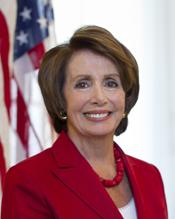
Mr. Chairman, I thank the gentleman for yielding me this time. As I approached the podium here, I removed my sticker that said ``Head Start Works,'' but that is where I would like to begin my…
Mr. Chairman, I thank the gentleman for yielding me this time. As I approached the podium here, I removed my sticker that said ``Head Start Works,'' but that is where I would like to begin my remarks.
Mr. Chairman, I want to commend the gentleman from California for his extraordinary leadership on behalf of children of America in every aspect of their lives, their health, their education, the economic security of their families, the environment in which they live. Tonight, I particularly want to thank him for his leadership on this Head Start legislation. His amendment to eliminate the block grant segment of this bill is a very important one.
I also want to commend the gentlewoman from California (Ms. Woolsey) for her stewardship of her amendment
through the process, another very important antidiscrimination addition to tonight's debate.
Mr. Chairman, as I mentioned, Head Start Works is the motto of the effort this evening. I first saw Head Start work as a young mother over 30 years ago on the playgrounds of New York. As I wheeled my babies to the playground and played there every day, we saw a Head Start program. My oldest child was born in 1964, the same year Head Start was born, but this would be like a couple of years after that.
We saw the Head Start program right there and the facility next to the program day in and day out. We would see children come, children learn, children thrive and parents participate. It was pretty exciting because it was a new experience for them, made a difference in their lives personally; and it was a new experience for our country, and it made a tremendous difference not only to those children but to all of our children. Lifting up children, all children in America, is good for our entire country.
And so imagine how exciting it was for me over 20 years later to come to Congress, go to the appropriations committee and serve on the Labor- HHS subcommittee which funds Head Start. Year in and year out our committee reviewed the Head Start program, always seeking to improve it, always, always, anything we do, looking at every initiative to make it better, greatly assisted by the superior work of the authorization committees, of course. On both committees, on appropriations and on authorization committees, the work was always bipartisan and in good spirit.
For decades, Head Start worked and for decades Head Start has been helping children arrive at school ready to learn. Head Start children do better in vocabulary, letter writing, letter recognition and social behavior. They are less likely to need special education services, repeat a grade and are more likely to graduate from high school and go on to college. Again, it ensured that children got not only education but nutrition and the medical treatment they needed for a head start.
I saw in the Committee on Appropriations, reviewing not only these issues, but others, that the best way to undermine a program, to really begin the end of it, was to turn it into a block grant. Central to the Head Start successes were its standards. So once you block-granted this and undermined the standards, you were changing the very nature of the program and undermining the excellence of it.
The block grants that are contained in H.R. 2210 will dismantle Head Start in eight States because it creates new block grants programs for eight States without requiring any of the Head Start performance standards. It would allow States to run Head Start programs with lower educational standards, minimal comprehensive service, less oversight and accountability, no evidence that they do an equally good or better job than Head Start, and relieves States of providing comprehensive services currently provided by Head Start and are proven to improve school readiness, to name but a few of the concerns that I have about the block grants.
So as I said before, I worked on the Committee on Appropriations, which I was pleased to serve with the gentleman from Mississippi (Mr. Wicker), the gentleman from Rhode Island (Mr. Kennedy), others who have spoken here. It was always bipartisan when it came to Head Start and, as I said earlier, not so today. The majority has put forth a bill that dismantles Head Start by eliminating, as I say, the quality standards that are the foundation of its success.
The Republican bill will not strengthen academic standards. Instead, the bill removes minimum standards, and I keep repeating that, on curriculum content, class size and child/staff ratios. The Republican bill eliminates the comprehensive health, nutritional, and social services available both to parents and children through Head Start.
The bottom line is that the Republican bill undermines opportunity. It undermines the aspirations of hard-working parents who want the best for their children, parents who dream of their children making the honor roll, going to college.
Head Start is about giving every child an opportunity to succeed. Head Start is about all Americans having the opportunity to fulfill their dreams. With that, Mr. Chairman, I will prepare to put my sticker back on that says ``Head Start Works'' and in doing so again commending the gentleman from California (Mr. George Miller), the gentlewoman from California (Ms. Woolsey), and all of the members on the Democratic side of the committee for the fight that they are making to preserve Head Start.
I urge my colleagues to support the Miller substitute and reject the underlying bill.

Mr. Chairman, I rise in support of the substitute because Head Start is very dear to me. I love Head Start. Thirty-eight years ago I helped to organize one of the first Head Start programs in the Los…
Mr. Chairman, I rise in support of the substitute because Head Start is very dear to me. I love Head Start. Thirty-eight years ago I helped to organize one of the first Head Start programs in the Los Angeles area. Head Start happened to change my life, and I have seen what Head Start can do for families and for the children.
They talk about wanting to make Head Start better. Let me tell the Members, Head Start created new ways by which to deal with education for poor children. Five children to every one adult. In the public schools they still do not have the right ratios, classrooms all over this country, 25 and 35 and 45 children to one adult. Nutrition for every child, parental involvement for every child. All kinds of services. Physical examinations. They are going to help make Head Start better?
We have the President and people on other side of the aisle talking about Leave No Child Behind. They need to put some money into the public schools so they can receive these children from Head Start who are doing better, who are ready to learn.
This is a sad moment for me. I never thought I would come to the Congress of the United States and be involved with the demise of the Head Start program. Shame on you, Republicans.
Mr. Chairman, I rise in strong opposition to this bill. You don't fix what isn't broken. Head Start has achieved tremendous successes in helping the most vulnerable of our children. It does not need a legislative fix. It needs funding so that Head Start can reach the 40 percent of eligible children it does not presently serve.
With this bill, the Republican party is undermining our efforts to help these children get an education and break the cycle of poverty that plagues so many of them.
This bill is just the latest example of Republicans choosing to leave our children behind. They have consistently underfunded the President's so-called signature education program, Leave No Child Behind. And, they refuse to pass a child tax credit that would benefit millions of children.
Now, they seek changes that would ruin the most successful early childhood education program we have. It is a crime and every Member of Congress should oppose this bill.
Mr. Chairman, there are two fundamental flaws contained in this bill. The first is the block grant provision that will ruin the program. Block granting will gut the high quality, comprehensive services that are the hallmark
of Head Start and weaken the program's educational performance standards. It also will weaken oversight and evaluation of the program.
But what I fear the most, is that block granting will significantly waken the important role of parents in their children's education. We all know that teaching effective parenting strategies and involving parents in their children's education is strongly related to children's achievement in school.
The Castle substitute purports to provide for parental involvement while the original Republican bill did not. What is clear is that the Castle substitute is not as strong on parent involvement as the existing Head Start program. Why should we recklessly experiment when we have a Head Start program that effectively involves parents in their children's education? We should stick with what works.
In fact, experts have often cited the Head Start-parent partnership as one of the most successful aspects of the Head Start program. To retreat from our emphasis on the importance of this relationship, would be to turn back the clock on our commitment to improving the lives of adults. It also would be a profound insult to the millions of parents who have been inspired to improve their parenting skills, volunteer in the program or return to school.
My other concern is with section 654, which would allow Head Start programs run by faith-based organizations to discriminate on the basis of religion.
Mr. Chairman, this is appalling. One of the greatest strengths of Head Start is the diversity of individuals who participate in, and work, for the Head Start program. Yet, if the Congress supports this provision, one of the historic foundations of Head Start will crumble. Teachers will not be hired or parents will be unable to volunteer simply because they do not share the views of the religious organization's teachings. This provision will severely hamper the program and goes against what we stand for as Americans.
Mr. Chairman, the groups that understand children, who understand the struggles of low-income families, all oppose this bill. The scope of groups that oppose H.R. 2210 is truly breathtaking. Civil rights groups, labor, business, teachers, the National Head Start Association, early education experts--they all oppose this bill because they understand that the holistic approach that Head Start employs works. And it works very, very well.
We have heard it before, but I'm going to say it again: ``Head Start ain't broke, so don't try to fix it.''
Mr. Chairman, this is a bad bill. I urge my colleagues to reject it.
Show 11 more

Mr. Chairman, I thank the gentleman from Delaware (Mr. Castle) for his work as a governor and as a leader, for his work on this committee and for his hard work on this bill. When I was a little boy,…
Mr. Chairman, I thank the gentleman from Delaware (Mr. Castle) for his work as a governor and as a leader, for his work on this committee and for his hard work on this bill.
When I was a little boy, and I heard something that I was not quite sure was correct, I used to always go to my daddy and I would say, Pop, is this right? Being the kind of guy that wanted me to learn how to find out for myself, he would say, Son, why do you not go look it up? So tonight I have heard that we are going to serve less people with demonstration grants, that the standards are not being held to as in title I. I heard there were not any new things. I heard it was an experiment.
So I decided to go look it up, and just for a second, please indulge me.
I want to read on page 66, subparagraph (g), the required services of the block grant. With the funds under this section, the States shall provide services described in Section 641(a) which is every required service, standard and audit of title I, and at least as extensive as were provided previously and to at least as many low-income children, families in each fiscal year. And then, further, it adds a page of new requirements and new standards which I guess are the experiments.
I do not think a 4-year-old pre-kindergartener is an experiment. I do not think physical development, health and nutrition is an experiment, and I do not think social development is an experiment. I do not think parental engagement and involvement is an experiment.
I think what we need to look at here tonight is what is really trying to be done.
Title II allows States, on their own volition, to apply for grants in such cases only when they already offer a 4-year-old pre-kindergarten program and other services. It requires them to invest more money, not less; serve at least as many children, not less; and meet every standard that existed under 641(a). That is what it says. I looked it up in the book.
Let me tell my colleagues what else it does. Out in America today somewhere there are 3-year-olds soon to be eligible or currently eligible for Head Start named Jose and Maria, Willy and Bob. There is probably a little Johnny who cannot read somewhere out there, and if they could write, which they cannot because they are three and they are impoverished, or if they could call you, but they really cannot because their parents do not have the money for a phone, I will tell you what they would tell us.
They would say, gosh, if you could, take all the benefits of Head Start in title I and add to it a dimension of things like Even Start, where my mom and I can learn to read together, and a 4-year-old prekindergarten program that has, as this bill requires, an early reading, early cognitive skill, and early language development requirement aligned with the State requirements for criteria and for curriculum in grades K through 12.
Now, it is not a block grant because it does not waive the standards of 641(a), which is what is required on title I. If that is true, then title I is a block grant. It is not an experiment. Education is not an experiment. It is the great enabler. It is the great empowerer.
Yes, I do know that all those children that it needs to serve are those who started out with a disadvantage far worse than the ones that I did. But the gentleman from Michigan (Mr. Kildee) in his original remarks said that this bill turned back the clock. Well, if it turned back the clock, that means it went to the year preceding Head Start, which was 1964, where there were very few publicly funded kindergartens much less prekindergartens, where nutrition programs were just beginning to develop, where in my part of the country Brown v. Board of Education and its promise of equal access to education had just really begun.
This bill does not turn back the clock. It addresses the challenges of the 21st century. It is permissive for challenging our States to reach for the stars, to help those most impoverished to do better, and to see to it that we take a program that has proven it can do well and give States that want a chance to improve it through academic enrichment and collaboration.
I close with this. My State developed a 4-year-old prekindergarten 10 years ago under Governor Zel Miller. Today, 600,000 4-year-olds have gone through that program, and 68,000 will enter this August. We have an Office of School Readiness where we collaborate with the Atlanta Symphony that has an inner-city and minority classical musical program for 3- and 4-year-olds based on the scientifically based brain research to enrich the cognitive skills of children.
Should we not say to those States that want that opportunity that they have the chance, just as long as they spend more money, meet every standard as required in 641(a), serve every child, or at least every one they did before? I think we want to say that. And I say we say ``no'' to the substitute and ``yes'' to the bill.

Mr. Chairman, I am here today to oppose H.R. 2210, the School Readiness Act of 2003. While I agree that every child deserves an early education--the ``head start''--that they need to get a strong…
Mr. Chairman, I am here today to oppose H.R. 2210, the School Readiness Act of 2003. While I agree that every child deserves an early education--the ``head start''--that they need to get a strong start in life, and to be safe and secure while their parents are at work, providing its funding in the form of block grants and moving the program from the Department of Health and Human Services would strip the program of its effectiveness.
Every day, three out of five preschoolers are in childcare and millions of older children are in after-school activities while their parents work. Head Start activities help to shape the way children think, learn, and behave for the rest of their lives, but little attention is being paid to the quality of those experiences.
While Head Start offers a strong educational foundation, the program teaches proper nutrition and provides health mental health and mental health screenings and other important services that many of these children would not have if it were not for the Head Start program. This Nation's most comprehensive and successful pre-school program for low- income families, Head Start serves at least 1 million children each year.
As a member of this body, but more importantly as a grandmother I am troubled by the administration's plans to dismantle this proven program by turning it over to struggling states. I find this move to be incredulous and it baffles me as to why such a move would be necessary.
Disappointingly, last week the Rules Committee voted on a closed rule, which allowed no amendments to H.R. 2210. During the last week, colleagues on both sides of the aisle echoed the need for civility and respect in this institution in making this a better America. Republicans offer a rule that allows changes to their bill without allowing changes to the Democratic substitute, and also blocks consideration of critical Democratic amendments. I understand that my colleagues on the other side of the aisle are doing everything to succeed the President's agenda, but I am shocked that they are doing it at the cost of innocent, deserving young children.
This administration is eager to prescribe unfunded mandates yet they offer no tangible means of implementing measures. An issue of great concern to many, which is not addressed in the current bill, is how Head Start programs will comply with new regulations issued by the Department of Health and Human Services (found at 45 CFR part 1310). These new regulations require significant changes to the manner in which these programs transport Head Start children to and from school and were issued without providing programs with any effective means to fund these changes.
As a result, numerous programs are having difficulty complying with the transportation regulations and particularly with the next deadline for implementation--January 20, 2004.
If an open rule were provided, I planned on offering an amendment. In order to address this problem, I recommend extending the deadline for Head Start programs to comply with the transportation requirements from January 2004 to 2006. During this time period, with the input from the local Head Start centers, I believe these regulations could be effectively revisited and modified.
The Head Start program not only involves the child but also recognizes the importance of the family. Head Start has included parents in both the child's education and their membership of in the Head Start Policy Council. Although this bill does focus on literacy, it abandons the comprehensive approach that is fundamental to Head Start's success. There are additional benefits of Head Start, including providing medical screenings, immunizations, nutritional assistance and referral service for families.
I have received numerous letters from teachers, parents, and other employees of the Sunnyview and Greater Head Start locations in my district of Dallas, Texas. Each one pleading for additional funding and urging the program to be kept in its current structure. One parent writes, ``they teach them how to write, count, their ABCs, to draw, to be responsible. . . . Many families feel comfortable with this program because they can come in and volunteer in the classes and see what the children are learning.''
Mr. Chairman, we must join hands and commit to work together in our country's educational struggle. A good education is the key component of success in the information age. That is why extending educational opportunity to every child in America has become my principal mission in life.
It is my earnest plea that my colleagues will join me and vote against H.R. 2210 in its current form. Head Start should not be moved to the Department of Education, nor should the funding ever be in question by having it succumb to the politics of block grants.

Mr. Chairman, I rise today to join my colleagues in speaking against the House leadership's ill-conceived plan to abandon our Nation's most vulnerable children, through their latest attempt to…
Mr. Chairman, I rise today to join my colleagues in speaking against the House leadership's ill-conceived plan to abandon our Nation's most vulnerable children, through their latest attempt to dismantle Head Start.
The re-authorization of Head Start grants Congress the express opportunity to honor and strengthen the original intent of this landmark anti-poverty legislation. Instead, we stand here today with legislation that directly assaults Head Start by weakening the academic, health, social and civil rights protections created by the Office of Economic Opportunity as part of President Johnson's War on Poverty social programs. Furthermore, we have once again been robbed of the opportunity to amend and improve H.R. 2210, through the leadership's restrictive, unfair rules denying us a voice in this process. It is unconscionable to play legislative games with politics that affect our most vulnerable citizens' lives.
First implemented in 1965, Head Start has been a beacon of hope for low-income families and has fostered their dreams for their children's successful futures. By offering comprehensive services, including early childhood development, educational support, social development, healthcare, dental services and parenting classes, we recognize the unique needs of disadvantaged children, and offer much needed assistance to level the playing field.
The leadership's so called reform legislation will only serve to undermine Head Start and the success of the children whose futures we debate here today. By block granting Head Start, states will be permitted to create their own achievement and readiness standards, while allowing them to gut the crucial programs currently used to achieve national objectives. Under H.R. 2210, class sizes can increase, programs can be shortened, and unproven curricula can be implemented.
Make no mistake about it, the existing Head Start guidelines value the communities that implement the program. Currently, funding is sent directly to the school systems, nonprofit organizations, and agencies that assist our Nation's low-income children. By block granting Head Start to states, funding will have to endure an extra level of bureaucracy, with an extra level of administrative costs, without the national accountability.
Our leadership's abysmal funding for Head Start is also indicative of the low priority it holds for this essential program. The bill's authorization does little more than cover inflationary costs by providing only 2.9 percent more than the fiscal year 2003 appropriation. In addition, while increasing teacher quality
degree requirements, a new unfunded federal mandate is enacted by its failure to provide the funds to achieve these measures. Even worse, H.R. 2210 cuts funding for training and technical assistance.
Jodi Ogden, the executive direct of Community Services of North East Texas, told me she is currently able to serve over 500 children in 10 Head Start centers under her purview. Weeks before the fall school year has even begun, five of these centers have wait lists for needy children. These children should not have to be waitlisted for essential services. We should do better by them today.
Finally, we should be ashamed that this Head Start program, a hallmark of federal social assistance, will allow nationwide discrimination under the new reauthorization legislation. Current law allows faith-based organizations to participate in the Head Start program, as long as they do so fairly. However, under the reauthorization these organizations will be permitted to use discriminatory hiring practices to favor job applicants of certain faiths over others. This is not how our scarce federal tax dollars should be used. It is sadly ironic that a program intended to create equity would permit such an inequitable hiring practice.
Like many of my colleagues, I have been gratified by the opportunity to visit with those at the front lines that are providing Head Start services to our disadvantaged children. They know the benefits of Head Start. They see how families are helped by comprehensive Head Start services. They know that we must augment, not annihilate the valued tenets of the Head Start program. Any reform to essential programs must be thoughtful, balanced, and reflect our citizens' most essential needs for successful lives. As Karen Swenson, executive director of Greater East Texas Community Action, wrote to me about this legislation, ``I do not want children to suffer just because of the idea of change.''
Mr. Chairman, this terrible legislation will cause children to suffer. Knowing this, I am forced to vote against it today.

Mr. Chairman, I support the Woolsey-Scott amendment to H.R. 2210 to remove the provision allowing religious discrimination in employment from the underlying bill. The Head Start Act, a bill that…
Mr. Chairman, I support the Woolsey-Scott amendment to H.R. 2210 to remove the provision allowing religious discrimination in employment from the underlying bill. The Head Start Act, a bill that should be designed to improve the education of children, is no place to encourage discrimination. In fact, there is no place for religious discrimination in American law just as there should be no place in America for that kind of backwards thinking.
H.R. 2210, in its current state, erodes fundamental civil rights protections for Head Start workers and families by exempting faith- based organizations from compliance with the current Head Start law. Presently, under our country's existing laws, in Title VII of the Civil Rights Act, employing institutions using private funds were exempt from employment discrimination protections. However, Head Start programs are federally funded and as such do not fall under the jurisdiction of the Title VII statute. Simply put: Public funds are not allowed to be used to encourage religious discrimination in employment and that should not change.
Each of my colleagues should understand that without the Woolsey- Scott amendment, we are advocating the notion that one's ability to nurture and develop the minds of our children is contingent on the religious institution to which the individual belongs. What if anything is accomplished by attempting to create religious hierarchies in the workplace? What benefit does that provide the Head Start child? None. And thus the language allowing religious discrimination should be stricken from the bill. As should all language that does not add to the well being of children.
The Founding Fathers of this country found it necessary to say that no one should be unfairly judged or discriminated against on the basis of their religion. This Congress should do no less. We should not create law that does harm. We should not encourage discrimination of any kind, religious or otherwise.
Surely, this country prides itself on its diversity and its willingness to open its doors to people of different religions, races, and ethnic backgrounds. Yet on the floor of the people's House we are faced with an attempt by the Republicans to create a monolithic sub- culture within our Head Start programs. Despite the rhetoric on the other side of the aisle, H.R. 2210 as it currently reads will not only result in the loss of jobs for teachers who do not identify with their employer's religious beliefs but more importantly it will cause the loss of role models and advocates for youth who are already at-risk.
The Woolsey-Scott amendment will effectively retain civil rights protections for employees of Head Start programs. This amendment simply retains their freedom of religious choice and their freedom not to be discriminated against due to their religion. This amendment adds nothing to the law rather it maintains current law. Without the addition of the Woolsey-Scott amendment, however, the body elected to serve all of the people of this country will have endorsed employment discrimination with federal dollars. We simply cannot allow this to happen. We must do everything we can to preserve the fundamentals of Head Start. I urge my colleagues to vote to ensure that our child readiness programs are not muddied and degraded by the promotion of religious discrimination. Therefore, I stand in full support of the Woolsey-Scott amendment and I urge my colleagues to do the same.
Mr. Chairman, I will take off my badge that said ``Head Start Works,'' but I do want to start, as the leader did, by saying that Head Start does work, and I thank the distinguished gentleman for his amendment to bring reality into this discussion.
Mr. Chairman, we are not talking about a frivolous issue tonight on the floor. It is almost midnight here on the east coast. The parents of Head Start children are beginning, probably some of them, to just be able to lay their heads down. Many of them will rise in the early morning. Many of them are on hourly jobs. Some of them are the parents of children who are in fact impacted by migrant and seasonal work. Sixty percent of the eligible children are served; 40 percent are not. Nineteen percent of the migrant and seasonal worker children are served; the rest are not served. Three percent of infant and preschool children are served only; the rest are not served.
This is a bill that is a bad bill. This particular amendment puts Head Start back where it needs to be, serving all of the children of America, not just a few. This is a bad bill. Support the Miller amendment.

Mr. Speaker, Head Start works. In my home district, over 3,300 children benefit from Head Start programs. Ninety-seven percent of these children are part of families that live below the poverty level…
Mr. Speaker, Head Start works. In my home district, over 3,300 children benefit from Head Start programs. Ninety-seven percent of these children are part of families that live below the poverty level or receive public assistance. For these children in Western New York and the other million children enrolled in Head Start across the Nation, I oppose the Head Start Reauthorization Act and its attempts to dismantle Head Start.
Countless studies have shown that Head Start is an effective program that helps some of our Nation's neediest youths succeed. It takes a holistic approach to children's welfare by proving early childhood education in reading, writing, mathematics, and language skills, providing medical and dental care, providing mental health services, and providing disability assessment and treatment. Virtually every single child in Head Start programs in my district has received appropriate preventative and primary medical care and comprehensive dental care. This is health care they likely would not receive otherwise.
The comprehensive approach to preparing children for academic success is itself a success. Dollars spent on Head Start produce taxpayer dividends for year. Children who go through Head Start are better prepared for elementary school. Without Head Start, many of these children would be far behind their peers from the first day of kindergarten. Head Start children are less likely to repeat a grade, require special education, or be convicted of a crime. Head Start children show IQ gains when compared to low-income children who are not in the program. In addition, Head Start children are more likely to graduate from high school and college.
H.R. 2210 is the first step toward destroying Head Start. The bill would hand control and responsibility for Head Start to eight states-- states that are facing the severe budget crisis gripping almost every state and local government. However, these states would not be required to meet minimum federal standards. Without these federal basic requirement, states are likely to weaken educational standards, cut services like medical and dental care, and shift more funds to cover administrative costs--especially during this jobless recovery that is squeezing state budgets. It is irresponsible to hand states such a substantial sum of money without ensuring that it will be spent for the optimum benefit for the 900,000 children currently enrolled in Head Start and the thousands of eligible children who are not enrolled.
The Head Start programs in states that are not part of the block- grant experiment continue to be severely underfunded. The lack of sufficient funds denies many eligible children access to Head Start programs. Only 60 percent of eligible preschoolers are enrolled in Head Start; Early Head Start only serves 3 percent of eligible infants and toddlers; and Migrant and Seasonal Head Start only serves 19 percent of children or migrant and seasonal farm workers--all due to insufficient funds.
Further, I am incredibly disturbed that this bill promotes discrimination by allowing Head Start programs to hire and fire teachers based on religion. This country has an admirable history of advancing the fundamental principle of nondiscrimination, particularly when the federal government spends taxpayers' money. It is irresponsible to allow religious organizations using federal dollars to run secular Head Start programs which could discriminate against people of other faiths. The landmark Civil Rights Act of 1964 prohibits many insidious forms of discrimination. It also permits religious organizations to hire people of their own faith for religious functions. It protects synagogues from discrimination suits for not hiring a Catholic priest to serve as a religions leader. This is as it should be. But Head Start is not a religious program--it is a secular education program. The faith of the teachers in Head Start is irrelevant to their jobs. It is a terrible lesson to teach thousands of children that discrimination against peoples of a differing religious faith is desirable. How are Head Start teachers supposed to teach their students that discrimination is wrong when a federal statute validates it? Mr. Chairman, I strongly support the Woolsey/Edwards/Frank/Scott (VA)/Van Hollen amendment that would restores civil rights protections to Head Start teachers and oppose H.R. 2210.

Mr. Chairman, I certainly agree with all those who have spoken tonight that Head Start is an excellent program. It is a necessary program. Yet many people feel that no changes are needed to the…
Mr. Chairman, I certainly agree with all those who have spoken tonight that Head Start is an excellent program. It is a necessary program. Yet many people feel that no changes are needed to the program.
I guess if you put it in any context, let us say you ran a business for 35 years, a football team for 35 years, a school for 35 years, and you said over and over again, if it ain't broke, don't fix it and you stayed with a pat hand, my feeling is you would drift toward mediocrity. There is no organization that can stay the same year after year after year. I think there are a couple of things that really can be fixed. I think
there are some things that need to be done here.
The first question is, does Head Start do what it is designed to do, which is to get kids ready to go to school? As we have mentioned earlier tonight, the Family and Child Experience Survey, which is the best measure I know of of school readiness, says this. They said that the average student entering Head Start is at the 21st percentile in terms of readiness to go to school. And then 2 years later, $6,500 a year, $13,000 later, we see those same students ranking at the 24th percentile, a gain of 3 percent in 2 years.
I think that is unsatisfactory. I do not think we are doing the right thing by our children. When they enter Head Start, they are in the bottom fourth of school readiness, when they leave Head Start they are in the bottom fourth, and the best statistical prediction we can make is that at age 16, they are still going to be in the bottom fourth. This is something that I think needs to be rectified.
As we have mentioned, the Castle bill does introduce some academic rigor to Head Start. I think this is critical. I think this change needs to be made. Pre-math, pre-science, ramp up the reading programs. We think students ought to be somewhere around the 40th percentile on average after leaving Head Start instead of the 24th percentile. I think that can be done. I think that is doable.
Secondly, there are 1.5 million children eligible for Head Start; 900,000 are in Head Start and there are 600,000 left over. Of that 600,000, some are in State programs, and we have State programs here and we have Head Start and then we have got a whole bunch in the middle that are falling through the cracks. They are not in anything. That is why we think the demonstration program is critical, because we need to have a more seamless program where those kids are not falling through the cracks, where we have some type of a comprehensive plan as to how we are going to take care of all of them. I think that is going to be important.
The last thing I will mention, that in fact we might think about a little bit, is one of the real strengths of Head Start is we involve the parents. We are expecting now that there is a transition from Head Start to the elementary school where those kids' parents stay with the student. That is something that we have incorporated in this bill which we think is very important.
Mr. Chairman, I would like to thank the gentleman from Ohio (Chairman Boehner) and the gentleman from Delaware (Chairman Castle), and also the gentleman from California (Mr. George Miller) for his thoughtful amendment. I think his amendment does represent some improvement.
I would like to just briefly discuss eight State demonstration programs. That seems to be the crux of the problem right now. I can point out that no State has to join the demonstration program. This is totally optional.
We may have all 50 States say, Let's keep the thing like it is. I do not believe any State will join unless it feels it can actually better serve children. So what is the fear? Why are we concerned about this? Is it the argument of a camel's nose under the tent, maybe it will work and then it might spread? I do not think this is a dangerous issue at all.
So it only makes sense that two programs that are now existing side by side, a State program and Head Start, can be better coordinated, can serve more children, and can do a better job than what we are doing at the present time.
So I recommend that we defeat the substitute and pass the Head Start reauthorization.
Mr. Chairman, I rise in strong support of H.R. 2210, the School Readiness Act. Last year, President Bush proposed strengthening Head Start to help the program produce more kindergarten-ready…
Mr. Chairman, I rise in strong support of H.R. 2210, the School Readiness Act.
Last year, President Bush proposed strengthening Head Start to help the program produce more kindergarten-ready children. Research shows that early learning skills such as letter, number, shape and color recognition are crucial to a child's future success in school. In fact, technological advances have made it possible to predict how well a child will read in the 10th grade based on his or her knowledge of the alphabet in kindergarten. Unfortunately, Head Start graduates consistently score in the lowest 25 percent in key early knowledge areas.
More than 1,000 children attend Head Start in Douglas County, NE. Last November, the Child and Family Development Corporation that runs the program failed its Federal review. Government inspectors cited mismanagement, health and safety concerns, and a lack of program goals. This situation is a perfect example of why we need greater accountability in Head Start programs. The children who graduated from this failed program entered school at a disadvantage. We must demand better for these children. We must give them the skills they need to overcome poverty and low expectations.
The Omaha Public School District and a charitable foundation tried to partner Head Start with a successful, private preschool program last year. Almost a hundred additional low-income children could have been helped. Unfortunately, Head Start backed out at the last minute. Construction had already begun on the new $6 million preschool building. From conversations with involved parties, I am convinced this decision was made in the interest of self-preservation rather than concern for disadvantaged children. Head Start pulled out to hide the failures of their program from parents, educators, and government officials. At least one member of the Head Start parents advisory board resigned in protest over this debacle.
H.R. 2210 is necessary to put the future of our children before the small-mindedness of entrenched bureaucrats. Partnerships between public schools, private foundations and Head Start programs are essential. Chicago and Atlanta have successfully implemented this model to benefit children, and another partnership is being created in Milwaukee. The Federal Government should not be allowed to stand in the way of such caring community partnerships to rescue disadvantaged children from hopeless futures. This is a travesty and an immeasurable disservice to the next generation.
It is crucial that school districts be involved in preparing low- income children for academic success. These children already face tremendous obstacles. Research conducted by D.E. Caspar highlights the differences between environments in which children from poor, middle- class and affluent families grow up. For example, affluent children are exposed to 45 million words before kindergarten; working-class children 26 million; and children in poverty only 13 million words.
These conditions affect a child's language development and word comprehension, skills necessary for learning to read. President Bush has called reading ``the new civil right.'' We now know that children who are reading at grade-level by the third grade have a greater chance for success throughout their school years.
The disparity between low-income and affluent children is even more obvious in the amount of positive reinforcement they receive. Children from affluent families are given 32 positive affirmations an hour; working class children 12 per hour, and poor children only 5. Without assistance from caring educators in the community, disadvantaged children will not have the social, emotional or academic skills to succeed in school and life. We must allow States and local school districts the chance to partner with Head Start and provide these children with quality early education programs.
I urge my colleagues to join me in voting for H.R. 2210 to give disadvantaged children a real head start in life.
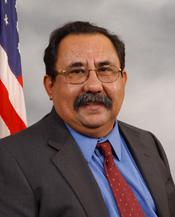
Mr. Chairman, I thank the distinguished ranking member from the committee for yielding me this time, and I want to thank the chairman as well. I rise again before my colleagues today to express my…
Mr. Chairman, I thank the distinguished ranking member from the committee for yielding me this time, and I want to thank the chairman as well.
I rise again before my colleagues today to express my opposition to the Republican plan to destroy Head Start and in support of the substitute.
Head Start, a successful Federal program for nearly 40 years, has never been a partisan issue. This year, though, my Republican colleagues have hijacked the issue and it now risks becoming the victim of a social political agenda, nothing to do with education. Head Start has become part of the plan to eliminate social programs from Federal responsibility. This cynical ``not my problem, let 'em eat cake'' agenda ignores our shared responsibility for poor children in this country. Yes, a shared responsibility to these children, a shared responsibility to fight poverty, and a shared responsibility to provide equal opportunity to all children regardless of their parents income.
Mr. Chairman, it is simply irresponsible to neglect these children when we can do so much to help them. I urge my colleagues to vote ``no'' on H.R. 2210 and ``yes'' on the substitute.
Mr. Speaker, I offer a motion to recommit.
Yes, Mr. Speaker.
Mr. Speaker, I yield 1\1/2\ minutes to the gentleman from Texas (Mr. Hinojosa), who is also chair of the Education Task Force for the Congressional Hispanic Conference.
(Mr. HINOJOSA asked and was given permission to revise and extend his remarks.)
Mr. Speaker, I thank the gentleman for his comments, and I yield 1\1/2\ minutes to the gentlewoman from California (Ms. Solis), a great advocate for education and a former member of the Committee on Education and the Workforce.
(Ms. SOLIS asked and was given permission to revise and extend her remarks.)
Mr. Speaker, I yield myself the balance of my time.
Mr. Speaker, I rise today to urge my colleagues to provide a ray of hope to thousands upon thousands of the poorest of the poor, the children of migrant and farm worker families.
The child in this picture is eligible for migrant and seasonal Head Start services, yet he wanders in a field in North Carolina with his parents while they work all day. He is exposed to pesticides, hazardous equipment, extreme heat, and other health dangers. The sad part of this situation is that he is not alone. Over 130,000 children are in the exact same situation in the richest country in the world. These children are neglected because Congress has chosen not to provide the funds to give them services.
If you have not seen these children, you have seen their families' hard work. Every day you see their hard work on your dinner table, in your restaurants, and in your grocery stores. With just 19 percent of migrant children being served, this program is so drastically underfunded that providing new money is the only clear and real solution.
Republicans are rearranging the money in Head Start, claiming that they are providing relief to these children. This is simply untrue. Strategies that steal from Peter to pay Paul are unfair. Only 2,200 of the 130,000 neglected children will be served with this new funding scheme, and it ignores the Native American children all together.
There are deadly weapons in this Nation: ignorance, intolerance, injustice, neglect, and denial of opportunity. These children are the victims. These are weapons we can find and we can destroy, and this is your opportunity.
Let us extend to these children the American Dream. Let these children who are the sons and daughters of farm workers feel that they too have a stake in this country. Mr. Speaker, I urge my colleagues to use their consciences and support the motion to recommit and vote ``no'' on final passage.
It is time we start speaking for children that have no voice in this House. The children of farm workers deserve our support and our care.
Mr. Speaker, I yield back the balance of my time.
Announcement by the Speaker Pro Tempore
Mr. Speaker, I demand a recorded vote.

Mr. Chairman, I rise in support of H.R. 2210. While the resources spent for Head Start have been very significant, hard-earned dollars of our taxpayers, the results have been mixed. Studies indicate…
Mr. Chairman, I rise in support of H.R. 2210.
While the resources spent for Head Start have been very significant, hard-earned dollars of our taxpayers, the results have been mixed. Studies indicate that children who are enrolled in Head Start make some progress, but are still lagging far behind the national average in school readiness.
Let me share some research from Health and Human Services. In 1997, Head Start children entered the program at an average of the 19th percentile in early learning knowledge areas and graduated in the 23rd percentile. That left Head Start students 27 percentile points behind the national average.
In the 1997-98 school yard, Head Start students actually decreased performance in letter recognition.
In 2000, Head Start children entered the program at an average of the 21st percentile in early learning knowledge areas and graduated in the 24th percentile. That left these Head Start children more than 25 percentile points behind the national average.
Sadly, in the 2000-2001 school year, the Head Start students made no gains in letter recognition.
A recent publication by the U.S. Department of Health and Human Services again concludes that both higher- and lower-achieving Head Start children have low scores overall and show limited progress after completion of the Head Start program, another way of saying they enter and leave the Head Start program with below average skill and knowledge areas.
We know that disadvantaged children need all the help they can get because in order for them to succeed in school, well before they enter school they have to have this knowledge base. We can predict how they are going to do in school by the progress they have made when they enter. The importance of all children achieving academic parity upon entry into kindergarten is critical, because children who start behind have been shown to never catch up.
I am very much in support of this bill, and I commend the gentleman from Ohio (Mr. Boehner), the gentleman from Delaware (Mr. Castle) and the staff and members for their hard work.
The stakes are high with these disadvantaged children. We need to do everything we can to prepare them for school.
Mr. Chairman, I rise in support of H.R. 2210 and in opposition to the substitute. I wish to emphasize the important work that religious organizations do and to support their right to staff on a religious basis.
The landmark Federal law prohibiting religious discrimination in employment includes an explicit exemption for religious employers in section 702(a) of title VII of the Civil Rights Act of 1964, and nothing in title VII provides that a religious organization loses its exemption because it receives Federal funds.
Any Federal legislation governing Federal social service funds should continue to protect the rights of religious organizations to hire and staff on a religious basis when they take part in Federal social service efforts. To do otherwise would deny religious organization rights they have enjoyed for decades under the Civil Rights Act of 1964.
As the New Republic's legal critic, Jeffrey Rosen, has made clear: ``Preserving churches' ability to fire or refuse to hire people who reject their religious values is . . . necessary to protect religious autonomy and State neutrality.''
Faith-based organizations cannot be expected to sustain their religious drive without the ability to employ individuals who share the tenets and practices of their faith, because it is that faith that motivates them to do the good work they do.
Faith is an idea, not an immutable characteristic. Faith is not tied to the color of one's skin, to one's genetic makeup, or to one's ethnic ancestry. It is a unique blend of emotion and intellect that can be shared by anyone.
I strongly support a religious organization's right to staff on a religious basis, and I commend them for the good work that they do and the good work they will do in regard to Head Start.

Mr. Chairman, I rise today in opposition to H.R. 2210, the School Readiness Act of 2003. In my State of Ohio, the State Head Start Program, as passed by the Ohio General Assembly, and signed by…
Mr. Chairman, I rise today in opposition to H.R. 2210, the School Readiness Act of 2003.
In my State of Ohio, the State Head Start Program, as passed by the Ohio General Assembly, and signed by Governor Taft, provided funding to serve only 11,672 children in fiscal year 2004 using $57,170,000 in TANF Block Grant funds, which is a reduction of services to 6,328 kids. In the second year, funding was increased to $110,184,000 in TANF Block Grant Funds with an anticipated enrollment of 14,000 children--still 4,000 fewer children that were served compared to last year.
There is only a small amount of State funds that are included in the Head Start line item, $16 million in General Revenue Fund (GRF) money-- $11 million in fiscal year 2004 and $5 million fiscal year 2005. But, State funds can
only be used for start-up, and can only be used for TANF-eligible services. This means that homeless children, children whose parents are unemployed, and foster care children are ineligible for State-funded Head Start. The State contends these children can be served by Federal Head Start even though there is no increase in funding in H.R. 2210 to accommodate these children.
Since the State program is funded almost exclusively by TANF, except for the self-imposed funding restrictions on the State money as mentioned above, comprehensive health services will not be able to be provided to children in State-funded Head Start. This violates both performance standards and common sense as to what we know these children need.
In tough economic times, one of the first programs to be cut in Ohio, as well as other States, has been early care and education services.
The goal of creating a comprehensive early care and education system that provides quality services for children, easier access for parents, and fabulous results for all children is laudable and one for which we all strive. In the last several years Ohio has taken several steps in the opposite direction by continuing to flat fund preschool, lowering child care eligibility, cutting 6,300 low-income children off of State Head Start, and eliminating almost all State resources to support one of our most vulnerable populations. Until Ohio has proven on a consistent basis that a comprehensive, appropriately funded early care and education system is one of its top priorities, Ohio should be one of the last in line for flexibility to do what it will with children: recent history already has shown we are not ready for it.
Mr. Chairman, I rise to reiterate my opposition to H.R. 2210. Funding authorization in H.R. 2210 does not even cover cost of living increases, let alone provide enough to implement improvements in teacher credentialing and wages or to increase the number of children served in Head Start, Early Head Start, and the Indian, Migrant and Seasonal Head Start programs, all of which are woefully underfunded. Ohio has done much work to help Head Start teachers receive higher credentials and degrees, but it takes a long time and significant resources.
States given the option to administer Head Start would have little federal monitoring. The states would be free to determine their own standards and monitor their progress, unlike the current requirements to closely monitor Head Start programs. This is of great concern.
Finally, several Ohio faith-based organizations and coalitions are not in support of provisions in H.R. 2210 that allow discrimination in hiring based on religion. My constituents believe that discrimination of any kind should not be allowed in this bill. It is also of great concern should this provision extend to volunteers. Parents are often the ones encouraged to volunteer in their child's classroom. Parents often are ultimately hired as staff in Head Start centers. Do we want to discourage parent involvement and a potential job applicant pool because of their religion?
Mr. Chairman, I rise in strong opposition to the School Readiness Act of 2003, which will reauthorize the Head Start program. I strongly support Head Start programs because they provide low- income…
Mr. Chairman, I rise in strong opposition to the School Readiness Act of 2003, which will reauthorize the Head Start program.
I strongly support Head Start programs because they provide low- income preschool-aged children a comprehensive array of services such as child development, education, health, nutritional, social and other activities which help them receive greater advantages in life.
Some of these services include health screenings and services. Statistics have shown that children who receive crucial services such as dental and eye care, or a hot breakfast every morning, have increased school readiness.
In my congressional district, one of the most successful Head Start programs is the Alexandria Head Start. This is a collaboration among the Campagna Center, the city of Alexandria, and the Alexandria City Public Schools formed 35 years ago.
AHS serve 253 Head Start children, and because of a wonderful group of dedicated educators, parents and teachers, these children have truly been given a ``head start.''
While many of my low-income constituents in the city of Alexandria are served by Head Start, I am concerned with the devastating statistic that 40 percent of eligible children nationwide will continue to be underserved under H.R. 2210.
In fact, after a COLA adjustment for staff salaries and increased rent costs, H.R. 2210 just barely covers inflation and allows almost no program expansion. Due to ``insufficient funds,'' a large number of children who need these services will be unable to obtain them.
Let's look at the facts right now. The President's budget request for fiscal year 2004 is $7.2 billion below the level needed to maintain current services for domestic priorities.
Unfortunately with slashes in domestic discretionary spending coupled with massive tax cuts, the result has been fiscal crises at the State and Federal levels, which have translated into the underfunding of critical programs and services such as affordable housing, Medicare and Head Start.
Due to this stark economic climate, supporters of H.R. 2210 want to block-grant Head Start to eight States whose preschool programs are untested and unproven.
A year and a half ago, we all celebrated when the President Bush signed into law, the No Child Left Behind legislation, which was touted as the plan to bring stronger accountability and stronger standards to our Nation's schools.
H.R. 2210 will in fact do the exact opposite of NCLB, by allowing States that have not demonstrated expertise or the commitment to providing quality service to these children, to be eligible for this block grant.
Where are the standards? This block-grant will allow States to strip the Head Start program of the qualified services that it provides to children nationwide, and more importantly, that they and their families rely on. This was not what President Johnson intended when he founded this vital program.
It was once said that ``Education is the great equalizer in a democratic society, and if people are not given access to a quality education, then what we are doing is creating an underclass of people who will ultimately challenge our very way of life.''
This statement has never been more true than today. The Head Start program was designed to give preschoolers a quality education while also ensuring that their social and physical needs were met, which helps put them on the path to success.
Yet, the bill before us today will weaken and underfund the Head Start program while continuing to leave 40 percent of eligible children unserved.
Instead, I ask all my colleagues to support the Miller amendment which will continue to build upon the successes of the Head Start program while striving to ensure that all eligible children in our country are served by Head Start and obtain the services that they need to receive a true ``head start'' in life.
Bill Text
4 versions available
        [Congressional Bills 108th Congress]
[From the U.S. Government Publishing Office]
[H.R. 2201 Referred in Senate (RFS)]

2d Session
H. R. 2201

_______________________________________________________________________

IN THE SENATE OF THE UNITED STATES

May 18, 2004

Received; read twice and referred to the Committee on Energy and
Natural Resources

_______________________________________________________________________

AN ACT

To authorize the establishment of a national database for purposes of
identifying, locating, and cataloging the many memorials and permanent
tributes to America's veterans.

Be it enacted by the Senate and House of Representatives of the
United States of America in Congress assembled,

SECTION 1. SHORT TITLE.

This Act may be cited as the ``National War Permanent Tribute
Historical Database Act''.

SEC. 2. FINDINGS.

Congress finds that--
(1) on November 13, 2000, Congress agreed to a resolution
expressing the sense of Congress regarding the need for
cataloging and maintaining public memorials;
(2) there are many thousands of public memorials and
permanent tributes throughout the United States and abroad that
commemorate military conflicts of the United States and the
service of individuals in the Armed Forces;
(3) many of these memorials suffer from neglect and
disrepair, and many have been relocated or stored in facilities
where the memorials are unavailable to the public and subject
to further neglect and damage; and
(4) there exists a need to collect and centralize
information regarding the identification, location, and
description of these memorials, as no such catalog is available
to the public from either the Federal Government or any
nongovernmental entity.

SEC. 3. ESTABLISHMENT OF DATABASE.

(a) Establishment.--In order to locate, identify, and catalog the
many thousands of permanent tributes that commemorate the military
conflicts of the United States, and the service and sacrifice of
individuals in the Armed Forces of the United States, and to make such
information readily available for the educational benefit of the
public, the Secretary of the Interior, in consultation with the
Secretary of Veterans' Affairs, may establish and maintain a database
known as the National War Permanent Tribute Historical Database.
(b) Content.--The database shall contain information on--
(1) the location, history, and background of the permanent
tributes;
(2) photographs and other information to enhance the
understanding of the permanent tributes;
(3) information about the veterans in whose honor the
permanent tributes are dedicated; and
(4) any other information the Secretary considers
appropriate and necessary.
(c) Public Access.--The database shall be made accessible to the
public, through the Internet or by other means, in a format that
permits the public to submit information on permanent tributes for the
purpose of updating and expanding the database.
(d) Assistance.--The Secretary of the Interior may seek the
assistance of other Federal agencies and the States and their political
subdivisions, tribal governments, public or private educational
institutions, non-profit organizations, and individuals or other
entities that the Secretary considers appropriate in carrying out this
Act, and may enter into contracts and cooperative agreements to obtain
information or services that assist in the development and
implementation of the database.
(e) Definition.--As used in this section, the term ``permanent
tribute'' means any statue, structure, or other monument on public
property commemorating the service of any person or persons in the
Armed Forces.

SEC. 4. AUTHORIZATION OF APPROPRIATIONS.

There are authorized to be appropriated to the Secretary of the
Interior such sums as may be necessary to carry out this Act.

SEC. 5. REPORT.

Within 3 years after the date of enactment of this Act, the
Secretary of the Interior shall transmit to the Congress a report
assessing the efficacy and desirability of establishing a permanent
fund within the Treasury for the repair, restoration, and maintenance
of the memorials identified and catalogued under section 3. The report
shall include recommended criteria regarding appropriate recipients of
expenditures from such a fund as well as proposed funding mechanisms
and any other information considered by the Secretary to be relevant.

Passed the House of Representatives May 17, 2004.

Attest:

JEFF TRANDAHL,

Clerk.