Ready to Teach Act of 2003
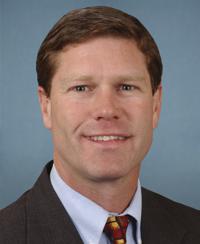
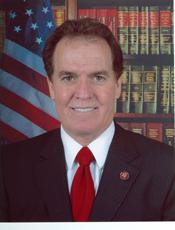 Rep. Phil Gingrey (R-GA)
Legislative Activity
Stay on top of the latest movement without scrolling through every action
Received in the Senate and Read twice and referred to the Committee on Health, Education, Labor, and Pensions.
July 10, 2003
View full timeline
Introduced in House
May 22, 2003
Referred to the House Committee on Education and the Workforce.
May 22, 2003
Referred to the Subcommittee on 21st Century Competitiveness.
June 3, 2003
Subcommittee Consideration and Mark-up Session Held.
June 4, 2003
Forwarded by Subcommittee to Full Committee (Amended) by Voice Vote.
June 4, 2003
Committee Consideration and Mark-up Session Held.
June 10, 2003
Ordered to be Reported (Amended) by Voice Vote.
June 10, 2003
Reported (Amended) by the Committee on Education and the Workforce. H. Rept. 108-183.
June 26, 2003
Placed on the Union Calendar, Calendar No. 91.
June 26, 2003
Rules Committee Resolution H. Res. 310 Reported to House. Rule provides for consideration of H.R. 2211 with 1 hour of general debate. Previous question shall be considered as ordered without intervening motions except motion to recommit with or without instructions. Provides that the amendment in the nature of a substitute recommended by the Committee on Education and the Workforce now printed in the bill shall be considered as an original bill for the purpose of amendment under the five-minute rule. Measure will be considered read. Specified amendments are in order. Makes in order only those amendments printed in House Report 108-190. Provides that the amendments printed in the report shall be considered only in the order printed, offered only by a Member designated in the report, considered as read, shall be debatable for the time specified, equally divided and controlled, shall not be subject to amendment, and shall not be subject to a demand fora division of the question ...
July 8, 2003 • 9:09 PM
Rule H. Res. 310 passed House.
July 9, 2003 • 12:10 PM
Considered under the provisions of rule H. Res. 310. (consideration: CR H6364-6383)
July 9, 2003 • 12:11 PM
Rule provides for consideration of H.R. 2211 with 1 hour of general debate. Previous question shall be considered as ordered without intervening motions except motion to recommit with or without instructions. Provides that the amendment in the nature of a substitute recommended by the Committee on Education and the Workforce now printed in the bill shall be considered as an original bill for the purpose of amendment under the five-minute rule. Measure will be considered read. Specified amendments are in order. Makes in order only those amendments printed in House Report 108-190. Provides that the amendments printed in the report shall be considered only in the order printed, offered only by a Member designated in the report, considered as read, shall be debatable for the time specified, equally divided and controlled, shall not be subject to amendment, and shall not be subject to a demand fora division of the question ...
July 9, 2003 • 12:11 PM
The Speaker designated the Honorable Michael K. Simpson to act as Chairman of the Committee.
July 9, 2003 • 12:11 PM
House resolved itself into the Committee of the Whole House on the state of the Union pursuant to H. Res. 310 and Rule XXIII.
July 9, 2003 • 12:11 PM
GENERAL DEBATE - The Committee of the Whole proceeded with one hour of general debate on H.R. 2211.
July 9, 2003 • 12:11 PM
DEBATE - Pursuant to the provisions of H. Res. 310, the Committee of the Whole proceeded with 10 minutes of debate on the Gingrey amendment.
July 9, 2003 • 1:19 PM
POSTPONED PROCEEDINGS - At the conclusion of debate on the Gingrey amendment, the Chair put the question on adoption of the amendment and by voice vote, announced that the ayes had prevailed. Mr. Gingrey demanded a recorded vote and the Chair postponed further proceedings on the question of adoption of the amendment until later in the legislative day.
July 9, 2003 • 1:23 PM
DEBATE - Pursuant to the provisions of H. Res. 310, the Committee of the Whole proceeded with 10 minutes of debate on the Honda amendment.
July 9, 2003 • 1:25 PM
DEBATE - Pursuant to the provisions of H. Res. 310, the Committee of the Whole proceeded with 10 minutes of debate on the Kildee amendment.
July 9, 2003 • 1:29 PM
DEBATE - Pursuant to the provisions of H. Res. 310, the Committee of the Whole proceeded with 10 minutes of debate on the Meeks amendment.
July 9, 2003 • 1:30 PM
UNFINISHED BUSINESS - The Chair announced that the unfinished business was the question of adoption of the amendment offered by Mr. Gingrey which had been debated earlier and on which further proceedings had been postponed.
July 9, 2003 • 1:33 PM
The House rose from the Committee of the Whole House on the state of the Union to report H.R. 2211.
July 9, 2003 • 2:03 PM
The previous question was ordered pursuant to the rule.
July 9, 2003 • 2:03 PM
The House adopted the amendment in the nature of a substitute as agreed to by the Committee of the Whole House on the state of the Union. (consideration: CR H6373-6378, H6382; text: CR H6373-6378)
July 9, 2003 • 2:03 PM
Passed/agreed to in House: On passage Passed by recorded vote: 404 - 17 (Roll no. 340).
July 9, 2003 • 2:23 PM
On passage Passed by recorded vote: 404 - 17 (Roll no. 340).
July 9, 2003 • 2:23 PM
Motion to reconsider laid on the table Agreed to without objection.
July 9, 2003 • 2:23 PM
The Clerk was authorized to correct section numbers, punctuation, and cross references, and to make other necessary technical and conforming corrections in the engrossment of H.R. 2211.
July 9, 2003 • 2:24 PM
Received in the Senate and Read twice and referred to the Committee on Health, Education, Labor, and Pensions.
July 10, 2003
Voting History
2 votes recorded • Roll call available
Floor Debate
14 membersWhat members said about H.R. 2211 on the floor



 +9
+9
Floor Debate
14 membersWhat members said about H.R. 2211 on the floor
Mr. Chairman, I yield myself such time as I may consume. H.R. 2211, the Ready to Teach Act of 2003, which was reported by the Committee on Education and the Workforce on June 10 by a bipartisan voice…
Mr. Speaker, pursuant to House Resolution 309, I call up the bill (H.R. 438) to increase the amount of student loans that may be forgiven for teachers in mathematics, science, and special education,…
Mr. Speaker, I thank the gentleman from Washington for yielding me the customary 30 minutes, and I yield myself such time as I may consume. (Mr. McGOVERN asked and was given permission to revise and…
Mr. Speaker, by direction of the Committee on Rules, I call up House Resolution 671 and ask for its immediate consideration. Mr. Speaker, for the purpose of debate only, I yield the customary 30…
Mr. Speaker, I yield myself such time as I consume. I thank the gentlewoman from North Carolina (Mrs. Myrick), my friend, for yielding me the customary 30 minutes. Mr. Speaker, this rule provides for…
Show 8 more
Mr. Chairman, I thank the chairman of the Committee on Education and the Workforce, the gentleman from Ohio (Mr. Boehner), for yielding me this time. I would like to thank the chairman of the…
Mr. Chairman, I ask unanimous consent to control the time of the gentleman from Ohio (Mr. Boehner). Mr. Chairman, I yield myself such time as I may consume. Mr. Chairman, I thank the gentleman for…
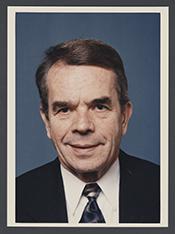
Yes, Mr. Chairman. Mr. Chairman, I yield myself such time as I may consume. Mr. Chairman, I rise in support of H.R. 2211, the Ready to Teach Act of 2003, with the hope that certain amendments that…
Mr. Speaker, I move to suspend the rules and pass the bill (H.R. 4409) to reauthorize title II of the Higher Education Act of 1965. Mr. Speaker, I ask unanimous consent that all Members may have 5…
Mr. Speaker, I yield myself such time as I may consume. Mr. Speaker, I rise in support of H.R. 438. This legislation does provide much needed loan forgiveness for math, science and special education…
Mr. Speaker, I rise in support of H.R. 4409, the Teacher Training Enhancement Act, and I would like to thank the gentleman from Georgia [Representative Gingrey] for his leadership on this issue. The…

Mr. Speaker, I offer an amendment. Mr. Speaker, I yield myself such time as I may consume. Mr. Speaker, I offer this amendment, along with the chairman of the committee, the gentleman from Ohio (Mr.…
Mr. Speaker, let me thank my good friend from North Carolina for yielding me time. I rise today in support of the rule for H.R. 2211, the Ready to Teach Act. I believe this is a fair rule that allows…
Show 11 more
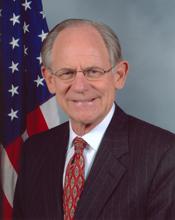
Mr. Chairman, I rise in support of H.R. 2211, the Ready to Teach Act, which will strengthen teacher training programs to ensure teachers are highly-qualified and ready to teach when they enter the…
Mr. Speaker, let me thank the gentleman from California (Mr. McKeon), the chairman of the Subcommittee on 21st Century Competitiveness, and I appreciate his great work on this legislation, as well as…
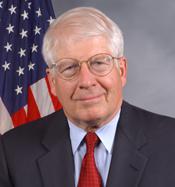
Mr. Chairman, I am pleased to rise in support of H.R. 2211, the Ready to Teach Act, and to highlight the new provisions for recruiting and training teachers that it contains. Our Nation faces the…
Mr. Speaker, I thank the chairman for yielding me time. Mr. Speaker, I want to commend my colleague, the gentleman from South Carolina (Mr. Wilson), a valuable member of subcommittee, for his work…

Mr. Speaker, here we go again. Lately around this Congress I feel like it is Groundhog Day. I never knew that Bill Murray became a consultant to the Republican Conference. As you know, in the movie…

Mr. Speaker, by direction of the Committee on Rules, I call up House Resolution 310 and ask for its immediate consideration. Mr. Speaker, for purposes of debate only, I yield the customary 30 minutes…

Mr. Chairman, and other distinguished members, I rise today in order to speak about House Resolution 2211, a bill that shall reauthorize Title II of the Higher Education Act of 1965. For our country…
Mr. Speaker, I rise today in support of H.R. 438, which aims to bring highly qualified teachers to low-income areas. I rise in support of the bill but I am disappointed that this may become yet…
Mr. Speaker, I rise in support of H.R. 4409, the Teacher Training Enhancement Act, which will strengthen teacher training programs to ensure teachers are highly-qualified and ready to teach when they…
Mr. Chairman, as a member of the Committee on Education and the Workforce, I too want to commend the leadership of the committee for putting together this bipartisan piece of legislation. This is an…

Mr. Speaker, I thank the gentleman for yielding the time. I thank the gentleman for bringing this legislation to the floor. I sat here and I listened to the rhetoric from the other side, and they do…
Bill Text
4 versions available
        [Congressional Bills 108th Congress]
[From the U.S. Government Publishing Office]
[H.R. 2211 Referred in Senate (RFS)]

1st Session
H. R. 2211

_______________________________________________________________________

IN THE SENATE OF THE UNITED STATES

July 10, 2003

Received; read twice and referred to the Committee on Health,
Education, Labor, and Pensions

_______________________________________________________________________

AN ACT

To reauthorize title II of the Higher Education Act of 1965.

Be it enacted by the Senate and House of Representatives of the
United States of America in Congress assembled,

SECTION 1. SHORT TITLE.

This Act may be cited as the ``Ready to Teach Act of 2003''.

SEC. 2. TEACHER QUALITY ENHANCEMENT GRANTS.

Part A of title II of the Higher Education Act of 1965 (20 U.S.C.
1021 et seq.) is amended to read as follows:

``PART A--TEACHER QUALITY ENHANCEMENT GRANTS FOR STATES AND
PARTNERSHIPS

``SEC. 201. PURPOSES; DEFINITIONS.

``(a) Purposes.--The purposes of this part are to--
``(1) improve student academic achievement;
``(2) improve the quality of the current and future
teaching force by improving the preparation of prospective
teachers and enhancing professional development activities;
``(3) hold institutions of higher education accountable for
preparing highly qualified teachers; and
``(4) recruit qualified individuals, including minorities
and individuals from other occupations, into the teaching
force.
``(b) Definitions.--In this part:
``(1) Arts and sciences.--The term `arts and sciences'
means--
``(A) when referring to an organizational unit of
an institution of higher education, any academic unit
that offers 1 or more academic majors in disciplines or
content areas corresponding to the academic subject
matter areas in which teachers provide instruction; and
``(B) when referring to a specific academic subject
matter area, the disciplines or content areas in which
academic majors are offered by the arts and science
organizational unit.
``(2) Exemplary teacher.--The term `exemplary teacher' has
the meaning given such term in section 9101 of the Elementary
and Secondary Education Act of 1965 (20 U.S.C. 7801).
``(3) Highly qualified.--The term `highly qualified' has
the meaning given such term in section 9101 of the Elementary
and Secondary Education Act of 1965 (20 U.S.C. 7801).
``(4) High-need local educational agency.--The term `high-
need local educational agency' means a local educational
agency--
``(A)(i)(I) that serves not fewer than 10,000
children from families with incomes below the poverty
line; or
``(II) for which not less than 25 percent of the
children served by the agency are from families with
incomes below the poverty line;
``(ii) that is among those serving the highest
number or percentage of children from families with
incomes below the poverty line in the State, but this
clause applies only in a State that has no local
educational agency meeting the requirements of clause
(i); or
``(iii) with a total of less than 600 students in
average daily attendance at the schools that are served
by the agency and all of whose schools are designated
with a school locale code of 7, as determined by the
Secretary; and
``(B)(i) for which there is a high percentage of
teachers not teaching in the academic subjects or grade
levels that the teachers were trained to teach; or
``(ii) for which there is a high percentage of
teachers with emergency, provisional, or temporary
certification or licensing.
``(5) Poverty line.--The term `poverty line' means the
poverty line (as defined by the Office of Management and
Budget, and revised annually in accordance with section 673(2)
of the Community Services Block Grant Act (42 U.S.C. 9902(2)))
applicable to a family of the size involved.
``(6) Professional development.--The term `professional
development' has the meaning given such term in section 9101 of
the Elementary and Secondary Education Act of 1965 (20 U.S.C.
7801).
``(7) Scientifically based reading research.--The term
`scientifically based reading research' has the meaning given
such term in section 1208 of the Elementary and Secondary
Education Act of 1965 (20 U.S.C. 6368).
``(8) Scientifically based research.--The term
`scientifically based research' has the meaning given such term
in section 9101 of the Elementary and Secondary Education Act
of 1965 (20 U.S.C. 7801).
``(9) Teaching skills.--The term `teaching skills' means
skills that--
``(A) are based on scientifically based research;
``(B) enable teachers to effectively convey and
explain subject matter content;
``(C) lead to increased student academic
achievement; and
``(D) use strategies that--
``(i) are specific to subject matter;
``(ii) include ongoing assessment of
student learning;
``(iii) focus on identification and
tailoring of academic instruction to students's
specific learning needs; and
``(iv) focus on classroom management.

``SEC. 202. STATE GRANTS.

``(a) In General.--From amounts made available under section 210(1)
for a fiscal year, the Secretary is authorized to award grants under
this section, on a competitive basis, to eligible States to enable the
eligible States to carry out the activities described in subsection
(d).
``(b) Eligible State.--
``(1) Definition.--In this part, the term `eligible State'
means--
``(A) the Governor of a State; or
``(B) in the case of a State for which the
constitution or law of such State designates another
individual, entity, or agency in the State to be
responsible for teacher certification and preparation
activity, such individual, entity, or agency.
``(2) Consultation.--The Governor or the individual,
entity, or agency designated under paragraph (1)(B) shall
consult with the Governor, State board of education, State
educational agency, or State agency for higher education, as
appropriate, with respect to the activities assisted under this
section.
``(3) Construction.--Nothing in this subsection shall be
construed to negate or supersede the legal authority under
State law of any State agency, State entity, or State public
official over programs that are under the jurisdiction of the
agency, entity, or official.
``(c) Application.--To be eligible to receive a grant under this
section, an eligible State shall submit an application to the Secretary
that--
``(1) meets the requirement of this section;
``(2) demonstrates that the State is in full compliance
with sections 207 and 208;
``(3) includes a description of how the eligible State
intends to use funds provided under this section;
``(4) includes measurable objectives for the use of the
funds provided under the grant;
``(5) demonstrates the State has submitted and is actively
implementing a plan that meets the requirements of sections
1111(h)(1)(C)(viii) and 1119 of the Elementary and Secondary
Education Act of 1965 (20 U.S.C. 6311(h)(1)(C)(viii) and 6319);
and
``(6) contains such other information and assurances as the
Secretary may require.
``(d) Uses of Funds.--An eligible State that receives a grant under
this section shall use the grant funds to reform teacher preparation
requirements, to coordinate with State activities under section 2113(c)
of the Elementary and Secondary Education Act of 1965 (20 U.S.C.
6613(c)), and to ensure that current and future teachers are highly
qualified, by carrying out one or more of the following activities:
``(1) Reforms.--Ensuring that all teacher preparation
programs in the State are preparing teachers who are highly
qualified, are able to understand scientifically based research
and its applicability, and are able to use advanced technology
effectively in the classroom, including use for instructional
techniques to improve student academic achievement, by
assisting such programs--
``(A) to retrain faculty; and
``(B) to design (or redesign) teacher preparation
programs so they--
``(i) are based on rigorous academic
content, scientifically based research
(including scientifically based reading
research), and challenging State student
academic content standards; and
``(ii) promote strong teaching skills.
``(2) Certification or licensure requirements.--Reforming
teacher certification (including recertification) or licensing
requirements to ensure that--
``(A) teachers have the subject matter knowledge
and teaching skills in the academic subjects that the
teachers teach that are necessary to help students meet
challenging State student academic achievement
standards; and
``(B) such requirements are aligned with
challenging State academic content standards.
``(3) Alternatives to traditional teacher preparation and
state certification.--Providing prospective teachers with
alternative routes to State certification and traditional
preparation to become highly qualified teachers through--
``(A) innovative approaches that reduce unnecessary
barriers to State certification while producing highly
qualified teachers;
``(B) programs that provide support to teachers
during their initial years in the profession; and
``(C) alternative routes to State certification of
teachers for qualified individuals, including mid-
career professionals from other occupations, former
military personnel, and recent college graduates with
records of academic distinction.
``(4) Innovative programs.--Planning and implementing
innovative programs to enhance the ability of institutions of
higher education to prepare highly qualified teachers, such as
charter colleges of education or university and local
educational agency partnership schools, that--
``(A) permit flexibility in meeting State
requirements as long as graduates, during their initial
years in the profession, increase student academic
achievement;
``(B) provide long-term data gathered from
teachers' performance over multiple years in the
classroom on the ability to increase student academic
achievement;
``(C) ensure high-quality preparation of teachers
from underrepresented groups; and
``(D) create performance measures that can be used
to document the effectiveness of innovative methods for
preparing highly qualified teachers.
``(5) Merit pay.--Developing, or assisting local
educational agencies in developing--
``(A) merit-based performance systems that reward
teachers who increase student academic achievement; and
``(B) strategies that provide differential and
bonus pay in high-need local educational agencies to
retain--
``(i) principals;
``(ii) highly qualified teachers who teach
in high-need academic subjects, such as
reading, mathematics, and science;
``(iii) highly qualified teachers who teach
in schools identified for school improvement
under section 1116(b) of the Elementary and
Secondary Education Act of 1965 (20 U.S.C.
6316(b));
``(iv) special education teachers;
``(v) teachers specializing in teaching
limited English proficient children; and
``(vi) highly qualified teachers in urban
and rural schools or districts.
``(6) Teacher advancement.--Developing, or assisting local
educational agencies in developing, teacher advancement and
retention initiatives that promote professional growth and
emphasize multiple career paths (such as paths to becoming a
highly qualified mentor teacher or exemplary teacher) and pay
differentiation.
``(7) Teacher removal.--Developing and implementing
effective mechanisms to ensure that local educational agencies
and schools are able to remove expeditiously incompetent or
unqualified teachers consistent with procedures to ensure due
process for the teachers.
``(8) Technical assistance.--Providing technical assistance
to low-performing teacher preparation programs within
institutions of higher education identified under section
208(a).
``(9) Teacher effectiveness.--Developing--
``(A) systems to measure the effectiveness of
teacher preparation programs and professional
development programs; and
``(B) strategies to document gains in student
academic achievement or increases in teacher mastery of
the academic subjects the teachers teach as a result of
such programs.
``(10) Teacher recruitment and retention.--Undertaking
activities that--
``(A) develop and implement effective mechanisms to
ensure that local educational agencies and schools are
able effectively to recruit and retain highly qualified
teachers; or
``(B) are described in section 204(d).
``(11) Preschool teachers.--Developing strategies--
``(A) to improve the qualifications of preschool
teachers, which may include State certification for
such teachers; and
``(B) to improve and expand preschool teacher
preparation programs.
``(e) Evaluation.--
``(1) Evaluation system.--An eligible State that receives a
grant under this section shall develop and utilize a system to
evaluate annually the effectiveness of teacher preparation
programs and professional development activities within the
State in producing gains in--
``(A) the teacher's annual contribution to
improving student academic achievement, as measured by
State academic assessments required under section
1111(b)(3) of the Elementary and Secondary Education
Act of 1965 (20 U.S.C. 6311(b)(3)); and
``(B) teacher mastery of the academic subjects they
teach, as measured by pre- and post-participation tests
of teacher knowledge, as appropriate.
``(2) Use of evaluation system.--Such evaluation system
shall be used by the State to evaluate--
``(A) activities carried out using funds provided
under this section; and
``(B) the quality of its teacher education
programs.
``(3) Public reporting.--The State shall make the
information described in paragraph (1) widely available through
public means, such as posting on the Internet, distribution to
the media, and distribution through public agencies.

``SEC. 203. PARTNERSHIP GRANTS.

``(a) Grants.--From amounts made available under section 210(2) for
a fiscal year, the Secretary is authorized to award grants under this
section, on a competitive basis, to eligible partnerships to enable the
eligible partnerships to carry out the activities described in
subsections (d) and (e).
``(b) Definitions.--
``(1) Eligible partnerships.--In this part, the term
`eligible partnership' means an entity that--
``(A) shall include--
``(i) a partner institution;
``(ii) a school of arts and sciences;
``(iii) a high-need local educational
agency; and
``(iv) a public or private educational
organization; and
``(B) may include a Governor, State educational
agency, the State board of education, the State agency
for higher education, an institution of higher
education not described in subparagraph (A), a public
charter school, a public or private elementary school
or secondary school, a public or private educational
organization, a business, a science-, mathematics-, or
technology-oriented entity, a faith-based or community
organization, a prekindergarten program, a teacher
organization, an education service agency, a consortia
of local educational agencies, or a nonprofit
telecommunications entity.
``(2) Partner institution.--In this section, the term
`partner institution' means an institution of higher education,
the teacher training program of which demonstrates that--
``(A) graduates from the teacher training program
exhibit strong performance on State-determined
qualifying assessments for new teachers through--
``(i) demonstrating that the graduates of
the program who intend to enter the field of
teaching have passed all of the applicable
State qualification assessments for new
teachers, which shall include an assessment of
each prospective teacher's subject matter
knowledge in the content area or areas in which
the teacher intends to teach; or
``(ii) being ranked among the highest-
performing teacher preparation programs in the
State as determined by the State--
``(I) using criteria consistent
with the requirements for the State
report card under section 207(a); and
``(II) using the State report card
on teacher preparation required under
section 207(a); or
``(B) the teacher training program requires all the
students of the program to participate in intensive
clinical experience, to meet high academic standards,
and--
``(i) in the case of secondary school
candidates, to successfully complete an
academic major in the subject area in which the
candidate intends to teach or to demonstrate
competence through a high level of performance
in relevant content areas; and
``(ii) in the case of elementary school
candidates, to successfully complete an
academic major in the arts and sciences or to
demonstrate competence through a high level of
performance in core academic subject areas.
``(c) Application.--Each eligible partnership desiring a grant
under this section shall submit an application to the Secretary at such
time, in such manner, and accompanied by such information as the
Secretary may require. Each such application shall--
``(1) contain a needs assessment of all the partners with
respect to teaching and learning and a description of how the
partnership will coordinate with other teacher training or
professional development programs, and how the activities of
the partnership will be consistent with State, local, and other
education reform activities that promote student academic
achievement;
``(2) contain a resource assessment that describes the
resources available to the partnership, the intended use of the
grant funds, including a description of how the grant funds
will be used in accordance with subsection (f), and the
commitment of the resources of the partnership to the
activities assisted under this part, including financial
support, faculty participation, time commitments, and
continuation of the activities when the grant ends;
``(3) contain a description of--
``(A) how the partnership will meet the purposes of
this part;
``(B) how the partnership will carry out the
activities required under subsection (d) and any
permissible activities under subsection (e);
``(C) the partnership's evaluation plan pursuant to
section 206(b);
``(D) how faculty of the teacher preparation
program at the partner institution will serve, over the
term of the grant, with highly qualified teachers in
the classrooms of the high-need local educational
agency included in the partnership;
``(E) how the partnership will ensure that
teachers, principals, and superintendents in private
elementary and secondary schools located in the
geographic areas served by an eligible partnership
under this section will participate equitably in
accordance with section 9501 of the Elementary and
Secondary Education Act of 1965 (20 U.S.C. 7881);
``(F) how the partnership will design and implement
a clinical program component that includes close
supervision of student teachers by faculty of the
teacher preparation program at the partner institution
and mentor teachers;
``(G) how the partnership will design and implement
an induction program to support all new teachers
through the first 3 years of teaching that includes
mentors who are trained and compensated by the
partnership for their work with new teachers; and
``(H) how the partnership will collect, analyze,
and use data on the retention of all teachers in
schools located in the geographic areas served by the
partnership to evaluate the effectiveness of its
teacher support system; and
``(4) contain a certification from the high-need local
educational agency included in the partnership that it has
reviewed the application and determined that the grant proposed
will comply with subsection (f).
``(d) Required Uses of Funds.--An eligible partnership that
receives a grant under this section shall use the grant funds to reform
teacher preparation requirements, to coordinate with State activities
under section 2113(c) of the Elementary and Secondary Education Act of
1965 (20 U.S.C. 6613(c)), and to ensure that current and future
teachers are highly qualified, by carrying out one or more of the
following activities:
``(1) Reforms.--Implementing reforms within teacher
preparation programs to ensure that such programs are preparing
teachers who are highly qualified, are able to understand
scientifically based research and its applicability, and are
able to use advanced technology effectively in the classroom,
including use for instructional techniques to improve student
academic achievement, by--
``(A) retraining faculty; and
``(B) designing (or redesigning) teacher
preparation programs so they--
``(i) are based on rigorous academic
content, scientifically based research
(including scientifically based reading
research), and challenging State student
academic content standards; and
``(ii) promote strong teaching skills.
``(2) Clinical experience and interaction.--Providing
sustained and high-quality preservice and in-service clinical
experience, including the mentoring of prospective teachers by
exemplary teachers, substantially increasing interaction
between faculty at institutions of higher education and new and
experienced teachers, principals, and other administrators at
elementary schools or secondary schools, and providing support
for teachers, including preparation time and release time, for
such interaction.
``(3) Professional development.--Creating opportunities for
enhanced and ongoing professional development that improves the
academic content knowledge of teachers in the subject areas in
which the teachers are certified to teach or in which the
teachers are working toward certification to teach, and that
promotes strong teaching skills.
``(4) Teacher preparation.--Developing, or assisting local
educational agencies in developing, professional development
activities that--
``(A) provide training in how to teach and address
the needs of students with different learning styles,
particularly students with disabilities, limited
English proficient students, and students with special
learning needs; and
``(B) provide training in methods of--
``(i) improving student behavior in the
classroom; and
``(ii) identifying early and appropriate
interventions to help students described in
subparagraph (A) learn.
``(e) Allowable Uses of Funds.--An eligible partnership that
receives a grant under this section may use such funds to carry out the
following activities:
``(1) Alternatives to traditional teacher preparation and
state certification.--Providing prospective teachers with
alternative routes to State certification and traditional
preparation to become highly qualified teachers through--
``(A) innovative approaches that reduce unnecessary
barriers to teacher preparation while producing highly
qualified teachers;
``(B) programs that provide support during a
teacher's initial years in the profession; and
``(C) alternative routes to State certification of
teachers for qualified individuals, including mid-
career professionals from other occupations, former
military personnel, and recent college graduates with records of
academic distinction.
``(2) Dissemination and coordination.--Broadly
disseminating information on effective practices used by the
partnership, and coordinating with the activities of the
Governor, State board of education, State higher education
agency, and State educational agency, as appropriate.
``(3) Managerial and leadership skills.--Developing and
implementing professional development programs for principals
and superintendents that enable them to be effective school
leaders and prepare all students to meet challenging State
academic content and student academic achievement standards.
``(4) Teacher recruitment.--Activities--
``(A) to encourage students to become highly
qualified teachers, such as extracurricular enrichment
activities; and
``(B) activities described in section 204(d).
``(5) Clinical experience in science, mathematics, and
technology.--Creating opportunities for clinical experience and
training, by participation in the business, research, and work
environments with professionals, in areas relating to science,
mathematics, and technology for teachers and prospective
teachers, including opportunities for use of laboratory
equipment, in order for the teacher to return to the classroom
for at least 2 years and provide instruction that will raise
student academic achievement.
``(6) Coordination with community colleges.--Coordinating
with community colleges to implement teacher preparation
programs, including through distance learning, for the purposes
of allowing prospective teachers--
``(A) to attain a bachelor's degree and State
certification or licensure; and
``(B) to become highly qualified teachers.
``(7) Teacher mentoring.--Establishing or implementing a
teacher mentoring program that--
``(A) includes minimum qualifications for mentors;
``(B) provides training and stipends for mentors;
``(C) provides mentoring programs for teachers in
their first 3 years of teaching;
``(D) provides regular and ongoing opportunities
for mentors and mentees to observe each other's
teaching methods in classroom settings during the
school day;
``(E) establishes an evaluation and accountability
plan for activities conducted under this paragraph that
includes rigorous objectives to measure the impact of
such activities; and
``(F) provides for a report to the Secretary on an
annual basis regarding the partnership's progress in
meeting the objectives described in subparagraph (E).
``(8) Computer software for multilingual education.--
Training teachers to use computer software for multilingual
education to address the needs of limited English proficient
students.
``(f) Special Rule.--At least 50 percent of the funds made
available to an eligible partnership under this section shall be used
directly to benefit the high-need local educational agency included in
the partnership. Any entity described in subsection (b)(1)(A) may be
the fiscal agent under this section.
``(g) Construction.--Nothing in this section shall be construed to
prohibit an eligible partnership from using grant funds to coordinate
with the activities of more than one Governor, State board of
education, State educational agency, local educational agency, or State
agency for higher education.
``(h) Supplement, Not Supplant.--Funds made available under this
section shall be used to supplement, and not supplant, other Federal,
State, and local funds that would otherwise be expended to carry out
the purposes of this section.

``SEC. 204. TEACHER RECRUITMENT GRANTS.

``(a) Program Authorized.--From amounts made available under
section 210(3) for a fiscal year, the Secretary is authorized to award
grants, on a competitive basis, to eligible applicants to enable the
eligible applicants to carry out activities described in subsection
(d).
``(b) Eligible Applicant Defined.--In this part, the term `eligible
applicant' means--
``(1) an eligible State described in section 202(b); or
``(2) an eligible partnership described in section 203(b).
``(c) Application.--Any eligible applicant desiring to receive a
grant under this section shall submit an application to the Secretary
at such time, in such form, and containing such information as the
Secretary may require, including--
``(1) a description of the assessment that the eligible
applicant, and the other entities with whom the eligible
applicant will carry out the grant activities, have undertaken
to determine the most critical needs of the participating high-
need local educational agencies;
``(2) a description of the activities the eligible
applicant will carry out with the grant, including the extent
to which the applicant will use funds to recruit minority
students to become highly qualified teachers; and
``(3) a description of the eligible applicant's plan for
continuing the activities carried out with the grant, once
Federal funding ceases.
``(d) Uses of Funds.--Each eligible applicant receiving a grant
under this section shall use the grant funds--
``(1)(A) to award scholarships to help students, such as
individuals who have been accepted for their first year, or who
are enrolled in their first or second year, of a program of
undergraduate education at an institution of higher education,
pay the costs of tuition, room, board, and other expenses of
completing a teacher preparation program;
``(B) to provide support services, if needed to enable
scholarship recipients--
``(i) to complete postsecondary education programs;
or
``(ii) to transition from a career outside of the
field of education into a teaching career; and
``(C) for followup services provided to former scholarship
recipients during the recipients first 3 years of teaching; or
``(2) to develop and implement effective mechanisms to
ensure that high-need local educational agencies and schools
are able effectively to recruit highly qualified teachers.
``(e) Additional Discretionary Uses of Funds.--In addition to the
uses described in subsection (d), each eligible applicant receiving a
grant under this section may use the grant funds--
``(1) to develop and implement effective mechanisms to
recruit into the teaching profession employees from--
``(A) high-demand industries, including technology
industries; and
``(B) the fields of science, mathematics, and
engineering; and
``(2) to conduct outreach and coordinate with inner city
and rural secondary schools to encourage students to pursue
teaching as a career.
``(f) Service Requirements.--
``(1) In general.--The Secretary shall establish such
requirements as the Secretary determines necessary to ensure
that recipients of scholarships under this section who complete
teacher education programs--
``(A) subsequently teach in a high-need local
educational agency for a period of time equivalent to--
``(i) one year; increased by
``(ii) the period for which the recipient
received scholarship assistance; or
``(B) repay the amount of the scholarship.
``(2) Use of repayments.--The Secretary shall use any such
repayments to carry out additional activities under this
section.
``(g) Priority.--The Secretary shall give priority under this
section to eligible applicants who provide an assurance that they will
recruit a high percentage of minority students to become highly
qualified teachers.

``SEC. 205. ADMINISTRATIVE PROVISIONS.

``(a) Duration; One-Time Awards; Payments.--
``(1) Duration.--
``(A) Eligible states and eligible applicants.--
Grants awarded to eligible States and eligible
applicants under this part shall be awarded for a
period not to exceed 3 years.
``(B) Eligible partnerships.--Grants awarded to
eligible partnerships under this part shall be awarded
for a period of 5 years.
``(2) One-time award.--An eligible partnership may receive
a grant under each of sections 203 and 204, as amended by the
Ready to Teach Act of 2003, only once.
``(3) Payments.--The Secretary shall make annual payments
of grant funds awarded under this part.
``(b) Peer Review.--
``(1) Panel.--The Secretary shall provide the applications
submitted under this part to a peer review panel for
evaluation. With respect to each application, the peer review
panel shall initially recommend the application for funding or
for disapproval.
``(2) Priority.--In recommending applications to the
Secretary for funding under this part, the panel shall--
``(A) with respect to grants under section 202,
give priority to eligible States that--
``(i) have initiatives to reform State
teacher certification requirements that are
based on rigorous academic content,
scientifically based research, including
scientifically based reading research, and
challenging State student academic content
standards;
``(ii) have innovative reforms to hold
institutions of higher education with teacher
preparation programs accountable for preparing
teachers who are highly qualified and have
strong teaching skills; or
``(iii) have innovative efforts aimed at
reducing the shortage of highly qualified
teachers in high poverty urban and rural areas;
and
``(B) with respect to grants under section 203--
``(i) give priority to applications from
broad-based eligible partnerships that involve
businesses and community organizations; and
``(ii) take into consideration--
``(I) providing an equitable
geographic distribution of the grants
throughout the United States; and
``(II) the potential of the
proposed activities for creating
improvement and positive change.
``(3) Secretarial selection.--The Secretary shall
determine, based on the peer review process, which application
shall receive funding and the amounts of the grants. In
determining grant amounts, the Secretary shall take into
account the total amount of funds available for all grants
under this part and the types of activities proposed to be
carried out.
``(c) Matching Requirements.--
``(1) State grants.--Each eligible State receiving a grant
under section 202 or 204 shall provide, from non-Federal
sources, an amount equal to 50 percent of the amount of the
grant (in cash or in kind) to carry out the activities
supported by the grant.
``(2) Partnership grants.--Each eligible partnership
receiving a grant under section 203 or 204 shall provide, from
non-Federal sources (in cash or in kind), an amount equal to 25
percent of the grant for the first year of the grant, 35
percent of the grant for the second year of the grant, and 50
percent of the grant for each succeeding year of the grant.
``(d) Limitation on Administrative Expenses.--An eligible State or
eligible partnership that receives a grant under this part may not use
more than 2 percent of the grant funds for purposes of administering
the grant.

``SEC. 206. ACCOUNTABILITY AND EVALUATION.

``(a) State Grant Accountability Report.--An eligible State that
receives a grant under section 202 shall submit an annual
accountability report to the Secretary, the Committee on Health,
Education, Labor, and Pensions of the Senate, and the Committee on
Education and the Workforce of the House of Representatives. Such
report shall include a description of the degree to which the eligible
State, in using funds provided under such section, has made substantial
progress in meeting the following goals:
``(1) Percentage of highly qualified teachers.--Increasing
the percentage of highly qualified teachers in the State as
required by section 1119 of the Elementary and Secondary
Education Act of 1965 (20 U.S.C. 6319).
``(2) Student academic achievement.--Increasing student
academic achievement for all students as defined by the
eligible State.
``(3) Raising standards.--Raising the State academic
standards required to enter the teaching profession as a highly
qualified teacher.
``(4) Initial certification or licensure.--Increasing
success in the pass rate for initial State teacher
certification or licensure, or increasing the numbers of
qualified individuals being certified or licensed as teachers
through alternative programs.
``(5) Decreasing teacher shortages.--Decreasing shortages
of highly qualified teachers in poor urban and rural areas.
``(6) Increasing opportunities for professional
development.--Increasing opportunities for enhanced and ongoing
professional development that--
``(A) improves the academic content knowledge of
teachers in the subject areas in which the teachers are
certified or licensed to teach or in which the teachers
are working toward certification or licensure to teach;
and
``(B) promotes strong teaching skills.
``(7) Technology integration.--Increasing the number of
teachers prepared effectively to integrate technology into
curricula and instruction and who use technology to collect,
manage, and analyze data to improve teaching, learning, and
decisionmaking for the purpose of increasing student academic
achievement.
``(b) Eligible Partnership Evaluation.--Each eligible partnership
applying for a grant under section 203 shall establish, and include in
the application submitted under section 203(c), an evaluation plan that
includes strong performance objectives. The plan shall include
objectives and measures for--
``(1) increased student achievement for all students, as
measured by the partnership;
``(2) increased teacher retention in the first 3 years of a
teacher's career;
``(3) increased success in the pass rate for initial State
certification or licensure of teachers;
``(4) increased percentage of highly qualified teachers;
and
``(5) increasing the number of teachers trained effectively
to integrate technology into curricula and instruction and who
use technology to collect, manage, and analyze data to improve
teaching, learning, and decisionmaking for the purpose of
improving student academic achievement.
``(c) Revocation of Grant.--
``(1) Report.--Each eligible State or eligible partnership
receiving a grant under section 202 or 203 shall report
annually on the progress of the eligible State or eligible
partnership toward meeting the purposes of this part and the
goals, objectives, and measures described in subsections (a)
and (b).
``(2) Revocation.--
``(A) Eligible states and eligible applicants.--If
the Secretary determines that an eligible State or
eligible applicant is not making substantial progress
in meeting the purposes, goals, objectives, and
measures, as appropriate, by the end of the second year
of a grant under this part, then the grant payment
shall not be made for the third year of the grant.
``(B) Eligible partnerships.--If the Secretary
determines that an eligible partnership is not making
substantial progress in meeting the purposes, goals,
objectives, and measures, as appropriate, by the end of
the third year of a grant under this part, then the
grant payments shall not be made for any succeeding
year of the grant.
``(d) Evaluation and Dissemination.--The Secretary shall evaluate
the activities funded under this part and report annually the
Secretary's findings regarding the activities to the Committee on
Health, Education, Labor, and Pensions of the Senate and the Committee
on Education and the Workforce of the House of Representatives. The
Secretary shall broadly disseminate successful practices developed by
eligible States and eligible partnerships under this part, and shall
broadly disseminate information regarding such practices that were
found to be ineffective.

``SEC. 207. ACCOUNTABILITY FOR PROGRAMS THAT PREPARE TEACHERS.

``(a) State Report Card on the Quality of Teacher Preparation.--
Each State that receives funds under this Act shall provide to the
Secretary annually, in a uniform and comprehensible manner that
conforms with the definitions and methods established by the Secretary,
a State report card on the quality of teacher preparation in the State,
both for traditional certification or licensure programs and for
alternative certification or licensure programs, which shall include at
least the following:
``(1) A description of the teacher certification and
licensure assessments, and any other certification and
licensure requirements, used by the State.
``(2) The standards and criteria that prospective teachers
must meet in order to attain initial teacher certification or
licensure and to be certified or licensed to teach particular
subjects or in particular grades within the State.
``(3) A description of the extent to which the assessments
and requirements described in paragraph (1) are aligned with
the State's standards and assessments for students.
``(4) The percentage of students who have completed at
least 50 percent of the requirements for a teacher preparation
program at an institution of higher education or alternative
certification program and who have taken and passed each of the
assessments used by the State for teacher certification and
licensure, and the passing score on each assessment that
determines whether a candidate has passed that assessment.
``(5) For students who have completed at least 50 percent
of the requirements for a teacher preparation program at an
institution of higher education or alternative certification
program, and who have taken and passed each of the assessments
used by the State for teacher certification and licensure, each
such institution's and each such program's average raw score,
ranked by teacher preparation program, which shall be made
available widely and publicly.
``(6) A description of each State's alternative routes to
teacher certification, if any, and the number and percentage of
teachers certified through each alternative certification route
who pass State teacher certification or licensure assessments.
``(7) For each State, a description of proposed criteria
for assessing the performance of teacher preparation programs
in the State, including indicators of teacher candidate skills
and academic content knowledge and evidence of gains in student
academic achievement.
``(8) For each teacher preparation program in the State,
the number of students in the program, the average number of
hours of supervised practice teaching required for those in the
program, and the number of full-time equivalent faculty and
students in supervised practice teaching.
``(b) Report of the Secretary on the Quality of Teacher
Preparation.--
``(1) Report card.--The Secretary shall provide to
Congress, and publish and make widely available, a report card
on teacher qualifications and preparation in the United States,
including all the information reported in paragraphs (1)
through (8) of subsection (a). Such report shall identify
States for which eligible States and eligible partnerships
received a grant under this part. Such report shall be so
provided, published and made available annually.
``(2) Report to congress.--The Secretary shall report to
Congress--
``(A) a comparison of States' efforts to improve
teaching quality; and
``(B) regarding the national mean and median scores
on any standardized test that is used in more than 1
State for teacher certification or licensure.
``(3) Special rule.--In the case of programs with fewer
than 10 students who have completed at least 50 percent of the
requirements for a teacher preparation program taking any
single initial teacher certification or licensure assessment during an
academic year, the Secretary shall collect and publish information with
respect to an average pass rate on State certification or licensure
assessments taken over a 3-year period.
``(c) Coordination.--The Secretary, to the extent practicable,
shall coordinate the information collected and published under this
part among States for individuals who took State teacher certification
or licensure assessments in a State other than the State in which the
individual received the individual's most recent degree.
``(d) Institution and Program Report Cards on Quality of Teacher
Preparation.--
``(1) Report card.--Each institution of higher education or
alternative certification program that conducts a teacher
preparation program that enrolls students receiving Federal
assistance under this Act shall report annually to the State
and the general public, in a uniform and comprehensible manner
that conforms with the definitions and methods established by
the Secretary, both for traditional certification or licensure
programs and for alternative certification or licensure
programs, the following information:
``(A) Pass rate.--(i) For the most recent year for
which the information is available, the pass rate of
each student who has completed at least 50 percent of
the requirements for the teacher preparation program on
the teacher certification or licensure assessments of
the State in which the institution is located, but only
for those students who took those assessments within 3
years of receiving a degree from the institution or
completing the program.
``(ii) A comparison of the institution or program's
pass rate for students who have completed at least 50
percent of the requirements for the teacher preparation
program with the average pass rate for institutions and
programs in the State.
``(iii) A comparison of the institution or
program's average raw score for students who have
completed at least 50 percent of the requirements for
the teacher preparation program with the average raw
scores for institutions and programs in the State.
``(iv) In the case of programs with fewer than 10
students who have completed at least 50 percent of the
requirements for a teacher preparation program taking
any single initial teacher certification or licensure
assessment during an academic year, the institution
shall collect and publish information with respect to
an average pass rate on State certification or
licensure assessments taken over a 3-year period.
``(B) Program information.--The number of students
in the program, the average number of hours of
supervised practice teaching required for those in the
program, and the number of full-time equivalent faculty
and students in supervised practice teaching.
``(C) Statement.--In States that require approval
or accreditation of teacher education programs, a
statement of whether the institution's program is so
approved or accredited, and by whom.
``(D) Designation as low-performing.--Whether the
program has been designated as low-performing by the
State under section 208(a).
``(2) Requirement.--The information described in paragraph
(1) shall be reported through publications such as school
catalogs and promotional materials sent to potential
applicants, secondary school guidance counselors, and
prospective employers of the institution's program graduates,
including materials sent by electronic means.
``(3) Fines.--In addition to the actions authorized in
section 487(c), the Secretary may impose a fine not to exceed
$25,000 on an institution of higher education for failure to
provide the information described in this subsection in a
timely or accurate manner.
``(e) Data Quality.--Either--
``(1) the Governor of the State; or
``(2) in the case of a State for which the constitution or
law of such State designates another individual, entity, or
agency in the State to be responsible for teacher certification
and preparation activity, such individual, entity, or agency;
shall attest annually, in writing, as to the reliability, validity,
integrity, and accuracy of the data submitted pursuant to this section.

``SEC. 208. STATE FUNCTIONS.

``(a) State Assessment.--In order to receive funds under this Act,
a State shall have in place a procedure to identify and assist, through
the provision of technical assistance, low-performing programs of
teacher preparation within institutions of higher education. Such State
shall provide the Secretary an annual list of such low-performing
institutions that includes an identification of those institutions at
risk of being placed on such list. Such levels of performance shall be
determined solely by the State and may include criteria based upon
information collected pursuant to this part. Such assessment shall be
described in the report under section 207(a).
``(b) Termination of Eligibility.--Any institution of higher
education that offers a program of teacher preparation in which the
State has withdrawn the State's approval or terminated the State's
financial support due to the low performance of the institution's
teacher preparation program based upon the State assessment described
in subsection (a)--
``(1) shall be ineligible for any funding for professional
development activities awarded by the Department of Education;
and
``(2) shall not be permitted to accept or enroll any
student who receives aid under title IV of this Act in the
institution's teacher preparation program.

``SEC. 209. GENERAL PROVISIONS.

``(a) Methods.--In complying with sections 207 and 208, the
Secretary shall ensure that States and institutions of higher education
use fair and equitable methods in reporting and that the reporting
methods do not allow identification of individuals.
``(b) Special Rule.--For each State in which there are no State
certification or licensure assessments, or for States that do not set
minimum performance levels on those assessments--
``(1) the Secretary shall, to the extent practicable,
collect data comparable to the data required under this part
from States, local educational agencies, institutions of higher
education, or other entities that administer such assessments
to teachers or prospective teachers; and
``(2) notwithstanding any other provision of this part, the
Secretary shall use such data to carry out requirements of this
part related to assessments or pass rates.
``(c) Limitations.--
``(1) Federal control prohibited.--Nothing in this part
shall be construed to permit, allow, encourage, or authorize
any Federal control over any aspect of any private, religious,
or home school, whether or not a home school is treated as a
private school or home school under State law. This section
shall not be construed to prohibit private, religious, or home
schools from participation in programs or services under this
part.
``(2) No change in state control encouraged or required.--
Nothing in this part shall be construed to encourage or require
any change in a State's treatment of any private, religious, or
home school, whether or not a home school is treated as a
private school or home school under State law.
``(3) National system of teacher certification
prohibited.--Nothing in this part shall be construed to permit,
allow, encourage, or authorize the Secretary to establish or
support any national system of teacher certification.

``SEC. 210. AUTHORIZATION OF APPROPRIATIONS.

``There are authorized to be appropriated to carry out this part
$300,000,000 for fiscal year 2004 and such sums as may be necessary for
each of the 4 succeeding fiscal years, of which--
``(1) 45 percent shall be available for each fiscal year to
award grants under section 202;
``(2) 45 percent shall be available for each fiscal year to
award grants under section 203; and
``(3) 10 percent shall be available for each fiscal year to
award grants under section 204.''.

SEC. 3. PREPARING TOMORROW'S TEACHERS TO USE TECHNOLOGY.

(a) Eligibility.--Section 222(a)(3)(D) of the Higher Education Act
of 1965 (20 U.S.C. 1042(a)(3)(D)) is amended by inserting ``nonprofit
telecommunications entity,'' after ``community-based organization,''.
(b) Permissible Uses of Funds.--Section 223(b)(1)(E) of the Higher
Education Act of 1965 (20 U.S.C. 1043(b)(1)(E)) is amended to read as
follows:
``(E) To use technology to collect, manage, and
analyze data to improve teaching, learning, and
decisionmaking for the purpose of increasing student
academic achievement.''.
(c) Authorization of Appropriations.--Section 224 of the Higher
Education Act of 1965 (20 U.S.C. 1044) is amended by striking ``each of
fiscal years 2002 and 2003.'' and inserting ``fiscal year 2004 and each
of the 4 succeeding fiscal years.''.

SEC. 4. CENTERS OF EXCELLENCE.

Title II of the Higher Education Act of 1965 (20 U.S.C. 1021 et
seq.) is amended by adding at the end the following:

``PART C--CENTERS OF EXCELLENCE

``SEC. 231. PURPOSES; DEFINITIONS.

``(a) Purposes.--The purposes of this part are--
``(1) to help recruit and prepare teachers, including
minority teachers, to meet the national demand for a highly
qualified teacher in every classroom; and
``(2) to increase opportunities for Americans of all
educational, ethnic, class, and geographic backgrounds to
become highly qualified teachers.
``(b) Definitions.--As used in this part:
``(1) Eligible institution.--The term `eligible
institution' means--
``(A) an institution of higher education that has a
teacher preparation program that meets the requirements
of section 203(b)(2) and that is--
``(i) a part B institution (as defined in
section 322);
``(ii) a Hispanic-serving institution (as
defined in section 502);
``(iii) a Tribal College or University (as
defined in section 316);
``(iv) an Alaska Native-serving institution
(as defined in section 317(b)); or
``(v) a Native Hawaiian-serving institution
(as defined in section 317(b));
``(B) a consortium of institutions described in
subparagraph (A); or
``(C) an institution described in subparagraph (A),
or a consortium described in subparagraph (B), in
partnership with any other institution of higher
education, but only if the center of excellence
established under section 232 is located at an
institution described in subparagraph (A).
``(2) Highly qualified.--The term `highly qualified' has
the meaning given such term in section 9101 of the Elementary
and Secondary Education Act of 1965 (20 U.S.C. 7801).
``(3) Scientifically based reading research.--The term
`scientifically based reading research' has the meaning given
such term in section 1208 of the Elementary and Secondary
Education Act of 1965 (20 U.S.C. 6368).
``(4) Scientifically based research.--The term
`scientifically based research' has the meaning given such term
in section 9101 of the Elementary and Secondary Education Act
of 1965 (20 U.S.C. 7801).

``SEC. 232. CENTERS OF EXCELLENCE.

``(a) Program Authorized.--From the amounts appropriated to carry
out this part, the Secretary is authorized to award competitive grants
to eligible institutions to establish centers of excellence.
``(b) Use of Funds.--Grants provided by the Secretary under this
part shall be used to ensure that current and future teachers are
highly qualified, by carrying out one or more of the following
activities:
``(1) Implementing reforms within teacher preparation
programs to ensure that such programs are preparing teachers
who are highly qualified, are able to understand scientifically
based research, and are able to use advanced technology
effectively in the classroom, including use for instructional
techniques to improve student academic achievement, by--
``(A) retraining faculty; and
``(B) designing (or redesigning) teacher
preparation programs that--
``(i) prepare teachers to close student
achievement gaps, are based on rigorous
academic content, scientifically based research
(including scientifically based reading
research), and challenging State student
academic content standards; and
``(ii) promote strong teaching skills.
``(2) Providing sustained and high-quality preservice
clinical experience, including the mentoring of prospective
teachers by exemplary teachers, substantially increasing
interaction between faculty at institutions of higher education
and new and experienced teachers, principals, and other
administrators at elementary schools or secondary schools, and
providing support, including preparation time, for such
interaction.
``(3) Developing and implementing initiatives to promote
retention of highly qualified teachers and principals,
including minority teachers and principals, including programs
that provide--
``(A) teacher or principal mentoring from exemplary
teachers or principals; or
``(B) induction and support for teachers and
principals during their first 3 years of employment as
teachers or principals, respectively.
``(4) Awarding scholarships based on financial need to help
students pay the costs of tuition, room, board, and other
expenses of completing a teacher preparation program.
``(5) Disseminating information on effective practices for
teacher preparation and successful teacher certification and
licensure assessment preparation strategies.
``(6) Activities authorized under sections 202, 203, and
204.
``(c) Application.--Any eligible institution desiring a grant under
this section shall submit an application to the Secretary at such a
time, in such a manner, and accompanied by such information the
Secretary may require.
``(d) Minimum Grant Amount.--The minimum amount of each grant under
this part shall be $500,000.
``(e) Limitation on Administrative Expenses.--An eligible
institution that receives a grant under this part may not use more than
2 percent of the grant funds for purposes of administering the grant.
``(f) Regulations.--The Secretary shall prescribe such regulations
as may be necessary to carry out this part.

``SEC. 233. AUTHORIZATION OF APPROPRIATIONS.

``There are authorized to be appropriated to carry out this part
$10,000,000 for fiscal year 2004 and such sums as may be necessary for
each of the 4 succeeding fiscal years.''.

SEC. 5. TRANSITION.

The Secretary of Education shall take such actions as the Secretary
determines to be appropriate to provide for the orderly implementation
of this Act.

Passed the House of Representatives July 9, 2003.

Attest:

JEFF TRANDAHL,

Clerk.