Mr. Speaker, I move to suspend the rules and pass the bill (H.R. 1460) to amend title 38, United States Code, to permit the use of education benefits under such title for certain entrepreneurship…
Mr. Speaker, I move to suspend the rules and pass the bill (H.R. 1460) to amend title 38, United States Code, to permit the use of education benefits under such title for certain entrepreneurship courses, to permit veterans enrolled in a vocational rehabilitation program under chapter 31 of such title to have self- employment as a vocational goal, and for other purposes, as amended.
Mr. Speaker, I yield myself such time as I may consume.
Mr. Speaker, before I begin discussing our bill, Mr. Speaker, I would like to note with great sadness the passing of the former chairman of the Committee on Veterans Affairs, Bob Stump. Bob was a great friend to all of those who served in the Armed Forces since his own Naval experience as a Navy corpsman serving in the South Pacific during World War II. Although you did not see Bob making the rounds on the Sunday morning talk shows, his words, and especially his actions and deeds, spoke volumes about his dedication to all those who serve and have served our country in the United States military.
Bob served in Congress for 26 years. He was chairman of the House Committee on Veterans Affairs from 1995 to 2000, and then chaired the House Committee on Armed Services until his retirement in December of 2002. He has left a lasting legacy of service to our country, and he will be dearly missed.
On behalf of the Committee on Veterans Affairs, I want to express our condolences to his wife, Nancy, his children, Karen, Hoot, and Bruce, and to his grandchildren as well.
Mr. Speaker, I rise today in strong support of H.R. 1460, as amended, the Veterans Entrepreneurial and Benefits Improvement Act of 2003. The Committee on Veterans Affairs reported H.R. 1460 unanimously on May 15 as a result of the initiative of the gentleman from Arizona (Mr. Renzi), who introduced the bill. This bill was introduced following a hearing on the state of veterans employment on February 5 at which the gentleman from Arizona (Mr. Renzi) highlighted the seriously inadequate performance of Federal agencies in reaching out to disabled veteran- owned businesses. Since then, the ranking member, the gentleman from Illinois (Mr. Evans), and I have worked closely with the chairman, the gentleman from Illinois (Mr. Manzullo), and the ranking member, the gentlewoman from New York (Ms. Velazquez), of the Committee on Small Business with respect to section 3 of the bill on which the Committee on Small Business had jurisdiction.
I am pleased that we have been able to formulate language agreeable to both committees, and I want to thank the gentleman from Illinois (Mr. Manzullo) and the gentlewoman from New York (Ms. Velazquez) for their cooperative efforts.
Mr. Speaker, disabled American veterans deserve a full opportunity to participate in the economic system that they fought so hard to defend. Section 2 of the bill would make improvements to the veteran and service-disabled veteran's small business opportunities by authorizing for the first time the use of VA education benefits to pay for nondegree/noncredit courses. These courses are offered by the Small Business Development Center and the National Veterans Business Development Corporation.
Section 3 of the bill has been, if you want to look at it one way, almost 23 years in the making. It contains a disabled veterans contracting preference provision derived from the 1980 White House Conference on Small Business convened by then-President Jimmy Carter.
The 1981 consultant report of the SBA Veterans Project and the 1999 report of the bipartisan Congressional Commission on Servicemembers and Veterans Transition Assistance made similar-type recommendations.
This provision for the first time would authorize Federal agencies to create sole-source contracts for disabled veteran-owned and -controlled small businesses. It would also furnish Federal agencies discretionary authority to restrict contracts to disabled veteran-owned and - controlled businesses if at least two such concerns were qualified to bid on the contract. This is the first time Federal contracting officers will have such authority.
Section 3 would also create a 4-year pilot in the Department of Veterans Affairs, service-disabled veterans-controlled businesses, and would have the same contracting priority as SBA's 8(a) program for socially and economically disadvantaged small business.
For all other Federal agencies, service-connected disabled-veteran- owned and -controlled businesses would be accorded priority to be awarded procurement contracts above the women-owned and HUBZone priorities, but just below 8(a) priorities.
In all cases, to be eligible for these procurement preferences, veterans who own and control small businesses would need to have at least a 10 percent service-connected disability.
The Federal Government, Mr. Speaker, contracts for about $235 billion in goods and services annually. America's sons and daughters who became disabled in their service to the Nation will
now have some of the same types of contracting preferences accorded to other deserving groups.
Section 4 of the bill, Mr. Speaker, would extend VA's specially adapted housing grant to severely disabled service members prior to separation from active duty service. Under current law, an otherwise eligible servicemember may not apply for home modification assistance until he or she is actually separated from the military or placed on the temporary-disabled retirement list.
I want to commend the gentleman from Illinois (Mr. Evans) for his leadership in putting together this important provision.
Section 5 would reinstate the Department of Veterans Affairs' vendee loan programs, which the VA administratively terminated last January. I want to thank the gentleman for joining me for authoring this provision.
When a purchaser agrees to buy a foreclosed VA home, VA often offers to finance the sale by establishing a vendee loan to encourage the prompt sale of a home. Vendee loans are made at market interest rates and often require a down payment. Borrowers are assessed a 2.25 percent funding fee that is paid in each case. The vendee loan program is based on sound business principles, and there is an ample body of empirical evidence to suggest that offering vendee financing is highly cost effective to the government. In March, for example, of 2002, a Booz, Allen, Hamilton study found that cost effectiveness of vendee loan financing, their report said that the government would save $16 million a year starting in 1999.
Finally, section 6 of the bill would repeal the existing 2-year limitation on accrued benefits so that a veteran survivor may receive the full amount of an award and of benefits and may not be penalized if VA does not process the claim in a timely manner. This section is derived from H.R. 241, legislation that I introduced earlier this year.
Finally, I want to thank especially the good leadership that the gentleman from Arizona (Mr. Renzi) has provided in shaping this legislation. As always, I wanted to thank my good friend and colleague, the gentleman from Illinois (Mr. Evans), for his work on this, as well as the gentleman from Maine (Mr. Michaud) who is representing the minority in presenting this bill to the floor today and for his good work as ranking member of the subcommittee.
Mr. Speaker, I reserve the balance of my time.
Mr. Speaker, I yield such time as he may consume to the distinguished gentleman from Arizona (Mr. Renzi), the author of the bill.
Mr. Speaker, I yield myself an additional minute.
I again want to thank my friends on the other side of the aisle for their good hard work on this legislation, and I especially want to thank the extraordinary work by the author of it, the gentleman from Arizona (Mr. Renzi). This is a bill that will help so many of our veterans who are service-connected disabled who are in the business realm to get the kind of government contracts that they are deserving of and hopefully will lead to greater wealth and a capability on their part to provide for their families and for their loved ones.
This is a good bill. It is pro-business, it is pro-veteran, and it deserves the support of everybody in this Chamber.
Mr. Speaker, again, I want to thank our subcommittee chairman, the gentleman from South Carolina (Mr. Brown), and again, the gentleman from Maine (Mr. Michaud), who is the ranking member, for their work on this bill, for marking it up and bringing it forward to the full committee where we marked it up and passed it unanimously.
Mr. Speaker, I have no further requests for time, and I yield back the balance of our time.
Mr. Speaker, on that I demand the yeas-and- nays.
The yeas-and-nays were ordered.
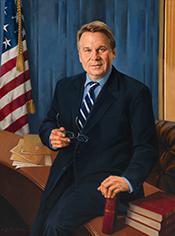 Rep. Christopher H. Smith (R-NJ)
 +1
+1