Medicare Prescription Drug and Modernization Act of 2003
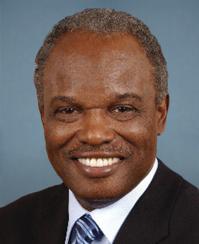
 Rep. William M. Thomas (R-CA)
Legislative Activity
Stay on top of the latest movement without scrolling through every action
Placed on the Union Calendar, Calendar No. 115.
July 15, 2003
View full timeline
Introduced in House
June 16, 2003
Referred to the Committee on Energy and Commerce, and in addition to the Committee on Ways and Means, for a period to be subsequently determined by the Speaker, in each case for consideration of such provisions as fall within the jurisdiction of the committee concerned.
June 16, 2003
Committee Consideration and Mark-up Session Held.
June 17, 2003
Ordered to be Reported (Amended) by the Yeas and Nays: 25 - 15.
June 17, 2003
Committee Consideration and Mark-up Session Held.
June 19, 2003
Ordered to be Reported (Amended) by Voice Vote.
June 19, 2003
Reported (Amended) by the Committee on Energy and Commerce. H. Rept. 108-178, Part I.
June 25, 2003
Reported (Amended) by the Committee on Ways and Means. H. Rept. 108-178, Part II.
July 15, 2003
Placed on the Union Calendar, Calendar No. 115.
July 15, 2003
Floor Debate
23 membersWhat members said about H.R. 2473 on the floor



 +18
+18
Floor Debate
23 membersWhat members said about H.R. 2473 on the floor
Mr. Speaker, it is certainly my pleasure this evening to come here to the floor of the House to address on behalf of the Congressional Black Caucus two issues that are of paramount concern. Both of…
Mr. Speaker, pursuant to House Resolution 299, I call up the bill (H.R. 1) to amend title XVIII of the Social Security Act to provide for a voluntary program for prescription drug coverage under the…
Mr. Speaker, I ask unanimous consent that all Members may have 5 legislative days within which to revise and extend their remarks and include therein extraneous material on the subject of this…
Mr. Speaker, I yield myself such time as I may consume. Mr. Speaker, when the chairman of the Committee on Ways and Means, the gentleman from California (Mr. Thomas), opened this debate tonight in…
I want to thank the gentleman from Maryland for yielding. His leadership has also been noticed throughout the country. I want to personally thank him. I want to also specifically thank him for…
Show 8 more

Mr. Speaker, I yield myself such time as I may consume. Mr. Speaker, it is difficult to know where to begin to warn the seniors in this country about this sham of a bill and the beginning of the…

Mr. Speaker, I thank the distinguished gentleman from Michigan for yielding me this time and for his tremendous leadership. He has been fighting this fight for America's seniors for access to quality…

Mr. Speaker, I yield myself 3 minutes. Mr. Speaker, three things: One, this is a bad bill. Two, it is not the Senate bill. And, three, it destroys Medicare as we now know it. And if you do not…

Mr. Speaker, I would like to thank my colleague from Rhode Island. Tomorrow in a bipartisan fashion with about six Republicans and six- or-so Democrats, we will be introducing an amendment to the…

Mr. Speaker, we have heard from the Democrats that this is a plan that will not work and is a fraud. We had 2 days of hearing, and I never heard a plan from the gentleman from Michigan (Mr. Dingell)…

Mr. Speaker, I thank the gentleman for yielding, and I thank him for his leadership in holding this Special Order tonight. Many people across the country are really confused about what all these…

Mr. Speaker, I rise today to address my concerns about H.R. 2210, the School Readiness Act. The major changes and new requirements under title II and title I will damage the integrity and efficacy of…

Mr. Speaker, I thank the gentleman from Maryland (Mr. Cummings), chairman of the Congressional Black Caucus, for the gentleman's leadership and for once again holding this Special Order to attempt to…
Show 11 more

Mr. Speaker, I thank the ranking member for yielding me the time in this most difficult discussion, but what a sham we have today for our seniors of America who built this country. Not only do you…

Mr. Speaker, this bill does not allow the IRS to share your income information with insurance companies. The bill very clearly protects the confidentiality of your information, and there are criminal…
Mr. Speaker, I yield myself the balance of my time. Mr. Speaker, when we test the arguments made on the floor of the House on a major piece of legislation such as this, it is important to test the…

Mr. Speaker, for far too long, as I traveled around the state of New Mexico, seniors have told me their heartbreaking stories of being forced to choose between purchasing their medicine and…

Mr. Speaker, I rise in support of this bill because I am for a bill. I want to see a bill passed. I want a bill that can pass this House. I want a bill that can get to the conference committee. I…

Mr. Speaker, I rise today to discuss the prescription drug benefit proposal that my colleagues on the other side of the aisle have rammed through the legislative process. I rise to decry this bill…

Mr. Speaker, I stand here with my colleagues tonight to talk about the need for affordable prescription drug coverage for women. Because women suffer more from chronic illnesses requiring medication…
Mr. Speaker, let us get right to the chase of it. What the Republican plan is designed to do is end Medicare as we know it today. Make no mistake about it. I have the quote right here and it says,…

Mr. Speaker, for forty years, the federal government has kept a promise to our nation's seniors. That promise is called Medicare, and it means that every senior will receive affordable, reliable…

I thank the gentleman for yielding me this time. Mr. Speaker, my parents, my mother and father, are 81 years of age, alive and well, and I would like to dedicate all the work that I have put into…

Mr. Speaker, tonight we hear some partisan political rhetoric, particularly from the other side of the aisle, who began this process by announcing they were going to oppose the bill. It does not…
Bill Text
2 versions available
        [Congressional Bills 108th Congress]
[From the U.S. Government Publishing Office]
[H.R. 2473 Reported in House (RH)]

Union Calendar No. 115
108th CONGRESS
1st Session
H. R. 2473

[Report No. 108-178, Parts I and II]

To amend title XVIII of the Social Security Act to provide for a
voluntary program for prescription drug coverage under the Medicare
Program, to modernize the Medicare Program, and for other purposes.

_______________________________________________________________________

IN THE HOUSE OF REPRESENTATIVES

June 16, 2003

Mr. Thomas (for himself and Mr. Tauzin) introduced the following bill;
which was referred jointly to the Committees on Energy and Commerce,
and Ways and Means, in each case for consideration of such provisions
as fall within the jurisdiction of the committee concerned

June 25, 2003

Reported from the Committee on Energy and Commerce with an amendment
[Strike out all after the enacting clause and insert the part printed
in italic]

July 15, 2003

Reported from the Committee on Ways and Means with an amendment,
committed to the Committee of the Whole House on the State of the
Union, and ordered to be printed
[Strike out all after the enacting clause and insert the part printed
in boldface roman]
[For text of introduced bill, see copy of bill as introduced on June
16, 2003]

_______________________________________________________________________

A BILL

To amend title XVIII of the Social Security Act to provide for a
voluntary program for prescription drug coverage under the Medicare
Program, to modernize the Medicare Program, and for other purposes.

Be it enacted by the Senate and House of Representatives of the
United States of America in Congress assembled,

SECTION 1. SHORT TITLE; AMENDMENTS TO SOCIAL SECURITY ACT; REFERENCES
TO BIPA AND SECRETARY; TABLE OF CONTENTS.

(a) Short Title.--This Act may be cited as the ``Medicare
Prescription Drug and Modernization Act of 2003''.
(b) Amendments to Social Security Act.--Except as otherwise
specifically provided, whenever in this Act an amendment is expressed
in terms of an amendment to or repeal of a section or other provision,
the reference shall be considered to be made to that section or other
provision of the Social Security Act.
(c) BIPA; Secretary.--In this Act:
(1) BIPA.--The term ``BIPA'' means the Medicare, Medicaid,
and SCHIP Benefits Improvement and Protection Act of 2000, as
enacted into law by section 1(a)(6) of Public Law 106-554.
(2) Secretary.--The term ``Secretary'' means the Secretary
of Health and Human Services.
(d) Table of Contents.--The table of contents of this Act is as
follows:

Sec. 1. Short title; amendments to Social Security Act; references to
BIPA and Secretary; table of contents.

TITLE I--MEDICARE PRESCRIPTION DRUG BENEFIT

Sec. 101. Establishment of a medicare prescription drug benefit.

``Part D--Voluntary Prescription Drug Benefit Program

``Sec. 1860D-1. Benefits; eligibility; enrollment; and coverage
period.
``Sec. 1860D-2. Requirements for qualified prescription drug
coverage.
``Sec. 1860D-3. Beneficiary protections for qualified
prescription drug coverage.
``Sec. 1860D-4. Requirements for and contracts with
prescription drug plan (PDP) sponsors.
``Sec. 1860D-5. Process for beneficiaries to select qualified
prescription drug coverage.
``Sec. 1860D-6. Submission of bids and premiums.
``Sec. 1860D-7. Premium and cost-sharing subsidies for low-
income individuals.
``Sec. 1860D-8. Subsidies for all medicare beneficiaries for
qualified prescription drug coverage.
``Sec. 1860D-9. Medicare Prescription Drug Trust Fund.
``Sec. 1860D-10. Definitions; application to medicare advantage
and EFFS programs; treatment of references
to provisions in part C.
Sec. 102. Offering of qualified prescription drug coverage under
Medicare Advantage and enhanced fee-for-
service (EFFS) program.
Sec. 103. Medicaid amendments.
``Sec. 1935. Special provisions relating to medicare
prescription drug benefit.
Sec. 104. Medigap transition.
Sec. 105. Medicare prescription drug discount card and assistance
program.
Sec. 106. Disclosure of return information for purposes of carrying out
medicare catastrophic prescription drug
program.
Sec. 107. State pharmaceutical assistance transition commission.

TITLE II--MEDICARE ENHANCED FEE-FOR-SERVICE AND MEDICARE ADVANTAGE
PROGRAMS; MEDICARE COMPETITION

Sec. 200. Medicare modernization and revitalization.

Subtitle A--Medicare Enhanced Fee-for-Service Program

Sec. 201. Establishment of enhanced fee-for-service (EFFS) program
under medicare.

``Part E--Enhanced Fee-for-Service Program

``Sec. 1860E-1. Offering of enhanced fee-for-service plans
throughout the United States.
``Sec. 1860E-2. Offering of enhanced fee-for-service (EFFS)
plans.
``Sec. 1860E-3. Submission of bids; beneficiary savings;
payment of plans.
``Sec. 1860E-4. Premiums; organizational and financial
requirements; establishment of standards;
contracts with EFFS organizations.

Subtitle B--Medicare Advantage Program

Chapter 1--Implementation Of Program

Sec. 211. Implementation of medicare advantage program.
Sec. 212. Medicare advantage improvements.

Chapter 2--Implementation Of Competition Program

Sec. 221. Competition program beginning in 2006.

Chapter 3--Additional Reforms

Sec. 231. Making permanent change in medicare advantage reporting
deadlines and annual, coordinated election
period.
Sec. 232. Avoiding duplicative State regulation.
Sec. 233. Specialized medicare advantage plans for special needs
beneficiaries.
Sec. 234. Medicare MSAs.
Sec. 235. Extension of reasonable cost contracts.

Subtitle C--Application of FEHBP-Style Competitive Reforms

Sec. 241. Application of FEHBP-style competitive reform beginning in
2010.

TITLE III--COMBATTING WASTE, FRAUD, AND ABUSE

Sec. 301. Medicare secondary payor (MSP) provisions.
Sec. 302. Competitive acquisition of certain items and services.
Sec. 303. Competitive acquisition of covered outpatient drugs and
biologicals.
Sec. 304. Demonstration project for use of recovery audit contractors.

TITLE IV--RURAL HEALTH CARE IMPROVEMENTS

Sec. 401. Enhanced disproportionate share hospital (DSH) treatment for
rural hospitals and urban hospitals with
fewer than 100 beds.
Sec. 402. Immediate establishment of uniform standardized amount in
rural and small urban areas.
Sec. 403. Establishment of essential rural hospital classification.
Sec. 404. More frequent update in weights used in hospital market
basket.
Sec. 405. Improvements to critical access hospital program.
Sec. 406. Redistribution of unused resident positions.
Sec. 407. Two-year extension of hold harmless provisions for small
rural hospitals and sole community
hospitals under prospective payment system
for hospital outpatient department
services.
Sec. 408. Exclusion of certain rural health clinic and federally
qualified health center services from the
prospective payment system for skilled
nursing facilities.
Sec. 409. Recognition of attending nurse practitioners as attending
physicians to serve hospice patients.
Sec. 410. Improvement in payments to retain emergency capacity for
ambulance services in rural areas.
Sec. 411. Providing safe harbor for certain collaborative efforts that
benefit medically underserved populations.
Sec. 412. GAO study of geographic differences in payments for
physicians' services.
Sec. 413. Treatment of missing cost reporting periods for sole
community hospitals.
Sec. 414. Extension of telemedicine demonstration project.
Sec. 415. Two-year increase for home health services furnished in a
rural area.

TITLE V--PROVISIONS RELATING TO PART A

Subtitle A--Inpatient Hospital Services

Sec. 501. Revision of acute care hospital payment updates.
Sec. 502. Recognition of new medical technologies under inpatient
hospital PPS.
Sec. 503. Increase in Federal rate for hospitals in Puerto Rico.
Sec. 504. Wage index adjustment reclassification reform .
Sec. 505. MedPAC report on specialty hospitals.

Subtitle B--Other Provisions

Sec. 511. Payment for covered skilled nursing facility services.
Sec. 512. Coverage of hospice consultation services.

TITLE VI--PROVISIONS RELATING TO PART B

Subtitle A--Physicians' Services

Sec. 601. Revision of updates for physicians' services.
Sec. 602. Studies on access to physicians' services.
Sec. 603. MedPAC report on payment for physicians' services.
Sec. 604. Inclusion of podiatrists and dentists under private
contracting authority.
Sec. 605. Establishment of floor on work geographic adjustment.

Subtitle B--Preventive Services

Sec. 611. Coverage of an initial preventive physical examination.
Sec. 612. Coverage of cholesterol and blood lipid screening.
Sec. 613. Waiver of deductible for colorectal cancer screening tests.
Sec. 614. Improved payment for certain mammography services.
Sec. 615. Medicare coverage of diabetes laboratory diagnostic tests.

Subtitle C--Other Services

Sec. 621. Hospital outpatient department (HOPD) payment reform.
Sec. 622. Payment for ambulance services.
Sec. 623. Renal dialysis services.
Sec. 624. One-year moratorium on therapy caps; provisions relating to
reports.
Sec. 625. Adjustment to payments for services furnished in ambulatory
surgical centers.
Sec. 626. Payment for certain shoes and inserts under the fee schedule
for orthotics and prosthetics.
Sec. 627. Waiver of part B late enrollment penalty for certain military
retirees; special enrollment period.
Sec. 628. Part B deductible.
Sec. 629. Demonstration project for coverage of self-injected biologics
for rheumatoid arthritis.

TITLE VII--PROVISIONS RELATING TO PARTS A AND B

Subtitle A--Home Health Services

Sec. 701. Update in home health services.
Sec. 702. MedPAC study on medicare margins of home health agencies.
Sec. 703. Demonstration project to clarify the definition of homebound.

Subtitle B--Direct Graduate Medical Education

Sec. 711. Extension of update limitation on high cost programs.

Subtitle C--Chronic Care Improvement

Sec. 721. Voluntary chronic care improvement under traditional fee-for-
service.
Sec. 722. Chronic care improvement under medicare advantage and
enhanced fee-for-service programs.
Sec. 723. Institute of Medicine report.
Sec. 724. MedPAC report.

Subtitle D--Other Provisions

Sec. 731. Modifications to medicare payment advisory commission
(MedPAC).
Sec. 732. Demonstration project for medical adult day care services.
Sec. 733. Improvements in national and local coverage determination
process to respond to changes in
technology.
Sec. 734. Treatment of certain physician pathology services.
Sec. 735. Medicare pancreatic islet cell transplant demonstration
project.
Sec. 736. Demonstration project for consumer-directed chronic
outpatient services.

TITLE VIII--MEDICARE BENEFITS ADMINISTRATION

Sec. 801. Establishment of Medicare Benefits Administration.

TITLE IX--REGULATORY REDUCTION AND CONTRACTING REFORM

Subtitle A--Regulatory Reform

Sec. 901. Construction; definition of supplier.

``Supplier

Sec. 902. Issuance of regulations.
Sec. 903. Compliance with changes in regulations and policies.
Sec. 904. Reports and studies relating to regulatory reform.

Subtitle B--Contracting Reform

Sec. 911. Increased flexibility in medicare administration.
Sec. 912. Requirements for information security for medicare
administrative contractors.

Subtitle C--Education and Outreach

Sec. 921. Provider education and technical assistance.
``Sec. 1889. Provider education and technical assistance.
Sec. 922. Small provider technical assistance demonstration program.
Sec. 923. Medicare Provider Ombudsman; Medicare Beneficiary Ombudsman.
Sec. 924. Beneficiary outreach demonstration program.
Sec. 925. Inclusion of additional information in notices to
beneficiaries about skilled nursing
facility benefits.
Sec. 926. Information on medicare-certified skilled nursing facilities
in hospital discharge plans.

Subtitle D--Appeals and Recovery

Sec. 931. Transfer of responsibility for medicare appeals.
Sec. 932. Process for expedited access to review.
Sec. 933. Revisions to medicare appeals process.
Sec. 934. Prepayment review.
Sec. 935. Recovery of overpayments.
Sec. 936. Provider enrollment process; right of appeal.
Sec. 937. Process for correction of minor errors and omissions without
pursuing appeals process.
Sec. 938. Prior determination process for certain items and services;
advance beneficiary notices.

Subtitle V--Miscellaneous Provisions

Sec. 941. Policy development regarding evaluation and management (E &
M) documentation guidelines.
Sec. 942. Improvement in oversight of technology and coverage.
Sec. 943. Treatment of hospitals for certain services under medicare
secondary payor (MSP) provisions.
Sec. 944. EMTALA improvements.
Sec. 945. Emergency Medical Treatment and Active Labor Act (EMTALA)
technical advisory group.
Sec. 946. Authorizing use of arrangements to provide core hospice
services in certain circumstances.
Sec. 947. Application of osha bloodborne pathogens standard to certain
hospitals.
Sec. 948. BIPA-related technical amendments and corrections.
Sec. 949. Conforming authority to waive a program exclusion.
Sec. 950. Treatment of certain dental claims.
Sec. 951. Furnishing hospitals with information to compute dsh formula.
Sec. 952. Revisions to reassignment provisions.
Sec. 953. Other provisions.

TITLE X--MEDICAID

Sec. 1001. Medicaid disproportionate share hospital (DSH) payments.
Sec. 1002. Clarification of inclusion of inpatient drug prices charged
to certain public hospitals in the best
price exemptions for the medicaid drug
rebate program.

TITLE I--MEDICARE PRESCRIPTION DRUG BENEFIT

SEC. 101. ESTABLISHMENT OF A MEDICARE PRESCRIPTION DRUG BENEFIT.

(a) In General.--Title XVIII is amended--
(1) by redesignating part D as part F; and
(2) by inserting after part C the following new part:

``Part D--Voluntary Prescription Drug Benefit Program

``SEC. 1860D-1. BENEFITS; ELIGIBILITY; ENROLLMENT; AND COVERAGE PERIOD.

``(a) Provision of Qualified Prescription Drug Coverage Through
Enrollment in Plans.--Subject to the succeeding provisions of this
part, each individual who is entitled to benefits under part A or is
enrolled under part B is entitled to obtain qualified prescription drug
coverage (described in section 1860D-2(a)) as follows:
``(1) Medicare-related plans.--
``(A) Medicare advantage.--If the individual is
eligible to enroll in a Medicare Advantage plan that
provides qualified prescription drug coverage under
section 1851(j), the individual may enroll in such plan
and obtain coverage through such plan.
``(B) EFFS plans.--If the individual is eligible to
enroll in an EFFS plan that provides qualified
prescription drug coverage under part E under section
1860E-2(d), the individual may enroll in such plan and
obtain coverage through such plan.
``(C) MA-EFFS plan; MA-EFFS Rx plan.--For purposes
of this part, the term `MA-EFFS plan' means a Medicare
Advantage plan under part C and an EFFS plan under part
E and the term `MA-EFFS Rx plan' means a MA-EFFS plan
insofar as such plan provides qualified prescription
drug coverage.
``(2) Prescription drug plan.--If the individual is not
enrolled in a MA-EFFS plan , the individual may enroll under
this part in a prescription drug plan (as defined in section
1860D-10(a)(5)).
Such individuals shall have a choice of such plans under section 1860D-
5(d).
``(b) General Election Procedures.--
``(1) In general.--An individual eligible to make an
election under subsection (a) may elect to enroll in a
prescription drug plan under this part, or elect the option of
qualified prescription drug coverage under a MA-EFFS Rx plan
under part C or part E, and to change such election only in
such manner and form as may be prescribed by regulations of the
Administrator of the Medicare Benefits Administration
(appointed under section 1809(b)) (in this part referred to as
the `Medicare Benefits Administrator') and only during an
election period prescribed in or under this subsection.
``(2) Election periods.--
``(A) In general.--Except as provided in this
paragraph, the election periods under this subsection
shall be the same as the coverage election periods
under the Medicare Advantage and EFFS programs under
section 1851(e), including--
``(i) annual coordinated election periods;
and
``(ii) special election periods.
In applying the last sentence of section 1851(e)(4)
(relating to discontinuance of an election during the
first year of eligibility) under this subparagraph, in
the case of an election described in such section in
which the individual had elected or is provided
qualified prescription drug coverage at the time of
such first enrollment, the individual shall be
permitted to enroll in a prescription drug plan under
this part at the time of the election of coverage under
the original fee-for-service plan.
``(B) Initial election periods.--
``(i) Individuals currently covered.--In
the case of an individual who is entitled to
benefits under part A or enrolled under part B
as of October 1, 2005, there shall be an
initial election period of 6 months beginning
on that date.
``(ii) Individual covered in future.--In
the case of an individual who is first entitled
to benefits under part A or enrolled under part
B after such date, there shall be an initial
election period which is the same as the
initial enrollment period under section
1837(d).
``(C) Additional special election periods.--The
Administrator shall establish special election
periods--
``(i) in cases of individuals who have and
involuntarily lose prescription drug coverage
described in subsection (c)(2)(C);
``(ii) in cases described in section
1837(h) (relating to errors in enrollment), in
the same manner as such section applies to part
B;
``(iii) in the case of an individual who
meets such exceptional conditions (including
conditions provided under section
1851(e)(4)(D)) as the Administrator may
provide; and
``(iv) in cases of individuals (as
determined by the Administrator) who become
eligible for prescription drug assistance under
title XIX under section 1935(d).
``(3) Information on plans.--Information described in
section 1860D-3(b)(1) on prescription drug plans shall be made
available during election periods.
``(c) Guaranteed Issue; Community Rating; and Nondiscrimination.--
``(1) Guaranteed issue.--
``(A) In general.--An eligible individual who is
eligible to elect qualified prescription drug coverage
under a prescription drug plan or MA-EFFS Rx plan at a
time during which elections are accepted under this
part with respect to the plan shall not be denied
enrollment based on any health status-related factor
(described in section 2702(a)(1) of the Public Health
Service Act) or any other factor.
``(B) Medicare advantage limitations permitted.--
The provisions of paragraphs (2) and (3) (other than
subparagraph (C)(i), relating to default enrollment) of
section 1851(g) (relating to priority and limitation on
termination of election) shall apply to PDP sponsors
under this subsection.
``(2) Community-rated premium.--
``(A) In general.--In the case of an individual who
enrolls under a prescription drug plan or in a MA-EFFS
Rx plan during the individual's initial enrollment
period under this part or maintains (as determined
under subparagraph (C)) continuous prescription drug
coverage since the date the individual first qualifies
to elect prescription drug coverage under this part, a
PDP sponsor or entity offering a prescription drug plan
or MA-EFFS Rx plan and in which the individual is
enrolled may not deny, limit, or condition the coverage
or provision of covered prescription drug benefits or
vary or increase the premium under the plan based on
any health status-related factor described in section
2702(a)(1) of the Public Health Service Act or any
other factor.
``(B) Late enrollment penalty.--In the case of an
individual who does not maintain such continuous
prescription drug coverage (as described in
subparagraph (C)), a PDP sponsor or an entity offering
a MA-EFFS Rx plan may (notwithstanding any provision in
this title) adjust the premium otherwise applicable or
impose a pre-existing condition exclusion with respect
to qualified prescription drug coverage in a manner
that reflects additional actuarial risk involved. Such
a risk shall be established through an appropriate
actuarial opinion of the type described in
subparagraphs (A) through (C) of section 2103(c)(4).
``(C) Continuous prescription drug coverage.--An
individual is considered for purposes of this part to
be maintaining continuous prescription drug coverage on
and after the date the individual first qualifies to
elect prescription drug coverage under this part if the
individual establishes that as of such date the
individual is covered under any of the following
prescription drug coverage and before the date that is
the last day of the 63-day period that begins on the
date of termination of the particular prescription drug
coverage involved (regardless of whether the individual
subsequently obtains any of the following prescription
drug coverage):
``(i) Coverage under prescription drug plan
or ma-effs rx plan.--Qualified prescription
drug coverage under a prescription drug plan or
under a MA-EFFS Rx plan.
``(ii) Medicaid prescription drug
coverage.--Prescription drug coverage under a
medicaid plan under title XIX, including
through the Program of All-inclusive Care for
the Elderly (PACE) under section 1934, through
a social health maintenance organization
(referred to in section 4104(c) of the Balanced
Budget Act of 1997), or through a demonstration
project under part C that demonstrates the
application of capitation payment rates for
frail elderly medicare beneficiaries through
the use of an interdisciplinary team and
through the provision of primary care services
to such beneficiaries by means of such a team
at the nursing facility involved.
``(iii) Prescription drug coverage under
group health plan.--Any outpatient prescription
drug coverage under a group health plan,
including a health benefits plan under the
Federal Employees Health Benefit Plan under
chapter 89 of title 5, United States Code, and
a qualified retiree prescription drug plan as
defined in section 1860D-8(f)(1), but only if
(subject to subparagraph (E)(ii)) the coverage
provides benefits at least equivalent to the
benefits under a qualified prescription drug
plan.
``(iv) Prescription drug coverage under
certain medigap policies.--Coverage under a
medicare supplemental policy under section 1882
that provides benefits for prescription drugs
(whether or not such coverage conforms to the
standards for packages of benefits under
section 1882(p)(1)), but only if the policy was
in effect on January 1, 2006, and if (subject
to subparagraph (E)(ii)) the coverage provides
benefits at least equivalent to the benefits
under a qualified prescription drug plan.
``(v) State pharmaceutical assistance
program.--Coverage of prescription drugs under
a State pharmaceutical assistance program, but
only if (subject to subparagraph (E)(ii)) the
coverage provides benefits at least equivalent
to the benefits under a qualified prescription
drug plan.
``(vi) Veterans' coverage of prescription
drugs.--Coverage of prescription drugs for
veterans under chapter 17 of title 38, United
States Code, but only if (subject to
subparagraph (E)(ii)) the coverage provides
benefits at least equivalent to the benefits
under a qualified prescription drug plan.
``(D) Certification.--For purposes of carrying out
this paragraph, the certifications of the type
described in sections 2701(e) of the Public Health
Service Act and in section 9801(e) of the Internal
Revenue Code shall also include a statement for the
period of coverage of whether the individual involved
had prescription drug coverage described in
subparagraph (C).
``(E) Disclosure.--
``(i) In general.--Each entity that offers
coverage of the type described in clause (iii),
(iv), (v), or (vi) of subparagraph (C) shall
provide for disclosure, consistent with
standards established by the Administrator, of
whether such coverage provides benefits at
least equivalent to the benefits under a
qualified prescription drug plan.
``(ii) Waiver of limitations.--An
individual may apply to the Administrator to
waive the requirement that coverage of such
type provide benefits at least equivalent to
the benefits under a qualified prescription
drug plan, if the individual establishes that
the individual was not adequately informed that
such coverage did not provide such level of
benefits.
``(F) Construction.--Nothing in this section shall
be construed as preventing the disenrollment of an
individual from a prescription drug plan or a MA-EFFS
Rx plan based on the termination of an election
described in section 1851(g)(3), including for non-
payment of premiums or for other reasons specified in
subsection (d)(3), which takes into account a grace
period described in section 1851(g)(3)(B)(i).
``(3) Nondiscrimination.--A PDP sponsor that offers a
prescription drug plan in an area designated under section
1860D-4(b)(5) shall make such plan available to all eligible
individuals residing in the area without regard to their health
or economic status or their place of residence within the area.
``(d) Effective Date of Elections.--
``(1) In general.--Except as provided in this section, the
Administrator shall provide that elections under subsection (b)
take effect at the same time as the Administrator provides that
similar elections under section 1851(e) take effect under
section 1851(f).
``(2) No election effective before 2006.--In no case shall
any election take effect before January 1, 2006.
``(3) Termination.--The Administrator shall provide for the
termination of an election in the case of--
``(A) termination of coverage under both part A and
part B; and
``(B) termination of elections described in section
1851(g)(3) (including failure to pay required
premiums).

``SEC. 1860D-2. REQUIREMENTS FOR QUALIFIED PRESCRIPTION DRUG COVERAGE.

``(a) Requirements.--
``(1) In general.--For purposes of this part and part C and
part E, the term `qualified prescription drug coverage' means
either of the following:
``(A) Standard coverage with access to negotiated
prices.--Standard coverage (as defined in subsection
(b)) and access to negotiated prices under subsection
(d).
``(B) Actuarially equivalent coverage with access
to negotiated prices.--Coverage of covered outpatient
drugs which meets the alternative coverage requirements
of subsection (c) and access to negotiated prices under
subsection (d), but only if it is approved by the
Administrator, as provided under subsection (c).
``(2) Permitting additional outpatient prescription drug
coverage.--
``(A) In general.--Subject to subparagraph (B),
nothing in this part shall be construed as preventing
qualified prescription drug coverage from including
coverage of covered outpatient drugs that exceeds the
coverage required under paragraph (1), but any such
additional coverage shall be limited to coverage of
covered outpatient drugs.
``(B) Disapproval authority.--The Administrator
shall review the offering of qualified prescription
drug coverage under this part or part C or E. If the
Administrator finds, in the case of a qualified
prescription drug coverage under a prescription drug
plan or a MA-EFFS Rx plan, that the organization or
sponsor offering the coverage is engaged in activities
intended to discourage enrollment of classes of
eligible medicare beneficiaries obtaining coverage
through the plan on the basis of their higher
likelihood of utilizing prescription drug coverage, the
Administrator may terminate the contract with the
sponsor or organization under this part or part C or E.
``(3) Application of secondary payor provisions.--The
provisions of section 1852(a)(4) shall apply under this part in
the same manner as they apply under part C.
``(b) Standard Coverage.--For purposes of this part, the `standard
coverage' is coverage of covered outpatient drugs (as defined in
subsection (f)) that meets the following requirements:
``(1) Deductible.--The coverage has an annual deductible--
``(A) for 2006, that is equal to $250; or
``(B) for a subsequent year, that is equal to the
amount specified under this paragraph for the previous
year increased by the percentage specified in paragraph
(5) for the year involved.
Any amount determined under subparagraph (B) that is not a
multiple of $10 shall be rounded to the nearest multiple of
$10.
``(2) 80:20 benefit structure.--
``(A) 20 percent coinsurance.--The coverage has
cost-sharing (for costs above the annual deductible
specified in paragraph (1) and up to the initial
coverage limit under paragraph (3)) that is--
``(i) equal to 20 percent; or
``(ii) is actuarially equivalent (using
processes established under subsection (e)) to
an average expected payment of 20 percent of
such costs.
``(B) Use of tiers.--Nothing in this part shall be
construed as preventing a PDP sponsor from applying
tiered copayments, so long as such tiered copayments
are consistent with subparagraph (A).
``(3) Initial coverage limit.--Subject to paragraph (4),
the coverage has an initial coverage limit on the maximum costs
that may be recognized for payment purposes--
``(A) for 2006, that is equal to $2,000; or
``(B) for a subsequent year, that is equal to the
amount specified in this paragraph for the previous
year, increased by the annual percentage increase
described in paragraph (5) for the year involved.
Any amount determined under subparagraph (B) that is not a
multiple of $25 shall be rounded to the nearest multiple of
$25.
``(4) Catastrophic protection.--
``(A) In general.--Notwithstanding paragraph (3),
the coverage provides benefits with no cost-sharing
after the individual has incurred costs (as described
in subparagraph (C)) for covered outpatient drugs in a
year equal to the annual out-of-pocket threshold
specified in subparagraph (B).
``(B) Annual out-of-pocket threshold.--
``(i) In general.--For purposes of this
part, the `annual out-of-pocket threshold'
specified in this subparagraph is equal to
$3,500 (subject to adjustment under clause (ii)
and subparagraph (D)).
``(ii) Inflation increase.--For a year
after 2006, the dollar amount specified in
clause (i) shall be increased by the annual
percentage increase described in paragraph (5)
for the year involved. Any amount determined
under the previous sentence that is not a
multiple of $100 shall be rounded to the
nearest multiple of $100.
``(C) Application.--In applying subparagraph (A)--
``(i) incurred costs shall only include
costs incurred for the annual deductible
(described in paragraph (1)), cost-sharing
(described in paragraph (2)), and amounts for
which benefits are not provided because of the
application of the initial coverage limit
described in paragraph (3); and
``(ii) such costs shall be treated as
incurred only if they are paid by the
individual (or by another individual, such as a
family member, on behalf of the individual),
under section 1860D-7, under title XIX, or
under a State pharmaceutical assistance program
and the individual (or other individual) is not
reimbursed through insurance or otherwise, a
group health plan, or other third-party payment
arrangement (other than under such title or
such program) for such costs.
``(D) Adjustment of annual out-of-pocket
thresholds.--
``(i) In general.--For each enrollee in a
prescription drug plan or in a MA-EFFS Rx plan
whose adjusted gross income exceeds the income
threshold as defined in clause (ii) for a year,
the annual out-of-pocket threshold otherwise
determined under subparagraph (B) for such year
shall be increased by an amount equal to the
percentage specified in clause (iii),
multiplied by the lesser of--
``(I) the amount of such excess; or
``(II) the amount by which the
income threshold limit exceeds the
income threshold.
Any amount determined under the previous
sentence that is not a multiple of $100 shall
be rounded to the nearest multiple of $100.
``(ii) Income threshold.--For purposes of
clause (i)--
``(I) In general.--Subject to
subclause (II), the term `income
threshold' means $60,000 and the term
`income threshold limit' means
$200,000.
``(II) Income inflation
adjustment.--In the case of a year
beginning after 2006, each of the
dollar amounts in subclause (I) shall
be increased by an amount equal to such
dollar amount multiplied by the cost-
of-living adjustment determined under
section 1(f)(3) of the Internal Revenue
Code of 1986 for such year, determined
by substituting `calendar year 2005'
for `calendar year 1992'. If any amount
increased under the previous sentence
is not a multiple of $100, such amount
shall be rounded to the nearest
multiple of $100.
``(iii) Percentage.--The percentage
specified in this clause for a year is a
fraction (expressed as a percentage) equal to--
``(I) the annual out-of-pocket
threshold for a year under subparagraph
(B) (determined without regard to this
subparagraph), divided by
``(II) the income threshold under
clause (ii) for that year.
If any percentage determined under the previous
sentence that is not a multiple of \1/10\th of
1 percentage point, such percentage shall be
rounded to the nearest multiple of \1/10\th of
1 percentage point.
``(iv) Use of most recent return
information.--For purposes of clause (i) for an
enrollee for a year, except as provided in
clause (v), the adjusted gross income of an
individual shall be based on the most recent
information disclosed to the Secretary under
section 6109(l)(19) of the Internal Revenue
Code of 1986 before the beginning of that year.
``(v) Individual election to present most
recent information regarding income.--The
Secretary shall provide, in coordination with
the Secretary of the Treasury, a procedure
under which, for purposes of applying this
subparagraph for a calendar year, instead of
using the information described in clause (iv),
an enrollee may elect to use more recent
information, including information with respect
to a taxable year ending in such calendar year.
Such process shall--
``(I) require the enrollee to
provide the Secretary with a copy of
the relevant portion of the more recent
return to be used under this clause;
``(II) provide for the Medicare
Beneficiary Ombudsman (under section
1810) offering assistance to such
enrollees in presenting such
information and the toll-free number
under such section being a point of
contact for beneficiaries to inquire as
to how to present such information;
``(III) provide for the
verification of the information in such
return by the Secretary of the Treasury
under section 6103(l)(19) of the
Internal Revenue Code of 1986; and
``(IV) provide for the payment by
the Secretary (in a manner specified by
the Secretary) to the enrollee of an
amount equal to the excess of the
benefit payments that would have been
payable under the plan if the more
recent return information were used,
over the benefit payments that were
made under the plan.
In the case of a payment under subclause (III)
for an enrollee under a prescription drug plan,
the PDP sponsor of the plan shall pay to the
Secretary the amount so paid, less the
applicable reinsurance amount that would have
applied under section 1860D-8(c)(1)(B) if such
payment had been treated as an allowable cost
under such section. Such plan payment shall be
deposited in the Treasury to the credit of the
Medicare Prescription Drug Account in the
Federal Supplementary Medical Insurance Trust
Fund (under section 1841).
``(vi) Dissemination of information on
process.--The Secretary shall provide, through
the annual medicare handbook under section
1804(a), for a general description of the
adjustment of annual out-of-pocket thresholds
provided under this subparagraph, including the
process for adjustment based upon more recent
information and the confidentiality provisions
of subparagraph (F), and shall provide for
dissemination of a table for each year that
sets forth the amount of the adjustment that is
made under clause (i) based on the amount of an
enrollee's adjusted gross income.
``(E) Requesting information on enrollees.--
``(i) In general.--The Secretary shall,
periodically as required to carry out
subparagraph (D), transmit to the Secretary of
the Treasury a list of the names and TINs of
enrollees in prescription drug plans (or in MA-
EFFS Rx plans) and request that such Secretary
disclose to the Secretary information under
subparagraph (A) of section 6103(l)(19) of the
Internal Revenue Code of 1986 with respect to
those enrollees for a specified taxable year
for application in a particular calendar year.
``(ii) Disclosure to plan sponsors.--In the
case of a specified taxpayer (as defined in
section 6103(l)(19)(B) of the Internal Revenue
Code of 1986) who is enrolled in a prescription
drug plan or in an MA-EFFS Rx plan, the
Secretary shall disclose to the entity that
offers the plan the annual out-of-pocket
threshold applicable to such individual under
subparagraph (D).
``(F) Maintaining confidentiality of information.--
``(i) In general.--The amount of any
increase in an annual out-of-pocket threshold
under subparagraph (D) may not be disclosed by
the Secretary except to a PDP sponsor or entity
that offers a MA-EFFS Rx plan to the extent
necessary to carry out this part.
``(ii) Criminal and civil penalties for
unauthorized disclosure.--A person who makes an
unauthorized disclosure of information
disclosed under section 6103(l)(19) of the
Internal Revenue Code of 1986 (including
disclosure of any increase in an annual out-of-
pocket threshold under subparagraph (D)) shall
be subject to penalty to the extent provided
under--
``(I) section 7213 of such Code
(relating to criminal penalty for
unauthorized disclosure of
information);
``(II) section 7213A of such Code
(relating to criminal penalty for
unauthorized inspection of returns or
return information);
``(III) section 7431 of such Code
(relating to civil damages for
unauthorized inspection or disclosure
of returns and return information);
``(IV) any other provision of the
Internal Revenue Code of 1986; or
``(V) any other provision of law.
``(iii) Application of additional civil
monetary penalty for unauthorized
disclosures.--In addition to any penalty
otherwise provided under law, any person who
makes an unauthorized disclosure of such
information shall be subject to a civil
monetary penalty of not to exceed $10,000 for
each such unauthorized disclosure. The
provisions of section 1128A (other than
subsections (a) and (b)) shall apply to civil
money penalties under this subparagraph in the
same manner as they apply to a penalty or
proceeding under section 1128A(a).
``(5) Annual percentage increase.--For purposes of this
part, the annual percentage increase specified in this
paragraph for a year is equal to the annual percentage increase
in average per capita aggregate expenditures for covered
outpatient drugs in the United States for medicare
beneficiaries, as determined by the Administrator for the 12-
month period ending in July of the previous year.
``(c) Alternative Coverage Requirements.--A prescription drug plan
or MA-EFFS Rx plan may provide a different prescription drug benefit
design from the standard coverage described in subsection (b) so long
as the Administrator determines (based on an actuarial analysis by the
Administrator) that the following requirements are met and the plan
applies for, and receives, the approval of the Administrator for such
benefit design:
``(1) Assuring at least actuarially equivalent coverage.--
``(A) Assuring equivalent value of total
coverage.--The actuarial value of the total coverage
(as determined under subsection (e)) is at least equal
to the actuarial value (as so determined) of standard
coverage.
``(B) Assuring equivalent unsubsidized value of
coverage.--The unsubsidized value of the coverage is at
least equal to the unsubsidized value of standard
coverage. For purposes of this subparagraph, the
unsubsidized value of coverage is the amount by which
the actuarial value of the coverage (as determined
under subsection (e)) exceeds the actuarial value of
the subsidy payments under section 1860D-8 with respect
to such coverage.
``(C) Assuring standard payment for costs at
initial coverage limit.--The coverage is designed,
based upon an actuarially representative pattern of
utilization (as determined under subsection (e)), to
provide for the payment, with respect to costs incurred
that are equal to the initial coverage limit under
subsection (b)(3), of an amount equal to at least the
product of--
``(i) the amount by which the initial
coverage limit described in subsection (b)(3)
exceeds the deductible described in subsection
(b)(1); and
``(ii) 100 percent minus the cost-sharing
percentage specified in subsection
(b)(2)(A)(i).
``(2) Catastrophic protection.--The coverage provides for
beneficiaries the catastrophic protection described in
subsection (b)(4).
``(d) Access to Negotiated Prices.--
``(1) In general.--Under qualified prescription drug
coverage offered by a PDP sponsor or an entity offering a MA-
EFFS Rx plan, the sponsor or entity shall provide beneficiaries
with access to negotiated prices (including applicable
discounts) used for payment for covered outpatient drugs,
regardless of the fact that no benefits may be payable under
the coverage with respect to such drugs because of the
application of cost-sharing or an initial coverage limit
(described in subsection (b)(3)). Insofar as a State elects to
provide medical assistance under title XIX for a drug based on
the prices negotiated by a prescription drug plan or MA-EFFS Rx
plan under this part, the requirements of section 1927 shall
not apply to such drugs. The prices negotiated by a
prescription drug plan under this part, by a MA-EFFS Rx plan
with respect to covered outpatient drugs, or by a qualified
retiree prescription drug plan (as defined in section 1860D-
8(f)(1)) with respect to such drugs on behalf of individuals
entitled to benefits under part A or enrolled under part B,
shall (notwithstanding any other provision of law) not be taken
into account for the purposes of establishing the best price
under section 1927(c)(1)(C).
``(2) Disclosure.--The PDP sponsor or entity offering a MA-
EFFS Rx plan shall disclose to the Administrator (in a manner
specified by the Administrator) the extent to which discounts
or rebates or other remuneration or price concessions made
available to the sponsor or organization by a manufacturer are
passed through to enrollees through pharmacies and other
dispensers or otherwise. The provisions of section
1927(b)(3)(D) shall apply to information disclosed to the
Administrator under this paragraph in the same manner as such
provisions apply to information disclosed under such section.
``(3) Audits and reports.--To protect against fraud and
abuse and to ensure proper disclosures and accounting under
this part, in addition to any protections against fraud and
abuse provided under section 1860D-4(b)(3)(C), the
Administrator may periodically audit the financial statements
and records of PDP sponsor or entities offering a MA-EFFS Rx
plan.
``(e) Actuarial Valuation; Determination of Annual Percentage
Increases.--
``(1) Processes.--For purposes of this section, the
Administrator shall establish processes and methods--
``(A) for determining the actuarial valuation of
prescription drug coverage, including--
``(i) an actuarial valuation of standard
coverage and of the reinsurance subsidy
payments under section 1860D-8;
``(ii) the use of generally accepted
actuarial principles and methodologies; and
``(iii) applying the same methodology for
determinations of alternative coverage under
subsection (c) as is used with respect to
determinations of standard coverage under
subsection (b); and
``(B) for determining annual percentage increases
described in subsection (b)(5).
``(2) Use of outside actuaries.--Under the processes under
paragraph (1)(A), PDP sponsors and entities offering MA-EFFS Rx
plans may use actuarial opinions certified by independent,
qualified actuaries to establish actuarial values, but the
Administrator shall determine whether such actuarial values
meet the requirements under subsection (c)(1).
``(f) Covered Outpatient Drugs Defined.--
``(1) In general.--Except as provided in this subsection,
for purposes of this part, the term `covered outpatient drug'
means--
``(A) a drug that may be dispensed only upon a
prescription and that is described in subparagraph
(A)(i) or (A)(ii) of section 1927(k)(2); or
``(B) a biological product described in clauses (i)
through (iii) of subparagraph (B) of such section or
insulin described in subparagraph (C) of such section
and medical supplies associated with the injection of
insulin (as defined in regulations of the Secretary),
and such term includes a vaccine licensed under section 351 of
the Public Health Service Act and any use of a covered
outpatient drug for a medically accepted indication (as defined
in section 1927(k)(6)).
``(2) Exclusions.--
``(A) In general.--Such term does not include drugs
or classes of drugs, or their medical uses, which may
be excluded from coverage or otherwise restricted under
section 1927(d)(2), other than subparagraph (E) thereof
(relating to smoking cessation agents), or under
section 1927(d)(3).
``(B) Avoidance of duplicate coverage.--A drug
prescribed for an individual that would otherwise be a
covered outpatient drug under this part shall not be so
considered if payment for such drug is available under
part A or B for an individual entitled to benefits
under part A and enrolled under part B.
``(3) Application of formulary restrictions.--A drug
prescribed for an individual that would otherwise be a covered
outpatient drug under this part shall not be so considered
under a plan if the plan excludes the drug under a formulary
and such exclusion is not successfully appealed under section
1860D-3(f)(2).
``(4) Application of general exclusion provisions.--A
prescription drug plan or MA-EFFS Rx plan may exclude from
qualified prescription drug coverage any covered outpatient
drug--
``(A) for which payment would not be made if
section 1862(a) applied to part D; or
``(B) which are not prescribed in accordance with
the plan or this part.
Such exclusions are determinations subject to reconsideration
and appeal pursuant to section 1860D-3(f).

``SEC. 1860D-3. BENEFICIARY PROTECTIONS FOR QUALIFIED PRESCRIPTION DRUG
COVERAGE.

``(a) Guaranteed Issue, Community-Rated Premiums, Access to
Negotiated Prices, and Nondiscrimination.--For provisions requiring
guaranteed issue, community-rated premiums, access to negotiated
prices, and nondiscrimination, see sections 1860D-1(c)(1), 1860D-
1(c)(2), 1860D-2(d), and 1860D-6(b), respectively.
``(b) Dissemination of Information.--
``(1) General information.--A PDP sponsor shall disclose,
in a clear, accurate, and standardized form to each enrollee
with a prescription drug plan offered by the sponsor under this
part at the time of enrollment and at least annually
thereafter, the information described in section 1852(c)(1)
relating to such plan. Such information includes the following:
``(A) Access to specific covered outpatient drugs,
including access through pharmacy networks.
``(B) How any formulary used by the sponsor
functions, including the drugs included in the
formulary.
``(C) Co-payments and deductible requirements,
including the identification of the tiered or other co-
payment level applicable to each drug (or class of
drugs).
``(D) Grievance and appeals procedures.
Such information shall also be made available upon request to
prospective enrollees.
``(2) Disclosure upon request of general coverage,
utilization, and grievance information.--Upon request of an
individual eligible to enroll under a prescription drug plan,
the PDP sponsor shall provide the information described in
section 1852(c)(2) (other than subparagraph (D)) to such
individual.
``(3) Response to beneficiary questions.--Each PDP sponsor
offering a prescription drug plan shall have a mechanism for
providing specific information to enrollees upon request. The
sponsor shall make available on a timely basis, through an
Internet website and in writing upon request, information on
specific changes in its formulary.
``(4) Claims information.--Each PDP sponsor offering a
prescription drug plan must furnish to each enrollee in a form
easily understandable to such enrollees an explanation of
benefits (in accordance with section 1806(a) or in a comparable
manner) and a notice of the benefits in relation to initial
coverage limit and the annual out-of-pocket threshold
applicable to such enrollee for the current year, whenever
prescription drug benefits are provided under this part (except
that such notice need not be provided more often than monthly).
``(c) Access to Covered Benefits.--
``(1) Assuring pharmacy access.--
``(A) Securing sufficient participation.--
``(i) Participation of any willing
pharmacy.--A PDP sponsor and an entity offering
a MA-EFFS Rx plan shall permit the
participation of any pharmacy that meets terms
and conditions that the plan has established.
``(ii) Discounts allowed for network
pharmacies.--A prescription drug plan and a MA-
EFFS Rx plan may, notwithstanding clause (i),
reduce coinsurance or copayments for its
enrolled beneficiaries below the level
otherwise provided for covered outpatient drugs
dispensed through in-network pharmacies, but in
no case shall such a reduction result in an
increase in payments made by the Administrator
under section 1860D-8 to a plan.
``(iii) Convenient access for network
pharmacies.--The PDP sponsor of the
prescription drug plan and the entity offering
a MA-EFFS Rx plan shall secure the
participation in its network of a sufficient
number of pharmacies that dispense (other than
by mail order) drugs directly to patients to
ensure convenient access (consistent with rules
of the Administrator established under
subparagraph (B)). The Administrator shall
establish convenient access rules under this
clause that are no less favorable to enrollees
than the rules for convenient access to
pharmacies of the Secretary of Defense
established as of June 1, 2003, for purposes of
the TRICARE Retail Pharmacy (TRRx) program.
Such rules shall include adequate emergency
access for enrolled beneficiaries.
``(iv) Level playing field.--Such a sponsor
shall permit enrollees to receive benefits
(which may include a 90-day supply of drugs or
biologicals) through a community pharmacy,
rather than through mail order, with any
differential in cost paid by such enrollees.
``(v)  Not required to accept insurance
risk.--The terms and conditions under clause
(i) may not require participating pharmacies to
accept insurance risk as a condition of
participation.
``(2) Use of standardized technology.--
``(A) In general.--The PDP sponsor of a
prescription drug plan and an entity offering a MA-EFFS
Rx plan shall issue (and reissue, as appropriate) such
a card (or other technology) that may be used by an
enrollee to assure access to negotiated prices under
section 1860D-2(d) for the purchase of prescription
drugs for which coverage is not otherwise provided
under the plan.
``(B) Standards.--
``(i) Development.--The Administrator shall
provide for the development or utilization of
uniform standards relating to a standardized
format for the card or other technology
referred to in subparagraph (A). Such standards
shall be compatible with standards established
under part C of title XI.
``(ii) Application of advisory task
force.--The advisory task force established
under subsection (d)(3)(B)(ii) shall provide
recommendations to the Administrator under such
subsection regarding the standards developed
under clause (i).
``(3) Requirements on development and application of
formularies.--If a PDP sponsor of a prescription drug plan or
an entity offering a MA-EFFS Rx plan uses a formulary, the
following requirements must be met:
``(A) Pharmacy and therapeutic (p&t) committee.--
The sponsor or entity must establish a pharmacy and
therapeutic committee that develops and reviews the
formulary. Such committee shall include at least one
practicing physician and at least one practicing
pharmacist both with expertise in the care of elderly
or disabled persons and a majority of its members shall
consist of individuals who are practicing physicians or
practicing pharmacists (or both).
``(B) Formulary development.--In developing and
reviewing the formulary, the committee shall--
``(i) base clinical decisions on the
strength of scientific evidence and standards
of practice, including assessing peer-reviewed
medical literature, such as randomized clinical
trials, pharmacoeconomic studies, outcomes
research data, and such other information as
the committee determines to be appropriate; and
``(ii) shall take into account whether
including in the formulary particular covered
outpatient drugs has therapeutic advantages in
terms of safety and efficacy.
``(C) Inclusion of drugs in all therapeutic
categories.--The formulary must include drugs within
each therapeutic category and class of covered
outpatient drugs (although not necessarily for all
drugs within such categories and classes). In
establishing such classes, the committee shall take
into account the standards published in the United
States Pharmacopeia-Drug Information. The committee
shall make available to the enrollees under the plan
through the Internet or otherwise the clinical bases
for the coverage of any drug on the formulary.
``(D) Provider and patient education.--The
committee shall establish policies and procedures to
educate and inform health care providers and enrollees
concerning the formulary.
``(E) Notice before removing drug from formulary
for changing preferred or tier status of drug.--Any
removal of a covered outpatient drug from a formulary
and any change in the preferred or tier cost-sharing
status of such a drug shall take effect only after
appropriate notice is made available to beneficiaries
and physicians.
``(F) Periodic evaluation of protocols.--In
connection with the formulary, a prescription drug plan
shall provide for the periodic evaluation and analysis
of treatment protocols and procedures.
``(G) Grievances and appeals relating to
application of formularies.--For provisions relating to
grievances and appeals of coverage, see subsections (e)
and (f).
``(d) Cost and Utilization Management; Quality Assurance;
Medication Therapy Management Program.--
``(1) In general.--The PDP sponsor or entity offering a MA-
EFFS Rx plan shall have in place, directly or through
appropriate arrangements, with respect to covered outpatient
drugs--
``(A) an effective cost and drug utilization
management program, including medically appropriate
incentives to use generic drugs and therapeutic
interchange, when appropriate;
``(B) quality assurance measures and systems to
reduce medical errors and adverse drug interactions,
including side-effects, and improve medication use,
including a medication therapy management program
described in paragraph (2) and for years beginning with
2007, an electronic prescription program described in
paragraph (3); and
``(C) a program to control fraud, abuse, and waste.
Nothing in this section shall be construed as impairing a PDP
sponsor or entity from utilizing cost management tools
(including differential payments) under all methods of
operation.
``(2) Medication therapy management program.--
``(A) In general.--A medication therapy management
program described in this paragraph is a program of
drug therapy management and medication administration
that may be furnished by a pharmacy provider and that
is designed to assure, with respect to beneficiaries at
risk for potential medication problems, such as
beneficiaries with complex or chronic diseases (such as
diabetes, asthma, hypertension, and congestive heart
failure) or multiple prescriptions, that covered
outpatient drugs under the prescription drug plan are
appropriately used to optimize therapeutic outcomes
through improved medication use and reduce the risk of
adverse events, including adverse drug interactions.
Such programs may distinguish between services in
ambulatory and institutional settings.
``(B) Elements.--Such program may include--
``(i) enhanced beneficiary understanding to
promote the appropriate use of medications by
beneficiaries and to reduce the risk of
potential adverse events associated with
medications, through beneficiary education,
counseling, case management, disease state
management programs, and other appropriate
means;
``(ii) increased beneficiary adherence with
prescription medication regimens through
medication refill reminders, special packaging,
and other compliance programs and other
appropriate means; and
``(iii) detection of patterns of overuse
and underuse of prescription drugs.
``(C) Development of program in cooperation with
licensed pharmacists.--The program shall be developed
in cooperation with licensed and practicing pharmacists
and physicians.
``(D) Considerations in pharmacy fees.--The PDP
sponsor of a prescription drug program and an entity
offering a MA-EFFS Rx plan shall take into account, in
establishing fees for pharmacists and others providing
services under the medication therapy management
program, the resources and time used in implementing
the program. Each such sponsor or entity shall disclose
to the Administrator upon request the amount of any
such management or dispensing fees.
``(3) Electronic prescription program.--
``(A) In general.--An electronic prescription drug
program described in this paragraph is a program that
includes at least the following components, consistent
with uniform standards established under subparagraph
(B):
``(i) Electronic transmittal of
prescriptions.--Prescriptions must be written
and transmitted electronically (other than by
facsimile), except in emergency cases and other
exceptional circumstances recognized by the
Administrator.
``(ii) Provision of information to
prescribing health care professional.--The
program provides for the electronic transmittal
to the prescribing health care professional of
information that includes--
``(I) information (to the extent
available and feasible) on the drug or
drugs being prescribed for that patient
and other information relating to the
medical history or condition of the
patient that may be relevant to the
appropriate prescription for that
patient;
``(II) cost-effective alternatives
(if any) for the use of the drug
prescribed; and
``(III) information on the drugs
included in the applicable formulary.
To the extent feasible, such program shall
permit the prescribing health care professional
to provide (and be provided) related
information on an interactive, real-time basis.
``(B) Standards.--
``(i) Development.--The Administrator shall
provide for the development of uniform
standards relating to the electronic
prescription drug program described in
subparagraph (A). Such standards shall be
compatible with standards established under
part C of title XI.
``(ii) Advisory task force.--In developing
such standards and the standards described in
subsection (c)(2)(B)(i) the Administrator shall
establish a task force that includes
representatives of physicians, hospitals,
pharmacies, beneficiaries, pharmacy benefit
managers, individuals with expertise in
information technology, and pharmacy benefit
experts of the Departments of Veterans Affairs
and Defense and other appropriate Federal
agencies to provide recommendations to the
Administrator on such standards, including
recommendations relating to the following:
``(I) The range of available
computerized prescribing software and
hardware and their costs to develop and
implement.
``(II) The extent to which such
standards and systems reduce medication
errors and can be readily implemented
by physicians, pharmacies, and
hospitals.
``(III) Efforts to develop uniform
standards and a common software
platform for the secure electronic
communication of medication history,
eligibility, benefit, and prescription
information.
``(IV) Efforts to develop and
promote universal connectivity and
interoperability for the secure
electronic exchange of such
information.
``(V) The cost of implementing such
systems in the range of hospital and
physician office settings and
pharmacies, including hardware,
software, and training costs.
``(VI) Implementation issues as
they relate to part C of title XI, and
current Federal and State prescribing
laws and regulations and their impact
on implementation of computerized
prescribing.
``(iii) Deadlines.--
``(I) The Administrator shall
constitute the task force under clause
(ii) by not later than April 1, 2004.
``(II) Such task force shall submit
recommendations to Administrator by not
later than January 1, 2005.
``(III) The Administrator shall
provide for the development and
promulgation, by not later than January
1, 2006, of national standards relating
to the electronic prescription drug
program described in clause (ii). Such
standards shall be issued by a
standards organization accredited by
the American National Standards
Institute (ANSI) and shall be
compatible with standards established
under part C of title XI.
``(4) Treatment of accreditation.--Section 1852(e)(4)
(relating to treatment of accreditation) shall apply to
prescription drug plans under this part with respect to the
following requirements, in the same manner as they apply to
plans under part C with respect to the requirements described
in a clause of section 1852(e)(4)(B):
``(A) Paragraph (1) (including quality assurance),
including medication therapy management program under
paragraph (2).
``(B) Subsection (c)(1) (relating to access to
covered benefits).
``(C) Subsection (g) (relating to confidentiality
and accuracy of enrollee records).
``(5) Public disclosure of pharmaceutical prices for
equivalent drugs.--Each PDP sponsor and each entity offering a
MA-EFFS Rx plan shall provide that each pharmacy or other
dispenser that arranges for the dispensing of a covered
outpatient drug shall inform the beneficiary at the time of
purchase of the drug of any differential between the price of
the prescribed drug to the enrollee and the price of the lowest
cost available generic drug covered under the plan that is
therapeutically equivalent and bioequivalent.
``(e) Grievance Mechanism, Coverage Determinations, and
Reconsiderations.--
``(1) In general.--Each PDP sponsor shall provide
meaningful procedures for hearing and resolving grievances
between the organization (including any entity or individual
through which the sponsor provides covered benefits) and
enrollees with prescription drug plans of the sponsor under
this part in accordance with section 1852(f).
``(2) Application of coverage determination and
reconsideration provisions.--A PDP sponsor shall meet the
requirements of paragraphs (1) through (3) of section 1852(g)
with respect to covered benefits under the prescription drug
plan it offers under this part in the same manner as such
requirements apply to an organization with respect to benefits
it offers under a plan under part C.
``(3) Request for review of tiered formulary
determinations.--In the case of a prescription drug plan
offered by a PDP sponsor or a MA-EFFS Rx plan that provides for
tiered cost-sharing for drugs included within a formulary and
provides lower cost-sharing for preferred drugs included within
the formulary, an individual who is enrolled in the plan may
request coverage of a nonpreferred drug under the terms
applicable for preferred drugs if the prescribing physician
determines that the preferred drug for treatment of the same
condition either would not be as effective for the individual
or would have adverse effects for the individual or both.
``(f) Appeals.--
``(1) In general.--Subject to paragraph (2), a PDP sponsor
shall meet the requirements of paragraphs (4) and (5) of
section 1852(g) with respect to drugs (including a
determination related to the application of tiered cost-sharing
described in subsection (e)(3)) in the same manner as such
requirements apply to an organization with respect to benefits
it offers under a plan under part C.
``(2) Formulary determinations.--An individual who is
enrolled in a prescription drug plan offered by a PDP sponsor
or in a MA-EFFS Rx plan may appeal to obtain coverage for a
covered outpatient drug that is not on a formulary of the
sponsor or entity offering the plan if the prescribing
physician determines that the formulary drug for treatment of
the same condition either would not be as effective for the
individual or would have adverse effects for the individual or
both.
``(g) Confidentiality and Accuracy of Enrollee Records.--A PDP
sponsor that offers a prescription drug plan shall meet the
requirements of section 1852(h) with respect to enrollees under the
plan in the same manner as such requirements apply to an organization
with respect to enrollees under part C. A PDP sponsor shall be treated
as a covered entity for purposes of the provisions of subpart E of part
164 of title 45, Code of Federal Regulations, adopted pursuant to the
authority of the Secretary under section 264(c) of the Health Insurance
Portability and Accountability Act of 1996 (42 U.S. C. 1320d-2 note).

``SEC. 1860D-4. REQUIREMENTS FOR AND CONTRACTS WITH PRESCRIPTION DRUG
PLAN (PDP) SPONSORS.

``(a) General Requirements.--Each PDP sponsor of a prescription
drug plan shall meet the following requirements:
``(1) Licensure.--Subject to subsection (c), the sponsor is
organized and licensed under State law as a risk-bearing entity
eligible to offer health insurance or health benefits coverage
in each State in which it offers a prescription drug plan.
``(2) Assumption of financial risk for unsubsidized
coverage.--
``(A) In general.--Subject to subparagraph (B) and
section 1860D-5(d)(2), the entity assumes full
financial risk on a prospective basis for qualified
prescription drug coverage that it offers under a
prescription drug plan and that is not covered under
section 1860D-8.
``(B) Reinsurance permitted.--The entity may obtain
insurance or make other arrangements for the cost of
coverage provided to any enrollee.
``(3) Solvency for unlicensed sponsors.--In the case of a
sponsor that is not described in paragraph (1), the sponsor
shall meet solvency standards established by the Administrator
under subsection (d).
``(b) Contract Requirements.--
``(1) In general.--The Administrator shall not permit the
election under section 1860D-1 of a prescription drug plan
offered by a PDP sponsor under this part, and the sponsor shall
not be eligible for payments under section 1860D-7 or 1860D-8,
unless the Administrator has entered into a contract under this
subsection with the sponsor with respect to the offering of
such plan. Such a contract with a sponsor may cover more than
one prescription drug plan. Such contract shall provide that
the sponsor agrees to comply with the applicable requirements
and standards of this part and the terms and conditions of
payment as provided for in this part.
``(2) Negotiation regarding terms and conditions.--The
Administrator shall have the same authority to negotiate the
terms and conditions of prescription drug plans under this part
as the Director of the Office of Personnel Management has with
respect to health benefits plans under chapter 89 of title 5,
United States Code. In negotiating the terms and conditions
regarding premiums for which information is submitted under
section 1860D-6(a)(2), the Administrator shall take into
account the subsidy payments under section 1860D-8.
``(3) Incorporation of certain medicare advantage contract
requirements.--The following provisions of section 1857 shall
apply, subject to subsection (c)(5), to contracts under this
section in the same manner as they apply to contracts under
section 1857(a):
``(A) Minimum enrollment.--Paragraphs (1) and (3)
of section 1857(b).
``(B) Contract period and effectiveness.--
Paragraphs (1) through (3) and (5) of section 1857(c).
``(C) Protections against fraud and beneficiary
protections.--Section 1857(d).
``(D) Additional contract terms.--Section 1857(e);
except that in applying section 1857(e)(2) under this
part--
``(i) such section shall be applied
separately to costs relating to this part (from
costs under part C and part E);
``(ii) in no case shall the amount of the
fee established under this subparagraph for a
plan exceed 20 percent of the maximum amount of
the fee that may be established under
subparagraph (B) of such section; and
``(iii) no fees shall be applied under this
subparagraph with respect to MA-EFFS Rx plans.
``(E) Intermediate sanctions.--Section 1857(g).
``(F) Procedures for termination.--Section 1857(h).
``(4) Rules of application for intermediate sanctions.--In
applying paragraph (3)(E)--
``(A) the reference in section 1857(g)(1)(B) to
section 1854 is deemed a reference to this part; and
``(B) the reference in section 1857(g)(1)(F) to
section 1852(k)(2)(A)(ii) shall not be applied.
``(5) Service area requirement.--For purposes of this part,
the Administrator shall designate at least 10 areas covering
the entire United States and to the extent practicable shall be
consistent with EFFS regions established under section 1860E-
1(a)(2).
``(c) Waiver of Certain Requirements to Expand Choice.--
``(1) In general.--In the case of an entity that seeks to
offer a prescription drug plan in a State, the Administrator
shall waive the requirement of subsection (a)(1) that the
entity be licensed in that State if the Administrator
determines, based on the application and other evidence
presented to the Administrator, that any of the grounds for
approval of the application described in paragraph (2) have
been met.
``(2) Grounds for approval.--The grounds for approval under
this paragraph are the grounds for approval described in
subparagraph (B), (C), and (D) of section 1855(a)(2), and also
include the application by a State of any grounds other than
those required under Federal law.
``(3) Application of waiver procedures.--With respect to an
application for a waiver (or a waiver granted) under this
subsection, the provisions of subparagraphs (E), (F), and (G)
of section 1855(a)(2) shall apply.
``(4) Licensure does not substitute for or constitute
certification.--The fact that an entity is licensed in
accordance with subsection (a)(1) does not deem the entity to
meet other requirements imposed under this part for a PDP
sponsor.
``(5) References to certain provisions.--For purposes of
this subsection, in applying provisions of section 1855(a)(2)
under this subsection to prescription drug plans and PDP
sponsors--
``(A) any reference to a waiver application under
section 1855 shall be treated as a reference to a
waiver application under paragraph (1); and
``(B) any reference to solvency standards shall be
treated as a reference to solvency standards
established under subsection (d).
``(d) Solvency Standards for Non-Licensed Sponsors.--
``(1) Establishment.--The Administrator shall establish, by
not later than October 1, 2004, financial solvency and capital
adequacy standards that an entity that does not meet the
requirements of subsection (a)(1) must meet to qualify as a PDP
sponsor under this part.
``(2) Compliance with standards.--Each PDP sponsor that is
not licensed by a State under subsection (a)(1) and for which a
waiver application has been approved under subsection (c) shall
meet solvency and capital adequacy standards established under
paragraph (1). The Administrator shall establish certification
procedures for such PDP sponsors with respect to such solvency
standards in the manner described in section 1855(c)(2).
``(e) Relation to State Laws.--
``(1) In general.--The standards established under this
part shall supersede any State law or regulation (other than
State licensing laws or State laws relating to plan solvency,
except as provided in subsection (d)) with respect to
prescription drug plans which are offered by PDP sponsors under
this part.
``(2) Prohibition of state imposition of premium taxes.--No
State may impose a premium tax or similar tax with respect to
premiums paid to PDP sponsors for prescription drug plans under
this part, or with respect to any payments made to such a
sponsor by the Administrator under this part.

``SEC. 1860D-5. PROCESS FOR BENEFICIARIES TO SELECT QUALIFIED
PRESCRIPTION DRUG COVERAGE.

``(a) In General.--The Administrator shall establish a process for
the selection of the prescription drug plan or MA-EFFS Rx plan through
which eligible individuals elect qualified prescription drug coverage
under this part.
``(b) Elements.--Such process shall include the following:
``(1) Annual, coordinated election periods, in which such
individuals can change the qualifying plans through which they
obtain coverage, in accordance with section 1860D-1(b)(2).
``(2) Active dissemination of information to promote an
informed selection among qualifying plans based upon price,
quality, and other features, in the manner described in (and in
coordination with) section 1851(d), including the provision of
annual comparative information, maintenance of a toll-free
hotline, and the use of non-Federal entities.
``(3) Coordination of elections through filing with the
entity offering a MA-EFFS Rx plan or a PDP sponsor, in the
manner described in (and in coordination with) section
1851(c)(2).
``(4) Informing each enrollee before the beginning of each
year of the annual out-of-pocket threshold applicable to the
enrollee for that year under section 1860D-2(b)(4) at such
time.
``(c) MA-EFFS Rx Enrollee May Only Obtain Benefits Through the
Plan.--An individual who is enrolled under a MA-EFFS Rx plan may only
elect to receive qualified prescription drug coverage under this part
through such plan.
``(d) Assuring Access to a Choice of Qualified Prescription Drug
Coverage.--
``(1) Choice of at least two plans in each area.--
``(A) In general.--The Administrator shall assure
that each individual who is entitled to benefits under
part A or enrolled under part B and who is residing in
an area in the United States has available, consistent
with subparagraph (B), a choice of enrollment in at
least two qualifying plans (as defined in paragraph
(5)) in the area in which the individual resides, at
least one of which is a prescription drug plan.
``(B) Requirement for different plan sponsors.--The
requirement in subparagraph (A) is not satisfied with
respect to an area if only one PDP sponsor or one
entity that offers a MA-EFFS Rx plan offers all the
qualifying plans in the area.
``(2) Guaranteeing access to coverage.--In order to assure
access under paragraph (1) and consistent with paragraph (3),
the Administrator may provide partial underwriting of risk for
a PDP sponsor to expand the service area under an existing
prescription drug plan to adjoining or additional areas or to
establish such a plan (including offering such a plan on a
regional or nationwide basis), but only so long as (and to the
extent) necessary to assure the access guaranteed under
paragraph (1).
``(3) Limitation on authority.--In exercising authority
under this subsection, the Administrator--
``(A) shall not provide for the full underwriting
of financial risk for any PDP sponsor; and
``(B) shall seek to maximize the assumption of
financial risk by PDP sponsors or entities offering a
MA-EFFS Rx plan.
``(4) Reports.--The Administrator shall, in each annual
report to Congress under section 1809(f), include information
on the exercise of authority under this subsection. The
Administrator also shall include such recommendations as may be
appropriate to minimize the exercise of such authority,
including minimizing the assumption of financial risk.
``(5) Qualifying plan defined.--For purposes of this
subsection, the term `qualifying plan' means a prescription
drug plan or a MA-EFFS Rx plan.

``SEC. 1860D-6. SUBMISSION OF BIDS AND PREMIUMS.

``(a) Submission of Bids, Premiums, and Related Information.--
``(1) In general.--Each PDP sponsor shall submit to the
Administrator the information described in paragraph (2) in the
same manner as information is submitted by an organization
under section 1854(a)(1).
``(2) Information submitted.--The information described in
this paragraph is the following:
``(A) Coverage provided.--Information on the
qualified prescription drug coverage to be provided.
``(B) Actuarial value.--Information on the
actuarial value of the coverage.
``(C) Bid and premium.--Information on the bid and
the premium for the coverage, including an actuarial
certification of--
``(i) the actuarial basis for such bid and
premium;
``(ii) the portion of such bid and premium
attributable to benefits in excess of standard
coverage;
``(iii) the reduction in such bid resulting
from the reinsurance subsidy payments provided
under section 1860D-8(a)(2); and
``(iv) the reduction in such premium
resulting from the direct and reinsurance
subsidy payments provided under section 1860D-
8.
``(D) Additional information.--Such other
information as the Administrator may require to carry
out this part.
``(3) Review of information; negotiation and approval of
premiums.--
``(A) In general.--Subject to subparagraph (B), the
Administrator shall review the information filed under
paragraph (2) for the purpose of conducting
negotiations under section 1860D-4(b)(2) (relating to
using OPM-like authority under the FEHBP). The
Administrator, using the information provided
(including the actuarial certification under paragraph
(2)(C)) shall approve the premium submitted under this
subsection only if the premium accurately reflects both
(i) the actuarial value of the benefits provided, and
(ii) the 73 percent average subsidy provided under
section 1860D-8 for the standard benefit. The
Administrator shall apply actuarial principles to
approval of a premium under this part in a manner
similar to the manner in which those principles are
applied in establishing the monthly part B premium
under section 1839.
``(B) Exception.--In the case of a plan described
in section 1851(a)(2)(C), the provisions of
subparagraph (A) shall not apply and the provisions of
paragraph (5)(B) of section 1854(a), prohibiting the
review, approval, or disapproval of amounts described
in such paragraph, shall apply to the negotiation and
rejection of the monthly bid amounts and proportion
referred to in subparagraph (A).
``(b) Uniform Bid and Premium.--
``(1) In general.--The bid and premium for a prescription
drug plan under this section may not vary among enrollees in
the plan in the same service area.
``(2) Construction.--Nothing in paragraph (1) shall be
construed as preventing the imposition of a late enrollment
penalty under section 1860D-1(c)(2)(B).
``(c) Collection.--
``(1) Beneficiary's option of payment through withholding
from social security payment or use of electronic funds
transfer mechanism.--In accordance with regulations, a PDP
sponsor shall permit each enrollee, at the enrollee's option,
to make payment of premiums under this part to the sponsor
through withholding from benefit payments in the manner
provided under section 1840 with respect to monthly premiums
under section 1839 or through an electronic funds transfer
mechanism (such as automatic charges of an account at a
financial institution or a credit or debit card account) or
otherwise. All premium payments that are withheld under this
paragraph shall be credited to the Medicare Prescription Drug
Trust Fund and shall be paid to the PDP sponsor involved.
``(2) Offsetting.--Reductions in premiums for coverage
under parts A and B as a result of a selection of a MA-EFFS Rx
plan may be used to reduce the premium otherwise imposed under
paragraph (1).
``(d) Acceptance of Reference Premium Amount as Full Premium for
Subsidized Low-Income Individuals if No Standard (or Equivalent)
Coverage in an Area.--
``(1) In general.--If there is no standard prescription
drug coverage (as defined in paragraph (2)) offered in an area,
in the case of an individual who is eligible for a premium
subsidy under section 1860D-7 and resides in the area, the PDP
sponsor of any prescription drug plan offered in the area (and
any entity offering a MA-EFFS Rx plan in the area) shall accept
the reference premium amount (under paragraph (3)) as payment
in full for the premium charge for qualified prescription drug
coverage.
``(2) Standard prescription drug coverage defined.--For
purposes of this subsection, the term `standard prescription
drug coverage' means qualified prescription drug coverage that
is standard coverage or that has an actuarial value equivalent
to the actuarial value for standard coverage.
``(3) Reference premium amount defined.--For purposes of
this subsection, the term `reference premium amount' means,
with respect to qualified prescription drug coverage offered
under--
``(A) a prescription drug plan that--
``(i) provides standard coverage (or
alternative prescription drug coverage the
actuarial value of which is equivalent to that
of standard coverage), the plan's PDP premium;
or
``(ii) provides alternative prescription
drug coverage the actuarial value of which is
greater than that of standard coverage, the
plan's PDP premium multiplied by the ratio of
(I) the actuarial value of standard coverage,
to (II) the actuarial value of the alternative
coverage;
``(B) an EFFS plan, the EFFS monthly prescription
drug beneficiary premium (as defined in section 1860E-
4(a)(3)(B)); or
``(C) a Medicare Advantage, the Medicare Advantage
monthly prescription drug beneficiary premium (as
defined in section 1854(b)(2)(B)).
For purposes of subparagraph (A), the term `PDP premium' means,
with respect to a prescription drug plan, the premium amount
for enrollment under the plan under this part (determined
without regard to any low-income subsidy under section 1860D-7
or any late enrollment penalty under section 1860D-1(c)(2)(B)).

``SEC. 1860D-7. PREMIUM AND COST-SHARING SUBSIDIES FOR LOW-INCOME
INDIVIDUALS.

``(a) Income-Related Subsidies for Individuals With Income Below
150 Percent of Federal Poverty Level.--
``(1) Full premium subsidy and reduction of cost-sharing
for individuals with income below 135 percent of federal
poverty level.--In the case of a subsidy eligible individual
(as defined in paragraph (4)) who is determined to have income
that does not exceed 135 percent of the Federal poverty level,
the individual is entitled under this section--
``(A) to an income-related premium subsidy equal to
100 percent of the amount described in subsection
(b)(1); and
``(B) subject to subsection (c), to the
substitution for the beneficiary cost-sharing described
in paragraphs (1) and (2) of section 1860D-2(b) (up to
the initial coverage limit specified in paragraph (3)
of such section) of amounts that do not exceed $2 for a
multiple source or generic drug (as described in
section 1927(k)(7)(A)) and $5 for a non-preferred drug.
``(2) Sliding scale premium subsidy for individuals with
income above 135, but below 150 percent, of federal poverty
level.--In the case of a subsidy eligible individual who is
determined to have income that exceeds 135 percent, but does
not exceed 150 percent, of the Federal poverty level, the
individual is entitled under this section to an income-related
premium subsidy determined on a linear sliding scale ranging
from 100 percent of the amount described in subsection (b)(1)
for individuals with incomes at 135 percent of such level to 0
percent of such amount for individuals with incomes at 150
percent of such level.
``(3) Construction.--Nothing in this section shall be
construed as preventing a PDP sponsor or entity offering a MA-
EFFS Rx plan from reducing to 0 the cost-sharing otherwise
applicable to generic drugs.
``(4) Determination of eligibility.--
``(A) Subsidy eligible individual defined.--For
purposes of this section, subject to subparagraph (D),
the term `subsidy eligible individual' means an
individual who--
``(i) is eligible to elect, and has
elected, to obtain qualified prescription drug
coverage under this part;
``(ii) has income below 150 percent of the
Federal poverty line; and
``(iii) meets the resources requirement
described in subparagraph (D) .
``(B) Determinations.--The determination of whether
an individual residing in a State is a subsidy eligible
individual and the amount of such individual's income
shall be determined under the State medicaid plan for
the State under section 1935(a) or by the Social
Security Administration. In the case of a State that
does not operate such a medicaid plan (either under
title XIX or under a statewide waiver granted under
section 1115), such determination shall be made under
arrangements made by the Administrator. There are
authorized to be appropriated to the Social Security
Administration such sums as may be necessary for the
determination of eligibility under this subparagraph.
``(C) Income determinations.--For purposes of
applying this section--
``(i) income shall be determined in the
manner described in section 1905(p)(1)(B); and
``(ii) the term `Federal poverty line'
means the official poverty line (as defined by
the Office of Management and Budget, and
revised annually in accordance with section
673(2) of the Omnibus Budget Reconciliation Act
of 1981) applicable to a family of the size
involved.
``(D) Resource standard applied to be based on
twice ssi resource standard.--The resource requirement
of this subparagraph is that an individual's resources
(as determined under section 1613 for purposes of the
supplemental security income program) do not exceed--
``(i) for 2006 twice the maximum amount of
resources that an individual may have and
obtain benefits under that program; and
``(ii) for a subsequent year the resource
limitation established under this clause for
the previous year increased by the annual
percentage increase in the consumer price index
(all items; U.S. city average) as of September
of such previous year.
Any resource limitation established under clause (ii)
that is not a multiple of $10 shall be rounded to the
nearest multiple of $10.
``(E) Treatment of territorial residents.--In the
case of an individual who is not a resident of the 50
States or the District of Columbia, the individual is
not eligible to be a subsidy eligible individual but
may be eligible for financial assistance with
prescription drug expenses under section 1935(e).
``(F) Treatment of conforming medigap policies.--
For purposes of this section, the term `qualified
prescription drug coverage' includes a medicare
supplemental policy described in section 1860D-8(b)(4).
``(5) Indexing dollar amounts.--
``(A) For 2007.--The dollar amounts applied under
paragraphs (1)(B) for 2007 shall be the dollar amounts
specified in such paragraph increased by the annual
percentage increase described in section 1860D-2(b)(5)
for 2007.
``(B) For subsequent years.--The dollar amounts
applied under paragraph (1)(B) for a year after 2007
shall be the amounts (under this paragraph) applied
under paragraph (1)(B) for the preceding year increased
by the annual percentage increase described in section
1860D-2(b)(5) (relating to growth in medicare
prescription drug costs per beneficiary) for the year
involved.
``(b) Premium Subsidy Amount.--
``(1) In general.--The premium subsidy amount described in
this subsection for an individual residing in an area is the
benchmark premium amount (as defined in paragraph (2)) for
qualified prescription drug coverage offered by the
prescription drug plan or the MA-EFFS Rx plan in which the
individual is enrolled.
``(2) Benchmark premium amount defined.--For purposes of
this subsection, the term `benchmark premium amount' means,
with respect to qualified prescription drug coverage offered
under--
``(A) a prescription drug plan that--
``(i) provides standard coverage (or
alternative prescription drug coverage the
actuarial value of which is equivalent to that
of standard coverage), the premium amount for
enrollment under the plan under this part
(determined without regard to any subsidy under
this section or any late enrollment penalty
under section 1860D-1(c)(2)(B)); or
``(ii) provides alternative prescription
drug coverage the actuarial value of which is
greater than that of standard coverage, the
premium amount described in clause (i)
multiplied by the ratio of (I) the actuarial
value of standard coverage, to (II) the
actuarial value of the alternative coverage; or
``(B) a MA-EFFS Rx plan, the portion of the premium
amount that is attributable to statutory drug benefits
(described in section 1853(a)(1)(A)(ii)(II)).
``(c) Rules in Applying Cost-Sharing Subsidies.--
``(1) In general.--In applying subsection (a)(1)(B),
nothing in this part shall be construed as preventing a plan or
provider from waiving or reducing the amount of cost-sharing
otherwise applicable.
``(2) Limitation on charges.--In the case of an individual
receiving cost-sharing subsidies under subsection (a)(1)(B),
the PDP sponsor or entity offering a MA-EFFS Rx plan may not
charge more than $5 per prescription.
``(3) Application of indexing rules.--The provisions of
subsection (a)(5) shall apply to the dollar amount specified in
paragraph (2) in the same manner as they apply to the dollar
amounts specified in subsections (a)(1)(B).
``(d) Administration of Subsidy Program.--The Administrator shall
provide a process whereby, in the case of an individual who is
determined to be a subsidy eligible individual and who is enrolled in
prescription drug plan or is enrolled in a MA-EFFS Rx plan--
``(1) the Administrator provides for a notification of the
PDP sponsor or the entity offering the MA-EFFS Rx plan involved
that the individual is eligible for a subsidy and the amount of
the subsidy under subsection (a);
``(2) the sponsor or entity involved reduces the premiums
or cost-sharing otherwise imposed by the amount of the
applicable subsidy and submits to the Administrator information
on the amount of such reduction; and
``(3) the Administrator periodically and on a timely basis
reimburses the sponsor or entity for the amount of such
reductions.
The reimbursement under paragraph (3) with respect to cost-sharing
subsidies may be computed on a capitated basis, taking into account the
actuarial value of the subsidies and with appropriate adjustments to
reflect differences in the risks actually involved.
``(e) Relation to Medicaid Program.--
``(1) In general.--For provisions providing for eligibility
determinations, and additional financing, under the medicaid
program, see section 1935.
``(2) Medicaid providing wrap around benefits.--The
coverage provided under this part is primary payor to benefits
for prescribed drugs provided under the medicaid program under
title XIX consistent with section 1935(d)(1).
``(3) Coordination.--The Administrator shall develop and
implement a plan for the coordination of prescription drug
benefits under this part with the benefits provided under the
medicaid program under title XIX, with particular attention to
insuring coordination of payments and prevention of fraud and
abuse. In developing and implementing such plan, the
Administrator shall involve the Secretary, the States, the data
processing industry, pharmacists, and pharmaceutical
manufacturers, and other experts.

``SEC. 1860D-8. SUBSIDIES FOR ALL MEDICARE BENEFICIARIES FOR QUALIFIED
PRESCRIPTION DRUG COVERAGE.

``(a) Subsidy Payment.--In order to reduce premium levels
applicable to qualified prescription drug coverage for all medicare
beneficiaries consistent with an overall subsidy level of 73 percent,
to reduce adverse selection among prescription drug plans and MA-EFFS
Rx plans, and to promote the participation of PDP sponsors under this
part, the Administrator shall provide in accordance with this section
for payment to a qualifying entity (as defined in subsection (b)) of
the following subsidies:
``(1) Direct subsidy.--In the case of an enrollee enrolled
for a month in a prescription drug plan or a MA-EFFS Rx plan, a
direct subsidy equal to 43 percent of the national average
monthly bid amount (computed under subsection (g)) for that
month.
``(2) Subsidy through reinsurance.--In the case of an
enrollee enrolled for a month in a prescription drug plan or a
MA-EFFS Rx plan, the reinsurance payment amount (as defined in
subsection (c)), which in the aggregate is 30 percent of the
total payments made by qualifying entities for standard
coverage under the respective plan, for excess costs incurred
in providing qualified prescription drug coverage--
``(A) for enrollees with a prescription drug plan
under this part; and
``(B) for enrollees with a MA-EFFS Rx plan.
``(3) Employer and union flexibility.--In the case of an
individual who is a participant or beneficiary in a qualified
retiree prescription drug plan (as defined in subsection
(f)(1)) and who is not enrolled in a prescription drug plan or
in a MA-EFFS Rx plan, the special subsidy payments under
subsection (f)(3).
This section constitutes budget authority in advance of appropriations
Acts and represents the obligation of the Administrator to provide for
the payment of amounts provided under this section. In applying the
percentages under paragraphs (1) and (2), there shall be taken into
account under the respective paragraphs the portion of the employer and
union special subsidy payments under subsection (f)(3) that reflect
payments that would have been made under the respective paragraphs if
such paragraphs had applied to qualified retiree prescription drug
plans instead of paragraph (3).
``(b) Qualifying Entity Defined.--For purposes of this section, the
term `qualifying entity' means any of the following that has entered
into an agreement with the Administrator to provide the Administrator
with such information as may be required to carry out this section:
``(1) A PDP sponsor offering a prescription drug plan under
this part.
``(2) An entity that offers a MA-EFFS Rx plan.
``(3) The sponsor of a qualified retiree prescription drug
plan (as defined in subsection (f)).
``(c) Reinsurance Payment Amount.--
``(1) In general.--Subject to subsection (d)(1)(B) and
paragraph (4), the reinsurance payment amount under this
subsection for a qualifying covered individual (as defined in
paragraph (5)) for a coverage year (as defined in subsection
(h)(2)) is equal to the sum of the following:
``(A) Reinsurance between initial reinsurance
threshold and the initial coverage limit.--For the
portion of the individual's gross covered prescription
drug costs (as defined in paragraph (3)) for the year
that exceeds the initial reinsurance threshold
specified in paragraph (4), but does not exceed the
initial coverage limit specified in section 1860D-
2(b)(3), an amount equal to 20 percent of the allowable
costs (as defined in paragraph (2)) attributable to
such gross covered prescription drug costs.
``(B) Reinsurance above annual out-of-pocket
threshold.--For the portion of the individual's gross
covered prescription drug costs for the year that
exceeds the annual out-of-pocket threshold specified in
1860D-2(b)(4)(B), an amount equal to 80 percent of the
allowable costs attributable to such gross covered
prescription drug costs.
``(2) Allowable costs.--For purposes of this section, the
term `allowable costs' means, with respect to gross covered
prescription drug costs under a plan described in subsection
(b) offered by a qualifying entity, the part of such costs that
are actually paid (net of discounts, chargebacks, and average
percentage rebates) under the plan, but in no case more than
the part of such costs that would have been paid under the plan
if the prescription drug coverage under the plan were standard
coverage.
``(3) Gross covered prescription drug costs.--For purposes
of this section, the term `gross covered prescription drug
costs' means, with respect to an enrollee with a qualifying
entity under a plan described in subsection (b) during a
coverage year, the costs incurred under the plan (including
costs attributable to administrative costs) for covered
prescription drugs dispensed during the year, including costs
relating to the deductible, whether paid by the enrollee or
under the plan, regardless of whether the coverage under the
plan exceeds standard coverage and regardless of when the
payment for such drugs is made.
``(4) Initial reinsurance threshold.--The initial
reinsurance threshold specified in this paragraph--
``(A) for 2006, is equal to $1,000; or
``(B) for a subsequent year, is equal to the
payment threshold specified in this paragraph for the
previous year, increased by the annual percentage
increase described in section 1860D-2(b)(5) for the
year involved.
Any amount determined under subparagraph (B) that is not a
multiple of $10 shall be rounded to the nearest multiple of
$10.
``(5) Qualifying covered individual defined.--For purposes
of this subsection, the term `qualifying covered individual'
means an individual who--
``(A) is enrolled with a prescription drug plan
under this part; or
``(B) is enrolled with a MA-EFFS Rx plan.
``(d) Adjustment of Payments.--
``(1) Adjustment of reinsurance payments to assure 30
percent level of subsidy through reinsurance.--
``(A) Estimation of payments.--The Administrator
shall estimate--
``(i) the total payments to be made
(without regard to this subsection) during a
year under subsections (a)(2) and (c); and
``(ii) the total payments to be made by
qualifying entities for standard coverage under
plans described in subsection (b) during the
year.
``(B) Adjustment.--The Administrator shall
proportionally adjust the payments made under
subsections (a)(2) and (c) for a coverage year in such
manner so that the total of the payments made under
such subsections (and under subsection (f)(3) insofar
as such payments reflect payments that would have been
made under such subsections if such subsections had
applied to qualified retiree prescription drug plans
instead of subsections (a)(3) and (f)(3)) for the year
is equal to 30 percent of the total payments described
in subparagraph (A)(ii).
``(2) Risk adjustment for direct subsidies.--To the extent
the Administrator determines it appropriate to avoid risk
selection, the payments made for direct subsidies under
subsection (a)(1) are subject to adjustment based upon risk
factors specified by the Administrator. Any such risk
adjustment shall be designed in a manner as to not result in a
change in the aggregate payments made under such subsection.
``(e) Payment Methods.--
``(1) In general.--Payments under this section shall be
based on such a method as the Administrator determines. The
Administrator may establish a payment method by which interim
payments of amounts under this section are made during a year
based on the Administrator's best estimate of amounts that will
be payable after obtaining all of the information.
``(2) Source of payments.--Payments under this section
shall be made from the Medicare Prescription Drug Trust Fund.
``(f) Rules Relating to Qualified Retiree Prescription Drug Plan.--
``(1) Definition.--For purposes of this section, the term
`qualified retiree prescription drug plan' means employment-
based retiree health coverage (as defined in paragraph (4)(A))
if, with respect to an individual who is a participant or
beneficiary under such coverage and is eligible to be enrolled
in a prescription drug plan or a MA-EFFS Rx plan under this
part, the following requirements are met:
``(A) Actuarial equivalence to standard coverage.--
The Administrator determines (based on an actuarial
analysis by the Administrator) that coverage provides
at least the same actuarial value as standard coverage.
Such determination may be made on an annual basis.
``(B) Audits.--The sponsor (and the plan) shall
maintain, and afford the Administrator access to, such
records as the Administrator may require for purposes
of audits and other oversight activities necessary to
ensure the adequacy of prescription drug coverage and
the accuracy of payments made.
``(C) Provision of certification of prescription
drug coverage.--The sponsor of the plan shall provide
for issuance of certifications of the type described in
section 1860D-1(c)(2)(D).
``(2) Limitation on benefit eligibility.--No payment shall
be provided under this section with respect to a participant or
beneficiary in a qualified retiree prescription drug plan
unless the individual is--
``(A) is covered under the plan; and
``(B) is eligible to obtain qualified prescription
drug coverage under section 1860D-1 but did not elect
such coverage under this part (either through a
prescription drug plan or through a MA-EFFS Rx plan).
``(3) Employer and union special subsidy amounts.--
``(A) In general.--For purposes of subsection (a),
the special subsidy payment amount under this paragraph
for a qualifying covered retiree (as defined in
paragraph (6)) for a coverage year (as defined in
subsection (h)) enrolled in a qualifying entity
described in subsection (b)(3) under a qualified
retiree prescription drug plan is, for the portion of
the individual's gross covered prescription drug costs
for the year that exceeds the deductible amount
specified in subparagraph (B), an amount equal to,
subject to subparagraph (D), 28 percent of the
allowable costs attributable to such gross covered
prescription drug costs, but only to the extent such
costs exceed the deductible under subparagraph (B) and
do not exceed the cost limit under such subparagraph in
the case of any such individual for the plan year.
``(B) Deductible and cost limit applicable.--
Subject to subparagraph (C)--
``(i) the deductible under this
subparagraph is equal to $250 for plan years
that end in 2006; and
``(ii) the cost limit under this
subparagraph is equal to $5,000 for plan years
that end in 2006.
``(C) Indexing.--The deductible and cost limit
amounts specified in subparagraphs (B) for a plan year
that ends after 2006 shall be adjusted in the same
manner as the annual deductible under section 1860D-
2(b)(1) is annually adjusted under such section.
``(D) Adjustment contingency.--The Secretary may
adjust the percentage specified in subparagraph (A)
with respect to plan years that end in a year in a
manner so that the aggregate expenditures in the year
under this section are the same as the aggregate
expenditures that would have been made under this
section (taking into account the effect of any
adjustment under subsection (d)(1)(B)) if paragraphs
(1) and (2) of subsection (a) had applied to qualified
prescription drug coverage instead of this paragraph
and subsection (a)(3).
``(4) Related definitions.--As used in this section:
``(A) Employment-based retiree health coverage.--
The term `employment-based retiree health coverage'
means health insurance or other coverage of health care
costs for individuals eligible to enroll in a
prescription drug plan or MA-EFFS Rx plan under this
part (or for such individuals and their spouses and
dependents) under a group health plan (including such a
plan that is established or maintained under or
pursuant to one or more collective bargaining
agreements) based on their status as retired
participants in such plan.
``(B) Qualifying covered retiree.--The term
`qualifying covered retiree' means an individual who is
eligible to obtain qualified prescription drug coverage
under section 1860D-1 but did not elect such coverage
under this part (either through a prescription drug
plan or through a MA-EFFS Rx plan) but is covered under
a qualified retiree prescription drug plan.
``(C) Sponsor.--The term `sponsor' means a plan
sponsor, as defined in section 3(16)(B) of the Employee
Retirement Income Security Act of 1974.
``(5) Construction.--Nothing in this subsection shall be
construed as--
``(A) precluding an individual who is covered under
employment-based retiree health coverage from enrolling
in a prescription drug plan or in a MA-EFFS plan;
``(B) precluding such employment-based retiree
health coverage or an employer or other person from
paying all or any portion of any premium required for
coverage under such a prescription drug plan or MA-EFFS
plan on behalf of such an individual; or
``(C) preventing such employment-based retiree
health coverage from providing coverage for retirees--
``(i) who are covered under a qualified
retiree prescription plan that is better than
standard coverage; or
``(ii) who are not covered under a
qualified retiree prescription plan but who are
enrolled in a prescription drug plan or a MA-
EFFS Rx plan, that is supplemental to the
benefits provided under such prescription drug
plan or MA-EFFS Rx plan, except that any such
supplemental coverage (not including payment of
any premium referred to in subparagraph (B))
shall be treated as primary coverage to which
section 1862(b)(2)(A)(i) is deemed to apply.
``(g) Computation of National Average Monthly Bid Amount.--
``(1) In general.--For each year (beginning with 2006) the
Administrator shall compute a national average monthly bid
amount equal to the average of the benchmark bid amounts for
each prescription drug plan and for each MA-EFFS Rx plan (as
computed under paragraph (2), but excluding plans described in
section 1851(a)(2)(C))) adjusted under paragraph (4) to take
into account reinsurance payments.
``(2) Benchmark bid amount defined.--For purposes of this
subsection, the term `benchmark bid amount' means, with respect
to qualified prescription drug coverage offered under--
``(A) a prescription drug plan that--
``(i) provides standard coverage (or
alternative prescription drug coverage the
actuarial value is equivalent to that of
standard coverage), the PDP bid; or
``(ii) provides alternative prescription
drug coverage the actuarial value of which is
greater than that of standard coverage, the PDP
bid multiplied by the ratio of (I) the
actuarial value of standard coverage, to (II)
the actuarial value of the alternative
coverage; or
``(B) a MA-EFFS Rx plan, the portion of the bid
amount that is attributable to statutory drug benefits
(described in section 1853(a)(1)(A)(ii)(II)).
For purposes of subparagraph (A), the term `PDP bid' means,
with respect to a prescription drug plan, the bid amount for
enrollment under the plan under this part (determined without
regard to any low-income subsidy under section 1860D-7 or any
late enrollment penalty under section 1860D-1(c)(2)(B)).
``(3) Weighted average.--
``(A) In general.--The monthly national average
monthly bid amount computed under paragraph (1) shall
be a weighted average, with the weight for each plan
being equal to the average number of beneficiaries
enrolled under such plan in the previous year.
``(B) Special rule for 2006.--For purposes of
applying this subsection for 2006, the Administrator
shall establish procedures for determining the weighted
average under subparagraph (A) for 2005.
``(4) Adjustment to add back in value of reinsurance
subsidies.--The adjustment under this paragraph, to take into
account reinsurance payments under subsection (c) making up 30
percent of total payments, is such an adjustment as will make
the national average monthly bid amount represent represent 100
percent, instead of representing 70 percent, of average
payments under this part.
``(h) Coverage Year Defined.--For purposes of this section, the
term `coverage year' means a calendar year in which covered outpatient
drugs are dispensed if a claim for payment is made under the plan for
such drugs, regardless of when the claim is paid.

``SEC. 1860D-9. MEDICARE PRESCRIPTION DRUG TRUST FUND.

``(a) In General.--There is created on the books of the Treasury of
the United States a trust fund to be known as the `Medicare
Prescription Drug Trust Fund' (in this section referred to as the
`Trust Fund'). The Trust Fund shall consist of such gifts and bequests
as may be made as provided in section 201(i)(1), and such amounts as
may be deposited in, or appropriated to, such fund as provided in this
part. Except as otherwise provided in this section, the provisions of
subsections (b) through (i) of section 1841 shall apply to the Trust
Fund in the same manner as they apply to the Federal Supplementary
Medical Insurance Trust Fund under such section.
``(b) Payments From Trust Fund.--
``(1) In general.--The Managing Trustee shall pay from time
to time from the Trust Fund such amounts as the Administrator
certifies are necessary to make--
``(A) payments under section 1860D-7 (relating to
low-income subsidy payments);
``(B) payments under section 1860D-8 (relating to
subsidy payments); and
``(C) payments with respect to administrative
expenses under this part in accordance with section
201(g).
``(2) Transfers to medicaid account for increased
administrative costs.--The Managing Trustee shall transfer from
time to time from the Trust Fund to the Grants to States for
Medicaid account amounts the Administrator certifies are
attributable to increases in payment resulting from the
application of a higher Federal matching percentage under
section 1935(b).
``(c) Deposits Into Trust Fund.--
``(1) Low-income transfer.--There is hereby transferred to
the Trust Fund, from amounts appropriated for Grants to States
for Medicaid, amounts equivalent to the aggregate amount of the
reductions in payments under section 1903(a)(1) attributable to
the application of section 1935(c).
``(2) Appropriations to cover government contributions.--
There are authorized to be appropriated from time to time, out
of any moneys in the Treasury not otherwise appropriated, to
the Trust Fund, an amount equivalent to the amount of payments
made from the Trust Fund under subsection (b), reduced by the
amount transferred to the Trust Fund under paragraph (1).
``(d) Relation to Solvency Requirements.--Any provision of law that
relates to the solvency of the Trust Fund under this part shall take
into account the Trust Fund and amounts receivable by, or payable from,
the Trust Fund.

``SEC. 1860D-10. DEFINITIONS; APPLICATION TO MEDICARE ADVANTAGE AND
EFFS PROGRAMS; TREATMENT OF REFERENCES TO PROVISIONS IN
PART C.

``(a) Definitions.--For purposes of this part:
``(1) Covered outpatient drugs.--The term `covered
outpatient drugs' is defined in section 1860D-2(f).
``(2) Initial coverage limit.--The term `initial coverage
limit' means such limit as established under section 1860D-
2(b)(3), or, in the case of coverage that is not standard
coverage, the comparable limit (if any) established under the
coverage.
``(3) Medicare prescription drug trust fund.--The term
`Medicare Prescription Drug Trust Fund' means the Trust Fund
created under section 1860D-9(a).
``(4) PDP sponsor.--The term `PDP sponsor' means an entity
that is certified under this part as meeting the requirements
and standards of this part for such a sponsor.
``(5) Prescription drug plan.--The term `prescription drug
plan' means health benefits coverage that--
``(A) is offered under a policy, contract, or plan
by a PDP sponsor pursuant to, and in accordance with, a
contract between the Administrator and the sponsor
under section 1860D-4(b);
``(B) provides qualified prescription drug
coverage; and
``(C) meets the applicable requirements of the
section 1860D-3 for a prescription drug plan.
``(6) Qualified prescription drug coverage.--The term
`qualified prescription drug coverage' is defined in section
1860D-2(a).
``(7) Standard coverage.--The term `standard coverage' is
defined in section 1860D-2(b).
``(b) Offer of Qualified Prescription Drug Coverage Under Medicare
Advantage and EFFS Programs.--
``(1) As part of medicare advantage plan.--Medicare
Advantage organizations are required to offer Medicare
Advantage plans that include qualified prescription drug
coverage under part C pursuant to section 1851(j).
``(2) As part of effs plan.--EFFS organizations are
required to offer EFFS plans that include qualified
prescription drug coverage under part E pursuant to section
1860E-2(d).
``(c) Application of Part C Provisions Under this Part.--For
purposes of applying provisions of part C under this part with respect
to a prescription drug plan and a PDP sponsor, unless otherwise
provided in this part such provisions shall be applied as if--
``(1) any reference to a Medicare Advantage or other plan
included a reference to a prescription drug plan;
``(2) any reference to a provider-sponsored organization
included a reference to a PDP sponsor;
``(3) any reference to a contract under section 1857
included a reference to a contract under section 1860D-4(b);
and
``(4) any reference to part C included a reference to this
part.
``(d) Report on Pharmacy Services Provided to Nursing Facility
Patients.--
``(1) Review.--Within 6 months after the date of the
enactment of this section, the Secretary shall review the
current standards of practice for pharmacy services provided to
patients in nursing facilities.
``(2) Evaluations and recommendations.--Specifically in the
review under paragraph (1), the Secretary shall--
``(A) assess the current standards of practice,
clinical services, and other service requirements
generally utilized for pharmacy services in the long-
term care setting;
``(B) evaluate the impact of those standards with
respect to patient safety, reduction of medication
errors and quality of care; and
``(C) recommend (in the Secretary's report under
paragraph (3)) necessary actions and appropriate
reimbursement to ensure the provision of prescription
drugs to medicare beneficiaries residing in nursing
facilities in a manner consistent with existing patient
safety and quality of care standards under applicable
State and Federal laws.
``(3) Report.--The Secretary shall submit a report to the
Congress on the Secretary's findings and recommendations under
this subsection, including a detailed description of the
Secretary's plans to implement this part in a manner consistent
with applicable State and Federal laws designed to protect the
safety and quality of care of nursing facility patients.''.
(b) Additional Conforming Changes.--
(1) Conforming references to previous part d.--Any
reference in law (in effect before the date of the enactment of
this Act) to part D of title XVIII of the Social Security Act
is deemed a reference to part F of such title (as in effect
after such date).
(2) Conforming amendment permitting waiver of cost-
sharing.--Section 1128B(b)(3) (42 U.S.C. 1320a-7b(b)(3)) is
amended--
(A) by striking ``and'' at the end of subparagraph
(E);
(B) by striking the period at the end of
subparagraph (F) and inserting ``; and''; and
(C) by adding at the end the following new
subparagraph:
``(G) the waiver or reduction of any cost-sharing imposed
under part D of title XVIII.''.
(3) Submission of legislative proposal.--Not later than 6
months after the date of the enactment of this Act, the
Secretary of Health and Human Services shall submit to the
appropriate committees of Congress a legislative proposal
providing for such technical and conforming amendments in the
law as are required by the provisions of this subtitle.
(c) Study on Transitioning Part B Prescription Drug Coverage.--Not
later than January 1, 2005, the Medicare Benefits Administrator shall
submit a report to Congress that makes recommendations regarding
methods for providing benefits under part D of title XVIII of the
Social Security Act for outpatient prescription drugs for which
benefits are provided under part B of such title.

SEC. 102. OFFERING OF QUALIFIED PRESCRIPTION DRUG COVERAGE UNDER
MEDICARE ADVANTAGE AND ENHANCED FEE-FOR-SERVICE (EFFS)
PROGRAM.

(a) Medicare Advantage.--Section 1851 (42 U.S.C. 1395w-21) is
amended by adding at the end the following new subsection:
``(j) Availability of Prescription Drug Benefits and Subsidies.--
``(1) Offering of qualified prescription drug coverage.--A
Medicare Advantage organization on and after January 1, 2006--
``(A) may not offer a Medicare Advantage plan
described in section 1851(a)(2)(A) in an area unless
either that plan (or another Medicare Advantage plan
offered by the organization in that area) includes
qualified prescription drug coverage; and
``(B) may not offer the prescription drug coverage
(other than that required under parts A and B) to an
enrollee under a Medicare Advantage plan, unless such
drug coverage is at least qualified prescription drug
coverage and unless the requirements of this subsection
with respect to such coverage are met.
``(2) Requirement for election of part d coverage to obtain
qualified prescription drug coverage.--For purposes of this
part, an individual who has not elected qualified prescription
drug coverage under section 1860D-1(b) shall be treated as
being ineligible to enroll in a Medicare Advantage plan under
this part that offers such coverage.
``(3) Compliance with certain additional beneficiary
protections for prescription drug coverage.--With respect to
the offering of qualified prescription drug coverage by a
Medicare Advantage organization under this part on and after
January 1, 2006, the organization and plan shall meet the
requirements of subsections (a) through (d) of section 1860D-3
in the same manner as they apply to a PDP sponsor and a
prescription drug plan under part D and shall submit to the
Administrator the information described in section 1860D-
6(a)(2). The Administrator shall waive such requirements to the
extent the Administrator determines that such requirements
duplicate requirements otherwise applicable to the organization
or plan under this part.
``(4) Availability of premium and cost-sharing subsidies.--
In the case of low-income individuals who are enrolled in a
Medicare Advantage plan that provides qualified prescription
drug coverage, premium and cost-sharing subsidies are provided
for such coverage under section 1860D-7.
``(5) Availability of direct and reinsurance subsidies to
reduce bids and premiums.--Medicare Advantage organizations are
provided direct and reinsurance subsidy payments for providing
qualified prescription drug coverage under this part under
section 1860D-8.
``(6) Consolidation of drug and non-drug premiums.--In the
case of a Medicare Advantage plan that includes qualified
prescription drug coverage, with respect to an enrollee in such
plan there shall be a single premium for both drug and non-drug
coverage provided under the plan.
``(7) Transition in initial enrollment period.--
Notwithstanding any other provision of this part, the annual,
coordinated election period under subsection (e)(3)(B) for 2006
shall be the 6-month period beginning with November 2005.
``(8) Qualified prescription drug coverage; standard
coverage.--For purposes of this part, the terms `qualified
prescription drug coverage' and `standard coverage' have the
meanings given such terms in section 1860D-2.''.
(b) Application to EFFS Plans.--Subsection (d) of section 1860E-2,
as added by section 201(a), is amended to read as follows:
``(d) Availability of Prescription Drug Benefits and Subsidies.--
``(1) Offering of qualified prescription drug coverage.--An
EFFS organization--
``(A) may not offer an EFFS plan in an area unless
either that plan (or another EFFS plan offered by the
organization in that area) includes qualified
prescription drug coverage; and
``(B) may not offer the prescription drug coverage
(other than that required under parts A and B) to an
enrollee under an EFFS plan, unless such drug coverage
is at least qualified prescription drug coverage and
unless the requirements of this subsection with respect
to such coverage are met.
``(2) Requirement for election of part d coverage to obtain
qualified prescription drug coverage.--For purposes of this
part, an individual who has not elected qualified prescription
drug coverage under section 1860D-1(b) shall be treated as
being ineligible to enroll in an EFFS plan under this part that
offers such coverage.
``(3) Compliance with certain additional beneficiary
protections for prescription drug coverage.--With respect to
the offering of qualified prescription drug coverage by an EFFS
organization under this part, the organization and plan shall
meet the requirements of subsections (a) through (d) of section
1860D-3 in the same manner as they apply to a PDP sponsor and a
prescription drug plan under part D and shall submit to the
Administrator the information described in section 1860D-
6(a)(2). The Administrator shall waive such requirements to the
extent the Administrator determines that such requirements
duplicate requirements otherwise applicable to the organization
or plan under this part.
``(4) Availability of premium and cost-sharing subsidies.--
In the case of low-income individuals who are enrolled in an
EFFS plan that provides qualified prescription drug coverage,
premium and cost-sharing subsidies are provided for such
coverage under section 1860D-7.
``(5) Availability of direct and reinsurance subsidies to
reduce bids and premiums.--EFFS organizations are provided
direct and reinsurance subsidy payments for providing qualified
prescription drug coverage under this part under section 1860D-
8.
``(6) Consolidation of drug and non-drug premiums.--In the
case of an EFFS plan that includes qualified prescription drug
coverage, with respect to an enrollee in such plan there shall
be a single premium for both drug and non-drug coverage
provided under the plan.
``(7) Qualified prescription drug coverage; standard
coverage.--For purposes of this part, the terms `qualified
prescription drug coverage' and `standard coverage' have the
meanings given such terms in section 1860D-2.''.
(c) Conforming Amendments.--Section 1851 (42 U.S.C. 1395w-21) is
amended--
(1) in subsection (a)(1)--
(A) by inserting ``(other than qualified
prescription drug benefits)'' after ``benefits'';
(B) by striking the period at the end of
subparagraph (B) and inserting a comma; and
(C) by adding after and below subparagraph (B) the
following:
``and may elect qualified prescription drug coverage in
accordance with section 1860D-1.''; and
(2) in subsection (g)(1), by inserting ``and section 1860D-
1(c)(2)(B)'' after ``in this subsection''.
(d) Effective Date.--The amendments made by this section apply to
coverage provided on or after January 1, 2006.

SEC. 103. MEDICAID AMENDMENTS.

(a) Determinations of Eligibility for Low-Income Subsidies.--
(1) Requirement.--Section 1902(a) (42 U.S.C. 1396a(a)) is
amended--
(A) by striking ``and'' at the end of paragraph
(64);
(B) by striking the period at the end of paragraph
(65) and inserting ``; and''; and
(C) by inserting after paragraph (65) the following
new paragraph:
``(66) provide for making eligibility determinations under
section 1935(a).''.
(2) New section.--Title XIX is further amended--
(A) by redesignating section 1935 as section 1936;
and
(B) by inserting after section 1934 the following
new section:

``special provisions relating to medicare prescription drug benefit

``Sec. 1935. (a) Requirement for Making Eligibility Determinations
for Low-Income Subsidies.--As a condition of its State plan under this
title under section 1902(a)(66) and receipt of any Federal financial
assistance under section 1903(a), a State shall--
``(1) make determinations of eligibility for premium and
cost-sharing subsidies under (and in accordance with) section
1860D-7;
``(2) inform the Administrator of the Medicare Benefits
Administration of such determinations in cases in which such
eligibility is established; and
``(3) otherwise provide such Administrator with such
information as may be required to carry out part D of title
XVIII (including section 1860D-7).
``(b) Payments for Additional Administrative Costs.--
``(1) In general.--The amounts expended by a State in
carrying out subsection (a) are, subject to paragraph (2),
expenditures reimbursable under the appropriate paragraph of
section 1903(a); except that, notwithstanding any other
provision of such section, the applicable Federal matching
rates with respect to such expenditures under such section
shall be increased as follows (but in no case shall the rate as
so increased exceed 100 percent):
``(A) For expenditures attributable to costs
incurred during 2005, the otherwise applicable Federal
matching rate shall be increased by 6-\2/3\ percent of
the percentage otherwise payable (but for this
subsection) by the State.
``(B)(i) For expenditures attributable to costs
incurred during 2006 and each subsequent year through
2018, the otherwise applicable Federal matching rate
shall be increased by the applicable percent (as
defined in clause (ii)) of the percentage otherwise
payable (but for this subsection) by the State.
``(ii) For purposes of clause (i), the `applicable
percent' for--
``(I) 2006 is 13-\1/3\ percent; or
``(II) a subsequent year is the applicable
percent under this clause for the previous year
increased by 6-\2/3\ percentage points.
``(C) For expenditures attributable to costs
incurred after 2018, the otherwise applicable Federal
matching rate shall be increased to 100 percent.
``(2) Coordination.--The State shall provide the
Administrator with such information as may be necessary to
properly allocate administrative expenditures described in
paragraph (1) that may otherwise be made for similar
eligibility determinations.''.
(b) Phased-In Federal Assumption of Medicaid Responsibility for
Premium and Cost-Sharing Subsidies for Dually Eligible Individuals.--
(1) In general.--Section 1903(a)(1) (42 U.S.C. 1396b(a)(1))
is amended by inserting before the semicolon the following: ``,
reduced by the amount computed under section 1935(c)(1) for the
State and the quarter''.
(2) Amount described.--Section 1935, as inserted by
subsection (a)(2), is amended by adding at the end the
following new subsection:
``(c) Federal Assumption of Medicaid Prescription Drug Costs for
Dually-Eligible Beneficiaries.--
``(1) In general.--For purposes of section 1903(a)(1), for
a State that is one of the 50 States or the District of
Columbia for a calendar quarter in a year (beginning with 2005)
the amount computed under this subsection is equal to the
product of the following:
``(A) Medicare subsidies.--The total amount of
payments made in the quarter under section 1860D-7
(relating to premium and cost-sharing prescription drug
subsidies for low-income medicare beneficiaries) that
are attributable to individuals who are residents of
the State and are entitled to benefits with respect to
prescribed drugs under the State plan under this title
(including such a plan operating under a waiver under
section 1115).
``(B) State matching rate.--A proportion computed
by subtracting from 100 percent the Federal medical
assistance percentage (as defined in section 1905(b))
applicable to the State and the quarter.
``(C) Phase-out proportion.--The phase-out
proportion (as defined in paragraph (2)) for the
quarter.
``(2) Phase-out proportion.--For purposes of paragraph
(1)(C), the `phase-out proportion' for a calendar quarter in--
``(A) 2006 is 93-\1/3\ percent;
``(B) a subsequent year before 2021, is the phase-
out proportion for calendar quarters in the previous
year decreased by 6-\2/3\ percentage points; or
``(C) a year after 2020 is 0 percent.''.
(c) Medicaid Providing Wrap-Around Benefits.--Section 1935, as so
inserted and amended, is further amended by adding at the end the
following new subsection:
``(d) Additional Provisions.--
``(1) Medicaid as secondary payor.--In the case of an
individual who is entitled to qualified prescription drug
coverage under a prescription drug plan under part D of title
XVIII (or under a MA-EFFS Rx plan under part C or E of such
title) and medical assistance for prescribed drugs under this
title, medical assistance shall continue to be provided under
this title for prescribed drugs to the extent payment is not
made under the prescription drug plan or MA-EFFS Rx plan
selected by the individual.
``(2) Condition.--A State may require, as a condition for
the receipt of medical assistance under this title with respect
to prescription drug benefits for an individual eligible to
obtain qualified prescription drug coverage described in
paragraph (1), that the individual elect qualified prescription
drug coverage under section 1860D-1.''.
(d) Treatment of Territories.--
(1) In general.--Section 1935, as so inserted and amended,
is further amended--
(A) in subsection (a) in the matter preceding
paragraph (1), by inserting ``subject to subsection
(e)'' after ``section 1903(a)'';
(B) in subsection (c)(1), by inserting ``subject to
subsection (e)'' after ``1903(a)(1)''; and
(C) by adding at the end the following new
subsection:
``(e) Treatment of Territories.--
``(1) In general.--In the case of a State, other than the
50 States and the District of Columbia--
``(A) the previous provisions of this section shall
not apply to residents of such State; and
``(B) if the State establishes a plan described in
paragraph (2) (for providing medical assistance with
respect to the provision of prescription drugs to
medicare beneficiaries), the amount otherwise
determined under section 1108(f) (as increased under
section 1108(g)) for the State shall be increased by
the amount specified in paragraph (3).
``(2) Plan.--The plan described in this paragraph is a plan
that--
``(A) provides medical assistance with respect to
the provision of covered outpatient drugs (as defined
in section 1860D-2(f)) to low-income medicare
beneficiaries; and
``(B) assures that additional amounts received by
the State that are attributable to the operation of
this subsection are used only for such assistance.
``(3) Increased amount.--
``(A) In general.--The amount specified in this
paragraph for a State for a year is equal to the
product of--
``(i) the aggregate amount specified in
subparagraph (B); and
``(ii) the amount specified in section
1108(g)(1) for that State, divided by the sum
of the amounts specified in such section for
all such States.
``(B) Aggregate amount.--The aggregate amount
specified in this subparagraph for--
``(i) 2006, is equal to $25,000,000; or
``(ii) a subsequent year, is equal to the
aggregate amount specified in this subparagraph
for the previous year increased by annual
percentage increase specified in section 1860D-
2(b)(5) for the year involved.
``(4) Report.--The Administrator shall submit to Congress a
report on the application of this subsection and may include in
the report such recommendations as the Administrator deems
appropriate.''.
(2) Conforming amendment.--Section 1108(f) (42 U.S.C.
1308(f)) is amended by inserting ``and section 1935(e)(1)(B)''
after ``Subject to subsection (g)''.
(e) Amendment to Best Price.--Section 1927(c)(1)(C)(i) (42 U.S.C.
1396r-8(c)(1)(C)(i)) is amended--
(1) by striking ``and'' at the end of subclause (III);
(2) by striking the period at the end of subclause (IV) and
inserting ``; and''; and
(3) by adding at the end the following new subclause:
``(V) any prices charged which are
negotiated by a prescription drug plan
under part D of title XVIII, by a MA-
EFFS Rx plan under part C or E of such
title with respect to covered
outpatient drugs, or by a qualified
retiree prescription drug plan (as
defined in section 1860D-8(f)(1)) with
respect to such drugs on behalf of
individuals entitled to benefits under
part A or enrolled under part B of such
title.''.

SEC. 104. MEDIGAP TRANSITION.

(a) In General.--Section 1882 (42 U.S.C. 1395ss) is amended by
adding at the end the following new subsection:
``(v) Coverage of Prescription Drugs.--
``(1) In general.--Notwithstanding any other provision of
law, except as provided in paragraph (3) no new medicare
supplemental policy that provides coverage of expenses for
prescription drugs may be issued under this section on or after
January 1, 2006, to an individual unless it replaces a medicare
supplemental policy that was issued to that individual and that
provided some coverage of expenses for prescription drugs.
Nothing in this subsection shall be construed as preventing the
policy holder of a medicare supplemental policy issued before
January 1, 2006, from continuing to receive benefits under such
policy on and after such date.
``(2) Issuance of substitute policies for beneficiaries
enrolled with a plan under part d.--
``(A) In general.--The issuer of a medicare
supplemental policy--
``(i) may not deny or condition the
issuance or effectiveness of a medicare
supplemental policy that has a benefit package
classified as `A', `B', `C', `D', `E', `F', or
`G' (under the standards established under
subsection (p)(2)) and that is offered and is
available for issuance to new enrollees by such
issuer;
``(ii) may not discriminate in the pricing
of such policy, because of health status,
claims experience, receipt of health care, or
medical condition; and
``(iii) may not impose an exclusion of
benefits based on a pre-existing condition
under such policy,
in the case of an individual described in subparagraph
(B) who seeks to enroll under the policy not later than
63 days after the date of the termination of enrollment
described in such paragraph and who submits evidence of
the date of termination or disenrollment along with the
application for such medicare supplemental policy.
``(B) Individual covered.--An individual described
in this subparagraph is an individual who--
``(i) enrolls in a prescription drug plan
under part D; and
``(ii) at the time of such enrollment was
enrolled and terminates enrollment in a
medicare supplemental policy which has a
benefit package classified as `H', `I', or `J'
under the standards referred to in subparagraph
(A)(i) or terminates enrollment in a policy to
which such standards do not apply but which
provides benefits for prescription drugs.
``(C) Enforcement.--The provisions of paragraph (4)
of subsection (s) shall apply with respect to the
requirements of this paragraph in the same manner as
they apply to the requirements of such subsection.
``(3) New standards.--In applying subsection (p)(1)(E)
(including permitting the NAIC to revise its model regulations
in response to changes in law) with respect to the change in
benefits resulting from title I of the Medicare Prescription
Drug and Modernization Act of 2003, with respect to policies
issued to individuals who are enrolled in a plan under part D,
the changes in standards shall only provide for substituting
(for the benefit packages described in paragraph (2)(B)(ii)
that included coverage for prescription drugs) two benefit
packages that may provide for coverage of cost-sharing (other
than the prescription drug deductible) with respect to
qualified prescription drug coverage under such part. The two
benefit packages shall be consistent with the following:
``(A) First new policy.--The policy described in
this subparagraph has the following benefits,
notwithstanding any other provision of this section
relating to a core benefit package:
``(i) Coverage of 50 percent of the cost-
sharing otherwise applicable under parts A and
B, except coverage of 100 percent of any cost-
sharing otherwise applicable for preventive
benefits.
``(ii) No coverage of the part B
deductible.
``(iii) Coverage for all hospital
coinsurance for long stays (as in the current
core benefit package).
``(iv) A limitation on annual out-of-pocket
expenditures under parts A and B to $4,000 in
2005 (or, in a subsequent year, to such
limitation for the previous year increased by
an appropriate inflation adjustment specified
by the Secretary).
``(B) Second new policy.--The policy described in
this subparagraph has the same benefits as the policy
described in subparagraph (A), except as follows:
``(i) Substitute `75 percent' for `50
percent' in clause (i) of such subparagraph.
``(ii) Substitute `$2,000' for `$4,000' in
clause (iv) of such subparagraph.
``(4) Construction.--Any provision in this section or in a
medicare supplemental policy relating to guaranteed
renewability of coverage shall be deemed to have been met
through the offering of other coverage under this
subsection.''.
(b) NAIC Report to Congress on Medigap Modernization.--The
Secretary shall request the National Association of Insurance
Commissioners to submit to Congress, not later than 18 months after the
date of the enactment of this Act, a report that includes
recommendations on the modernization of coverage under the medigap
program under section 1882 of the Social Security Act (42 U.S.C.
1395ss).

SEC. 105. MEDICARE PRESCRIPTION DRUG DISCOUNT CARD AND ASSISTANCE
PROGRAM.

(a) In General.--Title XVIII is amended by inserting after section
1806 the following new sections:

``medicare prescription drug discount card endorsement and assistance
program

``Sec. 1807. (a) Establishment of Program.--
``(1) In general.--The Secretary (or the Medicare Benefits
Administrator pursuant to section 1809(c)(3)(C)) shall
establish a program--
``(A) to endorse prescription drug discount card
programs (each such program referred to as an `endorsed
program') that meet the requirements of this section in
order to provide access to prescription drug discounts
through an eligible entity for medicare beneficiaries
throughout the United States; and
``(B) to provide for prescription drug accounts and
public contributions into such accounts.
The Secretary shall make available to medicare beneficiaries
information regarding endorsed programs and accounts under this
section.
``(2) Limited period of operation.--The Secretary shall
begin--
``(A) the card endorsement part of the program
under paragraph (1)(A) as soon as possible, but in no
case later than 90 days after the date of the enactment
of this section; and
``(B) the prescription drug account part of the
program under paragraph (1)(B) as soon as possible, but
in no case later than September 2004.
``(3) Transition.--The program under this section shall
continue through 2005 throughout the United States. The
Secretary shall provide for an appropriate transition and
discontinuation of such program at the time medicare
prescription drug benefits become available under part D.
``(4) Voluntary nature of program.--Nothing in this section
shall be construed as requiring an eligible beneficiary to
enroll in the program under this section.
``(b) Eligible Beneficiary; Eligible Entity; Prescription Drug
Account.--For purposes of this section:
``(1) Eligible beneficiary.--The term `eligible
beneficiary' means an individual who is eligible for benefits
under part A or enrolled under part B and who is not enrolled
in a prescription drug plan or MA-EFFS Rx plan, but who may be
enrolled in a Medicare Advantage plan that does not offer
qualified prescription drug coverage.
``(2) Eligible entity.--The term `eligible entity' means
any entity that the Secretary determines to be appropriate to
provide the benefits under this section, including--
``(A) pharmaceutical benefit management companies;
``(B) wholesale and retail pharmacy delivery
systems;
``(C) insurers;
``(D) Medicare Advantage or EFFS organizations;
``(E) other entities; or
``(F) any combination of the entities described in
subparagraphs (A) through (E).
``(3) Prescription drug account.--The term `prescription
drug account' means, with respect to an eligible beneficiary,
an account established for the benefit of that beneficiary
under section 1807A.
``(c) Enrollment in Endorsed Plan.--
``(1) Establishment of process.--
``(A) In general.--The Secretary shall establish a
process through which an eligible beneficiary may make
an election to enroll under this section with an
endorsed program.
``(B) Requirement of enrollment.--An eligible
beneficiary must enroll under this section for a year
in order to be eligible to receive the benefits under
this section for that year.
``(C) Limitation on enrollment.--
``(i) In general.--Except as provided under
this subparagraph and under such exceptional
circumstances as the Secretary may provide, an
eligible individual shall have the opportunity
to enroll under this section during an initial,
general enrollment period as soon as possible
after the date of the enactment of this section
and annually thereafter. The Secretary shall
specify the form, manner, and timing of such
election but shall permit the exercise of such
election at the time the individual is eligible
to enroll. The annual open enrollment periods
shall be coordinated with those provided under
the Medicare Advantage and EFFS programs under
parts C and E as well as under the prescription
drug program under part D.
``(ii) Reelection after termination of
enrollment in a medicare advantage plan.--In
the case of an individual who is enrolled under
this section and who subsequently enrolls in a
Medicare Advantage plan that provides qualified
prescription drug coverage under part C, the
individual shall be given the opportunity to
reenroll under this section at the time the
individual discontinues the enrollment under
such part.
``(iii) Late enrollment.--The Secretary
shall permit individuals to elect to enroll
under this section at times other than as
permitted under the previous provisions of this
paragraph.
``(D) Termination of enrollment.--An enrollee under
this section shall be disenrolled--
``(i) upon enrollment in a prescription
drug plan under part D or a Medicare Advantage
or EFFS plan under part C or E that provides
qualified prescription drug coverage;
``(ii) upon failure to pay the applicable
enrollment fee under subsection (f);
``(iii) upon termination of coverage under
part A or part B; or
``(iv) upon notice submitted to the
Secretary in such form, manner, and time as the
Secretary shall provide.
Terminations of enrollment under this subparagraph
shall be effective as specified by the Secretary in
regulations.
``(2) Enrollment periods.--
``(A) In general.--Except as provided under this
paragraph, an eligible beneficiary may not enroll in
the program under this part during any period after the
beneficiary's initial enrollment period under part B
(as determined under section 1837).
``(B) Open enrollment period for current
beneficiaries.--The Secretary shall establish a period,
which shall begin on the date on which the Secretary
first begins to accept elections for enrollment under
this section and shall end not earlier than 3 months
later, during which any eligible beneficiary may enroll
under this section.
``(C) Special enrollment period in case of
termination of coverage under a group health plan.--The
Secretary shall provide for a special enrollment period
under this section in the same manner as is provided
under section 1837(i) with respect to part B, except
that for purposes of this subparagraph any reference to
`by reason of the individual's (or the individual's
spouse's) current employment status' shall be treated
as being deleted.
``(3) Period of coverage.--
``(A) In general.--Except as provided in
subparagraph (B) and subject to subparagraph (C), an
eligible beneficiary's coverage under the program under
this section shall be effective for the period provided
under section 1838, as if that section applied to the
program under this section.
``(B) Enrollment during open and special
enrollment.--Subject to subparagraph (C), an eligible
beneficiary who enrolls under the program under this
section under subparagraph (B) or (C) of paragraph (2)
shall be entitled to the benefits under this section
beginning on the first day of the month following the
month in which such enrollment occurs.
``(d) Selection of an Eligible Entity for Access to Negotiated
Prices.--
``(1) Process.--
``(A) In general.--The Secretary shall establish a
process through which an eligible beneficiary who is
enrolled under this section shall select any eligible
entity, that has been awarded a contract under this
section and serves the State in which the beneficiary
resides, to provide access to negotiated prices under
subsection (i).
``(B) Rules.--In establishing the process under
subparagraph (A), the Secretary shall use rules similar
to the rules for enrollment and disenrollment with a
Medicare Advantage plan under section 1851 (including
the special election periods under subsection (e)(4) of
such section), including that--
``(i) an individual may not select more
than one eligible entity at any time; and
``(ii) an individual shall only be
permitted (except for unusual circumstances) to
change the selection of the entity once a year.
In carrying out clause (ii), the Secretary may consider
a change in residential setting (such as placement in a
nursing facility) to be an unusual circumstance.
``(C) Default selection.--In establishing such
process, the Secretary shall provide an equitable
method for selecting an eligible entity for individuals
who enroll under this section and fail to make such a
selection.
``(2) Competition.--Eligible entities with a contract under
this section shall compete for beneficiaries on the basis of
discounts, formularies, pharmacy networks, and other services
provided for under the contract.
``(e) Providing Enrollment, Selection, and Coverage Information to
Beneficiaries.--
``(1) Activities.--The Secretary shall provide for
activities under this section to broadly disseminate
information to eligible beneficiaries (and prospective eligible
beneficiaries) regarding enrollment under this section, the
selection of eligible entities, and the prescription drug
coverage made available by eligible entities with a contract
under this section.
``(2) Special rule for first enrollment under the
program.--To the extent practicable, the activities described
in paragraph (1) shall ensure that eligible beneficiaries are
provided with such information at least 60 days prior to the
first enrollment period described in subsection (c).
``(f) Enrollment Fee.--
``(1) Amount.--
``(A) In general.--Except as provided in paragraph
(3), enrollment under the program under this section is
conditioned upon payment of an annual enrollment fee of
$30 for 2004 (including any portion of 2003 in which
the program is implemented under this section).
``(B) Annual percentage increase in enrollment
fee.--In the case of any calendar year beginning after
2004, the dollar amount of the enrollment fee in
subparagraph (A) shall be the dollar amount of such fee
for the previous year increased by the annual
percentage increase in the consumer price index for all
urban consumers (U.S. city average; all items) as of
September before the beginning of the year involved. If
any increase determined under the previous sentence is
not a multiple of $1, such increase shall be rounded to
the nearest multiple of $1.
``(2) Collection of enrollment fee.--The annual enrollment
fee shall be collected and credited to the Federal
Supplementary Medical Insurance Trust Fund in the same manner
as the monthly premium determined under section 1839 is
collected and credited to such Trust Fund under section 1840,
except that it shall be collected only 1 time per year.
``(3) Payment of enrollment fee by state for certain
beneficiaries.--
``(A) In general.--The Secretary shall establish an
arrangement under which a State may provide for payment
of some or all of the enrollment fee for some or all
low income enrollees in the State, as specified by the
State under the arrangement. Insofar as such a payment
arrangement is made with respect to an enrollee, the
amount of the enrollment fee shall be paid directly by
the State and shall not be collected under paragraph
(2). In carrying out this paragraph, the Secretary may
apply procedures similar to that applied under state
agreements under section 1843.
``(B) No federal matching available under medicaid
or schip.--Expenditures made by a State described in
subparagraph (A) shall not be treated as State
expenditures for purposes of Federal matching payments
under titles XIX and XXI insofar as such expenditures
are for an enrollment fee under this subsection.
``(4) Distribution of portion of enrollment fee.--Of the
enrollment fee collected by the Secretary under this subsection
with respect to a beneficiary, \2/3\ of that fee shall be made
available to the eligible entity selected by the eligible
beneficiary.
``(g) Issuance of Card and Coordination.--Each eligible entity
shall--
``(1) issue, in a uniform standard format specified
by the Secretary, to each enrolled beneficiary a card
and an enrollment number that establishes proof of
enrollment and that can be used in a coordinated
manner--
``(A) to identify the eligible entity selected to
provide access to negotiated prices under subsection
(i); and
``(B) to make deposits to and withdrawals from a
prescription drug account under section 1807A; and
``(2) provide for electronic methods to coordinate with the
accounts established under section 1807A.
``(h) Enrollee Protections.--
``(1) Guaranteed issue and nondiscrimination.--
``(A) Guaranteed issue.--
``(i) In general.--An eligible beneficiary
who is eligible to select an eligible entity
under subsection (b) for prescription drug
coverage under this section at a time during
which selections are accepted under this
section with respect to the coverage shall not
be denied selection based on any health status-
related factor (described in section 2702(a)(1)
of the Public Health Service Act) or any other
factor and may not be charged any selection or
other fee as a condition of such acceptance.
``(ii) Medicare+choice limitations
permitted.--The provisions of paragraphs (2)
and (3) (other than subparagraph (C)(i),
relating to default enrollment) of section
1851(g) (relating to priority and limitation on
termination of election) shall apply to
selection of eligible entities under this
paragraph.
``(B) Nondiscrimination.--An eligible entity
offering prescription drug coverage under this section
shall not establish a service area in a manner that
would discriminate based on health or economic status
of potential enrollees.
``(C) Coverage of all portions of a state.--If an
eligible entity with a contract under this section
serves any part of a State it shall serve the entire
State.
``(2) Dissemination of information.--
``(A) General information.--An eligible entity with
a contract under this section shall disclose, in a
clear, accurate, and standardized form to each eligible
beneficiary who has selected the entity to provide
access to negotiated prices under this section at the
time of selection and at least annually thereafter, the
information described in section 1852(c)(1) relating to
such prescription drug coverage. Such information
includes the following (in a manner designed to permit
and promote competition among eligible entities):
``(i) Summary information regarding
negotiated prices (including discounts) for
covered outpatient drugs.
``(ii) Access to such prices through
pharmacy networks.
``(iii) How any formulary used by the
eligible entity functions.
``(B) Disclosure upon request of general coverage,
utilization, and grievance information.--Upon request
of an eligible beneficiary, the eligible entity shall
provide the information described in section 1852(c)(2)
(other than subparagraph (D)) to such beneficiary.
``(C) Response to beneficiary questions.--Each
eligible entity offering prescription drug coverage
under this section shall have a mechanism (including a
toll-free telephone number) for providing upon request
specific information (such as negotiated prices,
including discounts) to individuals who have selected
the entity. The entity shall make available, through an
Internet website and in writing upon request,
information on specific changes in its formulary.
``(D) Coordination with prescription drug account
benefits.--Each such eligible entity shall provide for
coordination of such information as the Secretary may
specify to carry out section 1807A.
``(3) Access to covered benefits.--
``(A) Ensuring pharmacy access.--The provisions of
subsection (c)(1) of section 1860D-3 (other than
payment provisions under section 1860D-8 with respect
to sponsors under such subsection) shall apply to an
eligible entity under this section in the same manner
as they apply to a PDP sponsor under such section.
``(B) Access to negotiated prices for prescription
drugs.--For requirements relating to the access of an
eligible beneficiary to negotiated prices (including
applicable discounts), see subsection (i).
``(C) Requirements on development and application
of formularies.--Insofar as an eligible entity with a
contract under this part uses a formulary, the entity
shall comply with the requirements of section 1860D-
3(c)(3), insofar as the Secretary determines that such
requirements can be implemented on a timely basis.
``(4) Cost and utilization management; quality assurance;
medication therapy management program.--
``(A) In general.--For purposes of providing access
to negotiated benefits under subsection (i), the
eligible entity shall have in place the programs and
measure described in section 1860D-3(d), including an
effective cost and drug utilization management program,
quality assurance measures and systems, and a program
to control fraud, abuse, and waste, insofar as the
Secretary determines that such provisions can be
implemented on a timely basis.
``(B) Treatment of accreditation.--Section
1852(e)(4) (relating to treatment of accreditation)
shall apply to the requirements for an endorsed program
under this section with respect to the following
requirements, in the same manner as they apply to
Medicare Advantage plans under part C with respect to
the requirements described in a clause of section
1852(e)(4)(B):
``(i) Paragraph (3)(A) (relating to access
to covered benefits).
``(ii) Paragraph (7) (relating to
confidentiality and accuracy of enrollee
records).
``(5) Grievance mechanism.--Each eligible entity shall
provide meaningful procedures for hearing and resolving
grievances between the organization consistent with the
requirements of section 1860D-3(e) insofar as they relate to
PDP sponsors of prescription drug plans.
``(6) Beneficiary services.--An eligible entity shall
provide for its enrollees pharmaceutical support services, such
as education and counseling, and services to prevent adverse
drug interactions.
``(7) Coverage determinations and reconsiderations.--An
eligible entity shall meet the requirements of section 1852(g)
with respect to covered benefits under the prescription drug
coverage it offers under this section in the same manner as
such requirements apply to a Medicare Advantage organization
with respect to benefits it offers under a Medicare Advantage
plan under part C.
``(8) Confidentiality and accuracy of enrollee records.--An
eligible entity shall meet the requirements of section 1852(h)
with respect to enrollees under this section in the same manner
as such requirements apply to a Medicare Advantage organization
with respect to enrollees under part C. The eligible entity
shall implement policies and procedures to safeguard the use
and disclosure of enrollees' individually identifiable health
information in a manner consistent with the Federal regulations
(concerning the privacy of individually identifiable health
information) promulgated under section 264(c) of the Health
Insurance Portability and Accountability Act of 1996. The
eligible entity shall be treated as a covered entity for
purposes of the provisions of subpart E of part 164 of title
45, Code of Federal Regulations, adopted pursuant to the
authority of the Secretary under section 264(c) of the Health
Insurance Portability and Accountability Act of 1996 (42 U.S.
C. 1320d-2 note).
``(9) Periodic reports and oversight.--The eligible entity
shall submit to the Secretary periodic reports on performance,
utilization, finances, and such other matters as the Secretary
may specify. The Secretary shall provide appropriate oversight
to ensure compliance of eligible entities with the requirements
of this subsection, including verification of the discounts and
services provided.
``(10) Additional beneficiary protections.--The eligible
entity meets such additional requirements as the Secretary
identifies to protect and promote the interest of enrollees,
including requirements that ensure that enrollees are not
charged more than the lower of the negotiated retail price or
the usual and customary price.
``(i) Benefits Under the Program Through Savings to Enrollees
Through Negotiated Prices.--
``(1) In general.--Subject to paragraph (2), each eligible
entity with a contract under this section shall provide each
eligible beneficiary enrolled with the entity with access to
negotiated prices (including applicable discounts). For
purposes of this paragraph, the term `prescription drugs' is
not limited to covered outpatient drugs, but does not include
any over-the-counter drug that is not a covered outpatient
drug. The prices negotiated by an eligible entity under this
paragraph shall (notwithstanding any other provision of law)
not be taken into account for the purposes of establishing the
best price under section 1927(c)(1)(C).
``(2) Formulary restrictions.--Insofar as an eligible
entity with a contract under this part uses a formulary, the
negotiated prices (including applicable discounts) for
prescription drugs shall only be available for drugs included
in such formulary.
``(3) Prohibition on application only to mail order.--The
negotiated prices under this subsection shall apply to
prescription drugs that are available other than solely through
mail order.
``(4) Prohibition on charges for required services.--An
eligible entity (and any pharmacy contracting with such entity
for the provision of a discount under this section) may not
charge a beneficiary any amount for any services required to be
provided by the entity under this section.
``(5) Disclosure.--The eligible entity offering the
endorsed program shall disclose to the Secretary (in a manner
specified by the Secretary) the extent to which discounts or
rebates or other remuneration or price concessions made
available to the entity by a manufacturer are passed through to
enrollees through pharmacies and other dispensers or otherwise.
The provisions of section 1927(b)(3)(D) shall apply to
information disclosed to the Administrator under this paragraph
in the same manner as such provisions apply to information
disclosed under such section.
``(6) Public disclosure of pharmaceutical prices for
equivalent drugs.--Each eligible entity shall provide that each
pharmacy or other dispenser that arranges for the dispensing of
a covered outpatient drug in connection with its endorsed
program shall inform the enrollee in that program at the time
of purchase of the drug of any differential between the price
of the prescribed drug to the enrollee and the price of the
lowest cost available generic drug covered under the program
that is therapeutically equivalent and bioequivalent.
``(j) Contribution Into Prescription Drug Account.--
``(1) In general.--In the case of an individual enrolled
under this section--
``(A) the Secretary shall establish a prescription
drug account for the individual under section 1807A;
and
``(B) shall deposit into such account on a monthly
or other periodic basis an amount that, on an annual
basis, is equivalent to the annual Federal contribution
amount specified in paragraph (2) for the enrollee
involved.
``(2) Annual federal contribution amount.--
``(A) In 2004.--Subject to paragraphs (3) and (4),
in the case of an accountholder whose modified adjusted
gross income is--
``(i) not more than 135 percent of the
poverty line, the annual Federal contribution
amount for 2004 is $800;
``(ii) more than 135 percent, but less than
150 percent, of the poverty line, the annual
Federal contribution amount for 2004 is $500;
and
``(iii) more than 150 percent of the
poverty line, the annual Federal contribution
amount for 2004 is $100.
``(B) Thereafter.--For periods after 2004, the
amounts applicable under subparagraph (A) shall be
increased by the annual percentage increase described
in section 1860D-2(b)(5) for the period involved.
``(C) Rounding.--If an annual Federal contribution
amount determined under subparagraph (B) is not a
multiple of $10, it shall be rounded to the nearest
multiple of $10.
``(3) Requirement for income verification to obtain
increased contribution amount.--
``(A) In general.--The provisions of subsections
clauses (i) and (ii) of subparagraphs (A) and (B) of
paragraph (2) shall apply to an individual only if the
individual--
``(i) provides such information as the
Secretary may require in order to determine the
appropriate category of benefits under the
respective provisions; and
``(ii) authorizes in a form and manner
specified by the Secretary the verification of
the individual's modified adjusted gross income
by the Secretary through arrangements with
States.
An arrangement with a State under clause (ii) shall
provide for the payment by the Secretary under this
section of the State's reasonable costs of conducting
income verifications under such arrangement.
``(B) Penalties for understatement of income.--The
provision of false information under subparagraph
(A)(i) is subject to criminal penalties under section
1128B.
``(C) Procedures for determining modified adjusted
gross income.--
``(i) In general.--The Secretary shall
establish procedures for determining the
modified adjusted gross income of enrollees.
The Secretary shall consult with the Secretary
of the Treasury in making such determinations.
Income determinations under this subsection
shall be valid for a period (of not less than 1
year) specified by the Secretary.
``(ii) Disclosure of information.--The
Secretary of the Treasury may, upon written
request from the Secretary, disclose to
Secretary such return information as is
necessary to make the determinations described
in clause (i). Return information disclosed
under the preceding sentence may be used by the
Secretary only for the purposes of, and to the
extent necessary in, making such
determinations.
``(iii) Penalty for unauthorized
disclosure.--The provisions of section 1860D-
2(b)(4)(F)(ii) shall apply to an unauthorized
disclosure of information under clause (ii) in
the same manner as those provisions apply to an
unauthorized disclosure of information under
such section.
``(4) Partial year.--Insofar as the provisions of this
subsection and section 1807A are not implemented for all months
in 2004, the annual contribution amount under this subsection
for 2004 shall be prorated to reflect the portion of that year
in which such provisions are in effect.
``(5) Appropriation to cover net program expenditures.--
There are authorized to be appropriated from time to time, out
of any moneys in the Treasury not otherwise appropriated, to
the Federal Supplementary Medical Insurance Trust Fund
established under section 1841, an amount equal to the amount
by which the benefits and administrative costs of providing the
benefits under this section exceed the sum of the portion of
the enrollment fees retained by the Secretary.
``(k) Definitions.--In this part and section 1807A:
``(1) Covered outpatient drug.--
``(A) In general.--Except as provided in this
paragraph, for purposes of this section, the term
`covered outpatient drug' means--
``(i) a drug that may be dispensed only
upon a prescription and that is described in
subparagraph (A)(i) or (A)(ii) of section
1927(k)(2); or
``(ii) a biological product described in
clauses (i) through (iii) of subparagraph (B)
of such section or insulin described in
subparagraph (C) of such section and medical
supplies associated with the injection of
insulin (as defined in regulations of the
Secretary),
and such term includes a vaccine licensed under section
351 of the Public Health Service Act and any use of a
covered outpatient drug for a medically accepted
indication (as defined in section 1927(k)(6)).
``(B) Exclusions.--
``(i) In general.--Such term does not
include drugs or classes of drugs, or their
medical uses, which may be excluded from
coverage or otherwise restricted under section
1927(d)(2), other than subparagraph (E) thereof
(relating to smoking cessation agents), or
under section 1927(d)(3).
``(ii) Avoidance of duplicate coverage.--A
drug prescribed for an individual that would
otherwise be a covered outpatient drug under
this section shall not be so considered if
payment for such drug is available under part A
or B for an individual entitled to benefits
under part A and enrolled under part B.
``(C) Application of formulary restrictions.--A
drug prescribed for an individual that would otherwise
be a covered outpatient drug under this section shall
not be so considered under an endorsed program if the
eligible entity offering the program excludes the drug
under a formulary and a review of such exclusion is not
successfully resolved under subsection (h)(5).
``(D) Application of general exclusion
provisions.--An eligible entity offering an endorsed
program may exclude from qualified prescription drug
coverage any covered outpatient drug--
``(i) for which payment would not be made
if section 1862(a) applied to part D; or
``(ii) which are not prescribed in
accordance with the program or this section.
Such exclusions are determinations subject to review
pursuant to subsection (h)(5).
``(2) Income.--
``(A) In general.--The term `income' means, with
respect to benefits under this section in a year, the
modified adjusted gross income of the individual for
the taxable year ending in the previous year.
``(B) Treatment of joint returns.--In the case of a
individual who files a joint return (as defined for
purposes of the Internal Revenue Code of 1986), the
income of the modified adjusted gross income of both
individuals shall be treated as the income of each
individual.
``(C) Treatment of separate returns.--In the case
of an individual who is married and who does not file a
joint return and who is not living separate and apart
from the individual's spouse during at least 6 months
of the taxable year shall be treated for purposes of
this section as having income that exceeds 150 percent
of the poverty line.
``(3) Definition of modified adjusted gross income.--The
term `modified adjusted gross income' means adjusted gross
income (as defined in section 62 of the Internal Revenue Code
of 1986)--
``(A) determined without regard to sections 911,
931, and 933 of such Code; and
``(B) increased by--
``(i) the amount of interest received or
accrued by the taxpayer during the taxable year
which is exempt from tax under such Code, and
``(ii) the amount of social security
benefits not includible in gross income under
section 86 of such Code.
``(4) Poverty line.--The term `poverty line' means the
income official poverty line (as defined by the Office of
Management and Budget, and revised annually in accordance with
section 673(2) of the Omnibus Budget Reconciliation Act of
1981) applicable to a family of the size involved.
``(l) Authorization of Appropriations.--There are authorized to be
appropriated such sums as may be necessary to carry out this section
and section 1807A.
``(e) Interim, Final Regulatory Authority.--In order to carry out
this section and section 1807A in a timely manner, the Secretary may
promulgate regulations that take effect on an interim basis, after
notice and pending opportunity for public comment.

``prescription drug accounts

``Sec. 1807A. ``(a) Establishment of Accounts.--
``(1) In general.--The Secretary shall establish and
maintain for each eligible beneficiary who is enrolled under
section 1807 at the time of enrollment a prescription drug
account (in this section and section 1807 referred to as an
`account').
``(2) Reserve accounts.--In cases described in subsections
(b)(3)(A), (b)(3)(B)(i), and (b)(3)(B)(ii)(I), the Secretary
shall establish and maintain for each surviving spouse who is
not enrolled under section 1807 a reserve prescription drug
account (in this section referred to as an `reserve account').
``(3) Accountholder defined.--In this section and section
1807A, the term `accountholder' means an individual for whom an
account or reserve account has been established under this
section.
``(4) Expenditures from account.--Nothing in this section
shall be construed as requiring the Federal Government to
obligate funds for amounts in any account until such time as a
withdrawal from such account is authorized under this section.
``(b) Use of Accounts.--
``(1) Application of account.--Except as provided in this
subsection, amounts credited to an account shall only be used
for the purchase of covered outpatient drugs for the
accountholder. Any amounts remaining at the end of a year
remain available for expenditures in succeeding years.
``(2) Account rules for public and private contributions.--
The Secretary shall establish a ongoing process for the
determination of the amount in each account that is
attributable to public and private contributions (including
spousal rollover contributions) based on the following rules:
``(A) Treatment of expenditures.--Expenditures from
the account shall--
``(i) first be counted against any public
contribution; and
``(ii) next be counted against private
contributions.
``(B) Treatment of spousal rollover
contributions.--With respect to any spousal rollover
contribution, the portions of such contribution that
were attributable to public and private contributions
at the time of its distribution under subsection (b)(3)
shall be treated under this paragraph as if it were a
direct public or private contribution, respectively,
into the account of the spouse.
``(3) Death of accountholder.--In the case of the death of
an accountholder, the balance in any account (taking into
account liabilities accrued before the time of death) shall be
distributed as follows:
``(A) Treatment of public contributions.--If the
accountholder is married at the time of death, the
amount in the account that is attributable to public
contributions shall be credited to the account (if any)
of the surviving spouse of the accountholder (or, if
the surviving spouse is not an eligible beneficiary,
into a reserve account to be held for when that spouse
becomes an eligible beneficiary).
``(B) Treatment of private contributions.--The
amount in the account that is attributable to private
contributions shall be distributed as follows:
``(i) Designation of distributee.--If the
accountholder has made a designation, in a form
and manner specified by the Secretary, for the
distribution of some or all of such amount,
such amount shall be distributed in accordance
with the designation. Such designation may
provide for the distribution into an account
(including a reserve account) of a surviving
spouse.
``(ii) Absence of designation.--Insofar as
the accountholder has not made such a
designation--
``(I) Surviving spouse.--If the
accountholder was married at the time
of death, the remainder shall be
credited to an account (including a
reserve account) of the accountholder's
surviving spouse.
``(II) No surviving spouse.--If the
accountholder was not so married, the
remainder shall be distributed to the
estate of the accountholder and
distributed as provided by law.
``(4) Use of account for premiums for enrollment in a
medicare advantage or effs plan.--During any period in which an
accountholder is enrolled in a Medicare Advantage plan under
part C or an EFFS plan under part E, the balance in the account
may be used and applied only to reimburse the amount of the
premium (if any) established for enrollment under the plan.
``(5) Application to medicaid expenses in certain cases.--
``(A) In general.--Except as provided in this
paragraph, an account shall be treated as an asset for
purposes of establishing eligibility for medical
assistance under title XIX.
``(B) Application towards spenddown.--In the case
of an accountholder who is applying for such medical
assistance and who would, but for the application of
subparagraph (A), be eligible for such assistance--
``(i) subparagraph (A) shall not apply; and
``(ii) the account shall be available (in
accordance with a procedure established by the
Secretary) to the State to reimburse the State
for any expenditures made under the plan for
such medical assistance.
``(c) Amounts Credited in Account.--The Secretary shall credit to a
prescription drug account of an eligible beneficiary the following
amounts:
``(1) Public contributions.--The following contributions
(each referred to in this section as a `public contribution'):
``(A) Federal contributions.--Federal contributions
provided under subsection (d).
``(B) State contributions.--Contributions made by a
State under subsection (f).
``(2) Spousal rollover contribution.--A distribution from a
deceased spouse under subsection (b)(3) (referred to in this
section as a `spousal rollover contribution').
``(3) Private contributions.--The following contributions
(each referred to in this section as a `private contribution'):
``(A) Employer and individual contributions.--
Contributions made under subsection (e).
``(B) Other individual contributions.--
Contributions made by accountholder other than under
subsection (e).
``(C) Contributions by nonprofit organizations.--
Contributions made by a charitable, not-for-profit
organization (that may be a religious organization).
Except as provided in this subsection, no amounts may be contributed
to, or credited to, a prescription drug account.
``(d) Federal Contribution.--For Federal contributions in the case
of accountholders, see section 1807(j).
``(e) Employer and Individual Contributions.--
``(1) Employment-related contribution.--
``(A) In general.--In the case of any accountholder
who is a beneficiary or participant in a group health
plan (including a multi-employer plan), whether as an
employee, former employee or otherwise, including as a
dependent of an employee or former employee, the plan
may make a contribution into the accountholder's
account (but not into a reserve account of the
accountholder).
``(B) Limitation.--The total amount that may be
contributed under subparagraph (A) under a plan to an
account during any year may not exceed $5,000.
``(C) Condition.--A group health plan may condition
a contribution with respect to an accountholder under
this paragraph on the accountholder's enrollment under
section 1807 with an eligible entity that is recognized
or approved by that plan.
``(2) Other individuals.--
``(A) In general.--Any individual may also
contribute to the account of that individual or the
account of any other individual under this subsection.
``(B) Limitation.--The total amount that may be
contributed to an account under subparagraph (A) during
any year may not exceed $5,000, regardless of who makes
such contribution.
``(3) No contribution permitted to reserve account.--No
contribution may be made under this subsection to a reserve
account.
``(4) Form and manner of contribution.--The Secretary shall
specify the form and manner of contributions under this
subsection.
``(5) Indexing of dollar amounts.--The dollar amounts of
the limitation amounts specified in paragraphs (1)(B) and
(2)(B) shall be subject to annual increases for each year after
2004 in the same manner as the annual deductible is subject to
an annual increase under subparagraph (B) and the last sentence
of section 1860D-2(b)(1).
``(f) State Contributions.--
``(1) In general.--A State may enter into arrangements with
the Secretary for the crediting of amounts for accountholders.
``(2) Form and manner of contribution.--The Secretary shall
specify the form and manner of contributions under this
subsection.
``(3) Medicaid treatment.--Amounts credited under this
subsection shall not be treated as medical assistance for
purposes of title XIX or child health assistance for purposes
of title XXI for individuals who are not qualifying low income
enrollees.''.
(b) Exclusion of Costs from Determination of Part B Monthly
Premium.--Section 1839(g) (42 U.S.C. 1395r(g)) is amended--
(1) by striking ``attributable to the application of
section'' and inserting ``attributable to--
``(1) the application of section'';
(2) by striking the period and inserting ``; and''; and
(3) by adding at the end the following new paragraph:
``(2) the Voluntary Medicare Outpatient Prescription Drug
Discount and Security Program under sections 1807 and 1807A.''.
(c) Medicaid Amendments.--
(1) Verification of eligibility for improved account
contributions.--
(A) Requirement.--Section 1902(a) (42 U.S.C.
1396a(a)) is amended--
(i) by striking ``and'' at the end of
paragraph (64);
(ii) by striking the period at the end of
paragraph (65) and inserting ``; and''; and
(iii) by inserting after paragraph (65) the
following new paragraph:
``(66) provide for verification of income under section
1807(j)(3).''.
(B) New section.--Title XIX is further amended--
(i) by redesignating section 1935 as
section 1936; and
(ii) by inserting after section 1934 the
following new section:

``special provisions relating to medicare part d benefits

``Sec. 1935. (a) Requirement for Verification of Eligibility
Determinations for Improved Account Contributions.--As a condition of
its State plan under this title under section 1902(a)(66) and receipt
of any Federal financial assistance under section 1903(a), a State
shall provide for verification of income statements in accordance with
arrangements under section 1807(j)(1).
``(b) Payments for Additional Administrative Costs.--
``(1) In general.--The amounts expended by a State in
carrying out subsection (a) are, subject to paragraph (2),
expenditures reimbursable under the appropriate paragraph of
section 1903(a); except that, notwithstanding any other
provision of such section, the applicable Federal matching
rates with respect to such expenditures under such section
shall be 90 percent.
``(2) Coordination.--The State shall provide the Secretary
with such information as may be necessary to properly allocate
administrative expenditures described in paragraph (1) that may
otherwise be made for eligibility determinations.''.

SEC. 106. DISCLOSURE OF RETURN INFORMATION FOR PURPOSES OF CARRYING OUT
MEDICARE CATASTROPHIC PRESCRIPTION DRUG PROGRAM.

(a) In General.--Subsection (l) of section 6103 of the Internal
Revenue Code of 1986 (relating to disclosure of returns and return
information for purposes other than tax administration) is amended by
adding at the end the following new paragraph:
``(19) Disclosure of return information for purposes of
carrying out medicare catastrophic prescription drug program.--
``(A) In general.--The Secretary may, upon written
request from the Secretary of Health and Human Services
under section 1860D-2(b)(4)(E)(i) of the Social
Security Act, disclose to officers and employees of the
Department of Health and Human Services with respect to
a specified taxpayer for the taxable year specified by
the Secretary of Health and Human Services in such
request--
``(i) the taxpayer identity information
with respect to such taxpayer, and
``(ii) the adjusted gross income of such
taxpayer for the taxable year (or, if less, the
income threshold limit specified in section
1860D-2(b)(4)(D)(ii) for the calendar year
specified by such Secretary in such request).
``(B) Specified taxpayer.--For purposes of this
paragraph, the term `specified taxpayer' means any
taxpayer who--
``(i) is identified by the Secretary of
Health and Human Services in the request
referred to in subparagraph (A), and
``(ii) either--
``(I) has an adjusted gross income
for the taxable year referred to in
subparagraph (A) in excess of the
income threshold specified in section
1860D-2(b)(4)(D)(ii) of such Act for
the calendar year referred to in such
subparagraph, or
``(II) is identified by such
Secretary under subparagraph (A) as
being an individual who elected to use
more recent information under section
1860D-2(b)(4)(D)(v) of such Act.
``(C) Joint returns.--In the case of a joint
return, the Secretary shall, for purposes of applying
this paragraph, treat each spouse as a separate
taxpayer having an adjusted gross income equal to one-
half of the adjusted gross income determined with
respect to such return.
``(D) Restriction on use of disclosed
information.--Return information disclosed under
subparagraph (A) may be used by officers and employees
of the Department of Health and Human Services only for
the purpose of administering the prescription drug
benefit under title XVIII of the Social Security Act.
Such officers and employees may disclose the annual
out-of-pocket threshold which applies to an individual
under such part to the entity that offers the plan
referred to in section 1860D-2(b)(4)(E)(ii) of such Act
in which such individual is enrolled. Such sponsor may
use such information only for purposes of administering
such benefit.''.
(b) Confidentiality.--Paragraph (3) of section 6103(a) of such Code
is amended by striking ``or (16)'' and inserting ``(16), or (19)''.
(c) Procedures and Recordkeeping Related to Disclosures.--
Subsection (p)(4) of section 6103 of such Code is amended by striking
``any other person described in subsection (l)(16) or (17)'' each place
it appears and inserting ``any other person described in subsection
(l)(16), (17), or (19)''.
(d) Unauthorized Disclosure.--Paragraph (2) of section 7213(a) of
such Code is amended by striking ``or (16)'' and inserting ``(16), or
(19)''.
(e) Unauthorized Inspection.--Subparagraph (B) of section
7213A(a)(1) of such Code is amended by inserting ``or (19)'' after
``subsection (l)(18)''.

SEC. 107. STATE PHARMACEUTICAL ASSISTANCE TRANSITION COMMISSION.

(a) Establishment.--
(1) In general.--There is established, as of the first day
of the third month beginning after the date of the enactment of
this Act, a State Pharmaceutical Assistance Transition
Commission (in this section referred to as the ``Commission'')
to develop a proposal for addressing the unique transitional
issues facing State pharmaceutical assistance programs, and
program participants, due to the implementation of the medicare
prescription drug program under part D of title XVIII of the
Social Security Act.
(2) Definitions.--For purposes of this section:
(A) State pharmaceutical assistance program
defined.--The term ``State pharmaceutical assistance
program'' means a program (other than the medicaid
program) operated by a State (or under contract with a
State) that provides as of the date of the enactment of
this Act assistance to low-income medicare
beneficiaries for the purchase of prescription drugs.
(B) Program participant.--The term ``program
participant'' means a low-income medicare beneficiary
who is a participant in a State pharmaceutical
assistance program.
(b) Composition.--The Commission shall include the following:
(1) A representative of each governor of each State that
the Secretary identifies as operating on a statewide basis a
State pharmaceutical assistance program that provides for
eligibility and benefits that are comparable or more generous
than the low-income assistance eligibility and benefits offered
under part D of title XVIII of the Social Security Act.
(2) Representatives from other States that the Secretary
identifies have in operation other State pharmaceutical
assistance programs, as appointed by the Secretary.
(3) Representatives of organizations that have an inherent
interest in program participants or the program itself, as
appointed by the Secretary but not to exceed the number of
representatives under paragraphs (1) and (2).
(4) Representatives of Medicare Advantage organizations and
other private health insurance plans, as appointed by the
Secretary.
(5) The Secretary (or the Secretary's designee) and such
other members as the Secretary may specify
The Secretary shall designate a member to serve as chair of the
Commission and the Commission shall meet at the call of the chair.
(c) Development of Proposal.--The Commission shall develop the
proposal described in subsection (a) in a manner consistent with the
following principles:
(1) Protection of the interests of program participants in
a manner that is the least disruptive to such participants and
that includes a single point of contact for enrollment and
processing of benefits.
(2) Protection of the financial and flexibility interests
of States so that States are not financially worse off as a
result of the enactment of this title.
(3) Principles of medicare modernization provided under
title II of this Act.
(d) Report.--By not later than January 1, 2005, the Commission
shall submit to the President and the Congress a report that contains a
detailed proposal (including specific legislative or administrative
recommendations, if any) and such other recommendations as the
Commission deems appropriate.
(e) Support.--The Secretary shall provide the Commission with the
administrative support services necessary for the Commission to carry
out its responsibilities under this section.
(f) Termination.--The Commission shall terminate 30 days after the
date of submission of the report under subsection (d).

TITLE II--MEDICARE ENHANCED FEE-FOR-SERVICE AND MEDICARE ADVANTAGE
PROGRAMS; MEDICARE COMPETITION

SEC. 200. MEDICARE MODERNIZATION AND REVITALIZATION.

This title provides for--
(1) establishment of the medicare enhanced fee-for-service
(EFFS) program under which medicare beneficiaries are provided
access to a range of enhanced fee-for-service (EFFS) plans that
may use preferred provider networks to offer an enhanced range
of benefits;
(2) establishment of a Medicare Advantage program that
offers improved managed care plans with coordinated care; and
(3) competitive bidding, in the style of the Federal
Employees Health Benefits program (FEHBP), among enhanced fee-
for-service plans and Medicare Advantage plans in order to
promote greater efficiency and responsiveness to medicare
beneficiaries.

Subtitle A--Medicare Enhanced Fee-for-Service Program

SEC. 201. ESTABLISHMENT OF ENHANCED FEE-FOR-SERVICE (EFFS) PROGRAM
UNDER MEDICARE.

(a) In General.--Title XVIII, as amended by section 101(a), is
amended--
(1) by redesignating part E as part F; and
(2) by inserting after part D the following new part:

``Part E--Enhanced Fee-for-Service Program

``offering of enhanced fee-for-service plans throughout the united
states

``Sec. 1860E-1. (a) Establishment of Program.--
``(1) In general.--The Administrator shall establish under
this part beginning January 1, 2006, an enhanced fee-for-
service program under which enhanced fee-for-service plans (as
defined in subsection (b)) are offered to EFFS-eligible
individuals (as so defined) in EFFS regions throughout the
United States.
``(2) EFFS regions.--For purposes of this part the
Administrator shall establish EFFS regions throughout the
United States by dividing the entire United States into at
least 10 such regions. Before establishing such regions, the
Administrator shall conduct a market survey and analysis,
including an examination of current insurance markets, to
determine how the regions should be established. The regions
shall be established in a manner to take into consideration
maximizing full access for all EFFS-eligible individuals,
especially those residing in rural areas.
``(b) Definitions.--For purposes of this part:
``(1) EFFS organization.--The `EFFS organization' means an
entity that the Administrator certifies as meeting the
requirements and standards applicable to such organization
under this part.
``(2) Enhanced fee-for-service plan; effs plan.--The terms
`enhanced fee-for-service plan' and `EFFS plan' mean health
benefits coverage offered under a policy, contract, or plan by
an EFFS organization pursuant to and in accordance with a
contract pursuant to section 1860E-4(c), but only if the plan
provides either fee-for-service coverage described in the
following subparagraph (A) or preferred provider coverage
described in the following subparagraph (B):
``(A) Fee-for-service coverage.--The plan--
``(i) reimburses hospitals, physicians, and
other providers at a rate determined by the
plan on a fee-for-service basis without placing
the provider at financial risk;
``(ii) does not vary such rates for such a
provider based on utilization relating to such
provider; and
``(iii) does not restrict the selection of
providers among those who are lawfully
authorized to provide the covered services and
agree to accept the terms and conditions of
payment established by the plan.
``(B) Preferred provider coverage.--The plan--
``(i) has a network of providers that have
agreed to a contractually specified
reimbursement for covered benefits with the
organization offering the plan; and
``(ii) provides for reimbursement for all
covered benefits regardless of whether such
benefits are provided within such network of
providers.
``(3) EFFS eligible individual.--The term `EFFS eligible
individual' means an eligible individual described in section
1851(a)(3).
``(4) EFFS region.--The term `EFFS region' means a region
established under subsection (a)(2).
``(c) Application of Certain Eligibility, Enrollment, Etc.
Requirements.--The provisions of section 1851 (other than subsection
(h)(4)(A)) shall apply to EFFS plans offered by an EFFS organization in
an EFFS region, including subsection (g) (relating to guaranteed issue
and renewal).

``offering of enhanced fee-for-service (effs) plans

``Sec. 1860E-2. (a) Plan Requirements.--No EFFS plan may be offered
under this part in an EFFS region unless the requirements of this part
are met with respect to the plan and EFFS organization offering the
plan.
``(b) Available to All EFFS Beneficiaries in the Entire Region.--
With respect to an EFFS plan offered in an EFFS region--
``(1) In general.--The plan must be offered to all EFFS-
eligible individuals residing in the region.
``(2) Assuring access to services.--The plan shall comply
with the requirements of section 1852(d)(4).
``(c) Benefits.--
``(1) In general.--Each EFFS plan shall provide to members
enrolled in the plan under this part benefits, through
providers and other persons that meet the applicable
requirements of this title and part A of title XI--
``(A) for the items and services described in
section 1852(a)(1);
``(B) that are uniform for the plan for all EFFS
eligible individuals residing in the same EFFS region;
``(C) that include a single deductible applicable
to benefits under parts A and B and include a
catastrophic limit on out-of-pocket expenditures for
such covered benefits; and
``(D) that include benefits for prescription drug
coverage for each enrollee who elects under part D to
be provided qualified prescription drug coverage
through the plan.
``(2) Disapproval authority.--The Administrator shall not
approve a plan of an EFFS organization if the Administrator
determines (pursuant to the last sentence of section
1852(b)(1)(A)) that the benefits are designed to substantially
discourage enrollment by certain EFFS eligible individuals with
the organization.
``(d) Outpatient Prescription Drug Coverage.--For rules concerning
the offering of prescription drug coverage under EFFS plans, see the
amendment made by section 102(b) of the Medicare Prescription Drug and
Modernization Act of 2003.
``(e) Other Additional Provisions.--The provisions of section 1852
(other than subsection (a)(1)) shall apply under this part to EFFS
plans. For the application of chronic care improvement provisions, see
the amendment made by section 722(b).

``submission of bids; beneficiary savings; payment of plans

``Sec. 1860E-3. (a) Submission of Bids.--
``(1) Requirement.--
``(A) EFFS monthly bid amount.--For each year
(beginning with 2006), an EFFS organization shall
submit to the Administrator an EFFS monthly bid amount
for each EFFS plan offered in each region. Each such
bid is referred to in this section as the `EFFS monthly
bid amount'.
``(B) Form.--Such bid amounts shall be submitted
for each such plan and region in a form and manner and
time specified by the Administrator, and shall include
information described in paragraph (3)(A).
``(2) Uniform bid amounts.--Each EFFS monthly bid amount
submitted under paragraph (1) by an EFFS organization under
this part for an EFFS plan in an EFFS region may not vary among
EFFS eligible individuals residing in the EFFS region involved.
``(3) Submission of bid amount information by effs
organizations.--
``(A) Information to be submitted.--The information
described in this subparagraph is as follows:
``(i) The EFFS monthly bid amount for
provision of all items and services under this
part, which amount shall be based on average
costs for a typical beneficiary residing in the
region, and the actuarial basis for determining
such amount.
``(ii) The proportions of such bid amount
that are attributable to--
``(I) the provision of statutory
non-drug benefits (such portion
referred to in this part as the
`unadjusted EFFS statutory non-drug
monthly bid amount');
``(II) the provision of statutory
prescription drug benefits; and
``(III) the provision of non-
statutory benefits;
and the actuarial basis for determining such
proportions.
``(iii) Such additional information as the
Administrator may require to verify the
actuarial bases described in clauses (i) and
(ii).
``(B) Statutory benefits defined.--For purposes of
this part:
``(i) The term `statutory non-drug
benefits' means benefits under section
1852(a)(1).
``(ii) The term `statutory prescription
drug benefits' means benefits under part D.
``(iii) The term `statutory benefits' means
statutory prescription drug benefits and
statutory non-drug benefits.
``(C) Acceptance and negotiation of bid amounts.--
The Administrator has the authority to negotiate
regarding monthly bid amounts submitted under
subparagraph (A) (and the proportion described in
subparagraph (A)(ii)), and for such purpose, the
Administrator has negotiation authority that the
Director of the Office of Personnel Management has with
respect to health benefits plans under chapter 89 of
title 5, United States Code. The Administrator may
reject such a bid amount or proportion if the
Administrator determines that such amount or proportion
is not supported by the actuarial bases provided under
subparagraph (A).
``(D) Contract authority.--The Administrator may,
taking into account the unadjusted EFFS statutory non-
drug monthly bid amounts accepted under subparagraph
(C), enter into contracts for the offering of up to 3
EFFS plans in any region.
``(b) Provision of Beneficiary Savings for Certain Plans.--
``(1) Beneficiary rebate rule.--
``(A) Requirement.--The EFFS plan shall provide to
the enrollee a monthly rebate equal to 75 percent of
the average per capita savings (if any) described in
paragraph (2) applicable to the plan and year involved.
``(B) Form of rebate.--A rebate required under this
paragraph shall be provided--
``(i) through the crediting of the amount
of the rebate towards the EFFS monthly
prescription drug beneficiary premium (as
defined in section 1860E-4(a)(3)(B)) and the
EFFS monthly supplemental beneficiary premium
(as defined in section 1860E-4(a)(3)(C));
``(ii) through a direct monthly payment
(through electronic funds transfer or
otherwise); or
``(iii) through other means approved by the
Medicare Benefits Administrator,
or any combination thereof.
``(2) Computation of average per capita monthly savings.--
For purposes of paragraph (1)(A), the average per capita
monthly savings referred to in such paragraph for an EFFS plan
and year is computed as follows:
``(A) Determination of region-wide average risk
adjustment.--
``(i) In general.--The Medicare Benefits
Administrator shall determine, at the same time
rates are promulgated under section 1853(b)(1)
(beginning with 2006), for each EFFS region the
average of the risk adjustment factors
described in subsection (c)(3) to be applied to
enrollees under this part in that region. In
the case of an EFFS region in which an EFFS
plan was offered in the previous year, the
Administrator may compute such average based
upon risk adjustment factors applied under
subsection (c)(3) in that region in a previous
year.
``(ii) Treatment of new regions.--In the
case of a region in which no EFFS plan was
offered in the previous year, the Administrator
shall estimate such average. In making such
estimate, the Administrator may use average
risk adjustment factors applied to comparable
EFFS regions or applied on a national basis.
``(B) Determination of risk adjusted benchmark and
risk-adjusted bid.--For each EFFS plan offered in an
EFFS region, the Administrator shall--
``(i) adjust the EFFS region-specific non-
drug monthly benchmark amount (as defined in
paragraph (3)) by the applicable average risk
adjustment factor computed under subparagraph
(A); and
``(ii) adjust the unadjusted EFFS statutory
non-drug monthly bid amount by such applicable
average risk adjustment factor.
``(C) Determination of average per capita monthly
savings.--The average per capita monthly savings
described in this subparagraph is equal to the amount
(if any) by which--
``(i) the risk-adjusted benchmark amount
computed under subparagraph (B)(i), exceeds
``(ii) the risk-adjusted bid computed under
subparagraph (B)(ii).
``(3) Computation of effs region-specific non-drug monthly
benchmark amount.--For purposes of this part, the term `EFFS
region-specific non-drug monthly benchmark amount' means, with
respect to an EFFS region for a month in a year, an amount
equal to \1/12\ of the average (weighted by number of EFFS
eligible individuals in each payment area described in section
1853(d)) of the annual capitation rate as calculated under
section 1853(c)(1) for that area.
``(c) Payment of Plans Based on Bid Amounts.--
``(1) Non-drug benefits.--Under a contract under section
1860E-4(c) and subject to section 1853(g) (as made applicable
under subsection (d)), the Administrator shall make monthly
payments under this subsection in advance to each EFFS
organization, with respect to coverage of an individual under
this part in an EFFS region for a month, in an amount
determined as follows:
``(A) Plans with bids below benchmark.--In the case
of a plan for which there are average per capita
monthly savings described in subsection (b)(2)(C), the
payment under this subsection is equal to the
unadjusted EFFS statutory non-drug monthly bid amount,
adjusted under paragraphs (3) and (4), plus the amount
of the monthly rebate computed under subsection
(b)(1)(A) for that plan and year.
``(B) Plans with bids at or above benchmark.--In
the case of a plan for which there are no average per
capita monthly savings described in subsection
(b)(2)(C), the payment amount under this subsection is
equal to the EFFS region-specific non-drug monthly
benchmark amount, adjusted under paragraphs (3) and
(4).
``(2) For federal drug subsidies.--In the case in which an
enrollee who elects under part D to be provided qualified
prescription drug coverage through the plan, the EFFS
organization offering such plan also is entitled--
``(A) to direct subsidy payment under section
1860D-8(a)(1);
``(B) to reinsurance subsidy payments under section
1860D-8(a)(2); and
``(C) to reimbursement for premium and cost-sharing
reductions for low-income individuals under section
1860D-7(c)(3).
``(3) Demographic risk adjustment, including adjustment for
health status.--The Administrator shall adjust under paragraph
(1)(A) the unadjusted EFFS statutory non-drug monthly bid
amount and under paragraph (1)(B) the EFFS region-specific non-
drug monthly benchmark amount for such risk factors as age,
disability status, gender, institutional status, and such other
factors as the Administrator determines to be appropriate,
including adjustment for health status under section 1853(a)(3)
(as applied under subsection (d)), so as to ensure actuarial
equivalence. The Administrator may add to, modify, or
substitute for such adjustment factors if such changes will
improve the determination of actuarial equivalence.
``(4) Adjustment for intra-regional geographic
variations.--The Administrator shall also adjust such amounts
in a manner to take into account variations in payments rates
under part C among the different payment areas under such part
included in each EFFS region.
``(d) Application of Additional Payment Rules.--The provisions of
section 1853 (other than subsections (a)(1)(A), (d), and (e)) shall
apply to an EFFS plan under this part, except as otherwise provided in
this section.

``premiums; organizational and financial requirements; establishment of
standards; contracts with effs organizations

``Sec. 1860E-4. (a) Premiums.--
``(1) In general.--The provisions of section 1854 (other
than subsections (a)(6)(C) and (h)), including subsection
(b)(5) relating to the consolidation of drug and non-drug
beneficiary premiums and subsection (c) relating to uniform
bids and premiums, shall apply to an EFFS plan under this part,
subject to paragraph (2).
``(2) Cross-walk.--In applying paragraph (1), any reference
in section 1854(b)(1)(A) or 1854(d) to--
``(A) a Medicare Advantage monthly basic
beneficiary premium is deemed a reference to the EFFS
monthly basic beneficiary premium (as defined in
paragraph (3)(A));
``(B) a Medicare Advantage monthly prescription
drug beneficiary premium is deemed a reference to the
EFFS monthly prescription drug beneficiary premium (as
defined in paragraph (3)(B)); and
``(C) a Medicare Advantage monthly supplemental
beneficiary premium is deemed a reference to the EFFS
monthly supplemental beneficiary premium (as defined in
paragraph (3)(C)).
``(3) Definitions.--For purposes of this part:
``(A) EFFS monthly basic beneficiary premium.--The
term `EFFS monthly basic beneficiary premium' means,
with respect to an EFFS plan--
``(i) described in section 1860E-3(c)(1)(A)
(relating to plans providing rebates), zero; or
``(ii) described in section 1860E-
3(c)(1)(B), the amount (if any) by which the
unadjusted EFFS statutory non-drug monthly bid
amount exceeds the EFFS region-specific non-
drug monthly benchmark amount (as defined in
section 1860E-3(b)(3)).
``(B) EFFS monthly prescription drug beneficiary
premium.--The term `EFFS monthly prescription drug
beneficiary premium' means, with respect to an EFFS
plan, the portion of the aggregate monthly bid amount
submitted under clause (i) of section 1860E-3(a)(3)(A)
for the year that is attributable under such section to
the provision of statutory prescription drug benefits.
``(C) EFFS monthly supplemental beneficiary
premium.--The term `EFFS monthly supplemental
beneficiary premium' means, with respect to an EFFS
plan, the portion of the aggregate monthly bid amount
submitted under clause (i) of section 1860E-3(a)(3)(A)
for the year that is attributable under such section to
the provision of nonstatutory benefits.
``(b) Organizational and Financial Requirements.--The provisions of
section 1855 shall apply to an EFFS plan offered by an EFFS
organization under this part.
``(c) Contracts with EFFS Organizations.--The provisions of section
1857 shall apply to an EFFS plan offered by an EFFS organization under
this part, except that any reference in such section to part C is
deemed a reference to this part.''.
(b) Prohibition on Coverage Under Medigap Plans of Deductible
Imposed Under EFFS Plans.--Section 1882 (42 U.S.C. 1395ss), as amended
by section 104(a), is amended by adding at the end the following new
subsection:
``(w) Prohibition on Coverage of Deductible and Certain Cost-
Sharing Imposed Under EFFS Plans.--Notwithstanding any other provision
of law, no medicare supplemental policy (other than the 2 benefit
packages described in subsection (v)(3)) may provide for coverage of
the single deductible or more than 50 percent of other cost-sharing
imposed under an EFFS plan under part E.''.
(c) Conforming Provisions.--Section 1882 of the Social Security Act
(42 U.S.C. 1395ss) shall be administered as if any reference to a
Medicare+Choice organization offering a Medicare+Choice plan under part
C of title XVIII of such Act were a reference both to a Medicare
Advantage organization offering a Medicare Advantage plan under such
part and an EFFS organization offering an EFFS plan under part E of
such title.

Subtitle B--Medicare Advantage Program

CHAPTER 1--IMPLEMENTATION OF PROGRAM

SEC. 211. IMPLEMENTATION OF MEDICARE ADVANTAGE PROGRAM.

(a) In General.--There is hereby established the Medicare Advantage
program. The Medicare Advantage program shall consist of the program
under part C of title XVIII of the Social Security Act, as amended by
this title.
(b) References.--Any reference to the program under part C of title
XVIII of the Social Security Act shall be deemed a reference to the
Medicare Advantage program and, with respect to such part, any
reference to ``Medicare+Choice'' is deemed a reference to ``Medicare
Advantage''.

SEC. 212. MEDICARE ADVANTAGE IMPROVEMENTS.

(a) Equalizing Payments With Fee-For-Service.--
(1) In general.--Section 1853(c)(1) (42 U.S.C. 1395w-
23(c)(1)) is amended by adding at the end the following:
``(D) Based on 100 percent of fee-for-service
costs.--
``(i) In general.--For 2004, the adjusted
average per capita cost for the year involved,
determined under section 1876(a)(4) for the
Medicare Advantage payment area for services
covered under parts A and B for individuals
entitled to benefits under part A and enrolled
under part B who are not enrolled in a Medicare
Advantage under this part for the year, but
adjusted to exclude costs attributable to
payments under section 1886(h).
``(ii) Inclusion of costs of va and dod
military facility services to medicare-eligible
beneficiaries.--In determining the adjusted
average per capita cost under clause (i) for a
year, such cost shall be adjusted to include
the Secretary's estimate, on a per capita
basis, of the amount of additional payments
that would have been made in the area involved
under this title if individuals entitled to
benefits under this title had not received
services from facilities of the Department of
Veterans Affairs or the Department of
Defense.''.
(2) Conforming amendment.--Such section is further amended,
in the matter before subparagraph (A), by striking ``or (C)''
and inserting ``(C), or (D)''.
(b) Change in Budget Neutrality for Blend.--Section 1853(c) (42
U.S.C. 1395w-23(c)) is amended--
(1) in paragraph (1)(A), by inserting ``(for a year other
than 2004)'' after ``multiplied''; and
(2) in paragraph (5), by inserting ``(other than 2004)''
after ``for each year''.
(c) Increasing Minimum Percentage Increase to National Growth
Rate.--
(1) In general.--Section 1853(c)(1) (42 U.S.C. 1395w-
23(c)(1)) is amended--
(A) in subparagraph (B)(iv), by striking ``and each
succeeding year'' and inserting ``, 2003, and 2004'';
(B) in subparagraph (C)(iv), by striking ``and each
succeeding year'' and inserting ``and 2003''; and
(C) by adding at the end of subparagraph (C) the
following new clause:
``(v) For 2004 and each succeeding year,
the greater of--
``(I) 102 percent of the annual
Medicare Advantage capitation rate
under this paragraph for the area for
the previous year; or
``(II) the annual Medicare
Advantage capitation rate under this
paragraph for the area for the previous
year increased by the national per
capita Medicare Advantage growth
percentage, described in paragraph (6)
for that succeeding year, but not
taking into account any adjustment
under paragraph (6)(C) for a year
before 2004.''.
(2) Conforming amendment.--Section 1853(c)(6)(C) (42 U.S.C.
1395w-23(c)(6)(C)) is amended by inserting before the period at
the end the following: ``, except that for purposes of
paragraph (1)(C)(v)(II), no such adjustment shall be made for a
year before 2004''.
(d) Inclusion of Costs of DOD and VA Military Facility Services to
Medicare-Eligible Beneficiaries in Calculation of Medicare+Choice
Payment Rates.--Section 1853(c)(3) (42 U.S.C. 1395w-23(c)(3)) is
amended--
(1) in subparagraph (A), by striking ``subparagraph (B)''
and inserting ``subparagraphs (B) and (E)'', and
(2) by adding at the end the following new subparagraph:
``(E) Inclusion of costs of dod and va military
facility services to medicare-eligible beneficiaries.--
In determining the area-specific Medicare+Choice
capitation rate under subparagraph (A) for a year
(beginning with 2004), the annual per capita rate of
payment for 1997 determined under section 1876(a)(1)(C)
shall be adjusted to include in the rate the
Secretary's estimate, on a per capita basis, of the
amount of additional payments that would have been made
in the area involved under this title if individuals
entitled to benefits under this title had not received
services from facilities of the Department of Defense
or the Department of Veterans Affairs.''.
(e) Extending Special Rule for Certain Inpatient Hospital Stays to
Rehabilitation Hospitals.--
(1) In general.--Section 1853(g) (42 U.S.C. 1395w-23(g)) is
amended--
(A) by inserting ``or from a rehabilitation
facility (as defined in section 1886(j)(1)(A))'' after
``1886(d)(1)(B))''; and
(B) in paragraph (2)(B), by inserting ``or section
1886(j), as the case may be,'' after ``1886(d)''.
(2) Effective date.--The amendments made by paragraph (1)
shall apply to contract years beginning on or after January 1,
2004.
(f) Application of Privacy Regulations.--Section 1852(h) (42 U.S.C.
1395w-22(h)) is amended by adding after and below paragraph (3) the
following:
``A Medicare Advantage organization shall be treated as a covered
entity for purposes of the provisions of subpart E of part 164 of title
45, Code of Federal Regulations, adopted pursuant to the authority of
the Secretary under section 264(c) of the Health Insurance Portability
and Accountability Act of 1996 (42 U.S. C. 1320d-2 note).''.
(g) MedPAC Study of AAPCC.--
(1) Study.--The Medicare Payment Advisory Commission shall
conduct a study that assesses the method used for determining
the adjusted average per capita cost (AAPCC) under section
1876(a)(4) of the Social Security Act (42 U.S.C. 1395mm(a)(4))
as applied under section 1853(c)(1)(A) of such Act (as amended
by subsection (a)). Such study shall include an examination
of--
(A) the bases for variation in such costs between
different areas, including differences in input prices,
utilization, and practice patterns;
(B) the appropriate geographic area for payment
under the Medicare Advantage program under part C of
title XVIII of such Act; and
(C) the accuracy of risk adjustment methods in
reflecting differences in costs of providing care to
different groups of beneficiaries served under such
program.
(2) Report.--Not later than 18 months after the date of the
enactment of this Act, the Commission shall submit to Congress
a report on the study conducted under paragraph (1).
(h) Report on Impact of Increased Financial Assistance to Medicare
Advantage Plans.--Not later than July 1, 2006, the Medicare Benefits
Administrator shall submit to Congress a report that describes the
impact of additional financing provided under this Act and other Acts
(including the Medicare, Medicaid, and SCHIP Balanced Budget Refinement
Act of 1999 and BIPA) on the availability of Medicare Advantage plans
in different areas and its impact on lowering premiums and increasing
benefits under such plans.

CHAPTER 2--IMPLEMENTATION OF COMPETITION PROGRAM

SEC. 221. COMPETITION PROGRAM BEGINNING IN 2006.

(a) Submission of EFFS-Like Bidding Information Beginning in
2006.--Section 1854 (42 U.S.C. 1395w-24) is amended--
(1) by amending the section heading to read as follows:

``premiums and bid amount'';

(2) in subsection (a)(1)(A)--
(A) by striking ``(A)'' and inserting ``(A)(i) if
the following year is before 2006,''; and
(B) by inserting before the semicolon at the end
the following: ``or (ii) if the following year is 2006
or later, the information described in paragraph (3) or
(6)(A) for the type of plan involved''; and
(3) by adding at the end of subsection (a) the following:
``(6) Submission of bid amounts by medicare advantage
organizations.--
``(A) Information to be submitted.--The information
described in this subparagraph is as follows:
``(i) The monthly aggregate bid amount for
provision of all items and services under this
part, which amount shall be based on average
costs for a typical beneficiary residing in the
area, and the actuarial basis for determining
such amount.
``(ii) The proportions of such bid amount
that are attributable to--
``(I) the provision of statutory
non-drug benefits (such portion
referred to in this part as the
`unadjusted Medicare Advantage
statutory non-drug monthly bid
amount');
``(II) the provision of statutory
prescription drug benefits; and
``(III) the provision of non-
statutory benefits;
and the actuarial basis for determining such
proportions.
``(iii) Such additional information as the
Administrator may require to verify the
actuarial bases described in clauses (i) and
(ii).
``(B) Statutory benefits defined.--For purposes of
this part:
``(i) The term `statutory non-drug
benefits' means benefits under section
1852(a)(1).
``(ii) The term `statutory prescription
drug benefits' means benefits under part D.
``(iii) The term `statutory benefits' means
statutory prescription drug benefits and
statutory non-drug benefits.
``(C) Acceptance and negotiation of bid amounts.--
``(i) In general.--Subject to clause (ii)--
``(I) the Administrator has the
authority to negotiate regarding
monthly bid amounts submitted under
subparagraph (A) (and the proportion
described in subparagraph (A)(ii)), and
for such purpose and subject to such
clause, the Administrator has
negotiation authority that the Director
of the Office of Personnel Management
has with respect to health benefits
plans under chapter 89 of title 5,
United States Code; and
``(II) the Administrator may reject
such a bid amount or proportion if the
Administrator determines that such
amount or proportion is not supported
by the actuarial bases provided under
subparagraph (A).
``(ii) Exception.--In the case of a plan
described in section 1851(a)(2)(C), the
provisions of clause (i) shall not apply and
the provisions of paragraph (5)(B), prohibiting
the review, approval, or disapproval of amounts
described in such paragraph, shall apply to the
negotiation and rejection of the monthly bid
amounts and proportion referred to in
subparagraph (A).''.
(b) Providing for Beneficiary Savings for Certain Plans.--
(1) In general.--Section 1854(b) (42 U.S.C. 1395w-24(b)) is
amended--
(A) by adding at the end of paragraph (1) the
following new subparagraph:
``(C) Beneficiary rebate rule.--
``(i) Requirement.--The Medicare Advantage
plan shall provide to the enrollee a monthly
rebate equal to 75 percent of the average per
capita savings (if any) described in paragraph
(3) applicable to the plan and year involved.
``(iii) Form of rebate.--A rebate required
under this subparagraph shall be provided--
``(I) through the crediting of the
amount of the rebate towards the
Medicare Advantage monthly
supplementary beneficiary premium or
the premium imposed for prescription
drug coverage under part D;
``(II) through a direct monthly
payment (through electronic funds
transfer or otherwise); or
``(III) through other means
approved by the Medicare Benefits
Administrator,
or any combination thereof.''; and
(B) by adding at the end the following new
paragraphs:
``(3) Computation of average per capita monthly savings.--
For purposes of paragraph (1)(C)(i), the average per capita
monthly savings referred to in such paragraph for a Medicare
Advantage plan and year is computed as follows:
``(A) Determination of state-wide average risk
adjustment.--
``(i) In general.--The Medicare Benefits
Administrator shall determine, at the same time
rates are promulgated under section 1853(b)(1)
(beginning with 2006), for each State the
average of the risk adjustment factors to be
applied under section 1853(a)(1)(A) to payment
for enrollees in that State. In the case of a
State in which a Medicare Advantage plan was
offered in the previous year, the Administrator
may compute such average based upon risk
adjustment factors applied in that State in a
previous year.
``(ii) Treatment of new states.--In the
case of a State in which no Medicare Advantage
plan was offered in the previous year, the
Administrator shall estimate such average. In
making such estimate, the Administrator may use
average risk adjustment factors applied to
comparable States or applied on a national
basis.
``(B) Determination of risk adjusted benchmark and
risk-adjusted bid.--For each Medicare Advantage plan
offered in a State, the Administrator shall--
``(i) adjust the Medicare Advantage area-
specific non-drug monthly benchmark amount (as
defined in subsection (j)) by the applicable
average risk adjustment factor computed under
subparagraph (A); and
``(ii) adjust the unadjusted Medicare
Advantage statutory non-drug monthly bid amount
by such applicable average risk adjustment
factor.
``(C) Determination of average per capita monthly
savings.--The average per capita monthly savings
described in this subparagraph is equal to the amount
(if any) by which--
``(i) the risk-adjusted benchmark amount
computed under subparagraph (B)(i), exceeds
``(ii) the risk-adjusted bid computed under
subparagraph (B)(ii).
``(D) Authority to determine risk adjustment for
areas other than states.--The Administrator may provide
for the determination and application of risk
adjustment factors under this paragraph on the basis of
areas other than States.
``(4) Beneficiary's option of payment through withholding
from social security payment or use of electronic funds
transfer mechanism.--In accordance with regulations, a Medicare
Advantage organization shall permit each enrollee, at the
enrollee's option, to make payment of premiums under this part
to the organization indirectly through withholding from benefit
payments in the manner provided under section 1840 with respect
to monthly premiums under section 1839 or through an electronic
funds transfer mechanism (such as automatic charges of an
account at a financial institution or a credit or debit card
account) or otherwise. All premium payments that are withheld
under this paragraph that are credited to the Federal
Supplementary Medical Insurance Drug Trust Fund shall be paid
to the Medicare Advantage organization involved.''.
(2) Provision of single consolidated premium.--Section
1854(b) (42 U.S.C. 1395w-24(b)), as amended by paragraph (1),
is further amended by adding at the end the following new
paragraph:
``(5) Single consolidated premium.--In the case of an
enrollee in a Medicare Advantage plan who elects under part D
to be provided qualified prescription drug coverage through the
plan, the Administrator shall provide a mechanism for the
consolidation of the beneficiary premium amount for non-drug
benefits under this part with the premium amount for
prescription drug coverage under part D provided through the
plan.''.
(3) Computation of medicare advantage area-specific non-
drug benchmark.--Section 1853 (42 U.S.C. 1395w-23) is amended
by adding at the end the following new subsection:
``(j) Computation of Medicare Advantage Area-Specific Non-Drug
Monthly Benchmark Amount.--For purposes of this part, the term
`Medicare Advantage area-specific non-drug monthly benchmark amount'
means, with respect to a Medicare Advantage payment area for a month in
a year, an amount equal to \1/12\ of the annual Medicare Advantage
capitation rate under section 1853(c)(1) for the area for the year.''.
(c) Payment of Plans Based on Bid Amounts.--
(1) In general.--Section 1853(a)(1)(A) (42 U.S.C. 1395w-23)
is amended by striking ``in an amount'' and all that follows
and inserting the following: ``in an amount determined as
follows:
``(i) Payment before 2006.--For years
before 2006, the payment amount shall be equal
to \1/12\ of the annual Medicare Advantage
capitation rate (as calculated under subsection
(c)(1)) with respect to that individual for
that area, reduced by the amount of any
reduction elected under section 1854(f)(1)(E)
and adjusted under clause (iv).
``(ii) Payment for statutory non-drug
benefits beginning with 2006.--For years
beginning with 2006--
``(I) Plans with bids below
benchmark.--In the case of a plan for
which there are average per capita
monthly savings described in section
1854(b)(3)(C), the payment under this
subsection is equal to the unadjusted
Medicare Advantage statutory non-drug
monthly bid amount, adjusted under
clause (iv), plus the amount of the
monthly rebate computed under section
1854(b)(1)(C)(i) for that plan and
year.
``(II) Plans with bids at or above
benchmark.--In the case of a plan for
which there are no average per capita
monthly savings described in section
1854(b)(3)(C), the payment amount under
this subsection is equal to the
Medicare Advantage area-specific non-
drug monthly benchmark amount, adjusted
under clause (iv).
``(iii) For federal drug subsidies.--In the
case in which an enrollee who elects under part
D to be provided qualified prescription drug
coverage through the plan, the Medicare
Advantage organization offering such plan also
is entitled--
``(I) to direct subsidy payment
under section 1860D-8(a)(1);
``(II) to reinsurance subsidy
payments under section 1860D-8(a)(2);
and
``(III) to reimbursement for
premium and cost-sharing reductions for
low-income individuals under section
1860D-7(c)(3).
``(iv) Demographic adjustment, including
adjustment for health status.--The
Administrator shall adjust the payment amount
under clause (i), the unadjusted Medicare
Advantage statutory non-drug monthly bid amount
under clause (ii)(I), and the Medicare
Advantage area-specific non-drug monthly
benchmark amount under clause (ii)(II) for such
risk factors as age, disability status, gender,
institutional status, and such other factors as
the Administrator determines to be appropriate,
including adjustment for health status under
paragraph (3), so as to ensure actuarial
equivalence. The Administrator may add to,
modify, or substitute for such adjustment
factors if such changes will improve the
determination of actuarial equivalence.''.
(d) Conforming Amendments.--
(1) Protection against beneficiary selection.--Section
1852(b)(1)(A) (42 U.S.C. 1395w-22(b)(1)(A)) is amended by
adding at the end the following: ``The Administrator shall not
approve a plan of an organization if the Administrator
determines that the benefits are designed to substantially
discourage enrollment by certain Medicare Advantage eligible
individuals with the organization.''.
(2) Conforming amendment to premium terminology.--Section
1854(b)(2) (42 U.S.C. 1395w-24(b)(2)) is amended by
redesignating subparagraph (C) as subparagraph (D) and by
striking subparagraphs (A) and (B) and inserting the following:
``(A) Medicare advantage monthly basic beneficiary
premium.--The term `Medicare Advantage monthly basic
beneficiary premium' means, with respect to a Medicare
Advantage plan--
``(i) described in section
1853(a)(1)(A)(ii)(I) (relating to plans
providing rebates), zero; or
``(ii) described in section
1853(a)(1)(A)(ii)(II), the amount (if any) by
which the unadjusted Medicare Advantage
statutory non-drug monthly bid amount exceeds
the Medicare Advantage area-specific non-drug
monthly benchmark amount;
except that, in the case of a Medicare Advantage
private fee-for-service plan, such term means such
premium as the plan files with the Administrator under
this section.
``(B) Medicare advantage monthly prescription drug
beneficiary premium.--The term `Medicare Advantage
monthly prescription drug beneficiary premium' means,
with respect to a Medicare Advantage plan, that portion
of the bid amount submitted under clause (i) of
subsection (a)(6)(A) for the year that is attributable
under such section to the provision of statutory
prescription drug benefits.
``(C) Medicare advantage monthly supplemental
beneficiary premium.--The term `Medicare Advantage
monthly supplemental beneficiary premium' means, with
respect to a Medicare Advantage plan, the portion of
the aggregate monthly bid amount submitted under clause
(i) of subsection (a)(6)(A) for the year that is
attributable under such section to the provision of
nonstatutory benefits.''.
(3) Requirement for uniform premium and bid amounts.--
Section 1854(c) (42 U.S.C. 1395w-24(c)) is amended to read as
follows:
``(c) Uniform Premium and Bid Amounts.--The Medicare Advantage
monthly bid amount submitted under subsection (a)(6), the Medicare
Advantage monthly basic, prescription drug, and supplemental
beneficiary premiums, and the Medicare Advantage monthly MSA premium
charged under subsection (b) of a Medicare Advantage organization under
this part may not vary among individuals enrolled in the plan.''.
(4) Permitting beneficiary rebates.--
(A) Section 1851(h)(4)(A) (42 U.S.C. 1395w-
21(h)(4)(A)) is amended by inserting ``except as
provided under section 1854(b)(1)(C)'' after ``or
otherwise''.
(B) Section 1854(d) (42 U.S.C. 1395w-24(d)) is
amended by inserting ``, except as provided under
subsection (b)(1)(C),'' after ``and may not provide''.
(5) Other conforming amendments relating to bids.--Section
1854 (42 U.S.C. 1395w-24) is amended--
(A) in the heading of subsection (a), by inserting
``and Bid Amounts'' after ``Premiums''; and
(B) in subsection (a)(5)(A), by inserting
``paragraphs (2), (3), and (4) of'' after ``filed
under''.
(e) Additional Conforming Amendments.--
(1) Annual determination and announcement of certain
factors.--Section 1853(b)(1) (42 U.S.C. 1395w-23(b)(1)) is
amended by striking ``the respective calendar year'' and all
that follows and inserting the following: ``the calendar year
concerned with respect to each Medicare Advantage payment area,
the following:
``(A) Pre-competition information.--For years
before 2006, the following:
``(i) Medicare advantage capitation
rates.--The annual Medicare Advantage
capitation rate for each Medicare Advantage
payment area for the year.
``(ii) Adjustment factors.--The risk and
other factors to be used in adjusting such
rates under subsection (a)(1)(A) for payments
for months in that year.
``(B) Competition information.--For years beginning
with 2006, the following:
``(i) Benchmark.--The Medicare Advantage
area-specific non-drug benchmark under section
1853(j).
``(ii) Adjustment factors.--The adjustment
factors applied under section 1853(a)(1)(A)(iv)
(relating to demographic adjustment), section
1853(a)(1)(B) (relating to adjustment for end-
stage renal disease), and section 1853(a)(3)
(relating to health status adjustment).''.
(2) Repeal of provisions relating to adjusted community
rate (acr).--
(A) In general.--Subsections (e) and (f) of section
1854 (42 U.S.C. 1395w-24) are repealed.
(B) Conforming amendments.--(i) Section 1839(a)(2)
(42 U.S.C. 1395r(a)(2)) is amended by striking ``, and
to reflect'' and all that follows and inserting a
period.
(ii) Section 1852(a)(1) (42 U.S.C. 1395w-22(a)(1))
is amended by striking ``title XI'' and all that
follows and inserting the following: ``title XI those
items and services (other than hospice care) for which
benefits are available under parts A and B to
individuals residing in the area served by the plan.''.
(iii) Section 1857(d)(1) (42 U.S.C. 1395w-27(d)(1))
is amended by striking ``, costs, and computation of
the adjusted community rate'' and inserting ``and
costs''.
(f) References under Part E.--Section 1859 (42 U.S.C. 1395w-29) is
amended by adding at the end the following new subsection:
``(f) Application under Part E.--In the case of any reference under
part E to a requirement or provision of this part in the relation to an
EFFS plan or organization under such part, except as otherwise
specified any such requirement or provision shall be applied to such
organization or plan in the same manner as such requirement or
provision applies to a Medicare Advantage private fee-for-service plan
(and the Medicare Advantage organization that offers such plan) under
this part.''.
(g) Effective Date.--The amendments made by this section shall
apply to payments and premiums for months beginning with January 2006.

CHAPTER 3--ADDITIONAL REFORMS

SEC. 231. MAKING PERMANENT CHANGE IN MEDICARE ADVANTAGE REPORTING
DEADLINES AND ANNUAL, COORDINATED ELECTION PERIOD.

(a) Change in Reporting Deadline.--Section 1854(a)(1) (42 U.S.C.
1395w-24(a)(1)), as amended by section 532(b)(1) of the Public Health
Security and Bioterrorism Preparedness and Response Act of 2002, is
amended by striking ``2002, 2003, and 2004 (or July 1 of each other
year)'' and inserting ``2002 and each subsequent year''.
(b) Delay in Annual, Coordinated Election Period.--Section
1851(e)(3)(B) (42 U.S.C. 1395w-21(e)(3)(B)), as amended by section
532(c)(1)(A) of the Public Health Security and Bioterrorism
Preparedness and Response Act of 2002, is amended--
(1) by striking ``and after 2005''; and
(2) by striking ``, 2004, and 2005'' and inserting ``and
any subsequent year''.
(c) Annual Announcement of Payment Rates.--Section 1853(b)(1) (42
U.S.C. 1395w-23(b)(1)), as amended by section 532(d)(1) of the Public
Health Security and Bioterrorism Preparedness and Response Act of 2002,
is amended--
(1) by striking ``and after 2005''; and
(2) by striking ``and 2005'' and inserting ``and each
subsequent year''.
(d) Requiring Provision of Available Information Comparing Plan
Options.--The first sentence of section 1851(d)(2)(A)(ii) (42 U.S.C.
1395w-21(d)(2)(A)(ii)) is amended by inserting before the period the
following: ``to the extent such information is available at the time of
preparation of materials for the mailing''.

SEC. 232. AVOIDING DUPLICATIVE STATE REGULATION.

(a) In General.--Section 1856(b)(3) (42 U.S.C. 1395w-26(b)(3)) is
amended to read as follows:
``(3) Relation to state laws.--The standards established
under this subsection shall supersede any State law or
regulation (other than State licensing laws or State laws
relating to plan solvency) with respect to Medicare Advantage
plans which are offered by Medicare Advantage organizations
under this part.''.
(b) Effective Date.--The amendment made by subsection (a) shall
take effect on the date of the enactment of this Act.

SEC. 233. SPECIALIZED MEDICARE ADVANTAGE PLANS FOR SPECIAL NEEDS
BENEFICIARIES.

(a) Treatment as Coordinated Care Plan.--Section 1851(a)(2)(A) (42
U.S.C. 1395w-21(a)(2)(A)) is amended by adding at the end the following
new sentence: ``Specialized Medicare Advantage plans for special needs
beneficiaries (as defined in section 1859(b)(4)) may be any type of
coordinated care plan.''.
(b) Specialized Medicare Advantage Plan for Special Needs
Beneficiaries Defined.--Section 1859(b) (42 U.S.C. 1395w-29(b)) is
amended by adding at the end the following new paragraph:
``(4) Specialized medicare advantage plans for special
needs beneficiaries.--
``(A) In general.--The term `specialized Medicare
Advantage plan for special needs beneficiaries' means a
Medicare Advantage plan that exclusively serves special
needs beneficiaries (as defined in subparagraph (B)).
``(B) Special needs beneficiary.--The term `special
needs beneficiary' means a Medicare Advantage eligible
individual who--
``(i) is institutionalized (as defined by
the Secretary);
``(ii) is entitled to medical assistance
under a State plan under title XIX; or
``(iii) meets such requirements as the
Secretary may determine would benefit from
enrollment in such a specialized Medicare
Advantage plan described in subparagraph (A)
for individuals with severe or disabling
chronic conditions.''.
(c) Restriction on Enrollment Permitted.--Section 1859 (42 U.S.C.
1395w-29) is amended by adding at the end the following new subsection:
``(f) Restriction on Enrollment for Specialized Medicare Advantage
Plans for Special Needs Beneficiaries.--In the case of a specialized
Medicare Advantage plan (as defined in subsection (b)(4)),
notwithstanding any other provision of this part and in accordance with
regulations of the Secretary and for periods before January 1, 2007,
the plan may restrict the enrollment of individuals under the plan to
individuals who are within one or more classes of special needs
beneficiaries.''.
(d) Authority To Designate Other Plans as Specialized Medicare
Advantage Plans.--In promulgating regulations to carry out the last
sentence of section 1851(a)(2)(A) of the Social Security Act (as added
by subsection (a)) and section 1859(b)(4) of such Act (as added by
subsection (b)), the Secretary may provide (notwithstanding section
1859(b)(4)(A) of such Act) for the offering of specialized Medicare
Advantage plans by Medicare Advantage plans that disproportionately
serve special needs beneficiaries who are frail, elderly medicare
beneficiaries.
(e) Report to Congress.--Not later than December 31, 2005, the
Medicare Benefits Administrator shall submit to Congress a report that
assesses the impact of specialized Medicare Advantage plans for special
needs beneficiaries on the cost and quality of services provided to
enrollees. Such report shall include an assessment of the costs and
savings to the medicare program as a result of amendments made by
subsections (a), (b), and (c).
(f) Effective Dates.--
(1) In general.--The amendments made by subsections (a),
(b), and (c) shall take effect upon the date of the enactment
of this Act.
(2) Deadline for issuance of requirements for special needs
beneficiaries; transition.--No later than 6 months after the
date of the enactment of this Act, the Secretary shall issue
interim final regulations to establish requirements for special
needs beneficiaries under section 1859(b)(4)(B)(iii) of the
Social Security Act, as added by subsection (b).

SEC. 234. MEDICARE MSAS.

(a) Exemption from Reporting Enrollee Encounter Data.--
(1) In general.--Section 1852(e)(1) (42 U.S.C. 1395w-
22(e)(1)) is amended by inserting ``(other than MSA plans)''
after ``plans''.
(2) Conforming amendments.--Section 1852 (42 U.S.C. 1395w-
22) is amended--
(A) in subsection (c)(1)(I), by inserting before
the period at the end the following: ``if required
under such section''; and
(B) in subparagraphs (A) and (B) of subsection
(e)(2), by striking ``, a non-network MSA plan,'' and
``, non-network msa plans,'' each place it appears.
(b) Making Program Permanent and Eliminating Cap.--Section
1851(b)(4) (42 U.S.C. 1395w-21(b)(4)) is amended--
(1) in the heading, by striking ``on a demonstration
basis'';
(2) by striking the first sentence of subparagraph (A); and
(3) by striking the second sentence of subparagraph (C).
(c) Applying Limitations on Balance Billing.--Section 1852(k)(1)
(42 U.S.C. 1395w-22(k)(1)) is amended by inserting ``or with an
organization offering a MSA plan'' after ``section 1851(a)(2)(A)''.
(d) Additional Amendment.--Section 1851(e)(5)(A) (42 U.S.C. 1395w-
21(e)(5)(A)) is amended--
(1) by adding ``or'' at the end of clause (i);
(2) by striking ``, or'' at the end of clause (ii) and
inserting a semicolon; and
(3) by striking clause (iii).

SEC. 235. EXTENSION OF REASONABLE COST CONTRACTS.

Subparagraph (C) of section 1876(h)(5) (42 U.S.C. 1395mm(h)(5)) is
amended to read as follows:
``(C)(i) Subject to clause (ii), may be extended or renewed under
this subsection indefinitely.
``(ii) For any period beginning on or after January 1, 2008, a
reasonable cost reimbursement contract under this subsection may not be
extended or renewed for a service area insofar as such area, during the
entire previous year, was within the service area of 2 or more plans
which were coordinated care Medicare Advantage plans under part C or 2
or more enhanced fee-for-service plans under part E and each of which
plan for that previous year for the area involved meets the following
minimum enrollment requirements:
``(I) With respect to any portion of the area involved that
is within a Metropolitan Statistical Area with a population of
more than 250,000 and counties contiguous to such Metropolitan
Statistical Area, 5,000 individuals.
``(II) With respect to any other portion of such area,
1,500 individuals.''.

Subtitle C--Application of FEHBP-Style Competitive Reforms

SEC. 241. APPLICATION OF FEHBP-STYLE COMPETITIVE REFORM BEGINNING IN
2010.

(a) Identification of Competitive EFFS Regions; Computation of
Competitive EFFS Non-Drug Benchmarks Under EFFS Program.--
(1) In general.--Section 1860E-3, as added by section
201(a), is amended by adding at the end the following new
subsection:
``(e) Application of Competition.--
``(1) Determination of competitive effs regions.--
``(A) In general.--For purposes of this part, the
term `competitive EFFS region' means, for a year
beginning with 2010, an EFFS region that the
Administrator finds--
``(i) there will be offered in the region
during the annual, coordinated election period
under section 1851(e)(3)(B) (as applied under
section 1860E-1(c)) before the beginning of the
year at least 2 EFFS plans (in addition to the
fee-for-service program under parts A and B),
each offered by a different EFFS organization
and each of which met the minimum enrollment
requirements of paragraph (1) of section
1857(b) (as applied without regard to paragraph
(3) thereof) as of March of the previous year;
and
``(ii) during March of the previous year at
least the percentage specified in subparagraph
(C) of the number of EFFS eligible individuals
who reside in the region were enrolled in an
EFFS plan.
``(B) Percentage specified.--
``(i) In general.--For purposes of
subparagraph (A), subject to clause (ii), the
percentage specified in this subparagraph for a
year is equal the lesser of 20 percent or to
the sum of--
``(I) the percentage, as estimated
by the Administrator, of EFFS eligible
individuals in the United States who
are enrolled in EFFS plans during March
of the previous year; and
``(II) the percentage, as estimated
by the Administrator, of Medicare
Advantage eligible individuals in the
United States who are enrolled in
Medicare Advantage plans during March
of the previous year.
``(ii) Exception.--In the case of an EFFS
region that was a competitive EFFS region for
the previous year, the Medicare Benefits
Administrator may continue to treat the region
as meeting the requirement of subparagraph
(A)(ii) if the region would meet such
requirement but for a de minimis reduction
below the percentage specified in clause (i).
``(2) Competitive effs non-drug monthly benchmark amount.--
For purposes of this part, the term `competitive EFFS non-drug
monthly benchmark amount' means, with respect to an EFFS region
for a month in a year and subject to paragraph (8), the sum of
the 2 components described in paragraph (3) for the region and
year. The Administrator shall compute such benchmark amount for
each competitive EFFS region before the beginning of each
annual, coordinated election period under section 1851(e)(3)(B)
for each year (beginning with 2010) in which it is designated
as such a region.
``(3) 2 components.--For purposes of paragraph (2), the 2
components described in this paragraph for an EFFS region and a
year are the following:
``(A) EFFS component.--The product of the
following:
``(i) Weighted average of plan bids in
region.--The weighted average of the EFFS plan
bids for the region and year (as determined
under paragraph (4)(A)).
``(ii) Non-ffs market share.--1 minus the
fee-for-service market share percentage
determined under paragraph (5) for the region
and the year.
``(B) Fee-for-service component.--The product of
the following:
``(i) Fee-for-service region-specific non-
drug amount.--The fee-for-service region-
specific non-drug amount (as defined in
paragraph (6)) for the region and year.
``(ii) Fee-for-service market share.--The
fee-for-service market share percentage
(determined under paragraph (5)) for the region
and the year.
``(4) Determination of weighted average effs plan bids for
a region.--
``(A) In general.--For purposes of paragraph
(3)(A)(i), the weighted average of EFFS plan bids for
an EFFS region and a year is the sum of the following
products for EFFS plans described in subparagraph (C)
in the region and year:
``(i) Unadjusted effs statutory non-drug
monthly bid amount.--The unadjusted EFFS
statutory non-drug monthly bid amount (as
defined in subsection (a)(3)(A)(ii)(I)) for the
region and year.
``(ii) Plan's share of effs enrollment in
region.--The number of individuals described in
subparagraph (B), divided by the total number
of such individuals for all EFFS plans
described in subparagraph (C) for that region
and year.
``(B) Counting of individuals.--The Administrator
shall count, for each EFFS plan described in
subparagraph (C) for an EFFS region and year, the
number of individuals who reside in the region and who
were enrolled under such plan under this part during
March of the previous year.
``(C) Exclusion of plans not offered in previous
year.--For an EFFS region and year, the EFFS plans
described in this subparagraph are plans that are
offered in the region and year and were offered in the
region in March of the previous year.
``(5) Computation of fee-for-service market share
percentage.--The Administrator shall determine, for a year and
an EFFS region, the proportion (in this subsection referred to
as the `fee-for-service market share percentage') of the EFFS
eligible individuals who are residents of the region during
March of the previous year, of such individuals who were not
enrolled in an EFFS plan or in a Medicare Advantage plan (or,
if greater, such proportion determined for individuals
nationally).
``(6) Fee-for-service region-specific non-drug amount.--
``(A) In general.--For purposes of paragraph
(3)(B)(i) and section 1839(h)(2)(A), subject to
subparagraph (B), the term `fee-for-service region-
specific non-drug amount' means, for a competitive EFFS
region and a year, the adjusted average per capita cost
for the year involved, determined under section
1876(a)(4) for such region for services covered under
parts A and B for individuals entitled to benefits
under part A and enrolled under this part who are not
enrolled in an EFFS plan under part E or a Medicare
Advantage plan under part C for the year, but adjusted
to exclude costs attributable to payments under section
1886(h).
``(B) Inclusion of costs of va and dod military
facility services to medicare-eligible beneficiaries.--
In determining the adjusted average per capita cost
under subparagraph (A) for a year, such cost shall be
adjusted to include the Administrator's estimate, on a
per capita basis, of the amount of additional payments
that would have been made in the region involved under
this title if individuals entitled to benefits under
this title had not received services from facilities of
the Department of Veterans Affairs or the Department of
Defense.
``(7) Application of competition.--In the case of an EFFS
region that is a competitive EFFS region for a year, for
purposes of applying subsections (b) and (c)(1) and section
1860E-4(a), any reference to an EFFS region-specific non-drug
monthly benchmark amount shall be treated as a reference to the
competitive EFFS non-drug monthly benchmark amount under
paragraph (2) for the region and year.
``(8) Phase-in of benchmark for each region.--
``(A) Use of blended benchmark.--In the case of a
region that has not been a competitive EFFS region for
each of the previous 4 years, the competitive EFFS non-
drug monthly benchmark amount shall be equal to the sum
of the following:
``(i) New competitive component.--The
product of--
``(I) the weighted average phase-in
proportion for that area and year, as
specified in subparagraph (B); and
``(II) the competitive EFFS non-
drug monthly benchmark amount for the
region and year, determined under
paragraph (2) without regard to this
paragraph.
``(ii) Old competitive component.--The
product of--
``(I) 1 minus the weighted average
phase-in proportion for that region and
year; and
``(II) the EFFS region-specific
non-drug benchmark amount for the
region and the year.
``(B) Computation of weighted average phase-in
proportion.--For purposes of this paragraph, the
`weighted average phase-in proportion' for an EFFS
region for a year shall be determined as follows:
``(i) First year (and region not
competitive region in previous year).--If the
area was not a competitive EFFS region in the
previous year, the weighted average phase-in
proportion for the region for the year is equal
to \1/5\.
``(ii) Competitive region in previous
year.--If the region was a competitive EFFS
region in the previous year, the weighted
average phase-in proportion for the region for
the year is equal to the weighted average
phase-in proportion determined under this
subparagraph for the region for the previous
year plus \1/5\, but in no case more than 1.''.
(2) Conforming amendments.--
(A) Such section 1860E-3 is further amended--
(i) in subsection (b), by adding at the end
the following new paragraph:
``(4) Application in competitive regions.--For
special rules applying this subsection in competitive
EFFS regions, see subsection (e)(7).'';
(ii) in subsection (c)(1), by inserting
``and subsection (e)(7)'' after ``(as made
applicable under subsection (d))''; and
(iii) in subsection (d) , by striking ``and
(e)'' and inserting ``(e), and (k) ''.
(B) Section 1860E-4(a)(1), as inserted by section
201(a)(2), is amended by inserting ``, except as
provided in section 1860E-3(e)(7)'' after ``paragraph
(2)''.
(b) Identification of Competitive Medicare Advantage Areas;
Application of Competitive Medicare Advantage Non-Drug Benchmarks Under
Medicare Advantage Program.--
(1) In general.--Section 1853, as amended by section
221(b)(3), is amended by adding at the end the following new
subsection:
``(k) Application of Competition.--
``(1) Determination of competitive medicare advantage
areas.--
``(A) In general.--For purposes of this part, the
terms `competitive Medicare Advantage area' and `CMA
area' mean, for a year beginning with 2010, an area
(which is a metropolitan statistical area or other area
with a substantial number of Medicare Advantage
enrollees) that the Administrator finds--
``(i) there will be offered during the
annual, coordinated election period under
section 1851(e)(3)(B) under this part before
the beginning of the year at least 2 Medicare
Advantage plans (in addition to the fee-for-
service program under parts A and B), each
offered by a different Medicare Advantage
organization and each of which met the minimum
enrollment requirements of paragraph (1) of
section 1857(b) (as applied without regard to
paragraph (3) thereof) as of March of the
previous year with respect to the area; and
``(ii) during March of the previous year at
least the percentage specified in subparagraph
(B) of the number of Medicare Advantage
eligible individuals who reside in the area
were enrolled in a Medicare Advantage plan.
``(B) Percentage specified.--
``(i) In general.--For purposes of
subparagraph (A), subject to clause (ii), the
percentage specified in this subparagraph for a
year is equal the lesser of 20 percent or to
the sum of--
``(I) the percentage, as estimated
by the Administrator, of EFFS eligible
individuals in the United States who
are enrolled in EFFS plans during March
of the previous year; and
``(II) the percentage, as estimated
by the Administrator, of Medicare
Advantage eligible individuals in the
United States who are enrolled in
Medicare Advantage plans during March
of the previous year.
``(ii) Exception.--In the case of an area
that was a competitive area for the previous
year, the Medicare Benefits Administrator may
continue to treat the area as meeting the
requirement of subparagraph (A)(ii) if the area
would meet such requirement but for a de
minimis reduction below the percentage
specified in clause (i).
``(2) Competitive medicare advantage non-drug monthly
benchmark amount.--For purposes of this part, the term
`competitive Medicare Advantage non-drug monthly benchmark
amount' means, with respect to a competitive Medicare Advantage
area for a month in a year subject to paragraph (8), the sum of
the 2 components described in paragraph (3) for the area and
year. The Administrator shall compute such benchmark amount for
each competitive Medicare Advantage area before the beginning
of each annual, coordinated election period under section
1851(e)(3)(B) for each year (beginning with 2010) in which it
is designated as such an area.
``(3) 2 components.--For purposes of paragraph (2), the 2
components described in this paragraph for a competitive
Medicare Advantage area and a year are the following:
``(A) Medicare advantage component.--The product of
the following:
``(i) Weighted average of medicare
advantage plan bids in area.--The weighted
average of the plan bids for the area and year
(as determined under paragraph (4)(A)).
``(ii) Non-ffs market share.--1 minus the
fee-for-service market share percentage,
determined under paragraph (5) for the area and
year.
``(B) Fee-for-service component.--The product of
the following:
``(i) Fee-for-service area-specific non-
drug amount.--The fee-for-service area-specific
non-drug amount (as defined in paragraph (6))
for the area and year.
``(ii) Fee-for-service market share.--The
fee-for-service market share percentage,
determined under paragraph (5) for the area and
year.
``(4) Determination of weighted average medicare advantage
bids for an area.--
``(A) In general.--For purposes of paragraph
(3)(A)(i), the weighted average of plan bids for an
area and a year is the sum of the following products
for Medicare Advantage plans described in subparagraph
(C) in the area and year:
``(i) Monthly medicare advantage statutory
non-drug bid amount.--The unadjusted Medicare
Advantage statutory non-drug monthly bid
amount.
``(ii) Plan's share of medicare advantage
enrollment in area.--The number of individuals
described in subparagraph (B), divided by the
total number of such individuals for all
Medicare Advantage plans described in
subparagraph (C) for that area and year.
``(B) Counting of individuals.--The Administrator
shall count, for each Medicare Advantage plan described
in subparagraph (C) for an area and year, the number of
individuals who reside in the area and who were
enrolled under such plan under this part during March
of the previous year.
``(C) Exclusion of plans not offered in previous
year.--For an area and year, the Medicare Advantage
plans described in this subparagraph are plans
described in the first sentence of section
1851(a)(2)(A) that are offered in the area and year and
were offered in the area in March of the previous year.
``(5) Computation of fee-for-service market share
percentage.--The Administrator shall determine, for a year and
a competitive Medicare Advantage area, the proportion (in this
subsection referred to as the `fee-for-service market share
percentage') of Medicare Advantage eligible individuals
residing in the area who during March of the previous year were
not enrolled in a Medicare Advantage plan or in an EFFS plan
(or, if greater, such proportion determined for individuals
nationally).
``(6) Fee-for-service area-specific non-drug amount.--
``(A) In general.--For purposes of paragraph
(3)(B)(i) and section 1839(h)(1)(A), subject to
subparagraph (B), the term `fee-for-service area-
specific non-drug amount' means, for a competitive
Medicare Advantage area and a year, the adjusted
average per capita cost for the year involved,
determined under section 1876(a)(4) for such area for
services covered under parts A and B for individuals
entitled to benefits under part A and enrolled under
this part who are not enrolled in a Medicare Advantage
plan under part C or an EFFS plan under part E for the
year, but adjusted to exclude costs attributable to
payments under section 1886(h).
``(B) Inclusion of costs of va and dod military
facility services to medicare-eligible beneficiaries.--
In determining the adjusted average per capita cost
under subparagraph (A) for a year, such cost shall be
adjusted to include the Administrator's estimate, on a
per capita basis, of the amount of additional payments
that would have been made in the area involved under
this title if individuals entitled to benefits under
this title had not received services from facilities of
the Department of Veterans Affairs or the Department of
Defense.
``(7) Application of competition.--In the case of an area
that is a competitive Medicare Advantage area for a year, for
purposes of applying subsection (a)(1)(A)(ii) and sections
1854(b)(2)(A)(ii) and 1854(b)(3)(B)(i), any reference to a
Medicare Advantage area-specific non-drug monthly benchmark
amount shall be treated as a reference to the competitive
Medicare Advantage non-drug monthly benchmark amount under
paragraph (2) for the area and year.
``(8) Phase-in of benchmark for each area.--
``(A) Use of blended benchmark.--In the case of an
area that has not been a competitive Medicare Advantage
area for each of the previous 4 years, the competitive
Medicare Advantage non-drug monthly benchmark amount
shall be equal to the sum of the following:
``(i) New competitive component.--The
product of--
``(I) the weighted average phase-in
proportion for that area and year, as
specified in subparagraph (B); and
``(II) the competitive Medicare
Advantage non-drug monthly benchmark
amount for the area and year,
determined under paragraph (2) without
regard to this paragraph.
``(ii) Old competitive component.--The
product of--
``(I) 1 minus the weighted average
phase-in proportion for that area and
year; and
``(II) the Medicare Advantage area-
wide non-drug benchmark amount for the
area and the year.
``(B) Computation of weighted average phase-in
proportion.--For purposes of this paragraph, the
`weighted average phase-in proportion' for a Medicare
Advantage payment area for a year shall be determined
as follows:
``(i) First year (and area not competitive
area in previous year).--If the area was not a
Medicare Advantage competitive area in the
previous year, the weighted average phase-in
proportion for the area for the year is equal
to \1/5\.
``(ii) Competitive area in previous year.--
If the area was a competitive Medicare
Advantage area in the previous year, the
weighted average phase-in proportion for the
area for the year is equal to the weighted
average phase-in proportion determined under
this subparagraph for the area for the previous
year plus \1/5\, but in no case more than 1.
``(C) Medicare advantage area-wide non-drug
benchmark amount.--For purposes of subparagraph
(A)(ii)(II), the term `Medicare Advantage area-wide
non-drug benchmark amount' means, for an area and year,
the weighted average of the amounts described in
section 1853(j) for Medicare Advantage payment area or
areas included in the area (based on the number of
traditional fee-for-service enrollees in such payment
area or areas) and year.''.
(2) Application.--Section 1854 (42 U.S.C. 1395w-24) is
amended--
(A) in subsection (b)(1)(C)(i), as added by section
221(b)(1)(A), by striking ``(i) Requirement.--The'' and
inserting ``(i) Requirement for non-competitive
areas.--In the case of a Medicare Advantage payment
area that is not a competitive Medicare Advantage area
designated under section 1853(k)(1), the'';
(B) in subsection (b)(1)(C), as so added, by
inserting after clause (i) the following new clause:
``(ii) Requirement for competitive medicare
advantage areas.--In the case of a Medicare
Advantage payment area that is designated as a
competitive Medicare Advantage area under
section 1853(k)(1), if there are average per
capita monthly savings described in paragraph
(6) for a Medicare Advantage plan and year, the
Medicare Advantage plan shall provide to the
enrollee a monthly rebate equal to 75 percent
of such savings.''; and
(C) by adding at the end of subsection (b), as
amended by sections 221(b)(1)(B) and 221(b)(2), the
following new paragraph:
``(6) Computation of average per capita monthly savings for
competitive medicare advantage areas.--For purposes of
paragraph (1)(C)(ii), the average per capita monthly savings
referred to in such paragraph for a Medicare Advantage plan and
year shall be computed in the same manner as the average per
capita monthly savings is computed under paragraph (3) except
that the reference to the Medicare Advantage area-specific non-
drug monthly benchmark amount in paragraph (3)(B)(i) (or to the
benchmark amount as adjusted under paragraph (3)(C)(i)) is
deemed to be a reference to the competitive Medicare Advantage
non-drug monthly benchmark amount (or such amount as adjusted
in the manner described in paragraph (3)(B)(i)).''.
(3) Additional conforming amendments.--
(A) Payment of plans.--Section 1853(a)(1)(A)(ii),
as amended by section 221(c)(1), is amended--
(i) in subclauses (I) and (II), by
inserting ``(or, insofar as such payment area
is a competitive Medicare Advantage area,
described in section 1854(b)(6))'' after
``section 1854(b)(3)(C)''; and
(ii) in subclause (II), by inserting ``(or,
insofar as such payment area is a competitive
Medicare Advantage area, the competitive
Medicare Advantage non-drug monthly benchmark
amount)'' after ``Medicare Advantage area-
specific non-drug monthly benchmark amount'';
and
(B) Disclosure of information.--Section
1853(b)(1)(B), as amended by section 221(e)(1), is
amended to read as follows:
``(B) Competition information.--For years beginning
with 2006, the following:
``(i) Benchmarks.--The Medicare Advantage
area-specific non-drug benchmark under section
1853(j) and, if applicable, the competitive
Medicare Advantage non-drug benchmark under
section 1853(k)(2), for the year and
competitive Medicare Advantage area involved
and the national fee-for-service market share
percentage for the area and year.
``(ii) Adjustment factors.--The adjustment
factors applied under section 1853(a)(1)(A)(iv)
(relating to demographic adjustment), section
1853(a)(1)(B) (relating to adjustment for end-
stage renal disease), and section 1853(a)(3)
(relating to health status adjustment).
``(iii) Certain benchmarks and amounts.--In
the case of a competitive Medicare Advantage
area, the Medicare Advantage area-wide non-drug
benchmark amount (as defined in subsection
(k)(8)(C)) and the fee-for-service area-
specific non-drug amount (as defined in section
1853(k)(6)) for the area.
``(iv) Individuals.--The number of
individuals counted under subsection (k)(4)(B)
and enrolled in each Medicare Advantage plan in
the area.''.
(C) Definition of monthly basic premium.--Section
1854(b)(2)(A)(ii), as amended by section 221(d)(2), is
amended by inserting ``(or, in the case of a
competitive Medicare Advantage area, the competitive
Medicare Advantage non-drug monthly benchmark amount
or, in applying this paragraph under part E in the case
of a competitive EFFS region, the competitive EFFS non-
drug monthly benchmark amount)'' after ``benchmark
amount''.
(c) Premium Adjustment.--
(1) In general.--Section 1839 (42 U.S.C. 1395r) is amended
by adding at the end the following new subsection:
``(h)(1)(A) In the case of an individual who resides in a
competitive Medicare Advantage area under section 1853(k)(1)
(regardless of whether such area is in a competitive EFFS region under
section 1860E-3(e)) and who is not enrolled in a Medicare Advantage
plan under part C or in an EFFS plan under part E, the monthly premium
otherwise applied under this part (determined without regard to
subsections (b) and (f) or any adjustment under this subsection) shall
be adjusted as follows: If the fee-for-service area-specific non-drug
amount (as defined in section 1853(k)(6)) for the competitive Medicare
Advantage area in which the individual resides for a month--
``(i) does not exceed the competitive Medicare Advantage
non-drug benchmark (as determined under paragraph (2) of
section 1853(k), without regard to paragraph (8) thereof) for
such area, the amount of the premium for the individual for the
month shall be reduced by an amount equal to the product of the
adjustment factor under subparagraph (C) and 75 percent of the
amount by which such competitive benchmark exceeds such fee-
for-service area-specific non-drug amount; or
``(ii) exceeds such competitive Medicare Advantage non-drug
benchmark, the amount of the premium for the individual for the
month shall be adjusted to ensure, subject to subparagraph (B),
that--
``(I) the sum of the amount of the adjusted premium
and the competitive Medicare Advantage non-drug
benchmark for the area, is equal to
``(II) the sum of the unadjusted premium plus
amount of the fee-for-service area-specific non-drug
amount for the area.
``(B) In no case shall the actual amount of an adjustment under
subparagraph (A)(ii) exceed the product of the adjustment factor under
subparagraph (C) and the amount of the adjustment otherwise computed
under subparagraph (A)(ii) without regard to this subparagraph.
``(C) The adjustment factor under this subparagraph for an area for
a year is equal to--
``(i) the number of consecutive years (in the 5-year period
ending with the year involved) in which such area was a
competitive Medicare Advantage area; divided by
``(ii) 5.
``(2)(A) In the case of an individual who resides in an area that
is within a competitive EFFS region under section 1860E-3(e) but is not
within a competitive Medicare Advantage area under section 1853(k)(1)
and who is not enrolled in a Medicare Advantage plan under part C or in
an EFFS plan under part E, the monthly premium otherwise applied under
this part (determined without regard to subsections (b) and (f) or any
adjustment under this subsection) shall be adjusted as follows: If the
fee-for-service region-specific non-drug amount (as defined in section
1860E-3(e)(6)) for a region for a month--
``(i) does not exceed the competitive EFFS non-drug monthly
benchmark amount (as determined under paragraph (2) of section
1860E-3(e), without regard to paragraph (8) thereof) for such
region, the amount of the premium for the individual for the
month shall be reduced by an amount equal to the product of the
adjustment factor under subparagraph (C) and 75 percent of the
amount by which such competitive benchmark amount exceeds such
fee-for-service region-specific non-drug benchmark amount; or
``(ii) exceeds such competitive EFFS non-drug monthly
benchmark amount, the amount of the premium for the individual
for the month shall be adjusted to ensure, subject to
subparagraph (B), that--
``(I) the sum of the amount of the adjusted premium
and the competitive EFFS non-drug monthly benchmark
amount for the region, is equal to
``(II) the sum of the unadjusted premium plus the
amount of the EFFS region-specific non-drug monthly bid
for the region.
``(B) In no case shall the actual amount of an adjustment under
subparagraph (A)(ii) exceed the product of the adjustment factor under
subparagraph (C) and the amount of the adjustment otherwise computed
under subparagraph (A)(ii) without regard to this subparagraph.
``(C) The adjustment factor under this subparagraph for an EFFS
region for a year is equal to--
``(i) the number of consecutive years (in the 5-year period
ending with the year involved) in which such region was a
competitive EFFS region; divided by
``(ii) 5.
``(3) Nothing in this subsection shall be construed as preventing a
reduction under paragraph (1)(A) or paragraph (2)(A) in the premium
otherwise applicable under this part to zero or from requiring the
provision of a rebate to the extent such premium would otherwise be
required to be less than zero.
``(4) The adjustment in the premium under this subsection shall be
effected in such manner as the Medicare Benefits Administrator
determines appropriate.
``(5) In order to carry out this subsection (insofar as it is
effected through the manner of collection of premiums under 1840(a)),
the Medicare Benefits Administrator shall transmit to the Commissioner
of Social Security--
``(A) at the beginning of each year, the name, social
security account number, and the amount of the adjustment (if
any) under this subsection for each individual enrolled under
this part for each month during the year; and
``(B) periodically throughout the year, information to
update the information previously transmitted under this
paragraph for the year.''.
(2) Conforming amendment.--Section 1844(c) (42 U.S.C.
1395w(c)) is amended by inserting ``and without regard to any
premium adjustment effected under section 1839(h)'' before the
period at the end.
(d) Effective Date.--The amendments made by this section shall take
effect on January 1, 2010.

TITLE III--COMBATTING WASTE, FRAUD, AND ABUSE

SEC. 301. MEDICARE SECONDARY PAYOR (MSP) PROVISIONS.

(a) Technical Amendment Concerning Secretary's Authority to Make
Conditional Payment When Certain Primary Plans Do Not Pay Promptly.--
(1) In general.--Section 1862(b)(2) (42 U.S.C. 1395y(b)(2))
is amended--
(A) in subparagraph (A)(ii), by striking ``promptly
(as determined in accordance with regulations)'';
(B) in subparagraph (B)--
(i) by redesignating clauses (i) through
(iii) as clauses (ii) through (iv),
respectively; and
(ii) by inserting before clause (ii), as so
redesignated, the following new clause:
``(i) Authority to make conditional
payment.--The Secretary may make payment under
this title with respect to an item or service
if a primary plan described in subparagraph
(A)(ii) has not made or cannot reasonably be
expected to make payment with respect to such
item or service promptly (as determined in
accordance with regulations). Any such payment
by the Secretary shall be conditioned on
reimbursement to the appropriate Trust Fund in
accordance with the succeeding provisions of
this subsection.''.
(2) Effective date.--The amendments made by paragraph (1)
shall be effective as if included in the enactment of title III
of the Medicare and Medicaid Budget Reconciliation Amendments
of 1984 (Public Law 98-369).
(b) Clarifying Amendments to Conditional Payment Provisions.--
Section 1862(b)(2) (42 U.S.C. 1395y(b)(2)) is further amended--
(1) in subparagraph (A), in the matter following clause
(ii), by inserting the following sentence at the end: ``An
entity that engages in a business, trade, or profession shall
be deemed to have a self-insured plan if it carries its own
risk (whether by a failure to obtain insurance, or otherwise)
in whole or in part.'';
(2) in subparagraph (B)(ii), as redesignated by subsection
(a)(2)(B)--
(A) by striking the first sentence and inserting
the following: ``A primary plan, and an entity that
receives payment from a primary plan, shall reimburse
the appropriate Trust Fund for any payment made by the
Secretary under this title with respect to an item or
service if it is demonstrated that such primary plan
has or had a responsibility to make payment with
respect to such item or service. A primary plan's
responsibility for such payment may be demonstrated by
a judgment, a payment conditioned upon the recipient's
compromise, waiver, or release (whether or not there is
a determination or admission of liability) of payment
for items or services included in a claim against the
primary plan or the primary plan's insured, or by other
means.''; and
(B) in the final sentence, by striking ``on the
date such notice or other information is received'' and
inserting ``on the date notice of, or information
related to, a primary plan's responsibility for such
payment or other information is received''; and
(3) in subparagraph (B)(iii), as redesignated by subsection
(a)(2)(B), by striking the first sentence and inserting the
following: ``In order to recover payment made under this title
for an item or service, the United States may bring an action
against any or all entities that are or were required or
responsible (directly, as an insurer or self-insurer, as a
third-party administrator, as an employer that sponsors or
contributes to a group health plan, or large group health plan,
or otherwise) to make payment with respect to the same item or
service (or any portion thereof) under a primary plan. The
United States may, in accordance with paragraph (3)(A) collect
double damages against any such entity. In addition, the United
States may recover under this clause from any entity that has
received payment from a primary plan or from the proceeds of a
primary plan's payment to any entity.''.
(c) Clerical Amendments.--Section 1862(b) (42 U.S.C. 1395y(b)) is
amended--
(1) in paragraph (1)(A), by moving the indentation of
clauses (ii) through (v) 2 ems to the left; and
(2) in paragraph (3)(A), by striking ``such'' before
``paragraphs''.

SEC. 302. COMPETITIVE ACQUISITION OF CERTAIN ITEMS AND SERVICES.

(a) In General.--Section 1847 (42 U.S.C. 1395w-3) is amended to
read as follows:

``competitive acquisition of certain items and services

``Sec. 1847. (a) Establishment of Competitive Acquisition
Programs.--
``(1) Implementation of programs.--
``(A) In general.--The Secretary shall establish
and implement programs under which competitive
acquisition areas are established throughout the United
States for contract award purposes for the furnishing
under this part of competitively priced items and
services (described in paragraph (2)) for which payment
is made under this part. Such areas may differ for
different items and services.
``(B) Phased-in implementation.--The programs shall
be phased-in--
``(i) among competitive acquisition areas
over a period of not longer than 3 years in a
manner so that the competition under the
programs occurs in--
``(I) at least \1/3\ of such areas
in 2005; and
``(II) at least \2/3\ of such areas
in 2006; and
``(ii) among items and services in a manner
such that the programs apply to the highest
cost and highest volume items and services
first.
``(C) Waiver of certain provisions.--In carrying
out the programs, the Secretary may waive such
provisions of the Federal Acquisition Regulation as are
necessary for the efficient implementation of this
section, other than provisions relating to
confidentiality of information and such other
provisions as the Secretary determines appropriate.
``(2) Items and services described.--The items and services
referred to in paragraph (1) are the following:
``(A) Durable medical equipment and medical
supplies.--Covered items (as defined in section
1834(a)(13)) for which payment is otherwise made under
section 1834(a), including items used in infusion and
drugs and supplies used in conjunction with durable
medical equipment, but excluding class III devices
under the Federal Food, Drug, and Cosmetic Act.
``(B) Off-the-shelf orthotics.--Orthotics
(described in section 1861(s)(9)) for which payment is
otherwise made under section 1834(h) which require
minimal self-adjustment for appropriate use and does
not require expertise in trimming, bending, molding,
assembling, or customizing to fit to the patient.
``(3) Exception authority.--In carrying out the programs
under this section, the Secretary may exempt--
``(A) rural areas and areas with low population
density within urban areas that are not competitive,
unless there is a significant national market through
mail order for a particular item or service; and
``(B) items and services for which the application
of competitive acquisition is not likely to result in
significant savings.
``(4) Special rule for certain rented items of durable
medical equipment.--In the case of a covered item for which
payment is made on a rental basis under section 1834(a), the
Secretary shall establish a process by which rental agreements
for the covered items entered into before the application of
the competitive acquisition program under this section for the
item may be continued notwithstanding this section. In the case
of any such continuation, the supplier involved shall provide
for appropriate servicing and replacement, as required under
section 1834(a).
``(5) Physician authorization.--The Secretary may establish
a process under which a physician may prescribe a particular
brand or mode of delivery of an item or service if the item or
service involved is clinically more appropriate than other
similar items or services.
``(6) Application.--For each competitive acquisition area
in which the program is implemented under this subsection with
respect to items and services, the payment basis determined
under the competition conducted under subsection (b) shall be
substituted for the payment basis otherwise applied under
section 1834(a).
``(b) Program Requirements.--
``(1) In general.--The Secretary shall conduct a
competition among entities supplying items and services
described in subsection (a)(2) for each competitive acquisition
area in which the program is implemented under subsection (a)
with respect to such items and services.
``(2) Conditions for awarding contract.--
``(A) In general.--The Secretary may not award a
contract to any entity under the competition conducted
in an competitive acquisition area pursuant to
paragraph (1) to furnish such items or services unless
the Secretary finds all of the following:
``(i) The entity meets quality and
financial standards specified by the Secretary
or developed by the Program Advisory and
Oversight Committee established under
subsection (c).
``(ii) The total amounts to be paid under
the contract (including costs associated with
the administration of the contract) are
expected to be less than the total amounts that
would otherwise be paid.
``(iii) Beneficiary access to a choice of
multiple suppliers in the area is maintained.
``(iv) Beneficiary liability is limited to
20 percent of the applicable contract award
price, except in such cases where a supplier
has furnished an upgraded item and has executed
an advanced beneficiary notice.
``(B) Development of quality standards for dme
products.--
``(i) In general.--The quality standards
specified under subparagraph (A)(i) shall not
be less than the quality standards that would
otherwise apply if this section did not apply
and shall include consumer services standards.
Not later than July 1, 2004, the Secretary
shall establish new quality standards for
products subject to competitive acquisition
under this section. Such standards shall be
applied prospectively and shall be published on
the website of the Department of Health and
Human Services.
``(ii) Consultation with program advisory
and oversight committee.--The Secretary shall
consult with the Program Advisory and Oversight
Committee (established under subsection (c)) to
review (and advise the Secretary concerning)
the quality standards referred to in clause
(i).
``(3) Contents of contract.--
``(A) In general.--A contract entered into with an
entity under the competition conducted pursuant to
paragraph (1) is subject to terms and conditions that
the Secretary may specify.
``(B) Term of contracts.--The Secretary shall
recompete contracts under this section not less often
than once every 3 years.
``(4) Limit on number of contractors.--
``(A) In general.--The Secretary may limit the
number of contractors in a competitive acquisition area
to the number needed to meet projected demand for items
and services covered under the contracts. In awarding
contracts, the Secretary shall take into account the
ability of bidding entities to furnish items or
services in sufficient quantities to meet the
anticipated needs of beneficiaries for such items or
services in the geographic area covered under the
contract on a timely basis.
``(B) Multiple winners.--The Secretary shall award
contracts to multiple entities submitting bids in each
area for an item or service.
``(5) Payment.--Payment under this part for competitively
priced items and services described in subsection (a)(2) shall
be based on the bids submitted and accepted under this section
for such items and services.
``(6) Participating contractors.--Payment shall not be made
for items and services described in subsection (a)(2) furnished
by a contractor and for which competition is conducted under
this section unless--
``(A) the contractor has submitted a bid for such
items and services under this section; and
``(B) the Secretary has awarded a contract to the
contractor for such items and services under this
section.
In this section, the term `bid' means a request for a proposal
for an item or service that includes the cost of the item or
service, and where appropriate, any services that are attendant
to the provision of the item or service.
``(7) Consideration in determining categories for bids.--
The Secretary shall consider the similarity of the clinical
efficiency and value of specific codes and products, including
products that may provide a therapeutic advantage to
beneficiaries, before delineating the categories and products
that will be subject to bidding.
``(8) Authority to contract for education, monitoring,
outreach and complaint services.--The Secretary may enter into
a contract with an appropriate entity to address complaints
from beneficiaries who receive items and services from an
entity with a contract under this section and to conduct
appropriate education of and outreach to such beneficiaries and
monitoring quality of services with respect to the program.
``(c) Program Advisory and Oversight Committee.--
``(1) Establishment.--There is established a Program
Advisory and Oversight Committee (hereinafter in this section
referred to as the `Committee').
``(2) Membership; terms.--The Committee shall consist of
such members as the Secretary may appoint who shall serve for
such term as the Secretary may specify.
``(3) Duties.--
``(A) Technical assistance.--The Committee shall
provide advice and technical assistance to the
Secretary with respect to the following functions:
``(i) The implementation of the program
under this section.
``(ii) The establishment of requirements
for collection of data.
``(iii) The development of proposals for
efficient interaction among manufacturers and
distributors of the items and services and
providers and beneficiaries.
``(B) Additional duties.--The Committee shall
perform such additional functions to assist the
Secretary in carrying out this section as the Secretary
may specify.
``(4) Inapplicability of faca.--The provisions of the
Federal Advisory Committee Act (5 U.S.C. App.) shall not apply.
``(d) Annual Reports.--The Secretary shall submit to Congress an
annual management report on the programs under this section. Each such
report shall include information on savings, reductions in beneficiary
cost-sharing, access to and quality of items and services, and
beneficiary satisfaction.
``(e) Demonstration Project for Clinical Laboratory Services.--
``(1) In general.--The Secretary shall conduct a
demonstration project on the application of competitive
acquisition under this section to clinical diagnostic
laboratory tests--
``(A) for which payment is otherwise made under
section 1833(h) or 1834(d)(1) (relating to colorectal
cancer screening tests); and
``(B) which are furnished by entities that did not
have a face-to-face encounter with the individual.
``(2) Terms and conditions.--Such project shall be under
the same conditions as are applicable to items and services
described in subsection (a)(2).
``(3) Report.--The Secretary shall submit to Congress--
``(A) an initial report on the project not later
than December 31, 2005; and
``(B) such progress and final reports on the
project after such date as the Secretary determines
appropriate.''.
(b) Conforming Amendments.--
(1) Durable medical equipment; elimination of inherent
reasonableness authority.--Section 1834(a) (42 U.S.C. 1395m(a))
is amended--
(A) in paragraph (1)(B), by striking ``The payment
basis'' and inserting ``Subject to subparagraph (E)(i),
the payment basis'';
(B) in paragraph (1)(C), by striking ``This
subsection'' and inserting ``Subject to subparagraph
(E)(ii), this subsection'';
(C) by adding at the end of paragraph (1) the
following new subparagraph:
``(E) Application of competitive acquisition;
elimination of inherent reasonableness authority.--In
the case of covered items and services that are
included in a competitive acquisition program in a
competitive acquisition area under section 1847(a)--
``(i) the payment basis under this
subsection for such items and services
furnished in such area shall be the payment
basis determined under such competitive
acquisition program; and
``(ii) the Secretary may use information on
the payment determined under such competitive
acquisition programs to adjust the payment
amount otherwise recognized under subparagraph
(B)(ii) for an area that is not a competitive
acquisition area under section 1847 and in the
case of such adjustment, paragraph (10)(B)
shall not be applied.''; and
(D) in paragraph (10)(B), by inserting ``in an area
and with respect to covered items and services for
which the Secretary does not make a payment amount
adjustment under paragraph (1)(E)'' after ``under this
subsection''.
(2) Off-the-shelf orthotics; elimination of inherent
reasonableness authority.--Section 1834(h) (42 U.S.C. 1395m(h))
is amended--
(A) in paragraph (1)(B), by striking ``and (E)''
and inserting ``, (E) , and (H)(i)'';
(B) in paragraph (1)(D), by striking ``This
subsection'' and inserting ``Subject to subparagraph
(H)(ii), this subsection'';
(C) by adding at the end of paragraph (1) the
following new subparagraph:
``(H) Application of competitive acquisition to
orthotics; elimination of inherent reasonableness
authority.--In the case of orthotics described in
paragraph (2)(B) of section 1847(a) that are included
in a competitive acquisition program in a competitive
acquisition area under such section--
``(i) the payment basis under this
subsection for such orthotics furnished in such
area shall be the payment basis determined
under such competitive acquisition program; and
``(ii) the Secretary may use information on
the payment determined under such competitive
acquisition programs to adjust the payment
amount otherwise recognized under subparagraph
(B)(ii) for an area that is not a competitive
acquisition area under section 1847, and in the
case of such adjustment, paragraphs (8) and (9)
of section 1842(b) shall not be applied.''.
(c) Report on Activities of Suppliers.--The Secretary shall conduct
a study to determine the extent to which (if any) suppliers of covered
items of durable medical equipment that are subject to the competitive
acquisition program under section 1847 of the Social Security Act, as
amended by subsection (a), are soliciting physicians to prescribe
certain brands or modes of delivery of covered items based on
profitability.
(d) GAO Study on Safe and Effective Home Infusion and Inhalation
Therapy; Standards.--
(1) Study.--The Comptroller General of the United States
shall conduct a study of the standards, professional services,
and related functions necessary for the provision of safe and
effective home infusion therapy and home inhalation therapy.
(2) Report.--Not later than May 1, 2004, the Comptroller
General shall submit to Congress a report on the study
conducted under paragraph (1).
(3) Use of findings in developing standards.--In
promulgating regulations to carry out section 1847 of the
Social Security Act, as amended by subsection (a), the
Secretary shall ensure that quality standards developed under
subsection (b)(2)(B) of such section reflect the findings of
the Comptroller General set forth in the report under paragraph
(2).

SEC. 303. COMPETITIVE ACQUISITION OF COVERED OUTPATIENT DRUGS AND
BIOLOGICALS.

(a) Adjustment to Physician Fee Schedule.--
(1) Adjustment in practice expense relative value units.--
Section 1848(c)(2) (42 U.S.C. 1395w-4(c)(2)) is amended--
(A) in subparagraph (B)--
(i) in clause (ii)(II), by striking ``The
adjustments'' and inserting ``Subject to clause
(iv), the adjustments''; and
(ii) by adding at the end of subparagraph
(B), the following new clause:
``(iv) Exception to budget neutrality.--The
additional expenditures attributable to clause
(ii) of subparagraph (H) shall not be taken
into account in applying clause (ii)(II) for
2005.''; and
(B) by adding at the end the following new
subparagraph:
``(H) Adjustments in practice expense relative
value units for 2005.--
``(i) In general.--As part of the annual
process of establishing the physician fee
schedule under subsection (b) for 2005, the
Secretary shall increase the practice expense
relative value units for 2005 consistent with
clause (ii).
``(ii) Use of supplemental survey data.--
For 2005 for any specialty that submitted
survey data that included expenses for the
administration of drugs and biologicals for
which payment is made under section 1842(o) (or
section 1847A), the Secretary shall use such
supplemental survey data in carrying out this
subparagraph insofar as they are collected and
provided by entities and organizations
consistent with the criteria established by the
Secretary pursuant to section 212(a) of the
Medicare, Medicaid, and SCHIP Balanced Budget
Refinement Act of 1999 and insofar as such data
are submitted to the Secretary by December 31,
2004.
``(iii) Subsequent, budget neutral
adjustments permitted.--Nothing in this
subparagraph shall be construed as preventing
the Secretary from providing for adjustments in
practice expense relative value units under
(and consistent with) subparagraph (B) for
years after 2005.
``(iv) Consultation.--Before publishing the
notice of proposed rulemaking to carry out this
subparagraph, the Secretary shall consult with
the Comptroller General of the United States
and with groups representing the physician
specialties involved.
``(v) Treatment as change in law and
regulation in sustainable growth rate
determination.--The enactment of subparagraph
(B)(iv) and this subparagraph shall be treated
as a change in law for purposes of applying
subsection (f)(2)(D).''.
(2) Prohibition of administrative and judicial review.--
Section 1848(i)(1) (42 U.S.C. 1395w-4(i)(1)) is amended--
(A) by striking ``and'' at the end of subparagraph (D);
(B) by striking the period at the end of subparagraph (E)
and inserting ``, and''; and
(C) by adding at the end the following new subparagraph:
``(F) adjustments in practice expense relative
value units for 2005 under subsection (c)(2)(H).''.
(3) Treatment of other services currently in the non-
physician work pool.--The Secretary shall make adjustments to
the non-physician work pool methodology (as such term is used
in the regulations promulgated by the Secretary in the Federal
Register as of December 31, 2002) for determination of practice
expense relative value units under the physician fee schedule
described in section 1848(c)(2)(C)(ii) of the Social Security
Act so that the practice expense relative value units for
services determined under such methodology are not
disproportionately reduced relative to the practice expense
relative value units of other services not determined under
such non-physician work pool methodology, as the result of
amendments made by paragraph (1).
(b) Payment Based on Competition.--Title XVIII is amended by
inserting after section 1847 (42 U.S.C. 1395w-3), as amended by section
302, the following new sections:

``competitive acquisition of covered outpatient drugs and biologicals

``Sec. 1847A. (a) Implementation of Competitive Acquisition.--
``(1) Implementation of program.--
``(A) In general.--The Secretary shall establish
and implement a competitive acquisition program under
which--
``(i) competitive acquisition areas are
established throughout the United States for
contract award purposes for acquisition of and
payment for categories of covered outpatient
drugs and biologicals (as defined in paragraph
(2)) under this part;
``(ii) each physician is given the
opportunity annually to elect to obtain drugs
and biologicals under the program or under
section 1847B; and
``(iii) each physician who elects to obtain
drugs and biologicals under the program makes
an annual selection under paragraph (5) of the
contractor through which drugs and biologicals
within a category of drugs and biologicals will
be acquired and delivered to the physician
under this part.
``(B) Implementation.--The Secretary shall
implement the program so that the program applies to--
``(i) the oncology category beginning in
2005; and
``(ii) the non-oncology category beginning
in 2006.
This section shall not apply in the case of a physician
who elects section 1847B to apply.
``(C) Exclusion authority.--The Secretary may
exclude covered outpatient drugs and biologicals
(including a class of such drugs and biologicals) from
the competitive bidding system under this section if
the drugs or biologicals (or class) are not appropriate
for competitive bidding due to low volume of
utilization by beneficiaries under this part or a
unique mode or method of delivery.
``(2) Covered outpatient drugs and biologicals, categories,
program defined.--For purposes of this section--
``(A) Covered outpatient drugs and biologicals
defined.--The term `covered outpatient drugs and
biologicals' means drugs and biologicals to which
section 1842(o) applies and which are not covered under
section 1847 (relating to competitive acquisition for
items of durable medical equipment). Such term does not
include the following:
``(i) Blood clotting factors.
``(ii) Drugs and biologicals furnished to
individuals in connection with the treatment of
end stage renal disease.
``(iii) Radiopharmaceuticals.
``(B) 2 categories.--Each of the following shall be
a separate category of covered outpatient drugs and
biologicals, as identified by the Secretary:
``(i) Oncology category.--A category (in
this section referred to as the `oncology
category') consisting of those covered
outpatient drugs and biologicals that, as
determined by the Secretary, are typically
primarily billed by oncologists or are
otherwise used to treat cancer.
``(ii) Non-oncology categories.--Such
numbers of categories (in this section referred
to as the `non-oncology categories') consisting
of covered outpatient drugs and biologicals not
described in clause (i), and appropriate
subcategories of such drugs and biologicals as
the Secretary may specify.
``(C) Program.--The term `program' means the
competitive acquisition program under this section.
``(D) Competitive acquisition area; area.--The
terms `competitive acquisition area' and `area' mean an
appropriate geographic region established by the
Secretary under the program.
``(E) Contractor.--The term `contractor' means an
entity that has entered into a contract with the
Secretary under this section.
``(3) Application of program payment methodology.--With
respect to covered outpatient drugs and biologicals which are
supplied under the program in an area and which are prescribed
by a physician who has not elected section 1847B to apply--
``(A) the claim for such drugs and biologicals
shall be submitted by the contractor that supplied the
drugs and biologicals;
``(B) collection of amounts of any deductible and
coinsurance applicable with respect to such drugs and
biologicals shall be the responsibility of such
contractor and shall not be collected unless the drug
or biological is administered to the beneficiary
involved; and
``(C) the payment under this section (and related
coinsurance amounts) for such drugs and biologicals--
``(i) shall be made only to such
contractor;
``(ii) shall be conditioned upon the
administration of such drugs and biologicals;
and
``(iii) shall be based on the average of
the bid prices for such drugs and biologicals
in the area, as computed under subsection (d).
The Secretary shall provide a process for recoupment in
the case in which payment is made for drugs and
biologicals which were billed at the time of dispensing
but which were not actually administered.
``(4) Contract required.--
``(A) In general.--Payment may not be made under
this part for covered outpatient drugs and biologicals
prescribed by a physician who has not elected section
1847B to apply within a category and a competitive
acquisition area with respect to which the program
applies unless--
``(i) the drugs or biologicals are supplied
by a contractor with a contract under this
section for such category of drugs and
biologicals and area; and
``(ii) the physician has elected such
contractor under paragraph (5) for such
category and area.
``(B) Physician choice.--Subparagraph (A) shall not
apply for a category of drugs for an area if the
physician prescribing the covered outpatient drug in
such category and area has elected to apply section
1847B instead of this section.
``(5) Contractor selection process.--
``(A) In general.--The Secretary shall provide a
process for the selection of a contractor, on an annual
basis and in such exigent circumstances as the
Secretary may provide and with respect to each category
of covered outpatient drugs and biologicals for an
area, by physicians prescribing such drugs and
biologicals in the area of the contractor under this
section that will supply the drugs and biologicals
within that category and area. Such selection shall
also include the election described in section
1847B(a).
``(B) Information on contractors.--The Secretary
shall make available to physicians on an ongoing basis,
through a directory posted on the Department's Internet
website or otherwise and upon request, a list of the
contractors under this section in the different
competitive acquisition areas.
``(C) Selecting physician defined.--For purposes of
this section, the term `selecting physician' means,
with respect to a contractor and category and
competitive acquisition area, a physician who has not
elected section 1847B to apply and has selected to
apply under this section such contractor for such
category and area.
``(b) Program Requirements.--
``(1) Contract for covered outpatient drugs and
biologicals.--The Secretary shall conduct a competition among
entities for the acquisition of a covered outpatient drug or
biological within each HCPCS code within each category for each
competitive acquisition area.
``(2) Conditions for awarding contract.--
``(A) In general.--The Secretary may not award a
contract to any entity under the competition conducted
in a competitive acquisition area pursuant to paragraph
(1) with respect to the acquisition of covered
outpatient drugs and biologicals within a category
unless the Secretary finds that the entity meets all of
the following with respect to the contract period
involved:
``(i) Capacity to supply covered outpatient
drug or biological within category.--
``(I) In general.--The entity has
sufficient arrangements to acquire and
to deliver covered outpatient drugs and
biologicals within such category in the
area specified in the contract at the
bid price specified in the contract for
all physicians that may elect such
entity.
``(II) Shipment methodology.--The
entity has arrangements in effect for
the shipment at least 5 days each week
of covered outpatient drugs and
biologicals under the contract and for
the timely delivery (including for
emergency situations) of such drugs and
biologicals in the area under the
contract.
``(ii) Quality, service, financial
performance and solvency standards.--The entity
meets quality, service, financial performance,
and solvency standards specified by the
Secretary, including--
``(I) the establishment of
procedures for the prompt response and
resolution of physician and beneficiary
complaints and inquiries regarding the
shipment of covered outpatient drugs
and biologicals; and
``(II) a grievance process for the
resolution of disputes.
``(B) Additional considerations.--The Secretary may
refuse to award a contract under this section, and may
terminate such a contract, with an entity based upon--
``(i) the suspension or revocation, by the
Federal Government or a State government, of
the entity's license for the distribution of
drugs or biologicals (including controlled
substances); or
``(ii) the exclusion of the entity under
section 1128 from participation under this
title.
``(C) Application of medicare provider ombudsman.--
For provision providing for a program-wide Medicare
Provider Ombudsman to review complaints, see section
1868(b), as added by section 923 of the Medicare
Prescription Drug and Modernization Act of 2003.
``(3) Awarding multiple contracts for a category and
area.--In order to provide a choice of at least 2 contractors
in each competitive acquisition area for a category of drugs
and biologicals, the Secretary may limit (but not below 2) the
number of qualified entities that are awarded such contracts
for any category and area. The Secretary shall select among
qualified entities based on the following:
``(A) The bid prices for covered outpatient drugs
and biologicals within the category and area.
``(B) Bid price for distribution of such drugs and
biologicals.
``(C) Ability to ensure product integrity.
``(D) Customer service.
``(E) Past experience in the distribution of drugs
and biologicals, including controlled substances.
``(F) Such other factors as the Secretary may
specify.
``(4) Terms of contracts.--
``(A) In general.--A contract entered into with an
entity under the competition conducted pursuant to
paragraph (1) is subject to terms and conditions that
the Secretary may specify consistent with this section.
``(B) Period of contracts.--A contract under this
section shall be for a term of 2 years, but may be
terminated by the Secretary or the entity with
appropriate, advance notice.
``(C) Integrity of drug and biological distribution
system.--The Secretary--
``(i) shall require that for all drug and
biological products distributed by a contractor
under this section be acquired directly from
the manufacturer or from a distributor that has
acquired the products directly from the
manufacturer; and
``(ii) may require, in the case of such
products that are particularly susceptible to
counterfeit or diversion, that the contractor
comply with such additional product integrity
safeguards as may be determined to be
necessary.
``(D) Implementation of anti-counterfeiting,
quality, safety, and record keeping requirements.--The
Secretary shall require each contractor to implement
(through its officers, agents, representatives, and
employees) requirements relating to the storage and
handling of covered outpatient drugs and biologicals
and for the establishment and maintenance of
distribution records for such drugs and biologicals. A
contract under this section may include requirements
relating to the following:
``(i) Secure facilities.
``(ii) Safe and appropriate storage of
drugs and biologicals.
``(iii) Examination of drugs and
biologicals received and dispensed.
``(iv) Disposition of damaged and outdated
drugs and biologicals.
``(v) Record keeping and written policies
and procedures.
``(vi) Compliance personnel.
``(E) Compliance with code of conduct and fraud and
abuse rules.--Under the contract--
``(i) the contractor shall comply with a
code of conduct, specified or recognized by the
Secretary, that includes standards relating to
conflicts of interest; and
``(ii) the contractor shall comply with all
applicable provisions relating to prevention of
fraud and abuse, including compliance with
applicable guidelines of the Department of
Justice and the Inspector General of the
Department of Health and Human Services.
``(F) Direct delivery of drugs and biologicals to
physicians.--Under the contract the contractor shall
only supply covered outpatient drugs and biologicals
directly to the selecting physicians and not directly
to beneficiaries, except under circumstances and
settings where a beneficiary currently receives a drug
or biological in the beneficiary's home or other non-
physician office setting as the Secretary may provide.
The contractor shall not deliver drugs and biologicals
to a selecting physician except upon receipt of a
prescription for such drugs and biologicals, and such
necessary data as may be required by the Secretary to
carry out this section. This section permits a
physician to submit a prescription for each individual
treatment but does not change the physician's
flexibility in terms of writing a prescription for
drugs for a single treatment or a course of treatment.
``(5) Permitting access to drugs and biologicals.--The
Secretary shall provide for the reimbursement at the average
sales price under section 1847B for drugs and biologicals if
the physician demonstrates all of the following:
``(A) The drugs or biologicals are immediately
required.
``(B) The physician could not have reasonably
anticipated the immediate requirement for the drugs or
biologicals.
``(C) The contractor could not deliver to the
physician the drugs or biologicals in a timely manner.
``(6) Construction.--Nothing in this section shall be
construed as waiving applicable State requirements relating to
licensing of pharmacies.
``(c) Bidding Process.--
``(1) In general.--In awarding a contract for a category of
drugs and biologicals in an area under the program, the
Secretary shall consider with respect to each entity seeking to
be awarded a contract the prices bid to acquire and supply the
covered outpatient drugs and biologicals for that category and
area and the other factors referred to in subsection (b)(3).
``(2) Prices bid.--The prices bid by an entity under
paragraph (1) shall be the prices in effect and available for
the supply of contracted drugs and biologicals in the area
through the entity for the contract period.
``(3) Rejection of contract offer.--The Secretary shall
reject the contract offer of an entity with respect to a
category of drugs and biologicals for an area if the Secretary
estimates that the prices bid, in the aggregate on average,
would exceed 120 percent of the average sales price (as
determined under section 1847B).
``(4) Bidding on a national or regional basis.--Nothing in
this section shall be construed as precluding a bidder from
bidding for contracts in all areas of the United States or as
requiring a bidder to submit a bid for all areas of the United
States.
``(5) Uniformity of bids within area.--The amount of the
bid submitted under a contract offer for any covered outpatient
drug or biological for an area shall be the same for that drug
or biological for all portions of that area.
``(6) Confidentiality of bids.--The provisions of
subparagraph (D) of section 1927(b)(3) shall apply to a bid
submitted in a contract offer for a covered outpatient drug or
biological under this section in the same manner as it applies
to information disclosed under such section, except that any
reference--
``(A) in that subparagraph to a `manufacturer or
wholesaler' is deemed a reference to a `bidder' under
this section;
``(B) in that section to `prices charged for drugs'
is deemed a reference to a `bid' submitted under this
section; and
``(C) in clause (i) of that section to `this
section', is deemed a reference to `part B of title
XVIII'.
``(7) Inclusion of costs.--The bid price submitted in a
contract offer for a covered outpatient drug or biological
shall--
``(A) include all costs related to the delivery of
the drug or biological to the selecting physician (or
other point of delivery); and
``(B) include the costs of dispensing (including
shipping) of such drug or biological and management
fees, but shall not include any costs related to the
administration of the drug or biological, or wastage,
spillage, or spoilage.
``(8) Price adjustments during contract period; disclosure
of costs.--Each contract awarded shall provide for--
``(A) disclosure to the Secretary the contractor's
reasonable, net acquisition costs for periods specified
by the Secretary, not more often than quarterly, of the
contract; and
``(B) appropriate price adjustments over the period
of the contract to reflect significant increases or
decreases in a contractor's reasonable, net acquisition
costs, as so disclosed.
``(d) Computation of Average Bid Prices for a Category and Area.--
``(1) In general.--For each year or other contract period
for each covered outpatient drug or biological and area with
respect to which a competition is conducted under the program,
the Secretary shall compute an area average of the bid prices
submitted, in contract offers accepted for the category and
area, for that year or other contract period.
``(2) Special rules.--The Secretary shall establish rules
regarding the use under this section of the alternative payment
amount provided under section 1847B to the use of a price for
specific covered outpatient drugs and biologicals in the
following cases:
``(A) New drugs and biologicals.--A covered
outpatient drug or biological for which an average bid
price has not been previously determined.
``(B) Other cases.--Such other exceptional cases as
the Secretary may specify in regulations.
``(C) Exclusion cases.--A covered outpatient drug
or biological that has been excluded under subsection
(a)(1)(C).
Such alternative payment amount shall be based upon actual
market price information and in no case shall it exceed the
average sales price (as determined under section 1847B).
``(e) Coinsurance.--
``(1) In general.--Coinsurance under this part with respect
to a covered outpatient drug or biological for which payment is
payable under this section shall be based on 20 percent of the
payment basis under this section.
``(2) Collection.--Such coinsurance shall be collected by
the contractor that supplies the drug or biological involved
and, subject to subsection (a)(3)(B), in the same manner as
coinsurance is collected for durable medical equipment under
this part.
``(f) Special Payment Rules.--
``(1) In general.--The Secretary may not provide for an
adjustment to reimbursement for covered outpatient drugs and
biologicals unless adjustments to the practice expense payment
adjustment are made on the basis of supplemental surveys under
section 1848(c)(2)(H)(ii) of the Social Security Act, as added
by subsection (a)(1)(B).
``(B) Use in exclusion cases.--If the Secretary
excludes a drug or biological (or class of drugs or
biologicals) under subsection (a)(1)(D), the Secretary
may provide for reimbursement to be made under this
part for such drugs and biologicals (or class) using
the payment methodology under section 1847B or other
market based pricing system.
``(2) Coordination rules.--The provisions of section
1842(h)(3) shall apply to a contractor with respect to covered
outpatients drugs and biologicals supplied by that contractor
in the same manner as they apply to a participating supplier.
In order to administer this section, the Secretary may
condition payment under this part to a person for the
administration of a drug or biological supplied under this
section upon person's provision of information on such
administration.
``(3) Application of requirement for assignment.--For
provision requiring assignment of claims for covered outpatient
drugs and biologicals, see section 1842(o)(3).
``(4) Protection for beneficiary in case of medical
necessity denial.--For protection of beneficiaries against
liability in the case of medical necessity determinations, see
section 1842(b)(3)(B)(ii)(III).
``(5) Physician role in appeals process.--The Secretary
shall establish a procedure under which a physician who
prescribes a drug or biological for which payment is made under
this section has appeal rights that are similar to those
provided to a physician who prescribes durable medical
equipment or a laboratory test.
``(g) Advisory Committee.--The Secretary shall establish an
advisory committee that includes representatives of parties affected by
the program under this section, including physicians, specialty
pharmacies, distributors, manufacturers, and beneficiaries. The
committee shall advise the Secretary on issues relating to the
effective implementation of this section.

``optional use of average sales price payment methodology

``Sec. 1847B. (a) Election and Implementation.--
``(1) Election.--In connection with the annual election
made by a physician under section 1847A(a)(5), the physician
may elect to apply this section to the payment for covered
outpatient drugs and biologicals instead of the payment
methodology under section 1847A.
``(2) Implementation.--This section shall be implemented
with respect to categories of covered outpatient
``(3) Covered outpatient drugs and biologicals defined.--
For purposes of this section, the term `covered outpatient
drugs and biologicals' has the meaning given such term in
section 1847A(a)(2)(A).
``(b) Computation of Payment Amount.--
``(1) In general.--If this section applies with respect to
a covered outpatient drug or biological, the amount payable for
the drug or biological (based on a minimum dosage unit) is,
subject to applicable deductible and coinsurance--
``(A) in the case of a multiple source drug (as
defined in subsection (c)(6)(C)), 112 percent of the
amount determined under paragraph (3); or
``(B) in the case of a single source drug (as
defined in subsection (c)(6)(D)), 112 percent of the
amount determined under paragraph (4).
``(2) Specification of unit.--
``(A) Specification by manufacturer.--The
manufacturer of a covered outpatient drug or biological
shall specify the unit associated with each National
Drug Code as part of the submission of data under
section 1927(b)(3)(A)(iii).
``(B) Unit defined.--In this section, the term
`unit' means, with respect to a covered outpatient drug
or biological, the lowest identifiable quantity (such
as a capsule or tablet, milligram of molecules, or
grams) of the drug or biological that is dispensed,
exclusive of any diluent without reference to volume
measures pertaining to liquids.
``(3) Multiple source drug.--For all drug products included
within the same multiple source drug, the amount specified in
this paragraph is the volume-weighted average of the average
sales prices reported under section 1927(b)(3)(A)(iii) computed
as follows:
``(A) Compute the sum of the products (for each
national drug code assigned to such drug products) of--
``(i) the manufacturer's average sales
price (as defined in subsection (c)); and
``(ii) the total number of units specified
under paragraph (2) sold, as reported under
section 1927(b)(3)(A)(iii).
``(B) Divide the sum computed under subparagraph
(A) by the sum of the total number of units under
subparagraph (A)(ii) for all national drug codes
assigned to such drug products.
``(4) Single source drug.--The amount specified in this
paragraph for a single source drug is the lesser of the
following:
``(A) Manufacturer's average sales price.--The
manufacturer's average sales price for a national drug
code, as computed using the methodology applied under
paragraph (3).
``(B) Wholesale acquisition cost (wac).--The
wholesale acquisition cost (as defined in subsection
(c)(6)(B)) reported for the single source drug.
``(5) Basis for determination.--The payment amount shall be
determined under this subsection based on information reported
under subsection (e) and without regard to any special
packaging, labeling, or identifiers on the dosage form or
product or package.
``(6) Study and authorization.--Not later than 2 years
after the date of the enactment of this section, the Secretary
shall conduct and complete a study on the adequacy of the
payment rates provided under this subsection, taking into
account the acquisition costs for the covered outpatient drugs
and biologicals as well as provider-related costs, in rural and
urban areas. The Secretary shall submit the results of such
study to Congress. For calendar years after the date such
results are submitted, the Secretary may adjust the percentage
specified in paragraphs (1)(A) and (1)(B) based upon such
results.
``(c) Manufacturer's Average Sales Price.--
``(1) In general.--For purposes of this subsection, subject
to paragraphs (2) and (3), the manufacturer's `average sales
price' means, of a covered outpatient drug or biological for a
NDC code for a calendar quarter for a manufacturer for a unit--
``(A) the manufacturer's total sales (as defined by
the Secretary in regulations for purposes of section
1927(c)(1)) in the United States for such drug or
biological in the calendar quarter; divided by
``(B) the total number of such units of such drug
or biological sold by the manufacturer in such quarter.
``(2) Certain sales exempted from computation.--In
calculating the manufacturer's average sales price under this
subsection, the following sales shall be excluded:
``(A) Sales exempt from best price.--Sales exempt
from the inclusion in the determination of `best price'
under section 1927(c)(1)(C)(i).
``(B) Sales at nominal charge.--Such other sales as
the Secretary identifies by regulation as sales to an
entity that are nominal in price or do not reflect a
market price paid by an entity to which payment is made
under this section.
``(3) Sale price net of discounts.--In calculating the
manufacturer's average sales price under this subsection, such
price shall be determined taking into account volume discounts,
prompt pay discounts, cash discounts, the free goods that are
contingent on any purchase requirement, chargebacks, and
rebates (other than rebates under section 1927), that result in
a reduction of the cost to the purchaser. A rebate to a payor
or other entity that does not take title to a covered
outpatient drug or biological shall not be taken into account
in determining such price unless the manufacturer has an
agreement with the payor or other entity under which the
purchaser's price for the drug or biological is reduced as a
consequence of such rebate.
``(4) Authority to disregard average sales price during
first quarter of sales.--In the case of a covered outpatient
drug or biological during an initial period (not to exceed a
full calendar quarter) in which data on the prices for sales
for the drug or biological is not available from the
manufacturer to compute an average sales price for the drug or
biological, the Secretary may determine the amount payable
under this section for the drug or biological without
considering the manufacturer's average sales price of that
manufacturer for that drug or biological.
``(5) Frequency of determinations.--
``(A) In general on a quarterly basis.--The
manufacturer's average sales price, for a covered
outpatient drug or biological of a manufacturer, shall
be determined by such manufacturer under this
subsection on a quarterly basis. In making such
determination insofar as there is a lag in the
reporting of the information on rebates and chargebacks
under paragraph (3) so that adequate data are not
available on a timely basis, the manufacturer shall
apply a methodology established by the Secretary based
on a 12-month rolling average for the manufacturer to
estimate costs attributable to rebates and chargebacks.
``(B) Updates in rates.--The payment rates under
subsection (b)(1) and (b)(2)(A) shall be updated by the
Secretary on a quarterly basis and shall be applied
based upon the manufacturer's average sales price
determined for the most recent calendar quarter.
``(C) Use of contractors; implementation.--The
Secretary may use a carrier, fiscal intermediary, or
other contractor to determine the payment amount under
subsection (b). Notwithstanding any other provision of
law, the Secretary may implement, by program memorandum
or otherwise, any of the provisions of this section.
``(6) Definitions and other rules.--In this section:
``(A) Manufacturer.--The term `manufacturer' means,
with respect to a covered outpatient drug or
biological, the manufacturer (as defined in section
1927(k)(5)) whose national drug code appears on such
drug or biological.
``(ii) Wholesale acquisition cost.--The term
`wholesale acquisition cost' means, with respect to a
covered outpatient drug or biological, the
manufacturer's list price for the drug or biological to
wholesalers or direct purchasers in the United States,
not including prompt pay or other discounts, rebates or
reductions in price, for the most recent month for
which the information is available, as reported in
wholesale price guides or other publications of drug
pricing data.
``(C) Multiple source drug.--The term `multiple
source drug' means, for a calendar quarter, a covered
outpatient drug or biological for which there are 2 or
more drug products which--
``(i) are rated as therapeutically
equivalent (under the Food and Drug
Administration's most recent publication of
`Approved Drug Products with Therapeutic
Equivalence Evaluations'),
``(ii) except as provided in subparagraph
(E), are pharmaceutically equivalent and
bioequivalent, as determined under subparagraph
(F) and as determined by the Food and Drug
Administration, and
``(iii) are sold or marketed in the United
States during the quarter.
``(D) Single source drug.--The term `single source
drug' means a covered outpatient drug or biological
which is not a multiple source drug and which is
produced or distributed under an original new drug
application approved by the Food and Drug
Administration, including a drug product marketed by
any cross-licensed producers or distributors operating
under the new drug application, or which is a
biological.
``(E) Exception from pharmaceutical equivalence and
bioequivalence requirement.--Subparagraph (C)(ii) shall
not apply if the Food and Drug Administration changes
by regulation the requirement that, for purposes of the
publication described in subparagraph (C)(i), in order
for drug products to be rated as therapeutically
equivalent, they must be pharmaceutically equivalent
and bioequivalent, as defined in subparagraph (F).
``(F) Determination of pharmaceutical equivalence
and bioequivalence.--For purposes of this paragraph--
``(i) drug products are pharmaceutically
equivalent if the products contain identical
amounts of the same active drug ingredient in
the same dosage form and meet compendial or
other applicable standards of strength,
quality, purity, and identity; and
``(ii) drugs are bioequivalent if they do
not present a known or potential bioequivalence
problem, or, if they do present such a problem,
they are shown to meet an appropriate standard
of bioequivalence.
``(G) Inclusion of vaccines.--In applying
provisions of section 1927 under this section, `other
than a vaccine' is deemed deleted from section
1927(k)(2)(B).
``(d) Authority To Use Alternative Payment in Response to Public
Health Emergency.--In the case of a public health emergency under
section 319 of the Public Health Service Act in which there is a
documented inability to access covered outpatient drugs and
biologicals, and a concomitant increase in the price, of a drug or
biological which is not reflected in the manufacturer's average sales
price for one or more quarters, the Secretary may use the wholesale
acquisition cost (or other reasonable measure of drug price) instead of
the manufacturer's average sales price for such quarters and for
subsequent quarters until the price and availability of the drug or
biological has stabilized and is substantially reflected in the
applicable manufacturer's average sales price.
``(e) Reports.--
``(1) Quarterly report on average sales price.--For
requirements for reporting the manufacturer's average sales
price (and, if required to make payment, the manufacturer's
wholesale acquisition cost) for the covered outpatient drug or
biological, see section 1927(b)(3).
``(2) Annual report to congress.--The Secretary shall
submit to the Committees on Energy and Commerce and Ways and
Means of the House of Representatives and the Committee on
Finance of the Senate an annual report on the operation of this
section and section 1847A. Such report shall include
information on the following:
``(A) Information on savings, reductions in cost-
sharing, access to covered outpatient drugs and
biologicals.
``(B) In the case of section 1847A, the range of
choices of contractors available to providers, and
beneficiary and provider satisfaction.
``(C) Trends in average sales price under
subsection (b).
``(D) Administrative costs associated with
compliance with this section.
``(E) Total value of payments made under this
section.
``(F) Comparison of the average manufacturer price
as applied under section 1927 for a covered outpatient
drug or biological with the manufacturer's average
sales price for the drug or biological under this
section.
``(f) Restriction on administrative and judicial review.--There
shall be no administrative or judicial review under section 1869,
section 1878, or otherwise, of determinations of manufacturer's average
sales price under subsection (c).''.
(c) Continuation of Payment Methodology for Radiopharmaceuticals.--
Nothing in the amendments made by this section shall be construed as
changing the payment methodology under part B of title XVIII of the
Social Security Act for radiopharmaceuticals, including the use by
carriers of invoice pricing methodology.
(d) Conforming Amendments.--
(1) In general.--Section 1842(o) (42 U.S.C. 1395u(o)) is
amended--
(A) in paragraph (1), by inserting ``, subject to
section 1847A and 1847B,'' before ``the amount payable
for the drug or biological''; and
(B) by adding at the end of paragraph (2) the
following: ``This paragraph shall not apply in the case
of payment under section 1847A or 1847B.''.
(2) No change in coverage basis.--Section 1861(s)(2)(A) (42
U.S.C. 1395x(s)(2)(A)) is amended by inserting ``(or would have
been so included but for the application of section 1847A or
1847B)'' after ``included in the physicians' bills''.
(3) Payment.--Section 1833(a)(1)(S) (42 U.S.C.
1395l(a)(1)(S)) is amended by inserting ``(or, if applicable,
under section 1847A or 1847B)'' after ``1842(o)''.
(4) Consolidated reporting of pricing information.--Section
1927 (42 U.S.C. 1396r-8) is amended--
(A) in subsection (a)(1), by inserting ``or under
part B of title XVIII'' after ``section 1903(a)'';
(B) in subsection (b)(3)(A)--
(i) in clause (i), by striking ``and'' at
the end;
(ii) in clause (ii), by striking the period
and inserting ``; and''; and
(iii) by adding at the end the following
new clause:
``(iii) for calendar quarters beginning on
or after April 1, 2004, in conjunction with
reporting required under clause (i) and by
national drug code (NDC)--
``(I) the manufacturer's average
sales price (as defined in section
1847B(c)) and the total number of units
specified under section 1847B(b)(2)(A);
``(II) if required to make payment
under section 1847B, the manufacturer's
wholesale acquisition cost, as defined
in subsection (c)(6) of such section;
and
``(III) information on those sales
that were made at a nominal price or
otherwise described in section
1847B(c)(2)(B), which information is
subject to audit by the Inspector
General of the Department of Health and
Human Services;
for a covered outpatient drug or biological for
which payment is made under section 1847B.'';
(C) in subsection (b)(3)(B)--
(i) in the heading, by inserting ``and
manufacturer's average sales price'' after
``price''; and
(ii) by inserting ``and manufacturer's
average sales prices (including wholesale
acquisition cost) if required to make payment''
after ``manufacturer prices''; and
(D) in subsection (b)(3)(D)(i), by inserting ``and
section 1847B'' after ``this section''.
(e) GAO Study.--
(1) Study.--The Comptroller General of the United States
shall conduct a study to assess the impact of the amendments
made by this section on the delivery of services, including
their impact on--
(A) beneficiary access to drugs and biologicals for
which payment is made under part B of title XVIII of
the Social Security Act; and
(B) the site of delivery of such services.
(2) Report.--Not later than 2 years after the year in which
the amendment made by subsection (a)(1) first takes effect, the
Comptroller General shall submit to Congress a report on the
study conducted under paragraph (1).
(f) MedPAC Recommendations on Blood Clotting Factors.--The Medicare
Payment Advisory Commission shall submit to Congress, in its annual
report in 2004, specific recommendations regarding a payment amount (or
amounts) for blood clotting factors and its administration under the
medicare program.
(g) Establishment of Pharmaceutical Management Fee Where Drugs
Provided Through a Contractor.--Section 1848(a) (42 U.S.C. 1395w-4(a))
is amended by adding at the end the following new paragraph:
``(5) Recognition of pharmaceutical management fee in
certain cases.--In establishing the fee schedule under this
section, the Secretary shall provide for a separate payment
with respect to physicians' services consisting of the unique
administrative and management costs associated with covered
drugs and biologicals which are furnished to physicians through
a contractor under section 1847A (compared with such costs if
such drugs and biologicals were acquired directly by such
physicians).''.
(h) Study on Codes for Non-oncology Codes.--
(1) Study.--The Secretary shall conduct a study to
determine the appropriateness of establishing and implementing
separate CPT codes for non-oncology infusions that are based on
the level of complexity of the administration and resource
consumption.
(2) Report.--Not later than 1 year after the date of the
enactment of this Act, the Secretary shall submit a report to
Congress on the study. To the extent the Secretary determines
it to be appropriate, the Secretary may implement appropriate
changes in the payment methodology for such codes.

SEC. 304. DEMONSTRATION PROJECT FOR USE OF RECOVERY AUDIT CONTRACTORS.

(a) In General.--The Secretary of Health and Human Services shall
conduct a demonstration project under this section (in this section
referred to as the ``project'') to demonstrate the use of recovery
audit contractors under the Medicare Integrity Program in identifying
underpayments and overpayments and recouping overpayments under the
medicare program for services for which payment is made under part A or
part B of title XVIII of the Social Security Act. Under the project--
(1) payment may be made to such a contractor on a
contingent basis;
(2) a percentage of the amount recovered may be retained by
the Secretary and shall be available to the program management
account of the Centers for Medicare & Medicaid Services; and
(3) the Secretary shall examine the efficacy of such use
with respect to duplicative payments, accuracy of coding, and
other payment policies in which inaccurate payments arise.
(b) Scope and Duration.--
(1) Scope.--The project shall cover at least 2 States that
are among the States with--
(A) the highest per capita utilization rates of
medicare services, and
(B) at least 3 contractors.
(2) Duration.--The project shall last for not longer than 3
years.
(c) Waiver.--The Secretary of Health and Human Services shall waive
such provisions of title XVIII of the Social Security Act as may be
necessary to provide for payment for services under the project in
accordance with subsection (a).
(d) Qualifications of Contractors.--
(1) In general.--The Secretary shall enter into a recovery
audit contract under this section with an entity only if the
entity has staff that has the appropriate clinical knowledge of
and experience with the payment rules and regulations under the
medicare program or the entity has or will contract with
another entity that has such knowledgeable and experienced
staff.
(2) Ineligibility of certain contractors.--The Secretary
may not enter into a recovery audit contract under this section
with an entity to the extent that the entity is a fiscal
intermediary under section 1816 of the Social Security Act (42
U.S.C. 1395h), a carrier under section 1842 of such Act (42
U.S.C. 1395u), or a Medicare Administrative Contractor under
section 1874A of such Act.
(3) Preference for entities with demonstrated proficiency
with private insurers.--In awarding contracts to recovery audit
contractors under this section, the Secretary shall give
preference to those risk entities that the Secretary determines
have demonstrated more than 3 years direct management
experience and a proficiency in recovery audits with private
insurers or under the medicaid program under title XIX of such
Act.
(e) Construction Relating to Conduct of Investigation of Fraud.--A
recovery of an overpayment to a provider by a recovery audit contractor
shall not be construed to prohibit the Secretary or the Attorney
General from investigating and prosecuting, if appropriate, allegations
of fraud or abuse arising from such overpayment.
(f) Report.--The Secretary of Health and Human Services shall
submit to Congress a report on the project not later than 6 months
after the date of its completion. Such reports shall include
information on the impact of the project on savings to the medicare
program and recommendations on the cost-effectiveness of extending or
expanding the project.

TITLE IV--RURAL HEALTH CARE IMPROVEMENTS

SEC. 401. ENHANCED DISPROPORTIONATE SHARE HOSPITAL (DSH) TREATMENT FOR
RURAL HOSPITALS AND URBAN HOSPITALS WITH FEWER THAN 100
BEDS.

(a) Doubling the Cap.--
(1) In general.--Section 1886(d)(5)(F) (42 U.S.C.
1395ww(d)(5)(F)) is amended by adding at the end the following
new clause:
``(xiv)(I) In the case of discharges in a fiscal year beginning on
or after October 1, 2003, subject to subclause (II), there shall be
substituted for the disproportionate share adjustment percentage
otherwise determined under clause (iv) (other than subclause (I)) or
under clause (viii), (x), (xi), (xii), or (xiii), the disproportionate
share adjustment percentage determined under clause (vii) (relating to
large, urban hospitals).
``(II) Under subclause (I), the disproportionate share adjustment
percentage shall not exceed 10 percent for a hospital that is not
classified as a rural referral center under subparagraph (C).''.
(2) Conforming amendments.--Section 1886(d)(5)(F) (42
U.S.C. 1395ww(d)(5)(F)) is amended--
(A) in each of subclauses (II), (III), (IV), (V),
and (VI) of clause (iv), by inserting ``subject to
clause (xiv) and'' before ``for discharges occurring'';
(B) in clause (viii), by striking ``The formula''
and inserting ``Subject to clause (xiv), the formula'';
and
(C) in each of clauses (x), (xi), (xii), and
(xiii), by striking ``For purposes'' and inserting
``Subject to clause (xiv), for purposes''.
(b) Effective Date.--The amendments made by this section shall
apply with respect to discharges occurring on or after October 1, 2003.

SEC. 402. IMMEDIATE ESTABLISHMENT OF UNIFORM STANDARDIZED AMOUNT IN
RURAL AND SMALL URBAN AREAS.

(a) In General.--Section 1886(d)(3)(A) (42 U.S.C. 1395ww(d)(3)(A))
is amended--
(1) in clause (iv), by inserting ``and ending on or before
September 30, 2003,'' after ``October 1, 1995,''; and
(2) by redesignating clauses (v) and (vi) as clauses (vii)
and (viii), respectively, and inserting after clause (iv) the
following new clauses:
``(v) For discharges occurring in the fiscal year beginning
on October 1, 2003, the average standardized amount for
hospitals located in areas other than a large urban area shall
be equal to the average standardized amount for hospitals
located in a large urban area.''.
(b) Conforming Amendments.--
(1) Computing drg-specific rates.--Section 1886(d)(3)(D)
(42 U.S.C. 1395ww(d)(3)(D)) is amended--
(A) in the heading, by striking ``in different
areas'';
(B) in the matter preceding clause (i), by striking
``, each of'';
(C) in clause (i)--
(i) in the matter preceding subclause (I),
by inserting ``for fiscal years before fiscal
year 2004,'' before ``for hospitals''; and
(ii) in subclause (II), by striking ``and''
after the semicolon at the end;
(D) in clause (ii)--
(i) in the matter preceding subclause (I),
by inserting ``for fiscal years before fiscal
year 2004,'' before ``for hospitals''; and
(ii) in subclause (II), by striking the
period at the end and inserting ``; and''; and
(E) by adding at the end the following new clause:
``(iii) for a fiscal year beginning after fiscal
year 2003, for hospitals located in all areas, to the
product of--
``(I) the applicable standardized amount
(computed under subparagraph (A)), reduced
under subparagraph (B), and adjusted or reduced
under subparagraph (C) for the fiscal year; and
``(II) the weighting factor (determined
under paragraph (4)(B)) for that diagnosis-
related group.''.
(2) Technical conforming sunset.--Section 1886(d)(3) (42
U.S.C. 1395ww(d)(3)) is amended--
(A) in the matter preceding subparagraph (A), by
inserting ``, for fiscal years before fiscal year
1997,'' before ``a regional adjusted DRG prospective
payment rate''; and
(B) in subparagraph (D), in the matter preceding
clause (i), by inserting ``, for fiscal years before
fiscal year 1997,'' before ``a regional DRG prospective
payment rate for each region,''.

SEC. 403. ESTABLISHMENT OF ESSENTIAL RURAL HOSPITAL CLASSIFICATION.

(a) Classification.--Section 1861(mm) (42 U.S.C. 1395x(mm)) is
amended--
(1) in the heading by adding ``Essential Rural Hospitals''
at the end; and
(2) by adding at the end the following new paragraphs:
``(4)(A) The term `essential rural hospital' means a subsection (d)
hospital (as defined in section 1886(d)(1)(B)) that is located in a
rural area (as defined for purposes of section 1886(d)), has more than
25 licensed acute care inpatient beds, has applied to the Secretary for
classification as such a hospital, and with respect to which the
Secretary has determined that the closure of the hospital would
significantly diminish the ability of medicare beneficiaries to obtain
essential health care services.
``(B) The determination under subparagraph (A) shall be based on
the following criteria:
``(i) High proportion of medicare beneficiaries receiving
care from hospital.--(I) A high percentage of such
beneficiaries residing in the area of the hospital who are
hospitalized (during the most recent year for which complete
data are available) receive basic inpatient medical care at the
hospital.
``(II) For a hospital with more than 200 licensed beds, a
high percentage of such beneficiaries residing in such area who
are hospitalized (during such recent year) receive specialized
surgical inpatient care at the hospital.
``(III) Almost all physicians described in section
1861(r)(1) in such area have privileges at the hospital and
provide their inpatient services primarily at the hospital.
``(ii) Significant adverse impact in absence of hospital.--
If the hospital were to close--
``(I) there would be a significant amount of time
needed for residents to reach emergency treatment,
resulting in a potential significant harm to
beneficiaries with critical illnesses or injuries;
``(II) there would be an inability in the community
to stablize emergency cases for transfers to another
acute care setting, resulting in a potential for
significant harm to medicare beneficiaries; and
``(III) any other nearby hospital lacks the
physical and clinical capacity to take over the
hospital's typical admissions.
``(C) In making such determination, the Secretary may also consider
the following:
``(i) Free-standing ambulatory surgery centers, office-
based oncology care, and imaging center services are
insufficient in the hospital's area to handle the outpatient
care of the hospital.
``(ii) Beneficiaries in nearby areas would be adversely
affected if the hospital were to close as the hospital provides
specialized knowledge and services to a network of smaller
hospitals and critical access hospitals.
``(iii) Medicare beneficiaries would have difficulty in
accessing care if the hospital were to close as the hospital
provides significant subsidies to support ambulatory care in
local clinics, including mental health clinics and to support
post acute care.
``(iv) The hospital has a committment to provide graduate
medical education in a rural area.
``(C) Quality care.--The hospital inpatient score for
quality of care is not less than the median hospital score for
qualify of care for hospitals in the State, as established
under standards of the utilization and quality control peer
review organization under part B of title XI or other quality
standards recognized by the Secretary.
A hospital classified as an essential rural hospital may not change
such classification and a hospital so classified shall not be treated
as a sole community hospital, medicare dependent hospital, or rural
referral center for purposes of section 1886.''.
(b) Payment Based on 102 Percent of Allowed Costs.--
(1) Inpatient hospital services.--Section 1886(d) (42
U.S.C. 1395ww(d)) is amended by adding at the end the
following:
``(11) In the case of a hospital classified as an essential rural
hospital under section 1861(mm)(4) for a cost reporting period, the
payment under this subsection for inpatient hospital services for
discharges occurring during the period shall be based on 102 percent of
the reasonable costs for such services. Nothing in this paragraph shall
be construed as affecting the application or amount of deductibles or
copayments otherwise applicable to such services under part A or as
waiving any requirement for billing for such services.''.
(2) Hospital outpatient services.--Section 1833(t)(13) (42
U.S.C. 1395l(t)(13)) is amended by adding at the end the
following new subparagraph:
``(B) Special rule for essential rural hospitals.--
In the case of a hospital classified as an essential
rural hospital under section 1861(mm)(4) for a cost
reporting period, the payment under this subsection for
covered OPD services during the period shall be based
on 102 percent of the reasonable costs for such
services. Nothing in this subparagraph shall be
construed as affecting the application or amount of
deductibles or copayments otherwise applicable to such
services under this part or as waiving any requirement
for billing for such services.''.
(c) Effective Date.--The amendments made by this section shall
apply to cost reporting periods beginning on or after October 1, 2004.

SEC. 404. MORE FREQUENT UPDATE IN WEIGHTS USED IN HOSPITAL MARKET
BASKET.

(a) More Frequent Updates in Weights.--After revising the weights
used in the hospital market basket under section 1886(b)(3)(B)(iii) of
the Social Security Act (42 U.S.C. 1395ww(b)(3)(B)(iii)) to reflect the
most current data available, the Secretary shall establish a frequency
for revising such weights, including the labor share, in such market
basket to reflect the most current data available more frequently than
once every 5 years.
(b) Report.--Not later than October 1, 2004, the Secretary shall
submit a report to Congress on the frequency established under
subsection (a), including an explanation of the reasons for, and
options considered, in determining such frequency.

SEC. 405. IMPROVEMENTS TO CRITICAL ACCESS HOSPITAL PROGRAM.

(a) Increase in Payment Amounts.--
(1) In general.--Sections 1814(l), 1834(g)(1), and
1883(a)(3) (42 U.S.C. 1395f(l); 1395m(g)(1); 42 U.S.C.
1395tt(a)(3)) are each amended by inserting ``equal to 102
percent of'' before ``the reasonable costs''.
(2) Effective date.--The amendments made by paragraph (1)
shall apply to payments for services furnished during cost
reporting periods beginning on or after October 1, 2003.
(b) Coverage of Costs for Certain Emergency Room On-Call
Providers.--
(1) In general.--Section 1834(g)(5) (42 U.S.C. 1395m(g)(5))
is amended--
(A) in the heading--
(i) by inserting ``certain'' before
``emergency''; and
(ii) by striking ``physicians'' and
inserting ``providers'';
(B) by striking ``emergency room physicians who are
on-call (as defined by the Secretary)'' and inserting
``physicians, physician assistants, nurse
practitioners, and clinical nurse specialists who are
on-call (as defined by the Secretary) to provide
emergency services''; and
(C) by striking ``physicians' services'' and
inserting ``services covered under this title''.
(2) Effective date.--The amendment made by paragraph (1)
shall apply with respect to costs incurred for services
provided on or after January 1, 2004.
(c) Modification of the Isolation Test for Cost-Based CAH Ambulance
Services.--
(1) In general.--Section 1834(l)(8) (42 U.S.C. 1395m(l)),
as added by section 205(a) of BIPA (114 Stat. 2763A-482), is
amended by adding at the end the following: ``The limitation
described in the matter following subparagraph (B) in the
previous sentence shall not apply if the ambulance services are
furnished by such a provider or supplier of ambulance services
who is a first responder to emergencies (as determined by the
Secretary).''.
(2) Effective date.--The amendment made by paragraph (1)
shall apply to ambulances services furnished on or after the
first cost reporting period that begins after the date of the
enactment of this Act.
(d) Reinstatement of Periodic Interim Payment (PIP).--
(1) In general.--Section 1815(e)(2) (42 U.S.C. 1395g(e)(2))
is amended--
(A) in the matter before subparagraph (A), by
inserting ``, in the cases described in subparagraphs
(A) through (D)'' after ``1986''; and
(B) by striking ``and'' at the end of subparagraph
(C);
(C) by adding ``and'' at the end of subparagraph
(D); and
(D) by inserting after subparagraph (D) the
following new subparagraph:
``(E) inpatient critical access hospital services;''.
(2) Development of alternative methods of periodic interim
payments.--With respect to periodic interim payments to
critical access hospitals for inpatient critical access
hospital services under section 1815(e)(2)(E) of the Social
Security Act, as added by paragraph (1), the Secretary shall
develop alternative methods for such payments that are based on
expenditures of the hospital.
(3) Reinstatement of pip.--The amendments made by paragraph
(1) shall apply to payments made on or after January 1, 2004.
(e) Condition for Application of Special Physician Payment
Adjustment.--
(1) In general.--Section 1834(g)(2) (42 U.S.C. 1395m(g)(2))
is amended by adding after and below subparagraph (B) the
following:
``The Secretary may not require, as a condition for applying
subparagraph (B) with respect to a critical access hospital,
that each physician providing professional services in the
hospital must assign billing rights with respect to such
services, except that such subparagraph shall not apply to
those physicians who have not assigned such billing rights.''.
(2) Effective date.--The amendment made by paragraph (1)
shall be effective as if included in the enactment of section
403(d) of the Medicare, Medicaid, and SCHIP Balanced Budget
Refinement Act of 1999 (113 Stat. 1501A-371).
(f) Flexibility in Bed Limitation for Hospitals.--Section 1820 (42
U.S.C. 1395i-4) is amended--
(1) in subsection (c)(2)(B)(iii), by inserting ``subject to
paragraph (3)'' after ``(iii) provides'';
(2) by adding at the end of subsection (c) the following
new paragraph:
``(3) Increase in maximum number of beds for hospitals with
strong seasonal census fluctuations.--
``(A) In general.--Subject to subparagraph (C), in
the case of a hospital that demonstrates that it meets
the standards established under subparagraph (B) and
has not made the election described in subsection
(f)(2)(A), the bed limitations otherwise applicable
under paragraph (2)(B)(iii) and subsection (f) shall be
increased by 5 beds.
``(B) Standards.--The Secretary shall specify
standards for determining whether a critical access
hospital has sufficiently strong seasonal variations in
patient admissions to justify the increase in bed
limitation provided under subparagraph (A).''; and
(3) in subsection (f)--
(A) by inserting ``(1)'' after ``(f)''; and
(B) by adding at the end the following new
paragraph:
``(2)(A) A hospital may elect to treat the reference in paragraph
(1) to `15 beds' as a reference to `25 beds', but only if no more than
10 beds in the hospital are at any time used for non-acute care
services. A hospital that makes such an election is not eligible for
the increase provided under subsection (c)(3)(A).
``(B) The limitations in numbers of beds under the first sentence
of paragraph (1) are subject to adjustment under subsection (c)(3).''.
(4) Effective date.--The amendments made by this subsection
shall apply to designations made before, on, or after January
1, 2004.
(g) Additional 5-Year Period of Funding for Grant Program.--
(1) In general.--Section 1820(g) (42 U.S.C. 1395i-4(g)) is
amended by adding at the end the following new paragraph:
``(4) Funding.--
``(A) In general.--Subject to subparagraph (B),
payment for grants made under this subsection during
fiscal years 2004 through 2008 shall be made from the
Federal Hospital Insurance Trust Fund.
``(B) Annual aggregate limitation.--In no case may
the amount of payment provided for under subparagraph
(A) for a fiscal year exceed $25,000,000.''.
(2) Conforming amendment.--Section 1820 (42 U.S.C. 1395i-4)
is amended by striking subsection (j).

SEC. 406. REDISTRIBUTION OF UNUSED RESIDENT POSITIONS.

(a) In General.--Section 1886(h)(4) (42 U.S.C. 1395ww(h)(4)) is
amended--
(1) in subparagraph (F)(i), by inserting ``subject to
subparagraph (I),'' after ``October 1, 1997,'';
(2) in subparagraph (H)(i), by inserting ``subject to
subparagraph (I),'' after ``subparagraphs (F) and (G),''; and
(3) by adding at the end the following new subparagraph:
``(I) Redistribution of unused resident
positions.--
``(i) Reduction in limit based on unused
positions.--
``(I) In general.--If a hospital's
resident level (as defined in clause
(iii)(I)) is less than the otherwise
applicable resident limit (as defined
in clause (iii)(II)) for each of the
reference periods (as defined in
subclause (II)), effective for cost
reporting periods beginning on or after
January 1, 2004, the otherwise
applicable resident limit shall be
reduced by 75 percent of the difference
between such limit and the reference
resident level specified in subclause
(III) (or subclause (IV) if
applicable).
``(II) Reference periods defined.--
In this clause, the term `reference
periods' means, for a hospital, the 3
most recent consecutive cost reporting
periods of the hospital for which cost
reports have been settled (or, if not,
submitted) on or before September 30,
2002.
``(III) Reference resident level.--
Subject to subclause (IV), the
reference resident level specified in
this subclause for a hospital is the
highest resident level for the hospital
during any of the reference periods.
``(IV) Adjustment process.--Upon
the timely request of a hospital, the
Secretary may adjust the reference
resident level for a hospital to be the
resident level for the hospital for the
cost reporting period that includes
July 1, 2003.
``(V) Affiliation.--With respect to
hospitals which are members of the same
affiliated group (as defined by the
Secretary under subparagraph (H)(ii)),
the provisions of this section shall be
applied with respect to such an
affiliated group by deeming the
affiliated group to be a single
hospital.
``(ii) Redistribution.--
``(I) In general.--The Secretary is
authorized to increase the otherwise
applicable resident limits for
hospitals by an aggregate number
estimated by the Secretary that does
not exceed the aggregate reduction in
such limits attributable to clause (i)
(without taking into account any
adjustment under subclause (IV) of such
clause).
``(II) Effective date.--No increase
under subclause (I) shall be permitted
or taken into account for a hospital
for any portion of a cost reporting
period that occurs before July 1, 2004,
or before the date of the hospital's
application for an increase under this
clause. No such increase shall be
permitted for a hospital unless the
hospital has applied to the Secretary
for such increase by December 31, 2005.
``(III) Considerations in
redistribution.--In determining for
which hospitals the increase in the
otherwise applicable resident limit is
provided under subclause (I), the
Secretary shall take into account the
need for such an increase by specialty
and location involved, consistent with
subclause (IV).
``(IV) Priority for rural and small
urban areas.--In determining for which
hospitals and residency training
programs an increase in the otherwise
applicable resident limit is provided
under subclause (I), the Secretary
shall first distribute the increase to
programs of hospitals located in rural
areas or in urban areas that are not
large urban areas (as defined for
purposes of subsection (d)) and to
programs that have no other program of
the same specialty in the same state,
on a first-come-first-served basis (as
determined by the Secretary) based on a
demonstration that the hospital will
fill the positions made available under
this clause and not to exceed an
increase of 25 full-time equivalent
positions with respect to any hospital.
``(V) Application of locality
adjusted national average per resident
amount.--With respect to additional
residency positions in a hospital
attributable to the increase provided
under this clause, notwithstanding any
other provision of this subsection, the
approved FTE resident amount is deemed
to be equal to the locality adjusted
national average per resident amount
computed under subparagraph (E) for
that hospital.
``(VI) Construction.--Nothing in
this clause shall be construed as
permitting the redistribution of
reductions in residency positions
attributable to voluntary reduction
programs under paragraph (6) or as
affecting the ability of a hospital to
establish new medical residency
training programs under subparagraph
(H).
``(iii) Resident level and limit defined.--
In this subparagraph:
``(I) Resident level.--The term
`resident level' means, with respect to
a hospital, the total number of full-
time equivalent residents, before the
application of weighting factors (as
determined under this paragraph), in
the fields of allopathic and
osteopathic medicine for the hospital.
``(II) Otherwise applicable
resident limit.--The term `otherwise
applicable resident limit' means, with
respect to a hospital, the limit
otherwise applicable under
subparagraphs (F)(i) and (H) on the
resident level for the hospital
determined without regard to this
subparagraph.''.
(b) Conforming Amendment to IME.--Section 1886(d)(5)(B)(v) (42
U.S.C. 1395ww(d)(5)(B)(v)) is amended by adding at the end the
following: ``The provisions of subparagraph (I) of subsection (h)(4)
shall apply with respect to the first sentece of this clause in the
same manner as it applies with respect to subparagraph (F) of such
subsection.''.
(c) Report on Extension of Applications Under Redistribution
Program.--Not later than July 1, 2005, the Secretary shall submit to
Congress a report containing recommendations regarding whether to
extend the deadline for applications for an increase in resident limits
under section 1886(h)(4)(I)(ii)(II) of the Social Security Act (as
added by subsection (a)).

SEC. 407. TWO-YEAR EXTENSION OF HOLD HARMLESS PROVISIONS FOR SMALL
RURAL HOSPITALS AND SOLE COMMUNITY HOSPITALS UNDER
PROSPECTIVE PAYMENT SYSTEM FOR HOSPITAL OUTPATIENT
DEPARTMENT SERVICES.

(a) Hold Harmless Provisions.--
(1) In general.--Section 1833(t)(7)(D)(i) (42 U.S.C.
1395l(t)(7)(D)(i)) is amended--
(A) in the heading, by striking ``small'' and
inserting ``certain'';
(B) by inserting ``or a sole community hospital (as
defined in section 1886(d)(5)(D)(iii)) located in a
rural area'' after ``100 beds''; and
(C) by striking ``2004'' and inserting ``2006''.
(2) Effective date.--The amendment made by subsection
(a)(2) shall apply with respect to payment for OPD services
furnished on and after January 1, 2004.
(b) Study; Adjustment.--
(1) Study.--The Secretary shall conduct a study to
determine if, under the prospective payment system for hospital
outpatient department services under section 1833(t) of the
Social Security Act (42 U.S.C. 1395l(t)), costs incurred by
rural providers of services by ambulatory payment
classification groups (APCs) exceed those costs incurred by
urban providers of services.
(2) Adjustment.--Insofar as the Secretary determines under
paragraph (1) that costs incurred by rural providers exceed
those costs incurred by urban providers of services, the
Secretary shall provide for an appropriate adjustment under
such section 1833(t) to reflect those higher costs by January
1, 2005.

SEC. 408. EXCLUSION OF CERTAIN RURAL HEALTH CLINIC AND FEDERALLY
QUALIFIED HEALTH CENTER SERVICES FROM THE PROSPECTIVE
PAYMENT SYSTEM FOR SKILLED NURSING FACILITIES.

(a) In General.--Section 1888(e)(2)(A) (42 U.S.C. 1395yy(e)(2)(A))
is amended--
(1) in clause (i)(II), by striking ``clauses (ii) and
(iii)'' and inserting ``clauses (ii), (iii), and (iv)''; and
(2) by adding at the end the following new clause:
``(iv) Exclusion of certain rural health
clinic and federally qualified health center
services.--Services described in this clause
are--
``(I) rural health clinic services
(as defined in paragraph (1) of section
1861(aa)); and
``(II) Federally qualified health
center services (as defined in
paragraph (3) of such section);
that would be described in clause (ii) if such
services were not furnished by an individual
affiliated with a rural health clinic or a
Federally qualified health center.''.
(b) Effective Date.--The amendments made by subsection (a) shall
apply to services furnished on or after January 1, 2004.

SEC. 409. RECOGNITION OF ATTENDING NURSE PRACTITIONERS AS ATTENDING
PHYSICIANS TO SERVE HOSPICE PATIENTS.

(a) In General.--Section 1861(dd)(3)(B) (42 U.S.C. 1395x(dd)(3)(B))
is amended by inserting ``or nurse practitioner (as defined in
subsection (aa)(5))'' after ``the physician (as defined in subsection
(r)(1))''.
(b) Prohibition on Nurse Practitioner Certifying Need for
Hospice.--Section 1814(a)(7)(A)(i)(I) (42 U.S.C. 1395f(a)(7)(A)(i)(I))
is amended by inserting ``(which for purposes of this subparagraph does
not include a nurse practitioner)'' after ``attending physician (as
defined in section 1861(dd)(3)(B))''.

SEC. 410. IMPROVEMENT IN PAYMENTS TO RETAIN EMERGENCY CAPACITY FOR
AMBULANCE SERVICES IN RURAL AREAS.

Section 1834(l) (42 U.S.C. 1395m(l)) is amended--
(1) by redesignating paragraph (8), as added by section
221(a) of BIPA (114 Stat. 2763A-486), as paragraph (9); and
(2) by adding at the end the following new paragraph:
``(10) Assistance for rural providers furnishing services
in low medicare population density areas.--
``(A) In general.--In the case of ground ambulance
services furnished on or after January 1, 2004, for
which the transportation originates in a qualified
rural area (as defined in subparagraph (B)), the
Secretary shall provide for an increase in the base
rate of the fee schedule for mileage for a trip
established under this subsection. In establishing such
increase, the Secretary shall, based on the
relationship of cost and volume, estimate the average
increase in cost per trip for such services as compared
with the cost per trip for the average ambulance
service.
``(B) Qualified rural area defined.--For purposes
of subparagraph (A), the term `qualified rural area' is
a rural area (as defined in section 1886(d)(2)(D)) with
a population density of medicare beneficiaries residing
in the area that is in the lowest quartile of all rural
county populations.''.

SEC. 411. PROVIDING SAFE HARBOR FOR CERTAIN COLLABORATIVE EFFORTS THAT
BENEFIT MEDICALLY UNDERSERVED POPULATIONS.

(a) In General.--Section 1128B(b)(3) (42 U.S.C. 1320a-7(b)(3)), as
amended by section 101(b)(2), is amended--
(1) in subparagraph (F), by striking ``and'' after the
semicolon at the end;
(2) in subparagraph (G), by striking the period at the end
and inserting ``; and''; and
(3) by adding at the end the following new subparagraph:
``(H) any remuneration between a public or
nonprofit private health center entity described under
clause (i) or (ii) of section 1905(l)(2)(B) and any
individual or entity providing goods, items, services,
donations or loans, or a combination thereof, to such
health center entity pursuant to a contract, lease,
grant, loan, or other agreement, if such agreement
contributes to the ability of the health center entity
to maintain or increase the availability, or enhance
the quality, of services provided to a medically
underserved population served by the health center
entity.''.
(b) Rulemaking for Exception for Health Center Entity
Arrangements.--
(1) Establishment.--
(A) In general.--The Secretary of Health and Human
Services (in this subsection referred to as the
``Secretary'') shall establish, on an expedited basis,
standards relating to the exception described in
section 1128B(b)(3)(H) of the Social Security Act, as
added by subsection (a), for health center entity
arrangements to the antikickback penalties.
(B) Factors to consider.--The Secretary shall
consider the following factors, among others, in
establishing standards relating to the exception for
health center entity arrangements under subparagraph
(A):
(i) Whether the arrangement between the
health center entity and the other party
results in savings of Federal grant funds or
increased revenues to the health center entity.
(ii) Whether the arrangement between the
health center entity and the other party
restricts or limits a patient's freedom of
choice.
(iii) Whether the arrangement between the
health center entity and the other party
protects a health care professional's
independent medical judgment regarding
medically appropriate treatment.
The Secretary may also include other standards and
criteria that are consistent with the intent of
Congress in enacting the exception established under
this section.
(2) Interim final effect.--No later than 180 days after the
date of enactment of this Act, the Secretary shall publish a
rule in the Federal Register consistent with the factors under
paragraph (1)(B). Such rule shall be effective and final
immediately on an interim basis, subject to such change and
revision, after public notice and opportunity (for a period of
not more than 60 days) for public comment, as is consistent
with this subsection.

SEC. 412. GAO STUDY OF GEOGRAPHIC DIFFERENCES IN PAYMENTS FOR
PHYSICIANS' SERVICES.

(a) Study.--The Comptroller General of the United States shall
conduct a study of differences in payment amounts under the physician
fee schedule under section 1848 of the Social Security Act (42 U.S.C.
1395w-4) for physicians' services in different geographic areas. Such
study shall include--
(1) an assessment of the validity of the geographic
adjustment factors used for each component of the fee schedule;
(2) an evaluation of the measures used for such adjustment,
including the frequency of revisions; and
(3) an evaluation of the methods used to determine
professional liability insurance costs used in computing the
malpractice component, including a review of increases in
professional liability insurance premiums and variation in such
increases by State and physician specialty and methods used to
update the geographic cost of practice index and relative
weights for the malpractice component.
(b) Report.--Not later than 1 year after the date of the enactment
of this Act, the Comptroller General shall submit to Congress a report
on the study conducted under subsection (a). The report shall include
recommendations regarding the use of more current data in computing
geographic cost of practice indices as well as the use of data directly
representative of physicians' costs (rather than proxy measures of such
costs).

SEC. 413. TREATMENT OF MISSING COST REPORTING PERIODS FOR SOLE
COMMUNITY HOSPITALS.

(a) In General.--Section 1886(b)(3)(I) (42 U.S.C. 1395ww(b)(3)(I))
is amended by adding at the end the following new clause:
``(iii) In no case shall a hospital be denied treatment as a sole
community hospital or payment (on the basis of a target rate as such as
a hospital) because data are unavailable for any cost reporting period
due to changes in ownership, changes in fiscal intermediaries, or other
extraordinary circumstances, so long as data for at least one
applicable base cost reporting period is available.''.
(b) Effective Date.--The amendment made by subsection (a) shall
apply to cost reporting periods beginning on or after January 1, 2004.

SEC. 414. EXTENSION OF TELEMEDICINE DEMONSTRATION PROJECT.

Section 4207 of Balanced Budget Act of 1997 (Public Law 105-33) is
amended--
(1) in subsection (a)(4), by striking ``4-year'' and
inserting ``8-year''; and
(2) in subsection (d)(3), by striking ``$30,000,000'' and
inserting ``$60,000,000''.

SEC. 415. TWO-YEAR INCREASE FOR HOME HEALTH SERVICES FURNISHED IN A
RURAL AREA.

(a) In General.--In the case of home health services furnished in a
rural area (as defined in section 1886(d)(2)(D) of the Social Security
Act (42 U.S.C. 1395ww(d)(2)(D))) during 2004 and 2005, the Secretary
shall increase the payment amount otherwise made under section 1895 of
such Act (42 U.S.C. 1395fff) for such services by 5 percent.
(b) Waiving Budget Neutrality.--The Secretary shall not reduce the
standard prospective payment amount (or amounts) under section 1895 of
the Social Security Act (42 U.S.C. 1395fff) applicable to home health
services furnished during a period to offset the increase in payments
resulting from the application of subsection (a).

TITLE V--PROVISIONS RELATING TO PART A

Subtitle A--Inpatient Hospital Services

SEC. 501. REVISION OF ACUTE CARE HOSPITAL PAYMENT UPDATES.

Section 1886(b)(3)(B)(i) (42 U.S.C. 1395ww(b)(3)(B)(i)) is
amended--
(1) by striking ``and'' at the end of subclause (XVIII);
(2) by striking subclause (XIX); and
(3) by inserting after subclause (XVIII) the following new
subclauses:
``(XIX) for each of fiscal years 2004 through 2006, the
market basket percentage increase minus 0.4 percentage points
for hospitals in all areas; and
``(XX) for fiscal year 2007 and each subsequent fiscal
year, the market basket percentage increase for hospitals in
all areas.''.

SEC. 502. RECOGNITION OF NEW MEDICAL TECHNOLOGIES UNDER INPATIENT
HOSPITAL PPS.

(a) Improving Timeliness of Data Collection.--Section 1886(d)(5)(K)
(42 U.S.C. 1395ww(d)(5)(K)) is amended by adding at the end the
following new clause:
``(vii) Under the mechanism under this subparagraph, the Secretary
shall provide for the addition of new diagnosis and procedure codes in
April 1 of each year, but the addition of such codes shall not require
the Secretary to adjust the payment (or diagnosis-related group
classification) under this subsection until the fiscal year that begins
after such date.''.
(b) Eligibility Standard for Technology Outliers.--
(1) Minimum period for recognition of new technologies.--
Section 1886(d)(5)(K)(vi) (42 U.S.C. 1395ww(d)(5)(K)(vi)) is
amended--
(A) by inserting ``(I)'' after ``(vi)''; and
(B) by adding at the end the following new
subclause:
``(II) Under such criteria, a service or technology shall not be
denied treatment as a new service or technology on the basis of the
period of time in which the service or technology has been in use if
such period ends before the end of the 2-to-3-year period that begins
on the effective date of implementation of a code under ICD-9-CM (or a
successor coding methodology) that enables the identification of
specific discharges in which the service or technology has been
used.''.
(2) Adjustment of threshold.--Section 1886(d)(5)(K)(ii)(I)
(42 U.S.C. 1395ww(d)(5)(K)(ii)(I)) is amended by inserting
``(applying a threshold specified by the Secretary that is 75
percent of one standard deviation for the diagnosis-related
group involved)'' after ``is inadequate''.
(3) Criterion for substantial improvement.--Section
1886(d)(5)(K)(vi) (42 U.S.C. 1395ww(d)(5)(K)(vi)), as amended
by paragraph (1), is further amended by adding at the end the
following subclause:
``(III) The Secretary shall by regulation provide for further
clarification of the criteria applied to determine whether a new
service or technology represents an advance in medical technology that
substantially improves the diagnosis or treatment of beneficiaries.
Under such criteria, in determining whether a new service or technology
represents an advance in medical technology that substantially improves
the diagnosis or treatment of beneficiaries, the Secretary shall deem a
service or technology as meeting such requirement if the service or
technology is a drug or biological that is designated under section 506
of the Federal Food, Drug, and Cosmetic Act, approved under section
314.510 or 601.41 of title 21, Code of Federal Regulations, or
designated for priority review when the marketing application for such
drug or biological was filed or is a medical device for which an
exemption has been granted under section 520(m) of such Act, or for
which priority review has been provided under section 515(d)(5) of such
Act. Nothing in this subclause shall be construed as effecting the
authority of the Secretary to determine whether items and services are
medically necessary and appropriate under section 1862(a)(1).''.
(4) Process for public input.--Section 1886(d)(5)(K) (42
U.S.C. 1395ww(d)(5)(K)), as amended by paragraph (1), is
amended--
(A) in clause (i), by adding at the end the
following: ``Such mechanism shall be modified to meet
the requirements of clause (viii).''; and
(B) by adding at the end the following new clause:
``(viii) The mechanism established pursuant to clause (i) shall be
adjusted to provide, before publication of a proposed rule, for public
input regarding whether a new service or technology not described in
the second sentence of clause (vi)(III) represents an advance in
medical technology that substantially improves the diagnosis or
treatment of beneficiaries as follows:
``(I) The Secretary shall make public and periodically
update a list of all the services and technologies for which an
application for additional payment under this subparagraph is
pending.
``(II) The Secretary shall accept comments,
recommendations, and data from the public regarding whether the
service or technology represents a substantial improvement.
``(III) The Secretary shall provide for a meeting at which
organizations representing hospitals, physicians, medicare
beneficiaries, manufacturers, and any other interested party
may present comments, recommendations, and data to the clinical
staff of the Centers for Medicare & Medicaid Services before
publication of a notice of proposed rulemaking regarding
whether service or technology represents a substantial
improvement.''.
(c) Preference for Use of DRG Adjustment.--Section 1886(d)(5)(K)
(42 U.S.C. 1395ww(d)(5)(K)) is further amended by adding at the end the
following new clause:
``(ix) Before establishing any add-on payment under this
subparagraph with respect to a new technology, the Secretary shall seek
to identify one or more diagnosis-related groups associated with such
technology, based on similar clinical or anatomical characteristics and
the cost of the technology. Within such groups the Secretary shall
assign an eligible new technology into a diagnosis-related group where
the average costs of care most closely approximate the costs of care of
using the new technology. In such case, the new technology would no
longer meet the threshold of exceeding 75 percent of the standard
deviation for the diagnosis-related group involved under clause
(ii)(I). No add-on payment under this subparagraph shall be made with
respect to such new technology and this clause shall not affect the
application of paragraph (4)(C)(iii).''.
(d) Improvement in Payment for New Technology.--Section
1886(d)(5)(K)(ii)(III) (42 U.S.C. 1395ww(d)(5)(K)(ii)(III)) is amended
by inserting after ``the estimated average cost of such service or
technology'' the following: ``(based on the marginal rate applied to
costs under subparagraph (A))''.
(e) Establishment of New Funding for Hospital Inpatient
Technology.--Section 1886(d)(5)(K)(ii)(III) (42 U.S.C.
1395ww(d)(5)(K)(ii)(III)) is amended by striking ``subject to paragraph
(4)(C)(iii),''.
(f) Effective Date.--
(1) In general.--The Secretary shall implement the
amendments made by this section so that they apply to
classification for fiscal years beginning with fiscal year
2005.
(2) Reconsiderations of applications for fiscal year 2003
that are denied.--In the case of an application for a
classification of a medical service or technology as a new
medical service or technology under section 1886(d)(5)(K) of
the Social Security Act (42 U.S.C. 1395ww(d)(5)(K)) that was
filed for fiscal year 2004 and that is denied--
(A) the Secretary shall automatically reconsider
the application as an application for fiscal year 2005
under the amendments made by this section; and
(B) the maximum time period otherwise permitted for
such classification of the service or technology shall
be extended by 12 months.

SEC. 503. INCREASE IN FEDERAL RATE FOR HOSPITALS IN PUERTO RICO.

Section 1886(d)(9) (42 U.S.C. 1395ww(d)(9)) is amended--
(1) in subparagraph (A)--
(A) in clause (i), by striking ``for discharges
beginning on or after October 1, 1997, 50 percent (and
for discharges between October 1, 1987, and September
30, 1997, 75 percent)'' and inserting ``the applicable
Puerto Rico percentage (specified in subparagraph
(E))''; and
(B) in clause (ii), by striking ``for discharges
beginning in a fiscal year beginning on or after
October 1, 1997, 50 percent (and for discharges between
October 1, 1987, and September 30, 1997, 25 percent)''
and inserting ``the applicable Federal percentage
(specified in subparagraph (E))''; and
(2) by adding at the end the following new subparagraph:
``(E) For purposes of subparagraph (A), for discharges occurring--
``(i) on or after October 1, 1987, and before October 1,
1997, the applicable Puerto Rico percentage is 75 percent and
the applicable Federal percentage is 25 percent;
``(ii) on or after October 1, 1997, and before October 1,
2003, the applicable Puerto Rico percentage is 50 percent and
the applicable Federal percentage is 50 percent;
``(iii) during fiscal year 2004, the applicable Puerto Rico
percentage is 41 percent and the applicable Federal percentage
is 59 percent;
``(iv) during fiscal year 2005, the applicable Puerto Rico
percentage is 33 percent and the applicable Federal percentage
is 67 percent; and
``(v) on or after October 1, 2005, the applicable Puerto
Rico percentage is 25 percent and the applicable Federal
percentage is 75 percent.''.

SEC. 504. WAGE INDEX ADJUSTMENT RECLASSIFICATION REFORM .

(a) In General.--Section 1886(d) (42 U.S.C. 1395ww(d)) is amended
by adding at the end the following:
``(11)(A) In order to recognize commuting patterns among
Metropolitan Statistical Areas and between such Areas and rural areas,
the Secretary shall establish a process, upon application of a
subsection (d) hospital that establishes that it is a qualifying
hospital described in subparagraph (B), for an increase of the wage
index applied under paragraph (3)(E) for the hospital in the amount
computed under subparagraph (D).
``(B) A qualifying hospital described in this subparagraph is a
subsection (d) hospital--
``(i) the average wages of which exceed the average wages
for the area in which the hospital is located; and
``(ii) which has at least 10 percent of its employees who
reside in one or more higher wage index areas.
``(C) For purposes of this paragraph, the term `higher wage index
area' means, with respect to a hospital, an area with a wage index that
exceeds that of the area in which the hospital is located.
``(D) The increase in the wage index under subparagraph (A) for a
hospital shall be equal to the percentage of the employees of the
hospital that resides in any higher wage index area multiplied by the
sum of the products, for each higher wage index area of--
``(i) the difference between (I) the wage index for such
area, and (II) the wage index of the area in which the hospital
is located (before the application of this paragraph); and
``(ii) the number of employees of the hospital that reside
in such higher wage index area divided by the total number of
such employees that reside in all high wage index areas.
``(E) The process under this paragraph shall be based upon the
process used by the Medicare Geographic Classification Review Board
under paragraph (10) with respect to data submitted by hospitals to the
Board on the location of residence of hospital employees and wages
under the applicable schedule established for geographic
reclassification.
``(F) A reclassification under this paragraph shall be effective
for a period of 3 fiscal years, except that the Secretary shall
establish procedures under which a subsection (d) hospital may elect to
terminate such reclassification before the end of such period.
``(G) A hospital that is reclassified under this paragraph for a
period is not eligible for reclassification under paragraphs (8) or
(10) during that period.
``(H) Any increase in a wage index under this paragraph for a
hospital shall not be taken into account for purposes of--
``(i) computing the wage index for the area in which the
hospital is located or any other area; or
``(ii) applying any budget neutrality adjustment with
respect to such index under paragraph (8)(D).''.
(b) Effective Date.--The amendment made by subsection (a) shall
first apply to the wage index for cost reporting period beginning on or
after October 1, 2004.

SEC. 505. MEDPAC REPORT ON SPECIALTY HOSPITALS.

(a) MedPAC Study.--The Medicare Payment Advisory Commission shall
conduct a study of specialty hospitals compared with other similar
general acute care hospitals under the medicare program. Such study
shall examine--
(1) whether there are excessive self-referrals;
(2) quality of care furnished;
(3) the impact of specialty hospitals on such general acute
care hospitals; and
(4) differences in the scope of services, medicaid
utilization, and uncompensated care furnished.
(b) Report.--Not later than 1 year after the date of the enactment
of this Act, the Secretary shall submit to Congress a report on the
study conducted under subsection (a), and shall include any
recommendations for legislation or administrative change as the
Secretary determines appropriate.

Subtitle B--Other Provisions

SEC. 511. PAYMENT FOR COVERED SKILLED NURSING FACILITY SERVICES.

(a) Adjustment to RUGs for AIDS Residents.--Paragraph (12) of
section 1888(e) (42 U.S.C. 1395yy(e)) is amended to read as follows:
``(12) Adjustment for residents with aids.--
``(A) In general.--Subject to subparagraph (B), in
the case of a resident of a skilled nursing facility
who is afflicted with acquired immune deficiency
syndrome (AIDS), the per diem amount of payment
otherwise applicable shall be increased by 128 percent
to reflect increased costs associated with such
residents.
``(B) Sunset.--Subparagraph (A) shall not apply on
and after such date as the Secretary certifies that
there is an appropriate adjustment in the case mix
under paragraph (4)(G)(i) to compensate for the
increased costs associated with residents described in
such subparagraph.''.
(b) Effective Date.--The amendment made by paragraph (1) shall
apply to services furnished on or after October 1, 2003.

SEC. 512. COVERAGE OF HOSPICE CONSULTATION SERVICES.

(a) Coverage of Hospice Consultation Services.--Section 1812(a) (42
U.S.C. 1395d(a)) is amended--
(1) by striking ``and'' at the end of paragraph (3);
(2) by striking the period at the end of paragraph (4) and
inserting ``; and''; and
(3) by inserting after paragraph (4) the following new
paragraph:
``(5) for individuals who are terminally ill, have not made
an election under subsection (d)(1), and have not previously
received services under this paragraph, services that are
furnished by a physician who is either the medical director or
an employee of a hospice program and that consist of--
``(A) an evaluation of the individual's need for
pain and symptom management;
``(B) counseling the individual with respect to
end-of-life issues and care options; and
``(C) advising the individual regarding advanced
care planning.''.
(b) Payment.--Section 1814(i) (42 U.S.C. l395f(i)) is amended by
adding at the end the following new paragraph:
``(4) The amount paid to a hospice program with respect to the
services under section 1812(a)(5) for which payment may be made under
this part shall be equal to an amount equivalent to the amount
established for an office or other outpatient visit for evaluation and
management associated with presenting problems of moderate severity
under the fee schedule established under section 1848(b), other than
the portion of such amount attributable to the practice expense
component.''.
(c) Conforming Amendment.--Section 1861(dd)(2)(A)(i) (42 U.S.C.
1395x(dd)(2)(A)(i)) is amended by inserting before the comma at the end
the following: ``and services described in section 1812(a)(5)''.
(d) Effective Date.--The amendments made by this section shall
apply to services provided by a hospice program on or after January 1,
2004.

TITLE VI--PROVISIONS RELATING TO PART B

Subtitle A--Physicians' Services

SEC. 601. REVISION OF UPDATES FOR PHYSICIANS' SERVICES.

(a) Update for 2004 and 2005.--
(1) In general.--Section 1848(d) (42 U.S.C. 1395w-4(d)) is
amended by adding at the end the following new paragraph:
``(5) Update for 2004 and 2005.--The update to the single
conversion factor established in paragraph (1)(C) for each of
2004 and 2005 shall be not less than 1.5 percent.''.
(2) Conforming amendment.--Paragraph (4)(B) of such section
is amended, in the matter before clause (i), by inserting ``and
paragraph (5)'' after ``subparagraph (D)''.
(3) Not treated as change in law and regulation in
sustainable growth rate determination.--The amendments made by
this subsection shall not be treated as a change in law for
purposes of applying section 1848(f)(2)(D) of the Social
Security Act (42 U.S.C. 1395w-4(f)(2)(D)).
(b) Use of 10-Year Rolling Average in Computing Gross Domestic
Product.--
(1) In general.--Section 1848(f)(2)(C) (42 U.S.C. 1395w-
4(f)(2)(C)) is amended--
(A) by striking ``projected'' and inserting
``annual average''; and
(B) by striking ``from the previous applicable
period to the applicable period involved'' and
inserting ``during the 10-year period ending with the
applicable period involved''.
(2) Effective date.--The amendment made by paragraph (1)
shall apply to computations of the sustainable growth rate for
years beginning with 2003.

SEC. 602. STUDIES ON ACCESS TO PHYSICIANS' SERVICES.

(a) GAO Study on Beneficiary Access to Physicians' Services.--
(1) Study.--The Comptroller General of the United States
shall conduct a study on access of medicare beneficiaries to
physicians' services under the medicare program. The study
shall include--
(A) an assessment of the use by beneficiaries of
such services through an analysis of claims submitted
by physicians for such services under part B of the
medicare program;
(B) an examination of changes in the use by
beneficiaries of physicians' services over time;
(C) an examination of the extent to which
physicians are not accepting new medicare beneficiaries
as patients.
(2) Report.--Not later than 18 months after the date of the
enactment of this Act, the Comptroller General shall submit to
Congress a report on the study conducted under paragraph (1).
The report shall include a determination whether--
(A) data from claims submitted by physicians under
part B of the medicare program indicate potential
access problems for medicare beneficiaries in certain
geographic areas; and
(B) access by medicare beneficiaries to physicians'
services may have improved, remained constant, or
deteriorated over time.
(b) Study and Report on Supply of Physicians.--
(1) Study.--The Secretary shall request the Institute of
Medicine of the National Academy of Sciences to conduct a study
on the adequacy of the supply of physicians (including
specialists) in the United States and the factors that affect
such supply.
(2) Report to congress.--Not later than 2 years after the
date of enactment of this section, the Secretary shall submit
to Congress a report on the results of the study described in
paragraph (1), including any recommendations for legislation.
(c) GAO Study of Medicare Payment for Inhalation Therapy.--
(1) Study.--The Comptroller General of the United States
shall conduct a study to examine the adequacy of current
reimbursements for inhalation therapy under the medicare
program.
(2) Report.--Not later than May 1, 2004, the Comptroller
General shall submit to Congress a report on the study
conducted under paragraph (1).

SEC. 603. MEDPAC REPORT ON PAYMENT FOR PHYSICIANS' SERVICES.

(a) Practice Expense Component.--Not later than 1 year after the
date of the enactment of this Act, the Medicare Payment Advisory
Commission shall submit to Congress a report on the effect of
refinements to the practice expense component of payments for
physicians' services, after the transition to a full resource-based
payment system in 2002, under section 1848 of the Social Security Act
(42 U.S.C. 1395w-4). Such report shall examine the following matters by
physician specialty:
(1) The effect of such refinements on payment for
physicians' services.
(2) The interaction of the practice expense component with
other components of and adjustments to payment for physicians'
services under such section.
(3) The appropriateness of the amount of compensation by
reason of such refinements.
(4) The effect of such refinements on access to care by
medicare beneficiaries to physicians' services.
(5) The effect of such refinements on physician
participation under the medicare program.
(b) Volume of Physician Services.--The Medicare Payment Advisory
Commission shall submit to Congress a report on the extent to which
increases in the volume of physicians' services under part B of the
medicare program are a result of care that improves the health and
well-being of medicare beneficiaries. The study shall include the
following:
(1) An analysis of recent and historic growth in the
components that the Secretary includes under the sustainable
growth rate (under section 1848(f) of the Social Security Act).
(2) An examination of the relative growth of volume in
physician services between medicare beneficiaries and other
populations.
(3) An analysis of the degree to which new technology,
including coverage determinations of the Centers for Medicare &
Medicaid Services, has affected the volume of physicians'
services.
(4) An examination of the impact on volume of demographic
changes.
(5) An examination of shifts in the site of service of
services that influence the number and intensity of services
furnished in physicians' offices and the extent to which
changes in reimbursement rates to other providers have affected
these changes.
(6) An evaluation of the extent to which the Centers for
Medicare & Medicaid Services takes into account the impact of
law and regulations on the sustainable growth rate.

SEC. 604. INCLUSION OF PODIATRISTS AND DENTISTS UNDER PRIVATE
CONTRACTING AUTHORITY.

Section 1802(b)(5)(B) (42 U.S.C. 1395a(b)(5)(B)) is amended by
striking ``section 1861(r)(1)'' and inserting ``paragraphs (1), (2),
and (3) of section 1861(r)''.

SEC. 605. ESTABLISHMENT OF FLOOR ON WORK GEOGRAPHIC ADJUSTMENT.

(a) Minimum Index.--
(1) In general.--Section 1848(e)(1) (42 U.S.C. 1395w-
4(e)(1)) is amended by adding at the end the following new
subparagraph:
``(E) Floor at 1.0 on work geographic indices.--
Subject to section 605(a)(2) of the Medicare
Prescription Drug and Modernization Act of 2003, after
calculating the work geographic indices in subparagraph
(A)(iii), for purposes of payment for services
furnished on or after January 1, 2004, and before
January 1, 2006, the Secretary shall increase the work
geographic index to 1.00 for any locality for which
such geographic index is less than 1.00.''.
(2) Secretarial discretion.--Section 1848(e)(1)(E), as
added by paragraph (1) shall have no force or effect in law if
the Secretary determines, taking into account the report of the
Comptroller General under subsection (b)(2), that there is no
sound economic rationale for the implementation of that
section.
(b) GAO Report.--
(1) Evaluation.--As part of the study on geographic
differences in payments for physicians' services conducted
under section 412, the Comptroller General of the United States
shall evaluate the following:
(A) Whether there is a sound economic basis for the
implementation of the amendment to section 1848(e)(1)
under subsection (a)(1) in those areas in which the
adjustment applies.
(B) The effect of such adjustment on physician
location and retention in areas affected by such
adjustment, taking into account--
(i) differences in recruitment costs and
retention rates for physicians, including
specialists, between large urban areas and
other areas; and
(ii) the mobility of physicians, including
specialists, over the last decade.
(C) The appropriateness of establishing a floor of
1.0 for the work geographic index.
(2) Report.--By not later than September 1, 2004, the
Comptroller General shall submit to Congress and to the
Secretary a report on the evaluation conducted under paragraph
(1).

Subtitle B--Preventive Services

SEC. 611. COVERAGE OF AN INITIAL PREVENTIVE PHYSICAL EXAMINATION.

(a) Coverage.--Section 1861(s)(2) (42 U.S.C. 1395x(s)(2)) is
amended--
(1) in subparagraph (U), by striking ``and'' at the end;
(2) in subparagraph (V), by inserting ``and'' at the end;
and
(3) by adding at the end the following new subparagraph:
``(W) an initial preventive physical examination (as
defined in subsection (ww));''.
(b) Services Described.--Section 1861 (42 U.S.C. 1395x) is amended
by adding at the end the following new subsection:

``Initial Preventive Physical Examination

``(ww) The term `initial preventive physical examination' means
physicians' services consisting of a physical examination with the goal
of health promotion and disease detection and includes items and
services (excluding clinical laboratory tests), as determined by the
Secretary, consistent with the recommendations of the United States
Preventive Services Task Force.''.
(c) Waiver of Deductible and Coinsurance.--
(1) Deductible.--The first sentence of section 1833(b) (42
U.S.C. 1395l(b)) is amended--
(A) by striking ``and'' before ``(6)'', and
(B) by inserting before the period at the end the
following: ``, and (7) such deductible shall not apply
with respect to an initial preventive physical
examination (as defined in section 1861(ww))''.
(2) Coinsurance.--Section 1833(a)(1) (42 U.S.C.
1395l(a)(1)) is amended--
(A) in clause (N), by inserting ``(or 100 percent
in the case of an initial preventive physical
examination, as defined in section 1861(ww))'' after
``80 percent''; and
(B) in clause (O), by inserting ``(or 100 percent
in the case of an initial preventive physical
examination, as defined in section 1861(ww))'' after
``80 percent''.
(d) Payment as Physicians' Services.--Section 1848(j)(3) (42 U.S.C.
1395w-4(j)(3)) is amended by inserting ``(2)(W),'' after ``(2)(S),''.
(e) Other Conforming Amendments.--Section 1862(a) (42 U.S.C.
1395y(a)) is amended--
(1) in paragraph (1)--
(A) by striking ``and'' at the end of subparagraph
(H);
(B) by striking the semicolon at the end of
subparagraph (I) and inserting ``, and''; and
(C) by adding at the end the following new
subparagraph:
``(J) in the case of an initial preventive physical
examination, which is performed not later than 6 months after
the date the individual's first coverage period begins under
part B;''; and
(2) in paragraph (7), by striking ``or (H)'' and inserting
``(H), or (J)''.
(f) Effective Date.--The amendments made by this section shall
apply to services furnished on or after January 1, 2004, but only for
individuals whose coverage period begins on or after such date.

SEC. 612. COVERAGE OF CHOLESTEROL AND BLOOD LIPID SCREENING.

(a) Coverage.--Section 1861(s)(2) (42 U.S.C. 1395x(s)(2)), as
amended by section 611(a), is amended--
(1) in subparagraph (V), by striking ``and'' at the end;
(2) in subparagraph (W), by inserting ``and'' at the end;
and
(3) by adding at the end the following new subparagraph:
``(X) cholesterol and other blood lipid screening
tests (as defined in subsection (XX));''.
(b) Services Described.--Section 1861 (42 U.S.C. 1395x), as amended
by section 611(b), is amended by adding at the end the following new
subsection:

``Cholesterol and Other Blood Lipid Screening Test

``(xx)(1) The term `cholesterol and other blood lipid screening
test' means diagnostic testing of cholesterol and other lipid levels of
the blood for the purpose of early detection of abnormal cholesterol
and other lipid levels.
``(2) The Secretary shall establish standards, in consultation with
appropriate organizations, regarding the frequency and type of
cholesterol and other blood lipid screening tests, except that such
frequency may not be more often than once every 2 years.''.
(c) Frequency.--Section 1862(a)(1) (42 U.S.C. 1395y(a)(1)), as
amended by section 611(e), is amended--
(1) by striking ``and'' at the end of subparagraph (I);
(2) by striking the semicolon at the end of subparagraph
(J) and inserting ``; and''; and
(3) by adding at the end the following new subparagraph:
``(K) in the case of a cholesterol and other blood lipid
screening test (as defined in section 1861(xx)(1)), which is
performed more frequently than is covered under section
1861(xx)(2).''.
(d) Effective Date.--The amendments made by this section shall
apply to tests furnished on or after January 1, 2005.

SEC. 613. WAIVER OF DEDUCTIBLE FOR COLORECTAL CANCER SCREENING TESTS.

(a) In General.--The first sentence of section 1833(b) (42 U.S.C.
1395l(b)), as amended by section 611(c)(1), is amended--
(1) by striking ``and'' before ``(7)''; and
(2) by inserting before the period at the end the
following: ``, and (8) such deductible shall not apply with
respect to colorectal cancer screening tests (as described in
section 1861(pp)(1))''.
(b) Conforming Amendments.--Paragraphs (2)(C)(ii) and (3)(C)(ii) of
section 1834(d) (42 U.S.C. 1395m(d)) are each amended--
(1) by striking ``deductible and'' in the heading; and
(2) in subclause (I), by striking ``deductible or'' each
place it appears.
(c) Effective Date.--The amendment made by this section shall apply
to items and services furnished on or after January 1, 2004.

SEC. 614. IMPROVED PAYMENT FOR CERTAIN MAMMOGRAPHY SERVICES.

(a) Exclusion from OPD Fee Schedule.--Section 1833(t)(1)(B)(iv) (42
U.S.C. 1395l(t)(1)(B)(iv)) is amended by inserting before the period at
the end the following: ``and does not include screening mammography (as
defined in section 1861(jj)) and unilateral and bilateral diagnostic
mammography''.
(b) Adjustment to Technical Component.--For diagnostic mammography
performed on or after January 1, 2004, for which payment is made under
the physician fee schedule under section 1848 of the Social Security
Act (42 U.S.C. 1395w-4), the Secretary, based on the most recent cost
data available, shall provide for an appropriate adjustment in the
payment amount for the technical component of the diagnostic
mammography.
(c) Effective Date.--The amendment made by subsection (a) shall
apply to mammography performed on or after January 1, 2004.

SEC. 615. MEDICARE COVERAGE OF DIABETES LABORATORY DIAGNOSTIC TESTS.

(a) Coverage.--Section 1861(s)(2) (42 U.S.C. 1395x(s)(2)), as
amended by sections 611 and 612, is amended--
(1) in subparagraph (W), by striking ``and'' at the end;
(2) in subparagraph (X), by adding ``and'' at the end; and
(3) by adding at the end the following new subparagraph:
``(Y) diabetes screening tests and services (as defined in
subsection (yy));''.
(b) Services Described.--Section 1861 (42 U.S.C. 1395x), as amended
by sections 611 and 612, is further amended by adding at the end the
following new subsection:

``Diabetes Screening Tests and Services

``(yy)(1) The term `diabetes screening tests' means diagnostic
testing furnished to an individual at risk for diabetes (as defined in
paragraph (2)) for the purpose of early detection of diabetes,
including--
``(A) a fasting plasma glucose test; and
``(B) such other tests, and modifications to tests, as the
Secretary determines appropriate, in consultation with
appropriate organizations.
``(2) For purposes of paragraph (1), the term `individual at risk
for diabetes' means an individual who has any, a combination of, or all
of the following risk factors for diabetes:
``(A) A family history of diabetes.
``(B) Overweight defined as a body mass index greater than
or equal to 25 kg/m2.
``(C) Habitual physical inactivity.
``(D) Belonging to a high-risk ethnic or racial group.
``(E) Previous identification of an elevated impaired
fasting glucose.
``(F) Identification of impaired glucose tolerance.
``(G) Hypertension.
``(H) Dyslipidemia.
``(I) History of gestational diabetes mellitus or delivery
of a baby weighing greater than 9 pounds.
``(J) Polycystic ovary syndrome.
``(3) The Secretary shall establish standards, in consultation with
appropriate organizations, regarding the frequency of diabetes
screening tests, except that such frequency may not be more often than
twice within the 12-month period following the date of the most recent
diabetes screening test of that individual.''.
(c) Frequency.--Section 1862(a)(1) (42 U.S.C. 1395y(a)(1)), as
amended by sections 611 and 612, is amended--
(1) by striking ``and'' at the end of subparagraph (J);
(2) by striking the semicolon at the end of subparagraph
(K) and inserting ``; and''; and
(3) by adding at the end the following new subparagraph:
``(L) in the case of a diabetes screening tests or service
(as defined in section 1861(yy)(1)), which is performed more
frequently than is covered under section 1861(yy)(3).''.
(d) Effective Date.--The amendments made by this section shall
apply to tests furnished on or after the date that is 90 days after the
date of enactment of this Act.

Subtitle C--Other Services

SEC. 621. HOSPITAL OUTPATIENT DEPARTMENT (HOPD) PAYMENT REFORM.

(a) Payment for Drugs.--
(1) Modification of ambulatory payment classification (apc)
groups.--Section 1833(t) (42 U.S.C. 1395l(t)) is amended--
(A) by redesignating paragraph (13) as paragraph
(14); and
(B) by inserting after paragraph (12) the following
new paragraph:
``(13) Drug apc payment rates.--
``(A) In general.--With respect to payment for
covered OPD services that includes a specified covered
outpatient drug (defined in subparagraph (B)), the
amount provided for payment for such drug under the
payment system under this subsection for services
furnished in--
``(i) 2004, 2005, or 2006, shall in no
case--
``(I) exceed 95 percent of the
average wholesale price for the drug;
or
``(II) be less than the transition
percentage (under subparagraph (C)) of
the average wholesale price for the
drug; or
``(ii) a subsequent year, shall be equal to
the average price for the drug for that area
and year established under the competitive
acquisition program under section 1847A as
calculated and applied by the Secretary for
purposes of this paragraph.
``(B) Specified covered outpatient drug defined.--
``(i) In general.--In this paragraph, the
term `specified covered outpatient drug' means,
subject to clause (ii), a covered outpatient
drug (as defined in 1927(k)(2), that is--
``(I) a radiopharmaceutical; or
``(II) a drug or biological for
which payment was made under paragraph
(6) (relating to pass-through payments)
on or before December 31, 2002.
``(ii) Exception.--Such term does not
include--
``(I) a drug for which payment is
first made on or after January 1, 2003,
under paragraph (6); or
``(II) a drug for a which a
temporary HCPCS code has not been
assigned.
``(C) Transition towards historical average
acquisition cost.--The transition percentage under this
subparagraph for drugs furnished in a year is
determined in accordance with the following table:

The transition percentage for--

For the year--                                             Innovator
Single source   multiple source   Generic drugs
drugs are--      drugs are--         are--

2004.........................................................              83%            81.5%              46%
2005.........................................................              77%              75%              46%
2006.........................................................              71%              68%              46%

``(D) Payment for new drugs until temporary HCPCS
code assigned.--With respect to payment for covered OPD
services that includes a covered outpatient drug (as
defined in 1927(k)) for a which a temporary HCPCS code
has not been assigned, the amount provided for payment
for such drug under the payment system under this
subsection shall be equal to 95 percent of the average
wholesale price for the drug.
``(E) Classes of drugs.--For purposes of this
paragraph, each of the following shall be treated as a
separate class of drugs:
``(i) Sole source drugs.--A sole source
drug which for purposes of this paragraph means
a drug or biological that is not a multiple
source drug (as defined in subclauses (I) and
(II) of section 1927(k)(7)(A)(i)) and is not a
drug approved under an abbreviated new drug
application under section 355(j) of the Federal
Food, Drug, and Cosmetic Act.
``(ii) Innovator multiple source drugs.--
Innovator multiple source drugs (as defined in
section 1927(k)(7)(A)(ii)).
``(iii) Noninnovator multiple source
drugs.--Noninnovator multiple source drugs (as
defined in section 1927(k)(7)(A)(iii)).
``(F) Inapplicability of expenditures in
determining conversion factors.--Additional
expenditures resulting from this paragraph and
paragraph (14)(C) in a year shall not be taken into
account in establishing the conversion factor for that
year.''.
(2) Reduction in threshold for separate apcs for drugs.--
Section 1833(t)(14), as redesignated by paragraph (1)(A), is
amended by adding at the end the following new subparagraph:
``(B) Threshold for establishment of separate apcs
for drugs.--The Secretary shall reduce the threshold
for the establishment of separate ambulatory procedure
classification groups (APCs) with respect to drugs to
$50 per administration.''.
(3) Exclusion of separate drug apcs from outlier
payments.--Section 1833(t)(5) is amended by adding at the end
the following new subparagraph:
``(E) Exclusion of separate drug apcs from outlier
payments.--No additional payment shall be made under
subparagraph (A) in the case of ambulatory procedure
codes established separately for drugs.''.
(4) Payment for pass through drugs.--Clause (i) of section
1833(t)(6)(D) (42 U.S.C. 1395l(t)(6)(D)) is amended by
inserting after ``under section 1842(o)'' the following: ``(or
if the drug is covered under a competitive acquisition contract
under section 1847A for an area, an amount determined by the
Secretary equal to the average price for the drug for that area
and year established under such section as calculated and
applied by the Secretary for purposes of this paragraph)''.
(5) Effective date.--The amendments made by this subsection
shall apply to services furnished on or after January 1, 2004.
(b) Special Payment for Brachytherapy.--
(1) In general.--Section 1833(t)(14), as so redesignated
and amended by subsection (a)(2), is amended by adding at the
end the following new subparagraph:
``(C) Payment for devices of brachytherapy at
charges adjusted to cost.--Notwithstanding the
preceding provisions of this subsection, for a device
of brachytherapy furnished on or after January 1, 2004,
and before January 1, 2007, the payment basis for the
device under this subsection shall be equal to the
hospital's charges for each device furnished, adjusted
to cost.''.
(2) Specification of groups for brachytherapy devices.--
Section 1833(t)(2) (42 U.S.C. 1395l(t)(2) is amended--
(A) in subparagraph (F), by striking ``and'' at the
end;
(B) in subparagraph (G), by striking the period at
the end and inserting ``; and''; and
(C) by adding at the end the following new
subparagraph:
``(H) with respect to devices of brachytherapy, the
Secretary shall create additional groups of covered OPD
services that classify such devices separately from the
other services (or group of services) paid for under
this subsection in a manner reflecting the number,
isotope, and radioactive intensity of such devices
furnished, including separate groups for palladium-103
and iodine-125 devices.''.
(3) GAO report.--The Comptroller General of the United
States shall conduct a study to determine appropriate payment
amounts under section 1833(t)(13)(B) of the Social Security
Act, as added by paragraph (1), for devices of brachytherapy.
Not later than January 1, 2005, the Comptroller General shall
submit to Congress and the Secretary a report on the study
conducted under this paragraph, and shall include specific
recommendations for appropriate payments for such devices.
(c) Application of Functional Equivalence Test.--
(1) In general.--Section 1833(t)(6) (42 U.S.C. 1395l(t)(6))
is amended by adding at the end the following new subparagraph:
``(F) Limitation on application of functional
equivalence standard.--
``(i) In general.--The Secretary may not
apply a `functional equivalence' or similar
standard to a drug or biological under this
paragraph.
``(ii) Limited application.--Clause (i)
shall apply to the application of a `functional
equivalent' or similar standard to a drug or
biological on or after the date of the
enactment of this subparagraph, unless--
``(I) such application was being
made to such drug or biological before
such date; and
``(II) the Secretary applies, or
has applied, such `functional
equivalent' or similar standard to such
drug or biological only for the purpose
of determining the eligibility of such
drug or biological for additional
payments under this paragraph and not
for the purpose of any other payments
under this title.
``(iii) Rule of construction.--Nothing in
this subparagraph shall be construed as
affecting the Secretary's authority to deem a
particular drug or biological to be identical
to another drug or biological if the two drugs
or biologicals are pharmaceutically equivalent
and bioequivalent, as determined by the
Commissioner of Food and Drugs.''.
(d) Hospital Acquisition Cost Study.--
(1) In general.--The Secretary shall conduct a study on the
costs incurred by hospitals in acquiring covered outpatient
drugs for which payment is made under section 1833(t) of the
Social Security Act (42 U.S.C. 1395l(t)).
(2) Drugs covered.--The study in paragraph (1) shall not
include those drugs for which the acquisition costs is less
than $50 per administration.
(3) Representative sample of hospitals.--In conducting the
study under paragraph (1), the Secretary shall collect data
from a statistically valid sample of hospitals with an urban/
rural stratification.
(4) Report.--Not later than January 1, 2006, the Secretary
shall submit to Congress a report on the study conducted under
paragraph (1), and shall include recommendations with respect
to the following:
(A) Whether the study should be repeated, and if
so, how frequently.
(B) Whether the study produced useful data on
hospital acquisition cost.
(C) Whether data produced in the study is
appropriate for use in making adjustments to payments
for drugs and biologicals under section 1847A of the
Social Security Act.
(D) Whether separate estimates can made of overhead
costs, including handing and administering costs for
drugs.

SEC. 622. PAYMENT FOR AMBULANCE SERVICES.

(a) Phase-In Providing Floor Using Blend of Fee Schedule and
Regional Fee Schedules.--Section 1834(l) (42 U.S.C. 1395m(l)), as
amended by section 410(a), is amended--
(1) in paragraph (2)(E), by inserting ``consistent with
paragraph (11)'' after ``in an efficient and fair manner''; and
(2) by adding at the end the following new paragraph:
``(11) Phase-in providing floor using blend of fee schedule
and regional fee schedules.--In carrying out the phase-in under
paragraph (2)(E) for each level of service furnished in a year,
the portion of the payment amount that is based on the fee
schedule shall be the greater of the amount determined under
such fee schedule (without regard to this paragraph) or the
following blended rate of the fee schedule under paragraph (1)
and of a regional fee schedule for the region involved:
``(A) For 2004, the blended rate shall be based 20
percent on the fee schedule under paragraph (1) and 80
percent on the regional fee schedule.
``(B) For 2005, the blended rate shall be based 40
percent on the fee schedule under paragraph (1) and 60
percent on the regional fee schedule.
``(C) For 2006, the blended rate shall be based 60
percent on the fee schedule under paragraph (1) and 40
percent on the regional fee schedule.
``(D) For 2007, 2008, and 2009, the blended rate
shall be based 80 percent on the fee schedule under
paragraph (1) and 20 percent on the regional fee
schedule.
``(E) For 2010 and each succeeding year, the
blended rate shall be based 100 percent on the fee
schedule under paragraph (1).
For purposes of this paragraph, the Secretary shall establish a
regional fee schedule for each of the 9 Census divisions using
the methodology (used in establishing the fee schedule under
paragraph (1)) to calculate a regional conversion factor and a
regional mileage payment rate and using the same payment
adjustments and the same relative value units as used in the
fee schedule under such paragraph.''.
(b) Adjustment in Payment for Certain Long Trips.--Section 1834(l),
as amended by subsection (a), is further amended by adding at the end
the following new paragraph:
``(12) Adjustment in payment for certain long trips.--In
the case of ground ambulance services furnished on or after
January 1, 2004, and before January 1, 2009, regardless of
where the transportation originates, the fee schedule
established under this subsection shall provide that, with
respect to the payment rate for mileage for a trip above 50
miles the per mile rate otherwise established shall be
increased by \1/4\ of the payment per mile otherwise applicable
to such miles.''.
(c) GAO Report on Costs and Access.--Not later than December 31,
2005, the Comptroller General of the United States shall submit to
Congress an initial report on how costs differ among the types of
ambulance providers and on access, supply, and quality of ambulance
services in those regions and States that have a reduction in payment
under the medicare ambulance fee schedule (under section 1834(l) of the
Social Security Act, as amended by this section). Not later than
December 31, 2007, the Comptroller General shall submit to Congress a
final report on such access and supply.
(d) Effective Date.--The amendments made by this section shall
apply to ambulance services furnished on or after January 1, 2004.

SEC. 623. RENAL DIALYSIS SERVICES.

(a) Demonstration of Alternative Delivery Models.--
(1) Use of advisory board.--In carrying out the
demonstration project relating to improving care for people
with end-stage renal disease through alternative delivery
models (as published in the Federal Register of June 4, 2003),
the Secretary shall establish an advisory board comprised of
representatives described in paragraph (2) to provide advice
and recommendations with respect to the establishment and
operation of such demonstration project.
(2) Representatives.--Representatives referred to in
paragraph (1) include representatives of the following:
(A) Patient organizations.
(B) Clinicians.
(C) The medicare payment advisory commission,
established under section 1805 of the Social Security
Act (42 U.S.C. 1395b-6).
(D) The National Kidney Foundation.
(E) The National Institute of Diabetes and
Digestive and Kidney Diseases of National Institutes of
Health.
(F) End-stage renal disease networks.
(G) Medicare contractors to monitor quality of
care.
(I) providers of services and renal dialysis
facilities furnishing end-stage renal disease services.
(J) Economists.
(K) Researchers.
(b) Restoring Composite Rate Exceptions for Pediatric Facilities.--
(1) In general.--Section 422(a)(2) of BIPA is amended--
(A) in subparagraph (A), by striking ``and (C)''
and inserting ``, (C), and (D)'';
(B) in subparagraph (B), by striking ``In the
case'' and inserting ``Subject to subparagraph (D), in
the case''; and
(C) by adding at the end the following new
subparagraph:
``(D) Inapplicability to pediatric facilities.--
Subparagraphs (A) and (B) shall not apply, as of
October 1, 2002, to pediatric facilities that do not
have an exception rate described in subparagraph (C) in
effect on such date. For purposes of this subparagraph,
the term `pediatric facility' means a renal facility at
least 50 percent of whose patients are individuals
under 18 years of age.''.
(2) Conforming amendment.--The fourth sentence of section
1881(b)(7) (42 U.S.C. 1395rr(b)(7)), as amended by subsection
(b), is further amended by striking ``Until'' and inserting
``Subject to section 422(a)(2) of the Medicare, Medicaid, and
SCHIP Benefits Improvement and Protection Act of 2000, and
until''.
(c) Increase in Renal Dialysis Composite Rate for Services
Furnished in 2004.--Notwithstanding any other provision of law, with
respect to payment under part B of title XVIII of the Social Security
Act for renal dialysis services furnished in 2004, the composite
payment rate otherwise established under section 1881(b)(7) of such Act
(42 U.S.C. 1395rr(b)(7)) shall be increased by 1.6 percent.

SEC. 624. ONE-YEAR MORATORIUM ON THERAPY CAPS; PROVISIONS RELATING TO
REPORTS.

(a) 1-Year Moratorium on Therapy Caps.--Section 1833(g)(4) (42
U.S.C. 1395l(g)(4)) is amended by striking ``and 2002'' and inserting
``2002, and 2004''.
(b) Prompt Submission of Overdue Reports on Payment and Utilization
of Outpatient Therapy Services.--Not later than December 31, 2003, the
Secretary shall submit to Congress the reports required under section
4541(d)(2) of the Balanced Budget Act of 1997 (relating to alternatives
to a single annual dollar cap on outpatient therapy) and under section
221(d) of the Medicare, Medicaid, and SCHIP Balanced Budget Refinement
Act of 1999 (relating to utilization patterns for outpatient therapy).
(c) Identification of Conditions and Diseases Justifying Waiver of
Therapy Cap.--
(1) Study.--The Secretary shall request the Institute of
Medicine of the National Academy of Sciences to identify
conditions or diseases that should justify conducting an
assessment of the need to waive the therapy caps under section
1833(g)(4) of the Social Security Act (42 U.S.C. 1395l(g)(4)).
(2) Reports to congress.--
(A) Preliminary report.--Not later than July 1,
2004, the Secretary shall submit to Congress a
preliminary report on the conditions and diseases
identified under paragraph (1).
(B) Final report.--Not later than September 1,
2004, the Secretary shall submit to Congress a final
report on such conditions and diseases.
(C) Recommendations.--Not later than October 1,
2004, the Secretary shall submit to Congress a
recommendation of criteria, with respect to such
conditions and disease, under which a waiver of the
therapy caps would apply.
(d) GAO Study of Patient Access to Physical Therapist Services.--
(1) Study.--The Comptroller General of the United States
shall conduct a study on access to physical therapist services
in States authorizing such services without a physician
referral and in States that require such a physician referral.
The study shall--
(A) examine the use of and referral patterns for
physical therapist services for patients age 50 and
older in States that authorize such services without a
physician referral and in States that require such a
physician referral;
(B) examine the use of and referral patterns for
physical therapist services for patients who are
medicare beneficiaries;
(C) examine the potential effect of prohibiting a
physician from referring patients to physical therapy
services owned by the physician and provided in the
physician's office;
(D) examine the delivery of physical therapists'
services within the facilities of Department of
Defense; and
(E) analyze the potential impact on medicare
beneficiaries and on expenditures under the medicare
program of eliminating the need for a physician
referral and physician certification for physical
therapist services under the medicare program.
(2) Report.--The Comptroller General shall submit to
Congress a report on the study conducted under paragraph (1) by
not later than 1 year after the date of the enactment of this
Act.

SEC. 625. ADJUSTMENT TO PAYMENTS FOR SERVICES FURNISHED IN AMBULATORY
SURGICAL CENTERS.

Section 1833(i)(2)(C) (42 U.S.C. 1395l(i)(2)(C)) is amended in the
last sentence by inserting ``and each of fiscal years 2004 through
2008'' after ``In each of the fiscal years 1998 through 2002''.

SEC. 626. PAYMENT FOR CERTAIN SHOES AND INSERTS UNDER THE FEE SCHEDULE
FOR ORTHOTICS AND PROSTHETICS.

(a) In General.--Section 1833(o) (42 U.S.C. 1395l(o)) is amended--
(1) in paragraph (1), by striking ``no more than the limits
established under paragraph (2)'' and inserting ``no more than
the amount of payment applicable under paragraph (2)''; and
(2) in paragraph (2), to read as follows:
``(2)(A) Except as provided by the Secretary under subparagraphs
(B) and (C), the amount of payment under this paragraph for custom
molded shoes, extra depth shoes, and inserts shall be the amount
determined for such items by the Secretary under section 1834(h).
``(B) The Secretary or a carrier may establish payment amounts for
shoes and inserts that are lower than the amount established under
section 1834(h) if the Secretary finds that shoes and inserts of an
appropriate quality are readily available at or below the amount
established under such section.
``(C) In accordance with procedures established by the Secretary,
an individual entitled to benefits with respect to shoes described in
section 1861(s)(12) may substitute modification of such shoes instead
of obtaining one (or more, as specified by the Secretary) pair of
inserts (other than the original pair of inserts with respect to such
shoes). In such case, the Secretary shall substitute, for the payment
amount established under section 1834(h), a payment amount that the
Secretary estimates will assure that there is no net increase in
expenditures under this subsection as a result of this subparagraph.''.
(b) Conforming Amendments.--(1) Section 1834(h)(4)(C) (42 U.S.C.
1395m(h)(4)(C)) is amended by inserting ``(and includes shoes described
in section 1861(s)(12))'' after ``in section 1861(s)(9)''.
(2) Section 1842(s)(2) (42 U.S.C. 1395u(s)(2)) is amended by
striking subparagraph (C).
(c) Effective Date.--The amendments made by this section shall
apply to items furnished on or after January 1, 2004.

SEC. 627. WAIVER OF PART B LATE ENROLLMENT PENALTY FOR CERTAIN MILITARY
RETIREES; SPECIAL ENROLLMENT PERIOD.

(a) Waiver of Penalty.--
(1) In general.--Section 1839(b) (42 U.S.C. 1395r(b)) is
amended by adding at the end the following new sentence: ``No
increase in the premium shall be effected for a month in the
case of an individual who is 65 years of age or older, who
enrolls under this part during 2001, 2002, 2003, or 2004 and
who demonstrates to the Secretary before December 31, 2004,
that the individual is a covered beneficiary (as defined in
section 1072(5) of title 10, United States Code). The Secretary
of Health and Human Services shall consult with the Secretary
of Defense in identifying individuals described in the previous
sentence.''.
(2) Effective date.--The amendment made by paragraph (1)
shall apply to premiums for months beginning with January 2003.
The Secretary of Health and Human Services shall establish a
method for providing rebates of premium penalties paid for
months on or after January 2004 for which a penalty does not
apply under such amendment but for which a penalty was
previously collected.
(b) Medicare Part B Special Enrollment Period.--
(1) In general.--In the case of any individual who, as of
the date of the enactment of this Act, is 65 years of age or
older, is eligible to enroll but is not enrolled under part B
of title XVIII of the Social Security Act, and is a covered
beneficiary (as defined in section 1072(5) of title 10, United
States Code), the Secretary of Health and Human Services shall
provide for a special enrollment period during which the
individual may enroll under such part. Such period shall begin
as soon as possible after the date of the enactment of this Act
and shall end on December 31, 2004.
(2) Coverage period.--In the case of an individual who
enrolls during the special enrollment period provided under
paragraph (1), the coverage period under part B of title XVIII
of the Social Security Act shall begin on the first day of the
month following the month in which the individual enrolls.

SEC. 628. PART B DEDUCTIBLE.

Section 1833(b) (42 U.S.C. 1395l(b)) is amended--
(1) by striking ``1991 and'' and inserting ``1991,''; and
(2) by striking ``and subsequent years'' and inserting
``and each subsequent year through 2003, and for a subsequent
year after 2003 the amount of such deductible for the previous
year increased by the annual percentage increase in the monthly
actuarial rate under section 1839(a)(1) ending with such
subsequent year (rounded to the nearest $1)''.

SEC. 629. DEMONSTRATION PROJECT FOR COVERAGE OF SELF-INJECTED BIOLOGICS
FOR RHEUMATOID ARTHRITIS.

(a) Demonstration Project.--The Secretary shall conduct a
demonstration project under part B of title XVIII of the Social
Security Act under which payment is made for self-injected biologics
(approved by the Food and Drug Administration) prescribed for the
treatment of rheumatoid arthritis that are prescribed as replacements
for drugs and biologicals described in section 1861(s)(2)(A) of such
Act (42 U.S.C. 1395x(s)(2)(A)) for which payment is made under such
part.
(b) Demonstration Project Sites.--The project established under
this section shall be conducted in 3 States selected by the Secretary.
(c) Duration.--The Secretary shall conduct the demonstration
project for the 2-year period beginning on the date that is 90 days
after the date of the enactment of this Act.
(d) Report.--(1) Not later than January 1, 2006, the Secretary
shall submit to Congress a report on the project. The report shall
include an evaluation of patient access to care and patient outcomes
under the project, as well as an analysis of the cost effectiveness of
the project, including an evaluation of the costs savings (if any) to
the medicare program attributable to reduced physicians' services and
hospital outpatient departments services for administration of the
biological.
(2) The Secretary may use findings from the report under paragraph
(1) in determining appropriate settings for the administration of
biologics (approved by the Food and Drug Administration) prescribed for
medicare beneficiaries for the treatment of rheumatoid arthritis.

TITLE VII--PROVISIONS RELATING TO PARTS A AND B

Subtitle A--Home Health Services

SEC. 701. UPDATE IN HOME HEALTH SERVICES.

(a) Change to Calender Year Update.--
(1) In general.--Section 1895(b) (42 U.S.C. 1395fff(b)(3))
is amended--
(A) in paragraph (3)(B)(i)--
(i) by striking ``each fiscal year
(beginning with fiscal year 2002)'' and
inserting ``fiscal year 2002 and for fiscal
year 2003 and for each subsequent year
(beginning with 2004)''; and
(ii) by inserting ``or year'' after ``the
fiscal year'';
(B) in paragraph (3)(B)(ii)(II), by striking ``any
subsequent fiscal year'' and inserting ``2004 and any
subsequent year'';
(C) in paragraph (3)(B)(iii), by inserting ``or
year'' after ``fiscal year'' each place it appears;
(D) in paragraph (3)(B)(iv)--
(i) by inserting ``or year'' after ``fiscal
year'' each place it appears; and
(ii) by inserting ``or years'' after
``fiscal years''; and
(E) in paragraph (5), by inserting ``or year''
after ``fiscal year''.
(2) Transition rule.--The standard prospective payment
amount (or amounts) under section 1895(b)(3) of the Social
Security Act for the calendar quarter beginning on October 1,
2003, shall be such amount (or amounts) for the previous
calendar quarter.
(b) Changes in Updates for 2004, 2005, and 2006.--Section
1895(b)(3)(B)(ii) (42 U.S.C. 1395fff(b)(3)(B)(ii)), as amended by
subsection (a)(1)(B), is amended--
(1) by striking ``or'' at the end of subclause (I);
(2) by redesignating subclause (II) as subclause (III);
(3) in subclause (III), as so redesignated, by striking
``2004'' and inserting ``2007''; and
(4) by inserting after subclause (I) the following new
subclause:
``(II) each of 2004, 2005, and 2006
the home health market basket
percentage increase minus 0.4
percentage points; or''.

SEC. 702. MEDPAC STUDY ON MEDICARE MARGINS OF HOME HEALTH AGENCIES.

(a) Study.--The Medicare Payment Advisory Commission shall conduct
a study of payment margins of home health agencies under the home
health prospective payment system under section 1895 of the Social
Security Act (42 U.S.C. 1395fff). Such study shall examine whether
systematic differences in payment margins are related to differences in
case mix (as measured by home health resource groups (HHRGs)) among
such agencies. The study shall use the partial or full-year cost
reports filed by home health agencies.
(b) Report.--Not later than 2 years after the date of the enactment
of this Act, the Commission shall submit to Congress a report on the
study under subsection (a).

SEC. 703. DEMONSTRATION PROJECT TO CLARIFY THE DEFINITION OF HOMEBOUND.

(a) Demonstration Project.--Not later than 180 days after the date
of the enactment of this Act, the Secretary shall conduct a two-year
demonstration project under part B of title XVIII of the Social
Security Act under which medicare beneficiaries with chronic conditions
described in subsection (b) are deemed to be homebound for purposes of
receiving home health services under the medicare program.
(b) Medicare Beneficiary Described.--For purposes of subsection
(a), a medicare beneficiary is eligible to be deemed to be homebound,
without regard to the purpose, frequency, or duration of absences from
the home, if the beneficiary--
(1) has been certified by one physician as an individual
who has a permanent and severe condition that will not improve;
(2) requires the individual to receive assistance from
another individual with at least 3 out of the 5 activities of
daily living for the rest of the individual's life;
(3) requires 1 or more home health services to achieve a
functional condition that gives the individual the ability to
leave home; and
(4) requires technological assistance or the assistance of
another person to leave the home.
(c) Demonstration Project Sites.--The demonstration project
established under this section shall be conducted in 3 States selected
by the Secretary to represent the Northeast, Midwest, and Western
regions of the United States.
(d) Limitation on Number of Participants.--The aggregate number of
such beneficiaries that may participate in the project may not exceed
15,000.
(e) Data.--The Secretary shall collect such data on the
demonstration project with respect to the provision of home health
services to medicare beneficiaries that relates to quality of care,
patient outcomes, and additional costs, if any, to the medicare
program.
(f) Report to Congress.--Not later than 1 year after the date of
the completion of the demonstration project under this section, the
Secretary shall submit to Congress a report on the project using the
data collected under subsection (e) and shall include--
(1) an examination of whether the provision of home health
services to medicare beneficiaries under the project--
(A) adversely effects the provision of home health
services under the medicare program; or
(B) directly causes an unreasonable increase of
expenditures under the medicare program for the
provision of such services that is directly
attributable to such clarification;
(2) the specific data evidencing the amount of any increase
in expenditures that is a directly attributable to the
demonstration project (expressed both in absolute dollar terms
and as a percentage) above expenditures that would otherwise
have been incurred for home health services under the medicare
program; and
(3) specific recommendations to exempt permanently and
severely disabled homebound beneficiaries from restrictions on
the length, frequency and purpose of their absences from the
home to qualify for home health services without incurring
additional unreasonable costs to the medicare program.
(g) Waiver Authority.--The Secretary shall waive compliance with
the requirements of title XVIII of the Social Security Act (42 U.S.C.
1395 et seq.) to such extent and for such period as the Secretary
determines is necessary to conduct demonstration projects.
(h) Construction.--Nothing in this section shall be construed as
waiving any applicable civil monetary penalty, criminal penalty, or
other remedy available to the Secretary under title XI or title XVIII
of the Social Security Act for acts prohibited under such titles,
including penalties for false certifications for purposes of receipt of
items or services under the medicare program.
(i) Authorization of Appropriations.--Payments for the costs of
carrying out the demonstration project under this section shall be made
from the Federal Supplementary Insurance Trust Fund under section 1841
of such Act (42 U.S.C. 1395t).
(j) Definitions.--In this section:
(1) Medicare beneficiary.--The term ``medicare
beneficiary'' means an individual who is enrolled under part B
of title XVIII of the Social Security Act.
(2) Home health services.--The term ``home health
services'' has the meaning given such term in section 1861(m)
of the Social Security Act (42 U.S.C. 1395x(m)).
(3) Activities of daily living defined.--The term
``activities of daily living'' means eating, toileting,
transferring, bathing, and dressing.
(4) Secretary.--The term ``Secretary'' means the Secretary
of Health and Human Services.

Subtitle B--Direct Graduate Medical Education

SEC. 711. EXTENSION OF UPDATE LIMITATION ON HIGH COST PROGRAMS.

Section 1886(h)(2)(D)(iv) (42 U.S.C. 1395ww(h)(2)(D)(iv)) is
amended--
(1) in subclause (I)--
(A) by inserting ``and 2004 through 2013'' after
``and 2002''; and
(B) by inserting ``or during the period beginning
with fiscal year 2004 and ending with fiscal year
2013'' after ``during fiscal year 2001 or fiscal year
2002''; and
(2) in subclause (II)--
(A) by striking ``fiscal year 2004, or fiscal year
2005,'' and
(B) by striking ``For a'' and inserting ``For
the''.

Subtitle C--Chronic Care Improvement

SEC. 721. VOLUNTARY CHRONIC CARE IMPROVEMENT UNDER TRADITIONAL FEE-FOR-
SERVICE.

Title XVIII, as amended by section 105(a), is amended by inserting
after section 1807 the following new section:

``chronic care improvement

``Sec. 1808. (a) In General.--
``(1) In general.--The Secretary shall establish a process
for providing chronic care improvement programs in each CCIA
region for medicare beneficiaries who are not enrolled under
part C or E and who have certain chronic conditions, such as
congestive heart failure, diabetes, chronic obstructive
pulmonary disease (COPD), stroke, prostate and colon cancer,
hypertension, or other disease as identified by the Secretary
as appropriate for chronic care improvement. Such a process
shall begin to be implemented no later than 1 year after the
date of the enactment of this section.
``(2) Terminology.--For purposes of this section:
``(A) CCIA region.--The term `CCIA region' means a
chronic care improvement administrative region
delineated under subsection (b)(2).
``(B) Chronic care improvement program.--The terms
`chronic care improvement program' and `program' means
such a program provided by a contractor under this
section.
``(C) Contractor.--The term `contractor' means an
entity with a contract to provide a chronic care
improvement program in a CCIA region under this
section.
``(D) Individual plan.--The term `individual plan'
means a chronic care improvement plan established under
subsection (c)(5) for an individual.
``(3) Construction.--Nothing in this section shall be
construed as expanding the amount, duration, or scope of
benefits under this title.
``(b) Competitive Bidding Process.--
``(1) In general.--Under this section the Secretary shall
award contracts to qualified entities for chronic care
improvement programs for each CCIA region under this section
through a competitive bidding process.
``(2) Process.--Under such process--
``(A) the Secretary shall delineate the United
States into multiple chronic care improvement
administrative regions; and
``(B) the Secretary shall select at least 2 winning
bidders in each CCIA region on the basis of the ability
of each bidder to carry out a chronic care improvement
program in accordance with this section, in order to
achieve improved health and financial outcomes.
``(3) Eligible contractor.--A contractor may be a disease
improvement organization, health insurer, provider
organization, a group of physicians, or any other legal entity
that the Secretary determines appropriate.
``(c) Chronic Care Improvement Programs.--
``(1) In general.--Each contract under this section shall
provide for the operation of a chronic care improvement program
by a contractor in a CCIA region consistent with this
subsection.
``(2) Identification of prospective program participants.--
Each contractor shall have a method for identifying medicare
beneficiaries in the region to whom it will offer services
under its program. The contractor shall identify such
beneficiaries through claims or other data and other means
permitted consistent with applicable disclosure provisions.
``(3) Initial contact by secretary.--The Secretary shall
communicate with each beneficiary identified under paragraph
(2) as a prospective participant in one or more programs
concerning participation in a program. Such communication may
be made by the Secretary (or on behalf of the Secretary) and
shall include information on the following:
``(A) A description of the advantages to the
beneficiary in participating in a program.
``(B) Notification that the contractor offering a
program may contact the beneficiary directly concerning
such participation.
``(C) Notification that participation in a program
is voluntary.
``(D) A description of the method for the
beneficiary to select the single program in which the
beneficiary wishes to participate and for declining to
participate and a method for obtaining additional
information concerning such participation.
``(4) Participation.--A medicare beneficiary may
participate in only one program under this section and may
terminate participation at any time in a manner specified by
the Secretary.
``(5) Individual chronic care improvement plans.--
``(A) In general.--For each beneficiary
participating in a program of a contractor under this
section, the contractor shall develop with the
beneficiary an individualized, goal-oriented chronic
care improvement plan.
``(B) Elements of individual plan.--Each individual
plan developed under subparagraph (A) shall include a
single point of contact to coordinate care and the
following, as appropriate:
``(i) Self-improvement education for the
beneficiary (such as education for disease
management through medical nutrition therapy)
and support education for health care
providers, primary caregivers, and family
members.
``(ii) Coordination of health care
services, such as application of a prescription
drug regimen and home health services.
``(iii) Collaboration with physicians and
other providers to enhance communication of
relevant clinical information.
``(iv) The use of monitoring technologies
that enable patient guidance through the
exchange of pertinent clinical information,
such as vital signs, symptomatic information,
and health self-assessment.
``(v) The provision of information about
hospice care, pain and palliative care, and
end-of-life care.
``(C) Contractor responsibilities.--In establishing
and carrying out individual plans under a program, a
contractor shall, directly or through subcontractors--
``(i) guide participants in managing their
health, including all their co-morbidities, and
in performing activities as specified under the
elements of the plan;
``(ii) use decision support tools such as
evidence-based practice guidelines or other
criteria as determined by the Secretary; and
``(iii) develop a clinical information
database to track and monitor each participant
across settings and to evaluate outcomes.
``(6) Additional requirements.--The Secretary may establish
additional requirements for programs and contractors under this
section.
``(7) Accreditation.--The Secretary may provide that
programs that are accredited by qualified organizations may be
deemed to meet such requirements under this section as the
Secretary may specify.
``(c) Contract Terms.--
``(1) In general.--A contract under this section shall
contain such terms and conditions as the Secretary may specify
consistent with this section. The Secretary may not enter into
a contract with an entity under this section unless the entity
meets such clinical, quality improvement, financial, and other
requirements as the Secretary deems to be appropriate for the
population to be served.
``(2) Use of subcontractors permitted.--A contractor may
carry out a program directly or through contracts with
subcontractors.
``(3) Budget neutral payment condition.--In entering into a
contract with an entity under this subsection, the Secretary
shall establish payment rates that assure that there will be no
net aggregate increase in payments under this title over any
period of 3 years or longer, as agreed to by the Secretary.
Under this section, the Secretary shall assure that medicare
program outlays plus administrative expenses (that would not
have been paid under this title without implementation of this
section), including contractor fees, shall not exceed the
expenditures that would have been incurred under this title for
a comparable population in the absence of the program under
this section for the 3-year contract period.
``(4) At risk relationship.--For purposes of section
1128B(b)(3)(F), a contract under this section shall be treated
as a risk-sharing arrangement referred to in such section.
``(5) Performance standards.--Payment to contractors under
this section shall be subject to the contractor's meeting of
clinical and financial performance standards set by the
Secretary.
``(6) Contractor outcomes report.--Each contractor offering
a program shall monitor and report to the Secretary, in a
manner specified by the Secretary, the quality of care and
efficacy of such program in terms of--
``(A) process measures, such as reductions in
errors of treatment and rehospitalization rates;
``(B) beneficiary and provider satisfaction;
``(C) health outcomes; and
``(D) financial outcomes.
``(7) Phased in implementation.--Nothing in this section
shall be construed as preventing the Secretary from phasing in
the implementation of programs.
``(d) Biannual Outcomes Reports.--The Secretary shall submit to the
Congress biannual reports on the implementation of this section. Each
such report shall include information on--
``(1) the scope of implementation (in terms of both regions
and chronic conditions);
``(2) program design; and
``(3) improvements in health outcomes and financial
efficiencies that result from such implementation.
``(e) Clinical Trials.--The Secretary shall conduct randomized
clinical trials, that compare program participants with medicare
beneficiaries who are offered, but decline, to participate, in order to
assess the potential of programs to--
``(1) reduce costs under this title; and
``(2) improve health outcomes under this title.
``(f) Authorization of Appropriations.--There are authorized to be
appropriated to the Secretary, in appropriate part from the Hospital
Insurance Trust Fund and the Supplementary Medical Insurance Trust
Fund, such sums as may be necessary to provide for contracts with
chronic care improvement programs under this section.
``(g) Limitation on Funding.--In no case shall the funding under
this section exceed $100,000,000 over a period of 3 years.''.

SEC. 722. CHRONIC CARE IMPROVEMENT UNDER MEDICARE ADVANTAGE AND
ENHANCED FEE-FOR-SERVICE PROGRAMS.

(a) Under Medicare Advantage Program.--Section 1852 (42 U.S.C.
1395w-22) is amended--
(1) by amending subsection (e) to read as follows:
``(e) Implementation of Chronic Care Improvement Programs for
Beneficiaries with Multiple or Sufficiently Severe Chronic
Conditions.--
``(1) In general.--Each Medicare Advantage organization
with respect to each Medicare Advantage plan it offers shall
have in effect, for enrollees with multiple or sufficiently
severe chronic conditions, a chronic care improvement program
that is designed to manage the needs of such enrollees and that
meets the requirements of this subsection.
``(2) Enrollee with multiple or sufficiently severe chronic
conditions.--For purposes of this subsection, the term
`enrollee with multiple or sufficiently severe chronic
conditions' means, with respect to an enrollee in a Medicare
Advantage plan of a Medicare Advantage organization, an
enrollee in the plan who has one or more chronic conditions,
such as congestive heart failure, diabetes, COPD, stroke,
prostate and colon cancer, hypertension, or other disease as
identified by the organization as appropriate for chronic care
improvement.
``(3) General requirements.--
``(A) In general.--Each chronic care improvement
program under this subsection shall be conducted
consistent with this subsection.
``(B) Identification of enrollees.--Each such
program shall have a method for monitoring and
identifying enrollees with multiple or sufficiently
severe chronic conditions that meet the organization's
criteria for participation under the program.
``(C) Development of plans.--For an enrollee
identified under subparagraph (B) for participation in
a program, the program shall develop, with the
enrollee's consent, an individualized, goal-oriented
chronic care improvement plan for chronic care
improvement.
``(D) Elements of plans.--Each chronic care
improvement plan developed under subparagraph (C) shall
include a single point of contact to coordinate care
and the following, as appropriate:
``(i) Self-improvement education for the
enrollee (such as education for disease
management through medical nutrition therapy)
and support education for health care
providers, primary caregivers, and family
members.
``(ii) Coordination of health care
services, such as application of a prescription
drug regimen and home health services.
``(iii) Collaboration with physicians and
other providers to enhance communication of
relevant clinical information.
``(iv) The use of monitoring technologies
that enable patient guidance through the
exchange of pertinent clinical information,
such as vital signs, symptomatic information,
and health self-assessment.
``(v) The provision of information about
hospice care, pain and palliative care, and
end-of-life care.
``(E) Organization responsibilities.--In
establishing and carrying out chronic care improvement
plans for participants under this paragraph, a Medicare
Advantage organization shall, directly or through
subcontractors--
``(i) guide participants in managing their
health, including all their co-morbidities, and
in performing the activities as specified under
the elements of the plan;
``(ii) use decision support tools such as
evidence-based practice guidelines or other
criteria as determined by the Secretary; and
``(iii) develop a clinical information
database to track and monitor each participant
across settings and to evaluate outcomes.
``(3) Additional requirements.--The Secretary may establish
additional requirements for chronic care improvement programs
under this section.
``(4) Accreditation.--The Secretary may provide that
chronic care improvement programs that are accredited by
qualified organizations may be deemed to meet such requirements
under this subsection as the Secretary may specify.
``(5) Outcomes report.--Each Medicare Advantage
organization with respect to its chronic care improvement
program under this subsection shall monitor and report to the
Secretary information on the quality of care and efficacy of
such program as the Secretary may require.''; and
(2) by amending subparagraph (I) of subsection (c)(1) to
read as follows:
``(I) Chronic care improvement program.--A
description of the organization's chronic care
improvement program under subsection (e).''.
(b) Application under Enhanced Fee-for-Service Program.--Section
1860E-2(c)(3), as inserted by section 201(a), is amended by inserting
``, including subsection (e) (relating to implementation of chronic
care improvement programs)'' after ``The provisions of section 1852''.
(c) Effective Date.--The amendments made by this section shall
apply for contract years beginning on or after 1 year after the date of
the enactment of this Act.

SEC. 723. INSTITUTE OF MEDICINE REPORT.

(a) Study.--
(1) In general.--The Secretary of Health and Human Services
shall contract with the Institute of Medicine of the National
Academy of Sciences to conduct a study of the barriers to
effective integrated care improvement for medicare
beneficiaries with multiple or severe chronic conditions across
settings and over time and to submit a report under subsection
(b).
(2) Specific items.--The study shall examine the statutory
and regulatory barriers to coordinating care across settings
for medicare beneficiaries in transition from one setting to
another (such as between hospital, nursing facility, home
health, hospice, and home). The study shall specifically
identify the following:
(A) Clinical, financial, or administrative
requirements in the medicare program that present
barriers to effective, seamless transitions across care
settings.
(B) Policies that impede the establishment of
administrative and clinical information systems to
track health status, utilization, cost, and quality
data across settings.
(C) State-level requirements that may present
barriers to better care for medicare beneficiaries.
(3) Consultation.--The study under this subsection shall be
conducted in consultation with experts in the field of chronic
care, consumers, and family caregivers, working to integrate
care delivery and create more seamless transitions across
settings and over time.
(b) Report.--The report under this subsection shall be submitted to
the Secretary and Congress not later than 18 months after the date of
the enactment of this Act.

SEC. 724. MEDPAC REPORT.

(a) Evaluation.--shall conduct an evaluation that includes a
description of the status of the implementation of chronic care
improvement programs under section 1808 of the Social Security Act, the
quality of health care services provided to individuals in such
program, the health status of the participants of such program, and the
cost savings attributed to implementation of such program.
(b) Report.--Not later than 2 years after the date of
implementation of such chronic care improvement programs, the
Commission shall submit a report on such evaluation.

Subtitle D--Other Provisions

SEC. 731. MODIFICATIONS TO MEDICARE PAYMENT ADVISORY COMMISSION
(MEDPAC).

(a) Examination of Budget Consequences.--Section 1805(b) (42 U.S.C.
1395b-6(b)) is amended by adding at the end the following new
paragraph:
``(8) Examination of budget consequences.--Before making
any recommendations, the Commission shall examine the budget
consequences of such recommendations, directly or through
consultation with appropriate expert entities.''.
(b) Consideration of Efficient Provision of Services.--Section
1805(b)(2)(B)(i) (42 U.S.C. 1395b-6(b)(2)(B)(i)) is amended by
inserting ``the efficient provision of'' after ``expenditures for''.
(c) Application of Disclosure Requirements.--
(1) In general.--Section 1805(c)(2)(D) (42 U.S.C. 1395b-
6(c)(2)(D)) is amended by adding at the end the following:
``Members of the Commission shall be treated as employees of
the Congress for purposes of applying title I of the Ethics in
Government Act of 1978 (Public Law 95-521).''.
(2) Effective date.--The amendment made by paragraph (1)
shall take effect on January 1, 2004.
(d) Additional Reports.--
(1) Data needs and sources.--The Medicare Payment Advisory
Commission shall conduct a study, and submit a report to
Congress by not later than June 1, 2004, on the need for
current data, and sources of current data available, to
determine the solvency and financial circumstances of hospitals
and other medicare providers of services. The Commission shall
examine data on uncompensated care, as well as the share of
uncompensated care accounted for by the expenses for treating
illegal aliens.
(2) Use of tax-related returns.--Using return information
provided under Form 990 of the Internal Revenue Service, the
Commission shall submit to Congress, by not later than June 1,
2004, a report on the following:
(A) Investments, endowments, and fundraising of
hospitals participating under the medicare program and
related foundations.
(B) Access to capital financing for private and for
not-for-profit hospitals.

SEC. 732. DEMONSTRATION PROJECT FOR MEDICAL ADULT DAY CARE SERVICES.

(a) Establishment.--Subject to the succeeding provisions of this
section, the Secretary of Health and Human Services shall establish a
demonstration project (in this section referred to as the
``demonstration project'') under which the Secretary shall, as part of
a plan of an episode of care for home health services established for a
medicare beneficiary, permit a home health agency, directly or under
arrangements with a medical adult day care facility, to provide medical
adult day care services as a substitute for a portion of home health
services that would otherwise be provided in the beneficiary's home.
(b) Payment.--
(1) In general.--The amount of payment for an episode of
care for home health services, a portion of which consists of
substitute medical adult day care services, under the
demonstration project shall be made at a rate equal to 95
percent of the amount that would otherwise apply for such home
health services under section 1895 of the Social Security Act
(42 u.s.c. 1395fff). In no case may a home health agency, or a
medical adult day care facility under arrangements with a home
health agency, separately charge a beneficiary for medical
adult day care services furnished under the plan of care.
(2) Budget neutrality for demonstration project.--
Notwithstanding any other provision of law, the Secretary shall
provide for an appropriate reduction in the aggregate amount of
additional payments made under section 1895 of the Social
Security Act (42 U.S.C. 1395fff) to reflect any increase in
amounts expended from the Trust Funds as a result of the
demonstration project conducted under this section.
(c) Demonstration Project Sites.--The project established under
this section shall be conducted in not more than 5 States selected by
the Secretary that license or certify providers of services that
furnish medical adult day care services.
(d) Duration.--The Secretary shall conduct the demonstration
project for a period of 3 years.
(e) Voluntary Participation.--Participation of medicare
beneficiaries in the demonstration project shall be voluntary. The
total number of such beneficiaries that may participate in the project
at any given time may not exceed 15,000.
(f) Preference in Selecting Agencies.--In selecting home health
agencies to participate under the demonstration project, the Secretary
shall give preference to those agencies that are currently licensed or
certified through common ownership and control to furnish medical adult
day care services.
(g) Waiver Authority.--The Secretary may waive such requirements of
title XVIII of the Social Security Act as may be necessary for the
purposes of carrying out the demonstration project, other than waiving
the requirement that an individual be homebound in order to be eligible
for benefits for home health services.
(h) Evaluation and Report.--The Secretary shall conduct an
evaluation of the clinical and cost effectiveness of the demonstration
project. Not later 30 months after the commencement of the project, the
Secretary shall submit to Congress a report on the evaluation, and
shall include in the report the following:
(1) An analysis of the patient outcomes and costs of
furnishing care to the medicare beneficiaries participating in
the project as compared to such outcomes and costs to
beneficiaries receiving only home health services for the same
health conditions.
(2) Such recommendations regarding the extension,
expansion, or termination of the project as the Secretary
determines appropriate.
(i) Definitions.--In this section:
(1) Home health agency.--The term ``home health agency''
has the meaning given such term in section 1861(o) of the
Social Security Act (42 U.S.C. 1395x(o)).
(2) Medical adult day care facility.--The term ``medical
adult day care facility'' means a facility that--
(A) has been licensed or certified by a State to
furnish medical adult day care services in the State
for a continuous 2-year period;
(B) is engaged in providing skilled nursing
services and other therapeutic services directly or
under arrangement with a home health agency;
(C) meets such standards established by the
Secretary to assure quality of care and such other
requirements as the Secretary finds necessary in the
interest of the health and safety of individuals who
are furnished services in the facility; and
(D) provides medical adult day care services.
(3) Medical adult day care services.--The term ``medical
adult day care services'' means--
(A) home health service items and services
described in paragraphs (1) through (7) of section
1861(m) furnished in a medical adult day care facility;
(B) a program of supervised activities furnished in
a group setting in the facility that--
(i) meet such criteria as the Secretary
determines appropriate; and
(ii) is designed to promote physical and
mental health of the individuals; and
(C) such other services as the Secretary may
specify.
(4) Medicare beneficiary.--The term ``medicare
beneficiary'' means an individual entitled to benefits under
part A of this title, enrolled under part B of this title, or
both.

SEC. 733. IMPROVEMENTS IN NATIONAL AND LOCAL COVERAGE DETERMINATION
PROCESS TO RESPOND TO CHANGES IN TECHNOLOGY.

(a) National and Local Coverage Determination Process.--
(1) In general.--Section 1862 (42 U.S.C. 1395y) is
amended--
(A) in the third sentence of subsection (a) by
inserting ``consistent with subsection (k)'' after
``the Secretary shall ensure''; and
(B) by adding at the end the following new
subsection:
``(k) National and Local Coverage Determination Process.--
``(1) Criteria and evidence used in making national
coverage determinations.--The Secretary shall make available to
the public the criteria the Secretary uses in making national
coverage determinations, including how evidence to demonstrate
that a procedure or device is reasonable and necessary is
considered.
``(2) Timeframe for decisions on requests for national
coverage determinations.--In the case of a request for a
national coverage determination that--
``(A) does not require a technology assessment from
an outside entity or deliberation from the Medicare
Coverage Advisory Committee, the decision on the
request shall be made not later than 6 months after the
date of the request; or
``(B) requires such an assessment or deliberation
and in which a clinical trial is not requested, the
decision on the request shall be made not later than 12
months after the date of the request.
``(3) Process for public comment in national coverage
determinations.--At the end of the 6-month period that begins
on the date a request for a national coverage determination is
made, the Secretary shall--
``(A) make a draft of proposed decision on the
request available to the public through the Medicare
Internet site of the Department of Health and Human
Services or other appropriate means;
``(B) provide a 30-day period for public comment on
such draft;
``(C) make a final decision on the request within
60 days of the conclusion of the 30-day period referred
to under subparagraph (B);
``(D) include in such final decision summaries of
the public comments received and responses thereto;
``(E) make available to the public the clinical
evidence and other data used in making such a decision
when the decision differs from the recommendations of
the Medicare Coverage Advisory Committee; and
``(F) in the case of a decision to grant the
coverage determination, assign a temporary or permanent
code during the 60-day period referred to in
subparagraph (C).
``(4) Consultation with outside experts in certain national
coverage determinations.--With respect to a request for a
national coverage determination for which there is not a review
by the Medicare Coverage Advisory Committee, the Secretary
shall consult with appropriate outside clinical experts.
``(5) Local coverage determination process.--With respect
to local coverage determinations made on or after January 1,
2004--
``(A) Plan to promote consistency of coverage
determinations.--The Secretary shall develop a plan to
evaluate new local coverage determinations to determine
which determinations should be adopted nationally and
to what extent greater consistency can be achieved
among local coverage determinations.
``(B) Consultation.--The Secretary shall require
the fiscal intermediaries or carriers providing
services within the same area to consult on all new
local coverage determinations within the area.
``(C) Dissemination of information.--The Secretary
should serve as a center to disseminate information on
local coverage determinations among fiscal
intermediaries and carriers to reduce duplication of
effort.
``(6) National and local coverage determination defined.--
For purposes of this subsection, the terms `national coverage
determination' and `local coverage determination' have the
meaning given such terms in paragraphs (1)(B) and (2)(B),
respectively, of section 1869(f).''.
(2) Effective date.--The amendments made by paragraph (1)
shall apply to national and local coverage determinations as of
January 1, 2004.
(b) Medicare Coverage of Routine Costs Associated With Certain
Clinical Trials.--
(1) In general.--With respect to the coverage of routine
costs of care for beneficiaries participating in a qualifying
clinical trial, as set forth on the date of the enactment of
this Act in National Coverage Determination 30-1 of the
Medicare Coverage Issues Manual, the Secretary shall deem
clinical trials conducted in accordance with an investigational
device exemption approved under section 520(g) of the Federal
Food, Drug, and Cosmetic Act (42 U.S.C. 360j(g)) to be
automatically qualified for such coverage.
(2) Rule of construction.--Nothing in this subsection shall
be construed as authorizing or requiring the Secretary to
modify the regulations set forth on the date of the enactment
of this Act at subpart B of part 405 of title 42, Code of
Federal Regulations, or subpart A of part 411 of such title,
relating to coverage of, and payment for, a medical device that
is the subject of an investigational device exemption by the
Food and Drug Administration (except as may be necessary to
implement paragraph (1)).
(3) Effective date.--This subsection shall apply to
clinical trials begun before, on, or after the date of the
enactment of this Act and to items and services furnished on or
after such date.
(c) Issuance of Temporary National Codes.--Not later than January
1, 2004, the Secretary shall implement revised procedures for the
issuance of temporary national HCPCS codes under part B of title XVIII
of the Social Security Act.

SEC. 734. TREATMENT OF CERTAIN PHYSICIAN PATHOLOGY SERVICES.

(a) In General.--Section 1848(i) (42 U.S.C. 1395w-4(i)) is amended
by adding at the end the following new paragraph:
``(4) Treatment of certain inpatient physician pathology
services.--
``(A) In general.--With respect to services
furnished on or after January 1, 2001, if an
independent laboratory furnishes the technical
component of a physician pathology service to a fee-
for-service medicare beneficiary who is an inpatient of
a covered hospital, the Secretary shall treat such
component as a service for which payment shall be made
to the laboratory under this section and not as an
inpatient hospital service for which payment is made to
the hospital under section 1886(d).
``(B) Definitions.--In this paragraph:
``(i) Covered hospital.--
``(I) In general.--The term
`covered hospital' means, with respect
to an inpatient or outpatient, a
hospital that had an arrangement with
an independent laboratory that was in
effect as of July 22, 1999, under which
a laboratory furnished the technical
component of physician pathology
services to fee-for-service medicare
beneficiaries who were hospital
inpatients or outpatients,
respectively, and submitted claims for
payment for such component to a carrier
with a contract under section 1842 and
not to the hospital.
``(II) Change in ownership does not
affect determination.--A change in
ownership with respect to a hospital on
or after the date referred to in
subclause (I) shall not affect the
determination of whether such hospital
is a covered hospital for purposes of
such subclause.
``(ii) Fee-for-service medicare
beneficiary.--The term `fee-for-service
medicare beneficiary' means an individual who
is entitled to benefits under part A, or
enrolled under this part, or both, but is not
enrolled in any of the following:
``(I) A Medicare+Choice plan under
part C.
``(II) A plan offered by an
eligible organization under section
1876.
``(III) A program of all-inclusive
care for the elderly (PACE) under
section 1894.
``(IV) A social health maintenance
organization (SHMO) demonstration
project established under section
4018(b) of the Omnibus Budget
Reconciliation Act of 1987 (Public Law
100-203).''.
(b) Conforming Amendment.--Section 542 of the Medicare, Medicaid,
and SCHIP Benefits Improvement and Protection Act of 2000 (114 Stat.
2763A-550), as enacted into law by section 1(a)(6) of Public Law 106-
554, is repealed.
(c) Effective Dates.--The amendments made by this section shall
take effect as if included in the enactment of the Medicare, Medicaid,
and SCHIP Benefits Improvement and Protection Act of 2000 (Appendix F,
114 Stat. 2763A-463), as enacted into law by section 1(a)(6) of Public
Law 106-554.

SEC. 735. MEDICARE PANCREATIC ISLET CELL TRANSPLANT DEMONSTRATION
PROJECT.

(a) Establishment.--In order to test the appropriateness of
pancreatic islet cell transplantation, not later than 120 days after
the date of the enactment of this Act, the Secretary shall establish a
demonstration project which the Secretary, provides for payment under
the medicare program under title XVIII of the Social Security Act for
pancreatic islet cell transplantation and related items and services in
the case of medicare beneficiaries who have type I (juvenile) diabetes
and have end stage renal disease.
(b) Duration of Project.--The authority of the Secretary to conduct
the demonstration project under this section shall terminate on the
date that is 5 years after the date of the establishment of the
project.
(c) Evaluation and Report.--The Secretary shall conduct an
evaluation of the outcomes of the demonstration project. Not later than
120 days after the date of the termination of the demonstration project
under subsection (b), the Secretary shall submit to Congress a report
on the project, including recommendations for such legislative and
administrative action as the Secretary deems appropriate.
(d) Payment Methodology.--The Secretary shall establish an
appropriate payment methodology for the provision of items and services
under the demonstration project, which may include a payment
methodology that bundles, to the maximum extent feasible, payment for
all such items and services.
(e) Waiver Authority.--The Secretary may waive compliance with the
requirements of title XVIII of the Social Security Act to such extent
and for such period as the Secretary determines is necessary to conduct
the demonstration project.

SEC. 736. DEMONSTRATION PROJECT FOR CONSUMER-DIRECTED CHRONIC
OUTPATIENT SERVICES.

(a) Establishment.--
(1) In general.--Subject to the succeeding provisions of
this section, the Secretary shall establish demonstration
projects (in this section referred to as ``demonstration
projects'') under which the Secretary shall evaluate methods
that improve the quality of care provided to medicare
beneficiaries with chronic conditions and that reduce
expenditures that would otherwise be made under the medicare
program on behalf of such individuals for such chronic
conditions, such methods to include permitting those
beneficiaries to direct their own health care needs and
services.
(2) Medicare beneficiaries with chronic conditions
defined.--In this section, the term ``medicare beneficiaries
with chronic conditions'' means an individual entitled to
benefits under part A of title XVIII of the Social Security
Act, and enrolled under part B of such title, but who is not
enrolled under part C of such title who is diagnosed as having
one or more chronic conditions (as defined by the Secretary),
such as diabetes.
(b) Design of Projects.--
(1) In general.--In establishing the demonstration projects
under this section, the Secretary shall evaluate practices
employed by group health plans and practices under State plans
for medical assistance under the medicaid program under title
XIX of the Social Security Act that permit patients to self-
direct the provision of personal care services.
(2) Scope of services.--The Secretary shall determine the
appropriate scope of personal care services that would apply
under the demonstration projects.
(c) Voluntary Participation.--Participation of medicare
beneficiaries in the demonstration projects shall be voluntary.
(d) Demonstration Projects Sites.--Not later than 2 years after the
date of the enactment of this Act, the Secretary shall conduct no fewer
than 3 demonstration projects established under this section. Of those
demonstration projects, the Secretary shall conduct at least one in
each of the following areas:
(1) An urban area.
(2) A rural area.
(3) An area that the Secretary determines has a medicare
population with rate of incidence of diabetes that
significantly exceeds the national average rate of all areas.
(e) Evaluation and Report.--
(1) Evaluations.--The Secretary shall conduct evaluations
of the clinical and cost effectiveness of the demonstration
projects.
(2) Reports.--Not later than 2 years after the commencement
of the demonstration projects, and biannually thereafter, the
Secretary shall submit to Congress a report on the evaluation,
and shall include in the report the following:
(A) An analysis of the patient outcomes and costs
of furnishing care to the medicare beneficiaries
participating in the projects as compared to such
outcomes and costs to other beneficiaries for the same
health conditions.
(B) Evaluation of patient satisfaction under the
demonstration projects.
(C) Such recommendations regarding the extension,
expansion, or termination of the projects as the
Secretary determines appropriate.

TITLE VIII--MEDICARE BENEFITS ADMINISTRATION

SEC. 801. ESTABLISHMENT OF MEDICARE BENEFITS ADMINISTRATION.

(a) In General.--Title XVIII (42 U.S.C. 1395 et seq.), as amended
by sections 105 and 721, is amended by inserting after 1808 the
following new section:

``medicare benefits administration

``Sec. 1809. (a) Establishment.--There is established within the
Department of Health and Human Services an agency to be known as the
Medicare Benefits Administration.
``(b) Administrator; Deputy Administrator; Chief Actuary.--
``(1) Administrator.--
``(A) In general.--The Medicare Benefits
Administration shall be headed by an administrator to
be known as the `Medicare Benefits Administrator' (in
this section referred to as the `Administrator') who
shall be appointed by the President, by and with the
advice and consent of the Senate. The Administrator
shall be in direct line of authority to the Secretary.
``(B) Compensation.--The Administrator shall be
paid at the rate of basic pay payable for level III of
the Executive Schedule under section 5314 of title 5,
United States Code.
``(C) Term of office.--The Administrator shall be
appointed for a term of 4 years. In any case in which a
successor does not take office at the end of an
Administrator's term of office, that Administrator may
continue in office until the entry upon office of such
a successor. An Administrator appointed to a term of
office after the commencement of such term may serve
under such appointment only for the remainder of such
term.
``(D) General authority.--The Administrator shall
be responsible for the exercise of all powers and the
discharge of all duties of the Administration, and
shall have authority and control over all personnel and
activities thereof.
``(E) Rulemaking authority.--The Administrator may
prescribe such rules and regulations as the
Administrator determines necessary or appropriate to
carry out the functions of the Administration. The
regulations prescribed by the Administrator shall be
subject to the rulemaking procedures established under
section 553 of title 5, United States Code. The
Administrator shall provide for the issuance of new
regulations to carry out parts C, D, and E.
``(F) Authority to establish organizational
units.--The Administrator may establish, alter,
consolidate, or discontinue such organizational units
or components within the Administration as the
Administrator considers necessary or appropriate,
except as specified in this section.
``(G) Authority to delegate.--The Administrator may
assign duties, and delegate, or authorize successive
redelegations of, authority to act and to render
decisions, to such officers and employees of the
Administration as the Administrator may find necessary.
Within the limitations of such delegations,
redelegations, or assignments, all official acts and
decisions of such officers and employees shall have the
same force and effect as though performed or rendered
by the Administrator.
``(2) Deputy administrator.--
``(A) In general.--There shall be a Deputy
Administrator of the Medicare Benefits Administration
who shall be appointed by the President, by and with
the advice and consent of the Senate.
``(B) Compensation.--The Deputy Administrator shall
be paid at the rate of basic pay payable for level IV
of the Executive Schedule under section 5315 of title
5, United States Code.
``(C) Term of office.--The Deputy Administrator
shall be appointed for a term of 4 years. In any case
in which a successor does not take office at the end of
a Deputy Administrator's term of office, such Deputy
Administrator may continue in office until the entry
upon office of such a successor. A Deputy Administrator
appointed to a term of office after the commencement of
such term may serve under such appointment only for the
remainder of such term.
``(D) Duties.--The Deputy Administrator shall
perform such duties and exercise such powers as the
Administrator shall from time to time assign or
delegate. The Deputy Administrator shall be Acting
Administrator of the Administration during the absence
or disability of the Administrator and, unless the
President designates another officer of the Government
as Acting Administrator, in the event of a vacancy in
the office of the Administrator.
``(3) Chief actuary.--
``(A) In general.--There is established in the
Administration the position of Chief Actuary. The Chief
Actuary shall be appointed by, and in direct line of
authority to, the Administrator of such Administration.
The Chief Actuary shall be appointed from among
individuals who have demonstrated, by their education
and experience, superior expertise in the actuarial
sciences. The Chief Actuary may be removed only for
cause.
``(B) Compensation.--The Chief Actuary shall be
compensated at the highest rate of basic pay for the
Senior Executive Service under section 5382(b) of title
5, United States Code.
``(C) Duties.--The Chief Actuary shall exercise
such duties as are appropriate for the office of the
Chief Actuary and in accordance with professional
standards of actuarial independence.
``(4) Secretarial coordination of program administration.--
The Secretary shall ensure appropriate coordination between the
Administrator and the Administrator of the Centers for Medicare
& Medicaid Services in carrying out the programs under this
title.
``(c) Duties; Administrative Provisions.--
``(1) Duties.--
``(A) General duties.--The Administrator shall
carry out parts C, D, and E, including--
``(i) negotiating, entering into, and
enforcing, contracts with plans for the
offering of Medicare Advantage plans under part
C and EFFS plans under part E, including the
offering of qualified prescription drug
coverage under such plans; and
``(ii) negotiating, entering into, and
enforcing, contracts with PDP sponsors for the
offering of prescription drug plans under part
D.
``(B) Other duties.--The Administrator shall carry
out any duty provided for under part C, part D, or part
E, including demonstration projects carried out in part
or in whole under such parts, the programs of all-
inclusive care for the elderly (PACE program) under
section 1894, the social health maintenance
organization (SHMO) demonstration projects (referred to
in section 4104(c) of the Balanced Budget Act of 1997),
medicare cost contractors under section 1876(h), and
through a Medicare Advantage project that demonstrates
the application of capitation payment rates for frail
elderly medicare beneficiaries through the use of a
interdisciplinary team and through the provision of
primary care services to such beneficiaries by means of
such a team at the nursing facility involved).
``(C) Prescription drug card.--The Administrator
shall carry out section 1807 (relating to the medicare
prescription drug discount card endorsement program).
``(D) Noninterference.--In carrying out its duties
with respect to the provision of qualified prescription
drug coverage to beneficiaries under this title, the
Administrator may not--
``(i) require a particular formulary or
institute a price structure for the
reimbursement of covered outpatient drugs;
``(ii) interfere in any way with
negotiations between PDP sponsors and Medicare
Advantage organizations and EFFS organizations
and drug manufacturers, wholesalers, or other
suppliers of covered outpatient drugs; and
``(iii) otherwise interfere with the
competitive nature of providing such coverage
through such sponsors and organizations.
``(E) Annual reports.--Not later March 31 of each
year, the Administrator shall submit to Congress and
the President a report on the administration of parts
C, D, and E during the previous fiscal year.
``(2) Staff.--
``(A) In general.--The Administrator, with the
approval of the Secretary, may employ, without regard
to chapter 31 of title 5, United States Code, other
than sections 3102 through 3113, 3131, 3133, 3136,
3151, and 3161, such officers and employees as are
necessary to administer the activities to be carried
out through the Medicare Benefits Administration. The
Administrator shall employ staff with appropriate and
necessary expertise in negotiating contracts in the
private sector.
``(B) Flexibility with respect to compensation.--
``(i) In general.--The staff of the
Medicare Benefits Administration shall, subject
to clause (ii), be paid without regard to the
provisions of chapter 51 (other than section
5101) and chapter 53 (other than section 5301,
sections 5303 through 5305, 5311, and 5372 of
such title (relating to classification and
schedule pay rates).
``(ii) Maximum rate.--In no case may the
rate of compensation determined under clause
(i) exceed the rate of basic pay payable for
level IV of the Executive Schedule under
section 5315 of title 5, United States Code.
``(C) Limitation on full-time equivalent staffing
for current cms functions being transferred.--The
Administrator may not employ under this paragraph a
number of full-time equivalent employees, to carry out
functions that were previously conducted by the Centers
for Medicare & Medicaid Services and that are conducted
by the Administrator by reason of this section, that
exceeds the number of such full-time equivalent
employees authorized to be employed by the Centers for
Medicare & Medicaid Services to conduct such functions
as of the date of the enactment of this Act.
``(3) Redelegation of certain functions of the centers for
medicare & medicaid services.--
``(A) In general.--The Secretary, the
Administrator, and the Administrator of the Centers for
Medicare & Medicaid Services shall establish an
appropriate transition of responsibility in order to
redelegate the administration of part C from the
Secretary and the Administrator of the Centers for
Medicare & Medicaid Services to the Administrator as is
appropriate to carry out the purposes of this section.
``(B) Transfer of data and information.--The
Secretary shall ensure that the Administrator of the
Centers for Medicare & Medicaid Services transfers to
the Administrator of the Medicare Benefits
Administration such information and data in the
possession of the Administrator of the Centers for
Medicare & Medicaid Services as the Administrator of
the Medicare Benefits Administration requires to carry
out the duties described in paragraph (1).
``(C) Construction.--Insofar as a responsibility of
the Secretary or the Administrator of the Centers for
Medicare & Medicaid Services is redelegated to the
Administrator under this section, any reference to the
Secretary or the Administrator of the Centers for
Medicare & Medicaid Services in this title or title XI
with respect to such responsibility is deemed to be a
reference to the Administrator.
``(d) Office of Beneficiary Assistance.--
``(1) Establishment.--The Secretary shall establish within
the Medicare Benefits Administration an Office of Beneficiary
Assistance to coordinate functions relating to outreach and
education of medicare beneficiaries under this title, including
the functions described in paragraph (2). The Office shall be
separate operating division within the Administration.
``(2) Dissemination of information on benefits and appeals
rights.--
``(A) Dissemination of benefits information.--The
Office of Beneficiary Assistance shall disseminate,
directly or through contract, to medicare
beneficiaries, by mail, by posting on the Internet site
of the Medicare Benefits Administration and through a
toll-free telephone number, information with respect to
the following:
``(i) Benefits, and limitations on payment
(including cost-sharing, stop-loss provisions,
and formulary restrictions) under parts C, D,
and E.
``(ii) Benefits, and limitations on payment
under parts A and B, including information on
medicare supplemental policies under section
1882.
Such information shall be presented in a manner so that
medicare beneficiaries may compare benefits under parts
A, B, D, and medicare supplemental policies with
benefits under Medicare Advantage plans under part C
and EFFS plans under part E.
``(B) Dissemination of appeals rights
information.--The Office of Beneficiary Assistance
shall disseminate to medicare beneficiaries in the
manner provided under subparagraph (A) a description of
procedural rights (including grievance and appeals
procedures) of beneficiaries under the original
medicare fee-for-service program under parts A and B,
the Medicare Advantage program under part C, the
Voluntary Prescription Drug Benefit Program under part
D, and the Enhanced Fee-for-Service program under part
E.
``(e) Medicare Policy Advisory Board.--
``(1) Establishment.--There is established within the
Medicare Benefits Administration the Medicare Policy Advisory
Board (in this section referred to the `Board'). The Board
shall advise, consult with, and make recommendations to the
Administrator of the Medicare Benefits Administration with
respect to the administration of parts C, D, and E, including
the review of payment policies under such parts.
``(2) Reports.--
``(A) In general.--With respect to matters of the
administration of parts C, D, and E the Board shall
submit to Congress and to the Administrator of the
Medicare Benefits Administration such reports as the
Board determines appropriate. Each such report may
contain such recommendations as the Board determines
appropriate for legislative or administrative changes
to improve the administration of such parts, including
the topics described in subparagraph (B). Each such
report shall be published in the Federal Register.
``(B) Topics described.--Reports required under
subparagraph (A) may include the following topics:
``(i) Fostering competition.--
Recommendations or proposals to increase
competition under parts C, D, and E for
services furnished to medicare beneficiaries.
``(ii) Education and enrollment.--
Recommendations for the improvement to efforts
to provide medicare beneficiaries information
and education on the program under this title,
and specifically parts C, D, and E, and the
program for enrollment under the title.
``(iii) Implementation of risk-
adjustment.--Evaluation of the implementation
under section 1853(a)(3)(C) of the risk
adjustment methodology to payment rates under
that section to Medicare Advantage
organizations offering Medicare Advantage plans
(and the corresponding payment provisions under
part E) that accounts for variations in per
capita costs based on health status, geography,
and other demographic factors.
``(iv) Rural access.--Recommendations to
improve competition and access to plans under
parts C, D, and E in rural areas.
``(C) Maintaining independence of board.--The Board
shall directly submit to Congress reports required
under subparagraph (A). No officer or agency of the
United States may require the Board to submit to any
officer or agency of the United States for approval,
comments, or review, prior to the submission to
Congress of such reports.
``(3) Duty of administrator of medicare benefits
administration.--With respect to any report submitted by the
Board under paragraph (2)(A), not later than 90 days after the
report is submitted, the Administrator of the Medicare Benefits
Administration shall submit to Congress and the President an
analysis of recommendations made by the Board in such report.
Each such analysis shall be published in the Federal Register.
``(4) Membership.--
``(A) Appointment.--Subject to the succeeding
provisions of this paragraph, the Board shall consist
of seven members to be appointed as follows:
``(i) Three members shall be appointed by
the President.
``(ii) Two members shall be appointed by
the Speaker of the House of Representatives,
with the advice of the chairmen and the ranking
minority members of the Committees on Ways and
Means and on Energy and Commerce of the House
of Representatives.
``(iii) Two members shall be appointed by
the President pro tempore of the Senate with
the advice of the chairman and the ranking
minority member of the Senate Committee on
Finance.
``(B) Qualifications.--The members shall be chosen
on the basis of their integrity, impartiality, and good
judgment, and shall be individuals who are, by reason
of their education and experience in health care
benefits management, exceptionally qualified to perform
the duties of members of the Board.
``(C) Prohibition on inclusion of federal
employees.--No officer or employee of the United States
may serve as a member of the Board.
``(5) Compensation.--Members of the Board shall receive,
for each day (including travel time) they are engaged in the
performance of the functions of the board, compensation at
rates not to exceed the daily equivalent to the annual rate in
effect for level IV of the Executive Schedule under section
5315 of title 5, United States Code.
``(6) Terms of office.--
``(A) In general.--The term of office of members of
the Board shall be 3 years.
``(B) Terms of initial appointees.--As designated
by the President at the time of appointment, of the
members first appointed--
``(i) one shall be appointed for a term of
1 year;
``(ii) three shall be appointed for terms
of 2 years; and
``(iii) three shall be appointed for terms
of 3 years.
``(C) Reappointments.--Any person appointed as a
member of the Board may not serve for more than 8
years.
``(D) Vacancy.--Any member appointed to fill a
vacancy occurring before the expiration of the term for
which the member's predecessor was appointed shall be
appointed only for the remainder of that term. A member
may serve after the expiration of that member's term
until a successor has taken office. A vacancy in the
Board shall be filled in the manner in which the
original appointment was made.
``(7) Chair.--The Chair of the Board shall be elected by
the members. The term of office of the Chair shall be 3 years.
``(8) Meetings.--The Board shall meet at the call of the
Chair, but in no event less than three times during each fiscal
year.
``(9) Director and staff.--
``(A) Appointment of director.--The Board shall
have a Director who shall be appointed by the Chair.
``(B) In general.--With the approval of the Board,
the Director may appoint, without regard to chapter 31
of title 5, United States Code, such additional
personnel as the Director considers appropriate.
``(C) Flexibility with respect to compensation.--
``(i) In general.--The Director and staff
of the Board shall, subject to clause (ii), be
paid without regard to the provisions of
chapter 51 and chapter 53 of such title
(relating to classification and schedule pay
rates).
``(ii) Maximum rate.--In no case may the
rate of compensation determined under clause
(i) exceed the rate of basic pay payable for
level IV of the Executive Schedule under
section 5315 of title 5, United States Code.
``(D) Assistance from the administrator of the
medicare benefits administration.--The Administrator of
the Medicare Benefits Administration shall make
available to the Board such information and other
assistance as it may require to carry out its
functions.
``(10) Contract authority.--The Board may contract with and
compensate government and private agencies or persons to carry
out its duties under this subsection, without regard to section
3709 of the Revised Statutes (41 U.S.C. 5).
``(f) Funding.--There is authorized to be appropriated, in
appropriate part from the Federal Hospital Insurance Trust Fund and
from the Federal Supplementary Medical Insurance Trust Fund (including
the Medicare Prescription Drug Account), such sums as are necessary to
carry out this section.''.
(b) Effective Date.--
(1) In general.--The amendment made by subsection (a) shall
take effect on the date of the enactment of this Act.
(2) Duties with respect to eligibility determinations and
enrollment.--The Administrator of the Medicare Benefits
Administration shall carry out enrollment under title XVIII of
the Social Security Act, make eligibility determinations under
such title, and carry out parts C and E of such title for years
beginning or after January 1, 2006.
(3) Transition.--Before the date the Administrator of the
Medicare Benefits Administration is appointed and assumes
responsibilities under this section and section 1807 of the
Social Security Act, the Secretary of Health and Human Services
shall provide for the conduct of any responsibilities of such
Administrator that are otherwise provided under law.
(c) Miscellaneous Administrative Provisions.--
(1) Administrator as member of the board of trustees of the
medicare trust funds.--Section 1817(b) and section 1841(b) (42
U.S.C. 1395i(b), 1395t(b)) are each amended by striking ``and
the Secretary of Health and Human Services, all ex officio,''
and inserting ``the Secretary of Health and Human Services, and
the Administrator of the Medicare Benefits Administration, all
ex officio,''.
(2) Increase in grade to executive level iii for the
administrator of the centers for medicare & medicaid services;
level for medicare benefits administrator.--
(A) In general.--Section 5314 of title 5, United
States Code, by adding at the end the following:
``Administrator of the Centers for Medicare & Medicaid
Services.
``Administrator of the Medicare Benefits Administration.''.
(B) Conforming amendment.--Section 5315 of such
title is amended by striking ``Administrator of the
Health Care Financing Administration.''.
(C) Effective date.--The amendments made by this
paragraph take effect on January 1, 2004.

TITLE IX--REGULATORY REDUCTION AND CONTRACTING REFORM

Subtitle A--Regulatory Reform

SEC. 901. CONSTRUCTION; DEFINITION OF SUPPLIER.

(a) Construction.--Nothing in this title shall be construed--
(1) to compromise or affect existing legal remedies for
addressing fraud or abuse, whether it be criminal prosecution,
civil enforcement, or administrative remedies, including under
sections 3729 through 3733 of title 31, United States Code
(known as the False Claims Act); or
(2) to prevent or impede the Department of Health and Human
Services in any way from its ongoing efforts to eliminate
waste, fraud, and abuse in the medicare program.
Furthermore, the consolidation of medicare administrative contracting
set forth in this Act does not constitute consolidation of the Federal
Hospital Insurance Trust Fund and the Federal Supplementary Medical
Insurance Trust Fund or reflect any position on that issue.
(b) Definition of Supplier.--Section 1861 (42 U.S.C. 1395x) is
amended by inserting after subsection (c) the following new subsection:

``Supplier

``(d) The term `supplier' means, unless the context otherwise
requires, a physician or other practitioner, a facility, or other
entity (other than a provider of services) that furnishes items or
services under this title.''.

SEC. 902. ISSUANCE OF REGULATIONS.

(a) Regular Timeline for Publication of Final Rules.--
(1) In general.--Section 1871(a) (42 U.S.C. 1395hh(a)) is
amended by adding at the end the following new paragraph:
``(3)(A) The Secretary, in consultation with the Director of the
Office of Management and Budget, shall establish and publish a regular
timeline for the publication of final regulations based on the previous
publication of a proposed regulation or an interim final regulation.
``(B) Such timeline may vary among different regulations based on
differences in the complexity of the regulation, the number and scope
of comments received, and other relevant factors, but shall not be
longer than 3 years except under exceptional circumstances. If the
Secretary intends to vary such timeline with respect to the publication
of a final regulation, the Secretary shall cause to have published in
the Federal Register notice of the different timeline by not later than
the timeline previously established with respect to such regulation.
Such notice shall include a brief explanation of the justification for
such variation.
``(C) In the case of interim final regulations, upon the expiration
of the regular timeline established under this paragraph for the
publication of a final regulation after opportunity for public comment,
the interim final regulation shall not continue in effect unless the
Secretary publishes (at the end of the regular timeline and, if
applicable, at the end of each succeeding 1-year period) a notice of
continuation of the regulation that includes an explanation of why the
regular timeline (and any subsequent 1-year extension) was not complied
with. If such a notice is published, the regular timeline (or such
timeline as previously extended under this paragraph) for publication
of the final regulation shall be treated as having been extended for 1
additional year.
``(D) The Secretary shall annually submit to Congress a report that
describes the instances in which the Secretary failed to publish a
final regulation within the applicable regular timeline under this
paragraph and that provides an explanation for such failures.''.
(2) Effective date.--The amendment made by paragraph (1)
shall take effect on the date of the enactment of this Act. The
Secretary shall provide for an appropriate transition to take
into account the backlog of previously published interim final
regulations.
(b) Limitations on New Matter in Final Regulations.--
(1) In general.--Section 1871(a) (42 U.S.C. 1395hh(a)), as
amended by subsection (a), is amended by adding at the end the
following new paragraph:
``(4) If the Secretary publishes a final regulation that includes a
provision that is not a logical outgrowth of a previously published
notice of proposed rulemaking or interim final rule, such provision
shall be treated as a proposed regulation and shall not take effect
until there is the further opportunity for public comment and a
publication of the provision again as a final regulation.''.
(2) Effective date.--The amendment made by paragraph (1)
shall apply to final regulations published on or after the date
of the enactment of this Act.

SEC. 903. COMPLIANCE WITH CHANGES IN REGULATIONS AND POLICIES.

(a) No Retroactive Application of Substantive Changes.--
(1) In general.--Section 1871 (42 U.S.C. 1395hh), as
amended by section 902(a), is amended by adding at the end the
following new subsection:
``(e)(1)(A) A substantive change in regulations, manual
instructions, interpretative rules, statements of policy, or guidelines
of general applicability under this title shall not be applied (by
extrapolation or otherwise) retroactively to items and services
furnished before the effective date of the change, unless the Secretary
determines that--
``(i) such retroactive application is necessary to comply
with statutory requirements; or
``(ii) failure to apply the change retroactively would be
contrary to the public interest.''.
(2) Effective date.--The amendment made by paragraph (1)
shall apply to substantive changes issued on or after the date
of the enactment of this Act.
(b) Timeline for Compliance With Substantive Changes After
Notice.--
(1) In general.--Section 1871(e)(1), as added by subsection
(a), is amended by adding at the end the following:
``(B)(i) Except as provided in clause (ii), a substantive change
referred to in subparagraph (A) shall not become effective before the
end of the 30-day period that begins on the date that the Secretary has
issued or published, as the case may be, the substantive change.
``(ii) The Secretary may provide for such a substantive change to
take effect on a date that precedes the end of the 30-day period under
clause (i) if the Secretary finds that waiver of such 30-day period is
necessary to comply with statutory requirements or that the application
of such 30-day period is contrary to the public interest. If the
Secretary provides for an earlier effective date pursuant to this
clause, the Secretary shall include in the issuance or publication of
the substantive change a finding described in the first sentence, and a
brief statement of the reasons for such finding.
``(C) No action shall be taken against a provider of services or
supplier with respect to noncompliance with such a substantive change
for items and services furnished before the effective date of such a
change.''.
(2) Effective date.--The amendment made by paragraph (1)
shall apply to compliance actions undertaken on or after the
date of the enactment of this Act.
(c) Reliance on Guidance.--
(1) In general.--Section 1871(e), as added by subsection
(a), is further amended by adding at the end the following new
paragraph:
``(2)(A) If--
``(i) a provider of services or supplier follows the
written guidance (which may be transmitted electronically)
provided by the Secretary or by a medicare contractor (as
defined in section 1889(g)) acting within the scope of the
contractor's contract authority, with respect to the furnishing
of items or services and submission of a claim for benefits for
such items or services with respect to such provider or
supplier;
``(ii) the Secretary determines that the provider of
services or supplier has accurately presented the circumstances
relating to such items, services, and claim to the contractor
in writing; and
``(iii) the guidance was in error;
the provider of services or supplier shall not be subject to any
sanction (including any penalty or requirement for repayment of any
amount) if the provider of services or supplier reasonably relied on
such guidance.
``(B) Subparagraph (A) shall not be construed as preventing the
recoupment or repayment (without any additional penalty) relating to an
overpayment insofar as the overpayment was solely the result of a
clerical or technical operational error.''.
(2) Effective date.--The amendment made by paragraph (1)
shall take effect on the date of the enactment of this Act but
shall not apply to any sanction for which notice was provided
on or before the date of the enactment of this Act.

SEC. 904. REPORTS AND STUDIES RELATING TO REGULATORY REFORM.

(a) GAO Study on Advisory Opinion Authority.--
(1) Study.--The Comptroller General of the United States
shall conduct a study to determine the feasibility and
appropriateness of establishing in the Secretary authority to
provide legally binding advisory opinions on appropriate
interpretation and application of regulations to carry out the
medicare program under title XVIII of the Social Security Act.
Such study shall examine the appropriate timeframe for issuing
such advisory opinions, as well as the need for additional
staff and funding to provide such opinions.
(2) Report.--The Comptroller General shall submit to
Congress a report on the study conducted under paragraph (1) by
not later than one year after the date of the enactment of this
Act.
(b) Report on Legal and Regulatory Inconsistencies.--Section 1871
(42 U.S.C. 1395hh), as amended by section 2(a), is amended by adding at
the end the following new subsection:
``(f)(1) Not later than 2 years after the date of the enactment of
this subsection, and every 2 years thereafter, the Secretary shall
submit to Congress a report with respect to the administration of this
title and areas of inconsistency or conflict among the various
provisions under law and regulation.
``(2) In preparing a report under paragraph (1), the Secretary
shall collect--
``(A) information from individuals entitled to benefits
under part A or enrolled under part B, or both, providers of
services, and suppliers and from the Medicare Beneficiary
Ombudsman and the Medicare Provider Ombudsman with respect to
such areas of inconsistency and conflict; and
``(B) information from medicare contractors that tracks the
nature of written and telephone inquiries.
``(3) A report under paragraph (1) shall include a description of
efforts by the Secretary to reduce such inconsistency or conflicts, and
recommendations for legislation or administrative action that the
Secretary determines appropriate to further reduce such inconsistency
or conflicts.''.

Subtitle B--Contracting Reform

SEC. 911. INCREASED FLEXIBILITY IN MEDICARE ADMINISTRATION.

(a) Consolidation and Flexibility in Medicare Administration.--
(1) In general.--Title XVIII is amended by inserting after
section 1874 the following new section:

``contracts with medicare administrative contractors

``Sec. 1874A. (a) Authority.--
``(1) Authority to enter into contracts.--The Secretary may
enter into contracts with any eligible entity to serve as a
medicare administrative contractor with respect to the
performance of any or all of the functions described in
paragraph (4) or parts of those functions (or, to the extent
provided in a contract, to secure performance thereof by other
entities).
``(2) Eligibility of entities.--An entity is eligible to
enter into a contract with respect to the performance of a
particular function described in paragraph (4) only if--
``(A) the entity has demonstrated capability to
carry out such function;
``(B) the entity complies with such conflict of
interest standards as are generally applicable to
Federal acquisition and procurement;
``(C) the entity has sufficient assets to
financially support the performance of such function;
and
``(D) the entity meets such other requirements as
the Secretary may impose.
``(3) Medicare administrative contractor defined.--For
purposes of this title and title XI--
``(A) In general.--The term `medicare
administrative contractor' means an agency,
organization, or other person with a contract under
this section.
``(B) Appropriate medicare administrative
contractor.--With respect to the performance of a
particular function in relation to an individual
entitled to benefits under part A or enrolled under
part B, or both, a specific provider of services or
supplier (or class of such providers of services or
suppliers), the `appropriate' medicare administrative
contractor is the medicare administrative contractor
that has a contract under this section with respect to
the performance of that function in relation to that
individual, provider of services or supplier or class
of provider of services or supplier.
``(4) Functions described.--The functions referred to in
paragraphs (1) and (2) are payment functions, provider services
functions, and functions relating to services furnished to
individuals entitled to benefits under part A or enrolled under
part B, or both, as follows:
``(A) Determination of payment amounts.--
Determining (subject to the provisions of section 1878
and to such review by the Secretary as may be provided
for by the contracts) the amount of the payments
required pursuant to this title to be made to providers
of services, suppliers and individuals.
``(B) Making payments.--Making payments described
in subparagraph (A) (including receipt, disbursement,
and accounting for funds in making such payments).
``(C) Beneficiary education and assistance.--
Providing education and outreach to individuals
entitled to benefits under part A or enrolled under
part B, or both, and providing assistance to those
individuals with specific issues, concerns or problems.
``(D) Provider consultative services.--Providing
consultative services to institutions, agencies, and
other persons to enable them to establish and maintain
fiscal records necessary for purposes of this title and
otherwise to qualify as providers of services or
suppliers.
``(E) Communication with providers.--Communicating
to providers of services and suppliers any information
or instructions furnished to the medicare
administrative contractor by the Secretary, and
facilitating communication between such providers and
suppliers and the Secretary.
``(F) Provider education and technical
assistance.--Performing the functions relating to
provider education, training, and technical assistance.
``(G) Additional functions.--Performing such other
functions as are necessary to carry out the purposes of
this title.
``(5) Relationship to mip contracts.--
``(A) Nonduplication of duties.--In entering into
contracts under this section, the Secretary shall
assure that functions of medicare administrative
contractors in carrying out activities under parts A
and B do not duplicate activities carried out under the
Medicare Integrity Program under section 1893. The
previous sentence shall not apply with respect to the
activity described in section 1893(b)(5) (relating to
prior authorization of certain items of durable medical
equipment under section 1834(a)(15)).
``(B) Construction.--An entity shall not be treated
as a medicare administrative contractor merely by
reason of having entered into a contract with the
Secretary under section 1893.
``(6) Application of federal acquisition regulation.--
Except to the extent inconsistent with a specific requirement
of this title, the Federal Acquisition Regulation applies to
contracts under this title.
``(b) Contracting Requirements.--
``(1) Use of competitive procedures.--
``(A) In general.--Except as provided in laws with
general applicability to Federal acquisition and
procurement or in subparagraph (B), the Secretary shall
use competitive procedures when entering into contracts
with medicare administrative contractors under this
section, taking into account performance quality as
well as price and other factors.
``(B) Renewal of contracts.--The Secretary may
renew a contract with a medicare administrative
contractor under this section from term to term without
regard to section 5 of title 41, United States Code, or
any other provision of law requiring competition, if
the medicare administrative contractor has met or
exceeded the performance requirements applicable with
respect to the contract and contractor, except that the
Secretary shall provide for the application of
competitive procedures under such a contract not less
frequently than once every five years.
``(C) Transfer of functions.--The Secretary may
transfer functions among medicare administrative
contractors consistent with the provisions of this
paragraph. The Secretary shall ensure that performance
quality is considered in such transfers. The Secretary
shall provide public notice (whether in the Federal
Register or otherwise) of any such transfer (including
a description of the functions so transferred, a
description of the providers of services and suppliers
affected by such transfer, and contact information for
the contractors involved).
``(D) Incentives for quality.--The Secretary shall
provide incentives for medicare administrative
contractors to provide quality service and to promote
efficiency.
``(2) Compliance with requirements.--No contract under this
section shall be entered into with any medicare administrative
contractor unless the Secretary finds that such medicare
administrative contractor will perform its obligations under
the contract efficiently and effectively and will meet such
requirements as to financial responsibility, legal authority,
quality of services provided, and other matters as the
Secretary finds pertinent.
``(3) Performance requirements.--
``(A) Development of specific performance
requirements.--In developing contract performance
requirements, the Secretary shall develop performance
requirements applicable to functions described in
subsection (a)(4).
``(B) Consultation.-- In developing such
requirements, the Secretary may consult with providers
of services and suppliers, organizations representing
individuals entitled to benefits under part A or
enrolled under part B, or both, and organizations and
agencies performing functions necessary to carry out
the purposes of this section with respect to such
performance requirements.
``(C) Inclusion in contracts.--All contractor
performance requirements shall be set forth in the
contract between the Secretary and the appropriate
medicare administrative contractor. Such performance
requirements--
``(i) shall reflect the performance
requirements developed under subparagraph (A),
but may include additional performance
requirements;
``(ii) shall be used for evaluating
contractor performance under the contract; and
``(iii) shall be consistent with the
written statement of work provided under the
contract.
``(4) Information requirements.--The Secretary shall not
enter into a contract with a medicare administrative contractor
under this section unless the contractor agrees--
``(A) to furnish to the Secretary such timely
information and reports as the Secretary may find
necessary in performing his functions under this title;
and
``(B) to maintain such records and afford such
access thereto as the Secretary finds necessary to
assure the correctness and verification of the
information and reports under subparagraph (A) and
otherwise to carry out the purposes of this title.
``(5) Surety bond.--A contract with a medicare
administrative contractor under this section may require the
medicare administrative contractor, and any of its officers or
employees certifying payments or disbursing funds pursuant to
the contract, or otherwise participating in carrying out the
contract, to give surety bond to the United States in such
amount as the Secretary may deem appropriate.
``(c) Terms and Conditions.--
``(1) In general.--A contract with any medicare
administrative contractor under this section may contain such
terms and conditions as the Secretary finds necessary or
appropriate and may provide for advances of funds to the
medicare administrative contractor for the making of payments
by it under subsection (a)(4)(B).
``(2) Prohibition on mandates for certain data
collection.--The Secretary may not require, as a condition of
entering into, or renewing, a contract under this section, that
the medicare administrative contractor match data obtained
other than in its activities under this title with data used in
the administration of this title for purposes of identifying
situations in which the provisions of section 1862(b) may
apply.
``(d) Limitation on Liability of Medicare Administrative
Contractors and Certain Officers.--
``(1) Certifying officer.--No individual designated
pursuant to a contract under this section as a certifying
officer shall, in the absence of the reckless disregard of the
individual's obligations or the intent by that individual to
defraud the United States, be liable with respect to any
payments certified by the individual under this section.
``(2) Disbursing officer.--No disbursing officer shall, in
the absence of the reckless disregard of the officer's
obligations or the intent by that officer to defraud the United
States, be liable with respect to any payment by such officer
under this section if it was based upon an authorization (which
meets the applicable requirements for such internal controls
established by the Comptroller General) of a certifying officer
designated as provided in paragraph (1) of this subsection.
``(3) Liability of medicare administrative contractor.--
``(A) In general.--No medicare administrative contractor
shall be liable to the United States for a payment by a
certifying or disbursing officer unless, in connection with
such payment, the medicare administrative contractor acted with
reckless disregard of its obligations under its medicare
administrative contract or with intent to defraud the United
States.
``(B) Relationship to false claims act.--Nothing in this
subsection shall be construed to limit liability for conduct
that would constitute a violation of sections 3729 through 3731
of title 31, United States Code (commonly known as the `False
Claims Act').
``(4) Indemnification by secretary.--
``(A) In general.--Subject to subparagraphs (B) and
(D), in the case of a medicare administrative
contractor (or a person who is a director, officer, or
employee of such a contractor or who is engaged by the
contractor to participate directly in the claims
administration process) who is made a party to any
judicial or administrative proceeding arising from or
relating directly to the claims administration process
under this title, the Secretary may, to the extent the
Secretary determines to be appropriate and as specified
in the contract with the contractor, indemnify the
contractor and such persons.
``(B) Conditions.--The Secretary may not provide
indemnification under subparagraph (A) insofar as the
liability for such costs arises directly from conduct
that is determined by the judicial proceeding or by the
Secretary to be criminal in nature, fraudulent, or
grossly negligent. If indemnification is provided by
the Secretary with respect to a contractor before a
determination that such costs arose directly from such
conduct, the contractor shall reimburse the Secretary
for costs of indemnification.
``(C) Scope of indemnification.--Indemnification by
the Secretary under subparagraph (A) may include
payment of judgments, settlements (subject to
subparagraph (D)), awards, and costs (including
reasonable legal expenses).
``(D) Written approval for settlements.--A
contractor or other person described in subparagraph
(A) may not propose to negotiate a settlement or
compromise of a proceeding described in such
subparagraph without the prior written approval of the
Secretary to negotiate such settlement or compromise.
Any indemnification under subparagraph (A) with respect
to amounts paid under a settlement or compromise of a
proceeding described in such subparagraph are
conditioned upon prior written approval by the
Secretary of the final settlement or compromise.
``(E) Construction.--Nothing in this paragraph
shall be construed--
``(i) to change any common law immunity
that may be available to a medicare
administrative contractor or person described
in subparagraph (A); or
``(ii) to permit the payment of costs not
otherwise allowable, reasonable, or allocable
under the Federal Acquisition Regulations.''.
(2) Consideration of incorporation of current law
standards.--In developing contract performance requirements
under section 1874A(b) of the Social Security Act, as inserted
by paragraph (1), the Secretary shall consider inclusion of the
performance standards described in sections 1816(f)(2) of such
Act (relating to timely processing of reconsiderations and
applications for exemptions) and section 1842(b)(2)(B) of such
Act (relating to timely review of determinations and fair
hearing requests), as such sections were in effect before the
date of the enactment of this Act.
(b) Conforming Amendments to Section 1816 (Relating to Fiscal
Intermediaries).--Section 1816 (42 U.S.C. 1395h) is amended as follows:
(1) The heading is amended to read as follows:

``provisions relating to the administration of part a''.

(2) Subsection (a) is amended to read as follows:
``(a) The administration of this part shall be conducted through
contracts with medicare administrative contractors under section
1874A.''.
(3) Subsection (b) is repealed.
(4) Subsection (c) is amended--
(A) by striking paragraph (1); and
(B) in each of paragraphs (2)(A) and (3)(A), by
striking ``agreement under this section'' and inserting
``contract under section 1874A that provides for making
payments under this part''.
(5) Subsections (d) through (i) are repealed.
(6) Subsections (j) and (k) are each amended--
(A) by striking ``An agreement with an agency or
organization under this section'' and inserting ``A
contract with a medicare administrative contractor
under section 1874A with respect to the administration
of this part''; and
(B) by striking ``such agency or organization'' and
inserting ``such medicare administrative contractor''
each place it appears.
(7) Subsection (l) is repealed.
(c) Conforming Amendments to Section 1842 (Relating to Carriers).--
Section 1842 (42 U.S.C. 1395u) is amended as follows:
(1) The heading is amended to read as follows:

``provisions relating to the administration of part b''.

(2) Subsection (a) is amended to read as follows:
``(a) The administration of this part shall be conducted through
contracts with medicare administrative contractors under section
1874A.''.
(3) Subsection (b) is amended--
(A) by striking paragraph (1);
(B) in paragraph (2)--
(i) by striking subparagraphs (A) and (B);
(ii) in subparagraph (C), by striking
``carriers'' and inserting ``medicare
administrative contractors''; and
(iii) by striking subparagraphs (D) and
(E);
(C) in paragraph (3)--
(i) in the matter before subparagraph (A),
by striking ``Each such contract shall provide
that the carrier'' and inserting ``The
Secretary'';
(ii) by striking ``will'' the first place
it appears in each of subparagraphs (A), (B),
(F), (G), (H), and (L) and inserting ``shall'';
(iii) in subparagraph (B), in the matter
before clause (i), by striking ``to the
policyholders and subscribers of the carrier''
and inserting ``to the policyholders and
subscribers of the medicare administrative
contractor'';
(iv) by striking subparagraphs (C), (D),
and (E);
(v) in subparagraph (H)--
(I) by striking ``if it makes
determinations or payments with respect
to physicians' services,'' in the
matter preceding clause (i); and
(II) by striking ``carrier'' and
inserting ``medicare administrative
contractor'' in clause (i);
(vi) by striking subparagraph (I);
(vii) in subparagraph (L), by striking the
semicolon and inserting a period;
(viii) in the first sentence, after
subparagraph (L), by striking ``and shall
contain'' and all that follows through the
period; and
(ix) in the seventh sentence, by inserting
``medicare administrative contractor,'' after
``carrier,''; and
(D) by striking paragraph (5);
(E) in paragraph (6)(D)(iv), by striking
``carrier'' and inserting ``medicare administrative
contractor''; and
(F) in paragraph (7), by striking ``the carrier''
and inserting ``the Secretary'' each place it appears.
(4) Subsection (c) is amended--
(A) by striking paragraph (1);
(B) in paragraph (2)(A), by striking ``contract
under this section which provides for the disbursement
of funds, as described in subsection (a)(1)(B),'' and
inserting ``contract under section 1874A that provides
for making payments under this part'';
(C) in paragraph (3)(A), by striking ``subsection
(a)(1)(B)'' and inserting ``section 1874A(a)(3)(B)'';
(D) in paragraph (4), in the matter preceding
subparagraph (A), by striking ``carrier'' and inserting
``medicare administrative contractor''; and
(E) by striking paragraphs (5) and (6).
(5) Subsections (d), (e), and (f) are repealed.
(6) Subsection (g) is amended by striking ``carrier or
carriers'' and inserting ``medicare administrative contractor
or contractors''.
(7) Subsection (h) is amended--
(A) in paragraph (2)--
(i) by striking ``Each carrier having an
agreement with the Secretary under subsection
(a)'' and inserting ``The Secretary''; and
(ii) by striking ``Each such carrier'' and
inserting ``The Secretary'';
(B) in paragraph (3)(A)--
(i) by striking ``a carrier having an
agreement with the Secretary under subsection
(a)'' and inserting ``medicare administrative
contractor having a contract under section
1874A that provides for making payments under
this part''; and
(ii) by striking ``such carrier'' and
inserting ``such contractor'';
(C) in paragraph (3)(B)--
(i) by striking ``a carrier'' and inserting
``a medicare administrative contractor'' each
place it appears; and
(ii) by striking ``the carrier'' and
inserting ``the contractor'' each place it
appears; and
(D) in paragraphs (5)(A) and (5)(B)(iii), by
striking ``carriers'' and inserting ``medicare
administrative contractors'' each place it appears.
(8) Subsection (l) is amended--
(A) in paragraph (1)(A)(iii), by striking
``carrier'' and inserting ``medicare administrative
contractor''; and
(B) in paragraph (2), by striking ``carrier'' and
inserting ``medicare administrative contractor''.
(9) Subsection (p)(3)(A) is amended by striking ``carrier''
and inserting ``medicare administrative contractor''.
(10) Subsection (q)(1)(A) is amended by striking
``carrier''.
(d) Effective Date; Transition Rule.--
(1) Effective date.--
(A) In general.--Except as otherwise provided in
this subsection, the amendments made by this section
shall take effect on October 1, 2005, and the Secretary
is authorized to take such steps before such date as
may be necessary to implement such amendments on a
timely basis.
(B) Construction for current contracts.--Such
amendments shall not apply to contracts in effect
before the date specified under subparagraph (A) that
continue to retain the terms and conditions in effect
on such date (except as otherwise provided under this
Act, other than under this section) until such date as
the contract is let out for competitive bidding under
such amendments.
(C) Deadline for competitive bidding.--The
Secretary shall provide for the letting by competitive
bidding of all contracts for functions of medicare
administrative contractors for annual contract periods
that begin on or after October 1, 2010.
(D) Waiver of provider nomination provisions during
transition.--During the period beginning on the date of
the enactment of this Act and before the date specified
under subparagraph (A), the Secretary may enter into
new agreements under section 1816 of the Social
Security Act (42 U.S.C. 1395h) without regard to any of
the provider nomination provisions of such section.
(2) General transition rules.--The Secretary shall take
such steps, consistent with paragraph (1)(B) and (1)(C), as are
necessary to provide for an appropriate transition from
contracts under section 1816 and section 1842 of the Social
Security Act (42 U.S.C. 1395h, 1395u) to contracts under
section 1874A, as added by subsection (a)(1).
(3) Authorizing continuation of mip functions under current
contracts and agreements and under rollover contracts.--The
provisions contained in the exception in section 1893(d)(2) of
the Social Security Act (42 U.S.C. 1395ddd(d)(2)) shall
continue to apply notwithstanding the amendments made by this
section, and any reference in such provisions to an agreement
or contract shall be deemed to include a contract under section
1874A of such Act, as inserted by subsection (a)(1), that
continues the activities referred to in such provisions.
(e) References.--On and after the effective date provided under
subsection (d)(1), any reference to a fiscal intermediary or carrier
under title XI or XVIII of the Social Security Act (or any regulation,
manual instruction, interpretative rule, statement of policy, or
guideline issued to carry out such titles) shall be deemed a reference
to a medicare administrative contractor (as provided under section
1874A of the Social Security Act).
(f) Reports on Implementation.--
(1) Plan for implementation.--By not later than October 1,
2004, the Secretary shall submit a report to Congress and the
Comptroller General of the United States that describes the
plan for implementation of the amendments made by this section.
The Comptroller General shall conduct an evaluation of such
plan and shall submit to Congress, not later than 6 months
after the date the report is received, a report on such
evaluation and shall include in such report such
recommendations as the Comptroller General deems appropriate.
(2) Status of implementation.--The Secretary shall submit a
report to Congress not later than October 1, 2008, that
describes the status of implementation of such amendments and
that includes a description of the following:
(A) The number of contracts that have been
competitively bid as of such date.
(B) The distribution of functions among contracts
and contractors.
(C) A timeline for complete transition to full
competition.
(D) A detailed description of how the Secretary has
modified oversight and management of medicare
contractors to adapt to full competition.

SEC. 912. REQUIREMENTS FOR INFORMATION SECURITY FOR MEDICARE
ADMINISTRATIVE CONTRACTORS.

(a) In General.--Section 1874A, as added by section 911(a)(1), is
amended by adding at the end the following new subsection:
``(e) Requirements for Information Security.--
``(1) Development of information security program.--A
medicare administrative contractor that performs the functions
referred to in subparagraphs (A) and (B) of subsection (a)(4)
(relating to determining and making payments) shall implement a
contractor-wide information security program to provide
information security for the operation and assets of the
contractor with respect to such functions under this title. An
information security program under this paragraph shall meet
the requirements for information security programs imposed on
Federal agencies under paragraphs (1) through (8) of section
3544(b) of title 44, United States Code (other than the
requirements under paragraphs (2)(D)(i), (5)(A), and (5)(B) of
such section).
``(2) Independent audits.--
``(A) Performance of annual evaluations.--Each year
a medicare administrative contractor that performs the
functions referred to in subparagraphs (A) and (B) of
subsection (a)(4) (relating to determining and making
payments) shall undergo an evaluation of the
information security of the contractor with respect to
such functions under this title. The evaluation shall--
``(i) be performed by an entity that meets
such requirements for independence as the
Inspector General of the Department of Health
and Human Services may establish; and
``(ii) test the effectiveness of
information security control techniques of an
appropriate subset of the contractor's
information systems (as defined in section
3502(8) of title 44, United States Code)
relating to such functions under this title and
an assessment of compliance with the
requirements of this subsection and related
information security policies, procedures,
standards and guidelines, including policies
and procedures as may be prescribed by the
Director of the Office of Management and Budget
and applicable information security standards
promulgated under section 11331 of title 40,
United States Code.
``(B) Deadline for initial evaluation.--
``(i) New contractors.--In the case of a
medicare administrative contractor covered by
this subsection that has not previously
performed the functions referred to in
subparagraphs (A) and (B) of subsection (a)(4)
(relating to determining and making payments)
as a fiscal intermediary or carrier under
section 1816 or 1842, the first independent
evaluation conducted pursuant subparagraph (A)
shall be completed prior to commencing such
functions.
``(ii) Other contractors.--In the case of a
medicare administrative contractor covered by
this subsection that is not described in clause
(i), the first independent evaluation conducted
pursuant subparagraph (A) shall be completed
within 1 year after the date the contractor
commences functions referred to in clause (i)
under this section.
``(C) Reports on evaluations.--
``(i) To the department of health and human
services.--The results of independent
evaluations under subparagraph (A) shall be
submitted promptly to the Inspector General of
the Department of Health and Human Services and
to the Secretary.
``(ii) To congress.--The Inspector General
of Department of Health and Human Services
shall submit to Congress annual reports on the
results of such evaluations, including
assessments of the scope and sufficiency of
such evaluations.
``(iii) Agency reporting.--The Secretary
shall address the results of such evaluations
in reports required under section 3544(c) of
title 44, United States Code.''.
(b) Application of Requirements to Fiscal Intermediaries and
Carriers.--
(1) In general.--The provisions of section 1874A(e)(2) of
the Social Security Act (other than subparagraph (B)), as added
by subsection (a), shall apply to each fiscal intermediary
under section 1816 of the Social Security Act (42 U.S.C. 1395h)
and each carrier under section 1842 of such Act (42 U.S.C.
1395u) in the same manner as they apply to medicare
administrative contractors under such provisions.
(2) Deadline for initial evaluation.--In the case of such a
fiscal intermediary or carrier with an agreement or contract
under such respective section in effect as of the date of the
enactment of this Act, the first evaluation under section
1874A(e)(2)(A) of the Social Security Act (as added by
subsection (a)), pursuant to paragraph (1), shall be completed
(and a report on the evaluation submitted to the Secretary) by
not later than 1 year after such date.

Subtitle C--Education and Outreach

SEC. 921. PROVIDER EDUCATION AND TECHNICAL ASSISTANCE.

(a) Coordination of Education Funding.--
(1) In general.--Title XVIII is amended by inserting after
section 1888 the following new section:

``provider education and technical assistance

``Sec. 1889. (a) Coordination of Education Funding.--The Secretary
shall coordinate the educational activities provided through medicare
contractors (as defined in subsection (g), including under section
1893) in order to maximize the effectiveness of Federal education
efforts for providers of services and suppliers.''.
(2) Effective date.--The amendment made by paragraph (1)
shall take effect on the date of the enactment of this Act.
(3) Report.--Not later than October 1, 2004, the Secretary
shall submit to Congress a report that includes a description
and evaluation of the steps taken to coordinate the funding of
provider education under section 1889(a) of the Social Security
Act, as added by paragraph (1).
(b) Incentives To Improve Contractor Performance.--
(1) In general.--Section 1874A, as added by section
911(a)(1) and as amended by section 912(a), is amended by
adding at the end the following new subsection:
``(f) Incentives To Improve Contractor Performance in Provider
Education and Outreach.--The Secretary shall use specific claims
payment error rates or similar methodology of medicare administrative
contractors in the processing or reviewing of medicare claims in order
to give such contractors an incentive to implement effective education
and outreach programs for providers of services and suppliers.''.
(2) Application to fiscal intermediaries and carriers.--The
provisions of section 1874A(f) of the Social Security Act, as
added by paragraph (1), shall apply to each fiscal intermediary
under section 1816 of the Social Security Act (42 U.S.C. 1395h)
and each carrier under section 1842 of such Act (42 U.S.C.
1395u) in the same manner as they apply to medicare
administrative contractors under such provisions.
(3) GAO report on adequacy of methodology.--Not later than
October 1, 2004, the Comptroller General of the United States
shall submit to Congress and to the Secretary a report on the
adequacy of the methodology under section 1874A(f) of the
Social Security Act, as added by paragraph (1), and shall
include in the report such recommendations as the Comptroller
General determines appropriate with respect to the methodology.
(4) Report on use of methodology in assessing contractor
performance.--Not later than October 1, 2004, the Secretary
shall submit to Congress a report that describes how the
Secretary intends to use such methodology in assessing medicare
contractor performance in implementing effective education and
outreach programs, including whether to use such methodology as
a basis for performance bonuses. The report shall include an
analysis of the sources of identified errors and potential
changes in systems of contractors and rules of the Secretary
that could reduce claims error rates.
(c) Provision of Access to and Prompt Responses From Medicare
Administrative Contractors.--
(1) In general.--Section 1874A, as added by section
911(a)(1) and as amended by section 912(a) and subsection (b),
is further amended by adding at the end the following new
subsection:
``(g) Communications with Beneficiaries, Providers of Services and
Suppliers.--
``(1) Communication strategy.--The Secretary shall develop
a strategy for communications with individuals entitled to
benefits under part A or enrolled under part B, or both, and
with providers of services and suppliers under this title.
``(2) Response to written inquiries.--Each medicare
administrative contractor shall, for those providers of
services and suppliers which submit claims to the contractor
for claims processing and for those individuals entitled to
benefits under part A or enrolled under part B, or both, with
respect to whom claims are submitted for claims processing,
provide general written responses (which may be through
electronic transmission) in a clear, concise, and accurate
manner to inquiries of providers of services, suppliers and
individuals entitled to benefits under part A or enrolled under
part B, or both, concerning the programs under this title
within 45 business days of the date of receipt of such
inquiries.
``(3) Response to toll-free lines.--The Secretary shall
ensure that each medicare administrative contractor shall
provide, for those providers of services and suppliers which
submit claims to the contractor for claims processing and for
those individuals entitled to benefits under part A or enrolled
under part B, or both, with respect to whom claims are
submitted for claims processing, a toll-free telephone number
at which such individuals, providers of services and suppliers
may obtain information regarding billing, coding, claims,
coverage, and other appropriate information under this title.
``(4) Monitoring of contractor responses.--
``(A) In general.--Each medicare administrative
contractor shall, consistent with standards developed
by the Secretary under subparagraph (B)--
``(i) maintain a system for identifying who
provides the information referred to in
paragraphs (2) and (3); and
``(ii) monitor the accuracy, consistency,
and timeliness of the information so provided.
``(B) Development of standards.--
``(i) In general.--The Secretary shall
establish and make public standards to monitor
the accuracy, consistency, and timeliness of
the information provided in response to written
and telephone inquiries under this subsection.
Such standards shall be consistent with the
performance requirements established under
subsection (b)(3).
``(ii) Evaluation.--In conducting
evaluations of individual medicare
administrative contractors, the Secretary shall
take into account the results of the monitoring
conducted under subparagraph (A) taking into
account as performance requirements the
standards established under clause (i). The
Secretary shall, in consultation with
organizations representing providers of
services, suppliers, and individuals entitled
to benefits under part A or enrolled under part
B, or both, establish standards relating to the
accuracy, consistency, and timeliness of the
information so provided.
``(C) Direct monitoring.--Nothing in this paragraph
shall be construed as preventing the Secretary from
directly monitoring the accuracy, consistency, and
timeliness of the information so provided.''.
(2) Effective date.--The amendment made by paragraph (1)
shall take effect October 1, 2004.
(3) Application to fiscal intermediaries and carriers.--The
provisions of section 1874A(g) of the Social Security Act, as
added by paragraph (1), shall apply to each fiscal intermediary
under section 1816 of the Social Security Act (42 U.S.C. 1395h)
and each carrier under section 1842 of such Act (42 U.S.C.
1395u) in the same manner as they apply to medicare
administrative contractors under such provisions.
(d) Improved Provider Education and Training.--
(1) In general.--Section 1889, as added by subsection (a),
is amended by adding at the end the following new subsections:
``(b) Enhanced Education and Training.--
``(1) Additional resources.--There are authorized to be
appropriated to the Secretary (in appropriate part from the
Federal Hospital Insurance Trust Fund and the Federal
Supplementary Medical Insurance Trust Fund) $25,000,000 for
each of fiscal years 2005 and 2006 and such sums as may be
necessary for succeeding fiscal years.
``(2) Use.--The funds made available under paragraph (1)
shall be used to increase the conduct by medicare contractors
of education and training of providers of services and
suppliers regarding billing, coding, and other appropriate
items and may also be used to improve the accuracy,
consistency, and timeliness of contractor responses.
``(c) Tailoring Education and Training Activities for Small
Providers or Suppliers.--
``(1) In general.--Insofar as a medicare contractor
conducts education and training activities, it shall tailor
such activities to meet the special needs of small providers of
services or suppliers (as defined in paragraph (2)).
``(2) Small provider of services or supplier.--In this
subsection, the term `small provider of services or supplier'
means--
``(A) a provider of services with fewer than 25
full-time-equivalent employees; or
``(B) a supplier with fewer than 10 full-time-
equivalent employees.''.
(2) Effective date.--The amendment made by paragraph (1)
shall take effect on October 1, 2004.
(e) Requirement To Maintain Internet Sites.--
(1) In general.--Section 1889, as added by subsection (a)
and as amended by subsection (d), is further amended by adding
at the end the following new subsection:
``(d) Internet Sites; FAQs.--The Secretary, and each medicare
contractor insofar as it provides services (including claims
processing) for providers of services or suppliers, shall maintain an
Internet site which--
``(1) provides answers in an easily accessible format to
frequently asked questions, and
``(2) includes other published materials of the contractor,
that relate to providers of services and suppliers under the programs
under this title (and title XI insofar as it relates to such
programs).''.
(2) Effective date.--The amendment made by paragraph (1)
shall take effect on October 1, 2004.
(f) Additional Provider Education Provisions.--
(1) In general.--Section 1889, as added by subsection (a)
and as amended by subsections (d) and (e), is further amended
by adding at the end the following new subsections:
``(e) Encouragement of Participation in Education Program
Activities.--A medicare contractor may not use a record of attendance
at (or failure to attend) educational activities or other information
gathered during an educational program conducted under this section or
otherwise by the Secretary to select or track providers of services or
suppliers for the purpose of conducting any type of audit or prepayment
review.
``(f) Construction.--Nothing in this section or section 1893(g)
shall be construed as providing for disclosure by a medicare contractor
of information that would compromise pending law enforcement activities
or reveal findings of law enforcement-related audits.
``(g) Definitions.--For purposes of this section, the term
`medicare contractor' includes the following:
``(1) A medicare administrative contractor with a contract
under section 1874A, including a fiscal intermediary with a
contract under section 1816 and a carrier with a contract under
section 1842.
``(2) An eligible entity with a contract under section
1893.
Such term does not include, with respect to activities of a specific
provider of services or supplier an entity that has no authority under
this title or title IX with respect to such activities and such
provider of services or supplier.''.
(2) Effective date.--The amendment made by paragraph (1)
shall take effect on the date of the enactment of this Act.

SEC. 922. SMALL PROVIDER TECHNICAL ASSISTANCE DEMONSTRATION PROGRAM.

(a) Establishment.--
(1) In general.--The Secretary shall establish a
demonstration program (in this section referred to as the
``demonstration program'') under which technical assistance
described in paragraph (2) is made available, upon request and
on a voluntary basis, to small providers of services or
suppliers in order to improve compliance with the applicable
requirements of the programs under medicare program under title
XVIII of the Social Security Act (including provisions of title
XI of such Act insofar as they relate to such title and are not
administered by the Office of the Inspector General of the
Department of Health and Human Services).
(2) Forms of technical assistance.--The technical
assistance described in this paragraph is--
(A) evaluation and recommendations regarding
billing and related systems; and
(B) information and assistance regarding policies
and procedures under the medicare program, including
coding and reimbursement.
(3) Small providers of services or suppliers.--In this
section, the term ``small providers of services or suppliers''
means--
(A) a provider of services with fewer than 25 full-
time-equivalent employees; or
(B) a supplier with fewer than 10 full-time-
equivalent employees.
(b) Qualification of Contractors.--In conducting the demonstration
program, the Secretary shall enter into contracts with qualified
organizations (such as peer review organizations or entities described
in section 1889(g)(2) of the Social Security Act, as inserted by
section 5(f)(1)) with appropriate expertise with billing systems of the
full range of providers of services and suppliers to provide the
technical assistance. In awarding such contracts, the Secretary shall
consider any prior investigations of the entity's work by the Inspector
General of Department of Health and Human Services or the Comptroller
General of the United States.
(c) Description of Technical Assistance.--The technical assistance
provided under the demonstration program shall include a direct and in-
person examination of billing systems and internal controls of small
providers of services or suppliers to determine program compliance and
to suggest more efficient or effective means of achieving such
compliance.
(d) Avoidance of Recovery Actions for Problems Identified as
Corrected.--The Secretary shall provide that, absent evidence of fraud
and notwithstanding any other provision of law, any errors found in a
compliance review for a small provider of services or supplier that
participates in the demonstration program shall not be subject to
recovery action if the technical assistance personnel under the program
determine that--
(1) the problem that is the subject of the compliance
review has been corrected to their satisfaction within 30 days
of the date of the visit by such personnel to the small
provider of services or supplier; and
(2) such problem remains corrected for such period as is
appropriate.
The previous sentence applies only to claims filed as part of the
demonstration program and lasts only for the duration of such program
and only as long as the small provider of services or supplier is a
participant in such program.
(e) GAO Evaluation.--Not later than 2 years after the date of the
date the demonstration program is first implemented, the Comptroller
General, in consultation with the Inspector General of the Department
of Health and Human Services, shall conduct an evaluation of the
demonstration program. The evaluation shall include a determination of
whether claims error rates are reduced for small providers of services
or suppliers who participated in the program and the extent of improper
payments made as a result of the demonstration program. The Comptroller
General shall submit a report to the Secretary and the Congress on such
evaluation and shall include in such report recommendations regarding
the continuation or extension of the demonstration program.
(f) Financial Participation by Providers.--The provision of
technical assistance to a small provider of services or supplier under
the demonstration program is conditioned upon the small provider of
services or supplier paying an amount estimated (and disclosed in
advance of a provider's or supplier's participation in the program) to
be equal to 25 percent of the cost of the technical assistance.
(g) Authorization of Appropriations.--There are authorized to be
appropriated to the Secretary (in appropriate part from the Federal
Hospital Insurance Trust Fund and the Federal Supplementary Medical
Insurance Trust Fund) to carry out the demonstration program--
(1) for fiscal year 2005, $1,000,000, and
(2) for fiscal year 2006, $6,000,000.

SEC. 923. MEDICARE PROVIDER OMBUDSMAN; MEDICARE BENEFICIARY OMBUDSMAN.

(a) Medicare Provider Ombudsman.--Section 1868 (42 U.S.C. 1395ee)
is amended--
(1) by adding at the end of the heading the following: ``;
medicare provider ombudsman'';
(2) by inserting ``Practicing Physicians Advisory
Council.--(1)'' after ``(a)'';
(3) in paragraph (1), as so redesignated under paragraph
(2), by striking ``in this section'' and inserting ``in this
subsection'';
(4) by redesignating subsections (b) and (c) as paragraphs
(2) and (3), respectively; and
(5) by adding at the end the following new subsection:
``(b) Medicare Provider Ombudsman.--The Secretary shall appoint
within the Department of Health and Human Services a Medicare Provider
Ombudsman. The Ombudsman shall--
``(1) provide assistance, on a confidential basis, to
providers of services and suppliers with respect to complaints,
grievances, and requests for information concerning the
programs under this title (including provisions of title XI
insofar as they relate to this title and are not administered
by the Office of the Inspector General of the Department of
Health and Human Services) and in the resolution of unclear or
conflicting guidance given by the Secretary and medicare
contractors to such providers of services and suppliers
regarding such programs and provisions and requirements under
this title and such provisions; and
``(2) submit recommendations to the Secretary for
improvement in the administration of this title and such
provisions, including--
``(A) recommendations to respond to recurring
patterns of confusion in this title and such provisions
(including recommendations regarding suspending
imposition of sanctions where there is widespread
confusion in program administration), and
``(B) recommendations to provide for an appropriate
and consistent response (including not providing for
audits) in cases of self-identified overpayments by
providers of services and suppliers.
The Ombudsman shall not serve as an advocate for any increases in
payments or new coverage of services, but may identify issues and
problems in payment or coverage policies.''.
(b) Medicare Beneficiary Ombudsman.--Title XVIII, as previously
amended, is amended by inserting after section 1809 the following new
section:

``medicare beneficiary ombudsman

``Sec. 1810. (a) In General.--The Secretary shall appoint within
the Department of Health and Human Services a Medicare Beneficiary
Ombudsman who shall have expertise and experience in the fields of
health care and education of (and assistance to) individuals entitled
to benefits under this title.
``(b) Duties.--The Medicare Beneficiary Ombudsman shall--
``(1) receive complaints, grievances, and requests for
information submitted by individuals entitled to benefits under
part A or enrolled under part B, or both, with respect to any
aspect of the medicare program;
``(2) provide assistance with respect to complaints,
grievances, and requests referred to in paragraph (1),
including--
``(A) assistance in collecting relevant information
for such individuals, to seek an appeal of a decision
or determination made by a fiscal intermediary,
carrier, Medicare+Choice organization, or the
Secretary;
``(B) assistance to such individuals with any
problems arising from disenrollment from a
Medicare+Choice plan under part C; and
``(C) assistance to such individuals in presenting
information under section 1860D-2(b)(4)(D)(v); and
``(3) submit annual reports to Congress and the Secretary
that describe the activities of the Office and that include
such recommendations for improvement in the administration of
this title as the Ombudsman determines appropriate.
The Ombudsman shall not serve as an advocate for any increases in
payments or new coverage of services, but may identify issues and
problems in payment or coverage policies.
``(c) Working With Health Insurance Counseling Programs.--To the
extent possible, the Ombudsman shall work with health insurance
counseling programs (receiving funding under section 4360 of Omnibus
Budget Reconciliation Act of 1990) to facilitate the provision of
information to individuals entitled to benefits under part A or
enrolled under part B, or both regarding Medicare+Choice plans and
changes to those plans. Nothing in this subsection shall preclude
further collaboration between the Ombudsman and such programs.''.
(c) Deadline for Appointment.--The Secretary shall appoint the
Medicare Provider Ombudsman and the Medicare Beneficiary Ombudsman,
under the amendments made by subsections (a) and (b), respectively, by
not later than 1 year after the date of the enactment of this Act.
(d) Funding.--There are authorized to be appropriated to the
Secretary (in appropriate part from the Federal Hospital Insurance
Trust Fund and the Federal Supplementary Medical Insurance Trust Fund)
to carry out the provisions of subsection (b) of section 1868 of the
Social Security Act (relating to the Medicare Provider Ombudsman), as
added by subsection (a)(5) and section 1807 of such Act (relating to
the Medicare Beneficiary Ombudsman), as added by subsection (b), such
sums as are necessary for fiscal year 2004 and each succeeding fiscal
year.
(e) Use of Central, Toll-Free Number (1-800-MEDICARE).--
(1) Phone triage system; listing in medicare handbook
instead of other toll-free numbers.--Section 1804(b) (42 U.S.C.
1395b-2(b)) is amended by adding at the end the following:
``The Secretary shall provide, through the toll-free number 1-
800-MEDICARE, for a means by which individuals seeking
information about, or assistance with, such programs who phone
such toll-free number are transferred (without charge) to
appropriate entities for the provision of such information or
assistance. Such toll-free number shall be the toll-free number
listed for general information and assistance in the annual
notice under subsection (a) instead of the listing of numbers
of individual contractors.''.
(2) Monitoring accuracy.--
(A) Study.--The Comptroller General of the United
States shall conduct a study to monitor the accuracy
and consistency of information provided to individuals
entitled to benefits under part A or enrolled under
part B, or both, through the toll-free number 1-800-
MEDICARE, including an assessment of whether the
information provided is sufficient to answer questions
of such individuals. In conducting the study, the
Comptroller General shall examine the education and
training of the individuals providing information
through such number.
(B) Report.--Not later than 1 year after the date
of the enactment of this Act, the Comptroller General
shall submit to Congress a report on the study
conducted under subparagraph (A).

SEC. 924. BENEFICIARY OUTREACH DEMONSTRATION PROGRAM.

(a) In General.--The Secretary shall establish a demonstration
program (in this section referred to as the ``demonstration program'')
under which medicare specialists employed by the Department of Health
and Human Services provide advice and assistance to individuals
entitled to benefits under part A of title XVIII of the Social Security
Act, or enrolled under part B of such title, or both, regarding the
medicare program at the location of existing local offices of the
Social Security Administration.
(b) Locations.--
(1) In general.--The demonstration program shall be
conducted in at least 6 offices or areas. Subject to paragraph
(2), in selecting such offices and areas, the Secretary shall
provide preference for offices with a high volume of visits by
individuals referred to in subsection (a).
(2) Assistance for rural beneficiaries.--The Secretary
shall provide for the selection of at least 2 rural areas to
participate in the demonstration program. In conducting the
demonstration program in such rural areas, the Secretary shall
provide for medicare specialists to travel among local offices
in a rural area on a scheduled basis.
(c) Duration.--The demonstration program shall be conducted over a
3-year period.
(d) Evaluation and Report.--
(1) Evaluation.--The Secretary shall provide for an
evaluation of the demonstration program. Such evaluation shall
include an analysis of--
(A) utilization of, and satisfaction of those
individuals referred to in subsection (a) with, the
assistance provided under the program; and
(B) the cost-effectiveness of providing beneficiary
assistance through out-stationing medicare specialists
at local offices of the Social Security Administration.
(2) Report.--The Secretary shall submit to Congress a
report on such evaluation and shall include in such report
recommendations regarding the feasibility of permanently out-
stationing medicare specialists at local offices of the Social
Security Administration.

SEC. 925. INCLUSION OF ADDITIONAL INFORMATION IN NOTICES TO
BENEFICIARIES ABOUT SKILLED NURSING FACILITY BENEFITS.

(a) In General.--The Secretary shall provide that in medicare
beneficiary notices provided (under section 1806(a) of the Social
Security Act, 42 U.S.C. 1395b-7(a)) with respect to the provision of
post-hospital extended care services under part A of title XVIII of the
Social Security Act, there shall be included information on the number
of days of coverage of such services remaining under such part for the
medicare beneficiary and spell of illness involved.
(b) Effective Date.--Subsection (a) shall apply to notices provided
during calendar quarters beginning more than 6 months after the date of
the enactment of this Act.

SEC. 926. INFORMATION ON MEDICARE-CERTIFIED SKILLED NURSING FACILITIES
IN HOSPITAL DISCHARGE PLANS.

(a) Availability of Data.--The Secretary shall publicly provide
information that enables hospital discharge planners, medicare
beneficiaries, and the public to identify skilled nursing facilities
that are participating in the medicare program.
(b) Inclusion of Information in Certain Hospital Discharge Plans.--
(1) In general.--Section 1861(ee)(2)(D) (42 U.S.C.
1395x(ee)(2)(D)) is amended--
(A) by striking ``hospice services'' and inserting
``hospice care and post-hospital extended care
services''; and
(B) by inserting before the period at the end the
following: ``and, in the case of individuals who are
likely to need post-hospital extended care services,
the availability of such services through facilities
that participate in the program under this title and
that serve the area in which the patient resides''.
(2) Effective date.--The amendments made by paragraph (1)
shall apply to discharge plans made on or after such date as
the Secretary shall specify, but not later than 6 months after
the date the Secretary provides for availability of information
under subsection (a).

Subtitle D--Appeals and Recovery

SEC. 931. TRANSFER OF RESPONSIBILITY FOR MEDICARE APPEALS.

(a) Transition Plan.--
(1) In general.--Not later than October 1, 2004, the
Commissioner of Social Security and the Secretary shall develop
and transmit to Congress and the Comptroller General of the
United States a plan under which the functions of
administrative law judges responsible for hearing cases under
title XVIII of the Social Security Act (and related provisions
in title XI of such Act) are transferred from the
responsibility of the Commissioner and the Social Security
Administration to the Secretary and the Department of Health
and Human Services.
(2) GAO evaluation.--The Comptroller General of the United
States shall evaluate the plan and, not later than the date
that is 6 months after the date on which the plan is received
by the Comptroller General, shall submit to Congress a report
on such evaluation.
(b) Transfer of Adjudication Authority.--
(1) In general.--Not earlier than July 1, 2005, and not
later than October 1, 2005, the Commissioner of Social Security
and the Secretary shall implement the transition plan under
subsection (a) and transfer the administrative law judge
functions described in such subsection from the Social Security
Administration to the Secretary.
(2) Assuring independence of judges.--The Secretary shall
assure the independence of administrative law judges performing
the administrative law judge functions transferred under
paragraph (1) from the Centers for Medicare & Medicaid Services
and its contractors. In order to assure such independence, the
Secretary shall place such judges in an administrative office
that is organizationally and functionally separate from such
Centers. Such judges shall report to, and be under the general
supervision of, the Secretary, but shall not report to, or be
subject to supervision by, another other officer of the
Department.
(3) Geographic distribution.--The Secretary shall provide
for an appropriate geographic distribution of administrative
law judges performing the administrative law judge functions
transferred under paragraph (1) throughout the United States to
ensure timely access to such judges.
(4) Hiring authority.--Subject to the amounts provided in
advance in appropriations Act, the Secretary shall have
authority to hire administrative law judges to hear such cases,
giving priority to those judges with prior experience in
handling medicare appeals and in a manner consistent with
paragraph (3), and to hire support staff for such judges.
(5) Financing.--Amounts payable under law to the
Commissioner for administrative law judges performing the
administrative law judge functions transferred under paragraph
(1) from the Federal Hospital Insurance Trust Fund and the
Federal Supplementary Medical Insurance Trust Fund shall become
payable to the Secretary for the functions so transferred.
(6) Shared resources.--The Secretary shall enter into such
arrangements with the Commissioner as may be appropriate with
respect to transferred functions of administrative law judges
to share office space, support staff, and other resources, with
appropriate reimbursement from the Trust Funds described in
paragraph (5).
(c) Increased Financial Support.--In addition to any amounts
otherwise appropriated, to ensure timely action on appeals before
administrative law judges and the Departmental Appeals Board consistent
with section 1869 of the Social Security Act (as amended by section 521
of BIPA, 114 Stat. 2763A-534), there are authorized to be appropriated
(in appropriate part from the Federal Hospital Insurance Trust Fund and
the Federal Supplementary Medical Insurance Trust Fund) to the
Secretary such sums as are necessary for fiscal year 2005 and each
subsequent fiscal year to--
(1) increase the number of administrative law judges (and
their staffs) under subsection (b)(4);
(2) improve education and training opportunities for
administrative law judges (and their staffs); and
(3) increase the staff of the Departmental Appeals Board.
(d) Conforming Amendment.--Section 1869(f)(2)(A)(i) (42 U.S.C.
1395ff(f)(2)(A)(i)), as added by section 522(a) of BIPA (114 Stat.
2763A-543), is amended by striking ``of the Social Security
Administration''.

SEC. 932. PROCESS FOR EXPEDITED ACCESS TO REVIEW.

(a) Expedited Access to Judicial Review.--Section 1869(b) (42
U.S.C. 1395ff(b)) as amended by BIPA, is amended--
(1) in paragraph (1)(A), by inserting ``, subject to
paragraph (2),'' before ``to judicial review of the Secretary's
final decision'';
(2) in paragraph (1)(F)--
(A) by striking clause (ii);
(B) by striking ``proceeding'' and all that follows
through ``determination'' and inserting
``determinations and reconsiderations''; and
(C) by redesignating subclauses (I) and (II) as
clauses (i) and (ii) and by moving the indentation of
such subclauses (and the matter that follows) 2 ems to
the left; and
(3) by adding at the end the following new paragraph:
``(2) Expedited access to judicial review.--
``(A) In general.--The Secretary shall establish a
process under which a provider of services or supplier
that furnishes an item or service or an individual
entitled to benefits under part A or enrolled under
part B, or both, who has filed an appeal under
paragraph (1) may obtain access to judicial review when
a review panel (described in subparagraph (D)), on its
own motion or at the request of the appellant,
determines that no entity in the administrative appeals
process has the authority to decide the question of law
or regulation relevant to the matters in controversy
and that there is no material issue of fact in dispute.
The appellant may make such request only once with
respect to a question of law or regulation in a case of
an appeal.
``(B) Prompt determinations.--If, after or
coincident with appropriately filing a request for an
administrative hearing, the appellant requests a
determination by the appropriate review panel that no
review panel has the authority to decide the question
of law or regulations relevant to the matters in
controversy and that there is no material issue of fact
in dispute and if such request is accompanied by the
documents and materials as the appropriate review panel
shall require for purposes of making such
determination, such review panel shall make a
determination on the request in writing within 60 days
after the date such review panel receives the request
and such accompanying documents and materials. Such a
determination by such review panel shall be considered
a final decision and not subject to review by the
Secretary.
``(C) Access to judicial review.--
``(i) In general.--If the appropriate
review panel--
``(I) determines that there are no
material issues of fact in dispute and
that the only issue is one of law or
regulation that no review panel has the
authority to decide; or
``(II) fails to make such
determination within the period
provided under subparagraph (B);
then the appellant may bring a civil action as
described in this subparagraph.
``(ii) Deadline for filing.--Such action
shall be filed, in the case described in--
``(I) clause (i)(I), within 60 days
of date of the determination described
in such subparagraph; or
``(II) clause (i)(II), within 60
days of the end of the period provided
under subparagraph (B) for the
determination.
``(iii) Venue.--Such action shall be
brought in the district court of the United
States for the judicial district in which the
appellant is located (or, in the case of an
action brought jointly by more than one
applicant, the judicial district in which the
greatest number of applicants are located) or
in the district court for the District of
Columbia.
``(iv) Interest on amounts in
controversy.--Where a provider of services or
supplier seeks judicial review pursuant to this
paragraph, the amount in controversy shall be
subject to annual interest beginning on the
first day of the first month beginning after
the 60-day period as determined pursuant to
clause (ii) and equal to the rate of interest
on obligations issued for purchase by the
Federal Hospital Insurance Trust Fund and by
the Federal Supplementary Medical Insurance
Trust Fund for the month in which the civil
action authorized under this paragraph is
commenced, to be awarded by the reviewing court
in favor of the prevailing party. No interest
awarded pursuant to the preceding sentence
shall be deemed income or cost for the purposes
of determining reimbursement due providers of
services or suppliers under this Act.
``(D) Review panels.--For purposes of this
subsection, a `review panel' is a panel consisting of 3
members (who shall be administrative law judges,
members of the Departmental Appeals Board, or qualified
individuals associated with a qualified independent
contractor (as defined in subsection (c)(2)) or with
another independent entity) designated by the Secretary
for purposes of making determinations under this
paragraph.''.
(b) Application to Provider Agreement Determinations.--Section
1866(h)(1) (42 U.S.C. 1395cc(h)(1)) is amended--
(1) by inserting ``(A)'' after ``(h)(1)''; and
(2) by adding at the end the following new subparagraph:
``(B) An institution or agency described in subparagraph (A) that
has filed for a hearing under subparagraph (A) shall have expedited
access to judicial review under this subparagraph in the same manner as
providers of services, suppliers, and individuals entitled to benefits
under part A or enrolled under part B, or both, may obtain expedited
access to judicial review under the process established under section
1869(b)(2). Nothing in this subparagraph shall be construed to affect
the application of any remedy imposed under section 1819 during the
pendency of an appeal under this subparagraph.''.
(c) Effective Date.--The amendments made by this section shall
apply to appeals filed on or after October 1, 2004.
(d) Expedited Review of Certain Provider Agreement
Determinations.--
(1) Termination and certain other immediate remedies.--The
Secretary shall develop and implement a process to expedite
proceedings under sections 1866(h) of the Social Security Act
(42 U.S.C. 1395cc(h)) in which the remedy of termination of
participation, or a remedy described in clause (i) or (iii) of
section 1819(h)(2)(B) of such Act (42 U.S.C. 1395i-3(h)(2)(B))
which is applied on an immediate basis, has been imposed. Under
such process priority shall be provided in cases of
termination.
(2) Increased financial support.--In addition to any
amounts otherwise appropriated, to reduce by 50 percent the
average time for administrative determinations on appeals under
section 1866(h) of the Social Security Act (42 U.S.C.
1395cc(h)), there are authorized to be appropriated (in
appropriate part from the Federal Hospital Insurance Trust Fund
and the Federal Supplementary Medical Insurance Trust Fund) to
the Secretary such additional sums for fiscal year 2005 and
each subsequent fiscal year as may be necessary. The purposes
for which such amounts are available include increasing the
number of administrative law judges (and their staffs) and the
appellate level staff at the Departmental Appeals Board of the
Department of Health and Human Services and educating such
judges and staffs on long-term care issues.

SEC. 933. REVISIONS TO MEDICARE APPEALS PROCESS.

(a) Requiring Full and Early Presentation of Evidence.--
(1) In general.--Section 1869(b) (42 U.S.C. 1395ff(b)), as
amended by BIPA and as amended by section 932(a), is further
amended by adding at the end the following new paragraph:
``(3) Requiring full and early presentation of evidence by
providers.--A provider of services or supplier may not
introduce evidence in any appeal under this section that was
not presented at the reconsideration conducted by the qualified
independent contractor under subsection (c), unless there is
good cause which precluded the introduction of such evidence at
or before that reconsideration.''.
(2) Effective date.--The amendment made by paragraph (1)
shall take effect on October 1, 2004.
(b) Use of Patients' Medical Records.--Section 1869(c)(3)(B)(i) (42
U.S.C. 1395ff(c)(3)(B)(i)), as amended by BIPA, is amended by inserting
``(including the medical records of the individual involved)'' after
``clinical experience''.
(c) Notice Requirements for Medicare Appeals.--
(1) Initial determinations and redeterminations.--Section
1869(a) (42 U.S.C. 1395ff(a)), as amended by BIPA, is amended
by adding at the end the following new paragraphs:
``(4) Requirements of notice of determinations.--With
respect to an initial determination insofar as it results in a
denial of a claim for benefits--
``(A) the written notice on the determination shall
include--
``(i) the reasons for the determination,
including whether a local medical review policy
or a local coverage determination was used;
``(ii) the procedures for obtaining
additional information concerning the
determination, including the information
described in subparagraph (B); and
``(iii) notification of the right to seek a
redetermination or otherwise appeal the
determination and instructions on how to
initiate such a redetermination under this
section; and
``(B) the person provided such notice may obtain,
upon request, the specific provision of the policy,
manual, or regulation used in making the determination.
``(5) Requirements of notice of redeterminations.--With
respect to a redetermination insofar as it results in a denial
of a claim for benefits--
``(A) the written notice on the redetermination
shall include--
``(i) the specific reasons for the
redetermination;
``(ii) as appropriate, a summary of the
clinical or scientific evidence used in making
the redetermination;
``(iii) a description of the procedures for
obtaining additional information concerning the
redetermination; and
``(iv) notification of the right to appeal
the redetermination and instructions on how to
initiate such an appeal under this section;
``(B) such written notice shall be provided in
printed form and written in a manner calculated to be
understood by the individual entitled to benefits under
part A or enrolled under part B, or both; and
``(C) the person provided such notice may obtain,
upon request, information on the specific provision of
the policy, manual, or regulation used in making the
redetermination.''.
(2) Reconsiderations.--Section 1869(c)(3)(E) (42 U.S.C.
1395ff(c)(3)(E)), as amended by BIPA, is amended--
(A) by inserting ``be written in a manner
calculated to be understood by the individual entitled
to benefits under part A or enrolled under part B, or
both, and shall include (to the extent appropriate)''
after ``in writing, ''; and
(B) by inserting ``and a notification of the right
to appeal such determination and instructions on how to
initiate such appeal under this section'' after ``such
decision,''.
(3) Appeals.--Section 1869(d) (42 U.S.C. 1395ff(d)), as
amended by BIPA, is amended--
(A) in the heading, by inserting ``; Notice'' after
``Secretary''; and
(B) by adding at the end the following new
paragraph:
``(4) Notice.--Notice of the decision of an administrative
law judge shall be in writing in a manner calculated to be
understood by the individual entitled to benefits under part A
or enrolled under part B, or both, and shall include--
``(A) the specific reasons for the determination
(including, to the extent appropriate, a summary of the
clinical or scientific evidence used in making the
determination);
``(B) the procedures for obtaining additional
information concerning the decision; and
``(C) notification of the right to appeal the
decision and instructions on how to initiate such an
appeal under this section.''.
(4) Submission of record for appeal.--Section
1869(c)(3)(J)(i) (42 U.S.C. 1395ff(c)(3)(J)(i)) by striking
``prepare'' and inserting ``submit'' and by striking ``with
respect to'' and all that follows through ``and relevant
policies''.
(d) Qualified Independent Contractors.--
(1) Eligibility requirements of qualified independent
contractors.--Section 1869(c)(3) (42 U.S.C. 1395ff(c)(3)), as
amended by BIPA, is amended--
(A) in subparagraph (A), by striking ``sufficient
training and expertise in medical science and legal
matters'' and inserting ``sufficient medical, legal,
and other expertise (including knowledge of the program
under this title) and sufficient staffing''; and
(B) by adding at the end the following new
subparagraph:
``(K) Independence requirements.--
``(i) In general.--Subject to clause (ii),
a qualified independent contractor shall not
conduct any activities in a case unless the
entity--
``(I) is not a related party (as
defined in subsection (g)(5));
``(II) does not have a material
familial, financial, or professional
relationship with such a party in
relation to such case; and
``(III) does not otherwise have a
conflict of interest with such a party.
``(ii) Exception for reasonable
compensation.--Nothing in clause (i) shall be
construed to prohibit receipt by a qualified
independent contractor of compensation from the
Secretary for the conduct of activities under
this section if the compensation is provided
consistent with clause (iii).
``(iii) Limitations on entity
compensation.--Compensation provided by the
Secretary to a qualified independent contractor
in connection with reviews under this section
shall not be contingent on any decision
rendered by the contractor or by any reviewing
professional.''.
(2) Eligibility requirements for reviewers.--Section 1869
(42 U.S.C. 1395ff), as amended by BIPA, is amended--
(A) by amending subsection (c)(3)(D) to read as
follows:
``(D) Qualifications for reviewers.--The
requirements of subsection (g) shall be met (relating
to qualifications of reviewing professionals).''; and
(B) by adding at the end the following new
subsection:
``(g) Qualifications of Reviewers.--
``(1) In general.--In reviewing determinations under this
section, a qualified independent contractor shall assure that--
``(A) each individual conducting a review shall
meet the qualifications of paragraph (2);
``(B) compensation provided by the contractor to
each such reviewer is consistent with paragraph (3);
and
``(C) in the case of a review by a panel described
in subsection (c)(3)(B) composed of physicians or other
health care professionals (each in this subsection
referred to as a `reviewing professional'), a reviewing
professional meets the qualifications described in
paragraph (4) and, where a claim is regarding the
furnishing of treatment by a physician (allopathic or
osteopathic) or the provision of items or services by a
physician (allopathic or osteopathic), each reviewing
professional shall be a physician (allopathic or
osteopathic).
``(2) Independence.--
``(A) In general.--Subject to subparagraph (B),
each individual conducting a review in a case shall--
``(i) not be a related party (as defined in
paragraph (5));
``(ii) not have a material familial,
financial, or professional relationship with
such a party in the case under review; and
``(iii) not otherwise have a conflict of
interest with such a party.
``(B) Exception.--Nothing in subparagraph (A) shall
be construed to--
``(i) prohibit an individual, solely on the
basis of a participation agreement with a
fiscal intermediary, carrier, or other
contractor, from serving as a reviewing
professional if--
``(I) the individual is not
involved in the provision of items or
services in the case under review;
``(II) the fact of such an
agreement is disclosed to the Secretary
and the individual entitled to benefits
under part A or enrolled under part B,
or both, (or authorized representative)
and neither party objects; and
``(III) the individual is not an
employee of the intermediary, carrier,
or contractor and does not provide
services exclusively or primarily to or
on behalf of such intermediary,
carrier, or contractor;
``(ii) prohibit an individual who has staff
privileges at the institution where the
treatment involved takes place from serving as
a reviewer merely on the basis of having such
staff privileges if the existence of such
privileges is disclosed to the Secretary and
such individual (or authorized representative),
and neither party objects; or
``(iii) prohibit receipt of compensation by
a reviewing professional from a contractor if
the compensation is provided consistent with
paragraph (3).
For purposes of this paragraph, the term `participation
agreement' means an agreement relating to the provision
of health care services by the individual and does not
include the provision of services as a reviewer under
this subsection.
``(3) Limitations on reviewer compensation.--Compensation
provided by a qualified independent contractor to a reviewer in
connection with a review under this section shall not be
contingent on the decision rendered by the reviewer.
``(4) Licensure and expertise.--Each reviewing professional
shall be--
``(A) a physician (allopathic or osteopathic) who
is appropriately credentialed or licensed in one or
more States to deliver health care services and has
medical expertise in the field of practice that is
appropriate for the items or services at issue; or
``(B) a health care professional who is legally
authorized in one or more States (in accordance with
State law or the State regulatory mechanism provided by
State law) to furnish the health care items or services
at issue and has medical expertise in the field of
practice that is appropriate for such items or
services.
``(5) Related party defined.--For purposes of this section,
the term `related party' means, with respect to a case under
this title involving a specific individual entitled to benefits
under part A or enrolled under part B, or both, any of the
following:
``(A) The Secretary, the medicare administrative
contractor involved, or any fiduciary, officer,
director, or employee of the Department of Health and
Human Services, or of such contractor.
``(B) The individual (or authorized
representative).
``(C) The health care professional that provides
the items or services involved in the case.
``(D) The institution at which the items or
services (or treatment) involved in the case are
provided.
``(E) The manufacturer of any drug or other item
that is included in the items or services involved in
the case.
``(F) Any other party determined under any
regulations to have a substantial interest in the case
involved.''.
(3) Reducing minimum number of qualified independent
contractors.--Section 1869(c)(4) (42 U.S.C. 1395ff(c)(4)) is
amended by striking ``not fewer than 12 qualified independent
contractors under this subsection'' and inserting ``with a
sufficient number of qualified independent contractors (but not
fewer than 4 such contractors) to conduct reconsiderations
consistent with the timeframes applicable under this
subsection''.
(4) Effective date.--The amendments made by paragraphs (1)
and (2) shall be effective as if included in the enactment of
the respective provisions of subtitle C of title V of BIPA,
(114 Stat. 2763A-534).
(5) Transition.--In applying section 1869(g) of the Social
Security Act (as added by paragraph (2)), any reference to a
medicare administrative contractor shall be deemed to include a
reference to a fiscal intermediary under section 1816 of the
Social Security Act (42 U.S.C. 1395h) and a carrier under
section 1842 of such Act (42 U.S.C. 1395u).

SEC. 934. PREPAYMENT REVIEW.

(a) In General.--Section 1874A, as added by section 911(a)(1) and
as amended by sections 912(b), 921(b)(1), and 921(c)(1), is further
amended by adding at the end the following new subsection:
``(h) Conduct of Prepayment Review.--
``(1) Conduct of random prepayment review.--
``(A) In general.--A medicare administrative
contractor may conduct random prepayment review only to
develop a contractor-wide or program-wide claims
payment error rates or under such additional
circumstances as may be provided under regulations,
developed in consultation with providers of services
and suppliers.
``(B) Use of standard protocols when conducting
prepayment reviews.--When a medicare administrative
contractor conducts a random prepayment review, the
contractor may conduct such review only in accordance
with a standard protocol for random prepayment audits
developed by the Secretary.
``(C) Construction.--Nothing in this paragraph
shall be construed as preventing the denial of payments
for claims actually reviewed under a random prepayment
review.
``(D) Random prepayment review.--For purposes of
this subsection, the term `random prepayment review'
means a demand for the production of records or
documentation absent cause with respect to a claim.
``(2) Limitations on non-random prepayment review.--
``(A) Limitations on initiation of non-random
prepayment review.--A medicare administrative
contractor may not initiate non-random prepayment
review of a provider of services or supplier based on
the initial identification by that provider of services
or supplier of an improper billing practice unless
there is a likelihood of sustained or high level of
payment error (as defined in subsection (i)(3)(A)).
``(B) Termination of non-random prepayment
review.--The Secretary shall issue regulations relating
to the termination, including termination dates, of
non-random prepayment review. Such regulations may vary
such a termination date based upon the differences in
the circumstances triggering prepayment review.''.
(b) Effective Date.--
(1) In general.--Except as provided in this subsection, the
amendment made by subsection (a) shall take effect 1 year after
the date of the enactment of this Act.
(2) Deadline for promulgation of certain regulations.--The
Secretary shall first issue regulations under section 1874A(h)
of the Social Security Act, as added by subsection (a), by not
later than 1 year after the date of the enactment of this Act.
(3) Application of standard protocols for random prepayment
review.--Section 1874A(h)(1)(B) of the Social Security Act, as
added by subsection (a), shall apply to random prepayment
reviews conducted on or after such date (not later than 1 year
after the date of the enactment of this Act) as the Secretary
shall specify.
(c) Application to Fiscal Intermediaries and Carriers.--The
provisions of section 1874A(h) of the Social Security Act, as added by
subsection (a), shall apply to each fiscal intermediary under section
1816 of the Social Security Act (42 U.S.C. 1395h) and each carrier
under section 1842 of such Act (42 U.S.C. 1395u) in the same manner as
they apply to medicare administrative contractors under such
provisions.

SEC. 935. RECOVERY OF OVERPAYMENTS.

(a) In General.--Section 1893 (42 U.S.C. 1395ddd) is amended by
adding at the end the following new subsection:
``(f) Recovery of Overpayments.--
``(1) Use of repayment plans.--
``(A) In general.--If the repayment, within 30 days
by a provider of services or supplier, of an
overpayment under this title would constitute a
hardship (as defined in subparagraph (B)), subject to
subparagraph (C), upon request of the provider of
services or supplier the Secretary shall enter into a
plan with the provider of services or supplier for the
repayment (through offset or otherwise) of such
overpayment over a period of at least 6 months but not
longer than 3 years (or not longer than 5 years in the
case of extreme hardship, as determined by the
Secretary). Interest shall accrue on the balance
through the period of repayment. Such plan shall meet
terms and conditions determined to be appropriate by
the Secretary.
``(B) Hardship.--
``(i) In general.--For purposes of
subparagraph (A), the repayment of an
overpayment (or overpayments) within 30 days is
deemed to constitute a hardship if--
``(I) in the case of a provider of
services that files cost reports, the
aggregate amount of the overpayments
exceeds 10 percent of the amount paid
under this title to the provider of
services for the cost reporting period
covered by the most recently submitted
cost report; or
``(II) in the case of another
provider of services or supplier, the
aggregate amount of the overpayments
exceeds 10 percent of the amount paid
under this title to the provider of
services or supplier for the previous
calendar year.
``(ii) Rule of application.--The Secretary
shall establish rules for the application of
this subparagraph in the case of a provider of
services or supplier that was not paid under
this title during the previous year or was paid
under this title only during a portion of that
year.
``(iii) Treatment of previous
overpayments.--If a provider of services or
supplier has entered into a repayment plan
under subparagraph (A) with respect to a
specific overpayment amount, such payment
amount under the repayment plan shall not be
taken into account under clause (i) with
respect to subsequent overpayment amounts.
``(C) Exceptions.--Subparagraph (A) shall not apply
if--
``(i) the Secretary has reason to suspect
that the provider of services or supplier may
file for bankruptcy or otherwise cease to do
business or discontinue participation in the
program under this title; or
``(ii) there is an indication of fraud or
abuse committed against the program.
``(D) Immediate collection if violation of
repayment plan.--If a provider of services or supplier
fails to make a payment in accordance with a repayment
plan under this paragraph, the Secretary may
immediately seek to offset or otherwise recover the
total balance outstanding (including applicable
interest) under the repayment plan.
``(E) Relation to no fault provision.--Nothing in
this paragraph shall be construed as affecting the
application of section 1870(c) (relating to no
adjustment in the cases of certain overpayments).
``(2) Limitation on recoupment.--
``(A) In general.--In the case of a provider of
services or supplier that is determined to have
received an overpayment under this title and that seeks
a reconsideration by a qualified independent contractor
on such determination under section 1869(b)(1), the
Secretary may not take any action (or authorize any
other person, including any medicare contractor, as
defined in subparagraph (C)) to recoup the overpayment
until the date the decision on the reconsideration has
been rendered. If the provisions of section 1869(b)(1)
(providing for such a reconsideration by a qualified
independent contractor) are not in effect, in applying
the previous sentence any reference to such a
reconsideration shall be treated as a reference to a
redetermination by the fiscal intermediary or carrier
involved.
``(B) Collection with interest.--Insofar as the
determination on such appeal is against the provider of
services or supplier, interest on the overpayment shall
accrue on and after the date of the original notice of
overpayment. Insofar as such determination against the
provider of services or supplier is later reversed, the
Secretary shall provide for repayment of the amount
recouped plus interest at the same rate as would apply
under the previous sentence for the period in which the
amount was recouped.
``(C) Medicare contractor defined.--For purposes of
this subsection, the term `medicare contractor' has the
meaning given such term in section 1889(g).
``(3) Limitation on use of extrapolation.--A medicare
contractor may not use extrapolation to determine overpayment
amounts to be recovered by recoupment, offset, or otherwise
unless--
``(A) there is a sustained or high level of payment
error (as defined by the Secretary by regulation); or
``(B) documented educational intervention has
failed to correct the payment error (as determined by
the Secretary).
``(4) Provision of supporting documentation.--In the case
of a provider of services or supplier with respect to which
amounts were previously overpaid, a medicare contractor may
request the periodic production of records or supporting
documentation for a limited sample of submitted claims to
ensure that the previous practice is not continuing.
``(5) Consent settlement reforms.--
``(A) In general.--The Secretary may use a consent
settlement (as defined in subparagraph (D)) to settle a
projected overpayment.
``(B) Opportunity to submit additional information
before consent settlement offer.--Before offering a
provider of services or supplier a consent settlement,
the Secretary shall--
``(i) communicate to the provider of
services or supplier--
``(I) that, based on a review of
the medical records requested by the
Secretary, a preliminary evaluation of
those records indicates that there
would be an overpayment;
``(II) the nature of the problems
identified in such evaluation; and
``(III) the steps that the provider
of services or supplier should take to
address the problems; and
``(ii) provide for a 45-day period during
which the provider of services or supplier may
furnish additional information concerning the
medical records for the claims that had been
reviewed.
``(C) Consent settlement offer.--The Secretary
shall review any additional information furnished by
the provider of services or supplier under subparagraph
(B)(ii). Taking into consideration such information,
the Secretary shall determine if there still appears to
be an overpayment. If so, the Secretary--
``(i) shall provide notice of such
determination to the provider of services or
supplier, including an explanation of the
reason for such determination; and
``(ii) in order to resolve the overpayment,
may offer the provider of services or
supplier--
``(I) the opportunity for a
statistically valid random sample; or
``(II) a consent settlement.
The opportunity provided under clause (ii)(I) does not
waive any appeal rights with respect to the alleged
overpayment involved.
``(D) Consent settlement defined.--For purposes of
this paragraph, the term `consent settlement' means an
agreement between the Secretary and a provider of
services or supplier whereby both parties agree to
settle a projected overpayment based on less than a
statistically valid sample of claims and the provider
of services or supplier agrees not to appeal the claims
involved.
``(6) Notice of over-utilization of codes.--The Secretary
shall establish, in consultation with organizations
representing the classes of providers of services and
suppliers, a process under which the Secretary provides for
notice to classes of providers of services and suppliers served
by the contractor in cases in which the contractor has
identified that particular billing codes may be overutilized by
that class of providers of services or suppliers under the
programs under this title (or provisions of title XI insofar as
they relate to such programs).
``(7) Payment audits.--
``(A) Written notice for post-payment audits.--
Subject to subparagraph (C), if a medicare contractor
decides to conduct a post-payment audit of a provider
of services or supplier under this title, the
contractor shall provide the provider of services or
supplier with written notice (which may be in
electronic form) of the intent to conduct such an
audit.
``(B) Explanation of findings for all audits.--
Subject to subparagraph (C), if a medicare contractor
audits a provider of services or supplier under this
title, the contractor shall--
``(i) give the provider of services or
supplier a full review and explanation of the
findings of the audit in a manner that is
understandable to the provider of services or
supplier and permits the development of an
appropriate corrective action plan;
``(ii) inform the provider of services or
supplier of the appeal rights under this title
as well as consent settlement options (which
are at the discretion of the Secretary);
``(iii) give the provider of services or
supplier an opportunity to provide additional
information to the contractor; and
``(iv) take into account information
provided, on a timely basis, by the provider of
services or supplier under clause (iii).
``(C) Exception.--Subparagraphs (A) and (B) shall
not apply if the provision of notice or findings would
compromise pending law enforcement activities, whether
civil or criminal, or reveal findings of law
enforcement-related audits.
``(8) Standard methodology for probe sampling.--The
Secretary shall establish a standard methodology for medicare
contractors to use in selecting a sample of claims for review
in the case of an abnormal billing pattern.''.
(b) Effective Dates and Deadlines.--
(1) Use of repayment plans.--Section 1893(f)(1) of the
Social Security Act, as added by subsection (a), shall apply to
requests for repayment plans made after the date of the
enactment of this Act.
(2) Limitation on recoupment.--Section 1893(f)(2) of the
Social Security Act, as added by subsection (a), shall apply to
actions taken after the date of the enactment of this Act.
(3) Use of extrapolation.--Section 1893(f)(3) of the Social
Security Act, as added by subsection (a), shall apply to
statistically valid random samples initiated after the date
that is 1 year after the date of the enactment of this Act.
(4) Provision of supporting documentation.--Section
1893(f)(4) of the Social Security Act, as added by subsection
(a), shall take effect on the date of the enactment of this
Act.
(5) Consent settlement.--Section 1893(f)(5) of the Social
Security Act, as added by subsection (a), shall apply to
consent settlements entered into after the date of the
enactment of this Act.
(6) Notice of overutilization.--Not later than 1 year after
the date of the enactment of this Act, the Secretary shall
first establish the process for notice of overutilization of
billing codes under section 1893A(f)(6) of the Social Security
Act, as added by subsection (a).
(7) Payment audits.--Section 1893A(f)(7) of the Social
Security Act, as added by subsection (a), shall apply to audits
initiated after the date of the enactment of this Act.
(8) Standard for abnormal billing patterns.--Not later than
1 year after the date of the enactment of this Act, the
Secretary shall first establish a standard methodology for
selection of sample claims for abnormal billing patterns under
section 1893(f)(8) of the Social Security Act, as added by
subsection (a).

SEC. 936. PROVIDER ENROLLMENT PROCESS; RIGHT OF APPEAL.

(a) In General.--Section 1866 (42 U.S.C. 1395cc) is amended--
(1) by adding at the end of the heading the following: ``;
enrollment processes''; and
(2) by adding at the end the following new subsection:
``(j) Enrollment Process for Providers of Services and Suppliers.--
``(1) Enrollment process.--
``(A) In general.--The Secretary shall establish by
regulation a process for the enrollment of providers of
services and suppliers under this title.
``(B) Deadlines.--The Secretary shall establish by
regulation procedures under which there are deadlines
for actions on applications for enrollment (and, if
applicable, renewal of enrollment). The Secretary shall
monitor the performance of medicare administrative
contractors in meeting the deadlines established under
this subparagraph.
``(C) Consultation before changing provider
enrollment forms.--The Secretary shall consult with
providers of services and suppliers before making
changes in the provider enrollment forms required of
such providers and suppliers to be eligible to submit
claims for which payment may be made under this title.
``(2) Hearing rights in cases of denial or non-renewal.--A
provider of services or supplier whose application to enroll
(or, if applicable, to renew enrollment) under this title is
denied may have a hearing and judicial review of such denial
under the procedures that apply under subsection (h)(1)(A) to a
provider of services that is dissatisfied with a determination
by the Secretary.''.
(b) Effective Dates.--
(1) Enrollment process.--The Secretary shall provide for
the establishment of the enrollment process under section
1866(j)(1) of the Social Security Act, as added by subsection
(a)(2), within 6 months after the date of the enactment of this
Act.
(2) Consultation.--Section 1866(j)(1)(C) of the Social
Security Act, as added by subsection (a)(2), shall apply with
respect to changes in provider enrollment forms made on or
after January 1, 2004.
(3) Hearing rights.--Section 1866(j)(2) of the Social
Security Act, as added by subsection (a)(2), shall apply to
denials occurring on or after such date (not later than 1 year
after the date of the enactment of this Act) as the Secretary
specifies.

SEC. 937. PROCESS FOR CORRECTION OF MINOR ERRORS AND OMISSIONS WITHOUT
PURSUING APPEALS PROCESS.

(a) Claims.--The Secretary shall develop, in consultation with
appropriate medicare contractors (as defined in section 1889(g) of the
Social Security Act, as inserted by section 301(a)(1)) and
representatives of providers of services and suppliers, a process
whereby, in the case of minor errors or omissions (as defined by the
Secretary) that are detected in the submission of claims under the
programs under title XVIII of such Act, a provider of services or
supplier is given an opportunity to correct such an error or omission
without the need to initiate an appeal. Such process shall include the
ability to resubmit corrected claims.
(b) Permitting Use of Corrected and Supplementary Data.--
(1) In general.--Section 1886(d)(10)(D)(vi) (42 U.S.C.
1395ww(d)(10)(D)(vi)) is amended by adding after subclause (II)
at the end the following:
``Notwithstanding subclause (I), a hospital may submit, and the
Secretary may accept upon verification, data that corrects or
supplements the data described in such subclause without regard to
whether the corrected or supplementary data relate to a cost report
that has been settled.''.
(2) Effective date.--The amendment made by paragraph (1)
shall apply to fiscal years beginning with fiscal year 2004.
(3) Submittal and resubmittal of applications permitted for
fiscal year 2004.--
(A) In general.--Notwithstanding any other
provision of law, a hospital may submit (or resubmit)
an application for a change described in section
1886(d)(10)(C)(i)(II) of the Social Security Act for
fiscal year 2004 if the hospital demonstrates on a
timely basis to the satisfaction of the Secretary that
the use of corrected or supplementary data under the
amendment made by paragraph (1) would materially affect
the approval of such an application.
(B) Application of budget neutrality.--If one or
more hospital's applications are approved as a result
of paragraph (1) and subparagraph (A) for fiscal year
2004, the Secretary shall make a proportional
adjustment in the standardized amounts determined under
section 1886(d)(3) of the Social Security Act (42
U.S.C. 1395ww(d)(3)) for fiscal year 2004 to assure
that approval of such applications does not result in
aggregate payments under section 1886(d) of such Act
that are greater or less than those that would
otherwise be made if paragraph (1) and subparagraph (A)
did not apply.

SEC. 938. PRIOR DETERMINATION PROCESS FOR CERTAIN ITEMS AND SERVICES;
ADVANCE BENEFICIARY NOTICES.

(a) In General.--Section 1869 (42 U.S.C. 1395ff(b)), as amended by
sections 521 and 522 of BIPA and section 933(d)(2)(B), is further
amended by adding at the end the following new subsection:
``(h) Prior Determination Process for Certain Items and Services.--
``(1) Establishment of process.--
``(A) In general.--With respect to a medicare
administrative contractor that has a contract under
section 1874A that provides for making payments under
this title with respect to eligible items and services
described in subparagraph (C), the Secretary shall
establish a prior determination process that meets the
requirements of this subsection and that shall be
applied by such contractor in the case of eligible
requesters.
``(B) Eligible requester.--For purposes of this
subsection, each of the following shall be an eligible
requester:
``(i) A physician, but only with respect to
eligible items and services for which the
physician may be paid directly.
``(ii) An individual entitled to benefits
under this title, but only with respect to an
item or service for which the individual
receives, from the physician who may be paid
directly for the item or service, an advance
beneficiary notice under section 1879(a) that
payment may not be made (or may no longer be
made) for the item or service under this title.
``(C) Eligible items and services.--For purposes of
this subsection and subject to paragraph (2), eligible
items and services are items and services which are
physicians' services (as defined in paragraph (4)(A) of
section 1848(f) for purposes of calculating the
sustainable growth rate under such section).
``(2) Secretarial flexibility.--The Secretary shall
establish by regulation reasonable limits on the categories of
eligible items and services for which a prior determination of
coverage may be requested under this subsection. In
establishing such limits, the Secretary may consider the dollar
amount involved with respect to the item or service,
administrative costs and burdens, and other relevant factors.
``(3) Request for prior determination.--
``(A) In general.--Subject to paragraph (2), under
the process established under this subsection an
eligible requester may submit to the contractor a
request for a determination, before the furnishing of
an eligible item or service involved as to whether the
item or service is covered under this title consistent
with the applicable requirements of section
1862(a)(1)(A) (relating to medical necessity).
``(B) Accompanying documentation.--The Secretary
may require that the request be accompanied by a
description of the item or service, supporting
documentation relating to the medical necessity for the
item or service, and any other appropriate
documentation. In the case of a request submitted by an
eligible requester who is described in paragraph
(1)(B)(ii), the Secretary may require that the request
also be accompanied by a copy of the advance
beneficiary notice involved.
``(4) Response to request.--
``(A) In general.--Under such process, the
contractor shall provide the eligible requester with
written notice of a determination as to whether--
``(i) the item or service is so covered;
``(ii) the item or service is not so
covered; or
``(iii) the contractor lacks sufficient
information to make a coverage determination.
If the contractor makes the determination described in
clause (iii), the contractor shall include in the
notice a description of the additional information
required to make the coverage determination.
``(B) Deadline to respond.--Such notice shall be
provided within the same time period as the time period
applicable to the contractor providing notice of
initial determinations on a claim for benefits under
subsection (a)(2)(A).
``(C) Informing beneficiary in case of physician
request.--In the case of a request in which an eligible
requester is not the individual described in paragraph
(1)(B)(ii), the process shall provide that the
individual to whom the item or service is proposed to
be furnished shall be informed of any determination
described in clause (ii) (relating to a determination
of non-coverage) and the right (referred to in
paragraph (6)(B)) to obtain the item or service and
have a claim submitted for the item or service.
``(5) Effect of determinations.--
``(A) Binding nature of positive determination.--If
the contractor makes the determination described in
paragraph (4)(A)(i), such determination shall be
binding on the contractor in the absence of fraud or
evidence of misrepresentation of facts presented to the
contractor.
``(B) Notice and right to redetermination in case
of a denial.--
``(i) In general.--If the contractor makes
the determination described in paragraph
(4)(A)(ii)--
``(I) the eligible requester has
the right to a redetermination by the
contractor on the determination that
the item or service is not so covered;
and
``(II) the contractor shall include
in notice under paragraph (4)(A) a
brief explanation of the basis for the
determination, including on what
national or local coverage or
noncoverage determination (if any) the
determination is based, and the right
to such a redetermination.
``(ii) Deadline for redeterminations.--The
contractor shall complete and provide notice of
such redetermination within the same time
period as the time period applicable to the
contractor providing notice of redeterminations
relating to a claim for benefits under
subsection (a)(3)(C)(ii).
``(6) Limitation on further review.--
``(A) In general.--Contractor determinations
described in paragraph (4)(A)(ii) or (4)(A)(iii) (and
redeterminations made under paragraph (5)(B)), relating
to pre-service claims are not subject to further
administrative appeal or judicial review under this
section or otherwise.
``(B) Decision not to seek prior determination or
negative determination does not impact right to obtain
services, seek reimbursement, or appeal rights.--
Nothing in this subsection shall be construed as
affecting the right of an individual who--
``(i) decides not to seek a prior
determination under this subsection with
respect to items or services; or
``(ii) seeks such a determination and has
received a determination described in paragraph
(4)(A)(ii),
from receiving (and submitting a claim for) such items
services and from obtaining administrative or judicial
review respecting such claim under the other applicable
provisions of this section. Failure to seek a prior
determination under this subsection with respect to
items and services shall not be taken into account in
such administrative or judicial review.
``(C) No prior determination after receipt of
services.--Once an individual is provided items and
services, there shall be no prior determination under
this subsection with respect to such items or
services.''.
(b) Effective Date; Transition.--
(1) Effective date.--The Secretary shall establish the
prior determination process under the amendment made by
subsection (a) in such a manner as to provide for the
acceptance of requests for determinations under such process
filed not later than 18 months after the date of the enactment
of this Act.
(2) Transition.--During the period in which the amendment
made by subsection (a) has become effective but contracts are
not provided under section 1874A of the Social Security Act
with medicare administrative contractors, any reference in
section 1869(g) of such Act (as added by such amendment) to
such a contractor is deemed a reference to a fiscal
intermediary or carrier with an agreement under section 1816,
or contract under section 1842, respectively, of such Act.
(3) Limitation on application to sgr.--For purposes of
applying section 1848(f)(2)(D) of the Social Security Act (42
U.S.C. 1395w-4(f)(2)(D)), the amendment made by subsection (a)
shall not be considered to be a change in law or regulation.
(c) Provisions Relating to Advance Beneficiary Notices; Report on
Prior Determination Process.--
(1) Data collection.--The Secretary shall establish a
process for the collection of information on the instances in
which an advance beneficiary notice (as defined in paragraph
(5)) has been provided and on instances in which a beneficiary
indicates on such a notice that the beneficiary does not intend
to seek to have the item or service that is the subject of the
notice furnished.
(2) Outreach and education.--The Secretary shall establish
a program of outreach and education for beneficiaries and
providers of services and other persons on the appropriate use
of advance beneficiary notices and coverage policies under the
medicare program.
(3) GAO report report on use of advance beneficiary
notices.--Not later than 18 months after the date on which
section 1869(g) of the Social Security Act (as added by
subsection (a)) takes effect, the Comptroller General of the
United States shall submit to Congress a report on the use of
advance beneficiary notices under title XVIII of such Act. Such
report shall include information concerning the providers of
services and other persons that have provided such notices and
the response of beneficiaries to such notices.
(4) GAO report on use of prior determination process.--Not
later than 18 months after the date on which section 1869(g) of
the Social Security Act (as added by subsection (a)) takes
effect, the Comptroller General of the United States shall
submit to Congress a report on the use of the prior
determination process under such section. Such report shall
include--
(A) information concerning the types of procedures
for which a prior determination has been sought,
determinations made under the process, and changes in
receipt of services resulting from the application of
such process; and
(B) an evaluation of whether the process was useful
for physicians (and other suppliers) and beneficiaries,
whether it was timely, and whether the amount of
information required was burdensome to physicians and
beneficiaries.
(5) Advance beneficiary notice defined.--In this
subsection, the term ``advance beneficiary notice'' means a
written notice provided under section 1879(a) of the Social
Security Act (42 U.S.C. 1395pp(a)) to an individual entitled to
benefits under part A or B of title XVIII of such Act before
items or services are furnished under such part in cases where
a provider of services or other person that would furnish the
item or service believes that payment will not be made for some
or all of such items or services under such title.

Subtitle V--Miscellaneous Provisions

SEC. 941. POLICY DEVELOPMENT REGARDING EVALUATION AND MANAGEMENT (E &
M) DOCUMENTATION GUIDELINES.

(a) In General.--The Secretary may not implement any new
documentation guidelines for, or clinical examples of, evaluation and
management physician services under the title XVIII of the Social
Security Act on or after the date of the enactment of this Act unless
the Secretary--
(1) has developed the guidelines in collaboration with
practicing physicians (including both generalists and
specialists) and provided for an assessment of the proposed
guidelines by the physician community;
(2) has established a plan that contains specific goals,
including a schedule, for improving the use of such guidelines;
(3) has conducted appropriate and representative pilot
projects under subsection (b) to test modifications to the
evaluation and management documentation guidelines;
(4) finds that the objectives described in subsection (c)
will be met in the implementation of such guidelines; and
(5) has established, and is implementing, a program to
educate physicians on the use of such guidelines and that
includes appropriate outreach.
The Secretary shall make changes to the manner in which existing
evaluation and management documentation guidelines are implemented to
reduce paperwork burdens on physicians.
(b) Pilot Projects to Test Evaluation and Management Documentation
Guidelines.--
(1) In general.--The Secretary shall conduct under this
subsection appropriate and representative pilot projects to
test new evaluation and management documentation guidelines
referred to in subsection (a).
(2) Length and consultation.--Each pilot project under this
subsection shall--
(A) be voluntary;
(B) be of sufficient length as determined by the
Secretary to allow for preparatory physician and
medicare contractor education, analysis, and use and
assessment of potential evaluation and management
guidelines; and
(C) be conducted, in development and throughout the
planning and operational stages of the project, in
consultation with practicing physicians (including both
generalists and specialists).
(3) Range of pilot projects.--Of the pilot projects
conducted under this subsection--
(A) at least one shall focus on a peer review
method by physicians (not employed by a medicare
contractor) which evaluates medical record information
for claims submitted by physicians identified as
statistical outliers relative to definitions published
in the Current Procedures Terminology (CPT) code book
of the American Medical Association;
(B) at least one shall focus on an alternative
method to detailed guidelines based on physician
documentation of face to face encounter time with a
patient;
(C) at least one shall be conducted for services
furnished in a rural area and at least one for services
furnished outside such an area; and
(D) at least one shall be conducted in a setting
where physicians bill under physicians' services in
teaching settings and at least one shall be conducted
in a setting other than a teaching setting.
(4) Banning of targeting of pilot project participants.--
Data collected under this subsection shall not be used as the
basis for overpayment demands or post-payment audits. Such
limitation applies only to claims filed as part of the pilot
project and lasts only for the duration of the pilot project
and only as long as the provider is a participant in the pilot
project.
(5) Study of impact.--Each pilot project shall examine the
effect of the new evaluation and management documentation
guidelines on--
(A) different types of physician practices,
including those with fewer than 10 full-time-equivalent
employees (including physicians); and
(B) the costs of physician compliance, including
education, implementation, auditing, and monitoring.
(6) Periodic reports.--The Secretary shall submit to
Congress periodic reports on the pilot projects under this
subsection.
(c) Objectives for Evaluation and Management Guidelines.--The
objectives for modified evaluation and management documentation
guidelines developed by the Secretary shall be to--
(1) identify clinically relevant documentation needed to
code accurately and assess coding levels accurately;
(2) decrease the level of non-clinically pertinent and
burdensome documentation time and content in the physician's
medical record;
(3) increase accuracy by reviewers; and
(4) educate both physicians and reviewers.
(d) Study of Simpler, Alternative Systems of Documentation for
Physician Claims.--
(1) Study.--The Secretary shall carry out a study of the
matters described in paragraph (2).
(2) Matters described.--The matters referred to in
paragraph (1) are--
(A) the development of a simpler, alternative
system of requirements for documentation accompanying
claims for evaluation and management physician services
for which payment is made under title XVIII of the
Social Security Act; and
(B) consideration of systems other than current
coding and documentation requirements for payment for
such physician services.
(3) Consultation with practicing physicians.--In designing
and carrying out the study under paragraph (1), the Secretary
shall consult with practicing physicians, including physicians
who are part of group practices and including both generalists
and specialists.
(4) Application of hipaa uniform coding requirements.--In
developing an alternative system under paragraph (2), the
Secretary shall consider requirements of administrative
simplification under part C of title XI of the Social Security
Act.
(5) Report to congress.--(A) Not later than October 1,
2005, the Secretary shall submit to Congress a report on the
results of the study conducted under paragraph (1).
(B) The Medicare Payment Advisory Commission shall conduct
an analysis of the results of the study included in the report
under subparagraph (A) and shall submit a report on such
analysis to Congress.
(e) Study on Appropriate Coding of Certain Extended Office
Visits.--The Secretary shall conduct a study of the appropriateness of
coding in cases of extended office visits in which there is no
diagnosis made. Not later than October 1, 2005, the Secretary shall
submit a report to Congress on such study and shall include
recommendations on how to code appropriately for such visits in a
manner that takes into account the amount of time the physician spent
with the patient.
(f) Definitions.--In this section--
(1) the term ``rural area'' has the meaning given that term
in section 1886(d)(2)(D) of the Social Security Act, 42 U.S.C.
1395ww(d)(2)(D); and
(2) the term ``teaching settings'' are those settings
described in section 415.150 of title 42, Code of Federal
Regulations.

SEC. 942. IMPROVEMENT IN OVERSIGHT OF TECHNOLOGY AND COVERAGE.

(a) Council for Technology and Innovation.--Section 1868 (42 U.S.C.
1395ee), as amended by section 921(a), is amended by adding at the end
the following new subsection:
``(c) Council for Technology and Innovation.--
``(1) Establishment.--The Secretary shall establish a
Council for Technology and Innovation within the Centers for
Medicare & Medicaid Services (in this section referred to as
`CMS').
``(2) Composition.--The Council shall be composed of senior
CMS staff and clinicians and shall be chaired by the Executive
Coordinator for Technology and Innovation (appointed or
designated under paragraph (4)).
``(3) Duties.--The Council shall coordinate the activities
of coverage, coding, and payment processes under this title
with respect to new technologies and procedures, including new
drug therapies, and shall coordinate the exchange of
information on new technologies between CMS and other entities
that make similar decisions.
``(4) Executive coordinator for technology and
innovation.--The Secretary shall appoint (or designate) a
noncareer appointee (as defined in section 3132(a)(7) of title
5, United States Code) who shall serve as the Executive
Coordinator for Technology and Innovation. Such executive
coordinator shall report to the Administrator of CMS, shall
chair the Council, shall oversee the execution of its duties,
and shall serve as a single point of contact for outside groups
and entities regarding the coverage, coding, and payment
processes under this title.''.
(b) Methods for Determining Payment Basis For New Lab Tests.--
Section 1833(h) (42 U.S.C. 1395l(h)) is amended by adding at the end
the following:
``(8)(A) The Secretary shall establish by regulation procedures for
determining the basis for, and amount of, payment under this subsection
for any clinical diagnostic laboratory test with respect to which a new
or substantially revised HCPCS code is assigned on or after January 1,
2005 (in this paragraph referred to as `new tests').
``(B) Determinations under subparagraph (A) shall be made only
after the Secretary--
``(i) makes available to the public (through an Internet
site and other appropriate mechanisms) a list that includes any
such test for which establishment of a payment amount under
this subsection is being considered for a year;
``(ii) on the same day such list is made available, causes
to have published in the Federal Register notice of a meeting
to receive comments and recommendations (and data on which
recommendations are based) from the public on the appropriate
basis under this subsection for establishing payment amounts
for the tests on such list;
``(iii) not less than 30 days after publication of such
notice convenes a meeting, that includes representatives of
officials of the Centers for Medicare & Medicaid Services
involved in determining payment amounts, to receive such
comments and recommendations (and data on which the
recommendations are based);
``(iv) taking into account the comments and recommendations
(and accompanying data) received at such meeting, develops and
makes available to the public (through an Internet site and
other appropriate mechanisms) a list of proposed determinations
with respect to the appropriate basis for establishing a
payment amount under this subsection for each such code,
together with an explanation of the reasons for each such
determination, the data on which the determinations are based,
and a request for public written comments on the proposed
determination; and
``(v) taking into account the comments received during the
public comment period, develops and makes available to the
public (through an Internet site and other appropriate
mechanisms) a list of final determinations of the payment
amounts for such tests under this subsection, together with the
rationale for each such determination, the data on which the
determinations are based, and responses to comments and
suggestions received from the public.
``(C) Under the procedures established pursuant to subparagraph
(A), the Secretary shall--
``(i) set forth the criteria for making determinations
under subparagraph (A); and
``(ii) make available to the public the data (other than
proprietary data) considered in making such determinations.
``(D) The Secretary may convene such further public meetings to
receive public comments on payment amounts for new tests under this
subsection as the Secretary deems appropriate.
``(E) For purposes of this paragraph:
``(i) The term `HCPCS' refers to the Health Care Procedure
Coding System.
``(ii) A code shall be considered to be `substantially
revised' if there is a substantive change to the definition of
the test or procedure to which the code applies (such as a new
analyte or a new methodology for measuring an existing analyte-
specific test).''.
(c) GAO Study on Improvements in External Data Collection for Use
in the Medicare Inpatient Payment System.--
(1) Study.--The Comptroller General of the United States
shall conduct a study that analyzes which external data can be
collected in a shorter time frame by the Centers for Medicare &
Medicaid Services for use in computing payments for inpatient
hospital services. The study may include an evaluation of the
feasibility and appropriateness of using of quarterly samples
or special surveys or any other methods. The study shall
include an analysis of whether other executive agencies, such
as the Bureau of Labor Statistics in the Department of
Commerce, are best suited to collect this information.
(2) Report.--By not later than October 1, 2004, the
Comptroller General shall submit a report to Congress on the
study under paragraph (1).
(d) Process for Adoption of ICD Codes as Data Standard.--Section
1172(f) (42 U.S.C. 1320d-1(f)) is amended by inserting after the first
sentence the following: ``Notwithstanding the preceding sentence, if
the National Committee on Vital and Health Statistics has not made a
recommendation to the Secretary before the date of the enactment of
this sentence, with respect to the adoption of the International
Classification of Diseases, 10th Revision, Procedure Coding System
(`ICD-10-PCS') and the International Classification of Diseases, 10th
Revision, Clinical Modification (`ICD-10-CM') as a standard under this
part for the reporting of diagnoses, the Secretary may implement ICD-
10-PCS only with respect to inpatient services as such a standard.''.

SEC. 943. TREATMENT OF HOSPITALS FOR CERTAIN SERVICES UNDER MEDICARE
SECONDARY PAYOR (MSP) PROVISIONS.

(a) In General.--The Secretary shall not require a hospital
(including a critical access hospital) to ask questions (or obtain
information) relating to the application of section 1862(b) of the
Social Security Act (relating to medicare secondary payor provisions)
in the case of reference laboratory services described in subsection
(b), if the Secretary does not impose such requirement in the case of
such services furnished by an independent laboratory.
(b) Reference Laboratory Services Described.--Reference laboratory
services described in this subsection are clinical laboratory
diagnostic tests (or the interpretation of such tests, or both)
furnished without a face-to-face encounter between the individual
entitled to benefits under part A or enrolled under part B, or both,
and the hospital involved and in which the hospital submits a claim
only for such test or interpretation.

SEC. 944. EMTALA IMPROVEMENTS.

(a) Payment for EMTALA-Mandated Screening and Stabilization
Services.--
(1) In general.--Section 1862 (42 U.S.C. 1395y) is amended
by inserting after subsection (c) the following new subsection:
``(d) For purposes of subsection (a)(1)(A), in the case of any item
or service that is required to be provided pursuant to section 1867 to
an individual who is entitled to benefits under this title,
determinations as to whether the item or service is reasonable and
necessary shall be made on the basis of the information available to
the treating physician or practitioner (including the patient's
presenting symptoms or complaint) at the time the item or service was
ordered or furnished by the physician or practitioner (and not on the
patient's principal diagnosis). When making such determinations with
respect to such an item or service, the Secretary shall not consider
the frequency with which the item or service was provided to the
patient before or after the time of the admission or visit.''.
(2) Effective date.--The amendment made by paragraph (1)
shall apply to items and services furnished on or after January
1, 2004.
(b) Notification of Providers When EMTALA Investigation Closed.--
Section 1867(d) (42 U.S.C. 42 U.S.C. 1395dd(d)) is amended by adding at
the end the following new paragraph:
``(4) Notice upon closing an investigation.--The Secretary
shall establish a procedure to notify hospitals and physicians
when an investigation under this section is closed.''.
(c) Prior Review by Peer Review Organizations in EMTALA Cases
Involving Termination of Participation.--
(1) In general.--Section 1867(d)(3) (42 U.S.C.
1395dd(d)(3)) is amended--
(A) in the first sentence, by inserting ``or in
terminating a hospital's participation under this
title'' after ``in imposing sanctions under paragraph
(1)''; and
(B) by adding at the end the following new
sentences: ``Except in the case in which a delay would
jeopardize the health or safety of individuals, the
Secretary shall also request such a review before
making a compliance determination as part of the
process of terminating a hospital's participation under
this title for violations related to the
appropriateness of a medical screening examination,
stabilizing treatment, or an appropriate transfer as
required by this section, and shall provide a period of
5 days for such review. The Secretary shall provide a
copy of the organization's report to the hospital or
physician consistent with confidentiality requirements
imposed on the organization under such part B.''.
(2) Effective date.--The amendments made by paragraph (1)
shall apply to terminations of participation initiated on or
after the date of the enactment of this Act.

SEC. 945. EMERGENCY MEDICAL TREATMENT AND ACTIVE LABOR ACT (EMTALA)
TECHNICAL ADVISORY GROUP.

(a) Establishment.--The Secretary shall establish a Technical
Advisory Group (in this section referred to as the ``Advisory Group'')
to review issues related to the Emergency Medical Treatment and Labor
Act (EMTALA) and its implementation. In this section, the term
``EMTALA'' refers to the provisions of section 1867 of the Social
Security Act (42 U.S.C. 1395dd).
(b) Membership.--The Advisory Group shall be composed of 19
members, including the Administrator of the Centers for Medicare &
Medicaid Services and the Inspector General of the Department of Health
and Human Services and of which--
(1) 4 shall be representatives of hospitals, including at
least one public hospital, that have experience with the
application of EMTALA and at least 2 of which have not been
cited for EMTALA violations;
(2) 7 shall be practicing physicians drawn from the fields
of emergency medicine, cardiology or cardiothoracic surgery,
orthopedic surgery, neurosurgery, pediatrics or a pediatric
subspecialty, obstetrics-gynecology, and psychiatry, with not
more than one physician from any particular field;
(3) 2 shall represent patients;
(4) 2 shall be staff involved in EMTALA investigations from
different regional offices of the Centers for Medicare &
Medicaid Services; and
(5) 1 shall be from a State survey office involved in
EMTALA investigations and 1 shall be from a peer review
organization, both of whom shall be from areas other than the
regions represented under paragraph (4).
In selecting members described in paragraphs (1) through (3), the
Secretary shall consider qualified individuals nominated by
organizations representing providers and patients.
(c) General Responsibilities.--The Advisory Group--
(1) shall review EMTALA regulations;
(2) may provide advice and recommendations to the Secretary
with respect to those regulations and their application to
hospitals and physicians;
(3) shall solicit comments and recommendations from
hospitals, physicians, and the public regarding the
implementation of such regulations; and
(4) may disseminate information on the application of such
regulations to hospitals, physicians, and the public.
(d) Administrative Matters.--
(1) Chairperson.--The members of the Advisory Group shall
elect a member to serve as chairperson of the Advisory Group
for the life of the Advisory Group.
(2) Meetings.--The Advisory Group shall first meet at the
direction of the Secretary. The Advisory Group shall then meet
twice per year and at such other times as the Advisory Group
may provide.
(e) Termination.--The Advisory Group shall terminate 30 months
after the date of its first meeting.
(f) Waiver of Administrative Limitation.--The Secretary shall
establish the Advisory Group notwithstanding any limitation that may
apply to the number of advisory committees that may be established
(within the Department of Health and Human Services or otherwise).

SEC. 946. AUTHORIZING USE OF ARRANGEMENTS TO PROVIDE CORE HOSPICE
SERVICES IN CERTAIN CIRCUMSTANCES.

(a) In General.--Section 1861(dd)(5) (42 U.S.C. 1395x(dd)(5)) is
amended by adding at the end the following:
``(D) In extraordinary, exigent, or other non-routine
circumstances, such as unanticipated periods of high patient loads,
staffing shortages due to illness or other events, or temporary travel
of a patient outside a hospice program's service area, a hospice
program may enter into arrangements with another hospice program for
the provision by that other program of services described in paragraph
(2)(A)(ii)(I). The provisions of paragraph (2)(A)(ii)(II) shall apply
with respect to the services provided under such arrangements.
``(E) A hospice program may provide services described in paragraph
(1)(A) other than directly by the program if the services are highly
specialized services of a registered professional nurse and are
provided non-routinely and so infrequently so that the provision of
such services directly would be impracticable and prohibitively
expensive.''.
(b) Conforming Payment Provision.--Section 1814(i) (42 U.S.C.
1395f(i)) is amended by adding at the end the following new paragraph:
``(4) In the case of hospice care provided by a hospice program
under arrangements under section 1861(dd)(5)(D) made by another hospice
program, the hospice program that made the arrangements shall bill and
be paid for the hospice care.''.
(c) Effective Date.--The amendments made by this section shall
apply to hospice care provided on or after the date of the enactment of
this Act.

SEC. 947. APPLICATION OF OSHA BLOODBORNE PATHOGENS STANDARD TO CERTAIN
HOSPITALS.

(a) In General.--Section 1866 (42 U.S.C. 1395cc) is amended--
(1) in subsection (a)(1)--
(A) in subparagraph (R), by striking ``and'' at the
end;
(B) in subparagraph (S), by striking the period at
the end and inserting ``, and''; and
(C) by inserting after subparagraph (S) the
following new subparagraph:
``(T) in the case of hospitals that are not otherwise
subject to the Occupational Safety and Health Act of 1970, to
comply with the Bloodborne Pathogens standard under section
1910.1030 of title 29 of the Code of Federal Regulations (or as
subsequently redesignated).''; and
(2) by adding at the end of subsection (b) the following
new paragraph:
``(4)(A) A hospital that fails to comply with the requirement of
subsection (a)(1)(T) (relating to the Bloodborne Pathogens standard) is
subject to a civil money penalty in an amount described in subparagraph
(B), but is not subject to termination of an agreement under this
section.
``(B) The amount referred to in subparagraph (A) is an amount that
is similar to the amount of civil penalties that may be imposed under
section 17 of the Occupational Safety and Health Act of 1970 for a
violation of the Bloodborne Pathogens standard referred to in
subsection (a)(1)(T) by a hospital that is subject to the provisions of
such Act.
``(C) A civil money penalty under this paragraph shall be imposed
and collected in the same manner as civil money penalties under
subsection (a) of section 1128A are imposed and collected under that
section.''.
(b) Effective Date.--The amendments made by this subsection (a)
shall apply to hospitals as of July 1, 2004.

SEC. 948. BIPA-RELATED TECHNICAL AMENDMENTS AND CORRECTIONS.

(a) Technical Amendments Relating to Advisory Committee under BIPA
Section 522.--(1) Subsection (i) of section 1114 (42 U.S.C. 1314)--
(A) is transferred to section 1862 and added at the end of
such section; and
(B) is redesignated as subsection (j).
(2) Section 1862 (42 U.S.C. 1395y) is amended--
(A) in the last sentence of subsection (a), by striking
``established under section 1114(f)''; and
(B) in subsection (j), as so transferred and redesignated--
(i) by striking ``under subsection (f)''; and
(ii) by striking ``section 1862(a)(1)'' and
inserting ``subsection (a)(1)''.
(b) Terminology Corrections.--(1) Section 1869(c)(3)(I)(ii) (42
U.S.C. 1395ff(c)(3)(I)(ii)), as amended by section 521 of BIPA, is
amended--
(A) in subclause (III), by striking ``policy'' and
inserting ``determination''; and
(B) in subclause (IV), by striking ``medical review
policies'' and inserting ``coverage determinations''.
(2) Section 1852(a)(2)(C) (42 U.S.C. 1395w-22(a)(2)(C)) is amended
by striking ``policy'' and ``policy'' and inserting ``determination''
each place it appears and ``determination'', respectively.
(c) Reference Corrections.--Section 1869(f)(4) (42 U.S.C.
1395ff(f)(4)), as added by section 522 of BIPA, is amended--
(1) in subparagraph (A)(iv), by striking ``subclause (I),
(II), or (III)'' and inserting ``clause (i), (ii), or (iii)'';
(2) in subparagraph (B), by striking ``clause (i)(IV)'' and
``clause (i)(III)'' and inserting ``subparagraph (A)(iv)'' and
``subparagraph (A)(iii)'', respectively; and
(3) in subparagraph (C), by striking ``clause (i)'',
``subclause (IV)'' and ``subparagraph (A)'' and inserting
``subparagraph (A)'', ``clause (iv)'' and ``paragraph (1)(A)'',
respectively each place it appears.
(d) Other Corrections.--Effective as if included in the enactment
of section 521(c) of BIPA, section 1154(e) (42 U.S.C. 1320c-3(e)) is
amended by striking paragraph (5).
(e) Effective Date.--Except as otherwise provided, the amendments
made by this section shall be effective as if included in the enactment
of BIPA.

SEC. 949. CONFORMING AUTHORITY TO WAIVE A PROGRAM EXCLUSION.

The first sentence of section 1128(c)(3)(B) (42 U.S.C. 1320a-
7(c)(3)(B)) is amended to read as follows: ``Subject to subparagraph
(G), in the case of an exclusion under subsection (a), the minimum
period of exclusion shall be not less than five years, except that,
upon the request of the administrator of a Federal health care program
(as defined in section 1128B(f)) who determines that the exclusion
would impose a hardship on individuals entitled to benefits under part
A of title XVIII or enrolled under part B of such title, or both, the
Secretary may waive the exclusion under subsection (a)(1), (a)(3), or
(a)(4) with respect to that program in the case of an individual or
entity that is the sole community physician or sole source of essential
specialized services in a community.''.

SEC. 950. TREATMENT OF CERTAIN DENTAL CLAIMS.

(a) In General.--Section 1862 (42 U.S.C. 1395y) is amended by
adding after subsection (g) the following new subsection:
``(h)(1) Subject to paragraph (2), a group health plan (as defined
in subsection (a)(1)(A)(v)) providing supplemental or secondary
coverage to individuals also entitled to services under this title
shall not require a medicare claims determination under this title for
dental benefits specifically excluded under subsection (a)(12) as a
condition of making a claims determination for such benefits under the
group health plan.
``(2) A group health plan may require a claims determination under
this title in cases involving or appearing to involve inpatient dental
hospital services or dental services expressly covered under this title
pursuant to actions taken by the Secretary.''.
(b) Effective Date.--The amendment made by subsection (a) shall
take effect on the date that is 60 days after the date of the enactment
of this Act.

SEC. 951. FURNISHING HOSPITALS WITH INFORMATION TO COMPUTE DSH FORMULA.

Beginning not later than 1 year after the date of the enactment of
this Act, the Secretary shall furnish to subsection (d) hospitals (as
defined in section 1886(d)(1)(B) of the Social Security Act, 42 U.S.C.
1395ww(d)(1)(B)) the data necessary for such hospitals to compute the
number of patient days described in subclause (II) of section
1886(d)(5)(F)(vi) of the Social Security Act (42 U.S.C.
1395ww(d)(5)(F)(vi)) used in computing the disproportionate patient
percentage under such section for that hospital. Such data shall also
be furnished to other hospitals which would qualify for additional
payments under part A of title XVIII of the Social Security Act on the
basis of such data.

SEC. 952. REVISIONS TO REASSIGNMENT PROVISIONS.

(a) In General.--Section 1842(b)(6)(A) (42 U.S.C. 1395u(b)(6)(A))
is amended by striking ``or (ii) (where the service was provided in a
hospital, critical access hospital, clinic, or other facility) to the
facility in which the service was provided if there is a contractual
arrangement between such physician or other person and such facility
under which such facility submits the bill for such service,'' and
inserting ``or (ii) where the service was provided under a contractual
arrangement between such physician or other person and an entity (as
defined by the Secretary), to the entity if, under the contractual
arrangement, the entity submits the bill for the service and the
contractual arrangement meets such other program integrity and other
safeguards as the Secretary may determine to be appropriate,''.
(b) Conforming Amendment.--The second sentence of section
1842(b)(6) (42 U.S.C. 1395u(b)(6)) is amended by striking ``except to
an employer or facility'' and inserting ``except to an employer,
entity, or other person''.
(c) Effective Date.--The amendments made by section shall apply to
payments made on or after the date of the enactment of this Act.

SEC. 953. OTHER PROVISIONS.

(a) GAO Reports on the Physician Compensation.--
(1) Sustainable growth rate and updates.--Not later than 6
months after the date of the enactment of this Act, the
Comptroller General of the United States shall submit to
Congress a report on the appropriateness of the updates in the
conversion factor under subsection (d)(3) of section 1848 of
the Social Security Act (42 U.S.C. 1395w-4), including the
appropriateness of the sustainable growth rate formula under
subsection (f) of such section for 2002 and succeeding years.
Such report shall examine the stability and predictability of
such updates and rate and alternatives for the use of such rate
in the updates.
(2) Physician compensation generally.--Not later than 12
months after the date of the enactment of this Act, the
Comptroller General shall submit to Congress a report on all
aspects of physician compensation for services furnished under
title XVIII of the Social Security Act, and how those aspects
interact and the effect on appropriate compensation for
physician services. Such report shall review alternatives for
the physician fee schedule under section 1848 of such title (42
U.S.C. 1395w-4).
(b) Annual Publication of List of National Coverage
Determinations.--The Secretary shall provide, in an appropriate annual
publication available to the public, a list of national coverage
determinations made under title XVIII of the Social Security Act in the
previous year and information on how to get more information with
respect to such determinations.
(c) GAO Report on Flexibility in Applying Home Health Conditions of
Participation to Patients Who Are Not Medicare Beneficiaries.--Not
later than 6 months after the date of the enactment of this Act, the
Comptroller General of the United States shall submit to Congress a
report on the implications if there were flexibility in the application
of the medicare conditions of participation for home health agencies
with respect to groups or types of patients who are not medicare
beneficiaries. The report shall include an analysis of the potential
impact of such flexible application on clinical operations and the
recipients of such services and an analysis of methods for monitoring
the quality of care provided to such recipients.
(d) OIG Report on Notices Relating to Use of Hospital Lifetime
Reserve Days.--Not later than 1 year after the date of the enactment of
this Act, the Inspector General of the Department of Health and Human
Services shall submit a report to Congress on--
(1) the extent to which hospitals provide notice to
medicare beneficiaries in accordance with applicable
requirements before they use the 60 lifetime reserve days
described in section 1812(a)(1) of the Social Security Act (42
U.S.C. 1395d(a)(1)); and
(2) the appropriateness and feasibility of hospitals
providing a notice to such beneficiaries before they completely
exhaust such lifetime reserve days.

TITLE X--MEDICAID

SEC. 1001. MEDICAID DISPROPORTIONATE SHARE HOSPITAL (DSH) PAYMENTS.

Section 1923(f)(3) (42 U.S.C. 1396r-4(f)(3)) is amended--
(1) in subparagraph (A), by striking ``subparagraph (B)''
and inserting ``subparagraphs (B) and (C)''; and
(2) by adding at the end the following new subparagraphs:
``(C) Special, Temporary Increase in aLloTments on
a One-time, Non-cumulative basis.--The DSH allotment
for any State--
``(i) for fiscal year 2004 is equal to 106
percent of the DSH allotment for the State for
fiscal year 2003 under this paragraph,
notwithstanding subparagraph (B); and
``(ii) for each succeeding fiscal year is
equal to the DSH allotment for the State for
the previous fiscal year under this
subparagraph increased, subject to subparagraph
(B), by 1.9 percent or, in the case of fiscal
years beginning with the fiscal year specified
in subparagraph (D) for that State, the
percentage change in the consumer price index
for all urban consumers (all items; U.S. city
average), for the previous fiscal year.
``(D) Fiscal year specified.--For purposes of
subparagraph (C)(ii), the fiscal year specified in this
subparagraph for a State is the first fiscal year for
which the Secretary estimates that the DSH allotment
for that State will equal (or no longer exceed) the DSH
allotment for that State under the law as in effect
before the date of the enactment of this
subparagraph.''.

SEC. 1002. CLARIFICATION OF INCLUSION OF INPATIENT DRUG PRICES CHARGED
TO CERTAIN PUBLIC HOSPITALS IN THE BEST PRICE EXEMPTIONS
FOR THE MEDICAID DRUG REBATE PROGRAM.

(a) In General.--Section 1927(c)(1)(C)(i)(I) (42 U.S.C. 1396r-
8(c)(1)(C)(i)(I)) is amended by inserting before the semicolon the
following: ``(including inpatient prices charged to hospitals described
in section 340B(a)(4)(L) of the Public Health Service Act)''.
(b) Effective Date.--The amendment made by this section shall take
effect on the date of the enactment of this Act.

SECTION 1. SHORT TITLE; AMENDMENTS TO SOCIAL SECURITY ACT; REFERENCES
TO BIPA AND SECRETARY; TABLE OF CONTENTS.

(a) Short Title.--This Act may be cited as the ``Medicare
Prescription Drug and Modernization Act of 2003''.
(b) Amendments to Social Security Act.--Except as otherwise
specifically provided, whenever in this Act an amendment is expressed
in terms of an amendment to or repeal of a section or other provision,
the reference shall be considered to be made to that section or other
provision of the Social Security Act.
(c) BIPA; Secretary.--In this Act:
(1) BIPA.--The term ``BIPA'' means the Medicare, Medicaid,
and SCHIP Benefits Improvement and Protection Act of 2000, as
enacted into law by section 1(a)(6) of Public Law 106-554.
(2) Secretary.--The term ``Secretary'' means the Secretary
of Health and Human Services.
(d) Table of Contents.--The table of contents of this Act is as
follows:

Sec. 1. Short title; amendments to Social Security Act; references to
BIPA and Secretary; table of contents.
TITLE I--MEDICARE PRESCRIPTION DRUG BENEFIT

Sec. 101. Establishment of a medicare prescription drug benefit.
``Part D--Voluntary Prescription Drug Benefit Program

``Sec. 1860D-1. Benefits; eligibility; enrollment; and coverage
period.
``Sec. 1860D-2. Requirements for qualified prescription drug
coverage.
``Sec. 1860D-3. Beneficiary protections for qualified
prescription drug coverage.
``Sec. 1860D-4. Requirements for and contracts with
prescription drug plan (PDP) sponsors.
``Sec. 1860D-5. Process for beneficiaries to select qualified
prescription drug coverage.
``Sec. 1860D-6. Submission of bids and premiums.
``Sec. 1860D-7. Premium and cost-sharing subsidies for low-
income individuals.
``Sec. 1860D-8. Subsidies for all medicare beneficiaries for
qualified prescription drug coverage.
``Sec. 1860D-9. Medicare Prescription Drug Trust Fund.
``Sec. 1860D-10. Definitions; application to medicare advantage
and EFFS programs; treatment of references
to provisions in part C.
Sec. 102. Offering of qualified prescription drug coverage under
Medicare Advantage and enhanced fee-for-
service (EFFS) program.
Sec. 103. Medicaid amendments.
``Sec. 1935. Special provisions relating to medicare
prescription drug benefit.
Sec. 104. Medigap transition.
Sec. 105. Medicare prescription drug discount card endorsement program.
Sec. 106. Disclosure of return information for purposes of carrying out
medicare catastrophic prescription drug
program.
Sec. 107. State pharmaceutical assistance transition commission.
TITLE II--MEDICARE ENHANCED FEE-FOR-SERVICE AND MEDICARE ADVANTAGE
PROGRAMS; MEDICARE COMPETITION

Sec. 200. Medicare modernization and revitalization.
Subtitle A--Medicare Enhanced Fee-for-Service Program

Sec. 201. Establishment of enhanced fee-for-service (EFFS) program
under medicare.
``Part E--Enhanced Fee-for-Service Program

``Sec. 1860E-1. Offering of enhanced fee-for-service plans
throughout the United States.
``Sec. 1860E-2. Offering of enhanced fee-for-service (EFFS)
plans.
``Sec. 1860E-3. Submission of bids; beneficiary savings;
payment of plans.
``Sec. 1860E-4. Premiums; organizational and financial
requirements; establishment of standards;
contracts with EFFS organizations.
Subtitle B--Medicare Advantage Program

Chapter 1--Implementation Of Program

Sec. 211. Implementation of medicare advantage program.
Sec. 212. Medicare advantage improvements.
Chapter 2--Implementation Of Competition Program

Sec. 221. Competition program beginning in 2006.
Chapter 3--Additional Reforms

Sec. 231. Making permanent change in medicare advantage reporting
deadlines and annual, coordinated election
period.
Sec. 232. Avoiding duplicative State regulation.
Sec. 233. Specialized medicare advantage plans for special needs
beneficiaries.
Sec. 234. Medicare MSAs.
Sec. 235. Extension of reasonable cost contracts.
Sec. 236. Extension of municipal health service demonstration projects.
Subtitle C--Application of FEHBP-Style Competitive Reforms

Sec. 241. Application of FEHBP-style competitive reform beginning in
2010.
TITLE III--COMBATTING WASTE, FRAUD, AND ABUSE

Sec. 301. Medicare secondary payor (MSP) provisions.
Sec. 302. Competitive acquisition of certain items and services.
Sec. 303. Competitive acquisition of covered outpatient drugs and
biologicals.
Sec. 304. Demonstration project for use of recovery audit contractors.
TITLE IV--RURAL HEALTH CARE IMPROVEMENTS

Sec. 401. Enhanced disproportionate share hospital (DSH) treatment for
rural hospitals and urban hospitals with
fewer than 100 beds.
Sec. 402. Immediate establishment of uniform standardized amount in
rural and small urban areas.
Sec. 403. Establishment of essential rural hospital classification.
Sec. 404. More frequent update in weights used in hospital market
basket.
Sec. 405. Improvements to critical access hospital program.
Sec. 406. Redistribution of unused resident positions.
Sec. 407. Two-year extension of hold harmless provisions for small
rural hospitals and sole community
hospitals under prospective payment system
for hospital outpatient department
services.
Sec. 408. Exclusion of certain rural health clinic and federally
qualified health center services from the
prospective payment system for skilled
nursing facilities.
Sec. 409. Recognition of attending nurse practitioners as attending
physicians to serve hospice patients.
Sec. 410. Improvement in payments to retain emergency capacity for
ambulance services in rural areas.
Sec. 411. Two-year increase for home health services furnished in a
rural area.
Sec. 412. Providing safe harbor for certain collaborative efforts that
benefit medically underserved populations.
Sec. 413. GAO study of geographic differences in payments for
physicians' services.
Sec. 414. Treatment of missing cost reporting periods for sole
community hospitals.
Sec. 415. Extension of telemedicine demonstration project.
Sec. 416. Adjustment to the medicare inpatient hospital PPS wage index
to revise the labor-related share of such
index.
Sec. 417. Medicare incentive payment program improvements for physician
scarcity.
TITLE V--PROVISIONS RELATING TO PART A

Subtitle A--Inpatient Hospital Services

Sec. 501. Revision of acute care hospital payment updates.
Sec. 502. Recognition of new medical technologies under inpatient
hospital PPS.
Sec. 503. Increase in Federal rate for hospitals in Puerto Rico.
Sec. 504. Wage index adjustment reclassification reform .
Sec. 505. MedPAC report on specialty hospitals.
Subtitle B--Other Provisions

Sec. 511. Payment for covered skilled nursing facility services.
Sec. 512. Coverage of hospice consultation services.
TITLE VI--PROVISIONS RELATING TO PART B

Subtitle A--Physicians' Services

Sec. 601. Revision of updates for physicians' services.
Sec. 602. Studies on access to physicians' services.
Sec. 603. MedPAC report on payment for physicians' services.
Subtitle B--Preventive Services

Sec. 611. Coverage of an initial preventive physical examination.
Sec. 612. Coverage of cholesterol and blood lipid screening.
Sec. 613. Waiver of deductible for colorectal cancer screening tests.
Sec. 614. Improved payment for certain mammography services.
Subtitle C--Other Services

Sec. 621. Hospital outpatient department (HOPD) payment reform.
Sec. 622. Payment for ambulance services.
Sec. 623. Renal dialysis services.
Sec. 624. One-year moratorium on therapy caps; provisions relating to
reports.
Sec. 625. Adjustment to payments for services furnished in ambulatory
surgical centers.
Sec. 626. Payment for certain shoes and inserts under the fee schedule
for orthotics and prosthetics.
Sec. 627. Waiver of part B late enrollment penalty for certain military
retirees; special enrollment period.
Sec. 628. Part B deductible.
Sec. 629. Extension of coverage of intravenous immune globulin (IVIG)
for the treatment of primary immune
deficiency diseases in the home.
TITLE VII--PROVISIONS RELATING TO PARTS A AND B

Subtitle A--Home Health Services

Sec. 701. Update in home health services.
Sec. 702. Establishment of reduced copayment for a home health service
episode of care for certain beneficiaries.
Sec. 703. MedPAC study on medicare margins of home health agencies.
Subtitle B--Direct Graduate Medical Education

Sec. 711. Extension of update limitation on high cost programs.
Subtitle C--Chronic Care Improvement

Sec. 721. Voluntary chronic care improvement under traditional fee-for-
service.
Sec. 722. Chronic care improvement under medicare advantage and
enhanced fee-for-service programs.
Sec. 723. Institute of Medicine report.
Sec. 724. MedPAC report.
Subtitle D--Other Provisions

Sec. 731. Modifications to medicare payment advisory commission
(MedPAC).
Sec. 732. Demonstration project for medical adult day care services.
Sec. 733. Improvements in national and local coverage determination
process to respond to changes in
technology.
Sec. 734. Treatment of certain physician pathology services.
TITLE VIII--MEDICARE BENEFITS ADMINISTRATION

Sec. 801. Establishment of Medicare Benefits Administration.
TITLE IX--REGULATORY REDUCTION AND CONTRACTING REFORM

Subtitle A--Regulatory Reform

Sec. 901. Construction; definition of supplier.
``Supplier

Sec. 902. Issuance of regulations.
Sec. 903. Compliance with changes in regulations and policies.
Sec. 904. Reports and studies relating to regulatory reform.
Subtitle B--Contracting Reform

Sec. 911. Increased flexibility in medicare administration.
Sec. 912. Requirements for information security for medicare
administrative contractors.
Subtitle C--Education and Outreach

Sec. 921. Provider education and technical assistance.
``Sec. 1889. Provider education and technical assistance.
Sec. 922. Small provider technical assistance demonstration program.
Sec. 923. Medicare Provider Ombudsman; Medicare Beneficiary Ombudsman.
Sec. 924. Beneficiary outreach demonstration program.
Sec. 925. Inclusion of additional information in notices to
beneficiaries about skilled nursing
facility benefits.
Sec. 926. Information on medicare-certified skilled nursing facilities
in hospital discharge plans.
Subtitle D--Appeals and Recovery

Sec. 931. Transfer of responsibility for medicare appeals.
Sec. 932. Process for expedited access to review.
Sec. 933. Revisions to medicare appeals process.
Sec. 934. Prepayment review.
Sec. 935. Recovery of overpayments.
Sec. 936. Provider enrollment process; right of appeal.
Sec. 937. Process for correction of minor errors and omissions without
pursuing appeals process.
Sec. 938. Prior determination process for certain items and services;
advance beneficiary notices.
Subtitle V--Miscellaneous Provisions

Sec. 941. Policy development regarding evaluation and management (E &
M) documentation guidelines.
Sec. 942. Improvement in oversight of technology and coverage.
Sec. 943. Treatment of hospitals for certain services under medicare
secondary payor (MSP) provisions.
Sec. 944. EMTALA improvements.
Sec. 945. Emergency Medical Treatment and Active Labor Act (EMTALA)
technical advisory group.
Sec. 946. Authorizing use of arrangements to provide core hospice
services in certain circumstances.
Sec. 947. Application of osha bloodborne pathogens standard to certain
hospitals.
Sec. 948. BIPA-related technical amendments and corrections.
Sec. 949. Conforming authority to waive a program exclusion.
Sec. 950. Treatment of certain dental claims.
Sec. 951. Furnishing hospitals with information to compute dsh formula.
Sec. 952. Revisions to reassignment provisions.
Sec. 953. Other provisions.
Sec. 954. Temporary suspension of OASIS requirement for collection of
data on non-medicare and non-medicaid
patients.

TITLE I--MEDICARE PRESCRIPTION DRUG BENEFIT

SEC. 101. ESTABLISHMENT OF A MEDICARE PRESCRIPTION DRUG BENEFIT.

(a) In General.--Title XVIII is amended--
(1) by redesignating part D as part F; and
(2) by inserting after part C the following new part:

``Part D--Voluntary Prescription Drug Benefit Program

``SEC. 1860D-1. BENEFITS; ELIGIBILITY; ENROLLMENT; AND COVERAGE PERIOD.

``(a) Provision of Qualified Prescription Drug Coverage Through
Enrollment in Plans.--Subject to the succeeding provisions of this
part, each individual who is entitled to benefits under part A or is
enrolled under part B is entitled to obtain qualified prescription drug
coverage (described in section 1860D-2(a)) as follows:
``(1) Medicare-related plans.--
``(A) Medicare advantage.--If the individual is
eligible to enroll in a Medicare Advantage plan that
provides qualified prescription drug coverage under
section 1851(j), the individual may enroll in such plan
and obtain coverage through such plan.
``(B) EFFS plans.--If the individual is eligible to
enroll in an EFFS plan that provides qualified
prescription drug coverage under part E under section
1860E-2(d), the individual may enroll in such plan and
obtain coverage through such plan.
``(C) MA-EFFS plan; MA-EFFS Rx plan.--For purposes
of this part, the term `MA-EFFS plan' means a Medicare
Advantage plan under part C and an EFFS plan under part
E and the term `MA-EFFS Rx plan' means a MA-EFFS plan
insofar as such plan provides qualified prescription
drug coverage.
``(2) Prescription drug plan.--If the individual is not
enrolled in a MA-EFFS plan , the individual may enroll under
this part in a prescription drug plan (as defined in section
1860D-10(a)(5)).
Such individuals shall have a choice of such plans under section 1860D-
5(d).
``(b) General Election Procedures.--
``(1) In general.--An individual eligible to make an
election under subsection (a) may elect to enroll in a
prescription drug plan under this part, or elect the option of
qualified prescription drug coverage under a MA-EFFS Rx plan
under part C or part E, and to change such election only in
such manner and form as may be prescribed by regulations of the
Administrator of the Medicare Benefits Administration
(appointed under section 1809(b)) (in this part referred to as
the `Medicare Benefits Administrator') and only during an
election period prescribed in or under this subsection.
``(2) Election periods.--
``(A) In general.--Except as provided in this
paragraph, the election periods under this subsection
shall be the same as the coverage election periods
under the Medicare Advantage and EFFS programs under
section 1851(e), including--
``(i) annual coordinated election periods;
and
``(ii) special election periods.
In applying the last sentence of section 1851(e)(4)
(relating to discontinuance of an election during the
first year of eligibility) under this subparagraph, in
the case of an election described in such section in
which the individual had elected or is provided
qualified prescription drug coverage at the time of
such first enrollment, the individual shall be
permitted to enroll in a prescription drug plan under
this part at the time of the election of coverage under
the original fee-for-service plan.
``(B) Initial election periods.--
``(i) Individuals currently covered.--In
the case of an individual who is entitled to
benefits under part A or enrolled under part B
as of October 1, 2005, there shall be an
initial election period of 6 months beginning
on that date.
``(ii) Individual covered in future.--In
the case of an individual who is first entitled
to benefits under part A or enrolled under part
B after such date, there shall be an initial
election period which is the same as the
initial enrollment period under section
1837(d).
``(C) Additional special election periods.--The
Administrator shall establish special election
periods--
``(i) in cases of individuals who have and
involuntarily lose prescription drug coverage
described in subsection (c)(2)(C);
``(ii) in cases described in section
1837(h) (relating to errors in enrollment), in
the same manner as such section applies to part
B;
``(iii) in the case of an individual who
meets such exceptional conditions (including
conditions provided under section
1851(e)(4)(D)) as the Administrator may
provide; and
``(iv) in cases of individuals (as
determined by the Administrator) who become
eligible for prescription drug assistance under
title XIX under section 1935(d).
``(3) Information on plans.--Information described in
section 1860D-3(b)(1) on prescription drug plans shall be made
available during election periods.
``(c) Guaranteed Issue; Community Rating; and Nondiscrimination.--
``(1) Guaranteed issue.--
``(A) In general.--An eligible individual who is
eligible to elect qualified prescription drug coverage
under a prescription drug plan or MA-EFFS Rx plan at a
time during which elections are accepted under this
part with respect to the plan shall not be denied
enrollment based on any health status-related factor
(described in section 2702(a)(1) of the Public Health
Service Act) or any other factor.
``(B) Medicare advantage limitations permitted.--
The provisions of paragraphs (2) and (3) (other than
subparagraph (C)(i), relating to default enrollment) of
section 1851(g) (relating to priority and limitation on
termination of election) shall apply to PDP sponsors
under this subsection.
``(2) Community-rated premium.--
``(A) In general.--In the case of an individual who
enrolls under a prescription drug plan or in a MA-EFFS
Rx plan during the individual's initial enrollment
period under this part or maintains (as determined
under subparagraph (C)) continuous prescription drug
coverage since the date the individual first qualifies
to elect prescription drug coverage under this part, a
PDP sponsor or entity offering a prescription drug plan
or MA-EFFS Rx plan and in which the individual is
enrolled may not deny, limit, or condition the coverage
or provision of covered prescription drug benefits or
vary or increase the premium under the plan based on
any health status-related factor described in section
2702(a)(1) of the Public Health Service Act or any
other factor.
``(B) Late enrollment penalty.--In the case of an
individual who does not maintain such continuous
prescription drug coverage (as described in
subparagraph (C)), a PDP sponsor or an entity offering
a MA-EFFS Rx plan may (notwithstanding any provision in
this title) adjust the premium otherwise applicable or
impose a pre-existing condition exclusion with respect
to qualified prescription drug coverage in a manner
that reflects additional actuarial risk involved. Such
a risk shall be established through an appropriate
actuarial opinion of the type described in
subparagraphs (A) through (C) of section 2103(c)(4).
``(C) Continuous prescription drug coverage.--An
individual is considered for purposes of this part to
be maintaining continuous prescription drug coverage on
and after the date the individual first qualifies to
elect prescription drug coverage under this part if the
individual establishes that as of such date the
individual is covered under any of the following
prescription drug coverage and before the date that is
the last day of the 63-day period that begins on the
date of termination of the particular prescription drug
coverage involved (regardless of whether the individual
subsequently obtains any of the following prescription
drug coverage):
``(i) Coverage under prescription drug plan
or ma-effs rx plan.--Qualified prescription
drug coverage under a prescription drug plan or
under a MA-EFFS Rx plan.
``(ii) Medicaid prescription drug
coverage.--Prescription drug coverage under a
medicaid plan under title XIX, including
through the Program of All-inclusive Care for
the Elderly (PACE) under section 1934, through
a social health maintenance organization
(referred to in section 4104(c) of the Balanced
Budget Act of 1997), or through a demonstration
project under part C that demonstrates the
application of capitation payment rates for
frail elderly medicare beneficiaries through
the use of an interdisciplinary team and
through the provision of primary care services
to such beneficiaries by means of such a team
at the nursing facility involved.
``(iii) Prescription drug coverage under
group health plan.--Any outpatient prescription
drug coverage under a group health plan,
including a health benefits plan under the
Federal Employees Health Benefit Plan under
chapter 89 of title 5, United States Code, and
a qualified retiree prescription drug plan as
defined in section 1860D-8(f)(1), but only if
(subject to subparagraph (E)(ii)) the coverage
provides benefits at least equivalent to the
benefits under a qualified prescription drug
plan.
``(iv) Prescription drug coverage under
certain medigap policies.--Coverage under a
medicare supplemental policy under section 1882
that provides benefits for prescription drugs
(whether or not such coverage conforms to the
standards for packages of benefits under
section 1882(p)(1)), but only if the policy was
in effect on January 1, 2006, and if (subject
to subparagraph (E)(ii)) the coverage provides
benefits at least equivalent to the benefits
under a qualified prescription drug plan.
``(v) State pharmaceutical assistance
program.--Coverage of prescription drugs under
a State pharmaceutical assistance program, but
only if (subject to subparagraph (E)(ii)) the
coverage provides benefits at least equivalent
to the benefits under a qualified prescription
drug plan.
``(vi) Veterans' coverage of prescription
drugs.--Coverage of prescription drugs for
veterans under chapter 17 of title 38, United
States Code, but only if (subject to
subparagraph (E)(ii)) the coverage provides
benefits at least equivalent to the benefits
under a qualified prescription drug plan.
``(D) Certification.--For purposes of carrying out
this paragraph, the certifications of the type
described in sections 2701(e) of the Public Health
Service Act and in section 9801(e) of the Internal
Revenue Code shall also include a statement for the
period of coverage of whether the individual involved
had prescription drug coverage described in
subparagraph (C).
``(E) Disclosure.--
``(i) In general.--Each entity that offers
coverage of the type described in clause (iii),
(iv), (v), or (vi) of subparagraph (C) shall
provide for disclosure, consistent with
standards established by the Administrator, of
whether such coverage provides benefits at
least equivalent to the benefits under a
qualified prescription drug plan.
``(ii) Waiver of limitations.--An
individual may apply to the Administrator to
waive the requirement that coverage of such
type provide benefits at least equivalent to
the benefits under a qualified prescription
drug plan, if the individual establishes that
the individual was not adequately informed that
such coverage did not provide such level of
benefits.
``(F) Construction.--Nothing in this section shall
be construed as preventing the disenrollment of an
individual from a prescription drug plan or a MA-EFFS
Rx plan based on the termination of an election
described in section 1851(g)(3), including for non-
payment of premiums or for other reasons specified in
subsection (d)(3), which takes into account a grace
period described in section 1851(g)(3)(B)(i).
``(3) Nondiscrimination.--A PDP sponsor that offers a
prescription drug plan in an area designated under section
1860D-4(b)(5) shall make such plan available to all eligible
individuals residing in the area without regard to their health
or economic status or their place of residence within the area.
``(d) Effective Date of Elections.--
``(1) In general.--Except as provided in this section, the
Administrator shall provide that elections under subsection (b)
take effect at the same time as the Administrator provides that
similar elections under section 1851(e) take effect under
section 1851(f).
``(2) No election effective before 2006.--In no case shall
any election take effect before January 1, 2006.
``(3) Termination.--The Administrator shall provide for the
termination of an election in the case of--
``(A) termination of coverage under both part A and
part B; and
``(B) termination of elections described in section
1851(g)(3) (including failure to pay required
premiums).

``SEC. 1860D-2. REQUIREMENTS FOR QUALIFIED PRESCRIPTION DRUG COVERAGE.

``(a) Requirements.--
``(1) In general.--For purposes of this part and part C and
part E, the term `qualified prescription drug coverage' means
either of the following:
``(A) Standard coverage with access to negotiated
prices.--Standard coverage (as defined in subsection
(b)) and access to negotiated prices under subsection
(d).
``(B) Actuarially equivalent coverage with access
to negotiated prices.--Coverage of covered outpatient
drugs which meets the alternative coverage requirements
of subsection (c) and access to negotiated prices under
subsection (d), but only if it is approved by the
Administrator, as provided under subsection (c).
``(2) Permitting additional outpatient prescription drug
coverage.--
``(A) In general.--Subject to subparagraph (B),
nothing in this part shall be construed as preventing
qualified prescription drug coverage from including
coverage of covered outpatient drugs that exceeds the
coverage required under paragraph (1), but any such
additional coverage shall be limited to coverage of
covered outpatient drugs.
``(B) Disapproval authority.--The Administrator
shall review the offering of qualified prescription
drug coverage under this part or part C or E. If the
Administrator finds, in the case of a qualified
prescription drug coverage under a prescription drug
plan or a MA-EFFS Rx plan, that the organization or
sponsor offering the coverage is engaged in activities
intended to discourage enrollment of classes of
eligible medicare beneficiaries obtaining coverage
through the plan on the basis of their higher
likelihood of utilizing prescription drug coverage, the
Administrator may terminate the contract with the
sponsor or organization under this part or part C or E.
``(3) Application of secondary payor provisions.--The
provisions of section 1852(a)(4) shall apply under this part in
the same manner as they apply under part C.
``(b) Standard Coverage.--For purposes of this part, the `standard
coverage' is coverage of covered outpatient drugs (as defined in
subsection (f)) that meets the following requirements:
``(1) Deductible.--The coverage has an annual deductible--
``(A) for 2006, that is equal to $250; or
``(B) for a subsequent year, that is equal to the
amount specified under this paragraph for the previous
year increased by the percentage specified in paragraph
(5) for the year involved.
Any amount determined under subparagraph (B) that is not a
multiple of $10 shall be rounded to the nearest multiple of
$10.
``(2) 80:20 benefit structure.--
``(A) 20 percent coinsurance.--The coverage has
cost-sharing (for costs above the annual deductible
specified in paragraph (1) and up to the initial
coverage limit under paragraph (3)) that is--
``(i) equal to 20 percent; or
``(ii) is actuarially equivalent (using
processes established under subsection (e)) to
an average expected payment of 20 percent of
such costs.
``(B) Use of tiers.--Nothing in this part shall be
construed as preventing a PDP sponsor from applying
tiered copayments, so long as such tiered copayments
are consistent with subparagraph (A).
``(3) Initial coverage limit.--Subject to paragraph (4),
the coverage has an initial coverage limit on the maximum costs
that may be recognized for payment purposes--
``(A) for 2006, that is equal to $2,000; or
``(B) for a subsequent year, that is equal to the
amount specified in this paragraph for the previous
year, increased by the annual percentage increase
described in paragraph (5) for the year involved.
Any amount determined under subparagraph (B) that is not a
multiple of $25 shall be rounded to the nearest multiple of
$25.
``(4) Catastrophic protection.--
``(A) In general.--Notwithstanding paragraph (3),
the coverage provides benefits with no cost-sharing
after the individual has incurred costs (as described
in subparagraph (C)) for covered outpatient drugs in a
year equal to the annual out-of-pocket threshold
specified in subparagraph (B).
``(B) Annual out-of-pocket threshold.--
``(i) In general.--For purposes of this
part, the `annual out-of-pocket threshold'
specified in this subparagraph is equal to
$3,500 (subject to adjustment under clause (ii)
and subparagraph (D)).
``(ii) Inflation increase.--For a year
after 2006, the dollar amount specified in
clause (i) shall be increased by the annual
percentage increase described in paragraph (5)
for the year involved. Any amount determined
under the previous sentence that is not a
multiple of $100 shall be rounded to the
nearest multiple of $100.
``(C) Application.--In applying subparagraph (A)--
``(i) incurred costs shall only include
costs incurred for the annual deductible
(described in paragraph (1)), cost-sharing
(described in paragraph (2)), and amounts for
which benefits are not provided because of the
application of the initial coverage limit
described in paragraph (3); and
``(ii) such costs shall be treated as
incurred only if they are paid by the
individual (or by another individual, such as a
family member, on behalf of the individual),
under section 1860D-7, under title XIX, or
under a State pharmaceutical assistance program
and the individual (or other individual) is not
reimbursed through insurance or otherwise, a
group health plan, or other third-party payment
arrangement (other than under such title or
such program) for such costs.
``(D) Adjustment of annual out-of-pocket
thresholds.--
``(i) In general.--For each enrollee in a
prescription drug plan or in a MA-EFFS Rx plan
whose adjusted gross income exceeds the income
threshold as defined in clause (ii) for a year,
the annual out-of-pocket threshold otherwise
determined under subparagraph (B) for such year
shall be increased by an amount equal to the
percentage specified in clause (iii),
multiplied by the lesser of--
``(I) the amount of such excess; or
``(II) the amount by which the
income threshold limit exceeds the
income threshold.
Any amount determined under the previous
sentence that is not a multiple of $100 shall
be rounded to the nearest multiple of $100.
``(ii) Income threshold.--For purposes of
clause (i)--
``(I) In general.--Subject to
subclause (II), the term `income
threshold' means $60,000 and the term
`income threshold limit' means
$200,000.
``(II) Income inflation
adjustment.--In the case of a year
beginning after 2006, each of the
dollar amounts in subclause (I) shall
be increased by an amount equal to such
dollar amount multiplied by the cost-
of-living adjustment determined under
section 1(f)(3) of the Internal Revenue
Code of 1986 for such year, determined
by substituting `calendar year 2005'
for `calendar year 1992'. If any amount
increased under the previous sentence
is not a multiple of $100, such amount
shall be rounded to the nearest
multiple of $100.
``(iii) Percentage.--The percentage
specified in this clause for a year is a
fraction (expressed as a percentage) equal to--
``(I) the annual out-of-pocket
threshold for a year under subparagraph
(B) (determined without regard to this
subparagraph), divided by
``(II) the income threshold under
clause (ii) for that year.
If any percentage determined under the previous
sentence that is not a multiple of \1/10\th of
1 percentage point, such percentage shall be
rounded to the nearest multiple of \1/10\th of
1 percentage point.
``(iv) Use of most recent return
information.--For purposes of clause (i) for an
enrollee for a year, except as provided in
clause (v), the adjusted gross income of an
individual shall be based on the most recent
information disclosed to the Secretary under
section 6109(l)(19) of the Internal Revenue
Code of 1986 before the beginning of that year.
``(v) Individual election to present most
recent information regarding income.--The
Secretary shall provide, in coordination with
the Secretary of the Treasury, a procedure
under which, for purposes of applying this
subparagraph for a calendar year, instead of
using the information described in clause (iv),
an enrollee may elect to use more recent
information, including information with respect
to a taxable year ending in such calendar year.
Such process shall--
``(I) require the enrollee to
provide the Secretary with a copy of
the relevant portion of the more recent
return to be used under this clause;
``(II) provide for the Medicare
Beneficiary Ombudsman (under section
1810) offering assistance to such
enrollees in presenting such
information and the toll-free number
under such section being a point of
contact for beneficiaries to inquire as
to how to present such information;
``(III) provide for the
verification of the information in such
return by the Secretary of the Treasury
under section 6103(l)(19) of the
Internal Revenue Code of 1986; and
``(IV) provide for the payment by
the Secretary (in a manner specified by
the Secretary) to the enrollee of an
amount equal to the excess of the
benefit payments that would have been
payable under the plan if the more
recent return information were used,
over the benefit payments that were
made under the plan.
In the case of a payment under subclause (III)
for an enrollee under a prescription drug plan,
the PDP sponsor of the plan shall pay to the
Secretary the amount so paid, less the
applicable reinsurance amount that would have
applied under section 1860D-8(c)(1)(B) if such
payment had been treated as an allowable cost
under such section. Such plan payment shall be
deposited in the Treasury to the credit of the
Medicare Prescription Drug Account in the
Federal Supplementary Medical Insurance Trust
Fund (under section 1841).
``(vi) Dissemination of information on
process.--The Secretary shall provide, through
the annual medicare handbook under section
1804(a), for a general description of the
adjustment of annual out-of-pocket thresholds
provided under this subparagraph, including the
process for adjustment based upon more recent
information and the confidentiality provisions
of subparagraph (F), and shall provide for
dissemination of a table for each year that
sets forth the amount of the adjustment that is
made under clause (i) based on the amount of an
enrollee's adjusted gross income.
``(E) Requesting information on enrollees.--
``(i) In general.--The Secretary shall,
periodically as required to carry out
subparagraph (D), transmit to the Secretary of
the Treasury a list of the names and TINs of
enrollees in prescription drug plans (or in MA-
EFFS Rx plans) and request that such Secretary
disclose to the Secretary information under
subparagraph (A) of section 6103(l)(19) of the
Internal Revenue Code of 1986 with respect to
those enrollees for a specified taxable year
for application in a particular calendar year.
``(ii) Disclosure to plan sponsors.--In the
case of a specified taxpayer (as defined in
section 6103(l)(19)(B) of the Internal Revenue
Code of 1986) who is enrolled in a prescription
drug plan or in an MA-EFFS Rx plan, the
Secretary shall disclose to the entity that
offers the plan the annual out-of-pocket
threshold applicable to such individual under
subparagraph (D).
``(F) Maintaining confidentiality of information.--
``(i) In general.--The amount of any
increase in an annual out-of-pocket threshold
under subparagraph (D) may not be disclosed by
the Secretary except to a PDP sponsor or entity
that offers a MA-EFFS Rx plan to the extent
necessary to carry out this part.
``(ii) Criminal and civil penalties for
unauthorized disclosure.--A person who makes an
unauthorized disclosure of information
disclosed under section 6103(l)(19) of the
Internal Revenue Code of 1986 (including
disclosure of any increase in an annual out-of-
pocket threshold under subparagraph (D)) shall
be subject to penalty to the extent provided
under--
``(I) section 7213 of such Code
(relating to criminal penalty for
unauthorized disclosure of
information);
``(II) section 7213A of such Code
(relating to criminal penalty for
unauthorized inspection of returns or
return information);
``(III) section 7431 of such Code
(relating to civil damages for
unauthorized inspection or disclosure
of returns and return information);
``(IV) any other provision of the
Internal Revenue Code of 1986; or
``(V) any other provision of law.
``(iii) Application of additional civil
monetary penalty for unauthorized
disclosures.--In addition to any penalty
otherwise provided under law, any person who
makes an unauthorized disclosure of such
information shall be subject to a civil
monetary penalty of not to exceed $10,000 for
each such unauthorized disclosure. The
provisions of section 1128A (other than
subsections (a) and (b)) shall apply to civil
money penalties under this subparagraph in the
same manner as they apply to a penalty or
proceeding under section 1128A(a).
``(5) Annual percentage increase.--For purposes of this
part, the annual percentage increase specified in this
paragraph for a year is equal to the annual percentage increase
in average per capita aggregate expenditures for covered
outpatient drugs in the United States for medicare
beneficiaries, as determined by the Administrator for the 12-
month period ending in July of the previous year.
``(c) Alternative Coverage Requirements.--A prescription drug plan
or MA-EFFS Rx plan may provide a different prescription drug benefit
design from the standard coverage described in subsection (b) so long
as the Administrator determines (based on an actuarial analysis by the
Administrator) that the following requirements are met and the plan
applies for, and receives, the approval of the Administrator for such
benefit design:
``(1) Assuring at least actuarially equivalent coverage.--
``(A) Assuring equivalent value of total
coverage.--The actuarial value of the total coverage
(as determined under subsection (e)) is at least equal
to the actuarial value (as so determined) of standard
coverage.
``(B) Assuring equivalent unsubsidized value of
coverage.--The unsubsidized value of the coverage is at
least equal to the unsubsidized value of standard
coverage. For purposes of this subparagraph, the
unsubsidized value of coverage is the amount by which
the actuarial value of the coverage (as determined
under subsection (e)) exceeds the actuarial value of
the subsidy payments under section 1860D-8 with respect
to such coverage.
``(C) Assuring standard payment for costs at
initial coverage limit.--The coverage is designed,
based upon an actuarially representative pattern of
utilization (as determined under subsection (e)), to
provide for the payment, with respect to costs incurred
that are equal to the initial coverage limit under
subsection (b)(3), of an amount equal to at least the
product of--
``(i) the amount by which the initial
coverage limit described in subsection (b)(3)
exceeds the deductible described in subsection
(b)(1); and
``(ii) 100 percent minus the cost-sharing
percentage specified in subsection
(b)(2)(A)(i).
``(2) Catastrophic protection.--The coverage provides for
beneficiaries the catastrophic protection described in
subsection (b)(4).
``(d) Access to Negotiated Prices.--
``(1) In general.--Under qualified prescription drug
coverage offered by a PDP sponsor or an entity offering a MA-
EFFS Rx plan, the sponsor or entity shall provide beneficiaries
with access to negotiated prices (including applicable
discounts) used for payment for covered outpatient drugs,
regardless of the fact that no benefits may be payable under
the coverage with respect to such drugs because of the
application of cost-sharing or an initial coverage limit
(described in subsection (b)(3)). Insofar as a State elects to
provide medical assistance under title XIX to a beneficiary
enrolled under such title and under a prescription drug plan or
MA-EFFS Rx plan for a drug based on the prices negotiated by a
prescription drug plan or MA-EFFS Rx plan under this part, the
requirements of section 1927 shall not apply to such drugs. The
prices negotiated by a prescription drug plan under this part,
by a MA-EFFS Rx plan with respect to covered outpatient drugs,
or by a qualified retiree prescription drug plan (as defined in
section 1860D-8(f)(1)) with respect to such drugs on behalf of
individuals entitled to benefits under part A or enrolled under
part B, shall (notwithstanding any other provision of law) not
be taken into account for the purposes of establishing the best
price under section 1927(c)(1)(C).
``(2) Disclosure.--The PDP sponsor or entity offering a MA-
EFFS Rx plan shall disclose to the Administrator (in a manner
specified by the Administrator) the extent to which discounts
or rebates or other remuneration or price concessions made
available to the sponsor or organization by a manufacturer are
passed through to enrollees through pharmacies and other
dispensers or otherwise. The provisions of section
1927(b)(3)(D) shall apply to information disclosed to the
Administrator under this paragraph in the same manner as such
provisions apply to information disclosed under such section.
``(3) Audits and reports.--To protect against fraud and
abuse and to ensure proper disclosures and accounting under
this part, in addition to any protections against fraud and
abuse provided under section 1860D-4(b)(3)(C), the
Administrator may periodically audit the financial statements
and records of PDP sponsor or entities offering a MA-EFFS Rx
plan.
``(e) Actuarial Valuation; Determination of Annual Percentage
Increases.--
``(1) Processes.--For purposes of this section, the
Administrator shall establish processes and methods--
``(A) for determining the actuarial valuation of
prescription drug coverage, including--
``(i) an actuarial valuation of standard
coverage and of the reinsurance subsidy
payments under section 1860D-8;
``(ii) the use of generally accepted
actuarial principles and methodologies; and
``(iii) applying the same methodology for
determinations of alternative coverage under
subsection (c) as is used with respect to
determinations of standard coverage under
subsection (b); and
``(B) for determining annual percentage increases
described in subsection (b)(5).
``(2) Use of outside actuaries.--Under the processes under
paragraph (1)(A), PDP sponsors and entities offering MA-EFFS Rx
plans may use actuarial opinions certified by independent,
qualified actuaries to establish actuarial values, but the
Administrator shall determine whether such actuarial values
meet the requirements under subsection (c)(1).
``(f) Covered Outpatient Drugs Defined.--
``(1) In general.--Except as provided in this subsection,
for purposes of this part, the term `covered outpatient drug'
means--
``(A) a drug that may be dispensed only upon a
prescription and that is described in subparagraph
(A)(i) or (A)(ii) of section 1927(k)(2); or
``(B) a biological product described in clauses (i)
through (iii) of subparagraph (B) of such section or
insulin described in subparagraph (C) of such section,
and such term includes a vaccine licensed under section 351 of
the Public Health Service Act and any use of a covered
outpatient drug for a medically accepted indication (as defined
in section 1927(k)(6)).
``(2) Exclusions.--
``(A) In general.--Such term does not include drugs
or classes of drugs, or their medical uses, which may
be excluded from coverage or otherwise restricted under
section 1927(d)(2), other than subparagraph (E) thereof
(relating to smoking cessation agents), or under
section 1927(d)(3).
``(B) Avoidance of duplicate coverage.--A drug
prescribed for an individual that would otherwise be a
covered outpatient drug under this part shall not be so
considered if payment for such drug is available under
part A or B for an individual entitled to benefits
under part A and enrolled under part B.
``(3) Application of formulary restrictions.--A drug
prescribed for an individual that would otherwise be a covered
outpatient drug under this part shall not be so considered
under a plan if the plan excludes the drug under a formulary
and such exclusion is not successfully appealed under section
1860D-3(f)(2).
``(4) Application of general exclusion provisions.--A
prescription drug plan or MA-EFFS Rx plan may exclude from
qualified prescription drug coverage any covered outpatient
drug--
``(A) for which payment would not be made if
section 1862(a) applied to part D; or
``(B) which are not prescribed in accordance with
the plan or this part.
Such exclusions are determinations subject to reconsideration
and appeal pursuant to section 1860D-3(f).

``SEC. 1860D-3. BENEFICIARY PROTECTIONS FOR QUALIFIED PRESCRIPTION DRUG
COVERAGE.

``(a) Guaranteed Issue, Community-Rated Premiums, Access to
Negotiated Prices, and Nondiscrimination.--For provisions requiring
guaranteed issue, community-rated premiums, access to negotiated
prices, and nondiscrimination, see sections 1860D-1(c)(1), 1860D-
1(c)(2), 1860D-2(d), and 1860D-6(b), respectively.
``(b) Dissemination of Information.--
``(1) General information.--A PDP sponsor shall disclose,
in a clear, accurate, and standardized form to each enrollee
with a prescription drug plan offered by the sponsor under this
part at the time of enrollment and at least annually
thereafter, the information described in section 1852(c)(1)
relating to such plan. Such information includes the following:
``(A) Access to specific covered outpatient drugs,
including access through pharmacy networks.
``(B) How any formulary used by the sponsor
functions, including the drugs included in the
formulary.
``(C) Co-payments and deductible requirements,
including the identification of the tiered or other co-
payment level applicable to each drug (or class of
drugs).
``(D) Grievance and appeals procedures.
Such information shall also be made available upon request to
prospective enrollees.
``(2) Disclosure upon request of general coverage,
utilization, and grievance information.--Upon request of an
individual eligible to enroll under a prescription drug plan,
the PDP sponsor shall provide the information described in
section 1852(c)(2) (other than subparagraph (D)) to such
individual.
``(3) Response to beneficiary questions.--Each PDP sponsor
offering a prescription drug plan shall have a mechanism for
providing specific information to enrollees upon request. The
sponsor shall make available on a timely basis, through an
Internet website and in writing upon request, information on
specific changes in its formulary.
``(4) Claims information.--Each PDP sponsor offering a
prescription drug plan must furnish to each enrollee in a form
easily understandable to such enrollees an explanation of
benefits (in accordance with section 1806(a) or in a comparable
manner) and a notice of the benefits in relation to initial
coverage limit and the annual out-of-pocket threshold
applicable to such enrollee for the current year, whenever
prescription drug benefits are provided under this part (except
that such notice need not be provided more often than monthly).
``(c) Access to Covered Benefits.--
``(1) Assuring pharmacy access.--
``(A) Participation of any willing pharmacy.--A PDP
sponsor and an entity offering a MA-EFFS Rx plan shall
permit the participation of any pharmacy that meets
terms and conditions that the plan has established.
``(B) Discounts allowed for network pharmacies.--A
prescription drug plan and a MA-EFFS Rx plan may,
notwithstanding subparagraph (A), reduce coinsurance or
copayments for its enrolled beneficiaries below the
level otherwise provided for covered outpatient drugs
dispensed through in-network pharmacies, but in no case
shall such a reduction result in an increase in
payments made by the Administrator under section 1860D-
8 to a plan.
``(C) Convenient access for network pharmacies.--
The PDP sponsor of the prescription drug plan and the
entity offering a MA-EFFS Rx plan shall secure the
participation in its network of a sufficient number of
pharmacies that dispense (other than by mail order)
drugs directly to patients to ensure convenient access
(consistent with rules of the Administrator). The
Administrator shall establish convenient access rules
under this subparagraph that are no less favorable to
enrollees than the rules for convenient access to
pharmacies of the Secretary of Defense established as
of June 1, 2003, for purposes of the TRICARE Retail
Pharmacy (TRRx) program. Such rules shall include
adequate emergency access for enrolled beneficiaries.
``(D) Level playing field.--Such a sponsor shall
permit enrollees to receive benefits (which may include
a 90-day supply of drugs or biologicals) through a
community pharmacy, rather than through mail order,
with any differential in cost paid by such enrollees.
``(E)  Not required to accept insurance risk.--The
terms and conditions under subparagraph (A) may not
require participating pharmacies to accept insurance
risk as a condition of participation.
``(2) Use of standardized technology.--
``(A) In general.--The PDP sponsor of a
prescription drug plan and an entity offering a MA-EFFS
Rx plan shall issue (and reissue, as appropriate) such
a card (or other technology) that may be used by an
enrollee to assure access to negotiated prices under
section 1860D-2(d) for the purchase of prescription
drugs for which coverage is not otherwise provided
under the plan.
``(B) Standards.--
``(i) Development.--The Administrator shall
provide for the development or utilization of
uniform standards relating to a standardized
format for the card or other technology
referred to in subparagraph (A). Such standards
shall be compatible with standards established
under part C of title XI.
``(ii) Application of advisory task
force.--The advisory task force established
under subsection (d)(3)(B)(ii) shall provide
recommendations to the Administrator under such
subsection regarding the standards developed
under clause (i).
``(3) Requirements on development and application of
formularies.--If a PDP sponsor of a prescription drug plan or
an entity offering a MA-EFFS Rx plan uses a formulary, the
following requirements must be met:
``(A) Pharmacy and therapeutic (p&t) committee.--
The sponsor or entity must establish a pharmacy and
therapeutic committee that develops and reviews the
formulary. Such committee shall include at least one
practicing physician and at least one practicing
pharmacist independent and free of conflict with
respect to the committee both with expertise in the
care of elderly or disabled persons and a majority of
its members shall consist of individuals who are
practicing physicians or practicing pharmacists (or
both).
``(B) Formulary development.--In developing and
reviewing the formulary, the committee shall--
``(i) base clinical decisions on the
strength of scientific evidence and standards
of practice, including assessing peer-reviewed
medical literature, such as randomized clinical
trials, pharmacoeconomic studies, outcomes
research data, and such other information as
the committee determines to be appropriate; and
``(ii) shall take into account whether
including in the formulary particular covered
outpatient drugs has therapeutic advantages in
terms of safety and efficacy.
``(C) Inclusion of drugs in all therapeutic
categories.--The formulary must include drugs within
each therapeutic category and class of covered
outpatient drugs (although not necessarily for all
drugs within such categories and classes). In
establishing such classes, the committee shall take
into account the standards published in the United
States Pharmacopeia-Drug Information. The committee
shall make available to the enrollees under the plan
through the Internet or otherwise the bases for the
exclusion of coverage of any drug from the formulary.
``(D) Provider and patient education.--The
committee shall establish policies and procedures to
educate and inform health care providers and enrollees
concerning the formulary.
``(E) Notice before removing drug from formulary
for changing preferred or tier status of drug.--Any
removal of a covered outpatient drug from a formulary
and any change in the preferred or tier cost-sharing
status of such a drug shall take effect only after
appropriate notice is made available to beneficiaries
and physicians.
``(F) Periodic evaluation of protocols.--In
connection with the formulary, a prescription drug plan
shall provide for the periodic evaluation and analysis
of treatment protocols and procedures.
``(G) Grievances and appeals relating to
application of formularies.--For provisions relating to
grievances and appeals of coverage, see subsections (e)
and (f).
``(d) Cost and Utilization Management; Quality Assurance;
Medication Therapy Management Program.--
``(1) In general.--The PDP sponsor or entity offering a MA-
EFFS Rx plan shall have in place, directly or through
appropriate arrangements, with respect to covered outpatient
drugs--
``(A) an effective cost and drug utilization
management program, including medically appropriate
incentives to use generic drugs and therapeutic
interchange, when appropriate;
``(B) quality assurance measures and systems to
reduce medical errors and adverse drug interactions,
including side-effects, and improve medication use,
including a medication therapy management program
described in paragraph (2) and for years beginning with
2007, an electronic prescription program described in
paragraph (3); and
``(C) a program to control fraud, abuse, and waste.
Nothing in this section shall be construed as impairing a PDP
sponsor or entity from utilizing cost management tools
(including differential payments) under all methods of
operation.
``(2) Medication therapy management program.--
``(A) In general.--A medication therapy management
program described in this paragraph is a program of
drug therapy management and medication administration
that may be furnished by a pharmacy provider and that
is designed to assure, with respect to beneficiaries at
risk for potential medication problems, such as
beneficiaries with complex or chronic diseases (such as
diabetes, asthma, hypertension, and congestive heart
failure) or multiple prescriptions, that covered
outpatient drugs under the prescription drug plan are
appropriately used to optimize therapeutic outcomes
through improved medication use and reduce the risk of
adverse events, including adverse drug interactions.
Such programs may distinguish between services in
ambulatory and institutional settings.
``(B) Elements.--Such program may include--
``(i) enhanced beneficiary understanding to
promote the appropriate use of medications by
beneficiaries and to reduce the risk of
potential adverse events associated with
medications, through beneficiary education,
counseling, case management, disease state
management programs, and other appropriate
means;
``(ii) increased beneficiary adherence with
prescription medication regimens through
medication refill reminders, special packaging,
and other compliance programs and other
appropriate means; and
``(iii) detection of patterns of overuse
and underuse of prescription drugs.
``(C) Development of program in cooperation with
licensed pharmacists.--The program shall be developed
in cooperation with licensed and practicing pharmacists
and physicians.
``(D) Considerations in pharmacy fees.--The PDP
sponsor of a prescription drug program and an entity
offering a MA-EFFS Rx plan shall take into account, in
establishing fees for pharmacists and others providing
services under the medication therapy management
program, the resources and time used in implementing
the program. Each such sponsor or entity shall disclose
to the Administrator upon request the amount of any
such management or dispensing fees.
``(3) Electronic prescription program.--
``(A) In general.--An electronic prescription drug
program described in this paragraph is a program that
includes at least the following components, consistent
with uniform standards established under subparagraph
(B):
``(i) Electronic transmittal of
prescriptions.--Prescriptions must be written
and transmitted electronically (other than by
facsimile), except in emergency cases and other
exceptional circumstances recognized by the
Administrator.
``(ii) Provision of information to
prescribing health care professional.--The
program provides for the electronic transmittal
to the prescribing health care professional of
information that includes--
``(I) information (to the extent
available and feasible) on the drug or
drugs being prescribed for that patient
and other information relating to the
medical history or condition of the
patient that may be relevant to the
appropriate prescription for that
patient;
``(II) cost-effective alternatives
(if any) for the use of the drug
prescribed; and
``(III) information on the drugs
included in the applicable formulary.
To the extent feasible, such program shall
permit the prescribing health care professional
to provide (and be provided) related
information on an interactive, real-time basis.
``(B) Standards.--
``(i) Development.--The Administrator shall
provide for the development of uniform
standards relating to the electronic
prescription drug program described in
subparagraph (A). Such standards shall be
compatible with standards established under
part C of title XI.
``(ii) Advisory task force.--In developing
such standards and the standards described in
subsection (c)(2)(B)(i) the Administrator shall
establish a task force that includes
representatives of physicians, hospitals,
pharmacies, beneficiaries, pharmacy benefit
managers, individuals with expertise in
information technology, and pharmacy benefit
experts of the Departments of Veterans Affairs
and Defense and other appropriate Federal
agencies to provide recommendations to the
Administrator on such standards, including
recommendations relating to the following:
``(I) The range of available
computerized prescribing software and
hardware and their costs to develop and
implement.
``(II) The extent to which such
standards and systems reduce medication
errors and can be readily implemented
by physicians, pharmacies, and
hospitals.
``(III) Efforts to develop uniform
standards and a common software
platform for the secure electronic
communication of medication history,
eligibility, benefit, and prescription
information.
``(IV) Efforts to develop and
promote universal connectivity and
interoperability for the secure
electronic exchange of such
information.
``(V) The cost of implementing such
systems in the range of hospital and
physician office settings and
pharmacies, including hardware,
software, and training costs.
``(VI) Implementation issues as
they relate to part C of title XI, and
current Federal and State prescribing
laws and regulations and their impact
on implementation of computerized
prescribing.
``(iii) Deadlines.--
``(I) The Administrator shall
constitute the task force under clause
(ii) by not later than April 1, 2004.
``(II) Such task force shall submit
recommendations to Administrator by not
later than January 1, 2005.
``(III) The Administrator shall
provide for the development and
promulgation, by not later than January
1, 2006, of national standards relating
to the electronic prescription drug
program described in clause (ii). Such
standards shall be issued by a
standards organization accredited by
the American National Standards
Institute (ANSI) and shall be
compatible with standards established
under part C of title XI.
``(4) Treatment of accreditation.--Section 1852(e)(4)
(relating to treatment of accreditation) shall apply to
prescription drug plans under this part with respect to the
following requirements, in the same manner as they apply to
plans under part C with respect to the requirements described
in a clause of section 1852(e)(4)(B):
``(A) Paragraph (1) (including quality assurance),
including medication therapy management program under
paragraph (2).
``(B) Subsection (c)(1) (relating to access to
covered benefits).
``(C) Subsection (g) (relating to confidentiality
and accuracy of enrollee records).
``(5) Public disclosure of pharmaceutical prices for
equivalent drugs.--Each PDP sponsor and each entity offering a
MA-EFFS Rx plan shall provide that each pharmacy or other
dispenser that arranges for the dispensing of a covered
outpatient drug shall inform the beneficiary at the time of
purchase of the drug of any differential between the price of
the prescribed drug to the enrollee and the price of the lowest
cost available generic drug covered under the plan that is
therapeutically equivalent and bioequivalent.
``(e) Grievance Mechanism, Coverage Determinations, and
Reconsiderations.--
``(1) In general.--Each PDP sponsor shall provide
meaningful procedures for hearing and resolving grievances
between the organization (including any entity or individual
through which the sponsor provides covered benefits) and
enrollees with prescription drug plans of the sponsor under
this part in accordance with section 1852(f).
``(2) Application of coverage determination and
reconsideration provisions.--A PDP sponsor shall meet the
requirements of paragraphs (1) through (3) of section 1852(g)
with respect to covered benefits under the prescription drug
plan it offers under this part in the same manner as such
requirements apply to an organization with respect to benefits
it offers under a plan under part C.
``(3) Request for review of tiered formulary
determinations.--In the case of a prescription drug plan
offered by a PDP sponsor or a MA-EFFS Rx plan that provides for
tiered cost-sharing for drugs included within a formulary and
provides lower cost-sharing for preferred drugs included within
the formulary, an individual who is enrolled in the plan may
request coverage of a nonpreferred drug under the terms
applicable for preferred drugs if the prescribing physician
determines that the preferred drug for treatment of the same
condition either would not be as effective for the individual
or would have adverse effects for the individual or both.
``(f) Appeals.--
``(1) In general.--Subject to paragraph (2), a PDP sponsor
shall meet the requirements of paragraphs (4) and (5) of
section 1852(g) with respect to drugs (including a
determination related to the application of tiered cost-sharing
described in subsection (e)(3)) in the same manner as such
requirements apply to an organization with respect to benefits
it offers under a plan under part C.
``(2) Formulary determinations.--An individual who is
enrolled in a prescription drug plan offered by a PDP sponsor
or in a MA-EFFS Rx plan may appeal to obtain coverage for a
covered outpatient drug that is not on a formulary of the
sponsor or entity offering the plan if the prescribing
physician determines that the formulary drug for treatment of
the same condition either would not be as effective for the
individual or would have adverse effects for the individual or
both.
``(g) Confidentiality and Accuracy of Enrollee Records.--A PDP
sponsor that offers a prescription drug plan shall meet the
requirements of section 1852(h) with respect to enrollees under the
plan in the same manner as such requirements apply to an organization
with respect to enrollees under part C. A PDP sponsor shall be treated
as a business associate for purposes of the provisions of subpart E of
part 164 of title 45, Code of Federal Regulations, adopted pursuant to
the authority of the Secretary under section 264(c) of the Health
Insurance Portability and Accountability Act of 1996 (42 U.S. C. 1320d-
2 note).

``SEC. 1860D-4. REQUIREMENTS FOR AND CONTRACTS WITH PRESCRIPTION DRUG
PLAN (PDP) SPONSORS.

``(a) General Requirements.--Each PDP sponsor of a prescription
drug plan shall meet the following requirements:
``(1) Licensure.--Subject to subsection (c), the sponsor is
organized and licensed under State law as a risk-bearing entity
eligible to offer health insurance or health benefits coverage
in each State in which it offers a prescription drug plan.
``(2) Assumption of financial risk for unsubsidized
coverage.--
``(A) In general.--Subject to subparagraph (B) and
section 1860D-5(d)(2), the entity assumes full
financial risk on a prospective basis for qualified
prescription drug coverage that it offers under a
prescription drug plan and that is not covered under
section 1860D-8.
``(B) Reinsurance permitted.--The entity may obtain
insurance or make other arrangements for the cost of
coverage provided to any enrollee.
``(3) Solvency for unlicensed sponsors.--In the case of a
sponsor that is not described in paragraph (1), the sponsor
shall meet solvency standards established by the Administrator
under subsection (d).
``(b) Contract Requirements.--
``(1) In general.--The Administrator shall not permit the
election under section 1860D-1 of a prescription drug plan
offered by a PDP sponsor under this part, and the sponsor shall
not be eligible for payments under section 1860D-7 or 1860D-8,
unless the Administrator has entered into a contract under this
subsection with the sponsor with respect to the offering of
such plan. Such a contract with a sponsor may cover more than
one prescription drug plan. Such contract shall provide that
the sponsor agrees to comply with the applicable requirements
and standards of this part and the terms and conditions of
payment as provided for in this part.
``(2) Negotiation regarding terms and conditions.--The
Administrator shall have the same authority to negotiate the
terms and conditions of prescription drug plans under this part
as the Director of the Office of Personnel Management has with
respect to health benefits plans under chapter 89 of title 5,
United States Code. In negotiating the terms and conditions
regarding premiums for which information is submitted under
section 1860D-6(a)(2), the Administrator shall take into
account the subsidy payments under section 1860D-8.
``(3) Incorporation of certain medicare advantage contract
requirements.--The following provisions of section 1857 shall
apply, subject to subsection (c)(5), to contracts under this
section in the same manner as they apply to contracts under
section 1857(a):
``(A) Minimum enrollment.--Paragraphs (1) and (3)
of section 1857(b).
``(B) Contract period and effectiveness.--
Paragraphs (1) through (3) and (5) of section 1857(c).
``(C) Protections against fraud and beneficiary
protections.--Section 1857(d).
``(D) Additional contract terms.--Section 1857(e);
except that in applying section 1857(e)(2) under this
part--
``(i) such section shall be applied
separately to costs relating to this part (from
costs under part C and part E);
``(ii) in no case shall the amount of the
fee established under this subparagraph for a
plan exceed 20 percent of the maximum amount of
the fee that may be established under
subparagraph (B) of such section; and
``(iii) no fees shall be applied under this
subparagraph with respect to MA-EFFS Rx plans.
``(E) Intermediate sanctions.--Section 1857(g).
``(F) Procedures for termination.--Section 1857(h).
``(4) Rules of application for intermediate sanctions.--In
applying paragraph (3)(E)--
``(A) the reference in section 1857(g)(1)(B) to
section 1854 is deemed a reference to this part; and
``(B) the reference in section 1857(g)(1)(F) to
section 1852(k)(2)(A)(ii) shall not be applied.
``(5) Service area requirement.--For purposes of this part,
the Administrator shall designate at least 10 areas covering
the entire United States and shall be consistent with EFFS
regions established under section 1860E-1(a)(2).
``(c) Waiver of Certain Requirements to Expand Choice.--
``(1) In general.--In the case of an entity that seeks to
offer a prescription drug plan in a State, the Administrator
shall waive the requirement of subsection (a)(1) that the
entity be licensed in that State if the Administrator
determines, based on the application and other evidence
presented to the Administrator, that any of the grounds for
approval of the application described in paragraph (2) have
been met.
``(2) Grounds for approval.--The grounds for approval under
this paragraph are the grounds for approval described in
subparagraph (B), (C), and (D) of section 1855(a)(2), and also
include the application by a State of any grounds other than
those required under Federal law.
``(3) Application of waiver procedures.--With respect to an
application for a waiver (or a waiver granted) under this
subsection, the provisions of subparagraphs (E), (F), and (G)
of section 1855(a)(2) shall apply.
``(4) Licensure does not substitute for or constitute
certification.--The fact that an entity is licensed in
accordance with subsection (a)(1) does not deem the entity to
meet other requirements imposed under this part for a PDP
sponsor.
``(5) References to certain provisions.--For purposes of
this subsection, in applying provisions of section 1855(a)(2)
under this subsection to prescription drug plans and PDP
sponsors--
``(A) any reference to a waiver application under
section 1855 shall be treated as a reference to a
waiver application under paragraph (1); and
``(B) any reference to solvency standards shall be
treated as a reference to solvency standards
established under subsection (d).
``(d) Solvency Standards for Non-Licensed Sponsors.--
``(1) Establishment.--The Administrator shall establish, by
not later than October 1, 2004, financial solvency and capital
adequacy standards that an entity that does not meet the
requirements of subsection (a)(1) must meet to qualify as a PDP
sponsor under this part.
``(2) Compliance with standards.--Each PDP sponsor that is
not licensed by a State under subsection (a)(1) and for which a
waiver application has been approved under subsection (c) shall
meet solvency and capital adequacy standards established under
paragraph (1). The Administrator shall establish certification
procedures for such PDP sponsors with respect to such solvency
standards in the manner described in section 1855(c)(2).
``(e) Relation to State Laws.--
``(1) In general.--The standards established under this
part shall supersede any State law or regulation (other than
State licensing laws or State laws relating to plan solvency,
except as provided in subsection (d)) with respect to
prescription drug plans which are offered by PDP sponsors under
this part.
``(2) Prohibition of state imposition of premium taxes.--No
State may impose a premium tax or similar tax with respect to
premiums paid to PDP sponsors for prescription drug plans under
this part, or with respect to any payments made to such a
sponsor by the Administrator under this part.

``SEC. 1860D-5. PROCESS FOR BENEFICIARIES TO SELECT QUALIFIED
PRESCRIPTION DRUG COVERAGE.

``(a) In General.--The Administrator shall establish a process for
the selection of the prescription drug plan or MA-EFFS Rx plan through
which eligible individuals elect qualified prescription drug coverage
under this part.
``(b) Elements.--Such process shall include the following:
``(1) Annual, coordinated election periods, in which such
individuals can change the qualifying plans through which they
obtain coverage, in accordance with section 1860D-1(b)(2).
``(2) Active dissemination of information to promote an
informed selection among qualifying plans based upon price,
quality, and other features, in the manner described in (and in
coordination with) section 1851(d), including the provision of
annual comparative information, maintenance of a toll-free
hotline, and the use of non-Federal entities.
``(3) Coordination of elections through filing with the
entity offering a MA-EFFS Rx plan or a PDP sponsor, in the
manner described in (and in coordination with) section
1851(c)(2).
``(4) Informing each enrollee before the beginning of each
year of the annual out-of-pocket threshold applicable to the
enrollee for that year under section 1860D-2(b)(4) at such
time.
``(c) MA-EFFS Rx Enrollee May Only Obtain Benefits Through the
Plan.--An individual who is enrolled under a MA-EFFS Rx plan may only
elect to receive qualified prescription drug coverage under this part
through such plan.
``(d) Assuring Access to a Choice of Qualified Prescription Drug
Coverage.--
``(1) Choice of at least two plans in each area.--
``(A) In general.--The Administrator shall assure
that each individual who is entitled to benefits under
part A or enrolled under part B and who is residing in
an area in the United States has available, consistent
with subparagraph (B), a choice of enrollment in at
least two qualifying plans (as defined in paragraph
(5)) in the area in which the individual resides, at
least one of which is a prescription drug plan.
``(B) Requirement for different plan sponsors.--The
requirement in subparagraph (A) is not satisfied with
respect to an area if only one PDP sponsor or one
entity that offers a MA-EFFS Rx plan offers all the
qualifying plans in the area.
``(2) Guaranteeing access to coverage.--In order to assure
access under paragraph (1) and consistent with paragraph (3),
the Administrator may provide partial underwriting of risk for
a PDP sponsor to expand the service area under an existing
prescription drug plan to adjoining or additional areas or to
establish such a plan (including offering such a plan on a
regional or nationwide basis), but only so long as (and to the
extent) necessary to assure the access guaranteed under
paragraph (1).
``(3) Limitation on authority.--In exercising authority
under this subsection, the Administrator--
``(A) shall not provide for the full underwriting
of financial risk for any PDP sponsor; and
``(B) shall seek to maximize the assumption of
financial risk by PDP sponsors or entities offering a
MA-EFFS Rx plan.
``(4) Reports.--The Administrator shall, in each annual
report to Congress under section 1809(f), include information
on the exercise of authority under this subsection. The
Administrator also shall include such recommendations as may be
appropriate to minimize the exercise of such authority,
including minimizing the assumption of financial risk.
``(5) Qualifying plan defined.--For purposes of this
subsection, the term `qualifying plan' means a prescription
drug plan or a MA-EFFS Rx plan.

``SEC. 1860D-6. SUBMISSION OF BIDS AND PREMIUMS.

``(a) Submission of Bids, Premiums, and Related Information.--
``(1) In general.--Each PDP sponsor shall submit to the
Administrator the information described in paragraph (2) in the
same manner as information is submitted by an organization
under section 1854(a)(1).
``(2) Information submitted.--The information described in
this paragraph is the following:
``(A) Coverage provided.--Information on the
qualified prescription drug coverage to be provided.
``(B) Actuarial value.--Information on the
actuarial value of the coverage.
``(C) Bid and premium.--Information on the bid and
the premium for the coverage, including an actuarial
certification of--
``(i) the actuarial basis for such bid and
premium;
``(ii) the portion of such bid and premium
attributable to benefits in excess of standard
coverage;
``(iii) the reduction in such bid resulting
from the reinsurance subsidy payments provided
under section 1860D-8(a)(2); and
``(iv) the reduction in such premium
resulting from the direct and reinsurance
subsidy payments provided under section 1860D-
8.
``(D) Additional information.--Such other
information as the Administrator may require to carry
out this part.
``(3) Review of information; negotiation and approval of
premiums.--
``(A) In general.--Subject to subparagraph (B), the
Administrator shall review the information filed under
paragraph (2) for the purpose of conducting
negotiations under section 1860D-4(b)(2) (relating to
using OPM-like authority under the FEHBP). The
Administrator, using the information provided
(including the actuarial certification under paragraph
(2)(C)) shall approve the premium submitted under this
subsection only if the premium accurately reflects both
(i) the actuarial value of the benefits provided, and
(ii) the 73 percent average subsidy provided under
section 1860D-8 for the standard benefit. The
Administrator shall apply actuarial principles to
approval of a premium under this part in a manner
similar to the manner in which those principles are
applied in establishing the monthly part B premium
under section 1839.
``(B) Exception.--In the case of a plan described
in section 1851(a)(2)(C), the provisions of
subparagraph (A) shall not apply and the provisions of
paragraph (5)(B) of section 1854(a), prohibiting the
review, approval, or disapproval of amounts described
in such paragraph, shall apply to the negotiation and
rejection of the monthly bid amounts and proportion
referred to in subparagraph (A).
``(b) Uniform Bid and Premium.--
``(1) In general.--The bid and premium for a prescription
drug plan under this section may not vary among enrollees in
the plan in the same service area.
``(2) Construction.--Nothing in paragraph (1) shall be
construed as preventing the imposition of a late enrollment
penalty under section 1860D-1(c)(2)(B).
``(c) Collection.--
``(1) Beneficiary's option of payment through withholding
from social security payment or use of electronic funds
transfer mechanism.--In accordance with regulations, a PDP
sponsor shall permit each enrollee, at the enrollee's option,
to make payment of premiums under this part to the sponsor
through withholding from benefit payments in the manner
provided under section 1840 with respect to monthly premiums
under section 1839 or through an electronic funds transfer
mechanism (such as automatic charges of an account at a
financial institution or a credit or debit card account) or
otherwise. All premium payments that are withheld under this
paragraph shall be credited to the Medicare Prescription Drug
Trust Fund and shall be paid to the PDP sponsor involved.
``(2) Offsetting.--Reductions in premiums for coverage
under parts A and B as a result of a selection of a MA-EFFS Rx
plan may be used to reduce the premium otherwise imposed under
paragraph (1).
``(d) Acceptance of Reference Premium Amount as Full Premium for
Subsidized Low-Income Individuals if No Standard (or Equivalent)
Coverage in an Area.--
``(1) In general.--If there is no standard prescription
drug coverage (as defined in paragraph (2)) offered in an area,
in the case of an individual who is eligible for a premium
subsidy under section 1860D-7 and resides in the area, the PDP
sponsor of any prescription drug plan offered in the area (and
any entity offering a MA-EFFS Rx plan in the area) shall accept
the reference premium amount (under paragraph (3)) as payment
in full for the premium charge for qualified prescription drug
coverage.
``(2) Standard prescription drug coverage defined.--For
purposes of this subsection, the term `standard prescription
drug coverage' means qualified prescription drug coverage that
is standard coverage or that has an actuarial value equivalent
to the actuarial value for standard coverage.
``(3) Reference premium amount defined.--For purposes of
this subsection, the term `reference premium amount' means,
with respect to qualified prescription drug coverage offered
under--
``(A) a prescription drug plan that--
``(i) provides standard coverage (or
alternative prescription drug coverage the
actuarial value is equivalent to that of
standard coverage), the plan's PDP premium; or
``(ii) provides alternative prescription
drug coverage the actuarial value of which is
greater than that of standard coverage, the
plan's PDP premium multiplied by the ratio of
(I) the actuarial value of standard coverage,
to (II) the actuarial value of the alternative
coverage;
``(B) an EFFS plan, the EFFS monthly prescription
drug beneficiary premium (as defined in section 1860E-
4(a)(3)(B)); or
``(C) a Medicare Advantage, the Medicare Advantage
monthly prescription drug beneficiary premium (as
defined in section 1854(b)(2)(B)).
For purposes of subparagraph (A), the term `PDP premium' means,
with respect to a prescription drug plan, the premium amount
for enrollment under the plan under this part (determined
without regard to any low-income subsidy under section 1860D-7
or any late enrollment penalty under section 1860D-1(c)(2)(B)).

``SEC. 1860D-7. PREMIUM AND COST-SHARING SUBSIDIES FOR LOW-INCOME
INDIVIDUALS.

``(a) Income-Related Subsidies for Individuals With Income Below
150 Percent of Federal Poverty Level.--
``(1) Full premium subsidy and reduction of cost-sharing
for individuals with income below 135 percent of federal
poverty level.--In the case of a subsidy eligible individual
(as defined in paragraph (4)) who is determined to have income
that does not exceed 135 percent of the Federal poverty level,
the individual is entitled under this section--
``(A) to an income-related premium subsidy equal to
100 percent of the amount described in subsection
(b)(1); and
``(B) subject to subsection (c), to the
substitution for the beneficiary cost-sharing described
in paragraphs (1) and (2) of section 1860D-2(b) (up to
the initial coverage limit specified in paragraph (3)
of such section) of amounts that do not exceed $2 for a
multiple source or generic drug (as described in
section 1927(k)(7)(A)) and $5 for a non-preferred drug.
``(2) Sliding scale premium subsidy for individuals with
income above 135, but below 150 percent, of federal poverty
level.--In the case of a subsidy eligible individual who is
determined to have income that exceeds 135 percent, but does
not exceed 150 percent, of the Federal poverty level, the
individual is entitled under this section to an income-related
premium subsidy determined on a linear sliding scale ranging
from 100 percent of the amount described in subsection (b)(1)
for individuals with incomes at 135 percent of such level to 0
percent of such amount for individuals with incomes at 150
percent of such level.
``(3) Construction.--Nothing in this section shall be
construed as preventing a PDP sponsor or entity offering a MA-
EFFS Rx plan from reducing to 0 the cost-sharing otherwise
applicable to generic drugs.
``(4) Determination of eligibility.--
``(A) Subsidy eligible individual defined.--For
purposes of this section, subject to subparagraph (D),
the term `subsidy eligible individual' means an
individual who--
``(i) is eligible to elect, and has
elected, to obtain qualified prescription drug
coverage under this part;
``(ii) has income below 150 percent of the
Federal poverty line; and
``(iii) meets the resources requirement
described in subparagraph (D) .
``(B) Determinations.--The determination of whether
an individual residing in a State is a subsidy eligible
individual and the amount of such individual's income
shall be determined under the State medicaid plan for
the State under section 1935(a) or by the Social
Security Administration. In the case of a State that
does not operate such a medicaid plan (either under
title XIX or under a statewide waiver granted under
section 1115), such determination shall be made under
arrangements made by the Administrator. There are
authorized to be appropriated to the Social Security
Administration such sums as may be necessary for the
determination of eligibility under this subparagraph.
``(C) Income determinations.--For purposes of
applying this section--
``(i) income shall be determined in the
manner described in section 1905(p)(1)(B); and
``(ii) the term `Federal poverty line'
means the official poverty line (as defined by
the Office of Management and Budget, and
revised annually in accordance with section
673(2) of the Omnibus Budget Reconciliation Act
of 1981) applicable to a family of the size
involved.
``(D) Resource standard applied to be based on
twice ssi resource standard.--The resource requirement
of this subparagraph is that an individual's resources
(as determined under section 1613 for purposes of the
supplemental security income program) do not exceed--
``(i) for 2006 twice the maximum amount of
resources that an individual may have and
obtain benefits under that program; and
``(ii) for a subsequent year the resource
limitation established under this clause for
the previous year increased by the annual
percentage increase in the consumer price index
(all items; U.S. city average) as of September
of such previous year.
Any resource limitation established under clause (ii)
that is not a multiple of $10 shall be rounded to the
nearest multiple of $10.
``(E) Treatment of territorial residents.--In the
case of an individual who is not a resident of the 50
States or the District of Columbia, the individual is
not eligible to be a subsidy eligible individual but
may be eligible for financial assistance with
prescription drug expenses under section 1935(e).
``(F) Treatment of conforming medigap policies.--
For purposes of this section, the term `qualified
prescription drug coverage' includes a medicare
supplemental policy described in section 1860D-8(b)(4).
``(5) Indexing dollar amounts.--
``(A) For 2007.--The dollar amounts applied under
paragraphs (1)(B) for 2007 shall be the dollar amounts
specified in such paragraph increased by the annual
percentage increase described in section 1860D-2(b)(5)
for 2007.
``(B) For subsequent years.--The dollar amounts
applied under paragraph (1)(B) for a year after 2007
shall be the amounts (under this paragraph) applied
under paragraph (1)(B) for the preceding year increased
by the annual percentage increase described in section
1860D-2(b)(5) (relating to growth in medicare
prescription drug costs per beneficiary) for the year
involved.
``(b) Premium Subsidy Amount.--
``(1) In general.--The premium subsidy amount described in
this subsection for an individual residing in an area is the
benchmark premium amount (as defined in paragraph (2)) for
qualified prescription drug coverage offered by the
prescription drug plan or the MA-EFFS Rx plan in which the
individual is enrolled.
``(2) Benchmark premium amount defined.--For purposes of
this subsection, the term `benchmark premium amount' means,
with respect to qualified prescription drug coverage offered
under--
``(A) a prescription drug plan that--
``(i) provides standard coverage (or
alternative prescription drug coverage the
actuarial value of which is equivalent to that
of standard coverage), the premium amount for
enrollment under the plan under this part
(determined without regard to any subsidy under
this section or any late enrollment penalty
under section 1860D-1(c)(2)(B)); or
``(ii) provides alternative prescription
drug coverage the actuarial value of which is
greater than that of standard coverage, the
premium amount described in clause (i)
multiplied by the ratio of (I) the actuarial
value of standard coverage, to (II) the
actuarial value of the alternative coverage; or
``(B) a MA-EFFS Rx plan, the portion of the premium
amount that is attributable to statutory drug benefits
(described in section 1853(a)(1)(A)(ii)(II)).
``(c) Rules in Applying Cost-Sharing Subsidies.--
``(1) In general.--In applying subsection (a)(1)(B),
nothing in this part shall be construed as preventing a plan or
provider from waiving or reducing the amount of cost-sharing
otherwise applicable.
``(2) Limitation on charges.--In the case of an individual
receiving cost-sharing subsidies under subsection (a)(1)(B),
the PDP sponsor or entity offering a MA-EFFS Rx plan may not
charge more than $5 per prescription.
``(3) Application of indexing rules.--The provisions of
subsection (a)(5) shall apply to the dollar amount specified in
paragraph (2) in the same manner as they apply to the dollar
amounts specified in subsections (a)(1)(B).
``(d) Administration of Subsidy Program.--The Administrator shall
provide a process whereby, in the case of an individual who is
determined to be a subsidy eligible individual and who is enrolled in
prescription drug plan or is enrolled in a MA-EFFS Rx plan--
``(1) the Administrator provides for a notification of the
PDP sponsor or the entity offering the MA-EFFS Rx plan involved
that the individual is eligible for a subsidy and the amount of
the subsidy under subsection (a);
``(2) the sponsor or entity involved reduces the premiums
or cost-sharing otherwise imposed by the amount of the
applicable subsidy and submits to the Administrator information
on the amount of such reduction; and
``(3) the Administrator periodically and on a timely basis
reimburses the sponsor or entity for the amount of such
reductions.
The reimbursement under paragraph (3) with respect to cost-sharing
subsidies may be computed on a capitated basis, taking into account the
actuarial value of the subsidies and with appropriate adjustments to
reflect differences in the risks actually involved.
``(e) Relation to Medicaid Program.--
``(1) In general.--For provisions providing for eligibility
determinations, and additional financing, under the medicaid
program, see section 1935.
``(2) Medicaid providing wrap around benefits.--The
coverage provided under this part is primary payor to benefits
for prescribed drugs provided under the medicaid program under
title XIX consistent with section 1935(d)(1).
``(3) Coordination.--The Administrator shall develop and
implement a plan for the coordination of prescription drug
benefits under this part with the benefits provided under the
medicaid program under title XIX, with particular attention to
insuring coordination of payments and prevention of fraud and
abuse. In developing and implementing such plan, the
Administrator shall involve the Secretary, the States, the data
processing industry, pharmacists, and pharmaceutical
manufacturers, and other experts.

``SEC. 1860D-8. SUBSIDIES FOR ALL MEDICARE BENEFICIARIES FOR QUALIFIED
PRESCRIPTION DRUG COVERAGE.

``(a) Subsidy Payment.--In order to reduce premium levels
applicable to qualified prescription drug coverage for all medicare
beneficiaries consistent with an overall subsidy level of 73 percent,
to reduce adverse selection among prescription drug plans and MA-EFFS
Rx plans, and to promote the participation of PDP sponsors under this
part, the Administrator shall provide in accordance with this section
for payment to a qualifying entity (as defined in subsection (b)) of
the following subsidies:
``(1) Direct subsidy.--In the case of an enrollee enrolled
for a month in a prescription drug plan or a MA-EFFS Rx plan, a
direct subsidy equal to 43 percent of the national average
monthly bid amount (computed under subsection (g)) for that
month.
``(2) Subsidy through reinsurance.--In the case of an
enrollee enrolled for a month in a prescription drug plan or a
MA-EFFS Rx plan, the reinsurance payment amount (as defined in
subsection (c)), which in the aggregate is 30 percent of the
total payments made by qualifying entities for standard
coverage under the respective plan, for excess costs incurred
in providing qualified prescription drug coverage--
``(A) for enrollees with a prescription drug plan
under this part; and
``(B) for enrollees with a MA-EFFS Rx plan.
``(3) Employer and union flexibility.--In the case of an
individual who is a participant or beneficiary in a qualified
retiree prescription drug plan (as defined in subsection
(f)(1)) and who is not enrolled in a prescription drug plan or
in a MA-EFFS Rx plan, the special subsidy payments under
subsection (f)(3).
This section constitutes budget authority in advance of appropriations
Acts and represents the obligation of the Administrator to provide for
the payment of amounts provided under this section. In applying the
percentages under paragraphs (1) and (2), there shall be taken into
account under the respective paragraphs the portion of the employer and
union special subsidy payments under subsection (f)(3) that reflect
payments that would have been made under the respective paragraphs if
such paragraphs had applied to qualified retiree prescription drug
plans instead of paragraph (3).
``(b) Qualifying Entity Defined.--For purposes of this section, the
term `qualifying entity' means any of the following that has entered
into an agreement with the Administrator to provide the Administrator
with such information as may be required to carry out this section:
``(1) A PDP sponsor offering a prescription drug plan under
this part.
``(2) An entity that offers a MA-EFFS Rx plan.
``(3) The sponsor of a qualified retiree prescription drug
plan (as defined in subsection (f)).
``(c) Reinsurance Payment Amount.--
``(1) In general.--Subject to subsection (d)(1)(B) and
paragraph (4), the reinsurance payment amount under this
subsection for a qualifying covered individual (as defined in
paragraph (5)) for a coverage year (as defined in subsection
(h)(2)) is equal to the sum of the following:
``(A) Reinsurance between initial reinsurance
threshold and the initial coverage limit.--For the
portion of the individual's gross covered prescription
drug costs (as defined in paragraph (3)) for the year
that exceeds the initial reinsurance threshold
specified in paragraph (4), but does not exceed the
initial coverage limit specified in section 1860D-
2(b)(3), an amount equal to 20 percent of the allowable
costs (as defined in paragraph (2)) attributable to
such gross covered prescription drug costs.
``(B) Reinsurance above annual out-of-pocket
threshold.--For the portion of the individual's gross
covered prescription drug costs for the year that
exceeds the annual out-of-pocket threshold specified in
1860D-2(b)(4)(B), an amount equal to 80 percent of the
allowable costs attributable to such gross covered
prescription drug costs.
``(2) Allowable costs.--For purposes of this section, the
term `allowable costs' means, with respect to gross covered
prescription drug costs under a plan described in subsection
(b) offered by a qualifying entity, the part of such costs that
are actually paid (net of discounts, chargebacks, and average
percentage rebates) under the plan, but in no case more than
the part of such costs that would have been paid under the plan
if the prescription drug coverage under the plan were standard
coverage.
``(3) Gross covered prescription drug costs.--For purposes
of this section, the term `gross covered prescription drug
costs' means, with respect to an enrollee with a qualifying
entity under a plan described in subsection (b) during a
coverage year, the costs incurred under the plan (including
costs attributable to administrative costs) for covered
prescription drugs dispensed during the year, including costs
relating to the deductible, whether paid by the enrollee or
under the plan, regardless of whether the coverage under the
plan exceeds standard coverage and regardless of when the
payment for such drugs is made.
``(4) Initial reinsurance threshold.--The initial
reinsurance threshold specified in this paragraph--
``(A) for 2006, is equal to $1,000; or
``(B) for a subsequent year, is equal to the
payment threshold specified in this paragraph for the
previous year, increased by the annual percentage
increase described in section 1860D-2(b)(5) for the
year involved.
Any amount determined under subparagraph (B) that is not a
multiple of $10 shall be rounded to the nearest multiple of
$10.
``(5) Qualifying covered individual defined.--For purposes
of this subsection, the term `qualifying covered individual'
means an individual who--
``(A) is enrolled with a prescription drug plan
under this part; or
``(B) is enrolled with a MA-EFFS Rx plan.
``(d) Adjustment of Payments.--
``(1) Adjustment of reinsurance payments to assure 30
percent level of subsidy through reinsurance.--
``(A) Estimation of payments.--The Administrator
shall estimate--
``(i) the total payments to be made
(without regard to this subsection) during a
year under subsections (a)(2) and (c); and
``(ii) the total payments to be made by
qualifying entities for standard coverage under
plans described in subsection (b) during the
year.
``(B) Adjustment.--The Administrator shall
proportionally adjust the payments made under
subsections (a)(2) and (c) for a coverage year in such
manner so that the total of the payments made under
such subsections (and under subsection (f)(3) insofar
as such payments reflect payments that would have been
made under such subsections if such subsections had
applied to qualified retiree prescription drug plans
instead of subsections (a)(3) and (f)(3)) for the year
is equal to 30 percent of the total payments described
in subparagraph (A)(ii).
``(2) Risk adjustment for direct subsidies.--To the extent
the Administrator determines it appropriate to avoid risk
selection, the payments made for direct subsidies under
subsection (a)(1) are subject to adjustment based upon risk
factors specified by the Administrator. Any such risk
adjustment shall be designed in a manner as to not result in a
change in the aggregate payments made under such subsection.
``(e) Payment Methods.--
``(1) In general.--Payments under this section shall be
based on such a method as the Administrator determines. The
Administrator may establish a payment method by which interim
payments of amounts under this section are made during a year
based on the Administrator's best estimate of amounts that will
be payable after obtaining all of the information.
``(2) Source of payments.--Payments under this section
shall be made from the Medicare Prescription Drug Trust Fund.
``(f) Rules Relating to Qualified Retiree Prescription Drug Plan.--
``(1) Definition.--For purposes of this section, the term
`qualified retiree prescription drug plan' means employment-
based retiree health coverage (as defined in paragraph (4)(A))
if, with respect to an individual who is a participant or
beneficiary under such coverage and is eligible to be enrolled
in a prescription drug plan or a MA-EFFS Rx plan under this
part, the following requirements are met:
``(A) Actuarial equivalence to standard coverage.--
The Administrator determines (based on an actuarial
analysis by the Administrator) that coverage provides
at least the same actuarial value as standard coverage.
Such determination may be made on an annual basis.
``(B) Audits.--The sponsor (and the plan) shall
maintain, and afford the Administrator access to, such
records as the Administrator may require for purposes
of audits and other oversight activities necessary to
ensure the adequacy of prescription drug coverage and
the accuracy of payments made.
``(C) Provision of certification of prescription
drug coverage.--The sponsor of the plan shall provide
for issuance of certifications of the type described in
section 1860D-1(c)(2)(D).
``(2) Limitation on benefit eligibility.--No payment shall
be provided under this section with respect to a participant or
beneficiary in a qualified retiree prescription drug plan
unless the individual is--
``(A) is covered under the plan; and
``(B) is eligible to obtain qualified prescription
drug coverage under section 1860D-1 but did not elect
such coverage under this part (either through a
prescription drug plan or through a MA-EFFS Rx plan).
``(3) Employer and union special subsidy amounts.--
``(A) In general.--For purposes of subsection (a),
the special subsidy payment amount under this paragraph
for a qualifying covered retiree (as defined in
paragraph (6)) for a coverage year (as defined in
subsection (h)) enrolled in a qualifying entity
described in subsection (b)(3) under a qualified
retiree prescription drug plan is, for the portion of
the individual's gross covered prescription drug costs
for the year that exceeds the deductible amount
specified in subparagraph (B), an amount equal to,
subject to subparagraph (D), 28 percent of the
allowable costs attributable to such gross covered
prescription drug costs, but only to the extent such
costs exceed the deductible under subparagraph (B) and
do not exceed the cost limit under such subparagraph in
the case of any such individual for the plan year.
``(B) Deductible and cost limit applicable.--
Subject to subparagraph (C)--
``(i) the deductible under this
subparagraph is equal to $250 for plan years
that end in 2006; and
``(ii) the cost limit under this
subparagraph is equal to $5,000 for plan years
that end in 2006.
``(C) Indexing.--The deductible and cost limit
amounts specified in subparagraphs (B) for a plan year
that ends after 2006 shall be adjusted in the same
manner as the annual deductible under section 1860D-
2(b)(1) is annually adjusted under such section.
``(D) Adjustment contingency.--The Secretary may
adjust the percentage specified in subparagraph (A)
with respect to plan years that end in a year in a
manner so that the aggregate expenditures in the year
under this section are the same as the aggregate
expenditures that would have been made under this
section (taking into account the effect of any
adjustment under subsection (d)(1)(B)) if paragraphs
(1) and (2) of subsection (a) had applied to qualified
prescription drug coverage instead of this paragraph
and subsection (a)(3).
``(4) Related definitions.--As used in this section:
``(A) Employment-based retiree health coverage.--
The term `employment-based retiree health coverage'
means health insurance or other coverage of health care
costs for individuals eligible to enroll in a
prescription drug plan or MA-EFFS Rx plan under this
part (or for such individuals and their spouses and
dependents) under a group health plan (including such a
plan that is established or maintained under or
pursuant to one or more collective bargaining
agreements) based on their status as retired
participants in such plan.
``(B) Qualifying covered retiree.--The term
`qualifying covered retiree' means an individual who is
eligible to obtain qualified prescription drug coverage
under section 1860D-1 but did not elect such coverage
under this part (either through a prescription drug
plan or through a MA-EFFS Rx plan) but is covered under
a qualified retiree prescription drug plan.
``(C) Sponsor.--The term `sponsor' means a plan
sponsor, as defined in section 3(16)(B) of the Employee
Retirement Income Security Act of 1974, except that, in
the case of a single-employer plan (as defined in
section 3(41) of such Act), such term means the
employer of the plan participants if such employer has
been designated as the plan sponsor in all prior
summary plan descriptions and annual reports issued
with respect to the plan under part 1 of subtitle B of
title I of such Act.
``(5) Construction.--Nothing in this subsection shall be
construed as--
``(A) precluding an individual who is covered under
employment-based retiree health coverage from enrolling
in a prescription drug plan or in a MA-EFFS plan;
``(B) precluding such employment-based retiree
health coverage or an employer or other person from
paying all or any portion of any premium required for
coverage under such a prescription drug plan or MA-EFFS
plan on behalf of such an individual; or
``(C) preventing such employment-based retiree
health coverage from providing coverage for retirees--
``(i) who are covered under a qualified
retiree prescription plan that is better than
standard coverage; or
``(ii) who are not covered under a
qualified retiree prescription plan but who are
enrolled in a prescription drug plan or a MA-
EFFS Rx plan, that is supplemental to the
benefits provided under such prescription drug
plan or MA-EFFS Rx plan, except that any such
supplemental coverage (not including payment of
any premium referred to in subparagraph (B))
shall be treated as primary coverage to which
section 1862(b)(2)(A)(i) is deemed to apply.
``(g) Computation of National Average Monthly Bid Amount.--
``(1) In general.--For each year (beginning with 2006) the
Administrator shall compute a national average monthly bid
amount equal to the average of the benchmark bid amounts for
each prescription drug plan and for each MA-EFFS Rx plan (as
computed under paragraph (2), but excluding plans described in
section 1851(a)(2)(C))) adjusted under paragraph (4) to take
into account reinsurance payments.
``(2) Benchmark bid amount defined.--For purposes of this
subsection, the term `benchmark bid amount' means, with respect
to qualified prescription drug coverage offered under--
``(A) a prescription drug plan that--
``(i) provides standard coverage (or
alternative prescription drug coverage the
actuarial value of which is equivalent to that
of standard coverage), the PDP bid; or
``(ii) provides alternative prescription
drug coverage the actuarial value of which is
greater than that of standard coverage, the PDP
bid multiplied by the ratio of (I) the
actuarial value of standard coverage, to (II)
the actuarial value of the alternative
coverage; or
``(B) a MA-EFFS Rx plan, the portion of the bid
amount that is attributable to statutory drug benefits
(described in section 1853(a)(1)(A)(ii)(II)).
For purposes of subparagraph (A), the term `PDP bid' means,
with respect to a prescription drug plan, the bid amount for
enrollment under the plan under this part (determined without
regard to any low-income subsidy under section 1860D-7 or any
late enrollment penalty under section 1860D-1(c)(2)(B)).
``(3) Weighted average.--
``(A) In general.--The monthly national average
monthly bid amount computed under paragraph (1) shall
be a weighted average, with the weight for each plan
being equal to the average number of beneficiaries
enrolled under such plan in the previous year.
``(B) Special rule for 2006.--For purposes of
applying this subsection for 2006, the Administrator
shall establish procedures for determining the weighted
average under subparagraph (A) for 2005.
``(4) Adjustment to add back in value of reinsurance
subsidies.--The adjustment under this paragraph, to take into
account reinsurance payments under subsection (c) making up 30
percent of total payments, is such an adjustment as will make
the national average monthly bid amount represent represent 100
percent, instead of representing 70 percent, of average
payments under this part.
``(h) Coverage Year Defined.--For purposes of this section, the
term `coverage year' means a calendar year in which covered outpatient
drugs are dispensed if a claim for payment is made under the plan for
such drugs, regardless of when the claim is paid.

``SEC. 1860D-9. MEDICARE PRESCRIPTION DRUG TRUST FUND.

``(a) In General.--There is created on the books of the Treasury of
the United States a trust fund to be known as the `Medicare
Prescription Drug Trust Fund' (in this section referred to as the
`Trust Fund'). The Trust Fund shall consist of such gifts and bequests
as may be made as provided in section 201(i)(1), and such amounts as
may be deposited in, or appropriated to, such fund as provided in this
part. Except as otherwise provided in this section, the provisions of
subsections (b) through (i) of section 1841 shall apply to the Trust
Fund in the same manner as they apply to the Federal Supplementary
Medical Insurance Trust Fund under such section.
``(b) Payments From Trust Fund.--
``(1) In general.--The Managing Trustee shall pay from time
to time from the Trust Fund such amounts as the Administrator
certifies are necessary to make--
``(A) payments under section 1860D-7 (relating to
low-income subsidy payments);
``(B) payments under section 1860D-8 (relating to
subsidy payments); and
``(C) payments with respect to administrative
expenses under this part in accordance with section
201(g).
``(2) Transfers to medicaid account for increased
administrative costs.--The Managing Trustee shall transfer from
time to time from the Trust Fund to the Grants to States for
Medicaid account amounts the Administrator certifies are
attributable to increases in payment resulting from the
application of a higher Federal matching percentage under
section 1935(b).
``(c) Deposits Into Trust Fund.--
``(1) Low-income transfer.--There is hereby transferred to
the Trust Fund, from amounts appropriated for Grants to States
for Medicaid, amounts equivalent to the aggregate amount of the
reductions in payments under section 1903(a)(1) attributable to
the application of section 1935(c).
``(2) Appropriations to cover government contributions.--
There are authorized to be appropriated from time to time, out
of any moneys in the Treasury not otherwise appropriated, to
the Trust Fund, an amount equivalent to the amount of payments
made from the Trust Fund under subsection (b), reduced by the
amount transferred to the Trust Fund under paragraph (1).
``(d) Relation to Solvency Requirements.--Any provision of law that
relates to the solvency of the Trust Fund under this part shall take
into account the Trust Fund and amounts receivable by, or payable from,
the Trust Fund.

``SEC. 1860D-10. DEFINITIONS; APPLICATION TO MEDICARE ADVANTAGE AND
EFFS PROGRAMS; TREATMENT OF REFERENCES TO PROVISIONS IN
PART C.

``(a) Definitions.--For purposes of this part:
``(1) Covered outpatient drugs.--The term `covered
outpatient drugs' is defined in section 1860D-2(f).
``(2) Initial coverage limit.--The term `initial coverage
limit' means such limit as established under section 1860D-
2(b)(3), or, in the case of coverage that is not standard
coverage, the comparable limit (if any) established under the
coverage.
``(3) Medicare prescription drug trust fund.--The term
`Medicare Prescription Drug Trust Fund' means the Trust Fund
created under section 1860D-9(a).
``(4) PDP sponsor.--The term `PDP sponsor' means an entity
that is certified under this part as meeting the requirements
and standards of this part for such a sponsor.
``(5) Prescription drug plan.--The term `prescription drug
plan' means health benefits coverage that--
``(A) is offered under a policy, contract, or plan
by a PDP sponsor pursuant to, and in accordance with, a
contract between the Administrator and the sponsor
under section 1860D-4(b);
``(B) provides qualified prescription drug
coverage; and
``(C) meets the applicable requirements of the
section 1860D-3 for a prescription drug plan.
``(6) Qualified prescription drug coverage.--The term
`qualified prescription drug coverage' is defined in section
1860D-2(a).
``(7) Standard coverage.--The term `standard coverage' is
defined in section 1860D-2(b).
``(b) Offer of Qualified Prescription Drug Coverage Under Medicare
Advantage and EFFS Programs.--
``(1) As part of medicare advantage plan.--Medicare
Advantage organizations are required to offer Medicare
Advantage plans that include qualified prescription drug
coverage under part C pursuant to section 1851(j).
``(2) As part of effs plan.--EFFS organizations are
required to offer EFFS plans that include qualified
prescription drug coverage under part E pursuant to section
1860E-2(d).
``(c) Application of Part C Provisions Under this Part.--For
purposes of applying provisions of part C under this part with respect
to a prescription drug plan and a PDP sponsor, unless otherwise
provided in this part such provisions shall be applied as if--
``(1) any reference to a Medicare Advantage or other plan
included a reference to a prescription drug plan;
``(2) any reference to a provider-sponsored organization
included a reference to a PDP sponsor;
``(3) any reference to a contract under section 1857
included a reference to a contract under section 1860D-4(b);
and
``(4) any reference to part C included a reference to this
part.
``(d) Report on Pharmacy Services Provided to Nursing Facility
Patients.--
``(1) Review.--Within 6 months after the date of the
enactment of this section, the Secretary shall review the
current standards of practice for pharmacy services provided to
patients in nursing facilities.
``(2) Evaluations and recommendations.--Specifically in the
review under paragraph (1), the Secretary shall--
``(A) assess the current standards of practice,
clinical services, and other service requirements
generally utilized for pharmacy services in the long-
term care setting;
``(B) evaluate the impact of those standards with
respect to patient safety, reduction of medication
errors and quality of care; and
``(C) recommend (in the Secretary's report under
paragraph (3)) necessary actions and appropriate
reimbursement to ensure the provision of prescription
drugs to medicare beneficiaries residing in nursing
facilities in a manner consistent with existing patient
safety and quality of care standards under applicable
State and Federal laws.
``(3) Report.--The Secretary shall submit a report to the
Congress on the Secretary's findings and recommendations under
this subsection, including a detailed description of the
Secretary's plans to implement this part in a manner consistent
with applicable State and Federal laws designed to protect the
safety and quality of care of nursing facility patients.''.
(b) Additional Conforming Changes.--
(1) Conforming references to previous part d.--Any
reference in law (in effect before the date of the enactment of
this Act) to part D of title XVIII of the Social Security Act
is deemed a reference to part F of such title (as in effect
after such date).
(2) Conforming amendment permitting waiver of cost-
sharing.--Section 1128B(b)(3) (42 U.S.C. 1320a-7b(b)(3)) is
amended--
(A) by striking ``and'' at the end of subparagraph
(E);
(B) by striking the period at the end of
subparagraph (F) and inserting ``; and''; and
(C) by adding at the end the following new
subparagraph:
``(G) the waiver or reduction of any cost-sharing imposed
under part D of title XVIII.''.
(3) Submission of legislative proposal.--Not later than 6
months after the date of the enactment of this Act, the
Secretary of Health and Human Services shall submit to the
appropriate committees of Congress a legislative proposal
providing for such technical and conforming amendments in the
law as are required by the provisions of this subtitle.
(c) Study on Transitioning Part B Prescription Drug Coverage.--Not
later than January 1, 2005, the Medicare Benefits Administrator shall
submit a report to Congress that makes recommendations regarding
methods for providing benefits under part D of title XVIII of the
Social Security Act for outpatient prescription drugs for which
benefits are provided under part B of such title.

SEC. 102. OFFERING OF QUALIFIED PRESCRIPTION DRUG COVERAGE UNDER
MEDICARE ADVANTAGE AND ENHANCED FEE-FOR-SERVICE (EFFS)
PROGRAM.

(a) Medicare Advantage.--Section 1851 (42 U.S.C. 1395w-21) is
amended by adding at the end the following new subsection:
``(j) Availability of Prescription Drug Benefits and Subsidies.--
``(1) Offering of qualified prescription drug coverage.--A
Medicare Advantage organization on and after January 1, 2006--
``(A) may not offer a Medicare Advantage plan
described in section 1851(a)(2)(A) in an area unless
either that plan (or another Medicare Advantage plan
offered by the organization in that area) includes
qualified prescription drug coverage; and
``(B) may not offer the prescription drug coverage
(other than that required under parts A and B) to an
enrollee under a Medicare Advantage plan, unless such
drug coverage is at least qualified prescription drug
coverage and unless the requirements of this subsection
with respect to such coverage are met.
``(2) Requirement for election of part d coverage to obtain
qualified prescription drug coverage.--For purposes of this
part, an individual who has not elected qualified prescription
drug coverage under section 1860D-1(b) shall be treated as
being ineligible to enroll in a Medicare Advantage plan under
this part that offers such coverage.
``(3) Compliance with certain additional beneficiary
protections for prescription drug coverage.--With respect to
the offering of qualified prescription drug coverage by a
Medicare Advantage organization under this part on and after
January 1, 2006, the organization and plan shall meet the
requirements of subsections (a) through (d) of section 1860D-3
in the same manner as they apply to a PDP sponsor and a
prescription drug plan under part D and shall submit to the
Administrator the information described in section 1860D-
6(a)(2). The Administrator shall waive such requirements to the
extent the Administrator determines that such requirements
duplicate requirements otherwise applicable to the organization
or plan under this part.
``(4) Availability of premium and cost-sharing subsidies.--
In the case of low-income individuals who are enrolled in a
Medicare Advantage plan that provides qualified prescription
drug coverage, premium and cost-sharing subsidies are provided
for such coverage under section 1860D-7.
``(5) Availability of direct and reinsurance subsidies to
reduce bids and premiums.--Medicare Advantage organizations are
provided direct and reinsurance subsidy payments for providing
qualified prescription drug coverage under this part under
section 1860D-8.
``(6) Consolidation of drug and non-drug premiums.--In the
case of a Medicare Advantage plan that includes qualified
prescription drug coverage, with respect to an enrollee in such
plan there shall be a single premium for both drug and non-drug
coverage provided under the plan.
``(7) Transition in initial enrollment period.--
Notwithstanding any other provision of this part, the annual,
coordinated election period under subsection (e)(3)(B) for 2006
shall be the 6-month period beginning with November 2005.
``(8) Qualified prescription drug coverage; standard
coverage.--For purposes of this part, the terms `qualified
prescription drug coverage' and `standard coverage' have the
meanings given such terms in section 1860D-2.
``(9) Special rules for private fee-for-service plans.--
With respect to a Medicare Advantage plan described in section
1851(a)(2)(C) that offers qualified prescription drug
coverage--
``(A) Requirements regarding negotiated prices.--
Subsections (a)(1) and (d)(1) of section 1860D-2 shall
not be construed to require the plan to negotiate
prices or discounts but shall apply to the extent the
plan does so.
``(B) Modification of pharmacy participation
requirement.--If the plan provides access, without
charging additional copayments, to all pharmacies
without regard to whether they are participating
pharmacies in a network, section 1860D-3(c)(1)(A)(iii)
shall not apply to the plan.
``(C) Drug utilization management program not
required.--The requirements of section 1860D-3(d)(1)(A)
shall not apply to the plan.
``(D) Non-participating pharmacy disclosure
exception.--If the plan provides coverage for drugs
purchased from all pharmacies, without entering into
contracts or agreements with pharmacies to provide
drugs to enrollees covered by the plan, section 1860D-
3(d)(5) shall not apply to the plan.''.
(b) Application to EFFS Plans.--Subsection (d) of section 1860E-2,
as added by section 201(a), is amended to read as follows:
``(d) Availability of Prescription Drug Benefits and Subsidies.--
``(1) Offering of qualified prescription drug coverage.--An
EFFS organization--
``(A) may not offer an EFFS plan in an area unless
either that plan (or another EFFS plan offered by the
organization in that area) includes qualified
prescription drug coverage; and
``(B) may not offer the prescription drug coverage
(other than that required under parts A and B) to an
enrollee under an EFFS plan, unless such drug coverage
is at least qualified prescription drug coverage and
unless the requirements of this subsection with respect
to such coverage are met.
``(2) Requirement for election of part d coverage to obtain
qualified prescription drug coverage.--For purposes of this
part, an individual who has not elected qualified prescription
drug coverage under section 1860D-1(b) shall be treated as
being ineligible to enroll in an EFFS plan under this part that
offers such coverage.
``(3) Compliance with certain additional beneficiary
protections for prescription drug coverage.--With respect to
the offering of qualified prescription drug coverage by an EFFS
organization under this part, the organization and plan shall
meet the requirements of subsections (a) through (d) of section
1860D-3 in the same manner as they apply to a PDP sponsor and a
prescription drug plan under part D and shall submit to the
Administrator the information described in section 1860D-
6(a)(2). The Administrator shall waive such requirements to the
extent the Administrator determines that such requirements
duplicate requirements otherwise applicable to the organization
or plan under this part.
``(4) Availability of premium and cost-sharing subsidies.--
In the case of low-income individuals who are enrolled in an
EFFS plan that provides qualified prescription drug coverage,
premium and cost-sharing subsidies are provided for such
coverage under section 1860D-7.
``(5) Availability of direct and reinsurance subsidies to
reduce bids and premiums.--EFFS organizations are provided
direct and reinsurance subsidy payments for providing qualified
prescription drug coverage under this part under section 1860D-
8.
``(6) Consolidation of drug and non-drug premiums.--In the
case of an EFFS plan that includes qualified prescription drug
coverage, with respect to an enrollee in such plan there shall
be a single premium for both drug and non-drug coverage
provided under the plan.
``(7) Qualified prescription drug coverage; standard
coverage.--For purposes of this part, the terms `qualified
prescription drug coverage' and `standard coverage' have the
meanings given such terms in section 1860D-2.''.
(c) Conforming Amendments.--Section 1851 (42 U.S.C. 1395w-21) is
amended--
(1) in subsection (a)(1)--
(A) by inserting ``(other than qualified
prescription drug benefits)'' after ``benefits'';
(B) by striking the period at the end of
subparagraph (B) and inserting a comma; and
(C) by adding after and below subparagraph (B) the
following:
``and may elect qualified prescription drug coverage in
accordance with section 1860D-1.''; and
(2) in subsection (g)(1), by inserting ``and section 1860D-
1(c)(2)(B)'' after ``in this subsection''.
(d) Effective Date.--The amendments made by this section apply to
coverage provided on or after January 1, 2006.

SEC. 103. MEDICAID AMENDMENTS.

(a) Determinations of Eligibility for Low-Income Subsidies.--
(1) Requirement.--Section 1902(a) (42 U.S.C. 1396a(a)) is
amended--
(A) by striking ``and'' at the end of paragraph
(64);
(B) by striking the period at the end of paragraph
(65) and inserting ``; and''; and
(C) by inserting after paragraph (65) the following
new paragraph:
``(66) provide for making eligibility determinations under
section 1935(a).''.
(2) New section.--Title XIX is further amended--
(A) by redesignating section 1935 as section 1936;
and
(B) by inserting after section 1934 the following
new section:

``special provisions relating to medicare prescription drug benefit

``Sec. 1935. (a) Requirement for Making Eligibility Determinations
for Low-Income Subsidies.--As a condition of its State plan under this
title under section 1902(a)(66) and receipt of any Federal financial
assistance under section 1903(a), a State shall--
``(1) make determinations of eligibility for premium and
cost-sharing subsidies under (and in accordance with) section
1860D-7;
``(2) inform the Administrator of the Medicare Benefits
Administration of such determinations in cases in which such
eligibility is established; and
``(3) otherwise provide such Administrator with such
information as may be required to carry out part D of title
XVIII (including section 1860D-7).
``(b) Payments for Additional Administrative Costs.--
``(1) In general.--The amounts expended by a State in
carrying out subsection (a) are, subject to paragraph (2),
expenditures reimbursable under the appropriate paragraph of
section 1903(a); except that, notwithstanding any other
provision of such section, the applicable Federal matching
rates with respect to such expenditures under such section
shall be increased as follows (but in no case shall the rate as
so increased exceed 100 percent):
``(A) For expenditures attributable to costs
incurred during 2005, the otherwise applicable Federal
matching rate shall be increased by 10 percent of the
percentage otherwise payable (but for this subsection)
by the State.
``(B)(i) For expenditures attributable to costs
incurred during 2006 and each subsequent year through
2013, the otherwise applicable Federal matching rate
shall be increased by the applicable percent (as
defined in clause (ii)) of the percentage otherwise
payable (but for this subsection) by the State.
``(ii) For purposes of clause (i), the `applicable
percent' for--
``(I) 2006 is 20 percent; or
``(II) a subsequent year is the applicable
percent under this clause for the previous year
increased by 10 percentage points.
``(C) For expenditures attributable to costs
incurred after 2013, the otherwise applicable Federal
matching rate shall be increased to 100 percent.
``(2) Coordination.--The State shall provide the
Administrator with such information as may be necessary to
properly allocate administrative expenditures described in
paragraph (1) that may otherwise be made for similar
eligibility determinations.''.
(b) Phased-In Federal Assumption of Medicaid Responsibility for
Premium and Cost-Sharing Subsidies for Dually Eligible Individuals.--
(1) In general.--Section 1903(a)(1) (42 U.S.C. 1396b(a)(1))
is amended by inserting before the semicolon the following: ``,
reduced by the amount computed under section 1935(c)(1) for the
State and the quarter''.
(2) Amount described.--Section 1935, as inserted by
subsection (a)(2), is amended by adding at the end the
following new subsection:
``(c) Federal Assumption of Medicaid Prescription Drug Costs for
Dually-Eligible Beneficiaries.--
``(1) In general.--For purposes of section 1903(a)(1), for
a State that is one of the 50 States or the District of
Columbia for a calendar quarter in a year (beginning with 2005)
the amount computed under this subsection is equal to the
product of the following:
``(A) Medicare subsidies.--The total amount of
payments made in the quarter under section 1860D-7
(relating to premium and cost-sharing prescription drug
subsidies for low-income medicare beneficiaries) that
are attributable to individuals who are residents of
the State and are entitled to benefits with respect to
prescribed drugs under the State plan under this title
(including such a plan operating under a waiver under
section 1115).
``(B) State matching rate.--A proportion computed
by subtracting from 100 percent the Federal medical
assistance percentage (as defined in section 1905(b))
applicable to the State and the quarter.
``(C) Phase-out proportion.--The phase-out
proportion (as defined in paragraph (2)) for the
quarter.
``(2) Phase-out proportion.--For purposes of paragraph
(1)(C), the `phase-out proportion' for a calendar quarter in--
``(A) 2006 is 93-\1/3\ percent;
``(B) a subsequent year before 2021, is the phase-
out proportion for calendar quarters in the previous
year decreased by 6-\2/3\ percentage points; or
``(C) a year after 2020 is 0 percent.''.
(c) Medicaid Providing Wrap-Around Benefits.--Section 1935, as so
inserted and amended, is further amended by adding at the end the
following new subsection:
``(d) Additional Provisions.--
``(1) Medicaid as secondary payor.--In the case of an
individual who is entitled to qualified prescription drug
coverage under a prescription drug plan under part D of title
XVIII (or under a MA-EFFS Rx plan under part C or E of such
title) and medical assistance for prescribed drugs under this
title, medical assistance shall continue to be provided under
this title (other than for copayment amounts specified in
section 1860D-7(a)(1)(B), notwithstanding section 1916) for
prescribed drugs to the extent payment is not made under the
prescription drug plan or MA-EFFS Rx plan selected by the
individual.
``(2) Condition.--A State may require, as a condition for
the receipt of medical assistance under this title with respect
to prescription drug benefits for an individual eligible to
obtain qualified prescription drug coverage described in
paragraph (1), that the individual elect qualified prescription
drug coverage under section 1860D-1.''.
(d) Treatment of Territories.--
(1) In general.--Section 1935, as so inserted and amended,
is further amended--
(A) in subsection (a) in the matter preceding
paragraph (1), by inserting ``subject to subsection
(e)'' after ``section 1903(a)'';
(B) in subsection (c)(1), by inserting ``subject to
subsection (e)'' after ``1903(a)(1)''; and
(C) by adding at the end the following new
subsection:
``(e) Treatment of Territories.--
``(1) In general.--In the case of a State, other than the
50 States and the District of Columbia--
``(A) the previous provisions of this section shall
not apply to residents of such State; and
``(B) if the State establishes a plan described in
paragraph (2) (for providing medical assistance with
respect to the provision of prescription drugs to
medicare beneficiaries), the amount otherwise
determined under section 1108(f) (as increased under
section 1108(g)) for the State shall be increased by
the amount specified in paragraph (3).
``(2) Plan.--The plan described in this paragraph is a plan
that--
``(A) provides medical assistance with respect to
the provision of covered outpatient drugs (as defined
in section 1860D-2(f)) to low-income medicare
beneficiaries; and
``(B) assures that additional amounts received by
the State that are attributable to the operation of
this subsection are used only for such assistance.
``(3) Increased amount.--
``(A) In general.--The amount specified in this
paragraph for a State for a year is equal to the
product of--
``(i) the aggregate amount specified in
subparagraph (B); and
``(ii) the amount specified in section
1108(g)(1) for that State, divided by the sum
of the amounts specified in such section for
all such States.
``(B) Aggregate amount.--The aggregate amount
specified in this subparagraph for--
``(i) 2006, is equal to $25,000,000; or
``(ii) a subsequent year, is equal to the
aggregate amount specified in this subparagraph
for the previous year increased by annual
percentage increase specified in section 1860D-
2(b)(5) for the year involved.
``(4) Report.--The Administrator shall submit to Congress a
report on the application of this subsection and may include in
the report such recommendations as the Administrator deems
appropriate.''.
(2) Conforming amendment.--Section 1108(f) (42 U.S.C.
1308(f)) is amended by inserting ``and section 1935(e)(1)(B)''
after ``Subject to subsection (g)''.
(e) Amendment to Best Price.--Section 1927(c)(1)(C)(i) (42 U.S.C.
1396r-8(c)(1)(C)(i)) is amended--
(1) by striking ``and'' at the end of subclause (III);
(2) by striking the period at the end of subclause (IV) and
inserting ``; and''; and
(3) by adding at the end the following new subclause:
``(V) any prices charged which are
negotiated by a prescription drug plan
under part D of title XVIII, by a MA-
EFFS Rx plan under part C or E of such
title with respect to covered
outpatient drugs, or by a qualified
retiree prescription drug plan (as
defined in section 1860D-8(f)(1)) with
respect to such drugs on behalf of
individuals entitled to benefits under
part A or enrolled under part B of such
title.''.

SEC. 104. MEDIGAP TRANSITION.

(a) In General.--Section 1882 (42 U.S.C. 1395ss) is amended by
adding at the end the following new subsection:
``(v) Coverage of Prescription Drugs.--
``(1) In general.--Notwithstanding any other provision of
law, except as provided in paragraph (3) no new medicare
supplemental policy that provides coverage of expenses for
prescription drugs may be issued under this section on or after
January 1, 2006, to an individual unless it replaces a medicare
supplemental policy that was issued to that individual and that
provided some coverage of expenses for prescription drugs.
Nothing in this subsection shall be construed as preventing the
policy holder of a medicare supplemental policy issued before
January 1, 2006, from continuing to receive benefits under such
policy on and after such date.
``(2) Issuance of substitute policies for beneficiaries
enrolled with a plan under part d.--
``(A) In general.--The issuer of a medicare
supplemental policy--
``(i) may not deny or condition the
issuance or effectiveness of a medicare
supplemental policy that has a benefit package
classified as `A', `B', `C', `D', `E', `F', or
`G' (under the standards established under
subsection (p)(2)) and that is offered and is
available for issuance to new enrollees by such
issuer;
``(ii) may not discriminate in the pricing
of such policy, because of health status,
claims experience, receipt of health care, or
medical condition; and
``(iii) may not impose an exclusion of
benefits based on a pre-existing condition
under such policy,
in the case of an individual described in subparagraph
(B) who seeks to enroll under the policy not later than
63 days after the date of the termination of enrollment
described in such paragraph and who submits evidence of
the date of termination or disenrollment along with the
application for such medicare supplemental policy.
``(B) Individual covered.--An individual described
in this subparagraph is an individual who--
``(i) enrolls in a prescription drug plan
under part D; and
``(ii) at the time of such enrollment was
enrolled and terminates enrollment in a
medicare supplemental policy which has a
benefit package classified as `H', `I', or `J'
under the standards referred to in subparagraph
(A)(i) or terminates enrollment in a policy to
which such standards do not apply but which
provides benefits for prescription drugs.
``(C) Enforcement.--The provisions of paragraph (4)
of subsection (s) shall apply with respect to the
requirements of this paragraph in the same manner as
they apply to the requirements of such subsection.
``(3) New standards.--In applying subsection (p)(1)(E)
(including permitting the NAIC to revise its model regulations
in response to changes in law) with respect to the change in
benefits resulting from title I of the Medicare Prescription
Drug and Modernization Act of 2003, with respect to policies
issued to individuals who are enrolled in a plan under part D,
the changes in standards shall only provide for substituting
(for the benefit packages described in paragraph (2)(B)(ii)
that included coverage for prescription drugs) two benefit
packages that may provide for coverage of cost-sharing (other
than the prescription drug deductible) with respect to
qualified prescription drug coverage under such part. The two
benefit packages shall be consistent with the following:
``(A) First new policy.--The policy described in
this subparagraph has the following benefits,
notwithstanding any other provision of this section
relating to a core benefit package:
``(i) Coverage of 50 percent of the cost-
sharing otherwise applicable under parts A and
B, except coverage of 100 percent of any cost-
sharing otherwise applicable for preventive
benefits.
``(ii) No coverage of the part B
deductible.
``(iii) Coverage for all hospital
coinsurance for long stays (as in the current
core benefit package).
``(iv) A limitation on annual out-of-pocket
expenditures under parts A and B to $4,000 in
2005 (or, in a subsequent year, to such
limitation for the previous year increased by
an appropriate inflation adjustment specified
by the Secretary).
``(B) Second new policy.--The policy described in
this subparagraph has the same benefits as the policy
described in subparagraph (A), except as follows:
``(i) Substitute `75 percent' for `50
percent' in clause (i) of such subparagraph.
``(ii) Substitute `$2,000' for `$4,000' in
clause (iv) of such subparagraph.
``(4) Construction.--Any provision in this section or in a
medicare supplemental policy relating to guaranteed
renewability of coverage shall be deemed to have been met
through the offering of other coverage under this
subsection.''.
(b) NAIC Report to Congress on Medigap Modernization.--The
Secretary shall request the National Association of Insurance
Commissioners to submit to Congress, not later than 18 months after the
date of the enactment of this Act, a report that includes
recommendations on the modernization of coverage under the medigap
program under section 1882 of the Social Security Act (42 U.S.C.
1395ss).

SEC. 105. MEDICARE PRESCRIPTION DRUG DISCOUNT CARD ENDORSEMENT PROGRAM.

(a) In General.--Title XVIII is amended by inserting after section
1806 the following new sections:

``medicare prescription drug discount card endorsement program

``Sec. 1807. (a) Establishment of Program.--
``(1) In general.--The Secretary (or the Medicare Benefits
Administrator pursuant to section 1809(c)(3)(C)) shall
establish a program to endorse prescription drug discount card
programs (each such program referred to as an `endorsed
program') that meet the requirements of this section in order
to provide access to prescription drug discounts for medicare
beneficiaries throughout the United States. The Secretary shall
make available to medicare beneficiaries information regarding
endorsed programs under this section.
``(2) Limited period of operation.--The Secretary shall
begin the program under this section as soon as possible, but
in no case later than 90 days after the date of the enactment
of this section. The Secretary shall provide for an appropriate
transition and discontinuation of such program at the time
medicare prescription drug benefits first become available
under part D.
``(b) Requirements for Card Endorsement Program.--The Secretary may
not endorse a prescription drug discount card program under this
section unless the program meets the following requirements:
``(1) Savings to medicare beneficiaries.--The program
passes on to medicare beneficiaries who enroll in the program
discounts, rebates, and other price concessions on prescription
drugs, including discounts negotiated with pharmacies and
manufacturers.
``(2) Prohibition on application only to mail order.--The
program applies to drugs that are available other than solely
through mail order.
``(3) Beneficiary services.--The program provides
pharmaceutical support services, such as education and
counseling, and services to prevent adverse drug interactions.
``(4) Information.--The program makes available to medicare
beneficiaries through the Internet and otherwise information,
including information on enrollment fees, prices charged to
beneficiaries, and services offered under the program, that the
Secretary identifies as being necessary to provide for informed
choice by beneficiaries among endorsed programs.
``(5) Demonstrated experience.--The program is operated
directly, or through arrangements with affiliated organization,
by an entity that has demonstrated experience and expertise in
operating such a program or a similar program.
``(6) Quality assurance.--Such operating entity has in
place adequate procedures for assuring quality service under
the program.
``(7) Enrollment fees.--The program may charge an annual
enrollment fee, but the amount of such annual fee may not
exceed $30. A State may pay some or all of the fee for
individuals residing in the State.
``(8) Confidentiality protections.--The program implements
policies and procedures to safeguard the use and disclosure of
program beneficiaries' individually identifiable health
information in a manner consistent with the Federal regulations
(concerning the privacy of individually identifiable health
information) promulgated under section 264(c) of the Health
Insurance Portability and Accountability Act of 1996.
``(9) Periodic reports to secretary.--The entity operating
the program shall submit to the Secretary periodic reports on
performance, utilization, finances, and such other matters as
the Secretary may specify.
``(10) Additional beneficiary protections.--The program
meets such additional requirements as the Secretary identifies
to protect and promote the interest of medicare beneficiaries,
including requirements that ensure that beneficiaries are not
charged more than the lower of the negotiated retail price or
the usual and customary price.
The prices negotiated by a prescription drug discount card program
endorsed under this section shall (notwithstanding any other provision
of law) not be taken into account for the purposes of establishing the
best price under section 1927(c)(1)(C).
``(c) Program Operation.--The Secretary shall operate the program
under this section consistent with the following:
``(1) Promotion of informed choice.--In order to promote
informed choice among endorsed prescription drug discount card
programs, the Secretary shall provide for the dissemination of
information which compares the prices and services of such
programs in a manner coordinated with the dissemination of
educational information on Medicare Advantage plans under part
C.
``(2) Oversight.--The Secretary shall provide appropriate
oversight to ensure compliance of endorsed programs with the
requirements of this section, including verification and
disclosure (upon request) of the discounts and services
provided, the amount of dispensing fees recognized, and audits
under section 1860D-2(d)(3).
``(3) Use of medicare toll-free number.--The Secretary
shall provide through the 1-800-medicare toll free telephone
number for the receipt and response to inquiries and complaints
concerning the program and programs endorsed under this
section.
``(4) Sanctions for abusive practices.--The Secretary may
implement intermediate sanctions or may revoke the endorsement
of a program in the case of a program that the Secretary
determines no longer meets the requirements of this section or
that has engaged in false or misleading marketing practices.
``(5) Enrollment practices.--A medicare beneficiary may not
be enrolled in more than one endorsed program at any time. A
medicare beneficiary may change the endorsed program in which
the beneficiary is enrolled, but may not make such change until
the beneficiary has been enrolled in a program for a minimum
period of time specified by the Secretary.
``(d) Authorization of Appropriations.--There are authorized to be
appropriated such sums as may be necessary to carry out this section.
``(e) Interim, Final Regulatory Authority.--In order to carry out
this section in a timely manner, the Secretary may promulgate
regulations that take effect on an interim basis, after notice and
pending opportunity for public comment.

``transitional prescription drug assistance program for low-income
beneficiaries

``Sec. 1807A. (a) Purpose.--The purpose of this section is to
provide low-income medicare beneficiaries with incomes below 150
percent of the Federal poverty level immediate assistance in the
purchase of covered outpatient prescription drugs during the period
before the program under part D becomes effective.
``(b) Appropriations.--For the purpose of carrying out this
section, there is appropriated, out of any money in the Treasury not
otherwise appropriated--
``(1) for fiscal year 2004, $2,000,000,000; and
``(2) for fiscal year 2005, $3,000,000,000.
``(c) Eligibility.--
``(1) In general.--The Secretary shall establish
eligibility standards consistent with this subsection.
``(2) Specifics.--In no case shall an individual be
eligible for assistance under this section unless the
individual--
``(A) is entitled to benefits under part A or
enrolled under part B;
``(B) has income that is at or below 150 percent of
the Federal poverty line;
``(C) meets the resources requirement described in
section 1905(p)(1)(C);
``(D) is enrolled under a prescription drug
discount card program under section 1807 (or under an
alternative program authorized under subsection
(d)(2)); and
``(E) is not eligible for coverage of, or
assistance for, outpatient prescription drugs under any
of the following:
``(i) A medicaid plan under title XIX
(including under any waiver approved under
section 1115).
``(ii) Enrollment under a group health plan
or health insurance coverage.
``(iii) Enrollment under a medicare
supplemental insurance policy.
``(iv) Chapter 55 of title 10, United
States Code (relating to medical and dental
care for members of the uniformed services).
``(v) Chapter 17 of title 38, United States
Code (relating to Veterans' medical care).
``(vi) Enrollment under a plan under
chapter 89 of title 5, United States Code
(relating to the Federal employees' health
benefits program).
``(vii) The Indian Health Care Improvement
Act (25 U.S.C. 1601 et seq.).
``(d) Form of Assistance.--
``(1) In general.--Subject to paragraph (2), the assistance
under this section to an eligible individual shall be in such
form as the Secretary shall specify, including the use of a
debit card mechanism to pay for drugs purchased through the use
of the prescription drug discount card program to eligible
individuals who are enrolled in such program.
``(2) Through alternative state program.--A State may apply
to the Secretary for authorization to provide the assistance
under this section to an eligible individual through a State
pharmaceutical assistance program or private program of
pharmaceutical assistance. The Secretary shall not authorize
the use of such a program unless the Secretary finds that the
program--
``(A) was in existence before the date of the
enactment of this section; and
``(B) is reasonably designed to provide for
pharmaceutical assistance for a number of individuals,
and in a scope, that is not less than the number of
individuals, and minimum required amount, that would
occur if the provisions of this paragraph had not
applied in the State.
``(3) Relationship to discounts.--The assistance provided
under this section is in addition to the discount otherwise
available to individuals enrolled in prescription drug discount
card programs who are not eligible individuals.
``(4) Limitation on assistance.--
``(A) In general.--The assistance under this
section for an eligible individual shall be limited to
assistance--
``(i) for covered outpatient drugs (as
defined for purposes of part D) and for
enrollment fees imposed under prescription drug
discount card programs; and
``(ii) for expenses incurred--
``(I) on and after the date the
individual is both enrolled in the
prescription drug discount card program
and determined to be an eligible
individual under this section; and
``(II) before the date benefits are
first available under the program under
part D.
``(B) Authority.--The Secretary shall take such
steps as may be necessary to assure compliance with the
expenditure limitations described in subsection (b).
``(e) Payment of Federal Subsidy to Sponsors.--
``(1) In general.--Insofar as assistance is provided under
this section through programs under section 1807, the Secretary
shall make payment (within the amounts under subsection (b),
less the administrative costs relating to determinations of
eligibility) to the sponsor of the prescription drug discount
card program (or to a State or other entity operating an
alternative program under subsection (d)(2)) in which an
eligible individual is enrolled of the amount of the assistance
provided by the sponsor pursuant to this section.
``(2) Periodic payments.--Payments under this subsection
shall be made on a monthly or other periodic installment basis,
based upon estimates of the Secretary and shall be reduced or
increased to the extent of any overpayment or underpayment
which the Secretary determines was made under this section for
any prior period and with respect to which adjustment has not
already been made under this paragraph.
``(f) Definitions.--For purposes of this section:
``(1) Eligible individual.--The term `eligible individual'
means an individual who is determined by a State to be eligible
for assistance under this section.
``(2) Prescription drug discount card program.--The term
`prescription drug discount card program' means such a program
that is endorsed under section 1807.
``(3) Sponsor.--The term `sponsor' means the sponsor of a
prescription drug discount card program, or, in the case of an
alternative program authorized under subsection (d)(2), the
State or other entity operating the program.''.
(b) Conforming Amendment.--Section 1927(c)(1)(C)(i)(V) (42 U.S.C.
1396r-8(c)(1)(C)(i)(V)), as added by section 103(e), is amended by
striking ``or by a qualified retiree prescription drug plan (as defined
in section 1860D-8(f)(1))'' and inserting ``by a qualified retiree
prescription drug plan (as defined in section 1860D-8(f)(1)), or by a
prescription drug discount card program endorsed under section 1807''.

SEC. 106. DISCLOSURE OF RETURN INFORMATION FOR PURPOSES OF CARRYING OUT
MEDICARE CATASTROPHIC PRESCRIPTION DRUG PROGRAM.

(a) In General.--Subsection (l) of section 6103 of the Internal
Revenue Code of 1986 (relating to disclosure of returns and return
information for purposes other than tax administration) is amended by
adding at the end the following new paragraph:
``(19) Disclosure of return information for purposes of
carrying out medicare catastrophic prescription drug program.--
``(A) In general.--The Secretary may, upon written
request from the Secretary of Health and Human Services
under section 1860D-2(b)(4)(E)(i) of the Social
Security Act, disclose to officers and employees of the
Department of Health and Human Services with respect to
a specified taxpayer for the taxable year specified by
the Secretary of Health and Human Services in such
request--
``(i) the taxpayer identity information
with respect to such taxpayer, and
``(ii) the adjusted gross income of such
taxpayer for the taxable year (or, if less, the
income threshold limit specified in section
1860D-2(b)(4)(D)(ii) for the calendar year
specified by such Secretary in such request).
``(B) Specified taxpayer.--For purposes of this
paragraph, the term `specified taxpayer' means any
taxpayer who--
``(i) is identified by the Secretary of
Health and Human Services in the request
referred to in subparagraph (A), and
``(ii) either--
``(I) has an adjusted gross income
for the taxable year referred to in
subparagraph (A) in excess of the
income threshold specified in section
1860D-2(b)(4)(D)(ii) of such Act for
the calendar year referred to in such
subparagraph, or
``(II) is identified by such
Secretary under subparagraph (A) as
being an individual who elected to use
more recent information under section
1860D-2(b)(4)(D)(v) of such Act.
``(C) Joint returns.--In the case of a joint
return, the Secretary shall, for purposes of applying
this paragraph, treat each spouse as a separate
taxpayer having an adjusted gross income equal to one-
half of the adjusted gross income determined with
respect to such return.
``(D) Restriction on use of disclosed
information.--Return information disclosed under
subparagraph (A) may be used by officers and employees
of the Department of Health and Human Services only for
the purpose of administering the prescription drug
benefit under title XVIII of the Social Security Act.
Such officers and employees may disclose the annual
out-of-pocket threshold which applies to an individual
under such part to the entity that offers the plan
referred to in section 1860D-2(b)(4)(E)(ii) of such Act
in which such individual is enrolled. Such sponsor may
use such information only for purposes of administering
such benefit.''.
(b) Confidentiality.--Paragraph (3) of section 6103(a) of such Code
is amended by striking ``or (16)'' and inserting ``(16), or (19)''.
(c) Procedures and Recordkeeping Related to Disclosures.--
Subsection (p)(4) of section 6103 of such Code is amended by striking
``any other person described in subsection (l)(16) or (17)'' each place
it appears and inserting ``any other person described in subsection
(l)(16), (17), or (19)''.
(d) Unauthorized Disclosure.--Paragraph (2) of section 7213(a) of
such Code is amended by striking ``or (16)'' and inserting ``(16), or
(19)''.
(e) Unauthorized Inspection.--Subparagraph (B) of section
7213A(a)(1) of such Code is amended by inserting ``or (19)'' after
``subsection (l)(18)''.

SEC. 107. STATE PHARMACEUTICAL ASSISTANCE TRANSITION COMMISSION.

(a) Establishment.--
(1) In general.--There is established, as of the first day
of the third month beginning after the date of the enactment of
this Act, a State Pharmaceutical Assistance Transition
Commission (in this section referred to as the ``Commission'')
to develop a proposal for addressing the unique transitional
issues facing State pharmaceutical assistance programs, and
program participants, due to the implementation of the medicare
prescription drug program under part D of title XVIII of the
Social Security Act.
(2) Definitions.--For purposes of this section:
(A) State pharmaceutical assistance program
defined.--The term ``State pharmaceutical assistance
program'' means a program (other than the medicaid
program) operated by a State (or under contract with a
State) that provides as of the date of the enactment of
this Act assistance to low-income medicare
beneficiaries for the purchase of prescription drugs.
(B) Program participant.--The term ``program
participant'' means a low-income medicare beneficiary
who is a participant in a State pharmaceutical
assistance program.
(b) Composition.--The Commission shall include the following:
(1) A representative of each governor of each State that
the Secretary identifies as operating on a statewide basis a
State pharmaceutical assistance program that provides for
eligibility and benefits that are comparable or more generous
than the low-income assistance eligibility and benefits offered
under part D of title XVIII of the Social Security Act.
(2) Representatives from other States that the Secretary
identifies have in operation other State pharmaceutical
assistance programs, as appointed by the Secretary.
(3) Representatives of organizations that have an inherent
interest in program participants or the program itself, as
appointed by the Secretary but not to exceed the number of
representatives under paragraphs (1) and (2).
(4) Representatives of Medicare Advantage organizations and
other private health insurance plans, as appointed by the
Secretary.
(5) The Secretary (or the Secretary's designee) and such
other members as the Secretary may specify
The Secretary shall designate a member to serve as chair of the
Commission and the Commission shall meet at the call of the chair.
(c) Development of Proposal.--The Commission shall develop the
proposal described in subsection (a) in a manner consistent with the
following principles:
(1) Protection of the interests of program participants in
a manner that is the least disruptive to such participants and
that includes a single point of contact for enrollment and
processing of benefits.
(2) Protection of the financial and flexibility interests
of States so that States are not financially worse off as a
result of the enactment of this title.
(3) Principles of medicare modernization provided under
title II of this Act.
(d) Report.--By not later than January 1, 2005, the Commission
shall submit to the President and the Congress a report that contains a
detailed proposal (including specific legislative or administrative
recommendations, if any) and such other recommendations as the
Commission deems appropriate.
(e) Support.--The Secretary shall provide the Commission with the
administrative support services necessary for the Commission to carry
out its responsibilities under this section.
(f) Termination.--The Commission shall terminate 30 days after the
date of submission of the report under subsection (d).

TITLE II--MEDICARE ENHANCED FEE-FOR-SERVICE AND MEDICARE ADVANTAGE
PROGRAMS; MEDICARE COMPETITION

SEC. 200. MEDICARE MODERNIZATION AND REVITALIZATION.

This title provides for--
(1) establishment of the medicare enhanced fee-for-service
(EFFS) program under which medicare beneficiaries are provided
access to a range of enhanced fee-for-service (EFFS) plans that
may use preferred provider networks to offer an enhanced range
of benefits;
(2) establishment of a Medicare Advantage program that
offers improved managed care plans with coordinated care; and
(3) competitive bidding, in the style of the Federal
Employees Health Benefits program (FEHBP), among enhanced fee-
for-service plans and Medicare Advantage plans in order to
promote greater efficiency and responsiveness to medicare
beneficiaries.

Subtitle A--Medicare Enhanced Fee-for-Service Program

SEC. 201. ESTABLISHMENT OF ENHANCED FEE-FOR-SERVICE (EFFS) PROGRAM
UNDER MEDICARE.

(a) In General.--Title XVIII, as amended by section 101(a), is
amended--
(1) by redesignating part E as part F; and
(2) by inserting after part D the following new part:

``Part E--Enhanced Fee-for-Service Program

``offering of enhanced fee-for-service plans throughout the united
states

``Sec. 1860E-1. (a) Establishment of Program.--
``(1) In general.--The Administrator shall establish under
this part beginning January 1, 2006, an enhanced fee-for-
service program under which enhanced fee-for-service plans (as
defined in subsection (b)) are offered to EFFS-eligible
individuals (as so defined) in EFFS regions throughout the
United States.
``(2) EFFS regions.--For purposes of this part the
Administrator shall establish EFFS regions throughout the
United States by dividing the entire United States into at
least 10 such regions. Before establishing such regions, the
Administrator shall conduct a market survey and analysis,
including an examination of current insurance markets, to
determine how the regions should be established. The regions
shall be established in a manner to take into consideration
maximizing full access for all EFFS-eligible individuals,
especially those residing in rural areas.
``(b) Definitions.--For purposes of this part:
``(1) EFFS organization.--The `EFFS organization' means an
entity that the Administrator certifies as meeting the
requirements and standards applicable to such organization
under this part.
``(2) Enhanced fee-for-service plan; effs plan.--The terms
`enhanced fee-for-service plan' and `EFFS plan' mean health
benefits coverage offered under a policy, contract, or plan by
an EFFS organization pursuant to and in accordance with a
contract pursuant to section 1860E-4(c), but only if the plan
provides either fee-for-service coverage described in the
following subparagraph (A) or preferred provider coverage
described in the following subparagraph (B):
``(A) Fee-for-service coverage.--The plan--
``(i) reimburses hospitals, physicians, and
other providers at a rate determined by the
plan on a fee-for-service basis without placing
the provider at financial risk;
``(ii) does not vary such rates for such a
provider based on utilization relating to such
provider; and
``(iii) does not restrict the selection of
providers among those who are lawfully
authorized to provide the covered services and
agree to accept the terms and conditions of
payment established by the plan.
``(B) Preferred provider coverage.--The plan--
``(i) has a network of providers that have
agreed to a contractually specified
reimbursement for covered benefits with the
organization offering the plan; and
``(ii) provides for reimbursement for all
covered benefits regardless of whether such
benefits are provided within such network of
providers.
``(3) EFFS eligible individual.--The term `EFFS eligible
individual' means an eligible individual described in section
1851(a)(3).
``(4) EFFS region.--The term `EFFS region' means a region
established under subsection (a)(2).
``(c) Application of Certain Eligibility, Enrollment, Etc.
Requirements.--The provisions of section 1851 (other than subsection
(h)(4)(A)) shall apply to EFFS plans offered by an EFFS organization in
an EFFS region, including subsection (g) (relating to guaranteed issue
and renewal).

``offering of enhanced fee-for-service (effs) plans

``Sec. 1860E-2. (a) Plan Requirements.--No EFFS plan may be offered
under this part in an EFFS region unless the requirements of this part
are met with respect to the plan and EFFS organization offering the
plan.
``(b) Available to All EFFS Beneficiaries in the Entire Region.--
With respect to an EFFS plan offered in an EFFS region--
``(1) In general.--The plan must be offered to all EFFS-
eligible individuals residing in the region.
``(2) Assuring access to services.--The plan shall comply
with the requirements of section 1852(d)(4).
``(c) Benefits.--
``(1) In general.--Each EFFS plan shall provide to members
enrolled in the plan under this part benefits, through
providers and other persons that meet the applicable
requirements of this title and part A of title XI--
``(A) for the items and services described in
section 1852(a)(1);
``(B) that are uniform for the plan for all EFFS
eligible individuals residing in the same EFFS region;
``(C) that include a single deductible applicable
to benefits under parts A and B and include a
catastrophic limit on out-of-pocket expenditures for
such covered benefits; and
``(D) that include benefits for prescription drug
coverage for each enrollee who elects under part D to
be provided qualified prescription drug coverage
through the plan.
``(2) Disapproval authority.--The Administrator shall not
approve a plan of an EFFS organization if the Administrator
determines (pursuant to the last sentence of section
1852(b)(1)(A)) that the benefits are designed to substantially
discourage enrollment by certain EFFS eligible individuals with
the organization.
``(d) Outpatient Prescription Drug Coverage.--For rules concerning
the offering of prescription drug coverage under EFFS plans, see the
amendment made by section 102(b) of the Medicare Prescription Drug and
Modernization Act of 2003.
``(e) Other Additional Provisions.--The provisions of section 1852
(other than subsection (a)(1)) shall apply under this part to EFFS
plans. For the application of chronic care improvement provisions, see
the amendment made by section 722(b).

``submission of bids; beneficiary savings; payment of plans

``Sec. 1860E-3. (a) Submission of Bids.--
``(1) Requirement.--
``(A) EFFS monthly bid amount.--For each year
(beginning with 2006), an EFFS organization shall
submit to the Administrator an EFFS monthly bid amount
for each EFFS plan offered in each region. Each such
bid is referred to in this section as the `EFFS monthly
bid amount'.
``(B) Form.--Such bid amounts shall be submitted
for each such plan and region in a form and manner and
time specified by the Administrator, and shall include
information described in paragraph (3)(A).
``(2) Uniform bid amounts.--Each EFFS monthly bid amount
submitted under paragraph (1) by an EFFS organization under
this part for an EFFS plan in an EFFS region may not vary among
EFFS eligible individuals residing in the EFFS region involved.
``(3) Submission of bid amount information by effs
organizations.--
``(A) Information to be submitted.--The information
described in this subparagraph is as follows:
``(i) The EFFS monthly bid amount for
provision of all items and services under this
part, which amount shall be based on average
costs for a typical beneficiary residing in the
region, and the actuarial basis for determining
such amount.
``(ii) The proportions of such bid amount
that are attributable to--
``(I) the provision of statutory
non-drug benefits (such portion
referred to in this part as the
`unadjusted EFFS statutory non-drug
monthly bid amount');
``(II) the provision of statutory
prescription drug benefits; and
``(III) the provision of non-
statutory benefits;
and the actuarial basis for determining such
proportions.
``(iii) Such additional information as the
Administrator may require to verify the
actuarial bases described in clauses (i) and
(ii).
``(B) Statutory benefits defined.--For purposes of
this part:
``(i) The term `statutory non-drug
benefits' means benefits under section
1852(a)(1).
``(ii) The term `statutory prescription
drug benefits' means benefits under part D.
``(iii) The term `statutory benefits' means
statutory prescription drug benefits and
statutory non-drug benefits.
``(C) Acceptance and negotiation of bid amounts.--
The Administrator has the authority to negotiate
regarding monthly bid amounts submitted under
subparagraph (A) (and the proportion described in
subparagraph (A)(ii)), and for such purpose, the
Administrator has negotiation authority that the
Director of the Office of Personnel Management has with
respect to health benefits plans under chapter 89 of
title 5, United States Code. The Administrator may
reject such a bid amount or proportion if the
Administrator determines that such amount or proportion
is not supported by the actuarial bases provided under
subparagraph (A).
``(D) Contract authority.--The Administrator may,
taking into account the unadjusted EFFS statutory non-
drug monthly bid amounts accepted under subparagraph
(C), enter into contracts for the offering of up to 3
EFFS plans in any region.
``(b) Provision of Beneficiary Savings for Certain Plans.--
``(1) Beneficiary rebate rule.--
``(A) Requirement.--The EFFS plan shall provide to
the enrollee a monthly rebate equal to 75 percent of
the average per capita savings (if any) described in
paragraph (2) applicable to the plan and year involved.
``(B) Form of rebate.--A rebate required under this
paragraph shall be provided--
``(i) through the crediting of the amount
of the rebate towards the EFFS monthly
prescription drug beneficiary premium (as
defined in section 1860E-4(a)(3)(B)) and the
EFFS monthly supplemental beneficiary premium
(as defined in section 1860E-4(a)(3)(C));
``(ii) through a direct monthly payment
(through electronic funds transfer or
otherwise); or
``(iii) through other means approved by the
Medicare Benefits Administrator,
or any combination thereof.
``(2) Computation of average per capita monthly savings.--
For purposes of paragraph (1)(A), the average per capita
monthly savings referred to in such paragraph for an EFFS plan
and year is computed as follows:
``(A) Determination of region-wide average risk
adjustment.--
``(i) In general.--The Medicare Benefits
Administrator shall determine, at the same time
rates are promulgated under section 1853(b)(1)
(beginning with 2006), for each EFFS region the
average of the risk adjustment factors
described in subsection (c)(3) to be applied to
enrollees under this part in that region. In
the case of an EFFS region in which an EFFS
plan was offered in the previous year, the
Administrator may compute such average based
upon risk adjustment factors applied under
subsection (c)(3) in that region in a previous
year.
``(ii) Treatment of new regions.--In the
case of a region in which no EFFS plan was
offered in the previous year, the Administrator
shall estimate such average. In making such
estimate, the Administrator may use average
risk adjustment factors applied to comparable
EFFS regions or applied on a national basis.
``(B) Determination of risk adjusted benchmark and
risk-adjusted bid.--For each EFFS plan offered in an
EFFS region, the Administrator shall--
``(i) adjust the EFFS region-specific non-
drug monthly benchmark amount (as defined in
paragraph (3)) by the applicable average risk
adjustment factor computed under subparagraph
(A); and
``(ii) adjust the unadjusted EFFS statutory
non-drug monthly bid amount by such applicable
average risk adjustment factor.
``(C) Determination of average per capita monthly
savings.--The average per capita monthly savings
described in this subparagraph is equal to the amount
(if any) by which--
``(i) the risk-adjusted benchmark amount
computed under subparagraph (B)(i), exceeds
``(ii) the risk-adjusted bid computed under
subparagraph (B)(ii).
``(3) Computation of effs region-specific non-drug monthly
benchmark amount.--For purposes of this part, the term `EFFS
region-specific non-drug monthly benchmark amount' means, with
respect to an EFFS region for a month in a year, an amount
equal to \1/12\ of the average (weighted by number of EFFS
eligible individuals in each payment area described in section
1853(d)) of the annual capitation rate as calculated under
section 1853(c)(1) for that area.
``(c) Payment of Plans Based on Bid Amounts.--
``(1) Non-drug benefits.--Under a contract under section
1860E-4(c) and subject to section 1853(g) (as made applicable
under subsection (d)), the Administrator shall make monthly
payments under this subsection in advance to each EFFS
organization, with respect to coverage of an individual under
this part in an EFFS region for a month, in an amount
determined as follows:
``(A) Plans with bids below benchmark.--In the case
of a plan for which there are average per capita
monthly savings described in subsection (b)(2)(C), the
payment under this subsection is equal to the
unadjusted EFFS statutory non-drug monthly bid amount,
adjusted under paragraphs (3) and (4), plus the amount
of the monthly rebate computed under subsection
(b)(1)(A) for that plan and year.
``(B) Plans with bids at or above benchmark.--In
the case of a plan for which there are no average per
capita monthly savings described in subsection
(b)(2)(C), the payment amount under this subsection is
equal to the EFFS region-specific non-drug monthly
benchmark amount, adjusted under paragraphs (3) and
(4).
``(2) For federal drug subsidies.--In the case in which an
enrollee who elects under part D to be provided qualified
prescription drug coverage through the plan, the EFFS
organization offering such plan also is entitled--
``(A) to direct subsidy payment under section
1860D-8(a)(1);
``(B) to reinsurance subsidy payments under section
1860D-8(a)(2); and
``(C) to reimbursement for premium and cost-sharing
reductions for low-income individuals under section
1860D-7(c)(3).
``(3) Demographic risk adjustment, including adjustment for
health status.--The Administrator shall adjust under paragraph
(1)(A) the unadjusted EFFS statutory non-drug monthly bid
amount and under paragraph (1)(B) the EFFS region-specific non-
drug monthly benchmark amount for such risk factors as age,
disability status, gender, institutional status, and such other
factors as the Administrator determines to be appropriate,
including adjustment for health status under section 1853(a)(3)
(as applied under subsection (d)), so as to ensure actuarial
equivalence. The Administrator may add to, modify, or
substitute for such adjustment factors if such changes will
improve the determination of actuarial equivalence.
``(4) Adjustment for intra-regional geographic
variations.--The Administrator shall also adjust such amounts
in a manner to take into account variations in payments rates
under part C among the different payment areas under such part
included in each EFFS region.
``(d) Application of Additional Payment Rules.--The provisions of
section 1853 (other than subsections (a)(1)(A), (d), and (e)) shall
apply to an EFFS plan under this part, except as otherwise provided in
this section.

``premiums; organizational and financial requirements; establishment of
standards; contracts with effs organizations

``Sec. 1860E-4. (a) Premiums.--
``(1) In general.--The provisions of section 1854 (other
than subsections (a)(6)(C) and (h)), including subsection
(b)(5) relating to the consolidation of drug and non-drug
beneficiary premiums and subsection (c) relating to uniform
bids and premiums, shall apply to an EFFS plan under this part,
subject to paragraph (2).
``(2) Cross-walk.--In applying paragraph (1), any reference
in section 1854(b)(1)(A) or 1854(d) to--
``(A) a Medicare Advantage monthly basic
beneficiary premium is deemed a reference to the EFFS
monthly basic beneficiary premium (as defined in
paragraph (3)(A));
``(B) a Medicare Advantage monthly prescription
drug beneficiary premium is deemed a reference to the
EFFS monthly prescription drug beneficiary premium (as
defined in paragraph (3)(B)); and
``(C) a Medicare Advantage monthly supplemental
beneficiary premium is deemed a reference to the EFFS
monthly supplemental beneficiary premium (as defined in
paragraph (3)(C)).
``(3) Definitions.--For purposes of this part:
``(A) EFFS monthly basic beneficiary premium.--The
term `EFFS monthly basic beneficiary premium' means,
with respect to an EFFS plan--
``(i) described in section 1860E-3(c)(1)(A)
(relating to plans providing rebates), zero; or
``(ii) described in section 1860E-
3(c)(1)(B), the amount (if any) by which the
unadjusted EFFS statutory non-drug monthly bid
amount exceeds the EFFS region-specific non-
drug monthly benchmark amount (as defined in
section 1860E-3(b)(3)).
``(B) EFFS monthly prescription drug beneficiary
premium.--The term `EFFS monthly prescription drug
beneficiary premium' means, with respect to an EFFS
plan, the portion of the aggregate monthly bid amount
submitted under clause (i) of section 1860E-3(a)(3)(A)
for the year that is attributable under such section to
the provision of statutory prescription drug benefits.
``(C) EFFS monthly supplemental beneficiary
premium.--The term `EFFS monthly supplemental
beneficiary premium' means, with respect to an EFFS
plan, the portion of the aggregate monthly bid amount
submitted under clause (i) of section 1860E-3(a)(3)(A)
for the year that is attributable under such section to
the provision of nonstatutory benefits.
``(b) Organizational and Financial Requirements.--The provisions of
section 1855 shall apply to an EFFS plan offered by an EFFS
organization under this part.
``(c) Contracts with EFFS Organizations.--The provisions of section
1857 shall apply to an EFFS plan offered by an EFFS organization under
this part, except that any reference in such section to part C is
deemed a reference to this part.''.
(b) Prohibition on Coverage Under Medigap Plans of Deductible
Imposed Under EFFS Plans.--Section 1882 (42 U.S.C. 1395ss), as amended
by section 104(a), is amended by adding at the end the following new
subsection:
``(w) Prohibition on Coverage of Deductible and Certain Cost-
Sharing Imposed Under EFFS Plans.--Notwithstanding any other provision
of law, no medicare supplemental policy (other than the 2 benefit
packages described in subsection (v)(3)) may provide for coverage of
the single deductible or more than 50 percent of other cost-sharing
imposed under an EFFS plan under part E.''.
(c) Conforming Provisions.--Section 1882 of the Social Security Act
(42 U.S.C. 1395ss) shall be administered as if any reference to a
Medicare+Choice organization offering a Medicare+Choice plan under part
C of title XVIII of such Act were a reference both to a Medicare
Advantage organization offering a Medicare Advantage plan under such
part and an EFFS organization offering an EFFS plan under part E of
such title.

Subtitle B--Medicare Advantage Program

CHAPTER 1--IMPLEMENTATION OF PROGRAM

SEC. 211. IMPLEMENTATION OF MEDICARE ADVANTAGE PROGRAM.

(a) In General.--There is hereby established the Medicare Advantage
program. The Medicare Advantage program shall consist of the program
under part C of title XVIII of the Social Security Act, as amended by
this title.
(b) References.--Any reference to the program under part C of title
XVIII of the Social Security Act shall be deemed a reference to the
Medicare Advantage program and, with respect to such part, any
reference to ``Medicare+Choice'' is deemed a reference to ``Medicare
Advantage''.

SEC. 212. MEDICARE ADVANTAGE IMPROVEMENTS.

(a) Equalizing Payments With Fee-For-Service.--
(1) In general.--Section 1853(c)(1) (42 U.S.C. 1395w-
23(c)(1)) is amended by adding at the end the following:
``(D) Based on 100 percent of fee-for-service
costs.--
``(i) In general.--For 2004, the adjusted
average per capita cost for the year involved,
determined under section 1876(a)(4) for the
Medicare Advantage payment area for services
covered under parts A and B for individuals
entitled to benefits under part A and enrolled
under part B who are not enrolled in a Medicare
Advantage under this part for the year, but
adjusted to exclude costs attributable to
payments under section 1886(h).
``(ii) Inclusion of costs of va and dod
military facility services to medicare-eligible
beneficiaries.--In determining the adjusted
average per capita cost under clause (i) for a
year, such cost shall be adjusted to include
the Secretary's estimate, on a per capita
basis, of the amount of additional payments
that would have been made in the area involved
under this title if individuals entitled to
benefits under this title had not received
services from facilities of the Department of
Veterans Affairs or the Department of
Defense.''.
(2) Conforming amendment.--Such section is further amended,
in the matter before subparagraph (A), by striking ``or (C)''
and inserting ``(C), or (D)''.
(b) Change in Budget Neutrality for Blend.--Section 1853(c) (42
U.S.C. 1395w-23(c)) is amended--
(1) in paragraph (1)(A), by inserting ``(for a year other
than 2004)'' after ``multiplied''; and
(2) in paragraph (5), by inserting ``(other than 2004)''
after ``for each year''.
(c) Increasing Minimum Percentage Increase to National Growth
Rate.--
(1) In general.--Section 1853(c)(1) (42 U.S.C. 1395w-
23(c)(1)) is amended--
(A) in subparagraph (B)(iv), by striking ``and each
succeeding year'' and inserting ``, 2003, and 2004'';
(B) in subparagraph (C)(iv), by striking ``and each
succeeding year'' and inserting ``and 2003''; and
(C) by adding at the end of subparagraph (C) the
following new clause:
``(v) For 2004 and each succeeding year,
the greater of--
``(I) 102 percent of the annual
Medicare Advantage capitation rate
under this paragraph for the area for
the previous year; or
``(II) the annual Medicare
Advantage capitation rate under this
paragraph for the area for the previous
year increased by the national per
capita Medicare Advantage growth
percentage, described in paragraph (6)
for that succeeding year, but not
taking into account any adjustment
under paragraph (6)(C) for a year
before 2004.''.
(2) Conforming amendment.--Section 1853(c)(6)(C) (42 U.S.C.
1395w-23(c)(6)(C)) is amended by inserting before the period at
the end the following: ``, except that for purposes of
paragraph (1)(C)(v)(II), no such adjustment shall be made for a
year before 2004''.
(d) Inclusion of Costs of DOD and VA Military Facility Services to
Medicare-Eligible Beneficiaries in Calculation of Medicare+Choice
Payment Rates.--Section 1853(c)(3) (42 U.S.C. 1395w-23(c)(3)) is
amended--
(1) in subparagraph (A), by striking ``subparagraph (B)''
and inserting ``subparagraphs (B) and (E)'', and
(2) by adding at the end the following new subparagraph:
``(E) Inclusion of costs of dod and va military
facility services to medicare-eligible beneficiaries.--
In determining the area-specific Medicare+Choice
capitation rate under subparagraph (A) for a year
(beginning with 2004), the annual per capita rate of
payment for 1997 determined under section 1876(a)(1)(C)
shall be adjusted to include in the rate the
Secretary's estimate, on a per capita basis, of the
amount of additional payments that would have been made
in the area involved under this title if individuals
entitled to benefits under this title had not received
services from facilities of the Department of Defense
or the Department of Veterans Affairs.''.
(e) Extending Special Rule for Certain Inpatient Hospital Stays to
Rehabilitation Hospitals.--
(1) In general.--Section 1853(g) (42 U.S.C. 1395w-23(g)) is
amended--
(A) by inserting ``or from a rehabilitation
facility (as defined in section 1886(j)(1)(A))'' after
``1886(d)(1)(B))''; and
(B) in paragraph (2)(B), by inserting ``or section
1886(j), as the case may be,'' after ``1886(d)''.
(2) Effective date.--The amendments made by paragraph (1)
shall apply to contract years beginning on or after January 1,
2004.
(f) MedPAC Study of AAPCC.--
(1) Study.--The Medicare Payment Advisory Commission shall
conduct a study that assesses the method used for determining
the adjusted average per capita cost (AAPCC) under section
1876(a)(4) of the Social Security Act (42 U.S.C. 1395mm(a)(4))
as applied under section 1853(c)(1)(A) of such Act (as amended
by subsection (a)). Such study shall include an examination
of--
(A) the bases for variation in such costs between
different areas, including differences in input prices,
utilization, and practice patterns;
(B) the appropriate geographic area for payment
under the Medicare Advantage program under part C of
title XVIII of such Act; and
(C) the accuracy of risk adjustment methods in
reflecting differences in costs of providing care to
different groups of beneficiaries served under such
program.
(2) Report.--Not later than 18 months after the date of the
enactment of this Act, the Commission shall submit to Congress
a report on the study conducted under paragraph (1).
(g) Report on Impact of Increased Financial Assistance to Medicare
Advantage Plans.--Not later than July 1, 2006, the Medicare Benefits
Administrator shall submit to Congress a report that describes the
impact of additional financing provided under this Act and other Acts
(including the Medicare, Medicaid, and SCHIP Balanced Budget Refinement
Act of 1999 and BIPA) on the availability of Medicare Advantage plans
in different areas and its impact on lowering premiums and increasing
benefits under such plans.

CHAPTER 2--IMPLEMENTATION OF COMPETITION PROGRAM

SEC. 221. COMPETITION PROGRAM BEGINNING IN 2006.

(a) Submission of EFFS-Like Bidding Information Beginning in
2006.--Section 1854 (42 U.S.C. 1395w-24) is amended--
(1) by amending the section heading to read as follows:

``premiums and bid amount'';

(2) in subsection (a)(1)(A)--
(A) by striking ``(A)'' and inserting ``(A)(i) if
the following year is before 2006,''; and
(B) by inserting before the semicolon at the end
the following: ``or (ii) if the following year is 2006
or later, the information described in paragraph (3) or
(6)(A) for the type of plan involved''; and
(3) by adding at the end of subsection (a) the following:
``(6) Submission of bid amounts by medicare advantage
organizations.--
``(A) Information to be submitted.--The information
described in this subparagraph is as follows:
``(i) The monthly aggregate bid amount for
provision of all items and services under this
part, which amount shall be based on average
costs for a typical beneficiary residing in the
area, and the actuarial basis for determining
such amount.
``(ii) The proportions of such bid amount
that are attributable to--
``(I) the provision of statutory
non-drug benefits (such portion
referred to in this part as the
`unadjusted Medicare Advantage
statutory non-drug monthly bid
amount');
``(II) the provision of statutory
prescription drug benefits; and
``(III) the provision of non-
statutory benefits;
and the actuarial basis for determining such
proportions.
``(iii) Such additional information as the
Administrator may require to verify the
actuarial bases described in clauses (i) and
(ii).
``(B) Statutory benefits defined.--For purposes of
this part:
``(i) The term `statutory non-drug
benefits' means benefits under section
1852(a)(1).
``(ii) The term `statutory prescription
drug benefits' means benefits under part D.
``(iii) The term `statutory benefits' means
statutory prescription drug benefits and
statutory non-drug benefits.
``(C) Acceptance and negotiation of bid amounts.--
``(i) In general.--Subject to clause (ii)--
``(I) the Administrator has the
authority to negotiate regarding
monthly bid amounts submitted under
subparagraph (A) (and the proportion
described in subparagraph (A)(ii)), and
for such purpose and subject to such
clause, the Administrator has
negotiation authority that the Director
of the Office of Personnel Management
has with respect to health benefits
plans under chapter 89 of title 5,
United States Code; and
``(II) the Administrator may reject
such a bid amount or proportion if the
Administrator determines that such
amount or proportion is not supported
by the actuarial bases provided under
subparagraph (A).
``(ii) Exception.--In the case of a plan
described in section 1851(a)(2)(C), the
provisions of clause (i) shall not apply and
the provisions of paragraph (5)(B), prohibiting
the review, approval, or disapproval of amounts
described in such paragraph, shall apply to the
negotiation and rejection of the monthly bid
amounts and proportion referred to in
subparagraph (A).''.
(b) Providing for Beneficiary Savings for Certain Plans.--
(1) In general.--Section 1854(b) (42 U.S.C. 1395w-24(b)) is
amended--
(A) by adding at the end of paragraph (1) the
following new subparagraph:
``(C) Beneficiary rebate rule.--
``(i) Requirement.--The Medicare Advantage
plan shall provide to the enrollee a monthly
rebate equal to 75 percent of the average per
capita savings (if any) described in paragraph
(3) applicable to the plan and year involved.
``(iii) Form of rebate.--A rebate required
under this subparagraph shall be provided--
``(I) through the crediting of the
amount of the rebate towards the
Medicare Advantage monthly
supplementary beneficiary premium or
the premium imposed for prescription
drug coverage under part D;
``(II) through a direct monthly
payment (through electronic funds
transfer or otherwise); or
``(III) through other means
approved by the Medicare Benefits
Administrator,
or any combination thereof.''; and
(B) by adding at the end the following new
paragraphs:
``(3) Computation of average per capita monthly savings.--
For purposes of paragraph (1)(C)(i), the average per capita
monthly savings referred to in such paragraph for a Medicare
Advantage plan and year is computed as follows:
``(A) Determination of state-wide average risk
adjustment.--
``(i) In general.--The Medicare Benefits
Administrator shall determine, at the same time
rates are promulgated under section 1853(b)(1)
(beginning with 2006), for each State the
average of the risk adjustment factors to be
applied under section 1853(a)(1)(A) to payment
for enrollees in that State. In the case of a
State in which a Medicare Advantage plan was
offered in the previous year, the Administrator
may compute such average based upon risk
adjustment factors applied in that State in a
previous year.
``(ii) Treatment of new states.--In the
case of a State in which no Medicare Advantage
plan was offered in the previous year, the
Administrator shall estimate such average. In
making such estimate, the Administrator may use
average risk adjustment factors applied to
comparable States or applied on a national
basis.
``(B) Determination of risk adjusted benchmark and
risk-adjusted bid.--For each Medicare Advantage plan
offered in a State, the Administrator shall--
``(i) adjust the Medicare Advantage area-
specific non-drug monthly benchmark amount (as
defined in subsection (j)) by the applicable
average risk adjustment factor computed under
subparagraph (A); and
``(ii) adjust the unadjusted Medicare
Advantage statutory non-drug monthly bid amount
by such applicable average risk adjustment
factor.
``(C) Determination of average per capita monthly
savings.--The average per capita monthly savings
described in this subparagraph is equal to the amount
(if any) by which--
``(i) the risk-adjusted benchmark amount
computed under subparagraph (B)(i), exceeds
``(ii) the risk-adjusted bid computed under
subparagraph (B)(ii).
``(D) Authority to determine risk adjustment for
areas other than states.--The Administrator may provide
for the determination and application of risk
adjustment factors under this paragraph on the basis of
areas other than States.
``(4) Beneficiary's option of payment through withholding
from social security payment or use of electronic funds
transfer mechanism.--In accordance with regulations, a Medicare
Advantage organization shall permit each enrollee, at the
enrollee's option, to make payment of premiums under this part
to the organization indirectly through withholding from benefit
payments in the manner provided under section 1840 with respect
to monthly premiums under section 1839 or through an electronic
funds transfer mechanism (such as automatic charges of an
account at a financial institution or a credit or debit card
account) or otherwise. All premium payments that are withheld
under this paragraph that are credited to the Federal
Supplementary Medical Insurance Drug Trust Fund shall be paid
to the Medicare Advantage organization involved.''.
(2) Provision of single consolidated premium.--Section
1854(b) (42 U.S.C. 1395w-24(b)), as amended by paragraph (1),
is further amended by adding at the end the following new
paragraph:
``(5) Single consolidated premium.--In the case of an
enrollee in a Medicare Advantage plan who elects under part D
to be provided qualified prescription drug coverage through the
plan, the Administrator shall provide a mechanism for the
consolidation of the beneficiary premium amount for non-drug
benefits under this part with the premium amount for
prescription drug coverage under part D provided through the
plan.''.
(3) Computation of medicare advantage area-specific non-
drug benchmark.--Section 1853 (42 U.S.C. 1395w-23) is amended
by adding at the end the following new subsection:
``(j) Computation of Medicare Advantage Area-Specific Non-Drug
Monthly Benchmark Amount.--For purposes of this part, the term
`Medicare Advantage area-specific non-drug monthly benchmark amount'
means, with respect to a Medicare Advantage payment area for a month in
a year, an amount equal to \1/12\ of the annual Medicare Advantage
capitation rate under section 1853(c)(1) for the area for the year.''.
(c) Payment of Plans Based on Bid Amounts.--
(1) In general.--Section 1853(a)(1)(A) (42 U.S.C. 1395w-23)
is amended by striking ``in an amount'' and all that follows
and inserting the following: ``in an amount determined as
follows:
``(i) Payment before 2006.--For years
before 2006, the payment amount shall be equal
to \1/12\ of the annual Medicare Advantage
capitation rate (as calculated under subsection
(c)(1)) with respect to that individual for
that area, reduced by the amount of any
reduction elected under section 1854(f)(1)(E)
and adjusted under clause (iv).
``(ii) Payment for statutory non-drug
benefits beginning with 2006.--For years
beginning with 2006--
``(I) Plans with bids below
benchmark.--In the case of a plan for
which there are average per capita
monthly savings described in section
1854(b)(3)(C), the payment under this
subsection is equal to the unadjusted
Medicare Advantage statutory non-drug
monthly bid amount, adjusted under
clause (iv), plus the amount of the
monthly rebate computed under section
1854(b)(1)(C)(i) for that plan and
year.
``(II) Plans with bids at or above
benchmark.--In the case of a plan for
which there are no average per capita
monthly savings described in section
1854(b)(3)(C), the payment amount under
this subsection is equal to the
Medicare Advantage area-specific non-
drug monthly benchmark amount, adjusted
under clause (iv).
``(iii) For federal drug subsidies.--In the
case in which an enrollee who elects under part
D to be provided qualified prescription drug
coverage through the plan, the Medicare
Advantage organization offering such plan also
is entitled--
``(I) to direct subsidy payment
under section 1860D-8(a)(1);
``(II) to reinsurance subsidy
payments under section 1860D-8(a)(2);
and
``(III) to reimbursement for
premium and cost-sharing reductions for
low-income individuals under section
1860D-7(c)(3).
``(iv) Demographic adjustment, including
adjustment for health status.--The
Administrator shall adjust the payment amount
under clause (i), the unadjusted Medicare
Advantage statutory non-drug monthly bid amount
under clause (ii)(I), and the Medicare
Advantage area-specific non-drug monthly
benchmark amount under clause (ii)(II) for such
risk factors as age, disability status, gender,
institutional status, and such other factors as
the Administrator determines to be appropriate,
including adjustment for health status under
paragraph (3), so as to ensure actuarial
equivalence. The Administrator may add to,
modify, or substitute for such adjustment
factors if such changes will improve the
determination of actuarial equivalence.''.
(d) Conforming Amendments.--
(1) Protection against beneficiary selection.--Section
1852(b)(1)(A) (42 U.S.C. 1395w-22(b)(1)(A)) is amended by
adding at the end the following: ``The Administrator shall not
approve a plan of an organization if the Administrator
determines that the benefits are designed to substantially
discourage enrollment by certain Medicare Advantage eligible
individuals with the organization.''.
(2) Conforming amendment to premium terminology.--Section
1854(b)(2) (42 U.S.C. 1395w-24(b)(2)) is amended by
redesignating subparagraph (C) as subparagraph (D) and by
striking subparagraphs (A) and (B) and inserting the following:
``(A) Medicare advantage monthly basic beneficiary
premium.--The term `Medicare Advantage monthly basic
beneficiary premium' means, with respect to a Medicare
Advantage plan--
``(i) described in section
1853(a)(1)(A)(ii)(I) (relating to plans
providing rebates), zero; or
``(ii) described in section
1853(a)(1)(A)(ii)(II), the amount (if any) by
which the unadjusted Medicare Advantage
statutory non-drug monthly bid amount exceeds
the Medicare Advantage area-specific non-drug
monthly benchmark amount.
``(B) Medicare advantage monthly prescription drug
beneficiary premium.--The term `Medicare Advantage
monthly prescription drug beneficiary premium' means,
with respect to a Medicare Advantage plan, that portion
of the bid amount submitted under clause (i) of
subsection (a)(6)(A) for the year that is attributable
under such section to the provision of statutory
prescription drug benefits.
``(C) Medicare advantage monthly supplemental
beneficiary premium.--The term `Medicare Advantage
monthly supplemental beneficiary premium' means, with
respect to a Medicare Advantage plan, the portion of
the aggregate monthly bid amount submitted under clause
(i) of subsection (a)(6)(A) for the year that is
attributable under such section to the provision of
nonstatutory benefits.''.
(3) Requirement for uniform premium and bid amounts.--
Section 1854(c) (42 U.S.C. 1395w-24(c)) is amended to read as
follows:
``(c) Uniform Premium and Bid Amounts.--The Medicare Advantage
monthly bid amount submitted under subsection (a)(6), the Medicare
Advantage monthly basic, prescription drug, and supplemental
beneficiary premiums, and the Medicare Advantage monthly MSA premium
charged under subsection (b) of a Medicare Advantage organization under
this part may not vary among individuals enrolled in the plan.''.
(4) Permitting beneficiary rebates.--
(A) Section 1851(h)(4)(A) (42 U.S.C. 1395w-
21(h)(4)(A)) is amended by inserting ``except as
provided under section 1854(b)(1)(C)'' after ``or
otherwise''.
(B) Section 1854(d) (42 U.S.C. 1395w-24(d)) is
amended by inserting ``, except as provided under
subsection (b)(1)(C),'' after ``and may not provide''.
(5) Other conforming amendments relating to bids.--Section
1854 (42 U.S.C. 1395w-24) is amended--
(A) in the heading of subsection (a), by inserting
``and Bid Amounts'' after ``Premiums''; and
(B) in subsection (a)(5)(A), by inserting
``paragraphs (2), (3), and (4) of'' after ``filed
under''.
(e) Additional Conforming Amendments.--
(1) Annual determination and announcement of certain
factors.--Section 1853(b)(1) (42 U.S.C. 1395w-23(b)(1)) is
amended by striking ``the respective calendar year'' and all
that follows and inserting the following: ``the calendar year
concerned with respect to each Medicare Advantage payment area,
the following:
``(A) Pre-competition information.--For years
before 2006, the following:
``(i) Medicare advantage capitation
rates.--The annual Medicare Advantage
capitation rate for each Medicare Advantage
payment area for the year.
``(ii) Adjustment factors.--The risk and
other factors to be used in adjusting such
rates under subsection (a)(1)(A) for payments
for months in that year.
``(B) Competition information.--For years beginning
with 2006, the following:
``(i) Benchmark.--The Medicare Advantage
area-specific non-drug benchmark under section
1853(j).
``(ii) Adjustment factors.--The adjustment
factors applied under section 1853(a)(1)(A)(iv)
(relating to demographic adjustment), section
1853(a)(1)(B) (relating to adjustment for end-
stage renal disease), and section 1853(a)(3)
(relating to health status adjustment).''.
(2) Repeal of provisions relating to adjusted community
rate (acr).--
(A) In general.--Subsections (e) and (f) of section
1854 (42 U.S.C. 1395w-24) are repealed.
(B) Conforming amendments.--(i) Section 1839(a)(2)
(42 U.S.C. 1395r(a)(2)) is amended by striking ``, and
to reflect'' and all that follows and inserting a
period.
(ii) Section 1852(a)(1) (42 U.S.C. 1395w-22(a)(1))
is amended by striking ``title XI'' and all that
follows and inserting the following: ``title XI those
items and services (other than hospice care) for which
benefits are available under parts A and B to
individuals residing in the area served by the plan.''.
(iii) Section 1857(d)(1) (42 U.S.C. 1395w-27(d)(1))
is amended by striking ``, costs, and computation of
the adjusted community rate'' and inserting ``and
costs''.
(f) References under Part E.--Section 1859 (42 U.S.C. 1395w-29) is
amended by adding at the end the following new subsection:
``(f) Application under Part E.--In the case of any reference under
part E to a requirement or provision of this part in the relation to an
EFFS plan or organization under such part, except as otherwise
specified any such requirement or provision shall be applied to such
organization or plan in the same manner as such requirement or
provision applies to a Medicare Advantage private fee-for-service plan
(and the Medicare Advantage organization that offers such plan) under
this part.''.
(g) Effective Date.--The amendments made by this section shall
apply to payments and premiums for months beginning with January 2006.

CHAPTER 3--ADDITIONAL REFORMS

SEC. 231. MAKING PERMANENT CHANGE IN MEDICARE ADVANTAGE REPORTING
DEADLINES AND ANNUAL, COORDINATED ELECTION PERIOD.

(a) Change in Reporting Deadline.--Section 1854(a)(1) (42 U.S.C.
1395w-24(a)(1)), as amended by section 532(b)(1) of the Public Health
Security and Bioterrorism Preparedness and Response Act of 2002, is
amended by striking ``2002, 2003, and 2004 (or July 1 of each other
year)'' and inserting ``2002 and each subsequent year''.
(b) Delay in Annual, Coordinated Election Period.--Section
1851(e)(3)(B) (42 U.S.C. 1395w-21(e)(3)(B)), as amended by section
532(c)(1)(A) of the Public Health Security and Bioterrorism
Preparedness and Response Act of 2002, is amended--
(1) by striking ``and after 2005''; and
(2) by striking ``, 2004, and 2005'' and inserting ``and
any subsequent year''.
(c) Annual Announcement of Payment Rates.--Section 1853(b)(1) (42
U.S.C. 1395w-23(b)(1)), as amended by section 532(d)(1) of the Public
Health Security and Bioterrorism Preparedness and Response Act of 2002,
is amended--
(1) by striking ``and after 2005''; and
(2) by striking ``and 2005'' and inserting ``and each
subsequent year''.
(d) Requiring Provision of Available Information Comparing Plan
Options.--The first sentence of section 1851(d)(2)(A)(ii) (42 U.S.C.
1395w-21(d)(2)(A)(ii)) is amended by inserting before the period the
following: ``to the extent such information is available at the time of
preparation of materials for the mailing''.

SEC. 232. AVOIDING DUPLICATIVE STATE REGULATION.

(a) In General.--Section 1856(b)(3) (42 U.S.C. 1395w-26(b)(3)) is
amended to read as follows:
``(3) Relation to state laws.--The standards established
under this subsection shall supersede any State law or
regulation (other than State licensing laws or State laws
relating to plan solvency) with respect to Medicare Advantage
plans which are offered by Medicare Advantage organizations
under this part.''.
(b) Effective Date.--The amendment made by subsection (a) shall
take effect on the date of the enactment of this Act.

SEC. 233. SPECIALIZED MEDICARE ADVANTAGE PLANS FOR SPECIAL NEEDS
BENEFICIARIES.

(a) Treatment as Coordinated Care Plan.--Section 1851(a)(2)(A) (42
U.S.C. 1395w-21(a)(2)(A)) is amended by adding at the end the following
new sentence: ``Specialized Medicare Advantage plans for special needs
beneficiaries (as defined in section 1859(b)(4)) may be any type of
coordinated care plan.''.
(b) Specialized Medicare Advantage Plan for Special Needs
Beneficiaries Defined.--Section 1859(b) (42 U.S.C. 1395w-29(b)) is
amended by adding at the end the following new paragraph:
``(4) Specialized medicare advantage plans for special
needs beneficiaries.--
``(A) In general.--The term `specialized Medicare
Advantage plan for special needs beneficiaries' means a
Medicare Advantage plan that exclusively serves special
needs beneficiaries (as defined in subparagraph (B)).
``(B) Special needs beneficiary.--The term `special
needs beneficiary' means a Medicare Advantage eligible
individual who--
``(i) is institutionalized (as defined by
the Secretary);
``(ii) is entitled to medical assistance
under a State plan under title XIX; or
``(iii) meets such requirements as the
Secretary may determine would benefit from
enrollment in such a specialized Medicare
Advantage plan described in subparagraph (A)
for individuals with severe or disabling
chronic conditions.''.
(c) Restriction on Enrollment Permitted.--Section 1859 (42 U.S.C.
1395w-29) is amended by adding at the end the following new subsection:
``(f) Restriction on Enrollment for Specialized Medicare Advantage
Plans for Special Needs Beneficiaries.--In the case of a specialized
Medicare Advantage plan (as defined in subsection (b)(4)),
notwithstanding any other provision of this part and in accordance with
regulations of the Secretary and for periods before January 1, 2007,
the plan may restrict the enrollment of individuals under the plan to
individuals who are within one or more classes of special needs
beneficiaries.''.
(d) Report to Congress.--Not later than December 31, 2005, the
Medicare Benefits Administrator shall submit to Congress a report that
assesses the impact of specialized Medicare Advantage plans for special
needs beneficiaries on the cost and quality of services provided to
enrollees. Such report shall include an assessment of the costs and
savings to the medicare program as a result of amendments made by
subsections (a), (b), and (c).
(e) Effective Dates.--
(1) In general.--The amendments made by subsections (a),
(b), and (c) shall take effect upon the date of the enactment
of this Act.
(2) Deadline for issuance of requirements for special needs
beneficiaries; transition.--No later than 6 months after the
date of the enactment of this Act, the Secretary shall issue
interim final regulations to establish requirements for special
needs beneficiaries under section 1859(b)(4)(B)(iii) of the
Social Security Act, as added by subsection (b).

SEC. 234. MEDICARE MSAS.

(a) Exemption from Reporting Enrollee Encounter Data.--
(1) In general.--Section 1852(e)(1) (42 U.S.C. 1395w-
22(e)(1)) is amended by inserting ``(other than MSA plans)''
after ``plans''.
(2) Conforming amendments.--Section 1852 (42 U.S.C. 1395w-
22) is amended--
(A) in subsection (c)(1)(I), by inserting before
the period at the end the following: ``if required
under such section''; and
(B) in subparagraphs (A) and (B) of subsection
(e)(2), by striking ``, a non-network MSA plan,'' and
``, non-network msa plans,'' each place it appears.
(b) Making Program Permanent and Eliminating Cap.--Section
1851(b)(4) (42 U.S.C. 1395w-21(b)(4)) is amended--
(1) in the heading, by striking ``on a demonstration
basis'';
(2) by striking the first sentence of subparagraph (A); and
(3) by striking the second sentence of subparagraph (C).
(c) Applying Limitations on Balance Billing.--Section 1852(k)(1)
(42 U.S.C. 1395w-22(k)(1)) is amended by inserting ``or with an
organization offering a MSA plan'' after ``section 1851(a)(2)(A)''.
(d) Additional Amendment.--Section 1851(e)(5)(A) (42 U.S.C. 1395w-
21(e)(5)(A)) is amended--
(1) by adding ``or'' at the end of clause (i);
(2) by striking ``, or'' at the end of clause (ii) and
inserting a semicolon; and
(3) by striking clause (iii).

SEC. 235. EXTENSION OF REASONABLE COST CONTRACTS.

Subparagraph (C) of section 1876(h)(5) (42 U.S.C. 1395mm(h)(5)) is
amended to read as follows:
``(C)(i) Subject to clause (ii), may be extended or renewed under
this subsection indefinitely.
``(ii) For any period beginning on or after January 1, 2008, a
reasonable cost reimbursement contract under this subsection may not be
extended or renewed for a service area insofar as such area, during the
entire previous year, was within the service area of 2 or more plans
which were coordinated care Medicare Advantage plans under part C or 2
or more enhanced fee-for-service plans under part E and each of which
plan for that previous year for the area involved meets the following
minimum enrollment requirements:
``(I) With respect to any portion of the area involved that
is within a Metropolitan Statistical Area with a population of
more than 250,000 and counties contiguous to such Metropolitan
Statistical Area, 5,000 individuals.
``(II) With respect to any other portion of such area,
1,500 individuals.''.

SEC. 236. EXTENSION OF MUNICIPAL HEALTH SERVICE DEMONSTRATION PROJECTS.

Section 9215(a) of the Consolidated Omnibus Budget Reconciliation
Act of 1985 (42 U.S.C. 1395b-1 note), as amended by section 6135 of the
Omnibus Budget Reconciliation Act of 1989, section 13557 of the Omnibus
Budget Reconciliation Act of 1993, section 4017 of BBA, section 534 of
BBRA (113 Stat. 1501A-390), and section 633 of BIPA, is amended by
striking ``December 31, 2004'' and inserting ``December 31, 2009''.

Subtitle C--Application of FEHBP-Style Competitive Reforms

SEC. 241. APPLICATION OF FEHBP-STYLE COMPETITIVE REFORM BEGINNING IN
2010.

(a) Identification of Competitive EFFS Regions; Computation of
Competitive EFFS Non-Drug Benchmarks Under EFFS Program.--
(1) In general.--Section 1860E-3, as added by section
201(a), is amended by adding at the end the following new
subsection:
``(e) Application of Competition.--
``(1) Determination of competitive effs regions.--
``(A) In general.--For purposes of this part, the
term `competitive EFFS region' means, for a year
beginning with 2010, an EFFS region that the
Administrator finds--
``(i) there will be offered in the region
during the annual, coordinated election period
under section 1851(e)(3)(B) (as applied under
section 1860E-1(c)) before the beginning of the
year at least 2 EFFS plans (in addition to the
fee-for-service program under parts A and B),
each offered by a different EFFS organization
and each of which met the minimum enrollment
requirements of paragraph (1) of section
1857(b) (as applied without regard to paragraph
(3) thereof) as of March of the previous year;
and
``(ii) during March of the previous year at
least the percentage specified in subparagraph
(C) of the number of EFFS eligible individuals
who reside in the region were enrolled in an
EFFS plan.
``(B) Percentage specified.--
``(i) In general.--For purposes of
subparagraph (A), subject to clause (ii), the
percentage specified in this subparagraph for a
year is equal the lesser of 20 percent or to
the sum of--
``(I) the percentage, as estimated
by the Administrator, of EFFS eligible
individuals in the United States who
are enrolled in EFFS plans during March
of the previous year; and
``(II) the percentage, as estimated
by the Administrator, of Medicare
Advantage eligible individuals in the
United States who are enrolled in
Medicare Advantage plans during March
of the previous year.
``(ii) Exception.--In the case of an EFFS
region that was a competitive EFFS region for
the previous year, the Medicare Benefits
Administrator may continue to treat the region
as meeting the requirement of subparagraph
(A)(ii) if the region would meet such
requirement but for a de minimis reduction
below the percentage specified in clause (i).
``(2) Competitive effs non-drug monthly benchmark amount.--
For purposes of this part, the term `competitive EFFS non-drug
monthly benchmark amount' means, with respect to an EFFS region
for a month in a year and subject to paragraph (8), the sum of
the 2 components described in paragraph (3) for the region and
year. The Administrator shall compute such benchmark amount for
each competitive EFFS region before the beginning of each
annual, coordinated election period under section 1851(e)(3)(B)
for each year (beginning with 2010) in which it is designated
as such a region.
``(3) 2 components.--For purposes of paragraph (2), the 2
components described in this paragraph for an EFFS region and a
year are the following:
``(A) EFFS component.--The product of the
following:
``(i) Weighted average of plan bids in
region.--The weighted average of the EFFS plan
bids for the region and year (as determined
under paragraph (4)(A)).
``(ii) Non-ffs market share.--1 minus the
fee-for-service market share percentage
determined under paragraph (5) for the region
and the year.
``(B) Fee-for-service component.--The product of
the following:
``(i) Fee-for-service region-specific non-
drug amount.--The fee-for-service region-
specific non-drug amount (as defined in
paragraph (6)) for the region and year.
``(ii) Fee-for-service market share.--The
fee-for-service market share percentage
(determined under paragraph (5)) for the region
and the year.
``(4) Determination of weighted average effs plan bids for
a region.--
``(A) In general.--For purposes of paragraph
(3)(A)(i), the weighted average of EFFS plan bids for
an EFFS region and a year is the sum of the following
products for EFFS plans described in subparagraph (C)
in the region and year:
``(i) Unadjusted effs statutory non-drug
monthly bid amount.--The unadjusted EFFS
statutory non-drug monthly bid amount (as
defined in subsection (a)(3)(A)(ii)(I)) for the
region and year.
``(ii) Plan's share of effs enrollment in
region.--The number of individuals described in
subparagraph (B), divided by the total number
of such individuals for all EFFS plans
described in subparagraph (C) for that region
and year.
``(B) Counting of individuals.--The Administrator
shall count, for each EFFS plan described in
subparagraph (C) for an EFFS region and year, the
number of individuals who reside in the region and who
were enrolled under such plan under this part during
March of the previous year.
``(C) Exclusion of plans not offered in previous
year.--For an EFFS region and year, the EFFS plans
described in this subparagraph are plans that are
offered in the region and year and were offered in the
region in March of the previous year.
``(5) Computation of fee-for-service market share
percentage.--The Administrator shall determine, for a year and
an EFFS region, the proportion (in this subsection referred to
as the `fee-for-service market share percentage') of the EFFS
eligible individuals who are residents of the region during
March of the previous year, of such individuals who were not
enrolled in an EFFS plan or in a Medicare Advantage plan (or,
if greater, such proportion determined for individuals
nationally).
``(6) Fee-for-service region-specific non-drug amount.--
``(A) In general.--For purposes of paragraph
(3)(B)(i) and section 1839(h)(2)(A), subject to
subparagraph (B), the term `fee-for-service region-
specific non-drug amount' means, for a competitive EFFS
region and a year, the adjusted average per capita cost
for the year involved, determined under section
1876(a)(4) for such region for services covered under
parts A and B for individuals entitled to benefits
under part A and enrolled under this part who are not
enrolled in an EFFS plan under part E or a Medicare
Advantage plan under part C for the year, but adjusted
to exclude costs attributable to payments under section
1886(h).
``(B) Inclusion of costs of va and dod military
facility services to medicare-eligible beneficiaries.--
In determining the adjusted average per capita cost
under subparagraph (A) for a year, such cost shall be
adjusted to include the Administrator's estimate, on a
per capita basis, of the amount of additional payments
that would have been made in the region involved under
this title if individuals entitled to benefits under
this title had not received services from facilities of
the Department of Veterans Affairs or the Department of
Defense.
``(7) Application of competition.--In the case of an EFFS
region that is a competitive EFFS region for a year, for
purposes of applying subsections (b) and (c)(1) and section
1860E-4(a), any reference to an EFFS region-specific non-drug
monthly benchmark amount shall be treated as a reference to the
competitive EFFS non-drug monthly benchmark amount under
paragraph (2) for the region and year.
``(8) Phase-in of benchmark for each region.--
``(A) Use of blended benchmark.--In the case of a
region that has not been a competitive EFFS region for
each of the previous 4 years, the competitive EFFS non-
drug monthly benchmark amount shall be equal to the sum
of the following:
``(i) New competitive component.--The
product of--
``(I) the weighted average phase-in
proportion for that area and year, as
specified in subparagraph (B); and
``(II) the competitive EFFS non-
drug monthly benchmark amount for the
region and year, determined under
paragraph (2) without regard to this
paragraph.
``(ii) Old competitive component.--The
product of--
``(I) 1 minus the weighted average
phase-in proportion for that region and
year; and
``(II) the EFFS region-specific
non-drug benchmark amount for the
region and the year.
``(B) Computation of weighted average phase-in
proportion.--For purposes of this paragraph, the
`weighted average phase-in proportion' for an EFFS
region for a year shall be determined as follows:
``(i) First year (and region not
competitive region in previous year).--If the
area was not a competitive EFFS region in the
previous year, the weighted average phase-in
proportion for the region for the year is equal
to \1/5\.
``(ii) Competitive region in previous
year.--If the region was a competitive EFFS
region in the previous year, the weighted
average phase-in proportion for the region for
the year is equal to the weighted average
phase-in proportion determined under this
subparagraph for the region for the previous
year plus \1/5\, but in no case more than 1.''.
(2) Conforming amendments.--
(A) Such section 1860E-3 is further amended--
(i) in subsection (b), by adding at the end
the following new paragraph:
``(4) Application in competitive regions.--For
special rules applying this subsection in competitive
EFFS regions, see subsection (e)(7).'';
(ii) in subsection (c)(1), by inserting
``and subsection (e)(7)'' after ``(as made
applicable under subsection (d))''; and
(iii) in subsection (d) , by striking ``and
(e)'' and inserting ``(e), and (k) ''.
(B) Section 1860E-4(a)(1), as inserted by section
201(a)(2), is amended by inserting ``, except as
provided in section 1860E-3(e)(7)'' after ``paragraph
(2)''.
(b) Identification of Competitive Medicare Advantage Areas;
Application of Competitive Medicare Advantage Non-Drug Benchmarks Under
Medicare Advantage Program.--
(1) In general.--Section 1853, as amended by section
221(b)(3), is amended by adding at the end the following new
subsection:
``(k) Application of Competition.--
``(1) Determination of competitive medicare advantage
areas.--
``(A) In general.--For purposes of this part, the
terms `competitive Medicare Advantage area' and `CMA
area' mean, for a year beginning with 2010, an area
(which is a metropolitan statistical area or other area
with a substantial number of Medicare Advantage
enrollees) that the Administrator finds--
``(i) there will be offered during the
annual, coordinated election period under
section 1851(e)(3)(B) under this part before
the beginning of the year at least 2 Medicare
Advantage plans (in addition to the fee-for-
service program under parts A and B), each
offered by a different Medicare Advantage
organization and each of which met the minimum
enrollment requirements of paragraph (1) of
section 1857(b) (as applied without regard to
paragraph (3) thereof) as of March of the
previous year with respect to the area; and
``(ii) during March of the previous year at
least the percentage specified in subparagraph
(B) of the number of Medicare Advantage
eligible individuals who reside in the area
were enrolled in a Medicare Advantage plan.
``(B) Percentage specified.--
``(i) In general.--For purposes of
subparagraph (A), subject to clause (ii), the
percentage specified in this subparagraph for a
year is equal the lesser of 20 percent or to
the sum of--
``(I) the percentage, as estimated
by the Administrator, of EFFS eligible
individuals in the United States who
are enrolled in EFFS plans during March
of the previous year; and
``(II) the percentage, as estimated
by the Administrator, of Medicare
Advantage eligible individuals in the
United States who are enrolled in
Medicare Advantage plans during March
of the previous year.
``(ii) Exception.--In the case of an area
that was a competitive area for the previous
year, the Medicare Benefits Administrator may
continue to treat the area as meeting the
requirement of subparagraph (A)(ii) if the area
would meet such requirement but for a de
minimis reduction below the percentage
specified in clause (i).
``(2) Competitive medicare advantage non-drug monthly
benchmark amount.--For purposes of this part, the term
`competitive Medicare Advantage non-drug monthly benchmark
amount' means, with respect to a competitive Medicare Advantage
area for a month in a year subject to paragraph (8), the sum of
the 2 components described in paragraph (3) for the area and
year. The Administrator shall compute such benchmark amount for
each competitive Medicare Advantage area before the beginning
of each annual, coordinated election period under section
1851(e)(3)(B) for each year (beginning with 2010) in which it
is designated as such an area.
``(3) 2 components.--For purposes of paragraph (2), the 2
components described in this paragraph for a competitive
Medicare Advantage area and a year are the following:
``(A) Medicare advantage component.--The product of
the following:
``(i) Weighted average of medicare
advantage plan bids in area.--The weighted
average of the plan bids for the area and year
(as determined under paragraph (4)(A)).
``(ii) Non-ffs market share.--1 minus the
fee-for-service market share percentage,
determined under paragraph (5) for the area and
year.
``(B) Fee-for-service component.--The product of
the following:
``(i) Fee-for-service area-specific non-
drug amount.--The fee-for-service area-specific
non-drug amount (as defined in paragraph (6))
for the area and year.
``(ii) Fee-for-service market share.--The
fee-for-service market share percentage,
determined under paragraph (5) for the area and
year.
``(4) Determination of weighted average medicare advantage
bids for an area.--
``(A) In general.--For purposes of paragraph
(3)(A)(i), the weighted average of plan bids for an
area and a year is the sum of the following products
for Medicare Advantage plans described in subparagraph
(C) in the area and year:
``(i) Monthly medicare advantage statutory
non-drug bid amount.--The unadjusted Medicare
Advantage statutory non-drug monthly bid
amount.
``(ii) Plan's share of medicare advantage
enrollment in area.--The number of individuals
described in subparagraph (B), divided by the
total number of such individuals for all
Medicare Advantage plans described in
subparagraph (C) for that area and year.
``(B) Counting of individuals.--The Administrator
shall count, for each Medicare Advantage plan described
in subparagraph (C) for an area and year, the number of
individuals who reside in the area and who were
enrolled under such plan under this part during March
of the previous year.
``(C) Exclusion of plans not offered in previous
year.--For an area and year, the Medicare Advantage
plans described in this subparagraph are plans
described in the first sentence of section
1851(a)(2)(A) that are offered in the area and year and
were offered in the area in March of the previous year.
``(5) Computation of fee-for-service market share
percentage.--The Administrator shall determine, for a year and
a competitive Medicare Advantage area, the proportion (in this
subsection referred to as the `fee-for-service market share
percentage') of Medicare Advantage eligible individuals
residing in the area who during March of the previous year were
not enrolled in a Medicare Advantage plan or in an EFFS plan
(or, if greater, such proportion determined for individuals
nationally).
``(6) Fee-for-service area-specific non-drug amount.--
``(A) In general.--For purposes of paragraph
(3)(B)(i) and section 1839(h)(1)(A), subject to
subparagraph (B), the term `fee-for-service area-
specific non-drug amount' means, for a competitive
Medicare Advantage area and a year, the adjusted
average per capita cost for the year involved,
determined under section 1876(a)(4) for such area for
services covered under parts A and B for individuals
entitled to benefits under part A and enrolled under
this part who are not enrolled in a Medicare Advantage
plan under part C or an EFFS plan under part E for the
year, but adjusted to exclude costs attributable to
payments under section 1886(h).
``(B) Inclusion of costs of va and dod military
facility services to medicare-eligible beneficiaries.--
In determining the adjusted average per capita cost
under subparagraph (A) for a year, such cost shall be
adjusted to include the Administrator's estimate, on a
per capita basis, of the amount of additional payments
that would have been made in the area involved under
this title if individuals entitled to benefits under
this title had not received services from facilities of
the Department of Veterans Affairs or the Department of
Defense.
``(7) Application of competition.--In the case of an area
that is a competitive Medicare Advantage area for a year, for
purposes of applying subsection (a)(1)(A)(ii) and sections
1854(b)(2)(A)(ii) and 1854(b)(3)(B)(i), any reference to a
Medicare Advantage area-specific non-drug monthly benchmark
amount shall be treated as a reference to the competitive
Medicare Advantage non-drug monthly benchmark amount under
paragraph (2) for the area and year.
``(8) Phase-in of benchmark for each area.--
``(A) Use of blended benchmark.--In the case of an
area that has not been a competitive Medicare Advantage
area for each of the previous 4 years, the competitive
Medicare Advantage non-drug monthly benchmark amount
shall be equal to the sum of the following:
``(i) New competitive component.--The
product of--
``(I) the weighted average phase-in
proportion for that area and year, as
specified in subparagraph (B); and
``(II) the competitive Medicare
Advantage non-drug monthly benchmark
amount for the area and year,
determined under paragraph (2) without
regard to this paragraph.
``(ii) Old competitive component.--The
product of--
``(I) 1 minus the weighted average
phase-in proportion for that area and
year; and
``(II) the Medicare Advantage area-
wide non-drug benchmark amount for the
area and the year.
``(B) Computation of weighted average phase-in
proportion.--For purposes of this paragraph, the
`weighted average phase-in proportion' for a Medicare
Advantage payment area for a year shall be determined
as follows:
``(i) First year (and area not competitive
area in previous year).--If the area was not a
Medicare Advantage competitive area in the
previous year, the weighted average phase-in
proportion for the area for the year is equal
to \1/5\.
``(ii) Competitive area in previous year.--
If the area was a competitive Medicare
Advantage area in the previous year, the
weighted average phase-in proportion for the
area for the year is equal to the weighted
average phase-in proportion determined under
this subparagraph for the area for the previous
year plus \1/5\, but in no case more than 1.
``(C) Medicare advantage area-wide non-drug
benchmark amount.--For purposes of subparagraph
(A)(ii)(II), the term `Medicare Advantage area-wide
non-drug benchmark amount' means, for an area and year,
the weighted average of the amounts described in
section 1853(j) for Medicare Advantage payment area or
areas included in the area (based on the number of
traditional fee-for-service enrollees in such payment
area or areas) and year.''.
(2) Application.--Section 1854 (42 U.S.C. 1395w-24) is
amended--
(A) in subsection (b)(1)(C)(i), as added by section
221(b)(1)(A), by striking ``(i) Requirement.--The'' and
inserting ``(i) Requirement for non-competitive
areas.--In the case of a Medicare Advantage payment
area that is not a competitive Medicare Advantage area
designated under section 1853(k)(1), the'';
(B) in subsection (b)(1)(C), as so added, by
inserting after clause (i) the following new clause:
``(ii) Requirement for competitive medicare
advantage areas.--In the case of a Medicare
Advantage payment area that is designated as a
competitive Medicare Advantage area under
section 1853(k)(1), if there are average per
capita monthly savings described in paragraph
(6) for a Medicare Advantage plan and year, the
Medicare Advantage plan shall provide to the
enrollee a monthly rebate equal to 75 percent
of such savings.''; and
(C) by adding at the end of subsection (b), as
amended by sections 221(b)(1)(B) and 221(b)(2), the
following new paragraph:
``(6) Computation of average per capita monthly savings for
competitive medicare advantage areas.--For purposes of
paragraph (1)(C)(ii), the average per capita monthly savings
referred to in such paragraph for a Medicare Advantage plan and
year shall be computed in the same manner as the average per
capita monthly savings is computed under paragraph (3) except
that the reference to the Medicare Advantage area-specific non-
drug monthly benchmark amount in paragraph (3)(B)(i) (or to the
benchmark amount as adjusted under paragraph (3)(C)(i)) is
deemed to be a reference to the competitive Medicare Advantage
non-drug monthly benchmark amount (or such amount as adjusted
in the manner described in paragraph (3)(B)(i)).''.
(3) Additional conforming amendments.--
(A) Payment of plans.--Section 1853(a)(1)(A)(ii),
as amended by section 221(c)(1), is amended--
(i) in subclauses (I) and (II), by
inserting ``(or, insofar as such payment area
is a competitive Medicare Advantage area,
described in section 1854(b)(6))'' after
``section 1854(b)(3)(C)''; and
(ii) in subclause (II), by inserting ``(or,
insofar as such payment area is a competitive
Medicare Advantage area, the competitive
Medicare Advantage non-drug monthly benchmark
amount)'' after ``Medicare Advantage area-
specific non-drug monthly benchmark amount'';
and
(B) Disclosure of information.--Section
1853(b)(1)(B), as amended by section 221(e)(1), is
amended to read as follows:
``(B) Competition information.--For years beginning
with 2006, the following:
``(i) Benchmarks.--The Medicare Advantage
area-specific non-drug benchmark under section
1853(j) and, if applicable, the competitive
Medicare Advantage non-drug benchmark under
section 1853(k)(2), for the year and
competitive Medicare Advantage area involved
and the national fee-for-service market share
percentage for the area and year.
``(ii) Adjustment factors.--The adjustment
factors applied under section 1853(a)(1)(A)(iv)
(relating to demographic adjustment), section
1853(a)(1)(B) (relating to adjustment for end-
stage renal disease), and section 1853(a)(3)
(relating to health status adjustment).
``(iii) Certain benchmarks and amounts.--In
the case of a competitive Medicare Advantage
area, the Medicare Advantage area-wide non-drug
benchmark amount (as defined in subsection
(k)(8)(C)) and the fee-for-service area-
specific non-drug amount (as defined in section
1853(k)(6)) for the area.
``(iv) Individuals.--The number of
individuals counted under subsection (k)(4)(B)
and enrolled in each Medicare Advantage plan in
the area.''.
(C) Definition of monthly basic premium.--Section
1854(b)(2)(A)(ii), as amended by section 221(d)(2), is
amended by inserting ``(or, in the case of a
competitive Medicare Advantage area, the competitive
Medicare Advantage non-drug monthly benchmark amount
or, in applying this paragraph under part E in the case
of a competitive EFFS region, the competitive EFFS non-
drug monthly benchmark amount)'' after ``benchmark
amount''.
(c) Premium Adjustment.--
(1) In general.--Section 1839 (42 U.S.C. 1395r) is amended
by adding at the end the following new subsection:
``(h)(1)(A) In the case of an individual who resides in a
competitive Medicare Advantage area under section 1853(k)(1)
(regardless of whether such area is in a competitive EFFS region under
section 1860E-3(e)) and who is not enrolled in a Medicare Advantage
plan under part C or in an EFFS plan under part E, the monthly premium
otherwise applied under this part (determined without regard to
subsections (b) and (f) or any adjustment under this subsection) shall
be adjusted as follows: If the fee-for-service area-specific non-drug
amount (as defined in section 1853(k)(6)) for the competitive Medicare
Advantage area in which the individual resides for a month--
``(i) does not exceed the competitive Medicare Advantage
non-drug benchmark (as determined under paragraph (2) of
section 1853(k), without regard to paragraph (8) thereof) for
such area, the amount of the premium for the individual for the
month shall be reduced by an amount equal to the product of the
adjustment factor under subparagraph (C) and 75 percent of the
amount by which such competitive benchmark exceeds such fee-
for-service area-specific non-drug amount; or
``(ii) exceeds such competitive Medicare Advantage non-drug
benchmark, the amount of the premium for the individual for the
month shall be adjusted to ensure, subject to subparagraph (B),
that--
``(I) the sum of the amount of the adjusted premium
and the competitive Medicare Advantage non-drug
benchmark for the area, is equal to
``(II) the sum of the unadjusted premium plus
amount of the fee-for-service area-specific non-drug
amount for the area.
``(B) In no case shall the actual amount of an adjustment under
subparagraph (A)(ii) exceed the product of the adjustment factor under
subparagraph (C) and the amount of the adjustment otherwise computed
under subparagraph (A)(ii) without regard to this subparagraph.
``(C) The adjustment factor under this subparagraph for an area for
a year is equal to--
``(i) the number of consecutive years (in the 5-year period
ending with the year involved) in which such area was a
competitive Medicare Advantage area; divided by
``(ii) 5.
``(2)(A) In the case of an individual who resides in an area that
is within a competitive EFFS region under section 1860E-3(e) but is not
within a competitive Medicare Advantage area under section 1853(k)(1)
and who is not enrolled in a Medicare Advantage plan under part C or in
an EFFS plan under part E, the monthly premium otherwise applied under
this part (determined without regard to subsections (b) and (f) or any
adjustment under this subsection) shall be adjusted as follows: If the
fee-for-service region-specific non-drug amount (as defined in section
1860E-3(e)(6)) for a region for a month--
``(i) does not exceed the competitive EFFS non-drug monthly
benchmark amount (as determined under paragraph (2) of section
1860E-3(e), without regard to paragraph (8) thereof) for such
region, the amount of the premium for the individual for the
month shall be reduced by an amount equal to the product of the
adjustment factor under subparagraph (C) and 75 percent of the
amount by which such competitive benchmark amount exceeds such
fee-for-service region-specific non-drug benchmark amount; or
``(ii) exceeds such competitive EFFS non-drug monthly
benchmark amount, the amount of the premium for the individual
for the month shall be adjusted to ensure, subject to
subparagraph (B), that--
``(I) the sum of the amount of the adjusted premium
and the competitive EFFS non-drug monthly benchmark
amount for the region, is equal to
``(II) the sum of the unadjusted premium plus the
amount of the EFFS region-specific non-drug monthly bid
for the region.
``(B) In no case shall the actual amount of an adjustment under
subparagraph (A)(ii) exceed the product of the adjustment factor under
subparagraph (C) and the amount of the adjustment otherwise computed
under subparagraph (A)(ii) without regard to this subparagraph.
``(C) The adjustment factor under this subparagraph for an EFFS
region for a year is equal to--
``(i) the number of consecutive years (in the 5-year period
ending with the year involved) in which such region was a
competitive EFFS region; divided by
``(ii) 5.
``(3) Nothing in this subsection shall be construed as preventing a
reduction under paragraph (1)(A) or paragraph (2)(A) in the premium
otherwise applicable under this part to zero or from requiring the
provision of a rebate to the extent such premium would otherwise be
required to be less than zero.
``(4) The adjustment in the premium under this subsection shall be
effected in such manner as the Medicare Benefits Administrator
determines appropriate.
``(5) In order to carry out this subsection (insofar as it is
effected through the manner of collection of premiums under 1840(a)),
the Medicare Benefits Administrator shall transmit to the Commissioner
of Social Security--
``(A) at the beginning of each year, the name, social
security account number, and the amount of the adjustment (if
any) under this subsection for each individual enrolled under
this part for each month during the year; and
``(B) periodically throughout the year, information to
update the information previously transmitted under this
paragraph for the year.''.
(2) Conforming amendment.--Section 1844(c) (42 U.S.C.
1395w(c)) is amended by inserting ``and without regard to any
premium adjustment effected under section 1839(h)'' before the
period at the end.
(d) Effective Date.--The amendments made by this section shall take
effect on January 1, 2010.

TITLE III--COMBATTING WASTE, FRAUD, AND ABUSE

SEC. 301. MEDICARE SECONDARY PAYOR (MSP) PROVISIONS.

(a) Technical Amendment Concerning Secretary's Authority to Make
Conditional Payment When Certain Primary Plans Do Not Pay Promptly.--
(1) In general.--Section 1862(b)(2) (42 U.S.C. 1395y(b)(2))
is amended--
(A) in subparagraph (A)(ii), by striking ``promptly
(as determined in accordance with regulations)'';
(B) in subparagraph (B)--
(i) by redesignating clauses (i) through
(iii) as clauses (ii) through (iv),
respectively; and
(ii) by inserting before clause (ii), as so
redesignated, the following new clause:
``(i) Authority to make conditional
payment.--The Secretary may make payment under
this title with respect to an item or service
if a primary plan described in subparagraph
(A)(ii) has not made or cannot reasonably be
expected to make payment with respect to such
item or service promptly (as determined in
accordance with regulations). Any such payment
by the Secretary shall be conditioned on
reimbursement to the appropriate Trust Fund in
accordance with the succeeding provisions of
this subsection.''.
(2) Effective date.--The amendments made by paragraph (1)
shall be effective as if included in the enactment of title III
of the Medicare and Medicaid Budget Reconciliation Amendments
of 1984 (Public Law 98-369).
(b) Clarifying Amendments to Conditional Payment Provisions.--
Section 1862(b)(2) (42 U.S.C. 1395y(b)(2)) is further amended--
(1) in subparagraph (A), in the matter following clause
(ii), by inserting the following sentence at the end: ``An
entity that engages in a business, trade, or profession shall
be deemed to have a self-insured plan if it carries its own
risk (whether by a failure to obtain insurance, or otherwise)
in whole or in part.'';
(2) in subparagraph (B)(ii), as redesignated by subsection
(a)(2)(B)--
(A) by striking the first sentence and inserting
the following: ``A primary plan, and an entity that
receives payment from a primary plan, shall reimburse
the appropriate Trust Fund for any payment made by the
Secretary under this title with respect to an item or
service if it is demonstrated that such primary plan
has or had a responsibility to make payment with
respect to such item or service. A primary plan's
responsibility for such payment may be demonstrated by
a judgment, a payment conditioned upon the recipient's
compromise, waiver, or release (whether or not there is
a determination or admission of liability) of payment
for items or services included in a claim against the
primary plan or the primary plan's insured, or by other
means.''; and
(B) in the final sentence, by striking ``on the
date such notice or other information is received'' and
inserting ``on the date notice of, or information
related to, a primary plan's responsibility for such
payment or other information is received''; and
(3) in subparagraph (B)(iii), as redesignated by subsection
(a)(2)(B), by striking the first sentence and inserting the
following: ``In order to recover payment made under this title
for an item or service, the United States may bring an action
against any or all entities that are or were required or
responsible (directly, as an insurer or self-insurer, as a
third-party administrator, as an employer that sponsors or
contributes to a group health plan, or large group health plan,
or otherwise) to make payment with respect to the same item or
service (or any portion thereof) under a primary plan. The
United States may, in accordance with paragraph (3)(A) collect
double damages against any such entity. In addition, the United
States may recover under this clause from any entity that has
received payment from a primary plan or from the proceeds of a
primary plan's payment to any entity.''.
(c) Clerical Amendments.--Section 1862(b) (42 U.S.C. 1395y(b)) is
amended--
(1) in paragraph (1)(A), by moving the indentation of
clauses (ii) through (v) 2 ems to the left; and
(2) in paragraph (3)(A), by striking ``such'' before
``paragraphs''.

SEC. 302. COMPETITIVE ACQUISITION OF CERTAIN ITEMS AND SERVICES.

(a) In General.--Section 1847 (42 U.S.C. 1395w-3) is amended to
read as follows:

``competitive acquisition of certain items and services

``Sec. 1847. (a) Establishment of Competitive Acquisition
Programs.--
``(1) Implementation of programs.--
``(A) In general.--The Secretary shall establish
and implement programs under which competitive
acquisition areas are established throughout the United
States for contract award purposes for the furnishing
under this part of competitively priced items and
services (described in paragraph (2)) for which payment
is made under this part. Such areas may differ for
different items and services.
``(B) Phased-in implementation.--The programs shall
be phased-in--
``(i) among competitive acquisition areas
over a period of not longer than 3 years in a
manner so that the competition under the
programs occurs in--
``(I) at least \1/3\ of such areas
in 2005; and
``(II) at least \2/3\ of such areas
in 2006; and
``(ii) among items and services in a manner
such that the programs apply to the highest
cost and highest volume items and services
first.
``(C) Waiver of certain provisions.--In carrying
out the programs, the Secretary may waive such
provisions of the Federal Acquisition Regulation as are
necessary for the efficient implementation of this
section, other than provisions relating to
confidentiality of information and such other
provisions as the Secretary determines appropriate.
``(2) Items and services described.--The items and services
referred to in paragraph (1) are the following:
``(A) Durable medical equipment and medical
supplies.--Covered items (as defined in section
1834(a)(13)) for which payment is otherwise made under
section 1834(a), including items used in infusion and
drugs and supplies used in conjunction with durable
medical equipment, but excluding class III devices
under the Federal Food, Drug, and Cosmetic Act.
``(B) Other equipment and supplies.--Items,
equipment, and supplies (as described in section
1842(s)(2)(D) other than enteral nutrients).
``(C) Off-the-shelf orthotics.--Orthotics
(described in section 1861(s)(9)) for which payment is
otherwise made under section 1834(h) which require
minimal self-adjustment for appropriate use and does
not require expertise in trimming, bending, molding,
assembling, or customizing to fit to the patient.
``(3) Exception authority.--In carrying out the programs
under this section, the Secretary may exempt--
``(A) rural areas and areas with low population
density within urban areas that are not competitive,
unless there is a significant national market through
mail order for a particular item or service; and
``(B) items and services for which the application
of competitive acquisition is not likely to result in
significant savings.
``(4) Special rule for certain rented items of durable
medical equipment.--In the case of a covered item for which
payment is made on a rental basis under section 1834(a), the
Secretary shall establish a process by which rental agreements
for the covered items entered into before the application of
the competitive acquisition program under this section for the
item may be continued notwithstanding this section. In the case
of any such continuation, the supplier involved shall provide
for appropriate servicing and replacement, as required under
section 1834(a).
``(5) Physician authorization.--The Secretary may establish
a process under which a physician may prescribe a particular
brand or mode of delivery of an item or service if the item or
service involved is clinically more appropriate than other
similar items or services.
``(6) Application.--For each competitive acquisition area
in which the program is implemented under this subsection with
respect to items and services, the payment basis determined
under the competition conducted under subsection (b) shall be
substituted for the payment basis otherwise applied under
section 1834(a).
``(b) Program Requirements.--
``(1) In general.--The Secretary shall conduct a
competition among entities supplying items and services
described in subsection (a)(2) for each competitive acquisition
area in which the program is implemented under subsection (a)
with respect to such items and services.
``(2) Conditions for awarding contract.--
``(A) In general.--The Secretary may not award a
contract to any entity under the competition conducted
in an competitive acquisition area pursuant to
paragraph (1) to furnish such items or services unless
the Secretary finds all of the following:
``(i) The entity meets quality and
financial standards specified by the Secretary
or developed by the Program Advisory and
Oversight Committee established under
subsection (c).
``(ii) The total amounts to be paid under
the contract (including costs associated with
the administration of the contract) are
expected to be less than the total amounts that
would otherwise be paid.
``(iii) Beneficiary access to a choice of
multiple suppliers in the area is maintained.
``(iv) Beneficiary liability is limited to
20 percent of the applicable contract award
price, except in such cases where a supplier
has furnished an upgraded item and has executed
an advanced beneficiary notice.
``(B) Development of quality standards for dme
products.--
``(i) In general.--The quality standards
specified under subparagraph (A)(i) shall not
be less than the quality standards that would
otherwise apply if this section did not apply
and shall include consumer services standards.
Not later than July 1, 2004, the Secretary
shall establish new quality standards for
products subject to competitive acquisition
under this section. Such standards shall be
applied prospectively and shall be published on
the website of the Department of Health and
Human Services.
``(ii) Consultation with program advisory
and oversight committee.--The Secretary shall
consult with the Program Advisory and Oversight
Committee (established under subsection (c)) to
review (and advise the Secretary concerning)
the quality standards referred to in clause
(i).
``(3) Contents of contract.--
``(A) In general.--A contract entered into with an
entity under the competition conducted pursuant to
paragraph (1) is subject to terms and conditions that
the Secretary may specify.
``(B) Term of contracts.--The Secretary shall
recompete contracts under this section not less often
than once every 3 years.
``(4) Limit on number of contractors.--
``(A) In general.--The Secretary may limit the
number of contractors in a competitive acquisition area
to the number needed to meet projected demand for items
and services covered under the contracts. In awarding
contracts, the Secretary shall take into account the
ability of bidding entities to furnish items or
services in sufficient quantities to meet the
anticipated needs of beneficiaries for such items or
services in the geographic area covered under the
contract on a timely basis.
``(B) Multiple winners.--The Secretary shall award
contracts to multiple entities submitting bids in each
area for an item or service.
``(5) Payment.--Payment under this part for competitively
priced items and services described in subsection (a)(2) shall
be based on the bids submitted and accepted under this section
for such items and services.
``(6) Participating contractors.--Payment shall not be made
for items and services described in subsection (a)(2) furnished
by a contractor and for which competition is conducted under
this section unless--
``(A) the contractor has submitted a bid for such
items and services under this section; and
``(B) the Secretary has awarded a contract to the
contractor for such items and services under this
section.
In this section, the term `bid' means a request for a proposal
for an item or service that includes the cost of the item or
service, and where appropriate, any services that are attendant
to the provision of the item or service.
``(7) Consideration in determining categories for bids.--
The Secretary shall consider the similarity of the clinical
efficiency and value of specific codes and products, including
products that may provide a therapeutic advantage to
beneficiaries, before delineating the categories and products
that will be subject to bidding.
``(8) Authority to contract for education, monitoring,
outreach and complaint services.--The Secretary may enter into
a contract with an appropriate entity to address complaints
from beneficiaries who receive items and services from an
entity with a contract under this section and to conduct
appropriate education of and outreach to such beneficiaries and
monitoring quality of services with respect to the program.
``(c) Program Advisory and Oversight Committee.--
``(1) Establishment.--There is established a Program
Advisory and Oversight Committee (hereinafter in this section
referred to as the `Committee').
``(2) Membership; terms.--The Committee shall consist of
such members as the Secretary may appoint who shall serve for
such term as the Secretary may specify.
``(3) Duties.--
``(A) Technical assistance.--The Committee shall
provide advice and technical assistance to the
Secretary with respect to the following functions:
``(i) The implementation of the program
under this section.
``(ii) The establishment of requirements
for collection of data.
``(iii) The development of proposals for
efficient interaction among manufacturers and
distributors of the items and services and
providers and beneficiaries.
``(B) Additional duties.--The Committee shall
perform such additional functions to assist the
Secretary in carrying out this section as the Secretary
may specify.
``(4) Inapplicability of faca.--The provisions of the
Federal Advisory Committee Act (5 U.S.C. App.) shall not apply.
``(d) Annual Reports.--The Secretary shall submit to Congress an
annual management report on the programs under this section. Each such
report shall include information on savings, reductions in beneficiary
cost-sharing, access to and quality of items and services, and
beneficiary satisfaction.
``(e) Demonstration Project for Clinical Laboratory Services.--
``(1) In general.--The Secretary shall conduct a
demonstration project on the application of competitive
acquisition under this section to clinical diagnostic
laboratory tests--
``(A) for which payment is otherwise made under
section 1833(h) or 1834(d)(1) (relating to colorectal
cancer screening tests); and
``(B) which are furnished by entities that did not
have a face-to-face encounter with the individual.
``(2) Terms and conditions.--Such project shall be under
the same conditions as are applicable to items and services
described in subsection (a)(2).
``(3) Report.--The Secretary shall submit to Congress--
``(A) an initial report on the project not later
than December 31, 2005; and
``(B) such progress and final reports on the
project after such date as the Secretary determines
appropriate.''.
(b) Conforming Amendments.--
(1) Durable medical equipment; elimination of inherent
reasonableness authority.--Section 1834(a) (42 U.S.C. 1395m(a))
is amended--
(A) in paragraph (1)(B), by striking ``The payment
basis'' and inserting ``Subject to subparagraph (E)(i),
the payment basis'';
(B) in paragraph (1)(C), by striking ``This
subsection'' and inserting ``Subject to subparagraph
(E)(ii), this subsection'';
(C) by adding at the end of paragraph (1) the
following new subparagraph:
``(E) Application of competitive acquisition;
elimination of inherent reasonableness authority.--In
the case of covered items and services that are
included in a competitive acquisition program in a
competitive acquisition area under section 1847(a)--
``(i) the payment basis under this
subsection for such items and services
furnished in such area shall be the payment
basis determined under such competitive
acquisition program; and
``(ii) the Secretary may use information on
the payment determined under such competitive
acquisition programs to adjust the payment
amount otherwise recognized under subparagraph
(B)(ii) for an area that is not a competitive
acquisition area under section 1847 and in the
case of such adjustment, paragraph (10)(B)
shall not be applied.''; and
(D) in paragraph (10)(B), by inserting ``in an area
and with respect to covered items and services for
which the Secretary does not make a payment amount
adjustment under paragraph (1)(E)'' after ``under this
subsection''.
(2) Off-the-shelf orthotics; elimination of inherent
reasonableness authority.--Section 1834(h) (42 U.S.C. 1395m(h))
is amended--
(A) in paragraph (1)(B), by striking ``and (E)''
and inserting ``, (E) , and (H)(i)'';
(B) in paragraph (1)(D), by striking ``This
subsection'' and inserting ``Subject to subparagraph
(H)(ii), this subsection'';
(C) by adding at the end of paragraph (1) the
following new subparagraph:
``(H) Application of competitive acquisition to
orthotics; elimination of inherent reasonableness
authority.--In the case of orthotics described in
paragraph (2)(B) of section 1847(a) that are included
in a competitive acquisition program in a competitive
acquisition area under such section--
``(i) the payment basis under this
subsection for such orthotics furnished in such
area shall be the payment basis determined
under such competitive acquisition program; and
``(ii) the Secretary may use information on
the payment determined under such competitive
acquisition programs to adjust the payment
amount otherwise recognized under subparagraph
(B)(ii) for an area that is not a competitive
acquisition area under section 1847, and in the
case of such adjustment, paragraphs (8) and (9)
of section 1842(b) shall not be applied.''.
(c) Report on Activities of Suppliers.--The Secretary shall conduct
a study to determine the extent to which (if any) suppliers of covered
items of durable medical equipment that are subject to the competitive
acquisition program under section 1847 of the Social Security Act, as
amended by subsection (a), are soliciting physicians to prescribe
certain brands or modes of delivery of covered items based on
profitability.

SEC. 303. COMPETITIVE ACQUISITION OF COVERED OUTPATIENT DRUGS AND
BIOLOGICALS.

(a) Adjustment to Physician Fee Schedule.--
(1) Adjustment in practice expense relative value units.--
Section 1848(c)(2) (42 U.S.C. 1395w-4(c)(2)) is amended--
(A) in subparagraph (B)--
(i) in clause (ii)(II), by striking ``The
adjustments'' and inserting ``Subject to clause
(iv), the adjustments''; and
(ii) by adding at the end of subparagraph
(B), the following new clause:
``(iv) Exception to budget neutrality.--The
additional expenditures attributable to clauses
(ii) and (iii) of subparagraph (H) shall not be
taken into account in applying clause (ii)(II)
for 2005.''; and
(B) by adding at the end the following new
subparagraph:
``(H) Adjustments in practice expense relative
value units for 2004.--
``(i) In general.--As part of the annual
process of establishing the physician fee
schedule under subsection (b) for 2004, the
Secretary shall increase the practice expense
relative value units for 2004 consistent with
clauses (ii) and (iii).
``(ii) Use of supplemental survey data.--
For 2004 for any specialty that submitted
survey data that included expenses for the
administration of drugs and biologicals for
which payment is made under section 1842(o) (or
section 1847A), the Secretary shall use such
supplemental survey data in carrying out this
subparagraph insofar as they are collected and
provided by entities and organizations
consistent with the criteria established by the
Secretary pursuant to section 212(a) of the
Medicare, Medicaid, and SCHIP Balanced Budget
Refinement Act of 1999 and insofar as such data
are submitted to the Secretary by the date of
the enactment of this subparagraph.
``(iii) Expediting consideration of cpt
codes for affected physician specialties.--The
Secretary shall, in cooperation with
representatives of physician specialities
affected by section 1847A, take such actions as
are necessary to expedite considerations of CPT
codes, or expand the ability to appropriately
bill for physicians' services under existing
CPT codes, for costs associated with the
administration of covered outpatient drugs. The
Secretary shall consult with representatives of
advisory physician groups in expediting such
considerations.
``(iv) Subsequent, budget neutral
adjustments permitted.--Nothing in this
subparagraph shall be construed as preventing
the Secretary from providing for adjustments in
practice expense relative value units under
(and consistent with) subparagraph (B) for
years after 2004.
``(v) Consultation.--Before publishing the
notice of proposed rulemaking to carry out this
subparagraph, the Secretary shall consult with
the Comptroller General of the United States
and with groups representing the physician
specialties involved.
``(vi) Treatment as change in law and
regulation in sustainable growth rate
determination.--The enactment of subparagraph
(B)(iv) and this subparagraph shall be treated
as a change in law for purposes of applying
subsection (f)(2)(D).''.
(2) Prohibition of administrative and judicial review.--
Section 1848(i)(1) (42 U.S.C. 1395w-4(i)(1)) is amended--
(A) by striking ``and'' at the end of subparagraph (D);
(B) by striking the period at the end of subparagraph (E)
and inserting ``, and''; and
(C) by adding at the end the following new subparagraph:
``(F) adjustments in practice expense relative
value units for 2005 under subsection (c)(2)(H).''.
(3) Treatment of other services currently in the non-
physician work pool.--The Secretary shall make adjustments to
the non-physician work pool methodology (as such term is used
in the regulations promulgated by the Secretary in the Federal
Register as of December 31, 2002) for determination of practice
expense relative value units under the physician fee schedule
described in section 1848(c)(2)(C)(ii) of the Social Security
Act so that the practice expense relative value units for
services determined under such methodology are not
disproportionately reduced relative to the practice expense
relative value units of other services not determined under
such non-physician work pool methodology, as the result of
amendments made by paragraph (1).
(4) Submission of practice expense survey data.--Any
physician specialty may submit survey data related to practice
expenses to the Secretary through Decmeber 31, 2004. Nothing in
this paragraph shall be construed as waiving the application of
budget neutrality under section 1848 of the Social Security
Act.
(b) Payment Based on Competition.--Title XVIII is amended by
inserting after section 1847 (42 U.S.C. 1395w-3), as amended by section
302, the following new sections:

``competitive acquisition of covered outpatient drugs and biologicals

``Sec. 1847A. (a) Implementation of Competitive Acquisition.--
``(1) Implementation of program.--
``(A) In general.--The Secretary shall establish
and implement a competitive acquisition program under
which--
``(i) competitive acquisition areas are
established throughout the United States for
contract award purposes for acquisition of and
payment for categories of covered outpatient
drugs and biologicals (as defined in paragraph
(2)) under this part; and
``(ii) each physician who does not elect
section 1847B to apply makes an annual
selection, under paragraph (5) of the
contractor through which drugs and biologicals
within a category of drugs and biologicals will
be acquired and delivered to the physician
under this part.
``(B) Implementation.--The Secretary shall
implement the program so that the program applies to--
``(i) the oncology category beginning in
2005; and
``(ii) the non-oncology category beginning
in 2006.
This section shall not apply in the case of a physician
who elects section 1847B to apply.
``(C) Waiver of certain provisions.--In order to
promote competition, efficient service, and product
quality, in carrying out the program the Secretary may
waive such provisions of the Federal Acquisition
Regulation as are necessary for the efficient
implementation of this section, other than provisions
relating to confidentiality of information and such
other provisions as the Secretary determines
appropriate.
``(D) Exclusion authority.--The Secretary may
exclude covered outpatient drugs and biologicals
(including a class of such drugs and biologicals) from
the competitive bidding system under this section if
the drugs or biologicals (or class) are not appropriate
for competitive bidding due to low volume of
utilization by beneficiaries under this part or a
unique mode or method of delivery or similar reasons.
``(2) Covered outpatient drugs and biologicals, categories,
program defined.--For purposes of this section--
``(A) Covered outpatient drugs and biologicals
defined.--The term `covered outpatient drugs and
biologicals' means drugs and biologicals to which
section 1842(o) applies and which are not covered under
section 1847 (relating to competitive acquisition for
items of durable medical equipment). Such term does not
include the following:
``(i) Blood clotting factors.
``(ii) Drugs and biologicals furnished to
individuals in connection with the treatment of
end stage renal disease.
``(iii) Radiopharmaceuticals.
``(B) 2 categories.--Each of the following shall be
a separate category of covered outpatient drugs and
biologicals, as identified by the Secretary:
``(i) Oncology category.--A category (in
this section referred to as the `oncology
category') consisting of those covered
outpatient drugs and biologicals that, as
determined by the Secretary, are typically
primarily billed by oncologists or are
otherwise used to treat cancer.
``(ii) Non-oncology categories.--Such
numbers of categories (in this section referred
to as the `non-oncology categories') consisting
of covered outpatient drugs and biologicals not
described in clause (i), and appropriate
subcategories of such drugs and biologicals as
the Secretary may specify.
``(C) Program.--The term `program' means the
competitive acquisition program under this section.
``(D) Competitive acquisition area; area.--The
terms `competitive acquisition area' and `area' mean an
appropriate geographic region established by the
Secretary under the program.
``(E) Contractor.--The term `contractor' means an
entity that has entered into a contract with the
Secretary under this section.
``(3) Application of program payment methodology.--With
respect to covered outpatient drugs and biologicals which are
supplied under the program in an area and which are prescribed
by a physician who has not elected section 1847B to apply--
``(A) the claim for such drugs and biologicals
shall be submitted by the contractor that supplied the
drugs and biologicals;
``(B) collection of amounts of any deductible and
coinsurance applicable with respect to such drugs and
biologicals shall be the responsibility of such
contractor and shall not be collected unless the drug
or biological is administered to the beneficiary
involved; and
``(C) the payment under this section (and related
coinsurance amounts) for such drugs and biologicals--
``(i) shall be made only to such
contractor;
``(ii) shall be conditioned upon the
administration of such drugs and biologicals;
and
``(iii) shall be based on the average of
the bid prices for such drugs and biologicals
in the area, as computed under subsection (d).
The Secretary shall provide a process for recoupment in
the case in which payment is made for drugs and
biologicals which were billed at the time of dispensing
but which were not actually administered.
``(4) Contract required.--
``(A) In general.--Payment may not be made under
this part for covered outpatient drugs and biologicals
prescribed by a physician who has not elected section
1847B to apply within a category and a competitive
acquisition area with respect to which the program
applies unless--
``(i) the drugs or biologicals are supplied
by a contractor with a contract under this
section for such category of drugs and
biologicals and area; and
``(ii) the physician has elected such
contractor under paragraph (5) for such
category and area.
``(B) Physician choice.--Subparagraph (A) shall not
apply for a category of drugs for an area if the
physician prescribing the covered outpatient drug in
such category and area has elected to apply section
1847B instead of this section.
``(5) Contractor selection process.--
``(A) In general.--The Secretary shall provide a
process for the selection of a contractor, on an annual
basis and in such exigent circumstances as the
Secretary may provide and with respect to each category
of covered outpatient drugs and biologicals for an
area, by physicians prescribing such drugs and
biologicals in the area of the contractor under this
section that will supply the drugs and biologicals
within that category and area. Such selection shall
also include the election described in section
1847B(a).
``(B) Information on contractors.--The Secretary
shall make available to physicians on an ongoing basis,
through a directory posted on the Department's Internet
website or otherwise and upon request, a list of the
contractors under this section in the different
competitive acquisition areas.
``(C) Selecting physician defined.--For purposes of
this section, the term `selecting physician' means,
with respect to a contractor and category and
competitive acquisition area, a physician who has not
elected section 1847B to apply and has selected to
apply under this section such contractor for such
category and area.
``(b) Program Requirements.--
``(1) Contract for covered outpatient drugs and
biologicals.--The Secretary shall conduct a competition among
entities for the acquisition of a covered outpatient drug or
biological within each HCPCS code within each category for each
competitive acquisition area.
``(2) Conditions for awarding contract.--
``(A) In general.--The Secretary may not award a
contract to any entity under the competition conducted
in a competitive acquisition area pursuant to paragraph
(1) with respect to the acquisition of covered
outpatient drugs and biologicals within a category
unless the Secretary finds that the entity meets all of
the following with respect to the contract period
involved:
``(i) Capacity to supply covered outpatient
drug or biological within category.--
``(I) In general.--The entity has
sufficient arrangements to acquire and
to deliver covered outpatient drugs and
biologicals within such category in the
area specified in the contract at the
bid price specified in the contract for
all physicians that may elect such
entity.
``(II) Shipment methodology.--The
entity has arrangements in effect for
the shipment at least 5 days each week
of covered outpatient drugs and
biologicals under the contract and for
the timely delivery (including for
emergency situations) of such drugs and
biologicals in the area under the
contract.
``(ii) Quality, service, financial
performance and solvency standards.--The entity
meets quality, service, financial performance,
and solvency standards specified by the
Secretary, including--
``(I) the establishment of
procedures for the prompt response and
resolution of physician and beneficiary
complaints and inquiries regarding the
shipment of covered outpatient drugs
and biologicals; and
``(II) a grievance process for the
resolution of disputes.
``(B) Additional considerations.--The Secretary may
refuse to award a contract under this section, and may
terminate such a contract, with an entity based upon--
``(i) the suspension or revocation, by the
Federal Government or a State government, of
the entity's license for the distribution of
drugs or biologicals (including controlled
substances); or
``(ii) the exclusion of the entity under
section 1128 from participation under this
title.
``(C) Application of medicare provider ombudsman.--
For provision providing for a program-wide Medicare
Provider Ombudsman to review complaints, see section
1868(b), as added by section 923 of the Medicare
Prescription Drug and Modernization Act of 2003.
``(3) Awarding multiple contracts for a category and
area.--In order to provide a choice of at least 2 contractors
in each competitive acquisition area for a category of drugs
and biologicals, the Secretary may limit (but not below 2) the
number of qualified entities that are awarded such contracts
for any category and area. The Secretary shall select among
qualified entities based on the following:
``(A) The bid prices for covered outpatient drugs
and biologicals within the category and area.
``(B) Bid price for distribution of such drugs and
biologicals.
``(C) Ability to ensure product integrity.
``(D) Customer service.
``(E) Past experience in the distribution of drugs
and biologicals, including controlled substances.
``(F) Such other factors as the Secretary may
specify.
``(4) Terms of contracts.--
``(A) In general.--A contract entered into with an
entity under the competition conducted pursuant to
paragraph (1) is subject to terms and conditions that
the Secretary may specify consistent with this section.
``(B) Period of contracts.--A contract under this
section shall be for a term of 2 years, but may be
terminated by the Secretary or the entity with
appropriate, advance notice.
``(C) Integrity of drug and biological distribution
system.--The Secretary--
``(i) shall require that for all drug and
biological products distributed by a contractor
under this section be acquired directly from
the manufacturer or from a distributor that has
acquired the products directly from the
manufacturer; and
``(ii) may require, in the case of such
products that are particularly susceptible to
counterfeit or diversion, that the contractor
comply with such additional product integrity
safeguards as may be determined to be
necessary.
``(D) Implementation of anti-counterfeiting,
quality, safety, and record keeping requirements.--The
Secretary shall require each contractor to implement
(through its officers, agents, representatives, and
employees) requirements relating to the storage and
handling of covered outpatient drugs and biologicals
and for the establishment and maintenance of
distribution records for such drugs and biologicals. A
contract under this section may include requirements
relating to the following:
``(i) Secure facilities.
``(ii) Safe and appropriate storage of
drugs and biologicals.
``(iii) Examination of drugs and
biologicals received and dispensed.
``(iv) Disposition of damaged and outdated
drugs and biologicals.
``(v) Record keeping and written policies
and procedures.
``(vi) Compliance personnel.
``(E) Compliance with code of conduct and fraud and
abuse rules.--Under the contract--
``(i) the contractor shall comply with a
code of conduct, specified or recognized by the
Secretary, that includes standards relating to
conflicts of interest; and
``(ii) the contractor shall comply with all
applicable provisions relating to prevention of
fraud and abuse, including compliance with
applicable guidelines of the Department of
Justice and the Inspector General of the
Department of Health and Human Services.
``(F) Direct delivery of drugs and biologicals to
physicians.--Under the contract the contractor shall
only supply covered outpatient drugs and biologicals
directly to the selecting physicians and not directly
to beneficiaries, except under circumstances and
settings where a beneficiary currently receives a drug
or biological in the beneficiary's home or other non-
physician office setting as the Secretary may provide.
The contractor shall not deliver drugs and biologicals
to a selecting physician except upon receipt of a
prescription for such drugs and biologicals, and such
necessary data as may be required by the Secretary to
carry out this section. This section does not require a
physician to submit a prescription for each individual
treatment and does not change the physician's
flexibility in terms of writing a prescription for
drugs for a single treatment or a course of treatment.
``(5) Permitting access to drugs and biologicals.--The
Secretary shall establish rules under this section under which
drugs and biologicals which are acquired through a contractor
under this section may be used to resupply inventories of such
drugs and biologicals which are administered consistent with
safe drug practices and with adequate safeguards against fraud
and abuse. The previous sentence shall apply--
``(A) in cases in which the drugs or biologicals
are immediately required;
``(B) in cases in which the physician could not
have reasonably anticipated the immediate requirement
for the drugs or biologicals;
``(C) in cases in which the contractor could not
deliver to the physician the drugs or biologicals in a
timely manner; and
``(D) in emergency situations.
``(6) Construction.--Nothing in this section shall be
construed as waiving applicable State requirements relating to
licensing of pharmacies.
``(c) Bidding Process.--
``(1) In general.--In awarding a contract for a category of
drugs and biologicals in an area under the program, the
Secretary shall consider with respect to each entity seeking to
be awarded a contract the prices bid to acquire and supply the
covered outpatient drugs and biologicals for that category and
area and the other factors referred to in subsection (b)(3).
``(2) Prices bid.--The prices bid by an entity under
paragraph (1) shall be the prices in effect and available for
the supply of contracted drugs and biologicals in the area
through the entity for the contract period.
``(3) Rejection of contract offer.--The Secretary shall
reject the contract offer of an entity with respect to a
category of drugs and biologicals for an area if the Secretary
estimates that the prices bid, in the aggregate on average,
would exceed 120 percent of the average sales price (as
determined under section 1847B).
``(4) Bidding on a national or regional basis.--Nothing in
this section shall be construed as precluding a bidder from
bidding for contracts in all areas of the United States or as
requiring a bidder to submit a bid for all areas of the United
States.
``(5) Uniformity of bids within area.--The amount of the
bid submitted under a contract offer for any covered outpatient
drug or biological for an area shall be the same for that drug
or biological for all portions of that area.
``(6) Confidentiality of bids.--The provisions of
subparagraph (D) of section 1927(b)(3) shall apply to a bid
submitted in a contract offer for a covered outpatient drug or
biological under this section in the same manner as it applies
to information disclosed under such section, except that any
reference--
``(A) in that subparagraph to a `manufacturer or
wholesaler' is deemed a reference to a `bidder' under
this section;
``(B) in that section to `prices charged for drugs'
is deemed a reference to a `bid' submitted under this
section; and
``(C) in clause (i) of that section to `this
section', is deemed a reference to `part B of title
XVIII'.
``(7) Inclusion of costs.--The bid price submitted in a
contract offer for a covered outpatient drug or biological
shall--
``(A) include all costs related to the delivery of
the drug or biological to the selecting physician (or
other point of delivery); and
``(B) include the costs of dispensing (including
shipping) of such drug or biological and management
fees, but shall not include any costs related to the
administration of the drug or biological, or wastage,
spillage, or spoilage.
``(8) Price adjustments during contract period; disclosure
of costs.--Each contract awarded shall provide for--
``(A) disclosure to the Secretary the contractor's
reasonable, net acquisition costs for periods specified
by the Secretary, not more often than quarterly, of the
contract; and
``(B) appropriate price adjustments over the period
of the contract to reflect significant increases or
decreases in a contractor's reasonable, net acquisition
costs, as so disclosed.
``(d) Computation of Average Bid Prices for a Category and Area.--
``(1) In general.--For each year or other contract period
for each covered outpatient drug or biological and area with
respect to which a competition is conducted under the program,
the Secretary shall compute an area average of the bid prices
submitted, in contract offers accepted for the category and
area, for that year or other contract period.
``(2) Special rules.--The Secretary shall establish rules
regarding the use under this section of the alternative payment
amount provided under section 1847B to the use of a price for
specific covered outpatient drugs and biologicals in the
following cases:
``(A) New drugs and biologicals.--A covered
outpatient drug or biological for which an average bid
price has not been previously determined.
``(B) Other cases.--Such other exceptional cases as
the Secretary may specify in regulations.
Such alternative payment amount shall be based upon actual
market price information and in no case shall it exceed the
average sales price (as determined under section 1847B).
``(e) Coinsurance.--
``(1) In general.--Coinsurance under this part with respect
to a covered outpatient drug or biological for which payment is
payable under this section shall be based on 20 percent of the
payment basis under this section.
``(2) Collection.--Such coinsurance shall be collected by
the contractor that supplies the drug or biological involved
and, subject to subsection (a)(3)(B), in the same manner as
coinsurance is collected for durable medical equipment under
this part.
``(f) Special Payment Rules.--
``(1) In general.--The Secretary may not provide for an
adjustment to reimbursement for covered outpatient drugs and
biologicals unless adjustments to the practice expense payment
adjustment are made on the basis of supplemental surveys under
section 1848(c)(2)(H)(ii) of the Social Security Act, as added
by subsection (a)(1)(B).
``(B) Use in exclusion cases.--If the Secretary
excludes a drug or biological (or class of drugs or
biologicals) under subsection (a)(1)(D), the Secretary
may provide for reimbursement to be made under this
part for such drugs and biologicals (or class) using
the payment methodology under section 1847B or other
market based pricing system.
``(2) Coordination rules.--The provisions of section
1842(h)(3) shall apply to a contractor with respect to covered
outpatients drugs and biologicals supplied by that contractor
in the same manner as they apply to a participating supplier.
In order to administer this section, the Secretary may
condition payment under this part to a person for the
administration of a drug or biological supplied under this
section upon person's provision of information on such
administration.
``(3) Application of requirement for assignment.--For
provision requiring assignment of claims for covered outpatient
drugs and biologicals, see section 1842(o)(3).
``(4) Protection for beneficiary in case of medical
necessity denial.--For protection of beneficiaries against
liability in the case of medical necessity determinations, see
section 1842(b)(3)(B)(ii)(III).
``(5) Physician role in appeals process.--The Secretary
shall establish a procedure under which a physician who
prescribes a drug or biological for which payment is made under
this section has appeal rights that are similar to those
provided to a physician who prescribes durable medical
equipment or a laboratory test.
``(g) Advisory Committee.--The Secretary shall establish an
advisory committee that includes representatives of parties affected by
the program under this section, including physicians, specialty
pharmacies, distributors, manufacturers, and beneficiaries. The
committee shall advise the Secretary on issues relating to the
effective implementation of this section.
``(h) Annual Reports.--The Secretary shall submit to Congress an
annual report in each of 2004, 2005, and 2006, on the program. Each
such report shall include information on savings, reductions in cost-
sharing, access to covered outpatient drugs and biologicals, the range
of choices of contractors available to providers, and beneficiary and
provider satisfaction.

``optional use of average sales price payment methodology

``Sec. 1847B. (a) In General.--In connection with the election made
by a physician under section 1847A(a)(5), the physician may elect to
apply this section to the payment for covered outpatient drugs instead
of the payment methodology under section 1847A. For purposes of this
section, the term `covered outpatient drug' has the meaning given such
term in section 1847A(a)(2)(A).
``(b) Computation of Payment Amount.--
``(1) In general.--If this section applies with respect to
a covered outpatient drug, the amount payable for the drug
(based on a minimum dosage unit) is, subject to applicable
deductible and coinsurance--
``(A) in the case of a multiple source drug (as
defined in subsection (c)(6)(C)), the amount determined
under paragraph (3); or
``(B) in the case of a single source drug (as
defined in subsection (c)(6)(D)), the amount determined
under paragraph (4).
``(2) Specification of unit.--
``(A) Specification by manufacturer.--The
manufacturer of a covered outpatient drug shall specify
the unit associated with each National Drug Code as
part of the submission of data under section
1927(b)(3)(A)(iii).
``(B) Unit defined.--In this section, the term
`unit' means, with respect to a covered outpatient
drug, the lowest identifiable quantity (such as a
capsule or tablet, milligram of molecules, or grams) of
the drug that is dispensed, exclusive of any diluent
without reference to volume measures pertaining to
liquids.
``(3) Multiple source drug.--For all drug products included
within the same multiple source drug, the amount specified in
this paragraph is the volume-weighted average of the average
sales prices reported under section 1927(b)(3)(A)(iii) computed
as follows:
``(A) Compute the sum of the products (for each
national drug code assigned to such drug products) of--
``(i) the manufacturer's average sales
price (as defined in subsection (c)); and
``(ii) the total number of units specified
under paragraph (2) sold, as reported under
section 1927(b)(3)(A)(iii).
``(B) Divide the sum computed under subparagraph
(A) by the sum of the total number of units under
subparagraph (A)(ii) for all national drug codes
assigned to such drug products.
``(4) Single source drug.--The amount specified in this
paragraph for a single source drug is the lesser of the
following:
``(A) Manufacturer's average sales price.--The
manufacturer's average sales price for a national drug
code, as computed using the methodology applied under
paragraph (3).
``(B) Wholesale acquisition cost (wac).--The
wholesale acquisition cost (as defined in subsection
(c)(6)(B)) reported for the single source drug.
``(5) Basis for determination.--The payment amount shall be
determined under this subsection based on information reported
under subsection (e) and without regard to any special
packaging, labeling, or identifiers on the dosage form or
product or package.
``(c) Manufacturer's Average Sales Price.--
``(1) In general.--For purposes of this subsection, subject
to paragraphs (2) and (3), the manufacturer's `average sales
price' means, of a covered outpatient drug for a NDC code for a
calendar quarter for a manufacturer for a unit--
``(A) the manufacturer's total sales (as defined by
the Secretary in regulations for purposes of section
1927(c)(1)) in the United States for such drug in the
calendar quarter; divided by
``(B) the total number of such units of such drug
sold by the manufacturer in such quarter.
``(2) Certain sales exempted from computation.--In
calculating the manufacturer's average sales price under this
subsection, the following sales shall be excluded:
``(A) Sales exempt from best price.--Sales exempt
from the inclusion in the determination of `best price'
under section 1927(c)(1)(C)(i).
``(B) Sales at nominal charge.--Such other sales as
the Secretary identifies by regulation as sales to an
entity that are nominal in price or do not reflect a
market price paid by an entity to which payment is made
under this section.
``(3) Sale price net of discounts.--In calculating the
manufacturer's average sales price under this subsection, such
price shall be determined taking into account volume discounts,
prompt pay discounts, cash discounts, the free goods that are
contingent on any purchase requirement, chargebacks, and
rebates (other than rebates under section 1927), that result in
a reduction of the cost to the purchaser. A rebate to a payor
or other entity that does not take title to a covered
outpatient drug shall not be taken into account in determining
such price unless the manufacturer has an agreement with the
payor or other entity under which the purchaser's price for the
drug is reduced as a consequence of such rebate.
``(4) Authority to disregard average sales price during
first quarter of sales.--In the case of a covered outpatient
drug during an initial period (not to exceed a full calendar
quarter) in which data on the prices for sales for the drug is
not sufficiently available from the manufacturer to compute an
average sales price for the drug, the Secretary may determine
the amount payable under this section for the drug without
considering the manufacturer's average sales price of that
manufacturer for that drug.
``(5) Frequency of determinations.--
``(A) In general on a quarterly basis.--The
manufacturer's average sales price, for a covered
outpatient drug of a manufacturer, shall be determined
by such manufacturer under this subsection on a
quarterly basis. In making such determination insofar
as there is a lag in the reporting of the information
on rebates and chargebacks under paragraph (3) so that
adequate data are not available on a timely basis, the
manufacturer shall apply a methodology established by
the Secretary based on a 12-month rolling average for
the manufacturer to estimate costs attributable to
rebates and chargebacks.
``(B) Updates in rates.--The payment rates under
subsection (b)(1) and (b)(2)(A) shall be updated by the
Secretary on a quarterly basis and shall be applied
based upon the manufacturer's average sales price
determined for the most recent calendar quarter.
``(C) Use of contractors; implementation.--The
Secretary may use a carrier, fiscal intermediary, or
other contractor to determine the payment amount under
subsection (b). Notwithstanding any other provision of
law, the Secretary may implement, by program memorandum
or otherwise, any of the provisions of this section.
``(6) Definitions and other rules.--In this section:
``(A) Manufacturer.--The term `manufacturer' means,
with respect to a covered outpatient drug, the
manufacturer (as defined in section 1927(k)(5)) whose
national drug code appears on such drug.
``(ii) Wholesale acquisition cost.--The term
`wholesale acquisition cost' means, with respect to a
covered outpatient drug, the manufacturer's list price
for the drug to wholesalers or direct purchasers in the
United States, not including prompt pay or other
discounts, rebates or reductions in price, for the most
recent month for which the information is available, as
reported in wholesale price guides or other
publications of drug pricing data.
``(C) Multiple source drug.--The term `multiple
source drug' means, for a calendar quarter, a covered
outpatient drug for which there are 2 or more drug
products which--
``(i) are rated as therapeutically
equivalent (under the Food and Drug
Administration's most recent publication of
`Approved Drug Products with Therapeutic
Equivalence Evaluations'),
``(ii) except as provided in subparagraph
(E), are pharmaceutically equivalent and
bioequivalent, as determined under subparagraph
(F) and as determined by the Food and Drug
Administration, and
``(iii) are sold or marketed in the United
States during the quarter.
``(D) Single source drug.--The term `single source
drug' means a covered outpatient drug which is not a
multiple source drug and which is produced or
distributed under an original new drug application
approved by the Food and Drug Administration, including
a drug product marketed by any cross-licensed producers
or distributors operating under the new drug
application, or which is a biological.
``(E) Exception from pharmaceutical equivalence and
bioequivalence requirement.--Subparagraph (C)(ii) shall
not apply if the Food and Drug Administration changes
by regulation the requirement that, for purposes of the
publication described in subparagraph (C)(i), in order
for drug products to be rated as therapeutically
equivalent, they must be pharmaceutically equivalent
and bioequivalent, as defined in subparagraph (F).
``(F) Determination of pharmaceutical equivalence
and bioequivalence.--For purposes of this paragraph--
``(i) drug products are pharmaceutically
equivalent if the products contain identical
amounts of the same active drug ingredient in
the same dosage form and meet compendial or
other applicable standards of strength,
quality, purity, and identity; and
``(ii) drugs are bioequivalent if they do
not present a known or potential bioequivalence
problem, or, if they do present such a problem,
they are shown to meet an appropriate standard
of bioequivalence.
``(G) Inclusion of vaccines.--In applying
provisions of section 1927 under this section, `other
than a vaccine' is deemed deleted from section
1927(k)(2)(B).
``(d) Monitoring price information.--
``(1) In general.--The Secretary shall monitor available
pricing information, including information on average sales
price and average manufacturer price.
``(2) Response to significant discrepancies.--
``(A) Report to congress.--If the Secretary finds
that there are significant discrepancies among such
prices and that the manufacturer's average sales price
does not reflect a broad-based market price or a
reasonable approximation of the acquisition cost of the
covered outpatient drug involved to purchasers
reimbursed under this section, the Secretary shall
submit to Congress a report.
``(B) Confidentiality of information reported.--
Consistent with requirements relating to maintaining
the confidentiality of information reported on
manufacturer's average prices under section
1927(b)(3)(D), such report shall include details
regarding such discrepancies and recommendations on how
to best address such discrepancies. Such report shall
not disclose average manufacturer prices or average
sales prices.
``(C) Recommendations.--Such recommendations may
include other changes in payment methodology.
``(D) Authority to modify payment methodology by
rule.--Upon submission of such report, the Secretary
may commence a rulemaking to change such percent or
payment methodologies under paragraph (1)(D) and (2) as
applied to the covered outpatient drug involved under
this section.
``(3) Response to public health emergency.--In the case of
a public health emergency under section 319 of the Public
Health Service Act in which there is a documented inability to
access covered outpatient drugs, and a concomitant increase in
the price, of a drug which is not reflected in the
manufacturer's average sales price for one or more quarters,
the Secretary may use the wholesale acquisition cost (or other
reasonable measure of drug price) instead of the manufacturer's
average sales price for such quarters and for subsequent
quarters until the price and availability of the drug has
stabilized and is substantially reflected in the applicable
manufacturer's average sales price.
``(4) Annual report to congress.--The Secretary shall
submit to the Committees on Energy and Commerce and Ways and
Means of the House of Representatives and the Committee on
Finance of the Senate an annual report on the operation of this
section. Such report shall be submitted in coordination with
the submission of reports under section 1927(i). Such report
shall include information on the following:
``(A) Trends in average sales price under
subsection (b).
``(B) Administrative costs associated with
compliance with this section.
``(C) Total value of payments made under this
section.
``(D) Comparison of the average manufacturer price
as applied under section 1927 for a covered outpatient
drug with the manufacturer's average sales price for
the drug under this section.
``(e) Reports on pricing information.--
``(1) Reference to reporting requirement on average sales
price.--For requirements for reporting the manufacturer's
average sales price (and, if required to make payment, the
manufacturer's wholesale acquisition cost) for the covered
outpatient drug, see section 1927(b)(3).
``(2) MedPAC review.--The Medicare Payment Advisory
Commission shall periodically review the payment methodology
established under this section and submit to Congress such
recommendations on such methodology as it deems appropriate as
part of its annual reports to Congress.
``(3) Construction.--Nothing in this subsection shall be
construed as authorizing the Secretary to review for purposes
of this section information reported only under section
1927(b)(3).
``(f) Restriction on administrative and judicial review.--There
shall be no administrative or judicial review under section 1869,
section 1878, or otherwise, of determinations of manufacturer's average
sales price under subsection (c).''.
(c) Continuation of Payment Methodology for Radiopharmaceuticals.--
Nothing in the amendments made by this section shall be construed as
changing the payment methodology under part B of title XVIII of the
Social Security Act for radiopharmaceuticals, including the use by
carriers of invoice pricing methodology.
(d) Conforming Amendments.--
(1) In general.--Section 1842(o) (42 U.S.C. 1395u(o)) is
amended--
(A) in paragraph (1), by inserting ``, subject to
section 1847A and 1847B,'' before ``the amount payable
for the drug or biological''; and
(B) by adding at the end of paragraph (2) the
following: ``This paragraph shall not apply in the case
of payment under section 1847A or 1847B.''.
(2) No change in coverage basis.--Section 1861(s)(2)(A) (42
U.S.C. 1395x(s)(2)(A)) is amended by inserting ``(or would have
been so included but for the application of section 1847A or
1847B)'' after ``included in the physicians' bills''.
(3) Payment.--Section 1833(a)(1)(S) (42 U.S.C.
1395l(a)(1)(S)) is amended by inserting ``(or, if applicable,
under section 1847A or 1847B)'' after ``1842(o)''.
(4) Consolidated reporting of pricing information.--Section
1927 (42 U.S.C. 1396r-8) is amended--
(A) in subsection (a)(1), by inserting ``or under
part B of title XVIII'' after ``section 1903(a)'';
(B) in subsection (b)(3)(A)--
(i) in clause (i), by striking ``and'' at
the end;
(ii) in clause (ii), by striking the period
and inserting ``; and''; and
(iii) by adding at the end the following
new clause:
``(iii) for calendar quarters beginning on
or after April 1, 2004, in conjunction with
reporting required under clause (i) and by
national drug code (NDC)--
``(I) the manufacturer's average
sales price (as defined in section
1847B(c)) and the total number of units
specified under section 1847B(b)(2)(A);
``(II) if required to make payment
under section 1847B, the manufacturer's
wholesale acquisition cost, as defined
in subsection (c)(6) of such section;
and
``(III) information on those sales
that were made at a nominal price or
otherwise described in section
1847B(c)(2)(B), which information is
subject to audit by the Inspector
General of the Department of Health and
Human Services;
for a covered outpatient drug for which payment
is made under section 1847B.'';
(C) in subsection (b)(3)(B)--
(i) in the heading, by inserting ``and
manufacturer's average sales price'' after
``price''; and
(ii) by inserting ``and manufacturer's
average sales prices (including wholesale
acquisition cost) if required to make payment''
after ``manufacturer prices''; and
(D) in subsection (b)(3)(D)(i), by inserting ``and
section 1847B'' after ``this section''.
(e) GAO Study.--
(1) Study.--The Comptroller General of the United States
shall conduct a study to assess the impact of the amendments
made by this section on the delivery of services, including
their impact on--
(A) beneficiary access to drugs and biologicals for
which payment is made under part B of title XVIII of
the Social Security Act; and
(B) the site of delivery of such services.
(2) Report.--Not later than 2 years after the year in which
the amendment made by subsection (a)(1) first takes effect, the
Comptroller General shall submit to Congress a report on the
study conducted under paragraph (1).
(f) MedPAC Recommendations on Blood Clotting Factors.--The Medicare
Payment Advisory Commission shall submit to Congress, in its annual
report in 2004, specific recommendations regarding a payment amount (or
amounts) for blood clotting factors and its administration under the
medicare program.
(g) Establishment of Pharmaceutical Management Fee Where Drugs
Provided Through a Contractor.--Section 1848(a) (42 U.S.C. 1395w-4(a))
is amended by adding at the end the following new paragraph:
``(5) Recognition of pharmaceutical management fee in
certain cases.--In establishing the fee schedule under this
section, the Secretary shall provide for a separate payment
with respect to physicians' services consisting of the unique
administrative and management costs associated with covered
drugs and biologicals which are furnished to physicians through
a contractor under section 1847A (compared with such costs if
such drugs and biologicals were acquired directly by such
physicians).''.

SEC. 304. DEMONSTRATION PROJECT FOR USE OF RECOVERY AUDIT CONTRACTORS.

(a) In General.--The Secretary of Health and Human Services shall
conduct a demonstration project under this section (in this section
referred to as the ``project'') to demonstrate the use of recovery
audit contractors under the Medicare Integrity Program in identifying
underpayments and overpayments and recouping overpayments under the
medicare program for services for which payment is made under part A or
part B of title XVIII of the Social Security Act. Under the project--
(1) payment may be made to such a contractor on a
contingent basis;
(2) a percentage of the amount recovered may be retained by
the Secretary and shall be available to the program management
account of the Centers for Medicare & Medicaid Services; and
(3) the Secretary shall examine the efficacy of such use
with respect to duplicative payments, accuracy of coding, and
other payment policies in which inaccurate payments arise.
(b) Scope and Duration.--
(1) Scope.--The project shall cover at least 2 States that
are among the States with--
(A) the highest per capita utilization rates of
medicare services, and
(B) at least 3 contractors.
(2) Duration.--The project shall last for not longer than 3
years.
(c) Waiver.--The Secretary of Health and Human Services shall waive
such provisions of title XVIII of the Social Security Act as may be
necessary to provide for payment for services under the project in
accordance with subsection (a).
(d) Qualifications of Contractors.--
(1) In general.--The Secretary shall enter into a recovery
audit contract under this section with an entity only if the
entity has staff that has the appropriate clinical knowledge of
and experience with the payment rules and regulations under the
medicare program or the entity has or will contract with
another entity that has such knowledgeable and experienced
staff.
(2) Ineligibility of certain contractors.--The Secretary
may not enter into a recovery audit contract under this section
with an entity to the extent that the entity is a fiscal
intermediary under section 1816 of the Social Security Act (42
U.S.C. 1395h), a carrier under section 1842 of such Act (42
U.S.C. 1395u), or a Medicare Administrative Contractor under
section 1874A of such Act.
(3) Preference for entities with demonstrated proficiency
with private insurers.--In awarding contracts to recovery audit
contractors under this section, the Secretary shall give
preference to those risk entities that the Secretary determines
have demonstrated more than 3 years direct management
experience and a proficiency in recovery audits with private
insurers or under the medicaid program under title XIX of such
Act.
(e) Construction Relating to Conduct of Investigation of Fraud.--A
recovery of an overpayment to a provider by a recovery audit contractor
shall not be construed to prohibit the Secretary or the Attorney
General from investigating and prosecuting, if appropriate, allegations
of fraud or abuse arising from such overpayment.
(f) Report.--The Secretary of Health and Human Services shall
submit to Congress a report on the project not later than 6 months
after the date of its completion. Such reports shall include
information on the impact of the project on savings to the medicare
program and recommendations on the cost-effectiveness of extending or
expanding the project.

TITLE IV--RURAL HEALTH CARE IMPROVEMENTS

SEC. 401. ENHANCED DISPROPORTIONATE SHARE HOSPITAL (DSH) TREATMENT FOR
RURAL HOSPITALS AND URBAN HOSPITALS WITH FEWER THAN 100
BEDS.

(a) Doubling the Cap.--
(1) In general.--Section 1886(d)(5)(F) (42 U.S.C.
1395ww(d)(5)(F)) is amended by adding at the end the following
new clause:
``(xiv)(I) In the case of discharges in a fiscal year beginning on
or after October 1, 2003, subject to subclause (II), there shall be
substituted for the disproportionate share adjustment percentage
otherwise determined under clause (iv) (other than subclause (I)) or
under clause (viii), (x), (xi), (xii), or (xiii), the disproportionate
share adjustment percentage determined under clause (vii) (relating to
large, urban hospitals).
``(II) Under subclause (I), the disproportionate share adjustment
percentage shall not exceed 10 percent for a hospital that is not
classified as a rural referral center under subparagraph (C).''.
(2) Conforming amendments.--Section 1886(d)(5)(F) (42
U.S.C. 1395ww(d)(5)(F)) is amended--
(A) in each of subclauses (II), (III), (IV), (V),
and (VI) of clause (iv), by inserting ``subject to
clause (xiv) and'' before ``for discharges occurring'';
(B) in clause (viii), by striking ``The formula''
and inserting ``Subject to clause (xiv), the formula'';
and
(C) in each of clauses (x), (xi), (xii), and
(xiii), by striking ``For purposes'' and inserting
``Subject to clause (xiv), for purposes''.
(b) Effective Date.--The amendments made by this section shall
apply with respect to discharges occurring on or after October 1, 2003.

SEC. 402. IMMEDIATE ESTABLISHMENT OF UNIFORM STANDARDIZED AMOUNT IN
RURAL AND SMALL URBAN AREAS.

(a) In General.--Section 1886(d)(3)(A) (42 U.S.C. 1395ww(d)(3)(A))
is amended--
(1) in clause (iv), by inserting ``and ending on or before
September 30, 2003,'' after ``October 1, 1995,''; and
(2) by redesignating clauses (v) and (vi) as clauses (vii)
and (viii), respectively, and inserting after clause (iv) the
following new clauses:
``(v) For discharges occurring in the fiscal year beginning
on October 1, 2003, the average standardized amount for
hospitals located in areas other than a large urban area shall
be equal to the average standardized amount for hospitals
located in a large urban area.''.
(b) Conforming Amendments.--
(1) Computing drg-specific rates.--Section 1886(d)(3)(D)
(42 U.S.C. 1395ww(d)(3)(D)) is amended--
(A) in the heading, by striking ``in different
areas'';
(B) in the matter preceding clause (i), by striking
``, each of'';
(C) in clause (i)--
(i) in the matter preceding subclause (I),
by inserting ``for fiscal years before fiscal
year 2004,'' before ``for hospitals''; and
(ii) in subclause (II), by striking ``and''
after the semicolon at the end;
(D) in clause (ii)--
(i) in the matter preceding subclause (I),
by inserting ``for fiscal years before fiscal
year 2004,'' before ``for hospitals''; and
(ii) in subclause (II), by striking the
period at the end and inserting ``; and''; and
(E) by adding at the end the following new clause:
``(iii) for a fiscal year beginning after fiscal
year 2003, for hospitals located in all areas, to the
product of--
``(I) the applicable standardized amount
(computed under subparagraph (A)), reduced
under subparagraph (B), and adjusted or reduced
under subparagraph (C) for the fiscal year; and
``(II) the weighting factor (determined
under paragraph (4)(B)) for that diagnosis-
related group.''.
(2) Technical conforming sunset.--Section 1886(d)(3) (42
U.S.C. 1395ww(d)(3)) is amended--
(A) in the matter preceding subparagraph (A), by
inserting ``, for fiscal years before fiscal year
1997,'' before ``a regional adjusted DRG prospective
payment rate''; and
(B) in subparagraph (D), in the matter preceding
clause (i), by inserting ``, for fiscal years before
fiscal year 1997,'' before ``a regional DRG prospective
payment rate for each region,''.

SEC. 403. ESTABLISHMENT OF ESSENTIAL RURAL HOSPITAL CLASSIFICATION.

(a) Classification.--Section 1861(mm) (42 U.S.C. 1395x(mm)) is
amended--
(1) in the heading by adding ``Essential Rural Hospitals''
at the end; and
(2) by adding at the end the following new paragraphs:
``(4)(A) The term `essential rural hospital' means a subsection (d)
hospital (as defined in section 1886(d)(1)(B)) that is located in a
rural area (as defined for purposes of section 1886(d)), has more than
25 licensed acute care inpatient beds, has applied to the Secretary for
classification as such a hospital, and with respect to which the
Secretary has determined that the closure of the hospital would
significantly diminish the ability of medicare beneficiaries to obtain
essential health care services.
``(B) The determination under subparagraph (A) shall be based on
the following criteria:
``(i) High proportion of medicare beneficiaries receiving
care from hospital.--(I) A high percentage of such
beneficiaries residing in the area of the hospital who are
hospitalized (during the most recent year for which complete
data are available) receive basic inpatient medical care at the
hospital.
``(II) For a hospital with more than 200 licensed beds, a
high percentage of such beneficiaries residing in such area who
are hospitalized (during such recent year) receive specialized
surgical inpatient care at the hospital.
``(III) Almost all physicians described in section
1861(r)(1) in such area have privileges at the hospital and
provide their inpatient services primarily at the hospital.
``(ii) Significant adverse impact in absence of hospital.--
If the hospital were to close--
``(I) there would be a significant amount of time
needed for residents to reach emergency treatment,
resulting in a potential significant harm to
beneficiaries with critical illnesses or injuries;
``(II) there would be an inability in the community
to stablize emergency cases for transfers to another
acute care setting, resulting in a potential for
significant harm to medicare beneficiaries; and
``(III) any other nearby hospital lacks the
physical and clinical capacity to take over the
hospital's typical admissions.
``(C) In making such determination, the Secretary may also consider
the following:
``(i) Free-standing ambulatory surgery centers, office-
based oncology care, and imaging center services are
insufficient in the hospital's area to handle the outpatient
care of the hospital.
``(ii) Beneficiaries in nearby areas would be adversely
affected if the hospital were to close as the hospital provides
specialized knowledge and services to a network of smaller
hospitals and critical access hospitals.
``(iii) Medicare beneficiaries would have difficulty in
accessing care if the hospital were to close as the hospital
provides significant subsidies to support ambulatory care in
local clinics, including mental health clinics and to support
post acute care.
``(iv) The hospital has a committment to provide graduate
medical education in a rural area.
``(C) Quality care.--The hospital inpatient score for
quality of care is not less than the median hospital score for
qualify of care for hospitals in the State, as established
under standards of the utilization and quality control peer
review organization under part B of title XI or other quality
standards recognized by the Secretary.
A hospital classified as an essential rural hospital may not change
such classification and a hospital so classified shall not be treated
as a sole community hospital, medicare dependent hospital, or rural
referral center for purposes of section 1886.''.
(b) Payment Based on 102 Percent of Allowed Costs.--
(1) Inpatient hospital services.--Section 1886(d) (42
U.S.C. 1395ww(d)) is amended by adding at the end the
following:
``(11) In the case of a hospital classified as an essential rural
hospital under section 1861(mm)(4) for a cost reporting period, the
payment under this subsection for inpatient hospital services for
discharges occurring during the period shall be based on 102 percent of
the reasonable costs for such services. Nothing in this paragraph shall
be construed as affecting the application or amount of deductibles or
copayments otherwise applicable to such services under part A or as
waiving any requirement for billing for such services.''.
(2) Hospital outpatient services.--Section 1833(t)(13) (42
U.S.C. 1395l(t)(13)) is amended by adding at the end the
following new subparagraph:
``(B) Special rule for essential rural hospitals.--
In the case of a hospital classified as an essential
rural hospital under section 1861(mm)(4) for a cost
reporting period, the payment under this subsection for
covered OPD services during the period shall be based
on 102 percent of the reasonable costs for such
services. Nothing in this subparagraph shall be
construed as affecting the application or amount of
deductibles or copayments otherwise applicable to such
services under this part or as waiving any requirement
for billing for such services.''.
(c) Effective Date.--The amendments made by this section shall
apply to cost reporting periods beginning on or after October 1, 2004.

SEC. 404. MORE FREQUENT UPDATE IN WEIGHTS USED IN HOSPITAL MARKET
BASKET.

(a) More Frequent Updates in Weights.--After revising the weights
used in the hospital market basket under section 1886(b)(3)(B)(iii) of
the Social Security Act (42 U.S.C. 1395ww(b)(3)(B)(iii)) to reflect the
most current data available, the Secretary shall establish a frequency
for revising such weights, including the labor share, in such market
basket to reflect the most current data available more frequently than
once every 5 years.
(b) Report.--Not later than October 1, 2004, the Secretary shall
submit a report to Congress on the frequency established under
subsection (a), including an explanation of the reasons for, and
options considered, in determining such frequency.

SEC. 405. IMPROVEMENTS TO CRITICAL ACCESS HOSPITAL PROGRAM.

(a) Increase in Payment Amounts.--
(1) In general.--Sections 1814(l), 1834(g)(1), and
1883(a)(3) (42 U.S.C. 1395f(l); 1395m(g)(1); 42 U.S.C.
1395tt(a)(3)) are each amended by inserting ``equal to 102
percent of'' before ``the reasonable costs''.
(2) Effective date.--The amendments made by paragraph (1)
shall apply to payments for services furnished during cost
reporting periods beginning on or after October 1, 2003.
(b) Coverage of Costs for Certain Emergency Room On-Call
Providers.--
(1) In general.--Section 1834(g)(5) (42 U.S.C. 1395m(g)(5))
is amended--
(A) in the heading--
(i) by inserting ``certain'' before
``emergency''; and
(ii) by striking ``physicians'' and
inserting ``providers'';
(B) by striking ``emergency room physicians who are
on-call (as defined by the Secretary)'' and inserting
``physicians, physician assistants, nurse
practitioners, and clinical nurse specialists who are
on-call (as defined by the Secretary) to provide
emergency services''; and
(C) by striking ``physicians' services'' and
inserting ``services covered under this title''.
(2) Effective date.--The amendment made by paragraph (1)
shall apply with respect to costs incurred for services
provided on or after January 1, 2004.
(c) Modification of the Isolation Test for Cost-Based CAH Ambulance
Services.--
(1) In general.--Section 1834(l)(8) (42 U.S.C. 1395m(l)),
as added by section 205(a) of BIPA (114 Stat. 2763A-482), is
amended by adding at the end the following: ``The limitation
described in the matter following subparagraph (B) in the
previous sentence shall not apply if the ambulance services are
furnished by such a provider or supplier of ambulance services
who is a first responder to emergencies (as determined by the
Secretary).''.
(2) Effective date.--The amendment made by paragraph (1)
shall apply to ambulances services furnished on or after the
first cost reporting period that begins after the date of the
enactment of this Act.
(d) Reinstatement of Periodic Interim Payment (PIP).--
(1) In general.--Section 1815(e)(2) (42 U.S.C. 1395g(e)(2))
is amended--
(A) in the matter before subparagraph (A), by
inserting ``, in the cases described in subparagraphs
(A) through (D)'' after ``1986''; and
(B) by striking ``and'' at the end of subparagraph
(C);
(C) by adding ``and'' at the end of subparagraph
(D); and
(D) by inserting after subparagraph (D) the
following new subparagraph:
``(E) inpatient critical access hospital services;''.
(2) Development of alternative methods of periodic interim
payments.--With respect to periodic interim payments to
critical access hospitals for inpatient critical access
hospital services under section 1815(e)(2)(E) of the Social
Security Act, as added by paragraph (1), the Secretary shall
develop alternative methods for such payments that are based on
expenditures of the hospital.
(3) Reinstatement of pip.--The amendments made by paragraph
(1) shall apply to payments made on or after January 1, 2004.
(e) Condition for Application of Special Physician Payment
Adjustment.--
(1) In general.--Section 1834(g)(2) (42 U.S.C. 1395m(g)(2))
is amended by adding after and below subparagraph (B) the
following:
``The Secretary may not require, as a condition for applying
subparagraph (B) with respect to a critical access hospital,
that each physician providing professional services in the
hospital must assign billing rights with respect to such
services, except that such subparagraph shall not apply to
those physicians who have not assigned such billing rights.''.
(2) Effective date.--The amendment made by paragraph (1)
shall be effective as if included in the enactment of section
403(d) of the Medicare, Medicaid, and SCHIP Balanced Budget
Refinement Act of 1999 (113 Stat. 1501A-371).
(f) Flexibility in Bed Limitation for Hospitals.--Section 1820 (42
U.S.C. 1395i-4) is amended--
(1) in subsection (c)(2)(B)(iii), by inserting ``subject to
paragraph (3)'' after ``(iii) provides'';
(2) by adding at the end of subsection (c) the following
new paragraph:
``(3) Increase in maximum number of beds for hospitals with
strong seasonal census fluctuations.--
``(A) In general.--Subject to subparagraph (C), in
the case of a hospital that demonstrates that it meets
the standards established under subparagraph (B) and
has not made the election described in subsection
(f)(2)(A), the bed limitations otherwise applicable
under paragraph (2)(B)(iii) and subsection (f) shall be
increased by 5 beds.
``(B) Standards.--The Secretary shall specify
standards for determining whether a critical access
hospital has sufficiently strong seasonal variations in
patient admissions to justify the increase in bed
limitation provided under subparagraph (A).''; and
(3) in subsection (f)--
(A) by inserting ``(1)'' after ``(f)''; and
(B) by adding at the end the following new
paragraph:
``(2)(A) A hospital may elect to treat the reference in paragraph
(1) to `15 beds' as a reference to `25 beds', but only if no more than
10 beds in the hospital are at any time used for non-acute care
services. A hospital that makes such an election is not eligible for
the increase provided under subsection (c)(3)(A).
``(B) The limitations in numbers of beds under the first sentence
of paragraph (1) are subject to adjustment under subsection (c)(3).''.
(4) Effective date.--The amendments made by this subsection
shall apply to designations made before, on, or after January
1, 2004.
(g) Additional 5-Year Period of Funding for Grant Program.--
(1) In general.--Section 1820(g) (42 U.S.C. 1395i-4(g)) is
amended by adding at the end the following new paragraph:
``(4) Funding.--
``(A) In general.--Subject to subparagraph (B),
payment for grants made under this subsection during
fiscal years 2004 through 2008 shall be made from the
Federal Hospital Insurance Trust Fund.
``(B) Annual aggregate limitation.--In no case may
the amount of payment provided for under subparagraph
(A) for a fiscal year exceed $25,000,000.''.
(2) Conforming amendment.--Section 1820 (42 U.S.C. 1395i-4)
is amended by striking subsection (j).

SEC. 406. REDISTRIBUTION OF UNUSED RESIDENT POSITIONS.

(a) In General.--Section 1886(h)(4) (42 U.S.C. 1395ww(h)(4)) is
amended--
(1) in subparagraph (F)(i), by inserting ``subject to
subparagraph (I),'' after ``October 1, 1997,'';
(2) in subparagraph (H)(i), by inserting ``subject to
subparagraph (I),'' after ``subparagraphs (F) and (G),''; and
(3) by adding at the end the following new subparagraph:
``(I) Redistribution of unused resident
positions.--
``(i) Reduction in limit based on unused
positions.--
``(I) In general.--If a hospital's
resident level (as defined in clause
(iii)(I)) is less than the otherwise
applicable resident limit (as defined
in clause (iii)(II)) for each of the
reference periods (as defined in
subclause (II)), effective for cost
reporting periods beginning on or after
January 1, 2004, the otherwise
applicable resident limit shall be
reduced by 75 percent of the difference
between such limit and the reference
resident level specified in subclause
(III) (or subclause (IV) if
applicable).
``(II) Reference periods defined.--
In this clause, the term `reference
periods' means, for a hospital, the 3
most recent consecutive cost reporting
periods of the hospital for which cost
reports have been settled (or, if not,
submitted) on or before September 30,
2002.
``(III) Reference resident level.--
Subject to subclause (IV), the
reference resident level specified in
this subclause for a hospital is the
highest resident level for the hospital
during any of the reference periods.
``(IV) Adjustment process.--Upon
the timely request of a hospital, the
Secretary may adjust the reference
resident level for a hospital to be the
resident level for the hospital for the
cost reporting period that includes
July 1, 2003.
``(V) Affiliation.--With respect to
hospitals which are members of the same
affiliated group (as defined by the
Secretary under subparagraph (H)(ii)),
the provisions of this section shall be
applied with respect to such an
affiliated group by deeming the
affiliated group to be a single
hospital.
``(ii) Redistribution.--
``(I) In general.--The Secretary is
authorized to increase the otherwise
applicable resident limits for
hospitals by an aggregate number
estimated by the Secretary that does
not exceed the aggregate reduction in
such limits attributable to clause (i)
(without taking into account any
adjustment under subclause (IV) of such
clause).
``(II) Effective date.--No increase
under subclause (I) shall be permitted
or taken into account for a hospital
for any portion of a cost reporting
period that occurs before July 1, 2004,
or before the date of the hospital's
application for an increase under this
clause. No such increase shall be
permitted for a hospital unless the
hospital has applied to the Secretary
for such increase by December 31, 2005.
``(III) Considerations in
redistribution.--In determining for
which hospitals the increase in the
otherwise applicable resident limit is
provided under subclause (I), the
Secretary shall take into account the
need for such an increase by specialty
and location involved, consistent with
subclause (IV).
``(IV) Priority for rural and small
urban areas.--In determining for which
hospitals and residency training
programs an increase in the otherwise
applicable resident limit is provided
under subclause (I), the Secretary
shall first distribute the increase to
programs of hospitals located in rural
areas or in urban areas that are not
large urban areas (as defined for
purposes of subsection (d)) on a first-
come-first-served basis (as determined
by the Secretary) based on a
demonstration that the hospital will
fill the positions made available under
this clause and not to exceed an
increase of 25 full-time equivalent
positions with respect to any hospital.
``(V) Application of locality
adjusted national average per resident
amount.--With respect to additional
residency positions in a hospital
attributable to the increase provided
under this clause, notwithstanding any
other provision of this subsection, the
approved FTE resident amount is deemed
to be equal to the locality adjusted
national average per resident amount
computed under subparagraph (E) for
that hospital.
``(VI) Construction.--Nothing in
this clause shall be construed as
permitting the redistribution of
reductions in residency positions
attributable to voluntary reduction
programs under paragraph (6) or as
affecting the ability of a hospital to
establish new medical residency
training programs under subparagraph
(H).
``(iii) Resident level and limit defined.--
In this subparagraph:
``(I) Resident level.--The term
`resident level' means, with respect to
a hospital, the total number of full-
time equivalent residents, before the
application of weighting factors (as
determined under this paragraph), in
the fields of allopathic and
osteopathic medicine for the hospital.
``(II) Otherwise applicable
resident limit.--The term `otherwise
applicable resident limit' means, with
respect to a hospital, the limit
otherwise applicable under
subparagraphs (F)(i) and (H) on the
resident level for the hospital
determined without regard to this
subparagraph.''.
(b) Conforming Amendment to IME.--Section 1886(d)(5)(B)(v) (42
U.S.C. 1395ww(d)(5)(B)(v)) is amended by adding at the end the
following: ``The provisions of subparagraph (I) of subsection (h)(4)
shall apply with respect to the first sentece of this clause in the
same manner as it applies with respect to subparagraph (F) of such
subsection.''.
(c) Report on Extension of Applications Under Redistribution
Program.--Not later than July 1, 2005, the Secretary shall submit to
Congress a report containing recommendations regarding whether to
extend the deadline for applications for an increase in resident limits
under section 1886(h)(4)(I)(ii)(II) of the Social Security Act (as
added by subsection (a)).

SEC. 407. TWO-YEAR EXTENSION OF HOLD HARMLESS PROVISIONS FOR SMALL
RURAL HOSPITALS AND SOLE COMMUNITY HOSPITALS UNDER
PROSPECTIVE PAYMENT SYSTEM FOR HOSPITAL OUTPATIENT
DEPARTMENT SERVICES.

(a) Hold Harmless Provisions.--
(1) In general.--Section 1833(t)(7)(D)(i) (42 U.S.C.
1395l(t)(7)(D)(i)) is amended--
(A) in the heading, by striking ``small'' and
inserting ``certain'';
(B) by inserting ``or a sole community hospital (as
defined in section 1886(d)(5)(D)(iii)) located in a
rural area'' after ``100 beds''; and
(C) by striking ``2004'' and inserting ``2006''.
(2) Effective date.--The amendment made by subsection
(a)(2) shall apply with respect to payment for OPD services
furnished on and after January 1, 2004.
(b) Study; Adjustment.--
(1) Study.--The Secretary shall conduct a study to
determine if, under the prospective payment system for hospital
outpatient department services under section 1833(t) of the
Social Security Act (42 U.S.C. 1395l(t)), costs incurred by
rural providers of services by ambulatory payment
classification groups (APCs) exceed those costs incurred by
urban providers of services.
(2) Adjustment.--Insofar as the Secretary determines under
paragraph (1) that costs incurred by rural providers exceed
those costs incurred by urban providers of services, the
Secretary shall provide for an appropriate adjustment under
such section 1833(t) to reflect those higher costs by January
1, 2005.

SEC. 408. EXCLUSION OF CERTAIN RURAL HEALTH CLINIC AND FEDERALLY
QUALIFIED HEALTH CENTER SERVICES FROM THE PROSPECTIVE
PAYMENT SYSTEM FOR SKILLED NURSING FACILITIES.

(a) In General.--Section 1888(e)(2)(A) (42 U.S.C. 1395yy(e)(2)(A))
is amended--
(1) in clause (i)(II), by striking ``clauses (ii) and
(iii)'' and inserting ``clauses (ii), (iii), and (iv)''; and
(2) by adding at the end the following new clause:
``(iv) Exclusion of certain rural health
clinic and federally qualified health center
services.--Services described in this clause
are--
``(I) rural health clinic services
(as defined in paragraph (1) of section
1861(aa)); and
``(II) Federally qualified health
center services (as defined in
paragraph (3) of such section);
that would be described in clause (ii) if such
services were not furnished by an individual
affiliated with a rural health clinic or a
Federally qualified health center.''.
(b) Effective Date.--The amendments made by subsection (a) shall
apply to services furnished on or after January 1, 2004.

SEC. 409. RECOGNITION OF ATTENDING NURSE PRACTITIONERS AS ATTENDING
PHYSICIANS TO SERVE HOSPICE PATIENTS.

(a) In General.--Section 1861(dd)(3)(B) (42 U.S.C. 1395x(dd)(3)(B))
is amended by inserting ``or nurse practitioner (as defined in
subsection (aa)(5))'' after ``the physician (as defined in subsection
(r)(1))''.
(b) Prohibition on Nurse Practitioner Certifying Need for
Hospice.--Section 1814(a)(7)(A)(i)(I) (42 U.S.C. 1395f(a)(7)(A)(i)(I))
is amended by inserting ``(which for purposes of this subparagraph does
not include a nurse practitioner)'' after ``attending physician (as
defined in section 1861(dd)(3)(B))''.

SEC. 410. IMPROVEMENT IN PAYMENTS TO RETAIN EMERGENCY CAPACITY FOR
AMBULANCE SERVICES IN RURAL AREAS.

Section 1834(l) (42 U.S.C. 1395m(l)) is amended--
(1) by redesignating paragraph (8), as added by section
221(a) of BIPA (114 Stat. 2763A-486), as paragraph (9); and
(2) by adding at the end the following new paragraph:
``(10) Assistance for rural providers furnishing services
in low medicare population density areas.--
``(A) In general.--In the case of ground ambulance
services furnished on or after January 1, 2004, for
which the transportation originates in a qualified
rural area (as defined in subparagraph (B)), the
Secretary shall provide for an increase in the base
rate of the fee schedule for mileage for a trip
established under this subsection. In establishing such
increase, the Secretary shall, based on the
relationship of cost and volume, estimate the average
increase in cost per trip for such services as compared
with the cost per trip for the average ambulance
service.
``(B) Qualified rural area defined.--For purposes
of subparagraph (A), the term `qualified rural area' is
a rural area (as defined in section 1886(d)(2)(D)) with
a population density of medicare beneficiaries residing
in the area that is in the lowest quartile of all rural
county populations.''.

SEC. 411. TWO-YEAR INCREASE FOR HOME HEALTH SERVICES FURNISHED IN A
RURAL AREA.

(a) In General.--In the case of home health services furnished in a
rural area (as defined in section 1886(d)(2)(D) of the Social Security
Act (42 U.S.C. 1395ww(d)(2)(D))) during 2004 and 2005, the Secretary
shall increase the payment amount otherwise made under section 1895 of
such Act (42 U.S.C. 1395fff) for such services by 5 percent.
(b) Waiving Budget Neutrality.--The Secretary shall not reduce the
standard prospective payment amount (or amounts) under section 1895 of
the Social Security Act (42 U.S.C. 1395fff) applicable to home health
services furnished during a period to offset the increase in payments
resulting from the application of subsection (a).

SEC. 412. PROVIDING SAFE HARBOR FOR CERTAIN COLLABORATIVE EFFORTS THAT
BENEFIT MEDICALLY UNDERSERVED POPULATIONS.

(a) In General.--Section 1128B(b)(3) (42 U.S.C. 1320a-7(b)(3)), as
amended by section 101(b)(2), is amended--
(1) in subparagraph (F), by striking ``and'' after the
semicolon at the end;
(2) in subparagraph (G), by striking the period at the end
and inserting ``; and''; and
(3) by adding at the end the following new subparagraph:
``(H) any remuneration between a public or
nonprofit private health center entity described under
clause (i) or (ii) of section 1905(l)(2)(B) and any
individual or entity providing goods, items, services,
donations or loans, or a combination thereof, to such
health center entity pursuant to a contract, lease,
grant, loan, or other agreement, if such agreement
contributes to the ability of the health center entity
to maintain or increase the availability, or enhance
the quality, of services provided to a medically
underserved population served by the health center
entity.''.
(b) Rulemaking for Exception for Health Center Entity
Arrangements.--
(1) Establishment.--
(A) In general.--The Secretary of Health and Human
Services (in this subsection referred to as the
``Secretary'') shall establish, on an expedited basis,
standards relating to the exception described in
section 1128B(b)(3)(H) of the Social Security Act, as
added by subsection (a), for health center entity
arrangements to the antikickback penalties.
(B) Factors to consider.--The Secretary shall
consider the following factors, among others, in
establishing standards relating to the exception for
health center entity arrangements under subparagraph
(A):
(i) Whether the arrangement between the
health center entity and the other party
results in savings of Federal grant funds or
increased revenues to the health center entity.
(ii) Whether the arrangement between the
health center entity and the other party
restricts or limits a patient's freedom of
choice.
(iii) Whether the arrangement between the
health center entity and the other party
protects a health care professional's
independent medical judgment regarding
medically appropriate treatment.
The Secretary may also include other standards and
criteria that are consistent with the intent of
Congress in enacting the exception established under
this section.
(2) Interim final effect.--No later than 180 days after the
date of enactment of this Act, the Secretary shall publish a
rule in the Federal Register consistent with the factors under
paragraph (1)(B). Such rule shall be effective and final
immediately on an interim basis, subject to such change and
revision, after public notice and opportunity (for a period of
not more than 60 days) for public comment, as is consistent
with this subsection.

SEC. 413. GAO STUDY OF GEOGRAPHIC DIFFERENCES IN PAYMENTS FOR
PHYSICIANS' SERVICES.

(a) Study.--The Comptroller General of the United States shall
conduct a study of differences in payment amounts under the physician
fee schedule under section 1848 of the Social Security Act (42 U.S.C.
1395w-4) for physicians' services in different geographic areas. Such
study shall include--
(1) an assessment of the validity of the geographic
adjustment factors used for each component of the fee schedule;
(2) an evaluation of the measures used for such adjustment,
including the frequency of revisions; and
(3) an evaluation of the methods used to determine
professional liability insurance costs used in computing the
malpractice component, including a review of increases in
professional liability insurance premiums and variation in such
increases by State and physician specialty and methods used to
update the geographic cost of practice index and relative
weights for the malpractice component.
(b) Report.--Not later than 1 year after the date of the enactment
of this Act, the Comptroller General shall submit to Congress a report
on the study conducted under subsection (a). The report shall include
recommendations regarding the use of more current data in computing
geographic cost of practice indices as well as the use of data directly
representative of physicians' costs (rather than proxy measures of such
costs).

SEC. 414. TREATMENT OF MISSING COST REPORTING PERIODS FOR SOLE
COMMUNITY HOSPITALS.

(a) In General.--Section 1886(b)(3)(I) (42 U.S.C. 1395ww(b)(3)(I))
is amended by adding at the end the following new clause:
``(iii) In no case shall a hospital be denied treatment as a sole
community hospital or payment (on the basis of a target rate as such as
a hospital) because data are unavailable for any cost reporting period
due to changes in ownership, changes in fiscal intermediaries, or other
extraordinary circumstances, so long as data for at least one
applicable base cost reporting period is available.''.
(b) Effective Date.--The amendment made by subsection (a) shall
apply to cost reporting periods beginning on or after January 1, 2004.

SEC. 415. EXTENSION OF TELEMEDICINE DEMONSTRATION PROJECT.

Section 4207 of Balanced Budget Act of 1997 (Public Law 105-33) is
amended--
(1) in subsection (a)(4), by striking ``4-year'' and
inserting ``8-year''; and
(2) in subsection (d)(3), by striking ``$30,000,000'' and
inserting ``$60,000,000''.

SEC. 416. ADJUSTMENT TO THE MEDICARE INPATIENT HOSPITAL PPS WAGE INDEX
TO REVISE THE LABOR-RELATED SHARE OF SUCH INDEX.

(a) In General.--Section 1886(d)(3)(E) (42 U.S.C. 1395ww(d)(3)(E))
is amended--
(1) by striking ``wage levels.--The Secretary'' and
inserting ``wage levels.--
``(i) In general.--Except as provided in clause
(ii), the Secretary''; and
(2) by adding at the end the following new clause:
``(ii) Alternative proportion to be adjusted
beginning in fiscal year 2004.--
``(I) In general.--Except as provided in
subclause (II), for discharges occurring on or
after October 1, 2003, the Secretary shall
substitute the `62 percent' for the proportion
described in the first sentence of clause (i).
``(II) Hold harmless for certain
hospitals.--If the application of subclause (I)
would result in lower payments to a hospital
than would otherwise be made, then this
subparagraph shall be applied as if this clause
had not been enacted.''.
(b) Waiving Budget Neutrality.--Section 1886(d)(3)(E) (42 U.S.C.
1395ww(d)(3)(E)), as amended by subsection (a), is amended by adding at
the end of clause (i) the following new sentence: ``The Secretary shall
apply the previous sentence for any period as if the amendments made by
section 402(a) of the Medicare Prescription Drug and Modernization Act
of 2003 had not been enacted.''.

SEC. 417. MEDICARE INCENTIVE PAYMENT PROGRAM IMPROVEMENTS FOR PHYSICIAN
SCARCITY.

(a) Additional Bonus Payment for Certain Physician Scarcity
Areas.--
(1) In general.--Section 1833 (42 U.S.C. 1395l) is amended
by adding at the end the following new subsection:
``(u) Incentive Payments for Physician Scarcity Areas.--
``(1) In general.--In the case of physicians' services
furnished in a year--
``(A) by a primary care physician in a primary care
scarcity county (identified under paragraph (4)); or
``(B) by a physician who is not a primary care
physician in a specialist care scarcity county (as so
identified),
in addition to the amount of payment that would otherwise be
made for such services under this part, there also shall be
paid an amount equal to 5 percent of the payment amount for the
service under this part.
``(2) Determination of ratios of physicians to medicare
beneficiaries in area.--Based upon available data, the
Secretary shall periodically determine, for each county or
equivalent area in the United States, the following:
``(A) Number of physicians practicing in the
area.--The number of physicians who furnish physicians'
services in the active practice of medicine or
osteopathy in that county or area, other than
physicians whose practice is exclusively for the
Federal Government, physicians who are retired, or
physicians who only provide administrative services. Of
such number, the number of such physicians who are--
``(i) primary care physicians; or
``(ii) physicians who are not primary care
physicians.
``(B) Number of medicare beneficiaries residing in
the area.--The number of individuals who are residing
in the county and are entitled to benefits under part A
or enrolled under this part, or both.
``(C) Determination of ratios.--
``(i) Primary care ratio.--The ratio (in
this paragraph referred to as the `primary care
ratio') of the number of primary care
physicians (determined under subparagraph
(A)(i)), to number of medicare beneficiaries
determined under subparagraph (B).
``(ii) Specialist care ratio.--The ratio
(in this paragraph referred to as the
`specialist care ratio') of the number of other
physicians (determined under subparagraph
(A)(ii)), to number of medicare beneficiaries
determined under subparagraph (B).
``(3) Ranking of counties.--The Secretary shall rank each
such county or area based separately on its primary care ratio
and its specialist care ratio.
``(4) Identification of counties.--The Secretary shall
identify--
``(A) those counties and areas (in this paragraph
referred to as `primary care scarcity counties') with
the lowest primary care ratios that represent, if each
such county or area were weighted by the number of
medicare beneficiaries determined under paragraph
(2)(B), an aggregate total of 20 percent of the total
of the medicare beneficiaries determined under such
paragraph; and
``(B) those counties and areas (in this subsection
referred to as `specialist care scarcity counties')
with the lowest specialist care ratios that represent,
if each such county or area were weighted by the number
of medicare beneficiaries determined under paragraph
(2)(B), an aggregate total of 20 percent of the total
of the medicare beneficiaries determined under such
paragraph.
There is no administrative or judicial review respecting the
identification of a county or area or the assignment of a
specialty of any physician under this paragraph.
``(5) Rural census tracks.--To the extent feasible, the
Secretary shall treat a rural census tract of a metropolitan
statistical area (as determined under the most recent
modification of the Goldsmith Modification, originally
published in the Federal Register on February 27, 1992 (57 Fed.
Reg. 6725) as an equivalent area for purposes of qualifying as
a primary care scarcity county or specialist care scarcity
county under this subsection.
``(6) Physician Defined.--For purposes of this paragraph,
the term `physician' means a physician described in section
1861(r)(1) and the term `primary care physician' means a
physician who is identified in the available data as a general
practitioner, family practice practitioner, general internist,
or obstetrician or gynecologist.
``(7) Publication of list of counties.--In carrying out
this subsection for a year, the Secretary shall include, as
part of the proposed and final rule to implement the physician
fee schedule under section 1848 for the year, a list of all
areas which will qualify as a primary care scarcity county or
specialist care scarcity county under this subsection for the
year involved.''.
(2) Effective date.--The amendments made by subsection (a)
shall apply to physicians' services furnished or after January
1, 2004.
(b) Improvement to Medicare Incentive Payment Program.--
(1) In general.--Section 1833(m) (42 U.S.C. 1395l(m)) is
amended--
(A) by inserting ``(1)'' after ``(m)''; and
(B) by adding at the end the following new
paragraphs:
``(2) The Secretary shall establish procedures under which the
Secretary, and not the physician furnishing the service, is responsible
for determining when a payment is required to be made under paragraph
(1).
``(3) In carrying out paragraph (1) for a year, the Secretary shall
include, as part of the proposed and final rule to implement the
physician fee schedule under section 1848 for the year, a list of all
areas which will qualify as a health professional shortage area under
paragraph (1) for the year involved.''.
(2) Effective date.--The amendments made by paragraph (1)
shall apply to physicians' services furnished or after January
1, 2004.

TITLE V--PROVISIONS RELATING TO PART A

Subtitle A--Inpatient Hospital Services

SEC. 501. REVISION OF ACUTE CARE HOSPITAL PAYMENT UPDATES.

Section 1886(b)(3)(B)(i) (42 U.S.C. 1395ww(b)(3)(B)(i)) is
amended--
(1) by striking ``and'' at the end of subclause (XVIII);
(2) by striking subclause (XIX); and
(3) by inserting after subclause (XVIII) the following new
subclauses:
``(XIX) for each of fiscal years 2004 through 2006, the
market basket percentage increase minus 0.4 percentage points
for hospitals in all areas; and
``(XX) for fiscal year 2007 and each subsequent fiscal
year, the market basket percentage increase for hospitals in
all areas.''.

SEC. 502. RECOGNITION OF NEW MEDICAL TECHNOLOGIES UNDER INPATIENT
HOSPITAL PPS.

(a) Improving Timeliness of Data Collection.--Section 1886(d)(5)(K)
(42 U.S.C. 1395ww(d)(5)(K)) is amended by adding at the end the
following new clause:
``(vii) Under the mechanism under this subparagraph, the Secretary
shall provide for the addition of new diagnosis and procedure codes in
April 1 of each year, but the addition of such codes shall not require
the Secretary to adjust the payment (or diagnosis-related group
classification) under this subsection until the fiscal year that begins
after such date.''.
(b) Eligibility Standard for Technology Outliers.--
(1) Minimum period for recognition of new technologies.--
Section 1886(d)(5)(K)(vi) (42 U.S.C. 1395ww(d)(5)(K)(vi)) is
amended--
(A) by inserting ``(I)'' after ``(vi)''; and
(B) by adding at the end the following new
subclause:
``(II) Under such criteria, a service or technology shall not be
denied treatment as a new service or technology on the basis of the
period of time in which the service or technology has been in use if
such period ends before the end of the 2-to-3-year period that begins
on the effective date of implementation of a code under ICD-9-CM (or a
successor coding methodology) that enables the identification of
specific discharges in which the service or technology has been
used.''.
(2) Adjustment of threshold.--Section 1886(d)(5)(K)(ii)(I)
(42 U.S.C. 1395ww(d)(5)(K)(ii)(I)) is amended by inserting
``(applying a threshold specified by the Secretary that is 75
percent of one standard deviation for the diagnosis-related
group involved)'' after ``is inadequate''.
(3) Criterion for substantial improvement.--Section
1886(d)(5)(K)(vi) (42 U.S.C. 1395ww(d)(5)(K)(vi)), as amended
by paragraph (1), is further amended by adding at the end the
following subclause:
``(III) The Secretary shall by regulation provide for further
clarification of the criteria applied to determine whether a new
service or technology represents an advance in medical technology that
substantially improves the diagnosis or treatment of beneficiaries.
Under such criteria, in determining whether a new service or technology
represents an advance in medical technology that substantially improves
the diagnosis or treatment of beneficiaries, the Secretary shall deem a
service or technology as meeting such requirement if the service or
technology is a drug or biological that is designated under section 506
of the Federal Food, Drug, and Cosmetic Act, approved under section
314.510 or 601.41 of title 21, Code of Federal Regulations, or
designated for priority review when the marketing application for such
drug or biological was filed or is a medical device for which an
exemption has been granted under section 520(m) of such Act, or for
which priority review has been provided under section 515(d)(5) of such
Act. Nothing in this subclause shall be construed as effecting the
authority of the Secretary to determine whether items and services are
medically necessary and appropriate under section 1862(a)(1).''.
(4) Process for public input.--Section 1886(d)(5)(K) (42
U.S.C. 1395ww(d)(5)(K)), as amended by paragraph (1), is
amended--
(A) in clause (i), by adding at the end the
following: ``Such mechanism shall be modified to meet
the requirements of clause (viii).''; and
(B) by adding at the end the following new clause:
``(viii) The mechanism established pursuant to clause (i) shall be
adjusted to provide, before publication of a proposed rule, for public
input regarding whether a new service or technology not described in
the second sentence of clause (vi)(III) represents an advance in
medical technology that substantially improves the diagnosis or
treatment of beneficiaries as follows:
``(I) The Secretary shall make public and periodically
update a list of all the services and technologies for which an
application for additional payment under this subparagraph is
pending.
``(II) The Secretary shall accept comments,
recommendations, and data from the public regarding whether the
service or technology represents a substantial improvement.
``(III) The Secretary shall provide for a meeting at which
organizations representing hospitals, physicians, medicare
beneficiaries, manufacturers, and any other interested party
may present comments, recommendations, and data to the clinical
staff of the Centers for Medicare & Medicaid Services before
publication of a notice of proposed rulemaking regarding
whether service or technology represents a substantial
improvement.''.
(c) Preference for Use of DRG Adjustment.--Section 1886(d)(5)(K)
(42 U.S.C. 1395ww(d)(5)(K)) is further amended by adding at the end the
following new clause:
``(ix) Before establishing any add-on payment under this
subparagraph with respect to a new technology, the Secretary shall seek
to identify one or more diagnosis-related groups associated with such
technology, based on similar clinical or anatomical characteristics and
the cost of the technology. Within such groups the Secretary shall
assign an eligible new technology into a diagnosis-related group where
the average costs of care most closely approximate the costs of care of
using the new technology. In such case, the new technology would no
longer meet the threshold of exceeding 75 percent of the standard
deviation for the diagnosis-related group involved under clause
(ii)(I). No add-on payment under this subparagraph shall be made with
respect to such new technology and this clause shall not affect the
application of paragraph (4)(C)(iii).''.
(d) Improvement in Payment for New Technology.--Section
1886(d)(5)(K)(ii)(III) (42 U.S.C. 1395ww(d)(5)(K)(ii)(III)) is amended
by inserting after ``the estimated average cost of such service or
technology'' the following: ``(based on the marginal rate applied to
costs under subparagraph (A))''.
(e) Establishment of New Funding for Hospital Inpatient
Technology.--Section 1886(d)(5)(K)(ii)(III) (42 U.S.C.
1395ww(d)(5)(K)(ii)(III)) is amended by striking ``subject to paragraph
(4)(C)(iii),''.
(f) Effective Date.--
(1) In general.--The Secretary shall implement the
amendments made by this section so that they apply to
classification for fiscal years beginning with fiscal year
2005.
(2) Reconsiderations of applications for fiscal year 2003
that are denied.--In the case of an application for a
classification of a medical service or technology as a new
medical service or technology under section 1886(d)(5)(K) of
the Social Security Act (42 U.S.C. 1395ww(d)(5)(K)) that was
filed for fiscal year 2004 and that is denied--
(A) the Secretary shall automatically reconsider
the application as an application for fiscal year 2005
under the amendments made by this section; and
(B) the maximum time period otherwise permitted for
such classification of the service or technology shall
be extended by 12 months.

SEC. 503. INCREASE IN FEDERAL RATE FOR HOSPITALS IN PUERTO RICO.

Section 1886(d)(9) (42 U.S.C. 1395ww(d)(9)) is amended--
(1) in subparagraph (A)--
(A) in clause (i), by striking ``for discharges
beginning on or after October 1, 1997, 50 percent (and
for discharges between October 1, 1987, and September
30, 1997, 75 percent)'' and inserting ``the applicable
Puerto Rico percentage (specified in subparagraph
(E))''; and
(B) in clause (ii), by striking ``for discharges
beginning in a fiscal year beginning on or after
October 1, 1997, 50 percent (and for discharges between
October 1, 1987, and September 30, 1997, 25 percent)''
and inserting ``the applicable Federal percentage
(specified in subparagraph (E))''; and
(2) by adding at the end the following new subparagraph:
``(E) For purposes of subparagraph (A), for discharges occurring--
``(i) on or after October 1, 1987, and before October 1,
1997, the applicable Puerto Rico percentage is 75 percent and
the applicable Federal percentage is 25 percent;
``(ii) on or after October 1, 1997, and before October 1,
2003, the applicable Puerto Rico percentage is 50 percent and
the applicable Federal percentage is 50 percent;
``(iii) during fiscal year 2004, the applicable Puerto Rico
percentage is 41 percent and the applicable Federal percentage
is 59 percent;
``(iv) during fiscal year 2005, the applicable Puerto Rico
percentage is 33 percent and the applicable Federal percentage
is 67 percent; and
``(v) on or after October 1, 2005, the applicable Puerto
Rico percentage is 25 percent and the applicable Federal
percentage is 75 percent.''.

SEC. 504. WAGE INDEX ADJUSTMENT RECLASSIFICATION REFORM .

(a) In General.--Section 1886(d) (42 U.S.C. 1395ww(d)) is amended
by adding at the end the following:
``(11)(A) In order to recognize commuting patterns among
Metropolitan Statistical Areas and between such Areas and rural areas,
the Secretary shall establish a process, upon application of a
subsection (d) hospital that establishes that it is a qualifying
hospital described in subparagraph (B), for an increase of the wage
index applied under paragraph (3)(E) for the hospital in the amount
computed under subparagraph (D).
``(B) A qualifying hospital described in this subparagraph is a
subsection (d) hospital--
``(i) the average wages of which exceed the average wages
for the area in which the hospital is located; and
``(ii) which has at least 10 percent of its employees who
reside in one or more higher wage index areas.
``(C) For purposes of this paragraph, the term `higher wage index
area' means, with respect to a hospital, an area with a wage index that
exceeds that of the area in which the hospital is located.
``(D) The increase in the wage index under subparagraph (A) for a
hospital shall be equal to the percentage of the employees of the
hospital that resides in any higher wage index area multiplied by the
sum of the products, for each higher wage index area of--
``(i) the difference between (I) the wage index for such
area, and (II) the wage index of the area in which the hospital
is located (before the application of this paragraph); and
``(ii) the number of employees of the hospital that reside
in such higher wage index area divided by the total number of
such employees that reside in all high wage index areas.
``(E) The process under this paragraph shall be based upon the
process used by the Medicare Geographic Classification Review Board
under paragraph (10) with respect to data submitted by hospitals to the
Board on the location of residence of hospital employees and wages
under the applicable schedule established for geographic
reclassification.
``(F) A reclassification under this paragraph shall be effective
for a period of 3 fiscal years, except that the Secretary shall
establish procedures under which a subsection (d) hospital may elect to
terminate such reclassification before the end of such period.
``(G) A hospital that is reclassified under this paragraph for a
period is not eligible for reclassification under paragraphs (8) or
(10) during that period.
``(H) Any increase in a wage index under this paragraph for a
hospital shall not be taken into account for purposes of--
``(i) computing the wage index for the area in which the
hospital is located or any other area; or
``(ii) applying any budget neutrality adjustment with
respect to such index under paragraph (8)(D).''.
(b) Effective Date.--The amendment made by subsection (a) shall
first apply to the wage index for cost reporting period beginning on or
after October 1, 2004.

SEC. 505. MEDPAC REPORT ON SPECIALTY HOSPITALS.

(a) MedPAC Study.--The Medicare Payment Advisory Commission shall
conduct a study of specialty hospitals compared with other similar
general acute care hospitals under the medicare program. Such study
shall examine--
(1) whether there are excessive self-referrals;
(2) quality of care furnished;
(3) the impact of specialty hospitals on such general acute
care hospitals; and
(4) differences in the scope of services, medicaid
utilization, and uncompensated care furnished.
(b) Report.--Not later than 1 year after the date of the enactment
of this Act, the Secretary shall submit to Congress a report on the
study conducted under subsection (a), and shall include any
recommendations for legislation or administrative change as the
Secretary determines appropriate.

Subtitle B--Other Provisions

SEC. 511. PAYMENT FOR COVERED SKILLED NURSING FACILITY SERVICES.

(a) Adjustment to RUGs for AIDS Residents.--Paragraph (12) of
section 1888(e) (42 U.S.C. 1395yy(e)) is amended to read as follows:
``(12) Adjustment for residents with aids.--
``(A) In general.--Subject to subparagraph (B), in
the case of a resident of a skilled nursing facility
who is afflicted with acquired immune deficiency
syndrome (AIDS), the per diem amount of payment
otherwise applicable shall be increased by 128 percent
to reflect increased costs associated with such
residents.
``(B) Sunset.--Subparagraph (A) shall not apply on
and after such date as the Secretary certifies that
there is an appropriate adjustment in the case mix
under paragraph (4)(G)(i) to compensate for the
increased costs associated with residents described in
such subparagraph.''.
(b) Effective Date.--The amendment made by paragraph (1) shall
apply to services furnished on or after October 1, 2003.

SEC. 512. COVERAGE OF HOSPICE CONSULTATION SERVICES.

(a) Coverage of Hospice Consultation Services.--Section 1812(a) (42
U.S.C. 1395d(a)) is amended--
(1) by striking ``and'' at the end of paragraph (3);
(2) by striking the period at the end of paragraph (4) and
inserting ``; and''; and
(3) by inserting after paragraph (4) the following new
paragraph:
``(5) for individuals who are terminally ill, have not made
an election under subsection (d)(1), and have not previously
received services under this paragraph, services that are
furnished by a physician who is either the medical director or
an employee of a hospice program and that consist of--
``(A) an evaluation of the individual's need for
pain and symptom management;
``(B) counseling the individual with respect to
end-of-life issues and care options; and
``(C) advising the individual regarding advanced
care planning.''.
(b) Payment.--Section 1814(i) (42 U.S.C. l395f(i)) is amended by
adding at the end the following new paragraph:
``(4) The amount paid to a hospice program with respect to the
services under section 1812(a)(5) for which payment may be made under
this part shall be equal to an amount equivalent to the amount
established for an office or other outpatient visit for evaluation and
management associated with presenting problems of moderate severity
under the fee schedule established under section 1848(b), other than
the portion of such amount attributable to the practice expense
component.''.
(c) Conforming Amendment.--Section 1861(dd)(2)(A)(i) (42 U.S.C.
1395x(dd)(2)(A)(i)) is amended by inserting before the comma at the end
the following: ``and services described in section 1812(a)(5)''.
(d) Effective Date.--The amendments made by this section shall
apply to services provided by a hospice program on or after January 1,
2004.

TITLE VI--PROVISIONS RELATING TO PART B

Subtitle A--Physicians' Services

SEC. 601. REVISION OF UPDATES FOR PHYSICIANS' SERVICES.

(a) Update for 2004 and 2005.--
(1) In general.--Section 1848(d) (42 U.S.C. 1395w-4(d)) is
amended by adding at the end the following new paragraph:
``(5) Update for 2004 and 2005.--The update to the single
conversion factor established in paragraph (1)(C) for each of
2004 and 2005 shall be not less than 1.5 percent.''.
(2) Conforming amendment.--Paragraph (4)(B) of such section
is amended, in the matter before clause (i), by inserting ``and
paragraph (5)'' after ``subparagraph (D)''.
(3) Not treated as change in law and regulation in
sustainable growth rate determination.--The amendments made by
this subsection shall not be treated as a change in law for
purposes of applying section 1848(f)(2)(D) of the Social
Security Act (42 U.S.C. 1395w-4(f)(2)(D)).
(b) Use of 10-Year Rolling Average in Computing Gross Domestic
Product.--
(1) In general.--Section 1848(f)(2)(C) (42 U.S.C. 1395w-
4(f)(2)(C)) is amended--
(A) by striking ``projected'' and inserting
``annual average''; and
(B) by striking ``from the previous applicable
period to the applicable period involved'' and
inserting ``during the 10-year period ending with the
applicable period involved''.
(2) Effective date.--The amendment made by paragraph (1)
shall apply to computations of the sustainable growth rate for
years beginning with 2003.

SEC. 602. STUDIES ON ACCESS TO PHYSICIANS' SERVICES.

(a) GAO Study on Beneficiary Access to Physicians' Services.--
(1) Study.--The Comptroller General of the United States
shall conduct a study on access of medicare beneficiaries to
physicians' services under the medicare program. The study
shall include--
(A) an assessment of the use by beneficiaries of
such services through an analysis of claims submitted
by physicians for such services under part B of the
medicare program;
(B) an examination of changes in the use by
beneficiaries of physicians' services over time;
(C) an examination of the extent to which
physicians are not accepting new medicare beneficiaries
as patients.
(2) Report.--Not later than 18 months after the date of the
enactment of this Act, the Comptroller General shall submit to
Congress a report on the study conducted under paragraph (1).
The report shall include a determination whether--
(A) data from claims submitted by physicians under
part B of the medicare program indicate potential
access problems for medicare beneficiaries in certain
geographic areas; and
(B) access by medicare beneficiaries to physicians'
services may have improved, remained constant, or
deteriorated over time.
(b) Study and Report on Supply of Physicians.--
(1) Study.--The Secretary shall request the Institute of
Medicine of the National Academy of Sciences to conduct a study
on the adequacy of the supply of physicians (including
specialists) in the United States and the factors that affect
such supply.
(2) Report to congress.--Not later than 2 years after the
date of enactment of this section, the Secretary shall submit
to Congress a report on the results of the study described in
paragraph (1), including any recommendations for legislation.
(c) GAO Study of Medicare Payment for Inhalation Therapy.--
(1) Study.--The Comptroller General of the United States
shall conduct a study to examine the adequacy of current
reimbursements for inhalation therapy under the medicare
program.
(2) Report.--Not later than May 1, 2004, the Comptroller
General shall submit to Congress a report on the study
conducted under paragraph (1).

SEC. 603. MEDPAC REPORT ON PAYMENT FOR PHYSICIANS' SERVICES.

(a) Practice Expense Component.--Not later than 1 year after the
date of the enactment of this Act, the Medicare Payment Advisory
Commission shall submit to Congress a report on the effect of
refinements to the practice expense component of payments for
physicians' services, after the transition to a full resource-based
payment system in 2002, under section 1848 of the Social Security Act
(42 U.S.C. 1395w-4). Such report shall examine the following matters by
physician specialty:
(1) The effect of such refinements on payment for
physicians' services.
(2) The interaction of the practice expense component with
other components of and adjustments to payment for physicians'
services under such section.
(3) The appropriateness of the amount of compensation by
reason of such refinements.
(4) The effect of such refinements on access to care by
medicare beneficiaries to physicians' services.
(5) The effect of such refinements on physician
participation under the medicare program.
(b) Volume of Physician Services.--The Medicare Payment Advisory
Commission shall submit to Congress a report on the extent to which
increases in the volume of physicians' services under part B of the
medicare program are a result of care that improves the health and
well-being of medicare beneficiaries. The study shall include the
following:
(1) An analysis of recent and historic growth in the
components that the Secretary includes under the sustainable
growth rate (under section 1848(f) of the Social Security Act).
(2) An examination of the relative growth of volume in
physician services between medicare beneficiaries and other
populations.
(3) An analysis of the degree to which new technology,
including coverage determinations of the Centers for Medicare &
Medicaid Services, has affected the volume of physicians'
services.
(4) An examination of the impact on volume of demographic
changes.
(5) An examination of shifts in the site of service of
services that influence the number and intensity of services
furnished in physicians' offices and the extent to which
changes in reimbursement rates to other providers have affected
these changes.
(6) An evaluation of the extent to which the Centers for
Medicare & Medicaid Services takes into account the impact of
law and regulations on the sustainable growth rate.

Subtitle B--Preventive Services

SEC. 611. COVERAGE OF AN INITIAL PREVENTIVE PHYSICAL EXAMINATION.

(a) Coverage.--Section 1861(s)(2) (42 U.S.C. 1395x(s)(2)) is
amended--
(1) in subparagraph (U), by striking ``and'' at the end;
(2) in subparagraph (V), by inserting ``and'' at the end;
and
(3) by adding at the end the following new subparagraph:
``(W) an initial preventive physical examination (as
defined in subsection (ww));''.
(b) Services Described.--Section 1861 (42 U.S.C. 1395x) is amended
by adding at the end the following new subsection:

``Initial Preventive Physical Examination

``(ww) The term `initial preventive physical examination' means
physicians' services consisting of a physical examination with the goal
of health promotion and disease detection and includes items and
services (excluding clinical laboratory tests), as determined by the
Secretary, consistent with the recommendations of the United States
Preventive Services Task Force.''.
(c) Waiver of Deductible and Coinsurance.--
(1) Deductible.--The first sentence of section 1833(b) (42
U.S.C. 1395l(b)) is amended--
(A) by striking ``and'' before ``(6)'', and
(B) by inserting before the period at the end the
following: ``, and (7) such deductible shall not apply
with respect to an initial preventive physical
examination (as defined in section 1861(ww))''.
(2) Coinsurance.--Section 1833(a)(1) (42 U.S.C.
1395l(a)(1)) is amended--
(A) in clause (N), by inserting ``(or 100 percent
in the case of an initial preventive physical
examination, as defined in section 1861(ww))'' after
``80 percent''; and
(B) in clause (O), by inserting ``(or 100 percent
in the case of an initial preventive physical
examination, as defined in section 1861(ww))'' after
``80 percent''.
(d) Payment as Physicians' Services.--Section 1848(j)(3) (42 U.S.C.
1395w-4(j)(3)) is amended by inserting ``(2)(W),'' after ``(2)(S),''.
(e) Other Conforming Amendments.--Section 1862(a) (42 U.S.C.
1395y(a)) is amended--
(1) in paragraph (1)--
(A) by striking ``and'' at the end of subparagraph
(H);
(B) by striking the semicolon at the end of
subparagraph (I) and inserting ``, and''; and
(C) by adding at the end the following new
subparagraph:
``(J) in the case of an initial preventive physical
examination, which is performed not later than 6 months after
the date the individual's first coverage period begins under
part B;''; and
(2) in paragraph (7), by striking ``or (H)'' and inserting
``(H), or (J)''.
(f) Effective Date.--The amendments made by this section shall
apply to services furnished on or after January 1, 2004, but only for
individuals whose coverage period begins on or after such date.

SEC. 612. COVERAGE OF CHOLESTEROL AND BLOOD LIPID SCREENING.

(a) Coverage.--Section 1861(s)(2) (42 U.S.C. 1395x(s)(2)), as
amended by section 611(a), is amended--
(1) in subparagraph (V), by striking ``and'' at the end;
(2) in subparagraph (W), by inserting ``and'' at the end;
and
(3) by adding at the end the following new subparagraph:
``(X) cholesterol and other blood lipid screening
tests (as defined in subsection (XX));''.
(b) Services Described.--Section 1861 (42 U.S.C. 1395x), as amended
by section 611(b), is amended by adding at the end the following new
subsection:

``Cholesterol and Other Blood Lipid Screening Test

``(xx)(1) The term `cholesterol and other blood lipid screening
test' means diagnostic testing of cholesterol and other lipid levels of
the blood for the purpose of early detection of abnormal cholesterol
and other lipid levels.
``(2) The Secretary shall establish standards, in consultation with
appropriate organizations, regarding the frequency and type of
cholesterol and other blood lipid screening tests, except that such
frequency may not be more often than once every 2 years.''.
(c) Frequency.--Section 1862(a)(1) (42 U.S.C. 1395y(a)(1)), as
amended by section 611(e), is amended--
(1) by striking ``and'' at the end of subparagraph (I);
(2) by striking the semicolon at the end of subparagraph
(J) and inserting ``; and''; and
(3) by adding at the end the following new subparagraph:
``(K) in the case of a cholesterol and other blood lipid
screening test (as defined in section 1861(xx)(1)), which is
performed more frequently than is covered under section
1861(xx)(2).''.
(d) Effective Date.--The amendments made by this section shall
apply to tests furnished on or after January 1, 2005.

SEC. 613. WAIVER OF DEDUCTIBLE FOR COLORECTAL CANCER SCREENING TESTS.

(a) In General.--The first sentence of section 1833(b) (42 U.S.C.
1395l(b)), as amended by section 611(c)(1), is amended--
(1) by striking ``and'' before ``(7)''; and
(2) by inserting before the period at the end the
following: ``, and (8) such deductible shall not apply with
respect to colorectal cancer screening tests (as described in
section 1861(pp)(1))''.
(b) Conforming Amendments.--Paragraphs (2)(C)(ii) and (3)(C)(ii) of
section 1834(d) (42 U.S.C. 1395m(d)) are each amended--
(1) by striking ``deductible and'' in the heading; and
(2) in subclause (I), by striking ``deductible or'' each
place it appears.
(c) Effective Date.--The amendment made by this section shall apply
to items and services furnished on or after January 1, 2004.

SEC. 614. IMPROVED PAYMENT FOR CERTAIN MAMMOGRAPHY SERVICES.

(a) Exclusion from OPD Fee Schedule.--Section 1833(t)(1)(B)(iv) (42
U.S.C. 1395l(t)(1)(B)(iv)) is amended by inserting before the period at
the end the following: ``and does not include screening mammography (as
defined in section 1861(jj)) and unilateral and bilateral diagnostic
mammography''.
(b) Adjustment to Technical Component.--For diagnostic mammography
performed on or after January 1, 2004, for which payment is made under
the physician fee schedule under section 1848 of the Social Security
Act (42 U.S.C. 1395w-4), the Secretary, based on the most recent cost
data available, shall provide for an appropriate adjustment in the
payment amount for the technical component of the diagnostic
mammography.
(c) Effective Date.--The amendment made by subsection (a) shall
apply to mammography performed on or after January 1, 2004.

Subtitle C--Other Services

SEC. 621. HOSPITAL OUTPATIENT DEPARTMENT (HOPD) PAYMENT REFORM.

(a) Payment for Drugs.--
(1) Modification of ambulatory payment classification (apc)
groups.--Section 1833(t) (42 U.S.C. 1395l(t)) is amended--
(A) by redesignating paragraph (13) as paragraph
(14); and
(B) by inserting after paragraph (12) the following
new paragraph:
``(13) Drug apc payment rates.--
``(A) In general.--With respect to payment for
covered OPD services that includes a specified covered
outpatient drug (defined in subparagraph (B)), the
amount provided for payment for such drug under the
payment system under this subsection for services
furnished in--
``(i) 2004, 2005, or 2006, shall in no
case--
``(I) exceed 95 percent of the
average wholesale price for the drug;
or
``(II) be less than the transition
percentage (under subparagraph (C)) of
the average wholesale price for the
drug; or
``(ii) a subsequent year, shall be equal to
the average price for the drug for that area
and year established under the competitive
acquisition program under section 1847A as
calculated and applied by the Secretary for
purposes of this paragraph.
``(B) Specified covered outpatient drug defined.--
``(i) In general.--In this paragraph, the
term `specified covered outpatient drug' means,
subject to clause (ii), a covered outpatient
drug (as defined in 1927(k)(2), that is--
``(I) a radiopharmaceutical; or
``(II) a drug or biological for
which payment was made under paragraph
(6) (relating to pass-through payments)
on or before December 31, 2002.
``(ii) Exception.--Such term does not
include--
``(I) a drug for which payment is
first made on or after January 1, 2003,
under paragraph (6); or
``(II) a drug for a which a
temporary HCPCS code has not been
assigned.
``(C) Transition towards historical average
acquisition cost.--The transition percentage under this
subparagraph for drugs furnished in a year is
determined in accordance with the following table:

The transition percentage for--

For the year--                                             Innovator
Single source   multiple source   Generic drugs
drugs are--      drugs are--         are--

2004.........................................................              83%            81.5%              46%
2005.........................................................              77%              75%              46%
2006.........................................................              71%              68%              46%

``(D) Payment for new drugs until temporary HCPCS
code assigned.--With respect to payment for covered OPD
services that includes a covered outpatient drug (as
defined in 1927(k)) for a which a temporary HCPCS code
has not been assigned, the amount provided for payment
for such drug under the payment system under this
subsection shall be equal to 95 percent of the average
wholesale price for the drug.
``(E) Classes of drugs.--For purposes of this
paragraph, each of the following shall be treated as a
separate class of drugs:
``(i) Sole source drugs.--A sole source
drug which for purposes of this paragraph means
a drug or biological that is not a multiple
source drug (as defined in subclauses (I) and
(II) of section 1927(k)(7)(A)(i)) and is not a
drug approved under an abbreviated new drug
application under section 355(j) of the Federal
Food, Drug, and Cosmetic Act.
``(ii) Innovator multiple source drugs.--
Innovator multiple source drugs (as defined in
section 1927(k)(7)(A)(ii)).
``(iii) Noninnovator multiple source
drugs.--Noninnovator multiple source drugs (as
defined in section 1927(k)(7)(A)(iii)).
``(F) Inapplicability of expenditures in
determining conversion factors.--Additional
expenditures resulting from this paragraph and
paragraph (14)(C) in a year shall not be taken into
account in establishing the conversion factor for that
year.''.
(2) Reduction in threshold for separate apcs for drugs.--
Section 1833(t)(14), as redesignated by paragraph (1)(A), is
amended by adding at the end the following new subparagraph:
``(B) Threshold for establishment of separate apcs
for drugs.--The Secretary shall reduce the threshold
for the establishment of separate ambulatory procedure
classification groups (APCs) with respect to drugs to
$50 per administration.''.
(3) Exclusion of separate drug apcs from outlier
payments.--Section 1833(t)(5) is amended by adding at the end
the following new subparagraph:
``(E) Exclusion of separate drug apcs from outlier
payments.--No additional payment shall be made under
subparagraph (A) in the case of ambulatory procedure
codes established separately for drugs.''.
(4) Payment for pass through drugs.--Clause (i) of section
1833(t)(6)(D) (42 U.S.C. 1395l(t)(6)(D)) is amended by
inserting after ``under section 1842(o)'' the following: ``(or
if the drug is covered under a competitive acquisition contract
under section 1847A for an area, an amount determined by the
Secretary equal to the average price for the drug for that area
and year established under such section as calculated and
applied by the Secretary for purposes of this paragraph)''.
(5) Effective date.--The amendments made by this subsection
shall apply to services furnished on or after January 1, 2004.
(b) Special Payment for Brachytherapy.--
(1) In general.--Section 1833(t)(14), as so redesignated
and amended by subsection (a)(2), is amended by adding at the
end the following new subparagraph:
``(C) Payment for devices of brachytherapy at
charges adjusted to cost.--Notwithstanding the
preceding provisions of this subsection, for a device
of brachytherapy furnished on or after January 1, 2004,
and before January 1, 2007, the payment basis for the
device under this subsection shall be equal to the
hospital's charges for each device furnished, adjusted
to cost.''.
(2) Specification of groups for brachytherapy devices.--
Section 1833(t)(2) (42 U.S.C. 1395l(t)(2) is amended--
(A) in subparagraph (F), by striking ``and'' at the
end;
(B) in subparagraph (G), by striking the period at
the end and inserting ``; and''; and
(C) by adding at the end the following new
subparagraph:
``(H) with respect to devices of brachytherapy, the
Secretary shall create additional groups of covered OPD
services that classify such devices separately from the
other services (or group of services) paid for under
this subsection in a manner reflecting the number,
isotope, and radioactive intensity of such devices
furnished, including separate groups for palladium-103
and iodine-125 devices.''.
(3) GAO report.--The Comptroller General of the United
States shall conduct a study to determine appropriate payment
amounts under section 1833(t)(13)(B) of the Social Security
Act, as added by paragraph (1), for devices of brachytherapy.
Not later than January 1, 2005, the Comptroller General shall
submit to Congress and the Secretary a report on the study
conducted under this paragraph, and shall include specific
recommendations for appropriate payments for such devices.
(c) Application of Functional Equivalence Test.--
(1) In general.--Section 1833(t)(6) (42 U.S.C. 1395l(t)(6))
is amended by adding at the end the following new subparagraph:
``(F) Limitation on application of functional
equivalence standard.--The Secretary may not apply a
`functional equivalence' payment standard (including
such standard promulgated on November 1, 2002) or any
other similar standard in order to deem a particular
drug or biological to be identical to or similar to
another drug or biological with respect to its
mechanism of action or clinical effect to deny pass-
through status to new drugs or biologics or to remove
such status of an existing eligible drug or biologic
under this paragraph unless--
``(i) the Secretary develops by regulation
(after providing notice and a period for public
comment) criteria for the application of such
standard; and
``(ii) such criteria provide for
coordination with the Federal Food and Drug
Administration and require scientific studies
that show the clinical relationship between the
drugs or biologicals treated as functionally
equivalent.''.
(2) Effective date.--The amendment made by paragraph (1)
shall apply to the application of a functional equivalence
standard to a drug or biological on or after the date of the
enactment of this Act, unless such application was being made
to such drug or biological prior to June 13, 2003.
(d) Hospital Acquisition Cost Study.--
(1) In general.--The Secretary shall conduct a study on the
costs incurred by hospitals in acquiring covered outpatient
drugs for which payment is made under section 1833(t) of the
Social Security Act (42 U.S.C. 1395l(t)).
(2) Drugs covered.--The study in paragraph (1) shall not
include those drugs for which the acquisition costs is less
than $50 per administration.
(3) Representative sample of hospitals.--In conducting the
study under paragraph (1), the Secretary shall collect data
from a statistically valid sample of hospitals with an urban/
rural stratification.
(4) Report.--Not later than January 1, 2006, the Secretary
shall submit to Congress a report on the study conducted under
paragraph (1), and shall include recommendations with respect
to the following:
(A) Whether the study should be repeated, and if
so, how frequently.
(B) Whether the study produced useful data on
hospital acquisition cost.
(C) Whether data produced in the study is
appropriate for use in making adjustments to payments
for drugs and biologicals under section 1847A of the
Social Security Act.
(D) Whether separate estimates can made of overhead
costs, including handing and administering costs for
drugs.

SEC. 622. PAYMENT FOR AMBULANCE SERVICES.

(a) Phase-In Providing Floor Using Blend of Fee Schedule and
Regional Fee Schedules.--Section 1834(l) (42 U.S.C. 1395m(l)), as
amended by section 410(a), is amended--
(1) in paragraph (2)(E), by inserting ``consistent with
paragraph (11)'' after ``in an efficient and fair manner''; and
(2) by adding at the end the following new paragraph:
``(11) Phase-in providing floor using blend of fee schedule
and regional fee schedules.--In carrying out the phase-in under
paragraph (2)(E) for each level of service furnished in a year,
the portion of the payment amount that is based on the fee
schedule shall not be less than the following blended rate of
the fee schedule under paragraph (1) and of a regional fee
schedule for the region involved:
``(A) For 2004, the blended rate shall be based 20
percent on the fee schedule under paragraph (1) and 80
percent on the regional fee schedule.
``(B) For 2005, the blended rate shall be based 40
percent on the fee schedule under paragraph (1) and 60
percent on the regional fee schedule.
``(C) For 2006, the blended rate shall be based 60
percent on the fee schedule under paragraph (1) and 40
percent on the regional fee schedule.
``(D) For 2007, 2008, and 2009, the blended rate
shall be based 80 percent on the fee schedule under
paragraph (1) and 20 percent on the regional fee
schedule.
``(E) For 2010 and each succeeding year, the
blended rate shall be based 100 percent on the fee
schedule under paragraph (1).
For purposes of this paragraph, the Secretary shall establish a
regional fee schedule for each of the 9 Census divisions using
the methodology (used in establishing the fee schedule under
paragraph (1)) to calculate a regional conversion factor and a
regional mileage payment rate and using the same payment
adjustments and the same relative value units as used in the
fee schedule under such paragraph.''.
(b) Adjustment in Payment for Certain Long Trips.--Section 1834(l),
as amended by subsection (a), is further amended by adding at the end
the following new paragraph:
``(12) Adjustment in payment for certain long trips.--In
the case of ground ambulance services furnished on or after
January 1, 2004, and before January 1, 2009, regardless of
where the transportation originates, the fee schedule
established under this subsection shall provide that, with
respect to the payment rate for mileage for a trip above 50
miles the per mile rate otherwise established shall be
increased by \1/4\ of the payment per mile otherwise applicable
to such miles.''.
(c) GAO Report on Costs and Access.--Not later than December 31,
2005, the Comptroller General of the United States shall submit to
Congress an initial report on how costs differ among the types of
ambulance providers and on access, supply, and quality of ambulance
services in those regions and States that have a reduction in payment
under the medicare ambulance fee schedule (under section 1834(l) of the
Social Security Act, as amended by this section). Not later than
December 31, 2007, the Comptroller General shall submit to Congress a
final report on such access and supply.
(d) Effective Date.--The amendments made by this section shall
apply to ambulance services furnished on or after January 1, 2004.

SEC. 623. RENAL DIALYSIS SERVICES.

(a) Demonstration of Alternative Delivery Models.--
(1) Use of advisory board.--In carrying out the
demonstration project relating to improving care for people
with end-stage renal disease through alternative delivery
models (as published in the Federal Register of June 4, 2003),
the Secretary shall establish an advisory board comprised of
representatives described in paragraph (2) to provide advice
and recommendations with respect to the establishment and
operation of such demonstration project.
(2) Representatives.--Representatives referred to in
paragraph (1) include representatives of the following:
(A) Patient organizations.
(B) Clinicians.
(C) The medicare payment advisory commission,
established under section 1805 of the Social Security
Act (42 U.S.C. 1395b-6).
(D) The National Kidney Foundation.
(E) The National Institute of Diabetes and
Digestive and Kidney Diseases of National Institutes of
Health.
(F) End-stage renal disease networks.
(G) Medicare contractors to monitor quality of
care.
(I) providers of services and renal dialysis
facilities furnishing end-stage renal disease services.
(J) Economists.
(K) Researchers.
(b) Restoring Composite Rate Exceptions for Pediatric Facilities.--
(1) In general.--Section 422(a)(2) of BIPA is amended--
(A) in subparagraph (A), by striking ``and (C)''
and inserting ``, (C), and (D)'';
(B) in subparagraph (B), by striking ``In the
case'' and inserting ``Subject to subparagraph (D), in
the case''; and
(C) by adding at the end the following new
subparagraph:
``(D) Inapplicability to pediatric facilities.--
Subparagraphs (A) and (B) shall not apply, as of
October 1, 2002, to pediatric facilities that do not
have an exception rate described in subparagraph (C) in
effect on such date. For purposes of this subparagraph,
the term `pediatric facility' means a renal facility at
least 50 percent of whose patients are individuals
under 18 years of age.''.
(2) Conforming amendment.--The fourth sentence of section
1881(b)(7) (42 U.S.C. 1395rr(b)(7)), as amended by subsection
(b), is further amended by striking ``Until'' and inserting
``Subject to section 422(a)(2) of the Medicare, Medicaid, and
SCHIP Benefits Improvement and Protection Act of 2000, and
until''.
(c) Increase in Renal Dialysis Composite Rate for Services
Furnished in 2004.--Notwithstanding any other provision of law, with
respect to payment under part B of title XVIII of the Social Security
Act for renal dialysis services furnished in 2004, the composite
payment rate otherwise established under section 1881(b)(7) of such Act
(42 U.S.C. 1395rr(b)(7)) shall be increased by 1.6 percent.

SEC. 624. ONE-YEAR MORATORIUM ON THERAPY CAPS; PROVISIONS RELATING TO
REPORTS.

(a) 1-Year Moratorium on Therapy Caps.--Section 1833(g)(4) (42
U.S.C. 1395l(g)(4)) is amended by striking ``and 2002'' and inserting
``2002, and 2004''.
(b) Prompt Submission of Overdue Reports on Payment and Utilization
of Outpatient Therapy Services.--Not later than December 31, 2003, the
Secretary shall submit to Congress the reports required under section
4541(d)(2) of the Balanced Budget Act of 1997 (relating to alternatives
to a single annual dollar cap on outpatient therapy) and under section
221(d) of the Medicare, Medicaid, and SCHIP Balanced Budget Refinement
Act of 1999 (relating to utilization patterns for outpatient therapy).
(c) Identification of Conditions and Diseases Justifying Waiver of
Therapy Cap.--
(1) Study.--The Secretary shall request the Institute of
Medicine of the National Academy of Sciences to identify
conditions or diseases that should justify conducting an
assessment of the need to waive the therapy caps under section
1833(g)(4) of the Social Security Act (42 U.S.C. 1395l(g)(4)).
(2) Reports to congress.--
(A) Preliminary report.--Not later than July 1,
2004, the Secretary shall submit to Congress a
preliminary report on the conditions and diseases
identified under paragraph (1).
(B) Final report.--Not later than September 1,
2004, the Secretary shall submit to Congress a final
report on such conditions and diseases.
(C) Recommendations.--Not later than October 1,
2004, the Secretary shall submit to Congress a
recommendation of criteria, with respect to such
conditions and disease, under which a waiver of the
therapy caps would apply.
(d) GAO Study of Patient Access to Physical Therapist Services.--
(1) Study.--The Comptroller General of the United States
shall conduct a study on access to physical therapist services
in States authorizing such services without a physician
referral and in States that require such a physician referral.
The study shall--
(A) examine the use of and referral patterns for
physical therapist services for patients age 50 and
older in States that authorize such services without a
physician referral and in States that require such a
physician referral;
(B) examine the use of and referral patterns for
physical therapist services for patients who are
medicare beneficiaries;
(C) examine the potential effect of prohibiting a
physician from referring patients to physical therapy
services owned by the physician and provided in the
physician's office;
(D) examine the delivery of physical therapists'
services within the facilities of Department of
Defense; and
(E) analyze the potential impact on medicare
beneficiaries and on expenditures under the medicare
program of eliminating the need for a physician
referral and physician certification for physical
therapist services under the medicare program.
(2) Report.--The Comptroller General shall submit to
Congress a report on the study conducted under paragraph (1) by
not later than 1 year after the date of the enactment of this
Act.

SEC. 625. ADJUSTMENT TO PAYMENTS FOR SERVICES FURNISHED IN AMBULATORY
SURGICAL CENTERS.

Section 1833(i)(2)(C) (42 U.S.C. 1395l(i)(2)(C)) is amended in the
last sentence by inserting ``and each of fiscal years 2004 through
2008'' after ``In each of the fiscal years 1998 through 2002''.

SEC. 626. PAYMENT FOR CERTAIN SHOES AND INSERTS UNDER THE FEE SCHEDULE
FOR ORTHOTICS AND PROSTHETICS.

(a) In General.--Section 1833(o) (42 U.S.C. 1395l(o)) is amended--
(1) in paragraph (1), by striking ``no more than the limits
established under paragraph (2)'' and inserting ``no more than
the amount of payment applicable under paragraph (2)''; and
(2) in paragraph (2), to read as follows:
``(2)(A) Except as provided by the Secretary under subparagraphs
(B) and (C), the amount of payment under this paragraph for custom
molded shoes, extra depth shoes, and inserts shall be the amount
determined for such items by the Secretary under section 1834(h).
``(B) The Secretary or a carrier may establish payment amounts for
shoes and inserts that are lower than the amount established under
section 1834(h) if the Secretary finds that shoes and inserts of an
appropriate quality are readily available at or below the amount
established under such section.
``(C) In accordance with procedures established by the Secretary,
an individual entitled to benefits with respect to shoes described in
section 1861(s)(12) may substitute modification of such shoes instead
of obtaining one (or more, as specified by the Secretary) pair of
inserts (other than the original pair of inserts with respect to such
shoes). In such case, the Secretary shall substitute, for the payment
amount established under section 1834(h), a payment amount that the
Secretary estimates will assure that there is no net increase in
expenditures under this subsection as a result of this subparagraph.''.
(b) Conforming Amendments.--(1) Section 1834(h)(4)(C) (42 U.S.C.
1395m(h)(4)(C)) is amended by inserting ``(and includes shoes described
in section 1861(s)(12))'' after ``in section 1861(s)(9)''.
(2) Section 1842(s)(2) (42 U.S.C. 1395u(s)(2)) is amended by
striking subparagraph (C).
(c) Effective Date.--The amendments made by this section shall
apply to items furnished on or after January 1, 2004.

SEC. 627. WAIVER OF PART B LATE ENROLLMENT PENALTY FOR CERTAIN MILITARY
RETIREES; SPECIAL ENROLLMENT PERIOD.

(a) Waiver of Penalty.--
(1) In general.--Section 1839(b) (42 U.S.C. 1395r(b)) is
amended by adding at the end the following new sentence: ``No
increase in the premium shall be effected for a month in the
case of an individual who is 65 years of age or older, who
enrolls under this part during 2001, 2002, 2003, or 2004 and
who demonstrates to the Secretary before December 31, 2004,
that the individual is a covered beneficiary (as defined in
section 1072(5) of title 10, United States Code). The Secretary
of Health and Human Services shall consult with the Secretary
of Defense in identifying individuals described in the previous
sentence.''.
(2) Effective date.--The amendment made by paragraph (1)
shall apply to premiums for months beginning with January 2004.
The Secretary of Health and Human Services shall establish a
method for providing rebates of premium penalties paid for
months on or after January 2004 for which a penalty does not
apply under such amendment but for which a penalty was
previously collected.
(b) Medicare Part B Special Enrollment Period.--
(1) In general.--In the case of any individual who, as of
the date of the enactment of this Act, is 65 years of age or
older, is eligible to enroll but is not enrolled under part B
of title XVIII of the Social Security Act, and is a covered
beneficiary (as defined in section 1072(5) of title 10, United
States Code), the Secretary of Health and Human Services shall
provide for a special enrollment period during which the
individual may enroll under such part. Such period shall begin
as soon as possible after the date of the enactment of this Act
and shall end on December 31, 2004.
(2) Coverage period.--In the case of an individual who
enrolls during the special enrollment period provided under
paragraph (1), the coverage period under part B of title XVIII
of the Social Security Act shall begin on the first day of the
month following the month in which the individual enrolls.

SEC. 628. PART B DEDUCTIBLE.

Section 1833(b) (42 U.S.C. 1395l(b)) is amended--
(1) by striking ``1991 and'' and inserting ``1991,''; and
(2) by striking ``and subsequent years'' and inserting
``and each subsequent year through 2003, and for a subsequent
year after 2003 the amount of such deductible for the previous
year increased by the annual percentage increase in the monthly
actuarial rate under section 1839(a)(1) ending with such
subsequent year (rounded to the nearest $1)''.

SEC. 629. EXTENSION OF COVERAGE OF INTRAVENOUS IMMUNE GLOBULIN (IVIG)
FOR THE TREATMENT OF PRIMARY IMMUNE DEFICIENCY DISEASES
IN THE HOME.

(a) In General.--Section 1861 (42 U.S.C. 1395x), as amended by
sections 611(a) and 612(a) is amended--
(1) in subsection (s)(2)--
(A) by striking ``and'' at the end of subparagraph
(W);
(B) by adding ``and'' at the end of subparagraph
(X); and
(C) by adding at the end the following new
subparagraph:
``(Y) intravenous immune globulin for the treatment
of primary immune deficiency diseases in the home (as
defined in subsection (yy));''; and
(2) by adding at the end the following new subsection:

``Intravenous Immune Globulin

``(yy) The term `intravenous immune globulin' means an approved
pooled plasma derivative for the treatment in the patient's home of a
patient with a diagnosed primary immune deficiency disease, but not
including items or services related to the administration of the
derivative, if a physician determines administration of the derivative
in the patient's home is medically appropriate.''.
(b) Payment as a Drug or Biological.--Section 1833(a)(1)(S) (42
U.S.C. 1395l(a)(1)(S)) is amended by inserting ``(including intravenous
immune globulin (as defined in section 1861(yy)))'' after ``with
respect to drugs and biologicals''.
(c) Effective Date.--The amendments made by this section shall
apply to items furnished administered on or after January 1, 2004.

TITLE VII--PROVISIONS RELATING TO PARTS A AND B

Subtitle A--Home Health Services

SEC. 701. UPDATE IN HOME HEALTH SERVICES.

(a) Change to Calender Year Update.--
(1) In general.--Section 1895(b) (42 U.S.C. 1395fff(b)(3))
is amended--
(A) in paragraph (3)(B)(i)--
(i) by striking ``each fiscal year
(beginning with fiscal year 2002)'' and
inserting ``fiscal year 2002 and for fiscal
year 2003 and for each subsequent year
(beginning with 2004)''; and
(ii) by inserting ``or year'' after ``the
fiscal year'';
(B) in paragraph (3)(B)(ii)(II), by striking ``any
subsequent fiscal year'' and inserting ``2004 and any
subsequent year'';
(C) in paragraph (3)(B)(iii), by inserting ``or
year'' after ``fiscal year'' each place it appears;
(D) in paragraph (3)(B)(iv)--
(i) by inserting ``or year'' after ``fiscal
year'' each place it appears; and
(ii) by inserting ``or years'' after
``fiscal years''; and
(E) in paragraph (5), by inserting ``or year''
after ``fiscal year''.
(2) Transition rule.--The standard prospective payment
amount (or amounts) under section 1895(b)(3) of the Social
Security Act for the calendar quarter beginning on October 1,
2003, shall be such amount (or amounts) for the previous
calendar quarter.
(b) Changes in Updates for 2004, 2005, and 2006.--Section
1895(b)(3)(B)(ii) (42 U.S.C. 1395fff(b)(3)(B)(ii)), as amended by
subsection (a)(1)(B), is amended--
(1) by striking ``or'' at the end of subclause (I);
(2) by redesignating subclause (II) as subclause (III);
(3) in subclause (III), as so redesignated, by striking
``2004'' and inserting ``2007''; and
(4) by inserting after subclause (I) the following new
subclause:
``(II) each of 2004, 2005, and 2006
the home health market basket
percentage increase minus 0.4
percentage points; or''.

SEC. 702. ESTABLISHMENT OF REDUCED COPAYMENT FOR A HOME HEALTH SERVICE
EPISODE OF CARE FOR CERTAIN BENEFICIARIES.

(a) Part A.--
(1) In general.--Section 1813(a) (42 U.S.C. 1395e(a)) is
amended by adding at the end the following new paragraph:
``(5)(A)(i) Subject to clause (ii), the amount payable for home
health services furnished to the individual under this title for each
episode of care beginning in a year (beginning with 2004) shall be
reduced by a copayment equal to the copayment amount specified in
subparagraph (B)(ii) for such year.
``(ii) The copayment under clause (i) shall not apply--
``(I) in the case of an individual who has been determined
to be entitled to medical assistance under section
1902(a)(10)(A) or 1902(a)(10)(C) or to be a qualified medicare
beneficiary (as defined in section 1905(p)(1)), a specified
low-income medicare beneficiary described in section
1902(a)(10)(E)(iii), or a qualifying individual described in
section 1902(a)(10)(E)(iv)(I); and
``(II) in the case of an episode of care which consists of
4 or fewer visits.
``(B)(i) The Secretary shall estimate, before the beginning of each
year (beginning with 2004), the national average payment under this
title per episode for home health services projected for the year
involved.
``(ii) For each year the copayment amount under this clause is
equal to 1.5 percent of the national average payment estimated for the
year involved under clause (i). Any amount determined under the
preceding sentence which is not a multiple of $5 shall be rounded to
the nearest multiple of $5.
``(iii) There shall be no administrative or judicial review under
section 1869, 1878, or otherwise of the estimation of average payment
under clause (i).''.
(2) Timely implementation.--Unless the Secretary of Health
and Human Services otherwise provides on a timely basis, the
copayment amount specified under section 1813(a)(5)(B)(ii) of
the Social Security Act (as added by paragraph (1)) for 2004
shall be deemed to be $40.
(b) Conforming Provisions.--
(1) Section 1833(a)(2)(A) (42 U.S.C. 1395l(a)(2)(A)) is
amended by inserting ``less the copayment amount applicable
under section 1813(a)(5)'' after ``1895''.
(2) Section 1866(a)(2)(A)(i) (42 U.S.C. 1395cc(a)(2)(A)(i))
is amended--
(A) by striking ``or coinsurance'' and inserting
``, coinsurance, or copayment''; and
(B) by striking ``or (a)(4)'' and inserting
``(a)(4), or (a)(5)''.

SEC. 703. MEDPAC STUDY ON MEDICARE MARGINS OF HOME HEALTH AGENCIES.

(a) Study.--The Medicare Payment Advisory Commission shall conduct
a study of payment margins of home health agencies under the home
health prospective payment system under section 1895 of the Social
Security Act (42 U.S.C. 1395fff). Such study shall examine whether
systematic differences in payment margins are related to differences in
case mix (as measured by home health resource groups (HHRGs)) among
such agencies. The study shall use the partial or full-year cost
reports filed by home health agencies.
(b) Report.--Not later than 2 years after the date of the enactment
of this Act, the Commission shall submit to Congress a report on the
study under subsection (a).

Subtitle B--Direct Graduate Medical Education

SEC. 711. EXTENSION OF UPDATE LIMITATION ON HIGH COST PROGRAMS.

Section 1886(h)(2)(D)(iv) (42 U.S.C. 1395ww(h)(2)(D)(iv)) is
amended--
(1) in subclause (I)--
(A) by inserting ``and 2004 through 2013'' after
``and 2002''; and
(B) by inserting ``or during the period beginning
with fiscal year 2004 and ending with fiscal year
2013'' after ``during fiscal year 2001 or fiscal year
2002''; and
(2) in subclause (II)--
(A) by striking ``fiscal year 2004, or fiscal year
2005,'' and
(B) by striking ``For a'' and inserting ``For
the''.

Subtitle C--Chronic Care Improvement

SEC. 721. VOLUNTARY CHRONIC CARE IMPROVEMENT UNDER TRADITIONAL FEE-FOR-
SERVICE.

Title XVIII, as amended by section 105(a), is amended by inserting
after section 1807 the following new section:

``chronic care improvement

``Sec. 1808. (a) In General.--
``(1) In general.--The Secretary shall establish a process
for providing chronic care improvement programs in each CCIA
region for medicare beneficiaries who are not enrolled under
part C or E and who have certain chronic conditions, such as
congestive heart failure, diabetes, chronic obstructive
pulmonary disease (COPD), stroke, or other disease as
identified by the Secretary as appropriate for chronic care
improvement. Such a process shall begin to be implemented no
later than 1 year after the date of the enactment of this
section.
``(2) Terminology.--For purposes of this section:
``(A) CCIA region.--The term `CCIA region' means a
chronic care improvement administrative region
delineated under subsection (b)(2).
``(B) Chronic care improvement program.--The terms
`chronic care improvement program' and `program' means
such a program provided by a contractor under this
section.
``(C) Contractor.--The term `contractor' means an
entity with a contract to provide a chronic care
improvement program in a CCIA region under this
section.
``(D) Individual plan.--The term `individual plan'
means a chronic care improvement plan established under
subsection (c)(5) for an individual.
``(3) Construction.--Nothing in this section shall be
construed as expanding the amount, duration, or scope of
benefits under this title.
``(b) Competitive Bidding Process.--
``(1) In general.--Under this section the Secretary shall
award contracts to qualified entities for chronic care
improvement programs for each CCIA region under this section
through a competitive bidding process.
``(2) Process.--Under such process--
``(A) the Secretary shall delineate the United
States into multiple chronic care improvement
administrative regions; and
``(B) the Secretary shall select at least 2 winning
bidders in each CCIA region on the basis of the ability
of each bidder to carry out a chronic care improvement
program in accordance with this section, in order to
achieve improved health and financial outcomes.
``(3) Eligible contractor.--A contractor may be a disease
improvement organization, health insurer, provider
organization, a group of physicians, or any other legal entity
that the Secretary determines appropriate.
``(c) Chronic Care Improvement Programs.--
``(1) In general.--Each contract under this section shall
provide for the operation of a chronic care improvement program
by a contractor in a CCIA region consistent with this
subsection.
``(2) Identification of prospective program participants.--
Each contractor shall have a method for identifying medicare
beneficiaries in the region to whom it will offer services
under its program. The contractor shall identify such
beneficiaries through claims or other data and other means
permitted consistent with applicable disclosure provisions.
``(3) Initial contact by secretary.--The Secretary shall
communicate with each beneficiary identified under paragraph
(2) as a prospective participant in one or more programs
concerning participation in a program. Such communication may
be made by the Secretary (or on behalf of the Secretary) and
shall include information on the following:
``(A) A description of the advantages to the
beneficiary in participating in a program.
``(B) Notification that the contractor offering a
program may contact the beneficiary directly concerning
such participation.
``(C) Notification that participation in a program
is voluntary.
``(D) A description of the method for the
beneficiary to select the single program in which the
beneficiary wishes to participate and for declining to
participate and a method for obtaining additional
information concerning such participation.
``(4) Participation.--A medicare beneficiary may
participate in only one program under this section and may
terminate participation at any time in a manner specified by
the Secretary.
``(5) Individual chronic care improvement plans.--
``(A) In general.--For each beneficiary
participating in a program of a contractor under this
section, the contractor shall develop with the
beneficiary an individualized, goal-oriented chronic
care improvement plan.
``(B) Elements of individual plan.--Each individual
plan developed under subparagraph (A) shall include a
single point of contact to coordinate care and the
following, as appropriate:
``(i) Self-improvement education for the
beneficiary and support education for health
care providers, primary caregivers, and family
members.
``(ii) Coordination of health care
services, such as application of a prescription
drug regimen and home health services.
``(iii) Collaboration with physicians and
other providers to enhance communication of
relevant clinical information.
``(iv) The use of monitoring technologies
that enable patient guidance through the
exchange of pertinent clinical information,
such as vital signs, symptomatic information,
and health self-assessment.
``(v) The provision of information about
hospice care, pain and palliative care, and
end-of-life care.
``(C) Contractor responsibilities.--In establishing
and carrying out individual plans under a program, a
contractor shall, directly or through subcontractors--
``(i) guide participants in managing their
health, including all their co-morbidities, and
in performing activities as specified under the
elements of the plan;
``(ii) use decision support tools such as
evidence-based practice guidelines or other
criteria as determined by the Secretary; and
``(iii) develop a clinical information
database to track and monitor each participant
across settings and to evaluate outcomes.
``(6) Additional requirements.--The Secretary may establish
additional requirements for programs and contractors under this
section.
``(7) Accreditation.--The Secretary may provide that
programs that are accredited by qualified organizations may be
deemed to meet such requirements under this section as the
Secretary may specify.
``(c) Contract Terms.--
``(1) In general.--A contract under this section shall
contain such terms and conditions as the Secretary may specify
consistent with this section. The Secretary may not enter into
a contract with an entity under this section unless the entity
meets such clinical, quality improvement, financial, and other
requirements as the Secretary deems to be appropriate for the
population to be served.
``(2) Use of subcontractors permitted.--A contractor may
carry out a program directly or through contracts with
subcontractors.
``(3) Budget neutral payment condition.--In entering into a
contract with an entity under this subsection, the Secretary
shall establish payment rates that assure that there will be no
net aggregate increase in payments under this title over any
period of 3 years or longer, as agreed to by the Secretary.
Under this section, the Secretary shall assure that medicare
program outlays plus administrative expenses (that would not
have been paid under this title without implementation of this
section), including contractor fees, shall not exceed the
expenditures that would have been incurred under this title for
a comparable population in the absence of the program under
this section for the 3-year contract period.
``(4) At risk relationship.--For purposes of section
1128B(b)(3)(F), a contract under this section shall be treated
as a risk-sharing arrangement referred to in such section.
``(5) Performance standards.--Payment to contractors under
this section shall be subject to the contractor's meeting of
clinical and financial performance standards set by the
Secretary.
``(6) Contractor outcomes report.--Each contractor offering
a program shall monitor and report to the Secretary, in a
manner specified by the Secretary, the quality of care and
efficacy of such program in terms of--
``(A) process measures, such as reductions in
errors of treatment and rehospitalization rates;
``(B) beneficiary and provider satisfaction;
``(C) health outcomes; and
``(D) financial outcomes.
``(7) Phased in implementation.--Nothing in this section
shall be construed as preventing the Secretary from phasing in
the implementation of programs.
``(d) Biannual Outcomes Reports.--The Secretary shall submit to the
Congress biannual reports on the implementation of this section. Each
such report shall include information on--
``(1) the scope of implementation (in terms of both regions
and chronic conditions);
``(2) program design; and
``(3) improvements in health outcomes and financial
efficiencies that result from such implementation.
``(e) Clinical Trials.--The Secretary shall conduct randomized
clinical trials, that compare program participants with medicare
beneficiaries who are offered, but decline, to participate, in order to
assess the potential of programs to--
``(1) reduce costs under this title; and
``(2) improve health outcomes under this title.
``(f) Authorization of Appropriations.--There are authorized to be
appropriated to the Secretary, in appropriate part from the Hospital
Insurance Trust Fund and the Supplementary Medical Insurance Trust
Fund, such sums as may be necessary to provide for contracts with
chronic care improvement programs under this section.
``(g) Limitation on Funding.--In no case shall the funding under
this section exceed $100,000,000 over a period of 3 years.''.

SEC. 722. CHRONIC CARE IMPROVEMENT UNDER MEDICARE ADVANTAGE AND
ENHANCED FEE-FOR-SERVICE PROGRAMS.

(a) Under Medicare Advantage Program.--Section 1852 (42 U.S.C.
1395w-22) is amended--
(1) by amending subsection (e) to read as follows:
``(e) Implementation of Chronic Care Improvement Programs for
Beneficiaries with Multiple or Sufficiently Severe Chronic
Conditions.--
``(1) In general.--Each Medicare Advantage organization
with respect to each Medicare Advantage plan it offers shall
have in effect, for enrollees with multiple or sufficiently
severe chronic conditions, a chronic care improvement program
that is designed to manage the needs of such enrollees and that
meets the requirements of this subsection.
``(2) Enrollee with multiple or sufficiently severe chronic
conditions.--For purposes of this subsection, the term
`enrollee with multiple or sufficiently severe chronic
conditions' means, with respect to an enrollee in a Medicare
Advantage plan of a Medicare Advantage organization, an
enrollee in the plan who has one or more chronic conditions,
such as congestive heart failure, diabetes, COPD, stroke, or
other disease as identified by the organization as appropriate
for chronic care improvement.
``(3) General requirements.--
``(A) In general.--Each chronic care improvement
program under this subsection shall be conducted
consistent with this subsection.
``(B) Identification of enrollees.--Each such
program shall have a method for monitoring and
identifying enrollees with multiple or sufficiently
severe chronic conditions that meet the organization's
criteria for participation under the program.
``(C) Development of plans.--For an enrollee
identified under subparagraph (B) for participation in
a program, the program shall develop, with the
enrollee's consent, an individualized, goal-oriented
chronic care improvement plan for chronic care
improvement.
``(D) Elements of plans.--Each chronic care
improvement plan developed under subparagraph (C) shall
include a single point of contact to coordinate care
and the following, as appropriate:
``(i) Self-improvement education for the
enrollee and support education for health care
providers, primary caregivers, and family
members.
``(ii) Coordination of health care
services, such as application of a prescription
drug regimen and home health services.
``(iii) Collaboration with physicians and
other providers to enhance communication of
relevant clinical information.
``(iv) The use of monitoring technologies
that enable patient guidance through the
exchange of pertinent clinical information,
such as vital signs, symptomatic information,
and health self-assessment.
``(v) The provision of information about
hospice care, pain and palliative care, and
end-of-life care.
``(E) Organization responsibilities.--In
establishing and carrying out chronic care improvement
plans for participants under this paragraph, a Medicare
Advantage organization shall, directly or through
subcontractors--
``(i) guide participants in managing their
health, including all their co-morbidities, and
in performing the activities as specified under
the elements of the plan;
``(ii) use decision support tools such as
evidence-based practice guidelines or other
criteria as determined by the Secretary; and
``(iii) develop a clinical information
database to track and monitor each participant
across settings and to evaluate outcomes.
``(3) Additional requirements.--The Secretary may establish
additional requirements for chronic care improvement programs
under this section.
``(4) Accreditation.--The Secretary may provide that
chronic care improvement programs that are accredited by
qualified organizations may be deemed to meet such requirements
under this subsection as the Secretary may specify.
``(5) Outcomes report.--Each Medicare Advantage
organization with respect to its chronic care improvement
program under this subsection shall monitor and report to the
Secretary information on the quality of care and efficacy of
such program as the Secretary may require.''; and
(2) by amending subparagraph (I) of subsection (c)(1) to
read as follows:
``(I) Chronic care improvement program.--A
description of the organization's chronic care
improvement program under subsection (e).''.
(b) Application under Enhanced Fee-for-Service Program.--Section
1860E-2(c)(3), as inserted by section 201(a), is amended by inserting
``, including subsection (e) (relating to implementation of chronic
care improvement programs)'' after ``The provisions of section 1852''.
(c) Effective Date.--The amendments made by this section shall
apply for contract years beginning on or after 1 year after the date of
the enactment of this Act.

SEC. 723. INSTITUTE OF MEDICINE REPORT.

(a) Study.--
(1) In general.--The Secretary of Health and Human Services
shall contract with the Institute of Medicine of the National
Academy of Sciences to conduct a study of the barriers to
effective integrated care improvement for medicare
beneficiaries with multiple or severe chronic conditions across
settings and over time and to submit a report under subsection
(b).
(2) Specific items.--The study shall examine the statutory
and regulatory barriers to coordinating care across settings
for medicare beneficiaries in transition from one setting to
another (such as between hospital, nursing facility, home
health, hospice, and home). The study shall specifically
identify the following:
(A) Clinical, financial, or administrative
requirements in the medicare program that present
barriers to effective, seamless transitions across care
settings.
(B) Policies that impede the establishment of
administrative and clinical information systems to
track health status, utilization, cost, and quality
data across settings.
(C) State-level requirements that may present
barriers to better care for medicare beneficiaries.
(3) Consultation.--The study under this subsection shall be
conducted in consultation with experts in the field of chronic
care, consumers, and family caregivers, working to integrate
care delivery and create more seamless transitions across
settings and over time.
(b) Report.--The report under this subsection shall be submitted to
the Secretary and Congress not later than 18 months after the date of
the enactment of this Act.

SEC. 724. MEDPAC REPORT.

(a) Evaluation.--shall conduct an evaluation that includes a
description of the status of the implementation of chronic care
improvement programs under section 1808 of the Social Security Act, the
quality of health care services provided to individuals in such
program, the health status of the participants of such program, and the
cost savings attributed to implementation of such program.
(b) Report.--Not later than 2 years after the date of
implementation of such chronic care improvement programs, the
Commission shall submit a report on such evaluation.

Subtitle D--Other Provisions

SEC. 731. MODIFICATIONS TO MEDICARE PAYMENT ADVISORY COMMISSION
(MEDPAC).

(a) Examination of Budget Consequences.--Section 1805(b) (42 U.S.C.
1395b-6(b)) is amended by adding at the end the following new
paragraph:
``(8) Examination of budget consequences.--Before making
any recommendations, the Commission shall examine the budget
consequences of such recommendations, directly or through
consultation with appropriate expert entities.''.
(b) Consideration of Efficient Provision of Services.--Section
1805(b)(2)(B)(i) (42 U.S.C. 1395b-6(b)(2)(B)(i)) is amended by
inserting ``the efficient provision of'' after ``expenditures for''.
(c) Application of Disclosure Requirements.--
(1) In general.--Section 1805(c)(2)(D) (42 U.S.C. 1395b-
6(c)(2)(D)) is amended by adding at the end the following:
``Members of the Commission shall be treated as employees of
the Congress for purposes of applying title I of the Ethics in
Government Act of 1978 (Public Law 95-521).''.
(2) Effective date.--The amendment made by paragraph (1)
shall take effect on January 1, 2004.
(d) Additional Reports.--
(1) Data needs and sources.--The Medicare Payment Advisory
Commission shall conduct a study, and submit a report to
Congress by not later than June 1, 2004, on the need for
current data, and sources of current data available, to
determine the solvency and financial circumstances of hospitals
and other medicare providers of services. The Commission shall
examine data on uncompensated care, as well as the share of
uncompensated care accounted for by the expenses for treating
illegal aliens.
(2) Use of tax-related returns.--Using return information
provided under Form 990 of the Internal Revenue Service, the
Commission shall submit to Congress, by not later than June 1,
2004, a report on the following:
(A) Investments, endowments, and fundraising of
hospitals participating under the medicare program and
related foundations.
(B) Access to capital financing for private and for
not-for-profit hospitals.

SEC. 732. DEMONSTRATION PROJECT FOR MEDICAL ADULT DAY CARE SERVICES.

(a) Establishment.--Subject to the succeeding provisions of this
section, the Secretary of Health and Human Services shall establish a
demonstration project (in this section referred to as the
``demonstration project'') under which the Secretary shall, as part of
a plan of an episode of care for home health services established for a
medicare beneficiary, permit a home health agency, directly or under
arrangements with a medical adult day care facility, to provide medical
adult day care services as a substitute for a portion of home health
services that would otherwise be provided in the beneficiary's home.
(b) Payment.--
(1) In general.--The amount of payment for an episode of
care for home health services, a portion of which consists of
substitute medical adult day care services, under the
demonstration project shall be made at a rate equal to 95
percent of the amount that would otherwise apply for such home
health services under section 1895 of the Social Security Act
(42 u.s.c. 1395fff). In no case may a home health agency, or a
medical adult day care facility under arrangements with a home
health agency, separately charge a beneficiary for medical
adult day care services furnished under the plan of care.
(2) Budget neutrality for demonstration project.--
Notwithstanding any other provision of law, the Secretary shall
provide for an appropriate reduction in the aggregate amount of
additional payments made under section 1895 of the Social
Security Act (42 U.S.C. 1395fff) to reflect any increase in
amounts expended from the Trust Funds as a result of the
demonstration project conducted under this section.
(c) Demonstration Project Sites.--The project established under
this section shall be conducted in not more than 5 States selected by
the Secretary that license or certify providers of services that
furnish medical adult day care services.
(d) Duration.--The Secretary shall conduct the demonstration
project for a period of 3 years.
(e) Voluntary Participation.--Participation of medicare
beneficiaries in the demonstration project shall be voluntary. The
total number of such beneficiaries that may participate in the project
at any given time may not exceed 15,000.
(f) Preference in Selecting Agencies.--In selecting home health
agencies to participate under the demonstration project, the Secretary
shall give preference to those agencies that are currently licensed or
certified through common ownership and control to furnish medical adult
day care services.
(g) Waiver Authority.--The Secretary may waive such requirements of
title XVIII of the Social Security Act as may be necessary for the
purposes of carrying out the demonstration project, other than waiving
the requirement that an individual be homebound in order to be eligible
for benefits for home health services.
(h) Evaluation and Report.--The Secretary shall conduct an
evaluation of the clinical and cost effectiveness of the demonstration
project. Not later 30 months after the commencement of the project, the
Secretary shall submit to Congress a report on the evaluation, and
shall include in the report the following:
(1) An analysis of the patient outcomes and costs of
furnishing care to the medicare beneficiaries participating in
the project as compared to such outcomes and costs to
beneficiaries receiving only home health services for the same
health conditions.
(2) Such recommendations regarding the extension,
expansion, or termination of the project as the Secretary
determines appropriate.
(i) Definitions.--In this section:
(1) Home health agency.--The term ``home health agency''
has the meaning given such term in section 1861(o) of the
Social Security Act (42 U.S.C. 1395x(o)).
(2) Medical adult day care facility.--The term ``medical
adult day care facility'' means a facility that--
(A) has been licensed or certified by a State to
furnish medical adult day care services in the State
for a continuous 2-year period;
(B) is engaged in providing skilled nursing
services and other therapeutic services directly or
under arrangement with a home health agency;
(C) meets such standards established by the
Secretary to assure quality of care and such other
requirements as the Secretary finds necessary in the
interest of the health and safety of individuals who
are furnished services in the facility; and
(D) provides medical adult day care services.
(3) Medical adult day care services.--The term ``medical
adult day care services'' means--
(A) home health service items and services
described in paragraphs (1) through (7) of section
1861(m) furnished in a medical adult day care facility;
(B) a program of supervised activities furnished in
a group setting in the facility that--
(i) meet such criteria as the Secretary
determines appropriate; and
(ii) is designed to promote physical and
mental health of the individuals; and
(C) such other services as the Secretary may
specify.
(4) Medicare beneficiary.--The term ``medicare
beneficiary'' means an individual entitled to benefits under
part A of this title, enrolled under part B of this title, or
both.

SEC. 733. IMPROVEMENTS IN NATIONAL AND LOCAL COVERAGE DETERMINATION
PROCESS TO RESPOND TO CHANGES IN TECHNOLOGY.

(a) National and Local Coverage Determination Process.--
(1) In general.--Section 1862 (42 U.S.C. 1395y) is
amended--
(A) in the third sentence of subsection (a) by
inserting ``consistent with subsection (k)'' after
``the Secretary shall ensure''; and
(B) by adding at the end the following new
subsection:
``(k) National and Local Coverage Determination Process.--
``(1) Criteria and evidence used in making national
coverage determinations.--The Secretary shall make available to
the public the criteria the Secretary uses in making national
coverage determinations, including how evidence to demonstrate
that a procedure or device is reasonable and necessary is
considered.
``(2) Timeframe for decisions on requests for national
coverage determinations.--In the case of a request for a
national coverage determination that--
``(A) does not require a technology assessment from
an outside entity or deliberation from the Medicare
Coverage Advisory Committee, the decision on the
request shall be made not later than 6 months after the
date of the request; or
``(B) requires such an assessment or deliberation
and in which a clinical trial is not requested, the
decision on the request shall be made not later than 12
months after the date of the request.
``(3) Process for public comment in national coverage
determinations.--At the end of the 6-month period that begins
on the date a request for a national coverage determination is
made, the Secretary shall--
``(A) make a draft of proposed decision on the
request available to the public through the Medicare
Internet site of the Department of Health and Human
Services or other appropriate means;
``(B) provide a 30-day period for public comment on
such draft;
``(C) make a final decision on the request within
60 days of the conclusion of the 30-day period referred
to under subparagraph (B);
``(D) include in such final decision summaries of
the public comments received and responses thereto;
``(E) make available to the public the clinical
evidence and other data used in making such a decision
when the decision differs from the recommendations of
the Medicare Coverage Advisory Committee; and
``(F) in the case of a decision to grant the
coverage determination, assign a temporary or permanent
code during the 60-day period referred to in
subparagraph (C).
``(4) Consultation with outside experts in certain national
coverage determinations.--With respect to a request for a
national coverage determination for which there is not a review
by the Medicare Coverage Advisory Committee, the Secretary
shall consult with appropriate outside clinical experts.
``(5) Local coverage determination process.--With respect
to local coverage determinations made on or after January 1,
2004--
``(A) Plan to promote consistency of coverage
determinations.--The Secretary shall develop a plan to
evaluate new local coverage determinations to determine
which determinations should be adopted nationally and
to what extent greater consistency can be achieved
among local coverage determinations.
``(B) Consultation.--The Secretary shall require
the fiscal intermediaries or carriers providing
services within the same area to consult on all new
local coverage determinations within the area.
``(C) Dissemination of information.--The Secretary
should serve as a center to disseminate information on
local coverage determinations among fiscal
intermediaries and carriers to reduce duplication of
effort.
``(6) National and local coverage determination defined.--
For purposes of this subsection, the terms `national coverage
determination' and `local coverage determination' have the
meaning given such terms in paragraphs (1)(B) and (2)(B),
respectively, of section 1869(f).''.
(2) Effective date.--The amendments made by paragraph (1)
shall apply to national and local coverage determinations as of
January 1, 2004.
(b) Medicare Coverage of Routine Costs Associated With Certain
Clinical Trials.--
(1) In general.--With respect to the coverage of routine
costs of care for beneficiaries participating in a qualifying
clinical trial, as set forth on the date of the enactment of
this Act in National Coverage Determination 30-1 of the
Medicare Coverage Issues Manual, the Secretary shall deem
clinical trials conducted in accordance with an investigational
device exemption approved under section 520(g) of the Federal
Food, Drug, and Cosmetic Act (42 U.S.C. 360j(g)) to be
automatically qualified for such coverage.
(2) Rule of construction.--Nothing in this subsection shall
be construed as authorizing or requiring the Secretary to
modify the regulations set forth on the date of the enactment
of this Act at subpart B of part 405 of title 42, Code of
Federal Regulations, or subpart A of part 411 of such title,
relating to coverage of, and payment for, a medical device that
is the subject of an investigational device exemption by the
Food and Drug Administration (except as may be necessary to
implement paragraph (1)).
(3) Effective date.--This subsection shall apply to
clinical trials begun before, on, or after the date of the
enactment of this Act and to items and services furnished on or
after such date.
(c) Issuance of Temporary National Codes.--Not later than January
1, 2004, the Secretary shall implement revised procedures for the
issuance of temporary national HCPCS codes under part B of title XVIII
of the Social Security Act.

SEC. 734. TREATMENT OF CERTAIN PHYSICIAN PATHOLOGY SERVICES.

(a) In General.--Section 1848(i) (42 U.S.C. 1395w-4(i)) is amended
by adding at the end the following new paragraph:
``(4) Treatment of certain inpatient physician pathology
services.--
``(A) In general.--With respect to services
furnished on or after January 1, 2001, and before
January 1, 2006, if an independent laboratory furnishes
the technical component of a physician pathology
service to a fee-for-service medicare beneficiary who
is an inpatient or outpatient of a covered hospital,
the Secretary shall treat such component as a service
for which payment shall be made to the laboratory under
this section and not as an inpatient hospital service
for which payment is made to the hospital under section
1886(d) or as a hospital outpatient service for which
payment is made to the hospital under section 1833(t).
``(B) Definitions.--In this paragraph:
``(i) Covered hospital.--
``(I) In general.--The term
`covered hospital' means, with respect
to an inpatient or outpatient, a
hospital that had an arrangement with
an independent laboratory that was in
effect as of July 22, 1999, under which
a laboratory furnished the technical
component of physician pathology
services to fee-for-service medicare
beneficiaries who were hospital
inpatients or outpatients,
respectively, and submitted claims for
payment for such component to a carrier
with a contract under section 1842 and
not to the hospital.
``(II) Change in ownership does not
affect determination.--A change in
ownership with respect to a hospital on
or after the date referred to in
subclause (I) shall not affect the
determination of whether such hospital
is a covered hospital for purposes of
such subclause.
``(ii) Fee-for-service medicare
beneficiary.--The term `fee-for-service
medicare beneficiary' means an individual who
is entitled to benefits under part A, or
enrolled under this part, or both, but is not
enrolled in any of the following:
``(I) A Medicare+Choice plan under
part C.
``(II) A plan offered by an
eligible organization under section
1876.
``(III) A program of all-inclusive
care for the elderly (PACE) under
section 1894.
``(IV) A social health maintenance
organization (SHMO) demonstration
project established under section
4018(b) of the Omnibus Budget
Reconciliation Act of 1987 (Public Law
100-203).''.
(b) Conforming Amendment.--Section 542 of the Medicare, Medicaid,
and SCHIP Benefits Improvement and Protection Act of 2000 (114 Stat.
2763A-550), as enacted into law by section 1(a)(6) of Public Law 106-
554, is repealed.
(c) Effective Dates.--The amendments made by this section shall
take effect as if included in the enactment of the Medicare, Medicaid,
and SCHIP Benefits Improvement and Protection Act of 2000 (Appendix F,
114 Stat. 2763A-463), as enacted into law by section 1(a)(6) of Public
Law 106-554.

TITLE VIII--MEDICARE BENEFITS ADMINISTRATION

SEC. 801. ESTABLISHMENT OF MEDICARE BENEFITS ADMINISTRATION.

(a) In General.--Title XVIII (42 U.S.C. 1395 et seq.), as amended
by sections 105 and 721, is amended by inserting after 1808 the
following new section:

``medicare benefits administration

``Sec. 1809. (a) Establishment.--There is established within the
Department of Health and Human Services an agency to be known as the
Medicare Benefits Administration.
``(b) Administrator; Deputy Administrator; Chief Actuary.--
``(1) Administrator.--
``(A) In general.--The Medicare Benefits
Administration shall be headed by an administrator to
be known as the `Medicare Benefits Administrator' (in
this section referred to as the `Administrator') who
shall be appointed by the President, by and with the
advice and consent of the Senate. The Administrator
shall be in direct line of authority to the Secretary.
``(B) Compensation.--The Administrator shall be
paid at the rate of basic pay payable for level III of
the Executive Schedule under section 5314 of title 5,
United States Code.
``(C) Term of office.--The Administrator shall be
appointed for a term of 4 years. In any case in which a
successor does not take office at the end of an
Administrator's term of office, that Administrator may
continue in office until the entry upon office of such
a successor. An Administrator appointed to a term of
office after the commencement of such term may serve
under such appointment only for the remainder of such
term.
``(D) General authority.--The Administrator shall
be responsible for the exercise of all powers and the
discharge of all duties of the Administration, and
shall have authority and control over all personnel and
activities thereof.
``(E) Rulemaking authority.--The Administrator may
prescribe such rules and regulations as the
Administrator determines necessary or appropriate to
carry out the functions of the Administration. The
regulations prescribed by the Administrator shall be
subject to the rulemaking procedures established under
section 553 of title 5, United States Code. The
Administrator shall provide for the issuance of new
regulations to carry out parts C, D, and E.
``(F) Authority to establish organizational
units.--The Administrator may establish, alter,
consolidate, or discontinue such organizational units
or components within the Administration as the
Administrator considers necessary or appropriate,
except as specified in this section.
``(G) Authority to delegate.--The Administrator may
assign duties, and delegate, or authorize successive
redelegations of, authority to act and to render
decisions, to such officers and employees of the
Administration as the Administrator may find necessary.
Within the limitations of such delegations,
redelegations, or assignments, all official acts and
decisions of such officers and employees shall have the
same force and effect as though performed or rendered
by the Administrator.
``(2) Deputy administrator.--
``(A) In general.--There shall be a Deputy
Administrator of the Medicare Benefits Administration
who shall be appointed by the President, by and with
the advice and consent of the Senate.
``(B) Compensation.--The Deputy Administrator shall
be paid at the rate of basic pay payable for level IV
of the Executive Schedule under section 5315 of title
5, United States Code.
``(C) Term of office.--The Deputy Administrator
shall be appointed for a term of 4 years. In any case
in which a successor does not take office at the end of
a Deputy Administrator's term of office, such Deputy
Administrator may continue in office until the entry
upon office of such a successor. A Deputy Administrator
appointed to a term of office after the commencement of
such term may serve under such appointment only for the
remainder of such term.
``(D) Duties.--The Deputy Administrator shall
perform such duties and exercise such powers as the
Administrator shall from time to time assign or
delegate. The Deputy Administrator shall be Acting
Administrator of the Administration during the absence
or disability of the Administrator and, unless the
President designates another officer of the Government
as Acting Administrator, in the event of a vacancy in
the office of the Administrator.
``(3) Chief actuary.--
``(A) In general.--There is established in the
Administration the position of Chief Actuary. The Chief
Actuary shall be appointed by, and in direct line of
authority to, the Administrator of such Administration.
The Chief Actuary shall be appointed from among
individuals who have demonstrated, by their education
and experience, superior expertise in the actuarial
sciences. The Chief Actuary may be removed only for
cause.
``(B) Compensation.--The Chief Actuary shall be
compensated at the highest rate of basic pay for the
Senior Executive Service under section 5382(b) of title
5, United States Code.
``(C) Duties.--The Chief Actuary shall exercise
such duties as are appropriate for the office of the
Chief Actuary and in accordance with professional
standards of actuarial independence.
``(4) Secretarial coordination of program administration.--
The Secretary shall ensure appropriate coordination between the
Administrator and the Administrator of the Centers for Medicare
& Medicaid Services in carrying out the programs under this
title.
``(c) Duties; Administrative Provisions.--
``(1) Duties.--
``(A) General duties.--The Administrator shall
carry out parts C, D, and E, including--
``(i) negotiating, entering into, and
enforcing, contracts with plans for the
offering of Medicare Advantage plans under part
C and EFFS plans under part E, including the
offering of qualified prescription drug
coverage under such plans; and
``(ii) negotiating, entering into, and
enforcing, contracts with PDP sponsors for the
offering of prescription drug plans under part
D.
``(B) Other duties.--The Administrator shall carry
out any duty provided for under part C, part D, or part
E, including demonstration projects carried out in part
or in whole under such parts, the programs of all-
inclusive care for the elderly (PACE program) under
section 1894, the social health maintenance
organization (SHMO) demonstration projects (referred to
in section 4104(c) of the Balanced Budget Act of 1997),
medicare cost contractors under section 1876(h), and
through a Medicare Advantage project that demonstrates
the application of capitation payment rates for frail
elderly medicare beneficiaries through the use of a
interdisciplinary team and through the provision of
primary care services to such beneficiaries by means of
such a team at the nursing facility involved).
``(C) Prescription drug card.--The Administrator
shall carry out section 1807 (relating to the medicare
prescription drug discount card endorsement program).
``(D) Noninterference.--In carrying out its duties
with respect to the provision of qualified prescription
drug coverage to beneficiaries under this title, the
Administrator may not--
``(i) require a particular formulary or
institute a price structure for the
reimbursement of covered outpatient drugs;
``(ii) interfere in any way with
negotiations between PDP sponsors and Medicare
Advantage organizations and EFFS organizations
and drug manufacturers, wholesalers, or other
suppliers of covered outpatient drugs; and
``(iii) otherwise interfere with the
competitive nature of providing such coverage
through such sponsors and organizations.
``(E) Annual reports.--Not later March 31 of each
year, the Administrator shall submit to Congress and
the President a report on the administration of parts
C, D, and E during the previous fiscal year.
``(2) Staff.--
``(A) In general.--The Administrator, with the
approval of the Secretary, may employ, without regard
to chapter 31 of title 5, United States Code, other
than sections 3102 through 3108, 3110 through 3113,
3136m and 3151, such officers and employees as are
necessary to administer the activities to be carried
out through the Medicare Benefits Administration. The
Administrator shall employ staff with appropriate and
necessary expertise in negotiating contracts in the
private sector.
``(B) Flexibility with respect to compensation.--
``(i) In general.--The staff of the
Medicare Benefits Administration shall, subject
to clause (ii), be paid without regard to the
provisions of chapter 51 (other than section
5101) and chapter 53 (other than section 5301)
of such title (relating to classification and
schedule pay rates).
``(ii) Maximum rate.--In no case may the
rate of compensation determined under clause
(i) exceed the rate of basic pay payable for
level IV of the Executive Schedule under
section 5315 of title 5, United States Code.
``(C) Limitation on full-time equivalent staffing
for current cms functions being transferred.--The
Administrator may not employ under this paragraph a
number of full-time equivalent employees, to carry out
functions that were previously conducted by the Centers
for Medicare & Medicaid Services and that are conducted
by the Administrator by reason of this section, that
exceeds the number of such full-time equivalent
employees authorized to be employed by the Centers for
Medicare & Medicaid Services to conduct such functions
as of the date of the enactment of this Act.
``(3) Redelegation of certain functions of the centers for
medicare & medicaid services.--
``(A) In general.--The Secretary, the
Administrator, and the Administrator of the Centers for
Medicare & Medicaid Services shall establish an
appropriate transition of responsibility in order to
redelegate the administration of part C from the
Secretary and the Administrator of the Centers for
Medicare & Medicaid Services to the Administrator as is
appropriate to carry out the purposes of this section.
``(B) Transfer of data and information.--The
Secretary shall ensure that the Administrator of the
Centers for Medicare & Medicaid Services transfers to
the Administrator of the Medicare Benefits
Administration such information and data in the
possession of the Administrator of the Centers for
Medicare & Medicaid Services as the Administrator of
the Medicare Benefits Administration requires to carry
out the duties described in paragraph (1).
``(C) Construction.--Insofar as a responsibility of
the Secretary or the Administrator of the Centers for
Medicare & Medicaid Services is redelegated to the
Administrator under this section, any reference to the
Secretary or the Administrator of the Centers for
Medicare & Medicaid Services in this title or title XI
with respect to such responsibility is deemed to be a
reference to the Administrator.
``(d) Office of Beneficiary Assistance.--
``(1) Establishment.--The Secretary shall establish within
the Medicare Benefits Administration an Office of Beneficiary
Assistance to coordinate functions relating to outreach and
education of medicare beneficiaries under this title, including
the functions described in paragraph (2). The Office shall be
separate operating division within the Administration.
``(2) Dissemination of information on benefits and appeals
rights.--
``(A) Dissemination of benefits information.--The
Office of Beneficiary Assistance shall disseminate,
directly or through contract, to medicare
beneficiaries, by mail, by posting on the Internet site
of the Medicare Benefits Administration and through a
toll-free telephone number, information with respect to
the following:
``(i) Benefits, and limitations on payment
(including cost-sharing, stop-loss provisions,
and formulary restrictions) under parts C, D,
and E.
``(ii) Benefits, and limitations on payment
under parts A and B, including information on
medicare supplemental policies under section
1882.
Such information shall be presented in a manner so that
medicare beneficiaries may compare benefits under parts
A, B, D, and medicare supplemental policies with
benefits under Medicare Advantage plans under part C
and EFFS plans under part E.
``(B) Dissemination of appeals rights
information.--The Office of Beneficiary Assistance
shall disseminate to medicare beneficiaries in the
manner provided under subparagraph (A) a description of
procedural rights (including grievance and appeals
procedures) of beneficiaries under the original
medicare fee-for-service program under parts A and B,
the Medicare Advantage program under part C, the
Voluntary Prescription Drug Benefit Program under part
D, and the Enhanced Fee-for-Service program under part
E.
``(e) Medicare Policy Advisory Board.--
``(1) Establishment.--There is established within the
Medicare Benefits Administration the Medicare Policy Advisory
Board (in this section referred to the `Board'). The Board
shall advise, consult with, and make recommendations to the
Administrator of the Medicare Benefits Administration with
respect to the administration of parts C, D, and E, including
the review of payment policies under such parts.
``(2) Reports.--
``(A) In general.--With respect to matters of the
administration of parts C, D, and E the Board shall
submit to Congress and to the Administrator of the
Medicare Benefits Administration such reports as the
Board determines appropriate. Each such report may
contain such recommendations as the Board determines
appropriate for legislative or administrative changes
to improve the administration of such parts, including
the topics described in subparagraph (B). Each such
report shall be published in the Federal Register.
``(B) Topics described.--Reports required under
subparagraph (A) may include the following topics:
``(i) Fostering competition.--
Recommendations or proposals to increase
competition under parts C, D, and E for
services furnished to medicare beneficiaries.
``(ii) Education and enrollment.--
Recommendations for the improvement to efforts
to provide medicare beneficiaries information
and education on the program under this title,
and specifically parts C, D, and E, and the
program for enrollment under the title.
``(iii) Implementation of risk-
adjustment.--Evaluation of the implementation
under section 1853(a)(3)(C) of the risk
adjustment methodology to payment rates under
that section to Medicare Advantage
organizations offering Medicare Advantage plans
(and the corresponding payment provisions under
part E) that accounts for variations in per
capita costs based on health status, geography,
and other demographic factors.
``(iv) Rural access.--Recommendations to
improve competition and access to plans under
parts C, D, and E in rural areas.
``(C) Maintaining independence of board.--The Board
shall directly submit to Congress reports required
under subparagraph (A). No officer or agency of the
United States may require the Board to submit to any
officer or agency of the United States for approval,
comments, or review, prior to the submission to
Congress of such reports.
``(3) Duty of administrator of medicare benefits
administration.--With respect to any report submitted by the
Board under paragraph (2)(A), not later than 90 days after the
report is submitted, the Administrator of the Medicare Benefits
Administration shall submit to Congress and the President an
analysis of recommendations made by the Board in such report.
Each such analysis shall be published in the Federal Register.
``(4) Membership.--
``(A) Appointment.--Subject to the succeeding
provisions of this paragraph, the Board shall consist
of seven members to be appointed as follows:
``(i) Three members shall be appointed by
the President.
``(ii) Two members shall be appointed by
the Speaker of the House of Representatives,
with the advice of the chairmen and the ranking
minority members of the Committees on Ways and
Means and on Energy and Commerce of the House
of Representatives.
``(iii) Two members shall be appointed by
the President pro tempore of the Senate with
the advice of the chairman and the ranking
minority member of the Senate Committee on
Finance.
``(B) Qualifications.--The members shall be chosen
on the basis of their integrity, impartiality, and good
judgment, and shall be individuals who are, by reason
of their education and experience in health care
benefits management, exceptionally qualified to perform
the duties of members of the Board.
``(C) Prohibition on inclusion of federal
employees.--No officer or employee of the United States
may serve as a member of the Board.
``(5) Compensation.--Members of the Board shall receive,
for each day (including travel time) they are engaged in the
performance of the functions of the board, compensation at
rates not to exceed the daily equivalent to the annual rate in
effect for level IV of the Executive Schedule under section
5315 of title 5, United States Code.
``(6) Terms of office.--
``(A) In general.--The term of office of members of
the Board shall be 3 years.
``(B) Terms of initial appointees.--As designated
by the President at the time of appointment, of the
members first appointed--
``(i) one shall be appointed for a term of
1 year;
``(ii) three shall be appointed for terms
of 2 years; and
``(iii) three shall be appointed for terms
of 3 years.
``(C) Reappointments.--Any person appointed as a
member of the Board may not serve for more than 8
years.
``(D) Vacancy.--Any member appointed to fill a
vacancy occurring before the expiration of the term for
which the member's predecessor was appointed shall be
appointed only for the remainder of that term. A member
may serve after the expiration of that member's term
until a successor has taken office. A vacancy in the
Board shall be filled in the manner in which the
original appointment was made.
``(7) Chair.--The Chair of the Board shall be elected by
the members. The term of office of the Chair shall be 3 years.
``(8) Meetings.--The Board shall meet at the call of the
Chair, but in no event less than three times during each fiscal
year.
``(9) Director and staff.--
``(A) Appointment of director.--The Board shall
have a Director who shall be appointed by the Chair.
``(B) In general.--With the approval of the Board,
the Director may appoint, without regard to chapter 31
of title 5, United States Code, such additional
personnel as the Director considers appropriate.
``(C) Flexibility with respect to compensation.--
``(i) In general.--The Director and staff
of the Board shall, subject to clause (ii), be
paid without regard to the provisions of
chapter 51 and chapter 53 of such title
(relating to classification and schedule pay
rates).
``(ii) Maximum rate.--In no case may the
rate of compensation determined under clause
(i) exceed the rate of basic pay payable for
level IV of the Executive Schedule under
section 5315 of title 5, United States Code.
``(D) Assistance from the administrator of the
medicare benefits administration.--The Administrator of
the Medicare Benefits Administration shall make
available to the Board such information and other
assistance as it may require to carry out its
functions.
``(10) Contract authority.--The Board may contract with and
compensate government and private agencies or persons to carry
out its duties under this subsection, without regard to section
3709 of the Revised Statutes (41 U.S.C. 5).
``(f) Funding.--There is authorized to be appropriated, in
appropriate part from the Federal Hospital Insurance Trust Fund and
from the Federal Supplementary Medical Insurance Trust Fund (including
the Medicare Prescription Drug Account), such sums as are necessary to
carry out this section.''.
(b) Effective Date.--
(1) In general.--The amendment made by subsection (a) shall
take effect on the date of the enactment of this Act.
(2) Duties with respect to eligibility determinations and
enrollment.--The Administrator of the Medicare Benefits
Administration shall carry out enrollment under title XVIII of
the Social Security Act, make eligibility determinations under
such title, and carry out parts C and E of such title for years
beginning or after January 1, 2006.
(3) Transition.--Before the date the Administrator of the
Medicare Benefits Administration is appointed and assumes
responsibilities under this section and section 1807 of the
Social Security Act, the Secretary of Health and Human Services
shall provide for the conduct of any responsibilities of such
Administrator that are otherwise provided under law.
(c) Miscellaneous Administrative Provisions.--
(1) Administrator as member of the board of trustees of the
medicare trust funds.--Section 1817(b) and section 1841(b) (42
U.S.C. 1395i(b), 1395t(b)) are each amended by striking ``and
the Secretary of Health and Human Services, all ex officio,''
and inserting ``the Secretary of Health and Human Services, and
the Administrator of the Medicare Benefits Administration, all
ex officio,''.
(2) Increase in grade to executive level iii for the
administrator of the centers for medicare & medicaid services;
level for medicare benefits administrator.--
(A) In general.--Section 5314 of title 5, United
States Code, by adding at the end the following:
``Administrator of the Centers for Medicare & Medicaid
Services.
``Administrator of the Medicare Benefits Administration.''.
(B) Conforming amendment.--Section 5315 of such
title is amended by striking ``Administrator of the
Health Care Financing Administration.''.
(C) Effective date.--The amendments made by this
paragraph take effect on January 1, 2004.

TITLE IX--REGULATORY REDUCTION AND CONTRACTING REFORM

Subtitle A--Regulatory Reform

SEC. 901. CONSTRUCTION; DEFINITION OF SUPPLIER.

(a) Construction.--Nothing in this title shall be construed--
(1) to compromise or affect existing legal remedies for
addressing fraud or abuse, whether it be criminal prosecution,
civil enforcement, or administrative remedies, including under
sections 3729 through 3733 of title 31, United States Code
(known as the False Claims Act); or
(2) to prevent or impede the Department of Health and Human
Services in any way from its ongoing efforts to eliminate
waste, fraud, and abuse in the medicare program.
Furthermore, the consolidation of medicare administrative contracting
set forth in this Act does not constitute consolidation of the Federal
Hospital Insurance Trust Fund and the Federal Supplementary Medical
Insurance Trust Fund or reflect any position on that issue.
(b) Definition of Supplier.--Section 1861 (42 U.S.C. 1395x) is
amended by inserting after subsection (c) the following new subsection:

``Supplier

``(d) The term `supplier' means, unless the context otherwise
requires, a physician or other practitioner, a facility, or other
entity (other than a provider of services) that furnishes items or
services under this title.''.

SEC. 902. ISSUANCE OF REGULATIONS.

(a) Regular Timeline for Publication of Final Rules.--
(1) In general.--Section 1871(a) (42 U.S.C. 1395hh(a)) is
amended by adding at the end the following new paragraph:
``(3)(A) The Secretary, in consultation with the Director of the
Office of Management and Budget, shall establish and publish a regular
timeline for the publication of final regulations based on the previous
publication of a proposed regulation or an interim final regulation.
``(B) Such timeline may vary among different regulations based on
differences in the complexity of the regulation, the number and scope
of comments received, and other relevant factors, but shall not be
longer than 3 years except under exceptional circumstances. If the
Secretary intends to vary such timeline with respect to the publication
of a final regulation, the Secretary shall cause to have published in
the Federal Register notice of the different timeline by not later than
the timeline previously established with respect to such regulation.
Such notice shall include a brief explanation of the justification for
such variation.
``(C) In the case of interim final regulations, upon the expiration
of the regular timeline established under this paragraph for the
publication of a final regulation after opportunity for public comment,
the interim final regulation shall not continue in effect unless the
Secretary publishes (at the end of the regular timeline and, if
applicable, at the end of each succeeding 1-year period) a notice of
continuation of the regulation that includes an explanation of why the
regular timeline (and any subsequent 1-year extension) was not complied
with. If such a notice is published, the regular timeline (or such
timeline as previously extended under this paragraph) for publication
of the final regulation shall be treated as having been extended for 1
additional year.
``(D) The Secretary shall annually submit to Congress a report that
describes the instances in which the Secretary failed to publish a
final regulation within the applicable regular timeline under this
paragraph and that provides an explanation for such failures.''.
(2) Effective date.--The amendment made by paragraph (1)
shall take effect on the date of the enactment of this Act. The
Secretary shall provide for an appropriate transition to take
into account the backlog of previously published interim final
regulations.
(b) Limitations on New Matter in Final Regulations.--
(1) In general.--Section 1871(a) (42 U.S.C. 1395hh(a)), as
amended by subsection (a), is amended by adding at the end the
following new paragraph:
``(4) If the Secretary publishes a final regulation that includes a
provision that is not a logical outgrowth of a previously published
notice of proposed rulemaking or interim final rule, such provision
shall be treated as a proposed regulation and shall not take effect
until there is the further opportunity for public comment and a
publication of the provision again as a final regulation.''.
(2) Effective date.--The amendment made by paragraph (1)
shall apply to final regulations published on or after the date
of the enactment of this Act.

SEC. 903. COMPLIANCE WITH CHANGES IN REGULATIONS AND POLICIES.

(a) No Retroactive Application of Substantive Changes.--
(1) In general.--Section 1871 (42 U.S.C. 1395hh), as
amended by section 902(a), is amended by adding at the end the
following new subsection:
``(e)(1)(A) A substantive change in regulations, manual
instructions, interpretative rules, statements of policy, or guidelines
of general applicability under this title shall not be applied (by
extrapolation or otherwise) retroactively to items and services
furnished before the effective date of the change, unless the Secretary
determines that--
``(i) such retroactive application is necessary to comply
with statutory requirements; or
``(ii) failure to apply the change retroactively would be
contrary to the public interest.''.
(2) Effective date.--The amendment made by paragraph (1)
shall apply to substantive changes issued on or after the date
of the enactment of this Act.
(b) Timeline for Compliance With Substantive Changes After
Notice.--
(1) In general.--Section 1871(e)(1), as added by subsection
(a), is amended by adding at the end the following:
``(B)(i) Except as provided in clause (ii), a substantive change
referred to in subparagraph (A) shall not become effective before the
end of the 30-day period that begins on the date that the Secretary has
issued or published, as the case may be, the substantive change.
``(ii) The Secretary may provide for such a substantive change to
take effect on a date that precedes the end of the 30-day period under
clause (i) if the Secretary finds that waiver of such 30-day period is
necessary to comply with statutory requirements or that the application
of such 30-day period is contrary to the public interest. If the
Secretary provides for an earlier effective date pursuant to this
clause, the Secretary shall include in the issuance or publication of
the substantive change a finding described in the first sentence, and a
brief statement of the reasons for such finding.
``(C) No action shall be taken against a provider of services or
supplier with respect to noncompliance with such a substantive change
for items and services furnished before the effective date of such a
change.''.
(2) Effective date.--The amendment made by paragraph (1)
shall apply to compliance actions undertaken on or after the
date of the enactment of this Act.
(c) Reliance on Guidance.--
(1) In general.--Section 1871(e), as added by subsection
(a), is further amended by adding at the end the following new
paragraph:
``(2)(A) If--
``(i) a provider of services or supplier follows the
written guidance (which may be transmitted electronically)
provided by the Secretary or by a medicare contractor (as
defined in section 1889(g)) acting within the scope of the
contractor's contract authority, with respect to the furnishing
of items or services and submission of a claim for benefits for
such items or services with respect to such provider or
supplier;
``(ii) the Secretary determines that the provider of
services or supplier has accurately presented the circumstances
relating to such items, services, and claim to the contractor
in writing; and
``(iii) the guidance was in error;
the provider of services or supplier shall not be subject to any
sanction (including any penalty or requirement for repayment of any
amount) if the provider of services or supplier reasonably relied on
such guidance.
``(B) Subparagraph (A) shall not be construed as preventing the
recoupment or repayment (without any additional penalty) relating to an
overpayment insofar as the overpayment was solely the result of a
clerical or technical operational error.''.
(2) Effective date.--The amendment made by paragraph (1)
shall take effect on the date of the enactment of this Act but
shall not apply to any sanction for which notice was provided
on or before the date of the enactment of this Act.

SEC. 904. REPORTS AND STUDIES RELATING TO REGULATORY REFORM.

(a) GAO Study on Advisory Opinion Authority.--
(1) Study.--The Comptroller General of the United States
shall conduct a study to determine the feasibility and
appropriateness of establishing in the Secretary authority to
provide legally binding advisory opinions on appropriate
interpretation and application of regulations to carry out the
medicare program under title XVIII of the Social Security Act.
Such study shall examine the appropriate timeframe for issuing
such advisory opinions, as well as the need for additional
staff and funding to provide such opinions.
(2) Report.--The Comptroller General shall submit to
Congress a report on the study conducted under paragraph (1) by
not later than one year after the date of the enactment of this
Act.
(b) Report on Legal and Regulatory Inconsistencies.--Section 1871
(42 U.S.C. 1395hh), as amended by section 2(a), is amended by adding at
the end the following new subsection:
``(f)(1) Not later than 2 years after the date of the enactment of
this subsection, and every 2 years thereafter, the Secretary shall
submit to Congress a report with respect to the administration of this
title and areas of inconsistency or conflict among the various
provisions under law and regulation.
``(2) In preparing a report under paragraph (1), the Secretary
shall collect--
``(A) information from individuals entitled to benefits
under part A or enrolled under part B, or both, providers of
services, and suppliers and from the Medicare Beneficiary
Ombudsman and the Medicare Provider Ombudsman with respect to
such areas of inconsistency and conflict; and
``(B) information from medicare contractors that tracks the
nature of written and telephone inquiries.
``(3) A report under paragraph (1) shall include a description of
efforts by the Secretary to reduce such inconsistency or conflicts, and
recommendations for legislation or administrative action that the
Secretary determines appropriate to further reduce such inconsistency
or conflicts.''.

Subtitle B--Contracting Reform

SEC. 911. INCREASED FLEXIBILITY IN MEDICARE ADMINISTRATION.

(a) Consolidation and Flexibility in Medicare Administration.--
(1) In general.--Title XVIII is amended by inserting after
section 1874 the following new section:

``contracts with medicare administrative contractors

``Sec. 1874A. (a) Authority.--
``(1) Authority to enter into contracts.--The Secretary may
enter into contracts with any eligible entity to serve as a
medicare administrative contractor with respect to the
performance of any or all of the functions described in
paragraph (4) or parts of those functions (or, to the extent
provided in a contract, to secure performance thereof by other
entities).
``(2) Eligibility of entities.--An entity is eligible to
enter into a contract with respect to the performance of a
particular function described in paragraph (4) only if--
``(A) the entity has demonstrated capability to
carry out such function;
``(B) the entity complies with such conflict of
interest standards as are generally applicable to
Federal acquisition and procurement;
``(C) the entity has sufficient assets to
financially support the performance of such function;
and
``(D) the entity meets such other requirements as
the Secretary may impose.
``(3) Medicare administrative contractor defined.--For
purposes of this title and title XI--
``(A) In general.--The term `medicare
administrative contractor' means an agency,
organization, or other person with a contract under
this section.
``(B) Appropriate medicare administrative
contractor.--With respect to the performance of a
particular function in relation to an individual
entitled to benefits under part A or enrolled under
part B, or both, a specific provider of services or
supplier (or class of such providers of services or
suppliers), the `appropriate' medicare administrative
contractor is the medicare administrative contractor
that has a contract under this section with respect to
the performance of that function in relation to that
individual, provider of services or supplier or class
of provider of services or supplier.
``(4) Functions described.--The functions referred to in
paragraphs (1) and (2) are payment functions, provider services
functions, and functions relating to services furnished to
individuals entitled to benefits under part A or enrolled under
part B, or both, as follows:
``(A) Determination of payment amounts.--
Determining (subject to the provisions of section 1878
and to such review by the Secretary as may be provided
for by the contracts) the amount of the payments
required pursuant to this title to be made to providers
of services, suppliers and individuals.
``(B) Making payments.--Making payments described
in subparagraph (A) (including receipt, disbursement,
and accounting for funds in making such payments).
``(C) Beneficiary education and assistance.--
Providing education and outreach to individuals
entitled to benefits under part A or enrolled under
part B, or both, and providing assistance to those
individuals with specific issues, concerns or problems.
``(D) Provider consultative services.--Providing
consultative services to institutions, agencies, and
other persons to enable them to establish and maintain
fiscal records necessary for purposes of this title and
otherwise to qualify as providers of services or
suppliers.
``(E) Communication with providers.--Communicating
to providers of services and suppliers any information
or instructions furnished to the medicare
administrative contractor by the Secretary, and
facilitating communication between such providers and
suppliers and the Secretary.
``(F) Provider education and technical
assistance.--Performing the functions relating to
provider education, training, and technical assistance.
``(G) Additional functions.--Performing such other
functions as are necessary to carry out the purposes of
this title.
``(5) Relationship to mip contracts.--
``(A) Nonduplication of duties.--In entering into
contracts under this section, the Secretary shall
assure that functions of medicare administrative
contractors in carrying out activities under parts A
and B do not duplicate activities carried out under the
Medicare Integrity Program under section 1893. The
previous sentence shall not apply with respect to the
activity described in section 1893(b)(5) (relating to
prior authorization of certain items of durable medical
equipment under section 1834(a)(15)).
``(B) Construction.--An entity shall not be treated
as a medicare administrative contractor merely by
reason of having entered into a contract with the
Secretary under section 1893.
``(6) Application of federal acquisition regulation.--
Except to the extent inconsistent with a specific requirement
of this title, the Federal Acquisition Regulation applies to
contracts under this title.
``(b) Contracting Requirements.--
``(1) Use of competitive procedures.--
``(A) In general.--Except as provided in laws with
general applicability to Federal acquisition and
procurement or in subparagraph (B), the Secretary shall
use competitive procedures when entering into contracts
with medicare administrative contractors under this
section, taking into account performance quality as
well as price and other factors.
``(B) Renewal of contracts.--The Secretary may
renew a contract with a medicare administrative
contractor under this section from term to term without
regard to section 5 of title 41, United States Code, or
any other provision of law requiring competition, if
the medicare administrative contractor has met or
exceeded the performance requirements applicable with
respect to the contract and contractor, except that the
Secretary shall provide for the application of
competitive procedures under such a contract not less
frequently than once every five years.
``(C) Transfer of functions.--The Secretary may
transfer functions among medicare administrative
contractors consistent with the provisions of this
paragraph. The Secretary shall ensure that performance
quality is considered in such transfers. The Secretary
shall provide public notice (whether in the Federal
Register or otherwise) of any such transfer (including
a description of the functions so transferred, a
description of the providers of services and suppliers
affected by such transfer, and contact information for
the contractors involved).
``(D) Incentives for quality.--The Secretary shall
provide incentives for medicare administrative
contractors to provide quality service and to promote
efficiency.
``(2) Compliance with requirements.--No contract under this
section shall be entered into with any medicare administrative
contractor unless the Secretary finds that such medicare
administrative contractor will perform its obligations under
the contract efficiently and effectively and will meet such
requirements as to financial responsibility, legal authority,
quality of services provided, and other matters as the
Secretary finds pertinent.
``(3) Performance requirements.--
``(A) Development of specific performance
requirements.--In developing contract performance
requirements, the Secretary shall develop performance
requirements applicable to functions described in
subsection (a)(4).
``(B) Consultation.-- In developing such
requirements, the Secretary may consult with providers
of services and suppliers, organizations representing
individuals entitled to benefits under part A or
enrolled under part B, or both, and organizations and
agencies performing functions necessary to carry out
the purposes of this section with respect to such
performance requirements.
``(C) Inclusion in contracts.--All contractor
performance requirements shall be set forth in the
contract between the Secretary and the appropriate
medicare administrative contractor. Such performance
requirements--
``(i) shall reflect the performance
requirements developed under subparagraph (A),
but may include additional performance
requirements;
``(ii) shall be used for evaluating
contractor performance under the contract; and
``(iii) shall be consistent with the
written statement of work provided under the
contract.
``(4) Information requirements.--The Secretary shall not
enter into a contract with a medicare administrative contractor
under this section unless the contractor agrees--
``(A) to furnish to the Secretary such timely
information and reports as the Secretary may find
necessary in performing his functions under this title;
and
``(B) to maintain such records and afford such
access thereto as the Secretary finds necessary to
assure the correctness and verification of the
information and reports under subparagraph (A) and
otherwise to carry out the purposes of this title.
``(5) Surety bond.--A contract with a medicare
administrative contractor under this section may require the
medicare administrative contractor, and any of its officers or
employees certifying payments or disbursing funds pursuant to
the contract, or otherwise participating in carrying out the
contract, to give surety bond to the United States in such
amount as the Secretary may deem appropriate.
``(c) Terms and Conditions.--
``(1) In general.--A contract with any medicare
administrative contractor under this section may contain such
terms and conditions as the Secretary finds necessary or
appropriate and may provide for advances of funds to the
medicare administrative contractor for the making of payments
by it under subsection (a)(4)(B).
``(2) Prohibition on mandates for certain data
collection.--The Secretary may not require, as a condition of
entering into, or renewing, a contract under this section, that
the medicare administrative contractor match data obtained
other than in its activities under this title with data used in
the administration of this title for purposes of identifying
situations in which the provisions of section 1862(b) may
apply.
``(d) Limitation on Liability of Medicare Administrative
Contractors and Certain Officers.--
``(1) Certifying officer.--No individual designated
pursuant to a contract under this section as a certifying
officer shall, in the absence of the reckless disregard of the
individual's obligations or the intent by that individual to
defraud the United States, be liable with respect to any
payments certified by the individual under this section.
``(2) Disbursing officer.--No disbursing officer shall, in
the absence of the reckless disregard of the officer's
obligations or the intent by that officer to defraud the United
States, be liable with respect to any payment by such officer
under this section if it was based upon an authorization (which
meets the applicable requirements for such internal controls
established by the Comptroller General) of a certifying officer
designated as provided in paragraph (1) of this subsection.
``(3) Liability of medicare administrative contractor.--
``(A) In general.--No medicare administrative contractor
shall be liable to the United States for a payment by a
certifying or disbursing officer unless, in connection with
such payment, the medicare administrative contractor acted with
reckless disregard of its obligations under its medicare
administrative contract or with intent to defraud the United
States.
``(B) Relationship to false claims act.--Nothing in this
subsection shall be construed to limit liability for conduct
that would constitute a violation of sections 3729 through 3731
of title 31, United States Code (commonly known as the `False
Claims Act').
``(4) Indemnification by secretary.--
``(A) In general.--Subject to subparagraphs (B) and
(D), in the case of a medicare administrative
contractor (or a person who is a director, officer, or
employee of such a contractor or who is engaged by the
contractor to participate directly in the claims
administration process) who is made a party to any
judicial or administrative proceeding arising from or
relating directly to the claims administration process
under this title, the Secretary may, to the extent the
Secretary determines to be appropriate and as specified
in the contract with the contractor, indemnify the
contractor and such persons.
``(B) Conditions.--The Secretary may not provide
indemnification under subparagraph (A) insofar as the
liability for such costs arises directly from conduct
that is determined by the judicial proceeding or by the
Secretary to be criminal in nature, fraudulent, or
grossly negligent. If indemnification is provided by
the Secretary with respect to a contractor before a
determination that such costs arose directly from such
conduct, the contractor shall reimburse the Secretary
for costs of indemnification.
``(C) Scope of indemnification.--Indemnification by
the Secretary under subparagraph (A) may include
payment of judgments, settlements (subject to
subparagraph (D)), awards, and costs (including
reasonable legal expenses).
``(D) Written approval for settlements.--A
contractor or other person described in subparagraph
(A) may not propose to negotiate a settlement or
compromise of a proceeding described in such
subparagraph without the prior written approval of the
Secretary to negotiate such settlement or compromise.
Any indemnification under subparagraph (A) with respect
to amounts paid under a settlement or compromise of a
proceeding described in such subparagraph are
conditioned upon prior written approval by the
Secretary of the final settlement or compromise.
``(E) Construction.--Nothing in this paragraph
shall be construed--
``(i) to change any common law immunity
that may be available to a medicare
administrative contractor or person described
in subparagraph (A); or
``(ii) to permit the payment of costs not
otherwise allowable, reasonable, or allocable
under the Federal Acquisition Regulations.''.
(2) Consideration of incorporation of current law
standards.--In developing contract performance requirements
under section 1874A(b) of the Social Security Act, as inserted
by paragraph (1), the Secretary shall consider inclusion of the
performance standards described in sections 1816(f)(2) of such
Act (relating to timely processing of reconsiderations and
applications for exemptions) and section 1842(b)(2)(B) of such
Act (relating to timely review of determinations and fair
hearing requests), as such sections were in effect before the
date of the enactment of this Act.
(b) Conforming Amendments to Section 1816 (Relating to Fiscal
Intermediaries).--Section 1816 (42 U.S.C. 1395h) is amended as follows:
(1) The heading is amended to read as follows:

``provisions relating to the administration of part a''.

(2) Subsection (a) is amended to read as follows:
``(a) The administration of this part shall be conducted through
contracts with medicare administrative contractors under section
1874A.''.
(3) Subsection (b) is repealed.
(4) Subsection (c) is amended--
(A) by striking paragraph (1); and
(B) in each of paragraphs (2)(A) and (3)(A), by
striking ``agreement under this section'' and inserting
``contract under section 1874A that provides for making
payments under this part''.
(5) Subsections (d) through (i) are repealed.
(6) Subsections (j) and (k) are each amended--
(A) by striking ``An agreement with an agency or
organization under this section'' and inserting ``A
contract with a medicare administrative contractor
under section 1874A with respect to the administration
of this part''; and
(B) by striking ``such agency or organization'' and
inserting ``such medicare administrative contractor''
each place it appears.
(7) Subsection (l) is repealed.
(c) Conforming Amendments to Section 1842 (Relating to Carriers).--
Section 1842 (42 U.S.C. 1395u) is amended as follows:
(1) The heading is amended to read as follows:

``provisions relating to the administration of part b''.

(2) Subsection (a) is amended to read as follows:
``(a) The administration of this part shall be conducted through
contracts with medicare administrative contractors under section
1874A.''.
(3) Subsection (b) is amended--
(A) by striking paragraph (1);
(B) in paragraph (2)--
(i) by striking subparagraphs (A) and (B);
(ii) in subparagraph (C), by striking
``carriers'' and inserting ``medicare
administrative contractors''; and
(iii) by striking subparagraphs (D) and
(E);
(C) in paragraph (3)--
(i) in the matter before subparagraph (A),
by striking ``Each such contract shall provide
that the carrier'' and inserting ``The
Secretary'';
(ii) by striking ``will'' the first place
it appears in each of subparagraphs (A), (B),
(F), (G), (H), and (L) and inserting ``shall'';
(iii) in subparagraph (B), in the matter
before clause (i), by striking ``to the
policyholders and subscribers of the carrier''
and inserting ``to the policyholders and
subscribers of the medicare administrative
contractor'';
(iv) by striking subparagraphs (C), (D),
and (E);
(v) in subparagraph (H)--
(I) by striking ``if it makes
determinations or payments with respect
to physicians' services,'' in the
matter preceding clause (i); and
(II) by striking ``carrier'' and
inserting ``medicare administrative
contractor'' in clause (i);
(vi) by striking subparagraph (I);
(vii) in subparagraph (L), by striking the
semicolon and inserting a period;
(viii) in the first sentence, after
subparagraph (L), by striking ``and shall
contain'' and all that follows through the
period; and
(ix) in the seventh sentence, by inserting
``medicare administrative contractor,'' after
``carrier,''; and
(D) by striking paragraph (5);
(E) in paragraph (6)(D)(iv), by striking
``carrier'' and inserting ``medicare administrative
contractor''; and
(F) in paragraph (7), by striking ``the carrier''
and inserting ``the Secretary'' each place it appears.
(4) Subsection (c) is amended--
(A) by striking paragraph (1);
(B) in paragraph (2)(A), by striking ``contract
under this section which provides for the disbursement
of funds, as described in subsection (a)(1)(B),'' and
inserting ``contract under section 1874A that provides
for making payments under this part'';
(C) in paragraph (3)(A), by striking ``subsection
(a)(1)(B)'' and inserting ``section 1874A(a)(3)(B)'';
(D) in paragraph (4), in the matter preceding
subparagraph (A), by striking ``carrier'' and inserting
``medicare administrative contractor''; and
(E) by striking paragraphs (5) and (6).
(5) Subsections (d), (e), and (f) are repealed.
(6) Subsection (g) is amended by striking ``carrier or
carriers'' and inserting ``medicare administrative contractor
or contractors''.
(7) Subsection (h) is amended--
(A) in paragraph (2)--
(i) by striking ``Each carrier having an
agreement with the Secretary under subsection
(a)'' and inserting ``The Secretary''; and
(ii) by striking ``Each such carrier'' and
inserting ``The Secretary'';
(B) in paragraph (3)(A)--
(i) by striking ``a carrier having an
agreement with the Secretary under subsection
(a)'' and inserting ``medicare administrative
contractor having a contract under section
1874A that provides for making payments under
this part''; and
(ii) by striking ``such carrier'' and
inserting ``such contractor'';
(C) in paragraph (3)(B)--
(i) by striking ``a carrier'' and inserting
``a medicare administrative contractor'' each
place it appears; and
(ii) by striking ``the carrier'' and
inserting ``the contractor'' each place it
appears; and
(D) in paragraphs (5)(A) and (5)(B)(iii), by
striking ``carriers'' and inserting ``medicare
administrative contractors'' each place it appears.
(8) Subsection (l) is amended--
(A) in paragraph (1)(A)(iii), by striking
``carrier'' and inserting ``medicare administrative
contractor''; and
(B) in paragraph (2), by striking ``carrier'' and
inserting ``medicare administrative contractor''.
(9) Subsection (p)(3)(A) is amended by striking ``carrier''
and inserting ``medicare administrative contractor''.
(10) Subsection (q)(1)(A) is amended by striking
``carrier''.
(d) Effective Date; Transition Rule.--
(1) Effective date.--
(A) In general.--Except as otherwise provided in
this subsection, the amendments made by this section
shall take effect on October 1, 2005, and the Secretary
is authorized to take such steps before such date as
may be necessary to implement such amendments on a
timely basis.
(B) Construction for current contracts.--Such
amendments shall not apply to contracts in effect
before the date specified under subparagraph (A) that
continue to retain the terms and conditions in effect
on such date (except as otherwise provided under this
Act, other than under this section) until such date as
the contract is let out for competitive bidding under
such amendments.
(C) Deadline for competitive bidding.--The
Secretary shall provide for the letting by competitive
bidding of all contracts for functions of medicare
administrative contractors for annual contract periods
that begin on or after October 1, 2010.
(D) Waiver of provider nomination provisions during
transition.--During the period beginning on the date of
the enactment of this Act and before the date specified
under subparagraph (A), the Secretary may enter into
new agreements under section 1816 of the Social
Security Act (42 U.S.C. 1395h) without regard to any of
the provider nomination provisions of such section.
(2) General transition rules.--The Secretary shall take
such steps, consistent with paragraph (1)(B) and (1)(C), as are
necessary to provide for an appropriate transition from
contracts under section 1816 and section 1842 of the Social
Security Act (42 U.S.C. 1395h, 1395u) to contracts under
section 1874A, as added by subsection (a)(1).
(3) Authorizing continuation of mip functions under current
contracts and agreements and under rollover contracts.--The
provisions contained in the exception in section 1893(d)(2) of
the Social Security Act (42 U.S.C. 1395ddd(d)(2)) shall
continue to apply notwithstanding the amendments made by this
section, and any reference in such provisions to an agreement
or contract shall be deemed to include a contract under section
1874A of such Act, as inserted by subsection (a)(1), that
continues the activities referred to in such provisions.
(e) References.--On and after the effective date provided under
subsection (d)(1), any reference to a fiscal intermediary or carrier
under title XI or XVIII of the Social Security Act (or any regulation,
manual instruction, interpretative rule, statement of policy, or
guideline issued to carry out such titles) shall be deemed a reference
to a medicare administrative contractor (as provided under section
1874A of the Social Security Act).
(f) Reports on Implementation.--
(1) Plan for implementation.--By not later than October 1,
2004, the Secretary shall submit a report to Congress and the
Comptroller General of the United States that describes the
plan for implementation of the amendments made by this section.
The Comptroller General shall conduct an evaluation of such
plan and shall submit to Congress, not later than 6 months
after the date the report is received, a report on such
evaluation and shall include in such report such
recommendations as the Comptroller General deems appropriate.
(2) Status of implementation.--The Secretary shall submit a
report to Congress not later than October 1, 2008, that
describes the status of implementation of such amendments and
that includes a description of the following:
(A) The number of contracts that have been
competitively bid as of such date.
(B) The distribution of functions among contracts
and contractors.
(C) A timeline for complete transition to full
competition.
(D) A detailed description of how the Secretary has
modified oversight and management of medicare
contractors to adapt to full competition.

SEC. 912. REQUIREMENTS FOR INFORMATION SECURITY FOR MEDICARE
ADMINISTRATIVE CONTRACTORS.

(a) In General.--Section 1874A, as added by section 911(a)(1), is
amended by adding at the end the following new subsection:
``(e) Requirements for Information Security.--
``(1) Development of information security program.--A
medicare administrative contractor that performs the functions
referred to in subparagraphs (A) and (B) of subsection (a)(4)
(relating to determining and making payments) shall implement a
contractor-wide information security program to provide
information security for the operation and assets of the
contractor with respect to such functions under this title. An
information security program under this paragraph shall meet
the requirements for information security programs imposed on
Federal agencies under paragraphs (1) through (8) of section
3544(b) of title 44, United States Code (other than the
requirements under paragraphs (2)(D)(i), (5)(A), and (5)(B) of
such section).
``(2) Independent audits.--
``(A) Performance of annual evaluations.--Each year
a medicare administrative contractor that performs the
functions referred to in subparagraphs (A) and (B) of
subsection (a)(4) (relating to determining and making
payments) shall undergo an evaluation of the
information security of the contractor with respect to
such functions under this title. The evaluation shall--
``(i) be performed by an entity that meets
such requirements for independence as the
Inspector General of the Department of Health
and Human Services may establish; and
``(ii) test the effectiveness of
information security control techniques of an
appropriate subset of the contractor's
information systems (as defined in section
3502(8) of title 44, United States Code)
relating to such functions under this title and
an assessment of compliance with the
requirements of this subsection and related
information security policies, procedures,
standards and guidelines, including policies
and procedures as may be prescribed by the
Director of the Office of Management and Budget
and applicable information security standards
promulgated under section 11331 of title 40,
United States Code.
``(B) Deadline for initial evaluation.--
``(i) New contractors.--In the case of a
medicare administrative contractor covered by
this subsection that has not previously
performed the functions referred to in
subparagraphs (A) and (B) of subsection (a)(4)
(relating to determining and making payments)
as a fiscal intermediary or carrier under
section 1816 or 1842, the first independent
evaluation conducted pursuant subparagraph (A)
shall be completed prior to commencing such
functions.
``(ii) Other contractors.--In the case of a
medicare administrative contractor covered by
this subsection that is not described in clause
(i), the first independent evaluation conducted
pursuant subparagraph (A) shall be completed
within 1 year after the date the contractor
commences functions referred to in clause (i)
under this section.
``(C) Reports on evaluations.--
``(i) To the department of health and human
services.--The results of independent
evaluations under subparagraph (A) shall be
submitted promptly to the Inspector General of
the Department of Health and Human Services and
to the Secretary.
``(ii) To congress.--The Inspector General
of Department of Health and Human Services
shall submit to Congress annual reports on the
results of such evaluations, including
assessments of the scope and sufficiency of
such evaluations.
``(iii) Agency reporting.--The Secretary
shall address the results of such evaluations
in reports required under section 3544(c) of
title 44, United States Code.''.
(b) Application of Requirements to Fiscal Intermediaries and
Carriers.--
(1) In general.--The provisions of section 1874A(e)(2) of
the Social Security Act (other than subparagraph (B)), as added
by subsection (a), shall apply to each fiscal intermediary
under section 1816 of the Social Security Act (42 U.S.C. 1395h)
and each carrier under section 1842 of such Act (42 U.S.C.
1395u) in the same manner as they apply to medicare
administrative contractors under such provisions.
(2) Deadline for initial evaluation.--In the case of such a
fiscal intermediary or carrier with an agreement or contract
under such respective section in effect as of the date of the
enactment of this Act, the first evaluation under section
1874A(e)(2)(A) of the Social Security Act (as added by
subsection (a)), pursuant to paragraph (1), shall be completed
(and a report on the evaluation submitted to the Secretary) by
not later than 1 year after such date.

Subtitle C--Education and Outreach

SEC. 921. PROVIDER EDUCATION AND TECHNICAL ASSISTANCE.

(a) Coordination of Education Funding.--
(1) In general.--Title XVIII is amended by inserting after
section 1888 the following new section:

``provider education and technical assistance

``Sec. 1889. (a) Coordination of Education Funding.--The Secretary
shall coordinate the educational activities provided through medicare
contractors (as defined in subsection (g), including under section
1893) in order to maximize the effectiveness of Federal education
efforts for providers of services and suppliers.''.
(2) Effective date.--The amendment made by paragraph (1)
shall take effect on the date of the enactment of this Act.
(3) Report.--Not later than October 1, 2004, the Secretary
shall submit to Congress a report that includes a description
and evaluation of the steps taken to coordinate the funding of
provider education under section 1889(a) of the Social Security
Act, as added by paragraph (1).
(b) Incentives To Improve Contractor Performance.--
(1) In general.--Section 1874A, as added by section
911(a)(1) and as amended by section 912(a), is amended by
adding at the end the following new subsection:
``(f) Incentives To Improve Contractor Performance in Provider
Education and Outreach.--The Secretary shall use specific claims
payment error rates or similar methodology of medicare administrative
contractors in the processing or reviewing of medicare claims in order
to give such contractors an incentive to implement effective education
and outreach programs for providers of services and suppliers.''.
(2) Application to fiscal intermediaries and carriers.--The
provisions of section 1874A(f) of the Social Security Act, as
added by paragraph (1), shall apply to each fiscal intermediary
under section 1816 of the Social Security Act (42 U.S.C. 1395h)
and each carrier under section 1842 of such Act (42 U.S.C.
1395u) in the same manner as they apply to medicare
administrative contractors under such provisions.
(3) GAO report on adequacy of methodology.--Not later than
October 1, 2004, the Comptroller General of the United States
shall submit to Congress and to the Secretary a report on the
adequacy of the methodology under section 1874A(f) of the
Social Security Act, as added by paragraph (1), and shall
include in the report such recommendations as the Comptroller
General determines appropriate with respect to the methodology.
(4) Report on use of methodology in assessing contractor
performance.--Not later than October 1, 2004, the Secretary
shall submit to Congress a report that describes how the
Secretary intends to use such methodology in assessing medicare
contractor performance in implementing effective education and
outreach programs, including whether to use such methodology as
a basis for performance bonuses. The report shall include an
analysis of the sources of identified errors and potential
changes in systems of contractors and rules of the Secretary
that could reduce claims error rates.
(c) Provision of Access to and Prompt Responses From Medicare
Administrative Contractors.--
(1) In general.--Section 1874A, as added by section
911(a)(1) and as amended by section 912(a) and subsection (b),
is further amended by adding at the end the following new
subsection:
``(g) Communications with Beneficiaries, Providers of Services and
Suppliers.--
``(1) Communication strategy.--The Secretary shall develop
a strategy for communications with individuals entitled to
benefits under part A or enrolled under part B, or both, and
with providers of services and suppliers under this title.
``(2) Response to written inquiries.--Each medicare
administrative contractor shall, for those providers of
services and suppliers which submit claims to the contractor
for claims processing and for those individuals entitled to
benefits under part A or enrolled under part B, or both, with
respect to whom claims are submitted for claims processing,
provide general written responses (which may be through
electronic transmission) in a clear, concise, and accurate
manner to inquiries of providers of services, suppliers and
individuals entitled to benefits under part A or enrolled under
part B, or both, concerning the programs under this title
within 45 business days of the date of receipt of such
inquiries.
``(3) Response to toll-free lines.--The Secretary shall
ensure that each medicare administrative contractor shall
provide, for those providers of services and suppliers which
submit claims to the contractor for claims processing and for
those individuals entitled to benefits under part A or enrolled
under part B, or both, with respect to whom claims are
submitted for claims processing, a toll-free telephone number
at which such individuals, providers of services and suppliers
may obtain information regarding billing, coding, claims,
coverage, and other appropriate information under this title.
``(4) Monitoring of contractor responses.--
``(A) In general.--Each medicare administrative
contractor shall, consistent with standards developed
by the Secretary under subparagraph (B)--
``(i) maintain a system for identifying who
provides the information referred to in
paragraphs (2) and (3); and
``(ii) monitor the accuracy, consistency,
and timeliness of the information so provided.
``(B) Development of standards.--
``(i) In general.--The Secretary shall
establish and make public standards to monitor
the accuracy, consistency, and timeliness of
the information provided in response to written
and telephone inquiries under this subsection.
Such standards shall be consistent with the
performance requirements established under
subsection (b)(3).
``(ii) Evaluation.--In conducting
evaluations of individual medicare
administrative contractors, the Secretary shall
take into account the results of the monitoring
conducted under subparagraph (A) taking into
account as performance requirements the
standards established under clause (i). The
Secretary shall, in consultation with
organizations representing providers of
services, suppliers, and individuals entitled
to benefits under part A or enrolled under part
B, or both, establish standards relating to the
accuracy, consistency, and timeliness of the
information so provided.
``(C) Direct monitoring.--Nothing in this paragraph
shall be construed as preventing the Secretary from
directly monitoring the accuracy, consistency, and
timeliness of the information so provided.''.
(2) Effective date.--The amendment made by paragraph (1)
shall take effect October 1, 2004.
(3) Application to fiscal intermediaries and carriers.--The
provisions of section 1874A(g) of the Social Security Act, as
added by paragraph (1), shall apply to each fiscal intermediary
under section 1816 of the Social Security Act (42 U.S.C. 1395h)
and each carrier under section 1842 of such Act (42 U.S.C.
1395u) in the same manner as they apply to medicare
administrative contractors under such provisions.
(d) Improved Provider Education and Training.--
(1) In general.--Section 1889, as added by subsection (a),
is amended by adding at the end the following new subsections:
``(b) Enhanced Education and Training.--
``(1) Additional resources.--There are authorized to be
appropriated to the Secretary (in appropriate part from the
Federal Hospital Insurance Trust Fund and the Federal
Supplementary Medical Insurance Trust Fund) $25,000,000 for
each of fiscal years 2005 and 2006 and such sums as may be
necessary for succeeding fiscal years.
``(2) Use.--The funds made available under paragraph (1)
shall be used to increase the conduct by medicare contractors
of education and training of providers of services and
suppliers regarding billing, coding, and other appropriate
items and may also be used to improve the accuracy,
consistency, and timeliness of contractor responses.
``(c) Tailoring Education and Training Activities for Small
Providers or Suppliers.--
``(1) In general.--Insofar as a medicare contractor
conducts education and training activities, it shall tailor
such activities to meet the special needs of small providers of
services or suppliers (as defined in paragraph (2)).
``(2) Small provider of services or supplier.--In this
subsection, the term `small provider of services or supplier'
means--
``(A) a provider of services with fewer than 25
full-time-equivalent employees; or
``(B) a supplier with fewer than 10 full-time-
equivalent employees.''.
(2) Effective date.--The amendment made by paragraph (1)
shall take effect on October 1, 2004.
(e) Requirement To Maintain Internet Sites.--
(1) In general.--Section 1889, as added by subsection (a)
and as amended by subsection (d), is further amended by adding
at the end the following new subsection:
``(d) Internet Sites; FAQs.--The Secretary, and each medicare
contractor insofar as it provides services (including claims
processing) for providers of services or suppliers, shall maintain an
Internet site which--
``(1) provides answers in an easily accessible format to
frequently asked questions, and
``(2) includes other published materials of the contractor,
that relate to providers of services and suppliers under the programs
under this title (and title XI insofar as it relates to such
programs).''.
(2) Effective date.--The amendment made by paragraph (1)
shall take effect on October 1, 2004.
(f) Additional Provider Education Provisions.--
(1) In general.--Section 1889, as added by subsection (a)
and as amended by subsections (d) and (e), is further amended
by adding at the end the following new subsections:
``(e) Encouragement of Participation in Education Program
Activities.--A medicare contractor may not use a record of attendance
at (or failure to attend) educational activities or other information
gathered during an educational program conducted under this section or
otherwise by the Secretary to select or track providers of services or
suppliers for the purpose of conducting any type of audit or prepayment
review.
``(f) Construction.--Nothing in this section or section 1893(g)
shall be construed as providing for disclosure by a medicare contractor
of information that would compromise pending law enforcement activities
or reveal findings of law enforcement-related audits.
``(g) Definitions.--For purposes of this section, the term
`medicare contractor' includes the following:
``(1) A medicare administrative contractor with a contract
under section 1874A, including a fiscal intermediary with a
contract under section 1816 and a carrier with a contract under
section 1842.
``(2) An eligible entity with a contract under section
1893.
Such term does not include, with respect to activities of a specific
provider of services or supplier an entity that has no authority under
this title or title IX with respect to such activities and such
provider of services or supplier.''.
(2) Effective date.--The amendment made by paragraph (1)
shall take effect on the date of the enactment of this Act.

SEC. 922. SMALL PROVIDER TECHNICAL ASSISTANCE DEMONSTRATION PROGRAM.

(a) Establishment.--
(1) In general.--The Secretary shall establish a
demonstration program (in this section referred to as the
``demonstration program'') under which technical assistance
described in paragraph (2) is made available, upon request and
on a voluntary basis, to small providers of services or
suppliers in order to improve compliance with the applicable
requirements of the programs under medicare program under title
XVIII of the Social Security Act (including provisions of title
XI of such Act insofar as they relate to such title and are not
administered by the Office of the Inspector General of the
Department of Health and Human Services).
(2) Forms of technical assistance.--The technical
assistance described in this paragraph is--
(A) evaluation and recommendations regarding
billing and related systems; and
(B) information and assistance regarding policies
and procedures under the medicare program, including
coding and reimbursement.
(3) Small providers of services or suppliers.--In this
section, the term ``small providers of services or suppliers''
means--
(A) a provider of services with fewer than 25 full-
time-equivalent employees; or
(B) a supplier with fewer than 10 full-time-
equivalent employees.
(b) Qualification of Contractors.--In conducting the demonstration
program, the Secretary shall enter into contracts with qualified
organizations (such as peer review organizations or entities described
in section 1889(g)(2) of the Social Security Act, as inserted by
section 5(f)(1)) with appropriate expertise with billing systems of the
full range of providers of services and suppliers to provide the
technical assistance. In awarding such contracts, the Secretary shall
consider any prior investigations of the entity's work by the Inspector
General of Department of Health and Human Services or the Comptroller
General of the United States.
(c) Description of Technical Assistance.--The technical assistance
provided under the demonstration program shall include a direct and in-
person examination of billing systems and internal controls of small
providers of services or suppliers to determine program compliance and
to suggest more efficient or effective means of achieving such
compliance.
(d) Avoidance of Recovery Actions for Problems Identified as
Corrected.--The Secretary shall provide that, absent evidence of fraud
and notwithstanding any other provision of law, any errors found in a
compliance review for a small provider of services or supplier that
participates in the demonstration program shall not be subject to
recovery action if the technical assistance personnel under the program
determine that--
(1) the problem that is the subject of the compliance
review has been corrected to their satisfaction within 30 days
of the date of the visit by such personnel to the small
provider of services or supplier; and
(2) such problem remains corrected for such period as is
appropriate.
The previous sentence applies only to claims filed as part of the
demonstration program and lasts only for the duration of such program
and only as long as the small provider of services or supplier is a
participant in such program.
(e) GAO Evaluation.--Not later than 2 years after the date of the
date the demonstration program is first implemented, the Comptroller
General, in consultation with the Inspector General of the Department
of Health and Human Services, shall conduct an evaluation of the
demonstration program. The evaluation shall include a determination of
whether claims error rates are reduced for small providers of services
or suppliers who participated in the program and the extent of improper
payments made as a result of the demonstration program. The Comptroller
General shall submit a report to the Secretary and the Congress on such
evaluation and shall include in such report recommendations regarding
the continuation or extension of the demonstration program.
(f) Financial Participation by Providers.--The provision of
technical assistance to a small provider of services or supplier under
the demonstration program is conditioned upon the small provider of
services or supplier paying an amount estimated (and disclosed in
advance of a provider's or supplier's participation in the program) to
be equal to 25 percent of the cost of the technical assistance.
(g) Authorization of Appropriations.--There are authorized to be
appropriated to the Secretary (in appropriate part from the Federal
Hospital Insurance Trust Fund and the Federal Supplementary Medical
Insurance Trust Fund) to carry out the demonstration program--
(1) for fiscal year 2005, $1,000,000, and
(2) for fiscal year 2006, $6,000,000.

SEC. 923. MEDICARE PROVIDER OMBUDSMAN; MEDICARE BENEFICIARY OMBUDSMAN.

(a) Medicare Provider Ombudsman.--Section 1868 (42 U.S.C. 1395ee)
is amended--
(1) by adding at the end of the heading the following: ``;
medicare provider ombudsman'';
(2) by inserting ``Practicing Physicians Advisory
Council.--(1)'' after ``(a)'';
(3) in paragraph (1), as so redesignated under paragraph
(2), by striking ``in this section'' and inserting ``in this
subsection'';
(4) by redesignating subsections (b) and (c) as paragraphs
(2) and (3), respectively; and
(5) by adding at the end the following new subsection:
``(b) Medicare Provider Ombudsman.--The Secretary shall appoint
within the Department of Health and Human Services a Medicare Provider
Ombudsman. The Ombudsman shall--
``(1) provide assistance, on a confidential basis, to
providers of services and suppliers with respect to complaints,
grievances, and requests for information concerning the
programs under this title (including provisions of title XI
insofar as they relate to this title and are not administered
by the Office of the Inspector General of the Department of
Health and Human Services) and in the resolution of unclear or
conflicting guidance given by the Secretary and medicare
contractors to such providers of services and suppliers
regarding such programs and provisions and requirements under
this title and such provisions; and
``(2) submit recommendations to the Secretary for
improvement in the administration of this title and such
provisions, including--
``(A) recommendations to respond to recurring
patterns of confusion in this title and such provisions
(including recommendations regarding suspending
imposition of sanctions where there is widespread
confusion in program administration), and
``(B) recommendations to provide for an appropriate
and consistent response (including not providing for
audits) in cases of self-identified overpayments by
providers of services and suppliers.
The Ombudsman shall not serve as an advocate for any increases in
payments or new coverage of services, but may identify issues and
problems in payment or coverage policies.''.
(b) Medicare Beneficiary Ombudsman.--Title XVIII, as previously
amended, is amended by inserting after section 1809 the following new
section:

``medicare beneficiary ombudsman

``Sec. 1810. (a) In General.--The Secretary shall appoint within
the Department of Health and Human Services a Medicare Beneficiary
Ombudsman who shall have expertise and experience in the fields of
health care and education of (and assistance to) individuals entitled
to benefits under this title.
``(b) Duties.--The Medicare Beneficiary Ombudsman shall--
``(1) receive complaints, grievances, and requests for
information submitted by individuals entitled to benefits under
part A or enrolled under part B, or both, with respect to any
aspect of the medicare program;
``(2) provide assistance with respect to complaints,
grievances, and requests referred to in paragraph (1),
including--
``(A) assistance in collecting relevant information
for such individuals, to seek an appeal of a decision
or determination made by a fiscal intermediary,
carrier, Medicare+Choice organization, or the
Secretary;
``(B) assistance to such individuals with any
problems arising from disenrollment from a
Medicare+Choice plan under part C; and
``(C) assistance to such individuals in presenting
information under section 1860D-2(b)(4)(D)(v); and
``(3) submit annual reports to Congress and the Secretary
that describe the activities of the Office and that include
such recommendations for improvement in the administration of
this title as the Ombudsman determines appropriate.
The Ombudsman shall not serve as an advocate for any increases in
payments or new coverage of services, but may identify issues and
problems in payment or coverage policies.
``(c) Working With Health Insurance Counseling Programs.--To the
extent possible, the Ombudsman shall work with health insurance
counseling programs (receiving funding under section 4360 of Omnibus
Budget Reconciliation Act of 1990) to facilitate the provision of
information to individuals entitled to benefits under part A or
enrolled under part B, or both regarding Medicare+Choice plans and
changes to those plans. Nothing in this subsection shall preclude
further collaboration between the Ombudsman and such programs.''.
(c) Deadline for Appointment.--The Secretary shall appoint the
Medicare Provider Ombudsman and the Medicare Beneficiary Ombudsman,
under the amendments made by subsections (a) and (b), respectively, by
not later than 1 year after the date of the enactment of this Act.
(d) Funding.--There are authorized to be appropriated to the
Secretary (in appropriate part from the Federal Hospital Insurance
Trust Fund and the Federal Supplementary Medical Insurance Trust Fund)
to carry out the provisions of subsection (b) of section 1868 of the
Social Security Act (relating to the Medicare Provider Ombudsman), as
added by subsection (a)(5) and section 1807 of such Act (relating to
the Medicare Beneficiary Ombudsman), as added by subsection (b), such
sums as are necessary for fiscal year 2004 and each succeeding fiscal
year.
(e) Use of Central, Toll-Free Number (1-800-MEDICARE).--
(1) Phone triage system; listing in medicare handbook
instead of other toll-free numbers.--Section 1804(b) (42 U.S.C.
1395b-2(b)) is amended by adding at the end the following:
``The Secretary shall provide, through the toll-free number 1-
800-MEDICARE, for a means by which individuals seeking
information about, or assistance with, such programs who phone
such toll-free number are transferred (without charge) to
appropriate entities for the provision of such information or
assistance. Such toll-free number shall be the toll-free number
listed for general information and assistance in the annual
notice under subsection (a) instead of the listing of numbers
of individual contractors.''.
(2) Monitoring accuracy.--
(A) Study.--The Comptroller General of the United
States shall conduct a study to monitor the accuracy
and consistency of information provided to individuals
entitled to benefits under part A or enrolled under
part B, or both, through the toll-free number 1-800-
MEDICARE, including an assessment of whether the
information provided is sufficient to answer questions
of such individuals. In conducting the study, the
Comptroller General shall examine the education and
training of the individuals providing information
through such number.
(B) Report.--Not later than 1 year after the date
of the enactment of this Act, the Comptroller General
shall submit to Congress a report on the study
conducted under subparagraph (A).

SEC. 924. BENEFICIARY OUTREACH DEMONSTRATION PROGRAM.

(a) In General.--The Secretary shall establish a demonstration
program (in this section referred to as the ``demonstration program'')
under which medicare specialists employed by the Department of Health
and Human Services provide advice and assistance to individuals
entitled to benefits under part A of title XVIII of the Social Security
Act, or enrolled under part B of such title, or both, regarding the
medicare program at the location of existing local offices of the
Social Security Administration.
(b) Locations.--
(1) In general.--The demonstration program shall be
conducted in at least 6 offices or areas. Subject to paragraph
(2), in selecting such offices and areas, the Secretary shall
provide preference for offices with a high volume of visits by
individuals referred to in subsection (a).
(2) Assistance for rural beneficiaries.--The Secretary
shall provide for the selection of at least 2 rural areas to
participate in the demonstration program. In conducting the
demonstration program in such rural areas, the Secretary shall
provide for medicare specialists to travel among local offices
in a rural area on a scheduled basis.
(c) Duration.--The demonstration program shall be conducted over a
3-year period.
(d) Evaluation and Report.--
(1) Evaluation.--The Secretary shall provide for an
evaluation of the demonstration program. Such evaluation shall
include an analysis of--
(A) utilization of, and satisfaction of those
individuals referred to in subsection (a) with, the
assistance provided under the program; and
(B) the cost-effectiveness of providing beneficiary
assistance through out-stationing medicare specialists
at local offices of the Social Security Administration.
(2) Report.--The Secretary shall submit to Congress a
report on such evaluation and shall include in such report
recommendations regarding the feasibility of permanently out-
stationing medicare specialists at local offices of the Social
Security Administration.

SEC. 925. INCLUSION OF ADDITIONAL INFORMATION IN NOTICES TO
BENEFICIARIES ABOUT SKILLED NURSING FACILITY BENEFITS.

(a) In General.--The Secretary shall provide that in medicare
beneficiary notices provided (under section 1806(a) of the Social
Security Act, 42 U.S.C. 1395b-7(a)) with respect to the provision of
post-hospital extended care services under part A of title XVIII of the
Social Security Act, there shall be included information on the number
of days of coverage of such services remaining under such part for the
medicare beneficiary and spell of illness involved.
(b) Effective Date.--Subsection (a) shall apply to notices provided
during calendar quarters beginning more than 6 months after the date of
the enactment of this Act.

SEC. 926. INFORMATION ON MEDICARE-CERTIFIED SKILLED NURSING FACILITIES
IN HOSPITAL DISCHARGE PLANS.

(a) Availability of Data.--The Secretary shall publicly provide
information that enables hospital discharge planners, medicare
beneficiaries, and the public to identify skilled nursing facilities
that are participating in the medicare program.
(b) Inclusion of Information in Certain Hospital Discharge Plans.--
(1) In general.--Section 1861(ee)(2)(D) (42 U.S.C.
1395x(ee)(2)(D)) is amended--
(A) by striking ``hospice services'' and inserting
``hospice care and post-hospital extended care
services''; and
(B) by inserting before the period at the end the
following: ``and, in the case of individuals who are
likely to need post-hospital extended care services,
the availability of such services through facilities
that participate in the program under this title and
that serve the area in which the patient resides''.
(2) Effective date.--The amendments made by paragraph (1)
shall apply to discharge plans made on or after such date as
the Secretary shall specify, but not later than 6 months after
the date the Secretary provides for availability of information
under subsection (a).

Subtitle D--Appeals and Recovery

SEC. 931. TRANSFER OF RESPONSIBILITY FOR MEDICARE APPEALS.

(a) Transition Plan.--
(1) In general.--Not later than October 1, 2004, the
Commissioner of Social Security and the Secretary shall develop
and transmit to Congress and the Comptroller General of the
United States a plan under which the functions of
administrative law judges responsible for hearing cases under
title XVIII of the Social Security Act (and related provisions
in title XI of such Act) are transferred from the
responsibility of the Commissioner and the Social Security
Administration to the Secretary and the Department of Health
and Human Services.
(2) GAO evaluation.--The Comptroller General of the United
States shall evaluate the plan and, not later than the date
that is 6 months after the date on which the plan is received
by the Comptroller General, shall submit to Congress a report
on such evaluation.
(b) Transfer of Adjudication Authority.--
(1) In general.--Not earlier than July 1, 2005, and not
later than October 1, 2005, the Commissioner of Social Security
and the Secretary shall implement the transition plan under
subsection (a) and transfer the administrative law judge
functions described in such subsection from the Social Security
Administration to the Secretary.
(2) Assuring independence of judges.--The Secretary shall
assure the independence of administrative law judges performing
the administrative law judge functions transferred under
paragraph (1) from the Centers for Medicare & Medicaid Services
and its contractors. In order to assure such independence, the
Secretary shall place such judges in an administrative office
that is organizationally and functionally separate from such
Centers. Such judges shall report to, and be under the general
supervision of, the Secretary, but shall not report to, or be
subject to supervision by, another other officer of the
Department.
(3) Geographic distribution.--The Secretary shall provide
for an appropriate geographic distribution of administrative
law judges performing the administrative law judge functions
transferred under paragraph (1) throughout the United States to
ensure timely access to such judges.
(4) Hiring authority.--Subject to the amounts provided in
advance in appropriations Act, the Secretary shall have
authority to hire administrative law judges to hear such cases,
giving priority to those judges with prior experience in
handling medicare appeals and in a manner consistent with
paragraph (3), and to hire support staff for such judges.
(5) Financing.--Amounts payable under law to the
Commissioner for administrative law judges performing the
administrative law judge functions transferred under paragraph
(1) from the Federal Hospital Insurance Trust Fund and the
Federal Supplementary Medical Insurance Trust Fund shall become
payable to the Secretary for the functions so transferred.
(6) Shared resources.--The Secretary shall enter into such
arrangements with the Commissioner as may be appropriate with
respect to transferred functions of administrative law judges
to share office space, support staff, and other resources, with
appropriate reimbursement from the Trust Funds described in
paragraph (5).
(c) Increased Financial Support.--In addition to any amounts
otherwise appropriated, to ensure timely action on appeals before
administrative law judges and the Departmental Appeals Board consistent
with section 1869 of the Social Security Act (as amended by section 521
of BIPA, 114 Stat. 2763A-534), there are authorized to be appropriated
(in appropriate part from the Federal Hospital Insurance Trust Fund and
the Federal Supplementary Medical Insurance Trust Fund) to the
Secretary such sums as are necessary for fiscal year 2005 and each
subsequent fiscal year to--
(1) increase the number of administrative law judges (and
their staffs) under subsection (b)(4);
(2) improve education and training opportunities for
administrative law judges (and their staffs); and
(3) increase the staff of the Departmental Appeals Board.
(d) Conforming Amendment.--Section 1869(f)(2)(A)(i) (42 U.S.C.
1395ff(f)(2)(A)(i)), as added by section 522(a) of BIPA (114 Stat.
2763A-543), is amended by striking ``of the Social Security
Administration''.

SEC. 932. PROCESS FOR EXPEDITED ACCESS TO REVIEW.

(a) Expedited Access to Judicial Review.--Section 1869(b) (42
U.S.C. 1395ff(b)) as amended by BIPA, is amended--
(1) in paragraph (1)(A), by inserting ``, subject to
paragraph (2),'' before ``to judicial review of the Secretary's
final decision'';
(2) in paragraph (1)(F)--
(A) by striking clause (ii);
(B) by striking ``proceeding'' and all that follows
through ``determination'' and inserting
``determinations and reconsiderations''; and
(C) by redesignating subclauses (I) and (II) as
clauses (i) and (ii) and by moving the indentation of
such subclauses (and the matter that follows) 2 ems to
the left; and
(3) by adding at the end the following new paragraph:
``(2) Expedited access to judicial review.--
``(A) In general.--The Secretary shall establish a
process under which a provider of services or supplier
that furnishes an item or service or an individual
entitled to benefits under part A or enrolled under
part B, or both, who has filed an appeal under
paragraph (1) may obtain access to judicial review when
a review panel (described in subparagraph (D)), on its
own motion or at the request of the appellant,
determines that no entity in the administrative appeals
process has the authority to decide the question of law
or regulation relevant to the matters in controversy
and that there is no material issue of fact in dispute.
The appellant may make such request only once with
respect to a question of law or regulation in a case of
an appeal.
``(B) Prompt determinations.--If, after or
coincident with appropriately filing a request for an
administrative hearing, the appellant requests a
determination by the appropriate review panel that no
review panel has the authority to decide the question
of law or regulations relevant to the matters in
controversy and that there is no material issue of fact
in dispute and if such request is accompanied by the
documents and materials as the appropriate review panel
shall require for purposes of making such
determination, such review panel shall make a
determination on the request in writing within 60 days
after the date such review panel receives the request
and such accompanying documents and materials. Such a
determination by such review panel shall be considered
a final decision and not subject to review by the
Secretary.
``(C) Access to judicial review.--
``(i) In general.--If the appropriate
review panel--
``(I) determines that there are no
material issues of fact in dispute and
that the only issue is one of law or
regulation that no review panel has the
authority to decide; or
``(II) fails to make such
determination within the period
provided under subparagraph (B);
then the appellant may bring a civil action as
described in this subparagraph.
``(ii) Deadline for filing.--Such action
shall be filed, in the case described in--
``(I) clause (i)(I), within 60 days
of date of the determination described
in such subparagraph; or
``(II) clause (i)(II), within 60
days of the end of the period provided
under subparagraph (B) for the
determination.
``(iii) Venue.--Such action shall be
brought in the district court of the United
States for the judicial district in which the
appellant is located (or, in the case of an
action brought jointly by more than one
applicant, the judicial district in which the
greatest number of applicants are located) or
in the district court for the District of
Columbia.
``(iv) Interest on amounts in
controversy.--Where a provider of services or
supplier seeks judicial review pursuant to this
paragraph, the amount in controversy shall be
subject to annual interest beginning on the
first day of the first month beginning after
the 60-day period as determined pursuant to
clause (ii) and equal to the rate of interest
on obligations issued for purchase by the
Federal Hospital Insurance Trust Fund and by
the Federal Supplementary Medical Insurance
Trust Fund for the month in which the civil
action authorized under this paragraph is
commenced, to be awarded by the reviewing court
in favor of the prevailing party. No interest
awarded pursuant to the preceding sentence
shall be deemed income or cost for the purposes
of determining reimbursement due providers of
services or suppliers under this Act.
``(D) Review panels.--For purposes of this
subsection, a `review panel' is a panel consisting of 3
members (who shall be administrative law judges,
members of the Departmental Appeals Board, or qualified
individuals associated with a qualified independent
contractor (as defined in subsection (c)(2)) or with
another independent entity) designated by the Secretary
for purposes of making determinations under this
paragraph.''.
(b) Application to Provider Agreement Determinations.--Section
1866(h)(1) (42 U.S.C. 1395cc(h)(1)) is amended--
(1) by inserting ``(A)'' after ``(h)(1)''; and
(2) by adding at the end the following new subparagraph:
``(B) An institution or agency described in subparagraph (A) that
has filed for a hearing under subparagraph (A) shall have expedited
access to judicial review under this subparagraph in the same manner as
providers of services, suppliers, and individuals entitled to benefits
under part A or enrolled under part B, or both, may obtain expedited
access to judicial review under the process established under section
1869(b)(2). Nothing in this subparagraph shall be construed to affect
the application of any remedy imposed under section 1819 during the
pendency of an appeal under this subparagraph.''.
(c) Effective Date.--The amendments made by this section shall
apply to appeals filed on or after October 1, 2004.
(d) Expedited Review of Certain Provider Agreement
Determinations.--
(1) Termination and certain other immediate remedies.--The
Secretary shall develop and implement a process to expedite
proceedings under sections 1866(h) of the Social Security Act
(42 U.S.C. 1395cc(h)) in which the remedy of termination of
participation, or a remedy described in clause (i) or (iii) of
section 1819(h)(2)(B) of such Act (42 U.S.C. 1395i-3(h)(2)(B))
which is applied on an immediate basis, has been imposed. Under
such process priority shall be provided in cases of
termination.
(2) Increased financial support.--In addition to any
amounts otherwise appropriated, to reduce by 50 percent the
average time for administrative determinations on appeals under
section 1866(h) of the Social Security Act (42 U.S.C.
1395cc(h)), there are authorized to be appropriated (in
appropriate part from the Federal Hospital Insurance Trust Fund
and the Federal Supplementary Medical Insurance Trust Fund) to
the Secretary such additional sums for fiscal year 2005 and
each subsequent fiscal year as may be necessary. The purposes
for which such amounts are available include increasing the
number of administrative law judges (and their staffs) and the
appellate level staff at the Departmental Appeals Board of the
Department of Health and Human Services and educating such
judges and staffs on long-term care issues.

SEC. 933. REVISIONS TO MEDICARE APPEALS PROCESS.

(a) Requiring Full and Early Presentation of Evidence.--
(1) In general.--Section 1869(b) (42 U.S.C. 1395ff(b)), as
amended by BIPA and as amended by section 932(a), is further
amended by adding at the end the following new paragraph:
``(3) Requiring full and early presentation of evidence by
providers.--A provider of services or supplier may not
introduce evidence in any appeal under this section that was
not presented at the reconsideration conducted by the qualified
independent contractor under subsection (c), unless there is
good cause which precluded the introduction of such evidence at
or before that reconsideration.''.
(2) Effective date.--The amendment made by paragraph (1)
shall take effect on October 1, 2004.
(b) Use of Patients' Medical Records.--Section 1869(c)(3)(B)(i) (42
U.S.C. 1395ff(c)(3)(B)(i)), as amended by BIPA, is amended by inserting
``(including the medical records of the individual involved)'' after
``clinical experience''.
(c) Notice Requirements for Medicare Appeals.--
(1) Initial determinations and redeterminations.--Section
1869(a) (42 U.S.C. 1395ff(a)), as amended by BIPA, is amended
by adding at the end the following new paragraphs:
``(4) Requirements of notice of determinations.--With
respect to an initial determination insofar as it results in a
denial of a claim for benefits--
``(A) the written notice on the determination shall
include--
``(i) the reasons for the determination,
including whether a local medical review policy
or a local coverage determination was used;
``(ii) the procedures for obtaining
additional information concerning the
determination, including the information
described in subparagraph (B); and
``(iii) notification of the right to seek a
redetermination or otherwise appeal the
determination and instructions on how to
initiate such a redetermination under this
section; and
``(B) the person provided such notice may obtain,
upon request, the specific provision of the policy,
manual, or regulation used in making the determination.
``(5) Requirements of notice of redeterminations.--With
respect to a redetermination insofar as it results in a denial
of a claim for benefits--
``(A) the written notice on the redetermination
shall include--
``(i) the specific reasons for the
redetermination;
``(ii) as appropriate, a summary of the
clinical or scientific evidence used in making
the redetermination;
``(iii) a description of the procedures for
obtaining additional information concerning the
redetermination; and
``(iv) notification of the right to appeal
the redetermination and instructions on how to
initiate such an appeal under this section;
``(B) such written notice shall be provided in
printed form and written in a manner calculated to be
understood by the individual entitled to benefits under
part A or enrolled under part B, or both; and
``(C) the person provided such notice may obtain,
upon request, information on the specific provision of
the policy, manual, or regulation used in making the
redetermination.''.
(2) Reconsiderations.--Section 1869(c)(3)(E) (42 U.S.C.
1395ff(c)(3)(E)), as amended by BIPA, is amended--
(A) by inserting ``be written in a manner
calculated to be understood by the individual entitled
to benefits under part A or enrolled under part B, or
both, and shall include (to the extent appropriate)''
after ``in writing, ''; and
(B) by inserting ``and a notification of the right
to appeal such determination and instructions on how to
initiate such appeal under this section'' after ``such
decision,''.
(3) Appeals.--Section 1869(d) (42 U.S.C. 1395ff(d)), as
amended by BIPA, is amended--
(A) in the heading, by inserting ``; Notice'' after
``Secretary''; and
(B) by adding at the end the following new
paragraph:
``(4) Notice.--Notice of the decision of an administrative
law judge shall be in writing in a manner calculated to be
understood by the individual entitled to benefits under part A
or enrolled under part B, or both, and shall include--
``(A) the specific reasons for the determination
(including, to the extent appropriate, a summary of the
clinical or scientific evidence used in making the
determination);
``(B) the procedures for obtaining additional
information concerning the decision; and
``(C) notification of the right to appeal the
decision and instructions on how to initiate such an
appeal under this section.''.
(4) Submission of record for appeal.--Section
1869(c)(3)(J)(i) (42 U.S.C. 1395ff(c)(3)(J)(i)) by striking
``prepare'' and inserting ``submit'' and by striking ``with
respect to'' and all that follows through ``and relevant
policies''.
(d) Qualified Independent Contractors.--
(1) Eligibility requirements of qualified independent
contractors.--Section 1869(c)(3) (42 U.S.C. 1395ff(c)(3)), as
amended by BIPA, is amended--
(A) in subparagraph (A), by striking ``sufficient
training and expertise in medical science and legal
matters'' and inserting ``sufficient medical, legal,
and other expertise (including knowledge of the program
under this title) and sufficient staffing''; and
(B) by adding at the end the following new
subparagraph:
``(K) Independence requirements.--
``(i) In general.--Subject to clause (ii),
a qualified independent contractor shall not
conduct any activities in a case unless the
entity--
``(I) is not a related party (as
defined in subsection (g)(5));
``(II) does not have a material
familial, financial, or professional
relationship with such a party in
relation to such case; and
``(III) does not otherwise have a
conflict of interest with such a party.
``(ii) Exception for reasonable
compensation.--Nothing in clause (i) shall be
construed to prohibit receipt by a qualified
independent contractor of compensation from the
Secretary for the conduct of activities under
this section if the compensation is provided
consistent with clause (iii).
``(iii) Limitations on entity
compensation.--Compensation provided by the
Secretary to a qualified independent contractor
in connection with reviews under this section
shall not be contingent on any decision
rendered by the contractor or by any reviewing
professional.''.
(2) Eligibility requirements for reviewers.--Section 1869
(42 U.S.C. 1395ff), as amended by BIPA, is amended--
(A) by amending subsection (c)(3)(D) to read as
follows:
``(D) Qualifications for reviewers.--The
requirements of subsection (g) shall be met (relating
to qualifications of reviewing professionals).''; and
(B) by adding at the end the following new
subsection:
``(g) Qualifications of Reviewers.--
``(1) In general.--In reviewing determinations under this
section, a qualified independent contractor shall assure that--
``(A) each individual conducting a review shall
meet the qualifications of paragraph (2);
``(B) compensation provided by the contractor to
each such reviewer is consistent with paragraph (3);
and
``(C) in the case of a review by a panel described
in subsection (c)(3)(B) composed of physicians or other
health care professionals (each in this subsection
referred to as a `reviewing professional'), a reviewing
professional meets the qualifications described in
paragraph (4) and, where a claim is regarding the
furnishing of treatment by a physician (allopathic or
osteopathic) or the provision of items or services by a
physician (allopathic or osteopathic), a reviewing
professional shall be a physician (allopathic or
osteopathic).
``(2) Independence.--
``(A) In general.--Subject to subparagraph (B),
each individual conducting a review in a case shall--
``(i) not be a related party (as defined in
paragraph (5));
``(ii) not have a material familial,
financial, or professional relationship with
such a party in the case under review; and
``(iii) not otherwise have a conflict of
interest with such a party.
``(B) Exception.--Nothing in subparagraph (A) shall
be construed to--
``(i) prohibit an individual, solely on the
basis of a participation agreement with a
fiscal intermediary, carrier, or other
contractor, from serving as a reviewing
professional if--
``(I) the individual is not
involved in the provision of items or
services in the case under review;
``(II) the fact of such an
agreement is disclosed to the Secretary
and the individual entitled to benefits
under part A or enrolled under part B,
or both, (or authorized representative)
and neither party objects; and
``(III) the individual is not an
employee of the intermediary, carrier,
or contractor and does not provide
services exclusively or primarily to or
on behalf of such intermediary,
carrier, or contractor;
``(ii) prohibit an individual who has staff
privileges at the institution where the
treatment involved takes place from serving as
a reviewer merely on the basis of having such
staff privileges if the existence of such
privileges is disclosed to the Secretary and
such individual (or authorized representative),
and neither party objects; or
``(iii) prohibit receipt of compensation by
a reviewing professional from a contractor if
the compensation is provided consistent with
paragraph (3).
For purposes of this paragraph, the term `participation
agreement' means an agreement relating to the provision
of health care services by the individual and does not
include the provision of services as a reviewer under
this subsection.
``(3) Limitations on reviewer compensation.--Compensation
provided by a qualified independent contractor to a reviewer in
connection with a review under this section shall not be
contingent on the decision rendered by the reviewer.
``(4) Licensure and expertise.--Each reviewing professional
shall be--
``(A) a physician (allopathic or osteopathic) who
is appropriately credentialed or licensed in one or
more States to deliver health care services and has
medical expertise in the field of practice that is
appropriate for the items or services at issue; or
``(B) a health care professional who is legally
authorized in one or more States (in accordance with
State law or the State regulatory mechanism provided by
State law) to furnish the health care items or services
at issue and has medical expertise in the field of
practice that is appropriate for such items or
services.
``(5) Related party defined.--For purposes of this section,
the term `related party' means, with respect to a case under
this title involving a specific individual entitled to benefits
under part A or enrolled under part B, or both, any of the
following:
``(A) The Secretary, the medicare administrative
contractor involved, or any fiduciary, officer,
director, or employee of the Department of Health and
Human Services, or of such contractor.
``(B) The individual (or authorized
representative).
``(C) The health care professional that provides
the items or services involved in the case.
``(D) The institution at which the items or
services (or treatment) involved in the case are
provided.
``(E) The manufacturer of any drug or other item
that is included in the items or services involved in
the case.
``(F) Any other party determined under any
regulations to have a substantial interest in the case
involved.''.
(3) Reducing minimum number of qualified independent
contractors.--Section 1869(c)(4) (42 U.S.C. 1395ff(c)(4)) is
amended by striking ``not fewer than 12 qualified independent
contractors under this subsection'' and inserting ``with a
sufficient number of qualified independent contractors (but not
fewer than 4 such contractors) to conduct reconsiderations
consistent with the timeframes applicable under this
subsection''.
(4) Effective date.--The amendments made by paragraphs (1)
and (2) shall be effective as if included in the enactment of
the respective provisions of subtitle C of title V of BIPA,
(114 Stat. 2763A-534).
(5) Transition.--In applying section 1869(g) of the Social
Security Act (as added by paragraph (2)), any reference to a
medicare administrative contractor shall be deemed to include a
reference to a fiscal intermediary under section 1816 of the
Social Security Act (42 U.S.C. 1395h) and a carrier under
section 1842 of such Act (42 U.S.C. 1395u).

SEC. 934. PREPAYMENT REVIEW.

(a) In General.--Section 1874A, as added by section 911(a)(1) and
as amended by sections 912(b), 921(b)(1), and 921(c)(1), is further
amended by adding at the end the following new subsection:
``(h) Conduct of Prepayment Review.--
``(1) Conduct of random prepayment review.--
``(A) In general.--A medicare administrative
contractor may conduct random prepayment review only to
develop a contractor-wide or program-wide claims
payment error rates or under such additional
circumstances as may be provided under regulations,
developed in consultation with providers of services
and suppliers.
``(B) Use of standard protocols when conducting
prepayment reviews.--When a medicare administrative
contractor conducts a random prepayment review, the
contractor may conduct such review only in accordance
with a standard protocol for random prepayment audits
developed by the Secretary.
``(C) Construction.--Nothing in this paragraph
shall be construed as preventing the denial of payments
for claims actually reviewed under a random prepayment
review.
``(D) Random prepayment review.--For purposes of
this subsection, the term `random prepayment review'
means a demand for the production of records or
documentation absent cause with respect to a claim.
``(2) Limitations on non-random prepayment review.--
``(A) Limitations on initiation of non-random
prepayment review.--A medicare administrative
contractor may not initiate non-random prepayment
review of a provider of services or supplier based on
the initial identification by that provider of services
or supplier of an improper billing practice unless
there is a likelihood of sustained or high level of
payment error (as defined in subsection (i)(3)(A)).
``(B) Termination of non-random prepayment
review.--The Secretary shall issue regulations relating
to the termination, including termination dates, of
non-random prepayment review. Such regulations may vary
such a termination date based upon the differences in
the circumstances triggering prepayment review.''.
(b) Effective Date.--
(1) In general.--Except as provided in this subsection, the
amendment made by subsection (a) shall take effect 1 year after
the date of the enactment of this Act.
(2) Deadline for promulgation of certain regulations.--The
Secretary shall first issue regulations under section 1874A(h)
of the Social Security Act, as added by subsection (a), by not
later than 1 year after the date of the enactment of this Act.
(3) Application of standard protocols for random prepayment
review.--Section 1874A(h)(1)(B) of the Social Security Act, as
added by subsection (a), shall apply to random prepayment
reviews conducted on or after such date (not later than 1 year
after the date of the enactment of this Act) as the Secretary
shall specify.
(c) Application to Fiscal Intermediaries and Carriers.--The
provisions of section 1874A(h) of the Social Security Act, as added by
subsection (a), shall apply to each fiscal intermediary under section
1816 of the Social Security Act (42 U.S.C. 1395h) and each carrier
under section 1842 of such Act (42 U.S.C. 1395u) in the same manner as
they apply to medicare administrative contractors under such
provisions.

SEC. 935. RECOVERY OF OVERPAYMENTS.

(a) In General.--Section 1893 (42 U.S.C. 1395ddd) is amended by
adding at the end the following new subsection:
``(f) Recovery of Overpayments.--
``(1) Use of repayment plans.--
``(A) In general.--If the repayment, within 30 days
by a provider of services or supplier, of an
overpayment under this title would constitute a
hardship (as defined in subparagraph (B)), subject to
subparagraph (C), upon request of the provider of
services or supplier the Secretary shall enter into a
plan with the provider of services or supplier for the
repayment (through offset or otherwise) of such
overpayment over a period of at least 6 months but not
longer than 3 years (or not longer than 5 years in the
case of extreme hardship, as determined by the
Secretary). Interest shall accrue on the balance
through the period of repayment. Such plan shall meet
terms and conditions determined to be appropriate by
the Secretary.
``(B) Hardship.--
``(i) In general.--For purposes of
subparagraph (A), the repayment of an
overpayment (or overpayments) within 30 days is
deemed to constitute a hardship if--
``(I) in the case of a provider of
services that files cost reports, the
aggregate amount of the overpayments
exceeds 10 percent of the amount paid
under this title to the provider of
services for the cost reporting period
covered by the most recently submitted
cost report; or
``(II) in the case of another
provider of services or supplier, the
aggregate amount of the overpayments
exceeds 10 percent of the amount paid
under this title to the provider of
services or supplier for the previous
calendar year.
``(ii) Rule of application.--The Secretary
shall establish rules for the application of
this subparagraph in the case of a provider of
services or supplier that was not paid under
this title during the previous year or was paid
under this title only during a portion of that
year.
``(iii) Treatment of previous
overpayments.--If a provider of services or
supplier has entered into a repayment plan
under subparagraph (A) with respect to a
specific overpayment amount, such payment
amount under the repayment plan shall not be
taken into account under clause (i) with
respect to subsequent overpayment amounts.
``(C) Exceptions.--Subparagraph (A) shall not apply
if--
``(i) the Secretary has reason to suspect
that the provider of services or supplier may
file for bankruptcy or otherwise cease to do
business or discontinue participation in the
program under this title; or
``(ii) there is an indication of fraud or
abuse committed against the program.
``(D) Immediate collection if violation of
repayment plan.--If a provider of services or supplier
fails to make a payment in accordance with a repayment
plan under this paragraph, the Secretary may
immediately seek to offset or otherwise recover the
total balance outstanding (including applicable
interest) under the repayment plan.
``(E) Relation to no fault provision.--Nothing in
this paragraph shall be construed as affecting the
application of section 1870(c) (relating to no
adjustment in the cases of certain overpayments).
``(2) Limitation on recoupment.--
``(A) In general.--In the case of a provider of
services or supplier that is determined to have
received an overpayment under this title and that seeks
a reconsideration by a qualified independent contractor
on such determination under section 1869(b)(1), the
Secretary may not take any action (or authorize any
other person, including any medicare contractor, as
defined in subparagraph (C)) to recoup the overpayment
until the date the decision on the reconsideration has
been rendered. If the provisions of section 1869(b)(1)
(providing for such a reconsideration by a qualified
independent contractor) are not in effect, in applying
the previous sentence any reference to such a
reconsideration shall be treated as a reference to a
redetermination by the fiscal intermediary or carrier
involved.
``(B) Collection with interest.--Insofar as the
determination on such appeal is against the provider of
services or supplier, interest on the overpayment shall
accrue on and after the date of the original notice of
overpayment. Insofar as such determination against the
provider of services or supplier is later reversed, the
Secretary shall provide for repayment of the amount
recouped plus interest at the same rate as would apply
under the previous sentence for the period in which the
amount was recouped.
``(C) Medicare contractor defined.--For purposes of
this subsection, the term `medicare contractor' has the
meaning given such term in section 1889(g).
``(3) Limitation on use of extrapolation.--A medicare
contractor may not use extrapolation to determine overpayment
amounts to be recovered by recoupment, offset, or otherwise
unless--
``(A) there is a sustained or high level of payment
error (as defined by the Secretary by regulation); or
``(B) documented educational intervention has
failed to correct the payment error (as determined by
the Secretary).
``(4) Provision of supporting documentation.--In the case
of a provider of services or supplier with respect to which
amounts were previously overpaid, a medicare contractor may
request the periodic production of records or supporting
documentation for a limited sample of submitted claims to
ensure that the previous practice is not continuing.
``(5) Consent settlement reforms.--
``(A) In general.--The Secretary may use a consent
settlement (as defined in subparagraph (D)) to settle a
projected overpayment.
``(B) Opportunity to submit additional information
before consent settlement offer.--Before offering a
provider of services or supplier a consent settlement,
the Secretary shall--
``(i) communicate to the provider of
services or supplier--
``(I) that, based on a review of
the medical records requested by the
Secretary, a preliminary evaluation of
those records indicates that there
would be an overpayment;
``(II) the nature of the problems
identified in such evaluation; and
``(III) the steps that the provider
of services or supplier should take to
address the problems; and
``(ii) provide for a 45-day period during
which the provider of services or supplier may
furnish additional information concerning the
medical records for the claims that had been
reviewed.
``(C) Consent settlement offer.--The Secretary
shall review any additional information furnished by
the provider of services or supplier under subparagraph
(B)(ii). Taking into consideration such information,
the Secretary shall determine if there still appears to
be an overpayment. If so, the Secretary--
``(i) shall provide notice of such
determination to the provider of services or
supplier, including an explanation of the
reason for such determination; and
``(ii) in order to resolve the overpayment,
may offer the provider of services or
supplier--
``(I) the opportunity for a
statistically valid random sample; or
``(II) a consent settlement.
The opportunity provided under clause (ii)(I) does not
waive any appeal rights with respect to the alleged
overpayment involved.
``(D) Consent settlement defined.--For purposes of
this paragraph, the term `consent settlement' means an
agreement between the Secretary and a provider of
services or supplier whereby both parties agree to
settle a projected overpayment based on less than a
statistically valid sample of claims and the provider
of services or supplier agrees not to appeal the claims
involved.
``(6) Notice of over-utilization of codes.--The Secretary
shall establish, in consultation with organizations
representing the classes of providers of services and
suppliers, a process under which the Secretary provides for
notice to classes of providers of services and suppliers served
by the contractor in cases in which the contractor has
identified that particular billing codes may be overutilized by
that class of providers of services or suppliers under the
programs under this title (or provisions of title XI insofar as
they relate to such programs).
``(7) Payment audits.--
``(A) Written notice for post-payment audits.--
Subject to subparagraph (C), if a medicare contractor
decides to conduct a post-payment audit of a provider
of services or supplier under this title, the
contractor shall provide the provider of services or
supplier with written notice (which may be in
electronic form) of the intent to conduct such an
audit.
``(B) Explanation of findings for all audits.--
Subject to subparagraph (C), if a medicare contractor
audits a provider of services or supplier under this
title, the contractor shall--
``(i) give the provider of services or
supplier a full review and explanation of the
findings of the audit in a manner that is
understandable to the provider of services or
supplier and permits the development of an
appropriate corrective action plan;
``(ii) inform the provider of services or
supplier of the appeal rights under this title
as well as consent settlement options (which
are at the discretion of the Secretary);
``(iii) give the provider of services or
supplier an opportunity to provide additional
information to the contractor; and
``(iv) take into account information
provided, on a timely basis, by the provider of
services or supplier under clause (iii).
``(C) Exception.--Subparagraphs (A) and (B) shall
not apply if the provision of notice or findings would
compromise pending law enforcement activities, whether
civil or criminal, or reveal findings of law
enforcement-related audits.
``(8) Standard methodology for probe sampling.--The
Secretary shall establish a standard methodology for medicare
contractors to use in selecting a sample of claims for review
in the case of an abnormal billing pattern.''.
(b) Effective Dates and Deadlines.--
(1) Use of repayment plans.--Section 1893(f)(1) of the
Social Security Act, as added by subsection (a), shall apply to
requests for repayment plans made after the date of the
enactment of this Act.
(2) Limitation on recoupment.--Section 1893(f)(2) of the
Social Security Act, as added by subsection (a), shall apply to
actions taken after the date of the enactment of this Act.
(3) Use of extrapolation.--Section 1893(f)(3) of the Social
Security Act, as added by subsection (a), shall apply to
statistically valid random samples initiated after the date
that is 1 year after the date of the enactment of this Act.
(4) Provision of supporting documentation.--Section
1893(f)(4) of the Social Security Act, as added by subsection
(a), shall take effect on the date of the enactment of this
Act.
(5) Consent settlement.--Section 1893(f)(5) of the Social
Security Act, as added by subsection (a), shall apply to
consent settlements entered into after the date of the
enactment of this Act.
(6) Notice of overutilization.--Not later than 1 year after
the date of the enactment of this Act, the Secretary shall
first establish the process for notice of overutilization of
billing codes under section 1893A(f)(6) of the Social Security
Act, as added by subsection (a).
(7) Payment audits.--Section 1893A(f)(7) of the Social
Security Act, as added by subsection (a), shall apply to audits
initiated after the date of the enactment of this Act.
(8) Standard for abnormal billing patterns.--Not later than
1 year after the date of the enactment of this Act, the
Secretary shall first establish a standard methodology for
selection of sample claims for abnormal billing patterns under
section 1893(f)(8) of the Social Security Act, as added by
subsection (a).

SEC. 936. PROVIDER ENROLLMENT PROCESS; RIGHT OF APPEAL.

(a) In General.--Section 1866 (42 U.S.C. 1395cc) is amended--
(1) by adding at the end of the heading the following: ``;
enrollment processes''; and
(2) by adding at the end the following new subsection:
``(j) Enrollment Process for Providers of Services and Suppliers.--
``(1) Enrollment process.--
``(A) In general.--The Secretary shall establish by
regulation a process for the enrollment of providers of
services and suppliers under this title.
``(B) Deadlines.--The Secretary shall establish by
regulation procedures under which there are deadlines
for actions on applications for enrollment (and, if
applicable, renewal of enrollment). The Secretary shall
monitor the performance of medicare administrative
contractors in meeting the deadlines established under
this subparagraph.
``(C) Consultation before changing provider
enrollment forms.--The Secretary shall consult with
providers of services and suppliers before making
changes in the provider enrollment forms required of
such providers and suppliers to be eligible to submit
claims for which payment may be made under this title.
``(2) Hearing rights in cases of denial or non-renewal.--A
provider of services or supplier whose application to enroll
(or, if applicable, to renew enrollment) under this title is
denied may have a hearing and judicial review of such denial
under the procedures that apply under subsection (h)(1)(A) to a
provider of services that is dissatisfied with a determination
by the Secretary.''.
(b) Effective Dates.--
(1) Enrollment process.--The Secretary shall provide for
the establishment of the enrollment process under section
1866(j)(1) of the Social Security Act, as added by subsection
(a)(2), within 6 months after the date of the enactment of this
Act.
(2) Consultation.--Section 1866(j)(1)(C) of the Social
Security Act, as added by subsection (a)(2), shall apply with
respect to changes in provider enrollment forms made on or
after January 1, 2004.
(3) Hearing rights.--Section 1866(j)(2) of the Social
Security Act, as added by subsection (a)(2), shall apply to
denials occurring on or after such date (not later than 1 year
after the date of the enactment of this Act) as the Secretary
specifies.

SEC. 937. PROCESS FOR CORRECTION OF MINOR ERRORS AND OMISSIONS WITHOUT
PURSUING APPEALS PROCESS.

(a) Claims.--The Secretary shall develop, in consultation with
appropriate medicare contractors (as defined in section 1889(g) of the
Social Security Act, as inserted by section 301(a)(1)) and
representatives of providers of services and suppliers, a process
whereby, in the case of minor errors or omissions (as defined by the
Secretary) that are detected in the submission of claims under the
programs under title XVIII of such Act, a provider of services or
supplier is given an opportunity to correct such an error or omission
without the need to initiate an appeal. Such process shall include the
ability to resubmit corrected claims.
(b) Permitting Use of Corrected and Supplementary Data.--
(1) In general.--Section 1886(d)(10)(D)(vi) (42 U.S.C.
1395ww(d)(10)(D)(vi)) is amended by adding after subclause (II)
at the end the following:
``Notwithstanding subclause (I), a hospital may submit, and the
Secretary may accept upon verification, data that corrects or
supplements the data described in such subclause without regard to
whether the corrected or supplementary data relate to a cost report
that has been settled.''.
(2) Effective date.--The amendment made by paragraph (1)
shall apply to fiscal years beginning with fiscal year 2004.
(3) Submittal and resubmittal of applications permitted for
fiscal year 2004.--
(A) In general.--Notwithstanding any other
provision of law, a hospital may submit (or resubmit)
an application for a change described in section
1886(d)(10)(C)(i)(II) of the Social Security Act for
fiscal year 2004 if the hospital demonstrates on a
timely basis to the satisfaction of the Secretary that
the use of corrected or supplementary data under the
amendment made by paragraph (1) would materially affect
the approval of such an application.
(B) Application of budget neutrality.--If one or
more hospital's applications are approved as a result
of paragraph (1) and subparagraph (A) for fiscal year
2004, the Secretary shall make a proportional
adjustment in the standardized amounts determined under
section 1886(d)(3) of the Social Security Act (42
U.S.C. 1395ww(d)(3)) for fiscal year 2004 to assure
that approval of such applications does not result in
aggregate payments under section 1886(d) of such Act
that are greater or less than those that would
otherwise be made if paragraph (1) and subparagraph (A)
did not apply.

SEC. 938. PRIOR DETERMINATION PROCESS FOR CERTAIN ITEMS AND SERVICES;
ADVANCE BENEFICIARY NOTICES.

(a) In General.--Section 1869 (42 U.S.C. 1395ff(b)), as amended by
sections 521 and 522 of BIPA and section 933(d)(2)(B), is further
amended by adding at the end the following new subsection:
``(h) Prior Determination Process for Certain Items and Services.--
``(1) Establishment of process.--
``(A) In general.--With respect to a medicare
administrative contractor that has a contract under
section 1874A that provides for making payments under
this title with respect to eligible items and services
described in subparagraph (C), the Secretary shall
establish a prior determination process that meets the
requirements of this subsection and that shall be
applied by such contractor in the case of eligible
requesters.
``(B) Eligible requester.--For purposes of this
subsection, each of the following shall be an eligible
requester:
``(i) A physician, but only with respect to
eligible items and services for which the
physician may be paid directly.
``(ii) An individual entitled to benefits
under this title, but only with respect to an
item or service for which the individual
receives, from the physician who may be paid
directly for the item or service, an advance
beneficiary notice under section 1879(a) that
payment may not be made (or may no longer be
made) for the item or service under this title.
``(C) Eligible items and services.--For purposes of
this subsection and subject to paragraph (2), eligible
items and services are items and services which are
physicians' services (as defined in paragraph (4)(A) of
section 1848(f) for purposes of calculating the
sustainable growth rate under such section).
``(2) Secretarial flexibility.--The Secretary shall
establish by regulation reasonable limits on the categories of
eligible items and services for which a prior determination of
coverage may be requested under this subsection. In
establishing such limits, the Secretary may consider the dollar
amount involved with respect to the item or service,
administrative costs and burdens, and other relevant factors.
``(3) Request for prior determination.--
``(A) In general.--Subject to paragraph (2), under
the process established under this subsection an
eligible requester may submit to the contractor a
request for a determination, before the furnishing of
an eligible item or service involved as to whether the
item or service is covered under this title consistent
with the applicable requirements of section
1862(a)(1)(A) (relating to medical necessity).
``(B) Accompanying documentation.--The Secretary
may require that the request be accompanied by a
description of the item or service, supporting
documentation relating to the medical necessity for the
item or service, and any other appropriate
documentation. In the case of a request submitted by an
eligible requester who is described in paragraph
(1)(B)(ii), the Secretary may require that the request
also be accompanied by a copy of the advance
beneficiary notice involved.
``(4) Response to request.--
``(A) In general.--Under such process, the
contractor shall provide the eligible requester with
written notice of a determination as to whether--
``(i) the item or service is so covered;
``(ii) the item or service is not so
covered; or
``(iii) the contractor lacks sufficient
information to make a coverage determination.
If the contractor makes the determination described in
clause (iii), the contractor shall include in the
notice a description of the additional information
required to make the coverage determination.
``(B) Deadline to respond.--Such notice shall be
provided within the same time period as the time period
applicable to the contractor providing notice of
initial determinations on a claim for benefits under
subsection (a)(2)(A).
``(C) Informing beneficiary in case of physician
request.--In the case of a request in which an eligible
requester is not the individual described in paragraph
(1)(B)(ii), the process shall provide that the
individual to whom the item or service is proposed to
be furnished shall be informed of any determination
described in clause (ii) (relating to a determination
of non-coverage) and the right (referred to in
paragraph (6)(B)) to obtain the item or service and
have a claim submitted for the item or service.
``(5) Effect of determinations.--
``(A) Binding nature of positive determination.--If
the contractor makes the determination described in
paragraph (4)(A)(i), such determination shall be
binding on the contractor in the absence of fraud or
evidence of misrepresentation of facts presented to the
contractor.
``(B) Notice and right to redetermination in case
of a denial.--
``(i) In general.--If the contractor makes
the determination described in paragraph
(4)(A)(ii)--
``(I) the eligible requester has
the right to a redetermination by the
contractor on the determination that
the item or service is not so covered;
and
``(II) the contractor shall include
in notice under paragraph (4)(A) a
brief explanation of the basis for the
determination, including on what
national or local coverage or
noncoverage determination (if any) the
determination is based, and the right
to such a redetermination.
``(ii) Deadline for redeterminations.--The
contractor shall complete and provide notice of
such redetermination within the same time
period as the time period applicable to the
contractor providing notice of redeterminations
relating to a claim for benefits under
subsection (a)(3)(C)(ii).
``(6) Limitation on further review.--
``(A) In general.--Contractor determinations
described in paragraph (4)(A)(ii) or (4)(A)(iii) (and
redeterminations made under paragraph (5)(B)), relating
to pre-service claims are not subject to further
administrative appeal or judicial review under this
section or otherwise.
``(B) Decision not to seek prior determination or
negative determination does not impact right to obtain
services, seek reimbursement, or appeal rights.--
Nothing in this subsection shall be construed as
affecting the right of an individual who--
``(i) decides not to seek a prior
determination under this subsection with
respect to items or services; or
``(ii) seeks such a determination and has
received a determination described in paragraph
(4)(A)(ii),
from receiving (and submitting a claim for) such items
services and from obtaining administrative or judicial
review respecting such claim under the other applicable
provisions of this section. Failure to seek a prior
determination under this subsection with respect to
items and services shall not be taken into account in
such administrative or judicial review.
``(C) No prior determination after receipt of
services.--Once an individual is provided items and
services, there shall be no prior determination under
this subsection with respect to such items or
services.''.
(b) Effective Date; Transition.--
(1) Effective date.--The Secretary shall establish the
prior determination process under the amendment made by
subsection (a) in such a manner as to provide for the
acceptance of requests for determinations under such process
filed not later than 18 months after the date of the enactment
of this Act.
(2) Transition.--During the period in which the amendment
made by subsection (a) has become effective but contracts are
not provided under section 1874A of the Social Security Act
with medicare administrative contractors, any reference in
section 1869(g) of such Act (as added by such amendment) to
such a contractor is deemed a reference to a fiscal
intermediary or carrier with an agreement under section 1816,
or contract under section 1842, respectively, of such Act.
(3) Limitation on application to sgr.--For purposes of
applying section 1848(f)(2)(D) of the Social Security Act (42
U.S.C. 1395w-4(f)(2)(D)), the amendment made by subsection (a)
shall not be considered to be a change in law or regulation.
(c) Provisions Relating to Advance Beneficiary Notices; Report on
Prior Determination Process.--
(1) Data collection.--The Secretary shall establish a
process for the collection of information on the instances in
which an advance beneficiary notice (as defined in paragraph
(5)) has been provided and on instances in which a beneficiary
indicates on such a notice that the beneficiary does not intend
to seek to have the item or service that is the subject of the
notice furnished.
(2) Outreach and education.--The Secretary shall establish
a program of outreach and education for beneficiaries and
providers of services and other persons on the appropriate use
of advance beneficiary notices and coverage policies under the
medicare program.
(3) GAO report report on use of advance beneficiary
notices.--Not later than 18 months after the date on which
section 1869(g) of the Social Security Act (as added by
subsection (a)) takes effect, the Comptroller General of the
United States shall submit to Congress a report on the use of
advance beneficiary notices under title XVIII of such Act. Such
report shall include information concerning the providers of
services and other persons that have provided such notices and
the response of beneficiaries to such notices.
(4) GAO report on use of prior determination process.--Not
later than 18 months after the date on which section 1869(g) of
the Social Security Act (as added by subsection (a)) takes
effect, the Comptroller General of the United States shall
submit to Congress a report on the use of the prior
determination process under such section. Such report shall
include--
(A) information concerning the types of procedures
for which a prior determination has been sought,
determinations made under the process, and changes in
receipt of services resulting from the application of
such process; and
(B) an evaluation of whether the process was useful
for physicians (and other suppliers) and beneficiaries,
whether it was timely, and whether the amount of
information required was burdensome to physicians and
beneficiaries.
(5) Advance beneficiary notice defined.--In this
subsection, the term ``advance beneficiary notice'' means a
written notice provided under section 1879(a) of the Social
Security Act (42 U.S.C. 1395pp(a)) to an individual entitled to
benefits under part A or B of title XVIII of such Act before
items or services are furnished under such part in cases where
a provider of services or other person that would furnish the
item or service believes that payment will not be made for some
or all of such items or services under such title.

Subtitle V--Miscellaneous Provisions

SEC. 941. POLICY DEVELOPMENT REGARDING EVALUATION AND MANAGEMENT (E &
M) DOCUMENTATION GUIDELINES.

(a) In General.--The Secretary may not implement any new
documentation guidelines for, or clinical examples of, evaluation and
management physician services under the title XVIII of the Social
Security Act on or after the date of the enactment of this Act unless
the Secretary--
(1) has developed the guidelines in collaboration with
practicing physicians (including both generalists and
specialists) and provided for an assessment of the proposed
guidelines by the physician community;
(2) has established a plan that contains specific goals,
including a schedule, for improving the use of such guidelines;
(3) has conducted appropriate and representative pilot
projects under subsection (b) to test modifications to the
evaluation and management documentation guidelines;
(4) finds that the objectives described in subsection (c)
will be met in the implementation of such guidelines; and
(5) has established, and is implementing, a program to
educate physicians on the use of such guidelines and that
includes appropriate outreach.
The Secretary shall make changes to the manner in which existing
evaluation and management documentation guidelines are implemented to
reduce paperwork burdens on physicians.
(b) Pilot Projects to Test Evaluation and Management Documentation
Guidelines.--
(1) In general.--The Secretary shall conduct under this
subsection appropriate and representative pilot projects to
test new evaluation and management documentation guidelines
referred to in subsection (a).
(2) Length and consultation.--Each pilot project under this
subsection shall--
(A) be voluntary;
(B) be of sufficient length as determined by the
Secretary to allow for preparatory physician and
medicare contractor education, analysis, and use and
assessment of potential evaluation and management
guidelines; and
(C) be conducted, in development and throughout the
planning and operational stages of the project, in
consultation with practicing physicians (including both
generalists and specialists).
(3) Range of pilot projects.--Of the pilot projects
conducted under this subsection--
(A) at least one shall focus on a peer review
method by physicians (not employed by a medicare
contractor) which evaluates medical record information
for claims submitted by physicians identified as
statistical outliers relative to definitions published
in the Current Procedures Terminology (CPT) code book
of the American Medical Association;
(B) at least one shall focus on an alternative
method to detailed guidelines based on physician
documentation of face to face encounter time with a
patient;
(C) at least one shall be conducted for services
furnished in a rural area and at least one for services
furnished outside such an area; and
(D) at least one shall be conducted in a setting
where physicians bill under physicians' services in
teaching settings and at least one shall be conducted
in a setting other than a teaching setting.
(4) Banning of targeting of pilot project participants.--
Data collected under this subsection shall not be used as the
basis for overpayment demands or post-payment audits. Such
limitation applies only to claims filed as part of the pilot
project and lasts only for the duration of the pilot project
and only as long as the provider is a participant in the pilot
project.
(5) Study of impact.--Each pilot project shall examine the
effect of the new evaluation and management documentation
guidelines on--
(A) different types of physician practices,
including those with fewer than 10 full-time-equivalent
employees (including physicians); and
(B) the costs of physician compliance, including
education, implementation, auditing, and monitoring.
(6) Periodic reports.--The Secretary shall submit to
Congress periodic reports on the pilot projects under this
subsection.
(c) Objectives for Evaluation and Management Guidelines.--The
objectives for modified evaluation and management documentation
guidelines developed by the Secretary shall be to--
(1) identify clinically relevant documentation needed to
code accurately and assess coding levels accurately;
(2) decrease the level of non-clinically pertinent and
burdensome documentation time and content in the physician's
medical record;
(3) increase accuracy by reviewers; and
(4) educate both physicians and reviewers.
(d) Study of Simpler, Alternative Systems of Documentation for
Physician Claims.--
(1) Study.--The Secretary shall carry out a study of the
matters described in paragraph (2).
(2) Matters described.--The matters referred to in
paragraph (1) are--
(A) the development of a simpler, alternative
system of requirements for documentation accompanying
claims for evaluation and management physician services
for which payment is made under title XVIII of the
Social Security Act; and
(B) consideration of systems other than current
coding and documentation requirements for payment for
such physician services.
(3) Consultation with practicing physicians.--In designing
and carrying out the study under paragraph (1), the Secretary
shall consult with practicing physicians, including physicians
who are part of group practices and including both generalists
and specialists.
(4) Application of hipaa uniform coding requirements.--In
developing an alternative system under paragraph (2), the
Secretary shall consider requirements of administrative
simplification under part C of title XI of the Social Security
Act.
(5) Report to congress.--(A) Not later than October 1,
2005, the Secretary shall submit to Congress a report on the
results of the study conducted under paragraph (1).
(B) The Medicare Payment Advisory Commission shall conduct
an analysis of the results of the study included in the report
under subparagraph (A) and shall submit a report on such
analysis to Congress.
(e) Study on Appropriate Coding of Certain Extended Office
Visits.--The Secretary shall conduct a study of the appropriateness of
coding in cases of extended office visits in which there is no
diagnosis made. Not later than October 1, 2005, the Secretary shall
submit a report to Congress on such study and shall include
recommendations on how to code appropriately for such visits in a
manner that takes into account the amount of time the physician spent
with the patient.
(f) Definitions.--In this section--
(1) the term ``rural area'' has the meaning given that term
in section 1886(d)(2)(D) of the Social Security Act, 42 U.S.C.
1395ww(d)(2)(D); and
(2) the term ``teaching settings'' are those settings
described in section 415.150 of title 42, Code of Federal
Regulations.

SEC. 942. IMPROVEMENT IN OVERSIGHT OF TECHNOLOGY AND COVERAGE.

(a) Council for Technology and Innovation.--Section 1868 (42 U.S.C.
1395ee), as amended by section 921(a), is amended by adding at the end
the following new subsection:
``(c) Council for Technology and Innovation.--
``(1) Establishment.--The Secretary shall establish a
Council for Technology and Innovation within the Centers for
Medicare & Medicaid Services (in this section referred to as
`CMS').
``(2) Composition.--The Council shall be composed of senior
CMS staff and clinicians and shall be chaired by the Executive
Coordinator for Technology and Innovation (appointed or
designated under paragraph (4)).
``(3) Duties.--The Council shall coordinate the activities
of coverage, coding, and payment processes under this title
with respect to new technologies and procedures, including new
drug therapies, and shall coordinate the exchange of
information on new technologies between CMS and other entities
that make similar decisions.
``(4) Executive coordinator for technology and
innovation.--The Secretary shall appoint (or designate) a
noncareer appointee (as defined in section 3132(a)(7) of title
5, United States Code) who shall serve as the Executive
Coordinator for Technology and Innovation. Such executive
coordinator shall report to the Administrator of CMS, shall
chair the Council, shall oversee the execution of its duties,
and shall serve as a single point of contact for outside groups
and entities regarding the coverage, coding, and payment
processes under this title.''.
(b) Methods for Determining Payment Basis For New Lab Tests.--
Section 1833(h) (42 U.S.C. 1395l(h)) is amended by adding at the end
the following:
``(8)(A) The Secretary shall establish by regulation procedures for
determining the basis for, and amount of, payment under this subsection
for any clinical diagnostic laboratory test with respect to which a new
or substantially revised HCPCS code is assigned on or after January 1,
2005 (in this paragraph referred to as `new tests').
``(B) Determinations under subparagraph (A) shall be made only
after the Secretary--
``(i) makes available to the public (through an Internet
site and other appropriate mechanisms) a list that includes any
such test for which establishment of a payment amount under
this subsection is being considered for a year;
``(ii) on the same day such list is made available, causes
to have published in the Federal Register notice of a meeting
to receive comments and recommendations (and data on which
recommendations are based) from the public on the appropriate
basis under this subsection for establishing payment amounts
for the tests on such list;
``(iii) not less than 30 days after publication of such
notice convenes a meeting, that includes representatives of
officials of the Centers for Medicare & Medicaid Services
involved in determining payment amounts, to receive such
comments and recommendations (and data on which the
recommendations are based);
``(iv) taking into account the comments and recommendations
(and accompanying data) received at such meeting, develops and
makes available to the public (through an Internet site and
other appropriate mechanisms) a list of proposed determinations
with respect to the appropriate basis for establishing a
payment amount under this subsection for each such code,
together with an explanation of the reasons for each such
determination, the data on which the determinations are based,
and a request for public written comments on the proposed
determination; and
``(v) taking into account the comments received during the
public comment period, develops and makes available to the
public (through an Internet site and other appropriate
mechanisms) a list of final determinations of the payment
amounts for such tests under this subsection, together with the
rationale for each such determination, the data on which the
determinations are based, and responses to comments and
suggestions received from the public.
``(C) Under the procedures established pursuant to subparagraph
(A), the Secretary shall--
``(i) set forth the criteria for making determinations
under subparagraph (A); and
``(ii) make available to the public the data (other than
proprietary data) considered in making such determinations.
``(D) The Secretary may convene such further public meetings to
receive public comments on payment amounts for new tests under this
subsection as the Secretary deems appropriate.
``(E) For purposes of this paragraph:
``(i) The term `HCPCS' refers to the Health Care Procedure
Coding System.
``(ii) A code shall be considered to be `substantially
revised' if there is a substantive change to the definition of
the test or procedure to which the code applies (such as a new
analyte or a new methodology for measuring an existing analyte-
specific test).''.
(c) GAO Study on Improvements in External Data Collection for Use
in the Medicare Inpatient Payment System.--
(1) Study.--The Comptroller General of the United States
shall conduct a study that analyzes which external data can be
collected in a shorter time frame by the Centers for Medicare &
Medicaid Services for use in computing payments for inpatient
hospital services. The study may include an evaluation of the
feasibility and appropriateness of using of quarterly samples
or special surveys or any other methods. The study shall
include an analysis of whether other executive agencies, such
as the Bureau of Labor Statistics in the Department of
Commerce, are best suited to collect this information.
(2) Report.--By not later than October 1, 2004, the
Comptroller General shall submit a report to Congress on the
study under paragraph (1).
(d) Process for Adoption of ICD Codes as Data Standard.--Section
1172(f) (42 U.S.C. 1320d-1(f)) is amended by inserting after the first
sentence the following: ``Notwithstanding the preceding sentence, if
the National Committee on Vital and Health Statistics has not made a
recommendation to the Secretary before the date of the enactment of
this sentence, with respect to the adoption of the International
Classification of Diseases, 10th Revision, Procedure Coding System
(`ICD-10-PCS') and the International Classification of Diseases, 10th
Revision, Clinical Modification (`ICD-10-CM') as a standard under this
part for the reporting of diagnoses, the Secretary may adopt ICD-10-PCS
and ICD-10-CM as such a standard on or after 1 year after such date
without receiving such a recommendation.''.

SEC. 943. TREATMENT OF HOSPITALS FOR CERTAIN SERVICES UNDER MEDICARE
SECONDARY PAYOR (MSP) PROVISIONS.

(a) In General.--The Secretary shall not require a hospital
(including a critical access hospital) to ask questions (or obtain
information) relating to the application of section 1862(b) of the
Social Security Act (relating to medicare secondary payor provisions)
in the case of reference laboratory services described in subsection
(b), if the Secretary does not impose such requirement in the case of
such services furnished by an independent laboratory.
(b) Reference Laboratory Services Described.--Reference laboratory
services described in this subsection are clinical laboratory
diagnostic tests (or the interpretation of such tests, or both)
furnished without a face-to-face encounter between the individual
entitled to benefits under part A or enrolled under part B, or both,
and the hospital involved and in which the hospital submits a claim
only for such test or interpretation.

SEC. 944. EMTALA IMPROVEMENTS.

(a) Payment for EMTALA-Mandated Screening and Stabilization
Services.--
(1) In general.--Section 1862 (42 U.S.C. 1395y) is amended
by inserting after subsection (c) the following new subsection:
``(d) For purposes of subsection (a)(1)(A), in the case of any item
or service that is required to be provided pursuant to section 1867 to
an individual who is entitled to benefits under this title,
determinations as to whether the item or service is reasonable and
necessary shall be made on the basis of the information available to
the treating physician or practitioner (including the patient's
presenting symptoms or complaint) at the time the item or service was
ordered or furnished by the physician or practitioner (and not on the
patient's principal diagnosis). When making such determinations with
respect to such an item or service, the Secretary shall not consider
the frequency with which the item or service was provided to the
patient before or after the time of the admission or visit.''.
(2) Effective date.--The amendment made by paragraph (1)
shall apply to items and services furnished on or after January
1, 2004.
(b) Notification of Providers When EMTALA Investigation Closed.--
Section 1867(d) (42 U.S.C. 42 U.S.C. 1395dd(d)) is amended by adding at
the end the following new paragraph:
``(4) Notice upon closing an investigation.--The Secretary
shall establish a procedure to notify hospitals and physicians
when an investigation under this section is closed.''.
(c) Prior Review by Peer Review Organizations in EMTALA Cases
Involving Termination of Participation.--
(1) In general.--Section 1867(d)(3) (42 U.S.C.
1395dd(d)(3)) is amended--
(A) in the first sentence, by inserting ``or in
terminating a hospital's participation under this
title'' after ``in imposing sanctions under paragraph
(1)''; and
(B) by adding at the end the following new
sentences: ``Except in the case in which a delay would
jeopardize the health or safety of individuals, the
Secretary shall also request such a review before
making a compliance determination as part of the
process of terminating a hospital's participation under
this title for violations related to the
appropriateness of a medical screening examination,
stabilizing treatment, or an appropriate transfer as
required by this section, and shall provide a period of
5 days for such review. The Secretary shall provide a
copy of the organization's report to the hospital or
physician consistent with confidentiality requirements
imposed on the organization under such part B.''.
(2) Effective date.--The amendments made by paragraph (1)
shall apply to terminations of participation initiated on or
after the date of the enactment of this Act.
(d) Modification of Requirment for Medical Screening Examinations
for Patients Not Requesting Emergency Department Services.--
(1) In general.--Section 1867(a) (42 U.S.C. 1395dd(a)) is
amended--
(A) by designating all that follows ``(a) Medical
Screening Requirement.--'' as paragraph (1) with the
heading ``In general.--'';
(B) by aligning such paragraph with the paragraph
added by paragraph (3); and
(C) by adding at the end the following new
paragraph:
``(2) Exception for certain cases.--The requirement for an
appropriate medical screening examination under paragraph (1)
shall not apply in the case of an individual who comes to the
emergency department and does not request examination or
treatment for an emergency medical condition (such as a request
solely for prescription refills, blood pressure screening, and
non-emergency laboratory and diagnostic tests).''.
(2) Effective date.--The amendments made by paragraph (1)
shall apply to terminations of participation initiated on or
after the date of the enactment of this Act.

SEC. 945. EMERGENCY MEDICAL TREATMENT AND ACTIVE LABOR ACT (EMTALA)
TECHNICAL ADVISORY GROUP.

(a) Establishment.--The Secretary shall establish a Technical
Advisory Group (in this section referred to as the ``Advisory Group'')
to review issues related to the Emergency Medical Treatment and Labor
Act (EMTALA) and its implementation. In this section, the term
``EMTALA'' refers to the provisions of section 1867 of the Social
Security Act (42 U.S.C. 1395dd).
(b) Membership.--The Advisory Group shall be composed of 19
members, including the Administrator of the Centers for Medicare &
Medicaid Services and the Inspector General of the Department of Health
and Human Services and of which--
(1) 4 shall be representatives of hospitals, including at
least one public hospital, that have experience with the
application of EMTALA and at least 2 of which have not been
cited for EMTALA violations;
(2) 7 shall be practicing physicians drawn from the fields
of emergency medicine, cardiology or cardiothoracic surgery,
orthopedic surgery, neurosurgery, pediatrics or a pediatric
subspecialty, obstetrics-gynecology, and psychiatry, with not
more than one physician from any particular field;
(3) 2 shall represent patients;
(4) 2 shall be staff involved in EMTALA investigations from
different regional offices of the Centers for Medicare &
Medicaid Services; and
(5) 1 shall be from a State survey office involved in
EMTALA investigations and 1 shall be from a peer review
organization, both of whom shall be from areas other than the
regions represented under paragraph (4).
In selecting members described in paragraphs (1) through (3), the
Secretary shall consider qualified individuals nominated by
organizations representing providers and patients.
(c) General Responsibilities.--The Advisory Group--
(1) shall review EMTALA regulations;
(2) may provide advice and recommendations to the Secretary
with respect to those regulations and their application to
hospitals and physicians;
(3) shall solicit comments and recommendations from
hospitals, physicians, and the public regarding the
implementation of such regulations; and
(4) may disseminate information on the application of such
regulations to hospitals, physicians, and the public.
(d) Administrative Matters.--
(1) Chairperson.--The members of the Advisory Group shall
elect a member to serve as chairperson of the Advisory Group
for the life of the Advisory Group.
(2) Meetings.--The Advisory Group shall first meet at the
direction of the Secretary. The Advisory Group shall then meet
twice per year and at such other times as the Advisory Group
may provide.
(e) Termination.--The Advisory Group shall terminate 30 months
after the date of its first meeting.
(f) Waiver of Administrative Limitation.--The Secretary shall
establish the Advisory Group notwithstanding any limitation that may
apply to the number of advisory committees that may be established
(within the Department of Health and Human Services or otherwise).

SEC. 946. AUTHORIZING USE OF ARRANGEMENTS TO PROVIDE CORE HOSPICE
SERVICES IN CERTAIN CIRCUMSTANCES.

(a) In General.--Section 1861(dd)(5) (42 U.S.C. 1395x(dd)(5)) is
amended by adding at the end the following:
``(D) In extraordinary, exigent, or other non-routine
circumstances, such as unanticipated periods of high patient loads,
staffing shortages due to illness or other events, or temporary travel
of a patient outside a hospice program's service area, a hospice
program may enter into arrangements with another hospice program for
the provision by that other program of services described in paragraph
(2)(A)(ii)(I). The provisions of paragraph (2)(A)(ii)(II) shall apply
with respect to the services provided under such arrangements.
``(E) A hospice program may provide services described in paragraph
(1)(A) other than directly by the program if the services are highly
specialized services of a registered professional nurse and are
provided non-routinely and so infrequently so that the provision of
such services directly would be impracticable and prohibitively
expensive.''.
(b) Conforming Payment Provision.--Section 1814(i) (42 U.S.C.
1395f(i)) is amended by adding at the end the following new paragraph:
``(4) In the case of hospice care provided by a hospice program
under arrangements under section 1861(dd)(5)(D) made by another hospice
program, the hospice program that made the arrangements shall bill and
be paid for the hospice care.''.
(c) Effective Date.--The amendments made by this section shall
apply to hospice care provided on or after the date of the enactment of
this Act.

SEC. 947. APPLICATION OF OSHA BLOODBORNE PATHOGENS STANDARD TO CERTAIN
HOSPITALS.

(a) In General.--Section 1866 (42 U.S.C. 1395cc) is amended--
(1) in subsection (a)(1)--
(A) in subparagraph (R), by striking ``and'' at the
end;
(B) in subparagraph (S), by striking the period at
the end and inserting ``, and''; and
(C) by inserting after subparagraph (S) the
following new subparagraph:
``(T) in the case of hospitals that are not otherwise
subject to the Occupational Safety and Health Act of 1970, to
comply with the Bloodborne Pathogens standard under section
1910.1030 of title 29 of the Code of Federal Regulations (or as
subsequently redesignated).''; and
(2) by adding at the end of subsection (b) the following
new paragraph:
``(4)(A) A hospital that fails to comply with the requirement of
subsection (a)(1)(T) (relating to the Bloodborne Pathogens standard) is
subject to a civil money penalty in an amount described in subparagraph
(B), but is not subject to termination of an agreement under this
section.
``(B) The amount referred to in subparagraph (A) is an amount that
is similar to the amount of civil penalties that may be imposed under
section 17 of the Occupational Safety and Health Act of 1970 for a
violation of the Bloodborne Pathogens standard referred to in
subsection (a)(1)(T) by a hospital that is subject to the provisions of
such Act.
``(C) A civil money penalty under this paragraph shall be imposed
and collected in the same manner as civil money penalties under
subsection (a) of section 1128A are imposed and collected under that
section.''.
(b) Effective Date.--The amendments made by this subsection (a)
shall apply to hospitals as of July 1, 2004.

SEC. 948. BIPA-RELATED TECHNICAL AMENDMENTS AND CORRECTIONS.

(a) Technical Amendments Relating to Advisory Committee under BIPA
Section 522.--(1) Subsection (i) of section 1114 (42 U.S.C. 1314)--
(A) is transferred to section 1862 and added at the end of
such section; and
(B) is redesignated as subsection (j).
(2) Section 1862 (42 U.S.C. 1395y) is amended--
(A) in the last sentence of subsection (a), by striking
``established under section 1114(f)''; and
(B) in subsection (j), as so transferred and redesignated--
(i) by striking ``under subsection (f)''; and
(ii) by striking ``section 1862(a)(1)'' and
inserting ``subsection (a)(1)''.
(b) Terminology Corrections.--(1) Section 1869(c)(3)(I)(ii) (42
U.S.C. 1395ff(c)(3)(I)(ii)), as amended by section 521 of BIPA, is
amended--
(A) in subclause (III), by striking ``policy'' and
inserting ``determination''; and
(B) in subclause (IV), by striking ``medical review
policies'' and inserting ``coverage determinations''.
(2) Section 1852(a)(2)(C) (42 U.S.C. 1395w-22(a)(2)(C)) is amended
by striking ``policy'' and ``policy'' and inserting ``determination''
each place it appears and ``determination'', respectively.
(c) Reference Corrections.--Section 1869(f)(4) (42 U.S.C.
1395ff(f)(4)), as added by section 522 of BIPA, is amended--
(1) in subparagraph (A)(iv), by striking ``subclause (I),
(II), or (III)'' and inserting ``clause (i), (ii), or (iii)'';
(2) in subparagraph (B), by striking ``clause (i)(IV)'' and
``clause (i)(III)'' and inserting ``subparagraph (A)(iv)'' and
``subparagraph (A)(iii)'', respectively; and
(3) in subparagraph (C), by striking ``clause (i)'',
``subclause (IV)'' and ``subparagraph (A)'' and inserting
``subparagraph (A)'', ``clause (iv)'' and ``paragraph (1)(A)'',
respectively each place it appears.
(d) Other Corrections.--Effective as if included in the enactment
of section 521(c) of BIPA, section 1154(e) (42 U.S.C. 1320c-3(e)) is
amended by striking paragraph (5).
(e) Effective Date.--Except as otherwise provided, the amendments
made by this section shall be effective as if included in the enactment
of BIPA.

SEC. 949. CONFORMING AUTHORITY TO WAIVE A PROGRAM EXCLUSION.

The first sentence of section 1128(c)(3)(B) (42 U.S.C. 1320a-
7(c)(3)(B)) is amended to read as follows: ``Subject to subparagraph
(G), in the case of an exclusion under subsection (a), the minimum
period of exclusion shall be not less than five years, except that,
upon the request of the administrator of a Federal health care program
(as defined in section 1128B(f)) who determines that the exclusion
would impose a hardship on individuals entitled to benefits under part
A of title XVIII or enrolled under part B of such title, or both, the
Secretary may waive the exclusion under subsection (a)(1), (a)(3), or
(a)(4) with respect to that program in the case of an individual or
entity that is the sole community physician or sole source of essential
specialized services in a community.''.

SEC. 950. TREATMENT OF CERTAIN DENTAL CLAIMS.

(a) In General.--Section 1862 (42 U.S.C. 1395y) is amended by
adding after subsection (g) the following new subsection:
``(h)(1) Subject to paragraph (2), a group health plan (as defined
in subsection (a)(1)(A)(v)) providing supplemental or secondary
coverage to individuals also entitled to services under this title
shall not require a medicare claims determination under this title for
dental benefits specifically excluded under subsection (a)(12) as a
condition of making a claims determination for such benefits under the
group health plan.
``(2) A group health plan may require a claims determination under
this title in cases involving or appearing to involve inpatient dental
hospital services or dental services expressly covered under this title
pursuant to actions taken by the Secretary.''.
(b) Effective Date.--The amendment made by subsection (a) shall
take effect on the date that is 60 days after the date of the enactment
of this Act.

SEC. 951. FURNISHING HOSPITALS WITH INFORMATION TO COMPUTE DSH FORMULA.

Beginning not later than 1 year after the date of the enactment of
this Act, the Secretary shall furnish to subsection (d) hospitals (as
defined in section 1886(d)(1)(B) of the Social Security Act, 42 U.S.C.
1395ww(d)(1)(B)) the data necessary for such hospitals to compute the
number of patient days described in subclause (II) of section
1886(d)(5)(F)(vi) of the Social Security Act (42 U.S.C.
1395ww(d)(5)(F)(vi)) used in computing the disproportionate patient
percentage under such section for that hospital. Such data shall also
be furnished to other hospitals which would qualify for additional
payments under part A of title XVIII of the Social Security Act on the
basis of such data.

SEC. 952. REVISIONS TO REASSIGNMENT PROVISIONS.

(a) In General.--Section 1842(b)(6)(A) (42 U.S.C. 1395u(b)(6)(A))
is amended by striking ``or (ii) (where the service was provided in a
hospital, critical access hospital, clinic, or other facility) to the
facility in which the service was provided if there is a contractual
arrangement between such physician or other person and such facility
under which such facility submits the bill for such service,'' and
inserting ``or (ii) where the service was provided under a contractual
arrangement between such physician or other person and an entity (as
defined by the Secretary), to the entity if, under the contractual
arrangement, the entity submits the bill for the service and the
contractual arrangement meets such other program integrity and other
safeguards as the Secretary may determine to be appropriate,''.
(b) Conforming Amendment.--The second sentence of section
1842(b)(6) (42 U.S.C. 1395u(b)(6)) is amended by striking ``except to
an employer or facility'' and inserting ``except to an employer,
entity, or other person''.
(c) Effective Date.--The amendments made by section shall apply to
payments made on or after the date that is one year after the date of
the enactment of this Act.

SEC. 953. OTHER PROVISIONS.

(a) GAO Reports on the Physician Compensation.--
(1) Sustainable growth rate and updates.--Not later than 6
months after the date of the enactment of this Act, the
Comptroller General of the United States shall submit to
Congress a report on the appropriateness of the updates in the
conversion factor under subsection (d)(3) of section 1848 of
the Social Security Act (42 U.S.C. 1395w-4), including the
appropriateness of the sustainable growth rate formula under
subsection (f) of such section for 2002 and succeeding years.
Such report shall examine the stability and predictability of
such updates and rate and alternatives for the use of such rate
in the updates.
(2) Physician compensation generally.--Not later than 12
months after the date of the enactment of this Act, the
Comptroller General shall submit to Congress a report on all
aspects of physician compensation for services furnished under
title XVIII of the Social Security Act, and how those aspects
interact and the effect on appropriate compensation for
physician services. Such report shall review alternatives for
the physician fee schedule under section 1848 of such title (42
U.S.C. 1395w-4).
(b) Annual Publication of List of National Coverage
Determinations.--The Secretary shall provide, in an appropriate annual
publication available to the public, a list of national coverage
determinations made under title XVIII of the Social Security Act in the
previous year and information on how to get more information with
respect to such determinations.
(c) GAO Report on Flexibility in Applying Home Health Conditions of
Participation to Patients Who Are Not Medicare Beneficiaries.--Not
later than 6 months after the date of the enactment of this Act, the
Comptroller General of the United States shall submit to Congress a
report on the implications if there were flexibility in the application
of the medicare conditions of participation for home health agencies
with respect to groups or types of patients who are not medicare
beneficiaries. The report shall include an analysis of the potential
impact of such flexible application on clinical operations and the
recipients of such services and an analysis of methods for monitoring
the quality of care provided to such recipients.
(d) OIG Report on Notices Relating to Use of Hospital Lifetime
Reserve Days.--Not later than 1 year after the date of the enactment of
this Act, the Inspector General of the Department of Health and Human
Services shall submit a report to Congress on--
(1) the extent to which hospitals provide notice to
medicare beneficiaries in accordance with applicable
requirements before they use the 60 lifetime reserve days
described in section 1812(a)(1) of the Social Security Act (42
U.S.C. 1395d(a)(1)); and
(2) the appropriateness and feasibility of hospitals
providing a notice to such beneficiaries before they completely
exhaust such lifetime reserve days.

SEC. 954. TEMPORARY SUSPENSION OF OASIS REQUIREMENT FOR COLLECTION OF
DATA ON NON-MEDICARE AND NON-MEDICAID PATIENTS.

(a) In General.--During the period described in subsection (b), the
Secretary may not require, under section 4602(e) of the Balanced Budget
Act of 1997 or otherwise under OASIS, a home health agency to gather or
submit information that relates to an individual who is not eligible
for benefits under either title XVIII or title XIX of the Social
Security Act (such information in this section referred to as ``non-
medicare/medicaid OASIS information'').
(b) Period of Suspension.--The period described in this
subsection--
(1) begins on the date of the enactment of this Act; and
(2) ends on the last day of the 2nd month beginning after
the date as of which the Secretary has published final
regulations regarding the collection and use by the Centers for
Medicare & Medicaid Services of non-medicare/medicaid OASIS
information following the submission of the report required
under subsection (c).
(c) Report.--
(1) Study.--The Secretary shall conduct a study on how non-
medicare/medicaid OASIS information is and can be used by large
home health agencies. Such study shall examine--
(A) whether there are unique benefits from the
analysis of such information that cannot be derived
from other information available to, or collected by,
such agencies; and
(B) the value of collecting such information by
small home health agencies compared to the
administrative burden related to such collection.
In conducting the study the Secretary shall obtain
recommendations from quality assessment experts in the use of
such information and the necessity of small, as well as large,
home health agencies collecting such information.
(2) Report.--The Secretary shall submit to Congress a
report on the study conducted under paragraph (1) by not later
than 18 months after the date of the enactment of this Act.
(d) Construction.--Nothing in this section shall be construed as
preventing home health agencies from collecting non-medicare/medicaid
OASIS information for their own use.

Union Calendar No. 115

108th CONGRESS

1st Session

H. R. 2473

[Report No. 108-718, Parts I and II]

_______________________________________________________________________

A BILL

To amend title XVIII of the Social Security Act to provide for a
voluntary program for prescription drug coverage under the Medicare
Program, to modernize the Medicare Program, and for other purposes.

_______________________________________________________________________

July 15, 2003

Reported from the Committee on Ways and Means with an amendment,
committed to the Committee of the Whole House on the State of the
Union, and ordered to be printed