Elder Justice Act
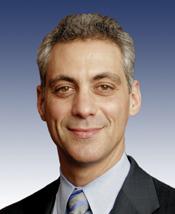 Rep. Rahm Emanuel (D-IL)
Legislative Activity
Stay on top of the latest movement without scrolling through every action
Referred to the Subcommittee on Select Education.
July 21, 2003
View full timeline
Introduced in House
June 17, 2003
Referred to the Committee on Ways and Means, and in addition to the Committees on the Judiciary, Energy and Commerce, and Education and the Workforce, for a period to be subsequently determined by the Speaker, in each case for consideration of such provisions as fall within the jurisdiction of the committee concerned.
June 17, 2003
Referred to the Subcommittee on Crime, Terrorism, and Homeland Security.
June 25, 2003
Referred to the Subcommittee on Select Education.
July 21, 2003
Floor Debate
4 membersWhat members said about H.R. 2490 on the floor
Floor Debate
4 membersWhat members said about H.R. 2490 on the floor
Mr. Speaker, I rise in strong support of H. Res. 772, which recognizes the importance of residents of long-term care facilities to the Nation, including senior citizens and individuals living with…
Mr. Speaker, I yield myself such time as I may consume. Mr. Speaker, almost 1.7 million Americans live in a long-term care facility somewhere in the United States. With improvements in medicine and…
Mr. Speaker, I rise in strong support of H. Res. 772, a resolution supporting the goals and ideals of National Long-Term Care Residents' Rights Week and recognizing the importance of residents of…
Mr. Speaker, I move to suspend the rules and agree to the resolution (H. Res. 772) supporting the goals and ideals of National Long-Term Care Residents' Rights Week and recognizing the importance to…
Bill Text
Latest available legislative text
        [Congressional Bills 108th Congress]
[From the U.S. Government Publishing Office]
[H.R. 2490 Introduced in House (IH)]

108th CONGRESS
1st Session
H. R. 2490

To promote elder justice, and for other purposes.

_______________________________________________________________________

IN THE HOUSE OF REPRESENTATIVES

June 17, 2003

Mr. Emanuel (for himself, Mr. Blunt, Mr. King of New York, Mr. Hoyer,
Mr. Reynolds, Mr. Rangel, Mr. Shimkus, Ms. DeLauro, Mr. Walsh, Mr.
Frost, Mr. Beauprez, Mr. Stark, Mrs. Miller of Michigan, Mr. George
Miller of California, Mr. Cole, Mr. Waxman, Ms. Harris, Mr. John, Mr.
Renzi, Mr. Kildee, Mr. Kirk, Mr. Evans, Ms. Ginny Brown-Waite of
Florida, Mr. Faleomavaega, Mr. McHugh, Mr. Crowley, Mr. Ackerman, Mr.
Hinojosa, Mr. Grijalva, Mr. Israel, Mr. Cramer, Mrs. McCarthy of New
York, Mr. Bishop of New York, Mr. Ross, Mr. Davis of Alabama, Mr.
Weiner, Ms. Watson, Mr. Carson of Oklahoma, Mr. Acevedo-Vila, Ms.
Jackson-Lee of Texas, Mrs. Maloney, Mr. McNulty, Mr. Nadler, Mr. Owens,
Mr. Bell, Ms. Linda T. Sanchez of California, and Mr. Schiff)
introduced the following bill; which was referred to the Committee on
Ways and Means, and in addition to the Committees on the Judiciary,
Energy and Commerce, and Education and the Workforce, for a period to
be subsequently determined by the Speaker, in each case for
consideration of such provisions as fall within the jurisdiction of the
committee concerned

_______________________________________________________________________

A BILL

To promote elder justice, and for other purposes.

Be it enacted by the Senate and House of Representatives of the
United States of America in Congress assembled,

SECTION 1. SHORT TITLE; TABLE OF CONTENTS.

(a) Short Title.--This Act may be cited as the ``Elder Justice
Act''.
(b) Table of Contents.--The table of contents of this Act is as
follows:

Sec. 1. Short title; table of contents.
Sec. 2. Findings.
Sec. 3. Purposes.
TITLE I--DEPARTMENT OF HEALTH AND HUMAN SERVICES

Sec. 101. Amendment to the Social Security Act.
Sec. 102. Patient abuse prevention.
Sec. 103. Increasing the number of health care professionals with
geriatric training.
Sec. 104. Supporting the long-term care ombudsman program.
Sec. 105. Establishment of Office of Adult Protective Services.
Sec. 106. Assuring safety of residents when nursing facilities close.
TITLE II--DEPARTMENT OF JUSTICE

Sec. 201. Definitions; rule.
Sec. 202. Model State laws and practices.
Sec. 203. Office of Elder Justice of the Department of Justice.
Sec. 204. Grants under the Social Security Act.
Sec. 205. Victim advocacy grants.
Sec. 206. Supporting local prosecutors in elder justice matters.
Sec. 207. Supporting State prosecutors in elder justice matters.
Sec. 208. Supporting Federal cases involving elder justice.
Sec. 209. Community policing.
Sec. 210. Supporting law enforcement in elder justice matters.
Sec. 211. Evaluations.
Sec. 212. Authorization of appropriations.
Sec. 213. Cause of action for elder abuse and neglect.
Sec. 214. Civil actions for elder abuse and neglect.
TITLE III--TAX PROVISIONS

Sec. 301. Long-term care facility worker employment tax credit.

SEC. 2. FINDINGS.

Congress finds the following:
(1) The proportion of the United States population age 60
years or older will drastically increase in the next 30 years
as 77,000,000 baby boomers approach retirement and old age.
(2) Each year, anywhere between 500,000 and 5,000,000
elders in the United States are abused, neglected, or
exploited.
(3) Elder abuse, neglect, and exploitation have no
boundaries, and cross all racial, social class, gender, and
geographic lines.
(4) Victims of elder abuse, neglect, and exploitation are
not only subject to injury from mistreatment and neglect, they
are also 3.1 times more likely to die at an earlier age than
expected than elders who were not victims of elder abuse,
neglect, and exploitation.
(5) There is a general dearth of data as to the nature and
scope of elder abuse, neglect, and exploitation.
(6) Despite the dearth of data in the field, experts agree
that most cases of elder abuse, neglect, and exploitation are
never reported and that abuse and neglect shorten a victim's
life, often triggering a downward spiral of an otherwise
productive, self-sufficient elder's life. Programs addressing
other difficult issues such as domestic violence and child
abuse and neglect have demonstrated the need for a multi-
faceted law, combining public health, social service, and law
enforcement approaches.
(7) For over 20 years, Congress has been presented with
facts and testimony calling for a coordinated Federal effort to
combat elder abuse, neglect, and exploitation.
(8) The Federal Government has been slow to respond to the
needs of victims of elder abuse, neglect, and exploitation or
to undertake prevention efforts.
(9) No Federal law has been enacted that adequately and
comprehensively addresses the issues of elder abuse, neglect,
and exploitation and there are very limited resources available
to those in the field directly dealing with these issues.
(10) Differences in State laws and practices in the areas
of elder abuse, neglect, and exploitation lead to significant
disparities in prevention, protective and social services,
treatment systems, and law enforcement, and lead to other
inequities.
(11) The Federal Government has played an important role in
promoting research, training, public safety, data collection,
the identification, development, and dissemination of promising
health care, social, and protective services, and law
enforcement practices, relating to child abuse and neglect,
domestic violence, and violence against women. The Federal
Government should promote similar efforts and protections
relating to elder abuse, neglect, and exploitation.
(12) The Federal Government should provide leadership and
assist States and communities in their efforts to protect
elders in the United States by--
(A) promoting coordinated planning among all levels
of government;
(B) generating and sharing knowledge relevant to
protecting elders;
(C) providing leadership to combat the abuse,
neglect, and exploitation of the Nation's elders; and
(D) providing resources to States and communities
to promote elder justice.
(13) The problem of elder abuse, neglect, and exploitation
requires a comprehensive approach that--
(A) integrates the work of health, legal, and
social service agencies and organizations;
(B) emphasizes the need for prevention, reporting,
investigation, assessment, treatment, and prosecution
of elder abuse, neglect, and exploitation at all levels
of government;
(C) ensures that sufficient numbers of properly
trained personnel with specialized knowledge are in
place to treat, assess, and provide services relating
to elder abuse, neglect, and exploitation, and carry
out elder and vulnerable adult protection duties;
(D) is sensitive to ethnic and cultural diversity;
(E) recognizes the role of mental health,
disability, dementia, substance abuse, medication
mismanagement, and family dysfunction problems in
increasing and exacerbating elder abuse, neglect, and
exploitation; and
(F) balances adults' right to self-determination
with society's responsibility to protect elders and
vulnerable adults.
(14) The human, social, and economic cost of elder abuse,
neglect, and exploitation is high and includes unnecessary
expenditures of medicare and medicaid funds.
(15) The failure to coordinate activities relating to, and
comprehensively prevent and treat, elder abuse, neglect, and
exploitation threatens the future and well-being of millions of
elders in the United States.
(16) All elements of society in the United States have a
shared responsibility in responding to a national problem of
elder abuse, neglect, and exploitation.

SEC. 3. PURPOSES.

The purposes of this Act are as follows:
(1) To bring a comprehensive approach to preventing and
combating elder abuse, neglect, and exploitation, a long
invisible problem that afflicts the most vulnerable among the
aging population of the United States.
(2) To raise the issue of elder abuse, neglect, and
exploitation to national attention, and to create the
infrastructure at the Federal, State, and local levels, to
assure that individuals and organizations on the front lines,
who are fighting elder abuse, neglect, and exploitation with
scarce resources and fragmented systems, have the resources and
information needed to carry out their fight.
(3) To bring a comprehensive multi-disciplinary approach to
elder justice.
(4) To set in motion research and data collection to fill
gaps in knowledge about elder abuse, neglect, and exploitation.
(5) To supplement the activities of service providers and
programs, to enhance training, and to leverage scarce resources
efficiently to ensure that elder justice receives the attention
it deserves as the Nation's population ages.
(6) To examine the many different laws and practices
relating to elder justice in different States and jurisdictions
to ascertain which among those laws and practices are the most
effective.
(7) To promote the development of an effective adult
fiduciary system, including an adult guardianship system, that
protects individuals with diminished capacity, maximizes their
autonomy, and develops effective resources and an elder rights
system.
(8) To recognize and address the role of mental health,
disability, dementia, substance abuse, medication
mismanagement, and family dysfunction problems in increasing
and exacerbating elder abuse, neglect and exploitation.
(9) To create a short- and long-term strategic plan for the
development and coordination of elder justice research,
programs, studies, training, and other efforts nationwide.
(10) To promote collaborative efforts and diminish overlap
and gaps in efforts in developing the important field of elder
justice.

TITLE I--DEPARTMENT OF HEALTH AND HUMAN SERVICES

SEC. 101. AMENDMENT TO THE SOCIAL SECURITY ACT.

The Social Security Act (42 U.S.C. 301 et seq.) is amended by
adding at the end the following:

``TITLE XXII--ELDER JUSTICE

``SEC. 2201. DEFINITIONS; RULE.

``(a) Definitions.--In this title:
``(1) Abuse.--The term `abuse' means the knowing infliction
of physical or psychological harm or the knowing deprivation of
goods or services that are necessary to meet essential needs or
to avoid physical or psychological harm.
``(2) Adult protective services.--The term `adult
protective services' means those services provided to elders
and to people age 18 and older with disabilities who are, or
who are in danger of being, abused, neglected, or exploited,
who are unable to protect themselves, or who have no one to
assist them adequately. The term includes services such as
disseminating reports of adult abuse, neglect or exploitation,
investigating those reports, case planning, monitoring,
evaluation, providing other case work and services, and
providing, arranging for, or facilitating the provision of
medical, social service, economic, legal, housing, law
enforcement, or other protective, emergency, or support
services.
``(3) Caregiver.--The term `caregiver' means an individual
who has the responsibility for the care of an elder, either
voluntarily, by contract, by receipt of payment for care, or as
a result of the operation of law and means a family member or
other individual who provides (on behalf of such individual or
of a public or private agency, organization, or institution)
compensated or uncompensated care to an elder who needs
supportive services in any setting.
``(4) Direct care.--The term `direct care' means care by an
employee or contractor who provides assistance or long-term
care services to a recipient.
``(5) Elder.--The term `elder' means an individual age 60
or older.
``(6) Elder justice.--The term `elder justice' means--
``(A) from a societal perspective, efforts to
prevent, detect, treat, intervene in, and prosecute
elder abuse, neglect, and exploitation and to protect
elders with diminished capacity while maximizing their
autonomy; and
``(B) from an individual perspective, the
recognition of an elder's rights, including the right
to be free of abuse, neglect, and exploitation.
``(7) Eligible entity.--The term `eligible entity' means a
State or local government agency, Indian tribe, or any other
public or private entity that is engaged in and has expertise
in issues relating to elder justice or in a field necessary to
promote elder justice efforts.
``(8) Exploitation.--The term `exploitation' means the
fraudulent or otherwise illegal, unauthorized, or improper act
or process of an individual, including a caregiver or
fiduciary, that uses the resources of an elder for monetary or
personal benefit, profit, gain, or that results in depriving an
elder of rightful access to, or use of, benefits, resources,
belongings, or assets.
``(9) Fiduciary.--The term `fiduciary'--
``(A) means a person or entity with the legal
responsibility--
``(i) to make decisions on behalf of and
for the benefit of another person; and
``(ii) to act in good faith and with
fairness; and
``(B) includes a trustee, a guardian, a
conservator, an executor, an agent under a financial
power of attorney or health care power of attorney, or
a representative payee.
``(10) Grant.--The term `grant' includes a contract,
cooperative agreement, or other mechanism for providing
financial assistance.
``(11) Granting authority.--The term `granting authority'
means the Secretary of Health and Human Services, the Attorney
General, or the Secretary of Health and Human Services and the
Attorney General jointly, as appropriate.
``(12) Guardianship.--The term `guardianship' means--
``(A) the process by which a State court determines
that an adult individual lacks capacity to make
decisions about self-care and property, and appoints
another individual or entity known as a guardian, as a
conservator, or by a similar term, as surrogate
decisionmaker;
``(B) the manner in which the court-appointed
surrogate carries out duties to the individual and the
court; or
``(C) the manner in which the court exercises
oversight of the surrogate.
``(13) Indian.--The term `Indian' means a person who is a
member of an Indian tribe.
``(14) Indian tribe.--The term `Indian tribe' means any
Indian tribe, band, nation, or other organized group or
community, including any Alaska Native village or regional
corporation as defined in or established pursuant to the Alaska
Native Claims Settlement Act (43 U.S.C. 1601 et seq.), that is
recognized as eligible for the special programs and services
provided by the United States to Indians because of their
status as Indians.
``(15) Knowingly.--The term `knowingly' has the meaning
given such term in section 3729(b) of title 31, United States
Code.
``(16) Law enforcement.--The term `law enforcement' means
the full range of potential responders to elder abuse, neglect,
and exploitation including--
``(A) police, sheriffs, detectives, public safety
officers, and corrections personnel;
``(B) prosecutors;
``(C) medical examiners;
``(D) investigators; and
``(E) coroners.
``(17) Long-term care.--
``(A) In general.--The term `long-term care' means
a wide range of supportive and health services for
individuals who need assistance because the individuals
have a loss of capacity for self-care due to illness,
disability, or vulnerability.
``(B) Need for assistance.--For purposes of
subparagraph (A), a need for assistance is often
measured in terms of the capability to engage in
activities of daily living, including eating, dressing,
bathing, and management of one's financial affairs.
``(18) Long-term care facility.--The term `long-term care
facility' means a residential care provider that arranges for,
or directly provides, long-term care.
``(19) Neglect.--The term `neglect' means--
``(A) the failure of a caregiver or fiduciary to
provide the goods or services that are necessary to
maintain the health or safety of an elder; or
``(B) self-neglect.
``(20) Nursing facility.--The term `nursing facility' has
the meaning given such term under section 1919(a).
``(21) Self-neglect.--The term `self-neglect' means an
adult's inability, due to physical or mental impairment or
diminished capacity, to perform essential self-care tasks
including--
(A) obtaining essential food, clothing, shelter,
and medical care;
(B) obtaining goods and services necessary to
maintain physical health, mental health, or general
safety; or
(C) managing one's own financial affairs.
``(22) Serious bodily injury.--
``(A) In general.--The term `serious bodily injury'
means an injury--
``(i) involving extreme physical pain;
``(ii) involving substantial risk of death;
``(iii) involving protracted loss or
impairment of the function of a bodily member,
organ, or mental faculty; or
``(iv) requiring medical intervention such
as surgery, hospitalization, or physical
rehabilitation.
``(B) Criminal sexual abuse.--Serious bodily injury
shall be considered to have occurred if the conduct
causing the injury is conduct constituting aggravated
sexual abuse under section 2241, or sexual abuse under
section 2242, of title 18, United States Code, or any
similar offense under State law.
``(23) Social.--The term `social', when used with respect
to a service, includes adult protective services.
``(24) State.--The term `State' means any of the several
States, the District of Columbia, the Commonwealth of Puerto
Rico, and any other possession or territory of the United
States.
``(25) State long-term care ombudsman.--The term `State
Long-Term Care Ombudsman' means the State Long-Term Care
Ombudsman described in section 712(a)(2) of the Older Americans
Act of 1965 (42 U.S.C. 3058g(a)(2)).
``(26) Underserved population.--The term `underserved
population' means the population of an area designated by the
Secretary as an area with a shortage of elder justice programs
or a population group designated by the Secretary as having a
shortage of such programs. Such areas or groups designated by
the Secretary may include--
``(A) areas or groups that are geographically
isolated (such as isolated in a rural area);
``(B) racial and ethnic minority populations; and
``(C) populations underserved because of special
needs (such as language barriers, disabilities, alien
status, or age).
``(27) Vulnerable adult.--The term `vulnerable adult' means
an adult, age 18 or older, who needs protections and programs
that are the same as or similar to protections and programs for
elders, including an adult who, due to a developmental,
cognitive, psychological, physical, or other type of
disability, may be abused, neglected, or exploited.
``(b) Rule.--The Secretary may determine, in an appropriate case,
that a provision of this title that applies to elders also applies to
vulnerable adults.

``Subtitle A--Federal Elder Justice System

``SEC. 2211. OFFICE OF ELDER JUSTICE OF THE DEPARTMENT OF HEALTH AND
HUMAN SERVICES.

``(a) Establishment.--There is established within the Department of
Health and Human Services under the Assistant Secretary for Aging an
Office of Elder Justice.
``(b) Director.--
``(1) Appointment.--The President, with the advice and
consent of the Senate, shall appoint a Director of the Office
of Elder Justice, from among individuals with experience and
expertise in elder justice issues, to manage the Office of
Elder Justice established under this section.
``(2) Duties.--The Director of the Office of Elder Justice
shall--
``(A)(i) develop objectives, priorities, policy,
and a long-term plan for elder justice programs and
activities relating to prevention, detection, training,
treatment, evaluation, intervention, research, and
improvement of the elder justice system in the United
States;
``(ii) implement the overall policy and a strategy
to carry out the plan described in clause (i); and
``(iii) hire personnel to assist the director in
carrying out the policy, program, and administrative
activities related to the duties under clauses (i) and
(ii);
``(B) provide advice to the Secretary on elder
justice issues; and
``(C) coordinate activities with the Senior Advisor
on Elder Justice.
``(3) Reporting relationship.--The Director of the Office
of Elder Justice shall report to the Assistant Secretary for
Aging.
``(4) Compensation.--The Director shall be compensated at a
rate that shall not exceed the rate established for level I of
the Executive Schedule under section 5312 of title 5, United
States Code.
``(c) Senior Advisor.--
``(1) Appointment.--The Secretary shall appoint a Senior
Advisor on Elder Justice, from among individuals with
experience and expertise in elder justice issues.
``(2) Duties.--The Senior Advisor on Elder Justice shall--
``(A) coordinate elder justice activities among all
relevant divisions, offices, and components of the
Department of Health and Human Services;
``(B) serve as the chairperson of the Intra-Agency
Elder Justice Steering Committee established under
section 2212; and
``(C) provide advice to the Secretary on elder
justice issues.
``(3) Location.--The Senior Advisor on Elder Justice shall
be located in the Office of the Secretary.
``(4) Position.--The position of the Senior Advisor on
Elder Justice shall be a Senior Executive Service position, as
defined in section 3132 of title 5, United States Code.

``SEC. 2212. HEALTH AND HUMAN SERVICES INTRA-AGENCY ELDER JUSTICE
STEERING COMMITTEE.

``(a) In General.--There is established within the Department of
Health and Human Services an Intra-Agency Elder Justice Steering
Committee (in this section referred to as the `steering committee') to
coordinate the elder justice programs and policy of the Department of
Health and Human Services.
``(b) Membership.--The steering committee shall be composed of
representatives, appointed by the Secretary, from--
``(1) the Administration on Aging;
``(2) the National Institute on Aging;
``(3) the Centers for Medicare & Medicaid Services;
``(4) the Centers for Disease Control and Prevention;
``(5) the Agency for Healthcare Research and Quality;
``(6) the Administration for Children and Families,
including a representative who works in adult protective
services;
``(7) the Office of the Assistant Secretary for Planning
and Evaluation;
``(8) the Health Resources and Services Administration;
``(9) the Substance Abuse and Mental Health Services
Administration;
``(10) the Indian Health Service; and
``(11) such other offices or divisions within the
Department of Health and Human Services as the Secretary
determines appropriate.
``(c) Duties.--The steering committee shall coordinate elder
justice matters for the Department of Health and Human Services to
enhance programs and collaborations and to avoid unnecessary
duplication of efforts.

``SEC. 2213. ELDER JUSTICE COORDINATING COUNCIL.

``(a) Establishment.--There is established a committee to be known
as the Elder Justice Coordinating Council (in this section referred to
as the `Council').
``(b) Membership.--The Council shall be composed of the following:
``(1) The Secretary (or the Secretary's designee).
``(2) The Attorney General (or the Attorney General's
designee).
``(3) A representative, appointed by the head of the
Federal department or agency, or other entity, involved from--
``(A) the Department of Housing and Urban
Development;
``(B) the Department of Education;
``(C) the Department of Labor;
``(D) the Department of Transportation;
``(E) the Department of the Treasury;
``(F) the Office of Management and Budget;
``(G) the Office of the Surgeon General;
``(H) the Social Security Administration;
``(I) the Food and Drug Administration;
``(J) the Federal Trade Commission;
``(K) the Department of Commerce;
``(L) the Pension Benefit Guaranty Corporation;
``(M) the Securities and Exchange Commission;
``(N) the Commodity Futures Trading Commission;
``(O) the Board of Governors of the Federal Reserve
System;
``(P) the Office of the Comptroller of the
Currency;
``(Q) the Federal Deposit Insurance Corporation;
``(R) the Federal Bureau of Investigation;
``(S) the Centers for Disease Control and
Prevention;
``(T) the Secret Service;
``(U) the National Institute on Aging;
``(V) the Internal Revenue Service; and
``(W) the United States Postal Service.
``(4) A representative appointed by the Board of Directors
of the Legal Services Corporation from the Legal Services
Corporation.
``(5) A representative appointed by the President from--
``(A) the State Justice Institute;
``(B) the National Research Council of the National
Academy of Sciences; and
``(C) the Institute of Medicine of the National
Academy of Sciences.
``(6) Representatives from other Federal agencies,
appointed by the heads of the Federal agencies with
responsibilities or programs relating to elder abuse, neglect,
and exploitation as determined appropriate by the Secretary and
the Attorney General.
``(7) One representative from each State, representing
State and local governments, appointed by the President from
among persons designated by the Governor of such State due to
expertise in, and active work in, the area of elder justice.
``(8) The members of the advisory board established under
section 2214.
``(c) Period of Appointment; Vacancies.--Members shall be appointed
for terms of 3 years. Any vacancy in the Council shall not affect its
powers, but shall be filled in the same manner as the original
appointment was made.
``(d) Co-Chairpersons.--The Council shall be co-chaired by the
Secretary and the Attorney General (or their designees).
``(e) Meetings.--
``(1) In general.--The Council shall meet at least 2 times
per year as determined by the co-chairpersons.
``(2) Elder justice summit.--
``(A) In general.--One of the meetings described in
paragraph (1) shall be an Elder Justice Summit to
review the state of elder justice, including--
``(i) a summary presentation directly to
the Secretary and the Attorney General
regarding--
``(I) the nature and dimension of
the problems of elder abuse, neglect,
and exploitation;
``(II) Federal, State, local, and
private efforts in elder justice;
``(III) challenges to be faced in
elder justice;
``(IV) promising practices in elder
justice; and
``(V) plans and priorities for the
future in elder justice;
``(ii) additional presentations to address
in greater detail those topics described in
clause (i); and
``(iii) presentations on such other topics
as the Council determines appropriate.
``(B) Participants.--Additional participants, in
addition to the members of the Council, to be invited
to the Elder Justice Summit shall include--
``(i) experts in the fields of elder abuse,
neglect, and exploitation, selected by the co-
chairpersons;
``(ii) the chairman and ranking member of
the Special Committee on Aging of the Senate;
``(iii) designees of the Speaker of the
House of Representatives and the minority
leader of the House of Representatives; and
``(iv) governmental representatives invited
jointly by the co-chairpersons, including--
``(I) 1 representative from the
Federal Government;
``(II) 1 representative from a
State government; and
``(III) 1 representative from a
local government.
``(C) Additional observers.--Additional observers
of the Elder Justice Summit may include representatives
of Federal, State, and local public and private
entities, as well as experts and members of the public
designated by the Council to be observers.
``(3) Other meetings.--In addition to the meeting described
in paragraph (2), the Council shall have at least 1 additional
meeting per year in order to--
``(A) conduct an in-depth analysis of the numerous
phenomena that make up elder abuse, neglect, and
exploitation;
``(B) permit participants to highlight promising
practices, exchange information about addressing
challenges, and identify needs and priorities; and
``(C) determine a procedure for examining and
eliciting national elder justice issues and priorities
in order to guide the Council.
``(f) Duties.--
``(1) In general.--The Council shall make recommendations
for the coordination of activities, relating to elder abuse,
neglect, and exploitation and other crimes against elders, to
the Department of Health and Human Services, the Department of
Justice, and other relevant Federal, State, local, and private
agencies and entities.
``(2) Report.--Not later than 2 years after the date of
enactment of the Elder Justice Act and every 2 years
thereafter, the Council shall provide to Congress a report
that--
``(A) describes the activities of, accomplishments
of, and challenges faced by--
``(i) the Council; and
``(ii) the entities represented on the
Council; and
``(B) makes recommendations for legislation, model
laws, or other appropriate action.
``(g) Powers of the Council.--
``(1) Hearings.--The Council may hold such hearings, sit
and act at such times and places, take such testimony, and
receive such evidence as the Council considers advisable to
carry out this section.
``(2) Information from federal agencies.--The Council may
secure directly from any Federal department or agency such
information as the Council considers necessary to carry out
this section. Upon request of the co-chairpersons of the
Council, the head of such department or agency shall furnish
such information to the Council.
``(3) Postal services.--The Council may use the United
States mails in the same manner and under the same conditions
as other departments and agencies of the Federal Government.
``(h) Travel Expenses.--The members of the Council, and the
participants in and observers of the Elder Justice Summit shall not
receive compensation for the performance of services for the council.
The members shall be allowed, and the participants may be allowed,
travel expenses, including per diem in lieu of subsistence, at rates
authorized for employees of agencies under subchapter I of chapter 57
of title 5, United States Code, while away from their homes or regular
places of business in the performance of services for the Council.
Notwithstanding section 1342 of title 31, United States Code, the
Secretary and the Attorney General may accept the voluntary and
uncompensated services of the members and the participants.
``(i) Detail of Government Employees.--Any Federal Government
employee may be detailed to the Council without reimbursement, and such
detail shall be without interruption or loss of civil service status or
privilege.
``(j) Effective Date.--Section 14 of the Federal Advisory Committee
Act (5 U.S.C. App.) shall not apply to the Council.

``SEC. 2214. ADVISORY BOARD ON ELDER ABUSE, NEGLECT, AND EXPLOITATION.

``(a) Establishment.--There is established a board to be known as
the `Advisory Board on Elder Abuse, Neglect, and Exploitation' (in this
section referred to as the `advisory board') to create a short- and
long-term multidisciplinary strategic plan for the development of the
field of elder justice, and to make recommendations to the Secretary,
the Attorney General, the Elder Justice Coordinating Council
established under section 2213, and the appropriate committees of
Congress.
``(b) Solicitation of Nominations.--The Secretary and the Attorney
General shall jointly publish a notice in the Federal Register
soliciting nominations for the appointment of members of the advisory
board under subsection (c).
``(c) Composition.--The advisory board shall be composed of members
appointed jointly by the Secretary and the Attorney General, from the
general public who are individuals with experience and expertise in
elder abuse, neglect, and exploitation prevention, intervention,
treatment, law enforcement, or research, with due consideration to
representation of ethnic or racial minorities and diverse geographic
areas, including individuals who represent--
``(1) social service providers (including State and local
agencies with the statutory responsibility for adult protective
services);
``(2) health care providers (including geriatrics,
emergency medicine, and nursing and mental health
professionals);
``(3) legal professionals (including law enforcement and
the judiciary);
``(4) gerontologists;
``(5) psychologists;
``(6) State and local government;
``(7) organizations providing services to elders and
disabled persons;
``(8) volunteer groups;
``(9) elder rights advocates;
``(10) family groups;
``(11) experts in adult fiduciary relationships, and those
serving as or monitoring fiduciaries, including guardians; and
``(12) individuals in forensics-related positions
(including coroners and forensic pathologists).
``(d) Vacancies.--Members shall be appointed for terms of 3 years.
Any vacancy in the advisory board shall not affect its powers, but
shall be filled in the same manner as the original appointment was
made.
``(e) Election of Officers.--The advisory board shall elect a
chairperson and vice chairperson from among the members of the advisory
board. The advisory board shall elect its initial chairperson and vice
chairperson at its initial meeting.
``(f) Duties.--Not later than 18 months after the establishment of
the advisory board under subsection (a), and annually thereafter, the
advisory board shall prepare and submit to the Secretary, the Attorney
General, and the appropriate committees of Congress a report
containing--
``(1) information on the status of Federal, State, and
local public and private elder justice activities;
``(2) recommendations (including recommended priorities)
regarding--
``(A) elder justice programs, research, training,
services, practice, enforcement, and coordination;
``(B) coordination between entities pursuing elder
justice efforts and those involved in related areas
that may inform or overlap with elder justice efforts,
such as activities to combat violence against women and
child abuse and neglect; and
``(C) activities relating to adult fiduciary
systems, including guardianship and other fiduciary
arrangements;
``(3) recommendations for specific modifications needed in
Federal and State laws (including regulations) or for programs,
research, and training to enhance prevention, detection,
diagnosis, treatment, intervention in, investigation, and
prosecution of elder abuse, neglect, and exploitation;
``(4) recommendations for the most effective coordinated
national data collection with respect to elder justice, and
elder abuse, neglect, and exploitation; and
``(5) recommendations for a multidisciplinary strategic
plan to guide the effective and efficient development of the
elder justice area.
``(g) Powers of the Advisory Board.--
``(1) Hearings.--The advisory board may hold such hearings,
sit and act at such times and places, take such testimony, and
receive such evidence as the advisory board considers advisable
to carry out this section.
``(2) Information from federal agencies.--The advisory
board may secure directly from any Federal department or agency
such information as the advisory board considers necessary to
carry out this section. Upon request of the co-chairpersons of
the advisory board, the head of such department or agency shall
furnish such information to the advisory board.
``(3) Sharing of data and reports.--The advisory board may
secure from any entity pursuing elder justice activities under
the Elder Justice Act or an amendment made by that Act, any
data, reports, or recommendations generated in connection with
such activities.
``(4)  Postal services.--The advisory board may use the
United States mails in the same manner and under the same
conditions as other departments and agencies of the Federal
Government.
``(h) Travel Expenses.--The members of the advisory board shall not
receive compensation for the performance of services for the advisory
board, but shall be allowed travel expenses, including per diem in lieu
of subsistence, at rates authorized for employees of agencies under
subchapter I of chapter 57 of title 5, United States Code, while away
from their homes or regular places of business in the performance of
services for the advisory board. Notwithstanding section 1342 of title
31, United States Code, the Secretary and the Attorney General may
accept the voluntary and uncompensated services of the members of the
advisory board.
``(i) Detail of Government Employees.--Any Federal Government
employee may be detailed to the advisory board without reimbursement,
and such detail shall be without interruption or loss of civil service
status or privilege.
``(j) Effective Date.--Section 14 of the Federal Advisory Committee
Act (5 U.S.C. App.) shall not apply to the advisory board.

``Subtitle B--Activities to Promote Elder Justice

``SEC. 2221. DATA COLLECTION AND DISSEMINATION.

``(a) Elder Justice Resource Center.--
``(1) Establishment.--The Secretary, after consultation
with the Attorney General, shall establish within the Office of
Elder Justice (established under this title), an Elder Justice
Resource Center (in this section referred to as the `Center')
to be the central repository for information regarding elder
abuse, neglect, and exploitation.
``(2) Duties.--The Center shall--
``(A) develop the capacity and procedures to
collect, maintain, and disseminate information relevant
to consumers, families, providers, clinicians,
advocates, regulators, law enforcement, policymakers,
researchers, fiduciaries including guardians, judges,
and lawyers, relevant to the prevention, detection,
assessment, identification, and treatment of,
intervention in, and prosecution of, elder abuse,
neglect, and exploitation;
``(B) provide, in a user-friendly manner,
information on--
``(i) ways to promote autonomy in the face
of aging or diminishing capacity and mobility;
``(ii) how to avoid becoming a victim of
elder abuse, neglect, or exploitation; and
``(iii) advance planning and how to avoid
the need for a fiduciary;
``(C) provide links and references to other sources
of information;
``(D) compile, analyze, and publish a summary of
research conducted on elder abuse, neglect, and
exploitation and information on how to obtain the
original research materials;
``(E) solicit public comment and comment from the
advisory board established under section 2214 on the
activities of the Center;
``(F) establish a toll-free number for information
and referrals;
``(G) coordinate activities with resource centers
and clearinghouses on elder justice topics; and
``(H) provide funding to public and private
agencies and entities to develop or continue the
efforts of specialized elder justice-related
clearinghouses and information repositories, to be
linked to the Center, that address topics such as those
enumerated in subparagraphs (A) and (B) and that
provide effective services.
``(3) Coordination of available resources.--In establishing
the Center under this subsection the Secretary, after
consultation with the Attorney General, shall--
``(A) consult with other Federal agencies that
operate similar resource centers;
``(B) consult with private entities that operate
resource centers or clearinghouses on elder justice
related topics;
``(C) consult with the head of each agency
participating in the Elder Justice Coordinating Council
established under section 2213, as well as other
agencies with clearinghouses comparable to the Center,
such as clearinghouses relating to child abuse and
neglect, to determine the most efficient and effective
manner for collecting, maintaining, and disseminating
information on elder abuse, neglect, and exploitation;
and
``(D) solicit public comment on the components of
such Center.
``(4) National elder justice library.--
``(A) Establishment.--The Secretary shall establish
within the Center, a National Elder Justice Library (in
this paragraph referred to as the `Library') to serve
as a centralized repository for all types of
appropriate materials concerning training, technical
assistance, and promising practices relating to elder
justice including--
``(i) brochures and pamphlets;
``(ii) video and computer-based resources;
``(iii) books; and
``(iv) training materials.
``(B) Index.--The Library shall create and maintain
an up-to-date index of the materials described in
subparagraph (A) by title, author, date, subject, and
type of material, and a brief description of such
materials. Such index shall be available on the
Internet as well as in printed form in order to be
easily accessible to the general public.
``(C) Availability.--The materials held by the
Library shall be available for copying by individuals
and entities nationwide and shall be disseminated at a
nominal or no fee. The materials shall be copied and
disseminated in accordance with the applicable
provisions of title 17, United States Code.
``(D) Duties.--
``(i) Additional materials.--The Library
shall--
``(I) collect data on materials
that would be appropriate for such
library;
``(II) make efforts to identify and
obtain appropriate materials; and
``(III) identify and obtain
materials relating to effective methods
of conducting training and providing
technical assistance relating to elder
justice, including conducting the
training and providing the assistance
for underserved populations.
``(ii) Information packets.--After
evaluating the materials described in this
paragraph, the Library shall compile and
develop information packets for use by groups
in various settings including groups who are
underserved or have other special needs. Such
information packets shall include information
and materials on training, technical
assistance, and promising practices targeted at
specific topics, groups, and settings.
``(b) Collection of Uniform National Data on Elder Abuse, Neglect,
and Exploitation.--
``(1) Purpose.--The purpose of this subsection is to
improve, streamline, and promote uniform collection,
maintenance, and dissemination of national data relating to
elder abuse, neglect, and exploitation.
``(2) Phase i.--
``(A) In general.--Not later than 1 year after the
date of enactment of the Elder Justice Act, the
Director of the Centers for Disease Control and
Prevention (in this subsection referred to as the
`Director'), after consultation with the Attorney
General and working with experts in relevant
disciplines, shall--
``(i) develop a method for collecting
national data regarding elder abuse, neglect,
and exploitation; and
``(ii) develop uniform national data
reporting forms adapted to each relevant entity
or discipline (such as health, public safety,
social and protective services, and law)
reflecting--
``(I) the distinct manner in which
each discipline receives and maintains
information; and
``(II) the sequence and history of
reports to or involvement of different
disciplines, independently, or the
sequence and history of reports from
one discipline to another over time.
``(B) Forms.--The national data reporting forms
described in subparagraph (A)(ii) shall incorporate the
definitions of this title, for use in determining what
is considered a reportable event.
``(3) Phase ii.--
``(A) In general.--Not later than 1 year after the
completion of the activities described in paragraph
(2), the Director shall ensure that the national data
reporting forms and data collection methods developed
in accordance with such paragraph are pilot tested in 6
States determined by the Director.
``(B) Adjustments to the form and methods.--The
Director, after considering the results of the pilot
testing described in subparagraph (A), and after
consultation with the Attorney General and relevant
experts shall adjust the national data reporting forms
and data collection methods as necessary.
``(4) Phase iii.--
``(A) Distribution of national data reporting
forms.--After completion of the adjustment to the
national data reporting forms under paragraph (3)(B),
the Director shall submit the national data reporting
forms along with instructions to--
``(i) the heads of the relevant components
of the Department of Health and Human Services,
the Department of Justice, and the Department
of the Treasury, and such other Federal
entities as may be appropriate; and
``(ii) the Governor's office of each State
for collection from all relevant State entities
of data, including health care, social
services, and law enforcement data.
``(B) Data collection grants.--
``(i) Authorization.--The Director is
authorized to award grants to States to improve
data collection activities relating to elder
abuse, neglect, and exploitation.
``(ii) Amount.--The amount of funds
provided under each grant awarded to a State
under this subsection shall not exceed
$200,000, to be distributed in accordance with
clause (v).
``(iii) Application.--Each State desiring a
grant under this subparagraph shall submit to
the Director an application at such time, in
such manner, and containing such information as
the Director may require.
``(iv) Requirements.--Each State receiving
a grant under this subparagraph for a fiscal
year is required to report data for the
calendar year that begins during that fiscal
year, using the national data reporting forms
described in subparagraph (A).
``(v) Funding.--
``(I) First year.--For the first
fiscal year in which a State receives
grant funds under this subsection the
Director shall initially distribute 50
percent of such funds. The Director
shall distribute the remaining funds at
the end of the calendar year that
begins during that fiscal year, if the
Director determines that the State has
properly reported data required under
this subsection for the calendar year.
``(II) Subsequent years.--Except as
provided in subclause (I), the Director
shall distribute grant funds to a State
under this subsection for a fiscal year
if the Director determines that the
State properly reported data required
under this subsection for the calendar
year that ends during that fiscal year.
``(C) Required information.--Each report submitted
under this paragraph shall receive an identifier
beginning with a 2-letter State code, and a 2-letter
year code, and such numbers as the Director determines
to be appropriate. Each individual report shall be
assigned a new identifier, even if a victim described
in the report is reported to have been victimized more
than once. If the State submits a report for more than
one discipline, the State shall submit a combined
report to avoid double counting. The State shall note
in each report whether an event was ongoing or occurred
in distinct separate episodes.
``(5) Report.--Not later than 1 year after the date of
enactment of the Elder Justice Act and annually thereafter, the
Director shall prepare and submit to the appropriate committees
of Congress, including to the Special Committee on Aging of the
Senate, a report regarding activities conducted under this
subsection.
``(6) Regulations.--The Secretary shall promulgate such
regulations as are necessary to carry out this subsection.

``SEC. 2222. ENHANCING RESEARCH AND TRAINING AND STRENGTHENING
SERVICES, SYSTEMS, AND PREVENTION.

``(a) Grants.--The Secretary may award grants to eligible entities
for the prevention, detection, assessment, and treatment of,
intervention in, investigation of, and prosecution of elder abuse,
neglect, and exploitation including--
``(1) physical, psychological, and emotional abuse and
neglect by family and other in-home caregivers;
``(2) physical, psychological, and emotional abuse and
neglect of residents in institutional and other residential
care facilities;
``(3) elder sexual abuse;
``(4) domestic violence in later life;
``(5) financial fraud and exploitation; and
``(6) self-neglect.
``(b) Centers of Excellence.--
``(1) Grants authorized.--The Secretary, through the
Director of the National Institute on Aging, and after
consultation with the Director of the Centers for Disease
Control and Prevention, the Director of the Office of Elder
Justice in the Department of Health and Human Services, the
Director of the Office of Elder Justice in the Department of
Justice, and the members of the advisory board established
under section 2214, may award grants to institutions of higher
education and other appropriate entities to establish 5 Centers
of Excellence nationwide that shall specialize in research,
clinical practice, and training relating to elder abuse,
neglect, and exploitation.
``(2) Authorized activities.--The Centers of Excellence
established with funds provided under paragraph (1) shall
conduct the following activities:
``(A) Examine potential issues relating to the
protection of elders who are the subjects of research
on elder abuse, neglect, and exploitation and provide
guidance to other elder abuse, neglect, or exploitation
researchers regarding human subjects, protections, and
the institutional or peer review boards at research
institutions.
``(B) After consultation with the Director of the
National Institute on Aging, and the Director of the
Office of Human Research Protections, develop and
recommend to the Secretary guidelines to assist the
institutional or peer review boards in the review of
research under this title.
``(C) Coordinate activities, to the extent
feasible, among the Centers and with other researchers
of elder abuse, neglect, and exploitation and related
areas, and designate 1 such Center to lead such
coordination.
``(3) Additional activities.--The Centers of Excellence
established under paragraph (1) may conduct activities
including the following:
``(A) Carrying out a study to determine the
national incidence and prevalence of elder abuse,
neglect, and exploitation in all settings.
``(B) Developing uniform, validated screening tools
to assist individuals, families, practitioners,
institutions, and communities in detecting ongoing or
potential elder abuse, neglect, and exploitation. The
tools that may be developed include--
``(i) a screening tool to determine whether
a particular elder is at risk for becoming, or
is, a victim;
``(ii) a screening tool to measure whether
caregivers are at risk of committing elder
abuse, neglect, or exploitation;
``(iii) a screening tool to measure whether
families are at risk for elder abuse, neglect,
and exploitation; and
``(iv) a screening tool to assess
communities, evaluating how each individual
agency or system relating to elder abuse,
neglect, or exploitation operates in such a
community and how all of such agencies or
systems communicate and operate in relationship
to each other within such community.
``(C) Carrying out various types of intervention
research.
``(D) Identifying steps that can be taken (and
replicated) to make homes, neighborhoods, communities,
and facilities safer for elders, and to enhance their
sense of security in all kinds of environments.
``(E) Researching successful fiduciary practices
and systems to enhance the well-being of persons with
diminished capacity.
``(4) Collaboration and access to records.--In awarding a
grant under this subsection the Secretary shall--
``(A) consider the potential for collaboration
among researchers and other relevant entities, such as
State agencies with statutory responsibility for adult
protective services and State Long-Term Care Ombudsmen,
that receive reports of elder abuse, neglect, and
exploitation, but that may be restricted from
participating in research as a result of State law,
confidentiality requirements, or other provisions; and
``(B) require that each institution of higher
education desiring a grant under this subsection ensure
that the researchers working at such institution will
have access to records necessary to conduct research in
accordance with this subsection.
``(5) Excellence advisory committee.--
``(A) Committee established.--There is established
in the Department of Health and Human Services an
Excellence Advisory Committee (in this subsection
referred to as the `Committee').
``(B) Membership.--The Committee shall be composed
of individuals appointed by the Secretary with a
demonstrated interest and expertise in research,
education, and clinical activities related to elder
abuse, neglect, and exploitation, or individuals with
related experience in essential fields such as
epidemiology or forensic pathology, including--
``(i) representatives from private
entities; and
``(ii) representatives from Federal and
State agencies, including--
``(I) researchers;
``(II) health care practitioners;
``(III) policy experts; and
``(IV) other individuals
appropriate to promote useful research,
training, and clinical practice.
``(C) Period of appointment; vacancies.--Members
shall be appointed for terms of 3 years. Any vacancy in
the Committee shall not affect its powers, but shall be
filled in the same manner as the original appointment
was made.
``(D) Duties.--The Committee shall coordinate with
the Advisory Board established under section 2214 and
shall make recommendations to the Secretary, the
Attorney General, the Elder Justice Coordinating
Council established under section 2213, and the Centers
of Excellence established under this subsection
concerning--
``(i) facilitating the coordination of the
activities of the Centers of Excellence
established under this subsection;
``(ii) developing procedures and mechanisms
for data sharing between such Centers of
Excellence; and
``(iii) ensuring that such Centers of
Excellence have similar systems and research
and reporting procedures in order to facilitate
the sharing of data.
``(E) Travel expenses.--The members of the
Committee shall not receive compensation for the
performance of services for the committee, but shall be
allowed travel expenses, including per diem in lieu of subsistence, at
rates authorized for employees of agencies under subchapter I of
chapter 57 of title 5, United States Code, while away from their homes
or regular places of business in the performance of services for the
Committee. Notwithstanding section 1342 of title 31, United States
Code, the Secretary may accept the voluntary and uncompensated services
of members of the Committee.
``(F) Detail of government employees.--Any Federal
Government employee may be detailed to the Committee
without reimbursement, and such detail shall be without
interruption or loss of civil service status or
privilege.
``(G) Termination.--Section 14 of the Federal
Advisory Committee Act (5 U.S.C. App.) shall not apply
to the Committee.
``(c) Safe Haven and Legal Advocacy Grants.--
``(1) Safe haven grants.--
``(A) Grants authorized.--The Secretary may award
grants to 6 diverse communities to examine various
types of elder shelters (in this paragraph referred to
as `safe havens') and to test various models for
establishing safe havens at home or elsewhere.
``(B) Authorized activities.--Grant funds awarded
pursuant to subparagraph (A) shall be used to establish
safe havens that--
``(i) provide a comprehensive, culturally
sensitive, and multidisciplinary team response
to allegations of elder abuse, neglect, or
exploitation;
``(ii) provide a dedicated, elder-friendly
setting;
``(iii) have the capacity to meet the needs
of elders for care; and
``(iv) provide various services including--
``(I) nursing and forensic
evaluation;
``(II) therapeutic intervention;
``(III) victim support and
advocacy; and
``(IV) case review and assistance
to make the elder safer at home or to
find appropriate placement in safer
environments, including shelters, and,
in some circumstances long-term care
facilities, other residential care
facilities, and hospitals.
``(2) Legal advocacy grants.--
``(A) Grants authorized.--The Secretary, after
consultation with the Attorney General, may award
grants--
``(i) to study the need for community
resources in order to provide assistance for
legal and related services for victims of elder
abuse, neglect, or exploitation; and
``(ii) to provide assistance for such
services by awarding grants for demonstration
projects in diverse communities.
``(B) Authorized activities.--Grant funds awarded
pursuant to subparagraph (A) shall be used to provide--
``(i) court-appointed advocates;
``(ii) authorized fiduciaries, including
public guardians;
``(iii) monitoring and oversight of
fiduciaries;
``(iv) legal services; and
``(v) such other services as the Secretary,
after consultation with the Attorney General,
determines appropriate.
``(d) Grants To Enhance Volunteer Services.--The Secretary, after
consultation with the Attorney General, may award grants to nonprofit
organizations and faith-based organizations to encourage such
organizations to establish or continue volunteer programs that focus on
the issues of elder abuse, neglect, and exploitation, or that provide
related services.
``(e) Multidisciplinary Efforts.--
``(1) Grants.--The Secretary may award grants to fund
various multidisciplinary elder justice activities, including
the following:
``(A) Supporting and studying team approaches for
bringing a coordinated multidisciplinary or
interdisciplinary response to elder abuse, neglect, and
exploitation, including a response from individuals in
social service, health care, public safety, and legal
disciplines.
``(B) Establishing State coordinating councils
modeled after the national Elder Justice Coordinating
Council established under section 2213. Such State
coordinating councils shall identify the individual
States' needs and provide the national Elder Justice
Coordinating Council with information and
recommendations relating to State efforts to combat
elder abuse, neglect, and exploitation.
``(C) Providing training, technical assistance, and
other methods of support to groups carrying out
multidisciplinary efforts at the State level (referred
to in some States as `State Working Groups').
``(D) Broadening and studying various models for
elder fatality and serious injury review teams, to make
recommendations about their composition, protocols,
functions, timing, roles, and responsibilities, with a
goal of producing models and information that will
allow for replication based on the needs of other
States and communities.
``(E) Carrying out other interdisciplinary or
multidisciplinary efforts as determined by the
Secretary to be appropriate.
``(2) Intradisciplinary review.--
``(A) In general.--The Director of the Centers for
Disease Control and Prevention, after consultation with
the Director of the Office of Elder Justice in the
Department of Health and Human Services and the
Director of the Office of Elder Justice in the Department of Justice,
shall conduct an intensive intradisciplinary review of entities that
conduct elder justice activities in several different communities,
examining how the entities address elder abuse, neglect, and
exploitation issues (such as an assessment of various types of health
care and social service providers, public safety agencies, law
enforcement agencies, prosecutor offices, and the judiciary).
``(B) Goal.--The goals of the study described in
subparagraph (A) include--
``(i) making an assessment of the
functioning and effectiveness of each entity in
a community that conducts elder justice
activities, and the interdisciplinary
communications and collaborations among such
entities; and
``(ii) developing a procedure for
communities to conduct a self-assessment to
assist them in identifying the manner in which
the entities described in clause (i) in such
communities respond to elder justice issues,
the needs of such communities relating to elder
justice issues, and ways to improve the
response systems of such communities for elder
abuse, neglect, and exploitation.
``(f) Training Grants.--
``(1) Grants authorized.--The Secretary may award grants to
groups representing the targeted disciplines described in
paragraph (2)(B) to train individuals with respect to issues of
elder abuse, neglect, and exploitation.
``(2) Authorized activities.--
``(A) In general.--Grant funds awarded under
paragraph (1) shall be used for training within a
discipline as well as cross-training activities that
permit individuals in multiple disciplines to train
together, fostering communication, coordinating
efforts, and ensuring collaboration.
``(B) Targeted disciplines.--Groups representing
disciplines that will be targeted for training through
grants awarded under paragraph (1) include--
``(i) physicians (geriatricians, family
physicians, internists, emergency physicians,
forensic pathologists and medical examiners,
psychiatrists, and other specialists), and
medical residents, interns, and fellows;
``(ii) nurses and nurse's aides, including
geriatric nurse practitioners, directors of
nursing, and Sexual Abuse Nurse Examiners
(SANE) nurses;
``(iii) social workers;
``(iv) public health and safety
professionals including Emergency Medical
Services professionals;
``(v) therapists, including creative arts,
occupational, speech, and physical therapists;
``(vi) State surveyors (who survey nursing
facilities and other long-term care
facilities);
``(vii) long-term care facility and
hospital staff;
``(viii) coroners and funeral home
operators;
``(ix) Federal, State, and local offices
with responsibility for elder justice or long-
term care matters;
``(x) employees or contractors of State and
local agencies with responsibility for training
persons who provide adult protective services;
``(xi) State Long-Term Care Ombudsmen;
``(xii) victim advocates and advocates for
elders and individuals with disabilities;
``(xiii) individuals involved in volunteer
organizations (including faith-based
organizations) who are involved in issues of
elder abuse, neglect, and exploitation;
``(xiv) police officers, sheriffs,
detectives, firefighters, Federal and State
investigators, public safety officers, and
corrections personnel;
``(xv) Federal, State, and local
prosecutors, attorneys in private practice
involved in elder justice issues, and judges
and court employees;
``(xvi) TRIADs (federally recognized
partnerships of elders, sheriff departments,
and the American Association of Retired
Persons);
``(xvii) elder service officers;
``(xviii) individuals who work with the
public, including bank personnel, postal
workers, utility workers, providers of home-
delivered meals, and others who may work with
elders;
``(xix) students in professional and
paraprofessional schools, internships,
fellowships, and other training programs in a
relevant profession;
``(xx) fiduciaries, including guardians,
conservators, and agents under powers of
attorney; and
``(xxi) staff and volunteers of domestic
violence and child abuse and neglect programs.
``(g) Pilot Project To Evaluate Utility of Services to Elders in
Need.--The Secretary, acting through the Director of the Office of
Elder Justice in the Department of Health and Human Services, and after
consultation with the Director of the Office of Elder Justice in the
Department of Justice, is authorized to award grants to develop and
implement pilot projects designed to ameliorate gaps in basic elder
justice-related health, social, or protective services, with the goal
of identifying what types of services are most useful to elders in
need, and in what contexts the services are useful.
``(h) Increasing the Number of Health Care Professionals With
Geriatric Training.--The Secretary shall establish programs to
increase--
``(1) the number of health care professionals (including
physicians, nurses, nursing personnel, social workers, and
therapists) and students in the health care professions, who
receive education and training related to geriatrics; and
``(2) the number of such professionals who provide health
care related to geriatrics.
``(i) Special Needs Grants.--
``(1) Grants authorized.--The Secretary may award grants to
eligible entities to identify, address, and make
recommendations on meeting the special needs of underserved
populations of elders.
``(2) Populations included.--The grant funds awarded
pursuant to paragraph (1) shall be used to fund programs
including the following:
``(A) Rural settings.--Programs designed to meet
the needs of elders living in rural locations,
including the needs of their informal caregivers and
fiduciaries. The programs shall include--
``(i) strategies to decrease isolation;
``(ii) training for informal caregivers and
fiduciaries;
``(iii) activities involving collaboration
between the entities and local secondary
schools and institutions of higher education to
offer classes for credit, focusing on training
individuals to work with elders and caregivers;
``(iv) training for volunteers to serve in
rural communities; and
``(v) strategies on the use of advance
planning to avoid the need for a guardian or
other fiduciary.
``(B) Minority populations.--Programs designed to
meet the needs of elders in minority populations,
including culturally and linguistically appropriate
programs.
``(C) Indian tribes.--Programs designed to provide
necessary services to elders who are members of Indian
tribes including successful programs in elder abuse,
neglect, and exploitation prevention and treatment that
target Indian populations. The entities carrying out
the programs shall deliver services and distribute
educational information on elder abuse, neglect, and
exploitation to Indian tribes and other policymakers,
health and social service providers, law enforcement,
and researchers with a particular interest in elders
who are members of Indian tribes.
``(j) Public Awareness Grants.--
``(1) Grants authorized.--The Secretary and the Attorney
General, after consultation with the advisory board established
under section 2214 and the coordinating council established
under section 2213, shall jointly award 1 grant to a national
organization, or 1 or more grants to eligible entities, to
conduct a national multimedia campaign designed to raise
awareness about elder abuse, neglect, and exploitation.
``(2) Authorized activities.--Grant funds awarded under
paragraph (1) shall be used for activities including the
following:
``(A) Raising public awareness regarding financial
schemes that target elders.
``(B) Pilot testing of the effectiveness of various
types of multimedia campaigns in raising awareness
about--
``(i) the types of elder abuse, neglect,
and exploitation;
``(ii) steps to take if an individual
suspects elder abuse, neglect, or exploitation
has occurred; and
``(iii) ways to prevent elder abuse,
neglect, or exploitation.
``(k) Elder Justice Innovation Fund.--The Secretary and the
Attorney General are authorized to jointly award grants to individuals
or entities working in the elder justice field or related fields for
research, a demonstration project, development or implementation of a
promising program or practice, or another innovative effort, that might
not otherwise be funded or pursued in the absence of a grant under this
subsection.

``SEC. 2223. STUDIES.

``(a) Roles of Entities Responding to Elder Abuse, Neglect, and
Exploitation.--
``(1) In general.--The Secretary of Health and Human
Services and the Attorney General shall jointly sponsor or
conduct a study of the roles and responsibilities of government
and government-funded entities responsible for responding to,
investigating, and taking other actions in response to reports
of elder abuse, neglect, and exploitation including--
``(A) State and local agencies with the
responsibility for adult protective services;
``(B) the State Long-Term Care Ombudsmen;
``(C) law enforcement (including prosecutors);
``(D) fiduciaries;
``(E) judges and other court personnel; and
``(F) such other social and protective service,
advocacy, and protection organizations as the Secretary
and the Attorney General determine to be appropriate.
``(2) Goals.--The goals of the study authorized in
paragraph (1) (which may be conducted in distinct sections, if
there is overall coordination) are--
``(A) to identify gaps in detection of,
investigation of, and intervention in elder abuse,
neglect, and exploitation;
``(B) to improve the response to elder abuse,
neglect, and exploitation; and
``(C) to reduce elder victimization and its
consequences by assessing and improving the systems
created to address reports of the problems.
``(3) Authorized activities.--In conducting the study
authorized in paragraph (1), the Director shall--
``(A) conduct an evaluation of--
``(i) how the social and protective
service, advocacy, protection, judicial, and
law enforcement entities and systems are
operating;
``(ii) the interplay and allocation of
responsibilities among those entities;
``(iii) how that allocation differs from
community to community and State to State; and
``(iv) how those differences impact the
population intended to be protected by the
entities and systems;
``(B) make recommendations on how to clarify the
roles (at the national level) of entities such as State
agencies with responsibility for adult protective
services, the State Long-Term Care Ombudsmen, and other
protection and advocacy entities to enhance efficiency,
eliminate gaps in service, and identify conflicting
mandates and duplication of efforts; and
``(C) evaluate how various communities delineate
the roles and responsibilities of the types of entities
described in subparagraph (A) in order to identify and
recommend effective models and methods to duplicate the
delineation efforts (such as duplication through
memoranda of understanding).
``(b) Family Elder Abuse, Neglect, and Exploitation Study.--
``(1) In general.--The Director of the Centers for Disease
Control and Prevention (in this subsection referred to as the
`Director'), after consultation with the Director of the Office
of Elder Justice in the Department of Health and Human Services
and the Director of the Office of Elder Justice in the
Department of Justice, shall conduct a study to determine the
best method to address elder abuse, neglect, and exploitation
from a public health perspective, including examining methods
to reduce elder abuse, neglect, and exploitation committed by
family members.
``(2) Collaboration.--The Director, in carrying out
activities under this subsection, shall collaborate with the
Director of the National Institute on Aging, the Director of
the Office of Elder Justice in the Department of Health and
Human Services, the Director of the Office of Elder Justice in
the Department of Justice, the heads of State agencies with
responsibility for adult protective services, and the heads of
such other entities as the Director determines appropriate.

``SEC. 2224. FORENSIC MARKERS, METHODOLOGIES, AND TRAINING.

``(a) Forensic Centers.--
``(1) Grants.--The Secretary shall make grants to
appropriate entities to establish and operate stationary and
mobile forensic centers, to develop forensic expertise
regarding, and provide services relating to, elder abuse,
neglect, and exploitation.
``(2) Coordination among forensic centers and centers of
excellence.--The entities establishing and operating the
forensic centers shall coordinate activities on an ongoing
basis with the Centers of Excellence described in section
2222(b)(1) and with the Excellence Advisory Committee described
in section 2222(b)(5). Such coordination shall include ongoing
communication among the entities, the Centers of Excellence,
and the Excellence Advisory Committee. The entities shall
adhere to the procedures and mechanisms developed by the
Excellence Advisory Committee including procedures and
mechanisms relating to the sharing of data.
``(3) Stationary forensic centers.--The Secretary shall
make 4 of the grants described in paragraph (1) to institutions
of higher education with demonstrated expertise in forensics or
commitment to preventing or treating elder abuse, neglect, or
exploitation, to establish and operate stationary forensic
centers. The Secretary shall make at least 2 of the 4 grants to
an entity operating a Center of Excellence described in section
2222(b)(1) at an institution of higher education.
``(4) Mobile centers.--The Secretary shall make 6 of the
grants described in paragraph (1) to appropriate entities to
establish and operate mobile forensic centers.
``(5) Use of funds.--
``(A) Development of forensic markers and
methodologies.--An entity that receives a grant under
this subsection shall use funds made available through
the grant to assist in the determination of whether
abuse or neglect occurred, a crime was committed, to
conduct research to describe and disseminate
information on--
``(i) forensic markers that indicate a case
in which elder abuse, neglect, or exploitation
may have occurred; and
``(ii) methodologies for determining, in
such a case, when and how health care,
emergency service, social and protective
service, and legal service providers should
intervene and when the providers should report
the case to law enforcement authorities.
``(B) Applications.--An entity that receives a
grant under this subsection shall use funds made
available through the grant to develop forensic
expertise regarding elder abuse, neglect, and
exploitation, in order to provide medical and forensic
evaluation, therapeutic intervention, victim support
and advocacy, case review, and case tracking.
``(C) Collection of evidence.--An entity operating
a Center of Excellence described in section 2222(b)(1)
that receives a grant under this subsection shall use
funds made available through the grant to develop the capacity to
collect forensic evidence, including collecting forensic evidence
relating to a potential determination of elder abuse, neglect, or
exploitation.
``(b) Training To Develop Expertise in Geriatric Forensics.--
``(1) Fellowship programs.--
``(A) In general.--The Secretary shall provide
fellowships to eligible individuals, to enable the
individuals to obtain training through a standard
forensic science training program.
``(B) Eligible individuals.--To be eligible to
receive a fellowship under this paragraph, an
individual shall be a physician who--
``(i) is board certified or board eligible
in internal medicine or family practice;
``(ii) has completed a program in
geriatrics that meets such criteria as the
Secretary may prescribe; and
``(iii) has entered into an agreement with
the Secretary to provide the team training
described in subparagraph (C), after receiving
the training described in subparagraph (A).
``(C) Team training.--An individual who receives a
fellowship under this paragraph shall provide training
in forensic geriatrics to interdisciplinary teams of
health care professionals.
``(2) Other programs.--The Secretary shall establish
programs, and make grants to carry out the programs, to provide
forensic training to experienced geriatricians.

``Subtitle C--Increasing Security, Quality, and Consumer Information
for Long-Term Care

``CHAPTER 1--INCREASING SECURITY FOR LONG-TERM CARE

``SEC. 2231. REPORTING TO LAW ENFORCEMENT OF CRIMES OCCURRING IN
FEDERALLY FUNDED LONG-TERM CARE FACILITIES.

``(a) Determination and Notification.--
``(1) Determination.--Except as provided in paragraph (2),
the owner or operator of each long-term care facility that
receives Federal funds shall annually determine if the facility
received an amount of Federal funds that was not less than
$10,000 during the past year.
``(2) Single positive determination.--The owner or operator
shall make the determination for a year unless the owner or
operator determined that the facility received that amount
during any previous year.
``(3) Notification.--If the owner or operator determines
that the facility received that amount during any year, the
owner or operator shall annually notify each individual
described in subsection (b) of the obligation to comply with
subsection (b).
``(b) Reporting Requirement.--
``(1) In general.--Each individual who is an owner,
operator, employee, manager, agent, or contractor of a long-
term care facility that is the subject of a determination
described in subsection (a)(3) shall report to 1 or more law
enforcement entities for the jurisdiction in which the facility
is located, any reasonable suspicion of a crime (as defined by
the law of the applicable political subdivision) against any
person who is a resident of or receiving care from the
facility.
``(2) Timing.--If the events that cause the suspicion--
``(A) result in serious bodily injury, the
individual shall report the suspicion immediately, but
not later than 2 hours after forming the suspicion; and
``(B) do not result in serious bodily injury, the
individual shall report the suspicion not later than 24
hours after forming the suspicion.
``(c) Penalty.--
``(1) In general.--If an individual described in subsection
(b) violates subsection (b)--
``(A) the individual shall be fined not more than
$200,000 or subject to a civil money penalty of not
more than $200,000; or
``(B) the Secretary shall classify the individual
as an excluded individual, for a period of not more
than 3 years.
``(2) Increased harm.--If an individual described in
subsection (b) violates subsection (b), and the violation
exacerbates the harm to the victim of the crime or results in
harm to another person--
``(A) the individual shall be fined not more than
$200,000 or subject to a civil money penalty of not
more than $200,000; and
``(B) the Secretary shall classify the individual
as an excluded individual, for a period of not more
than 3 years.
``(3) Excluded individual.--During any period for which an
individual is classified as an excluded individual under this
paragraph, an entity that employs the individual shall be
ineligible to receive funds under the medicare program under
title XVIII or the medicaid program under title XIX.
``(4) Extenuating circumstances.--The Secretary may take
into account the financial burden on providers with underserved
populations in determining the penalty.
``(d) Regulations.--The Secretary, after consulting with the
Attorney General, shall issue regulations to carry out this section.

``CHAPTER 2--IMPROVING THE QUALITY OF LONG-TERM CARE

``SEC. 2241. GRANTS AND INCENTIVES TO ENHANCE LONG-TERM CARE STAFFING.

``(a) General Authority.--The Administrator of the Centers for
Medicare & Medicaid Services (in this section referred to as the
`Administrator') shall carry out activities, including activities
described in subsection (b) and (c), to provide incentives for
individuals to train for, seek, and maintain employment providing
direct care in a long-term care facility.
``(b) Specific Programs To Enhance Training, Recruitment, and
Retention of Staff.--
``(1) Coordination with other programs to recruit and train
long-term care staff.--The Administrator shall coordinate
activities with the Secretary of Labor and the Assistant
Secretary for the Administration for Children and Families, in
order to provide incentives to participants in programs carried
out under section 403(a)(5) and part A of title IV to train for
and seek employment providing direct care in a long-term care
facility.
``(2) Career ladders and wage or benefit increases to
increase staffing in long-term care facilities.--
``(A) In general.--The Administrator shall make
grants to eligible entities to carry out programs
through which the entities--
``(i) offer, to employees who provide
direct care in a long-term care facility,
continuing training and varying levels of
certification, based on observed clinical care
practices and the amount of time the employees
spend providing direct care; and
``(ii) provide, or make arrangements with
employers to provide, bonuses or other
increased compensation or benefits to employees
who achieve certification under such a program.
``(B) Application.--To be eligible to receive a
grant under this paragraph, an entity shall submit an
application to the Administrator at such time, in such
manner, and containing such information as the
Administrator may require.
``(c) Specific Programs To Improve Management Practices.--
``(1) In general.--The Administrator shall make grants to
eligible organizations to enable the organizations to provide
training and technical assistance to eligible persons
(including administrators, directors of nursing, staff
developers, and charge nurses) who establish or implement
management practices for long-term care facilities.
``(2) Use of funds.--An organization that receives a grant
under paragraph (1) shall use funds made available through the
grant--
``(A) to provide training and technical assistance
regarding management practices, that are for employees
that provide direct care in a long-term care facility,
and that are demonstrated to promote retention of those
employees, such as--
``(i) the establishment of basic human
resource policies that reward high performance,
including policies that provide for improved
wages and benefits on the basis of job reviews;
``(ii) the establishment of motivational
and thoughtful work organization practices;
``(iii) the creation of a workplace culture
that respects and values caregivers and their
needs;
``(iv) the promotion of a workplace culture
that respects the rights of residents of a
long-term care facility and results in improved
care for the residents; and
``(v) the establishment of other programs
that promote the provision of high quality
care, such as a continuing education program
that provides additional hours of training,
including on-the-job training, for employees
who are certified nurse aides; or
``(B) to disseminate training materials for the
training described in subparagraph (A), and to provide
the materials to the National Elder Justice Library
established in section 2221(a)(4), so that the
materials are available to other providers of such
training.
``(3) Application.--To be eligible to receive a grant under
this subsection, an organization shall submit an application to
the Administrator at such time, in such manner, and containing
such information as the Administrator may require.
``(d) Evaluating Programs.--After the first programs developed
under this section have been completed, the Administrator shall
evaluate the outcomes of such programs in determining which future
applications to fund.
``(e) Accountability Measures.--The Administrator shall develop
accountability measures to assure that funds made available under this
section benefit the staff who are the intended beneficiaries of the
programs provided under this section, to promote increases and
stability in the long-term care workforce.
``(f) Compliance With Applicable Laws.--In order to receive funds
under this section, an eligible entity shall comply with all applicable
laws, regulations, and guidelines.

``SEC. 2242. COLLABORATIVE EFFORTS TO ENHANCE COMMUNICATION ON
PROMOTING QUALITY OF AND PREVENTING ABUSE AND NEGLECT IN
LONG-TERM CARE.

``(a) In General.--The Director of the Agency for Healthcare
Research and Quality (in this section referred to as the `Director'),
after consultation with the Attorney General, may establish pilot
projects to improve long-term care. In carrying out the projects, the
Director shall make grants to eligible partnerships to develop
collaborative and innovative approaches to improve the quality of,
including preventing abuse and neglect in, long-term care.
``(b) Eligible Partnerships.--To be eligible to receive a grant
under this section, a partnership shall be a multidisciplinary
community partnership, such as a partnership consisting of
representatives in a community of nursing facility providers, advocates
for residents of long-term care facilities, State Long-Term Care
Ombudsmen, surveyors, the State agency with responsibility for adult
protective services, the State agency with responsibility for licensing
long-term care facilities, law enforcement agencies, courts, family
councils, residents, certified nurse aides, registered nurses,
physicians, and other appropriate entities and individuals.
``(c) Application.--To be eligible to receive a grant under this
section, a partnership shall submit an application to the Director at
such time, in such manner, and containing such information as the
Director may require.

``SEC. 2243. COLLABORATIVE EFFORTS TO DEVELOP CONSENSUS AROUND THE
MANAGEMENT OF CERTAIN QUALITY-RELATED FACTORS.

``(a) In General.--The Director of the Agency for Healthcare
Research and Quality (in this section referred to as the `Director'),
after consultation with the Attorney General and the Advisory Board
established under section 2214, may make grants to eligible entities to
establish multidisciplinary panels to address, and develop consensus
on, subjects relating to improving the quality of long-term care. The
Director shall make a limited number of such grants, including at least
1 grant for the establishment of such a panel to address, and develop
consensus on, methods of managing resident-to-resident abuse in long-
term care.
``(b) Use of Funds.--An entity that receives a grant under this
section shall--
``(1) establish a multidisciplinary panel to address a
specific subject; and
``(2) ensure that the panel uses the funds made available
through the grant to establish a goal with respect to the
subject, examine relevant research and data, identify best
practices with respect to the subject, determine the best way
to carry out those best practices in a practical and feasible
manner, and determine an effective manner of distributing
information on the subject.
``(c) Application.--To be eligible to receive a grant under this
section, an entity shall submit an application to the Director at such
time, in such manner, and containing such information as the Director
may require.

``CHAPTER 3--INCREASING CONSUMER INFORMATION ABOUT LONG-TERM CARE

``SEC. 2251. LONG-TERM CARE CONSUMER CLEARINGHOUSE.

``(a) In General.--The Director of the Office of Elder Justice in
the Department of Health and Human Services, in coordination with the
Director of the Agency for Healthcare Research and Quality and the
Administrator of the Centers for Medicare & Medicaid Services, shall
establish a long-term care consumer clearinghouse in the Department of
Health and Human Services.
``(b) Information.--The clearinghouse shall be established as part
of the Elder Justice Resource Center (established under section 2221)
and shall provide comprehensive detailed information, in a consumer-
friendly form, to consumers about choices relating to long-term care
providers, such as information (including links to websites and other
resources that provide information) about--
``(1) obtaining the services of, and employing, caregivers
who provide long-term care at an individual's home; and
``(2) options for residential long-term care, such as--
``(A)(i) the type of care provided by nursing
facilities; and
``(ii) the type of care provided by group homes and
other residential long-term care facilities that are
not nursing facilities;
``(B) the benefits available through the programs
carried out under titles XVIII and XIX of the Social
Security Act (42 U.S.C. 1395 et seq. and 1396 et seq.);
and
``(C) the care available through specific long-term
care facilities, including data on the satisfaction
level of residents of, and families of residents of,
the facilities.
``(c) Providers.--In providing information on long-term care
providers under this section, the clearinghouse shall provide
information (from States and other sources) on assisted living
facilities, board and care facilities, congregate care facilities, home
health care providers, and other long-term care providers.

``SEC. 2252. CONSUMER INFORMATION ABOUT THE CONTINUUM OF RESIDENTIAL
LONG-TERM CARE FACILITIES.

``(a) Study.--
``(1) In general.--The Director of the Agency for
Healthcare Research and Quality, after consultation with the
Director of the Office of Elder Justice in the Department of
Health and Human Services and the Director of the Office of
Elder Justice in the Department of Justice shall, directly or
through a grant, conduct a study on consumer concerns relating
to residential long-term care facilities, other than nursing
facilities.
``(2) Specific topics.--The entity conducting the study
shall--
``(A) develop definitions for classes of the
residential long-term care facilities described in
paragraph (1); and
``(B) collect information on the prices of, level
of services provided by, oversight and enforcement
provisions of, and admission and discharge criteria of,
the facilities.
``(b) Report.--The Director of the Agency for Healthcare Research
and Quality shall prepare a report containing the results of the study,
and submit the report to the Elder Justice Coordinating Council
established under section 2213, the Committee on Ways and Means of the
House of Representatives, and the Special Committee on Aging of the
Senate.

``Subtitle D--Administration

``SEC. 2261. EVALUATIONS.

``(a) Grants.--
``(1) In general.--In making a grant under a provision of
this title (other than this section), the granting authority
shall--
``(A) require the recipient of the grant to--
``(i) reserve a portion of the funds made
available through the grant; and
``(ii) use the reserved funds to conduct an
evaluation of the other activities carried out
through the grant; or
``(B)(i) reserve a portion of the funds available
for the grant; and
``(ii) use the reserved funds to provide assistance
to an eligible entity to conduct an evaluation of the
activities carried out through the grant.
``(2) Use of funds.--A recipient of a grant described in
paragraph (1)(A), or assistance described in paragraph
(1)(B)(ii), shall use the funds made available through the
grant, or the assistance, respectively, to conduct a validated
evaluation of the effectiveness of the activities described in
subparagraph (A) or (B), respectively, of paragraph (1).
``(3) Applications.--
``(A) Submission.--
``(i) Grants for projects containing
evaluations.--To be eligible to receive a grant
for which the granting authority requires the
reservation described in paragraph (1)(A)(i),
an entity shall include a proposal for the
evaluation in the application submitted for the
grant.
``(ii) Assistance for evaluations.--To be
eligible to receive assistance under paragraph
(1)(B)(ii), an entity shall submit an
application to the granting authority at such
time, in such manner, and containing such
information as the granting authority may
require, including a proposal for the
evaluation.
``(B) Review and assistance.--An employee of the
National Institute on Aging, and a private expert, with
expertise in evaluation methodology shall review each
proposal described in clause (i) or (ii) of
subparagraph (A), and determine whether the methodology
described in the proposal is adequate to gather
meaningful information. If the employee and expert
determine that the methodology is inadequate, the
employee and expert shall recommend that the granting
authority deny the application for the grant described
in subparagraph (A)(i), or the assistance described in
subparagraph (B)(ii), as appropriate, or make
recommendations for how the application should be
amended. If the granting authority denies the
application on the basis of the proposal, the granting
authority shall inform the applicant why the
application was denied, and offer assistance to the
applicant in modifying the proposal.
``(b) Other Grants.--The granting authority shall make grants to
appropriate entities to conduct validated evaluations of activities, to
reduce elder abuse, neglect, and exploitation, that are not funded
under this title.
``(c) Condition of Participation.--As a condition of participation
in any grant under this title, individuals, facilities, and other
entities shall agree to be subject to sections 3729 through 3733 of
title 31, United States Code and other applicable laws.

``SEC. 2262. HUMAN SUBJECT RESEARCH.

``(a) In General.--For purposes of the application of subpart A of
part 46 of title 45, Code of Federal Regulations to research conducted
under this title, the term `legally authorized representative' means,
unless otherwise provided by law, the individual, or judicial or other
body authorized under the applicable law to consent to medical
treatment on behalf of another person.
``(b) Guidelines.--The Secretary of Health and Human Services,
through the Director of the National Institute on Aging, after
consultation with the Director of the Office for Human Research
Protections and the Excellence Advisory Committee established under
section 2222(b)(5), shall promulgate guidelines to assist researchers
working in the area of elder abuse, neglect, and exploitation, with
issues relating to human subject protections.

``SEC. 2263. REGULATIONS.

``The Secretary may issue such regulations as may be necessary to
carry out this title.

``SEC. 2264. AUTHORIZATION OF APPROPRIATIONS.

``There are authorized to be appropriated to carry out this title
such sums as may be necessary for each of fiscal years 2004 through
2010.''.

SEC. 102. PATIENT ABUSE PREVENTION.

(a) Establishment of Program To Prevent Abuse of Nursing Facility
Residents.--
(1) Screening of skilled nursing facility and nursing
facility employee applicants.--
(A) Medicare program.--Section 1819(b) of the
Social Security Act (42 U.S.C. 1395i-3(b)) is amended
by adding at the end the following:
``(8) Screening of skilled nursing facility workers.--
``(A) Background checks on applicants.--Subject to
subparagraph (B)(ii), before hiring a skilled nursing
facility worker, a skilled nursing facility shall--
``(i) give the worker written notice that
the facility is required to perform background
checks with respect to applicants;
``(ii) require, as a condition of
employment, that such worker--
``(I) provide a written statement
disclosing any conviction for a
relevant crime;
``(II) provide a statement signed
by the worker authorizing the facility
to request the search and exchange of
criminal records;
``(III) provide in person to the
facility a copy of the worker's
fingerprints or thumb print, depending
upon available technology; and
``(IV) provide any other
identification information the
Secretary may specify in regulation;
and
``(iii) request through the appropriate
State agency that the State initiate a State
and national criminal background check on such
worker in accordance with the provisions of
subsection (e)(6) and submit to such State
agency the information described in subclauses
(II) through (IV) of clause (ii).
``(B) Prohibition on hiring of abusive workers.--
``(i) In general.--A skilled nursing
facility may not knowingly employ any skilled
nursing facility worker who has any conviction
for a relevant crime.
``(ii) Provisional employment.--After
complying with the requirements of clauses (i)
and (ii) of subparagraph (A), a skilled nursing
facility may provide for a provisional period
of employment for a skilled nursing facility
worker pending completion of the check against
the background check described under
subparagraph (A)(iii). Subject to clause (iii),
such facility shall maintain direct supervision
of the covered individual during the worker's
provisional period of employment.
``(iii) Exception for small rural skilled
nursing facilities.--In the case of a small
rural skilled nursing facility (as defined by
the Secretary), the Secretary shall provide, by
regulation after consultation with providers of
skilled nursing facility services and entities
representing beneficiaries of such services,
for an appropriate level of supervision with
respect to any provisional employees employed
by the facility in accordance with clause (ii).
Such regulation should encourage the provision
of direct supervision of such employees
whenever practicable with respect to such a
facility and if such supervision would not
impose an unreasonable cost or other burden on
the facility.
``(C) Reporting requirements.--A skilled nursing
facility shall report to the State any instance in
which the facility determines that a skilled nursing
facility worker has committed an act of resident
neglect or abuse or misappropriation of resident
property in the course of employment by the facility.
``(D) Use of information.--
``(i) In general.--A skilled nursing
facility that obtains information about a
skilled nursing facility worker pursuant to
subparagraph (A)(iii) may use such information
only for the purpose of determining the
suitability of the worker for employment.
``(ii) Immunity from liability.--A skilled
nursing facility that, in denying employment
for an applicant (including during the period
described in subparagraph (B)(ii)), reasonably
relies upon information about such applicant
provided by the State pursuant to subsection
(e)(6) shall not be liable in any action
brought by such applicant based on the
employment determination resulting from the
information.
``(iii) Criminal penalty.--Whoever
knowingly violates the provisions of clause (i)
shall be fined in accordance with title 18,
United States Code, imprisoned for not more
than 2 years, or both.
``(E) Civil penalty.--
``(i) In general.--A skilled nursing
facility that violates the provisions of this
paragraph shall be subject to a civil penalty
in an amount not to exceed--
``(I) for the first such violation,
$2,000; and
``(II) for the second and each
subsequent violation within any 5-year
period, $5,000.
``(ii) Knowing retention of worker.--In
addition to any civil penalty under clause (i),
a skilled nursing facility that--
``(I) knowingly continues to employ
a skilled nursing facility worker in
violation of subparagraph (A) or (B);
or
``(II) knowingly fails to report a
skilled nursing facility worker under
subparagraph (C),
shall be subject to a civil penalty in an
amount not to exceed $5,000 for the first such
violation, and $10,000 for the second and each
subsequent violation within any 5-year period.
``(F) Definitions.--In this paragraph:
``(i) Conviction for a relevant crime.--The
term `conviction for a relevant crime' means
any Federal or State criminal conviction for--
``(I) any offense described in
paragraphs (1) through (4) of section
1128(a); and
``(II) such other types of offenses
as the Secretary may specify in
regulations, taking into account the
severity and relevance of such
offenses, and after consultation with
representatives of long-term care
providers, representatives of long-term
care employees, consumer advocates, and
appropriate Federal and State
officials.
``(ii) Disqualifying information.--The term
`disqualifying information' means information
about a conviction for a relevant crime.
``(iii) Skilled nursing facility worker.--
The term `skilled nursing facility worker'
means any individual (other than a volunteer)
that has access to a patient of a skilled
nursing facility under an employment or other
contract, or both, with such facility. Such
term includes individuals who are licensed or
certified by the State to provide such
services, and nonlicensed individuals providing
such services, as defined by the Secretary,
including nurse assistants, nurse aides, home
health aides, and personal care workers and
attendants.''.
(B) Medicaid program.--Section 1919(b) of the
Social Security Act (42 U.S.C. 1396r(b)) is amended by
adding at the end the following new paragraph:
``(9) Screening of nursing facility workers.--
``(A) Background checks on applicants.--Subject to
subparagraph (B)(ii), before hiring a nursing facility
worker, a nursing facility shall--
``(i) give the worker written notice that
the facility is required to perform background
checks with respect to applicants;
``(ii) require, as a condition of
employment, that such worker--
``(I) provide a written statement
disclosing any conviction for a
relevant crime;
``(II) provide a statement signed
by the worker authorizing the facility
to request the search and exchange of
criminal records;
``(III) provide in person to the
facility a copy of the worker's
fingerprints or thumb print, depending
upon available technology; and
``(IV) provide any other
identification information the
Secretary may specify in regulation;
and
``(iii) request through the appropriate
State agency that the State initiate a State
and national criminal background check on such
worker in accordance with the provisions of
subsection (e)(8) and submit to such State
agency the information described in subclauses
(II) through (IV) of clause (ii).
``(B) Prohibition on hiring.--
``(i) In general.--A nursing facility may
not knowingly employ any nursing facility
worker who has any conviction for a relevant
crime.
``(ii) Provisional employment.--After
complying with the requirements of clauses (i)
and (ii) of subparagraph (A), a nursing
facility may provide for a provisional period
of employment for a nursing facility worker
pending completion of the check against the
background check described under subparagraph
(A)(iii). Subject to clause (iii), such
facility shall maintain direct supervision of
the worker during the worker's provisional
period of employment.
``(iii) Exception for small rural nursing
facilities.--In the case of a small rural
nursing facility (as defined by the Secretary),
the Secretary shall provide, by regulation
after consultation with providers of nursing
facility services and entities representing
beneficiaries of such services, for an
appropriate level of supervision with respect
to any provisional employees employed by the
facility in accordance with clause (ii). Such
regulation should encourage the provision of
direct supervision of such employees whenever
practicable with respect to such a facility and
if such supervision would not impose an unreasonable cost or other
burden on the facility.
``(C) Reporting requirements.--A nursing facility
shall report to the State any instance in which the
facility determines that a nursing facility worker has
committed an act of resident neglect or abuse or
misappropriation of resident property in the course of
employment by the facility.
``(D) Use of information.--
``(i) In general.--A nursing facility that
obtains information about a nursing facility
worker pursuant to subparagraph (A)(iii) may
use such information only for the purpose of
determining the suitability of the worker for
employment.
``(ii) Immunity from liability.--A nursing
facility that, in denying employment for an
applicant (including during the period
described in subparagraph (B)(ii)), reasonably
relies upon information about such applicant
provided by the State pursuant to subsection
(e)(8) shall not be liable in any action
brought by such applicant based on the
employment determination resulting from the
information.
``(iii) Criminal penalty.--Whoever
knowingly violates the provisions of clause (i)
shall be fined in accordance with title 18,
United States Code, imprisoned for not more
than 2 years, or both.
``(E) Civil penalty.--
``(i) In general.--A nursing facility that
violates the provisions of this paragraph shall
be subject to a civil penalty in an amount not
to exceed--
``(I) for the first such violation,
$2,000; and
``(II) for the second and each
subsequent violation within any 5-year
period, $5,000.
``(ii) Knowing retention of worker.--In
addition to any civil penalty under clause (i),
a nursing facility that--
``(I) knowingly continues to employ
a nursing facility worker in violation
of subparagraph (A) or (B); or
``(II) knowingly fails to report a
nursing facility worker under
subparagraph (C),
shall be subject to a civil penalty in an
amount not to exceed $5,000 for the first such
violation, and $10,000 for the second and each
subsequent violation within any 5-year period.
``(F) Definitions.--In this paragraph:
``(i) Conviction for a relevant crime.--The
term `conviction for a relevant crime' means
any Federal or State criminal conviction for--
``(I) any offense described in
paragraphs (1) through (4) of section
1128(a); and
``(II) such other types of offenses
as the Secretary may specify in
regulations, taking into account the
severity and relevance of such
offenses, and after consultation with
representatives of long-term care
providers, representatives of long-term
care employees, consumer advocates, and
appropriate Federal and State
officials.
``(ii) Disqualifying information.--The term
`disqualifying information' means information
about a conviction for a relevant crime.
``(iii) Nursing facility worker.--The term
`nursing facility worker' means any individual
(other than a volunteer) that has access to a
patient of a nursing facility under an
employment or other contract, or both, with
such facility. Such term includes individuals
who are licensed or certified by the State to
provide such services, and nonlicensed
individuals providing such services, as defined
by the Secretary, including nurse assistants,
nurse aides, home health aides, and personal
care workers and attendants.''.
(C) Federal responsibilities.--
(i) Development of standard federal and
state background check form.--The Secretary of
Health and Human Services, after consultation
with the Attorney General and representatives
of appropriate State agencies, shall develop a
model form that an applicant for employment at
a nursing facility may complete and Federal and
State agencies may use to conduct the criminal
background checks required under sections
1819(b)(8) and 1919(b)(8) of the Social
Security Act (42 U.S.C. 1395i-3(b)(8),
1396r(b)(8)) (as added by this section).
(ii) Periodic evaluation.--The Secretary of
Health and Human Services, after consultation
with the Attorney General, periodically shall
evaluate the background check system imposed
under sections 1819(b)(8) and 1919(b)(8) of the
Social Security Act (42 U.S.C. 1395i-3(b)(8),
1396r(b)(8)) (as added by this section) and
shall implement changes, as necessary, based on
available technology, to make the background
check system more efficient and able to provide
a more immediate response to long-term care
providers using the system.
(D) No preemption of stricter state laws.--Nothing
in section 1819(b)(8) or 1919(b)(8) of the Social
Security Act (42 U.S.C. 1395i-3(b)(8), 1396r(b)(8)) (as
so added) shall be construed to supersede any provision
of State law that--
(i) specifies a relevant crime for purposes
of prohibiting the employment of an individual
at a long-term care facility that is not
included in the list of such crimes specified
in such sections or in regulations promulgated
by the Secretary of Health and Human Services
to carry out such sections; or
(ii) requires a long-term care facility (as
so defined) to conduct a background check prior
to employing an individual in an employment
position that is not included in the positions
for which a background check is required under
such sections.
(E) Technical amendments.--Effective as if included
in the enactment of section 941 of the Medicare,
Medicaid, and SCHIP Benefits Improvement and Protection
Act of 2000 (114 Stat. 2763A-585), as enacted into law
by section 1(a)(6) of Public Law 106-554, sections
1819(b) and 1919(b) of the Social Security Act (42
U.S.C. 1395i-3(b), 1396r(b)), as amended by such
section 941 (as so enacted into law) are each amended
by redesignating the paragraph (8) added by such
section as paragraph (9).
(2) Federal and state requirements concerning background
checks.--
(A) Medicare.--Section 1819(e) of the Social
Security Act (42 U.S.C. 1395i-3(e)) is amended by
adding at the end the following:
``(6) Federal and state requirements concerning criminal
background checks on skilled nursing facility employees.--
``(A) In general.--Upon receipt of a request by a
skilled nursing facility pursuant to subsection (b)(8)
that is accompanied by the information described in
subclauses (II) through (IV) of subsection
(b)(8)(A)(ii), a State, after checking appropriate
State records and finding no disqualifying information
(as defined in subsection (b)(8)(F)(ii)), shall
immediately submit such request and information to the
Attorney General and shall request the Attorney General
to conduct a search and exchange of records with
respect to the individual as described in subparagraph
(B).
``(B) Search and exchange of records by attorney
general.--Upon receipt of a submission pursuant to
subparagraph (A), the Attorney General shall direct a
search of the records of the Federal Bureau of
Investigation for any criminal history records
corresponding to the fingerprints and other positive
identification information submitted. The Attorney
General shall provide any corresponding information
resulting from the search to the State.
``(C) State reporting of information to skilled
nursing facility.--Upon receipt of the information
provided by the Attorney General pursuant to
subparagraph (B), the State shall--
``(i) review the information to determine
whether the individual has any conviction for a
relevant crime (as defined in subsection
(b)(8)(F)(i)); and
``(ii) immediately report to the skilled
nursing facility in writing the results of such
review.
``(D) Fees for performance of criminal background
checks.--
``(i) Authority to charge fees.--
``(I) Attorney general.--The
Attorney General may charge a fee to
any State requesting a search and
exchange of records pursuant to this
paragraph and subsection (b)(8) for
conducting the search and providing the
records. The amount of such fee shall
not exceed the lesser of the actual
cost of such activities or $50. Such
fees shall be available to the Attorney
General, or, in the Attorney General's
discretion, to the Federal Bureau of
Investigation until expended.
``(II) State.--A State may charge a
skilled nursing facility a fee for
initiating the criminal background
check under this paragraph and
subsection (b)(8), including fees
charged by the Attorney General, and
for performing the review and report
required by subparagraph (C). The
amount of such fee shall not exceed the
actual cost of such activities.
``(ii) Prohibition on charging applicants
or employees.--An entity may not impose on an
applicant for employment or an employee any
charges relating to the performance of a
background check under this paragraph.
``(E) Regulations.--
``(i) In general.--In addition to the
Secretary's authority to promulgate regulations
under this title, the Attorney General, after
consultation with the Secretary, may promulgate
such regulations as are necessary to carry out
the Attorney General's responsibilities under
this paragraph and subsection (b)(8), including
regulations regarding the security
confidentiality, accuracy, use, destruction,
and dissemination of information, audits and
recordkeeping, and the imposition of fees.
``(ii) Appeal procedures.--The Attorney
General, after consultation with the Secretary,
shall promulgate such regulations as are
necessary to establish procedures by which an
applicant or employee may appeal or dispute the
accuracy of the information obtained in a
background check conducted under this paragraph. Appeals shall be
limited to instances in which an applicant or employee is incorrectly
identified as the subject of the background check, or when information
about the applicant or employee has not been updated to reflect changes
in the applicant's or employee's criminal record.
``(F) Report.--Not later than 2 years after the
date of enactment of this paragraph, the Attorney
General shall submit a report to Congress on--
``(i) the number of requests for searches
and exchanges of records made under this
section;
``(ii) the disposition of such requests;
and
``(iii) the cost of responding to such
requests.''.
(B) Medicaid.--Section 1919(e) of the Social
Security Act (42 U.S.C. 1396r(e)) is amended by adding
at the end the following:
``(8) Federal and state requirements concerning criminal
background checks on nursing facility employees.--
``(A) In general.--Upon receipt of a request by a
nursing facility pursuant to subsection (b)(8) that is
accompanied by the information described in subclauses
(II) through (IV) of subsection (b)(8)(A)(ii), a State,
after checking appropriate State records and finding no
disqualifying information (as defined in subsection
(b)(8)(F)(ii)), shall immediately submit such request
and information to the Attorney General and shall
request the Attorney General to conduct a search and
exchange of records with respect to the individual as
described in subparagraph (B).
``(B) Search and exchange of records by attorney
general.--Upon receipt of a submission pursuant to
subparagraph (A), the Attorney General shall direct a
search of the records of the Federal Bureau of
Investigation for any criminal history records
corresponding to the fingerprints and other positive
identification information submitted. The Attorney
General shall provide any corresponding information
resulting from the search to the State.
``(C) State reporting of information to nursing
facility.--Upon receipt of the information provided by
the Attorney General pursuant to subparagraph (B), the
State shall--
``(i) review the information to determine
whether the individual has any conviction for a
relevant crime (as defined in subsection
(b)(8)(F)(i)); and
``(ii) immediately report to the nursing
facility in writing the results of such review.
``(D) Fees for performance of criminal background
checks.--
``(i) Authority to charge fees.--
``(I) Attorney general.--The
Attorney General may charge a fee to
any State requesting a search and
exchange of records pursuant to this
paragraph and subsection (b)(8) for
conducting the search and providing the
records. The amount of such fee shall
not exceed the lesser of the actual
cost of such activities or $50. Such
fees shall be available to the Attorney
General, or, in the Attorney General's
discretion, to the Federal Bureau of
Investigation, until expended.
``(II) State.--A State may charge a
nursing facility a fee for initiating
the criminal background check under
this paragraph and subsection (b)(8),
including fees charged by the Attorney
General, and for performing the review
and report required by subparagraph
(C). The amount of such fee shall not
exceed the actual cost of such
activities.
``(ii) Prohibition on charging applicants
or employees.--An entity may not impose on an
applicant for employment or an employee any
charges relating to the performance of a
background check under this paragraph.
``(E) Regulations.--
``(i) In general.--In addition to the
Secretary's authority to promulgate regulations
under this title, the Attorney General, after
consultation with the Secretary, may promulgate
such regulations as are necessary to carry out
the Attorney General's responsibilities under
this paragraph and subsection (b)(8), including
regulations regarding the security,
confidentiality, accuracy, use, destruction,
and dissemination of information, audits and
recordkeeping, and the imposition of fees.
``(ii) Appeal procedures.--The Attorney
General, after consultation with the Secretary,
shall promulgate such regulations as are
necessary to establish procedures by which an
applicant or employee may appeal or dispute the
accuracy of the information obtained in a
background check conducted under this
paragraph. Appeals shall be limited to
instances in which an applicant or employee is
incorrectly identified as the subject of the
background check, or when information about the
applicant or employee has not been updated to
reflect changes in the applicant's or
employee's criminal record.
``(F) Report.--Not later than 2 years after the
date of enactment of this paragraph, the Attorney
General shall submit a report to Congress on--
``(i) the number of requests for searches
and exchanges of records made under this
section;
``(ii) the disposition of such requests;
and
``(iii) the cost of responding to such
requests.''.
(3) Application to other entities providing home health or
long-term care services.--
(A) Medicare.--Part D of title XVIII of the Social
Security Act (42 U.S.C. 1395x et seq.) is amended by
adding at the end the following:

``application of skilled nursing facility preventive abuse provisions
to any provider of services or other entity providing home health or
long-term care services

``Sec. 1897. (a) In General.--The requirements of subsections
(b)(8) and (e)(6) of section 1819 shall apply to any provider of
services or any other entity that is eligible to be paid under this
title for providing home health services, hospice care (including
routine home care and other services included in hospice care under
this title), or long-term care services to an individual entitled to
benefits under part A or enrolled under part B, including an individual
provided with a Medicare+Choice plan offered by a Medicare+Choice
organization under part C (in this section referred to as a `medicare
beneficiary').
``(b) Supervision of Provisional Employees.--
``(1) In general.--With respect to an entity that provides
home health services, such entity shall be considered to have
satisfied the requirements of section 1819(b)(8)(B)(ii) or
1919(b)(8)(B)(ii) if the entity meets such requirements for
supervision of provisional employees of the entity as the
Secretary shall, by regulation, specify in accordance with
paragraph (2).
``(2) Requirements.--The regulations required under
paragraph (1) shall provide the following:
``(A) Supervision of a provisional employee shall
consist of ongoing, good faith, verifiable efforts by
the supervisor of the provisional employee to conduct
monitoring and oversight activities to ensure the
safety of a medicare beneficiary.
``(B) For purposes of subparagraph (A), monitoring
and oversight activities may include (but are not
limited to) the following:
``(i) Follow-up telephone calls to the
medicare beneficiary.
``(ii) Unannounced visits to the medicare
beneficiary's home while the provisional
employee is serving the medicare beneficiary.
``(iii) To the extent practicable, limiting
the provisional employee's duties to serving
only those medicare beneficiaries in a home or
setting where another family member or resident
of the home or setting of the medicare
beneficiary is present.
``(C) In promulgating such regulations, the
Secretary shall take into account the staffing and
geographic issues faced by small rural entities (as
defined by the Secretary) that provide home health
services, hospice care (including routine home care and
other services included in hospice care under this
title), or other long-term care services. Such
regulations should encourage the provision of
monitoring and oversight activities whenever
practicable with respect to such an entity, and if such
activities would not impose an unreasonable cost or
other burden on the entity.''.
(B) Medicaid.--Section 1902(a) of the Social
Security Act (42 U.S.C. 1396a) is amended--
(i) in paragraph (64), by striking ``and''
at the end;
(ii) in paragraph (65), by striking the
period and inserting ``; and''; and
(iii) by inserting after paragraph (65) the
following:
``(66) provide that any entity that is eligible to be paid
under the State plan for providing home health services,
hospice care (including routine home care and other services
included in hospice care under title XVIII), or long-term care
services for which medical assistance is available under the
State plan to individuals requiring long-term care complies
with the requirements of subsections (b)(8) and (e)(8) of
section 1919 and section 1897(b) (in the same manner as such
section applies to a medicare beneficiary).''.
(b) Prevention and Training Demonstration Project.--
(1) Establishment.--The Secretary of Health and Human
Services shall establish a demonstration program to provide
grants to develop information on best practices in patient
abuse prevention training (including behavior training and
interventions) for managers and staff of hospital and health
care facilities.
(2) Eligibility.--To be eligible to receive a grant under
paragraph (1), an entity shall be a public or private nonprofit
entity and prepare and submit to the Secretary of Health and
Human Services an application at such time, in such manner, and
containing such information as the Secretary may require.
(3) Use of funds.--Amounts received under a grant under
this subsection shall be used to--
(A) examine ways to improve collaboration between
State health care survey and provider certification
agencies, long-term care ombudsman programs, the long-
term care industry, and local community members;
(B) examine patient care issues relating to
regulatory oversight, community involvement, and
facility staffing and management with a focus on staff
training, staff stress management, and staff supervision;
(C) examine the use of patient abuse prevention
training programs by long-term care entities, including
the training program developed by the National
Association of Attorneys General, and the extent to
which such programs are used; and
(D) identify and disseminate best practices for
preventing and reducing patient abuse.
(4) Authorization of appropriations.--There are authorized
to be appropriated to carry out this subsection such sums as
may be necessary.
(c) Sense of the Senate Regarding the Establishment of a National
Background Check System for Long-Term Care Employees.--
(1) Findings.--The Senate makes the following findings:
(A) Nearly 1,500,000 Americans reside in 17,000
nursing homes throughout the Nation, and the vast
majority of nursing homes participate in the medicare
and medicaid programs.
(B) The Federal Government spent $82,100,000,000
through the medicare and medicaid programs in fiscal
year 2000 for long-term care services.
(C) The impending retirement of the baby boom
generation will greatly increase the demand and need
for quality long-term care, and it is incumbent on
Congress and the President to ensure that medicare and
medicaid beneficiaries are protected from abuse,
neglect, and mistreatment.
(D) On July 30, 2001, the minority staff of the
special investigations division of the Committee on
Government Reform of the House of Representatives
issued a report which found that in the past 2 years,
over 30 percent of nursing homes in the United States
were cited for a physical, sexual, or verbal abuse
violation that had the potential to harm residents, and
nearly 10 percent of nursing homes had violations that
caused actual harm to residents.
(E) Although the majority of long-term care
facilities do an excellent job in caring for elderly
and disabled patients, incidents of abuse and neglect
and mistreatment do occur at an unacceptable rate and
are not limited to nursing homes alone.
(F) Without a national background check system to
screen applicants for employment, all long-term care
providers, including nursing facilities, home health,
home care, and hospice providers, are at risk for
hiring workers with a history of abuse and violence.
(G) A March 2002 report by the General Accounting
Office found that few prosecutions and criminal
convictions result from allegations of abuse in nursing
homes.
(H) Federal law requires all States to maintain a
nurse aide registry which includes any substantiated
findings of abuse committed by nurse aides in nursing
homes.
(I) In March 2002, the General Accounting Office
testified before the Special Committee on Aging of the
Senate that the existing State registries contained
significant gaps because many nursing home employees
are not included in the registries and the registries
do not track abuses committed in other States.
(J) A 1998 report from the Office of the Inspector
General of the Department of Health and Human Services
entitled ``Safeguarding Long-Term Care Residents''
recommended establishing a national registry of abusive
long-term care workers to be checked by all long-term
care facilities before hiring an employee.
(2) Sense of the senate.--It is the Sense of the Senate
that Congress should pass legislation that will--
(A) require the Secretary of Health and Human
Services to establish a national registry of abusive
long-term care workers that will incorporate abuse
information from all existing State nurse aide
registries, and expand information included in the
State registries and the national registry to include
abuse information about all employees of all long-term
care providers that receive funding through the
medicare or medicaid programs (42 U.S.C. 1395 et seq.;
1396 et seq.);
(B) require all long-term care providers, before
hiring a potential employee, to conduct checks of both
the national registry and criminal conviction records
maintained by the Federal Bureau of Investigation, and
prohibit long-term care providers from hiring potential
employees with relevant abuse and criminal histories;
(C) require the Secretary of Health and Human
Services and the Attorney General to develop an
efficient system for long-term care providers to use to
check both the national registry and the criminal
conviction records maintained by the Federal Bureau of
Investigation before hiring an employee; and
(D) ensure adequate safeguards to protect the
privacy and accuracy of information regarding
applicants for employment being checked through the
national registry and the criminal conviction records
maintained by the Federal Bureau of Investigation.
(d) Effective Date.--
(1) In general.--Except as provided in paragraph (2), this
section and the amendments made by this section shall take
effect on the date that is 6 months after the effective date of
final regulations promulgated to carry out this section and
such amendments.
(2) Sense of the senate.--Subsection (c) shall take effect
on the date of enactment of this section.

SEC. 103. INCREASING THE NUMBER OF HEALTH CARE PROFESSIONALS WITH
GERIATRIC TRAINING.

Section 338C of the Public Health Service Act (42 U.S.C. 254m) is
amended by adding at the end the following:
``(e) For purposes of this section and section 338B, the term
`obligated service', with respect to an individual who has entered into
a written contract with the Secretary under section 338B, includes any
period in which the individual is enrolled and participating in an
accredited (as determined by the Secretary) educational program that
provides geriatric training. Upon the completion of such training, such
individual, after consultation with the Secretary, shall provide
geriatric services as appropriate during the remainder of such
individual's period of obligated service.''.

SEC. 104. SUPPORTING THE LONG-TERM CARE OMBUDSMAN PROGRAM.

Section 712(h) of the Older Americans Act of 1965 (42 U.S.C.
3058g(h)) is amended--
(1) in paragraph (8), by striking ``; and'' and inserting a
semicolon;
(2) in paragraph (9), by striking the period and inserting
``; and''; and
(3) by adding at the end the following:
``(10) make grants, in consultation with the Director of
the Office of Elder Justice in the Department of Health and
Human Services and the Director of the Office of Elder Justice
in the Department of Justice, to eligible entities with
relevant expertise and experience to conduct evaluations and
pilot studies relating to various programs and methods carried
out by the Office of the State Long-Term Care Ombudsman or a
local Ombudsman entity under section 307(a)(9) or this chapter,
or to provide support (such as an ombudsman resource
center).''.

SEC. 105. ESTABLISHMENT OF OFFICE OF ADULT PROTECTIVE SERVICES.

(a) In General.--Part A of title XI of the Social Security Act (42
U.S.C. 1301 et seq.) is amended by adding at the end the following:

``office of adult protective services

``Sec. 1150A. (a) In General.--There is established within the
Department of Health and Human Services, within the Administration on
Children and Families, the Office of Adult Protective Services (in this
section referred to as the `Office'). The Office shall be headed by a
Director, who shall be appointed by the Secretary.
``(b) Duties.--The Office shall--
``(1) provide necessary funding and support to State and
local adult protective services offices that investigate
reports of abuse, neglect, and exploitation of elders;
``(2) annually collect and disseminate data relating to the
abuse, exploitation, and neglect of elderly individuals in
coordination with the Centers for Disease Control and
Prevention efforts to collect national data under section
2221(b);
``(3) develop and disseminate best practices regarding, and
provide training on, carrying out protective services for
elders;
``(4) in conjunction with the necessary experts, conduct
research related to the provision of such protective services;
``(5) provide technical assistance to States and other
entities that provide or fund the provision of such protective
services, including through grants made under title XX;
``(6) participate in the Intra-Agency Elder Justice
Steering Committee established under section 2212; and
``(7) coordinate activities with the Office of Elder
Justice established under section 2211 and with other Federal
and State agencies that have responsibility for issues related
to elder justice.
``(c) Appropriations.--There are appropriated such sums as may be
necessary to carry out this section.''.
(b) Effective Date.--The amendments made by this section take
effect 90 days after the date of enactment of the Elder Justice Act.

SEC. 106. ASSURING SAFETY OF RESIDENTS WHEN NURSING FACILITIES CLOSE.

(a) Medicare.--Section 1819(c)(2) of the Social Security Act (42
U.S.C. 1395i-3(c)(2)) is amended by adding at the end the following:
``(D) Notification of facility closure.--
``(i) In general.--A skilled nursing
facility shall--
``(I) submit to the Secretary and
the appropriate State regulatory agency
written notification of an impending
closure not later than the date that is
60 days prior to the date of such
closure;
``(II) include in the notice a plan
for the transfer and adequate
relocation of the residents prior to
closure, including assurances that
residents will not be transferred to
facilities providing substandard care
for which administrative or law
enforcement action is pending; and
``(III) not later than 10 days
after the facility closure, submit to
the Secretary and the appropriate State
agency information identifying where
residents of the closed facility were
transferred and on what date.
``(ii) Sanctions.--Any person owning a
skilled nursing facility that fails to comply
with the requirements of clause (i) shall be
subject to--
``(I) a civil monetary penalty of
up to $1,000,000;
``(II) exclusion from participation
in the programs under this Act (in
accordance with the procedures of
section 1128); and
``(III) any other applicable civil
monetary penalties and assessments.
``(iii) Procedure.--A civil monetary
penalty or assessment authorized under clause
(ii) shall be imposed against a person in the same manner as a civil
monetary penalty, assessment, or exclusion is imposed under section
1128A.''.
(b) Medicaid.--Section 1919(c)(2) of the Social Security Act (42
U.S.C. 1396r(c)(2)) is amended by adding at the end the following:
``(G) Notification of facility closure.--
``(i) In general.--A nursing facility
shall--
``(I) submit to the Secretary and
the appropriate State regulatory agency
written notification of an impending
closure not later than the date that is
60 days prior to the date of such
closure;
``(II) include in the notice a plan
for the transfer and adequate
relocation of the residents prior to
closure, including assurances that
residents will not be transferred to
facilities providing substandard care
for which administrative or law
enforcement action is pending; and
``(III) not later than 10 days
after the facility closure submit to
the Secretary and the appropriate State
agency information identifying where
residents of the closed facility were
transferred and on what date.
``(ii) Sanctions.--Any person owning a
nursing facility that fails to comply with the
requirements of clause (i) shall be subject
to--
``(I) a civil monetary penalty of
up to $1,000,000;
``(II) exclusion from participation
in the programs under this Act (in
accordance with the procedures of
section 1128); and
``(III) any other applicable civil
monetary penalties and assessments.
``(iii) Procedure.--A civil monetary
penalty or assessment authorized under clause
(ii) shall be imposed against a person in the
same manner as a civil monetary penalty,
assessment, or exclusion is imposed under
section 1128A.''.
(c) Regulations.--The Secretary, after consulting with the Attorney
General, shall issue regulations to carry out this section.

TITLE II--DEPARTMENT OF JUSTICE

SEC. 201. DEFINITIONS; RULE.

(a) Definitions.--In this title the terms ``abuse'', ``elder'',
``elder justice'', ``exploitation'', ``fiduciary'', ``grant'',
``granting authority'', ``guardianship'', ``knowingly'', ``law
enforcement'', ``neglect'', ``serious bodily injury'', ``social'',
``State'', and ``vulnerable adult'' have the meanings given such terms
in title XXII of the Social Security Act.
(b) Rule.--The Attorney General may determine, in an appropriate
case, that a provision of this title that applies to elders also
applies to vulnerable adults.

SEC. 202. MODEL STATE LAWS AND PRACTICES.

(a) In General.--The Attorney General, after consultation with the
Secretary of Health and Human Services, shall--
(1) conduct a study and prepare a report of the findings of
that study of State laws and practices relating to elder abuse,
neglect, and exploitation and provide such report or periodic
reports to the Elder Justice Resource Center established under
section 2221 of the Social Security Act, to be made available
to the public; and
(2) not later than 2 years after the date of enactment of
this Act, submit to the Chairman and Ranking Member of the
Special Committee on Aging of the Senate, and the Speaker and
Minority leader of the House of Representatives a report that--
(A) provides recommendations on a comprehensive
description and comparative analysis of the State laws
and practices; and
(B) provides recommended models for State laws and
practices based on an analysis of the most effective
State laws and practices, including recommendations
with respect to the definitions referred to in
subsection (b)(1).
(b) State Laws and Practices.--The Attorney General shall examine
State laws and practices under subsection (a) on issues including--
(1) definitions of ``elder'', ``abuse'', ``neglect'', and
``exploitation'', and related terms;
(2) mandatory reporting laws, with respect to--
(A) who is a mandated reporter;
(B) to whom must they report and within what
timeframe; and
(C) any consequences for nonreporting;
(3) evidentiary, procedural, sentencing, choice of
remedies, and data retention issues relating to pursuing cases
relating to elder abuse, neglect, and exploitation;
(4) laws requiring immediate reporting of all nursing home
deaths to the county coroner or to some other individual or
entity;
(5) fiduciary laws, including guardianship and power of
attorney laws;
(6) laws that permit or encourage banks and bank employees
to prevent and report suspected elder abuse, neglect, and
exploitation;
(7) laws that may impede research on elder abuse, neglect,
and exploitation;
(8) practices relating to the enforcement of laws relating
to elder abuse, neglect, and exploitation; and
(9) practices relating to other aspects of elder justice.

SEC. 203. OFFICE OF ELDER JUSTICE OF THE DEPARTMENT OF JUSTICE.

(a) Establishment.--There is established within the Department of
Justice under the Assistant Attorney General, Office of Justice
Programs, an Office of Elder Justice.
(b) Director.--
(1) Appointment.--The President, with the advice and
consent of the Senate, shall appoint a Director of the Office
of Elder Justice, from among individuals with experience and
expertise in elder justice issues, to manage the Office of
Elder Justice established under this section.
(2) Duties.--The Director of the Office of Elder Justice
shall--
(A)(i) develop objectives, priorities, policy, and
a long-term plan for elder justice programs and
activities relating to prevention, detection, training,
treatment, evaluation, intervention, research, and
improvement of the elder justice system in the United
States;
(ii) implement the overall policy and a strategy to
carry out the plan described in clause (i); and
(iii) hire personnel to assist the director in
carrying out the policy, program, and administrative
activities related to the duties under clauses (i) and
(ii);
(B) provide advice to the Attorney General on elder
justice issues; and
(C) coordinate activities with the Senior Counsel
on Elder Justice.
(3) Reporting relationship.--The Director of the Office of
Elder Justice shall have the same reporting relationship with
the Attorney General and the Assistant Attorney General, Office
of Justice Programs, as the directors of the other offices
headed by presidential appointees within the Office of Justice
Programs.
(4) Compensation.--The Director shall be compensated at a
rate that shall not exceed the rate established for level I of
the Executive Schedule under section 5312 of title 5, United
States Code.
(c) Senior Counsel.--
(1) Appointment.--The Attorney General shall appoint a
Senior Counsel on Elder Justice, from among individuals with
experience and expertise in elder justice issues.
(2) Duties.--The Senior Counsel on Elder Justice shall--
(A) coordinate elder justice activities among--
(i) the Office of Elder Justice;
(ii) other offices (including bureaus)
within the Office of Justice Programs that are
involved with elder justice issues;
(iii) litigating divisions with cases
relating to elder justice matters;
(iv) the Executive Office of United States
Attorneys and the United States Attorneys'
offices; and
(v) any other office or division of the
Department of Justice that the Attorney General
considers appropriate for such coordination;
and
(B) provide advice to the Attorney General on elder
justice issues.
(3) Location.--The Senior Counsel on Elder Justice shall be
located in--
(A) the Office of the Attorney General;
(B) the Office of the Deputy Attorney General; or
(C) the Office of the Associate Attorney General.
(4) Position.--The position of the Senior Counsel on Elder
Justice shall be a Senior Executive Service position, as
defined in section 3132 of title 5, United States Code.
(5) Staff.--The Senior Counsel on Elder Justice may appoint
and terminate 1 full-time employee to enable the Senior Counsel
to perform the duties described in paragraph (2). The Senior
Counsel on Elder Justice may fix the compensation of the
employee in accord with chapter 51 and subchapter III of
chapter 53 of title 5, United States Code, relating to
classification of positions and General Schedule pay rates.
(6) Relation to other law.--The positions described in
paragraphs (4) and (5), and the salary for the positions, shall
be in addition to the total number of positions and the total
amount of salary provided for in Public Law 107-77.

SEC. 204. GRANTS UNDER THE SOCIAL SECURITY ACT.

The Attorney General is authorized to award grants under
subsections (a), (c)(1), (c)(2), (d), (e)(1), (f), (h), and (i) of
section 2222 and under section 2224 of the Social Security Act in
accordance with such subsections.

SEC. 205. VICTIM ADVOCACY GRANTS.

(a) Grants Authorized.--The Attorney General, after consultation
with the Secretary of Health and Human Services, may award grants to
eligible entities to study the special needs of victims of elder abuse,
neglect, and exploitation.
(b) Authorized Activities.--Funds awarded pursuant to subsection
(a) shall be used for pilot programs that develop programs, provide
training to health care, social and protective services providers, law
enforcement, fiduciaries including guardians, judges and court
personnel, and victim advocates, and examine special approaches
designed to meet the needs of victims of elder abuse, neglect, and
exploitation.

SEC. 206. SUPPORTING LOCAL PROSECUTORS IN ELDER JUSTICE MATTERS.

(a) Grant Authorized.--The Attorney General, after consultation
with the Director of Office of Elder Justice in the Department of
Health and Human Services, shall award grants to provide training,
technical assistance, policy development, multidisciplinary
coordination, and other types of support to local prosecutors, handling
elder justice-related cases, including the funding of specially
designated elder justice positions or units, or funding the creation of
a Center for the Prosecution of Elder Abuse, Neglect, and Exploitation
by the American Prosecutor Research Institute of the National District
Attorneys Association, or other similarly situated entity to advise and
support local prosecutors nationwide in their pursuit of cases
involving elder abuse, neglect, and exploitation.
(b) Duties.--The Center created under subsection (a) shall, among
other things--
(1) collaborate with experts in elder abuse, neglect, and
exploitation;
(2) collaborate with the Advisory Board created by section
2214 of the Social Security Act; and
(3) provide local prosecutors and personnel assisting such
prosecutors with training, technical assistance,
multidisciplinary teams and input, in the handling, prevention
and prosecution of, and special circumstances surrounding elder
abuse, neglect, and exploitation.

SEC. 207. SUPPORTING STATE PROSECUTORS IN ELDER JUSTICE MATTERS.

(a) In General.--The Attorney General shall, after consultation
with the Secretary of Health and Human Services, award grants to
provide training, technical assistance, multidisciplinary coordination,
policy development, and other types of support to State prosecutors,
including employees of State Attorneys General and Medicaid Fraud
Control Units, handling elder justice-related matters.
(b) Creating Specialized Positions.--Grants under this section may
be made for--
(1) the establishment of specially designated elder justice
positions or units; or
(2) the creation of a position to coordinate elder justice-
related cases, training, technical assistance, and policy
development for State prosecutors, by the National Association
of Attorneys General (NAAG) or other similarly situated entity.

SEC. 208. SUPPORTING FEDERAL CASES INVOLVING ELDER JUSTICE.

(a) Support and Assistance.--
(1) In general.--The Attorney General shall support cases
relating to elder justice.
(2) Additional staff.--The Attorney General shall have
additional Federal prosecutors and make funding available to
Federal prosecutors to hire nurse-investigators or other
experts needed to identify, assist with, or pursue cases
relating to elder justice.
(3) Resource group.--The Attorney General may fund through
the Executive Office of United States Attorneys for a Resource
Group to assist prosecutors throughout the Nation in pursuing
failure of care and other cases relating to elder justice
matters.
(b) Office of Inspector General.--The Office of Inspector General
of the Department of Health and Human Services shall hire nurse
investigators and other experts to investigate and pursue failure of
care allegations.

SEC. 209. COMMUNITY POLICING.

(a) Grant Authorized.--The Attorney General, after consultation
with the Secretary of the Department of Health and Human Services,
shall establish a grant program to develop community policing and other
law enforcement efforts to make communities safer for elders living in
all settings.
(b) Special Elder Units.--The Attorney General, after consultation
with the Secretary of Health and Human Services, shall establish a
grant program to support--
(1) special elder units and officers;
(2) in rural areas with fewer law enforcement personnel, a
specially trained elder officer;
(3) programs, including the Alzheimer Association's ``Safe
Return Program'' or other similar program; and
(4) training, technical assistance, policy development,
multidisciplinary coordination, and other support and programs
relating to elder justice.

SEC. 210. SUPPORTING LAW ENFORCEMENT IN ELDER JUSTICE MATTERS.

The Attorney General shall, after consultation with the Secretary
of Health and Human Services, award grants to provide training,
technical assistance, multidisciplinary coordination, policy
development, and other types of support to police, sheriffs,
detectives, public safety officers, corrections personnel, and other
front line law enforcement responders who handle elder justice-related
matters, to fund specially designated elder justice positions or units,
designed to support front line law enforcement in elder justice
matters.

SEC. 211. EVALUATIONS.

(a) Grants.--
(1) In general.--In making a grant under a provision of
this title (other than this section), the granting authority
shall--
(A) require the recipient of the grant to--
(i) reserve a portion of the funds made
available through the grant; and
(ii) use the reserved funds to conduct an
evaluation of the other activities carried out
through the grant; or
(B)(i) reserve a portion of the funds available for
the grant; and
(ii) use the reserved funds to provide assistance
to an eligible entity to conduct an evaluation of the
activities carried out through the grant.
(2) Use of funds.--A recipient of a grant described in
paragraph (1)(A), or assistance described in paragraph
(1)(B)(ii), shall use the funds made available through the
grant, or the assistance, respectively, to conduct a validated
evaluation of the effectiveness of the activities described in
subparagraph (A) or (B), respectively, of paragraph (1).
(3) Applications.--
(A) Submission.--
(i) Grants for projects containing
evaluations.--To be eligible to receive a grant
for which the granting authority requires the
reservation described in paragraph (1)(A)(i),
an entity shall include a proposal for the
evaluation in the application submitted for the
grant.
(ii) Assistance for evaluations.--To be
eligible to receive assistance under paragraph
(1)(B)(ii), an entity shall submit an
application to the granting authority at such
time, in such manner, and containing such
information as the granting authority may
require, including a proposal for the
evaluation.
(B) Review and assistance.--An employee of the
Department of Justice, after consultation with an
employee of the Department of Health and Human Services
and a nongovernmental member of the advisory board
established under section 2214 of the Social Security
Act, with expertise in evaluation methodology shall
review each proposal described in clause (i) or (ii) of
subparagraph (A), and determine whether the methodology
described in the proposal is adequate to gather
meaningful information. If the reviewers determine that
the methodology is inadequate, they shall recommend
that the granting authority deny the application for
the grant described in subparagraph (A)(i), or the
assistance described in subparagraph (B)(ii), as
appropriate, or make recommendations for how the
application should be amended. If the granting
authority denies the application on the basis of the
proposal, the granting authority shall inform the
applicant why the application was denied, and offer
assistance to the applicant in modifying the proposal.
(b) Other Grants.--The granting authority shall make grants to
appropriate entities to conduct validated evaluations of activities, to
reduce elder abuse, neglect, and exploitation, that are not funded
under this title.
(c) Condition of Participation.--As a condition of participation in
any grant under this title, individuals, facilities, and other entities
shall agree to be subject to the provisions of section 571 of title 18,
United States Code, as added by this Act.

SEC. 212. AUTHORIZATION OF APPROPRIATIONS.

There are authorized to be appropriated such sums as are necessary
for fiscal years 2004 through 2010 to carry out this title.

SEC. 213. CAUSE OF ACTION FOR ELDER ABUSE AND NEGLECT.

(a) In General.--Part I of title 18, United States Code, is amended
by adding after chapter 27 the following:

``CHAPTER 28--ELDER ABUSE AND NEGLECT

``Sec.
``571. Harm to residents of nursing facilities.
``Sec. 571. Harm to residents of nursing facilities
``(a) Definitions.--In this section:
``(1) Entity.--The term `entity' means--
``(A) any nursing facility (including facilities
that do not exclusively provide nursing care);
``(B) any entity that manages a nursing facility;
or
``(C) any entity that owns, directly or indirectly,
a controlling interest or a 50 percent or greater
interest in 1 or more nursing facilities.
``(2) Neglect.--The term `neglect' means the failure of a
caregiver (as defined in section 2201 of the Social Security
Act) to provide the goods or services that are necessary to
avoid physical harm, disability, mental anguish, or mental
illness.
``(3) Nursing facility.--The term `nursing facility' means
both a nursing facility (as defined in section 1919(a) of the
Social Security Act) and a skilled nursing facility as defined
in section 1819(a) of the Social Security Act (42 U.S.C. 1395i-
3(a).
``(4) Person.--The term `person' has the same meaning as in
section 921(a)(1) of this title.
``(b) Offense.--
``(1) In general.--It shall be unlawful for any person or
entity to, with the intent to cause injury or with reckless
disregard for the safety of human life, act or fail to act, if
such act or omission results in--
``(A) serious bodily injury to 1 or more residents
of a nursing facility; and
``(B) abuse or neglect of an additional 2 or more
residents of the same nursing facility.
``(2) Penalty for individual.--Any individual who violates
paragraph (1) shall be--
``(A) imprisoned for not more than 20 years and, if
death results, shall be imprisoned for any term of
years or for life; and
``(B) fined in accordance with section 3571.
``(3) Other penalty.--Any entity or person, other than an
individual, that violates paragraph (1) shall be fined not more
than $3,000,000 per nursing facility involved.''.
(b) Health Care Offense.--Section 24(a)(1) of title 18, United
States Code, is amended by inserting ``571,'' before ``669,''.
(c) Technical and Conforming Amendment.--The table of chapters for
part I of title 18, United States Code, is amended by inserting after
the item relating to chapter 27 the following:

``28. Elder Abuse and Neglect...............................     571''.

SEC. 214. CIVIL ACTIONS FOR ELDER ABUSE AND NEGLECT.

(a) Definitions.--In this section:
(1) Entity.--
(A) In general.--The term ``entity'' means--
(i) any nursing facility (including
facilities that do not exclusively provide
nursing care);
(ii) any entity that manages a nursing
facility; or
(iii) any entity that owns, directly or
indirectly, a controlling interest or a 50
percent or greater interest in 1 or more
nursing facilities.
(B) Additional entities.--The term shall include
States, localities, and political subdivisions thereof.
(2) Neglect.--The term ``neglect'' means the failure of a
caregiver (as defined in section 2201 of the Social Security
Act, as added by this Act) to provide the goods or services
that are necessary to avoid physical harm, disability, mental
anguish, or mental illness.
(3) Nursing facility.--The term ``nursing facility'' means
both a nursing facility (as defined in section 1919(a) of the
Social Security Act (42 U.S.C. 1396r(a))) and a skilled nursing
facility as defined in section 1819(a) of the Social Security
Act.
(4) Person.--The term ``person'' has the same meaning as in
section 921(a)(1) of title 18, United States Code.
(5) Other terms.--The terms ``abuse'', ``State'', and
``serious bodily injury'' shall have the meanings given those
terms in section 2201 of the Social Security Act.
(b) Civil Actions Brought by the Attorney General.--
(1) In general.--The Attorney General may bring an action
under this subsection against any person or entity that
knowingly, or in reckless disregard for the safety of human
life, acts or fails to act, if such act or omission results in
serious bodily injury to 1 or more residents of a nursing
facility and in abuse or neglect of an additional 2 or more
residents of the same nursing facility.
(2) Civil penalty.--A person or entity that acts or fails
to act as described in paragraph (1) shall be liable to the
United States for a civil penalty of--
(A) in the case of an individual (other than an
owner, operator, officer, or manager of such a nursing
facility, such as a nurse or a certified nurse's aide)
up to $50,000 for each violation of this subsection;
(B) in the case of an individual who is an owner,
operator, officer, or manager of such a nursing
facility, up to $500,000 for each violation of this
subsection;
(C) in the case of a violation of this subsection
involving a single nursing facility, that facility, or
its management company, up to $3,000,000 for that
facility for such violation; and
(D) in the case of a violation of this subsection
at 2 or more nursing facilities with common ownership
or under common management, up to $6,000,000 for each
entity that owns such facilities where there were such
violations.
The amount shall be set by the district court, depending on the
number of residents who suffered abuse or neglect, the severity
of the injury to residents relating to abuse or neglect, and
the number of resident deaths relating to abuse or neglect at
the facilities in violation of this subsection.
(3) Other appropriate relief.--If the Attorney General has
reason to believe that a person or entity is engaging in or is
about to engage in an act or omission that results in or has
the potential for resulting in serious bodily injury to 1 or
more residents of a nursing facility and in abuse or neglect of
an additional 2 or more residents of the same nursing facility,
the Attorney General may petition an appropriate United States
district court for appropriate equitable and declaratory relief
to eliminate the circumstances giving rise to the actual or
potential harm.
(4) Procedures.--
(A) In general.--A subpoena requiring the
attendance of a witness at a trial or hearing conducted
under this subsection may be served at any place in the
United States.
(B) Limitation.--An action brought under paragraph
(1) may not be brought more than 6 years after the date
on which the violation of this subsection occurred,
except that the time for filing is tolled during the
period when the right of action was not known and
reasonably could not have been known by an official of
the United States charged with responsibility to act in
the circumstances.
(C) Standard of proof.--The United States shall be
required to prove all actions under this subsection by
a preponderance of the evidence.
(D) Civil investigative demand procedures.--The
civil investigative demand procedures set forth in The
Antitrust Civil Process Act (15 U.S.C. 1511 et seq.)
may be used in investigations and actions pursued under
this subsection.
(d) Relationship to Other Laws.--This section is not intended to
supplant or otherwise bar any existing equitable, common law, or
criminal or civil statutory remedies possessed by the United States,
including under the False Claims Act (31 U.S.C. 33729-3733). The
Federal Rules of Civil Procedure shall apply to actions brought under
subsection (b).
(e) No Private Cause of Action.--Nothing in this title creates a
private cause of action or in any other way increases the liability of
any person under any other law.

TITLE III--TAX PROVISIONS

SEC. 301. LONG-TERM CARE FACILITY WORKER EMPLOYMENT TAX CREDIT.

(a) Work Opportunity Tax Credit.--
(1) In general.--Section 51(d)(1) of the Internal Revenue
code of 1986 (relating to members of targeted groups) is
amended by striking ``or'' at the end of subparagraph (G), by
striking the period at the end of subparagraph (H) and
inserting ``, or'', and by adding at the end the following:
``(I) a qualified long-term care facility
worker.''.
(2) Qualified long-term car facility worker.--Section 51(d)
of such Code is amended by redesignating paragraphs (10)
through (12) as paragraphs (11) through (13), respectively, and
by inserting after paragraph (9) the following:
``(10) Qualified long-term care facility worker.--The term
`qualified long-term care facility worker' means any individual
who--
``(A) is hired by a long-term care facility (as
defined in section 2201 of the Social Security Act; and
``(B) is certified by the designated local agency
as being qualified to provide long-term care (as
defined in section 2201 of such Act) at such
facility.''
(b) Effective Date.--The amendments made by this section shall
apply to individuals who begin work for the employer after the date of
enactment of this Act.
<all>