Small Business Expensing Permanency Act of 2003
Legislative Activity
Stay on top of the latest movement without scrolling through every action
Sponsor introductory remarks on measure. (CR E1383-1384)
June 27, 2003
View full timeline
Introduced in House
June 26, 2003
Referred to the House Committee on Ways and Means.
June 26, 2003
Sponsor introductory remarks on measure. (CR E1383-1384)
June 27, 2003
Floor Debate
13 membersWhat members said about H.R. 2638 on the floor
 DD
DD ALH
ALH SB
SB JK
JK JL+8
JL+8
Floor Debate
13 membersWhat members said about H.R. 2638 on the floor
Mr. Speaker, by direction of the Committee on Rules, I call up House Resolution 329 and ask for its immediate consideration. Mr. Speaker, for the purpose of debate only, I yield the customary 30…
Mr. Speaker, by direction of the Committee on Rules, I call up House Resolution 329 and ask for its immediate consideration.
Mr. Speaker, for the purpose of debate only, I yield the customary 30 minutes to my very able colleague on the Committee on Rules, the gentleman from Florida (Mr. Hastings), pending which I yield myself such time as I may consume. During consideration of this resolution, all time yielded is for the purpose of debate only.
(Mr. DREIER asked and was given permission to revise and extend his remarks.)
Mr. Speaker, at this moment, we begin debate on the first two measures that will propel our Nation's economy into the 21st century and secure America's economic future. The free trade agreements with Chile and Singapore that we will be debating today are important in and of themselves. But more important, they are the first steps in completing a global economic and trade agenda that seeks to grow our economy by opening up markets overseas and establishing the United States as the leader in the international trade arena.
When Trade Promotion Authority lapsed back in 1994, the executive branch's ability to negotiate meaningful trade agreements was severely impaired. Our efforts to position the United States as the global leader in international trade were stalled. As recently as last year, there were nearly 150 regional free trade and customs agreements put into place worldwide and the United States, the greatest economic power on the face of the Earth, was party to only three of those agreements.
Mr. Speaker, we were losing market share, we were losing tariff battles, and most important, we were losing opportunities for U.S. workers and U.S. producers, opportunity to grow our economy, opportunity to increase the incomes of millions of American families and the opportunity to lead once again in the global marketplace. All of this was being lost as we went through that nearly decade long period, Mr. Speaker, when we did not have that authority in place for the executive branch.
So it was to my great satisfaction last year that we were able to enact into law a renewal of that Trade Promotion Authority. I am also pleased that the Bush administration has responded to Congressional reauthorization of the Trade Promotion Authority with great enthusiasm.
Our terrific Ambassador, U.S. Trade Representative Bob Zoellick, in particular, has been the driving force behind an ambitious and far- reaching trade agenda that will open up markets and raise standards of living both here and abroad, throughout the world. It is very clear that trade is a win-win. We will see benefits on both sides.
So, Mr. Speaker, as I mentioned earlier, the free trade agreements that we consider here today are of great importance. But I am gratified to see that many more trade agreements are on the horizon. Once we get beyond the Singapore and Chile agreements we will have a wide range of other great opportunities for U.S. workers and U.S. producers. We will soon see those benefits come to us and we will see the multilateral agreements as we proceed with Central America, South America, Africa, the Middle East and Australia.
Now, Mr. Speaker, I recognize that many in this body are opposed to some or possibly all of the free trade agreements that I have just mentioned. And I recognize, Mr. Speaker, that Congressional renewal of Trade Promotion Authority last year was very contentious
and as we all know passed by the narrowest of margins on three occasions. But I sincerely hope that today we will demonstrate our bipartisan commitment to improving the economic standing of all American workers and families by strongly supporting the two implementing measures before us.
In fact, we have just a few minutes ago had the minority leader stand in the well and talk about that commitment that the minority party has to the trade agenda, and so there will be a wonderful opportunity here to demonstrate that. The agreement, Mr. Speaker, with Singapore and Chile are perfect examples of what the benefits of free trades can and will deliver to the American people.
Now, we all recognize that Singapore has been a critical ally in Southeast Asia in the war against terrorism. It has been more welcoming to our efforts to clamp down on regional instability and global terrorism than perhaps any other Southeast Asia nation. Singapore is also an extremely important economic ally of the United States. For example, Mr. Speaker, Singapore was the 12th largest trading partner with the United States last year in terms of total trade. Now, that is not bad for a country that has a population that is about the size of a county that I represent.
Mr. Speaker, the Singapore agreement lowers barriers to trade in high technology products and services and establishes unprecedented intellectual properties protections. Intellectual properties protections are of paramount importance and very much need to be recognized.
Mr. Speaker, this agreement pays particular attention to protecting copyrights, patents and trademarks for emerging technologies and digital products, sectors where American innovation has been, continues to be, and I believe will in the future be the global leader.
Now, Mr. Speaker, there can be no doubt that by lowering and eliminating tariffs that Singapore places on American exports that we will increase job opportunities right here at home. Let me underscore that again.
Mr. Speaker, I know there is so much talk about the union influence and the union opposition about what it is we are trying to do here, but Mr. Speaker, it stands to reason that if you are opening up new markets in other parts of the world, as will be the case in Singapore and so many of these service oriented areas, telecommunications for example, there will be more union jobs created right here in the United States as these markets open.
Mr. Speaker, like the Singapore agreement, the Free Trade Agreement with Chile will increase trading opportunities abroad. Under the agreement negotiated by Ambassador Zoellick, Chile will immediately remove its 6 percent tariff that exists on more than 85 percent of American exports.
I have to scratch my head once again, Mr. Speaker, and wonder why it is again that anyone would believe that this agreement would not create an opportunity for U.S. workers, union, nonunion members, workers all the way across the board if they are going to immediately reduce their 6 percent tariff that exists on 85 percent of the products that come from U.S. workers into Chile's market.
Mr. Speaker, the remaining tariffs will phase out over the next 12 years. Conversely, most of Chile's exports to the United States are already duty free. So the fact is the world has access to the U.S. consumer markets. Chile can already get their products here. Doing anything other than supporting this measure will not help U.S. workers. The only benefit to U.S. workers will come from our breaking down those barriers that exist there. Recognizing Chile's relatively small trading relationship with the United States, some might question the need for a Free Trade Agreement at this time. In other words, people will say, why bother?
Now, Mr. Speaker, it is well worth the bother. In 1997, California exported about $490 million worth of goods to Chile. By 2001, the number had decreased by $140 million largely due to Chile's implementation of trade agreements with Brazil, Argentina, Mexico and Canada, getting into the MERCOSUR and other trading blocs. So the fact that other nations are embarking on these agreements, breaking down tariff barriers have unfortunately diminished the flow of U.S. goods into Chile. So it stands to reason now that we need to do everything we can to make sure we are part of that tariff tax reduction effort because a tariff is a tax, and we know that by cutting it we will be able to improve the opportunities for that flow of goods and services.
Mr. Speaker, as we work to get our economy back on track and we all, Democrats and Republicans alike, are committed to enhancing our economy, to improving the plight of workers in this country and creating more and more opportunities, as we work to do that, clearly establishing trade rules within the Americas and the Doha negotiations, it is important that the United States of America be the leader and not the follower. Strong votes, strong bipartisan votes in favor of the Chile and Singapore agreements will mark the first steps in ensuring that the United States reaps the benefit of free trade.
It is time for the United States to unleash our enterprising spirit and allow American entrepreneurs access to some of the fastest growing markets in the world.
Mr. Speaker, I urge strong bipartisan support for this rule and the underlying measures in order to demonstrate the commitment of this body to long-term, bold and dynamic economic growth, the development of strong economies, good governments and the rule of law abroad, which will only help in dealing with the many challenges that we face for peace and stability throughout the world.
Mr. Speaker, I reserve the balance of my time.
Mr. Speaker, I yield myself such time as I may consume to simply thank my colleague for his very thoughtful statement and his willingness to be supportive of this effort here. This sort of buttresses a couple of arguments I was making earlier on this union issue, and I say it specifically with the gentleman in the Chair, Mr. Speaker, because I know this is an issue that was of concern to the Chair.
One of the arguments that has been made has to do with the issue of exporting automobiles, automobiles manufactured right here in the United States of America. Under this agreement with Chile, we actually see Chile agree to an elimination of the luxury auto tax; and by eliminating that tax under this agreement in Chile, it will enhance the chance for us to see the exportation of more U.S.-manufactured automobiles into Chile's market which admittedly is a small one but is growing.
Also, there are agreements to reduce foreign duties for trucks, computers, electrical equipment, paper and construction equipment as well; and so I think that this clearly is again a great opportunity for U.S. workers.
There have been several great champions of trade on our side of the aisle and on the other side of the aisle. One of them is the great chairman of the Subcommittee on Technology and the House, my very good friend from Atlanta, the gentleman from Georgia (Mr. Linder).
Mr. Speaker, I yield 4 minutes to the gentleman from Georgia (Mr. Linder).
Mr. Speaker, will the gentleman yield?
Mr. Speaker, I thank my friend for yielding, and I would simply say one of the reasons we have not been able to have these job opportunities is the lack of this authority that has been put into place. We now for the first time are going to have markets opening up so that the four-letter word in Ohio that is so important, J-O-B-S, will, in fact, be enhanced; and I thank my friend for yielding.
Mr. Speaker, I yield myself such time as I may consume. I have the highest regard for my friend from Ohio, but I want to make a couple of brief comments about the statements he made.
First, at the outset, he talked about this being a Republican leadership effort. Yes, Republicans have provided leadership, but I think it will be very clear that strong bipartisan support, Democrats and Republicans alike, will be embracing both the Chile and the Singapore Free Trade Agreements, realizing what opportunities they will create.
At the close of the gentleman's remarks he talked about lifting standards, and I completely concur with that. I believe very passionately that the best way, the most effective way to lift standards, and I appreciate his acknowledging that those labor standards are already high in Chile, the best way to do that is for us to enhance the economic standing of those people who are seeking the opportunity to get onto the first rung of the economic ladder.
So I just wanted to say that I disagree with some of the conclusions that my friend might have drawn, but I think we do share the exact same goal.
Mr. Speaker, I yield 4 minutes to the gentleman from Tucson, Arizona (Mr. Kolbe), my very able colleague who in 1987 asked me to join him as an original cosponsor of the legislation to obliterate tariffs among Canada, the United States, and Mexico so we could have a Free Trade Agreement. We have seen, with the NAFTA, a tripling of trade from 1993 to today, and he has been a great leader on trade issues and I enjoy working with him.
Mr. Speaker, I yield 1 minute to the gentleman from Ohio (Mr. Strickland).
Mr. Speaker, I thank my friend for yielding. I totally agree, I totally agree with the statement my friend has just made. I believe our number one priority should be U.S. workers, U.S. producers, U.S. manufacturers. That should be our top priority, recognizing the benefits of opening up new markets for them.
Our goal here, as I mentioned earlier, is with the elimination of the luxury tax in Chile we will be able to export more U.S. manufactured automobiles into the Chile market and that is why this will be a win- win.
Mr. Speaker, will the gentleman once again yield?
Mr. Speaker, I thank the gentleman for yielding to me to respond quickly to one point he made.
The gentleman said how can anyone talk about the benefits of the North American Free Trade Agreement, and I would say to my friend that in 1993 trade between Mexico and the United States was roughly $83 billion. Last year, trade between Mexico and the United States was $232 billion.
Mr. Speaker, if the gentleman will continue to yield on that point, I think we have to realize that imports are very good and important for the United States of America. We have the standard of living that we do today because the world does have access to our consumer market.
Mr. Speaker, I thank my friend for yielding to me, and I appreciate his engaging me on this issue.
We did have a nice discussion upstairs in the Committee on Rules last night on this issue, and I was proud to underscore the fact that bringing about economic liberalizations through greater trade did in fact lead to political liberalization and to one-party rule.
My friend has raised the issue of tomatoes, and I appreciate his acknowledging the freeze and the impact that that had on the tomato industry in Florida. One of the challenges I have found, Mr. Speaker, is that there are many people who like to blame every single ailment of society on the North American Free Trade Agreement. I would argue that while I know that there have been great challenges that the tomato industry has faced in Florida, it is important for us to realize that being able to compete in the global marketplace is a priority. And I am not here in this job, and I do not believe we as policymakers should have the protection of one industry over another as a priority.
And so I believe that quite frankly it may not have been the mere existence of the North American Free Trade Agreement that created the challenges that have existed in that area. Many in agriculture have made this claim to us that it is NAFTA that created this, that NAFTA is responsible for that. It is clearly because of the fact that the world has had ready access to the U.S. consumer market.
Absolutely. I look forward to that. And we want to work very closely on that.
Mr. Speaker, I yield 30 seconds to the gentleman from California (Mr. George Miller).
(Mr. GEORGE MILLER of California asked and was given permission to revise and extend his remarks.)
I thank my friend for yielding.
Mr. Speaker, the point that I would like to make is a very clear one. We want to focus on middle-class jobs. We want to do everything that we can to enhance opportunities for U.S. workers in the manufacturing sector of our economy. That is why this Chile agreement will be very beneficial. Why? Under this agreement, Chile's government agrees to eliminate the auto luxury tax that exists there. What does that mean? It means that there will be enhanced opportunity for U.S. auto manufacturers and those middle-class workers that does not exist today.
If the gentleman will yield on that point, I will tell him, they can be made in Argentina today and get in there tariff free because of the agreement that exists between Chile and Argentina. All we are saying with this agreement is, let us create the potential so Detroit autoworkers will have a chance to get into that market.
Mr. Speaker, I yield 2\1/2\ minutes to the gentlewoman from Illinois (Mrs. Biggert), the cochair of the Chile coalition working group who has led the effort to ensure that we get this agreement to the floor today and has counted votes and worked very hard on it.
Mr. Speaker, I am pleased to yield 1 minute to the gentleman from Texas (Mr. Stenholm).
(Mr. STENHOLM asked and was given permission to revise and extend his remarks.)
I thank my friend for yielding.
Mr. Speaker, I would just like to say that my friend's statement is right on target. I would like to congratulate him on a couple of points that he made. First of all, realizing that 90 percent of the world's consumers are outside of U.S. borders. What that means is that as 150 countries have embarked on these free trade agreements and we have been a party to only three of them, we have been left behind the eight ball. I know my California colleague (Mr. George Miller) was talking about workers. I see my friend from Toledo here who is about to speak. We all are focused on jobs and workers. Obviously, the agriculture sector of our economy is a critically important job creator; and I believe that, as my friend has pointed out, creating a chance to get into Chile's market along with dealing with surge safeguards so that we are not seeing a disproportionate negative impact on the United States will in fact inure to the benefit of workers here.
I thank my friend and appreciate his service as cochair along with me with the U.S.-Mexico caucus, underscoring the benefits of the North American Free Trade Agreement.
Mr. Speaker, will the gentlewoman yield?
Mr. Speaker, I thank my friend for yielding and I welcome her to this body. I know she is a new Member here. I would say that the conclusions that have been drawn I believe are totally inaccurate.
Mr. Speaker, I reserve the balance of my time.
Mr. Speaker, I thank my friend for yielding. And the case I would make is I think that Mr. Dobbs is wrong in coming to the conclusion that he has, but that is what the debate is all about.
Mr. Speaker, I yield 1 minute to the gentleman from Ohio (Mr. Ryan) and ask him to yield to me.
Mr. Speaker, I thank the gentleman for yielding.
I think the point that needs to be made is that with this agreement, we are focused. The gentleman talks about the rollback of the Jordan agreement. That was a separate agreement. This is an agreement that was struck between the leaders of Chile and the United States and the leaders of Singapore and the United States. The fact is we are enhancing living standards through greater trade, greater opportunities for that free flow of goods and services. And on those jobs that you talked about, the auto sector, I believe that by the elimination of the luxury tax in Chile we create a chance for his auto workers to have a chance there.
Mr. Speaker, the main reason is that those circumstances do not exist in Chile. It is not necessary. It is not necessary to address those issues.
That is why they do not have to be there.
Announcement by the Speaker Pro Tempore
May I inquire of the Chair how much time we have remaining on each side?
Mr. Speaker, I yield 2 minutes to the gentleman from Texas (Mr. Sessions), the cochair of the Singapore effort to bring about success on the floor here, my very good friend and able colleague on the Committee on Rules.
Mr. Speaker, I am inclined to close the debate myself, and I hope my colleague from Toledo will stay here because I plan to close the debate and respond to some of the statements that were just made. So I have no further requests for time.
Mr. Speaker, I am entitled to close the debate here, and then I will be moving the previous question. So if the gentleman will complete his statement.
Mr. Speaker, I yield myself such time as I may consume. Mr. Speaker, of course, let me thank my very good friend, the distinguished and able chairman of the House Committee on Rules, the gentleman…
Mr. Speaker, I yield myself such time as I may consume.
Mr. Speaker, of course, let me thank my very good friend, the distinguished and able chairman of the House Committee on Rules, the gentleman from California (Mr. Dreier) for yielding me time.
As the chairman well knows, he and I both share a passion for the types of issues which will be debated today, and while we do not always end up at the same place at the end of the day, I deeply appreciate his commitment to these issues.
Mr. Speaker, as the chairman has already pointed out, this rule would allow for consideration of both the U.S.-Chile and U.S.-Singapore Free Trade Agreements. What the chairman did not point out, however, was that this rule in a very real sense is unnecessary. The Trade Promotion Authority bill, or Fast Track, that was passed last year by Congress very strictly limits the way trade bills can come to the House floor. By law the agreements cannot be amended. They must be debated and moved expeditiously and in numerous other ways restrict the normal rights that Members of this Chamber are normally able to exercise.
Despite the restrictions imposed by Fast Track, the majority has decided to impose even more restrictive debate on these important bills today. In fact, few previous trade agreements have been given as little time to be debated as the House will have for these two measures today.
Let me repeat for the House what I said to the gentleman from California (Chairman Dreier) last night. We should not be setting a precedent for future trade deals by limiting debate to a couple of hours. In the future there will be other trade agreements that will come to this floor with more acrimony than today's do. These should, indeed must be considered for more than a cursory amount of time.
While I do not oppose today's rule, I will in the future if the majority again attempts to limit debate, more so than that which is required by law.
Substantively, as a member of the Congressional Oversight Group on Trade, I want to commend Trade Representative Robert Zoellick and his staff for the yeoman's work they have put forward over the past 2-plus years putting these agreements together. I have an acute appreciation for the very delicate negotiations that are needed to achieve the success that has brought us to this point. So, again, I congratulate Ambassador Zoellick and his staff.
Let me also say that as we move forward with our new Congressional Oversight Group on Trade, I would like Ambassador Zoellick to continue to keep
the Members engaged and involved in the process as much as possible.
Specifically, it would be helpful if the ambassador and his staff would provide to the oversight group negotiating text several weeks before they are brought to the House of Representatives for tabling. Any less does not provide Members of Congress and our staff the appropriate amount of time to thoroughly review the agreements and offer our substantive insight.
Additionally, when members of the Congressional Oversight Group on Trade do offer constructive proposals, if the Trade Representative ultimately rebuffs those suggestions, it would be helpful to know for what reasons congressional insight was rejected; and I might add, counter to that I raised with Ambassador Zoellick, the fact that in Singapore and in the trade agreement that there was a defense component; and I think the government of Singapore is to be complimented by all of us for the extraordinary undertakings that they put forward on behalf of our United States military who make a substantial number of ports of call in Singapore. So I saw and pointed out to the ambassador the defense component; and I might add, I think that it was taken to heart by the ambassador and his staff in their negotiations.
Finally, text of proposed trade agreements must be made public as soon as the notice of intent to sign is made, if not sooner. Failing that, it is difficult, if not impossible, for the American people to have meaningful input.
Again, though, Mr. Speaker, I do not intend to be nitpicky. These agreements were reached in an admirable fashion by the Trade Representative and those working with him; and I salute him for that, as well as his interlocutors, in what were 2 years of difficult and dynamic negotiations that will affect globally the trade and will affect the United States in substantial ways.
I look forward to the spirited debate which I am certain will follow.
Mr. Speaker, I reserve the balance of our time.
Mr. Speaker, I am very pleased to yield 6 minutes to the gentleman from Ohio (Mr. Brown), my good friend.
Mr. Speaker, I yield 2 minutes to the gentleman from Ohio (Mr. Strickland).
May I inquire of the Speaker the time remaining on both sides?
Mr. Speaker, I yield myself such time as I may consume, only to add to the debate that the distinguished chairman was having with the gentleman from Ohio (Mr. Strickland).
There are other things that happened. I voted for NAFTA, Mr. Chairman, and I thought when I did that it would help in many ways. I pointed out to the gentleman last night, and I guess we could cite a lot of things, but the tomato industry in Florida was destroyed ultimately by NAFTA, accounting for the fact that there was a freeze that took place roughly around
the same time. But the dumping is what was the death knell.
In addition, I genuinely thought in the maquilladoras that there was going to be environmental improvement. I have been down there, and there has not been substantial environmental improvement. And I have talked with a significant number of people from Mexico regarding wages, and I do find that there are still problems with reference to their hourly rate.
But I will make the point that the one good thing NAFTA did was get rid of one-party rule in Mexico. But one-party rule or two-party rule does not account for the fact that the workers are not improving.
I yield to the gentleman from California.
Most respectfully, Mr. Speaker, I would reclaim my time. I understand what the gentleman is saying, but I labored through that with agricultural interests in Florida; and I think that we could point significantly to the North American Free Trade Agreement as causative of our concern. I suggest to him that when CAFTA ultimately comes that he and I will have a very similar, but even more vigorous, debate.
Mr. Speaker, I am pleased to yield 3\1/2\ minutes to the gentleman from California (Mr. George Miller), a leader in this arena as well as of our caucus.
Mr. Speaker, I yield 3 minutes to the distinguished gentleman from Texas (Mr. Stenholm).
Mr. Speaker, it will be interesting to see what the California wine growers think about this measure. Maybe the chairman will describe that on his time.
Mr. Speaker, I am pleased to yield 2 minutes to the gentlewoman from California (Ms. Linda T. Sanchez), a new Member of Congress and a leader in this field.
Mr. Speaker, I yield 2 minutes to the gentleman from Ohio (Mr. Ryan), a new Member of Congress and a leader in this arena.
Mr. Speaker, I would urge the Chair, since the gentleman from California has more time, if he is inclined to yield time on his side.
Mr. Speaker, to close the debate on our side, I yield 2 minutes to the gentlewoman from Ohio (Ms. Kaptur), whose district I had the good fortune of visiting and could see firsthand some of the pain of previous free trade agreements.
Mr. Speaker, I reserve the balance of my time.
Mr. Speaker, I thank my friend from Florida for yielding me the time. Where I come from in Ohio, trade is a four-letter word, J-O-B-S. Unfortunately, the President, the United States Trade…
Mr. Speaker, I thank my friend from Florida for yielding me the time.
Where I come from in Ohio, trade is a four-letter word, J-O-B-S. Unfortunately, the President, the United States Trade Representative, and the
Republican leadership do not spell very well. They ought to simply look around.
Since President Bush has taken office, we have lost 3 million jobs in this country. We have lost 2.1 million manufacturing jobs in this country.
I yield to the gentleman from California.
Mr. Speaker, I thank my friend from California for his comments.
I think that any reasonable people, if we would simply go home and talk to workers, talk to people, they will say that the anxiety they feel so often is because of our trade policy. These 3 million jobs we have lost, these 2.1 million manufacturing jobs are because of an economic program of tax cuts where a millionaire gets a tax cut of $93,000 and children and their families get nothing and families making 15 and 20 and $25,000 a year, a Bush economic program that cuts benefits for health care, cuts benefits for education, cuts benefits for veterans, and these trade agreements, trade agreement after trade agreement after trade agreement, have cost American jobs.
I look around. Last Sunday, there was a rally at a Goodyear plant in Akron, Ohio, in my district. Goodyear has only 14 factories in the United States left, one of the biggest rubber companies in the world. Most of their plants now are overseas. We had rallies at each of these 14 plants simultaneously, and I walked around before speaking at this rally, and these workers get it.
They understand the reason their jobs have gone overseas and those tires are made overseas and sold back into the United States. They understand that the failure of our economic policy lies at the feet of the failure of our trade policy. They understand that NAFTA took a surplus with Mexico and Canada in 1993 and has turned it into a $25 billion trade deficit. They understand that our China policy, with a $100 million trade surplus only a dozen years ago, $100 million with an ``M,'' now is a $100 billion trade deficit with that country.
President Bush, Sr., used to say that $1 billion of trade turned into 18,000 jobs. If we have a $1 billion trade surplus, we have a net gain of 18,000 jobs. If we have a trade deficit of $1 billion, we have a net loss of 18,000 jobs. Our China policy alone has turned basically a neutral job situation into 1.8 million jobs lost every year just because of our bilateral trade situation with China, 1.8 million jobs every year; and most of those jobs are good paying manufacturing jobs.
Mexico has about 400, 500,000 jobs every year, Mexico-Canada trade deficit. Goodyear workers understand that. Steelworkers in Ohio and across the country understand that. Auto workers understand that. People who work with their hands understand that these trade agreements hemorrhage jobs.
Two years ago, even Congress understood it when we passed the Jordan trade agreement. The Jordan trade agreement lifted people up, did not pull standards down. It lifted labor standards up. It lifted environmental standards up. It lifted food safety standards up, but Congress seems to have forgotten that lesson of Jordan. Hence, today, we consider Chile and we consider Singapore.
These are two agreements that do not lift standards up. They pull standards down. They will cost American jobs. They will weaken American labor standards. They will weaken America in world and environmental standards.
Let me just briefly, Mr. Speaker, take two issues to show that with Chile, people say Chile has decent labor standards. They do today, but under this agreement, unlike the Jordan agreement, where the Jordan agreement said labor standards are determined by ILO, International Labor Organization, standards, with Chile, Chile under this agreement gets to enforce its own labor standards. They may be pretty good labor standards today; but if we get a majority in the Chilean government like the majority in this country, we will have effective pressure to weaken labor law, as my friends on the other side of the aisle do here.
So Chile will see a weakening of labor and environmental law, and then we will see a weakening of labor and environmental standards under this trade agreement. If Chile had ILO labor standards, that would not be the case.
The second issue is, under Jordan, we got rid of the Chapter 11 investor state provisions, which, unfortunately, under NAFTA, allows corporations to sue foreign governments, shifting sovereignty from a democratically-elected government to corporate interests where a corporation can sue a government for passing a public health law or a food safety or an environmental law, weakening those laws that governments democratically attain.
We should reject Chile and Singapore. We should go back to the Jordan model. We should reject Chile today, we should reject the Singapore agreement today, and we should go back to the Jordan model. The Jordan model lifts standards. It lifts people up rather than pulling people down. It is good for the environment, it is good for labor, it is good for food safety, and it is good for American values.
Mr. Speaker, I thank the gentleman for yielding me this time and for his kind comments, but I would have to say there has been no person in this House who has been a better advocate, a stronger…
Mr. Speaker, I thank the gentleman for yielding me this time and for his kind comments, but I would have to say there has been no person in this House who has been a better advocate, a stronger advocate, a more forceful and articulate advocate of trade and the advantages it brings to American workers and American consumers than the person who just spoke, my friend, the gentleman from California (Mr. Dreier).
Mr. Speaker, I do rise in support of this rule, and I rise in strong support of the underlying trade agreements with Chile and Singapore. I was delighted to see my friend, the gentleman from Florida (Mr. Hastings) saying he supports the rule as well. He spoke about some of the concerns he has. These concerns are ones of process, concern that there is not the ability to amend these bills on the floor.
Well, Mr. Speaker, that was, of course, the debate that we had on Trade Promotion Authority, what we used to call Fast Track. That is not the issue here today. The issue here today is the substance of these two agreements, and the substance of these two agreements is indeed very good.
This a momentous occasion in our trade policy. Passage of these two
trade agreements is the first time in a decade we have been able to use what we used to call Fast Track, now called Trade Promotion Authority, to get agreements. It will once again mean that the United States is aggressively pursuing its national interest, breaking down trade barriers and building a world of free trade. I commend the leadership of the administration and the Congress, both sides of the Capitol and both sides of the aisle, for bringing us to this point.
I have a special reason for feeling very emotional about the Chile Free Trade Agreement. Eight years ago, in 1995, just shortly after NAFTA went into effect, the Speaker of the House asked me to go to Chile and talk to them about trade. I went there and I said I had a good deal of confidence that then President Clinton would seek Trade Promotion Authority, Fast Track Authority, and Congress would give it to him. Of course we know that that did not happen. And it was not until just last year that Trade Promotion Authority was granted the President. Now we are finally back on track.
There has been so many dashed hopes in Chile, so much anticipation of what this could mean for them, and finally we are bringing it to fruition. Since the launching of these negotiations it has been a period of great unease in Chile, of anticipation as we struggled to secure TPA. All of Latin America has been watching the progression of Trade Promotion Authority, and now this agreement with Chile. For them it is the litmus test to verify that the U.S. would not renege on its commitment to the Western Hemisphere, and today Congress fulfills that commitment by moving forward.
If we are to nurture fragile democracies in the region, if we are to foster development, development that actually leads to sustained better economic conditions for people in the region, as well as for Americans and consumers and workers in this country, we have to lead by example. We have to lead by bringing free trade to the region. Chile is that first step. It is an agreement that is in our economic, our foreign policy, our national security interest.
More than 85 percent of bilateral trade in consumer and industrial products will immediately become duty free upon ratification, with most remaining tariffs eliminated within 4 years. Chile is offering new access for U.S. financial service companies, telecommunications, express delivery services, and professional service advisers.
For Singapore, this is the first free trade agreement with an East Asian country. Singapore has expressed its early and unequivocal support for the United States and its war on terrorism following the events of September 11. Their support has been unwavering since that time.
And when it comes to business and commercial interests, Singapore is the biggest customer we have in Southeast Asia. We now have investments in that city state that total $23 billion, and our exports to Singapore are $18 billion. So there is no doubt that the Singapore Free Trade Agreement is in the broad U.S. national interest. It will enhance our mutual interest in a stable, prosperous ASEAN and East Asia.
I believe these agreements will stand as models for other bilateral trade agreements and their regions and in multilateral forms. I urge my colleagues to support this rule and the passage of legislation implementing these important agreements.
Mr. Speaker, I thank my friend and colleague, the chairman of the Committee on Rules, for yielding me this time. I rise in strong support of H. Res. 329, a rule that will enable the House to consider…
Mr. Speaker, I thank my friend and colleague, the chairman of the Committee on Rules, for yielding me this time. I rise in strong support of H. Res. 329, a rule that will enable the House to consider two historic free trade agreements. I urge all of my colleagues in the House to join me in supporting this rule.
Approval of this rule will allow the House to proceed to consider H.R. 2738, a U.S. free trade agreement with Chile; and H.R. 2739, a U.S. free trade agreement with Singapore.
I consider it an honor to have worked with the gentleman from California (Mr. Dreier), the Committee on Rules chairman, and our House leadership in generating the needed support for these important trade agreements; and I am pleased that they are being considered on the House floor today.
One of the main reasons that the United States of America is a shining beacon on the hill for so many others is our open markets. These open markets help bring wider choices and lower prices for businesses and consumers at home and help to promote better relationships for the U.S. abroad. Trade also helps to build strong economies and assists in fighting poverty and hunger all around the world.
As we continue in the fight against global terrorism, trade can and should be used as a tool to help spread democracy, American values, and stability.
As Governor Ronald Reagan recognized in a 1974 speech: ``Constructive trade, the two-way exchange of goods and services, is the most efficient and logical way for each nation and each area of the world to build a stable prosperity, a prosperity based not on aid, but on mutually beneficial economic contacts.'' I believe that free trade is beneficial to both the United States and our trading partners and is a principal component of proliferating the principles of freedom and democracy worldwide.
Trade is also particularly good for America's small businesses. Small business is the backbone of our Nation's economy, creating three out of every four new jobs and generating roughly half of the U.S. private gross domestic product; 97 percent of America's exporters are small businesses. To stay at the forefront of innovation, U.S. small businesses need access to foreign markets.
The U.S.-Chile Free Trade Agreement will not only bring new market access for U.S. consumers and industrial products, but also new opportunities for our farmers and ranchers. More than 85 percent of trade in the areas of agriculture, construction, automobiles, technology, medical equipment, and paper products will be tariff-free immediately, with most of the remaining tariffs being phased out over 4 years.
Georgia, the State that I am proud to represent, has benefited significantly from trade with Chile. In fact, in 2001, Georgia had the 15th most exports to Chile in the entire United States. These exports have and will continue to provide high-paying jobs to the citizens of Georgia.
The U.S.-Singapore Free Trade Agreement, America's first trade agreement in Asia, is critical because it will give U.S. professionals new access into the fields of financial services, telecommunications, advertising and engineering, to name just a few. We must act now and approve these free trade agreements to give U.S. exporters the chance to compete on a level playing field with foreign exporters.
I believe that America must continue to strive toward expanded free trade and not retreat into the mistaken protectionism of the past. We must work to open markets, eliminate tariffs and barriers, and ensure that our Nation remains at the forefront of global economic success. The freedom to trade is a basic human liberty, and its exercise across political borders unites people in peaceful cooperation and mutual prosperity.
In his last speech as the last British Governor of Hong Kong, Chris Patten spoke about trade; and he said this: If a planetary spaceship had come to the planet Earth in the 16th century from the muddy flats of teepee-strewn North America to the typhoid-driven Longmen, to the warring planes in Paris and landed in the Ming dynasty, they would have concluded in a millisecond that China would rule the world for centuries. She had recently discovered gun powder, the printing press. She had a moderate sea and a growing and rich culture, and then she built a wall around herself and history told a different tale.
Mr. Speaker, I urge my colleagues to support the rule. We need to proceed to debate and immediately adopt both of the underlying measures.
Show 8 more
Mr. Speaker, the most troubling part of this debate for me is that with the trade agreements that we have signed, and no one discounts the importance of trade to this country and to the world…
Mr. Speaker, the most troubling part of this debate for me is that with the trade agreements that we have signed, and no one discounts the importance of trade to this country and to the world economy, that we continue to see that Americans subsidize this trade policy with the loss of their good-wage jobs.
We are told time and again, as we were just recently this week, in the Wall Street Journal that those jobs are not coming back. This is not a question of losing your job in recession because of a slow economic time in manufacturing and then you get called back to your workplace. You are not going to get called back because your job has left the country. We said at the beginning of this trade debate some 15 or 20 years ago that the low-paid jobs, the not-so-good jobs were the jobs that would go overseas and because of increased trade and because of our intellectual capacity and our ingenuity that Americans would get the good jobs, that the hot, heavy, dirty jobs would go overseas, the low-wage jobs would go overseas.
But now what we see is that, in fact, middle-class jobs are leaving America to go overseas and in many instances what I am certain people would consider the high-wage jobs, as we were told again in the Wall Street Journal this week, are going overseas. $60,000-a-year software- writing jobs, computer engineering jobs are being sent overseas where they can be done for $5,000 a year. It is just an economic swap. You simply have a job that you have here in California or Minnesota or Florida and you decide that this job you are paying for, as IBM did, you paid $60,000 for this job, you can have it done in India for $5,000; and that is simply an economic equation and it makes a lot of sense. It is just not very good for middle America.
These trade agreements continue to be an assault on middle America. What I do not understand is why we insist that that be the case. Because I think it is clear that we can have expanded trade, we can open up markets, we can open up markets for American products and services and talent and at the same time hold onto these jobs. What we now see is in every industry those high-wage jobs are being traded in for low-wage jobs. It is true in steel. It is true in the automobile industry. You say, well, that is old-fashioned jobs; that is an old- fashioned industry. No, what is old-fashioned about those industries is they had middle-class jobs. You could buy a house, you could buy a car, you could send your kid to school. That is what was old-fashioned about them. And even on the cutting edge of technology, in the steel industry or the automobile industry, they are being sent overseas, even from other countries. We are doing it in insurance and financial services and computer engineering and software-writing.
The point is this, that the first generation of this trade agreement was we wanted to open up Chinese markets so we could sell into the Chinese market. Now what we see is the next generation of cutting-edge technology and cutting-edge countries not just from the United States but from all over the world that are going to China for the purposes of exporting. Those are jobs that are leaving here. Those are middle-class jobs. That is the assault on middle-class jobs. As long as we do not rise up and give workers the right to organize in other countries, then it is a fiction. It is a fiction that somehow we are going to protect American jobs.
I yield to the gentleman from California.
The question is, from what platform will those automobiles be made? The gentleman is suggesting that they are going to be made in Detroit and shipped to Chile. I am suggesting, no, it is more likely they are going to be made in Argentina or they are going to be made in Mexico or they are going to be made in Germany than they are going to be made in the United States. I appreciate that they will have access to the automobile market.
If I could take back the balance of my time, the point is the fastest-growing
group in the United States, the fastest-growing organization is unemployed Americans looking for jobs.
Mr. Speaker, I rise in support of the Chile and Singapore free trade agreements. The Chile Free Trade Agreement will eliminate tariffs on 85 percent of U.S. exports to Chile immediately. The…
Mr. Speaker, I rise in support of the Chile and Singapore free trade agreements. The Chile Free Trade Agreement will eliminate tariffs on 85 percent of U.S. exports to Chile immediately. The Singapore Free Trade Agreement eliminates Singapore's few remaining tariffs to U.S. goods and locks in Singapore's tariff-free treatment of U.S. imports.
Under the U.S.-Chile Free Trade Agreement, American workers, consumers, businesses and farmers will enjoy preferential access to a small, but fast-growing, economy, enabling trade with no tariffs and under streamlined customs procedures. Over 75 percent of U.S. farm goods, including pork, beef, wheat, soybeans, feed grains, and potatoes will enter Chile duty free within 4 years. All other duties on U.S. agriculture products will be phased out over 12 years. U.S. farmers' access to Chilean markets will be as good or better than our competitors' in Chile. This will help reverse the gains Canada and Europe achieved in market share after implementing their free trade agreements with Chile.
In light of the previous debate going on, I fail to understand how we can contend that American workers will benefit by denying our workers the opportunity to compete, in this case in Chile and in Singapore, for the jobs which is exactly what we have been doing, because other countries have negotiated free trade agreements with Chile and with Singapore. We have denied our workers the opportunity to compete. With 96 percent of the world's consumers living outside the United States, we must continually look to expanding our markets outside the United States and, yes, working for fair trade agreements.
While U.S. tariffs will also be eliminated over time under the free trade agreement, the agreement has a provision that will help protect farmers and ranchers from sudden surges in imports of designated agricultural products from Chile. That is a key ingredient. The agricultural safeguard provision will apply to imports of certain Chilean products, including many canned fruits, frozen concentrated orange juice, tomato products and avocados. The safeguard is price- based and automatic. The prices for the commodities subject to safeguards will be programmed into the U.S. Customs Service computers, which will automatically assess the tariff uplift if the import value of the commodity falls below the trigger. I think this is an exciting component of this agreement.
Quickly on Singapore, it guarantees zero tariffs immediately on all U.S. goods, and the FTA ensures that Singapore cannot increase its duties on any U.S. product.
In conclusion, both the Chile and Singapore free trade agreements provide benefits for the United States by lowering duties on exports to Chile and locking in duty-free treatment for U.S. goods to Singapore. Both agreements also include innovative provisions on transparency and customs facilitation that will help promote full implementation of these agreements and further respect for the rule of law.
For these reasons, I urge my colleagues to support implementation of the Chile and Singapore free trade agreements.
I yield to the gentleman from California.
In the remaining part of the minute that the gentleman yielded to me so that I could yield back to him, I would return the compliment and also commend him for continuing to emphasize jobs, workers, environmental issues, which are all going to have to be more seriously addressed in all future agreements. We both agree on that.
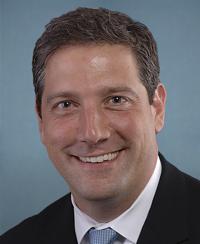
Mr. Speaker, I thank the gentleman for the time to talk about this very important issue, and I rise against the rule as well. The issue of agricultural products came up a little earlier. The products…
Mr. Speaker, I thank the gentleman for the time to talk about this very important issue, and I rise against the rule as well.
The issue of agricultural products came up a little earlier. The products that we are going to get into Chile are going to be subsidized products from our government and in turn preventing a lot of the African countries from being able to trade also and being able to compete on an international market.
We all understand comparative advantage and I think we all understand the concept of free trade and I do not want to say for one second that I am not for trade. I think trade is a good thing. But what I cannot understand is why we would have this Jordan agreement which would have us able to enforce environmental standards and labor standards with the same capacity as commercial standards. We are rolling back these provisions in this agreement. And as much as we want to export our products, we want to export the ideals. And regardless of what party we belong to, we agree that in the last century in this country we made great strides in human progress with the labor movement, with the environmental movement, with the raising of living standards in this country, and I think we are getting away from that.
I would like to share with the gentleman from California, and I have enormous respect for him and his staff, an article by Lou Dobbs in which, talking about free trade, he said, ``The proof is in the numbers: The U.S. account deficit, the broadest measure of transactions with other nations, swelled to $503 billion in 2002. That is not the way it was supposed to work. Increased global trade was supposed to lead to better jobs and higher standards of living by opening markets around the world for U.S. goods. Now some people, myself included, are rethinking the belief that free trade benefits all nations.''
I think it is inaccurate to say that we think that somehow these manufacturing jobs are going to move back into northeast Ohio or go back to Detroit.
I yield to the gentleman from California.
Mr. Speaker, reclaiming my time, I think it shows a trend, though, to the gentleman from California, that there are many people who bought into the program in the early 1990s who are no longer agreeing with it.
Mr. Speaker, reclaiming my time because it is running out, there is no way we can say with a straight face that it does not pass the snicker test to think manufacturing jobs are going to come back into Ohio or anywhere in the industrial Midwest because we signed this agreement. If we are so committed to the labor standards, why are we rolling back the five principled stances of the International Labor Organization which were in the Jordan agreement? This is prohibition of slavery, nondiscrimination of employment, child labor, freedom of association. We are taking that out.
Then why not put them in?
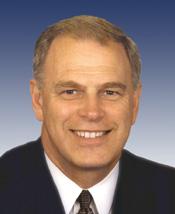
Mr. Speaker, I thank the gentleman for yielding me this time. I stand today to speak for the heartland of America. My Congressional district runs for about 300 miles along the edge of the Ohio River,…
Mr. Speaker, I thank the gentleman for yielding me this time. I stand today to speak for the heartland of America. My Congressional district runs for about 300 miles along the edge of the Ohio River, bordering Pennsylvania, West Virginia and Kentucky. In one of my counties the unemployment rate is 11.4 percent, and in the City of Youngstown, Ohio, the unemployment rate is 18.2 percent.
Now, I have heard some of my colleagues express concern for those who live in Chile, and I am not insensitive to the needs of the folks in Chile, but I think our first obligation is to look after the folks right here in the good old USA.
I yield to the gentleman from California.
Reclaiming my time, Mr. Speaker, let us look at the record. We heard that same rhetoric about NAFTA. Does anyone seriously believe that NAFTA has been good for this country? The people that I represent, who are without work, do not believe that NAFTA has been good for this country.
What about the WTO, this body that tries to dictate policy for those of us who serve in this body? We have been elected by Americans to represent Americans, and in these trade deals, sadly, it seems to me that we are taking the authority that is invested in us through the Constitution and the responsibilities that we have as elected representatives and we are giving that responsibility to an external international organization.
Reclaiming my time, please, Mr. Speaker, I will acknowledge that the gentleman's statistics are correct, but what has happened with trade between this country and Mexico? The imbalance has increased dramatically in their favor. I recognize that these trade agreements encourage trade, but what is it doing to our companies, our workers, our communities? Other countries are in fact benefiting, and I will acknowledge that, but what is happening to our communities?
Reclaiming my time once again, Mr. Speaker, I sat in the living room of one of my constituents not long ago and he looked at the television and he said, ``Congressman, I would be willing to pay $50 more or $100 more for a TV if I could buy one that was manufactured in America by my neighbors.'' That is what is happening to us.
Are consumers getting cheaper goods? Well, I suppose they are. At what cost? What is happening to this country, and I just urge my colleagues to look at the record and to reject these agreements. And I thank my colleague for the dialogue.
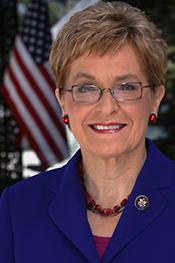
Mr. Speaker, I thank the gentleman for yielding me this time and for the opportunity to urge my colleagues to vote no on this rule which restricts debate today to 2 hours, as has happened on every…
Mr. Speaker, I thank the gentleman for yielding me this time and for the opportunity to urge my colleagues to vote no on this rule which restricts debate today to 2 hours, as has happened on every so-called free trade agreement that has come before this body in the last 20 years. Restricted time means no opportunity to really take a look at what has happened.
Many of us have served here long enough to know that the NAFTA idea of trade does not work. The gentleman from California (Mr. Dreier), my good friend, you told me when you voted for NAFTA back in 1993 it would create jobs. In fact, it has done exactly the opposite. We have historic trade deficits with Mexico, this year alone close to $50 billion.
I am sorry, I will not yield. You have only given me 2 minutes under your limited rule, as millions of people in this country lose their jobs and lose their futures. There is so much suffering we can lay to your hands as one of those who voted for NAFTA in 1993. I want you to meet the people who have lost their jobs all over this country, over 3 million people just in the last 3 years alone.
Look at NAFTA and these trade deficits. You told us in 1993 that this template for trade, which you now want to extend to Singapore and to Chile, would work, that it would give us jobs. It has been just the reverse. Our jobs have been cashed out, and Mexico has turned into an export platform to the United States, and the wages of Mexico's people have been cut by half. By half! You have hurt people in both countries due to those who voted for NAFTA. So we now have lost jobs and growing trade deficits. You told us our trade accounts would be better. We now have half a trillion dollars of trade debt in this country. One million lost jobs alone this year are related to that half a trillion in deficit and every year in the last 10 years, deeper and deeper deficit, more lost jobs. Your plan is not working. We have trade deficits, not surpluses, and we have job losses not jobs created. In my home community of Toledo, unemployment now is 10 percent. Every year it gets worse and the Fed has invented a new term, ``jobless recovery.'' What is that?
And, finally, on China after PNTR, we experienced huge trade deficits with more lost jobs. Your record is indefensible. Vote no on this Singapore and Chile expansion of the NAFTA trade template. It has not worked before, and it surely will not work now.
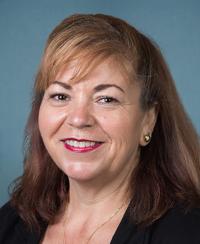
Mr. Speaker, I rise in opposition to the rule and to the Chile and Singapore trade agreements. I oppose these bills because of the inadequate labor provisions embodied in both. These agreements yet…
Mr. Speaker, I rise in opposition to the rule and to the Chile and Singapore trade agreements. I oppose these bills because of the inadequate labor provisions embodied in both. These agreements yet again point to the fact that the Bush administration is determined to undermine not only worker protections here in the United States but also abroad as well.
Under the current language of these bills, only one workers' rights provision is enforceable through dispute settlement, the obligation that a country enforce its own labor laws no matter how weak these labor laws may be. These FTAs give each country involved the option to gut their current labor laws to gain a trade advantage and face no consequences at all.
The FTA with Jordan proved that a trade agreement could win the support of labor, but to do so it needs to contain a commitment that each country follow the guidelines set forth in the International Labor Organization's core labor standards.
The trade agreements before us today are a gigantic step backwards and are vehemently opposed by labor groups. Why in our current economic situation are we putting American workers at risk? Is it not enough that the unemployment rate has skyrocketed to 6.4 percent? Is it not enough that the Bush administration has presided over the loss of 3 million private sector jobs, has failed to raise the minimum wage, allowing millions of older workers to lose half of their private pension benefits, and has denied unemployment benefits to millions of workers who exhausted their Federal unemployment workers benefits? One would think so but apparently that is not the case.
My other concern is that these FTAs create new immigration policy in the context of a free trade agreement. This is a step into unchartered territory. The fact is there is no specific authority in the Trade Act of 2002 to negotiate new visa categories or impose new requirements on the current temporary entry system, but that is exactly what has been done in the negotiations of these two agreements. I urge my colleagues to vote no on both agreements.
I yield to the gentleman from California.
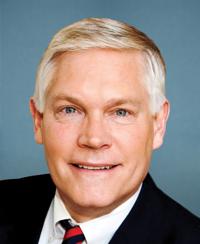
Mr. Speaker, I thank the gentleman from California (Mr. Dreier), the chairman of the Committee on Rules, for yielding me this time. Also, he and the gentleman from California (Mr. Thomas) are heading…
Mr. Speaker, I thank the gentleman from California (Mr. Dreier), the chairman of the Committee on Rules, for yielding me this time.
Also, he and the gentleman from California (Mr. Thomas) are heading up this great effort from the Republican side to make sure that we work with the administration on this important effort for free trade agreements.
Mr. Speaker, I rise today in support of this Singapore effort because I believe it is in the best interest of America. It is in the best interest of Singapore. These are two great nations who
not only work with each other but have so much in common. This free trade agreement is going to do things which will help both countries, most specifically as it deals with intellectual property and the way we deal with each other to resolve disputes.
Singapore is going to adopt as a result of this free trade agreement laws which are the same or similar to the United States so that our companies, people who do business back and forth, have an opportunity to look at the same type of legal system in the resolution of disputes.
As was noted on June 10, Tom Lipscomb wrote in the Wall Street Journal: ``Entertainment content is now [America's] largest export, and information is the basis of more than half of gross domestic product'' of America. We need to make sure intellectual property, we need to make sure that the content that is a valuable asset of United States of America has an opportunity to have a free and open day in court wherever we sell these intellectual property possessions that the United States has.
Singapore is a good friend of America. We are going to find that as we work through free trade agreements that this will become the gold standard as we deal with other places all around the globe.
I support the free trade agreement with Singapore. I thank the gentleman from California for his expert leadership and his vision in making sure that with our President that we have friends all around the globe that enjoy the same opportunities that we do in America.
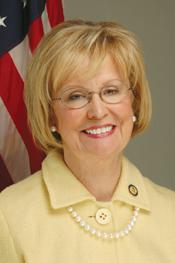
I thank the gentleman for yielding me this time and those kind words. Mr. Speaker, I rise today in strong support of the rule and of the underlying bills, H.R. 2638 and H.R. 2639, the U.S.-Chile and…
I thank the gentleman for yielding me this time and those kind words.
Mr. Speaker, I rise today in strong support of the rule and of the underlying bills, H.R. 2638 and H.R. 2639, the U.S.-Chile and the U.S.- Singapore Free Trade Agreements. They are both outstanding agreements that are worthy of our support.
We have heard a great deal of talk right here on the floor today and during the week from opponents of these agreements who talk about everything but the agreements themselves. They talk about unemployed Americans. They talk about damage to the environment. They talk about waves of immigration. There is no doubt that these problems exist. But there is also no doubt that these problems are not about the issue at hand. The issue at hand is whether to approve implementing legislation for two particular agreements, the U.S.-Chile and U.S.-Singapore Free Trade Agreements, not the NAFTA, not a CAFTA, and not an FTAA. We are not voting today on models for future agreements. The Trade Promotion Authority that Congress granted the President last year provides the road map for future agreements and negotiations. And future agreements will have to come up to Congress for future votes.
What we are talking about today are the merits of these two individual agreements and the benefits they will bring to our businesses and our workers. So, Mr. Speaker, I would like to ask my colleagues in the hours remaining before we cast our votes to just take a few moments to look at the specific merits of these two agreements with the two key partners in Asia and Latin America. Mr. Speaker, you will find that they expand market access opportunities for U.S. manufacturers, farmers, and service providers. You will find that they secure extensive protection for U.S. companies' intellectual property rights and investment, and you will find that they provide strong labor and environmental protections.
I urge my colleagues to support the rule and the Chile and Singapore free trade agreements.
Bill Text
Latest available legislative text
        [Congressional Bills 108th Congress]
[From the U.S. Government Publishing Office]
[H.R. 2638 Introduced in House (IH)]

108th CONGRESS
1st Session
H. R. 2638

To amend the Internal Revenue Code of 1986 to make permanent the
increase in expensing of certain depreciable business assets enacted by
the Jobs and Growth Tax Relief Reconciliation Act 2003.

_______________________________________________________________________

IN THE HOUSE OF REPRESENTATIVES

June 26, 2003

Mr. Herger introduced the following bill; which was referred to the
Committee on Ways and Means

_______________________________________________________________________

A BILL

To amend the Internal Revenue Code of 1986 to make permanent the
increase in expensing of certain depreciable business assets enacted by
the Jobs and Growth Tax Relief Reconciliation Act 2003.

Be it enacted by the Senate and House of Representatives of the
United States of America in Congress assembled,

SECTION 1. SHORT TITLE.

This Act may be cited as the ``Small Business Expensing Permanency
Act of 2003''.

SEC. 2. INCREASED EXPENSING FOR SMALL BUSINESS MADE PERMANENT.

(a) In General.--Paragraph (1) of section 179(b) of the Internal
Revenue Code of 1986 (relating to dollar limitation) is amended by
striking ``$25,000 ($100,000 in the case of taxable years beginning
after 2002 and before 2006)'' and inserting ``$100,000''.
(b) Increase in Qualifying Investment at Which Phaseout Begins.--
Paragraph (2) of section 179(b) of such Code (relating to reduction in
limitation) is amended by striking ``$200,000 ($400,000 in the case of
taxable years beginning after 2002 and before 2006)'' and inserting
``$400,000''.
(c) Inflation Adjustments.--Section 179(b)(5)(A) of such Code
(relating to inflation adjustments) is amended by striking ``and before
2006''.
(d) Revocation of Election.--Section 179(c)(2) of such Code
(relating to election irrevocable) is amended by striking ``and before
2006''.
(e) Effective Date.--The amendments made by this section shall
apply to taxable years beginning after December 31, 2002.
<all>