To authorize the President to issue posthumously to the late William "Billy" Mitchell a commission as major general, United States Army.
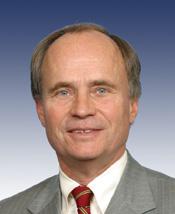 Rep. Charles F. Bass (R-NH)
Legislative Activity
Stay on top of the latest movement without scrolling through every action
Received in the Senate and Read twice and referred to the Committee on Armed Services.
October 14, 2003
View full timeline
Introduced in House
July 16, 2003
Referred to the House Committee on Armed Services.
July 16, 2003
Referred to the Subcommittee on Total Force.
August 15, 2003
Mr. Hunter moved to suspend the rules and pass the bill.
October 8, 2003 • 1:50 PM
Considered under suspension of the rules. (consideration: CR H9322-9325)
October 8, 2003 • 1:50 PM
DEBATE - The House proceeded with forty minutes of debate on H.R. 2755.
October 8, 2003 • 1:50 PM
Passed/agreed to in House: On motion to suspend the rules and pass the bill Agreed to by voice vote.(text: CR H9322)
October 8, 2003 • 2:07 PM
On motion to suspend the rules and pass the bill Agreed to by voice vote. (text: CR H9322)
October 8, 2003 • 2:07 PM
Motion to reconsider laid on the table Agreed to without objection.
October 8, 2003 • 2:07 PM
Received in the Senate and Read twice and referred to the Committee on Armed Services.
October 14, 2003
Floor Debate
4 membersWhat members said about H.R. 2755 on the floor

Floor Debate
4 membersWhat members said about H.R. 2755 on the floor
Mr. Speaker, I move to suspend the rules and pass the bill (H.R. 2755) to authorize the President to issue posthumously to the late William ``Billy'' Mitchell a commission as Major General, United…
Mr. Speaker, I reserve the balance of my time. Mr. Speaker, I yield myself such time as I may consume. I thank the gentleman from California (Chairman Hunter) for bringing this bill to the floor, and…
Mr. Speaker, I thank the gentleman, the chairman of the Committee on Armed Services, for yielding me this time, and I greatly appreciate his accommodation of this piece of legislation, which is,…
Mr. Speaker, I thank the gentleman from California (Chairman Hunter) and the gentleman from New Hampshire (Mr. Bass) for what they are doing here. It is a long time in coming. I do not quite…
Bill Text
3 versions available
        [Congressional Bills 108th Congress]
[From the U.S. Government Publishing Office]
[H.R. 2755 Referred in Senate (RFS)]

1st Session
H. R. 2755

_______________________________________________________________________

IN THE SENATE OF THE UNITED STATES

October 14, 2003

Received; read twice and referred to the Committee on Armed Services

_______________________________________________________________________

AN ACT

To authorize the President to issue posthumously to the late William
``Billy'' Mitchell a commission as major general, United States Army.

Be it enacted by the Senate and House of Representatives of the
United States of America in Congress assembled,

SECTION 1. POSTHUMOUS COMMISSION OF WILLIAM MITCHELL IN THE GRADE OF
MAJOR GENERAL IN THE ARMY.

(a) Authority.--The President may issue posthumously a commission
as major general, United States Army, in the name of the late William
Mitchell, formerly a colonel, United States Army, who resigned his
commission on February 1, 1926.
(b) Date of Commission.--A commission issued under subsection (a)
shall issue as of the date of the death of William Mitchell on February
19, 1936.

SEC. 2. PROHIBITION OF BENEFITS.

No person is entitled to receive any bonus, gratuity, pay,
allowance, or other financial benefit by reason of the enactment of
this Act.

Passed the House of Representatives October 8, 2003.

Attest:

JEFF TRANDAHL,

Clerk.