Public Private Vocational Partnership Act of 2003
Legislative Activity
Stay on top of the latest movement without scrolling through every action
Sponsor introductory remarks on measure. (CR E1503)
July 17, 2003
View full timeline
Introduced in House
July 16, 2003
Referred to the House Committee on Ways and Means.
July 16, 2003
Sponsor introductory remarks on measure. (CR E1503)
July 17, 2003
Floor Debate
24 membersWhat members said about H.R. 2763 on the floor
 MK
MK HB
HB EB
EB CWS
CWS BG+19
BG+19
Floor Debate
24 membersWhat members said about H.R. 2763 on the floor
Mr. Chairman, I yield myself such time as I may consume. Mr. Chairman, at a time of recession, rising unemployment in our country, the currency fluctuations that are affecting our markets…
Mr. Chairman, I yield myself such time as I may consume.
Mr. Chairman, at a time of recession, rising unemployment in our country, the currency fluctuations that are affecting our markets internationally and great dependency on the Federal Government by our farm sector for economic survival, this bill fails to meet the needs of today's economy, including in rural America, for a countercyclical boost.
It has been a great pleasure working with our chairman, the gentleman from Texas (Mr. Bonilla), in trying to do the best with the allocation that we were afforded by the full committee; but it is very important as we proceed today to place on the record not only the condition of rural America but how this country and the government of this country is responding to it.
The allocation that we received forced our committee to produce a bill that is nearly $1 billion under last year's level, indeed $872 million. This situation exists partly because of the fault of the administration which submitted a request to us that did not provide support in many critical areas. In part, it is the fault of this Republican Congress which adopted a budget resolution that did not recognize the vital role that agriculture plays as a pillar of our economy. In fact, the allocation, as I said, for this bill is well below the administration's request as well as last year's level.
As a result, the bill underinvests in rural America. Surely in value- added production, where the future lies, it cripples our producers' efforts to earn more from the marketplace and less from support payments that continue to be forked over by the billions. The bill fails to meet the needs of other Americans who depend on agencies in the bill for nutrition, food safety, and other important services.
Technically the bill provides $17.005 billion for discretionary programs, and that is about a percent below the budget request, but 5 percent below the 2003 level of $17.877 billion, a most astonishing set of cutbacks in America's leading domestic industry that still maintains a trade surplus in global markets. I might mention, if Members think about the total of our entire bill, about $17 billion, we are spending that much in 4 months in Iraq. According to what Secretary Rumsfeld has told Congress, we are spending about $4 billion a month, twice as much as we anticipated, to try to feed hungry people and deal with health clinics and all the related expenditures in keeping our troops well supplied. If we think about what we are asking for in this bill versus what we are spending in other places in the world, we can call into question what has been brought to the floor in this package.
Now, among the funds and programs that are underfunded or at risk of inadequate support are farm loans, rural development, domestic food programs, international food aid, research, which is so important to the future, the Food & Drug Administration, such as approving medical devices, and a number of mandatory programs, for which funding is blocked. Funding for many new initiatives established in the farm bill to lead American agriculture into the 21st century is, once again, deferred.
And in some other accounts, it is highly likely that additional funds may be needed when this bill goes to conference, but those funds simply will not be available.
Let us talk about rural America. It is a part of our country on life support. We have a crisis in the rural parts of America born of concentration inside our market that is supposed to be competitive. As well, we have a crisis of diminishing U.S. exports. Even though our agricultural trade surplus at least helps to try to hold up our trade accounts, nonetheless, over the years we have had fewer agricultural exports and more imports coming into this country. So, agricultural America is beginning to tilt toward the negative in the same way as manufacturing America in terms of our trade accounts. We have a crisis in rural America of ignoring investment in new value-added developments such as bioenergy production in which this bill severely underinvests. The economic crisis in agriculture has social consequences in crime and social instability in the part of America that used to be called the heartland and always regarded as the cherished repository of our most fundamental values of free holding, of family, of faith, of community, and of stewardship.
The New York Times ran a powerful article in December entitled ``Pastoral Poverty: The Seeds of Decline.'' It detailed the systematic decline of the social fabric across rural America. Here are some of the conditions that were mentioned: the rate of serious crime in predominantly rural States such as Kansas and Oklahoma is 50 percent higher than in places like New York State where we have some of the largest metropolitan areas in the country; bank robberies are most likely in towns of 10,000 to 25,000 people. The article went on to talk about people in rural areas making much less than their urban counterparts and much more likely to have only minimum-wage jobs.
There were 300 times more seizures of methamphetamine labs in Iowa in 1999 than in New York and New Jersey combined, based on Drug Enforcement Administration figures.
So if everything is so great, why is the social fabric disintegrating? The economic factors that lead to this social disintegration are very clear, and they have been accelerating for a number of years. This bill will only help exacerbate them because today it is no secret that all that is holding up rural America is Federal subsidy. Fifty cents of every farm dollar today is earned from the mailbox when the farmer goes out to get his subsidy check, not from the market.
This bill could really do something to turn that around. It fails to do that.
More farmers and ranchers are depending on off-farm income to supplement an economy that is not working for them. USDA's economists recently reported that more than half of all farm operators have off- farm income, and when other household members are added in the off-farm income level jumps to 85 percent. So farming is becoming more of a hobby-oriented activity out there because you cannot earn your income unless you have inherited an enormous amount from past generations and even then you are trying to hold up your current debt level. The market is not providing real income without the Federal subsidy.
The stresses of rural life were also illustrated in a story last year about an Iowa program to provide mental health counseling to struggling farmers and their families. Surely this economic stress has an impact on people's ability to weather this economy over a number of years. But the funding so essential to help farmers make it in the market, in the competitive marketplace, is severely undermined in this bill. This is true with farm loan programs. Which help farmers to buy a farm or operate a farm; with rural development programs, which help both individuals and communities with homeownership, so essential to helping move our economy out of recession; water and sewer needs, which are hard investments that lead to growth; telecommunications and other vital services so necessary to help rural America jump-start into the private economy. All of these needed programs are either cut or fail to be funded in this bill. The bill falls far short of the true need.
Let us go through them. Farm loans. Overall, the bill cuts farm loans by 5 percent below the request, providing $173 million less in loans. For three critical programs, farm ownership guaranteed loans, farm operating direct loans, and farm operating subsidized guaranteed loans, the bill provides about a half a billion dollars less in loans than last year. That is a 20 percent cut. That is a cut in investment for our future.
Many other programs are cut. The business and industry guaranteed loan program is cut by 38 percent. This is where the new jobs will come from in rural America. Yet, in a time of recession, the administration and their congressional allies are cutting that by over a third.
Single family guaranteed home loans are 4 percent below the 2003 request. And think about that. That is $120 million less to offer borrowers at a time when the housing industry is the only industry that is out there that is holding this economy up as it hemorrhages jobs in other sectors.
The bill eliminates funding for the Rural Telephone Bank, which made $175 million of loans last year in 23 States. And we know that the utilities and the communications infrastructure of rural America is not at the same level as in our metropolitan areas. I think that is a very backward-looking cut.
What about water and wastewater disposal grants, one of the core programs of rural development? Every single State in this Union has people, lots of people, backed up to try to get approval for these programs. The bill does provide more funding than the administration's request, but it is $43 million below what was spent last year and almost $250 million below the level that numerous Members of Congress asked of this committee to meet the realistic needs of rural development.
Grants for distance learning and telemedicine and broadband are $24 million below this year's level.
I do not have to tell anybody out there about the shortage of physicians and medical information in rural America compared to urban and suburban America.
Funding for electric loan programs is nearly $1 billion below this year, a 20 percent reduction. How does that really help development across rural America?
Let us now look at our domestic and international programs. They are underfunded. During this year, Democrats focused on the record demand for domestic food, such as women, infants and children's coupons and food stamps. Noting enormous lines at soup kitchens and food pantries this winter, we fought very hard for temporary emergency assistance for food, and for these food banks across America. The bill does not respond adequately to these concerns, that is for sure.
Now, with the major rebuilding efforts that America is going to have to make in Iraq and Afghanistan, food will be critical to stabilizing the situation there; and we know that this bill falls far short of what is needed long-term. It simply cannot hold. We cannot meet these commitments without increasing the funding levels in these programs.
Let us now look at our domestic food programs. I mentioned the Temporary Emergency Food Assistance Program. It is $10 million below the new authorized level in the farm bill. All you have to do is go out to the food banks in your region to see what the need really is and hear the concerns that have been expressed by food bank directors and by human service directors and church leaders across this country. Funding for the Women, Infants and Children's Program is reduced below the administration request. The Commodity Supplemental Food Program is almost $20 million below this year. These are all programs that help keep people whole in bad economic times.
Neither the administration request nor the bill that is before us today adequately provides funding for the Senior Farmers Market Nutrition Program, despite the fact that applications in recent years have far outpaced available funds.
The Food and Drug Administration in this bill receives nearly $11 million less than what was requested. What does that mean? It means that we will not have full funding to implement the generic drug program, the Best Pharmaceuticals for Children Act, the over-the- counter drug program and the patient safety and adverse event reporting initiative. The bill will also halt work on the Arkansas regional lab and reduce funding for ongoing maintenance at Food and Drug Administration facilities by 25 percent.
An area of interest to many Members is medical device funding. The administration made an agreement in 2002 with the medical device industry and authorizing committees here for new industry user fees in exchange for a set level of discretionary funding each year for the program. Under the statute, if total discretionary funds fall short of the required level over a several-year period, the program sunsets. But despite the fact that it was a party to this agreement, the administration completely failed to live up to its part of the deal last year and this year and did not request the required funds. At least 46 Members of both parties requested that the full amount for devices be provided.
This bill provides an increase of $9 million over the request for the medical device program, but this is still short of the required level in order to really make the approval program work.
I wanted to say a word about mandatory programs because the bill includes 10 provisions cutting mandatory agricultural programs by $540 million. These are programs that provide support for rural firefighters; dam rehabilitation; renewable energy, and what could be more important to our country than that when we hemorrhage in terms of our ability to balance our trade accounts because of imported petroleum; conservation, which was a promise made in the recent farm bill; telecommunications and research. These cuts in those mandatory programs will have a real impact across rural America.
The Small Watershed Rehabilitation Program is cut by $95 million, more than twice the cut in this year's bill, despite a rapidly growing number of dams reaching the end of their useful lives across our country. Two years ago, the Natural Resource and Conservation Service had identified 1,450 dams in need of rehabilitation at a cost of about a half a billion dollars, $500 million. We have already spent that much money in the first half of July in Iraq, but we are not willing to spend that money here at home for infrastructure improvements.
While the bill does provide an increase of $20 million in discretionary funding, the cut in mandatory funding makes it much harder to meet identified needs. It is estimated there is a backlog of over $80 million just to finish projects currently under way, so funding on both the discretion and the mandatory sides are needed.
The bill eliminates the funding for rural firefighters. The bill eliminates all funding for the conservation security program. And in the Wetlands Reserve Program, so essential to assuring a healthy ecosystem, the bill cuts new enrollment in the program by a fifth, by 20 percent, which means that we will have so many fewer people who will be able to participate in a program that has a backlog of 736,000 acres.
In the EQIP Program, the bill reduces funding by $25 million; and that means that there will be 1,450 producers who will not be able to get EQIP funding this year.
In renewable energy, I think the bill is terribly ill-advised in zeroing out funding in a sector where America must restore her independence.
And in value-added grants, which the farm bill asked for, this bill zeros out support for the new jobs of the future that could be created across rural America.
In broadband loans for telecommunications, the bill eliminates all funding for this authorized program.
And for the initiative for future agriculture and food systems, the bill cuts $120 million from this competitive grant program which is designed to do research in critical areas such as genomics, food safety, food technology, human nutrition, new and alternative uses and production of agricultural commodities and products, agricultural biotechnology, where so much of our future lies and the world's future, natural resource management, including precision agriculture, and farm efficiency and profitability.
Other shortcomings in the bill I will quickly mention. Country-of- origin labeling. The bill prevents the implementation of origin labels for meat and meat products. This is a basic consumer right-to-know issue which the House unanimously supported when it instructed its conferees on the farm bill to support country-of-origin labeling for both meat and perishable products.
In terms of the provisions for meatpacker audits, the administration asked Congress for $1 million for the Grain Inspection, Packers and Stockyards Administration to audit the four largest steer and heifer meatpackers for compliance with that act. This might sound routine, but it is not. This would be the first time in the 82-year history of the Packers and Stockyards Act that the agency has required a large packer audit, but the bill conveniently does not provide the funding. Gosh, I wonder why.
And then in the food safety and inspection provisions, the bill provides about $12 million less than requested for the Food Safety and Inspection Service.
In terms of research, and this is really the seed corn for the future, the bill provides only half of the funding for the upgrading of security at our agricultural research labs.
In addition to that, the Cooperative Research Education and Extension Service, overall funding is over the request of the administration but $22 million lower than this year's level. As a result, many important research institutions and activities, including our 1890 and 1994 institutions, are shortchanged. In addition, at least 95 Members of this House of both parties asked for a 5 percent increase in these research formula funds, but the bill does not provide this.
Many Members also asked for $200 million for funding the national research initiative, but the bill provides only $149 million.
The Economic Research Service and National Agricultural Statistics Service would receive almost $12 million less than requested, forcing the postponement of important initiatives such as genomics research and improvement of statistical information in our New England States, Hawaii and Alaska.
In concluding these opening remarks, I would just like to summarize by saying that budgets reveal priorities. This year we are seeing that the Republican Party in this House is willing to put huge tax breaks for the most well-off in our society and also military action around the world ahead of almost every other economic and social value in our country. Rural America needs to have market-oriented incentives, not dole for farmers from coast to coast. This bill is an important answer to the situation confronting our Nation in one of the most vital sectors of our economy, and we should not shortchange the future by the underinvestment that this bill represents.
Mr. Chairman, I reserve the balance of my time.
Mr. Chairman, I yield 6 minutes to the very distinguished gentleman from Wisconsin (Mr. Obey), ranking member of our full committee.
Mr. Chairman, I yield 1 minute to the distinguished gentleman from Texas (Mr. Stenholm), ranking member of the authorizing committee.
(Mr. STENHOLM asked and was given permission to revise and extend his remarks.)
Mr. Chairman, I would like to submit the testimony of Wenonah Hauter of Public Citizen before the House Agriculture Appropriations Subcommittee. This testimony was inadvertently omitted from the printed hearings of the Subcommittee.
Testimony of Wenonah Hauter Director of the Critical Mass Energy and
Environment Program Public Citizen
Chairman Bonilla, Ranking Member Kaptur and Members of the
Subcommittee, my name is Wenonah Hauter. I am the Director of
Public Citizen's Critical Mass Energy and Environment
Program. As you know, Public Citizen is a national consumer
organization founded by Ralph Nader in 1971. We represent
150,000 members. We welcome this opportunity to present our
views on the FY 2004 Agriculture, Rural Development, Food and
Drug Administration and Related Agencies Appropriations Bill.
USDA--Food Safety and Inspection Service (FSIS)
We are adamantly opposed to the Administration's proposal
to collect $122 million in user fees to recover the cost of
providing inspection services beyond an approved eight-hour
primary shift. We believe that such a proposal could
compromise the effectiveness of FSIS inspectors. Furthermore,
FSIS has already taken action to de-list foreign
establishments that had been previously approved to export
their meat and poultry products to the United States on the
basis that inspection services were paid by the companies
involved instead of by the foreign government. Implementation
of the Administration's proposal to institute user fees would
be hypocritical.
Additionally, we are concerned that the current proposal to
hire approximately 80 more FSIS inspectors will be inadequate
to fill current vacancies and to make up for previous year's
cuts. We recommend that at least 200 line inspectors be hired
this year.
The alarming number and magnitude of meat and poultry
recalls in the past year indicate that there are some serious
problems with the implementation of the Hazard Analysis
Critical Control Points (HAACP) program. We have been arguing
for the past three years that HACCP has turned over too much
authority to industry to police itself and has severely
undercut the ability of FSIS inspection personnel to their
jobs. We have heard directly from inspection personnel who
state that they are very confused and concerned over their
roles in HAACP.
More troubling is the fact that the economic well-being of
companies is placed ahead of the public's welfare by the
management at FSIS. In June 2002, we were able to obtain
instructions to FSIS inspectors assigned to a large Kansas
slaughter plant in which they were admonished that should
they err on the side of public health and stop a slaughter
line for suspected fecal contamination they could be
personally liable for their decision.
We are also concerned about the failure of supervisors and
management to back up FSIS inspectors when they discover food
safety hazards. Since last year's massive ConAgra recall, it
has come to light that USDA was notified of potential
problems at the Greeley, Colorado plant as early as February
2002--some three months before the first recall notice went
out. Warnings came from John Munsell, president of Montana
Quality Foods and Processing, after FSIS personnel assigned
to his plant confirmed that the source of contaminated meat
ground at Montana Quality Foods and Processing was the
ConAgra plant in Greeley, Colorado. Instead of applauding Mr.
Munsell and the FSIS personnel for their investigative work,
they have been maligned by top FSIS officials and have been
told they had no authority to point the finger at ConAgra.
The same can be said of the Wampler recall. A twenty-year
veteran FSIS inspector, Vincent Erthal, had tried to warn his
supervisors for several months of the unsanitary conditions
at the Wampler plant in Franconia, Pennsylvania. His concerns
went unheeded. This fall, the second largest recall in FSIS
history was issued for possible Listeria monocytogenes
contamination of product coming out of that plant. After much
soul-searching, Mr. Erthal decided to come forward to reveal
how his attempts to warn FSIS supervision of his concerns
were thwarted. Again, instead of backing their own employee,
FSIS management has circled the wagons and launched a
campaign to discredit Mr. Erthal.
With all of the problems that FSIS has already experienced
with their implementation of HAACP in processing plants, the
proposed FY 2004 budget contains language that would expand
the HACCP-based Inspection Models Project (HIMP) in slaughter
facilities. HIMP is yet another attempt at weakening the
authority of FSIS inspection personnel and turning that
responsibility over to company personnel. In a December 17,
2001 report, staff from the General Accounting Office found
glaring methodological deficiencies in FSIS' current pilot
project. There has not been any evidence to show that those
deficiencies have been addressed. Therefore, we would urge
that this expansion of HIMP not go forward until all data
from the current project has been evaluated.
While we applaud additional funds to support food safety
education, we believe that the money will actually be used to
promote irradiation. In her written remarks to the
Subcommittee, Under Secretary for Food Safety Dr. Elsa Murano
stated it was her intent to devote resources to educate the
public about food irradiation. Her remarks also indicate that
she will attempt to blur the
definition of pasteurization to include irradiation as part
of the education campaign.
In focus groups conducted for FSIS in 2002, consumers in
St. Louis, Missouri; Raleigh, North Carolina; and
Philadelphia, Pennsylvania were asked whether they considered
irradiation to be a form of pasteurization, and
overwhelmingly consumers responded that making such an
assertion would be misleading. Those findings corroborated
findings from focus groups conducted for the Food and Drug
Administration (FDA) in three different cities during the
summer of 2001. We urge you not to fund any additional
efforts to change labeling requirements for irradiated food
by allowing ``pasteurization'' to be used.
Lastly, we are concerned about the recent revelations that
FSIS still has not addressed problems identified by the USDA
Inspector General (IG) regarding the agency's reinspection
program for imported meat and poultry products. In 2000, the
IG noted some 18 deficiencies in the FSIS reinspection
program. In her recent audit, the IG stated that FSIS has
still not corrected 14 of those deficiencies--even though
they had agreed to do so three years ago. In light of the
heightened concerns about the security of our food supply,
this is unconscionable. We urge you to instruct FSIS to
comply with the recommendations in the 2000 Inspector General
report.
usda--food and nutrition service/agricultural marketing service
The Farm Security and Rural Investment Act of 2002 (the
Farm Bill) contains a provision (section 4201 (1)) that
directs the Secretary of Agriculture not to prohibit the use
of approved food safety technologies in any commodity
purchased by the USDA for various government-sponsored
nutrition programs, including the National School Lunch and
National Breakfast Programs. The USDA has decided this means
that they should lift the current ban on the use of
irradiation as an intervention for ground beef products
purchased for these programs. And, it seems irradiation is
the only approved food safety technology they are pursuing.
Section 4201(l) received no scrutiny from any congressional
committee, in either the House or Senate. It never received
any floor debate in either the House or Senate. It was placed
in the Senate version of the Farm Bill at the last minute as
part of a 400-page manager's amendment. The conferees on the
Farm Bill never even discussed it in open session.
On November 22, 2002, the USDA announced that it would
solicit comments from the public on the implementation of
Section 4201(l) of the Farm Bill and specifically wanted
comments on irradiation. The comments are being collected by
the Agricultural Marketing Service (AMS). Of the comments
posted on the AMS website as of March 19, 2003, by over a 5
to 1 margin, citizens have expressed their opposition to
lifting the ban on irradiation--with thousands of comments
still left to be posted. Comments opposing such action have
come from nearly all fifty states, while those supporting the
technology have come primarily from those who have direct
ties to the irradiation industry.
In order to promote this technology, the Food and Nutrition
Service (FNS) has funded an irradiation ``education'' program
in three Minnesota school districts. The program is being
administered by proponents of irradiation--with no access for
critics of the technology to present alternative views. In
addition, the steering committee for the program is dominated
by one irradiation company and its affiliates. In essence,
FNS is funding a government-sponsored advertising campaign
for one company.
Recent research indicates that some chemicals formed when
certain foods are irradiated may be harmful when consumed.
The new studies call into question the long-held position of
the FDA and the food industry that irradiated foods are
generally safe for human consumption. But the studies confirm
research published in 1998 and 2001 showing that
concentrations of chemicals called 2-alkylcyclobutanones (or
2-ACBs)--which are found only in irradiated foods--caused DNA
damage in human cells. Among the new findings, 2-ACBs were
shown to promote tumor development in rat colons. The 2-ACBs
are formed when foods that contain fat are irradiated,
such as beef, chicken, eggs and certain fruits--all of
which can legally be irradiated.
There is even less research into the long-term health
effects experienced by children who are exposed to toxic
chemicals in foods. Dr. William Au, a toxicologist at the
Department of Preventive Medicine and Community Health,
University of Texas Medical Branch in Galveston, has argued
that the lack of understanding regarding the ill effects
suffered by children who consume toxic chemicals in foods
extends to ``the toxicological risk with respect to eating
irradiated food.''
If implemented, Section 4201 (1) will create the largest
mass-feeding of irradiated food to children in history. We
urge the committee not to fund the purchase of irradiated
food for federal government nutrition programs.
Food and Drug Administration
We are concerned about the lack of funding for the Food and
Drug Administration (FDA) for import reinspections. Even
after the additional funding the agency received in FY 2003
to hire more staff to perform food import reinspections, the
agency is only capable of reinspecting a paltry 1.3 percent
of imported food over which it has jurisdiction. This needs
to be addressed with additional funding, with the goal of
reaching at least the 20 percent reinspection rate that FSIS
is able to perform for imported meat and poultry products.
Furthermore, FDA should be granted the same authority that
FSIS currently possesses to inspect foreign establishments
that can export their food to the United States.
We are also concerned with the repeated attempts to weaken
the labeling for irradiated foods. The FDA has visited this
issue repeatedly since 1997--primarily at the direction of
Congress. Each time, the FDA finds that consumers do not see
eye-to-eye on this issue with the irradiation industry and
their supporters in Congress. It seems that there are those
who want to keep on trying until we get it wrong.
In the conference committee report that accompanied the FY
2001 Agriculture, Rural Development, Food and Drug
Administration and Related Agencies Appropriations Act, the
conferees stated: ``The conferees expect FDA to make final
the regulations regarding labeling of irradiated foods by
March 1, 2002, and report to the House and Senate Committees
on Appropriations on the status by November 15, 2000. This
agreement changes the dates proposed for final regulations by
the House of September 30, 2001, and by the Senate of October
30, 2001.''
In its report to the Appropriations Committees, the FDA
explained that it had published an Advanced Notice for
Proposed Rulemaking (ANPR) in 1999 on food irradiation
labeling as the agency was directed to do under the FDA
Modernization Act conference committee report in 1997. In
evaluating the comments that the agency received from the
ANPR, FDA stated: ``The majority of these comments were
letters that urged the agency to retain special labeling for
irradiated foods but did not address the specific issues on
which FDA requested comment. A preliminary analysis of the
comments suggests no consensus about what alternative
language for disclosure of irradiation processing would be
truthful and not misleading. Because the public comments
provided no clear direction for agency rulemaking, FDA
believes that 1999 ANPR fulfills the Agency's obligations
under the FDAMA Conference Report.''
The FDA went on to say in its report to Congress that it
intended to impanel consumer focus groups to attempt to
obtain further guidance on the labeling issue.
During the summer of 2001, the FDA commissioned six
consumer focus groups in suburban Washington, DC;
Minneapolis, Minnesota; and Sacramento, California. In all of
the focus groups, the moderator attempted to make a strong
association between pasteurization and irradiation. This was
significant since there have been some irradiation proponents
who have argued that a more appropriate term to describe
irradiation is either ``cold pasteurization'' or ``electronic
pasteurization.'' In a 2002 report to Congress, the FDA
summarized the results of those focus groups: ``Most of the
participants viewed alternate terms such as `cold
pasteurization' and `electronic pasteurization' as
misleading, because they appeared to conceal rather than
disclose information about irradiated food products.
Participants did not see the current disclosure labeling as a
warning . . . Everyone agreed that irradiated foods should be
labeled honestly. They indicated that the current FDA
required statement is a straightforward way for labeling
irradiated foods.''
Furthermore, in his 2002 testimony before the House
Subcommittee on Agriculture, Rural Development, Food and Drug
Administration and Related Agencies Appropriations, Dr.
Lester Crawford, Deputy Commissioner of the FDA stated:
``(W)hen we did focus groups at FDA on cold pasteurization,
the general feeling of the average citizen was that this was
kind of a ruse or a means to conceal the fact that the food
had been irradiated. And so we are kind of back to square
one. We don't have a good synonym for irradiation and we
would like to have one. We don't want to mislead the
public.''
The public has been very consistent on the issue--in focus
groups for USDA and FDA and in public comments solicited by
FDA. Consumers do not want labeling rules for irradiated food
to allow euphemisms like ``electronic pasteurization.'' In
fact, rather than changing the words that are permitted to
describe irradiated food, FDA should instead focus on
expanding the current rules beyond retail establishments, so
that irradiated food served in restaurants, hospitals and
schools must be labeled. There have already been too many
resources devoted to this issue within FDA. The driving force
ought to be what the consumers believe to be honest and
straightforward labeling--not what some in industry think
will make it easier to sell their product. The FDA has more
important things to do than devising ways to confuse and
mislead consumers. We urge you not to find further attempts
to change labeling rules for irradiated foods.
Thank you.
Mr. Chairman, I move to strike the last word.
Mr. Chairman, I rise in support of the amendment. I wanted to say that I think the gentleman from Oregon (Mr. Blumenauer) has a very worthy amendment here. I was particularly struck by one of his arguments: the linkage between crime and the mistreatment of animals and the increasing spread of Exotic Newcastle Disease across our country which, by the way, also has a cost. It comes to us in the form of trying to remediate and to make whole those whose flocks have been devastated. I do not think that it is widely known that, as the gentleman mentioned, some of the animals might have come in from another country. We know how poorly our borders are inspected.
So I want to commend the gentleman for taking the offset for his amendment from the buildings accounts, as opposed to from our research accounts or our animal plant health inspection accounts, or our border inspections, et cetera. I think that the matter is that the people who are doing this are doing it illegally; and now there is a linkage to the spread of disease, serious disease.
I think that the gentleman's amendment is very reasonable. He is asking for $800,000 for the Office of the Inspector General who, when they are given the authority, do a great job, to try to remedy this animal fighting across our country and, I think importantly, to stem any disease that may spread as a result of it.
So I just wanted the speak on behalf of the gentleman's amendment and to thank him for the responsible manner in which he has found an offset to try to find the funds for the Inspector General.
I might say, one of the bad things about the way the laws concerning the Inspector General have been written, even if wrongdoers are found and fines are levied, under the laws of our country the Inspector General has to return those funds to the Department of Treasury. It does not go to the Department of Agriculture for further prosecution and further investigation. I have never liked that aspect of the law, because I think we ought to reward the Inspectors General that are doing a good job in apprehending wrongdoers across this country.
So I want to thank the gentleman for his very appropriate amendment here, and I urge my colleagues for their support.
Mr. Chairman, I move to strike the last word.
Mr. Chairman, I yield myself such time as I may consume.
Mr. Chairman, I wanted to rise in very strong support of the gentleman from Alabama's (Mr. Davis) amendment. I think it is a very important one to support our land grant institutions, and those that are historically black colleges and Tuskegee Institute. If you think about it, if you look at the budget the President presented to the Congress, the funding for the 1890 land grant institutions was actually cut three times as deeply as funding for the 1862 land grant institutions under the President's submittal. And so the cuts fall more harshly on those institutions that have an enormous load to carry in helping to bring up the talent to perform the research at those colleges which often gets shortchanged because people are spending so much of their time teaching.
I think only an administration that really does not understand what these institutions do could cut the funding three times as deeply as the other trims that were made in the budget. It has been very interesting to watch the President tour Africa. In having worked with our colleagues over the years to try to get linkages between our historically black colleges and Tuskegee Institute with African institutions to try to draw linkages halfway across the world, I know how difficult it has been. It has been hard to get those kinds of agreements to occur, to give these institutions a chance to embrace the 21st century and create the kind of global connections and specialized knowledge that rests in these institutions.
So I think the gentleman makes a very reasonable proposal here for $1.5 million to be directed to the institutions for facilities and $2 million for capacity building for the 1890s institutions, offsetting that $3.5 million from the common computing environment.
When I look at what happened over the weekend with all the news coming out about credit cards over at the Department of Agriculture and some of the internal problems that they are having, I know one thing: when you invest in the Historically Black Colleges and Universities and the Tuskegee Institute, you are investing in people; you are investing in the future where knowledge is so important to propel economic growth including in some of the most hollowed out parts of the country where agriculture has to be the lodestar industry. These institutions provide hope and opportunity for people who were traditionally excluded from other institutions of learning in this country.
So I think that the gentleman has correctly awakened this Congress and the administration to what is not just fair but appropriate and will help to provide opportunity in many quarters. So I want to strongly support the Davis amendment.
Mr. Chairman, I rise in strong support of the Rehberg- Hooley amendment to say that the Committee bill provision indeed subverts the law. This Rehberg-Hooley provision was included in the farm bill. But when the opponents of that law found an opening in the subcommittee of agriculture appropriations to try to subvert the law, they took that opportunity. And so what we are talking about here is changing the law of our country that was passed here, as well as passed in the other body, and signed into law. We surely had plenty of consideration. That is number one.
My second point is this amendment is being offered at a time when we have the highest number of meat recalls in the country's history. God forbid you are the parent of someone who just died from eating contaminated meat. I find it very interesting that those who oppose this say there are going to be all these high costs and all these problems. Do Members know that not one producer in Ohio has complained to me about this law? I represent cattlemen and cattlewomen. They raise a lot of different kinds of animals in our region. Producers want the labeling. In fact, the Ohio producers, the Great Lakes producers, are working on their own electronic ear tags because they do not want their meat mixed with other stuff that they do not know where it comes from. They want to be able to offer a quality product at a competitive price and get it on the shelves of the supermarket. The problem is that the supermarkets deny shelf space to independent producers.
We know who wants this law subverted. It is not the ranchers; it is not the farmers. It is the people who want to make money off them. Any decent business person wants labeling of their product. Our father operated a family grocery and when he made his meatloafs, when he made his sausages, we had our own label tape that we pealed and put right on the package. We were so proud of his products. Our market was called Supreme Market, and to this day it sold the best meat I ever ate, the best sausage I ever ate. We were proud to label it. Good producers want labels on their quality products.
In Ohio, the Great Lakes Family Farms has a special verification program. They eartag animals with all relevant information. They know what shots the animal got. They know which feed lot it was on and how much it weighed at 6 months, at 8 months. They know everything because they know their customers want to know, and that local label gives them a niche in the market to be able to offer quality meat.
Mr. Chairman, in an era when the consumer wants to know, why is the Republican leadership trying to subvert the law and not give us as consumers the right to know where our meat comes from? It is simply because if you are going to mix in Argentinian beef or mix in some other kind of meat at the store, you do not want your customers to know. If you have some Uruguayan skinny steer that was wandering somewhere around Latin America, and then you are going to take some of that meat and blend it in with Ohio beef, you do not want anybody to know because you are going to make just as much money on that package.
But the farmers know how to label. They are doing it already. They are doing it in our region, and those electronic ear tags are so complete and with technology being what it is today, we can know everything about an animal, even who its mother and father were.
Do not give me this baloney it is going to be so much more expensive. Our farmers are already doing it. Ohio farmers can lead the way. In fact, the American Farm Bureau supports the law. It does not support subverting the law. They support country-of-origin labeling. In the letter that they have sent to us, they say those products should be labeled at the retail level. With increased trade, more products are being imported into the United States and the farm bureau is working with the agricultural marketing services to implement a program with the least amount of burden and cost to producers.
So in addition to all of the names that the gentleman from Ohio (Mr. Kucinich) read into the Record, I will include a letter from the American Farm Bureau.
Mr. Chairman, Members might have noticed the recent stories about mad cow disease, BSE, bovine spongiform encephalopathy, that is up in Canada now. We have to know where our meat comes from, and people who raise meat should be responsible for it, just like my father was responsible for his products. They ought to be proud of what they are producing and not ashamed, and not try to hide something on a package that when you take the hamburger out, it looks red on the outside and it is all brown on the inside. We all know what they are doing. We understand what that is all about.
I think it is a worthy amendment. We have the technology to do it. I will place in the Record what the 4-H requires of our students as one of its projects to have labeling of beef. This is not rocket science. It can be done.
American Farm Bureau Federation,
Washington, DC, June 24, 2003.
Hon. Marcy Kaptur,
House of Representatives, Rayburn House Office Building,
Washington, DC.
Dear Representative Kaptur: The American Farm Bureau
Federation commends the Appropriations Committee for timely
action on the FY04 agriculture spending bill. We ask that you
consider the following information as the Appropriations
Committee acts on the bill this week.
We support full funding for the Farm Security and Rural
Investment Act of 2002 (FSRIA). Unfavorable weather
conditions, uncertainties involved with international trade,
the value of the dollar and record high input costs have
converged to produce a turbulent and difficult time for
agriculture. The industry has suffered through several
consecutive years of historic low market prices and weather
disasters. The new farm law helps address problems faced by
American farmers and ranchers and it provides unprecedented
funds for our nation's conservation needs. Changes in farm
bill programs would be devastating not only to farmers and
ranchers but the rural economy as well. Consequently, the
Farm Bureau strongly encourages you to avoid making changes
to FSRIA in the FY04 appropriations process.
We commend the Committee for maintaining full funding of
farm bill commodity programs. It is imperative that counter-
cyclical payment rates, loan rates and direct payments be
preserved as adopted in FSRIA. We are opposed to any changes
in current payment limitations for direct payments, counter-
cyclical payments, loan deficiency payments (LDP) and
marketing loan gains (MLG), including a separate payment
limitation for the peanut program. Current rules on spouses,
three-entities, generic certificates and actively engaged
requirements should be retained.
AFBF supports country-of-origin labeling (COOL) as passed
in the 2002 farm bill. Many farmers and ranchers believe that
the products they grow in the United States should be labeled
a product of the United States at the retail sales level.
With increased trade, more products are being imported into
the United States, giving the consumers greater choices at
the marketplace. Farm Bureau is working with the Agricultural
Marketing Service (AMS) at USDA to implement the program with
the least amount of burden and costs to producers. We are
disappointed the legislation blocks further work by USDA to
implement country-of-origin labeling for meat and poultry
products. We ask that you support the restoration of funding
for this important program.
Farm bill conservation programs should be fully funded.
Full implementation of the Environmental Quality Incentive
Program (EQIP) and Conservation Security Program (CSP) is key
to assisting agricultural producers in complying with
environmental regulations and addressing important
conservation issues nationwide. Program funding for technical
assistance is essential if conservation programs are to be
successful. While we are pleased that the bill increases
funding for conservation operations activities, we are
disappointed that funding for CSP is blocked and limits have
been placed on EQIP.
The development of alternative energy sources is not only
significant to the advancement of American agriculture but
also is vital to enhancing our nation's energy security. The
2002 farm bill contained an energy title that includes
provisions for federal procurement of bio-based products,
bio-refinery development grants, a biodiesel fuel education
program, renewable energy development program, renewable
energy systems, a bioenergy program and biomass research and
development. These programs will assist rural economic
development as well as increase our nation's energy
independence. We are disappointed that the bill under
consideration does not include funding for key programs that
promote alternative energy sources.
Thank you for your consideration of these issues of
importance to farmers and ranchers.
Sincerely,
Bob Stallman,
President.
Mr. Chairman, will the gentlewoman yield?
Mr. Chairman, I just want to commend the gentlewoman from Guam for bringing these issues to our attention and to say what a great leader she is on agriculture for the insular areas. We really, without her leadership, would not have been made aware. I know both the chairman and I, as ranking member, are very grateful to her, and we look forward to working with her through conference and for a final bill to be produced.
Mr. Chairman, I thank the gentleman for yielding me time.
I rise in strong support of the amendment by my very dedicated colleague from New York. His amendment would prohibit for human consumption any meat or meat food product derived from a downed animal.
I might say to my dear friend, the gentleman from Texas (Mr. Stenholm), a recognized leader in agriculture, that the U.S. Department of Agriculture has already as part of its procedures adopted regulations that ban the purchase of meat from downed animals by its own procurement agencies. So let there be no mistake that our Department of Agriculture believes that it already has the authority to take that action internally.
Let me also say that the Department has estimated that nationally about 190,000 animals every year get so sick that they are unable to stand or walk and they are dragged to slaughter facilities and many of them end up in our food supply. But only about 5 percent of those animals are tested for serious diseases such as mad cow disease.
Now, many probably know that the recent mad cow found in Canada was a downed animal; that the president of the Alberta Beef Producers remarked about ``cows too sick to walk, too sick to stand have no business being part of the food system. This animal should have never left the farm.''
A 2001 study from Germany found that downed animals were anywhere from 10 to 240 times more likely to test positive for BSE than were ambulatory cows. And we all agree, I think we all know, that downed cattle have a higher risk of having BSE, and we should not be sending these animals to slaughter where they may ultimately end up on somebody's dinner table.
Farm Sanctuary used the Freedom of Information Act to analyze USDA slaughter house records for 938 facilities from 1999 through June 2001. They found 73 percent of downed animals passed for human consumption while 27 percent were condemned. But startlingly, among the downed animals approved for human consumption, included afflictions such as gangrene, malignant cancers and pneumonia. These were common.
I think the heart of the gentleman from New York's (Mr. Ackerman) proposal is, why are we sending these animals that should be euthanized and disposed of to auction markets and slaughter houses where they will contaminate healthy animals and, indeed, human health?
The August 2001 issue of ``Dairy Herd Management'' named downed animals as the most important area where the industry needs to clean up its act. So I want to rise in support of the Ackerman amendment. I think the gentleman is moving us all, moving the country toward a better standard, a higher standard. The USDA has already recognized that standard and adopted on its own meat procurement practices. I want to thank the gentleman for helping move America ahead. I think this amendment's consideration today will go a long way in helping to clean up this problem for the American people.
Mr. Chairman, will the gentleman yield?
Mr. Chairman, I thank the gentleman for yielding to me.
I will not use the full time. I just wanted to say to my good friend from Virginia, the chairman of the authorizing committee, that the normal way, place the animal would be downed would be at the slaughterhouse anyway.
The point we are trying to make is do not put it in the food chain. That is the heart of the gentleman from New York's (Mr. Ackerman) amendment which he has not changed. So I just wanted to clarify that, and I also am concerned that at that slaughter facility that that diseased animal not contaminate the other animals. So there is a tremendous burden on that slaughterhouse, but the point of the gentleman from New York's (Mr. Ackerman) argument and amendment is do not put that sick animal in the food chain.
I support his amendment, and I thank the gentleman for offering it.
Mr. Speaker, I move that the House resolve itself into the Committee of the Whole House on the State of the Union for the consideration of the bill (H.R. 2673) making appropriations for Agriculture,…
Mr. Speaker, I move that the House resolve itself into the Committee of the Whole House on the State of the Union for the consideration of the bill (H.R. 2673) making appropriations for Agriculture, Rural Development, Food and Drug Administration, and Related Agencies for the fiscal year ending September 30, 2004, and for other purposes; and pending that motion, Mr. Speaker, I ask unanimous consent that general debate be confined to the bill, and be limited to not to exceed 1 hour, the time to be equally divided and controlled by the gentlewoman from Ohio (Ms. Kaptur) and myself.
Mr. Chairman, I yield myself such time as I may consume.
(Mr. BONILLA asked and was given permission to revise and extend his remarks.)
Mr. Chairman, I am pleased to bring before the House today the fiscal year 2004 appropriations bill for Agriculture, Rural Development, the Food and Drug Administration and Related Agencies.
My goal this year has been to produce a bipartisan bill, and I believe we have done a good job in reaching that goal.
The Subcommittee began work on this bill with the submission of the President's Budget on February 3rd. We had ten public hearings beginning on February 26th, and we completed our hearings on March 20th. The transcripts of these hearings, the Administration's official statements, the detailed budget requests, several thousand questions for the record and the statements of Members and the public are all contained in eight hearing volumes.
The Subcommittee and full Committee marked up the bill on June 17th and June 25th, respectively.
We have tried very hard to accommodate the requests of Members, and to provide increases for critical programs. We received more than 2,380 individual requests for specific spending, from almost every member of the House. Reading all of the mail I received, I can confirm to you that the interest in this bill is completely bipartisan. However, I would point out that my own support for a member's needs is dependent on that member's support of the Committee in general, and of this bill in particular.
This bill does have very limited increases over fiscal year 2003, or over the budget request, for programs that have always enjoyed strong bipartisan support. Those increases include:
Agricultural Research Service, $39 million above the request.
Animal and Plant Health Inspection Service, $38 million above last year, and $31 million above the request.
Food Safety and Inspection Service, $30 million above last year.
Farm Service Agency, $33 million above last year.
Natural Resources Conservation Service, $23 million over last year.
Rural Community Advancement Program, $223 million above the request.
Food and Drug Administration, $14 million over last year.
Mr. Chairman, we all refer to this bill as an agriculture bill, but it does far more than assisting basic agriculture. It also supports human nutrition, the environment, and food, drug and medical safety. This is a bill that will deliver benefits to every one of our constituents every day, no matter what kind of district they represent.
I would say to all Members that they can support this bill and tell all of their constituents that they voted to improve their lives while maintaining fiscal responsibility.
The bill is a bipartisan product with a lot of hard work and input from both sides of the aisle. I would like to thank the gentleman from Florida (Chairman Young), and the gentleman from Wisconsin (Mr. Obey), who serves as the distinguished chairman and ranking member of the Committee on Appropriations. I would also like to thank all my subcommittee colleagues: the gentleman from New York (Mr. Walsh); the gentleman from Georgia (Mr. Kingston); the gentleman from Washington (Mr. Nethercutt); the gentleman from Iowa (Mr. Latham); the gentlewoman from Missouri (Mrs. Emerson); the gentleman from Virginia (Mr. Goode); the gentleman from Illinois (Mr. LaHood); the gentlewoman from Connecticut (Ms. DeLauro); the gentleman from New York (Mr. Hinchey); the gentleman from California (Mr. Farr); and the gentleman from Florida (Mr. Boyd).
In particular, I want to thank the gentlewoman from Ohio (Ms. Kaptur), the distinguished ranking member of the subcommittee, for all her good work on this bill this year and the years in the past.
Mr. Chairman I would like to include at this point in the Record tabular material relating to the bill.
[GRAPHIC] [TIFF OMITTED] TH14JY03.001
[GRAPHIC] [TIFF OMITTED] TH14JY03.002
[GRAPHIC] [TIFF OMITTED] TH14JY03.003
[GRAPHIC] [TIFF OMITTED] TH14JY03.004
[GRAPHIC] [TIFF OMITTED] TH14JY03.005
[GRAPHIC] [TIFF OMITTED] TH14JY03.006
[GRAPHIC] [TIFF OMITTED] TH14JY03.007
[GRAPHIC] [TIFF OMITTED] TH14JY03.008
Mr. Chairman, I reserve the balance of my time.
Mr. Chairman, I yield back the balance of my time.
Mr. Chairman, I move to strike the last word.
(Mr. BONILLA asked and was given permission to revise and extend his remarks.)
Mr. Chairman, as we all know, we are proceeding with this bill under regular order. I would like to thank the gentlewoman from Ohio (Ms. Kaptur), my ranking member, for once again helping to produce the best bill we possibly could under the circumstances. We were working under some incredible fiscal limitations this year versus last year, and this is a bill that was produced by a subcommittee that has a history of working together.
The last time we had our bill on the floor, we had over 400 votes in support of the bill; and I am very proud of that. I think every member of the subcommittee understands that we try to work with every last person and try to honor every request that they have. We cannot always do everything that everybody wants, but we certainly give it our best shot. This is the year, as many Members know, that we also had to deal with over 2,300 individual requests. That is a lot of requests that our good staff has to keep track of day in and day out as we moved toward this day; and I would like to commend the staff, both the majority and the minority, as they have worked so diligently especially in the last few days around the clock to try to get us to this point on the floor so we could have a good bill to present to the folks.
So I am very proud of this product. Again, nobody always gets everything they want in bills like this, but we certainly have done the best we can.
Mr. Chairman, I rise in opposition to the amendment.
Mr. Chairman, I will be brief and to the point. This has been a tough budget year. This is a tough bill, but it is a fair bill, and the gentleman brings up some very good points that need to be addressed. But, again, having done the best we can possibly do under the circumstances, I hope that people understand that we wished we could have done more but we were just not able to.
Certainly the accounts that this amendment would increase were not treated unfairly in any way, and this is how they are funded in the bill. For example, the Office of Civil Rights is at last year's level plus increased pay cost. Departmental Administration is at last year's level plus increased pay cost. Hispanic-Serving Institutions is held at last year's level, so there is no cut there, which in this day and age I believe people should be pleased with an outcome like that. The Outreach Program is also at last year's level.
The gentleman's amendment would do the following: It would more than double the Office of Civil Rights, giving that office a 104 percent increase; increase the Departmental Administration account by 5 percent; increase Hispanic-Service Institutions programs by 15 percent; and increase the Outreach Program by a whooping 144 percent.
Let me emphasize that if we had the money to do this we would be doing cartwheels in supporting these kinds of increases, but we are doing the best we can under the limitations we have in putting this bill together.
The money that would be taken from the USDA's Common Computing Environment Account, and while that does not sound like a grand program, let me emphasize that this takes care of the way that a lot of these programs are processed, like the work at the Farm Service Agency, the Natural Resources Conservation Service and the Rural Economic and Community Development Programs. This amendment would take $8.6 million away from USDA's ability to meet those needs, and that would indeed create a lot of hardship out in the heartland.
Mr. Chairman, we worked very hard to present a well-considered and fair bill to the House. I ask Members to stick with the committee and defeat this amendment.
Mr. Chairman, I rise in opposition to the amendment.
Mr. Chairman, there is not a Member of this body that does not believe in treating animals humanely. However, I oppose this amendment for several reasons:
First, the $800,000 that would go to the Inspector General would go to dogfighting and cockfighting enforcement, and it would cut buildings and facilities funding for rent and maintenance that are already underfunded.
The Inspector General's office has told us that enforcement of this will be done at a minimal level since this is a misdemeanor offense. Now, one could argue the pluses and minuses on whether it should be a more serious offense, but these are misdemeanors that are dealt with by local law enforcement agencies from around the country, and they cannot afford to devote their resources at the IG level because of this reason. The IG tells us that one case alone could cost $800,000.
Second, one of the reasons that we are debating this amendment today is that the Humane Society of the United States points out that this vote will be counted on the Humane Scorecard this year. The only reason that this item is even on their scorecard is that we have addressed all other of their concerns in this bill. We provided a $437,000 increase for animal welfare, $1.1 million more for regulatory enforcement in the Animal and Plant Health Inspection Service, and fully funded the enforcement of the Humane Methods of Slaughter Act in the Food Safety and Inspection Service.
If the sponsors of this amendment were serious about this, programs that the HSUS supported like the ones that I just mentioned are the ones that would be cut to pay for this amendment, but then that would force them to prioritize like the rest of us have to do.
If every Member of the House brought an amendment to the floor just because they did not get every last nickel that they wanted, we would be here all day and we could never get this bill done.
Finally, Mr. Chairman, I urge my colleagues to not vote against this amendment simply because I am suggesting that they do, but vote against this amendment because of the following statement by an HSUS Vice President who said, ``The life of an ant and that of any child should be granted equal consideration.''
Mr. Chairman, I rise in opposition to the amendment.
Mr. Chairman, I yield myself such time as I may consume. Mr. Chairman, once again the gentleman brings up some very good points in his amendment, but we have done the best we possibly could under the limitations we have this year; and the offset the gentleman is looking at, again, would hurt the implementation of a lot of programs that we have discussed earlier. So for that reason I would oppose this amendment.
Mr. Chairman, I rise in opposition to this amendment.
Mr. Chairman, there is strong bipartisan opposition to this amendment in this body. It is interesting to note on this occasion when amendments are presented before this body how much misinformation is presented. For the proponents of this amendment to in any way indicate that you cannot put labels on any meat products at this time is absurd. This is a free country.
Any producer, any retailer right now can stick a label that says ``Made in America'' on any aisle in any frozen food section, in any section of the grocery store if they choose to do that.
The misinformation about whether or not this amendment affects mad cow disease is one of those fear-mongering arguments that is often times made in this town and around the country when you are trying to reach people at the emotional level and not at all talking about the truth in substance about the issue at hand.
This country-of-origin labeling on meat products that is in the bill, the prohibition on funding, has absolutely nothing to do with mad cow disease. But again, this argument is being pulled off the shelf to try to scare people into voting for this.
This prohibition that we have put in this bill simply says that USDA will not be able to work on enforcing, promulgating, developing any kind of regulation for a year until there can be more ample study and understanding of the bill.
This country-of-origin labeling provision that was put in the farm bill last year is controversial and costly. Many of our producers out there are shaking in their boots right now wondering about the liability that they would be faced with, the action that could be taken against them by people who would simply hold them accountable for not putting the proper label on their product. It could drive them out of business.
Grocery stores in this country, I do not care what part of the country you live in, if you have got a Safeway, if you have got a, like in Texas, an HEB Food Store or an Albertson's, all of the people who run those grocery stores are opposed to this amendment because they have a tremendous liability laying before them if that product is not labeled appropriately.
So if you are interested, any Member who votes for this amendment that is
being presented by my colleague today would in essence would be voting to increase the grocery bill and create sticker shock the next time Americans go through the meat section in a grocery store. So that is what you would have to face if you vote for this amendment.
The cost of this implementation of country-of-origin labeling has been estimated on the low end so far by those who have been working on this at USDA to be $2 billion. Overall most people agree that that is a very conservative cost estimate; and, in fact, the cost of implementing this would be much, much higher and guess who is going to pay for that, Mr. Chairman? That is why we are completely opposed to this amendment.
This has bipartisan support to be opposed to this amendment. The chairman of the authorizing committee, the ranking member, so many others that are part of the Hispanic Caucus, the Black Caucus, all across the board, again, members of the authorizing committee are also opposed to this. And they are working on this issue, having hearings, trying to deal with this country-of-origin labeling in the appropriate way. We are just asking with the provision in our bill to give them the time to do that.
Mr. Chairman, I ask unanimous consent that all debate on this amendment and all amendments thereto be limited to 50 minutes and that the time be equally divided.
The Chairman is correct.
Mr. Chairman, I yield 6 minutes to the gentleman from Virginia (Mr. Goodlatte), the distinguished chairman of the authorizing Committee on Agriculture.
Mr. Chairman, I yield 5 minutes to the gentleman from Texas (Mr. Stenholm) as a demonstration of strong bipartisan support in opposition to this amendment.
Mr. Chairman, I yield 3 minutes to the distinguished gentleman from Iowa (Mr. Latham), vice chairman of the Subcommittee on Agriculture, Rural Development, Food and Drug Administration and Related Agencies.
Mr. Chairman, I yield 2 minutes to the gentleman from California (Mr. Dooley), a Member who is considered an expert in this field.
Mr. Chairman, I yield 3 minutes to the distinguished gentleman from Texas (Mr. Thornberry) who has a great expertise on this subject.
Mr. Chairman, I yield 3 minutes to the gentleman from North Carolina (Mr. Hayes).
Mr. Chairman, I have no requests for time, and I continue to reserve the balance of my time.
Mr. Chairman, I yield myself such time as I may consume.
Once again I want to reiterate that often times in this town, unfortunately, truth and substance are set aside and emotional pleas are made in order to advance a certain cause. The opposition to this amendment is supported strongly. The opposition is strongly supported by thousands, millions of red-blooded Americans out there who are either producers or they are part of the processing of meat. They are running grocery stores in neighborhoods all over the country. They do not want this provision implemented until it can be studied further
and analyzed and done the right way. And again ultimately if this is implemented, the bills at the grocery store, there will be sticker shock in many of the grocery aisles out there as Americans wonder what happened; how did Congress implement such a libelous costly regulation so quickly without even taking the time to do so.
And let us also understand that any producer out there can now put labels on whatever they would like. There is an implication here somehow that there is some prohibition now on putting a label on any meat product. They can do that now today anytime they want. Also the implication somehow that this is going to threaten our food supply, I am delighted that many of the authorizers have stepped forward today in a bipartisan way to state clearly this is about marketing, this is not about any kind of food-safety issue.
This is, again, a 1-year prohibition on implementation or promulgation or developing of any regulations. So, again, the misinformation that has been presented that this is somehow an effort to kill this permanently is misguided. This appropriations bill simply runs for 1 year.
Finally, I would like to state very clearly that the Bush administration, the administration has put out a statement saying that the administration supports the committee's position on country-of- origin labeling for meat or meat products. So there is strong bipartisan support for our position on this issue. Everyone, again, from the chairman of the authorizing committee; the ranking member; the gentleman from Texas (Mr. Ortiz), of the Congressional Hispanic Caucus; the gentleman from Mississippi (Mr. Thompson) of the Congressional Black Caucus, again across the board the widespread support that we have on our side in taking a position I think is very clear.
And, again, if we would look at the substance in truth about what we are debating here, we would hope to defeat this amendment resoundingly.
Mr. Chairman, I yield back the balance of my time.
Mr. Chairman, I rise in opposition to the amendment and ask unanimous consent to control the 5 minutes in opposition.
Mr. Chairman, I yield 2 minutes to the gentleman from Virginia (Mr. Goodlatte), the chairman of the authorizing committee.
Mr. Chairman, I yield myself such time as I may consume.
Mr. Chairman, I would thank the gentleman from Virginia (Mr. Goodlatte) for making some excellent points in opposition to this amendment. He is absolutely correct.
Over $872 million is the figure that we are under last year's budget. We are $136 million under the budget request. I would ask the gentleman proposing the amendment, is this not enough? We are learning to tighten the belt. We have cut the budget. We are lowering spending on this bill and still trying to deal with the needs in this country, that this country has in the areas of agriculture. So I cannot more firmly state my opposition to this amendment offered by the gentleman from Colorado and would respectfully ask him to withdraw the amendment.
Mr. Chairman, I reserve the balance of my time.
Mr. Chairman, I yield myself such time as I may consume.
Mr. Chairman, at this time I would just once again state my strong opposition to this amendment.
Mr. Chairman, I yield back the balance of my time.
Mr. Chairman, I rise in opposition to the amendment.
Mr. Chairman, the gentleman raises some very legitimate points about the need for funding in this area. However, this amendment was presented to us at the 11th hour, and it is not even clear under the language of this amendment how this money would be administered. So we would be delighted to try to work with the gentleman down the road between here and conference to see if we can do something on this. However, at the 11th hour like this, when we are presented with an amendment, I must oppose it at this time.
I yield to the gentleman from New Jersey.
I yield to the gentleman from Virginia.
Mr. Chairman, I am happy to yield.
Mr. Chairman, reclaiming my time, we would be happy to have our staffs work together on that.
Again, just hearing about this amendment at this time, it is not realistic to say we are going to guarantee a solution, but I think that the history that we have on this subcommittee to try to work with Members to work through these problems is real, and we would be happy to do that.
Mr. Chairman, I offer an amendment.
Mr. Chairman, the purpose of my amendment is to strike a provision from the Conservation Operations account that prohibits the funds in this account from being used to pay for the salaries and expenses of personnel to provide technical assistance for several mandatory conservation programs.
This amendment is in keeping with an agreement that I made with the chairman of the Committee on Agriculture, the gentleman from Virginia (Mr. Goodlatte), in hopes that we can ensure that there are adequate funds available for conservation technical assistance. I would point out that the 2002 Farm Bill included an increase of more than $17 billion for conservation programs, but I am committed to work with the chairman to try to come up with the solution to funding of conservation technical assistance.
Mr. Chairman, will the gentlewoman yield?
Mr. Chairman, I would like to thank the gentlewoman for bringing this matter to our attention. It is a very important issue. We recognize the needs of these institutions to be unique and deserving of additional support. The committee has included report language encouraging the Department to better assist the Land Grant Universities in the insular areas and provide us a report describing what steps the Department is currently taking to meet their unique needs.
I look forward to working with the gentlewoman and delegates to ensure that the needs of the Land Grant Universities in the insular areas are met the best way we possibly can.
Mr. Chairman, I ask unanimous consent that debate on the pending amendment offered by the gentleman from New York (Mr. Ackerman) and any amendments thereto be limited to 30 minutes, to be equally divided and controlled by the proponent and myself, the opponent.
Mr. Chairman, I yield such time as he may consume to the distinguished gentleman from Virginia (Mr. Goodlatte), the chairman of the authorizing committee.
Mr. Chairman, I yield such time as he may consume to the gentleman from Texas (Mr. Stenholm), the distinguished ranking member of the authorizing committee.
Mr. Chairman, how much time do I have remaining?
Mr. Chairman, I yield 1 minute to the gentleman from Virginia (Mr. Goodlatte), the chairman of the authorizing committee.
Mr. Chairman, I yield myself as much time as I may consume.
Mr. Chairman, I simply want to say that I greatly appreciate the points that the authorizers have made today in opposition to this amendment.
Mr. Chairman, I yield back the balance of my time.
Mr. Chairman, I move that the Committee do now rise.
Mr. Chairman, I offer an amendment. Mr. Chairman, I offer this amendment this afternoon together with the gentleman from Colorado (Mr. Tancredo) to provide $800,000 for improved enforcement for the…
Mr. Chairman, I offer an amendment.
Mr. Chairman, I offer this amendment this afternoon together with the gentleman from Colorado (Mr. Tancredo) to provide $800,000 for improved enforcement for the Federal animal fighting law. It is not just enough to fight a law, Mr. Chairman. It must be enforced.
In May, 160 Representatives and Senators requested this $800,000 increase for animal fighting enforcement in letters to the Committee on Appropriation's Subcommittee on Agriculture. The broad, bipartisan support reflects our constituents' concern for meaningful enforcement of the Federal animal fighting law.
Fifty-five State and local sheriff's offices, State police departments from around the country, including Kansas, my home State of Oregon, Colorado, Texas, West Virginia, Michigan, Wisconsin and others, have called on Congress to provide this money so that USDA will improve its enforcement for the animal fighting law and have a stronger partner in their efforts.
The increase we seek in our amendment would be offset by a cut of $800,000 in the agricultural building and facilities and rental payments account, only one-half of 1 percent, leaving over $156 million.
Mr. Chairman, in the 27 years since Congress first prohibited most interstate and foreign commerce of animals for fighting, USDA has pursued only a handful of cases, despite receiving a steady stream of tips from informants and requests for State and local police on illegal movement of fighting dogs and birds across State lines.
I was pleased to have the support of so many of our colleagues last year in enacting provisions to the farm bill to close loopholes in the Federal animal fighting law. Now it is time to ensure that the USDA take seriously its responsibilities and has the resources to enforce the law.
The amendment would provide the $800,000 for the Office of Inspector General to focus on animal fighting cases, working closely with State and local law enforcement personnel to complement their efforts.
While dogfighting is banned in all 50 States and cockfighting is banned in 48 States, the Federal Government must be involved, for participants in animal fights often come together from several States at a time and animals are moved across State lines.
This is not some innocent pastime. Dogfighting and cockfighting are barbaric activities in which animals are given drugs to make them hyper-aggressive and drugs to clot their blood more quickly so they can continue fighting. They are pushed by their handlers to fight even after they have suffered grievous injuries, such as pierced lungs and gouged eyes.
Dogfights and cockfights not only are deplorable animal abuse, but they are integrally involved with illegal gambling, drug traffic and violence to people who participate in these activities.
It is well documented that animal fighters often bring their children to these spectacles, sending a terrible message to them about animal cruelty and violence. Some dogfighters steal pets to use as bait for training their dogs. Some abandon fighting animals, leaving them to roam neighborhoods and wreak havoc. Any dog bred and trained to fight poses a public safety risk.
Mr. Chairman, in October of 2002, the Exotic Newcastle Disease began spreading rapidly across the Southwest United States. Exotic Newcastle Disease is a highly contagious viral disease that affects respiratory, digestive and nervous systems of all birds. This outbreak cost taxpayers upwards of $100 million in containment and compensation fees, and it is very probable the outbreak originated from cockfighting birds imported from Mexico.
According to the State Veterinarian and Director of Animal Health and Food Services in California, game fowl and their owners have played a major role in the dissemination of this virus due to their high mobility related to meetings, training, breeding and fighting activities on a regular basis.
The Texas Poultry Federation takes a similar position in its letter, stating that, cockfighting has spread Exotic Newcastle Disease as their birds travel extensively and come in close contact at fights. It makes no sense to allow illegal cockfighting operations to continue, putting our flocks and livelihood at risk.
Mr. Chairman, surely spending $800,000 to crack down on animal fighting is a smart investment to help prevent the spread of costly future diseases, especially when a significant portion of the eradication expenses the Federal Government has already incurred in the recent outbreak, $11.5 million, according to USDA records, went to compensate owners of birds believed to be illegal fighting cocks.
Why let this illegal industry continue to thrive unchecked?
Animal fighting is no longer simply an animal welfare issue, it is an epidemic that is costing taxpayers millions of dollars, threatening our food supply, and destroying the hard work of American farmers. It promotes illegal gambling and drug activities and puts the public at risk. I urge my colleagues to vote in support of this amendment.
Mr. Chairman, I move to strike the last word.
Mr. Chairman, I wanted to just respond very briefly to two points of the distinguished chairman of the subcommittee.
What he describes with the notion of this being a misdemeanor is part of the catch-22 that some of the people in this Congress who are fronting for the illegal fighting animal activities have produced for us. When we had an amendment on the floor that was approved in the farm bill last year, it was to increase the penalties so that it would be easier to pursue. But, sadly, in conference, contrary to the will of the House, these provisions were watered down. So now we can plead, well, it is only a misdemeanor so we should not be involved with it.
The fact is, as I mentioned in my statement, 55 local jurisdictions and State jurisdictions in law enforcement have asked us to come forward, because while these provisions may be misdemeanors, they are tied up in a network of illegal activity that breeds violence, drug, and other activities and is serious. It is not just animal cruelty, if somebody wants to dismiss that.
Second, the gentleman's argument that we cannot afford it I think is a false economy. First of all, I am taking from an account that they have already significantly reduced. It is an area that would already have $156 million. We are only speaking of one-half of 1 percent, but the $800,000 here has the opportunity to prevent vast losses to the Federal Government.
As I pointed out, Exotic Newcastle Disease and all the evidence suggests it is illegal game-fighting that has spread it throughout the Southwest. That is the conclusion from the gentleman's home State of Texas, from California, and has cost us upwards of $100 million that we have had to spend tracking these down, eradicating poultry and other birds and compensating people, including $11.5 million for what are probably illegal fighting cocks.
I would suggest that the gentleman, with all due respect, is not being responsive to the overall economic impact, and it is not simply that we just dismiss as something not worthy of more law enforcement attention. It does not get the attention because the interests that are sympathetic to animal fighting, illegal animal fighting, have deliberately fought to have strong enforcement provisions. The least we can do, the least we can do is provide the resources within the extent of the existing law to cut it back, stop the illegal activity, and prevent the waste of tens of millions of dollars of taxpayer money.
Mr. Chairman, attached is a letter signed by 122 members requesting this $800,000 increase, as well as a letter of support from the Humane Society of the United States.
Congress of the United States,
Washington, DC, May 23, 2003.
Hon. Henry Bonilla,
Chairman, Appropriations Subcommittee on Agriculture, Rayburn
House Office Bldg., Washington, DC.
Hon. Marcy Kaptur,
Ranking Member, Appropriations Subcommittee on Agriculture,
Longworth House Office Bldg., Washington, DC.
Dear Chairman Bonilla and Ranking Member Kaptur: We are
writing to thank you for your outstanding support in FY 2003
for improved enforcement by the U.S. Department of
Agriculture of key animal welfare laws, and to urge you to
``hold the line'' in FY 2004 so that this effort can be
sustained. Your leadership is making a great difference in
helping to protect the welfare of millions of animals across
the country, including those at commercial breeding
facilities, laboratories, zoos, circuses, airlines, and
slaughterhouses. As you know, better enforcement will also
benefit people by helping to prevent: (1) injuries to
slaughterhouse workers from animals struggling in pain; (2)
orchestrated dogfights and cockfights that often involve
illegal gambling, drug traffic, and human violence; (3) the
sale of unhealthy pets by commercial breeders commonly
referred to as ``puppy mills''; (4) laboratory conditions
that may impair the scientific integrity of animal based
research; (5) risks of disease transmission from, and
dangerous encounters with, wild animals in or during public
exhibition; and (6) injuries and death of pets on commercial
airline flights due to mishandling and exposure to adverse
environmental conditions.
For FY 2004, we want to ensure that the important work made
possible by the FY 2003 budget is continued, that newly hired
and trained inspectors will be able to stay on the job, and
that resources will be used in the most effective ways
possible to carry out these key laws. Specific areas of
concern are as follows:
office of inspector general/$800,000 increase for animal fighting
enforcement
In last year's Farm Bill, Congress enacted provisions that
were overwhelmingly supported in both chambers to close
loopholes in the Animal Welfare Act (AWA) regarding
cockfighting and dogfighting. Since 1976, when Congress first
prohibited most interstate and foreign commerce in animals
for fighting, USDA has pursued no cockfighting cases and only
three dogfighting cases, despite rampant activity across the
country. USDA has apparently received innumerable tips from
informants and requests to assist with state and local
prosecutors, but routinely ignored or declined such requests.
It is time for USDA to take seriously its responsibility to
enforce the portion of the AWA dealing with animal fighting
ventures. Dogfighting and cockfighting are barbaric
activities in which animals are drugged to heighten their
aggression and forced to keep fighting even after they've
suffered grievous injuries, such as pierced lungs and gouged
eyes. Animal fighting is almost always associated with
illegal gambling, and also often involves illegal drug
traffic and violence toward people. Dogs bred and trained to
fight endanger public safety. Cockfighting has
been linked with the recent outbreak of Exotic Newcastle
Disease that has already destroyed many poultry flocks and
cost taxpayers more than $40 million for containment and
compensation, with costs estimated to rise as high as $250-
$500 million.
Given the dangerous nature of animal fighting enforcement
work, we believe that the department's chief law enforcement
arm--the Office of Inspector General (OIG)--is best suited to
lead this effort. We therefore respectfully request an
increase of $800,000 for the OIG to focus on animal fighting
cases and inclusion of bill language directing the Secretary
to coordinate intelligence gathering, investigation, and
prosecution of animal fighting cases, pursuant to Section 26
of the AWA, through the OIG, working with local and state law
enforcement personnel to complement their efforts, and
drawing on other federal entities including the Attorney
General, the Animal and Plant Health Inspection Services, and
the Office of the General Counsel as needed.
Food Safety and Inspection Service/Humane Methods of Slaughter Act
(HMSA) Enforcement
We greatly appreciate the inclusion of $5 million in the FY
2003 bill to hire at least 50 inspectors whose sole
responsibility will be to ensure that livestock are treated
humanely and rendered unconscious before they are hung upside
down, skinned, dismembered, scalded, or killed. Having these
new inspectors focus on unloading, handling, stunning, and
killing of animals will bring much-needed attention to
slaughter plant practices that have had little oversight in
recent years. We also appreciate your inclusion of language
specifying that the ongoing activities of 17 District
Veterinary Medical Specialists hired as a result of $1
million provided in the FY 2001 Supplemental should be
limited to HMSA enforcement rather than the various unrelated
duties with which they had been charged. And we commend you
for directing the General Accounting Office to review and
report by July 1, 2003 on the scope and frequently of HMSA
violations, with ``recommendations on the extent to which
additional resources for inspection personnel, training, and
other agency functions are needed to properly regulate
slaughter facilities in the areas of HMSA enforcement.''
There are nearly 900 federally inspected slaughter plants
in the U.S., handling millions of animals each day. In
addition to requesting continued funds in FY 2004 to sustain
at least 50 new inspectors and the 17 positions mentioned
above, we hope you will give full consideration to any
recommendations the GAO may have for enhancing enforcement of
this important--and very basic--law.
APHIS/Animal Welfare Enforcement
Thanks to funding increases in the past four years,
Congress has enabled USDA to begin to reverse a serious
decline in the number of AWA compliance inspections. However,
the President's FY 2004 budget proposal--which suggests $1.7
million less for the Animal Care division than in FY 2003--
would fail to cover the salaries of recently-hired inspectors
and substantially undo the gains Congress has made possible.
Moreover, there is still much room for improvement. Many
facilities continue to escape oversight for long periods of
time, giving rise to situations that threaten both human and
animal health and safety. Nearly half of the sites that do
get inspected are found to have apparent violations of the
minimum standards under the Act and, therefore, follow-up
visits are badly needed. We urge you to sustain Animal
Welfare funding at the FY 2003 appropriated level of $16.4
million, in order to keep the current number of inspectors
(approximately 100 to oversee about 10,000 sites).
Again, we are very grateful for the Subcommittee's
leadership in addressing enforcement needs for key animal
welfare laws. We hope you will stay the course, so that funds
necessary to administer these laws effectively will continue
to be available and will be appropriately used. We look
forward to working with you in the coming year, and thank you
for your consideration.
Sincerely,
Christopher Smith, Earl Blumenauer, Thomas Tancredo,
Robert Andrews, Mark Green, Elton Gallegly, Roscoe
Bartlett, Gary Ackerman, David Wu, William Delahunt,
James Moran, Louise Slaughter, Steven LaTourette, Frank
LoBiondo, Dennis Kucinich, David Price, James McGovern,
Steve Israel, Tammy Baldwin, Bob Filner, Barney Frank,
Tim Ryan, Rush Holt, Rick Larsen, Jerry Costello, Jim
Leach, Steven Rothman, Nancy Johnson, James Langevin,
Michael Ferguson, Gary Ackerman, George Miller, Carolyn
Maloney, Mark Udall, Vic Snyder, Jim Saxton, Rob
Simmons, Anthony Weiner, Donald Payne, Johnny Isakson,
Richard Neal, Frank Wolf,
Neil Abercrombie, Dennis Moore, Bill Pascrell, Jr., Ellen
Tauscher, Judy Biggert, Luis Gutierrez, Michael Doyle,
Karen McCarthy, Jerrold Nadler, Janice Schakowsky,
Robert Wexler, Phil English, Mike Thompson, Peter
DeFazio, Dale Kildee, Sherrod Brown, Frank Pallone,
Elijah Cummings, Zoe Lofgren, Robert Menendez, Jay
Inslee, Joseph Hoeffel III, Michael Bilirakis, Bernard
Sanders, Chris Shays, Henry Waxman, Brad Sherman,
Charles Rangel, Fred Upton, Tom Lantos, Hilda Solis,
John Tierney, Peter Deutsch, Edward Whitfield, Lloyd
Doggett, Edolphus Towns, Eleanor Holmes Norton, Barbara
Lee, Major Owens, Adam Smith, Eliot Engel, Michael
Honda, Lane Evans, Julia Carson, Corrine Brown, William
Clay, Jr., Brian Baird, Adam Schiff, Grace Napolitano,
Robert Matsui, Albert Wynn, Anthony Weiner, Martin
Meehan, Nicholas Lampson, Thomas Allen, Nancy Pelosi,
Patrick Kennedy, Sherwood Boehlert, Anna Eshoo, Sander
Levin, Shelby Berkley, James Clyburn, Howard Berman,
Jim McDermott, Nydia Velazquez, Gene Green, John Lewis,
Lynn Woolsey, Sanford Bishop, Jr., Charles Gonzalez,
Michael Capuano, Benjamin Cardin, Ed Case, Harold Ford,
Jr., Pete Stark, Stephen Lynch, William Lipinski,
Charles Bass, Clay Shaw, Jr., Jim Greenwood.
Mr. Chairman, I demand a recorded vote.
Mr. Chairman, I rise in support of the bill. I commend the chairwoman, the chairman of the subcommittee, and the full committee chairman for their work in a very difficult task. They were handed a…
Mr. Chairman, I rise in support of the bill. I commend the chairwoman, the chairman of the subcommittee, and the full committee chairman for their work in a very difficult task. They were handed a very difficult situation in which they would take the amount of revenue available for the much-needed rural development, agricultural conservation issues and did the best they could under a very difficult situation. But I commend them for that action and look forward to working with them throughout the process to do as good a job for American agriculture that continues to feed the United States.
We have the most abundant food supply, the best quality of food, the safest food supply at the lowest cost to our people than any other country in the world; and what we are about to debate today is what has contributed to that over the years. I urge the support of the bill.
Mr. Chairman, I rise in support of the bill.
Once again, legislation relating to agriculture policy demonstrates the progress that can be made when a broadly-inclusive, bipartisan approach is taken towards solving national problems.
America's farmers and ranchers continue to struggle to survive as they face the global market. But while particular problem areas continue to plague the agricultural economy, overall there is reason for optimism that recovery in the farm and ranch sector is taking hold.
The Agriculture Department's Economic Research Service recently forecast that 2003 net farm income will be $46.2 billion; this is significantly higher than 2002, with both crop and livestock receipts predicted to increase. The 2002 Farm Bill--which was developed on a bipartisan basis, passed overwhelmingly in both Houses, and signed by the President--is part of the story for this improvement.
Mr. Chairman, this view of recovery in agriculture has to be qualified to a significant degree, however. Milk, livestock, and many crop prices have not recovered to the degree that would allow producers to resume significant capital investments. Also, much of the improvement shown in the net farm income figure is attributable to timing changes associated with programs enacted by last year's Farm Bill. And, of course, the rural economy continually must adjust to the rapid consolidation that continues to occur in farming and
ranching. And while these statistics demonstrate that conditions have improved for some of agriculture, many producers still find themselves faced with very difficult financial conditions.
So while total victory can't be claimed, I stress the point that inclusive development of agricultural policy has led to more optimistic conditions for the agricultural economy. Perhaps a similar approach to general economic policy would remove some of the doubt that clouds prospects for our economy in general.
Mr. Chairman, this partial improvement in the agricultural economy has been noticed in the cities. On June 16, the Wall Street Journal reported that the farm economy ``is in recovery and moving toward strength.'' The article discusses the very difficult times that have afflicted agriculture for the last five years, and cites rising commodity prices, a devalued dollar, improved weather, and resurgent imports as reasons to be bullish for agriculture.
But the article also makes it clear why the cities are taking note: the improving situation is a key factor behind improved economic conditions in middle America--which is recovering more quickly than the rest of the nation. I'll quote from the article: ``While farmers by themselves are a tiny part of the economy, they have a broad impact on it. The industries that sell to farmers and use farm products account for 12.3 percent of the country's gross domestic product and 16.7 percent of jobs, according to the Agriculture Department.''
Mr. Chairman, the Wall Street Journal and many other big city newspapers criticized the Farm Bill when it was passed. But if they read their own pages today, they'll see that this country has made a wise investment, and that the returns go well beyond the farmstead.
Mr. Chairman, the bill before the House today provides the funding needed to implement the farm bill's programs. These include the commodity income support programs, the greatest expansion in farm conservation spending in our history, the Food Stamp program, and foreign food aid. It also funds important research efforts--investments in our nation's future; crucial pest and disease eradication programs, and rural economic development.
Mr. Chairman, fiscally speaking these are tough times and the Appropriations Committee labored under very tight constraints in the development of this bill. While being diligent and confining themselves to their allocation, they have struck a responsible balance among the competing priorities. I congratulate Mr. Bonilla and Ms. Kaptur, Chairman Young and my colleague from Wisconsin (Mr. Obey), and I urge my colleagues to support the bill.
Mr. Chairman, many of us have spent countless hours on country-of-origin labeling on the authorizing committee both during the discussion on the farm bill and since. The Committee on Agriculture has conducted a series of briefings on country-of-origin labeling to educate staff on the implementation of the requirements, and recently held a full committee hearing on the issue. The gentleman from North Carolina (Mr. Hayes), chairman of the subcommittee, has indicated that he will hold additional hearings on this issue in the near future.
It is not my purpose to stand in opposition to the amendment to subvert the law. I am standing here saying we want this to work; and for it to work, it will take an additional 1 year of time to make it work.
I question the wisdom of a mandate to include on labels every piece of information that a random consumer survey identifies as something consumers want to know. Current U.S. food labeling requirements are based on the attributes of the food itself, such as nutritional composition, ingredients, special safety considerations such as presence of allergens and requirements of handling and safe use.
This was pointed out by the previous administration in a letter to the EU concerning biotechnology. Every additional piece of information we require on a label by government mandate diminishes slightly the information that is already there.
I have heard that Americans know where their shirts are made, Americans know where their cars are made, but not what they are putting in their mouth. I say what is wrong with this picture? Those who say that are right, we do not know where these things are made, but these items do not have to participate under guidelines even remotely similar to those included in the current COOL law. Members will notice their shirt may say ``Made in the USA,'' but it does not say where the cotton came from or where the dye that went into the shirt came from.
Be careful what we ask for when we stand on this floor and say we want to mandate something, just in case we get what we are asking for. Every single beef producer group that testified in front of the Committee on Agriculture testified very clearly that this is a marketing issue and not a food safety issue. Too many of us in this body right now tend to mix the two together in saying that meat that does not come from the United States is not safe. Please do not send that message to the consumer because the consumer today in America has the most abundant food supply, the best quality of food, the safest at the lowest cost to our people of any other country in the world; and when we begin to suggest that unless there is a certain label there will be a problem with the safety of the food, it is dangerous for producers. That is why most producers do not support the full intent of this law, and that is to mandate something that no one has yet figured out how to do.
We exempt most meat from even the applications of the law. Restaurants are exempted, for example. So let us be careful as we vote on this amendment today. And again I point out, this is not a food- safety issue. This is a marketing issue. If we are going to deal with the food safety, and I fully concur and fully intend to be back on this floor very, very soon with a food safety component, trace back. Our producers today are beginning to look at how can we truly certify where our meat comes from from a BSE standpoint. In Canada, they have a trace-back system. We do not have a trace-back system yet, but we will have one soon because producers all over the country recognize that we must have a way of tracing. We do not have it yet, but we will have one that will be supported by a majority of our producers.
This is one of those things that gets very emotional because there are those that tend to mix this up with food safety. I want to repeat for the third time, this is not a food-safety question. I absolutely support identifying where all food products come from to the best of our ability. I happen to believe, for example, that American lamb identified as such and Australian lamb identified as such is something that the consumer ought to know. We are working to get that kind of agreement and do it in a way that makes sense.
But if we implement this in the way that those who support this amendment are suggesting today, we are going to create some tremendous uncertainty. This has all kinds of trade implications. It has all kinds of food-safety implications. With all due respect to those offering this amendment, it is interesting that most of the producers supporting this do not deal with Canadian or Mexican cattle. If we want to ban all Canadian cattle, all Mexican cattle into the United States, then be prepared to have all United States cattle banned from country after country after country, because under trade agreements, reciprocation is something that we truly agree to. I urge Members to oppose this amendment and support the delay, not circumvention of the law, but a delay to get this right.
Mr. Chairman, I thank the gentleman for yielding me time. I will be glad to yield to my friend from New York at any time on the point, but I think some of the points the gentleman from Virginia (Chairman Goodlatte) made need to be reemphasized.
Existing statutes and regulations are sufficient to address the issue of preventing conscious, nonambulatory livestock from being inhumanely handled prior to slaughter.
Now, there are differences of opinion as to what is ``inhumanely handled,'' and I respect those who have a different opinion than I have. Now, Federal and State veterinarians at slaughter establishments are best capable of identifying and segregating suspect animals from entering the food chain. FSIS personnel verify that disabled livestock handling procedures are carried out to ensure that nonambulatory animals are set apart and humanely slaughtered. That is what the chairman was pointing out will no longer happen if the gentleman's amendment is passed.
In accordance with the Federal Meat Inspection Act and the Poultry Products Inspection Act, FSIS inspectors conduct anti-mortem inspection of livestock. Unconscious, disabled livestock cannot receive anti- mortem inspection and must be condemned and disposed of in accordance with FSIS regulations and the Humane Methods of Slaughter Act. Non- ambulatory, disabled livestock that have not received anti-mortem inspection and cannot be humanely moved must be humanely condemned before they may be transported from the slaughter establishment's premises.
I yield to the gentleman from New York.
And that sick animal will never find its way into the food chain under the current law that we are enforcing today.
BSE was talked about. It is extremely critical that we do not create a situation in which downed animals which have very good food value, simply because they may have had a dislocated hip or a broken leg still have food value, not be discouraged from coming to the marketplace, which is exactly what the gentleman intends to do; and I respect his desire for doing that. But in the handling of livestock, it is extremely important that livestock continue to be handled as we are doing it under FSIS, particularly with the BSE question.
It is extremely important that BSE-suspect animals are tested; and, accordingly, right now USDA's aggressive BSE surveillance system targets these animals, the ones we are talking about for testing. During fiscal year 2001, USDA tested 5,272 head. In fiscal 2002, 19,990 head, more than 40 times the internationally recognized standard for appropriate surveillance for a country that has never detected BSE within its borders.
It is extremely important that the suspect animals get into the inspection system. But I fear because of those who believe that any animal that cannot walk should be immediately destroyed wherever it is, this will do some real harm potentially to the future of the very food safety issues that the gentleman is trying to correct.
Reclaiming my time, the chairman has been overly generous in sharing of his limited time with me.
I repeat, the picture the gentleman is showing, that sick animal will never find its way into the food chain. Period.
It does no service to this institution to continue to show that.
This amendment would create a disincentive to producers. The gentleman does not understand the cattle business as many in this body do. I understand the sentiments in what you are trying to correct, but the amendment would have a totally different result.
I thank the chairman for his generosity.
Mr. Chairman, will the gentleman yield?
Mr. Chairman, I thank the gentleman for yielding.
I think it is imperative that we distinguish between sick animals and downer animals. There is a big difference, and I think the author of the amendment and some of the arguments made, including by my good friend from Ohio, is tending to mix up downers and sick.
We all agree sick animals have no place in our food chain, period; and I would submit under current law that is a occurring 99.9999 percent of the time. No one can be perfect.
On the question of BSE, I worry about us continuing to be able to reassure the American public since in 2002 we tested 19,990 cattle, 40 times the international standard, but of those 19,990, 14,000 were downer animals. It is critical that we continue to look at downers to make sure they are not sick and remove them from the food chain, but when we read the gentleman's amendment today, I really respectfully say it would create a disincentive for producers to send downers to market.
We agree with the basic statement of keeping the animals out of the food chain that are sick. It is a question of how we best do it. Therefore, I respectfully oppose the gentleman's amendment in the belief that it will not accomplish what we all agree we need to do, and that is keep sick animals out but allow downer animals that can be humanely consumed to continue to be presented so we can make that determination as to whether they are sick or consumable.
Mr. Chairman, I want to thank the Chairman of the Committee on Appropriations, Subcommittee on Agriculture, Rural Development, Food and Drug Administration and Related Agencies for yielding me this…
Mr. Chairman, I want to thank the Chairman of the Committee on Appropriations, Subcommittee on Agriculture, Rural Development, Food and Drug Administration and Related Agencies for yielding me this time and for his leadership in making sure that we address the country of origin labeling issue correctly.
Many of my colleagues may not appreciate how hard the House Committee on Agriculture has worked on the country of origin labeling issue. Several years ago, the gentleman from California (Mr. Pombo), then Subcommittee on Livestock and Horticulture chairman, and some of his colleagues began a process to explore this subject. They started out with the hope that it could be accomplished in a way to provide an effective tool for producers to earn more in the marketplace. The subcommittee proceeded to meet with interested parties and the administration to develop the idea.
Subsequently, the fiscal year 1999 Agriculture appropriations directed the Secretary to conduct a comprehensive study on the potential effects of the idea. During an April 28, 1999, Subcommittee on Livestock and Horticulture hearing, the Clinton administration testified about the ``variety of regulatory regimes'' for labeling that could be adopted and further asserted that they ``believe there would probably have to be some kind of paperwork traceback system.'' The GAO pointed out that ``there is going to be significant costs associated with compliance and enforcement.''
Concerned that the costs outweighed the benefits for producers, the gentleman from California (Mr. Pombo) and others turned their attention to working with USDA to develop a credible voluntary program that allowed producers and processors to work together. Meanwhile, the GAO released its report in January of 2000 stating that mandatory labeling ``would necessitate change in the meat industry's current practices, create compliance costs across all sectors of the industry'' and asserting that ``U.S. packers, processors and grocers would, to the extent possible, pass their compliance costs back to suppliers, U.S. cattle and sheep ranchers, in the form of lower prices or forward to consumers in the form of higher retail prices.''
On September 8, 2000, interested parties submitted a petition to the USDA for a voluntary program and the Subcommittee on Livestock and Horticulture conducted another hearing on September 26, 2000, to review studies and the USDA's progress on the petition.
In early July, 2001, Under Secretary Hawks wrote industry to commit the Agriculture Marketing Service ``to begin action on the petition requesting a USDA voluntary, user-fee funded certification program that will enable a label for beef products.''
That same month, on July 26 and 27, the House Committee on Agriculture conducted its markup of the Farm Bill. The transcript of that markup has 12,463 lines of text, with 3,167 lines on amendments to create a mandatory country of origin labeling program. Fully 25 percent of the markup was devoted to this proposal, which was ultimately rejected because of concerns that the costs outweighed the benefits.
It has been mentioned by some that this has been passed on the floor of the House, and that is most certainly not correct. Mr. Chairman, an amendment was passed on the floor dealing with fruits and vegetables. The more complicated issue of beef and pork, which is the only subject covered by the provision in the Agriculture appropriations bill that delays implementation for a year, is the beef and pork provisions. The House has never taken a position on this, and this is far more complicated and costly for the producers than any of the other sectors, whether one likes the other ideas or not.
For those that attended the Farm Bill conference meetings, they know that labeling was a major topic of discussion there as well.
Despite a complete lack of any hearing record on the subject, the Senate insisted on its provision requiring labeling for beef, pork, lamb, fruits, vegetables, peanuts and fish.
Just weeks ago, on June 26, the Committee on Agriculture conducted an extensive hearing on the implementation of mandatory country of origin labeling. We learned a number of troubling things. We learned that most of the problems associated with implementation were a result of the law and not the administration's interpretation. We learned that while some groups still support mandatory country of origin labeling, the two largest livestock producer groups in America, the National Cattlemen's Beef Association and the National Pork Producers Council, both oppose it.
We learned that this new law will open everyone up and down the food production system to third party lawsuits with the potential of creating havoc for producers, packers, processors and retailers. We learned that because of the way the law is drafted, no matter what the administration does in writing the implementing regulations, because the retailers have been made ultimately liable for this labeling system, that they will set up their own regime to protect themselves against mislabeled products, and that regime is going to be very costly to producers.
If you are a domestic producer of beef or pork, you are going to have to comply with an enormous amount of record keeping, a great deal of cost which you are going to have to bear yourself. Lower prices for your product are going to be passed down to you by the processors, by the distributors, by the wholesalers, by the retailers; and that foreign competition, whether it is fine Argentinian Black Angus beef or Australian beef, they are simply going to slap it on the label and say we are guilty. It will cost them little, if anything, to comply; it will cost the U.S. producers more. Therefore, this is going to be a major competitive disadvantage for American agriculture. I would urge Members to support the
original Bonilla language in the appropriations bill to delay implementation for 1 year and oppose the amendment which has just been offered to strike that language. We need time to sort out the problems with this legislation before Congress ends up doing a lot more harm than good.
Mr. Chairman, I want to thank the chairman of the appropriations subcommittee for yielding me this time in strong opposition to the amendment offered by the gentleman from Colorado.
I would say to the gentleman that I have supported his amendments from time to time, but I do not believe he has looked at the facts here. We are $872 million less than last year right now. That is far greater than the 1 percent cut the gentleman is asking for. So we have already done the work that he has asked for in this case.
Secondly, because of the fact we are already taking that huge a cut, I can only say that the gentleman's amendment constitutes an assault on rural America. This is something that we simply cannot tolerate.
The gentleman cited the few areas where there have been some significant increases, one of those being telemedicine. As the gentleman knows, the telemedicine program is designed to link rural America, people in clinics and small hospitals and other rural outposts, where they can get some health care treatment, with the major university hospitals that get all the health care money in the first place.
So if you cut out the money that allows them to tap into really good health care provisions by being able to access them, and we held a hearing on this subject in the committee just a couple of weeks ago on the demonstration of the technology that can now reach rural America, if we are able to get these thousands of sites in small communities across America, which does cost a lot of money, and that is why I am pleased the chairman of the subcommittee has put an increase in there for this, if you cut that out, you are doing a lot more than just cutting out that money. You are cutting out the ability of folks in the smallest communities in the country from being able to finally get access to the kind of quality health care that people in large urban areas have, because they will be getting it from the same doctors with the same expertise drawing those same big salaries at those universities hospitals, and now they will be able to reach the smaller communities.
So I would encourage the gentleman to look elsewhere for the kind of savings that he is talking about here. I urge my colleagues to oppose the amendment.
Mr. Chairman, will the gentleman yield?
Mr. Chairman, I would ask the gentleman from New Jersey, because I appreciated his comments about biotechnology and we certainly do want the public to be educated about this, if he would not take up the offer of the gentleman from Texas, the chairman of the subcommittee, to work with him. Withdraw the amendment, work with him, and see if there is not something that can be done as we move to conference, because not knowing exactly how this money would be spent is sort of like writing a blank check.
I think if we had a little more cooperation and a little more communication about what we intended, then the Congress could actually be the ones to specify that, and there might be some merit in the gentleman's position.
Mr. Chairman, if the gentleman will yield further, let me say I was not the chairman at the time the farm bill was written, so I do not know the history of the intent in the language in the farm bill. But, again, this is something that has just been brought to my attention, and we would be happy to look into it and see what we can find in that regard and try to achieve some specificity in terms of how the dollars are going to be spent, if indeed we can do that. That, of course, is up to the chairman of the subcommittee, but I would certainly stand willing to work with the gentleman to try to find the right formula and the right dollars that he has to squeeze out of an already-tight process to do something in this area, because I think what the gentleman from New Jersey is proposing is worthwhile.
Mr. Chairman, I move to strike the last word.
Mr. Chairman, I will not use the 5 minutes. I just want to say to the chairman of the Committee on Appropriations Subcommittee on Agriculture that this amendment is pursuant to discussions that we had and we very much appreciate his offering it. We think that this will be very helpful in making sure that conservation dollars actually reach the people who need it: America's farmers and ranchers. This will also help to resolve some of the issues regarding the allocation of those funds.
So I urge my colleagues to support this amendment.
Mr. Chairman, I thank the gentleman for yielding me this time. I rise in strong opposition to this amendment.
Mr. Chairman, this amendment is a very bad idea from a public health safety standpoint. The way that we inspect animals to prevent animals with anything from BSE to a whole host of other diseases from getting into the food chain is through the process whereby the animals are slaughtered. When they show up at the slaughterhouses, that is where the veterinarians are on hand to inspect them and to make sure that animals that are not healthy do not get into the food chain. They are pulled off the line at that point in time and the public has that safety assurance.
If we require that downed animals are euthanized on the farm and never get to that point in the processing system, we are going to drive this whole process literally underground.
The problem that we have is that the animals will then be buried on the farm or disposed of in some other way, perhaps even put into the food chain illegitimately, because that farmer has absolutely no incentive to do anything otherwise. It is a cost to them, and there is no compensation to them whatsoever.
So if you have an animal that has BSE, and we certainly hope that that never occurs in this country, but if it does, we will never know it if this amendment passes because that animal will never get to the veterinarian to be inspected to determine whether or not it has that illness.
Therefore, this is a very, very bad idea. The humane thing to do for the animal, to have it euthanized at a place in the process where the veterinarians are on hand and can properly inspect it, is the way to go here. It is very important that when animals are downed we find out why they are downed. It might simply be a dislocated hip or something else that is no danger to human consumption, but if it is an animal that has a serious disease, we want to know if that animal has spread that disease to other animals in the area, whether other animals on that farm have the same problem.
If they never get to the veterinarian, we will never find that out; and, therefore, this will become a very serious human health problem if we adopt this amendment.
I yield to the gentleman from New York.
Reclaiming my time, the gentleman's point does not cure the problem. And the reason it does not is that there is still a lack of incentive for that farmer to ship that animal to the veterinarian if he knows before it ever gets on his truck that he will not be able to get any compensation for it, any certification for it no matter what is wrong with the animal.
As I indicated, if the animal simply has a dislocated hip or some other ailment that does not make the animal unsound for human consumption, then the farmer has absolutely no incentive whatsoever to ever get it to the slaughter house.
Mr. Chairman, I thank the gentleman for yielding me time.
Mr. Chairman, I want to respond to the gentlewoman from Ohio (Ms. Kaptur) because she is responding to exactly the same amendment that the gentleman from New York (Mr. Ackerman) has informed us he has modified from provisions that he has offered earlier as well.
The gentlewoman wants to keep the animals from ever being shipped to the slaughter house. The slaughter house is where the inspection takes place to determine whether or not the animal has BSE. So if the gentlewoman accomplishes her goal, she is defeating that purpose.
The gentleman from New York (Mr. Ackerman) has said he has modified his amendment so that only funds cannot be expended for the purpose of certifying the animal for processing. That has still the same problem. The farmer will have no incentive to get that animal to the place where the veterinarians are so that inspection can take place. If we had billions of dollars to have veterinarians go to every farm, maybe they could accomplish their goal; but we do not have that kind of money. The farmers do not have the money. They are not going to spend it. So they would be risking public health by refusing to have the process work the way it was designed. Have the animals go to the slaughter house, be inspected.
Show 8 more
Mr. Chairman, I move to strike the last word. Mr. Chairman, I rise in strong opposition to this bill. It fails to fully protect farmers and consumers. The legislation permits big corporate…
Mr. Chairman, I move to strike the last word.
Mr. Chairman, I rise in strong opposition to this bill. It fails to fully protect farmers and consumers. The legislation permits big corporate agriculture to reap massive profits while small family farmers struggle to make a dollar. With respect to meatpacker audits, the administration has asked for $1 million for the Grain-Inspection, Packers and Stockyards Administration to audit the four largest steer and heifer meatpackers, for compliance with the Packers and Stockyards Act. This might sound like a routine request, but it is not. This will be the first time in the 82-year history of the Packers and Stockyards Act that the agency has audited a large packer, but the bill does not provide this funding. Republicans must know that such an audit would show significant problems with the meatpackers, thus their refusal to fund it. At a time when the four largest meatpackers control 80 percent of the market, the American public should at least know the truth.
I want to indicate my agreement with the minority committee report that was so ably represented by the distinguished gentlewoman from Ohio (Ms. Kaptur). The report pointed out that with respect to the Conservation Security Program that this bill eliminates all funding for this program. This is despite the fact that this program will provide assistance to farmers to adopt conservation methods on working farms. This is unlike a number of other programs that take land out of production for conservation; and assistance for conservation on working farms has been sorely neglected in the past, and this program represents an essential attempt that would remedy that problem.
The Wetlands Reserve Program, in a recent publication, the committee has pointed out that the USDA referred to this program as the ``premier wetland restoration program,'' but the bill cuts new enrollment in this program by 20 percent in 2004. The program has a backlog of over 736,000 acres. That is why the farm conferees increased allowable acreage, and this amendment unfortunately will thwart that effort.
The Environmental Quality Incentive program is one that has gained a lot of discussion in this country. The bill reduces this program by $25 million in 2004. This will mean there will be a cut of 1,450 producers who will not be able to get equipped funding in 2004. And in addition, the backlog last year for the program was $1.5 billion, which caused many producers to give up on the program. Another limit will discourage those who still want to participate.
The guides to renewable energy, the minority report has correctly pointed out that the bill zeroes out funding for this program. This program would provide grants and loans to farmers and ranchers and small rural businesses to buy renewable energy systems and to make energy efficiency improvements. Now, here we are at a time when we are seeing sharp increases in electric prices. We have seen spikes in natural gas prices, and we are expecting more increases. These increases could devastate small farmers, ranchers, and businesses. Any bill that would zero out renewable energy, therefore, is not advisable.
With respect to country-of-origin labeling, the minority committee report has appropriately pointed out that the bill prevents the implementation of country-of-origin labels for meat and meat products. We have to understand that it is really basically a consumer's right to know where the goods they are consuming come from.
The House unanimously supported this idea when it instructed its conferees on the farm bill to support country of origin labeling for both meat and perishable products. All Americans are concerned about food safety and inspection. The bill provides about $12 million less than requested for food safety and inspection.
The minority committee report points out that under the budget request these funds would not have gone directly into inspection activities, but, given the large number of recalls in 2002 and the ongoing concern about the agency's performance, the $12 million should have been provided for increased inspection and sampling.
There are very few areas where the American public has a greater interest than the area of food safety and inspection. People really want to be assured that our government is doing what it can to make sure that the food which people are consuming has in fact been inspected and is in fact safe. This is another deficiency in this bill.
Amendment Offered by Mr. Ballance
Mr. Chairman, I move to strike the requisite number of words.
Mr. Chairman, I rise in support of the amendment. I think it is important for the House to understand that what we are talking about here is trying to assist minority farmers to be able to get experts in the field to help them obtain the best technology and environmental improvements in farming, to be able to be more competitive.
We know that, historically, whenever family farmers are having difficulties, it is always the minority farmers who find it most troubling to be able to survive.
This bill, when the work was being done, discovered a disturbing discrepancy for funding our Nation's land grant colleges of agriculture between funding for those land grant institutions established in 1890, all of which are historically black colleges and universities, and those established in 1962, which are predominantly non-minority.
I think the sponsors of this are trying to do the right thing in making sure that the inequities that have been long-standing and historic are addressed and that efforts are made in these difficult times to be able to establish fairness. Because this really is a question of fairness, whether or not we are going to be able to have an agricultural program that is going to make sure that minorities who have worked very hard to try to establish a place in agriculture will have available to them the kind of expertise that is available to many farmers generally.
So I rise in support of this amendment, and I urge Members to do likewise.
Mr. Chairman, I rise in support of the Blumenauer- Tancredo amendment. The amendment is designed to improve enforcement of the Animal Welfare Act.
I think that when we recognize that so many Americans are concerned about animal abuse, we look at this as being one of the most egregious areas where dogfighting and cockfighting takes place. As the gentleman from Oregon (Mr. Blumenauer) pointed out, it is not only a matter of animal abuse, it is a matter of illegal gambling, drug trafficking, and violence against other people. Violence breeds violence. I think that this amendment, in seeking to bring an appropriate Federal role through funding through the Inspector General, would help the local communities understand that a Federal focus means that more attention needs to be paid to local enforcement as well.
As somebody who served in municipal government over the years, this is something that came up in terms of activities that were taking place in some of the neighborhoods in my own community, and certainly people who heard about them and who were involved in the community understood that the level of violence and the level of animal cruelty was something that needed public attention.
We should have no tolerance for animal cruelty. We should have no tolerance for a system which degrades these creatures of God. And we also need to understand that, as the honorable chairman pointed out, the observation that was made by an official concerning the quality of ants and children, I do not think that he actually meant to equate the importance of an ant to a child, but what the statement meant to say was that all life here ought to be regarded with some degree of respect and that, in effect, when we try to come forward here and support animal welfare and support the rights of animals to not be treated cruelly, what we are doing here is, in effect, elevating our own humanity.
Mr. Chairman, I move to strike the requisite number of words.
I rise in support of this amendment. I think the American consumers have a right to know where the food they are consuming comes from and where it is made. I mean, think about this. Any of us here could look at the labels on our own clothes and know where the country of origin is. Why should we not be able to have that right when it comes to the food we consume?
This is not only a matter of right to know. It is a matter of assuring that American agriculture will be able to have the full impact and benefit from the American market because American consumers prefer American agriculture. We have got to make sure that American agriculture has the support that it needs.
Indeed, we are talking here about an agriculture bill. This idea of right-to-know and protection of the market are only some of the reasons why so many consumer groups and so many farmer groups across this country promote this country of origin labeling amendment.
I want to cite the following in the time that I have remaining as groups that are supportive of this legislation so there can be no mistake about it, notwithstanding the remarks that have been made here that there is plenty of support for country of origin labeling across the country: The Alabama Farmers Federation, the American Agriculture Movement, Incorporated, the American Agriculture Movement of Arkansas, the American Agriculture Movement of Oklahoma, the American Corn Growers Association, the American Corn Growers Association of Nebraska, the American Meat Goat Association, the Arkansas Farmers Union, the Baker County Livestock Association, the Beartooth Stock Association, the Bitter Root Stockgrowers Association, the Bull Mountain Land Alliance, the Burleigh County Farm Bureau, the Calaveras County Cattlemen's Association, the California Farmers Union, the California National Farmers Organization, the Campaign to Reclaim Rural America, the Carbon County Stockgrowers Association all support country of origin labeling.
The C.A.S.A. del Llano, the Catfish Farmers of America, the Center for Rural Affairs, the Cochise-Graham Cattle Growers Association, the Consumer Federation of America all support country of origin labeling.
Crazy Mountain Stockgrowers Association, Dakota Resource Council, Dakota Rural Action, Dawson Resource Council, Dunlap Livestock Auction, Eagle County Cattlemen's Association, Eastern Montana Angus Association, Fall River and Big Valley Cattlemen's Association, Fillmore County Cattlemen's Association, Florida Farm Bureau Federation, Florida Farmers, Incorporated, Florida Fruit and Vegetables Association, Florida Tomato Exchange, Georgia Peanut Commission, Georgia Poultry Justice, Glacial Ridge Cattlemen's Association all support country of origin labeling.
The Grant County Cattlemen's Association, Grant County Stockgrowers Association, Holy Cross Cattlemen's Association, Houston Company Cattlemen's Association, the Idaho Farmers Union, the Illinois Farmers Union all support country of origin labeling.
The Independent Cattlemen's Association of Texas, the Indiana Farmers
Union, the Indiana National Farmers Organization, the Institute for Agriculture and Trade Policy, the Iowa Farmers Union all support country of origin labeling.
Just Food, Kansas Cattlemen's Association, Kansas Farmers Union, Kansas Hereford Association, Kemper County Farm Bureau, Kern County Cattlemen's Association, Kit Carson County Cattlemen's Association, Land Stewardship Project, the Lincoln County Stockmans Association all support country of origin labeling.
The Livestock Marketing Association, the Madera County Cattlemen's Association, the Malheur County Cattlemen's Association, the McCone Agricultural Protection Organization, the Merced-Mariposa Cattlemen's Association, the Michigan Farmers Union, the Minnesota Farmers Union, the Missouri Farmers Union all support country of origin labeling.
The Missouri National Farmers Organization, the Missouri Rural Crisis Center, the Missouri Stockgrowers Association, the Modoc County Cattlemen's Association, the Montana Agri-Women, the Montana Cattlemen's Association, the Montana Farmers Union all support country of origin labeling.
The Montana National Farmers Organization, the Montana Stockgrowers' Association, the National Association of Farmer Elected Committees, the National Catholic Rural Life Conference, the National Consumers League all support country of origin labeling, and there is dozens and dozens more.
Support this amendment.
Mr. Chairman, I offer an amendment. Mr. Chairman, I yield myself such time as I may consume. I rise today to introduce the Ackerman-LaTourette amendment which would prohibit the USDA from expending…
Mr. Chairman, I offer an amendment.
Mr. Chairman, I yield myself such time as I may consume.
I rise today to introduce the Ackerman-LaTourette amendment which would prohibit the USDA from expending any funds to approve meat from downed animals for human foods.
This, Mr. Chairman, is a downed animal. Downed animals are livestock who collapse, often for unknown reasons. They are unable to walk, unable to stand. Animals such as these are inhumanely dragged, very often by ropes and by chains, into stockyards where they often spend days lying in their own feces. They are sometimes covered in E. coli and are at high risk for illnesses such as mad cow disease.
The smart and humane businesses in this country, such as McDonald's and Wendy's and Burger King, all refuse to accept the meat of downed animals. They recognize how harmful it could be to their industry and what a looming disaster it would be to this country if mad cow disease entered our food chain. The USDA, as a matter of fact, prohibits the use of downed animals in our own school lunch programs throughout this country; and yet these downed animals such as this find their way into our food supply and are on the shelves in our supermarkets, our butcher shops, and our restaurants. If these downed animals are not safe enough and not adequate enough for the fast food restaurants or for our children in school, why are they put on America's supermarket shelves?
The answer, Mr. Chairman, has nothing to do with cows. It has to do with pigs. It has to do with greed. For the sake of making a few bucks, getting us to eat a crippled cow such as this can cripple the entire industry. Less than 1 percent of all animals are downed animals, not a big dent in the industry.
Mr. Chairman, just a few months ago, a mad cow was discovered across our border in Alberta, Canada. Their meat standards are almost as good as ours, and that one mad cow was a downed
animal. That discovery is not a coincidence. Study after study after study shows that downed cows are much more predisposed to having mad cow disease than the general population. The USDA has conducted a study and has concluded that if mad cow disease ever did occur in the United States, it would most likely be found among downed cattle than the general cattle population.
Just one infected mad cow crippled all of Canada's meat industry. We do not buy cows from Canada anymore. They are absolutely devastated. Canada should be a lesson to us. We must pass this legislation.
The bipartisan amendment that the gentleman from Ohio (Mr. LaTourette) and I introduce today will improve the safety of our food supply and prevent animals such as these from entering our food chain. Last year, we passed this measure in Congress. This year, we have 115 sponsors of this legislation. It is absolutely imperative that we pass this. In the name of food safety, in the name of the humane treatment of animals, please pass the Ackerman-LaTourette amendment.
Mr. Chairman, I reserve the balance of my time.
Mr. Chairman, will the gentleman yield?
Mr. Chairman, the gentleman makes a very, very important point. Unfortunately, he refers to previous legislation that the gentleman and I discussed.
What we are doing here is we are not preventing the animal from getting there. We are preventing it from entering the food supply so people do not eat these crippled, diseased, pathetic animals as part of their hamburger or steak that they unwittingly buy at the supermarket. This just prevents the use of any funds from approving this animal from entering the food supply. It does not prevent the animal from being tested. It does not prevent the animal from being researched.
Mr. Chairman, I should point out that the gentleman, who is a distinguished leader and authority in this area and someone for whom I have the greatest respect, is absolutely right. However, what we are dealing here with is an amendment that does not disrupt this process whatsoever. All of those things can and should take place from the time the animal is grazing to the time it is in the yard to the time it is being shipped and even prior to slaughter.
The only thing that we prevent is the animal from being consumed by the American public. Every single one of us has constituents that eat meat. Some of us have the majority of our constituents. And the American people, 0 percent of them say they will not eat the product of a downed animal such as this.
Mr. Chairman, the gentleman should know that we do not prevent the animal from being tested anywhere, including right up to the slaughter house. We do not deny funds for the testing of the animal. We want the animals to be tested. We want to make a determination as to where the animal came from if he does test positive for mad cow disease or any other kind of disease. What we are saying is that we are going to deny funds under this amendment to those animals, such as this one here, from entering the food chain and from being consumed by my constituents or your constituents.
Mr. Chairman, how much time do I have remaining?
Mr. Chairman, I yield such time as she may consume to the gentlewoman from Ohio (Ms. Kaptur).
Mr. Chairman, I yield myself such time as I may consume.
Let me respond, first to the gentleman from Texas (Mr. Stenholm), my good friend, I may not be in the cattle business; but I can tell a good steak when I see one. This does not a good steak make, and that is exactly the point.
And in answer to both questions to both the gentleman from Texas (Mr. Stenholm) and the distinguished gentleman from Virginia (Mr. Goodlatte), there is a greater picture that some might argue about testing anywhere along the process and euthanizing the animal prior to reaching the marketplace. That is all well and good, and we could argue those points; but that is not what this amendment is all about. This amendment does not prevent any of that from happening.
This specific amendment does not touch any of the testing procedures.
We want the animals tested. There are those who even have a greater picture; and they would say, let us not eat meat at all. That is not the purpose of this gentleman, and that is not the purpose of this amendment.
This amendment says after you go through all of these processes and all of these wonderful things that are in place right now, why jeopardize it all for the sake of making a few bucks and jeopardize the entire cattle industry, a major American industry, for the sake of making a few bucks off a couple of crippled animals, less than .63 percent of the entire population. It makes no sense.
One mad cow has closed them down in Canada. Do we want that to happen in the United States?
There is a humanitarian issue here for those of us who appreciate the inhumane treatment of animals, and there is a public-safety issue. And if nothing else, for goodness sake, look at the public-safety issue and look at what happened to Canada. Granted, we do a little bit better job, we think; but one mad cow is all it will take to shut down our industry.
I yield to the gentlewoman from Ohio.
Mr. Chairman, how much time do we have remaining?
I yield to the gentleman from Texas.
Mr. Chairman, reclaiming my time, I appreciate the gentleman's sentiments and how articulately he presents them. We have a great deal of sympathy with what he is trying to accomplish, and one of the things the industry is trying to accomplish is to squeeze every nickel out of every head of cattle regardless of whether it is ambulatory, nonambulatory or anything else. There should be a disincentive for people bringing animals that are sick or diseased or nonambulatory to the market for the sake of making a couple of dollars on \1/2\ of 1 percent of the entire cattle industry in America.
The fact that we do 40 times more testing and a better job than the average in the world, I am not impressed by that argument that we do better than places like Saudi Arabia and the Sudan and other places which bolster our numbers in how good we are.
Take a look at Canada. They do 40 percent better than the rest of the world, also. It took one mad cow who was a downed animal to shut down the entire industry. The industry here needs to be saved from itself. For the sake of that \1/2\ of 1 percent, they are jeopardizing their entire business.
The humane aspect of this, I do not want to hold these pictures up continuously for the rest of this debate nor shall I, but the point is, the pictures are troubling. They are disturbing. Nobody likes to look at that. But if we think we go to the supermarket and buy some chopped meat and our own hamburger out of meat that McDonald's would not touch, out of meat that Wendy's would not touch, out of meat that Burger King would have no part of, out of meat that the USDA says, my goodness, keep this off the plates and tables of our schoolchildren as they have their lunches, it is unfair, it is unsafe, that the industry would say let us sneak this in and have these animals be put up for sale for the unsuspecting American public.
According to a Zogby poll, four out of every five Americans has said they would not touch this meat if they knew it came from a downed animal, but they do not know that it came from a downed animal, Mr. Chairman.
What we are doing here with this amendment is we are saying that the animal can be tested on the farm, it can be tested where it falls, it can be tested when it is in transit, it can be tested in the stockyards, it can be tested right up to the point of slaughter, do all the testing, make the determination, keep the statistics, but do not then put it into the food supply for the American people. Food safety demands better, and humanity to animals demands better.
I yield to the gentleman from Michigan.
Mr. Chairman, I thank the gentleman for his remarks.
We are not compromising the testing system at all. Test to your heart's content. Test and retest and double test. We agree with that. But, in the end, after all the tests, do not subject the American people to eating these downed animals.
On the gentleman's second point, that in the history of this country we have never found mad cow disease, I just want to point out that until one mad cow, who was a downed animal, came along, Canada had never found a mad cow in their country either. Look what has happened to them. Do not let it happen here in the name of food safety. In the name of the humane treatment of animals, do not allow that to happen here.
Mr. Chairman, I yield back the balance of my time.
Mr. Chairman, I demand a recorded vote.
Mr. Chairman, I offer an amendment. Mr. Chairman, I request to control the time for the proponent. Mr. Chairman, I yield 5 minutes to the gentlewoman from Ohio (Ms. Kaptur). Mr. Chairman, I yield 2…
Mr. Chairman, I offer an amendment.
Mr. Chairman, I request to control the time for the proponent.
Mr. Chairman, I yield 5 minutes to the gentlewoman from Ohio (Ms. Kaptur).
Mr. Chairman, I yield 2 minutes to the gentleman from Wisconsin (Mr. Obey).
Mr. Chairman, I yield 3 minutes to the gentleman from Oregon (Mr. Wu).
Mr. Chairman, I yield 5 minutes to the gentleman from Minnesota (Mr. Peterson).
Mr. Chairman, who controls the time as far as closing?
Why would that be if it is my amendment?
Mr. Chairman, I yield myself such time as I may consume.
Mr. Chairman, there is a lot of talk about experts on this floor. I am a member of the National Cattlemen's Association not because I am a Member of the Congress but was because I am a cattle producer. Less than 3 years I was on the ranch, running 147 cows, seven bulls, 2,000 cashmere goats. In Montana we know where our product comes from, and we know where it goes. It may not be a safety issue until one needs it.
Let me read this article again: ``In June, officials learned five bulls from a Canadian herd linked to the Alberta cow with the disease were sold to a Montana ranch in 1997.'' 1997. ``The paper trails created by the State's inspection process traced in less than 20 hours where the bulls had been and where they ended up.'' That is not bad. We know where they came from. We know where they went. And if we had not had that opportunity, it would have shut our borders down too. It would have been devastating to our industry.
I am amazed that there would be any opposition from any party in this country to know where their cattle come from, where their meat comes from so that we have the ability to tell people where it has gone in case these kinds of situations occur. So one can say it is not a safety issue until such time as one needs to know where they came from and where they went.
This provision within the farm bill does not even take place, it does not become implemented until September of 2004. That is plenty of time. And to the gentleman from Texas when he talks about the fact that it is a delay of 1 year, no. If they had wanted it to say only a delay for 1 year, the amendment in the subcommittee would have said that, and it does not. If they want to put that in, we can talk about that; but we are not at that point because what this does do is if they do not vote for my amendment, they in fact will stop, they will kill because nobody within the administration will spend any money on it because it says they cannot implement it. So there is no ability to spend money on it. Trade implications, yes, there are trade implications to this. But not to the extent that they are talking about.
Again, I repeat, Japanese officials said that trade would be banned beginning September 1 if the United States cannot certify that exports contain no Canadian beef. How can we do that if we do not keep track of our country-of-origin labeling? Volunteerism, that is great; but that is smoke and mirrors. It is never going to happen because our retailers, our packing plants will not play with us little guys. I know because I felt the victim sitting back on my ranch with 147 calves wondering what my price was going to be. I was a price taker, not a price maker. Little guys like me do not make price. The big guys do, and an entire industry was created in Texas for the very purpose of taking advantage of importing cattle from foreign countries to mix with ours, to take advantage of our good products, entire industries.
So there is no doubt there is another State standing here on the opposite side. There is no doubt that they would be parochial as I would be parochial, but do the Members know what? I live along the border, and we do in fact have the Northwest Compact. We do business back and forth. But all we are trying to do is create an opportunity to
be proud of American beef, to give us the opportunity to take advantage of an opportunity to showcase what we do for the American consumer. We have had opposition against this all along the way, and it has not ended. And when our chairman of the subcommittee talks about appropriateness, the appropriate place to have killed this bill with this proposal would have been in the farm bill or introduced legislation, but not to take the funding out from underneath or the implementation because what they are in fact saying is we did not want it before, but we want to win it behind closed doors.
And I have come to the conclusion, and I have been in this business a few years both as a State legislator and as a lieutenant governor, people support reform as long as it does not change anything. And that is what we are seeing here right now. Nobody wants to change anything because they are kind of comfortable with their position in the marketplace. I do not market. True, I do the best that I can on my little 147-cow operation, but I will tell the Members who does the marketing. It is the big guys.
Mr. Chairman, I reserve the balance of my time.
Mr. Chairman, I continue to reserve the balance of my time.
Mr. Chairman, I yield myself such time as I consume.
I want to thank the chairman of the subcommittee for this good consideration today and my colleagues for speaking on behalf of my amendment.
I have not been around the Congress all that long. This is my second term. I was confronted with a brand-new farm bill. That is one way to get your feet wet, drinking out of the fire hydrant, stepping into the middle of that. When I hear the debate about the fact that there has not been enough conversation, enough debate, we do not know where this is taking us, I remind my colleagues that this does not get implemented until September of 2004. We have got well over a year to continue the hearings, to continue the work on it. Congress can continue to have hearings. We can help the process along the way and develop the right country-of-origin labeling.
During the farm bill discussion that I was confronted with as a freshman, the country-of-origin labeling debate consumed 25 percent of the markup dialogue, 25 percent. So why are certain people reluctant to want to have beef or other meats labeled? Because they want to have the ability to blend cheaper products from other places for the purposes of marketing themselves. But are we seeing the cheaper price at the consumer level? Not always.
It is interesting to watch the marketing of our meat products throughout this country. If the beef guys jump up and complain, somebody steps forward and pushes pork in front of them or they might push chicken in front of them. We at the local level, us small guys, do not control the marketing. We need this avenue. We are proud of our product. And at a time when we are in a recession, at a time when much of American agriculture is flat on its back, we need the opportunity to say America matters to us in agriculture, America matters to the consumer; and if we can marry the two, our agricultural producers throughout this country, the mom-and-pops in Iowa and Montana and Texas and California and Georgia and Connecticut will all know that they have done a good thing because we have said American products matter.
We are not banning anything from a foreign country. We are not trying to create a competitive disadvantage. All we are trying to do is say give us the opportunity, us small guys to have the opportunity to have mandatory country-of-origin labeling so we know where our product is coming from, so we can take great pride in the product that we produce.
The country-of-origin labeling gives American shoppers a choice. It gives American farmers and ranchers fairness. It gives us the opportunity to say buy America. Please support this amendment. Support the country-of-origin labeling.
Mr. Chairman, I yield back the balance of my time.
Mr. Chairman, I demand a recorded vote.
Mr. Chairman, to a farmer, `erosion' is the progressive loss of some of the best means to robust and sustained production from their lands. It is one of the most expensive and difficult problems…
Mr. Chairman, to a farmer, `erosion' is the progressive loss of some of the best means to robust and sustained production from their lands. It is one of the most expensive and difficult problems threatening their liveliehood--but, fortunately, it is a loss many farmers prevent by enrolling some of their marginal working lands in voluntary conservation programs.
Now, Mr. Chairman, I mention this because of the cynical irony at hand--today, it is Congress that must act to prevent another form of `erosion', the erosion of legislation this Congress passed with great debate just one year ago--the 2002 Farm Bill.
At the time, I led an effort to increase funding to conservation programs that are available to all farmers because I strongly believed the 2002 Farm Bill to be too heavily weighted to primarily assisting the largest growers of a few commodity crops in a handful of states. Because of this lopsided tilt toward commodity subsidization, many who are not eligible--including dairy farmers, ranchers and fruit and vegetable farmers--rely upon conservation programs to boost farm and ranch income and to ease the cost of environmental compliance.
I argued that a small shift in funds from the commodity programs to voluntary conservation programs would significantly help more farmers in more regions of the country. At the end of the debate, conservation programs made some gains, though not all that I had sought.
The Farm Bill provided nearly $3 billion for USDA conservation programs in FY 2004, including $1.1 billion for working lands incentives programs like the Environmental Quality Incentives program, the Wildlife Habitat Incentives Program, and the Conservation Security Program.
The point, however, is that the 2002 Farm Bill was the end product of vociferous debate and was the culmination of all Members' input.
Unfortunately, the FY 2004 Agriculture Appropriations bill before us today undermines all of those efforts by rewriting the Farm Bill to reduce these critical working lands incentive programs by nearly 10 percent. Make no mistake, if passed, this bill will do nothing less than deny farmers and ranchers the funds they were promised.
The fiscal year 2004 Agricultural Appropriations bill before us today is supposed to provide the resources needed to help America's struggling farmers and ranchers--not go back and begin chipping away at pieces of the Farm Bill to better suit the view of a few appropriators. Yet, this is exactly what has happened. In total this Appropriation Bill seeks to eliminate more than $100 million from conservation and renewable energy programs that has been authorized under the 2002 Farm Bill.
Farmers and ranchers who depend upon these programs, and who have been hit hardest financially in recent years, will receive a disproportionately large cut in spending in FY 2004. In contrast, I am disappointed to note that no cuts have been proposed to commodity payments flowing to the largest grain farmers in just 15 states.
Specifically, sections 737, 738 and 745 of the underlying bill will respectively limit the enrollment of the Wetlands Reserve program by slashing 50,000 acres, or about $56 million from its authorized level; cut $25 million from the Environmental Quality Incentive program; and totally gut the Conservation Security program.
Despite the funds provided by the Farm Bill, most farmers and ranchers offering to restore wetlands and grasslands or offering to change the way they farm to improve air and water quality are still rejected when they seek USDA conservation assistance. For example, farmers and ranchers face a $1.4 billion backlog when they seek cost- sharing from the Environmental Quality Incentives program to improve water quality or wildlife habitat. These long lines will only grow longer if cut funds provided by the Farm Bill as has been proposed in the underlying bill.
WRP and EQIP are programs proven to assist farmers while helping the environment, and CSP holds equal promise.
Farmers have offered to restore most than 600,000 acres of lost wetlands by enrolling farmland into the wetlands reserve program. But, nearly all of these farmers will be rejected in FY 04, thanks in part to the cut included in this Appropriations Bill. These farmers are offering to restore more wetlands than the entire Nation destroys in a decade. Wetlands are not only crucial to wildlife and fish habitat but also to our own sources of drinking water. But the Agriculture Appropriations bill instead proposes to cut, rather than increase, funding to this crucial program.
Furthermore, Mr. Chairman, by providing more than $6.5 billion for working lands programs like EQIP and CSP in the 2002 Farm Bill, Congress decisively increased funds to help farmers manage working lands to produce food and fiber and simultaneously enhance water quality and wildlife habitat. EQUIP helps share the cost of a broad range of land management practices that help the environment, include more efficient use of fertilizers and pesticides and innovative technologies to store and reuse animal waste. CSP is a new program that will link conservation payments to gradually increasing levels of performance. In combination, these programs will provide farmers the tools and incentives they need to help meet our major environmental challenges.
Again, appropriators did not seek any cuts from the commodity programs, and it is these programs that the administration has identified as a barrier to successful negotiations in the World Trade Organzation as well as to the secure economic future of developing nations.
Mr. Chairman, President Bush recently toured the African Continent. In a New York Times article about the trip, the President is quoted on the topic of domestic agriculture subsidies as saying, ``. . . It will come up in every country we come to, because African leaders are worried that subsidies, agricultural subsidies, are undermining their capacity to become self-sufficient . . .''
And in recent testimony before the House Agriculture Committee, U.S. Trade Representative Robert Zoellick spoke about the need to ``Harmonize and reduce trade-distorting domestic support programs.''
The prior global negotiating effort--the Uruguay round (1986-1994)-- was the first serious attempt to impose reforming disciplines on the world agricultural trade. Yet, the Uruguay round only started the job of tackling trade-distorting domestic subsidies by allocating them into three categories: ``green box'' subsidies, which involved payments decoupled from production incentives such as conservation programs; ``amber box'' subsidies, which includes payments linked to production, were capped at current levels and then cut by 20 percent and ``blue box'' subsidies, for payments linked to reductions in production, were allowed subject to specific criteria.
In his testimony before Congress, USTR Zoellick stated, ``The current `DOHA Round' of negotiations seeks to build on the first step of the Uruguay round by pressing for much more substantial reductions to achieve a more levels playing field. To do so, the United States has proposed a cut of over $100 billion in trade-distorting support globally, undertaken in a manner that harmonizes levels across countries, with the eventual elimination of these subsidies all together.''
Mr. Chairman, as much as some appropriators and a few others in Congress may want to avoid the inevitable need to reform our domestic commodity support programs, it is equally unfortunate they have used this spending bill to erode our past work and break Congress's promise to America's farmers and ranchers.
I strongly urge my colleagues to oppose this misprioritized and shortsighted bill.
Mr. Chairman, I move to strike the last word. I rise for the purposes of entering into a colloquy with the gentleman from Texas (Chairman Bonilla) and the gentlewoman from Ohio (Ms. Kaptur), the…
Mr. Chairman, I move to strike the last word. I rise for the purposes of entering into a colloquy with the gentleman from Texas (Chairman Bonilla) and the gentlewoman from Ohio (Ms. Kaptur), the ranking member.
Mr. Chairman, last year's farm bill authorized the Resident Instruction and Distance Education Grants Program for the Insular Areas to address the critical agricultural research needs of the Land Grant Universities in the U.S. territories and Puerto Rico. We receive very little by way of formula funds, t-star grants, and other special grants.
Existing programs simply do not orient themselves toward the Land Grant Universities in the insular areas. Additionally, our universities have seen no money under the National Research Initiative, the flagship agricultural research program. While our institutions are 1862s by definition, they have only been established as Land Grant Universities for the past 3 decades. This, coupled with the decline in funds for the Cooperative State Research, Education, and Extension Service overall, makes competing with other institutions very difficult. So last year Congress authorized a new funding mechanism to provide competitively awarded grants to meet the unique needs of this underserved set of universities.
This new authorization is especially important to the Land Grant Universities in the insular areas because it will help them to develop education and training programs while working in collaboration with leading U.S. universities on the mainland, building on their expertise and helping us to make the best possible use of limited program dollars.
This year's appropriation bill has no funds whatsoever for this new program. As the Land Grant Universities in the insular areas face many critical agricultural research needs, including food safety and security, health and nutrition, and the environment, I am hopeful that this new program will be funded in the near future. Although my request to fund this account in this cycle has not been met, I am grateful for the inclusion of report language that speaks to this need. I know that the gentleman from Texas (Chairman Bonilla) and the gentlewoman from Ohio (Ms. Kaptur), our ranking member, are supportive of the Land Grant Universities in the insular areas, and I urge them to utilize this new program to ensure the survival of these institutions.
I yield to the gentleman from Texas.
I yield to the gentlewoman from Ohio.
Mr. Chairman, I will place in the Record at this point a statement from my colleague, the gentleman from American Samoa (Mr. Faleomavaega), as well as a joint letter signed by myself, the Resident Commissioner of Puerto Rico, the delegate from the Virgin Islands, and the delegate from American Samoa.
U.S. Congress,
Washington, DC, March 19, 2003.
Hon. Henry Bonilla,
Chairman, Subcommittee on Agriculture, Rural Development,
Food and Drug Administration, and Related Agencies, House
Committee on Appropriations, Rayburn House Office
Building, Washington, DC.
Dear Mr. Chairman: We are writing to request that $15
million be provided in the Fiscal Year 2004 agriculture
appropriations bill for the Resident Instruction and Distance
Education Grants Program for Insular Area Institutions of
Higher Education. This program was authorized by last year's
Farm Security and Rural Investment Act (Sec. 7501; Public Law
107-171) to strengthen instruction, curriculum and research
in the food and agricultural sciences. With this funding the
program would enhance the quality of teaching and learning at
our nation's land-grant universities in the U.S. territories.
Collaboration between faculty and students at institutions
of higher education in the U.S. territories with colleagues
in the U.S. mainland is particularly challenging given the
distance between them. Current fragile economic conditions in
the U.S. territories also compound the challenges posed by
their geographic isolation. Nevertheless, these institutions
boast sound and reputable programs in agriculture, natural
resources, forestry, veterinary medicine, home economics, and
disciplines closely allied to the food and agriculture
production and delivery systems. The primary and secondary
science and agricultural teachers of these institutions often
lack proper credentials though. A distance education program
is desperately needed by these educators. Because of the high
cost of shipping to the U.S. territories, food costs are high
and families are often forced to make unhealthy choices.
These unhealthy choices compound an already high incidence of
chronic diseases such as diabetes, obesity and heart disease
among the populations of the insular areas. Strengthening
health and diet outreach education would help to prevent
unnecessary trauma for many families. Expertise in
environmental management is limited in the islands of insular
areas. The insular area land grants are the primary source of
higher education for the region and environmental education
programs need to be created and strengthened. Building the
capacity of the insular area land grants in the areas of
distance education, agriculture, health and nutrition and
environmental management will improve the overall quality of
life and education for U.S. citizens who live in these areas.
Designating $15 million for this program through the
Cooperative State Research, Education, and Extension
Service's (CSREES) research and education activities account
is vitally important if we are to support the learning
communities of the U.S. territories and provide them the
ability to partner with other institutions in the U.S.
mainland. Harnessing technology in support of institutional
capacity-building in this regard is essential for the success
of the land-grant universities in the U.S. territories. Thank
you for your consideration of this request. Please do not
hesitate to contact us should you have any questions or
should you be in need of further information.
Sincerely,
Anibal Acevedo-Vila,
Donna M. Christensen,
Madeleine Z. Bordallo,
Eni F.H. Faleomavaega,
Members of Congress.
Amendment Offered by Mr. Ackerman

Mr. Chairman, frankly, this bill is a mixed bag. We have a number of items in this bill that I support; but as is the case with so many other appropriations this year, our ability to do many things…
Mr. Chairman, frankly, this bill is a mixed bag. We have a number of items in this bill that I support; but as is the case with so many other appropriations this year, our ability to do many things to help strengthen the economy of rural America is substantially crippled by the fact that our majority friends in this House have already decided to put all of their eggs in the tax cut basket, and that means that there is very little available for a variety of other activities whether we are talking about education or health care or in the case of this bill whether we are talking about rural sewer and water grants, rural development programs, FDA, name it.
I am distressed by some of these reductions. The gentlewoman from Ohio has already mentioned them. But just as examples, I would again cite inadequate funding for farm loans, for rural development, for rural water and sewer, for distance learning and telemedicine. We have $540 million in limitation on mandatory programs, and there are a number of other items.
But I would like to address just two other points. Number one, I am distressed that this bill contains language which prevents labeling for meat, country-of-origin labeling. I think our domestic producers have a right to be able to communicate to our domestic consumers whether or not food products are produced in this country or somewhere else. I think our consumers have a right to know that information, and I think that very clearly our special interests have weighed in and seen to it that this House will not do its duty to the public by preserving that labeling.
Secondly, I would like to discuss for a moment the amendment which purports to allow the reimportation of drugs into this country by senior citizens and some others. That is a well-meaning amendment, I will grant, and in the past I have been tempted on some occasions to support it myself. But I would simply point out that I think that this amendment is not likely to produce the effect that some would hope. First of all, the law requires that for a drug to be reimported it has to meet certain standards, and the problem is that our domestic pharmaceutical companies are very clever, and they can find hundreds of ways to prevent those drugs from meeting reimportation standards. They can prevent the use of a label which would meet U.S. standards and, therefore, prevent reimportation of a drug.
They can omit language required in the U.S. on those labels as an easy way to prevent those drugs from being reimported. They can put a drug in a form that is not time released when it is provided in the United States that it be in a time-released form. And so there are many ways which the intent of this language can be frustrating.
Secondly, I do not believe that this provision will have any significant impact on overall drug prices still charged to American consumers. And there are a number of other reasons which I will not take the time of the House now to go into, which make it quite clear that while this proposal is aimed at enabling seniors to reimport those drugs, the fact is that our domestic manufacturers, I think, are going to easily frustrate this language.
So I would say to the Members to vote however they are going to vote on it. It is not going to have much effect. I respect the intention, but that is about it. But I would simply say that if we want to do something real on prescription drugs, we will simply pass an expanded reliable, adequate, affordable prescription drug benefit under Medicare so that none of our seniors are reduced to the necessity to drive to Canada every couple of months to get a supply. That is what this Congress would do if it was not owned lock, stock and barrel by the pharmaceutical industry on this issue, but unfortunately it is and so it will not. And we will be stuck with these very tepid alternatives to meaningful action.
Mr. Chairman, I thank the gentlewoman for yielding me this time.
Mr. Chairman, I thank the gentleman for yielding me this time.
Mr. Chairman, I just want to observe one thing. The history of this country has demonstrated that every time there is an effort to provide additional regulation or additional oversight in order to help workers or help farmers, or to help little guys against the big guys, somehow it is always too costly. We cannot provide the minimum wage, we cannot provide wage and hour protection, or this or that because it is going to cost too much.
Well, I would bet if we conducted a poll of consumers, that they would, by overwhelming numbers, say that they want this provision to go forward. We have a tremendous debate in this country going on about the virtues of globalization. As far as I am concerned, globalization is inevitable; it is going to happen, and we need to figure out how to adjust to it. But I also note that in that debate you have numerous forces in this country who under the rubric of globalization would lead you to believe that there is still no legitimate amount of room for discussing the virtues and values of home-grown products, whether it is automobiles or farm products.
I suggest to Members that even if we take the assertion of the gentleman from Texas at face value, and I do, let us say that this is not a consumer health issue, let us say this is not a food-safety issue, let us say it is simply a marketing issue.
This is a marketing tool that our producers have a right to have. This is a marketing tool that I assume is the reason that the Farm Bureau and the Farmers Union both have indicated their support for this provision. Our consumers want to know where the stuff that they eat comes from and our farmers want to know that they can demonstrate pride that it is their home grown product. This amendment is the only way that we are going to let them exercise that right.
Mr. Chairman, I rise in support of this Fiscal Year 2004 Agriculture Funding measure because it represents a good product under difficult circumstances. As we all know, this bill is not perfect--in…
Mr. Chairman, I rise in support of this Fiscal Year 2004 Agriculture Funding measure because it represents a good product under difficult circumstances. As we all know, this bill is not perfect--in large part because the allocation for Fiscal Year 2004 is considerably less than last year--some $800 million, in fact.
Because of the drop-off between the FY-03 allocation and the one for 04, the committee has to make difficult choices in order to accommodate the various sectors that are funded in the bill. While we are going to hear today that this bill short changes many areas, we should consider that the bill has many positives because it does.
Even with reduced resources, many important programs are well-funded. For example, funding for the FDA's generic drug program is increased, as is FDA funding for food safety. The bill includes monies to implement the ``Better Pharmaceuticals for Children Act''.
This bill also includes funding for valuable agriculture research that is currently carried out at major research centers. That research includes exploring better ways to make our agricultural production lands more efficient, and our ways of production more environmentally sound. For example, there is funding for animal feeding operations pilot projects that bring innovative technology to bear as we seek to reduce wastewater nutrients discharged from animal feeding operations.
Other research funding goes to helping us to better understand the origins of food crop diseases through high-level initiatives aimed at making our food production more economical and more healthy. Countless projects around the country will make significant strides in the research arena in the coming year because of this bill.
Many of those projects are in the states of some of the members who will speak ill of this measure today. But we should remember that those important research initiatives would not have been possible were it for the measured approach taken in reporting this bill of committee.
Not only did the committee have to make difficult program funding choices, but it also had to make choices to accomodate members of this body. At a point in the process, decisions had to be made, and I believe that the chairman did an excellent job in balancing the various needs and interests of the agriculture community and the members.
As a member of the subcommittee from an agriculture state, I can tell you that there are several things that I would like to have seen come out differently, particularly as to funding levels.
As a member of the agriculture subcommittee on appropriations, I can also tell you that all of us can point to things that we would like to have seen come out differently. In the end however, a good product has been fashioned, and I urge you to support it.
Mr. Chairman, I thank the subcommittee chairman for the yielding me this time, and I rise in reluctant opposition to this amendment.
First of all, I want to say, no one through the whole process on this issue has ever contended that this is a food safety issue. As the ranking member of the authorizing committee said three or four times, it is very true, this is not an issue of food safety in any way, shape or form. The reason I oppose this amendment today is in support of our independent producers.
I would just like to give a little scenario about what is going to happen if this is enacted. All we are asking for here is a time-out to study the issue more closely before a mandatory system is enacted. But what we are going
to see is a system where independent producers are going to bear the cost of implementation of this law, and anyone who thinks that the packers really care about the cost on this are totally mistaken. The fact of the matter is, Mr. Chairman, any kind of cost that they would incur is going to result in reduced bids to the independent producers out there who do not control the price that they get for their products.
The situation in my State is that we have Canadian pigs coming into Iowa to be grown out primarily by independent producers. If this is enacted, we are going to see the large conglomerates start from raising, farrowing their own hogs, growing those hogs out, killing those hogs, putting them in their own labeling package, marketing themselves. Those are going to all say ``USA.'' The independent producers' animals are going to have to say that they were bred in Canada or wherever they came from and are going to be discriminated against.
The issue here is, do we preserve our independent producers? We talk about vertical integration in the livestock industry. Nothing is going to bring it on faster than provisions like this that will hold the independent producer accountable but not the major, multinational companies.
So I just stand here in support of the independent producers and look at the mandate that is going to be put on them and what it is going to cost them.
The one question I have asked producers, in what way, shape or form is this ever going to put one more cent in your pocket, in your bottom line? No one has been able to answer that question. So I think we have to step back, take a look at this, and understand all of the ramifications of this issue.
Also, Mr. Chairman, I have to look at the cost to the consumer out there when we talk about the additional costs that are going to be borne by the retailers. Who is going to pay the bill? The consumers who walk in and buy that at the counter are going to absorb the cost. So, in support of independent producers and consumers, I reluctantly say that we should oppose this amendment and support our independent producers.

Mr. Chairman, this Member rises in support of H.R. 2673, the Agriculture appropriations bill for fiscal year 2004. This Member would like to commend the distinguished gentleman from Texas (Mr.…
Mr. Chairman, this Member rises in support of H.R. 2673, the Agriculture appropriations bill for fiscal year 2004.
This Member would like to commend the distinguished gentleman from Texas (Mr. Bonilla), the Chairman of the Agriculture Appropriations Subcommittee, and the distinguished gentlewoman from Ohio (Ms. Kaptur), the ranking member of the Subcommittee, for their hard work in bringing this bill to the Floor.
Mr. Chairman, this Member certainly recognizes the severe budget constraints under which the full Appropriations Committee and the Agriculture Appropriations Subcommittee operated. In light of these constraints, this Member is grateful and pleased that this legislation includes funding for several important projects of interest to the state of Nebraska.
First, this Member is pleased that H.R. 2673 provides $477,000 for the Midwest Advanced Food Manufacturing Alliance (MAFMA). The Alliance is an association of twelve leading research universities and corporate partners. Its purpose is to develop and facilitate the transfer of new food manufacturing and processing technologies.
The MAFMA award grants for research projects on a peer review basis. These awards
must be supported by an industry partner willing to provide matching funds. In 2002, MAFMA had a total of 22 requests for funds seeking $789,995 with matching funds of $916,596. Thirteen proposals were funded with the total award of $387,688. Matching funds for the funded proposals were $416,702 in addition to an in-kind total of $97,550. These figures convincingly demonstrate how successful the Alliance has been in leveraging support from the food manufacturing and processing industries.
Mr. Chairman, the future viability and competitiveness of the U.S. agricultural industry depends on its ability to adapt to increasing world-wide demands for U.S. exports of intermediate and consumer good exports. In order to meet these changing world-wide demands, agricultural research must also adapt to provide more emphasis on adding value to our basic farm commodities. The Midwest Advanced Food Manufacturing Alliance can provide the necessary cooperative link between universities and industries for the development of competitive food manufacturing and processing technologies. This will, in turn, ensure that the United States agricultural industry remains competitive in a increasingly competitive global economy.
This Member is also pleased that this bill includes $224,000 to fund the National Drought Mitigation Center (NDMC) at the University of Nebraska-Lincoln. This project has assisted numerous states and cities in developing drought plans and developing drought response teams. Given the nearly unprecedented levels of drought in several parts of our country in recent years, this effort is obviously important.
Another important project funded by this bill is the Alliance for Food Protection, a joint project between the University of Nebraska and the University of Georgia. The mission of this Alliance is to assist the development and modification of food processing and preservation technologies. This technology will help ensure that Americans continue to receive the safest and highest quality food possible.
This Member is also pleased that the Committee Report expresses support for a number of Watershed and Flood Prevention Operations projects, including the Aowa Creek Watershed in Dixon County, Nebraska. When completed, the project will significantly reduce the risk of flooding to farms, roads, and community of Ponca, Nebraska. This important flood control project is nearing completion, but lacks sufficient funding to reimburse the local sponsor.
This Member would also note that H.R. 2673 includes a loan level of $100 million for the Section 538, the rural rental multi-family housing loan guarantee program. Under H.R. 2763, it is estimated that a loan subsidy of $5.95 million will be needed to meet this loan level. The Section 538 program provides a Federal guarantee on loans made to eligible persons by private lenders. Developers will bring ten percent of the cost of the project to the table, and private lenders will make loans for the balance. The lenders will be given a 100 percent Federal guarantee on the loans they make. Unlike the current Section 515 direct loan Program, where the full costs are borne by the Federal Government, the only costs to the Federal Government under the 538 Guarantee Program will be for administrative costs and potential defaults.
Mr. Chairman, this Member certainly appreciates the $2.725 billion loan level for the Department of Agriculture's Section 502 Unsubsidized Loan Guarantee Program. Under H.R. 2763, it is estimated that a loan subsidy of $39.9 million will be needed to meet this loan level. The Section 502 program has been very effective in rural communities by guaranteeing loans made by approved lenders to eligible income households in small communities of up to 20,000 residents in non- metropolitan areas and in rural areas. The program provides guarantees for 30-year fixed-rate mortgages for the purchase of an existing home or the construction of a new home.
Mr. Chairman, in conclusion, this Member supports H.R. 2673 and urges his colleagues to approve it.
Show 11 more
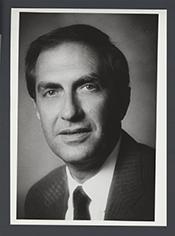
Mr. Chairman, I offer an amendment. Mr. Chairman, I ask unanimous consent that we have 10 minutes for debate on this amendment, 5 minutes controlled by me and 5 minutes controlled by the gentleman…
Mr. Chairman, I offer an amendment.
Mr. Chairman, I ask unanimous consent that we have 10 minutes for debate on this amendment, 5 minutes controlled by me and 5 minutes controlled by the gentleman from Texas (Chairman Bonilla).
Mr. Chairman, I yield myself such time as I may consume.
Mr. Chairman, I rise today to offer an amendment that would cut discretionary spending in the Agriculture, Rural Development, and Food and Drug Administration spending bill by 1 percent. This bill, as it is currently written, appropriates $17 billion in discretionary spending, and reducing this funding by a mere 1 percent would leave us with a funding level of $16.83 billion.
I hasten to say to the gentleman from Texas (Chairman Bonilla) that I am not doing this as a recrimination of the job that he or his committee has done. It is my intention to offer this or similar amendments on almost all of the appropriations bills. I had an amendment such as this drafted for the labor bill last week, and somehow or other it got lost in the shuffle, and we did not get it on. But I intend to do this on most of the bills.
There are many good things in this bill, so I am not singling this bill out to attack. I do this in recognition of the fact that we should not be spending money that we simply do not have.
Current CBO projections indicate the Federal Government is likely to end fiscal year 2003 with a deficit of more than $400 billion. Instead of continuing to increase spending, I submit that we should exercise fiscal restraint and work to alleviate shortfalls. Yet we continue to pour money into programs with little concern for current economic considerations.
While I realize that some programs funded under this legislation are receiving a decrease from fiscal year 2003, there are still a number of programs receiving substantial increases, and let me just highlight a few of these programs. The rural housing loan authorization is funded at $4.4 billion, an increase of $208.7 million over last year and $45.7 million over the President's budget request.
Distance learning and telemedicine program loans are funded at $636 million, which is an increase of $256 million over last year and $250 million above the President's budget request.
Conservation operations funded at $850 million, an increase of $30.4 million over last year and $136.4 million over the President's budget request.
I am not attacking these individual programs. These are good programs. But I am simply asking, can we afford these kind of increases? Clearly, balancing the budget is no longer a priority in this Congress. I think it should be. So I ask Members to support the 1 percent modest reduction in this legislation.
Mr. Chairman, I reserve the balance of my time.
Mr. Chairman, I yield myself such time as I may consume.
Mr. Chairman, I would say to the gentleman from Virginia (Mr. Goodlatte), I was not suggesting that telemedicine is not a good thing for rural America or some of these other things. I am simply saying there are many spots in the agriculture bill where you could find the 1 percent I think that would not hurt rural America. I certainly do not mean to make an assault on rural America.
For many years, every week I give a Porker of the Week Award for what I consider to be wasteful spending. There is no department in the Federal Government that has not received that award, and all of them have received it at one time or another, defense, which I am most interested in, and others have received it. There is no department that has received it more than the Department of Agriculture over the years.
There is 1 percent there. I would hope we would take that 1 percent out. I do commend the gentleman from Texas (Chairman Bonilla) and the committee on the cuts that have already been made. I just think we can go a little further.
Mr. Chairman, I yield back the balance of my time.
Mr. Chairman, I demand a recorded vote.
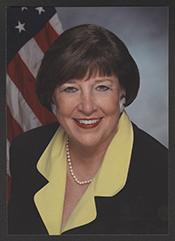
Mr. Chairman, I move to strike the last word. Mr. Chairman, our previous speaker talked about bipartisan effort to not pass this amendment. Let me state that last year there was a bipartisan effort…
Mr. Chairman, I move to strike the last word.
Mr. Chairman, our previous speaker talked about bipartisan effort to not pass this amendment. Let me state that last year there was a bipartisan effort to get this amendment in the bill, and it passed both the House and the Senate. It is also interesting when the gentleman says, well, you can just slap that sticker on a piece of meat or whatever. Well, guess what, we require that we know where our clothing is made, where our shoes are made. I think consumers need to know the meat, the produce they put in their mouths, where it comes from, where it is raised, and if it is safe.
I agree with the statements made by my colleague from Montana and thank him for the leadership on this issue. Over the past several days I received letters of support from the Oregon Farm Bureau and the Oregon Cattlemen's Association thanking me for helping to bring this amendment forward today.
Our amendment is supported by farmers in my district and across the country, which is why it is endorsed by the American Farm Bureau and the Farmers Union. Consumers Federation supports this as well as other consumer groups. Our farmers grow the best produce and raise the best livestock in the world, and American consumers know this. Studies have shown that Americans want to buy American commodities and are even willing to pay a premium to do so.
Yet while a consumer could go into a department store and know that their shirt is made in this country, they cannot go into the grocery store and have the same certainty about the food they are going to serve their families.
U.S. producers need mandatory labeling in order to compete in the marketplace. Product differentiation is the only way consumers can exercise their choice between purchasing either domestic beef or beef produced by foreign competitors.
In fact, according to a 2003 Colorado State University survey, 69 percent of consumers participating were willing to pay for more steaks clearly labeled ``USA Guaranteed: Born and Raised in the United States'' than for those without origin labels. Our Nation's farmers and ranchers produce the best and safest commodities in the world, and our Nation's consumers deserve the chance to determine where their food is born, raised and processed.
Recent events have also shown that the country of origin labeling is necessary for U.S. farmers to compete in international markets, and we keep talking about trade in international markets. Our number one beef importers, Japan and Korea, have both demanded assurances that beef they are buying is actually American beef.
For these reasons, we had country of origin labeling provisions added to the farm bill last Congress. The U.S. Department of Agriculture is formulating the rules to implement these provisions right now.
What the provision in the Agriculture appropriation bill would do would be to prevent the USDA from putting these rules together, short- circuiting a process that is currently in place, a process that Members of this body and the Senate voted to have in there last time.
Opponents of this amendment contend that the costs for industry, including retailers, to comply with country of origin labeling are too great, and the price of products will rise as a result. This is simply untrue. We already have a test case in place.
The fourth most populous State in this country, Florida, has had a country of origin labeling requirement for over 20 years. The Florida Department of Agriculture has estimated the annual cost of its mandatory produce labeling law is just a couple of pennies for a bag of groceries.
Country of origin labeling is good for American farmers, good for American consumers. I encourage my colleagues on both sides of the aisle to stand up today for their constituents and vote for the Rehberg-Hooley amendment.

Mr. Chairman, last year, Congress enacted provisions to close loopholes in the federal animal fighting laws. We need to ensure the Department of Agriculture (USDA) has the resources it needs to…
Mr. Chairman, last year, Congress enacted provisions to close loopholes in the federal animal fighting laws. We need to ensure the Department of Agriculture (USDA) has the resources it needs to enforce the law.
The Blumenauer-Tancredo amendment will provide a modest $800,000 for the USDA's Office of Inspector General to focus on animal fighting cases.
Dogfighting is banned in all 50 States and cockfighting is banned in 48 States. Dogfights and cockfights frequently involve not only deplorable animal abuse, but also illegal gambling, drug traffic, and violence to people. Additionally, cockfighting may be responsible for the spreading of diseases such as Exotic Newcastle Disease (END), a highly contagious virus that affects the respiratory, digestive, and nervous systems of birds. This disease has destroyed many poultry flocks throughout California, Arizona, New Mexico, and Texas and has cost taxpayers more than $100 million for containment and compensation.
As Co-Chair of the Congressional Friends of Animals Caucus, I urge my colleagues to vote in favor of the Blumenauer-Tancredo amendment.
Mr. Chairman, I rise in support of this amendment, which will restore funding to historically black 1890 land grant colleges,
and thank Artur Davis for bringing this disparity to our attention.
When the Budget Committee, of which I am Vice-Chairman, debated this year's Budget Resolution, Mr. Davis alerted us to a troubling discrepancy. Under the budget, historically black 1890 Colleges of Agriculture would have federal funds cut by 3.1 percent, while predominantly non-minority 1862 land grant colleges were only cut by .6 percent. The Budget Committee agreed to insert language into the Budget Resolution stating 1862 and 1890 colleges should be treated equitably.
Under the budget, Capacity Building grants for research and education activities at 1890 colleges were cut 17 percent, while Facilities Expansion funding for Extension Activities were cut by 10 percent. Our amendment restores this funding.
There are 1,890 extension offices working directly with minority farmers. Their activities are vital to the success of these primarily agricultural institutions, and provide critical support for farmers in the most economically-distressed areas.
Because so little funding already flows to these activities, cuts of this magnitude could cripple the ability of 1890 institutions to pursue their mission.
Again, I thank Mr. Davis for offering this amendment and urge its passage.
Mr. Chairman, as Co-Chair of the Congressional Friends of Animals Caucus I urge my colleagues to vote in favor of the Ackerman Downed Animal Amendment.
Animals too weak, from sickness or injury, to stand or walk are routinely pushed, kicked, dragged, and prodded with electric shocks at auctions and intermediate markets, in an effort to move them to slaughter.
There is no excuse for this unnecessary torment.
The Ackerman amendment will protect these downed animals by discouraging their transport to livestock markets and requiring they be humanely euthanized.
Some greedy individuals know livestock sold for human consumption will bring a higher price than livestock sold for other purposes. To them, the money is more important than the suffering of the animals. In moving these animals to auctions and other markets, these individuals display a cruel disregard for the animals. They also ignore the fact that meat from these animals may be unfit for consumption.
Downed animals do not deserve this kind of cruel treatment, and consumers do not deserve to be subjected to the risk of buying contaminated meat products.
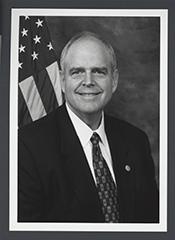
Mr. Chairman, I thank the gentleman from Texas (Chairman Bonilla) for yielding me this time. I rise today in opposition to the amendment offered by the gentleman from Montana (Mr. Rehberg) and the…
Mr. Chairman, I thank the gentleman from Texas (Chairman Bonilla) for yielding me this time.
I rise today in opposition to the amendment offered by the gentleman from Montana (Mr. Rehberg) and the gentlewoman from Oregon (Ms. Hooley). I applaud the gentleman from Texas (Chairman Bonilla) for including a provision in the agriculture appropriations bill that would limit USDA funding for the implementing of the mandatory country-of- origin labeling for meat and meat products. The country-of-origin labeling law as written clearly requires more congressional attention before going into effect by September 30, 2004. I have friends on both sides of this issue, and I always support my friends. I support my friends with this amendment by cautioning them against the hasty implementation of unintended consequences that no one has yet fully researched, and I support my friends on the gentleman from Texas's (Chairman Bonilla) side by saying this is something that we do not need to do now. Recognizing there are many concerns among producers, processors, suppliers and retailers, the House Committee on Agriculture held a hearing on June 26 for witnesses to discuss how mandatory country-of-origin labeling will affect them and their respect to industry. The hearing raised many questions, and the livestock witnesses specifically pointed out that there is tremendous potential for unintended consequence.
As chairman of the Subcommittee on Livestock and Horticulture of the Committee on Agriculture, I intend to hold further hearings on this matter. The U.S. Department of Agriculture has held 12 listening sessions across the country from April to June of this year to allow those who will be affected by the law to voice their opinions. This was in addition to the numerous other producer and trade association meetings they have attended to discuss this law.
Country-of-origin labeling is not a new concept. The Subcommittee on Livestock and Horticulture held hearings on the issue during previous Congresses, and it was debated at some length during the House committee's consideration of the 2002 farm bill. The committee voted not to include the provision because there were too many unknowns about how this would affect producers. When the farm bill went to the floor, an amendment was added to label fruits and vegetables only.
As the Senate created their version of a farm bill, a provision was expanded to include beef, pork, lamb, fruits, vegetables, wild and farm-raised fish, and peanuts. I think it is important to note that the Senate held no hearings and had no debate on how producers and the industry would be affected by country-of-origin labeling.
I have heard concerns from many of my constituents about this issue, predominantly my livestock producers. I can tell the Members that not one of them has said this law will bring additional revenue or market advantages. They all express their deep concern that this law instead will bring them undue burdens and headaches in order to be in compliance. Unfortunately, a ``fire, ready, aim'' approach led to the creation of the country-of-origin labeling law. This issue clearly needs further attention, and delaying the implementation for meat and meat products is a step in the right direction. I would like to reiterate that this provision only affects meat and meat products. The current law will continue to go into effect for fruits, vegetables, wild and farm-raised fish, and peanuts. I urge my colleagues to support the appropriations bill and reject the Rehberg-Hooley amendment.

I think the gentleman from Montana for yielding me this time. Mr. Chairman, I rise today as the gentleman from Iowa (Mr. Latham) said he was reluctantly opposing, I am reluctantly supporting this…
I think the gentleman from Montana for yielding me this time.
Mr. Chairman, I rise today as the gentleman from Iowa (Mr. Latham) said he was reluctantly opposing, I am reluctantly supporting this amendment. I have kind of been back and forth on this. But I think it is the best way for us to resolve this issue if we can keep the mandatory provision in place.
The main reason I am supporting this is that we should not be dealing with this issue in the Committee on Appropriations. This issue should be dealt with in the authorizing committee. I was ranking member on the Subcommittee on Livestock and Horticulture for many years and worked on this issue on the voluntary and all the other things. I was on the farm bill conference. The big problem here is that the language that was put into the farm bill is bad language, and it needs to be fixed. It has got problems. The authorizing committee ought to do that.
I totally agree this is not a food safety issue. It gets mixed up. It is a marketing issue. But I think people need to understand that we are arguing something that we do not even know what it is going to be. The rule has not been developed. There are people out doing studies saying it is going to cost this much. We do not know what it is going to be because there has been nothing that has been put forward at this point.
I would just like to point out, people have brought up this issue of marketing versus food safety. In the food safety area, we have had this BSE issue in Canada and everybody has read about that, but I do not know if people understand how it is that we guarantee in this country that we are BSE-free. You talk about the complications of this system. What we are doing in the BSE area, the food safety area, we are asking producers to sign a self-certification that they have not fed animal parts to cattle in this country and that they have not used certain kinds of antibiotics. It is self-certified, very simple and does not cost anybody hardly anything. I am arguing that the same thing could be done with the marketing aspect of this COOL. In other words, if this is good enough to guarantee that we do not have BSE in our livestock, then why is it not good enough to certify that this is where the livestock came from?
My point is that this could be implemented in a way that is not very expensive to producers. These issues that
are there are caused by the way the law was written, and it was inserted into the farm bill, and, frankly, I do not think we took enough time at that point to go through that and fully understand the implications.
So I think that the Committee on Agriculture ought to be dealing with this. I think that there are problems with the law. There are potential problems with implementation. I do not think there has to be. But it ought to be dealt with in the Committee on Agriculture and not on the floor of the House and not in the Committee on Appropriations in my judgment. I think the administration ought to have been out there with some rulemaking at this point so that we had some better idea what they are intending to do.
I am going to support this amendment. I think if we keep this in the law it is going to make the committee move faster. We will then be able to resolve this. Because I think, in the end, people want to have the food labeled. It is just a question of how we get there. I think there are simple ways that this could be done that are not going to cost people a lot of money. I encourage the adoption of the amendment.

Mr. Chairman, hunger is a terrible problem in the United States and around the world. It's a problem that affects over 20 million adults and 13 million children right here in this country. They're…
Mr. Chairman, hunger is a terrible problem in the United States and around the world.
It's a problem that affects over 20 million adults and 13 million children right here in this country. They're our seniors, our veterans, our neighbors, working parents and their children.
And around the world, 800 million people--300 million of them children--go hungry every day.
I believe that hunger is a political condition.
The fact is that we have the resources to commit to ending hunger both at home and abroad. We have the technology, the expertise, the funding. What we lack is the political will to put an end to this scourge.
Currently, the unemployment rate is at 6.4% and growing. The demands on our community food banks and soup kitchens are becoming more than they can handle.
Government is about choices.
This Congress and this Administration have chosen over and over again to support tax cuts for the wealthy over prudent policies to help lift Americans out of poverty and to end hunger among the 33 million Americans who need our help.
Today, we are considering a Fiscal Year 2004 Agriculture Appropriations bill that dramatically underfunds programs that combat hunger here and abroad.
This Temporary Emergency Food Assistance Program, a key source of funding for food banks, is underfunded by $10 million.
The Women, Infants and Children program that provides assistance to infants, young children and pregnant, postpartum, and nursing women who are at-risk because of inadequate nutrition and income is $108 million below the Fiscal Year 2003 level. Although the Committee acknowledged that food prices were lower than expected, many of us have real concerns that a reduction in WIC funding--coupled with a continuing rise in unemployment--is a formula for tragedy.
The Senior Farmers Market Nutrition program is flat funded, even though the number of applications continues to outpace the availability of funds for this critical effort.
And if that weren't enough, Mr. Chairman, the funding levels in this bill for international food aid are completely inadequate.
P.L. 480, Title II funding--money that goes for humanitarian food aid--is more than $620 million below the Fiscal Year 2003 level.
And a program that I have been championing since its inception--the McGovern-Dole International Food for Education and Child Nutrition--is funded at $57 million. This is a $43 million decrease from last year and a $243 million drop from the funding provided to the initial pilot program.
The American economy, once vibrant, is struggling. Millions of Americans have lost their jobs, and incomes for many others are falling as they are forced to take lower-paying jobs to avoid unemployment.
One in five children in this country is threatened by hunger.
Every day, Mr. Chairman, 33 million Americans do not know whether there will be food on their tables. Overseas, people are starving to death because of famine, drought, war and poverty.
Mr. Chairman, I understand the difficulties the Chairman of the Agriculture Appropriations Subcommittee faced in drafting this bill. I'm sure that, given more resources, he would provide better funding levels for these important programs.
But the fact remains that the numbers in this bill are too low to meet the challenges of hunger. The last thing we should be doing is cutting funding for programs that serve the most vulnerable.
We can and we must do better.

Mr. Chairman, I offer an amendment. Mr. Chairman, the amendment I am offering today will provide $1 million to establish and develop the food biotechnology public education program that was…
Mr. Chairman, I offer an amendment.
Mr. Chairman, the amendment I am offering today will provide $1 million to establish and develop the food biotechnology public education program that was authorized in the Farm Act, H.R. 2646, during the 107th Congress, but was never funded.
The use of biotechnology, such as to produce genetically engineered foods, has the potential to improve yields of nutritionally enhanced foods with less land, reduced use of pesticides and herbicides, can benefit farmers, consumers and the environment.
The history of agriculture has indeed been a history of progress. Now there is an immediate and critical need for accurate information, both on food production systems that have provided the American consumer with a diversified and healthful food supply, and on the role of this new technology in food production. It is only based on clear, accurate, and scientific information that consumers can make sense of the often sensational risk and benefit claims reported and rumored.
In 1999, for example, the journal ``Nature'' published a study suggesting that pollen from genetically modified corn would harm the monarch butterfly population. This sparked a worldwide controversy. Follow-up studies have shown since that the pollen presents no significant danger to monarchs, but the foundation of fear based on emotion had been set, and soon other nonscience-based allegations about biotechnology emerged.
I have been asked if this amendment is an anti-biotechnology or a pro-biotechnology amendment. I would argue that it is an anti-ignorance amendment. It is not to say that biotechnology is always benign under all circumstances; but consumers, researchers, and farmers will benefit from a public that is well informed and engaged in the debate about food biotechnology.
Although food biotechnology has immense potential, consumers and farmers have legitimate concerns regarding the safety of genetically engineered foods. No one, however, is served by assertions from ignorance. It is appropriate for the government to provide the public with clear evidence-based information that helps consumers, policymakers and others make informed choices about food.
I urge my colleagues to support this amendment, so that the Department of Agriculture will have the necessary funding to carry out this authorized program and so that the public will be best informed.
Mr. Chairman, will the gentleman yield?
Mr. Chairman, my amendment actually is silent on exactly how the money would be allocated within the Department. Perhaps it could be through the Food Safety and Inspection Service. But the point is, this is authorized, and it is provided for under the authorization; and I think it will be easy to fit into the Department's public education activities.
Mr. Chairman, if the gentleman would yield further, let me ask the chairman of the authorizing committee if he did not have in mind how this would be administered in the Department of Agriculture.
Mr. Chairman, if the gentleman would yield again.
With those assurances from both Chairs, recognizing that the public debate is raging on and the need for this public information is now, I would be willing to withdraw my amendment and to work with the chairman, with the expectation that we can work something out in the coming months in this session of Congress.
Mr. Chairman, I ask unanimous consent to withdraw my amendment.
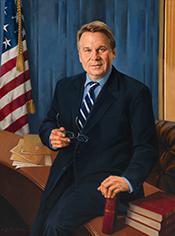
Mr. Chairman, I rise in support of the Ackerman-LaTourette Amendment which would end the sale of ``downed animal meat'' for human consumption. Simply put, this Amendment would take livestock that is…
Mr. Chairman, I rise in support of the Ackerman-LaTourette Amendment which would end the sale of ``downed animal meat'' for human consumption. Simply put, this Amendment would take
livestock that is too diseased, too weak, or too injured to even stand on its own feet out of our food chain.
American families do not want to put downed animal meat products on their dinner tables, and they do not want to worry about whether the meat products purchased from a restaurant contains meat from downed animals. As a matter of fact, new animal welfare standards followed by burger-giants McDonald's, Burger King, and Wendy's have ended the purchase of meat from downed animals in their food products. I applaud these moves and America's consumers applaud them as well.
Common sense, as well as scientific data, says that the meat taken from a downed animal is unfit for human consumption--its risk of bacterial contamination and other diseases is much much higher than the meat taken from a healthy animal. U.S. Department of Agriculture (USDA) records show that downed animals are often afflicted with gangrene, malignant lymphoma, pneumonia, and other serious illnesses. According to the Food and Drug Administration downed animals are responsible for half of the drug residue found in meat because these animals are often very sick animals, and therefore, are often receiving a variety of drug treatments. Why would anyone want to take a chance and eat this meat?
Not only would this legislation remove tainted meat from the American marketplace, it would help improve the treatment of animals at auctions and slaughterhouses. Most downed animals are old dairy cows, crippled veal calves, and sometimes injured beef cattle. These downed animals, too weak to stand up on their own, are often shocked with electricity, moved with bulldozers, kicked and dragged, all in the effort to move them along the assembly lines to be slaughtered.
Mr. Chairman, our Nation has made great strides in food processing and food production over many years. We've come a long way since the publication of Upton Sinclair's famous century-old work, ``The Jungle.'' But there's still a lot of needless cruelty that goes on in these places. Upton Sinclair wrote back then that the animals were strung up one by one in a ``cold-blooded, impersonal way, without a pretense of apology.'' This still occurs today.
For instance, cows with broken legs are often left for hours or even days without food and water, let alone veterinary care. There is no excuse for this cruel and inhumane treatment in a civilized society. For the sake of our society, our animals, and those who eat meat products, the practice of slaughtering and consuming downed animals must be brought to an end.
Americans rightly do not want to eat meat from downed animals nor do they want to see downed animals cruelly treated the way they are at our slaughterhouses and animal auctions. Five months after the publication of ``The Jungle,'' President Theodore Roosevelt and Congress took action by passing the first ``Pure Food and Drug Act'' and the first ``Meat Inspection Act.''
Mr. Chairman, Congress needs to act again. Americans want animals to be treated properly, and they want their food to be safe. I urge Members to support and vote for the Ackerman-LaTourette amendment.
Mr. Chairman, I offer an amendment. Mr. Chairman, I rise today in support and to offer an amendment that will correct a discrepancy and a disparity that has been overlooked in this bill, Mr.…
Mr. Chairman, I offer an amendment.
Mr. Chairman, I rise today in support and to offer an amendment that will correct a discrepancy and a disparity that has been overlooked in this bill, Mr. Chairman.
Let me begin by, first of all, thanking the very able ranking member of this subcommittee, the gentlewoman from Ohio (Ms. Kaptur) for her cooperation and her assistance. Let me thank my good friend, the gentleman from South Carolina (Mr. Clyburn), as well and a number of my colleagues on both sides of the aisle who have worked on this issue during the last several months.
Mr. Chairman, 17 Members of this institution are honored to represent 1890 Land Grant Colleges. 1890 Land Grant Colleges are historically black colleges and universities that have played an enormously significant role in the life of the South, in particular in the last 100 years. These institutions, that include in my State Tuskegee Alabama University and Alabama A&M University, not only reach an underserved part of the population, but they have been vehicles for launching leadership all over this country.
In the President's budget that was submitted, there was a discrepancy in the way these schools are treated and the way that 1862 Land Grant Colleges are treated. While I certainly take the chairman's admonition that if all of us who wanted to add a dollar here and a dollar there were to come to the floor, we would be here all day, I think that all of us would recognize that we have some fundamental obligations to treat like institutions in the same manner.
This particular budget essentially leaves level funding for 1862 Land Grants, which happen to be predominantly white institutions. Funding is slashed by five times that amount for 1890 Land Grants. I am not here to point a finger, Mr. Chairman, or to cast aspersions. I simply identify this discrepancy as something that we should fix.
A number of people ask, what is the impact of a cut that seems relatively small, about 3 percent? That has to be measured I think in the individual life of these institutions. Seventeen of them stand to lose $200,000 to $300,000 a school. In Tuskegee, Alabama, a $200,000 cut at Tuskegee University weakens the ability of that school to do enormously important work. A $200,000 cut at Alabama A&M University weakens the ability of that school to do enormously important work.
While so many programs have had to bear the brunt of the budget ax, we ought to make sure that it is administered in a fair and evenhanded manner.
So I ask my colleagues to support this amendment and to restore $3.5 million, a fraction of a $3 trillion plus budget, to bring back these 1890s to parallel treatment with 1862s in this budget. This is an act of bipartisanship on our part.
I want to thank someone who is not here today, who is touring a base in his State, my good friend and one of the ablest colleagues that we have in this institution, the gentleman from Connecticut (Mr. Shays). He has worked on this issue since the budget process. I want to also thank the gentleman from Louisiana (Mr. Vitter), our colleague on the Committee on Appropriations.
So I urge my colleagues to support this amendment, to make a very important statement about the worth and the value of these colleges that play such a significant role.
Mr. Chairman, I commend the chairman of this subcommittee for his leadership on this issue and trying to get a little common sense back into what has become a very difficult issue. Mr. Chairman, this…
Mr. Chairman, I commend the chairman of this subcommittee for his leadership on this issue and trying to get a little common sense back into what has become a very difficult issue.
Mr. Chairman, this provision was added into the farm bill without a single hearing. Nobody actually in the business came and talked about how you do this and exactly what you do. It sounds good, that we all ought to have a label that says where our meat comes from. The problem is when you start working through how you implement it, it gets very complicated.
Let me just mention a couple of ways it gets complicated.
Number one, the underlying law exempts about 75 percent of the meat that is consumed in this country. If you eat it in a restaurant, it does not count. It is not labeled. If it is hamburger or other sort of processed meats, it does not count. It is not labeled. If it is chicken, if it is turkey, you do not get a label.
We have heard over and over that the consumers have a right to know. If the consumers have a right to know where their meat comes from, they have a right to know where 100 percent of their meat comes from rather than 25 percent of their meat; and so the effect of this is that we are adding a regulatory burden on 25 percent of the meat. That leaves 75 percent of the meat which is at a competitive advantage because of a government regulation. That is not right. It is time to step back and figure out how to do this thing right.
Number two, we hear over and over again how this is really going to be good for producers, that this is a market tool and they ought to be just loving having this opportunity. I would say that if producers see an opportunity to make money, they are going to take advantage of it. There are efforts in the beef industry today, the certified Angus program and other things have been very successful, but that is different than a government mandate that tells you what you must do.
It is not the big grocery stores that are going to pay this burden, it is not the big packers that are going to pay this burden and, in some ways, it is not even the largest cattle feeding operations. The people that are going to feel this burden are the cow-calf producers who have got to figure out some way to understand this regulation and then go comply with it before anybody will buy their calves, and then the stocker guys who take the calves and try to fatten them up before they go to the feed lot, those people on the low end of the production scale. So when we talk about big guys versus little guys, we ought to understand that this is a mandate that is going to be paid for by the little guys in the operation.
We have heard it over and over again that this is not a safety issue, this is a marketing tool, and we are going to make you do it whether you like it or not. That does not make sense. What makes a lot more sense is to take a time-out as the underlying bill does, give the Committee on Agriculture a chance to go and talk to producers as well as grocery stores and packers and consumers, people up and down the chain, and see how you can make something that works and actually makes sense.
This underlying law is not it, and I would say that anyone who wants to justify the underlying law has a very steep hill to climb.
Mr. Chairman, I offer an amendment. Mr. Chairman, I would like to thank the floor leaders of this bill on both sides. I appreciate this opportunity on behalf of myself and my colleagues, the…
Mr. Chairman, I offer an amendment.
Mr. Chairman, I would like to thank the floor leaders of this bill on both sides. I appreciate this opportunity on behalf of myself and my colleagues, the gentleman from California (Mr. Baca) and the gentleman from Mississippi (Mr. Thompson).
Mr. Chairman, I am deeply concerned about the state of minority affairs at USDA. We know that on April 1 of last year, Mr. Vernon Parker, the first USDA Assistant Secretary for Civil Rights, was sworn in and given the enormous task of improving how minorities are currently treated at USDA, preempting future civil rights problems at USDA and righting past wrongs.
I applaud the President for his efforts in creating this Office of Civil Rights, but I urge my colleagues, and the reason I am standing with this amendment, is to not let this office be only window dressing for this very serious matter.
In the 1994 report commissioned by USDA, it was pointed out that minority participation in Farm Service Agency programs is particularly low; and minorities receive less than their
fair share of USDA funding for crop payments, disaster payments and loans. The report found gross deficiencies in USDA data collection and handling that helped these minority farmers.
Mr. Chairman, there are currently 11 class action lawsuits pending against USDA, all of which allege discrimination by USDA. There is a Latino farmer lawsuit, a Native American farm lawsuit and others, and the famous case of Pickford versus Glickman was settled in 1999. Since then we have spent over $800 million, but there are still 2,000 cases sitting around at USDA gathering dust waiting to be reviewed in connection with the Pickford case.
We are hemorrhaging money. We have an Office of Civil rights. It is underfunded. We met with Mr. Parker. He has a 90-day plan where he wants to attack this issue, but he has two staffers in addition to himself, and he has no money.
This amendment would allow that office to be properly funded. It would also allow about $2 million to go into the Office of Civil Rights so that they can review these old cases, and it would allow some funding to go for the benefit of Latino population education.
We think that this $8 million we are seeking here is meaningful to address all of these civil rights issues. We think it would not only serve the Department but it would serve this Congress and would serve this country. So I urge my colleagues to support this amendment.
Bill Text
Latest available legislative text
        [Congressional Bills 108th Congress]
[From the U.S. Government Publishing Office]
[H.R. 2763 Introduced in House (IH)]

108th CONGRESS
1st Session
H. R. 2763

To amend the Internal Revenue Code of 1986 to allow a business credit
for donations for vocational educational purposes.

_______________________________________________________________________

IN THE HOUSE OF REPRESENTATIVES

July 16, 2003

Mr. Pombo introduced the following bill; which was referred to the
Committee on Ways and Means

_______________________________________________________________________

A BILL

To amend the Internal Revenue Code of 1986 to allow a business credit
for donations for vocational educational purposes.

Be it enacted by the Senate and House of Representatives of the
United States of America in Congress assembled,

SECTION 1. SHORT TITLE.

This Act may be cited as the ``Public Private Vocational
Partnership Act of 2003''.

SEC. 2. DONATIONS TO HIGH SCHOOLS AND COMMUNITY COLLEGES FOR VOCATIONAL
EDUCATION PURPOSES.

(a) In General.--Subpart D of part IV of subchapter A of chapter 1
of the Internal Revenue Code of 1986 (relating to business-related
credits) is amended by adding at the end the following new section:

``SEC. 45G. DONATIONS TO HIGH SCHOOLS AND COMMUNITY COLLEGES FOR
VOCATIONAL EDUCATION PURPOSES.

``(a) General Rule.--For purposes of section 38, in the case of a
corporation (as defined in section 170(e)(4)(D)), the vocational
education donation credit determined under this section for the taxable
year is an amount equal to the sum of--
``(1) 90 percent of the fair market value of qualified
property donations made during the taxable year, plus
``(2) the aggregate of the intern credit amounts.
``(b) Limitations.--
``(1) Qualified property donations.--The amount allowed as
a credit under subsection (a)(1) shall not exceed $50,000.
``(2) Intern credit amount.--
``(A) In general.--The amount allowed as a credit
under subsection (a)(2) with respect to a qualified
intern shall be the amount equal to $100 multiplied by
the number of months during the taxable year in which
the intern was an employee of the taxpayer.
``(B) Aggregate per intern credit amounts.--The
aggregate amount allowed to the taxpayer as a credit
under subsection (a)(2) for the taxable year shall not
exceed $6,000.
``(c) Qualified Property Donations.--For purposes of this section,
the term `qualified property donations' means a charitable contribution
(as defined in section 170(c)) of tangible personal property if--
``(1) the contribution is to an educational organization
described in section 170(b)(1)(A)(ii) which is a high school or
community college,
``(2) substantially all of the use of the property by the
donee is for use within the United States for educational
purposes that are related to the purpose or function of the
donee,
``(3) the property is not transferred by the donee in
exchange for money, other property, or services, except for
shipping, installation and transfer costs,
``(4) the property will fit productively into the donee's
education plan,
``(5) the donee's use and disposition of the property will
be in accordance with the provisions of paragraphs (2), (3),
and (4), and
``(6) the property meets such standards, if any, as the
Secretary may prescribe by regulation to assure that the
property meets minimum functionality and suitability standards
for educational purposes.
``(d) Qualified Intern.--For purposes of this section--
``(1) In general.--The term `qualified intern' means an
individual--
``(A) who is enrolled full-time as a student in a
high school or community college, and
``(B) who is employed for not more than 20 hours
per week by the taxpayer as part of a vocational
education course approved by such school or college.
``(2) High school.--The term `high school' means any school
which provides secondary education in grades 9 through 12, as
determined under State law, and which offers a program of
education in vocational education.
``(3) Community college.--The term `community college'
means a public or nonprofit private postsecondary regionally
accredited institution that provides not less than a 2-year
program of instruction that is acceptable for full credit
toward a bachelor's degree at an accredited institution and
whose highest degree offered is predominantly the associate
degree.
``(e) Aggregation Rule.--For purposes of subsection (b), all
persons treated as a single employer under subsection (a) or (b) of
section 52 or subsection (n) or (o) of section 414 shall be treated as
one person.
``(f) Coordination With Section 170(b).--The limitation which would
(but for this subsection) apply under section 170(b) for any taxable
year shall be reduced (but not below zero) by the fair market value of
property taken into account in determining the credit allowed under
subsection (a)(1) for such year.''.
(b) Credit To Be Part of General Business Credit.--
(1) Subsection (b) of section 38 of such Code (relating to
general business credit) is amended by striking ``plus'' at the
end of paragraph (14), by striking the period at the end of
paragraph (15) and inserting ``, plus'', and by adding at the
end the following new paragraph:
``(16) in the case of a corporation (as defined in section
170(e)(4)(D)), the vocational education donation credit
determined under section 45G(a).''.
(2) Section 39(d) of such Code (relating to transition rules) is
amended by adding at the end the following new paragraph:
``(11) No carryback of vocational education donation credit
before effective date.--No portion of the unused business
credit for any taxable year which is attributable to the
vocational education donation credit determined under section
45G may be carried to a taxable year beginning before January
1, 2003.''.
(c) Denial of Double Benefit.--Section 280C of such Code (relating
to certain expenses for which credits are allowable) is amended by
adding at the end the following new subsection:
``(d) Vocational Education Donations.--The deduction otherwise
allowed for amounts taken into account under section 45G shall be
reduced by the amount of the credit determined under section 45G(a)
with respect to such amounts.''.
(d) Conforming Amendment.--The table of sections for subpart D of
part IV of subchapter A of chapter 1 of such Code is amended by
inserting after the item relating to section 45F the following new
item:

``Sec. 45G. Donations to high schools and community colleges for
vocational education purposes.''.
(e) Effective Date.--The amendments made by this section shall
apply to taxable years beginning after December 31, 2002.
<all>