American Indian Lands Title Report Commission Corrections Act

Legislative Activity
Stay on top of the latest movement without scrolling through every action
Referred to the Subcommittee on Housing and Community Opportunity.
February 27, 2003
View full timeline
Introduced in House
January 7, 2003
Referred to the House Committee on Financial Services.
January 7, 2003
Referred to the Subcommittee on Housing and Community Opportunity.
February 27, 2003
Floor Debate
8 membersWhat members said about H.R. 28 on the floor
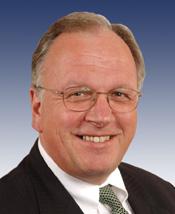 TMR
TMR LMS
LMS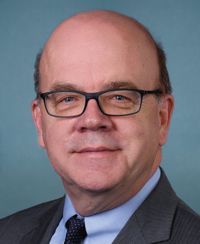 JPM
JPM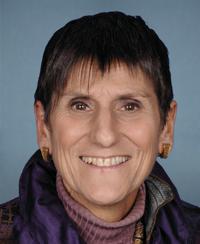 RLD
RLD EP+3
EP+3
Floor Debate
8 membersWhat members said about H.R. 28 on the floor
Mr. Speaker, by direction of the Committee on Rules, I call up House Resolution 281 and ask for its immediate consideration. Mr. Speaker, for the purpose of debate only, I yield the customary 30…
Mr. Speaker, by direction of the Committee on Rules, I call up House Resolution 281 and ask for its immediate consideration.
Mr. Speaker, for the purpose of debate only, I yield the customary 30 minutes to the gentlewoman, and my colleague and neighbor, from New York (Ms. Slaughter), pending which I yield myself such time as I may consume. During consideration of this resolution, all time yielded is for the purposes of debate only.
(Mr. REYNOLDS asked and was given permission to revise and extend his remarks.)
Mr. Speaker, House Resolution 281 is a modified closed rule providing for the consideration of H.R. 8, the Death Tax Repeal Permanency Act of 2003, legislation to make the repeal of the estate tax permanent. The rule makes in order 1 hour of debate, a minority substitute, and one motion to recommit, with or without instructions.
Mr. Speaker, the issue before us today is certainly not a new one. In the 106th session, Congress voted several times in a bipartisan fashion to eliminate the death tax. In the 107th session, Congress voted on three separate occasions to eliminate the death tax; but with the death tax relief set to expire in 2011, we might give Dr. Kevorkian a new career as a tax and estate planner.
Today, we have the opportunity to bury the death tax once and for all.
By way of history, this tax was initially imposed to prevent the very wealthy from passing on their wealth from one generation to the next. At the time, this well-intentioned tax eased concerns about the growing concentration of money and power among a small number of wealthy families. Later, it was used to fund national emergencies, and it became necessary to maintain these high tax rates in high wartime levels during the 1930s and the 1940s, but they remained relatively unchanged until the Tax Reform Act of 1976.
Ironically, the death tax served little of the purpose for which it was intended. Rather than prevent the concentrated accumulation of vast wealth, the death tax punished savings and thrift and hard work among American families. Small businesses and farmers have been unfairly penalized for their blood, sweat and tears, paying taxes on already- taxed assets.
Instead of investing money on productive measures such as creating new jobs or purchasing new equipment, businesses and farms are forced to divert their earnings to tax accountants and lawyers just to prepare their estates.
The victims of the death tax are typically hardworking Americans of medium-sized estates, farmers and small business owners. Their enterprises create jobs and growth and opportunities for our communities, but every year those families were literally forced to sell the family farm or business just to pay off their death taxes.
Equally disturbing is the fact that the death tax actually raises relatively little revenue for the Federal Government. Some studies have found that it may cost the government and taxpayers more in administrative and compliance fees than it actually raises in revenue.
Of course, farmers and ranchers are not the only ones facing an unfair and unnecessary burden in the death tax. One study conducted by the Public Policy Institute of New York State found that in a 5-year period family-owned and -operated businesses on an average spent $125,000 per company on tax planning alone. These costs are incurred prior to any actual payment of Federal estate taxes. They reported that an estimated 14 jobs per business were lost as a result of Federal estate tax planning. For just the 365 businesses surveyed, the total number of jobs already lost due to the Federal estate tax is 5,100. That was just in upstate New York.
My rural and suburban district in New York is laden with small businesses and farms that are owned by hardworking families who pay their taxes, create jobs, and contribute not only to the quality of life in their community but to the Nation's rich heritage. Is it so much to ask that they be able to pass on their industry and hard work, their small business or their farm to their children? Why should Uncle Sam become the Grim Reaper?
The fact is they paid their taxes in life on every acre sown, on every product sold, and on every dollar earned. They should not be taxed in death, too.
Mr. Speaker, death tax relief was a good idea in the 107th Congress, and it is a good idea now. We should not provide this kind of relief for only a few years. We should provide it permanently. This kind of permanent tax relief for farmers, ranchers, and small business owners that will keep the family business growing and growing is just the kind of relief that is beginning to get this economy moving.
Wall Street has shown modest gains not only since Congress passed its tax cut plan but even since we began working on the tax cut itself. As one media report said, ``Economic advisers credit the tax cuts and positive first quarter earnings for the gains.''
Tax cuts work. They work in helping hardworking families keep more of what they earn. They work in allowing people to have greater control over decisions to save and invest, and they work in creating jobs and creating greater economic opportunity for American families. We are on the right course. Let us keep moving forward.
Mr. Speaker, I urge my colleagues to bury this unfair tax once and for all. Vote ``yes'' on the rule and the underlying legislation.
Mr. Speaker, I reserve the balance of my time.
Mr. Speaker, I yield myself such time as I may consume.
Mr. Speaker, my friends from the left always bring up class warfare every time we have a tax cut discussion in this body. I just would point to two aspects of my colleague and friend's remarks.
First, Henry Aaron and Alicia Munnell, who are two prominent liberal economists, concluded in their study of the estate tax the following: In short, the estate and gift taxes of the United States have failed to achieve their intended purposes. They raise little revenue, they impose large excess burdens, and they are unfair.
Alan Binder, a former member of the Federal Reserve Board, appointed by former President Bill Clinton, found that only about 2 percent of inequity was attributable to the unequal distribution of inherited wealth.
Joseph Stiglitz, who served as Chairman of President Clinton's Council of Economic Advisers, found that the estate tax may ultimately increase income equality.
Those are the same type of things that Republicans or conservatives or economists who are right of center have said. So there seems to be concurrence on that.
I would also say that it is sometimes difficult being a member of the majority to resolve some of the issues of inside baseball upstairs in the Committee on Rules. Sometimes we are attacked because we have open rules, sometimes we are attacked because we have closed rules, modified rules, or whatever happens. In this instance, we just cannot seem to win.
The unfortunate aspect of this is that we have today for our colleagues to consider, in the rule that we now have before us, a substitute offered by the Democrats. If the gentleman from North Dakota (Mr. Pomeroy) does not want this substitute, he should withdraw it. He introduced it, he asked the Committee on Rules to consider it, the Committee on Rules did just that.
We also have a recommit, as we have in each and every single rule that we put out on behalf of consideration of legislation since the majority took its control in 1995.
I yield to the gentleman from Massachusetts, though it is unfortunate, as a member of the Committee on Rules, the gentleman cannot get time from his side.
Reclaiming my time, Mr. Speaker, the gentleman from North Dakota (Mr. Pomeroy) came before the Committee on Rules and he introduced his legislation. There is no time I am aware of, in talking to the staff, that the gentleman from North Dakota, from the time he brought the legislation for our consideration until today, that he has asked to withdraw the substitute.
So we are moving forward on the Pomeroy substitute. After that is considered, we will move forward with the motion to recommit and then we will, hopefully, go to final passage.
Mr. Speaker, I reserve the balance of my time.
Mr. Speaker, I yield myself such time as I may consume.
As President Reagan would say, Mr. Speaker, there you go again. Class warfare. I do not know about my colleagues, but I go home every weekend, and I see farmers, and I see small businesses that have worked their hearts out. They have worked hard their whole life on their family farm or in their Main Street business. They are not rich, but they have an estate. They want to pass it to whoever they want. In most instances, that is their children. But to pay the estate tax, they have to sell the family farm. And that just is not right, because they paid taxes on every single portion of the products, goods, and services and then they have to do it again at death tax time.
They are not rich, although this would certainly help them, but as I cited in earlier debate, liberal economists and conservative economists all agree the tax does not really do the job. But think about this: The actuaries and life underwriters and everybody else are saying, if you want to die, you want to do it between now and 2010, because God forbid, if it is January 1, 2011. This thing does not work anymore.
It is a reasonable thing to tell America and to show America and perform for America with permanent death tax relief. This tax relief is reasonable. I understand my colleagues on the left do not believe in tax cuts. I accept that. But I also want to remind my colleagues and friends, as the gentleman from Massachusetts (Mr. McGovern) has indicated, in the Committee on Rules every single amendment had a rollcall vote yesterday. They were all heard, they were all debated, and they all had a vote.
We have, in this modified closed rule, included the Pomeroy substitute, and we have included a motion to recommit. We will then have final passage of whatever comes as the result of our colleagues in the conference on the other side.
Mr. Speaker, I reserve the balance of my time.
Mr. Speaker, I yield myself such time as I may consume.
Mr. Speaker, apparently as I cited in my remarks before, some of that has not been heard as we get some of the facts out. The left does not want to cut taxes. I accept that. I understand that. We are going to have a debate; and this House has repeatedly cut taxes, including the estate tax in the 106th Congress, the 107th Congress, and now in the 108th Congress. But Henry Aaron and Alicia Munnell, who are two prominent liberal economists, concluded in their study of the estate tax, the estate and gift taxes in the United States have failed to achieve their intended purposes. They raise little revenue, they impose large excess burdens, and they are unfair.
Alan Binder, a former member of the Federal Reserve Board appointed by President Clinton, found that 2 percent of the equity was attributable to the unequal distribution of inherited wealth.
And Joseph Stiglitz, who served as President Clinton's Council of Economic Advisors, found the estate tax may ultimately increase income inequality. The reason I have cited that a second time in this debate is we can keep coming forward and say how bad it is. The liberal economists, just as we have seen from right-of-center economists, have concurred that this is not a functional tax.
Mr. Speaker, I yield 4 minutes to the gentleman from Georgia (Mr. Linder), a member of the Committee on Rules.
Mr. Speaker, will the gentleman yield?
Mr. Speaker, I certainly hope that the Senate will quickly respond to the legislation we passed last week, in a prompt response to the decision that they wanted to look at the child tax credit.
If the gentleman would continue to yield, I am a little confused. Last week the gentleman voted against the child tax credit.
Mr. Speaker, I yield 2 minutes to the gentlewoman from Tennessee (Mrs. Blackburn).
Mr. Speaker, I yield myself such time as I may consume. I enjoyed that oratory. I would almost think that she voted for the child tax credit last week, but the sad fact is that she did not because she voted the other way. She voted no. We sent a bill over to the other body. I have listened to the presumptions of the other body, of what will happen over there. I have
talked to a few Senators. They give me the hope that they are so desirous of voting on this that they are looking forward to a conference and they are looking forward to getting it on the floor.
The fact is we are talking about permanent estate tax repeal now. That is what is coming on the floor as we pass this rule, if the body does pass it, and I believe that they will and I believe that we will get bipartisan, Democrat-Republican, support for a permanent estate tax, death tax, however, you want to look at the reality, repeal. As we are listening to the debate shift over to the child tax credit, it is fine to lecture what that is and how it all happened.
The fact is last week I voted for a child tax credit and other tax cuts and sent it to the other body. And the fact is the last two orators on the Democratic side did not vote for it.
So as we move forward today back on the death tax to make a permanent death tax repeal, Members get to vote up or down on the rule and then they get to vote on a substitute and then they get to vote on a recommit and then final passage. I look forward to today, because I believe that we will get bipartisan support to pass the permanent repeal of the death tax.
I yield to the gentlewoman from Connecticut.
I guess she did not have a question.
Mr. Speaker, I reserve the balance of my time.
Announcement by the Speaker Pro Tempore
Mr. Speaker, I yield myself such time as I may consume.
I probably need to put the gentleman from California (Mr. Thomas) and the gentlewoman from Washington (Ms. Dunn) on notice that when we move into the bill on the underlying legislation, we will be talking more on the child tax credit than the permanent death tax. I am just encouraged to see in the 107th Congress, three votes that occurred on the death tax. I saw from 41 to 58 Democratic votes along with Republicans and it reassures me that we are on the path of a bipartisan tax cut to end the death tax once and for all that is in this country.
We need to see a couple of things. Individuals and families and partnerships or family corporations own 99 percent of all U.S. farms and ranches. Think about that. Individuals, family partnerships or family corporations own 99 percent of all U.S. farms and ranches. I do not want us to ever forget that every acre, every piece of equipment, every business has already been taxed in life, so why should they be taxed in death.
Mr. Speaker, I yield 2 minutes to the gentleman from Oklahoma (Mr. Sullivan).
Mr. Speaker, I yield myself such time as I may consume.
I welcome so many from the left to join me in cutting taxes. I look forward to that vote when it comes out of conference committee and maybe she can join us with that.
Mr. Speaker, I reserve the balance of my time.
Mr. Speaker, I yield myself such time as I may consume.
I have got to tell the Members, I have only been here since 1999, but it never ceases to amaze me to see something new. Yesterday my colleague from North Dakota was before the Committee on Rules advocating this substitute that is contained in this rule and another one, and he was granted one that he actually spoke for; and today he wants to bring down the rule.
I yield to the gentleman from North Dakota.
Mr. Speaker, did the gentleman come before the Committee on Rules and advocate the substitute which is contained in the rule today? I think he did, did he not? Did he come and advocate two different amendments before the Committee on Rules, this one being made that was made as substitute inside the rule? Did he or did he not come yesterday before the Committee on Rules and submit testimony before us asking for consideration of this substitute?
I am happy to bring the record down and bring it here.
The gentleman and I both know that he was before the committee and asked for this amendment to be considered by the Committee on Rules and now he wants to bring it down. Is that true or not, sir?
Is the gentleman saying he was not in the Committee on Rules or that he did not request this substitute in his presentation before the Committee on Rules when he spoke on two specific amendments, this being one?
I will yield to the gentleman from South Dakota.
Mr. Speaker, I reclaim my time.
Mr. Speaker, I must say that in the Committee on Rules, we try to work with our side of the aisle to advise a Member if they do not want their amendment made in order, they should not offer it in the Committee on Rules. Maybe that does not happen to Members on the other side of the aisle; but on our side, if someone comes up there and asks for consideration of an amendment, they ought to be prepared that it might be granted.
I just want to go back and make sure we do not miss anything on the death tax inhibiting economic growth because I have listened to my colleagues on both sides of the aisle talk about creating jobs. The threat of a resurrected death tax will force American families to make inefficient investment decisions and to waste resources in an effort to comply with the death tax. Studies show that repealing the death tax would create as many as 200,000 extra jobs each year across America. Jobs are lost when businesses are liquidated to pay death taxes and to make decisions not to expand because of anticipated death tax liabilities.
Mr. Speaker, I reserve the balance of my time.
Mr. Speaker, I yield myself such time as I may consume.
Mr. Speaker, I guess I believe, looking up at the press gallery, that there is probably a view that it is a fair rule. It is a modified closed rule that provides a substitute, then a recommit; and then we move on to final passage. So there is not much controversy on the rule. And we are in a situation as we move forward on a debate that I believe once we get through the process, which is the rule vote, we are going to see in final passage, just looking at the 107th Congress, somewhere between 41 Democratic colleagues and 58 Democratic colleagues who voted for death tax in the past Congress that will join us today in a bipartisan message of passing this legislation out of the House and having it go to the other body.
Mr. Speaker, Benjamin Franklin once noted in this world nothing can be said to be certain except death and taxes. But while death may be certain, taxes are immortal. That is because our current tax system plays a cruel joke on farmers and small business owners. Simply put, the death tax stifles growth, discourages savings, stymies job creation, drains resources, and ruins family businesses. It is time we permanently repeal this unfair tax and allow the American Dream to be passed on to our children and future generations.
Mr. Speaker, I yield back the balance of my time, and I move the previous question on the resolution.
Mr. Speaker, I yield myself such time as I may consume. (Ms. SLAUGHTER asked and was given permission to revise and extend her remarks.) Mr. Speaker, I thank my colleague and neighbor from New York…
Mr. Speaker, I yield myself such time as I may consume.
(Ms. SLAUGHTER asked and was given permission to revise and extend her remarks.)
Mr. Speaker, I thank my colleague and neighbor from New York for yielding me the customary 30 minutes.
Mr. Speaker, at the outset let me say that those of us who oppose this bill love the family farms and small businesses no less than anyone else in the Congress. The fact of the matter is that this tax is paid now by such a small percentage of people, less than 2 percent in the United States, that we believe almost every family farm and every small business is covered already by not having to pay estate tax, and indeed, the 2 percent who pay it, including the Warren Buffetts and the Bill Gateses and his father, all claim that this is a very bad direction for us to go in. They do not want to build large kingdoms of their own wealth. They are asking that we keep this because it has always been the American policy for taxation that it is based upon the ability to pay.
We would be wise, I think, to remember our American history. Republican President Teddy Roosevelt, a hero of mine, who led the charge to create an inheritance tax, believed that the wealthy had a special obligation to the government. He said: ``The man of great wealth owes a peculiar obligation to the State because he derives special advantages from the mere existence of government.''
It would also be wise to remember the virtues of responsibility and accountability, especially now that the deficit has gone from the $5.6 trillion surplus to a $400 billion deficit in a little more than 2 years. The underlying legislation before us today would drain $80 billion more a year from the already empty Federal Treasury. In other words, the money would have to be borrowed.
Now, what does this say to the American people when we prioritize the checkbooks of the wealthiest 2 percent of Americans before paying for the health care for our veterans and fully funding education? I know that the President pledged to repeal estate tax during his campaign, and I am sure that he knows some people in the top 2 percent who will benefit from the complete and permanent elimination of the inheritance tax.
In fact, he probably mingled with a few of them just last night during the event that kicked off the largest political fund-raising drive in our history. But I meet those whose Social Security benefits are threatened by the drain on the resources of the government, some of the 9 million unemployed and 12 million children that are still without the help of the child tax credit. Teddy Roosevelt admonished, and this is so important because it is so wise, ``The test of our progress is not whether we add more to the abundance of those who have much; it is whether we provide enough for those who have too little.''
I hope that in the short time allocated for discussion of this legislation that we do not frighten the family farmers and small business owners. As I said, all of them, unless they are among the wealthiest 2 percent in the United States, are covered already by not paying this tax. They have worked hard to keep their farms from falling into bankruptcy, and far too many family farms are going under already. They fight hard to keep their small businesses going, and we support them in every way that we can, especially during this continued economic decline. They are not subject to the estate tax as it currently exists. I cannot stress that enough.
Indeed, one of my colleagues on the Committee on Rules last night talked about an event in his home State where the convention hall was full and the President said he wanted to make permanent the repeal of the estate tax
and got a humongous response to that. My colleague on the Committee on Rules said that he was sure that not more than 40 people in that room, if that many, would have benefitted from that repeal.
Special estate tax rules for family farms value their farm land at less than other land, at between 45 percent and 75 percent of its fair market value, and already allows farm couples to exempt up to $2.6 million from taxes. Family businesses pay less than 1 percent of all estate taxes. Family business couples can also exempt up to $2.6 million from taxes. The Pomeroy substitute provides even more protections for them. It excludes from the inheritance tax any estate owned by a couple worth $6 million.
Almost a decade ago, the gentleman from California, the distinguished Chair of the Committee on Rules, said on the floor that ``all,'' and in parentheses the minority members at that time, ``are asking for fair treatment on both sides of the aisle here.'' And I agree with my colleague, I want fairness on both sides of the aisle. I would also like fairness and a little old-fashioned common sense.
Under H. Res. 281, only one amendment has been made in order, a substitute amendment offered by my friend from, the gentleman from North Dakota (Mr. Pomeroy). However, instead of choosing his substitute amendment that paid for itself, in other words, took money from probably from the tax cut from the very wealthy and paid for what he is recommending here, where we would have no further drain on the Treasury because it would not have added a single penny to the Federal deficit, but instead of making that amendment in order, the Committee on Rules made a second amendment in order which only partially offsets the cost of the elimination of taxes on estates larger than $3 million.
Even though H.R. 8 falls short, and fails to offset any of the $80 billion annual losses it creates and adds to our increasing deficit, it is very important to note, Mr. Speaker, that one of the differences between H.R. 8 and the Pomeroy substitute amendment is .35 percent. That's all. H.R. 8 would permanently remove the estate tax on any estate, even those as large as $3 billion or $4 billion or $5 billion or larger, and cost the Federal Government more than $800 billion over 10 years. The Pomeroy amendment would exempt every estate in America, except for the wealthiest of the wealthy. Only one-third of 1 percent of estates would be so large that they surpassed the generous exclusion in the Pomeroy substitute.
This bill does a great deal for a very few. It really does, again, add to the deficit. And the most important thing about it are that the people who benefit from it the most are the people who most loudly say not to do this; that we do not need it. We would much prefer a stronger economy in America.
Mr. Speaker, I reserve the balance of my time.
Mr. Speaker, I yield 3 minutes to the gentleman from Massachusetts (Mr. McGovern).
Mr. Speaker, I yield 3 minutes to the gentlewoman from Connecticut (Ms. DeLauro).
Mr. Speaker, I yield 1\1/2\ minutes to the gentleman from Massachusetts (Mr. McGovern) to ask a question.
Mr. Speaker, I yield 5 minutes to the gentlewoman from Connecticut (Ms. DeLauro).
Mr. Speaker, I yield 5 minutes to the gentleman from Massachusetts (Mr. McGovern).
Mr. Speaker, I yield myself 5 seconds. Saying that it will preserve family farms from taxation does not make it true. They are preserved already from taxation.
Mr. Speaker, I am pleased to yield 1 minute to the gentlewoman from Connecticut (Ms. DeLauro).
Mr. Speaker, I want to remind my colleague from New York that the gentleman from Texas (Mr. Stenholm) would really hate to be put in that category of a lefty.
Mr. Speaker, I am pleased to yield 2 minutes to the gentleman from North Dakota (Mr. Pomeroy).
Mr. Speaker, I yield myself such time as I may consume.
Mr. Speaker, I will be calling for a ``no'' vote on the previous question. And if it is defeated, I will offer an amendment to the rule. The amendment will make in order the portion of the gentleman from North Dakota's (Mr. Pomeroy) request that made his amendment budget neutral and was paid for. The amendment was offered, but was rejected on a party-line vote. At least that part was taken out.
The Pomeroy substitute will provide substantial tax relief from estate taxes. In fact, it grants more generous relief to most estates than the Republican bill and grants it immediately. The Pomeroy substitute completely exempts all but the largest estates from taxation and significantly simplifies tax planning for estates of all sizes. It also exempts virtually all family farms and small businesses from estate taxes. Furthermore, the Pomeroy substitute will not add one single penny to the deficit. Unlike the Republican bill, it will be completely paid for.
Republicans in the House have continued for weeks to block any and every bill that provides tax relief to the people who need it most in this Nation. Even on the issue of estate tax, they favor the rich over the middle- and lower-income working Americans. They continue to take care of their wealthy friends again today with yet another deficit- busting bill. Let us take this opportunity to make in order a substitute that will immediately eliminate estate taxes for all estates of less than $6 million. That is 99.65 percent of all estates, 99.65; and it will also do that without costing any additional dollars to the deficit.
Let me make very clear that a ``no'' vote on the previous question will not stop consideration of the Death Tax Repeal Permanency Act of 2003, but a ``no'' vote will allow the House to vote on the Pomeroy substitute which is fully paid for. However, a ``yes'' vote on the previous question will prevent us from voting on a fiscally responsible and revenue-neutral tax bill. I urge a ``no'' vote on the previous question.
Mr. Speaker, I ask unanimous consent that the text of the amendment be printed in the Record immediately before the vote on the previous question.
Mr. Speaker, I yield back the balance of my time.
Mr. Speaker, I object to the vote on the ground that a quorum is not present and make the point of order that a quorum is not present.
Mr. Speaker, I demand a recorded vote.
Mr. Speaker, will the gentleman yield? Mr. Speaker, I thank the gentleman for yielding. I just want to assure the gentleman that on our side of the aisle, we will not complain if we get open rules,…
Mr. Speaker, will the gentleman yield?
Mr. Speaker, I thank the gentleman for yielding. I just want to assure the gentleman that on our side of the aisle, we will not complain if we get open rules, and we certainly would not be complaining as much if the majority allowed the substitute that the gentleman from North Dakota (Mr. Pomeroy) wanted to offer, with the offsets, so this Estate Tax Bill would be paid for.
Mr. Speaker, a few weeks ago, President Bush signed a huge tax cut into law giving billions and billions of dollars in tax cuts to the very, very wealthy. Of course, in the dead of night, the Republicans stripped out the child tax credit to help low- and middle- income American families. But those families do not go to the fund- raisers at the Hilton, so the leadership does not care about them.
The other body acted quickly and responsibly to fix the child tax problem. The leadership of this House, however, dragged their feet and then acted irresponsibly. Finally, last week, after a drumbeat of public pressure, we saw a child tax credit bill, sort of. What we actually saw was a sham, a distraction, a way to kill the issue with one hand while sending out a press release with the other.
Since the House bill is vastly different and vastly more expensive than the Senate bill, the differences have to be worked out in a conference committee. Conferees have been appointed, but has the conference committee met? No.
Now, it is clear that the leadership of the Committee on Ways and Means is not too busy, since they had time to bring up this week's installment of Tax Cut Bonanza, a bill to eliminate the sunset on the estate tax. Mr. Speaker, the current sunset does not even expire until the year 2010, 7 years from now. Now, the Senate-passed child tax credit can help working families today, but, clearly, the Republicans would rather help the very wealthy 7 years early.
This bill would burden our children and our grandchildren with $150 billion in debt over the next 10 years and hundreds of billions of dollars more after that. So why are we considering this bill today? The answer is simple: Last night, at the Washington Hilton, all the fat cats had a fund-raiser for the President's reelection campaign. For $2,000, the people who will benefit from this Estate Tax Bill got a hamburger and a handshake from the Republican Party.
Now, last night in the Committee on Rules, the gentleman from North Dakota (Mr. Pomeroy) offered a substitute that would permanently exclude estates worth up to $3 million per
person or $6 million for a married couple, and would exempt 99.65 percent of estates from estate tax liability. He offered a substitute that would have been paid for. But last night, keeping with tradition, the Committee on Rules basically disallowed his right to offer that substitute. And, also keeping with tradition of shutting out the voices of average working families in this House, they did not allow him to offer his substitute that had the offsets.
So I guess the problem with the approach of the gentleman from North Dakota is that the people who were raising all the money last night are worth more than $6 million. They want more. And they are the people that this leadership in the House cares most about. For those people, it is Christmas in June. But the soldier serving our country over in Iraq, who makes $16,000 a year, gets nothing, because he cannot afford to pay $2,000 for a hamburger at the Hilton.
Mr. Speaker, I urge my colleagues to defeat the previous question vote for the responsible Pomeroy substitute.
Mr. Speaker, I have a question for either of my colleagues on the Committee on Rules. The gentleman's party controls the House and the Senate and the White House. My question is when are we going to have a child tax credit? When are we going to provide relief to that soldier in Iraq who is earning $16,000 a year? We are talking about helping millionaires today, and my question is since the other side of the aisle controls everything, when are they going to bring this child tax credit to the floor?
I yield to the gentleman from New York.
Mr. Speaker, some of the gentleman's colleagues in the other body have said quite clearly that they are not going to deal with the bill sent over there because it was not paid for. I guess since we have Republicans that control the House and the Senate, I would like to think that they would get along with each other and resolve some of these issues; and the issue of the child tax credit is something that would help low-income and moderate-income families right now. They need help now, and it seems to me while we are talking about this estate tax relief bill today, which takes place 7 years from now, why can we not help the people hurting right now.
Mr. Speaker, reclaiming my time, no, I voted against the child tax credit that was not paid for.
Mr. Speaker, I thank the gentlewoman from New York for yielding the time, and I certainly want to associate myself with her remarks and the remarks of the gentlewoman from Connecticut. I think it is important to kind of set the facts straight here because the gentleman from New York, for whom I have a great deal of respect, I think has said some things that I believe are a little bit misleading. One is those of us on our side of the aisle here, we voted for the child tax credit six times. They voted against it six times. We voted for it six times. The difference with what we voted for and what they ended up voting for is we ended up voting for a child tax credit that was fully paid for, with offsets, because we are a little concerned quite frankly with the way Republicans are on this tax cut/spending spree right now because it is adding to our deficit and adding to our debt. This year as a result of their policies, CBO tells us that the deficit this year is $400 billion, the biggest single year deficit ever recorded in our history. That is what we are worried about over here. So we feel very strongly that as we support these tax cut measures to help working families, that they be paid for, that the offsets be specified.
The other body came forward with a bill to help deal with the child tax credit that was going to cost $10 billion, which was fully paid for, with offsets. The majority in the House could not get together with their counterparts in the other body, even though they are of the same party, but the leadership in this House, I think, is so out of touch and so radical when it comes to how they spend the taxpayers' money in this country that they could not even come up with a bill that even approached anything near what the other body did.
But what the House leadership did is they came up with a bill that would cost $82 billion, that was not paid for. In other words, it was all borrowed money, money being borrowed from our children and our grandchildren and our great-grandchildren. They all talk about cutting taxes, but they, in essence, are raising taxes on our kids, something called a debt tax. We are paying an ever increasing amount on the interest on the debt that is being accumulated in this country, in large part because of their fiscally irresponsible policies.
So do not tell us that we voted against a child tax credit. We voted for it six times. We voted for one that would provide immediate relief to these families that we have been talking about for these last several weeks, including our military families, men and women serving in Iraq right now making a base pay of $16,000 a year. They deserve help right now. They work hard, they are defending our country, they deserve this child tax credit. We tried to bring to this floor just like the majority did in the other body brought to the Senate floor a responsible child tax credit bill that was fully paid for. They said no.
We voted for one that was paid for six times and then they came up with a sham, a public relations ploy, knowing that it will get lost in conference committee or that there would never be a conference committee and these low- and medium-income families would get nothing. And here we are today debating an estate tax relief bill that takes effect 7 years from now. We are talking about lifting the sunset 7 years from now. There are more important and pressing problems for a lot of working families, people who will never get to the point where they are going to have to deal with whether or not they are going to pay estate tax or not.
I would just respectfully suggest to the gentleman that his facts are a little bit wrong with regard to what we on this side of the aisle have tried to do and have been championing.
Mr. Speaker, this is not about family farms. In 2001, only 2 percent of the 2.3 million deaths involved any estate or gift tax liability at all. Of those deaths, about one-tenth of 1 percent incurred…
Mr. Speaker, this is not about family farms. In 2001, only 2 percent of the 2.3 million deaths involved any estate or gift tax liability at all. Of those deaths, about one-tenth of 1 percent incurred any liability at all involving family farm assets. How many is that? What does it translate into? Just 46 family farms incurred any estate tax liability at all.
This bill helps 46 family farms, yet will cost $160 billion. So let us not be fooled. This bill is only about protecting those wealthy few, and the cost of this legislation comes directly out of vital services, job training, education, health care for working families. Even in the most robust economy, eliminating the estate tax would be totally irresponsible, a giveaway to the richest Americans; but at a time when we are experiencing $400 billion in record deficits, 9 million Americans are unemployed, eliminating the estate tax is not only irresponsible, it is immoral.
This bill is an insult to the 6.5 million families left out of the child tax legislation, 200,000 military families, less than a week after the majority cynically maneuvered to kill legislation passed overwhelmingly by the ordinary body which would have corrected this injustice; and the House majority brings up yet another bill to cut taxes for only the wealthiest Americans.
And if Members think it is only the Democrats that are saying that the Republicans are cynical in what they did last week, let me quote a senior Senate Republican aide. He said that he expected the tax credits for those working families would die in a dead-locked conference, and he said further that it appeared that was the intention of the House Republicans. And today the Republican whip has said our leadership is committed to the bill we sent to the conference. The majority of our Members are not going to accept anything else. They wanted to destroy the opportunity for working people to be able to get a child tax credit. That is what they did last week.
At a time when there are hard-working, tax-paying minimum-wage- earning families, families of 12 million children, they have not yet received a penny of tax relief. The House's consideration of this bill is irresponsible.
This is a debate about priorities. It is about values. I call on my colleagues to turn aside this misguided, reckless bill. I call on President Bush to use his moral leadership, help deliver the child tax credit to those 6.5 million families, those 12 million children. The President should urge his Republican leadership to pass a responsible child credit bill that reflects the principles of this great Nation. Give those 6.5 million low-income families the tax relief they need. They pay taxes, property taxes, sales taxes, excise taxes, payroll taxes, 8 percent of their income. Give them the tax relief that they need. That is what we should be debating today. Those families have earned it.
Mr. Speaker, I think it is important to note that we are dealing with an issue today that, as has been pointed out, that is really not in the realm of debate or action for the next 7 years when in fact what I think bears importance is to recount what has happened here in the last several weeks about a tax credit for working families, people who pay payroll taxes, sales taxes, property taxes and excise taxes, people who make between $10,500 and $26,625, again working people, who were told that they were part of a tax package, a $350 billion tax package.
Oddly enough, their portion of the $350 billion tax package, $3.5 billion, was stolen out of the bill that the President signed 10 days ago, 2 weeks ago in the dead of night, and the promise that was made to these individuals was just pulled back in order that we meet the demand of those people, 184,000 millionaires in this country, who are going to get $93,000 a year in a tax cut; but we could not scale back 1 percent of that $350 billion to adjust for these working families.
So the Senate in a bipartisan way, the other body in a bipartisan way, because they said that this was just plain wrong, came to the conclusion on a vote of 94 to 2 that we could address this wrongdoing and put $3.5 billion into a bill and address this injustice. And they paid for it.
The President, I might add, or his spokesperson, said we ought to do what the Senate, the other body, did. It came to the House of Representatives where the majority leader of the House said we have more important things to do. What is more important? What is more important to do, give $93,000 in a tax cut to the wealthiest people in this country? Or allow corporations to go overseas and not pay taxes at all? Is that more important than the hardworking American families who pay taxes, 8 percent of their income in taxes, and they should be shortchanged on a $400 tax credit for their children?
There is a basic and fundamental values issue here about who we care about and what we care about in this Nation. We had an opportunity and what the Republican leadership did, the other side of the aisle did last week, was to in fact come forward with an $82 billion package to pay for a $3.5 billion issue, and they did it for one reason; and I will quote the Senate Republican aide again.
A senior Senate Republican aide said he expected the tax credits to die in a deadlocked conference which he said appeared to be the intention of the House Republicans. It was and is the intention of the House Republicans to end this tax credit for these hardworking folks. What people may not know is that everybody else in that tax bill is going to get their tax relief on July 1. Not the families included here. Military families are not going to get it. They are going to have to apply for next year. Two hundred thousand military families fighting a war, fighting a war on our behalf, they are not going to get it. This is an outrage. This should not happen. But over and over and over again, and today what we are talking about is a tax cut, repealing, permanently, the estate tax which I pointed out earlier, 46 families, some of the wealthiest families in the country. And we cannot take care of these families.
I called on the President and the President said he wanted to see this fixed. The President needs to talk to the Republican House leadership, take them in hand and say, let's do what's right. Take the moral leadership, the moral leadership where the President stood up and he fought for the dividend tax cut, again to benefit the wealthiest people in this country. I believe he should take on the moral leadership to fight for these hardworking families.
Mr. Speaker, will the gentleman yield?
Mr. Speaker, I would just say to the gentleman, he says I voted against that bill last week. I will tell him my view and he can dispute this with me. It was a very good feel-good vote on the Republican side of the aisle, and that may be where his vote was because, according to Republican Senate people, Senator Grassley today--I am sorry, a member of the other body--a Senator from the other body said he does not have time for a conference. The majority whip in this body said no time for a conference. The gentleman felt good about voting for that bill because he knew that the Senate was not going to do it and, therefore, they were going to kill the child tax credit. He can say it over and over again. I would not vote for a bill that was instrumental in killing the child tax credit nor was it paid for. The bill that I voted for was being paid for.
Mr. Speaker, on the commentary for my not having voted for a child tax credit, let me just say we have voted six times on this issue. Democrats have voted for, Republicans voted against, including a motion to instruct on which Republicans voted for taking the bill that the other body passed and bringing it back here. My interest in this effort is not today, it is not yesterday, it is not in the last week.
On March 12, I introduced the child tax credit in the Committee on the Budget and it was voted there for the first time. All of the members on the Democratic side voted yes. All of the members on the Republican side voted no against the child tax credit. This legislation we deal with today goes into effect in 7 years. We have an opportunity to right a wrong, to right an injustice, to pass a child tax credit, to take the bill, to go to conference and address this issue and allow these hardworking people to get their benefit on July 1 as every other American who is going to get the benefit of this tax credit will. It is wrong to do otherwise.
I thank the gentlewoman for yielding me this time. Mr. Speaker, I am going to urge that my colleagues vote against this rule. On the one hand, they do allow a Democrat substitute that I am pleased to…
I thank the gentlewoman for yielding me this time.
Mr. Speaker, I am going to urge that my colleagues vote against this rule. On the one hand, they do allow a Democrat substitute that I am pleased to offer, one that would provide very meaningful estate tax relief. In fact, it would completely take care of any estate tax problem of 99.65 percent of the people of this country. It is far more relief than offered under the majority proposal in each of the next 5 years.
So these family farms and these small businesses we are going to be hearing so much about, the alligator tears we are going to be seeing cried on the majority side, we help them and we help them now. On the other hand, the majority approach is very different. Nobody gets nothing until the wealthiest three-tenths of 1 percent get everything that they need. That is why we have the inferior plan on their side compared to the more generous benefit of ours.
There is another very big difference. Theirs would drive the deficit higher to the tune of $160 plus billion dollars over 10 years. Why I want to vote against this rule is that we had a proposal in the amendment that I proposed to the Committee on Rules that would have completely paid for the relief we provide. There would have been zero impact on the deficit. Yet to my surprise, the substitute allowed in order only provides for the tax relief portion and does not provide the means by which we avoid any impact on the deficit whatsoever. We wanted to close the Enron-like tax shelters.
We also had some customs fees, and yet they have shielded this, stripped it out of the rule; and so what we are allowed on the floor will have a deficit impact. I vote against the rule.
Mr. Speaker, will the gentleman yield?
Mr. Speaker, to my friend from New York, we had within the substitute proposed to the Committee on Rules, on which the gentleman served so well, a pay-for so we were not going to impact the deficit. You took out the pay-for provisions of what we submitted to the committee. You make us impact the deficit, although it is only a fraction to which the majority proposal impacts the deficit. We know you do not care about the deficits. In fact, there has been a $9 trillion reversal in the financial fortunes of this country within the last 2 years. We think enough is enough. We do not want to drive the deficit deeper and deeper, and that is why I so wish you would have allowed for the pay-for portion proposed to the Committee on Rules to be considered.
I thank the gentleman for yielding.
I believe the gentleman was out of the room at the time I testified, but I would refer him to the transcript.
Does the gentleman want me to answer his question or does he not?
It is not true.
Mr. Speaker, is the gentleman going to yield to me to answer his question?
Then I will proceed to answer. If the gentleman will check the transcript of my remarks before the Committee on Rules, I asked that the proposal I offered be considered that paid for the provision for the very meaningful estate tax relief we extend by closing the Enron-type tax loopholes.
I know you probably do not want that considered on the floor of the House. So what you have made in order does not allow us to incorporate the pay-fors. I think that is unfortunate. My specific request to the chairman of the Committee on Rules was to allow the pay-fors.
Show 3 more
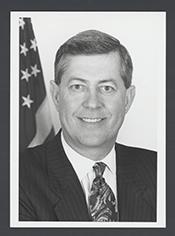
Mr. Speaker, first of all I would like to say that this is a typical rule on a tax bill, and it gives the minority an opportunity to put all of their eggs in one basket and to vote on a substitute;…
Mr. Speaker, first of all I would like to say that this is a typical rule on a tax bill, and it gives the minority an opportunity to put all of their eggs in one basket and to vote on a substitute; and that is fair.
But let me speak to the underlying issue, the bill. I was with President Bush some months ago at Harrison High School in Cobb County, Georgia. He spoke for about 30 minutes in a gymnasium that was filled to the rafters. And at one brief time he said we must make permanent the repeal of the death tax, and the place exploded in spontaneous applause and cheering. I turned to the person I was sitting next to, and I said there are not 40 people in this auditorium who are going to benefit from that. They are cheering it because they think it is a moral issue. People should be able to pass on what they earn and keep.
Mr. Speaker, why are we so angry at success in this body? What do rich people do with their money? They give it away, and they do not give it away for
tax reasons. Some of the great fortunes that were given away, the Fricks, the Carnegies, the Mellons, were given away before we had a Tax Code. They were given away because they wanted to, and we think they have a right to decide where their money goes. Bill Gates gives it in Africa for health reasons; Ted Turner gave $1 billion to the United Nations. Let them make that choice, rather than take it away from them and make the choice for them.
I have said this before on this floor, and I want to say it again. Some years ago and maybe today, if you want to start a business in some great cities, you are visited by a pretty scruffy guy who says we are going to let you stay in business, but we want 30 percent of your profits. And if you sell the business, we are going to take 20 percent of what you make off it; but even the Mafia does not show up at the widow's doorstep asking for their share of what is left over. Our government does. It is immoral, and it ought to end.
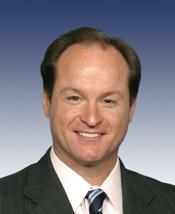
Mr. Speaker, today what we are talking about is ending the death tax. I believe it is morally wrong that we tax people on their death. They should not have to visit the IRS and the undertaker on the…
Mr. Speaker, today what we are talking about is ending the death tax. I believe it is morally wrong that we tax people on their death. They should not have to visit the IRS and the undertaker on the same day. I know a story of a couple, a man and a woman, who had two children who owned a small business. They passed away, unfortunately, and left that business to their children. Their children thought they would get this business, maybe get a little money. But instead to pay the death tax, they had to actually borrow money to sell that business. The Republican Party does not want to tax dead people. The Democrat Party does. That is the difference here today.
Mr. Speaker, I rise today in support of H.R. 8, the Death Tax Repeal Permanency Act of 2003. This bill permanently repeals the death tax and allows families to pass on businesses and farms to their families without the enormous, intrusive and burdensome
taxes they are often forced to incur. The IRS imposes rates of up to 60 percent of the value of a family business or farm when the owner passes away. To pay the tax man, many families are forced to liquidate assets and sell their businesses and farms though some have been in the family for generations.
The death tax is un-American, Mr. Speaker. Ask any small business owner. They know all too well that 70 percent of family businesses do not survive to the second generation, and 87 percent do not make it to the third. They will tell you that repealing the death tax would create jobs and grow our economy. It is good for small business owners, it is good for our economy and it is good for America.
Join me in voting for H.R. 8, the repeal of this burdensome tax on family-owned farms and businesses. It is morally wrong.

Mr. Speaker, I rise in support of the rule that we are discussing that would allow us to consider legislation to permanently repeal the death tax. Mr. Speaker, I am one of those that truly believes…
Mr. Speaker, I rise in support of the rule that we are discussing that would allow us to consider legislation to permanently repeal the death tax.
Mr. Speaker, I am one of those that truly believes the death tax is a triple tax. First, Americans pay a tax when they earn this income. Then they buy an asset and spend it, and they pay the tax then. Then when an American dies, they have to pay the tax again.
This tax is a tax that affects all Americans, especially our small business owners. In fact, 70 percent of small businesses never make it past that first generation because of this tax. It is something that prohibits people from being able to pass that business on to the next generation.
In addition, it discourages savings. It discourages investment, and it is costing our economy hundreds of thousands of jobs.
Mr. Speaker, the Americans get it; 89 percent of the people want us to permanently eliminate the death tax. Small business owners get it. Seniors get it. The farmers in my district in Tennessee, they get it. They want us to do away with death taxes. I hope my colleagues on the other side of the aisle will also get it and vote in favor of this rule and in favor of H.R. 8 to rid our country of an unjust tax that penalizes all Americans.
Bill Text
Latest available legislative text
        [Congressional Bills 108th Congress]
[From the U.S. Government Publishing Office]
[H.R. 28 Introduced in House (IH)]

108th CONGRESS
1st Session
H. R. 28

To amend section 501 of the American Homeownership and Economic
Opportunity Act of 2000 to provide for the establishment of the Lands
Title Report Commission for Indian trust lands.

_______________________________________________________________________

IN THE HOUSE OF REPRESENTATIVES

January 7, 2003

Mr. Bereuter introduced the following bill; which was referred to the
Committee on Financial Services

_______________________________________________________________________

A BILL

To amend section 501 of the American Homeownership and Economic
Opportunity Act of 2000 to provide for the establishment of the Lands
Title Report Commission for Indian trust lands.

Be it enacted by the Senate and House of Representatives of the
United States of America in Congress assembled,

SECTION 1. SHORT TITLE.

This Act may be cited as the ``American Indian Lands Title Report
Commission Corrections Act''.

SEC. 2. LANDS TITLE REPORT COMMISSION.

(a) Establishment.--Section 501(a) of the American Homeownership
and Economic Opportunity Act of 2000 (25 U.S.C. 4043 note) is amended
by striking ``Subject to sums being provided in advance in
appropriations Acts, there'' and inserting ``There''.
(b) Appointment of Members.--Section 501(b)(1) of the American
Homeownership and Economic Opportunity Act of 2000 (25 U.S.C. 4043
note) is amended by striking ``this Act'' and inserting ``the American
Indian Lands Title Report Commission Corrections Act''.
(c) Initial Meeting.--Section 501(c) of the American Homeownership
and Economic Opportunity Act of 2000 (25 U.S.C. 4043 note) is amended
by striking ``the Chairperson of the Commission determines that sums
sufficient for the Commission to carry out its duties under this Act
have been appropriated for such purpose'' and inserting ``the
completion of the appointment of the initial members pursuant to
subsection (b)(1)''.
<all>