H.R. 2807House108th Congress (2003-2005)In Committee
Border Health Security Act of 2003
Sponsored by 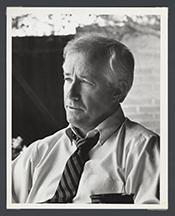 Rep. Jim Kolbe (R-AZ)
Rep. Jim Kolbe (R-AZ)Introduced July 21, 2003
Legislative Activity
Stay on top of the latest movement without scrolling through every action
HouseCommittee
Latest Action
Referred to the Subcommittee on Health.
August 8, 2003
View full timeline
HouseIntro Referral
Introduced in House
July 21, 2003
HouseIntro Referral
Referred to the Committee on Energy and Commerce, and in addition to the Committee on International Relations, for a period to be subsequently determined by the Speaker, in each case for consideration of such provisions as fall within the jurisdiction of the committee concerned.
July 21, 2003
Floor Debate
1 memberWhat members said about H.R. 2807 on the floor
Floor Debate
1 memberWhat members said about H.R. 2807 on the floor
1 Republican
Rep. Jim KolbeR-AZ-8 · Jul 25, 2003
Mr. Chairman, I appreciate Congressman Hayworth's concern on the issue of medical care for undocumented aliens. He and I are both from Arizona. We know very well the concerns of our state. Together,…
Bill Text
Latest available legislative text
Introduced in HouseIssued July 21, 2003
        [Congressional Bills 108th Congress]
[From the U.S. Government Publishing Office]
[H.R. 2807 Introduced in House (IH)]

108th CONGRESS
1st Session
H. R. 2807

To establish grant programs to improve the health of border area
residents and for bioterrorism preparedness in the border area, and for
other purposes.

_______________________________________________________________________

IN THE HOUSE OF REPRESENTATIVES

July 21, 2003

Mr. Kolbe (for himself, Mr. Filner, Mr. Grijalva, Mr. Pastor, and Mr.
Reyes) introduced the following bill; which was referred to the
Committee on Energy and Commerce, and in addition to the Committee on
International Relations, for a period to be subsequently determined by
the Speaker, in each case for consideration of such provisions as fall
within the jurisdiction of the committee concerned

_______________________________________________________________________

A BILL

To establish grant programs to improve the health of border area
residents and for bioterrorism preparedness in the border area, and for
other purposes.

Be it enacted by the Senate and House of Representatives of the
United States of America in Congress assembled,

SECTION 1. SHORT TITLE.

This Act may be cited as the ``Border Health Security Act of
2003''.

SEC. 2. DEFINITIONS.

In this Act:
(1) Border area.--The term ``border area'' has the meaning
given the term ``United States-Mexico Border Area'' in section
8 of the United States-Mexico Border Health Commission Act (22
U.S.C. 290n-6).
(2) Secretary.--The term ``Secretary'' means the Secretary
of Health and Human Services.

SEC. 3. BORDER HEALTH GRANTS.

(a) Eligible Entity Defined.--In this section, the term ``eligible
entity'' means a State, public institution of higher education, local
government, tribal government, nonprofit health organization, or
community health center receiving assistance under section 330 of the
Public Health Service Act (42 U.S.C. 254b), that is located in the
border area.
(b) Authorization.--From funds appropriated under subsection (f),
the Secretary, acting through the United States members of the United
States-Mexico Border Health Commission, shall award grants to eligible
entities to address priorities and recommendations to improve the
health of border area residents that are established by--
(1) the United States members of the United States-Mexico
Border Health Commission;
(2) the State border health offices; and
(3) the Secretary.
(c) Application.--An eligible entity that desires a grant under
subsection (b) shall submit an application to the Secretary at such
time, in such manner, and containing such information as the Secretary
may require.
(d) Use of Funds.--An eligible entity that receives a grant under
subsection (b) shall use the grant funds for--
(1) programs relating to--
(A) maternal and child health;
(B) primary care and preventative health;
(C) public health and public health infrastructure;
(D) health promotion;
(E) oral health;
(F) behavioral and mental health;
(G) substance abuse;
(H) health conditions that have a high prevalence
in the border area;
(I) medical and health services research;
(J) workforce training and development;
(K) community health workers or promotoras;
(L) health care infrastructure problems in the
border area (including planning and construction
grants);
(M) health disparities in the border area;
(N) environmental health;
(O) health education; and
(P) outreach and enrollment services with respect
to Federal programs (including programs authorized
under titles XIX and XXI of the Social Security Act (42
U.S.C. 1396 and 1397aa)); and
(2) other programs determined appropriate by the Secretary.
(e) Supplement, Not Supplant.--Amounts provided to an eligible
entity awarded a grant under subsection (b) shall be used to supplement
and not supplant other funds available to the eligible entity to carry
out the activities described in subsection (d).
(f) Authorization of Appropriations.--There is authorized to be
appropriated to carry out this section, $200,000,000 for fiscal year
2004, and such sums as may be necessary for each succeeding fiscal
year.

SEC. 4. BORDER BIOTERRORISM PREPAREDNESS GRANTS.

(a) Eligible Entity Defined.--In this section, the term ``eligible
entity'' means a State, local government, tribal government, or public
health entity.
(b) Authorization.--From funds appropriated under subsection (e),
the Secretary shall award grants to eligible entities for bioterrorism
preparedness in the border area.
(c) Application.--An eligible entity that desires a grant under
this section shall submit an application to the Secretary at such time,
in such manner, and containing such information as the Secretary may
require.
(d) Uses of Funds.--An eligible entity that receives a grant under
subsection (b) shall use the grant funds to--
(1) develop and implement bioterror preparedness plans and
readiness assessments and purchase items necessary for such
plans;
(2) coordinate bioterrorism and emergency preparedness
planning in the region;
(3) improve infrastructure, including syndrome surveillance
and laboratory capacity;
(4) create a health alert network, including risk
communication and information dissemination;
(5) educate and train clinicians, epidemiologists,
laboratories, and emergency personnel; and
(6) carry out such other activities identified by the
Secretary, the United States-Mexico Border Health Commission,
State and local public health offices, and border health
offices.
(e) Authorization of Appropriations.--There is authorized to be
appropriated to carry out this section $25,000,000 for fiscal year 2004
and such sums as may be necessary for each succeeding fiscal year.

SEC. 5. UNITED STATES-MEXICO BORDER HEALTH COMMISSION ACT AMENDMENTS.

The United States-Mexico Border Health Commission Act (22 U.S.C.
290n et seq.) is amended by adding at the end the following:

``SEC. 9. AUTHORIZATION OF APPROPRIATIONS.

``There is authorized to be appropriated to carry out this Act
$10,000,000 for fiscal year 2004 and such sums as may be necessary for
each succeeding fiscal year.''.

SEC. 6. COORDINATION OF HEALTH SERVICES AND SURVEILLANCE.

The Secretary may coordinate with the Secretary of Homeland
Security in establishing a health alert system that--
(1) alerts clinicians and public health officials of
emerging disease clusters and syndromes along the border area;
and
(2) is alerted to signs of health threats or bioterrorism
along the border area.
<all>