Firefighters Affordable Housing Act
Legislative Activity
Stay on top of the latest movement without scrolling through every action
Referred to the Subcommittee on Housing and Community Opportunity.
August 25, 2003
View full timeline
Introduced in House
July 25, 2003
Referred to the House Committee on Financial Services.
July 25, 2003
Referred to the Subcommittee on Housing and Community Opportunity.
August 25, 2003
Floor Debate
21 membersWhat members said about H.R. 2961 on the floor
 HR
HR BLD
BLD CRB
CRB CT
CT CL+16
CL+16
Floor Debate
21 membersWhat members said about H.R. 2961 on the floor
Mr. President, last week I proposed an amendment to this bill that would prevent the administration from privatizing parts of the Park Service, Forest Service, BLM, and related agencies. I would like…
Mr. President, last week I proposed an amendment to this bill
that would prevent the administration from privatizing parts of the Park Service, Forest Service, BLM, and related agencies.
I would like to submit for the Record some statements supporting my amendment. These are from the National Parks Conservation Association, the Wilderness Society, the National Trust for Historic Preservation, and the American Federation of Government Employees.
These organizations support my amendment because they share my belief that our National Parks and National Forests are public treasures that should be managed for posterity, not for profit.
Their letters cite many reasons why privatizing the operation of our National Parks and Forests would reduce the quality of maintenance and service.
As the letter from the Wilderness Society points out, the director of the National Parks Service wrote an internal memo warning that the administration's privatization policy could reduce visitor services, and cause layoffs of Parks Service workers.
These organizations realize that if we lose dedicated foresters, fire fighters, archaeologists and scientists, we will lose valuable knowledge about our precious public lands.
Protecting our National Parks and Forests is not just a job for these dedicated workers; it is a way of life. No job description can do justice to their dedication.
Just last month at Shenandoah National Park, a search team of four Park Service employees found a 10-year-old boy who was lost.
Today, the Park Service is reviewing their jobs, trying to determine whether they ought to be turned over to private contractors. Trying telling that little boy's parents that it isn't important to have workers who are familiar with our parks and forests.
These are some of the reasons that these organizations are opposed to privatization. There is another reason, which ought to concern every Member of this Senate. That is the unauthorized expenditure of public funds. It is our job as legislators to direct public funds to agencies and projects that will serve a public need. Congress has never authorized funds for outsourcing studies.
The Forest Service spent $10 million just last year on its outsourcing studies, 10 million that Congress had designated for preserving and protecting our national treasures. The Park Service has estimated that it could spend $3 million just to hire consultants. President Bush made a campaign promise to eliminate the $4.9 billion maintenance backlog that existed in the Park Service when he took office. That backlog is now estimated at $6.1 billion. Meanwhile, the Park Service has diverted funds from maintenance projects to conduct studies about outsourcing.
In the Pacific West region, several projects are being put off to pay for security measures and outsourcing, including: removing asbestos from old buildings in Yellowstone National Park, seismic safety rehabilitation for 18 buildings in Golden Gate National Recreation Area, and upgrading the sewage lagoon at Crater Lake National Park. These projects would protect our parks and visitors. That's why Congress set aside money for them.
Just because a private contractor knows how to run a business doesn't mean he knows how to take care of our public parks. A few years ago, one park needed five new courtesy docks on a lake. The lowest bidding contractor designed metal docks for an area where temperatures in the summer reach 115 to 120 degrees. Metal docks would have burned visitors, so the design had to be thrown out. That wasted $21,000, and only two docks could be built with the remaining funds.
In another incident, public workers used to handle their own garbage collection, at a cost of about $150,000 a year. Then they contracted it out. Six years later, the cost is about $500,000 a year. It is no wonder that environmentalists, park visitors, and public employees are so concerned about the effect this policy is having on our public resources. The Bureau of Land Management just wasted $60,000 to study 26 positions in two States. The BLM employees won their competitions.
In all, BLM will spend almost $2 million this year to show the administration that its employees are the most capable and efficient to do their jobs. The public servants at BLM don't need an expensive consultant to prove their commitment to preserving our public resources; they prove it every day. Congress doesn't need that, either. That is why we never voted for it
Ten million dollars in the Forest Service, $3 million in the Park Service, $12 million in BLM, and next year it will be more--unless we stop it.
Article I of the Constitution requires Congress, not the President, to authorize and appropriate funds. The administration is bypassing Congress to implement its own agenda and is using unauthorized funds to do it. We work hard to make sure we fund projects that are in the best interest of the taxpayers. The administration wants to take away that role. Mr. President, I hope my colleagues will join me in doing our duty as United States Senators.
I ask unanimous consent that the letters to which I referred be printed in the Record.
Mr. President, before the Senator from Washington leaves the floor, I would like to say it was only recently that I had the opportunity to see some of the natural beauty of the State of Washington. I, of course, had been to Seattle a number of times--the airport, went into town, and left. But I had the opportunity, within the past couple of months, to see various parts of Washington.
I will never forget the drive from Pasco, WA, to Seattle over the great Cascades. Those mountains and trees, the forests are so much different than the forests of Nevada. We are very proud of the great treasures we have around Lake Tahoe and other forests we have in Nevada. But the Cascades are in a different class, with totally different kinds of trees, different forests.
That is what the Forest Service is all about, having these people, who sign on to the Forest Service for life, to be the guardians and protectors of these great national treasures such as those around Lake Tahoe and those beautiful Cascades that I drove through.
To think we are considering putting these great national treasures out for profit rather than posterity frightens me. I appreciate very much the Senator from Washington standing up for the great Cascades. I am sure there are other beautiful parks in the State of Washington that you have described here that are as beautiful as I can imagine. But I want the Senator from Washington to know--and everyone within the sound of my voice--I was so impressed driving through those Cascades.
I repeat, I hope--and I know there is going to be efforts made to second degree this amendment because the majority is afraid of an up- or-down vote because we will win an up-or-down vote because people of both parties do not want to put these national treasures up for bid. What they are going to do is offer some kind of an amendment saying: Well, we have studied them. Let's get a report. And we will go ahead and continue doing the studies around Lake Mead, around the areas the Senator from Washington pointed out.
The reason this is such a calculated effort to hurt our parks is that they are taking money, as I outlined earlier, that has been set aside by congressional votes to take away the asbestos we have in some of our park facilities, to do work on sewers, and a lot of other things. They are taking money from that and studying whether it is a good idea to privatize. That is wrong. If they were going to do it the right way, they would come before Congress and say: We want to study what is going on in our national parks. Appropriate money for us.
They are doing indirectly what they know they can't do directly.
I hope everyone understands that this second-degree amendment, which will be offered shortly, is only an effort to help those who want to defeat this amendment to, in effect, get well by saying: Well, we voted for a study and the President has to report on these studies.
I want everyone to know a vote for this second-degree amendment--it may be a side-by-side amendment--is a vote to allow the outsourcing, the privatizing of the workforce of our national parks.
I am happy to yield for a question.
Mr. President, I respond to my friend from Washington that this second-degree amendment, which I haven't seen but I have been told what is in it, would basically allow the outsourcing studies to go on. And they have no money to do that so they are robbing other programs to do it. So the answer to the Senator's question is, yes, they would continue doing the outsourcing studies, as they call them, in an effort to privatize the workforce in the national parks.
There is a handout that has been distributed. When you can't defeat a measure on its face, what you resort to is name-calling. Here is what they have written:
Now is not the time to promote inefficiency. The Reid
amendment would support the Federal employees union agenda to
grow the size of the Federal workforce and avoid competition
of any kind.
That is so mean spirited and so wrong. When you can't defeat an issue on its face, what you do is resort to name-calling. What they have done here is say, this is all a big ploy of the unions. I offered into the Record earlier today groups that support this amendment that is sponsored by the Senator from Washington and the Senator from Nevada. There wasn't a single union I put forward as favoring this. I am sure they do, but I haven't talked to them. But we have resorted to name-calling, saying this is bad because the unions like it. I am sure the unions do like it if, in fact, there are unions there. I don't really know. But this has nothing to do with unions.
It has everything to do with protecting a dedicated workforce and to not put these employees out to minimum wage. That is in effect what it is. I know what we will do as we do in all of these privatizing methods: We will come in with a low-ball figure. We can do it so much cheaper. And then as soon as the contract is entered, it balloons. I gave an example this morning. One of the parks was picking up garbage. It cost $150,000. They put it out for private bid. And now within 3 years time it is a half a million dollars for the same work Government employees were doing.
I appreciate very much the support of my friend from Washington. Again, I recognize her ability to support working men and women and not corporate America. I do know the Senator from Washington has done a great job of protecting the corporations in her State. But here is an issue that deals directly with working men and women. And, of course, the Senator from Washington has sided with the working men and women of our country.
Amendment No. 1754 To Amendment No. 1731
(Purpose: To substitute a requirement for an annual report on
competitive sourcing activities on lists required under the Federal
Activities Inventory Reform Act of 1998 that are performed for the
Department of the Interior by Federal Government sources)
Mr. President, it is my understanding that the time consumed by the distinguished Senator from Ohio, Mr. Voinovich, will be counted toward the 25 minutes; is that right?
The unanimous consent request has 50 minutes divided-- actually 60 minutes. That time is equally divided. It is my understanding that the 50 minutes between Senator Voinovich and myself is to be equally divided. I simply ask that the time he already consumed should be counted against the 25 minutes. That is my statement in the form of a question.
I ask for that modification.
I object.
Mr. President, we will try this again. Is the time for Senator Enzi going to be counted toward the 25 minutes that the majority has?
Will the Chair inform me how long the Senator from Wyoming spoke?
Mr. President, everyone should understand a vote for the Enzi-Craig-Voinovich amendment is a vote to allow further outsourcing studies to go on. That is wrong.
What is this amendment about? It is about the Park Service spending millions of dollars in outsourcing studies which would siphon off funds critical to the needs within the parks.
The amendment that has been offered by a significant number of Senators--and I ask unanimous consent to add Senator Kerry and Senator Clinton as cosponsors--allows current studies to move forward on the implications to be evaluated. Current studies can go forward. A short pause is not too much to ask, for the protection of our national heritage is at stake.
The House included the same reasonable language in its bill. According to the House report, the Appropriations Committee was ``concerned about the massive scale of seemingly arbitrary targets and considerable costs of initiatives which are on such vast tracts that Congress and the public are neither able to participate nor understand the costs and implications of the decisions being made.''
That is the end of the quote. That is from the Republican House of Representatives report language in their appropriations bill.
The administration's own Park Service director has indicated the current
plan will reduce services to the public, will negatively impact the diversity of the Park Service, and will not save resources. That is from the administration's own Park Service director.
I would like to read from a letter sent to me by a Park Service employee. Remember, this applies to more than just the Park Service. The Forest Service, the BLM, and other Interior agencies are affected. This man even signed his name, and, of course, it jeopardizes his job. But he is a substantial man, I am sure. His name is Chuck Luttrell. It is a long letter. I will not read all of it.
Among other things, he said:
. . . will the public be tolerant of the selling of the
care and operation of our national treasures to a profit
corporation? Will our parks get the same care, will our
culture and natural heritage be safe in the hands of
companies that could turn out to be Enrons, Worldcoms?
He further states:
The United States of America owes and has pledged a
commitment to our military veterans. We have preferential
hiring regulations for veterans. A private contractor has no
such obligation. The Federal Government has the strongest
commitment to diversity and equality there is.
He says if it is put out to the private sector, veterans will have no further preference, and diversity will go out the window.
In recent years the Congress wrestled with the issues of
health care and insurance. Federal employees have excellent
health insurance options. Again contractors have far
different priorities and as we all know millions of people
working in private industry have no insurance.
Years ago Congress passed the Davis Bacon Act to ensure
that some workers earned a fair, liveable, negotiated wage.
We employees of Lake Mead's Maintenance Division are an
example of Congress' will. But any contractor that would
replace us has no such obligation.
The Park Service, in my 22 years of service, has never been
sufficiently funded. As an agency, we have always been on
starvation rations, and I can assure you that at my level,
Lake Mead N.R.A., there is absolutely no fat in the
system. For years our managers have been required to do
more with less.
The National Park System he talks about has 10 million visitors a year. Lake Mead is the second busiest park in the whole United States.
He goes on to say:
When it comes to saving the taxpayer's dollars nothing is
more efficient than having the work done for free. Nationwide
the National Park Service receives hundreds of thousands of
hours of donated labor. At Lake Mead N.R.A. alone last year
the public volunteered over 92,000 hours of which nearly
21,000 hours were in performing maintenance work. People will
volunteer to work for the National Park Service because they
recognize it is a noble and worthy gift to the country.
People do not, as we all know, volunteer to work for private
contractors.
He goes on to say:
Beyond being a workforce for our respective Parks, we
employees of the National Park Service are a national work
force. Lake Mead N.R.A. has sent people out over the years to
help with everything from oil spill cleanups to hurricane
relief. Every year Lake Mead employees are fighting this
Nation's wildland fires. This year, as always, we are on the
line protecting places like Denver, Colorado, and Show Low,
Arizona. But who will serve and man the fire camps when we
are gone?
It sounds cliche, but for the large majority of the
National Park Service's employees their work is more than
just a job. It is commonplace for people in my outfit to do
much more than just what is written in their position
descriptions. I am a carpenter. I also teach all of our
Rangers how to conduct water search and rescues. I'm not
special. The maintenance employees of Lake Mead N.R.A. serve
on the SCUBA team, on District fire engine companies, and
with search and rescue teams. We serve on Park committees and
often volunteer for special details. We are trained in first-
aid and are first responders. We direct traffic at accident
sites, we help land medical evacuation helicopters, and we
help handle victims and patients. We are also the eyes and
ears for our Rangers. We often are the ones who discover
trouble and report it. I don't think that it is too far of a
stretch to say that in some small way we are even part of
homeland security . . . let me say that we are essentially
ambassadors for the National Park Service. We are uniformed
employees constantly in the public eye. We are often the
first and sometimes the only ``official'' contact visitors
have with the Service. We answer questions, give directions,
and not all that uncommonly change a tire or two. We do all
these things and more, yet they are not in our job
descriptions and a contractor replacing us would not be
obligated to perform any of them.
I ask unanimous consent the full text of this letter be printed in the Record.
But it is just not employees trying to protect their jobs. They are people of good will who enjoy our parks. This is not a statement from an employee of the Park Service or BLM or the Forest Service. This is a letter from a person who cares about what is going on.
This letter is intended to voice my outrage at President
Bush's plans for privatizing our Nation's National Park
System.
The President's planned study and outsourcing of our
Nation's most valuable and symbolic resource should create
indignation in the heart of any American. Our parks have been
on the short end of the funding stick for years, but this
recent maneuver goes too far. As you know, private contracted
companies are only interested in generating the maximum
profit, no matter what corners and services get cut in the
process.
Will you allow our National Parks to become another victim
of the ``Wal-Mart Syndrome''? Are we going to allow a system
that services our nation's last natural treasures with a
network of uninsured low wage caretakers from the lowest
contract bidder?
The other factor that you should consider is the loss of
thousands of annual volunteer hours that our parks receive
from the American public. Hundreds of men and women give on
themselves each year to support our parks. However, no one
will wish to denote their personal time to maintain the
thousands of miles of roads and trails in our parks to the
benefit of some private company.
The President has gotten his war and desired tax cuts, but
I urge you as my representative to put your foot down and
stop this plan from proceeding.
Mr. President, from another citizen:
As a resident of Nevada I find the proposed outsourcing of
National Park Service personnel to be outrageous and almost
offensive.
Employees of the Park Service are driven by a respect for
the parks and love of what they do. Nevadans visiting our
national parks want members of the Park Service, not profit-
minded corporations, enriching their experiences. I oppose
privatizing the Park Service because it would hurt Nevadans,
endanger our national parks, and waste taxpayer money.
Too many private firms have gone this route, costing jobs
in local communities, opening doors for big business, while
causing the local economies to falter.
We live, work, and play in this State. Many of the Park
personnel are our neighbors and friends. They care deeply
about what they do.
I do not think a commercial corporation can do this--I have
visions of an HMO system for our National Lands and shudder.
Who gets the profit from this private enterprise? We've seen
enough of the favoritism the current administration employs,
and frankly, this seems another opportunity for more of the
same.
I would certainly no longer volunteer for the Forest
Stewardship activities in the Lake Tahoe basin. I doubt that
many would. Volunteering time for a profitmaking concern is
not logical--why help a corporation that doesn't care diddly
about the land, the lakes, or the environment increase their
profits and not be paid for the ``contribution?''
I'm one small voice but I am convinced that privatization
of our national park system would be another step to
demolishing what little resources we have now and what we can
hope to gain in the future to hold and treasure for future
generations.
I ask unanimous consent this letter be printed in the Record.
We read editorial comments from all over America opposing what is happening here. I have one editorial from the Las Vegas Sun newspaper, written by Michael O'Callaghan: ``These Are Your Parks.''
Among other things, he says:
Americans who love and use our nation's parks have been
wondering when former secretaries of the Interior were going
to speak. Two of them just did that Tuesday when Bruce
Babbitt and Stewart Udall challenged the attempt to privatize
the positions servicing the parks and the public visitors . .
. They both see the turning over of 70 percent of the jobs to
the private sector as both ``radical'' and ``reckless.''
Among other things, O'Callaghan states:
Privatization of services forces within our park system
would be but the first deadly step to turning them away from
public recreation into a big business. Next they could have
neon signs at park gates leading to Yellowstone Enron, RCA
Zion, U.S. Cellular, Crater Lake, or Death Valley Coors. How
about Basin Bank One? They already have signs in big city
ballparks and this could be their next big step.
I ask unanimous consent the full context of the O'Callaghan editorial be printed in the Record.
How much of my 25 minutes remains?
I repeat, anyone who supports the amendment of my friends, the distinguished Senator from Ohio and the two Senators from Wyoming, is voting to allow privatization of our national treasures to continue. Muddle it up--and that is what this amendment does--muddle it all you want, that is what it is. Some people think you can privatize everything. You cannot do that. You cannot do that. There are certain things that should be off limits. Our national treasures should be one of them.
I repeat for the third time, anyone who votes for the amendment of my friends from Ohio and Wyoming is voting to privatize. Say it however you want, but Udall and Babbitt, former Secretaries of the Interior, recognize what is taking place. We have been told by my friends that there is no such privatization plan underway. If that is true, I point out there should be no objection to my amendment.
Why study a plan, a privatization plan that will never be put into effect? My amendment puts a hold on the administration's privatization plans for this coming fiscal year.
I am getting more concerned each day. This Constitution I carry around with me sets forth the separation of powers doctrine, executive branch of government, legislative branch of government, judicial branch of government, separate but equal. One is not superior to the other. I see more and more coming from this administration that the Congress is not relevant.
If the President of the United States and his people want to study the privatization of our national treasures, let them come to Congress and get the money to do it. What are they doing? They are scavenging the money from present programs. I listed today a number not being done because they were using this money for studies.
We have already learned from the Park Service director who works under George Bush that the current plan will reduce service to the public, negatively impact the diversity of the Park Service workforce, and will not save resources. This is something that should
be under the prerogative of the legislative branch.
Let us provide money if it is such a good idea. Do not just steal it from other programs within the agencies. That is what they are doing. Therefore, we cannot do things to remove asbestos, to repair sewer systems, to take care of water systems, and to provide renovation in the parks.
President Bush said when he took office that he wanted to reduce the backlog of renovation, repair, and maintenance that needed to be done in our parks. Well, that was doublespeak, I guess. That is ``1984'' revisited--Orwell's book--because, in fact, it has gone up. The backlog has gone up from 4.9 billion to 6.1 billion. Let's do it the right way. Let's protect our constitutional prerogatives.
In 2002 and 2003 the agencies under the jurisdiction of this bill reprogrammed funds to study privatization. I repeat what the House committee report on the Interior bill noted: The massive privatization initiative appears to be ``on such a fast track that the Congress and the public are neither able to participate nor understand the costs and implications of the decisions being made'' by the administration. The committee's required programming guidelines are not being followed by the administration.
That is report language from the Republican-controlled House of Representatives. Shouldn't we go along with them? The answer is yes. This was in the Republican committee report. That is why, in part, the House Interior Appropriations Subcommittee prohibited the expenditure of funds for more studies in 2004. That is precisely what my amendment does. We agree with the House.
Others have argued privatization will save money. The General Accounting Office estimated this may or may not be true. Studies of outsourcing at the Department of Defense, by contrast, where outsourcing is common, have been unable to demonstrate a single penny of cost saving. What we do know is that private companies will take care of our parks under their agenda.
We should be very proud that since World War II veterans get a preference. If you served in the military, you apply for a job, you take a test, and we give you a few extra bonus points because you served our country. The private sector will not have to do that. They do not have to follow the same rules and regulations we have dealing with hiring the handicapped. They have all kinds of ways to cut corners in the private sector. It is not going to save money.
What I believe, and lots of other people believe, is private companies will not take care of our parks and forests and other public lands with the same motivation the people who are now working there do. This has nothing to do with labor unions. I know there is a letter circulating saying this is an effort by the minority to protect labor unions. As I said earlier today, I read into the Record different entities which support this amendment: the Wilderness Society, the National Trust for Historic Preservation, the National Parks Conservation Association, the American Federation of Government Employees. There is one union and three public service groups. This has nothing to do with unions. It has everything to do with protecting our national treasures.
I talked about one contractor who wasted $21,000 on a workable design to build courtesy docks on a lake in a park. Of course, the Park Service employees would have known that in a second. I talked about garbage collection. When the garbage was collected by Federal employees, it cost $150,000. Now it is done in the private sector, and it costs over $500,000.
I talked about public employees at Shenandoah National Park who rescued a lost boy. An official at Glacier National Park, who contracted out their janitorial services, said: ``We didn't really save anything from a dollars and cents perspective. The costs came in the above and beyond things the Park Service janitors regularly did that were outside their regular job descriptions.''
Privatization does not always work. It has not worked in Nevada at our two military bases. Privatization can affect the experience visitors have at our parks, as the Director of the Park Service has said. And I quoted that on two separate occasions just in the last few minutes.
I urge my colleagues to support this amendment. Although my friend from Ohio and the two Senators from Wyoming have said privatization saves money for maintenance projects at our parks, in every instance that has proven to be false. These agencies have reprogrammed millions of dollars in 2002 and 2003 from maintenance projects to perform these unauthorized maintenance studies. These funds were diverted from maintenance projects in our parks.
I personally think privatization is a bad idea, but my amendment does not stop current studies. It prevents new ones from starting until Congress has more information about the administration's initiative and the effects it is having on our national parks and forests. They have already wasted all that money studying what goes on. Why don't they issue a report on that and stop, have a slowdown, a pause, a timeout on going forward with more study? That is what I have asked for in my amendment.
Mr. President, I am happy to yield to my friend, the manager of this bill.
Mr. President, I want the Record to reflect--I have been somewhat impersonal, and I do not want to do that--the Park Service Director now is a woman by the name of Fran Mainella. I want the Record to reflect she is the one who has indicated the current plan would reduce services to the public, negatively impact the diversity of the Park Service workforce, and will not save resources.
I reserve the remainder of my time.
Mr. President, I have the greatest respect for my friend, Senator Thomas, from Wyoming. He has always been so cordial and polite to me, as I am sure he is to everyone. He is a real advocate. My point is, he is absolutely wrong on this issue. His argument makes our point. He says: We are not privatizing. But that is what they are doing. They are studying all these different programs, and the purpose is to privatize.
The FAIR legislation: Of course, I understand what that bill was, but it also took into consideration that the money was to be appropriated to do the studies, not to be scavenged from other operations.
I read only one editorial from the Las Vegas Sun newspaper, but there are others. Here is one from the Los Angeles Times: ``Keep Pros Who Love Parks.''
The first paragraph reads:
In a memo to her bosses at the Department of the Interior,
National Park Service Director Fran Mainella said the
administrative costs of a plan to contract out some Park
Service jobs to private companies could seriously cut the
already rock-bottom level of visitor services and seasonal
operations. Unfortunately, that would only be one piece of
the damage.
They go on to say that this is a wrongheaded idea and bad for our national treasures:
The nation's most important natural and historic sites
deserve to be protected by workers with expertise, experience
and dedication to the parks. They are there now, and in the
proud green uniform of the National Park Service.
I ask unanimous consent that the editorial be printed in the Record.
A small newspaper, smaller than the Las Vegas Sun, one from Missoula--of course, Missoula, MT--also talks about how wrong it is. They are so specific, and they know because they live in Glacier National Park. They say outsourcing simply is not good.
There are editorials from all over the country that talk about how bad an idea this is. Remember, anyone voting for the amendment offered by my friend from Ohio, Senator Voinovich, is voting to outsource, to privatize our national treasures. You can say: I really didn't mean to do that; all I did was want studies to be completed.
That isn't what we have here. We have agreed that they can complete the studies they have already engaged in, even though they stole the money from other things that needed to be done within the entities. But to vote for the Voinovich amendment is to vote for privatization. To vote for the Reid amendment is to vote for a time-out, a pause.
Amendment No. 1740
I announce that the Senator from Connecticut (Mr. Dodd), the Senator from North Carolina (Mr. Edwards), the Senator from Massachusetts (Mr. Kerry), and the Senator from Connecticut (Mr. Lieberman) are necessarily absent.
I further announce that, if present and voting, the Senator from Massachusetts (Mr. Kerry) would vote ``yea.''
I announce that the Senator from Connecticut (Mr. Dodd), the Senator from North Carolina (Mr. Edwards), the Senator from Massachusetts (Mr. Kerry), and the Senator from Connecticut (Mr. Lieberman) are necessarily absent.
I further announce that, if present and voting, the Senator from Massachusetts (Mr. Kerry) would vote ``nay.''
Madam President, anyone who supports this amendment is supporting contracting out. All you have to do is read their amendment and that is what it says. They say the President will issue reports. He has not done that. That is the only thing it does. It allows contracting out to go forward without authorization of Congress and without any appropriation for the studies to be taken. Remember what they are doing now is scavenging the money from other work that needs to be done within the various public land entities. It is unfair. It is wrong. Anyone who supports the Voinovich amendment supports contracting out, without question. I urge a ``nay'' vote.
I announce that the Senator from Connecticut (Mr. Dodd), the Senator from North Carolina (Mr. Edwards), the Senator from Massachusetts (Mr. Kerry), and the Senator from Connecticut (Mr. Lieberman), are necessarily absent.
I further announce that, if present and voting, the Senator from Massachusetts (Mr. Kerry) would vote ``no.''
Mr. President, everyone should understand that what has just taken place is to allow privatization to continue in our public land agencies. Clearly, that is what happened. I hope the Members of this body will approve the Reid amendment and allow this matter to go to conference. It appears this last vote was a cover-your-rear-end vote. So we probably will lose on this amendment. I think it is a shame.
I read into the Record how people who work at the agencies feel, editorial comments from all over the country, and comments from private people who know how important the parks are. Veterans preference would not be there; disabilities act would not apply. There are so many things that are unfair to the dedicated people working for our public land agencies.
I hope there will be a ``yea'' vote for this amendment.
I ask for the yeas and nays.
I announce that the Senator from Connecticut (Mr. Dodd), the Senator from North Carolina (Mr. Edwards), the Senator from Florida (Mr. Graham), the Senator from Massachusetts (Mr. Kerry), and the Senator from Connecticut (Mr. Lieberman) are necessarily absent.
I further announce that, if present and voting, the Senator from Massachusetts (Mr. Kerry) would vote ``yea.''
I move to lay that motion on the table.
The motion to lay on the table was agreed to.
I announce that the Senator from Connecticut (Mr. Dodd), the Senator from North Carolina (Mr. Edwards), the Senator from Florida (Mr. Graham), the Senator from Massachusetts (Mr. Kerry) and the Senator from Connecticut (Mr. Lieberman) are necessarily absent.
I further announce that, if present and voting, the Senator from Massachusetts (Mr. Kerry) would vote ``Yea.''
Mr. President, I ask unanimous consent the order for the quorum call be rescinded. Mr. President, while we are waiting for some other presenters, speakers on the amendments that are pending, I ask…
Mr. President, I ask unanimous consent the order for the quorum call be rescinded.
Mr. President, while we are waiting for some other presenters, speakers on the amendments that are pending, I ask unanimous consent to speak in morning business for 5 minutes, and ask it appear in the morning business section of today's Record.
Mr. President, will the Senator from Nevada yield?
I support the amendment offered by the Senator from Nevada. I must point out I think there are wonderful public servants in this country serving, day and night, the public interest, the public need. I think this simple, easy notion that you can just contract everything out and things will be better is really pretty much wrong- headed.
Oh, there may be some circumstances where it is appropriate, but I will tell you, you take a look at firefighters, the police officers, go back to 9/11 and talk to the folks who responded to the calls on 9/11 when that terrible tragedy occurred in New York City, the devastating attack on this country--and, yes, those were public employees who were rushing up those stairs--firefighters, law enforcement men and women, rushing up those stairs--losing their lives, as the building was collapsing, trying to save lives. These were public employees. There are so many serving in so many different ways--the archaeologists and biologists working in the Park Service and in so many different areas.
In this piece of legislation, one of the agencies had spent money they should not have spent studying contracting out when, in fact, they did not have the money for the kind of basic repairs and maintenance necessary to be done in the parks. So instead of doing what they should have done to keep the parks in the kind of shape they should be, they were using money to study: How can we contract these jobs out?
Well, there are plenty of examples--my colleague from Nevada has used some of them--where you completely lose control with respect to contracting out. I just think it is important sometimes to stop and take a look at the workforce that belongs to the public sector, and to say that, in many instances--most instances--they do a wonderful job to serve this country very well, and there is no substitute--no, not contracting out, and no other substitute I know of--that could replace that group of dedicated public workers who serve this country day after day after day. That is why I am happy to support this amendment.
Mr. President, how much time remains?
Mr. President, I support and cosponsored the amendment offered by the Senator from New Mexico. I think it is not only written appropriately at this point and has proper safeguards, but I think it is also a necessary amendment for the reasons that my colleague from New Mexico has described.
I understand my colleague from Wyoming, who is chairman of the subcommittee on these issues, and his statement as well. If we pass this amendment with this particular wording, I think it accomplishes something important, and I am happy to cosponsor it and support it.
I ask unanimous consent the vote be a 10-minute vote and all succeeding votes be 10-minute votes.
I move to lay that motion on the table.
The motion to lay on the table was agreed to.
Mr. President, let me, too, thank my colleague, Senator Burns. This is a very significant piece of legislation. We have had excellent cooperation. I also thank the staff, if I might: Peter Kiefhaber, Brooke Livingston, and, of course, the majority staff: Bruce Evans, Ginny James, Steve Fonnesbeck, and also Ryan Thomas.
The Interior bill has, on occasion, been a bill that has taken a long time to move through the floor in some years. Other years, it has moved rather quickly. I think we have had a good discussion on some very important issues. I appreciate the work of my colleague from Montana. I believe we have a couple of managers' packages, and then I think we will have an opportunity to voice vote final. There is one additional amendment as well.
I yield the floor.
Mr. President, we should momentarily come to the floor with the final managers' package and wrap up this bill and I think we will have a voice vote at the end. I did want to make a couple of comments while we were waiting for the final pieces of this appropriations bill.
Earlier today I visited just a bit about the issue of reconstruction in the country of Iraq. Today we were visited in our Democratic caucus by Ambassador Bremer who just returned from Iraq. He appeared before the Senate Appropriations Committee yesterday, before our caucus today. He talked about the request of $87 billion, both for military appropriations for our defense establishment--that is appropriations of about $60 billion necessary for the efforts we are making in the country of Iraq--and, in addition to that, there is about slightly more than $20 billion for reconstruction in Iraq.
I want to make the point that first I think every dollar requested for the military could, should, and I believe will be appropriated quickly to support the efforts of our troops. This Congress has to understand when we ask our sons and daughters to go to war and to commit themselves for the mission this country asks of them, we must support them with appropriations.
The second issue, the reconstruction in Iraq that is necessary, is a different and an interesting problem. Should the American taxpayer pay for the reconstruction of Iraq? First of all, we did not target Iraq infrastructure. Shock and Awe was a campaign that began with smart bombs and smart weapons. It did not target their electric grid. It did not target their dams. It did not target their roads. It did not target the infrastructure of Iraq. The destruction of the infrastructure of Iraq has come from a guerrilla insurgent movement inside Iraq, but it has not come from American military force. So the question is, who should provide the $20-plus billion for reconstruction of Iraq?
Let me make a point about that. Iraq is a country of 24 million people sitting
on sandy soil that contains the second largest reserves of oil in the world, the second largest reserves in the world next to Saudi Arabia. It is estimated that by next July the Iraqi oil wells will be producing around 3 million barrels per day. It is also estimated at that level the net export value of Iraqi oil will be about $16 billion a year. So over the next 10 years the Iraqi oil revenues should produce about $160 billion.
In addition to that, I asked Ambassador Bremer what do you intend to do with respect to the Iraqi oil revenue and what do you intend to do with respect to debts that are owed to other countries from the country of Iraq? The reason I ask that question is, I said: Why don't you use Iraqi oil to reconstruct Iraq? It seems to me logical you would do that.
He said, We can't do that because Iraq owes a great deal of money. It has great debt.
I said, Who holds the debt?
Yesterday during the Appropriations Committee hearing, he said Russia--Iraq owes Russia money, it owes France money, and Germany money.
Since yesterday I have gotten more information about that. It turns out the largest holders of Iraq debt are Saudi Arabia and Kuwait. It is very interesting to me: Saudi Arabia and Kuwait, the largest holders of debt, according to published reports, from the Iraqi government.
So the Iraqi government owes Kuwait and the Saudis perhaps $50 billion. Who is the Iraqi government? Saddam Hussein. Saddam Hussein obligated the Iraqi government, the Iraqi people, to pay certain moneys to other countries for the debts incurred. But Saddam Hussein does not exist; his government is gone. So who should repay that debt? Ambassador Bremer says the American taxpayer should repay that debt. I don't think so. I think what ought to happen is you ought to collateralize or securitize the next 10 years of Iraqi oil. You can easily provide the resources for the reconstruction in Iraq from the oil that will be pumped from the sands of Iraq in the next 10 years. Iraqi oil ought to be used to pay for the reconstruction in the country of Iraq.
With respect to the debt Ambassador Bremer says under international obligations is owed by the country of Iraq to other countries, it seems to me there is a term called debt forgiveness. I don't know how you say to the Saudis and the Kuwaitis: You were owed money by Iraq. Go find Saddam Hussein and collect it. I don't know quite how you say that, but there must be a way of saying that. Go find Saddam Hussein and try to collect that debt. That is who obligated that debt on behalf of the Iraqi people.
It seems to me, the first thing we ought to do is say this debt that overhangs the people of Iraq ought to be negotiated down, first and foremost. Second, it seems to me we ought to say we will provide all the money that is requested, first for the military side of the request for the appropriations the President asked for, and second, we will provide the money, because we should, with respect to reconstruction. But it will not be American taxpayers' money. We will provide the mechanism by which we monetize or rather collateralize or securitize the oil revenues that we pump from under the sands of Iraq over the next 10 years.
Ambassador Bremer says that will be up to 3 million barrels per day by next July. At 3 million barrels per day you produce about $20 billion a year, about $4 billion of which is going to be needed for Iraqi oil needs, the rest of which is available for export. That is $16 billion of export earnings. That is the way you reinvest in Iraq. Invest in Iraq infrastructure with oil revenue from Iraq.
Ambassador Bremer said one other thing that was interesting to me. He said, by the way, we have just put together a tax structure in Iraq. I might point out that a nonoil state, that is a nation that doesn't have oil reserves, and that's a good many nations around the world, they put together a revenue structure, a tax system by which they raise the money to build the schools, to build the roads, to maintain the electric grid. They put together a tax system to do that.
They have just put together a new tax system in the country of Iraq and Ambassador Bremer pointed out yesterday we have a new tax system. Apparently that is designed to produce the revenue to run the Government of Iraq. He said the top income tax rate is 15 percent.
I am thinking to myself, so those at the highest income levels in Iraq--and there are some very high income-earners in Iraq--will pay a 15 percent tax and then American taxpayers at the highest level will pay a 39 percent tax and we should pay a 39 percent tax so we can send money to the Government of Iraq so the Government of Iraq can send money to the Saudis and the Kuwaitis to satisfy past debt obligations while the Iraqi citizens at the top of the income level are paying 15 percent income tax. I don't think so. That is not a construct that makes much sense to me.
I am not saying by all of this that we don't have obligations--we do--or that we don't have a priority interest in dealing with the military and the nonmilitary needs in Iraq. We do. The question is not whether; it is how.
My hope is we will bifurcate this request for appropriations of $87 million, and take the military side first and pass that. I support all of that. We ought to move that through this Congress quickly.
Second, we ought to work with Ambassador Bremer and others and describe to those folks how we want to reconstruct Iraq to rebuild the infrastructure.
Let me describe what they are talking about. It is restoring marshland, building seven communities with 3,500 new homes, rehabilitating 1,000 schools, developing a telecommunications system. Need I go on?
Is the reconstruction of Iraq necessary in which to build a market system and a healthy economy? Perhaps. Should it be done? Sure. With whose money? Who pays the bill?
In this case, it makes no sense to me for us to say the American taxpayer should foot that bill for reconstruction. It makes eminent good sense, in my judgment, for us to say we will help, as we already have, to develop the central banking system of Iraq, develop the economy that is now emerging in Iraq, and through that process securitize future Iraqi oil revenues. As I see it, that is $320 billion in revenues over the next 20 years. It just seems to me that $320 billion in 20 years provides the collateral to easily provide the upfront funds--not a grant from the American taxpayer, but a loan in the form of a security document securitizing or collateralizing future oil production in Iraq.
We will have a lot of discussion about this. I suspect some will say if you do not believe in every single sentence or every punctuation mark in the President's request that somehow you are not thinking squarely. I really believe the piece we ought to describe in some great detail here and the piece we ought to debate is the issue of who should pay for the reconstruction of Iraq--not the issue of security. We need to do that. Not the issue of military needs; we need to do that, and now. But we need to have a good, strong debate here in this Congress about how to provide the funds for the reconstruction that is being proposed in Iraq. I for one come down on the side of saying let us have Iraqi oil produce the revenues to invest in Iraq. That is what makes good sense to me.
For the record, let me describe the circumstances with Iraqi debt. The reason I do this is because Ambassador Bremer says that is why they propose the American taxpayer pay the money for Iraqi reconstruction rather than have Iraqi oil do it. The World Bank Debtor Reporting System is where you find the evidence of which countries have how much debt. Saddam Hussein's Iraq was one of the few countries that did not report its debt statistics to the World Bank Debtor Reporting System. So you have to rely on other pieces of information.
The best we can determine, the biggest lenders to Saddam Hussein were France, Germany, Gulf states, Japan, Kuwait, Russia, and Saudi Arabia. Of those, the largest was Saudi Arabia, then Kuwait, and Russia a close third. All the other Gulf states together were substantial--close to $30 billion, France and Germany in the $6 billion range.
I think it is really important to ask the question. If you are saying we can't use Iraqi oil to reconstruct Iraq because Iraq has all of these debts Saddam Hussein apparently incurred, then
how do you tell countries such as Saudi Arabia and Kuwait, and how do you tell them quickly, by the way, that the debt you have, that paper you hold, is the debt you incurred in negotiations with Saddam Hussein. We are sorry. He doesn't live here anymore. You might want to put that piece of paper somewhere where you have other things to collect which have very little worth, then start over understanding that Iraqi oil can be used to reconstruct the urgent needs that exist in the country of Iraq.
I will have more to say about this at some future point. Because Ambassador Bremer is here, I wanted to make that point. Let me also say that I said to Ambassador Bremer we pray for his safety. He has a very difficult job and dangerous job, as do the men and women who wear our country's uniform and who are in Iraq today and stationed in other parts of the world as well. We pray for their safety and thank them for their services to our country.
I yield the floor and suggest the absence of a quorum.
Mr. President, I support this amendment. We have reviewed it. I am a cosponsor. I asked Senator Burns to include me as a cosponsor.
This really needs to be done. In fact, we need to do more than this. This is what we can do at this moment and we will continue to work on this in conference.
Mr. President, if I might, while we are waiting, on this issue of fire and fire suppression, I know Senator Burns has spoken on this floor at some length, and we have had a discussion in the committee. We have to really stop this process of underfunding these accounts at the start of the year. It is not a great surprise that we are going to have forest fires. I come from a State that doesn't have a lot of trees. But my colleague, Senator Burns, comes from a State that is full of trees.
In a good many States in this country, we have seen the devastation by massive forest fires. They cause a substantial amount of damage. The amount of money that is required to deal with the issue of forest firefighting and forest fire suppression is a very substantial amount of money. We know at the start of the year and in recent years that the money has not been requested which is going to be necessary. Then we come later on in the year acting wide-eyed and surprised--not my colleague from Montana. He never acts wide-eyed and surprised. But there are some who walk around here acting like they have just been hit with this huge surprise. It is not a surprise to us.
At the start of the year we need to ask OMB to request the money that is necessary, and we need the Congress to appropriate the money necessary so we are not in this bind every single year.
The amendment we have just agreed to, the Burns amendment, is an amendment that moves us in the direction of restoring the funding that has been taken from other accounts. But it doesn't provide all the money necessary for that. We have much more to do in conference.
Senator Burns has done a remarkably good job in trying to fight with those with whom you have to fight to get the resources. We will continue this fight in conference.
The amendments have been cleared on this side of the aisle.
Mr. President, I concur. The chairman is correct, and I, too, want to help ensure this situation is addressed in conference.
Will the Senator yield for a question?
I am aware of the Senator's interest in the Little Rock Audubon Nature Center, but did the Senator say that the Center will support national science and math goals?
Let me add to the chairman's remarks that I, too, am interested in investing in programs that support math and science.
So this project would not only help to improve math and science scores for all children but in particular help to assist underserved communities? What other benefits would it provide?
I agree that this sounds like a very worthwhile project. What Federal appropriation would be necessary to begin work on it?
I appreciate this thorough report about the benefits of the Little Rock Audubon Nature Center.
Fetal Alcohol Syndrome is one of the most pressing health issues facing Native Americans and I am committed to helping advance our research efforts in this field.
Mr. President, I thank the Senator from Montana, the distinguished chairman of the Interior Appropriations Subcommittee, for the committee's recognition of the important environmental and energy security benefits of expanding our nation's E85 Infrastructure.
E85 is a form of alternative transportation fuel consisting of 85 percent Ethanol and 15 percent gasoline developed to address America's air quality needs and dependence on foreign oil. Currently, there are over 3 million E85-capable vehicles in the National Vehicle Fleet. The use of E85 in these vehicles has the potential to reduce foreign oil imports by 34 million barrels a year, while adding $3 billion to total farm income and reduce greenhouse gas emissions.
In the fiscal year 2003 Interior bill, in the committee report for the transportation sector, the committee recommended a $2 million increase in technology deployment for the Clean Cities Program. The report language further recognizes the work being done by the National Ethanol Vehicle Coalition to increase E85 fueling capacity and urges the Department of Energy to give careful consideration to proposals that might be submitted to further this goal. My understanding, is that the Department, consistent with this language, has awarded funds to the NEVC and others for the continued development of E85 Infrastructure and E85 promotion.
On page 69 of the fiscal year 2004 Interior Subcommittee report, under weatherization and intergovernmental activities, it states:
Within the amount provided for clean cities, the department
should continue efforts to expand E85 fueling capacity.
I ask the distinguished Chairman whether I am correct in my understanding that the committee intends that a portion of these funds be used by the Department to continue the existing E85 Infrastructure development initiatives that were funded in fiscal year 2003.
I thank the Chairman.
Air Products and Chemicals
Mr. President, I suggest the absence of a quorum. The order of business now is the Boxer amendment. We have set aside some time for the Senator to speak on the outsourcing amendment. If the Senator…
Mr. President, I suggest the absence of a quorum.
The order of business now is the Boxer amendment. We have set aside some time for the Senator to speak on the outsourcing amendment.
If the Senator from Washington wants to speak on the Reid amendment, I ask unanimous consent that the present amendment be set aside and the Senator from Washington retain the floor.
Mr. President, I have a unanimous consent request to propound. I ask unanimous consent that prior to a series of stacked votes, which will begin at 4:45 p.m., there be 10 minutes of debate equally divided in relation to the Bingaman amendment No. 1740; further, that there be a total of 50 minutes equally divided in the usual form in relation to the Voinovich and Reid amendments on competitive sourcing.
I further ask unanimous consent that at the hour of 4:45 p.m., the Senate proceed to a vote in relation to the Bingaman amendment No. 1740, to be followed by a vote in relation to the Boxer amendment No. 1753, to be followed by a vote in relation to the Voinovich amendment which is to be modified to be a first-degree amendment, to be followed by a vote in relation to the Reid amendment No. 1731; provided, further, that no second-degree amendments be in order to the amendments prior to the vote, with 2 minutes equally divided prior to each vote.
Is that agreeable?
Mr. President, thanking my good friend from Wyoming for allowing me to interrupt here, I renew the unanimous consent request with regard to the votes.
I ask unanimous consent that prior to a series of stacked votes, which will begin at 4:45, there will be 10 minutes of debate equally divided in relation to the Bingaman amendment No. 1740; further, that there be a total of 50 minutes equally divided in the usual form in relation to the Voinovich and Reid amendments on competitive sourcing.
I further ask that at the hour of 4:45, the Senate proceed to a vote in relation to the Bingaman amendment No. 1740, to be followed by a vote in relation to the Boxer amendment No. 1753, to be followed by a vote in relation to the Voinovich amendment, which is to be modified to be a first-degree amendment, to be followed by a vote in relation to the Reid amendment No. 1731; provided further that no second-degree amendments be in order to the amendments prior to the vote, with 2 minutes equally divided prior to each vote.
I would advise that that is acceptable, that the Enzi statement would be part of that 25 minutes.
I yield the floor to the Senator from Wyoming.
Mr. President, I urge my colleagues to vote for the second-degree amendment.
I certainly understand some of Senator Reid's concerns about the competitive sourcing initiative.
For one, most of the agencies funded in this bill failed to budget adequately for the costs of the competitive sourcing studies. As a result, funds that would have been available for other purposes--such as maintenance projects or grazing management--were diverted. Ultimately, I regard this as a failure of the Office of Management and Budget as much as anything.
Yes, competitive sourcing in some cases may result in actual savings. But those savings are likely to be over the long term, and the fact that there may be savings doesn't relieve agencies of the need to budget for the implementation costs up front.
It is for that very reason that we included language in this bill that made further competitive sourcing work by the Forest Service contingent on approval of a detailed reprogramming request. The Forest Service is slated to spend more than any other agency in this bill on this initiative.
But the question before us now is whether to shut down any and all competitive sourcing studies by agencies in this bill. This strikes me as overkill. Has the administration flawlessly implemented its initiative? Certainly not. We have already discussed its failure to adequately budget for the initiative.
I would also note that the administration initially proposed quotas of positions that each agency was to competitively source. I think this was inappropriate. Competitive sourcing makes more sense in some agencies than it does in others. And some agencies have already used forms of competitive sourcing to great advantage. There should be some recognition what these agencies have done previously.
Finally, I know there is much concern among my colleagues on this side of the aisle about the potential impact of competitive sourcing on rural areas. I absolutely understand and share this concern. In such areas the potential loss of a handful of well-paying Government jobs is not a trivial thing. This is particularly true if there is no guarantee that any jobs that are outsourced will remain in the community. I don't think the administration has fully appreciated this fact. But the root of the question raised by this amendment is whether competitive sourcing is, in all cases, a bad thing. The answer is clearly no.
Competitive sourcing experts can cite numerous examples--and they have been cited in the Chamber--of success in the Department of Defense. But even within the Department of the Interior, careful use of outsourcing has resulted in both dollar savings and improved performance. The construction program of the National Park Service is one such example. I have one of those in Great Falls, MT.
Proponents of this amendment can certainly cite examples of poor performance or malfeasance by contractors. Without question, there are cases of this. But we know well enough that there are at least as many instances of
poor performance by Federal employees. This argument simply doesn't fly. Finally, I note that the pending amendment is identical to language included in the House bill. The Statement of Administration Policy states that the President's senior advisers will recommend a veto of the Interior bill if such language is included. While I am not generally one to back down in the face of such a threat, I do think we should consider whether we want to take that trip. Wouldn't it be better to see if we can't go to conference and produce language that further improves the quality of the competitive sourcing initiative, rather than simply throwing what amounts to a legislative tantrum?
I vow to my colleagues that I will work hard with the administration to see that their concerns are addressed. But do we put an absolute stop to a management practice that has been available to agencies in this bill for many years? Or do we instead try to improve the product, and increase congressional oversight of competitive sourcing efforts? I simply find it hard to accept that in all cases competitive sourcing is a bad thing. And I am guessing Federal employees will win more of the competitions than people think if they're well structured. I urge my colleagues to vote against the Reid amendment, and to work with me as we go to conference to produce a better solution.
Mr. President, I yield part of my time to the Senator from North Dakota.
Mr. President, I ask my colleagues to support this amendment. A long time ago, I wanted to go much further than this. But I think the Senator from New Mexico has hit the nail on the head. So I support it, and I yield back the remainder of my time.
Mr. President, I ask for the yeas and nays on the amendment.
I move to lay that motion on the table.
The motion to lay on the table was agreed to.
Amendment No. 1754, As Modified
Madam President, I yield to the Senator from Wyoming.
Madam President, I ask for the yeas and nays.
Mr. President, I move to reconsider the vote.
Mr. President, we are working on the managers' package. It will be done momentarily. Then there is a package that has been agreed to on both sides. Both of those packages have been agreed to so far. There is one more vote tonight, and that is the Daschle amendment regarding Indian Health Service. Then we are also, probably--if no one shows up, why, we would go to final passage on a voice vote, and we could be out of here pretty early, in time to make it home for supper.
As soon as the minority leader comes to the floor, why, we would have the closing arguments on his amendment and our colloquy.
I yield the floor to my good friend from Michigan.
Mr. President, we pretty much laid out the facts in this debate. There is no question about the Indian Health Service. I completely agree with my friend from South Dakota.
There are a couple of points I make. If his amendment is successful, it has great ramifications regarding the amount of money going to individual Native Americans, to the tribes, and to trust accounts this year. This transfer of funds shuts down the operation of this historical accounting procedure. This is a problem that has been building for the last 10 or 15 years. In fact, it got so bad under the last administration, the court finally held the Department of Interior in contempt because they were not forthcoming with the figures. Why? Because there was no way to do it. There was no way to present the court with any actual figures to settle the litigation.
The ramifications, if we shut this down: South Dakota alone has 35,714 open accounts. Their annual disbursement to those accounts now under present conditions is over $84 million; Oklahoma, $90 million; my home State, $87 million; $101 million, the State of Washington. That money will not be mailed this year.
On this old reorganization--and we have heard a lot of talk about where is it going, what policy shall we have--the policy is being dictated by the courts. Maybe the policy is we should be on historical accounting so we know accurately what is owed and what is not.
Prior to implementing a major restructuring of the Department's Indian trust functions, Interior engaged in the most extensive consultation in history by senior Department officials with the Indian tribes. Before the new organization was developed, the Department officials held over 45 meetings with tribal leaders throughout the United States, testified at several congressional hearings during the consultation process, and obtained the approval of the House and concurrence of the Senate Appropriations Committee.
What we are talking about is a problem being caused mainly because we stuck our head in the sand and would not face reality when dealing with this. It could be huge. Some plaintiffs say it could go as high as $176 billion. I don't think we are ready to do that just now.
Even if you disagree with the accounting procedure, the Department, regardless of those procedures, the court findings, will be required to implement the court decision should it be made. This amendment will ensure no money is there for implementation.
Now I will focus on IHS for a moment. We have already been down that particular road. We have added money to IHS the last 5 years. We continue to do so. Under the leadership of Senator Domenici and also Senator Daschle of South Dakota and a lot of Members who live in Indian country, we have worked very hard to pump up those accounts, understanding that we have situations on Indian reservations that are characteristic of their problems.
This amendment should not pass. It should not pass. It should allow the process to go forward and settle this problem that has been completely ignored over the past 10 or 15 years.
I hope the Senators will take a look at this. This is the first administration that has stepped up and said we have to do something about it; we have to address it. Not only are we under the cloud of litigation but it is the right thing to do. It is the right thing to do for our individuals. It is the right thing to do for our tribal governments, tribes, and for their trust funds. It is the right thing to do.
I yield the floor.
Mr. President, the exemption he was talking about for Montana, the exemption is the tribes are self-governance tribes. They all have clean audits. They are ready. It is those here in Washington who are not. And we cannot stop the process if we are to be fair to everybody in Indian country.
We have made our points. I am ready to vote if the distinguished minority leader is ready to vote. I know one thing, nobody has greater passion for this issue and for his State than my good friend from South Dakota. But I feel we have kept our head in the sand too long. There has to be some finality to it. We cannot short-circuit the system before it is completed.
Mr. President, I ask for the yeas and nays.
Mr. President, we will have our two managers' packages and then final passage. We will have the packages ready in about 5 or 10 minutes. That is the last vote of the evening, I assume. The leader will be here soon. He will make that announcement.
In the meantime, I thank my good friend from North Dakota, Senator Dorgan, for working on this bill because I think we did it in record time this year. We had some issues that had to be dealt with and we dealt with them. We had a good, spirited debate. I thank all Senators for their cooperation on this piece of legislation.
I yield the floor to my friend from North Dakota.
Mr. President, I ask unanimous consent that the order for the quorum call be rescinded.
Mr. President, we have the first package of amendments. They have been agreed to on both sides of the aisle. This is in package No. 1, for identification for my good friend from North Dakota. There are two other packages to come, and we are working on those.
Amendment Nos. 1757; 1758; 1752, As Modified; 1759; 1760; 1761; 1762;
1728, As Modified; 1763, 1726, 1764, 1765, and 1766, En Bloc
Mr. President, I ask unanimous consent that the amendments in package No. 1 be considered en bloc and agreed to en bloc.
Mr. President, I send an amendment to the desk which has been agreed to by both sides. This happens to be an amendment that covers almost the core of the debate during this piece of legislation. This has moneys which replace the moneys that were borrowed from all the funds to fight fires.
Mr. President, I ask unanimous consent that reading of the amendment be dispensed with.
Mr. President, this amendment provides for $400 million under consequential emergency conditions. It is not offset. We want to thank the administration and the folks down at OMB. We have been working very hard with them. As this moves, we are asking that the Forest Service and the Department of the Interior get out their pencils and give us the number. This number could go up slightly. It could go down by the time the conference is over because that is where it will be settled.
I urge its adoption.
Mr. President, you do not do anything by yourself. They say you always like to be like a turtle; a turtle never gets anywhere unless he sticks his neck out. Some folks are proud of that. But if you find one on the top of a fence post, he did not get there by himself.
I appreciate the support we have had from Senator Dorgan and his side of the aisle. It is something that needed doing. We are getting a different fire nowadays. It has a different characteristic. It is hotter and more damaging. We have to deal with it and we have to pay for it.
It is the people's land. It is the people's timber. It is the people's place where they recreate, hunt, and fish. There is a lumber industry that depends on the forest lands. This is a vital resource for this country.
Amendments Nos. 1769, 1770, 1771, 1772, 1773, 1774, 1775, 1776, 1725 as Modified, 1777, 1737, 1732 as Modified, 1778, 1779, 1743 as Modified,
1733, 1780, 1749, 1781 and 1782, En Bloc
I ask unanimous consent to send to the desk the managers' amendments to this bill and ask for their immediate consideration.
I thank the Senator from Maine for her comments and do pledge to help find funds in conference for the Downeast Lakes Forestry Partnership. The Senator from Maine has been a tireless advocate for this worthy project, and I know that she has suggested that it receive funds from the Forest Service's National Forest System account, or the U.S. Fish and Wildlife Service's Resource Management account. I will use my best efforts to consider funding the Downeast Lakes project as the Senator suggests.
Mr. President, I would respond that, yes, the subcommittee is aware of the problem affecting the Landsat 7 satellite, and we are willing to work with USGS and our friend from South Dakota to address this situation in conference.
Yes, I can assure the leader that I am very aware of the physical problems that are now plaguing our National Zoo, and I commit to him that I will work in conference to help address the funding needs of that institution to help maintain its accreditation. I agree that our National Zoo is a symbol of this Capitol City, and more importantly of this country, and we must not let it lose that accreditation.
Little Rock Audubon Nature Center
I am aware of the serious problem regarding the decline in our children's math and science scores and I am intrigued by the idea that we might address this problem through nature education.
Yes, I thank the Senators for the clarification. There is more to this project than suggested by its name and I hope that we might give your request every possible consideration.
I am glad to discuss this with my colleague.
I understand the Senator's concerns about the ITM Oxygen program. For this reason I included language in the Committee Report encouraging the Department of Energy to fund ITM Oxygen at a level higher than identified in the budget request in order to keep the program on track for completion. I hope the Department heeds this report language and responds appropriately to avoid unnecessary program costs for the completion of the project.
In drafting the Senate Interior Appropriations bill, my staff and I consulted with the Department of Energy to ensure the amount provided in the bill would fully support the fiscal year needs of the ITM syngas membrane technology the Senator just described.
I appreciate my colleague's interest in the fetal alcohol syndrome research being conducted by the Indian Health Service and the University of Washington. I look forward to working with my colleague on the continued funding for these research efforts.
I appreciate that my colleague, Senator Bingaman, is willing to forego offering his amendment and that he will work with me to address the issue of funding the USGS to conduct the binational groundwater study. I think this is a worthy program, and I will work closely with my colleagues in the Senate and House of Representatives to attempt to fully fund the border health initiative at the House level and to specify that the increased funding above the Senate mark, $500,000, be used to initiate the groundwater study consistent with Senator Bingaman's suggestion.
That is my understanding.
I understand your concerns about the ITM Oxygen program. For this reason I included language in the committee report encouraging the Department of Energy to fund ITM Oxygen at a level higher than identified in the budget request in order to keep the program on track for completion. I hope the Department heeds this report language and responds appropriately to avoid unnecessary program costs for the completion of the project.
In drafting the Senate Interior Appropriations bill, my staff and I consulted with the Department of Energy to ensure the amount provided in the bill would fully support the fiscal year needs of the ITM syngas membrane technology you just described.
Will the Senator yield for a question?
When my Subcomittee on Interior Appropriations reviewed your request for $3.4 million for the Wind River Irrigation Project, there was some question as to whether or not the BIA is ``legally obligated'' to maintain this system. Has the Senator been able to find out what the BIA's responsibilities are?
Senator, we included language in the Interior Subcommittee Report that required the BIA, if legally responsible, to formulate a plan to address the rehabilitation cost no later than 120 days after the Interior Appropriations bill is enacted. Do you believe the BIA has clarified its legal obligation?
Mr. President, I will wait for the floor manager here. I am sorry, Mr. President, how much time is there? Thank you very much, I say to the Senator from Montana. It is interesting to be talking about…
Mr. President, I will wait for the floor manager here.
I am sorry, Mr. President, how much time is there?
Thank you very much, I say to the Senator from Montana.
It is interesting to be talking about this issue. The fact is, I suspect all of us are looking for the most efficient way to operate the Government. I guess that is what we spend a lot of time doing. We spend a lot of time looking for ways to make it less costly to get the job done. We spend a lot of time providing opportunities for small businesses. These are the very things that are involved here. Yet we seem to be trying to keep that from happening. It is a bit of a surprise.
Competitive sourcing seeks to streamline Federal agencies. This has been going on, by the way, for a long time. In 1996 we passed the FAIR Act and began to do something with it. There were different kinds of reactions to it. There were some efforts made in the Clinton administration that did not go very far to utilize this.
Then 2 years ago we started to revamp the thing a little bit and make it work. That is what this administration has done--to make the Government more accountable to the taxpayers, to reduce the Government's direct competition in the private sector. These are the purposes of this competitive sourcing.
The President's competitive sourcing initiative is designed to improve performance and efficiency. That is really the bottom line. When the Government competes with the private sector, we erode the local tax base, we drive up prices, decrease performance of Federal agencies because there is no competition, and we know that is a key to our whole effort within the sector.
Regarding cost savings, both the General Accounting Office and the Center for Naval Analysis, two independent groups, have found through extensive research that competitive sourcing reduces costs by 30 percent--regardless of who wins. Keep in mind, this is competitive sourcing. When this particular job or this particular task is set up for competitive sourcing, the Federal employees have a chance to compete for it as well as the outside. In most cases, over half the cases in the past, Federal employees have won.
Nevertheless, because of that, because of looking for ways to do it more efficiently, there has been a 30-percent reduction in costs. So the Government can save billions of dollars by allowing the private/ public competition to occur. Stopping this competition only wastes taxpayer dollars, increases the inefficiency of a Government monopoly, and prevents us from improving upon services the taxpayers receive.
One of the troublesome things has been that the image of that kind of action has not often been clear. I have here an article by Fran Mainella, who is the Director of the National Park Service.
Over the past several months, a number of media reports
have mischaracterized the scope, purpose and effects of the
National Park Service competitive sourcing efforts.
She goes on:
Our competitive sourcing initiative challenges us to put
our finger on our own pulse. It provides a framework by which
we examine whether we have the right skills, the right
techniques, organizational structures to provide Americans
the best possible service--service that is effective and
efficient.
So we have had a great deal of success in doing that. Actually, the competitive sourcing idea is not a new one. It has been talked about for a good long time. In fact, I point out here--this is a statement made in 1996 by the unions publicly supporting competition. It says:
Over the years, the OMB Circular A-76 competitive process
has benefited taxpayers with billions of dollars in savings.
I am proud of the fact that these competitions have shown
Federal workers to be just as competitive as their private-
sector counterparts in terms of their cost, efficiency and
overall quality of performance.
Mr. Chairman, you have often heard me say that Federal
employees are not afraid of competition. If we cannot provide
the services better, faster and cheaper than our private-
sector competition, then we do not deserve to perform the
work in the first place. We ask you and the members of this
committee not to deny us the opportunity and dignity of
competing.
This is the national president of the American Federation of Government Employees. This is, of course, some time back.
So what we are dealing with here, of course, is an amendment that prevents the improvement of the Department of the Interior's commercial activity competitive sourcing. This is something we have dealt with for a good amount of time.
We talked about the Printing Office and the money that has been saved there. We talk a lot about parks. Of course, I come from a State with parks, such as the Grand Tetons.
There is an idea that we are going to replace the park rangers. That isn't true at all. This has nothing to do with park rangers and people who have those kinds of professional jobs. We are talking about people who do maintenance work and people who do other kinds of activities. That is the case.
We agree parks are special. It is one of the things we hear about a great deal. We hear about it incorrectly from time to time. That, I guess, is what is happening here.
Secretary Norton noted that 2,500 positions have been reviewed under competitive sourcing since 2001. Not one full-time Federal employee has been involuntarily separated. These are things that change. We have a great deal of retirement coming up, and there will be some opportunity to do
some things here that will give us a chance to make our Federal Government more effective and more efficient.
Over the past several years it has been our Government policy not to compete with the private sector. However, the Federal Government currently has about 416,000 positions that are characterized as commercial in nature. Seeing that Congress has done a poor job with sourcing policy, President Bush initiated competitive sourcing to improve the way it functions. We are now in the process of seeing that improvement take place.
My colleagues on the other side of the aisle are always concerned about economic developments. They should support this opportunity to improve competitive sourcing. Keep in mind that Government competition in the private sector erodes the local tax base and creates a Government monopoly.
Here we are. I think we have an opportunity to continue to strengthen that. The amendment before us is certainly not one that helps that. It precludes going forward with this very useful thing. The amendment we will be voting on is a first second-degree amendment.
This reporting requirement addresses a number of the concerns many Senators had about competitive sourcing. This second-degree amendment does the following:
It requires the Secretary of the Interior to report annually on its competitive sourcing efforts, including listing the total number of competitions completed; list the total number of competitions announced; the activity covering the total number of full-time equivalent Federal employees studied under the completed competitions; total number of full-time equivalent Federal employees being studied but not completed; the incremental costs directly attributable to conducting the competition, including costs attributable to paying outside consultants; estimate of the total and completed savings; description of the improvements in services and performance derived from the competition actually reported; and total number of full-time equivalent employees covered by competition rescheduling for next fiscal year.
That is the kind of reporting we will have.
We have a number of letters. I ask unanimous consent to have them printed in the Record.
Here is one in behalf of the U.S. Chamber of Commerce favoring the competitive sourcing and opposing the amendment.
Here is the NFIB, the National Federation of Independent Businesses, which opposes the amendment.
Citizens Against Government Waste is also in support of this.
American Council of Engineering Companies, the National Taxpayers Union, and Americans for Tax Reform--all of these are in strong support of continuing to give the private sector an opportunity in these areas.
I also finally would like to tell you there is a statement of administration policy here in which the administration indicates they will veto a bill that includes this kind of program. They say the administration understands the amendment will be offered on the Senate floor which would effectively shut down the administration's competitive sourcing initiative to fundamentally improve the performance of government in many commercial activities. The administration seeks to improve performance of Government services based on the comprehensive principle of competition, a proven way of protecting taxpayer dollars while providing better services and performance. Now is the wrong time to short circuit the implementation of this principle, especially since numerous agencies are starting to make real progress in providing public/private competition. If the final version of the bill contains such a provision, the President's senior advisers would recommend he veto the bill.
I urge we get support for this amendment so we can continue the competitive notion.
I reserve the remainder of our time.
Mr. President, how much time do I have remaining?
Mr. President, I will take just a portion of that. I think we have covered this issue fairly well. I would like to comment on a couple things that were said on the other side of the aisle. The Senator said we are going to contract everything out. That is part of the problem here, making statements like that which are absolutely untrue. It makes it kind of tough to understand what is going on. No one is talking about contracting everything out. No one is even talking about privatizing. We are talking about competitive competition. So I think we ought to be just a little more careful about that.
This idea that this is being done entirely by the executive branch, remember, we passed a law in 1998 called the FAIR Act. You know what that was. It authorized what we are doing here now. Circular A-76 has been on the books from Congress since 1976. Congress passed that. Surprising as it may seem, a lot of people in Congress think the private sector is a good thing, that it does a pretty good job. That is kind of what this country is about, the private sector. This idea that somehow you hire people and take away all their benefits--the Service Acquisition Act, passed by Congress, ensures that health benefits and pay are not reduced in Government contracts to the private sector. Those are things that are done there.
We are not talking about contracting everything. Here are the positions being evaluated to give you some idea. From U.S. Fish and Wildlife Service, clerical support and appraisers; National Park Service, maintenance vehicles, lawns, bathrooms, air-conditioners--is that going to change the emotions in the park? I don't think so--Bureau of Reclamation, Job Corps centers; Bureau of Land Management, maintenance vehicles, bathrooms, air-conditioners, geographic information services. These are the kinds of jobs that are done all the time in the private sector, the professionals, many of them in the private sector.
It is too bad we continue to say some of these things that just aren't the case. I hope we continue to provide, as the Congress has said, an opportunity to have competition for some of the activities within Government, and those that can be done better in the private sector can be done. Those savings then will go to offset some of the backlog of the Park Service that has existed without any competition. This is kind of where we are.
I certainly encourage my fellow Senators to support our second-degree amendment when it comes to the floor.
I yield the floor.
Mr. President, I rise to comment on the amendment that is before us. I was concerned when I first talked to the Senator about it. I was concerned that it would be difficult to differentiate between commercial signs, advertising, on the one hand, and sponsors, for instance, the Race for the Cure, on the other. However, we talked together about that. We talked with the Park Service about that, and I believe the wording of the amendment is such that that kind of emotion, that kind of recognition of the sponsors for voluntary events would be allowable.
I am chairman of the National Parks Subcommittee and we deal with The Mall, and we have had several hearings and considerable consideration about what we do on The Mall and how many buildings there are and how it is used. So I think it is important to set standards for the use of something that is very unique and in the national interest.
I think the Senator has a worthwhile amendment, and I support it.
Madam President, this second-degree amendment on which we will be voting, the reporting requirement, addresses a number of concerns various Senators have had with competitive sourcing.
The second-degree amendment does the following: It requires the Secretary of the Interior to annually report on its competitive sourcing efforts--including a list of the total number of competitions completed, a list of the total number of competitions announced and the activities covered, and a list of the total number of full-time equivalent Federal employees studied under completed competitions.
The second-degree amendment is a responsible measure that will bring additional accountability and transparency to public-private competitions.
Two weeks ago, the House overwhelmingly adopted a similar reporting requirement during consideration of the Treasury/Transportation appropriations bill.
The Thomas-Voinovich amendment will give Congress additional oversight of competitive sourcing, unlike the Reid amendment that stops it altogether. Competitive sourcing allows tax dollars to be used more efficiently, more effectively. It will improve agency efficiency. I urge my colleagues to support the second-degree amendment.
Would my fellow Senator from Wyoming yield?
It is also my understanding that the BIA assessed the need for repairs on several occasions, including a 1968 Completion Report that found 74 percent of the irrigation structures and 61 percent of the canals needed serious rehabilitation at a cost of $6.6 million in 1968 dollars or approximately $26.0 million in 1993 dollars.
Furthermore, since the BIA's 1968 Completion Report, several additional studies have been conducted, specifically one in 1988 which indicates that $50 million would be needed to completely rehabilitate the Wind River Irrigation system. The most recent study completed in 1994 cited that over 60 percent, or 1200 structures need repair or replacement, and 45 percent, or 190 miles of canals and laterals need repair or reconstruction. Due to the Project's current configuration, it has only 66 acres of irrigated land per mile of canal. In comparison, Midvale Irrigation District, which lies adjacent to the Wind River Reservation, has over 160 acres per mile of canal.
My colleague is exactly right. This situation has resulted in a critical shortage of financial resources to maintain Project facilities, causing less efficient use of water, progressively deteriorating crop quality, and an increase in the proportion of income water users' pay in fee assessments.
This lack of resources should not continue in the Wind River Basin, or catastrophic events like major floods from dam failure and/or severe droughts could occur. The Wind River Irrigation Project needs rehabilitation. The water users in the area--folks who have been hit hard by region's drought--cannot continue to operate their ranches and farms without addressing the root of the problem. The Wind River Irrigation Project is the source of water problems on the Reservation. It affects Indians and non-Indians, and it is recognized by the State of Wyoming as the most critical agricultural and economic issue facing residents on and near the Reservation.
My colleague is correct. I would also like to add that during Wyoming's last legislative session, the Wyoming legislature and the Wyoming Water Development Commission worked closely with the Wind River Tribes to develop and pass legislation that will enable the Tribes to act as sponsors of water development projects through the Wyoming Water Development Program. According to the Director of the Wyoming Water Commission, funding for the Wyoming Water Development Program is appropriated annually by the legislature for specific projects, like rehabilitating certain parts of the Wind River Irrigation Project. Unfortunately, the State does not have the financial means or the desire to fund a federally owned and operated system by itself. However, this cooperation highlights that Federal dollars spent on the Wind River Irrigation Project would go a long way towards not only its rehabilitation, but would also encourage the State of Wyoming to become more involved in addressing the water needs of that area.
Mr. President, I call up amendment No. 1750 and ask for its immediate consideration. I ask unanimous consent that the reading of the amendment be dispensed with. This amendment establishes a…
Mr. President, I call up amendment No. 1750 and ask for its immediate consideration.
I ask unanimous consent that the reading of the amendment be dispensed with.
This amendment establishes a cost-effective program to fill the Strategic Petroleum Reserve. I understand it has been cleared by both of the managers.
Since late 2001 the Department of Energy--DOE--has been steadily adding oil to the U.S. Strategic Petroleum Reserve, SPR, in order to fill the reserve to its maximum capacity of 700 million barrels. In late 2001, the reserve held about 560 million barrels of oil; today holds nearly 620 million barrels. DOE anticipates that at the current fill rate it will reach its goal of 700 million barrels sometime in 2005.
Since early 2002, DOE has been acquiring oil for the SPR without regard to the price of oil. Prior to that time, DOE sought to acquire more oil when the price of oil was low, and less oil when the price of oil was high. In early 2002, however, DOE abandoned this cost-based approach and instead adopted the current approach, which does not consider cost when buying oil for the SPR. Since over this period the price of oil has been very high--often over $30 per barrel--and the oil markets have been tight, this cost-blind approach has increased the costs of the program to the taxpayer and, of great significance, put further pressure on tight oil markets, thereby helping boost oil and gasoline prices to American consumers and businesses.
The bipartisan amendment Senator Collins and I are offering today is simple. It would encourage DOE to consider the price and supply of oil when buying oil for the SPR. It would direct DOE to minimize the program's cost to the taxpayer while maximizing our energy security.
The Permanent Subcommittee on Investigations spend a year and a half looking at oil markets and the SPR. In March of this year my staff on the subcommittee published the repot of the investigation. In summary our investigation found:
In 2002, DOE began to fill the SPR without regard to the
price of oil.
Filling the SPR in tight market increased U.S. oil prices
and hurt U.S. consumers.
Filling the SPR regardless of oil prices increased taxpayer
costs.
Despite its high cost, filling the SPR [in 2002] did not
increase overall U.S. oil supplies.
The March report also warned that the deliveries that were then scheduled for later in 2003 would drive oil prices higher because prices were high and inventories were low. Unfortunately, this prediction turned out to be accurate.
Our Report recommended:
DOE should defer all SPR deliveries . . . until near-term
crude oil prices fall and U.S. commercial inventories
increase.
DOE should conduct a cost-benefit analysis of the previous
SPR fill policy compared to the current policy.
DOE should restore its SPR business procedures allowing
deferrals of oil deliveries to the SPR when crude oil prices
are high or commercial crude oil supplies are tight.
Both Houses of Congress support the goal of filling the SPR to its capacity. I support this goal, too. This amendment seeks to further this goal and our national energy security at least cost to the taxpayers. For many years the SPR program followed the types of procedures that DOE has recently abandoned. The SPR program office itself has recommended the DOE return to using these market-based procedures. Under the amendment DOE would continue to have the discretion to determine when to buy oil for the SPR, and under which procedures, but DOE would be encouraged to use that discretion in a way to minimize costs while maximizing national energy security.
Any successful businessperson knows the saying, ``Buy low, sell high.'' This is as true for oil as it is for pork bellies and stocks. It is as true for the Strategic Petroleum Reserve as it is for any business involving a commodity. Indeed, in a recent presentation to other countries on how to create and manage a strategic reserve, DOE itself states: ``The Key To A Successful Strategic Reserve Is Cost Control.'' DOE identifies the major cost elements of a strategic reserve as capital costs, maintenance costs, and oil acquisition costs. Once constructed, the capital costs and the maintenance costs are largely fixed. The main variable cost, therefore, is the cost of acquiring oil
for the SPR. DOE itself identifies for other countries the ``Lessons Learned to Control Oil Acquisition Costs'' as follows:
Let the markets determine your buying pattern.
Buy in weak markets.
Delay deliveries during strong markets.
Use your acquisition strategy to stabilize markets.
Prior to early 2002 DOE followed this sensible strategy when acquiring oil for the SPR. Mr. President, I ask unanimous consent that excerpts from this DOE presentation to other countries be entered into the record.
Part of this strategy--allowing deliveries to be deferred when prices were high and supplies tight--was spelled out in the ``Business Procedures'' for the SPR program issued by DOE in January 2002. The Business Procedures spell out how scheduled deliveries of oil to the SPR can be deferred. Generally, companies will ask for a deferral when the market is tight so they can meet their supply commitments to refiners who have an immediate need for the oil. DOE's procedures provided that a company could be granted a deferral in return for additional barrels of oil to be delivered at the later date. DOE calculated the amount of additional oil that would be delivered by comparing the market prices at the time of delivery was originally scheduled and at the time of the deferred delivery.
DOE's own documents state that deferrals of oil scheduled to be delivered in 2001 provided an additional 3\1/2\ million barrels of oil for the SPR at no additional cost to the Government. Deferrals of deliveries scheduled for 1999 and 2000 had added another 3\1/2\ million barrels. At an average cost of $25 per barrel, these deferrals added a total of 7 million barrels of oil to the Reserve, worth about $175 million, for no cost to the taxpayer. The SPR program projected:
The potential for savings to the Treasury if we continue to
follow this business model until the Reserve is full is
additional hundreds of millions of dollars.
But in April 2002, DOE stopped allowing deferrals of scheduled deliveries. Instead, DOE began to buy oil for the SPR without regard to the cost of oil or the supply of oil, and refused requests for deferrals. DOE has not explained the reason for abandoning its previous policy.
In addition to losing the benefits from deferrals, both in terms of oil gained and dollars saved, the abandonment of the previous policy is costing taxpayers because DOE has been paying top dollar for the oil placed into the SPR. Oil acquired for the SPR at $35 per barrel costs the taxpayers $10 more per barrel than oil acquired at $25 per barrel. Even more modest savings per barrel add up to large savings over the course of the program. In 2002, DOE's SPR program calculated:
If the SPR can average down the price of oil it injects in
the Reserve by $1 per barrel between now and 2005, the U.S.
Treasury will be better off by $125 million, a direct
benefit.
But in these times of high gas prices, the DOE shift has another highly negative effect.
Filling up the SPR affects the price of oil and gasoline. In a tight market, filling the SPR reduces the amount of oil in private sector inventories, which, because it reduces available supply, will then lead to increases in the price of oil and petroleum products, such as gasoline, diesel fuel, jet fuel, and home heating oil. When prices are high and the market is tight, refiners will use up the oil in their inventories rather than purchase new oil in an expensive market, and wait for prices to fall before buying more oil. In a tight market, therefore, the additional demand for oil created by the SPR program will lead companies to take even more oil out of their own inventories to fill Government needs. In a tight market, the net result of the SPR program will not be any overall increase in domestic oil supplies, since the amounts of oil added to the SPR will come at the expense of oil in private sector inventories. These private commercial inventories are thereby reduced as a result of filling the SPR.
Oil prices are directly related to the supply of oil. When supplies are plentiful, prices fall. When supplies are scarce, prices rise. The supply of oil is determined by the amount of oil produced in oil wells around the world and the amount of oil in storage. As either the amount of oil produced or the amount of oil in storage decreases, prices will increase. In a tight market, therefore, when supplies are scarce, filling the SPR will lead both to a decrease in private sector inventories and a corresponding increase in the price of oil.
The Department of Energy's own documents explain this effect as follows:
If we look at the SPR from the perspective of daily supply
and demand, the SPR fill rates are inconsequential. The fill
rate is 100-170,000 barrels per day compared to world
production and consumption of 75 million barrels per day.
However, when OPEC countries are determined to maintain
discipline in their export quotas, the cumulative impact of
filling the SPR becomes more significant when compared to
U.S. and Atlantic basin inventories. Essentially, if the SPR
inventory grows, the OPEC does not accommodate that growth by
exporting more oil, the increase comes at the expense of
commercial inventories. Most analysts agree that oil prices
are directly correlated with inventories, and a drop of 20
million barrels over a 6-month period can substantially
increase prices.
Oil companies doing business with the SPR program supported DOE's business procedures in place prior to the spring of last year. These procedures afforded the contractors the flexibility to re-schedule deliveries to the SPR in accordance with market conditions. In exchange for providing the oil companies with this flexibility, the U.S. government was able to obtain additional barrels of oil for the SPR at no additional cost to the taxpayer. This enabled the Reserve to be filled faster and at less cost than if contractors were not allowed to reschedule their deliveries. These procedures were a win-win for taxpayers and the SPR.
And, of course, any increase in the price of oil will soon lead to an increase in the price of the various petroleum products, including gasoline, diesel fuel, home heating oil, and jet fuel. Hence, the SPR program affects price of basic oil products for a wide variety of American consumers and businesses.
The amendment I am offering today would encourage DOE to reinstate these ``win-win'' procedures for filling the SPR.
Mr. President, I ask unanimous consent to have printed in the Record a recent editorial critical of DOE's cost-blind approach to filling the
The editorial, in the Omaha World Herald, dated August 14, reads:
In general, we are strong supporters of keeping the
nation's Strategic Petroleum Reserve at or near capacity in
case of a national emergency. However, there is such a thing
as bad timing. We believe the administration has been making
a mistake by refilling the reserve to the tune of about 11
million barrels since the start of May. Commercial U.S. oil
stocks have been low for months. Filling the reserve just now
puts upward pressure on prices. . . . Washington should back
off until oil prices fall somewhat. Doing otherwise is
costing the Treasury unnecessarily and is punishing motorists
during summer vacation driving time.
Under our amendment DOE would retain the complete discretion to determine the pace and schedule for filling the SPR. However, DOE would be required to issue procedures to guide this discretion, and would be required to consider how to maximize our national energy security and minimize costs to the taxpayers while filling the SPR. If implemented properly, such procedures can promote our national energy security, save taxpayers money, and lower oil and gasoline prices for consumers.
Exhibit 1
Proceedings of APEC Energy Security Initiative Workshop on Elements of
Energy Security Policy in the Context of Petroleum, Amari Watergate
Hotel, Bangkok, Thailand, September 14-15, 2001
asia-pacific economic cooperation, energy working group, clean fossil
energy experts' group
Jointly Organized by: Department of Industry, Science and
Resource (ISR), Australia; The Institute of Energy Economics,
Japan (IEEJ), Japan; Ministry of Commerce, Industry & Energy
(MOCIE), Republic of Korea; Ministry of Energy, Mexico;
National Energy Policy Office (NEPO), Thailand; and
Department of Energy (DOE), United States.
Supported by: Asia Pacific Economic Cooperation (APEC) and
Ministry of Economy, Trade and Industry (METI), Japan
strategic petroleum reserve
APEC Workshop on Energy Security Policy: John Shages.
united states policy on responding to oil supply disruptions
The policy of the United States regarding oil supply
disruptions is to rely on market forces to allocate supply,
and to ordinarily supplement supply by the early drawdown of
the Strategic Petroleum Reserve in large volumes and in
coordination with our allies and trading partners.
critical elements to justify a drawdown
A Disruption Event.
Evidence of Supply Stress.
A Price Spike.
the key to a successful strategic reserve is cost control
The benefits come with a drawdown--but the number and
extent of futures disruptions is unknown.
Measuring the degree of damage from a disruption, and the
consequent benefits of a petroleum reserve, to an individual
economy is an uncertain science.
Cost is the easiest aspect to control and has the highest
probability of making the Reserve cost beneficial.
major cost elements
Capital Costs--Including land, facilities, and logistics
systems.
Maintenance Costs.
Oil Acquisition Costs.
capital costs
Dependent on location.
Technology and type of storage facilities.
Refer to the 1999 APERC Study supported by conceptual
designs and cost estimates from PBKBB, Inc.
lessons learned to control oil acquisition costs
Let the markets determine your buying pattern.
Buy in weak markets.
Delay deliveries during strong markets.
Use your acquisition strategy to stabilize markets.
Exhibit 2
[From the Omaha World Herald, Aug. 14, 2003]
Oil's Not Well--Filling the Strategic Reserve Is a Good Idea--But Not
Right Now.
In general, we are strong supporters of keeping the
nation's Strategic Petroleum Reserve at or near capacity in
case of a national emergency. However, there is such a thing
as bad timing. We believe the administration has been making
a mistake by refilling the reserve to the tune of about 11
million barrels since the start of May.
Commercial U.S. oil stocks have been low for months.
Filling the reserve just now puts upwards pressure on prices.
Every motorists sees this at the gasoline pump, where
regular-grade gas is hovering around $1.60.
Oil has again begun to flow from Iraq's vast fields, which
will help somewhat--weeks from now. Meanwhile, the strategic
reserve is at 84 percent of capacity. This seems to us a
comfortable level.
Washington should back off until oil prices fall somewhat.
Doing otherwise is costing the Treasury unnecessarily and is
punishing motorists during summer vacation driving time.
Mr. President, I move to reconsider the vote.
Show 8 more

Mr. President, I call for the regular order with respect to amendment 1731. I have an amendment to send to the desk and ask for its immediate consideration. Mr. President, I rise to offer a…
Mr. President, I call for the regular order with respect to amendment 1731. I have an amendment to send to the desk and ask for its immediate consideration.
Mr. President, I rise to offer a second-degree amendment to the Reid amendment to the Interior appropriations bill. Before I speak to the specifics of the underlying Reid amendment, I will first describe my examination of the administration's competitive sourcing initiative which I have spent a great deal of time on.
Competitive sourcing is one of the five management initiatives included in the President's management agenda. As I said, I paid close attention to this initiative because it is closely related to the Federal Government's strategic human capital management. It is fair to say I have spent more time on this issue than anyone in the Senate during the last 5 years.
It is important to note that competitive sourcing is not privatization, nor is it outsourcing. It is public-private competition, a methodical process for evaluating the most efficient and cost- effective manner of providing a service that is commercial in nature and not inherently governmental.
I would like to make clear to my colleagues that the total Government workforce is about 1.609 million. And inherently governmental is about 751,000; commercial, about 858,000; and of the 858,000 that are commercial, only about 416,000 are available for competition. That is 26 percent of the Federal workforce. The Department of Interior positions being evaluated, which we are talking about today, under U.S. Fish and Wildlife Service, clerical support and appraisers; National Park Service, maintenance of vehicle, lawn, bathroom, and air conditioner, archeological support; Bureau of Reclamation, Job Corps Centers; Bureau of Land Management, maintenance of lawn, vehicle, bathroom, and air conditioner, geographic information services, and photography.
These are positions that are being evaluated. It doesn't necessarily mean they are going to be put out for competitive outsourcing. Contrary to what has been said on the floor of the Senate, I want to quote from the Government Executive, which talks about:
April 25, 2003.
Feds Win Job Competition at Park Service Agriculture
Department.
Federal employees have won several small public-private job
competitions in land management agencies, including a
competition at the National Park Service Office that had run
into opposition on Capitol Hill.
A team of 45 archaeologists at the Southeastern
Archeological Center in Tallahassee, Florida, defeated
private contractors earlier this month, according to Park
Service officials. The in-house team re-organized itself into
the ``most efficient organization,'' eliminating 17 seasonal
jobs and trimming $850,000 in annual personnel costs,
according to Donna Calvels, coordinator of the Park Service's
competitive sourcing program.
``Not one permanent employee lost their job.''
Hear me?
``Not one permanent employee lost their job, and the
competition will save $4.2 million over the next five
years,'' Calvels said Thursday.
Federal workers have prevailed in other small competitions
decided recently. In the Forest Service, civil servants won
competitions at six Job Corps centers across the country,
according to Thomas Mills, the agency's deputy director for
business operations. The Forest Service operates 18 Job Corps
centers as part of a job training program for young adults,
which dates back to the New Deal programs of the 1930s.
Employees at every center--940 workers in all--are now
competing for their jobs.
So far, roughly 300 civil servants at Job Corps centers in
Anaconda and Darby, Montana; Franklin, North Carolina;
Estacada, Oregon, and Pine Knot and Mariba, Kentucky, have
won their competitions. At each center, the Forest Service is
using the ``streamlined'' competition method, which compares
the cost of the in-house team with the going rate in the
private sector. The agency received a waiver from the Office
of Management and Budget that allows it to give incumbent
workers a 10 percent cost advantage in the competitions,
according to Mills. The cost advantage is prohibited under
the revised OMB Circular A-76, issued in late May.
Federal workers have also fared well in several streamlined
competitions held by the Agriculture Department's Natural
Resources Conservation Service.
So the point is what we are talking about here is evaluating positions in various Federal agencies to determine whether those positions can be competitively bid and, in most of the cases, the in- house people win those competitions. In most cases, it is found after it is done that those people have been given an opportunity to get together and figure out how they can do a better job in order to save their job and compete with the private sector. That is what this is about. This is not like, well, if we don't pass this amendment, everything is going to be farmed out in the Interior Department.
Historically, Government employees at the Department of Defense, the agency with by far the most experience in conducting competitions, have won more than two-thirds of public-private competitions since 1997 and in the process have saved taxpayers billions of dollars. Furthermore, from 1997 to 2001, Federal employees won 98 percent of the streamlined competitions conducted at the Defense Department.
This demonstrates that Federal employees can compete and win. During the competition process, Federal employees form a most efficient organization--an MEO--to develop the most competitive bid possible. Through this process, employees make substantive changes to their organization in a collaborative process involving both managers and line employees.
What I like is that is quality management--going to the employees and asking them how they can do their job better than they are now doing it. The result is, regardless of who wins the competition, performance is improved and savings are realized. Isn't that what we want, better performance and savings? Ultimately, MEOs allow agencies to work harder and smarter and do more with less. The teamwork and collaboration that characterize most efficient organizations should be present at all Federal agencies, not just those that are undergoing competition.
The original goal of competitive sourcing was to compete a percentage of the Federal commercial functions with the private sector to cut costs and improve performance. This policy has merit. As a former mayor and Governor, I know from experience there are times when it is appropriate to compete government functions to obtain the best value for the taxpayers. At the same time, I know what motivated and well- trained public employees can accomplish.
The original sourcing goals of this administration--and I had real problems with it--were to compete 5 percent of commercial functions in the first year, an additional 10 percent in the second year, and eventually 50 percent of eligible commercial activities. I have been very concerned with these goals since they were announced. My chief concern was that the governmentwide goals for competitive sourcing had not been based on comprehensive analysis of the Federal workforce on an agency-by-agency basis. The amendment I offer today requires that be done and reported on.
In that regard, these goals reminded me of the workforce downsizing of the Clinton administration. The U.S. General Accounting Office has documented that little or no strategic workforce planning was conducted in Federal agencies before downsizing took place. It was a mindless downsizing, without looking at the jobs agencies had to perform. What this administration is trying to do right now is reshape their workforce to be able to do the job they have been asked to do.
Therefore, I have endeavored to learn more about the initiative. I attended a Governmental Affairs Committee oversight hearing on sourcing in March 2002 and criticized--that was Chairman Durbin--the manner in which the administration was pursuing this program. Over the last 2 years, I have pressed this point in meetings with various officials from the OMB and the White House, urging them to modify the goals of the program. To its credit, the Bush administration has agreed. Clay Johnson was in my office last week. He gets it.
At a Governmental Affairs subcommittee hearing I held on July 24, 2003, Angela Styles, who was, until recently, the administrator of Federal procurement policy, announced the administration would drop its governmentwide goals for competitive sourcing.
I was pleased to learn that each Federal agency will decide the way in which competitive sourcing will proceed. Furthermore, the administration will release a report later this month that will outline the manner in which they have conducted this initiative over the last 3 years.
The administration has demonstrated flexibility and a willingness to make significant modifications to this program. This is a significant step in the right direction and demonstrates that congressional oversight can yield positive results.
However, Congress is considering several amendments that undermine the administration's progress on competitive sourcing. The amendment offered by Senator Reid would prohibit competitive sourcing studies and activities at the Department of the Interior. This is, in my opinion, misguided, for several reasons.
First and foremost, since the Eisenhower administration decreed that the public sector should not compete with the private sector, the decision of whether or not to initiate competitions and the rules governing these competitions has been the purview of the executive branch of Government. We are stepping on the prerogatives of the executive branch of Government. There is another way we can do that, and that is what our amendment does--in a way that I think is appropriate. This authority has been exercised in the past by both Democratic and Republican administrations.
Legislatively exempting the Department of the Interior from competitive sourcing circumvents longstanding executive branch prerogative. It is not surprising the administration would strenuously resist efforts to diminish this authority, which is why OMB has said it will recommend a veto of any bill that abolishes or weakens existing management prerogatives.
Second, this amendment is one of a variety of different restrictions on competitive sourcing that have been placed on 5 appropriations bills that, if enacted, would constitute an incoherent set of restrictions. I agree Congress needs additional information on the implementation of this initiative. However, any reporting requirements, which I support and will discuss in the context of my second-degree amendment with Senator Thomas, should be uniform across the executive branch, not willy-nilly from one department to another department.
Third, I consider this issue the jurisdiction of the Governmental Affairs Committee. That committee has held hearings on this initiative under both Republican and Democratic leadership.
Any Senator seeking to make changes to this initiative should introduce a bill, have it referred to the Governmental Affairs Committee, and advance it through the normal committee process. It should not be addressed through a series of disjointed amendments to appropriations bills.
Fourth, as I noted a moment ago, the administration announced a major change to its sourcing initiative at my subcommittee July 24 hearing. It dropped its governmentwide goals and plans and will now do this on an agency-by-agency basis. It is reasonable for us to monitor how this change is implemented. Therefore, I strongly urge my colleagues to support the amendment being offered by Senator Thomas and me.
Our amendment would require the Interior Department to provide Congress with detailed information on how it is implementing public- private competitions. This includes a description of how the Department's competitive sourcing decisionmaking process is aligned with the Department's strategic workforce plan. It also requires the Department to report the projected number of full-time equivalent employees covered by competitions scheduled to be announced in the next fiscal year.
If this amendment is adopted, it will not affect the Interior Department's consideration this year, but if they want to do them next year, in this report they are going to be required to say which ones next year they are going to be putting out for competition and why they are putting them out for competition. This is not some arbitrary type of activity as some people would like to characterize it.
Imposing rigorous reporting requirements is the right approach. It has been the prerogative of every administration since the 1950s to decide when to conduct public-private competitions and the manner in which these competitions would be conducted. Congress, in its oversight role, has a right and responsibility to know what the executive branch is doing. The amendment would require the Bush administration to provide exactly that information.
Mr. President, I ask unanimous consent that this report from Government Executive magazine be printed in the Record.
Mr. President, this report contradicts some of the arguments that have been made for the Reid amendment this afternoon.
Mr. President, the amendment that was just adopted makes sense out of competitive sourcing, makes the agencies accountable for competitive sourcing, and makes it part of the shaping of their workforce. It is long overdue.
The Reid amendment completely eliminates competitive sourcing period. It leaves it out. If you look at other Federal agencies that have competitively sourced, for example at the Department of Defense, in about 98 percent of streamlined competitions--and these all have to be commercial functions--98 percent of the time, the Federal workers win the competition. They win because they come together, use quality management, and figure out a way to do the job better than they were doing it before.
Anyone who supported our amendment should vote no on this amendment which just eliminates competitive sourcing altogether and is not good public policy.

Mr. President, I ask unanimous consent that the pending amendment be temporarily laid aside. Mr. President, I send an amendment to the desk. Mr. President, I ask unanimous consent that further…
Mr. President, I ask unanimous consent that the pending amendment be temporarily laid aside.
Mr. President, I send an amendment to the desk.
Mr. President, I ask unanimous consent that further reading of the amendment be dispensed with.
Mr. President, the amendment I offer today is to strike section 333 from the Interior appropriations bill. Essentially, section 333 is an anti-environmental rider which would impose a 30-day statute of limitations for the public to seek judicial review of certain Forest Service timber sales in the Tongass National Forest in Alaska. In other words, it is putting on very tough time constraints for the public to follow if they have a problem with timber sales in the Tongass.
I want to show you a little bit of what the Tongass Forest looks like. I was very fortunate to spend a week in Alaska looking at this magnificent park. I think I may well have been right in this area depicted in the photo. You can see how magnificent these pictures are and why this rider could be so
damaging. If there was, say, some movement by the Forest Service to cut down trees and put roads in here, we want the public to have a chance to make their case to a court as to why this is not the right thing to do. So that is one photo. I will show you some other photos.
This photo represents the area we are talking about. As I said, I had the joy of being in Alaska to actually see this with my own eyes. It is so magnificent there. When I was there, of course, daylight lasted until about midnight. You can see this beautiful land.
I will show you one more beautiful photograph. Again, what we are talking about is an anti-environmental rider which would take away the public's right to go to court if they believed some of these lands were going to be destroyed. The other thing the amendment does is it interferes with the ability of the Federal district court to manage its docket because that section also puts a deadline on the court. So it not only puts a deadline on the people in terms of their inability to study timber sales, it says to a judge who may have a very busy docket that he or she has to act on this case in 180 days.
The Tongass National Forest is the last remaining old-growth temperate rain forest in the world, spanning nearly 70 acres. You have seen it here with some of these beautiful photographs. It is the crown jewel of America's natural forests, and conservation is very much in the interest of all Americans because it is our land and we are the stewards of that land.
When I was up there, I saw glaciers, mountains, growths of hemlock and cedar that grow to be over 200 feet tall. The trees can live as long as a thousand years. I am not a person large in stature anyway, but when you see some of this beauty and realize how comparatively weak we are to the forces of nature, it seems to me when we have a magnificent national forest such as this, at the minimum you don't change the rules just for this one forest. It does not seem right.
The species that thrive in this forest include the brown bear--I saw some of those--bald eagles--and I saw some of them. I did not see gray wolves and wolverines, but I am told they are there. And there are lots of salmon.
We have this temperate rain forest. It is really a jewel. We want to make sure that, at the minimum, there is a check and balance in the courts if somebody feels or a group feels or a resident feels they are not being protected enough.
We are not telling the court they cannot make a decision that favors cutting down trees or building roads. We are just saying don't contract the time. It does not seem right.
I am going to read parts of letters I have seen. This is one from a couple who is very upset about this anti-environmental rider. They are owners of the Clover Bay Lodge, a fishing lodge on Prince of Wales Island in the Tongass. They write:
We recently received a bad decision from the U.S. Forest
Service that will probably mean the end of our very
successful fishing lodge business. The Forest Service had no
interest in listening to us or others affected by their
decisions or even using the correct data regarding our
business.
Then they talk about other elected officials who tried to intercede. They said:
We wrote letters, we had meetings for over 6 years with the
Forest Service and came to the same conclusion time and time
again: The U.S. Forest Service had the money and the power
and the control to force any decision, good or bad, down the
taxpayers' throats. So sometimes the courts are the only
place left and the people should not be constrained. Please
stop this damaging rider, and do not accept any limitations
on the American people's right to defend against the actions
of the Federal Government.
This is really important because so many of my colleagues on the other side of the aisle talk about how big Government is bad and we shouldn't intrude in private property. Here we have a couple who owns a fishing lodge who wants to make a living doing that and says they have no other recourse but to go to court. They cannot make headway. With this rider, they will be constrained to get their whole act together in 30 days, and the court will have to act in 180 days. It seems to me not right.
I am going to read another paragraph from a letter written by a group of scientists who talk about the Tongass in this fashion:
Alaska's national forests occur within the Pacific Coast's
temperate rainforest ecosystem. Throughout the world, old-
growth temperate rainforests are rapidly disappearing. Today,
the Tongass National Forest represents the largest remaining
tracts of old-growth temperate rainforest in the world.
We are talking about an incredible resource for our Nation.
They continue:
Established in 1907 by President Theodore Roosevelt, the
Tongass is the country's largest national forest. . . .
Unlike most national forests, both the Tongass and Chugach
still encompass many undisturbed watersheds with a full
complement of all native species, including productive
populations of bald eagles, wolves, brown bears, and
five species of anadromous salmon. And we still have much
to learn about the unique biodiversity and archeological
resources of this forest.
The reason I took a moment to read this is because this is quite a group of people who signed on to this description of this land we are trying to protect: Craig Benkman, Ph.D., from New Mexico State University; Andrew Hansen, Ph.D, from the Department of Biology, Montana State University; Robert Jarvis, Ph.D., Oregon State University; David Klein, Ph.D., Institute of Arctic Biology in Alaska; Russell Lande, Ph.D., from the University of California, San Diego; William Lidicker, Ph.D., University of California, Berkeley; Dale Mccullough, Ph.D., University of California, Berkeley; Sterling Miller, Ph.D., Missoula, MT; Paul Paquet, Ph.D., University of Calgary in Calgary, Alberta; Roger Powell, Ph.D., from Raleigh, NC; John Ratti, Ph.D., University of Idaho; John Schoen, Ph.D., senior scientist at the National Audubon Society, Department of Biology and Wildlife, University of Alaska Fairbanks; Mark Shaffer, Ph.D., Defenders of Wildlife; Christopher Smith, Ph.D., Kansas State University; Richard Taber, Ph.D., University of Montana; and Mary Willson, affiliate professor, School of Fisheries and Ocean Science, University of Alaska Fairbanks.
The point I am making is, if this is, indeed, a national gift to us, why we would want to make special rules for 39 timber sales there really escapes me. It just does not seem right, and it does not seem fair, and it seems to go against bipartisan support for this magnificent place.
I have read parts of a letter from a fishing lodge owner and I have read parts of a letter from scientists who do not want to see this damaging rider. I have received another letter from a lodge operator in the same area, Larry McQuarrie, who owns Sportsman's Cove Lodge. I ask unanimous consent to print this letter in the Record.
Mr. President, Mr. McQuarrie, who owns the Sportsman's Cove Lodge, says:
This family business has contributed approximately $1.0
million to the Ketchi-
kan community annually for the past ten
years . . .
If the rider passes, then there is no due process for the
lodge or for my neighbors, and my business and community will
suffer major and unnecessary economic harm.
Let's look at Chomley Sound again. That is where this lodge is located. We can see it is magnificent, but it is unprotected, and it is on Prince of Wales Island in the southern Tongass. We can see how unbelievable this forest is. This small businessman is saying he is going to suffer irreparable harm if he cannot protect this area. What sometimes gets lost is there are so many who seem to say the only way we are going to make money, to lift the economy, is to go after resources--cut down trees and drill for oil. Of course, we need to do that in areas where it makes sense, but I am here to say that when you go in to an area that is as magnificent as this forest, the whole economic potential revolves around tourism. I saw that when I was in Alaska. It was a pretty wonderful trip.
The bottom line is, if there were a lot of trees being cut down and noise being made, we would lose the wildlife and we would lose the tourism. That is why I oppose this rider that I think is completely unnecessary.
I do not have much else to say except I think it is a bad rider and interferes with the judiciary, which I don't think is our job to do. It says to the court: You must hear this in so many days. A lot of us know the courts are backed up. There are a lot of people waiting for justice, whether it is one business suing another or somebody has a problem. Now we are saying go to the head of the class. You get to go to the head of the line if you want to cut down trees or build a road in one of these areas or there is a question about any of these timber sales.
We encourage courts to move quickly, but it seems to me we don't want to force them to have to act on one particular case in a certain number of days. It doesn't seem fair to me, and I don't think this section solves any problem.
The last lawsuit challenging a Tongass timber sale was 4 years ago. It is not like this is a pressing problem. There are no pressing problems challenging or enjoining the timber sales in Tongass, and timber companies on the Tongass have a huge backlog of timber under contract to be cut. As a matter of fact, they have about 300 million board feet left to be cut. They only logged 34 million board feet last year. So it is hard to understand why we have to make this rule for a problem that doesn't seem to exist. Yet it would take away a fundamental right of judicial review for timber sales in Alaska.
Maybe there is some good reason this should be done. I have been trying to figure it out myself. Maybe they actually want to reopen these sales. I don't know what it is. But I can say I have looked up and down to figure out what is going on. We have people here who are very nervous. They don't want to see a series of attacks continue on the Tongass National Forest. We had an attack last year. I spoke out in opposition to it. And we have it again this year.
Once again, I hope we strike this rider from the bill and assure the public is given an opportunity to seek judicial review, and that the judicial system is not unjustly hindered. The beauty of our country is the checks and balances that we have. All of us learn that when we go to school, in the sixth grade, eighth grade, high school, college--the checks and balances between the executive branch, the legislative branch, and the courts. When Congress starts standing up and saying: Judge, you have to hear a particular case in 180 days and, people, you better get your act together, get your case together in 30 days, in my view, this is really interfering in the rights of the people we represent and interfering in the duties of the courts.
Once again, feast your eyes on this magnificent area. It was my joy to be there for 7 days. I will never forget that trip. The last thing I want to see happen is to weaken the protections we have afforded this temperate rain forest that is so magnificent.
It honestly takes your breath way.
I yield the floor.
Madam President, colleagues, I hope Members will vote against the motion to table my amendment. I am simply trying to strike section 333, which is an anti-environmental rider that singles out 39 timber sales in the Tongass Forest and only allows a 30-day appeals process for citizens, small businesses, and community groups to act. It also says a judge must act in 180 days, pushing this ahead of other pending cases.
Now, why is it important to all of us? If you can change the rules in the largest temperate rain forest in the world, think about what would happen to you in your States. We have not had any hearings on this issue. I don't think this is the right way to legislate.
If it is a question of jobs, there are 300 million board feet of timber in the Tongass that could be cut today. There are no lawsuits pending on those.
This is a process question. I hope colleagues would not take away the rights of their constituents.
I ask for the yeas and nays.
Mr. President, I call for the regular order, and I believe my amendment is pending. Mr. President, I had the opportunity to speak to this amendment a couple of times, so I will not belabor it. I know…
Mr. President, I call for the regular order, and I believe my amendment is pending.
Mr. President, I had the opportunity to speak to this amendment a couple of times, so I will not belabor it. I know we are getting close to the end of the debate.
I compliment the distinguished manager of the bill and ranking member for a job well done on the bill.
This amendment recognizes two things. It recognizes, first, when it comes to trust responsibility and the very vexing problems we have had in carrying out trust responsibility with all Indian tribes, that we are a long way from any implementation of that responsibility today. What efforts have been made in trying to establish some mechanism for carrying out those responsibilities in a fair and meaningful way are yet to be found. In fact, if anything, we are mired more than we have been in a long time.
There is a need to create a better partnership with all tribal governments, and, as a result of that need for greater partnership, a recognition that until we have meaningful trust responsibility in policy and in law, to put an infrastructure in place which is supposedly designed to implement a policy that doesn't exist is premature. In fact, it sends all the wrong messages about what the intention of the BIA, the Congress, or this administration is with regard to that responsibility in the first place.
The National Congress of American Indians has written to Congress asking Congress not to fund the implementation of the policy today because it is premature. Virtually every national Indian organization has pleaded with the Congress to recognize the importance of tribal sovereignty and tribal partnership with their government and has asked us not to implement the policy.
That is the first point I would make with this amendment. The second point is equally as important.
We have, as I said this morning, an extraordinary deficiency in health care. We are underfunded by about $2.9 billion in health care funding on reservations today, with regard to IHS clinical services alone. As a result of that underfunding, the per capita commitment to Indian health care today is about $1,900. That is half of what our per capita commitment is today for Federal prisoners' health care. In other words, an Indian child on a reservation gets half the commitment through the Federal Government that a prisoner does regardless of that prisoner's crime in the Federal system today.
What I simply am proposing with this amendment is that we take part of the money allocated for the implementation of this trust responsibility effort that is now underway in the BIA and shift it over to where it can do the most good; that is, in health care. We need every dollar we can get in health care, and $79 million--which is what this amendment provides--will go at least a little ways.
Since we weren't able to pass the amendment offering $292 million for IHS clinical services, $79 million transferred to Indian health care from the trust fund budget that is within the BIA would at least send the right message to NCAI and to all of the Native American organizations that we listen, that we understand, and that this is important to us as well.
Some will argue that to do so would actually prevent us from cutting checks to allottees. If this bill were enacted today, the Office of Special Trustee would receive $143 million, the same as last year. So we would have the same amount of money for allottees through the Office of Special Trustee that we had in the last fiscal year. The system that cuts the checks--the Trust Fund Accounting System--would not be affected. That costs approximately $14 million. According to the President's budget request, my amendment would still allow $32 million in the Operation and Support Account. In the Operation and Support Account we strike $20 million. We leave $32 million.
There is a $6 million reduction in the trust accountability account. We leave $51 million. We take $15 million from field operations and still leave $24 million. We take $38 million from the historical accounting fund and we still leave $27 million. The total amount available for the Office of Special Trustee under this amendment is $143 million.
This is our last opportunity on this bill to do something worthwhile, to recognize we have failed to meet our obligations in addressing the crisis we have in health care on reservations in the country today and to recognize, as well, the Office of the Special Trustee, as we consider our challenges as well as our responsibilities in carrying out the intent and the spirit of the treaty obligations we have not met and that will not be met under this bill.
Let's use this money where it can do the most good. Let's shift it out of the Office of Special Trustee and into health care. I hope my colleagues on
both sides of the aisle could support this amendment.
Mr. President, the United States of America has been struggling to strike the correct Indian policy for literally 200 years. Since the days of the Louisiana Purchase and the Lewis and Clark exploration, we have attempted to find a policy that was both fair to Native people and yet, at the same time, allowed for the expansion and progress of the United States. That search continues today.
From the treaties of the mid-1800s, to the Dawes Act of 1887, which sought to break up tribal land, to the Indian Reorganization Act of 1934, which sought to undo the damage of the Dawes Act, the United States has vacillated on Indian policy. From a policy of termination to the Indian Self Determination and Education Assistance Act of 1975, we have struggled. In more recent times, through several administrations of both parties, the United States has been committed to honoring its treaty obligations and interacting with Indian tribes on a government- to-government basis.
Through a government-to-government policy, our goal is to respect the integrity of tribal governments and allow them to function with greater autonomy. Tribal governments are administering more and more programs and are being looked to for the provision of local services.
President Bush, discussing his administration's policy on Indian affairs had this to say:
To enhance our efforts to help Indian nations be self-
governing, self-supporting, and self-reliant, my
Administration will continue to honor tribal sovereignty by
working on a government-to-government basis with American
Indians and Alaska Natives. We will honor the rights of
Indian tribes and work to protect and enhance tribal
resources.
With that background in mind, the question before the Senate is whether or not we should appropriate money to reorganize the Bureau of Indian Affairs when the reorganization plan put forward by the Department of Interior is opposed by Indian tribes all across the country. I think that the answer is clearly ``no.''
What does the phrase ``government-to-government'' mean if we are going to ignore the opinion of tribal leaders on a question of unique importance to Indian people? What does it say if we pay no heed to tribal leaders on how to organize the Bureau of Indian Affairs? I ask my colleagues who have an Indian reservation in their State, how many of you have said you are committed to government-to-government relations between the United States and Indian tribes?
The tribal Chairs in South Dakota are against the proposed BIA reorganization plan. The senior Chairman in South Dakota, Chairman Mike Jandreau of the Lower Brule Sioux Tribe, has been a national leader on this subject. The National Congress of American Indians has written to Congress asking us not to fund the reorganization. If a government-to- government policy means anything, then Congress should respect these tribal leaders, not fund the reorganization, and transfer the proposed funding to higher priorities, health care first and foremost.
I am therefore proposing that we transfer $79 million from accounts that would fund a reorganization of the Department of Interior, Bureau of Indian Affairs, to increase funding for Indian health programs.
The health care statistics on the reservations of South Dakota, and throughout the country, are closer to the statistics of the developing Third World than they are to the national statistics for the United States. Infant mortality and diabetes rates on the reservations far exceed that of the rest of the Nation; every health barometer calls out for prompt intervention and assistance.
There is little disagreement that the Department's stewardship of Indian trust funds has been a colossal and longstanding failure. For over 100 years, the Department of Interior has served as the trustee for the proceeds from the leasing of oil, gas, land and mineral rights on Indian land. Many billions of dollars are at stake. Money that is desperately needed to address basic human needs cannot be accounted for and distributed.
But rather than get directly at the underlying problem, the Department continues to focus on reorganization in order to demonstrate to the tribes, Congress, and the Court that something is happening and that progress is being made. The money in the trust fund belongs to the tribes and its enrolled members.
Congress should not appropriate one more dollar for reorganization of the BIA until the tribes tell us they support the reorganization plan and, most importantly, that the reorganization plan will adequately address the mismanagement of the trust fund.
Mr. President, I have great admiration and respect for the
Senator from Montana. I ask him, if it is the right thing to do, why did we exempt the tribes from Montana from this very provision, this very requirement? Section 134 of the bill exempts certain tribes. All of those tribes in Montana are exempt.
We are simply saying, if the exemption is good enough for Montana, it ought to be good enough for the rest of the country, as well. I start with that. It cannot be too good or we would include Montana. But we do not. That is an issue that ought to be clarified.
I also simply say, if it is true these allottees are not going to receive income as a result of the passage of this amendment, how is it possible that virtually every tribal leader in the country, virtually every Indian organization in the country, has expressed support for the amendment? Would they not be concerned for the allottees? Would they not be concerned about the economic impact this would have? The fact is, they support the amendment. The fact is, they know we have money in this bill with this amendment that allows at least some of these responsibilities to be carried forward.
Why would we ever implement a bureaucratic response to a policy that is yet to be written, that is yet to be confirmed and acknowledged and authorized by the courts? Why would we put the organization in place before we know what the responsibilities are? That is what we ask with this amendment.
We have debated it now on several occasions. I am not going to convince the Senator from Montana, even though he looks out for his State, and I don't blame him for doing so. I want the same opportunity to look out for the rest of the country and my State, as well.
I yield the floor.
Mr. President, the Interior Appropriations bill includes funding for the United States Geological Survey, USGS, to conduct land remote sensing. I would like to enter into a colloquy with my colleagues from Montana and North Dakota regarding this funding in the Interior Appropriations bill.
It is my understanding that a significant portion of the USGS mapping program budget comes from the sale of data collected from the Landsat 7 satellite. Over the past several months, that satellite has been experiencing problems that will severely hamper its ability to collect scientifically-useful data. Just last week, USGS determined that the problem affecting the Landsat 7 satellite is permanent. While the USGS is working to develop a long-term solution to address this situation, it is clear that USGS will not be collecting the full amount of income from data sales originally planned for when the Senate Appropriations Committee reported out the Interior Appropriations bill. As a result, USGS will not be able to operate in accordance with the budget on which this will is based.
Mr. President, I ask the Senator from Montana and the Senator from North Dakota if the Interior Subcommittee is aware of this problem and willing to work with the United States Geological Survey to address this issue during the conference with the House?
Mr. President, I thank the Senator from Montana and the Senator from North Dakota for their cooperation and their clarification regarding this matter.
national zoo
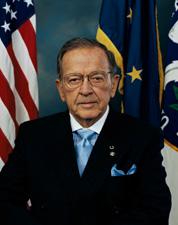
Mr. President, I wish to address the pending Boxer amendment. Is that still the pending business? Mr. President, this provision which Senator Boxer seeks to strike--which I call the expedited…
Mr. President, I wish to address the pending Boxer amendment. Is that still the pending business?
Mr. President, this provision which Senator Boxer seeks to strike--which I call the expedited judicial review provision--has been misconstrued by the Senator from California. Let me give you first a little history of the Tongass Forest.
In 1917 this forest was established, 17 million acres. It is the largest national forest in the United States. It encompasses over 80 percent of all of southeastern Alaska, which is roughly the size of New England.
In 1947, the Tongass Act set aside an allowable sale quantity level of 1.38 billion board feet per year. Let me repeat that--1.38 billion board feet per year.
In 1959, as part of the Statehood Act, there was an allowable sale quantity level established at 1.3 billion board feet per year.
Congress continued to review the Tongass. In 1971, the Alaska Native Land Claims Settlement Act set what we called the ASQ--the allowable sale quantity--level at 950 million board feet.
In 1980, that was reduced to 250 million board feet. Under the law, we call it ANICA--the Alaska National Interest Conservation Act--from 1980 to 1987, the average volume of timber sold and harvested per year in the Tongass was 280 million board feet per year.
In 1990, the Tongass Timber Reform Act set the ASQ at 440 million board feet. That act also directed the Forest Service to provide a supply of timber to meet the market demand.
But in 1997, Congress further reduced the level to 260 million board feet. That was through the Tongass land management plan. We call it the TLMP process.
So today only 676,000 acres of the 17 million acres in the Tongass National Forest is currently available for timber or timber harvesting for the timber industry. That is from the largest national forest in the United States.
Due to litigation, only 34 million board feet in total was cut in 2002.
This forest once supported 4,000 timber jobs. Now the lumber jobs have been reduced by 50 percent. Some of them work for independent operators or outside of the national forest on Native land. But 99 percent of the jobs associated with the processing of timber, particularly the pulp industry, have been eliminated.
In 2001, the timber industry had about 2,000 workers--again, a lot of them not on Federal land--with an annual payroll of $108 million.
The Senator from California represents a State that also has national forests. In California, there is a healthy and robust timber industry. Over 259 million board feet of timber was harvested in 2002 on 10 million acres of California land. In 2001, the timber industry supported 110,000 jobs with $3.4 billion in annual payroll.
Despite the rhetoric of the Senator from California, my amendment does not cripple the public's due process at all. It seeks to deal with the lawsuits pertaining to timber sales in the Alaska region and the way they have been handled by those who oppose cutting timber in Alaska but support cutting timber in a national forest half the size of one of Alaska's forests, the Tongass Forest. Lawsuits pertaining to timber sales are filed in a way that delays the process through the administrative courts, then through the Federal courts. By the time they are through, they are not harvesting.
My amendment provides that suits be filed in Alaska District Court within 30 days after the administrative appeals have been exhausted, or 30 days after enactment of this act. It directs the District Court of Alaska to render a decision within 180 days of the date the lawsuit was filed. We are dealing with judicial process, not environmental process, not the rights of individuals, but abuse, primarily from lawyers from California who file these lawsuits in Alaska. If the court has not rendered its decision, the provision in this bill authorizes the Secretary of Agriculture to petition the court to proceed with the action.
The timber sales at issue are subject to an intense public review process. For each timber sale, a notice of intent to prepare an environmental impact statement is published. The environmental impact statement is prepared, which generally takes 2 to 3 years. Each one of them costs $1 to $3 million. The draft EIS is issued, at which time there is a public comment period. The final EIS is then issued which addresses the public comments and makes any necessary changes.
Again, the public is invited to comment on the final EIS. Once that extensive review process is completed, a record of decision is released which stipulates the conditions under which the timber sale may proceed. My amendment does not cover that part of this process at all. There is no limitation put upon the administrative side at all.
If the public has additional concerns, they have an opportunity to appeal the record of decision administratively to the Forest Service. Invariably that happens. An appeal is made to the Forest Service. After that appeal, there is what we call the record of decision. Of the last 36 records of decision, 32 were administratively appealed.
Despite the extensive environmental review, public participation, and administrative use, lawsuits are still filed. Of the 32 claims administratively appealed, 9 have been litigated. It takes an average of 2 years from the time the complaint is filed in district court until a final judgment is reached, and then it is usually by the Ninth Circuit Court of Appeals in California.
These lawsuits add enormously to the expense of the taxpayers. They have a devastating effect on the men and women involved in the timber industry in my State. This process can take between 4 and 7 years before a single tree is harvested under a contract that authorizes harvesting of the timber. My provision does not limit access to the judicial system, nor does it impair the rights of those seeking judicial review of records of decisions. It does not affect the environmental process. It does not affect the public's right to comment. There is no time line for filing appeals to the district court's decision. That would be the Ninth Circuit.
This provision merely ensures there will be timely consideration of this equal process that is fair to environmental groups, the Forest Service, and men and women of my State who rely upon the timber industry for their livelihood. We merely set a time line for the judicial review of records of decision that have been made after the administrative process has been completed. That normally takes 1 to 2 years. Each of these is then appealed to the courts, the district courts, but there is no requirement now that those appeals be filed on a timely basis. This requires that within 30 days after the decision, there has to be a decision whether they will appeal. If they appeal, the district court must render the decision within 180 days. After that, they have the right to consider the process and appeal to the Ninth Circuit Court of Appeals if they wish. As a practical matter, we have eliminated the basic area where delay has taken place.
Again, let me point out, what we are seeking to do is to require that this judicial review process be expedited. That is a fair way to handle this process which has been so abused by these lawyers. I am a California lawyer, incidentally. California lawyers in my day did not act the way these guys are acting; I can state that right now. This says if you take an appeal from the Forest Service--mind you, they are after public hearings on the EIS, they are after public hearings and comments, and after administrative appeals to the Forest Service; and then the time for the basic delay. After they fail to file appeals, delay, delay, and delay, and they get to the court and the court delays. This is relieving the delay in the courts and relieving the delay in filing the appeal from the administrative court.
I urge that the motion to strike of the Senator from California be eliminated. Today these lawyers have 6 years within which to file that complaint after it has gone through the process of two public hearings, administrative appeal. For the record of decision, they can wait up to 6 years to file for review of the record of decision. This is, as far as I am concerned, a defect in the administrative process for judicial review. That is all we are dealing with.
We do not affect environmental rights. We do not affect the right to appeal. All we say is, you have to do it within a timely period. The district court must act within a timely period so we can tell whether the contracts that have been issued and approved by the Forest Service can be carried out by those who seek to make a living off harvesting the small amount of timber still available from forests in my State.
I point out the inconsistency of the Senator from California in complaining about relieving this process, the delay in this judicial process, when in the State of California they harvest an enormous amount of timber from an area that is less than half the size of our national forests. Surely the people of the State of California would understand that if a decision is made, the
small amount of Alaska's timber area, 676,000 acres in the Tongass Forest, is available for harvesting, there has to be certainty in the review process so the economics of the timber industry will be sound.
I urge defeat of the motion to strike of the Senator from California and I move to table that amendment.
I did inquire whether the Senator from Washington was seeking to speak on the Boxer amendment. I made a motion to table the Boxer amendment and ask unanimous consent that the time for the vote on my motion be determined by the leadership.
I yield the floor.
Madam President, this amendment has nothing to do with environmental concerns. This is a judicial process amendment. These contracts for timber go through a review process involving an EIS, then public hearings, then an opportunity to appeal to the Forest Service, and then an opportunity to file, administratively, appeals within the Forest Service.
After a final record of decision, they have 6 years to take it to the district court. All we are asking is that be shortened to the normal process of 30 days and the process for appeal from the administrative court be 30 days and the court take no longer than 180 days to review that appeal. It does not limit the time for the appeal to the circuit court but is strictly a judicial process shortening the time.
It now takes 3 to 4 years for every contract before we can possibly try to use those contracts to harvest the trees, within 676,000 acres out of 17 million acres. We need this amendment.
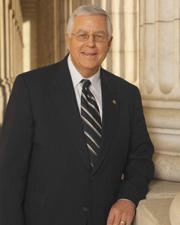
Reserving the right to object, we have some statements on our side we would like to give. That is why we wanted 25 minutes. If we take Senator Voinovich's time out of it--I am not sure how long he…
Reserving the right to object, we have some statements on our side we would like to give. That is why we wanted 25 minutes. If we take Senator Voinovich's time out of it--I am not sure how long he spoke--it will not give time for Senator Thomas and me.
Mr. President, in my day-to-day life, I have worn many hats. In my life, I have been a small business owner, a mayor, a parent, and a consumer, just to name a few of the roles I have played over the years. I mention them because with each of them, whenever there was a job that had to be done, I always knew the best way to ensure I got the best deal on a project or product was to put it up for bid and place the job in competition. It is a simple philosophy, and it just makes sense to apply the same logic even to Government.
President Bush has said Government should be market based; we should not be afraid of competition, innovation, and choice. Why is the administration so enthusiastic about competitive sourcing? Because it saves money while holding quality standards high. In other words, we get the same quality at less cost. Who wouldn't like a deal like that?
We do not need to look far to find the results of competitive sourcing. The Department of Defense, NASA, and the Coast Guard have a fair amount of experience in the field. In fact, the Department of Defense reports that it will have saved $6 billion from 2000 to 2003 through A-76 reviews.
Another telling example cited by this study was OMB's decision to take a job usually given to the Government Printing Office and put it up for bid. The job was the printing of the 2004 Federal budget. When forced to compete, the Government Printing Office turned in a bid for the project that was 24 percent lower than the previous year.
I do not think there can be any doubt that competitive sourcing saves money. But it does more than that by allowing Government to more actively engage in contracts with the private sector. Government can increase its access to the skills, technologies, and innovations of the small business communities throughout the country.
This spring, I had an opportunity to visit the Mint in Philadelphia, and the employees there told me what a good job they were doing. I observed them doing a good job. They let me know they were doing that so their jobs would not be outsourced. It was a good attitude. They were doing quality work. They were improving. I saw an article in last week's USA Today that talked about the improvement at the Mint since the new director, a business person, was put in charge.
We have before us an amendment to slow the process and prohibit the continuation of funding for competitive sourcing in the Department of the Interior. Adopting this amendment would turn back the clock and head us in the wrong direction. At a time when budget deficits must be controlled, we should be taking full advantage of tried and true methods to cut spending and control costs, not trying to remove the option.
One concern that has been raised about competitive sourcing is that it might have a seriously negative impact on the Federal workforce. This is not true. Competitive sourcing is about increasing efficiency, not eliminating workers.
As Senator Voinovich said, it is about asking the employees how it can be done best. The person actually doing the job usually knows how and best. As a case in point, the Department of the Interior has reported that of more than 2,500 full-time employees whose jobs have been analyzed under A-76, none have been involuntarily dismissed from their jobs. Those who claim we are out to toss out the Federal workforce are missing the point about this program.
Simply stated, competitive sourcing is better for taxpayers and the Federal Government. It makes Federal dollars go further, and it forces Federal agencies to perform more like businesses where the highest level of efficiency is the only acceptable level, and it is working.
If we allow passage of the Reid amendment, we are in fact taking away the one tool a Federal agency has to ensure it is getting maximum efficiency and quality. As a member of the Small Business and Entrepreneurship Committee, I have a responsibility to oppose legislation that may harm our small business community. I cannot support the Reid amendment because it would have a negative impact on the small businesses of our Nation by refusing to allow them to compete. I have been holding some procurement conferences in Wyoming for small business so they could learn how to compete, how to combine if the job is too big for one small business. It has been working. It hasn't kicked Federal employees out of their jobs, but it has produced some lower prices and some employment for small businesspeople.
Studies have shown that when the private sector does win public/ private competitions through Circular A-76, a small business, a woman- owned business, or a minority-owned business wins that competition 60 percent of the time. By cutting funding for competitive sourcing in the Department of the Interior, we would be blocking off one of the few entryways that small businesses have available to gain access to jobs in the Federal Government.
With more than 50 percent of the Federal workforce eligible for retirement within the next 5 years--let me repeat that--with more than 50 percent of the Federal workforce eligible for retirement within the next 5 years, it is essential to ensure we have the right people in the right positions.
Competitive sourcing creates an atmosphere in which the Government is not forced to deflect its valuable Federal employees to tasks that are not inherently governmental. It allows Federal agencies to more effectively manage their personnel.
That kind of management was clearly in evidence when a number of national parks on the eastern seaboard used temporary employees during the summer as lifeguards. Through competitive sourcing, the National Park Service contracted this work to private lifeguard companies. These companies then hired the Park Service's temporary employees, giving them full-time year-round jobs. The local communities benefited through the enhanced opportunities for local businesses and the former Park Service employees benefited by getting better pay and more work.
Circular A-76 is important because it represents a win-win situation for small businesses; also for the Government; also for the taxpayer; and for all those who need and perform the work.
We are all familiar with the old adage, if it isn't broke, don't fix it. Circular A-76 is working well and will only get better as we fine- tune the process. It is a process that isn't broke and it deserves to keep doing what it does best, saving the Government money.
I yield the floor.
Mr. President, today, I rise to talk about a promise the Federal Government made to Wyoming's Eastern Shoshone and Northern Arapaho Tribes nearly 100 years ago. A promise my colleague from Wyoming and I tried to fulfill this year through the appropriations process. Unfortunately, due to confusion about the project, we came up short-handed. As a result, I would like to take a few minutes to set the record straight.
In 1905, the Federal Government entered into an agreement with the Wind River Tribes to initiate and complete an irrigation project in exchange for the opening of 1.4 million acres of land to the United States. The Tribes lived up to their end of the bargain. The United States, on the other hand, has not. Since 1905, the project, known as the Wind River Irrigation Project has continually battled budgetary shortfalls, inadequate maintenance, and bureaucratic red tape.
The history of the Project's funding is long and complex. Construction began in the early 1900s and was funded under the Public Works Administration Project's budget. Significant improvements were made to the Project under this funding scheme and the Project grew to 13 main canals, 94 main laterals, 268 sub-laterals, two feeder canals and a couple of drainage canals. However, in the 1950s, new construction essentially stopped as Congress changed the way it funded Indian irrigation projects. When Congress began making lump sum appropriations to the Bureau of Indian Affairs for the Construction of Indian Irrigation Projects in 1951, funding became even more sporadic and unpredictable. Sometimes the system was in fair condition, but most of the time it was in poor condition. Finally, in the 1980s, Congress stopped appropriating all together for the construction of Indian Irrigation projects. As a result, the only significant Federal funds the Wind River Irrigation Project has received in nearly 20 years has been for the rehabilitation of the Washakie Dam, which was funded using money from the Safety in Dams program within the BIA.
Yes.
It is my understanding that the BIA owns and operates this system and has been responsible for the collection of the operation and management fees since the project was authorized in 1905.
Is the Senator aware that as a general guideline, the Bureau of Reclamation suggests that irrigation projects in the region need at least 140 acres of irrigated land per mile of canal to be economically self sufficient? No wonder the Wind River Irrigation Project has been forced into a state of disrepair. It is pretty difficult to collect enough user fees to maintain a system when it is only serving 55 acres of irrigated land per mile of canal.
We are both from the great State of Wyoming and I am extremely encouraged by the leadership our State government has shown in helping to address the water problems on the Reservation. We both received letters from our Governor, the Director of the Wyoming Water Development Commission, county commissioners from that area and three State legislators in full support of the project. We have also heard from the Mayor of Riverton, which sits adjacent to the Wind River Reservation, and the three surrounding irrigation districts. While the vocal support is helpful, I am even more encouraged by the State's willingness to put its money where its mouth is.
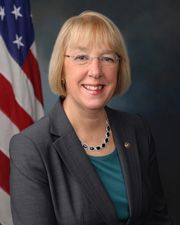
Mr. President, I intend to speak on the Reid amendment and I would ask what the pending business is. Mr. President, I rise today to speak in support of the amendment offered by Senator Reid that…
Mr. President, I intend to speak on the Reid amendment and I would ask what the pending business is.
Mr. President, I rise today to speak in support of the amendment offered by Senator Reid that temporarily bars the Department of the Interior from spending any more money on competitive sourcing studies.
The House has already inserted this language into its Interior spending bill, and I hope the Senate will do the same.
This amendment is critical so we can assure the people who visit our already overstressed national parks that they will not be subjected to even fewer services. ``Competitive sourcing'' is a new term that has been created to describe the opening up of public sector jobs to private sector competition. Now, we have all been told that competitive sourcing is not the same as outsourcing, but I think it is pretty safe to say it is not a whole lot different.
As all of us know, one of the primary goals of this current administration is to privatize large numbers of Federal workers. This administration, under its initial outsourcing policy, mandated that each Federal agency review for privatization no less than 15 percent of its commercial activities by the end of fiscal year 2003. Unfortunately, this onerous and apparently arbitrary privatization quota did not take into account the different agencies' unique conditions.
After a lot of pressure from Federal workers, environmentalists, and labor groups, the White House finally abandoned its original blanket competitive sourcing scheme. But now the initial plan has been replaced by a new plan that actually pushes for more outsourcing, not less.
Although there is no concrete timeline, this new incentive-based plan encourages Federal agencies to outsource 50 percent or more of their commercial activities. So while we in Congress are trying to slow down this outsourcing drive, the administration is now working to speed it up.
So what does that mean for an agency such as the National Park Service? I am very concerned that the President's outsourcing policy may well cause critically needed maintenance funds in our parks to be spent, instead, on further studies for competitive sourcing.
In my home State of Washington, we are very concerned about the reports that Mount Rainier National Park, for instance, could possibly have to divert up to 40 percent of its repair budget due to this outsourcing and antiterrorism requirements. So when they were faced with this possibility, the National Park Service director at Mount Rainier promised that at Mount Rainier no more outsourcing studies would be conducted using 2003 and 2004 dollars. This comes as a great relief to the users of Mount Rainier National Park and the surrounding communities, but now everyone is asking, What about Olympic National Park? What about Cascade National Park? Those are national treasures that are in my home State. And what about all the other national parks across the country that remain vulnerable to this proposal?
Outsourcing is by no means a new policy for the Department of Interior, especially in the National Park Service. The Park Service, in fact, currently outsources nearly $2 billion in services, including over $800 million in concessions and over $1 billion for contractors.
Those contractors currently provide functions such as janitorial services, tree work, garbage pickup, construction, and management consulting--things like that. So when the Department of Interior is now told to outsource up to 50 percent of its commercial responsibilities, we are very concerned that some of the National Park Service's key functions are going to be threatened.
The Park Service, as we all know, was initially created to preserve the natural and cultural resources of the Park System and to provide recreational opportunities for generations of Americans. The last thing we should be doing is lessening the agency's ability to do just that.
The amendment now before the Senate, that was offered by the Senator from Nevada, Mr. Reid, will not completely stop all outsourcing efforts. It will simply slow them down. I believe that is the right thing to do.
So far, in the case of the Department of Interior, OMB's outsourcing initiative has been on the fast track. The Reid amendment will simply prevent funds from this year from being used to initiate any new studies for competitive sourcing. It will, however, still allow the studies initiated with money from the last 2 years to be completed. I think that is the right course to take.
Slowing down this outsourcing initiative will allow us in Congress to have the time to analyze the costs and implications of this administration's proposal--I believe something we should have done in the first place.
The National Park Service is truly a mission-driven organization. Its core responsibilities include promoting the highest level of environmental stewardship, and, in turn, providing the best possible service to each and every park visitor.
So far, as we all know, the Park Service has done a tremendous job of doing just that. Consistently, 97 percent of our national park visitors have indicated they are ``satisfied'' or ``very satisfied'' with their national park experience. A lot of this public regard is attributed to the high quality and high morale of our Park Service employees.
Historically, National Park Service workers have maintained an extremely high level of camaraderie and positive spirit. Often these wonderful employees of ours are called upon to perform multiple duties that fall outside any one particular job title. It is not uncommon, in our national parks, for a maintenance worker to give interpretive talks on the weekends, or a park geologist to perform first aid, when it is necessary, or for a visitor assistant to help in fighting forest fires.
This kind of overlap of job duties is possible because of the way in which Park Service employees are currently cross-trained and because of the workers' extraordinary commitment to their jobs. In my opinion, having these kinds of outcomes with 9-to-5 contract workers would be very unlikely.
All of the implications of the President's policy of outsourcing in the National Park Service are not yet known or understood by those who use the parks or by Members of Congress who are passing this legislation. I think Congress has yet to carefully consider the consequences of this policy, especially when it comes to the services we expect for our families when they visit our national parks.
I am on the floor of the Senate today to thank Senator Reid for putting this amendment forward, and I urge the Members of the Senate to follow the House and slow down the President's outsourcing policy to protect the core mission of the National Park Service by voting for the Reid amendment, and then thoroughly taking the time to analyze and understand how this will impact our incredible heritage at our national parks before we move forward.
Mr. President, I yield the floor.
Will the Senator from Nevada yield for a question?
Mr. President, if I heard the Senator from Nevada correctly, am I to understand there is going to be a second-degree amendment to his amendment that I just spoke about that will essentially allow the outsourcing to continue while we move forward in the appropriations process this year? If that is the case, I ask the Senator from Nevada, if you are a park employee in one of our beautiful parks--and you referenced the Cascades; we have Olympia National Park, Mt. Rainier. I invite all of our colleagues to come and see--if you were an employee and you knew Congress was going to continue to move forward with this proposal or some type of variation, would you not be worried that you would not continue to do the same good job that our employees do right now because really your future is up in the air and you would be looking for something else?
I would like to enter into a coloquy with Chairman Burns and Senator Dorgan. The Indian Health Service and the University of Washington have been conducting research into Fetal Alcohol Syndrome with funds provided in the Interior Appropriations bill. I want to thank the Chairman and Senator Dorgan for the Subcommittee's continued support for these research efforts. I hope to work with the Senators in conference related to this on-going research.
I thank Chairman Burns and Senator Dorgan.
USGS binational groundwater study

Mr. President, I rise today to voice my support for the amendment offered by my colleague, Senator Reid. This amendment is important and it's fitting that we discuss this measure this week, just days…
Mr. President, I rise today to voice my support for the amendment offered by my colleague, Senator Reid. This amendment is important and it's fitting that we discuss this measure this week, just days after the 10th anniversary of National Public Lands Day.
On Saturday, thousands of Americans around the country contributed their time and labor to help improve our shared national lands. In my home State of Washington, volunteers restored trails, planted trees, and improved oyster habitat, to name a few
projects. I commend everyone who was involved in this effort for their commitment to protecting and preserving our public lands.
Today's debate is about the many thousands of federal employees who dedicate themselves to this important cause every day. In our national parks, national forests, national wildlife refuges, and other public lands, these men and women work every day of the year to protect and preserve these national treasures.
An article by Seattle Post-Intelligencer columnist, Joel Connelly, quoted Stewart Udall, the Interior Department boss under Presidents Kennedy and Johnson as saying ``These are the best people in the government . . . It's extraordinary they would pick on this Teddy Roosevelt agency.''
Unfortunately, the Bush administration has proposed a rule change that would radically alter the management of our public lands. The President has proposed ``outsourcing'' important stewardship roles to for-profit contractors. Under his proposal, private contractors could fill more than 800,000 jobs, including posts in the National Park Service like at Olympic National Park, U.S. Fish and Wildlife Service, and U.S. Geological Survey, among other agencies. In my home State of Washington, this proposal could affect 10,000 government-wide jobs, including 348 national park biologists, educators, and maintenance staff.
I believe this is the wrong approach. When it comes to our public lands, our first concern should be protecting our national treasures by ensuring the highest level of natural resource stewardship.
There are many legitimate questions as to whether this outsourcing scheme would even save any money. In June, the General Accounting Office concluded a comprehensive 2-year study on outsourcing and found that ``competitions took longer than projects, costs and resources required for competitions were underestimated, [and] determining and maintaining reliable estimates of savings was difficult.''
Even though the long term ``savings'' are suspect, we know for sure that outsourcing is hurting our national parks. Park Service Director Mainella estimated that the first round of competitive sourcing would cost $3 million, much of which will have to come out of maintenance. Even though Mount Rainier was taken off the list of parks subject to outsourcing this year, Park Superintendent Dave Uberuaga had to set aside $335,000 of badly needed money for park maintenance to pay for a privatization study. The cost of simply studying these Park Service positions is estimated to begin at $3,000 and go up from there.
The Federal workers entrusted with the preservation of our public lands can't simply be replaced by private workers. They are dedicated professionals who know the parks and public lands better than anyone, and they are not beholden to private interests who seek to exploit our public lands.
Don't just take my word for it. Listen to what 145 former National Park Service employees--including four former directors--said in a recent letter to President Bush decrying his proposal:
While publicizing glossy reports to convince the public that your Administration cares about this country's national treasures, you are strangling the very core of park stewardship, sidestepping the important issues that are facing the parks and ignoring the operational budgets of the parks. We are seeing evidence at every turn that when private for-profit interests vie with resources of the park, the private interests, and not principle, governs.
Even the current Director of the National Park Service, Fran Mainella, disagrees with the administration's approach. Earlier this year, in an intra-departmental memo, she expressed her concerns about the President's initiative. She noted that because the administration did not seek funding to cover the costs of the thousands of competitive sourcing studies it has mandated, those costs must be absorbed by reductions in park operations and other worthy activities, which will result in reduced visitor services and the deferment of essential park maintenance.
Losing current National Park Service employees will also cause our national parks to lose a great deal of institutional knowledge to individuals who may not have training in these fields. National Park Service employees, who often live in rural communities surrounding the parks, are dedicated public servants committed to preserving our parks for all Americans' enjoyment and benefit now and in the future. They are also versatile and provide irreplaceable services during emergencies. The same employee that helps maintain park infrastructure, is also one of the first firefighters on the scene, providing invaluable information about the parks' terrain.
Without this amendment, the Park Service could also lose tens of thousands of volunteers. These are dedicated citizens who contribute their time to help out in some of the most beautiful parts of the country. I have heard from a number of my constituents that they volunteer because they feel they are sharing their love of the outdoors with others and maintaining our public lands for future generations. But they warned me they would feel very different about giving their time to help support some for-profit contractor.
Conservation and protection of our public lands is not a partisan issue. The majestic herd of Roosevelt Elk in my home State's Olympic National Park is a fitting reminder that throughout the past century, Republicans and Democrats have been able to come together to preserve our Nation's public lands.
In that spirit, I encourage my colleagues on both sides of the aisle to support this amendment, and vote to prevent the ``outsourcing'' of the stewardship of our natural treasures.
I ask unanimous consent to print the above-referenced article in the Record.

Mr. President, the Senator from California, Ms. Boxer, has offered an amendment seeking to strike expedited judicial review of timber sales from U.S. Forest Service Regional X, covering the Tongass…
Mr. President, the Senator from California, Ms. Boxer, has offered an amendment seeking to strike expedited judicial review of timber sales from U.S. Forest Service Regional X, covering the Tongass National Forest in Alaska.
While some use flowery terms to characterized the Tongass National Forest as the ``last intact temperate rain forest'' or the ``crown jewel of our national forest system,'' they merely gloss over the realities of our forest. The Sierra Club, the National Wildlife Federation, and others use overstated hyperbole meant to shift the focus of the debate from what we truly ought to be looking; that is, creating more jobs in America.
For months now Senators from the other party have come to floor to decry job losses in the United States--lost jobs that they somehow blame on President Bush.
Yet they need only look at the pursuit of their own policies that have led to our increased reliance on foreign natural resources and lost economic opportunity.
Alaska has the highest unemployment rate in the country, and every time I go back home to see my constituents--which is quite frequently-- they ask me how we can create more jobs.
In Alaska we used to have thousands of timber and timber-related jobs. Now
we have less than one thousand. That is criminal in a State that boasts the largest single national forest in the country.
The Tongass Forest is large enough to set aside land for future generations while also providing valuable timber for American manufacturing and U.S. jobs. Allow me to put it in perspective. In 2002 there were 110,000 people employed by the timber industry in California. In Alaska just 650 people were employed in the timber industry in 2002--again, in a State with the largest national forest. These are statistics from the American Forest and Paper Association.
In 2002, California produced 2.63 billion board feet of timber. During the same time in Alaska just 30 million board feet were produced. That figure makes California the fourth largest wood producer in the U.S. That means during FY 2002 Region X (the largest region in the Forest Service system) produced the least amount of timber-- (Source: U.S. Forest Service).
While the Senator is offering an amendment that she thinks is the right thing to do to protect the environment, she must realize that this issue has been debated for literally decades, going back to when Alaska was a territory. Just as timber harvests take place in other national forests the Government saw fit to allow some limited, but sustainable, timber harvests to take place in the Tongass. Unfortunately some misguided and illegal policy changes under the Clinton administration set back timber jobs in Alaska during the 1990s. Fortunately the courts and the current administration have seen fit to reverse those rulings to follow the law. Unfortunately there are those who want to continue filing lawsuit after lawsuit, clogging up an already overpacked docket to keep Alaskans out of work.
I would say to those who continue to criticize job losses in the United States that one way to overcome them is to allow people to get back to work.
The problem is we can't get people back to work with the continued threat of frivolous litigation. The Senator's amendment seeks to allow people to further burden our courts under false pretenses of saving Alaska from Alaskans. It is an insult to me and my constituents to hear people attack our State.
We have a right to good jobs--just like those in California. We have a right to send our kids to good schools, just like in California. We have a right to have parks and hospitals and all the other infrastructure that is in the towns and cities in California, but our towns in Alaska needs jobs and industry to make them a reality.
As a State in this Union we entered to become an equal among equals. But that does not mean that we don't know what is in our best interest as a State and as individuals. The amendment my colleague offers seeks to provide more opportunities for litigation after we have already undergone lawsuit after lawsuit and lengthy administrative processes.
The language in the current bill does not cut off access to the courts. It merely requires that any application for judicial review be filed within 30 days after exhaustion of the Forest Service appeals process. Currently I am told the time limit is 6 years. The language applies for Record of Decisions for any timber sales in Region X of the Forest Service that had a Notice of Intent prepared on or before January 1, 2003.
The language does not restrict the right of the public to litigate timber sales; it simply speeds up the process by encouraging the court to render a decision within 180 days of the application.
Since 1990, at least nine timber sales on the Tongass have been litigated. Individual sales have been held up sometimes for years during the litigation process. What the families and the people who depend on the timber industry seek is simply some finality and a reasonable time for decisions.
According the Alaska Forest Association, my State has lost over 1,400 jobs in the recent years and the timber industry has ground down to a virtual standstill. Only 650 people remain employed in an industry that was once year round and spread throughout the region. Whole communities have vanished.
These people are not threatening the last remaining temperate rain forest in the United States, but their ability to provide for their families and for their families to have a future is threatened by lawyers and protracted litigation. The protracted litigation and the time to resolve that litigation could cost them their livelihoods and their family owned businesses. The ripple effect extends way beyond the individuals and the employees--it rips into the fabric of the communities in southeast Alaska. These are the things that the language of the appropriations bill seeks to address.
I support that language in the bill because I have seen firsthand what the endless litigation has done to my communities. I oppose the Boxer amendment because it seeks to empower more frivolous law suits and more delays. I urge my colleagues to oppose this amendment and to support more jobs in Alaska and America.
Show 8 more
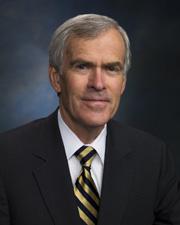
Mr. President, I yield myself the first 3 minutes of my 5 minutes. Mr. President, amendment No. 1740 is straightforward. It would prohibit the Secretary of the Interior, working through the Park…
Mr. President, I yield myself the first 3 minutes of my 5 minutes.
Mr. President, amendment No. 1740 is straightforward. It would prohibit the Secretary of the Interior, working through the Park Service, from issuing any permit allowing a special event on The National Mall unless the permit expressly prohibited the use of structures or signs bearing commercial advertising.
The amendment does provide that there can be sponsor recognition of special events, but it makes clear we intend to have the Park Service interpret that in a way that is consistent with the special nature of The National Mall.
We would also require that the lettering or design that identifies the sponsor not be more than a third the size of the lettering identifying what the special event is.
I have shown this photograph before. I will show it again so people have an idea of what prompted my amendment. This is a special event that the Park Service approved and issued a permit for a couple of weeks ago on The National Mall. This event was a football and music festival entitled ``NFL Kick-off Live From The National Mall Presented by Pepsi Vanilla''.
This photograph is from the Washington Post. This is an enlarged photograph that was in the Washington Post. You can see that there are a whole series of banners up and down The Mall. There is one for Verizon, and this one is for Pepsi Vanilla, and here is a giant football with NFL signs on it.
It seemed clear to me that this was commercial advertising any way you look at it. The Park Service, unfortunately, takes the position that this was entirely appropriate. No commercial advertising here. This is sponsor recognition. We were giving some recognition to those that were underwriting this important event for a public purpose. You may say, what was the public purpose? Well, it was to take pride in America--you can find that phrase way down here--and this is the idea that there is voluntarism, and that was the reason we opened this up with the NFL. It gave them a permit for 17 days, during which time they could block off The Mall, prepare for the festival, have the festival, and break down the equipment after the festival and so on.
I will show the other photograph. This is another photograph that shows the fence that was put around The Mall, with advertisements for AOL, Pepsi Vanilla, Coors, and Verizon. This, of course, was blocking access to The Mall for the public. If you wanted to walk or jog on The Mall, or do anything else, you were prohibited from doing so during this period.
We need to clarify what the law is. My amendment will do that. It says we don't want commercial advertisement on The Mall. I always thought that was the policy, and, up until now, I think it has generally been the policy. But it is clearly not recognized that way by the current Secretary of the Interior and the head of the Park Service. We need to clarify that.
I hope my colleagues will support the amendment. It puts into law a prohibition of commercial advertising on The National Mall for the first time.
I yield the floor and reserve the remainder of my time.
Mr. President, let me first thank Senator Thomas and Senator Burns for their support and, of course, Senator Dorgan, who is a cosponsor.
I ask unanimous consent that Senator Akaka, who is the ranking member on the National Parks Subcommittee in our Energy and Natural Resources Committee, be added as a cosponsor to the amendment.
Mr. President, I appreciate the broad support we are receiving for the amendment, and I hope all Senators will vote in favor.
I yield the floor.
Mr. President, I have filed an amendment to S. 1391 that would allocate $950,000 from the United States Geological Survey's, USGS, Ground-Water Resources Program to initiate a United States-Mexico binational groundwater study of transboundary aquifers. The parameters of this study have been developed by the USGS in cooperation with the Water Resources Research Institutes in Texas, New Mexico, Arizona, and California, and other interested parties. It is very important that the USGS receive funding to implement its plan. During the past decade, the United States-Mexico border region experienced significant economic expansion that was accompanied by rapid population growth and urban development. It is now anticipated that water quantity and water quality will most likely be the limiting factors that ultimately control future economic development, population growth, and human health in the border region. The binational program funded by this request will be a scientific partnership between the USGS, the border states, and several key Universities in the region. It will systematically assess priority transboundary aquifers, and will provide a scientific foundation and create sophisticated tools for State and local water resource managers to address the challenges facing them in the border region.
I have discussed the need for this amendment with the distinguished chairman, and he has been very helpful in discussing various options to secure funding to initiate this study. The President's budget requested $1.0 million for USGS to begin work on a closely related United States- Mexico Border Human Health Initiative. The House of Representatives has provided the full amount in its version of the Interior appropriations bill, but the Senate has only been able to provide $500,000 for this effort. In conference, I have requested that the chairman agree to the higher amount that the House has provided for the Border health initiative but to direct the USGS to use the additional $500,000 to begin the binational groundwater study. I believe this work will address the critical need I just described while also providing valuable data and information that is consistent with the border health initiative.
I thank the distinguished chairman for his consideration and his work on this important matter. I look forward to continue working with him as the Interior appropriations bill goes to conference.
e85 infrastructure

Mr. President, I ask unanimous consent the order for the quorum call be rescinded. Mr. President, I come to the floor to talk, as I do quite frequently, about the number of unrequested, unauthorized,…
Mr. President, I ask unanimous consent the order for the quorum call be rescinded.
Mr. President, I come to the floor to talk, as I do quite frequently, about the number of unrequested, unauthorized, and locality-specific earmarks contained in this bill. Fortunately, this year's Interior appropriations bill does not contain as many pork projects as the bill the Senate passed last year. This year's bill has over $403 million in porkbarrel projects. Last year's had $429 million, so I guess there is a $26 million improvement. I guess I should be grateful for this apparent savings, but I do not see this as evidence of tremendous fiscal restraint.
Citizens Against Government Waste, a nationally recognized, well- respected, nonpartisan government watchdog organization found that in fiscal year 2003, the Appropriations Committee stuck 9,362 projects into the 13 annual appropriations bills, an increase of over 12 percent from the previous year's total of 8,341. A further note: in the last 2 years the total number of projects has increased by some 48 percent.
I have compiled a 21-page list of 332 objectionable provisions contained within this bill, totaling $423 million. I will post the full list on my official Senate Web site.
Let me just highlight some of the more egregious projects in this bill: An earmark for $4 million for the construction, renovation, and furnishing and demolition or removal of buildings at National Energy Technology Laboratory facilities in Morgantown, WV, and Pittsburg, PA; $15 million for alcohol control enforcement, prevention, treatment, sobriety and wellness, and education in Alaska, distributed in lump sum payments to various entities; one of our old favorites, $1 million above the request to continue work at the National Center for Ecologically-Based Noxious Weed Management at Montana State University--they got an extra $1 million; $500,000 for continued funding of the Idaho Sage Grouse Management Plan through the Idaho Office of Species Conservation; $2 million above the budget request of the President for Atlantic salmon recovery activities; $900,000 above the budget request for Eider Duck recovery work by the Alaska SeaLife Center; $1.2 million above the budget request for the Wolf Recovery Program in the State of
Idaho; $1.4 million for the Washington State Regional Salmon Enhancement; $200,000 for bald eagle restoration work performed in cooperation with the Vermont National Heritage Partners Program; $500,000 for the Native Roadside Vegetation Center at the University of Northern Idaho; $700,000 for invasive species control in Hawaii; $500,000 for the Delaware Bay Oyster Revitalization Project in the States of Delaware and New Jersey; $500,000 for salmon restoration work in Puget Sound in cooperation with the Seattle Art Museum--the Seattle Art Museum is going to work in cooperation with Puget Sound for salmon restoration--$750,000 for ferret reintroduction in the Rosebud Sioux tribal lands; $1.5 million for the Bitter Lake, NM, Visitors Center-- that is sweet--$1 million for Kenai, AK, for cabins, trails, and campgrounds; $3 million for the Kodiak, AK, Visitors Center--I can tell you that Alaska is doing very well by doing good--$2.1 million for the Ohio River Islands, WV, Visitors Center and miscellaneous improvements; $525,000 for the Okefenokee Concession Facility in Georgia; $300,000 for the Garrison Dam, ND, fishpond improvements; $850,000 for the Savannah, GA, Visitors Center--we are big on visitors centers in this particular bill--$2 million for the World Birding Center in Texas; $3 million for the Abraham Lincoln Library in Illinois; $500,000 to design a visitors center on Assateague Island in Maryland; $1.1 million to rehabilitate off-road vehicle trails in Big Cypress National Park in Florida; $1.7 million to rehabilitate General Grant's tomb in New York--I wonder if we should ascertain whether General Grant is actually there before we rehabilitate his tomb--$3 million for a visitors center in the Grand Teton National Park; $7.4 million for rehabilitation of the Horace Albright Training Center in Arizona. I am told that the Horace Albright Training Center in Arizona is a place near the bottom of the Grand Canyon where park personnel are trained.
The committee report directs 26 separate unrequested land acquisitions under the Fish and Wildlife Service totaling nearly $35 million.
It is the process that I have a problem with. The committee effectively usurps the power of the authorizing committee and acts as one all-powerful funding machine. Projects are often funded with little or no background study and are approved simply after being requested by a fellow Member.
As all my colleagues know, the Congressional Budget Office recently projected a potentially debilitating $480 billion deficit for 2004 and the President has asked for additional appropriations of $87 billion for the military operations in Iraq and Afghanistan, and everybody is asking: Where is the money coming from? After years of unchecked and questionable spending, we are in the unfortunate position of facing critical budget constraints that will hamper our ability to fully fund necessary programs. Instead, we are cutting deep into the taxpayers' pockets once again by expecting them to shell out more than $403 million in porkbarrel spending included in this bill.
I think at some point the President of the United States is going to have to veto one of these bills and demand that this unnecessary, unwarranted, unauthorized, and unrequested spending be removed because we really are talking about real money.
I understand we are going to have a voice vote on final passage of this bill. I would be recorded as voting no if there were a recorded vote.
I yield the floor.
Amendment No. 1739

Mr. President, I seek recognition to engage in a short colloquy with the distinguished Chairman of the Appropriations Subcommittee on the Interior, Senator Burns. The matter is of great importance to…
Mr. President, I seek recognition to engage in a short colloquy with the distinguished Chairman of the Appropriations Subcommittee on the Interior, Senator Burns. The matter is of great importance to my constituent, Air Products and Chemicals of Allentown, PA, and involves two programs in the Fossil Energy Research and Development section of the Interior Appropriations bill.
Air Products and its partners, including the Department of Energy, are developing a unique, oxygen-producing technology to use in producing oxygen and electric power for the utility, iron/steel, nonferrous metals, glass, pulp and paper, cogeneration, and chemicals and refining industries. This project, ITM Oxygen, is a cornerstone project in the Department of Energy's Vision-21 Program that has the potential to significantly reduce the cost of tonnage oxygen plants for Integrated Gasification Combined Cycle, IGCC, systems. The ITM Oxygen program is entering its final three funding years during which Air Products and its partners plan to demonstrate and test this unique technology with a pilot unit at a suitable field site. Air Products and the Department of Energy are sharing the cost of this program together with each party responsible for 50 percent. Underfunding this program in FY04 will result in slowing the technical process and schedule of this important project, will halt crucial expansion of test platforms for the final demonstration unit, and in the end will add approximately $10 million more to the total program cost.
I thank the distinguished Chairman for recognizing the importance of the ITM Oxygen program and look forward to working with him and his staff to see that the Department of Energy follows the Committee's intentions.
Another project Air Products is involved in with the Department of Energy is the ITM Syngas project, the purpose of which is to develop and demonstrate a ceramic membrane reactor able to separate oxygen from air in a way that produces hydrogen for use in centralized power generation or with regional distribution for fuel cell applications. This technology also captures the carbon dioxide in the process leading to reduced greenhouse gas emissions, a goal we should all support. The bill includes increases in the Transportation fuels section for syngas membrane technology. I would like to ask the Chairman if part of this increase is intended to be used to fully fund the Air Products ITM Syngas project.
I appreciate the opportunity to discuss these important items with the Chairman today and thank him for his attention to these crucial fossil energy research and development projects.
fetal alcohol syndrome
Mr. President, I seek recognition to engage in a short colloquy with the distinguished chairman of the Appropriations Subcommittee on the Interior, Senator Conrad Burns. The matter is of great importance to my constituent, Air Products and Chemicals of Allentown, PA and involves two programs in the Fossil Energy Research and Development section of the Interior Appropriations bill.
Air Products and its partners, including the Department of Energy, are developing a unique, oxygen-producing technology to use in producing oxygen and electric power for the utility, iron/steel, nonferrous metals, glass, pulp and paper, cogeneration, and chemicals and refining industries. This project, ITM Oxygen, is a cornerstone project in the Department of Energy's Vision-21 Program that has the potential to significantly reduce the cost of tonnage oxygen plants for Integrated Gasification Combined Cycle, IGCC, systems. The ITM Oxygen program is entering its final three funding years during which Air Products and its partners plan to demonstrate and test this unique technology with a pilot unit at a suitable field site. Air Products and the Department of Energy are sharing the cost of this program together with each party responsible for 50 percent. Underfunding this program in Fiscal Year 2004 will result in slowing the technical process and schedule of this important project, will halt crucial expansion of test platforms for the final demonstration unit, and in the end will add approximately $10 million more to the total program cost.
I thank the distinguished chairman for recognizing the importance of the ITM Oxygen program and look forward to working with him and his staff to see that the Department of Energy follows the committee's intentions.
Another project Air Products is involved in with the Department of Energy is the ITM Syngas project, the purpose of which is to develop and demonstrate a ceramic membrane reactor able to separate oxygen from air in a way that produces hydrogen for use in centralized power generation or with regional distribution for fuel cell applications. This technology also captures the carbon dioxide in the process leading to reduced greenhouse gas emissions, a goal we should all support. The bill includes increases in the Transportation fuels section for syngas membrane technology. I would like to ask the chairman if part of this increase is intended to be used to fully fund the Air Products ITM Syngas project.
I appreciate the opportunity to discuss these important items with the chairman today, and thank him for his attention to these crucial fossil energy research and development projects.
Wind River Irrigation Project
I come to the floor today to ask my colleagues to join me in supporting Federal funding for the Little Rock Audubon Nature Center. The Little Rock Audubon Nature Center is a collaborative…
I come to the floor today to ask my colleagues to join me in supporting Federal funding for the Little Rock Audubon Nature Center. The Little Rock Audubon Nature Center is a collaborative private-public effort to provide tools and services to historically underserved children. Using the prestige of the Audubon Society's reputation, this project will pull together all stakeholders to promote national science and math goals, environmental education, and wildlife observation.
This isn't the nature center we grew up with. This is a new concept that creates a place to learn math, science, and other academic subjects in a nurturing environment reinforced by a hands-on, out-of- doors experiences. This is a chance to support what our children learn in the classroom and in the textbooks with stimulating reality. This model of learning will stoke our children's curiosity and provoke them to start asking the questions all great thinkers pose: Why does this work? How can that happen? What makes this possible?
Given current budget constraints, it is more important than even to use scarce resources wisely and I rise today to provide my colleagues with not only the numerous benefits associated with this innovative approach to educating our children, but also the costs. Specifically, I am seeking an appropriation of $1.2 million for the project but $1.2 million that will be leveraged by private funding on a better than 2 to 1 match. As Senator Lincoln pointed out, this Center will serve thousands of children and I believe that federal investment in the Little Rock Audubon Nature Center will produce broad returns that deserve the attention of this body.
I would be delighted to yield to the Senator from North Dakota and our ranking member.
I did. The Little Rock Audubon Nature Center will assist schools in teaching the sciences of ornithology, ecology, biology, botany and environmental health, to name a few; to excite young people's minds and prepare them for careers in the sciences; and to help improve state science scores. Senator Dorgan, are you aware that our childrens' math and science scores in America are continuing to decline throughout the country? As compared to 38 countries around the world the United States ranks 19th in Mathematics Achievement Scores, according to a 1999 Trends in International Mathematics and Science Study. I am particularly concerned about this decline in our students' performance in my home state of Arkansas. We need fresh ideas and new approaches to turn this situation around. So, I was very interested to learn of a recent study in Northwest Arkansas showed that nature education can be a very powerful tool for helping to address this problem.
I appreciate the comments from the distinguished Chairman and Ranking Member and I would like to call to their attention other benefits associated with the Little Rock Audubon Nature Center which would benefit underserved minority communities. In fact, the nature center is located in a former federal housing site for African American veterans from World War II, which has been closed for years. The center is located in the Granite Mountain community in my home state of Arkansas that lies within the boundary of a Federal empowerment zone and would serve, in particular, the minority community and school children of southeast Little Rock.
The Nature Center also would provide access to a beautiful 450 acre park that is currently unavailable to the citizens of Arkansas due to inadequate city funds. This park represents one of the most unique natural areas in Southeast Arkansas because of its incredible biodiversity and a globally significant geological formation, making this site both ecologically important and of great educational value.
I am seeking $1.2 million which could be phased in over a multi-year programming plan with a private fund match. I want to point out the Audubon Society's great success in my home state of Arkansas in leveraging private funding to match federal outlays for conservation projects. For example, the Audubon Society successfully restored thousands of acres of Fourche Creek by leveraging private funds to match federal dollars at a ratio of more than 2-to-1. The track record has been established and the private community has made its pledge to allow this Federal
appropriation to be a catalyst for private additional investment in this worthwhile project.
I appreciate those remarks. I am making a personal request that the Senate give this project the initial funding needed to help it become a reality for the children of Arkansas. I thank the Senators for assistance in this matter.
fossil energy research

Mr. President, I rise today to join the ranking member of the Senate Permanent Subcommittee on Investigations, Senator Levin, in offering an amendment that would require the U.S. Department of Energy…
Mr. President, I rise today to join the ranking member of the Senate Permanent Subcommittee on Investigations, Senator Levin, in offering an amendment that would require the U.S. Department of Energy to develop and maintain cost-effective procedures to fill the nation's Strategic Petroleum Reserve. The amendment simply requires the Department of Energy to publish procedures for obtaining oil for the Strategic Petroleum Reserve in a manner that maximizes supplies, minimizes costs, and is consistent with national security. The amendment would give the Department of Energy 180 days to publish these procedures and would allow an opportunity for public comment prior to final publication.
Two years ago, Senator Carl Levin, who at the time was chairman of the Senate Permanent Subcommittee on Investigations, initiated an investigation into gas prices in the United States. Part-way through this effort he expanded the investigation to include analysis of Department of Energy policies with respect to the Strategic Petroleum Reserve. Last year, I joined Senator Levin in requesting information from the Department of Energy on the impacts of filling the Strategic Petroleum Reserve on crude oil prices.
In March of this year, the Permanent Subcommittee on Investigations released a report which described the findings of the investigation. Among other things, the Committee found that inconsistent Department of Energy policies had led to filling the reserve during tight market conditions. The Committee found that this action had increased oil prices, hurt U.S. consumers, and increased the cost to taxpayers.
The Department of Energy should adopt procedures to ensure that oil purchases for the SPR minimize the economic impact on consumers. The Department of Energy needs to take full advantage of techniques such as deferred payments, use of the futures market, and careful cost-benefit analysis in order to lessen the impact of oil purchases on consumers. Although the Department has used all of these policies on occasion, it should do so consistently.
The United States has the ability to partially mitigate dramatic spikes in gas prices, if we properly use and maintain our domestic reserve. In fact, it is our duty to do so, to ease the economic impact that drastically rising gas prices have on Americans who need to fill their tanks in order to do their jobs, buy their groceries, and drive their kids to school.
Our amendment would ensure that price and market impact are top considerations in managing this vital domestic emergency oil supply. It would give the Department of Energy an opportunity to focus increased attention on its policies and procedures for filling the Strategic Petroleum Reserve, with particular regard to the effect of its policies on gas prices and oil markets. I ask my colleagues to join Senator Levin and me in supporting this amendment.
I congratulate the distinguished chairman of the Interior Appropriations subcommittee for the fine work he has done putting together this bill. The bill includes substantial funding for programs to conserve our Nation's treasured lands and resources, including $85 million for the forest legacy program; a program that means so much to my home State of Maine.
There is one Maine conservation project, however, that does not receive funds through the Senate bill. It is the Downeast Lakes Forestry Partnership, the goal of which is the sustainable conservation of 342,000 acres in Maine, including 78,800 acres of pristine lakes, 54,000 acres of productive wetlands, 445 miles of unspoiled shoreline, and 342,000 acres of remote forestland. This important project, which enjoys widespread support in my State, including the support of the Governor, is at a critical stage. But it requires Federal support in the coming fiscal year to help bring the project to fruition.
I would therefore ask the chairman whether he will commit to doing all he can to consider funding the Downeast Lakes Forestry Partnership when this bill goes to conference?
Thank you, Mr. Chairman, for your pledge of support, and for the leadership you consistently demonstrate on conservation issues.
land remote sensing
Mr. President, I ask unanimous consent that the order for the quorum call be rescinded. First of all, I congratulate the managers. The bill has been handled perfectly. It allows us to continue on in…
Mr. President, I ask unanimous consent that the order for the quorum call be rescinded.
First of all, I congratulate the managers. The bill has been handled perfectly. It allows us to continue on in the appropriations process in an orderly manner. It allows adequate and good time for debate and discussion. I congratulate them.
As the managers just said, there are a couple of packages being worked on now. Then we will have final passage by voice vote. Tonight there will be no more rollcall votes. The exact times will be announced later tonight, but we plan on going to DC appropriations at 10:30 tomorrow morning. The specific times in terms of morning business and all will be announced later. I congratulate the managers and all our colleagues on making tremendous progress in the overall appropriations process. I appreciate everybody's cooperation and patience on these very important bills.
Mr. President, I suggest the absence of a quorum.
Mr. President I want to enter into a colloquy with the distinguished chairman of the Interior Subcommittee concerning the funding in this bill for our National Zoo.
I know that the chairman is very aware of the problems that have plagued our National Zoo over this last year. Many of these problems simply relate to deteriorating physical conditions of the zoo. Buildings and other animal habitats are literally falling apart.
This crown jewel of the Smithsonian is actually at risk of losing its accreditation from the American Zoo and Aquarian Association. What a terrible message this would send to the American public that its national zoo cannot even meet accreditation standards. We owe it to the American people, the thousands of children who visit the zoo annually, to visitors from all over the world, and most importantly to the safety and protection of these wonderful animals to do all we can to restore the conditions there to a safe and healthy environment.
I ask the chairman of the subcommittee, in conference with the House on this bill will you work to provide a level of funding that will once again restore this wonderful institution to the level befitting of being a ``national'' zoo and to help maintain its accreditation?

I join my friend and colleague in supporting this project. I believe this will be a place that junior high and high school kids will truly enjoy and where they can be engaged. According to the Pew…
I join my friend and colleague in supporting this project. I believe this will be a place that junior high and high school kids will truly enjoy and where they can be engaged. According to the Pew Foundation, academic achievement, student engagement, and teacher satisfaction all improve significantly when schools link academics with hands-on study of the surrounding environment and community and that is exactly what the Little Rock Audubon Nature Center will do.
The Nature Center site is just a 15-minute school bus ride from 50 schools in southeast Little Rock, giving it the ability to serve as an outdoor classroom for thousands of school children.
In short, this is a kid-friendly, cost-effective approach to reaching the underserved and teaching science and math. This is the kind of project this body must support to help our kids meet the challenges of the future.
What we are talking about here is stimulating the minds of children and fostering their aspirations to become our next great scientists and engineers. The education investments we make now can lead our country to the discovery of the next vital scientific finding, invention or cure. This is an opportunity to inspire our children to strive for greatness in science and mathematics and to harvest their creativity, curiosity and knowledge so they may one day help their fellow man and society at large.
I move to reconsider the vote.
I move to reconsider the vote.
Bill Text
Latest available legislative text
        [Congressional Bills 108th Congress]
[From the U.S. Government Publishing Office]
[H.R. 2961 Introduced in House (IH)]

108th CONGRESS
1st Session
H. R. 2961

To provide mortgage assistance to firefighters.

_______________________________________________________________________

IN THE HOUSE OF REPRESENTATIVES

July 25, 2003

Mr. Pascrell (for himself, Mrs. Emerson, Mr. Pallone, Mrs. McCarthy of
New York, Mr. Weldon of Pennsylvania, Mr. Capuano, Mr. Holden, Mr.
Doyle, Mr. Brady of Pennsylvania, Mr. Rahall, Mr. Davis of Tennessee,
Mr. Rehberg, Mr. Emanuel, Mr. Cooper, Mr. Stenholm, Mr. Owens, and Ms.
Woolsey) introduced the following bill; which was referred to the
Committee on Financial Services

_______________________________________________________________________

A BILL

To provide mortgage assistance to firefighters.

Be it enacted by the Senate and House of Representatives of the
United States of America in Congress assembled,

SECTION 1. SHORT TITLE.

This Act may be cited as the ``Firefighters Affordable Housing
Act''.

SEC. 2. MORTGAGE ASSISTANCE FOR VOLUNTEER FIREFIGHTERS.

(a) In General.--The Secretary of Housing and Urban Development may
make mortgage assistance payments under this section on behalf of
volunteer firefighters to reduce the interest rates on eligible
mortgage loans under subsection (b) for such firefighters.
(b) Eligible Mortgages.--Assistance may be provided under this
section only for a mortgage loan that meets the following requirements:
(1) Firefighter mortgagor.--The mortgagor under the loan is
a volunteer firefighter.
(2) Principal residence.--The residence subject to the
mortgage is a single family residence that is the principal
residence of the mortgagor.
(3) Maximum mortgage amount.--The principal obligation of
the mortgage loan does not exceed the principal amount eligible
for insurance with respect to the property under the National
Housing Act.
(4) Responsible mortgagee.--The mortgage has been made to,
and is held by, a mortgagee that is federally insured or that
is otherwise approved by the Secretary as responsible and able
to service the mortgage properly.
(c) Interest Rate Buydowns.--Mortgage assistance under this section
shall be provided only in the form of a payment or payments to the
mortgagee in amounts sufficient to decrease by 2 percent the annual
rate of interest payable on the mortgage by the eligible volunteer
firefighter who is the mortgagor. Such payments may be made on an up-
front basis or an ongoing monthly basis, as the Secretary considers
appropriate.
(d) Terms of Assistance.--
(1) Termination.--The Secretary shall establish limitations
on mortgage assistance payments under this section to ensure
that a mortgagor may not receive the benefit of a reduced
mortgage interest from such payments for any portion of the
term of a mortgage remaining after the occurrence of either of
the following:
(A) Failure to use as principal residence.--The
mortgagor ceases to comply with the requirement under
subsection (b)(2).
(B) Termination of duties as firefighter.--During
the 10-year period beginning upon the execution of the
mortgage, the mortgagor ceases to comply with the
requirement under subsection (b)(1).
The Secretary may carry out his paragraph by terminating any
ongoing assistance payments under this section or by
recapturing from the mortgagor the amount of any assistance
payment made on an up-front basis that the Secretary determines
is attributable to reducing the interest rate for the portion
of the mortgage term remaining after an occurrence described in
subparagraph (A) or (B).
(2) One-time assistance.--The Secretary may make assistance
payments under this subsection with respect only to a single
mortgage loan of an eligible volunteer firefighter.
(e) Applications.--The Secretary shall provide for volunteer
firefighters to submit applications for mortgage assistance under this
section and for review of such applications to determine eligibility
for such assistance. Assistance shall be made available on a first-
come, first-served basis for applications eligible for such assistance.
(f) Report.--The Secretary shall submit to the Congress, not later
than 2 years after the date of the enactment of this Act, a report
containing a description of the activities of the Secretary under the
mortgage assistance program under this section and an analysis of the
effectiveness of such program in assisting home buyers that are
eligible volunteer firefighters.
(g) Definitions.--For purposes of this section, the following
definitions shall apply:
(1) Public agency.--The term ``public agency'' means the
United States, any State of the United States, the District of
Columbia, the Commonwealth of Puerto Rico, the Commonwealth of
the Northern Mariana Islands, Guam, the Virgin Islands,
American Samoa, and any other territory or possession of the
United States, or any unit of general local government,
department, agency, or instrumentality of any entity referred
to in this paragraph.
(2) Public fire service.--The term ``public fire service''
means a public agency consisting of personnel, apparatus, and
equipment which has as its primary purpose the provision of
services to protect property and maintaining the safety and
welfare of the public from the dangers of fire, regardless of
whether the personnel of any such organization include paid
employees. Such term includes a public agency that also
provides ambulance services or rescue services.
(3) Secretary.--The term ``Secretary'' means the Secretary
of Housing and Urban Development.
(4) Single family residence.--The term ``single family
residence'' means a 1- to 4-family residence. Such term
includes a unit in a cooperative.
(5) Volunteer firefighter.--
(A) In general.--The term ``volunteer firefighter''
means an individual who--
(i)(I) carries out duties for a public fire
service that consist primarily of work directly
connected with--
(aa) the control and extinguishment
of fires or the maintenance and use of
firefighting apparatus and equipment;
or
(bb) if the public fire service for
which the individual carries out duties
provides ambulance or rescue services,
the provision of ambulance or rescue
services or the maintenance of
ambulance or rescue apparatus or
equipment; and
(II) does not receive any remuneration in
the form of pay, salary, or wages for
conducting the duties referred to in subclause
(I); or
(ii) otherwise serves on a volunteer basis
as a firefighter, as determined by the
Secretary.
(B) Allowable benefits.--An individual described in
subparagraph (A) shall not be excluded from treatment
under this section as a volunteer firefighter because
such individual is provided, in connection with the
duties referred to in subparagraph (A)--
(i) reimbursement or allowance for expenses
actually incurred;
(ii) insurance coverage for injuries
proximately caused by such duties;
(iii) food and lodging while on service for
such duties; or
(iv) any other benefits that the Secretary
determines are appropriate for purposes of this
section.
(h) Regulations.--The Secretary shall issue any regulations
necessary to carry out this section.
(i) Authorization of Appropriations.--There are authorized to be
appropriated for assistance payments under this section $20,000,000 for
each of fiscal years 2004, 2005, 2006, 2007, and 2008.

SEC. 3. REDUCED FHA DOWNPAYMENT REQUIREMENTS FOR LOANS FOR PROFESSIONAL
FIREFIGHTERS.

(a) In General.--Section 203(b) of the National Housing Act (12
U.S.C. 1709(b)) is amended by adding at the end the following new
paragraph:
``(10) Reduced downpayment requirements for professional
firefighters.--
``(A) In general.--Notwithstanding paragraph (2),
in the case of a mortgage described in subparagraph
(B)--
``(i) the mortgage shall involve a
principal obligation in an amount that does not
exceed the sum of 99 percent of the appraised
value of the property and the total amount of
initial service charges, appraisal, inspection,
and other fees (as the Secretary shall approve)
paid in connection with the mortgage;
``(ii) no other provision of this
subsection limiting the principal obligation of
the mortgage based upon a percentage of the
appraised value of the property subject to the
mortgage shall apply; and
``(iii) the matter in paragraph (9) that
precedes the first proviso shall not apply and
the mortgage shall be executed by a mortgagor
who shall have paid on account of the property
at least 1 percent of the cost of acquisition
(as determined by the Secretary) in cash or its
equivalent.
``(B) Mortgages covered.--A mortgage described in
this subparagraph is a mortgage--
``(i) under which the mortgagor--
``(I) is a firefighter; and
``(II) has not, during the 12-month
period ending upon the insurance of the
mortgage, had any present ownership
interest in a principal residence
located in the jurisdiction described
in clause (ii); and
``(ii) made for a property that is located
within the jurisdiction served by the public
fire service or rescue or ambulance agency that
employs the mortgagor.
``(C) Definitions.--For purposes of this paragraph,
the following definitions shall apply:
``(i) Firefighter.--The term `firefighter'
means an individual--
``(I) who is employed on a full-
time basis by a public fire service or
a private firefighting brigade; and
``(II) the duties of whose position
are primarily to perform work directly
connected with (aa) the control and
extinguishment of fires or the
maintenance and use of firefighting
apparatus and equipment, or (bb) if the
public fire service or private
firefighting brigade employing the
individual provides ambulance or rescue
services, the provision of ambulance or
rescue services or the maintenance of
ambulance or rescue apparatus or
equipment.
``(ii) Public agency.--The term `public
agency' means the United States, any State of
the United States, the District of Columbia,
the Commonwealth of Puerto Rico, the
Commonwealth of the Northern Mariana Islands,
Guam, the Virgin Islands, American Samoa, and
any other territory or possession of the United
States, or any unit of general local
government, department, agency, or
instrumentality of any entity referred to in
this subparagraph.
``(iii) Public fire service.--The term
`public fire service' means a public agency
consisting of personnel, apparatus, and
equipment which has as its primary purpose the
provision of services to protect property and
maintaining the safety and welfare of the
public from the dangers of fire. Such term
includes a public agency that also provides
ambulance service or rescue services.''.
(b) Deferral and Reduction of Up-Front Premium.--Section 203(c) of
the National Housing Act (12 U.S.C. 1709(c)) is amended--
(1) in paragraph (2), in the matter preceding subparagraph
(A), by striking ``Notwithstanding'' and inserting ``Except as
provided in paragraph (3) and notwithstanding''; and
(2) by adding at the end the following new paragraph:
``(3) Deferral and reduction of up-front premium.--In the case of
any mortgage described in subsection (b)(10)(B):
``(A) Paragraph (2)(A) of this subsection (relating to
collection of up-front premium payments) shall not apply.
``(B) If, at any time during the 5-year period beginning on
the date of the insurance of the mortgage, the mortgagor ceases
to be a firefighter (as such term is defined in subsection
(b)(10)(C)) or pays the principal obligation of the mortgage in
full, the Secretary shall at such time collect a single premium
payment in an amount equal to the amount of the single premium
payment that, but for this paragraph, would have been required
under paragraph (2)(A) of this subsection with respect to the
mortgage, as reduced by 20 percent of such amount for each
successive 12-month period completed during such 5-year period
before such cessation or prepayment occurs.''.
<all>