National All Schedules Prescription Electronic Reporting Act of 2004
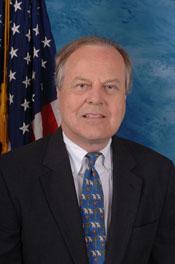 Rep. Ed Whitfield (R-KY)
Legislative Activity
Stay on top of the latest movement without scrolling through every action
Received in the Senate.
October 6, 2004
View full timeline
Introduced in House
September 4, 2003
Sponsor introductory remarks on measure. (CR E1823-1824)
September 4, 2003
Referred to the House Committee on Energy and Commerce.
September 4, 2003
Ordered to be Reported (Amended) by Voice Vote.
September 30, 2004
Reported (Amended) by the Committee on Energy and Commerce. H. Rept. 108-728.
October 5, 2004
Placed on the Union Calendar, Calendar No. 448.
October 5, 2004
Mr. Barton (TX) moved to suspend the rules and pass the bill, as amended.
October 5, 2004 • 2:12 PM
Considered under suspension of the rules. (consideration: CR H8069-8073)
October 5, 2004 • 2:12 PM
DEBATE - The House proceeded with forty minutes of debate on H.R. 3015.
October 5, 2004 • 2:12 PM
Passed/agreed to in House: On motion to suspend the rules and pass the bill, as amended Agreed to by voice vote.(text: CR H8069-8070)
October 5, 2004 • 2:23 PM
On motion to suspend the rules and pass the bill, as amended Agreed to by voice vote. (text: CR H8069-8070)
October 5, 2004 • 2:23 PM
Motion to reconsider laid on the table Agreed to without objection.
October 5, 2004 • 2:23 PM
The title of the measure was amended. Agreed to without objection.
October 5, 2004 • 2:23 PM
Received in the Senate.
October 6, 2004
Floor Debate
11 membersWhat members said about H.R. 3015 on the floor



 +6
+6
Floor Debate
11 membersWhat members said about H.R. 3015 on the floor
Mr. Speaker, I rise to express my strong concerns about the lack of adequate patient privacy protections in H.R. 3015, the National All Schedules Prescription Electronic Reporting Act of 2004. H.R.…
Mr. Speaker, I rise in opposition to H.R. 3015, the National All Schedules Prescription Electronic Reporting Act. This bill is yet another unjustifiable attempt by the Federal government to use the…
Mr. Speaker, I move to suspend the rules and pass the bill (H.R. 3015) to amend the Public Health Service Act to establish an electronic system for practitioner monitoring of the dispensing of any…
Mr. Speaker, I believe that H.R. 3015, legislation to support State controlled substance monitoring programs, is well intentioned. Non-medical use of controlled substances is a serious problem.…
Mr. Speaker, I thank the chairman for yielding me this time. We are excited today to have on the floor this legislation relating to prescription drug abuse in the United States, which has reached…
Show 6 more

Mr. Speaker, I thank the gentleman from Ohio (Mr. Brown) for yielding me this time. Mr. Speaker, as a sponsor of H.R. 3015, I rise today in strong support of this important piece of legislation and…

Mr. Speaker, I rise in strong support of H.R. 3015, the National All Schedules Prescription Electronic Reporting Act of 2003. As a cosponsor of H.R. 3015, I recognize that this bill represents an…
Mr. Speaker, I rise today to speak in support of H.R. 3015. I would first like to thank the Energy and Commerce Committee staff for their great work on this bill. I would also like to thank my…

Mr. Speaker, I yield myself 2\1/2\ minutes. Prescription drug pain relievers, stimulants, and other controlled substances play a crucial role in health care. But when misused, those same medicines…

Mr. Speaker, I am pleased to stand in support of H.R. 3015, the National All Schedules Prescription Electronic Reporting Act (NASPER). As my Kentucky colleagues know, prescription drug abuse is one…

Mr. Speaker, as an original co-sponsor of the National All Schedules Prescription Electronic Reporting, or NASPER, Act of 2003, I rise today in strong support of its passage. The prescription drug…
Bill Text
4 versions available
        [Congressional Bills 108th Congress]
[From the U.S. Government Publishing Office]
[H.R. 3015 Received in Senate (RDS)]

2d Session
H. R. 3015

_______________________________________________________________________

IN THE SENATE OF THE UNITED STATES

October 6, 2004

Received

_______________________________________________________________________

AN ACT

To provide for the establishment of a controlled substance monitoring
program in each State.

Be it enacted by the Senate and House of Representatives of the
United States of America in Congress assembled,

SECTION 1. SHORT TITLE.

This Act may be cited as the ``National All Schedules Prescription
Electronic Reporting Act of 2004''.

SEC. 2. CONTROLLED SUBSTANCE MONITORING PROGRAM.

Part P of title III of the Public Health Service Act (42 U.S.C.
280g et seq.) is amended by adding after section 399N the following:

``SEC. 399O. CONTROLLED SUBSTANCE MONITORING PROGRAM.

``(a) Formula Grants.--
``(1) In general.--Each fiscal year, the Secretary shall
make a payment to each State with an application approved under
this section for the purpose of establishing and implementing a
controlled substance monitoring program under this section.
``(2) Determination of amount.--In making payments under
paragraph (1) for a fiscal year, the Secretary shall allocate
to each State with an application approved under this section
an amount which bears the same ratio to the amount appropriated
to carry out this section for that fiscal year as the number of
pharmacies of the State bears to the number of pharmacies of
all States with applications approved under this section (as
determined by the Secretary), except that the Secretary may
adjust the amount allocated to a State under this paragraph
after taking into consideration the budget cost estimate for
the State's controlled substance monitoring program.
``(b) Application Approval Process.--
``(1) In general.--To seek a grant under this section, a
State shall submit an application at such time, in such manner,
and containing such assurances and information as the Secretary
may reasonably require. Each such application shall include--
``(A) a budget cost estimate for the State's
controlled substance monitoring program;
``(B) proposed standards for security for
information handling and for the database maintained by
the State under subsection (d) generally including
efforts to use appropriate encryption technology or
other such technology;
``(C) proposed standards for meeting the uniform
electronic format requirement of subsection (g);
``(D) proposed standards for availability of
information and limitation on access to program
personnel;
``(E) proposed standards for access to the
database, and procedures to ensure database accuracy;
``(F) proposed standards for redisclosure of
information;
``(G) proposed penalties for illegal redisclosure
of information; and
``(H) assurances of compliance with all other
requirements of this section.
``(2) Approval or disapproval.--Not later than 90 days
after the submission by a State of an application under
paragraph (1), the Secretary shall approve or disapprove the
application. The Secretary shall approve the application if the
State demonstrates to the Secretary that the State will
establish and implement or operate a controlled substance
monitoring program in accordance with this section.
``(3) Withdrawal of authorization.--If a State fails to
implement a controlled substance monitoring program in
accordance with this section--
``(A) the Secretary shall give notice of the
failure to the State; and
``(B) if the State fails to take corrective action
within a reasonable period of time, the Secretary shall
withdraw any approval of the State's application under
this section.
``(4) Voluntary discontinuance.--A funding agreement for
the receipt of a payment under this section is that the State
involved will give a reasonable period of notice to the
Secretary before ceasing to implement or operate a controlled
substance monitoring program under this section. The Secretary
shall determine the period of notice that is reasonable for
purposes of this paragraph.
``(5) Return of funds.--If the Secretary withdraws approval
of a State's application under this section, or the State
chooses to cease to implement a controlled substance monitoring
program under this section, a funding agreement for the receipt
of a payment under this section is that the State will return
to the Secretary an amount which bears the same ratio to the
overall payment as the remaining time period for expending the
payment bears to the overall time period for expending the
payment (as specified by the Secretary at the time of the
payment).
``(c) Reporting Requirements.--In implementing a controlled
substance monitoring program under this section, a State shall comply
with the following:
``(1) The State shall require dispensers to report to such
State each dispensing in the State of a controlled substance to
an ultimate user or research subject not later than 1 week
after the date of such dispensing.
``(2) The State may exclude from the reporting requirement
of this subsection--
``(A) the direct administration of a controlled
substance to the body of an ultimate user or research
subject;
``(B) the dispensing of a controlled substance in a
quantity limited to an amount adequate to treat the
ultimate user or research subject involved for 48 hours
or less; or
``(C) the administration or dispensing of a
controlled substance in accordance with any other
exclusion identified by the Secretary for purposes of
this paragraph.
``(3) The information to be reported under this subsection
with respect to the dispensing of a controlled substance shall
include the following:
``(A) Drug Enforcement Administration Registration
Number of the dispenser.
``(B) Drug Enforcement Administration Registration
Number and name of the practitioner who prescribed the
drug.
``(C) Name, address, and telephone number of the
ultimate user or research subject.
``(D) Identification of the drug by a national drug
code number.
``(E) Quantity dispensed.
``(F) Estimated number of days for which such
quantity should last.
``(G) Number of refills ordered.
``(H) Whether the drug was dispensed as a refill of
a prescription or as a first-time request.
``(I) Date of the dispensing.
``(J) Date of origin of the prescription.
``(4) The State shall require dispensers to report
information under this section in accordance with the
electronic format specified by the Secretary under subsection
(g), except that the State may waive the requirement of such
format with respect to an individual dispenser.
``(5) The State shall automatically share information
reported under this subsection with another State with an
application approved under this section if the information
concerns--
``(A) the dispensing of a controlled substance to
an ultimate user or research subject who resides in
such other State; or
``(B) the dispensing of a controlled substance
prescribed by a practitioner whose principal place of
business is located in such other State.
``(6) The State may notify the appropriate authorities
responsible for drug diversion investigation if information in
the database maintained by the State under subsection (d)
indicates an unlawful diversion or misuse of a controlled
substance.
``(d) Database.--In implementing a controlled substance monitoring
program under this section, a State shall comply with the following:
``(1) The State shall establish and maintain an electronic
database containing the information reported to the State under
subsection (c).
``(2) The database must be searchable by any field or
combination of fields.
``(3) The State shall include reported information in the
database at such time and in such manner as the Secretary
determines appropriate, with appropriate safeguards for
ensuring the accuracy and completeness of the database.
``(4) The State shall take appropriate security measures to
protect the integrity of, and access to, the database.
``(e) Provision of Information.--Subject to subsection (f), in
implementing a controlled substance monitoring program under this
section, a State may provide information from the database established
under subsection (d) and, in the case of a request under paragraph (3),
summary statistics of such information, in response to a request by--
``(1) a practitioner (or the agent thereof) who certifies,
under the procedures determined by the State, that the
requested information is for the purpose of providing medical
or pharmaceutical treatment or evaluating the need for such
treatment to a bona fide current patient;
``(2) any local, State, or Federal law enforcement,
narcotics control, licensure, disciplinary, or program
authority, who certifies, under the procedures determined by
the State, that the requested information is related to an
individual investigation or proceeding involving the unlawful
diversion or misuse of a schedule II, III, or IV substance, and
such information will further the purpose of the investigation
or assist in the proceeding;
``(3) any agent of the Department of Health and Human
Services, a State medicaid program, a State health department,
or the Drug Enforcement Administration who certifies that the
requested information is necessary for research to be conducted
by such department, program, or administration, respectively,
and the intended purpose of the research is related to a
function committed to such department, program, or
administration by law that is not investigative in nature; or
``(4) any agent of another State, who certifies that the
State has an application approved under this section and the
requested information is for the purpose of implementing the
State's controlled substance monitoring program under this
section.
``(f) Limitations.--In implementing a controlled substance
monitoring program under this section, a State--
``(1) shall make reasonable efforts to limit the
information provided pursuant to a valid request under
subsection (e) to the minimum necessary to accomplish the
intended purpose of the request; and
``(2) shall not provide any individually identifiable
information in response to a request under subsection (e)(3).
``(g) Electronic Format.--The Secretary shall specify a uniform
electronic format for the reporting, sharing, and provision of
information under this section.
``(h) Rules of Construction.--
``(1) Functions otherwise authorized by law.--Nothing in
this section shall be construed to restrict the ability of any
authority, including any local, State, or Federal law
enforcement, narcotics control, licensure, disciplinary, or
program authority, to perform functions otherwise authorized by
law.
``(2) No preemption.--Nothing in this section shall be
construed as preempting any State law, except that no such law
may relieve any person of a requirement otherwise applicable
under this Act.
``(3) Additional privacy protections.--Nothing in this
section shall be construed as preempting any State from
imposing any additional privacy protections.
``(4) Certain confidentiality requirements.--Nothing in
this section shall be construed as superceding the
confidentiality requirements of programs defined by and subject
to part 2 of title 42, Code of Federal Regulations.
``(5) No federal private cause of action.--Nothing in this
section shall be construed to create a Federal private cause of
action.
``(i) Relation to HIPAA.--Except to the extent inconsistent with
this section, the provision of information pursuant to subsection
(c)(5), (c)(6), or (e) and the subsequent transfer of such information
are subject to any requirement that would otherwise apply under the
regulations promulgated pursuant to section 264(c) of the Health
Insurance Portability and Accountability Act of 1996.
``(j) Preference.--Beginning January 1, 2007, the Secretary, in
awarding any competitive grant that is related to drug abuse (as
determined by the Secretary) to a State, shall give preference to any
State with an application approved under this section.
``(k) Study.--Not later than 2 years after the date of the
enactment of this section, the Secretary shall--
``(1) complete a study that--
``(A) determines the progress of States in
establishing and implementing controlled substance
monitoring programs under this section;
``(B) determines the feasibility of implementing a
real-time electronic controlled substance monitoring
program, including the costs associated with
establishing such a program; and
``(C) provides an analysis of the privacy
protections in place for the information reported to
the controlled substance monitoring program in each
State receiving a grant for the establishment or
operation of such program, and a comparison to the
privacy requirements that apply to covered entities
under regulations promulgated pursuant to section
264(c) of the Health Insurance Portability and
Accountability Act of 1996, along with any
recommendations for additional requirements for
protection of this information; and
``(2) submit a report to the Congress on the results of the
study.
``(l) Advisory Council.--
``(1) Establishment.--A State may establish an advisory
council to assist in the establishment and implementation of a
controlled substance monitoring program under this section.
``(2) Sense of congress.--It is the sense of the Congress
that, in establishing an advisory council under this
subsection, a State should consult with appropriate
professional boards and other interested parties.
``(m) Definitions.--For purposes of this section:
``(1) The term `bona fide patient' means an individual who
is a patient of the dispenser or practitioner involved.
``(2) The term `controlled substance' means a drug that is
included in schedule II, III, or IV of section 202(c) of the
Controlled Substance Act.
``(3) The term `dispense' means to deliver a controlled
substance to an ultimate user or research subject by, or
pursuant to the lawful order of, a practitioner, irrespective
of whether the dispenser uses the Internet or other means to
effect such delivery.
``(4) The term `dispenser' means a physician, pharmacist,
or other individual who dispenses a controlled substance to an
ultimate user or research subject.
``(5) The term `practitioner' means a physician, dentist,
veterinarian, scientific investigator, pharmacy, hospital, or
other person licensed, registered, or otherwise permitted, by
the United States or the jurisdiction in which he or she
practices or does research, to distribute, dispense, conduct
research with respect to, administer, or use in teaching or
chemical analysis, a controlled substance in the course of
professional practice or research.
``(6) The term `State' means each of the 50 States and the
District of Columbia.
``(7) The term `ultimate user' means a person who has
lawfully obtained, and who possesses, a controlled substance
for his or her own use, for the use of a member of his or her
household, or for the use of an animal owned by him or her or
by a member of his or her household.
``(n) Authorization of Appropriations.--To carry out this section,
there are authorized to be appropriated--
``(1) $25,000,000 for each of fiscal years 2006 and 2007;
and
``(2) $15,000,000 for each of fiscal years 2008, 2009, and
2010.''.

Passed the House of Representatives October 5, 2004.

Attest:

JEFF TRANDAHL,

Clerk.