H.R. 3079House108th Congress (2003-2005)In Committee
National Commission on the Modernization of the United Nations Act of 2003
Sponsored by 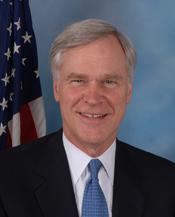 Rep. Ander Crenshaw (R-FL)
Rep. Ander Crenshaw (R-FL)Introduced September 11, 2003
Legislative Activity
Stay on top of the latest movement without scrolling through every action
HouseIntro Referral
Latest Action
Referred to the House Committee on International Relations.
September 11, 2003
View full timeline
HouseIntro Referral
Introduced in House
September 11, 2003
HouseIntro Referral
Referred to the House Committee on International Relations.
September 11, 2003
Floor Debate
1 memberWhat members said about H.R. 3079 on the floor

Floor Debate
1 memberWhat members said about H.R. 3079 on the floor
1 Republican
Rep. Doug BereuterR-NE-1 · Oct 17, 2003
Mr. Speaker, this Member commends to his colleagues the October 4, 2003, editorial from the Norfolk Daily News, which is entitled ``More of a problem than a solution.'' Although this Member certainly…
Bill Text
Latest available legislative text
Introduced in HouseIssued September 11, 2003
        [Congressional Bills 108th Congress]
[From the U.S. Government Publishing Office]
[H.R. 3079 Introduced in House (IH)]

<DOC>

108th CONGRESS
1st Session
H. R. 3079

To establish the National Commission on the Modernization of the United
Nations.

_______________________________________________________________________

IN THE HOUSE OF REPRESENTATIVES

September 11, 2003

Mr. Crenshaw (for himself and Mr. Blunt) introduced the following bill;
which was referred to the Committee on International Relations

_______________________________________________________________________

A BILL

To establish the National Commission on the Modernization of the United
Nations.

Be it enacted by the Senate and House of Representatives of the
United States of America in Congress assembled,

SECTION 1. SHORT TITLE.

This Act may be cited as the ``National Commission on the
Modernization of the United Nations Act of 2003''.

SEC. 2. ESTABLISHMENT.

There is established a commission to be known as the ``National
Commission on the Modernization of the United Nations''.

SEC. 3. DUTIES OF THE COMMISSION.

(a) In General.--The Commission shall--
(1) conduct a study of the areas specified in this section;
(2) recommend reforms with respect to such areas; and
(3) enumerate methods to implement each recommendation.
(b) Study of Extent of Modernization Within Confines of Present
Charter.--The Commission shall--
(1) study the requirements for and extent to which a
modernization of the organizational structure and practices of
the United Nations can be effectuated that do not require
substantive changes to be made to the Charter of the United
Nations; and
(2) make recommendations to implement such a modernization.
(c) Study of Extent of Modernization Requiring Modifications to
Present Charter.--The Commission shall--
(1) study the requirements for and extent to which a
modernization of the organizational structure and practices of
the United Nations can only be effectuated by requiring
substantive changes to be made to the Charter, paying
particular attention to the areas of study enumerated in
subsections (d) through (i); and
(2) make recommendations to implement such a modernization.
(d) Study of Member State Principles.--The Commission shall study
the principles to which states should adhere as members of the United
Nations, paying particular attention to the following:
(1) Whether states that espouse and enforce values that are
counter to the Charter should be permitted to be members of the
United Nations.
(2) What recourse should be available to the United Nations
to respond to a member state that has engaged in conduct
counter to the Charter.
(3) What conduct on the part of a member state would
constitute sufficient grounds for--
(A) expulsion;
(B) condemnation; or
(C) sanction.
(e) Study of Member State Status.--The Commission shall study the
feasibility of mandating the following requirements of member states:
(1) Requirement of regular review by the United Nations of
the status of all member states to determine if member states
continue to adhere to the principles outlined in the Charter.
(2) Requirement for member states to--
(A) sign a ``Declaration of Member States''
declaring that the signatory state agrees to adhere to
the principles of United Nations membership; and
(B) review the principles of the United Nations to
determine whether the state should withdraw from
membership if the state determines that the United
Nations is not adhering to the implementation of the
Charter.
(f) Study of Proportional Representation on Principal Organs.--The
Commission shall study the following:
(1) Whether all states should have one vote in the General
Assembly.
(2) Whether the United Nations should be structured in a
bi-cameral fashion.
(g) Study of Organizational and Business Functions.--The Commission
shall study the following:
(1) Whether auxiliary commissions and organizations of the
United Nations should be funded by member dues.
(2) Whether such commissions and organizations detract from
the Charter principles by draining resources away from the
primary functions of the United Nations.
(3) Whether member states can create caucuses and fund them
to deal with matters of common interest without detracting from
the main objectives of the United Nations.
(h) Study of Use, Structure, and Goals of Peacekeeping and
Humanitarian Efforts.--The Commission shall study the following:
(1) Whether the United Nations should maintain a separate
peacekeeping force.
(2) Identification of successes of past peacekeeping and
humanitarian efforts.
(i) Study of Enforcement of Resolutions.--The Commission shall
study the credibility of resolutions when the United Nations does not
mandate their absolute obedience.

SEC. 4. MEMBERSHIP.

(a) Number and Appointment.--The Commission shall be composed of 9
members appointed from among persons who are not officers or employees
of any government, as follows:
(1) Two members appointed by the President.
(2) Two members appointed by the Speaker of the House of
Representatives.
(3) Two members appointed by the Majority Leader of the
Senate.
(4) One member appointed by the Minority Leader of the
Senate.
(5) One member appointed by the Minority Leader of the
House of Representatives.
(6) One member appointed by the Secretary of State
(b) Terms of Office.--
(1) In general.--Each member shall be appointed for the
life of the Commission.
(2) Special rule.--A member who is appointed to the
Commission and who subsequently becomes an officer or employee
of any government may not continue as a member.
(c) Vacancies.--A vacancy in the Commission shall be filled in the
manner in which the original appointment was made.
(d) Chairperson.--The Chairperson of the Commission shall be
elected by the members after consultation with the Speaker and minority
leader of the House of Representatives and the majority leader and
minority leader of the Senate. Pending such election, a provisional
Chairperson shall be designated by the President.
(e) Travel Expenses.--Each member shall receive travel expenses,
including per diem in lieu of subsistence, in accordance with sections
5702 and 5703 of title 5, United States Code.

SEC. 5. DIRECTOR AND STAFF.

(a) Director.--The Commission shall appoint a Director who shall be
paid at the rate of basic pay for level IV of the Executive Schedule
under section 5315 of title 5, United States Code.
(b) Staff.--
(1) In general.--Subject to paragraph (2), the Director,
with the approval of the Commission, may appoint and fix the
pay of additional personnel.
(2) Applicability of certain civil service laws.--The
Director may make such appointments subject to the provisions
of title 5, United States Code, governing appointments in the
competitive service, and any personnel so appointed shall be
paid in accordance with the provisions of chapter 51 and
subchapter III of chapter 53 of such title relating to
classification and General Schedule pay rates.
(c) Staff of Federal Agencies.--Upon request of the Commission, the
head of any Federal department or agency may detail, on a reimbursable
basis, any of the personnel of that department or agency to the
Commission to assist it in carrying out its duties under this Act.
(d) Administrative Support Services.--Upon the request of the
Commission, the Administrator of General Services shall provide to the
Commission, on a reimbursable basis, the administrative support
services necessary for the Commission to carry out its duties under
this Act.

SEC. 6. POWERS OF COMMISSION.

(a) Meetings.--
(1) In general.--The Commission shall meet at the call of
the Chairperson.
(2) Quorum.--A majority of the members of the Commission
shall constitute a quorum but a lesser number may hold
hearings.
(b) Obtaining Official Data.--The Commission may secure directly
from any department or agency of the United States information
necessary to enable it to carry out this Act. Upon request of the
Commission, the head of that department or agency shall furnish that
information to the Commission.
(c) Mails.--The Commission may use the United States mails in the
same manner and under the same conditions as other departments and
agencies of the United States.

SEC. 7. REPORTS.

(a) Interim Report.--Within 6 months after the date of the
enactment of this Act, the Commission shall submit to Congress an
interim report on the activities of the Commission under this Act.
(b) Final Report.--Not later than 12 months after the date of the
enactment of this Act, the Commission shall submit to Congress a final
report containing a statement of the findings, conclusions, and
recommendations of the Commission.

SEC. 8. TERMINATION.

The Commission shall terminate 15 days after submission of its
final report under section 7(b).

SEC. 9. DEFINITIONS.

In this Act:
(1) Charter.--The term ``Charter'' means the Charter of the
United Nations.
(2) Commission.--The term ``Commission'' means the National
Commission on the Modernization of the United Nations.
(3) Member.--The term ``member'' means a member of the
Commission.