H.R. 3085House108th Congress (2003-2005)In Committee
Graduation for All Act
Sponsored by 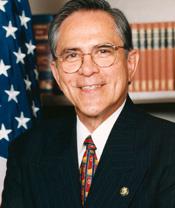 Rep. Ruben Hinojosa (D-TX)
Introduced September 16, 2003
Legislative Activity
Stay on top of the latest movement without scrolling through every action
HouseCommittee
Latest Action
Referred to the Subcommittee on Education Reform.
October 14, 2003
View full timeline
HouseIntro Referral
Introduced in House
September 16, 2003
HouseIntro Referral
Referred to the House Committee on Education and the Workforce.
September 16, 2003
HouseCommittee
Referred to the Subcommittee on 21st Century Competitiveness.
October 14, 2003
HouseCommittee
Referred to the Subcommittee on Education Reform.
October 14, 2003
Floor Debate
1 memberWhat members said about H.R. 3085 on the floor
Floor Debate
1 memberWhat members said about H.R. 3085 on the floor
1 Democrat
Rep. Ruben HinojosaD-TX-15 · May 17, 2004
Mr. Speaker, today marks the 50th anniversary of the Supreme Court's landmark decision to end segregation as the law of the land. This day, in short, changed everything or almost everything in the…
Bill Text
Latest available legislative text
Introduced in HouseIssued September 16, 2003
        [Congressional Bills 108th Congress]
[From the U.S. Government Publishing Office]
[H.R. 3085 Introduced in House (IH)]

108th CONGRESS
1st Session
H. R. 3085

To improve graduation rates by authorizing the Secretary of Education
to make grants to improve adolescent literacy, and for other purposes.

_______________________________________________________________________

IN THE HOUSE OF REPRESENTATIVES

September 16, 2003

Mr. Hinojosa (for himself, Mrs. Davis of California, Mr. Grijalva, Ms.
Lee, Mr. Case, Ms. Jackson-Lee of Texas, Mrs. Napolitano, Mr. Serrano,
Mr. Frost, Mr. Etheridge, Mr. Van Hollen, Ms. Solis, Mr. Rodriguez,
Mrs. Jones of Ohio, Mr. Owens, Ms. Linda T. Sanchez of California, Ms.
Woolsey, Mr. Becerra, Mr. Acevedo-Vila, and Mr. Cardoza) introduced the
following bill; which was referred to the Committee on Education and
the Workforce

_______________________________________________________________________

A BILL

To improve graduation rates by authorizing the Secretary of Education
to make grants to improve adolescent literacy, and for other purposes.

Be it enacted by the Senate and House of Representatives of the
United States of America in Congress assembled,

SECTION 1. SHORT TITLE.

This Act may be cited as the ``Graduation for All Act''.

SEC. 2. FINDINGS.

The Congress finds as follows:
(1) Failure to earn a high school diploma has serious
economic and social consequences for individuals and the
Nation.
(2) Recent studies show that less than 75 percent of all
eighth graders graduate from high school in 5 years, and in
urban schools the rate falls below 50 percent.
(3) 40 percent of students attending high-minority-
enrollment secondary schools enroll in remedial coursework when
entering higher education in an effort to gain the skills their
secondary education failed to provide.
(4) Students who receive concentrated, focused support in
literacy graduate from high school and attend college in far
greater numbers.
(5) On the 2002 National Assessment of Educational
Progress, one in four students in the eighth grade scored below
basic in reading.
(6) Improving the literacy skills of adolescents is a key
factor in improving high school graduation rates.

TITLE I--IMPROVING ADOLESCENT LITERACY

SEC. 101. PURPOSES.

The purposes of this title are--
(1) to provide assistance to State educational agencies and
local educational agencies in establishing effective research-
based reading programs for students attending secondary schools
(including middle schools and high schools, as defined by the
local education agency) including economically disadvantaged
students, students from major racial and ethnic groups,
students with disabilities, students with limited English
proficiency, migrant children, and homeless children;
(2) to provide adequate resources to schools to hire, and
to provide in-service training for, at least one literacy coach
per 600 students or 20 teachers, whichever requires the greater
number of literacy coaches, who can assist all teachers to
incorporate research-based reading and writing instruction or
English as a second language instruction into their teaching of
mathematics, science, history, civics, geography, literature,
language arts, and other core academic subjects;
(3) to provide assistance to State educational agencies and
local educational agencies in strengthening reading and writing
instruction and providing diagnostic reading assessments and
comprehensive research-based programs and instructional
materials that will improve overall reading and writing
performance among students attending secondary schools; and
(4) to provide assistance to State educational agencies and
local educational agencies to develop and implement individual
graduation plans for students who are most at risk of not
graduating from high school so that such students graduate with
a high school diploma before reaching 21 years of age or the
maximum age for high school attendance in accordance with State
law.

SEC. 102. PROGRAM AUTHORIZED.

The Secretary is authorized to establish a program, in accordance
with the requirements of this title, that will provide funds to State
educational agencies and local educational agencies to establish
reading and writing programs to improve overall reading and writing
performance among students attending secondary schools (including
middle and high schools, as defined by the local education agency).

SEC. 103. GRANTS TO STATES.

(a) Allocation to States.--The Secretary shall allocate funds to
States--
(1) to establish a reading and writing partnership to
increase the literacy skills for all students, including
strategies for economically disadvantaged students, students
from major racial and ethnic groups, students with
disabilities, students with limited English proficiency,
migrant children, and homeless children;
(2) to coordinate applications for subgrants under this
title; and
(3) to oversee and evaluate the State's activities under
this title.
(b) Length of Grant.--Grants made to States under this title shall
be in effect for a period of 6 years.
(c) Applications.--In order to receive a grant under this title, a
State shall submit to the Secretary an application in a form
established by the Secretary, which satisfies the following conditions:
(1) The application shall not be consolidated with an
application made under the Elementary and Secondary Education
Act of 1965 (20 U.S.C. 6301 et seq.).
(2) The application shall include assurances that the
State--
(A) has established a reading and writing
partnership that--
(i) coordinated the application; and
(ii) will assist in administering the
program; and
(B) will participate, if requested, in the external
national evaluation of the program.
(3) The application shall include a program plan that
contains a description of the following:
(A) How the State will assist local educational
agencies in implementing grants, including providing
ongoing professional development for literacy coaches,
teachers, paraprofessionals, and administrators.
(B) How the State will help local educational
agencies identify screening, diagnostic, and classroom-
based instructional reading and writing assessments.
(C) How the State will help local educational
agencies identify scientifically based materials and
programs.
(D) How the State will help local educational
agencies identify materials, programs, and assessments
for economically disadvantaged students, students from
major racial and ethnic groups, students with
disabilities, students with limited English
proficiency, migrant children, and homeless children.
(E) How the State will ensure that professional
development is based on scientifically based reading
research, will effectively improve instructional
practices for reading and writing, and is coordinated
with professional development activities funded through
other programs.
(F) How funded activities will help teachers and
other instructional staff to implement scientifically
based components of reading instruction.
(G) The subgrant process, including how the State
will ensure that eligible local educational agencies
receiving subgrants will use practices based on
scientifically based reading research.
(H) How the State will build on, and promote
coordination among, reading and writing programs in the
State to increase overall effectiveness in reading and
writing instruction, including effectiveness among
economically disadvantaged students, students from
major racial and ethnic groups, students with
disabilities, students with limited English
proficiency, migrant children, and homeless children.
(I) How the State will assist local educational
agencies receiving subgrants under this title in
providing one-on-one counseling to develop graduation
plans for students at risk of not graduating on time.
(J) How the State will assess and evaluate the
effectiveness of eligible local educational agency
activities on a regular basis.
(d) Use of Funds.--
(1) Subgrants.--Each State shall allocate 80 percent of the
funds the State receives under this title to local educational
agencies, utilizing a competitive priority based upon the
graduation rate for students attending middle schools and high
schools.
(2) State-level activities.--
(A) In general.--Each State educational agency
shall use 20 percent of the grant funds the State
educational agency receives under this title--
(i) to carry out State-level activities
described in subsection (c);
(ii) to provide technical support to local
educational agencies and high-quality
professional development to teachers and
literacy coaches;
(iii) to provide grants to secondary
schools that have low graduation rates but are
not in a local education agency with low
graduation rates; and
(iv) for administrative costs.
(B) Limitation.--Not more than 10 percent of the
grant funds distributed to a State under this title for
any fiscal year may be used for planning,
administration, and reporting.
(e) Notice to Local Education Agencies.--Each State receiving a
grant under this title shall provide notice to all eligible local
educational agencies about the availability of subgrants under this
title.
(f) Review of Applications.--State applications shall be reviewed
by the Secretary in the order in which they are received.

SEC. 104. SUBGRANTS TO LOCAL EDUCATIONAL AGENCIES.

(a) Eligibility Requirement.--To be eligible to receive a subgrant
under this title, a local educational agency shall be among the local
educational agencies in the State with the lowest graduation rates for
public secondary school students (as defined in section
1111(b)(2)(C)(vi) of the Elementary and Secondary Education Act of 1965
(20 U.S.C. 6311(b)(2)(C)(vi))).
(b) Applications.--
(1) In general.--Local educational agencies shall submit
applications to the State in the form and according to the
schedule established by the State.
(2) Contents.--In addition to any other information
required by the State, applications for subgrants under this
title shall demonstrate how the local educational agency will
carry out the following required activities:
(A) Reading assessments.
(B) Reading programs.
(C) Reading and writing programs for economically
disadvantaged students, students from major racial and
ethnic groups, students with disabilities, students
with limited English proficiency, migrant children, and
homeless children.
(D) One-on-one counseling to develop graduation
plans for students at risk of not graduating on time.
(E) Selection and implementation of instructional
materials based on scientifically based reading
research.
(F) Professional development, including instruction
on how to identify and work with economically
disadvantaged students, students from major racial and
ethnic groups, students with disabilities, students
with limited English proficiency, migrant children, and
homeless children.
(G) Evaluation strategies.
(H) Reporting.
(I) Providing access to reading material, including
reading materials for economically disadvantaged
students, students from major racial and ethnic groups,
students with disabilities, students with limited
English proficiency, migrant children, and homeless
children.
(3) Consortia.--Local educational agencies may apply to the
State for a grant as a consortium, if each member of the
consortium meets the eligibility requirement described in
subsection (a).
(c) Use of Funds.--A local educational agency receiving a subgrant
under this title shall use the funds to provide the following services
at the middle school and high school levels (as defined by the agency):
(1) Hiring and providing inservice training for literacy
coaches who shall--
(A) work with classroom teachers to incorporate
reading and writing instruction within all subject
areas, during regular classroom periods and after
school and summer school programs, for all students,
including economically disadvantaged students, students
from major racial and ethnic groups, students with
disabilities, students with limited English
proficiency, migrant children, and homeless children;
(B) work with classroom teachers to identify
students with reading problems and provide remediation
or referral for additional services;
(C) in partnership with classroom teachers,
diagnose and remediate reading difficulties of the
lowest performing students (including low-performing
economically disadvantaged students, students from
major racial and ethnic groups, students with
disabilities, students with limited English
proficiency, migrant children, and homeless children)
by providing intensive, research-based instruction
(including before- and after-school and summer
sessions) focused on reading and writing skills and
geared toward ensuring that such students can perform
rigorous academic coursework in high school; and
(D) assess and organize student data on literacy
and communicate such data to school administrators.
(2) Providing one-on-one counseling to all students,
beginning in grade 9, who are at risk of not graduating on time
because of insufficient accumulation of credits, failure to
pass State graduation examinations, or low or failing grades,
which counseling shall include--
(A) developing individual graduation plans for such
students so that they are able to graduate from high
school with a standard diploma before reaching 21 years
of age or the maximum age for high school attendance in
accordance with State law;
(B) working with students and their parents or
caregivers to develop an individual graduation plan
that will define each student's career and education
goals, ensure enrollment in the coursework necessary
for graduation and preparation for postsecondary
education and work, and identify the courses and
supplemental services necessary to meet those goals;
(C) advocating for the student, helping the student
to access the services and supports necessary to
achieving the goals in the individual graduation plan;
and
(D) ensuring that limited or non-English speaking
parents are able to understand the goals outlined in
such plan and to participate in assisting their child
in meeting such goals;
(3) As necessary, hiring personnel to implement the
requirements of paragraph (2).
(4) Reviewing, analyzing, developing, and, where possible,
adapting curricula to ensure literacy skills are taught within
the content area subjects.
(5) Providing reading professional development for all
teachers in middle and high schools that addresses both
remedial and higher level literacy skills for students in the
applicable curricula.
(6) Providing professional development for all teachers,
administrators, and paraprofessionals, where appropriate, in
middle and high schools that addresses the literacy needs of
economically disadvantaged students, students from major racial
and ethnic groups, students with disabilities, students with
limited English proficiency, migrant children, and homeless
children.
(7) Procuring and implementing instructional materials,
including screening, diagnostic, and classroom-based
instructional reading and writing assessments, and software and
other educational technology.
(8) Evaluating the effectiveness of the instructional
strategies, teacher professional development programs, and
other interventions that are implemented under the subgrant.
(d) Evaluations.--A local educational agency receiving a subgrant
under this title shall provide to the State administering the subgrant
interim reports, which may be included as part of a consolidated annual
report, on the effectiveness of the interventions implemented using the
subgrant after year 3 and year 6 of the subgrant award period.

SEC. 105. AUTHORIZATION OF APPROPRIATIONS; ALLOCATIONS.

(a) Authorization.--For the purposes of carrying out this title,
there are authorized to be appropriated $1,000,000,000 for fiscal year
2004 and such sums as may be necessary for the 5 succeeding fiscal
years.
(b) Special Rule.--
(1) In general.--If the funds appropriated under this
section for a fiscal year are less than $500,000,000, then the
Secretary shall award grants, on a competitive basis, directly
to eligible local educational agencies to establish reading and
writing programs to improve overall reading and writing
performance among students in middle school and secondary
school.
(2) Eligibility Requirement.--To be eligible to receive a
grant under this subsection, a local educational agency shall
be among the local educational agencies in the State with the
lowest graduation rates for public secondary school students
(as defined in section 1111(b)(2)(C)(vi) of the Elementary and
Secondary Education Act of 1965 (20 U.S.C. 6311(b)(2)(C)(vi))).
(c) State Allocations.--
(1) In general.--Of the funds appropriated under subsection
(a), 95 percent shall be allocated to the States submitting
applications under this title.
(2) Minimum.--The minimum State allocation is 0.25 percent
of the total amount allocated to States.
(3) Puerto rico.--For any fiscal year, Puerto Rico shall
receive an allocation that represents not more than the
percentage of the total allocation it received under part A of title I
of the Elementary and Secondary Education Act of 1965 (20 U.S.C. 6311
et seq.) for the preceding fiscal year.
(4) Supplement, not supplant.--States shall not use funds
received under this title to supplant funding already being
provided by the State for such activities or for other
educational activities. Funds may only be used to provide new
services authorized under this title.
(5) Reallocation.--If a State does not apply for funding,
the Secretary shall reallocate such State's funds to the
remaining States.
(d) Funds Retained by the Secretary.--Funds retained by the
Secretary shall be used to fund national activities in support of the
programs funded under this title, except that the Secretary may not
make direct grants to local educational agencies except as provided in
subsection (b).
(e) Local Educational Agency Subgrants.--
(1) Minimum.--For any fiscal year, each eligible local
educational agency shall receive a minimum subgrant amount
equal to at least the percentage of the total allocation it
received under part A of title I of the Elementary and
Secondary Education Act of 1965 (20 U.S.C. 6311 et seq.) for
the preceding fiscal year.
(2) Full implementation.--Subgrants to eligible local
educational agencies shall be of sufficient size and scope to
enable such entities to fully implement programs.
(3) Supplement, not supplant.--Local educational agencies
shall not use funds received under this title to supplant
funding already being provided by a local educational agency
for such activities or for other educational activities. Funds
may only be used to provide new services authorized under this
title.

SEC. 106. DEFINITIONS.

For the purposes of this title:
(1) Individual graduation plan.--The term ``individual
graduation plan'' means a written plan, developed in
partnership school personnel, parents, and students, to list
the steps necessary for the individual to achieve high school
graduation with a standard diploma.
(2) Literacy coach.--The term ``literacy coach'' means a
certified teacher, with a demonstrated effectiveness in
teaching reading to students with specialized needs and the
ability to work with classroom teachers to improve their
instructional techniques to support reading and writing
improvement, who works on site at a school to--
(A) train teachers from across the curriculum to
incorporate the teaching of reading and writing skills
into their instruction of content;
(B) train teachers to assess students' reading and
writing skills and identify students requiring
remediation; and
(C) provide or assess remedial literacy
instruction, including for after school and summer
school programs, for students requiring attention,
including economically disadvantaged students, students
from major racial and ethnic groups, students with
disabilities, students with limited English
proficiency, migrant children, and homeless children.
(3) Secretary.--The term ``Secretary'' means the Secretary
of Education.
(4) State.--The term ``State'' means the 50 States, the
Bureau of Indian Affairs, the District of Columbia, Puerto
Rico, the Virgin Islands, Guam, American Samoa, and the
Commonwealth of the Northern Mariana Islands.

TITLE II--Accountability

SEC. 201. ACCOUNTABILITY FOR ADEQUATE YEARLY PROGRESS.

Section 1111(b)(2)(C) of the Elementary and Secondary Education Act
of 1965 (20 U.S.C. 6311(b)(2)(C)) is amended--
(1) in clause (v)--
(A) by striking the semicolon at the end of
subclause (II) and inserting a period; and
(B) by inserting after subclause (II) the
following:
``(III) In the case of secondary
schools, the graduation rates for all
students as described in clause
(vi);''; and
(2) by amending clause (vi) to read as follows:
``(vi) in accordance with subparagraph (D),
includes graduation rates for public secondary
school students (defined as the percentage of
students who graduate from secondary school
with a regular diploma, as defined by the
State, before reaching 21 years of age or the
maximum age for high school attendance in
accordance with State law), measured separately
for each group described in clause (v).''.

SEC. 202. GRADUATION RATE INFORMATION ON ANNUAL STATE REPORT CARDS.

Section 1111(h)(1)(C) of the Elementary and Secondary Education Act
of 1965 (20 U.S.C. 6311(h)(1)(C)) is amended--
(1) in clause (vii), by striking ``and'' at the end;
(2) in clause (viii), by striking the period at the end and
inserting ``; and''; and
(3) by adding at the end the following:
``(ix) for secondary schools, information
in the aggregate on graduate rates described in
section 1111(b)(2)(C)(vi), disaggregated as
described in clause (i).''.

SEC. 203. ADULT EDUCATION AND FAMILY LITERACY ACT ADMINISTRATIVE
PROVISIONS.

Section 241 of the Adult Education and Family Literacy Act (20
U.S.C. 9251) is amended by adding at the end the following:
``(c) Reports.--
``(1) Reports to the secretary.--An eligible agency
receiving funds under this title shall annually provide the
Secretary with a report on the number participants who are 16,
17, or 18 years of age in the programs and services provided
under section 231, disaggregated by race, ethnicity, gender,
limited English proficiency status, disability, and
socioeconomic status.
``(2) Reports to congress.--Not later than June 30, 2005,
and by June 30 annually thereafter, the Secretary shall submit
a report to the Congress containing the results of the eligible
agency reports required by paragraph (1).''.
<all>