Mr. Speaker, by direction of the Committee on Rules, I call up House Resolution 672 and ask for its immediate consideration. Mr. Speaker, for the purpose of debate only, I yield the customary 30…
Mr. Speaker, by direction of the Committee on Rules, I call up House Resolution 672 and ask for its immediate consideration.
Mr. Speaker, for the purpose of debate only, I yield the customary 30 minutes to the gentleman from Florida (Mr. Hastings), pending which I yield myself such time as I may consume. During consideration of this resolution, all time yielded is for the purpose of debate only.
(Mr. REYNOLDS asked and was given permission to revise and extend his remarks.)
Mr. Speaker, House Resolution 672 is a modified, closed rule that provides for consideration of H.R. 4513, the Renewable Energy Project Siting Improvement Act of 2004; and H.R. 4529, the Arctic Coastal Plain and Surface Mining Improvement Act of 2004.
For consideration of H.R. 4513, the rule provides 1 hour of general debate and makes in order the manager's amendment printed in part A of the Committee on Rules report. The rule provides one motion to recommit with or without instructions.
For consideration of H.R. 4529, the rule provides 1 hour of general debate and makes in order the substitute amendment printed in part B of the Committee on Rules report. The rule also provides one motion to recommit with or without instructions.
Mr. Speaker, energy diversity is vital to our economy and our national security. We must continue to explore affordable and sustainable power supplies. Whether we look to wind, solar, biomass, or geothermal energy, we ought to have a straightforward method for granting project approval to future energy activities.
H.R. 4513 streamlines the process by which environmentally responsible renewable energy projects are considered and approved by Federal agencies holding jurisdiction over the project. The current system of environmental review does not allow for an expedited process in approving or disapproving a submitted project. By simplifying the review procedures, we can improve protection for the environment by directing our efforts to the most reasonable projects.
Since renewable energy projects are largely ``place-based,'' occurring in the area where the resources are found, the only decision needed is whether to authorize or not authorize the proposal. The agency should reply simply on the merits and the environmental effects of the proposal.
The provisions of H.R. 4513 also succeed in protecting capital investments by reducing the regulatory risk of doing business. The restructured system of approval will encourage the commitment to capital, to alternative energy sources without fear of extensive litigation, requiring commonsense analysis; modification through mitigation; and, if mitigation is not good enough, denial of the permit.
Mr. Speaker, just as important as meeting our energy needs with affordable, reliable, secure, and sustainable power supplies, the underlying bill also creates jobs for Americans, from highly skilled labor to a stimulation of local construction and manufacturing jobs. In general, wind power creates 2.77 jobs for every megawatt produced; solar panels create 7.24 jobs per megawatt; and geothermal energy projects create 5.67 jobs per megawatt.
The commonsense changes in the underlying bill are good for our economy, while being good for our environment.
Mr. Speaker, the second bill brought for consideration under this rule is H.R. 4529, the Arctic Coastal Plain and Surface Mining Improvement Act of 2004. The bill establishes a competitive oil and gas leasing program for exploration, development, and production of oil and natural gas resources on the Coastal Plain of the Arctic National Wildlife Refuge.
This area is the largest unexplored, potentially productive on-shore basin in the United States. And the development of the coastal plain could significantly reduce our Nation's dependency on foreign resources. In fact, it is estimated that we could produce between 1 million and 1.5 million barrels of oil a day, the equivalent of 1 million to 1.3 million barrels of oil we currently import daily from Saudi Arabia.
Under H.R. 4529, additional requirements are established to ensure that oil and natural gas activities do not have significant adverse effects on wildlife and the environment. It ensures that the best commercially available technology is utilized to achieve these environmental protections.
Furthermore, not only is there a limit of 2,000 acres surface disturbance, but the Secretary of the Interior may also designate up to 45,000 acres on the coastal plain as protected for unique or sensitive areas. These environmental controls would be the strongest ever adopted into Federal law and would not interfere with any existing State or Federal regulations.
Exploration and future development of the coastal plain also generates jobs. Based on potential sales by oil and gas producers and field surface companies, estimates show that the possible job creation is in the tens of thousands.
Mr. Speaker, in addition to conservation and development of alternative energies, any comprehensive and sensible energy plan must include increased domestic production to reduce our reliance on foreign oil. The House recognized that fact when we passed an energy conference report with strong bipartisan support of 246 to 180.
The case for increasing domestic production is compelling. In 2004, the United States relied on foreign imports for 62 percent of its crude oil needs; and according to the Energy Information Administration, that will increase to 70 percent by the year 2025. Even during the oil embargo and subsequent energy crisis in 1973, imports accounted for only 35 percent of the U.S. crude oil.
Since 2001, consumers have seen the average price of a gallon of gasoline increase by 52 percent and home heating oil by 33 percent. The price of a barrel of oil increased by 74 percent during that time, from just over $23 a barrel in 2001 to more than $40 a barrel today. To ease that dependency in just the past 3 years, we have twice approved legislation allowing for the development of the coastal plain. It is time to finally move forward to reduce our Nation's foreign dependency and explore our oil and gas production on the coastal plain.
H.R. 4529 also reauthorizes the Abandoned Mine Claims Program, the AML, for an additional 15 years. This bill continues the industry's commitment to the remediation of abandoned mines which protects communities all across this Nation. Unused mines can sometimes appear to be adventurous places, especially for children. Yet they are actually extremely dangerous and cause too many needless deaths each year. The reclamation of these mines is essential to keep the communities around unused sites as safe as possible.
H.R. 4529 additionally resolves the historic State share reclamation funding issue by providing for reimbursement of funds owed to States.
Another key component of the legislation provides for the permanent solvency of the Combined Benefits Fund, which provides health care benefits for retired miners and their dependents. This will be achieved with a Federal share of money received from future oil production on the coastal plain, providing long-term solvency for the Combined Benefits Fund and future health care premiums of those coal miners currently being funded by the so-called ``reachback'' companies.
Mr. Speaker, the Committee on Resources, in consultation with the Committee on Ways and Means, has worked on these commonsense and fair reforms for some time, and I would like to commend both the chairmen and the ranking members of these committees for their tireless support of so many issues surrounding our Nation's energy resources and ask my colleagues to support the underlying bills.
Mr. Speaker, I reserve the balance of my time.
Mr. Speaker, I yield myself such time as I may consume.
Mr. Speaker, my colleague the gentleman from Florida (Mr. Hastings) covered a lot of ground in his opening remarks, and I think with the basis of the four bills that we were considering we need to review a few things to set the record clearly straight.
First, the gentleman and I agree. There should be an energy policy. This House had ample debate on an energy policy. The other body had ample debate on an energy policy. And then we came together as we sent our conferees with the other body's conferees and we came together with a hammered agreement between the two bodies. The House passed that agreement and the House bills were met with the Democratic minority's obstructionism in the other body. And if we would have had a comprehensive energy policy in 2001, we would not have some of the problems we have here today.
The average price of a gallon of gasoline has increased by 52 percent, from $1.34 a gallon in 2001 to $2.05 today. U.S. imports of oil have increased by more than 10 percent. The price of a barrel of oil increased by 74 percent from just over $23 a barrel in 2001 to more than $40 a barrel today, all while the Senate obstructionism on the Democratic side held up an ample debate of the conference committee report.
The cost of home heating oil, which has a real impact to the Northeast where I come from, has increased by more than 33 percent since 2001. The cost of natural gas to heat America's homes has increased by 92 percent. The U.S. has sent more than $300 billion to foreign nations for oil. This amounts to a massive export in American jobs, national security and our economic growth and vitality.
The Federal Reserve Chairman Alan Greenspan has recently testified that energy prices are the single greatest threat to job creation and to the continued growth of an otherwise burgeoning economy. And so if the gentleman from Florida (Mr. Hastings) agrees with me that we should have an energy policy then it would have been nice to see a conference report just passed by the other body and we would have law today.
But now when we look at four pieces of legislation established under two rules, I will remind my colleagues that while the gentleman from Florida (Mr. Hastings) was discussing his amendments, it was for another rule that will come behind there. It was not on the rule that we are now considering in the debate before us. As a matter of fact, in addition to the two manager's amendments which the rule provides for, there was only one other amendment and it was offered by the gentleman from Pennsylvania (Mr. Kanjorski), and I wanted to find why in my view as a member of the Committee on Rules it was not made in order. And so again in the legislation before us there was only one other amendment that came before the Committee on Rules other than the two manager's amendments, the gentleman from Pennsylvania's (Mr. Kanjorski). And what it did in the amendment, instead of paying the combined benefits fund through the Federal share of money received from future oil production on the coastal plain, the Kanjorski amendment would provide tax credits to the States to bond the issue.
This approach would amount to an estimated $20 billion in bonds, which scores at about $7 billion. In contrast, the approach used in the underlying bill costs only an estimated $2 to $3 billion, which is not only a substantial decrease in the cost to the Federal Government but it is paid for.
As we look at the debate that this body has had on energy policy on the ANWR issue, the full Committee on Resources had a hearing in March of 2003. There was a full committee markup on the overall energy package, including ANWR. The House then approved the energy bill with ANWR in it in April of 2003 and the previous House vote on ANWR was in 2001.
When we look at the AML issue, which is included in the rule today, H.R. 313, the Coal Accountability and Retired Employee Act of the 21st Century, was introduced by the ranking member of the Committee on Resources and is a major component to this ANWR/AML bill.
On October 1, 2003 the full Committee on Resources considered that bill. No amendments were offered and the bill was favorably reported to the House by unanimous consent. H.R. 3796, the Abandoned Land Mines Reclamation Reform Act of 2004, and H.R. 3778, the Abandoned Mine Reclamation Program Extension and Reform Act of 2004, were both subject to a Subcommittee on Energy and Mineral Resources hearing on March 30, 2004. Portions of each of these bills are included in the text of this ANWR/AML bill.
Finally, on the renewable energy portion that is in this rule, not to be debated in the next rule, the H.R. 1904, the Healthy Forest Restoration Act, discusses the NEPA in that it reduces the number of alternatives that the decision maker has to choose from, and our program of renewables bill draws upon the very same concept.
Mr. Speaker, it is clear that in the two bills before us there has been an ample debate by this body on times before. There have been hearings. And in addition we had an ample Committee on Rules forum yesterday where hearings were held and rules were sent to the floor of these two pieces of legislation which are for consideration today as we have outlined, 4513 and 4529, of which there was only one amendment, which was a far more expensive plan than what is before us in the underlying legislation.
Mr. Speaker, I reserve the balance of my time.
Mr. Speaker, I yield myself such time as I may consume.
Mr. Speaker, I listen to my colleague talking about regular order and then I do not know, as he has quoted my chairman of the Committee on Rules on, it is either a closed rule or an open rule, but I know the chairman when I was a new member 6 years ago took great pains to guide me on the fact that there is open rules, there is modified rules, there is modified open rules, modified closed rules, structured rules, closed rules; and he began to teach how each one becomes effective and appropriate in doing its duties for the Committee on Rules. But as I listen to my colleague here talk about whether this is political or whether it is governmental, I look and say, great debate in 2003 on energy policy and most people saying that they agreed that there was not an energy policy in the Clinton administration or the Bush 41 administration, and that this President asked the Congress to move forward and establish an energy policy in America.
We had the hearings. We had the debate in the House and the other body had their debate, and as I said earlier in my remarks, we approved conferees to go work with the other body's conference, to have the conferees come together if they could, and they did. We negotiated. This body did not get all they wanted. The other body did not get all that they wanted, a true compromise; and we passed the conference report in this body in a bipartisan fashion.
The other body, they were in a situation where because of the unusual rules that might be foreign to us that exist in the other body, they have got to have 60 votes to stop the debate on an energy policy that was agreed to by a conference of this body and the other body, they could not come up with two extra votes. If my colleagues look, it was a pretty partisan decision.
The reality is as we come down to it is the other body has not done its work.
Announcement by the Speaker Pro Tempore
Mr. Speaker, point of order, I just would like to be able to explain in this debate to my colleagues how we might say that it has not been on the floor because they cannot get it there. I am looking for any direction there could be because it just plain has not been voted on by the Senate.
Mr. Speaker, I would yield.
I yield to the gentleman from Florida.
Were they what?
Mr. Speaker, to be quite frank, I know many in my district do not really understand this body and the other body. So I am trying to follow the spirit of the law. I do not know if I can answer the gentleman's question.
Mr. Speaker, I yield 2 minutes to the gentleman from Texas (Mr. Barton), the distinguished chairman of the Committee on Energy and Commerce.
Mr. Speaker, I yield myself such time as I may consume.
The one thing we should look at is, I am told that from time to time the minority Members of the other body have not gone to conferences. So I am not sure that other than watching that happen, there is anything we can do about it, whether they participate or they do not.
Mr. Speaker, I reserve the balance of my time.
Mr. Speaker, I yield myself such time as I may consume.
The two bills before us make sense on U.S. energy policy. They make sense for our economy, and they make sense for our environment.
Mr. Speaker, I yield back the balance of my time, and I move the previous question on the resolution.
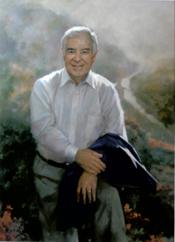 Rep. Nick J. Rahall II (D-WV)