International Consumer Protection Act of 2004
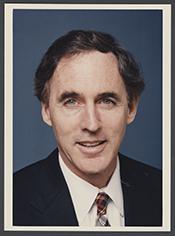 Rep. Cliff Stearns (R-FL)
Legislative Activity
Stay on top of the latest movement without scrolling through every action
House Committee on International Relations Granted an extension for further consideration ending not later than Dec. 10, 2004.
November 22, 2004
View full timeline
Introduced in House
September 23, 2003
Referred to the House Committee on Energy and Commerce.
September 23, 2003
Referred to the Subcommittee on Commerce, Trade and Consumer Protection.
September 24, 2003
Subcommittee Consideration and Mark-up Session Held.
September 24, 2003
Forwarded by Subcommittee to Full Committee by Voice Vote.
September 24, 2003
Committee Consideration and Mark-up Session Held.
October 1, 2003
Reported by the Committee on 108-635, Part I.
July 22, 2004
Referred jointly and sequentially to the House Committee on Financial Services for a period ending not later than Oct. 1, 2004 for consideration of such provisions of the bill as fall within the jurisdiction of that committee pursuant to clause 1(g), rule X.
July 22, 2004
Referred jointly and sequentially to the House Committee on International Relations for a period ending not later than Oct. 1, 2004 for consideration of such provisions of the bill as fall within the jurisdiction of that committee pursuant to clause 1(j), rule X.
July 22, 2004
Referred jointly and sequentially to the House Committee on the Judiciary for a period ending not later than Oct. 1, 2004 for consideration of such provisions of the bill as fall within the jurisdiction of that committee pursuant to clause 1(k), rule X.
July 22, 2004
Committee Consideration and Mark-up Session Held.
September 30, 2004
House Committee on Financial Services Granted an extension for further consideration ending not later than Nov. 19, 2004.
October 1, 2004
House Committee on International Relations Granted an extension for further consideration ending not later than Nov. 19, 2004.
October 1, 2004
House Committee on Judiciary Granted an extension for further consideration ending not later than Nov. 19, 2004.
October 1, 2004
Reported (Amended) by the Committee on Judiciary. H. Rept. 108-635, Part II.
November 16, 2004
House Committee on Financial Services Granted an extension for further consideration ending not later than Nov. 22, 2004.
November 19, 2004
House Committee on International Relations Granted an extension for further consideration ending not later than Nov. 22, 2004.
November 19, 2004
House Committee on Financial Services Granted an extension for further consideration ending not later than Dec. 10, 2004.
November 22, 2004
House Committee on International Relations Granted an extension for further consideration ending not later than Dec. 10, 2004.
November 22, 2004
Floor Debate
15 membersWhat members said about H.R. 3143 on the floor


 +10
+10
Floor Debate
15 membersWhat members said about H.R. 3143 on the floor
Mr. Speaker, I yield 2 minutes to the gentleman from Texas (Mr. Green). Mr. Speaker, I yield myself 2\1/2\ minutes. Mr. Speaker, this is a very important bill, and it would not have been possible…
Mr. Speaker, I move to suspend the rules and pass the Senate bill (S. 877) to regulate interstate commerce by imposing limitations and penalties on the transmission of unsolicited commercial…
Mr. Speaker, I yield myself such time as I may consume. Mr. Speaker, I rise in support of the House-modified version of Senate 877, and wish to thank my fellow chairman, the gentleman from Louisiana…
Mr. Speaker, I would like to thank our ranking member on the Subcommittee on Telecommunications and the Internet for yielding me this time. I rise in strong support of S. 877, the compromise which…
Mr. Speaker, we can work well together around here. I am sure that a lot of people are surprised. I want to pay a congratulations and compliment to my distinguished friend, the gentleman from…
Show 8 more
Mr. Speaker, today, along with Jan Schakowsky, I am introducing a revised International Consumer Protection Act of 2004. This revision reflects changes agreed in negotiations among a number of…

Mr. Speaker, I rise in support of the anti-spam legislation before us, S. 877. I am glad to see that Congress has finally taken definitive action on this issue. During my first term in Congress, I…
Mr. Speaker, today on the heels of our recent efforts to ensure that the do-not-call list was implemented, we are taking yet another major step forward in our efforts to protect consumers from…

Mr. Speaker, I ask unanimous consent to control the time of the gentleman from Louisiana (Mr. Tauzin) as well as the time of the gentleman from Wisconsin (Mr. Sensenbrenner). Mr. Speaker, I yield…

Mr. Speaker, I thank the gentleman from Wisconsin, chairman of the Committee on the Judiciary, and the gentleman from Louisiana, chairman of the Committee on Energy and Commerce, for their leadership…

Mr. Speaker, for several Congresses now we have had hearings and markups in the Energy and Commerce Committee on the nuisance of spam, but no progress has been made. I am pleased that a bill has…
Mr. Speaker, I am pleased to join Chairman Tauzin, Chairman Sensenbrenner, Messrs. Dingell and Burr, and Mrs. Wilson in supporting a good consumer protection bill that I hope will help us, as…

Mr. Speaker, I support the conference report and thank the chairman and ranking member for their work in this effort. I'm particularly pleased that the serious shortcomings of the bill which I've…
Show 3 more

Mr. Speaker, 5 years ago spam was a nuisance, and now it is a nightmare. It is interrupting people's legitimate use of the Internet and their ability to communicate without having a lot of junk to go…

Mr. Speaker, I also thank the gentleman from Wisconsin (Mr. Sensenbrenner), the gentleman from Louisiana (Mr. Tauzin), the gentleman from Michigan (Mr. Dingell), and the general public, really, for…
Under clause 2 of rule XII, bills and reports were delivered to the Clerk for printing, and bills referred as follows: [Omitted from the Record of July 22, 2004] Mr. BARTON: Committee on Energy and…
Bill Text
Latest available legislative text
        [Congressional Bills 108th Congress]
[From the U.S. Government Publishing Office]
[H.R. 3143 Introduced in House (IH)]

<DOC>

108th CONGRESS
1st Session
H. R. 3143

To enhance Federal Trade Commission enforcement against cross-border
fraud and deception.

_______________________________________________________________________

IN THE HOUSE OF REPRESENTATIVES

September 23, 2003

Mr. Stearns (for himself and Ms. Schakowsky) introduced the following
bill; which was referred to the Committee on Energy and Commerce

_______________________________________________________________________

A BILL

To enhance Federal Trade Commission enforcement against cross-border
fraud and deception.

Be it enacted by the Senate and House of Representatives of the
United States of America in Congress assembled,

SECTION 1. SHORT TITLE.

This Act may be referred to as the ``International Consumer
Protection Act of 2003''.

SEC. 2. FOREIGN LAW ENFORCEMENT AGENCY DEFINED.

Section 4 of the Federal Trade Commission Act (15 U.S.C. 44) is
amended by adding at the end the following new paragraph:
`` `Foreign law enforcement agency' means--
``(A) any agency or judicial authority of a foreign
government, including a foreign state, a political subdivision
of a foreign state, or a multinational organization constituted
by and comprised of foreign states, that is vested with law
enforcement or investigative authority in civil, criminal, or
administrative matters; or
``(B) any multinational or multiagency organization to the
extent that it is acting on behalf of an entity described in
subparagraph (A).''.

SEC. 3. AVAILABILITY OF REMEDIES.

Section 5(a) of the Federal Trade Commission Act (15 U.S.C. 45(a))
is amended by adding at the end the following new paragraph:
``(4)(A) Unfair or deceptive acts or practices for purposes of this
subsection shall include such acts or practices involving foreign
commerce that--
``(i) cause or are likely to cause reasonably foreseeable
injury within the United States; or
``(ii) involve material conduct occurring within the United
States.
``(B) All remedies available to the Commission with respect to
unfair and deceptive acts or practices shall be available for acts and
practices described in this paragraph, including restitution to
domestic or foreign victims.''.

SEC. 4. POWERS OF THE COMMISSION.

(a) Publication of Information; Reports.--Section 6(f) of the
Federal Trade Commission Act (15 U.S.C. 46(f)) is amended--
(1) by inserting ``(1)'' after ``such information'' the
first place it appears; and
(2) by striking ``purposes.'' and inserting ``purposes, and
(2) to any officer or employee of any foreign law enforcement
agency under the same circumstances that making material
available to foreign law enforcement agencies is permitted
under section 21(b)(6).''.
(b) Other Powers of the Commission.--Section 6 of the Federal Trade
Commission Act (15 U.S.C. 46) is further amended by inserting after
subsection (i) the following new subsections:
``(j) Investigative Assistance for Foreign Law Enforcement
Agencies.--
``(1) In general.--Upon a written request from a foreign
law enforcement agency to provide assistance in accordance with
this subsection, if the requesting agency states that it is
investigating, or engaging in enforcement proceedings against,
possible violations of laws prohibiting fraudulent or deceptive
commercial practices, or other practices substantially similar
to practices prohibited by any provision of the laws
administered by the Commission, other than Federal antitrust
laws (as defined in section 12(5) of the International
Antitrust Enforcement Assistance Act of 1994 (15 U.S.C.
6211(5))), the Commission may provide the assistance described
in paragraph (2) without requiring that the conduct identified
in the request constitute a violation of the laws of the United
States.
``(2) Type of assistance.--In providing assistance to a
foreign law enforcement agency under this subsection, the
Commission may--
``(A) conduct such investigation as the Commission
deems necessary to collect information and evidence
pertinent to the request for assistance, using all
investigative powers authorized by this Act; and
``(B) when the request is from an agency acting to
investigate or pursue the enforcement of civil laws, or
when the Attorney General refers a request to the
Commission from an agency acting to investigate or
pursue the enforcement of criminal laws, seek and
accept appointment by a United States district court of
Commission attorneys to provide assistance to foreign
and international tribunals and to litigants before
such tribunals on behalf of a foreign law enforcement
agency pursuant to section 1782 of title 28, United
States Code.
``(3) Criteria for determination.--In deciding whether to
provide such assistance, the Commission shall consider all
relevant factors, including--
``(A) whether the requesting agency has agreed to
provide or will provide reciprocal assistance to the
Commission;
``(B) whether compliance with the request would
prejudice the interest of consumers in the United
States; and
``(C) whether the requesting agency's investigation
or enforcement proceeding concerns acts or practices
that cause or are likely to cause injury to a
significant number of persons.
``(4) International agreements.--If a foreign law
enforcement agency has set forth a legal basis for requiring
execution of an international agreement as a condition for
reciprocal assistance, or as a condition for provision of
materials or information to the Commission, the Commission,
after consultation with the Secretary of State, may negotiate
and conclude an international agreement, in the name of either
the United States or the Commission, and with final approval of
the agreement by the Secretary of State, for the purpose of
obtaining such assistance, materials, or information. The
Commission may undertake in such an international agreement
to--
``(A) provide assistance using the powers set forth
in this subsection;
``(B) disclose materials and information in
accordance with subsection (f) and section 21(b)(6);
and
``(C) engage in further cooperation, and protect
materials and information received from disclosure, as
authorized by this Act.
``(5) The authority in this subsection is in addition to,
and not in lieu of, any other authority vested in the
Commission or any other officer of the United States.
``(k) Referral of Evidence for Criminal Proceedings.--
``(1) In general.--Whenever the Commission obtains evidence
that any person, partnership, or corporation, either domestic
or foreign, has engaged in conduct that may constitute a
violation of Federal criminal law, the Commission may transmit
such evidence to the Attorney General, who may institute
criminal proceedings under appropriate statutes. Nothing in
this paragraph affects any other authority of the Commission to
disclose information.
``(2) International information.--The Commission shall
endeavor to ensure, with respect to memoranda of understanding
and international agreements it may conclude, that material it
has obtained from foreign law enforcement agencies acting to
investigate or pursue the enforcement of foreign criminal laws
may be used for the purpose of investigation, prosecution, or
prevention of violations of United States criminal laws.
``(l) Expenditures for Cooperative Arrangements.--The Commission
may expend appropriated funds for--
``(1) operating expenses and other costs of bilateral and
multilateral cooperative law enforcement groups conducting
activities of interest to the Commission and in which the
Commission participates; and
``(2) expenses for consultations and meetings hosted by the
Commission with foreign government agency officials, members of
their delegations, appropriate representatives and staff to
exchange views concerning developments relating to the
Commission's mission, development and implementation of
cooperation agreements, and provision of technical assistance
for the development of foreign consumer protection or
competition regimes, such expenses to include necessary
administrative and logistic expenses and the expenses of
Commission staff and foreign invitees in attendance at such
consultations and meetings including--
``(A) such incidental expenses as meals taken in
the course of such attendance;
``(B) any travel and transportation to or from such
meetings; and
``(C) any other related lodging or subsistence.''.
(c) Authorization of Appropriations.--The Federal Trade Commission
is authorized to expend appropriated funds not to exceed $100,000 per
fiscal year for purposes of section 6(l) of the Federal Trade
Commission Act (15 U.S.C. 46(l)) (as amended by this Act), including
operating expenses and other costs of the following bilateral and
multilateral cooperative law enforcement agencies and organizations:
(1) The International Consumer Protection and Enforcement
Network.
(2) The International Competition Network.
(3) The Mexico-U.S.-Canada Health Fraud Task Force.
(4) Project Emptor.
(5) The Toronto Strategic Partnership and other regional
partnerships with a nexus in a Canadian province.

SEC. 5. REPRESENTATION IN FOREIGN LITIGATION.

Section 16 of the Federal Trade Commission Act (15 U.S.C. 56) is
amended by adding at the end the following subsection:
``(c) Foreign Litigation.--
``(1) Commission attorneys.--The Commission may designate
Commission attorneys to assist the Attorney General in
connection with litigation in foreign courts in which the
Commission has an interest, pursuant to the terms of a
memorandum of understanding to be negotiated by the Commission
and the Attorney General. The preceding sentence is in addition
to, and not in lieu of any other authority vested in the
Commission.
``(2) Foreign counsel.--The Commission is authorized to
expend appropriated funds for the retention of foreign counsel
for consultation and for litigation in foreign courts, and for
expenses related to consultation and litigation in foreign
courts in which the Commission has an interest.
``(3) Payment of claims.--Nothing in this section
authorizes the payment of claims or judgments from any source
other than the permanent and indefinite appropriation
authorized by section 1304 of title 31, United States Code.''.

SEC. 6. SHARING INFORMATION WITH FOREIGN LAW ENFORCEMENT AGENCIES.

(a) Material Obtained Pursuant to Compulsory Process.--Section
21(b)(6) of the Federal Trade Commission Act (15 U.S.C. 57b092(b)(6))
is amended by adding at the end the following: ``The custodian may make
such material available to any foreign law enforcement agency upon the
prior certification of an appropriate official of any such foreign law
enforcement agency, either by a prior agreement or memorandum of
understanding with the Commission or by other written certification,
that such material will be maintained in confidence and will be used
only for official law enforcement purposes, if--
``(1) the foreign law enforcement agency has set forth a
bona fide legal basis for its authority to maintain the
material in confidence; and
``(2) the materials are to be used for purposes of
investigating, or engaging in enforcement proceedings related
to, possible violations of--
``(A) foreign laws prohibiting fraudulent or
deceptive commercial practices or other practices
substantially similar to practices prohibited by any
law administered by the Commission;
``(B) a law administered by the Commission, if
disclosure of the material would further a Commission
investigation or enforcement proceeding; or
``(C) with the approval of the Attorney General,
other foreign criminal laws, if such foreign criminal
laws are offenses defined in or covered by a criminal
mutual legal assistance treaty in force between the
government of the United States and the foreign law
enforcement authority's government.
Nothing in the preceding sentence authorizes the disclosure of
material obtained in connection with the administration of the
Federal antitrust laws or foreign antitrust laws (as defined in
paragraphs (5) and (7), respectively, of section 12 of the
International Antitrust Enforcement Assistance Act of 1994 (15
U.S.C. 6211)) to any officer or employee of a foreign law
enforcement agency.''.
(b) Information Supplied by and About Foreign Sources.--Section
21(f) of the Federal Trade Commission Act (15 U.S.C. 57b092(f)) is
amended to read as follows--
``(f) Exemption From Disclosure.--
``(1) In general.--Any material which is received by the
Commission in any investigation, a purpose of which is to
determine whether any person may have violated any provision of
the laws administered by the Commission, and which is provided
pursuant to any compulsory process under this Act or which is
provided voluntarily in place of such compulsory process shall
be exempt from disclosure under section 552 of title 5, United
States Code.
``(2) Material obtained from a foreign source.--
``(A) Except as provided in subparagraph (C) of
this paragraph, the Commission shall not be compelled
to disclose--
``(i) material obtained from a foreign law
enforcement agency or other foreign government
agency, if the foreign law enforcement agency
or other foreign government agency has
requested confidential treatment, or has
precluded such disclosure under other use
limitations, as a condition of providing the
material;
``(ii) material reflecting consumer
complaints obtained from any other foreign
source, if that foreign source supplying the
material has requested confidential treatment
as a condition of providing the material; or
``(iii) material reflecting a consumer
complaint submitted to a Commission reporting
mechanism sponsored in part by foreign law
enforcement agencies or other foreign
government agencies.
``(B) For purposes of section 552 of title 5, United States
Code, this subsection shall be considered a statute described
in subsection (b)(3)(B) of such section.
``(C) Nothing in this subsection shall authorize the
Commission to withhold information from the Congress or prevent
the Commission from complying with an order of a court of the
United States in an action commenced by the United States or
the Commission.''.

SEC. 7. CONFIDENTIALITY, DELAYED NOTICE OF PROCESS.

(a) Confidentiality, Delayed Notice of Compulsory Process.--The
Federal Trade Commission Act (15 U.S.C. 41 et seq.) is amended by
inserting after section 21 the following new section:

``SEC. 21A. CONFIDENTIALITY AND DELAYED NOTICE OF COMPULSORY PROCESS
FOR CERTAIN THIRD PARTIES.

``(a) Intersection With Other Statutes.--The Right to Financial
Privacy Act (12 U.S.C. 3401 et seq.) and the Electronic Communications
Privacy Act (18 U.S.C. 2701 et seq.) shall apply with respect to the
Commission, except as otherwise provided in this section.
``(b) In General.--The procedures for delay or prohibition of
notice under the Right to Financial Privacy Act (12 U.S.C. 3401 et
seq.) and the Electronic Communications Privacy Act (18 U.S.C. 2701 et
seq.) shall be available to the Commission--
``(1) where notification is delayed pursuant to section
1109(a) of the Right to Financial Privacy Act (12 U.S.C.
3409(a)) pursuant to an ex parte application by the Commission
that there is reason to believe that notification may cause an
adverse result; or
``(2) where notification is delayed pursuant to section
2705(a)(1)(B) of title 18, upon a finding by the Commission
that there is reason to believe that notification may cause an
adverse result.
``(c) Ex Parte Application by Commission.--If the procedures for
delay or prohibition of notice described in subsection (b) do not
apply, the Commission may apply ex parte to a presiding judge or
magistrate judge for an order commanding the recipient of compulsory
process issued by the Commission not to notify any other person of the
existence of the process, notwithstanding any law or regulation of the
United States, or under the constitution, or any law or regulation, of
any State, political subdivision of a State, territory of the United
States, or the District of Columbia. The presiding judge or magistrate
judge may enter such an order granting the requested delay for a period
not to exceed 60 days if there is reason to believe that notification
may cause an adverse result. The presiding judge or magistrate judge
may grant extensions of this delay of notice of up to 30 days each in
accordance with this subsection, provided that in no event shall notice
be delayed for more than a total of 9 months.
``(d) No Liability for Failure to Notify.--The recipient of
compulsory process issued by the Commission under this Act shall not be
liable under any law or regulation of the United States, or under the
constitution, or any law or regulation, of any State, political
subdivision of a State, territory of the United States, or the District
of Columbia, or under any contract or other legally enforceable
agreement, for failure to provide notice that such process has been
issued or that the recipient has provided information in response to
such process. The preceding sentence does not provide any exemption
from liability for--
``(1) the underlying conduct reported;
``(2) noncompliance with the record retention requirements
under section 1104(c) of the Right to Financial Privacy Act (12
U.S.C. 3404), where applicable; or
``(3) noncompliance with any requirement of a Federal
agency to disclose information to that agency.
``(e) Venue and Procedure.--
``(1) In general.--All judicial proceedings initiated by
the Commission under the Right to Financial Privacy Act (12
U.S.C. 3401 et seq.), the Electronic Communications Privacy Act
(18 U.S.C. 2701 et seq.), or this section may be brought in the
United States District Court for the District of Columbia or
any other appropriate United States District Court. All ex
parte applications by the Commission under this section related
to a single investigation may be brought in a single
proceeding.
``(2) In camera proceedings.--Upon application by the
Commission, all judicial proceedings pursuant to this section
shall be held in camera and the records thereof sealed until
expiration of the period of delay or such other date as the
presiding judge or magistrate judge may permit.
``(f) Section not to Apply to Antitrust Investigations or
Proceedings.--This section shall not apply to an investigation or
proceeding related to the administration of Federal antitrust laws or
foreign antitrust laws (within the meaning of section 6211 of this
title).
``(g) Adverse Result Defined.--For purposes of this section the
term `adverse result' means--
``(1) the transfer outside the territorial limits of the
United States of assets or records related to fraudulent or
deceptive commercial practices or related to persons involved
in such practices;
``(2) impeding the ability of the Commission to identify
persons involved in fraudulent or deceptive commercial
practices, or to trace the source or disposition of funds
related to such practices;
``(3) endangering the life or physical safety of an
individual;
``(4) flight from prosecution;
``(5) the destruction of, or tampering with, evidence;
``(6) the intimidation of potential witnesses;
``(7) the dissipation, fraudulent transfer, or concealment
of assets subject to recovery by the Commission; or
``(8) otherwise seriously jeopardizing an investigation or
proceeding related to fraudulent or deceptive commercial
practices or persons involved in such practices, or unduly
delaying a trial related to such practices or persons involved
in such practices.''.
(b) Conforming Amendment.--Section 16(a)(2) of the Federal Trade
Commission Act (15 U.S.C. 56(a)(2)) is amended--
(1) in subparagraph (C) by striking ``; or'' and inserting
a semicolon;
(2) in subparagraph (D) by inserting ``and'' after the
semicolon; and
(3) by inserting after subparagraph (D) the following new
subparagraph:
``(E) under section 21A of this Act;''.

SEC. 8. PROTECTION FOR VOLUNTARY PROVISION OF INFORMATION.

The Federal Trade Commission Act (15 U.S.C. 41 et seq.) is further
amended by adding after section 21A (as added by section 8 of this Act)
the following new section:

``SEC. 21B. PROTECTION FOR VOLUNTARY PROVISION OF INFORMATION.

``(a) In General.--An entity described in paragraphs (2) or (3) of
subsection (d) that voluntarily provides material to the Commission
that such entity reasonably believes is relevant to--
``(1) a possible unfair or deceptive act or practice, as
defined in section 5(a) of this Act; or
``(2) assets subject to recovery by the Commission,
including assets located in foreign jurisdictions;
shall not be liable to any person under any law or regulation of the
United States, or under the Constitution, or any law or regulation of
any State, political subdivision of a State, territory of the United
States, or the District of Columbia, for such provision of material or
for any failure to provide notice of such provision of material.
Nothing in this subsection shall be construed to provide any exemption
from liability for the underlying conduct reported.
``(b) Certain Financial Institutions.--An entity described in
subsection (d)(1) that voluntarily provides to the Commission material
relevant to the subjects described in paragraphs (1) or (2) of
subsection (a) shall be exempt from liability in accordance with the
provisions of section 5318(g)(3) of title 31, United States Code.
``(c) Consumer Complaints.--Any entity described in subsection (d)
that voluntarily provides consumer complaints sent to it, or
information contained therein, to the Commission shall not be liable to
any person under any law or regulation of the United States, or under
the constitution, or any law or regulation, of any State, political
subdivision of a State, territory of the United States, or the District
of Columbia, for such provision of material or for any failure to
provide notice of such provision of material. The preceding sentence
does not provide any exemption from liability for the underlying
conduct.
``(d) Application.--This section applies to the following entities,
whether foreign or domestic:
``(1) A financial institution as defined in section 5312 of
title 31, United States Code.
``(2) To the extent no included in paragraph (1) a bank or
thrift institution, a commercial bank or trust company, an
investment company, a credit card issuer, an operator of a
credit card system, and an issuer, redeemer, or cashier of
travelers' checks, money orders, or similar instruments.
``(3) A courier service, a commercial mail receiving
agency, an industry membership organization, a payment system
provider, a consumer reporting agency, a domain name registrar
or registry, and a provider of alternative dispute resolution
services.
``(4) An Internet service provider or provider of telephone
services.''.

SEC. 9. STAFF EXCHANGES.

The Federal Trade Commission Act (15 U.S.C. 41 et seq.) is amended
by adding after section 25 the following new section:

``SEC. 25A. STAFF EXCHANGES.

``(a) In General.--The Commission may--
``(1) retain or employ officers or employees of foreign
government agencies on a temporary basis pursuant to section 2
of this Act, section 3109 of title 5, or section 202 of title
18, United States Code; and
``(2) detail officers or employees of the Commission to
work on a temporary basis for appropriate foreign government
agencies.
``(b) Reciprocity and Reimbursement.--The staff arrangements
described in subsections (a) need not be reciprocal. The Commission may
accept payment or reimbursement, in cash or in kind, from a foreign
government agency to which this section is applicable, or payment or
reimbursement made on behalf of such agency, for expenses incurred by
the Commission, its members, and employees in carrying out such
arrangements.''.

SEC. 10. INFORMATION SHARING WITH FINANCIAL REGULATORS.

Section 1112(e) of the Right to Financial Privacy Act (12 U.S.C.
3412(e)) is amended by adding ``the Federal Trade Commission,'' after
``the Securities and Exchange Commission,''.

SEC. 11. REPORT.

Not later than 3 years after the date of enactment of this Act, the
Federal Trade Commission shall transmit to Congress a report describing
its use of and experience with the authority granted by this Act, along
with any recommendations for additional legislation. The report shall
include--
(1) the number of cross-border complaints received by the
Commission;
(2) identification of the foreign agencies to which the
Commission has provided nonpublic investigative information
under this Act;
(3) the number of times the Commission has used compulsory
process on behalf of foreign law enforcement agencies pursuant
to section 5 of this Act;
(4) a list of international agreements and memoranda of
understanding executed by the Commission that relate to this
Act;
(5) the number of times the Commission has sought delay of
notice pursuant pursuant to section 8 of this Act;
(6) a description of the types of information private
entities have provided voluntarily pursuant to section 9 of
this Act;
(7) a description of the results of cooperation with
foreign law enforcement agencies under this Act; and
(8) an analysis of whether the lack of an exemption from
the disclosure requirements of section 552 of title 5, United
States Code, with regard to information or material voluntarily
provided relevant to possible unfair or deceptive acts or
practices, has hindered the Commission in investigating or
engaging in enforcement proceedings against such practices.