Specialty Crops Competitiveness Act of 2004
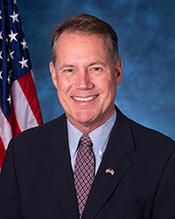
 Rep. Doug Ose (R-CA)
Legislative Activity
Stay on top of the latest movement without scrolling through every action
Became Public Law No: 108-465.
December 21, 2004
View full timeline
Introduced in House
October 2, 2003
Referred to the Committee on Agriculture, and in addition to the Committee on Ways and Means, for a period to be subsequently determined by the Speaker, in each case for consideration of such provisions as fall within the jurisdiction of the committee concerned.
October 2, 2003
Referred to the Subcommittee on Livestock and Horticulture.
October 15, 2003
Subcommittee on Livestock and Horticulture Discharged.
September 30, 2004
Committee Consideration and Mark-up Session Held.
September 30, 2004
Reported (Amended) by the Committee on Agriculture. H. Rept. 108-750, Part I.
October 6, 2004
House Committee on Ways and Means Granted an extension for further consideration ending not later than Oct. 6, 2004.
October 6, 2004
Placed on the Union Calendar, Calendar No. 467.
October 6, 2004
Mr. Ose moved to suspend the rules and pass the bill, as amended.
October 7, 2004 • 1:36 AM
Considered under suspension of the rules. (consideration: CR H8377-8382)
October 7, 2004 • 1:37 AM
DEBATE - The House proceeded with forty minutes of debate on H.R. 3242.
October 7, 2004 • 1:37 AM
Passed/agreed to in House: On motion to suspend the rules and pass the bill, as amended Agreed to by voice vote.(text: CR H8377-8379)
October 7, 2004 • 1:45 AM
On motion to suspend the rules and pass the bill, as amended Agreed to by voice vote. (text: CR H8377-8379)
October 7, 2004 • 1:45 AM
Motion to reconsider laid on the table Agreed to without objection.
October 7, 2004 • 1:45 AM
Received in the Senate, read twice.
October 7, 2004
Passed Senate without amendment by Unanimous Consent. (consideration: CR S11879)
December 7, 2004
Message on Senate action sent to the House.
December 7, 2004
Presented to President.
December 10, 2004
Signed by President.
December 21, 2004
Became Public Law No: 108-465.
December 21, 2004
Floor Debate
10 membersWhat members said about H.R. 3242 on the floor



 +5
+5
Floor Debate
10 membersWhat members said about H.R. 3242 on the floor
Mr. Speaker, I rise today in support of H.R. 3242, the Specialty Crop Competitiveness Act of 2004. The specialty crop sector is comprised of a diverse group of commodities produced across the Nation…
Mr. Speaker, I move to suspend the rules and pass the bill (H.R. 3242) to ensure an abundant and affordable supply of highly nutritious fruits, vegetables, and other specialty crops for American…
Mr. Speaker, I rise in support of H.R. 3242, the Specialty Crops Competitiveness Act of 2004, albeit with reservations about the scaled down version of the substitute bill that comes before us today.…
Mr. Speaker, I am pleased to become a cosponsor of the ``Specialty Crop Competitiveness Act of 2003,'' H.R. 3242, legislation designed to maintain a viable and competitive specialty crop industry in…
Mr. Speaker, I thank the gentleman for yielding me time. I want to thank the sponsors of this bill, the gentleman from California (Mr. Dooley) and the gentleman from California (Mr. Ose), for…
Show 7 more

Mr. Speaker, I rise today in support of H.R. 3242, the Specialty Crop Competitiveness Act of 2004, which is intended to improve Federal agricultural policy in order to ensure that American consumers…

Mr. Speaker, I yield myself such time as I may consume. As my colleagues know, there are over 250 specialty crops produced throughout the United States, from blueberries in Maine to pineapples in…
Mr. Speaker, I rise today to express my strong support for H.R. 3242, the Specialty Crops Competitiveness Act of 2004. I am a proud co-sponsor of this bipartisan bill, and I congratulate its author,…

Mr. Speaker, the Specialty Crop Competitiveness Act is a step in the right direction in promoting profitable agri-business in the United States that incorporates responsible land use and levels the…
Mr. Speaker, I ask unanimous consent that the gentleman from Texas (Mr. Rodriguez) be removed as a cosponsor from my bill, H.R. 3308. The gentleman from Texas had asked me to be a cosponsor of H.R.…

Mr. President, I ask unanimous consent that the Senate proceed to the immediate consideration of H.R. 3242, which is at the desk. I ask unanimous consent the bill be read a third time and passed and…
Mr. Speaker, I ask unanimous consent to have the name of the gentlewoman from Missouri (Mrs. Emerson) removed as a cosponsor of H.R. 3242.
Bill Text
6 versions available
        [Congressional Bills 108th Congress]
[From the U.S. Government Publishing Office]
[H.R. 3242 Enrolled Bill (ENR)]

H.R.3242

One Hundred Eighth Congress

of the

United States of America

AT THE SECOND SESSION

Begun and held at the City of Washington on Tuesday,
the twentieth day of January, two thousand and four

An Act

To ensure an abundant and affordable supply of highly nutritious fruits,
vegetables, and other specialty crops for American consumers and
international markets by enhancing the competitiveness of United States-
grown specialty crops, and for other purposes.

Be it enacted by the Senate and House of Representatives of the
United States of America in Congress assembled,

SECTION 1. SHORT TITLE.

This Act may be cited as the ``Specialty Crops Competitiveness Act
of 2004''.

SEC. 2. FINDINGS AND PURPOSE.

(a) Findings.--Congress finds the following:
(1) A secure domestic food supply is a national security
imperative for the United States.
(2) A competitive specialty crop industry in the United States
is necessary for the production of an abundant, affordable supply
of highly nutritious fruits, vegetables, and other specialty crops,
which are vital to the health and well-being of all Americans.
(3) Increased consumption of specialty crops will provide
tremendous health and economic benefits to both consumers and
specialty crop growers.
(4) Specialty crop growers believe that there are numerous
areas of Federal agriculture policy that could be improved to
promote increased consumption of specialty crops and increase the
competitiveness of producers in the efficient production of
affordable specialty crops in the United States.
(5) As the globalization of markets continues, it is becoming
increasingly difficult for United States producers to compete
against heavily subsidized foreign producers in both the domestic
and foreign markets.
(6) United States specialty crop producers also continue to
face serious tariff and non-tariff trade barriers in many export
markets.
(b) Purpose.--It is the purpose of this Act to make necessary
changes in Federal agriculture policy to accomplish the goals of
increasing fruit, vegetable, and nut consumption and improving the
competitiveness of United States specialty crop producers.

SEC. 3. DEFINITIONS.

In this Act:
(1) The term ``specialty crop'' means fruits and vegetables,
tree nuts, dried fruits, and nursery crops (including
floriculture).
(2) The term ``State'' means the several States, the District
of Columbia, and the Commonwealth of Puerto Rico.
(3) The term ``State department of agriculture'' means the
agency, commission, or department of a State government responsible
for agriculture within the State.

TITLE I--STATE ASSISTANCE FOR SPECIALTY CROPS

SEC. 101. SPECIALTY CROP BLOCK GRANTS.

(a) Availability and Purpose of Grants.--Subject to the
appropriation of funds to carry out this section, the Secretary of
Agriculture shall make grants to States for each of the fiscal years
2005 through 2009 to be used by State departments of agriculture solely
to enhance the competitiveness of specialty crops.
(b) Grants Based on Value of Production.--Subject to subsection
(c), the amount of the grant for a fiscal year to a State under this
section shall bear the same ratio to the total amount appropriated
pursuant to the authorization of appropriations in subsection (i) for
that fiscal year as the value of specialty crop production in the State
during the preceding calendar year bears to the value of specialty crop
production during the preceding calendar year in all States whose
application for a grant for that fiscal year is accepted by the
Secretary under subsection (f).
(c) Minimum Grant Amount.--Subject to the appropriation of
sufficient funds to carry out this subsection, each State shall receive
at least $100,000 each fiscal year as a grant under this section
notwithstanding the amount calculated under subsection (b) for the
State.
(d) Eligibility.--To be eligible to receive a grant under this
section, a State department of agriculture shall prepare and submit,
for approval by the Secretary of Agriculture, an application at such
time, in such a manner, and containing such information as the
Secretary shall require by regulation, including--
(1) a State plan that meets the requirements of subsection (e);
(2) an assurance that the State will comply with the
requirements of the plan; and
(3) an assurance that grant funds received under this section
shall supplement the expenditure of State funds in support of
specialty crops grown in that State, rather than replace State
funds.
(e) Plan Requirements.--The State plan shall identify the lead
agency charged with the responsibility of carrying out the plan and
indicate how the grant funds will be utilized to enhance the
competitiveness of specialty crops.
(f) Review of Application.--In reviewing the application of a State
submitted under subsection (d), the Secretary of Agriculture shall
ensure that the State plan would carry out the purpose of grant
program, as specified in subsection (a). The Secretary may accept or
reject applications for a grant under this section.
(g) Effect of Noncompliance.--If the Secretary of Agriculture,
after reasonable notice to a State, finds that there has been a failure
by the State to comply substantially with any provision or requirement
of the State plan, the Secretary may disqualify, for one or more years,
the State from receipt of future grants under this section.
(h) Audit Requirements.--For each year that a State receives a
grant under this section, the State shall conduct an audit of the
expenditures of grant funds by the State. Not later than 30 days after
the completion of the audit, the State shall submit a copy of the audit
to the Secretary of Agriculture.
(i) Authorization of Appropriations.--For each of the fiscal years
2005 through 2009, there is authorized to be appropriated to the
Secretary of Agriculture $44,500,000 to make grants under this section.

TITLE II--SPECIALTY CROP ADVANCEMENT

SEC. 201. TECHNICAL ASSISTANCE FOR SPECIALTY CROPS.

For each of the fiscal years 2005 through 2009, there is authorized
to be appropriated to the Secretary of Agriculture $2,000,000 to carry
out section 3205 of the Farm Security and Rural Investment Act of 2002
(7 U.S.C. 5680). Amounts appropriated pursuant to this authorization of
appropriations shall be in addition to any other funds made available
to carry out such section.

SEC. 202. REDUCTION IN BACKLOG OF AGRICULTURAL EXPORT PETITIONS.

(a) Reduction Efforts.--To the maximum extent practicable, the
Secretary of Agriculture shall endeavor to reduce the backlog in the
number of applications for permits for the export of United States
agricultural commodities. In achieving such reduction, the Secretary
shall not dilute or diminish existing personnel resources that are
currently managing sanitary and phytosanitary issues for--
(1) United States agricultural commodities for which
exportation is sought; and
(2) interdiction and control of pests and diseases, including
for the evaluation of pest and disease concerns of foreign
agricultural commodities for which importation is sought.
(b) Report.--The Secretary of Agriculture shall submit to the
Committee on Agriculture of the House of Representatives and the
Committee on Agriculture, Nutrition, and Forestry of the Senate an
annual report specifying, for the year covered by the report--
(1) the total number of applications processed to completion;
(2) the number of backlog applications processed to completion;
(3) the percentage of backlog applications processed to
completion; and
(4) the number of backlog applications remaining.

SEC. 203. REPORT ON SANITARY AND PHYTOSANITARY EXPORT ISSUES.

Not later than 180 days after the date of the enactment of this
Act, the Secretary of Agriculture shall submit to the Committee on
Agriculture of the House of Representatives and the Committee on
Agriculture, Nutrition, and Forestry of the Senate a report on
significant sanitary and phytosanitary issues that affect the export of
specialty crops.

TITLE III--SPECIALTY CROP RESEARCH

SEC. 301. METHYL BROMIDE ALTERNATIVES.

(a) Priority.--The Secretary of Agriculture shall elevate the
priority of current methyl bromide alternative research and extension
activities and reexamine the risks and benefits of extending the phase-
out deadline in effect on the date of the enactment of this Act,
including the estimated cost to the grower or processor associated with
any alternatives proposed.
(b) Authorization of Appropriations.--For each of the fiscal years
2005 through 2009, there is authorized to be appropriated to the
Secretary of Agriculture $5,000,000 to carry out this section.

SEC. 302. NATIONAL SPECIALTY CROP RESEARCH PROGRAM.

Section 1672(e) of the Food, Agriculture, Conservation, and Trade
Act of 1990 (7 U.S.C. 5925(e)) is amended by adding at the end of the
following new paragraph:
``(45) Specialty crop research.--Research and extension grants
may be made under this section for the purpose of improving the
efficiency, productivity, and profitability of specialty crop
production in the United States.''.

SEC. 303. SPECIALTY CROP COMMITTEE.

The National Agricultural Research, Extension, and Teaching Policy
Act of 1977 is amended by inserting after section 1408 (7 U.S.C. 3123)
the following new section:

``SEC. 1408A. SPECIALTY CROP COMMITTEE.

``(a) Establishment.--Not later than 90 days after the date of the
enactment of the Specialty Crops Competitiveness Act of 2004, the
executive committee of the Advisory Board shall establish, and appoint
the initial members of, a permanent specialty crops committee that will
be responsible for studying the scope and effectiveness of research,
extension, and economics programs affecting the specialty crop
industry.
``(b) Members.--Individuals who are not members of the Advisory
Board may be appointed as members of the specialty crops committee.
Members of the specialty crops committee shall serve at the discretion
of the executive committee.
``(c) Annual Committee Report.--Not later than 180 days after the
establishment of the specialty crops committee, and annually
thereafter, the specialty crops committee shall submit to the Advisory
Board a report containing the findings of its study under subsection
(a). The specialty crops committee shall include in each report
recommendations regarding the following:
``(1) Measures designed to improve the efficiency,
productivity, and profitability of specialty crop production in the
United States.
``(2) Measures designed to improve competitiveness in research,
extension, and economics programs affecting the specialty crop
industry.
``(3) Programs that would--
``(A) enhance the quality and shelf-life of fresh fruits
and vegetables, including their taste and appearance;
``(B) develop new crop protection tools and expand the
applicability and cost-effectiveness of integrated pest
management;
``(C) prevent the introduction of foreign invasive pests
and diseases;
``(D) develop new products and new uses of specialty crops;
``(E) develop new and improved marketing tools for
specialty crops;
``(F) enhance food safety regarding specialty crops;
``(G) improve mechanization of production practices; and
``(H) enhance irrigation techniques used in specialty crop
production.
``(d) Consideration by Secretary.--In preparing the annual budget
recommendations for the Department of Agriculture, the Secretary shall
take into consideration those findings and recommendations contained in
the most-recent report of the specialty crops committee that are
adopted by the Advisory Board.
``(e) Annual Report by Secretary.--In the budget material submitted
to Congress by the Secretary in connection with the budget submitted
pursuant to section 1105 of title 31, United States Code, for a fiscal
year, the Secretary shall include a report describing how the Secretary
addressed each recommendation of the specialty crops committee
described in subsection (d).''.

TITLE IV--PEST AND DISEASE RESPONSE FUND

SEC. 401. PEST AND DISEASE RESPONSE FUND.

(a) Establishment.--There is established on the books of the
Treasury an account to be known as the ``Pest and Disease Response
Fund''. There shall be deposited into the Fund any proceeds received by
the Secretary of Agriculture as reimbursement for services provided by
the Secretary using amounts in the Fund.
(b) Availability.--Amounts in the Fund shall remain available until
expended.
(c) Use of Fund.--In implementing the Animal Health Protection Act
(7 U.S.C. 8301 et seq.) and the Plant Protection Act (7 U.S.C. 7701 et
seq.), the Secretary of Agriculture shall have complete discretion
regarding the use of amounts in the Fund to support emergency
eradication and research activities in response to economic and health
threats posed by pests and diseases affecting agricultural commodities.
(d) Authorization of Appropriations.--For each of the fiscal years
2005 through 2009, there is authorized to be appropriated to the
Secretary of Agriculture $1,000,000 for deposit in the Fund.

SEC. 402. IMPORT AND EXPORT REGULATION REVIEW.

(a) Peer Review.--The Secretary of Agriculture shall enter into an
agreement with the National Plant Board to obtain a peer review of the
procedures and standards that govern the consideration of import and
export requests under section 412 of the Plant Protection Act (7 U.S.C.
7712). The peer review shall be consistent with the guidance by the
Office of Management and Budget pertaining to peer review and
information quality.
(b) Elements of Review.--The peer review required by subsection (a)
shall address, at a minimum--
(1) the preparation of risk assessments; and
(2) the sufficiency, type, and quality of data that should be
submitted to the Secretary of Agriculture.
(c) Submission of Results.--The results of the peer review
conducted under subsection (a) shall be submitted to the Secretary and
Congress not later than 180 days after the date of the enactment of
this Act.

SEC. 403. MAINTENANCE OF FREDERICKSBURG INSPECTION TRAINING CENTER.

For each of the fiscal years 2005 through 2009, there is authorized
to be appropriated to the Secretary of Agriculture $1,500,000 for the
maintenance of the Agricultural Marketing Service inspection training
center in Fredericksburg, Virginia.

Speaker of the House of Representatives.

Vice President of the United States and
President of the Senate.