H.R. 3245House108th Congress (2003-2005)In Committee
Commercial Space Act of 2003
Sponsored by 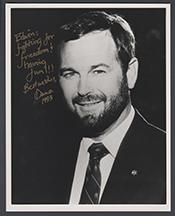 Rep. Dana Rohrabacher (R-CA)
Rep. Dana Rohrabacher (R-CA)Introduced October 2, 2003
Legislative Activity
Stay on top of the latest movement without scrolling through every action
HouseCommittee
Latest Action
Provisions of H.R.3245 were Incorporated into H.R.3752..
March 4, 2004
View full timeline
HouseIntro Referral
Introduced in House
October 2, 2003
HouseIntro Referral
Referred to the House Committee on Science.
October 2, 2003
HouseCommittee
Referred to the Subcommittee on Space and Aeronautics.
October 6, 2003
HouseCommittee
Subcommittee Consideration and Mark-up Session Held.
October 8, 2003
HouseCommittee
Forwarded by Subcommittee to Full Committee by Voice Vote.
October 8, 2003
HouseCommittee
Provisions of H.R.3245 were Incorporated into H.R.3752..
March 4, 2004
Bill Text
Latest available legislative text
Introduced in HouseIssued October 2, 2003
        [Congressional Bills 108th Congress]
[From the U.S. Government Publishing Office]
[H.R. 3245 Introduced in House (IH)]

108th CONGRESS
1st Session
H. R. 3245

To promote the development of the commercial space transportation
industry, to authorize appropriations for the Office of the Associate
Administrator for Commercial Space Transportation, to authorize
appropriations for the Office of Space Commerce, and for other
purposes.

_______________________________________________________________________

IN THE HOUSE OF REPRESENTATIVES

October 2, 2003

Mr. Rohrabacher (for himself, Mr. Gordon, and Mr. Hall) introduced the
following bill; which was referred to the Committee on Science

_______________________________________________________________________

A BILL

To promote the development of the commercial space transportation
industry, to authorize appropriations for the Office of the Associate
Administrator for Commercial Space Transportation, to authorize
appropriations for the Office of Space Commerce, and for other
purposes.

Be it enacted by the Senate and House of Representatives of the
United States of America in Congress assembled,

SECTION 1. SHORT TITLE.

This Act may be cited as the ``Commercial Space Act of 2003''.

SEC. 2. FINDINGS.

The Congress finds that--
(1) a prolonged and severe downturn in the market for
commercial space launches has resulted in--
(A) a significant reduction in the United States
global market share in orbital space launches;
(B) a severe decrease in the number of Government-
licensed orbital launches; and
(C) a commercial space transportation industry
dependent upon Government business opportunities;
(2) the continuous reduction of cost and improvement in
safety and reliability of commercial space transportation
capabilities is a necessary ingredient to achieving most United
States space goals;
(3) the opening of outer space to the American people and
their economic, scientific, and cultural enterprises is a
priority goal which should guide Federal space investments,
policy development, and regulatory action;
(4) despite a weak United States launch industry, recent
industrial and technical developments indicate that commercial
suborbital human spaceflight vehicles are under active
development in both the United States and other nations, and
greater private investment in these development efforts will
promote greater innovation and competitiveness for the United
States commercial space transportation industry as a whole;
(5) space transportation is not without risks;
(6) a critical area of responsibility for the Office of the
Associate Administrator for Commercial Space Transportation is
to ensure that the Federal regulation of this new commercial
suborbital human spaceflight industry should focus on
protecting the safety of the general, uninvolved public, while
allowing involved persons to assume risks which are inherent to
human spaceflight activities;
(7) enactment of a 3-year extension of the excess third
party claims payment provision of chapter 701 of title 49,
United States Code (Commercial Space Launch Activities) is
necessary to provide an appropriate period to evaluate
recommended changes to the Government's commercial space launch
indemnification regime;
(8) the Secretary of Transportation should establish
regulatory guidelines that foster an efficient and cost-
effective process for ensuring safe commercial space launch
operations at the Nation's launch ranges and bases; and
(9) the public interest is served by creating a clear legal
and regulatory regime for commercial space transportation,
including an unambiguous delineation of regulatory roles and
responsibilities.

SEC. 3. AMENDMENTS.

(a) Authorization of Appropriations for Office of Commercial Space
Transportation.--Section 70119 of title 49, United States Code, is
amended by striking paragraphs (1) and (2) and inserting the following:
``(1) $11,523,000 for fiscal year 2004; and
``(2) $11,000,000 for fiscal year 2005.''.
(b) Findings.--Section 70101(a) of title 49, United States Code, is
amended--
(1) in paragraph (3), by inserting ``human spaceflight,''
after ``research,''; and
(2) in paragraph (4), by striking ``satellite'' and
inserting ``space'', and by striking ``services now available
from'' and inserting ``capabilities of''.
(c) Definitions.--Section 70102 of title 49, United States Code, is
amended--
(1) by redesignating paragraphs (2) through (16) as
paragraphs (3), (4), (5), (6), (7), (8), (9), (10), (11), (12),
(13), (14), (16), (19), and (20), respectively;
(2) by inserting after paragraph (1) the following new
paragraph:
``(2) `crew' means an individual or individuals carried
within a launch or reentry vehicle who performs a function
necessary for the protection of public safety. '';
(3) in paragraph (9), as so redesignated by paragraph (1)
of this subsection--
(A) by inserting ``an individual or'' after
``means'';
(B) by inserting ``or return from'' after ``to
place in''; and
(C) by striking ``that object'' and inserting
``that individual or object'';
(4) by inserting after paragraph (14), as so redesignated
by paragraph (1) of this subsection, the following new
paragraph:
``(15) `spaceflight participant' means an individual who is
not crew carried within a launch or reentry vehicle during a
launch or reentry.'';
(5) by inserting after paragraph (16), as so redesignated
by paragraph (1) of this subsection, the following new
paragraphs:
``(17) `suborbital rocket' means a rocket-propelled vehicle
intended for flight on a suborbital trajectory whose thrust is
greater than its lift for the majority of the powered portion
of its flight.
``(18) `suborbital trajectory' means the intentional flight
path of a launch vehicle, reentry vehicle, or any portion
thereof, whose vacuum instantaneous impact point does not leave
the surface of the Earth.''; and
(6) in paragraph (19), as so redesignated by paragraph (1)
of this subsection--
(A) by striking ``or'' at the end of subparagraph
(C);
(B) by striking the period at the end of
subparagraph (D) and inserting ``; and''; and
(C) by adding at the end the following new
subparagraph:
``(E) crew or spaceflight participants.''.
(d) Commercial Human Spaceflight.--(1) Section 70104 of title 49,
United States Code, is amended--
(A) by redesignating subsection (c) as subsection (d); and
(B) by inserting after subsection (b) the following new
subsection:
``(c) Compliance With Spaceflight Participant Requirements.--The
holder of a license under this chapter may launch or reenter a
spaceflight participant only if--
``(1) the spaceflight participant has received training and
met medical or other standards specified in the license;
``(2) the spaceflight participant is informed of the safety
record of the launch or reentry vehicle type; and
``(3) the launch or reentry vehicle is marked in a manner
specified by the Secretary of Transportation which identifies
it as a launch or reentry vehicle rather than an aircraft.''.
(2) Section 70112(b)(1) of title 49, United States Code, is amended
by striking ``property damage or loss it sustains, or for personal
injury to, death of, or property damage or loss sustained by its own
employees'' and inserting ``personal injury, death, property damage, or
loss it sustains, and for personal injury to, death of, or property
damage or loss sustained by its own employees,''.

SEC. 4. REGULATORY FRAMEWORK.

The Secretary of Transportation shall take appropriate efforts,
including realignment of personnel and resources, to create a
streamlined, cost-effective, and enabling regulatory framework for the
United States commercial human spaceflight industry. The Secretary of
Transportation shall clearly distinguish the Department's regulation of
air commerce from its regulation of commercial human spaceflight, and
focus the Department's regulation of commercial human spaceflight
activities on protecting the safety of the general public, while
allowing spaceflight participants who have been trained and meet
license-specific standards to assume an informed level of risk. Not
later than 6 months after the date of enactment of this Act, the
Secretary of Transportation shall transmit to the Congress a report on
the progress made in implementing this section.

SEC. 5. COMMERCIAL SPACE TRANSPORTATION INDEMNIFICATION EXTENSION.

Section 70113(f) of title 49, United States Code, is amended by
striking ``December 31, 2004'' and inserting ``December 31, 2007''.

SEC. 6. LIABILITY REGIME FOR COMMERCIAL SPACE TRANSPORTATION.

(a) Applications.--Not later than 60 days after the date of the
enactment of this Act, the Secretary of Transportation shall enter into
an appropriate arrangement with the National Academy of Public
Administration to conduct a study on the liability risk-sharing regime
in the United States for commercial space transportation. The study
shall recommend modifications to the liability regime and
characterization of actions required to implement those modifications.
The study shall analyze the adequacy, propriety, and effectiveness of,
and the need for, the current liability risk-sharing regime. The study
shall specifically consider--
(1) other countries' regimes;
(2) the use of the designation of ``ultra hazardous'' for
space transportation activities;
(3) relevant international treaties;
(4) impacts of reusable launch vehicles and spaceports; and
(5) the feasibility of airline-like liability regimes.
The study shall use a clearly described, analytical methodology to
specify the factors used in evaluating the current regime and
alternative approaches to the current regime. Estimates of impacts
shall be quantified where possible.
(b) Completion Date.--The results of the study described in
subsection (a) shall be transmitted to the Congress not later than 18
months after the date of the enactment of this Act.

SEC. 7. OFFICE OF SPACE COMMERCE.

(a) Redesignation.--The Office of Space Commercialization
established under section 8 of the Technology Administration Act of
1998 (15 U.S.C. 1511e) is redesignated as the Office of Space Commerce.
(b) Authorization of Appropriations.--There are authorized to be
appropriated to the Secretary of Commerce for the Office of Space
Commerce--
(1) $1,800,000 for fiscal year 2004; and
(2) $2,000,000 for fiscal year 2005.

SEC. 8. DELEGATION OF LICENSING AUTHORITY.

(a) Delegation.--The Secretary of Commerce shall delegate the
authority provided to the Secretary under title II of the Land Remote
Sensing Policy Act of 1992 (15 U.S.C. 5621 et seq.) to the Director of
the Office of Space Commerce.
(b) Amendment.--Section 8(c) of the Technology Administration Act
of 1998 (15 U.S.C. 1511e(c)) is amended--
(1) by striking ``and'' at the end of paragraph (6);
(2) by striking the period at the end of paragraph (7) and
inserting a semicolon; and
(3) by adding at the end the following:
``(8) licensing private sector parties to operate private
remote sensing space systems; and
``(9) serving as the Executive Secretary for the
Interagency Global Positioning System Executive Board.''.
<all>