H.R. 3386House108th Congress (2003-2005)In Committee
New Partnership for Haiti Act of 2003
Sponsored by 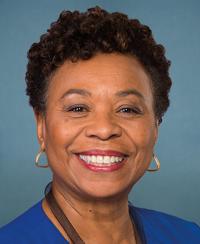 Rep. Barbara Lee (D-CA)
Rep. Barbara Lee (D-CA)Introduced October 29, 2003
Legislative Activity
Stay on top of the latest movement without scrolling through every action
HouseIntro Referral
Latest Action
Sponsor introductory remarks on measure. (CR E2173-2174)
October 30, 2003
View full timeline
HouseIntro Referral
Introduced in House
October 29, 2003
HouseIntro Referral
Referred to the House Committee on International Relations.
October 29, 2003
HouseIntro Referral
Sponsor introductory remarks on measure. (CR E2173-2174)
October 30, 2003
Floor Debate
1 memberWhat members said about H.R. 3386 on the floor
Floor Debate
1 memberWhat members said about H.R. 3386 on the floor
1 Democrat
Rep. Barbara LeeD-CA-9 · Oct 30, 2003
Mr. Speaker, today I am introducing H.R. 3386, The New Partnership for Haiti Act of 2003, which will help Haitians overcome the many social, economic, and physical challenges currently facing the…
Bill Text
Latest available legislative text
Introduced in HouseIssued October 29, 2003
        [Congressional Bills 108th Congress]
[From the U.S. Government Publishing Office]
[H.R. 3386 Introduced in House (IH)]

108th CONGRESS
1st Session
H. R. 3386

To provide assistance to combat infectious diseases in Haiti and to
establish a comprehensive health infrastructure in Haiti, and for other
purposes.

_______________________________________________________________________

IN THE HOUSE OF REPRESENTATIVES

October 29, 2003

Ms. Lee (for herself, Mrs. Christensen, Mr. Wynn, Mr. Payne, Mr.
Thompson of Mississippi, Ms. Jackson-Lee of Texas, Mr. Cummings, Ms.
Millender-McDonald, Mr. Wexler, Mr. Conyers, Mr. Owens, and Ms. Corrine
Brown of Florida) introduced the following bill; which was referred to
the Committee on International Relations

_______________________________________________________________________

A BILL

To provide assistance to combat infectious diseases in Haiti and to
establish a comprehensive health infrastructure in Haiti, and for other
purposes.

Be it enacted by the Senate and House of Representatives of the
United States of America in Congress assembled,

SECTION 1. SHORT TITLE; TABLE OF CONTENTS.

(a) Short Title.--This Act may be cited as the ``New Partnership
for Haiti Act of 2003''.
(b) Table of Contents.--The table of contents of this Act is as
follows:

Sec. 1. Short title; table of contents.
TITLE I--GENERAL PROVISIONS

Sec. 101. Findings.
Sec. 102. Purpose.
Sec. 103. Definitions.
Sec. 104. Development of a comprehensive strategy.
TITLE II--UNITED STATES ASSISTANCE FOR HAITI

Sec. 201. Assistance for health sector development.
Sec. 202. Assistance for health infrastructure development.
Sec. 203. Assistance for water and sanitation infrastructure
development.
Sec. 204. Professional exchange for areas in Haiti severely affected by
dilapidated physical health
infrastructures.

TITLE I--GENERAL PROVISIONS

SEC. 101. FINDINGS.

Congress finds the following:
(1) Haiti is the most impoverished nation in the Western
Hemisphere.
(2) The United Nations Joint Programme on HIV/AIDS states
that Haiti accounts for 90 percent of the HIV/AIDS infections
and case rates in the Caribbean.
(3) HIV infections and AIDS have approached epidemic
proportions in Haiti. More than 300,000 infected people have
been identified and deaths from HIV/AIDS have left
approximately 200,000 children orphaned, while more than 12,000
children in Haiti are living with HIV/AIDS.
(4) The infant and maternal mortality rate in Haiti
continues to rise and only 1 in every 10,000 Haitians has
access to a physician.
(5) The Global Fund to Fight AIDS, Tuberculosis and Malaria
has approved the control mechanisms of the Government of Haiti,
which include measures to address transparency and for
disbursement of grants from the Global Fund.
(6) The President has included Haiti in the list of 15
countries that qualify for United States assistance to combat
HIV/AIDS under the United States Leadership Against HIV/AIDS,
Tuberculosis, and Malaria Act of 2003.
(7) The people of Haiti have a constitutional and
fundamental human right to health and government has the
obligation to fulfill these rights to the level of resources
available.
(8) The legal minimum daily wage in Haiti is approximately
$.96 but many Haitians work in the informal economy or in
subsistence agriculture for $.40 or less a day.
(9) 76 percent of Haiti's children under the age of five
are underweight or suffer from wasting or stunting.
(10) Only 46 percent of the population has access to safe
water and only 28 percent of the population to sanitation
services.
(11) 63 percent of Haitians are undernourished. As stated
by the United Nations Special Rapporteur on the Right to Food:
``Despite the fact that global wealth and resources [are]
sufficient to provide food for everyone, some 100,000 people
[die] every day of hunger or hunger-related diseases
[throughout the world].''.
(12) The infant mortality rate in Haiti is approximately 76
deaths for each 1,000 live female births and 81 deaths for each
1,000 live male births.
(13) Life expectancy at birth in Haiti is approximately 51
years.
(14) Approximately 80 percent of Haiti's population lives
in abject poverty.
(15) Unemployment and underemployment is widespread in
Haiti as evidenced by the fact that more than two-thirds of the
labor force are without formal jobs.
(16)(A) The Office of Technical Assistance within the
Bureau of International Affairs of the Department of the
Treasury has provided advisers to governments in Central and
Eastern Europe and the independent states of the former Soviet
Union to assist in the transition from command to market
economies.
(B) In the typical mission, a Treasury Department
``resident advisor'' provides assistance to a senior finance
ministry or central bank counterpart in one of several areas:
tax policy and administration, government debt issuance and
management, financial institutions policy and regulation,
budget policy and management, and the prevention, detection,
and prosecution of financial crimes. These resident advisers
are supported by short-term experts and technicians.
(17) More recently, the Department of the Treasury has
addressed challenges in other parts of the world by assisting
the South African Department of Finance in restructuring its
budget office and process, working in the Haitian Finance
Ministry to improve apportionment and budget execution, and
helping to resolve the banking crisis in Indonesia.

SEC. 102. PURPOSE.

The purpose of this Act is to strengthen United States leadership
and the effectiveness of the United States response to infectious
diseases in Haiti and Haiti's struggling health sector while assisting
with the rebuilding of physical infrastructure by--
(1) establishing a comprehensive, integrated strategy to
develop Haiti's health infrastructure, combat HIV/AIDS and
other infectious diseases, and improve coordination among
relevant Federal departments and agencies and between the
United States and the Government of Haiti, nongovernmental
organizations, and other international organizations;
(2) providing increased resources for United States
efforts, particularly for technical assistance and training, to
combat HIV/AIDS, tuberculosis, and malaria in Haiti;
(3) encouraging the expansion of the international
community to reengage with the Government of Haiti and expand
private sector efforts and public-private sector partnerships
to establish a functional health sector in Haiti;
(4) assisting and securing a system of basic water,
sanitation, and other physical infrastructure; and
(5) encouraging a continued exchange of knowledge and
professionalism between the Government of Haiti and the United
States Department of the Treasury through the Department's
Office of Technical Assistance within the Bureau of
International Affairs, including by providing Department of the
Treasury advisers to work to explain such concepts as budgeting
and the decision making process, tax policy as a means of
financing the annual government budget, treasury bill markets
to replace central bank monetization of deficits, and the
banking as a system of intermediation rather than financial
accounting.

SEC. 103. DEFINITIONS.

In this Act:
(1) AIDS.--The term ``AIDS'' means the acquired immune
deficiency syndrome.
(2) Appropriate congressional committees.--The term
``appropriate congressional committees'' means the Committee on
International Relations of the House of Representatives and the
Committee on Foreign Relations of the Senate.
(3) HIV.--The term ``HIV'' means the human immunodeficiency
virus, the pathogen that causes AIDS.
(4) HIV/AIDS.--The term ``HIV/AIDS'' means, with respect to
an individual, an individual who is infected with HIV or living
with AIDS.

SEC. 104. DEVELOPMENT OF A COMPREHENSIVE STRATEGY.

The President shall seek to work with the Government of Haiti, the
international financial community, civil society, and other
international organizations to establish a comprehensive and integrated
strategy to combat infectious diseases in Haiti and to establish a
comprehensive health infrastructure in Haiti.

TITLE II--UNITED STATES ASSISTANCE FOR HAITI

SEC. 201. ASSISTANCE FOR HEALTH SECTOR DEVELOPMENT.

(a) Statement of Policy.--It is the policy of the United States--
(1) to assist in empowering the people of Haiti,
particularly, women, young people and children, socially,
economically, and intellectually to seek health as a human
right and to prevent the transmission and contraction of HIV/
AIDS, tuberculosis, malaria, and other infectious and endemic
diseases; and
(2) to ensure that affordable effective health
technologies, preventatives, and curatives are widely available
to the people of Haiti.
(b) Assistance.--
(1) In general.--The President, acting through the
Administrator of the United States Agency for International
Development, the Director of the Centers for Disease Control
and Prevention, and the heads of other appropriate Federal
departments and agencies, is authorized to provide assistance,
on such terms and conditions as the President may determine, to
facilitate the development of the health sector of Haiti.
(2) Activities supported.--Assistance provided under
paragraph (1) shall, to the maximum extent practicable, be used
to carry out the following activities:
(A) Develop and expand the health sector in Haiti
by expanding the current health infrastructure,
targeting resources toward sanitation and water
improvements, and developing best practices to fight
serious health conditions in the country, including
HIV/AIDS, tuberculosis, and malaria.
(B) Education, prevention, care, treatment,
support, capacity development, and other activities
relating to the prevention, treatment, and control of
infectious diseases.
(c) Authorization of Appropriations.--
(1) In general.--There are authorized to be appropriated to
carry out this section such sums as may be necessary for each
of the fiscal years 2004 and 2005.
(2) Availability.--Amounts appropriated pursuant to the
authorization of appropriations under paragraph (1) are
authorized to remain available until expended.

SEC. 202. ASSISTANCE FOR HEALTH INFRASTRUCTURE DEVELOPMENT.

(a) Assistance.--
(1) In general.--The President, acting through the
Secretary of State and the United States Army Corps of
Engineers, is authorized to provide assistance, on such terms
and conditions as the President may determine, to facilitate
the development of the basic sanitation and transportation
infrastructure of Haiti.
(2) Activities supported.--Assistance provided under
paragraph (1) shall, to the maximum extent practicable, be used
to carry out the following activities:
(A) Expand and further develop transportation and
infrastructure projects in Haiti, including paving of
roads and the availability of a health care vehicle or
establishment of an emergency transportation plan in
townships or villages located more than 30 to 40 miles
away from a health clinic.
(B) Commission an environmental impact study
focused on the cost of development and paving of
primary ``dirt roads'' located up to 30-40 miles away
from major health clinics and provide the basic
resources for the development and paving of such roads.
(b) Report.--The President shall prepare and transmit to the
appropriate congressional committees a report that contains the results
of the environmental impact study carried out pursuant to subsection
(a)(2)(B), including a cost analysis of carrying out the activities
described in such subsection.
(c) Authorization of Appropriations.--
(1) In general.--There are authorized to be appropriated to
carry out this section such sums as may be necessary for each
of the fiscal years 2004 and 2005.
(2) Availability.--Amounts appropriated pursuant to the
authorization of appropriations under paragraph (1) are
authorized to remain available until expended.

SEC. 203. ASSISTANCE FOR WATER AND SANITATION INFRASTRUCTURE
DEVELOPMENT.

(a) Assistance.--
(1) In general.--The President, acting through the
Secretary of State and the United States Army Corps of
Engineers, is authorized to provide assistance, on such terms
and conditions as the President may determine, to facilitate
the development of the water and sanitation infrastructure of
Haiti.
(2) Activities supported.--Assistance provided under
paragraph (1) shall, to the maximum extent practicable, be used
to carry out the following activities:
(A) Expand and further develop water and sanitation
infrastructure projects in Haiti, including assistance
for development of sanitation and trash removal
services in urban and rural areas of Haiti, development
of sewage systems in areas with populations of at least
100,000 people, assistance and educational resources to
improve water quality and delivery, and implementation
of community water reserves to be maintained by public-
private partnerships.
(B) Commission an environmental impact study
focused on the effects of the deteriorating water and
sanitation conditions in Haiti and provide the
necessary resources for the improvement of such
conditions.
(b) Report.--The President shall prepare and transmit to the
appropriate congressional committees a report that contains the results
of the environmental impact study carried out pursuant to subsection
(a)(2)(B), including a cost analysis of carrying out the activities
described in such subsection and subparagraphs (C) and (D) of
subsection (a)(2).
(c) Authorization of Appropriations.--
(1) In general.--There are authorized to be appropriated to
carry out this section such sums as may be necessary for each
of the fiscal years 2004 and 2005.
(2) Availability.--Amounts appropriated pursuant to the
authorization of appropriations under paragraph (1) are
authorized to remain available until expended.

SEC. 204. PROFESSIONAL EXCHANGE FOR AREAS IN HAITI SEVERELY AFFECTED BY
DILAPIDATED PHYSICAL HEALTH INFRASTRUCTURES.

(a) In General.--The President shall establish a program to
demonstrate the feasibility of facilitating the service of United
States health care professionals and engineers in Haiti and its
localities severely affected by dilapidated physical and health
infrastructure, including but not limited to development of health
clinics and health care, roads and sanitation development, and
reconstruction of public facilities such as schools, hospitals, and
clinics.
(b) Requirements.--Participants in the program shall provide basic
services through training and participation, enter into partnerships
with nongovernmental organizations and the United States Army Corp of
Engineers, facilitate on-the-job training for residents of the area,
and serve for a period of up to 3 years.
(c) Eligibility Requirements.--Candidates shall be residents of the
Unites States who are trained professional in their respective field
who meets licensure requirements necessary to be such a professional,
including but not limited to physicians, nurses, nurse practictioners,
pharmacists, and other types of health care professionals, engineers,
architects, and any other individual determined to be appropriate by
the President.
(d) Recruitment.--The President shall ensure that information on
the program is widely distributed, including the distribution of
information to schools and universities where professionals attain
certification, hospitals, clinics, nongovernmental organizations
working in the areas of international health and development, and any
other location the President deems fit.
(e) Coordination.--Placement of participants in the program shall
be coordinated with the United States Agency for International
Development in countries in which the Agency is conducting such
programs. Overall placement of participants in the program shall be
made by the President or his designee.
(f) Incentives.--The President may offer such incentives as the
President determines to be necessary to encourage individuals to
participate in the program, such as partial payment of principal,
interest, and related expenses on government and commercials loans for
educational expenses relating to professional training in their
respective fields, and where possible, deferment of repayments on such
loans, the provision of retirement benefits that would otherwise
jeopardize participation in the program, and other incentives.
(g) Report.--Not later than 18 months after the date of enactment
of the Act, the President shall transmit to the appropriate
congressional committees a report on steps taken to establish the
program, including--
(1) the process of recruitment, including the venues for
recruitment, the number of candidates recruited, the incentives
offered, if any, and the cost of those incentives;
(2) the process, including the criteria used, for the
selection of participants;
(3) the number of participants placed, the locality in
which they were placed, and why those professionals were
selected for that particular region of Haiti; and
(4) the potential for expansion of the program.
(h) Authorization of Appropriations.--
(1) In general.--There are authorized to be appropriated to
carry out this section such sums as may be necessary for each
of the fiscal years 2004 and 2005.
(2) Availability.--Amounts appropriated pursuant to the
authorization of appropriations under paragraph (1) are
authorized to remain available until expended.
<all>