To prohibit the anticipated extreme reduction in the national marketing quotas for the 2004 crop of Flue-cured and Burley tobacco, which, if permitted to occur, would mean economic ruin for tobacco farmers and their families.
Legislative Activity
Stay on top of the latest movement without scrolling through every action
Referred to the House Committee on Agriculture.
November 17, 2003
View full timeline
Introduced in House
November 17, 2003
Referred to the House Committee on Agriculture.
November 17, 2003
Floor Debate
10 membersWhat members said about H.R. 3500 on the floor
 DD
DD MF
MF JPM
JPM JL
JL RM+5
RM+5
Floor Debate
10 membersWhat members said about H.R. 3500 on the floor
Mr. Speaker, by direction of the Committee on Rules, I call up House Resolution 593 and ask for its immediate consideration. Mr. Speaker, for the purpose of debate only, I yield the customary 30…
Mr. Speaker, by direction of the Committee on Rules, I call up House Resolution 593 and ask for its immediate consideration.
Mr. Speaker, for the purpose of debate only, I yield the customary 30 minutes to the gentleman from Texas (Mr. Frost), pending which I yield myself such time as I may consume. During consideration of this resolution, all time yielded is for the purpose of debate only.
Mr. Speaker, I rise today in strong support of both the rule we are considering now as well as the underlying legislation. Before I get into the legislation itself, I would like to briefly speak about the rule. Mr. Speaker, this is a very fair and balanced rule. The Committee on Rules received a total of 59 amendments for our consideration, and this rule makes in order 23 of those 59 amendments that were submitted to us. It includes 14 amendments offered by Republicans, eight amendments offered by Democrats, and one bipartisan amendment. The rule also makes in order a very bipartisan manager's amendment, which addresses a significant number of concerns that have been raised by many Members.
The rule also includes an important provision from the Committee on Ways and Means to ensure fiscal solvency of the Highway Trust Fund, as well as a provision relating to the mass transit guarantee.
Mr. Speaker, this provision is necessary to ensure that current flexibilities and authorities of Congress to set appropriate annual spending levels for basic salaries and administrative expenses for the Federal Transit Administration are maintained.
Under current law, the Committee on Appropriations can adjust spending in this account so long as those savings are rolled into other mass transit programs and the full transit guarantees are preserved. The underlying bill, as reported by the Committee on Transportation and Infrastructure, restricted the ability of the Committee on Appropriations to adjust spending on an account-by-account basis. The amendment to the bill included in this rule simply provides guidance in interpreting existing rules of the House to ensure that the status quo is maintained. This is not intended to provide any new authority whatsoever.
Mr. Speaker, I want to note that I will continue to work with the committees to perfect language to ensure that the provisions achieve the intended purpose. Legislating House rules in this manner is not my preferred way to proceed.
Regrettably, however, when TEA 21 was enacted, changes to the House rules were legislated within the authorizing statute and were not implemented through the regular order of the House.
Instead, they were and are continuing to be legislated by a committee that does not have any jurisdiction over this matter.
I want to make it very clear, Mr. Speaker, that the Committee on Rules has and will retain its jurisdiction over the rules of the House. As part of our review of budget enforcement procedures, this and other budgetary enforcement mechanisms will be further scrutinized. It is my hope that the affected committees will continue to work with the Committee on Rules to ensure that all changes to the rules of the House are thoughtful and reasoned. But, Mr. Speaker, despite my reservations over some portions of the legislation, I want to reiterate my strong support for the underlying legislation.
Mr. Speaker, the Transportation Equity Act: A Legacy For Users, reauthorizes our Nation's surface transportation programs for the next 6 years. The very core of this bill is safety and congestion relief.
Investing in transportation infrastructure has fundamental impacts on our quality of life, our Nation's economic growth and, as was just said by the distinguished chairman of the Committee on Transportation and Infrastructure, our competitiveness in the world. Our highways, transit systems, pipelines, airports, harbors and waterways serve as the backbone of our economy by moving people and goods, employing millions of workers, and generating a significant share of total economic output.
Transportation-related goods and services generate 10 percent of our total gross domestic product. In making our infrastructure backbone stronger, TEA LU provides safety improvements that will save lives. Many of the more than 42,000 highway fatalities each year can be prevented by building better roads and improving the safety features of existing roads. Commercial motor vehicles are involved in 12 percent of all crashes resulting in a fatality. Carriers transporting extremely hazardous materials must ensure that sufficient safety and security measures are in place to accomplish that transportation without loss of life, injury or property damage.
Improvements in safety include the movement of freight from ship to shore, which must be conducted in a safe, efficient, secure manner in order to improve air quality and decrease congestion.
Congestion relief is imperative. American families do not need books of statistics to know that traffic congestion has increased. We all know that rush hour starts earlier in the day and ends later at night, creating more travel time than ever before. Congestion also negatively impacts our environment by increasing emissions and wasting fuel. Vehicles in stop-and-go traffic not only emit more pollutants than they do when operating without frequent breaking and acceleration, but obviously they decrease fuel efficiency as well.
In my home State of California, improving safety while reducing congestion has never been more critical. As California is considered the Gateway to the Pacific Rim, 40 percent of the Nation's goods are imported through the ports of Los Angeles and Long Beach. The infrastructure supporting the movement of goods from ship to shore through Los Angeles and Long Beach will distribute an estimated $314 billion worth of trade by the year 2020.
Facilitating growth in trade is directly connected to the overall economic vitality of the entire Nation. Ninety-five percent of U.S. international cargo by volume is transported by ocean. According to the United States Trade Representative's Office, nearly 20 percent of all U.S. jobs are directly associated with international trade.
In the Southern California region alone, improvements to our infrastructure will reduce a projected 300 percent increase by 2020 in auto-truck traffic delays in points where freight moving on railroads impedes vehicle and pedestrian traffic. This is just one example of how TEA LU strengthens our transportation infrastructure into the next decade.
During this debate, you will hear the challenges we must still address in improving our surface transportation programs. Nobody can deny that the need is great and our resources are limited.
In addition, I look forward toward working that States receive their fair share. However, our critical task here is to ensure the safety of American families and to move people and goods throughout this country faster and more efficiently. This bill accomplishes that goal.
I would like to congratulate the gentleman from Alaska (Chairman
Young), the gentleman from Wisconsin (Chairman Petri), the gentleman from Minnesota (Mr. Oberstar) and the gentleman from Pennsylvania (Mr. Lipinski) on their leadership in crafting this important legislation.
To that end, Mr. Speaker, I urge my colleagues to support this rule and the underlying bill.
Mr. Speaker, I reserve the balance of my time.
Mr. Speaker, I am very happy to yield 3 minutes to the gentleman from Atlanta, Georgia (Mr. Linder), the distinguished chairman of the Committee on Rules' Subcommittee on Technology.
Mr. Speaker, I yield 1 minute to my friend, the gentleman from Massachusetts (Mr. McGovern); and when he has completed his statement, if he would yield to me for 1 comment, I would appreciate it
Mr. Speaker, will the gentleman yield?
Mr. Speaker, I did not want to interrupt my colleague when he was going through his prepared statement, but I did want to clarify one issue that the gentleman raised.
He said in his opening that this was an unusually restrictive rule, and I would just like to state for the Record that when the ISTEA legislation was considered, there were a total of 12 amendments made in order. That was in the 102nd Congress when the Democrats were in charge. When TEA 21 was considered, there were a total of six amendments made in order, Mr. Speaker; and then in this legislation we have provided for consideration of a total of 23 amendments.
So that is why I asked the gentleman to yield.
Mr. Speaker, all I was saying is that if you go and look at the pattern of consideration of transportation measures, when the gentleman's party was in control, half the number of amendments were made in order.
Mr. Speaker, I continue to reserve the balance of my time.
Mr. Speaker, I yield myself the balance of my time.
Mr. Speaker, I rise in strong support of this rule. We have looked into the history of rules that allow for consideration of transportation legislation. And going back to the 102nd Congress we found that 12 amendments were made in order. That was consideration of the ISTEA legislation. The TEA 21 legislation had six amendments made in order. And this measure will allow for 23 amendments. And I believe it will give an opportunity for full consideration. Actually, it is probably 23 more amendments than the distinguished chairman of the committee, the gentleman from Alaska (Mr. Young), would have preferred because he is so proud of his work product; but we are going to allow Members the opportunity to have the chance to work their will on this very important measure.
If I had my way, the Federal Government would not be involved in these kinds of transportation decisions. In fact, I think that the notion of being able to completely turn back to the States the revenues that come into the trust fund and allowing States to make these decisions would be in many ways the wisest thing. But I have to face reality. And reality is that the Federal Government is involved in the issue of transportation. I believe for that reason we need to do it in the most responsible way.
This measure authorizes in excess of a quarter of a trillion dollars. A quarter of a trillion dollars. And I believe that as we look at the very important pressing needs out there, this is a level of funding that can allow us to make sure that we do improve our infrastructure.
We know that our infrastructure includes more than highways; it includes a wide range of other areas which have to do with transportation. And when we think about the ability of the United States of America to compete in this global economy, it is important for goods and services to be able to move around this country. It is important for U.S. manufacturers, for workers in this country to be able to get their goods to our Nation's ports so that they can, in fact, move into these new markets which this administration, and many of the rest of us, is working to pry open through new bilateral as well as multilateral trade agreements so that we can get into those markets.
And that is why I believe this is a very, very important measure for all of us. For our security, which is an important aspect of this measure, it is important that we improve our infrastructure here.
Let me say that when I think about that issue, I do have, as a Californian, a particular concern. My State is, in fact, the gateway to the Pacific Rim, Asia, Latin America. And a tremendous percentage of the goods that come to and from this country come through the ports of Long Beach and Los Angeles, as I said in my opening remarks.
And we have a very important issue that needs to be addressed in Southern California, the extension of the Alameda Corridor East, which is an issue that the gentleman from Minnesota (Mr. Oberstar) chose to address when he was testifying before the Committee on Rules as an important one.
With these two ports, Los Angeles and Long Beach, it is important now that we have the Alameda Corridor project that takes goods to downtown Los Angeles and brings goods into that Los Angeles area to get to the ports for export. We have to realize that there are areas to the east of Los Angeles that are impacted tremendously because of this new trade.
We have to realize that this also deals very closely with the issue of safety and making sure that in the area that I represent in the Inland Empire, east of downtown Los Angeles, that our emergency vehicles, ambulances, fire, police, that they are able to move as easily as possible throughout the area.
The Alameda Corridor East project is something that will be very, very greatly benefited by this legislation. And I think it is important that we proceed with that.
There are a wide range of other very important projects which will, as has been pointed out by many Members, create jobs to see this already strong and growing economy grow even stronger.
So I hope that my colleagues will join in a bipartisan way to agreeing to the previous question, making sure that we move ahead with this legislation and pass this measure with a strong bipartisan vote.
Mr. Speaker, I yield back the balance of my time, and move the previous question on the resolution.
Mr. Speaker, I yield myself such time as I may consume. (Mr. FROST asked and was given permission to revise and extend his remarks.) Mr. Speaker, throughout my 25 years of service in this House, I…
Mr. Speaker, I yield myself such time as I may consume.
(Mr. FROST asked and was given permission to revise and extend his remarks.)
Mr. Speaker, throughout my 25 years of service in this House, I have always worked hard to ensure a bright economic future and a good quality of life for the people I represent. That is why I have consistently made transportation priorities of North Texas my own priorities here in Congress. I have always supported the Federal highway and transit bills that have come before the House, because I knew they would directly benefit the people of my area.
In 1998, for example, I voted in favor of TEA 21, the last transportation reauthorization bill passed by Congress. That bill widened a major thoroughfare in North Texas, Interstate 30, from six to eight and ten lanes, easing congestion in Dallas-Fort Worth and the surrounding areas.
TEA 21 also included important funding to expand DART, the Dallas Area Rapid Transit System. As one of DART's original supporters, I knew that by reducing motor vehicle traffic on our already-overcrowded roads, the system would significantly reduce air pollution and ease the commute of thousands of Dallas residents. An important byproduct of both these projects were the many, many good jobs created for our community.
So for me it has always been an easy decision to vote for the transportation bills in this House, and that is why today I am proud to rise in strong support of this year's transportation authorization bill, TEA LU.
TEA LU will be one of the most important bills we pass in Congress this year, and the reason is simple: Transportation projects stimulate economic activity in our home communities. Quite simply, this bill is good for our Nation's economy. In fact, the Federal Highway Administration reports that for every $1 billion in Federal funds invested in highway infrastructure, it creates 47,500 new jobs and $6.2 billion in economic activity.
So whenever Congress passes its transportation reauthorization bill, we do not simply reduce congestion and air pollution, we create jobs, good jobs that cannot be shipped overseas, and we create huge opportunities for our constituents by bringing the government, the private sector and the general public together to help grow the economy so that those good jobs stay here at home in our own communities.
There is no doubt that for far too many Americans, the U.S. economy is in bad shape. Over 8 million people are currently unemployed, the average length of unemployment has risen to 20.3 weeks, the longest duration since 1984, and no new private sector jobs were created last month. So, as you can see, Mr. Speaker, it is especially critical that we pass the transportation bill today.
The bill before us today continues to provide benefits for North Texas. It is my understanding that the bill contains $35 million in funding that I requested from the committee to replace Interstate 30 and Interstate 35 Trinity River bridges in Dallas and for the improvements to I-635 in Dallas. The bill also authorizes four new rail lines to expand DART in Dallas, including construction of a Northwest/ Southeast extension that will add 60,000 daily riders to the rail system.
So, by passing TEA LU, we will not only be reducing air pollution and easing congestion throughout the metropolitan area, we will be creating new jobs and a brighter economic future for North Texas.
Mr. Speaker, highway and transportation funding must never be subject to partisan politics. There is too much at stake for the American people, and there is too much at stake for the economy. I know that my colleagues all want the same thing for their constituents as I want for mine: clean air, better roads and good jobs. The bill before us today can set us on that path. I hope that today Members will set aside politics as usual and vote to pass TEA LU for the good of our communities and our entire Nation.
Mr. Speaker, I urge a yea vote on the rule and on the bill.
Mr. Speaker, I reserve the balance of my time.
Mr. Speaker, I yield 4 minutes to the gentleman from Massachusetts (Mr. McGovern).
Mr. Speaker, I yield 1 minute to the gentleman from Massachusetts (Mr. McGovern).
Mr. Speaker, I yield 3 minutes to the gentleman from Tennessee (Mr. Davis).
Mr. Speaker, I yield 2 minutes to the gentleman from Oregon (Mr. Blumenauer).
Mr. Speaker, I yield 3 minutes to the gentleman from New Jersey (Mr. Menendez).
(Mr. MENENDEZ asked and was given permission to revise and extend his remarks.)
Mr. Speaker, I yield 2 minutes to the gentleman from Texas (Mr. Turner).
Mr. Speaker, I yield 2 minutes to the gentleman from West Virginia (Mr. Rahall).
Mr. Speaker, I yield myself such time as I may consume.
Mr. Speaker, I think it is clear that the bill before us today will ease congestion, reduce pollution, and create good jobs across America. Most Members of this House, myself included, will vote to pass TEA LU. But I think we are missing out on a unique opportunity to further strengthen our economy.
Last night the Committee on Rules and this morning considered the Davis-Menendez-Blumenauer-Baird amendment to strengthen investment in our Nation's highway and transit infrastructure by increasing funding in the bill to the Senate-passed level of $318 billion. However, in a move that denies the House the opportunity to fully debate the transportation needs of this country, as is usually the case when Democrats offer thoughtful alternatives in the Committee on Rules, the Republican majority defeated the amendment on a straight party-line vote.
So today I hope to offer Members another chance to vote on this important proposal. If the previous question is defeated, I will offer an amendment to the rule that will give the House the opportunity to debate and vote on the Davis substitute.
Mr. Speaker, although I hope to see more legislation to help the economy come before this House, the transportation bill before us today will be our best chance to spur job creation this year. And the Davis substitute will create nearly 1.8 million additional jobs over the bill we have on the floor today, with 120,000 new jobs in my home State of Texas alone, and create $235 billion worth of economic activity.
Mr. Speaker, when you consider the 8.2 million people in this country that are currently unemployed, I do not see how you can vote against a measure that will create 1.8 million new jobs.
So I urge my colleagues today to vote in favor of a job creation and economic development package by voting ``no'' on the previous question. We only reauthorize the transportation bill once every 6 years. Let us not squander this unique opportunity to create jobs and strengthen the economy by giving in to politics as usual.
Mr. Speaker, I ask unanimous consent to insert the text of the amendment and extraneous materials at this point in the Record.
Mr. Speaker, I urge my Members to vote ``no'' on the previous question, and I yield back the balance of my time.
Mr. Speaker, I object to the vote on the ground that the quorum is not present and make a point of order that a quorum is not present.
Mr. Speaker, I thank the gentleman for yielding me time. Mr. Speaker, while the Committee on Rules this morning reported out of committee an unnecessarily restrictive rule, and, as a result I will…
Mr. Speaker, I thank the gentleman for yielding me time.
Mr. Speaker, while the Committee on Rules this morning reported out of committee an unnecessarily restrictive rule, and, as a result I will not support the rule, I do want to commend the chairman of the Committee on Transportation and Infrastructure, the gentleman from Alaska (Mr. Young), and the ranking member, the gentleman from Minnesota (Mr. Oberstar), as well as the subcommittee chair, the gentleman from Wisconsin (Mr. Petri), and the ranking member, the gentleman from Pennsylvania (Mr. Lipinski), for all their hard, bipartisan work
on this highway reauthorization bill. They recognized the importance of adequately meeting our Nation's transportation needs and of creating good-paying jobs for the American people at a time when we desperately need new jobs.
I only wish that the leadership of this House and the White House would follow their lead and the lead of the entire membership of the Committee on Transportation and Infrastructure. There are lots of good things in this bill, but I continue to believe that the overall funding level is not enough to meet our needs.
In States all across this country, including Massachusetts, roads and bridges are crumbling under the burden of age and heavy use. Adequate infrastructure is essential for economic development. We can do better, and I am hopeful that in the very near future we will have the opportunity to return to transportation policy to finish the work that this bill begins. I was glad to hear the distinguished Committee on Transportation and Infrastructure Chair say that he would be back fighting for more money, and I will certainly stand with him in that effort.
Mr. Speaker, I am also concerned about efforts by some Members to decrease highway safety and quality by increasing truck size and truck weight. This rule makes in order two amendments that are particularly troublesome.
The first, offered by my colleague, the gentleman from New Hampshire (Mr. Bradley), would create an exemption from existing Federal truck size and weight limits for certain roads in his home State. The exemption for New Hampshire would damage the highway infrastructure, especially bridges, and cost taxpayers a great deal of money.
The U.S. Department of Transportation calculated that if the exemptions the Bradley amendment would create were applied nationwide, it would result in additional bridge costs to taxpayers of $329 billion.
Further, heavier trucks are more dangerous. As truck weights increase, fatal accident rates will go up, according to the University of Michigan Transportation Research Institute. In fact, the Institute says, ``Gross combination weight is the only vehicle characteristic showing a clear association with the overall fatal accident rate.''
I also urge my colleagues to oppose the amendment offered by the gentleman from Indiana (Mr. Chocola). This amendment would allow truck operators who use ``idle reduction technology'' to operate at 400 pounds above the Federal legal weight limits.
Although this seems to be only a minor increase in weight, it would actually cost Americans hundreds of millions of tax dollars each year because of the increased pavement damage this additional weight would cause.
According to the EPA, there is an inexpensive alternative to the idle reduction technology proposed in this amendment that would still reduce emissions and save fuel without adding additional weight. The alternative is stand-alone truck stop electrification systems, which are permanent structures located at various truck stops that have HVAC systems attached. The driver purchases a one-time $10 adapter and pays an hourly rate to use the system.
The Chocola amendment also runs counter to the recent agreement between the American Trucking Association, and the Association of American Railroads that calls for no national truck weight increases in the transportation reauthorization bill. While a 400-pound weight increase may seem innocuous, it is not as simple as it seems, and it is best left out of this highway reauthorization bill.
Proposals to increase truck sizes and weights have been opposed by a broad range of national organizations because of their negative impact on the highway infrastructure and their danger to other motorists. Organizations opposing bigger trucks include the American Automobile Association, the International Brotherhood of Police Officers, the National Association of Emergency Medical Technicians, the National Association of Police Organizations, and the National Troopers Coalition.
Mr. Speaker, I appreciate the gentleman's courtesy.
The National Troopers Coalition, the Society of Trauma Nurses, these groups know firsthand the danger caused by bigger and heavier trucks on our roadways.
So I urge my colleagues to oppose both the Bradley and the Chocola amendments.
Again, Mr. Speaker, I commend the gentleman from Alaska (Chairman Young) and the gentleman from Minnesota (Ranking Member Oberstar) and all of the members of the Committee on Transportation and Infrastructure for their hard work.
I yield to the gentleman from California.
Mr. Speaker, I think what I said was this was an unnecessarily restrictive rule, and what I meant to say is that, as usual, this is a restrictive rule that we have come to expect of the Committee on Rules.
There were a number of good amendments that were not made in order, and I think that, as a result, I will oppose the rule.
Mr. Speaker, reclaiming my time, I would simply say that there were a lot of good amendments dealing with truck sizes and truck weights but also dealing with issues like outsourcing that the Committee on Rules chose not to make in order, which I think is unfortunate.
Mr. Speaker, I thank my friend from California, the chairman of the Committee on Rules, for yielding me time. Mr. Speaker, I rise in support of House Resolution 593 and urge the House to approve this…
Mr. Speaker, I thank my friend from California, the chairman of the Committee on Rules, for yielding me time.
Mr. Speaker, I rise in support of House Resolution 593 and urge the House to approve this rule so we can move on to consideration of the underlying legislation, H.R. 3550, the highway funding bill.
As the gentleman from California (Chairman Dreier) described, this is a fair, structured rule that makes in order a total of 23 amendments, 14 Republican and 8 Democrat, and one very important bipartisan amendment. Thus, the Committee on Rules has crafted a rule that will allow the House to have a lively debate and work its will on a number of key issues that these amendments raise. H. Res. 593 should receive bipartisan support for doing so.
With respect to H.R. 3550, this legislation reauthorizes our Nation's highway and transit programs for the next 6 years and covers a variety of important transportation needs. While I am pleased that the House is moving forward with its consideration of the highway bill, there is one outstanding issue that concerns me, the issue of minimum guaranteed funding.
Georgia has, unfortunately, been a highway funding donor State for far too long. The two previous highway bills in 1991 and 1998 made good progress toward improving donor States' rates of return, but more still needs to be done in order to treat Georgia and other donor States more fairly.
In the 1998 Transportation Equity Act For the 21st Century, TEA 21, I worked hard, along with other key members of the Georgia delegation, to achieve the present rate of return of 90.5 percent. With these efforts, Georgia was able to raise its average rate of return from 76 percent to approximately 86 percent of their share of contributions over the 6- year life of the bill.
Unfortunately, H.R. 3550 in its current form is not a step forward toward the current goal of 95 percent. It does not even maintain the current level of minimum guaranteed funding provided under TEA 21. Although H.R. 3550 maintains the TEA 21 rate of return of 90.5 percent, the bill would mandate that only 84 percent is available for minimum guaranteed funding, unlike TEA 21, which sets aside approximately 93 percent of the Highway Trust Fund for minimum guaranteed needs.
As such, the issue of minimum guaranteed funding under H.R. 3550 must be addressed more satisfactorily. In this respect, I am very pleased that the rule we crafted in the Committee on Rules will provide Members the opportunity to consider amendments offered by the gentleman from Georgia (Mr. Isakson) and the gentleman from Georgia (Mr. Burns) and others which is designed to address this very concern.
Mr. Speaker, this is a good rule. It provides all Members the opportunity to debate a wide variety of transportation related issues facing our Nation. I urge my colleagues to support the rule, so we may proceed to debate the underlying legislation.
Mr. Speaker, I want to also commend the leadership of the committee in producing a bill within the constraints that they had and in keeping so many items that are of great, important policy intact.…
Mr. Speaker, I want to also commend the leadership of the committee in producing a bill within the constraints that they had and in keeping so many items that are of great, important policy intact.
But I oppose the rule because the committee does not allow the House to work its will on a higher funding level that the committee, on a bipartisan basis, recognize is needed for the Nation's infrastructure. Also, because of a critical issue on this bill that is also about jobs, the committee did also not accept my amendment which was a sense of the Congress that none of these jobs in transportation should be outsourced.
Now, it is very difficult to see billions of dollars going to Iraq for infrastructure funding and to leave America short of where we need to be. I believe, as does I think a majority, if they were given the opportunity, that the Senate bill of $318 billion is a fiscally responsible bill. I also believe that it is responsible national economic development policy, and I also believe it is responsible national security policy.
That is why I was pleased to have joined my colleagues in offering an amendment in the Committee on Rules that would have increased the funding of this bill to that Senate level of $318 billion and let the House work its will. We did not get that chance in this rule.
Now, transportation is about a lot more than simply moving goods and people from one place to another. It is about economic development in both the short and the long term. It is about good-paying jobs at a time that we desperately need those jobs. Having lost several million jobs during this administration, it would be great if we could have the resources to meet the infrastructure needs and create more good-paying jobs here in America.
It is about improving the environment by creating a transportation system that pollutes less and helps us achieve Clean Air Act requirements. It is about spending less time in traffic and more time with our family or on our work, being productive, and it is about security.
On September 11, my district, right across from mid-town, if it was not for the multiplicity of transportation modes, the people who were trapped in downtown Manhattan would have not gotten out but for a ferry system. When all the tunnels, all the bridges, all the trains were closed, security on that day came in the vehicle of a ferry system.
That is why this bill in this modern age is so important. That is why we should be having a higher funding, and that is why we should have the ability for the House to work its will on economic development, on jobs, on making sure those jobs are not outsourced and on the Nation's security in the context of transportation. That is why I oppose the rule; and, hopefully, we will be given the opportunity to have a vote on these issues and, in doing so, strengthen America financially, economically, jobs and security.
Show 5 more
Mr. Speaker, I appreciate the opportunity to make a few presentations about TEA LU. Living in a rural area, it is obvious to me that as we see infrastructure and dollars that are being spent on…
Mr. Speaker, I appreciate the opportunity to make a few presentations about TEA LU. Living in a rural area, it is obvious to me that as we see infrastructure and dollars that are being spent on roads, it is the fertilizer that drives economic development for many of the areas, especially rural areas throughout this country. I applaud this House in their effort to pass legislation that will provide funding for infrastructure that will eventually provide economic development for this Nation.
There are many who look at this bill and say, look at the jobs that will be created as we start building infrastructure. Well, it is more than just the jobs that will be provided as we build the infrastructure. It will be the jobs 50 years from now that my grandchildren or my unborn great grandchildren will have an opportunity for a job as well. Because, as I have observed, the interstate systems in Tennessee and throughout this Nation, as we build a system that provides transportation from coast to coast and border to border, we have seen economic development unsurpassed by any other country as a result of those dollars spent.
Now, as we look at this particular bill, certainly $275 billion sounds like a lot of money for 6 years. Unfortunately, I believe, and I think most of the folks that I represent believe, that that is too short, that it does not go fair enough. As a result of that, I, along with three other Members of the House, introduced an amendment that would enhance the dollars to at least the amount that the Senate approved, being $318 billion.
Some folks say, well, we can spend the money some other place. But there are no sections of our economy that produces the jobs at the same rate for the same dollars spent as infrastructure and development on our road systems and infrastructure of this country. As a result of that, I think that enhancing the dollars, increasing the amount, is a wise thing for those of us in Congress to do.
Because, Mr. Speaker, as we build infrastructure we provide the tools that will drive the economic engines of the future generations for now or decades from now. What we are doing, unfortunately, what we are doing today is not passing on an engine or the fertilizer for economic development; and, unfortunately, what my grandchildren will be receiving is huge debts, a $500 billion deficit in trade and a $500 billion deficit in our budget. At least this way, this Congress can do something for generations down the road, instead of taking away from them.
Mr. Speaker, I appreciate the gentleman's courtesy in yielding me this time and permitting me to speak on this bill. There are two things I wanted to say, that we have seen our committee leadership…
Mr. Speaker, I appreciate the gentleman's courtesy in yielding me this time and permitting me to speak on this bill.
There are two things I wanted to say, that we have seen our committee leadership that has been appropriately exhalted for the hard work that they have done, and we have some terrific men and women who have been laboring in the field. The majority party has recognized some of theirs, and I would like to acknowledge Ward McCarragher, David Heymsfield, Ken House, Clyde Woodle, Jonathan Upchurch, Art Chan, Sheila Lockwood, who stayed with the committee for another 4 months before retiring, and Jason Tai. On the Majority side we have had extraordinary cooperation from Joyce Rose. These people have worked with the committee leadership, the staff to put together a really artfully crafted piece of legislation.
The problem is that we are today not able to deal with what I think is the most important issue and that is how to rightsize it. The gentleman from California (Mr. Dreier), my good friend, talked about the number of amendments that have been offered up and balanced with what happened with the original TEA 21 or ISTEA. I do not know about the number, but the significance of the amendment is what should be debated, not the number.
We have had a meltdown with some of our friends on the Republican side of the equation because they are not being able to correlate their needs. They are concerned about adequate money dealing with a donor or donee.
Well, our amendment which was not made in order would have just simply rightsized it to the Senate number and would have provided $3 billion more for California, $2.5 billion for Texas, $1.6 billion for New York, $1.5 billion for Florida. It would have given the committee leadership an opportunity to deal with the balance that is so important.
I hope that we will, in a moment, support an effort by the gentleman from Texas (Mr. Frost) to be able to make in order an amendment to deal with at least voting on whether we are going to have the same level of funding as the Senate. I think it is important for the House to establish that marker. It would make it a lot easier for everybody. It is fully funded. It does not require a tax increase, and I sincerely hope that we will, in our wisdom, be able to consider it.
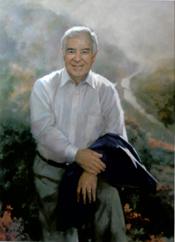
Mr. Speaker, tomorrow, on Friday, the President of the United States will be in my congressional district talking about jobs and the economy. Unfortunately, although I was invited, and I appreciate…
Mr. Speaker, tomorrow, on Friday, the President of the United States will be in my congressional district talking about jobs and the economy. Unfortunately, although I was invited, and I appreciate that, I will not be with the President because I will be here in the Halls of Congress working on a bill that very vitally affects jobs and the economy, this transportation and infrastructure legislation.
I commend the gentleman from Minnesota (Ranking Member Oberstar) and the gentleman from Alaska (Chairman Young) and the gentleman from Wisconsin (Mr. Petri) and the gentleman from Illinois (Mr. Lipinski), the ranking subcommittee member, for the hard work that they have put in on this legislation.
Jobs and the economy. That is what this is about. This legislation is the quickest way to put American working men and women back to work. For every $1 billion invested in our Nation's infrastructure, we are talking about 46,500 good paying jobs, not hamburger-flipping jobs; we are talking about good-paying jobs for our economy.
The $318 billion passed in the Senate bill, the $275 billion pending in this legislation is not sufficient to do the job. The President's own Department of Transportation has said that $375 billion is what is necessary just to, quote, ``maintain current economic growth.''
So if I were in my congressional district tomorrow with the President of the United States, I would say, Mr. President, would you please just allow us in the House of Representatives to maintain current economic growth and allow us to go to the $375 billion spending level for this bill. That makes economic sense. It makes just and fair legislation.
And I think that is what the American people want. If this were money that we are talking about, a difference here of several billion, unfortunately if it were money going to rebuild Iraq, perhaps it would sail through this body without any Presidential veto threats. But this is money that we are talking about to go here in America, putting Americans back to work, spending money on infrastructure in America, which is not any pork spending, it is not an entitlement; but it is an investment in America's future.
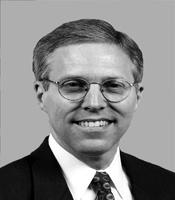
Mr. Speaker, I am greatly disturbed that we are debating a $275 billion transportation measure without taking strong action in this bill to increase security in our rail and transit systems. Three…
Mr. Speaker, I am greatly disturbed that we are debating a $275 billion transportation measure without taking strong action in this bill to increase security in our rail and transit systems.
Three weeks ago, a terrorist group related to al Qaeda conducted several coordinated bombings on commuter trains in Madrid. Two hundred civilians were killed and more than 1,500 injured. The tragedy was enough to shock the nations of Europe into immediate action to get serious about transit security, but we have not responded here at home with sufficient urgency to protect the lives of the many Americans who travel every day by rail and transit.
Earlier this week, British police arrested eight and seized half a ton of ammonia nitrate. Philippine authorities arrested four members of a terrorist group linked to al Qaeda and seized 30 pounds of TNT. Each of these cases may have prevented another Madrid-style attack.
Closer to home, Amtrak's trains were stopped this last Tuesday and searched
in Florida, North Carolina, and Pennsylvania after bomb threats were reported. We are enormously vulnerable to rail and transit attack and have an estimated need for $2 billion in investments in security for mass transit.
Yet since the attacks of September 11 of 2001, the Department of Homeland Security has made available only $115 million for this purpose.
Today, we have a $275 billion bill that barely addresses security. It does not specifically dedicate one dollar to rail or transit security.
I offered three amendments in the Committee on Rules, two of them designed to make a down payment of $250 million in grants to local transit agencies to improve security through surveillance and communications systems, detectors for weapons of mass destruction, training, education and other uses.
In light of terrorist threats that we face, Mr. Speaker, it is difficult to understand why we are not allowed to take up these amendments on the floor of the House today.
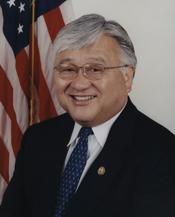
Mr. Speaker, on rollcall No. 105, had I been present, I would have voted ``nay.''
Mr. Speaker, on rollcall No. 105, had I been present, I would have voted ``nay.''
Bill Text
Latest available legislative text
        [Congressional Bills 108th Congress]
[From the U.S. Government Publishing Office]
[H.R. 3500 Introduced in House (IH)]

108th CONGRESS
1st Session
H. R. 3500

To prohibit the anticipated extreme reduction in the national marketing
quotas for the 2004 crop of Flue-cured and Burley tobacco, which, if
permitted to occur, would mean economic ruin for tobacco farmers and
their families.

_______________________________________________________________________

IN THE HOUSE OF REPRESENTATIVES

November 17, 2003

Mr. Jones of North Carolina (for himself and Mr. Goode) introduced the
following bill; which was referred to the Committee on Agriculture

_______________________________________________________________________

A BILL

To prohibit the anticipated extreme reduction in the national marketing
quotas for the 2004 crop of Flue-cured and Burley tobacco, which, if
permitted to occur, would mean economic ruin for tobacco farmers and
their families.

Be it enacted by the Senate and House of Representatives of the
United States of America in Congress assembled,

SECTION 1. ESTABLISHMENT OF NATIONAL MARKETING QUOTA FOR 2004 CROP OF
FLUE-CURED AND BURLEY TOBACCO AT 2003 LEVEL.

Notwithstanding any other provision of law, for the 2004 crop year,
the Secretary of Agriculture shall establish and maintain the national
marketing quota for Flue-cured and Burley tobacco at the 2003 level.

SEC. 2. FORFEITURES OF FLUE-CURED AND BURLEY
TOBACCO.

(a) In General.--This section shall apply notwithstanding sections
106 through 106B of the Agricultural Act of 1949 (7 U.S.C. 1445 through
1445-2).
(b) Loan Forfeiture.--A producer-owned cooperative marketing
association may fully settle, without further cost to the association,
a loan made for the 2004 crop of Flue-cured and Burley tobacco by
forfeiting to the Commodity Credit Corporation the Flue-cured or Burley
tobacco covered by the loan regardless of the condition of the tobacco.
(c) Treatment of CCC Losses.--Any losses to the Commodity Credit
Corporation as a result of the forfeiture of tobacco under subsection
(b)--
(1) shall not be charged to the No Net Cost Tobacco
Account; and
(2) shall not affect the amount of any assessment imposed
against Flue-cured or Burley tobacco under sections 106 through
106B of the Agricultural Act of 1949 (7 U.S.C. 1445 through
1445-2).
(d) Treatment of Forfeited Tobacco.--Tobacco forfeited under
subsection (b) shall not be--
(1) counted for the purpose of determining the Flue-cured
or Burley tobacco quota for any year pursuant to section 319 of
the Agricultural Adjustment Act of 1938 (7 U.S.C. 1314e); or
(2) sold for use in the United States, except that,
notwithstanding any other provision of law, the Commodity
Credit Corporation, directly or through the use of United
States leaf dealers, may market the forfeited tobacco outside
the United States.
<all>