Campus Care and Counseling Act
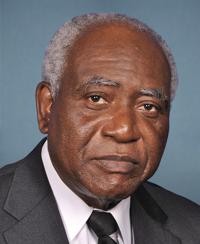 Rep. Danny K. Davis (D-IL)
Legislative Activity
Stay on top of the latest movement without scrolling through every action
Referred to the Subcommittee on 21st Century Competitiveness.
January 30, 2004
View full timeline
Introduced in House
November 21, 2003
Referred to the House Committee on Education and the Workforce.
November 21, 2003
Referred to the Subcommittee on 21st Century Competitiveness.
January 30, 2004
Floor Debate
11 membersWhat members said about H.R. 3593 on the floor
 +6
+6
Floor Debate
11 membersWhat members said about H.R. 3593 on the floor
Mr. Speaker, I yield myself such time as I may consume. There is probably no more serious topic that we could be discussing this evening than we are right now when we are discussing suicide,…
Mr. Speaker, I move to suspend the rules and pass the Senate bill (S. 2634) to amend the Public Health Service Act to support the planning, implementation, and evaluation of organized activities…
Mr. Speaker, I would like to thank the gentleman from Texas for his help on this bill. I am going to suspend my otherwise prepared remarks and try to address some of the concerns that we have heard…
Mr. Speaker, I rise today in support of the Garrett Lee Smith Memorial Act. I extend sincere condolences to my colleague, friend, constituent and fellow Oregonian, Senator Gordon Smith, sponsor of…
Mr. Speaker, I appreciate the gentleman's courtesy, and I appreciate the way that we are reallocating time a little bit to permit serious discussion of a serious topic. I deeply appreciate the…
Show 6 more

Mr. Speaker, I thank the gentleman from Ohio for helping bring this bill forward. Mr. Speaker, let me first follow up on the comments of the gentleman from Texas (Mr. Barton) that this bill really…
Mr. Speaker, I thank the gentleman for yielding me this time. Mr. Speaker, I believe every life is a precious creation and that suicide is a tragic and terrible way to lose a family member or friend.…
Mr. Speaker, I rise in strong support of the Garrett Lee Smith Memorial Act. I wish this bill were not necessary. Unfortunately, it is. Youth suicide is a growing problem that knows no geographic,…
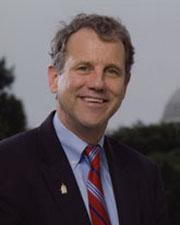
Mr. Speaker, I support the legislation. I do not oppose. I support. Mr. Speaker, I yield myself 1 minute. Mr. Speaker, I want to thank my colleagues, the gentleman from Tennessee (Mr. Gordon), the…
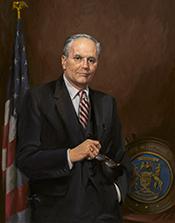
Mr. Speaker, I rise in support of S. 2634, the ``Garrett Lee Smith Memorial Act.'' This bill contains a variety of programs aimed at youth suicide early intervention and prevention, including campus…
Mr. Speaker, I rise in support of S. 2634 and commend Senator Gordon Smith and his family for helping to put the spotlight on this problem. I am happy to be the original sponsor, along with the…
Bill Text
Latest available legislative text
        [Congressional Bills 108th Congress]
[From the U.S. Government Publishing Office]
[H.R. 3593 Introduced in House (IH)]

108th CONGRESS
1st Session
H. R. 3593

To amend the Higher Education Act of 1965 to provide funds for campus
mental and behavioral health service centers.

_______________________________________________________________________

IN THE HOUSE OF REPRESENTATIVES

November 21, 2003

Mr. Davis of Illinois (for himself and Mr. Osborne) introduced the
following bill; which was referred to the Committee on Education and
the Workforce

_______________________________________________________________________

A BILL

To amend the Higher Education Act of 1965 to provide funds for campus
mental and behavioral health service centers.

Be it enacted by the Senate and House of Representatives of the
United States of America in Congress assembled,

SECTION 1. SHORT TITLE.

This Act may be cited as the ``Campus Care and Counseling Act''.

SEC. 2. FINDINGS.

The Congress finds the following:
(1) In a recent report, a startling 85 percent of college
counseling centers revealed an increase in the number of
students they see with psychological problems. Furthermore, the
American College Health Association found that 61 percent of
college students reported feeling hopeless, 45 percent said
they felt so depressed they could barely function, and 9
percent felt suicidal.
(2) There is clear evidence of an increased incidence of
depression among college students. According to a survey
described in the Chronicle of Higher Education (February 1,
2002), depression among freshmen has nearly doubled (from 8.2
percent to 16.3 percent). Without treatment, researchers
recently noted that ``depressed adolescents are at risk for
school failure, social isolation, promiscuity, self medication
with drugs and alcohol, and suicide--now the third leading
cause of death among 10-24 year olds.''
(3) Researchers who conducted the study ``Changes in
Counseling Center Client Problems Across 13 Years'' (1989-2001)
at Kansas State University stated that ``students are
experiencing more stress, more anxiety, more depression than
they were a decade ago.'' (The Chronicle of Higher Education,
February 14, 2003).
(4) According to a 1999 UCLA study, more than 30 percent of
college freshmen reported feeling overwhelmed a great deal of
the time during the beginning of college and may benefit from
psychological services.
(5) According to the 2001 National Household Survey on Drug
Abuse, the highest prevalence of both binge and heavy drinking
was found in young adults ages 18 to 25 (especially on college
campuses). In addition, the results of a Harvard School of
Public Health College Alcohol Study Survey printed in the
Journal of American Health show that 44.4 percent of college
students describe themselves as binge drinkers.
(6) The National Institute of Alcohol Abuse and Alcoholism
in 2002 reported that 1400 college students die each year from
alcohol-related injuries. In addition, it is stated that
college students who drink are more likely to assault, sexually
abuse, and vandalize others. Furthermore, it is reported that
25 percent of college students attribute academic problems to
excessive drinking.
(7) According to the 2001 National Household Survey on Drug
Abuse, 20 percent of full-time undergraduate college students
use illicit drugs.
(8) The 2001 National Household Survey on Drug Abuse also
reported that 18.4 percent of adults aged 18 to 24 are
dependent on or abusing illicit drugs or alcohol. In addition,
the study found that ``serious mental illness is highly
correlated with substance dependence or abuse. Among adults
with serious mental illness in 2001, 20.3 percent were
dependent on or abused alcohol or illicit drugs, while the rate
among adults without serious mental illness was only 6.3
percent.''
(9) In 2001, there were 249,000 victims of rape in the
United States, according to statistics from the Rape, Abuse and
Incest National Network. 36 percent of victims of rape and
sexual assault are between the ages of 18 and 30.
(10) The National Victim's Center in 2001 reported that
13.3 percent of college women say they have been forced to have
sex in a dating situation.
(11) According to the National Eating Disorders
Association, 5-10 million women and 1 million men struggle with
eating disorders including anorexia, bulimia, binge eating
disorder, or borderline conditions after puberty.

SEC. 3. MENTAL AND BEHAVIORAL HEALTH SERVICES ON CAMPUS.

Part B of title I of the Higher Education Act of 1965 is amended by
inserting after section 120 (20 U.S.C. 1011i) the following new
section:

``SEC. 120A. MENTAL AND BEHAVIORAL HEALTH SERVICES ON CAMPUS.

``(a) Purpose.--It is the purpose of this section to increase
access to, and enhance the range of, mental and behavioral health
services for students at centers on campus that provide such services
so as to ensure that college students have the support necessary to
successfully complete their studies.
``(b) Program Authorized.--From the funds appropriated under
subsection (g), the Secretary shall award competitive grants to centers
on campus that provide mental and behavioral health services to
students to provide such services and develop best practices for the
delivery of such services. Such grants shall, subject to the
availability of such appropriations, be for a period of 3 years.
``(c) Eligible Entities.--Any mental health service center located
on the campus of an institution of higher education that provides
mental and behavioral health services to students is eligible to apply
for a grant under this section. Eligible entities may include entities
such as college counseling centers; college and university
psychological service centers; mental health units; and psychology
training clinics.
``(d) Applications.--Each eligible entity seeking to obtain a grant
under this section shall submit an application to the Secretary. Each
such application shall include--
``(1) an outline of program objectives and anticipated
program outcomes;
``(2) outreach strategies (including ways in which the
applicant proposes to reach students, promote access to
services, and address the range of needs of university
students);
``(3) a proposed plan for reaching those students most in
need of the center's services;
``(4) a program evaluation plan to assess program outcomes;
and
``(5) such additional information as is required by the
Secretary.
``(e) Use of Funds.--Funds provided by a grant under this section
may be used for one or more of the following activities:
``(1) Intervention program for developmental, transitional,
and adjustment issues that affect students as they matriculate
and graduate from college.
``(2) Addressing issues related to binge and heavy alcohol
consumption and the associated behavioral health risks.
``(3) Providing services for students with mental and
behavioral health problems that impede academic performance
(such as test anxiety).
``(4) Self-management skills (for behavioral and emotional
self regulation).
``(5) Management of chronic mental illness.
``(6) Assessment and intervention for depressive disorders,
and suicidal and self-harm behaviors.
``(7) Assessment and treatment of anxiety disorders.
``(8) Prevention programs for depression, anxiety, suicide,
and domestic violence.
``(9) Assessment, treatment, and education for eating
disorders.
``(10) Treatment of sexual trauma.
``(11) Psychological education for parents of college
students.
``(12) Hire appropriately trained staff.
``(13) Strengthen and expand psychology doctoral internship
and postdoctoral residency programs and opportunities.
``(14) Supporting the use of evidence-based and emerging
best practices and evaluate outcomes in centers on campus that
provide mental and behavioral health services so as to provide
information and training to other centers around the nation.
``(f) Additional Required Elements.--Each eligible entity that
receives a grant under this section shall--
``(1) provide annual reports to the Secretary describing
the use of funds, the program's objectives, and how the
objectives were met (description of program outcomes);
``(2) perform such additional evaluation as the Secretary
may require, which may include measures such as increase in
range of services provided; increase in the quality of services
provided; increase in access to services; college continuation
rates; decrease in college dropout rates; increase in college
graduation rates; and
``(3) shall coordinate its program under this section with
other related efforts on campus by entities concerned with the
mental, health, and behavioral health needs of students.
``(g) Authorization of Appropriations.--There are authorized to be
appropriated for grants under this section $10,000,000 for fiscal year
2005 and such sums as may be necessary for each of the 4 succeeding
fiscal years.''.
<all>