Job Protection Act of 2004
 Rep. Charles B. Rangel (D-NY)
Legislative Activity
Stay on top of the latest movement without scrolling through every action
Referred to the House Committee on Ways and Means.
February 25, 2004
View full timeline
Introduced in House
February 25, 2004
Referred to the House Committee on Ways and Means.
February 25, 2004
Floor Debate
24 membersWhat members said about H.R. 3827 on the floor



 +19
+19
Floor Debate
24 membersWhat members said about H.R. 3827 on the floor
Mr. Chairman, I yield myself such time as I may consume. Just to start off the debate, we are obviously very interested in hearing what the Congressional Black Caucus has to offer. While we may…
Mr. Chairman, I yield 3 minutes to the gentleman from North Carolina (Mr. Price). (Mr. PRICE of North Carolina asked and was given permission to revise and extend his remarks.) Mr. Chairman, I yield…
Mr. Chairman, I offer an amendment in the nature of a substitute. Mr. Chairman, I yield myself such time as I may consume. Mr. Chairman, first I want to congratulate the gentleman from Iowa (Mr.…
Mr. Chairman, as the designee of the gentleman from Indiana (Mr. Hill), I offer an amendment in the nature of a substitute. Mr. Chairman, I yield myself such time as I may consume. The Blue Dog…
Mr. Chairman, as the designee of the gentleman from Virginia (Mr. Scott) and pursuant to the rule, I offer an amendment in the nature of a substitute. The Chairman pro tempore. The Clerk will…
Show 8 more

I thank the gentleman for yielding me this time. Mr. Chairman, the Congressional Black Caucus alternative budget is committed to making America more secure by investing in our homeland security,…
Mr. Chairman, what a difference a week makes. A week ago and one day from today this House passed unanimously a resolution saying that we should express our gratitude for the ``valiant service of our…

Mr. Chairman, I thank the gentleman, and I appreciate the statement that was just made by my good colleague, the distinguished gentleman from Missouri (Mr. Skelton). Let me explain why I do not agree…

Mr. Chairman, in the 2000 election, President Bush declared that he was against nation-building. When we look at the Republican budget, who knew it was America he was talking about. They have three…

Mr. Chairman, I rise in opposition to this resolution and in support of the Democratic and Congressional Black Caucus alternatives. You would think that after 3 years of Bush budgets and Bush tax…

Mr. Chairman, I thank my Texas colleague for yielding me the time, and I have a prepared statement I would like to place into the Record. It is interesting, all of our constituents think we talk…
Mr. Chairman, I want to thank the chairman for yielding me this time. And I also want to commend the Congressional Black Caucus for putting together this budget, a budget which recognizes that…

Mr. Chairman, I thank the gentleman for yielding me this time. I think it is pretty clear that when you look at the Blue Dog budget and compare it to the Republican budget, the Blue Dog budget moves…
Show 11 more

Mr. Chairman, I thank the gentleman for yielding me the time. There have been a lot of numbers used in this debate, thrown around with great abandon. I must give my Republican colleagues credit. They…

Mr. Chairman, I support strongly the Spratt resolution. Quite honestly, it is better on national defense than the resolution offered by the majority. Here are five reasons why. First, the Spratt…

Mr. Chairman, a lot of us on the Congressional Black Caucus and a lot of us who sit on this side of the aisle are used to being called ``tax and spend liberals.'' It is a mantra that our friends on…
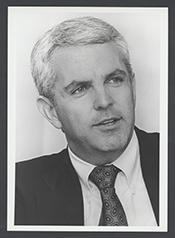
Mr. Chairman, I commend the Budget Committee and the gentleman from Iowa for their work. The Republican budget is, in fact, a very solid step in the right direction, and it deserves the support of…

I thank the gentleman for yielding me this time. Mr. Chairman, I am pleased to offer this substitute with my colleagues from the Congressional Black Caucus. In crafting this alternative budget, we…

Mr. Chairman, perhaps the chairman believes what he says. If so, he is extraordinarily wrong. But those of us who have been here for some period of time have heard this rhetoric before, over and over…

Mr. Chairman, this is an instructive debate, and the debates that we will have throughout the day and on into the evening will be instructive because they will point up the stark differences in the…

Mr. Chairman, I rise today in strong opposition to H. Con. Res. 393, the Republican budget resolution. There are so many things wrong with this budget resolution and the President's budget request…

Mr. Chairman, the real issue here is who pays and who is hurt? Americans at home are looking for fiscal responsibility from this House. Whether they are taxpayers, workers, whether they are people…

Mr. Chairman, only 3 years ago, our country had created 22 million new jobs and had a projected surplus of $5.6 trillion. But since that time, 3 million private sector jobs have vanished, and we have…

Mr. Chairman, I thank the gentleman for yielding me time. Mr. Chairman, today I rise in open opposition to this Democratic substitute, and I promise you I will not scream as I get my message across.…
Bill Text
Latest available legislative text
        [Congressional Bills 108th Congress]
[From the U.S. Government Publishing Office]
[H.R. 3827 Introduced in House (IH)]

108th CONGRESS
2d Session
H. R. 3827

To amend the Internal Revenue Code of 1986 to protect American jobs.

_______________________________________________________________________

IN THE HOUSE OF REPRESENTATIVES

February 25, 2004

Mr. Rangel introduced the following bill; which was referred to the
Committee on Ways and Means

_______________________________________________________________________

A BILL

To amend the Internal Revenue Code of 1986 to protect American jobs.

Be it enacted by the Senate and House of Representatives of the
United States of America in Congress assembled,

SECTION 1. SHORT TITLE, ETC.

(a) Short Title.--This Act may be cited as the ``Job Protection Act
of 2004''.
(b) Amendment of 1986 Code.--Except as otherwise expressly
provided, whenever in this Act an amendment or repeal is expressed in
terms of an amendment to, or repeal of, a section or other provision,
the reference shall be considered to be made to a section or other
provision of the Internal Revenue Code of 1986.
(c) Table of Contents.--

Sec. 1. Short title, etc.
TITLE I--TRANSITION FROM FSC/ETI BENEFITS TO UNITED STATES PRODUCTION
BENEFITS

Sec. 101. Repeal of exclusion for extraterritorial income.
Sec. 102. Deduction relating to income attributable to United States
production activities.
TITLE II--EXTENSION OF INCREASED EXPENSING FOR SMALL BUSINESS

Sec. 201. 2-year extension of increased expensing for small business.
TITLE III--ENRON-RELATED TAX SHELTER PROVISIONS

Sec. 301. Limitation on transfer or importation of built-in losses.
Sec. 302. No reduction of basis under section 734 in stock held by
partnership in corporate partner.
Sec. 303. Repeal of special rules for FASITS, etc.
Sec. 304. Expanded disallowance of deduction for interest on
convertible debt.
Sec. 305. Expanded authority to disallow tax benefits under section
269.
Sec. 306. Modifications of certain rules relating to controlled foreign
corporations.
TITLE IV--EXTENSION OF COBRA FEES

Sec. 401. Cobra fees.

TITLE I--TRANSITION FROM FSC/ETI BENEFITS TO UNITED STATES PRODUCTION
BENEFITS

SEC. 101. REPEAL OF EXCLUSION FOR EXTRATERRITORIAL INCOME.

(a) In General.--Section 114 of the Internal Revenue Code of 1986
is hereby repealed.
(b) Conforming Amendments.--
(1)(A) Subpart E of part III of subchapter N of chapter 1
(relating to qualifying foreign trade income) is hereby
repealed.
(B) The table of subparts for such part III is amended by
striking the item relating to subpart E.
(2) The table of sections for part III of subchapter B of
chapter 1 is amended by striking the item relating to section
114.
(3) The second sentence of section 56(g)(4)(B)(i) is
amended by striking ``or under section 114''.
(4) Section 275(a) is amended--
(A) by inserting ``or'' at the end of paragraph
(4)(A), by striking ``or'' at the end of paragraph
(4)(B) and inserting a period, and by striking
subparagraph (C), and
(B) by striking the last sentence.
(5) Paragraph (3) of section 864(e) is amended--
(A) by striking:
``(3) Tax-exempt assets not taken into account.--
``(A) In general.--For purposes of''; and
inserting:
``(3) Tax-exempt assets not taken into account.--For
purposes of'', and
(B) by striking subparagraph (B).
(6) Section 903 is amended by striking ``114, 164(a),'' and
inserting ``164(a)''.
(7) Section 999(c)(1) is amended by striking
``941(a)(5),''.
(c) Effective Date.--
(1) In general.--The amendments made by this section shall
apply to transactions occurring after the date of the enactment
of this Act.
(2) Binding contracts.--The amendments made by this section
shall not apply to any transaction in the ordinary course of a
trade or business which occurs pursuant to a binding contract--
(A) which is between the taxpayer and a person who
is not a related person (as defined in section
943(b)(3) of such Code, as in effect on the day before
the date of the enactment of this Act), and
(B) which is in effect on September 17, 2003, and
at all times thereafter.
(d) Revocation of Section 943(e) Elections.--
(1) In general.--In the case of a corporation that elected
to be treated as a domestic corporation under section 943(e) of
the Internal Revenue Code of 1986 (as in effect on the day
before the date of the enactment of this Act)--
(A) the corporation may revoke such election,
effective as of the date of the enactment of this Act,
and
(B) if the corporation does revoke such election--
(i) such corporation shall be treated as a
domestic corporation transferring (as of the
date of the enactment of this Act) all of its
property to a foreign corporation in connection
with an exchange described in section 354 of
the Internal Revenue Code of 1986, and
(ii) no gain or loss shall be recognized on
such transfer.
(2) Exception.--Subparagraph (B)(ii) of paragraph (1) shall
not apply to gain on any asset held by the revoking corporation
if--
(A) the basis of such asset is determined in whole
or in part by reference to the basis of such asset in
the hands of the person from whom the revoking
corporation acquired such asset,
(B) the asset was acquired by transfer (not as a
result of the election under section 943(e) of such
Code) occurring on or after the 1st day on which its
election under section 943(e) of such Code was
effective, and
(C) a principal purpose of the acquisition was the
reduction or avoidance of tax (other than a reduction
in tax under section 114 of such Code, as in effect on
the day before the date of the enactment of this Act).
(e) General Transition.--
(1) In general.--In the case of a taxable year ending after
the date of the enactment of this Act and beginning before
January 1, 2007, for purposes of chapter 1 of such Code, each
current FSC/ETI beneficiary shall be allowed a deduction equal
to the transition amount determined under this subsection with
respect to such beneficiary for such year.
(2) Current fsc/eti beneficiary.--The term ``current FSC/
ETI beneficiary'' means any corporation which entered into one
or more transactions during its taxable year beginning in
calendar year 2001 with respect to which FSC/ETI benefits were
allowable.
(3) Transition amount.--For purposes of this subsection--
(A) In general.--The transition amount applicable
to any current FSC/ETI beneficiary for any taxable year
is the phaseout percentage of the base period amount.
(B) Phaseout percentage.--
(i) In general.--In the case of a taxpayer
using the calendar year as its taxable year,
the phaseout percentage shall be determined
under the following table:

The phaseout
``Years:                                                 percentage is:
2004 and 2005..........................................     80
2006...................................................     60
2007 and thereafter....................................      0.
(ii) Special rule for 2004.--The phaseout
percentage for 2004 shall be the amount that
bears the same ratio to 80 percent as the
number of days after the date of the enactment
of this Act bears to 365.
(iii) Special rule for fiscal year
taxpayers.--In the case of a taxpayer not using
the calendar year as its taxable year, the
phaseout percentage is the weighted average of
the phaseout percentages determined under the
preceding provisions of this paragraph with
respect to calendar years any portion of which
is included in the taxpayer's taxable year. The
weighted average shall be determined on the
basis of the respective portions of the taxable
year in each calendar year.
(4) Base period amount.--For purposes of this subsection,
the base period amount is the aggregate FSC/ETI benefits for
the taxpayer's taxable year beginning in calendar year 2001.
(5) FSC/ETI benefit.--For purposes of this subsection, the
term `FSC/ETI benefit' means--
(A) amounts excludable from gross income under
section 114 of such Code, and
(B) the exempt foreign trade income of related
foreign sales corporations from property acquired from
the taxpayer (determined without regard to section
923(a)(5) of such Code (relating to special rule for
military property), as in effect on the day before the
date of the enactment of the FSC Repeal and
Extraterritorial Income Exclusion Act of 2000).
In determining the FSC/ETI benefit there shall be excluded any
amount attributable to a transaction with respect to which the
taxpayer is the lessor unless the leased property was
manufactured or produced in whole or in significant part by the
taxpayer.
(6) Special rule for farm and horticultural cooperatives.--
Determinations under this subsection with respect to an
organization described in section 943(g)(1) of such Code, as in
effect on the day before the date of the enactment of this Act,
shall be made at the cooperative level and the purposes of this
subsection shall be carried out in a manner similar to section
199(h)(2) of such Code, as added by this Act. Such
determinations shall be in accordance with such requirements
and procedures as the Secretary may prescribe.
(7) Certain rules to apply.--Rules similar to the rules of
section 41(f) of such Code shall apply for purposes of this
subsection.
(8) Coordination with binding contract rule.--The deduction
determined under paragraph (1) for any taxable year shall be
reduced by the phaseout percentage of any FSC/ETI benefit
realized for the taxable year by reason of subsection (c)(2) or
section 5(c)(1)(B) of the FSC Repeal and Extraterritorial
Income Exclusion Act of 2000.
(9) Special rule for taxable year which includes date of
enactment.--In the case of a taxable year which includes the
date of the enactment of this Act, the deduction allowed under
this subsection to any current FSC/ETI beneficiary shall in no
event exceed--
(A) 100 percent of such beneficiary's base period
amount, reduced by
(B) the aggregate FSC/ETI benefits of such
beneficiary with respect to transactions occurring
during the portion of the taxable year ending on the
date of the enactment of this Act.

SEC. 102. DEDUCTION RELATING TO INCOME ATTRIBUTABLE TO UNITED STATES
PRODUCTION ACTIVITIES.

(a) In General.--Part VII of subchapter B of chapter 1 (relating to
itemized deductions for individuals and corporations) is amended by
adding at the end the following new section:

``SEC. 199. INCOME ATTRIBUTABLE TO DOMESTIC PRODUCTION ACTIVITIES.

``(a) In General.--There shall be allowed as a deduction an amount
equal to 10 percent of the qualified production activities income of
the taxpayer for the taxable year.
``(b) Phasein.--In the case of taxable years beginning in 2004,
2005, 2006, or 2007, subsection (a) shall be applied by substituting
for the percentage contained therein the transition percentage
determined under the following table:

The transition
``Taxable years beginning in:                            percentage is:
2004...................................................      1
2005...................................................      3
2006...................................................      6
2007...................................................      9.
``(c) Qualified Production Activities Income.--For purposes of this
section, the term `qualified production activities income' means the
product of--
``(1) the portion of the modified taxable income of the
taxpayer which is attributable to domestic production
activities, and
``(2) the domestic/worldwide fraction.
``(d) Determination of Income Attributable to Domestic Production
Activities.--For purposes of this section--
``(1) In general.--The portion of the modified taxable
income which is attributable to domestic production activities
is so much of the modified taxable income for the taxable year
as does not exceed--
``(A) the taxpayer's domestic production gross
receipts for such taxable year, reduced by
``(B) the sum of--
``(i) the costs of goods sold that are
allocable to such receipts,
``(ii) other deductions, expenses, or
losses directly allocable to such receipts, and
``(iii) a proper share of other deductions,
expenses, and losses that are not directly
allocable to such receipts or another class of
income.
``(2) Allocation method.--The Secretary shall prescribe
rules for the proper allocation of items of income, deduction,
expense, and loss for purposes of determining income
attributable to domestic production activities.
``(3) Special rule for determining costs.--
``(A) For purposes of determining costs under
clause (i) of paragraph (1)(B), any item or service
brought into the United States shall be treated as
acquired by purchase, and its cost shall be treated as
not less than its value in the United States,
determined immediately after it was brought into the
United States. A similar rule shall apply in
determining the adjusted basis of leased or rented
property where the lease or rental gives rise to
domestic production gross receipts.
``(B) In the case of any property described in
subparagraph (A) that had been exported by the taxpayer
for further manufacture, the increase in cost (or
adjusted basis) under subparagraph (A) shall not exceed
the difference between the value of the property when
exported and the value of the property when brought
back into the United States after the further
manufacture.
``(4) Modified taxable income.--The term `modified taxable
income' means taxable income computed without regard to the
deduction allowable under this section.
``(e) Domestic Production Gross Receipts.--For purposes of this
section--
``(1) In general.--The term `domestic production gross
receipts' means the gross receipts of the taxpayer which are
derived from--
``(A) any sale, exchange, or other disposition of,
or
``(B) any lease, rental or license of--
qualifying production property which was manufactured,
produced, grown, or extracted in whole or in significant part
by the taxpayer within the United States.
``(2) Special rules for certain property.--In the case of
any qualifying production property described in subsection
(f)(1)(C)--
(A) such property shall be treated for purposes of
paragraph (1) as produced in significant part by the
taxpayer within the United States if more than 50
percent of the aggregate development and production
costs are incurred by the taxpayer within the United
States, and
(B) if a taxpayer acquires such property before
such property begins to generate substantial gross
receipts, any development or production costs incurred
before the acquisition shall be treated as incurred by
the taxpayer for purposes of subparagraph (A) and
paragraph (1).
``(f) Qualifying Production Property.--For purposes of this
section--
``(1) In general.--Except as otherwise provided in this
subsection, the term `qualifying production property' means--
``(A) any tangible personal property,
``(B) any computer software, and
``(C) any property described in paragraph (3) or
(4) of section 168(f), including any underlying
copyright or trademark.
Subparagraph (C) shall not apply to any property with respect
to which records are required to be maintained under section
2257 of title 18, United States Code.
``(2) Exclusions from qualifying production property.--The
term `qualifying production property' shall not include--
``(A) consumable property that is sold, leased, or
licensed by the taxpayer as an integral part of the
provision of services,
``(B) oil or gas (or any primary product thereof),
``(C) electricity,
``(D) water supplied by pipeline to the consumer,
``(E) utility services, or
``(F) any property (not described in paragraph
(1)(B)) which is a film, tape, recording, book,
magazine, newspaper, or similar property the market for
which is primarily topical or otherwise essentially
transitory in nature.
``(3) Special rule for noncorporate taxpayers.--In the case
of a taxpayer other than a corporation subject to tax under
section 11, the term `qualifying production property' only
includes--
``(A) agricultural or horticultural products, including
timber, and
``(B) other tangible personal property not described in
subparagraph (B) or (C) of paragraph (1) and not described in
section 1221(a)(3).
``(g) Domestic/Worldwide Fraction.--For purposes of this section--
``(1) In general.--The term `domestic/worldwide fraction'
means a fraction (not greater than 1)--
``(A) the numerator of which is the value of the
domestic production of the taxpayer, and
``(B) the denominator of which is the value of the
worldwide production of the taxpayer.
``(2) Value of domestic production.--The value of domestic
production is the excess (if any) of--
``(A) the domestic production gross receipts, over
``(B) the cost of purchased inputs allocable to
such receipts that are deductible under this chapter
for the taxable year.
``(3) Purchased inputs.--
``(A) In general.--Purchased inputs are any of the
following items acquired by purchase:
``(i) Services (other than services of
employees) used in manufacture, production,
growth, or extraction activities.
``(ii) Items consumed in connection with
such activities.
``(iii) Items incorporated as part of the
property being manufactured, produced, grown,
or extracted.
``(B) Special rule.--Rules similar to the rules of
subsection (d)(3) shall apply for purposes of this
subsection.
``(4) Value of worldwide production.--
``(A) In general.--The value of worldwide
production shall be determined under the principles of
paragraph (2), except that--
``(i) worldwide production gross receipts
shall be taken into account, and
``(ii) paragraph (3)(B) shall not apply.
``(B) Worldwide production gross receipts.--The
worldwide production gross receipts is the amount that
would be determined under subsection (e) if such
subsection were applied without any reference to the
United States.
``(h) Definitions and Special Rules.--
``(1) United states.--For purposes of this section, the
term `United States' includes the Commonwealth of Puerto Rico
and any other possession of the United States.
``(2) Exclusion for patrons of agricultural and
horticultural cooperatives.--
``(A) In general.--If any amount described in
paragraph (1) or (3) of section 1385 (a)--
``(i) is received by a person from an
organization to which part I of subchapter T
applies which is engaged in the marketing of
agricultural or horticultural products, and
``(ii) is allocable to the portion of the
qualified production activities income of the
organization which is deductible under
subsection (a) (determined as if the
organization were a corporation if it is not)
and designated as such by the organization in a
written notice mailed to its patrons during the
payment period described in section 1382(a),
then such person shall be allowed an exclusion from
gross income with respect to such amount. The taxable
income of the organization shall not be reduced under
section 1382 by the portion of any such amount with
respect to which an exclusion is allowable to a person
by reason of this paragraph.
``(B) Special rules.--For purposes of applying
subparagraph (A), in determining the qualified
production activities income of the organization under
this section--
``(i) there shall not be taken into account
in computing the organization's modified
taxable income any deduction allowable under
subsection (b) or (c) of section 1382 (relating
to patronage dividends, per-unit retain
allocations, and nonpatronage distributions),
and
``(ii) the organization shall be treated as
having manufactured, produced, grown, or
extracted in whole or significant part any
qualifying production property marketed by the
organization which its patrons have so
manufactured, produced, grown, or extracted.
``(3) Special rules for partnerships and s corporations.--
For purposes of this section, a partner's distributive share of
any partnership item shall be taken into account as if directly
realized by the partner. A rule similar to the rule of the
preceding sentence shall apply in the case of a shareholder in
an S Corporation.
``(4) Special rule for affiliated groups.--
``(A) In general.--All members of an expanded
affiliated group shall be treated as a single
corporation for purposes of this section.
``(B) Expanded affiliated group.--The term
`expanded affiliated group' means an affiliated group
as defined in section 1504(a), determined--
``(i) by substituting `50 percent' for `80
percent' each place it appears, and
``(ii) without regard to paragraphs (2) and
(4) of section 1504(b).
For purposes of determining the domestic/worldwide
fraction under subsection (g), clause (ii) shall be
applied by also disregarding paragraphs (3) and (8) of
section 1504(b).
``(5) Coordination with minimum tax.--The deduction under
this section shall be allowed for purposes of the tax imposed
by section 55; except that for purposes of section 55,
alternative minimum taxable income shall be taken into account
in determining the deduction under this section.
``(6) Ordering rule.--The amount of any other deduction
allowable under this chapter shall be determined as if this
section had not been enacted.
``(7) Trade or business requirement.--This section shall be
applied by only taking into account items which are
attributable to the actual conduct of a trade or business.
``(8) Coordination with transition rules.--For purposes of
this section--
``(A) domestic production gross receipts shall not
include gross receipts from any transaction if the
binding contract transition relief of section 2(c)(2)
of the Job Protection Act of 2003 applies to such
transaction, and
``(B) any deduction allowed under section 2(e) of
such Act shall be disregarded in determining the
portion of the taxable income which is attributable to
domestic production gross receipts.''.
(b) Clerical Amendment.--The table of sections for part VII of
subchapter B of chapter 1 is amended by adding at the end the following
new item:

``Sec. 199. Income attributable to
domestic production
activities.''.
(c) Effective Date.--
(1) In general.--The amendments made by this section shall
apply to taxable years ending after 2003.
(2) Application of section 15.--Section 15 of the Internal
Revenue Code of 1986 shall apply to the amendments made by this
section as if they were changes in a rate of tax.

TITLE II--EXTENSION OF INCREASED EXPENSING FOR SMALL BUSINESS

SEC. 201. 2-YEAR EXTENSION OF INCREASED EXPENSING FOR SMALL BUSINESS.

Subsections (b), (c), and (d) of section 179 (as amended by the
Jobs and Growth Tax Relief Reconciliation Act of 2003) are each amended
by striking ``2006'' each place it appears and inserting ``2008''.

TITLE III--ENRON-RELATED TAX SHELTER PROVISIONS

SEC. 301. LIMITATION ON TRANSFER OR IMPORTATION OF BUILT-IN LOSSES.

(a) In General.--Section 362 (relating to basis to corporations) is
amended by adding at the end the following new subsection:
``(e) Limitations on Built-In Losses.--
``(1) Limitation on importation of built-in losses.--
``(A) In general.--If in any transaction described
in subsection (a) or (b) there would (but for this
subsection) be an importation of a net built-in loss,
the basis of each property described in subparagraph
(B) which is acquired in such transaction shall
(notwithstanding subsections (a) and (b)) be its fair
market value immediately after such transaction.
``(B) Property described.--For purposes of
subparagraph (A), property is described in this
subparagraph if--
``(i) gain or loss with respect to such
property is not subject to tax under this
subtitle in the hands of the transferor
immediately before the transfer, and
``(ii) gain or loss with respect to such
property is subject to such tax in the hands of
the transferee immediately after such transfer.
In any case in which the transferor is a partnership,
the preceding sentence shall be applied by treating
each partner in such partnership as holding such
partner's proportionate share of the property of such
partnership.
``(C) Importation of net built-in loss.--For
purposes of subparagraph (A), there is an importation
of a net built-in loss in a transaction if the
transferee's aggregate adjusted bases of property
described in subparagraph (B) which is transferred in
such transaction would (but for this paragraph) exceed
the fair market value of such property immediately
after such transaction.''.
``(2) Limitation on transfer of built-in losses in section
351 transactions.--
``(A) In general.--If--
``(i) property is transferred by a
transferor in any transaction which is
described in subsection (a) and which is not
described in paragraph (1) of this subsection,
and
``(ii) the transferee's aggregate adjusted
bases of such property so transferred would
(but for this paragraph) exceed the fair market
value of such property immediately after such
transaction,
then, notwithstanding subsection (a), the transferee's
aggregate adjusted bases of the property so transferred
shall not exceed the fair market value of such property
immediately after such transaction.
``(B) Allocation of basis reduction.--The aggregate
reduction in basis by reason of subparagraph (A) shall
be allocated among the property so transferred in
proportion to their respective built-in losses
immediately before the transaction.
``(C) Exception for transfers within affiliated
group.--Subparagraph (A) shall not apply to any
transaction if the transferor owns stock in the
transferee meeting the requirements of section
1504(a)(2). In the case of property to which
subparagraph (A) does not apply by reason of the
preceding sentence, the transferor's basis in the stock received for
such property shall not exceed its fair market value immediately after
the transfer.''.
(b) Comparable Treatment Where Liquidation.--Paragraph (1) of
section 334(b) (relating to liquidation of subsidiary) is amended to
read as follows:
``(1) In general.--If property is received by a corporate
distributee in a distribution in a complete liquidation to
which section 332 applies (or in a transfer described in
section 337(b)(1)), the basis of such property in the hands of
such distributee shall be the same as it would be in the hands
of the transferor; except that the basis of such property in
the hands of such distributee shall be the fair market value of
the property at the time of the distribution--
``(A) in any case in which gain or loss is
recognized by the liquidating corporation with respect
to such property, or
``(B) in any case in which the liquidating
corporation is a foreign corporation, the corporate
distributee is a domestic corporation, and the
corporate distributee's aggregate adjusted bases of
property described in section 362(e)(1)(B) which is
distributed in such liquidation would (but for this
subparagraph) exceed the fair market value of such
property immediately after such liquidation.''.
(c) Effective Date.--The amendments made by this section shall
apply to transactions after the date of the enactment of this Act.

SEC. 302. NO REDUCTION OF BASIS UNDER SECTION 734 IN STOCK HELD BY
PARTNERSHIP IN CORPORATE PARTNER.

(a) In General.--Section 755 is amended by adding at the end the
following new subsection:
``(c) No Allocation of Basis Decrease to Stock of Corporate
Partner.--In making an allocation under subsection (a) of any decrease
in the adjusted basis of partnership property under section 734(b)--
``(1) no allocation may be made to stock in a corporation
(or any person which is related (within the meaning of section
267(b) or 707(b)(1)) to such corporation) which is a partner in
the partnership, and
``(2) any amount not allocable to stock by reason of
paragraph (1) shall be allocated under subsection (a) to other
partnership property.
Gain shall be recognized to the partnership to the extent that the
amount required to be allocated under paragraph (2) to other
partnership property exceeds the aggregate adjusted basis of such other
property immediately before the allocation required by paragraph
(2).''.
(b) Effective Date.--The amendment made by this section shall apply
to distributions after the date of the enactment of this Act.

SEC. 303. REPEAL OF SPECIAL RULES FOR FASITS, ETC.

(a) In General.--Part V of subchapter M of chapter 1 (relating to
financial asset securitization investment trusts) is hereby repealed.
(b) Conforming Amendments.--
(1) Paragraph (6) of section 56(g) is amended by striking
``REMIC, or FASIT'' and inserting ``or REMIC''.
(2) Clause (ii) of section 382(l)(4)(B) is amended by
striking ``a REMIC to which part IV of subchapter M applies, or
a FASIT to which part V of subchapter M applies,'' and
inserting ``or a REMIC to which part IV of subchapter M
applies,'.
(3) Paragraph (1) of section 582(c) is amended by striking
``, and any regular interest in a FASIT,''.
(4) Subparagraph (E) of section 856(c)(5) is amended by
striking the last sentence.
(5)(A) Section 860G(a)(1) is amended by adding at the end
the following new sentence: ``An interest shall not fail to
qualify as a regular interest solely because the specified
principal amount of the regular interest (or the amount of
interest accrued on the regular interest) can be reduced as a
result of the nonoccurrence of 1 or more contingent payments
with respect to any reverse mortgage loan held by the REMIC if,
on the startup day for the REMIC, the sponsor reasonably
believes that all principal and interest due under the regular
interest will be paid at or prior to the liquidation of the
REMIC.''.
(B) The last sentence of section 860G(a)(3) is amended by
inserting ``, and any reverse mortgage loan (and each balance
increase on such loan meeting the requirements of subparagraph
(A)(iii)) shall be treated as an obligation secured by an
interest in real property'' before the period at the end.
(6) Paragraph (3) of section 860G(a) is amended by adding
``and'' at the end of subparagraph (B), by striking ``, and''
at the end of subparagraph (C) and inserting a period, and by
striking subparagraph (D).
(7) Section 860G(a)(3), as amended by paragraph (6), is
amended by adding at the end the following new sentence: ``For
purposes of subparagraph (A), if more than 50 percent of the
obligations transferred to, or purchased by, the REMIC are
originated by the United States or any State (or any political
subdivision, agency, or instrumentality of the United States or
any State) and are principally secured by an interest in real
property, then each obligation transferred to, or purchased by,
the REMIC shall be treated as secured by an interest in real
property.''.
(8)(A) Section 860G(a)(3)(A) is amended by striking ``or''
at the end of clause (i), by inserting ``or'' at the end of
clause (ii), and by inserting after clause (ii) the following
new clause:
``(iii) represents an increase in the
principal amount under the original terms of an
obligation described in clause (i) or (ii) if
such increase--
``(I) is attributable to an advance
made to the obligor pursuant to the
original terms of the obligation,
``(II) occurs after the startup
day, and
``(III) is purchased by the REMIC
pursuant to a fixed price contract in
effect on the startup day.''.
(B) Section 860G(a)(7)(B) is amended to read as follows:
``(B) Qualified reserve fund.--For purposes of
subparagraph (A), the term `qualified reserve fund'
means any reasonably required reserve to--
``(i) provide for full payment of expenses
of the REMIC or amounts due on regular
interests in the event of defaults on qualified
mortgages or lower than expected returns on
cash flow investments, or
``(ii) provide a source of funds for the
purchase of obligations described in clause
(ii) or (iii) of paragraph (3)(A).
The aggregate fair market value of the assets held in
any such reserve shall not exceed 50 percent of the
aggregate fair market value of all of the assets of the
REMIC on the startup day, and the amount of any such
reserve shall be promptly and appropriately reduced to
the extent the amount held in such reserve is no longer
reasonably required for purposes specified in clause
(i) or (ii) of paragraph (3)(A).''.
(9) Subparagraph (C) of section 1202(e)(4) is amended by
striking ``REMIC, or FASIT'' and inserting ``or REMIC''.
(10) Section 1272(a)(6)(B) is amended by adding at the end
the following new flush sentence:
``For purposes of clause (iii), the Secretary shall
prescribe regulations permitting the use of a current
prepayment assumption, determined as of the close of
the accrual period (or such other time as the Secretary
may prescribe during the taxable year in which the
accrual period ends).''.
(11) Subparagraph (C) of section 7701(a)(19) is amended by
adding ``and'' at the end of clause (ix), by striking ``, and''
at the end of clause (x) and inserting a period, and by
striking clause (xi).
(12) The table of parts for subchapter M of chapter 1 is
amended by striking the item relating to part V.
(c) Effective Date.--
(1) In general.--Except as provided in paragraph (2), the
amendments made by this section shall take effect on the date
of the enactment of this Act.
(2) Exception for existing fasits.--
(A) In general.--Paragraph (1) shall not apply to
any FASIT in existence on the date of the enactment of
this Act to the extent that regular interests issued by
the FASIT before such date continue to remain
outstanding in accordance with the original terms of
issuance.
(B) Transfer of additional assets not permitted.--
Except as provided in regulations prescribed by the
Secretary of the Treasury or the Secretary's delegate,
subparagraph (A) shall cease to apply as of the
earliest date after the date of the enactment of this
Act that any property is transferred to the FASIT.

SEC. 304. EXPANDED DISALLOWANCE OF DEDUCTION FOR INTEREST ON
CONVERTIBLE DEBT.

(a) In General.--Paragraph (2) of section 163(l) is amended by
striking ``or a related party'' and inserting ``or equity held by the
issuer (or any related party) in any other person''.
(b) Capitalization Allowed With Respect to Equity of Persons Other
Than Issuer and Related Parties.--Section 163(l) is amended by
redesignating paragraphs (4) and (5) as paragraphs (5) and (6) and by
inserting after paragraph (3) the following new paragraph:
``(4) Capitalization allowed with respect to equity of
persons other than issuer and related parties.--If the
disqualified debt instrument of a corporation is payable in
equity held by the issuer (or any related party) in any other
person (other than a related party), the basis of such equity
shall be increased by the amount not allowed as a deduction by
reason of paragraph (1) with respect to the instrument.''.
(c) Exception for Certain Instruments Issued by Dealers in
Securities.--Section 163(l), as amended by subsection (b), is amended
by redesignating paragraphs (5) and (6) as paragraphs (6) and (7) and
by inserting after paragraph (4) the following new paragraph:
``(5) Exception for certain instruments issued by dealers
in securities.--For purposes of this subsection, the term
`disqualified debt instrument' does not include indebtedness
issued by a dealer in securities (or a related party) which is
payable in, or by reference to, equity (other than equity of
the issuer or a related party) held by such dealer in its
capacity as a dealer in securities. For purposes of this
paragraph, the term `dealer in securities' has the meaning
given such term by section 475.''.
(c) Conforming Amendments.--Paragraph (3) of section 163(l) is
amended--
(1) by striking ``or a related party'' in the material
preceding subparagraph (A) and inserting ``or any other
person'', and
(2) by striking ``or interest'' each place it appears.
(d) Effective Date.--The amendments made by this section shall
apply to debt instruments issued after the date of the enactment of
this Act.

SEC. 305. EXPANDED AUTHORITY TO DISALLOW TAX BENEFITS UNDER SECTION
269.

(a) In General.--Subsection (a) of section 269 (relating to
acquisitions made to evade or avoid income tax) is amended to read as
follows:
``(a) In General.--If--
``(1)(A) any person acquires stock in a corporation, or
``(B) any corporation acquires, directly or indirectly,
property of another corporation and the basis of such property,
in the hands of the acquiring corporation, is determined by
reference to the basis in the hands of the transferor
corporation, and
``(2) the principal purpose for which such acquisition was
made is evasion or avoidance of Federal income tax by securing
the benefit of a deduction, credit, or other allowance,
then the Secretary may disallow such deduction, credit, or other
allowance.''.
(b) Effective Date.--The amendment made by this section shall apply
to stock and property acquired after the date of the enactment of this
Act.

SEC. 306. MODIFICATIONS OF CERTAIN RULES RELATING TO CONTROLLED FOREIGN
CORPORATIONS.

(a) Limitation on Exception From PFIC Rules for United States
Shareholders of Controlled Foreign Corporations.--Paragraph (2) of
section 1297(e) (relating to passive investment company) is amended by
adding at the end the following flush sentence:
``Such term shall not include any period if there is only a
remote likelihood of an inclusion in gross income under section
951(a)(1)(A)(i) of subpart F income of such corporation for
such period.''.
(b) Effective Date.--The amendment made by this section shall apply
to taxable years on controlled foreign corporation beginning after the
date of the enactment of this Act, and to taxable years of United
States shareholder in which or with which such taxable years of
controlled foreign corporations end.

TITLE IV--EXTENSION OF COBRA FEES

SEC. 401. COBRA FEES.

(a) Use of Merchandise Processing Fee.--Section 13031(f) of the
Consolidated Omnibus Budget Reconciliation Act of 1985 (19 U.S.C.
58c(f)) is amended--
(1) in paragraph (1), by aligning subparagraph (B) with
subparagraph (A); and
(2) in paragraph (2), by striking ``commercial operations''
and all that follows through ``processing'' and inserting
``customs revenue functions as defined in section 415 of the
Homeland Security Act of 2002 (other than functions performed
by the Office of International Affairs referred to in section
415(8) of that Act), and for automation (including the
Automation Commercial Environment computer system), and for no
other purpose. To the extent that funds in the Customs User Fee
Account are insufficient to pay the costs of such customs
revenue functions, customs duties in an amount equal to the
amount of such insufficiency shall be available, to the extent
provided for in appropriations Acts, to pay the costs of such
customs revenue functions in the amount of such insufficiency,
and shall be available for no other purpose. The provisions of
the first and second sentences of this paragraph specifying the
purposes for which amounts in the Customs User Fee Account may
be made available shall not be superseded except by a provision
of law which specifically modifies or supersedes such
provisions.''.
(b) Reimbursement of Appropriations From COBRA Fees.--Section
13031(f)(3) of the Consolidated Omnibus Budget Reconciliation Act of
1985 (19 U.S.C. 58c(f)(3)) is amended by adding at the end the
following:
``(E) Nothing in this paragraph shall be construed to preclude the
use of appropriated funds, from sources other than the fees collected
under subsection (a), to pay the costs set forth in clauses (i), (ii),
and (iii) of subparagraph (A).''.
(c) Sense of Congress; Effective Period for Collecting Fees;
Standard for Setting Fees.--
(1) Sense of congress.--The Congress finds that--
(A) the fees set forth in paragraphs (1) through
(8) of subsection (a) of section 13031 of the
Consolidated Omnibus Budget Reconciliation Act of 1985
have been reasonably related to the costs of providing
customs services in connection with the activities or
items for which the fees have been charged under such
paragraphs; and
(B) the fees collected under such paragraphs have
not exceeded, in the aggregate, the amounts paid for
the costs described in subsection (f)(3)(A) incurred in
providing customs services in connection with the
activities or items for which the fees were charged
under such paragraphs.
(2) Effective period; standard for setting fees.--Section
13031(j)(3) of the Consolidated Omnibus Budget Reconciliation
Act of 1985 is amended to read as follows:
``(3)(A) Fees may not be charged under paragraphs (9) and (10) of
subsection (a) after September 30, 2013.
``(B)(i) Subject to clause (ii), fees may not be charged under
paragraphs (1) through (8) of subsection (a) after September 30, 2006.
``(ii) In fiscal year 2006 and in each succeeding fiscal year for
which fees under paragraphs (1) through (8) of subsection (a) are
authorized--
``(I) the Secretary of the Treasury shall charge fees under
each such paragraph in amounts that are reasonably related to
the costs of providing customs services in connection with the
activity or item for which the fee is charged under such
paragraph;
``(II) the amount of fees collected under such paragraphs
may not exceed, in the aggregate, the amounts paid in that
fiscal year for the costs described in subsection (f)(3)(A)
incurred in providing customs services in connection with the
activity or item for which the fees are charged under such
paragraphs;
``(III) a fee may not be collected under any such paragraph
except to the extent such fee will be expended to pay the costs
described in subsection (f)(3)(A) incurred in providing customs
services in connection with the activity or item for which the
fee is charged under such paragraph; and
``(IV) any fee collected under any such paragraph shall be
available for expenditure only to pay the costs described in
subsection (f)(3)(A) incurred in providing customs services in
connection with the activity or item for which the fee is
charged under such paragraph.''.
(d) Clerical Amendments.--Section 13031 of the Consolidated Omnibus
Budget Reconciliation Act of 1985 is amended--
(1) in subsection (a)(5)(B), by striking ``$1.75'' and
inserting ``$1.75.'';
(2) in subsection (b)--
(A) in paragraph (1)(A), by aligning clause (iii)
with clause (ii);
(B) in paragraph (7), by striking ``paragraphs''
and inserting ``paragraph''; and
(C) in paragraph (9), by aligning subparagraph (B)
with subparagraph (A); and
(3) in subsection (e)(2), by aligning subparagraph (B) with
subparagraph (A).
<all>