National Windstorm Impact Reduction Act of 2004
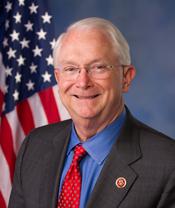 Rep. Randy Neugebauer (R-TX)
Legislative Activity
Stay on top of the latest movement without scrolling through every action
Received in the Senate and Read twice and referred to the Committee on Commerce, Science, and Transportation.
July 12, 2004
View full timeline
Introduced in House
March 17, 2004
Referred to the Committee on Science, and in addition to the Committee on Transportation and Infrastructure, for a period to be subsequently determined by the Speaker, in each case for consideration of such provisions as fall within the jurisdiction of the committee concerned.
March 17, 2004
Referred to the Subcommittee on Environment, Technology, and Standards.
March 19, 2004
Referred to the Subcommittee on Research.
March 19, 2004
Subcommittee Hearings Held.
March 24, 2004
Joint Hearing Held by Subcommittee on Environment, Technology, and Standards and by the Subcommittee on Research.
March 24, 2004
Joint Hearing Held by the Subcommittee on Research and by the Subcommittee on Environment, Technology, and Standards.
March 24, 2004
Subcommittee on Research Discharged.
March 29, 2004
Subcommittee on Environment, Technology, and Standards Discharged.
March 29, 2004
Committee Consideration and Mark-up Session Held.
March 31, 2004
Ordered to be Reported (Amended) by Voice Vote.
March 31, 2004
Mr. Boehlert asked unanimous consent that the Committee on Science, Space and Technology have until 4:00 p.m. on July 2 to file a report on H.R. 3980. Agreed to without objection.
June 25, 2004
Reported (Amended) by the Committee on Science. H. Rept. 108-575, Part I.
June 28, 2004
House Committee on Transportation Granted an extension for further consideration ending not later than June 28, 2004.
June 28, 2004
Committee on Transportation discharged.
June 28, 2004
Placed on the Union Calendar, Calendar No. 337.
June 28, 2004
Mr. Neugebauer moved to suspend the rules and pass the bill, as amended.
July 7, 2004 • 11:06 AM
Considered under suspension of the rules. (consideration: CR H5209-5214)
July 7, 2004 • 11:07 AM
DEBATE - The House proceeded with forty minutes of debate on H.R. 3980.
July 7, 2004 • 11:07 AM
At the conclusion of debate, the Yeas and Nays were demanded and ordered. Pursuant to the provisions of clause 8, rule XX, the Chair announced that further proceedings on the motion would be postponed.
July 7, 2004 • 11:37 AM
Considered as unfinished business. (consideration: CR H5347-5348)
July 8, 2004 • 12:17 PM
Passed/agreed to in House: On motion to suspend the rules and pass the bill, as amended Agreed to by the Yeas and Nays: (2/3 required): 387 - 26 (Roll no. 338).(text: CR 7/07/2004 H5209-5210)
July 8, 2004 • 12:25 PM
On motion to suspend the rules and pass the bill, as amended Agreed to by the Yeas and Nays: (2/3 required): 387 - 26 (Roll no. 338). (text: CR 7/07/2004 H5209-5210)
July 8, 2004 • 12:25 PM
Motion to reconsider laid on the table Agreed to without objection.
July 8, 2004 • 12:25 PM
Received in the Senate and Read twice and referred to the Committee on Commerce, Science, and Transportation.
July 12, 2004
Voting History
1 vote recorded • Roll call available
Floor Debate
20 membersWhat members said about H.R. 3980 on the floor

 +15
+15
Floor Debate
20 membersWhat members said about H.R. 3980 on the floor
Mr. Speaker, I move to suspend the rules and pass the bill (H.R. 3980) to establish a National Windstorm Impact Reduction Program, as amended. Mr. Speaker, I ask unanimous consent that all Members…
Mr. Speaker, had I been present for the following votes on Wednesday July 7, 2004, I would have voted as follows: Rollcall vote No. 329, I would have voted ``yea'' on the Flake Amendment, to prohibit…
Mr. Speaker, we need to defeat this rule so that I can offer an amendment to simply say that no committee in any year can spend more than $25,000 on just postage. That would be $50,000 a Congress.…
Mr. Speaker, I ask unanimous consent to take from the Speaker's table the bill (H.R. 2608) to reauthorize the National Earthquake Hazards Reduction Program, and for other purposes, with a Senate…
Mr. Speaker, by direction of the Committee on Rules, I call up House Resolution 707 and ask for its immediate consideration. Mr. Speaker, for the purpose of debate only, I yield the customary 30…
Show 8 more

Mr. Speaker, all I can say in response to the last comment is if the committees adhere more closely to the spirit of the rules of the House, maybe we will not tread so closely in questioning their…
Mr. Speaker, I thank the gentlewoman from New York for yielding me time. Mr. Speaker, I do want to say that I plan to vote for this bill, but there is no way I can support this rule. There were a…
Mr. Speaker, I yield myself such time as I may consume. I would like to thank the gentleman from New York (Mr. Boehlert) for following through on his promise to mark up legislation on windstorms in…
Mr. Speaker, first let me thank the gentleman from Texas, and I also want to thank the gentleman from Kansas (Mr. Moore), who has also worked awfully hard on this legislation. But I have to admit,…

Mr. Speaker, I rise in support of H.R. 3980 and applaud the gentleman from Texas (Mr. Neugebauer) and the gentleman from Kansas (Mr. Moore) for introducing it and getting it to the floor for passage…

Mr. Speaker, I rise in strong support of this bill, and I want to congratulate the gentleman from Texas (Mr. Neugebauer) for bringing this bill forward. Bills in this area have been proposed for many…

Mr. Speaker, I yield myself such time as I may consume. (Ms. SLAUGHTER asked and was given permission to revise and extend her remarks.) Mr. Speaker, I thank the gentleman from Georgia for yielding…
Mr. Speaker, I thank the gentleman for yielding me this time. Mr. Speaker, I rise in strong support of H.R. 3980. With the rain, wind, hail, and tornadoes that passed through West Texas last month…
Show 8 more

Mr. Speaker, I thank the gentleman for yielding me time. Mr. Speaker, I rise today in support of H.R. 3980, the National Windstorm Impact Reduction Act of 2004. In an average year, more than 1,000…

Mr. Speaker, let me thank my friend from New York for yielding me this time. Mr. Speaker, let me take this time just to express my disappointment with this rule and my opposition to it. I listen…
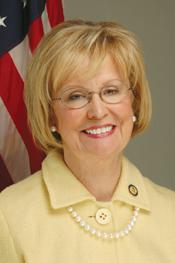
Mr. Speaker, I rise today to support H.R. 3890, the Steel and Aluminum Energy Conservation and Technology Competitiveness Act. I'd like to commend my colleague from Pennsylvania, Melissa Hart, for…
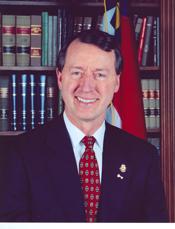
Mr. Speaker, I thank my friend for yielding me time. Mr. Speaker, I rise today in support of this National Windstorm Impact Reduction Act. This legislation will help us take great strides in reducing…
Mr. Speaker, I ask unanimous consent that the Committee on Science be allowed to file the following reports by 4:00 p.m. Friday, July 2: H.R. 4218, High Performance Computing Revitalization Act of…

Mr. Speaker, earlier today I attended the funeral of the Honorable John Stozich, former State representative and former mayor of my hometown of Findlay, Ohio. As a result, I was absent from the House…
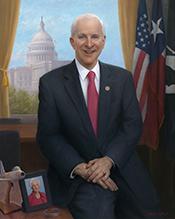
Mr. Speaker, on rollcall vote No. 338 I voted ``nay.'' It was my intention to vote ``yea.'' Therefore, I ask unanimous consent that this be noted in the Congressional Record.

Mr. Speaker, on rollcall No. 338 I was unavoidably detained. Had I been present, I would have voted ``yea.''
Bill Text
4 versions available
        [Congressional Bills 108th Congress]
[From the U.S. Government Publishing Office]
[H.R. 3980 Referred in Senate (RFS)]

2d Session
H. R. 3980

_______________________________________________________________________

IN THE SENATE OF THE UNITED STATES

July 12, 2004

Received; read twice and referred to the Committee on Commerce,
Science, and Transportation

_______________________________________________________________________

AN ACT

To establish a National Windstorm Impact Reduction Program.

Be it enacted by the Senate and House of Representatives of the
United States of America in Congress assembled,

SECTION 1. SHORT TITLE.

This Act may be cited as the ``National Windstorm Impact Reduction
Act of 2004''.

SEC. 2. FINDINGS.

The Congress finds the following:
(1) Hurricanes, tropical storms, tornadoes, and
thunderstorms can cause significant loss of life, injury,
destruction of property, and economic and social disruption.
All States and regions are vulnerable to these hazards.
(2) The United States currently sustains several billion
dollars in economic damages each year due to these windstorms.
In recent decades, rapid development and population growth in
high-risk areas has greatly increased overall vulnerability to
windstorms.
(3) Improved windstorm impact reduction measures have the
potential to reduce these losses through--
(A) cost-effective and affordable design and
construction methods and practices;
(B) effective mitigation programs at the local,
State, and national level;
(C) improved data collection and analysis and
impact prediction methodologies;
(D) engineering research on improving new
structures and retrofitting existing ones to better
withstand windstorms, atmospheric-related research to
better understand the behavior and impact of windstorms
on the built environment, and subsequent application of
those research results; and
(E) public education and outreach.
(4) There is an appropriate role for the Federal Government
in supporting windstorm impact reduction. An effective Federal
program in windstorm impact reduction will require interagency
coordination, and input from individuals, academia, the private
sector, and other interested non-Federal entities.

SEC. 3. DEFINITIONS.

In this Act:
(1) The term ``Director'' means the Director of the Office
of Science and Technology Policy.
(2) The term ``State'' means each of the States of the
United States, the District of Columbia, the Commonwealth of
Puerto Rico, the United States Virgin Islands, Guam, American
Samoa, the Commonwealth of the Northern Mariana Islands, and
any other territory or possession of the United States.
(3) The term ``windstorm'' means any storm with a damaging
or destructive wind component, such as a hurricane, tropical
storm, tornado, or thunderstorm.

SEC. 4. NATIONAL WINDSTORM IMPACT REDUCTION PROGRAM.

(a) Establishment.--There is established the National Windstorm
Impact Reduction Program (in this Act referred to as the ``Program'').
(b) Objective.--The objective of the Program is the achievement of
major measurable reductions in losses of life and property from
windstorms. The objective is to be achieved through a coordinated
Federal effort, in cooperation with other levels of government,
academia, and the private sector, aimed at improving the understanding
of windstorms and their impacts and developing and encouraging
implementation of cost-effective mitigation measures to reduce those
impacts.
(c) Interagency Working Group.--Not later than 90 days after the
date of enactment of this Act, the Director shall establish an
Interagency Working Group consisting of representatives of the National
Science Foundation, the National Oceanic and Atmospheric
Administration, the National Institute of Standards and Technology, the
Federal Emergency Management Agency, and other Federal agencies as
appropriate. The Director shall designate an agency to serve as Chair
of the Working Group and be responsible for the planning, management,
and coordination of the Program, including budget coordination.
Specific agency roles and responsibilities under the Program shall be
defined in the implementation plan required under subsection (e).
General agency responsibilities shall include the following:
(1) The National Institute of Standards and Technology
shall support research and development to improve building
codes and standards and practices for design and construction
of buildings, structures, and lifelines.
(2) The National Science Foundation shall support research
in engineering and the atmospheric sciences to improve the
understanding of the behavior of windstorms and their impact on
buildings, structures, and lifelines.
(3) The National Oceanic and Atmospheric Administration
shall support atmospheric sciences research to improve the
understanding of the behavior of windstorms and their impact on
buildings, structures, and lifelines.
(4) The Federal Emergency Management Agency shall support
the development of risk assessment tools and effective
mitigation techniques, windstorm-related data collection and
analysis, public outreach, information dissemination, and
implementation of mitigation measures consistent with the
Agency's all-hazards approach.
(d) Program Components.--
(1) In general.--The Program shall consist of three primary
mitigation components: improved understanding of windstorms,
windstorm impact assessment, and windstorm impact reduction.
The components shall be implemented through activities such as
data collection and analysis, risk assessment, outreach,
technology transfer, and research and development. To the
extent practicable, research activities authorized under this
Act shall be peer-reviewed, and the components shall be
designed to be complementary to, and avoid duplication of,
other public and private hazard reduction efforts.
(2) Understanding of windstorms.--Activities to enhance the
understanding of windstorms shall include research to improve
knowledge of and data collection on the impact of severe wind
on buildings, structures, and infrastructure.
(3) Windstorm impact assessment.--Activities to improve
windstorm impact assessment shall include--
(A) development of mechanisms for collecting and
inventorying information on the performance of
buildings, structures, and infrastructure in windstorms
and improved collection of pertinent information from
sources, including the design and construction
industry, insurance companies, and building officials;
(B) research, development, and technology transfer
to improve loss estimation and risk assessment systems;
and
(C) research, development, and technology transfer
to improve simulation and computational modeling of
windstorm impacts.
(4) Windstorm impact reduction.--Activities to reduce
windstorm impacts shall include--
(A) development of improved outreach and
implementation mechanisms to translate existing
information and research findings into cost-effective
and affordable practices for design and construction
professionals, and State and local officials;
(B) development of cost-effective and affordable
windstorm-resistant systems, structures, and materials
for use in new construction and retrofit of existing
construction; and
(C) outreach and information dissemination related
to cost-effective and affordable construction
techniques, loss estimation and risk assessment
methodologies, and other pertinent information
regarding windstorm phenomena to Federal, State, and
local officials, the construction industry, and the
general public.
(e) Implementation Plan.--Not later than 1 year after date of
enactment of this Act, the Interagency Working Group shall develop and
transmit to the Congress an implementation plan for achieving the
objectives of the Program. The plan shall include--
(1) an assessment of past and current public and private
efforts to reduce windstorm impacts, including a comprehensive
review and analysis of windstorm mitigation activities
supported by the Federal Government;
(2) a description of plans for technology transfer and
coordination with natural hazard mitigation activities
supported by the Federal Government;
(3) a statement of strategic goals and priorities for each
Program component area;
(4) a description of how the Program will achieve such
goals, including detailed responsibilities for each agency; and
(5) a description of plans for cooperation and coordination
with interested public and private sector entities in each
program component area.
(f) Biennial Report.--The Interagency Working Group shall, on a
biennial basis, and not later than 180 days after the end of the
preceding 2 fiscal years, transmit a report to the Congress describing
the status of the windstorm impact reduction program, including
progress achieved during the preceding two fiscal years. Each such
report shall include any recommendations for legislative and other
action the Interagency Working Group considers necessary and
appropriate. In developing the biennial report, the Interagency Working
Group shall consider the recommendations of the Advisory Committee
established under section 5.

SEC. 5. NATIONAL ADVISORY COMMITTEE ON WINDSTORM IMPACT REDUCTION.

(a) Establishment.--The Director shall establish a National
Advisory Committee on Windstorm Impact Reduction, consisting of not
less than 11 and not more than 15 non-Federal members representing a
broad cross section of interests such as the research, technology
transfer, design and construction, and financial communities; materials
and systems suppliers; State, county, and local governments; the
insurance industry; and other representatives as designated by the
Director.
(b) Assessment.--The Advisory Committee shall assess--
(1) trends and developments in the science and engineering
of windstorm impact reduction;
(2) the effectiveness of the Program in carrying out the
activities under section 4(d);
(3) the need to revise the Program; and
(4) the management, coordination, implementation, and
activities of the Program.
(c) Biennial Report.--At least once every two years, the Advisory
Committee shall report to Congress and the Interagency Working Group on
the assessment carried out under subsection (b).
(d) Sunset Exemption.--Section 14 of the Federal Advisory Committee
Act shall not apply to the Advisory Committee established under this
section.

SEC. 6. SAVINGS CLAUSE.

Nothing in this Act supersedes any provision of the National
Manufactured Housing Construction and Safety Standards Act of 1974. No
design, construction method, practice, technology, material, mitigation
methodology, or hazard reduction measure of any kind developed under
this Act shall be required for a home certified under section 616 of
the National Manufactured Housing Construction and Safety Standards Act
of 1974 (42 U.S.C. 5415), pursuant to standards issued under such Act,
without being subject to the consensus development process and
rulemaking procedures of that Act.

SEC. 7. AUTHORIZATION OF APPROPRIATIONS.

(a) Federal Emergency Management Agency.--There are authorized to
be appropriated to the Federal Emergency Management Agency for carrying
out this Act--
(1) $8,700,000 for fiscal year 2006; and
(2) $9,400,000 for fiscal year 2007.
(b) National Science Foundation.--From sums otherwise authorized to
be appropriated, there are authorized to be appropriated to the
National Science Foundation for carrying out this Act--
(1) $8,700,000 for fiscal year 2006; and
(2) $9,400,000 for fiscal year 2007.
(c) National Institute of Standards and Technology.--From sums
otherwise authorized to be appropriated, there are authorized to be
appropriated to the National Institute of Standards and Technology for
carrying out this Act--
(1) $3,000,000 for fiscal year 2006; and
(2) $4,000,000 for fiscal year 2007.
(d) National Oceanic and Atmospheric Administration.--From sums
otherwise authorized to be appropriated, there are authorized to be
appropriated to the National Oceanic and Atmospheric Administration for
carrying out this Act--
(1) $2,100,000 for fiscal year 2006; and
(2) $2,200,000 for fiscal year 2007.

SEC. 8. BIENNIAL REPORT.

Section 37(a) of the Science and Engineering Equal Opportunities
Act (42 U.S.C. 1885d(a)) is amended by striking ``By January 30, 1982,
and biennially thereafter'' and inserting ``By January 30 of each odd-
numbered year''.

Passed the House of Representatives July 7, 2004.

Attest:

JEFF TRANDAHL,

Clerk.