To reauthorize the Tropical Forest Conservation Act of 1998 through fiscal year 2007, and for other purposes.
Legislative Activity
Stay on top of the latest movement without scrolling through every action
Became Public Law No: 108-323.
October 6, 2004
View full timeline
Introduced in House
June 23, 2004
Referred to the House Committee on International Relations.
June 23, 2004
Sponsor introductory remarks on measure. (CR E1225)
June 24, 2004
Committee Consideration and Mark-up Session Held.
June 24, 2004
Reported by the Committee on International Relations. H. Rept. 108-603.
July 14, 2004
Placed on the Union Calendar, Calendar No. 362.
July 14, 2004
Ms. Ros-Lehtinen moved to suspend the rules and pass the bill.
September 7, 2004 • 2:57 PM
Considered under suspension of the rules. (consideration: CR H6722-6724)
September 7, 2004 • 2:57 PM
DEBATE - The House proceeded with forty minutes of debate on H.R. 4654.
September 7, 2004 • 2:57 PM
Passed/agreed to in House: On motion to suspend the rules and pass the bill Agreed to by voice vote.(text: CR H6722)
September 7, 2004 • 3:13 PM
On motion to suspend the rules and pass the bill Agreed to by voice vote. (text: CR H6722)
September 7, 2004 • 3:13 PM
Motion to reconsider laid on the table Agreed to without objection.
September 7, 2004 • 3:13 PM
Received in the Senate and Read twice and referred to the Committee on Foreign Relations.
September 8, 2004
Senate Committee on Foreign Relations discharged by Unanimous Consent.(consideration: CR S9864)
September 28, 2004
Senate Committee on Foreign Relations discharged by Unanimous Consent. (consideration: CR S9864)
September 28, 2004
Passed Senate without amendment by Unanimous Consent.
September 28, 2004
Message on Senate action sent to the House.
September 29, 2004
Presented to President.
September 30, 2004
Signed by President.
October 6, 2004
Became Public Law No: 108-323.
October 6, 2004
Floor Debate
24 membersWhat members said about H.R. 4654 on the floor
 JB
JB EBJ
EBJ JK
JK SJLRP+19
Floor Debate
24 membersWhat members said about H.R. 4654 on the floor
Mr. Speaker, I yield myself such time as I may consume. First, Mr. Speaker, I want to say I have nothing but the highest personal regard for the gentlewoman from Texas who is offering this motion to…
Mr. Speaker, I yield myself such time as I may consume.
First, Mr. Speaker, I want to say I have nothing but the highest personal regard for the gentlewoman from Texas who is offering this motion to instruct conferees. She and I have served together in this body for, I think, approximately 11 years; and we have worked together on many, many issues and spent many, many moments together in very positive dialogue, and I appreciate her bringing this issue to the floor. My objection to the resolution is based on the policy, not on the person who is bringing the resolution.
I do rise in opposition, respectfully, to the Johnson motion to instruct. To put it in the simplest terms, the issue before us today is not whether any Member of this body does not want the cleanest air possible for our citizens; the issue is whether we want to apply common sense to the Clean Air Act and to codify Clinton administration policy that was explicitly designed to avoid what the EPA, under the Clinton administration back in 1994, called an odd or even absurd result that penalizes an area for pollution that is beyond their ability to control.
Let me put this in language that everybody can understand. The Clean Air Act amendments of 1990 categorized in a more definitive way ozone as a pollutant that needed to be regulated, and it set standards. It is the only pollutant in the act that has gradations of standards. For the other controlled pollutants, it is kind of an in or out, yes or no, pass or fail. But for ozone, it has different levels, from very moderate to very severe; and each of the levels has a different standard and a different timeline for compliance.
I am an author of the Clean Air Act amendments. I spoke for them on the floor. I helped to work to put the bill together in the committee. So I have some personal history in this issue.
As the Clean Air Act amendments of 1990 were being implemented, it became apparent that there were many regions of this country that were trying to comply; but because there were other areas down wind from them that had a different timetable and a different compliance criteria, it was making it difficult for some of these regions to comply in the technical sense with the act. So the Clinton administration came up with a proposal that said, we will show some flexibility. If, in fact, you have a State implementation plan that has been approved or is in the process of being approved and if, in fact, it looks like you are making a good-faith effort to come into compliance, we will give you an extension if we think it is meritorious and the reason that you need the extension is because there is another region that is not in compliance that is transporting their ozone pollution to you. That is common sense. There is nothing wrong with that.
I want to put into the Record at this point in time, Mr. Speaker, the 1994 Clinton administration policy that was contained in a memorandum signed by then-Assistant Administrator for Air and Radiation, Mary Nichols. This memorandum attempted to reconcile the conflicting provisions of the Clean Air Act and to give effect to as much of Congress' manifest intent as possible. I also want to put into the Record the 1998 Clinton administration policy on this issue that was actually published in the Federal Register.
Environmental Protection Agency
Extension of Attainment Dates for Downwind Transport Areas
Agency: Environmental Protection Agency (EPA).
Action: Proposed interpretation; request for comments.
Summary: Today's notice announces EPA's interpretation of
the Clean Air Act (Act) regarding the possibility of
extending attainment dates for ozone nonattainment areas that
have been classified as moderate or serious for the 1-hour
standard and which are downwind of areas that have interfered
with their ability to demonstrate attainment by dates
prescribed in the Act. The guidance memorandum that is being
printed in today's notice is entitled ``Extension of
Attainment Dates for Downwind Transport Areas'' and was
signed by Richard D. Wilson, Acting Assistant Administrator
for Air and Radiation, on July 16, 1998. This notice follows
up on the statement made in the guidance memorandum that EPA
would request comments on its interpretation.
A number of areas may find themselves facing the prospect
of being reclassified or ``bumped up'' to a higher
classification in spite of the fact that pollution beyond
their control contributes to the levels of ozone they
experience. The notice addresses the problem by providing an
avenue to extend the attainment dates for areas affected by
transported pollution. The EPA intends to finalize the
interpretation in this guidance only when it applies in the
appropriate context of individual rulemakings addressing
specific attainment demonstrations and requests for
attainment date extensions. If EPA approves an area's
attainment demonstration and attainment date extension
request, the area would no longer be subject to bump up for
failure to attain by its original attainment date.
Dates: The EPA is establishing an informal 30-day comment
period for today's notice, ending on [insert date 30 days
after date of publication in the Federal Register].
Addresses: Documents relevant to this action are available
for inspection at the Air and Radiation Docket and
Information Center (6101), Attention: Docket No. A-98-47, US
Environmental Protection Agency, 401 M Street, SW, Room M-
1500, Washington, DC 20460, telephone (202) 260-7548, between
8 a.m. and 4 p.m., Monday through Friday, excluding legal
holidays. A reasonable fee may be charged for copying.
Written comments should be submitted to this address.
For Further Information Contact: Denise Gerth, Air Quality
Strategies and Standards Division, Office of Air Quality
Planning and Standards, US Environmental Protection Agency,
MD-15, Research Triangle Park, NC 27711, telephone (919) 541-
5550.
Supplementary Information: On July 16, 1998, the following
guidance was issued by Richard Wilson, Acting Assistant
Administrator for Air and Radiation. It should be noted that
the July 16, 1998 memorandum reprinted in this notice refers
to EPA's proposed NOx SIP call. After the
memorandum was signed, EPA took final action on the SIP call
and promulgated a final rule. See 63 FR 57356 (October 27,
1998).
Guidance on extension of attainment dates for downwind transport areas
Preface
The purpose of this guidance is to set forth EPA's current
views on the issues discussed herein. EPA intends soon to set
out its interpretation in an advance notice of proposed
rulemaking on which the Agency will take comment.
While EPA intends to proceed under the guidance that it is
setting out today, the Agency will finalize this
interpretation only when it applies in the appropriate
context of individual rulemakings addressing specific
attainment demonstrations. At that time and in that context,
judicial review of EPA's interpretation would be available.
Introductory Summary
A number of areas in the country that have been classified
as moderate or serious nonattainment areas for the 1-hour
ozone standard are affected by pollution transported from
upwind areas. For these downwind areas, transport from upwind
areas has interfered with their ability to demonstrate
attainment by the dates prescribed in the Clean Air Act
(Act). As a result, many of these areas find themselves
facing the prospect of being reclassified, or ``bumped
up,'' to a higher nonattainment classification in spite of
the fact that pollution that is beyond their control
contributes to the levels of ozone they experience. In the
policy being issued today, EPA is addressing this problem
by planning to extend the attainment date for an area that
is affected by transport from either an upwind area with a
later attainment date or an upwind area in another State
that significantly contributes to downwind nonattainment,
as long as the downwind area has adopted all necessary
local measures, and has submitted an approvable attainment
plan to EPA which includes those local measures. (By
``affected by transport,'' EPA means an area whose air
quality is affected by transport from an upwind area to a
degree that affects the area's ability to attain.) EPA
intends to initiate rulemaking for each area seeking such
relief and contemplates providing such relief to those who
qualify. If after consideration of public comments EPA
acts to approve an area's attainment demonstration and
extend its attainment date, the area will no longer be
subject to reclassification or ``bump-up'' for failure to
attain by its otherwise applicable attainment date.
Background
The Act may be interpreted to allow a later attainment date
than generally applicable to a particular ozone nonattainment
area if transport of ozone or its precursors (nitrogen oxides
(NOX) and volatile organic compounds (VOCs))
prevents timely attainment. This principle has already been
advanced in EPA's Overwhelming Transport Policy, which
allowed a downwind area to assume the later attainment date
if it could meet certain criteria, including a demonstration
that it would have attained ``but for'' transport from an
upwind nonattainment area with a later attainment date. See
Memorandum from Mary D. Nichols, Assistant Administrator for
Air and Radiation, entitled, ``Ozone Attainment Dates for
Areas Affected by Overwhelming Transport,'' September 1,
1994. In the four years since the issuance of that
memorandum, the history of the efforts to analyze and control
ozone transport has led EPA to believe that it should expand
the policy's reach to ensure that downwind areas are not
unjustly penalized as a result of transport.
In March 1995, EPA called for a collaborative, Federal-
State process for assessing the regional ozone transport
problem and developing solutions, and the Ozone Transport
Assessment Group (OTAG) was subsequently formed. See
Memorandum from Mary D. Nichols, Assistant Administrator for
Air and Radiation, entitled ``Ozone Attainment
Demonstrations,'' March 2, 1995. The OTAG was an informal
advisory committee with representatives from EPA, thirty-
seven states in the Midwestern and eastern portions of the
country, and industry and environmental groups. OTAG's major
functions included developing computerized modeling analyses
of the impact of various control measures on air quality
levels throughout the region and making recommendations as to
the appropriate ozone control strategy. Based on OTAG's
modeling analyses, it developed recommendations concerning
control strategies. These recommendations, issued in mid-
1997, called upon EPA to calculate the specific reductions
needed from upwind areas.
In November 1997, using OTAG's technical work, EPA issued a
proposed NOX State implementation plan (SIP) call,
directing certain States to revise their SIPs in order to
satisfy section 110(a)(2)(D) by reducing emissions of
NOX to specified levels, which in turn will reduce
the amounts of ozone being transported into nonattainment
areas from upwind areas. 62 FR 60318 (November 7, 1997). In
July 1997, the EPA promulgated a revised 8-hour ozone NAAQS.
62 FR 38856 (July 18, 1997). That promulgation included
regulations providing that the 1-hour NAAQS would be phased
out, and would not longer apply to an area once EPA
determined that the area had air quality meeting the 1-hour
standard. 40 CFR section 50.9(b). Until the 1-hour standard
is revoked for a particular area, the area must continue to
implement the requirements aimed at attaining that standard.
The Current Problem
The Act called on areas classified as moderate ozone
nonattainment areas to submit SIPs that demonstrate
attainment by 1996 (unless they receive an extension), and
called on serious nonattainment areas to demonstrate
attainment by November 1999 (unless they receive an
extension). Section 181 and 182(b) and (c). For many of these
areas, EPA has preliminary determined in the proposed SIP
call that transport from upwind areas is contributing to
their nonattainment problems. Such transport also appears to
be interfering with their ability to demonstrate attainment
by the statutory attainment dates.
The graduated control scheme in sections 181 and 182 of the
Act expressed Congress's intent that areas be assigned
varying attainment dates, depending upon the severity of the
air quality problem they confront. Sections 181 and 182
provide for attainment ``as expeditiously as practicable,''
but establish later deadlines for attainment in more polluted
areas, and additional control measures that the more polluted
areas must accomplish over the longer time frame. Thus, many
of the upwind areas have later attainment dates than the
downwind areas which are affected by emissions from the
upwind States. On the other hand, section 110(a)(2)(D)(i)(I)
of the Act requires SIPs to prohibit ``consistent with the
other provisions of [title I],'' emissions which will
``contribute significantly to nonattainment in . . . any
other State.'' The EPA interprets section 110(a)(2)(A) to
incorporate the same requirement in the case of intrastate
transport. Sections 176A and 184 provide for regional ozone
transport commissions that may recommend that EPA mandate
additional regional control measures to allow
areas to reach timely attainment in accordance with section
110(a)(2)(D)(i)(I).
These provisions demonstrate Congressional intent that
upwind areas be responsible for preventing interference with
timely downwind attainment. They must be reconciled with
express Congressional intent that more polluted areas be
allotted additional time to attain. As EPA pointed out in its
overwhelming transport policy, Congress does not explicitly
address how these provisions are to be read together to
resolve the circumstances where more polluted upwind areas
interfere with timely attainment downwind, during the time
provided for those upwind areas to reduce their own
emissions.
In the 1994 overwhelming transport policy, EPA stated that
it would harmonize these provisions to avoid arguably absurd
or odd results and to give effect to as much of Congress'
manifest intent as possible. The EPA struck a balance in the
overwhelming transport policy by requiring that the upwind
and downwind areas reduce their contribution to the
nonattainment problem while avoiding penalizing the downwind
areas for failure to do the impossible.
In the 1994 policy, EPA reasoned that Congress did not
intend the section 110(a)(2)(D)(i)(I) obligation to supersede
the practicable attainment deadlines and graduated control
scheme in sections 181 and 182, especially since section
110(a)(2)(D)(i)(I) specifically applies only ``to the extent
consistent with the provisions of (title I).'' The same
rationale applies in the intrastate context under section
110(a)(2)(A).
Developments since the issuance of the overwhelming
transport policy in 1994 have prompted EPA once again to
interpret these provisions so that they can be reconciled in
light of existing circumstances. Since the issuance of that
policy, EPA and the States, through OTAG, have made
significant progress in addressing interstate transport in
the eastern United States, and have worked to analyze the
flow of transport and to allocate among the States their
respective responsibilities for control. During the period
required for this effort, which took longer than was
anticipated, the resolution of the regional transport issue
was held in abeyance. The effort to address regional
transport recently resulted in EPA's proposed NOX
SIP call, expected to be finalized in the next few months.
For areas in the OTAG region affected by transport, the
conclusion of the OTAG and SIP call processes in September
1998 will result in assignments of responsibility that will
assist in the design of SIPs and the formation and
implementation of attainment demonstrations.
Because EPA had not previously determined how much to
require upwind States in the OTAG region to reduce transport,
downwind areas were handicapped in their ability to determine
the amounts of emissions reductions needed to bring about
attainment. While operating in this environment of
uncertainty, many of these downwind areas confronted near-
term attainment dates. Moreover, as described in the
NOX SIP call proposal, the reductions from the
proposed NOX SIP call will not likely be achieved
until at least 2002, well after the attainment dates for many
of the downwind nonattainment areas that depend on those
reductions to help reach attainment.
The Solution
The EPA believes that a fair reading of the Act would allow
it to take these circumstances into account to harmonize the
attainment demonstration and attainment date requirements for
downwind areas affected by transport both with the graduated
attainment date scheme and the schedule for achieving
reductions in emissions from upwind areas. Thus, EPA will
consider extending the attainment date for an area that:
(1) has been identified as a downwind area affected by
transport from either an upwind area in the same State with a
later attainment date or an upwind area in another State that
significantly contributes to downwind nonattainment. (By
``affected by transport,'' EPA means an area whose air
quality is affected by transport from an upwind area to a
degree that affects the area's ability to attain);
(2) has submitted an approvable attainment demonstration
with any necessary, adopted local measures and with an
attainment date that shows that it will attain the 1-hour
standard no later than the date that the reductions are
expected from upwind areas under the final NOX SIP
call and/or the statutory attainment date for upwind
nonattainment areas, i.e., assuming the boundary conditions
reflecting those upwind reductions;
(3) has adopted all applicable local measures required
under the area's current classification and any additional
measures necessary to demonstrate attainment, assuming the
reductions occur as required in the upwind areas. (To meet
section 182(c)(2)(B), serious areas would only need to
achieve progress requirements until their original attainment
date of November 15, 1999);
(4) has provided that it will implement all adopted
measures as expeditiously as practicable, but no later than
the date by which the upwind reductions needed for attainment
will be achieved.
EPA contemplates that when it acts to approve such an
area's attainment demonstration, it will, as necessary,
extend that area's attainment date to a date appropriate for
that area in light of the schedule for achieving the
necessary upwind reductions. The area would no longer be
subject to reclassification or ``bump-up'' for failure to
attain by its original attainment date under section
181(b)(2).
Legal Rationale
The legal basis for EPA's interpretation of the attainment
date requirements employs and updates the rationale invoked
in the Agency's overwhelming transport policy. By filling a
gap in the statutory framework, EPA's interpretation
harmonizes the requirements of sections 181 and 182 with the
Act's requirements (sections 110(a)(2)(D)(i)(I),
110(a)(2)(A), 176A and 184) on inter-area transport. It
reconciles the principle that upwind areas are responsible
for preventing interference with downwind attainment with the
Congressional intent to provide longer attainment periods for
areas with more intractable air pollution problems. It also
takes into account the amount of time it will take to achieve
emission reductions in upwind areas under the NOX
SIP call, which EPA expects to finalize in September 1998.
The EPA's resolution respects the intent of sections 181
and 182 to provide longer attainment dates for areas burdened
with more onerous air pollution problems, while allowing
reductions from upwind areas to benefit the downwind areas.
Under EPA's interpretation, upwind areas will be required to
reduce emissions to control transport, but should not find
that the requirements imposed upon them amount to an
acceleration of the time frames Congress envisioned for
these areas in sections 181 and 182. Downwind areas will
be provided additional time to accommodate the delayed
control contributions from upwind areas, while at the same
time being held accountable for all measures required to
control local sources of pollution.
The EPA's interpretation of the Act allows it to extend
attainment dates only for those areas which are prevented
from achieving timely attainment due to a demonstrated
transport problem from upwind areas, and which submit
attainment demonstrations and adopt local measures to address
the pollution that is within local control. The EPA believes
that Congress, had it addressed this issue, would not have
intended downwind areas to be penalized by being forced to
compensate for transported pollution by adopting measures
that are more costly and onerous and/or which will become
superfluous once upwind areas reduce their contribution to
the pollution problem.
This interpretation also recognizes that downwind areas in
the OTAG region have been operating in a climate of
uncertainty as to the allocation of responsibility for
controlling transported pollution. Section 110(a)(2)(D) is
not self-executing and, until the NOX SIP call
rulemaking, downwind areas in the OTAG region could not
determine what boundary conditions they should assume in
preparing attainment demonstrations and determining the
sufficiency of local controls to bring about attainment. By
allowing these areas to assume the boundary conditions
reflecting reductions set forth in the NOX SIP
call and/or reductions from the requirements prescribed for
upwind nonattainment areas under the Act, EPA will hold
upwind areas responsible for reducing emissions of
transported pollution, and downwind areas will be obligated
to adopt and implement local controls that would bring about
attainment but for the transported pollution.
The EPA's interpretation harmonizes the disparate
provisions of the Act. It avoids accelerating the obligations
of the upwind States so that downwind States can meet earlier
attainment dates, which would subvert Congressional intent to
allow upwind areas with more severe pollution longer
attainment time frames to attain the ozone standards. In
addition, EPA's interpretation of the Act takes into account
the fact that, under the SIP call, upwind area reductions
will not be achieved until after the attainment dates for
moderate and serious ozone nonattainment areas. To refuse to
interpret the Act to accomplish this would unduly penalize
downwind areas by requiring them to compensate for the
transported pollution that will be dealt with by controls
adopted in response to the requirements of the NOX
SIP call or to achieve attainment in an upwind area. The EPA
is thus interpreting the requirements to allow the Agency to
grant an attainment date extension to areas that submit their
attainment demonstrations and all adopted measures necessary
locally to show attainment. This solution preserves the
responsibility of these downwind areas to prepare attainment
demonstrations and adopt measures, but does not penalize them
for failing to achieve timely attainment by reclassifying
them upwards, since such attainment was foreclosed by
transport beyond their control.
Under this policy, once EPA has acted to approve the
attainment demonstration and extend the area's attainment
date, the area would no longer be subject to reclassification
or ``bump-up'' for failure to attain by its original
attainment date under section 181(b)(2).
The EPA requests comment on the interpretation in the
guidance memorandum reprinted above.
Robert Perciasepe,
Assistant Administrator
for Air and Radiation.
Mr. Speaker, this policy built upon the 1994 statutory interpretation memorandum that we have just put into the Record. And it indicated that the EPA considered its bump-up policy to be a fair reading of the act.
Now, what happened after this 1994 memorandum and the 1998 Federal Register, no Member of Congress complained about that. There was no group of citizens that came to the Congress and complained about the Clinton administration proposal. But what did happen was that in 2002, the Sierra Club filed three different lawsuits in three different regions, one of them here in the D.C. Circuit, one in the 5th Circuit, and one in the 7th Circuit, and they really did not argue against the policy of flexibility. They simply said the Clean Air Act did not give the EPA that authority. It was a very technical argument. And, to their credit, the Sierra Club's argument was upheld by the courts. The courts said, ``We have read the Clean Air Act and it is ambiguous. And since it is ambiguous, we have to say no to flexibility because it does not explicitly state there can be flexibility.'' That was in 2002. Those were lawsuits filed by the Sierra Club that went to court.
So we now fast forward to 2003. The gentleman from Louisiana (Mr. Tauzin), the distinguished chairman of the full committee, and the gentleman from Michigan (Mr. Upton), a member of the Committee on Energy and Commerce, all worked with me and other members of the committee on a bipartisan basis. We passed the most comprehensive energy legislation this Congress has seen back in April, April 11, I believe, on the floor of the House.
We, at that time, had not had time to study the effect of the court ruling. We had not had time to put together a hearing on this issue. But we did in July. In July we had a hearing in my subcommittee. We had a number of witnesses testify, and, with one or two exceptions, everybody who testified said this policy of flexibility is a good idea. We should allow it.
Democrats, my good friend from Houston, the gentleman from Texas (Mr. Green), my friend from Beaumont, the gentleman from Texas (Mr. Lampson), my friend from Crockett, the gentleman from Texas (Mr. Turner), they all came and brought some of their constituents who testify or put testimony into the Record that said flexibility is good.
So as we went to conference with the other body, after consultation with the minority leadership of the Committee on Energy and Commerce, we put this in.
Mr. Speaker, I yield to the gentlewoman from Texas (Ms. Eddie Bernice Johnson).
Mr. Speaker, I thank my good friend, the gentlewoman from Texas (Ms. Eddie Bernice Johnson), and I will continue to yield to her because I think we should have a dialogue, but what I am trying to point out is this is a commonsense policy that we have put in or are attempting to put into the energy conference with the other body. Because there is a lot of support for it and it gives the flexibility, if the local region needs it. Everything in it is based on a transport issue, and if the EPA says that it will help. That is all it does.
Mr. Speaker, I will be happy to yield.
Mr. Speaker, I yield to the gentlewoman from Texas (Ms. Eddie Bernice Johnson).
Mr. Speaker, if I may reclaim my time to respond briefly. This is not about changing the goal post at all. The same standard is in effect. We are not changing the standard. We are simply saying if they are trying to comply, and one of the reasons they are not in technical compliance is because of an ozone transport issue outside of their control area, they have the flexibility to ask for an extension. And the EPA has the right to grant that extension. But if the EPA does, it cannot grant an extension that is any longer than in the noncompliant area that is causing the transport issue.
Mr. Speaker, I yield to the gentleman from Michigan (Mr. Upton).
Mr. Speaker, I will reserve the balance of my time.
Mr. Speaker, could I inquire of the time on each side right now?
Mr. Speaker, I would like to yield 2\1/2\ minutes to the gentleman from Houston, Texas, (Mr. Green), a member of the committee and the subcommittee.
Mr. Speaker, will the gentleman yield?
If we had a finalized version of the text, I would certainly share it with the gentleman. We do not yet have a finalized version. I can tell the gentleman the substance of it and would be happy to do that; but I myself do not have a hard copy of it because we have not finalized the negotiations with the other body.
Mr. Speaker, I yield myself such time as I may consume.
Mr. Speaker, I would like to try to answer my good friend's question. Before I do that, I want to put into the Record the witness list for the subcommittee hearing on July 22, 2003, that I believe the gentleman from Maine (Mr. Allen) attended, if I am not mistaken. My recollection is that he was there.
We had 10 witnesses headed by the Honorable Jeffrey Holmstead, who is the assistant administrator for the air and radiation office of the Environmental Protection Agency.
We had nine witnesses that were State and local witnesses. We had a fair panel. Of the nine State and local witnesses, my recollection is that five or six supported this proposal and that three did not. There may be one of the six that I count as a supporter that was kind of 50/ 50 on it.
What the pending proposal with the other body would do is simply and very narrowly in the States that are part of the agreement with the EPA on NOx, and there are 17 States, most of them east of the Mississippi, if those States have a State implementation plan approved or in the process of being approved and they can show that one of the reasons they may not be in compliance is because of ozone transport, they can ask for an extension. The EPA has the discretion to grant the extension; but if the EPA does grant the extension, it can only grant it forward to the compliant date where the ozone transport is originating from, if that makes sense. It is purely discretionary on asking for the extension. It is purely discretionary on granting the extension.
The extension can only be granted for ozone transport. It is an attempt to codify the Clinton administration's proposal that was put in the Federal Register in 1998.
I yield to the gentleman from Maine.
Let me call a time out if that is possible.
It does not require additional implementation control measures, but it would require that they could file an addendum to the SIP that would do that.
Reclaiming my time, Mr. Speaker, I want to comment on what might happen if a region is not granted an extension.
The courts have ruled in these court cases that if the EPA is not allowed to give some discretion in terms of meeting the timeline and if that region does not look like it is going to be in compliance, it is automatically bumped up to the next highest attainment, nonattainment category.
There are five nonattainment categories in the Clean Air Act. The least nonattainment is called marginal. Their design parameter is between 121 parts per billion for ozone and 138 parts per billion. You go to moderate which is 138 parts per billion to 160. You go to serious .160 to .180. And you go to severe which is 180 parts per billion to 190 parts per billion, and anything above that is extreme. And if you do not have the flexibility to give an extension, and if the region cannot show that it will be in compliance by that specific deadline, EPA has to bump them up in the next higher nonattainment area.
And we might ask ourselves, well, so what? So we are bumped up from serious to severe, from moderate to serious. No big deal. Well, it actually is a big deal because as we go into the more severe nonattainment criteria, the things that have to be done, there is no discretion on that. For example, if you apply for a permit to perhaps build a new factory to provide new jobs, you have to show that there is a two to one offset.
In other words, you have to shut down two tons of pollution for each new ton that the new factory would provide. You almost bring to a halt any highway funding in the area. And in the DFW area that the gentlewoman and I share representation with, those
highway funds on an annual basis or order of magnitude are around $600 million just in Dallas and Tarrant County.
Any new source that is over 25 tons per year has to get a special permit, and 25 tons per year is not a large amount of emissions. And it is possible that the Federal Government can come in and just take over the entire State implementation.
Now, there are some that may think that those are all well and good; but most of this body I would postulate would say, would it not be better to give the region some flexibility to ask for an extension and would it not be better to give the EPA the authority if they felt it was in order to give the extension. That is the question. And again, we are not changing the standards; we are not changing the 125 part per billion standard for ozone. We are not maintaining that at all. We are not changing the criteria for being classified from marginal to extreme. We are not changing that at all. We are not changing the general attainment dates that go back in the statute to 1990. We are simply saying flexibility and discretion are a good thing, not a bad thing.
Mr. Speaker, I reserve the balance of my time.
Mr. Speaker, if she is about to close, I have some more comments, and she does have the right to close. Would she allow me to speak and then she could close the debate?
Mr. Speaker, how much time do I have left?
Mr. Speaker, I yield myself such time as I may consume.
I do not want to belabor the debate. Let me just in summary, before the gentlewoman closes, point out that while the gentlewoman is from the Dallas-Fort Worth area, and I am also, this is not a local Dallas- Fort Worth issue. These court cases were brought in three different circuit courts, one of which is the District of Columbia here in Washington, D.C., the 5th circuit and the 7th circuit. So this is a national issue.
Regions that are affected immediately by these court cases do include the Beaumont-Port Arthur area, Dallas-Fort Worth area. So there are two areas in Texas but we also have St. Louis, Missouri; Atlanta, Georgia; Washington, D.C.; greater Connecticut; and Baton Rouge, Louisiana. Those are the cases that we know of, the State implementation plans that were pending that have been stayed by these are affected by these court rulings. So this is not just a Texas issue or just a Dallas-Fort Worth issue. This is a national issue.
The second thing that I would point out is that we are not affecting the standard, the national standard of 120 parts per billion, but let me say on that, when the gentlewoman from Dallas indicates that she has constituents that are affected by ozone and, as she called it, by the dirty area, so do I.
I am slightly asthmatic. My son is, I would say, moderately to severely asthmatic. I have done a lot on the floor of this body to try to help asthmatics. I am the cofounder, along with Senator Kennedy in the other body and the gentlewoman from New York (Mrs. Lowey), of Asthma Awareness Day. Back before it was politically correct to be talking about asthma, in some earlier Congresses, I was one of the handful of sponsors of the Asthma Act back in the 105th Congress. I was one of only three sponsors of H.R. 4654. In the 106th Congress, I was one of only four sponsors of H.R. 1965. I am still a leader of the Asthma Awareness Day that we have had every year in the Congress for the last 8 years I think.
So we are not trying to say it is not a problem, but there are some people in our society, when they set these standards for ozone, that we could take ozone to background levels, five parts per billion, six parts per billion like we have in Atlanta, Georgia, and there would still be some asthmatics that were negatively affected.
The other pollutants that are regulated under the Clean Air Act, in every case there was some sort of a bright line test, and again, it is not the different categories. It is yes or no. For lead, yes or no. For SO2, yes or no. For NOx, yes or no. But for ozone, it is not a yes or no, and there is wide scientific debate about where to set the standard.
Having said that, we could set the standard at a level that only the Supreme Being of the universe could meet, and we would still have some people that would be negatively affected. So when we get into the debate about parts per billion and number of days they are out of compliance, 3 days in a 3-year period is okay, but 4 days in a 3-year period is not if they exceed it by one part per billion, then I think discretion is advisable, and I think flexibility is advisable. And I think the pending House position with the other body on the energy conference report is a very defensible, not only defensible, it is a very useful provision, and I would hope, if the gentlewoman insists on a record vote, that we would vote against her motion to instruct, not because it is not well-intentioned, not because she is not well- meaning, but because it actually would, in many ways, I think, hurt the effort to clean the air because of the arbitrariness of the way the courts have ruled under the current Clean Air Act.
Mr. Speaker, I yield back the balance of my time.
Mr. Speaker, will the gentlewoman yield?
Mr. Speaker, I know she has the right to close, but she made a characterization about my district, and at the appropriate time, I would like to respond to that. I do not mean to interrupt her, but if she would yield to me some time.
Mr. Speaker, I will put into the Record data by the Texas Environmental Air Quality Commission that shows the monitoring in Ellis County has not exceeded one time the standard, not one time. Now, there are monitors in Arlington, Texas, that have, and that is also in my district, but if a reference is to Ellis County, the data shows that there have not been any exceedences. I do not know which part of my district she was referring to, but if it is Ellis County, we are okay in Ellis County. If it is part of Arlington that I represent, then we have had an exceedence.
The data is for ozone exceedences in Dallas/Fort Worth area in 2002 and 2003 (through 10/28/2003).
Measured values for Midlothian Tower C94/C158/C160 show 91 ppb on 15 May 2002, 86 ppb on 22 June 2002, 90 ppb on 23 June
2002, 85 ppb on 24 June 2002, 87 ppb on 8 July 2002, 88 ppb on 7 August 2002, 87 ppb on 8 August 2002, 99 ppb on 9 August 2002, 94 ppb on 11 September 2002, 86 ppb on 13 September 2002, 89 ppb on 28 May 2003, 86 ppb on 9 June 2003, and 89 ppb on 6 August 2003.
Mr. Speaker, on that I demand the yeas and nays.
Mr. Speaker, I offer a motion to instruct conferees. Mr. Speaker, I yield myself such time as I may consume. My motion to instruct the energy conferees is very, very simple. There is no provision in…
Mr. Speaker, I offer a motion to instruct conferees.
Mr. Speaker, I yield myself such time as I may consume.
My motion to instruct the energy conferees is very, very simple. There is no provision in the House or Senate energy bills that allow ozone nonattainment areas to extend, or ``bump up,'' deadlines to comply with the Clean Air Act.
Now, House GOP energy conferees, including my respected colleague, the gentleman from Texas (Mr. Barton), want to include a rider in the energy conference report to overturn four Federal court rulings and amend the Clean Air Act to allow polluted areas to have more time to clean up, but without having to implement air pollution controls. Every time one looks up, it is another extension. This would delay the adoption of urgently needed antipollution measures in communities throughout the country.
Industry officials, environmentalists, local elected officials, the Texas Commission on Environmental Quality, and the Environmental Protection Agency have been working hard in recent months to find a way of complying with the ozone standards in north Texas. The Barton provision destroys that process.
This special interest rider also shows reckless disregard for the health consequences that dirty air has on my constituents and others that live in smoggy cities across the country.
To further delay necessary emissions reductions in ozone nonattainment areas is unacceptable and a betrayal of the public's trust. It is unacceptable, most of all, because it is based on false information that ozone transport jeopardizes attainment for smoggy cities.
An article in my hometown newspaper, the Dallas Morning News, states today that documents and interviews from the Bush administration's EPA show little or no evidence to support claims that Houston's smog is harming the Dallas-Fort Worth attainment of clean air goals.
This is not about jobs versus clean air; this is about a small set of areas seeking to avoid their responsibility under the Clean Air Act, thereby gaining a competitive advantage over other industries in other areas that have complied. The disadvantaged area is quite likely to be in your district.
This provision is blatantly unfair to my constituents and the gentleman from Texas's (Mr. Barton) constituents who write me all the time and live down wind from the smokestacks in my colleague's district. Under this provision, dirty, unhealthy air will continue to blow downward on to my constituents, possibly until the year 2012.
I am a nurse by profession. The health effects of air pollution imperil human lives. Ozone pollution burns cell walls in the lungs and air passages, causing tissues to swell, chest pain, coughing, irritation, and congestion. Ozone pollution decreases the ability of lungs to function properly. Air pollution aggravates asthma and increases susceptibility to bacterial infection. Long-term exposure to ozone in otherwise healthy individuals could set the stage for more serious illnesses. The cost for asthma, estimated at $11 billion annually, is only part of the total cost of the health care necessitated by exposure to harmful levels of ozone.
The American Lung Association reports that exposure to high levels of ozone air pollution appears to be responsible for up to 50,000 emergency room visits and up to 15,000 hospitalizations for respiratory problems each year. I had a dear friend lose her life this year from this very ailment, a 51-year-old M.D. who had never smoked a cigarette.
In my district, the effects of air pollution are especially compelling. The American Lung Association reports that nearly a half million people in the Dallas-Fort Worth area live with diseases that are aggravated by air pollution. EPA's own consultants found that each year almost 370 residents of the Dallas-Fort Worth area died just because of pollution from the oldest and dirtiest unregulated power plants, and 10,500 asthma attacks are triggered.
To further delay compliance and cleanup will increase health care costs for my constituents at a time when the health care system is broken. Clean air is crucial to the health of north Texans and the future economic well-being of our region.
The Barton ``bump-up'' provision has no business in the energy bill.
I suggest that if my colleague from Texas (Mr. Barton) and my colleague from Louisiana (Mr. Tauzin), gentlemen I respect, wish to amend the Clean Air Act, they should do so by showing respect for our legislative process and by using a more appropriate legislative vehicle. But instead, they have language they are not even sharing with people to do it.
Enough is enough. Hard deadlines are necessary to get the job done and clean up our air. This time has been lengthened and lengthened and lengthened and, each time, what is the answer? Another lengthened time.
Our Republican colleagues cannot continue to delay and stall. We have a greater obligation to protect public health than polluters' profits and campaign contributions.
I am disappointed that many Republicans will frame this debate as a trade-off between jobs and the environment. They are dead wrong. I urge my colleagues to vote against giving a clean air holiday to a few areas with the right political connections. I ask my colleagues to put the public health ahead of polluters' profits. Please vote for the motion to instruct.
Mr. Speaker, I reserve the balance of my time.
Mr. Speaker, this really is not a partisan issue. It is a matter of clean air that people breathe. I am certain there are people on that side of the aisle that will stand with the gentlemen, who I consider both my good friends. But there will be some probably who will not because they want to breathe some clean air. That is all this is about. It has nothing to do with partisanship. It has nothing to do with the Clinton administration. They have been given time. That is all this indicates. They have already had time to clean the air.
Mr. Speaker, what I need to ask is that at what point will these polluters be responsible for cleaning up? If we stand here and change the goal post one time after another, the time never comes.
The Clinton administration, which you love to refer to on this, gave leeway, but it is time now to clean the air. People are dying from this dirty air.
Mr. Speaker, I yield 3\1/2\ minutes to the gentlewoman from California (Mrs. Capps.)
Mr. Speaker, I yield 4 minutes to the gentleman from Maine (Mr. Allen).
Mr. Speaker, I have no further requests for time, and I believe I have the right to close.
Mr. Speaker, I yield myself the balance of my time.
There are lots of areas in the country that have already implemented the controls that the gentleman from Texas (Mr. Barton) speaks about and had worse transport problems and are not seeking extensions. It is a matter of whether these companies want to do it and have the encouragement to come into compliance rather than to help to stay out of compliance.
I would also like to note that the gentleman from Michigan (Mr. Upton) was here speaking, and I do not know about his application for an extension, but all the areas in Michigan have attained the 1-hour standard. So I do not know why the EPA policy would even apply to Michigan.
The only transport occurring in my area is from the gentleman from Texas' (Mr. Barton) district to mine. It is not from Houston to Dallas, and in today's article that was well-researched in the Dallas Morning News, it states that the region missed Federal deadlines in 1996 and 1999 to clean up its air. The last missed date made the region, now classified as a serious ozone violator, eligible to move to the next worse category, as severe. That would impose the new deadline set by a Federal law for 2005 and new orders for pollution cuts.
I yield to the gentleman from Texas.
Mr. Speaker, I yield 30 seconds to the gentleman from Texas (Mr. Barton).
Mr. Speaker, I yield myself such time as I may consume.
(Ms. EDDIE BERNICE JOHNSON of Texas asked and was given permission to revise and extend her remarks, and include extraneous material.)
Wherever we are dirtying this air, it is dangerous to the lungs, and it is dangerous to the health.
According to the Environmental Protection Agency, 127 million Americans breathe air that violates Federal standards for smog and soot pollutions. EPA's own consultants found that each year almost 370 residents of the Dallas-Fort Worth area died just because of pollution from the oldest and dirtiest unregulated power plants in the country, and 10,500 asthma attacks are triggered.
During the past several years, EPA gave several metropolitan areas a free pass, extending air deadlines for dirty areas without bumping them up to the higher pollution categories that would require more protective standards. Four separate Federal appellate courts all ruled that EPA's extension policy violated the language and purpose of the Clean Air Act. Appropriately, that led the agency to abandon the policy.
With so many Americans breathing in dirty air, it should be obvious that air quality standards are already not being enforced enough. Why would we make them weaker? But rather than accepting the judgment of the EPA and the courts, the gentleman from Texas (Mr. Barton) and his allies are seeking to amend the Clean Air Act. His changes would turn the clock back, extend the air time frames once again, without raising the bar for air quality. What this means in real terms for real people is simple: Dirtier air for longer.
In their desire to pass any comprehensive energy bill, some of my colleagues may be willing to overlook the massive damage this bill would do to our existing clean air policies. Including the Barton dirty air rider, which I do not even know what it says because he will not let us see it, but it means ignoring overwhelming scientific evidence on the serious health effects of ozone pollution. It will mean that pollution in these areas will go unchecked for longer and longer in the future.
Asthma attacks, respiratory problems and pulmonary disease will go up, while the amount of time children can spend playing outside will go down. Developing lungs process 50 percent more air, pound for pound, than those of adults.
Children suffer most from the current air quality shortfalls. Letting the situation worsen for years and even decades does nothing for a child unable to go outside today.
It is true that we must secure our energy future, and this is why a comprehensive energy bill is attempting to move forward, but we must not roll back critical safeguards. We must not pass a bill with great shortfalls simply because we need to pass a bill. We must instead work toward a fair bill that protects us all and does not endanger ourselves and our children.
This is not an attack upon my colleague and nor is it Democrats versus Republicans. We see Democrats sitting over here that are for this, too. He is for dirty air, but while we agree that emissions from vehicles are significant contributors to ozone formation in north Texas, we also want to highlight the fact that the volume of the emissions coming from sources in Ellis County equals that of 2.5 million vehicles annually. These emission figures do not account for the two power plants that have sited their plants in Ellis County. Many of them have moved from Dallas County to Ellis County to avoid compliance with better emission controls because they knew they would find the gentleman from Texas (Mr. Barton) there to protect them, which is not a part of this quote, with better pollution controls nor do these emission figures account for the three permit amendments that are pending at the Texas Commission of Environmental Quality to increase emissions.
Are we going to forget about the people and the health of the people altogether and not care what happens to the people's lungs, including those of us who are here, or are we going to say to the companies, get serious, comply with the standards?
Mr. Speaker, I also have testimony from that hearing from four witnesses in July, as well as other material that I have referred to, to place in the Record at this point.
[From the Dallas Morning News, Oct. 28, 2003]
Houston Link to D-FW Smog Doubted
(By Randy Lee Loftis)
Internal reviews at the Environmental Protection Agency
found little or no evidence to support Texas' contention that
Houston's smog was harming Dallas-Fort Worth's attainment of
clean-air goals, documents and interviews show.
Nonetheless, EPA officials publicly used much different
language--asserting that Houston's smog ``jeopardized''
Dallas' attainment--and proposed giving urban North Texas two
more years to clean up its smog than federal law allowed. The
move postponed a tougher smog crackdown.
Current and former EPA officials this week defended their
decisions and said there was no attempt to alter scientific
findings to justify their January 2001 proposal to extend
North Texas' smog deadline.
``I don't recollect anybody trying to hide a shell game on
Dallas-Forth Worth,'' said Tom Diggs, the EPA's chief air
planner for Texas. He said the agency's actions were in line
with national policy.
But a scientist at a major environmental group called the
discrepancy between the EPA's internal reviews and its public
statements ``damning'' evidence of collusion to avoid
statutory deadlines, at a cost to public health.
``It is shameful that the EPA was more worried about
appearing inflexible than upholding the law,'' said Dr. Ramon
Alvarez of Environmental Defense's Texas office.
time to clean up
North Urban Texas is under pressure to resolve one of the
nation's most stubborn smog problems. Emissions from vehicles
and industries combine to create hazy skies and health risks,
especially for children, the elderly and people with lung
ailments.
The region missed federal deadlines in 1996 and 1999 to
clean up its air. The last missed date made the region, now
classified as a serious ozone violator, eligible to move to
the next-worse category, severe. That would have imposed a
new deadline, set by federal law for 2005, and new orders for
pollution cuts.
When the EPA proposed postponing the deadline to 2007, it
also put off the area's designation as severe. That decision
two years ago has surged back into the headlines in recent
days as part of a bitter fight in Congress.
The agency gave such extensions to several metropolitan
areas, in each case saying scientific evidence supported
them. Federal courts have struck down the extensions as
illegal.
An effort by U.S. Rep. Joe Barton, R-Enis, to legalize them
has helped to stall a major energy bill.
Some Senate Republican leaders and Democrats in both
chambers oppose Mr. Barton's attempt. ``We did some research
on the issue,'' Mr. Barton said Tuesday in Washington. ``We
had a hearing in the committee. And all but some of the more
radical environmentalists said we ought to give the EPA this
discretion.''
The EPA's policy on ``transport'' of smog, or ozone,
between cities was supposedly meant to keep a downwind area
from paying a price for an upwind area's pollution.
Starting with the Clinton administration, the EPA offered
to extend deadlines for any urban area that could demonstrate
that another area's smog was significantly affecting its
clean-air attainment.
Atlanta, Washington, D.C., St. Louis and Beaumont-Port
Arthur were among the takers.
So was Dallas-Fort Worth. The Texas Natural Resource
Conservation Commission, now the Texas Commission on
Environmental Quality, submitted technical findings in
September 1999 that it said showed Houston's effect on
Dallas-Fort Worth.
The EPA's Dallas office formally accepted the state's
evidence Jan. 4, 2001. The EPA cited the evidence in
proposing to postpone Dallas-Fort Worth's deadline to 2007
from 2005, the date set by law.
``We are proposing that this transported pollution affects
DFW's ability to attain by the current attainment date,'' the
EPA announced in the Federal Register.
``Thus, the DFW and HGA [Houston-Galveston] areas are
inextricably linked,'' the agency wrote. ``Without controls
in the HGA, the DFW area's ability to attain is
jeopardized.''
Environmentalists questioned that assertion at the time,
saying the EPA was using transport as an excuse to give
states more time for cleanups. The federal court rulings kept
the EPA from finalizing the North Texas extension. Future
smog plans are being negotiated.
Mr. Diggs, the EPA's chief regional planner, said Tuesday
that the state's submittal met the EPA national policy for
such claims. He acknowledged, however, that the EPA set the
scientific hurdle so low that it was easy for states to get
the deadlines extended.
``Whether [making the extensions easy] was a good decision
or not, it was out there for every state,'' he said.
``significant'' impact
Elsewhere in that Federal Register document, Mr. Diggs
noted, the EPA said Houston's impact on North Texas was small
and limited to some days, but met the agency's definition of
``significant.'' However, EPA technical reviews in 1999 had
found that Texas' scientific case was ``weak'' and that
Houston actually had ``minimal, if any'' effect on Dallas-
Fort Worth's attainment, documents and interviews show.
One former EPA staff expert who reviewed the evidence
concluded then: ``Thus, there is not much of an impact of HG
[Houston-Galveston] on the DFW [area] that would interfere
with DFW's ability to achieve attainment.''
Dick Karp said in an interview that he was given no new
information later that would change that conclusion.
too rigorous review
The problem, he said, was that supervisors told him his
review was ``more rigorous'' than the agency wanted.
``There was a lot of passing back and forth,'' Mr. Karp
said. ``I know in the beginning I was probably a bit more of
a stickler for them being able to prove it--show me that
there's a real impact from Houston.
``And I kind of got taken aside and told, `Well, that's not
exactly what this policy is about.' ''
EPA executives wanted to grant the extensions, but making
the states prove their claims would go against that goal, Mr.
Karp said.
So he was told that the burden was on the EPA to disprove
the states' claims, not on the states to prove them, he said.
``I wasn't real comfortable with that, but I don't get to
make the rules,'' said Mr. Karp, who has left the EPA.
Former EPA regional administrator Gregg Cooke, who made the
decision to delay Dallas-Fort Worth's deadline, said he was
never told that there were questions about the state's
evidence.
``The staff document that was sent to me [said that] we
think we should give the extension, ``he said. ``And I
approved that based upon whatever was given to me at the
time. . . . I thought the analysis from staff was that the
technical argument was well-taken.''
Asked whether knowing of lower-level staff concerns about
the state's case might have changed his decision, Mr. Cooke
said, ``It might have been germane.''
Mr. Cooke, who has since left the EPA, is an attorney
representing the governments of Dallas-Fort Worth-area
counties on clean-air planning.
Mr. Diggs said the EPA's final technical documents,
published along with the proposal to extend North Texas'
deadline, laid out the agency's policy requirements and
showed that Texas had met them. The documents did not claim,
he said, that Houston's smog was keeping Dallas-Fort Worth
out of clean-air attainment. That was clear in an Oct. 22,
1999, letter to Texas officials, he said.
``We would never say that Houston is the reason for Dallas-
Fort Worth's nonattainment,'' Mr. Diggs said, ``Houston
coming into attainment does not solve Dallas-Fort Worth.''
Even the Texas officials who assembled the state's evidence
knew that they couldn't prove that Houston was a big factor
for North Texas, said Brian Foster, an air planner with the
Texas Commission on Environmental Quality.
`minimal impact'
``We did show that there was a minimal impact. We admit
that it wasn't the greatest amount there was,'' Mr. Foster
said.
But the state agency, hoping that new federal and state
measures would help ease Texas smog, readily took advantage
of the delays that the transport policy offered, he said.
``We felt that we needed more time,'' Mr. Foster said. The
key to getting it was EPA's low standard for showing
``significant'' impacts. ``Once again, it goes back to the
EPA policy,'' Mr. Foster said.
Dr. Alvarez, the Environmental Defense scientist, said the
EPA oversold Houston's impact to the public to justify the
extension. Added together, he said, such seemingly small
steps backward help explain why decades of efforts have
failed to clean up North Texas' air.
``It seems like sophomoric high school decision-making,''
he said. ``Unfortunately, the stakes are much higher: It is
the asthmatic children in the metroplex that pay the price of
yet another delay in the fight for clean air.''
U.S. Senate,
Washington, DC, October 27, 2003.
Hon. Pete Domenici,
Chairman, Senate Committee on Energy and Natural Resources,
Dirksen Senate Office Building, Washington, DC.
Dear Mr. Chairman: The Clean Air Act has reduced pollution
from many different sources, but there is still much more
work to be done. Nearly 150 million Americans are living in
areas that currently do not meet the nation's air quality
standards. As you know, in the Senate, the Environment and
Public Works Committee has the responsibility for reviewing
and revising that Act in a manner that will help us achieve
the unanimous goal of improved air quality for all our
citizens.
We understand that members of the energy bill Conference
Committee from the House of Representatives have proposed an
amendment to Title I of the Clean Air Act. That amendment, to
codify a policy with respect to ozone nonattainment
designations, is not relevant to energy issues, has been
overturned by the courts, and has not been the subject of
consultation with or legislative action by the Environment
and Public Works Committee or the Senate. Therefore, we
believe it is inappropriate to include such provisions as
part of the energy bill.
The effect of the proposed amendment would be to disregard
the compelling scientific evidence on the serious health
effects of ozone pollution and delay necessary emissions
reductions. This will increase pollution in those areas and
in downwind areas, increasing asthma attacks, the number of
hospital admissions for respiratory and pulmonary problems,
and reducing the number of days that children can play
outside safely. This would be contrary to the system
established by the Clean Air Act and unsound policy.
In addition, the precedent of bypassing the Committee on
Environment and Public Works would be unfortunate. Disregard
for the views of the committee of jurisdiction would be
compounded by incorporating a new matter such as the proposed
amendment, which is not in either Houses' version of H.R. 6,
into the conference report. Inclusion of the amendment in the
conference report on H.R. 6 will delay Senate consideration
and any final action on H.R. 6.
Finally, we clearly understand that this proposal is not
emanating from the Senate conferees and urge you to oppose
it. Energy Committee majority staff has indicated publicly
that you do not think that the energy bill is the appropriate
vehicle for amending the Clean Air Act.
We hope that you will maintain that position with respect
to this proposed amendment and any such proposals outside the
scope of what has already passed the Senate when the
conferees meet again.
Sincerely,
Jim Jeffords, Jack Reed, Patrick Leahy, Barbara Boxer,
Joe Biden, Ron Wyden, Dianne Feinstein, John F. Kerry,
Hillary Rodham Clinton.
Mr. Speaker, I yield back the balance of my time.
Mr. Speaker, I ask unanimous consent that all Members may have 5 legislative days within which to revise and extend their remarks on this motion to instruct.
Mr. Chairman, I yield myself such time as I may consume. I am pleased to present to the House today the funding recommendations of the Committee on Appropriations for fiscal year 2005 for foreign…
Mr. Chairman, I yield myself such time as I may consume.
I am pleased to present to the House today the funding recommendations of the Committee on Appropriations for fiscal year 2005 for foreign operations, export financing, and related programs. The bill provides important funding for programs designed to support the global war on terrorism, the battle against HIV/AIDS and other infectious diseases, and to support the national interests of the United States. In the wake of September 11, 2001, such funding for our critical friends and allies is more important than ever.
The committee recommends a total of $19,385,645,000 in new discretionary budget authority for fiscal year 2005. This represents a reduction of $1.932 billion from the President's budget request. On the other hand, the bill before us is $1.905 billion above the fiscal year 2004 enacted level when we exclude the supplemental appropriations. If supplemental appropriations are included, the recommendation represents a decrease of $19.287 billion over the 2004 level.
Having gotten those numbers out of the way, let me just say it is important that we know that this bill was developed in a bipartisan way, and I want to pay special tribute and give credit to the gentlewoman from New York (Mrs. Lowey), my ranking minority member, for the fine work that she has done on this bill and for engaging in a process that resulted in basic agreement on the components of this package, even if funding compromises happen to be found on both sides. Mr. Chairman, I believe this is the way the House of Representatives ought to work, and I think the gentlewoman from New York (Mrs. Lowey) and I have worked in a bipartisan fashion.
In preparing this legislation, we have three overriding priorities: first, supporting our allies on the war on terrorism; second, responding to the global HIV/AIDS pandemic; and, third, supporting innovative approaches to foreign assistance through the Millennium Challenge Corporation.
Let me summarize how this recommendation responds to those challenges. First, the President's budget request included important military assistance and counternarcotics increases for our allies in the global war on terrorism. That includes an increase of $350 million to equip the new Afghan National Army; an increase of $90 million for law enforcement and counternarcotics programs in Afghanistan; a new base program of $300 million for military assistance for Pakistan as they assist us in hunting terrorists along the Afghan border; an increase of $46 million for a total of $66 million for Poland, a major ally in Operation Iraqi Freedom; and an increase of $73 million, for a total of $2.22 billion for the State of Israel, which is our closest ally in the Middle East.
The committee recommendation includes full funding for these increases both through new budget authority and, in the case of Pakistan, use of $150 million of transfer authority.
The second priority in the President's budget request is one that we also met with an increase of $593 million to combat HIV/AIDS and related diseases, for a total of $2.2 billion. The committee recommendation fully meets that funding level. It includes a grant of $400 million for the Global Fund to fight AIDS, tuberculosis, and malaria, subject to conditions that improve the fund's accountability and efficiency. Together with the money that we expect that the House Labor Health and Human Services, Education and Related Agencies Subcommittee will include, that will mean over $2.8 billion will be available for HIV/AIDS programs around the world in fiscal year 2005.
The Global AIDS Initiative is making treatment and care available to a record number of people affected by the disease. In 2003, only 50,000 people in the developing world had access to the drugs that dramatically reduced the impact of AIDS and extend life for years. By next summer, 200,000 people will have access to these drugs; and over the next several years, millions of infected people will be treated through the use of the Nevirapine for pregnant women.
The third priority, of course, in the President's budget was a request for a $1.5 billion increase for the Millennium Challenge Corporation, for a total of $2.5 billion. Mr. Chairman, given our allocation, we could not recommend full funding for this initiative, important though it is and though I am very personally committed to it. However, to demonstrate our commitment to this important foreign assistance reform effort and to respond positively to
the President's proposal, the recommendation does include $1.250 billion for the Millennium Challenge Corporation. That is an increase of $256 million over last year.
As chairman, I have made the MCC a priority in this bill. I believe in the President's vision of a new form of development assistance where a country's commitment to fighting corruption, its commitment to reform, and its commitment to investing in its people is complemented by an assistance package from the United States, negotiated by the country in the form of a signed compact. We included the authorization that created the MCC in last year's appropriation bill, and the President can continue to count on me as a strong supporter.
In preparing this bill, we were also faced with decreases in some areas of the budget, including some key non-HIV/AIDS health programs, and in the development assistance account. We have restored those reductions and, in the case of development assistance, added funds for basic education. I believe our development assistance program is a key component of our national security strategy, and it is critical to a positive U.S. image in foreign countries.
Including funding for HIV/AIDS, this bill makes available $3.079 billion for health programs overall, and that is an increase of $600 million over last year's House-passed bill. Of this total, over $332 million will be made available to fight TB and malaria. These funds help to continue the global fight against malaria, which kills one person every 30 seconds, most of them African children. USAID implements a comprehensive approach against this disease supporting the purchase and distribution of malaria medicines, a search for a vaccine, and strong prevention efforts.
Basic education has become a signature issue for the gentlewoman from New York (Mrs. Lowey); so I will let her describe the details of our recommendation in that regard. Suffice it to say that I fully support her efforts to provide more educational opportunities to the impoverished youth of the world, especially women and children. This bill recommends $400 million for basic education activities. That is an increase from $326 million in fiscal year 2004. Report language accompanying the bill requires the Secretary of State to articulate an interagency strategy on the use of those funds so that we have a coherent, coordinated effort that can produce meaningful results in reducing illiteracy.
The bill also supports USAID's work to support microenterprise lending. Report language accompanying the bill references the fiscal year 2004 authorization ceiling of $200 million as the program level the committee expects in fiscal year 2005. It is also important that USAID continue to use the traditional providers of microenterprise lending and not rely excessively on contractors for implementing this program.
We continue an emphasis in our bill on helping developing countries build their capacity to participate in the international trading system. We have $517 million in the bill for trade capacity building, and that is the same amount as the House passed version last year.
Fiscal year 2005 is the final year of the President's Water for the Poor Initiative, announced in August, 2002, in Johannesburg, South Africa. In all likelihood, we will exceed the 3-year goal of spending $970 million on water projects. Report language urges the President to direct $50 million to water programs in Africa with $9 million targeted to programs in East Africa.
The committee continues its strong support for women's programs, provides that not less than $15 million in development assistance shall be made available to improve women's leadership capacity in recipient countries. This is an increase from the $11 million that we provided last year. In addition, from our Afghanistan assistance program, we set a goal of $60 million in fiscal year 2005 for programs for women and girls.
The committee recommendation also responds to emerging needs, such as the provision of an additional $50 million for assistance for Haiti. Following up on my amendment to the Defense appropriation bill that included $95 million in supplemental assistance for the victims of the violence in the Darfur region of Sudan, we recommend $311 million in this bill for humanitarian assistance for Sudan and for the refugees affected by that conflict.
Although there are no funds for Iraq in this bill, we continue our oversight responsibilities by mandating the continuation of an independent inspector general to audit the Iraq Reconstruction program. Without new authority, the inspector general will go out of business on December 28 of this year, 6 months after the Coalition Provisional Authority was disbanded. Section 573 of the bill provides for continued operations of the CPA Inspector General's Office operating under the supervision of the Secretary of State and providing that the $75 million previously appropriated for the IG is to be made available only to the IG for his continued audit and investigative work in Iraq.
We also provide the administration the authority they need to reduce Iraq's debt to our government so that the United States can negotiate an international debt reduction for Iraq. The sooner Iraq has financial stability, the sooner the government of Iraq can fund its own security and reconstruction needs. No new funds are provided for this purpose. Any funding for debt relief will come from previously appropriated funds.
The bill fully funds the President's request for export finance agencies to promote U.S. investment overseas and create jobs in United States export sectors. The bill provides $317 million for those agencies, which include the Export-Import Bank, the Overseas Private Investment Corporation, and the Trade and Development Agency. About $311 million of that $317 million is offset by collections.
Mr. Chairman, the United States leads the international fight against coca and poppy cultivation overseas. The narcotics industry has become a source of funding for terrorists, as well as, of course, a source of drugs worldwide. As part of the war on terror, the committee fully funds the President's request for the Andean Counterdrug Initiative at a level of $731 million for antinarcotics, interdiction, for development programs, and rule-of-law and institution-building programs in Colombia, Bolivia, Peru, and Ecuador.
Under the general anti-narcotics account, the bill fully funds anti- narcotics and law enforcement programs in Afghanistan at a level of $90 million, in Mexico at $40 million, and supports an existing program in Pakistan at $32 million.
To support continuing United States leadership in the world for humanitarian responses to refugee crises, we include $776 million for refugee programs, and that is $26 million more than the President requested.
We have $19 million, $1.5 million more than the request, for the Department of Treasury, to provide technical advisors to developing countries throughout the world.
The committee includes full funding of $20 million for the President's request for debt relief for countries who qualify under the Tropical Forestry Conservation Act and $75 million for multilateral debt relief for the poorest nations that receive assistance from the Heavily Indebted Poor Countries, or the HIPC, trust fund.
The committee supports contributions to the Multilateral Development Bank and includes $1.3 billion for such contributions. While the committee was not able to fund the World Bank incentive fund or all the arrears requested by the budget because of the budgetary restraints I mentioned earlier, we have provided full funding of the regularly scheduled contributions to these banks.
Finally, the committee has provided $323 million for voluntary contributions to international organizations and programs, a level $19 million more than the request. It includes $125 million to the United Nations Childrens Fund, or UNICEF, an increase of $5 million for this important organization.
We also have $107 million for the United Nations Development Program, or UNDP, and $7 million for the Fund for Victims of Torture. A total of $25 million is available through the United Nations Population Fund, or UNFPA, under the same ``Kemp-Kasten'' restrictions as exist in current law.
We have had to reduce this bill by $1.9 billion from the President's request, as I mentioned, Mr. Chairman.
Therefore, we did not or could not provide funding for a number of new and expanded initiatives requested by the President or brought to the committee's attention by committee members, other Members of Congress and outside groups.
The major reductions to the President's budget include, as I have already mentioned, a cut of $1.25 billion to the request for the Millennium Challenge Corporation; a reduction of $224 million for the World Bank Group, including the International Development Association; and a cut of $95 million in debt relief. There are other reductions to the President's request, but we tried to retain the base funding for most of the programs.
I believe this balanced bill provides important support for our most critical national security needs, while substantially increasing funding to respond to the global HIV/AIDS pandemic. It enhances our support for overseas development assistance and humanitarian assistance. It meets the high priorities of the President in these areas and accommodates congressional concerns as well.
As I have said, this bill was developed in a very bipartisan manner and should have broad support in the House. I urge a yes vote on this bill.
Before I yield the floor, I want to call the attention of the House to two matters that were inadvertently left out of the committee report. One matter involves the Surgical Implant Generation Network, based in Richland, Washington, which is the only organization in the world that provides, free of charge, an ongoing supply of training and orthopedic materials to surgeons in developing countries who repair fractures of the very poor.
The second matter involves the Vishnevskaya Rostropovich Foundation, a charitable organization based in Washington, D.C., that conducts a mass children's vaccination initiative in the Russian Federation.
I would urge the United States Agency for International Development to give strong consideration to funding proposals for these funding organizations.
Mr. Chairman, I include the following charts for the Record.
[GRAPHIC] [TIFF OMITTED] TH15JY04.001
[GRAPHIC] [TIFF OMITTED] TH15JY04.002
[GRAPHIC] [TIFF OMITTED] TH15JY04.003
[GRAPHIC] [TIFF OMITTED] TH15JY04.004
[GRAPHIC] [TIFF OMITTED] TH15JY04.005
[GRAPHIC] [TIFF OMITTED] TH15JY04.006
[GRAPHIC] [TIFF OMITTED] TH15JY04.007
Mr. Chairman, I reserve the balance of my time.
Mr. Chairman, I am pleased to yield 4 minutes to the gentleman from Michigan (Mr. Knollenberg), one of the very distinguished members of the subcommittee who has
made some very significant contributions to this bill and has been one of our most valuable members through the years.
Mr. Chairman, I yield 4 minutes to the very distinguished vice chairman of the committee, the gentleman from Mississippi (Mr. Wicker), who has also been a great member of this committee. I have had the opportunity to travel with him on a number of occasions and he has contributed greatly to the drafting of this bill.
Mr. Chairman, I yield 2 minutes to the gentleman from Florida (Mr. Crenshaw), another distinguished member of our subcommittee.
Mr. Chairman, I yield 30 seconds to the gentlewoman from California (Ms. Millender-McDonald).
Mr. Chairman, will the gentlewoman yield?
I thank the gentlewoman for her attention to this important issue. Children that are affected by HIV/AIDS are a group that tugs at the heart strings of all people. I have worked closely with USAID and the Global AIDS coordinator to develop an integrated, comprehensive approach to fighting this disease, and pediatric AIDS is a core component of that approach.
While I applaud the gentlewoman's intentions, I believe that in some circumstances, integrated treatment and care centers where both adults and children can receive attention would be more appropriate. However, I will be happy to work with the gentlewoman, the Global AIDS coordinator, USAID, and other concerned parties to ensure that orphans and vulnerable children receive proper treatment, care and support, as part of a comprehensive approach to fighting this disease.
Mr. Chairman, I yield the balance of my time to the gentlewoman from Texas (Ms. Granger).
Mr. Chairman, I ask unanimous consent that debate on this amendment and any amendments thereto be limited to 20 minutes, to be equally divided and controlled by the proponent and myself as the opponent.
Mr. Chairman, I am pleased to yield 2 minutes to the distinguished gentlewoman from New York (Mrs. Lowey), the ranking member.
Mr. Chairman, I am the only other speaker I have, if the gentleman is prepared to yield back the balance of his time.
Mr. Chairman, I yield myself the balance of my time.
The Sherman amendment is really not about Iran. It is about depriving the poorest countries in the world of development assistance for basic education, for health care, for HIV/AIDS prevention and treatment, and for environmental protection programs. It is about blocking the path towards achieving the Millennium Development Goals. I do not think this Congress wants to be remembered for this.
I know that Iran is a politically sensitive issue, and none of us believe that the World Bank should be making loans in Iran, but the funding contained in the foreign operations bill is for IDA, the concessional lending program of the World Bank which is designed to help the poorest countries of the world, with per capita incomes of $1 to $2 per day.
Mr. Chairman, Iran is not eligible to use the resources of IDA. The projects approved for Iran were funded by the IBRD, which is the market rate lending program of the bank. IBRD does not receive appropriated funds. There is no fungibility between IDA and IBRD resources.
So, Mr. Chairman, restricting the appropriations of funds to IDA will not affect Iran in any way. However, it will cut funding that supports development and health programs in sub-Saharan Africa and the poorest countries of Asia and Latin America. Over half of IDA resources are programmed for sub-Saharan Africa, and many of the programs would be supported on a grant basis, no longer just loans.
Diverting these funds into bilateral programs would deny six times, that is, again, six times, as much funding as the gentleman's cut. For every $1 of U.S. taxpayer money that goes into IDA, other donors and resources provide $6 of support. So if we cut this, we cut out six times as much of the money that goes to sub-Saharan Africa and other of the poorest countries of the world.
Mr. Chairman, I have already made what I think is a difficult decision to cut World Bank funding by $211 million below the request. Another $359 million cut would probably put U.S. leadership at risk at the bank, in addition to putting at risk billions of dollars of assistance for poor countries in Africa, Asia and Latin America.
To reiterate, Mr. Chairman, Iran is not eligible for IDA finances. IDA funding, which is the subject of this bill, the only source of funding that is in this bill for the World Bank, Iran is not eligible for any of those sources, and Iran would not be affected by a cut in funding to the IDA.
I urge my colleagues to oppose this amendment.
Mr. Chairman, I yield back the balance of my time.
Mr. Chairman, I move that the Committee do now rise.
Mr. Chairman, there is no doubt that this must be the most popular appropriations subcommittee, because so many of us have come to the chairman and the ranking member on many of our issues. Really,…
Mr. Chairman, there is no doubt that this must be the most popular appropriations subcommittee, because so many of us have come to the chairman and the ranking member on many of our issues. Really, it deals with world harmony and world peace and the United States largesse or generosity to the world.
It also has its criticisms; and I might say that, along with my appreciation for the gentlewoman from New York (Mrs. Lowey) and the gentleman from Arizona (Chairman Kolbe), I do want to acknowledge some concerns as I give applause.
First of all, I want to acknowledge the strong statement that was made as it regards to Sudan. So many of us have lent our voices to this issue. I
know many have traveled, and many will travel, to Sudan to look at the heinous and horrific acts occurring in Darfur, where Muslim is killing Muslim, where Arab Muslim is killing black Muslim, where women are being pillaged and killed. And we know for sure that there needs to be definitive peacekeeping.
We also know that the governor of Khartoum needs to act, and I would hope when we finish this bill we will have strong, pointed language that the killing must stop and that we will not allow this to be another Rwanda.
I also hope that we will strengthen the peace effort in Haiti, recognize that some of us are still concerned about the deposing of a democratically elected leader, but we want most of all for Haiti to be able to rebuild itself, and we look for those resources in this legislation.
I add my voice to the concern of the Dominican Republic and Haiti in terms of dollars to help reconstruct.
I also support amendments that are adding to the HIV/AIDS killer. As we know, the efforts in Thailand suggest that HIV/AIDS is still killing around the world, but I offer an amendment as well to recognize that it is important to provide U.S. aid to the starving countries around the world.
But, Mr. Chairman, I want to add, if you will, something to sustainable development, to provide resources so that farmers can be shown how to work in droughts in Arab communities so that they can provide for themselves around the world. This is an important step.
And lastly, Mr. Chairman, I hope that we will not underfund Pakistan when they are helping us in the war on terror. We should not vote against any amendment that cuts the resources for Pakistan.
Mr. Chairman, I rise in opposition to the amendment that was to be offered by Congressman Ron Paul, which seeks to strip Pakistan of necessary resources.
H.R. 4818, without the Paul amendment, allocates up to $200,000,000 to Pakistan in the form of direct loans and guarantees; enables unused funds (up to $150,000,000) appropriated under the ``Economic Support Fund'' and ``Foreign Military Financing Program'' to provide assistance for Pakistan; makes funds appropriated in title I and II of this bill available to Pakistan, as well as victims of war, displaced children and victims of trafficking; and finally, it allows funds allocated to Department of Defense to be expanded for crafting, packing, handling and transportation of excess defense articles to various countries, including Pakistan.
The funding provided in the bill, without the Paul amendment, will act as a tool in the global war against terrorism, as Pakistan has been
our partner in this effort. This assistance will create programs combating the spread of disease such as HIV/AIDS, and will continue to foster a much needed trusted relationship in that region of the world. Finally, our assistance will help educate the children of Pakistan, who will be the leaders of tomorrow. As chair of the Congressional Children's Caucus, I have witnessed how often we forget to provide for our children, who lose international attention and priority during times of active military engagement.
With our assistance, we have been able to witness Pakistan's economic trade and investment improvements, health care improvement, the promotion of democracy and human rights, increased education provision, and the further development of science and technology in Pakistan. By continuing to assist this nation, we will continue a true partnership that promotes world peace and security, and uncaps Pakistan's vast untapped economic potential to the benefit of both Pakistan and the United States.
The United States has enjoyed a strong relationship with the government and people of Pakistan since the founding of the modern state in 1947, and Pakistan has proven to be an indispensable ally during both the Cold War and the War on Terror.
Pakistan's strategically important location and unwavering support have played a decisive role helping to remove the Taliban regime from Afghanistan and the capture of hundreds of wanted al-Qaeda terrorists. Pakistan has suffered thousands of casualties and has been a victim of numerous terrorist acts on their own soil because of their steadfastness with our nation in the War on Terror.
Stripping assistance from Pakistan sends out the wrong message; such an act is disrespectful and most importantly it is dangerous. By choosing to single out and exclude Pakistan from access to our financial assistance, we show them how unappreciative we are for their efforts to aid us in the War against terrorism. Pakistan has been committed to assisting us in the effort to stomp out terrorism, and has proven this commitment by capturing hundreds of terrorists found in Afghanistan and all over the world.
Congressman Paul asserts that, ample evidence exists proving that Osama bin Laden is a current free resident of Pakistan, and highlights the ineffectiveness of their aid thus far. I ask you to question the validity of this intelligence. Is this the same intelligence used, which caused our nation to believe that Sadam Hussein was harboring weapons of mass destruction? I ask that you also reflect upon our own nation as to how effective we have been in capturing Osama bin Laden ourselves. Playing the blame game has no place here, and only acts to alienate and ostracize a valued ally in the War on Terrorism. Congressman Paul's amendment suggests that because Osama bin Laden may be currently at-large in Pakistan, we should strip our funding from a nation that has provided us with enormous amounts of aid in our effort to stomp out terrorism.
Finally, Mr. Chairman, I would like to urge my colleagues to remember the fact that we called upon the help of Pakistan during both the Cold War and the War on Terrorism, and in both instances they helped us. Without the knowledge of the future, it would be very unwise to cut off a country that we may need yet another time in the future. There is absolutely no reason to strain our ties with Pakistan by denying them the assistance needed.
Mr. Chairman, I rise to support the current bill and to applaud Chairman Kolbe and Ranking Member Lowey for their hard work and leadership in crafting an effective piece of legislation. However, in making appropriations for the entire nation, it is virtually impossible to have a complete assessment or to profess a complete breadth of knowledge of the regions that need the most assistance--because this is an ever-changing issue.
Thus, I have offered an amendment. I support H.R. 4818, but I also urge that not less than $5 million be appropriated for agricultural development in sub-Saharan Africa. This money would not only provide assistance to needy farmers and villages, but it would also strengthen infrastructure and encourage sustainable agriculture growth.
Providing small farmers and villages within the assistance and the resources necessary to plant, harvest, and distribute food crops is an essential component of development in Africa. In my amendment I propose doing much more than just giving small farmers money to buy farming products such as shovels, seeds, and livestock. I propose that we also improve infrastructure such as roads, irrigation canals, wells, and storage facilities. From this small investment, rural farmers will be able to reap profits for seasons and years to come. This is essence of sustainable development.
Mr. Chairman, without such measures toward systemic change, populations all over the world will continue to be faced food shortages. It is estimated that there are already 842 million undernourished people in the world, 798 million of which lived in developing countries and 34 million of which live in developing countries. It is clear that this is an issue that affects both poor and rich countries.
The African continent, however, is undeniably the hardest hit. The continent claims 24 of the 34 countries experiencing food emergencies. The sub-Saharan African region is feeling the brunt of this crisis with some 207 million people in 1999-2001 facing and experiencing food shortages. That amounts to nearly 26 percent of the sub-Saharan population facing inadequate access to nutritious food supplies.
Such widespread hunger plays a crucial role in sub-Saharan African societies. There are implications for education. When a child does not have the proper nourishment in his breakfast, it is impossible to expect him to perform well in school. There are implications for public health. When a mother's body is ravaged by the effects of HIV/AIDS, it is impossible to expect that anti-retroviral drugs will ameliorate her situation when food is a requirement for taking such powerful drugs. There are implications for peace and security. When a young man's meager wages are not enough to help provide for his family, it is implausible to expect that he will not go to whatever lengths necessary to secure some sort of food for his family. Mr. Chairman, the United States is invested in improving the state of education, health, and peace in sub-Saharan countries. This will not be possible without providing for improvements in rural agriculture by providing assistance to small farmers.
Those living in poor, rural areas are the most vulnerable. They comprise 70 percent of the continent's population and are the most in need of agricultural development because their livelihoods are dependent on agriculture.
Small farmers produce the food that feeds the men, women, babies, and the elders living in the small villages scattered across the arid landscape of Africa. If we neglect Africa's rural population, we neglect Africa's backbone. If we provide these farmers with the necessary resources to shore up inefficient and antiquated infrastructure we open the door to alleviating a host of other problems that plague almost 70 percent of Africa's rural population that depend on agriculture.
My proposal would allow for the development of small-scale irrigation, water and drainage, post-harvest storage, crop intensification, crop and livestock diversification, and rural infrastructure. Such improvements to infrastructure would encourage sustainable development and lead to a decrease in food shortage in the short and long run.
The Special Programme for Food Security of the Food and Agriculture organization of the United Nations (FAO) along with other international NGOs is already making headway in Africa and other continents to reduce the food shortage crisis. We must acknowledge the benefits of agricultural improvement and its subsequent benefits for other areas of life for those living in rural communities and villages.
Mr. Chairman, for the reasons stated above, I support H.R. 4818 with the principles set forth in the amendment that I offer.
Mr. Speaker, I want to thank my colleague, the gentlewoman from Florida (Ms. Ros-Lehtinen), who is chair of the Subcommittee on the Middle East and South Asia of the Committee on International…
Mr. Speaker, I want to thank my colleague, the gentlewoman from Florida (Ms. Ros-Lehtinen), who is chair of the Subcommittee on the Middle East and South Asia of the Committee on International Relations. I want to thank her for her good work in the committee, and particularly her help with regard to this legislation and her willingness to be one of the original cosponsors and to help to promote this.
I also want to thank my colleague from Minnesota (Ms. McCollum). I thought that statement was eloquent, and I think she well stated what we are trying to do with this reauthorization, which is to continue a good program and also to expand it so that more countries can be eligible.
I rise today in very strong support of this legislation. It was introduced, along with my colleague and ranking member, the gentleman from California (Mr. Lantos), of the Committee on International Relations, by 32 of our colleagues to reauthorize this Tropical Forest Conservation Act through fiscal year 2007. This is a bipartisan and market-based conservation incentive program which helps to protect the world's most valuable tropical forests using the so-called debt-for- nature mechanisms.
H.R. 4654 was developed with the Bush administration, with the Nature Conservancy, World Wildlife Fund, Conservation International, and the Wildlife Conservation Society. The administration and these highly respected environmental organizations are to be commended for their good work on the Tropical Forest Conservation Act and on this legislation before us today.
This legislation comes out of a couple of Congresses ago, the 105th Congress, when I, along with my colleagues Lee Hamilton, mentioned earlier, and John Kasich, introduced legislation that established the Tropical Forest Conservation Act, or TFCA. It was overwhelmingly approved by the House, the Senate, and enacted in 1998. It was then reauthorized in 2001, until the end of this current year.
The TFCA is based on the previous Bush administration's Enterprise for the Americas Initiative, also known as EAI. That initiative allowed the President to restructure debt in exchange for certain conservation efforts in Latin America. We took that basic philosophy, broadened it, we expanded on it, and we now allow protection of threatened tropical forests worldwide.
A conservative estimate is that, because of the agreements that have been signed to date, 41 million acres of tropical forests are being protected. The United States has a significant national interest in this. Tropical forests provide a wide range of benefits. They harbor 50 to 90 percent of the Earth's terrestrial biodiversity. They act as ``carbon sinks,'' absorbing massive quantities of carbon dioxide from the atmosphere, thereby reducing so-called greenhouse gases. Therefore, the quality of the air we breathe here in this country is affected by the health of these dense forests.
They also regulate rainfall on which agriculture and coastal resources depend, and they are of great importance to regional and global climate. Furthermore, tropical forests are breeding grounds for new medicines. Twenty-five percent of prescription drugs come from tropical forests. The United States National Cancer Institute has identified over 3,000 plants that they believe are active against cancer. Seventy percent of them can be found in these tropical rain forests.
Regrettably, tropical forests are rapidly disappearing. It is now estimated that 30 million acres, an area larger than the State of Pennsylvania, or my State of Ohio, are now being lost each year. The heavy debt burden of many of these countries in the tropics is a contributing factor because they have to resort to exploitation of their natural resources, particularly the extraction of timber, oil, and precious metals, to be able to generate revenue to service their external debt. At the same time, these poorer governments tend to have fewer resources available to set aside and protect tropical forests.
The TFCA, which is part of the current Bush administration's global climate change policy, addresses these economic pressures by authorizing the President to allow eligible countries to engage in debt swaps, in buybacks, and in reduction and restructuring of debt in exchange for protecting threatened tropical forests on a sustained basis. So the program gets at some of the underlying causes for the disappearing tropical forests because it gets at some of the economic reasons some of the countries must exploit this resource.
The debt-for-nature mechanism in the TFCA has proven to be an effective market-oriented means to leverage scarce funds available for international
conservation. The host country places local currency in its tropical forest fund that typically exceeds the cost to the U.S. Government of the debt reduction agreement. So we are leveraging funds.
Furthermore, because these tropical forest funds have integrity, are broadly supported within the host country, we have found that conservation organizations are interested in placing their own money in these tropical forest funds, which of course produce additional leverage of the Federal conservation dollars that we are providing.
There have been eight TFCA agreements included to date: Bangladesh, El Salvador, Belize, Peru, the Philippines, Colombia, and actually two now with Panama. $49.3 million in Federal contributions have gone into these agreements and $6.3 million in private contributions from these conservation NGOs under these eight agreements. Through this we have generated $81.4 million in long-term income commitments for tropical forest conservation, so the leverage is out there and is working.
The second Panama deal actually was just signed last month. Under this agreement, the U.S. Government contributed $6.5 million to reduce debt, and the Nature Conservancy contributed $1.3 million in a second round of agreements now that will generate nearly $11 million for tropical conservation over the next 12 years.
This agreement with Panama, along with the previous one, now provides over $21 million in total funds available for conservation purposes. This is a great agreement that helps protect the biologically rich forest of Darien National Park.
Active deals are also being negotiated with Jamaica and Sri Lanka. Other countries that have expressed interest in the program and who have eligible debt include Guatemala, Ecuador, Paraguay, St. Vincent, Botswana, Costa Rica, the Dominican Republic, India, Indonesia, Brazil, and Kenya.
H.R. 4654 will improve and refine the Tropical Forest Conservation Act, as was discussed earlier, by better funding audits to ensure the program is operating as expected and as intended and by broadening the governments that can participate by allowing principal, not just interest, to be reduced and to be redirected into these conservation funds.
The bill does have an authorization here of $20 million in fiscal year 2005, which is included in the President's budget request.
Mr. Speaker, I would like to take a moment, if I could, to just thank all those who have gotten us to this point and worked so hard on this reauthorization bill. I want to thank those people like Bill Millan and Steve McCormick of the Nature Conservancy; Randy Snodgrass, Melissa Moye and Estrelitta Fitzhugh of the World Wildlife Fund; Kelly Keenan Aylward with the Wildlife Conservation Society; and Nicholas Lapham with Conservation International.
From the administration, I want to thank the Council on Environmental Quality; also Joel Kaplan and Robin Cleveland of OMB; Bill Schuerch and Katie Berg of the Treasury Department; Claudia McMurray, Stephanie Caswell and Teresa Hobgood of the State Department; Jim Hester with USAID; Scott Lampman and others.
In Congress, I want to be sure and thank Kristen Gilley and David Killon of the Committee on International Relations, minority and majority staff; and Mark Synnes of the House Legislative Counsel for helping us to draft the bill; and at CRS we got some great help from Pervaze Sheikh. For his excellent analysis of the program, I want to thank him. And, finally, I want to thank Tim Miller of my staff and Justin Louchheim, who have taken a personal interest in this and their commitment to it over the years.
Again, this is a good program, it is working well, and worthy of reauthorization. I urge all Members to support strongly this market- based approach that is working to conserve the world's most threatened tropical forest.
Show 8 more

Mr. Chairman, I yield myself such time as I may consume. Mr. Chairman, I rise in strong support of this bill. I want to begin by thanking the gentleman from Arizona (Chairman Kolbe) for the close…
Mr. Chairman, I yield myself such time as I may consume.
Mr. Chairman, I rise in strong support of this bill. I want to begin by thanking the gentleman from Arizona (Chairman Kolbe) for the close working relationship we enjoy. The bill we consider today is the result of our close collaboration and represents the bipartisan commitment of the Subcommittee on Foreign Operations to bring a bill to the House floor that accurately reflects United States foreign policy priorities.
As in the past, the gentleman from Arizona (Chairman Kolbe) has been a gracious colleague, and I am proud of the product of our cooperation. I believe this bill successfully maintains our commitment to ensure that foreign aid remains one of the three pillars of the United States national security policy, along with defense and diplomacy.
The bill provides nearly $19.4 billion in new discretionary budget authority, which is over $1.9 billion below the President's request. It contains substantial funding for pressing needs in support of the war on terror, such as the reconstruction of Afghanistan, and significantly increases funding for HIV/AIDS programs and the Millennium Challenge Corporation.
The bill fully funds and even slightly increases the President's request for the Emergency HIV/AIDS Initiative. Since the very beginning of our effort to fight HIV, the subcommittee has led the charge to increase funding for this key priority. While I would have preferred to have included even more funding, our limited 302(b) allocation precluded us from doing so. However, within the context of our allocation, the bill does provide $400 million for the Global AIDS Fund, the same as last year's bill, and $300 million above the President's request. It also provides $30 million for microbicides research and development and a similar amount for HIV vaccine research and will allow for substantial program increases for all countries where the United States now conducts HIV programs, even those not among the 15 ``focus'' countries of the President's Emergency AIDS Initiative.
I am particularly pleased that we were able to preserve funding for other vital child survival programs, instead of cutting these as the President requested.
As we continue to ramp up funding for HIV programs and respond to the many administration initiatives requested, most notably the Millennium Challenge Account, we cannot retreat from our child and maternal health commitments in the developing world. The progress we have made on the prevention and treatment of HIV/AIDS will be lost if the United States does not maintain its leadership role in meeting the basic health needs of women and children in poor countries.
The bill provides $400 million for basic education, which is an increase of $75 million over last year. Increasing this commitment to basic education has been one of my top priorities as ranking member of the Subcommittee on Foreign Operations, and I am proud that funding for basic education has increased from $98 million in fiscal year 2000 to a total of $400 million for fiscal year 2005. For the first time, we have included funding specifically to address the issue of school fees in a comprehensive manner in the form of a pilot project to be undertaken by
Mr. Chairman, I am pleased to yield 3 minutes to the gentlewoman from Michigan (Ms. Kilpatrick), an outstanding, effective member of the committee.
Mr. Chairman, I am very pleased to yield 1 minute to the gentleman from New Jersey (Mr. Andrews), our distinguished colleague who happens to have his daughter in the audience with her really distinguished road show for the show ``Oliver.'' So we are very happy to yield 1 minute to the gentleman from New Jersey (Mr. Andrews).
(Mr. ANDREWS asked and was given permission to revise and extend his remarks.)
Mr. Chairman, I am very pleased to yield 3 minutes to the gentleman from New York (Mr. Weiner), a distinguished New Yorker who happens to represent my former district in Queens.
Mr. Chairman, I yield 5 minutes to the gentleman from New Jersey (Mr. Rothman), a good friend and distinguished, effective member of the committee.
(Mr. ROTHMAN asked and was given permission to revise and extend his remarks.)
Mr. Chairman, I yield 2 minutes and 10 seconds to the gentlewoman from Texas (Ms. Jackson-Lee).
(Ms. JACKSON-LEE of Texas asked and was given permission to revise and extend her remarks.)
Mr. Chairman, I yield 2 minutes to the gentlewoman from California (Ms. Millender-McDonald).
Mr. Chairman, I yield 2 minutes to the gentleman from Oregon (Mr. Blumenauer).
Mr. Chairman, I yield 2 minutes to the gentleman from Providence, Rhode Island (Mr. Kennedy).
Mr. Chairman, how much time remains?
Mr. Chairman, I yield 15 seconds to the gentlewoman from Texas (Ms. Granger).
Mr. Chairman, I rise in opposition reluctantly to this amendment.
While I have absolutely no sympathy for the government of Iran and would strongly prefer that the World Bank not approve loans to that country, I oppose this amendment because its passage will not in any way affect lending to Iran.
What the amendment would do is cut $359 million from the International Development Association, which is almost half of the proposed fiscal year 2005 U.S. contribution. IDA funds loans to the poorest countries in the world, mostly African countries, at low rates of interest and on a long-term repayment schedule.
IDA is the source of much of the capital that poor countries use to rebuild vital infrastructure and deal with the chronic problems of poor health and education systems. The World Bank, through the IDA loan window, has spent over $1 billion to combat HIV/AIDS to date. The bank is also the center for the ``Education for All'' initiative, which aims to provide a free, primary education to the 110 million children around the world who currently do not attend school.
Because the subcommittee's 302(b) allocation was $1.9 billion below the President's request, we had to make some tough choices. In that context, the funding currently in the bill for IDA represents a $200 million cut from the President's request. I am certainly not totally satisfied with the quality of the World Bank's lending programs and will be monitoring closely the result of the new Performance Evaluation Scheme. The cuts the committee made were in that context, but cutting further would be a mistake and would only serve to reduce the bank's overall lending capacity without in any way affecting Iran.
I urge opposition to the amendment.
Mr. Speaker, would the gentleman yield? Mr. Speaker, let me make the most important point here. Environmentalists for years have argued that we ought to have environmental laws that require the…
Mr. Speaker, would the gentleman yield?
Mr. Speaker, let me make the most important point here. Environmentalists for years have argued that we ought to have environmental laws that require the polluter to pay, that the polluter ought to be responsible for cleaning up his act and that the victims ought not be responsible for the actions of polluters. That is essentially what the EPA tried to do but was not allowed to do by the court and what we are trying to let the EPA do today.
The polluter in this case is the upwind polluter, the victim is the downwind community. What the Clinton administration and Carol Browner tried to do was to create flexibility in the EPA so that the downwind community did not have to pay to clean up the pollution in the upwind community. In other words, to make sure that the upwind community cleaned up its act so that it did not dump pollution on an innocent victim community who might end up having to pay for it.
So the idea was not to diminish the cleanliness of the air, it was not to exonerate anyone from their obligations
to clean their air. It was certainly not to allow the air to stay dirty. It was all about requiring the upwind polluter to get their act together, to clean up their act, and then to be able to count that together with the work done by the downwind community to reach clean air attainment. Now, that is fair.
Now, we have criticized the Clinton administration on this side many times for its action. In this case they were right. The EPA was right. The court, unfortunately, correctly, I think, said the EPA did not have the authority to do the right thing here.
What we are trying to do in the conference is make sure EPA has the authority to do the right thing and to make sure that the polluter does pay, that the innocent community downwind does not have to sacrifice because they are being dumped on by some upwind community.
Mr. Speaker, I urge this motion be defeated.
Mr. Speaker, let me make one last point. I respect the gentlewoman from Texas (Ms. Eddie Bernice Johnson) so much. I hope she knows that. We are in a conference right now with the Senate. We are trying to fix this. This would be a terrible instruction. This would be a terrible instruction to every community in America that suffers because someone upwind of them is polluting their community. It would be a terrible instruction.
What we want to do in the conference committee with the Senate, and I hope we finish that bill soon, is bring Members back a chance to pass an energy policy that does enforce the idea that the polluter should be responsible to clean up their act first. We are going to try to bring that back to Members.
This instruction hurts us, even though it is nonbinding, and I would urge that we reject it.
Mr. Speaker, I rise in strong opposition to the Johnson motion and urge my colleagues to vote against it.
I don't think any Member would disagree that the Clean Air Act has been extremely beneficial to America's environment over the last three decades. But as with any complex regulatory statute of its kind, there are times when the letter of the law either leads to unintended consequences or can give rise to conflicting interpretations.
This is precisely the situation that confronted the Clinton administration nearly a decade ago. In 1994, under the leadership of then-Administrator Carol Browner, the Environmental Protection Agency adopted a regulatory interpretation of the Air Act that allowed for some flexibility in applying ozone nonattainment dates. EPA issued additional guidance several years later, under which, in limited circumstances, the Agency would extend dates for downwind areas that suffered from pollution transport. The EPA then applied this guidance on a discretionary basis through approval of various state implementation plans.
Unfortunately,the courts threw out EPA's interpretations of the Air Act last year. So for the EPA's common-sense, flexible approach to nonattainment is to prevail across the country, Congress must codify it as part of the Clean Air Act.
As we debate this motion tonight, it is by no means clear when we will be able to get an energy conference report to the House floor. And that's largely because conferees are continuing to negotiate a number of key provisions, including whether we should include the ``bump up'' codification.
The motion before us is non-binding, Mr. Speaker. But I would not want for the House to be even symbolically constrained in its ability to negotiate with the other body, particularly when it comes to doing something like including a common-sense Clinton-era environmental regulation.
I want to make clear to my colleagues that the Clinton-era policy on bump up does not let downwind areas off the hook. In order to qualify: (1) An area must be the victim of pollution transported from another area that significantly contributes to nonattainment in the downwind area; (2) EPA must approve a plan that complies with all requirements of the Clean Air Act that are currently applicable to the area--as well as includes any additional measures needed to reach attainment by the date for the upwind area; and (3) the extension of any date must provide for attainment of Clean Air Act standards ``as expeditiously as practicable,'' but in no case later than the time in which upwind controls are in place.
The codification measure is fair and balanced. It prevents an unjust result--that a downwind area suffering from transported pollution is penalized for pollution that it does not generate. Many areas have made progress and are close to attaining--it makes no sense at this stage to impose additional penalties that will not advance attainment. In some cases, areas risk being classified as ``severe'' nonattainment even though they violated the 1 hour standard just a few times over 3 years and would otherwise be considered to be in ``marginal'' nonattainment.
At the end of the day, the codification of the Clinton bump up policy may actually be the most pro-environment thing we can do because it provides for the best possible course to reach attainment. The sooner we have it in place--regardless of how it gets to the President's desk--the better for our constituents living in these areas.
Again, Mr. Speaker, I urge opposition to the motion.
Mr. Chairman, I offer an amendment. Mr. Chairman, I yield myself 3 minutes. I introduced this amendment on behalf of myself and the gentlewoman from Florida (Ms. Ros-Lehtinen). The gentlewoman is the…
Mr. Chairman, I offer an amendment.
Mr. Chairman, I yield myself 3 minutes.
I introduced this amendment on behalf of myself and the gentlewoman from Florida (Ms. Ros-Lehtinen). The gentlewoman is the chairwoman of the subcommittee that deals with the Middle East on the Committee on International Relations. I am the ranking member of that subcommittee of that committee that deals with terrorism and nuclear proliferation.
We are both concerned that the World Bank has decided to make loans of $359 million to the government of Iran. We are also both concerned that we have an opportunity here to help the Child Survival Account, to save perhaps millions of children's lives simply by providing it more funding than this bill provides, to those programs that provide immunization, those that treat diarrhea and other easily curable diseases. So we see an opportunity both to deal with the World Bank's decision and to increase child survival.
Mr. Chairman, just a couple of months ago, the World Bank, over American objections, approved $359 million for Iran. They did so at the same time that the IAEA was deliberating not whether Iran was developing nuclear weapons, we all know that they are, but the degree to which they should be sanctioned for their clear violation of nuclear proliferation control agreements.
Now, the government of Iran spends the minimum necessary on domestic projects in order to stay in power. This $359 million allows them to fund those minimal domestic projects. Then the government of Iran uses what is left over to develop nuclear weapons and to support terror. It is the number one state sponsor of terror as identified by the United States State Department.
So this bill as presently written puts money in the World Bank. One quarter of the World Bank's assets and funds, roughly, are those of the American taxpayer, and then $359 million is going from the World Bank to Iran.
We need to make it clear that Members do not have to go back to their districts and defend sending American tax dollars to Tehran at a time when they are developing nuclear weapons.
We also need to help the child survival accounts. I would have wanted to cut $359 million from the World Bank and add a full $359 million to child survival. As a result of the outlay rules and timing of outlays, this amendment was in order only if we increased child survival by $290 million. So if my colleagues are fiscal conservatives, this amendment saves the government $69 million, but, more importantly, it funds some of the very best U.S. AID programs. It provides additional money for child survival and maternal health. It provides for those very effective treatments for easily curable and preventable diseases.
This amendment enhances the bill.
Mr. Chairman, I reserve the balance of my time.
Mr. Chairman, I yield 4 minutes to the gentlewoman from Florida (Ms. Ros-Lehtinen).
Mr. Chairman, I yield myself such time as I may consume.
First, let me deal with this view that somehow the World Bank is not the World Bank, it is separate agencies. It is true the World Bank has five different departments, but as the World Bank's own Web site says in referring to the two departments in question now, the IBRD and the IDA are run on the same lines. They share the same staff and headquarters, report to the same president and evaluate projects with the same standards. They go on to say the IDA simply takes the money out of a different drawer. So, if we are funding the World Bank, we funding the World Bank.
This vote on this amendment is our only chance this year to vote to put economic pressure on the government of Iran that is developing nuclear weapons. It is the only chance we have this year to respond to the World Bank and to show how we feel when they send our money to a government that our State Department has identified as the number one state sponsor of terrorism. It is our only chance to respond to the investigation of Senator Lugar, who has shown that many experts estimate that between 5 percent and 25 percent of the money we send to the World Bank is misused; and it is our best opportunity to vote to increase child survival and to save children's lives, whether they are dying from diarrhea or dying from diseases for which immunization is possible.
This is our chance to speak as a caucus and to say that time for business as usual is over. We can walk out of here saying, well, we disagree with the World Bank, but there is nothing we can do about it. But then we have to go back to our districts, when a nuclear mushroom cloud explodes first in a test in Iran and then, God forbid, in a hostile use by the Iranian government, and defend our votes to support a bill, part of the money of which ended up in Tehran.
I see the gentleman from Minnesota (Mr. Kennedy) here, and I do not know whether he wishes time. I commend the gentleman for his efforts to make sure that we deal with the World Bank, and I appreciate his support for this amendment.
Mr. Chairman, I yield back the balance of my time.
Mr. Chairman, I demand a recorded vote.
Mr. Chairman, I rise to commend Chairman Jim Kolbe, Ranking Member Nita Lowey, the other members of the Foreign Operations Appropriations Subcommittee and the majority and minority staffs for the…
Mr. Chairman, I rise to commend Chairman Jim Kolbe, Ranking Member Nita Lowey, the other members of the Foreign Operations Appropriations Subcommittee and the majority and minority staffs for the bipartisan, collegial spirit during our oversight hearings and the subcommittee and full committee markups.
I feel privileged to have worked with such a fine group of people. We all know this is a difficult appropriations year, and I am grateful to Chairman Kolbe and the subcommittee staff for their even-handed approach to drafting the FY 2005 Foreign Operations bill.
I support this bill, despite the lack of resources. The Chairman and the subcommittee staff incorporated most of my requests that significantly improve funding for health and development programs for those suffering in the developing world--especially in Africa. I thank them for that.
During my tenure on this subcommittee, I have always fought for more funds for sub-Saharan Africa. When the President submitted his budget for the Foreign Operations bill earlier this year, he proposed several cuts in Development Assistance and Child Survival funds to scores of specific African countries. Development Assistance funds are crucial to the long-term, sustainable development of these countries because they fund agriculture, education, environment, democracy, and governance programs. Child Survival funds are important because they combat infectious diseases such as HIV/AIDS, malaria, and tuberculosis.
Moreover, during our oversight hearings, administration witnesses did not put forward a coherent or credible plan when it came to solving the long-term health and development problems of sub-Saharan Africa.
After working with the Chairman and the Ranking Member, we restored these cuts and improved the bill.
Let me be the first to say that this bill is not perfect. Overall, it is almost $2 billion below the President's request. Our commitment to the Global Fund to Fight AIDS, TB and Malaria is severely underfunded by possibly hundreds of millions of dollars, and although funding for the Peace Corps has been increased from last year relative to FY 2004, it is $70 million below the President's FY 2005 request.
Moreover, this bill is $95 million below the President's request for Debt Restructuring and $13 million below our commitment for the Global Environment Facility.
One of the more troubling aspects of this bill is that the Rules Committee did not make in order a very thoughtful amendment by my Ranking Member, Representative Lowey.
Representative Lowey's amendment would have provided much needed health care resources through UNFPA programs in only 6 countries of strategic and national security importance to the U.S.: Iraq, Afghanistan, Jordan, Pakistan, Kenya and Tazania and would continue to prohibit funding for any individual UNFPA country that has been cited for violating Kemp-Kasten.
Despite these omissions, I plan to support this bill. The House should not let the perfect be the enemy of the good.
Although I think this bill underfunds the Global Fund, it is $300 million above the President's request. This bill is $228 million above the President's request for Child Survival and Health Programs. It is $100 million above the President's request for Development Assistance, and $27 million above the President's request for Migration and Refugee Assistance.
Also, this bill includes $12 million for conflict resolution and a $17 million increase for International Organizations and Programs.
All of the cuts requested in the Child Survival and Health Programs were restored, and $6 million has been included for obstetric fistula prevention and repair. All of the cuts requested for sub-Saharan African countries in Child Survival and Development Assistance accounts have been restored and there is a $15 million African school fee reduction incentive fund.
The Chairman and the Ranking Member have produced a solid piece of legislation despite the lack of resources they were provided. I cannot stress enough how much I have enjoyed my work this year on the Foreign Operations Subcommittee as we addressed the problems and concerns of the developing world. I encourage my colleagues to support this bill.
Mr. Chairman, I thank the gentlewoman from New York for yielding me the time. Allow me, Mr. Chairman, to first thank the gentleman from Arizona (Mr. Wicker) for all of his cooperation and that of his…
Mr. Chairman, I thank the gentlewoman from New York for yielding me the time.
Allow me, Mr. Chairman, to first thank the gentleman from Arizona (Mr. Wicker) for all of his cooperation and that of his staff in taking into consideration all of our concerns, including those in the minority. It is greatly appreciated, and the spirit of bipartisan that you bring to the committee is very welcome and I believe has produced a very fine bill overall.
Of course, my ranking member, the gentlewoman from New York (Mrs. Lowey), has done a magnificent job in leading us in so many ways to improve the condition of peoples around the world.
A lot of Americans wonder why we spend any money on foreign aid at all. Well, it is really very simple. Of course, we have a humanitarian interest in making sure that people do not suffer, and we help our neighbors, not just those next door but across the border.
But if one were to look at it purely selfishly, in America's national interest, we do not want people to go hungry. We do not want them to be brutalized by dictatorships. We do not want them to become resentful and frustrated and angry, and we do not want them to lash out at all of the powers in the world who live in a democracy and live in freedom, which is what we are facing now, people who have been deprived or who feel deprived, who have nothing to lose by giving up their lives, so they think, to destroy a world order that has ignored them.
Mr. Chairman, I am so delighted that this bill provides money, for example, for microloan projects, where $100 literally given to a small village in Africa or in Latin America or even in Eastern Europe can change the whole town's economy. Buy a sewing machine and create garments, sell those garments and buy another sewing machine.
Along with our aid to our allies such as the state of Israel, to Jordan in the Middle East, our assistance to Egypt, which hopefully will continue to help the situation in Gaza, number one, by preventing smuggling of arms from Egypt to the Palestinians that are being used against Israeli civilians but also to help train a security force in Gaza so that when Israel pulls out of Gaza, as they have announced their intention to do, there will be a civil order in Gaza and the Palestinians can control Gaza themselves and hopefully develop a moderate leadership that is interested in living in peace next to its neighbor, our number one ally and friend for 55 years, the state of Israel.
I am also delighted that we have provided sufficient money for Armenia and Azerbaijan, money for Cyprus for bicommunal activities, because these are ways that areas, countries where there was traditionally tension between the two countries or the two entities within one country can find common ground, get over their historical differences and work together. Hopefully, that is an example for the whole world.
Of course, in Haiti and the Sudan there is much to do. There is so much suffering in Haiti, and that is why I am proud that $75 million in humanitarian aid for Haiti's recovery is in the bill, and that $310 million is in the bill for the Sudan, where there have been and are presently ongoing horrors, murders and rapes and slavery, literally slavery of men, women and children in that region. So that $310 million will be very well spent.
Again, this foreign aid bill not only is in our humanitarian interest to do to make the world a better place and to help our neighbors live a better life, we want to make sure that the people of the world are well fed, have a job, have a chance to be free, have a chance to take care of their families.
This is so important and especially now when, regardless of the cause, and we can debate the cause, I think it is fair to say, and most Americans believe, that many people in the world wonder about America's character. They wonder about that great Nation, shining Nation on a Hill, if we still have the kind of values that they thought we had.
Well, this foreign aid bill should let them know that the people of the United States of America are as generous as always and interested in their well-being.
Mr. Chairman, I ask for the support of this bill.
Mr. President, I am pleased today to be introducing the Bisti PRLA Dispute Resolution Act, which will resolve a conflict regarding coal mining leases in New Mexico and which will confirm the…
Mr. President, I am pleased today to be introducing the Bisti PRLA Dispute Resolution Act, which will resolve a conflict regarding coal mining leases in New Mexico and which will confirm the completion of all Navajo Nation land selections in New Mexico under the Navajo-Hopi Settlement Act. Arch Coal Company and the Navajo Nation have been deadlocked within the Department of Interior appeals process regarding certain preference right lease applications (PRLAs) in the Bisti region of northwestern New Mexico. When enacted, this legislation will resolve a complex set of issues arising from legal rights the Arch Coal Company acquired in Federal lands, which are now situated among lands which constitute tribal property and the allotments of members of the Navajo Nation. Both Arch Coal and the Navajo Nation support this legislation to resolve the situation in a manner that is mutually beneficial. In addition, this legislation will serve to mandate the completion of a long-standing set of land selections the Navajo Nation made under the Navajo-Hopi Settlement Act. In 1984 Amendments to that Act, Congress provided the Navajo Nation with its final opportunity, within 18 months of passage of the Amendments, to select lands in New Mexico as provided in Section 11 of the Navajo-Hopi Settlement Act. The Navajo Nation exercised its rights under the 1984 Amendments, but since has sought to review, revise, and seek to select other lands to the potential detriment of mineral lessees holding leases on Federal public lands near the Navajo Reservation. This legislation would clarify Congress' intent that the Nation no longer has land selection rights available to it in New Mexico under the Navajo-Hope Settlement Act.
There are many reasons the solution embodied in this bill achieves broad benefits to the interested parties and the public. It will resolve a long-standing conflict between the Navajo Nation and Arch Coal and allow the Navajo Nation to complete the land selections in New Mexico that were made in the 1980s to promote tribal member resettlement following the partition of lands in Arizona to the Hopi Tribe. Specifically, Section 4(a)(1) will clarify and confirm that the Navajo Nation already has selected the lands to which it is entitled under the Navajo-Hopi Settlement Act and has no further rights under that Act to select lands in New Mexico other than those already selected by the Navajo Nation in the 1980s.
The bill also guarantees that Arch Coal, Inc. will be compensated for the economic value of its coal reserves. An independent panel will make recommendations to the Secretary of Interior regarding the fair market value of the coal reserves, gives the company bidding rights, protects a State's financial interest in its share of federal Mineral Leasing Act payments, and allows the Navajo Nation beneficial ownership in their lands.
The Secretary of Interior will issue a certificate of bidding rights to Arch Coal upon relinquishment of its interests in the PRLAs. The amount of that certificate will equal the fair market value of the coal reserves as defined by the Department of Interior's regulations. A panel consisting of representatives of the Department of Interior, Arch Coal, and the Governors of Wyoming and New Mexico will help determine fair market value. While the Interior Department is authorized to exchange PRLAs for bidding rights, the Department has not done so, largely because of the difficulty it perceives in determining the fair market value of the coal reserves. The panel method in this legislation will promote the objectivity of that process.
Upon the relinquishment of the PRLAs and the issuance of a certificate of bidding rights, the Department of Interior will execute patents to the Navajo Nation of the lands encompassed by the PRLAs. This is a win-win situation for all parties involved; is endorsed by the affected parties, and is a fair resolution to this on-going problem.
I ask unanimous consent that the text of the bill be printed in the Record.
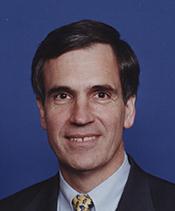
Mr. Speaker, I thank the gentlewoman for yielding me time and for her leadership on this motion to instruct. Mr. Speaker, when it comes to air quality, Maine is America's tailpipe. We are downwind of…
Mr. Speaker, I thank the gentlewoman for yielding me time and for her leadership on this motion to instruct.
Mr. Speaker, when it comes to air quality, Maine is America's tailpipe. We are downwind of industrialized areas to our south and west. Southern Maine endures unhealthy air days during most summers.
According to the EPA's analysis, 98 percent of the emissions leading to unhealthy air days in Maine originate outside of our borders. And so as a result of our experience, I sympathize with those areas which also have pollution coming in, blowing into their areas from other parts of the country; but I do not believe this provision is the right answer.
I rise today to oppose addressing the transport problem by rewriting the Clean Air Act within the energy bill conference. The Clean Air Act should not, in my opinion, be amended in secret meetings of the energy bill conference committee. If we look back at the secret meetings of the Cheney task force, they were linked to the administration's new source review rule changes, the clearest weakening of the Clean Air Act ever approved, and we do not need to weaken the Clean Air Act and threaten the health of our people.
Portland, Maine, could not have attained healthy air by its 1996 deadline if the whole city had packed its bags and moved to Quebec. We have suffered
from such a severe transport problem, more severe in percentage terms than Dallas, Texas, that local efforts could not possibly have brought the city into attainment.
Like my colleagues who have added this provision to the energy bill, Maine's former Governor complained that the Clean Air Act was flawed back in 1996, some State policymakers even advocating changing the act to alleviate our burden. The same arguments are being made here today, but I do not buy it. No matter how many times flexibility is mentioned or the Clinton administration proposals, the real risk here is that we will weaken the Clean Air Act in a fundamental way.
The transport problem is real, but the Clean Air Act gives States the tools to go after upwind sources that risk the health of our citizens. In the mid-1990s, for example, Maine's policymakers used the Clean Air Act by filing a section 126 petition against upwind sources, and other northeastern States did the same. In short, we pushed for a more comprehensive solution to the transport problem; and as a direct result of the section 126 petitions, EPA initiated the NOX SIP Call, which when this administration finally implemented it in 2004, will help us to attain healthy air.
The Committee on Energy and Commerce can take appropriate action to address the needs of certain areas, such as Atlanta, without endangering public health. If this provision were reasonable and environmentally benign, the authors, I believe, would show us the text, mark it up in regular order, and place it on the suspension calendar.
As I say, I am from an area that suffers from transport; but I do not believe this provision, whatever its exact language, will help the people of my State. We need to stop this effort to help polluters at the expense of children with asthma and grandparents with emphysema. So I want to encourage Members to support the motion to instruct.
But I would like to yield the balance of my time to the gentleman from Texas (Mr. Barton) if he can answer a simple question.
Would the gentleman agree to provide the text of this provision? We are in an odd position here, debating a provision that has been reported, but that we do not have a text of. Would the gentleman agree to provide the provision?
I yield to the gentleman from Texas.
Mr. Speaker, I would be happy to settle for the substance.
Mr. Speaker, will the gentleman yield?
My understanding of the current law is that if extensions are granted for any purpose, there is a requirement that stiffer pollution control requirements be implemented in the area. Does the gentleman's provision do away with that requirement for stiffer pollution requirements?
I thank the gentleman.

Mr. Chairman, I thank Mr. Kolbe for those words. I want to begin by agreeing with the gentlewoman from Michigan who just spoke about the bipartisan nature of this subcommittee and the product that we…
Mr. Chairman, I thank Mr. Kolbe for those words. I want to begin by agreeing with the gentlewoman from Michigan who just spoke about the bipartisan nature of this subcommittee and the product that we have come up with. Sometimes we are accused of partisan bickering on the House floor, and from time to time it is necessary to air our differences and raise our voices to bring attention to those differences in philosophy. But I just wish that the American people had an opportunity to watch my distinguished chairman and my distinguished ranking member, the gentlewoman from New York (Mrs. Lowey), and the way they work together on this very important aspect of our national security program. I want to commend them both and the full committee for the bipartisan nature of the bill.
A couple of things that I would mention about it. This bill addresses the AIDS pandemic by providing a total of $2.2 billion in global assistance to combat HIV/AIDS, as well as other very serious diseases. I think President Bush deserves to be commended for his world leadership in fighting HIV and AIDS.
Mr. Chairman, in the year 2000, Mr. Bush ran as a compassionate conservative, and some people smiled about that and doubted that. I think President Bush has shown his leadership and strength in the things that he has done with regard to Afghanistan and Iraq. But when it comes to HIV and AIDS, President George W. Bush has shown the world the level of his compassion in bringing people from the conservative side of the spectrum to support his worldwide effort to combat HIV and AIDS. This is the highest level of AIDS
funding in the history of our Republic, and so I want to commend the subcommittee, but also the President of the United States for his compassionate leadership in this matter.
The bill provides an increase in foreign assistance for Israel. As we move toward a peaceful resolution to the Middle East issue, it is important for us in America to remember that Israel is our steadfast friend and ally, that they are one of the few democracies in the region, and that they are surrounded by sworn enemies. So as we try to bring the Palestinians in and we try to make everyone a little more friendly in that area, we do not need to forget the fact that Israel is our faithful ally.
The chairman mentioned that he and I have traveled together, and sometimes we do not like to talk about travel when we go back to our constituents. But I have had an opportunity as vice chairman of this committee to visit in Asia and Iraq and in Afghanistan, and, with the ranking member, in some of the poorest areas of Africa; and it is heartening, Mr. Chairman, to see the level of involvement of so many Americans. Certainly we are proud of our troops. It just takes your breath away to see the young men and women of America who volunteer to support our country in uniform. But also, when you go to Africa and you see the Peace Corps volunteers, highly educated graduates of universities who are willing to serve for very, very little pay; when you see the personnel of the USAID agency and realize the fact that they are willing to go in harm's way, though not in a military capacity, but to risk their lives in very, very hostile environments to advance the cause of the United States, and also to do some good in an altruistic way, it is absolutely astonishing. It renews my faith in the American people and in our spirit of volunteerism.
This is a balanced bill. I commend both the ranking member and the subcommittee chairman.
Mr. Chairman, I yield myself 15 seconds to respond to the previous speakers on behalf of the gentleman from Arizona (Chairman Kolbe). Between now and conference the gentleman from Arizona (Chairman Kolbe) will work with USAID to determine the needs of the government of the Dominican Republic with regard to this issue and to ensure the U.S. is being as responsive as possible.
Mr. Chairman, I yield 3 minutes to the gentleman from Illinois (Mr. Kirk), a valuable member of our subcommittee.
Show 11 more
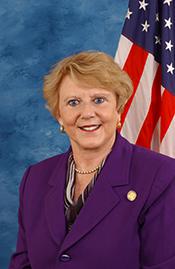
Mr. Chairman, I rise today to speak out against H.R. 4818, this year's Foreign Operations Appropriation Bill. I want to state my apprehension about what has been this Nation's philosophy toward…
Mr. Chairman, I rise today to speak out against H.R. 4818, this year's Foreign Operations Appropriation Bill. I want to state my apprehension about what has been this Nation's philosophy toward international aid. Perhaps I should say, I rise today to restate my concerns, as much of what troubles me about our foreign aid philosophy is unchanged from year to year. In fact, Mr. Speaker, none of my worries have been reconciled. In some cases, my fear has grown.
A year ago I found myself in exactly the same position. I expressed grave reservations regarding the way the American taxpayers' money was squandered abroad. I had reservations about sending so much of our money away when we have dire needs and deficits here at home. I had serious reluctance about giving money to the UN, an institution that is grossly inefficient, fosters anti-American sentiment, attacks our values and, I believe, furthers anti-Semitism. I had grave reservations that our money was spent to prop up regimes that oppose the war on terror and, in some cases, even help terrorists.
It is often said that the definition of insanity is doing the same thing over and over again, expecting a different result. After voicing my concerns, I waited and have yet to see a significant change. I am someone who is accustomed to results. Because I haven't seen any, I am going to change my vote. Last year, I voted for the Foreign Operations Appropriation Bill. This year I am voting against.
I am voting against the Foreign Operations Appropriation because I do not believe America should be sending money to nations that have turned their backs on our efforts in fighting the War on Terror when our young men and women are sacrificing on foreign soil. I do not believe we should be sending money to the UN until we can be sure that it was not propping up Saddam's regime through the oil for food program. We should not send money to the World Bank when so many of its loans have been failures; and I do not believe we should be sending money to fight AIDS in Africa when we have Americans who need healthcare here at home.
While I am voting against the Foreign Operations Appropriation Bill, I know there are worthwhile causes in the bill. I am torn about my vote. I have always been such a strong and staunch supporter of Israel. As the only established democracy in the Middle East, I have always wholeheartedly supported aid for Israel. As one of our strongest and unflagging allies in the region, Israel indeed deserves our support. Israel has been on the frontlines in the war on terror. The Israeli people understand America's need to take the battle to our enemies, unless we want to be fighting it on the streets of New York. Our support for this nation is fully justified and I just wish there was more we could do.
I would like to point out that there is hope. We have learned some of the lessons of our foreign aid insanity. I have much admiration for the President's Millennium Challenge Accounts. The Millennium Challenge Corporation changes the direction of our foreign aid. This assistance is based on criteria that reflects our values. In order to receive aid through Millennium Challenge Accounts countries must sign compacts that they pledge to govern justly, invest in their people, promote economic freedom and fight corruption. In addition to acknowledging to these principles in advance, these countries also agree to be monitored and will forfeit future aid if they don't make regular progress towards meeting these goals. There are 16 criteria by which countries agree to be judged and I am hopeful this results based approach will promote greater responsibility in our foreign aid programs.
Mr. Chairman, I am voting against the foreign aid bill because too much of our taxpayer's dollars are wasted on misguided and misdirected programs. It is my hope that in the future we will hold international institutions to higher standards of accountability and promoting freedom.

Mr. Speaker, I rise in support of the motion to instruct offered by my colleague from Texas, Eddie Bernice Johnson. Ms. Johnson is understandably upset about the provision she is trying to remove…
Mr. Speaker, I rise in support of the motion to instruct offered by my colleague from Texas, Eddie Bernice Johnson.
Ms. Johnson is understandably upset about the provision she is trying to remove from the energy conference report. Under a shroud of secrecy, the way virtually all of the energy negotiations have happened so far, a provision was slipped in that will extend deadlines for cities to clean up their dirty air. This will have dramatic effects on the health of Ms. Johnson's constituents.
I'm not here because of any city in my district that isn't complying with clean air regulations. I'm here because New Jersey has the unfortunate distinction of being number one in worst smog pollution for 2002, according to a recent New Jersey Public Interest Research Group Report. Even by the EPA's 8-hour standard, New Jersey has the second- worst pollution in the country.
New Jersey's efforts to clean up our air are laudable. The state has implemented a large number of ozone control measures and even negotiated a deal to close two coal-fired power plants in a neighboring state. But there is simply no way that the state can adequately tackle this problem--New Jersey can't control the jet stream. Because prevailing winds carry pollution from plants in the Midwest to the East Coast, much of the smog, soot, and fine particulates that endanger the health of state residents do not come from in-state sources.
That's why the federal government needs to take an active role. This was the motivation behind the 1970 Clean Air Act and the New Source Review rules. The Clean air Act has helped the country take major steps towards making the air we breathe better for our health.
So just like Ms. Johnson, I am dismayed to see that members of the energy conference committee have slipped in this provision that will undermine the spirit and the letter of the Clean Air Act.
It seems that some of the conferees are working in concert with the Bush Administration to conduct a frontal assault on clean air protections and to let polluters get out of making necessary environmental upgrades.
Take New Source Review, for example. NSR is an important part of the Clean Air Act that requires power plants, chemical factories, and other large industrial facilities to adopt effective emission controls when expansions or upgrades lead to increased pollution. According to the EPA, this has meant keeping 300 million tons of pollution out of the atmosphere in areas that meet national air quality standards.
The Administration has proposed changes to the New Source Review program that will create gaping loopholes in clean air protections. Facilities would be allowed to increase the amount of pollution they emit if the cost of making a change is less than a certain percentage of the cost of the entire facility. Thus companies can easily make incremental changes to renovate a facility without triggering NSR. And even if the cost of the upgrade does exceed the percentage trigger, plants will still not need to implement pollution controls if the upgrade consists of replacing existing equipment with new equipment performing the same function, regardless of cost.
These are changes that have been clearly demonstrated by numerous experts--including Abt Associates, who has done research for the EPA-- that will result in more premature deaths and more cases of asthma and other respiratory illnesses.
I came to Congress five years ago to represent the people of the 12th District of New Jersey. It's pretty obvious that among the more important responsibilities I have in representing my constituents is standing up for them when someone is making them sick or killing them-- the way air pollution is now.
That is why I urge all of my colleagues to support the Johnson motion to instruct.
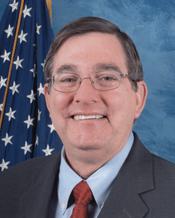
Mr. Speaker, I rise to speak against the Motion to Instruct Conferees on the H.R. 6, The Energy Policy Act. As discussed thus far, under the Clean Air Act of 1990, areas designated as ``severe''…
Mr. Speaker, I rise to speak against the Motion to Instruct Conferees on the H.R. 6, The Energy Policy Act.
As discussed thus far, under the Clean Air Act of 1990, areas designated as ``severe'' nonattainment areas, such as Houston, must meet the 1-hour standard by 2007, and Dallas, classified as ``serious'' areas was required to meet the 1-hour standard by 2005.
Wind currents can transport ozone and its chemical components over long distances, which can have an adverse affect on the air quality of areas that are downwind of more severe nonattainment areas. For example, Houston's air quality can impact Dallas's air quality.
In 1998, under the direction of President Clinton's EPA Administrator Carol Browner, the EPA promulgated transport policy rules that allowed the EPA to allow affected ``moderate'' and ``serious'' areas until 2007 to meet the 1-hour standard. This common sense rule simply allows cities to take into account the ozone that is transported from other cities.
Strict judicial interpretation of the Clean Air Act of 1990 said that the EPA did not have statutory authority to promulgate this rule. As a strict constitutionalist, I was glad to see the judicial restraint exhibited by these decisions.
However, I think it is important to note that Congress did not give the EPA this authority under the Clean Air Act of 1990 because Congress was not aware of the impact of ozone transport on air quality at that time. Since 1990, the science has improved to the point that we are aware of and better able to determine the impact of the transport of ground level ozone.
That is why there is a provision in this year's energy bill to give EPA that authority, if they so choose.
Some have claimed that this will ``roll back'' the Clean Air Act, and that is just not true. The State of Texas and other affected States and the cities of Dallas and Fort Worth are not going to stop working toward clear air. In fact, as recently as reported last Friday in the Fort Worth Star-Telegram, the North Texas Clean Air Steering Committee said that they will not slow down efforts to clean the air if Congress pushes back the deadline.
As a member of the Transportation and Infrastructure Committee, I do not support tying the issue of ozone transport to my district's transportation funding. I do not believe that taking away transportation funding from the Dallas-Fort Worth region will result in improved air quality.
In fact, I believe eroding our transportation funding would adversely affect air quality because studies have shown that automobiles operate more efficiently at around 60 miles per hour than at lower speeds such as those cars idling during bumper-to-bumper traffic in bottleneck areas, such as on Interstate 35 East in my district. A more efficient motor decreases the amount of ozone-creating pollutants that are released into the air. This is especially important to the Dallas-Fort Worth region because EPA studies have shown that our region's air quality is especially affected by mobile-source (automobile) pollution.
If my colleagues disagree with me and believe that we should decrease transportation funding in order to improve air quality, I am more than happy to accept their piece of the transportation funding pie. I know we all agree--we need to keep our cash on the dash!
Clean air is one of the most important legacies that we can leave our children. If we are going to preserve this world for future generations, we must take steps that will protect our
natural resources, but we must also not harm our economy.
If you cannot identify the source, and control the source, you cannot effectively reduce ozone. I will vote against the Motion to Instruct Conferees on H.R. 6.
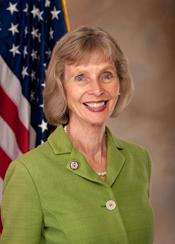
Mr. Speaker, I thank my colleague and fellow nurse for yielding and also for her motion to instruct conferees on the Energy Policy Act. Mr. Speaker, I rise in strong support of this motion. It is a…
Mr. Speaker, I thank my colleague and fellow nurse for
yielding and also for her motion to instruct conferees on the Energy Policy Act.
Mr. Speaker, I rise in strong support of this motion. It is a real shame that at the 11th hour the Republican conferees have added a new provision to this energy bill which weakens the Clean Air Act and harms public health. This new provision will allow polluted cities to avoid having to clean up their dirty air.
Right now cities can get extended deadlines to meet their requirements under the Clean Air Act, but in exchange for the time extension, within the Clean Air Act, cities with dirty air have to meet specific goals and specific timetables. This is EPA's bump-up policy that is supposed to ensure that dirty air is cleaned up. And the policy is designed to work with cities, to make sure that this can happen in a timely fashion. But under the new energy provisions being proposed, cities that have not met their clean air requirements will just be given a pass. That means that cities with dirty air will not have to institute stronger pollution controls to clean up their act for a much longer time.
People living in these cities and people living downwind will suffer longer from dirty air and its damaging health effects. We cannot afford this, not in our health care and not in our economy.
As a public health nurse, I am so concerned with this very provision and its impact on the state of our air quality. The argument is that it is hard for these polluted areas to clean up due to dirty air blown in from elsewhere. That case has been made. But in many of these areas it is been demonstrated that these areas that would be exempted, transported pollution is only a small part of the problem.
Now, what about continued local clean-up efforts which are demonstrated to be necessary? And, in addition, this new provision provides a special break for certain areas of Texas and Louisiana. That is blatantly unfair to all the cities and their businesses that have worked so hard to meet pollution control deadlines, to provide healthy air for their citizens.
This added change also harms all the areas downwind of those that get the extension as more air pollution will continue to blow downwind for so many years longer.
The truth is this last minute change was never approved by either the House or the Senate. In fact, this provision, and I was at the hearing that we held in July, but it has never been debated upon. Alternatives have never been able to be proposed in a committee setting.
This change weakens the Clean Air Act and overturns three appellate court rulings upholding current law. This is an end run around the courts which have repeatedly held that the EPA does not have the authority to extend air quality deadlines without following the Clean Air Act requirements.
Mr. Speaker, EPA reports that 133 million Americans in our country live where air is unhealthy to breathe because of ozone pollution. The provisions in this bill are denying these Americans their right to breathe clean air.
The provision in this bill is going to be denying these Americans their right to breathe clean air. The provision in the energy bill is a bad idea. The end result will be a delay in cleanup, continued unhealthy air, and more asthma attacks, respiratory illnesses and other health problems. It is going to affect health and productivity of American companies and American workers. Our children and our families have waited too long for clean air.
So I urge my colleagues to support this motion and oppose any energy bill that contains this shameful provision.
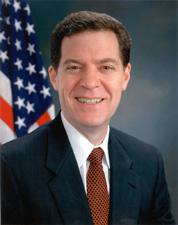
Mr. President, I am pleased to join with Senator Santorum today and introduce a bill that will have a dramatic and positive effect in the lives of individuals re-entering society after incarceration.…
Mr. President, I am pleased to join with Senator Santorum today and introduce a bill that will have a dramatic and positive effect in the lives of individuals re-entering society after incarceration. The Second Chance Act: Community Safety Through Recidivism Prevention is a bill that will not only protect our Nation's citizens but will more importantly help to reduce recidivism in our Nation.
A hallmark of any just society lies in its ability to protect the interest of all its citizens, and I am proud that the United States is a leader in this regard. Yet, while we continue to strive toward this lofty goal, we must realize that there are areas in which we, as a society and as government, must do more to improve. Nowhere is that more apparent than in our Nation's prison system.
Today, we have challenges within the prison system that range from high recidivism rates to budgetary and safety concerns. With this bill, we will be able to address this pressing problem within our society. Already we have seen innovative and model programs within the States and the faith community, and I am proud to say that Kansas is a leader in this regard. However, we must stimulate innovation in this area on a national level, and that is what this bill will accomplish. It is paramount that we ensure the safety of our communities and ensure that those incarcerated have the tools necessary to succeed after they rejoin society.
With this bill, we will be able to combat the extremely high recidivism rates plaguing the prison system, currently as high as 70 percent, as well as address the financial burdens that hinder many of our State penitentiaries. We will also be able to help those incarcerated make positive changes within their lives so that when they do rejoin society, they will be able to do so with the confidence of knowing that they can contribute to society in a positive manner.
Specifically, this bill facilitates change within our current correctional system, and promotes coordination with the Federal government to better assist those returning to our communities after incarceration and their children. The bill reauthorizes the Re-Entry Demonstration Project with an enhanced focus on jobs, housing, substance-abuse treatment, mental health, and the children and families of those incarcerated. The bill authorizes $160 million over a period of two years to fund these demonstration program and creates performance outcome standards and deliverables. It will also encourage States to enhance their re-entry services and systems with grants to fund the creation or enhancement of State re-entry councils for strategic planning and review the State barriers and resources that exist.
Additionally, the bill creates a Federal interagency taskforce to facilitate collaboration and identify innovative programs and initiatives. The taskforce will review and report to Congress on the Federal barriers that exist to successful re-entry.
Finally, the bill will create a $45 million two-year mentoring program geared toward reducing recidivism and the societal costs of recidivism. This mentoring program will help ex-offenders re-integrate into their communities. This initiative will specifically harness the resources and experience of community-based organizations in helping returning ex-offenders.
We have an incredible opportunity to re-shape the way in which this Nation's prison systems operate. Much like welfare reform in the mid 1990s, we have a chance to make real and effective change in an area where change is sorely needed. I look forward to pushing this legislation forward.
Mr. Chairman, I rise in strong support of this bill and encourage all of my colleagues to vote in favor of it today. I want to thank the gentleman from Arizona (Chairman Kolbe) and the gentlewoman…
Mr. Chairman, I rise in strong support of this bill and encourage all of my colleagues to vote in favor of it today.
I want to thank the gentleman from Arizona (Chairman Kolbe) and the gentlewoman from New York (Mrs. Lowey) for their working together to produce a very, very good bill. Let me also commend the staff for the work that they have contributed. They have addressed the chairman's, ranking member's and as many of the other Members' problems and interests as possible and done a very good job in producing an effective bill. I hope and expect it will receive broad bipartisan support today.
Mr. Chairman, the foreign operations bill is arguably the most important contribution to America's foreign policy that the House of Representatives makes. Let me briefly highlight a few areas.
Assistance to the Middle East is always a central part of this bill.
For fiscal year 2005, Israel will receive $2.2 billion in military assistance, $360 million in economic assistance, and $50 billion to resettle Jewish refugees in Israel. I strongly support all of that funding.
The U.S.-Israel relationship is a cornerstone of our overall foreign policy, and Israel is our critical ally in the Middle East. We do disagree from time to time, but the U.S.-Israel relationship is incredibly strong.
I also support the military and economic assistance to Egypt in this bill. Because of the level of cooperation we are receiving from Egypt in the war on terrorism and the peace process, I believe the bill contains the right balance of military and economic assistance for each at this time.
I understand that an amendment will likely be offered today to change the balance of assistance to Egypt. I will strongly oppose that amendment, and I urge my colleagues to join me in opposing it as well.
I am also very pleased this bill contains $35 million in economic support funds for Lebanon, including $4 million for the American educational institutions that are there. Lebanon has great potential, and USAID's Village Cluster Program has played an important role in the development of villages throughout Lebanon. I know many Members agree with me on that and that the continuation of this program of $35 million is critical.
Let me just highlight what this bill provides for Armenia. Unfortunately, Armenia is a landlocked country surrounded by nations on both sides that are hostile to it. Because transportation routes into Armenia are sealed, the Armenian economy is being strangled. Therefore, it is appropriate for the U.S. to provide substantial economic assistance. This bill provides $65 million in economic assistance to Armenia, which is an increase above the administration's request.
We also must be very careful with the military assistance we provide in the Caucasus, in the South Caucasus. I believe it is absolutely critical to maintain complete parity in military assistance to Armenia and Azerbaijan. I am pleased that this bill does exactly that.
The State Department's Middle East Partnership Initiative is becoming one of the most progressive reform programs in the Middle East. I am pleased that this bill continues to provide funding for this important initiative.
There are many more valuable programs in this bill, including the Millennium Challenge Corporation, IMET to Greece, microcredit, and, of course, funding to fight the scourge of HIV/AIDS.
Mr. Chairman, in closing, let me once again urge everybody on this floor, all Members on both sides, to support this bill, a good bill.
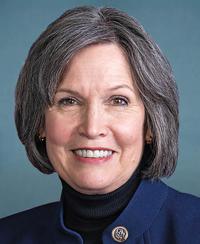
Mr. Speaker, I yield myself such time as I may consume, and I rise in strong support of this legislation. This legislation continues a vitally important environmental initiative started in the…
Mr. Speaker, I yield myself such time as I may consume, and I rise in strong support of this legislation.
This legislation continues a vitally important environmental initiative started in the Clinton administration. With the extension of this program, millions of acres of endangered tropical forests around the world will be saved, and the biological diversity of our world will be further preserved.
I would first like to recognize the efforts of the gentleman from Ohio (Mr. Portman), who worked closely with our former colleague and former chair of the Committee on International Relations, the Honorable Lee Hamilton, in crafting this innovative measure in 1998.
Mr. Speaker, the Tropical Forest Conservation Act has become one of the most effective foreign policy tools designed to encourage developing nations to protect and preserve tropical forests. Already the U.S. has entered into bilateral agreements with seven countries: Bangladesh, Belize, El Salvador, Panama, Peru, the Philippines, and Colombia.
This innovative program has been a tremendous success. It has given the people of developing countries the opportunity to protect and invest in their local ecosystems, thus preserving our global environment while at the same time paying down interest on debt owed to the United States.
The current bilateral agreements under the Tropical Forest Conservation Act will generate $70 million for tropical forest preservation. The most recent agreement has produced a pledge by Colombia to invest $10 million over 12 years to protect the nearly 11 million acres of this tropical forest.
Among the areas that will be preserved in Colombia as a result is the Tuparo National Park. This unique forest contains a rich diversity of species, including jaguars, river dolphins, and the endangered giant armadillo. This also includes a threatened crocodile, which is found only in this part of South America. This area is also being protected because it serves as a base for migrating birds from North America.
The bill before us would expand the Tropical Forest Conservation Act by allowing developing countries not only to service their debt by making payments to forest conservation funds, but also to pay down the principal on these debts. Right now, there are several debtor countries that are potentially eligible for the program but cannot participate because of the way in which the language was originally written. This new authority in this reauthorization would remedy this situation and increase the number of countries eligible to participate in the program.
Mr. Speaker, the Tropical Forest Conservation Act is a shining example of good policy mixed with strong environmental protections. It is my hope that in the future we will be able to promote and support additional measures that balance economic stability and environmental sustainability both for these countries.
Again, I strongly support the passage of this legislation to reauthorize the Tropical Forest Conservation Act, and I urge my colleagues to do so as well.
Mr. Speaker, I reserve the balance of my time.
Mr. Speaker, I have no further requests at this time, and I yield back the balance of my time.
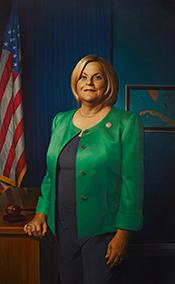
Mr. Chairman, I thank my friend, my distinguished colleague from California, for the time, and I rise in strong support of the Sherman/Ros-Lehtinen amendment and ask my colleagues to render their…
Mr. Chairman, I thank my friend, my distinguished colleague from California, for the time, and I rise in strong support of the Sherman/Ros-Lehtinen amendment and ask my colleagues to render their full support to it.
Iran's unconventional weapons program, and its fondness for using terrorism as statecraft, have made this pariah state a litmus test of the war on terror.
For at least two decades, the Iranian regime has been pursuing a covert nuclear program. It has undertaken a number of efforts for the manufacture and testing of centrifuge components, including at facilities owned by military industrial organizations.
According to multiple reports of the International Atomic Energy Agency, the Iranian regime's deceptions and nuclear activities have dealt with the most sensitive aspects of the nuclear cycle.
Just last month, after the international community once again called on Iran to ``come clean'' with its efforts to develop a nuclear weapons capability, the Iranian foreign minister and the secretary of Iran's Supreme National Security Council retorted that Iran has to be recognized by the international community as a member of the nuclear club and that Iran is on an irreversible path, their own words, toward becoming a nuclear state.
It is, therefore, imperative that the international community join forces to deny Iran any and all avenues to bring to a halt Iran's progress on this path.
This Chamber has repeatedly articulated this position. Most recently, we adopted by an overwhelming vote H. Con. Res. 398 which clearly underscored the denial of financial and other resources to Iran is an overarching priority for the United States.
Yet, through the World Bank, Iran is receiving hundreds of millions of dollars in loans.
Now, we will hear some argue that these loans are for nonlethal programs. However, given the fungible nature of the fund, there is no effective way of preventing the manipulation of these funds.
We certainly cannot trust the terrorist regime in Teheran to apply those World Bank funds to good, humanitarian use; and, as we have discovered recently with the investigations into the UN's handling of the Oil-For-Food program, we certainly cannot trust international institutions to practice due diligence and oversight.
Further, even if the loans are applied for basic services in Iran, that just enables Iran's mullahs to increase their budget allocations to fund terrorist activities and intensify their efforts to develop nuclear weapons.
The Sherman/Ros-Lehtinen amendment seeks to bring an end to this farce. Given that this is an appropriations bill, we cannot go even further. However, the amendment is a good first step.
The amendment seeks to cut U.S. contributions to the World Bank by an amount equal to its recent loans to Iran. In turn, it shifts these funds to U.S. AID's child survival programs; that is, it denies funds to the Iranian regime while helping prevent children from dying from preventable or easily treatable diseases, providing them with immunizations and other inexpensive treatments.
I ask my colleagues to vote an overwhelming ``yes'' on the Sherman- Ros-Lehtinen amendment.

Mr. Chairman, I rise in very strong support of this bill and the work of the gentleman from Arizona (Mr. Kolbe) and the gentlewoman from New York (Mrs. Lowey), our chair and ranking minority member.…
Mr. Chairman, I rise in very strong support of this bill and the work of the gentleman from Arizona (Mr. Kolbe) and the gentlewoman from New York (Mrs. Lowey), our chair and ranking minority member.
Mr. Chairman, many have said that the United States in this current campaign should build allies, that we should strengthen our ties with other governments, that we should back peace treaties and agreements that make war much less likely. This bill does that.
In 1917, the U.S. went to war in Europe and lost hundreds of thousands of young men. In the following years, our government took the easy way out. We demobilized. We saddled allies with debt. We focused resources at home. It was a very popular set of decisions but also laid the foundation for World War II.
One man who understood this well as a mistake was Harry Truman, a veteran of World War I. He saw the waste of a Second World War and knew that he had to do everything to prevent another conflict.
We had to keep an army overseas. We had to lead international organizations. We had to help allies. These were not popular decisions, and Truman made these tough decisions that started this appropriations bill when he stood at 32 percent in the polls.
The lessons he learned were well applied to the world after September 11. This bill backs our allies, especially in the Middle East. It also provides debt relief and reduces the growth of population in countries that can barely create jobs for the people they already have. We have learned that we must be engaged and aggressive with aid and provide leadership in conflict regions.
One institution Truman created was the World Bank, officially titled the International Bank for Reconstruction and Development. The bank moved quickly into occupied Japan and Germany to rebuild those countries. We fulfilled our obligations and built not just security relationships but allies.
Years after the Bank moved in, we finally created new governments in Germany and Japan. The Bank has a proud tradition of moving quickly and keenly in new states emerging from civil war. I am the only Member of Congress that is an alumni of the Bank, and during my time we opened offices in zones of conflict in quasi states and Eastern Europe and the former Soviet Union.
The Bank also provided aid to Croatia and Bosnia and Haiti. It had a proud staff that knew their work was dangerous but important. Given this, it is surprising the World Bank is now so slow to help the people of Iraq. Iraq is a founding member of the World Bank. After the coalition moved into Baghdad, the Bank launched a timely study of Iraq's needs, but then most action stopped.
After the U.N. Baghdad bombing, the Bank lost a staff member and withdrew all of its international staff from Iraq. No one has returned, and the Bank has no plans to put international staff in Iraq.
Worse, the Bank staff spent from May, 2003, until 2004 debating whether to recognize a new government. I think this is a call to action to Secretary Snow to rectify the situation and hope that we can act.
Mr. Chairman, today, as the House considers the Foreign Operations Appropriations Act of 2005, I respectfully submit the following statement into the record in order to raise awareness of an issue…
Mr. Chairman, today, as the House considers the Foreign Operations Appropriations Act of 2005, I respectfully submit the following statement into the record in order to raise awareness of an issue that I have found most distressing. For over three years, I have been working on behalf of a company in my district, Pennsylvania Ship Supply Inc. (PA Ship) to resolve a financial dispute with a Ukrainian entity, the Black Sea Shipping Company (BLASCO).
PA Ship is a company that provides ancillary services to ships at ports around the world. My office has been working on behalf of this company since June of 2001, although PA Ship's problems with BLASCO began much earlier. In 1996, PA Ship provided services to the BLASCO ship m/v Sosnogorsk in the amount of $17,242.44. Shortly thereafter, BLASCO filed for bankruptcy. To this date, PA Ship has yet to receive payment for the services it provided BLASCO.
This matter is made all the more alarming by the fact that BLASCO is a state owned company. My office has made numerous attempts, through the Department of State, to resolve this issue. Unfortunately, the government of the Ukraine has been either unwilling or unable to provide much more than contact information for the Director and Deputy Head of the Ukrainian State Department of Sea and River Transport. Further inquiries from the U.S. Embassy to these agencies in the Ukrainian government have been ignored.
I find this lack of concern on behalf of the Ukrainian government unacceptable. Ukrainian officials have indicated to my office that BLASCO's bankruptcy had been a major scandal in the Ukraine when it first surfaced in the mid-1990s. It is also my understanding that PA Ship was not the only company that has yet to receive payment for services rendered prior to BLASCO filing for bankruptcy.
The government of the Ukraine has a well-established history of ignoring the concerns of its international partners. Since 1993, Ukraine has been seeking to gain accession to the World Trade Organization (WTO). Negotiations between the government of the Ukraine and the WTO working party assigned to examine its application have yielded very little progress. Concerns about Ukraine's persistent failure to take effective action against significant levels of optical media piracy and to implement intellectual property laws that provide adequate and effective protection have prompted the United States Trade Representative to place Ukraine on its ``Priority Foreign Country'' list in its 2004 special 301 report, an action which could ultimately lead to an investigation. This dubious distinction is highlighted by the fact that the Ukraine is the only country to be placed on this list for this year.
I urge the office of the United States Trade Representative to advocate for the suspension of the WTO working party's negotiations with the Ukrainian government until these and other outstanding issues have been resolved.

Mr. Speaker, the legislation before the House continues a vitally important environmental initiative begun during the Clinton Administration. The Tropical Forest Conservation Act has already resulted…
Mr. Speaker, the legislation before the House continues a vitally important environmental initiative begun during the Clinton Administration. The Tropical Forest Conservation Act has already resulted in the funding of programs to conserve over 40 million acres of endangered tropical forests around the globe. These preservation efforts are critical to long-term U.S. interests as the tropical forest being saved are estimated to contain 50-90 percent of the earth's terrestrial biodiversity.
Mr. Speaker, I am proud to have had the opportunity to co-sponsor this reauthorization with Congressman Rob Portman. Congressman Portman deserves credit for having the foresight to initiate this program with the original authorization he crafted in partnership with the former chairman of the International Relations Committee, Mr. Lee Hamilton, in 1998.
Mr. Speaker, the Tropical Forest Conservation Act has been a tremendous success. It has allowed the governments of developing countries to get the benefit of improving their local ecosystem when paying down interest owed on debt to the United States. It is supported by a broad spectrum of environmental advocacy organizations led by the Nature Conservancy and the World Wildlife Fund.
This program inspires more prompt debt servicing and gives foreign governments a greater sense of responsibility for preserving the global environment.
Already the U.S. has entered into binding bilateral agreements with seven countries: Bangladesh, Belize, El Salvador, Panama, Peru, the Philippines and Colombia. These agreements will generate $70 million for tropical forest preservation.
The most recent agreement has produced a pledge by Colombia to invest $10 million over 12 years to protect nearly 11 million acres of its tropical forest.
Among the areas that will be preserved in Colombia as a result is the Tuparo National Park. This unique forest contains a rich diversity of species including jaguars, river dolphins, the endangered giant armadillo and the critically threatened Orinoco crocodile, which is found only in this part of South America. The area is also a major winter base for migrating bird species from the United States.
Mr. Speaker, the rapid disappearance of tropical forests is a threat to our national security. We need these forests to regulate the global environment. They act as critical ``carbon sinks'', absorbing massive quantities of carbon dioxide that otherwise would contribute to global warming. They also regulate rainfall, which is critical to maintaining sustainable agricultural production across the globe. In addition, their diverse plants provide a large percentage of life-saving medicines. Therefore, as the forests disappear, some of our opportunities to cure debilitating illnesses also vanish.
Mr. Speaker, I strongly support passage of this legislation, and urge my colleagues to do so as well.
Bill Text
6 versions available
        [Congressional Bills 108th Congress]
[From the U.S. Government Publishing Office]
[H.R. 4654 Enrolled Bill (ENR)]

H.R.4654

One Hundred Eighth Congress

of the

United States of America

AT THE SECOND SESSION

Begun and held at the City of Washington on Tuesday,
the twentieth day of January, two thousand and four

An Act

To reauthorize the Tropical Forest Conservation Act of 1998 through
fiscal year 2007, and for other purposes.

Be it enacted by the Senate and House of Representatives of the
United States of America in Congress assembled,

SECTION 1. REDUCTION OF DEBT UNDER THE FOREIGN ASSISTANCE ACT OF 1961
AND TITLE I OF THE AGRICULTURAL TRADE DEVELOPMENT AND
ASSISTANCE ACT OF 1954.

Section 806(d) of the Tropical Forest Conservation Act of 1998 (22
U.S.C. 2431d(d)) is amended by adding at the end the following new
paragraphs:
``(4) $20,000,000 for fiscal year 2005.
``(5) $25,000,000 for fiscal year 2006.
``(6) $30,000,000 for fiscal year 2007.''.

SEC. 2. USE OF FUNDS TO CONDUCT PROGRAM AUDITS AND EVALUATIONS.

Section 806 of the Tropical Forest Conservation Act of 1998 (22
U.S.C. 2431d) is amended by adding at the end the following new
subsection:
``(e) Use of Funds To Conduct Program Audits and Evaluations.--Of
the amounts made available to carry out this part for a fiscal year,
$200,000 is authorized to be made available to carry out audits and
evaluations of programs under this part, including personnel costs
associated with such audits and evaluations.''.

SEC. 3. AUTHORITY TO ALLOW FOR PAYMENTS OF INTEREST AND PRINCIPAL IN
LOCAL CURRENCIES.

(a) Authority Under the Foreign Assistance Act of 1961.--Section
806(c) of the Tropical Forest Conservation Act of 1998 (22 U.S.C.
2431d(c)) is amended--
(1) in the matter preceding paragraph (1), by striking ``The
following'' and inserting ``(1) The following'';
(2) by redesignating paragraphs (1) and (2) as subparagraphs
(A) and (B), respectively; and
(3) by adding at the end the following:
``(2) In addition to the application of the provisions relating to
repayment of principal under section 705 of this Act to the reduction
of debt under subsection (a)(1) (in accordance with paragraph (1)(A) of
this subsection), repayment of principal on a new obligation
established under subsection (b) may be made in the local currency of
the beneficiary country and deposited in the Tropical Forest Fund of
the country in the same manner as the provisions relating to payment of
interest on new obligations under section 706 of this Act.''.
(b) Authority Under Title I of the Agricultural Trade Development
and Assistance Act of 1954.--Section 807(c) of the Tropical Forest
Conservation Act of 1998 (22 U.S.C. 2431e(c)) is amended--
(1) in the matter preceding paragraph (1), by striking ``The
following'' and inserting ``(1) The following'';
(2) by redesignating paragraphs (1) and (2) as subparagraphs
(A) and (B), respectively; and
(3) by adding at the end the following:
``(2) In addition to the application of the provisions relating to
repayment of principal under section 605 of the Agricultural Trade
Development and Assistance Act of 1954 to the reduction of debt under
subsection (a)(1) (in accordance with paragraph (1)(A) of this
subsection), repayment of principal on a new obligation established
under subsection (b) may be made in the local currency of the
beneficiary country and deposited in the Tropical Forest Fund of the
country in the same manner as the provisions relating to payment of
interest on new obligations under section 606 of such Act.''.
(c) Conforming Amendment.--Section 810(a) of the Tropical Forest
Conservation Act of 1998 (22 U.S.C. 2431h(a)) is amended by inserting
``and principal'' after ``interest''.

Speaker of the House of Representatives.

Vice President of the United States and
President of the Senate.