Internet Spyware (I-SPY) Prevention Act of 2004

Legislative Activity
Stay on top of the latest movement without scrolling through every action
Received in the Senate.
October 8, 2004
View full timeline
Introduced in House
June 23, 2004
Referred to the House Committee on the Judiciary.
June 23, 2004
Sponsor introductory remarks on measure. (CR E1235)
June 24, 2004
Reported (Amended) by the Committee on Judiciary. H. Rept. 108-698.
September 23, 2004
Placed on the Union Calendar, Calendar No. 426.
September 23, 2004
Mr. Goodlatte moved to suspend the rules and pass the bill, as amended.
October 6, 2004 • 3:46 PM
Considered under suspension of the rules. (consideration: CR H8250-8252)
October 6, 2004 • 3:46 PM
DEBATE - The House proceeded with forty minutes of debate on H.R. 4661.
October 6, 2004 • 3:46 PM
At the conclusion of debate, the Yeas and Nays were demanded and ordered. Pursuant to the provisions of clause 8, rule XX, the Chair announced that further proceedings on the motion would be postponed.
October 6, 2004 • 4:03 PM
Considered as unfinished business. (consideration: CR H8649-8650)
October 7, 2004 • 11:33 AM
Passed/agreed to in House: On motion to suspend the rules and pass the bill, as amended Agreed to by the Yeas and Nays: (2/3 required): 415 - 0 (Roll no. 503).(text: CR 10/6/2004 H8250)
October 7, 2004 • 11:41 AM
On motion to suspend the rules and pass the bill, as amended Agreed to by the Yeas and Nays: (2/3 required): 415 - 0 (Roll no. 503). (text: CR 10/6/2004 H8250)
October 7, 2004 • 11:41 AM
Motion to reconsider laid on the table Agreed to without objection.
October 7, 2004 • 11:42 AM
Received in the Senate.
October 8, 2004
Voting History
1 vote recorded • Roll call available
Floor Debate
19 membersWhat members said about H.R. 4661 on the floor
 JB
JB MOSBG
MOSBG DRO
DRO HR+14
HR+14
Floor Debate
19 membersWhat members said about H.R. 4661 on the floor
Mr. Speaker, I move to suspend the rules and pass the bill (H.R. 2929) to protect users of the Internet from unknowing transmission of their personally identifiable information through spyware…
Mr. Speaker, I move to suspend the rules and pass the bill (H.R. 2929) to protect users of the Internet from unknowing transmission of their personally identifiable information through spyware programs, and for other purposes, as amended.
Mr. Speaker, I ask unanimous consent that all Members may have 5 legislative days within which to revise and extend their remarks and include extraneous material on H.R. 2929.
Mr. Speaker, I yield myself such time as I may consume.
Mr. Speaker, today the House is considering legislation to protect consumers against Internet spying.
Internet spying is all too common. Many consumers are totally unaware that even that their computers can be infected with programs that monitor their activity on the Internet and transfer private information to third parties. At the least, this private information is used to drive the annoying pop-up ads that we see when we turn on our computers. At its very worst, spyware is used by unscrupulous operators to steal financial information and even the individual who owns the computer's personal identity.
The term spyware is used to describe a number of nefarious activities on the Internet, all involve spying or stealing information about consumers without their permission. These activities include: Key stroke logging, in which all of the computer user's key strokes are recorded and sent to a third party; homepage highjacking, in which spyware takes control of the computer, highjacks the individual user's homepage to a commercial or in some case a pornographic site; phishing, in which spyware directs false messages to computer users purporting to be from reputable merchants to steal credit card or other financial information from the user for the use of the third party.
Spyware is downloaded on to a computer without the knowledge of the user. Computers can be infected just by visiting Web sites that cause spyware to be downloaded on to any computer visiting that site.
We tested some of the computers in the Committee on Energy and Commerce. We discovered that these computers had been infected with many pieces of spyware, I believe the number was over 60, and that some of it did direct information to third parties about the use of those computer. All of this was done without any notice to the owners of those computers. I would also point out that this was done by getting through at least two fire walls, the House of Representatives' fire wall and the Committee on Energy and Commerce's fire wall.
Technological development moves quickly, much faster than the regulatory or legislative process. It has taken the House 5 years to give regulators additional tools to combat spam, for instance. I am told that the Federal Trade Commission has not brought any cases against purveyors of spyware to date. Our reaction to spyware is the exception to this rule. In town meetings in my congressional district in Texas just this past August, my constituents unanimously expressed outrage at the brazenness of spyware and exhibited a strong desire for us to act as soon as possible against this insidious disease.
Every Member that I have spoken with on both political parties wants to take action to fight spyware. Some have heard from constituents. One of our subcommittee chairmen experienced the effects of spyware firsthand when his own homepage was highjacked. Today, on a bipartisan basis, it is my hope that we will pass this legislation to combat spyware.
The legislation before us would prohibit the sets of practices like highjacking a consumer's homepage. It
would prohibit keystroke logging. It would prohibit sending ads that cannot be closed except by shutting down the computer. It would also provide for a prominent opt-in for consumers prior to downloading any monitoring software under that consumer's computer.
I believe that consumers should be given notice and have the right to consent before monitoring software that collects information about them is added to their computers.
The legislation before us would also require that monitoring software be easily disabled at the direction of the consumer. It would also provide for FTC, Federal Trade Commission, enforcement with significant monetary penalties for those who knowingly violate the act. While criminal penalties may be appropriate for the most egregious behavior, I believe we have an obligation to provide additional protection to consumers' online information by having these civil fines that the FTC would enforce.
Importantly, the SPY ACT before us regulates information-collection programs. These are programs that have the capability to collect personally identifiable information and either transmit that information to a third party or use that information to deliver or display advertising on the computer. The SPY ACT requires companies that are sending ads to the computers to identify with each ad the information collection program that is generating the ad. With this disclosure, consumers will know who is bombarding them with ads and will be able to make their own decision as to whether they wish to be so bombarded.
The SPY ACT sets up a uniform national rule. Internet commerce is inherently interstate in nature. We need one set of rules for such commerce. I want to commend a number of Members for their strong work on this bill. First of all, I would like to thank the bill's sponsor, the gentlewoman from California (Mrs. Bono). It is she who has taken the lead to introduce the bill last October when most of us, myself included, had little knowledge of exactly what spyware was. She has been a tireless educator to many of us on its dangers and has worked tirelessly to improve the bill. She has brought dynamic leadership on technology issues to the Committee on Energy and Commerce, and her commonsense approach on this legislation has brought the issue to the floor expeditiously. I want to commend her for her strong work.
The gentleman from New York (Mr. Towns), the co-sponsor of the original legislation with the gentlewoman from California (Mrs. Bono), he too has been a great bipartisan partner in this project. He made important contributions to the areas of network- and computer-based security.
The gentleman from Florida (Mr. Stearns), the chairman of the Subcommittee on Commerce, Trade and Consumer Protection has been a key leader on all privacy related issues in this Congress. He has held eight hearings on privacy matters in this Congress and worked with the gentlewoman from California (Mrs. Bono) and the gentleman from New York (Mr. Towns) to perfect the legislation that is before us today.
I would also like to commend the gentleman from Michigan (Mr. Dingell), the ranking minority member and the gentlewoman from Illinois (Ms. Schakowsky) the ranking subcommittee member, for their excellent work at the subcommittee and full committee.
We have had truly a bipartisan effort to perfect this legislation and bring it to the floor today. It shows what can happen when Members on both sides of the aisle work together towards a common purpose.
The bill before us is a significant improvement on the original bill. And it is a result of the fine work that has been done by all Members on all sides of the aisle. This is a good bill. It has passed the Committee on Energy and Commerce overwhelmingly.
Anybody who has held a town meeting on this can tell you automatically that our constituents are opposed to spyware and want us to do something to protect their privacy as soon as possible.
Madam Speaker, I hope that we pass this overwhelmingly.
Madam Speaker, I reserve the balance of my time.
Madam Speaker, I yield 5 minutes to the gentleman from Florida (Mr. Stearns), the distinguished subcommittee chairman.
Madam Speaker, I want to thank the gentleman from New York who just spoke for his excellent leadership on this bill. It is a better bill because of his efforts.
Madam Speaker, I yield 5 minutes to the distinguished gentlewoman from California (Mrs. Bono), who, along with the gentleman from New York (Mr. Towns), was an original cosponsor of the original bill.
We think we have the gentleman from Michigan (Mr. Upton), subcommittee chairman, on his way; but other than that we have no other speakers.
Madam Speaker, I yield myself the balance of the time.
To close the debate, let me simply say I think we have seen in this debate not just the bipartisan support but the unanimous support this bill has. Whether my colleagues represent metropolitan New York City or the suburbs of Chicago or the hurricane-ravaged plains of Florida, the prairies of Texas, or Southern California, we are all hooked up to the Internet; and we all have constituents who are outraged that as they do their Internet shopping and browsing and surfing, these insidious programs called spyware can infect their computers without their permission. Unfortunately, right now it is not even illegal.
What this bill does is make it illegal, and it gives the Federal Trade Commission the authority to impose significant civil fines for using this spyware.
I would also like to point out that thanks to the strong work of the committee staff on both sides of the aisle, we have a bill that the business community supports. Microsoft, the Software Business Alliance, Yahoo, Time Warner who owns AOL, they all support this. Ebay supports this bill. We are going to put those statements of support in the Record at this point.
TimeWarner,
September 21, 2004.
Hon. Joe Barton,
Hon. John Dingell,
House Energy and Commerce Committee, House of
Representatives, Rayburn House Office Building,
Washington, DC.
Dear Chairman Barton and Representative Dingell: On behalf
of TimeWarner and its AOL division, I would like to express
our support for H.R. 2929, the Safeguard Against Privacy
Invasions Act, which was authored by Representatives Bono and
Towns and approved by your Committee in June.
Battling spyware is one of AOL's top business and policy
priorities. Spyware is a growing concern for all Internet
users, wreaking havoc with consumers' computers and
undermining their online experience. We believe that spyware
must be addressed on many fronts, including through
legislation, technology, and consumer education.
We have been pleased to work closely with the House Energy
and Commerce Committee over the past several months on this
legislation. H.R. 2929 will provide some important tools in
the fight against spyware, outlawing destructive behaviors
that can deceive and defraud consumers through the use of
unauthorized software. We appreciate all of the improvements
you have made and continue to make to this bill as it moves
through the process, and we are hopeful that, along with
legislation that has been approved by the Judiciary
Committee, it will soon be considered on the House Floor.
The time is right for strong and effective federal spyware
legislation. We are grateful for the opportunity to work with
you and your Committee on this topic, and are eager to see
this bill move forward so that consumers and legitimate
businesses can enjoy additional anti-spyware protections in
the near future.
Sincerely,
Jennifer Jacobsen,
Vice President,
Global Public Policy.
Madam Speaker, I yield back the balance of my time.
Madam Speaker, on that I demand the yeas and nays.
Mr. Speaker, I offer a motion to instruct conferees. Mr. Speaker, I yield myself such time as I may consume. Mr. Speaker, this motion to instruct House conferees is straightforward. It is a motion to…
Mr. Speaker, I offer a motion to instruct conferees.
Mr. Speaker, I yield myself such time as I may consume.
Mr. Speaker, this motion to instruct House conferees is straightforward. It is a motion to insist on the highest possible level of funding for each homeland security first responder, domestic preparedness, flood map and disaster mitigation program in the bill.
In the conference on the fiscal 2005 Homeland Security appropriations bill, we have the opportunity to provide additional homeland security resources to close known security gaps and to strengthen our first responders.
Going to the higher funding levels for each of these programs means that we would provide $945 million more than the House-passed bill. We should instruct our conferees to do just that.
We all know that first responders, our local police, firefighters, the emergency response personnel, will be the first at the scene of a terrorist attack. We know only too well how many of them lost their lives on 9/11.
Yet, the Senate bill provides $400 million less for the Office of Domestic Preparedness grant programs than the House bill does. This motion would direct conferees to include the highest level for each of the programs funded under ODP.
The conferees should insist on the $1.25 billion provided by the House for the formula-based preparedness grants to all States.
The conferees should insist on $500 million provided by the House for law enforcement preparedness grants to all States.
The conferees should insist on the $1.3 billion provided by the Senate for urban area security grants.
The conferees should insist on the $50 million provided by the House for metropolitan medical response system grants.
We should insist on the $236 million the Senate provided for emergency management performance grants. These grants directly support the States' emergency management programs.
The conferees should also insist on the additional $100 million provided by the Senate for fire grant programs, which would still only fund our fire departments at this year's level.
A year ago, the Council on Foreign Relations released a report entitled, First Responders: Drastically Underfunded, Dangerously Unprepared. The report stated that billions of dollars, $98 billion specifically, are needed to properly equip first responders. Yet, the Bush administration and the Congress continues to cut this funding, not increase it.
Another recent survey shows that fire department needs are immense and are not being met. Is this where we should be 3 years after 9/11?
The motion also addresses funding for our border patrol and immigration investigation operations. A recent Time magazine cover story entitled, ``Who left the door open?'' exposes the weaknesses in our land border security efforts. These are troubling homeland security gaps that we must fix.
While these problems cannot be solved by money alone, additional funding is critical to help harden our security barriers, increase our deportation efforts, and expand our border patrols. We should provide these resources.
House conferees should be instructed to insist on the additional $211 million that the Senate provided for northern border air surveillance operations. We have not yet done what we need to do to protect our northern border.
House conferees should be instructed to insist on the $136 million the Senate provided for increased alien detention efforts, including additional bed space and detention alternatives.
As the 9/11 Commission noted, we have an immigration system that is ``not able to deliver on its basic commitments, much less support counterterrorism.''
The Air Marshal program is also critical to enhancing our aviation security. The Bush administration has allowed the number of air marshals to fall below the levels they recommended after 9/11. The Senate bill contains an additional $50 million to increase the number of air marshals. House conferees should be instructed to insist on this higher funding.
At the current rate, it will take over 10 years to install checked baggage explosive detection systems in airports with the most critical problems. While TSA is trying to replace unwieldy temporary systems with permanent explosive screening solutions, our progress in this effort is directly related to resources. The Senate bill contains $96 million more than the House. Conferees should be instructed to insist on the higher funding level.
The recent hurricane and flooding reminded us how important it is for communities to have accurately mapped flood areas and funding to mitigate disasters so they do not recur. The Senate bill provides $100 million more than the House for these efforts. Our conferees should be instructed to insist on this higher funding.
All of these programs are needed to close homeland security gaps and better prepare our Nation. The motion to instruct directs the House conferees to agree to the highest funding levels possible for homeland security, first responder, domestic preparedness, flood map and disaster mitigation programs.
We should be doing all we can to close known security gaps today so that we are not sorry tomorrow.
Mr. Speaker, I urge adoption of this motion to instruct.
Mr. Speaker, I reserve the balance of my time.
Mr. Speaker, I yield 5 minutes to the distinguished ranking Democrat on the House Committee on Appropriations, the gentleman from Wisconsin (Mr. Obey).
Mr. Speaker, I yield myself such time as I may consume, before I yield to the gentleman from Texas, to make just a couple of comments.
I am not sure we get anyplace by talking about who has been at meetings or who has not. I have been at lots of meetings with the ranking member as it relates to Homeland Security. I also have been at lots of meetings that do not relate to Homeland Security but relate to another subcommittee I am on in which Mr. Obey has been at. Frankly, it is interesting to hear intelligence from two different perspectives. It is helpful at times. Other times, they still leave you wishing you knew more.
But let me just make this observation. It is true we have limited dollars. It is also true we have an immense new challenge. I hear all this rhetoric that we are in a war on terrorism and that we are and have potential targets in
this country. It only strikes me from open and closed hearings that I have been at that we are pretty casual about the threat we face in this country.
Clearly, we have spent billions, and some progress has been made. But the gaps are there, and they are large and they are substantial. It is always impossible to deal with every potential gap that someone can think of. That is impossible in a free society. On the other hand, we know that there are large targets in this country that, frankly, we have not done enough about. We also know that there are significant gaps in the funding of our first responders, and we know that in the last couple of years, rather than going forward, we are going backwards in the funding of first responders in this country.
This committee and this House have been better than the administration. The administration has regularly cut funding in their budgets for first responders. We have added, but have not been able to add back everything they are cutting. And we are into this same pattern again. The bills that we have will be significantly better than what the administration requested. But what the administration requests as it relates to first responders in this country is simply tragic.
Mr. Speaker, I yield 5 minutes to my good friend, the gentleman from Texas (Mr. Turner), the ranking Democrat on the Select Committee on Homeland Security.
Mr. Speaker, I yield 2 minutes to the gentleman from Wisconsin (Mr. Obey).
Mr. Speaker, I yield back the balance of my time.
Mr. Speaker, I object to the vote on the ground that a quorum is not present and make the point of order that a quorum is not present.
Mr. Speaker, I move to suspend the rules and pass the bill (H.R. 4661) to amend title 18, United States Code, to discourage spyware, and for other purposes, as amended. Mr. Speaker, I ask unanimous…
Mr. Speaker, I move to suspend the rules and pass the bill (H.R. 4661) to amend title 18, United States Code, to discourage spyware, and for other purposes, as amended.
Mr. Speaker, I ask unanimous consent that all Members may have 5 legislative days within which to revise and extend their remarks and include extraneous material on H.R. 4661, the bill currently under consideration.
Mr. Speaker, I yield myself such time as I may consume.
I rise in support of H.R. 4661, the Internet Spyware (I-SPY) Prevention Act. This bipartisan legislation which I introduced with the gentlewoman from California (Ms. Lofgren) and the gentleman from Texas (Mr. Smith) will impose tough criminal penalties on the most egregious purveyors of spyware without imposing a broad regulatory regime on legitimate software providers. I believe that this targeted approach is the best way to combat spyware.
Spyware is a growing and serious problem. The Federal Trade Commission has testified that spyware appears to be a new and rapidly growing practice that poses a risk of serious harm to consumers. Spyware is software that provides a tool for criminals to crack into computers to conduct nefarious activities, such as altering a user's security settings, collecting personal information to steal a user's identity, or to commit other crimes.
The I-SPY Prevention Act would impose criminal penalties on the most egregious behaviors associated with spyware. Specifically, this legislation would impose up to a 5-year prison sentence on anyone who uses software to intentionally break into a computer and uses that software in furtherance of another Federal crime. In addition, it would impose up to a 2-year prison sentence on anyone who uses spyware to intentionally break into a computer and either alter the computer's security settings or obtain personal information with the intent to defraud or injure a person or with the intent to damage a computer. By imposing stiff penalties on these bad actors, this legislation will help deter the use of spyware and will thus help protect consumers from these aggressive attacks.
Enforcement is crucial in combating spyware. The I-SPY Prevention Act authorizes $10 million for fiscal years 2005 through 2008 to be devoted to prosecutions and expresses the sense of Congress that the Department of Justice vigorously enforce the laws against spyware violations as well as against online phishing scams in which criminals send fake e- mail messages to consumers on behalf of famous companies and request account information that is later used to conduct criminal activities.
In addition, the I-SPY Prevention Act is technology-friendly. It would not interfere with the development of technological solutions to block spyware. Many technologies are currently available to help consumers detect and rid their computers of spyware. As these technologies progress, we must be careful not to impose unnecessary burdens on these innovators who are helping to fight against spyware. Furthermore, by targeting the truly bad actors, this legislation would protect the ability of legitimate software companies to innovate and develop new and exciting products and services in response to consumer demand instead of imposing a one-size-fits-all regulation on the entire industry.
The I-SPY Prevention Act is a targeted approach that protects consumers by imposing stiff penalties on the truly bad actors without imposing excessive red tape and regulations on legitimate technology companies. I
urge my colleagues to support this important legislation. I thank the chairman of the Committee on the Judiciary for bringing this legislation forward.
Mr. Speaker, I reserve the balance of my time.
Mr. Speaker, I yield myself such time as I may consume.
Mr. Speaker, I want to particularly thank the gentlewoman from California for her help in making this legislation possible. This is truly a bipartisan effort that has been broadly supported in the Committee on the Judiciary and by other Members of Congress. I think it is a very appropriate approach to a very serious problem. I also want to thank the gentleman from North Carolina (Mr. Coble), chairman of the Subcommittee on Crime, and the gentleman from Texas (Mr. Smith), chairman of the Subcommittee on Courts, the Internet, and Intellectual Property, who also were very helpful and very supportive as we moved this legislation forward.
There are a number of organizations. The gentlewoman from California mentioned some. I would like to call Members' attention to others that have indicated their strong support of this legislation, including the Information Technology Association of America; the Information Technology Industry Council; the Business Software Alliance; the Center For Democracy and Technology; NetChoice, a coalition representing e- commerce companies and thousands of e-consumers from across the Nation; the Internet Commerce Coalition; the Chamber of Commerce of the United States of America; the Software Information Industry Association; and a host of individual companies and individuals who have been in touch with us about the ravages that occur with spyware and the phishing scam.
These are things that are great threats to consumers. We want them to feel confident when they use the Internet. The Internet holds great promise for people to be able to use the Internet for education, for commerce, for communicating with families and friends and people who share a common cause with them; but people increasingly know of the dangers they face on the Internet, from hackers and spam and pornography and people attempting to participate in various types of fraudulent schemes.
Many of those center around the use of spyware and phishing. These are threats to people's use of the Internet. We need to crack down on the people who perpetrate these actions. This is the legislation to do that, to make sure that people feel comfortable, that they themselves and their children can go online and have the opportunity to use the Internet with confidence that their personal information is not being stolen, that they are not becoming the victim of identity theft, that they are not confronting what looks like a Web site of a legitimate company using all of the technology available.
Some of these criminals will actually create a duplicate Web site that looks exactly like the original, but then attempt to use that Web site to extract information from you by suggesting that they need to update their account information or need your Social Security number or need your driver's license or some other personal information which they then intend to use to steal from your bank account, run up credit card bills, whatever the case might be. This legislation is designed to come down hard on those people.
Mr. Speaker, I urge my colleagues to support the legislation.
Mr. Speaker, I reserve the balance of my time.
Mr. Speaker, I thank the gentlewoman for her comments.
Mr. Speaker, I yield such time as he may consume to the gentleman from
Texas (Mr. Smith), chairman of the Courts, the Internet, and Intellectual Property Subcommittee of the House Committee on the Judiciary and a real leader on technology issues in the Congress.
Mr. Speaker, I urge my colleagues to support this legislation, and I yield back the balance of my time.
Mr. Speaker, on that I demand the yeas and nays.
Mr. Speaker, I thank the gentleman for yielding me this time, and I am pleased that the gentleman from Kentucky has accepted the Sabo motion, but I want to express a caution. It does the country no…
Mr. Speaker, I thank the gentleman for yielding me this time, and I am pleased that the gentleman from Kentucky has accepted the Sabo motion, but I want to express a caution. It does the country no good, it does this institution no good if that motion is accepted for purposes of moving us to conference and then discarded the moment we move into conference.
I do not want anybody to vote for this motion to accept today unless they intend to oppose any bill that comes back from conference which short-sheets the funding levels described in the Sabo amendment. To do that would be legislative hypocrisy.
Mr. Speaker, I think a number of things need to be pointed out. This President and this administration have a long history of trying to prevent this Congress from providing all of the funding that we think is necessary to protect Homeland Security. After we were hit by anthrax, and our committee on a bipartisan basis put together a list of crucial additions to the Homeland Security budget, we went down to the White House and tried to show them to the President. Before we could say one word, the President said, ``Well, I want you to know that if you appropriate a dollar more than I have asked for for Homeland Security I will veto the bill,'' without even listening to what it was that we had to say. We had to point out to him that there were four different Federal installations that his own security people had said were under grave threat of terrorist attack, which his budget was not doing one blessed thing to protect, and he still resisted us.
So we had to come back to the Congress and, despite the President's threat of veto, we had to add several billion dollars to the bill that year.
The next year, the President pocket vetoed $1.5 billion in additional funding for Homeland Security that this Congress had provided on a bipartisan basis. Ninety-eight percent of the Republicans and the Democrats in both Houses had voted for those add-ons, yet the President declined to allow that money to go forward.
So today we are still far behind where we should be in protecting our courts, far behind where we should be in protecting the northern border. We have 2,000 fewer inspectors on the northern border than the PATRIOT Act itself said we ought to have.
So I am frankly amazed at the footdragging that this administration has done or has engaged in when it comes to providing adequate funding for these items. We have only 13 percent of America's fire departments who are fully equipped to respond to a full-blown HAZMAT incident. We only have one-third of firefighters per shift who are adequately equipped with self-contained breathing apparatuses, and we still have a minuscule percentage of cargo inspected as they come into our ports.
The gentleman from Kentucky talks about how we have 38 ports we are now trying to put the new Customs system in. There are 38 ports we are trying to get that done in, but it is not done yet. And as far as China is concerned, we are barely off the ground at inspecting the huge amount of cargo that comes into this country from China. So we have huge additional holes.
So I hope this House and this committee will not be disingenuous in accepting this amendment now and then walking away from its requirements as soon as we get to conference later today.
What we have been doing consistently is moving bureaucratic boxes around, rather than providing adequate resources to do the job. What we did 2 years ago on Homeland Security, we had 133 agencies that had something to do with homeland security. This Congress took 22 of them, not including the FBI, not including the CIA, the two most important agencies, we took 22 out of 133 agencies, lumped them together, called that the Homeland Security agency. We still had 111 agencies on the outside looking in. They were not included in the reorganization. As a result, we have a huge percentage of key personnel positions in the Homeland Security agency today that are still not filled, and almost 25 percent of the positions that are filled, are filled with political appointees.
Mr. Speaker, what we have not done, while we have rearranged the boxes, is to provide enough adequate financial resources to this agency. So I hope we are serious in accepting this motion today.
Mr. Speaker, will the gentleman yield?
I have attended a lot of briefings that I have never seen you at, with the CIA, the Homeland Security Agency, and a number of others.
You don't know the briefings I have attended.
Get your facts straight.
Mr. Speaker, the gentleman from Kentucky says that he resents the fact that I have raised some of these shortcomings on the House floor. I am sorry he takes so many things personally. We all recognize that his committee has added $800 million to the administration budget; and as far as it goes, that is fine. But that does not mean that we are meeting the needs of this country.
He likes to talk about things that people do not know, ``classified information.'' Rather than hiding behind that classified information, I would simply say I will tell you what is not classified: the fact that we have fewer air marshals today patrolling the skies than the President and the Congress promised in 2001.
I will tell you what is not classified: the fact that the President of the United States himself said that 40 percent of people who are in this country illegally have overstayed their visas, and yet that backlog of cases has grown by 40,000 a year.
I will tell you something else that is not classified: the gentleman says we need to be fiscally responsible. The President in the debate with Mr. Kerry last week said, ``Well, it is interesting to see how much Mr. Kerry wants to provide for homeland security, but where is he going to get the money?''
I will tell you where we tried to get it. We tried to say, instead of giving people who make $1 million a year a $128,000 tax cut next year, let's cut that back for those folks who make over $1 million and put that money into additional port security, put that money into airline security, put that money into screeners. And do you know what? The gentleman from Kentucky voted against that. So he had a choice between homeland security and additional tax cuts for millionaires, and he made the wrong choice.
Mr. Speaker, I ask unanimous consent to take from the Speaker's table the bill (H.R. 4567) making appropriations for the Department of Homeland Security for the fiscal year ending September 30, 2005,…
Mr. Speaker, I ask unanimous consent to take from the Speaker's table the bill (H.R. 4567) making appropriations for the Department of Homeland Security for the fiscal year ending September 30, 2005, and for other purposes, with a Senate amendment thereto, disagree to the Senate amendment, and agree to the conference asked by the Senate.
Mr. Speaker, I yield myself such time as I may consume.
Mr. Speaker, the conference report for the fiscal year 2005 Department of Homeland Security appropriations bill, which we will be considering on the House floor soon, will provide $32 billion for the Department of Homeland Security. This funding level is consistent with the subcommittee's spending allocation, and it is $496 million above the amounts proposed by the President and $1.1 billion above fiscal year 2004 enacted levels.
The conference allocation will allow us to aggressively support critical homeland security missions identified in the gentleman's motion, including first responder, domestic preparedness, emergency management, firefighter assistance and disaster mitigation and relief programs.
The motion offered by the gentleman from Minnesota is consistent with my intentions to secure our Nation's homeland by providing the most robust funding possible for all aspects of homeland security: Protection, preparedness and response. But we must do this within our spending allocation.
For the 22 agencies that now make up the new department, Congress has provided more than $73 billion through fiscal 2004. With the additional $32 billion in this bill, the totals provided to the Department is more than $105 billion in fiscal years 2002 through 2005.
Tremendous progress has been made in making our Nation more secure using the right mixture of people and technology to strengthen our borders and close security gaps. Let me give some success stories:
Since its creation, the Department has inventoried the Nation's critical infrastructure to include more than 33,000 facilities and begun identifying and reducing vulnerabilities at chemical plants and facilities, nuclear power plants, national monuments, subway and light rail systems, and commercial sites, among others.
Two, the Department has streamlined the process used to get money out to first responders by setting up a new one-stop shop and eliminating choke points so that money can flow where it is needed more rapidly.
Three, we have enhanced aviation security by searching all checked bags for explosives, modifying airports to install explosive detection machines in-line, improving air cargo security through increased screening and enhancements of the known shipper program, and developing antimissile devices for commercial aircraft.
Four, we have increased the presence of the container security initiative to more than 38 foreign ports which ship us over 80 percent of our container freight, meaning that we are prescreening most high- threat cargo before it ever reaches our shore.
The next point. We have made capital improvements, investments in innovative technologies, including radiation detection for our ports and nonintrusive inspection technologies for cargo screening which are deployed at our busiest land and seaports.
And we have created standards for first responder equipment, established three Homeland Security Centers of Excellence and expanded the presence of sensors in high-risk cities for detailing biohazards.
Those are just some of the accomplishments that we can count on and be thankful for since 9/11.
Mr. Speaker, I support the highest possible funding levels for the critical functions of the Department of Homeland Security. I also believe in the responsible use of taxpayer money. As we move towards conference, my goal is to do all we can to ensure both our Homeland Security operators as well as our first responders get the tools they need to keep our hometowns safe and secure.
I certainly believe in doing all we can to make this country safe, and in that spirit, I accept the gentleman's motion as a good one.
Mr. Speaker, I reserve the balance of my time.
Mr. Speaker, I yield myself such time as I may consume.
The gentleman from Wisconsin knows that our subcommittee does a lot of closed-door briefings. They are not hearings, they are briefings. They are behind closed doors because we are dealing with classified materials and procedures and practices. Therefore, there is a lot we cannot talk about here in these surroundings. There is a lot going on that we cannot describe. And I really resent those who would take advantage of the fact that we cannot describe all that we are doing to say we are not doing enough.
I resent that. If the gentleman would attend some of those closed briefings, he would know better.
I yield to the gentleman from Wisconsin.
Well, if you would attend one closed Homeland Security briefing, I would appreciate it.
Reclaiming my time.
Reclaiming my time, Mr. Speaker.
Suffice it to say on, for example container security, there is a lot more going on than the gentleman has described, or perhaps even knows about. And I would hope that we could keep this discussion based on facts, and based on the fact that we cannot talk about publicly a lot of the classified procedures and operations that are being done and easily demagogued by those who want to buy some political insurance in case we have an unfortunate incident in the future.
Mr. Speaker, I reserve the balance of my time.
Mr. Speaker, I reserve my time.
Mr. Speaker, I have no further requests for time, and I yield back the balance of my time.
Show 8 more
Mr. Speaker, I yield myself such time as I may consume. Mr. Speaker, I am proud to have partnered with my colleague from Virginia (Mr. Goodlatte) on this legislation to combat spyware. Spyware is…
Mr. Speaker, I yield myself such time as I may consume.
Mr. Speaker, I am proud to have partnered with my colleague from Virginia (Mr. Goodlatte) on this legislation to combat spyware. Spyware is quickly becoming one of the biggest threats to consumers on the Internet. It is one of the reasons why we have an identity theft epidemic. Thieves are using spyware to harvest personal information from unsuspecting Americans. Criminals are even using spyware to track every keystroke an individual makes, including credit card and Social Security numbers.
Spyware also adversely affects the business community which must spend money to block and remove it from their systems. Microsoft has stated that spyware is ``at least partially responsible for approximately one-half of all application crashes'' reported to them. Experts estimate that as many as 80 to 90 percent of all personal computers contain some form of spyware. Earthlink recently identified more than 29 million spyware programs. In short, spyware is a very real problem that is endangering consumers, damaging businesses, and creating millions of dollars of additional costs.
I am proud to support H.R. 4661, this bipartisan measure that identifies the truly unscrupulous acts associated with spyware and subjects them to criminal punishment. This bill is important because it focuses on behavior, not on technology. It targets the worst form of spyware without unduly burdening technological innovation.
H.R. 4661 also authorizes for the Attorney General the money he needs to find and prosecute spyware offenders. At the same time, it is important to note that this bill does not prevent existing or future State laws that prohibit spyware. Report language clearly explains that this bill only preempts civil actions that are based on violations of this new Federal criminal law. It does not prevent a State from passing a similar law, nor does it prevent any lawsuits that are premised on existing State laws.
I am honored that this bill has the strong support of some of the biggest names in technology, including Microsoft and Dell. It is also supported by the U.S. Chamber of Commerce, the Center For Democracy and Technology, and even the Distributed Computing Industry Association, which represents peer-to-peer networks. Consumers and businesses cannot wait any longer for help.
I urge my colleagues to support H.R. 4661.
Mr. Speaker, I reserve the balance of my time.
Mr. Speaker, I yield myself such time as I may consume.
I would like to thank as well the gentleman from Virginia for such a productive collaboration on this bill. I think it is a good product and one that we can all be very satisfied with. I also want to take a moment to thank two members of my staff. The staff does not generally get thanked in public. Andrew Kugler, a lawyer on my staff and a brand new father, worked very hard with the gentleman from Virginia's staff to make sure that all these issues were dealt with successfully; and while he was on paternity leave, Ur Jaddou on my staff filled in for him. So thanks to both of those fine lawyers for the effort that they made. The staff works behind the scenes, but they help us accomplish a lot, and we need to thank them.
I also wanted to mention and agree with the gentleman from Virginia in terms of the phishing issue. I will admit that one of the brightest people I know, my daughter, was caught up actually in a phishing scheme. Very smart people can get taken by these phishing schemes. As soon as her thumb hit the send button, she thought, oh, my goodness, what have I done. We had to call and cancel all the credit cards and the like.
This is something that preys upon people. If you think about the impact of phishing and also spyware, it is not just an inconvenience to consumers; but if we do not successfully abate this, we are going to have a very serious impact on the vitality of the Internet itself, because if people cannot trust Internet commerce, they will not use Internet commerce and so that is going to have an impact on the productivity of the American economy.
What we are doing here today is important for consumers, it is important for businesses, but it is also important for the future of our high-tech economy because we have got to make sure that the Internet is safe for commerce and for individual users and also for businesses.
I urge and I do believe that this House will in large number support the bill. When you do, you are striking a blow for the continued vitality of the Internet as an instrument of commerce and economic growth for America.
Mr. Speaker, I reserve the balance of my time.
Mr. Speaker, I have no further requests for time, and I yield back the balance of my time.
Mr. Speaker, I thank the gentleman for yielding me time. Mr. Speaker, I think Members on both sides of the aisle have the same intention, that is, to make America as safe as it needs to be, but I do…
Mr. Speaker, I thank the gentleman for yielding me time.
Mr. Speaker, I think Members on both sides of the aisle have the same intention, that is, to make America as safe as it needs to be, but I do think there is a very different view of what it will take to ensure the safety of the American people against the threat of al Qaeda and the threat from bin Laden.
When we look at the current level of expenditures for homeland security, what we see is there is much that we have not done. We have not secured the loose nuclear material that is around the world and which represents the greatest threat to our security, that is, the possibility and likelihood that a terrorist would try to detonate a nuclear bomb within one of our cities. We spent more money trying to secure loose nukes in the 2 years prior to 9/11 than we did in the 2 years after 9/11.
We look at the results of the efforts that have been made and how they fall far short of our goal. We do not yet have a unified terrorist watch list. We had 120,000 hours of untranslated wiretaps at the FBI that was reported in the newspaper just this week. We know there are 20,000 illegal immigrants who were caught and released into our country last fiscal year because there was no funding for the detention space to hold them, illegal immigrants from places other than Mexico.
We know that in 2004, last year, we had invested about $20 billion more in homeland security than we did in the year prior to 9/11. We know that is a lot of money, and yet we also know that in terms of our priorities and in terms of our $850 billion discretionary spending budget, it was not a major change in commitment.
The truth of the matter is, we need to do better. We must make America safer. It is all about choices. It is all about priorities.
When you look at the tax cuts that were given to the top 1 percent of Americans in fiscal year 2004, they totaled four times more than the additional investments we made in homeland security over the year prior to 9/11.
We have a whole list of unmet needs. We are told we need $2.7 billion to secure our rail and public transit systems. We are told we need at least $200 million more to install all of the radiation portal detectors this year to make sure we do not have a nuclear weapon shipped into our country by land or sea or air. We know that we need $100 million to hire additional security personnel on the northern border and an estimated $1 billion to truly secure the southern border. We know that in this appropriations bill we have zeroed out the funding for interoperable communications grants, such a critical issue to our first responders all across this country.
I recognize that the gentleman from Kentucky (Chairman Rogers) has made his best effort and worked within the constraints that he was handed, and I am pleased that we have close to half a billion dollars more in this bill than the President has requested. But it was very telling to me the other night during the debate when John Kerry enumerated several of these needs that we have to improve our homeland security, and the President replied, ``He doesn't tell you how he is going to pay for this.'' He said it is like a big tax gap.
Mr. Speaker, today we are borrowing half of our discretionary spending, and if the President really believes that we are in a war on terror, as I do, I think he would place homeland security as a priority in terms of what we do.
So, yes, under the leadership of the gentleman from Kentucky (Chairman Rogers), we are appropriating more money than the President even asked for to protect the homeland, and yet it is still far from meeting the needs that we have.
When you look at the amount we are spending and you compare it to what we are spending in other places in our budget, the spending for fiscal year 2005 is about $1 billion above the level for last year. That $1 billion is equal to about a week of what we spend in Iraq.
I would say to you, if the threat is, as I believe, a threat of international terrorists attacking us on our own soil and this is a war we must win, I would suggest that we change our priorities. We will make different choices, and we will ensure that America is safe.

Madam Speaker, I yield myself such time as I may consume. Madam Speaker, I rise today in support of a strong consumer and privacy protection bill, H.R. 2929, the Securely Protect Yourself Against…
Madam Speaker, I yield myself such time as I may consume.
Madam Speaker, I rise today in support of a strong consumer and privacy protection bill, H.R. 2929, the Securely Protect Yourself Against Cyber Trespass Act or the SPY ACT.
First, I would like to thank my colleagues, the gentleman from Texas (Mr. Barton), the ranking member, the gentleman from Michigan (Mr. Dingell), the gentleman from Texas (Mr. Stearns), the gentleman from New York (Mr. Towns) and the gentlewoman from California (Mrs. Bono), for their work on the SPY Act. I would like to commend them for the manner in which this bill was handled. The process was open. There was a sincere willingness to address each other's concerns and the work was organized around the goal of creating a strong and effective consumer protection bill. I think we have accomplished our goal.
The SPY ACT is a bill whose time has come. As we have learned from our constituents, friends and family from our own experiences, people are increasingly finding that their home web pages have been changed or that their computers are sluggish. They will get pop-up ads that will not go away no matter how many times they try to close them. They find software on their computer that they did not install and that they cannot un-install. Their computers are no longer their own, and they cannot figure out why. They think that the problem is with their computer, with a faulty program they installed, or with their Internet service provider.
But more and more often, it is becoming clear that they are the unwilling victims of spyware. Software that can collect personal information, track web usage and adversely effect computer performance. While some of the above examples may be written off as merely annoying, there are serious privacy and security issues at stake.
The tracking capability of the software is so powerful that it can record every keystroke a computer user enters. It can snatch personal information from a consumer's hard drive. People can see their bank account numbers, passwords and other personal information stolen because they quite innocently went to a Web site or clicked an agreement which downloaded spyware onto their computer.
Although we do not want to stop legitimate uses of the underlying software, like allowing for access to online newspapers without having to register every time the Web site is visited, we do want consumers to know what is happening with their constitutes and personal information and to stop truly nefarious abuses of the programs, like keystroke logging which can track and transmit every keystroke entered to an unintended recipient.
The SPY ACT ensures that consumers are protected from truly bad acts and actors while also preserving pro-consumer functions of the software. It prohibits indefensible uses of the software, like keystroke logging and homepage highjacking. Additionally, it gives consumers the choice to opt-in to the installation or activation of information-collection programs on their computer, programs that are not spyware, but only when the consumer knows exactly what information will be collected and what will be done with it.
Furthermore, the SPY ACT gives the Federal Trade Commission the power it needs, on top of laws already in place, to pursue deceptive uses of the spyware. The SPY ACT puts the control of computers and privacy back in consumers' hands, and I am glad that I was able to be a part of the process that brought this bill to the floor today.
Again, I thank my colleagues for this pro-consumer, pro-privacy and bipartisan piece of legislation.
Madam Speaker, I reserve the balance of my time.
Madam Speaker, I would like to join the gentleman in thanking our staff, as well, for the hard work and the good work they did on bringing this legislation now to fruition.
Madam Speaker, I yield 5 minutes to the gentleman from New York (Mr. Towns), one of the people most responsible for this consumer protection legislation.
Madam Speaker, if I could inquire if there are any other speakers on the other side.
Madam Speaker, I have no other speakers, and I yield back the balance of my time.
Madam Speaker, first I would like to thank the gentleman from Texas for yielding me time and for his tremendous leadership on this issue, as well as all of the issues before the Committee on Energy…
Madam Speaker, first I would like to thank the gentleman from Texas for yielding me time and for his tremendous leadership on this issue, as well as all of the issues before the Committee on Energy and Commerce.
I would also like to extend my gratitude to the gentleman from Michigan (Ranking Member Dingell), the gentleman from Florida (Chairman Stearns), a good friend, the gentlewoman from Illinois (Ranking Member Schakowsky) and the original cosponsor along with me, the gentleman from New York (Mr. Towns), who has been an absolute pleasure and delight to work with. I look forward to working with him on a lot more similar issues in the future.
Each of the aforementioned colleagues of mine, as well as their staffs,
have worked with me to improve and refine this bill. I also thank the industry participants and consumer groups who have contributed to its improvement. I am confident that we have drafted a bill that protects consumers without impeding the growth of technology.
I would also like to thank all my staff and Jennifer Baird and Linda Valter for their tireless work.
In the other body, Senators Burns, Wyden, and Boxer introduced S. 2145, the SPY BLOCK Act, and the Senate Commerce Committee recently approved and reported the bill. I look forward to working with my Senate counterparts on this matter, as well as the FTC and the technology industry, which will hopefully work to educate consumers about the dangers surrounding spyware, as well as its nature.
In California, my home State, Governor Schwarzenegger, recently signed an anti-spyware bill entitled the Consumer Protection Against Computer Spyware Act. This bill, similar to other State laws, varies from the proposed Federal legislation, making it all the more imperative that we act now to ensure there is a uniform standard available for consumers.
Yesterday, Earthlink and Webroot just released their latest spyware audit, which reveals that after 3 million scans for spyware, 83.4 million instances of spyware had been discovered. This is an average of 26 traces of spyware per SpyAudit scan. Unfortunately, consumers regularly and unknowingly download software programs that have the ability to track their every move. Consumers are sometimes informed when they download such software. However, the notice is often buried in multithousand word documents that are filled with technical terms and legalese that would confuse even a high-tech expert. Moreover, there are some Web sites and e-mail messages which deliberately trick computer users.
In response to the rapid proliferation of spyware, in July of 2003, together with the gentleman from New York (Mr. Towns), I introduced H.R. 2929, the Securely Protect Yourself Against Cyber Trespass Act. This bill prohibits such behavior by specifically outlawing Web hijacking, keystroke logging, drive-by downloads, phishing, and several other insidious behaviors.
Additionally, H.R. 2929 establishes a simple notice regime so the computer users can make informed decisions regarding programs they wish to put on their computers. The PC has become our new town square and global market, as well as our private database. If a consumer downloads software that can monitor the information shared during transactions, for the sake of the consumer as well as e-commerce, it is imperative that the consumer be informed of whom he or she is inviting into their computer and what he or she is capable of doing. After being informed, a consumer should have the chance to decide whether to continue with that download.
H.R. 2929 would require that all spyware companies give clear, concise and conspicuous notice to computer users about the function of their software, as well as the information that may be collected and transmitted through such software. After giving such notice, the computer user would have to agree to further download that software.
Madam Speaker, I urge my colleagues to support H.R. 2929. Again, I thank the chairman and my colleagues on the other side of the aisle.
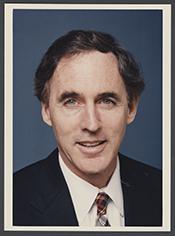
Madam Speaker, I am pleased to support this legislation. I think it provides strong e-commerce protection, not through computer codes but rather through the U.S. legal code, for the American consumer…
Madam Speaker, I am pleased to support this legislation. I think it provides strong e-commerce protection, not through computer codes but rather through the U.S. legal code, for the American consumer and businesses large and small. And I would like to say at the very onset that we
have support from the industry itself. Microsoft, Time Warner, Dell, Yahoo, eBay, the Business Software Alliance, Humana, EarthLink and several spyware companies themselves.
The SPY ACT of 2004 takes dead aim at unwanted and sometimes malicious programs known as spyware that we all know can link and lurk in cyberspace. They corrupt and compromise computers and their networks and ultimately, Madam Speaker, they cost Americans and the economy major losses in time and money and productivity.
The Federal Trade Commission loosely defines spyware as software ``that aids in gathering information about a person or organization without their knowledge and that may send such information to another entity without the consumer's consent or that assert control over a computer without the consumer's knowledge.''
The reality is that this deceptive and sometimes fraudulent activity, including the use of spyware, not only has the potential to damage consumer's confidence in e-commerce but also can be used to defraud consumers by stealing their personal financial information, quite literally, from underneath their noses. It is also alarming that estimates now show that these spyware programs have grown in number from about 2 million in August of 2003 to over 14 million today.
The National Cybersecurity Alliance has estimated that over 90 percent of users had some form of adware or spyware on their computers, and frankly, most of them were totally unaware of it. Given the gravity of this threat and its rapid growth, I am proud to say that the Committee on Energy and Commerce, Republicans and Democrats alike, as mentioned by the ranking member, have worked together in a bipartisan fashion. Oftentimes, we are on the House floor, we will be here probably the next couple of days, not in a bipartisan fashion, but we are here today, and it is a credit to the leadership for bringing this bill before us.
Obviously, I think great credit goes to my colleague, the gentlewoman from California (Mrs. Bono) for her early leadership in this area and also working in a bipartisan method. I think a lot of credit goes to the gentleman from New York (Mr. Towns) for his early co-sponsorship. And I think our Subcommittee on Commerce, Trade and Consumer Protection, which I chair, and the gentlewoman from Illinois (Ms. Schakowsky) is the ranking member, also as she pointed out, worked together.
I would also like to tell my colleagues, this is another good effort of our staffs, both Democrat and Republican, working together. The hard work of industry also should be commended because, obviously, when this bill first got started and we had our hearings, there were a lot of people in the industry that had some reservations.
We can only get through those reservations by having open-door communications with them and making the case of hard work with the staff and trying to get this free flow of communication, and I think in this case the staff is to be commended for making, as the chairman said, a good bill even better.
As I mentioned to him, I have had many hearings dealing with privacy, and we have had a hearing on this. So H.R. 2929 would not only send a loud and clear message to those who would do harm to our computers but it also would add another layer of protection over the robust firewall and detection technology that the information technology industry is starting to provide consumers and businesses.
In conclusion, Madam Speaker, I urge my colleagues to pass H.R. 2929, the SPY Act of 2000. It is time to put an end to spyware and keep Americans secure and confident in the e-commerce marketplace.
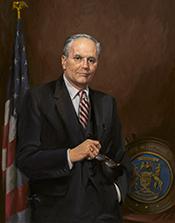
Madam Speaker, ``Barbarians At the Digital Gate'' recently warned the front page of the Sunday New York Times Business Section. What elicited this alarming headline? Pernicious computer software…
Madam Speaker, ``Barbarians At the Digital Gate'' recently warned the front page of the Sunday New York Times Business Section. What elicited this alarming headline? Pernicious computer software commonly called ``spyware'' and ``adware''.
These programs sneak onto your computer, and allow a third party to harvest your personal information. It is the equivalent of putting a wiretap on your phone and listening to your conversations. Adware tracks your Web surfing or online shopping so that marketers can send you unwanted ads. Spyware can hijack your computer to pornographic or gambling sites, or steal your passwords and credit card information.
The rapid proliferation of spyware and adware has brought Internet use to a crossroads. It threatens legitimate Internet commerce. Consumer complaints are deluging computer call centers and regulators. The most common complaints are: hijacked home pages, redirected Web searches, a flood of pop-up ads, and sluggish and crashed computers.
The bill, as amended, prohibits a number of deceptive acts or practices related to spyware, and provides for FTC enforcement and enhanced civil fines. It also recognizes that there are legitimate applications of spyware and, thus, exempts law enforcement, national security, network security, diagnostics and repair, and fraud detection from the SPY Act. It is a carefully balanced bill.
Most importantly, this legislation contains opt-in protection for consumers. It requires companies that distribute spyware and adware to obtain permission from consumers through an easily understood licensing agreement before installing spyware or adware on their computers. The programs, once downloaded, would have to provide a means to identify the spyware or adware and easily uninstall or disable it.
I also note that without aggressive enforcement, the goals of this bill will not be met. We are asking the FTC to do a great deal in a very complex area and I trust that the appropriators will provide them with sufficient resources to fulfill these tasks.
This legislation is supported by a coalition that includes: the Business Software Alliance, the Center For Democracy and Technology, the Council for Marketing and Opinion Research, Dell, eBay Inc., Humana Inc., Microsoft, 180 Solutions, Time Warner/AOL United States Telecom Association, WhenU, and Yahoo!--all of whom have submitted letters of support.
The bill has improved at every stage of its consideration, and I want to commend the leadership and hard work of Rep. Barton, the Chairman of the Committee on Energy and Commerce, Reps. Stearns and Schakowsky, the Chairman and Ranking Member, respectively, of the Commerce, Trade, and Consumer Protection Subcommittee, and Reps. Bono and Towns, the lead Republican and Democrat sponsors of the bill. I also commend the bipartisan staff team who worked very hard over the last five months to get this bill to the Floor this year; David Cavicke, Shannon Jacquot, Crhis Leahy, Brian McCullough, Will Carty, Jennifer Baird, Consuela Washington, Diane Beedle, and Andrew Delia.
I urge my Colleagues to vote ``yes'' on passage of H.R. 2929. It is a good bill. It's good for consumers. And it is good for honest commerce on the Internet.
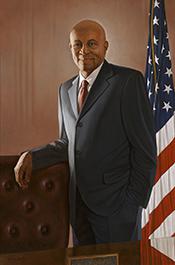
Madam Speaker, I rise in support of the SPY Act, which would greatly improve the privacy of consumers' online computer use. A lot of hard work has been put into this legislation. First and foremost,…
Madam Speaker, I rise in support of the SPY Act, which would greatly improve the privacy of consumers' online computer use.
A lot of hard work has been put into this legislation. First and foremost, I would like to commend the gentlewoman from California (Mrs. Bono), the primary sponsor of the bill. Without her hard work, insight and persistence on this issue, we would not be here today. As the primary Democratic sponsor, I have been proud to work with her on this bill, and I salute her for all her efforts.
I also want to commend the gentleman from Texas (Chairman Barton) for his strong commitment to this issue and leadership in getting our bill to the floor. I would like to thank the gentleman from Florida (Chairman Stearns), the gentleman from Michigan (Ranking Member Dingell), and the gentlewoman from Illinois (Ranking Member Schakowsky), who have all made substantial contributions. I would also like to acknowledge all of the staff that have worked so hard to make this day a reality.
There is no debate that spyware is a serious problem, one that is growing and becoming more harmful every day. Spyware software, which is downloaded without the computer owner's knowledge, invades our privacy by recording and transmitting personal information, monitoring the Web sites we visit, or even stealing documents from our computers. Other programs hijack our computers by changing our home page or forcing us to click through multiple screens until we download a spyware program.
Today's legislation would give consumers new tools to prevent these harmful activities from happening. Under the bill, consumers would have to receive a clear and concise warning about the spyware program. Second, consumers would have to provide their affirmative consent before the program could operate on their computer. Finally, consumers must have the option to easily disable any harmful spyware program on their computer.
While some consumers may want to share their information to receive free games or other discount offers, all consumers have the right to make that choice. This legislation would help ensure that consumers who do not want these programs secretly operating in the background, recording personal information, are not on their computers.
Finally, Madam Speaker, any time we legislate on highly technical matters, there is always a danger in stifling innovation or making the use of legitimate software too burdensome. It is a very difficult tightrope to walk, but I think we have done an excellent job in walking that line. This bill addresses many of the concerns raised, while at the same time retaining meaningful notice and consent to protect consumers' privacy.
This is a classic example of what we can accomplish when we work together, and we have worked together to make this day a reality. Through much hard work, we have carefully crafted a strong, bipartisan consumer protection bill; and I urge my colleagues to support this legislation because it is needed and needed desperately.
Madam Speaker, I rise today to discuss H.R. 2929, the ``Safeguard Against Privacy Invasions Act.'' I believe that there is a need to impose appropriate civil penalties against those who use software…
Madam Speaker, I rise today to discuss H.R. 2929, the ``Safeguard Against Privacy Invasions Act.''
I believe that there is a need to impose appropriate civil penalties against those who use software to commit egregious acts against computer users. In that respect, the provisions in H.R. 2929 that impose civil penalties on the truly bad actors, including those who use spyware to take over a user's computer to send spam, or those who engage in keystroke logging to steal personal information, are a step in the right direction.
However, I also have concerns that portions of the bill cast too wide a net and that they would have unintended consequences that could penalize the legitimize software companies that are actually trying to play by the rules. Many provisions of this bill would not only encompass spyware, but also legitimate interactive software services. I oppose the provisions of this bill that stretch beyond punishing the truly bad actors and instead create a static regulatory regime in an industry that is always innovating and changing to respond to consumer demand.
Also, imposing a notice and consent requirement for most software that is loaded onto computers could create unintended consequences. Specifically, when consumers are faced with the multiple notices that would be required under this bill, they will likely become desensitized and stop reading the disclosure altogether. The result could be a heavy-handed regulation that does not even achieve the desired goals of informing consumers and protecting them from spyware, especially since the truly bad actors are likely to simply ignore these regulations.
I have introduced legislation, H.R. 4661, the Internet Spyware I-SPY Prevention Act, which impose tough criminal penalties on the most egregious purveyors of spyware without imposing a broad regulatory regime on legitimate software providers. I believe that this more targeted approach is the best way to combat spyware.
While I have serious reservations about many portions of H.R. 2929, I also believe that it contains many civil prohibitions that would help in the fight against spyware. I support this bill, not in its entirety, but as an acknowledgement that some civil penalties are appropriate in the fight against spyware when properly targeted. However, I remain concerned about the broad regulatory aspects of this legislation, and hope to continue working to ensure that the final legislation is appropriately targeted at the truly bad actors, and that it does not cast a broad regulatory burden on those who continue to innovate and create new and exciting services in the interactive software industry.
Show 8 more

Madam Speaker, I join my colleagues today to support H.R. 2929. Persistent computer security vulnerabilities may expose U.S. critical infrastructure and government computer systems to possible cyber…
Madam Speaker, I join my colleagues today to support H.R. 2929. Persistent computer security vulnerabilities may expose U.S. critical infrastructure and government computer systems
to possible cyber attack by terrorists, possibly affecting the economy or other areas of national security. Because of the ubiquitous nature of the Internet, unprotected home computers--often lacking network security features, could be the entree for cyber attacks. Even when national security is not at issue, spyware programs could be used to harvest personal informaiton--such as bank or credit card account number and e-mail addresses--from computers. This information could be used subsequently in fraudulent criminal activities or in the sending of unauthorized SPAM e-mail messages.
Unwanted spyware programs can make changes to a computer that can be annoying and can cause the computer to slow down or crash. These programs have the ability to change the home page of a computer user's Web browser or search page, or add additional components to the browser that are unnecessary or unwanted. These programs could make it very difficult to change the settings back to the way they were originally.
This bill directs the Federal Trade Commission (FTC) to prohibit the transmission of an unauthorized spyware program to a covered computer over the Internet. The bill further establishes requirements for an affirmative agreement by the user of the covered computer to specifically agree the conditions of the transmission with an acknowledgement of the person and address of the transmitter.
The bill provides specific prohibitions on use of any spyware program for collecting any personally identifiable information from the covered computer unless notice is provided. The criminal penalties provided for in this act will help to provide a necessary enforcement mechanism.
I believe this is just one of the steps necessary to secure the nation's critical infrastructure and to help protect the privacy and civil liberties of Americans.

Mr. Speaker, I rise today in support of H.R. 4661, the ``Internet Spyware Prevention Act of 2004.'' This narrow criminal legislation will deter and allow the prosecution of the worst forms of…
Mr. Speaker, I rise today in support of H.R. 4661, the ``Internet Spyware Prevention Act of 2004.'' This narrow criminal legislation will deter and allow the prosecution of the worst forms of behavior involving spyware by providing additional tools and resources to criminal prosecutors. I would like to thank the Gentleman from Virginia, Mr. Goodlatte, for introducing the legislation before us today.
Technologies designed to enhance the speed and efficiency of data transfer have fueled the explosive growth of the Internet. Unfortunately, the sad reality is that the same software and technology innovations that have enhanced and personalized usage of the Internet can also provide opportunities for abuse and illegal behavior.
Like many other ills on the Internet these latest malicious behaviors cannot be stopped by federal legislation alone. In fact, there is no one silver bullet--legal, regulatory, or technological--to end the misuse of spyware or the related practice of ``phishing.'' But greater consumer awareness and use of available technological countermeasures clearly hold the greatest promise for curbing these abusive practices. Congressional efforts will only help if they focus on behavior--not rapidly changing technology.
H.R. 4661 is a good start because it focuses on behavior that is criminal, not on technologies. Unlike some other proposals, this bill does not set up new requirements that dictate how things appear on a computer screen or that bombard a user with unwanted notices. Nor does this bill pose the same dangers of strict liability for legitimate companies who make a mistake. In short, it represents a measured solution to the problem it seeks to correct.
I believe that this narrow legislation updating necessary criminal law provisions and emphasizing increased enforcement, rather than broad regulation, is the correct legislative response at this time. I urge may colleagues to support H.R. 4661 and reserve the balance of my time.

Madam Speaker, my interest in the consumer problem of spyware stems from many years of work on the consumer spam problem. The anti-spam law was not expected to eliminate unwanted email, but it did…
Madam Speaker, my interest in the consumer problem of spyware stems from many years of work on the consumer spam problem.
The anti-spam law was not expected to eliminate unwanted email, but it did draw a line for consumers--that some kinds of privacy invasion are not allowed. Internet Service Providers like Microsoft, AOL, Yahoo, and Earthlink along with State Attorney Generals are bringing serious actions against spammers who violate the law.
Spyware and illegal spam are not just problems of privacy and convenience, both can be the cause of viruses and other computer crimes.
Just like robbery and speeding have not been eliminated, neither will spam or spyware. But when something is harming social welfare and consumers are overwhelmed, and private sector solutions are not enough, then we need an enforceable standard.
This legislation prohibits the most commonly known deceptive acts and practices related to Spyware from tracking your web surfing habits to send you advertising to hijacking your passwords and credit care numbers.
However, while some use this technology to deceive and defraud us, this technology is also used to support our efforts in national security. This important use of technology is taken into consideration by this bill and exempts law enforcement, national security agencies, network security programs and diagnostics on repairs to our computers from the SPY Act.
In addition, state attorney generals will have the ability to enforce consumer protection laws against spyware and preserves state trespass, contract tort and fraud laws.
This legislation will draw a line that spying on Americans' computers will not be tolerated. Will some people continue to get away with it? Perhaps. But will some people be prosecuted and punished for violating our privacy? Absolutely.

Mr. Speaker, I thank the gentleman from Virginia (Chairman Goodlatte) for his nice comments, and I am happy to join him in cosponsoring this legislation, but I especially want to express my…
Mr. Speaker, I thank the gentleman from Virginia (Chairman Goodlatte) for his nice comments, and I am happy to join him in cosponsoring this legislation, but I especially want to express my appreciation to him for being the author and introducing this legislation.
Computer spyware is a growing problem that threatens the future of commerce over the Internet. A recent report found that more than 3 million scans for spyware have been performed just this year alone. These scans revealed approximately 83 million instances of spyware. That is certainly disturbing.
Spyware can be a confusing problem for consumers. Many do not know they have it, or if they do, they do not know how to get rid of it. A Yahoo! Internet search of the term ``spyware'' yields over 8 million results. It is no wonder that the problem is only getting worse.
Mr. Speaker, H.R. 4661 addresses spyware through the regulation of bad behavior rather than the regulation of technology. It provides strong penalties for those who engage in the illicit activities of spyware and phishing.
Rather than add to an already confusing regulatory structure, the bill takes a very narrow approach. H.R. 4661 sets strong penalties for anyone who intentionally uses software to break into a computer in order to alter security settings or obtain personal information. It further authorizes money for the Department of Justice to prosecute spyware and phishing crimes.
Mr. Speaker, I again urge my colleagues to put an end to spyware and support this bill, and again I want to thank the gentleman from Virginia (Chairman Goodlatte) for introducing this piece of legislation.

Madam Speaker, I want to express support for two bills the House is considering this week: H.R. 2929, the Safeguard Against Privacy Invasions Act, and H.R. 4661, the Internet Spyware I-SPY Prevention…
Madam Speaker, I want to express support for two bills the House is considering this week: H.R. 2929, the Safeguard Against Privacy Invasions Act, and H.R. 4661, the Internet Spyware I-SPY Prevention Act. I strongly support these pieces of legislation and I am pleased they incorporate changes similar to legislation Congressman Jay Inslee and I introduced, H.R. 4255, the Computer Software Privacy and Control Act.
Millions of computers have been infected with spyware, software that is deceptively installed on their computers to collect their personal information, record their keystrokes, change their browser homepage, or display unwanted advertising.
H.R. 2929 would require notice and consent from the computer user before software is able to collect personal information and transmits it to a third party, monitor Internet usage, such as websites visited, modify computer settings or deliver advertisements. This provision accomplishes a main goal of the Computer Software Privacy and Control Act.
H.R. 4661 strengthens criminal provisions in the Computer Fraud and Abuse Act. Providing necessary criminal penalties for spyware will help prevent this deceptive activity and protect the privacy of consumers. Our legislation includes provisions similar to this as well.
I am glad H.R. 2929 and H.R. 4661 require notice and consent and strengthen criminal provisions, and I urge my colleagues to support these important pieces of legislation.
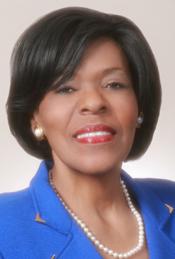
Mr. Speaker, official business in my district prevents me from being present for legislative business scheduled for today, Thursday, October 7, 2004. Had I been present, I would have voted ``aye'' on…
Mr. Speaker, official business in my district prevents me from being present for legislative business scheduled for today, Thursday, October 7, 2004. Had I been present, I would have voted ``aye'' on the motion to instruct conferees to H.R. 42567, Homeland Security Appropriations for Fiscal Year 2005 (Rollcall No. 502); ``aye'' on H.R. 4661, Internet Spyware Prevention Act (Rollcall No. 503); ``aye'' on H.R. 5213 (Rollcall No. 503); ``aye'' on H.R. 5186, a bill to reduce certain special allowance payments and provide additional teach loan forgiveness on Federal student loans (Rollcall No. 504); ``no'' on the adoption of H. Res. 828, a resolution waiving the requirement of clause 6(a) of Rule 13 to provide for same day consideration of H.R. 4520 (Rollcall No. 505); ``aye'' on S. 1134, the Economic Development Administration Reauthorization Act of 2003 (Rollcall No. 506); and ``aye'' on H.R. 5061, the Comprehensive Peace in Sudan Act (Rollcall No. 507).

Mr. Speaker, on rollcall Vote No. 503, I was in my Congressional District on official business. Had I been present, I would have voted ``yea.''
Mr. Speaker, on rollcall Vote No. 503, I was in my Congressional District on official business. Had I been present, I would have voted ``yea.''
Mr. Speaker, on rollcall No. 502, I was in my Congressional District on official business. Had I been present, I would have voted ``yea.''
Mr. Speaker, on rollcall No. 502, I was in my Congressional District on official business. Had I been present, I would have voted ``yea.''
Bill Text
4 versions available
        [Congressional Bills 108th Congress]
[From the U.S. Government Publishing Office]
[H.R. 4661 Received in Senate (RDS)]

2d Session
H. R. 4661

_______________________________________________________________________

IN THE SENATE OF THE UNITED STATES

October 8, 2004

Received

_______________________________________________________________________

AN ACT

To amend title 18, United States Code, to discourage spyware, and for
other purposes.

Be it enacted by the Senate and House of Representatives of the
United States of America in Congress assembled,

SECTION 1. SHORT TITLE.

This Act may be cited as the ``Internet Spyware (I-SPY) Prevention
Act of 2004''.

SEC. 2. PENALTIES FOR CERTAIN UNAUTHORIZED ACTIVITIES RELATING TO
COMPUTERS.

(a) In General.--Chapter 47 of title 18, United States Code, is
amended by inserting after section 1030 the following:
``Sec. 1030A. Illicit indirect use of protected computers
``(a) Whoever intentionally accesses a protected computer without
authorization, or exceeds authorized access to a protected computer, by
causing a computer program or code to be copied onto the protected
computer, and intentionally uses that program or code in furtherance of
another Federal criminal offense shall be fined under this title or
imprisoned not more than 5 years, or both.
``(b) Whoever intentionally accesses a protected computer without
authorization, or exceeds authorized access to a protected computer, by
causing a computer program or code to be copied onto the protected
computer, and by means of that program or code--
``(1) intentionally obtains, or transmits to another,
personal information with the intent to defraud or injure a
person or cause damage to a protected computer; or
``(2) intentionally impairs the security protection of the
protected computer;
shall be fined under this title or imprisoned not more than 2 years, or
both.
``(c) No person may bring a civil action under the law of any State
if such action is premised in whole or in part upon the defendant's
violating this section. For the purposes of this subsection, the term
`State' includes the District of Columbia, Puerto Rico, and any other
territory or possession of the United States.
``(d) As used in this section--
``(1) the terms `protected computer' and `exceeds
authorized access' have, respectively, the meanings given those
terms in section 1030; and
``(2) the term `personal information' means--
``(A) a first and last name;
``(B) a home or other physical address, including
street name;
``(C) an electronic mail address;
``(D) a telephone number;
``(E) a Social Security number, tax identification
number, drivers license number, passport number, or any
other government-issued identification number; or
``(F) a credit card or bank account number or any
password or access code associated with a credit card
or bank account.
``(e) This section does not prohibit any lawfully authorized
investigative, protective, or intelligence activity of a law
enforcement agency of the United States, a State, or a political
subdivision of a State, or of an intelligence agency of the United
States.''.
(b) Conforming Amendment.--The table of sections at the beginning
of chapter 47 of title 18, United States Code, is amended by inserting
after the item relating to section 1030 the following new item:

``1030A. Illicit indirect use of protected computers.''.

SEC. 3. AUTHORIZATION OF APPROPRIATIONS.

In addition to any other sums otherwise authorized to be
appropriated for this purpose, there are authorized to be appropriated
for each of fiscal years 2005 through 2008, the sum of $10,000,000 to
the Attorney General for prosecutions needed to discourage the use of
spyware and the practice commonly called phishing.

SEC. 4. FINDINGS AND SENSE OF CONGRESS CONCERNING THE ENFORCEMENT OF
CERTAIN CYBERCRIMES.

(a) Findings.--Congress makes the following findings:
(1) Software and electronic communications are increasingly
being used by criminals to invade individuals' and businesses'
computers without authorization.
(2) Two particularly egregious types of such schemes are
the use of spyware and phishing scams.
(3) These schemes are often used to obtain personal
information, such as bank account and credit card numbers,
which can then be used as a means to commit other types of
theft.
(4) In addition to the devastating damage that these
heinous activities can inflict on individuals and businesses,
they also undermine the confidence that citizens have in using
the Internet.
(b) Sense of Congress.--Because of the serious nature of these
offenses, and the Internet's unique importance in the daily lives of
citizens and in interstate commerce, it is the sense of Congress that
the Department of Justice should use the amendments made by this Act,
and all other available tools, vigorously to prosecute those

who use spyware to commit crimes and those that conduct phishing scams.

Passed the House of Representatives October 7, 2004.

Attest:

JEFF TRANDAHL,

Clerk.