Mr. Speaker, H.R. 3479 was introduced to provide a more coordinated and consistent approach in dealing with the brown tree snake, which has decimated native bird populations in Guam since its…
Mr. Speaker, H.R. 3479 was introduced to provide a more coordinated and consistent approach in dealing with the brown tree snake, which has decimated native bird populations in Guam since its accidental introduction following World War II. Today, the brown tree snake poses a direct threat to the environment and economies of the Mariana Islands and the Hawaiian Islands, and to a lesser extent, Coastal California, the Gulf States, and the Caribbean. If not effectively contained in Guam, the brown tree snake could prove to be devastating should it make its way further outside its native and historic range. The brown tree snake, whose scientific name is Boiga irregularis, is especially prone to tropical climate and with no natural predators can virtually destroy an ecosystem. This invasive species has already irrevocably harmed Guam's environment.
With the level of military and commercial air and sea traffic between Guam and points in the Pacific Region, including Saipan and Honolulu, increasing on an almost daily basis, the need for effective control of the brown tree snake correspondingly rises. For over a decade, a Federal partnership has existed with the Government of Guam and the State of Hawaii in preventing the brown tree snake's transport off Guam. This partnership emerged following the introduction of the first legislation in Congress dealing with the brown tree snake. That measure was H.R. 4804 in the 101st Congress, introduced by former Congresswoman Patricia Saiki (Hawaii) and former Congressman Ben Blaz (Guam), whose purpose was eventually incorporated into and enacted as part of the Nonindigenous Aquatic Nuisance Prevention and Control Act of 1990. H.R. 3479 builds upon this law by providing more programmatic authorization and direction for the Federal elements of the overall partnership to combat the brown tree snake.
The legislation provides funding authority for eleven specific authorized activities relating to control, interdiction, research and eradication. It authorizes appropriations for five offices and agencies under the Department of Agriculture and the Department of the Interior to support and coordinate the different elements of this overall work. Apart from these two cabinet level agencies, it is expected that strong support and cooperation will continue to come from the Department of Defense, who has a major stake in reducing brown tree snake populations on military installations in Guam and in preventing the accidental or incidental transport of the brown tree snake off Guam.
The Animal and Plant Health Inspection Service (APHIS) has been at the center of this partnership, with its Wildlife Services operating a program to screen outbound cargo at the airport and seaport for brown tree snakes. This partnership has proven effective at interdicting snakes, although stands to gain much more Federal backing and resources in order to ultimately succeed in its mission. In recent years the program has struggled to keep up
with the pace of outbound flights and surface cargo. H.R. 3479 would provide for specific authorization levels to maintain strong and consistent Federal funding for this program. From this perspective, I believe H.R. 3479 is a cost-saving measure for the Federal Government in the long run. If our guard is let down, and the program becomes inevitably unable to keep up with the demand of increased inspections, the value of all the inspections conducted to date and the value of all Federal resources invested to date lessens and becomes jeopardized in its entirety. Should the snake ever become established in Hawaii, the responsibility and need to control for it in yet another location would ensue, causing the expenditure of additional Federal funds. The costs of the adverse impact to the economy of any local community hit by the introduction of the brown tree snake would be beyond estimating and difficult to bear.
Apart from the concern over consistent and adequate year-to-year Federal funding for interdiction, is the larger, more long-term concern about controlling for the snake to restore and protect Guam's environment. To date, efforts have largely focused, with limited and inconsistent resources, on interdiction. I believe more can and should be devoted towards protecting Guam's environment and native species. I believe brown tree snake control work carried out on Guam should be tied to, consistent with, and made an integral component of species recovery efforts. In this regard, I am pleased H.R. 3479 provides a specific authorization of appropriations for the Fish and Wildlife Service to participate in this partnership. I would also note that this legislation provides for research authorization with the long-term goal of eradication and with the near-term focus on large-scale reduction.
H.R. 3479 also provides important direction and purpose for the Brown Tree Snake Technical Working Group that has convened over the years to provide a forum for the partners across the levels of government to coordinate their efforts. The legislation outlines specific duties and activities for the working group, including the evaluation of Federal activity and funding. It is hoped that the working group's evaluation and reporting would provide Congress with authoritative and useful information to consider in the appropriations process. Furthermore, I believe the five-year authorization period contained within the legislation can yield a process by which we are able to evaluate the progress of the work. Without the direction and authorization embodied in this legislation, I am concerned that the Federal Government will forever be engaged in an effort to prevent the brown tree snake from leaving Guam, and will likely prove unsuccessful in the long run. Without this legislation, I am also concerned that future efforts will be focused on interdiction and interdiction alone at the expense of Guam's environmental and economic interests.
Although, not all provisions of the bill as introduced have been retained in the version before the House today, I am pleased that we have been able to craft a product that I believe will encourage more direction, coordination and consistency in year-to-year funding for brown tree snake interdiction, control, research, and eradication efforts. I look forward to continuing to work with the leadership of the committees with jurisdiction to enact this legislation.
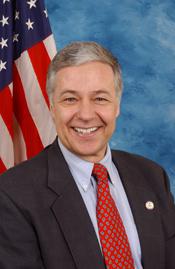 Rep. Michael H. Michaud (D-ME)