Higher Education Extension Act of 2004
Legislative Activity
Stay on top of the latest movement without scrolling through every action
Became Public Law No: 108-366.
October 25, 2004
View full timeline
Introduced in House
September 30, 2004
Referred to the House Committee on Education and the Workforce.
September 30, 2004
Mr. Boehner moved to suspend the rules and pass the bill, as amended.
October 6, 2004 • 11:17 PM
Considered under suspension of the rules. (consideration: CR 10/7/2004 H8317-8319)
October 6, 2004 • 11:18 PM
DEBATE - The House proceeded with forty minutes of debate on H.R. 5185.
October 6, 2004 • 11:18 PM
Passed/agreed to in House: On motion to suspend the rules and pass the bill, as amended Agreed to by voice vote.(text: CR 10/7/2004 H8317)
October 6, 2004 • 11:32 PM
On motion to suspend the rules and pass the bill, as amended Agreed to by voice vote. (text: CR 10/7/2004 H8317)
October 6, 2004 • 11:32 PM
Motion to reconsider laid on the table Agreed to without objection.
October 6, 2004 • 11:32 PM
Received in the Senate, read twice.
October 7, 2004
Passed Senate without amendment by Unanimous Consent. (consideration: CR S10921)
October 9, 2004
Message on Senate action sent to the House.
October 9, 2004
Presented to President.
October 13, 2004
Signed by President.
October 25, 2004
Became Public Law No: 108-366.
October 25, 2004
Floor Debate
15 membersWhat members said about H.R. 5185 on the floor
JAB GM
GM HP"
HP" JW
JW SJL+10
Floor Debate
15 membersWhat members said about H.R. 5185 on the floor
Mr. Speaker, I move to suspend the rules and pass the bill (H.R. 5186) to reduce certain special allowance payments and provide additional teacher loan forgiveness on Federal student loans, as…
Mr. Speaker, I move to suspend the rules and pass the bill (H.R. 5186) to reduce certain special allowance payments and provide additional teacher loan forgiveness on Federal student loans, as amended.
Mr. Speaker, I ask unanimous consent that all Members may have 5 legislative days within which to revise and extend their remarks and include extraneous material on H.R. 5186.
Mr. Speaker, I yield myself such time as I may consume.
Mr. Speaker, today the House has an opportunity to pass a bill that will protect taxpayers, support school teachers and help poor schools ensure every student has the opportunity to learn from a qualified teacher.
I want to particularly thank my colleague, the gentleman from California (Mr. McKeon) and the gentleman from South Carolina (Mr. Wilson) for the vital roles they have played for bringing this bill to the floor.
For more than 10 years, a complex Federal policy known as the 9.5 percent ``special allowance'' has resulted in excess taxpayer subsidies for some student loan providers. This policy was adopted under the Clinton administration, and while some would call it a loophole, the loan providers were told by the Clinton administration that it was perfectly legal and legitimate.
The excess taxpayer subsidies being paid under this policy have in recent years begun to balloon, and if we fail to act, billions of dollars in excess taxpayer subsidies will be paid to student loan providers legally.
Now, this may be technically legal but I think it is unfair to taxpayers and unfair to students, and it is unfair to the schools, people who should be the beneficiaries of this funding. When you boil it down, it is just plain bad policy.
Eight months ago President Bush called on Congress to pass legislation to shut down these excess taxpayer subsidies. The Bush administration noted that ending the excess subsidies without legislation was likely to take at least 2 years. Because of the precedents established under the previous administration, it would take the administration 2 years to end the policy without legislation. Two years is too long to wait.
So the President asked Congress to pass legislation this year that would allow the 9.5 percent subsidies to be stopped now.
The legislation before us should be a no-brainer. It is called the Taxpayer-Teacher Protection Act because that is exactly what it will do. The bill will protect taxpayers by shutting down the excess subsidies to lenders, as the President has asked, and it will use the money to help teachers and poor schools across the country.
Rural and urban schools are confronting a shortage of qualified teachers in key subjects. This shortage is very serious and particularly hurts schools in our poorest communities.
According to the most recent data available from the National Center for Education Statistics, 67 percent of our public middle and high schools have vacancies in special education, 70 percent had vacancies in mathematics, 61 percent had vacancies in biological or life sciences. And according to the Committee For Economic Development, almost a third of high school math classes are taught by teachers who did not major or even minor in mathematics. For biology it is 45 percent, and in life sciences the percentage rises to 60 percent.
President Bush has repeatedly asked Congress to create new incentives for good teachers to teach in our poorest schools. The President has asked that we increase the amount of loan forgiveness that is available to qualified teachers in these key subjects who agree to teach for at least 5 years in our poorest schools. The President wants us to increase loan relief for the teachers from the current maximum of $5,000 to a new maximum of $17,500, more than triple the amount that is currently available.
The President asked us to do this after the No Child Left Behind Act became law. And he asked for it again last week in Springfield, Ohio, where I was with him at an education event.
Under this bill we will shut down the excess subsidies for now and use the money to provide loan relief for highly qualified teachers in high-needs schools, helping our schools deal with the teacher shortage.
The House last year overwhelmingly passed legislation written by the gentleman from South Carolina (Mr. Wilson) that called for similar teacher loan relief. Shutting off these excess subsidies now via this bill will also pave the way for us to devote billions of dollars over the next several years to college access programs for low- and middle- income students.
This was the original intent of the bill introduced by the gentleman from California (Mr. McKeon) and I back in May. And that bill, the College Access and Opportunity Act, would permanently shut down the excess subsidies as part of a comprehensive reauthorization of the Higher Education Act.
We continue to believe a long-term, multiyear reauthorization of the Higher Education Act is the proper vehicle for ensuring that the 9.5 percent subsidies stay shut down, because it would ensure that billions of dollars are used to expand college access for low- and middle-income students.
Let us make no mistake about this. We are closing the loophole, and once it is closed, it is not coming back. The only question today is whether Democrats and Republicans can agree on how the money should be used within the Higher Education Act.
We could not find an agreement on the big question of the reauthorizing the bill this year, and unfortunately, this looks like that debate will continue into next year. But in the meantime this bill gives us the chance to close down the subsidies now and use the money for something we can all agree is a worthy cause.
Now, there are some who say this bill does not go far enough. They contend it should shut down subsidies retroactively. Let me say, here is the problem with that.
Shutting the 9.5 percent subsidies down retroactively will not just affect the big kids on the block, those in the student loan business who do it for a profit. It will affect smaller, nonprofit student aid providers all across America, nonprofit organizations that were told years ago by the Federal Government that this practice is 100 percent legal and legitimate. And as we will see
as this debate goes on, we are talking about nonprofit student aid organizations from all over the country, whether it be the big student aid organization in California, where 85 percent of their effort is aimed at minority children, and Texas, Arizona, all across the country.
Over the past few days Congress has heard an earful from nonprofit student aid providers warning that retroactive cuts would hurt students and families that need help paying for college. We have heard from Chela in California and we have heard from a provider in South Texas. Half of their loans go to Hispanic students, all needy students.
We have heard from nonprofit providers in New Mexico, Rhode Island, Oklahoma. ``Cuts in these subsidies, especially retroactive cuts, would immediately cause a negative impact to Iowa students,'' warned a nonprofit organization in Iowa.
Now, we need to shut down the subsidies, but we need to make sure that we are not shutting down nonprofit student aid organizations in the process. And if we go any further than what we propose in this bill, I think we are going to hurt the very families and students that we are actually trying to help.
So I would urge my colleagues to support the measure on the floor today. It is the right thing to do for our taxpayers, teachers and American students.
Mr. Speaker, I reserve the balance of my time.
Mr. Speaker, I yield myself such time as I may consume.
I would remind my colleagues that we are less than 4 weeks from a Presidential election and an election for all of us who serve here in the House. We all know what happens when we get to the eve of election. We all find religion.
Now, the President called for the elimination of this 9.5 percent subsidy back in February. I have been working on this for a year. It was in the gentleman from California's (Mr. McKeon) and my bill that we introduced back in May, and my colleagues on the other side want to criticize us for not acting sooner. Yet, the substitute, or their own higher education reauthorization, never even addressed this very subject.
Now, I would say to my colleagues it takes two to tango, and they all know how things get done around here. We need to work together.
The criticism about this bill not going far enough, I think, is well understood by Members on both sides of the aisle. While, in fact, it may shut down some subsidies that go to for-profit lenders, the problem we have is those lenders in the nonprofit sector who use that money to aid students and needy students will be burned in the process, and I think we take a great risk in going down that path today.
That is why the bill that we have before us shuts these things down, these 9.5 percent loans, for the next year and allows us, in the reauthorization of the Higher Education Act, to make sure that when we shut these 9.5 percent loans down permanently, we do so in a way that we do not hurt the nonprofit community that helped many low-income and needy students around the country.
Mr. Speaker, I yield 2 minutes to the gentleman from Nevada (Mr. Porter).
Mr. Speaker, I am pleased to yield 2 minutes to the gentleman from Georgia (Mr. Gingrey), a member of our committee.
Mr. Speaker, I yield myself the balance of my time.
Mr. Speaker, I never cease to be amazed at what happens during political silly season here in the Nation's Capital.
Here we are on the eve of an election and we are going to have a virtual unanimous vote on this bill. Even though my colleagues on the other side have criticized it so much, for a bill that sounds as bad as they have criticized it, I am wondering why they are going to vote for it.
But I want to say, Welcome. Welcome. They are taking credit for stumbling across this billion-dollar excess subsidies when we have been working on this for about a year to try to shut this down in a reasonable and responsible way. And while I know that people want to go all the way and shut it down and be really tough, what about those nonprofit student aid organizations around the country who have these loans, who use those excess profits to help low-income students and mostly minority students all over the country?
Let us stop the nonsense. Let us get on to do the people's work. By passage of this bill today, we will end this practice for the most part for the next year, use those savings to help expand the need for high quality teachers in title I schools in math, science and special ed, and help more students get a better chance at an education.
Mr. Speaker, I yield back the balance of my time.
Mr. Speaker, I yield myself 3 minutes. Let me say at the outset, that the Members on this side of the aisle enthusiastically support this legislation brought to the floor by the chairman of the…
Mr. Speaker, I yield myself 3 minutes.
Let me say at the outset, that the Members on this side of the aisle enthusiastically support this legislation brought to the floor by the chairman of the committee and the chairman of the subcommittee. We only ask, what has been holding it up? Why were you not here earlier? But you are here now and we will celebrate the fact that you are here now.
I must say that we were excited when the gentleman from Maryland (Mr. Van Hollen) and the gentleman from Michigan (Mr. Kildee) were able to get an amendment this past September onto the floor of the House so we could get this issue in front of the House, get it out into the daylight and let the Members work the will of the House, something that does not happen too often in this Chamber. The will is quite stifled most of the time.
But when this issue is put before the House by the gentleman from Maryland (Mr. Van Hollen) and the gentleman from Michigan (Mr. Kildee), and the House got a chance to look at it, Republicans and Democrats, conservatives from the North, East, South, West, around the country, 414 to 3, they said, get rid of this loophole. It is unjustified, it is unconscionable, it is expensive and it is killing the credibility of this program.
Tonight, we answer that call by the House of Representatives to get rid of this program. But tragically tonight we only answer a part of that call because we do not deal with those provisions in this program that continue these unconscionable profits at the 9.5 percent loans due to the recycling. We are going to stop this loophole for this year, and we ought to stop the recycling.
This is not retroactive. But when you do not stop the recycling, the good purposes for which our colleagues across the aisle are going to put this money to use, and that is to help those teachers, provide loan forgiveness for those teachers in difficult districts who are making the special efforts, some 10,000 additional teachers, who could have access to loan forgiveness, now will not have access to that loan forgiveness.
All it would require is to close the loophole. That is what the House voted on when they voted on the Kildee-Van Hollen amendment. They voted to close a loophole, not sort of close a loophole, not part way close a loophole, but close a loophole. Maybe only for 1 year now, and that is the best we can do under these circumstances, but the entire loophole.
The difference is billions of dollars. The difference is 10,000 teachers in need of loan forgiveness. That is the choice.
I heard this was held up because we had all this power. We would like to use our power now to tell you and persuade you to join with us and close the entire loophole and get those other 10,000 teachers that are eligible. Power to the people, to the Democrats, because apparently that is why you have not done it now for 2 years. So we want to join with you. We can have a manager's amendment tonight to close the loophole like 414 of our colleagues urge.
I want to thank the gentleman from Michigan (Mr. Kildee) and the gentleman from Maryland (Mr. Van Hollen) for their creativity and tenacity in getting this before the House of Representatives, getting it into the full Chamber where the Members on a bipartisan basis have overwhelmingly repudiated this program. I am sorry we cannot go the whole way.
Mr. Speaker, I reserve the balance of my time.
Mr. Speaker, I yield 4 minutes to the gentleman from Michigan (Mr. Kildee), one of the sponsors of the original amendment to get this in front of the House.
Mr. Speaker, I yield 4 minutes to the gentleman from Maryland (Mr. Van Hollen), who again was the spark plug for getting this legislation before the full House and getting this bill to the floor.
Mr. Speaker, how much time do I have remaining?
Mr. Speaker, I yield 2 minutes to the gentlewoman from California (Ms. Woolsey).
Mr. Speaker, I yield 2 minutes to the gentleman from Illinois (Mr. Davis), a member of the committee
(Mr. DAVIS of Illinois asked and was given permission to revise and extend his remarks.)
Mr. Speaker, I yield 1 minute to the gentlewoman from Texas (Ms. Jackson-Lee).
Mr. Speaker, I yield 3 minutes to the gentleman from New Jersey (Mr. Holt).
Mr. Speaker, could you advise the time remaining?
Mr. Speaker, I yield myself the balance of my time.
Again, Mr. Speaker, we support this legislation. But it is interesting, you know, with the 10-year T-bill rate at 4 percent and the 2-year bill or the 3-year bill at about 1.5 to 2 percent, that a very select group of lenders can get 9.5 percent, the only place in the world you can get a return of 9.5 percent on your money, or the difference between the margin there. It is the only place in the world you can go to get this money, unless you are borrowing from the Mafia.
But what happens with this legislation is, while hiding behind a legitimate claim by nonprofits, they keep open the recycling loophole that is overwhelmingly used, according to the General Accountability Office, by for-profit lenders. Nothing to do with retroactivity, because we stop this practice in the future, and we can stop recycling in the future.
But they have chosen not to do it. They said, if the Democrats had cooperated, they would have done this earlier. Well, we are cooperating, so do it. It is earlier. Do it now. We have this newfound power bestowed upon us by the chairman of the committee. We want it now.
You said you did not do it because we did not cooperate. The more I think about it, it was a brilliant strategy because we did not have to take all that other stuff in your legislation, where these kids were going to lose their rights to low-interest loans and be able to lock in low-interest loans in repayments. We did not have to take all that, which would have punished millions of young people, and we are going to get this loophole closed, too.
Sounds like a brilliant piece of strategy. And here we are at the end of the session with the Republicans implementing, talk about bipartisanship, the Republicans are now implementing this Democratic strategy. It is a wonderful evening to be here at midnight to finally see where the Republicans are saying the Democrats made us do it.
Mr. Speaker, we enthusiastically support this bill. We hope that the Republicans next year will go the full steps to closing the loophole in its entirety.
Mr. Speaker, I yield back the balance of my time.
Mr. Speaker, on that I demand the yeas and nays.
Mr. Speaker, I yield myself 4\1/2\ minutes. Mr. Speaker, the Taxpayer-Teacher Protection Act is a straightforward plan to shut down excess subsidies for student loan providers and direct the savings…
Mr. Speaker, I yield myself 4\1/2\ minutes.
Mr. Speaker, the Taxpayer-Teacher Protection Act is a straightforward plan to shut down excess subsidies for student loan providers and direct the savings to expanded student loan relief for teachers. There is a sense of urgency in the bill before us, and I agree that these reforms should be sent to the President for his signature as soon as possible. Yet I find it troubling that we are here today when these reforms could have been enacted months ago, if not for the partisan foot-dragging on the other side of the aisle.
The fact is, President Bush called on Congress to shut down these subsidies 8 months ago in his fiscal year 2005 budget request. Unfortunately, Democrats chose not to address the issue in any of their Higher Education Act reauthorization plans, and they refused to work with us to enact our legislation that would have shut down the 9.5 percent floor.
Let us be clear on this point. The reason we are here today is because those on the other side of the aisle did nothing to shut down these subsidies in their own legislation and they have stonewalled our efforts to cut off the subsidies as part of a larger reauthorization bill.
What is worse, our Democratic colleagues who have finally belatedly joined us in calling for an end to the excess subsidies are advocating for changes that would cut student loan benefits.
This runs counter to the very principle that is driving these reforms, that Federal student aid should be directed to student benefits.
The bill before us is the first step to permanently ending the 9.5 percent special allowance subsidy. Make no mistake, by approving this bill, the Congress will have taken the first step to ensuring a permanent end to the excess subsidy payments.
We have always maintained that the best solution is to provide a permanent legislative fix that will direct these resources to student benefits. We proposed that type of permanent solution earlier this year, and we will fight for its enactment next year. In the meantime, this bill is the right answer today.
Prospective changes like those in the bill before us will ensure the loophole is shut down without jeopardizing student benefits. The GAO recently recommended Congress put an end to the excess loan provider benefits with prospective changes. That is because the GAO recognizes that retroactive changes would harm students by reducing borrower benefits.
The recipients of the 9.5 percent special allowance subsidy are largely nonprofit State secondary markets. These organizations are required to use the proceeds of the 9.5 percent subsidy to provide student benefits.
Many of the nonprofit State organizations have told us that retroactive changes would force cuts to programs that forgive loans for nurses, reduce loan fees and interest rates for students, provide alternative loans for needy students and families, and help high school students and families plan for college and find financial aid. These are just a few of the student benefits that would be cut under the misguided Democratic plans to make retroactive changes.
We wish our Democratic friends had understood the importance of this issue sooner so that these reforms would already be enacted. In February, President Bush called on the Congress to shut down the excess subsidies. In May, the gentleman from Ohio (Chairman
Boehner) and I introduced a bill that would do just that. At the same time, Democratic leaders attacked that proposal and prevented us from enacting comprehensive reforms that would expand college access, all the while offering proposals of their own that ignored the excess subsidy payments. We are pleased that the Democrats have finally come around, but we wish they had realized the importance of this issue sooner.
Shutting down these excess subsidies is important, and so is the need for the expanded loan forgiveness this bill will provide. The Republican plan to permanently end the excess subsidies for student loan providers is hinged on the idea that these resources must be used for student benefits in the Federal student loan program. That is why the Taxpayer-Teacher Protection Act takes the savings generated by shutting down excess loan provider profits and targets them to student loan relief for teachers.
K-12 schools in high poverty areas, including rural and urban schools, are facing severe shortages of teachers in key subjects. The House has already approved a similar expansion of student loan relief. That bill, authorized by the gentleman from South Carolina (Mr. Wilson) received widespread support among Republicans and Democrats alike, and I expect similar support today.
President Bush has led efforts to expand loan forgiveness for teachers of math, science and special education who commit to teaching at least 5 years in disadvantaged schools. The current loan forgiveness of $5,000 will be more than tripled, to $17,500, under the bill, providing a valuable tool for disadvantaged schools seeking to place a highly qualified teacher in every classroom.
I hope we can all work together now to pass this bill and get it to the President for his signature.
Mr. Speaker, I reserve the balance of my time.
Mr. Speaker, I move to suspend the rules and pass the bill (H.R. 5185) to temporarily extend the programs under the Higher Education Act of 1965, as amended. Mr. Speaker, I ask unanimous consent that…
Mr. Speaker, I move to suspend the rules and pass the bill (H.R. 5185) to temporarily extend the programs under the Higher Education Act of 1965, as amended.
Mr. Speaker, I ask unanimous consent that all Members may have 5 legislative days within which to revise and extend their remarks and include extraneous material on H.R. 5185.
Mr. Speaker, I yield myself such time as I may consume.
Mr. Speaker, each year millions of Americans, young and old, participate in higher education programs at this Nation's colleges and universities. Higher education has become more important than ever, with a changing marketplace and increasing international competition. That is why the Federal investment in the Higher Education Act is so important.
For 2 years, my colleagues and I have been working to strengthen and renew the Higher Education Act so that we can better serve the millions of low and middle income students aspiring for college education. We have made great progress, but, unfortunately, we were not able to complete our work.
Today I stand in support of the Higher Education Extension Act so we can ensure these vital programs continue to serve American students. Yet I regret we were not able to accomplish a full reauthorization.
In May, the gentleman from California (Mr. McKeon) and I introduced the College Access and Opportunity Act to complete the Higher Education Act reauthorization. That bill was the final piece of our comprehensive effort to expand the college access by focusing on fairness, accountability, affordability, and quality. That bill contained a number of reforms that I had hoped would be enacted by today.
The College Access and Opportunity Act would have realigned our student aid programs to place first priority back where it belongs, on the millions of low and middle income students who have not yet received a higher education.
The bill would have strengthened Pell grants, college access programs, and campus-based student aid. It would have broken down barriers and eliminated outdated regulations that are preventing nontraditional students from achieving their higher education goals. It would have significantly realigned the multibillion dollar student loan programs to extend access for current and future students, and restore fairness so that all student borrowers could be treated equally. Consumer protections for borrowers would have been strengthened, and red tape would have been reduced. And because accountability is the cornerstone of education reform, colleges and universities would have been held more accountable to the students, parents, and taxpayers they serve through increased sunshine and transparency.
Yet, none of these reforms will be enacted today because partisan politics got in the way of student-focused reforms. The bill before us is critically important. We cannot allow programs under the Higher Education Act to expire. Too many students depend on this assistance as they strive for a higher education. Yet, it is equally important that we remain committed to comprehensive reforms that will build upon these programs, strengthening them to expand college access.
Mr. Speaker, I strongly support the extension of the Higher Education Act. Millions of American students depend on these programs, and we must not let our commitment to higher education lapse. But it is equally important that we remain focused on the ultimate goal of enacting comprehensive reforms that will strengthen and renew the Higher Education Act so we can meet the needs of current and future students. I encourage my colleagues to support this bill and work with us in the coming year to complete a comprehensive reform package so that we can better serve American students pursuing the dream of a college education.
Mr. Speaker, I reserve the balance of my time.
Mr. Speaker, I yield such time as he may consume to the gentleman from California (Mr. McKeon), the chairman of the Subcommittee on 21st Century Competitiveness.
Mr. Speaker, I yield myself such time as I may consume.
Let me thank my colleague on the other side of the aisle. We have been locked in a really difficult situation trying to come to an agreement on the reauthorization of this bill. But it is not just here. I think we could have overcome our differences, but clearly there was no action in the other body, and we have no choice but to extend the Higher Education Act, which the underlying bill here today does.
This is important to millions of low- and middle-income American students who depend on Pell grants and student loans to achieve their dream of a college education. I ask my colleagues to support the bill.
Mr. Speaker, I yield back the balance of my time.
Mr. Speaker, I rise in support of H.R. 5186, the Taxpayer-Teacher Protection Act. In doing so, I'd like to thank Chairmen Boehner and McKeon for their leadership on this issue, supported by Majority…
Mr. Speaker, I rise in support of H.R. 5186, the Taxpayer-Teacher Protection Act. In doing so, I'd like to thank Chairmen Boehner and McKeon for their leadership on this issue, supported by Majority Leader Tom DeLay.
H.R. 5186 moves efficiently and effectively to end unfair subsidies for lenders in the student loan program and redirects those funds to assist the teachers of this country. What could be better? While it took some time for my colleagues on the other side of the aisle to agree with us on the need to stop the excess subsidies for student loan providers, I'm confident that today, we all recognize the importance of the measure before us. I'm also certain they agree with us on the need to assist teachers, given their past votes of overwhelming support on similar teacher loan forgiveness bills.
This bill is straightforward and increases the amount of loan forgiveness for secondary math and science teachers and for K-12 special education teachers to a maximum of $17,500 from the $5,000 currently provided in the Higher Education Act for all teachers in high-poverty schools.
This bill is similar to legislation I introduced, H.R. 438, which passed the House with strong bipartisan support by a margin of 417-7 on July 9, 2003.
The purpose of the bill is to ensure our future workforce is scientifically literate and competent, skills that the Committee for Economic Development and the American Society of Mechanical Engineers have identified as keys to our country's ability to compete in the global marketplace. Unfortunately, our high school students consistently test toward the bottom in math and science compared to the rest of the world.
Teachers working in schools that face the greatest difficulty in recruiting math, science and special-ed teachers will be eligible for the increased amount of loan forgiveness after teaching for five years. This commitment to these schools and the students they serve is well worth the recognition and support of this Congress. To further assist children in low-income schools, eligible teachers must be highly qualified as required by the No Child Left Behind Act.
I look forward to the day when a group of math, science and special- ed teachers begins teaching in our Nation's neediest schools inspired by the incentives of this bill. Those teachers will clearly know they are part of a national program designed to ensure all American children are equipped with the life skills necessary to contribute and succeed in a technologically driven world economy.
The goal with this bill, and the bill I was proud to sponsor earlier in this session, is to ensure our Nation remains a competitive force in the world. I hope a secondary effect will be to send a strong signal that America honors and respects those who accept the calling to teach. I am proud that my wife Roxanne has been a teacher in Lexington County encouraging young people to reach their highest fulfillment. This bill provides a common sense solution that shuts down excess profits for loan providers, and directs the resources to one of our Nation's most valuable resources--teachers, professional educators who make a difference in children's lives.
I urge my colleagues to support passage of H.R. 5186.
May God bless our troops, and we will never forget September 11th.
Mr. Speaker, I want to thank you for all of your efforts in bringing forward this very important piece of legislation. It will serve to provide a much-needed benefit to highly qualified teachers teaching in title I schools. The benefits provided in this legislation will increase loan forgiveness for those teachers in the high shortage subject areas of math, science and special education. In addition to the important role that special education teachers play in the lives of students with disabilities, I would also like to recognize the importance of the many related service providers that help children with disabilities every day. Speech-language pathologists and audiologists provide the single largest component of related services under IDEA and are key to providing a quality education to children with disabilities. A number of independent studies conducted by the U.S. Department of Education and other organizations have concluded that we must do more to attract people into these professions, or we will be faced with a chronic shortage of such personnel in our schools within the next decade. I am pleased with the efforts we are making today to address these shortages, and I look forward to working with you in the future to do even more.
Show 8 more
Mr. Speaker, I thank the distinguished gentleman for yielding me this time, and I rise with enthusiasm to support this legislation and to make comment on the legislation authored by the gentleman…
Mr. Speaker, I thank the distinguished gentleman for yielding me this time, and I rise with enthusiasm to support this legislation and to make comment on the legislation authored by the gentleman from California, the gentleman from Maryland (Mr. Van Hollen) and the gentleman from Michigan (Mr. Kildee).
I hope, as we move forward, that we will find our way to telling America's mothers and fathers and those who support young people going to college that we permanently have closed the loophole that now earns nearly $1 billion in excess subsidies from this loophole.
Mr. Speaker, I come to the floor because I have been inundated by students around the country, and particularly, just Monday, a young man stood up in a town hall meeting and said he was from LaSalle University, and he pleaded not for issues dealing with war and peace, but he said, you know what, there are students in my college dropping out by the wayside because they cannot afford to pay for college.
In my own hometown in Houston, I am talking to students working at Burger King and McDonalds because they have no opportunity to go to college. This is a good start. We need to help our students. I ask support for this bill, but I hope we will go further.
Mr. Speaker, I am pleased to be here today to support this bill, which both sides of the Education and the Workforce Committee can agree upon--despite it having several tragic flaws. Under an antiquated provision in the Higher Education Act, lenders are guaranteed a 9.5 percent rate of return on student loans originally backed by non- taxable securities issued before 1993. This rate of return is 6 percent higher than the return which lenders receive on regular student loans.
In 2004, it is estimated that lenders earned nearly $1 billion in excess subsidies from this loophole. While this bill is an improvement over current law, it fails to fully address this problem, as Democratic proposals have done. This bill doesn't close the loophole allowing a practice which has created up to 40 percent of the current loans receiving this wasteful subsidy to continue. The bill continues a current lender practice typically referred to as ``recycling.'' Recycling involves lenders using the interest payments from student borrowers and the excessive subsidies paid by the Federal government to make new loans which also receive a guaranteed 9.5 percent rate of return. Recycling alone is responsible for 40 percent of the current loan volume which is guaranteed this 9.5 percent rate of return. Allowing this practice to continue will allow lenders to collect hundreds of millions of dollars in profits.
This bill fails to provide a permanent fix to this problem. It partially closes this loophole for only a year, rather than permanently ending this abusive practice. This loophole should be permanently and completely closed and the savings should be used to make college cheaper for needy students.
This bill fails to even do what President Bush called for in his last Budget. President Bush called for ending this loophole, yet the Republicans fail to fully close it.
Republicans only introduced legislation which they actually intended to move once public outcry on this issue grew. The Republican Higher Education reauthorization bill has floundered for several months, never having even been marked up in Committee. As the outcry over this wasteful subsidy increased, Republicans decided to move last minute legislation. This contrasts with over a year-long effort by Democratic Members on this issue.
The Bush Administration has refused to act on this issue. Despite a recent GAO report calling on the Department of Education to close this loophole administratively, the Bush Department of Education has refused to act, claiming they do not have the authority and cannot overcome bureaucratic hurdles. The GAO report strongly disagrees with this view.
Democratic Members have a better response. H.R. 5113 (introduced by Representatives Kildee, Van Hollen and George Miller) would permanently and completely close this wasteful lender subsidy. We should be focusing now on legislative initiatives that will truly help those seeking an education, rather than creating more hurdles and obstacles.
Finally, I also support H.R. 5185, which extends the much-needed Higher Education Act--but only temporarily. This bill also helps teachers in loan forgiveness. But this is not enough--our students are losing higher education opportunities because there is no opportunity and no money. Shame on us!

Mr. Speaker, I want to join with my colleagues, the gentleman from California (Mr. George Miller) and the gentleman from Michigan (Mr. Kildee) in thanking the gentleman from Ohio (Chairman Boehner)…
Mr. Speaker, I want to join with my colleagues, the gentleman from California (Mr. George Miller) and the gentleman from Michigan (Mr. Kildee) in thanking the gentleman from Ohio (Chairman Boehner) and the subcommittee chairmen and the others on that side for joining us in addressing a problem that we all agree has allowed lenders to pocket billions of dollars of taxpayer money at the expense of our students.
The good news is that this bill begins to address the problem. The bad news is it does not do the job fully or permanently.
As the chairman knows, the gentleman from Michigan (Mr. Kildee), the gentleman from California (Mr. George Miller) and I introduced an earlier bill after the passage of the amendment that would close the 9.5 percent loophole permanently, completely, immediately and prospectively, not retroactively, and would redirect the proceeds, the savings, to the students that we were intending to benefit all along.
Unfortunately, we have not had an opportunity in committee or on this floor to deal with that bill that would address the problem fully and permanently; and when I heard there was going to be a bill introduced on the other side of the aisle, I thought this is a good thing, it does not matter who has got their name on it. It does not matter whether it is Republican leadership or Democratic leadership. The important thing is to get the job done for the American people.
But when we take a look at the bill, it has two very serious problems. One is it does not deal with the issue permanently. Why not? We could do it this year. We could do it now.
Secondly, it does leave a big part of the loophole in place. It would continue to permit lenders to make new 9.5 percent-eligible loans using the proceeds from existing 9.5 percent-eligible loans through a scheme or process called recycling.
Now, the Government Accountability Office has told all of us that that portion of the loophole accounts for 40 percent of the loss of taxpayers' dollars, and here is what the GAO says about closing the loophole, and I quote from their September report:
``Industry experts acknowledge that the government could take action to eliminate the 9.5 percent yield for loans made or purchased in the future without compromising the ability of lenders to meet their obligations with respect to their pre-October 1, 1993, tax exempt bonds.''
That is what the Miller-Kildee-Van Hollen legislation does. It shuts it down prospectively. And as the GAO report says, without government action, the taxpayers remain exposed to additional special allowance payments that can easily and rapidly escalate into billions of dollars.
Now, when you close a loophole, my idea is you take care of the problem all at once. You do not just shut down 60 percent of the hole, allowing 40 percent to continue to drain taxpayer dollars at the expense of students. And that is what the other bill does.
If you were talking about just protecting nonprofits, you would have crafted your bill to deal with just nonprofits. The GAO report makes it absolutely clear that the great bulk of lenders involved in recycling are for-profits.
Secondly, if you address the problem the way we do, you will be sure the students directly benefit from the savings, 100 percent of the savings, from closing the loophole, not just a portion of the savings of closing the loophole.
I would remind my friends on the other side of the aisle that the original purpose of the Higher Education Act was to help America's students afford college. It was not to provide government-guaranteed profits to a few lenders and bond investors. We are missing, unfortunately, a golden opportunity to deal with this once and for all.
Mr. Speaker, let me make it clear that the Kildee-Van Hollen efforts to end this subsidy have never gone after existing loans. Both the Kildee-Van Hollen amendment and H.R. 5113 affect prospective…
Mr. Speaker, let me make it clear that the Kildee-Van Hollen efforts to end this subsidy have never gone after existing loans. Both the Kildee-Van Hollen amendment and H.R. 5113 affect prospective loans.
Mr. Speaker, I am going to support this bill today despite some glaring inadequacies.
H.R. 5186 makes an improvement over current law which has been providing lenders excessive subsidies, but it also fails to address a large share of this subsidy and only enacts this change for about 1 year.
The loophole, which this bill only partially closes, has increased lender profits by nearly $1 billion in fiscal year 2004. Under this antiquated loophole, lenders presently receive an additional 5.5 percent return, compared to subsidies on regular student loans. That is free money. Worse, this loophole has reduced resources that should be used to make college cheaper for students.
The gentleman from Maryland (Mr. Van Hollen) and I became concerned about this issue in October of last year when we asked the General Accountability Office to investigate how lenders were exploiting this loophole. This report produced alarming results including:
The Federal subsidy provided under this loophole has grown nearly five times from $200 million in fiscal year 2001 to $1 billion in fiscal year 2004.
The volume of loans carrying this subsidy has grown from $11 billion in fiscal year 1995 to over $17 billion at the end of the third quarter in 2004.
Clearly, these facts demand immediate action.
The GAO's report on this matter called for such action by the Bush administration. Unfortunately, they failed to answer that charge. Due to this refusal, Congress now has to take steps to deal with this issue. I am pleased that the gentleman from Ohio (Chairman Boehner) and the gentleman from California (Mr. McKeon) have now responded to our calls to close this loophole.
Today's effort is especially timely considering that all committee Democratic members called for a markup on the gentleman from Maryland's (Mr. Van Hollen) and my legislation to eliminate this lender loophole.
However, it is important that Members understand that this bill has two major deficiencies. First of all, it does not completely close the loophole which lenders have been exploiting. It keeps on ``recycling.'' Cyclists pedal through the Tour de France for handsome profits; recyclists pedal through the U.S. Treasury for even greater profits.
This is free money and it should be stopped. Under this legislation, lenders will continue to receive sizeable and excessive subsidies, perpetuating this taxpayer ripoff.
Second, this bill does not close this loophole permanently. Instead, it opts for about a 1-year fix. This loophole should be permanently and completely closed, and the savings should be used to make college cheaper for needy students.
Failing to completely and permanently close this loophole is a lost opportunity to create more aid for needy students.
Permanently and completely closing this loophole would enable us to increase the bill's loan forgiveness provisions even more, or enact other means to make college more affordable. Students are bearing the brunt of rising college costs and shrinking aid.
It is unfortunate that we cannot completely and permanently address this problem and provide more help. I would hope that passage of this legislation does not end our efforts to fully and permanently close this loophole.
Mr. Speaker, I thank the chairman for yielding me this time. I appreciate the opportunity. I rise in strong support of H.R. 5185, the Higher Education Extension Act of 2004. This legislation will…
Mr. Speaker, I thank the chairman for yielding me this time. I appreciate the opportunity.
I rise in strong support of H.R. 5185, the Higher Education Extension Act of 2004. This legislation will provide for the continuation of all of the programs authorized within the Higher Education Act for a period of 1 year. This extension will allow Congress to finish its work on the reauthorization of the Higher Education Act to provide more streamlined, flexible, cost-effective, and student-friendly programs for the future.
The House has done a great deal of work to move forward on the Higher Education Act reauthorization. We passed four bills from this chamber that unfortunately received no further consideration in the other body. There have been bills introduced by my friends on the other side of the aisle, and the majority has also introduced several other bills, including H.R. 4283, the College Access and Opportunity Act. This most recent comprehensive legislative package provides for a great many benefits for current students, while holding institutions of higher education, accrediting agencies, and participants in the student loan programs more accountable. The bill maintains two student loan programs and equal benefits for all student loan borrowers, regardless of the program in which their school participates. Unfortunately, both the calendar and election-year politics stood in the way of the legislative process moving forward in its entirety.
This extension will allow all programs to run without interruption and ensure student financial aid will be available to all eligible students. It is a clean, straight-line extension, meaning that this bill has not been weighed down with other amendments, but does strictly what it was intended to do, extend all current programs.
The majority has continued to attempt to work with our colleagues on several pieces of legislation. However, many of those attempts failed. Now there is a deadline approaching. No one in this chamber wants to see these programs expire, nor do we want to instill any sort of concern on the part of students, institutions, or student loan providers. It is time to put politics aside, pass this legislation and get it to the President for his immediate signature.
I have every confidence that the Committee on Education and the Workforce will come together early in the 109th session and move quickly to enact a comprehensive, bipartisan higher education reauthorization bill. I
look forward to working with my colleagues to do so, and I urge the passage of H.R. 5185 today.
Mr. Speaker, I rise in support of H.R. 5186, and thank the gentleman from Ohio (Mr. Boehner) for bringing this measure to the floor today. The bill represents responsible use of the taxpayers'…
Mr. Speaker, I rise in support of H.R. 5186, and thank the gentleman from Ohio (Mr. Boehner) for bringing this measure to the floor today. The bill represents responsible use of the taxpayers' dollars, and will go a long way in giving our Nation's math, science, and special education teachers much needed support.
What we are talking about today is a special category of student loans for which the government guarantees the lenders a return of 9.5 percent, even though the prevailing rate charged to students may be much lower. The 9.5 percent loans, backed by tax-exempt bonds, were established when interest rates were high in the 1980's to keep lenders in the college loan business. As interest rates declined over the past several years lenders have essentially been able to find a loophole ensuring the subsidy will continue. This is appalling, and according to a recent GAO report, the subsidy payments for 9.5 percent loans have risen from $209 million in fiscal year 2001 to $556 million in fiscal year 2003 and hit $634 million in the first three quarters of fiscal year 2004.
In the past year the President and the vast majority of this House have called for an elimination of the subsidy. Despite attempts to phase out the subsidy, we have not been successful until today. As Members of Congress we have a duty to responsibly spend the taxpayers' money. This is clearly a case where we were in the wrong, and we must now act to remedy the situation. This is especially true when you consider the fact that the savings from closing the loophole will provide additional loan forgiveness to address teacher shortages in key subjects.
Loan forgiveness will be expanded from the current maximum of $5,000 to a new maximum of $17,500 for highly-qualified math, science, and special education teachers who agree to teach for five or more years in high-poverty schools. Teachers in low income schools across the country currently receive loan forgiveness. While I wish we could find a way to increase assistance to more teachers, the fact is that a crisis exists with our math, science, and special education teachers. In the wake of No Child Left Behind's requirement to have a highly qualified teacher in every classroom, this assistance will go a long way in helping to meet the requirement.
Today's measure is a combination of sound fiscal responsibility and an effort to help students across the country. A mixture of the two things I work toward every day. I urge my colleagues to support the bill.
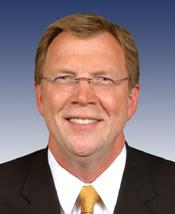
Mr. Speaker, I rise in support of the Taxpayer-Teacher Protection Act, and I strongly encourage my colleagues on both sides of the aisle to join me in voting for this common-sense bill. The reforms…
Mr. Speaker, I rise in support of the Taxpayer-Teacher Protection Act, and I strongly encourage my colleagues on both sides of the aisle to join me in voting for this common-sense bill.
The reforms before us are straightforward, even simple, but they are also incredibly important. I was proud to cosponsor this legislation and look forward to the benefits it provides our teachers.
This bill addresses two pressing issues within the Federal higher education programs. First, it will shut down excess subsidies being paid to certain student loan providers. Second, it will direct these dollars so that we can increase student loan relief for teachers.
In February, President Bush called on Congress to put an end to excess subsidies paid to certain student loan providers. Republicans answered the President's call by introducing legislation in May that would shut this practice down and direct the resources back
to where they belong, to student benefits within the Higher Education Act.
This bill will finally allow us to enact that important reform and will direct the savings to increased loan relief for teachers.
The second piece of this bill will provide critical support for our Nation's classrooms, and I would like to commend my colleague, the gentleman from South Carolina (Mr. Wilson), for his leadership in this area.
The loan relief provider in this bill will increase loan forgiveness for teachers of math, science and special education who serve in disadvantaged schools. I know firsthand how rural and urban school districts are struggling to find highly qualified teachers in these key subjects, and that is why I am so proud to support this bill. In Clark County, Nevada, alone, we are required to hire, on average, 2,000 new teachers a year.
Currently, the Higher Education Act provides loan forgiveness of up to $5,000 for teachers who teach for at least 5 years in Title I schools. These schools, which serve larger shares of disadvantaged students, often struggle to recruit and retain the teachers they need.
Although the current loan forgiveness is valuable, we have discovered particular shortages in math, science and special education. To help schools recruit teachers in these high-demand subject areas, we must target our resources where they are needed most.
I appreciate and urge my colleagues to join me in supporting this bill.
Mr. Speaker, I yield myself such time as I may consume. Mr. Speaker, this bill extends our higher education program for one year. We need to do this because Congress has not completed its work in…
Mr. Speaker, I yield myself such time as I may consume.
Mr. Speaker, this bill extends our higher education program for one year. We need to do this because Congress has not completed its work in reauthorizing the Higher Education Act this session.
While I support this legislation, it represents a missed opportunity. Students are facing some of the worst tuition increases in decades. Families have struggled to find ways to pay for college. Unfortunately, the bipartisan cooperation has not been as helpful as it was back in 1998, and the administration has neglected its role.
The Congress and the Bush administration have frozen the maximum Pell grant over the last 3 years. Indeed, Republican higher education legislation which failed to move would have jeopardized college affordability for millions of students by eliminating the ability of students to lock in low, fixed interest rates when they consolidate their student loans, by reducing student choice in how they can repay their student loans, and by increasing the ability of students to go further into debt.
If we did reauthorize the Higher Education Act, we could have addressed the critical needs of students, including allowing student borrowers to refinance their consolidation loans and lock in today's low interest rates. This increases the long-term affordability of college. We could have provided incentives to help colleges hold down increases in tuition. Recent tuition increases have hit American families and students especially hard. We could have allowed working students to keep more of the funding they earn than having it used to calculate their student aid. Unfortunately, today, we are not going to be improving our student aid programs. Instead, we are keeping the status quo.
While this bill is necessary, we have lost an opportunity. I look forward to working with my colleagues as we did in 1998, hopefully in a bipartisan fashion in the next Congress, to improve our higher education programs.
Mr. Speaker, I reserve the balance of my time.
Mr. Speaker, I yield 3 minutes to the gentleman from New Jersey (Mr. Holt).
Mr. Speaker, I have no further requests for time, and I yield back the balance of my time.

Mr. Speaker, I thank the gentleman from Michigan for yielding me this time. Mr. Speaker, while I support this temporary extension of the Higher Education Act, I am very disappointed that we have not…
Mr. Speaker, I thank the gentleman from Michigan for yielding me this time.
Mr. Speaker, while I support this temporary extension of the Higher Education Act, I am very disappointed that we have not passed the full Higher Education Act reauthorization.
The committee chair is correct. Higher education is more important than ever to ensure America's economic prosperity, security, and health. Just as college has become essential to both individuals and society's success, college tuition has risen dramatically, causing students to take on high loan debt, $17,000, on average; to work long hours that interfere with academic success sometimes; or to forgo college altogether. Yet, Congress has failed to pass the Higher Education Act.
Now, one party controls the White House, the Senate, and the House; the same party. Yet, they have failed to pass a Higher Education Act. Where are the priorities? Congress seems to have no trouble passing tax cuts for the wealthy, but to provide opportunities for students to attend college does not seem to be a priority.
Mr. Speaker, the failure of the House to pass a higher education reauthorization is emblematic of this ineffective Congress. In past years, the Higher Education Act was one of the easiest to pass, one of the most bipartisan, a bill we could count on. And with this temporary extension, we have missed many opportunities today. We could have increased the Pell grant and provided it year-round. We could have significantly increased aid to minority-serving institutions. We could have increased assistance to low-income and first-generation college students. We could have increased loan forgiveness. We could have eliminated origination fees on student loans. We could have provided child care for parents who are attempting to go back to college. We could have changed the student aid formulas for working students. But, today, we pass a temporary extension. We have failed to do any of those things, and American college students and their parents are paying for Congress' failure.
Show 6 more

Mr. Speaker, I rise to discuss H.R. 5186, introduced by a number of Republican Members to address a billion dollar and growing windfall subsidy for student loan lenders. Like my Democratic…
Mr. Speaker, I rise to discuss H.R. 5186, introduced by a number of Republican Members to address a billion dollar and growing windfall subsidy for student loan lenders. Like my Democratic colleagues, I will support H.R. 5186, because it is certainly better than current law. But on this issue, that is a pretty low bar.
I believe that families who are struggling to pay college tuition deserve to know exactly how low my Republican colleagues have set that bar. Lenders recently have taken increased advantage of a provision in the Higher Education Act that guarantees them 9.5 percent in returns on certain loans. That is almost triple the rate of return on most student loans.
In fiscal year 2004, that meant that $1 billion that could have helped hardworking Americans pay for college instead went into lenders' pockets. Democrats have been working to close this loophole for the last year, but Republicans did virtually nothing until public outrage reached the boiling point.
Even now, the Republican bill would leave 40 percent of the billion dollar loophole open. They would rather that $400 million go to the lender profits than to Pell Grants or low-income students or to the teacher loan forgiveness that they include in 5186, and we all support.
I do not agree. The Bush administration also has refused to close the loophole administratively, even though the nonpartisan Government Accountability Office found the administration has the authority to absolutely do so.
Democrats have a better response: H.R. 5113. I am proud to be a cosponsor of H.R. 5113, because it would fully and permanently close this loophole and put the savings into Pell Grants. That is the kind of help that hardworking men and women deserve to put themselves and their children through college so that they can better their lives.
That is the kind of help I wish we were offering here today. Unfortunately, we are not. But because a half loaf is better than none, I will support H.R. 5186.
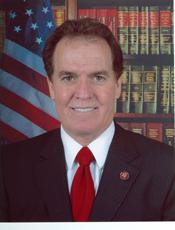
Mr. Speaker, I want to thank the chairman, the gentleman from Ohio (Mr. Boehner), for bringing H.R. 5186, the Taxpayer Teacher Protection Act, to the floor this evening. As a sponsor of H.R. 2211,…
Mr. Speaker, I want to thank the chairman, the gentleman from Ohio (Mr. Boehner), for bringing H.R. 5186, the Taxpayer Teacher Protection Act, to the floor this evening.
As a sponsor of H.R. 2211, the Ready to Teach Act, I believe it is important
to permanently end excess student loan subsidies and to redirect savings to expanding loan relief for teachers of key subject areas in high-poverty, K-12 schools. The Ready to Teach Act was designed to benefit efforts in recruiting and training the best teachers to fill much-needed vacancies in subject areas such as math, science, foreign language and special ed.
Every child deserves an opportunity to achieve a quality education, and I believe H.R. 5186 will aid these efforts so that every child is given a chance to succeed to the best of his or her ability. The Taxpayer Teacher Protection Act redirects the excess loan provider profits to student loan relief for teachers.
High-poverty schools are struggling to find highly qualified math, science, and special education teachers. This bill would more than triple loan forgiveness for teachers of these key subjects who agree to teach in title I schools for at least 5 years. The expanded loan relief for math, science, and special education teachers will help States and schools recruit and retain the teachers they desperately need. This bill will help schools place a highly qualified teacher in every public school classroom, as called for by the bipartisan No Child Left Behind bill.
President Bush called on Congress 8 months ago to shut down the excess lender earnings received through the 9.5 percent floor. I support President Bush in his commitment to finding commonsense solutions to our education problems. Removing the 9.5 percent subsidy will help our most stressed schools fill vacancies with much-needed quality instruction, and I ask my colleagues to pass this bill.
Mr. Speaker, I thank the ranking member on the Committee on Education and the Workforce for yielding me this time. We are talking about education, so maybe we should take a moment for a textbook…
Mr. Speaker, I thank the ranking member on the Committee on Education and the Workforce for yielding me this time.
We are talking about education, so maybe we should take a moment for a textbook example of euphemism, Taxpayer Teacher Protection Act. Now, one would think this would mean to save the taxpayers money. In fact, what we are doing is allowing lending institutions to continue to get a guaranteed exorbitant rate of return and make a killing.
Let me just review what this bill does. I rise in support of H.R. 5186. It is an improvement over current law. But it fails to address the problem. It ignores the Government Accountability Office's recommendation to immediately stop lenders from issuing new loans at 9.5 percent. It ignores the GAO's recommendation to close the loophole permanently.
It allows hundreds of millions of dollars in new loans to be issued at the bloated rates of 9.5 percent. It denies additional loan forgiveness to 10,000 teachers working in the Nation's most needy public schools. It chooses special interests over taxpayers by allowing the loophole to continue for up to 40 percent of the 9.5 percent loans.
As the outcry around the country over this wasteful subsidy increased, the Republicans decided to move last-minute, half-baked, barely adequate
legislation. It contrasts sharply with the year-long efforts by the gentleman from Michigan, Maryland, and California, the Kildee-Van Hollen-Miller bill, H.R. 5113, which would permanently and completely close this wasteful lender subsidy.

Mr. Speaker, I rise today in support of H.R. 5186. This legislation ends the loophole that allowed some tax-exempt student loan providers to reap high rates of return on certain loans. The savings…
Mr. Speaker, I rise today in support of H.R. 5186. This legislation ends the loophole that allowed some tax-exempt student loan providers to reap high rates of return on certain loans. The savings would be used to fund increased loan forgiveness for urgently needed math, science and special education teachers in Title I schools.
Jobs of the future will require workers who understand the basic concepts and principles of math and science. However, studies show that our students lack even the basic math and science skills and rank near- last in international comparisons. Our country urgently needs to improve our math and science education in order to ensure our workers can compete in the workplace.
Research has shown that a highly-qualified teacher with an extensive background in subject matter and teaching skills is a very important factor in improving student learning, especially in science, technology, engineering and mathematics. Unfortunately, as school districts struggle to find, train and keep qualified math and science teachers, many have had to resort to hiring out-of-field teachers, particularly in high schools.
Often, those with an interest in science, technology, engineering and mathematics select college majors outside of teaching due to the possibility of higher salaries. Increasing loans forgiveness for math and science teachers should attract more college students to teaching careers.
This legislation meets an urgent need, and I ask my colleagues to support it.
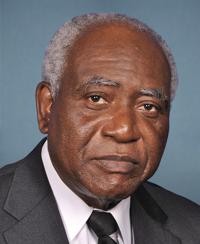
Mr. Speaker, I rise in support of H.R. 5186, but I also know that much more needs to be done. I agree with all of those who suggest and predict that there is a tremendous need to provide loan…
Mr. Speaker, I rise in support of H.R. 5186, but I also know that much more needs to be done. I agree with all of those who suggest and predict that there is a tremendous need to provide loan forgiveness for math, science and special education teachers. But there is also a tremendous need to recruit teachers for disadvantaged communities where it is very difficult to get specialized teachers to come.
There is also a tremendous need to recruit male teachers for early childhood in elementary education. Many, many school boys do not see a male teacher until they reach eighth grade. So many of them grow up with the idea that education is not for them; that it is a girl-female thing.
So I support this legislation, but, of course, it falls short of the mark, and I look forward to the day when we will have a real loan forgiveness program that provides us with the teachers we need for America's children.

Mr. President, I ask unanimous consent that the Senate now proceed to the immediate consideration of H.R. 5185, which is at the desk. Mr. President, I ask unanimous consent that the bill be read a…
Mr. President, I ask unanimous consent that the Senate now proceed to the immediate consideration of H.R. 5185, which is at the desk.
Mr. President, I ask unanimous consent that the bill be read a third time, passed, the motion to reconsider be laid upon the table, and any statements relating to the bill be printed in the Record.
Bill Text
5 versions available
        [Congressional Bills 108th Congress]
[From the U.S. Government Publishing Office]
[H.R. 5185 Enrolled Bill (ENR)]

H.R.5185

One Hundred Eighth Congress

of the

United States of America

AT THE SECOND SESSION

Begun and held at the City of Washington on Tuesday,
the twentieth day of January, two thousand and four

An Act

To temporarily extend the programs under the Higher Education Act of
1965.

Be it enacted by the Senate and House of Representatives of the
United States of America in Congress assembled,

SECTION 1. SHORT TITLE.

This Act may be cited as the ``Higher Education Extension Act of
2004''.

SEC. 2. EXTENSION OF PROGRAMS.

(a) Extension of Duration to Include Fiscal Year 2005.--The
authorization of appropriations for, and the duration of, each program
authorized under the Higher Education Act of 1965 (20 U.S.C. 1001 et
seq.) shall be extended through fiscal year 2005.
(b) Performance of Required and Authorized Functions.--If the
Secretary of Education, a State, an institution of higher education, a
guaranty agency, a lender, or another person or entity--
(1) is required, in or for fiscal year 2004, to carry out
certain acts or make certain determinations or payments under a
program under the Higher Education Act of 1965, such acts,
determinations, or payments shall be required to be carried out,
made, or continued during the period of the extension under this
section; or
(2) is permitted or authorized, in or for fiscal year 2004, to
carry out certain acts or make certain determinations or payments
under a program under the Higher Education Act of 1965, such acts,
determinations, or payments are permitted or authorized to be
carried out, made, or continued during the period of the extension
under this section.
(c) Extension at Current Levels.--The amount authorized to be
appropriated for a program described in subsection (a) during the
period of extension under this section shall be the amount authorized
to be appropriated for such program for fiscal year 2004, or the amount
appropriated for such program for such fiscal year, whichever is
greater. Except as provided in any amendment to the Higher Education
Act of 1965 enacted during fiscal year 2005, the amount of any payment
required or authorized under subsection (b) in or for fiscal year 2005
shall be determined in the same manner as the amount of the
corresponding payment required or authorized in or for fiscal year
2004.
(d) Advisory Committees and Other Entities Continued.--Any advisory
committee, interagency organization, or other entity that was, during
fiscal year 2004, authorized or required to perform any function under
the Higher Education Act of 1965 (20 U.S.C. 1001 et seq.), or in
relation to programs under that Act, shall continue to exist and is
authorized or required, respectively, to perform such function during
fiscal year 2005.
(e) Additional Extension not Permitted.--Section 422 of the General
Education Provisions Act (20 U.S.C. 1226a) shall not apply to further
extend the authorization of appropriations for any program described in
subsection (a) on the basis of the extension of such program under this
section.
(f) Exception.--The programs described in subsection (a) for which
the authorization of appropriations, or the duration of which, is
extended by this section include provisions applicable to institutions
in, and students in or from, the Freely Associated States, except that
those provisions shall be applicable with respect to institutions in,
and students in or from, the Federated States of Micronesia and the
Republic of the Marshall Islands only to the extent specified in Public
Law 108-188.

Speaker of the House of Representatives.

Vice President of the United States and
President of the Senate.