To authorize the extension of nondiscriminatory treatment (normal trade relations treatment) to the products of Armenia.
Legislative Activity
Stay on top of the latest movement without scrolling through every action
Referred to the Subcommittee on Trade.
February 6, 2003
View full timeline
Introduced in House
February 4, 2003
Referred to the House Committee on Ways and Means.
February 4, 2003
Sponsor introductory remarks on measure. (CR E133)
February 5, 2003
Floor Debate
14 membersWhat members said about H.R. 528 on the floor
 SML
SML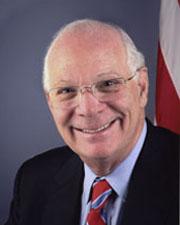 BLC
BLC JM
JM TL
TL MF+9
MF+9
Floor Debate
14 membersWhat members said about H.R. 528 on the floor
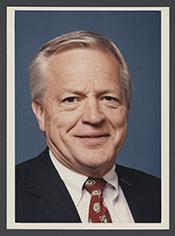
Mr. Speaker, I yield myself such time as I may consume. Mr. Speaker, I rise in support of this legislation. I want to, though, at the beginning talk about process and then I will discuss the…
Mr. Speaker, I yield myself such time as I may consume.
Mr. Speaker, I rise in support of this legislation. I want to, though, at the beginning talk about process and then I will discuss the substance of the bill.
There have been some process issues. One of them relates to the Senate. The bill here has some provisions that have been over in the Senate and they have been held up by the action, as I understand it, of one Member of the Senate. It relates to a labelling requirement and essentially would, if that effort succeeded, roll back a provision that we have favored. And I just want everyone to understand that I think trade issues should not be handled that way.
Secondly, I want to say a word about the Armenia PNTR. We have been discussing this, but not directly in the committee or the Subcommittee on Trade for a number of months. A bill was introduced to grant Armenia PNTR, and I very much have favored that happening. Unfortunately, the bill was not sent through the subcommittee or the full committee, and I think that really deprived us of a chance to add to this bill some references to certain issues that Armenia has faced and that we think other countries should confront, especially as they are going to accede to the WTO which has already happened in the case of Armenia and receive the extension of PNTR by the United States.
For example, we have been trying to introduce into this bill references to the implementation by Armenia of some important aspect of the Helsinki Act, citing that some progress, although not full, has been made in the area of human rights. This would include treatment of minorities, religious minorities and others, providing protection to minorities from violence based on discrimination of any kind, hostility or hatred, including anti-Semitism. Also, reference to the fact that Armenia has demonstrated a commitment to enforcing internationally recognized core labor standards and has been working to improve its enforcement of those laws, as well as implementing some important market reforms.
Well, this bill suddenly included the Armenia PNTR, which I have favored, but there is resistance from some on
the majority to allow us to insert into this bill these references to progress by Armenia in important areas that had reference, and should have reference, to other countries; and so I very much regret that.
But as said, this bill has some important provisions including the PNTR, provisions that extend important aspects of our tax laws. The extension of the work opportunity tax credits, the welfare-to-work tax credits, the AMT provision that the gentleman from Louisiana (Mr. McCrery) mentioned, as well as several others including tax incentives for the District of Columbia.
Also in this bill are some pension-related provisions. One of them relates to the 30-year Treasury rate. This is an important provision for large numbers of companies and their workers, and we needed to find a way to introduce this into legislation and to implement it, and this bill does exactly that. And is another reason to favor this bill.
There is also, as the gentleman from Louisiana (Mr. McCrery) mentioned, a provision relating to airlines and a 2-year provision to help them out. So this is a bill that has some miscellaneous provisions in it, but some of them are not very miscellaneous. Some of them are very important provisions. Some that are called technical, for example, would suspend or reduce import duties on numerous items for which there are no American competitors. And it would correct instances where Customs has overcharged for import duties. These are provisions that are important for domestic manufacturers and for their employees and for consumers.
One other provision that I should mention, since I have been so much involved with it with others, is the Reverse Customs Program at the northern border. This bill has references to that. These references are essentially relating to jurisdiction of committees. They do not change the basic provisions and do not in any way disturb the pace by which Customs will implement this important experiment in Reverse Customs Programs so that we can expedite the transportation of goods and passengers across the northern border, keeping in mind security considerations.
So, all in all, I believe this is a bill that deserves support with the caveats I mentioned. I have discussed earlier today, and the gentleman from Maryland, Mr. Cardin, did with the chairman of the committee, the issue of Armenia and the need not for anybody to consider it a precedent either in terms of how PNTR is handled, other countries are handled, or the provisions relating to them. And we have received those verbal reassurances that the way the Armenia PNTR has been handled, it will not be a precedent in terms of committee or subcommittee consideration.
When my turn next comes I am going to yield many minutes to the gentleman from Maryland (Mr. Cardin) who is going to talk about one issue that is not in this bill where there is an opportunity to place it and is so critical to hundreds of thousands of the citizens of the United States of America, and that is unemployment compensation, and I will do that at the appropriate time.
Mr. Speaker, I reserve the balance of my time.
Mr. Speaker, I yield 5 minutes to the gentleman from Maryland (Mr. Cardin).
Mr. Speaker, it is my pleasure to yield 2 minutes to the gentleman from New Jersey (Mr. Pallone).
Mr. Speaker, it is my pleasure to yield 2 minutes to the distinguished Delegate, the gentlewoman from the District of Columbia (Ms. Norton).
Mr. Speaker, it is my pleasure to yield 2 minutes to the gentleman from California (Mr. George Miller).
Mr. Speaker, I yield myself the balance of my time.
Mr. Speaker, I want to make two points. First of all, this bill is not paid for, $7 billion, and I hope that the Senate will rectify that. It is our understanding that they will. And I think that gives people on our side some reassurance that this will not be a further addition to an already escalating atrociously high deficit.
Secondly, I simply want to reinforce, on the issue of unemployment compensation, that when the gentleman from Texas (Mr. DeLay) said, ``I see no reason to be extending unemployment compensation since every economic indicator is better than in 1993, when the Democrats ended the Federal unemployment program,'' that, as the gentleman from Maryland (Mr. Cardin) pointed out, that is really an inaccurate statement.
If we do not extend this program, every week after Christmas about 90,000 people are going to be out on the street without any benefits. Now, we went through this the last Christmas. If my colleagues want us to come back here this Christmas, the three of us who came last time, and object, we will do that, but we should not have to do that. The unemployment program should be extended, period. And I hope that the majority in this House will step up to the plate on what is if not life and death, it is survival decently for tens of thousands of our fellow and sister citizens.
Mr. Speaker, let me thank my friend, the gentleman from Michigan (Mr. Levin) for yielding me time. Mr. Speaker, first let me say that there are some very important provisions in this bill. I see my…
Mr. Speaker, let me thank my friend, the gentleman from Michigan (Mr. Levin) for yielding me time.
Mr. Speaker, first let me say that there are some very important provisions in this bill. I see my friend, the gentleman from Ohio (Mr. Portman) on the floor, and I know that we are both pleased that the 30- year Treasury replacement is included in this bill.
I think we are both very disappointed that it is not for a longer period of time and does not include other provisions and legislation that we filed earlier that would have also helped preserve defined benefit plans properly funded for the workers of America, but at least there is some relief in this bill that is needed, and I am glad to see that is included in the legislation.
Let me say I appreciate the way the gentleman from Michigan (Mr. Levin) has presented the Armenian situation because I think he said it exactly right. There are human rights problems within Armenia. The Armenia Assembly of America, a respected group in this body, said the people of Armenia deserve nothing less than the declared aim of their government for free, fair, and transparent elections. As reported in depth by the OSCE, this achievable standard was not met.
The gentleman from New Jersey (Mr. Smith), the chairman of our Helsinki Commission, and myself as ranking Democrat sent the letter to the Committee on Ways and Means in April of 2003. I just want to quote one line from that letter where we said: The underlining intent of the Jackson-Vanik language is to foster democratization and protect human rights. Our commission puts a very high premium to carry out the responsibility of this body to make human rights development in these emerging democracies a top priority. We are disappointed that more progress has not been made.
In Armenia's case, they do have normal trade relations, and I thank the gentleman from Michigan (Mr. Levin) very much for the understanding that the process that was used in Armenia's elevation will not be the process used as we consider other countries for elevation on normal trade relations; and clearly, we will be looking at the progress on human rights issues.
Mr. Speaker, let me, if I might, spend the remainder of my time on the unemployment insurance issue. I must tell my colleagues I am extremely disappointed that the majority did not include an extension of the unemployment insurance benefits in this extender bill. We are going to be faced with the same thing that happened last year. The Christmas present to our unemployed will be that they are not going to get any additional benefits. The present program expires at the end
of December. We might be out of session by the end of the week, and yet the majority sees no urgency in extending the unemployment insurance. Eighty thousand to 90,000 workers every week will lose their Federal unemployment benefits if we do not extend this program.
The majority leader, the gentleman from Texas (Mr. DeLay), said, and I am quoting from today's paper, ``I see no reason to be extending unemployment compensation since every economic indicator is better than in 1993 when the Democrats ended the Federal unemployment program.''
Mr. Speaker, that is just not true. The extended benefit program in the early 1990s did not end until the economy had created nearly 3 million jobs, compared to the pre-recession levels. The current program is scheduled to end when the economy is still suffering a deficit of 2.4 million jobs. The current unemployment rate, 6 percent, has risen since the extended program was established in March of 2002. While starting at a higher level, the unemployment dropped substantially in the 1990s before we terminated the program.
The number of the long-term unemployed had dropped significantly before the 1990 extended program had expired. Today, the number of long-term unemployed, 2 million, has remained at a high level. The percentage of workers exhausting their unemployment benefits is higher today, 43 percent, than when the 1990 program ended, 39 percent. There are more people receiving unemployment today, 3.5 million, compared to the 1990s, 3.1 million.
Mr. Speaker, I just give those numbers because all we have to do is be in the trenches to know that people are hurting, people cannot find jobs, where every person seeking a job, there is only one job available. People want jobs, but cannot find them.
We need to extend the unemployment insurance Federal program. We have always done that in a bipartisan manner. We have always done it in every recession until we are on the road to recovery where people can find employment. That is not the case today. By every indicator that we have ever used in prior recessions, we should be extending the unemployment insurance program in this legislation. We should not be putting at jeopardy the needs of the people of our Nation.
So I am extremely disappointed; and I hope, Mr. Speaker, that the majority will allow us the chance to vote on the extension of unemployment insurance benefits before we adjourn this session of Congress. I know that there is support on the other side of the aisle for these programs. There have been two bills that have been filed. One has been filed by the gentlewoman from Washington (Ms. Dunn). I filed one. There has been legislation filed on both sides of the aisle. It is important that we consider it. It is important that we consider it as quickly as possible, and I hope that we will find a way to bring this up. Maybe the other body will include it in this legislation. I think we missed an opportunity to include it in this bill, and I am disappointed about that, and I urge my colleagues to figure out a way that we could address this issue before we adjourn.
Mr. Speaker, I move to suspend the rules and pass the bill (H.R. 3521) to amend the Internal Revenue Code of 1986 to extend certain expiring provisions, and for other purposes, as amended. Mr.…
Mr. Speaker, I move to suspend the rules and pass the bill (H.R. 3521) to amend the Internal Revenue Code of 1986 to extend certain expiring provisions, and for other purposes, as amended.
Mr. Speaker, I yield myself such time as I may consume.
Mr. Speaker, to begin this explanation of the bill, the bill before us is very straightforward. It includes many elements which have passed this House before, in some cases numerous times.
The Tax Relief Extension Act of 2003 extends a number of important tax incentives strongly supported by Members on both sides of the aisle including incentives which create jobs and encourage restoration of brownfields.
One extension provision ensures that the benefits of individual tax credits are not lost to the bite of the alternative minimum tax. Those credits do little good if they are countered by the effects of the AMT. And the bill promotes economic growth by extending a provision first enacted in the 2002 stimulus bill allowing companies to carry back net operating losses up to 5 years.
The measure before us allows two important provisions related to defined benefit pension plans which must set aside enough money today to pay promised benefits tomorrow. As a result of declining rates on 30-year Treasury notes, plans are forced to assume that plan assets will grow more slowly than we know will be the case. This assumption results in employers having to set aside additional funds in their pension plan today, depriving them of money needed to expand their businesses and create more jobs.
The bill temporarily replaces the 30-year Treasury rate as the benchmark used for these calculations with an index based on high-grade corporate debt. The provision in this bill mirrors H.R. 3108, a bill approved last month in this Chamber by a vote of 397 to 2.
Further, the bill provides relief for embattled airlines facing burdensome mandatory contributions. This industry has been hard hit by the recession, a post-9/11 suspension in air travel and the resulting reduced passenger loads, and the higher costs of security resulting from terrorist fears.
Airlines are generally either in bankruptcy, coming out of bankruptcy or teetering on bankruptcy's brink. Forcing them to make billions of dollars in additional pension contributions at this time could be disastrous.
Accordingly, the bill before us contains relief which allows airlines to pay 20 percent of what current law would require into their plans during the next 2 years.
Together, these provisions will give Congress the time to develop long-term solutions to pension funding issues.
Finally, the bill includes several trade-related provisions. It includes the provisions of the Miscellaneous Trade and Technical Corrections Act, a compendium of bipartisan trade-related items, duty suspensions, and technical corrections drawn largely from legislation introduced by individual Members.
These duty suspensions are critical to many American employers since they are paying unnecessarily high prices for supplies which are not made here in the United States.
The House passed a substantially similar version of this bill in March of 2003 by a vote of 415 to 11.
The legislation before the House today includes several additional trade provisions, including an extension of Permanent Normal Trade Relations status to Armenia and an increase from $1,200 to $1,600 in the personal duty exemption for travellers returning to the United States from the Virgin Islands.
Like the tax provisions outlined above, the trade provisions included in this bipartisan bill are noncontroversial, small in cost and will help United States companies better compete.
Mr. Speaker, I urge my colleagues to support this package.
Mr. Speaker, I reserve the balance of my time.
Mr. Speaker, I yield 2 minutes to the gentleman from Pennsylvania (Mr. English), a distinguished member of the Committee on Ways and Means.
Mr. Speaker, I yield 2 minutes to the gentleman from Illinois (Mr. Weller), another member of the Committee on Ways and Means.
(Mr. WELLER asked and was given permission to revise and extend his remarks.)
Mr. Speaker, I yield 2 minutes to the gentleman from Michigan (Mr. Camp), another distinguished member of the Committee on Ways and Means.
Mr. Speaker, I yield 2 minutes to the gentleman from Ohio (Mr. Portman), a member of the Committee on Ways and Means, a gentleman who has done tremendous work on the pension elements that are contained in this bill and will continue, I am sure, to provide leadership in this area.
Mr. Speaker, I yield 2\1/2\ minutes to the gentleman from Ohio (Mr. Boehner), the distinguished chairman of the Committee on Education and the Workforce.
Mr. Speaker, I yield 2\1/2\ minutes to the gentleman from Michigan (Mr. Knollenberg).
Mr. Speaker, I yield the balance of my time to the gentleman from Florida (Mr. Foley), a respected member of the Committee on Ways and Means, who will close the debate on this bipartisan bill.
Mr. Speaker, I rise today to offer some observations regarding H.R. 3521, which includes the text of H.R. 528 that would establish normal trade relations for the Republic of Armenia. First, I wish to…
Mr. Speaker, I rise today to offer some observations regarding H.R. 3521, which includes the text of H.R. 528 that would establish normal trade relations for the Republic of Armenia.
First, I wish to make clear I have supported conditionally terminating the application of the Jackson-Vanik amendment, known as Title IV, to the Soviet successor states, starting with the Kyrgyz Republic and the Republic of Georgia in 2000.
In the case of this legislation, I support granting permanent normal trade relations (PNTR) status to Armenia. I believe that graduation from Jackson-Vanik will contribute to economic growth in Armenia. Starting in 1989, Armenia had been receiving annual Jackson-Vanik waivers, first as part of the Soviet Union and then as an independent country. It's time to make this process permanent.
However, I also strongly believe that the graduation for any successor state must be conditioned upon the development of a legal structure that guarantees internationally recognized human rights for its Jewish citizens, and members of other religious, national and ethnic minorities. In the absence of such conditions, there is in my opinion no possibility of establishing democratic institutions applicable to all citizens.
Twice in the past, in the case of the Republic of Georgia and the Republic of Kyrgyzstan, Congress has prudently determined that graduation from Jackson-Vanik would require more than the mere opening of a country's doors to emigration. The legislation prudently noted the advances made in other areas prior to waiving Jackson-Vanik, including the ability of Jews and other minorities to identify with their cultural heritage, restitution of communal property, rigorous governmental responses to anti-Semitism an xenophobia, and commitments on the implementation of laws and practices ensuring minority protection.
I believe that we do a disservice to the Republic of Armenia and to the Armenian diaspora--Armenia's greatest resource and asset--by not including the same standards to this legislation.
The findings that we believe should be included in this legislation are as follows:
The Congress of the United States finds that Armenia--
Registered significant progress in developing a system of
governance in accordance with the provisions of the Final Act
of the Conference on Security and Cooperation in Europe (also
known as the ``Helsinki Final Act'') regarding human rights
and humanitarian affairs;
Addressed issues related to its national and religious
minorities through the relevant articles of its Constitution,
and as a member state of the Organization for Security and
Cooperation in Europe (OSCE), ensured that persons belonging
to national minorities have full equality individually as
well as in community with other members of their group;
Provided protection against incitement to violence against
persons or groups based on national, racial, ethnic, or
religious discrimination, hostility, or hatred, including
anti-Semitism;
[Append the following to finding in H.R. 528 related to
enacting free-market reforms] And is committed to making
additional reforms to its economy;
Concluded a bilateral trade agreement with the United
States, which entered into force on April 7, 1992, and a
bilateral investment treaty, which entered into force on
March 29, 1996;
Demonstrated a commitment to enforcing internationally
recognized core labor standards and to continue to improve
effective enforcement of its laws reflecting such standards;
and
Acceded to the World Trade Organization on February 5,
2003, and the extension of unconditional normal trade
relations treatment to the products of Armenia will enable
the United States to avail itself of all rights under the
World Trade Organization with respect to Armenia.
Armenia's small Jewish community is relatively well-treated and maintains a good working relationship with the government. I hope that the Armenian government will make available to the Jewish community an appropriate public space as symbolic compensation for communal properties destroyed during the Soviet period.
Although Armenia has gained accession to the World Trade Organization, the decision to graduate a country from the Jackson-Vanik amendment should be based upon those issues which motivated the original enactment of this law: religious freedom and human rights. Adoption of PNTR for Armenia by this House in the context as part of a larger, unrelated tax measure without this language should not be seen as any precedent for any future graduation.
In any case, I look forward to working with the gentleman from California and the gentleman from New York on incorporating language along these lines in the final bill regarding this legislation.
Mr. Speaker, I thank the gentleman for yielding me this time, and for his outstanding presentation on the floor today and for going over some of the most relevant and important topics of this…
Mr. Speaker, I thank the gentleman for yielding me this time, and for his outstanding presentation on the floor today and for going over some of the most relevant and important topics of this extension of expiring tax provisions.
I want to call to the attention of my colleagues on both sides of the aisle some very, very important substantial pieces of legislative tax work that are here in the bill. The Work Opportunity Tax Credit, a credit for employers equal to 40 percent of wages for hiring certain disadvantaged individuals. Targeted groups include TANF families, high- risk youth, certain ex-felons, summer youth, certain Veterans, and families on food stamps. This is a very important provision in this bill.
Welfare to work, again an experiment which has yielded tremendous results in Palm Beach County, the county in which I live, provides a tax credit for employers hiring targeted groups equal to 35 percent of wages.
These are interesting and important provisions to help people get back on their feet, to maintain a work ethic, and contribute to themselves, their families and our Nation.
The gentleman from Michigan (Mr. Camp) and I authored an important provision relevant to elementary and secondary school teachers. My father is a retired teacher and principal, and that is a $250 above- the-line deduction for teachers purchasing classroom supplies. It was first enacted in the 2002 stimulus bill, and it continues today.
Qualified zone academy bonds. These are targeted tax credit bonds for school construction in economically targeted areas. This is very important for Florida with the rapid growth of the population and the need for school construction, once again a mechanism by which localities can seek tax credits for bonds to help with that opportunity.
Charitable contributions of computer technology used for educational purposes. We have seen a blossoming of computers in the classroom in educational settings, most due to the generosity of companies with excess equipment. This extends for 1 year the current law which encourages donation of computer technology and related equipment for educational purposes, providing donors with a higher basis and, therefore, larger deductions.
The gentleman from Illinois (Mr. Weller) mentioned the brownfields remediations cost. Again, those are in my district and districts throughout the country.
The Archer medical savings account, which will be a provision contained also in our Medicare bill which will be brought to the floor tomorrow or Saturday, all of these issues contained in this extension provide some great opportunities for constituents throughout all 50 States and the territories.
Finally, for D.C. residents, the gentlewoman from the District of Columbia (Ms. Norton) has worked extensively in reviving the fortunes of the city, and extends for 1 year a range of tax incentives for activities in the District of Columbia, including an important $5,000 tax credit for first-time home buyers. Anyone who lives on Capitol Hill has noticed a refurbishing, a reinvigoration of one of our most important cities. Visitors from around the world come to see where we work and where democracy flourishes.
Thanks to this provision, a $5,000 tax credit, we are starting to see the fruits of the labor of this bill, increasing homeownership and increasing opportunities: zero capital gains for D.C. on long-term capital gains held in the District, rental real estate buildings, things of that nature, getting people to reinvest in the capital city; and I thank the gentlewoman from the District of Columbia (Ms. Norton) for helping the Mayor of this city and bringing some of these opportunities forward.
I encourage passage of the expiring tax provisions and urge adoption of this bill.
Show 8 more
Mr. Speaker, I thank the gentleman from Louisiana (Mr. McCrery) for giving me some time. I want to congratulate him for getting this extender bill to the floor. It is extremely important that we…
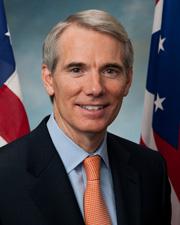
Mr. Speaker, I thank the gentleman from Louisiana (Mr. McCrery) for giving me some time. I want to congratulate him for getting this extender bill to the floor. It is extremely important that we extend so many of these important tax provisions. I would like to think that over time we can make some of them permanent because they make so much sense, and after all, this is a 1-year extension. We are likely to extend them again and again. So I would hope that we could work toward that, but it is a very important bill; and it is extremely important we do it this year. If we do not, then we will have a situation where there will be a gap and companies and those individuals who want to take advantage of these good public policy tax provisions will not be able to plan. So not to have them be retroactive but do it at this point is extremely important, and I commend him and the gentleman from California (Chairman Thomas) for getting us to this point.
I rise today also very strongly in support of a specific provision here that helps with regard to our defined pension plans. As all of us know, defined pension plans are in trouble. In the last few years, we have actually gone down in our pension coverage by about 19 percent. In fact, in the past 18 years we have gone from about 114,000 defined pension plans that are guaranteed by the Pension Benefit Guaranty Corporation to about 32,000 plans, dramatic decreases.
Many of the reasons that people are no longer offering plans and why this year we think that about 20 percent of plans are freezing their plans for participants is because we have a broken system with regard to what the interest rate is which is charged to these pension plans for their contributions.
What we do in this legislation is we provide for a 2-year fix, a short-term replacement for the currently and defunct 30-year Treasury rate, and that is extremely important. It allows employers to calculate the amount of money to set aside for their employee benefit plans in a more reasonable way and a more accurate way.
It strengthens, therefore, our defined benefit system dramatically in the short-term while we take a look at this whole system.
I see the gentleman from Ohio (Mr. Boehner), chairman of the Committee on Education and the Workforce, is here, and I look forward to working with him, as well as with the gentleman from California (Mr. Thomas), chairman of the Committee on Ways and Means, the gentleman from Louisiana (Mr. McCrery), the chairman of the subcommittee, and others, including the gentleman from Maryland (Mr. Cardin), who spoke earlier about this issue, to come up with longer-term solutions to our pension funding rules, pension accounting rules to be sure that we can indeed continue to have these important defined benefit plans.
I think they are extremely important as a part of our overall security system, working with our Social Security System and our defined contribution system, such as the 401(k) plan. Without a permanent solution, these plans will be a thing of the past, and we will not have this guaranteed benefit for millions of Americans.
I strongly support the legislation before us and urge my colleagues on both sides of the aisle to do the same.

Mr. Speaker, the significant pension underfunding problems that we face in this country have critical implications on the retirement security of American workers. Traditional defined benefit pension…
Mr. Speaker, the significant pension underfunding problems that we face in this country have critical implications on the retirement security of American workers. Traditional defined benefit pension plans promise workers a set monthly benefit at retirement, and we have a responsibility to ensure that these important pension benefits for millions of American workers will be there when they retire.
The tax extension package that we have before us today includes a key pension funding change that was included in the Pension Funding Equity Act, the bipartisan measure that passed the House previously on October the 8th. It would have replaced the current 30-year Treasury bond interest rate that is used by many employers to calculate the amount of money they must set aside in their pension plans with a blend of corporate bond index rates for the next 2 years, through 2005. Because the current fix expires at the end of 2003, there is an urgency on the part of employers, unions, and workers to address this issue.
Let me explain why this change, I think, is so important. Strengthening the funding of defined benefit pension plans in the short-term will reduce the likelihood that the Federal Government will have to step in and pay benefits for underfunded plans, often at lower benefit levels for American workers. Moreover, employers who are making major short-term financial decisions need greater certainty to make key decisions about how to allocate scarce resources. Doing nothing could jeopardize employers' willingness to continue their defined benefit programs that provide a stable and secure pension benefit to workers during their retirement. Doing nothing is not an option, and for the good of our economy and for the good of American workers we need to act.
This measure also includes an additional item that would reduce additional payments that airlines must make to their pension plan when their funding falls below 90 percent of liabilities, called deficit reduction contributions, and we would reduce those contributions by 80 percent for just the next 2 years.
I remain concerned about the possible consequences of reducing deficit reduction contributions. Certainly, it is a last-resort approach. I would prefer not to single out any one industry for special relief, but enough of our colleagues in the other body feel differently, and we are nearly out of time. So I am pleased the DRC relief included in this measure is limited to 2 years, and I plan to support this measure for the good of our economy and the overall health of our Nation's pension system.
I am committed to ensuring that any DRC relief we enact is responsible and limited in scope to avoid compromising the defined benefit system as we look at broader, long-term reforms in both the Committee on Ways and Means and the Committee on Education and the Workforce.

Mr. Speaker, I thank the gentleman for yielding me this time, and while I support this stopgap, short-term bill, I must say this legislation really does nothing to address the well-documented,…
Mr. Speaker, I thank the gentleman for yielding me this time, and while I support this stopgap, short-term bill, I must say this legislation really does nothing to address the well-documented, serious and worsening pension crisis that threatens the retirement security of millions of Americans, and I provide my support for this legislation acknowledging the promise of my chairman, the gentleman from Ohio (Mr. Boehner), that we will, in fact, have detailed hearings and comprehensive hearings on this matter in the coming session of Congress.
Once again, this House is going to adjourn for the year without enacting much-needed comprehensive pension reform. As a result, the already precarious security of millions of seniors and working Americans is likely to worsen. The Congress and the Bush administration have been warned for 2 years about this deepening crisis. Yet as scandals, bankruptcies, and deficits have skyrocketed, there has been virtually no response. In fact, all we have seen from this administration is a plan to allow companies to convert cash balance plans that could cut some retirees pensions in half. Fortunately, it looks as if we may be able to prevent this from happening, no thanks to that administration.
Let no one be fooled, we are in a severe pension crisis in this country. Over the past 2 years, the underfunding of pensions has skyrocketed from $26 billion to $400 billion, the largest in history. The reserves of the Pension Benefits Guaranty Corporation, which takes over pension responsibilities for failed corporations, has gone from a $7.7 billion surplus to a deficit of almost $9 billion, threatening its future financial stability. According to the PBGC, the $11 billion loss in fiscal year 2002 is more than five times larger than any previous 1- year loss in the Agency's 29-year history.
For the past 18 months, the Bush administration and the Republican leadership in Congress have repeatedly ignored our urgent requests to wake up to the serious problem of pension underfunding. As the administration dithered, the deficits continued to balloon and the Government Accounting Office put the Pension Benefits Guaranty Corporation on its list of high-risk Federal Government programs, meaning the pensions of millions of Americans are in grave jeopardy.
As of today, the administration has yet to submit to Congress its reform plan. In testimony before our committee last month, the GAO demonstrated the severity of this problem in our pension laws, and I hope that we will be able to address in the next session of Congress that comprehensive solution.

Mr. Speaker, I thank my good friend, the gentleman from Michigan, for yielding me this time and for his assistance on this bill. I strongly support the many provisions of H.R. 3521, but I rise to…
Mr. Speaker, I thank my good friend, the gentleman from Michigan, for yielding me this time and for his assistance on this bill.
I strongly support the many provisions of H.R. 3521, but I rise to speak particularly about the D.C. tax incentives because the Members of this body have seen what these tax incentives have done with their own eyes. They have seen the District of Columbia rise from the dust with the amount of building we see downtown and in the neighborhoods, and that is due in no small part to the tax incentives that are in this extender.
I want to thank the Speaker, who has worked with me to assure me that these tax incentives would be extended. He promised me 2 years ago. He has continued to say this is going to happen. I appreciate that the gentleman from Texas (Mr. DeLay) and the gentleman from California (Mr. Thomas) have kept on this. I know there were some difficulties. And I particularly appreciate my good friend, the ranking member in the minority, the gentleman from New York (Mr. Rangel).
I appreciate that the tax incentives have been so effective that the President actually put them in his budget. I think it is because these tax incentives are the essence of how bipartisan tax work can help revive our Nation's Capital. The District had difficulty in the 1990s, the way New York and Philadelphia did. They had States, we did not, and I thought it was more important to get the businesses and the residents to revive the city than to keep asking the Congress for money. And, in fact, these tax incentives have recouped many times over for the Treasury.
There is a $5,000 homebuyer credit if you buy a house in the District of Columbia. This has reversed the flight from the District of Columbia, and we have seen a 50 percent increase in homebuying over the last 5 years. Many of them are staff from the House and Senate who are always talking to me about it. According to the studies, the majority of this homebuyer energy comes from the tax credit and not only from increased employment and declining mortgage rates.
There is a wage credit, which has been an incentive for many employers to remain in our city, and particularly for our tourist industry. There is the EZ Bonds that have brought us retail businesses of the kind that used to flee from the District, like K Mart. The zero capital gains can be seen in the $200 million Gallery Place development downtown.
So I, therefore, want to thank my colleagues for all this bill has done for our City, and I strongly urge its passage.
Mr. Speaker, I thank the gentleman for yielding me this time, and I rise today in support of this very important bill. I hope all of our colleagues on both sides will join in supporting the bill…
Mr. Speaker, I thank the gentleman for yielding me this time, and I rise today in support of this very important bill. I hope all of our colleagues on both sides will join in supporting the bill because there are so many provisions that are important to our economy and to our foreign policy.
Airlines relief has been mentioned, replacement for the 30-year Treasury benchmark to allow companies to make more accurate contributions to their pension plans is something that we desperately need, and it is great to see that is provided here.
One provision in particular that I want to highlight is the Permanent Normal Trade Relations for Armenia. I am a sponsor of H.R. 528, a bill to provide PNTR for Armenia, which, as already has been indicated, was introduced by myself and my cochair of the Congressional Caucus on Armenian Issues, the gentleman from New Jersey (Mr. Pallone). The bill currently has 112 cosponsors, a broad bipartisan group which includes many members of the Committee on Ways and Means and the ranking member, the gentleman from New York (Mr. Rangel). I want to commend the chairman, the gentleman from California (Mr. Thomas), and the subcommittee chairman, the gentleman from Louisiana (Mr. McCrery), for their work to ensure that this is included in the bill.
Since declaring its independence from the Soviet Union in 1991, Armenia has made some great strides in developing a stable Democratic and open society. This includes an adherence to the fundamental principle of free emigration. Armenia is found to be in full compliance with the Jackson-Vanik requirement regarding free emigration under title IV of the Trade Act of 1974. The time has now come for Armenia to be graduated from this annual review.
On December 10, 2002, the World Trade Organization voted to include Armenia in its membership. However, neither Armenia nor the United States will be able to receive the full benefit of Armenia's inclusion in the WTO unless Congress passes PNTR. Passage of H.R. 528 will not only enhance trade and investment between the U.S. and Armenia, but will also deepen the strong relationship between our two countries. Approximately 70 U.S.-owned firms currently do business in Armenia. In total, United States-Armenia bilateral trade for 2002 amounted to over $134 million.
And, again, in closing, I want to thank everyone for working together to bring this about, and I want to urge my colleagues again to support this important bill.
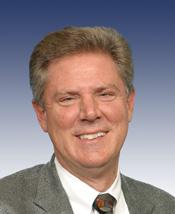
Mr. Speaker, I rise in support of this tax extension bill. It includes, as has been mentioned, H.R. 528, a bill to extend normal trade relations to Armenia. As co-chair of the Congressional Caucus on…
Mr. Speaker, I rise in support of this tax extension bill. It includes, as has been mentioned, H.R. 528, a bill to extend normal trade relations to Armenia. As co-chair of the Congressional Caucus on Armenian Issues, I introduced this legislation with my fellow co-chair, the gentleman
from Michigan (Mr. Knollenberg), and our bipartisan bill has garnered 112 cosponsors during the course of this year; and it has been included in this bill thanks to the gentleman from California (Chairman Thomas), the gentleman from New York (Ranking Member Rangel), and also the gentleman from Michigan (Ranking Member Levin).
Mr. Speaker, Armenia has been consistently found in full compliance with Jackson-Vanik since 1997, and the passage of this legislation will go a long way to establishing closer relations between the United States and Armenia. Since the fall of the Soviet Union, the Republic of Armenia has consistently made strides towards a free and open economic system; and like many former Soviet republics in the last decade, Armenia has seen considerable diversity in this last decade.
Unlike most, though, Armenia has vigorously pursued free-market reforms within a democratic framework. On February 5, Armenia was acceded to the World Trade Organization, and its recent accession supports its noted progress in adopting and implementing economic and trade reforms. In fact, Armenia is consistently ranked the most economically free nation in the region. It is truly amazing that all this has been achieved considering that Armenia continues to suffer dual blockades by its neighbors to the east and west, both Azerbaijan and Turkey respectively.
I wanted to mention the comments that the gentleman from Michigan (Mr. Levin) and the gentleman from Maryland (Mr. Cardin) made about human rights violations and strides towards democracy in Armenia. I know that, although Armenia continues to make great strides in these areas, more needs to be done; and I do acknowledge that. In fact, I do intend when I visit Armenia in 2 weeks, I wanted to mention to my colleagues that I will be talking to the President and the leaders there, and I will indicate to them that while we are very thrilled with the fact that the PNTR legislation has now passed the House that more needs to be done with regard to democracy and human rights.
But I want to point out that this will further strengthen our ties and lead to greater strides in these areas.

Mr. Speaker, I thank the chairman for yielding me the time. There are a lot of important provisions in this legislation. I would like to address my remarks particularly to the airline pension relief…
Mr. Speaker, I thank the chairman for yielding me the time.
There are a lot of important provisions in this legislation. I would like to address my remarks particularly to the airline pension relief provisions and why airlines face a pension funding crisis.
At the end of 1999, the airline industry's defined benefit pension plans on average were funded at 102 percent. At the end of 2002, that average level of funding fell to 54 percent, and the decline is a result of three factors. For the first time since World War II, the equity markets declined for 3 consecutive years. Market interest rates, which are used to define pension liabilities, are at 40-year lows. This pension funding crisis occurred at a time when the airline industry was in its worst financial situation due to the global recession, September 11, SARS, the Iraq war, and increased security costs.
There are also problems with current funding rules with regard to airlines. There is mandatory contribution provisions which tightened the funding rules in two inflexible ways which mandated the use of the 30-year Treasury rate, which this legislation addresses, and secondly, dramatically shortened the amortization period. That legislation was tightened in many ways in 1994.
During the last 3 years, the mandatory contribution funding requirements have been stress-tested by sustained economic downturns; and so between the enactment in 1987 and the beginning of the 3-year market collapse, the stock market had declined previously only in 1 year and then only by about 3 percent.
So in the face of this recent economic downturn and the simultaneous collapse of asset values, this mandatory contribution has proved to be onerous and inflexible, particularly to a highly cyclical industry like the airline industry.
This legislation affects zero tax dollars. It would temporarily defer contributions required by the mandatory contribution law for just a period of 2 years. Forcing airlines to contribute billions of dollars more over and above their regular pension contributions at this time would be disastrous. This gives us time to develop long-term solutions in this area. This is why unions and management came together to save pension plans for workers. If we do not address this issue, airlines will go bankrupt, as U.S. Airways has, and terminate their plans. Please support this legislation.
Mr. Speaker, I want to thank the gentleman for yielding me time. As this institution moves forward to complete its business for the year, I think it is particularly important that we pause to pass…
Mr. Speaker, I want to thank the gentleman for yielding me time.
As this institution moves forward to complete its business for the year, I think it is particularly important that we pause to pass this legislation that provides very critical tax relief and other important continuations of policy that I think reflect where this institution has been going, not only on tax policy but also on economic policy generally.
Mr. Speaker, I want to call attention to a couple of very important provisions that have been folded into this bill. I think one of the most important things we could do right now is to extend our tax treatment of net operating losses for companies, particularly in the wake of the long period, hopefully ending now, of companies having to attack against an ocean of red ink. I think it is particularly important now, particularly as our economy is beginning to grow again and beginning to grow again at a significant rate, that we give companies the relief they need on their net operating losses.
We have an opportunity here, I think, to give an additional boost to a lot of tax sensitive manufacturing concerns. And particularly, I wanted to say as chairman of the Congressional Steel Caucus, at a time when we are concerning ourselves with the health of the steel industry, it would be most helpful if we could liberalize the treatment of net operating losses and help not only steel companies, but also manufacturers generally in this economy trying to bounce back from an extended recession.
Mr. Speaker, I would also like to note as the gentleman on the other side of the aisle did, that this bill contains a very important provision providing Permanent Normal Trade Relations for the Republic of Armenia. Armenia emerged from the wreck of the Soviet Union with great potential, and they have done an enormous amount to liberalize their society and liberalize their economy. This institution needs to recognize that and take the additional step of stripping away those outdated Jackson-Vanik restrictions.
With that, I would urge that my colleagues pass this legislation and send a strong message that this body is prepared to go forward on the tax front and the trade front and do what it needs to do.
Show 1 more

Mr. Speaker, we have had some good news since July. We have seen 286,000 new jobs created as a result of the Jobs and Economic Growth Act that was signed into law in May. That is good news; and…
Mr. Speaker, we have had some good news since July. We have seen 286,000 new jobs created as a result of the Jobs and Economic Growth Act that was signed into law in May. That is good news; and really, this legislation we have before us today is another step in our effort to continue growing this economy and creating jobs, because one of the most important factors that affects the investment and the creation of jobs is certainty; and when a tax provision expires and there is doubt, uncertainty about whether that tax provision is going to be extended, those who invest, business and others, hold back and that affects our economy.
Passage of this legislation, with bipartisan support, is very important as we work to continue growing our economy. There are several very important economic growth provisions in this legislation that will be extended for another year, a 12-month extension, legislation that provides a tax incentive to clean up brownfields, abandoned industrial sites that require some environmental cleanup. Of course, we are extending the incentive to help business recover the cost of that environmental cleanup and create new jobs, recycling those industrial sites.
We recognize that there are many small- and medium-size manufacturers and other companies that have lost money this year. They need capital to invest in the creation of jobs to participate in the economic growth that we are currently beginning to enjoy; and by allowing them to go back over the last 5 years, find a profitable year, take this year's loss and essentially apply for a tax refund, that will give them capital to create new jobs.
Third, we all want those who are currently unemployed to have an opportunity to get a job. We also want those who are on welfare to have an opportunity to get a job; and the work opportunity tax credit is a tremendous program that has worked so well to give those who have been on welfare the opportunity for a job, a chance, in many cases the first chance that they have ever had for a good-paying job.
Let us extend these. This legislation deserves unanimous, bipartisan support. I urge an ``aye'' vote.
Bill Text
Latest available legislative text
        [Congressional Bills 108th Congress]
[From the U.S. Government Publishing Office]
[H.R. 528 Introduced in House (IH)]

108th CONGRESS
1st Session
H. R. 528

To authorize the extension of nondiscriminatory treatment (normal trade
relations treatment) to the products of Armenia.

_______________________________________________________________________

IN THE HOUSE OF REPRESENTATIVES

February 4, 2003

Mr. Knollenberg (for himself and Mr. Pallone) introduced the following
bill; which was referred to the Committee on Ways and Means

_______________________________________________________________________

A BILL

To authorize the extension of nondiscriminatory treatment (normal trade
relations treatment) to the products of Armenia.

Be it enacted by the Senate and House of Representatives of the
United States of America in Congress assembled,

SECTION 1. FINDINGS.

Congress makes the following findings:
(1) Armenia has been found to be in full compliance with
the freedom of emigration requirements under title IV of the
Trade Act of 1974.
(2) The World Trade Organization's General Council voted on
December 10, 2002, to approve Armenia's full accession to the
Organization.
(3) Since declaring its independence from the Soviet Union
in 1991, Armenia has made considerable progress in enacting
free-market reforms within a stable democratic framework.
(4) Armenia has demonstrated a strong desire to build a
friendly and cooperative relationship with the United States
and has concluded many bilateral treaties and agreements with
the United States.
(5) Total United States-Armenia bilateral trade for 2002
amounted to more than $134,200,000.

SEC. 2. TERMINATION OF APPLICATION OF TITLE IV OF THE TRADE ACT OF 1974
TO ARMENIA.

(a) Presidential Determinations and Extensions of Nondiscriminatory
Treatment.--Notwithstanding any provision of title IV of the Trade Act
of 1974 (19 U.S.C. 2431 et seq.), the President may--
(1) determine that such title should no longer apply to
Armenia; and
(2) after making a determination under paragraph (1) with
respect to Armenia, proclaim the extension of nondiscriminatory
treatment (normal trade relations treatment) to the products of
that country.
(b) Termination of Application of Title IV.--On and after the
effective date of the extension under subsection (a)(2) of
nondiscriminatory treatment to the products of Armenia, title IV of the
Trade Act of 1974 shall cease to apply to that country.
<all>