To suspend temporarily the duty on certain textile machinery.
Legislative Activity
Stay on top of the latest movement without scrolling through every action
Referred to the Subcommittee on Trade.
February 12, 2003
View full timeline
Introduced in House
February 5, 2003
Referred to the House Committee on Ways and Means.
February 5, 2003
Floor Debate
19 membersWhat members said about H.R. 552 on the floor
 CBM
CBM SB
SB MGO
MGO TO
TO DO+14
DO+14
Floor Debate
19 membersWhat members said about H.R. 552 on the floor
Mr. Chairman, I thank the gentleman for yielding me this time and for his leadership, and I rise in support of the Ose- Maloney amendment, a compromise approach to deposit insurance coverage that…
Mr. Chairman, I thank the gentleman for yielding me this time and for his leadership, and I rise in support of the Ose- Maloney amendment, a compromise approach to deposit insurance coverage that holds standard account coverage at $100,000 while offering increased protection for retirees.
Mr. Chairman, as a whole, this is an outstanding bill. As an original cosponsor of H.R. 522, I am supportive of the overwhelming majority of provisions in the legislation. It is long past time to merge the BIF and SAIF insurance funds. Additionally, eliminating the 23 basis point cliff and providing a new premium system that takes into account the past contributions of institutions are major steps forward.
The bill includes a mechanism for determining credit for past contributions to the insurance funds that is based on an amendment I cosponsored along with the gentleman from Nebraska (Mr. Bereuter) last session. This is a critically important provision as a matter of fairness to institutions that recapitalized the funds, and I thank the gentleman from Alabama (Mr. Bachus) for including this balanced amendment in the legislation.
Despite these many positives, I believe the immediate 30 percent increase in insurance coverage in the bill is a serious mistake. This coverage increase to $130,000 is opposed by all the Federal financial service regulators, including Alan Greenspan, Treasury Secretary Peter Fischer, OCC Comptroller John Hawke and OTS Director James Gilleran.
Proponents of increased coverage argue that it poses no new risk to the insurance system, but the regulators who oppose this increase are the very officials whose job it is to protect the safety and soundness of the financial system. The unanimity of regulator opposition to increased coverage is an extremely powerful message.
Another argument put forth by proponents of coverage increases is that inflation has eroded deposit insurance. I do not believe this argument matches the actual situation of the banking industry. The fact is that only 2 percent
of insured accounts have more than $100,000 according to a study by the Federal Reserve. The same Fed study put the average account balance at merely $6,000. Any way you look at it the increase in coverage will benefit very, very few depositors.
Proponents of increasing coverage also contend that because insurance premiums are paid by banks, increasing coverage does not cost taxpayers. While I concede this point, I think we have to remember that behind the deposit insurance funds is the full faith and credit of the United States Government.
Since I joined the Committee on Financial Services at the close of the savings and loan crisis, I have been committed to protecting the safety and soundness of the financial service system. While the causes of the S&L failures were many, as my friend from Alabama pointed out, the fact is that standing behind the insurance system are our constituent taxpayer dollars. No matter what the reasons are for a future bank failure or string of failures, by raising insurance coverage we increase the potential liability of the government. Additionally, raising coverage may encourage the concept of moral hazard. Institutions will be encouraged to engage in riskier behavior to boost earnings if they know that failure is insured by the Federal Government.
Finally, I urge support for this amendment because it strikes a compromise. It holds the line on coverage for standard accounts while offering retirees additional insurance. I believe that there are many valid policy arguments for offering additional coverage and additional insurance for this special class of banking account. At its core this amendment represents a compromise. It allows Members the opportunity to support the concerns of the regulatory community on standard accounts while offering increased insurance on retirement accounts.
This is a good bill and I will support its passage. I simply think it would be much improved with the adoption of this amendment, and I thank the gentleman from California (Mr. Ose) for his leadership and I thank also the gentleman from Alabama (Mr. Bachus) for crafting a fine underlying bill, along with the chairman, the gentleman from Ohio (Mr. Oxley), and the Democratic leader, the gentleman from Massachusetts (Mr. Frank).
Mr. Chairman, I include for the Record the following testimony from our committee hearing:
Prepared Testimony of the Honorable Peter R. Fischer, Undersecretary for Domestic Finance, Department of the Treasury, 9:30 a.m., Wednesday,
February 26, 2003--Dirksen 538
Mr. Chairman, Senator Sarbanes, and Members of the
Committee, I appreciate the opportunity to provide the
Administration's views on deposit insurance reform. I also
want to commend Chairman Powell and the FDIC staff for their
valuable contributions to the discussion of this important
issue.
The Administration strongly supports reforms to our deposit
insurance system that would, first, merge the bank and thrift
insurance funds, second, allow more flexibility in the
management of fund reserves while maintaining adequate
reserve levels and, third, ensure that all participating
institutions fairly share in the maintenance of FDIC
resources in accordance with the insurance fund's loss
exposure from each institution. The Administration strongly
opposes any increases in deposit insurance coverage limits.
Our current deposit insurance system managed by the Federal
Deposit Insurance Corporation (FDIC) serves to protect
insured depositors from exposure to bank losses and, as a
result, helps to promote public confidence in the U.S.
banking system. I am concerned today that our deposit
insurance system has structural weaknesses that, in the
absence of reform, could deepen over time. I want to
emphasize that there is no crisis in the FDIC; both of its
funds are strong, well managed, with adequate reserves. This
is the right time to act--when we do not face a crisis--and
the Administration supports legislation focused on the repair
of these structural weaknesses.
Increases in FDIC benefits, however, including any increase
in the level of insurance coverage, are not part of the
solution to these problems and should be avoided. When I
testified before this Committee last April, I argued that an
increase in deposit insurance coverage limits would serve no
sound public policy purpose. Nothing has occurred since then
to change that view. The Administration continues to oppose
higher coverage limit in any form. Indeed, we feel that the
entire issue of coverage limits regrettably diverts attention
from the important reforms that are needed.
merging the bank and thrift insurance funds
We support a merger of the Bank Insurance Fund (BIF) and
Savings Association Insurance Fund (SAIF) as soon as
practicable. A larger, combined insurance fund would be
better able to diversify risks, and thus withstand losses,
than would either fund separately. Merging the funds while
the industry is strong and both funds are adequately
capitalized would not burden either BIF or SAIF members. A
merged fund would also end the possibility that similar
institutions could pay significantly different premiums for
the same product, as was the case in the recent past and
could occur again in the near future without this change. A
merger would also recognize changes in the industry. As a
result of mergers and consolidations, each fund now insures
deposits of both commercial banks and thrifts. Indeed,
commercial banks now account for 45 percent of all SAIF-
insured deposits.
Flexibility in the Management of FDIC Reserves
Current law generally requires each insurance fund to
maintain reserves equal to 1.25 percent of estimated insured
deposits, the ``designated reserve ratio.'' When the reserve
ratio falls below this threshold, the FDIC must charge either
a premium sufficient to restore the reserve ratio to 1.25
percent within one year, or a minimum of 23 basis points if
the reserve ratio would remain below 1.25 percent for a
longer period. Since the latter would be expected when the
banking system, and probably the economy as well, were under
stress, such a sharp increase in industry assessments could
have an undesirable pro-cyclical effect, further reducing
liquidity precisely when liquidity is needed. Were FDIC fund
contributions to come from resources that otherwise might be
part of capital, every dollar paid would mean a potential
reduction of 10 or 12 dollars in lending, or as much as $12
billion in reduced lending for a $1 billion FDIC
replenishment.
Reserves should be allowed to grow when conditions are
good. This would enable the fund to better absorb losses
under adverse conditions without sharp increases in premiums.
In order to achieve this objective and also to account for
changing risks to the insurance fund over time, we support
greater latitude for the FDIC to alter the designated reserve
ratio within statutorily prescribed upper and lower bounds.
Within these bounds, the FDIC should provide for public
notice and comment concerning any proposed change to the
designated reserve ratio. The FDIC should also have
discretion in determining how quickly the fund meets the
designated reserve ratio as long as the actual reserve ratio
is within these bounds. If the reserve ratio were to fall
below the lower bound, the FDIC should restore it to within
the statutory range promptly, over a reasonable but limited
timeframe. We would also support some reduction in the
prescribed minimum premium rate--currently 23 basis points--
that would be in effect if more than one year were required
to restore the fund's reserves.
Nevertheless, as we learned from the deposit insurance
experience of the 1980s, flexibility must be tempered by a
clear requirement for prudent and timely fund replenishment.
The statutory range for the designated reserve ratio should
strike an appropriate balance between the burden of pre-
funding future loses and the pro-cyclical costs of
replenishing the insurance fund in a downturn. A key benefit
to giving the FDIC greater flexibility in managing the
reserve ratio within statutorily prescribed bounds is the
ability to achieve low, stable premiums over time, adequate
to meet FDIC needs in bad times, with the least burden on
financial institutions and on the economy. We also believe
that with this reform, the possibility of recourse to
taxpayer resources is even further removed.
Full Risk-Based Shared Funding
Every day that they operate, banks and thrifts benefit from
their access to federal deposit insurance. For several years,
however, the FDIC has been allowed to obtain premiums for
deposit insurance from only a few insured institutions.
Currently, over 90 percent of banks and thrifts pay nothing
to the FDIC. This is an untenable formula for the long-term
stability of the FDIC.
Moreover, current law frustrates one of the most important
reforms enacted in the wake of the collapse of the Federal
Savings and Loan Insurance Corporation (FSLIC) and the
depletion of FDIC reserves: the requirement for risk-based
premiums. When 90 percent of the industry pays no premiums,
there is little opportunity to do what any prudent insurer
would do: adjust premiums for risk. Nearly all banks are
treated the same, and lately they have been treated to free
service.
For example, today a bank can rapidly increase its insured
deposits without paying anything into the insurance fund. As
is now well known, some large financial companies have
greatly augmented their insured deposits in the past few
years by sweeping uninsured funds into their affiliated
depository institutions--without compensating the FDIC at
all. Other major financial companies might be expected to do
the same in the future. In addition, most of the over 1,100
banks and thrifts chartered after 1996 have never paid a
penny in deposit insurance premiums. Yet if insured deposit
growth by a relatively few institutions were to cause the
reserve ratio to decline below the designated reserve ratio,
all banks would be required to pay premiums to raise
reserves.
To rectify this ``free rider'' problem and ensure that
institutions appropriately compensate the FDIC commensurate
with their risk, Congress should remove the current
restrictions on FDIC premium-setting. In order to recognize
past payments to build up current reserves, we support the
proposal to apply temporary transition credits against future
premiums that would be distributed based on a measure of each
institution's contribution to the build-up of insurance fund
reserves in the early-to-mid 1990s. In addition to transition
credits, allowing the FDIC to provide assessment credits on
an on-going basis would permit the FDIC to collect payments
from institutions more closely in relation to their deposit
growth.
We strongly oppose rebates, which would drain the insurance
fund of cash. Over much of its history, the FDIC insurance
fund reserve ratio remained well above the current target,
only to drop into deficit conditions by the beginning of the
1990s. Therefore, it is vital that funds collected in good
times, and the earnings on those collections, be available
for times when they will be needed.
There are other important structural issues that need to be
addressed sooner than later. It would be appropriate to
evaluate whether there are changes to the National Credit
Union Share Insurance Fund (NCUSIF) that would be suitable in
light of the proposed reforms made of FDIC insurance so as to
avoid unintended disparities between the two programs.
Perhaps even more important is the need to address the long-
term funding of supervision by the National Credit Union
Administration, particularly in view of recent trends toward
conversions from federal to state charters and growing
consolidation of credit unions. Similarly, there are
structural problems in the funding of the Office of the
Comptroller of the Currency and the Office of Thrift
Supervision, the resolution of which should not be delayed.
Deposit Insurance Coverage Limits
The improvements to the deposit insurance system that I
have just outlined are vital to the system's long-term
health. Other proposals, however, would not contribute to the
strength of the taxpayer-backed deposit insurance system and
may actually weaken it.
Increasing the general coverage limit up front or through
indexation, or raising coverage limits for particular
categories of deposits, is unnecessary. Savers do not need an
increase in coverage limits and would receive no real
financial benefit. Unlike other government benefit programs,
there is no need for indexation of deposit insurance coverage
because savers can now obtain all the coverage that they
desire by using multiple banks and through other means.
Higher coverage limits would not predictably advantage any
particular size of banks, would increase all banks' insurance
premium costs, and would mean greater taxpayer exposure by
adding to the contingent liabilities of the government and
weakening market discipline. An increase in coverage limits
would reduce--not enhance--competition among banks in general
as the efficient and inefficient offer the same investment
risk to depositors; in fact, perversely, investors would be
drawn at no risk to the worst banks, which usually offer the
highest interest rates.
Higher Coverage Limits Not Sought by Savers
First of all, the clamor for raising coverage limits does
not come from savers. The evidence that current coverage
limits constitute a burden to savers is scant; there has been
little demand from depositors for higher maximum levels. The
recent consumer finance survey data released by the Federal
Reserve confirm what we found in the previous survey, namely
that raising the coverage limit would do little, if anything,
for most savers. Median family deposit balances are only
$4,000 for transaction account deposits and $15,000 for
certificates of deposit, far below the current $100,000
ceiling. The same holds true even when considering only older
Americans, a segment of the population with higher bank
account usage: median transaction account balances and
certificates of deposit total $8,000 and $20,000,
respectively, for those households headed by individuals
between the ages of 65 and 74.
Examining the Federal Reserve data for retirement accounts
shows present maximum deposit insurance coverage to be more
than adequate. The median balance across age groups held in
IRA/Keogh accounts at insured depository institutions is only
$15,000. For the 65 to 69 age group, median household IRA/
Keogh deposits total $30,000.
A small group of relatively affluent savers might find
greater convenience from increased maximum coverage levels.
But it is a tiny group. Only 3.4 percent of households with
bank accounts held any uninsured deposits, and the median
income of these households was more than double the median
income of all depositors in the survey.
Under current rules, these savers have plenty of options,
with the market place presenting new options for unlimited
deposit insurance coverage without changing federal coverage
limits. At little inconvenience, savers with substantial bank
deposits--including retirees and those with large bank
savings for retirement--may place deposits at any number of
banks to obtain as much FDIC coverage as desired. They may
also establish accounts within the same bank under different
legal capacities, qualifying for several multiples of current
maximum coverage limits. Firms are now developing programs
for exchanging depositor accounts that could offer seamless
means of providing unlimited coverage for depositors without
any change in current limits.
One of the fundamental rules of prudent retirement planning
is to diversify investment vehicles. Many individuals,
including those who are retired or planning for retirement,
feel comfortable putting substantial amounts into uninsured
mutual funds, money market accounts, and a variety of other
investment instruments. Just 21 percent of all IRA/Keogh
funds are in insured depository institutions. There is simply
no widespread consumer concern about existing coverage limits
that would justify extending taxpayer exposure by creating a
new government-insured retirement program under the FDIC.
Coverage Limits and Bank Competition
Banks, regardless of size, continue to have little trouble
attracting deposits under the existing coverage limits.
Federal Reserve data have shown that smaller banks have grown
more rapidly and experienced higher rates of growth in both
insured and uninsured deposits than have larger banks over
the past several years. After adjusting for the effects of
mergers, domestic assets of the largest 1,000 commercial
banks grew 5.5 percent per year on average from 1994 to 2002;
all other banks grew 13.8 percent per year on average. Nor
are smaller banks losing the competition for uninsured
deposits. Uninsured deposits of the top 1,000 banks grew 9.9
percent annually on average over this period, while such
deposits at smaller banks grew on average by 21.4 percent
annually.
Higher Coverage Limits for Municipal Funds Erode Discipline
Proposals for substantially higher levels of protection of
municipal deposits than of other classes of deposits would
exacerbate the inherent moral hazard problems of deposit
insurance. Rather than keep funds in local institutions,
state and municipal treasurers would have powerful incentives
to seek out not the safest institutions in which to place
taxpayer funds but rather those offering the highest interest
rates. Since these are usually riskier institutions, state
and municipal treasurers would be drawn into funding the more
trouble banks. Local, well run, healthy banks might have to
pay a premium in increased deposit rates to retain municipal
business. Today there are incentives for state and local
government treasurers to monitor risks taken with large
volumes of public sector deposits. Should the FDIC largely
protect these funds, an important source of credit judgment
on the lending and investment decisions of local banks would
be lost.
conclusion
In conclusion, I reaffirm the Administration's support for
the three-part general framework that I have outlined to
correct the structural flaws in the deposit insurance system.
I encourage Congress to pursue these improvements with a
steady focus on the important work that needs to be done. The
Administration does not support legislation that raises
deposit insurance coverage limits in any form, and we urge
that Congress avoid such an unneeded and counterproductive
diversion from real and necessary reform.
Mr. Chairman, I yield myself 7 minutes. Mr. Chairman, I rise in support of H.R. 522, the Federal Deposit Insurance Reform Act of 2003. I want to begin by thanking the gentleman from Ohio (Mr. Oxley),…
Mr. Chairman, I yield myself 7 minutes.
Mr. Chairman, I rise in support of H.R. 522, the Federal Deposit Insurance Reform Act of 2003. I want to begin by thanking the gentleman from Ohio (Mr. Oxley), the chairman of the committee, for his tremendous leadership in steering what is a complex bill through the legislative process. I also want to thank the ranking member of the committee, the gentleman from Massachusetts (Mr. Frank), for his support of this important piece of legislation. The committee and the Congress in its votes on this legislation in the past, legislation very similar, has shown that it can work together in a very bipartisan manner.
Deposit insurance reform has been thoroughly discussed and debated over the past several years. During the 107th Congress, I introduced comprehensive deposit insurance reform, H.R. 3717. The legislation was a by-product of recommendations by the FDIC in early 2001, industry representatives coming together urging that we take action. The American Banking Association, The Credit Union National Association, Independent Bankers and Financial Services Roundtable, all urging the Federal Reserve, the administration, urging us to take action to reform Federal deposit insurance. We did take action, and the 107th Congress passed H.R. 3717 by a vote of 408 to 18.
Unfortunately, that bill died in the other body.
Earlier this year, I introduced the same legislation. This time it is H.R. 522, the Deposit Insurance Reform Act of 2003. The gentleman from Ohio (Mr. Oxley) and the gentleman from Massachusetts (Mr. Frank) joined me in introducing this legislation, along with 57 other cosponsors on both sides of the aisle. It was approved by the Committee on Financial Services by a unanimous voice vote. I am pleased that the Senate now plans to act on similar legislation in the very near future, and that the President's budget for fiscal year 2004 outlines a proposal similar to our legislation.
The legislation is supported not only by American bankers, the Financial Services Roundtable made up of the 100 largest financial corporations in America, but also by the credit unions, the thrift associations, the community bankers, the securities industry, and also by groups that we sometimes do not find on the same side; the American Association of Retired Persons has recently endorsed this legislation.
Federal deposit insurance has been the hallmark of our Nation's banking system for almost 70 years. The reforms made by this legislation will ensure that the system that serves savers and depositors so well for so long will continue for future generations.
What does the legislation do? First, it merges separate insurance funds that currently apply to deposits held by banks on the one hand and savings associations on the other, creating a stronger, more stable fund that benefits banks and thrifts alike.
Second, it changes the ``pro-cyclical'' bias of the current system. In other words, it spreads out over time the assessments to the institutions which results in, by doing this, a more uniform assessment. Presently we have sharply higher premiums served during recessionary times and much lower premiums during good times. Banks can least afford to pay a higher premium during recessions, and we found that out, and this corrects that.
Third, the legislation includes modest increases in the amount of coverage available. The system has gone from 1980 without an increase in coverage. If we took 1980 as our basis and we increased coverage based on inflation, we would go to $200,000. If we went back to 1980, the $100,000, and we increased it based on per capita income, it would actually go to $300,000. So we are proposing $130,000, a very modest increase.
If we went back to 1974, because some have said they should not have raised it in 1980, they should have kept it at the 1974 level, and we increased it for inflation, it would go to $140,000.
Mr. Chairman, there are some who will offer amendments who have actually publicly stated that they do not believe in Federal deposit insurance, one of the gentlemen offering an amendment later on. So there are Members of the body who do not believe that our deposits in banks should be federally insured.
I understand that; but I, for one, disagree with that. I think Americans have come to rely and have a sense of security in knowing that when they put their retirement funds in a bank or thrift that it is federally insured. Particularly in light of the recent volatility on Wall Street, people have, I think, come to rely more and value more the fact that they can put their money in a federally insured financial institution and not lose that money.
All of us have heard from community bankers in our districts about the challenges that they face in competing for deposits with large- money center banks that are perceived by the market, rightly or wrongly, as being too big to fail. By strengthening the deposit insurance system, our legislation will help small neighborhood-based financial institutions across the country, especially in rural areas, continue to play an important role in financing economic development.
The independent bankers have actually said that this legislation is key to maintaining local home-owned banking institutions. The deposits that community banks are able to attract through Federal deposit insurance guarantees are cycled back into local communities in the form of consumer and small business loans. One reason for this legislation is we value the right of every American to go down to his corner financial institution.
My thanks go to the chairman of the committee.
Mr. Chairman, I reserve the balance of my time.
Mr. Chairman, I yield 2 minutes to the gentleman from Ohio (Mr. Tiberi).
Mr. Chairman, I yield 2 minutes to the gentleman from Kansas (Mr. Moran).
Mr. Chairman, I yield 2 minutes to the gentleman from Texas (Mr. Hensarling).
Mr. Chairman, I yield 2 minutes to the gentlewoman from Florida (Ms. Ginny Brown-Waite).
Mr. Chairman, I yield 2 minutes to the gentleman from Colorado (Mr. Beauprez).
Mr. Chairman, I yield 4 minutes to the gentleman from Ohio (Mr. Oxley), the chairman of the Committee on Financial Services.
(Mr. OXLEY asked and was given permission to revise and extend his remarks.)
Mr. Chairman, I yield 3 minutes to the gentleman from Texas (Mr. Burgess).
(Mr. BURGESS asked and was given permission to revise and extend his remarks.)
Mr. Chairman, I yield 3 minutes to the gentleman from Alabama (Mr. Aderholt).
Mr. Chairman, I yield myself such time as remains.
Mr. Chairman, there are opponents to this legislation. Those opponents give several reasons, and we may hear those during the amendments; but I think the most honest opponent of this legislation is the gentleman from California (Mr. Rohrabacher), who will offer an amendment or who may not offer an amendment but who has filed an amendment to strike the increases in coverage.
The gentleman from California (Mr. Rohrabacher) said in the American Banker, and I quote him, in today's edition, ``I don't believe in Federal deposit insurance.'' I think that pretty much sums up the opposition because if a person does not believe in it, then a person does not want it to increase to allow for inflation or for increase in per capita income. If a person does believe in it, then they want it to remain current. They want it to remain current with per capita income and inflation.
As I said, we last increased the levels in 1980. If we adjusted them for per capita income, they would actually go to $300,000. If we increased them for inflation, they would go to $200,000. We, to build a consensus, only increased them to $130,000; but we did increase retirement funds to $260,000, but we felt that there were people other than retirees who deserve the protection to keep up with per capita income and inflation.
So we increased everyone's coverage to 130, including small businesses and depositors, many of whom we found in testimony sell their house, deposit the entire proceeds in a financial institution and assume, sometimes tragically, that there is sufficient coverage.
There are additional reasons why people are opposing this legislation. There is a question of cost. The CBO scored the same bill last year as a savings of $750 million. This year they say it has a cost of $1 billion.
Chairman Powell of the FDIC responded to the CBO estimate and said this, because it conclusively rebuts any CBO estimate that this will cost the taxpayers and any argument that may be made on the floor today about the budgetary impact of the legislation, and he says, ``H.R. 522 provides the FDIC with the tools to achieve revenue neutrality in the management of the deposit insurance system. Because any analysis that determines 522 will result in an increase in net government spending must necessarily rely on assumptions regarding how the FDIC Board will exercise the discretion provided in the legislation.'' And here is the most pertinent part: ``I can assure Congress that the leadership of the FDIC has no intention of managing the deposit insurance system in a way that increases the cost to the government or increases the burden on insured institutions. The costs of the deposit insurance system will continue to be borne by the banking industry, but in a manner that establishes a strong risk-based premium system and avoids the procyclical risks inherent in current law.'' I do stress there are risks in the current law if we do not amend it.
He also in a letter to this body on March 31 says, ``No analysis of the `costs' of legislation is complete without a full consideration of the benefits provided by the bill,'' and he goes on to list many benefits to the economy, to savers and to strengthening our banking institution.
Another rabbit that has been turned loose by opponents of this bill is that the increase in coverage, the last increase was what precipitated the savings and loan crisis. That is simply not a fact. There were many causes. In fact, let me read from a report from this own body as to the reason for the savings and loan crisis. The causes of the thrift crisis can be traced to a number of factors: poorly timed deregulation, the dismal performance of some thrift management, inadequate oversight supervision and regulation.
Mr. Chairman, I was standing to claim the time in opposition.
Mr. Chairman, I yield myself such time as I may consume.
I speak in opposition to this amendment. One of the statements by the proponent of this amendment has been that the former increase in coverage was the primary reason for the savings and loan crisis, and let me say in that regard that the cause of the savings and loan collapse, crisis in this country, has been well examined and well documented. The FDIC, in fact, issued a report called ``History of the Eighties, Lessons for the Future and Examination of the Banking Crisis of the 1980s.''
Here is their reasoning. The rise in the number of bank failures in the 1980s had no single cause or short list of causes. Rather, it resulted from a concurrence of various forces working together to produce a decade of banking crises.
First, broad national forces, economic, financial, legislative and regulatory established the preconditions for the increased number of bank failures. Second, a series of severe regional and sectional recessions hit banks in a number of banking markets and led to the majority of the failures. Third, some of the banks in these markets assumed excessive risk and were insufficiently restrained by supervisory authorities with the result that they failed in disproportionate numbers.
As a result of that, Mr. Chairman, we have made several changes in the law in this body in an attempt, and I think a successful attempt thus far, to make these institutions subject to more oversight and to stronger capital requirements.
One Member of our body's father served as the FBI director during the savings and loan crisis. He was asked in a congressional hearing for his comment on the savings and loan crisis, and he said that criminal activity, fraud and looting were the primary causes of the crisis. In fact, the committee staff has made a fairly exhaustive study of the various articles written concerning the collapse of the savings and loans, and these were the reasons given at the time.
My colleagues can see we have a basic laundry list of reasons, but there is actually evidence that the increase in coverage at the time gave savers some degree of security and actually prevented a panic at many institutions, and some of that body of evidence supports that it actually helped in a contagion of that crisis.
Mr. Chairman, the final argument is a moral-hazard argument. The offerer of this amendment has argued that increasing coverage will create a greater moral hazard in the system; but then, surprisingly, his amendment does not raise the level from $100,000 to $130,000. It does away with that, but then he raises retirement accounts to $260,000, and he raises municipal deposits; and by doing that, they have managed in the subcommittee to basically arouse everyone's opposition to the amendment because if we raise the coverage for retirements in municipal deposits, then one is, in fact, arguing against the reason for offering his own amendment.
I will close simply by saying that this moral-hazard argument has been looked at by the FDIC. They asked two respected economists to make a report, and they were Federal Reserve Governor Alan Blinder, and this is what he said. The point is made that if the FDIC is given the authority to charge risk-based premiums, and that is what H.R. 522 does, then ``most objections based on moral hazard should evaporate.'' He goes on to state, ``In a world of properly priced deposit insurance, it seems more appropriate to ask the opposite question: Why have any coverage limits at all?''
In fact, I think that ought to be the question we are debating: Why have any coverage limits at all? Even the CBO says that this bill will result in an increase of insured deposits in our institutions. Is that not something that we have all argued for? Do we not want an increase in the deposits in our financial institutions? Does that not strengthen our economy? Is that not good for America? They say that some institutions will fail and some people in that institution will lose 200 or $220,000 worth of retirement funds. Do we not want them to have federally insured coverage? Do we want them to lose this money? I do not think so.
Finally, do we believe in insurance? I think that is the essence of this whole argument. I mean, do we believe in insurance? Do we believe in insuring for losses? If we do, and I for one think that insurance is a good thing, I believe that insurance is a prudent thing, and I believe that in order for our Federal deposit insurance system to survive and have any relevance then that insurance protection, which I believe in, I believe in insuring against risk, I believe it is a prudent thing to do, then why would we want the Federal deposit insurance system to wither on the vine?
Why would we not want it to stay current with inflationary rates and per capita income? And the only way to do that is to vote ``yes'' on this bill. A vote against this bill basically would be like going back to 1980 and reducing the coverage from $100,000 to $30,000 if you went on per capita income, or $47,000 if you went on inflation.
How many in our body would do that? How many in our body would vote today to take those levels back to the 1980 level? I do not think any of us would. A few of us would because, as the gentleman from California (Mr. Rohrabacher) says, I do not believe in Federal deposit insurance. I do not believe in the Federal Government supplying insurance. Well, it is the depositors, for one thing. The Federal Government does not. If he would look, he would see it is the banks through their premiums.
I yield to the gentleman from Massachusetts.
Mr. Chairman, I yield myself such time as I may consume and simply close by doing two things. One is responding to the gentleman from California when he uses the analogy that if someone wants to deposit or wants over $100,000 in their account they can simply take part of that money out of one account and place it in another account or they can drive down the street.
Now, Americans today are a highly mobile society, and we know that Americans sell their homes and we know that in almost every case, when they do that, they deposit that money in their bank. They do not take that check and split it. They do not ask for two checks. We know that the average cost of a house is well in excess of $100,000 and we know that they deposit that money in a bank. And if that bank fails, they lose all but $100,000. We do not think that is right.
The authors of this amendment also do a strange thing. They say we are increasing the coverage and that is a bad thing; but then they increase the coverage for retirement accounts to $260,000 and municipal accounts to $2 million. So they basically argue against their own amendment.
Mr. Chairman, may I inquire into the amount of time remaining?
Mr. Chairman, I yield 30 seconds to the gentleman from Alabama (Mr. Davis).
Mr. Speaker, on that I demand the yeas and nays.
Mr. Chairman, I rise today in strong support of H.R. 522, the Federal Deposit Insurance Reform Act of 2003. Our country has the largest, most complex, most stable banking system in the world. Deposit…
Mr. Chairman, I rise today in strong support of H.R. 522, the Federal Deposit Insurance Reform Act of 2003. Our country has the largest, most complex, most stable banking system in the world. Deposit insurance is one of the major reasons for this stability. And today we will strengthen this system so that it continues to serve as a model for the rest of the world.
Depositors, taxpayers, and depository institutions would be well- served by this legislation which will modernize the Federal deposit insurance system. Federal deposit insurance was created by the Congress in 1934 and it has successfully served the American people for almost 70 years. Public confidence has been maintained, and the stability of the Nation's banking system has been preserved during periods of financial uncertainty.
The deposit insurance system has been significantly modified only twice since 1934, both times in response to the savings and loan crisis of the late 1980s and 1990s. During this crisis the
Federal Government resolved 2,363 failures of insured institutions involving more than $700 billion in assets. As FDIC Chairman Powell has stated, ``There were no bank runs, no panics, no disruptions to financial markets, and no debilitating impact on overall economic activity.''
The existence of the Federal deposit insurance was a critical factor in maintaining public confidence in the banking system during these troubled times. H.R. 522, though technical in nature, seeks to apply the experience of the last decade to today's banking marketplace. It is the 21st century legislation for a 21st century banking industry, and this is it. And while the purpose of deposit insurance remains the same, industry growth, bank expansion from new powers, and the integration of banking and securities activities require that the scope and coverage of deposit insurance evolve so as to reflect the realities of a modern financial services industry. Moreover, the presence of Federal deposit insurance continues to be a key consideration for consumers in their decisions about where they do their banking and what level of deposit risk they are willing to assume.
Mr. Chairman, there is broad consensus in this body, the Bush administration, the Federal banking and thrift regulators, and business and consumer groups in favor of improving and strengthening the deposit insurance system and making it more responsive to the cyclical nature of banking activities and the post-Gramm-Leach-Bliley financial and economic environment. This legislation fulfills our commitment to the American public. Indeed, H.R. 522 was reported out of committee on a voice vote, a testimony to its responsiveness and timeliness. Substantially similar legislation passed this body just last year with over 400 votes.
This legislation is based on the recognition that depositors, savers, and investors have integrated financial needs and that the deposit insurance system must be stronger, more flexible, and adaptable to changing depositor behaviors in real times. The bill provides the FDIC with the necessary supervisory tools to manage the deposit insurance fund in a way that balances all affected interests and allocates the benefits and costs of the system evenly and fairly.
I want to thank the chairman of the Subcommittee on Financial Institutions and Consumer Credit, the gentleman from Alabama (Mr. Bachus) for taking on this challenging, highly technical legislative process and for engaging all the major stakeholders in developing a bipartisan piece of well-balanced, highly effective legislation.
I also want to thank all of the bipartisan co-sponsors of this important legislation, particularly our distinguished ranking member, the gentleman from Massachusetts (Mr. Frank), for their good work in this effort. I strongly urge all of my colleagues to support this legislation, and by doing so we ensure the public continues to maintain its confidence in the U.S. financial services industry, by far the most stable in the world.
Mr. Chairman, in scoring last year's deposit insurance reform legislation, the CBO concluded that the bill would decrease net Federal spending by $700 million. This year, presented with a substantially similar piece of legislation reforming the deposit insurance system, the CBO applied a different set of assumptions in performing its analysis of H.R. 522, and concluded that this year's bill would increase net Federal spending by some $1.9 billion.
This large swing between last year's estimate and this year's is attributable in large measure to a change in CBO's calculation of how much premiums the FDIC will be able to collect from insured depository institutions under the two bills. In making this calculation, CBO acknowledged the speculative nature of its analysis, stating that ``it is possible that the FDIC could use its broad discretion [under the legislation] differently than we have assumed and that could result in either fewer or greater premium collections than CBO has estimated.''
The CBO's analysis is grounded in an arbitrary assumption that the FDIC Board will choose not to exercise its authority in a revenue neutral way. This assumption is directly contrary to the consistent congressional testimony of the FDIC that a central goal of deposit insurance reform is revenue neutrality.
In fact, in a letter that the Committee received on March 31, 2003, from the Chairman of the FDIC, the Honorable Don Powell, Chairman Powell stated the FDIC's position that H.R. 522 gives the agency ``appropriate tools and incentives to manage the deposit insurance system such that it will not result in increased net government spending.''
Chairman Powell's letter, which conclusively rebuts the notion that H.R. 522 will have an adverse affect on Federal spending, goes on to state:
H.R. 522 provides the FDIC with the tools to achieve
revenue neutrality in the management of the deposit insurance
system. Because any analysis that determines H.R. 522 will
result in an increase in net government spending must
necessarily rely on assumptions regarding how the FDIC Board
will exercise the discretion provided in the legislation, I
can assure Congress that the leadership of the FDIC has no
intention of managing the deposit insurance system in a way
that increases the costs to the government or increases the
burden on insured institutions. The costs of the deposit
insurance system will continue to be borne by the banking
industry, but in a manner that establishes a strong risk-
based premium system and avoids the procyclical risks
inherent in current law.
The Committee shares the view of the FDIC, the agency that has had responsibility for administering the deposit insurance program since its inception more than 70 years ago, and believes that the CBO analysis of the potential budgetary impact of H.R. 522 is fundamentally flawed.
For the Record, I am including a copy of the CBO estimate and the FDIC's response.
U.S. Congress,
Congressional Budget Office,
Washington, DC, March 28, 2003.
Hon. Michael G. Oxley,
Chairman Committee on Financial Services, House of
Representatives, Washington, DC.
Dear Mr. Chairman: The Congressional Budget Office has
prepared the enclosed cost estimate for H.R. 522, the Federal
Deposit Insurance Reform Act of 2003.
If you wish further details on this estimate, we will be
pleased to provide them. The CBO staff contacts are Mark
Hadley and Ken Johnson (for federal costs), and Judith Ruud
(for the private-sector impact).
Sincerely,
Barry B. Anderson
for Douglas Holtz-Eakin, Director.
Enclosure.
H.R. 522--Federal Deposit Insurance Reform Act of 2003
Summary: H.R. 522 would amend provisions of banking and
credit union law to reform the deposit insurance system.
Specifically, the bill would increase insurance coverage for
insured accounts from $100,000 per account to $130,000 for
most accounts (with higher levels of coverage for retirement
accounts and municipal deposits). Over time, the coverage
limit for insured deposits would increase to account for
inflation. Those provisions of the bill would affect deposits
held by banks and thrifts, which are insured by the Federal
Deposit Insurance Corporation (FDIC), as well as those held
by credit unions, which are insured by the National Credit
Union Administration (NCUA). In addition, the bill would
merge the Bank Insurance Fund (BIF) and the Savings
Association Insurance Fund (SAIF) to create a new Deposit
Insurance Fund (DIF) to pay the claims of depositors of
failed banks and thrifts. Finally, H.R. 522 would amend the
conditions under which banks and thrifts would pay insurance
premiums to the FDIC, which administers the funds.
CBO estimates that H.R. 522 would increase the net cost of
resolving failed financial institutions by $2.1 billion over
the next 10 years. Under the bill, the FDIC and NCUA would
offset some of that cost through increased insurance premiums
paid by financial institutions. Because H.R. 522 would allow
institutions to pay FDIC premiums with credits in lieu of
cash, the additional cost of resolving failed financial
institutions under the bill would exceed the cash receipts
from additional premiums. Consequently, we estimate that the
FDIC would bear nearly all of the increased costs of
resolving failed institutions during the next five years,
when most of the credits would be used. As a result, CBO
estimates that a would increase net direct spending by $1.9
billion over the 2004-2013 period.
H.R. 522 contains an intergovernmental mandate as defined
in the Unfunded Mandates Reform Act (UMRA). CBO estimates
that the mandate would impose no costs on state, local, or
tribal governments and, therefore, that it costs would not
exceed the threshold established in UMRA ($59 million 2003,
adjusted annually for inflation).
The bill contains private-sector mandates as defined by
UMRA, primarily because it would necessitate the payment of
increased deposit insurance premiums. CBO estimates that the
direct cost of those mandates would be below the annual
threshold specified in UMRA ($117 million in 2003, adjusted
annually for inflation) during the first five years after
enactment because the bill would provide credits to certain
institutions that would largely offset their insurance
premium assessments over the 2004-2008 period. We do not have
sufficient information to provide a precise estimate of the
aggregate cost of all the mandates in the bill.
Estimated cost to the Federal Government: The estimated
budgetary impact of H.R. 522 is shown in the following table.
The costs of this legislation fall within budget function 370
(commerce and housing credit).
--------------------------------------------------------------------------------------------------------------------------------------------------------
By fiscal year, in billions of dollars--
Mr Chairman, banks that primarily serve agricultural customer remain concerned with the possibility of having to rely more and more on nontraditional funding sources to support their asset growth and…
Mr Chairman, banks that primarily serve agricultural customer remain concerned with the possibility of having to rely more and more on nontraditional funding sources to support their asset growth and continued ability to provide the necessary financing for their customers--farmers, ranchers, consumers and rural businesses.
Today, more than 1,820 of our nation's banks hold more than 25 percent of their loans. According to the Federal Deposit Insurance Corporation, FDIC, office in Kansas City, in Nebraska, there are 210 farm banks that are FDIC insured institutions with at least 25 percent of total loans comprised of agriculture loans. A majority of these banks are located in rural areas and are the economic engines that help support the local community.
The legislation we are considering today, H.R. 522, the Federal Deposit Insurance Reform Act of 2003, includes modest reforms to the deposit insurance system that will substantially benefit local banks in my community and
our nation's agricultural economy. During the 1990s many farm banks experienced a decline in core deposits and would likely see that trend reversed with increased deposit insurance coverage levels. A key component of this legislation includes a provision that provides for a modest increase of general coverage levels to $130,000 and then indexes it for inflation. Deposit insurance coverage levels have not been increased in twenty-three years, the longest period in FDIC history without an increase. Deposit protection has eroded by one-half due to inflation since 1980.
Higher coverage levels would provide rural residents such as farmers and ranchers with the additional security to deposit their funds in the local bank. These funds would be reinvested in the local communities to support projects such as the building of new ethanol plants and other value-added processing activities that will benefit local agricultural producers and provide employment for rural residents. Additional economic development in rural areas would create new opportunities for recent college and high school graduates and would help stop the rural depopulation that has been occurring over the past 20 years in many of our agriculturally dependent areas.
I urge my colleagues to support our nation's local banks and rural communities by voting ``yea'' on H.R. 522.
Mr. Chairman, H.R. 522, the Federal Deposit Insurance Reform Act, expands the federal government's unconstitutional control over the financial services industry and raises taxes on all financial institutions. Furthermore, this legislation could increase the possibility of future bank failures. Therefore, I must oppose this bill.
I primarily object to the provisions in H.R. 522 which may increase the premiums assessed on participating financial institutions. These ``premiums,'' which are actually taxes, are the premier sources of funds for the Deposit Insurance Fund. This fund is used to bail out banks that experience difficulties meeting their commitments to their depositors. Thus, the deposit insurance system transfers liability for poor management decisions form those who made the decisions, to their competitors. This system punishes those financial institutions which follow sound practices, as they are forced to absorb the losses of their competitors. This also compounds the moral hazard problem created whenever government socializes business losses.
In the event of a severe banking crisis, Congress will likely transfer funds from the general revenue into the Deposit Insurance Fund, which could make all taxpayers liable for the mistakes of a few. Of course, such a bailout would require separate authorization from Congress, but can anyone imagine Congress saying ``No'' to banking lobbyists pleading for relief from the costs of bailing out their weaker competitors?
Government subsidies lead to government control, as regulations are imposed on the recipients of the subsidies in order to address the moral hazard problem. This is certainly the case in banking, which is one of the most heavily regulated industries in America. However, as George Kaufman, the John Smith Professor of Banking and Finance at Loyola University in Chicago, and co-chair of the Shadow Financial Regulatory Committee, pointed out in a study for the CATO Institute, the FDIC's history of poor management exacerbated the banking crisis of the eighties and nineties. Professor Kaufman properly identifies a key reason for the FDIC's poor track record in protection individual depositors: regulators have incentives to downplay or even cover-up problems in the financial system such as banking failures. Banking failures are black marks on the regulators' records. In addition, regulators may be subject to political pressure to delay imposing sanctions on failing institutions, thus increasing the magnitude of the loss.
Immediately after a problem in the banking industry comes to light, the media and Congress will inevitably blame it on regulators who were ``asleep at the switch.'' Yet, most politicians continue to believe that giving the very regulators whose incompetence (or worse) either caused or contributed to the problem will somehow prevent future crises!
The presence of deposit insurance and government regulations removes incentives for individuals to act on their own to protect their deposits or even inquire as to the health of their financial institutions. After all, why should individuals be concerned with the health of their financial institutions when the federal government is insuring banks following sound practices and has insured their deposits?
Finally, I would remind my colleague that the federal deposit insurance programs lacks constitutional authority. Congress' only mandate in the area of money, and banking is to maintain the value of the money. Unfortunately, Congress abdicated its responsibility over monetary policy with the passage of the Federal Reserve Act of 1913, which allows the federal government to erode the value of the currency at the will of the central bank. Congress' embrace of fiat money is directly responsible for the instability in the banking system that created the justification for deposit insurance.
In conclusion, Mr. Chairman, H.R. 522 imposes new taxes on financial institutions, forces sound institutions to pay for the mistakes of their reckless competitors, increases the chances of taxpayers being forced to bail out unsound financial institutions, reduces individual depositors' incentives to take action to protect their deposits, and exceeds Congress's constitutional authority. I therefore urge my colleagues to reject this bill. Instead of extending the Federal program, Congress should work to prevent the crises which justify government programs like deposit insurance, by fulfilling our constitutional responsibility to pursue sound monetary policies.
Mr. Chairman, I offer an amendment. The CHAIRMAN: The Clerk will designate the amendment. Mr. Chairman, I yield myself 5 minutes. Mr. Chairman, I fully support many of the reforms in H.R. 522 but…
Mr. Chairman, I offer an amendment.
The CHAIRMAN: The Clerk will designate the amendment.
Mr. Chairman, I yield myself 5 minutes.
Mr. Chairman, I fully support many of the reforms in H.R. 522 but must, once again, raise some concern with one particular section that would not only cause harm but could ensure that the other reforms are once again delayed by the other body or by the administration. That issue is the increase in coverage amounts.
I am pleased to see my friend, the gentlewoman from New York (Mrs. Maloney), a fellow member of Committee on Financial Services, here on the floor today who is joining me in offering this amendment.
This simple amendment returns the base coverage level for insurance on deposits to the current $100,000 level. It removes provisions increasing coverage to $130,000, as well as provisions to automatically increase coverage through inflation adjustments. This is the only change it makes.
Mr. Chairman, I reserve the balance of my time.
Mr. Chairman, could you tell me how much time remains on each side?
Mr. Chairman, I want to make sure we are talking about the right amendment. It is amendment No. 1, which only deals with the level of insurance and the question of indexing. It does not deal with retirement accounts or municipal deposits. Am I correct in that, Mr. Chairman?
Mr. Chairman, I yield 5 minutes to the gentlewoman from New York (Mrs. Maloney).
Mr. Chairman, I yield myself such time as I may consume, and I want to echo the comments of the gentlewoman from New York (Mrs. Maloney).
Mr. Chairman, one of the things I have is an experience of having had to survive the savings and loan crisis of the 1980s when I was in the real estate business. This was not a pretty time for those of us who were confronted with that situation, and I would advise those who did not have that pleasure that they do not want to have the opportunity to enjoy that in their future business careers.
I will say that in the context of whether or not to raise from $100,000 to $130,000, or some other level, the plain fact of the matter is that 98 percent of all accounts have balances less than $100,000, and the law allows each of those who might otherwise exceed $100,000, if they wish, to open another insured account up to another $100,000; to drive down the street and open an account in another bank; to diversify their deposits in their community. It is not necessarily a fact that there is only one place at which an individual can receive insurance on their accounts. If you have more than $100,000 in an account, you can reduce the balance in that account and take that money to another bank and receive another layer of protection for that balance.
Mr. Chairman, that is the beauty of this system. That is the strength of the system. And, in fact, it is the strongest argument that we do not need to increase limits. This proposal to increase to $130,000 is a solution in search of a problem.
I urge this body to make an ``aye'' vote on my amendment. And, Mr. Chairman, I want to submit for the
Record the statements of Under Secretary of the Treasury Peter Fischer, Federal Reserve Board Chairman Alan Greenspan, Comptroller of the Currency John D. Hawke, Jr., and Director of the Office of Thrift Supervision James Gilleran.
H.R. 3717--Federal Deposit Insurance Reform Act of 2002, Rep. Bachus
(R) Alabama and 63 Cosponsors
The Administration supports those provisions of H.R. 3717
that would improve the deposit insurance system's operation
and fairness. Specifically, the Administration supports
provisions that would: (1) allow the insurance fund reserve
ratio to vary within a range and eliminate triggers that
could cause sharp changes in premiums; (2) merge the bank and
thrift insurance fund; and (3) ensure that institutions
appropriately compensate the FDIC for insured deposit growth
while also taking into account the past contributions of many
institutions to build fund reserves.
The Administration, however, strongly opposes those
provisions of H.R. 3717 that would raise deposit insurance
coverage limits. The interests of depositors will not be
served by an increase in deposit insurance coverage limits.
The average saver would derive no financial benefit from
increased coverage limits. The small fraction of savers with
substantial deposits may obtain as much coverage as desired
at minimal inconvenience by placing deposits at multiple
institutions. An increase in coverage limits would neither
enhance competition among depository institutions in general
nor make the nation's community banks more competitive in
raising funds.
Increased coverage limits would also expose taxpayers to
additional risk while providing no benefit to the
overwhelming majority of Americans. Higher coverage limits
would mean greater off-balance sheet contingent liabilities
of the Government and weaker market discipline, exposing the
insurance fund and taxpayers to increased risk of loss.
To avoid dilution of FDIC and NCUA reserves resulting from
the higher coverage limits provided in H.R. 3717, banks,
thrifts, and credit unions will need to pay at least $3.5
billion in higher insurance assessments according to CBO and
OMB estimates. A substantial amount of the higher industry
costs will occur in the first year.
The Administration notes the submission to Congress by the
FDIC of recommendations for legislative or administration
action is subject to the President's authority under the
Recommendations Clause of the Constitution.
Pay-As-You-Go-Scoring
Any law that would reduce receipts or increase direct
spending is subject to the PAYGO requirements of the Balanced
Budget and Emergency Deficit Control Act (BEA) and could
cause a sequester of mandatory programs in any fiscal year
through 2006. The requirement to score PAYGO costs expires on
September 30, 2002, and there are no discretionary caps
beyond 2002. The Administration will work with Congress to
ensure fiscal discipline consistent with the President's
budget and a quick return to a balanced budget. The
Administration will also work with Congress to ensure that
any unintended sequester of spending does not occur.
Show 8 more

Mr. Chairman, this Member rises today to express his support for H.R. 522, the Federal Deposit Insurance Reform Act. This bill, of which this Member is an original cosponsor, will encourage private…
Mr. Chairman, this Member rises today to express his support for H.R. 522, the Federal Deposit Insurance Reform Act. This bill, of which this Member is an original cosponsor, will encourage private savings which is a crucial factor in promoting economic stability.
First, this Member would like to thank the distinguished gentleman from Alabama, the Chairman of the House Financial Services Subcommittee on Financial Institutions and Consumer Credit (Mr. Bachus) for introducing this legislation. This Member would also like to thank both the distinguished gentleman from Ohio, the Chairman of the House Financial Services Committee (Mr. Oxley), and the distinguished gentleman from Massachusetts, the Ranking Member of this Committee (Mr. Frank), for their efforts in bringing this measure to the House Floor.
This bill, H.R. 522, passed the House Financial Services Committee, by a voice vote, on March 13, 2003. This legislation is virtually identical to a bill that passed the House last year, by a vote of 408- 18. Unfortunately, the Senate chose not to act on Federal Deposit Insurance Corporation, FDIC, reform in the 107th Congress.
As a matter of background, Congress in 1934 initially set the deposit insurance coverage limit at $5,000. The last increase was in 1980, when Congress raised the value of coverage to $100,000, per person, per institution. According to the FDIC, due to inflation, the real value of this $100,000 coverage limit has decreased by about half.
This Member would like to focus on the following four provisions in this important legislation which will:
1. Increase the FDIC coverage level to $130,000 and index this level for inflation every five years thereafter;
2. Increase the FDIC coverage level for retirement accounts to $260,000;
3. Increase the FDIC coverage level for in-state municipal deposits to the lower of $2 million or the sum of the new coverage level plus 80 percent of the deposits in excess of the new standard; and
4. Ensure the financial institutions receive their equitable share of dividends and credits from the deposit insurance fund.
First, this legislation would increase the $100,000 FDIC insurance limit to a new limit of $130,000. The deposit insurance limit would then be indexed every five years to a cost of living adjustment and rounded to the nearest $10,000. This Member believes this increase in the FDIC limit is warranted and justified.
This Member has met with many Nebraska community bankers who have emphasized the importance of increasing the deposit insurance coverage limit in order for community banks to attract and maintain core deposits. Currently, community banks are losing deposits to more distant brokerage and mutual fund companies. If community banks do not have the core deposits to make loans, the economic development of communities suffer. Local money needs to stay in a community where it can build infrastructure and create jobs.
Second, this bill would increase the coverage level for retirement accounts from the current $100,000 to a level of $260,000, which will encourage greater retirement savings. It is important to take this action, since the current rate of savings by Americans is quite low. Moreover, this change is particularly important to older Americans to ensure that they have secure banking services nearby. In many rural areas, the alternative to this coverage level increase is for consumers to bank at more distant institutions.
Third, this legislation would also importantly increase coverage for in-state municipal deposits to the lower of $2 million or the sum of the new coverage level plus 80 percent of the deposits in excess of the new standard. Community bankers have stressed to this Member their support for greater coverage of municipal deposits as they now only receive $100,000 of FDIC protection. Municipal deposits are taxpayer funds from state and local governments, and schools deposited in local banks. This change is very important in Nebraska since there are so many different public entities collecting revenue and in turn making deposits in local banks.
Lastly, this Member supports the provisions in H.R. 522 which were authored by the distinguished gentlelady from New York (Ms. Maloney) and this Member. These three provisions were included in the Manager's Amendment which passed by voice vote during the Committee's consideration of the virtually identical bill in the 107th Congress. We offered the following changes to help ensure that financial institutions receive their equitable share of dividends and credits from the deposit insurance fund.
This bill establishes a 1 basis point cap on the premiums that the FDIC can charge those institutions that qualify for the lowest-risk category under the risk-based premium system, when the actual level of the reserve ratio is above 1.15 per $100 of insured deposits. Furthermore, H.R. 522 provides that when the reserve ratio of the deposit insurance fund is between 1.35 and 1.4 per $100 of insured deposits, the FDIC must pay dividends equal to 50 percent of the amount in excess of 1.35. This bill also includes language which establishes an ongoing credit pool that could be used by institutions against their premium assessments based on the historical contributions of the institution to the deposit insurance fund. This provision will reward those institutions who helped fully recapitalize the bank insurance fund in 1996.
In conclusion, for the reasons mentioned and many others, this Member urges his colleagues to support H.R. 522.
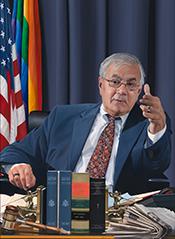
Mr. Chairman, I yield myself such time as I may consume. Mr. Chairman, I support this legislation. It is a very useful synthesis of several important elements. It merges the two bank funds. We have…
Mr. Chairman, I yield myself such time as I may consume.
Mr. Chairman, I support this legislation. It is a very useful synthesis of several important elements. It merges the two bank funds. We have had two bank funds because we previously had a separate thrift and commercial system that was undone by earlier events. We deal here to some extent with the complication of newer entities now coming into the system as a result of the previous legislation we adopted repealing the old restrictions on banking.
There is one particular point I want to stress, that is, that an amendment that is included in this, and I thank the gentleman from Alabama (Mr. Bachus) and the chairman of the committee, the gentleman from Ohio (Mr. Oxley), for agreeing to this, cosponsored, when we last debated this bill last year when it passed in our body and did not go further, sponsored by our colleague, the gentlewoman from California (Ms. Waters).
Years ago, two Members, two former Members, a Member from Pennsylvania named Ridge and a Member from New York named Flake, sponsored a bill to get low-income people who are outside the banking system into the banking system. The bankers of America should recognize this for what it is, a great compliment, a tribute to the role that a banking system plays in enhancing the ability of consumers to manage their lives well.
We have people who are victimized by unscrupulous lending practices. We have people who pay too much to do remittances to other countries, hard-working people in this country who are sending money to family elsewhere. We have payday lending exploitation. Getting people into the banking system is a way to resolve that.
The problem was, there was no funding source for that. In this bill there is a funding source. It comes through deposit insurance. I know there are people in the banking industry, with whom I agree on many issues, who do not like that funding source. If they can come up with an equally reliable alternative funding source, I will work with them.
But I want to make clear, this bill is a synthesis. It helps the people in the banking industry, who are a very important part of our economy; and I am all for it for that reason. It also, and there is one provision, does something about equity. I think that is the model we ought to be following. We ought to be doing what we can to enhance the ability of the free market system to create wealth, which it does so well; but we ought also to be looking for opportunities to accompany those moves with smaller measures, generally, in scope, measures that do not cost any great deal of money very often, although sometimes it might be more, that provide some equity, as well.
This bill does both. It is to me a whole joined together; and it will leave here, and I appreciate the support of the leadership of the committee on the majority side, with those two elements conjoined. I do want to note that if it came back and somebody has put asunder what we have joined, the support for this bill would not be what it is. So I thank the gentleman from Alabama for his leadership.
Mr. Chairman, I reserve the balance of my time.
Mr. Chairman, I yield 3 minutes to the gentleman from Texas (Mr. Gonzalez).
Mr. Chairman, I reserve the balance of my time.
Mr. Chairman, I yield back the balance of my time.
Mr. Chairman, did any Member claim the opposing time?
Mr. Chairman, will the gentleman yield?
Mr. Chairman, I thank the gentleman for yielding to me. I did not want time to expire while discussing the absent gentleman from California, and I did want to make sure I had a chance to express my opposition to this amendment.
I think the committee product is a reasonable approach and so I hope the amendment is defeated. And, once again, I thank the gentleman for yielding to me
Mr. Chairman, I rise today in support of the Federal Deposit Insurance Reform Act of 2003. This much needed, bipartisan legislation will help rural communities in my district, as well as thousands of…
Mr. Chairman, I rise today in support of the Federal Deposit Insurance Reform Act of 2003. This much needed, bipartisan legislation will help rural communities in my district, as well as thousands of other small towns across this country. H.R. 522 strengthens the deposit insurance fund and helps address a major funding need for community banks.
I have heard from many farm banks in Kansas that continue to have problems increasing their core deposits. These banks are forced to turn to noncore funds to support their asset growth. I am told noncore funds can often be more expensive and volatile than core deposits. This is not good for either the bankers or the customers who are investing their money.
The FDIC's Kansas City office noted in their Spring 2003 Regional Outlook report that ``core funding takes on added importance for community banks with a significant presence in rural communities facing long-term negative growth . . .''. This report goes on to say that core funds are the staple of rural banks, but they are increasingly becoming more difficult to attract or even retain.
Because of the artificially low deposit insurance cap, rural residents are being forced to send deposits that are not insured with the current $100,000 limit to institutions outside their local communities.
I see no good reason to allow this loss of capital from rural areas. It is capital that could be used for loans to diversify our rural communities and create or expand small businesses. At a time when our small towns are really suffering economically, we need all the local investment available. Local investment encourages entrepreneurship and ultimately creates local jobs. H.R. 522 will help ensure that objective is not eroded over time as it has done for more than two decades.
A declining rural population leads to a declining deposit base. An increasing rural population tends to create more demand for loans. Either way, this situation indicates we need to increase deposit insurance levels. Local dollars should stay invested in our local communities.
The bill today increases the basic coverage level from $100,000 to $130,000. This modest increase is long overdue, especially in context of other changes made to the system in recent years. Higher coverage levels will strengthen depositor confidence in the entire financial services system.
H.R. 522 also gives the FDIC flexibility. Right now, the FDIC is mandated to have the ratio of reserves to estimated insured deposits at a hard target of 1.25 percent. This bill we are considering today would allow that ratio to be within a range of 1.15 to 1.4 percent.
Finally, H.R. 522 directs the FDIC to study its administrative and managerial processes and alternative means for administering the deposit insurance system. These studies will ensure the deposit insurance fund and the overall insurance system are managed and operated as efficiently and effectively as possible.
I encourage my colleagues to join me in supporting the Federal Deposit Insurance Reform Act of 2003. It is good common-sense legislation that will help people in our rural communities.
Mr. Chairman, I thank the gentleman for yielding me time. I rise today in support of H.R. 522, the Federal Deposit Insurance Reform Act of 2003. This legislation would accomplish a much-needed…
Mr. Chairman, I thank the gentleman for yielding me time.
I rise today in support of H.R. 522, the Federal Deposit Insurance Reform Act of 2003. This legislation would accomplish a much-needed modernization of our Federal deposit insurance system. It would help millions of typical Americans get important protection for their savings that they deserve.
H.R. 522 would help modernize the system by increasing the deposit coverage levels for our Nation's savers from $100,000 to $130,000. I have no doubt that H.R. 522 would help many Americans get the important protection that they deserve for their savings, for their nest eggs.
H.R. 522 strengthens the Nation's insured depository institutions, especially small banks, thrifts, and credit unions. It also ensures that the Federal deposit insurance system does not harm the ability of the insured depository institutions to meet the Nation's credit needs at all stages of the economic cycle. And who can argue against a bill which advances the national priority of enhancing retirement security for all Americans?
Coverage levels are increased for, IRAs and 401(k) plans. This is essential to our economy as our population ages and retirees are realizing the sums of money that it will take today to maintain an adequate standard of living. This is why the American Association of Retired Persons supports this bill.
We must pass this bill in order to encourage retirees in smaller towns to keep their savings in local community banks instead of transferring monies to larger banks headquartered in some distant city. Transactions to larger banks hurt the local community's economy because the savers' monies are not recycled back into the community. It also directly hurts the local community's residents because there are less funds available; thus access to credit become more difficult and the costs of raising funds to lend becomes higher.
This evolution of bank transactions ultimately hurts the local economy, threatening the job base and the economic vitality of the local community. I know this bill has widespread support in this Chamber. During the last Congress, the 107th Congress, the House passed similar legislation with an overwhelming bipartisan vote. Last year's solid vote of support indicates to me the importance of this measure and the grassroots support behind it. I urge my colleagues to pass H.R. 522 with similar resolve.
Today more than ever, American savers and investors need reassurance, reassurance that their elected representatives are helping to ensure that their hard-earned savings are safe with a modern deposit insurance system.
Let us promote confidence for today's disheartened saver and investor and promote confidence for the system for our children. I urge passage of H.R. 522.
Mr. Chairman, I rise in support of H.R. 522. I believe this bill makes important changes to the deposit insurance system to improve its effectiveness and increases incentives for people to save. I…
Mr. Chairman, I rise in support of H.R. 522. I believe this bill makes important changes to the deposit insurance system to improve its effectiveness and increases incentives for people to save.
I wish to particularly speak in support of the provision in this bill that will require the FDIC to report annually on efforts by insured institutions to increase their deposit base by encouraging unbanked households to enter the conventional finance system and to avail themselves of bank accounts and other conventional services offered by depository institutions.
Unbanked families as defined by this provision are those individuals who rarely, if ever, held a checking account or savings account or other type of conventional account in an insured depository institution. Joining me attaching this provision in committee was the gentleman from Illinois (Mr. Gutierrez) and the gentleman from Texas (Mr. Hinojosa).
Mr. Chairman, too many families lack access to basic fundamental services. It is currently estimated that nearly 10 million American families are unbanked. Unfortunately, for unbanked families there are no real financial alternatives but payday lenders or check cashers, which is often the worst form of financing for a struggling American family.
The Hispanic community particularly struggles with high rates of unbanked families. One recent survey found that 35 percent of Hispanic families did not have a bank account, with that number rising to 42 percent for those Hispanics who are foreign born. With limited access to formal saving tools, it is no surprise that the financial net worth of the median Hispanic family in the United States today is estimated to be zero.
Fortunately, great strides have been made by major financial institutions to increase their presence in the Hispanic community through the use of such things as money remittance technology and the matricula card. It is my hope and expectation that all major depository institutions will look at unbanked minority families as a business opportunity and aggressively attempt to include them in the conventional finance system.
A relationship to a mainstream financial institution has long-term positive economic and financial effects on families and the communities where they reside, fostering their greater integration into the United States economy. The best defense against predatory financing is education and a bank account. The unbanked provision in H.R. 522 is intended to highlight those efforts which are most effective in expanding the banking system to every American family. I urge the passage of this bill.
Mr. Chairman, I rise today in support of H.R. 522 which merges the Bank Insurance Fund and the Savings Association Insurance Fund, and which updates a successful program by increasing the standard…
Mr. Chairman, I rise today in support of H.R. 522 which merges the Bank Insurance Fund and the Savings Association Insurance Fund, and which updates a successful program by increasing the standard maximum deposit insurance limit to $130,000 and indexing it every 5 years for inflation, doubling the new coverage level for certain retirement accounts and increasing the coverage amount for in-State municipal deposits.
The FDIC deposit insurance system has served a critical role in the stability of our Nation's financial system. The reform to increase deposit insurance coverage from $100,000 to $130,000 will provide American savers the ability to better secure their nest egg while ensuring ongoing consumer confidence and the stability of the banking system. At an earlier time in history, a person may have felt it better to put their money in a metal box underneath a loose floor board in the house. At the other end of the spectrum would be the
venture capitalists. They take risks, but that is their choice.
The FDIC deposit insurance system creates some stability for the average person looking to secure some of their savings, not only for their retirement but for education and family needs as well. The increase in protection for retirement funds is significant not only for the overall picture, but also it is important that we pass this as reported out by committee.
The image of a metal box brings up another point. If that money is in a bank as opposed to underneath a house, it obviously becomes part of the Nation's overall cash flow and investment system. This bill updates, at even less than the rate of inflation, the deposit insurance amount. That allows depositors who wish to put their funds in local independent banks to do so with confidence. In turn, those banks are able to approve loans related to local projects.
I think even opponents of this bill in its current form would agree that competition is indeed good. For Congress to keep this amount of $100,000 is a not a harmless action. Not increasing the insurance amount in the face of 21 years of inflation in effect makes Congress a partner in the erosion of the ability of local communities to compete fairly with larger banks.
References to the savings and loan crisis have to be weighed in the context of the actions taken after that situation by both government and industry.
This bill passed last year by a vote of 408 to 18. I urge support today for this bill as reported out of committee and a ``yes'' vote on final passage.

Mr. Chairman, I rise today in support of H.R. 522, the Federal Deposit Insurance Reform Act of 2003. With the banking industry currently in good health, now is the time for Congress to act on needed…
Mr. Chairman, I rise today in support of H.R. 522, the Federal Deposit Insurance Reform Act of 2003. With the banking industry currently in good health, now is the time for Congress to act on needed reforms to the insured deposit system that has protected the American financial system and consumers
so well since the program began in the dark days of the Depression.
Among its other provisions, this legislation will enhance the safety and soundness of the financial services industry by maintaining the value of deposit insurance coverage in the years to come, as well as providing additional coverage of certain retirement products, which will greatly aid in boosting retirement savings.
H.R. 522 will increase general deposit insurance coverage from $100,000 to $130,000 per account, and index this coverage to inflation going forward, so that the real value of that coverage does not erode over time. The existing $100,000 limit was set in 1980, but the real value of that coverage has decreased to around $45,000 due to inflation over the last 23 years.
For certain IRS-approved retirement products, this legislation will double general coverage to $260,000. Increasing coverage of these retirement products will provide citizens, particularly senior citizens, with added assurance that their hard-earned savings are safe and secure and will continue to grow in value. These provisions are an excellent step in the right direction to increase the consumer savings rate. The bill will also provide additional coverage of municipal deposits, thereby keeping public funds in the communities in which they are generated.
As I noted earlier, federal deposit insurance has served this country extremely well for some 70 years. One of the best examples of the critical importance of deposit insurance was its role in ensuring public confidence in the banking system during the thrift crisis of the late 1980s. Now H.R. 522 will provide further revisions to the deposit insurance system that will help make certain that the program remains as effective as it has historically been in protecting both the U.S. banking system and its customers in the decades to come. Please join me in support of this important legislation.

Mr. Chairman, I rise today in support of H.R. 522, the Federal Deposit Insurance Reform Act of 2003. As a member of the Committee on Financial Services, I want to thank the gentleman from Ohio…
Mr. Chairman, I rise today in support of H.R. 522, the Federal Deposit Insurance Reform Act of 2003. As a member of the Committee on Financial Services, I want to thank the gentleman from Ohio (Chairman Oxley) and the subcommittee chairman, the gentleman from Alabama (Mr. Bachus), for their work on this legislation and for acting quickly in this new Congress to address this matter of importance to banks and depositors alike.
This legislation will help create a more stable and a more fair and secure banking system. By combining the Banking Insurance Fund and the Savings Association Insurance Fund into one fund, the risks that a couple of large institutions could fail and impair each fund is greatly reduced.
Merging these funds will help increase fairness in our banking system as well by eliminating the possibility that two institutions of similar sizes would essentially be paying two completely different premiums. Further,
the merged fund will make reporting and accounting less burdensome for both the institutions and the FDIC as well.
Our deposit insurance system plays a vital role in our economic security. This legislation will give the FDIC the necessary flexibility to respond to varying economic conditions and allow them to properly price premiums to reflect actual risk. By eliminating the 23 basis point premium ``rate cliff'' required under current law, more institutions will have more capital to invest in our economy. That means more jobs, more hope, more opportunity.
Mr. Chairman, FDIC Chairman Powell stated in his testimony before the Committee on Financial Services last month that H.R. 522 gives Congress ``an opportunity to remedy flaws in the deposit insurance system before those flaws cause actual damage, either to the banking industry or our economy as a whole.''
As a member of that committee, I am glad to see this body act so expeditiously on this legislation. I urge all of my colleagues to vote for H.R. 522.
Show 6 more
Mr. Chairman, I thank the gentleman for yielding me time. I particularly commend him for bringing H.R. 522 to the floor of this body. Before I was sworn in as a Member of Congress I was a community…
Mr. Chairman, I thank the gentleman for yielding me time. I particularly commend him for bringing H.R. 522 to the floor of this body.
Before I was sworn in as a Member of Congress I was a community banker. Our family still operates a community bank back home, and I want to highlight why I am supporting this bill from particularly a community banker's position.
Chairman Powell, Chairman of the FDIC, has indicated that the buying power of the $100,000 that is in reference today has deteriorated since 1980, the last time that FDIC insurance rates were adjusted to just $47,000 currently. Well, the same holds true on the lending side, and that is what I want to focus on is credit availability.
One of the biggest challenges, especially for community banks like I ran back home, was to have adequate deposits to meet credit demand. Now, if the $100,000 in 1980 is representative of $47,000 worth of buying power today, similarly, demand for credit has escalated the same way. Access to those deposits is critical and insurance coverage for those deposits is one of the main criteria for large deposit customers to bring their cash to the bank, knowing that it is covered. They either spread it out among other financial institutions at tremendous burden to them, or they put it in uninsured accounts out in the marketplace, both poor options. They like to establish a relationship and like to keep that relationship. This only makes good sense.
Another reason it makes such good sense is that it is a self- insurance program. The banks pay the premium that guarantees the insurance protection for these deposits.
Mr. Chairman, let me again commend the gentleman for bringing this legislation to the floor of this body. It is legislation I have long supported and long encouraged, and I thank the gentleman from Alabama (Mr. Bachus) for his leadership on this issue.
Mr. Chairman, I appreciate the gentleman from Alabama for yielding time to me, and I commend him on his leadership and persistence with regard to this legislation. It has been a long time coming, and…
Mr. Chairman, I appreciate the gentleman from Alabama for yielding time to me, and I commend him on his leadership and persistence with regard to this legislation. It has been a long time coming, and I am pleased today to support H.R. 522.
Much of my focus as a Member of Congress has been on what can we do to improve the chances that rural America will survive, what can we do to make certain that the communities across our country and the people who live there have a little prosperity today, but they also are able to preserve that way of life in small-town America for future generations.
One of the concerns that is clearly there and can be demonstrated is the need for credit for small loans, the need for credit for small business, the need for credit for small farmers and ranchers. We must take steps that will strengthen the financial opportunities available for citizens of our communities across the country to save, to set their money aside. This will encourage those individuals to be able to do that in larger amounts, without having to take the necessary risks of investing in some more volatile kind of market or shopping for deposit ability in towns far away.
Perhaps, even more importantly, if we want rural America to survive, if we want small business and agriculture to have an opportunity to succeed, they have to have access to credit. The opportunity that this legislation presents is a step in the right direction toward making certain that credit is available to our creditworthy business owners, farmers, and ranchers.
I commend the committee and thank them for their efforts in this regard. I lend my wholehearted support toward increasing the amount of coverage and making it possible for our communities to have a greater volume of assets on deposit in their local bank.
Mr. Chairman, I rise today in support of H.R. 522, legislation to reform the Federal deposit insurance system. As a member of the Committee on Financial Services, I am pleased to see the House take…
Mr. Chairman, I rise today in support of H.R. 522, legislation to reform the Federal deposit insurance system. As a member of the Committee on Financial Services, I am pleased to see the House take up this legislation today, and provide my colleague, the gentleman from Alabama, kudos for bringing this measure to the floor and to the debate today.
One of the provisions of H.R. 522 is it increases deposit insurance coverage from $100,000 to $130,000 per account. The hike in coverage limits is most appropriate, as the current ceiling was set in 1980; and inflation has eroded the real value of that coverage by more than 50 percent. Increased coverage limits will be especially helpful to community banks in bringing, and just as importantly keeping, deposits in their institutions that can be used in local economies and local communities.
In addition, the bill would provide $260,000 in coverage for certain retirement products, certain IRAs, certain 401(k)s, a key step in an ongoing effort here in the Capitol to encourage consumers to build their savings. This provision in particular is relevant to our seniors, who benefit by being able to be more savers as they move toward retirement savings and retirement age to the security of the insured deposit system.
Mr. Chairman, I strongly support this provision and urge all of my colleagues to support it, as well, and vote in favor not only of this important piece of legislation, but also against the amendment that will be offered later to move this provision from $130,000 back to $100,000.

Mr. Chairman, I rise in support of H.R. 522, The Federal Deposit Insurance Reform Act of 2003. H.R. 522 is a bi-partisan bill that benefits our senior citizens, small businesses, and local banks by…
Mr. Chairman, I rise in support of H.R. 522, The Federal Deposit Insurance Reform Act of 2003.
H.R. 522 is a bi-partisan bill that benefits our senior citizens, small businesses, and local banks by updating and preserving the value of our insured deposit system. H.R. 522 helps our Nation's senior citizens by increasing the coverage limits for retirement accounts at insured depository institutions to more than double the current federal coverage level. H.R. 522 helps small businesses and local banks by encouraging small business owners to consolidate their funds into smaller, local banks.
Furthermore, H.R. 522 benefits all of our communities by helping to keep local deposits in the local communities they should be serving. H.R. 522 encourages local government entities to keep their funds in local banks, also fostering local economic development. H.R. 522 includes provisions that increase coverage for municipal deposits as well. The increased coverage helps keep local monies at home and improves the local economy by enabling institutions to offer more car, home, and education loans in their communities.
Last year a bill virtually identical to H.R. 522 cleared the House by a 408-18 vote. This bipartisan support is echoed by organizations such as the American Association of Retired Persons, and the Independent Community Bankers Association who also support H.R. 522.
I support H.R. 522 as well, Mr. Chairman, because I support our local communities.
Mr. Chairman, I thank the gentleman for yielding time to me. I rise today in very strong support of the Federal Deposit Insurance Reform Act of 2003. This very critical legislation increases the…
Mr. Chairman, I thank the gentleman for yielding time to me.
I rise today in very strong support of the Federal Deposit Insurance Reform Act of 2003. This very critical legislation increases the standard maximum deposit coverage from $100,000 to $130,000, and then indexes the increase every 5 years to account for inflation.
However, most importantly to the seniors in my district, H.R. 522 calls for a doubling of the maximum deposit coverage for retirement accounts. This would allow seniors to maintain coverage on up to $260,000 in their retirement accounts.
The amendment offered today would strike this coverage without doing it for any good reason. The increases are modest and necessary in this bill. If the coverage limit actually had been keeping pace with inflation, today the standard limit would be about $200,000. This bill proposes an increase to only $130,000.
The FDIC is in great need of these commonsense reforms, and I urge my colleagues to join with me in support of H.R. 522 and to oppose any amendment that would strike the coverage increases.
Mr. Chairman, let me thank my colleague from Alabama for yielding me this time and for his leadership and his work on this bill. Mr. Chairman, let me say in 30 seconds, just this: This is an…
Mr. Chairman, let me thank my colleague from Alabama for yielding me this time and for his leadership and his work on this bill.
Mr. Chairman, let me say in 30 seconds, just this: This is an important bill from the perspective of small banks. We will not get sustained community development in America until we find ways to put more small community-based banks in rural America.
I happen to think, and those of who support this bill happen to think, that increasing these limits will provide an incentive for small banks to do more of the business that they need to do that will help the people who are living in rural America. A lot of people, if they know the limits have been increased, will feel much more comfortable putting their assets and putting their resources in small community banks.
Bill Text
Latest available legislative text
        [Congressional Bills 108th Congress]
[From the U.S. Government Publishing Office]
[H.R. 552 Introduced in House (IH)]

108th CONGRESS
1st Session
H. R. 552

To suspend temporarily the duty on certain textile machinery.

_______________________________________________________________________

IN THE HOUSE OF REPRESENTATIVES

February 5, 2003

Mr. DeMint introduced the following bill; which was referred to the
Committee on Ways and Means

_______________________________________________________________________

A BILL

To suspend temporarily the duty on certain textile machinery.

Be it enacted by the Senate and House of Representatives of the
United States of America in Congress assembled,

SECTION 1. CERTAIN TEXTILE MACHINERY.

(a) In General.--Subchapter II of chapter 99 of the Harmonized
Tariff Schedule of the United States is amended by inserting in
numerical sequence the following new heading:

``    9902.03.88    Weaving machines  2.7%              No change         No change         On or before 12/
(looms),                                                                31/2005          ''
shuttleless                                                                               .
type, for
weaving fabrics
of a width
exceeding 30 cm
but not
exceeding 4.9
m, entered
without off-
loom or large
loom take-ups,
drop wires,
heddles, reeds,
harness frames,
or beams
(provided for
in subheading
8446.30.50)....

(b) Effective Date.--The amendment made by subsection (a) applies
with respect to goods entered, or withdrawn from warehouse for
consumption, on or after the 15th day after the date of the enactment
of this Act.
<all>