H.R. 592House108th Congress (2003-2005)In Committee
National Aviation Capacity Expansion Act of 2003
Sponsored by 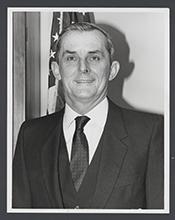 Rep. William O. Lipinski (D-IL)
Rep. William O. Lipinski (D-IL)Introduced February 5, 2003
Legislative Activity
Stay on top of the latest movement without scrolling through every action
HouseCommittee
Latest Action
Referred to the Subcommittee on Aviation.
February 6, 2003
View full timeline
HouseIntro Referral
Introduced in House
February 5, 2003
HouseIntro Referral
Referred to the House Committee on Transportation and Infrastructure.
February 5, 2003
Bill Text
Latest available legislative text
Introduced in HouseIssued February 5, 2003
        [Congressional Bills 108th Congress]
[From the U.S. Government Publishing Office]
[H.R. 592 Introduced in House (IH)]

108th CONGRESS
1st Session
H. R. 592

To expand aviation capacity.

_______________________________________________________________________

IN THE HOUSE OF REPRESENTATIVES

February 5, 2003

Mr. Lipinski (for himself, Mr. Davis of Illinois, Mr. Kirk, Mr.
Costello, Mr. Emanuel, Ms. Schakowsky, Mr. Gutierrez, Mr. Manzullo, Mr.
Shimkus, Mr. Johnson of Illinois, Mr. Evans, and Mr. Boswell)
introduced the following bill; which was referred to the Committee on
Transportation and Infrastructure

_______________________________________________________________________

A BILL

To expand aviation capacity.

Be it enacted by the Senate and House of Representatives of the
United States of America in Congress assembled,

SECTION 1. SHORT TITLE.

This title may be cited as the ``National Aviation Capacity
Expansion Act of 2003''.

SEC. 2. FINDINGS.

Congress finds the following:
(1) O'Hare International Airport consistently ranks as the
Nation's first or second busiest airport with nearly 34,000,000
annual passengers enplanements, almost all of whom travel in
inter-state or foreign commerce. The Federal Aviation
Administration's most recent data, compiled in the Airport
Capacity Benchmark Report 2001, projects demand at O'Hare to
grow by 18 percent over the next decade. O'Hare handles
72,100,000 passengers annually, compared with 64,600,000 at
London Heathrow International Airport, Europe's busiest
airport, and 36,700,000 at Kimpo International Airport, Korea's
busiest airport, 7,400,000 at Narita International Airport,
Japan's busiest airport, 23,700,000 at Kingsford-Smith
International Airport, Australia's busiest airport, and
6,200,000 at Ezeiza International Airport, Argentina's busiest
airport, as well as South America's busiest airport.
(2) The Airport Capacity Benchmark Report 2001 ranks O'Hare
as the third most delayed airport in the United States.
Overall, slightly more than 6 percent of all flights at O'Hare
are delayed significantly (more than 15 minutes). On good
weather days, scheduled traffic is at or above capacity for
3\1/2\ hours of the day with about 2 percent of flights at
O'Hare delayed significantly. In adverse weather, capacity is
lower and scheduled traffic exceeds capacity for 8 hours of the
day, with about 12 percent of the flights delayed.
(3) The city of Chicago, Illinois, which owns and operates
O'Hare, has been unable to pursue projects to increase the
operating capability of O'Hare runways and thereby reduce
delays because the city of Chicago and the State of Illinois
have been unable for more than 20 years to agree on a plan for
runway reconfiguration and development. State law states that
such projects at O'Hare require State approval.
(4) On December 5, 2001, the Governor of Illinois and the
Mayor of Chicago reached an agreement to allow the city to go
forward with a proposed capacity enhancement project for O'Hare
which involves redesign of the airport's runway configuration.
(5) In furtherance of such agreement, the city, with
approval of the State, applied for and received a master-
planning grant from the Federal Aviation Administration for the
capacity enhancement project.
(6) The agreement between the city and the State is not
binding on future Governors of Illinois.
(7) Future Governors of Illinois could stop the O'Hare
capacity enhancement project by refusing to issue a certificate
required for such project under the Illinois Aeronautics Act,
or by refusing to submit airport improvement grant requests for
the project, or by improperly administering the State
implementation plan process under the Clean Air Act (42 U.S.C.
7401 et seq.) to prevent construction and operation of the
project.
(8) The city of Chicago is unwilling to continue to go
forward with the project without assurance that future
Governors of Illinois will not be able to stop the project,
thereby endangering the value of the investment of city and
Federal resources in the project.
(9) Because of the importance of O'Hare to the national air
transportation system and the growing congestion at the airport
and because of the expenditure of Federal funds for a master-
planning grant for expansion of capacity at O'Hare, it is
important to the national air transportation system, interstate
commerce, and the efficient expenditure of Federal funds, that
the city of Chicago's proposals to the  Federal Aviation
Administration have an opportunity to be considered for Federal
approval and possible funding, that the city's requests for changes to
the State implementation plan to allow such projects not be denied
arbitrarily, and that, if the Federal Aviation Administration approves
the project and funding for a portion of its cost, the city can
implement and use the project.
(10) Any application submitted by the city of Chicago for
expansion of O'Hare should be evaluated by the Federal Aviation
Administration and other Federal agencies under all applicable
Federal laws and regulations and should be approved only if the
application meets all requirements imposed by such laws and
regulations.
(11) As part of the agreement between the city and the
State allowing the city to submit an application for
improvement of O'Hare, there has been an agreement for the
continued operation of Merrill C. Meigs Field by the city, and
it has also been agreed that, if the city does not follow the
agreement on Meigs Field, Federal airport improvement program
funds should be withheld from the city for O'Hare.
(12) To facilitate implementation of the agreement allowing
the city to submit an application for O'Hare, it is desirable
to require by law that Federal airport improvement program
funds for O'Hare be administered to require continued operation
of Merrill C. Meigs Field by the city, as proposed in the
agreement.
(13) To facilitate implementation of the agreement allowing
the city to submit an application for O'Hare, it is desirable
to enact into law provisions of the agreement relating to noise
and public roadway access. These provisions are not
inconsistent with Federal law.
(14) If the Federal Aviation Administration approves an
airport layout plan for O'Hare directly related to the
agreement reached on December 5, 2001, such approvals will
constitute an action of the United States under Federal law and
will be an important first step in the process by which the
Government could decide that these plans should receive Federal
assistance under chapter 471 of title 49, United States Code,
relating to airport development.
(15) The agreement between the State of Illinois and the
city of Chicago includes agreement that the construction of an
airport in Peotone, Illinois, would be proposed by the State to
the Federal Aviation Administration. Like the O'Hare expansion
proposal, the Peotone proposal should receive full
consideration by the Federal Aviation Administration under
standard procedures for approving and funding an airport
improvement project, including all applicable safety, utility
and efficiency, and environmental review.
(16) Gary/Chicago Airport in Gary, Indiana, and the Greater
Rockford Airport, Illinois, may alleviate congestion and
provide additional capacity in the greater Chicago metropolitan
region. Like the O'Hare airport expansion proposal, expansion
efforts by Gary/Chicago and Greater Rockford airports should
receive full consideration by the Federal Aviation
Administration under standard procedures for approving and
funding an airport capacity improvement project, including all
applicable safety, utility and efficiency, and environmental
reviews.

SEC. 3. STATE, CITY, AND FAA AUTHORITY.

(a) Prohibition.--In furtherance of the purpose of this Act to
achieve significant air transportation benefits for interstate and
foreign commerce, if the Federal Aviation Administration makes, or at
any time after December 5, 2001 has made, a grant to the city of
Chicago, Illinois, with the approval of the State of Illinois for
planning or construction of runway improvements at O'Hare International
Airport, the State of Illinois, and any instrumentality or political
subdivision of the State, are prohibited from exercising authority
under sections 38.01, 47, and 48 of the Illinois Aeronautics Act (620
ILCS 5/) to prevent, or have the effect of preventing--
(1) further consideration by the Federal Aviation
Administration of an O'Hare airport layout plan directly
related to the agreement reached by the State and the city on
December 5, 2001, with respect to O'Hare;
(2) construction of projects approved by the Administration
in such O'Hare airport layout plan; or
(3) application by the city of Chicago for Federal airport
improvement program funding for projects approved by the
Administration and shown on such O'Hare airport layout plan.
(b) Applications for Federal Funding.--Notwithstanding any other
provision of law, the city of Chicago is authorized to submit directly
to the Federal Aviation Administration without the approval of the
State of Illinois, applications for Federal airport improvement program
funding for planning and construction of a project shown on an O'Hare
airport layout plan directly related to the agreement reached on
December 5, 2001, and to  accept, receive, and disburse such funds
without the approval of the State of Illinois.
(c) Limitation.--If the Federal Aviation Administration determines
that an O'Hare airport layout plan directly related to the agreement
reached on December 5, 2001, will not be approved by the
Administration, subsections (a) and (b) of this section shall expire
and be of no further effect on the date of such determination.
(d) Western Public Roadway Access.--As provided in the December 5,
2001, agreement referred to in subsection (a), the Administrator of the
Federal Aviation Administration shall not consider an airport layout
plan submitted by the city of Chicago that includes the runway redesign
plan, unless the airport layout plan includes public roadway access
through the existing western boundary of O'Hare to passenger terminal
and parking facilities located inside the boundary of O'Hare and
reasonably accessible to such western access. Approval of western
public roadway access shall be subject to the condition that the cost
of construction be paid for from airport revenues consistent with
Administration revenue use requirements.
(e) Noise Mitigation.--As provided in the December 5, 2001,
agreement referred to in subsection (a), the following apply:
(1) Approval by the Administrator of an airport layout plan
that includes the runway redesign plan shall require the city
of Chicago to offer acoustical treatment of all single-family
houses and schools located within the 65 DNL noise contour for
each construction phase of the runway redesign plan, subject to
Administration guidelines and specifications of general
applicability. The Administrator may not approve the runway
redesign plan unless the city provides the Administrator with
information sufficient to demonstrate that the acoustical
treatment required by this paragraph is feasible.
(2)(A) Approval by the Administrator of an airport layout
plan that includes the runway redesign plan shall be subject to
the condition that noise impact of aircraft operations at
O'Hare in the calendar year immediately following the year in
which the first new runway is first used and in each calendar
year thereafter will be less than the noise impact in calendar
year 2000.
(B) The Administrator shall make the determination
described in subparagraph (A)--
(i) using, to the extent practicable, the
procedures specified in part 150 of title 14, Code of
Federal Regulations;
(ii) using the same method for calendar year 2000
and for each forecast year; and
(iii) by determining noise impact solely in terms
of the aggregate number of square miles and the
aggregate number of single-family houses and schools
exposed to 65 or greater decibels using the DNL metric,
including only single-family houses and schools in
existence on the last day of calendar year 2000. The
Administrator shall make such determination based on
information provided by the city of Chicago, which
shall be independently verified by the Administrator.
(C) The conditions described in this subsection shall be
enforceable exclusively through the submission and approval of
a noise compatibility plan under part 150 of title 14, Code of
Federal Regulations. The noise compatibility plan submitted by
the city of Chicago shall provide for compliance with this
subsection. The Administrator shall approve measures sufficient
for compliance with this subsection in accordance with
procedures under such part 150. The United States shall have no
financial responsibility or liability if operations at O'Hare
in any year do not satisfy the conditions in this subsection.
(f) Report to Congress.--If the runway redesign plan described in
this section has not received all Federal, State, and local permits and
approvals necessary to begin construction by December 31, 2004, the
Administrator shall submit a status report to the Committee on
Commerce, Science, and Transportation of the Senate and the Committee
on Transportation and Infrastructure of the House of Representatives
within 120 days of such date identifying each permit and approval
necessary for the project and the status of each such action.
(g) Judicial Review.-- An order issued by the Administrator, in
whole or in part, under this section shall be deemed to be an order
issued under part A of subtitle VII of title 49, United States Code,
and shall be reviewed in accordance with the procedure in section 46110
of such title.
(h) Definition.--In this section, the terms ``airport layout plan
directly related to the agreement reached on December 5, 2001'' and
``such airport layout plan'' mean a plan that shows--
(1) 6 parallel runways at O'Hare oriented in the east-west
direction with the capability for 4 simultaneous independent
visual aircraft arrivals in both directions, and all associated
taxiways, navigational facilities, and other related
facilities; and
(2) closure of existing runways 14L-32R, 14R-32L and 18-36
at O'Hare.

SEC. 4. CLEAN AIR ACT.

(a) Implementation Plan.--An implementation plan shall be prepared
by the State of Illinois under the Clean Air Act (42 U.S.C. 7401 et
seq.) in accordance with the State's customary practices for accounting
for and regulating emissions associated with activity at commercial
service airports. The State shall not deviate from its customary
practices under the Clean Air Act for the purpose of interfering with
the construction of a runway pursuant to the redesign plan or the south
surburban airport. At the request of the Administrator of the Federal
Aviation Administration, the Administrator of the Environmental
Protection Agency shall, in consultation with the Administrator of the
Federal Aviation Administration, determine that the foregoing condition
has been satisfied before approving an implementation plan. Nothing in
this section shall be construed to affect the obligations of the State
under section 176(c) of the Clean Air Act (42 U.S.C. 7506(c)).
(b) Limitation on Approval.--The Administrator of the Federal
Aviation Administration shall not approve the runway redesign plan
unless the Administrator of the Federal Aviation Administration
determines that the construction and operation will include, to the
maximum extent feasible, the best management practices then reasonably
available to and used by operators of commercial service airports to
mitigate emissions regulated under the implementation plan.

SEC. 5. MERRILL C. MEIGS FIELD.

The State of Illinois and the city of Chicago, Illinois, have
agreed to the following:
(1) Until January 1, 2026, the Administrator of the Federal
Aviation Administration shall withhold all Federal airport
grant funds respecting O'Hare International Airport, other than
grants involving national security and safety, unless the
Administrator is reasonably satisfied that the following
conditions have been met:
(A) Merrill C. Meigs Field in Chicago either is
being operated by the city of Chicago as an airport or
has been closed by the Administration for reasons
beyond the city's control.
(B) The city of Chicago is providing, at its own
expense, all off-airport roads and other access,
services, equipment, and other personal property that
the city provided in connection with the operation of
Meigs Field on and prior to December 1, 2001.
(C) The city of Chicago is operating Meigs Field,
at its own expense, at all times as a public airport in
good condition and repair open to all users capable of
utilizing the airport and is maintaining the airport
for such public operations at least from 6:00 A.M. to
10:00 P.M. 7 days a week whenever weather conditions
permit.
(D) The city of Chicago is providing or causing its
agents or independent contractors to provide all
services (including police and fire protection
services) provided or offered at Meigs Field on or
immediately prior to December 1, 2001, including tie-
down, terminal, refueling, and repair services, at
rates that reflect actual costs of providing such goods
and services.
(2) If Meigs Field is closed by the Administration for
reasons beyond the city of Chicago's control, the conditions
described in subparagraphs (B) through (D) of paragraph (1)
shall not apply.
(3) After January 1, 2006, the Administrator shall not
withhold Federal airport grant funds to the extent the
Administrator determines that withholding of such funds would
create an unreasonable burden on interstate commerce.
(4) The Administrator shall not enforce the conditions
listed in paragraph (1) if the State of Illinois enacts a law
on or after January 1, 2006, authorizing the closure of Meigs
Field.
(5) Net operating losses resulting from operation of Meigs
Field, to the extent consistent with law, are expected to be
paid by the 2 air carriers at O'Hare International Airport that
paid the highest amount of airport fees and charges at O'Hare
International Airport for the preceding calendar year.
Notwithstanding any other provision of law, the city of Chicago
may use airport revenues generated at O'Hare International
Airport to fund the operation of Meigs Field.

SEC. 6. APPLICATION WITH EXISTING LAW.

Nothing in this Act shall give any priority to or affect
availability or amounts of funds under chapter 471 of title 49, United
States Code, to pay the costs of O'Hare International Airport,
improvements shown on an airport layout plan directly related to the
agreement reached by the State of Illinois and the city of Chicago,
Illinois, on December 5, 2001.

SEC. 7. SENSE OF CONGRESS ON QUIET AIRCRAFT TECHNOLOGY RESEARCH AND
DEVELOPMENT.

It is the sense of the Congress that the Office of Environment and
Energy of the Federal Aviation Administration should be funded to carry
out noise mitigation programming and quiet aircraft technology research
and development at a level of $37,000,000 for fiscal year 2004 and
$47,000,000 for fiscal year 2005.
<all>