Debt Cancellation for the New Millennium Act

Legislative Activity
Stay on top of the latest movement without scrolling through every action
Referred to the Subcommittee on Domestic and International Monetary Policy, Trade, and Technology.
February 27, 2003
View full timeline
Introduced in House
February 5, 2003
Referred to the House Committee on Financial Services.
February 5, 2003
Referred to the Subcommittee on Domestic and International Monetary Policy, Trade, and Technology.
February 27, 2003
Floor Debate
24 membersWhat members said about H.R. 643 on the floor
 CHS
CHS SJL
SJL HJH
HJH TL
TL DAM+19
Floor Debate
24 membersWhat members said about H.R. 643 on the floor
Mr. Chairman, I rise in support of an amendment to support human rights in Vietnam. This important amendment will impose a significant penalty on the dictators in Hanoi for their ongoing and…
Mr. Chairman, I rise in support of an amendment to support human rights in Vietnam. This important amendment will impose a significant penalty on the dictators in Hanoi for their ongoing and egregious persecution of their own people.
During the 107th Congress, I introduced H.R. 2833, legislation designed to address the human rights situation in Vietnam. It passed the House by an overwhelming 410-1 margin, but stalled in the Senate. This year, I introduced nearly identical legislation, H.R. 1587, with 30 original cosponsors.
Many felt that the ratification of the Bilateral Trade Agreement with Vietnam in 2001 would lead to an improvement in human rights. Unfortunately, the human rights situation in Vietnam has deteriorated dramatically since this agreement, especially for Montagnard Christians in the Central Highlands of Vietnam. Legislation to address the serious human rights situation is needed now more than ever.
In late 2002 the Government of Vietnam launched a fresh wave of arrests and crackdowns against peaceful critics of the Vietnamese government, its policy of repression, and its corrupt practices. Unfortunately, Dr. Nguyen Dan Que, one of the country's greatest human rights leaders who has already endured two lengthy prison sentences, was arrested on March 17. This is a government that consistently pursues a policy of harassment, discrimination, and intimidation, and, increasingly in the last three years, imprisonment and other forms of detention, against those who peacefully express dissent from government's extreme policies against religion and freedom. This is a government that punishes not just individuals who oppose them, but also often their family members.
At its Seventh Plenum in January 2003, the Communist Party's Central Committee issued a resolution calling for the establishment of cells of Communist Party members within each of Vietnam's six approved religions in order to foil ``hostile forces.'' All religious groups in Vietnam face great restrictions and suffer some form of persecution.
To address these and other abuses, my amendment, based on the text of H.R. 1587: requires the President to issue a certification each year on the progress of the regime towards respecting human rights; prohibits an increase in nonhumanitarian U.S. assistance unless the regime shows improvement; seeks to fund the efforts of NGOs who promote democracy in Vietnam and help to overcome the jamming of Radio Free Asia; helps ensure continued access of refugees to our refugee resettlement programs; and requires the State Department to give detailed reports about the status of human rights in Vietnam that include victims lists.
Unfortunately, the list of human rights abuses carried out by the regime goes on and on. Buddhists, Protestants, Catholics and members of indigenous Vietnamese religions are subject to persecutions that include detention and imprisonment of both religious leaders and believers, church closings, and confiscation of religious and personal property. One of the most courageous religious leaders imprisoned is Father Nguyen Van Ly, a Catholic priest.
Tens of thousands of children suffer exploitation as workers and many Vietnamese suffer
under the government's official export labor program, in which the government forces its own people to endure involuntary servitude and debt bondage.
As Chairman of the House Veterans Affairs Committee, I am particularly concerned about the continued persecution of the Montagnards, who were some of our greatest allies during the war. Many of our pilots are alive today and have families because they were rescued by Montagnards after bailing out of downed aircraft. We receive numerous and credible reports that allege that Montagnards are being imprisoned, tortured and systematically relocated to infertile lands by the Communist Party leaders in retaliation for their past loyalty to America. This past December, Vietnamese soldiers reportedly threatened to shoot Montagnard Christians if they celebrated Christmas, and several were arrested and tortured.
I would like to submit the findings of H.R. 1587, which lay out a more complete case of Human Rights in Vietnam, to the Congressional Record. They were kept out of this amendment because of their length, but they speak loudly with respect to the regime and the world about the egregious human rights abuses occurring in Vietnam.
Vietnam's continued policy of harassment, discrimination, intimidation, and persecution of religious and human rights leaders is shameful. The Vietnam Human Rights amendment in the State Department Authorization Bill sends as strong a message that this persecution and tyranny will not be tolerated.
Findings From H.R. 1587, ``The Vietnam Human Rights Act''
Congress finds the following:
(1) Viet Nam is a one-party state, ruled and controlled by
the Vietnamese Communist Party.
(2)(A) The Government of Viet Nam denies the people of Viet
Nam the right to change their government and prohibits
independent political, social, and labor organizations.
(B) The Government of Viet Nam prohibits and hinders the
formation of civil society in Viet Nam.
(3)(A) The Government of Viet Nam consistently pursues a
policy of harassment, discrimination, and intimidation, and
sometimes of imprisonment and other forms of detention,
against those who peacefully express dissent from government
or party policy. This policy includes collectively punishing
family members of individuals targeted for persecution. A
government decree allows detention without trial for 6 months
to 2 years.
(B) Following the United States ratification of the
Bilateral Trade Agreement with Viet Nam in 2001, the human
rights situation in Viet Nam has remained extremely poor. For
certain groups, such as the Montagnards, and other ethnic
minorities in Central and North Vietnam, conditions have
deteriorated dramatically. In late 2002, the Government of
Viet Nam launched a fresh wave of arrests and crackdowns
against peaceful critics of the Vietnamese Government, its
policy of repression, and its corrupt practices.
(C) Recent victims of such mistreatment, which violates the
rights to freedom of expression and association recognized in
the Universal Declaration of Human Rights, include Dr. Nguyen
Dan Que, a leading human rights activist who was arrested on
March 17, 2003, and has already served two lengthy prison
sentences, Dr. Nguyen Thanh Giang, Most Venerable Thich Huyen
Quang, Most Venerable Thich Quang Do, linguist Tran Khue,
businessman Nguyen Khac Toan, journalist Nguyen Vu Binh,
publicist Le Chi Quang, writer Hoang Tien, military historian
Pham Que Duong, Hoang Minh Chinh, Tran Dung Tien, Hoang Trong
Dung, Nguyen Vu Viet, Nguyen Truc Cuong, Nguyen Thi Hoa, Vu
Cao Quan, Nguyen The Dam, Nguyen Thi Thanh Xuan, Father Chan
Tin, author Duong Thu Huong, poet Bui Minh Quoc, Dr. Nguyen
Xuan Tu (Ha Si Phu), Dr. Pham Hong Son, Mai Thai Linh, Most
Venerable Thich Huyen Quang, Most Venerable Thich Quang Do,
Father Nguyen Van Ly, Pastor Nguyen Lap Ma, Father Phan Van
Loi, numerous leaders of the Hoa Hao Buddhist Church and of
independent Protestant churches, and an undetermined number
of members of the Montagnard ethnic minority groups who
participated in peaceful demonstrations in the Central
Highlands of Viet Nam during February 2001.
(4) The Government of Viet Nam systematically deprives its
citizens of the fundamental right or organized religious
activities outside the state's control. Although some freedom
of worship is permitted, believers are forbidden to
participate in religious activities except under
circumstances rigidly defined and controlled by the
Government:
(A)(i) In April, 1999 the Government issued a Decree
Concerning Religious Activities, which declared in pertinent
part that ``[a]ll activities using religious belief in order
to oppose the State of the Socialist Republic of Viet Nam, to
prevent the believers from carrying out civic
responsibilities, to sabotage the union of all the people,
and against the health culture of our nation, as well as
superstitious activities, will be punished in conformity with
the law''.
(ii) All public religious activities must be approved by
the Government in advance. The United States Commission on
International Religious Freedom in October 2002 recommended
that Viet Nam be classified as a country of particular
concern. At its Seventh Plenum in January 2003, the Communist
Party's Central Committee issued a resolution calling for the
establishment of cells of Communist Party members within each
of Vietnam's 6 approved religions in order to foil ``hostile
forces''.
(B)(i) The Unified Buddhist Church of Viet Nam (UBCV), the
largest religious denomination in the country, has been
declared illegal by the Government, and over the last 27
years its clergy have often been imprisoned and subjected to
other forms of persecution. The Patriarch of the Unified
Buddhist Church, 85-year-old Most Venerable Thich Huyen
Quang, has been detained for 25 years in a ruined temple in
an isolated area of central Viet Nam.
(ii) Most Venerable Thich Quang Do, the Executive President
of the Unified Buddhist Church, has also been in various
forms of detention since 1977, and was recently rearrested
and placed under house arrest after he had proposed to bring
Most Venerable Thich Huyen Quang to Saigon for medical
treatment.
(iii) Many other leading Buddhist figures, including Thich
Hai Tang, Thich Khong Tanh, Thich Thai Hoa, Thich Tue Si,
Thich Quang Hue, Thich Tam An, Thich Nguyen Ly, Thich Thanh
Huyen, Thich Thong Dat, Thich Chi Mau, Thich Chi Thang, Thich
Chon Niem, Thich Thanh Quang are under tight surveillance.
Several members of the UBCV have fled to Cambodia
(C)(i) The Hao Hoa Buddhist Church was also declared to be
illegal until 1999, when the Government established an
organization which purports to govern the Hao Hoa. According
to the United States Commission on International Religious
Freedom, ``[t]his organization is made up almost entirely of
Communist Party members and apparently is not recognized as
legitimate by the vast majority of Hao Hoas . . .
[n]evertheless, [this government-sponsored organization] has
sought to control all Hao Hoa religious activity,
particularly at the Hao Hoa village, which is the center of
Hao Hoa religious life''.
(ii)(I) Hao Hoa believers who do not recognize the
legitimacy of the government organization are denied the
right to visit the Hao Hoa village, to conduct traditional
religious celebrations, or to display Hao Hoa symbols. Many
have been arrested and subjected to administrative detention,
and several Hao Hoa have been sentenced to prison terms for
protesting these denials of religious freedom.
(II) The Government interferes with Hao Hoa efforts to
conduct charitable works, and prohibits public celebration to
commemorate the founder's disappearance as well as the
distribution of the founder's teachings. The Government
controls greatly the leadership selection process of the
Cao Dais, another indigenous Vietnamese religion.
(III) At least the following Hao Hoa believers are known to
be in prison or house detention: Ha Hai, Tran Van Be Cao,
Tran Nguyen Huon, Phan Thi Tiem, Le Quang Liem, Nguyen Van
Dien, Le Minh Triet, and Vo Van Thanh Liem.
(D)(i) Independent Protestants, most of whom are members of
ethnic minority groups, are subjected to particularly harsh
treatment by the Government of Viet Nam. According to the
United States Commission on International Religious Freedom,
such treatment includes ``police raids on homes and house
churches, detention, imprisonment, confiscation of religious
and personal property, physical and psychological abuse, and
fines for engaging in unapproved religious activities (such
as collective worship, public religious expression and
distribution of religious literature, and performing
baptisms, marriages, or funeral services) . . . [i]n
addition, it is reported that ethnic Hmong Protestants have
been forced by local officials to agree to abandon their
faith''.
(ii)(I) According to human rights activists in Viet Nam, 2
secret central plans--Plan 184A and 184B--issued in 1999 by
the Communist Party to combat Protestant believers were fully
implemented throughout the country, and led to a crackdown on
the Protestant movement, especially in the Central and
Northern Highland areas.
(II) An estimated 14,000 Christians fled from the North to
the Central Highlands in the past 5 years. According to the
Southern Evangelical Church of Viet Nam, the Government of
Viet Nam forcibly closed 354 of the 412 churches in Dak Lak
province, 56 pastors from the Central Highlands have
disappeared, and at least 43 evangelical Montagnards have
been sentenced to prison. Freedom House has reported on the
beating death of Hmong Christian Mua Bua Senh by police
authorities.
(E)(i) Other religious organizations, such as the Catholic
Church, are formally recognized by the Government but are
subjected to pervasive regulation which violates the right to
freedom of religion. For instance, the Catholic Church is
forbidden to appoint its own bishops without Government
consent, which is frequently denied, to accept seminarians
without specific official permission, and to profess Catholic
doctrines which are inconsistent with Government policy.
Government restrictions on the seminary process have caused a
severe shortage of priests.
(ii) A Catholic priest, Father Nguyen Van Ly, was arrested
in March 2001 and remains in detention after submitting
written testimony to the United States Commission on
International Religious Freedom. On October 19, 2001, he was
sentenced to a total of 20 years of imprisonment and house
arrest; the
trial in Hue took place closed to the public and without a
defense lawyer.
(iii) In October 2002, the Vietnamese Bishops Conference
took an unprecedented step when they protested to the
National Assembly about the persecutions endured by Catholic
ethnic minorities.
(F) The Government has also confiscated numerous churches,
temples, and other properties belonging to religious
organizations. The vast majority of these properties--even
those belonging to religious organizations formally
recognized by the Government--have never been returned.
(5)(A) Since 1975 the Government of Viet Nam has persecuted
veterans of the Army of the Republic of Viet Nam and other
Vietnamese who had opposed the Viet Cong insurgency and the
North Vietnamese invasion of South Viet Nam. Such persecution
typically included substantial terms in ``re-education
camps'', where detainees were often subjected to torture and
other forms of physical abuse, and in which many died.
(B) Re-education camp survivors and their families were
often forced into internal exile in ``New Economic Zones''.
Many of these former allies of the United States, as well as
members of their families, continue until the present day to
suffer various forms of harassment and discrimination,
including denial of basic social benefits and exclusion from
higher education and employment.
(6)(A) The Government of Viet Nam has been particularly
harsh in its treatment of members of the Montagnard ethnic
minority groups of the central Highlands of Viet Nam, who
were the first line in the defense of South Viet Nam against
invasion from the North and who fought courageously beside
members of the Special Forces of the United States, suffering
disproportionately heavy casualties, and saving the lives of
many of their American and Vietnamese comrades-in-arms.
(B) Since 1975 the Montagnard peoples have been singled out
for severe repression, in part because of their past
association with the United States and in part because their
strong commitment to their traditional way of life and to
their Christian religion is regarded as inconsistent with the
absolute loyalty and control demanded by the Communist
system. The Government employs a policy of assimilation and
oppression against the Montagnards, forcibly displacing them
from their ancestral lands to make way for North Vietnamese
settlers, coffee plantations, and logging operations.
(C) Between February and March 2001, several thousand
members of the mountain tribes Djarai, Bahnar, and Rhade from
the provinces of Pleiku, Gialai, and Daklak took part in a
series of peaceful demonstrations to demand the release of 2
Montagnard Christians, religious freedom and restoration of
their confiscated lands. The Government responded by closing
off the Central Highlands and sending in military forces,
tanks and helicopter gunships. Hundreds of demonstrators were
injured. Altogether, more than 200 people, among them 60
evangelical priests and tribal chieftains, were arrested.
Some regions of the Central Highlands remain closed to
journalists and foreign diplomats.
(D) Credible reports by refugees who have escaped to
Cambodia indicate that the Government has executed some
participants in the demonstrations and has subjected others
to imprisonment, torture, and other forms of physical abuse.
(E) The Government of Viet Nam has also taken steps to
prevent further Montagnards from escaping, and there are
credible reports that Vietnamese security forces in Cambodia
are offering bounties for the surrender of Montagnard asylum
seekers.
(F) According to Human Rights Watch, in December 2002 `[The
Government] arrested or detained dozens of highlanders and
banned Christmas church services in order to prevent minority
Christians from gathering. Six highlanders were detained
during the third week in December in Krong Ana and Cu Jut
districts, Dak Lak, during Christmas prayer services, while
another eight were taken into custody as they are attempting
to cross the border to Cambodia. Villagers throughout the
Central Highlands were warned they would face fines and even
imprisonment if they organized Christmas services. In many
areas authorities banned gatherings of four or more people'.
(7) The Government of Viet Nam has also persecuted members
of other ethnic minority groups, including the Khmer Kron
from the Mekong Delta, many of whom fought alongside United
States military personnel during the Viet Nam war and whose
Hinayana Buddhist religion is not among those recognized by
the Government.
(8) The Government of Viet Nam also engages in or condones
serious violations of the rights of workers. In August 1997,
the United Nations Children's Fund (UNICEF) reported that
child labor exploitation is on the rise in Viet Nam with tens
of thousands of children under 15 years of age being subject
to such exploitation. The government's official labor export
program also has subject workers, many of whom are women, to
involuntary servitude, debt bondage, and other forms of
abuse, and the reaction of government officials to worker
complaints of such abuse has been to threaten the workers
with punishment if they do not desist in their complaints.
The government of Viet Nam has made some minor efforts to
improve this situation, but enforcement of child labor laws
remains weak, and the child exploitation still persists.
(9)(A) United States refugee resettlement programs for
Vietnamese nationals, including the Orderly Departure Program
(ODR), the Resettlement Opportunities for Returning
Vietnamese (ROVR) program, and resettlement of boat people
from refugee camps throughout Southeast Asia, were authorized
by law in order to rescue Vietnamese nationals who have
suffered persecution on account of their wartime associations
with the United States, as well as those who currently have a
well-founded fear of persecution on account of race,
religion, nationality, political opinion, or membership in a
particular social group.
(B) In general, these programs have served their purposes
well. However, many refugees who were eligible for these
programs were unfairly denied or excluded, in some cases by
vindictive or corrupt Communist officials who controlled
access to the programs, and in others by United States
personnel who imposed unduly restrictive interpretations of
program criteria. These unfairly excluded refugees include
some of those with the most compelling cases, including many
Montagnard combat veterans and their families.
(C) The Department of State has agreed to extend the
September 30, 1994, registration deadline for former United
States employees, ``re-reduction'', survivors, and surviving
spouses spouses of those who did not survive ``re-education''
camps to sign for United States refugee programs.
(D) The Department of State has agreed to resume the
Vietnamese In-Country Priority One Program in Viet Nam to
provide protection to victims of persecution on account of
race, religion, nationality, political opinion, or membership
in a particular social group who otherwise have no access to
the Orderly Departure Program.
(E) The Bureau of Citizenship and Immigration Service in
the Department of Homeland Security has agreed to resume the
processing of former United States employees under the U11
program, which had been unilaterally suspended by the United
States Government.
(F) The Bureau of Citizenship and Immigration Service has
agreed to review the applications of Americans, children of
America servicemen left behind in Viet Nam after the war
ended in April 1975, for resettlement to the United States
under the Amerasian Homecoming Act of 1988..
(10) The Government of Viet Name systematically jams
broadcasts by Radio Free Asia, and indepdent broadcast
service funded by the United States in orderly to provide
news and entertainment to the people of countries in Asia
whose government deny the right to freedom of expression and
of the press.
(11) In 1995 the Governments of the United States and Viet
Nam announced the ``normalization'' of diplomatic relations.
In 1998 then-President Clinton waived the application of
section 402 of the Trade Act of 1974 (commonly) known as the
``Jackson-Vanik Amendments'', which restircts economic
assistance to countries with non-market economies whose
government also restrict freedom of emigration. In 1999 the
Governments of the United States and Viet Nam announced ``an
agreement in principle,'' on a bilateral trade agreement.
This agreement was signed in 2000 and came into effect on
December 10, 2001.
(12) The Congress and the American People are united in
their determination that the extension or expansion of trade
relations with a country whose Government engaged in serious
and systematic violations of fundamental human rights must be
considered as a statement of approval or complacency about
such practices. The promotion of freedom and democracy around
the world--and particularly for people who have suffered in
large part because of their past association with the United
States and because they share our values--is and must
continue to be a central objective of United States foreign
policy.
Mr. Chairman and Ranking Member, I speak to you today regarding a pressing matter that deserves attention as we balance out the debate on H.R. 1950. While the stringent nature of the Rules governing…
Mr. Chairman and Ranking Member, I speak to you today regarding a pressing matter that deserves attention as we balance out the debate on H.R. 1950. While the stringent nature of the Rules governing the amendment process for this bill preclude my input by way of amendment, I submit that the issue of famine in Ethiopia is worthy of inclusion with the report language on this bill.
Unfortunately, even as we speak now, some 11-14 million people will go hungry in the coming months.
Effect of Famine on the Agriculture Industry
Severe drought conditions destroyed over 15 percent of the October- November 2002 harvest in Ethiopia. The resultant failure of root vegetables and green crops to grow has caused families that depend on subsistence farming to not only lack food, but also seeds for replanting next year. This situation makes the availability of genetically modified organism (GMO) seeds dangerously attractive to the hungry, inuring them to the host of side affects and ailments that have yet to be confirmed or denied by the Food and Drug Administration.
As a result of the poor arability of the land and other adverse conditions, not only are the people's crops suffering, but their livestock as well. With the mortality rate steadily rising, those remaining are experiencing a lowered body weight, which results in reduced traction, power and milk production, which again will lead to insecure food sources. Unless veterinary services improve, the death toll will continue to increase as the livestock's immune system grows weaker resulting from poor conditions and common diseases.
The combined effect of plummeting livestock prices and skyrocketing cereal prices, the poorer households face an even worse predicament in obtaining food. Their wage rate is reported to be 3 times lower in the current year than in the same period last year.
According to recent studies, there were 35,000 people in Ziquala, 34,920 people in Ambassel, 16,300 in Wadla, 17,455 in Kewet and 156,200 in the three words of South Gondar who were in need of external assistance through the upcoming months.
Ethiopian Economy in the Face of Famine
Ethiopia's poverty-stricken economy is based on agriculture, which accounts for half of GDP, 85% of exports, and 80% of total employment. The agricultural sector suffers from frequent drought and poor cultivation practices, and as many as 4.6 million people need food assistance annually. Coffee is critical to the Ethiopian economy with exports of some $260 million in 2000. Other important exports include live animals, hides, and gold.
The war with Eritrea in 1999-2000 and recurrent drought have buffeted the economy, in particular coffee production. In November 2001, Ethiopia qualified for debt relief from the Highly Indebted Poor Countries (HIPC) initiative. Under Ethiopia's land tenure system, the government owns all land and provides long-term leases to the tenants; the system continues to hamper growth in the industrial sector as entrepreneurs are unable to use land as collateral for loans. Despite this limitation, strong growth is expected to continue in the near term as good rainfall, the cessation of hostilities, and renewed foreign aid and debt relief push the economy forward.
short-term consequences of inaction or lack of timely remedial measures
An estimated six children die of drought-related conditions daily in Ethiopia, according to one estimate. Many of them have collapsed from disease or dehydration after walking for days with their families in search of nourishment. Thousands are fleeing remote villages where wells have dried up and agencies have yet to establish food stations.
who is at risk?
The U.N. warns that as many as 16 million people are at risk of starvation in 10 countries across East and central Africa, from Burundi to Eritrea on the Red Sea. The crisis is most severe in Ethiopia's perpetually dry Ogaden region, where wells have gone dry, crops have withered and the skeletons of cattle and sheep lay in barren fields. Camels in Ogaden have stopped lactating, leaving children without milk, a staple in the impoverished nation.
Some Ethiopians are fortunate enough to have access to feeding centers, which supply rehydration treatments and high protein biscuits. Relief agencies are struggling to set up more centers in remote regions before residents migrate elsewhere for food. Sometimes, lack of clean drinking water, which is needed to mix the children's food into gruel, makes it impossible for centers to be stationed in some areas.
a rich history of fighting hunger in the 18th congressional district
The late Honorable Mickey Leland established the House Select Committee on Hunger in 1984 and served as its chairman until his tragic death in 1989. The Select Committee was instrumental in drawing attention to the problem of hunger internationally and within the United States. On a humanitarian mission to Africa, Mickey experienced the death of a starving child in his arms. This eye-opening experience led him to redouble his efforts to fight hunger, resulting in 350,000 tons of food to aid famine victims in Ethiopia. Congressman Leland lost his life in Ethiopia trying to save more lives. I would like to work with this committee to include report language in this bill that encourages a greater emphasis on the ongoing famine and a solution to this deadly problem.
Mr. Chairman and Ranking Member, I speak to you today regarding a pressing matter that deserves attention as we balance out the debate on H.R. 1950. I appreciate the opportunity to discuss with you an issue, the relevance of which, will potentially merit inclusion into the House Reports on H.R. 1950, the State Department Authorization bill. The issue concerns the initiative of achieving international peace by way of the leadership of women.
women leaders as the universal Hub in the peace process
Mr. Chairman and Ranking Member, I propose that women play any and all roles that will give them an opportunity to use their leadership skills in the peace process. Therefore, this request would include diplomatic as well as formal organizational leadership roles. I support the International Leadership Act of 2003, co-authored by you and Representative David Dreier, Chairman of the House Committee on Rules and included in the bill provisions.
women's role in the international leadership act of 2003
I see women leading and adding important skills to the ``Democracy Caucus'' proposed in the Act. The Democracy Caucus would work as a very timely vehicle for women to lead the way, especially in the area of rebuilding democratic government in post-war Iraq. With the help of the United Nations, we can prevent rogue regimes from assuming dangerous amounts of influence and taking advantage of the vulnerabilities of rebuilding nations such as Iraq and even Liberia. I would posit that fashioning the proposed diplomacy program under the Act to give women particular attention will greatly enhance the multilateral character of our ambassador fleet.
The Oslo Summit: Women's Partnership for Peace
Mr. Chairman, I took advantage of a unique experience when I served as an Honorary Chair for the Women's Partnership for Peace in the Middle East in Oslo, Norway in June of this year. I shared a panel with an unprecedented group of more than 70 women from Israel, Palestine, the United States, Europe and Asia who met in Oslo, Norway at the Nobel Peace Institute to launch the Women's Partnership for Peace in the Middle East.
The objective of the Oslo Summit was to set clear goals and devise a plan of action for achieving a greater role for women in peace negotiations in the region and in the overall effort to achieve peace, a movement largely devoid of women's perspectives and participations. I would like to see women play a more pronounced role not only in the establishment of business opportunity but also in the peace process, and this kind of forum offers a platform that is both transnational as well as international. In training our diplomats to act as more efficient international ``joints,'' it is critical that we deputize our strong women leaders.
her excellency dr. inonge mbikusita-lewanika: an icon of peace
As a final remark and by way of example, I would like to highlight the experience and achievement of Her Excellency Dr. Inonge Mbikusita- Lewanika, Ambassador to Zambia. This woman, whom I had the honor and pleasure of presenting the Freedom Magazine Award for Human Rights Leadership on July 9, 2003 is an example of the impact a woman can have on international peace negotiations and efforts.
If I may chronicle a few of her accomplishments, she was appointed as a special envoy to the African Union and allowed to advance the movement of women in her nation in the effort for peace. Her various posts have decorated her career with great international breadth and astute conflict-resolution skill: UNICEF Regional Advisor for Families and Children in 19 countries; as stated above, a Peace Envoy convening numerous peace missions such as the Organization for African Unity; and the United Nations-sponsored peace mission to Rwanda amidst the period of human rights atrocity and genocide. In fact, Her Excellency Lewanika is one of the few prominent African women to serve in United Nations missions for war-torn African nations. Moreover, she understands the importance and the benefits of structuring and maintaining an organized democratic government and an effective electoral process. These initiatives are evidenced by her audacious efforts to lead a 1,000- member observe team from the Electoral Institute of Southern Africa to Zimbabwe's parliamentary elections and to spearhead the nine-member resignation from the Ruling Party in Zambia due to findings of corruption and lack of vision in 1993, whereupon she was elected Founding President of the Opposition National Party. Furthermore, her positions of leadership in organizations such as the Forum for Parliamentarians for Peace in Eastern and Southern Africa; the African Women Committee for Peace and Development; the Women Development Association; and the Federation of African Women's Peace Networks, heading the first delegation of women for peace to Ethiopia and Eritrea during the bloody and tumultuous border war Zambia's Opposition Party, Agenda for Zambia as President, exemplifies her tenacity and willingness to commit the time and effort that is required to follow through on organization mission statements rather than spewing forth rhetoric and flowery speeches absent any real action.
For the reasons stated above, I would hope that these concerns regarding women involved in international peace efforts can be included in report language during conference.
Mr. Chairman and Ranking Member, I speak to you today regarding a pressing matter that deserves attention as we balance out the debate on H.R. 1950. I appreciate the opportunity to discuss with you an issue, the relevance of which, will potentially merit inclusion into the House Reports on H.R. 1950, the State Department Authorization bill. The issue concerns a nation that was founded during the nineteenth century by freed American slaves. Once a nation founded on the premises of freedom and opportunity, the Liberia of today is wrought with political upheaval and social unrest.
Within the last twenty years, Liberia has been the site of intense devastation and profound loss due to almost two decades of civil war. The latest war has lasted for approximately three years and has caused immense disruption to the social and political fabric of the region.
The health infrastructure in Liberia has crumbled, schools have become refugee camps, and the people have taken the law into their own hands. Nearly half of the Liberian population has been forced to flee to neighboring countries or to internationally assisted camps in Liberia. Large numbers of innocent, young children are being made into
child soldiers. Those children that are fortunate enough to escape the life of forced military service are often left with little to no options aside from living on the streets. This conflict has brought about political destablization on a mass scale, increased economic disparity, and what can only be described as societal chaos. And although a ceasefire was recently agreed upon, fighting and civil disobedience within the country has yet to subside.
Charles Taylor has exacerbated the civil war in Liberia since 1989 when he led the armed military faction that initiated a seven-year civil war in Monrovia. Of the emerging military factions in Liberia during this unsettling time, the group led by Charles Taylor was arguably the most dangerous and recalcitrant. An attempted peace process in mid-1996 resulted in the unexpected election of Charles Taylor as president. Although Liberia appeared to have entered into a time of normalcy, the killing and harassment of notable opposition leaders and the censure of Liberia's print and radio media raised doubts among many observers and prompted immediate concern from the U.S. as well as the rest of the international community. In 1999, President Taylor was charged with aiding the Revolutionary Front (RUF) rebels fighting the Sierra Leonean government. The U.S. has subsequently pursued unilateral policies that directly target the Taylor government.
The U.S. has had a long historical relationship with Liberia dating back to its original founding. Views diverge on whether the U.S. should provide Liberia with any assistance and if so what type of how much. The extensive historical involvement between U.S. and Liberia obligates, in my opinion, our government to take special responsibility to answer Liberia's humanitarian and developmental needs, promote an effective democracy, and work diligently to stop human rights abuses. Liberia has served as an important ally for the U.S. particularly during the Cold War era; it is in recognition of this long-standing relationship that the U.S. should serve as a vigilant presence in the efforts to bring calm and civility to this war-ravaged country.
Of course this is not the first time that U.S. presence has been requested to aid in the restoration of civility in a nation. Our involvement with conflicts and civil strife in Haiti, Bosnia, and Kosovo are a few of the more recent examples of successful humanitarian interventions. We were certainly more than willing to involve ourselves in Iraq under the auspices of terrorism and global peace; if peace be our aim, then we should have no qualms about coming to the aid of Liberian citizens. The question we should ask is why there is any hesitation to become involved with Liberia when there are well- established historical ties to this country. It is vital that the U.S. send in U.S. peacekeeping and humanitarian aid to support the Economic Community of West African States.
We know that Charles Taylor needs to go. He has been negating the peace process for years and it is therefore high time that he make his exit, once and for all.
The rhetoric put forth by those on the other side of the table, on the surface, speak to the dangers and long-term global implications of external intervention. However, we are quite selective about the dangers we are willing to face and the implications we are willing to make in the name of peace. What determines this difference? I think that those on the other side simply view Liberia as a region of non- strategic importance for U.S. foreign policy interests. This type of biased selectivity is unproductive and ineffective in the global community in which we live.
A consistent supply of humanitarian aid in the form of shelter, food, water, and medical care should be supplied to the region as well. In essence, we must do all we can to ensure that peace and stability return to Liberia once and for all. I hope to monitor the debate on this need and would hope that report language could be included in the report of the bill on helping Liberia now!
Mr. Chairman, I yield 2 minutes to the gentleman from California (Mr. Lantos). Mr. Chairman, I yield myself such time as I may consume. Mr. Chairman, this is a tempting amendment to the bill, but…
Mr. Chairman, I yield 2 minutes to the gentleman from California (Mr. Lantos).
Mr. Chairman, I yield myself such time as I may consume.
Mr. Chairman, this is a tempting amendment to the bill, but more mature thought says no, it is not all that good of an idea. The fact is we still need the U.N. and its agencies to promote peacekeeping efforts in some parts of the world, to assist in the global anti-terrorist campaign to help rebuild Iraq and Afghanistan, to promote nuclear non- proliferation by rogue states such as Iran and North Korea, and help implement our legislation designed to fight against HIV/AIDS.
Without the World Food Program, there would be more starvation and suffering in the world. Without the Food and Agricultural Organization, there would be scant support for global food standards. And without the International Civil Aviation Organization, there would be no effective management of civilian airplane traffic around the world.
Finally, to the extent that we decide to commit any U.S. troops as part of a regional West African peacekeeping force in Liberia, we certainly should not be cutting off funding for U.N. peacekeeping when we will need those same peacekeepers to relieve our troops, providing us with an exit strategy, safeguarding our interests.
With great respect, I urge the defeat of this amendment.
Mr. Chairman, I reserve the balance of my time.
Mr. Chairman, I yield back the balance of my time.
Mr. Chairman, I rise to claim the time in opposition.
Mr. Chairman, I yield myself such time as I may consume.
The amendment offered by the gentleman from Arizona by way of Arizona does raise an important issue of how our dues to the U.N. regular budget are calculated. I would be glad to hold follow-up briefings and a hearing in the committee on our role at the U.N. and how our membership should promote our national interests and how our current assessment should reflect a fair share of all the other member states of the U.N.
There are, however, serious problems with the way this amendment is written insofar as it unilaterally alters our existing financial obligations to the United Nations. It will reduce our assessment from the current 22 percent to the level of 6.5 percent, thereby generating close to $250 million in new arrearages to the U.N. It would reduce our share of the funding of the regular budget of the U.N. far below the level currently being paid by Japan and Germany and would give those countries every reason to reduce their contributions accordingly.
The amendment mistakenly makes the assumption that the permanent members of the U.N. Security Council are assessed their dues on the basis of their inclusion in this body. The assessments are made instead on the basis of a member state's share of the world gross domestic product. In the case of the U.S., however, our share should actually be well over 22 percent.
In short, the amendment would have the same practical effect as that of the gentleman from Texas' (Mr. Paul) amendment, undercutting any role we would have in the U.N. and eventually leading to our withdrawal from the world body. If my colleagues voted against the Paul amendment, they should oppose this amendment as well.
In short, it takes a unilateral approach which could potentially harm U.S. interests and objectives around the world. Our contributions to the U.N. regular budget and to all other U.N. programs and agencies are agreed to by mutual consent of all U.N. members. If the U.S. were to unilaterally cut its assessment, we would start building arrears to the U.N. again just after completing a 3-year arrearage repayment effort under the Helms-Biden legislation where we obtained substantial management and administrative reforms in return for the payment of our back dues.
Adoption of this amendment would undercut those ongoing reform efforts, and I urge it be defeated.
Mr. Chairman, I reserve the balance of my time.
Mr. Chairman, I yield myself such time as I may consume.
I might just say that the gentleman is certainly making common sense, and the problem is we just cannot do it unilaterally. It might be wise for us to constantly review our dues and payments to the U.N., but there is a process that is not unilateral in getting them changed.
Mr. Chairman, I am pleased to yield such time as I have remaining to the gentleman from California (Mr. Lantos).
Mr. Chairman, may I claim time in opposition because I am reluctantly opposed to the gentlewoman's amendment?
Mr. Chairman, I am pleased to yield 2 minutes to the distinguished gentleman from California (Mr. Lantos).
Mr. Chairman, I am pleased to yield 2 minutes to the gentleman from California (Mr. Hunter), the learned chairman of the Committee on Armed Services.
Mr. Chairman, I yield myself such time as I may consume.
If there is no export license requirement, it is difficult if not impossible to prevent information from being retransferred to a third country. This is important since our European allies do not always have the same policies as we do in satellite cooperation with China and other countries. The practical effect would be to deregulate much information about satellites and satellite technology. Given the importance of space technology to our national security, I am persuaded that such a drastic step should be approached with an abundance of precaution and entertained, if at all, only after detailed analysis.
In sum, if this amendment were written to provide the President with discretion to not require licensing, that would be one thing. But this amendment prohibits the President from controlling information about satellites. I think that is a reach too far, and I respectfully, if painfully, suggest the gentlewoman's amendment be defeated.
Mr. Chairman, I yield back the balance of my time.
Mr. Chairman, will the gentleman yield?
Mr. Chairman, I have some reservations about this amendment. This points out a serious problem which is actually ongoing with not just India but some other countries as well. However, I am willing to accept this amendment and will do so with pleasure.
Mr. Chairman, I agree that foreign investment in countries of the former Soviet Union, such as Moldova, can carry significant risks for Americans and others. If the governments of these countries wish to enhance their economic prospects by encouraging foreign investment, then ensuring the security of those investments and honoring contractual agreements must be a top priority. I urge the government of Moldova to improve the transparency of its actions regarding foreign investment and to further develop the rule of law in this and other areas.
Mr. Chairman, by working together, I believe we will be able to resolve this matter in a manner that is satisfactory to all parties concerned.
Mr. Chairman, pursuant to section 2 of House Resolution 316, I offer amendments en bloc consisting of the following amendments printed in House Report 108-206: amendments numbered 12, 13, 14, 15, 16, 18, 19, 20, 21, 22, 23, 24, 25, 26, 27, 28, 29, 30, 31, 34, 35, 36, 38, 39, 40 and 42.
Mr. Chairman, I ask unanimous consent that Crane amendment No. 25, Burton of Indiana amendment No. 18 and Dreier amendment No. 38 be modified in the form I have caused to be placed at the desk.
Mr. Chairman, I yield such time as he may consume to the gentleman from Illinois (Mr. Manzullo).
Mr. Chairman, I yield 1 minute to the gentleman from California (Mr. Hunter).
Mr. Chairman, I yield 3 minutes to the gentleman from Nebraska (Mr. Bereuter).
(Mr. BEREUTER asked and was given permission to revise and extend his remarks.)
Mr. Chairman, increasingly, foreign governments have been lobbying localities in the United States to accept their consular cards as valid identification. At least two countries now issue consular cards in the U.S. for these purposes and many others are planning to do so. No standards govern those cards, and there is little information on which localities can rely in deciding whether to accept a country's consular card. All this amendment does is clarify the Secretary of State's power to ensure that issuance of these cards is rational and safe.
By authorizing the Secretary of State to regulate these cards and setting requirements that countries must meet in issuing the cards, this amendment will allow localities to make informed decisions on whether to accept such documents. Regulation of the cards will also protect the American people from the risks that unregulated and unreliable documents pose. Those risks were underscored recently by the FBI, which determined that because of their vulnerability to fraud and forgery, these cards pose criminal threats as well as a potential terrorist threat. The requirements in this amendment will address those threats by deterring fraud and improving the reliability of consular identification cards.
The amendment also provides an enforcement mechanism that empowers the Secretary of State to regulate consulates' compliance with these requirements. It is appropriate to vest this responsibility in the State Department. Not only does its Office of Foreign Missions currently regulate the activities of foreign consulates in the U.S. but the Department will also bring to this role its expertise in evaluating foreign documents. This amendment is needed to allow the State Department necessary authority to regulate foreign consulates in a changing environment. For this reason, I urge passage of this amendment.
Mr. Chairman, I just would like to respond to my friend from New Jersey who every time someone offers an amendment or a bill trying to get a handle on illegal immigration, known as undocumented, where we have God knows how many people in this country living in substandard style because of the illegality of their presence, and it could be in the millions, it does not mean there is some antipathy toward a racial group or an ethnic group at all. It is just a feeble attempt to get a handle on the borders of our country and who is here and who is not.
The problem is not getting better. It is getting worse. But trying to do something about it in good faith does not manifest the hostility at all. We are all immigrants sooner or later or back far enough, but I really resent the conclusion the gentleman draws that all Republicans do not like people of different ethnicity. I would say just the opposite.
Mr. Chairman, I just want to say no card is better than a misleading card.
Mr. Chairman, I thank the distinguished chairman of the committee for yielding me time. I rise, Mr. Chairman, in the strongest possible opposition to the Paul amendment which would cause great harm…
Mr. Chairman, I thank the distinguished chairman of the committee for yielding me time.
I rise, Mr. Chairman, in the strongest possible opposition to the Paul amendment which would cause great harm to our national interests. Mr. Chairman, I do not look upon the United Nations through rose- colored spectacles. It is obvious that for every criticism my good friend, the gentleman from Texas (Mr. Paul), has of the United Nations, I could probably cite a half dozen. But the fact remains that many of the activities of the United Nations are clearly in the U.S. national interest.
The International Atomic Agency monitors and exposes countries such as North Korea and Iran attempting to develop nuclear weapons. The World Health Organization works to prevent infectious diseases throughout the world, and it was critical recently in putting a stop to the spread of SARS. UNESCO, which the President wisely decided to rejoin, will provide us an opportunity to make our voice heard in the educational, cultural and scientific field of the international organization. UNICEF, the United Nations International Children's Fund, is providing invaluable assistance across the globe to millions of children in desperate need; and the U.N. itself, more often than not, is helpful in attaining our own foreign policy objectives.
The absurdity of the United States, the one remaining superpower, the most powerful civilizing force on the face of this planet in the 21st century, withdrawing from the United Nations is nothing short of absurd; and I strongly urge all of my colleagues to reject overwhelmingly this amendment.
Mr. Chairman, I demand a recorded vote.
Mr. Chairman, I want to thank the distinguished chairman of our committee for yielding me the time, and I want to identify my views with his and just add a few footnotes.
The United Nations was founded at the end of the Second World War when the United States was economically not only a superpower but had a vastly disproportionate share of global gross domestic product. At that time, our contribution to the U.N. was 40 percent. It is now 22 percent; and I think a legitimate case can be made for multilaterally, through negotiation, adjusting our contributions to the U.N. as gross domestic products of the various countries change. But to take unilateral action at this stage, when the United Nations is so badly needed, despite all of its flaws, would be a singularly ill-advised move; and I strongly urge all of my colleagues to reject this amendment.
Mr. Chairman, I thank my friend for yielding me this time, and I rise in opposition to this amendment loosening satellite export controls.
I am profoundly concerned, Mr. Chairman, that the language of the amendment would result in all satellite marketing information being exempted from any licensing requirement at all. Even if unclassified, some of the information transferred might well be sensitive. It is also possible that companies, without the government review of a license requirement, may unintentionally transfer more information than they should under the pressure of making a sale. The Departments of State and Defense would have no idea whatsoever what information is actually being transferred.
The Congress needs more time and information to consider the full and serious ramifications of this change in satellite licensing regime in order to ensure that our national security is not compromised. I would urge the sponsors of this amendment, for whom I have a great deal of respect, to include at a future time a provision making clear that companies must first obtain a license to transfer marketing information. Short of that, I reluctantly oppose the amendment and ask all of my colleagues to vote against it.
Mr. Chairman, will the gentleman yield?
Mr. Chairman, I thank my friend for yielding. I strongly support his amendment.
Mr. Chairman, it is outrageous that American businesses entering in good faith into commercial transactions in various countries should be subjected to provincial governmental abuse. This is not the government of India which is refusing to meet its obligation but a constituent state of India, Tamil Nadu.
I think the gentleman is bringing an important matter before us, and I urge all of my colleagues to support him.
Mr. Chairman, I yield myself such time as I may consume.
I rise in strong support of the Hyde en bloc amendments. This measure includes a number of critical amendments that were ruled in order by the Committee on Rules. They include initiatives in support of U.S. companies and U.S. workers obtaining procurement contracts from our foreign policy agencies, improvements in our visa processing system, tools to fight international child abduction, an important measure encouraging a greater role for the United Nations and for NATO in maintaining peace in Iraq, support for the women of Afghanistan, and an important plan to compel the agencies that use our diplomatic facilities to share the costs of building and protecting them.
A number of our colleagues contributed to this important package, and I would like to recognize them. I commend the gentleman from New York (Mr. Crowley), the gentleman from California (Mr. Schiff), the gentlewoman from Illinois (Ms. Schakowsky), the gentleman from New York (Mr. Ackerman), the gentleman from New Jersey (Mr. Andrews), the gentlewoman from Guam (Ms. Bordallo), and the gentlewoman from Connecticut (Mrs. Maloney) for their important work; and I urge all of my colleagues to support the Hyde en bloc amendments.
Mr. Chairman, I reserve the balance of my time.
Mr. Chairman, I yield 2 minutes to the gentlewoman from Guam (Ms. Bordallo).
Mr. Chairman, I am delighted to yield 1 minute to the gentleman from New Jersey (Mr. Menendez).
(Mr. MENENDEZ asked and was given permission to revise and extend his remarks.)
Mr. Chairman, I am delighted to yield 2 minutes to the distinguished gentlewoman from New York (Mrs. Maloney).
Mr. Chairman, I am pleased to yield 2 minutes to the distinguished gentleman from California (Mr. Filner).
Mr. Chairman, I yield back the balance of my time.
Mr. Chairman, will the gentlewoman yield?
Mr. Chairman, I strongly support the Rangel-Lee amendment. I think it is a very constructive contribution to our global fight against AIDS, and I urge all of our colleagues to do so.
Mr. Chairman, I congratulate the gentleman from California (Mr. Sherman) for introducing this important amendment.
The Iranian people continue to suffer under a theocratic, terror- supporting dictatorship. Those courageous enough to call for democratic change are regularly met by the regimes-supported security forces and vigilante groups. Just last month the Iranian government acknowledged they arrested some 4,000 peaceful demonstrators. What was their crime? They wanted freedom.
This amendment affirms that the view of this body is that Iranians deserve real freedom, that they should not suffer because of their religious or political beliefs or because of their gender. The Sherman amendment supports Iranians' right to choose their own system of government, rather than having to endure the theocracy that has been forced upon them.
Oppression in Iran is a humanitarian issue, but it is not only that. The existence of a dictatorial Iranian regime directly affects the security of the United States which now faces an enemy with a rigid ideology which it backs through an unlimited use of terrorism, and it may soon have nuclear weapons.
Freedom in Iran is a nonpartisan issue. I strongly support this amendment and urge my colleagues on both sides of the aisle to join me in voting in favor of it.
Mr. Chairman, I strongly support the gentlewoman's amendment. It is sorely needed. I could not think of a more noble project than to assist Buddhist countries with huge debts with debt relief. This is a measure that deserves bipartisan support. I ask all of my colleagues on both sides of the aisle to vote for it.
Mr. Chairman, I thank the gentleman from Illinois (Mr. Hyde) for an opportunity to talk about what has happened to manufacturing in our country and to thank the gentleman for including this amendment…
Mr. Chairman, I thank the gentleman from Illinois (Mr. Hyde) for an opportunity to talk about what has happened to manufacturing in our country and to thank the gentleman for including this amendment in the en bloc amendments.
In the latest report put out by the National Association for Manufacturing, the executive summary ends with this startling statement. ``If the U.S. manufacturing base continues to shrink at its present rate and its critical mass is lost, the manufacturing innovation process will shift to other global centers. Once that happens, a decline in U.S. living standards in the future is virtually assured.''
What this amendment does, it requires the State Department to increase the content of the articles, materials and supplies for construction, alteration or repair, to increase it from the 50 percent threshold to 65 percent. It is a modest amendment, but it takes the acquisitions that our government has and uses them to level the playing field so as to assure contracts to help out our precious manufacturing base.
We have lost nearly 3 million manufacturing jobs in the past 2 and a half years. Fifty-four thousand manufacturing jobs are lost every month, and that has been continuous for the past 34 months.
So we come to the United States Congress and the House of Representatives and we say something has to be done to stop the destruction of manufacturing in this country. This amendment helps out because it increases the content, which assures more manufacturing jobs for the manufacturers of America.
Securing America's Future: The Case for a Strong Manufacturing Base
U.S. manufacturing is the heart of a significant process
that generates economic growth and has produced the highest
living standards in history. But today this complex process
faces serious domestic and international challenges which, if
not overcome, will lead to reduced economic growth and
ultimately a decline in living standards for future
generations of Americans.
Manufacturing's innovation process is the key to past,
present and future prosperity and higher living standards.
The intricate process starts with an idea for a new product
or process, prompting investments in research and
development. R&D successes lead to investments in capital
equipment and workers, and to ``spillovers'' that benefit
manufacturing and other economic sectors. This process not
only generates new products and processes, but also leads to
well-paying jobs, increased productivity, and competitive
pricing. Yet while this process produces wealth and higher
living standards, most of it is hidden from view and poorly
understood.
Manufacturing's innovation process provides enormous
benefits for the entire U.S. economy:
Grows the Economy--Manufacturing growth spawns more
additional economic activities and jobs than any other
economic sector. Every $1 of final demand for manufactured
goods generates an additional $0.67 in other manufactured
products and $0.76 in products and services from
nonmanufacturing sectors.
Invents the Future--Manufacturers are responsible for
almost two-thirds of all private sector R&D--$127 billion in
2002. Spillovers from this R&D benefit other manufacturing
and nonmanufacturing firms. R&D spillovers are enhanced by
geographic proximity.
Generates Productivity Increases--Manufacturing
productivity gains are historically higher than those of any
other economic sector--over the past two decades,
manufacturing averaged twice the annual productivity gains of
the rest of the private sector. These gains enable Americans
to do more with less, increase our ability to compete, and
facilitates higher wages for all employees.
Provides More Rewarding Employment--Manufacturing salaries
and benefits average $54,000, higher than the average for the
total private sector. Two factors in particular attract
workers to manufacturing: higher pay and benefits, and
opportunities for advanced education and training.
Pays the Taxes--Manufacturing has been an important
contributor to regional economic growth and tax receipts at
all levels of government. During the 1990s, manufacturing
corporations paid 30-34 percent of all corporate taxes
collected by state and local governments, Social Security and
payroll taxes, excise taxes, import and tariff duties,
environmental taxes and license taxes.
Meanwhile, other nations, recognizing that a strong
manufacturing base is the proven path to a world-class
economy, have been learning from the American example and are
forging their own innovation processes to compete with ours.
America's manufacturing innovation process requires a
critical mass to generate wealth and higher standards of
living. If the U.S. manufacturing base continues to diminish
at its present rate that process may deteriorate beyond
repair and with it the seedbed
of our industrial strength and competitive edge.
The most serious challenges to the long-term viability of
the U.S. manufacturing base and the innovation process that
underlie it are:
Loss of Jobs--U.S. manufacturers historically lead the way
in an economic expansion, but are still struggling to recover
from the recent recession. Since July 2000, manufacturing has
lost 2.3 million jobs, many of which have been outsourced or
relocated overseas. Manufacturing output has shown no growth
since December 2001--the official end of the recession--in
the weakest manufacturing recovery since 1919.
Loss of Export Potential--Manufacturing exports as a share
of GDP have contracted since 1997, reflecting the strong
dollar overseas, the impact of the recession on our trading
partners, the terrorist attacks in the United States in
September 2001, and increased global competition. The U.S.
trade deficit has ballooned to historic highs--reflecting an
increase in purchases of foreign-made goods, especially from
countries which do not freely float their currencies.
Investments are Going Elsewhere--U.S. manufacturing's share
of capital investment and R&D expenditures, once a dominant
feature of our nation's commitment to progress, is
diminishing. While U.S. manufacturers conduct two-thirds of
private R&D, their R&D spending between 2000 and 2002 grew at
only half the pace of the previous decade.
Needs More Skilled Workers--Despite the loss of 2.3 million
jobs, manufacturing is facing a potential shortfall of highly
qualified employees with specific educational backgrounds and
skills, especially those specific skills needed to produce
manufactured goods. If the skills and knowledge of the
American workforce do not improve it will be detrimental to
manufacturing's competitive edge and to the prospect for
economic growth.
Facing Dramatically Rising Costs--The cost of doing
business in the United States is rising dramatically, in
large measure because of significant costs related to
healthcare, litigation, and regulation. As a result, many
U.S. manufacturers shut down or move production overseas to
countries where they do not face, to the same extent, those
kinds of impediments to reducing productions.
U.S. manufacturing's innovation process leads to
investments in equipment and people, to productivity gains,
to beneficial spillovers, and to new and improved products
and processes. This intricate process generates economic
growth and higher living standards superior to any other
economic sector. But serious challenges threaten to undermine
the critical mass of manufacturing necessary to maintain a
dynamic innovation process. If the U.S. manufacturing base
continues to shrink at its present rate and the critical mass
is lost, the manufacturing innovation process will shift to
other global centers. Once that happens, a decline in U.S.
living standards in the future is virtually assured.
Show 8 more
Mr. Chairman, I offer an amendment. Mr. Chairman, I yield myself such time as I may consume. My amendment is premised on an unfortunate situation that has arisen in the state of Tamil Nadu, India,…
Mr. Chairman, I offer an amendment.
Mr. Chairman, I yield myself such time as I may consume.
My amendment is premised on an unfortunate situation that has arisen in the state of Tamil Nadu, India, involving several American companies that are currently attempting to conduct business there.
In seeking to provide additional electrical generating capacity, several years ago the Tamil Nadu government sought to induce foreign companies to design and build power plants there. Five American companies accepted this proposition and constructed four projects that generate approximately 800 megawatts of electricity in Tamil Nadu at a combined cost of about $1 billion. Each company entered into a long- term contract for the purchase of the electricity generated at these plants at an agreed-upon price.
After getting these plants up and running, the Tamil Nadu government then began a systematic underpayment of the contract terms, sufficient to keep them running but providing no return on the initial investment. Technically, the projects are in a state of default; and, as far as we know, the Tamil Nadu government owes these American companies approximately $150 million under the terms of these contracts.
Now, India has been a strategic ally and trading partner of the United States. Unfortunately, the state of Tamil Nadu has lagged behind the rest
of that country in terms of maintaining a strong commitment to the rule of law and providing for these types of open, transparent transactions. So we simply, through our amendment, seek to create an opportunity to ensure that, while we will not certainly affect India as a country, that the state of Tamil Nadu cannot have the good deal and resources of this country if it continues to unjustifiably hold American companies hostage in this way.
We do nothing to affect any foreign assistance that deals with human rights or nutrition or any of those things, but we do deal with all other issues that are not humanitarian, health-related, or justice sector relief initiatives designed to help those citizens of Tamil Nadu. So this is a way to stand up for U.S. companies who make legitimate investments and do the right thing and at the end of the day do not have the transparency and the opportunity to have their investments honored in a way in which we want to see throughout the world.
I yield to the gentleman from California.
Mr. Chairman, reclaiming my time, I thank the distinguished ranking member for his comments.
I yield to the gentleman from Illinois.
Reclaiming my time once again, Mr. Chairman, I thank the distinguished chairman for his support.
Hopefully, Mr. Chairman, we will have a resolution and will not have to pursue it much further than this. But I appreciate the opportunity to at least have these companies have their chance to have an opportunity for their investments to be upheld under international law.
Mr. Chairman, I yield back the balance of my time.
Mr. Chairman, I want to rise in support of the en bloc amendment and certainly recognize the wisdom that has now been included in the en bloc amendment of my original amendment in the Committee on International Relations calling for a conclusion of a migratory agreement between the United States and Mexico in the national interests of both countries. It certainly is in the national interest of the United States to regularize the border between Mexico and the United States, to make sure that the human capital that helps fuel our economy here at home can be had but in a way that is dignified on both sides.
And certainly I am happy to see the removal of the Mexican oil from the migration agreement that was not only offensive but outright wrong as far as our foreign policy is concerned. As the ranking Democrat on the Subcommittee on the Western Hemisphere, I am pleased to see that we are headed now in the right direction. I am very pleased that Democrats have led on this issue and that our Republican colleagues have joined us on it in this en bloc amendment.
Mr. Chairman, I yield myself such time as I may consume.
(Mr. MENENDEZ asked and was given permission to revise and extend his remarks.)
Mr. Chairman, this amendment may seem by the way it was just described rather innocuous, but it is rather outrageous. It is a thinly veiled attempt to end something called the matricula consular.
To start with, this amendment could create a negative boomerang effect on the United States. The amendment tells other countries' consulates what they can and cannot do above and beyond existing law. Do we want other countries to do the same to us? Do we want other countries to tell our consulates how we can relate to our own citizens abroad? This is an unprecedented attempt to change how a country can relate to its own nationals in a host country. I think it is a patently improper interpretation of the Foreign Missions Act and the Vienna Convention on Consular Affairs. The amendment would set a dangerous precedent for our embassies abroad.
But let me get to the core issue. This amendment is another anti- immigration tactic designed to get rid of the
matricula consular. Basically, they have loaded this amendment with requirements that are unreasonable for workers in this country to be able to achieve. How can migrant workers be expected to notify their own mission within 30 days every time they move? And we expect poor people from rural areas to produce all of the records that they suggest. This makes no sense. And then in a final attempt to completely get rid of the matricula consular, they included a punishment so strong that many countries might simply stop using it. If a country fails to comply with these onerous provisions, the United States would stop issuing immigrant and nonimmigrant visas. What country could take that risk?
I do not quite understand it. I thought we had a victory collectively in moving into the right way in our bilateral relations with Mexico. This amendment takes us another step back. Over and over again, Members on the other side of the aisle have shown their true feelings about some of the issues on the Hispanic community, the immigrant communities; and this amendment is no exception.
I strongly urge my colleagues to vote against this outrageous and dangerous amendment.
Mr. Chairman, I reserve the balance of my time.
Mr. Chairman, I yield myself such time as I may consume.
I appreciate the chairman's concern. I resent the constant surge of amendments that confront particularly a single community.
Mr. Chairman, I yield 1\1/2\ minutes to the distinguished gentleman from California (Mr. Berman), senior member of the Committee on International Relations who has worked on these issues.
(Mr. BERMAN asked and was given permission to revise and extend his remarks.)
Mr. Chairman, I yield the balance of my time to the distinguished gentleman from Texas (Mr. Hinojosa) who resides and deals with the border all the time.
(Mr. HINOJOSA asked and was given permission to revise and extend his remarks.)
Mr. Chairman, I demand a recorded vote.

Mr. Chairman, I thank the gentlewoman for yielding me this time. The gentlewoman has explained adequately the very limited number of circumstances under which licensing would not be required. In…
Mr. Chairman, I thank the gentlewoman for yielding me this time. The gentlewoman has explained adequately the very limited number of circumstances under which licensing would not be required. In fact, they have to require such licensing now. That is the point of this amendment.
But the U.S. market share in the commercial satellite industry generally has fallen from around 75 percent of the market now to 50. As U.S. sales have dropped, European commercial satellites have dramatically increased. Among the key concerns which commercial satellite customers cite as a concern when working with U.S. satellite producers is the delay frequently associated with licensing requirements. In some cases, a simple license to release unclassified information takes up to 60 days.
Furthermore, exempting from licensing the sharing of very limited type of nonclassified marketing information does in no way jeopardize the security interests of the United States. Amazingly, the competitiveness of U.S. satellite processors, however, if we damage it by continuing this unnecessary licensing, does damage the security interest of the United States.
I was a member of the Cox Commission which generated the concern about licensing information. I am very concerned about the transfer of classified information or something that would jeopardize our national security. This in no way does. There is no good argument why this nonclassified marketing information should not be shared, and I urge support for this amendment by the gentlewoman from California (Mrs. Tauscher).
Mr. Chairman, I rise in strong support of the en bloc amendments and appreciate the fact that it includes amendment No. 22, so I thank the chairman and the ranking member.
This amendment offered by this Member begins with a set of findings concerning the liberation of Iraq by U.S. coalition forces, the current situation on the ground and the challenges and demands facing American military forces and American taxpayers in bringing stability to Iraq.
Included in the findings is a statement by President Bush that, ``The rise of Iraq as an example of moderation and democracy and prosperity is a massive and long-term undertaking,'' and testimony by Defense Secretary Rumsfeld that, ``We certainly want assistance from NATO and from NATO countries.''
This amendment exactly parallels the amendment offered by Senator Biden, endorsed by Senator Lugar which passed the Senate recently by a 97-0 vote. In the operative section, the amendment expresses the sense of Congress that it is in the national security interest of the United States to remain engaged in Iraq in order to ensure a peaceful, stable, unified Iraq with a representative government.
The amendment goes on to suggest that the President should consider a formal request for NATO to assume a greater role in Iraq and that other NATO allies and other nations should provide troops and police to coalition efforts in Iraq. Finally, the amendment again, a sense of Congress amendment, asks the President to consider calling on the United Nations to urge its member states to provide personnel and resources to stabilize and rebuild Iraq.
Let me emphasize that the amendment text makes clear that sovereign member states should provide military forces and civilian police to promote security, not the U.N. itself. The situation in Iraq is far too dangerous for a U.N. peacekeeping operation. It deserves to have the first-rate one, NATO.
Mr. Chairman, this Member believes we have no option but to remain engaged in Iraq, but this Member believes that we should seek as much assistance in this effort as possible.
Mr. Chairman, I yield myself such time as I may consume.
I did claim the time in opposition, although I recognize the efforts and interests on the part of the gentleman from New York and the gentlewoman from California, and I respect the contribution just made by the ranking member of the committee. They want to focus more attention on HIV/AIDS in the Caribbean region. That is understandable. Actually, the authorizing legislation focuses not just on Africa, not sub-Saharan Africa only, but also specifically mentions the Caribbean, the only other part of the world mentioned beyond sub-Saharan Africa.
It is a growing problem in the island nations and the coastal countries of the Caribbean, no doubt about it; and this would add 13 countries to the list of two Caribbean countries already identified by the President as focus countries. Under PL 180-25, the United States Leadership Against HIV/AIDS Act, it provides the President with the authority to add additional countries to the list of countries under the purview of the coordinator.
I would have to say to the gentleman from New York that this does not expand the coverage because there are no
limits on the number of countries that may be assisted; but it does place those countries listed, illustrative countries, as being under the purview of the coordinator to give special attention. It actually puts more control by the White House through the coordinator on any of those that are listed. And if the gentleman expands that list, then we run the danger, I think, of diluting the focus of the HIV/AIDS. China could just as well be listed soon, unfortunately; Southeast Asia, certainly countries there.
I would say, Mr. Chairman, that since we have no adverse and negative, or very negative reaction from the White House, and since I think it does no damage, although we may well be adding all of the countries eventually we are going to work under this kind of theory, I would not express opposition to the gentleman and gentlewoman's amendment.
I yield to the gentlewoman from the Virgin Islands.
(Mrs. CHRISTENSEN asked and was given permission to revise and extend her remarks.)
Mr. Chairman, I urge support of the amendment, and I yield back the balance of my time.
Mr. Chairman, will the gentleman yield?
Mr. Chairman, we have no objection to the gentleman's amendment, and we hope he will take yes for an answer.
Mr. Chairman, this is an outstanding amendment, and we support it, and we are pleased the gentleman has offered it.
Mr. Chairman, will the gentlewoman yield?
Mr. Chairman, the amendment points to an important subject, the need for prompt implementation of the Act, and we certainly think that the Committee on International Relations and other relevant committees ought to receive periodic reports and hold hearings and briefings, if necessary.
The reporting provisions in the legislation require the Secretary of Treasury to inform the Congress of his progress in implementing the Act, but we have no objection to the amendment of the gentlewoman at this point. Unless we figure something differently, we are entirely supportive.
Mr. Chairman, I move that the Committee do now rise.
Mr. Chairman, I offer an amendment, and I am the designee of the gentleman from Arizona (Mr. Hayworth). Mr. Chairman, I yield myself such time as I may consume. As a cosponsor of H.R. 2303, sponsored…
Mr. Chairman, I offer an amendment, and I am the designee of the gentleman from Arizona (Mr. Hayworth).
Mr. Chairman, I yield myself such time as I may consume.
As a cosponsor of H.R. 2303, sponsored by the gentleman from Arizona (Mr. Hayworth), I am happy to offer this amendment, which is the first step in reforming the United Nations.
In the run-up to the war with Iraq, France was able to hold U.S. policy hostage by virtue of its status as a permanent member of the Security Council and the veto power that goes with it, but France was not alone. The other permanent Security Council Members, China, Russia, United Kingdom, of course, also the United States, they all have a veto power; and they regularly obstruct our foreign policy goals and vote the opposite of the United States.
According to the State Department's voting practices in the United Nations of 2002, on votes important to U.S. interests, France and the U.K. voted with us just 50 percent of the time, Russia 22 percent of the time and China, 20 percent.
Even though the U.S. has no more power on the Security Council than any of the other four permanent members, it pays the lion's share of the United Nations' budget. The United States pays $341 million a year, or 22 percent of the overall budget. China pays just $24 million, even though it has the world's second largest economy. Russia pays a paltry $19 million, which is less than Canada, Holland, Australia, or Switzerland.
This amendment would limit the U.S. contribution to the regular U.N. budget to no more than the highest amount paid by any other member of the Security Council. Our veto power should cost us no more than what China, France, Russia, or the U.K. pay for theirs.
This proposal would not affect U.S. payments to the U.N. for peacekeeping operations, voluntary programs, or membership organizations. It would only affect the U.N. regular budget. Even at this reduced amount, the U.S. would still contribute over $1.4 billion in various U.N. programs, far more than any other country.
So aside from simple equity, enactment of this amendment would hopefully lead to reconsideration of how U.N. dues are assessed among permanent members. China and Russia are now essentially getting a free ride at our expense. The solution would be for all permanent members to pay equal amounts of the regular budget because of their veto power, and I say this amendment is a first step in the direction of reforming the United Nations.
Mr. Chairman, I reserve the balance of my time.
Mr. Chairman, might I inquire as to the amount of time I have remaining.
Mr. Chairman, I yield myself the balance of my time.
I appreciate the gentleman from Illinois' remarks with regard to the United Nations and some of the implications of any change that we might make in how the dues are assessed against the United States, and I would point out that our gross domestic product is comparable to that of the balance of the Security Council and all the other priority members that are there; and even though it is indexed to the gross domestic product, it is certainly out of proportion.
Additionally, these members of the United Nations Security Council have exerted far more influence than their economy contributes to the world economy or to the United Nations dues or any type of forces that we might have out there, and so I would suggest that the United Nations has become a
Third World class envy debating society where the strongest and most powerful countries' foreign policy is dictated by countries who wish to undermine the United States. It is entirely inappropriate that the United States must contribute an inordinate amount to provide a democratic platform to dictators and tyrants, and that is a broad fellowship in the approach of the United Nations.
People tend to believe that because each country has a vote in the United Nations, and we set things up in kind of a proportional method as far as the dues are concerned in the Security Council, that somehow or another we have got a democratic debating society there; but we see dictators and tyrants at the United Nations, who give them full voice to utter their opinions, their tyrannical opinions, when they would not let a single one of their citizens do the same within their own country; and this is the flaw in the United Nations that we have lived with all of these years.
We have got to move down the path of reforming the United Nations, and this is the first good step to do so.
U.N. membership, structure, and policy aside, it is preposterous that the United States continues to pay for 22 percent of the entire U.N. regular budget. That 22 percent is $341 billion; and in fact, the U.N. votes against the United States 32 percent of the time on important issues. The United States contributes currently $115 million more to the regular budget than France, Germany, Russia, and China combined; but our veto power should cost no more than what France, Russia, or China pays for theirs. China only pays $24 million, even though it is the world's second largest economy. The Russians pay $19 million, which is less than Canada, Holland, Australia, or Switzerland. It is ridiculous to have this position. The United States is funding its political opposition.
I want to make it clear that this amendment would not affect U.S. payments to the U.N. for peacekeeping operations, voluntary programs, or membership organizations. If this amendment is adopted, the U.S. will still contribute more than $1.4 billion to various programs. In summary, this amendment would simply limit the U.S. contributions to the U.N. regular budget.
I urge my colleagues to vote ``yes'' on this amendment. A ``yes'' vote is not a vote against the U.S., but rather a vote to make it more accountable.
Mr. Chairman, I demand a recorded vote.
Mr. Chairman, I rise today in support of the Hayworth/ King Amendment that would limit what the U.S. pays in U.N. dues to an amount no more than the highest amount paid by any other permanent U.N.…
Mr. Chairman, I rise today in support of the Hayworth/ King Amendment that would limit what the U.S. pays in U.N. dues to an amount no more than the highest amount paid by any other permanent U.N. Security Council member.
Let's put this amendment in perspective. In the run-up to the war against Saddam Hussein, we saw all too clearly the real goal of France in obstructing and sabotaging U.S. policy--to challenge U.S. global leadership and set itself up as the leader of a competing coalition.
By itself, however, France is incapable of countering or competing with the U.S. militarily or economically, and that situation will only grow worse as France faces a demographically-driven decline. The key to France's strategic ambition is therefore based solely on its permanent membership on the UN Security Council, or UNSC, and, most importantly, the veto power that goes with it. Without its veto, France would lose its chief claim to geopolitical relevance.
I don't mean to pick on France, Mr. Chairman, but its actions leading up to the war with Iraq make it an easy target. The truth is, the entire Security Council regularly obstructs our foreign policy goals and permanent members--China, France, Russia, and the U.K.--regularly vote the opposite of the U.S.
According to the State Department's Voting Practices in the United Nations 2002, on votes important to U.S. interests, France and the U.K. voted with us just 50 percent of the time, Russia 22 percent, and China 20 percent. Overall, the General Assembly voted the U.S. position only 32 percent of the time on important issues. Areas of specific disagreement include the Middle East, nuclear disarmament, certain human rights issues, and the International Criminal Court.
What makes all this even more galling is that even though the U.S. has no more power on the Security Council than any of the other four permanent members, it pays the lion's share of the U.N. budget. Indeed, even though the aggregate GDP of the other permanent members nearly equals that of the U.S., the U.S. contributes about $115 million more to the U.N. regular budget than those four countries combined.
What's more, U.N. dues are supposed to be based on ability to pay. Yet there are a dozen countries that in 2003 will pay more in dues than China's $24 million even though it now has the world's second largest economy. The Chinese are clearly getting a lot of bang for their U.N. buck. So are the Russians. Their 2003 assessment is a paltry $19 million, less than Canada, Holland, Australia, and Switzerland.
The Hayworth/King Amendment would restore some balance to this picture. It would limit the U.S. contribution to the regular U.N. budget to no more than the highest amount paid by any other permanent UNSC member. The rationale is simple. Our veto power should cost us no more than what China, France, Russia, or the U.K. pay for theirs.
The U.S.'s 2003 assessment for the U.N. regular budget is $341 million. Under this amendment, we would pay no more than France, which has been assessed the second-highest amount, or $100 million. This proposal would not effect U.S. payments to the U.N. for peacekeeping operations, voluntary programs, or membership organizations. It would only affect the U.N. regular budget. Even at this reduced amount the U.S. would still contribute over $1.4 billion to various U.N. programs, far more than any other country.
Aside from simple equity, enactment of my bill would hopefully lead to a reconsideration of how U.N. dues are assessed among permanent members. China and Russia are now essentially getting a free ride at our expense. The solution would be for all permanent members to pay equal amounts of the regular budget because of their veto power. France and the U.K. would have to pay a little more, Russia and China a lot more, the U.S. a lot less.
A debate over dues could also prompt a broader discussion on U.N. reform. The outrages are not limited to the meltdown over Iraq. Cuba began its recent crackdown on dissidents as the U.N.'s Human Rights Commission was holding its annual meeting in Geneva. It promptly elected Cuba to another three-year term, an act author Carl Hiaasen wrote was ``a little like naming a necktie after the Boston Strangler.'' The commission is headed by Libya and includes some of the worst abusers of human rights in the world, including Vietnam, Syria, Saudi Arabia, Sudan, and Zimbabwe.
If the U.N. does not reform itself, it risks becoming, in the words of Mexican Foreign Minister Luis Ernesto Derbez, another ``Red Cross.'' The U.N. can become relevant again, but whether it does so will ultimately rest on the goodwill and magnanimity of the five permanent UNSC members who can block any reform with a veto.
As we have learned, U.N. reform takes time. Ronald Reagan pulled the U.S. out of UNESCO, the United Nations Educational, Scientific, and Cultural Organization, in 1984. It took 18 years for UNESCO to implement sufficient reforms for the U.S. to return. More fundamental reform could take even longer.
By approving this action today we will be sending a message that the U.S. is serious about reform at the U.N.
Support the Hayworth/King Amendment.
Mr. Chairman. As you know, I was absent today for medical reasons. If I had been in attendance, I would have voted ``no'' on rollcall vote No. 364; ``yes'' on rollcall vote No. 365; ``no'' on rollcall vote No. 366; and ``yes'' on rollcall vote No. 367.
Mr. Chairman, my amendment is intended to highlight a troubling situation in Indonesia. On August 31, 2002, the staff of the International School in West Papua, Indonesia decided to take a picnic.…
Mr. Chairman, my amendment is intended to highlight a troubling situation in Indonesia.
On August 31, 2002, the staff of the International School in West Papua, Indonesia decided to take a picnic. The teachers lived and worked in Tembagapura, a company town located high in the mountains near the Grasberg gold and copper mine. The group of eleven people, including a six-year old child, drove in two vehicles to a picnic site about ten miles away on the road to Timika. Because it began to rain, they decided to return to town for lunch.
The road they were traveling on is not an ordinary road. The road is surrounded by the gold and copper mine, and is heavily guarded by the Indonesian military. At both ends of this mountain road are military check points, which seals the road and control access to Tembagapura.
As they returned home, the group was brutally attacked by a band of terrorists. Two Americans, Ted Burgon (from Oregon) and Rick Spier (from Colorado), and an Indonesian man were killed in the ambush. The attack, which occurred less than a half-mile away from an Indonesian military check point, went on for approximately 45 minutes. Hundreds of rounds were fired at the teachers and their vehicles. Most of the survivors, including the six-year old child, were shot. Several of the teachers were shot multiple times and suffered horrible injuries.
Ted Burgon of Sunriver, Oregon was killed and his wife Nancy suffered facial cuts and abrasions. Rick Spier of Littleton, Colorado was killed, and his wife Patsy was shot in the back and foot. Francine Goodfriend of Rockford, Illinois was shot and has a spinal cord injury. Steven Emma of Broward County, Florida was shot in the legs, buttocks, and suffered injuries to his back. Lynn Poston of Olga, Washington was shot in the shoulder and legs. Suandra Hopkins of Sunriver, Oregon was shot in the side, legs, and pellets around the eye and his wife Taia was shot in the buttocks.
Following the attack, the Indonesian Police promptly began in investigation. They collected evidence, interviewed witnesses and reconstructed the ambush. The Indonesian Police issued a report (that I ask for unanimous consent to submit for the record) concluding, ``there is a strong possibility that the Tembagapura case was perpetrated by members of the Indonesian National Army Force, however, it still needs to be investigated further.''
In early November 2002, the Sydney Morning Herald reported that ``United States intelligence agencies have intercepted messages between Indonesian army commanders indicating that they were involved in staging an ambush at the remote mine in which three school teachers, two of them Americans, were killed. . . .'' The Washington Post has reported these same intelligence intercepts.
Despite this intelligence, the investigation of the attack has faltered. The Indonesian Police have been effectively removed from the case due to their report that implicated the military. The two senior Indonesian police officers who uncovered evidence of the army's involvement have been transferred to new posts, and the investigation has now been handed over to a joint military police team. Not surprisingly, the Indonesian military has exonerated itself. American investigative teams, including the FBI, have not been able to complete their investigations due mainly to the Indonesian military's refusal to cooperate and its tampering of evidence.
The evasions and obstructions of the Indonesian military are wholly unacceptable, and it is incumbent upon this Congress to see that a thorough investigation is conducted. The victims of this brutal attack deserve no less. My amendment is, therefore, intended to ensure
that the perpetrators of this heinous crime against Americans are brought to justice. To the extent that the Indonesian military was involved, the United States should insist on criminal prosecution of all involved parties.
My amendment would limit Indonesia from receiving International Military Education and Training (IMET) funds until the President certifies to Congress that the Government of Indonesia and the Indonesian Armed Forces are taking effective measures, including cooperating with the Director of the FBI, in conducting a full investigation of the attack and to criminally prosecute the individuals responsible for the attack.
My amendment will not prohibit the United States from continuing to conduct programs or training with the Indonesian Armed Forces, including counter-terrorism training, officer visits, port visits, or educational exchanges that are being conducted on the date of enactment it would prevent future exchanges.
Mr. Chairman, this amendment is important. It gives voice to our commitment that the United States will hold accountable the perpetrators and protectors of terrorism. We will exhaust every means to protect our citizens. We will pursue terrorists wherever they may be and hold to account. We will demand justice for attacks against our citizens and withhold aid from those countries that do not cooperate in bringing terrorists to justice. As President Bush has stated, ``if you are not with us you are against us.'' It is time for Indonesia to choose who it will align itself with, the terrorists or the coalition of nations that bring them to justice.
Make no mistake, a vote against this amendment is a vote against holding nations accountable for terrorist attacks.
Mr. Chairman, I offer an amendment. Mr. Chairman, I yield myself such time as I may consume. Mr. Chairman, a few years ago, at the end of 20th century, the world community came together under the…
Mr. Chairman, I offer an amendment.
Mr. Chairman, I yield myself such time as I may consume.
Mr. Chairman, a few years ago, at the end of 20th century, the world community came together under the leadership of several of the world's most influential churches and created the Jubilee 2000 movement, a worldwide movement to cancel the debts of the world's poorest countries. The Jubilee 2000 movement included the Catholic Church, the Episcopalian Church, the World Council of Churches, Bread for the World, many other Christian, Jewish and other faith-based organizations. Student groups, HIV/AIDS activists, development specialists, business leaders and labor unions also joined this diverse movement.
In 1999, Jubilee 2000 convinced the G-8 group of industrialized countries to develop the Enhanced Heavily Indebted Poor Countries Initiative, known as HIPC, a program to significantly reduce poor country's debt. In 2000, Jubilee 2000 convinced the United States Government as well as the governments of other G-8 countries to authorize this debt relief program and appropriate the funds to carry it out.
Unfortunately, the Enhanced HIPC Initiative has failed to provide a lasting solution to poor country debts. At least 18 heavy indebted poor countries are still spending more money on debt payments than they are on health care.
The goal of Jubilee 2000 was to completely cancel the debts of the world's poorest countries. We must do more to accomplish this goal. We must do more to proclaim Jubilee for the poorest of the poor.
Earlier this year, I introduced H.R. 643, the Debt Cancellation for the New Millennium Act. This bill would urge the President to negotiate with the IMF and the World Bank to completely cancel 100 percent of the debts of the world's most impoverished countries who owe these institutions and give these countries a fresh start in the new millennium. This bill has 45 cosponsors.
H.R. 1298, the Global AIDS bill, included a debt relief provision, Title V, urging the administration to advocate deeper debt relief within the Enhanced HIPC Initiative. Title V states that the Secretary of the Treasury should immediately commence efforts with the IMF, the World Bank and other creditor countries to modify the Enhanced HIPC Initiative to reduce poor countries' debts to ensure that poor countries are not required to spend more than 10 percent of their annual current revenues on debt payments. For poor countries facing a public health crisis as a result of HIV/AIDS, the limit would be 5 percent. The Global AIDS bill was signed into law by the President on May 27, 2003, and is now Public Law 108-025.
Title V of the Global AIDS bill, which was added in the Senate by amendment and subsequently approved by the House, reflected provisions in H.R. 1376, a bipartisan debt relief bill introduced by the gentleman from New Jersey (Mr. Smith), the gentleman from Massachusetts (Mr. Frank), the gentleman from Iowa (Mr. Leach), the gentleman from California (Mr. Lantos), the gentleman from Connecticut (Mr. Shays), the gentleman from Alabama (Mr. Bachus) and the gentlewoman from Connecticut (Mrs. Maloney). H.R. 1376 would have required the Secretary of the Treasury to submit reports to Congress describing the efforts and progress made in negotiating improvements to the Enhanced HIPC Initiative. Unfortunately, Title V of the Global AIDS bill does not require the Secretary of the Treasury to report to Congress on the administration's effort.
My amendment would require the Secretary of the Treasury to report to Congress on the progress made in modifying the Enhanced HIPC Initiative as called for in Title V. This simple reporting requirement would enable Congress to monitor the administration's effort to achieve deeper debt relief for poor countries. A reporting requirement also could provide an incentive for multilateral development institutions and other creditor countries to support proposals for deeper debt relief.
Deeper debt relief for the world's heavily indebted poor countries will remove a major obstacle to HIV/AIDS treatment and prevention, poverty reduction and economic growth. I urge my colleagues to support my amendment.
I yield to the gentleman from California.
I yield to the gentleman from Nebraska.
Mr. Chairman, reclaiming my time, I thank the gentleman from Nebraska (Mr. Bereuter) for his words of support. I do not think there would be any other information which would lead to opposition to the amendment, and I thank the gentleman from California (Mr. Lantos) for his support and superb leadership on this committee.
Mr. Chairman, I yield back the balance of my time.
Mr. Chairman, I thank the gentleman for yielding me this time. I rise in very strong opposition to the amendment. I have to say to the chairman of the committee, if this amendment were to pass, there…
Mr. Chairman, I thank the gentleman for yielding me this time.
I rise in very strong opposition to the amendment. I have to say to the chairman of the committee, if this amendment were to pass, there will be no such card and the issue of finding out where the undocumented people are and who they are will not be enhanced one bit because no one who is here in undocumented status will give their accurate address if they know it is going to be turned over to the administration for enforcement. So the amendment totally undermines the goal of the chairman of the committee in his comments.
I have 20 seconds. Can I take it on the gentleman's time?
Mr. Chairman, that is where I believe where a card which truly reflects the identity of the person who is getting it, which this card does, helps the police. It helps banks know to open checking accounts, to stop loan sharks who are trying to put incredible surcharges on remittances.
Most of all, it is the sanction of this amendment where they have the gall to say that if the Mexican or any other government refuses to comply with the State Department's guidelines, we will penalize any employer in the United States who wanted to get specialized H-1B visa for a Mexican national, anyone who has stayed in Mexico and waited in line for 8 years, no nonimmigrant visas, no immigrant visas. What an outrageous sanction for people who are abiding by the law, for American employers and American families who are trying to reunite. The sanction has no relationship whatsoever to the conduct the author of the amendment is seeking to address.
I strongly urge the body to vote no.
Mr. Chairman, I rise in strong opposition to this amendment.
In recent weeks we have held a number of hearings on the issue of identity cards issued by foreign states to their nationals in the United States. In these hearings, representatives of the Departments of Justice, Homeland Security, and State have testified that they are participating in an interagency working group that is studying the issuance of these cards and developing a policy on their use. I look forward to seeing the result of their work.
In the meantime, we have been presented with this very troublesome amendment.
There are three very important reasons to oppose this amendment:
It will encourage fraud. This amendment lays out a policy for the State Department to implement and part of that policy would be require foreign states issuing these identity cards to provide the name and address of every cardholder to the State Department. Knowing as we do that many of these cards are held by undocumented aliens in the United States, we can be sure that if the cardholders know that their address is being sent to the United States government they will be less likely to provide an accurate address.
This would totally undermine the benefits of these cards to state and local law enforcement. We have to solve the problem of undocumented aliens in this country, but in the meantime, undocumented aliens are living in our states and cities.
Police Departments across the country have decided to accept this card when other identification is not available. Having some form of ID is better than having none.
This amendment tells the State Department to implement a policy on these cards and then requires State to order another sovereign nation to stop issuing cards to its own nationals if that foreign government does not comply with the policy. While it is certainly our business to decide what forms of identification we accept from foreign nationals, it is not the business of our government to order another government to stop issuing identification to its citizens.
Finally, under the Hostettler amendment, a foreign state's refusal to comply with a State Department order to stop issuing identification to its citizens would result in the State Department instituting a ban on visas for the offending country. This makes absolutely no sense. Under this logic, we would punish nationals of a country, refuse them visas for which they qualify--for family reunification or to accept a job. We would punish these lawful immigrants, their families, and U.S. employers because some nationals of their country might have a meaningless ID. This publishes those who follow the rule because there are some who might not.
Mr. Chairman, I strongly urge my colleagues to oppose this amendment. It is bad for foreign policy; it is bad for domestic policy; and we should reject it.
Mr. Chairman, I offer an amendment. Mr. Chairman, I yield myself 2 minutes. Mr. Chairman, this amendment takes away the funding from the United Nations as well as any affiliated U.N. agency. Mr.…
Mr. Chairman, I offer an amendment.
Mr. Chairman, I yield myself 2 minutes.
Mr. Chairman, this amendment takes away the funding from the United Nations as well as any affiliated U.N. agency.
Mr. Chairman, last year we spent $3.25 billion on the U.N. as well as the other agencies at the U.N. I do not believe that is money worthwhile. It is not a good investment. I do not think the money is spent well. The amendment, as I said, defunds the United Nations as well as its agencies. We pay 21 percent of the budget, and on peacekeeping missions we pay over 27 percent. I think this is essentially wasted money.
We also lose our sovereignty when we look to the U.N. for guidance. When we
declared war or when we went to war without declaration of war last fall, we had a resolution on the floor which cited the U.N. 23 different times. I do not believe we should go to war under U.N. resolutions, and we have essentially been in Iraq under U.N. resolution because in the early 1990s it was under U.N. resolution that we went to war. The old-fashioned way of going to war was a declaration of war.
We went into Korea over 50 years ago under a U.N. resolution. We are still in Korea. We still have serious problems in Korea. There is still a confrontation that we have with the government of North Korea. I do not see where it is to our benefit, I do not see where it is a benefit to world peace to rely on the United Nations. Even though we rely on the United Nations for authority, when we want the United Nations to go along with our policy as our President asked earlier this year, it was refused. So in many ways we have a policy that does not make a whole lot of sense. We first rely on the United Nations, spend a lot of money, then they do not do our bidding.
It gets to be almost a joke around the world about some of the things the U.N. does. When you think about the Commission of Human Rights and who is appointed as the chairman of the Commission of Human Rights, nobody else other than Libya. And before the war it was actually Iraq who was supposed to chair the Disarmament Commission.
So this I think in many ways reflects the ineptness of the United Nations and its inability to pursue any policy that is in our interest. So it is for this reason, whether it is rejoining UNESCO and throwing more money down another on another useless program, we here are spending a lot of money giving up our sovereignty. Much of this money should be spent here at home.
Mr. Chairman, I yield 1\1/2\ minutes to the gentleman from Maryland (Mr. Bartlett).
Mr. Chairman, I yield myself the balance of my time.
Mr. Chairman, I once again urge a yes vote on this amendment to limit the funding to the United Nations and to all its agencies.
The gentleman from California (Mr. Lantos) mentioned that there were some programs under the United Nations which were sort of ``feel-good'' programs, social welfare programs, and I think I would grant that some of these programs have had some benefit. That in itself is not enough for me to endorse the concept of international welfare through the United Nations.
However, too often I think they leave doing these programs that are designed to help people who are truly suffering versus getting involved with what we call peacekeeping missions. The United Nations are not allowed to declare war. They never go to war, and yet too often we get involved in war. That is why they were called peacekeepers in Korea. That is why it is a peacekeeping mission when we go to Iraq. But, still, the armies are raised, and young men are called off, and people are killed on these peacekeeping missions. Therefore, I say that the United Nations has tended to take away the responsibilities of this Congress to make these very, very important decisions.
I believe in many ways that by joining the United Nations we have allowed our Constitution to be amended merely by U.N. vote. If the U.N. votes and says something and we go along with that, we do that by majority vote here in the Congress. Where if we look to the Constitution for the authorities that we
are allowed to do and what we are not permitted to do, we look to article I, section 8; and what the U.N. is doing is not permissible under the article.
Mr. Chairman, I yield back the balance of my time.
Show 11 more

Mr. Chairman, I offer an amendment. Mr. Chairman, I yield myself 2 minutes. Mr. Chairman, the amendment I am offering with the gentleman from Nebraska (Mr. Bereuter) would provide a small, but vital,…
Mr. Chairman, I offer an amendment.
Mr. Chairman, I yield myself 2 minutes.
Mr. Chairman, the amendment I am offering with the gentleman from Nebraska (Mr. Bereuter) would provide a small, but vital, fix to the cumbersome process that governs the export of commercial communication satellites to our closest allies.
The amendment is identical to language that Senator Enzi offered and that was passed as part of the Senate foreign relations bill.
Under current law, satellite sellers must obtain a license from the State Department just to talk to a prospective buyer of a product. When a foreign buyer calls and asks for basic information, the company cannot immediately answer any questions. The current process means American companies have to wait for weeks or months to call back potential customers. This is undermining an industry we used to dominate at a time when our economy is in a major slump.
As the COMSAT market continues to shrink, we want to ensure that U.S. companies are left standing. This amendment levels the playing field between the U.S. satellite industry and its foreign competitors.
Under exception provided by our amendment, exporters of commercial communications satellites would be allowed to provide marketing information only to member countries of the North Atlantic Treaty Organization, and Japan, Australia and New Zealand. It would not affect any of the licensing requirements for countries like China and would keep in place all of the national security statutes put in place by Congress.
The amendment also improves the U.S. export control system. It enables the State Department to focus its resources on the transfer of truly sensitive data and allows U.S. companies to communicate with our allies internationally and friends in a timely and cost-effective manner about basic marketing information.
Our national security is closely linked to our technological leadership which guarantees the military advantage we have today, but our national security is being undermined by a sick industry that is falling behind its competition because of onerous bureaucracies that are doing nothing to protect our national security.
I urge my colleagues to support the Tauscher-Bereuter amendment.
Mr. Chairman, I reserve the balance of my time.
Mr. Chairman, I yield 2 minutes to the gentleman from Nebraska (Mr. Bereuter), the coauthor of this amendment.
(Mr. BEREUTER asked and was given permission to revise and extend his remarks.)
Mr. Chairman, I yield 1 minute to the gentleman from California (Mr. Blumenauer).
Mr. Chairman, I yield myself the balance of my time to simply remind my colleagues that, first and foremost, this is marketing information that is declassified. Second, this is information that would only be allowed to be transmitted to NATO allies, Australia, Japan, and New Zealand. I think it is very important that we keep the controls that we have in place for any kind of technology transfer for places like China, Russia, and others, but this is for our own allies.
While we have watched this business that we dominated at one time leave our shores and go to foreign competitors, I think it is very important that we keep our strict controls, that we keep the State Department involved in the licensing, but in these declassified marketing materials that everyone agrees are basically innocent, that we should allow them to be disseminated so that we can keep the small part of the business that we have left.
Mr. Chairman, I yield back the balance of my time.
Mr. Chairman, I demand a recorded vote.

Mr. Chairman, I offer an amendment. Mr. Chairman, I yield myself such time as I may consume. Mr. Chairman, I rise today to offer an amendment to the Foreign Relations Authorization Act to address the…
Mr. Chairman, I offer an amendment.
Mr. Chairman, I yield myself such time as I may consume.
Mr. Chairman, I rise today to offer an amendment to the Foreign Relations Authorization Act to address the issue of extradition, specifically as it pertains to Mexico. The seriousness of this issue is best described by the following tragic story:
On April 29, 2002, over a year ago, Deputy David March, a 7-year veteran of the Los Angeles Sheriff's Department, was shot and killed in the line of duty. David March was 33 years old, a husband, a father, a son, a brother, a neighbor, a stalwart in our community. The suspect who took his life was a Mexican national, a convicted felon. He fled to Mexico to avoid prosecution.
Historically, the Mexican government has refused to extradite Mexican nationals who commit crimes and flee to Mexico unless there are assurances granted by the United States that the death penalty would not be sought. Then in October, 2001, the Mexican Supreme Court ruled, in addition to the death penalty, they would not extradite criminals who also face life imprisonment sentences in the United States. For the crime that was committed, one of those penalties would be required. As such, Deputy March's killer roams free in Mexico; and the United States is unable to threaten a sentence commensurate with this murderer's horrific crime.
It should be noted this is not an isolated case for it is estimated that more than 60 suspected killers from Los Angeles County alone are in Mexico, along with countless more individuals who are suspected of rape, child molestation, attempted murder and other serious, violent crimes.
Mr. Chairman, this is an outrage. We cannot allow the most heinous criminals to escape the bar of justice. They must pay the penalties for their crimes, and the victims and their families must have reprieve through a judicious process.
Just imagine the turmoil that these families feel. David's younger sister went to school with my youngest daughter, good friends growing up. It is a great family. Every day they have to get up knowing that their son, brother, husband, father, is no longer with them, and the person who committed the crime, that took his life, is free. It is just not fair.
As such, my amendment expresses the sense of Congress that the United States Government should work closely with and encourage the Mexican government to persuade its Supreme Court to reconsider this October, 2001, ruling so the possibility of life imprisonment will not have an effect on the timely extradition of criminal suspects from Mexico to the United States.
It also should be noted that, historically, the United States government and the Mexican government have cooperated on many issues of mutual concern to our bilateral relationship, including elements of extradition as it pertains to drug trafficking. I am confident that, with further cooperation between our two governments, we can continue in like manner to address all of the points of concern within the issue of extradition to the point of complete resolution.
I thank the chairman for his help in getting this bill to the floor. I thank the ranking member. I thank the gentleman from California (Mr. Dreier), the gentleman from California (Mr. Schiff), the gentleman from California (Mr. Berman), the gentleman from California (Mr. Calvert) and other Members who have been supportive in this important effort.
I yield to the gentleman from Nebraska.
Mr. Chairman, I yield back the balance of my time.
Mr. Chairman, I rise in strong opposition to the Hostettler-Gallegly amendment. It is a thinly veiled attack on the consular ID card that has been used by the Embassy of Mexico for over 130 years,…
Mr. Chairman, I rise in strong opposition to the Hostettler-Gallegly amendment. It is a thinly veiled attack on the consular ID card that has been used by the Embassy of Mexico for over 130 years, sometimes referred to as the Matricula Consular card.
Contrary to what the Hostettler-Gallegly amendment contends, Mexico and other foreign governments have been issuing consular identification cards to foreign nationals in the United States following precisely the guidelines established by the Vienna Convention on Consular Relations. This amendment would constitute a violation of that convention.
Under that convention, consular function is established as ``performing any other functions entrusted to a consular post which are not prohibited by the laws and regulations of the receiving state.'' There is no U.S. Federal law which forbids the issuance of consular ID cards. In fact, the Treasury Department has issued regulations under section 326 of the PATRIOT Act that would allow the financial institutions to accept consular ID cards as valid forms of ID for the purpose of opening accounts.
Mr. Chairman, I rise in strong opposition to the Hostettler/Gallegly amendment. It is a thinly veiled attack on the Consular ID Card that has been issued by the Embassy of Mexico for over 131 years, sometimes referred to as the Matricula Consular card.
Contrary to what the Hostettler-Gallegly amendment contends, Mexico and other foreign governments have been issuing consular identification cards to foreign nationals in the United States following precisely the guidelines established by the Vienna Convention on Consular Relations. This amendment would constitute a violation of that convention.
Under that convention, consular function is established as ``performing any other functions entrusted to a consular post which are not prohibited by the laws and regulations of the receiving State.'' There is no U.S. Federal law which forbids the issuance of Consular ID cards.
In fact, the Treasury Department has issued regulations under Section 326 of the PATRIOT Act that would allow financial institutions to accept Consular ID cards as valid forms of ID for the purpose of opening accounts. More than 100 financial institutions accept these cards as valid forms of ID. Police Departments across the United States praise the use of these cards, because they enable them to identify foreign nationals.
The State Department adamantly opposes this amendment because an Interagency Working Group is already working to address the issue of Consular ID cards. Consequently, this amendment prejudges the outcome of the Interagency Working Group's efforts.
The State Department also has reciprocity concerns. The U.S. does, in certain instances, issue Consular ID cards to American nationals overseas.
The State Department fears reciprocal retaliation from overseas if the amendment were to pass.
These Consular ID cards are simply identification cards. They do not legalize the status of any immigrant.
They cannot be used to obtain any immigration or citizenship benefits such as work authorization or to obtain public benefits.
Their continued use, with consultations between the U.S. and Mexican governments, will foster greater transparency and increase security in the United States.
For these reasons and many others, I strongly urge my colleagues to oppose this amendment.
Mr. Chairman, I am grateful to the Rules Committee for making this amendment in order that I might take this opportunity to lend the support of Congress to the Office of Children's Issues who will…
Mr. Chairman, I am grateful to the Rules Committee for making this amendment in order that I might take this opportunity to lend the support of Congress to the Office of Children's Issues who will now act as the central authority on the Hague Convention on intercountry adoption. This office will act in the best interest of the child and the families by facilitating the placement of children in permanent homes while making certain that the strictest protection guidelines are in place throughout the process.
There are too many children in this country and abroad who are growing up without a family. Tonight, around the world, no one knows how many children will go to bed in orphanages. There is no United State agency or international organization that counts the number of children who are warehoused in institutions. The U.S. has proven that it has an interest in and the ability to adopt children that would otherwise grow up without a family in their own country. This year the State Department expects that 21-25 thousand children will be brought to this country and placed in permanent, loving homes. That number speaks of a huge victory in the fight for abandoned children throughout the world. The numbers prove that the office of Children's Issues could be a powerful ally in the fight against the harmful institutionalization of children worldwide. Unfortunately, some powerful international organizations believe that, with respect to the child, even institutionalization is better than adoption outside a child's home country. While everyone would hope that a child could find a loving, permanent family within their home country, we recognize that intercountry adoption may offer the advantage of a permanent family to a child for whom a suitable family cannot be found in his or her country of origin.
The office of Children's Issues will soon assume their new responsibility as the central authority for the Hague Convention. In this capacity, they will act to assist in the placement of children into families of this country while working to protect those children who are at risk for exploitation in vulnerable regions of the world. This office will also increase our nation's ability to protect children by establishing a system by which agencies may be accredited to ensure a transparent placement process. As such, understanding that it must take measures to ensure that intercountry adoptions are made in the best interest of the child, the office will not only work to ensure that all of these adoptions are conducted with respect to the fundamental rights of the child, they will also work to prevent the abduction of, sale of, or trafficking in children.
In this new role, the office will find their duties greatly expanded and we hope that this amendment will express the support of Congress not only to the efforts of the State Department on behalf of intercountry adoption, but also to the Commerce, Justice, and State Appropriations Committee whose job it will be to ensure that the Office of Children's Issues has sufficient resources to continue their work on behalf of the millions of children in orphanages throughout the world.
I am thankful to the Chairman for his support of the amendment and would urge Members who wish to support the State Department's role in intercountry adoptions to also support the amendment.
Mr. Chairman, I yield myself such time as I may consume, and I want to thank the gentleman from New York for yielding me this time and for his leadership and his commitment to addressing the HIV/AIDS…
Mr. Chairman, I yield myself such time as I may consume, and I want to thank the gentleman from New York for yielding me this time and for his leadership and his commitment to addressing the HIV/AIDS pandemic globally.
We passed very recently H.R. 1298, the United States Leadership Against HIV/AIDS, Tuberculosis, and Malaria Act of 2003, and the President signed this into law. This bill would expand the list of countries which the HIV/AIDS response coordinator has directed funding authority over.
Now, while USAID administers programs in some of the countries, such as Jamaica and the Dominican Republic, the practical effect of this amendment would be to highlight the Caribbean as a region that deserves our special attention in the fight against the global AIDS pandemic. As we look at the Caribbean, we must focus on the fact that the prevalence rates are similar to what they were in sub-Saharan Africa before this unbelievable explosion.
Today, over 500,000 people in the Caribbean are estimated to be living with HIV and AIDS with prevalence rates in most countries ranging from 1 to 3 percent. While it is clear that Africa, as the epicenter of the AIDS pandemic, should be the focus of our global AIDS initiative, we must be very clear and aware that the Caribbean is poised to undergo a dramatic increase in the number of new AIDS cases, with estimates of over 1 million people infected by 2010.
The Caribbean has, as the gentleman from New York (Mr. Rangel) indicated, the second largest population of persons affected outside of sub-Saharan Africa with AIDS. And it is important that while he support AIDS prevention and treatment efforts in Haiti and Guyana, two of the hardest-hit countries respectively, we must also promote a regional response to the epidemic rather than a piecemeal two-country strategy. Such a response must also take into consideration the high volume of mobility within the Caribbean due to labor force shifts and the tourism industry.
We have a moral obligation to act not only because of the devastation that the AIDS pandemic has and will cause, but also because of our close connection to the Caribbean region and its people, as there are nearly 23 million Caribbean immigrants residing in the United States today; and over 10 million people from the United States visit the Caribbean annually.
The Rangel-Lee amendment does not preclude other countries from receiving funding, it does not authorize new funding, and will not steer an arbitrary level of funding to go to the Caribbean. It merely adds CARICOM countries and the Dominican Republic to the list of countries the HIV/AIDS response coordinator will oversee so that we can better coordinate our response to the pandemic in the Caribbean region.
I yield to the gentleman from California.
Mr. Chairman, I offer an amendment made in order under the rule. Mr. Chairman, I yield myself such time as I may consume. Mr. Chairman, our hearts go out to the people of Iran who are fighting…
Mr. Chairman, I offer an amendment made in order under the rule.
Mr. Chairman, I yield myself such time as I may consume.
Mr. Chairman, our hearts go out to the people of Iran who are fighting valiantly for freedom and democracy. The least we could do in this bill is to provide our support and put the United States on record in favor of minority rights, women's rights, democracy, and freedom for the people of Iran.
I want to commend Senator Brownback, who authored the very words of this amendment and persuaded the Senate to adopt them and add them to their version of this bill. I want to commend the Senate for adopting these words on a voice vote.
Let me just summarize the provisions of this amendment. It contains, first, findings which state: ``Iran is neither free nor democratic. Men and women are not treated equally. Women are deprived of legal and internationally recognized rights. Religious freedom is not respected under the laws of Iran. And undemocratic institutions, such as the Guardians Council, thwart the decisions of elected leaders.''
It goes on to cite the September 2003 report of the Department of State which identified Iran as the most active state sponsor of terrorism in the year 2002, and specifically sites the provisions of that report which indicate that Iran continues to provide funding and safe haven to such terrorist groups as Hezbollah, Hamas, and the Palestinian Islamic Jihad.
The second part of the amendment indicates it is the policy of the United States to support transparent, full democracy in Iran; that the United States supports the rights of the Iranian people to choose their system of government; and the United States condemns the brutal treatment and torture of Iranian civilians expressing political dissent.
Mr. Chairman, I would hope that we could adopt this amendment on voice vote, just as the Senate did, so as to eliminate a possible difference between the bodies as this bill goes to conference.
I should also point out, Mr. Chairman, that I have a separate bill, H.R. 2466, that provides much more substantive support for democracy. It is called the Iran Democracy Support Act, and I would hope that on some other occasion we would be on this floor debating that bill, and I invite my colleagues to cosponsor it.
But for now let me urge the adoption of this amendment.
I yield to the gentleman from Nebraska.
I yield to the gentleman from California.
Mr. Chairman, reclaiming my time, I urge support for this amendment today. I urge my colleagues to take a look at H.R. 2466, the Iran Democracy Support Act, for consideration on another day. I thank the gentleman from California (Mr. Lantos) and the gentleman from Nebraska (Mr. Bereuter).
Mr. Chairman, I yield back the balance of my time.

Mr. Chairman, I rise today in support of the Hunter amendment. This amendment is critically important in both its timing and substance. The beaches of San Diego County are suffering from a massive…
Mr. Chairman, I rise today in support of the Hunter amendment. This amendment is critically important in both its timing and substance. The beaches of San Diego County are suffering from a massive pollution problem that has crippled the tourism industry and disrupted the lives of thousands of beach enthusiasts. For the past few years, pollution has forced San Diego County beaches to close for as many as 200 days of the year. This problem originates from an estimated 60 million gallons of raw sewage that is pumped into the Tijuana River in Mexico on a daily basis. The problem has grown from a minor annoyance to a major health crisis.
I find it frustrating that this problem was to have been addressed by the International Boundary and Water Commission (IBWC) in 2000, yet little has been done since then. On September 12, 2000, the House passed the Tijuana River Valle Estuary and Beach Sewage Cleanup Act, which required the IBWC to negotiate a resolution to this problem with the government of Mexico. So what has been happening these past three years? A review of the progress on this project is a frustrating lesson in the damage that an ineffective and slow-moving bureaucracy can do to a good idea.
The IBWC opposed the idea of building a wastewater treatment plant in Mexico because they insisted on maintaining total control over the project. They demanded the authority and the extra money they felt they needed to build it on the U.S. side of the border. In their effort
to develop this plant, the IBWC completely lost financial control of the project, forcing Congress to cap it at $239 million--over $100 million more than had been authorized for the project. Despite the massive cost overrun, the plant still did not meet U.S. Clean Water Act standards and may soon be forced to close as a result of numerous Clean Water Act violations.
In an attempt to find an innovative solution to this problem, the House authorized a public-private partnership that will keep the cost for a new plant low, while meeting the need to provide water treatment for the City of Tijuana. Furthermore, an estimated 56 percent of Tijuana's water needs will be met by reclaimed water from this proposed plant. More importantly, this project will be built in Mexico, at the source of the problem and it will be built quicker and cheaper than any public-only alternative.
This amendment requires the IBWC to make this project a priority and finally, after 70 years of misery for San Diego beach communities, end the pollution problem that has damaged our coastline. This project is critical for the future of San Diego County, and it is critical for California. I urge my colleagues to support this amendment.
Mr. Chairman, I rise in support of the amendment offered by the four co-chairs of the Congressional Taiwan Caucus endorsing Taiwan's entrance into the World Health Organization. It is unconscionable…
Mr. Chairman, I rise in support of the amendment offered by the four co-chairs of the Congressional Taiwan Caucus endorsing Taiwan's entrance into the World Health Organization.
It is unconscionable that 23 million Taiwanese are precluded from receiving the benefits of membership in the WHO. This politicized exclusion has deprived the people of Taiwan from a number of progressive health care developments, impaired its crisis response teams and created a wall of separation between Taiwan's medical field and that of the rest of the world. Moreover, Taiwan's exclusion from the WHO has deprived the international community from the invaluable contributions of Taiwan has made to promote medical research and global health.
Never were the affects of Taiwan's exclusion from the WHO more pronounced than this past year, when Taiwan was denied assistance from the WHO to diagnose and treat suspected cases of SARS--a disease which caused over 800 deaths, 84 of which occurred in Taiwan. Despite the extraordinary grave health conditions posed by SARS, the WHO repeatedly rejected Taiwan's requests for help, and consequently endangered the lives of its entire population.
Unconscionably, the WHO's decisions were based--not upon its concern for the people of Taiwan--but rather, on short-sided political considerations and China's rejection of Taiwan's membership in the WHO.
Mr. Chairman, health is an issue that transcends borders and politics. As the pace of globalization quickens, so too does the spread of infectious disease. In this post-SARS world, it clear that all nations--including Taiwan--must work together to promote global health, combat disease and ensure the safety of their citizens in organizations like the WHO.
This amendment makes a clear and uncompromising declaration of U.S. support for Taiwan's candidacy for observer status in the WHO and secures an even stronger commitment from President Bush and the State Department in this regard. I urge the Bush Administration, which has taken bold steps to assist Taiwan in the past, to bring this issue to a vote at the World Health Assembly in May 2004.
Mr. Chairman, the SARS crisis further highlights the urgency of combating disease on a global scale. It is apparent that until Taiwan's 23 million citizens become members of the WHO, they will continue to be deprived of the critical assistance needed to fight infectious disease and safeguard its people from harm.
Today, I strongly urge my colleagues to support this amendment, which protects the health interests of the people of Taiwan and ensures that they will not fall victim to the next global health crisis.
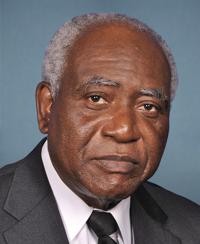
Mr. Chairman, I rise today to speak on the State Department Authorization Bill. The bill contains key provisions that will improve international relations. I commend Chairman Hyde and Ranking Member…
Mr. Chairman, I rise today to speak on the State Department Authorization Bill. The bill contains key provisions that will improve international relations. I commend Chairman Hyde and Ranking Member Lantos on their hard work and dedication to international affairs.
The citizens of the United States have benefitted greatly from the strides made by medical science, but despite these advances, the health status of people living in developing countries lags far behind the rest of our citizens. Funding for the United Nations Population Fund is needed to ensure that future generations in other countries prosper. The United Nations Population Fund (UNFPA) is the largest internationally funded source of population assistance to developing countries. Over the past 33 years, UNFPA has provided more than $6 billion in assistance to more than 160 countries for voluntary family planning and maternal and child health care.
The UNFPA provides great assistance to a number of African countries. UNFPA's priorities include working to increase access to reproductive health services, improve approaches to adolescent reproductive health; promote safe pregnancy and delivery, reduce maternal mortality, provide emergency assistance in refugee situations, and prevent and treat HIV/ AIDS. I am especially concerned about the HIV/AIDS epidemic in Africa. The HIV/AIDS virus infected approximately 3.5 million Africans. HR 1950 calls for $1,000,000 for the fiscal year 2004 to be available for HIV/ AIDS research and mitigation strategies internationally.
In addition to health assistance, we need to do more to help countries in the continent of Africa with peacekeeping solutions. The diplomatic capacity at the UN needs to be enhanced to end the suffering of the people of Africa. In the country of Liberia, the people have endured and suffered bloody civil war and unrest for the past 13 years. This war is destroying the future of many Liberian children who are forced to become brutal soldiers at such young ages. We as a nation must assist the people of Liberia. We must help them reverse the deterioration of their country. This bill will provide $40,000,000 to implement peackeeping activities in Africa.
Heightened awareness of what we can do to improve international affairs is very important. Therefore, Mr. Chairman, I would urge all people throughout America and, quite frankly, throughout the world to pay more attention to our developing countries so that not only can we all maintain better health, but also so that we can have peace. Peace is the only way to gain prosperity.
Mr. Chairman, I offer an amendment. Mr. Chairman, I yield myself such time as I may consume. Mr. Chairman, my amendment concerns the loss of an investment in Moldova by a constituent of mine due to…
Mr. Chairman, I offer an amendment.
Mr. Chairman, I yield myself such time as I may consume.
Mr. Chairman, my amendment concerns the loss of an investment in Moldova by a constituent of mine due to the actions of the Moldovan government. I am prepared to withdraw my amendment if the gentleman from Illinois (Mr. Hyde), the chairman of the Committee on International Relations, will enter into a colloquy with me.
Mr. Chairman, a long-time constituent of mine invested $2.5 million in Moldova for the purpose of purchasing a distillery in that country. The Moldovan government gave him a promissory note as security for $76 million and also produced a signed deed from the Minister of Agriculture and the Minister of Privatization together with a legal opinion from the dean of their law school stating that these documents were legal and binding in Moldova. The property was never sold by the government, and my constituent never saw his money again.
I have taken this matter to the President of Moldova on several occasions. Recently, my constituent met with President Voronin in March of this year. The President promised this matter would be resolved in 3 to 4 weeks. It is July now, and the matter has still not been resolved.
I have visited Moldova twice. I have led delegations. In fact, I spoke to their parliament when they convened on a Saturday session. I enjoyed meeting and want to work with the government leaders of that country. It is not my intention to alienate Moldova by withholding foreign aid. However, this type of outright fraud and corruption frightens many Americans from investing in Moldova and other former Soviet states. The Moldovan government must remedy this matter and provide assurances to other investors that Moldova is ready to safeguard foreign investment.
I yield to the gentleman from Illinois.
Mr. Chairman, as I have stated before, I do not want to alienate Moldova. The citizens of Moldova are not at fault. They are good people. It is their government that is at fault, and I do not think it is fair that its people suffer. Something must be done to remedy this matter. I will request to withdraw my amendment with assurances from the gentleman from Illinois that we will try to remedy this situation.
Mr. Chairman, I thank the chairman of the Committee on International Relations and the ranking member who do such a great job for consideration of all issues. I look forward to working with him on this legislation.
Mr. Chairman, I ask unanimous consent to withdraw my amendment.
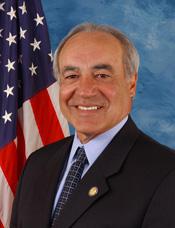
Mr. Chairman, I rise in strong opposition to the Tancredo Amendment. I have always been a strong advocate of efforts that give Hispanics and other minorities greater access to our financial services…
Mr. Chairman, I rise in strong opposition to the Tancredo Amendment.
I have always been a strong advocate of efforts that give Hispanics and other minorities greater access to our financial services system.
Whether that means providing more financial literacy programs or approving the use of the matricula consular card, we must do what it takes to make sure that every person in this country can live the American dream.
That is why I am here today.
When we look to the future, we have to make sure that it includes people of all races and all colors. We must give all members of our society the tools they need to fully participate and benefit from our great democracy.
Unfortunately, there are those in this body who are trying to shut the doors on our immigrant community.
They do not care that there are as many as 10 million American households that do not have bank accounts. That is not acceptable.
Hispanics deserve the same opportunity others have to buy a home, invest in a business, pay for a college education, and improve the financial security of their families.
How do we do this? We do this by giving everyone the keys that open the doors to our financial system.
Everyone deserves the opportunity to open a bank account or get a credit card. We cannot have a society of ``haves'' and ``have-nots.''
That is why Arrowhead Credit Union in my district, Wells Fargo, Bank of America, and credit unions and banks across the country support the use of the matricula consular.
They understand that when you hurt our most vulnerable members of our society, we all lose.
The support that financial institutions have given to these cards is matched by the support we have received from local law enforcement organizations.
In my district, the Rialto police department recently decided to accept matricula consular cards, joining the police departments in Chino, Colton, Fontana, Indio, Redlands, San Bernardino, and Upland.
There are now more than 100 law enforcement agencies in California that accept the matricula card.
I trust our local law enforcement officers, our first responders, to protect our communities. I urge you to do the same.
I urge all my colleagues to vote NO on the Hostettler/Gallegly/ Tancredo amendment.
Bill Text
Latest available legislative text
        [Congressional Bills 108th Congress]
[From the U.S. Government Publishing Office]
[H.R. 643 Introduced in House (IH)]

108th CONGRESS
1st Session
H. R. 643

To urge reforms of the Enhanced Heavily Indebted Poor Countries (HIPC)
Initiative, and for other purposes.

_______________________________________________________________________

IN THE HOUSE OF REPRESENTATIVES

February 6, 2003

Ms. Waters (for herself, Mr. Leach, Mr. Frank of Massachusetts, and Ms.
Lee) introduced the following bill; which was referred to the Committee
on Financial Services

_______________________________________________________________________

A BILL

To urge reforms of the Enhanced Heavily Indebted Poor Countries (HIPC)
Initiative, and for other purposes.

Be it enacted by the Senate and House of Representatives of the
United States of America in Congress assembled,

SECTION 1. SHORT TITLE.

This Act may be cited as the ``Debt Cancellation for the New
Millennium Act''.

SEC. 2. FINDINGS.

The Congress finds the following:
(1) The Enhanced HIPC Initiative was developed by the
countries of the G-7 during the G-7 Summit meeting in Cologne,
Germany, June 18-20, 1999.
(2) The purpose of the Enhanced HIPC Initiative is to
provide debt relief to the world's poorest countries and enable
these countries to invest the savings from debt relief in HIV/
AIDS treatment and prevention, health care, education, and
poverty reduction programs.
(3) The Enhanced HIPC Initiative requires heavily indebted
poor countries (HIPCs) to develop and implement plans known as
Poverty Reduction Strategy Papers (PRSPs) with the
participation of civil society for the purpose of reducing
poverty.
(4) The Enhanced HIPC Initiative does not provide full
cancellation of the debts of HIPCs.
(5) The International Monetary Fund (IMF) and the
International Bank for Reconstruction and Development (World
Bank) have sufficient resources to provide full cancellation of
the debts that HIPCs owe to these institutions.
(6) The Enhanced HIPC Initiative requires HIPCs to
implement structural adjustment programs approved by the IMF,
which impose economic austerity upon these countries and are
strongly opposed by civil society in many of the countries in
which the programs have been implemented.
(7) The process of developing and implementing PRSPs has
required considerable time and effort on the part of officials
and citizens in many HIPCs, and, as a result, these countries
have been unable to begin to receive debt relief as quickly as
had been planned.
(8) The Enhanced HIPC Initiative requires HIPCs to continue
to make service payments on their debts while they are
developing and implementing PRSPs, as well as while they are
implementing the IMF's structural adjustment programs.
(9) Many HIPCs have experienced revenue losses as a result
of reductions in prices for export commodities. These revenue
losses have reduced significantly the benefits of debt relief.
(10) Bangladesh, Haiti, and Nigeria were excluded from the
Enhanced HIPC Initiative, although they are impoverished
countries with significant debt burdens.
(11) The complete cancellation of the debts of impoverished
countries will remove a major impediment to poverty reduction
and economic growth, enable these countries to invest their
resources in HIV/AIDS treatment and prevention, health care,
education, and poverty reduction, and give these countries a
fresh start in the new millennium.

SEC. 3. REFORMS OF THE ENHANCED HIPC INITIATIVE.

Title XVI of the International Financial Institutions Act (22
U.S.C. 262p-262p-7) is amended by adding at the end the following:

``SEC. 1625. REFORMS OF THE ENHANCED HIPC INITIATIVE.

``Congress urges the President to commence immediately efforts,
within the Paris Club of Official Creditors, as well as the
International Bank for Reconstruction and Development (World Bank), the
International Monetary Fund (IMF), and other appropriate multilateral
development institutions to accomplish the following modifications in
the Enhanced Heavily Indebted Poor Countries (HIPC) Initiative:
``(1) Full debt cancellation.--The amount of debt relief
provided by the IMF and the World Bank under the Enhanced HIPC
Initiative for the benefit of a HIPC shall be sufficient to
completely cancel 100 percent of the debts owed by the HIPC to
these institutions. Debt cancellation shall be provided by the
IMF and the World Bank using their own resources.
``(2) Prohibition on structural adjustment programs.--The
provision of debt relief under the Enhanced HIPC Initiative
shall not be conditioned on any country adopting or
implementing any structural adjustment or stabilization program
of the Poverty Reduction and Growth Facility of the IMF or any
other structural adjustment or stabilization program operated
solely or jointly by the IMF or the World Bank.
``(3) Immediate suspension of debt service payments for
countries developing prsps.--All HIPCs that are working in good
faith to develop and implement their Poverty Reduction Strategy
Papers (PRSPs) pursuant to the Enhanced HIPC Initiative shall
not be required to make service payments on their debts. The
PRSPs shall be developed and implemented with the participation
of civil society in order to ensure that the savings from debt
relief will be invested in HIV/AIDS treatment and prevention,
health care, education, and poverty reduction programs.
``(4) Country eligibility.--The eligibility requirements of
the Enhanced HIPC Initiative shall be revised to make
Bangladesh, Haiti, and Nigeria eligible.''.

SEC. 4. TECHNICAL ASSISTANCE.

The Secretary of the Treasury shall provide or otherwise arrange
for the provision of technical assistance upon request to heavily
indebted poor countries (within the meaning of the Enhanced Heavily
Indebted Poor Countries (HIPC) Initiative) regarding compliance with
all conditions for debt relief pursuant to the Enhanced HIPC
Initiative, including the development and implementation of their
Poverty Reduction Strategy Papers (PSRPs). The Secretary of the
Treasury shall inform all such countries of the availability of the
technical assistance within 30 days after the date of the enactment of
this Act.

SEC. 5. REPORT TO THE CONGRESS.

Not later than December 31 of each year, the President shall submit
to the Committees on Financial Services, on Appropriations, and on
International Relations of the House of Representatives and the
Committees on Foreign Relations, on Banking, Housing, and Urban
Affairs, and on Appropriations of the Senate a report, which shall be
made available to the public, on the activities undertaken under this
Act, and on the progress made in accomplishing the modifications to the
Enhanced HIPC Initiative called for in this Act, for the preceding
fiscal year.
<all>