Patient Safety and Quality Improvement Act of 2004
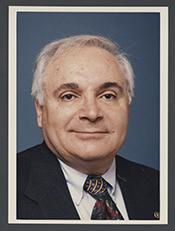 Rep. Michael Bilirakis (R-FL)
Legislative Activity
Stay on top of the latest movement without scrolling through every action
Message on Senate action sent to the House.
September 7, 2004
View full timeline
Introduced in House
February 11, 2003
Referred to the House Committee on Energy and Commerce.
February 11, 2003
Committee Consideration and Mark-up Session Held.
February 12, 2003
Ordered to be Reported (Amended) by Voice Vote.
February 12, 2003
Reported (Amended) by the Committee on Energy and Commerce. H. Rept. 108-28.
March 6, 2003
Placed on the Union Calendar, Calendar No. 19.
March 6, 2003
Mr. Bilirakis moved to suspend the rules and pass the bill, as amended.
March 12, 2003 • 1:08 PM
Considered under suspension of the rules. (consideration: CR H1766-1774)
March 12, 2003 • 1:08 PM
DEBATE - The House proceeded with forty minutes of debate on H.R. 663.
March 12, 2003 • 1:08 PM
At the conclusion of debate, the Yeas and Nays were demanded and ordered. Pursuant to the provisions of clause 8, rule XX, the Chair announced that further proceedings on the motion would be postponed.
March 12, 2003 • 1:22 PM
Considered as unfinished business. (consideration: CR H1777-1778)
March 12, 2003 • 5:26 PM
Passed/agreed to in House: On motion to suspend the rules and pass the bill, as amended Agreed to by the Yeas and Nays: (2/3 required): 418 - 6 (Roll no. 60).(text: CR H1766-1771)
March 12, 2003 • 5:32 PM
On motion to suspend the rules and pass the bill, as amended Agreed to by the Yeas and Nays: (2/3 required): 418 - 6 (Roll no. 60). (text: CR H1766-1771)
March 12, 2003 • 5:32 PM
Motion to reconsider laid on the table Agreed to without objection.
March 12, 2003 • 5:33 PM
Received in the Senate and Read twice and referred to the Committee on Health, Education, Labor, and Pensions.
March 13, 2003
Senate Committee on Health, Education, Labor, and Pensions discharged by Unanimous Consent.
July 22, 2004
Measure laid before Senate by unanimous consent. (consideration: CR S8632-8633)
July 22, 2004
Senate struck all after the Enacting Clause and substituted the language of S. 720 amended.
July 22, 2004
Passed Senate with an amendment by Unanimous Consent.
July 22, 2004
Senate insists on its amendment, asks for a conference, appoints conferees Gregg; Frist; Enzi; Alexander; Kennedy; Dodd; Jeffords.
July 22, 2004
See also S. 720.
July 22, 2004
Message on Senate action sent to the House.
September 7, 2004
Voting History
1 vote recorded • Roll call available
Floor Debate
24 membersWhat members said about H.R. 663 on the floor



 +19
+19
Floor Debate
24 membersWhat members said about H.R. 663 on the floor
Mr. President, I am privileged to represent a State that values families and the tradition of this country as much or more than any State in our Nation. We are the 14th State in the Union. We are a…
Mr. President, I rise in support of the United States- Australia Free Trade Agreement. I support the agreement because 8,000 Minnesotan manufacturers, which employ some 350,000 families in my State,…
Mr. President, when I came to the Senate I learned a new aphorism, referring to the debates and sometimes repetitive arguments you tend to hear by Members of Congress. Someone told me: ``Well,…
Mr. President, I rise today to talk about some of the issues which are pending before this Senate which are not being considered because the other side of the aisle refuses to take them up. I am…
Mr. President, I seek recognition today to discuss my vote and views on the Federal marriage amendment. I am voting in favor of cloture on the motion to proceed to this amendment. I do so primarily…
Show 8 more
Mr. President, there is no problem. We are just here because we are playing politics. We are alarmists. There is no problem out there. The Massachusetts Supreme Court didn't rule that the legislature…

Mr. President, I will share a few thoughts on the subject matter at hand. We are shortly going to vote, I believe, on the motion to proceed on the constitutional amendment banning same-sex marriage.…

Mr. President. I wish to discuss, regrettably, the so- called Federal marriage amendment. Regret is a key word when it comes to this amendment, for several reasons. It is regrettable that, in this…
Will the Senator yield? I do. I thank my colleague for yielding. There is a question I want to ask. But let my just say, first of all, I think you know how much I respect you and the high regard I…

Mr. President, when the Supreme Court in Massachusetts issued its ruling on marriage it did what no court ought to do. It set itself apart from and above the State and Federal legislatures, and went…

Mr. President, I support S.J. Res. 40, the Federal marriage amendment. The Constitution provides the basic framework under which our society will function. With its profound implications for the…

Mr. President, the Constitution is a document that should only be amended with great caution. This is one of those moments when we would be wise to submit the strong feelings on this issue to careful…

I yield to the Senator for a request. Go right ahead. Mr. President, I rise to express my opposition to the Federal marriage amendment because I believe this effort to amend the Constitution is…
Show 11 more
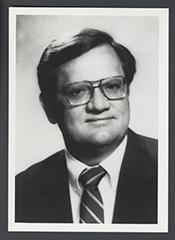
Mr. Speaker, it is with great pride that I rise today to pay special tribute to an outstanding gentleman, and good friend, from Ohio. Dr. Ralph Quellhorst became an Ordained Minister of the United…

Mr. President, I rise to speak on S.J. Res. 40, the Federal Marriage Amendment to the Constitution. Let me begin my remarks by plainly stating my position on the issues raised by this amendment.…

Mr. President, that will be taken off the Republican time; is that correct? Mr. President, Senator Dodd has time remaining--5 or 6 minutes. We yield that to Senator Leahy. I announce that the Senator…

Mr. President, we are less than 2 weeks away from our summer recess, and we will soon attend our respective parties' conventions. It is important to ask what we have accomplished so far this year.…

Mr. President, I believe under the unanimous consent agreement Senator Santorum is to be recognized next. We discussed that. I ask unanimous consent that I be allowed to speak at this time for 5…

Mr. Speaker, actually I rise first to commend a Member of the House who has done some extraordinary work, not even on our committee but on the Committee on Ways and Means, and that is the gentlewoman…

Mr. President, I rise today in opposition to the amendment that is before us. First, Congress has already addressed this issue in a statute that has yet to be effectively legally challenged. Second,…

Mr. President, I thank the Senator from Texas for allowing me the opportunity to speak. Just to get some business out of the way, I have some materials I have submitted at the desk. I ask unanimous…

Mr. President, I rise in support of Senate Joint Resolution 40, the Federal Marriage Amendment. The Judiciary Committee, on which I serve, has held four hearings on the Federal Marriage Amendment. In…

How much time remains on both sides? Mr. President, we have heard that this amendment has been compared to prohibition, kiosks, and bumper stickers. We have heard some eloquent and passionate…

Mr. President, the majority leader asked I take a few moments perhaps even of his time to offer some closing remarks on this important debate. I believe he asked me to do this because I have been a…
Bill Text
5 versions available
        [Congressional Bills 108th Congress]
[From the U.S. Government Publishing Office]
[H.R. 663 Engrossed Amendment Senate (EAS)]

In the Senate of the United States,

July 22, 2004.
Resolved, That the bill from the House of Representatives (H.R.
663) entitled ``An Act to amend title IX of the Public Health Service
Act to provide for the improvement of patient safety and to reduce the
incidence of events that adversely affect patient safety, and for other
purposes.'', do pass with the following

AMENDMENT:

Strike out all after the enacting clause and insert:

SECTION 1. SHORT TITLE.

This Act may be cited as the ``Patient Safety and Quality
Improvement Act of 2004''.

SEC. 2. FINDINGS AND PURPOSES.

(a) Findings.--Congress makes the following findings:
(1) In 1999, the Institute of Medicine released a report
entitled To Err is Human that described medical errors as the
eighth leading cause of death in the United States, with as
many as 98,000 people dying as a result of medical errors each
year.
(2) To address these deaths and injuries due to medical
errors, the health care system must identify and learn from
such errors so that systems of care can be improved.
(3) In their report, the Institute of Medicine called on
Congress to provide legal protections with respect to
information reported for the purposes of quality improvement
and patient safety.
(4) The Health, Education, Labor, and Pensions Committee of
the Senate held 4 hearings in the 106th Congress and 1 hearing
in the 107th Congress on patient safety where experts in the
field supported the recommendation of the Institute of Medicine
for congressional action.
(5) Myriad public and private patient safety initiatives
have begun. The Quality Interagency Coordination Taskforce has
recommended steps to improve patient safety that may be taken
by each Federal agency involved in health care and activities
relating to these steps are ongoing.
(6) The research on patient safety unequivocally calls for
a learning environment, rather than a punitive environment, in
order to improve patient safety.
(7) Voluntary data gathering systems are more supportive
than mandatory systems in creating the learning environment
referred to in paragraph (6) as stated in the Institute of
Medicine's report.
(8) Promising patient safety reporting systems have been
established throughout the United States and the best ways to
structure and use these systems are currently being determined,
largely through projects funded by the Agency for Healthcare
Research and Quality.
(9) Many organizations currently collecting patient safety
data have expressed a need for legal protections that will
allow them to review protected information and collaborate in
the development and implementation of patient safety
improvement strategies. Currently, the State peer review
protections are inadequate to allow the sharing of information
to promote patient safety.
(b) Purposes.--It is the purpose of this Act to--
(1) encourage a culture of safety and quality in the United
States health care system by providing for legal protection of
information reported voluntarily for the purposes of quality
improvement and patient safety; and
(2) ensure accountability by raising standards and
expectations for continuous quality improvements in patient
safety.

SEC. 3. AMENDMENTS TO PUBLIC HEALTH SERVICE ACT.

Title IX of the Public Health Service Act (42 U.S.C. 299 et seq.)
is amended--
(1) in section 912(c), by inserting ``, in accordance with
part C,'' after ``The Director shall'';
(2) by redesignating part C as part D;
(3) by redesignating sections 921 through 928, as sections
931 through 938, respectively;
(4) in 934(d) (as so redesignated), by striking the second
sentence and inserting the following: ``Penalties provided for
under this section shall be imposed and collected by the
Secretary using the administrative and procedural processes
used to impose and collect civil money penalties under section
1128A of the Social Security Act (other than subsections (a)
and (b), the second sentence of subsection (f), and subsections
(i), (m), and (n)), unless the Secretary determines that a
modification of procedures would be more suitable or reasonable
to carry out this subsection and provides for such modification
by regulation.'';
(5) in section 938(1) (as so redesignated), by striking
``921'' and inserting ``931''; and
(6) by inserting after part B the following:

``PART C--PATIENT SAFETY IMPROVEMENT

``SEC. 921. DEFINITIONS.

``In this part:
``(1) Non-identifiable information.--
``(A) In general.--The term `non-identifiable
information' means, with respect to information, that
the information is presented in a form and manner that
prevents the identification of a provider, a patient,
or a reporter of patient safety data.
``(B) Identifiability of patient.--For purposes of
subparagraph (A), the term `presented in a form and
manner that prevents the identification of a patient'
means, with respect to information that has been
subject to rules promulgated pursuant to section 264(c)
of the Health Insurance Portability and Accountability
Act of 1996 (42 U.S.C. 1320d-2 note), that the
information has been de-identified so that it is no
longer individually identifiable health information as
defined in such rules.
``(2) Patient safety data.--
``(A) In general.--The term `patient safety data'
means--
``(i) any data, reports, records,
memoranda, analyses (such as root cause
analyses), or written or oral statements that
are--
``(I) collected or developed by a
provider for reporting to a patient
safety organization, provided that they
are reported to the patient safety
organization within 60 days;
``(II) requested by a patient
safety organization (including the
contents of such request), if they are
reported to the patient safety
organization within 60 days;
``(III) reported to a provider by a
patient safety organization; or
``(IV) collected by a patient
safety organization from another
patient safety organization, or
developed by a patient safety
organization;
that could result in improved patient safety,
health care quality, or health care outcomes;
or
``(ii) any deliberative work or process
with respect to any patient safety data
described in clause (i).
``(B) Limitation.--
``(i) Collection.--If the original material
from which any data, reports, records,
memoranda, analyses (such as root case
analyses), or written or oral statements
referred to in subclause (I) or (IV) of
subparagraph (A)(i) are collected and is not
patient safety data, the act of such collection
shall not make such original material patient
safety data for purposes of this part.
``(ii) Separate data.--The term `patient
safety data' shall not include information
(including a patient's medical record, billing
and discharge information or any other patient
or provider record) that is collected or
developed separately from and that exists
separately from patient safety data. Such
separate information or a copy thereof
submitted to a patient safety organization
shall not itself be considered as patient
safety data. Nothing in this part, except for
section 922(f)(1), shall be construed to
limit--
``(I) the discovery of or
admissibility of information described
in this subparagraph in a criminal,
civil, or administrative proceeding;
``(II) the reporting of information
described in this subparagraph to a
Federal, State, or local governmental
agency for public health surveillance,
investigation, or other public health
purposes or health oversight purposes;
or
``(III) a provider's recordkeeping
obligation with respect to information
described in this subparagraph under
Federal, State, or local law.
``(3) Patient safety organization.--The term `patient
safety organization' means a private or public entity or
component thereof that is currently listed by the Secretary
pursuant to section 924(c).
``(4) Patient safety organization activities.--The term
`patient safety organization activities' means the following
activities, which are deemed to be necessary for the proper
management and administration of a patient safety organization:
``(A) The conduct, as its primary activity, of
efforts to improve patient safety and the quality of
health care delivery.
``(B) The collection and analysis of patient safety
data that are submitted by more than one provider.
``(C) The development and dissemination of
information to providers with respect to improving
patient safety, such as recommendations, protocols, or
information regarding best practices.
``(D) The utilization of patient safety data for
the purposes of encouraging a culture of safety and of
providing direct feedback and assistance to providers
to effectively minimize patient risk.
``(E) The maintenance of procedures to preserve
confidentiality with respect to patient safety data.
``(F) The provision of appropriate security
measures with respect to patient safety data.
``(G) The utilization of qualified staff.
``(5) Person.--The term `person' includes Federal, State,
and local government agencies.
``(6) Provider.--The term `provider' means--
``(A) a person licensed or otherwise authorized
under State law to provide health care services,
including--
``(i) a hospital, nursing facility,
comprehensive outpatient rehabilitation
facility, home health agency, hospice program,
renal dialysis facility, ambulatory surgical
center, pharmacy, physician or health care
practitioner's office, long term care facility,
behavior health residential treatment facility,
clinical laboratory, or health center; or
``(ii) a physician, physician assistant,
nurse practitioner, clinical nurse specialist,
certified registered nurse anesthetist,
certified nurse midwife, psychologist,
certified social worker, registered dietitian
or nutrition professional, physical or
occupational therapist, pharmacist, or other
individual health care practitioner; or
``(B) any other person specified in regulations
promulgated by the Secretary.

``SEC. 922. PRIVILEGE AND CONFIDENTIALITY PROTECTIONS.

``(a) Privilege.--Notwithstanding any other provision of Federal,
State, or local law, patient safety data shall be privileged and,
subject to the provisions of subsection (c)(1), shall not be--
``(1) subject to a Federal, State, or local civil,
criminal, or administrative subpoena;
``(2) subject to discovery in connection with a Federal,
State, or local civil, criminal, or administrative proceeding;
``(3) disclosed pursuant to section 552 of title 5, United
States Code (commonly known as the Freedom of Information Act)
or any other similar Federal, State, or local law;
``(4) admitted as evidence or otherwise disclosed in any
Federal, State, or local civil, criminal, or administrative
proceeding; or
``(5) utilized in a disciplinary proceeding against a
provider.
``(b) Confidentiality.--Notwithstanding any other provision of
Federal, State, or local law, and subject to the provisions of
subsections (c) and (d), patient safety data shall be confidential and
shall not be disclosed.
``(c) Exceptions to Privilege and Confidentiality.--Nothing in this
section shall be construed to prohibit one or more of the following
uses or disclosures:
``(1) Disclosure by a provider or patient safety
organization of relevant patient safety data for use in a
criminal proceeding only after a court makes an in camera
determination that such patient safety data contains evidence
of a wanton and criminal act to directly harm the patient.
``(2) Voluntary disclosure of non-identifiable patient
safety data by a provider or a patient safety organization.
``(d) Protected Disclosure and Use of Information.--Nothing in this
section shall be construed to prohibit one or more of the following
uses or disclosures:
``(1) Disclosure of patient safety data by a person that is
a provider, a patient safety organization, or a contractor of a
provider or patient safety organization, to another such
person, to carry out patient safety organization activities.
``(2) Disclosure of patient safety data by a provider or
patient safety organization to grantees or contractors carrying
out patient safety research, evaluation, or demonstration
projects authorized by the Director.
``(3) Disclosure of patient safety data by a provider to an
accrediting body that accredits that provider.
``(4) Voluntary disclosure of patient safety data by a
patient safety organization to the Secretary for public health
surveillance if the consent of each provider identified in, or
providing, such data is obtained prior to such disclosure.
Nothing in the preceding sentence shall be construed to prevent
the release of patient safety data that is provided by, or that
relates solely to, a provider from which the consent described
in such sentence is obtained because one or more other
providers do not provide such consent with respect to the
disclosure of patient safety date that relates to such
nonconsenting providers. Consent for the future release of
patient safety data for such purposes may be requested by the
patient safety organization at the time the data is submitted.
``(5) Voluntary disclosure of patient safety data by a
patient safety organization to State of local government
agencies for public health surveillance if the consent of each
provider identified in, or providing, such data is obtained
prior to such disclosure. Nothing in the preceding sentence
shall be construed to prevent the release of patient safety
data that is provided by, or that relates solely to, a provider
from which the consent described in such sentence is obtained
because one or more other providers do not provide such consent
with respect to the disclosure of patient safety date that
relates to such nonconsenting providers. Consent for the future
release of patient safety data for such purposes may be
requested by the patient safety organization at the time the
data is submitted.
``(e) Continued Protection of Information after Disclosure.--
``(1) In general.--Except as provided in paragraph (2),
patient safety data that is used or disclosed shall continue to
be privileged and confidential as provided for in subsections
(a) and (b), and the provisions of such subsections shall apply
to such data in the possession or control of--
``(A) a provider or patient safety organization
that possessed such data before the use or disclosure;
or
``(B) a person to whom such data was disclosed.
``(2) Exception.--Notwithstanding paragraph (1), and
subject to paragraph (3)--
``(A) if patient safety data is used or disclosed
as provided for in subsection (c)(1), and such use or
disclosure is in open court, the confidentiality
protections provided for in subsection (b) shall no
longer apply to such data; and
``(B) if patient safety data is used or disclosed
as provided for in subsection (c)(2), the privilege and
confidentiality protections provided for in subsections
(a) and (b) shall no longer apply to such data.
``(3) Construction.--Paragraph (2) shall not be construed
as terminating or limiting the privilege or confidentiality
protections provided for in subsection (a) or (b) with respect
to data other than the specific data used or disclosed as
provided for in subsection (c).
``(f) Limitation on Actions.--
``(1) Patient safety organizations.--Except to enforce
disclosures pursuant to subsection (c)(1), no action may be
brought or process served against a patient safety organization
to compel disclosure of information collected or developed
under this part whether or not such information is patient
safety data unless such information is specifically identified,
is not patient safety data, and cannot otherwise be obtained.
``(2) Providers.--An accrediting body shall not take an
accrediting action against a provider based on the good faith
participation of the provider in the collection, development,
reporting, or maintenance of patient safety data in accordance
with this part. An accrediting body may not require a provider
to reveal its communications with any patient safety
organization established in accordance with this part.
``(g) Reporter Protection.--
``(1) In general.--A provider may not take an adverse
employment action, as described in paragraph (2), against an
individual based upon the fact that the individual in good
faith reported information--
``(A) to the provider with the intention of having
the information reported to a patient safety
organization; or
``(B) directly to a patient safety organization.
``(2) Adverse employment action.--For purposes of this
subsection, an `adverse employment action' includes--
``(A) loss of employment, the failure to promote an
individual, or the failure to provide any other
employment-related benefit for which the individual
would otherwise be eligible; or
``(B) an adverse evaluation or decision made in
relation to accreditation, certification,
credentialing, or licensing of the individual.
``(h) Enforcement.--
``(1) Prohibition.--Except as provided in subsections (c)
and (d) and as otherwise provided for in this section, it shall
be unlawful for any person to negligently or intentionally
disclose any patient safety data, and any such person shall,
upon adjudication, be assessed in accordance with section
934(d).
``(2) Relation to hipaa.--The penalty provided for under
paragraph (1) shall not apply if the defendant would otherwise
be subject to a penalty under the regulations promulgated under
section 264(c) of the Health Insurance Portability and
Accountability Act of 1996 (42 U.S.C. 1320d-2 note) or under
section 1176 of the Social Security Act (42 U.S.C. 1320d-5) for
the same disclosure.
``(3) Equitable relief.--
``(A) In general.--Without limiting remedies
available to other parties, a civil action may be
brought by any aggrieved individual to enjoin any act
or practice that violates subsection (g) and to obtain
other appropriate equitable relief (including
reinstatement, back pay, and restoration of benefits)
to redress such violation.
``(B) Against state employees.--An entity that is a
State or an agency of a State government may not assert
the privilege described in subsection (a) unless before
the time of the assertion, the entity or, in the case
of and with respect to an agency, the State has
consented to be subject to an action as described by
this paragraph, and that consent has remained in
effect.
``(i) Rule of Construction.--Nothing in this section shall be
construed to--
``(1) limit other privileges that are available under
Federal, State, or local laws that provide greater
confidentiality protections or privileges than the privilege
and confidentiality protections provided for in this section;
``(2) limit, alter, or affect the requirements of Federal,
State, or local law pertaining to information that is not
privileged or confidential under this section;
``(3) alter or affect the implementation of any provision
of section 264(c) of the Health Insurance Portability and
Accountability Act of 1996 (Public Law 104-191; 110 Stat.
2033), section 1176 of the Social Security Act (42 U.S.C.
1320d-5), or any regulation promulgated under such sections;
``(4) limit the authority of any provider, patient safety
organization, or other person to enter into a contract
requiring greater confidentiality or delegating authority to
make a disclosure or use in accordance with subsection (c) or
(d); and
``(5) prohibit a provider from reporting a crime to law
enforcement authorities, regardless of whether knowledge of the
existence of, or the description of, the crime is based on
patient safety data, so long as the provider does not disclose
patient safety data in making such report.

``SEC. 923. PATIENT SAFETY NETWORK OF DATABASES.

``(a) In General.--The Secretary shall maintain a patient safety
network of databases that provides an interactive evidence-based
management resource for providers, patient safety organizations, and
other persons. The network of databases shall have the capacity to
accept, aggregate, and analyze nonidentifiable patient safety data
voluntarily reported by patient safety organizations, providers, or
other persons.
``(b) Network of Database Standards.--The Secretary may determine
common formats for the reporting to the patient safety network of
databases maintained under subsection (a) of nonidentifiable patient
safety data, including necessary data elements, common and consistent
definitions, and a standardized computer interface for the processing
of such data. To the extent practicable, such standards shall be
consistent with the administrative simplification provisions of Part C
of title XI of the Social Security Act.

``SEC. 924. PATIENT SAFETY ORGANIZATION CERTIFICATION AND LISTING.

``(a) Certification.--
``(1) Initial certification.--Except as provided in
paragraph (2), an entity that seeks to be a patient safety
organization shall submit an initial certification to the
Secretary that the entity intends to perform the patient safety
organization activities.
``(2) Delayed certification of collection from more than
one provider.--An entity that seeks to be a patient safety
organization may--
``(A) submit an initial certification that it
intends to perform patient safety organization
activities other than the activities described in
subparagraph (B) of section 921(4); and
``(B) within 2 years of submitting the initial
certification under subparagraph (A), submit a
supplemental certification that it performs the patient
safety organization activities described in
subparagraphs (A) through (F) of section 921(4).
``(3) Expiration and renewal.--
``(A) Expiration.--An initial certification under
paragraph (1) or (2)(A) shall expire on the date that
is 3 years after it is submitted.
``(B) Renewal.--
``(i) In general.--An entity that seeks to
remain a patient safety organization after the
expiration of an initial certification under
paragraph (1) or (2)(A) shall, within the 3-
year period described in subparagraph (A),
submit a renewal certification to the Secretary
that the entity performs the patient safety
organization activities described in section
921(4).
``(ii) Term of renewal.--A renewal
certification under clause (i) shall expire on
the date that is 3 years after the date on
which it is submitted, and may be renewed in
the same manner as an initial certification.
``(b) Acceptance of Certification.--Upon the submission by an
organization of an initial certification pursuant to subsection (a)(1)
or (a)(2)(A), a supplemental certification pursuant to subsection
(a)(2)(B), or a renewal certification pursuant to subsection (a)(3)(B),
the Secretary shall review such certification and--
``(1) if such certification meets the requirements of
subsection (a)(1), (a)(2)(A), (a)(2)(B), or (a)(3)(B), as
applicable, the Secretary shall notify the organization that
such certification is accepted; or
``(2) if such certification does not meet such
requirements, as applicable, the Secretary shall notify the
organization that such certification is not accepted and the
reasons therefor.
``(c) Listing.--
``(1) In general.--Except as otherwise provided in this
subsection, the Secretary shall compile and maintain a current
listing of patient safety organizations with respect to which
the Secretary has accepted a certification pursuant to
subsection (b).
``(2) Removal from listing.--The Secretary shall remove
from the listing under paragraph (1)--
``(A) an entity with respect to which the Secretary
has accepted an initial certification pursuant to
subsection (a)(2)(A) and which does not submit a
supplemental certification pursuant to subsection
(a)(2)(B) that is accepted by the Secretary;
``(B) an entity whose certification expires and
which does not submit a renewal application that is
accepted by the Secretary; and
``(C) an entity with respect to which the Secretary
revokes the Secretary's acceptance of the entity's
certification, pursuant to subsection (d).
``(d) Revocation of Acceptance.--
``(1) In general.--Except as provided in paragraph (2), if
the Secretary determines (through a review of patient safety
organization activities) that a patient safety organization
does not perform one of the patient safety organization
activities described in subparagraph (A) through (F) of section
921(4), the Secretary may, after notice and an opportunity for
a hearing, revoke the Secretary's acceptance of the
certification of such organization.
``(2) Delayed certification of collection from more than
one provider.--A revocation under paragraph (1) may not be
based on a determination that the organization does not perform
the activity described in section 921(4)(B) if--
``(A) the listing of the organization is based on
its submittal of an initial certification under
subsection (a)(2)(A);
``(B) the organization has not submitted a
supplemental certification under subsection (a)(2)(B);
and
``(C) the 2-year period described in subsection
(a)(2)(B) has not expired.
``(e) Notification of Revocation or Removal from Listing.--
``(1) Supplying confirmation of notification to
providers.--Within 15 days of a revocation under subsection
(d)(1), a patient safety organization shall submit to the
Secretary a confirmation that the organization has taken all
reasonable actions to notify each provider whose patient safety
data is collected or analyzed by the organization of such
revocation.
``(2) Publication.--Upon the revocation of an acceptance of
an organization's certification under subsection (d)(1), or
upon the removal of an organization from the listing under
subsection (c)(2), the Secretary shall publish notice of the
revocation or removal in the Federal Register.
``(f) Status of Data After Removal from Listing.--
``(1) New data.--With respect to the privilege and
confidentiality protections described in section 922, data
submitted to an organization within 30 days after the
organization is removed from the listing under subsection
(c)(2) shall have the same status as data submitted while the
organization was still listed.
``(2) Protection to continue to apply.--If the privilege
and confidentiality protections described in section 922
applied to data while an organization was listed, or during the
30-day period described in paragraph (1), such protections
shall continue to apply to such data after the organization is
removed from the listing under subsection (c)(2).
``(g) Disposition of Data.--If the Secretary removes an
organization from the listing as provided for in subsection (c)(2),
with respect to the patient safety data that the organization received
from providers, the organization shall--
``(1) with the approval of the provider and another patient
safety organization, transfer such data to such other
organization;
``(2) return such data to the person that submitted the
data; or
``(3) if returning such data to such person is not
practicable, destroy such data.

``SEC. 925. TECHNICAL ASSISTANCE.

``The Secretary, acting through the Director, may provide technical
assistance to patient safety organizations, including convening annual
meetings for patient safety organizations to discuss methodology,
communication, data collection, or privacy concerns.

``SEC. 926. PROMOTING THE INTEROPERABILITY OF HEALTH CARE INFORMATION
TECHNOLOGY SYSTEMS.

``(a) Development.--Not later than 36 months after the date of
enactment of the Patient Safety and Quality Improvement Act of 2004,
the Secretary shall develop or adopt voluntary standards that promote
the electronic exchange of health care information.
``(b) Updates.--The Secretary shall provide for the ongoing review
and periodic updating of the standards developed under subsection (a).
``(c) Dissemination.--The Secretary shall provide for the
dissemination of the standards developed and updated under this
section.

``SEC. 927. AUTHORIZATION OF APPROPRIATIONS.

``There is authorized to be appropriated such sums as may be
necessary to carry out this part.''.

SEC. 4. STUDIES AND REPORTS.

(a) In General.--The Secretary of Health and Human Services shall
enter into a contract (based upon a competitive contracting process)
with an appropriate research organization for the conduct of a study to
assess the impact of medical technologies and therapies on patient
safety, patient benefit, health care quality, and the costs of care as
well as productivity growth. Such study shall examine--
(1) the extent to which factors, such as the use of labor
and technological advances, have contributed to increases in
the share of the gross domestic product that is devoted to
health care and the impact of medical technologies and
therapies on such increases;
(2) the extent to which early and appropriate introduction
and integration of innovative medical technologies and
therapies may affect the overall productivity and quality of
the health care delivery systems of the United States; and
(3) the relationship of such medical technologies and
therapies to patient safety, patient benefit, health care
quality, and cost of care.
(b) Report.--Not later than 18 months after the date of enactment
of this Act, the Secretary of Health and Human Services shall prepare
and submit to the appropriate committees of Congress a report
containing the results of the study conducted under subsection (a).

Attest:

Secretary.
108th CONGRESS

2d Session

H. R. 663

_______________________________________________________________________

AMENDMENT