To amend the Federal Election Campaign Act of 1971 to prohibit an authorized committee of a winning candidate for election for Federal office which received a personal loan from the candidate from making any repayment on the loan after the date on which the candidate begins serving in such office.
Legislative Activity
Stay on top of the latest movement without scrolling through every action
Referred to the House Committee on House Administration.
February 11, 2003
View full timeline
Introduced in House
February 11, 2003
Referred to the House Committee on House Administration.
February 11, 2003
Floor Debate
15 membersWhat members said about H.R. 681 on the floor
 JPM
JPM TMR
TMR DD
DD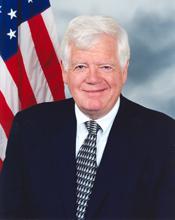 JM
JM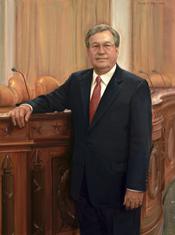 WMT+10
Floor Debate
15 membersWhat members said about H.R. 681 on the floor
Mr. Speaker I yield myself 8 minutes. (Mr. McGOVERN asked and was given permission to revise and extend his remarks.) Mr. Speaker, I thank the gentleman from New York (Mr. Reynolds) for yielding me…
Mr. Speaker I yield myself 8 minutes.
(Mr. McGOVERN asked and was given permission to revise and extend his remarks.)
Mr. Speaker, I thank the gentleman from New York (Mr. Reynolds) for yielding me the customary 30 minutes.
Mr. Speaker, all of us recognize the need to quickly fix the FSC-ETI export tax issue. Thousands of U.S. exporters are needlessly paying 8 percent tariffs to European countries simply because the Republican- controlled Congress has failed to pass legislation to avoid these penalties. These tariffs will continue to climb 1 percentage point each month as long as the issue remains unresolved.
These retaliatory tariffs are especially hard hitting as the United States continues to experience difficult times in the manufacturing sector, which has lost nearly 3 million jobs under the Bush administration. In my congressional district in Massachusetts, jewelry, textiles, and small manufacturers have especially been hit hard by these sanctions.
Throughout the WTO process there has been bipartisan consensus that the U.S. should repeal the extraterritorial income exemption, the ETI and comply with the WTO decision. The disagreement has been over what to replace it with. Last year the gentleman from New York (Mr. Rangel) and the gentleman from Illinois (Mr. Crane) and the gentleman from Illinois (Mr. Manzullo) and others introduced a bipartisan, revenue- neutral fix to this problem, H.R. 1769.
This bill currently has 172 bipartisan cosponsors. When our colleague, the gentleman from Indiana (Mr. Hill), filed a discharge petition in March to bring the bill immediately to the floor, 18 Members signed that petition.
The Crane-Rangel bill would take the $50 billion in tax incentives that American companies operating overseas receive under the current ETI and create new incentives for American companies to produce goods in the United States. It lowers the corporate income tax rate for U.S. companies and addresses the growing problem of U.S. companies moving their plants overseas.
Simply put, H.R. 1769 is a clean, paid-for bill that remedies the FSC/ETI problem without unduly burdening those companies that have benefited from this exemption in the past, and without unduly burdening our children and grandchildren by adding to our deficit.
So why did we not fix the problem months ago by passing the Crane- Rangel bill? Why are we not debating H.R. 1769 this morning? Why is the Republican leadership denying the gentleman from New York (Mr. Rangel) the opportunity to offer his alternative on the floor today?
Because time after time the leadership of this House has demonstrated that it would rather offer a goody-bag of corporate tax giveaways to special interests than simply and quickly fixing the problem.
What is in this grab bag of a bill? The closer you look at it, the uglier it gets.
This bill is chock full of sweetheart deals, special fixes, and big giveaways to special interests. It looks like every lobbyist in town will be celebrating tonight. The list of provisions that favor particular companies or industries includes cruise-ship operators, whale hunters, Chinese ceiling fans, foreign gamblers, NASCAR track owners, timber companies, cattle ranchers, bourbon distillers, movies theater owners, small plane manufacturers, bow and arrow sets, fishing tackle boxes, and corporate jet owners.
This is no way to do tax policy.
The list of narrow special interest giveaways is very familiar because we have seen them all before, when a similar set of giveaways held up passage of the Armed Forces Tax Fairness Act for 18 months, until finally, finally, they were thrown out and this House decided to do the right thing and support our uniformed men and women and their families.
But like the evil poltergeists in the movie, they are back. And this time they have brought along some friends. What else is in this bill?
How about paying a private company to make a profit collecting debts owed to the IRS so that all our private tax information will now be given to private bounty hunters. How about tax provisions that give U.S. companies fresh incentives to locate operations anywhere other than in the United States by giving them even more tax shelters for their foreign income? At the very core of this bill are $35 billion in tax incentives for U.S. firms to invest overseas.
If you are a small manufacturer or farm cooperative that creates jobs and has production solely in the United States, too bad. You are simply out of luck in this bill.
Mr. Speaker, let us talk about the frosting on the cake. This bill as it is written will add at least another $34 billion to the deficit. In just 3 short years, the Bush administration and the Republican- controlled Congress have taken our Nation from record surpluses to the largest budget deficits in the history of the United States, in the history of the United States, Mr. Speaker. And now the leadership of this House wants to add at least $34 billion more to these deficits.
The legislation passed in the other body at least has the benefit of being revenue-neutral. And the Crane-Rangel bill is fully paid for.
Why is it that everyone seems to be able to pay for their corporate tax legislation except for the Republican House leadership? Why are they the only ones that want to pass the burden of debt on to future generations? And let us not forget that when all the phony accounting gimmicks such as slow phase-ins and phase-outs and sunsets provisions are factored in, the amount added to the deficit is more likely to be closer to $45 billion.
This bill may mean more jobs, Mr. Speaker, but they will not be U.S. jobs.
This bill rewards companies that move off shore, that shelter income from production abroad, and that outsource even more jobs now and forevermore.
Now, I seem to remember the Republicans saying over and over that our Tax Code is simply too complex, too confusing and too costly; but this bill, instead of simplifying and tightening the Tax Code and closing loopholes, creates over 400 pages of new and expensive special interest exceptions.
This bill makes our Tax Code more complex, not less; more unfair, not less. It does too little for those businesses that prefer to produce and hire
in the United States. It hurts farmers, stiffs small businesses, and benefits large multinational companies first and foremost.
It increases the deficit and tacks on major unrelated initiatives. Instead of simply fixing the $5 billion FSC/ETI problem, it creates a $150 billion special interest giveaway.
Mr. Speaker, this Special Interests Christmas Tree Giveaway Act is quite simply a scandal. Now, in light of such largesse for special interests and large corporations, I was surprised when this morning the Republican majority in the Committee on Rules did not make in order an amendment proposed by the gentleman from California (Mr. Lantos) and me. Our amendment would provide tax relief to every company and business that makes up the difference in income to an employee activated into the National Guard or Reserves and would have provided support to those same companies to train temporary employees to fill the jobs left vacant by active-duty employees.
At a time of national emergency, when members of the Reserves and National Guard are serving extended deployments in Iraq and Afghanistan, the Republican majority in the Committee on Rules decided that this modest tax relief proposal was not important or relevant enough to be considered during the debate on this bill.
This bill before us helps Halliburton and Bechtel, two corporations that are ripping off the American taxpayer through fraud and abuse of their defense contracts in Iraq; but the Republican leadership will not help the hundreds of small businesses suffering from long-term vacancies or the families whose loved ones have been activated for service in Iraq and Afghanistan.
Mr. Speaker, at the end of the debate on this rule, I will offer a motion to defeat the previous question. If the previous question is defeated, the gentleman from California (Mr. Lantos) and I will offer our amendment to H.R. 4250 to help the Reservists and small business.
We have the chance to do the right thing today. I urge my colleagues to reject this rule and to oppose the underlying bill.
Mr. Speaker, I reserve the balance of my time.
Mr. Speaker, I yield myself such time as I may consume.
Mr. Speaker, I just want to clarify to the gentleman from Washington (Mr. Hastings) that the sales tax deduction provision phases out in 2 years. It is not permanent. And this morning the gentleman from Washington (Mr. Hastings) and other Republicans voted against making it permanent.
Mr. Speaker, I yield 5\1/2\ minutes to the gentleman from New York (Mr. Rangel), the ranking Democrat on the Committee on Ways and Means.
(Mr. RANGEL asked and was given permission to revise and extend his remarks.)
Mr. Speaker, I yield myself such time as I may consume.
The distinguished chairman of the Committee on Ways and Means refused to show me or the gentleman from New York (Mr. Rangel) the same courtesy that the gentleman from New York (Mr. Rangel) showed the chairman of the Committee on Rules, and he refused to answer the question as to whether or not the Committee on Rules would have made in order the Crane-Rangel alternative, in whatever form it would have been in. The answer is clearly they would not have.
The gentleman mentioned American democracy. Twenty amendments were denied in the Committee on Rules. That is not democracy.
Mr. Speaker, I yield 2 minutes to the gentleman from Texas (Mr. Doggett).
Mr. Speaker, may I inquire how much time remains on each side.
Mr. Speaker, I yield 2 minutes to the gentleman from Washington (Mr. McDermott), a member of the Committee on Ways and Means.
(Mr. McDERMOTT asked and was given permission to revise and extend his remarks, and include extraneous material.)
Mr. Speaker, will the gentleman yield?
Mr. Speaker, I appreciate the gentleman yielding. How many of those amendments were made in order?
Mr. Speaker, I thank the gentleman.
Mr. Speaker, I yield myself such time as I may consume.
Mr. Speaker, let me also say that the Republican leadership made it clear last night that no substitute in any form would have been made in order.
Mr. Speaker, I yield 4 minutes to the gentleman from California (Mr. Lantos).
Mr. Speaker, I yield 2 minutes to the gentleman from North Carolina (Mr. Etheridge).
(Mr. ETHERIDGE asked and was given permission to revise and extend his remarks.)
Mr. Speaker, I yield 2 minutes to the gentleman from Oregon (Mr. Blumenauer).
Mr. Speaker, I yield 2 minutes to the distinguished gentleman from Texas (Mr. Stenholm).
Mr. Speaker, I yield 1 minute to the gentleman from Massachusetts (Mr. Meehan).
Mr. Speaker, I yield myself the balance of my time.
Mr. Speaker, the continuing activation of military Reservists to serve in Iraq and the war on terror has imposed a tremendous burden on many of our country's businesses. For too many of these small businesses, the temporary loss of these employees makes it difficult to continue operating successfully, and many are faced with severe financial difficulties, even bankruptcy. Why not help alleviate some of this burden for these employers who are doing the right thing for their employees and their families?
It is ironic that the party that never met a tax cut they did not like and that claims to support small business would deny small businesses a tax credit to help pay their employees who are serving their country in a time of war. I cannot imagine why the Republican leadership denied the full House an opportunity to vote on this amendment. Certainly this is a more important issue than tax relief for Chinese ceiling fan makers.
I urge my colleagues to vote ``no'' on the previous question and let this House vote on tax fairness for small businesses whose employees are bravely serving their country in the Armed Forces.
Mr. Speaker, I ask unanimous consent that the text of the amendment be printed in the Record immediately before the vote on the previous question.
Mr. Speaker, I yield back the balance of my time.
Mr. Speaker, I object to the vote on the ground that a quorum is not present and make the point of order that a quorum is not present.
Mr. Speaker, I demand a recorded vote.
Mr. Speaker, by direction of the Committee on Rules, I call up House Resolution 681 and ask for its immediate consideration. Mr. Speaker, for the purpose of debate only, I yield the customary 30…
Mr. Speaker, by direction of the Committee on Rules, I call up House Resolution 681 and ask for its immediate consideration.
Mr. Speaker, for the purpose of debate only, I yield the customary 30 minutes to the gentleman from Massachusetts (Mr. McGovern), pending which I yield myself such time as I may consume. During consideration of this resolution, all time yielded is for the purpose of debate only.
(Mr. REYNOLDS asked and was given permission to revise and extend his remarks.)
Mr. Speaker, House Resolution 681 is a closed rule that provides for consideration of H.R. 4520, the American Jobs Creation Act of 2004. The rule provides one hour of debate in the House equally divided and controlled by the chairman and ranking minority member of the Committee on Ways and Means.
The rule further provides that an amendment in the nature of a substitute recommended by the Committee on Ways and Means, as modified by the amendment printed in the Committee on Rules report accompanying the resolution, shall be considered as adopted.
The rule waives all points of order against the bill, as amended, and against its consideration.
Finally, the rule provides one motion to recommit with or without instructions.
Mr. Speaker, America's economy has taken its share of hits over the past several years. We had a triple shock of terrorist attacks, corporate scandals, and recession. But each time this economy was stricken, this administration and this Congress responded with action to move forward, to create jobs, and to spur economic growth.
In fact, in just his first few months in office, after inheriting a slowing economy, President Bush and this Congress enacted a series of tax cuts that resulted in the shortest and shallowist recession in this Nation's history. Our work towards recovery has continued throughout its time and today real GDP growth has grown at its fastest rate in 20 years. More than 1.4 million jobs have been created. The unemployment rate is below the average level in each of the past 3 decades. Productivity has grown to the fastest 3-year rate in 40 years. Home ownership is at an all-time high and we have the highest number of total payroll employees in our history.
In the particularly hard hit manufacturing sector we have seen the best 4-month period of job growth in 6 years and the manufacturing employment index was at its highest level since 1973. Even in my region of the country, which has traditionally lagged national recoveries, one prominent economic survey reported ``signs of a long awaited rebound in hiring demand were evident across most regions and industries, suggesting that the economic growth may soon begin to shift into a new higher gear.''
But our work is not done until every American looking for a job finds one, and that is why, Mr. Speaker, I am pleased to be here today on behalf of the American Jobs Creation Act by supporting this rule and underlying bill.
The most recent data shows that employment remained strong last month, evidenced by the creation of 248,000 new jobs and continuing three quarters of a strong economic growth. Now it is time to seize on this momentum and continue to take steps to grow our economy, generate jobs, boost domestic manufacturing, and protect small businesses and farmers.
As my colleagues well know, recent European sanctions on American exports are hurting our manufacturers and farmers to the tune of up to $4 billion a year. Tariffs currently stand at 8 percent and will increase a staggering 1 percent per month until FSC-ETI is repealed. These sanctions are increasing the price of U.S. goods sold outside the United States. They are reducing the exporting capability of multiple industries, and they are threatening the ability of our domestic country to create jobs here at home.
We have the power to stop them now, and without our action many small businesses and other employers face financial ruin while their employees face their own job losses. But by repealing FSC-ETI through the underlying bill, this Congress will put an end to these sanctions and help yet again to put Americans to work.
H.R. 4520 permanently reduces the corporate tax rates from 35 percent to 32 percent for domestic manufacturers, producers, farmers, and small corporations. This is yet another stimulant for job growth, encouraging production and manufacturing here at home, giving employers incentives to reinvest, expand and, most importantly, create new jobs in the United States.
Mr. Speaker, the underlying bill also addresses a fundamental hurdle in realizing even bigger job growth, the double taxation of U.S.-based manufacturers. Our global counterparts currently share a significant advantage over the United States simply due to the onerous U.S. Tax Code. In reducing this double taxation faced by U.S.-based companies, we will greatly enhance their competitiveness and ability to sell American-made goods in the global market, all the while making it easier for them to create more jobs here in the United States.
Last month the Institute for Supply Management's manufacturing index
showed the twelfth straight reading above 50 percent and the seventh reading above 60 percent. Readings at this level indicate substantial expansions in manufacturing activity, which is more good news for manufacturing job creation.
Mr. Speaker, another important part of H.R. 4520 is its relief for millions of small businesses and farmers from the Alternative Minimum Tax. Over the years this tax has burdened more and more middle-income Americans, a clearly unintended consequence. With the passage of the underlying bill today, this House will deliver much needed relief for millions of American farmers and small businesses. This relief will help keep individuals from sending exorbitant amounts of their hard- earned money to Uncle Sam and use it instead to create new jobs and new opportunities.
Finally, H.R. 4520 makes it cheaper for existing businesses to increase their investment and for entrepreneurs to also expense their new ventures. The underlying bill includes provisions to promote investment in new equipment. Increased investment such as this provides significant stimulus to the economy and further aids in boosting job growth.
Shipments of core capital goods, which is the category most directly linked to business investment, has continued to rise recently, and we can build on that progress.
Mr. Speaker, the Committee on Ways and Means has worked tirelessly on behalf of the American people and I would like to commend the chairman and committee members for their steadfast support of sound tax policy and job creation.
We have the opportunity and responsibility to not only continue, but to accelerate the last 9 months of economic growth and job creation. We can do that today by passing the American Jobs Creation Act. I urge my colleagues to support the rule and the underlying bill.
Mr. Speaker, I reserve the balance of my time.
Mr. Speaker, I yield myself such time as I may consume.
Mr. Speaker, I spent a good deal of time doing the presentation, the fact that I think our economy is moving, that the American Jobs Creation Act of 2004 is going to create more jobs across America; and I just want to make sure that my view of that is again on the record.
Mr. Speaker, I yield 4 minutes to the gentleman from Washington (Mr. Hastings), a distinguished member of the Committee on Rules.
Mr. Speaker, I yield 5 minutes to the gentleman from California (Mr. Thomas), the distinguished Committee on Ways and Means chairman.
(Mr. THOMAS asked and was given permission to revise and extend his remarks.)
Mr. Speaker, I yield 2 minutes to the gentleman from Kentucky (Mr. Lewis).
Mr. Speaker, I yield myself such time as I may consume.
I sit here and I listen to some of my colleagues on the other side of the aisle try to rewrite history. It was only 4 hours ago that we were in the Committee on Rules. We took testimony. Some of the Members who are the loudest critics on the floor today were not there.
When I came to this Congress, I had served almost all of my entire career in the minority. I know what it is like to have to cough up a substitute and not be able to do it because of the diversity of the minority party in coming up with it. I did not see a substitute. It was awfully clear there was no substitute for the committee's consideration.
Now there are a number of line-by-line amendments that were brought before the committee by the minority in rollcall votes. They are well recorded. There will be no document that says there was a substitute before the Committee on Rules.
I yield to the gentleman from Massachusetts.
None.
The amendments were brought before the committee. Again, there was no substitute.
I did see a Rangel amendment that excluded all parts of the tax cuts and left the tobacco bill.
Today this body, after this rule is passed, is going to have the opportunity to make a decision: Tax cuts and a competitive agenda, or the same old business as usual, drag it out, mess it up.
Today, with H.R. 4520, the American Jobs Creation Act of 2004, my colleagues are going to be able to end sanctions by repealing the FSC- ETI, compensating for lost benefits by permanently cutting corporate tax rates for domestic manufacturers and producers and farmers and small corporations.
It is going to provide a pro-growth tax incentive for manufacturers, small businesses and farmers to help create more American jobs, and it is going to enhance the competitiveness of U.S.-based companies engaging in exporting and/or manufacturing by greatly reducing double taxation. These companies receive more than 90 percent of the FSC-ETI benefits under the current law.
Mr. Speaker, we talked about it a long time. Today we are going to have a vote up or down. America deserves this legislation because it is going to give everyone who wants a job an opportunity to get a job.
Mr. Speaker, I reserve the balance of my time.
announcement by the speaker pro tempore
Mr. Speaker, I yield myself such time as I may consume.
Mr. Speaker, the gentleman from California (Mr. Lantos) outlined a couple of things, and the debate on this rule also should bring us back to perspective on this.
I thought I understood from the gentleman that his plan encourages American companies to outsource overseas. The U.S. companies only benefit if they manufacture in the United States. This plan temporarily reduces the tax rate on repatriated income but only if that income is currently reinvested in the United States.
The plan provides for $13 billion in transitional tax relief to manufacturing and production in the United States. It eliminates double taxation on foreign sales corporations and will not allow these businesses to expand their operations hiring Americans.
Finally, any sanctions imposed by the EU and other tariffs imposed on the American products will encourage business expansion, creating jobs right here at home in the United States.
Mr. Speaker, I reserve the balance of my time.
Mr. Speaker, I yield myself such time as I may consume.
I know that my colleagues in the Chamber know there is a debate on. I believe those who are watching throughout the offices know there is a debate on. I hope America knows. We are having that debate first on this rule, and we are seeing viewpoints expressed. And then we will have full debate on the Ways and Means chair and ranking member managing the underlying legislation. Let it be clear that there will be 2 full hours of debate that this honorable body will have on this issue. I am sure there will be many different viewpoints that are expressed. At the end, I hope we are successful in passing this legislation so that we can continue to grow jobs in America.
Mr. Speaker, I reserve the balance of my time.
Mr. Speaker, I yield 30 seconds to the gentleman from Texas (Mr. Stenholm).
Mr. Speaker, this is a fair and customary rule. I reserve the balance of my time.
Mr. Speaker, I yield such time as he may consume to the gentleman from California (Mr. Dreier), the distinguished chairman of the Committee on Rules.
(Mr. DREIER asked and was given permission to revise and extend his remarks.)
Mr. Speaker, I yield back the balance of my time, and I move the previous question on the resolution.
Mr. Speaker, will the gentleman yield? Mr. Speaker, I thank my friend for yielding. Let me respond by saying that the gentleman is absolutely correct, that one of the things that we try to do is we…
Mr. Speaker, will the gentleman yield?
Mr. Speaker, I thank my friend for yielding. Let me respond by saying that the gentleman is absolutely correct, that one of the things that we try to do is we try to ensure that the minority, Democrats in this instance, have an opportunity to have their proposals considered.
In 1994 we changed the rules to ensure that an opportunity for a recommital motion would be guaranteed. We also try to add, when we can, an opportunity for a substitute to be offered.
Now, yesterday, as the gentleman is correct, when I approached him, I said, we want to work and see if we can put together a substitute proposal. And I know from the discussions that I had that there was a lot of disagreement on the minority side about exactly what kind of shape it would take.
The proposal that was submitted by my friend was in fact not a substitute. It was simply an amendment. And so we made very clear that a substitute would be what we would consider. Yes, late last night I said I was concerned and was not sure.
I said I was not sure that the Committee on Rules----
No, I did not say that. I did not say that.
Mr. Speaker, if the gentleman would further yield, what I said was----
Mr. Speaker, will the gentleman yield on that point?
If the gentleman would yield, I am happy to respond.
The gentleman did not come and testify before the Committee on Rules this morning and was not there when we had the markup.
The proposal that was offered by the gentleman in the Committee on Rules was, in fact, an amendment, not a substitute, which is what we stated was necessary for us to even consider it. Okay. That was not offered, and so when there was no substitute offered, of course we did not make a substitute in order because it was not even an option for the Committee on Rules.
I thank my friend for yielding.
If gentleman will yield, what I said was I was concerned about the possibility, and I will say that there were other members of your leadership team who indicated to me at that point when we stood right here that, in fact, there was not a substitute that had been put together.
Mr. Speaker, let me just say that there was no substitute submitted to the Committee on Rules. I think it is important for us to note that we would have had an opportunity to consider that if we had had a substitute put together. We had a cut-and-bite amendment, a perfecting amendment provided from the ranking minority member. I thank my friend for yielding.
Mr. Speaker, let me at the outset talk briefly about this issue of minority rights. I feel very strongly about the rights of the minority, doing everything that we possibly can to ensure that in the Madisonian spirit of minority rights, their ideas are considered. That is why when we went from minority to majority status exactly 10 years ago, we guaranteed something that was often denied to us, and I served for 14 years in the minority, it was often denied to us as members of the minority, and that was an opportunity to offer a motion to recommit the bill, a bite at the apple. It was often denied to us, and we have guaranteed that. I will say that we try whenever we possibly can to make in order a substitute, a substitute measure when it is brought to us in the Committee on Rules.
Mr. Speaker, I have to say that working back and forth with Members of the minority, I tried to last night see if we could, in fact, have a substitute and make it in order. I will admit I said to them that I was not sure that we would be able to, but the opportunity was still there for Members of the minority to give us a chance to consider a substitute measure in the Committee on Rules, and it did not happen.
Having said that, Mr. Speaker, let me say that I believe that we should be here celebrating, celebrating the fact that we are on the verge of passing very important legislation that is going to build on the fact that the measures that we have passed in a bipartisan way dealing with our Tax Code under the leadership of the gentleman from California (Mr. Thomas), the proposal that initially was submitted to us by the President of the United States, has created in excess of 1 million jobs over the past 3 months.
We are going to be able to have a chance today with this legislation to build on that. That is why I want to say something that has not been raised here at all. I want to thank the European Union and the World Trade Organization for getting us to this point. In 1947 when the General Agreement on Tariffs and Trade was established, the goal was a very clear and simple one. It was to eliminate tariff barriers so that we could have the free flow of goods and services and capital.
What is it that has happened? We have seen the WTO build on that and one of the goals, of course, is the elimination of subsidization. The WTO was right. The FSC/ETI provisions have been subsidies; and what we are doing is we are, in fact, phasing those out. We are phasing those out because they have chosen to, at a rate of 1 percent a month, increase the burden on U.S. products trying to get into their markets.
So what is happening? Rather than simply pointing outside, we are looking
at ourselves, realizing that one of the challenges that we face as we try to compete globally is the tax and regulatory burden that exists in the United States of America, impinging on our workers, our manufacturers, our producers the chance to get into new markets worldwide. That is why what we are doing with this policy in bringing about a reduction in that tax burden, it is the right thing to do. It is going to create more jobs right here at home.
How the other side of the aisle can constantly complain that this is going to do nothing but create jobs overseas is beyond me. What we are doing here is we are reducing the burden that exists on job creators, meaning that there will be a greater chance to create even more jobs here in the United States.
Mr. Speaker, it has been a long time in coming. The gentleman from California (Mr. Thomas) and members of the Committee on Ways and Means and many of the rest of us have been involved working for 2 years on this measure. It has been discussed, it has been debated, there have been hearings; and we now have had an hour of debate on this, and we will now have another hour of debate and an up-or-down vote. It is not perfect legislation. We all know that there is no such thing as perfection emerging from this place; but as we deal with this challenge, it does create a wonderful new opportunity for the workers of the United States of America.
Mr. Speaker, I urge my colleagues to support this rule and support the underlying measure which we are going to be voting on.
Mr. Speaker, there seems to be a lot of confusion out here. I declare that the rubber stamp session is now in order. We are back here today doing what the Republicans love to do: That is, come out…
Mr. Speaker, there seems to be a lot of confusion out here. I declare that the rubber stamp session is now in order. We are back here today doing what the Republicans love to do: That is, come out here and rubber stamp this 900-page perfect piece of legislation.
The Democrats have no opportunity to offer a substitute or an amendment. They were denied. They asked for amendments, they were denied. This is a perfect piece of legislation. The fact is we have a rubber-stamp Congress. And why are we doing that? Because Christmas has come on the 17th of June.
Now my Latino friends call this ``feliz Navidad,'' but I call it the fleecing of America. This is a Christmas tree bill that has everything in sight on it. If there is an amendment in this bill, there are 5 votes behind it or 10 votes or 20 votes. They would not accept an amendment unless they voted for the bill. That is how it was put together.
The fact is that the chairman of the committee in November of 2003 lost this piece of legislation on the floor. It got stuck. He could not move it. He went over to a meeting with EU in November and told them he was sorry
they had not put sanctions on this country because then he lost his leverage to move this bill. He had to make the American people uncomfortable. In my district, the sanctions went on Weyerhaeuser, on paper products and on construction materials. I do not know what the sanctions did in central California; but when the Committee on Ways and Means is going to the WTO people and saying could you please put some sanctions on the United States so I can get a bill through Congress, there is something really wrong.
This Christmas tree bill is put out here in order to give $150 billion of Christmas presents in June. We are all going home in a week, and we will have a fund-raiser, so Members, bring your rubber stamps.
[From Dow Jones Newswires, June 17, 2004]
Sanctions Alter Dynamic on House Tax Bill
(By Rob Wells)
Washington.--The reality of European Union trade sanctions
against U.S. exporters is a key dynamic propelling a
corporate tax bill through the U.S. House this week.
The House Ways and Means Committee late Monday approved a
bill, sponsored by committee chairman Bill Thomas, R-Calif.,
to end a controversial U.S. export tax break ruled illegal by
the World Trade Organization in 2002.
That tax break is called ``foreign sales corporation'' or
the ``extraterritorial income exclusion act.'' The WTO
allowed the European Union to impose up to $4 billion a year
in trade sanctions until the U.S. repealed the export tax
break, which benefits Boeing Co. (BA), General Electric Corp.
(GE), Intel Corp. (INTC) and others.
A version of Thomas' bill passed the committee in October.
It stalled in the House amid opposition from a bloc of
Republicans who said the bill doesn't do enough to benefit
U.S. manufacturers.
A frustrated Thomas disagreed, saying his bill helps
manufacturers. International tax law changes in his plan
would benefit a broad range of companies, including U.S.
multinationals, he said.
In November 2003, Thomas' bill was stuck in the House and
he lost another piece of leverage. The E.U. postponed the
date it would begin sanctions on U.S. companies from Jan. 1
to March 1.
Thomas, in a November 2003 meeting with European Union
Trade Commissioner Pascal Lamy, expressed disappointment the
E.U. didn't impose sanctions on U.S. companies sooner--on
Jan. 1 instead of March 1, according to three people familiar
with the conversation.
Thomas said earlier sanctions would have increased leverage
needed to push his corporate tax bill through Congress, these
people said. One person attended the Thomas-Lamy meeting
while the others were briefed by Lamy or other participants.
A House Republican aide said Thomas ``made the observation
reflecting what members had told to him and concerns they had
raised.'' Thomas had ``made similar observations in other
meetings,'' the House aide said.
Thomas' comments were interpreted differently by others.
``It puts you in a position where you want draconian
sanctions placed on U..S. companies early,'' said another
House aide who spoke to Lamy after the Thomas meeting.
The account circulated widely for months among lobbyists
and lawyers who handle trade and international tax issues;
several offered an unflattering view of Thomas' remarks. One
U.S. lobbyist recalled that during a visit with Lamy's staff
in Brussels, ``I heard the same story'' that Thomas ``has
been cheering on retaliation.''
A U.S.-based tax professional said his client relayed a
similar account after meeting with E.U. trade officials. A
Lamy spokeswoman declined to comment on private conns between
Lamy and members of Congress.
Mr. Speaker, I want my colleagues and those paying attention to what is going on to appreciate what has occurred on the other side of the aisle. The gentleman who is managing the bill for the rule…
Mr. Speaker, I want my colleagues and those paying attention to what is going on to appreciate what has occurred on the other side of the aisle. The gentleman who is managing the bill for the rule for the minority took some time to discuss the Crane-Rangel bill. Had that been offered, that would have been a substitute. That would have been, under the rules, appropriate; but they did not offer the Crane-Rangel substitute, notwithstanding the fact that what was offered was an amendment; but I want my colleagues to understand this.
In the Committee on Ways and Means on Monday, the gentleman from New York had every opportunity to offer the Crane-Rangel substitute. It was his choice. He did not offer a substitute. He offered an amendment.
Last night, with the option of offering a substitute, he did not offer a substitute. He offered an amendment. Under the rules, it has to be a substitute.
Now why is the Crane-Rangel substitute not before us? Because it did not offer a tax cut to small business, because it did not include the appropriate and necessary elimination of the tobacco subsidy program; because it did not include the assistance to small business, called section 179, expensing; and it did not include the provisions for small S corporations to continue to reform. Those are in the underlying bill, and what the gentleman from New York and his staff did was simply cut and paste various provisions of the underlying bill, and they wanted that to be accepted.
A letter was submitted by the gentleman from New York in which it says in part, ``I request that I be allowed to add to the amendment.'' Additionally, he says, ``the additional language . . . would include.'' At one time we were able to submit material like that without having legislative language and it would be accepted. When we became the majority, there was a thrust by the now-minority to require everything to be in legislative language. That is the rules, and the gentleman wanted not to follow the rules. He wanted the rules bent for him, the very same rules they insisted that we follow.
I want to offer my colleagues three quotes: Beauty is in the eye of the beholder; all politics is local; and patriotism is the last refuge of scoundrels.
My colleagues heard the gentleman from Washington. I have here the 1985 markup document from the then-Democratically controlled Committee on Ways and Means, Chairman Dan Rostenkowski. The position in the House was to remove from the Tax Code the sales tax exemption, the income tax exemption, and the property tax exemption. Fairness.
What happened in the final law was that if you were a renter in a State that raised its revenue by sales tax, you got no relief; but if you paid income tax in a State that used income tax and you were a homeowner, you got relief. That is not equitable. That is not fair. Twenty years ago that occurred. I say it is fairly reasonable to
give people 1 day out of 20 years. This is their day.
A provision in this bill will be ridiculed about eliminating the excise tax on arrows for goodness sakes. We are going to hear a lot of crocodile tears hitting the floor about us not helping small business. The technology that is currently controlling the arrows market was invented in the United States; but if you have a foreign arrow coming in, it is on the shelf cheaper than the arrow made in the United States. Why in the world would we let, longer than absolutely necessary, discrimination against an American product? That is in this bill. It is time to eliminate it. They should get a day.
Tackle boxes. If it is pink and it is called a cosmetic box, it does not carry a tax. If it is olivedrab and called a fishing tackle box, it is exactly the same, except for the color, it carries a tax. Whether it is pink or olivedrab or red or black, the color of something should not determine how it is treated. It should be fairly treated if it is the same box.
We have sonar fishing equipment in here. Guess what? If you do not use the latest technology LED screening, you do not get relief from the 3 percent excise tax. Why in the world would we stop technology? Why? Because the law is written that way. They deserve a day.
When my colleagues argue that it is eliminating American democracy to not let somebody not follow the rules, that is not American democracy; that is un-American.
Show 8 more

Mr. Speaker, I thank the gentleman from New York (Mr. Reynolds) for yielding me time to speak on this rule and about the underlying bill. Mr. Speaker, I want to celebrate an enormously important…
Mr. Speaker, I thank the gentleman from New York (Mr. Reynolds) for yielding me time to speak on this rule and about the underlying bill.
Mr. Speaker, I want to celebrate an enormously important change in the Federal income Tax Code that is a key part of the American Jobs Creation Act, a return to fairness for the residents of States that have no State income tax.
The Federal 1986 Tax Reform Act eliminated the State sales tax deduction from the Federal income Tax Code, but maintained the State income tax deduction from one's Federal income tax responsibilities. Washington is a non-income tax State. Americans who live, work, and raise their families in Washington, in my view, have been treated unfairly since 1986. And Washington State is not alone. Alaska, Florida, Nevada, New Hampshire, South Dakota, Tennessee, Texas, and Wyoming all do not have statewide income taxes. Clearly these States are a minority in this House and, indeed, in this Congress.
There are not just party majorities and minorities in Congress, there are similar divisions on policies and issues, and this is one of them. When it comes to trying to fix the Federal Tax Code's discrimination against non-income tax States, the congressional delegations from the affected States had and have been a distinct minority in this body.
Mr. Speaker, today my colleagues and I from the affected States will have the first opportunity to correct this longstanding injustice by voting to pass the American Jobs Creation Act. It has taken hard work on both sides of the aisle to get this change made. The Washington State delegation has worked on this issue for years. Republicans and Democrats have pitched in where they are able and tried to get this job done. But probably the best illustration of just how difficult a challenge it has been to correct this injustice is to look back on who served as the most powerful member of this body after the 1986 tax reform.
That tax reform became law in October of 1986. In January of 1987 the Democrat majority in the House at that time elected a Speaker of the House from the State of Texas. When this Texas Speaker's tenure ended, the Democratic majority elected a Speaker of the House from Washington State. For four Congresses, this House was run by a Speaker from one of the nine non-income tax States. Yet even with this powerful office, the States' tax codes and fairness did not get corrected by a vote in this House.
Mr. Speaker, this just demonstrates how long and hard a road these congressional delegations from these sales tax States have been traveling.
Today we can and will make a big change for the better for our States. This bill is a tremendous victory in my view. Comments have been made that the State sales tax portion of this bill is not perfect, and it does not return the Federal Tax Codes to its pre-1986 reform wording and that the State sales tax deduction will eventually sunset. I will only say after working so long, after struggling such long odds for nearly 20 years when our States have had no deduction, I say let us grab the victory; seize the one bird in our hand as tight as we can, especially when we have not seen two birds in a bush for nearly 2 decades.
This bill will provide billions of dollars of relief to tax payers in Washington and the other States in this tax year and for the next year. Let us get this enacted into law. It will be working to include a change in the future that will make this permanent, obviously.
Mr. Speaker, I urge all of my colleagues to support this rule and especially urge all of my colleagues from non-income tax States to support the American Jobs Creation Act.

Mr. Speaker, I thank the gentleman for yielding me this time. Mr. Speaker, the bizarre priorities of my colleagues on the other side of the aisle this morning are shocking. Faced with a choice…
Mr. Speaker, I thank the gentleman for yielding me this time.
Mr. Speaker, the bizarre priorities of my colleagues on the other side of the aisle this morning are shocking. Faced with a choice between taking care of our Nation's citizen soldiers or giving employers incentives to ship jobs overseas, the leadership on the other side of the aisle has chosen outsourcing.
As we all know, the continuing activation of military reservists to serve in Iraq and Afghanistan has imposed a tremendous burden on many of our country's businesses. In fact, the United States Chamber of Commerce estimates that 70 percent of reservists who are sent to active duty work in small and medium-sized companies. When their employees are asked to leave their jobs and serve our Nation, many of these businesses are unable to continue operating successfully and face severe financial difficulties, even bankruptcy. These employers are sacrificing much so that America can be safe.
To address this matter, the gentleman from Massachusetts (Mr. McGovern) and I offered an amendment that would have given all American businesses a tax credit to help them continue to pay their employees who are called to active duty, as well as help small businesses temporarily replace reservists who have been called to duty.
Mr. Speaker, this common-sense amendment would have encouraged all employers, but especially small businesses to rebridge the gap between what their employees earn in civilian life and what the military pays when they are on active duty. Those who do so would be eligible to receive a tax credit of up to $15,000 of the wages they
pay to members of the Guard and Reserves for as long as they are on active duty status.
Many small employers are having a difficult time hiring temporary workers to replace their employees who have been called up to active duty in the National Guard or the Reserves. The Lantos-McGovern amendment will provide a tax credit of up to $6,000 to help small employers defray the costs of hiring a new worker to replace a guardsman or reservist who has been called up to active duty. Small manufacturers would be eligible for a tax credit of up to $10,000 to assist in hiring temporary workers.
The cost of this amendment was offset by striking a provision, section 311, that we let companies invest their profits anywhere in the world except in the United States. By allowing companies to get the benefits of low tax rates for investments located in high-tax countries, the bill is creating a strong incentive to invest overseas, which will result in the United States losing both capital and jobs.
Instead of providing incentives to send jobs abroad, Congress should take action to help businesses cope with the loss of an employee to active duty and we should protect employees and their families from suffering a pay cut while serving our Nation. We cannot let the cost of that service force businesses into financial ruin and leave reservists and their families to suffer substantial losses in pay.
What kind of values do our actions reflect if we are prepared to send people overseas to fight for our security, leaving their families and employers vulnerable to financial hardship, while giving U.S. businesses ever more rewards for shipping jobs out of the country. This is a topsy-turvy set of priorities which we must reject.
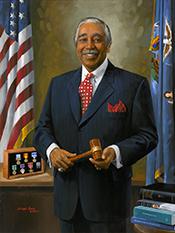
Mr. Speaker, I do not really know what the Republicans are so frightened of in this bill that they allegedly are so proud of that they continuously deny the Democrats an opportunity to say, But we…
Mr. Speaker, I do not really know what the Republicans are so frightened of in this bill that they allegedly are so proud of that they continuously deny the Democrats an opportunity to say, But we got a better idea.
The Republican majority has been successful in winning the votes in order to get legislation passed. I do not think they have been successful in allowing the American people to believe that they have been fair, that they have been fair to the minority, or that they have been fair to the working people, or that they have been fair to the manufacturers that work hard every day to try to create jobs. I do not think that they think that they have been fair in terms of having some sense of patriotism or some sense of pride in saying, Made in the USA.
Yes, they say this legislation creates jobs, but not jobs for Americans. Jobs for people overseas. Why would they not let the Crane- Rangel bill come out in substitute? It has been rumored because we did not have a substitute, but I am so glad to see that my friend who is the chairman of the Committee on Rules is on the floor, who is always fighting hard to do the right thing, but somehow he is overwhelmed by evil forces that deny him the opportunity to do it.
Early last night, the gentleman came to me on this floor to say he wanted to help me to have a substitute. And while we were working with the leadership to have this substitute, he came
with heavy heart to share with me that we would not have a substitute.
Why, I ask, are Republicans so afraid to allow Democrats to get a chance to vote up or down on an alternative to the lousy bill that they brought to the floor.
I yield to the gentleman from California.
The last thing you said to me was that we would not get a substitute.
Well, we did not get it; that is the bottom line.
I take back the balance of my time.
Mr. Speaker, we do not have a substitute, and that is the bottom line. I would think that we should not have to beg and scrape and ask them to give us a chance.
Are we asking for a chance to win? No. Do we believe that we have enough sugar and incentives that we can buy votes? No. We do not have that in our bill. We do not turn over the collection of taxes to private sector people. We do not have the ornaments that the gentleman from Washington (Mr. McDermott) will tell my colleagues about. All we have got is a fair bill to create jobs in the United States of America. That is all we have got. We do not buy votes. We just try to sell without their profits.
Only if the gentleman promises to tell me through his remarks in response why the Democrats cannot have a substitute to be able to say that we got a better idea.
I thank the chairman.
You are telling me that the gentleman from California did not tell me close to midnight that we would not get a substitute, that you had tried and you were unsuccessful? Is that what the gentleman is saying?
Mr. Speaker, I am telling my colleagues that we were told last night that we would not get a substitute. I am telling my colleagues we did not get one. I am telling my colleagues they have denied us the opportunity to express the fact that we have a bill that would have brought jobs to the United States and not abroad.
Announcement by the Speaker Pro Tempore
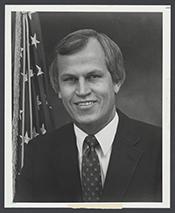
Mr. Speaker, I rise in deep sadness about the way this House is being run. A rule which denies the ranking member of the Committee on Ways and Means an opportunity to offer a serious, responsible…
Mr. Speaker, I rise in deep sadness about the way this House is being run. A rule which denies the ranking member of the Committee
on Ways and Means an opportunity to offer a serious, responsible amendment on an issue as important as this is should embarrass all of us who care about this House.
I yield to the gentleman from California.
Mr. Speaker, I must respectfully differ with the chairman of the Committee on Rules. The majority has justified the decision of the Committee on Rules to not allow the minority to offer an amendment because it is not a complete substitute. That explanation would be laughable if it were not so sad. The gentleman from New York (Mr. Rangel) submitted a comprehensive substitute to all of the provisions within the jurisdiction of the Committee on Ways and Means. He did not get into the Committee on Agriculture, which is what we should do around here. I would be perfectly willing as the ranking member of the Committee on Agriculture to work with the Committee on Ways and Means and the Committee on Rules. But for the gentleman from California to stand on the floor and say that he followed the rules of the House is not correct.
I am troubled, also, that this rule waives budget points of order and allows us to pass legislation adding another $34 billion-plus to the deficit. The other body passed a bill that would not add to the deficit. Some of us are making the argument that we ought to go with pay-as-you-go. I believe that. I heard speech after speech after speech last night arguing about a million here and a million there, and today it is billions, and wink and smile and then come to the floor and say, well, we are following the rules.
Anytime this body begins to deny the minority party the opportunity to have a say and to honestly have it applied by the rules of this House, we are in danger of big trouble. This rule should be defeated. The Committee on Rules should go back and draft a fair rule, and I am talking about the rule. The merits of the bill, there are a lot of things in it I want to work with them on. This rule should be defeated by anyone that cares about fiscal responsibility.

Mr. Speaker, I listened a moment ago as my friend from New York talked about: ``dragging it out and messing it up.'' I can think of no better terminology to describe the bill before us today, because…
Mr. Speaker, I listened a moment ago as my friend from New York talked about: ``dragging it out and messing it up.'' I can think of no better terminology to describe the bill before us today, because it has been ``drug out and messed up.''
I heard my friend, the chair of the Committee on Ways and Means, somehow assailing our side of the aisle for wanting to ``bend the rules'' when the rule that we are debating here today allows all points of order against the bill to be waived. So, they bend the rules for things that they want to protect; but if we are seeking an opportunity to have meaningful amendments, a meaningful alternative, somehow that is trying to ``bend the rules.''
Certified smart people of good faith could have found a way to have allowed a meaningful debate on this floor. We have a serious bipartisan alternative offered up by the gentleman from Illinois (Mr. Crane), the gentleman from New York (Mr. Rangel), the gentleman from Illinois (Mr. Manzullo), people who have a proposal that is paid for, that would not increase the deficit, that would not be all ``messed up and drug out.'' But we are not going to permit that today. We are limiting debate on this proposal to 30 minutes, despite being something that has tied this Congress in knots for months and is a problem that is weighing against small manufacturers across this country.
There are legitimate policy differences. There is a great deal of emotion. There is a great deal of significant policy underlying it. We are not going to have an opportunity to deal with that. There is no good reason to have permitted only 30 minutes of debate on the other side of the aisle.
Maybe they think that is better, because this proposal is moving through this Chamber in a fog of over 700 pages of technical Tax Code and report language that the vast majority of this Chamber has had no access to and certainly has not had a chance to study it even if they had the time. I would suggest that this is a testimony to how far the rhetoric of the majority obscures their action and suggests contempt for people in both parties who disagree with them.

Mr. Speaker, one of those amendments denied debate was a bipartisan effort by me and the gentleman from Arizona (Mr. Flake). Someone in Washington needs to speak up today for conservative principles…
Mr. Speaker, one of those amendments denied debate was a bipartisan effort by me and the gentleman from Arizona (Mr. Flake). Someone in Washington needs to speak up today for conservative principles because this House Republican leadership has lost any pretense of fiscal responsibility.
Today, in this bill, Republicans are awarding $10 billion, this is billion with a B, to tobacco growers. They call it a buyout, but it is really a sellout to the tobacco industry. If this measure is approved, tobacco will get cheaper; more of it can be grown, and all American taxpayers will be the losers.
With the near go-it-alone occupation of Iraq continuously draining funds out the Treasury spigot faster than American taxpayers can pour their hard-earned funds into it, there is nothing conservative about giving away $10 billion to the tobacco industry.
Ten billion dollars would give tens of thousands of young Americans the college education they cannot afford. They could give tens of thousands of American mothers the peace of mind that comes when they know their children have health insurance. Ten billion dollars could also buy a lot of homeland security; but instead, Congress is spending that $10 billion to reward the producers of a lethal product that each year ruins the lives of families with death and disease.
This is not a job-creation bill. It is a disease-creation bill. Eighty percent of registered voters this week across America expressed their opposition to this tobacco bailout by the Congress. Unfortunately, the well-heeled lobbyists of Big Tobacco not the people, are the ones dictating this. Little wonder that this outrageous giveaway never had a public hearing, was never debated in Committee, and is being considered today in a way that denies any amendment to strike it.
If this measure is approved, the tobacco industry will once again make a killing out of this Congress, a Congress that is addicted to nicotine campaign contributions.

Mr. Speaker, I thank the gentleman for yielding me this time. On behalf of my North Carolina farm families, I rise today to support H.R. 4520. Since 1997, tobacco quota has been cut by more than 50…
Mr. Speaker, I thank the gentleman for yielding me this time.
On behalf of my North Carolina farm families, I rise today to support H.R. 4520. Since 1997, tobacco quota has been cut by more than 50 percent in tobacco-growing regions. Consequently, farm families have seen their income cut by more than half. Widows and widowers, who use quota rents as their 401(k)s, have likewise seen their income fall.
I ask Members, could they survive if their salary had been permanently cut by 50 percent or more? I think we know the answer to that: It would be very difficult.
The time for action is running out. We need to jump-start the process of reforming the current program, and we need to do it now. H.R. 4520 accomplishes this by including provisions for a tobacco buyout, and this is not a buyout for the companies, it is for the small farmers and the allotment holders across the tobacco-growing regions.
They have finally decided it is time for a change. They have had a hard time getting there, but the consequences they see is if they do not this year, they could face as much as a 30 percent cut this fall because of foreign tobacco flooding into America. This really is about helping people who work every day in the fields of this country making a living.
On the underlying bill, I would have preferred the approach of the Crane-Rangel bill, which I cosponsored, but beggars cannot be choosers. I thank the distinguished gentleman from California, chairman of the Committee on Ways and Means, for including the buyout provision in his bill. But I caution the gentleman, when it goes to conference with the Senate, remember the advice of the ancient Spartan women who gave this advice to their sons before battle, ``Come back with your shield, or come back on it.''
Mr. Speaker, I would say to the gentleman from California, come back with this buyout or do not come back.
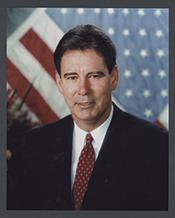
Mr. Speaker, I would like to reply to the gentleman that just spoke. I think he referred to this as Big Tobacco. Well, I am from Kentucky, and I can tell my colleagues that we are talking about small…
Mr. Speaker, I would like to reply to the gentleman that just spoke. I think he referred to this as Big Tobacco. Well, I am from Kentucky, and I can tell my colleagues that we are talking about small tobacco farms and family farms where men and women and their children get out in the fields every summer and try to eke out a living in the tobacco fields by the sweat of their brow.
They have had to purchase a government program, they have had to buy a quota in order to grow tobacco or they could not grow it. They contributed through an assessment fee to pay for a price support program on their own. It was not from taxpayers; and since 1997 that quota program has been cut over half, and now it is pretty difficult for them to maintain that living on that family farm.
It is the last thing that has allowed them to make a profit on their farm, if they made a profit. It was a program that allowed them to put their kids through college or to buy Christmas presents or to buy clothing for their kids. This is about small family farms in about seven to 10 States in this country. It is about an asset that they had to pay for that now is being taken away from them by the government; and we are eliminating something that, it is amazing to me, that for years I have heard we have got to get rid of this program, we have got to get rid of this program. Well, we are getting rid of it in this bill, and we are doing it by being fair with the tobacco farmers and the tobacco States and their families, not Big Tobacco, but that small farmer down in Kentucky and Tennessee and Virginia and Florida and Georgia and North Carolina and all those States that produce tobacco.
I yield to the gentleman from Georgia.
Absolutely.
The gentleman is absolutely right.
Show 2 more
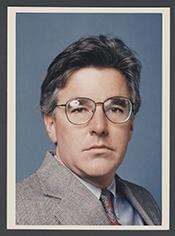
I thank the gentleman for yielding me this time. Mr. Speaker, for 10 years, a bipartisan group of legislators has been fighting to get tobacco regulated by the Food and Drug Administration. The FDA…
I thank the gentleman for yielding me this time.
Mr. Speaker, for 10 years, a bipartisan group of legislators has been fighting to get tobacco regulated by the Food and Drug Administration. The FDA regulates products from Tylenol to bottled water to macaroni and cheese; yet it does not have the authority to regulate tobacco, the only product that will kill you if used specifically as directed.
This year we stand on the verge of a historic compromise to get tobacco regulated by the FDA, but the shameless $10 billion tobacco buyout in this bill threatens the progress that we have made. This sweetheart deal gives billions to Big Tobacco from the pockets of taxpayers with no strings attached. It requires nothing to improve public health in return. This buyout kills our hope for FDA regulation by taking it off the negotiating table.
I urge my colleagues to vote against this rule and against this bill. It is inexcusable and indefensible that this product, macaroni and cheese, is regulated by the FDA; but this product, one of the only products that will kill you if used specifically as directed, we cannot get FDA regulation.
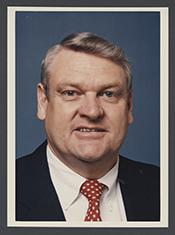
Mr. Speaker, will the gentleman yield? Mr. Speaker, is it not true that one of the reasons that the quota has gone down in recent years is because of the imported tobacco that has come in and the…
Mr. Speaker, will the gentleman yield?
Mr. Speaker, is it not true that one of the reasons that the quota has gone down in recent years is because of the imported tobacco that has come in and the quota is based on domestic amount?
Is that not what is hurting? It is time to end this program. These are small farmers who need help, who are in debt; and the purpose of this program is to buy a quota from the government.
Bill Text
Latest available legislative text
        [Congressional Bills 108th Congress]
[From the U.S. Government Publishing Office]
[H.R. 681 Introduced in House (IH)]

108th CONGRESS
1st Session
H. R. 681

To amend the Federal Election Campaign Act of 1971 to prohibit an
authorized committee of a winning candidate for election for Federal
office which received a personal loan from the candidate from making
any repayment on the loan after the date on which the candidate begins
serving in such office.

_______________________________________________________________________

IN THE HOUSE OF REPRESENTATIVES

February 11, 2003

Mr. English introduced the following bill; which was referred to the
Committee on House Administration

_______________________________________________________________________

A BILL

To amend the Federal Election Campaign Act of 1971 to prohibit an
authorized committee of a winning candidate for election for Federal
office which received a personal loan from the candidate from making
any repayment on the loan after the date on which the candidate begins
serving in such office.

Be it enacted by the Senate and House of Representatives of the
United States of America in Congress assembled,

SECTION 1. PROHIBITING REPAYMENT OF CANDIDATE PERSONAL LOANS AFTER DATE
ON WHICH CANDIDATE BEGINS SERVING IN ELECTED OFFICE.

Section 315 of the Federal Election Campaign Act of 1971 (2 U.S.C.
441a), as amended by section 304(a) of the Bipartisan Campaign Finance
Reform Act of 2002, is amended by adding at the end the following new
subsection:
``(k) Limitations on Repayment of Personal Loans Made by Candidate
to Committee.--An authorized committee of a winning candidate for an
election for Federal office occurring after December 2003 which
received a personal loan from the candidate may not make any repayment
with respect to such loan on or after the date on which the candidate
begins serving in the office.''.
<all>