Military Death Gratuity Improvement Act of 2003
Legislative Activity
Stay on top of the latest movement without scrolling through every action
Sponsor introductory remarks on measure. (CR H8019)
September 9, 2003
View full timeline
Introduced in House
February 11, 2003
Referred to the House Committee on Ways and Means.
February 11, 2003
Sponsor introductory remarks on measure. (CR H7230)
July 22, 2003
Sponsor introductory remarks on measure. (CR H8019)
September 9, 2003
Floor Debate
8 membersWhat members said about H.R. 693 on the floor
WBJ WMT
WMT IS
IS CBR
CBR MF+3
MF+3
Floor Debate
8 membersWhat members said about H.R. 693 on the floor
Mr. Speaker, tonight I am on the floor again. I am asking the House leadership and also the Democratic leadership to please bring to the floor H.R. 693, the Military Death Gratuity Tax Repeal. Mr.…
Mr. Speaker, tonight I am on the floor again. I am asking the House leadership and also the Democratic leadership to please bring to the floor H.R. 693, the Military Death Gratuity Tax Repeal.
Mr. Speaker, let me explain to my colleagues on both sides of the aisle that in the early 1990s, the Congress increased from $3,000 to $6,000 a death gratuity that is given to the family of a loved one who has died in uniform for this country. The Committee on Ways and Means, and it was not their fault, but the bill, the increase, was not sent to their committee so they could eliminate the tax. So since the early 1990s, anyone who has died in uniform for this country, their families have received a death gratuity of $6,000 and also the next year receive a tax bill from Uncle Sam.
Mr. Speaker, now that we are fighting for freedom for the Iraqi people, our troops in Afghanistan and also in Iraq have been killed, and God bless and rest their souls and bless their families, but, Mr. Speaker, the reason I am on the floor tonight is I am asking the House leadership, both Democrat and Republican, to please, before we leave here in early November, to bring this bill to the floor and let us pass it in a bipartisan way and send it to the other body.
In fairness to the gentleman from New York (Mr. Rangel), ranking member, and the gentleman from California (Chairman Thomas), they have included this language for 2 years in a larger bill to help our families in the military. But the other body, Mr. Speaker, has not passed the legislation.
So I hope that the Congress, the House, will join me in asking the leadership, both majority and minority, to bring this bill to the floor and let us send it to the other body and ask them to please pass this as a stand-alone bill.
Mr. Speaker, behind me are the photographs of those who have died for freedom. There are a lot more than these photographs, quite frankly. I have these photographs outside of my office in 422 Cannon because I do not want anybody to ever walk by my office and not understand the cost of freedom. We can see that it says, ``Let us never forget,'' faces of fallen heroes. These are young men and one woman from across this Nation who have given their lives for freedom, and yet Uncle Sam next year will send a tax bill to those families.
We are talking about, Mr. Speaker, that in the year of September 11, 2001, there were over 292 families that had to pay this tax. In 2002, there were 1,007 families that had to pay this tax. It is important that we pass this legislation this year. It should have passed 2 years ago, but that is not the House's fault. It is the other body's.
Mr. Speaker, let me also read part of an e-mail I received recently. It happens to be from a constituent of the gentleman from Illinois (Mr. Hastert), Speaker of the House. It says: ``Dear Representative Jones, thank you for your support of H.R. 693. Our son, Sergeant Jacob Frazier, was killed in action on March 29, 2003, in Afghanistan. Upon being told we would be taxed on a portion of the $6,000 benefit, I was shocked and insulted. My son was not married, but I am sure that there are numerous young widows that do not need another complication in their lives. Our country should not add to their burden with additional taxation.''
Mr. Speaker, that is why I will continue to come to the floor of the House until the House leadership, both Republican and Democrat, bring this bill to the floor. Yes, we are doing a lot of important things on the floor of the House, but yet there is time to bring this bill to the floor. And let us in a bipartisan way, as we have done before, pass this legislation.
Mr. Speaker, I would also like to share with the Members on the floor of the House, this is a young man whose name is Tyler Jordan. He is 6 years old. He has under his arm the flag that was draped upon his daddy's casket. His father was a gunnery sergeant in the United States Marine Corps named Phillip Jordan, who was killed in Iraq. We are looking at this photograph of this young man who is hurting very badly because his father has died for this country. But should we not in Congress, who are not being fired at with bullets, say to those who are dying for freedom not only for the Iraqi people, but for the American citizens that to this young man Tyler Jordan we are not going to send a bill from Uncle Sam asking him to pay a tax on the measly $6,000?
That is not enough, Mr. Speaker, but that is not the issue tonight. The issue tonight is we need to remove this tax.
I ask God to please bless our men and women in uniform. I ask God to please bless America. Let us pass this legislation.
Mr. Speaker, I am back on the floor tonight to say to the House and to the other body, the Senate, that we need to pass legislation to remove the tax that is sent to the families of those who have…
Mr. Speaker, I am back on the floor tonight to say to the House and to the other body, the Senate, that we need to pass legislation to remove the tax that is sent to the families of those who have given their loved one to die for this country.
Mr. Speaker, I want to introduce my colleagues to a young man whose name is Tyler Jordan. Tyler's father, gunny sergeant Phillip Jordan, died for this country. He died in Iraq. He gave his life for this country. Yet, Mr. Speaker, because we have not removed a tax on the death gratuity that will be sent to his family this year, next year his family will have to pay a tax on $6,000.
Last year I put a bill in that would remove this tax; and it was supported by both parties, Democrat and Republican. It was sent in a larger bill to the Senate, but the Senate could not find the time to pass the legislation. This year again, the House, in a bipartisan way, Democrat and Republican, have sent to the Senate a larger bill with this provision in it to remove this tax on this death gratuity, and the Senate still has not taken the time to pass it.
Behind me are faces of those who have given their lives for this country. Their families next year will receive a tax bill from Uncle Sam. Mr. Speaker, I think when a family gives a loved one dying for freedom, the least that the House and the Senate can do is to repeal this tax.
The history of this is that in the early 1990s, there was a $3,000 death gratuity sent to the family. It was increased to $6,000, but the Congress did not take off the tax on the additional $3,000, so that means on the $6,000 death gratuity that is sent to the family, a tax will have to be paid. Mr. Speaker, I am going to call on the House leadership, both Republican and Democrat, the Senate leadership, and the President of the United States that we not leave here in November of this year and say to the families who have given a loved one that you are going to receive a tax bill from Uncle Sam.
I look at this young man that I hold up again, his name is Tyler Jordan. His father, Phillip, a Marine, gunny sergeant, died for this country. Yet not only did he give up his father, but also his family is going to be asked to pay a tax. This is unacceptable. There are many issues that we debate here in the House of Representatives, many issues that are so important; but is there anything more important than to say to a family, you gave a loved one for this country. The least we can do is to eliminate this tax.
So I am asking my colleagues on both sides of the political aisle to please help me encourage the House leadership, both Republican and Democrat, that we not leave this year without sending to the floor of the House H.R. 693, a bill that I have introduced supported by both sides, the military death gratuity tax repeal, get it to the floor and pass it. Because I do not want to come back here in 2004 and think that we have asked a family that gave a loved one that they had to pay a tax.
Let me give my colleagues a quick example. On September 11 of 2001, over 292 military families paid a tax on the gift of a loved one. In the year 2002, if this bill had passed last year, but since it did not pass, 1,700 families had to pay a tax on the gift of a loved one who died for freedom in America.
So, Mr. Speaker, it is my hope as I conclude tonight that as we look at the faces of these who have given their lives for America, we look at the little boy who gave his father for this country, that we will not leave here in November without passing H.R. 693 on the floor of this House and let us send it to the other body and ask them to pass that legislation. I am going to write a letter to the President of the United States, send it tomorrow, and ask the President to please get behind this legislation.
Mr. Speaker, I close as I do in my district and I did last night: I ask God to please bless our men and women in uniform, to please bless their families, and I ask God to please in his loving way in
his arms to hold the families who have given their loved ones dying for freedom. I ask God to please bless the American people, to bless the House and Senate that we will do what is right in the eyes of God Almighty. I ask God to please be with the President of the United States so that he will do what is right for the future of this country. And I ask three times, God please, God please, God please continue to bless America.
Mr. Speaker, I am back on the floor today to talk about the repeal of the death gratuity tax on the families who have given their loved ones to die for freedom in America. Mr. Speaker, behind me are…
Mr. Speaker, I am back on the floor today to talk about the repeal of the death gratuity tax on the families who have given their loved ones to die for freedom in America.
Mr. Speaker, behind me are the faces of just a few of those who have died in either Afghanistan or Iraq. In the year 2001, there were 292 families that received a bill from Uncle Sam in the way of a tax because their loved one died in uniform fighting for freedom. In the year 2002, there were 1,007 families that received a bill from Uncle Sam because their loved one died in uniform for freedom.
Already in 2003, it is well over 280 families.
Mr. Speaker, the history on this issue is that prior to 1991 or 1992, there was a $3,000 death gratuity that was given by the government to the families whose husband or wife or daughter or son died in uniform. It could be in an accident or war situation.
The Congress in the early 1990s increased that from $3,000 to $6,000, but what happened is it did not go through the proper committee to take the tax off.
So, Mr. Speaker, I have a bill that is H.R. 693 to repeal this tax; and in fairness to the committee and to both sides, it has been supported by both sides. The committee of jurisdiction, the Committee on Ways and Means, included this language in a larger package to bring tax relief to the military, which was fine with me; but the Senate will not move the legislation. Mr. Speaker, I think it is absolutely unacceptable, deplorable that we do not take this tax off the families who are giving loved ones.
Let me show a photograph of a young boy whose name is Tyler Jordan. This was a shot in a national newspaper that I saw, and I was so touched by it that I wanted to have a copy of it. Tyler's father was a gunnery sergeant named Phillip Jordan. He was killed in Iraq. In the photograph of Tyler, he has an American flag that was taken off his father's coffin under his arms and he is looking at the father's coffin. How tragic that is within itself, but adding to that tragedy is that next year his family is going to get a bill from Uncle Sam, a bill of $6,000, which is not enough; but we need to take this tax off so that the families who have lost loved ones will not be paying a penalty for giving the loved one who died for freedom and died for this country.
This week I received an e-mail from the father of Sergeant Jacob Frazier, and I want to read this, Mr. Speaker. It says, ``Thank you for your support of H.R. 693. Our son, Sergeant Jacob Frazier, was killed in action on March 29, 2003, in Afghanistan. Upon being told we would be taxed on a portion of the $6,000 benefit, I was shocked and insulted. My son was not married, but I am sure that there are numerous young widows that do not need another complication in their lives. Our country should not add to their burden with additional taxation. Let me know if I can do anything to help you here in Illinois to get this bill passed.''
Mr. Speaker, I am going to call on the House leadership, both parties, and ask the House leadership to please before we leave in November bring up H.R. 693, stand-alone bill. I have got many supporters from the Democratic side and the Republican side. Bring it to the floor, and let us morally do what is right for those families who have given their loved one.
Mr. Speaker, I actually wrote the President of the United States on September 17 and asked him to please use the executive office to contact the leadership in the House and the Senate, both parties, to move this legislation. In the last paragraph I wrote this sentence to the President of the United States: ``Given the very little time left in this legislative session, failure to do so will result in more American military families not only giving a loved one for freedom but also suffering the unacceptable indignity of being taxed on that gift.''
Mr. Speaker, we do a lot of good things around here and a lot of things we debate. We disagree, both parties and within our own parties. But this is one of those issues that it is simple. It is morally the right thing to do.
Mr. Speaker, I close by asking God to please bless our men and women in uniform and, God, please bless America.
Madam Speaker, I am on the floor again. I come to the floor about once a week to talk about a bill, H.R. 693, to repeal the tax on the death gratuity. The history of this is that in 1991 the United…
Madam Speaker, I am on the floor again. I come to the floor about once a week to talk about a bill, H.R. 693, to repeal the tax on the death gratuity.
The history of this is that in 1991 the United States Congress enacted legislation that created going from $3,000 to $6,000 the death gratuity. The death gratuity is a payment to the families who have lost a loved one in uniform, whether they be training or they be in war.
A couple of years ago I heard about this tax; and I thought about how unfair, how unacceptable that any family who has given a loved one in uniform for this country should have to pay a tax on a very small amount of money known as the death gratuity of $6,000. A year ago I introduced a bill that would take care of this tax and remove it. It was put in a larger package by the House leadership, which I appreciated, and sent over to the other body; but they did not act on the legislation. So we went another year that families who lost loved ones paid a tax on their gift of that loved one to this Nation and for freedom.
Again this year, Madam Speaker, we sent a bigger bill over with this language in it that would repeal the tax, but the other body will not take it up. And I want to give some examples of this, Madam Speaker.
From September 2001 through December 2001, 292 families in America had to pay a tax on their gift, that gift being a family member in uniform. In the year 2002, 1,007 families had to pay Uncle Sam for their gift of their loved one in uniform who died fighting for freedom. Already this year it is over 300. I do not know what the total will be when we reach December 31.
Madam Speaker, let me show a photograph of a young man who is 6 years old. His name is Tyler Jordan. Tyler is holding the American flag under his arm as he is looking at his daddy's casket. Tyler's father was a gunnery sergeant named Phillip Jordan, who was killed in Iraq fighting for freedom.
I look at this little boy, I saw it in the newspaper and it struck me so personally, I decided to try to get a copy of this young boy's face. Tyler's mother is going to get a bill from Uncle Sam, is not giving your daddy enough without receiving a tax from Uncle Sam on a small amount of money, $6,000, the death gratuity.
I want to read an e-mail from a father who e-mailed me last week. ``Dear Representative Jones, Thank you for your support of H.R. 693. Our son, Sergeant Jacob Frazier, was killed in action on March 29, 2003, in Afghanistan. Upon being told we would be taxed on
a portion of the $6,000 benefit, I was shocked and insulted. My son was not married, but I am sure there are numerous young widows who do not need another complication in their life.
``Our country should not add to their burden with additional taxation. Let me know if there is anything I can do to help you in Illinois to get this bill passed. Speaker Hastert is my Congressman, and I would be happy to get in touch with him.''
Madam Speaker, I am asking the House leadership to please bring to the floor H.R. 693 as a stand-alone bill and let us send it to the other body. The photographs behind me are a few of the faces of young men and one woman who have died fighting for Afghanistan in Iraq. I have written to the President of the United States and the Speaker of the House of Representatives, and I am calling on Republicans and Democrats. This is an issue of morality. It is the right thing to do to say to the families who have given their loved ones, you do not owe us a tax.
Madam Speaker, I thank God for the gift of our men and women in uniform. I ask God to please bless them. Those who have lost loved ones I ask God to please hold in his arms and comfort those who have given their loved ones for freedom.
Let us pass this legislation before we leave in November. Let us not ask Tyler Jordan and his mother to pay a tax on the gift of his father and her husband.
God bless America.
Mr. Speaker, to my left are photographs of just a few of the men and women that were killed in Iraq and Afghanistan in the last year and a half. And the reason I came to the floor is because we…
Mr. Speaker, to my left are photographs of just a few of the men and women that were killed in Iraq and Afghanistan in the last year and a half. And the reason I came to the floor is because we passed the House in a very bipartisan way legislation to bring some tax relief to our men and women in uniform, and I came to the floor because the other body has not taken this legislation up.
I happen to have a bill, H.R. 693, it is called the Military Death Gratuity Improvement Act of 2003. A lot of people do not know this throughout this country, but every time a man or woman in uniform, whether it is wartime or non-wartime, is killed, the family gets what is called a death gratuity. Quite frankly it is not enough, but it is $6,000 that is given to the family. In 1991 they raised the death gratuity from $3,000 to $6,000, but they failed to take the tax off $3,000. So therefore at the end of the year the family who has lost a loved one fighting for freedom to protect us and this great Nation will probably get a tax bill from the IRS. And I must say, Mr. Speaker, I think it is absolutely unacceptable that this Congress would allow the family of a deceased man or woman in uniform who has died fighting for this country to get a bill from Uncle Sam saying they owe a tax on a small amount of money, $6,000.
So I wanted to come to the floor tonight because I have three bases in my district, Camp Lejeune Marine Base and Cherry Point Marine Station and also Seymour Johnson Air Force Base; and I have a great affection for our men and women in uniform, all services, not just those that I named, the Marines and Air Force, but all. And, again, I think that as we debate these large issues here in Washington, and they are very important issues no matter which side of the political aisle one is on, the least we can do is to take this tax off for the family who has lost a loved one fighting for freedom in Iraq, fighting in Operation Enduring Freedom, and I just hope that the other body, Mr. Speaker, very soon will pass this legislation, not just the bill I put in, which is part of a bigger package, but we need to make sure that in the year 2004 when the families who have lost loved ones receive their tax bill that they are not going to see a tax on the death gratuity that was given to family.
So, Mr. Speaker, I must say as I begin to close that my staff, and I want to compliment my staff, we have a photograph outside my office of everyone that has died in this fight for freedom in Operation Freedom in Iraq and also those that were killed in Afghanistan. So I hope, and again I am being repetitious but I do not apologize for it, that the Senate will do their job and make sure that the family that receives not only the notice that their son or daughter has given their life for this great Nation but also to make sure that at the end of the year that family does not receive a notice from Uncle Sam that they owe a tax on $6,000.
So, Mr. Speaker, I close the way I do all over my district. I ask God to please bless the men and women in uniform. I ask God to please bless the families of those who have men and women in uniform. And I ask God to please in his loving arms hold the families who have lost loved ones dying for freedom, and I ask God to please bless the House and Senate that we will do what is right in the eyes of God. I ask God to bless the President, that he will have the strength and the wisdom to lead this great Nation. And I ask three times, God, please, God, please, God, please continue to bless America.
Show 8 more
Mr. Speaker, I move to suspend the rules and pass the bill (H.R. 1307) to amend the Internal Revenue Code of 1986 to provide a special rule for members of the uniformed services in determining the…
Mr. Speaker, I move to suspend the rules and pass the bill (H.R. 1307) to amend the Internal Revenue Code of 1986 to provide a special rule for members of the uniformed services in determining the exclusion of gain from the sale of a principal residence and to restore the tax exempt status of death gratuity payments to members of the uniformed services, and for other purposes.
Mr. Speaker, I yield myself such time as I may consume.
This particular provision is called the Armed Forces Tax Fairness Act of 2003, and a couple of examples, I think, will make it quite obvious as to why it is the tax fairness part of the title that we should focus on. As we now know for some years now, you have been able to exclude the capital gain on a home if you lived in that home as your principal residence for 24 months out of a 5-year period. Of course, we all know that the military as to where they live is subject to the exigencies of the world and the need for military personnel to be dispersed sometimes literally around the world. I think it is entirely appropriate to examine this kind of a piece of legislation in the context of where we are vis-a-vis the President's decision to perhaps move militarily against Iraq.
So what this says is that if, in fact, you are not able to meet that 24-months-out-of-5-year period for exclusion from the capital gains, and the reason you are not able to is because you have been transferred away from home on official extended duty during that 5-year period, you would be exempt from that regulation.
There follow a series of other changes in the Tax Code that very much are representative of that kind of approach in treating the military differently because the military does not have the ability at times, the individuals in the military, to control decisions that affect them directly.
That is the purpose of the bill. It is as it was originally introduced. For purposes of determining the above-the-line deduction for overnight travel expenses for military reservists, this bill, as some people know, passed the House twice in the last Congress, and in negotiating with the Senate, the agreement at that time was that the exemption should be up to $1,500 for reservists who serve more than 100 miles away from home. That was an agreement that had been negotiated between the House and the Senate, and this particular bill includes that agreement so that we could reach quick settlement in a conference between the House and the Senate.
Mr. Speaker, I reserve the balance of my time.
Mr. Speaker, it is my pleasure to yield such time as he may consume to the gentleman from North Carolina (Mr. Jones), who has a measure included in this bill, which was a separate bill, which is a significant piece of legislation.
Mr. Speaker, I yield as much time as he may consume to the gentleman from New York (Mr. Houghton), a member of the Committee on Ways and Means.
Mr. Speaker, I yield myself such time as I may consume.
I agree with the gentleman from Missouri that the House and the Senate have indeed acted, but not in concert and let the Record note that the House acted in July and again in October. That perhaps was not enough lead time for the Senate; so we are moving in March, and we believe that may be sufficient lead time for the Senate to be able to act.
Mr. Speaker, I yield such time as he may consume to the gentleman from Florida (Mr. Foley), a member of the Committee on Ways and Means.
Mr. Speaker, I came to the floor today because let me first explain the posters on my left and right are the faces of young men and women who have died fighting for freedom in Iraq and Afghanistan,…
Mr. Speaker, I came to the floor today because let me first explain the posters on my left and right are the faces of young men and women who have died fighting for freedom in Iraq and Afghanistan, and also, Mr. Speaker, I hold up a photograph of a young man from Connecticut whose name is Tyler Jordan, 6 years old. He has the American flag folded under his arm, and he is looking at the casket of his father who died for freedom. Gunny Sergeant Phillip Jordan from Connecticut died for freedom.
Mr. Speaker, the reason I am on the floor today is that last year I introduced a bill that would repeal the tax on the death gratuity. The American military family receives when a loved one dies a small amount of money. It is $6,000, and there is a tax on $3,000 of the $6,000. And last year we passed in a larger bill a repeal, and it was sent to the other body and they did nothing with it. This year again the House has passed the same language which was in H.R. 693, the Military Death Gratuity Tax Repeal, the bill I put in. It was put into a larger bill that went to the Senate, and they still have taken no action. Let me tell the Members what that means.
From September 11, 2001, to December 31, 2001, over 292 military were killed and their families paid a tax on the gift of their son or loved one fighting for freedom. That is absolutely horrible in my opinion, Mr. Speaker. And in the year 2002, 1,007 families had to pay a tax on the death of a loved one. Again, Mr. Speaker, I want to say that we, the House, have done our part and we have sent to the other body legislation to repeal this tax. It is unacceptable that any family in this country who has a loved one who has died for freedom would get a bill tax due from Uncle Sam. And, Mr. Speaker, I am calling on the House leadership to bring up H.R. 693, bring it to the floor as a stand-alone bill, let us pass it and send it over to the other body, because if we will do that, Mr. Speaker, I will go on every radio show I can get on, every TV show I can get on, and ask that we not leave this October/November without passing this bill to eliminate the tax on the death gratuity. $6,000 is not enough. We need to raise that, but there is one thing we can do, take off the tax.
Again I hold up the photograph of this young man, Tyler Jordan, who gave his father to this country, and why in the world should his family, in the year 2004, get a tax due bill from Uncle Sam? Is not giving the life of a loved one fighting for freedom enough?
So, again, Mr. Speaker, I ask the House leadership, both Republican and Democrat, to join me and bring to the floor H.R. 693. Let us repeal this death tax and send it over to the other body, and let us put pressure on them to get it to the President so that the other Phillip Jordans throughout this country will not have a mother or father saying I owe Uncle Sam tax on the gift of my loved one.
Mr. Speaker, with that, I want to close by asking God to please bless our men and women in uniform. I ask God to please bless the families of our men and women in uniform, and I ask God in His loving way to hold in his arms those who have lost ones fighting for freedom, and I ask God to bless the American people, the House and Senate that we will do what is right. I ask God to give strength and wisdom to the President of the United States. And I ask God three times, please, God; please, God; please, God, continue to bless America.
Mr. Speaker, this is a very important issue that I bring to the floor. As you can see behind me, these are the faces of just a few of the men and women who have died for this country, both in…
Mr. Speaker, this is a very important issue that I bring to the floor. As you can see behind me, these are the faces of just a few of the men and women who have died for this country, both in Afghanistan and Iraq. I bring this to the floor because last year I introduced a bill to repeal the tax on the death gratuity.
The death gratuity, Mr. Speaker, is a ``thank you,'' if you will, not enough, but it is a check that is given to the families of those who have given loved ones in uniform that have died for this country. I want to say to the leadership on both sides that last year you did, and I thank both sides, put the language from that bill into a larger bill to bring tax relief to our men and women in uniform, but the other body did not pass the bill.
This year, I put the bill back in as H.R. 693, to repeal the tax on the death gratuity. It was put into a larger bill known as the Military Tax Fairness Act, supported by both sides, sent to the other body, known as the Senate, and they still have not moved that bill. So I am coming to the floor as much as possible to ask the leadership on the House side, both Republican and Democrat, to please bring up as a stand-alone bill, H.R. 693.
Mr. Speaker, I wanted to show you another photograph. This is a young fellow whose father was killed in Iraq. His name is Tyler Jordan. His father was a Gunnery Sergeant killed while fighting for freedom in Iraq. Mr. Speaker, I bring this to the floor because this next year, his mother will receive a tax bill from Uncle Sam.
Mr. Speaker, how much does a family have to give? It gives a loved one, who has died for freedom, to protect the American people. Why can we not, as a Congress, send to the President, before we leave in November, a bill to say that we are going to repeal the tax on the death gratuity?
Mr. Speaker, I hope that the leadership on the House side, both Republican and Democrat, will join me in bringing this bill to the floor as a stand-alone bill, and let us send it to the other body and ask them to please look into their own hearts and pass that legislation and send it to the President. No family that has given a loved one, and in many cases a child, a father, a husband, should be asked next year by Uncle Sam to pay a tax on that gift.
So, with that, Mr. Speaker, I am going to close, as I do all over my district, the Third District of North Carolina, the home of Camp Lejeune Marine Base, Cherry Point Marine Corps Air Station and Seymour Johnson Air Force Base.
Mr. Speaker, I ask God to please bless the men and women in uniform; I ask God to please bless the families of the men and women in uniform; I ask God to please hold the families who have lost loved ones in His loving arms. I ask God to please bless the House and Senate, that we will do what is right in the eyes of the Lord; and I ask God to please bless the President of the United States, that will he have courage and wisdom to what is right for this Nation, today and tomorrow.
Mr. Speaker, I close three times by asking God, God please, God please, God please continue to bless America.
Mr. Speaker, Members can see beside me and behind me are photographs of men and women who have died in Operation Freedom; and the reason I come to the floor with these photographs, I do not want us…
Mr. Speaker, Members can see beside me and behind me are photographs of men and women who have died in Operation Freedom; and the reason I come to the floor with these photographs, I do not want us as Members of Congress to ever forget, not that we ever would, the high cost of freedom, because someone has given a life to ensure that the American people as well as the people of Iraq can have the freedom that we in America are guaranteed by our Constitution.
The reason I wanted to come to the floor is because many of my colleagues, as well as people throughout this country, do not realize that each and every family that has a loved one killed in the military receives what is called a death gratuity. It is a small amount of money, I do not think it is enough, but it is a check for $6,000. What makes it even worse than the amount is a tax on part of the $6,000.
In the 107th Congress, I introduced legislation to eliminate the tax, and let me say that the House did its job in a bipartisan way and passed the legislation, sent it over to the other body and they failed to act on that legislation. Because of that, Mr. Speaker, families throughout this country, actually 292 military families, had to pay a tax on the death gratuity they received on the death of a loved one serving this Nation and possibly fighting for freedom.
Mr. Speaker, if the other body does not pass this legislation that we have sent over there again this year, meaning 2003, very possibly in 2004 there could be as many as 200 to 300 families in this country that will receive from Uncle Sam a notice that they owe tax on the death gratuity. I think this is unacceptable. I think it is deplorable that any family that would give a loved one to serve this Nation who has given their life to protect freedom would next year receive a tax notice from Uncle Sam.
Mr. Speaker, I think that is unacceptable. I think the other body needs to do its job and pass legislation to ensure that in the year 2004 the families who lose loved ones serving this Nation will not have to pay a tax on a $6,000 death gratuity. I think we as Congress must ensure that the families who have lost those loved ones will not be asked by Uncle Sam to pay a tax on the small amount of $6,000 for that loved one who has given their life. I close by encouraging the other body to do its job and not leave this fall and not have passed this legislation.
Mr. Speaker, I close as I always do in my district, I ask God to please bless our men and women in uniform, I ask God to please bless their families, I ask God to please bless the families who have lost loved ones, I ask God to please bless the House and Senate that we will do what is right in the eyes of God, I ask God to please bless the President of the United States that he will do what is right in the eyes of God, and I ask three times, God please, God please, God please continue to bless America.
Mr. Speaker, I appreciate the ranking member recognizing me on this very important bill, the Armed Forces Tax Fairness Act of 2003. So I rise in support of this bill which is much-needed tax relief…
Mr. Speaker, I appreciate the ranking member recognizing me on this very important bill, the Armed Forces Tax Fairness Act of 2003. So I rise in support of this bill which is much-needed tax relief for our men and women in uniform. And although there was some delay, I am glad that the majority has agreed to remove the extraneous amendments and bring a clean bill to the floor, and we thank them for that. A bill to provide tax relief for brave men and women is not the appropriate vehicle for extraneous amendments.
I hope that this bill will now be able to move forward expeditiously so that our servicemen and women, particularly those in the Guard and Reserve, will be able to receive meaningful and proper tax relief.
Since the end of the Persian Gulf conflict in 1991, our reliance on the Reserve components has steadily increased. In 1993, for example, Reservists and National Guardsmen provided 5.7 million man-days' worth of support to our military. In the wake of the attacks on September 11, 2001, Reservists provided more than 41 million man-days of support to meet military requirements, primarily because of operations Noble Eagle, which of course is protecting the United States, and Enduring Freedom, which was liberating Afghanistan. The demands on our Reservists to participate in military operational missions have more than doubled in recent years.
The global war on terrorism has also increased burden on the Reserves and National Guard. Following the terrorist attacks on September 11, some 85,500 Reserve and National Guardsmen personnel were mobilized for active duty. Thousands were sent to guard our Nation's airports. This provided security for bridges and power plants and water treatment facilities and other important infrastructures that are vital to the American economy. Today, more than 50,000 Reservists still remain mobilized for the global war on terrorism, and almost 20,000 Reservists, and I will say there again, almost 20,000 Reservists face a second year of involuntary active duty.
The last several months have seen the number of mobilized Reservists soar to over 120,000 to meet potential demands for our conflict in Iraq, and these numbers continue to rise daily. Allowing travel expense deductions for Reservists is the least we can do for these brave men and women.
Last year the House and the Senate passed similar tax measures to support the troops. In the waning days of the Congress, the measure was tied up by extraneous provisions, which ultimately led to its demise before adjournment. On the eve of our Nation going to war, and that is what we are going to do, I urge my colleagues to support this measure so that we can move forward in ultimately adopting a bill that will provide significant tax relief for those who wear the uniform of the United States of America.
Mr. Speaker, as Members know, I represent the Third District of North Carolina, which is the home of Camp Lejeune and Cherry Point and Seymour Johnson Air Force Base. A bill that I introduced, H.R.…
Mr. Speaker, as Members know, I represent the Third District of North Carolina, which is the home of Camp Lejeune and Cherry Point and Seymour Johnson Air Force Base. A bill that I introduced, H.R. 693, the Military Death Gratuity Improvement Act, I want to thank the chairman and the ranking member for including that bill, or the language from that bill, into this major bill that I think is of great benefit to our men and women in uniform.
I would like to give very briefly the history of this provision because the death gratuity was reaffirmed as a tax free benefit when the Congress amended the Tax Code in 1986; and about a year ago I happened to be driving back to the Congress, and I was listening to a talk show and they were talking about how the fact that our men and women in uniform who received the death gratuity, should they die while serving this Nation, that the families are taxed; and to the chairman and ranking member, this just really bothered my heart, to be honest about it.
So I called my staff and I asked John Weaver if he would look into this, and I thought there must have been some mistake along the way. And actually there was and when the mistake took place was in 1991 when the Congress actually increased the death gratuity from $3,000 to $6,000; and what happened was the Committee on Armed Services did not send the bill to the Committee on Ways and Means, so therefore there was a tax on the second $3,000. And Mr. Speaker and Members of the Congress, as our wonderful men and women in uniform are ready to go to war and to die for this country, I think this is an excellent bill not just because of this provision but because of the other provisions in this major bill that will help our men and women in uniform. So by the passage of this bill today, we are taking the tax off the death gratuity when the government says to the families of those who have lost loved ones that they are receiving this small amount, but yet important amount, of $6,000, that they will not get a bill from the IRS at the end of the year.
So with that I want to thank the chairman and ranking member for including the language from H.R. 693, the Military Death Gratuity Improvement Act, in this bill to help our men and women in uniform. This is just a small portion of the bill, but I thank them very much.
Let me say in closing, Mr. Speaker, to the chairman and the ranking member that the men and women in my district, and again it is Camp Lejeune, Cherry Point, Seymour Johnson Air Force base, are very appreciative of how we have worked together to bring this bill forward to help our men and women in uniform. So with that I thank the chairman for yielding me this time and God bless America.
Mr. Speaker, I yield myself such time as I may consume. I rise in support of this suspension bill and congratulate the chairman of the committee for taking the bulbs and baubles and whistles off the…
Mr. Speaker, I yield myself such time as I may consume.
I rise in support of this suspension bill and congratulate the chairman of the committee for taking the bulbs and baubles and whistles off the Christmas tree that they stacked on this bill initially. I am disappointed that we were not able to do more for our reservists, but I am pleased that we are doing more than they had originally thought on the other side of the aisle. And I am glad to see that we are bringing a clean bill to the floor and that is not bogged down with fish tackle boxes and foreign bettors on horse races.
I do hope during these very sober hours and days that the majority will think more and more about how we can be of assistance to those brave men and women who have volunteered or who are in the Reserve to see what we can do to not only give them political support, but legislatively to give them real support for the dedication that they continuously show not only in defense of this great country, but now in following the mandates of the President.
I would like to say that during time of war, we have become historically accustomed to the fact that we share sacrifices. Soon our chairman will be presenting to us an obscene tax bill that is anything but sacrifice, but would reward the wealthy. I do hope that as the House has caused the committee's leadership to change its mind and try to do things fairly, that we will see a change in attitude as this country is on the brink of war where shared sacrifice means exactly what the President said it would mean, and that is that we all be prepared to give support.
I support the Armed Forces tax fairness bill. I do hope we will see more bills of this kind in the future.
Mr. Speaker, I reserve the balance of my time.
Mr. Speaker, I yield 3 minutes to the gentleman from Maryland (Mr. Cardin), an outstanding member of the Committee on Ways and Means.
Mr. Speaker, I yield 4 minutes to the gentleman from Missouri (Mr. Skelton), the ranking member of the Committee on Armed Services on the Democratic side.
Mr. Speaker, I yield 3 minutes to the gentleman from New York (Mr. McNulty), an outstanding member of the Committee on Ways and Means.
Mr. Speaker, I thank the gentleman from California (Mr. Thomas) for bringing this very important bill, H.R. 1307, to the floor, the Armed Forces Tax Fairness Act. I am pleased to have played a part…
Mr. Speaker, I thank the gentleman from California (Mr. Thomas) for bringing this very important bill, H.R. 1307, to the floor, the Armed Forces Tax Fairness Act. I am pleased to have played a part in the Committee on Ways and Means and delighted it is here on the floor today.
Our forces will soon be engaging the enemy. We pray for their safety and also for a quick and decisive victory. We have about a quarter of a million of our soldiers, sailors, airmen and Marines poised for combat in the Middle East. In addition, thousands upon thousands of our military personnel are patrolling our skies, protecting key domestic sites, and fighting the war on terror both here at home and abroad. Our military families, active duty, the Reserves, and the National Guard are feeling increased pressure from frequent and longer deployments. This legislation brings tax relief and fairness to those who are protecting our freedoms.
I would like to focus quickly, if I may, on the Reserve component. One of the most important provisions of this bill would provide a $1,500 above-the-line deduction for their nonreimbursable overnight travel expenses. Let me underscore these travel expenses are not just for casual jaunts. These are for them to do their training required of them by this government so that they will be ready in fact to provide the backup needed for our active duty troops. Many give up time from their families, certainly leaving their loved ones, to be ready to combat the evil that may occur in this country or in fact abroad.
For too long our Reservists have incurred significant out-of-pocket costs associated with traveling to and from their Reserve stations. Our men and women in uniform should not be financially punished for serving their country, and thankfully this legislation fixes that problem. Our men and women in uniform deserve nothing less, and again I reiterate our prayers today go out to all families and particularly those who are in harm's way as they lead freedom in Iraq and certainly lead us away from terror in the United States.
Show 3 more
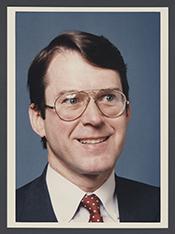
Mr. Speaker, I thank the gentleman from New York (Mr. Rangel), my friend and colleague, for yielding me this time. As I have said many times on this floor, as I get older, I try to keep my priorities…
Mr. Speaker, I thank the gentleman from New York (Mr. Rangel), my friend and colleague, for yielding me this time.
As I have said many times on this floor, as I get older, I try to keep my
priorities straight. And part of that is to remember that had it not been for all of the men and women who have worn the uniform of the United States military through the years, people like me would not have the privilege of going around bragging about how we live in the freest and most open democracy on the face of the Earth. Freedom is not free. We have paid a tremendous price for it. And I try not to let a day go by without remembering with deepest gratitude all of those who, like my own brother Bill McNulty, made the supreme sacrifice; and all of those who served and put their lives on the line like the gentleman from New York (Mr. Rangel), like the gentleman from Texas (Mr. Sam Johnson), like other people in this Chamber. Thankfully they came back home and rendered outstanding service in the community and raised beautiful families to carry on in their fine traditions. We all should be deeply grateful for that. And that is why when I get up in the morning, my first two priorities are to thank God for my life, and then veterans for my way of life.
Today more than a quarter of a million brave Americans are overseas poised for military action. Let us remember them in our thoughts and prayers every day. This proposal is a very modest proposal; but it is well earned, it is deserved, and I am deeply grateful to the chairman of the committee and the ranking member for bringing it to the floor. I urge all members to support it.

Mr. Speaker, let me thank the gentleman from New York (Mr. Rangel) for yielding me this time. I want to thank the gentleman from California (Mr. Thomas), our chairman, and the gentleman from New York…
Mr. Speaker, let me thank the gentleman from New York (Mr. Rangel) for yielding me this time.
I want to thank the gentleman from California (Mr. Thomas), our chairman, and the gentleman from New York (Mr. Rangel), ranking member, for developing a process where we could act quickly on this bill. I think this is the
first of, I am sure, other actions that we will be able to do as a body to show our support for the men and women that are in harm's way that are ready to answer the call of our Nation. I think all of us want to do everything we can here to support our troops, as today they are ready to act on behalf of our Nation.
I also want to thank the chairman and ranking member for including the provision in here that was brought to our attention from those families of students that are in our military academies. I have the honor of representing Annapolis where the Naval Academy is located. There was a provision in our code that discriminated against families of those that were in the academies in their ability to withdraw moneys from educational savings accounts without penalty. So I want to thank them for including that provision. There are many other provisions in there bill that provide equity for those who serve in our military, and I know all of us are going to show strong support for this legislation. I just really want to express my appreciation to the chairman and ranking member.
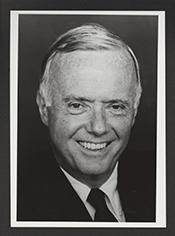
Mr. Speaker, I would like to just make a few comments on H.R. 1307, and of course ask my colleagues to support it. Last summer I introduced a bill that contained two of the present provisions, very…
Mr. Speaker, I would like to just make a few comments on H.R. 1307, and of course ask my colleagues to support it.
Last summer I introduced a bill that contained two of the present provisions, very modest. The bill increased the tax-free death benefit from $3,000 to $6,000 to members of our Armed Forces. Second, the bill made a change to allow members of the Armed Forces to have the 5-year rule, the so-called 5-year rule, deferred during the period they are assigned away from their principal residence. What this does is to allow individuals to take advantage of the law that excludes gain on the sale of a residence up to $250,000 or $500,000 per couple and if they resided in the property for 2 of the 5 years preceding the sale, and that was that. The bill passed the House. Both of these provisions are in and are part of H.R. 1307. The bill also expands the definition of ``member'' to include ancestors and lineal descendants for purposes of certain requirements of tax-exempt veterans organizations. These are all good changes. I recommend them. I support them.
Bill Text
Latest available legislative text
        [Congressional Bills 108th Congress]
[From the U.S. Government Publishing Office]
[H.R. 693 Introduced in House (IH)]

108th CONGRESS
1st Session
H. R. 693

To amend the Internal Revenue Code of 1986 to exclude from gross income
certain death gratuity payments to members of the uniformed services.

_______________________________________________________________________

IN THE HOUSE OF REPRESENTATIVES

February 11, 2003

Mr. Jones of North Carolina (for himself, Mr. Cole, Mr. Wilson of South
Carolina, Mr. Smith of New Jersey, Mr. Snyder, Mr. Forbes, Mr.
Abercrombie, Mrs. Tauscher, Mr. Pomeroy, Mr. Lantos, Mr. Miller of
Florida, Mr. Hayes, Mr. Tanner, Mr. Hefley, Mr. Matsui, Mr. Everett,
Mrs. Bono, Mr. Sanders, Mr. Simmons, Mr. Dicks, Mr. Schrock, Mr.
Ackerman, Mr. Frank of Massachusetts, Mr. Ortiz, Mr. Kolbe, Mr.
Gibbons, Mr. Kline, Mr. Mica, Mr. Meehan, Mr. Terry, Mr. Calvert, and
Mr. Reyes) introduced the following bill; which was referred to the
Committee on Ways and Means

_______________________________________________________________________

A BILL

To amend the Internal Revenue Code of 1986 to exclude from gross income
certain death gratuity payments to members of the uniformed services.

Be it enacted by the Senate and House of Representatives of the
United States of America in Congress assembled,

SECTION 1. SHORT TITLE.

This Act may be cited as the ``Military Death Gratuity Improvement
Act of 2003''.

SEC. 2. EXCLUSION FROM GROSS INCOME OF CERTAIN DEATH GRATUITY PAYMENTS
TO MEMBERS OF UNIFORMED SERVICES.

(a) In General.--Paragraph (3) of section 134(b) of the Internal
Revenue Code of 1986 (relating to certain military benefits) is amended
by adding at the end the following new subparagraph:
``(C) Exception for death gratuity increase.--
Subparagraph (A) shall be applied by substituting
`December 31, 1991' for `September 9, 1986' in the case
of a death gratuity payable under chapter 75 of title
10, United States Code, with respect to a death
occurring after September 10, 2001.''.
(b) Conforming Amendment.--Subparagraph (A) of section 134(b)(3) of
such Code is amended by striking ``subparagraph (B)'' and inserting
``subparagraphs (B) and (C)''.
(c) Effective Date.--The amendments made by this section shall
apply to amounts paid with respect to deaths occurring after September
10, 2001.
<all>