Nanotechnology Research and Development Act of 2003
 Rep. Sherwood Boehlert (R-NY)
Legislative Activity
Stay on top of the latest movement without scrolling through every action
Received in the Senate and Read twice and referred to the Committee on Commerce, Science, and Transportation.
May 8, 2003
View full timeline
Introduced in House
February 13, 2003
Referred to the House Committee on Science.
February 13, 2003
Committee Consideration and Mark-up Session Held.
May 1, 2003
Ordered to be Reported (Amended) by Voice Vote.
May 1, 2003
Reported (Amended) by the Committee on Science. H. Rept. 108-89.(text of measure as reported in House: CR 5/7/2003 H3722-3724)
May 6, 2003
Reported (Amended) by the Committee on Science. H. Rept. 108-89. (text of measure as reported in House: CR 5/7/2003 H3722-3724)
May 6, 2003
Placed on the Union Calendar, Calendar No. 48.
May 6, 2003
Rules Committee Resolution H. Res. 219 Reported to House. Rule provides for consideration of H.R. 766 with 1 hour of general debate. Previous question shall be considered as ordered without intervening motions except motion to recommit with or without instructions. It shall be in order to consider as an original bill for the purpose of amendment under the five-minute rule the amendment in the nature of a substitute recommended by the Committee on Scienc now printed in the bill. Measure will be read by section. Bill is open to amendments.
May 6, 2003 • 6:49 PM
Rule H. Res. 219 passed House.
May 7, 2003 • 12:47 PM
Considered under the provisions of rule H. Res. 219. (consideration: CR H3715-3735)
May 7, 2003 • 12:47 PM
Rule provides for consideration of H.R. 766 with 1 hour of general debate. Previous question shall be considered as ordered without intervening motions except motion to recommit with or without instructions. It shall be in order to consider as an original bill for the purpose of amendment under the five-minute rule the amendment in the nature of a substitute recommended by the Committee on Scienc now printed in the bill. Measure will be read by section. Bill is open to amendments.
May 7, 2003 • 12:47 PM
House resolved itself into the Committee of the Whole House on the state of the Union pursuant to H. Res. 219 and Rule XXIII.
May 7, 2003 • 12:48 PM
The Speaker designated the Honorable Lee Terry to act as Chairman of the Committee.
May 7, 2003 • 12:48 PM
GENERAL DEBATE - The Committee of the Whole proceeded with one hour of general debate on H.R. 766.
May 7, 2003 • 12:48 PM
Debate - The Committee of the Whole proceeded with debate on the Bell amendment under the five minute rule.
May 7, 2003 • 1:22 PM
POSTPONED PROCEEDINGS - At the conclusion of debate on the Bell amendment, the Chair put the question on the adoption of the amendment and by voice vote, announced that the noes had prevailed. Mr. Bell demanded a recorded vote and made a point of no quorum. Pursuant to clause 6 of rule XVIII, the Chair postponed further proceedings on the question of adoption of the amendment and the point of no quorum was considered as withdrawn.
May 7, 2003 • 1:35 PM
DEBATE - The Committee of the Whole proceeded with debate on the Bell amendment under the five minute rule.
May 7, 2003 • 1:37 PM
DEBATE - The Committee of the Whole proceeded with debate on the E.B. Johnson of Texas amendment under the five minute rule.
May 7, 2003 • 1:46 PM
DEBATE UNDER THE FIVE MINUTE RULE - The Committee of the Whole resumed debate under the five minute rule.
May 7, 2003 • 2:02 PM
DEBATE - The Committee of the Whole proceeded with debate on the Jackson-Lee amendment under the five-minute rule.
May 7, 2003 • 2:12 PM
UNFINISHED BUSINESS - The Chair announced that the unfinished business was the question of adoption of amendments which had been debated earlier and on which further proceedings had been postponed.
May 7, 2003 • 2:34 PM
The House rose from the Committee of the Whole House on the state of the Union to report H.R. 766.
May 7, 2003 • 3:04 PM
The previous question was ordered pursuant to the rule.
May 7, 2003 • 3:05 PM
The House adopted the amendment in the nature of a substitute as agreed to by the Committee of the Whole House on the state of the Union.
May 7, 2003 • 3:05 PM
Passed/agreed to in House: On passage Passed by the Yeas and Nays: 405 - 19 (Roll no. 167).
May 7, 2003 • 3:22 PM
On passage Passed by the Yeas and Nays: 405 - 19 (Roll no. 167).
May 7, 2003 • 3:22 PM
Motion to reconsider laid on the table Agreed to without objection.
May 7, 2003 • 3:22 PM
Received in the Senate and Read twice and referred to the Committee on Commerce, Science, and Transportation.
May 8, 2003
Voting History
3 votes recorded • Roll call available
HOUSE
Roll Call AvailableMay 7, 2003 at 3:23 PM
On Passage
Majority required: 1/2 (50%)
405 - 19
HOUSE
Roll Call AvailableMay 7, 2003 at 3:05 PM
On Agreeing to the Amendment
Majority required: 1/2 (50%)
207 - 217
HOUSE
Roll Call AvailableMay 7, 2003 at 2:58 PM
On Agreeing to the Amendment
Majority required: 1/2 (50%)
209 - 214
Floor Debate
18 membersWhat members said about H.R. 766 on the floor


 +13
+13
Floor Debate
18 membersWhat members said about H.R. 766 on the floor
Mr. Chairman, I ask unanimous consent that all Members may have 5 legislative days within which to revise and extend their remarks on H.R. 766. Mr. Chairman, I yield myself such time as I may…
Mr. Chairman, I yield myself such time as I may consume. (Mr. HALL of Texas asked and was given permission to revise and extend his remarks.) Mr. Chairman, of course I rise in support of this act. It…
Mr. Chairman. I thank the gentleman for yielding me time. I will try to drag out my speech as long as necessary so that the chairman's speakers will have time to arrive on this floor. Mr. Chairman,…
Mr. Chairman, I rise in support of this bill and feel that it is really our next step for scientific discovery, and I want to thank our chairman and ranking member for the open and bipartisan manner…
Mr. Chairman, I offer an amendment. Mr. Chairman, the traditional approach on environmental and health concerns for new technologies is to simply wait until there is a problem. Instead of reacting…
Show 8 more
Mr. Chairman, I rise in strong support of H.R. 766, the Nanotechnology Research and Development Act of 2003. I would like to thank very, very much the distinguished leaders of the Committee on…

Mr. Speaker, on May 7 of this year, the House debated and passed an important piece of legislation, the Nanotechnology Research and Development Act of 2003 (H.R. 766). During debate of this bill, it…

Mr. Chairman, I thank and compliment my friend and neighbor from New York, Mr. Boehlert, on his leadership and foresight in shepherding this landmark legislation to the floor today. I rise in strong…
Mr. Speaker, I yield myself such time as I may consume. Mr. Speaker, I, of course, rise in support of the Nanotechnology Research and Development Act, Senate 189, which as the chairman has so ably…

Mr. Chairman, what is nanotechnology? I think it is amazing. The chairman did not use a hair off of his head as an example, but nanotechnology is 1/100,000th the size of a normal human hair. What we…
Mr. Speaker, the current political debate on the economy is usually over the most recent economic statistics, but our economic future depends upon our remaining the most innovative economy in the…
Mr. Speaker, by direction of the Committee on Rules, I call up House Resolution 219 ask for its immediate consideration. Mr. Speaker, for the purpose of debate only, I yield the customary 30 minutes…
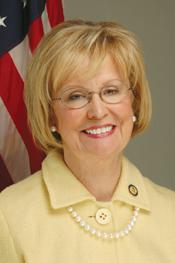
Mr. Chairman, I thank the chairman for yielding to me. Mr. Chairman, as on original cosponsor of H.R. 766, the Nanotechnology Research and Development Act, I rise today to express my strong support…
Show 11 more
Mr. Speaker, I move to suspend the rules and pass the Senate bill (S. 189) to authorize appropriations for nanoscience, nanoengineering, and nanotechnology research, and for other purposes. Mr.…

Mr. Chairman, I move to strike the requisite number of words. I yield to the gentlewoman from Texas. I yield to the gentleman from New York. Mr. Chairman, I rise in support of the Johnson amendment…
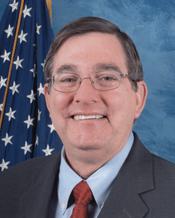
Mr. Chairman, I move to strike the last word. Mr. Chairman, I urge opposition to the Johnson amendment. First off, the administration opposes this amendment. The bill that is under consideration…
Mr. Chairman, I move to strike the last word. Mr. Chairman, I support the Nanotechnology Research and Development Act and applaud the gentleman from California (Mr. Honda), the gentleman from New…
Mr. Speaker, I thank the gentleman for yielding me time. Mr. Speaker, as an original cosponsor of H.R. 766, the Nanotechnology Research and Development Act that was approved by the House last May, I…

Mr. Chairman, I move to strike the last word. I wish to speak on the general merits of the bill. Nanotechnology is an extremely important scientific development, one in which we are just beginning to…
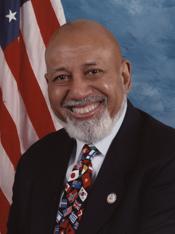
Mr. Speaker, I yield myself such time as I may consume. I thank the gentleman from Georgia for yielding me the time, and I would also alert my friend from Georgia, as I understand it now, we have but…
Mr. Speaker, I rise in support of S. 189, the 21st Century Nanotechnology Research and Development Act. I thank the distinguished leaders of the Committee on Science, the gentleman from New York…
Mr. Speaker, I thank my chairman for yielding me time. It is indeed a pleasure to be here this afternoon to support Senate bill 189, the 21st Century National Nanotechnology Research and Development…

Mr. Chairman, I rise in support of the Nanotechnology Research and Development Act of 2003. Science has revealed the far- reaching benefits of nanotechnology in recent years and I recognize the need…

Mr. Speaker, will the gentleman yield? Mr. Speaker, I would like to respond to the gentleman that the House will convene on Tuesday at 12:30 for morning hour and at 2 p.m. for legislative business.…
Bill Text
4 versions available
        [Congressional Bills 108th Congress]
[From the U.S. Government Publishing Office]
[H.R. 766 Referred in Senate (RFS)]

1st Session
H. R. 766

_______________________________________________________________________

IN THE SENATE OF THE UNITED STATES

May 8, 2003

Received; read twice and referred to the Committee on Commerce,
Science, and Transportation

_______________________________________________________________________

AN ACT

To provide for a National Nanotechnology Research and Development
Program, and for other purposes.

Be it enacted by the Senate and House of Representatives of the
United States of America in Congress assembled,

SECTION 1. SHORT TITLE.

This Act may be cited as the ``Nanotechnology Research and
Development Act of 2003''.

SEC. 2. DEFINITIONS.

In this Act--
(1) the term ``advanced technology user facility'' means a
nanotechnology research and development facility supported, in
whole or in part, by Federal funds that is open to all United
States researchers on a competitive, merit-reviewed basis;
(2) the term ``Advisory Committee'' means the advisory
committee established or designated under section 5;
(3) the term ``Director'' means the Director of the Office
of Science and Technology Policy;
(4) the term ``Interagency Committee'' means the
interagency committee established under section 3(c);
(5) the term ``nanotechnology'' means science and
engineering aimed at creating materials, devices, and systems
at the atomic and molecular level;
(6) the term ``Program'' means the National Nanotechnology
Research and Development Program described in section 3; and
(7) the term ``program component area'' means a major
subject area established under section 3(c)(2) under which is
grouped related individual projects and activities carried out
under the Program.

SEC. 3. NATIONAL NANOTECHNOLOGY RESEARCH AND DEVELOPMENT PROGRAM.

(a) In General.--The President shall implement a National
Nanotechnology Research and Development Program to promote Federal
nanotechnology research, development, demonstration, education,
technology transfer, and commercial application activities as necessary
to ensure continued United States leadership in nanotechnology research
and development and to ensure effective coordination of nanotechnology
research and development across Federal agencies.
(b) Program Activities.--The activities of the Program shall be
designed to--
(1) provide sustained support for nanotechnology research
and development through--
(A) grants to individual investigators and
interdisciplinary teams of investigators;
(B) establishment of advanced technology user
facilities; and
(C) establishment of interdisciplinary research
centers, which shall--
(i) network with each other to foster the
exchange of technical information and best
practices;
(ii) involve academic institutions or
national laboratories and other partners, which
may include States and industry;
(iii) make use of existing expertise in
nanotechnology in their regions and nationally;
(iv) make use of ongoing research and
development at the micrometer scale to support
their work in nanotechnology; and
(v) be capable of accelerating the
commercial application of nanotechnology
innovations in the private sector;
(2) ensure that solicitation and evaluation of proposals
under the Program encourage interdisciplinary research;
(3) expand education and training of undergraduate and
graduate students in interdisciplinary nanotechnology science
and engineering;
(4) accelerate the commercial application of nanotechnology
innovations in the private sector;
(5) ensure that societal and ethical concerns, including
environmental concerns and the potential implications of human
performance enhancement and the possible development of
nonhuman intelligence, will be addressed as the technology is
developed by--
(A) establishing a research program to identify
societal and ethical concerns related to
nanotechnology, and ensuring that the results of such
research are widely disseminated;
(B) insofar as possible, integrating research on
societal and ethical concerns with nanotechnology
research and development, and ensuring that advances in
nanotechnology bring about improvements in quality of
life for all Americans;
(C) requiring that interdisciplinary research
centers under paragraph (1)(C) include activities that
address societal and ethical concerns; and
(D) ensure through the National Nanotechnology
Coordination Office established under section 6 and
through the agencies and departments that participate
in the Program, that public input and outreach to the
public are both integrated into nanotechnology research
and development and research on societal and ethical
concerns by the convening of regular and ongoing public
discussions, through mechanisms such as citizens
panels, consensus conferences, and educational events,
as appropriate; and
(6) include to the maximum extent practicable diverse
institutions, including Historically Black Colleges and
Universities and those serving large proportions of Hispanics,
Native Americans, Asian-Pacific Americans, or other
underrepresented populations.
(c) Interagency Committee.--The President shall establish or
designate an interagency committee on nanotechnology research and
development, which shall include representatives from the Office of
Science and Technology Policy, the National Science Foundation, the
Department of Energy, the National Aeronautics and Space
Administration, the National Institute of Standards and Technology, the
Environmental Protection Agency, and any other agency that the
President may designate. The Director shall select a chairperson from
among the members of the Interagency Committee. The Interagency
Committee, which shall also include a representative from the Office of
Management and Budget, shall oversee the planning, management, and
coordination of the Program. The Interagency Committee shall--
(1) establish goals and priorities for the Program;
(2) establish program component areas, with specific
priorities and technical goals, that reflect the goals and
priorities established for the Program;
(3) develop, within 6 months after the date of enactment of
this Act, and update annually, a strategic plan to meet the
goals and priorities established under paragraph (1) and to
guide the activities of the program component areas established
under paragraph (2);
(4) propose a coordinated interagency budget for the
Program that will ensure the maintenance of a balanced
nanotechnology research portfolio and ensure that each agency
and each program component area is allocated the level of
funding required to meet the goals and priorities established
for the Program;
(5) develop a plan to utilize Federal programs, such as the
Small Business Innovation Research Program and the Small
Business Technology Transfer Research Program, in support of
the goal stated in subsection (b)(4); and
(6) in carrying out its responsibilities under paragraphs
(1) through (5), take into consideration the recommendations of
the Advisory Committee, suggestions or recommendations
developed pursuant to section 3(b)(5)(D), and the views of
academic, State, industry, and other appropriate groups
conducting research on and using nanotechnology.

SEC. 4. ANNUAL REPORT.

The chairperson of the Interagency Committee shall prepare an
annual report, to be submitted to the Committee on Science of the House
of Representatives and the Committee on Commerce, Science, and
Transportation of the Senate at the time of the President's budget
request to Congress, that includes--
(1) the Program budget, for the current fiscal year, for
each agency that participates in the Program, including a
breakout of spending for the development and acquisition of
research facilities and instrumentation, for each program
component area, and for all activities pursuant to section
3(b)(5);
(2) the proposed Program budget, for the next fiscal year,
for each agency that participates in the Program, including a
breakout of spending for the development and acquisition of
research facilities and instrumentation, for each program
component area, and for all activities pursuant to section
3(b)(5);
(3) an analysis of the progress made toward achieving the
goals and priorities established for the Program;
(4) an analysis of the extent to which the Program has
incorporated the recommendations of the Advisory Committee; and
(5) an assessment of how Federal agencies are implementing
the plan described in section 3(c)(5), and a description of the
amount of Small Business Innovative Research and Small Business
Technology Transfer Research funds supporting the plan.

SEC. 5. ADVISORY COMMITTEE.

(a) In General.--The President shall establish or designate an
advisory committee on nanotechnology consisting of non-Federal members,
including representatives of research and academic institutions and
industry, who are qualified to provide advice and information on
nanotechnology research, development, demonstration, education,
technology transfer, commercial application, and societal and ethical
concerns. The recommendations of the Advisory Committee shall be
considered by Federal agencies in implementing the Program.
(b) Assessment.--The Advisory Committee shall assess--
(1) trends and developments in nanotechnology science and
engineering;
(2) progress made in implementing the Program;
(3) the need to revise the Program;
(4) the balance among the components of the Program,
including funding levels for the program component areas;
(5) whether the program component areas, priorities, and
technical goals developed by the Interagency Committee are
helping to maintain United States leadership in nanotechnology;
(6) the management, coordination, implementation, and
activities of the Program; and
(7) whether societal and ethical concerns, including
concerns identified pursuant to section 3(b)(5)(D), are
adequately addressed by the Program.
(c) Reports.--The Advisory Committee shall report not less
frequently than once every 2 fiscal years to the President on its
findings of the assessment carried out under subsection (b), its
recommendations for ways to improve the Program, and the concerns
assessed under subsection (b)(7). The first report shall be due within
1 year after the date of enactment of this Act.
(d) Federal Advisory Committee Act Application.--Section 14 of the
Federal Advisory Committee Act shall not apply to the Advisory
Committee.

SEC. 6. NATIONAL NANOTECHNOLOGY COORDINATION OFFICE.

The President shall establish a National Nanotechnology
Coordination Office, with full-time staff, which shall--
(1) provide technical and administrative support to the
Interagency Committee and the Advisory Committee;
(2) serve as a point of contact on Federal nanotechnology
activities for government organizations, academia, industry,
professional societies, and others to exchange technical and
programmatic information; and
(3) conduct public outreach, including dissemination of
findings and recommendations of the Interagency Committee and
the Advisory Committee, as appropriate.

SEC. 7. AUTHORIZATION OF APPROPRIATIONS.

(a) National Science Foundation.--There are authorized to be
appropriated to the National Science Foundation for carrying out this
Act--
(1) $350,000,000 for fiscal year 2004;
(2) $385,000,000 for fiscal year 2005; and
(3) $424,000,000 for fiscal year 2006.
(b) Department of Energy.--There are authorized to be appropriated
to the Secretary of Energy for carrying out this Act--
(1) $265,000,000 for fiscal year 2004;
(2) $292,000,000 for fiscal year 2005; and
(3) $322,000,000 for fiscal year 2006.
(c) National Aeronautics and Space Administration.--There are
authorized to be appropriated to the National Aeronautics and Space
Administration for carrying out this Act--
(1) $31,000,000 for fiscal year 2004;
(2) $34,000,000 for fiscal year 2005; and
(3) $37,000,000 for fiscal year 2006.
(d) National Institute of Standards and Technology.--There are
authorized to be appropriated to the National Institute of Standards
and Technology for carrying out this Act--
(1) $62,000,000 for fiscal year 2004;
(2) $68,000,000 for fiscal year 2005; and
(3) $75,000,000 for fiscal year 2006.
(e) Environmental Protection Agency.--There are authorized to be
appropriated to the Environmental Protection Agency for carrying out
this Act--
(1) $5,000,000 for fiscal year 2004;
(2) $5,500,000 for fiscal year 2005; and
(3) $6,000,000 for fiscal year 2006.

SEC. 8. EXTERNAL REVIEW OF THE NATIONAL NANOTECHNOLOGY RESEARCH AND
DEVELOPMENT PROGRAM.

(a) In General.--Not later than 6 months after the date of
enactment of this Act, the Director shall enter into an agreement with
the National Academy of Sciences to conduct periodic reviews of the
Program. The reviews shall be conducted once every 3 years during the
10-year period following the enactment of this Act. The reviews shall
include--
(1) an evaluation of the technical achievements of the
Program;
(2) recommendations for changes in the Program;
(3) an evaluation of the relative position of the United
States with respect to other nations in nanotechnology research
and development;
(4) an evaluation of the Program's success in transferring
technology to the private sector;
(5) an evaluation of whether the Program has been
successful in fostering interdisciplinary research and
development; and
(6) an evaluation of the extent to which the Program has
adequately considered societal and ethical concerns.
(b) Study on Molecular Manufacturing.--Not later than 3 years after
the date of enactment of this Act a review shall be conducted in
accordance with subsection (a) that includes a study to determine the
technical feasibility of the manufacture of materials and devices at
the molecular scale. The study shall--
(1) examine the current state of the technology for
enabling molecular manufacturing;
(2) determine the key scientific and technical barriers to
achieving molecular manufacturing;
(3) review current and planned research activities that are
relevant to advancing the prospects for molecular
manufacturing; and
(4) develop, insofar as possible, a consensus on whether
molecular manufacturing is technically feasible, and if found
to be feasible--
(A) the estimated timeframe in which molecular
manufacturing may be possible on a commercial scale;
and
(B) recommendations for a research agenda necessary
to achieve this result.
(c) Study on Safe Nanotechnology.--Not later than 6 years after the
date of enactment of this Act a review shall be conducted in accordance
with subsection (a) that includes a study to assess the need for
standards, guidelines, or strategies for ensuring the development of
safe nanotechnology, including those applicable to--
(1) self-replicating nanoscale machines or devices;
(2) the release of such machines or devices in natural
environments;
(3) distribution of molecular manufacturing development;
(4) encryption;
(5) the development of defensive technologies;
(6) the use of nanotechnology as human brain extenders; and
(7) the use of nanotechnology in developing artificial
intelligence.

SEC. 9. SCIENCE AND TECHNOLOGY GRADUATE SCHOLARSHIP PROGRAMS.

(a) Establishment of Programs.--
(1) In general.--The agency heads shall each establish
within their respective departments and agencies a Science and
Technology Graduate Scholarship Program to award scholarships
to individuals that is designed to recruit and prepare students
for careers in the Federal Government that require engineering,
scientific, and technical training.
(2) Competitive process.--Individuals shall be selected to
receive scholarships under this section through a competitive
process primarily on the basis of academic merit, with
consideration given to financial need and the goal of promoting
the participation of individuals identified in section 33 or 34
of the Science and Engineering Equal Opportunities Act (42
U.S.C. 1885a or 1885b).
(3) Service agreements.--To carry out the Programs the
agency heads shall enter into contractual agreements with
individuals selected under paragraph (2) under which the
individuals agree to serve as full-time employees of the
Federal Government, for the period described in subsection
(f)(1), in positions needed by the Federal Government and for
which the individuals are qualified, in exchange for receiving
a scholarship.
(b) Scholarship Eligibility.--In order to be eligible to
participate in a Program, an individual must--
(1) be enrolled or accepted for enrollment as a full-time
student at an institution of higher education in an academic
field or discipline described in a list made available under
subsection (d);
(2) be a United States citizen or permanent resident; and
(3) at the time of the initial scholarship award, not be a
Federal employee as defined in section 2105 of title 5 of the
United States Code.
(c) Application Required.--An individual seeking a scholarship
under this section shall submit an application to an agency head at
such time, in such manner, and containing such information, agreements,
or assurances as the agency head may require.
(d) Eligible Academic Programs.--The agency heads shall each make
publicly available a list of academic programs and fields of study for
which scholarships under their department's or agency's Program may be
utilized, and shall update the list as necessary.
(e) Scholarship Requirement.--
(1) In general.--Agency heads may provide scholarships
under their department's or agency's Program for an academic
year if the individual applying for the scholarship has
submitted to the agency head, as part of the application
required under subsection (c), a proposed academic program
leading to a degree in a program or field of study on a list
made available under subsection (d).
(2) Duration of eligibility.--An individual may not receive
a scholarship under this section for more than 4 academic
years, unless an agency head grants a waiver.
(3) Scholarship amount.--The dollar amount of a scholarship
under this section for an academic year shall be determined
under regulations issued by the agency heads, but shall in no
case exceed the cost of attendance.
(4) Authorized uses.--A scholarship provided under this
section may be expended for tuition, fees, and other authorized
expenses as established by the agency heads by regulation.
(5) Contracts regarding direct payments to institutions.--
Each agency head may enter into a contractual agreement with an
institution of higher education under which the amounts
provided for a scholarship under this section for tuition,
fees, and other authorized expenses are paid directly to the
institution with respect to which the scholarship is provided.
(f) Period of Obligated Service.--
(1) Duration of service.--The period of service for which
an individual shall be obligated to serve as an employee of the
Federal Government is, except as provided in subsection (h)(2),
24 months for each academic year for which a scholarship under
this section is provided.
(2) Schedule for service.--(A) Except as provided in
subparagraph (B), obligated service under paragraph (1) shall
begin not later than 60 days after the individual obtains the
educational degree for which the scholarship was provided.
(B) An agency head may defer the obligation of an
individual to provide a period of service under paragraph (1)
if the agency head determines that such a deferral is
appropriate. The agency head shall prescribe the terms and
conditions under which a service obligation may be deferred
through regulation.
(g) Penalties for Breach of Scholarship Agreement.--
(1) Failure to complete academic training.--Scholarship
recipients who fail to maintain a high level of academic
standing, as defined by the appropriate agency head by
regulation, who are dismissed from their educational
institutions for disciplinary reasons, or who voluntarily
terminate academic training before graduation from the
educational program for which the scholarship was awarded,
shall be in breach of their contractual agreement and, in lieu
of any service obligation arising under such agreement, shall
be liable to the United States for repayment within 1 year
after the date of default of all scholarship funds paid to them
and to the institution of higher education on their behalf
under the agreement, except as provided in subsection (h)(2).
The repayment period may be extended by the agency head when
determined to be necessary, as established by regulation.
(2) Failure to begin or complete the service obligation or
meet the terms and conditions of deferment.--Scholarship
recipients who, for any reason, fail to begin or complete their
service obligation after completion of academic training, or
fail to comply with the terms and conditions of deferment
established by the appropriate agency head pursuant to
subsection (f)(2)(B), shall be in breach of their contractual
agreement. When recipients breach their agreements for the
reasons stated in the preceding sentence, the recipient shall
be liable to the United States for an amount equal to--
(A) the total amount of scholarships received by
such individual under this section; plus
(B) the interest on the amounts of such awards
which would be payable if at the time the awards were
received they were loans bearing interest at the
maximum legal prevailing rate, as determined by the
Treasurer of the United States,
multiplied by 3.
(h) Waiver or Suspension of Obligation.--
(1) Death of individual.--Any obligation of an individual
incurred under a Program (or a contractual agreement
thereunder) for service or payment shall be canceled upon the
death of the individual.
(2) Impossibility or extreme hardship.--The agency heads
shall by regulation provide for the partial or total waiver or
suspension of any obligation of service or payment incurred by
an individual under their department's or agency's Program (or
a contractual agreement thereunder) whenever compliance by the
individual is impossible or would involve extreme hardship to
the individual, or if enforcement of such obligation with
respect to the individual would be contrary to the best
interests of the Government.
(i) Definitions.--In this section the following definitions apply:
(1) Agency head.--The term ``agency head'' means the
Director of the National Science Foundation, the Secretary of
Energy, the Administrator of the National Aeronautics and Space
Administration, the Director of the National Institute of
Standards and Technology, or the Administrator of the
Environmental Protection Agency.
(2) Cost of attendance.--The term ``cost of attendance''
has the meaning given that term in section 472 of the Higher
Education Act of 1965 (20 U.S.C. 1087ll).
(3) Institution of higher education.--The term
``institution of higher education'' has the meaning given that
term in section 101(a) of the Higher Education Act of 1965 (20
U.S.C. 1001(a)).
(4) Program.--The term ``Program'' means a Science and
Technology Graduate Scholarship Program established under this
section.

Passed the House of Representatives May 7, 2003.

Attest:

Jeff Trandahl,

Clerk.