Full Funding for IDEA Now Act of 2003
Legislative Activity
Stay on top of the latest movement without scrolling through every action
Sponsor introductory remarks on measure. (CR H10021)
November 19, 2004
View full timeline
Introduced in House
February 13, 2003
Sponsor introductory remarks on measure. (CR E264-265)
February 13, 2003
Referred to the House Committee on Education and the Workforce.
February 13, 2003
Referred to the Subcommittee on Education Reform.
March 10, 2003
Sponsor introductory remarks on measure. (CR H10021)
November 19, 2004
Floor Debate
24 membersWhat members said about H.R. 823 on the floor
 JAB
JAB GM
GM PS
PS MNC
MNC JPM+19
Floor Debate
24 membersWhat members said about H.R. 823 on the floor
Mr. Speaker, I thank the gentleman for yielding me this time. Mr. Speaker, I rise today in strong support of this rule. The conference report on the reauthorization of IDEA represents the culmination…
Mr. Speaker, I thank the gentleman for yielding me this time.
Mr. Speaker, I rise today in strong support of this rule. The conference report on the reauthorization of IDEA represents the culmination of 3 years of effort to strengthen and renew special education. I want to thank the gentleman from Texas (Mr. Sessions), who I have worked closely with over these last 3 years on all of his efforts to help us strengthen and renew this program. I know it is an issue he feels very strongly about, and I want to thank him for his leadership.
I also thank the gentleman from Delaware (Mr. Castle), who is the subcommittee chairman on the Subcommittee on Education Reform, the author of this bill. He worked this bill through the committee and through the House and through this conference, and without his strong leadership we would not be here today.
I think the bill that we will have before us soon is a tremendous achievement of compromise, vision, determination, and bipartisanship.
I want to thank my partner in this process over the last 4 years, the gentleman from California (Mr. George Miller), the ranking member on our committee. While we have had disagreements on many occasions, in the end I think what the gentleman from California (Mr. George Miller) and I both believe is we have a responsibility to legislate on education and workforce matters and at the end of the day we were able to come together and produce this bipartisan conference report.
In crafting this bill, we listened to parents, teachers, students, and advocates. We listened to the President's Commission on Excellence in Special Education, and the principles around the creation of this bill are very similar to the principles that the Commission on Excellence in Special Education came forward with as well.
We listened to schools, the people on the front lines of educating children with special needs. We began this process with the principles of No Child Left Behind firmly embedded in our minds. In No Child Left Behind, we put a system in place to ensure that students
with disabilities, along with all students, are getting access to the education that they deserve. In this bill, we are making sure that the rules help special education teachers and parents get the most out of that system, instead of making it harder for them.
This bill is an across-the-board win for parents, teachers and students with disabilities. I urge my colleagues to support the rule today.
I will have more to say when we get into the bill itself about the changes made in this bill that truly will help students with special needs, their parents, and the teachers and school administrators who often in the past have been at serious conflict. We attempt to reduce that conflict in this bill to make it easier for these students to get an education and make it easier for school administrators and special ed teachers to be able to provide these services to the most special of our children.
Mr. Speaker, pursuant to House Resolution 858, I call up the conference report on the bill (H.R. 1350) to reauthorize the Individuals with Disabilities Education Act, and for other purposes.
Mr. Speaker, I ask unanimous consent that all Members may have 5 legislative days within which to revise and extend their remarks on H.R. 1350.
Mr. Speaker, I yield myself such time as I may consume.
Mr. Speaker, I rise today in strong support of the H.R. 1350 conference report. Three years ago we began a process to strengthen and improve special education for the 6\1/2\ million American students participating under the Individuals with Disability Education Act. Today we have a final reform bill that will help us achieve that goal. The gentleman from Delaware (Mr. Castle), the chairman of the Subcommittee on Education Reform of my committee was the author of this bill that we passed in the House in April of 2003. I think he deserves great credit for his leadership throughout this process. He wrote a good bill and worked to ensure that these important reforms will be enacted in a bipartisan manner. The final bill we produced is closely aligned with the findings of President Bush's Commission on Excellence in Special Education, and with the bill that we passed in the House again in April of 2003.
We set out with one fundamental goal in mind, and that was to improve the educational results for students with disabilities. And I believe that we have accomplished that goal with the bill that we have before us today.
We included important provisions to give parents more choices and greater control when it comes to their child's education. We increased the focus on academic results and more closely aligned special education with the No Child Left Behind Act. The No Child Left Behind Act was the most sweeping Federal education reform in decades for students with disabilities. For the first time we ensured that States would include children with disabilities in their accountability systems. We made it clear that all children, and I
mean all children, including those with disabilities, deserve a high- quality education.
The bill before us today will build on No Child Left Behind. We are making sure the rules under IDEA helps special education teachers, parents, and students get the most out of that system instead of making it harder for them. To support teachers and schools, we included steps to reduce the crushing paperwork burden that is keeping teachers out of the classroom and in many cases driving teachers out of the profession altogether. We also restore common sense to school discipline to keep schools safe for all students and hold students accountable for their actions. Students will have the same punishment for the same infraction unless the disciplinary problem is the direct result of a child's disability.
We also give States and schools the clarity they have been seeking on what it means to be a highly qualified special education teacher. In No Child Left Behind we said that every child shall learn from a highly qualified teacher and children in special ed are no exception. We added flexibility, though, for States and teachers to meet the highly qualified definition when it comes to special ed teachers, but we did not do anything to slow down the progress States are making in reaching that goal. We are going to cut down on costly and unnecessary litigation in special education, and we are going to hold attorneys liable for frivolous lawsuits. That is important because we need to restore a sense of trust between parents and schools. We want to encourage cooperation to do what is best for students and to get there we need to cut down on damaging lawsuits.
Our bill also puts the Federal Government on a 6-year glide path to reaching our original goal of funding up to 40 percent of the excess cost of educating students with special needs. And as we get closer to that goal, we are also going to give local communities more control over how they spend their own local dollars. And we are keeping special education funded through the discretionary appropriations process.
I just want to take a moment to thank a number of people. As I mentioned before, I want to thank the gentleman from Delaware (Mr. Castle) for his hard work. But we would not be here without the help of several other people. The gentleman from California (Mr. George Miller), while we had disagreements on the House-passed bill, we came together at this late hour of this session to do what our job is to do, and that is to reauthorize this law and to do it in such a way to bring a bipartisan product to the floor of the House today.
But it would not have been possible without the help of the other body, and I have to thank the chairman of the Senate Committee on Health, Education, Labor & Pensions committee Judd Gregg for his willingness to work with us and the ranking member of that committee, Senator Ted Kennedy. We had a small window of opportunity, and the gentleman from California (Mr. George Miller) and I sat down with Senator Gregg and Senator Kennedy and looked them in the eye and said we are going to be fair, we are going to do this right, and if we work together, we can in fact produce a strong bill, which we have. And we would not be here without the help of all of those people involved.
I also want to thank some of my staff and others who have worked on this. David Cleary, without whose help we would not be here at all, period. He did a great job in guiding this process. Melanie Looney on my staff, and also I want to thank Sally Lovejoy, who heads up our education section; Krisann Pearce, who I referred to as the adult the other day. I should probably refer to her as the calming, steady influence over some of my more hyperactive staff. And I want to thank Brad Thomas, who joined us just a couple of months ago and got thrown in into this process at the end.
From the gentleman from Delaware's (Mr. Castle) office, Sarah Rittling and from the gentleman from California's (Mr. George Miller) office I want to thank Alex Nock for his great work as well.
Mr. Speaker, this bill is the next step in our effort to reform education in America, and I think it is going to make a real difference in the lives of millions of American students who are participating in special education. And as most of my colleagues know, I have gotten rather passionate about this. I am beginning to sound more like the gentleman from California (Mr. George Miller) than the gentleman from California (Mr. George Miller) himself. But I do believe that all kids deserve a chance at a good education regardless of their color, regardless of where they grew up, or regardless if they may have a disability. And I think the bill that we have today does in fact move us in a direction to help more kids, especially special ed kids, to get a chance at good education.
Mr. Speaker, I rise in strong support of the H.R. 1350 conference report. Three years ago we began a process to strengthen and improve special education for the six and a half million American students participating under the Individuals with Disabilities Education Act. Today, we have a final reform bill that will help us achieve that goal.
Representative Castle was the author of the bill we passed in the House in April of 2003, and he deserves great credit for his leadership throughout the process. He wrote a good bill, and he worked to ensure these important reforms will be enacted in a bipartisan manner.
The final bill we produced is closely aligned with the findings of President Bush's Commission on Excellence in Special Education, and with the bill we passed in the House in April of 2003. We set out with one fundamental goal in mind: to improve educational results for students with disabilities. I believe this bill will accomplish that goal.
We included important provisions to give parents more choices and greater control when it comes to their children's education. We increased the focus on academic results, and more closely aligned special education with the No Child Left Behind Act.
The No Child Left Behind Act was the most sweeping Federal education reform in decades for students with disabilities. For the first time, we ensured States would include children with disabilities in their accountability systems. We made it clear that all children, including children with disabilities, deserve a high quality education.
The bill before us today will build on NCLB. We're making sure the rules under IDEA help special education teachers and parents get the most out of that system, instead of making it harder for them.
To support teachers and schools, we included steps to reduce the crushing paperwork burden that is keeping teachers out of the classroom. We also restored common sense to school discipline to keep schools safe for all students, and hold students accountable for their actions. Students will have the same punishment for the same infraction, unless the discipline problem is the direct result of a child's disability.
We also give States and schools the clarity they have been seeking on what it means to be a highly qualified special education teacher. In No Child Left Behind, we said every child should learn from a highly qualified teacher. Children in special education are no exception. We added flexibility for States and teachers to meet the highly qualified definition, but we didn't do anything to slow down the progress States are making to reach that goal.
We're going to cut down on costly and unnecessary litigation in special education, and we're going to hold attorneys liable for frivolous lawsuits. That's important, because we need to restore a sense of trust between parents and schools. We want to encourage cooperation to do what is best for students. To get there, we need to cut down on damaging lawsuits.
I also want to point out one oversight. A sentence in the Statement of Managers' language of the Conference Report that provided the explanation for the attorneys' fees language was inadvertently left out. By adding at Note 231 sections detailing the limited circumstances in which LEAs and SEAs can recover attorneys' fees, specifically Sections 615(i)(3)(B)(i)(II) and (III), the Conferees intend to codify the standards set forth in Christiansburg Garment Co. v. EEOC, 434 U.S. 412 (1978). According to Christiansburg, attorneys' fees may only be awarded to defendants in civil rights cases where the plaintiff's claims are frivolous, without foundation or brought in bad faith.
Our bill also puts the Federal government on a 6-year glide path to reaching our original funding goal of up to 40 percent of the excess cost of educating students with disabilities. As we get closer to that goal, we're also going to give local communities more control over how they spend their own, local dollars. And we're keeping special education funded through the discretionary appropriations process.
I'd like to take a moment to thank members of the staff who have been so instrumental in producing this great bill. With my staff, I'd like
to thank David Cleary and Melanie Looney, who did a remarkable job crafting this bill and negotiating the final conference report. I'd also like to thank Sally Lovejoy, Krisann Pearce, and Brad Thomas. From Representative Castle's office I'd like to thank Sarah Rittling, and from Representative Miller's office I'd like to thank Alex Nock.
Mr. Speaker, this bill is the next step in our effort to reform education in America. It will make a real difference in the lives of millions of American students participating in special education. I urge my colleagues to join me in supporting this bill.
Mr. Speaker, with the No Child Left Behind Act, we made a commitment to America's students, parents, and schools. We said that every child in America deserves a high quality education, and no child should be left behind.
I think that commitment was particularly important to students with disabilities. For too many years, these students have been allowed to fall between the cracks. Many States excluded them from accountability systems, wrongly assuming these children can't learn.
They can learn, and they should. They deserve the same high quality education as the rest of this Nation's students. They deserve the same high quality teachers, and the same focus on their academic results.
H.R. 1350 fulfills that vision. It says that special education is important. It makes clear that we must focus on breaking down bureaucracy and building up results. This is an important bill for students participating in special education, and I urge my colleagues to support it.
Mr. Speaker, I reserve the balance of my time.
Mr. Speaker, I am pleased to yield 5 minutes to the gentleman from Delaware (Mr. Castle), the chairman of the Subcommittee on Education Reform and the author of the bill that we have before us who has done a great job.
Mr. Speaker, I yield 3 minutes to the gentleman from Florida (Mr. Keller), one of our conferees working this bill out between the House and Senate and someone who has worked on this since he came to Congress.
Mr. Speaker, I yield 3 minutes to the gentleman from Michigan (Mr. Ehlers), a member of the committee, a conferee, and one who feels passionately about this issue.
Mr. Speaker, I am pleased to yield 2 minutes to the gentlewoman from Illinois (Mrs. Biggert), a member of our committee.
Mr. Speaker, how much time do we have remaining on both sides?
Mr. Speaker, I am pleased to yield 2 minutes to the gentleman from Nebraska (Mr. Osborne), a member of our committee, the coach.
Mr. Speaker, I am pleased to yield 2 minutes to the gentleman from Michigan (Mr. Upton), a member of our committee.
Mr. Speaker, I am pleased to yield 1 minute to the gentleman from Ohio (Mr. Regula), the dean of the Ohio delegation and the chairman of the Subcommittee on Labor, Health and Human Services, Education and Related Agencies, my good friend.
(Mr. REGULA asked and was given permission to revise and extend his remarks.)
Mr. Speaker, I yield \1/2\ minute to the gentleman from Rhode Island (Mr. Langevin).
Mr. Speaker, I yield myself the balance of my time.
Mr. Speaker, over the last 4 years that I have had the pleasure of chairing the Committee on Education and the Workforce, I think we have come an awful long way in terms of transforming the Federal role in education and trying to help all of our kids in our country get a chance at a good education. And I think we have been fortunate to be able to do almost all of this in a broad bipartisan way.
The bill before us today is the result of a lot of commitment and hard work on the part of Members on both sides of the aisle. And while we have heard an awful lot of talk about IDEA and how we are transforming it, I think there is one important point that continues to be lost on many people. When we passed No Child Left Behind, we created a new paradigm for how we are going to judge the education of our special-needs students.
By disaggregating data in four subgroups in each school, including those with special needs, what we have done is we have asked schools to focus on results for our special education students as opposed to being burdened with a lot of paperwork, dotting I's, crossing T's and worrying about lawsuits. Now schools are judged on the results that they produce for these children.
There was some resistance to this, of course, because we still have people in America who think that students with special needs cannot learn. But that is nonsense, and I think all of us understand that have worked on this that these children can learn, and should learn, and society and our country owe them an opportunity to learn.
So schools now are having to produce results. And as a result the Individuals With Disabilities and Education Act itself had to be more integrated with No Child Left Behind, which we have
done in this conference report; and we needed to take the shackles off of our local school administrators and teachers so that they could focus on producing results as opposed to dotting more I's and crossing more T's and having the burdens of paperwork and lawsuits coming at them.
So I am proud of the bill that we have before us. It is not exactly what I would do, certainly not exactly what the gentleman from California (Mr. George Miller) or the gentlewoman from California (Ms. Woolsey) would want. But that brings me to my last point.
The Congress, over the last few years, the last several sessions, let us call it 5 years, 6 years, 8 years, has been gripped in an awful lot of partisan strife. And what we have shown on No Child Left Behind, what we have shown on the Child Nutrition Act reauthorization we had earlier this year, the Vote Rehabilitation Act, and again today on IDEA reauthorization is that we can in fact work together.
I really do want to thank my colleague, the gentleman from California (Mr. George Miller), the ranking Democrat. He referred to us last night in the Committee on Rules as the political odd couple, and we are. I would describe myself as a mainstream conservative Republican, the gentleman from California I would describe as a liberal Democrat. Neither one of us is shy about our opinions. But there is an issue here that I think can help not only the progress in our own committee but the progress in this House, and that is to learn to trust one another.
The gentleman from California and I began this process, this journey, 4 years ago by developing a trust with each other. And while we may disagree on many issues every day, he and I both know that we can trust each other and trust our word. I went to the gentleman from California and I went to Senators Ted Kennedy and Judd Gregg back in September. And as highly partisan as things were leading up to the election, I looked them in this eye and said we can do this. We can do this if we trust each other, all work together, and there is a small opening that we may actually be able to finish this bill this year.
The reason we are here today is because we did in fact trust one another. We worked together. And I think once again we have produced an example of what can occur in this House each and every day if we are willing to put our partisan differences aside once in a while and think about why we are here and the trust and responsibilities that the American people have given us in order to do their work and not ours.
I thank all my colleagues.
Mr. Speaker, I yield back the balance of my time.
Mr. Speaker, on that I demand the yeas and nays.
Mr. Speaker, I yield myself such time as I may consume. (Mr. GEORGE MILLER of California asked and was given permission to revise and extend his remarks.) Mr. Speaker, I want to begin my remarks by…
Mr. Speaker, I yield myself such time as I may consume.
(Mr. GEORGE MILLER of California asked and was given permission to revise and extend his remarks.)
Mr. Speaker, I want to begin my remarks by also thanking people because I think many people are surprised, myself included, that we are here today.
This has been a rather toxic season in the political arena and in this Congress. There is not a lot of evidence that there is a lot of bipartisan action taking place in the Congress of the United States. But in this committee on this subject we were able to work through all of those environmental concerns about the atmosphere and arrive at legislation that is going to be very good for those children with special needs.
And I want to thank the gentleman from Ohio (Mr. Boehner), our chairman, for all of his time, his effort, his political skill within his caucus and I think within my caucus, too, to get us to this point. And to the gentleman from Delaware (Mr. Castle), who, as we all know, is absolutely committed to getting good legislation on the books, to write good law, and to do it on behalf of our Nation's school children to see that they get a good opportunity at the education that should be offered to them.
I want to thank Senator Ted Kennedy and Senator Judd Gregg for their cooperation in deciding even before the election that we would take a shot at getting this passed before this session closed down, and we were able to do it. I also want to thank the gentlewoman from California (Ms. Woolsey) on our side, who managed this legislation for the minority, who took it from the early days when it was clearly very confrontational, to smoothing out some of the rough spots and finally helping us arrive at the compromised positions that maintain the integrity of IDEA, to also improve IDEA and make sure that our commitment to these young children and their educational opportunities are clear as a matter of Federal law.
I want to thank the staff on our side, Alex Nock and Alice Cain, Ruth Friedman and Lloyd Hoowich, for all of their help. This was long hours by the staff. And on the Republican side, David Cleary, Sally Lovejoy, Melanie Looney, Krisann Pearce for all of their help in working with people on the Democratic side. And on the Senate Republican side, Denzel McGuire, Bill Lucia; Senate Democrats Connie Garner, Roberto Rodriguez, and Michael Yudin for their help.
This would not have been done had these people not been able to come together and work their way through bills that were different in many ways. But the fact of the matter was it did happen, and I think the children with special needs who need this law are going to be well served, as are their parents, as are their schools, and as are their teachers.
I have a special connection to this law because I was in Congress and served as one of the original authors of this law when it was first passed in 1974. And in 1974 when we surveyed the Nation's schools and the State systems of school, we found that children were, on an ordinary basis, on a regular basis, excluded from the classrooms of this Nation. They were put into basements. They were put into segregated schools. They were put into separate classrooms. They were not allowed to come into classrooms if they were in a wheelchair, if they needed assistance for their physical disabilities; and a dramatic percentage of minority students, were labeled as retarded, were labeled as having an inability to take advantage of an education in numbers that defied any statistical understanding that any population would be labeled in that fashion.
Hundreds of thousands of children mislabeled and therefore not allowed to go to the schools of this Nation. And at that time we passed the Education for all Handicapped Children, as it was called in those days. And from that time forward, this law has become one of the basic civil rights laws of this Nation for those children with special needs, for their families, and for those schools, recognizing the commitment that this Congress made to these children and their families, that they would get a free and appropriate education in the least restrictive environment to make sure that, where possible, these children would be in the mainstream classrooms of our Nation's schools. They would be able to participate with their peers on a regular basis. They would be able to enjoy the benefits of that educational opportunity, that no longer by simple reason of their special needs would they be segregated, no longer by reason of their special needs would they be discriminated against.
This has not been a smooth road to make sure that these children would have educational opportunity and have access to that free and appropriate education in the least restrictive environment. It has been a struggle. It has been a struggle for our school districts. It has been a struggle for our taxpayers. It has been a struggle for the families of these children.
But each and every time we have made progress, and we do so again with this legislation. We make sure that they will, in fact, have qualified teachers. But we make sure that we do not drive the teachers from the teaching field by the law that we have passed here. We have provided that kind of flexibility so we can have the best of both worlds.
We can have qualified teachers, and we can make it workable for those teachers and for the school districts. We make sure that those children who might act out in class, who might be a discipline problem can be separated from the general population if they are a danger, but we also make sure that we do not discontinue their educational opportunities in that separate setting, however restrictive it might be. And there is a process for doing that, both to protect that child, to protect their educational opportunity, and to protect the general school population, a very important change.
We make sure that, while trying to enforce this law, that we make every effort to make sure that the child has access to a workable, individualized education plan. But we also want to make sure that, in the enforcement of those efforts, we do not engage in frivolous lawsuits, we do not engage in trying to extort the school district into positions. So we make sure that you can have access to those programs, but you do not get to take advantage of the taxpayers and the efforts that are being made.
From 1974 onward, I have had hundreds and hundreds of parents who have come to me and said, or written to me from all over the country, that, but for this law, my child would not have gotten an education; but for this law, my child would not have been able to be in the public schools. Some of those were long letters of the detailed effort by parents, taking months and thousands of dollars, to challenge the right of their child to be in an educational setting, along with the rest of the schoolchildren in this Nation.
But it is this law that made it possible, and it is law that we extend with this reauthorization. It is this law that we extend the civil rights protections of our Constitution to the Nation's schoolchildren, to those children with special needs, and it is this law that gives their parents a voice and a say in the direction of their education. It is this law that makes sure that the educational establishments of this country respond to those needs. And it is this law that tries to provide the means to work that out by offering alternative dispute resolution, by offering mediation, by offering a means by which parents and teachers and school personnel can sit down together and, at the end of that day, that child will have a chance at that educational opportunity, and the district will be in a position to provide it.
But there is something that is still lacking in this law, and that is the funding of this legislation. This is the funding of this legislation. Back in 1974, we said we would pick up 40 percent of the excess cost of the education of these children, and we have not done it. We have not done it as Democrats. We have not done it as Republicans. In the last few years, we have made a rather substantial march on that effort, but we still never get there under the budget.
Yet we have Members of Congress voting for full funding and mandatory funding of special education. We have Members signing letters to the President asking for full funding of special education. We have votes in the Senate, a majority, bipartisan votes demanding full funding for special education. But somehow we can never get there. And even in this legislation, I am glad to see that we have laid out a roadmap for over the next 7 years, I believe it is, we will arrive at full funding.
But I am worried that later tonight, as we pass an omnibus appropriations bill, we will not even meet the target in this legislation before the ink is dry or even before the President has signed it.
The President said he has not fully funded No Child Left Behind because he did not read the bill. I want the President to read this bill, because the compact with these parents and with this Congress is that we are going to reach full funding in 7 years. And if we do not, if we do not, the full educational opportunity for these students and for the other students is not going to be realized because the funding is not following this legislation. It is very important that that happen and that we start to keep our commitments on special education, that we start to keep our commitments on No Child Left Behind.
It is not enough, and we cannot continue the practice. We did it when we were in control. It is not enough to put figures into authorizations and tell people that is the law, that is what we have done, and then look behind and say we never intended to do that. We should say what we mean, and we should mean what we say. If we cannot do it in 7 years, then tell the public when we are going to do it. But this is the statement of the Congress that we will reach full funding in those 7 years, and I think that is most important.
Mr. Speaker, I include for the Record an editorial from this morning's Washington Post.
[From the Washington Post, Nov. 19, 2004]
Making Progress
It is a rare piece of legislation nowadays that makes it
through the House and the Senate, let alone a House-Senate
conference, without ill will, partisan shouting and layers of
added pork. For that reason alone, the Individuals With
Disabilities Education Improvement Act, now heading toward
the House and Senate floors, deserve a moment's attention.
From the beginning, Republicans, Democrats and advocates were
all part of the debate about this law, which reauthorizes the
federal rules and funding for special education. Staffers for
Sen. Judd Gregg (R-N.H.), chairman of the Senate education
committee, as well as those working for Sen. Edward M.
Kennedy (Mass.), the ranking Democratic member, also
solicited the opinions of outsiders who were not part or
organized groups, to better understand the real problems
faced by students, parents and teachers. Congressional
offices on the House side, notably those of Reps. John A.
Boehner (R-Ohio) and George Miller (D-Calif.), did the same.
The result is a law that doesn't address every problem with
special education but that does grapple with some of the
tougher ones. Unlike most education bills, this one involves
civil rights issues, namely the right of disabled students to
receive appropriate, free education, just like other
children. While reinforcing this principle, the law also
addresses, for example, the contentious question of whether
schools can discipline or expel unruly students with
disabilities: they can, but only after an appropriate process
and only if they ensure that the special services the child
was receiving are not discontinued.
While attitudes cannot be legislated, the law also tries to
reduce some of the adversarial tension that has built up
between schools and parents in recent years by reducing
paperwork, by providing alternatives to litigation and by
eliminating some of the more trivial bureaucratic
requirements. The law also brings special education in line
with the requirements of the No Child Left Behind Act,
establishing the qualifications required for special
education teachers, providing funding for teachers to get
those qualifications if they don't have them already and
taking some steps toward establishing alternatives to assess
the progress of disabled children.
Ultimately, the test for Congress is not whether this bill
finally becomes law, which seems likely, but whether the
goodwill surrounding it continues. The special education
debate is not over, nor should it be. It is legitimate to ask
about the costs of this law, both in terms of time and money;
equally, it is legitimate to ask whether schools comply with
it because they genuinely believe that special education is
worthwhile or because they have to. The answers to both
questions will affect the quality of the education all
children receive. As different lessons are learned about what
works best, for disabled children and for schools,
legislators will need to keep the law flexible, and their
naturally partisan tempers under control.
Mr. Speaker, I want to thank my colleagues on the committee--the gentleman from Delaware, the gentlewoman from California, and the gentleman from Ohio--for all of their hard work on this legislation and their genuine efforts to make this a bipartisan bill.
IDEA is a program that is very important to me personally. I was one of the original authors of the legislation in 1975 that made an historic commitment to the special needs children of the country--and their parents--to assure them the opportunity for a public education that would allow them to take full advantage of their gifts and have a full opportunity to participate in American society.
In opposed the IDEA bill passed by the House last year because I believed it undermined that bond between Congress and the special needs community. For me and for millions of American families, IDEA is more than an education law; it is a pact that never again will we abandon special needs children and cut them off from the educational services they need and deserve.
While I voted against the House version of the bill, I am pleased that the conference committee reversed many of the House positions opposed by longtime supporters of IDEA.
As a result, I support the conference report before us today because it maintains the basic civil rights of children with disabilities and their families. I am hopeful that our changes will improve their quality and access to a free and appropriate education.
One of the most important decisions we had to make in conference was whether or not children could be, in effect, punished because of their disability. I am very pleased that we took the necessary steps to ensure that children cannot be unfairly punished.
We had the good sense to include one of the most important provisions in current law: The manifestation determination requirement that school districts consider whether a child's behavior was the result of their disability when considering disciplinary action.
It is only fair to consider whether the child could control their behavior and whether they could understand the consequences of their behavior. These questions are clearly relevant and I am pleased that they will continue to be treated as relevant.
Our agreement also ensures that children who are subject to discipline cannot be put in alternative placements for unlimited periods of time and that, if suspended, they will continue to receive educational services. These measures will help these children continue on the path toward graduation rather than dropping out--and provide for the safety of other children and school personnel.
Let me also mention two improvements to current law that I believe are particularly beneficial. First, I am pleased that the conference report addresses long-standing problems with IDEA monitoring and enforcement. The Department of Education is required to monitor key IDEA issues.
These issues include making sure States educate children in the least restrictive environment and take steps to prevent minority students, from being disproportionately identified, as is too often the case. Once identified, these children are more likely to be placed in lower quality, substantially segregated environments and are more likely to be suspended or expelled.
When a State is out of compliance for two years, our agreement requires the Secretary to take an enforcement action.
These changes give the Department of Education the means to both identify problems and the authority and tools necessary to help solve them through a range of options, including advice, technical assistance, and support.
Second, I support the improved outreach and services for children who--through no fault of their own--move and change schools frequently. It is only right that we take steps that protect the 500,000 children in foster care and the 1.3 million children who experience homelessness each year.
Children who are homeless suffer from disabilities nearly four times more than children who are from stable homes, but they have great difficulty accessing special education services. Even when they have Individualized Education Plans, their IEPs often have not moved with them and the process must start over.
After months without adequate services, a child may regress so far that she or he can lost a whole school year. Our agreement improves coordination between schools and ensures that the child's IEP must transfer with them and be used until the new school district and parent can develop a new IEP.
Despite these important improvements, a fundamental problem continues to jeopardize all of our best efforts. Congress continues to ignore our 30-year old pledge to fully fund this law.
When we originally passed it in 1975, we made a simple promise: The Federal government would provide states with 40 percent of the total costs of special education--not 100 percent--just 40 percent. But we have never fulfilled our promise. As of today, we are providing nearly 20 percent of special education costs--less than half of what we promised three decades ago.
Our conference report tries to help. I'm pleased that it recommits Congress to providing States with the full 40 percent by laying our authorization levels each year that would allow us to meet the goal by the year 2011.
Obviously, this is not as soon as I would like or our children need, but at least it is a blueprint for getting us there. But the blueprint involves substantial increases each year, including this year--and I am dismayed that this year's increase may already be in jeopardy.
We must mean what we say and say what we mean--it's time to put our money where our mouth is and appropriate these funds once and for all.
I urge all of my colleagues, especially those on the appropriations committee, to make this a top priority. What could possibly be a better investment in our country than helping our children develop and grow to their full potential?
We have just gone through the experience of No Child Left Behind where the President and Congress promised to fund the new law at levels that were necessary to ensure schools would be able to meet the new goals. And before the ink was dry on that law the president broke his promise on funding. Now we are $27 billion in the red on our commitment to No Child Left Behind and America's public schools.
As Members vote to approve this conference report, and I hope they do, we must be prepared to stand by the commitment this bill makes to properly fund special education.
The bottom line for me is to ensure that all children--including all children with disabilities--have access to public education that propels them toward participation in American society to the fullest extent possible. I believe that this conference agreement moves us in that direction, and I am pleased to support it.
Mr. Speaker, I reserve the balance of my time.
Mr. Speaker, I also want to point out one oversight. A sentence in the Statement of Managers' language of the Conference Report that provided the explanation for the attorneys' fees language was inadvertently left out. By adding at Note 231 sections detailing the limited circumstances in which LEAs and SEAs can recover attorneys' fees, specifically Sections 615(i)(3)(B)(i)(II) and (III), the Conferees intend to codify the standards set forth in Christiansburg Garment Co. v. EEOC, 434 U.S. 412 (1978). According to Christiansburg, attorneys' fees may only be awarded to defendants in civil rights cases where the plaintiff's claims are frivolous, without foundation or brought in bad faith.
Mr. Speaker, by the direction of the Committee on Rules, I call up House Resolution 858 and ask for its immediate consideration. Mr. Speaker, for purposes of debate only, I yield the customary 30…
Mr. Speaker, by the direction of the Committee on Rules, I call up House Resolution 858 and ask for its immediate consideration.
Mr. Speaker, for purposes of debate only, I yield the customary 30 minutes to the gentleman from Massachusetts (Mr. McGovern), pending which I yield myself such time as I may consume. During consideration of this resolution, all time yielded is for the purpose of debate only.
This rule waives all points of order against the conference report for H.R. 1350 and against its consideration, and provides that the conference report shall be considered as read.
Mr. Speaker, shortly after my second son, Alex, was born in 1994, my father gave me some healthy words of advice when he said that Alex Sessions would be the greatest thing that would ever happen to our family. He knew and understood that in fact Alex was a very special baby. He was born with Downs Syndrome. The past 10 years have reaffirmed my father's words to me, and Alex has become one of the greatest parts of our family's life.
Ten years later, Alex is a very happy third grader at Lakewood Elementary in Dallas, Texas; and Alex has the support of numerous teachers, students, and parents who provide him with remarkable educational lessons and invaluable friendships. For each of the last 2 years, Alex has been rewarded with the school's highest citizenship honor, to be a Lakewood Super Stallion.
In the last 3 weeks, Alex has successfully written for the first time his first and last name. While these are great personal achievements for Alex and our entire family, stories like these are being told all across the country because of the extra efforts of those dedicated educators who are working diligently with these wonderful children under landmark Federal legislation known as IDEA, or Individuals with Disabilities Education Act.
Several decades ago, Congress passed this legislation to guarantee children with disabilities full access to a fulfilling and appropriate public education. And while I have talked today about the many successes and achievements of this important program, there are also areas within the law that could and can use improvement and adjustment. I am proud to support the bipartisan legislation that is before us today to reauthorize and improve this most important education program to ensure that the true promise and intent of this act is carried out to the fullest extent of our abilities as Congressmen.
Mr. Speaker, H.R. 1350 creates an educational atmosphere focusing on the future of our most vulnerable children. It builds on the existing strengths of IDEA, while modernizing and improving the program to guarantee that children with disabilities have the most appropriate tools to fully utilize their gifts. The changes that we are making in IDEA will give children measurable goals to ensure they reach their postsecondary living and employment goals.
H.R. 1350 directly addresses perhaps the greatest problem facing IDEA, the effective monitoring and enforcement of the act. Effective July 1, 2005, it will give the Secretary of Education clear authority to enforce standards to monitor and enforce whether or not schools are in compliance with IDEA, authority that has been lacking since the inception of this education initiative. States will be empowered to create an acceptable set of standards; and if they are not met, the Secretary of Education will now have the tools necessary to take appropriate and reasonable action to work with State and local educators to remedy the situation.
This conference report provides Congress with a 6-year glidepath to fully fund IDEA by 2011. Under President Bush's leadership, funding for all education programs, in particular IDEA, have been a high priority. In his first term, President Bush increased IDEA funding to States by $4.8 billion, or what we would know as a 76 percent increase. This Republican-controlled Congress, which I am proud to be a part of, has increased the Federal share of IDEA funding to 19 percent in 10 years, whereas our predecessors in the Democrat-controlled Congresses only allowed the Federal share of IDEA costs to reach 7 percent.
H.R. 1350 also restores trust and constructive dialogue to the relationship between parents and school personnel promoting an earlier resolution to problems before they end up in court. This legislation creates the opportunity for a resolution session within 30 days of a complaint being filed to quickly resolve the problem. The constant threat of litigation creates an atmosphere of distrust between parents and schools, an environment that harms everyone involved.
Today's legislation also solves another problem that has plagued IDEA for too long. Today, many children with reading problems are misidentified as learning disabled and wrongly placed in special education classes, a costly mistake which siphons away valuable funding from students who truly need IDEA services. To address this issue, H.R. 1350 requires districts with significant over-identifying of students to operate early intervention programs to reduce over-identification, eliminating the outdated IQ discrepancy, a model that relies on a wait- to-fail approach, and introduces a response to intervention model that identifies specific learning disabilities before the students are at a failing grade level.
I am proud of this new IDEA legislation. Because of the important resources that H.R. 1350 provides to our schools, it may one day help my son Alex to further meet his goals of learning to read.
I am pleased to note that the House version of this legislation successfully passed through the Committee on Education and the Workforce, and then through the House in April of 2003. Today's conference report enjoys the overwhelming bipartisan support of its conferees, and I am confident that this report will enjoy wide bipartisan margins in both Houses before it is signed by President Bush.
I would ask that all my colleagues on both sides of the aisle demonstrate their commitment to the special education needs of our country's disabled children by supporting this conference report. I would like to thank the House sponsor of this legislation, the gentleman from Delaware (Mr. Castle), and the chairman of the Committee on Education and the Workforce, the gentleman from Ohio (Mr. Boehner), for their dedicated hard work in producing the conference report.
I would also like to take a minute to commend the conferees from both bodies that have labored to produce this fine product, including the gentleman from California (Mr. George Miller), Senator Edward Kennedy, and Senator Judd Gregg.
Mr. Speaker, I urge my colleagues to join me in supporting this rule and the underlying legislation.
Mr. Speaker, I reserve the balance of my time.
Mr. Speaker, I yield myself such time as I may consume.
Mr. Speaker, last night, late in the Committee on Rules, the ranking member of the Committee on Education and the Workforce, the gentleman from California (Mr. George Miller), came before our committee and talked with great confidence and exuberance about the hard work that had been produced by not only the conferees but also that proud committee. Today, I am very pleased to have that chairman, the gentleman from Ohio (Mr. Boehner), who has worked diligently for the past few years not only with me as a parent with a child who falls under IDEA but also with all Members who bring thoughts and ideas about encouraging our teachers and our parents and our children to achieve greater things. I would like to publicly say that not only the gentleman from California (Mr. George Miller) but also what the gentleman from Ohio (Chairman Boehner) has done has been of great service to our country, and I would like to thank him for that.
Mr. Speaker, I yield 5 minutes to the gentleman from Ohio (Chairman Boehner).
Mr. Speaker, I yield myself such time as I may consume.
Today we are having a discussion about some of America's greatest gifts, and that is our children with disabilities. An observation I would make is the kind words on both sides have come as a result of a lot of hard work, a lot of hard work not only within this body but also with the Senate. It also came as a result of a lot of hard work where members of that committee and subcommittee had to go out all across America and listen to parents and listen to educators and to listen to people. Certainly the gentleman from California (Mr. George Miller) was a huge part of this success.
Mr. Speaker, at this time, however, I would like to suggest that the gentleman from Delaware (Mr. Castle) was a great leader in this process. He made sure of the strength of his argument so this law would make a difference. So I, like the gentleman from Ohio (Chairman Boehner), stand here to say that the gentleman from Delaware (Chairman Castle) has done a great job on behalf of so many students.
Mr. Speaker, I yield 5 minutes to the gentleman from Delaware (Mr. Castle), the chairman of the Subcommittee on Education Reform.
Mr. Speaker, I yield 3 minutes to the gentleman from Wisconsin (Mr. Petri).
Mr. Speaker, I yield myself the balance of my time.
I, too, would join with the gentleman from Massachusetts in enunciating our support of not only the staff members of the Rules Committee and for the hard work that they put in day in and day out and night in and night out but also would join in support of what the gentleman from Massachusetts said when he talked about our colleague Martin Frost. The gentleman from Texas (Mr. Frost) has served for 26 years as a distinguished Member of not only the House of Representatives but also in his service to the people of the 24th Congressional District of Texas. During that period of time the gentleman from Texas has distinguished himself as a person who would articulate not only the position of the Democrat Party but also a position that was very successful in support of veterans all across this country and in many other issues that he so deeply believed in, including a major piece of legislation which was known as the Amber Alert system for children who had been taken from their parents.
Mr. Speaker, I include for printing in the Congressional Record a resolution that was passed by the Rules Committee last night, November 18, 2004:
Resolution of the House Committee on Rules November 18, 2004
Whereas, Martin Frost has served the United States House of
Representatives and the citizens of the United States with
excellence since first elected to this body in 1978;
Whereas, Martin Frost began developing his extensive
political and legislative expertise as a reporter for
Congressional Quarterly, and then as a practicing attorney in
the Dallas area, while honorably serving the country as a
member of the United States Army Reserves;
Whereas, Martin Frost has represented the constituents of
the 24th district of Texas, serving the citizens of the
Dallas and Fort Worth areas for 26 years in the House of
Representatives with outstanding diligence and passion. He
has taken on issues of importance to the diverse population
of his district, such as the active- and reserve-duty
military, and Medicare, and has been an integral figure in
the creation of the nationwide AMBER Alert system for missing
children;
Whereas, Martin Frost has utilized his status as the
highest ranking Southern Democrat in the House, and as a
senior member of the Texas delegation, to address concerns
vital to his region, such as transportation issues, veterans
affairs and youth violence;
Whereas, Martin Frost has exemplified himself as a model of
leadership of the Democratic Party in the House, serving in
the capacity of chairman of the Democratic Congressional
Campaign Committee, as well as chairman of the House
Democratic Caucus during his career in Washington, proving
himself to be an astute policy and political strategist;
Whereas, the Committee on Rules has benefitted greatly by
the service of Martin Frost since his appointment to the
committee as a freshman in 1978, most recently through his
leadership as Ranking Minority Member of the Committee,
acting as a sounding board for the Democratic delegation in
advocating legislative priorities and providing his extensive
knowledge of the House rules and practices garnered from his
26 year service to the Committee to ensure success in
fulfilling its jurisdictional duties;
Whereas, the tenure of Martin Frost in this United States
Congress has been characterized by honesty, integrity, and a
general willingness to work together with colleagues, on a
variety of important issues: Now, therefore, be it
Resolved by the Committee on Rules, That its Members
express their deep appreciation for the service Martin Frost
has selflessly given to the country, our citizens, the House
Rules Committee, and the United States House of
Representatives, and wish him the best of luck and godspeed
on all future endeavors.
I yield to the gentleman from Massachusetts.
I thank the gentleman for his comments, also, about our colleague from Texas (Mr. Frost).
Mr. Speaker, we have also earlier thanked a number of people, the Members of Congress who were a part of making this bill, IDEA, successful. Certainly we will have in a few minutes the opportunity to hear from Chairman Boehner once again and his colleague, the ranking member, George Miller, from California. Both of these gentleman spent an incredible number of hours working together. We have heard obviously from the gentlewoman from California (Ms. Woolsey). We will also hear from the gentleman from Delaware (Mr. Castle).
But I think it is important that we also say that there have been a number of people who have worked behind the scenes to make this bill successful and they really come from both sides of this great hall, the Senate and the House. I would like to personally thank Connie Garner from the office of Senator Kennedy; David Cleary from the office of Chairman Boehner. David has worked tirelessly not only on behalf of these children but also doing town hall meetings to make sure that we got this right. Melanie Looney, who is also from Chairman Boehner's office; Alex Nock, who is from Mr. Miller's office; Denzel McGuire from the office of Senator Judd Gregg.
I would also like to thank from my staff Bobby Hillert and from the White House Elan Liang for their hard work to make sure that this document not only enunciated a better policy but also took in all the feedback from educators, parents and students from across this country who wake up every day to make IDEA better.
I do, too, encourage all my colleagues to support this bipartisan piece of legislation.
Mr. Speaker, I yield back the balance of my time, and I move the previous question on the resolution.
The previous question was ordered.
Mr. Speaker, I thank the gentleman from Texas (Mr. Sessions) for not just managing this rule today but for his own personal interest in this legislation. He and I have had several discussions about…
Mr. Speaker, I thank the gentleman from Texas (Mr. Sessions) for not just managing this rule today but for his own personal interest in this legislation. He and I have had several discussions about this. His input was extremely helpful. For that, I am certainly personally appreciative. The gentleman's interest is typical of a number of Members who spoke to me and others about their concerns about this particular legislation.
The gentleman is correct. This legislation, as much as anything we deal with in the Committee on Education and the Workforce, really embraces a wide scope of all of America in terms of the interest which is there. Virtually all school districts, many parents, and many interest groups deal with the issues of children with disabilities. I am delighted that we were able to work this legislation out in conference with the Senate.
Obviously I do rise in support of H. Res. 858; and as the sponsor of the underlying bill, H.R. 1350, I also support all aspects of the bill which is before us.
I think it is important maybe to understand how all this came about, because it was not easy. It took a long time to do it. In preparation for this, our committee had seven different hearings. We launched a Web-based project a couple of years ago called Great IDEAs which was designed to solicit input from stakeholders in special education across the Nation. We received literally thousands of responses from teachers, school administrators, parents of children with special needs, and others familiar with the unique needs of children with disabilities. Many of those are incorporated in H.R. 1350.
The process in terms of the bill itself began 19 months ago in the House of Representatives; and that bill, which was called the Improving Education Results For Children With Disabilities Act, aimed to improve current law by focusing on improved education results, reducing the paperwork burden for special education teachers, and addressing the problem of overidentification of minority students as disabled. In addition, the bill sought to reduce litigation and reform special education finance and funding. I am pleased to say the conference report includes all these important reforms.
It is very interesting, Mr. Speaker, to sit here and say all that in a couple of sentences when in reality each of those different policies took many, many hours and even days and months of negotiation in order to work out all the differences that existed amongst the groups and blend it together into something that is supported by everybody today.
Obviously, we have worked with the Senate. I say ``we.'' I give tremendous credit to the staff on both sides of the aisle here and in the Senate staff as well for their great work in the past 6 weeks in very, very serious negotiations to get all of this worked out. And so the resulting conference report which we have before us today will make tremendous strides in helping to achieve a quality education and services for children with special needs.
For that reason, Mr. Speaker, I urge swift approval of the rule and hopefully, following that, swift approval of the underlying bill.
Mr. Speaker, I thank the gentleman for yielding me this time.
Let me just say, Mr. Speaker, that I think without the gentleman from Ohio (Mr. Boehner's) patience and will to continue to deal with what was a tough issue and tough politics perhaps in the beginning, we probably would not be here today. I would just like to thank him for that. I think he has just done an incredible job.
I stood at a press conference after we did the conference a couple days ago, and I looked at the cast of people who were there, including the gentleman from California (Mr. George Miller) who just spoke, and Senator Kennedy and Senator Gregg and the gentleman from Ohio (Chairman Boehner), and I realized that it was an unlikely group to come together in terms of being very liberal, very strong, and very conservative and very strong. But I also realized that every single one of those individuals had the interests of children at heart, which is hopefully what we have done in this legislation and hopefully what we have captured in this legislation.
I would just like to thank everybody that had anything to do with that: Members of Congress, a lot of whom were personally involved with this; all of the staff people who worked on this on both sides and in both Chambers who did a wonderful job, particularly in my case Sarah Rittling on my staff did an extraordinary job. The gentlewoman from California (Ms. Woolsey) was opposed to this initially, and we were able to resolve those differences. She and I have had some good fortune this year, the nutrition bill and this, and some other things, and I think we are both proud of our achievements, even though we have our differences from time to time. I cannot thank everybody enough.
Obviously, I rise in support of this legislation. We have been waiting a long time to get to this point, and today marks an important day for the millions of children with disabilities. As a sponsor of H.R. 1350, I have been deeply involved over the past 3 years in working to find a balanced approach to ensure children with disabilities receive the services they deserve to help them reach their potential and succeed in school. All of us have listened to thousands of parents and educators about what we can do to make the system better for the children. The resulting bill represents delicately crafted, bipartisan language that will ensure children with special needs receive the high- quality education they deserve.
For too many years, children with disabilities were simply denied access to public education. However, with the passage of the Education of All Handicapped Children Act in 1975, the doors of educational opportunity were opened. Today, more than ever, students with disabilities have an opportunity to accomplish their goals.
According to the Department of Education, about 6.6 million students currently participate in these programs in schools across the Nation. Of those, almost 50 percent of students with disabilities spend 80 percent or more of their day in regular education classrooms.
Tremendous strides have been made, and today we will be giving students, parents, and educators the tools to do even more, as I always believe we can do better. Now, more than ever, in the spirit of No Child Left Behind, we must make sure that children with disabilities are given access to an education that maximizes their unique abilities and gives them the tools to be successful, productive members of our communities.
The Improving Education Results for Children With Disabilities Act aims to improve current law by focusing on improved education results, reducing the paperwork burden for special education teachers, reducing litigation, and restoring trust between parents and school districts, and focusing on monitoring and enforcement of the law. I know my colleagues in the Senate share many of these goals, and our final conference agreement surely reflects our shared desire to strengthen special education through these common sense approaches.
Today I would like to pay particular attention to reforms in H.R. 1350 that will focus on academic progress and efforts to reduce over- identification. One of the great benefits of the No Child Left Behind Act is that we have raised expectations that will hold school districts accountable for the annual progress of all of their students, including students with disabilities.
Although we have made great progress in including students with disabilities in the regular classroom, we now must make equally great progress in ensuring that they receive a quality education in the regular classroom. We have therefore carefully aligned IDEA with No Child Left Behind to ensure students with disabilities are included in the accountability system of States and school districts.
Furthermore, H.R. 1350 includes reforms that would reduce the number of students that are misidentified or overrepresented in special education programs. Minorities are often significantly overrepresented in special education programs. In fact, African Americans are nearly three times more likely to be labeled as mentally retarded and almost twice as likely to be
labeled emotionally disturbed. Current methods of identifying children with disabilities lack validity or reliability. As a result, thousands of children are inappropriately identified every year, while many others are not identified early enough or at all. We have, therefore, reformed the manner in which children are identified.
As recommended by the President's Commission on Excellence in Special Education, H.R. 1350 provides local school districts flexibility to use funds for early intervention services for students before they are identified as needing special education. Currently, too many children with reading problems are identified as learning disabled and placed in special education classes.
Today is an exciting day for the special needs of our children, and I would urge all of us to support H.R. 1350.
Mr. Speaker, I yield myself such time as I may consume. I thank the gentleman from Texas (Mr. Sessions) for yielding me the customary 30 minutes, and I would like to express my appreciation to the…
Mr. Speaker, I yield myself such time as I may consume.
I thank the gentleman from Texas (Mr. Sessions) for yielding me the customary 30 minutes, and I would like to express my appreciation to the gentleman from Ohio (Chairman Boehner) and the gentleman from California (Mr. George Miller), the ranking member, for returning to this House a bipartisan-supported conference report on the Individuals with Disabilities Education Act.
Last year, when the House first considered H.R. 1350 which reauthorized the IDEA, I felt compelled to oppose that bill. It undermined, in my opinion, the basic rights of children in need of special education to quality education. It undermined the rights of these students' families, and it failed our States and local school districts to effectively provide special education services for these students. Worse yet, the Republican leadership refused to allow any amendment addressing the need to provide full funding for the Federal share of special education to even be debated in this body. It was the House at its very worst.
Today is a very different day. We have before us a bipartisan- supported bill. We have a bill that maintains the basic civil rights of children with disabilities. We have a conference report that addresses long-standing problems with IDEA monitoring and enforcement by the U.S. Department of Education.
We have a bill that has added protections for children with special needs who have fallen between the cracks for too long; in particular, the 1.3 million children who experience homelessness each year and the 500,000 children in foster care. These children, who are moved around and change schools frequently, disproportionately suffer from learning and physical disabilities than children from stable homes, but they have greater difficulty accessing special education services. This bill now ensures that their individual education plans can travel with them so they are not denied services or regress further when moving from school to school.
From the bottom of my heart, I thank the conferees for remembering these children and addressing this problem in this bill.
This bill also helps schools resolve conflicts over providing special education services and reduce litigation. It should result in reducing the over-identification and misidentification of nondisabled children, especially among minorities and other disadvantaged communities. It reduces paperwork requirements, improves transition services, and strengthens methods for measuring student progress, all of which should improve the academic achievement of special education students.
This bill, however, is not perfect. For example, I believe we still have a long way to go toward ensuring a seamless system for infants, toddlers, and preschoolers with disabilities, let alone successfully preparing and transitioning these children into K-12 special education programs.
And, most importantly, this bill still does not guarantee mandatory funding for the Federal share of IDEA State grants. This year alone, special education funding is $2.5 billion short of what Republicans promised in their budget and only half of what has been authorized under the IDEA. This leaves already cash-strapped schools without the support needed to ensure that all students, no matter their disabilities, receive the same education opportunities.
Mr. Speaker, I remain deeply concerned that Congress will continue to break its promise to our States, our local schools and our special needs children and families to provide the 40 percent Federal share of funding for federally mandated special education programs and services. For 30 years we have failed to keep our word to fully fund this law, and I see nothing in this bill to reassure me that Congress will meet even the more modest funding targets set in this bill. We seem perfectly able to ignore, back away from, or reduce our commitment.
I believe it is well past time for Congress to step up to the plate and fulfill its promise to fully fund the Federal share of special education programs. Until we do so, local and State education budgets will have to continue to rob from other education programs in order to pay for mandatory special education services, breeding unnecessary resentment towards the children and families who require these programs and placing increased stress on scarce education dollars.
I promise my colleagues, I promise the children and families and schools in the Third Congressional District of Massachusetts that I will continue to fight for full mandatory funding of the Federal share of IDEA. I hope President Bush will finally make this funding a priority in his budget next year.
Mr. Speaker, even with these concerns, I believe this conference report is an important step forward for our special education programs and services, and I urge my colleagues to support this rule and to support the conference report on H.R. 1350.
Mr. Speaker, I reserve the balance of my time.
Mr. Speaker, I yield 2 minutes to the gentlewoman from California (Ms. Woolsey), the ranking member on the Subcommittee on Education Reform.
Mr. Speaker, I yield 4 minutes to the gentleman from Wisconsin (Mr. Kind) who is a member of the Committee on Education and the Workforce.
Mr. Speaker, I yield myself the balance of my time.
Mr. Speaker, as speaker after speaker on our side has already said, this is a much improved conference report from the bill that we originally saw before this House a few months ago. It is supported. It deserves bipartisan support. I hope my colleagues will support the rule. I hope they will support the final passage of this conference report.
Mr. Speaker, this may very well be the last rule that I manage for our side in the 108th Congress. So I wanted to take this opportunity to pay tribute to the ranking Democrat on the committee, my friend Martin Frost. He is one of the smartest Members to serve in this body. He became an expert in the rules of the House, and he fought the good fight every single day for people and for causes that oftentime get overlooked in this body. I think our Nation is better because of his service, and I think we will miss him.
The gentleman from Texas (Mr. Sessions) offered a resolution in the Rules Committee last night, and we got to pay our tributes to the gentleman from Texas (Mr. Frost) then; but I wanted to take this opportunity just to express publicly my appreciation for his service not only to this Congress but to the people of this country.
I also want to say that we are going to miss our colleagues Sue Myrick and Tom Reynolds who are leaving the Rules Committee to take on other committee assignments. Both of them have been good and strong members of the committee, and I have enjoyed working with them.
Finally, Mr. Speaker, I want to take this opportunity to thank the majority and the minority Rules staff. These men and women work incredibly hard, probably harder than most people could possibly appreciate. In particular, let me thank Mr. Frost's staff who have served this House to the best of their abilities. They have done a wonderful job under difficult circumstances, and they deserve to be thanked for their service. As a former staffer myself, I have a special appreciation for the work that members of the staff do.
Specifically, I want to recognize Kristi Walseth, who is the staff director; Askia Suruma; Sophie Hayford, who also served with my old boss and former Rules Committee chairman, Joe Moakley; John Williams; Shannon Meissner; Jane Hamilton; and Jeff Rosenthal for their work and their dedication in this House and to the causes that they believe in during the 108th Congress.
I also want to thank the associate staff on our side: Fred Turner who has served with great distinction for Alcee Hastings; Rosaline Cohen who has worked very hard for Louise Slaughter; and Keith Stern who has served me incredibly well and worked incredibly hard on behalf of this Congress for all their work as well.
Mr. Speaker, I yield back the balance of my time.
Mr. Speaker, will the gentleman yield?
Mr. Speaker, I want to thank the gentleman for his resolution last night and for his words today.
Show 8 more

Mr. Speaker, I did not support this bill, H.R. 1350, when it first came out of our subcommittee and then our full committee and then passed the House. But, since then, there has been a lot of…
Mr. Speaker, I did not support this bill, H.R. 1350, when it first came out of our subcommittee and then our full committee and then passed the House. But, since then, there has been a lot of bipartisan effort, and now I believe we can achieve what we were aiming for.
We can have and will continue to set aside our political differences so that we work together in our children's best interests. For that I thank our conference chairman, the gentleman from Ohio (Mr. Boehner); our ranking member, the gentleman from California (Mr. George Miller); the chairman of my subcommittee, the gentleman from Delaware (Mr. Castle); and the conferees from both the House and the Senate.
I believe that this process, if we follow it, can and must be the standard for the new Congress. Imagine a Congress that puts children before politics. That would be something in and of itself. Today, we are setting an example. We have raised the bar. We have set a standard that together, both sides of the aisle, both the House and the Senate have said, oh, my, let us put children first.
Let us support the rule, support the bill and support the countless students and parents and teachers and school administrators who advocate for children with disabilities who have come to us to make certain that we understand how IDEA works for them and where it does not work. In this bill today we are making a difference in the lives of people who are affected day in and day out by what we will be voting for.
Mr. Speaker, I ask unanimous consent to control the time of the gentleman from California (Mr. Miller).
Mr. Speaker, I yield myself such time as I may consume.
Mr. Speaker, I rise in support of the conference report on H.R. 1350, the Individuals with Disabilities Education Improvement Act of 2004. I did not support this bill when it first passed out of the committee, and I did not support it when it passed out of the House. But now I believe it is an example of what we can achieve when we set aside our political differences and work together in our children's best interests.
For that, I thank my conference chairman, the gentleman from Ohio (Mr. Boehner); our ranking member, the gentleman from California (Mr. Miller); the chairman of my subcommittee, the gentleman from Delaware (Mr. Castle); and the conferees from both Houses. I echo the thanks of the gentleman from California (Mr. Miller) to every one of our staff who have worked so hard. There is not one of us who does not know and believe that, without them, we would not be here today.
But I would also like to thank another group, and that is my Subcommittee on Education Reform dealing with special education. Because my Democratic members of the subcommittee, the gentlewoman from California (Mrs. Davis), the gentleman from Illinois (Mr. Danny Davis), the gentleman from Hawaii (Mr. Case), the gentleman from Arizona (Mr. Grijalva), the gentleman from Wisconsin (Mr. Kind), the gentleman from Ohio (Mr. Kucinich), the gentleman from Maryland (Mr. Van Hollen), and the gentlewoman from Georgia (Ms. Majette), they were my backbone. They came to every single hearing. They participated. They were at every markup. They had their additions and their changes, and they were always keeping me and the subcommittee and the committee in general aware that children are our number one interest, not politics.
I believe that the process we followed here in the House and then with the conference can become and must become the standard for the next Congress. Imagine: A Congress that puts children before politics.
I also want to thank the countless students, parents, teachers, school administrators, and others who advocate for children with disabilities, because that is the group that makes sure that we understood how IDEA works for them, the people who are affected day in and day out by what we are doing today.
In this bill, we have protected the right of a child with a disability not to be punished for conduct she cannot control because of her disability. That does not mean that we are going to give kids with disabilities a free pass to misbehave. What it means is that we are going to make sure they get the support they need so that they can be fully engaged in learning.
We have also protected the rights of parents to play an active and effective role in their children's education. Now, some people might think that those particular provisions pit kids with disabilities and their parents against schools and teachers. I do not. I know that schools and teachers are committed to educating all children and that they believe this bill will help them do just that. I believe it will do just that, also.
For example, we have provided flexibility to ensure that children with disabilities will be taught by highly-qualified teachers. We have provided new opportunities for parents and schools to work out their concerns without having to file complaints. We have provided greater flexibility for parents and schools to change a child's individualized education program without every member of the child's IDP team having to meet and to meet by telephone or other alternative means, if the parent and the school agree.
And I am especially pleased that there is another way this bill will help schools and that is because we have included bipartisan language that I developed along with my colleague, the gentleman from California (Mr. McKeon). The language makes it clear that Federal funds for IDEA go to schools to use for special education, not for States to use to get out of paying for their required funding or not for States to use to solve their general budget problems. That is something that my home State of California has been doing, and according to the American Association of School Administrators, this practice cost California and their schools $120 million in the year 2003 alone. I am going to keep working to see that Congress's intent to stop it is enforced.
I am also going to keep working to see that Congress keeps its promise to fully fund our commitments to IDEA. I am disappointed again that this bill does not require full funding of IDEA now. I know it does over 7 years. I want it now, even though virtually every single member of Congress routinely says that they support full funding. But I am pleased to support this report because I think it is good for parents, teachers, schools, but most importantly because it will help students with disabilities and special needs reach their potential.
I look forward to continuing to work with my colleagues to improve educational opportunities for all of our children and to ensure that the funding required to achieve these goals will be eventually and immediately put into place.
Mr. Speaker, I reserve the balance of my time.
Mr. Speaker, I yield such time as he may consume to the gentleman from Michigan (Mr. Kildee) who was head of this subcommittee when we first started talking about reauthorizing IDEA.
Mr. Speaker, I yield 3 minutes to the gentleman from Massachusetts (Mr. Tierney), a member of the full committee.
Mr. Speaker, I yield 1 minute to the gentlewoman from Georgia (Ms. Majette), who is leaving the committee and who will be missed.
Mr. Speaker, I yield 2 minutes to the gentlewoman from San Diego, California (Mrs. Davis) and want to recognize her as one of the most informed members of our subcommittee.
(Mrs. DAVIS of California asked and was given permission to revise and extend her remarks.)
Mr. Speaker, I yield 3 minutes to the gentleman from New Jersey (Mr. Holt), a member of the full committee.
Mr. Speaker, could you tell me how much time we have remaining on this side?
Mr. Speaker, I yield 1 minute to the gentleman from Illinois (Mr. Davis), the voice of our subcommittee, who represents Illinois.
Mr. Speaker, I yield \1/2\ minute to the gentleman from Rhode Island (Mr. Langevin).
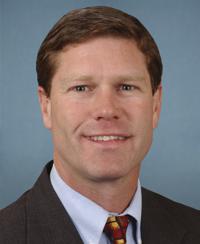
Mr. Speaker, I thank my friend from Massachusetts for yielding me this time. I want to commend the leadership of the Committee on Education and the Workforce, from Chairman Boehner and Ranking Member…
Mr. Speaker, I thank my friend from Massachusetts for yielding me this time. I want to commend the leadership of the Committee on Education and the Workforce, from Chairman Boehner and Ranking Member George Miller to Subcommittee Chairman Castle and Ranking Member Woolsey, all the members of the Committee on Education and the Workforce, the work that was done in the conference committee for trying to produce this bipartisan bill. That is why today I am proud to stand in support of the rule and also in support of the reauthorization of IDEA.
Mr. Speaker, this is an incredibly important program that was created in the mid-1970s. It was created under the premise that every child in America should have access to a quality education, including children with special needs. Since that time, the schools throughout the Nation have brought these kids in, have embraced them, have dealt with issues in regards to the authorization language, in regards to funding issues; but fundamentally it is a program that works and is working for our children with special needs.
This legislation, I think, goes to clean up a lot of the problems that were inherent in IDEA. The gentleman
from Delaware just referenced some of the paperwork burden that our special education teachers have been straddled with for so many years. There has been the issue of disciplinary problems in the classroom that I think we have reached a good compromise on now. It was the goal in this reauthorization bill to improve the quality of the teachers in the classroom dealing with these children with special needs, the second most important determinant on how well our kids are going to perform just behind parental involvement. It does strive to increase student performance and educational achievement. Overall, this is a very good bipartisan bill, and I would recommend my colleagues today to support this reauthorization bill.
But there are also some things in the future that we have to stay focused on and continue to work on and that is the impact of No Child Left Behind and the new standards and the testings and the impact it is going to have on these children with special needs and the fact that under No Child Left Behind, every child is supposed to be 100 percent in conformance of the rules that were written by the Department of Education by 2014. We just know now that there are some children that are not going to be able to obtain that high standard. Unless we are willing to start telling the schools that by 2014 every one of them is going to be failing, I think we need to be a little bit more realistic in our approach to these children and what is going to be required, but without leaving any child behind.
But I think another big problem that we are going to have to continue to slug out here starting with this omnibus coming up but also in future years is the funding of IDEA. The Congress has never lived up to the full cost share promise that was made, the 40 percent cost share for IDEA funding. This means the financial burden has been left at the local level. It is affecting property taxes back in the State of Wisconsin, which are going up way too much; and it is starting to pit students against students in the classroom over the allocation of the limited resources that we are allotting for IDEA and also now for No Child Left Behind.
I am disheartened to hear some of the figures coming out of the omnibus discussions where the President was requesting a $1 billion plus-up for IDEA. It looks like we are only going to get about $600 million. That is far short because this last fiscal year we were only funding it at 19 percent of the 40 percent full cost share. We can do better. For $10 billion, we could fully fund IDEA and get up to that 40 percent cost share and alleviate the financial burden that is straddling so many of our school districts throughout the Nation. It is just a question of priority, a priority of what we are going to place first as an investment in our budget, whether it is going to be the children and the future of our Nation or whether it is going to be other priorities that we are going to see in this omnibus.
Let us face it, Mr. Speaker. By the end of this year, we will have allocated close to $200 billion for what is taking place right now in Iraq. We are hearing rumors now that the administration is going to come back early next year requesting another 70 to $75 billion in Iraq. With just a fraction of that amount, we could fully fund IDEA, fully fund No Child Left Behind, give the schools, give the teachers, give the parents the resources they need to make sure that every child has the opportunity that they need to succeed in this country and in this world. That is what is at stake.
While we have got a good bill to support today, I think there is more work that we have to stay focused on and try to work in a bipartisan fashion to address the implications of No Child Left Behind with IDEA students and the element of full funding for this program. Hopefully, we will have the same type of bipartisan spirit as we move forward in the future.
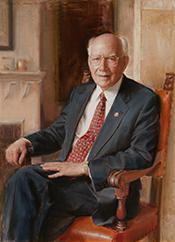
Mr. Speaker, I thank the gentleman for yielding me time. I rise today in strong support of the Individuals With Disabilities Education Improvement Act conference report. This excellent bipartisan…
Mr. Speaker, I thank the gentleman for yielding me time. I rise today in strong support of the Individuals With Disabilities Education Improvement Act conference report.
This excellent bipartisan agreement is a win for parents, teachers, schools and, most importantly, students with disabilities. I was pleased to be a part of the conference committee and would like to thank the gentleman from Ohio (Mr. Boehner); the subcommittee chairman, the gentleman from Delaware (Mr. Castle); and the ranking member, the gentleman from California (Mr. George Miller), for their dedicated work in producing this bipartisan conference report. I particularly congratulate the gentleman from Ohio (Mr. Boehner) for his excellent work on No Child Left Behind and also on this bill.
This bill sets in motion important reforms that will help schools, parents, and teachers ensure that all students with disabilities receive a quality education. First, the conference report gives local schools more flexibility and greater financial control over special education funding. Although Congress has increased funding for special education by almost 400 percent in the past 10 years, bringing annual funding to $11.1 billion, the Federal Government is not yet meeting its goal of paying 40 percent of special education costs.
I am pleased that this bill puts us on the track to do that. Taxpayers within my district and throughout the Nation have had to make up the cost difference. Last year, voters in my district approved a special milage to raise millions in additional special education funding. I am very proud of my community for their willingness to provide extra funding for special education.
This new bill will help such communities as the Federal share of special education costs continues to increase. Communities will be allowed more flexibility in the way educational resources are spent by enabling schools to redirect a share of their own local resources for other educational purposes.
Next, while everyone involved in a child's education plays an important role, I would like to particularly commend the parents of students with disabilities. Throughout my career as an educator and as a Member of Congress, I have been struck by the dedication and active participation many of these parents have towards ensuring their children's success. I truly believe that children, and especially children with special needs, learn best when they have at least one parent who is actively involved in their education.
This conference report supports all parents by giving more opportunity for them to be active participants in their children's educational experience by expanding parental rights and options. For example, the conference report enables parents and school districts to agree to change the student's Individualized Education Plan, known as the IEP, without holding formal meetings as is required under current law. The bill also requires parents to select supplemental educational services for their children when they attend a school that is in need of improvement because students with disabilities are not making adequate yearly progress. Both of these are marked improvements over current law.
Finally, the conference report builds upon the sweeping education reforms of the No Child Left Behind Act and emphasizes academic results for children with special needs. For too many years, students with disabilities were allowed to fall between the cracks as they were left out of accountability systems.
This bill solves that problem, and I strongly encourage my colleagues to join me in voting for this bill.
Finally, the conference report builds upon the sweeping education reforms of the No Child Left Behind Act and emphasizes academic results for children with special needs. For too many years, students with disabilities were allowed to fall between the cracks as they were left out of accountability systems. Now, States and schools are being held accountable for ensuring that students with disabilities are indeed learning. The conference report strikes an important balance between accountability and flexibility by maintaining the No Child Left Behind requirement that all children be taught by highly qualified teachers,
while providing some key flexibility for special education teachers who teach multiple subjects or teach only children with severe mental impairments.
I strongly support this excellent conference report and urge my colleagues to vote in favor of it.
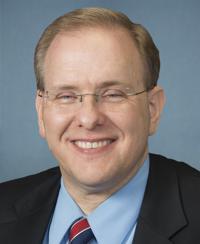
Mr. Speaker, I thank the gentleman from Ohio (Mr. Boehner) and the gentlewoman from California (Ms. Woolsey) for yielding me this time, and I rise today in strong support of conference report Mr.…
Mr. Speaker, I thank the gentleman from Ohio (Mr. Boehner) and the gentlewoman from California (Ms. Woolsey) for yielding me this time, and I rise today in strong support of conference report
Mr. Speaker, I rise today to congratulate my colleagues on the bipartisan agreement on special education and in support of the conference report on H.R. 1350. This agreement is an example of what we can achieve when we place the interests of our Nation's children, parents, and teachers before politics. In particular, I want to note the leadership of Chairman Boehner and Ranking Member Miller on this issue. On this bill, and several other pieces of legislation this year, they have been devoted advocates for children with disabilities.
The Individuals with Disabilities Education Act--known as IDEA--is a civil rights law. It establishes that every child has a right to a free and appropriate public education. As a nation, we have long held sacred the belief that education is a path to success, a way for any individual to rise above challenging circumstances and achieve his or her dreams. I can personally attest to the fact that this rings true in a special way for children with disabilities. Education is essential to leveling the playing field for children who face obstacles in life at an early age. By recognizing that they have contributions to make and dreams to fulfill, IDEA offers these children the hope and promise that they can become fully productive members of society.
For these reasons, it has been my top priority to preserve the philosophy behind IDEA and ensure that teachers and administrators are given the appropriate resources to carry out this law. I did not support the bill that came before the House of Representatives in the spring of 2003, because it failed to preserve safeguards for students with disabilities in instances where behavior problems may be a manifestation of their disability. I also felt strongly that clear standards for special education teachers must be established and enforced; as they have been for other teachers under No Child Left Behind. I felt that we could do better for our children with disabilities.
I am delighted that negotiations between the House and the Senate have resulted in a final product that does better. The conference report that we are voting on today represents compromises by both Republicans and Democrats; as such, it represents a clear willingness to work together toward a future where all children receive a high quality education in our Nation's public schools. This legislation maintains the protections for children with disabilities in the discipline process, reaffirms their right to due process, and recognizes that highly trained professionals make all the difference in providing an appropriate education for any student.
In the upcoming Congress, we will celebrate the 30th anniversary of IDEA. How appropriate that a law which began as a bipartisan agreement to commit federal resources to the educational needs of students with disabilities is being reauthorized today in such an atmosphere of cooperation between both parties.
We have made much progress in these last 30 years--the majority of children with disabilities are now being educated in their neighborhood schools in regular classrooms with their nondisabled peers, and college enrollments among individuals receiving IDEA services have sharply increased. We must continue to work to level the playing field for all students. It is my sincere hope that this collaborative spirit and commitment to children with disabilities is reflected in the appropriations process and future legislation that offers the promise of the American dream to our more vulnerable citizens. Let us take this reauthorization process to pave the way to ensuring the full funding of IDEA, giving schools and teachers the
resources they need to meet the goals for each and every child in their classrooms.
I urge all my colleagues to support the conference report to H.R. 1350.
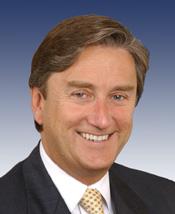
Mr. Speaker, I thank the gentlewoman from California (Ms. Woolsey) for yielding me time and also for the excellent work she did on this bill. I also want to add my congratulations to the gentleman…
Mr. Speaker, I thank the gentlewoman from California (Ms. Woolsey) for yielding me time and also for the excellent work she did on this bill. I also want to add my congratulations to the gentleman from Ohio (Mr. Boehner), the gentleman from California (Mr. George Miller), the gentleman from Delaware (Mr. Castle), as well as the gentlewoman from California (Ms. Woolsey) who did do a good job and who went to conference and brought back a bill that I believe is going to get great support in this House.
While the final proposed version of IDEA does not meet 100 percent of the things that I and my constituents might have wanted if left to our own drafting devices, it does reach a reasonable compromise; and for that reason I support it.
Back in April of 2003, I spoke against this bill in the House version of H.R. 1350. Subsequently, I urged adoption of the bill that was a lot closer to the Senate version and, in fact, in committee I joined a number of colleagues on various proposed amendments that would have moved the House bill in that direction if they had passed. They did not. Those amendments were close votes and, sadly, they were along party lines; but I am glad to say that the conference report essentially incorporates the provisions that we sought in committee with at least one notable exception and that is the funding.
The heart of IDEA lies in the protection of children with disabilities and the individualization of their education to account for those disabilities. Therefore, the conferees were, I believe, wise to retain language requiring a determination of whether misbehavior was a manifestation of a child's disability or not. That ensures that no child is unfairly punished for their disabilities.
In addition to improving the House's version of discipline provisions, the conference report improves the monitoring and enforcement aspects to ensure the States actually comply with the law. It worked a fair compromise on early intervention. It does a much better job than existing law in addressing transition services for older students, a task I believe that we are going to have to pick up in the Workforce Investment Act as we reauthorize it in 2005, and I understand that the gentleman from Ohio (Mr. Boehner) has expressed a similar desire.
It sets standards for highly qualified teachers and focuses the resources on their professional development and preparing them for this specialized field. While it does not satisfy everyone, it does work out a compromise on these families and students' civil rights. That is a significant improvement over the House version of this bill.
So the major issue still remaining, of course, is the funding. We did take the gentleman from Ohio's (Mr. LaTourette) bill and my bill, which would close a loophole. The Spending Integrity Act would close that loophole that otherwise would have let districts use up to 20 percent of additional funding for noneducational purposes, and this is important to close that, but we are still falling short in that mandatory full funding is not provided.
We have a commitment to reach that goal by 2011, and I hope that everybody who is involved in making that commitment will be just as vigorous in making sure that it becomes an actuality. But given last night's vote on once again raising the debt ceiling of this Nation another $800 billion and realizing that the budgets that have been proposed by this administration continually fall short, there is no assurance that that is going to be met. We have a lot of work to do to make sure we move in that direction.
We authorize and appropriate too little this year and presumably in future years. It is a serious problem that mars an otherwise reasonable compromise, but, Mr. Speaker, with that reservation in mind, I will vote for this conference report.
Again, I want to thank all of the constituents that worked on this bill with us, as well as all the people in the committee and the leaders in conference.
Mr. Speaker, I rise today in support H.R. 1350, the reauthorization of the Individuals with Disabilities Education Act. IDEA is a fundamental civil rights program that provides funds to states for…
Mr. Speaker, I rise today in support H.R. 1350, the reauthorization of the Individuals with Disabilities Education Act. IDEA is a fundamental civil rights program that provides funds to states for the education of children with disabilities. As the world of education faces the challenge of leaving no child behind, this program takes on extra importance. Children with disabilities should have as much opportunity as any child to reach and even exceed their potential. However, since 1975, Congress has placed yet another unfunded mandate on local communities. Since IDEA became law, Congress has authorized spending of up to forty percent of the cost of the average per pupil expenditure on special education. We in Congress have failed to meet that commitment time after time. Fiscal Year 2004 meets 18.6 percent of that commitment, not even half of what we have promised. And this represents the highest percentage since the law was passed.
As a former teacher, member of a school board, State Senator, and now Congressman, I have heard for years from numerous local officials, school administrators, and teachers about the burden IDEA has placed on their budgets and their classrooms. Our communities are dedicated to meeting their moral obligation to provide an appropriate public education for children with disabilities, but they must face the difficult decisions of cutting nonessential school programs like arts, music, and sports or raising property taxes. They would not be faced with these decisions if the federal government lived up to its promises and obligations.
At the beginning of this Congress, I introduced legislation, H.R. 823, to fully fund IDEA now because we have abdicated our responsibility to fund this mandate for three decades. While I feel strongly that we should reach full funding sooner rather than later, I am pleased that H.R. 1350 provides a timeline towards full funding by 2011. However, I worry that the omnibus appropriations bill that we will be voting on later today will fail to meet the figure authorized for Fiscal year 2005 in the legislation we now debate. I hope the positive legislating that we partake in now will be remembered later today and in the coming years when IDEA funding is debated.
While we may focus on the financial impact of this legislation, it has many important educational and moral implications. It aims to improve the collaboration between parents, administrators, educators, and students to provide the best possible education. This legislation will help schools better identify students with disabilities and get help to them sooner. It reduces unnecessary paperwork for teachers so they can spend more time teaching and aims to cut down on litigation between parents and school districts with early, effective dispute resolution. The conferees wisely removed controversial discipline provisions from the House bill while still achieving the goal of improved and streamlined disciplinary procedures.
Yet, despite all the good provisions in this bill, the fact remains that Congress and the President have a moral obligation to live up to what has been promised and neglected for so long. Yet, once again, Congress and the President are neglecting their moral obligation to live up to their words.
In conclusion, Mr. Speaker, I hope this bill achieves its goal of improving special education and truly leaving no child behind. However, I am cynical that the goal of full funding will be reached in the timeline provided by this bill. You can be assured that IDEA will be on my mind later today when voting on the omnibus appropriations bill for Fiscal Year 2005 and that I will continue to be a strong advocate and a active voice for children with disabilities.
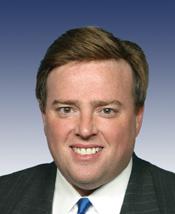
Mr. Speaker, I thank the gentleman for yielding me time. Mr. Speaker, I support this legislation because special education funding, teacher quality, and school safety will all go up while unnecessary…
Mr. Speaker, I thank the gentleman for yielding me time.
Mr. Speaker, I support this legislation because special education funding, teacher quality, and school safety will all go up while unnecessary paperwork requirements and frivolous lawsuits will go down. This is a good bill, and it deserves our support.
Mr. Speaker, as the only Member of Congress from Florida who serves on the Committee on Education and the Workforce and as one of only five House Republicans to serve on the IDEA Conference Committee, I wanted to learn firsthand about the key issues impacting our special education students. So I helped teach an elementary school education class in Orlando, Florida. I also met with high school special education teachers. And I invited the leading special education expert from my hometown, Orange County Public School System, Harriet Brown, to come and testify before Congress.
From this experience I learned three important things. First, I learned that special education teachers are forced to spend up to 2 hours a day completing paperwork instead of teaching.
Second, I learned that much of this paperwork is defensive in nature because of the fear and threat of frivolous lawsuits.
Third, I learned that there was a student who jeopardized the safety of a middle school in Orlando by bringing a gun to school, yet he could not be expelled for 1 year, which is the normal penalty, because he was an ``exceptional education'' student even though his disability had nothing to do with bringing the firearm to school.
I am pleased to say that all three of these problems have been fixed in this
legislation. First, the paperwork reduction legislation I authored is specifically included in this bill. As a result, the Secretary of Education will now develop model forms which will streamline and reduce the paperwork volume, and 15 States will be free of various paperwork requirements under a new pilot program.
Second, to reduce lawsuits, attorneys' fees will now be awarded to the prevailing party, and if a lawsuit is determined to be frivolous, the lawyer that filed that suit will personally be responsible for paying the other side's costs. There will be a 2-year statute of limitations.
Third, a student who brings a gun to school can now be expelled for up to 1 year under the Gun Free Schools Act if his behavior was not directly caused by the disability.
Finally, Mr. Speaker, our investment in special education is now at the highest level in the history of the United States. From 1995 until today, Congress has increased special education funding from $2.3 billion to $11.1 billion. That is an increase of $8.8 billion, or 383 percent.
Mr. Speaker, this legislation will dramatically improve the lives of disabled children in Orlando, Florida, and all across this Nation. I urge my colleagues to vote ``yes.''
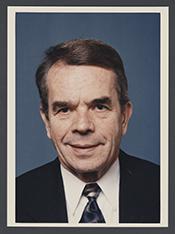
Mr. Speaker, I thank the gentlewoman for yielding me time. I also thank her for her excellent and her tireless work on this bill. Mr. Speaker, I rise in support of the conference report. This…
Mr. Speaker, I thank the gentlewoman for yielding me time. I also thank her for her excellent and her tireless work on this bill.
Mr. Speaker, I rise in support of the conference report. This legislation is a remarkable improvement over the House bill and deserves the support of us today. The bill represents a good compromise reflecting the views of schools, disability advocates and, most importantly, parents.
The bill protects the civil rights of children with disabilities in critical areas. The bill ensures compliance with IDEA's key provisions through a strong monitoring and enforcement system.
This system will lead States to fix problems before children with disabilities fail to receive a free appropriate public education.
This bill also makes IDEA work for all stakeholders: students, parents, teachers, school administrators, and school districts. First, the legislation provides new opportunities for parents and schools to address concerns before the need to file a lawsuit arises.
Second, the bill increases parental involvement in IEP meetings by allowing the use of teleconferencing, video conferencing, and other alternative means of participation.
Third, the legislation requires initial evaluations to occur within 60 days of referral, ensuring that children get the help they need. The conference report also provides fiscal relief for school districts. The bill allows school districts which are in compliance with IDEA to replace a portion of their local expenditures with Federal funding.
This will allow school districts to begin to realize the promise we made 30 years ago to provide the Federal share of special education costs. Most importantly, Mr. Speaker, the bill also improves discipline and ensures the safety of disabled and nondisabled children alike.
The bill requires schools to determine if a child's behavior was the result of their disability or poor implementation of their IEP when considering a disciplinary action. In addition, the bill prevents schools from placing children with disabilities in alternative placements for unlimited periods of time.
Despite its positive aspects, Mr. Speaker, the main failure of this legislation is that it does not immediately meet the promise of full funding of IDEA. We made this promise nearly 30 years ago and have consistently failed to meet it.
Soon we will have an appropriations bill on this floor, hopefully today, that will not even meet the levels we have authorized in this bill. While I support this conference report, we need to do a better job of living up to our promises. This bill puts us on that path; and I therefore urge that we pass it.
Show 11 more

Mr. Speaker, it is a privilege to have a chance to speak in support of H.R. 1350. I am pleased that this bill has evolved into what appears to be a very bipartisan bill. I would like to thank the…
Mr. Speaker, it is a privilege to have a chance to speak in support of H.R. 1350. I am pleased that this bill has evolved into what appears to be a very bipartisan bill. I would like to thank the gentleman from Ohio (Chairman Boehner) and the gentleman from Delaware (Mr. Castle), chairman of the Subcommittee on Education Reform, and Members on the other side for all of their work.
There are three or four points that I would like to make that I think are particularly noteworthy regarding this bill.
First of all, it provides clear academic achievement goals for children with disabilities. In the past, once a child was identified as having a learning disability, oftentimes they were assigned to mediocrity, and there was no attempt to improve that child's learning situation.
Secondly, and maybe most importantly, it provides early intervention strategies to prevent children from being identified or misidentified as children with disabilities. If we get to children early enough with remedial help, many times children who would be labeled as disabled are simply not labeled as such and are able to be mainstreamed. Fifteen percent of the funds for IDEA are being used for this early intervention strategy, and I think that is critical.
Also, as the gentleman from Florida (Mr. Keller) pointed out earlier, and I think this also is a very important point, the current legislation reduces paperwork related to IDEA which is particularly burdensome to teachers.
Also, this legislation clarifies what the term ``highly qualified teacher'' means. So often in Federal legislation we throw out a term and we do not specify what it is, and here we have a clear identification of what the term means.
Then, of course, lastly, I would mention the issue that comes up all the time when we talk to educators. That is, simply a lack of funding. People have locked onto the idea that 40 percent of the funding for IDEA was supposed to be Federal. It was authorized, and, of course, we have fallen far short of that. In 1995, IDEA was funded 6 percent federally. Today, it is 20 percent. So that is a remarkable increase, and we are on a 6-year path to meet the 40 percent funding.
So I urge support. It is a good bill, and I would like to thank those involved with authoring the bill.

Mr. Speaker, I thank the gentlewoman for the time, and I am pleased that the gentlewoman from California (Ms. Woolsey), the gentleman from California (Mr. George Miller), the gentleman from Ohio (Mr.…
Mr. Speaker, I thank the gentlewoman for the time, and I am pleased that the gentlewoman from California (Ms. Woolsey), the gentleman from California (Mr. George Miller), the gentleman from Ohio (Mr. Boehner), the gentleman from Delaware (Mr. Castle) and the other conferees have succeeded in providing legislation that will help ensure the basic rights of children with disabilities to see that they get a free, excellent and appropriate education.
I still believe that we must work toward mandatory funding of IDEA. It appears this year in our appropriations we are going to slip farther away from our goal of providing 40 percent of the additional cost of educating these students. We need to work to provide a full Federal share of funding to educate these students.
I am pleased that the conference report removed a cap on the number of students that schools may identify as having a disability. The Federal Government should fulfill its obligation to provide for the education of every disabled child, not according to some arbitrary ceiling.
We all recognize the need for teachers to maintain discipline, but I am pleased to see that this legislation will continue to regard as relevant whether a child's disability is the cause of specific behavior before the discipline is brought to the child.
I strongly support the added protections for children who, through no fault of their own, move and change schools frequently so that their IEPs will transfer with them and be based and be used at the new school so that the parent and the new school can then work to develop a new IEP as appropriate.
I am pleased to see that the bill includes a provision related to educational media services which ensures visually impaired and print- disabled students will continue to have access to recorded education materials. IDEA funding received by organizations like Recording for the Blind and Dyslexic are critical to providing textbooks and reading material to students around the Nation.
I hope that in the future we will be able to work in a bipartisan manner on properly funding this legislation, but, while we work on that, I think this authorization bill provides a useful basis.
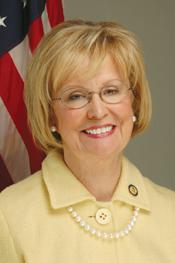
Mr. Speaker, I thank the gentleman for yielding me time. Mr. Speaker, I rise in strong support of the IDEA conference report. I want to thank the conferees and our chairman, the gentleman from Ohio…
Mr. Speaker, I thank the gentleman for yielding me time.
Mr. Speaker, I rise in strong support of the IDEA conference report. I want to thank the conferees and our chairman, the gentleman from Ohio (Mr. Boehner), for their hard work throughout this process.
I am also pleased that my report language to make IDEA consistent with McKinney-Vento provisions was included. This will go a long way in ensuring that homeless children with special needs get the services they need to succeed.
In order to create a more cooperative environment for special needs students, the conference report contains a number of badly needed reforms, all of which will help parents and teachers trust each other. When that happens, they can create the most positive environment for the children.
I would like to address the fears that some of my constituents had about the discipline provision. Many in the disability community were very concerned that children could be shut out of the educational process. We all agree that a child should not be punished for behavior that is the result of a disability, and the conference report requires schools to determine if this is the case. If a student is misbehaving and it is not due to his or her disability, school officials can discipline that child in the same manner they would any other child.
Schools are given the resources to deal with the most severe case of weapons possession, illegal drugs or severe bodily harm, but the legislation specifies that the students cannot be denied services. If a behavior is attributable to a student's disability, the student will get the support he needs so that his behavior does not become an impediment to his own learning or that of other classmates.
Special needs students have the right to the services they need, but other students have the right to learn in a safe environment.
The IDEA compromise is a common-sense approach to improving special education. The reforms will shift the focus onto students and their needs instead of on the legal process. At the same time, it protects the right of student and their families.
I am proud to support this legislation and urge my colleagues to do so as well.

Mr. Speaker, I thank the gentleman for the time, and I commend him for his excellent work on getting things done on this vital issue. Being one of the last speakers, I know a lot of things have been…
Mr. Speaker, I thank the gentleman for the time, and I commend him for his excellent work on getting things done on this vital issue.
Being one of the last speakers, I know a lot of things have been said about this bill. I do not want to take too much time to reiterate some of them, but let me tell my colleagues what this bipartisan agreement does.
It improves communications between parents and appropriate school personnel related to the development of the individual education plan.
It reduces the number of reevaluations required for students whose disability does not change as they age and progress through school.
They ensure that the Federal dollars for IDEA flow to the local districts and cannot be diverted for other State purposes. Very important.
Continues to send the majority of Federal funds to local school districts where children are served.
It protects parents from being forced to medicate their children.
The NCLB ensures, of course, that all children will be taught by highly qualified teachers. All children need to be taught by highly qualified teachers, and special education teachers are particularly in demand. To meet that goal, the NCLB is providing dramatic funding increases for teacher quality grants, and funds can be used for training and professional development specifically for special education teachers.
Two other things about this bill today that have not been said. The first is that it takes a major issue off the front burner as this committee works to help our kids in the next Congress so that we can focus on higher education and Head Start. This issue now is behind us, and to do it in the waning hour is a terrific accomplishment not only for the committee but for every Member, particularly my chairman.
For the gentleman from Ohio (Mr. Boehner), my chairman, this is always a very tough weekend for him. It is the weekend that the Wolverines beat the Ohio State Buckeyes, and he is usually in a very foul mood about four o'clock tomorrow afternoon. He will be very happy today with this passage, and I am sorry that he will be so unhappy tomorrow with the score put up on the board.
God bless the Wolverines.

Mr. Speaker, I rise today in support of this conference report to reauthorize the Individuals with Disabilities Education Act. Let me at the outset thank Chairman Boehner, Subcommittee Chairman…
Mr. Speaker, I rise today in support of this conference report to reauthorize the Individuals with Disabilities Education Act.
Let me at the outset thank Chairman Boehner, Subcommittee Chairman Castle, our ranking member, Mr. Miller, and our subcommittee ranking member, Ms. Woolsey--along with our Senate colleagues, the rest of the conferees and their staff--for all of the hard work and long hours that went into producing this agreement today.
This is not a perfect bill. But it is a significant improvement over the House IDEA bill that I and most of my colleagues on this side of the aisle felt compelled to oppose in April 2003, and I believe it represents the best outcome that could reasonably have been expected in our current legislative environment.
In particular, I am pleased to see that this legislation restores some of the protections afforded to children with disabilities that the House-passed IDEA bill would have taken away. Moreover, I fully support the stepped-up monitoring and enforcement authority granted the Secretary of Education under this bill. And I believe the compromise reached with respect to certifying highly qualified special education teachers is a good one.
However, while the conference report adopts the Senate's 7-year authorization path to full funding, I remain concerned that the FY 2005 Omnibus Appropriations bill we will soon be considering will once again fall short of the $12.3 billion authorized to fund this critical law. This is the 30th year in a row we have failed to meet our IDEA funding obligations--a record I consider to be an enduring disgrace. For that reason, I believe more than ever that we should make IDEA funding mandatory and place it on a near term, certain path to completion.
Toward that end, the very first bill I introduced in the 108th Congress--the Keep Our Promises To America's Children and Teachers (PACT) Act--would have fully funded IDEA as well as the No Child Left Behind law. In the 109th Congress, I intend to make the Keep Our PACT Act the very first bill I introduce again, and I invite all of my colleagues to join with me in that effort.

Mr. Speaker, I rise in support of this conference report for the Individual on the reauthorization of the Individuals with Disabilities Education Act, IDEA. When the IDEA reauthorization passed the…
Mr. Speaker, I rise in support of this conference report for the Individual on the reauthorization of the Individuals with Disabilities Education Act, IDEA.
When the IDEA reauthorization passed the House in April, I voted against this bill because I was concerned that the House bill did not provide the assistance students with disabilities deserve and I had real concerns with the way the House bill sought to discipline disabled students.
Thankfully, the Conference Committee worked in a bipartisan manner and worked for what was best for our children with disabilities. I am pleased that this bill seeks to finally meet out funding goals by increasing authorization levels for grants to States. These new levels are set to fulfill our commitment of providing 40 percent of the national average of educating a child.
Even though I am pleased with a lot of what is contained in this conference report, I still have concerns about some of the provisions.
I don't want this bill to be the next ``No Child Left Behind Act''--a bill that has great promise, but a bill that Congress and the President fails to fully fund. The gains in this reauthorization will be for naught unless this Congress backs up this bill with the appropriations necessary.
While changes have been made to the original House bill, we need to make sure that the Department of Education does the enforcement necessary to make sure students are not punished for behavior that is caused by their disability. I think we should all agree that under no circumstance should a child be punished for the behavior that has been caused by their disability.
This bill goes a long way to ensuring all students the education opportunities they deserve. I expect that this conference report will pass by a wide margin. I ask my colleagues to remember your vote today when it comes to actually appropriating funding for this bill. Today we make a commitment to disabled students across this country, let's not forget them during future votes on educational funding.
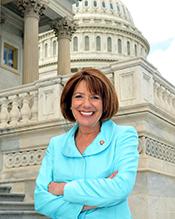
Mr. Speaker, I want to thank my colleagues for all their fine work on this reauthorization, and I rise in support of the Individuals with Disabilities Education Act of 2004 because I believe it will…
Mr. Speaker, I want to thank my colleagues for all their fine work on this reauthorization, and I rise in support of the Individuals with Disabilities Education Act of 2004 because I believe it will clarify and improve the support for students who have special needs.
Many of us, as my colleagues heard, are disappointed that this reauthorization does not respond to the congressional promises of 1975 by making funding for IDEA an entitlement. While the authorization language suggests that full funding will be met by 2011, the Labor-HHS bill, the appropriations bill for 2005, does not match this commitment. So we have to ask ourselves, will starting with a baby step get us to the finish line on time?
There were a number of aspects of the Senate bill that were incorporated in this, and I certainly support those, but I do want to point out that it does not include so many improvements which we had offered in the House bill that professionals who worked with special education students offered would clarify and streamline services, and I remain committed to providing the flexibility and common sense while assuring that a student's reasonable needs are met in a timely fashion with full participation and information for parents.
I was particularly concerned that responsibility for States to provide related services such as mental health for special needs children be clear. IDEA part B funds should be used for educational purposes, not to supplant State responsibilities. This is enormously important to my district and to California, and I appreciate the efforts of the gentleman from Ohio (Chairman Boehner) to work with me on this issue and of the Senate Members to provide the language.
I believe that this is, on balance, a bill with significant improvements, and I am certainly committed to monitoring its implementation so that we can continue to look for ways to see that our neediest students are served with dignity and meet with success.

I thank my colleague for yielding me this time. Mr. Speaker, I rise in support of the rule. Initially, I would like to thank the gentleman from Ohio (Mr. Boehner), the gentleman from California (Mr.…
I thank my colleague for yielding me this time.
Mr. Speaker, I rise in support of the rule. Initially, I would like to thank the gentleman from Ohio (Mr. Boehner), the gentleman from California (Mr. George Miller), the gentleman from Delaware (Mr. Castle), and the gentlewoman from California (Ms. Woolsey) for over 2 years of work on the important legislation that the rule makes in order.
I am pleased that this conference agreement includes a new provision that is similar to bipartisan legislation I sponsored with the gentleman from California (Mr. George Miller) to help provide specialized textbooks to students with visual disabilities. The law we are reauthorizing today, the Individuals with Disabilities Education Act, requires that all disabled students be provided with educational opportunities. For students with visual disabilities, this includes access to specialized instructional materials, such as braille, large print and audio textbooks. Translating a textbook into these successful formats, however, is a cumbersome, time-consuming, and expensive process for States and school districts. As a result, visually impaired students oftentimes receive their textbooks long after school has started and can be needlessly left behind their sighted peers.
The legislation before us today will help solve this problem. It creates a centralized clearinghouse that States and local school districts can use to obtain electronic copies of textbooks to be translated into the appropriate format for visually impaired students. That is a simple solution that will make a big difference in the quality of education provided to visually impaired students. I commend my colleagues for the work they have done to include this provision in this legislation and urge support of the rule.
Mr. Speaker, I thank the gentlewoman for yielding me time and for her leadership. Mr. Speaker, I rise in support of the conference report on H.R. 1350, and I also rise to thank my colleagues and the…
Mr. Speaker, I thank the gentlewoman for yielding me time and for her leadership.
Mr. Speaker, I rise in support of the conference report on H.R. 1350, and I also rise to thank my colleagues and the leadership on both sides of the aisle, the gentleman from Ohio (Mr. Boehner), the gentleman from California (Mr. George Miller), the gentlewoman from California (Ms. Woolsey) and the gentleman from Delaware (Mr. Castle) for their leadership.
I would like to thank the staff of the Committee on Education and the Workforce and for their hard work, as well as my staff, especially Dr. Michael Goodman, Ms. Michaeleen Crowell and Mr. Will Thomas.
It has been my honor and privilege to serve on the Committee on Education and the Workforce, and I am very pleased to support this conference report, the result of more than 2 years of hard work and one of the first items that came up on the agenda when I became a Member of this august body.
I would also like to thank the hardworking Members of the Georgia delegation from the committee, Mr. Norwood, Mr. Gingrey, Mr. Burns and Mr. Isakson, who I know will continue to serve the interests of the great State of Georgia and children across the country.
I know that each and every one of us has been working as hard as we can in this endeavor, and it has been my honor and privilege to serve. I will miss all of my colleagues, and I urge all of
them to continue to move towards full funding of IDEA.

Mr. Speaker, I rise in support of the final version of this bill to renew the Individuals with Disabilities Education Act (IDEA). As the only former State schools chief serving in Congress. I know…
Mr. Speaker, I rise in support of the final version of this bill to renew the Individuals with Disabilities Education Act (IDEA).
As the only former State schools chief serving in Congress. I know firsthand the tremendous challenges facing our schools, teachers, parents and students when it comes to educating disabled children. This legislation includes a number of positive provisions that will help students with disabilities and the educators who serve them. Specifically, I am pleased that this final version of the bill will enhance the focus on professional development, early intervention, and paperwork reduction.
I commend my colleagues for working in a bipartisan manner, an all- too-infrequent-occurrence in this Congress, to achieve a consensus bill. No legislation is perfect, and this bill is no exception. Specifically, this falls short on making good on the promise of the Federal Government to fund 40 percent of the costs of educating disabled children. I will continue to make this effort a high priority in the next Congress.
Last year, I voted against the House version of H.R. 1350 because of its failure to improve current law regarding the education of disabled children. I again commend the conferees on this legislation for producing a final product worthy of support.

Mr. Speaker, I'm pleased to rise today in support of the conference report on H.R. 1350, the Improving Education Results for Children with Disabilities Act. While the bill before us is not perfect,…
Mr. Speaker, I'm pleased to rise today in support of the conference report on H.R. 1350, the Improving Education Results for Children with Disabilities Act. While the bill before us is not perfect, it is a vast improvement from the bill the House passed over 19 months ago and represents a bipartisan effort to improve the Individuals with Disabilities Education Act (IDEA).
There does remain a glaring problem that has yet to be resolved with respect to IDEA. Congress has yet to fully fund IDEA at the 40-percent level that was the original promise Congress made almost 30 years ago. Without this funding, we will continue to overburden local school districts with costs of Federal mandates relative to special education programs. This is unfair.
Too often we fund education on the cheap--shortchanging title I, the No Child Left Behind Act, Pell Grants . . . the list goes on and on. We need to set an example by staying true to our word. Until Congress agrees to fulfill its 30-year promise to fund IDEA, we really can't say we're leaving no child behind.
In closing, I reiterate my support for the bill before us and remain hopeful that in the 109th Congress we will finally fully fund this important act.
Bill Text
Latest available legislative text
        [Congressional Bills 108th Congress]
[From the U.S. Government Publishing Office]
[H.R. 823 Introduced in House (IH)]

108th CONGRESS
1st Session
H. R. 823

To amend the Individuals with Disabilities Education Act to provide
full funding for assistance for education of all children with
disabilities.

_______________________________________________________________________

IN THE HOUSE OF REPRESENTATIVES

February 13, 2003

Mr. Larson of Connecticut (for himself, Mr. Shimkus, Mr. Frank of
Massachusetts, Mr. Grijalva, Mr. Van Hollen, Mr. Otter, Mr. Ryan of
Ohio, and Ms. Watson) introduced the following bill; which was referred
to the Committee on Education and the Workforce

_______________________________________________________________________

A BILL

To amend the Individuals with Disabilities Education Act to provide
full funding for assistance for education of all children with
disabilities.

Be it enacted by the Senate and House of Representatives of the
United States of America in Congress assembled,

SECTION 1. SHORT TITLE.

This Act may be cited as the ``Full Funding for IDEA Now Act of
2003''.

SEC. 2. PURPOSE.

The purpose of this Act is to attain the Federal Government's goal
under part B of the Individuals with Disabilities Education Act (20
U.S.C. 1411 et seq.) of providing 40 percent of the national current
average per pupil expenditure to assist States and local educational
agencies with the excess costs of educating children with disabilities
and to make such funding mandatory.

SEC. 3. AMOUNT OF GRANT FOR STATES UNDER PART B OF THE INDIVIDUALS WITH
DISABILITIES EDUCATION ACT.

(a) In General.--Section 611(a) of the Individuals with
Disabilities Education Act (20 U.S.C. 1411(a)) is amended--
(1) by redesignating paragraph (2) as paragraph (4); and
(2) by inserting after paragraph (1) the following:
``(2) Minimum amounts.--The minimum amount of the grant a
State is entitled to receive under this section for a fiscal
year is--
``(A) the number of children with disabilities in
the State who are receiving special education and
related services--
``(i) aged 3 through 5 if the State is
eligible for a grant under section 619; and
``(ii) aged 6 through 21; multiplied by
``(B) 40 percent of the average current per-pupil
expenditure in public elementary and secondary schools
in the United States.
``(3) No individual entitlement.--Paragraph (2) shall not
be interpreted to entitle any individual to assistance under
any State program, project, or activity funded under this
part.''.
(b) Conforming Amendments.--(1) Section 611 of the Individuals with
Disabilities Education Act (20 U.S.C. 1411) is amended by striking
subsection (j).
(2) Section 611 of the Individuals with Disabilities Education Act
(20 U.S.C. 1411), as amended by paragraph (1), is further amended--
(A) in subsection (b)(1), by striking ``From the amount
appropriated for any fiscal year under subsection (j), the
Secretary shall reserve not more than one percent, which shall
be used'' and inserting ``From the amount available for any
fiscal year to carry out this part (other than section 619),
the Secretary shall use not more than one percent'';
(B) in subsection (c), by striking ``From the amount
appropriated for any fiscal year under subsection (j), the
Secretary shall reserve'' and inserting ``From the amount
available for any fiscal year to carry out this part (other
than section 619), the Secretary shall use'';
(C) in subsection (d)--
(i) in paragraph (1)--
(I) by striking ``(1) In general.--''; and
(II) by striking ``paragraph (2) or
subsection (e), as the case may be'' and
inserting ``subsection (e)''; and
(ii) by striking paragraph (2);
(D) in subsection (e)--
(i) in the heading, by striking ``Permanent'';
(ii) in paragraph (1)--
(I) by striking ``subsection (d)(1)'' and
inserting ``subsection (d)''; and
(II) by inserting after ``subsection (j)''
the following: ``(as such subsection was in
effect on the day before the date of the
enactment of the Full Funding for IDEA Now Act
of 2003)''; and
(iii) in paragraph (3)(B)--
(I) in clause (ii)--
(aa) in subclause (I)(bb), by
striking ``amount appropriated under
subsection (j)'' and inserting ``amount
available to carry out this part (other
than section 619)'';
(bb) in subclause (II)(bb), by
striking ``appropriated'' and inserting
``available''; and
(cc) in subclause (III)(bb), by
striking ``appropriated'' and inserting
``available''; and
(II) in clause (iii)(II), by striking
``appropriated'' and inserting ``available'';
(E) in subsection (g)--
(i) in paragraph (2)--
(I) by striking subparagraph (A);
(II) by striking ``(B) Permanent
procedure.--'';
(III) by redesignating clauses (i) and (ii)
and subclauses (I) and (II) as subparagraphs
(A) and (B) and clauses (i) and (ii),
respectively; and
(IV) in subparagraph (B) (as redesignated),
by striking ``clause (i)'' and inserting
``subparagraph (A)''; and
(ii) in paragraph (3)(A)--
(I) in clause (i)(I), by striking
``appropriated'' and inserting ``available'';
(II) in clause (ii), by striking
``appropriated'' and inserting ``available'';
and
(F) in subsection (i)(3)(A), by striking ``appropriated
under subsection (j)'' and inserting ``available to carry out
this part (other than section 619)''.
(c) Effective Date.--The amendments made by this section shall take
effect on October 1, 2003.
<all>